Use of Permeable Reactive Barriers in the Removal of ACT and DCF from Effluents of Wastewater Treatment Plants

 ,
,  and
and 
Abstract
1. Introduction
2. Wastewater Treatment Plants and Limitations in Removing CECs
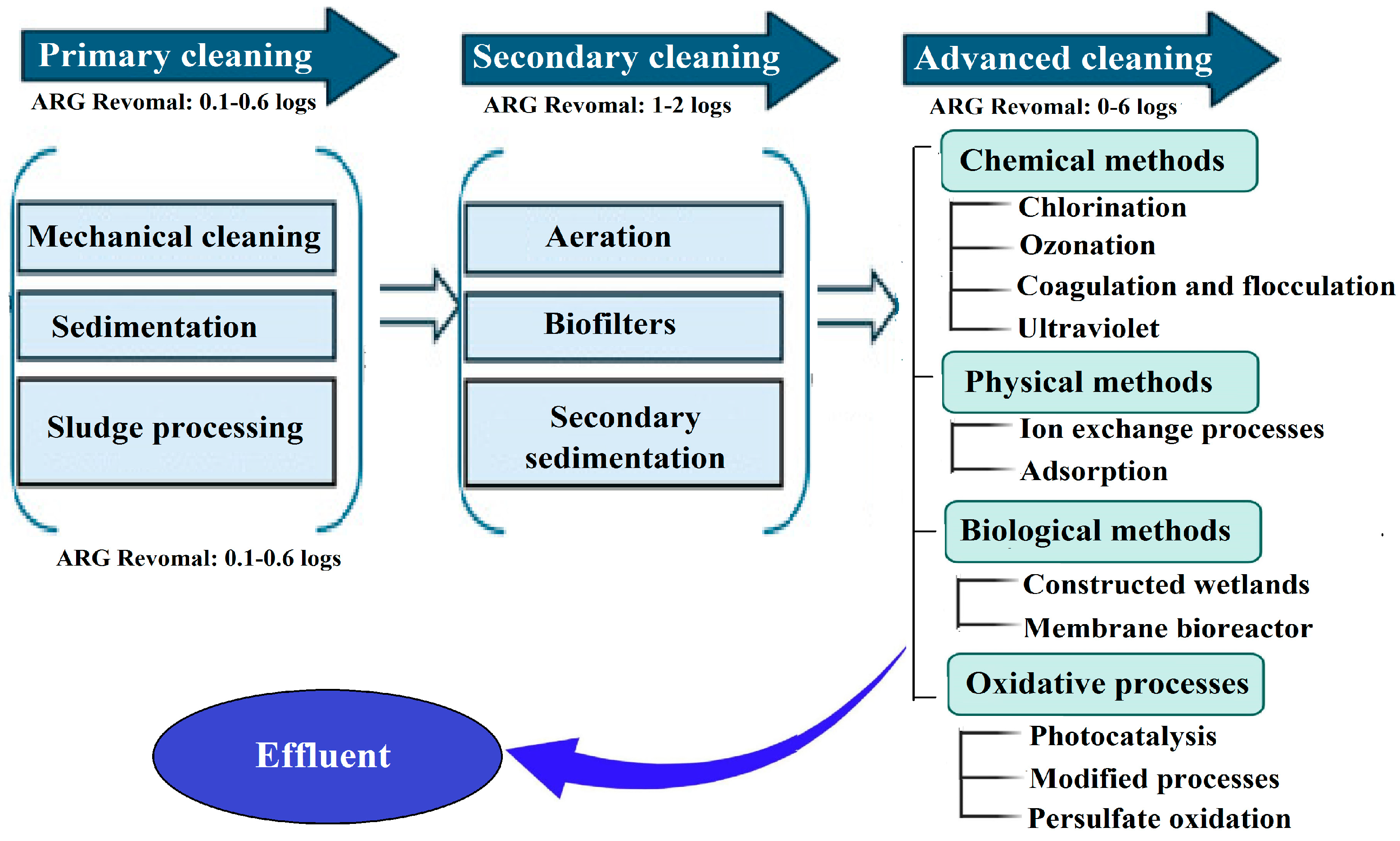
2.1. Primary and Secondary Treatment
2.2. Tertiary Treatment Approaches
2.3. The Potential Use of PRBs in Tertiary Treatment
3. Contaminants of Emerging Concern
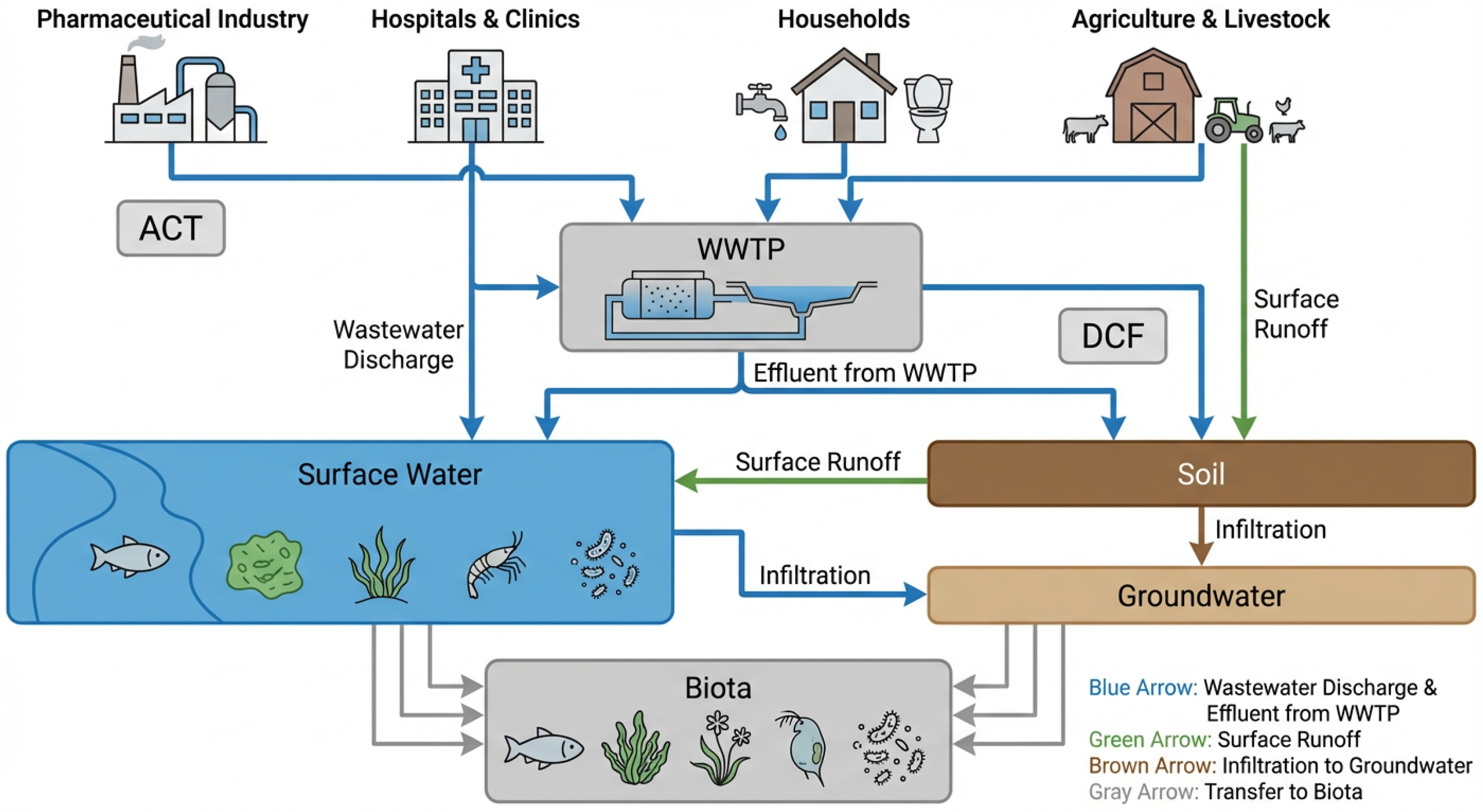
3.1. Sources of Contaminants of Emerging Concern (CECs) in Wastewater and Implications for PRB Implementation
3.2. Hospital and Clinical Sources
3.3. Industrial Sources
3.4. Pharmaceutical Manufacturing
3.5. Agricultural Sources
3.6. Stormwater and Combined Sewer Overflows (CSOs)
3.7. Implications for PRB Deployment
4. Removal of ACT and DCF Using PRBs
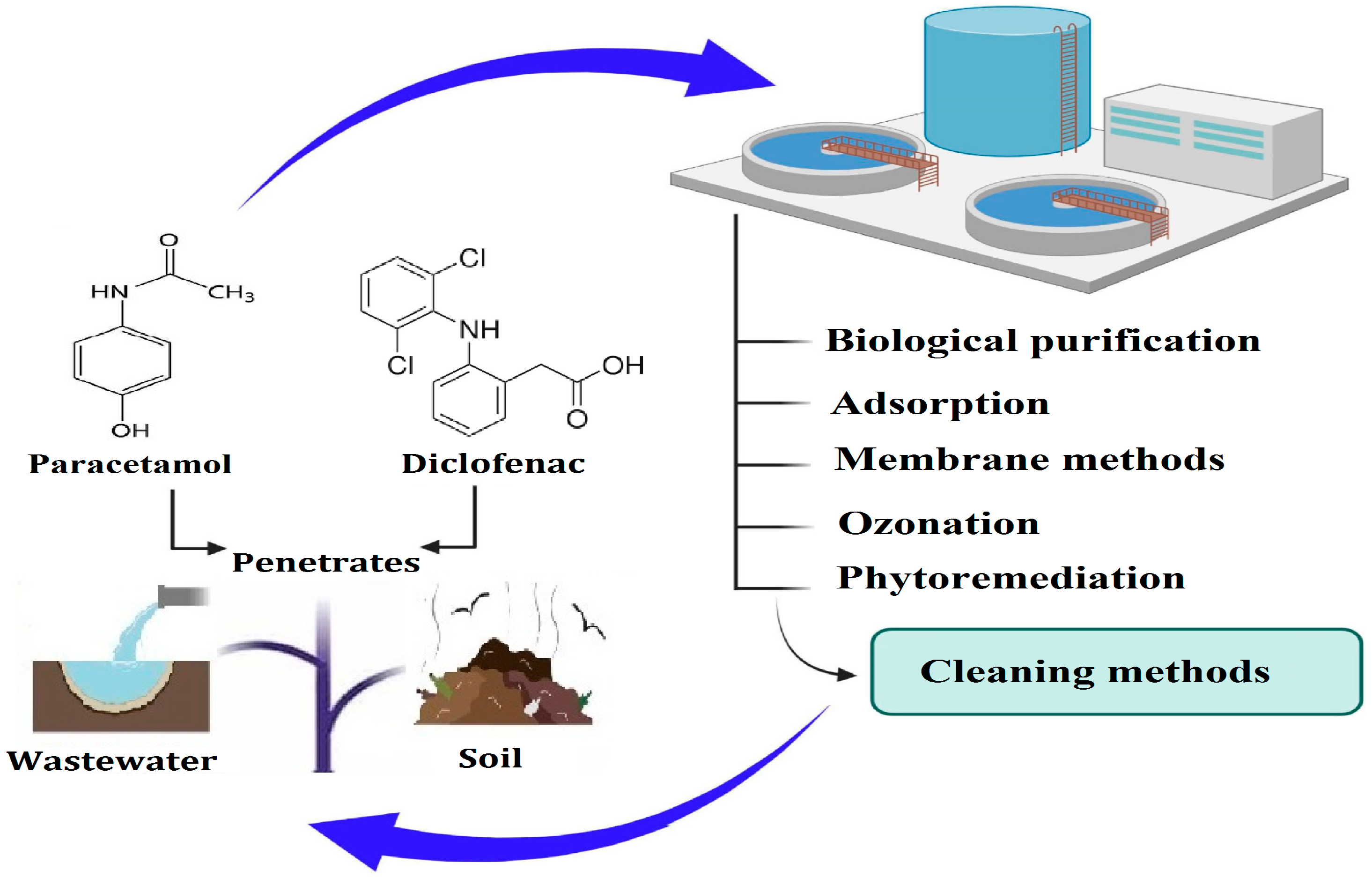
4.1. Other Treatment Technologies
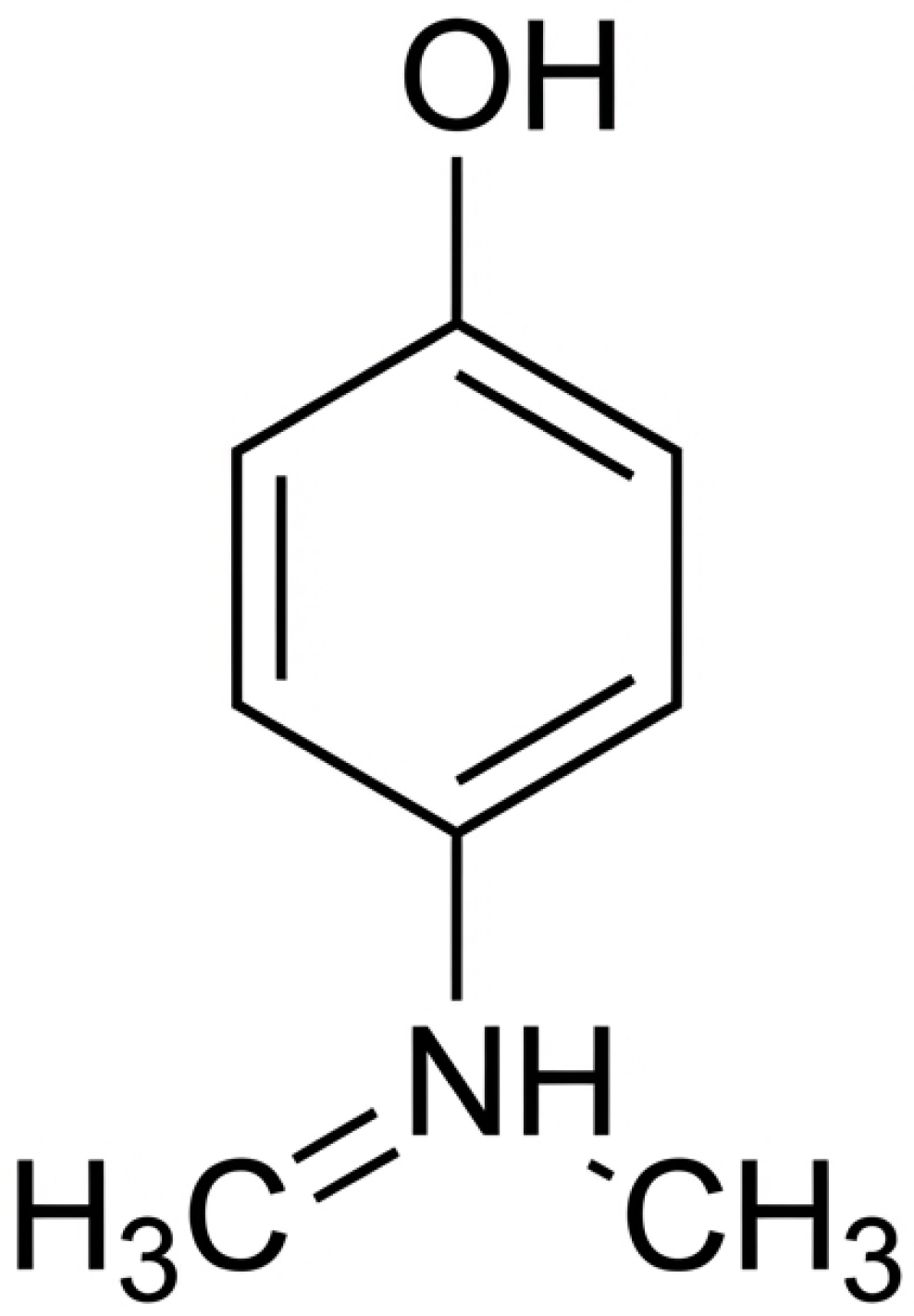
4.2. Paracetamol
4.3. Diclofenac
4.4. Comparative Analysis
4.5. Standardized Biodegradation Tests (OECD/ISO)
5. Permeable Reactive Barriers (PRBs)
5.1. Design and Configuration
5.2. Inexpensive Fillers for Permeable Reactive Barriers
5.3. Operational Costs, Limitations and Future Prospects of PRBs for ACT and DCF Removal
6. Geopolymers
7. Activated Carbon
8. Carbon Nanotubes
9. Hybrid and Composite Materials
10. Conclusions
Author Contributions
Funding
Institutional Review Board Statement
Informed Consent Statement
Data Availability Statement
Conflicts of Interest
Abbreviations
| ACT | paracetamol (acetaminophen) |
| DCF | diclofenac |
| APIs | active pharmaceutical ingredients |
| ARGs | antimicrobial resistance genes |
| AC | activated carbon |
| CNTs | carbon nanotubes |
| CSOs | combined sewer overflows |
References
- Schwarzenbach, R.P.; Escher, B.I.; Fenner, K.; Hofstetter, T.B.; Johnson, C.A.; von Gunten, U.; Wehrli, B. The Challenge of Micropollutants in Aquatic Systems. Science 2006, 313, 1072–1077. [Google Scholar] [CrossRef]
- Wang, Y.; Liu, J.; Kang, D.; Wu, C.; Wu, Y. Removal of Pharmaceuticals and Personal Care Products from Wastewater Using Algae-Based Technologies: A Review. Rev. Environ. Sci. Biotechnol. 2017, 16, 717–735. [Google Scholar] [CrossRef]
- Ustun Odabasi, S.; Buyukgungor, H. Comparative Study of Degradation of Pharmaceutical and Personal Care Products in Wastewater by Advanced Oxidation Processes: Fenton, UV/H2O2, UV/TiO2. Clean Soil Air Water 2024, 52, 2300204. [Google Scholar] [CrossRef]
- Samal, K.; Mahapatra, S.; Hibzur Ali, M. Pharmaceutical Wastewater as Emerging Contaminants (EC): Treatment Technologies, Impact on Environment and Human Health. Energy Nexus 2022, 6, 100076. [Google Scholar] [CrossRef]
- Awathale, S.N.; Kokare, D.M. Pharmaceutical Waste: A Health Risk for Humans. In 360-Degree Waste Management, Volume 2 Biomedical, Pharmaceutical, Industrial Waste, and Remediation; Elsevier: Amsterdam, The Netherlands, 2023; pp. 81–95. [Google Scholar] [CrossRef]
- Ashiwaju, B.I.; Uzougbo, C.G.; Orikpete, O.F. Environmental Impact of Pharmaceuticals: A Comprehensive Review. Matrix Sci. Pharma 2023, 7, 85–94. [Google Scholar] [CrossRef]
- Arman, N.Z.; Salmiati, S.; Aris, A.; Salim, M.R.; Nazifa, T.H.; Muhamad, M.S.; Marpongahtun, M. A Review on Emerging Pollutants in the Water Environment: Existences, Health Effects and Treatment Processes. Water 2021, 13, 3258. [Google Scholar] [CrossRef]
- Bai, X.; Acharya, K. Algae-Mediated Removal of Selected Pharmaceutical and Personal Care Products (PPCPs) from Lake Mead Water. Sci. Total Environ. 2017, 581–582, 734–740. [Google Scholar] [CrossRef]
- Vieno, N.; Sillanpää, M. Fate of DCF in Municipal Wastewater Treatment Plant—A Review. Environ. Int. 2014, 69, 28–39. [Google Scholar] [CrossRef]
- Vieno, N.M.; Härkki, H.; Tuhkanen, T.; Kronberg, L. Occurrence of Pharmaceuticals in River Water and Their Elimination in a Pilot-Scale Drinking Water Treatment Plant. Environ. Sci. Technol. 2007, 41, 5077–5084. [Google Scholar] [CrossRef]
- Rivera-Utrilla, J.; Sánchez-Polo, M.; Ferro-García, M.Á.; Prados-Joya, G.; Ocampo-Pérez, R. Pharmaceuticals as Emerging Contaminants and Their Removal from Water. A Review. Chemosphere 2013, 93, 1268–1287. [Google Scholar] [CrossRef]
- Maryam, B.; Buscio, V.; Odabasi, S.U.; Buyukgungor, H. A Study on Behavior, Interaction and Rejection of ACT, DCF and Ibuprofen (PhACs) from Wastewater by Nanofiltration Membranes. Environ. Technol. Innov. 2020, 18, 100641. [Google Scholar] [CrossRef]
- Madikizela, L.M.; Chimuka, L. Occurrence of Naproxen, Ibuprofen, and DCF Residues in Wastewater and River Water of KwaZulu-Natal Province in South Africa. Environ. Monit. Assess. 2017, 189, 1–12. [Google Scholar] [CrossRef]
- Martínez-Alcalá, I.; Guillén-Navarro, J.M.; Fernández-López, C. Pharmaceutical Biological Degradation, Sorption and Mass Balance Determination in a Conventional Activated-Sludge Wastewater Treatment Plant from Murcia, Spain. Chem. Eng. J. 2017, 316, 332–340. [Google Scholar] [CrossRef]
- Mary Ealias, A.; Meda, G.; Tanzil, K. Recent Progress in Sustainable Treatment Technologies for the Removal of Emerging Contaminants from Wastewater: A Review on Occurrence, Global Status, and Impact on Biota. Rev. Environ. Contam. Toxicol. 2024, 262, 1–83. [Google Scholar] [CrossRef]
- Kermia, A.E.B.; Fouial-Djebbar, D.; Trari, M. Occurrence, Fate, and Removal Efficiencies of Pharmaceuticals in Wastewater Treatment Plants (WWTPs) Discharging in the Coastal Environment of Algiers. Comptes Rendus Chim. 2016, 19, 963–970. [Google Scholar] [CrossRef]
- Joss, A.; Zabczynski, S.; Göbel, A.; Hoffmann, B.; Löffler, D.; McArdell, C.S.; Ternes, T.A.; Thomsen, A.; Siegrist, H. Biological Degradation of Pharmaceuticals in Municipal Wastewater Treatment: Proposing a Classification Scheme. Water Res. 2006, 40, 1686–1696. [Google Scholar] [CrossRef]
- Gros, M.; Petrović, M.; Barceló, D. Tracing Pharmaceutical Residues of Different Therapeutic Classes in Environmental Waters by Using Liquid Chromatography/Quadrupole-Linear Ion Trap Mass Spectrometry and Automated Library Searching. Anal. Chem. 2009, 81, 898–912. [Google Scholar] [CrossRef]
- Gewurtz, S.B.; Auyeung, A.S.; Teslic, S.; Smyth, S.A. Pharmaceuticals and Personal Care Products in Canadian Municipal Wastewater and Biosolids: Occurrence, Fate, and Time Trends 2010–2013 to 2022. Environ. Sci. Pollut. Res. 2025, 32, 5022–5039. [Google Scholar] [CrossRef]
- Alfonso-Muniozguren, P.; Serna-Galvis, E.A.; Bussemaker, M.; Torres-Palma, R.A.; Lee, J. A Review on Pharmaceuticals Removal from Waters by Single and Combined Biological, Membrane Filtration and Ultrasound Systems. Ultrason. Sonochem. 2021, 76, 105656. [Google Scholar] [CrossRef]
- Chia, R.W.; Lee, J.Y.; Kim, H.; Jang, J. Microplastic Pollution in Soil and Groundwater: A Review. Environ. Chem. Lett. 2021, 19, 4211–4224. [Google Scholar] [CrossRef]
- Choubert, J.M.; Martin-Ruel, S.; Budzinski, H.; Miège, C.; Esperanza, M.; Soulier, C.; Ugarrigue, C.; Coquery, M. Removal of Micropollutants by Domestic Conventional Wastewater Treatment Plants and Advanced Tertiary Process: Specific Method and Results of the Amperes Project. Tech. Sci. Methodes 2011, 1–2, 44–62. [Google Scholar] [CrossRef]
- Alqarni, A.M. Analytical Methods for the Determination of Pharmaceuticals and Personal Care Products in Solid and Liquid Environmental Matrices: A Review. Molecules 2024, 29, 3900. [Google Scholar] [CrossRef] [PubMed]
- Ali, M.E.M.; Abd El-Aty, A.M.; Badawy, M.I.; Ali, R.K. Removal of Pharmaceutical Pollutants from Synthetic Wastewater Using Chemically Modified Biomass of Green Alga Scenedesmus Obliquus. Ecotoxicol. Environ. Saf. 2018, 151, 144–152. [Google Scholar] [CrossRef]
- Das, S.; Parida, V.K.; Tiwary, C.S.; Gupta, A.K.; Chowdhury, S. Emerging Contaminants in the Aquatic Environment: Fate, Occurrence, Impacts, and Toxicity. In Bioremediation of Emerging Contaminants in Water; ACS Publications: Washington, DC, USA, 2024; Volume 1, pp. 1–32. [Google Scholar] [CrossRef]
- Shah, M.P.; Vasantharaj, K.; Saranya, N. Bioremediation of Emerging Contaminants in Water, Volume 1; ACS Publications: Washington, DC, USA, 2024; Volume 1475. [Google Scholar] [CrossRef]
- David, A.; Chaker, J.; Léger, T.; Al-Salhi, R.; Dalgaard, M.D.; Styrishave, B.; Bury, D.; Koch, H.M.; Jégou, B.; Kristensen, D.M. Acetaminophen Metabolism Revisited Using Non-Targeted Analyses: Implications for Human Biomonitoring. Environ. Int. 2021, 149, 106388. [Google Scholar] [CrossRef]
- Gorrochategui, E.; Le Vee, M.; Selmi, H.; Gérard, A.; Chaker, J.; Krais, A.M.; Lindh, C.; Fardel, O.; Chevrier, C.; Le Cann, P.; et al. ACT/Acetaminophen Hepatotoxicity: New Markers for Monitoring the Elimination of the Reactive N-Acetyl-p-Benzoquinone Imine. bioRxiv 2023. [Google Scholar] [CrossRef]
- McGill, M.R.; Jaeschke, H. Metabolism and Disposition of Acetaminophen: Recent Advances in Relation to Hepatotoxicity and Diagnosis. Pharm. Res. 2013, 30, 2174–2187. [Google Scholar] [CrossRef]
- D’Souza, G.B.; Sanjay, M.M.; Bhardwaj, P.; Maraddi, A.; Kamath, S.; Yoon, H.; Nataraj, S.K. Functional Bio-Foam Filters: An Effective Barrier for Microplastic and Other Emerging Pollutant Containment. Mater. Today Sustain. 2024, 26, 100777. [Google Scholar] [CrossRef]
- Bing, J.; Hu, C.; Nie, Y.; Yang, M.; Qu, J. Mechanism of Catalytic Ozonation in Fe2O3/Al2O3@SBA-15 Aqueous Suspension for Destruction of Ibuprofen. Environ. Sci. Technol. 2015, 49, 1690–1697. [Google Scholar] [CrossRef]
- Hollman, J.; Dominic, J.A.; Achari, G.; Langford, C.H.; Tay, J.H. Effect of UV Dose on Degradation of Venlafaxine Using UV/H2O2: Perspective of Augmenting UV Units in Wastewater Treatment. Environ. Technol. 2020, 41, 1107–1116. [Google Scholar] [CrossRef] [PubMed]
- Andreozzi, R.; Caprio, V.; Marotta, R.; Vogna, D. ACT Oxidation from Aqueous Solutions by Means of Ozonation and H2O2/UV System. Water Res. 2003, 37, 993–1004. [Google Scholar] [CrossRef]
- Hernando, M.D.; Mezcua, M.; Fernández-Alba, A.R.; Barceló, D. Environmental Risk Assessment of Pharmaceutical Residues in Wastewater Effluents, Surface Waters and Sediments. Talanta 2006, 69, 334–342. [Google Scholar] [CrossRef]
- Kosma, C.I.; Lambropoulou, D.A.; Albanis, T.A. Investigation of PPCPs in Wastewater Treatment Plants in Greece: Occurrence, Removal and Environmental Risk Assessment. Sci. Total Environ. 2014, 466–467, 421–438. [Google Scholar] [CrossRef]
- Wang, B.; Luo, Q.; Pan, Y.; Mei, Z.; Sun, T.; Zhong, Z.; He, F.; Liang, L.; Wang, Z.; Xing, B. Enhanced Biogenic Sulfidation of Zero-Valent Iron in Columns: Implications for Promoting Dechlorination in Permeable Reactive Barriers. Environ. Sci. Technol. 2023, 57, 20951–20961. [Google Scholar] [CrossRef]
- Wang, Y.; Wang, C.; Feng, R.; Li, Y.; Zhang, Z.; Guo, S. A Review of Passive Acid Mine Drainage Treatment by PRB and LPB: From Design, Testing, to Construction. Environ. Res. 2024, 251, 118545. [Google Scholar] [CrossRef]
- Falciglia, P.P.; Gagliano, E.; Brancato, V.; Finocchiaro, G.; Catalfo, A.; De Guidi, G.; Romano, S.; Roccaro, P.; Vagliasindi, F.G.A. Field Technical Applicability and Cost Analysis for Microwave Based Regenerating Permeable Reactive Barriers (MW-PRBs) Operating in Cs-Contaminated Groundwater Treatment. J. Environ. Manag. 2020, 260, 110064. [Google Scholar] [CrossRef] [PubMed]
- Caraballo, M.A.; Santofimia, E.; Jarvis, A.P. Metal Retention, Mineralogy, and Design Considerations of a Mature Permeable Reactive Barrier (PRB) for Acidic Mine Water Drainage in Northumberland, U.K. Am. Mineral. 2010, 95, 1642–1649. [Google Scholar] [CrossRef]
- Khoshvaght, H.; Delnavaz, M.; Leili, M. Optimization of Acetaminophen Removal from High Load Synthetic Pharmaceutical Wastewater by Experimental and ANOVA Analysis. J. Water Process Eng. 2021, 42, 102107. [Google Scholar] [CrossRef]
- Jwaida, Z.; Dulaimi, A.; Mashaan, N.; Othuman Mydin, M.A. Geopolymers: The Green Alternative to Traditional Materials for Engineering Applications. Infrastructures 2023, 8, 98. [Google Scholar] [CrossRef]
- Madirisha, M.M.; Dada, O.R.; Ikotun, B.D. Chemical Fundamentals of Geopolymers in Sustainable Construction. Mater. Today Sustain. 2024, 27, 100842. [Google Scholar] [CrossRef]
- Mechnou, I.; Benabdallah, A.; Chham, A.I.; Rachdi, Y.; Hlaibi, M.; El Kartouti, A.; Saleh, N. Activated Carbons for Effective Pharmaceutical Adsorption: Impact of Feedstock Origin, Activation Agents, Adsorption Conditions, and Cost Analysis. Results Eng. 2025, 27, 105966. [Google Scholar] [CrossRef]
- Ayilara, M.S.; Babalola, O.O. Bioremediation of Environmental Wastes: The Role of Microorganisms. Front. Agron. 2023, 5, 1183691. [Google Scholar] [CrossRef]
- Samal, K.; Dash, R.R.; Bhunia, P. Treatment of Wastewater by Vermifiltration Integrated with Macrophyte Filter: A Review. J. Environ. Chem. Eng. 2017, 5, 2274–2289. [Google Scholar] [CrossRef]
- de Azevedo, C.F.; Machado, F.M.; de Souza, N.F.; Silveira, L.L.; Lima, E.C.; Andreazza, R.; Bergamnn, C.P. Comprehensive Adsorption and Spectroscopic Studies on the Interaction of Carbon Nanotubes with DCF Anti-Inflammatory. Chem. Eng. J. 2023, 454, 140102. [Google Scholar] [CrossRef]
- Jung, C.; Son, A.; Her, N.; Zoh, K.D.; Cho, J.; Yoon, Y. Removal of Endocrine Disrupting Compounds, Pharmaceuticals, and Personal Care Products in Water Using Carbon Nanotubes: A Review. J. Ind. Eng. Chem. 2015, 27, 1–11. [Google Scholar] [CrossRef]
- Bala, S.; Garg, D.; Thirumalesh, B.V.; Sharma, M.; Sridhar, K.; Inbaraj, B.S.; Tripathi, M. Recent Strategies for Bioremediation of Emerging Pollutants: A Review for a Green and Sustainable Environment. Toxics 2022, 10, 484. [Google Scholar] [CrossRef] [PubMed]
- Fent, K.; Weston, A.A.; Caminada, D. Ecotoxicology of Human Pharmaceuticals. Aquat. Toxicol. 2006, 76, 122–159. [Google Scholar] [CrossRef] [PubMed]
- Bound, J.P.; Voulvoulis, N. Household Disposal of Pharmaceuticals as a Pathway for Aquatic Contamination in the United Kingdom. Environ. Health Perspect. 2005, 113, 1705–1711. [Google Scholar] [CrossRef]
- Chakraborty, A.; Adhikary, S.; Bhattacharya, S.; Dutta, S.; Chatterjee, S.; Banerjee, D.; Ganguly, A.; Rajak, P. Pharmaceuticals and Personal Care Products as Emerging Environmental Contaminants: Prevalence, Toxicity, and Remedial Approaches. ACS Chem. Health Saf. 2023, 30, 362–388. [Google Scholar] [CrossRef]
- Zhu, S.; Liu, Y.-G.; Liu, S.-B.; Zeng, G.-M.; Jiang, L.-H.; Tan, X.F.; Zhou, L.; Zeng, W.; Li, T.-T.; Yang, C.-P. Adsorption of Emerging Contaminant Metformin Using Graphene Oxide. Chemosphere 2017, 179, 20–28. [Google Scholar] [CrossRef]
- Wang, J.; Wang, S. Removal of Pharmaceuticals and Personal Care Products (PPCPs) from Wastewater: A Review. J. Environ. Manag. 2016, 182, 620–640. [Google Scholar] [CrossRef]
- Ternes, T.A.; Joss, A.; Siegrist, H. Peer Reviewed: Scrutinizing Pharmaceuticals and Personal Care Products in Wastewater Treatment. Environ. Sci. Technol. 2004, 38, 392A–399A. [Google Scholar] [CrossRef] [PubMed]
- Joya-Cárdenas, D.R.; Rodríguez-Caicedo, J.P.; Corona-Rivera, M.A.; Saldaña-Robles, N.; Damián-Ascencio, C.E.; Saldaña-Robles, A. Removal of As(V) in the Presence of Cr(VI) in Contaminated Water from the Bajio Region of Mexico Using Ferrihydrite-Functionalized Graphene Oxide (GOFH): A Case Study. Emerg. Contam. 2024, 10, 100312. [Google Scholar] [CrossRef]
- Rouibah, K.; Ferkous, H.; Abdessalam-Hassan, M.; Mossab, B.L.; Boublia, A.; Pierlot, C.; Abdennouri, A.; Avramova, I.; Alam, M.; Benguerba, Y.; et al. Exploring the Efficiency of Algerian Kaolinite Clay in the Adsorption of Cr(III) from Aqueous Solutions: Experimental and Computational Insights. Molecules 2024, 29, 2135. [Google Scholar] [CrossRef]
- Yang, X.; Bai, Y.; Li, Q.; Wang, J. Preparation and Adsorption Properties of MCM-41 with Novel Gemini Ionic Liquid Surfactants as Template. Materials 2022, 15, 2780. [Google Scholar] [CrossRef] [PubMed]
- Andreozzi, R.; Raffaele, M.; Nicklas, P. Pharmaceuticals in STP Effluents and Their Solar Photodegradation in Aquatic Environment. Chemosphere 2003, 50, 1319–1330. [Google Scholar] [CrossRef]
- Kong, S.; Wang, Y.; Zhan, H.; Yuan, S.; Liu, M.; Zhou, C. Arsenite and Arsenate Removal from Contaminated Groundwater by Nanoscale Iron-Manganese Binary Oxides: Column Studies. Environ. Eng. Sci. 2013, 30, 689–696. [Google Scholar] [CrossRef]
- Vargas, A.J.A.; Molina, P.X.R. Authentic Materials and Task Design: A Teaching Amalgam. Colomb. Appl. Linguist. J. 2023, 25, 118–131. [Google Scholar] [CrossRef]
- Michaut, A.; Moreau, C.; Robin, M.A.; Fromenty, B. Acetaminophen-Induced Liver Injury in Obesity and Nonalcoholic Fatty Liver Disease. Liver Int. 2014, 34, e171–e179. [Google Scholar] [CrossRef]
- Sophia, A.C.; Lima, E.C. Removal of Emerging Contaminants from the Environment by Adsorption. Ecotoxicol. Environ. Saf. 2018, 150, 1–17. [Google Scholar] [CrossRef] [PubMed]
- Dehghani, M.H.; Ahmadi, S.; Ghosh, S.; Khan, M.S.; Othmani, A.; Khanday, W.A.; Gökkuş, Ö.; Osagie, C.; Ahmaruzzaman, M.; Mishra, S.R.; et al. Sustainable Remediation Technologies for Removal of Pesticides as Organic Micro-Pollutants from Water Environments: A Review. Appl. Surf. Sci. Adv. 2024, 19, 100558. [Google Scholar] [CrossRef]
- Vithanage, M.; Sandaruwan, L.; Samarasinghe, G.; Jayawardhana, Y. Clay-Biochar Composite for Arsenic Removal from Aqueous Media. In Environmental Arsenic in a Changing World; Taylor and Francis Group: Abingdon, UK, 2018; pp. 437–438. [Google Scholar] [CrossRef]
- Oprescu, E.E.; Enascuta, E.C.; Vasilievici, G.; Banu, N.D.; Banu, I. Preparation of Magnetic Biochar for Nitrate Removal from Aqueous Solutions. React. Kinet. Mech. Catal. 2022, 135, 2629–2642. [Google Scholar] [CrossRef]
- Akhtar, M.S.; Ali, S.; Zaman, W. Innovative Adsorbents for Pollutant Removal: Exploring the Latest Research and Applications. Molecules 2024, 29, 4317. [Google Scholar] [CrossRef]
- Dolliver, H.; Gupta, S. Antibiotic Losses in Leaching and Surface Runoff from Manure-Amended Agricultural Land. J. Environ. Qual. 2008, 37, 1227–1237. [Google Scholar] [CrossRef] [PubMed]
- Tetteh, S.; Quashie, A.; Anang, M.A. Purification, Characterization, and Time-Dependent Adsorption Studies of Ghanaian Muscovite Clay. J. Chem. 2018, 2018, 1–8. [Google Scholar] [CrossRef]
- La Mantia, F.P.; Ceraulo, M.; Testa, P.; Morreale, M. Biodegradable Polymers for the Production of Nets for Agricultural Product Packaging. Materials 2021, 14, 323. [Google Scholar] [CrossRef] [PubMed]
- Ma, L.; Liu, Y.; Yang, Q.; Jiang, L.; Li, G. Occurrence and Distribution of Pharmaceuticals and Personal Care Products (PPCPs) in Wastewater Related Riverbank Groundwater. Sci. Total Environ. 2022, 821, 153372. [Google Scholar] [CrossRef]
- Sánchez Hidalgo, G.C.; Ábrego-Bonilla, J.; Deago, E.; Ortega Del Rosario, M.D.L.A. Global Perspectives on Groundwater Decontamination: Advances and Challenges of the Role of Permeable Reactive Barriers. Hydrology 2025, 12, 98. [Google Scholar] [CrossRef]
- Yuan, L.; Wang, K.; Zhao, Q.; Yang, L.; Wang, G.; Jiang, M.; Li, L. An Overview of in Situ Remediation for Groundwater Co-Contaminated with Heavy Metals and Petroleum Hydrocarbons. J. Environ. Manag. 2024, 349, 119342. [Google Scholar] [CrossRef] [PubMed]
- Huang, Z.; Hu, B.; Wang, H. Analytical Methods for Microplastics in the Environment: A Review. Environ. Chem. Lett. 2023, 21, 383–401. [Google Scholar] [CrossRef]
- Singh, R.; Chakma, S.; Birke, V. Performance of Field-Scale Permeable Reactive Barriers: An Overview on Potentials and Possible Implications for in-Situ Groundwater Remediation Applications. Sci. Total Environ. 2023, 858, 158838. [Google Scholar] [CrossRef]
- de Wilt, A.; Butkovskyi, A.; Tuantet, K.; Leal, L.H.; Fernandes, T.V.; Langenhoff, A.; Zeeman, G. Micropollutant Removal in an Algal Treatment System Fed with Source Separated Wastewater Streams. J. Hazard. Mater. 2016, 304, 84–92. [Google Scholar] [CrossRef]
- Aga, D.S.; Samara, F.; Dronjak, L.; Kanan, S.; Mortula, M.M.; Vahapoglu, L. Rising Water, Rising Risks: The Hidden Dangers of Emerging Contaminants in Climate-Intensified Storms. ACS ES&T Water 2024, 4, 2785–2788. [Google Scholar] [CrossRef]
- Saim, S.; Mokrani, S.; Martínez-Alcalá, I. Pharmaceutical Micropollutants in Wastewater: A Case Study of the Mascara WWTP (Algeria). Processes 2025, 13, 3205. [Google Scholar] [CrossRef]
- Becker, J.; Stefanakis, A. Pharmaceuticals and Personal Care Products as Emerging Water Contaminants. Pharm. Sci. Break. Res. Pract. 2016, 2, 1457–1475. [Google Scholar] [CrossRef]
- Gorgolis, G.; Tunioli, F.; Paterakis, G.; Melucci, M.; Koutroumanis, N.; Sygellou, L.; Bafqi, M.S.S.; Saner Okan, B.; Galiotis, C. Enhanced Removal of Emerging Contaminants from Tap Water by Developing Graphene Oxide and Nanoplatelet Hybrid Aerogels. RSC Adv. 2024, 14, 34504–34514. [Google Scholar] [CrossRef] [PubMed]
- Alam, M.S.; Tahriri, F.; Chen, G. Trends, Challenges, and Research Pathways in Emerging Contaminants: A Comprehensive Bibliometric Analysis. Integr. Environ. Assess. Manag. 2025, 21, 496–506. [Google Scholar] [CrossRef]
- Patel, M.; Kumar, R.; Kishor, K.; Mlsna, T.; Pittman, C.U.; Mohan, D. Pharmaceuticals of Emerging Concern in Aquatic Systems: Chemistry, Occurrence, Effects, and Removal Methods. Chem. Rev. 2019, 119, 3510–3673. [Google Scholar] [CrossRef] [PubMed]
- Ortúzar, M.; Esterhuizen, M.; Olicón-Hernández, D.R.; González-López, J.; Aranda, E. Pharmaceutical Pollution in Aquatic Environments: A Concise Review of Environmental Impacts and Bioremediation Systems. Front. Microbiol. 2022, 13, 869332. [Google Scholar] [CrossRef]
- Kadadou, D.; Tizani, L.; Alsafar, H.; Hasan, S.W. Analytical Methods for Determining Environmental Contaminants of Concern in Water and Wastewater. MethodsX 2024, 12, 102582. [Google Scholar] [CrossRef]
- Wei, J.; Wang, L.; Liu, Y.; Ding, D.; Li, Q.; Liu, Y.; Chen, Y.; Mao, M.; Deng, S. Synergistic Ultra-High Adsorption and Oxidation of Arsenic in Groundwater by Iron-Modified Biochar: Mechanisms and Potential Application. Chem. Eng. J. 2024, 499, 156281. [Google Scholar] [CrossRef]
- Hawal, L.H.; Allah, S.A.; Karbol, M.S. Cadmium Ions Adsorption from Aqueous Solutions by Bentonite Clay, Fixed Bed Column. J. Phys. Conf. Ser. 2021, 1895, 012040. [Google Scholar] [CrossRef]
- Fernandes, J.P.; Almeida, C.M.R.; Salgado, M.A.; Carvalho, M.F.; Mucha, A.P. Pharmaceutical Compounds in Aquatic Environments—Occurrence, Fate and Bioremediation Prospective. Toxics 2021, 9, 257. [Google Scholar] [CrossRef]
- Bermúdez, L.A.; Pascual, J.M.; Martínez, M.D.M.M.; Capilla, J.M.P. Effectiveness of Advanced Oxidation Processes in Wastewater Treatment: State of the Art. Water 2021, 13, 2094. [Google Scholar] [CrossRef]
- Hollender, J.; Zimmermann, S.G.; Koepke, S.; Krauss, M.; Mcardell, C.S.; Ort, C.; Singer, H.; Von Gunten, U.; Siegrist, H. Elimination of Organic Micropollutants in a Municipal Wastewater Treatment Plant Upgraded with a Full-Scale Post-Ozonation Followed by Sand Filtration. Environ. Sci. Technol. 2009, 43, 7862–7869. [Google Scholar] [CrossRef]
- Ensano, B.M.B.; Borea, L.; Naddeo, V.; Belgiorno, V.; de Luna, M.D.G.; Balakrishnan, M.; Ballesteros, F.C. Applicability of the Electrocoagulation Process in Treating Real Municipal Wastewater Containing Pharmaceutical Active Compounds. J. Hazard. Mater. 2019, 361, 367–373. [Google Scholar] [CrossRef] [PubMed]
- Oluwalana, A.E.; Musvuugwa, T.; Sikwila, S.T.; Sefadi, J.S.; Whata, A.; Nindi, M.M.; Chaukura, N. The Screening of Emerging Micropollutants in Wastewater in Sol Plaatje Municipality, Northern Cape, South Africa. Environ. Pollut. 2022, 314, 120275. [Google Scholar] [CrossRef]
- Nouha, K.; S, Y.; RD, T.; RY, S. EPS Producing Microorganisms from Municipal Wastewater Activated Sludge. J. Pet. Environ. Biotechnol. 2016, 7, 1000255. [Google Scholar] [CrossRef]
- Bodík, I.; Mackuľak, T.; Fáberová, M.; Ivanová, L. Occurrence of Illicit Drugs and Selected Pharmaceuticals in Slovak Municipal Wastewater. Environ. Sci. Pollut. Res. 2016, 23, 21098–21105. [Google Scholar] [CrossRef] [PubMed]
- Heberer, T. Tracking Persistent Pharmaceutical Residues from Municipal Sewage to Drinking Water. J. Hydrol. 2002, 266, 175–189. [Google Scholar] [CrossRef]
- Rizzo, L.; Manaia, C.; Merlin, C.; Schwartz, T.; Dagot, C.; Ploy, M.C.; Michael, I.; Fatta-Kassinos, D. Urban Wastewater Treatment Plants as Hotspots for Antibiotic Resistant Bacteria and Genes Spread into the Environment: A Review. Sci. Total Environ. 2013, 447, 345–360. [Google Scholar] [CrossRef]
- Chen, J.; Liu, Y.S.; Su, H.C.; Ying, G.G.; Liu, F.; Liu, S.S.; He, L.Y.; Chen, Z.F.; Yang, Y.Q.; Chen, F.R. Removal of Antibiotics and Antibiotic Resistance Genes in Rural Wastewater by an Integrated Constructed Wetland. Environ. Sci. Pollut. Res. 2015, 22, 1794–1803. [Google Scholar] [CrossRef]
- Proia, L.; Adriana, A.; Jessica, S.; Carles, B.; Marinella, F.; Marta, L.; Luis, B.J.; Servais, P. Antibiotic Resistance in Urban and Hospital Wastewaters and Their Impact on a Receiving Freshwater Ecosystem. Chemosphere 2018, 206, 70–82. [Google Scholar] [CrossRef] [PubMed]
- Chu, L.; Wang, J.; He, S.; Chen, C.; Wojnárovits, L.; Takács, E. Treatment of Pharmaceutical Wastewater by Ionizing Radiation: Removal of Antibiotics, Antimicrobial Resistance Genes and Antimicrobial Activity. J. Hazard. Mater. 2021, 415, 125724. [Google Scholar] [CrossRef]
- Rolbiecki, D.; Harnisz, M.; Korzeniewska, E.; Jałowiecki, Ł.; Płaza, G. Occurrence of Fluoroquinolones and Sulfonamides Resistance Genes in Wastewater and Sludge at Different Stages of Wastewater Treatment: A Preliminary Case Study. Appl. Sci. 2020, 10, 5816. [Google Scholar] [CrossRef]
- Vieno, N.M.; Tuhkanen, T.; Kronberg, L. Elimination of Pharmaceuticals in Sewage Treatment Plants in Finland. Water Res. 2007, 41, 1001–1012. [Google Scholar] [CrossRef]
- Denora, M.; Mehmeti, A.; Candido, V.; Brunetti, G.; De Mastro, F.; Murgolo, S.; De Ceglie, C.; Gatta, G.; Giuliani, M.M.; Fiorentino, C.; et al. Fate of Emerging Contaminants in the Soil-Plant System: A Study on Durum Wheat Irrigated with Treated Municipal Wastewater. Front. Soil Sci. 2024, 4, 1448016. [Google Scholar] [CrossRef]
- Kovalova, L.; Knappe, D.R.U.; Lehnberg, K.; Kazner, C.; Hollender, J. Removal of Highly Polar Micropollutants from Wastewater by Powdered Activated Carbon. Environ. Sci. Pollut. Res. 2013, 20, 3607–3615. [Google Scholar] [CrossRef] [PubMed]
- Balali-Mood, M.; Naseri, K.; Tahergorabi, Z.; Khazdair, M.R.; Sadeghi, M. Toxic Mechanisms of Five Heavy Metals: Mercury, Lead, Chromium, Cadmium, and Arsenic. Front. Pharmacol. 2021, 12, 643972. [Google Scholar] [CrossRef]
- Yuan, F.; Hu, C.; Hu, X.; Wei, D.; Chen, Y.; Qu, J. Photodegradation and Toxicity Changes of Antibiotics in UV and UV/H2O2 Process. J. Hazard. Mater. 2011, 185, 1256–1263. [Google Scholar] [CrossRef] [PubMed]
- Mutiyar, P.K.; Mittal, A.K. Risk Assessment of Antibiotic Residues in Different Water Matrices in India: Key Issues and Challenges. Environ. Sci. Pollut. Res. 2014, 21, 7723–7736. [Google Scholar] [CrossRef]
- Mackuľak, T.; Medvecká, E.; Vojs Staňová, A.; Brandeburová, P.; Grabic, R.; Golovko, O.; Marton, M.; Bodík, I.; Medveďová, A.; Gál, M.; et al. Boron Doped Diamond Electrode—The Elimination of Psychoactive Drugs and Resistant Bacteria from Wastewater. Vacuum 2020, 171, 108957. [Google Scholar] [CrossRef]
- Tsikas, D.; Trettin, A.; Zörner, A.A.; Gutzki, F.M. In-Source Formation of N-Acetyl-p-Benzoquinone Imine (NAPQI), the Putatively Toxic Acetaminophen Metabolite, after Derivatization with Pentafluorobenzyl Bromide and GC-ECNICI-MS Analysis. J. Chromatogr. B Anal. Technol. Biomed. Life Sci. 2011, 879, 1476–1484. [Google Scholar] [CrossRef]
- Koumaki, E.; Noutsopoulos, C.; Mamais, D.; Fragkiskatos, G.; Andreadakis, A. Fate of Emerging Contaminants in High-Rate Activated Sludge Systems. Int. J. Environ. Res. Public Health 2021, 18, 400. [Google Scholar] [CrossRef] [PubMed]
- Xu, S.; Yao, J.; Ainiwaer, M.; Hong, Y.; Zhang, Y. Analysis of Bacterial Community Structure of Activated Sludge from Wastewater Treatment Plants in Winter. Biomed Res. Int. 2018, 2018, 1–8. [Google Scholar] [CrossRef]
- Díaz-Gamboa, L.; Martínez-López, S.; Ayuso-García, L.M.; Lahora, A.; Martínez-Alcalá, I. Can Lagoons Serve as a Quaternary Treatment for Micropollutants in Wastewater Treatment Plants? Recent Implications for Compliance with the New Urban Wastewater Treatment Directive. Environments 2024, 11, 105. [Google Scholar] [CrossRef]
- Moussaoui, T.; Derdour, A.; Hosni, A.; Ballesta-de los Santos, M.; Legua, P.; Pardo-Picazo, M.Á. Assessing the Quality of Treated Wastewater for Irrigation: A Case Study of Ain Sefra Wastewater Treatment Plant. Sustainability 2023, 15, 11133. [Google Scholar] [CrossRef]
- Ghosh, R.; Parde, D.; Bhaduri, S.; Rajpurohit, P.; Behera, M. Occurrence, Fate, Transport, and Removal Technologies of Emerging Contaminants: A Review on Recent Advances and Future Perspectives. Clean Soil Air Water 2024, 52, 2300259. [Google Scholar] [CrossRef]
- Nebot, C.; Falcon, R.; Boyd, K.G.; Gibb, S.W. Introduction of Human Pharmaceuticals from Wastewater Treatment Plants into the Aquatic Environment: A Rural Perspective. Environ. Sci. Pollut. Res. 2015, 22, 10559–10568. [Google Scholar] [CrossRef]
- Sackey, L.N.A.; Okobeng, A.; Obidieh, P.Y.; Ngala, F.M.M.; Otoo, E.B.; Quartey, J.; Bentil, J.A.; Azanu, D. Risk Assessment of Pharmaceutical Contaminants in Pharmaceutical Wastewater. Sci. World J. 2024, 2024, 5538398. [Google Scholar] [CrossRef]
- Gorito, A.M.; Ribeiro, A.R.L.; Ramos, S.; Silva, A.M.T.; Almeida, C.M.R. Occurrence of Micropollutants in Surface Waters: Monitoring of Portuguese Lima and Douro River Estuaries and Interconnecting Northwest Coast. Mar. Pollut. Bull. 2024, 209, 117140. [Google Scholar] [CrossRef]
- Samal, K.; Bandyopadhyay, R.; Dash, R.R. Biological Treatment of Contaminants of Emerging Concern in Wastewater: A Review. J. Hazard. Toxic Radioact. Waste 2022, 26, 04022002. [Google Scholar] [CrossRef]
- Togola, A.; Budzinski, H. Analytical Development for Analysis of Pharmaceuticals in Water Samples by SPE and GC-MS. Anal. Bioanal. Chem. 2007, 388, 627–635. [Google Scholar] [CrossRef] [PubMed]
- Fan, H.; Li, J.; Zhang, L.; Feng, L. Contribution of Sludge Adsorption and Biodegradation to the Removal of Five Pharmaceuticals in a Submerged Membrane Bioreactor. Biochem. Eng. J. 2014, 88, 101–107. [Google Scholar] [CrossRef]
- Nishmitha, P.S.; Akhilghosh, K.A.; Aiswriya, V.P.; Ramesh, A.; Muthuchamy, M.; Muthukumar, A. Understanding Emerging Contaminants in Water and Wastewater: A Comprehensive Review on Detection, Impacts, and Solutions. J. Hazard. Mater. Adv. 2025, 18, 100755. [Google Scholar] [CrossRef]
- Radjenović, J.; Petrović, M.; Barceló, D. Fate and Distribution of Pharmaceuticals in Wastewater and Sewage Sludge of the Conventional Activated Sludge (CAS) and Advanced Membrane Bioreactor (MBR) Treatment. Water Res. 2009, 43, 831–841. [Google Scholar] [CrossRef]
- Kumar, N.; Shukla, P. Microalgal-Based Bioremediation of Emerging Contaminants: Mechanisms and Challenges. Environ. Pollut. 2023, 337, 122591. [Google Scholar] [CrossRef] [PubMed]
- Gattullo, C.E.; Bährs, H.; Steinberg, C.E.W.; Loffredo, E. Removal of Bisphenol A by the Freshwater Green Alga Monoraphidium Braunii and the Role of Natural Organic Matter. Sci. Total Environ. 2012, 416, 501–506. [Google Scholar] [CrossRef]
- Bilal, M.; Jing, Z.; Zhao, Y.; Iqbal, H.M.N. Immobilization of Fungal Laccase on Glutaraldehyde Cross-Linked Chitosan Beads, and Its Bio-Catalytic Potential to Degrade Bisphenol A. Biocatal. Agric. Biotechnol. 2019, 19, 101174. [Google Scholar] [CrossRef]
- Liu, N.; Jin, X.; Feng, C.; Wang, Z.; Wu, F.; Johnson, A.C.; Xiao, H.; Hollert, H.; Giesy, J.P. Ecological Risk Assessment of Fifty Pharmaceuticals and Personal Care Products (PPCPs) in Chinese Surface Waters: A Proposed Multiple-Level System. Environ. Int. 2020, 136, 105454. [Google Scholar] [CrossRef] [PubMed]
- Subedi, B.; Balakrishna, K.; Sinha, R.K.; Yamashita, N.; Balasubramanian, V.G.; Kannan, K. Mass Loading and Removal of Pharmaceuticals and Personal Care Products, Including Psychoactive and Illicit Drugs and Artificial Sweeteners, in Five Sewage Treatment Plants in India. J. Environ. Chem. Eng. 2015, 3, 2882–2891. [Google Scholar] [CrossRef]
- Mathew, R.A.; Kanmani, S. A Review on Emerging Contaminants in Indian Waters and Their Treatment Technologies. Nat. Environ. Pollut. Technol. 2020, 19, 549–562. [Google Scholar] [CrossRef]
- Samal, K.; Yasmin, N.; Kumari, P. Challenges in the Implementation of Phyto Fuel System (PFS) for Wastewater Treatment and Harnessing Bio-Energy. J. Environ. Chem. Eng. 2020, 8, 104388. [Google Scholar] [CrossRef]
- Ottosen, C.F.; Bjerg, P.L.; Kümmel, S.; Richnow, H.H.; Middeldorp, P.; Draborg, H.; Lemaire, G.G.; Broholm, M.M. Natural Attenuation of Sulfonamides and Metabolites in Contaminated Groundwater—Review, Advantages and Challenges of Current Documentation Techniques. Water Res. 2024, 254, 121416. [Google Scholar] [CrossRef]
- Bartelt-Hunt, S.; Snow, D.D.; Damon-Powell, T.; Miesbach, D. Occurrence of Steroid Hormones and Antibiotics in Shallow Groundwater Impacted by Livestock Waste Control Facilities. J. Contam. Hydrol. 2011, 123, 94–103. [Google Scholar] [CrossRef]
- MacÍas-Quiroga, I.F.; Giraldo-Gómez, G.I.; Sanabria-González, N.R. Characterization of Colombian Clay, and Its Potential Use as Adsorbent. Sci. World J. 2018, 2018, 1–11. [Google Scholar] [CrossRef]
- Martínez-Carballo, E.; González-Barreiro, C.; Scharf, S.; Gans, O. Environmental Monitoring Study of Selected Veterinary Antibiotics in Animal Manure and Soils in Austria. Environ. Pollut. 2007, 148, 570–579. [Google Scholar] [CrossRef]
- Clarke, B.O.; Smith, S.R. Review of ‘Emerging’ Organic Contaminants in Biosolids and Assessment of International Research Priorities for the Agricultural Use of Biosolids. Environ. Int. 2011, 37, 226–247. [Google Scholar] [CrossRef]
- González, A.; Kroll, K.J.; Silva-Sanchez, C.; Carriquiriborde, P.; Fernandino, J.I.; Denslow, N.D.; Somoza, G.M. Steroid Hormones and Estrogenic Activity in the Wastewater Outfall and Receiving Waters of the Chascomús Chained Shallow Lakes System (Argentina). Sci. Total Environ. 2020, 743, 140401. [Google Scholar] [CrossRef] [PubMed]
- Ejhed, H.; Fång, J.; Hansen, K.; Graae, L.; Rahmberg, M.; Magnér, J.; Dorgeloh, E.; Plaza, G. The Effect of Hydraulic Retention Time in Onsite Wastewater Treatment and Removal of Pharmaceuticals, Hormones and Phenolic Utility Substances. Sci. Total Environ. 2018, 618, 250–261. [Google Scholar] [CrossRef]
- Liu, J.L.; Wong, M.H. Pharmaceuticals and Personal Care Products (PPCPs): A Review on Environmental Contamination in China. Environ. Int. 2013, 59, 208–224. [Google Scholar] [CrossRef]
- Jiménez-Bambague, E.M.; Madera-Parra, C.A.; Ortiz-Escobar, A.C.; Morales-Acosta, P.A.; Peña-Salamanca, E.J.; Machuca-Martínez, F. High-Rate Algal Pond for Removal of Pharmaceutical Compounds from Urban Domestic Wastewater under Tropical Conditions. Case Study: Santiago de Cali, Colombia. Water Sci. Technol. 2020, 82, 1031–1043. [Google Scholar] [CrossRef]
- PubChem Compound Summary for CID 1983, ACT (Acetaminophen). National Center for Biotechnology Information. Available online: https://pubchem.ncbi.nlm.nih.gov/compound/1983 (accessed on 5 November 2025).
- Daughton, C.G. Pharmaceuticals as Environmental Pollutants: The Ramifications for Human Exposure. In International Encyclopedia of Public Health; Elsevier: Amsterdam, The Netherlands, 2008; pp. 66–102. ISBN 9780123739605. [Google Scholar]
- Boxall, A.B.A.; Rudd, M.A.; Brooks, B.W.; Caldwell, D.J.; Choi, K.; Hickmann, S.; Innes, E.; Ostapyk, K.; Staveley, J.P.; Verslycke, T.; et al. Pharmaceuticals and Personal Care Products in the Environment: What Are the Big Questions? Environ. Health Perspect. 2012, 120, 1221–1229. [Google Scholar] [CrossRef]
- Yu, J.T.; Bouwer, E.J.; Coelhan, M. Occurrence and Biodegradability Studies of Selected Pharmaceuticals and Personal Care Products in Sewage Effluent. Agric. Water Manag. 2006, 86, 72–80. [Google Scholar] [CrossRef]
- Ebele, A.J.; Abou-Elwafa Abdallah, M.; Harrad, S. Pharmaceuticals and Personal Care Products (PPCPs) in the Freshwater Aquatic Environment. Emerg. Contam. 2017, 3, 1–16. [Google Scholar] [CrossRef]
- Mezzelani, M.; Gorbi, S.; Regoli, F. Pharmaceuticals in the Aquatic Environments: Evidence of Emerged Threat and Future Challenges for Marine Organisms. Mar. Environ. Res. 2018, 140, 41–60. [Google Scholar] [CrossRef] [PubMed]
- Blasco, J.; Trombini, C. Ibuprofen and DCF in the Marine Environment—A Critical Review of Their Occurrence and Potential Risk for Invertebrate Species. Water Emerg. Contam. Nanoplastics 2023, 2, 14. [Google Scholar] [CrossRef]
- PubChem Compound Summary for CID 3033, DCF. National Center for Biotechnology Information. Available online: https://pubchem.ncbi.nlm.nih.gov/compound/3033 (accessed on 5 November 2025).
- Samal, K.; Dash, R.R. Modelling of Pollutants Removal in Integrated Vermifilter (IVmF) Using Response Surface Methodology. Clean. Eng. Technol. 2021, 2, 100060. [Google Scholar] [CrossRef]
- Gomes, A.S.L.; Lima, J.G.B.A.; Almeida-Filho, A.; Carvalho, I.; Machado, Y. Optimization of Gold Nanorods’ Optical Properties via Multi-Objective Genetic Algorithms. J. Opt. Soc. Am. B 2025, 42, 666–675. [Google Scholar] [CrossRef]
- Waleed, M.H.; Khan, W. Water Pollution and Its Control Through Adsorbents of Clay-Based Materials: A Review. J. Wastes Biomass Manag. 2024, 6, 1–10. [Google Scholar] [CrossRef]
- Hama Aziz, K.H.; Mustafa, F.S.; Omer, K.M.; Hama, S.; Hamarawf, R.F.; Rahman, K.O. Heavy Metal Pollution in the Aquatic Environment: Efficient and Low-Cost Removal Approaches to Eliminate Their Toxicity: A Review. RSC Adv. 2023, 13, 17595–17610. [Google Scholar] [CrossRef]
- Rosal, R.; Rodríguez, A.; Perdigón-Melón, J.A.; Petre, A.; García-Calvo, E.; Gómez, M.J.; Agüera, A.; Fernández-Alba, A.R. Occurrence of Emerging Pollutants in Urban Wastewater and Their Removal through Biological Treatment Followed by Ozonation. Water Res. 2010, 44, 578–588. [Google Scholar] [CrossRef]
- Carmona, E.; Andreu, V.; Picó, Y. Occurrence of Acidic Pharmaceuticals and Personal Care Products in Turia River Basin: From Waste to Drinking Water. Sci. Total Environ. 2014, 484, 53–63. [Google Scholar] [CrossRef]
- Strotmann, U.; Thouand, G.; Pagga, U.; Gartiser, S.; Heipieper, H.J. Toward the future of OECD/ISO biodegradability testing-new approaches and developments. Appl. Microbiol. Biotechnol. 2023, 107, 2073–2095. [Google Scholar] [CrossRef] [PubMed]
- Statham, T.M.; Stark, S.C.; Snape, I.; Stevens, G.W.; Mumford, K.A. A Permeable Reactive Barrier (PRB) Media Sequence for the Remediation of Heavy Metal and Hydrocarbon Contaminated Water: A Field Assessment at Casey Station, Antarctica. Chemosphere 2016, 147, 368–375. [Google Scholar] [CrossRef]
- Liu, L.; Qu, Y.; Huang, J.; Weber, R. Per- and Polyfluoroalkyl Substances (PFASs) in Chinese Drinking Water: Risk Assessment and Geographical Distribution. Environ. Sci. Eur. 2021, 33, 1–12. [Google Scholar] [CrossRef]
- Zhang, Y.; Xie, X.; Sun, S.; Wang, Y. Arsenic Transformation and Redistribution in Groundwater Induced by the Complex Geochemical Cycling of Iron and Sulfur. Sci. Total Environ. 2023, 894, 164941. [Google Scholar] [CrossRef] [PubMed]
- Maged, A.; El-Fattah, H.A.; Kamel, R.M.; Kharbish, S.; Elgarahy, A.M. A Comprehensive Review on Sustainable Clay-Based Geopolymers for Wastewater Treatment: Circular Economy and Future Outlook. Environ. Monit. Assess. 2023, 195, 1–35. [Google Scholar] [CrossRef] [PubMed]
- Caggiano, A.; Kumar, M.; Kinuthia, S.G.K.; Oti, J.M.; Adeleke, J.; Kumar, G.; Kinuthia, J.M.; Oti, J.; Adeleke, B.O. Geopolymer Chemistry and Composition: A Comprehensive Review of Synthesis, Reaction Mechanisms, and Material Properties—Oriented with Sustainable Construction. Materials 2025, 18, 3823. [Google Scholar] [CrossRef]
- Iijima, S. Helical Microtubules of Graphitic Carbon. Nature 1991, 354, 56–58. [Google Scholar] [CrossRef]
- Sharma, A.; Rathore, V.K.; Chakraborty, M. Adsorptive Removal of DCF Sodium from Aqueous Solution by Highly Efficient Metal Organic Framework (UiO-66)/Multi-Walled Carbon Nanotube Composite. Environ. Sci. Pollut. Res. Int. 2024, 31, 40142–40155. [Google Scholar] [CrossRef]
- Kim, S.; Jun, B.M.; Jung, B.; Park, C.M.; Jang, M.; Nam, S.N.; Yoon, Y. Removal of Contaminants of Emerging Concern by Membranes in Water and Wastewater: An Updated Review. Environ. Eng. Res. 2025, 30, 240103. [Google Scholar] [CrossRef]





| Source Type | Representative CECs | Typical Concentration Range | Examples for ACT/DCF | Implications for PRBs | Key References |
|---|---|---|---|---|---|
| Domestic wastewater | ACT, DCF, ibuprofen, parabens, UV filters | ACT: Influent 10–300 µg/L; Effluent 0.1–10 µg/L DCF: Influent 1–50 µg/L; Effluent 0.1–3 µg/L | ACT: 70–90% removed in WWTPs; DCF: <30% removal | PRBs with AC or CNTs to capture residual analgesics and PCPs | [38,39,84] |
| Hospital effluents | ACT, DCF, antibiotics, cytostatics, contrast agents | ACT: up to 500 µg/L; DCF: 10–200 µg/L; cytostatics: 0.1–5 µg/L; iodinated contrast agents: mg/L | High ARG loads, cytostatics persist | Hybrid PRBs with CNT–geopolymer composites for pharmaceuticals; metal-modified media for ARG reduction | [26,40,73] |
| Industrial discharges | APIs, solvents, dyes, endocrine disruptors | DCF: >100 µg/L; total APIs up to mg/L levels in effluents | ACT: >1 mg/L; DCF: >100 µg/L near factories | Robust PRBs with functionalized geopolymers, AC, CNT composites to withstand extreme loads | [18,19,85] |
| Agricultural runoff | Veterinary antibiotics, hormones, pesticides | Antibiotics: ng/L–µg/L; Hormones: ng/L; Pesticides: µg/L | Antibiotics often >10 µg/L in runoff | Distributed PRBs along field drains; metal-doped geopolymers for antibiotics; CNTs for hydrophobic pesticides/hormones | [2,7,44] |
| Stormwater and CSOs | Hydrocarbons, PAHs, tire wear particles, PCPs, trace pharmaceuticals | Episodic peaks: µg/L–mg/L during rain events | ACT and DCF spikes (several µg/L) in CSO discharges | PRBs integrated with wetlands/retention basins; AC or biochar for episodic buffering | [11,13,86] |
| Parameter | AC | BC | Key References |
|---|---|---|---|
| Typical removal efficiency for ACT | Often >90% | 40–80%, highly dependent on feedstock and activation | [11,43,53,62] |
| Typical removal efficiency for DCF | 70–95% with suitable pore structure and contact time | 30–70%; lower affinity without chemical activation | [11,43,46,47,53,62] |
| Efficiency for antibiotics (sulfonamides, tetracyclines) | 60–95% depending on pH and co-solutes | 20–70%; strongly affected by natural organic matter | [11,43,53,62,63] |
| Efficiency for hormones (E1, EE2) | 70–90% through hydrophobic and π–π interactions | 25–65%; improved only after activation/modification | [11,53,62,63,66] |
| Main removal mechanisms | Micropore filling; π–π interactions; hydrophobic adsorption; electrostatic attraction | Surface adsorption; H-bonding; weak π–π interactions; ion exchange (if modified) | [11,43,46,47,53,62,66] |
| BET surface area | 800–1500 m2/g | 100–600 m2/g (higher with activation) | [43,62,63,64,65,66] |
| Pore structure | Predominantly microporous (<2 nm) | Mostly mesoporous (2–50 nm), depends on pyrolysis | [43,62,63,64,65,66] |
| Sensitivity to water matrix | Performs well even in complex wastewater | Highly sensitive to dissolved organic matter and ions | [11,53,62,63,64] |
| Regeneration | Supports thermal/chemical regeneration | Regeneration less efficient; potential loss of performance | [11,43,53,62,63,64,65] |
| Cost & sustainability | Higher cost; high performance | Lower cost; sustainable, agricultural waste-derived | [43,53,62,63,64,65,66] |
| Best-fit applications | Hospital & industrial effluents; PRBs for high-strength pharmaceutical wastewater | Agricultural runoff; decentralized low-cost polishing | [11,43,53,62,63,64,65,66] |
| Method | ACT | DCF | Advantages | Flaws |
|---|---|---|---|---|
| Biological purification | High efficiency (>90%) | Low efficiency (<40%) | Cheap, simple technology | Does not remove stubborn compounds |
| Adsorption (activated carbon) | High (>90%) | High (>90%) | Versatility, ease of use | Requires sorbent regeneration |
| Membrane methods | Almost complete removal | Almost complete removal | Very high efficiency | High cost |
| Ozonation (RO, NF) | High efficiency | High efficiency | Breaks down the molecule into less toxic compounds | May form by-products |
| Phytoremediation | Average efficiency | Average efficiency | Eco-friendly, natural method | A very long process |
| Property | ACT | DCF | Implications for PRB Removal |
|---|---|---|---|
| Molecular formula | C8H9NO2 | C14H11Cl2NO2 | — |
| Water solubility (25 °C) | ~14 g/L | ~2.37 mg/L | ACT: high solubility favors biodegradation; DCF requires sorbents for hydrophobic pollutants |
| logKow (hydrophobicity) | 0.46 (hydrophilic) | 4.51 (hydrophobic) | ACT removed by polar sorbents; DCF removed by AC/CNT via hydrophobic partitioning |
| pKa | ≈9.5 | ≈4.15 | ACT neutral at neutral pH; DCF predominantly anionic → requires cationic sites |
| Biodegradability | High (70–90% in WWTPs) | Low (<30% in WWTPs) | ACT partially removed biologically; DCF persists without advanced treatment |
| By-products | Toxic quinones (NAPQI, benzoquinone) | Transformation less common; stable structure | PRBs must ensure mineralization of ACT; sorption + degradation needed for DCF |
| Typical effluent conc. | 0.1–10 µg/L | 0.1–3 µg/L | Both detected globally at trace levels |
| PRB removal efficiency | >90% (lab-scale, AC/CNT/geopolymer) | 70–95% (AC, CNT, Fe-/Al-geopolymers) | High efficiency achievable with optimized materials |
| Substance | Test/Guideline | Test Type & Endpoint | Typical Biodegradation/Removal Reported | Interpretation for WWTP Relevance |
|---|---|---|---|---|
| Paracetamol (acetaminophen) | OECD 301 (A–F)—Ready biodegradability | CO2 evolution/DOC removal/O2 uptake | ≥70–95% within 28 d (often rapid degradation within a few days) | Passes ready biodegradability criteria; indicates high susceptibility to microbial degradation |
| Paracetamol | OECD 302B (Zahn-Wellens/EMPA) | DOC removal (high biomass) | >80–95% DOC removal | Highly biodegradable under inherent/activated-sludge conditions |
| Paracetamol | Activated sludge batch/WWTP simulation (non-guideline but standard practice) | Parent compound removal | ≈90–>99% removal | Explains near-complete removal in most full-scale WWTPs |
| Diclofenac | OECD 301B (Modified Sturm) and other OECD-301 tests | CO2 evolution (mineralization) | 0–<10% (often ~0–1%) within 28 d | Fails ready biodegradability; classified as not readily biodegradable |
| Diclofenac | OECD 302B (Zahn-Wellens/EMPA), unacclimated sludge | DOC removal | Low to moderate, typically <10–30% | Limited inherent biodegradability with non-adapted biomass |
| Diclofenac | OECD 302B/SCAS-type tests with acclimated or enriched sludge | DOC or parent compound removal | High removal possible, up to ~80–98% | Strong dependence on inoculum history and adaptation |
| Diclofenac | OECD 302B after ozonation/AOP pre-treatment | DOC removal/BOD increase | Markedly increased biodegradability (substantial DOC loss compared to untreated DCF) | Explains benefit of AOP + biological polishing in WWTPs |
| Geopolymer Type/Precursor | Target Pollutant | Adsorption Capacity/Removal Efficiency | Reference |
|---|---|---|---|
| Fly ash–based GP | Pb2+, Cd2+ | 60–120 mg/g | [44] |
| Metakaolin GP | Cr (VI), As(V) | >90% removal at pH 4–6 | [42] |
| Slag–based GP | Dyes (MB, RhB) | 85–95% removal | [154] |
| GP–Fe composite | Phosphates | 35–70 mg/g | [155] |
| GP–biochar hybrid | Antibiotics (TC, CIP) | up to 90% removal | [47] |
| Property | SWCNTs | MWCNTs |
|---|---|---|
| Structure | Single graphene sheet rolled into a cylinder | Multiple concentric graphene cylinders |
| Diameter | ~0.4–2 nm | 2–100 nm |
| Length | Up to several micrometers | Up to several millimeters |
| Surface area (m2/g) | 600–1200 | 200–400 |
| Electrical conductivity | Very high (metallic/semiconducting) | High, but lower than SWCNTs |
| Mechanical strength | Exceptional (Young’s modulus ~1 TPa) | High but generally lower than SWCNTs |
| Production cost | Higher | Lower (bulk production) |
| Environmental applications | High selectivity, useful in sensing and adsorption of small molecules | Greater capacity due to multiple walls, easier to scale in PRBs |
Disclaimer/Publisher’s Note: The statements, opinions and data contained in all publications are solely those of the individual author(s) and contributor(s) and not of MDPI and/or the editor(s). MDPI and/or the editor(s) disclaim responsibility for any injury to people or property resulting from any ideas, methods, instructions or products referred to in the content. |
© 2025 by the authors. Licensee MDPI, Basel, Switzerland. This article is an open access article distributed under the terms and conditions of the Creative Commons Attribution (CC BY) license.
Share and Cite
Kalmakhanova, M.S.; Khabashova, A.U.; Nurlybayeva, A.N.; Orynbayev, S.A.; Gomes, H.T.; Snow, D.D. Use of Permeable Reactive Barriers in the Removal of ACT and DCF from Effluents of Wastewater Treatment Plants. Sustainability 2026, 18, 300. https://doi.org/10.3390/su18010300
Kalmakhanova MS, Khabashova AU, Nurlybayeva AN, Orynbayev SA, Gomes HT, Snow DD. Use of Permeable Reactive Barriers in the Removal of ACT and DCF from Effluents of Wastewater Treatment Plants. Sustainability. 2026; 18(1):300. https://doi.org/10.3390/su18010300
Chicago/Turabian StyleKalmakhanova, Marzhan S., Aidana U. Khabashova, Aisha N. Nurlybayeva, Seitzhan A. Orynbayev, Helder T. Gomes, and Daniel D. Snow. 2026. "Use of Permeable Reactive Barriers in the Removal of ACT and DCF from Effluents of Wastewater Treatment Plants" Sustainability 18, no. 1: 300. https://doi.org/10.3390/su18010300
APA StyleKalmakhanova, M. S., Khabashova, A. U., Nurlybayeva, A. N., Orynbayev, S. A., Gomes, H. T., & Snow, D. D. (2026). Use of Permeable Reactive Barriers in the Removal of ACT and DCF from Effluents of Wastewater Treatment Plants. Sustainability, 18(1), 300. https://doi.org/10.3390/su18010300