Article

Sustainable Ground Improvement of Stabilized Loess Using Coal Slag: Laboratory Investigation on Mechanical Characteristics

1
China 19th Metallurgical Group Co., Ltd., Chengdu 610031, China
2
Institute of Mineral Resources, Chinese Academy of Geological Sciences, Beijing 100037, China
3
State Key Laboratory of Geological Processes and Mineral Resources, China University of Geosciences, Wuhan 430074, China
4
School of Civil Engineering and Geomatics, Southwest Petroleum University, Chengdu 610500, China
*
Author to whom correspondence should be addressed.
Sustainability 2026, 18(1), 301; https://doi.org/10.3390/su18010301
Submission received: 20 October 2025 / Revised: 12 December 2025 / Accepted: 15 December 2025 / Published: 27 December 2025
(This article belongs to the Special Issue Green Innovations for Sustainable Development Goals Achievement)

Abstract

Coal slag is a common byproduct during the operation of fossil-fired power plants. It often becomes a type of solid waste if no suitable utilization is performed. This study experimentally investigated the dynamic characteristics of mixtures of Q2 Lishi loess incorporating coal slag, with the aim of developing a sustainable method for loess improvement and waste disposal associated with the Sustainable Development Goals (SDGs). The loess samples underwent unconfined compressive strength (UCS) testing and dynamic triaxial assessments to obtain the mechanical performance at coal slag proportions of 0%, 1%, 3%, and 5%. Microstructural characteristics were examined using field-emission scanning electron microscopy (FE-SEM). The results indicate that the inclusion of coal slag significantly enhances both UCS and dynamic modulus, with strength improvements reaching up to 73.6% at a 5% slag content. A minimum slag content of 3% effectively reduced pore connectivity and facilitated improved load transfer within the soil matrix, whereas further increases in slag content produced marginal gains in mechanical properties. This approach directly addresses the challenge of solid waste disposal by repurposing industrial by-products, thereby reducing environmental footprint. Environmental assessments identified limited leaching risks, underscoring the need for appropriate mitigation measures to ensure environmental compatibility. The findings suggest that incorporating 3–5% coal slag optimally stabilizes loess soils, which contribute to SDG 11 (Sustainable Cities and Communities) and SDG 12 (Responsible Consumption and Production) by offering a sustainable and resource-efficient alternative to conventional stabilization techniques.

1. Introduction

Loess, a prevalent aeolian sediment, exhibits high porosity and inherently low natural cohesion, resulting in limited shear strength. These properties pose significant challenges to the stability of infrastructure, particularly in environments subject to cyclic loading and fluctuations in moisture content [1]. Loess stabilization methods, including the application of lime, cement, fly ash, fiber reinforcement, and geopolymers, have received growing attention for the sustainable enhancement of the engineering demands, such as the construction of embankments [2,3]. Furthermore, studies have explored the use of various chemical agents, such as lignin for collapsibility treatment [4] and acid solutions for microstructural modification [5], demonstrating diverse approaches to alter the physicochemical properties of loess.
Extensive studies have highlighted the mechanical response of loess under complex conditions. Staged shear-strength evolution under impact loading has been revealed by laboratory programs that monitor the post-compaction stress–strain response [6]. Cementation degradation and pore-scale fabric rearrangement, rather than simple densification, are now regarded as the dominant mechanisms driving the apparent softening of treated soils [7]. Quantitative structure–property correlations have been established through monotonic and cyclic triaxial experiments that couple macroscopic stiffness–strength metrics with microscopic indices [8]. Comparative tensile tests further indicate that the ratio of tensile to compressive strength acts as a sensitive proxy for the degree of structural disturbance [9]. The resultant strength envelope is controlled interactively by confining pressure, water content, and the initial compaction state [10,11]. Dynamic properties further correlate with the consolidation state and stress amplitude [12,13], with dependencies on dry density and loading frequency also being noted [14]. For unsaturated loess, it has been reported that confining pressure enhances strength, whereas moisture content induces reductions in shear resistance and matric suction [15].
Research into the mechanical enhancement of loess has explored various avenues, including investigations into the influence of water content on its dynamic rebound modulus [16], as well as studies on the shear mechanical properties improved through the incorporation of rubber particles and EICP technology [17]. High-strength materials, such as lignosulfonate [18], permeable polymer materials [19], cement materials [20], cement, and fly ash [21], were tested to improve the loess property. However, those additives are often not cost-effective. The studies on loess improvement remain insufficient. Contemporary research emphasizes environmentally sustainable approaches that integrate economic considerations. The reutilization of industrial by-products offers a cost-efficient solution and potentially mitigates environmental impacts [22,23]. This approach thus presents a direct pathway to make progress on these Sustainable Development Goals (SDGs) by the innovation that transforms industry waste into sustainable infrastructure resources [24]. As a common industrial by-product, coal slag requires efficient utilization to mitigate environmental impacts. Previous studies have explored its potential in construction materials, yet its application in loess stabilization, particularly under dynamic loading conditions, remains insufficiently investigated [25]. It requires efficient use and appropriate disposal to prevent major environmental pollution [26]. Micro-CT reveals that slag mitigates strength loss by refining pore networks and lowering meso-scale fractal damage, underscoring its dual role as an eco-friendly additive and frost-resistance enhancer for seasonal subgrades [27]. Notably, while the technical potential of using coal slag for loess soil improvement is being examined, systematic investigation into how the public understands its role in advancing the Sustainable Development Goals (SDGs) remains limited. Although some work has explored public awareness of the broader 2030 Agenda [28,29], little attention has been paid to citizens’ views on the contribution of this specific application to SDGs such as Goal 11 (Sustainable Cities and Communities) and Goal 12 (Responsible Consumption and Production). Evaluating this public awareness is essential to positioning coal slag-based soil enhancement as a widely accepted and core component of sustainable development practice. Sustainable soil stabilization has emerged as a critical research direction in geotechnical engineering, driven by environmental concerns, resource depletion, and life-cycle cost optimization. Traditional stabilization methods often involve energy-intensive production of binders like cement and lime, contributing significantly to carbon emissions-approximately 8% of global CO2 emissions are attributed to cement production alone [30,31]. This has prompted researchers and practitioners to explore alternative approaches that incorporate industrial by-products, recycled materials, and innovative treatment methods. In parallel, research into composite stabilizers has shown promise in enhancing both mechanical performance and durability [32], highlighting the potential of multi-component systems. Coal slag, the focus of this research, represents an underutilized resource with significant potential. With annual global production exceeding 700 million tons, coal slag disposal presents substantial environmental challenges, including land use concerns, potential water contamination, and aesthetic issues [33]. Its utilization in soil stabilization not only addresses these environmental concerns but also provides economic benefits through reduced disposal costs and lower material requirements for construction projects.
To the best of the authors’ knowledge, the dynamic properties of loess improved by coal slag are not clear, which hinders further utilization in loess areas. This paper selects the Q2 Lishi loess as the research subject. This type of loess is widely distributed in the Loess Plateau of China and has significantly different engineering properties compared with standard aeolian loess. This research aims to bridge this gap by investigating the effectiveness of industrial slag as a sustainable alternative for modifying loess properties. Notably, the incorporation of slag not only offers improved mechanical performance but also aligns with principles of the circular economy by repurposing industrial waste. By focusing on the mechanical behavior and microstructural changes of coal slag-stabilized loess under both static and dynamic loading conditions, this study differentiates itself from prior investigations. This work contributes significantly to the understanding of loess stabilization and offers a novel approach to enhancing infrastructure resilience in loess-dominated regions.

2. Materials and Methods

2.1. Soil Sample Preparation

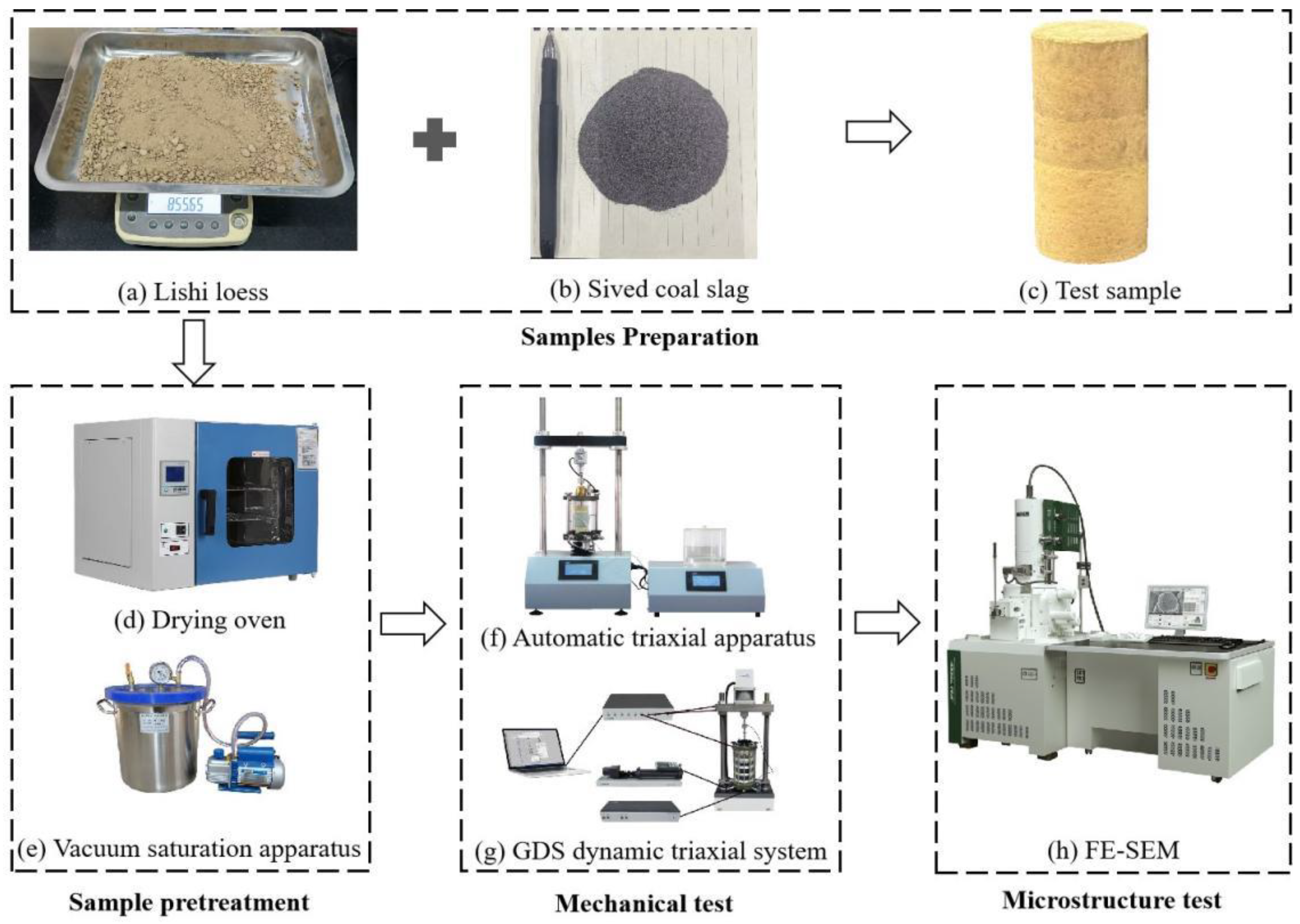
Pingliang City, located in Gansu Province, China, is positioned within the gully region of the Loess Plateau, an area primarily characterized by loess soil. This soil type exhibits a marked sensitivity to fluctuations in moisture content and is particularly susceptible to erosion, especially under conditions of intense monsoonal precipitation. The Q2 Lishi loess sample analyzed in this study was carefully collected from Pingliang City, Gansu Province (Figure 1a). Laboratory testing was conducted in accordance with the “Standard for Soil Testing Methods” GB/T 50123-2019 [34] to determine the particle size distribution of the loess. The results indicate that the loess contains 50.26% clay, 40.77% silt, and 8.77% sand, respectively. Based on the Atterberg limits presented in Table 1, the loess sample is classified as SC-SM (clayey sand with silt) according to the Unified Soil Classification System (USCS). Coal slag, a by-product from coal-fired power plants, was obtained from a local thermal power generation facility in Pingliang City. The chemical compositions of loess and coal slag were tested by X-ray Fluorescence Spectrometer. The XRF results are shown in Table 2. It indicates the main chemical compositions of the slag are reactive silica (SiO2) and alumina (Al2O3). In contrast, the loess contains relatively high calcium oxide (CaO) in addition to silica and alumina.
The coal slag was air-dried, crushed, and sieved to obtain particles with sizes ≤ 0.25 mm (Figure 1b). The bulk density of the fine coal slag was 1580 kg/m3. Specimens were prepared by incorporating coal slag at 0%, 1%, 3%, and 5% by dry mass of the loess. Each mixture was prepared using a stepwise blending procedure: dry loess was first placed in a mixing container, followed by incremental addition of coal slag in three equal portions. The mixture was then dry-blended for 5 min using a high-speed mixer (1200 RPM) to ensure uniform distribution of additives. Deionized water was gradually added to 15% moisture content to replicate the natural field conditions, followed by wet mixing for an additional 3 min. All samples were then sealed in airtight plastic containers and cured for 7 days before testing. We selected a 7-day curing period to prioritize the investigation of the early-age mechanical enhancement driven by the physical mechanisms (particle packing and initial skeletal framework formation) of coal slag, which stabilize relatively quickly. This duration is considered adequate for the soil mixture to achieve hydraulic equilibrium and for assessing initial strength gain under dynamic loading [35,36].

2.2. Mechanical Test

The designed test procedure is shown in Figure 1. Standard triaxial test soil specimens with a diameter of 39.1 mm and a height of 80 mm were prepared using a split mold. Each specimen was saturated using a combined scheme of head saturation and backpressure saturation. Initially, specimens were saturated via vacuum saturation, with filter paper strips attached to enhance water absorption. Samples were placed in a vacuum chamber at −100 kPa for two hours. De-aired water was then introduced to fully immerse the specimens, allowing saturation to proceed for twelve hours. Subsequently, backpressure saturation was applied within the triaxial cell by maintaining confining and backpressures at 100 kPa until the pore pressure coefficient (B) reached or exceeded 0.95, confirming full saturation.
The unconfined compressive strength (UCS) of the specimens was measured in strain-controlled mode using a fully automatic triaxial apparatus (TSZ-2, Nanjing Soil Instrument Factory, Nanjing, China). The triaxial tests were carried out under unconsolidated-undrained (UU) conditions. The motorized loading frame was programmed to apply axial displacement at a constant strain rate of 1% min−1 in accordance with ASTM D2166 [37]. Axial load (±0.1% full scale) and axial displacement (±0.01 mm) were logged automatically at 1 s intervals through the built-in transducers and the software suite.
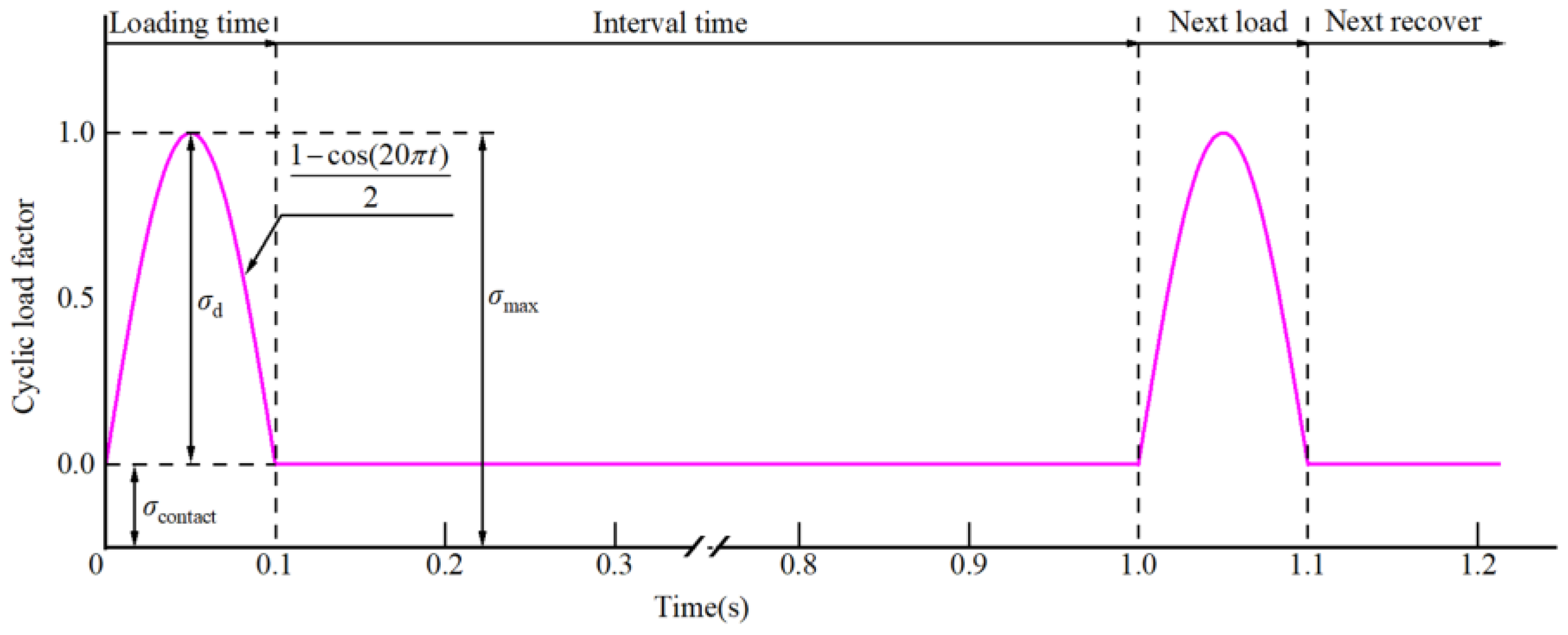
The test instrument used in the dynamic triaxial tests was the GDS apparatus (DYNTTS, GDS Instruments, London, UK). The specimens underwent isotropic consolidation under predetermined effective stresses of 50, 100, or 150 kPa until no further drainage was detected. Loading frequency significantly affects the deformation behavior of subgrade soils [26]. A vibration frequency of 1 Hz was employed to simulate dynamic loading conditions characteristic of traffic-induced forces or minor seismic events, ensuring the experimental setup closely corresponds to actual subgrade environments [27]. Therefore, dynamic loading was performed using a half-sine waveform at 1 Hz (Figure 2), with incremental amplitude increases applied in stages of 10 cycles each to evaluate stress–strain behavior. The experimental parameters are summarized in Table 3.

2.3. SEM Analysis

Microstructural characterization was performed using a field-emission scanning electron microscope (FE-SEM) (JEOL JSM 7800F, JEOL Ltd., Tokyo, Japan) operated at an accelerating voltage of 10 kV and a working distance of 10 μm. Representative specimens from UCS tests, with coal slag contents of 0%, 1%, 3%, and 5%, were selected. To prevent structural degradation, the specimens were dehydrated in a vacuum oven at 40 °C for 24 h. For the observed specimens, small disks approximately 10 mm in diameter and no thicker than 2 mm were prepared using a knife and sandpaper, taking care to preserve the integrity of the fracture surfaces. Any loose dust present on the specimen surfaces was gently removed by blowing with a rubber bulb. Subsequently, the specimens were affixed to the sample holder using conductive tape. A thin layer of gold was deposited onto the specimen surfaces via ion sputtering. The gold-coated specimens were then mounted on the scanning electron microscope (SEM) stage, inserted into the sample chamber, and the chamber was evacuated to establish a vacuum. Under these vacuum conditions, the magnification was adjusted to 2000× to facilitate detailed observation of the specimens’ microstructural features.

3. Results and Discussion

3.1. Unconfined Static Compressive Strength

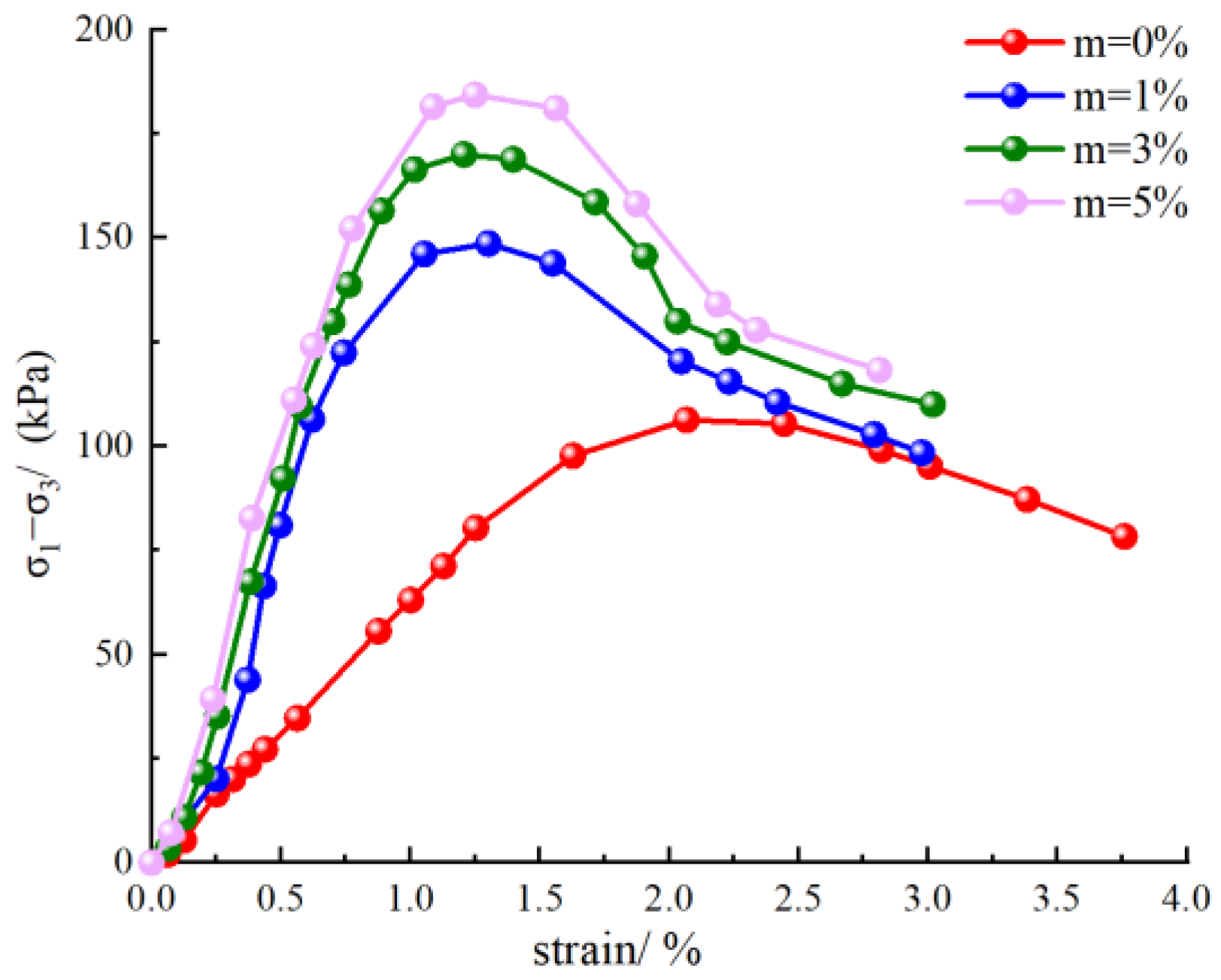
The stress–strain curve of loess specimens obtained from the unconfined compressive strength (UCS) test is presented in Figure 3. All stress–strain curves display distinct peak strength characteristics. Initially, the specimens exhibit strain-hardening behavior, marked by a proportional stress increase relative to strain until peak strength is reached. Upon attaining the maximum stress, the specimens experience rapid strain-softening, indicative of structural failure. The results demonstrate a significant relationship between UCS and coal slag content. The UCS increases from 106.3 kPa for untreated loess (0%) to 184.3 kPa at 5% coal slag content, corresponding to a 73.6% improvement. This enhancement follows a nonlinear trend; although UCS consistently rises with increasing coal slag content, the rate of strength gain decreases progressively at higher additive concentrations [38].

3.2. Effect of Confining Pressure on Dynamic Stress

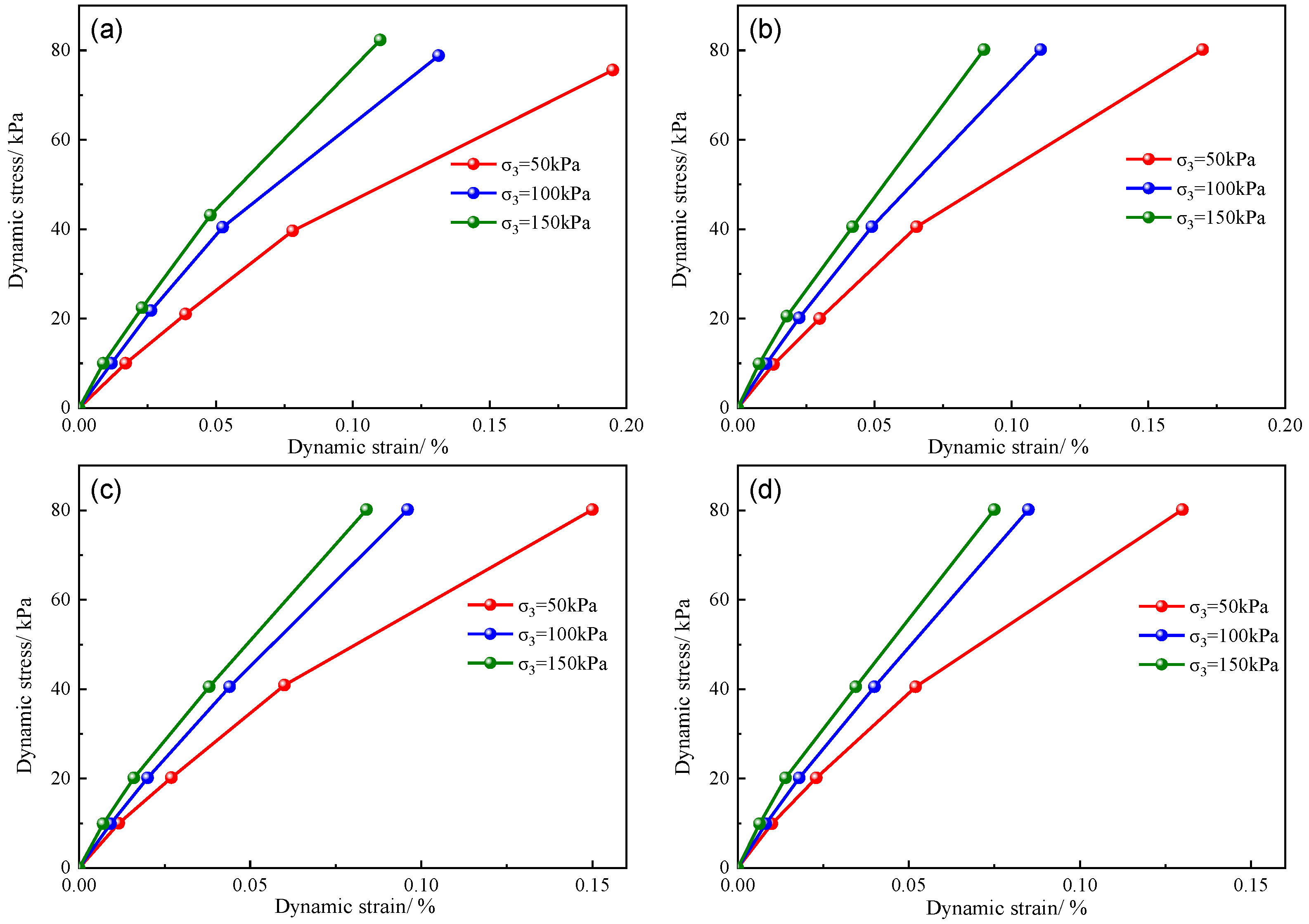
Figure 4 illustrates the dynamic stress–strain behavior of specimens with varying coal slag contents (0%, 1%, 3%, 5%) under different confining pressures (50 kPa, 100 kPa, and 150 kPa). All curves follow similar trends. At lower dynamic stress levels, fluctuations remain relatively minor. However, when water content and dynamic stress are constant, a noticeable reduction in dynamic strain occurs with increasing confining pressure. For instance, at 1% coal slag content and a dynamic stress of 80 kPa, the dynamic strains at confining pressures of 50 kPa, 100 kPa, and 150 kPa are 0.175%, 0.11%, and 0.08%, respectively. The corresponding decreases between successive confining pressure increments are 0.065% (50 to 100 kPa) and 0.03% (100 to 150 kPa), indicating a diminishing marginal improvement as confining pressure increases. It suggests that the soil-slag matrix approaches a denser, more stable state where additional confinement yields progressively smaller returns. This trend has also been reported in the investigation of cement-stabilized loess, where the influence of confining pressure on shear strength became less pronounced beyond a certain threshold [39].
Furthermore, the slope of the dynamic stress–strain curve progressively increases with higher confining pressures, demonstrating a clear upward trend. This behavior is attributed to: (1) elevated confining pressure enhancing interparticle contact forces, reducing the void ratio, and increasing overall stiffness; and (2) the lateral confinement effect intensifying confining pressures, resulting in greater axial tensile resistance during cyclic loading. Consequently, greater dynamic stress is required to achieve equivalent strain levels under increased confinement.

3.3. Effect of Coal Slag Content on Dynamic Stress

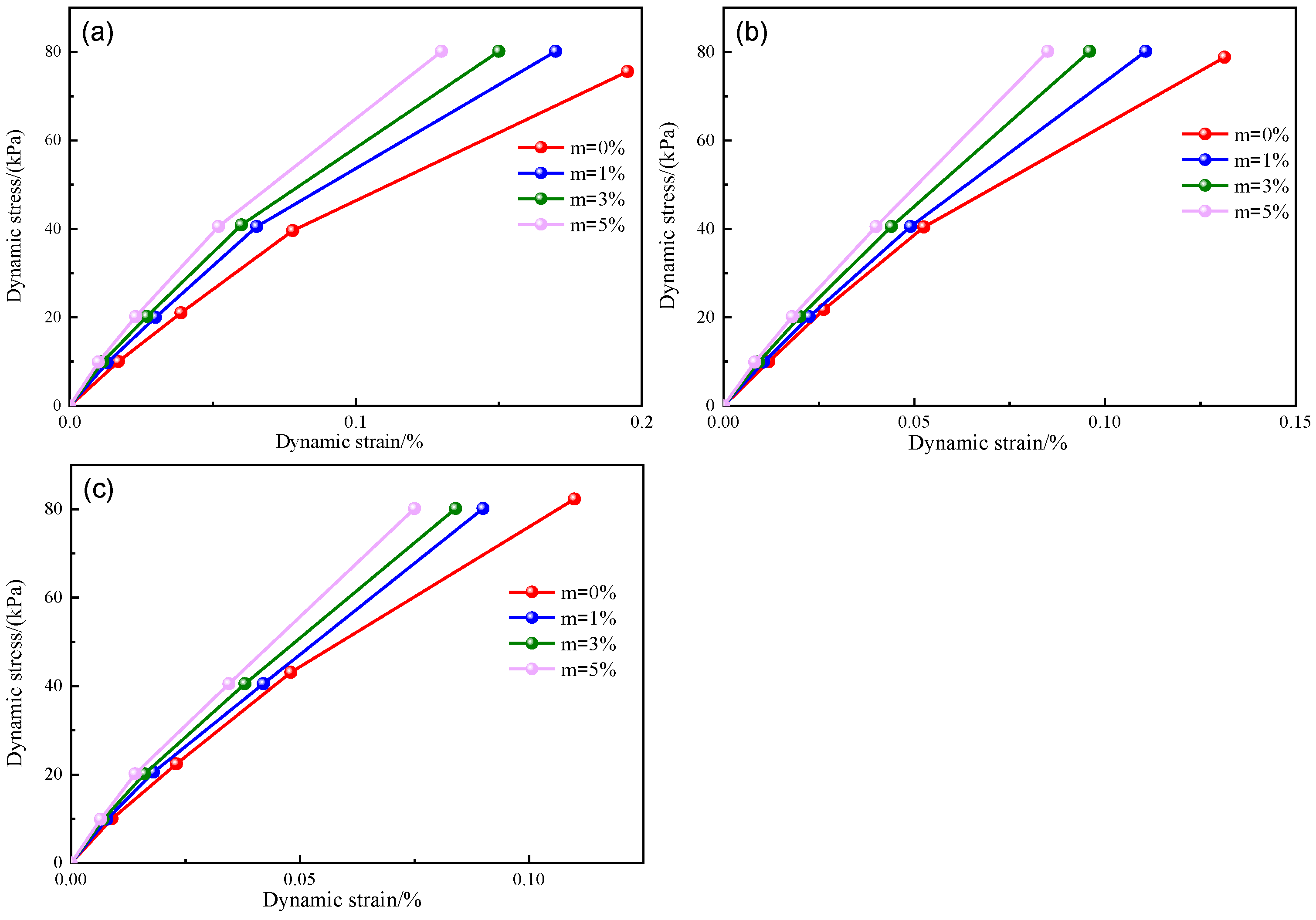
Figure 5 illustrates the dynamic stress–strain behavior of specimens with varying coal slag content (0%, 1%, 3%, and 5%) under confining pressures of 50 kPa, 100 kPa, and 150 kPa. A consistent dynamic response pattern is observed across all compositions.
At a confining pressure of 50 kPa and a dynamic stress of 80 kPa, the dynamic strains for specimens with 0%, 1%, 3%, and 5% coal slag were 0.196%, 0.165%, 0.142%, and 0.125%, respectively. The reductions in dynamic strain between successive slag content increments were 0.031%, 0.023%, and 0.017%, indicating a diminishing marginal improvement as slag content increases. The stress–strain curves demonstrate progressively steeper slopes with higher coal slag content, reflecting enhanced stiffness under dynamic loading. At comparable strain levels, specimens with greater slag content required higher dynamic stress, signifying improved strength. This suggests that coal slag particles fill interparticle voids, increasing particle contact density and promoting mechanical interlocking, which contributes substantially to the enhanced strength of the stabilized loess matrix. The mechanism involves both physical filling of voids and chemical cementation, which collectively enhance interparticle contacts and load transfer efficiency. The observed nonlinear trend of enhancement, characterized by diminishing returns beyond a 3% content threshold, aligns closely with the findings of Wang et al. [40]. Their investigation into the stabilization of loess using fly ash identified an optimal content level of 20%, beyond which further mechanical improvements reached a plateau. It is worth noting that the improvement pattern of coal slag differs from that of organic amendments like lignin, which primarily affect the soil fabric through binding and coating mechanisms, as reported in studies on the dynamic behavior of lignin-amended loess [41].

3.4. Dynamic Elastic Modulus of the Stabilized Loess

The dynamic elastic modulus (Ed) is the elastic modulus of soil under cyclic dynamic loading and serves as a quantitative measure of its elastic properties [42,43]. It is determined using the following equation:
E d = σ d ε d
where σd denotes the dynamic stress, and εd signifies the dynamic strain.
The relationship between σd and εd for loess conforms to the Hardin–Drnevich hyperbolic model. The relationship between εd and the reciprocal of the dynamic elastic modulus ( 1 E d ) for coal slag-stabilized loess can be described by:
1 E d = a + b ε d
In Equation (2), the parameters (a) and (b) are fitting parameters. Parameter (a) signifies the reciprocal of the maximum dynamic elastic modulus (1/Edmax), whereas parameter (b) indicates the reciprocal of the maximum dynamic stress amplitude (1/σdmax). The values of (a) and (b) can be determined through linear regression of the experimental data:
a = ε d σ d ε d = 1 E d max
b = 1 σ d σ d = ∞ = 1 σ d max
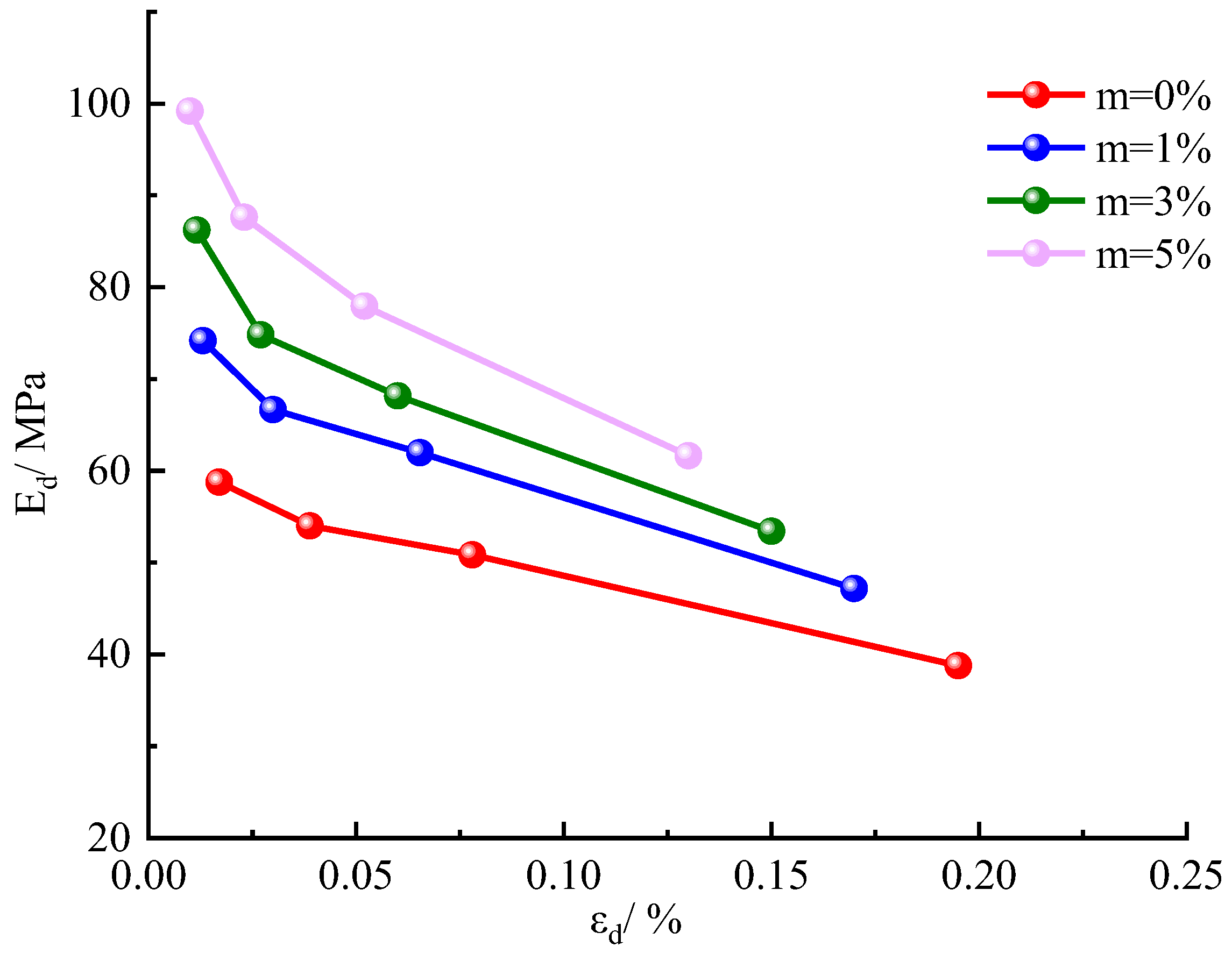
To investigate the relationship between the dynamic elastic modulus and the content of coal slag, Figure 6 presents the dynamic modulus of elasticity for stabilized loess under a confining pressure of 50 kPa. The dynamic elastic modulus of stabilized loess consistently decreases with increasing dynamic strain but exceeds that of unstabilized loess across the strain range. Notably, the dynamic elastic modulus (Ed) demonstrates a clear upward trend as the coal slag content increases.
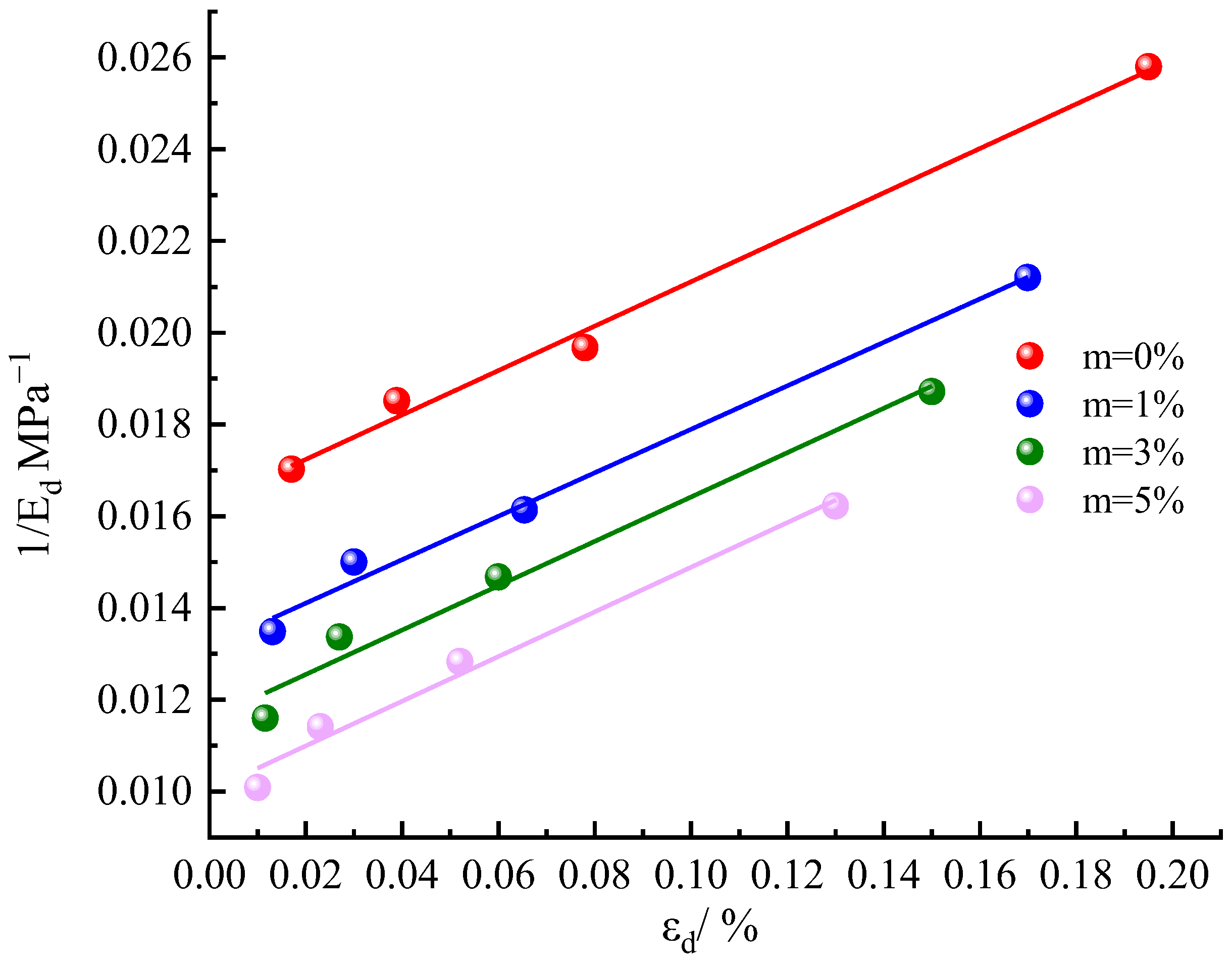
In the transformed relationship based on Equation (2), the relationship between reciprocal of dynamic elastic modulus ( 1 E d ) and dynamic strain ( ε d ) is theoretically linear. The curve, which underwent linear fitting analysis, is depicted in Figure 7. The curve for unstabilized loess displays the steepest slope and highest intercept. With the incorporation of coal slag, both the slope and intercept of the curve decrease compared to unstabilized loess.
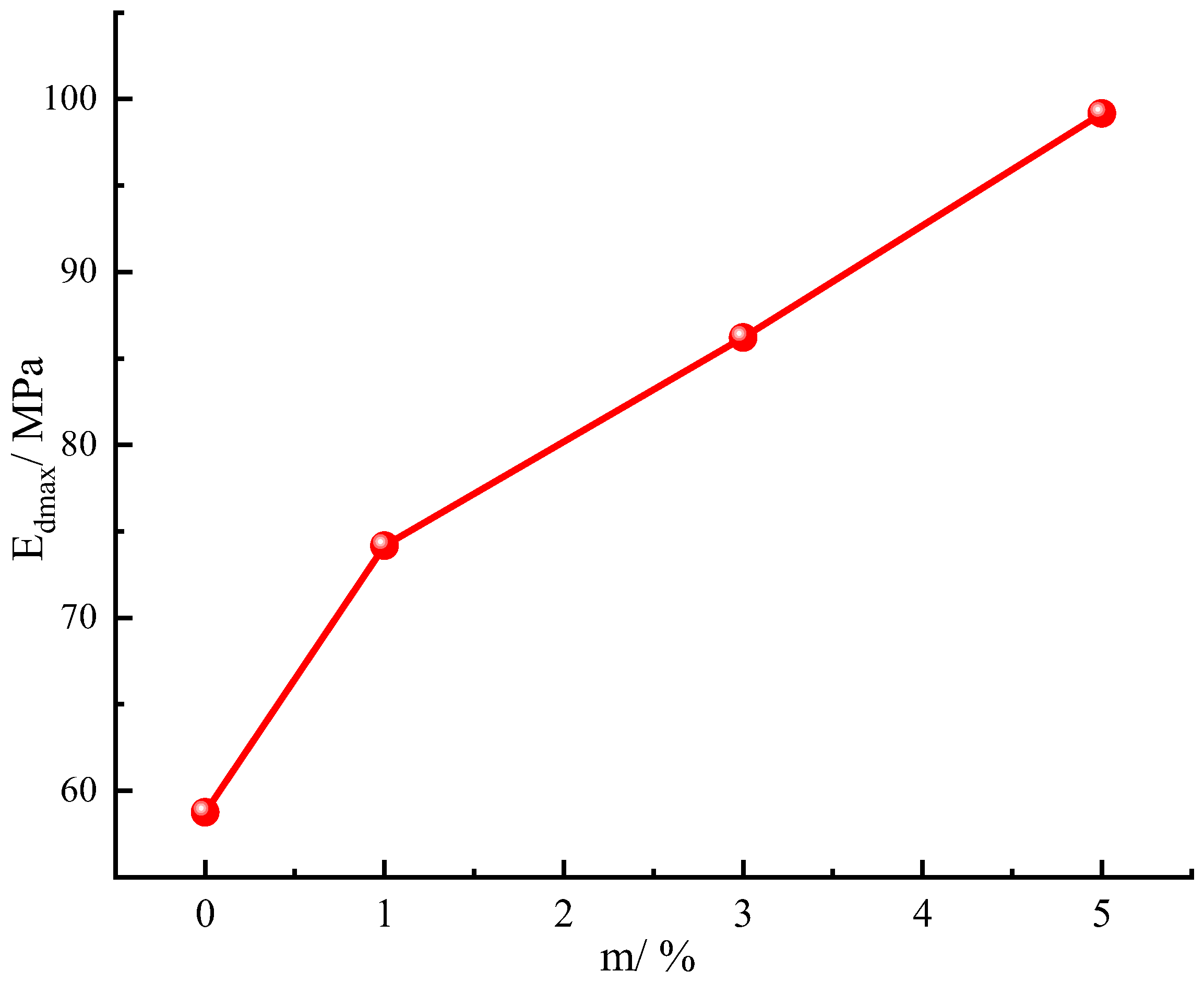
Subsequently, Edmax is determined using the fitting parameters. Figure 8 presents the maximum dynamic elastic modulus (Edmax) values for stabilized and unstabilized loess specimens. The findings yield two notable conclusions: Firstly, specimens stabilized with coal slag demonstrate significantly elevated Edmax values compared to untreated loess (58 kPa). Secondly, Edmax exhibits a distinct dependence on coal slag content, with progressive enhancement observed as the content increases. The correlation between Edmax and coal slag content is nonlinear. Specifically, Edmax rises from 74 kPa at a 1% slag to 99 kPa at 5% slag; however, the rate of improvement diminishes with higher contents. The initial increase (from 0% to 1% coal slag content) reflects a 27.6% enhancement (Δ16 kPa), while subsequent additions yield progressively smaller increments. This suggests that the stiffening effect of coal slag becomes less significant at elevated contents, potentially due to saturation of the particle reinforcement mechanism.
The application of the Hardin–Drnevich model to describe the dynamic stress–strain relationship of coal slag-stabilized loess confirms its applicability to such composite materials. Wang et al. found that the incorporation of 20% fly ash into loess resulted in a 24.99% increase in the maximum dynamic shear modulus compared to compacted loess, linking this enhancement to the formation of a more cohesive soil fabric [40]. Similarly, Ren et al. reported that the maximum dynamic elastic modulus of bioenzyme-stabilized silty soil was achieved at an optimum enzyme content of 0.01%, with further additions leading to negligible gains [44]. The correlation we established between the reciprocal of the dynamic modulus and dynamic strain provides a reliable mathematical framework for predicting the dynamic behavior of coal slag-loess mixtures, which is valuable for numerical modeling in traffic-loaded subgrade design.

3.5. Microstructural Features and Stabilization Mechanism

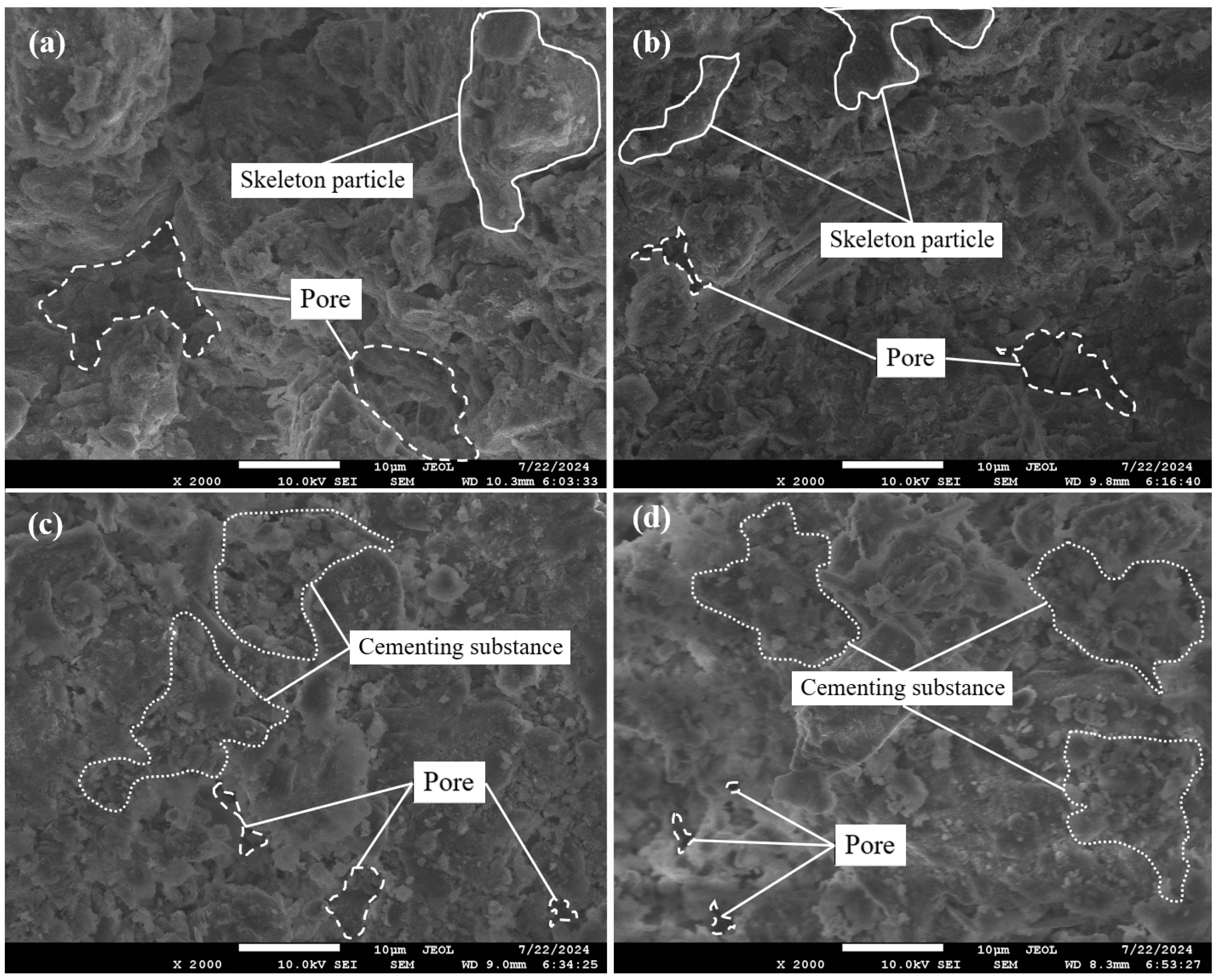
Figure 9 illustrates FE-SEM images of untreated loess and loess enhanced with varying coal slag proportions. The images reveal that the skeletal framework of untreated loess consists primarily of discrete particles separated by well-defined boundaries. The skeleton is mainly composed of coarse powder particles, with limited cementing materials adhering to the soil framework and minimal amounts within pore spaces. Numerous embedded pores are apparent, including structurally unstable support pores. The volume of cementing material occupying these pores is minimal, and pore interconnectivity is relatively high.
The incorporation of coal slag induces significant microstructural modifications. At 1% slag content, changes are subtle; loess particle contours remain well-defined, and pore connectivity is preserved. There is a slight increase in cementing materials on skeletal particle surfaces and a reduction in void pores. When coal slag content reaches 3%, the clarity of skeletal particle outlines begins to diminish. At 5% slag content, particle boundaries become increasingly indistinct.
The SEM findings reveal that increased coal slag content leads to the progressive filling and encapsulation of larger and medium-sized pores by cementitious materials, resulting in a gradual reduction of unstable voids. This observation of pore-filling and particle bonding by reaction products aligns with the micro-mechanisms reported in studies on similar slag-stabilized materials [45,46,47]. Consequently, the soil particle arrangement becomes more compact. Furthermore, cementitious materials from hydration reactions adhere to soil particle surfaces and occupy interstitial spaces, enhancing inter-particle cementation [23]. This phenomenon improves the platy characteristics and brittleness of the soil. Concurrently, the adhesion of cementitious materials roughens soil particle surfaces, enhancing inter-particle friction, stabilizing the soil structure, and improving its overall strength. Therefore, the observed increase in Edmax is attributed to: (1) the filling of interparticle voids by coal slag particles, enhancing particle contact density, and (2) the development of cementitious bonds, improving load transfer efficiency within the soil matrix. These microstructural modifications contribute to the enhanced stiffness of the stabilized loess.
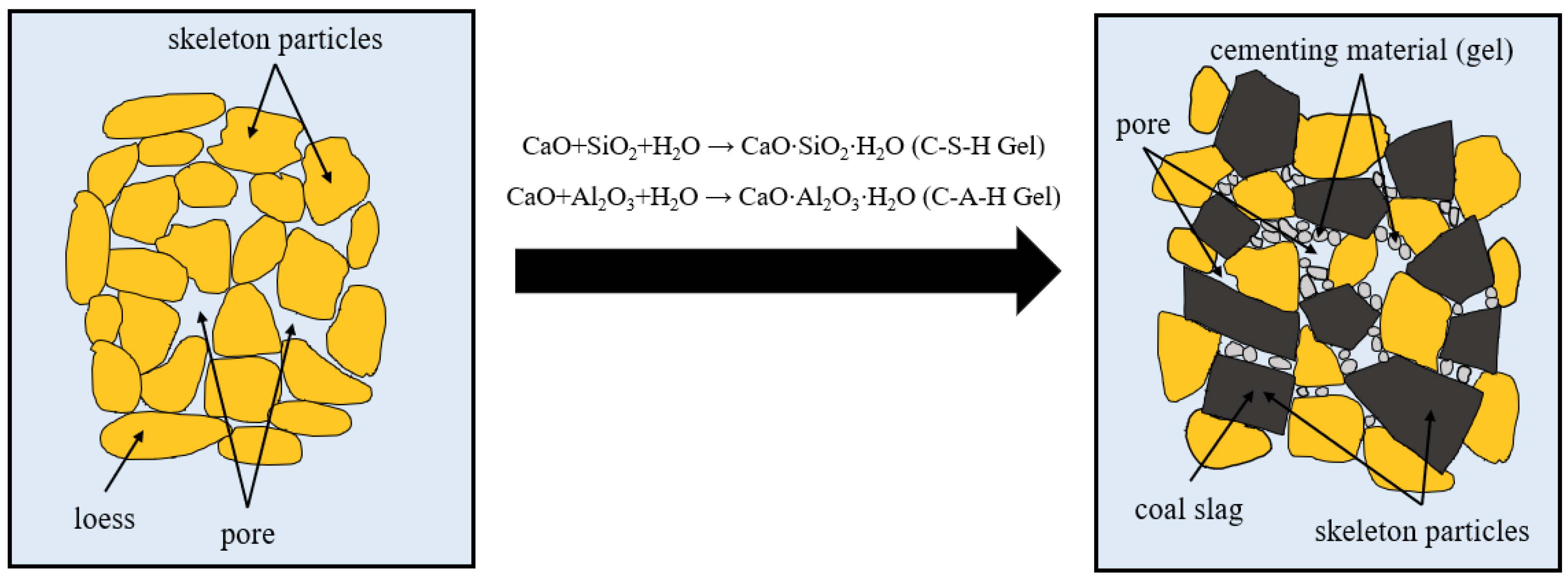
Figure 10 conceptually depicts the microstructural enhancement mechanisms, highlighting a synergistic interaction between physical and chemical processes. Coal slag particles act as microstructural modifiers by occupying intergranular voids and engaging in pozzolanic reactions with soil minerals, forming cementitious bonding phases. The angular morphology of coal slag fragments promotes enhanced particle interlocking, collectively transforming the initially loose and metastable loess structure into a more cohesive composite material with improved structural stability [30,45]. This microstructural evolution aligns with the macroscopic mechanical improvements observed, where increased stiffness and strength were consistently recorded with higher coal slag proportions.
The schematic diagram synthesizes these microstructural changes into an integrated framework that accounts for both the observed increase in static strength (up to 73.6% UCS improvement) and the enhancement of dynamic stiffness (elevated dynamic modulus). This combined microstructural evidence offers fundamental insights into the multi-scale behavior of the stabilized loess. More importantly, the stabilization mechanism achieved through coal slag incorporation embodies the concept of pragmatic sustainability. This approach is not only effective but also highly feasible and economical: it utilizes a locally abundant industrial by-product (coal slag), requires low additive content (only 3–5%), and can be implemented using conventional construction techniques. This synergy between performance enhancement, waste valorization, and practical applicability offers a clear path for implementation in loess regions. This evidence strongly supports the engineering viability of the stabilized loess for subgrade construction under diverse loading scenarios.

3.6. Limitation and Future Direction

Building upon the findings and discussions presented above, this study highlights the potential of coal slag as a sustainable stabilizing agent for loess. From the perspective of pragmatic sustainability, which emphasizes feasible, economically viable, and context-appropriate solutions, this approach demonstrates significant promise. Utilizing this industrial by-product supports circular economy objectives by transforming a waste material into a construction resource. It also presents a cost-saving alternative to conventional stabilizers such as cement or lime, addressing both economic and environmental sustainability goals. However, to advance its practical application, several limitations must be addressed through this pragmatic lens. The addition of coal slag introduces metallic elements, raising environmental concerns. A pragmatically sustainable solution requires the implementation of scalable and low-cost pre-treatment techniques to effectively mitigate leaching risks. Moreover, the long-term stability and durability of loess treated with coal slag under various environmental stressors, including wet-dry cycles and freeze–thaw conditions, have not been thoroughly investigated. Future research should therefore focus on generating actionable knowledge. Priorities include optimizing economical pretreatment techniques, evaluating short- and long-term leaching behavior under field-relevant conditions, and systematically testing the stabilized material under key environmental stressors. It is equally important to develop techno-economic analyses and life-cycle assessments that quantitatively compare this method with conventional stabilization approaches, accounting for material sourcing, processing, transportation, and long-term performance. Such work would help position coal slag not only as an environmentally beneficial option but as a practically viable and competitive choice for advancing circular economy practices and sustainable infrastructure development.

4. Conclusions

This study underscores that enhancing the understanding and engineering properties of loess is imperative for supporting Sustainable Development Goals (SDGs), particularly SDG 11 and SDG 12, during construction on the Loess Plateau of China. We explored the incorporation of coal slag, a prevalent industrial waste, to improve the mechanical properties of loess. The experimental valorization of locally sourced slag provides a sustainable alternative by reducing reliance on traditional cement-based stabilizers, directly contributing to waste reduction and resource efficiency. This study focused on elucidating the dynamic stress–strain behavior and dynamic modulus of elasticity under dynamic loading conditions. The key findings are summarized as follows:
(1)
The unconfined compressive strength of coal slag-treated loess demonstrates a marked increase with rising slag content. A 5% slag content is recommended as the optimum value for the Q2 Lishi loess because the rate of strength improvement diminishes beyond 5%.
(2)
Under cyclic loading, increases in confining pressure and coal slag content produce steeper dynamic stress–strain curves, indicative of augmented stiffness and heightened resistance to deformation.
(3)
The dynamic elastic modulus of coal slag-stabilized loess exhibits an upward trend with increasing coal slag proportion, conforming to the Hardin–Drnevich hyperbolic model. The maximum dynamic modulus attains a value of 99 kPa at a coal slag content of 5%.
(4)
Scanning Electron Microscopy analyses reveal that coal slag effectively occupies void spaces and forms cementitious bonds, thereby improving particle interlocking and overall soil stability. This microstructural optimization is a critical factor underlying the observed improvements in mechanical performance.
In summary, the findings confirm that coal slag effectively stabilizes loess and improves its mechanical performance. This approach converts an industrial by-product into a functional construction material, which contributes to SDG 12. Moreover, using this locally available material to enhance geotechnical properties supports safer and more resilient infrastructure on the Loess Plateau, in line with SDG 11. Thus, this study offers a practical, sustainability-oriented strategy for soil stabilization, connecting technical improvements with wider environmental and development goals.

Author Contributions

Conceptualization, H.L. and L.Z.; Methodology, X.B. and C.Y.; Software, M.Q.; Validation, D.Q. and Z.Z.; Formal Analysis, M.Q.; Investigation, H.L., D.Q. and Z.Z.; Resources, G.L. and X.B.; Data Curation, H.L. and Z.Z.; Writing—Original Draft Preparation, H.L.; Writing—Review and Editing, L.Z. and X.B.; Visualization, D.Q.; Supervision, L.Z.; Project Administration, H.L.; Funding Acquisition, H.L. and L.Z. All authors have read and agreed to the published version of the manuscript.

Funding

This research was supported by the MOST Special Fund from State Key Laboratory of Geological Process and Mineral Resources, China University of Geosciences (Grant No. GPMR202505) and the Research Program of China 19th Metallurgical Group Co., Ltd. (Grant Nos. FGC-CK-20230730: and FGC-CK-20220475).

Institutional Review Board Statement

Not applicable.

Informed Consent Statement

Not applicable.

Data Availability Statement

The original contributions presented in this study are included in the article. Further inquiries can be directed to the corresponding authors.

Conflicts of Interest

Authors Haifeng Li, Xin Bai, Chaolin Yan, Lei Zhu, Dan Qin, Guanfei Liu and Zi Zeng are employed by China 19th Metallurgical Group Co., Ltd. The remaining authors declare that the research was conducted in the absence of any commercial or financial relationships that could be construed as a potential conflict of interest.

References

  1. Pye, K. Loess. Prog. Phys. Geogr. 1984, 8, 176–217. [Google Scholar] [CrossRef] [Scilit]
  2. Derbyshire, E. Geological hazards in loess terrain, with particular reference to the loess regions of China. Earth-Sci. Rev. 2001, 54, 231–260. [Google Scholar] [CrossRef] [Scilit]
  3. Ma, X.; Zhang, Z.; Zhang, P.; Wang, X. Long-term dynamic stability of improved loess subgrade for high-speed railways. Proc. Inst. Civ. Eng.-Geotech. Eng. 2020, 173, 217–227. [Google Scholar] [CrossRef] [Scilit]
  4. Zhong, X.; Liang, Y.; Wang, Q.; Ma, J.; Liang, S.; Wang, Y.; Xu, X. Evaluation and analysis of the effect of lignin amelioration on loess collapsibility. J. Renew. Mater. 2022, 10, 3405–3424. [Google Scholar] [CrossRef] [Scilit]
  5. Zhang, Y.; Hu, Z.; Li, L.; Xue, Z. Improving the structure and mechanical properties of loess by acid solutions—An experimental study. Eng. Geol. 2018, 244, 132–145. [Google Scholar] [CrossRef] [Scilit]
  6. Hu, R.; Yeung, M.; Lee, C.; Wang, S. Mechanical behavior and microstructural variation of loess under dynamic compaction. Eng. Geol. 2001, 59, 203–217. [Google Scholar] [CrossRef] [Scilit]
  7. Wen, B.P.; Yan, Y.J. Influence of structure on shear characteristics of the unsaturated loess in Lanzhou, China. Eng. Geol. 2014, 168, 46–58. [Google Scholar] [CrossRef] [Scilit]
  8. Wu, Z.; Xu, S.; Chen, D.; Zhao, D.; Zhang, D. An experimental study of the influence of structural parameters on dynamic characteristics of loess. Soil Dyn. Earthq. Eng. 2020, 132, 106067. [Google Scholar] [CrossRef] [Scilit]
  9. Li, Y. A review of shear and tensile strengths of the Malan Loess in China. Eng. Geol. 2018, 236, 4–10. [Google Scholar] [CrossRef] [Scilit]
  10. Chen, H.; Jiang, Y.; Niu, C.; Leng, G.; Tian, G. Dynamic characteristics of saturated loess under different confining pressures: A microscopic analysis. Bull. Eng. Geol. Environ. 2019, 78, 931–944. [Google Scholar] [CrossRef] [Scilit]
  11. Cheng, X.; Li, X.; Nie, J.; Liu, H. Research on the dynamic parameters of loess. Geotech. Geol. Eng. 2019, 37, 77–93. [Google Scholar] [CrossRef] [Scilit]
  12. Wang, N.; Liu, X.; Bo, H.; Liu, B. Test of dynamic strength characteristics of Lishi loess. Appl. Mech. Mater. 2013, 303, 2902–2907. [Google Scholar] [CrossRef] [Scilit]
  13. Yang, W.; Pan, B.; Jin, L.; Wang, Y.; Saleem, F. Experimental study on dynamic characteristics of Qingyang loess under different water contents. Arab. J. Geosci. 2020, 13, 986. [Google Scholar] [CrossRef] [Scilit]
  14. Liu, Y.; Zhang, X.; Gao, T.; Ding, D.; Wang, H.; Guo, G.; Wang, S. Analysis of dynamic characteristics of loess subgrade under vehicle load. J. Eng. Geol. 2018, 26, 162–166. [Google Scholar]
  15. Gao, B.; Su, L. Triaxial mechanical testing of undisturbed unsaturated loess. Soil Mech. Found. Eng. 2020, 57, 57–64. [Google Scholar] [CrossRef] [Scilit]
  16. Li, H.; Chen, Z.; Zhu, L.; Tang, L.; Liu, G.; Qu, L.; Liao, X.; Wang, Z.; Zeng, Z.; Zhou, Z. Dynamic properties of Malan loess based on triaxial shear tests. Geol. J. 2024, 59, 3869–3883. [Google Scholar] [CrossRef] [Scilit]
  17. Chen, Y.; Chai, S.; Cai, D.; Wang, W.; Li, X.; Liu, J. Experimental study on shear mechanical properties of improved loess based on rubber particle incorporation and EICP technology. Front. Earth Sci. 2023, 11, 1270102. [Google Scholar] [CrossRef] [Scilit]
  18. Xu, P.; Lin, Q.; Fang, L. Study on the mechanical properties of loess improved by lignosulfonate and its mechanism analysis and prospects. Appl. Sci. 2022, 12, 9843. [Google Scholar] [CrossRef] [Scilit]
  19. Mu, J.; Zhuang, J.; Kong, J.; Wang, S.; Wang, J.; Zheng, J.; Fu, Y.; Du, C. Study on Improving Loess Properties with Permeable Polymer Materials. Polymers 2022, 14, 2862. [Google Scholar] [CrossRef] [Scilit]
  20. Zhang, Y.; Johnson, A.E.; White, D.J. Freeze-thaw performance of cement and fly ash stabilized loess. Transportation Transp. Geotech. 2019, 21, 100279. [Google Scholar] [CrossRef] [Scilit]
  21. Zhu, W.; Long, Z.; He, L.; Ye, S.; Mao, Y. Hydro-physical properties and durability study of cement slurry material based on loess. Sci. Rep. 2025, 15, 13198. [Google Scholar] [CrossRef] [Scilit]
  22. Lv, H.; Chen, Y.; Xie, Q.; Wu, P.; Chen, Y.; Gu, J.; Wu, H. Performance optimization and characterization of loess-slag-based geopolymer composite: A new sustainable green material for backfill. Constr. Build. Mater. 2022, 354, 129103. [Google Scholar] [CrossRef] [Scilit]
  23. Wu, H.; Wu, M.; Wu, X.; Zhang, F.; Zhang, J.; Qiao, H.; Zhang, Y. Study on the performance of collapsible loess subgrade improved by steel slag. J. Build. Eng. 2024, 84, 108642. [Google Scholar] [CrossRef] [Scilit]
  24. Lal, R.; Bouma, J.; Brevik, E.; Dawson, L.; Field, D.J.; Glaser, B.; Hatano, R.; Hartemink, A.E.; Kosaki, T.; Lascelles, B.; et al. Soils and sustainable development goals of the United Nations: An International Union of Soil Sciences perspective. Geoderma Reg. 2021, 25, e00398. [Google Scholar] [CrossRef] [Scilit]
  25. Xiang, J.; Qiu, J.; Zhao, Y.; Zheng, P.; Peng, H.; Fei, X. Rheology, mechanical properties, and hydration of synergistically activated coal gasification slag with three typical solid wastes. Cem. Concr. Compos. 2024, 147, 105418. [Google Scholar] [CrossRef] [Scilit]
  26. Zhang, S.; Tang, C.; Zhang, X.; Zhang, Z.; Jin, J. Cumulative plastic strain of frozen aeolian soil under highway dynamic loading. Cold Reg. Sci. Technol. 2015, 120, 89–95. [Google Scholar] [CrossRef] [Scilit]
  27. Guo, L.; Wang, J.; Cai, Y.; Liu, H.; Gao, Y.; Sun, H. Undrained deformation behavior of saturated soft clay under long-term cyclic loading. Soil Dyn. Earthq. Eng. 2013, 50, 28–37. [Google Scholar] [CrossRef] [Scilit]
  28. Bautista-Puig, N.; Barreiro-Gen, M.; Statulevičiūtė, G.; Stančiauskas, V.; Dikmener, G.; Akylbekova, D.; Lozano, R. Unraveling public perceptions of the Sustainable Development Goals for better policy implementation. Sci. Total Environ. 2024, 912, 169114. [Google Scholar] [CrossRef] [Scilit]
  29. Bonifazi, G.; D’Adamo, I.; Palmieri, R.; Serranti, S. Recycling-Oriented Characterization of Space Waste Through Clean Hyperspectral Imaging Technology in a Circular Economy Context. Clean Technol. 2025, 7, 26. [Google Scholar] [CrossRef] [Scilit]
  30. Khalil, E.; AbouZeid, M. A global assessment tool for cement plants improvement measures for the reduction of CO2 emissions. Results Eng. 2025, 26, 104767. [Google Scholar] [CrossRef] [Scilit]
  31. Perri, G.; De Rose, M.; Domitrović, J.; Vaiana, R. CO2 impact analysis for road embankment construction: Comparison of lignin and lime soil stabilization treatments. Sustainability 2023, 15, 1912. [Google Scholar] [CrossRef] [Scilit]
  32. Ma, X.; Liu, Y.; Hao, Z.; Wang, Y.; Li, Y.; Wang, J. Study on mechanical properties and durability of composite improved loess using CG-2 curing agent and cement. Constr. Build. Mater. 2024, 451, 138801. [Google Scholar] [CrossRef] [Scilit]
  33. Yan, S.; Xuan, W.; Cao, C.; Zhang, J. A review of sustainable utilization and prospect of coal gasification slag. Environ. Res. 2023, 238, 117186. [Google Scholar] [CrossRef] [Scilit]
  34. GB/T 50123-2019; Standard for Geotechnical Testing Method. China Planning Press: Beijing, China, 2019.
  35. Huang, S.; Wang, X.; Wang, J.; Lin, Z.; Chen, T. Study on dynamic characteristics of phosphogypsum-improved lime-fly ash soil under cyclic loading. Eng. Sci. Technol. 2025, 58, 215–230. (In Chinese) [Google Scholar]
  36. Zhang, Y.; Yao, Y.; Du, W.; Li, Z.; Wang, L. Experimental study on improvement design of loess curing in engineering environment. Bull. Eng. Geol. Environ. 2021, 80, 3151–3162. [Google Scholar] [CrossRef] [Scilit]
  37. ASTM D2166/D2166M-24; Standard Test Method for Unconfined Compressive Strength of Cohesive Soil. ASTM International: West Conshohocken, PA, USA, 2024.
  38. Luo, Z.; Luo, B.; Zhao, Y.; Li, X.; Su, Y.; Huang, H.; Wang, Q. Experimental investigation of unconfined compression strength and microstructure characteristics of slag and fly ash-based geopolymer stabilized riverside soft soil. Polymers 2022, 14, 307. [Google Scholar] [CrossRef] [Scilit] [PubMed]
  39. Yuan, K.; Liu, K.; Yi, G.; Yang, B. Mechanical properties and evolution of microstructure of cement stabilized loess. J. Renew. Mater. 2022, 10, 3611–3634. [Google Scholar] [CrossRef] [Scilit]
  40. Wang, Q.; Wang, J.; Zhong, X.; Ma, H.; Xu, X. Dynamic nonlinear and residual deformation behaviors of the fly ash-modified loess. Shock. Vib. 2021, 2021, 1306986. [Google Scholar] [CrossRef] [Scilit]
  41. Guo, D.; Shao, S.; Guo, R. Experimental study on the dynamic behavior of lignin-amended loess. Sci. Rep. 2024, 14, 68505. [Google Scholar] [CrossRef] [Scilit]
  42. Qu, L.; Li, X.; Kouroussis, G.; Vairaktaris, E.; Wang, C. Vertical dynamic impedance for piles in radially weakened soil. Int. J. Numer. Anal. Methods Géoméch. 2025, 49, 2620–2633. [Google Scholar] [CrossRef] [Scilit]
  43. Qu, L.; Kouroussis, G.; Yang, C.; Vairaktaris, E.; Wang, C. Role of soil-well interaction on transverse kinematic response of a down-hole seismometer to S-waves: A viscoelastic solution. J. Geotech. Geoenvironmental Eng. 2025, 151, 04025145. [Google Scholar] [CrossRef] [Scilit]
  44. Ren, H.; Wen, C.; Chen, X. Research on the dynamic elastic modulus and damping ratio of silty soil improved by bioenzyme. Geotech. Geol. Eng. 2024, 42, 1505–1518. [Google Scholar] [CrossRef] [Scilit]
  45. Liu, J.; Liu, K.; He, B.; Liu, K.; Lu, J.; Zhou, Z.; Xu, B.; Yu, S.; Qin, G.; Wang, L.; et al. Mechanical properties and solidification mechanism of coal gangue-granulated blast furnace slag geopolymer stabilized engineering slurry. Case Stud. Constr. Mater. 2024, 21, e03660. [Google Scholar] [CrossRef] [Scilit]
  46. Wang, D. Investigation of cement-improved loess permeability and pore structure alterations in eroding conditions. Transp. Infrastruct. Geotechnol. 2025, 12, 1245–1262. [Google Scholar] [CrossRef] [Scilit]
  47. Zhao, G.; Wu, T.; Ren, G.; Zhu, Z.; Gao, Y.; Shi, M.; Ding, S.; Fan, H. Reusing waste coal gangue to improve the dispersivity and mechanical properties of dispersive soil. J. Clean. Prod. 2023, 404, 136993. [Google Scholar] [CrossRef] [Scilit]
Figure 1. Experimental procedure of the dynamic mechanical property tests and microscopic tests.
Sustainability 18 00301 g001
Figure 2. Half-Sine Wave form Load.
Sustainability 18 00301 g002
Figure 3. Unconfined compressive strength of samples with different coal slag inclusions.
Sustainability 18 00301 g003
Figure 4. Dynamic stress–strain curve of samples under different confining pressures; (a) 0% coal slag, (b) 1% coal slag, (c) 3% coal slag, (d) 5% coal slag.
Sustainability 18 00301 g004
Figure 5. Dynamic stress–strain curve of samples with different coal slag inclusion; (a) σ3 = 50 kPa, (b) σ3 = 100 kPa, (c) σ3 = 150 kPa.
Sustainability 18 00301 g005
Figure 6. Dynamic strain versus dynamic elastic modulus at a confining pressure of 50 kPa.
Sustainability 18 00301 g006
Figure 7. The fitted relationship curve between reciprocal of dynamic elastic modulus and dynamic strain under different coal slag content.
Sustainability 18 00301 g007
Figure 8. Maximum dynamic elastic modulus of coal slag stabilized loess.
Sustainability 18 00301 g008
Figure 9. Microstructure of plain loess and coal slag-stabilized loess: (a) 0% coal slag, (b) 1% coal slag, (c) 3% coal slag, (d) 5% coal slag.
Sustainability 18 00301 g009
Figure 10. Schematic stabilized mechanism of loess by coal slag.
Sustainability 18 00301 g010
Table 1. Physical properties of loess samples.
Nature Moisture ContentDry DensitySpecific GravityAtterberg LimitsParticle Size Distribution
Liquid LimitPlastic LimitClaySiltSand
22.7%1.588 g/cm32.7335.74%23.27%50.26%40.77%8.77%
Table 2. Chemical compositions of loess and coal slag samples (mass: %).
CompositionSiO2Al2O3Fe2O3CaOMgONa2OK2O
Loess55.612.83.710.42.11.62.7
Coal slag60.120.35.53.52.13.81.9
Table 3. Dynamic triaxial test scheme.
Moisture Content (%)Vibration Frequency (Hz)Confining Pressure (kPa)Slag Content (%)
151500, 1, 3, 5
100
150
Disclaimer/Publisher’s Note: The statements, opinions and data contained in all publications are solely those of the individual author(s) and contributor(s) and not of MDPI and/or the editor(s). MDPI and/or the editor(s) disclaim responsibility for any injury to people or property resulting from any ideas, methods, instructions or products referred to in the content.