3.4.1. Adsorption
To recover or remove sewage pollutants and purify the sewage, Patterson first proposed the adsorption method in 1985 as a new technology for treating oily wastewater. This method uses porous solids as adsorbents that interact with the pollutants through chemical (covalent) or physical (non-covalent) interaction mechanisms [
130]. Adsorption has a number of benefits over alternative wastewater treatment methods, including affordability, simplicity of use, and non-toxicity to the environment. The use of carbon-based adsorbents in environmental remediation techniques has gained popularity in recent years because of their affordability and ease of use. Numerous carbon compounds have been thoroughly investigated as possible adsorbents for wastewater treatment, including graphene, activated carbon, carbon nanotubes, charcoal, soot, fullerenes, and other derivatives [
129,
131]. These carbon–based adsorbents have good adsorption qualities and promise to remove contaminants from wastewater efficiently. Furthermore, the practical treatment of petroleum effluents is attracting interest in natural and mineral cellulosic materials [
132,
133]. These substances provide environmentally friendly substitutes for adsorption procedures in wastewater treatment applications because of their accessibility and affordability. Researchers and professionals can investigate safe and efficient ways to handle petroleum and petroleum-derived effluents and to lessen their environmental impact by employing natural and carbon–based materials as adsorbents [
134,
135,
136]. Two extensively studied adsorbents that are well-known for their efficient pollutant removal properties are biochar and activated carbon. Because of its proven adsorption capabilities, activated carbon is a common industrial adsorbent used to clean exhaust gases and effluents [
137]. Many naturally occurring carbonaceous materials, such as plants (fruit seeds, wood, and coconut shells, for example) [
138], minerals (peat, lignite, petroleum coke, etc.), and polymers (plastics, rubber tires, etc.) [
139], can be used as raw materials to make activated carbon and biochar. These materials are great options for adsorbing both organic and inorganic contaminants because of their many holes, high specific surface areas, low environmental toxicity, and changeable surface groups [
140]. Both surface adsorption and osmotic absorption are ways that oils (kerosene) interact with adsorbents. Capillary action pulls oil molecules into the pores after they diffuse onto the surface of the adsorbent’s porous structure during surface adsorption. Porous carbon materials can remove oil by a variety of processes, including pore filling, hydrophobic interactions, hydrogen bonding aided by functional groups like –OH and –COOH, electrostatic attraction, electrophilic interactions, and π-π electron acceptor-donor interactions [
141].
One important element affecting the adsorption efficiency is the pore structure of adsorbents. More sites for adsorption are available when the adsorbent’s specific surface area is increased by an extensive pore structure. Research employing activated carbon generated from wood biomass highlights how crucial pore size distribution and structure are in affecting contaminant adsorption [
142]. Researchers also examined the usage of biochar to treat oil spills, pointing out the significance of production processes and biomass feedstock for biochar’s adsorption capacity [
141]. Researchers analyzed the textural and chemical properties of rice husk activated carbon to determine its capacity to adsorb refractory sulfur compounds of dibenzothiophenes from commercial kerosene [
18]. Despite having a significantly lower specific surface area of 473 m
2/g and a total pore volume of 0.267 cm
3/g than microporous activated carbon fiber, which has a large specific surface area of 2336 m
2/g/and a total pore volume of 1052 cm
3/g, rice husk activated at 850 °C for 60 min demonstrated an acceptable adsorption capacity for refractory dibenzothiophene sulfur compounds. The adsorption capacity of rice husk activated carbon’s refractory dibenzothiophene sulfur compounds was directly correlated with the volumes of ultramicropores serving as adsorption sites for these compounds and mesopores carrying them into the ultramicropores [
18]. Researchers used commercially available activated carbon and powdered jujube and barberry stems to conduct isothermal and kinetic investigations on the adsorption of gasoline and kerosene [
143]. Additionally, barberry stem powder, jujube stem powder, and granular activated carbon were able to remove kerosene with removal rates of over 84%, 68%, and 99%, and gasoline with removal rates of over 55%, 69%, and 95.5%, respectively. The Temkin model (R
2 = 0.95), which was found to best describe the characteristics of barberry stem powder in the adsorption of kerosene and gasoline from wastewater, best illustrates the multilayer adsorption process on a heterogeneous surface that occurs on the jujube adsorbent. Additionally, the Langmuir (R
2 = 0.73) and Freundlich (R
2 = 0.74) isotherms were the most effective models for characterizing the properties of granular activated carbon in the adsorption of gasoline and kerosene from water, respectively. With R
2 > 0.74, the adsorption kinetics demonstrated that the pseudo-second order was suitable for simulating the adsorption kinetics of gasoline and kerosene onto the investigated adsorbents [
143]. The removal effectiveness of the adsorbents at different beginning concentrations of the contaminants is briefly described in
Table 5. The adsorptive behavior of an adsorbate on the surface of a solid occurs linearly until saturation and then finds equilibrium, forming a plateau-shaped curve, which is compatible with nonlinear adjustments of kinetic and isothermal models. It is important to note that all statistical adjustments were carried out in a linear manner, which can provide a removal value extrapolated to the real one [
144,
145].
A key factor in establishing the physical and chemical characteristics of biochar is the pyrolysis temperature [
146]. In contrast to biochar made at lower temperatures, rice husk pyrolyzed at temperatures higher than 350 °C forms a porous structure that increases its ability to absorb oil [
147]. But overly high pyrolysis temperatures, like 700 °C, can cause surface oxygen–containing groups to break down, which lowers the effectiveness of oil absorption. The capacity of an adsorbent is influenced by surface chemistry and morphology and is largely determined by lipophilicity and hydrophobicity [
148]. Increasing hydrophobicity and lipophilicity through surface modification is a useful tactic for improving adsorption capability. By successfully modifying materials like activated carbon with polymers using techniques like impregnation, researchers have significantly increased the capacity of these materials to adsorb oil [
149]. The addition of polyaromatic carbons to biochar adsorbents, which have aromatic structures, improves oil absorption by increasing their hydrophobicity and lipophilicity. To further improve oil absorption capacity, other methods have been used, such as applying superhydrophobic coatings to the surfaces of biochar [
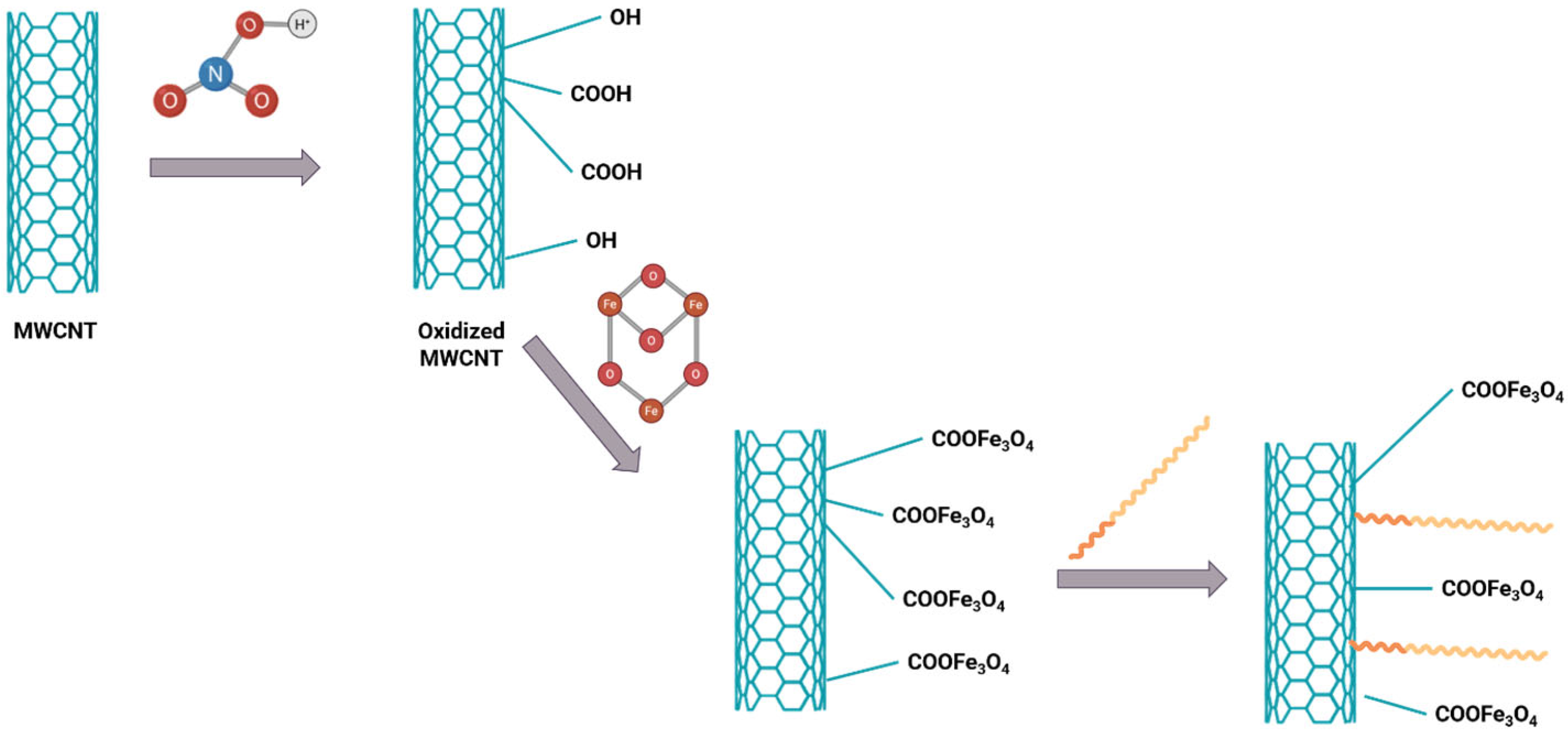
146]. Furthermore, a number of carbon–based materials have shown promise as oil adsorbents, including graphene, mesoporous carbon, and carbon nanotubes. The potential for creating effective and tailored solutions for the remediation of oil contamination is demonstrated by these various materials and approaches. To remove kerosene from water, researchers have examined polyethylene on magnetite multiwalled carbon nanotubes (
Figure 3) [
21]. A magnetite/nanotube nanocomposite was created by functionalizing multiwalled carbon nanotubes with strong nitric acid and then depositing magnetite nanoparticles on surface of the carbon nanotubes. A unique polyethylene/magnetite/nanotube nanocomposite was then created by adding polyethylene to the nanocomposite. Adsorption tests were conducted using simulated kerosene wastewater. During adsorption studies, a number of parameters were examined, including adsorption time, initial pH, adsorbent dose, kerosene content and temperature. Using batch experiment, high–performance liquid chromatography was used to measure the kerosene content. The adsorbent was removed using a magnetic field. The adsorption capacity for kerosene was 3560 mg/g, with removal efficiency of 71%, higher than 2092 mg/g and 42%, respectively, obtained for unmodified adsorbents. According to the Langmuir isotherm model and a pseudo-second-order kinetic model (R
2 = 0.99), the adsorption of kerosene was a homogenous and uniform process [
21].
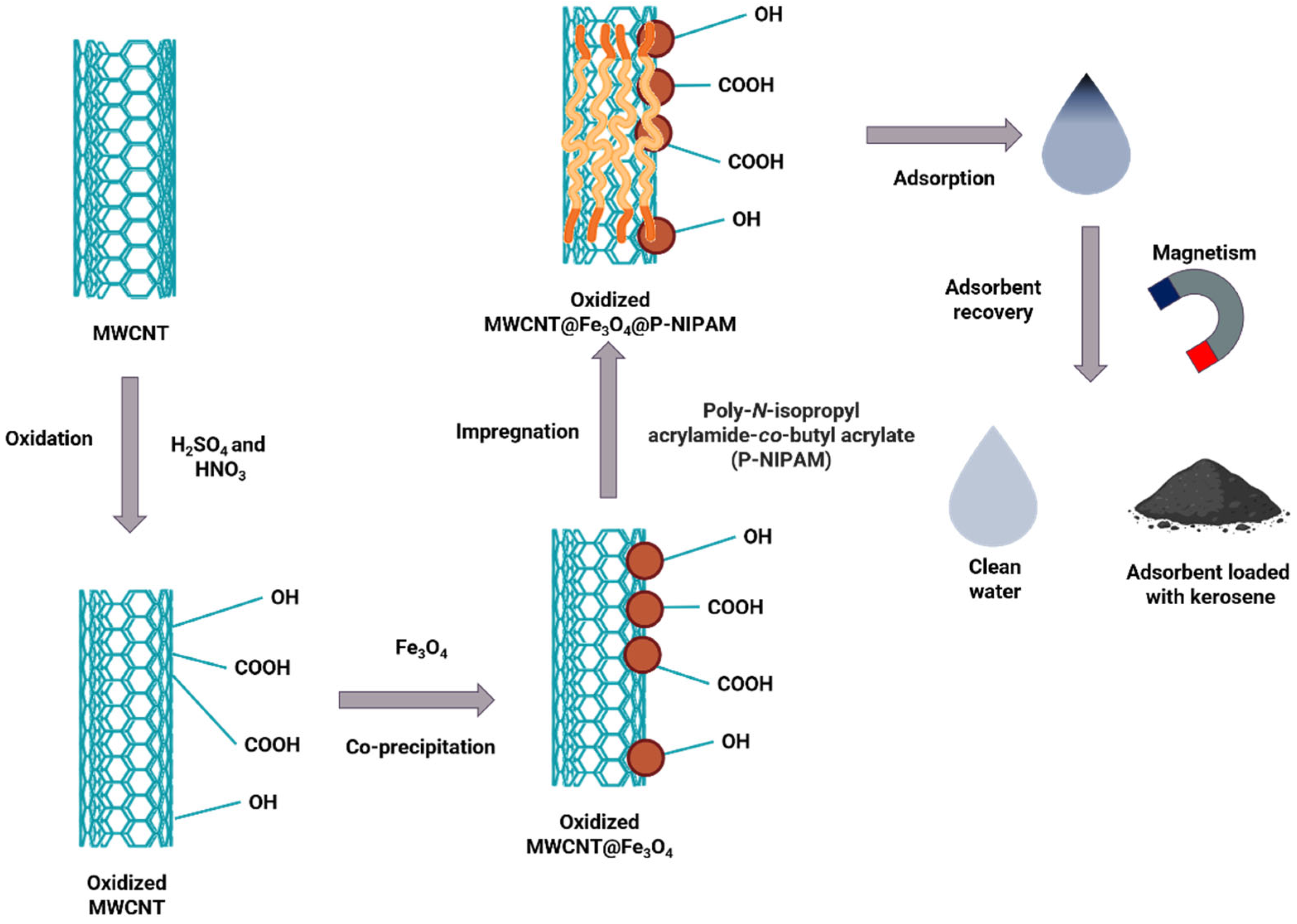
Another study examined the removal of kerosene from wastewater using multi–walled carbon nanotube/poly–N–isopropyl acrylamide–co–butyl acrylate/magnetite (Fe
3O
4) nanocomposites (
Figure 4) [
150]. After oxidizing the nanotubes using a solution of HNO
3 and H
2SO
4, they were coated with magnetite and then added poly–N–isopropyl acrylamide–co–butyl acrylate (P–NIPAM) to create nanocomposites known as P–NIPAM/Fe/carbon nanotubes. In comparison to the unmodified nanotubes, the nanocomposites demonstrated a higher adsorption capacity, increased surface hydrophobicity, and a 95% kerosene removal effectiveness. This value is higher than that obtained by pure carbon nanotubes (45%), those only oxidized (55%) and those decorated with magnetite (68%). For the removal of kerosene from wastewater, the nanocomposites (P–NIPAM/Fe/carbon nanotubes) demonstrated an adsorbent capacity of 8.1 g/g. At a pH of 3.5, an adsorbent dose of 0.005 g, a temperature of 40 °C, and a time of 45 min, the maximum kerosene removal efficiency from wastewater was achieved. The nanocomposites demonstrated exceptional stability during four cycles of regeneration. The polymer’s increased positive charge at pH 3.5 and the adsorbent’s increased adsorption affinity for the kerosene pollutant could be the cause. The Pseudo-second-order model was considered the most suitable for describing the adsorption kinetics [
150].
The same group of scientists also conducted another study in which they examined the promoting effect of metal oxides (V
2O
5; M
xO
y = TiO
2) on multi–walled carbon nanotubes for the removal of kerosene from contaminated water [
151]. The first step involved impregnating the functionalized multi–walled carbon nanotubes with 2% wt. of metal oxides (M
xO
y = TiO
2, V
2O
5, respectively). The authors discovered that TiO
2/functionalized multi–walled carbon nanotubes, among other options, had outstanding adsorption efficiencies for removing kerosene from wastewater by up to 84%. This could be because the surface area of the TiO
2 nanoparticles was increased through functionalization with strong acids. Additionally, the maximum adsorption capacity was 10.6 mg kerosene/g. The adsorption mechanism is based on hydrogen bonding between the hydrogen atom of kerosene and the oxygen atoms of the metal oxide nanoparticles on the functionalized nanotubes which increases the adsorption removal efficiency [
151].
The different naturally inorganic minerals, such as vermiculite, perlite [
152], zeolites [
153], graphite [
154], diatomaceous earth and bentonite [
155], are employed as superior adsorbents to treat petroleum effluent and its byproducts because of their outstanding qualities, affordability, availability, non-flammability, and chemical inertness [
156]. With particle sizes ranging from nanometers to millimeters, the natural mineral resources are usually utilized in granular or powder form. The structural properties, such as mesopore contribution, specific surface area, bulk density, particle size distribution, viscosity, and adsorbate density, affect the adsorption capacity [
157]. Through a variety of processes, including capillary action, the creation of oil layers (films), and efficient pore filling in the regions around the adsorbent particles and external surfaces, oily substances adsorb onto the porous surfaces of minerals [
156]. However, the majority of mineral materials have polar surfaces that make them hydrophilic and oleophobic in aqueous conditions, which prevents oil contaminants from adhering to them. Adding surfactants to these materials has been found to be a successful strategy for raising the inorganic mineral materials’ adsorption effectiveness. This alteration improves the material’s attraction to oils and organic contaminants by turning its hydrophilic surface into a hydrophobic one [
158]. Quaternary ammonium ions have shown impressive oil removal properties and have been thoroughly investigated for clay modification. For instance, in 30 min, a long-chain modified organoclay removed 99% of the pollutant [
159]. It is crucial to remember that better adsorption qualities can not necessarily result from surface modification using quaternary ammonium salts. In certain instances, obstructing the majority of the mineral’s pores during the surface modification process may result in a decrease in the mineral’s specific surface area and, consequently, its ability to adsorb oil. Consequently, more research is needed to fully understand the function of quaternary ammonium modification [
160]. Additionally, the sorption process is greatly influenced by the chemical and physical characteristics of the organic materials themselves. varied pollutants showed varied levels of adsorption affinity, according to a study on the adsorption of ethylbenzene, benzene, xylene, and toluene by diatomaceous earth. This study demonstrated a clear correlation between adsorption on hydrophobicity and pollutant equilibrium [
161]. An adsorbent made from clay and sawdust was used to examine adsorption of kerosene [
162]. Three formulations of clay and sawdust with codes R17:3, R9:1, and R4:1 were tested in order to determine the ideal mixing ratio for removing kerosene. The findings showed that the sawdust and clay combination was more effective than only clay. Since the R4:1 formulation that is, 20% sawdust and 80% clay performed better than the other mixing ratios at any initial concentration of kerosene in wastewater. Additionally, the Langmuir isotherm best described the adsorption process of kerosene. As a result, with an initial kerosene concentration of 81 mg/mL the adsorption capacity for the clay was 81.6 mg/g and, lastly, the capacities for R9:1, R17:3, and R4:1 were 134.1, 143.4, and 150 mg/g, respectively. Consequently, the clay and sawdust mixture effectively removes kerosene from water, making it suitable for use specifically in the restoration of kerosene-polluted water [
162].
The remarkable ability of cellulose-based materials to absorb oil and grease has led to an increase in study into these materials [
163]. The physical characteristics of cellulose itself are exceptional, including its high Young’s modulus (114 GP) and specific surface area (37 m
2/g), polymerization (14,400), and crystallinity (89%) [
163]. There are numerous sources of natural cellulose, such as bacterial cellulose, plants, and algae. Due to their ease of extraction and large-scale production, plant fibers provide an affordable alternative with a high capacity for oil absorption [
164]. The structure of cellulose–based materials is usually loose, porous, and network–like. These structures use capillary action to capture and adsorb oils within the gaps of cellulose–based materials when they come into contact with them, creating a stable adsorption state [
165]. For instance, with a claimed absorption capability of 30 g/g, raw cotton, a cellulose–based material with a high yield and low cost, has shown good adsorption of crude oil [
166]. The oleophilicity and hydrophobicity of cellulose–based materials can also be improved by chemical modification techniques such graft copolymerization, esterification, etherification, etc. [
167]. Additionally, cellulose–based aerogels were created by treating them with sodium hydroxide and urea, then modifying them with methyl–trimethoxysilane. The greatest crude oil adsorption capacity of these modified aerogels was 24.4 g/g [
168]. Another interesting biomass–based adsorbent material is lignin. With a three–dimensional network structure, a huge number of active sites, and an abundance of reserves, it is the second greatest biomass resource found in plants. It has effective adsorption properties for organic contaminants and heavy metals in water after being modified chemically, physically, or biologically. To support resource recovery and environmental management, future studies should concentrate on the creation and improvement of these biomass–based compounds, such as pectin, starch, and chitosan.
Despite the many benefits of the adsorption process, there are still a lot of issues with the actual treatment. Despite adding a significant amount of adsorbent to the effluent, the optimal recovery has not been achieved [
169]. Additionally, the adsorption effectiveness of recycled adsorbents is drastically decreased, which presents another difficulty. Numerous efforts have been made to increase the adsorbents’ capacity to be recycled. For instance, using a magnetic field to promote the recovery and separation of carbon compounds is accomplished by combining them with magnetite; nevertheless, these outcomes were reached in a laboratory setting [
170]. Since the actual amount of wastewater is larger and more complicated, using magnetic separation of nanoadsorbents which will also keep metals in the water and result in secondary pollution is not feasible. Several techniques, including microwave irradiation, ozone oxidation, Fenton reaction, and ultrasound, have also been reported in the literature to restore the adsorption ability of recovered nanocarbon materials by applying external forces [
171,
172]. But there are still issues, such as bacterial growth, solute obstruction, and chemical spillover. Thus, it is critical to keep looking at ways to enhance the recycling of adsorbents made of nanomaterials. Natural mineral materials, such as zeolites, can replenish their adsorption capacity through simple burning, allowing for reuse for up to 10 cycles, in contrast to nanocarbon materials [
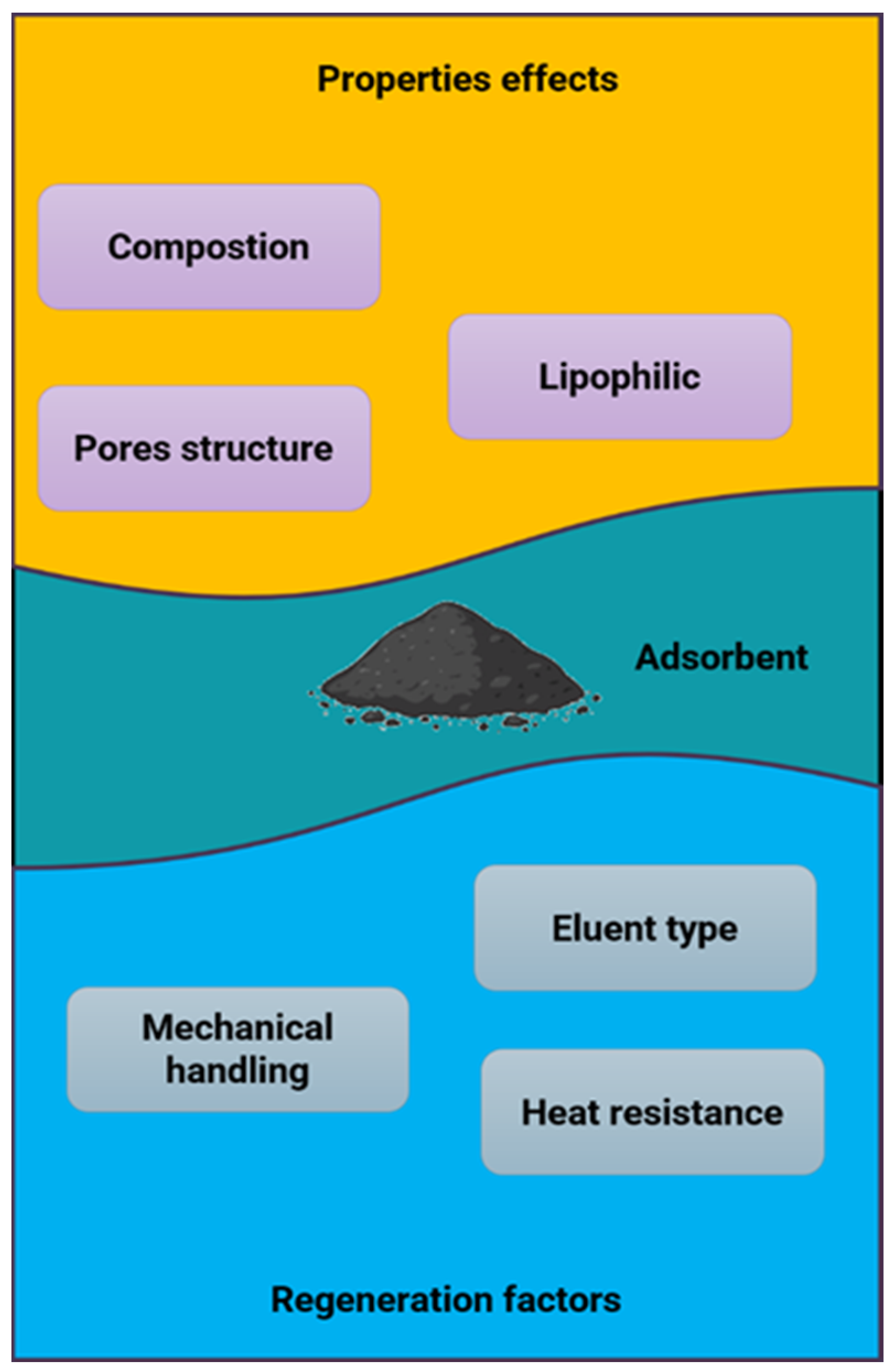
173]. To restore adsorbent qualities, a variety of physical and chemical techniques have been employed. Elution using aqueous solutions or other chemical reagents is the primary method used in chemical methods (
Figure 5). Mechanical processes like centrifugation and compression are examples of physical procedures that are used to extract oil and chemical molecules from solid adsorbents [
167]. In addition to having a high capacity for adsorption, cellulose materials are easily recyclable and exhibit good biodegradation qualities without generating harmful byproducts. Furthermore, after adsorbing oil and grease, cellulose materials can be used as fuel, significantly reducing energy waste.
Sustainable development will be facilitated by nanocellulose–based composite materials, which are poised to become a new generation of high–performance, environmentally friendly adsorbents for the treatment of petroleum wastewater and its derivatives, including kerosene, given their overall adsorption efficiency, environmental benefits, and treatment costs. Furthermore, future adsorption treatment systems will become increasingly automated and sophisticated as information technology advances [
150]. Adsorbent regeneration and selection techniques can be improved with data analysis and real–time monitoring, leading to reduced operating costs and increased treatment effectiveness.
3.4.2. Membrane Technology
The membrane separation process has shown remarkable results in the fields of gas separation, water sterilization and purification, and saltwater desalination [
174]. Comparing membrane technology to other oily wastewater treatment methods, the former offers a smaller footprint, higher efficiency, and lower energy usage during the separation process. This method also separates water and oil directly and effectively without requiring a phase change. An efficient and practical method of treating wastewater from petroleum and its byproducts, such as kerosene, is membrane technology. Through pressure differentials, particle pollutants of different sizes are physically retained in membrane processes by means of porous structural materials. Based on pore size and operating pressure, membranes are frequently divided into four categories: nanofiltration, ultrafiltration, microfiltration, and reverse osmosis processes [
175]. The main purpose of microfiltration is to efficiently collect the majority of bacteria, suspended debris, and protozoan cysts. Ultrafiltration, which is 10–100 times smaller than microfiltration and has pore diameters between 0.01 and 0.1 μm, can remove all solutes, bacteria, protozoa, and other pollutants from water while letting metal ions pass through. Hydrocarbons, suspended particles, and dissolved chemicals may be separated from petroleum wastes far more effectively with ultrafiltration, according to reports. Since nanofiltration has a narrower range of pore sizes than ultrafiltration, the separation of small organic molecules has improved much more [
176]. With pore diameters of less than 0.001 μm, reverse osmosis membranes can efficiently absorb materials as small as 0.0001 μm, which can adsorb almost all ions while permitting only pure water to flow through. Oily wastewater is frequently treated using ceramic and polymer membranes. As membrane technology has developed, carbon and cellulose–based membranes have become more well–known for their efficiency in improving membrane separation procedures for the treatment of effluent from petroleum. The development of membrane–based solutions for the effective and sustainable treatment of wastewater contaminated by oil is being propelled by ongoing improvements in membrane technology and manufacturing techniques. The benefits and drawbacks of membranes are thoroughly discussed in
Table 6.
It is essential to take into account the treatment of petroleum effluent and its byproducts, such as kerosene and carbon recycling, from an economic standpoint. Because of their superior chemical stability, low cost, mechanical stability, and adaptable operational characteristics, carbon–based nanomaterials have been a major focus for membrane scientists. The special qualities of graphene and carbon nanotubes, such as their huge specific surface area, one-dimensional structure, hydrophobicity, and lipophilicity, make them particularly useful in applications involving the removal of greasy materials like kerosene [
180]. Adding carbon nanotubes to composite membranes can greatly increase the membrane’s oleophobicity, hydrophilicity, mechanical strength, and thermal stability [
181]. For instance, employing vacuum filtration, have created graphite oxide–based ultrafiltration membranes with a polyamide carrier, membranes with increased stability and water flux. Despite their effective separation capabilities, these composite membranes may be susceptible to structural deterioration in unfavorable conditions [
182]. The carbon–based membranes, on the other hand, are valued for handling petroleum effluent because of their remarkable resilience in harsh conditions that include acids, solvents, alkalis, high pressures, and temperatures. When it comes to cleaning petroleum effluent under high pressure, researchers have successfully created carbon membranes based on activated carbon that exhibit encouraging outcomes [
183]. However, the current high cost of recycling carbon–based films make their industrial–scale adoption difficult. Even though carbon–based nanoparticles have several benefits for wastewater treatment and oil-water separation, there are still issues with scalability in the recycling process and economic viability. In order to facilitate wider applications, future research should concentrate on improving the stability and longevity of carbon–based membranes as well as lowering production costs.
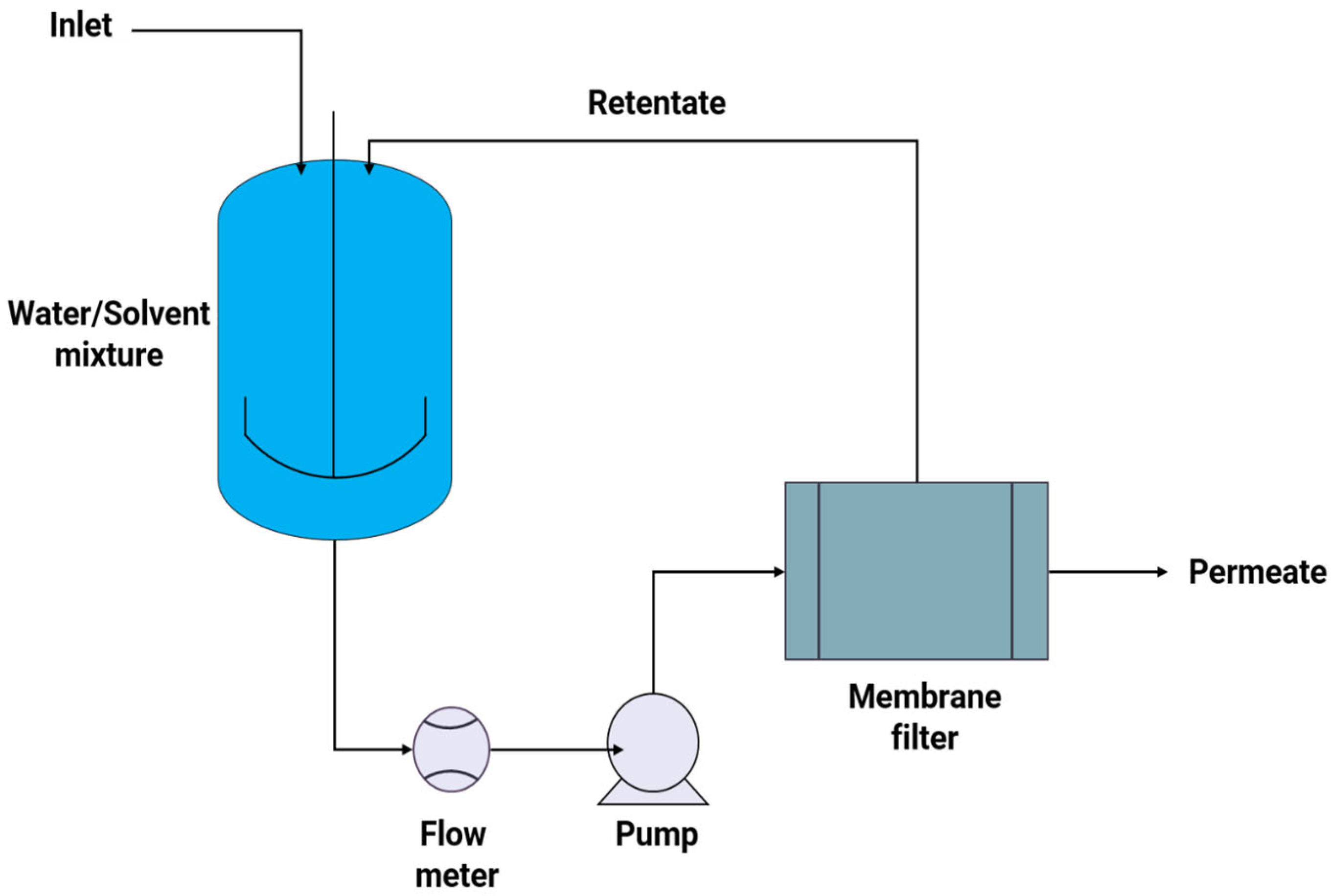
Figure 6 shows the scheme for carbon nanotubes used in fuel filtration and dehydration [
184].
For the ppm level water dehydration of kerosene, carbon nanotubes were immobilized on polytetrafluoroethylene and polyvinylidene difluoride microfiltration membranes to create very hydrophobic membranes. The shape, hydrophobicity, porosity, and permeability of the membrane were examined in relation to varying concentrations of carbon nanotubes. The contact angle increased by 9, 16, and 43% after carbon nanotubes were immobilized on the membranes in comparison to the unaltered 0.1 μm polytetrafluoroethylene, 0.22 μm polytetrafluoroethylene, and 0.22 μm polyvinylidene difluoride membranes, respectively. The immobilized carbon nanotube membrane showed exceptional fuel–water system separation efficiency. Higher water rejection was achieved as a result of the micro/nano water droplets forming bigger diameters on the carbon nanotube surface and separating from the membrane surface. As the quantity of immobilized carbon nanotubes increased, the water rejection generally rose, while the effective surface porosity over the pore length and flux dropped. The membrane based on polytetrafluoroethylene performed better than the one based on polyvinylidene difluoride. With 0.1 and 0.22 μm polytetrafluoroethylene and an optimal carbon nanotube loading of 3 and 6% wt., the carbon nanotube–immobilized membranes were created. The kerosene fluxes were 43 kg/m
2 h and 55 kg/m
2 h, respectively, and the water rejection was 99 and 97% [
184].
Researchers used ultrafiltration membranes to treat kerosene from wastewater emulsion [
185]. The emulsion was ultrafiltered, and the impacts of several parameters, such as membrane type (polysulfone and regenerated cellulose), kerosene content, transmembrane pressure, pH, and feed flow velocity, were examined. It was discovered that the three main variables influencing ultrafiltration were: membrane type, pressure, and initial concentration. The greatest flux under ideal circumstances was estimated to be 108 L/m
2 h, which is within the confidence limit of the measured value of 106 L/m
2 h, at 3% (
v/
v) initial concentration, 3 bar, and C30F membrane type. More hydroxyl groups were visible in the normalized Fourier transform infrared spectroscopy data of the virgin cellulosic membranes C100F and C30F. In comparison to the C100F membrane, the C30F membrane exhibits a higher flow, which is attributed to both a greater number of pores and a higher surface porosity. For all membranes, the flux was independent of pressure in the biased regime of 3 bar upwards and was thought to be dictated by back diffusion transport. The hydrophilic C100F membrane had a greater permeate flux even though the cutoff threshold of the PS100H and C100F membranes was the same at 100 kg/mol. Despite being hydrophilic, the C100F membrane showed the largest flow decline over time as a result of oil fouling. Both scanning electron microscopy and Fourier transform infrared spectroscopy demonstrated that cake layer production was not the reason for fouling in the PS100H membrane. In the meantime, the fouled C100F membrane’s characterization investigations revealed evidence of adsorptive fouling and gel formation [
185].
Ceramic membranes are highly preferred due to their exceptional temperature and chemical stability, and long life [
186]. Ceramic membranes’ hydrophilicity is greatly increased because of the abundance of surface metal hydroxyl groups. This results in superoleophobic or underwater oil repellent properties, which greatly increases the membranes’ resistance to kerosene and oil pollution. Furthermore, ceramic membranes exhibit exceptional resilience while handling oily effluent with high temperatures, organic solvents, and severe acidity or alkalinity. However, ceramic membranes are prohibitively expensive due to the high cost of raw materials like zirconia and alumina as well as high sintering temperatures that demand a large amount of energy, which severely restricts their widespread use [
187]. Recent developments have increased the affordability and accessibility of ceramic membranes in industrial settings by substituting inexpensive clays such meerschaum clay, kaolin, dolomite, shale clay, and Algerian clay for raw materials [
188]. The microstructural properties of ceramic membranes are inextricably tied to their separation performance. Microstructural characteristics including shape, porosity, and pore size distribution have a direct impact on the separation efficiency and flux of porous ceramic membranes. For instance, highly effective separation can be accomplished by ceramic membranes with consistently dispersed pore diameters. Additionally, asymmetric multilayer ceramic membrane architectures work exceptionally well in improving permeability selectivity [
189]. For instance, using α–Al
2O
3/ZrO
2 as raw materials, researchers created a ceramic membrane with a hole size of 0.2 μm and achieved an amazing oil retention rate of 99% [
190]. The removal rates were from 85 to 99% when ceramic microfiltration membranes with slightly higher pore sizes (1.3 μm) were made with kaolin clay [
191]. Ceramic membranes must, however, balance permeability and selectivity. At initial concentrations below regulatory limits, then, it is crucial to maintain a high pollutant rejection rate while increasing water permeability to guarantee safe and environmentally risk–free release [
192]. The application of ceramic membranes depends on their preparation technology, and at the moment, the most often utilized techniques are thermal evaporation, sol–gel, magnetron sputtering, and electrochemical deposition. The sol–gel technique is the most popular of them because it is inexpensive and easy to utilize [
189]. Nevertheless, this technique still has drawbacks, including trouble regulating film thickness and excessive energy usage. In order to lower production costs and enhance membrane performance, future research will concentrate on improving these process parameters.
A high–performance antifouling asymmetric zeolite@polyethersulfone/cellulose acetate membrane was employed in a study to effectively separate kerosene containing greasy wastewater [
193]. Oily wastewater was treated by a cross–flow microfiltration process with a membrane made of zeolite 4A (0.25–1 wt.%), activated carbon (2 wt.%), and polyethersulfone (17 wt.%) utilizing the non–solvent–induced phase inversion procedure. Pollutant rejection, permeation flux, pure water flux, percentage flux recovery ratio, and percentage relative flux reduction were used to evaluate the prepared membranes’ performance. It was determined that adding 4A zeolite nanoparticles to the polyethersulfone and activated carbon blended polymer greatly enhanced the membranes’ hydrophilicity and other structural characteristics, such as their low contact angle of 29° for 0.5% 4A zeolite, compared to 70° for pure polyethersulfone, and their porosity of 87% for 0.5% 4A zeolite, compared to 44.5% for pure polyethersulfone. With an initial concentration of 500 mg/L, a transmembrane pressure of 2 bar, a temperature of 25 °C, and a pH of 7.2%, the 4A@polyethersulfone/activated carbon zeolite membrane with 0.5 weight percent 4A zeolite nanoparticles (0.5% 4A zeolite membrane) demonstrated the highest pure water flux of 91 L/m
2h and pollutant rejection of 98.8%. The antifouling properties of the polyethersulfone/activated carbon combination membrane were improved by the addition of 0.5 weight percent 4A zeolite nanoparticles. Conversely, the 0.5% 4A zeolite membrane demonstrated a relative flux drop of 21.8% and a flux recovery ratio of 97.7%. Depending on the concentration of the polymer blend in the manufacture solution, the benefit of employing 4A zeolite nanoparticles to boost the hydrophilicity of the polyethersulfone/activated carbon blend, kerosene rejection, and permeate flow is restricted by a certain zeolite content. When SDS was utilized as the cleaning agent, reuse studies of the 0.5% 4A zeolite membrane revealed that the membrane maintained an almost constant kerosene rejection rate of 94% after 5 cycles. However, after five cycles of cleaning with sodium hydroxide solution, the membrane maintained a 72% kerosene rejection rate [
193].
Polymeric membranes are perfect for a range of separation processes, including the treatment of petroleum effluent, because they have exceptional mechanical strength and can be customized with certain surface chemistries and pore sizes. In membrane technology, polyacrylonitrile, polyvinylidene fluoride, polypropylene, and polysulfone are often utilized polymers [
194]. Oil droplets have a propensity to clog the pores of traditional polymeric membranes, which reduces their permeate flux and shortens their operational life. In order to improve the performance of polymeric membranes, researchers have investigated a number of modification strategies that involve adding more materials or combining several technologies. A team of researchers studied the treatment of oilfield wastewater using polyvinylidene fluoride membranes modified with inorganic nanoalumina. The results demonstrated that the treated water achieved over 90% chemical oxygen demand elimination and over 98% total organic carbon removal, with grease, oil, and suspended particles contents below 1 mg/L [
195]. Another study modified polysulfone membranes by adding chemicals such polyethylene glycol and polyvinylpyrrolidone, which increased the membranes’ porosity and hydrophilicity. According to experimental results, the modified membranes retained more than 90% of the oil [
196]. Hydromanganese oxide nanoparticles were incorporated into polyvinylidene fluoride membranes to create hydromanganese oxide nanoparticle/PDVE ultrafiltration membranes. When compared to the performance of unmodified PDVE membranes, this alteration resulted in a notable tenfold increase in water flux and 93% grease and oil retention [
197]. The complexity of oily wastewater’s composition raises the strain placed on membranes in proportion. Consequently, the creation of novel, high–performance polymer membrane materials and eco-friendly polymers like chitosan, polylactic acid [
198], cellulose acetate [
199] and new membrane preparation techniques (thin film deposition) [
200], is of great importance.
A study created a hydrophobic bilayer/hydrophilic nanofibrous membrane that was utilized in a direct contact membrane and had catalytic properties [
201]. The membrane was thoroughly described in terms of both its shape and chemical makeup. Computational fluid dynamics simulations and heat transfer studies were employed to explain the water flux augmentation of the hydrophilic/hydrophobic bilayer nanofibrous membrane. A hydrophilic/hydrophobic bilayer nanofibrous membrane’s antifouling properties were examined using kerosene and aniline, two common pollutants found in shale gas effluent. This membrane’s antifouling properties were assessed using the computational fluid dynamics simulation calculation and the expanded Derjaguin–Landau–Verwey–Overbeek theory, respectively. Kerosene, pure NaCl, and aniline were among the three kinds of feed solutions that were processed. The hydrophilic/hydrophobic bilayer nanofibrous membrane demonstrated a greater water flux for the NaCl feed than the slurry membrane (13 vs. 10 kg/m
2 h). This was because the hydrophilic layer’s high thermal conductivity made it easy to raise the membrane’s surface temperature and evaporate the water on it. After 10 h of operation, the hydrophilic/hydrophobic bilayer nanofibrous membrane’s flux for the oil-containing feed remained at over 90% of its initial flow, but after 4 h, the membrane’s normalized flux dropped sharply to 0 kg/m
2 h. According to theoretical study, the hydrophilic/hydrophobic bilayer nanofibrous membrane’s strong hydration ability and low adhesion free energy were responsible for its oil antifouling effect. The hydrophilic/hydrophobic bilayer nanofibrous membrane was able to completely break down aniline by activating peroxymonosulfate when it came to treating feeds that included aniline. According to electron paramagnetic resonance spectroscopy, highly oxidative radicals (SO
4•−,
•OH) are essential for aniline elimination [
201].
Because of their many benefits, fiber–based membranes have drawn a lot of interest in the oil–water separation industry. These membranes are made up of interwoven, cross-linked fibers that create a tortuous network of pores. The kind of fiber and the size of the pores determine how well fiber–based membranes work [
202]. In terms of fiber content, inorganic and organic fiber membranes are the two primary types. Numerous studies have been conducted on inorganic fiber membranes, including carbon nanotube wire mesh and inorganic oxide fibers [
178]. Their exceptional mechanical strength and chemical stability make them appropriate for demanding operational environments [
178]. But for water–oil separation, inorganic materials by themselves frequently lack sufficient selectivity. Several techniques are used to improve the membrane surface’s wetting characteristics in order to increase their performance. For instance, metal mesh films with surface micro–nanostructuring have increased surface roughness and improved wettability [
203]. By using a sol–gel technique to coat titanium dioxide nanoparticles on carbon nanotube membranes, oleophobicity and hydrophilicity are greatly increased, leading to a high rate of water–oil separation [
204]. Despite having outstanding oil–water separation capabilities, inorganic fiber membranes frequently have issued such brittleness, low elasticity, high weight, and huge volume. They have limitations that limit their use in applications that require flexibility and resilience. Membranes composed of organic fibers are lightweight and flexible. Superior mechanical qualities, a high capacity to absorb water and oil, naturally porous architectures, and production scalability are all features of fabrics made from organic fibers, such as cotton. Functionalized cotton fibers have shown a 97% separation efficiency when utilized as materials for oil-water separation [
205]. The strengths of various organic fiber membrane types vary; for instance, nylon fiber membranes have a high specific strength, but natural fiber nonwoven membranes and electrostatically spun fiber membranes are recognized as renewable and eco-friendly alternatives [
206]. In conclusion, each type of fiber membrane organic and inorganic has special benefits for applications involving the separation of water and oil. The difficulty of treating high–concentration organic wastewater, which necessitates lowering energy usage and further enhancing fouling resistance, is one of the many obstacles that these technologies still confront despite their enormous application potential. Last but not least, attaining resource utilization and wastewater recovery is a crucial area of future study.
Although membrane–based methods provide almost total oil–water separation, membrane fouling which is brought on by oil droplets interacting with the membrane surface makes it difficult to sustain performance over extended periods of time. Several ways have been examined as potential solutions to solve membrane fouling difficulties, including surface modification, membrane materials, chemical cleaning, aperture restructuring, and backwashing. Ceramic membranes have significant oleophobicity and antifouling qualities by nature, and surface coating can improve these qualities even more. Researchers created perovskite nano titanium dioxide coatings on the surface of alumina ceramic membranes using the sol–gel technique [
207]. The membranes demonstrated improved wettability and self–cleaning properties under the combined influence of UV radiation, all the while preserving superior separation performance. Because of the surface water layer, cellulose membranes have exceptional oleophobic qualities. Oil deposition is prevented by the hydration layer, which breaks the hydrophobic-hydrophobic interactions between the surface and oil droplets [
208]. On the other hand, polymer and carbon-based membranes have less antifouling capabilities and are more prone to contamination by greasy materials [
209]. Enhancing hydrophilicity is a crucial strategy for lowering oil contamination on the membrane surface, according to several research. Copolymer-based graft changes in PVDF membranes, for instance, have significantly enhanced their oleophobicity, hydrophilicity, and antifouling capabilities [
210]. Furthermore, sewage flow can be changed from laminar to turbulent using physical modification techniques, such as forming a three-dimensional pattern on the membrane surface. This reduces membrane fouling and the aggregation of oil molecules on the membrane surface [
211]. Underwater superoleophobicity has also been seen on fish scale surfaces, and researchers attribute this to the presence of hydrophilic mucilage and nano- and microstructures. By covering commercially available metal meshes with adjustable pore sizes with graphene oxide, they were able to create superoleophobic membranes [
212]. For oil-water separation, these novel methods show promise in enhancing long-term performance and reducing fouling in membrane-based technologies. For membrane-based oil-water separation technologies to become more sustainable and effective, more research and development in materials engineering and surface modification techniques will be essential.




 ,
,