1. Introduction
Rapeseed, as the largest oil crop in China, accounts for approximately 20% of the global total output [
1,
2]. In terms of planting scale, it is the largest rapeseed crop in China, mainly distributed in the Yangtze River Basin. Its production development is in a mutually binding and symbiotic relationship with the food and oil security guarantee that serves as the cornerstones for the stability of the regional economy and society [
3,
4]. In this system, the rapeseed production in Sichuan, located in the upper reaches of the Yangtze River, not only fills the gap in China’s edible oil supply, but also optimizes the production structure of grain crops and oil crops, and enhances the ecological value of agriculture. It plays a crucial role in promoting agricultural economic growth, and supporting the implementation of the rural revitalization strategy to facilitate the sustainable development of agriculture [
5]. Sichuan has established a comprehensive production and marketing support system to ensure food and oil safety, making it a core area in China’s rapeseed industry landscape [
6]. However, amid ongoing urbanization, tightening resource constraints, and evolving consumption patterns, the spatio-temporal evolution of rapeseed production layout in Sichuan has exhibited new characteristics and encountered emerging challenges [
7]. These include issues such as incomplete consideration of influencing factors and overlooked interaction effects. Therefore, it is urgent to conduct in-depth systematic research on its evolution patterns and internal mechanisms, in order to ensure a stable supply of rapeseed in Sichuan and promote sustainable agricultural development.
From the perspective of research progress, studies on rapeseed production layout have evolved into a multi-dimensional exploration framework [
8,
9,
10,
11]. Research in major rapeseed-producing regions such as Europe and North America started relatively early [
5,
8,
11,
12]. Initial efforts focused on the relationship between ecological adaptability and geographical distribution. For instance, European scholars conducted field experiments to delineate the climatically suitable ranges for different ecotypes of rapeseed, confirming temperature and light as key factors in varietal regional adaptation [
13]. With the development of spatial technologies like GIS and RS, research shifted toward quantitative analysis. In Canada, the use of remote sensing monitoring and spatial autocorrelation methods revealed that rapeseed production is concentrated in Saskatchewan Province, with a high degree of consistency between this concentration and local irrigation and soil conditions [
14,
15]. In China, a series of studies have been conducted on the spatial distribution and influencing factors of rapeseed production at the national or large regional scale [
4,
16,
17,
18,
19,
20,
21]. Regarding the production area, the main production regions of Chinese rapeseed are categorized into the Yangtze River Basin, the northern arid and cold regions, and the Huang-Huai River Basin, with research primarily concentrating on the Yangtze River Basin [
4,
22,
23]. In terms of spatial distribution, Bai et al. [
17] and Wang et al. [
24] applied a concentration index model to demonstrate that the spatial center of Chinese rapeseed production has gradually shifted southwest over the past few decades, with the concentration index in Sichuan, Hunan, Chongqing, and other regions within the Yangtze River Basin increasing year by year. In terms of influencing factors, Tao et al. [
25], based on 19 years of field trial data, indicated that the ultra-winter-hardy rapeseed could overcome the climatic conditions for rapeseed cultivation in northern China, thereby promoting the expansion of winter rapeseed planting in China towards the north. Meanwhile, Liang et al. [
26] used Pearson correlation analysis and found that among various social and economic factors, the effective irrigation area had the most significant impact on the winter rapeseed planting area.
Existing research has established a relatively comprehensive analytical framework, offering multi-dimensional methodological support for the study of rapeseed production layout. For instance, quantitative approaches include traditional agglomeration metrics such as the production concentration index (CR
n) and the Herfindahl–Hirschman Index (HHI), spatial econometric models such as the Spatial Durbin Model (SDM) and Spatial Lag Model (SLM), as well as spatial pattern analysis techniques such as spatial interpolation and spatial autocorrelation [
17,
24]. However, several limitations remain. First, most studies are conducted at a macro spatial scale, focusing on provincial-level analyses within the main rapeseed-producing regions in the middle and lower reaches of the Yangtze River [
21,
23,
27]. Currently, there is a lack of research at the county-level like that in Sichuan Province (which is located in the inland region of the southwest and the upper reaches of the Yangtze River). This makes it difficult to capture the impact of natural conditions and socio-economic factors at the micro level on rapeseed production [
7,
28]. Second, most driving mechanism analyses rely on single-factor regression approaches, without employing tools such as Geodetector to conduct interaction detection. They fail to reveal synergistic enhancement or nonlinear constraining effects among factors, leading to a relatively one-sided interpretation of spatial layout mechanisms [
17,
26,
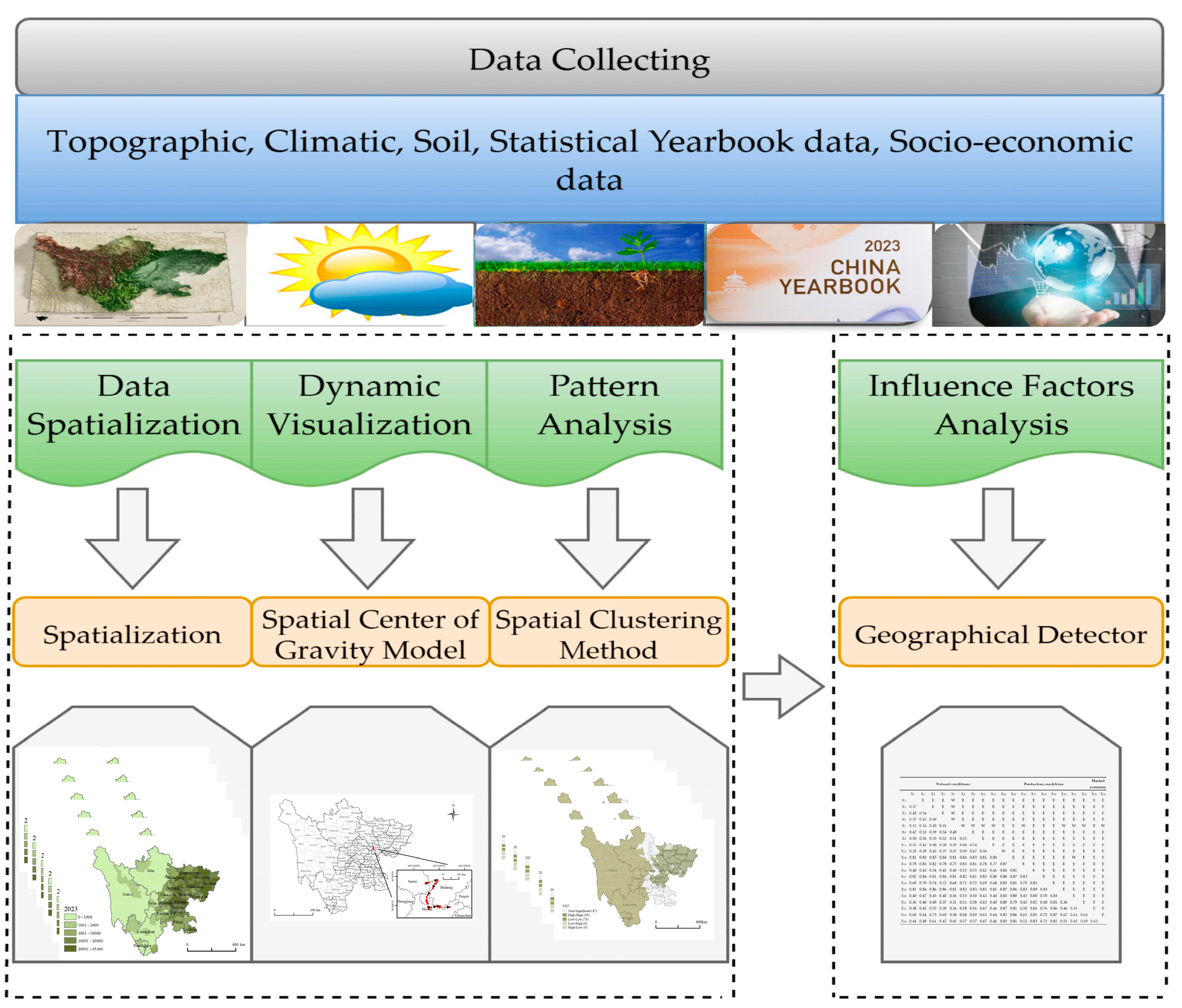
29]. Based on this, this study innovatively constructs a multi-process analysis framework of “data spatialization–dynamic visualization–pattern analysis” based on county-level statistical data using Geographic Information System (GIS) technology. It accurately depicts the spatial differentiation and evolution patterns of rapeseed production in Sichuan. At the same time, the Geodetector is introduced to analyze the main driving factors and interactive influencing factors of the distribution differences of rapeseed cultivation in Sichuan.
The spatial distribution of rapeseed production in Sichuan is shaped by a combination of natural endowments, economic development, and policy guidance, resulting in notable spatio-temporal evolution patterns [
3]. While the Western Sichuan Plain enjoys favorable natural conditions, rapid urbanization has increasingly constrained its production space. In contrast, the middle Sichuan hilly region has seen a steady expansion of planting area, supported by policy incentives and improved agricultural infrastructure, gradually establishing itself as a core production zone. Meanwhile, the development of multifunctional uses of rapeseed, such as tourism centered on flower appreciation, has driven the optimization and adjustment of production layouts in tourist-oriented counties across the Northeastern Sichuan Region [
26]. Against this background, this study utilizes rapeseed production data from Sichuan Province spanning 2001 to 2023, with a focus on the county scale. By employing GIS spatial analysis and the Geodetector method, we examine the spatio-temporal evolution characteristics and influencing factors of rapeseed production layout. This research aims to understand the changing trends and influencing factors of rapeseed cultivation, providing a scientific basis for the government to formulate targeted support policies, thereby facilitating the sustainable development of the rapeseed industry in Sichuan.
3. Results
3.1. Analysis of the Spatio-Temporal Evolution of Rapeseed Production
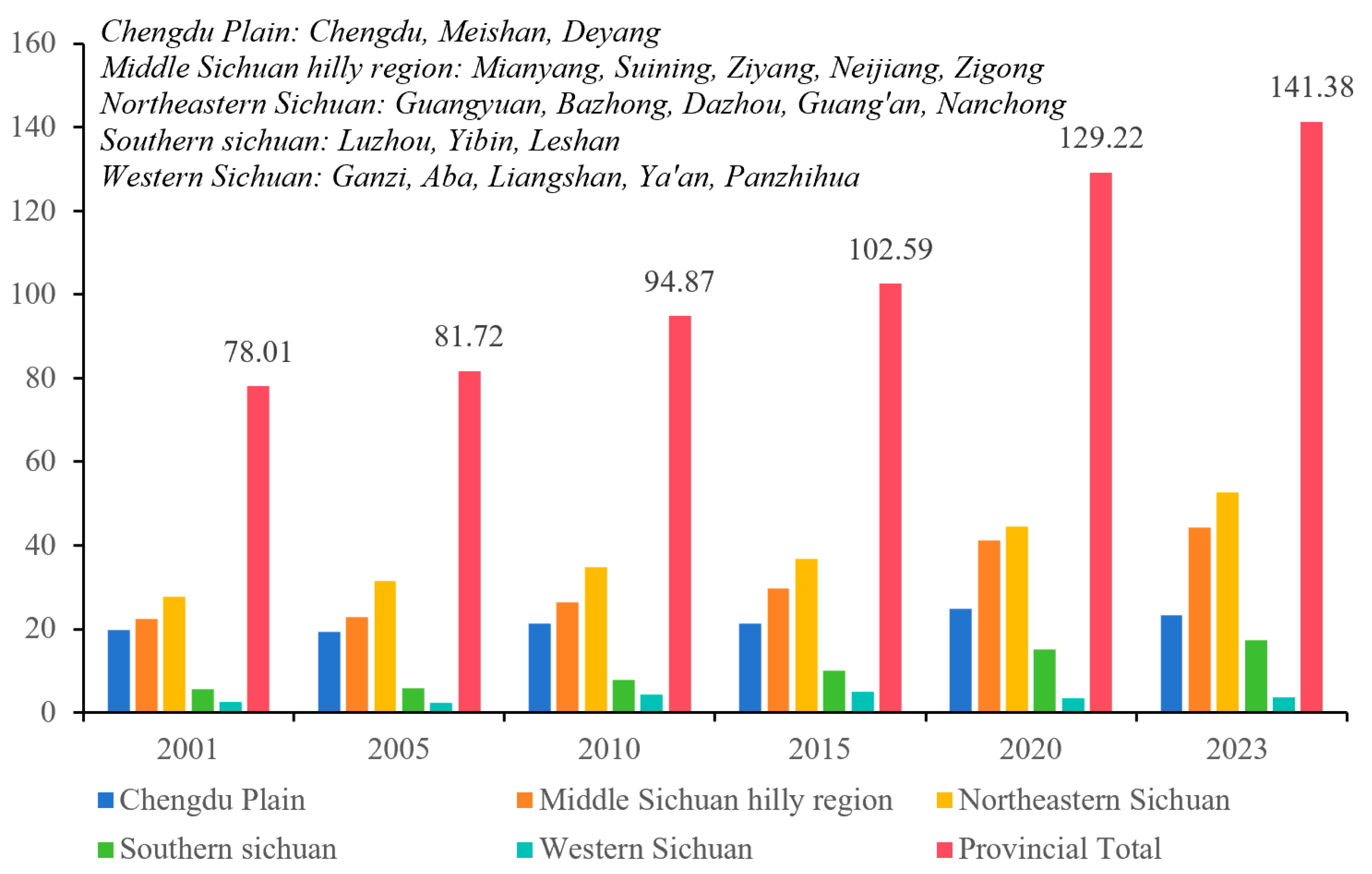
Between 2001 and 2023, rapeseed production in Sichuan Province exhibited significant growth in both scale and industrial importance (
Figure 4). At the provincial level, the cultivated area of rapeseed increased from 0.7 million hectares to 1.41 million hectares, representing an expansion of 80.77%. Its share within the oilseed crop planting structure rose from 74.36% to 81.77%, while its proportion of the total crop planting area also grew from 8.22% to 13.77%. These trends underscore the rising role of rapeseed as a core crop in Sichuan’s agricultural system, reflecting enhancements in both scale and efficiency.
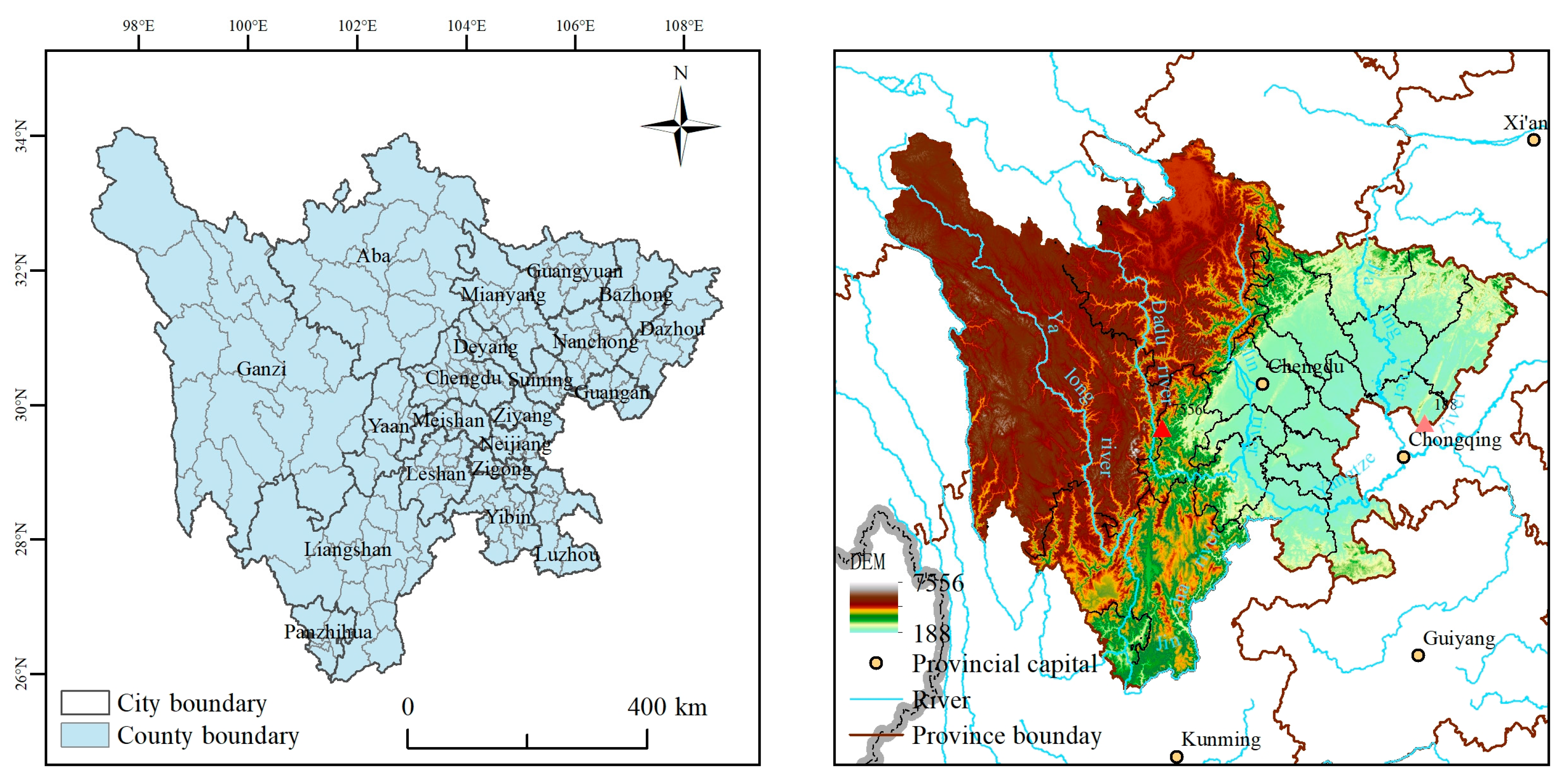
Spatially, rapeseed production in Sichuan exhibits a pattern characterized by “core concentration and peripheral dispersion.” The primary production cores are located in northeastern Sichuan, the middle Sichuan hilly region, and the Chengdu Plain. Over the past 23 years, these regions have experienced continuous growth in planting area, forming a stable production belt. Although northeastern and central Sichuan feature complex terrain, improvements in varieties, production techniques, and water conservancy infrastructure have facilitated large-scale and intensive cultivation. These areas have shown particularly notable growth, emerging as the main and secondary core zones for rapeseed production in the province. In contrast, the Chengdu Plain—with its flat terrain, fertile soils, and reliable irrigation—has long maintained high and stable rapeseed yields, serving as a key region for securing provincial production capacity. Together, these three core zones form the foundation of Sichuan’s rapeseed industry and hold strategic importance for stabilizing regional oil supply and ensuring edible oil security. The peripheral regions, including southern and western Sichuan, also recorded an increase in rapeseed planting area over the same period. However, due to vast geographical spans and local constraints in planting conditions, production remains spatially dispersed and has not yet formed large-scale concentration.
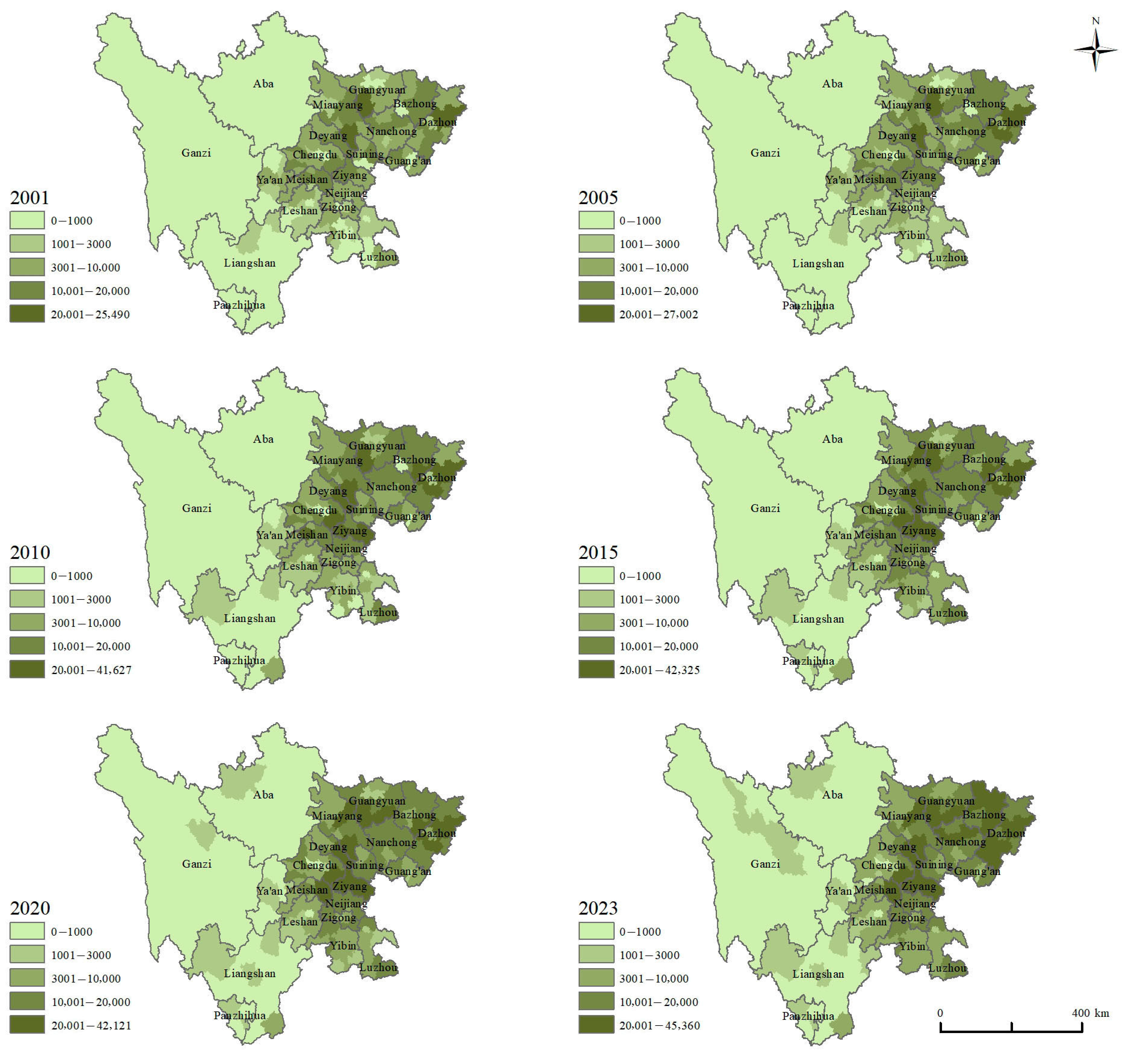
To further clarify the detailed spatial evolution of rapeseed production, this study utilized GIS spatial analysis technology to draw the county-scale rapeseed planting area maps for the key time points of 2001, 2005, 2010, 2015, 2020, and 2023 (
Figure 5), visually tracing the spatial change process. The results show that the average rapeseed planting area in the provincial counties across the six key nodes has shown a significant upward trend. The average planting area in 2001 was 4300 hectares, and it increased to 7400 hectares in 2023. Moreover, the ‘high-low value differentiation’ feature of the planting area gradually strengthened over time. Specifically, in the 183 counties of Sichuan Province from 2001 to 2023, 134 counties achieved an increase in rapeseed planting area, accounting for 73.22%. Among them, 55 counties had an additional area of over 5000 hectares, and 22 counties in the northeastern Sichuan and the Middle Sichuan hill, such as Jiange County, Qu County, Santai County, and Zhongjiang County, had an additional area of over 10,000 hectares, becoming the main areas of area expansion. They relied on policy support and promoted the growth of rapeseed planting area through the extension of the industrial chain of rapeseed production and rural tourism and deep processing. Additionally, 35 counties in the province experienced a reduction in rapeseed planting area, with 19 counties experiencing a reduction of over 1000 hectares. The area contraction was mainly concentrated in some traditional production areas, and was often related to economic and social transformation. Taking Pujiang County, Qionglai City, and Pidu District in Chengdu Plain as examples, due to the “siphon effect” of urbanization, the produced land in the area gradually shifted to more valuable fruit and vegetable production or facility agriculture. In 2023, the rapeseed planting area decreased by 40% to 60% compared to 2001, becoming a typical representative of the area contraction in traditional production areas.
In summary, from 2001 to 2023, the dynamic evolution of rapeseed production in Sichuan Province presented a composite feature of core areas stabilizing with expansion, and marginal areas breaking through and growing. This spatial pattern formation not only reflects the fundamental constraints of terrain and climate on rapeseed production, but also demonstrates the guiding effect of policy regulation and market mechanisms in the reallocation of production factors. It can provide precise practical guidance for optimizing the spatial layout of the rapeseed industry and promoting quality improvement and efficiency enhancement in Sichuan Province.
3.2. Shift in the Spatial Gravity of Rapeseed Production
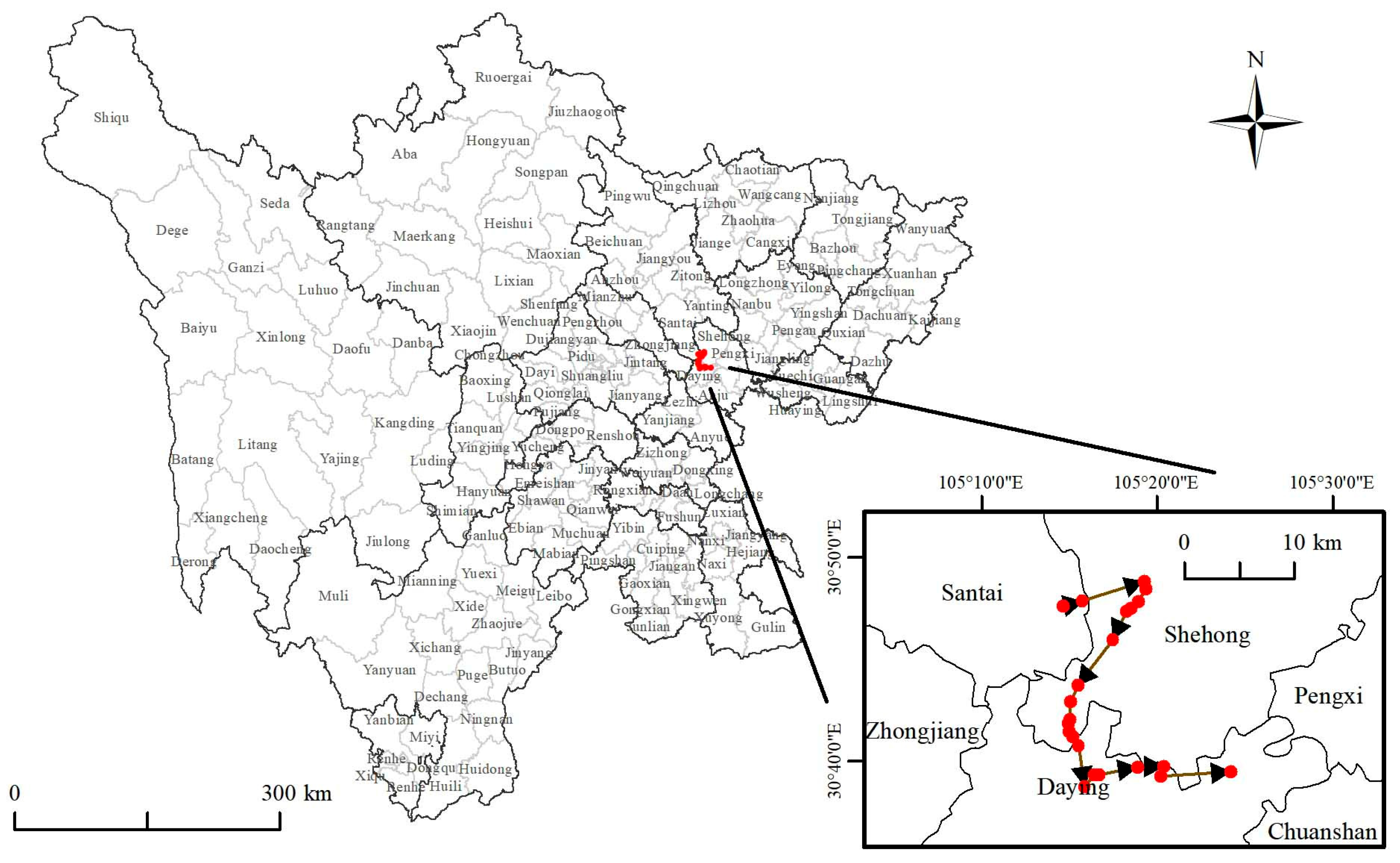
From 2001 to 2023, the spatial gravity of rapeseed production in Sichuan Province exhibited short-range fluctuations with clear regional anchoring (
Figure 6,
Table 2). Over this period, the cumulative displacement of the production center was 37.43 km, with an average annual movement of 1.70 km. The limited overall shift reflects the high stability of the provincial rapeseed production pattern, which is closely linked to the sustained planting scale of the three major production regions.
In terms of geographical coordinates, the center of gravity fluctuated within the range of 105.24° E–105.40° E and 30.64° N–30.81° N, tracing a distinctive “Z”-shaped trajectory. Three notable shifts occurred in 2003, 2009, and 2023. In 2003, the center moved approximately 5.82 km northeastward, largely driven by a more than 20% increase in planting area in Kaijiang County (Dazhou City) and Cangxi County (Guangyuan City), facilitated by that year’s “Oilseed Variety Subsidy” policy. In 2009, it shifted 5.26 km southwest, influenced by significant planting expansion in Huili City and Huidong County (Liangshan Prefecture). In 2023, the center moved 6.36 km eastward, attributable to improved mechanization in Daying County and Shehong City (Suining City), where the mechanical harvest rate rose from 60% in 2020 to 85% in 2023, boosting per-unit yield and pulling the center eastward. Shifts in other years were generally less than 2 km, further underscoring the stability of rapeseed production distribution in Sichuan.
Administratively, the production gravity remained concentrated in the hilly areas of central Sichuan, cycling among three counties: it was located in Santai County from 2001–2002, shifted to Shehong City from 2003–2015, and moved to Daying County from 2016–2023. This pattern of localized fluctuation and strong regional anchoring not only highlights the strategic importance of central Sichuan’s hilly areas as a rapeseed production core but also reflects the marginal regulatory role of policy guidance and technological progress in shaping local production weight. These insights offer precise spatial references for analyzing both the stability and dynamics of rapeseed production patterns in Sichuan.
3.3. The Phenomenon of Spatial Clustering in Rapeseed Production
Using the GeoDa software, a spatial autocorrelation analysis was conducted on the 23-year cross-sectional data of rapeseed-producing area in Sichuan Province from 2001 to 2023. This analysis deeply revealed the spatial correlation characteristics of rapeseed production at the county scale. The global Moran’s I statistical results (
Table 3) showed that over the 23-year period, the global Moran’s I values were stably distributed within the range of 0.464 to 0.558, and were statistically significant at the
p < 0.001 level. This indicates that there is a significant spatial autocorrelation characteristic in the rapeseed-producing area of Sichuan among adjacent counties, presenting a typical “proximity similarity” clustering pattern. That is, counties with larger planting scales tend to be adjacent to larger counties, while smaller counties tend to cluster with smaller counties. This spatial dependence relationship provides a quantitative basis for understanding the regional linkage effect of rapeseed production.
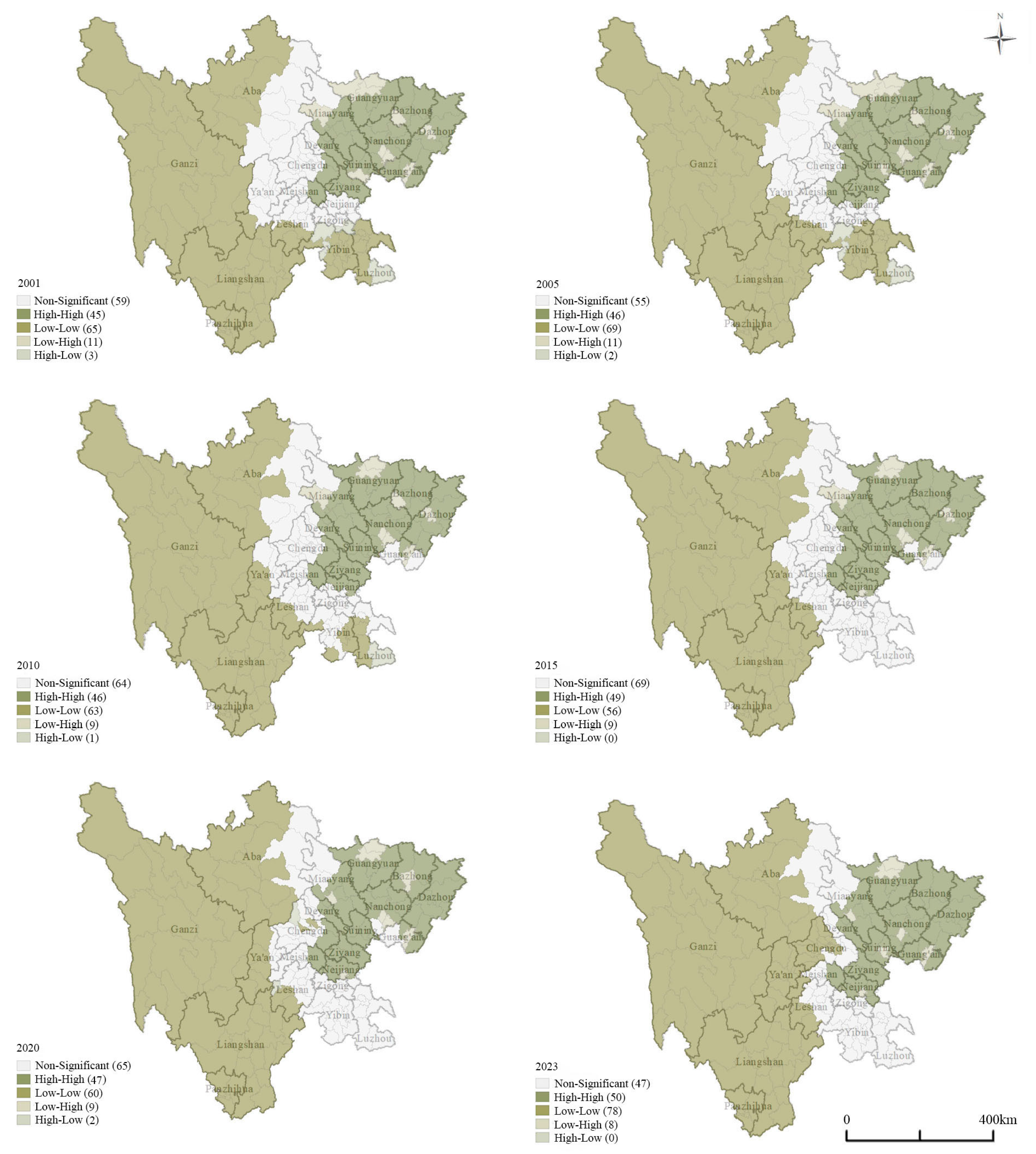
To further analyze the local characteristics of spatial clustering, local spatial autocorrelation analysis was conducted on the rapeseed producing area in six key time periods. The results (
Figure 7) show that the spatial correlation pattern of rapeseed producing area in Sichuan Province mainly presents as high–high (H-H), low–low (L-L) and low–high (L-H) clustering, and the temporal and spatial evolution of each clustering type shows distinct differences.
The H-H agglomeration areas, as the advantageous core areas for rapeseed production, are mainly distributed in Dazhou City, Bazhong City in the northeastern part of Sichuan Province, and Mianyang City, Nanchong City, and other areas in the hilly region of central Sichuan. From 2001 to 2023, the number of counties in these agglomeration areas steadily increased from 45 to 50. The expansion areas mainly concentrated in Jialing District of Nanchong City and Tongchuan District of Dazhou City. This is closely related to the regional collaboration mechanisms such as the promotion of improved varieties and the cooperation of agricultural machinery in the “Sichuan Oil Industry Belt” construction, successfully driving the surrounding 5 counties to integrate into the H-H agglomeration circle and achieving a simultaneous increase in yield levels by 15% to 20%.
L-L clustering zones have long been concentrated in western Sichuan, where high altitude and low temperatures constrain production, resulting in small-scale and fragmented cultivation layouts. These areas exhibited an eastward fluctuating expansion over the study period, with the number of producing counties following a fluctuating trajectory of “increase–decrease–increase,” culminating in a net gain of 13 counties compared to 2001. Additionally, the newly added counties are mostly concentrated in the eastern edge of the three prefectures (such as Huili City in Liangshan Prefecture and Luding County in Ganzi Prefecture). Through variety improvement and construction of irrigation facilities, these areas gradually have the foundation for rapeseed production, but their planting scale is still far lower than that of the core area.
L-H clustering zones displayed a scattered and gradually shrinking distribution, primarily found in topographically complex areas of northeastern Sichuan where over 40% of arable land has a slope exceeding 25°. Although adjacent to H-H agglomerations, natural constraints impede synchronized development with these high-production neighbors. From 2001 to 2023, the number of such counties decreased from 11 to 8.
3.4. Geodetector Analysis
3.4.1. Factor Detection
The results of the factor detection analysis are presented in
Table 4. Among the 20 factors tested for their influence on the spatial differentiation of rapeseed production layout in Sichuan Province, all exhibited
p-values below 0.01, indicating statistical significance. This confirms that each factor contributes notably to the observed spatial variation in rapeseed production, with no irrelevant or negligible variables identified. In terms of factor categories, production conditions emerged as the most influential, with an average q-value of 0.54, followed by market economy (0.48) and natural conditions (0.35). This highlights the dominant role of production-related factors in shaping the spatial distribution of rapeseed production in Sichuan. Among specific influencing factors, labor force level, fertilizer application intensity, and effective irrigation area were the most prominent, each with q-values exceeding 0.8. These three factors are central to the formation of the spatial pattern of rapeseed production, and even minor changes in them may significantly alter the overall distribution. Additionally, factors such as soil thickness, mechanization level, pesticide usage intensity, and agricultural production value showed q-values between 0.54 and 0.77, classifying them as high-impact variables that also substantially regulate the spatial arrangement of production. In contrast, factors including technological guidance, annual sunshine duration, high-quality varieties, and agricultural industrial parks displayed relatively low explanatory power, with q-values ranging from 0.16 to 0.24 and averaging around 0.2. These factors have limited influence on the production layout and contribute minimally to explaining spatial differentiation, thus bearing low weight in the analysis of core influencing factors.
3.4.2. Interactive Detection
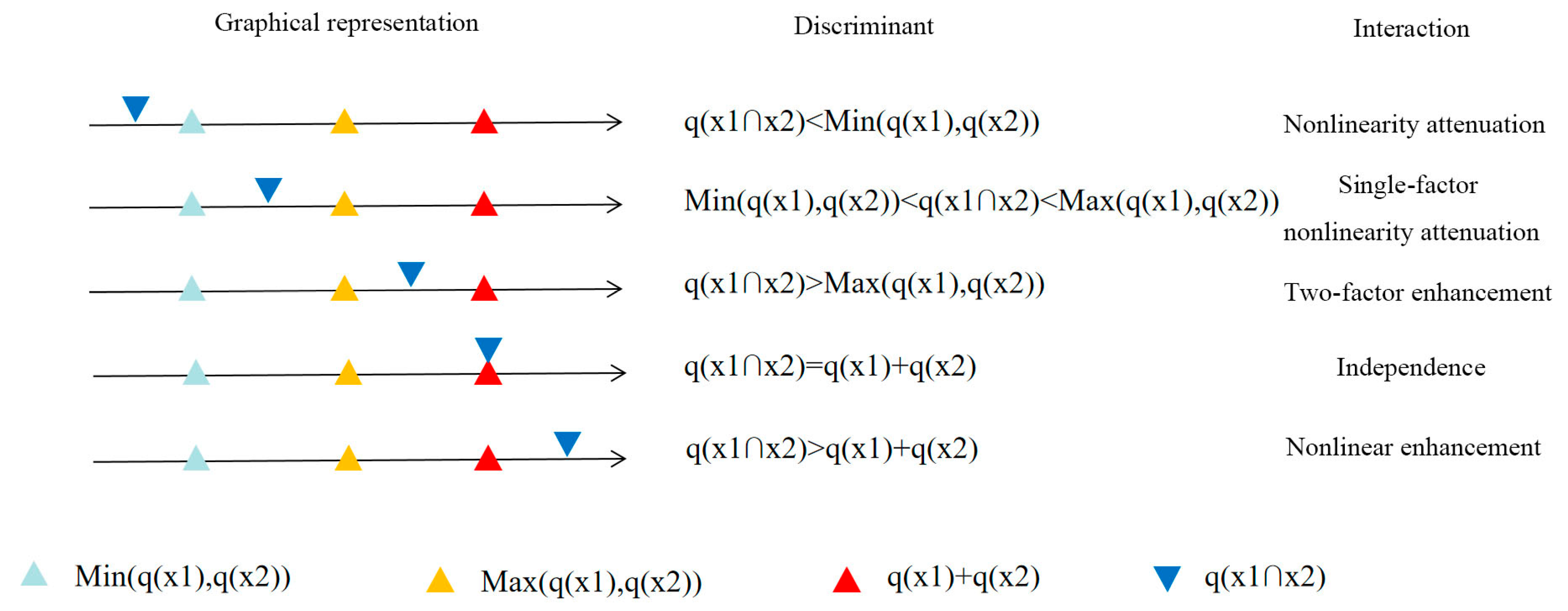
Through the interaction detection method, this study conducted an in-depth analysis of the pairwise interactions among various influencing factors shaping the spatial differentiation of rapeseed production layout in Sichuan, aiming to reveal differences in interaction intensity across different factor combinations. The results (
Table 5) indicate that none of the factor combinations exhibit independent or mutually independent effects. This confirms that the spatial heterogeneity of rapeseed production in Sichuan is not governed by any single factor or factor category alone, but rather results from the synergistic action of multiple elements, reflecting the complexity of the mechanisms influencing rapeseed production layout. In terms of interaction types, with the exception of soil thickness—which, in combination with most other factors, shows a nonlinear weakening effect—all other influencing factors demonstrate a two-factor enhancement characteristic. This indicates that the combined influence of these factor pairs on the spatial differentiation of rapeseed production layout is significantly greater than the total explanatory power of the individual factors alone. Among the 20 interaction relationships examined, the interactions involving labor force level, mechanization level, fertilizer application intensity, and effective irrigation area with other factors are the most prominent. This finding further affirms the key role of these four types of factors in the rapeseed production layout, suggesting that their combination with other factors provides strong explanatory power for the spatial heterogeneity of production. They constitute the core set of interactive factors driving spatial distribution differences in rapeseed cultivation. It is worth noting that although technological guidance, annual sunshine duration, high-quality varieties, and agricultural industrial parks individually exhibit weak explanatory power for the spatial distribution differences in rapeseed producing areas, their interactive effects with factors from natural conditions, production conditions, and market economy categories significantly enhance the explanatory power regarding the spatial differentiation of the production layout. This demonstrates that even factors with limited individual influence can, through collaboration with other factors, affect the spatial pattern of rapeseed production to some extent, underscoring both the importance and complexity of factor interactions.
4. Discussion
In terms of spatial distribution, over the past 23 years, the area of rapeseed cultivation in Sichuan has steadily increased in the three major production areas, and the spatial center of gravity has remained relatively stable. However, in the Jianghan Plain and Dongting Lake area located in the middle reaches of the Yangtze River, the area for growing rape has significantly decreased. Especially in the counties that rely mainly on agriculture, this trend is even more pronounced [
7]. This disparity is, on the one hand, attributed to the significant differences in policy orientations across various regions, and on the other hand, it is caused by the variations in natural conditions and climate. In the research method, this paper uses spatial statistical methods to conduct spatial visualization of the multi-year county-level rapeseed production and planting data in Sichuan, presenting the spatial change pattern in a more intuitive way. This is different from the machine learning methods commonly used by other scholars in the study of crop spatiotemporal evolution [
26]. It avoids the complex process of comparing multiple models and optimizing parameters. In the analysis of impact factors, appropriate application of fertilizers and effective irrigation in the right areas can enhance soil fertility and regulate the water supply during the growth period of rapeseed, which is a key factor for ensuring stable yield. At the same time, Assefa et al. also pointed out that in the North American region, methods such as adequate water supply, balanced nutrition, and diversified crop rotation are the best measures for increasing the yield of rapeseed [
5]. However, it is worth noting that the soil thickness factor did not show a significant impact, possibly because most areas in Sichuan have good soil conditions [
34]. In this paper, the research of spatio-temporal evolution and influencing factors has provided a theoretical basis for optimizing the planting layout of rapeseed in Sichuan. In the future development, differentiated regional development strategies should be formulated based on key influencing factors, such as increasing the promotion of mechanization in areas with labor shortages and improving water conservancy infrastructure construction in areas with weak irrigation conditions, thereby significantly enhancing the comprehensive production efficiency of rapeseed industry in Sichuan.
Although this study conducted a temporal and spatial evolution analysis and explored the influencing factors of rapeseed production in Sichuan over the past 23 years, there are still some shortcomings. For example, data for some regions and years are missing, which weakens the completeness of spatial analysis. Aba Prefecture, Ganzi Prefecture, and Liangshan Prefecture, as special areas for rapeseed production in Sichuan (planted in spring on highlands and mountains), have missing statistics on rapeseed production for many years. At the same time, changes in administrative divisions have led to the discontinuity of data for some counties, affecting time series analysis. In addition, in the selection of influencing factors, the main principle followed was ‘theoretical compatibility + data availability’, and factors closely related to the characteristics of agricultural production in Sichuan were prioritized. However, there are still issues such as insufficient consideration of the dynamic nature of influencing factors and the lack of identification of potential latent influencing factors. When using interaction detection to reveal the synergistic effects among factors, the complexity of interaction was simplified, and the depth of analysis of nonlinear interactions among multiple factors in existing studies was insufficient. These practical problems and limitations in the research should be given priority attention in future studies.
5. Conclusions
This study is based on the panel data of rapeseed production in Sichuan from 2001 to 2023, focusing on the county-level scale. Using GIS spatial analysis techniques and the Geodetector method, it systematically analyzed the temporal and spatial evolution characteristics and driving factors of rapeseed production layout in Sichuan. The main conclusions are as follows: (1) The spatial pattern of rapeseed production in Sichuan is centered around three major production areas: the northeastern Sichuan region, the middle Sichuan hilly region, and the Chengdu Plain. The dynamic evolution shows a composite feature of a stable core area with expansion and a breakthrough growth in the peripheral areas. (2) The production center of rapeseed shows a short-distance fluctuation and a clear regional anchoring feature. It migrates among three places: Santai County, Shehong City, and Daying County, forming a unique ‘Z’ shape trajectory. (3) The global Moran’s I index of rapeseed production in Sichuan over the 23-year period ranges from 0.461 to 0.558. There is a significant spatial clustering trend among adjacent counties. The local autocorrelation types are mainly H-H, L-L, and L-H. (4) Production conditions are the key factor driving the spatial differentiation of rapeseed production layout in Sichuan. Among them, the explanatory power of labor force level, fertilizer application intensity, and effective irrigation area is the most prominent. Except for soil thickness, the interaction effects of most influencing factors show a dual-factor enhancement feature.
Therefore, based on the layout and development needs of rapeseed production in Sichuan Province, a systematic strategy should be adopted to promote the improvement and enhancement of the industry’s quality and efficiency. Specifically, efforts should be made in four aspects: (1) Focus on stabilizing production capacity in the three major main production areas of northeastern Sichuan, central Sichuan hilly regions, and Chengdu Plain. Through delineating core production protection areas for rapeseed, implementing special planting subsidies, and promoting resistant and high-yield varieties. At the same time, build high-standard farmland, improve irrigation and agricultural machinery operation channels, and lay a solid foundation for rapeseed production capacity. (2) Relying on key areas such as Santai County, Shehong City, and Da Ying County, establish technical promotion and service platforms, organize expert teams to conduct planting technology training, and form agricultural machinery service alliances to provide cross-regional operations. Radiate advanced experience and resources to surrounding counties to promote balanced regional development. (3) In response to the spatial clustering characteristics of rapeseed production, increase supply of agricultural materials and market connection support in high-high type clustering areas. Guide the development of diversified business models such as ‘rapeseed + sightseeing’ in low–low-type clustering areas to optimize resource allocation efficiency. (4) Focus on improving the level of key factors such as labor and irrigation. For example, carry out the production of new professional farmers to enhance labor skills, expand water-saving irrigation facilities. At the same time, promote the coordination of factors to achieve efficient cooperation of labor, irrigation, and fertilizer application, and comprehensively promote the improvement and enhancement of the rapeseed industry.