1. Introduction
Gallium, due to its unique physical and chemical properties, emerged as an indispensable material in diverse advanced technologies. Its ability to form compounds such as gallium arsenide (GaAs) and gallium nitride (GaN) allows for high electron mobility and efficiency, making it superior to traditional semiconductor materials like silicon in certain applications [
1]. As a result, gallium plays a critical role in key sectors such as electronics, clean energy, and communications. Its most notable uses include high-performance semiconductors, laser diodes, light-emitting diodes (LEDs), transistors, and solar photovoltaic (PV) cells [
2,
3]. These applications are crucial to produce advanced electronic devices such as smartphones, computers, and high-efficiency renewable energy systems like solar panels and wind turbines. Given the rapid global shift towards clean energy and the continuous innovation in electronics, the demand for gallium is expected to rise significantly. A 2013 study projected that by 2050, demand for gallium could increase by more than 200% compared to 2010 levels, primarily driven by the growing adoption of solar PV technology and LEDs [
4]. Moreover, the expansion of electric vehicles (EVs), the miniaturization of electronic devices and the rise of 5G communication systems underscore gallium’s critical role in the future of high-tech industries and sustainable energy solutions.
However, the growing reliance on gallium has also exposed vulnerabilities in its supply chain. Gallium is primarily extracted as a by-product during the production of aluminum from bauxite ore. Approximately 90% of global gallium is sourced this way, with China dominating the production landscape [
5], with 98% of global production concentrated in mainland China in 2023 [
6]. But in recent years, China’s reduction in alumina production has raised concerns about the future stability of gallium supply [
7]. As a result, other countries, particularly in Europe and North America, have identified gallium as a strategic resource, essential for national security and technological sovereignty [
8].
At the same time, recycling has become another important source of gallium supply. However, global gallium recycling practices are confronted with challenges, such as the low priority of gallium recycling in China, fragmented policies regarding gallium recycling in Europe and North America, the export of gallium-containing waste in Japan, and insufficient recycling infrastructure in other regions [
7,
9,
10,
11]. Research results show that less than 1% of gallium is recycled globally from EoL (end-of-life) devices [
12]. This low recycling rate exacerbates the risk of supply shortages, highlighting the urgent need for more efficient recovery systems. Increasing gallium recycling could not only mitigate supply risks but also contribute to the development of a circular economy for critical materials, reducing reliance on primary extraction and the associated environmental impacts.
In conclusion, gallium’s essential role in advanced technologies, coupled with its supply chain vulnerabilities and inefficient recycling processes, presents a pressing need for improved recovery strategies. Addressing these challenges is crucial to ensuring a sustainable and secure supply of gallium, particularly as demand continues to escalate in the coming decades. This paper aims to explore the potential for gallium recycling, discuss the current technical and economic feasibility, and identify key opportunities for enhancing the recovery of this critical material.
3. Results
3.1. Overview of Global Gallium Production, Usage, and Recycling
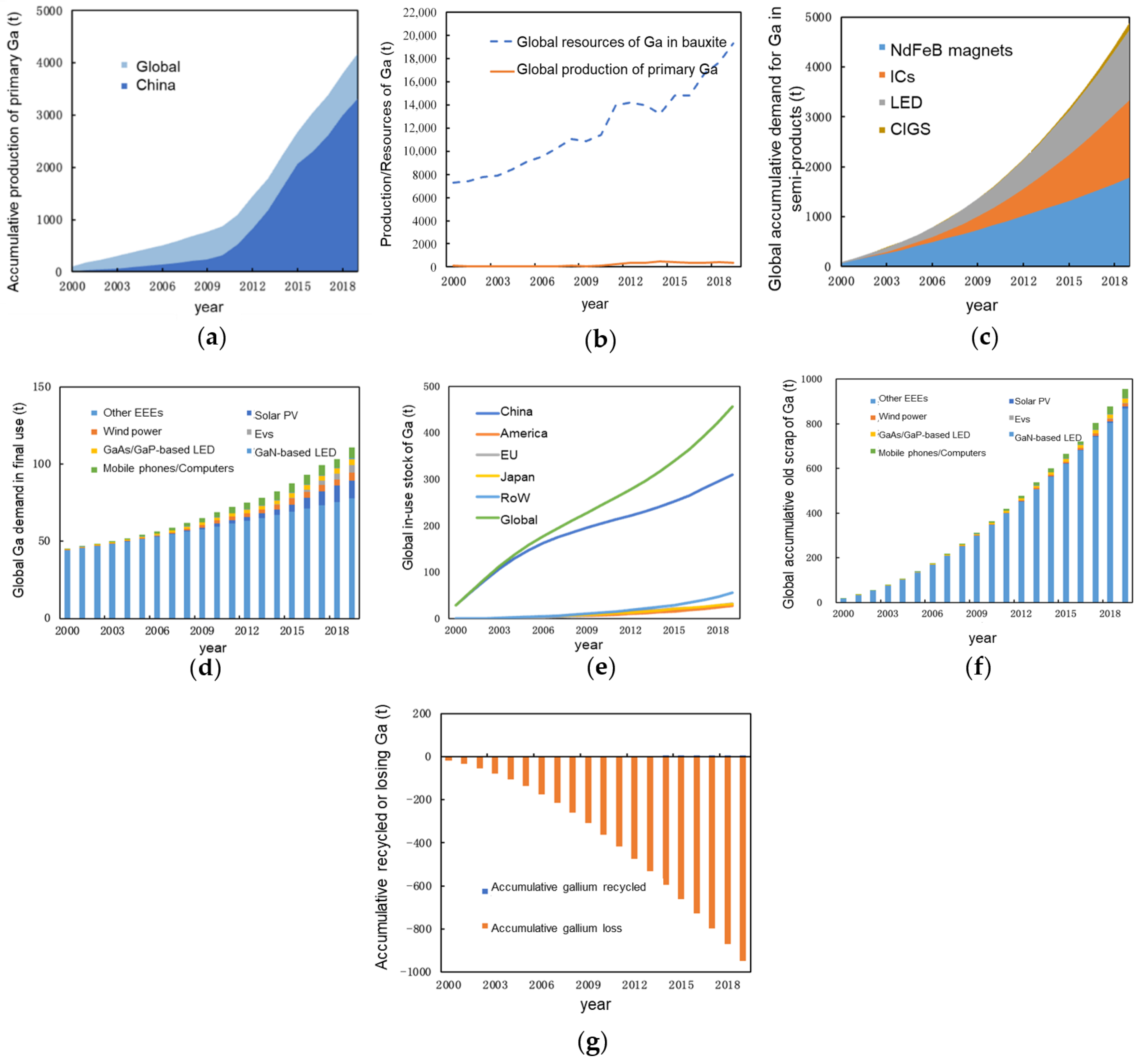
Gallium is mainly extracted as a byproduct during the refining of bauxite into alumina via the Bayer process, with China dominating global production. Since 2000, primary gallium production has experienced significant growth, particularly after 2010. As shown in
Figure 3a, the global cumulative primary gallium production was only 100 tons in 2000, increasing to 4179 tons by 2019, with an average annual growth rate of 21.7%. Among this, China’s cumulative primary gallium production accounted for a high proportion of 79% of the global total by 2019. In terms of gallium resources contained in global bauxite supplies, the supply potential of primary gallium resources is substantial. Referring to existing studies [
13], assuming the gallium content in bauxite resources is 54 ppm, the potential gallium resources contained in global bauxite supplies increased from 7290 tons in 2000 to 19,332 tons in 2019 (
Figure 3b). However, considering global gallium resource potential and global gallium production, only 3% of the gallium resources contained in bauxite supplies were extracted in 2019, indicating that a large amount of gallium resources is lost during the mining and smelting stages. Thus, although the global gallium resource potential is very abundant in terms of reserves, gallium resources suffer severe losses during mining and smelting.
Figure 3c shows the changing trends of gallium demand for the production and manufacturing of different gallium-containing components. Over the past two decades, the global cumulative gallium consumption in the production and manufacturing stage has shown an exponential growth trend, increasing from 85 tons in 2000 to 4875 tons in 2019. Among these, the production and manufacturing of gallium-containing neodymium-iron-boron (NdFeB) permanent magnets and integrated circuit (IC) chips are the main application fields of global gallium resources. Specifically, gallium demand for NdFeB permanent magnet production increased from 63 tons/year in 2000 to 110 tons/year in 2019, with cumulative gallium demand reaching 1704 tons. Moreover, gallium demand for IC chip manufacturing also showed a rapid growth trend, rising from less than 5 tons/year in 2000 to 165 tons/year in 2019, with cumulative demand reaching 1553 tons. Similarly, gallium demand for LED wafer production is also increasing, with cumulative demand reaching 1402 tons by 2019. However, gallium demand from CIGS thin-film battery production remains at a very low level, with cumulative demand not exceeding 140 tons in 2019, far lower than that of other component manufacturing.
From the perspective of changing trends in gallium demand across different end-product sectors globally, the proportion of consumption in the clean energy sector is relatively low, and gallium demand is mainly concentrated in other electronic communication fields, as shown in
Figure 3d. The global gallium demand sector is highly concentrated, with other electronic communication fields remaining dominant. Gallium demand in these fields increased from 44 tons/year in 2000 to 78 tons/year in 2019, accounting for over 70% of global total gallium consumption. Although gallium demand in clean energy fields such as solar photovoltaics, wind power, and electric vehicles is relatively low, it shows an obvious growth trend, especially flourishing after 2010, accounting for 23% of total gallium demand by 2019. This indicates that although global gallium demand is still dominated by other electronic communication fields, gallium demand in the clean energy sector is gradually emerging.
The growth of gallium resource stocks reflects the accumulation of gallium resources in society and is directly related to future waste generation.
Figure 3e shows the changes in social stocks of gallium resources in five global regions over the past two decades. The global in-use social stock of gallium-containing end-use products gradually accumulated from 2000 to 2019, increasing from 30 tons in 2000 to 455 tons in 2019, a nearly 14-fold growth.
As gallium products in social in-use stocks gradually reach their end of life, the generation of old gallium scrap has been increasing in recent years, as shown in
Figure 3f. By 2019, the cumulative production of old gallium scrap from global discarded gallium-containing products reached nearly 1000 tons, equivalent to 9 times the global gallium demand for end products in 2019. This highlights the importance of proper gallium resource waste management during the product disposal stage. From a sectoral distribution perspective, other electronic and communication equipment fields are experiencing an outbreak of EoL gallium-containing products. By 2019, they accounted for 87% of the total cumulative old gallium scrap production, indicating that gallium-containing end products in this field are undergoing a disposal boom, with a large number of gallium-containing waste products generated in recent years and entering the waste management stage. In contrast, old gallium scrap production in fields such as mobile phones, computers, gallium arsenide/gallium phosphide LEDs, and wind power equipment is still very low, suggesting that gallium-containing end products in these fields have just entered the disposal stage and not yet reached large-scale disposal. However, with the continuous accumulation of social stocks of gallium, the disposal of gallium in fields such as computers, mobile phones, LEDs, and wind power has begun to increase in the past three years.
In terms of recycled gallium production, the recycling and reuse of gallium resources have not been developed on a large scale. As shown in
Figure 3g, in recent years, the cumulative recovery of old gallium scrap has been 8 tons, far lower than the 955 tons of old gallium scrap generated. This means that during the waste management stage, the recovery rate of gallium resources from discarded products is extremely low, with the recovery amount accounting for only 0.84% of old gallium scrap production, resulting in a large amount of gallium resources being lost during waste management.
3.2. Global Gallium Recycling Potential and Opportunities
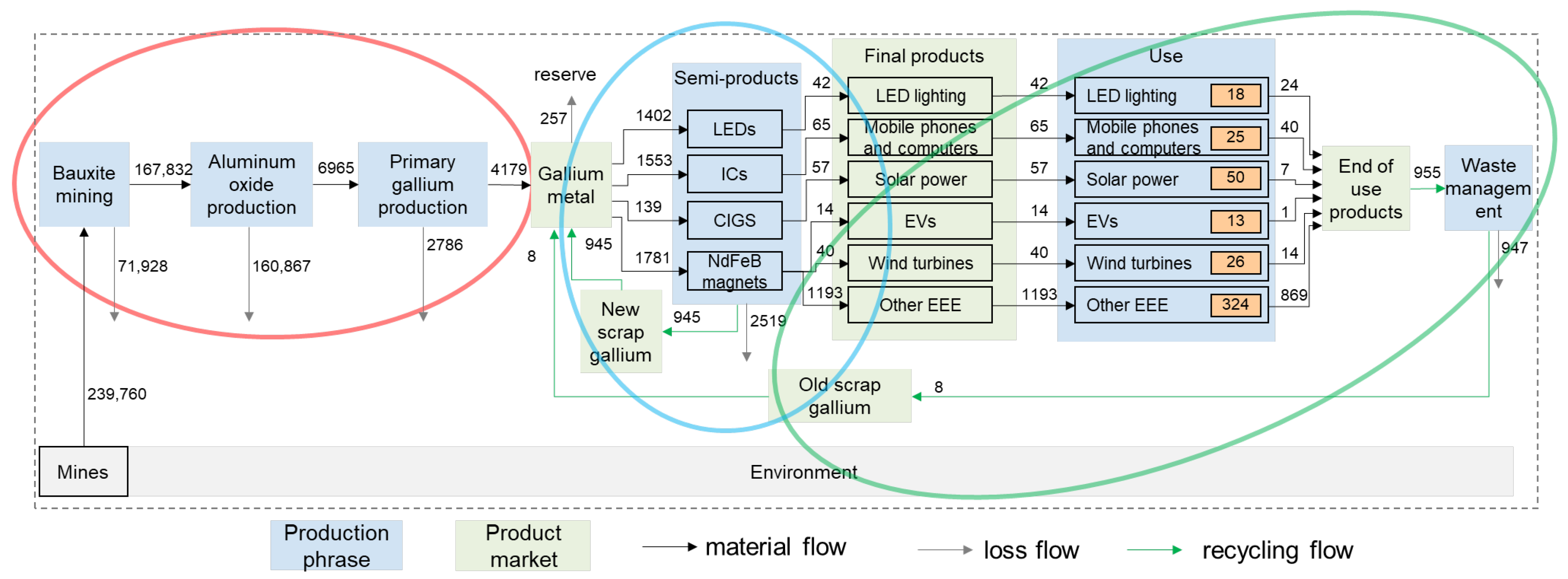
Figure 4 shows the cumulative material cycle process of gallium resources throughout their life cycle from 2000 to 2019, mainly including the gallium resource mining and smelting stage, gallium-containing component production and manufacturing stage, gallium end-product usage stage, and gallium resource waste management stage. From this, we can summarize three recycling opportunities for gallium and their respective recycling potentials.
Recycling potential of primary gallium: From the perspective of gallium resource supply potential, by 2019, global cumulative mined bauxite contained 239,760 tons of gallium resources, but only 4179 tons of primary gallium resources entered the gallium supply market, resulting in a final production recovery rate of only 1.74%. The recovery rate of gallium during mining and smelting is still very low, especially in the Bayer liquor extraction process, where gallium resource loss is significant, reaching 95.85%. Although not all bauxite is suitable for gallium extraction due to geological factors, and current global demand for gallium is relatively low, thus reducing the motivation for bauxite smelting enterprises to extract gallium, this also means that there is considerable room for improvement in the production recovery rate of primary gallium resources.
Recycling potential of new gallium scrap: New gallium scrap refers to scrap generated during the production and manufacturing stages. This includes gallium scraps and byproducts from the production of integrated circuit chips, LED chips, and other electronic components. Between 2010 and 2019, approximately 3464 tons of gallium were generated as manufacturing scrap globally. However, only 945 tons were recycled, resulting in a recovery rate of only 27.28%. Most of the unrecovered gallium is lost in the waste streams of semiconductor and LED manufacturing, highlighting the inefficiency of current recycling practices.
Recycling potential of old gallium scrap: Old gallium scrap refers to gallium recovered from EoL products, such as smartphones, computers, and LED devices. These products typically have relatively short life cycles, meaning that when they are discarded, a large amount of gallium ends up in landfills or other waste management systems. In 2019, the global stock of discarded gallium-containing products was approximately 955 tons. However, only 8 tons of old gallium scrap were recycled, with a recovery rate of less than 1%. The stark contrast between the amount of discarded gallium and the amount recycled demonstrates the huge untapped potential for improving recycling from EoL products.
Overall, the recycling potential of gallium far exceeds the current recovery rate. With improvements in recycling technology and the establishment of better collection infrastructure, the global supply of secondary gallium is likely to increase significantly. If the recovery rates of both new and old gallium scrap are increased to 50%, the cumulative supply of recycled gallium could increase from the current 953 tons to approximately 3942 tons. This would bring the supply of secondary gallium close to the production level of primary gallium, greatly reducing reliance on new gallium extraction and alleviating pressure on global supply chains.
3.3. Regional Analysis of Gallium Recycling Potential
Based on the methodology detailed in
Section 2, we estimated the regional gallium recycling potential. The results show that the production and recycling potential of gallium vary significantly across different regions.
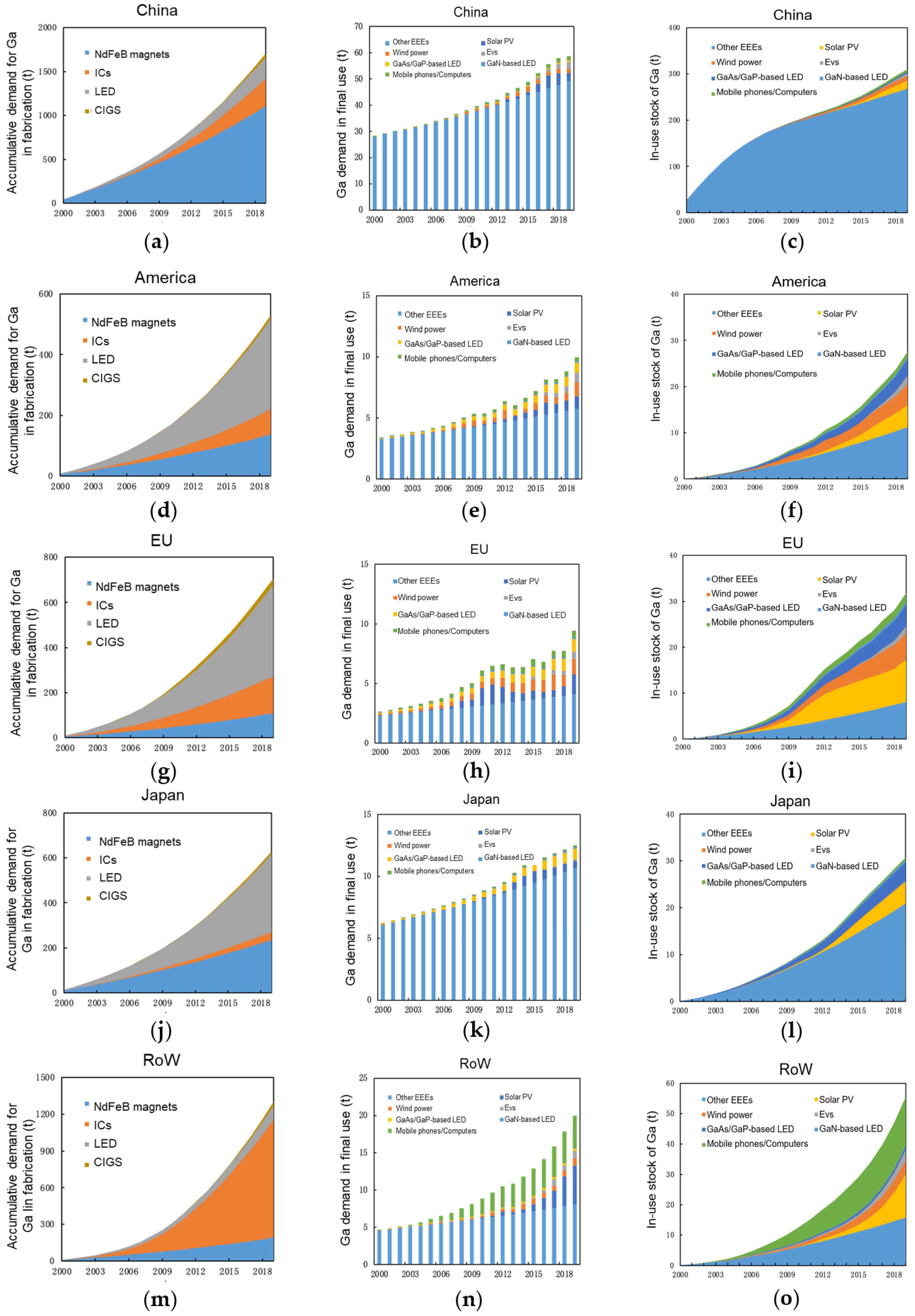
China: As shown in
Figure 5a, China’s cumulative gallium consumption in the manufacturing stage increased from 43.5 tons in 2000 to 1700 tons in 2019. Among this, gallium demand in the production of gallium-containing NdFeB permanent magnets dominated, accounting for 65% of China’s total cumulative gallium demand in 2019. In contrast, the cumulative gallium demand for integrated circuit (IC) chip manufacturing and LED wafer manufacturing accounted for only 18% and 14%, respectively. From the perspective of final product sector demand (
Figure 5b), the proportion of gallium consumption in China’s clean energy sector was also relatively low. Gallium demand in other electronic communication fields increased from 28 tons/year in 2000 to 49 tons/year in 2019, accounting for over 80% of China’s total gallium consumption. Meanwhile, gallium demand in clean energy fields such as solar photovoltaics, wind power, and electric vehicles remained low, making up only 8.5% of China’s total gallium demand. Over the past two decades, China’s social in-use stock of gallium resources has accumulated to 310 tons, with an average annual growth rate of 13% (
Figure 5c). The primary application of these resources is in other electronic and communication equipment, where the social stock of gallium accounted for 86% of the total social in-use stock of gallium-containing end-use applications in 2019. Additionally, the rapid accumulation of solar photovoltaic and wind power equipment has significantly driven the growth of China’s overall social in-use stock of gallium resources, with the stock in these two fields reaching 27 tons in 2019.
United States:
Figure 5d shows the cumulative gallium demand in the U.S. production and manufacturing stage. By 2019, the U.S. cumulative gallium demand reached 296 tons, of which cumulative gallium consumption for LED wafer manufacturing accounted for more than half. Gallium demand in the manufacturing of NdFeB permanent magnets and IC chips remained relatively low but maintained a steady growth trend in recent years; in 2019, they accounted for 26% and 16% of the total cumulative gallium demand, respectively. From the perspective of end-product demand (
Figure 5e), the cumulative gallium demand for end products in other electronic communication application fields in this region reached 88 tons by 2019, accounting for 77% of the total gallium demand. However, the proportion of gallium used in clean energy end products such as U.S. wind power, solar photovoltaics, electric vehicles, and LEDs showed a rapid growth trend, reaching 20% by 2019—far higher than that in China. The U.S. social stock of gallium accumulated to 28 tons by 2019, with a sectoral distribution characterized by dominance in other electronic and communication equipment (40%), supplemented by solar photovoltaic power generation (18%) and wind power (16%), as shown in
Figure 5f.
European Union: In the production and manufacturing stage (
Figure 5g), the EU’s cumulative gallium demand reached 405 tons by 2019, with LED as the main consumption sector, accounting for over 50%. IC chip manufacturing and NdFeB permanent magnet manufacturing accounted for 23% and 15% of the total cumulative gallium demand, respectively. From the perspective of the final product demand structure (
Figure 5h), the annual consumption of gallium in the clean energy technology sector accounted for 58% of the EU’s total annual gallium consumption by 2019. This indicates that gallium consumption in the EU is shifting from traditional application fields to clean energy technology fields. The social stock of gallium in the EU reached 32 tons by 2019, mainly distributed in the solar photovoltaic sector and other electronic and communication equipment, accounting for 30% and 25% of the total social stock of gallium, respectively, as shown in
Figure 5i.
Japan: Japan’s gallium demand in the production and manufacturing stage is jointly dominated by two component manufacturing fields: NdFeB permanent magnets and LED wafers. By 2019, the corresponding cumulative gallium demand in these two fields reached 345 tons and 234 tons, respectively, accounting for 92% of Japan’s total cumulative gallium demand (
Figure 5j). From the perspective of end-product demand structure (
Figure 5k), gallium demand for end products in Japan’s other electronic communication application fields maintained a steady growth trend; by 2019, the cumulative gallium demand reached 164 tons, accounting for 90% of Japan’s total gallium demand. Meanwhile, since 2010, gallium demand for gallium arsenide-based and gallium phosphide-based LED end products in Japan has shown a significant upward trend, with an average annual growth rate of 8%. Japan’s social stock of gallium reached 30 tons in 2019, three times its current primary gallium production capacity, mainly concentrated in other electronic and communication equipment (as shown in
Figure 5l). Like China, Japan has a large consumer electronics market, with a large amount of gallium embedded in smartphones, computers, and other devices.
Rest of the World: In the production and manufacturing stage, IC chip manufacturing is the dominant consumer of gallium demand in the rest of the world, holding an absolute leading position (
Figure 5m). In 2000, gallium demand for IC chip manufacturing in this region was less than 10 tons, but by 2019, the cumulative gallium demand in this field had risen to 958 tons, accounting for 73% of the cumulative gallium demand in the rest of the world, with an average annual growth rate of 42%. In terms of end-product demand (
Figure 5n), gallium demand for end products in the solar photovoltaic sector began to grow rapidly after 2015; by 2019, the cumulative gallium demand reached 16 tons, and gallium demand in the clean energy technology sector accounted for 15%. As shown in
Figure 5o, the social stock of gallium in the rest of the world reached 56 tons by 2019, mainly concentrated in mobile phones and computers (30%), solar photovoltaics (25%), and other electronic and communication equipment (30%). Among these, the social stock of gallium in the solar photovoltaic sector showed a particularly obvious growth rate, increasing from less than 1 ton in 2010 to 14 tons in 2019.
4. Discussion
4.1. Technical Challenges of Gallium Recycling
Gallium recovery from EoL products is still a challenge, according to its low content in unit terminal products and various metal elements are complexly distributed in the products, posing high requirements for recycling technologies [
2,
24]. The current studies primarily discuss the technical feasibility of gallium recovery from discarded LEDs and PVs.
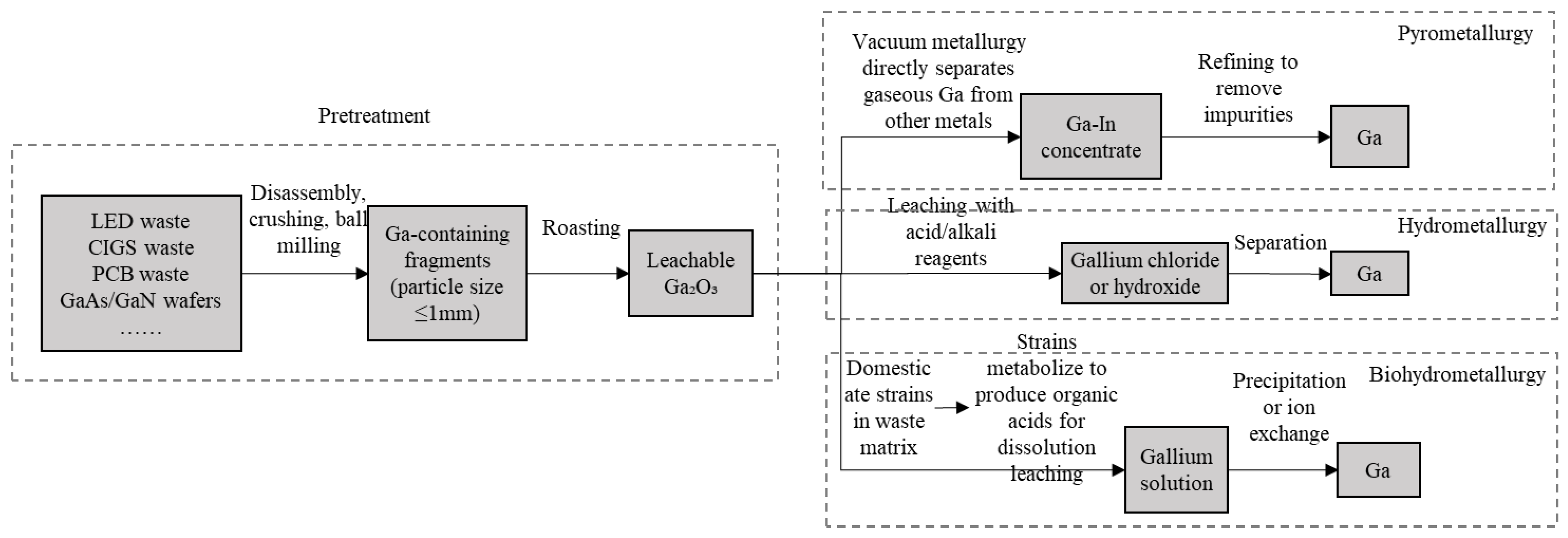
Currently, industrial waste streams such as Metal–Organic Chemical Vapor Deposition (MOCVD: a system for depositing high-purity crystalline compounds for LEDs) dust and GaN/GaAs waste are commonly used as secondary sources to supply gallium to industry [
1,
25,
26,
27]. Various pre-treatment methods and hydrometallurgical and biohydrometallurgical technologies have been tested at a laboratory scale for gallium recovery from spent LEDs [
1,
3,
28,
29,
30,
31,
32,
33], and hydrometallurgical processing has been identified as the most suitable method to recover gallium from LEDs due to its high efficiency in recovering metals from low-grade secondary raw material [
32].
The complex structure of PVs, which typically includes layers of different materials and coatings, and the low concentration of critical elements in spent PVs, pose significant challenges for the effective and selective recovery of gallium. Two potential routes for the recovery of gallium from spent PVs are hydrometallurgy and biohydrometallurgy [
33]. Li et al. investigated the separation and purification of gallium from copper indium gallium diselenide (CIGS), a promising commercial thin-film solar cell, and a process realized 97.26% gallium leaching out, and with further purification, gallium was obtained in the form of relatively pure gallium oxide (99.83%) [
34]. Liu et al. proposed that under the optimal conditions, a recovery rate of >90% could be achieved for gallium [
35].
The above laboratory-scale efficiencies contrast sharply with the 0.84% actual recovery rate from old scrap due to the technical gap, economic barrier and systemic limitation. First, laboratory conditions (e.g., high-purity reagents, controlled reaction environments) are difficult to replicate in industrial settings. For example, industrial e-waste contains impurities (e.g., plastic, other metals) that inhibit leaching efficiency, reducing recovery to 30–50% even with optimized hydrometallurgical processes [
33]. Second, low gallium concentration in EoL products (e.g., 0.01–0.05 g gallium per LED) requires extensive sorting and processing [
36]. Small-scale operations cannot offset fixed costs (e.g., equipment, labor). Third, fragmented e-waste collection systems fail to concentrate gallium-containing products. Only 30–40% of e-waste is formally collected globally, with most gallium ending up in landfills or informal recycling [
12].
4.2. Economic Feasibility of Gallium Recycling
The cost of gallium extraction from Bayer liquor mainly comes from solvent consumption (e.g., D2EHPA extractant) and electrolysis energy consumption, accounting for approximately 60% of the total cost. If the extraction efficiency increases from the current 60% to 90%, the unit cost can decrease from
$8000/ton to
$5000/ton. However, this requires additional equipment modification costs (about
$2 million per factory), and the investment payback period is as long as 5–8 years, resulting in low willingness of enterprises [
2].
Although the recovery of new gallium-containing waste (such as waste from semiconductor and LED manufacturing) is technically feasible, its economy is limited by “value priority”. For example, in the waste from NdFeB magnet production, the value of gallium is only more than 1/10 of that of neodymium (the value of neodymium is about
$50/kg, and that of gallium is about
$5/kg). This leads enterprises to prioritize neodymium recovery over gallium. Even though gallium recovery technology is mature, it is difficult to promote on a large scale due to low economic benefits [
13]. However, the MOCVD dust from LED manufacturing has a relatively high gallium content (5–10%), with a recovery cost of approximately
$3500–
$6500/ton, which is lower than the cost of primary gallium. Moreover, the recovery process (acid leaching + ion exchange) is mature, and some enterprises have achieved small-scale profits. For instance, a Taiwanese (China) LED manufacturer recovers 10 tons of gallium annually, with a net profit of about
$200,000 [
2].
The gallium content in some end-of-life products (such as smartphones and LEDs) is extremely low (0.01–0.05 g per LED, 0.002–0.005 g per smartphone), requiring large-scale centralized processing to spread costs. Studies indicate that a photovoltaic waste recovery plant needs to process more than 19,000 tons of waste annually to achieve profitability. However, used gallium-containing waste is more scattered, and the cost of small-scale processing is as high as
$15,000–
$20,000/ton, which is much higher than the production cost of primary gallium (
$8000–
$12,000/ton) [
13]. In used products like LCD panels and smartphones, gallium exists in the form of compounds (e.g., GaAs, GaN), which need to be crushed and separated first before extraction. The processing cost is as high as
$15,000–
$20,000/ton, which is lower than the market value of recovered gallium, resulting in negative economic net benefits. Currently, only a few laboratories conduct technical research and development, and there is no industrial application [
2].
In the future, if the global demand for gallium doubles (from the current 400 tons/year to 800 tons/year) due to the growth of photovoltaics (CIGS) and EVs, the gallium price may rise to
$300/kg. At that time, the recovery cost of used waste (such as photovoltaic modules) can decrease to
$12,000–
$15,000/ton. Additionally, if gallium is recovered synergistically with other scattered metals (e.g., indium, germanium) (such as simultaneous recovery of gallium and indium from CIGS photovoltaic modules), the unit recovery cost can be reduced by 25–30% (from
$15,000/ton to
$11,000–
$12,000/ton), which is close to the cost of primary gallium (
$10,000–
$13,000/ton), making it economically feasible [
5].
4.3. Regional Recycling Opportunities: Technology and Policy Drivers
Opportunities for gallium recycling vary significantly across regions, depending on the availability of local gallium-containing waste, the maturity of recycling infrastructure, and the policy support from governments for recycling efforts. China, the United States, the European Union, and Japan are major players in the global gallium market, each presenting distinct challenges and opportunities for enhancing gallium recycling.
As domestic aluminum production in China slows down, recycling will become an increasingly important source of gallium. With its massive consumer electronics market and growing clean energy sector, the country generates a large number of EoL products containing recyclable amounts of gallium. In recent years, China has introduced policies aimed at improving e-waste management, such as the Extended Producer Responsibility (EPR) system, which requires manufacturers to take responsibility for the disposal and recycling of their products. However, despite these initiatives, gallium recycling efforts in China remain underdeveloped. The main focus has been on more common metals like copper, gold, and aluminum, while gallium receives less attention due to its relatively low concentration in e-waste [
9]. As demand for gallium in solar photovoltaic and LED technologies increases, China will need to formulate targeted recycling policies and invest in gallium-specific recycling technologies.
The United States presents a different set of opportunities and challenges. While the U.S. does not produce large quantities of primary gallium, it is a significant consumer of gallium-containing products, particularly in the semiconductor and clean energy sectors. The U.S. has been a leader in the deployment of solar photovoltaics and LED lighting, both of which rely heavily on gallium. However, the lack of a comprehensive national recycling policy has hindered the development of large-scale gallium recycling efforts. Currently, most e-waste generated in the U.S. is either exported to other countries or ends up in landfills, resulting in the loss of valuable materials like gallium. The U.S. could leverage its technological expertise and invest in recycling infrastructure to recover more gallium from its EoL products. Policy incentives, such as tax credits for companies engaged in recycling and grants for recycling technology development, could help stimulate investment in gallium recycling. The U.S. Department of Energy (DOE) has already begun funding research on critical material recycling, including gallium, through programs like the Critical Materials Institute. Expanding these efforts and establishing a more coordinated recycling policy could significantly improve gallium recovery rates in the U.S.
In the European Union, the transition to clean energy technologies has created strong demand for critical materials like gallium. The EU has implemented some of the most ambitious recycling policies globally, driven by its Circular Economy Action Plan and Green Deal, which aim to reduce waste and increase recycling of critical raw materials. The EU’s Waste Electrical and Electronic Equipment Directive requires member states to collect and recycle a minimum percentage of e-waste, including gallium-containing products. However, despite the EU’s robust policy framework, gallium recycling is still in its infancy. Like China and the U.S., the low concentration of gallium in e-waste makes efficient recycling difficult. The EU could benefit from greater investment in urban mining technologies designed to recover valuable metals from complex products such as electronics and solar photovoltaic cells. Additionally, the EU could establish recycling targets specifically for critical materials like gallium, which would encourage companies to develop technologies capable of efficiently extracting gallium from waste products. Given the EU’s strong environmental policies and technological capabilities, it has the potential to become a leader in gallium recycling with the necessary investments.
Japan, like the EU, faces similar challenges in gallium recycling. The country is heavily reliant on imports to meet its supply of critical materials, including gallium, but it is also home to a highly advanced electronics industry. Japan has launched several initiatives to promote recycling, particularly for rare and precious metals. For example, Japan’s Home Appliance Recycling Law encourages the recovery of valuable metals from e-waste. However, gallium has not been a major focus of these efforts, as recycling has traditionally centered on metals like gold and silver. Japan’s electronics sector generates significant amounts of gallium-containing waste, particularly from LED manufacturing, making it an ideal candidate for developing more targeted recycling programs.
5. Conclusions
This study systematically assesses the global gallium recycling potential, technical feasibility, and regional opportunities through historical material flow analysis spanning 2000–2019. The findings reveal critical insights into gallium’s lifecycle dynamics, highlighting both pressing challenges and actionable pathways to enhance resource efficiency.
Gallium’s supply chain is highly concentrated, with China dominating primary production (79% of global cumulative output by 2019) as a byproduct of aluminum smelting. However, this reliance is coupled with significant inefficiencies: only 3% of gallium contained in global bauxite supplies is extracted, with over 95% lost during mining and smelting. Meanwhile, global demand for gallium has grown exponentially, driven by electronic communication and emerging clean energy sectors, underscoring the urgency to address supply vulnerabilities.
Gallium recycling remains vastly underdeveloped, with three key untapped opportunities: the first is primary production recovery. With a mere 1.74% extraction efficiency from bauxite, improving gallium recovery during aluminum smelting could unlock massive potential. The second is new scrap recycling. Only 27.28% of gallium scrap from manufacturing is currently recycled, leaving significant room for improvement. The third is old scrap recycling. Only 0.84% of gallium from EoL products is recovered, despite cumulative old scrap reaching 955 tons by 2019—nine times the 2019 global demand.
Regional disparities in gallium stocks and recycling capacity are pronounced. China holds the largest in-use gallium stock (310 tons) but has not yet established a sound gallium recycling system. The U.S. and EU, as major consumers, face barriers from fragmented policies and low collection rates, while Japan’s advanced electronics sector generates substantial gallium waste yet lacks targeted recycling programs. The rest of the world, with growing solar PV adoption, is emerging as a key area for future recycling efforts.
Technically, hydrometallurgical and biohydrometallurgical methods show promise for efficient gallium recovery from LEDs and solar PVs, though high costs and low metal concentrations remain challenges. Economically, price volatility and scale-dependent profitability hinder widespread adoption, emphasizing the need for policy support and technological innovation.
To unlock gallium’s recycling potential, a multi-pronged strategy is required: Firstly, advancements in recycling technologies, particularly hydrometallurgical and bioleaching methods, could significantly improve gallium recovery rates. Research should focus on optimizing these processes to reduce costs and environmental impacts. For instance, improving solvent efficiency in hydrometallurgical processing could lower operational costs, while scaling up bioleaching methods could provide an eco-friendly alternative for gallium recovery. Secondly, improving collection systems for gallium-containing waste is necessary. Many gallium-containing products, such as electronics and solar PV panels, are not properly collected for recycling. Strengthening collection systems, particularly through Extended Producer Responsibility (EPR) schemes, could increase the availability of gallium scrap for recycling. Governments could also introduce deposit-return systems for electronic products, incentivizing consumers to return their devices for proper recycling. Moreover, efforts should be made to create financial incentives for recycling. Governments can stimulate investment in gallium recycling by offering tax breaks or subsidies to companies that engage in recycling activities. Additionally, establishing material-specific recycling targets for critical materials like gallium could drive greater industry participation in recycling efforts. For example, the EU could introduce gallium recycling targets as part of its broader critical raw materials strategy. Last but not least, international collaboration is encouraged. Since gallium production and consumption are concentrated in specific regions, international collaboration will be essential to create a global recycling ecosystem. Countries could share best practices for gallium recovery, jointly invest in R&D, and establish cross-border recycling agreements that ensure a steady flow of recyclable materials.
This study also has limitations. First, this study does not consider the import and export volumes of intermediate components, final products, and waste products in the gallium lifecycle—a limitation that may introduce biases in regional analysis, particularly for import-dependent regions. For Japan and the EU, which rely heavily on imports of gallium-containing intermediate products (e.g., LED chips, ICs) and final goods (e.g., smartphones), neglecting trade flows likely underestimates domestic “in-use stock” by 15–25% and “waste generation” by 10–20%. This is because imported products contribute to in-use stock but are not captured in domestic production-based flow accounts [
5,
6]. For example, the EU’s LED demand is partially met by imports from China and Japan, meaning unaccounted imports would reduce estimated waste from end-of-life LEDs. Subsequent studies could integrate product-level trade data from the UN Comtrade Database (e.g., HS codes for semiconductor components, solar PV modules) to supplement intermediate product flow accounting, reducing this bias. Despite this limitation, the study’s focus on relative regional trends (e.g., China’s large in-use stock vs. the EU’s clean energy-driven demand) remains valid.