1. Introduction
The term “energy efficiency” has gained momentum, particularly from the 1970s to the present day [
1], and the maritime industry has also been affected by this, due to rising fuel costs, environmental regulations, and the global push toward sustainable operations. Ships, especially those with high-power engines, consume substantial amounts of energy, making it essential to identify and implement effective systems that enhance efficiency. In recent years, numerous studies in the literature have addressed the issue of improving energy efficiency in ships, highlighting its importance in terms of both environmental sustainability and operational cost-effectiveness [
2]. These studies have explored a wide range of topics, including waste heat recovery systems [
3], hull and propeller optimization [
4], renewable energy integration [
5], and energy management strategies [
6]. Additionally, a growing body of work has focused on the application of multi-criteria decision-making (MCDM) methods under uncertainty, such as fuzzy logic [
7], intuitionistic fuzzy sets [
8], and more recently, neutrosophic logic, to evaluate and prioritize these systems. This study presents a comprehensive literature review in the following sections, covering both topic-based approaches that examine specific technologies and solution areas and method-based approaches that emphasize the decision-making tools and frameworks employed.
This study seeks to answer the following question: “According to industry experts, which technologies are superior and preferable for increasing ship energy efficiency and reducing emissions, and which criteria are more dominant and important in this decision-making process?”. For this aim, this study builds on and extends the existing literature by employing a novel hybrid neutrosophic fuzzy MCDM framework, which enables a more nuanced representation of expert judgment in complex and uncertain maritime environments. By incorporating both the Trapezoidal Neutrosophic Fuzzy AHP (TNF-AHP) for weight calculation and the Fuzzy CoCoSo method for alternative ranking, the study offers a robust and adaptable evaluation model. The main contributions of the study to the literature can be listed as below:
- -
Selecting the most suitable strategies for complex decision-making under uncertainty;
- -
Determining the most important criteria for ship energy efficiency technology investments;
- -
Providing critical insights into which energy efficiency systems should be prioritized, thus supporting shipowners, operators, policymakers, and other maritime stakeholders in making informed and strategic decisions;
- -
Overall, the study makes a significant contribution to the field and serves as a valuable reference for both academic research and practical implementation in the maritime sector.
3. Materials and Methods
The research methodology followed in this study combines two separate methods. The first part is TNF-AHP. It was formed by combining triangular neutrosophic sets [
49] with AHP [
50]. In this study, it is used to determine the criteria and sub-criteria weights. The second method is F-CoCoSo. The purpose of this study is to propose an approach for assessing energy efficiency-increasing systems for ships using the previous two methods.
3.1. Trapezoidal Neutrosophic Fuzzy Analytic Hierarchy Process (TNF-AHP)
The first step in our proposed approach is to use the integrated version of the AHP with trapezoidal neutrosophic sets. Before presenting the steps of the TNF-AHP here, it is useful to present the definitions and arithmetic operations related to neutrosophic sets, single-valued neutrosophic sets, and single-valued trapezoidal neutrosophic sets from the fundamental studies in this area [
48,
51,
52,
53,
54,
55].
It is required to initially define a neutrosophic set
. Let
represent a finite set of objects, and let
signify a generic element in
. A neutrosophic set
in
is described with three different membership functions of truth
, indeterminacy
, and falsity
. These are elements of
. Neutrosophic set
is given below in Equation (1).
Here, it should be noted that .
Secondly, a single-valued neutrosophic set (SVNS) is defined. A SVNS
in
is described with three different membership functions of truth
, indeterminacy
, and falsity
. These elements are in
. A single-valued neutrosophic set (SVNS) (N) is given in Equation (2).
Here, it should be noted that .
Thirdly, a single-valued trapezoidal neutrosophic set (SVTNS) (
is introduced in Equation (3).
The related membership functions are also given in Equations (4)–(6).
The truth-membership function
is indicated in Equation (4).
The indeterminacy-membership function
is given in Equation (5).
The falsity-membership function (
as is given in Equation (6).
After defining membership functions, it is required to mention the fundamental mathematical operations in SVTNS. Let
and
be two single-valued triangular neutrosophic numbers. Then, the addition of these two numbers (
can be computed as in Equation (7):
Subtraction of two triangular neutrosophic numbers (
) can be computed as in Equation (8).
Then division of these two numbers (
can be computed using Equation (9).
The inverse of this number (
can be computed according to Equation (10).
Finally, the trapezoidal neutrosophic weighted arithmetic averaging (TNWAA) operator and score function of a SVTNS (
are computed by Equation (11) and Equation (12), respectively. Let
be a set of SVTNS. Then, a TNWAA operator is calculated as in Equation (11).
Here, is the weight of , while and .
Let
is a SVTNS, then the score function (
is computed by Equation (12).
In the lights of the above-mentioned arithmetic operations with SVTNS, the procedural steps of TNF-AHP are given as follows:
Step 1: The problem is decomposed in a hierarchical manner. Since the issue in this research is to calculate the criteria and sub-criteria weights, we need to determine the criteria hierarchy in this first step.
Step 2: A pairwise comparison matrix is constructed. Using Saaty’s 1–9 scale, experts evaluate criteria considering the relative importance of criterion
over criterion
. Let
indicate the elements (the criteria). And
shows an evaluation of a pair of
and
elements by the
-th decision-maker
. The pairwise comparison matrix (
) is given in Equation (13).
Step 3: The consistency of the pairwise comparison is checked in the third step. If the calculated consistency ratio value (CRV) is lower than 0.1, the evaluation of the expert’s judgment is considered as consistent. Otherwise, the evaluation can be revised and renewed. The CRV computations include several sub-steps including (1) multiplying the pairwise comparison matrix by the relative priorities, (2) dividing the weighted sum vector elements by the associated priority value, (3) computing the average (called in many sources as ) of the values, (4) computing the consistency index value (CIV) (), and (5) computing the consistency ratio . Here, is the random index value.
Step 4: The linguistic information with the SVTNS has been replaced with the corresponding SVTNNs in accordance with the scale given in
Table 1. To calculate the inverse of a pairwise comparison matrix, Equation (10) is used.
Step 5: Subjective judgments of the experts in SVTNS are aggregated. To do this, the TNWAA operator as formulated in Equation (11) is used. The weight coefficients of each expert participating in the study are determined considering their fundamental characteristics such as education level, title, and years of expertise in the field [
56].
Step 6: The neutrosophic synthetic values (
are computed. Here, a special formula by Equation (14) is used.
Here, refers to the number of criteria, is the element of the aggregated pairwise comparison matrix, which is in SVTNS.
Step 7: Final importance weights are obtained. To compute the weights, they need to be converted to crisp values based on the score functions given in Equation (12). The formula of the final importance weights (
are given in Equation (15) below.
3.2. Fuzzy Combined Compromise Solution (F-CoCoSo)
The Combined Compromise Solution (CoCoSo) has been released in the MCDM literature as a mixture of simple additive weighting (SAW), weighted aggregated sum product assessment (WASPAS), and multiplicative exponential weighting (MEW) methods [
35,
57,
58,
59]. Its procedural steps contain some calculations provided in detail below [
58]:
Step 1: The first step is on the generation of an initial decision matrix (
as in Equation (16). Here
refers to the healthcare provider, for which which we computed its Financial Sustainability Index (FSI). On the other side,
refers to the risk criteria and sub-criteria regarding determining the FSI.
Step 2: Secondly, the initial decision matrix is normalized following Equations (17) and (18).
Step 3: The third step of CoCoSo is to calculate the sum of weighted comparability
value and power-weighted comparability sequences
for each healthcare provider via Equations (19) and (20).
Step 4: In the third step, three different aggregated appraisal scores
are introduced in computing importance weights of each healthcare provider via Equations (21)–(23).
Step 5: Final step of CoCoSo focuses on finding FSI of each healthcare provider considering the descending order of
scores via Equation (24).
Among the different multi-criteria decision-making (MCDM) methods, the Fuzzy Combined Compromise Solution (F-CoCoSo) technique is less affected by adding new options or removing current ones, which helps keep the final rankings more consistent. This method demonstrates notable strengths in terms of stability, robustness, and reliability in the ranking process. These advantages significantly contribute to its widespread adoption in decision-making practices. Within the F-CoCoSo framework, decision-makers articulate their preferences based on the fuzzy linguistic scale presented in
Table 2 [
35].
The Fuzzy Combined Compromise Solution (F-CoCoSo) method ranks the alternatives based on their performance levels. Accordingly, the procedural steps of the method are outlined as follows:
Step 1. Constructing the fuzzy decision matrix
for the evaluation of alternatives
In Equation (25) represents the fuzzy value of the i alternative with the respect to the j criterion.
Step 2. The normalized fuzzy decision matrix
is constructed using Equation (26) (for non-beneficial criteria) and Equation (27) (for beneficial criteria).
Step 3. In this step, the total of the comparability sequences
and the power-weighted total of the comparability sequences
are determined using Equation (28) and Equation (29), respectively.
Step 4. In this step, Equations (30)–(32) are used to determine three different fuzzy assessment scores:
.
In Equation (32), the parameter λ is typically assumed to be 0.5; however, this value can also be determined separately by decision-makers.
Step 5. Calculation of crisp assessment scores.
The fuzzy assessment scores
are converted into crisp assessment scores
using Equations (33)–(35).
Step 6. Calculation of the final crisp assessment score.
The crisp assessment scores are aggregated using Equation (36) to obtain the final score (
) for each alternative.
The alternative with the highest final weight score is considered the most preferable.
In this study, fuzzy and neutrosophic set structures were jointly employed to model the uncertainty, hesitation, and incomplete information inherent in expert evaluations more realistically. Neutrosophic logic enables expert judgments to be represented through three independent components—truth, indeterminacy, and falsity—providing a significantly richer uncertainty description than traditional fuzzy sets, which rely solely on membership degrees. Therefore, the Single-Valued Neutrosophic Set (SVNS) was selected for criteria weighting, as it offers both computational efficiency and strong methodological compatibility with hierarchical MCDM approaches such as AHP. SVNS also provides an intuitive and practical evaluation format for experts, ensuring that uncertainty is consistently and accurately reflected in the decision-making process. Its ability to simultaneously model truth–indeterminacy–falsity values and its wide applicability in MCDM frameworks make SVNS a more suitable option than other neutrosophic variants for the needs of this study.
On the other hand, TNF-AHP and F-CoCoSo have been integrated into this study. TNF-AHP integrates fuzzy logic into the traditional AHP structure to address the ambiguity inherent in linguistic assessments. While classical AHP does not explicitly account for uncertainty in individual reasoning, fuzzy logic enables the use of linguistic variables whose values are expressed in words rather than numbers. The TNF-AHP model employed in this study further extends this capability by incorporating neutrosophic logic, which represents expert evaluations through three components: truth, indeterminacy, and falsity. This multidimensional structure enhances the convergence of AHP under uncertainty and provides a more realistic representation of expert judgment processes [
60].
Methods such as DEMATEL require experts to articulate clear directional and causal relationships among criteria. Under such conditions, applying direction-dependent methods may lead to artificial or biased causal networks. TNF-AHP, by contrast, does not require specifying cause–effect relationships and is inherently suited to hierarchical decision problems. Its neutrosophic representation naturally captures hesitation and incomplete knowledge, offering a more robust and realistic weighting mechanism when criterion interactions cannot be explicitly defined.
Regarding the ranking phase, CoCoSo demonstrates several advantages that make it well-suited for evaluating energy efficiency technologies. As emphasized by Peng and Huang [
61], CoCoSo is capable of processing large numbers of alternatives and complex decision matrices with high computational stability, making it a reliable global decision-analysis technique. Moreover, Portillo et al. [
40] highlight that fuzzy approaches are particularly valuable when expert assessments involve uncertainty or partial information. The F-CoCoSo framework integrates linguistic evaluations into its normalization, aggregation, and compromise-ranking procedures, enabling expert judgments to be represented more accurately and consistently. This results in more discriminative rankings, improved stability, and greater sensitivity in detecting performance differences among alternatives.
In this context, F-CoCoSo was selected because it aligns with the methodological requirements of multi-dimensional and uncertainty-rich decision environments. Its ability to synthesize heterogeneous criteria, manage incomplete information, and deliver robust rankings makes it a methodologically sound and literature-supported choice for prioritizing ship energy efficiency enhancement systems.
5. Discussion
5.1. Discussion of the Numerical Results
A wide range of technologies and design strategies have been explored in the maritime sector to improve energy efficiency and reduce greenhouse gas emissions. Wind-assisted propulsion systems such as kite-sails, rig-sails, Flettner rotors, and onboard wind turbines have gained attention as renewable propulsion aids. Similarly, solar energy technologies, including solar panels and solar-sail systems, are being integrated to support auxiliary power needs. Hydrodynamic enhancements like bulbous bow and hull modifications (e.g., sandwich plate systems, no-ballast designs), as well as air lubrication through bubble layers, contribute to reduced resistance and fuel consumption. Advances in green propulsion—such as dual-fuel engines, water-in-fuel emulsions, exhaust gas recirculation, fuel cells, and the use of alternative fuels like LNG and biodiesel—are transforming ship engine technologies. Additionally, novel rudder and propeller designs, including speed nozzles, boss cap fins, Kappel propellers, and Costa bulbs, improve propulsion efficiency. Waste heat recovery systems, particularly those based on Organic Rankine Cycle (ORC) principles, harness otherwise lost energy. Lastly, operational strategies like engine derating and EPL offer cost-effective methods to comply with regulatory and environmental requirements while enhancing efficiency.
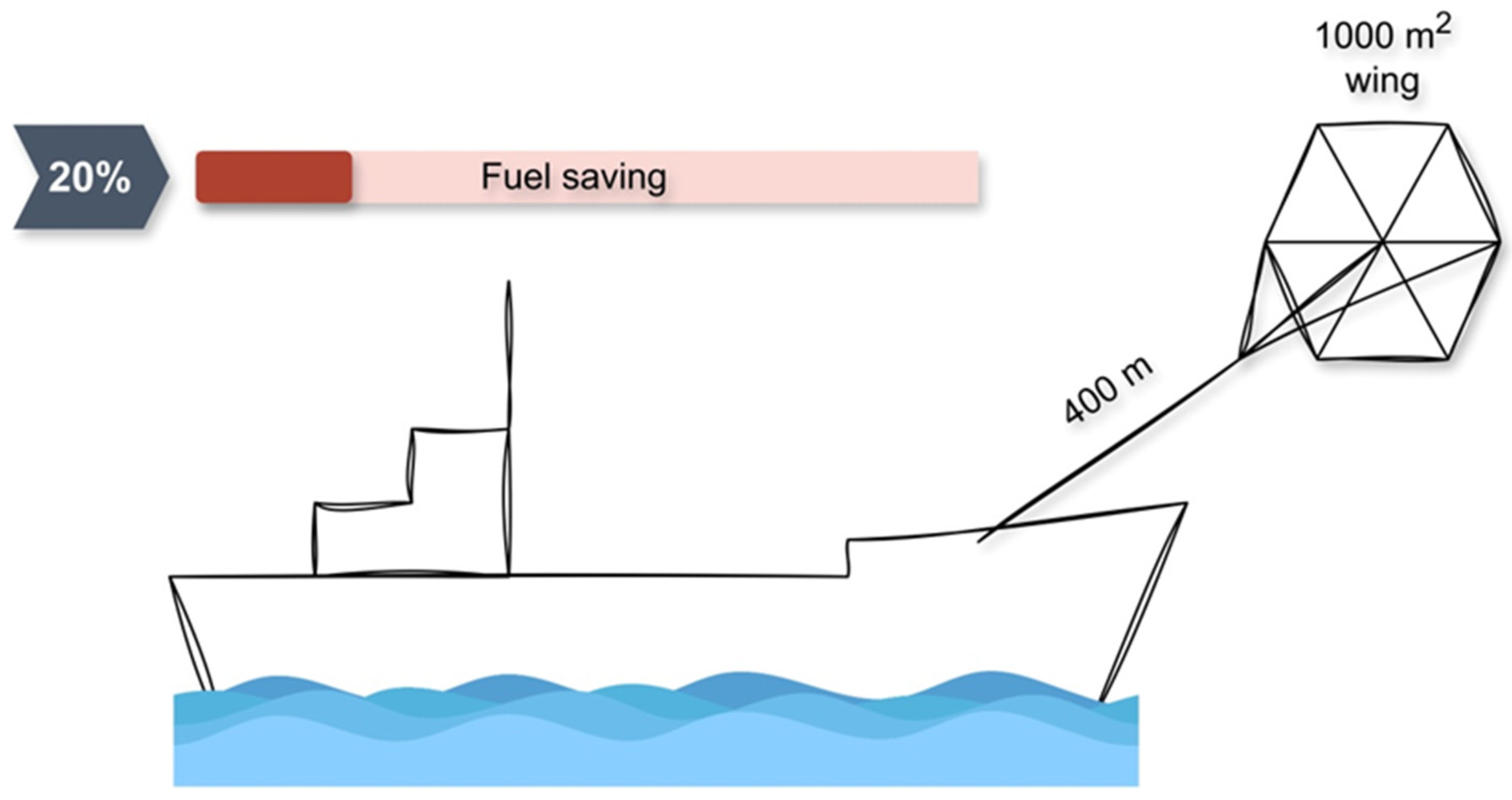
Figure 1 illustrates the kite-sail system, an innovative wind-assisted propulsion technology that utilizes a large, controllable kite deployed approximately 400 m above the ship to harness high-altitude wind energy. This system can reduce the engine load and, consequently, lower fuel consumption by up to 20%, as shown in the figure. By decreasing fossil fuel usage, the kite-sail system significantly contributes to reducing greenhouse gas emissions and enhances the overall energy efficiency of maritime operations, making it a promising solution for sustainable shipping.
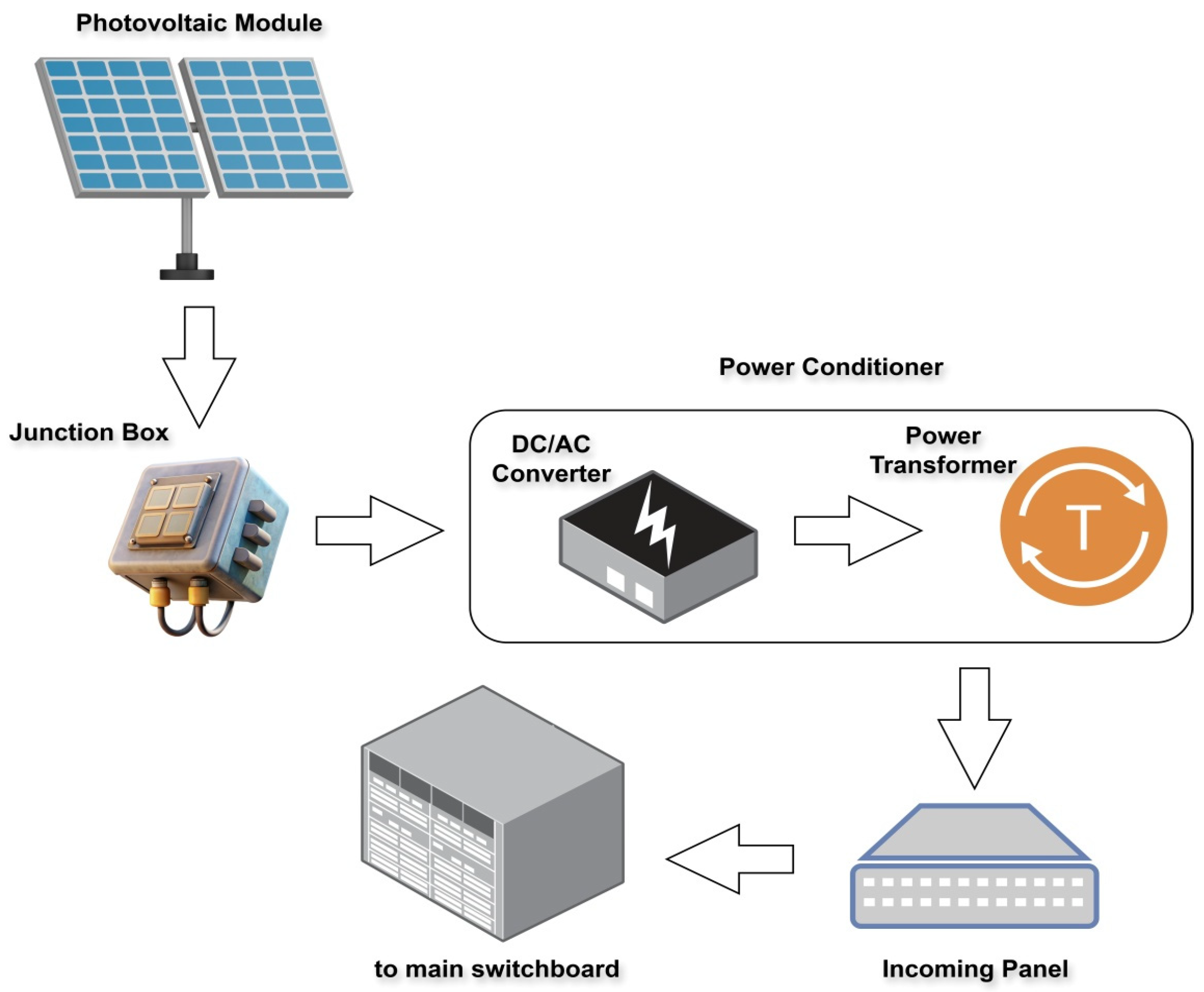
Figure 2 indicates a solar energy system designed for maritime applications, showing the conversion of solar power from photovoltaic (PV) modules into usable electrical energy for ship systems. The system includes a junction box, DC/AC converter, power transformer, and integration with the ship’s main switchboard via an incoming panel. By utilizing solar energy as a supplementary power source, ships can reduce their dependence on fossil fuels, leading to lower fuel consumption and a decrease in harmful emissions. This contributes significantly to energy efficiency and supports compliance with international environmental regulations such as MARPOL Annex VI.
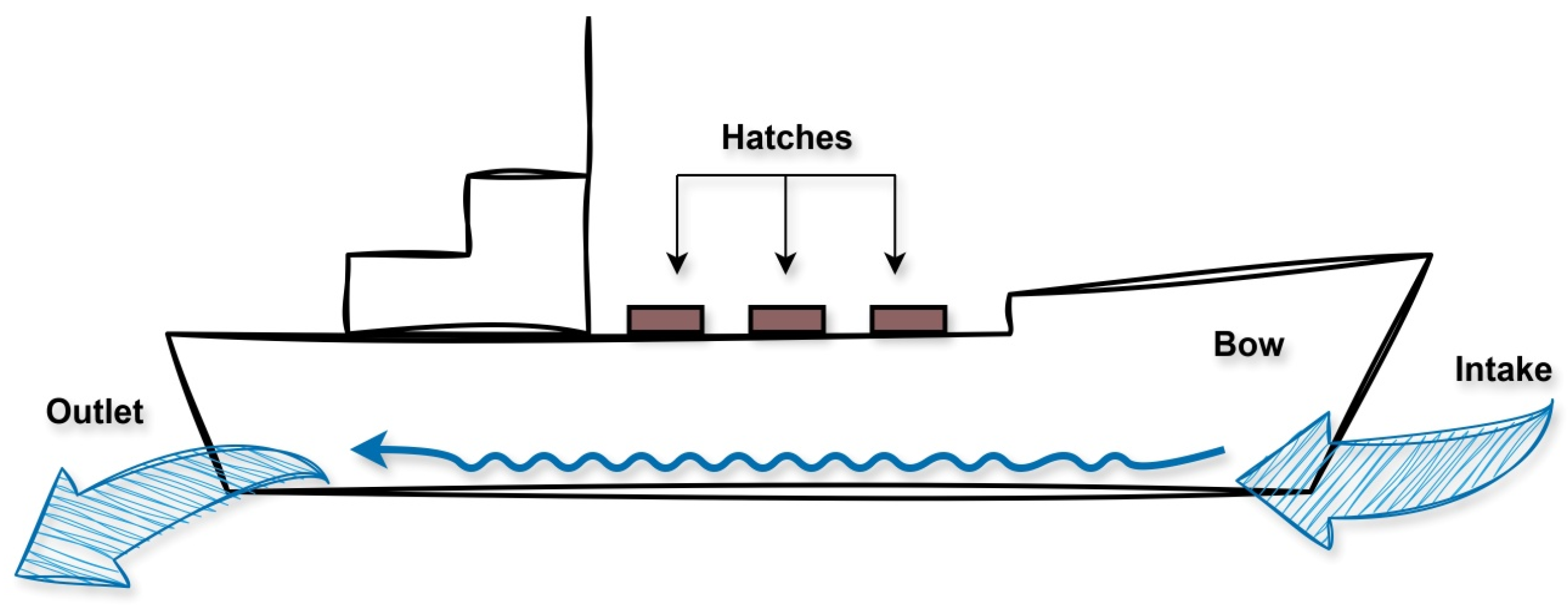
Figure 3 shows the no-ballast shipping system (A3), a design innovation that eliminates the need for ballast water by utilizing a specialized hull structure for stability. By removing the processes of ballasting and de-ballasting, this system reduces the energy required for pumping operations, which is very high, thereby lowering overall fuel consumption. In addition to improving energy efficiency, it also minimizes emissions associated with ballast water treatment and transfer [
69], and helps prevent the spread of invasive marine species—contributing to both environmental sustainability and operational efficiency.
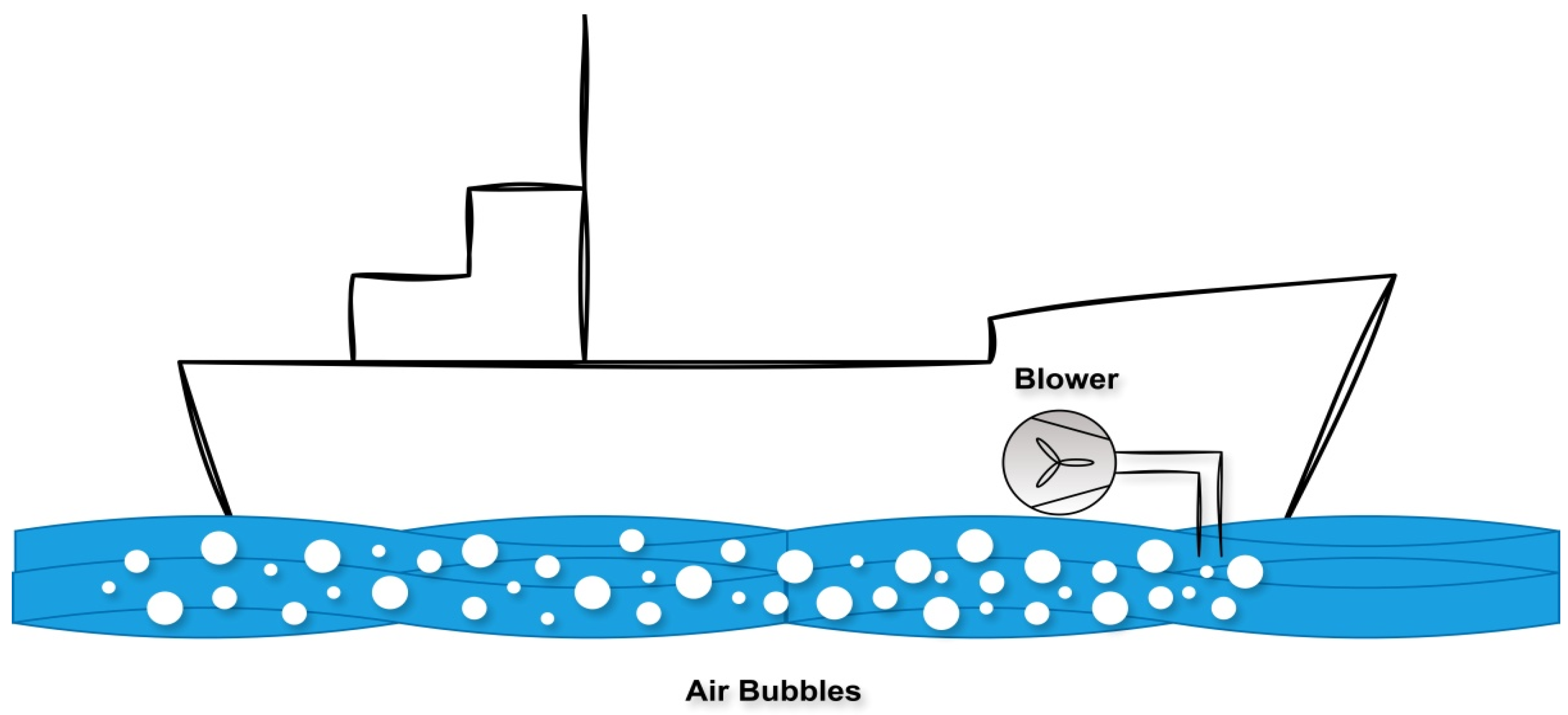
In
Figure 4, the air bubbles hull lubrication system (A4), a technology that reduces frictional resistance between the ship’s hull and seawater by injecting a layer of air bubbles along the bottom of the vessel, is shown. This air layer minimizes contact with water, thereby decreasing hydrodynamic drag and lowering the propulsion power required. As a result, the ship consumes less fuel, leading to improved energy efficiency and a significant reduction in CO
2 and other harmful emissions. This system offers a practical and effective means of enhancing environmental performance in maritime operations.
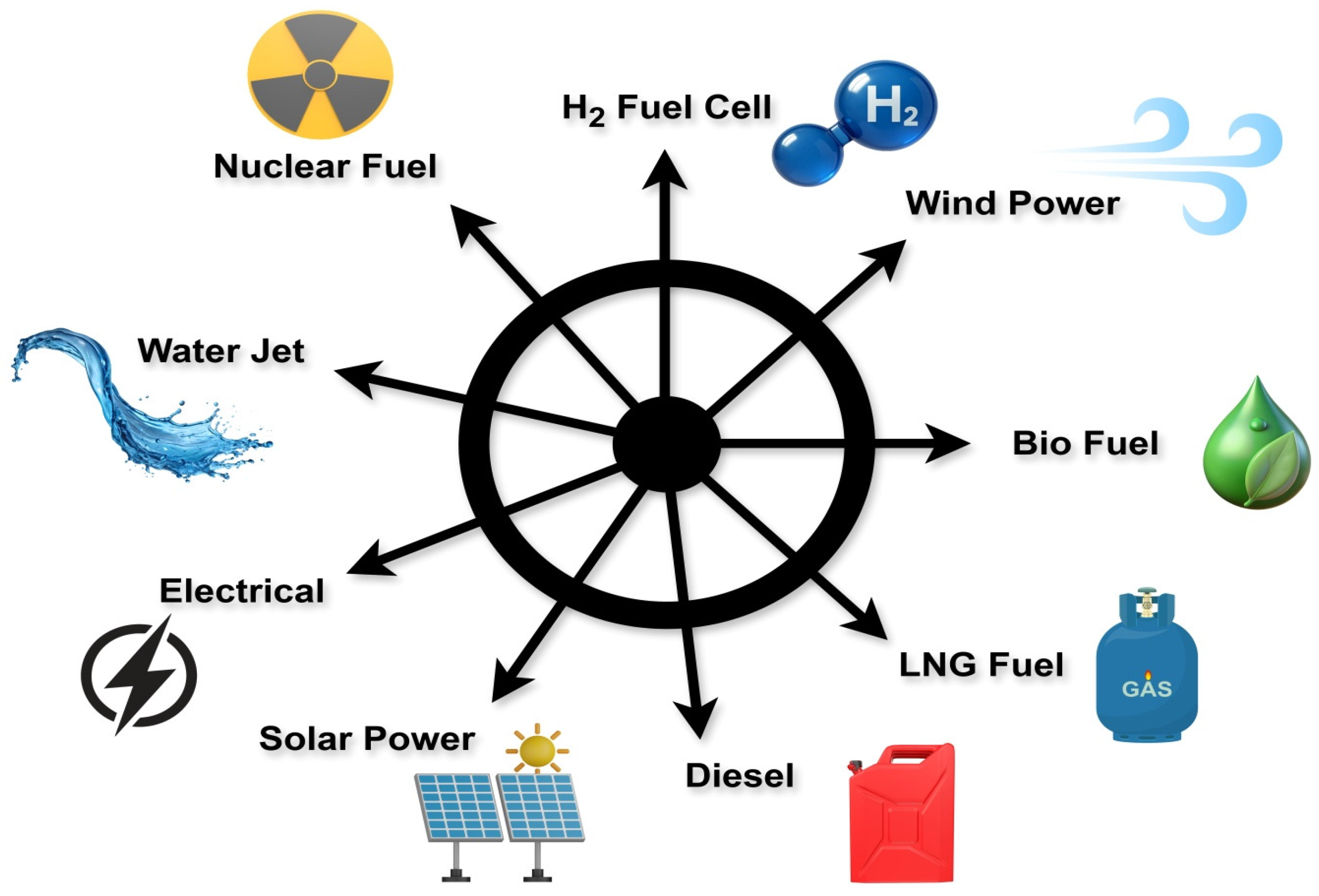
Figure 5 presents a range of green propulsion systems (A5) that are being explored and adopted to enhance energy efficiency or reduce emissions in maritime transport. These include alternative fuels such as hydrogen fuel cells, LNG, biofuels, and nuclear fuel, as well as renewable energy sources like wind and solar power. Additionally, technologies such as electric propulsion, water jets, and hybrid systems contribute to optimizing fuel consumption and minimizing greenhouse gas emissions. By diversifying propulsion options and integrating cleaner technologies, the maritime industry can significantly reduce its environmental footprint while improving operational sustainability.
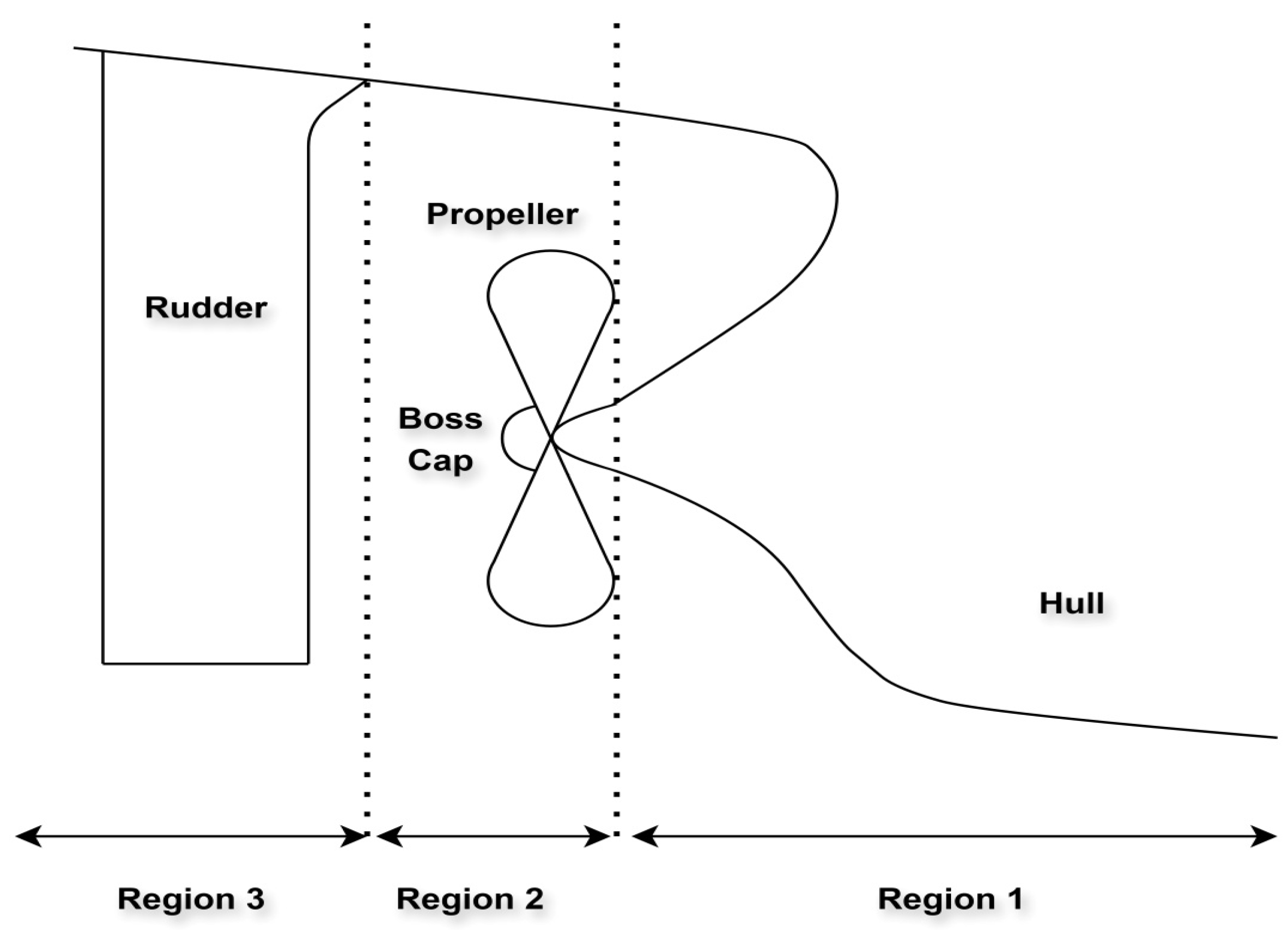
Figure 6 illustrates an advanced and novel rudder–propeller configuration (A6), including a boss cap fin system designed to optimize flow dynamics in three key regions: the hull (Region 1), propeller area (Region 2), and rudder zone (Region 3). By improving the interaction between these components, this setup reduces energy losses due to flow separation and propeller hub vortices. The enhanced hydrodynamic efficiency results in lower propulsion power requirements, thereby decreasing fuel consumption and associated emissions. This integrated approach contributes significantly to improving ship energy performance and aligns with green shipping goals.
In addition,
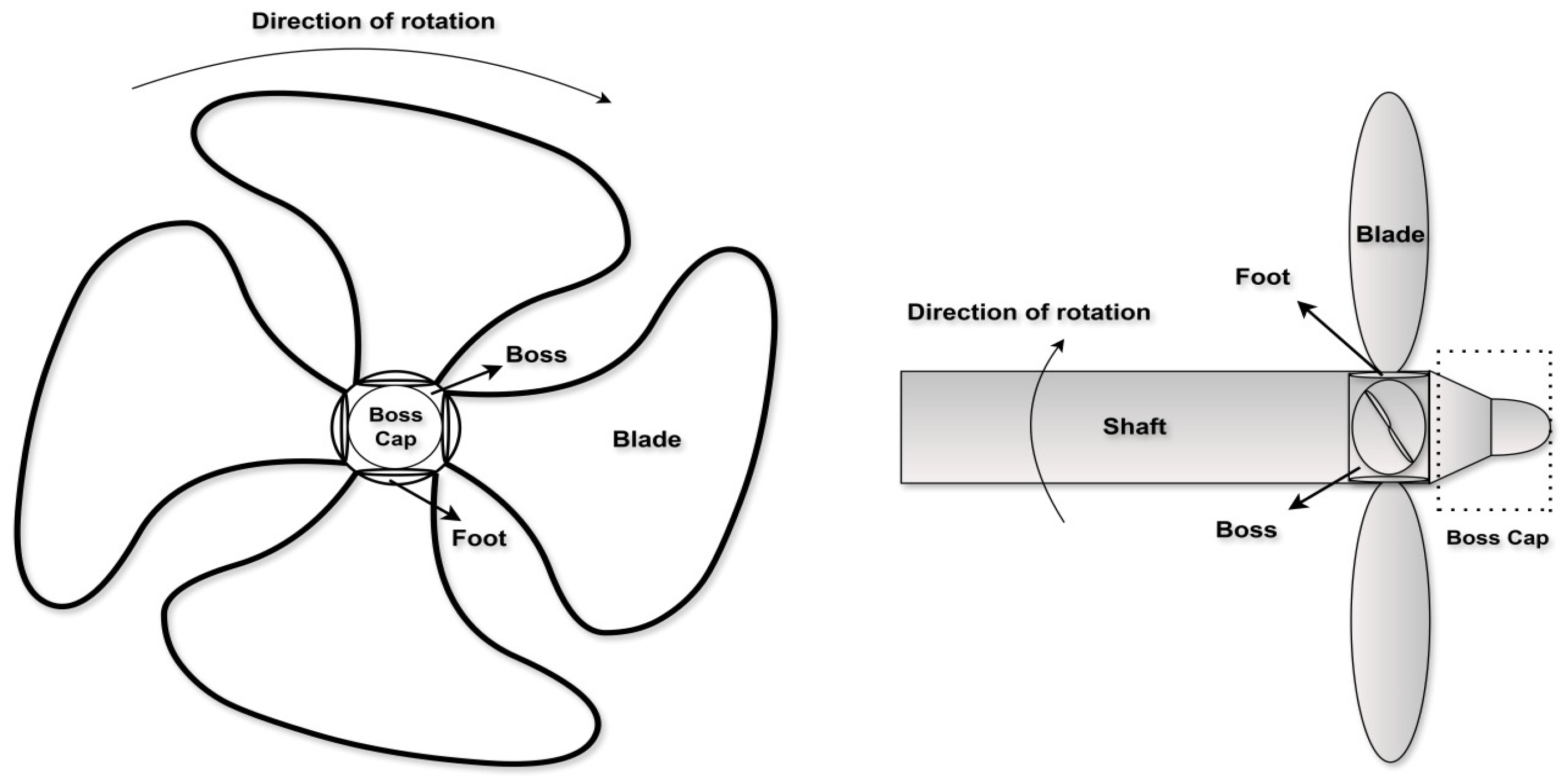
Figure 7 provides a detailed view of an advanced propeller system equipped with a boss cap fin, designed to reduce energy losses caused by the propeller hub vortex. By streamlining the flow around the propeller boss and reducing rotational energy loss, this configuration enhances thrust efficiency. The improved flow dynamics result in lower propulsion power requirements and thus contribute to reduced fuel consumption and greenhouse gas emissions. Such innovations in rudder and propeller design play a key role in enhancing the overall energy efficiency and environmental performance of modern ships.
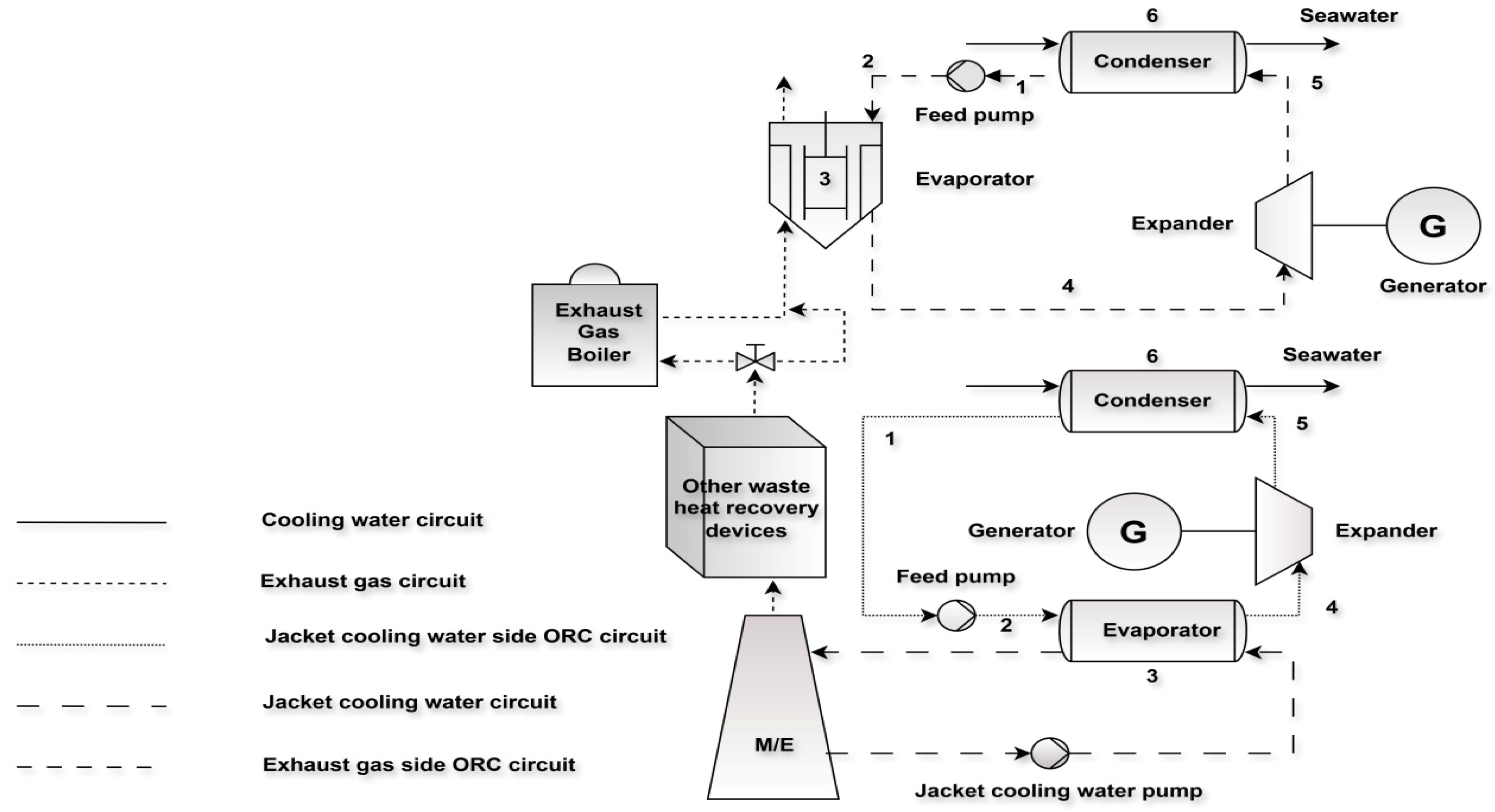
Figure 8 shows a conventional Organic Rankine Cycle (ORC) and waste heat recovery system (WHRS) (A7), which captures and converts excess thermal energy—typically lost through engine exhaust or cooling systems—into usable electrical or mechanical power. By utilizing low-grade waste heat, ORC systems significantly improve the overall energy efficiency of ship propulsion and auxiliary systems. This reduces the need for additional fuel consumption, leading to lower operational costs and a substantial decrease in greenhouse gas emissions. As a result, ORC-based WHRS is a key technology in advancing sustainable and energy-efficient maritime operations.
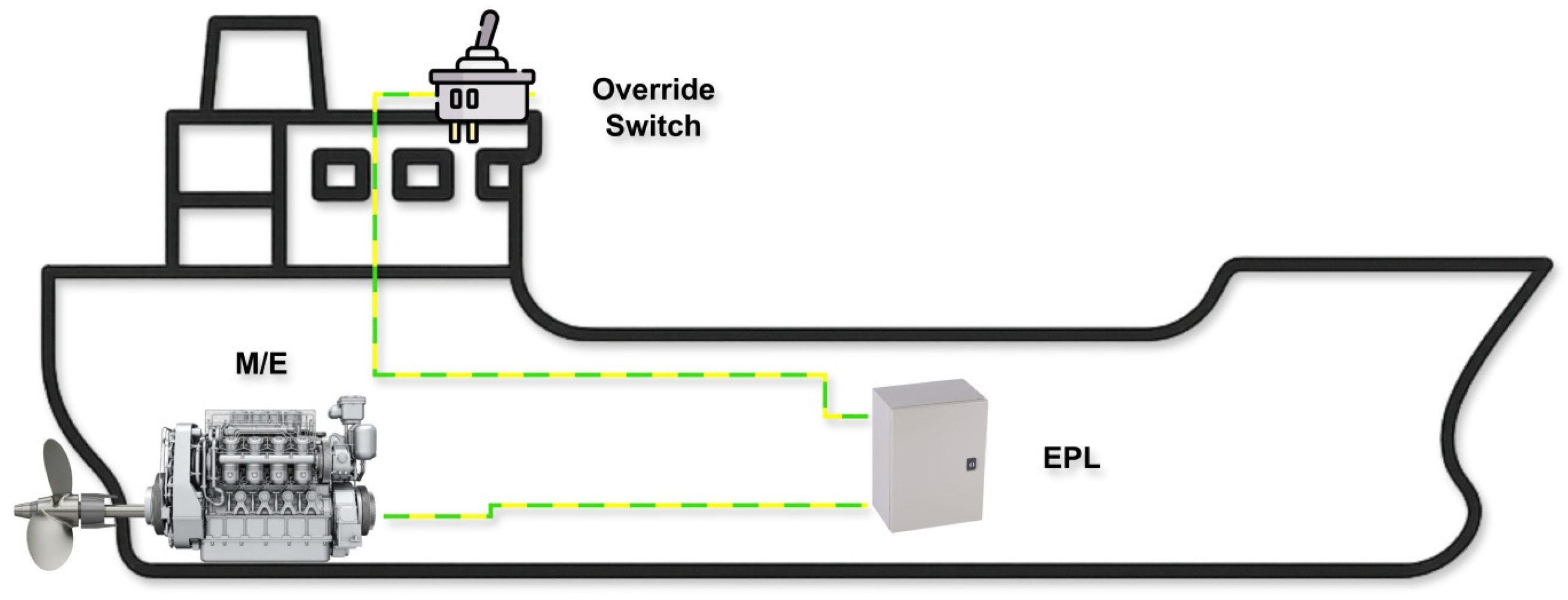
The EPL system (A8), as illustrated in
Figure 9 and recent maritime energy efficiency frameworks, is a technical and operational measure designed to cap a ship’s engine output to a predetermined maximum power level—usually below its original design limit. This system is part of the IMO’s short-term measures to reduce GHG emissions from ships, particularly under the Energy Efficiency Existing Ship Index (EEXI) framework. By limiting the maximum continuous output of the main engine, EPL reduces the vessel’s speed, leading to lower fuel consumption during operation. Since fuel consumption is directly linked to CO
2 emissions, EPL effectively decreases the ship’s carbon footprint. Moreover, this method does not require major hardware modifications, making it a cost-effective solution for existing fleets to comply with international decarbonization targets. In terms of energy efficiency, operating at lower power levels also optimizes engine performance under partial load conditions and minimizes mechanical stress on propulsion components, which can result in lower maintenance needs and extended equipment life. While it may slightly affect voyage duration, the trade-off in fuel savings and emission reductions makes EPL a valuable tool in the pursuit of greener shipping.
5.2. Sensibility Analysis
Sensitivity analysis enables the systematic examination of the effects of variations in criterion weights on the final values of alternatives, thereby allowing for a comprehensive evaluation of how different scenarios reflect on the final outcomes. In this regard, five distinct scenarios were developed following the procedures proposed by [
58,
75], and the results are presented in
Table 7. Accordingly, these five scenarios were calculated as follows:
Scenario 1 (S1): This case refers to all seven criteria being equally weighted (1/7 = 0.143).
Scenario 2 (S2): In this scenario, a weight of 0.90 is assigned to CSF2, which has the highest importance weight in the current situation, while the remaining six criteria are each assigned an equal weight of 0.0167.
Scenario 3 (S3): This scenario assigns a weight of 0.90 to CSF3, which has the lowest importance weight under normal conditions, with the remaining six criteria each receiving an equal weight of 0.0167. It is important to note that Scenario 2 and Scenario 3 intentionally represent extreme weight allocation cases, where a single criterion receives a dominant weight of 0.90 while all others share only 0.0167. Such boundary-case scenarios are widely used in MCDM studies to test ranking robustness under highly unbalanced preference structures.
Scenario 4 (S4): In this case, CSF2, the criterion with the highest importance weight under normal conditions, retains its own weight of 0.3813, while the remaining six criteria are each assigned an equal weight of 0.1031.
Scenario 5 (S5): In this scenario, CSF3, the criterion with the lowest importance weight under normal conditions, retains its own weight of 0.0071, while the remaining six criteria are each assigned an equal weight of 0.1655.
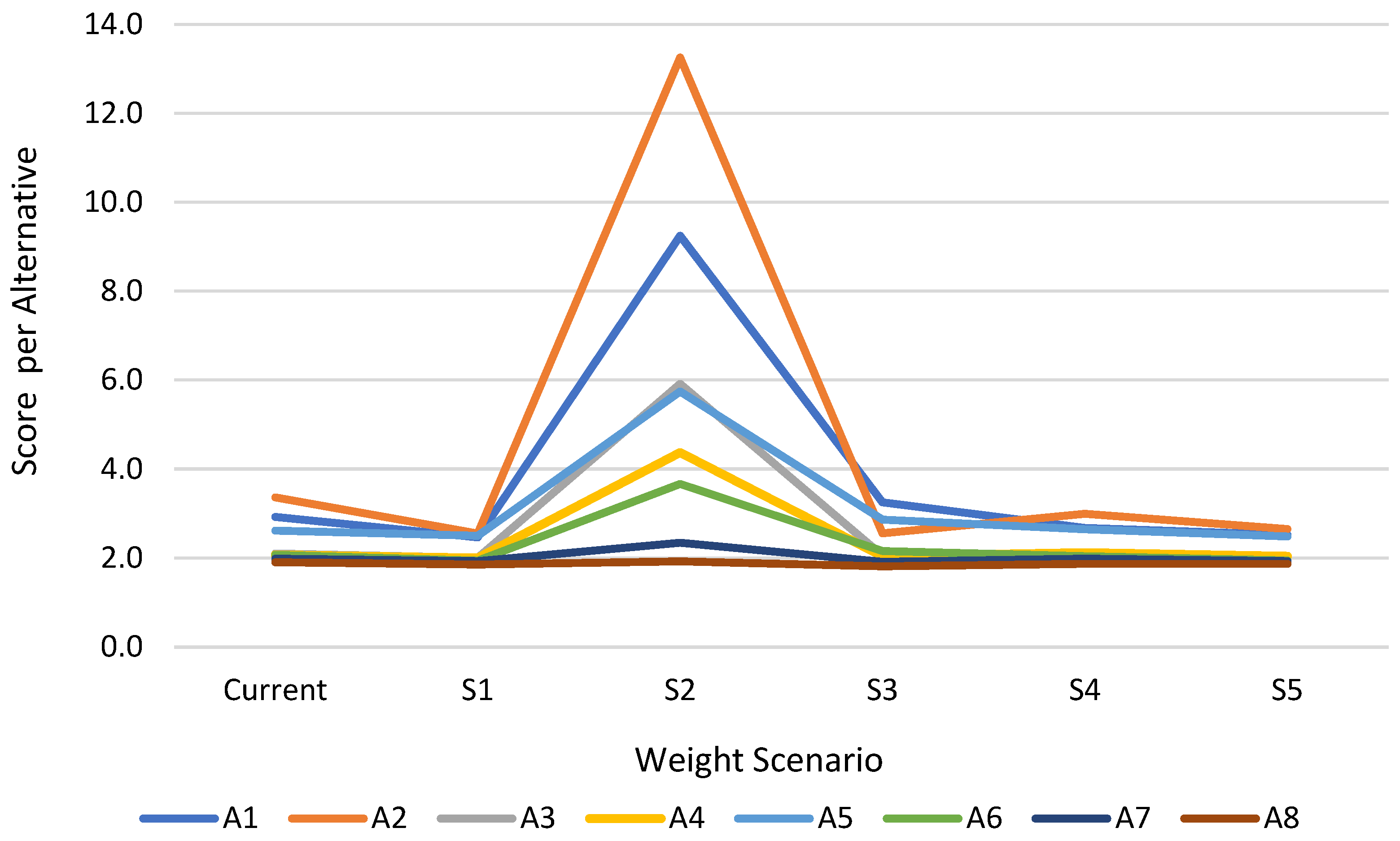
Figure 10 reveals that variations in criterion weights across the scenarios exerted only a limited influence on the final alternative values in the F-CoCoSo method. Except for Scenario 3, A2 (Solar Energy, Solar-Sail Systems) consistently emerged as the alternative with the highest score. Similarly, A8 (De-Rate Engines and EPL) and A7 (Conventional ORC and Waste Heat Recovery) were identified as the alternatives with the lowest scores across all scenarios.
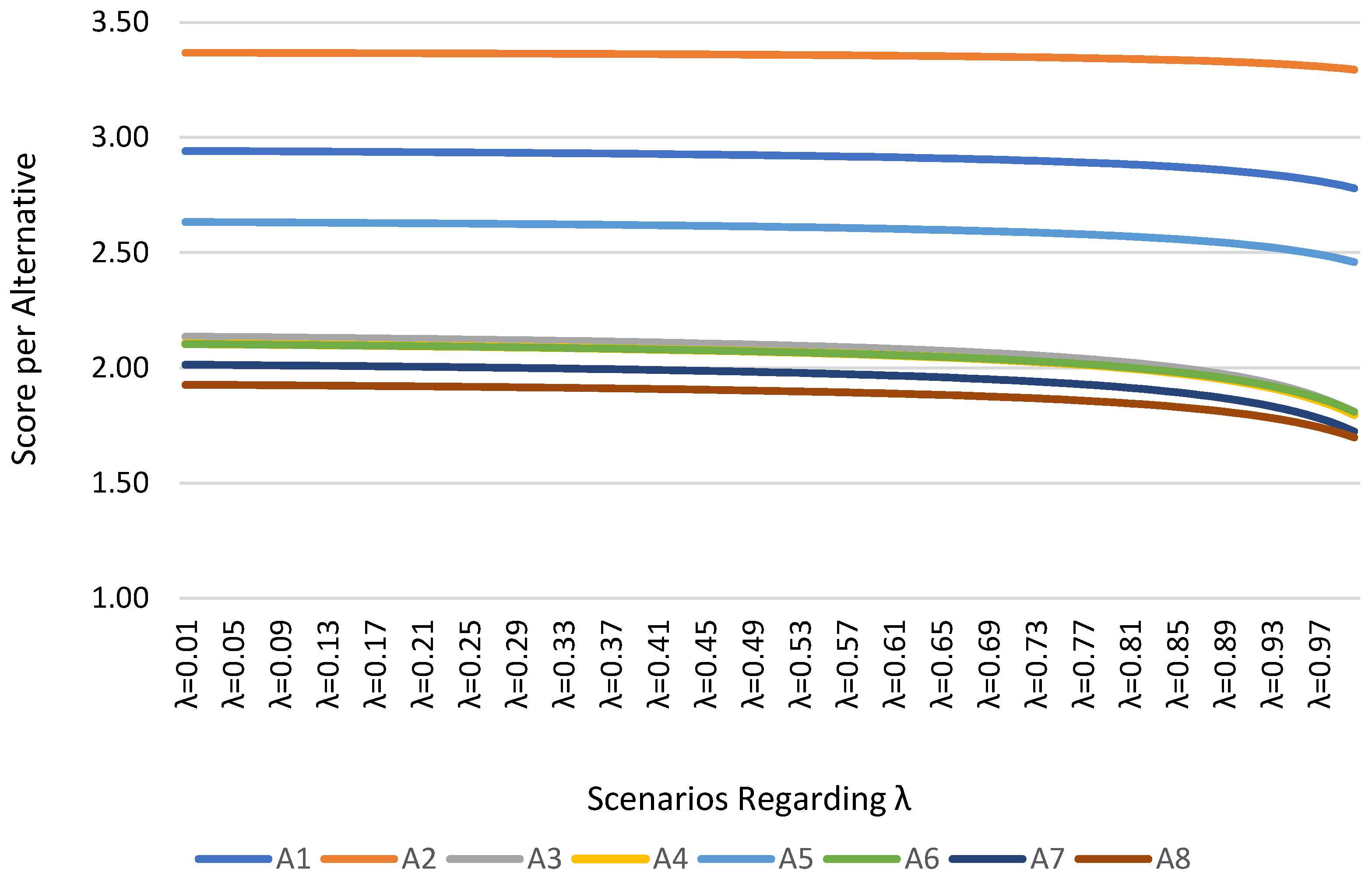
In addition to these analyses, the effect of variations in the λ parameter (0 ≤ λ ≤ 1) within the F-CoCoSo method on the final scores was also examined. The 0–1 interval was divided into 100 equal segments, and a total of 100 scenarios were tested, each corresponding to an incremental increase of 0.01. The results of this procedure are presented in detail in
Figure 11. As illustrated in
Figure 11, changes in the λ parameter did not produce any significant variation in the scores of the alternatives across all scenarios. Once again, alternative A2 consistently ranked first, with the highest score in all scenarios, while alternatives A8 and A7 persistently occupied the lowest ranks, with the lowest scores.
5.3. Comparative Study
To validate the robustness and reliability of the proposed hybrid neutrosophic fuzzy MCDM framework, a comparative analysis was conducted using two widely recognized fuzzy decision-making methods: Fuzzy TOPSIS (F-TOPSIS) and Fuzzy VIKOR (F-VIKOR). These methods were applied to the same dataset and criteria weights derived from the TNF-AHP method, enabling a direct comparison of their ranking outcomes with the F-CoCoSo method used in the main analysis. The final scores and rankings of the eight energy efficiency system alternatives are summarized in
Table 8. While all three methods aim to prioritize alternatives based on performance across multiple criteria, their underlying computational logic and aggregation mechanisms yield different results.
All three methods consistently identify A2 (Solar Energy Systems) and A1 (Wind Energy Systems) as the top two alternatives, confirming their superior performance in terms of energy efficiency and sustainability. The rankings of A5 (Green Propulsion) and A8 (Engine Power Limitation) show moderate variation. F-CoCoSo and F-TOPSIS rank A5 third, while F-VIKOR places it fourth. A8 is ranked fourth by F-TOPSIS and F-VIKOR but eighth by F-CoCoSo, indicating sensitivity to method-specific aggregation logic. Significant divergence is observed in the rankings of A3 (Hull Modifications) and A6 (Advanced Rudder and Propeller). F-CoCoSo ranks A3 fourth, while F-TOPSIS places it last. Similarly, A6 ranks fifth in F-CoCoSo but last in F-VIKOR, suggesting that these methods weigh certain criteria differently under uncertainty.
F-CoCoSo demonstrates a balanced compromise between additive and multiplicative aggregation, offering stable rankings even when alternatives are added or removed. F-TOPSIS emphasizes closeness to the ideal solution, which may penalize alternatives with uneven performance across criteria. F-VIKOR focuses on minimizing regret and balancing group utility and individual satisfaction, which can lead to more conservative rankings for alternatives with high variability.
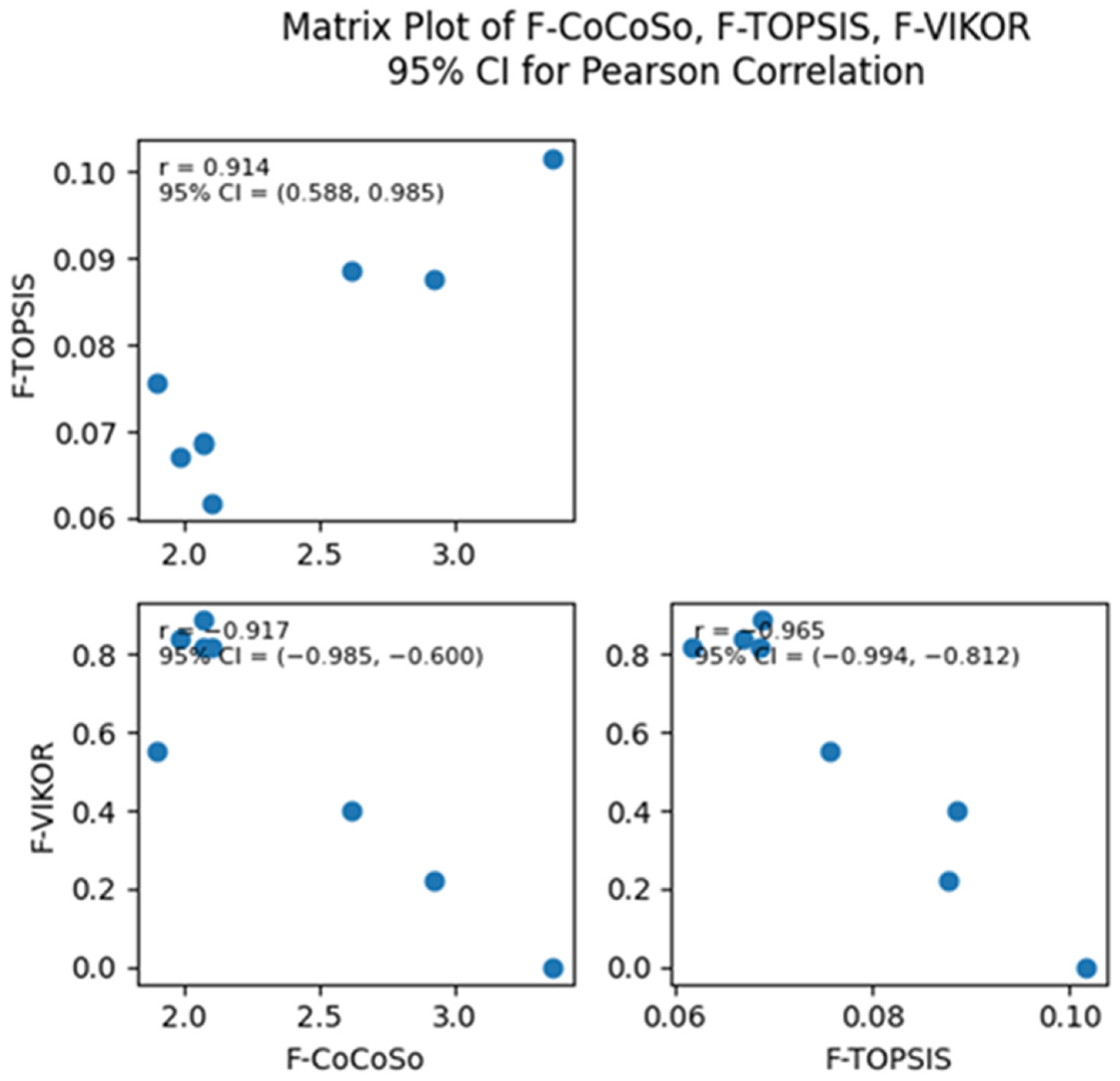
To make an overall assessment of the numerical consistency among the three MCDM methods used in the comparative analysis, Pearson correlation coefficients (r values) were calculated using the final scores obtained from F-CoCoSo, F-TOPSIS, and F-VIKOR. The correlation matrix and scatterplots are presented in
Figure 12. The results indicate three strong correlations:
This strong and positive correlation demonstrates that the numerical performance scores produced by F-CoCoSo and F-TOPSIS move in the same direction. Alternatives that obtain higher F-CoCoSo scores also tend to receive higher F-TOPSIS closeness coefficients. This high degree of alignment confirms that both methods share similar aggregation behavior in evaluating overall performance.
Although the sign is negative, the magnitude of the correlation indicates a very strong linear relationship between the two sets of scores. The negative direction arises from the fact that VIKOR’s Q metric assigns smaller values to better alternatives, while F-CoCoSo assigns larger values to better alternatives. When this inverse scoring logic is considered, the strong negative correlation actually reflects substantial consistency between the two methods in differentiating high-performing and low-performing alternatives.
This is the strongest correlation observed in the analysis. The negative sign corresponds again to the opposite directional scaling of the VIKOR Q index, while the high magnitude demonstrates that both F-TOPSIS and F-VIKOR evaluate the alternatives in a highly similar pattern. Alternatives that are close to the ideal solution in TOPSIS tend to have lower regret-based Q values in VIKOR.
The correlation analysis provides compelling evidence that all three MCDM approaches exhibit high numerical consistency, despite differences in scoring direction and underlying decision logic. The strong correlation magnitudes (|r| > 0.90) confirm that the proposed hybrid F-CoCoSo method produces results that are in close agreement with well-established fuzzy MCDM techniques. This strengthens the robustness, reliability, and methodological validity of the proposed framework. While all three methods agree on the top-performing alternatives, F-CoCoSo provides a more nuanced and stable ranking structure, making it particularly suitable for complex maritime decision-making environments. The observed differences also highlight the importance of method selection in MCDM applications, especially when decisions have strategic and operational implications.
6. Conclusions
This study introduced and applied a hybrid neutrosophic–fuzzy multi-criteria decision-making framework to assess alternative systems for increasing ship energy efficiency and reducing emissions. By combining Trapezoidal Neutrosophic Fuzzy AHP (TNF-AHP) to derive criterion weights with a Fuzzy Combined Compromise Solution (F-CoCoSo) to evaluate alternatives, the methodology explicitly models expert uncertainty, indeterminacy, and contradictory judgments while producing a stable, compromise-based ranking of technologically and operationally distinct options. The results summarized in
Table 4,
Table 5 and
Table 6 and discussed in
Section 4 and
Section 5 deliver several clear and actionable conclusions for shipowners, operators, policymakers and technical stakeholders.
After examining numerical results, key findings and their interpretations can be explained from several strong perspectives. First of all, decision-makers’ priorities indicate that the weighting stage (TNF-AHP) Fuel Save and Energy Efficiency (CSF2) is the single most important success factor (weight = 0.3813), followed by cost-effectiveness (CSF1) (weight = 0.3232). Other criteria (dependency on environmental factors, applicability to ship types, required space, regulatory suitability, and off-hire/ease-of-use) received substantially lower weights. This distribution shows that experts primarily judge solutions by their direct impact on fuel consumption and by their economic return, which is consistent with practical commercial priorities in shipping. It is clear that in maritime industry, operational savings and payback matter as much as environmental benefit.
When it comes to the overall ranking of alternatives, the F-CoCoSo ranking places Solar Energy/Solar-Sail Systems (A2) first (performance score 3.3585), Wind Energy systems (A1) second (2.9222), and Green Propulsion (A5) third (2.6124). Mid-placed alternatives include bulb/hull modifications (A3) and advanced rudder/propeller solutions (A6), while ORC/Waste Heat Recovery (A7) and Engine Power Limitation/De-rate (A8) score lowest. These results are consistent with the prominence given to fuel savings and cost-effectiveness: solar and wind solutions provide direct, fuel-saving auxiliary power with modular deployment, moderate capital investment relative to their benefits, and minimal crew implications in many installations—hence their high final alternative scores.
In addition, sensitivity analysis (five weight scenarios and λ-parameter sweep for F-CoCoSo) shows that the F-CoCoSo outcome is stable: A2 remains top in nearly all tested scenarios and for the full λ sweep (0–1). Only an intentionally extreme scenario (S3, where Off-hire and Ease of Use receives 0.90 weight) produced significant rank changes—an unsurprising but instructive outcome that demonstrates how strongly results depend on stakeholder priorities when they deviate drastically from industry norms. The λ-parameter analysis (100 increments) produced negligible changes in final alternative scores, underscoring the internal stability of the F-CoCoSo aggregation for this dataset.
Another important perspective of this study is the comparison part. Applying F-TOPSIS and F-VIKOR to the same TNF-AHP weights produced broad agreement on the top two alternatives (A2 and A1). This convergence across three different fuzzy MCDM algorithms strengthens confidence that solar and wind options are robustly preferable given the expert inputs and selected criteria. The comparative study further shows that F-CoCoSo yields more balanced and stable compromise rankings—its hybrid additive/multiplicative logic reduces over-penalization of options with mixed strengths and weaknesses.
From technical and operational implications, the question of why solar and wind lead can come to the fore. Solar PV and wind-assisted technologies (kite, Flettner rotors, rig-sail) offer direct, measurable reductions in fuel burn for auxiliary and/or propulsion power and are often modular, scalable installs that do not require deep engine-room modifications. Solar PV is particularly attractive for auxiliary load offset (generators, cargo handling auxiliaries), and has low operational complexity and limited crew impact, which resonates with the experts’ high weights on cost-effectiveness and minimal operational disruption. Wind-assisted devices can produce substantial propulsion support (see
Figure 1 example of up to ~20% fuel saving under favorable conditions), although their performance is route- and weather-dependent. In addition, Green Propulsion (A5) has high environmental potential but practical constraints. Alternatives such as LNG, biofuels, hydrogen fuel cells, and hybrid electric drives rank third because they promise deep lifecycle emission reductions. However, they are hampered by infrastructural, bunkering, regulatory, and initial capital hurdles, plus the need for crew and operator training and shore-side support. This explains why, despite strong environmental performance, they rank below solar and wind when experts balance fuel savings against cost, space requirement, and applicability. When examining hull, propeller and rudder enhancements (A3 and A6), hydrodynamic modifications and advanced propulsor geometries yield reliable propulsion efficiency improvements and often provide enduring fuel savings once installed. Their ranking in the mid-range reflects significant benefits tempered by high retrofitting costs, dry-docking time, and ship-specific design dependencies—factors that reduce universal applicability and slow return on investment for some vessel types. In some ships, air-bubble lubrication (A4) is promising for certain hull forms and speed ranges, as air-lubrication can lower drag and fuel consumption. The experts’ moderate ranking reflects practical considerations, which are connected with system power requirements (air blowers), maintenance complexity, and sensitivity to hull conditions and operation speed. Later on, for ORC/WHRS (A7) it can be said that while they are thermodynamically attractive—recovering low-grade heat from exhaust and cooling systems—ORC systems are space-consuming, capital-intensive, and technically complex. For many existing ships, retrofit space and integration cost limit feasibility, explaining the lower final alternative score despite compelling energy-recovery potential for large, long-voyage tonnage. Finally, Engine Power Limitation is inexpensive to implement and useful for regulatory compliance (EEXI) but performs poorly in expert scoring because reduced power/speed can negatively affect commercial schedules, may reduce operational flexibility and revenue, and sometimes produce only modest fuel savings per voyage when the full commercial picture is considered. Hence, while EPL is a practical compliance tool, it is often less attractive as a long-term energy efficiency investment.
From an economical point of view, experts prioritized cost-effectiveness as the second most important factor; therefore, payback and amortization are central to implementation decisions. Technologies with lower capital intensity and shorter payback windows (solar arrays, some wind devices) are easier to justify commercially and thus achieve higher final alternative values. Conversely, high-capex solutions (extensive hull reworks, ORC installations, full fuel-type conversions) require careful lifecycle costing and potentially policy or financing support to make them viable for existing fleets. Where rapid amortization is desired (e.g., short remaining vessel lifetime), modular, low-disruption solutions should be prioritized. For newbuilds and long-service vessels, investment in green propulsion, hull-form optimization and ORC systems can be justified through lifecycle savings and compliance resilience.
It is clear that regulatory, human-resource, and operational fit is quite important. The suitability for competent authority was included among the criteria and influenced rankings—technologies that align with IMO regulations and can be certified by class societies without extensive novel approval processes have an advantage (e.g., solar and established wind-rotor systems). Green fuels and new fuel systems require close coordination with class and port authorities for bunkering and safety procedures.
Another issue is crew implications. Solutions that do not require additional specialized onboard personnel—or that require minimal training—are mostly preferable in maritime industry. Solar and wind installations typically impose minor additional operational burden; complex fuel systems, ORC plants or advanced hull-conditioning systems may necessitate extra maintenance skills, which increases indirect costs and can reduce attractiveness.
The hybrid neutrosophic–fuzzy MCDM framework employed here successfully balances technical, economic, and regulatory aspects under real maritime uncertainty and produces robust, actionable priorities. The convergence of F-CoCoSo with F-TOPSIS and F-VIKOR on the superiority of solar and wind measures—combined with the strong TNF-AHP weighting toward fuel savings and cost-effectiveness—provides a compelling, evidence-based basis for industry stakeholders to prioritize modular renewable integrations and to adopt a layered strategy that pairs near-term with longer-term structural and fuel transitions (hull design, green propulsion) to achieve meaningful emission reductions and operational savings.
In the academic literature, there are a lot of studies focusing on alternative fuels and alternative technologies and their emission reduction potentials. Despite the proven benefits of these alternative options, our study reveals that fuel saving is still the top priority by industry people. This approach may seem pragmatic, but it is understandable because, under current regulations, ship operators are choosing options that minimize operational costs with minimal risks. This suggests that the industry is currently prioritizing relatively simpler solutions that reduce operational costs (wind, solar) directly instead of complex integration requiring options (e.g., WHR). It is also clear that industry believes the potential of renewable energy.
To sum up, if implemented, these recommendations can significantly improve ship energy efficiency and reduce emissions. In the short to medium term, investing in solar and wind systems for both retrofit and newbuild projects offers complementary benefits, with solar supporting hotel and auxiliary loads while wind assists propulsion. At the same time, green-fuel and hybrid transitions should be strategically planned, targeting newbuilds and long-service vessels while ensuring that supporting shore infrastructure and crew training are developed. Hull and propulsor upgrades can be prioritized during scheduled drydockings for ships with long remaining service life, making them more cost-effective. ORC systems are best suited for large, long-voyage vessels with substantial waste-heat streams, provided that space and integration considerations are addressed. EPL and other operational measures can serve as effective regulatory compliance tools but should not be the main efficiency strategy where commercial speed is essential. Finally, adopting combined solutions such as solar, air-lubrication, and propulsor fine-tuning can deliver additive fuel savings and faster payback compared to single, high-capex technologies.
Limitations and Future Work
Although the hybrid TNF-AHP + F-CoCoSo framework is robust and the sensitivity analyses indicate stable outcomes, the study is based on expert judgments from five experienced maritime professionals. The long-term robustness of these findings is limited against future radical regulatory changes. For instance, in the event that zero-carbon fuels or zero greenhouse gas (GHG) fuels are mandated, the priorities and ranking would fundamentally be changed. In this case, future weightings will be increased and alternative fuels will surpass all any other options.
Moreover, our study intends to provide a general prioritization, excluding specific scenarios like specific ship routes, ship types, etc. And of course, all options in the study depend on these specific scenario characteristics and operational profiles, especially wind and solar energy (considering weather and route dependence). This study presents a general road map for future research and investments.
Future research should expand expert panels across a broader set of stakeholders (owners, charterers, yards, class), incorporate detailed techno-economic modeling (LCC, payback, CAPEX/OPEX), route-based simulation under realistic weather datasets, and validate results with pilot retrofit projects and empirical fuel-use data. Lifecycle assessment (LCA) of each alternative—including upstream fuel production and infrastructure effects—would further refine environmental prioritization.




 ,
,