Article

Ecological Awareness and Behavioral Intentions Toward Sustainable Building Materials in Poland: Evidence from a Multi-Wave Nationwide Survey


Faculty of Architecture, Cracow University of Technology, ul. Warszawska 24, 31-155 Cracow, Poland
*
Author to whom correspondence should be addressed.
Sustainability 2026, 18(1), 102; https://doi.org/10.3390/su18010102
Submission received: 30 October 2025 / Revised: 10 December 2025 / Accepted: 16 December 2025 / Published: 22 December 2025

Abstract

Achieving climate neutrality in construction requires more than available low-carbon technologies; it also depends on informed demand and consumers’ willingness to adopt sustainable materials. This paper examines ecological awareness, attitudes, and behavioral intentions toward eco-friendly building materials in Poland, using four independent waves of a nationwide online survey (CAWI) conducted in 2023 and 2025 (N ≈ 1000 per wave; adults aged 18–80). The questionnaires measured environmental awareness; willingness to pay a price premium (WTP) for properties built with eco-materials; actual purchasing behavior during renovations; support for regulations mandating developers’ use of ecological materials; and key socio-demographic factors. While the results confirm a pronounced attitude–behavior gap, the article details the research design and analytical approach, reports awareness, attitudes, and WTP across waves and subgroups, and discusses implications for “soft” interventions (e.g., norms, information, defaults) that can complement regulatory frameworks and financial incentives. It concludes with limitations and practical recommendations for policymakers, industry, and civil society to accelerate the adoption of low-emission materials.

1. Introduction

Global warming, reflected in record-breaking temperatures and more frequent extreme weather events, calls for accelerated action toward achieving the goals of the Paris Agreement —specifically, keeping warming well below 2 °C and striving for 1.5 °C [1]. At the same time, the sixteenth edition of the Emissions Gap Report finds that global warming projections over this century, based on full implementation of Nationally Determined Contributions (NDCs), are now 2.3–2.5 °C, while those based on current policies are 2.8 °C [2]. The construction and real estate sector, responsible for a significant share of energy consumption and greenhouse gas emissions in the European Union [3], is crucial to these efforts. According to the recent European Environment Agency Report, despite greenhouse gas emissions from buildings in the European Union falling by 43% between 2025 and 2023, the buildings sector remains a key contributor to greenhouse gas (GHG) emissions in the EU, representing 33% of energy-related emissions in 2023. These emissions result partly from the direct use of fossil fuels in buildings (e.g., oil and gas used in boilers for heating) and from the production of electricity and heat for use in buildings (e.g., electricity consumed by water heaters, lighting, electrical devices, cooling systems, etc) [3]. Since the European Green Deal [4] and the “Fit for 55” package [5] came into force, the Energy Performance of Buildings Directive (EPBD) [6] was amended. Currently, it sets, among other things, requirements for zero-emission buildings (ZEB) for new constructions and mandatory assessment of carbon emissions over the entire life cycle (e.g., GWP), aimed at guiding decarbonization and the use of sustainable materials.
As emphasized by Brock et al., whilst carbon emissions and climate change must be tackled at an industrial and governmental level, individual choices and behaviors have a considerable impact on carbon emissions, for public demand drives industry, public opinion influences government decisions, the actions of the public have great power to reduce emissions in many facets of society, etc. [7]. If the public were willing to act on their attitudes towards climate change and overcome their desire to consume to make the more challenging changes to their lives, carbon emissions, within certain limits, would be reduced. Even the studies of such distant countries as Austria and New Zealand resulted in concluding that a systemic view of sustainable consumption behaviors is required to foster and increase sustainable behavior [8].
Research on environmental awareness and intentions towards sustainable building materials, both in Europe and internationally, has recently moved from general approaches (pro-environmental attitudes) to sectoral analyses combining environmental, economic, technical, and social criteria, as well as LCA methods and EPD declarations [9,10,11]. Between 2010 and 2017, the majority of studies identified barriers and drivers of green construction—knowledge gaps, costs, risks, and market demand [12,13,14,15]. Since 2018, there has been a rapid increase in publications on material selection and multi-criteria decision support (AHP/TOPSIS/COPRAS, large groups of decision-makers) [16,17,18,19,20,21]. Some studies suggest that despite a reasonable public awareness of current global environmental challenges that are being faced globally, their behavior is not necessarily being influenced by this awareness [7,22,23]. Awareness is not always a valid measure of the public’s willingness to make changes to their behavior.
There is an ongoing discussion about the scale of the intention–behavior gap—pro-eco declarations do not always lead to actual purchases of materials, which is explained by habits, risk, and “green” transaction costs [14,15,24]. Some authors emphasize the effectiveness of education and communication of benefits [25], while others emphasize the role of regulation and financial incentives on a systemic scale [10,26]. There is also skepticism about greenwashing and the credibility of labels [25,27]. In Poland, there is a growing awareness and interest in structural timber and CE, but cost criteria continue to prevail over environmental criteria [14,15,28,29,30].
On the other hand, the construction sector is experiencing a global increase in green building, widely recognized in literature as a sustained developmental trajectory that yields measurable benefits [31]. However, market data from Poland indicate a pronounced divergence between this international trend and domestic construction practices. There is a noticeable lack of longitudinal and multi-wave studies on representative samples (and comparisons between countries) [32,33]. There is a lack of integration of perspectives (consumers–professionals–institutions) in a single project [14,15,32]. The social dimension (health, comfort, well-being) in material decisions and the impact of digital/information tools on trust and choices are still poorly explored [25,34,35].
Whilst pro-environmental preferences exist in the housing market, they manifest themselves selectively and heterogeneously [29,36,37]. For wood as a material, the key factors are: perceived environmental friendliness, age, and rural/urban context; the barriers are cost and durability [18,38]. In Poland, price clearly dominates environmental criteria: a nationwide survey showed that only around 28% of buyers reported considering environmental factors when purchasing construction materials, while the remaining majority prioritized cost and basic performance [30], and stakeholders’ knowledge of sustainability and EPDs is limited [39]. Surveys and European reviews confirm the importance of information, trust in eco-labels, and transparency of declarations as factors influencing choices [25,27,35]. Multi-criteria decision-making frameworks bridge the information gap and allow environmental goals to be combined with cost and performance [16,17,20,21].
International studies consistently document a gap between attitudes and behaviors regarding sustainable consumption: pro-ecological intentions do not automatically translate into purchasing decisions [40,41]. Information may be unclear, the risk high, or costs upfront. In Poland, however, comprehensive, multi-stage data on which specific barriers (price sensitivity, lack of information, lack of trust, habits, and time horizon) are most important for the adoption of low-emission materials remain limited.
For Poland, one of the biggest CO2 emitters in the EU [42], green transformation presents a particular challenge. Historic energy dependencies and regulatory delays hinder timely achievement of EU goals. At the same time, the expansion of sustainability reporting (e.g., CSRD) and ESG-related certification can increase the costs of ensuring compliance and meeting product requirements. This may lead to higher prices for low-emission materials, thus raising economic barriers for consumers. This structural dynamic creates a difficult context in which the mere availability of low-emission technologies is not enough to guarantee their adoption.
According to a report by the Central Statistical Office (GUS) for 2024, as many as 98.6% of single-family buildings were constructed using traditional brick technology, and only 1.4% using steel, wooden, or prefabricated structures. A similar disparity applies to heating systems, where only 4% declare the use of renewable energy sources (RES). This contrast is particularly striking when compared to public declarations: a report for the Ministry of Climate and Environment (2020) indicates that 94% of respondents consider climate change to be an important issue, and over 75% are willing to pay higher costs for “clean” technologies. These statistics demonstrate a substantial gap between declared attitudes and actual behaviors within the Polish housing sector.
In her study on the psychology of climate change [43], Steg emphasized the need for further research into human dimensions of this critical issue. This paper presents the results of studies on attitude–behavior gap in the context of sustainable construction and chances for successful bottom-up implementation of the Paris Agreement. Being aware of the limitations of the methods applied, the Authors do not estimate emissions reductions. Instead, we argue that addressing soft barriers—awareness, trust, perceptions of quality and risk, and communicating long-term benefits—is an essential first step toward the effectiveness of any subsequent policy or market measures.

2. Materials and Methods

2.1. Data Collection and Sampling

The study on environmental awareness and the attitude–behavior gap among Poles in the context of sustainable construction was carried out in four independent waves of study. A quantitative CAWI (Computer-Assisted Web Interview) data collection method was used via the UCE RESEARCH panel and the Studio4SPACE, architectural design studio, which is in line with the latest market research standards in Poland. The study was conducted in accordance with the principles of scientific research ethics, including the Declaration of Helsinki. The survey was fully anonymous, no sensitive data was collected, and participation in the study was entirely voluntary. Before completing the questionnaire, each respondent was informed about the purpose of the study, its anonymity, and the possibility of withdrawing at any stage without giving a reason. Answering the survey questions was tantamount to giving informed consent to participate in the study.
Each wave constituted an independent, representative sample of adult Poles (aged 18–80) with a minimum sample size of N ≥ 1000. For sampling and analysis, age was stratified into seven brackets (18–24, 25–34, 35–44, 45–54, 55–64, 65–74, 75–80 years). Quotas for each age group were based on the official population structure from the Central Statistical Office (GUS), so respondents were not recruited ad hoc but to fill predefined age–gender–region cells. The waves were carried out on the following dates: Wave 1: 8–11 June 2023 (N = 1030); Wave 2: 24–26 June 2023 (N = 1008); Wave 3: 28–29 September 2023 (N = 1026); Wave 4: 21–23 September 2025 (N = 1003). This protocol, based on separate, large samples, minimized survey fatigue and allowed for the analysis of attitude evolution during key periods. The first three waves in 2023 were scheduled outside major campaign periods to capture a relatively stable baseline, while the fourth wave in September 2025 was deliberately conducted after the implementation of the revised EPBD and the launch of new subsidy schemes (KPO and related programs), in order to enable a before–after comparison of attitudes under the new regulatory and financial conditions.
The representativeness of the sample was ensured by quota-random selection based on the structure of the Central Statistical Office (GUS) according to key demographic variables: gender, age, income, education, and size of the locality/region. The maximum statistical error (margin of error) for each sample (N ≈ 1000) is ±3.1 percentage points at a 95% confidence level. The overall timing and design of the four survey waves is summarized in Table 1.

2.2. Variables and Measures

The questionnaires contained a common socio-demographic core and wave-specific blocks of substantive questions. In total, respondents answered seven basic questions concerning environmental awareness and consumer behavior related to eco-friendly materials used for construction/renovation, as well as six questions enabling the grouping of respondents.
The demographic and control variables included: gender, age (seven brackets from 18–24 to 75–80 mentioned above), monthly net income (seven ordered categories), education level (primary, vocational, secondary, higher), voivodeship, and size of town/village (seven categories reflecting settlement size). These variables were used to describe the structure of each wave and as predictors in cross-tabulation analyses.
The substantive questions focused on three main constructs:
  • Environmental Awareness—items capturing a sense of responsibility for environmental protection and the perceived importance of ecological building materials (e.g., “Using ecological materials in construction is important for protecting the climate”).
  • Attitudes and Intentions—questions about willingness to choose eco-materials and willingness to pay more for properties built with such materials. In Waves 1 and 4, respondents were asked: “If you were to buy a house or apartment in the near future, would you be willing to pay more for a building constructed using environmentally friendly materials, including recycled materials?” Response options formed an ordered single-choice scale: “definitely yes”, “rather yes”, “rather no”, “definitely no”, “I don’t know/hard to say”, and, in Wave 4, an additional category “I do not intend to buy a property”. For respondents who answered positively, a follow-up question measured the price premium they were willing to pay: “How much more (above the standard price) would you be willing to spend?” The answers were given in percent We have removed commas from all four-digit numbers in the figures, in accordance with the journal’s formatting guidelines age bands (e.g., “up to 5%”, “5–10%”, “10–15%”, “15–20%”, “20–30%”, “30–40%”, “40–50%”, “more than 50%”, “I don’t know/hard to say”), creating an ordinal categorical variable).
  • Actual Behaviors—questions on real purchasing practices during renovation and reasons for not choosing eco-materials. In Wave 2, respondents answered whether they look for eco-friendly materials, including products made from recycled raw materials, when buying construction materials for home or apartment renovation (single-choice nominal variable with three categories: “yes, I look for them”, “no, I do not look for them”, “I do not remember/I do not pay attention”). Those who did not look for such materials were presented with a multiple-response question (“Why do you not look for such materials?”) allowing up to three reasons to be selected from a list (e.g., “they are too expensive in relation to quality”, “I do not believe that these materials are truly ecological”, “poorly labelled/not visible in stores”). Each response option was coded as a separate dichotomous variable (selected vs. not selected). In Wave 3, support for regulations obliging developers to use environmentally friendly materials was measured using an ordered single-choice scale with five options (“definitely yes”, “rather yes”, “rather no”, “definitely no”, “I don’t know/hard to say”).
Questions on environmental attitudes and intentions were measured using a 5-point Likert scale with explicit verbal anchors (1 = “Definitely no”, 2 = “rather no”, 3 = “neither agree nor disagree”, 4 = “rather yes”, 5 = “Definitely yes”). The questions were developed in accordance with pro-environmental concept guidelines, and their content validity was approved by a panel of experts consisting of the authors of the text (scientists from the Cracow University of Technology in Kraków, Poland), specialists in the field of sustainable architecture (Studio4SPACE, Kraków, Poland), and experts in the field of social research methodology (UCE RESEARCH, Warsaw Poland), and modified in accordance with their comments and suggestions. The timing of the research did not coincide with any major pro-environmental campaigns. These events should not have influenced the respondents’ attitudes towards the questions contained in the questionnaires.
Overall, therefore, the dataset combines several types of variables: (i) Likert-type attitude items and their composite index, (ii) single-choice ordinal variables with ordered response categories (e.g., willingness-to-pay and regulation support), (iii) single-choice nominal variables (e.g., search behavior, education, voivodeship), and (iv) multiple-response nominal variables (reasons for not searching for eco-materials). This structure justified the use of categorical data techniques in the analytic phase.

2.3. Data Analysis

Statistical analysis was performed using IBM SPSS software, version 31(IBM Corp., Armonk, NY, USA). The analysis combined descriptive statistics, cross-tabulations and Pearson’s chi-square (χ2) tests of independence, with Cramér’s V reported as a measure of effect size for selected contingency tables. Descriptive statistics (frequencies and percentages) were used to characterize the structure of each wave and the distribution of responses for key questions (willingness to pay more, declared premium levels, support for regulations, search behavior and perceived barriers).
For the inferential analyses, χ2 tests were applied to examine associations between categorical variables, in particular: gender × willingness to pay more for a property built with eco-materials, income × declared premium level, and age group × support for mandatory regulations. Because the main outcome variables are measured on single-choice ordinal or nominal scales, χ2 is an appropriate non-parametric test for these relationships. Cramér’s V is reported alongside χ2 to indicate the strength of association in each contingency table. During the SPSS analysis, expected cell frequencies were inspected. Whenever the χ2 assumption was not met (i.e., when more than 20% of cells had expected counts below 5), adjacent response categories were merged—in particular for extreme income and age groups or for the highest WTP categories—and the χ2 test together with Cramér’s V was recalculated on the reduced table. The χ2 statistics reported in the manuscript refer to these regrouped tables, while the figures present the full category structure for descriptive purposes. In borderline cases, where sparse cells initially occurred, the χ2 results are interpreted as supportive of the percentage patterns and effect sizes rather than as precise inferential tests.

3. Results

3.1. Basic Questions

The surveys ensured equal gender participation. In each of the four studies, the difference between men and women did not exceed 6%. In each study, the most numerous age groups were those between 25–34 and 35–44 years of age. In each case, these two groups accounted for at least 40% of the respondents. The 75–80 age group was the least numerous and did not exceed 4% of respondents in any study. The most numerous were the provinces of Mazovia (between 10–15% of all respondents) and Silesia (9–14%). The smallest group of respondents came from the province of Lubusz (1.5–3.5%). In the “monthly net income” category, out of 7 possible answers, the most frequently selected range was PLN 3000–4999 (approx. 700–1200 euro). This group accounted for at least 30% of respondents. Among all respondents, the largest group were people with secondary education (38.5–44.7%) and higher education (35.8–45.1%). People with primary and vocational education did not exceed 25% of respondents in any survey. In turn, the answers to the question “How many inhabitants does the town where you live have?” were evenly distributed across all 7 possible answers. The difference between the smallest and largest groups did not exceed 8% in any of the surveys.

3.2. Questions About Environmental Behavior

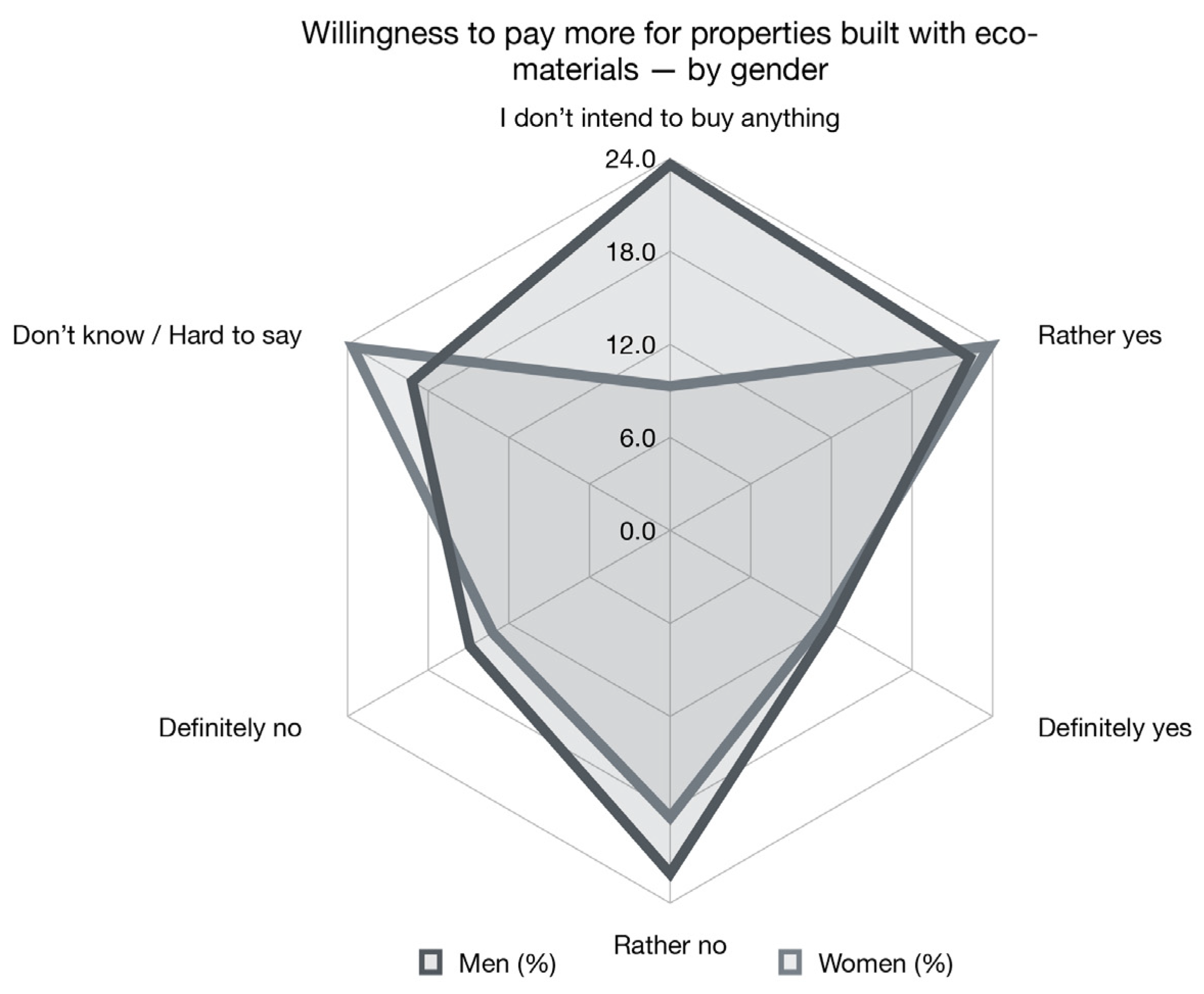
In the first survey, conducted in early June 2023, two questions were asked. Respondents were asked to answer, “If you were to buy a house or apartment in the near future, would you be willing to pay more for a building constructed using environmentally friendly materials, including recycled materials?” and “How much more (above the standard price) would you be willing to spend?” The results showed that Poles are strongly divided on the issue of purchasing a house or apartment made of eco-friendly materials. No group constitutes a dominant majority. The χ2 independence test showed a borderline significant relationship between gender and willingness to pay extra. 34.9% of adult Poles would be willing to pay extra for a house or apartment built using eco-friendly materials, including recycled materials. However, only 11.8% of them are completely sure of this, and 23.1% tend to agree. On the other hand, 34.2% of respondents have the opposite opinion. Among them, 14% express their opinion decisively, and 20.2% are not entirely convinced. In line with the procedure described in Section 2.3, some adjacent categories with very low frequencies were merged before computing the χ2 and Cramér’s V statistics, but this did not change the overall pattern visible in the percentage distributions. The distribution of willingness-to-pay responses by gender is presented in Figure 1 and Table 2.
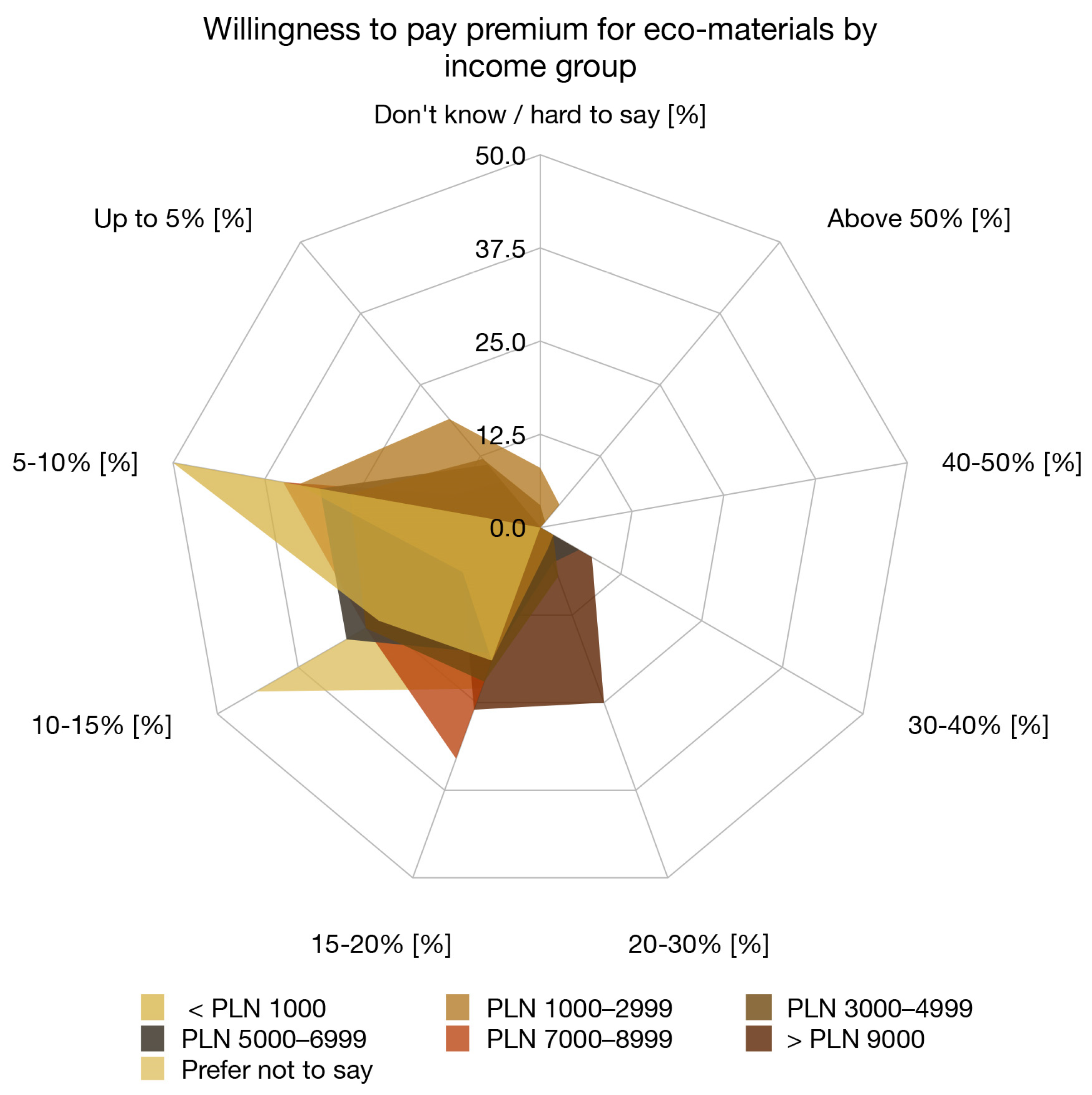
Respondents who would be willing to pay extra for the above-mentioned properties most often indicated that they could invest 5–10% more in eco-friendly real estate than in standard construction. This was declared by 29% of people from the above-mentioned group. Twenty-four percent of respondents considering the purchase of green real estate estimated the additional expenditure at 10–15%, and 21.7% declared 15–20%. These results indicate that a total of nearly 75% of people open to the above possibility gave a range of 5% to 20%. The relationship between monthly net income and the declared spending threshold for eco-friendly building materials was verified using the chi-square (χ2) test. The calculated test statistic leads to the conclusion that there is a statistically significant relationship between income level and the declared willingness to pay a higher percentage margin for eco-friendly solutions in construction. The practical interpretation indicates that respondents with higher incomes (e.g., above PLN 9000, i.e., above 2100 euro) are more likely to declare their willingness to accept higher price premium thresholds (20–30% and more), which implies greater budget flexibility for this group in the context of pro-environmental investments, in contrast to lower-income segments, where declarations of lower percentage subsidies (e.g., 5–10%) predominate. Figure 2 and Table 3 show how the declared price premium for eco-materials varies across income groups in 2023.
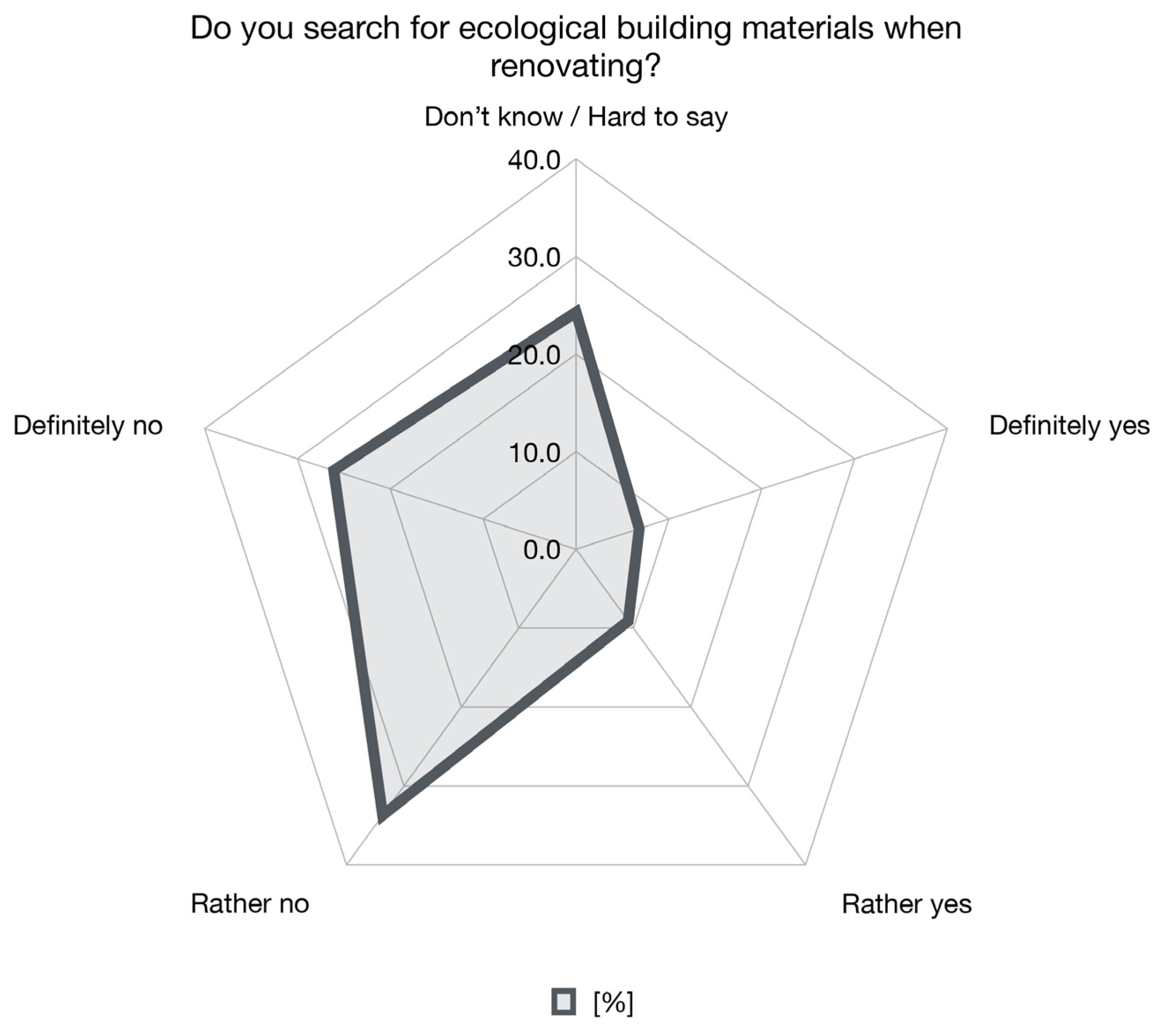
The second survey, conducted on 24–26 June 2023, was designed to answer the question of whether Poles look for eco-friendly materials when buying construction products, and if not, what are the reasons for this. The survey shows that 59.8% of respondents do not look for eco-friendly materials, including those made from recycled raw materials, when buying building materials for home or apartment renovation. 15.9% of respondents indicated that they are guided by environmental issues when choosing products and look at labels. On the other hand, 24.3% of respondents said that they do not remember or do not pay attention to whether the building materials they buy are eco-friendly or not. For those who do not decide to buy environmentally friendly materials, the main discouraging factor is the unfavorable price-quality ratio. This reason was cited by 33.2% of respondents. 29.4% of respondents do not believe in the ecological origin of the goods offered in stores. 18.6% of respondents said that ecological materials are poorly labeled/described and are not displayed in prominent places in stores/supermarkets. Other reasons why respondents do not choose eco-friendly products include: poor quality (18.2%), unwillingness to spend time searching for them (17.9%), lack of personal need (16.8%), overhyped (13.3%), buying such products is “uncool” (11.4%). 10.4% of respondents did not know why they did not do so or were unable to answer the question. Figure 3 and Table 4 present the percentage of respondents who actively search for ecological building materials during renovation.
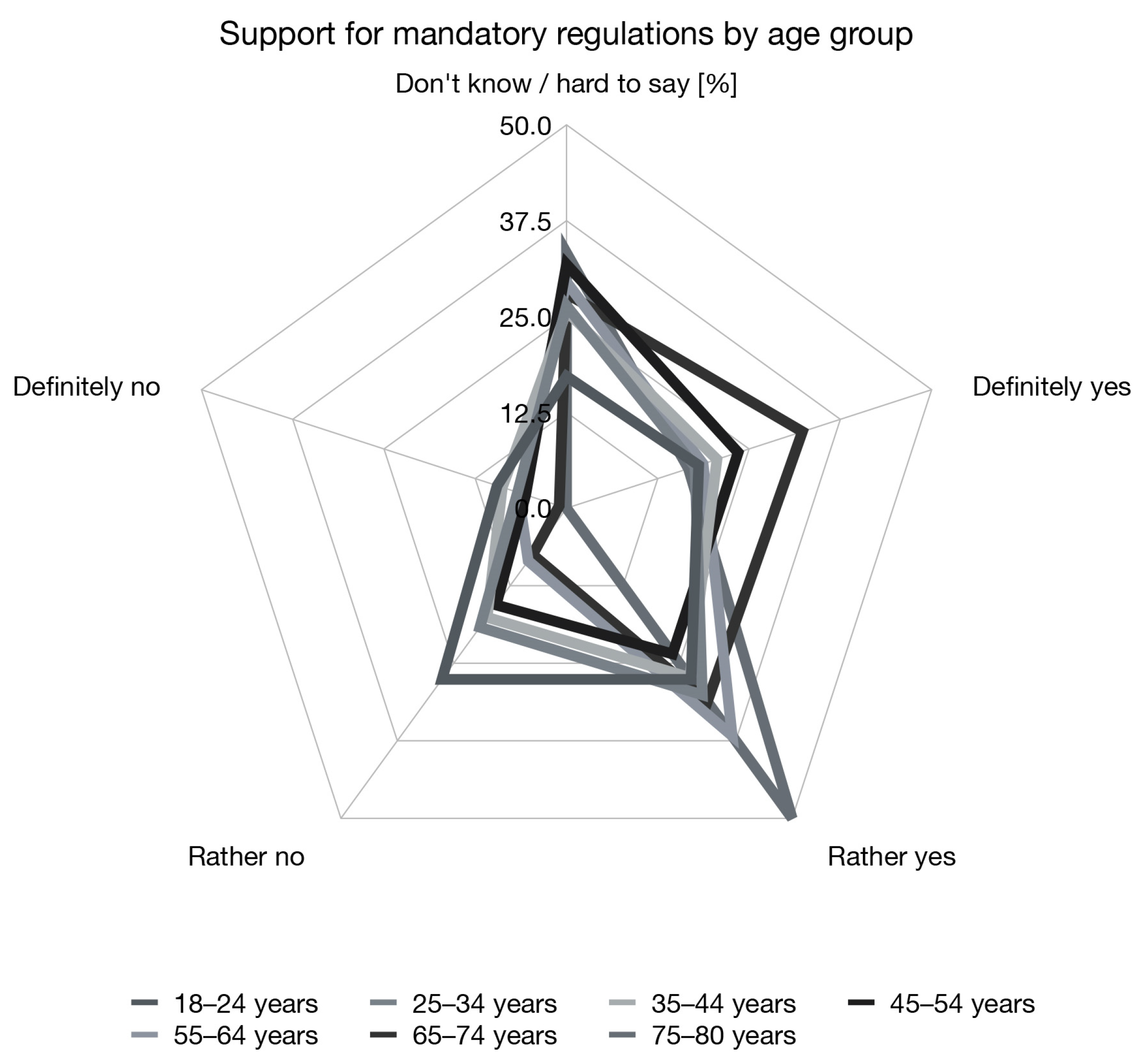
In the third survey (September 2023), we asked about support for the introduction of regulations in Poland obliging developers to use environmentally friendly materials. The responses indicate that support for such regulations is higher than opposition, with a significant proportion of respondents remaining undecided. Analysis of the relationship between age and support showed a significant but weak correlation: support for the regulations increases with age, while the youngest respondents are more likely to declare no opinion or opposition. A detailed analysis of the distribution of responses suggests that the strongest support for regulation comes from the oldest age groups (65–74 and 75–80), where a total of almost two-thirds (over 63%) express support (“Rather yes” and “Definitely yes”), and from the 55–64 age group (55.4% support). The strongest opposition (“Rather no” and “Definitely no”) was recorded in the youngest group, 18–24 (37.1%), although a large part of this group also supports the regulations. These conclusions are crucial in the context of mitigating potential disputes and communication within the industry—although the topic of green building enjoys general support, the argument for legal regulations may require a different narrative depending on the age group. The higher level of skepticism towards mandatory regulations among younger respondents should be interpreted in the context of their life-cycle economic situation. Younger adults are more likely to rent, face higher housing and living costs, and have less accumulated savings, which makes any additional price premium for ecological solutions more burdensome for them than for retirees or older homeowners. Therefore, communication strategies alone will not be sufficient: regulatory design and financial instruments (e.g., targeted subsidies or credit schemes for first-time buyers) need to explicitly consider the lower disposable income and higher financial constraints of younger cohorts. Support for mandatory regulations by age category is displayed in Figure 4 and Table 5.
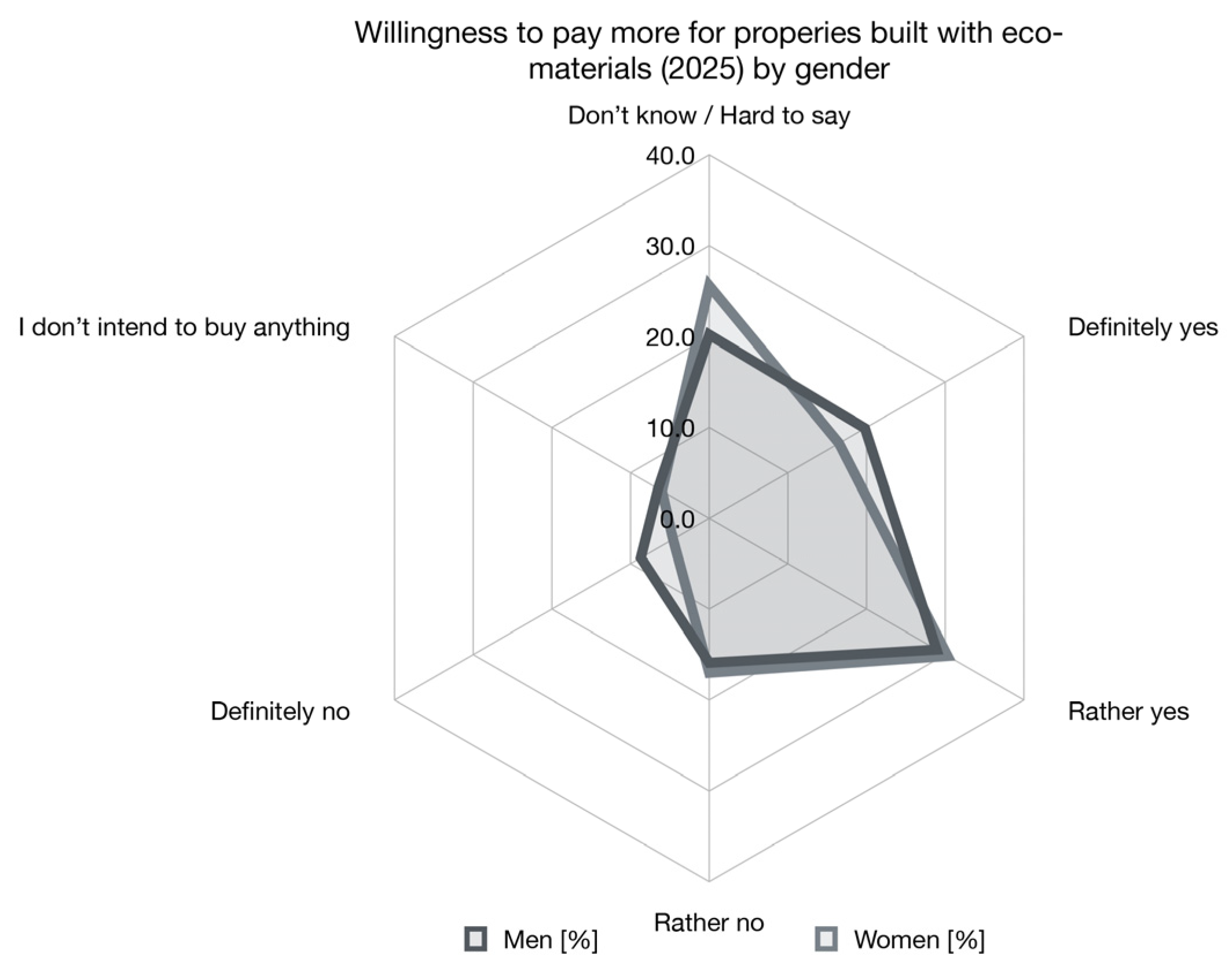
The fourth and most recent survey was conducted in August 2025. The aim of this survey was to verify opinions on the purchase of real estate built using eco-friendly materials following the introduction of new directives and regulations, as well as the emergence of financing opportunities for eco-friendly projects. Two questions were asked again. Respondents were asked to answer, “if they were to buy a house or apartment in the near future, would they be willing to pay more for a building constructed using eco-friendly materials, including recycled materials,” and “how much more (above the standard price) they would be willing to spend.” The chi-square (χ2) test showed a statistically significant relationship between the gender of respondents and their willingness to pay a higher price for a property built with eco-friendly materials. There is a slight difference between the sexes (p just below 0.05), but the effect size is small (V ≈ 0.11). The data analysis indicates that while women are slightly more likely to express general support for the idea of paying more (“Rather yes” 30.30% vs. 28.90% for men) and more likely to choose the “I don’t know” option (25.60% vs. 20.20%), men are significantly more likely to express categorical support (“Definitely yes” 19.80% vs. 16.60% for women) and, most significantly affecting the test result, are more than twice as likely to express categorical opposition (“Definitely no” 8.70% vs. 4.60% for women). These findings suggest that marketing communications related to green building should consider differences in attitudes between the sexes, with women showing greater caution and men more prone to radical opinions (both positive and negative). Figure 5 and Table 6 update the gender-specific willingness-to-pay distribution for the 2025 wave.
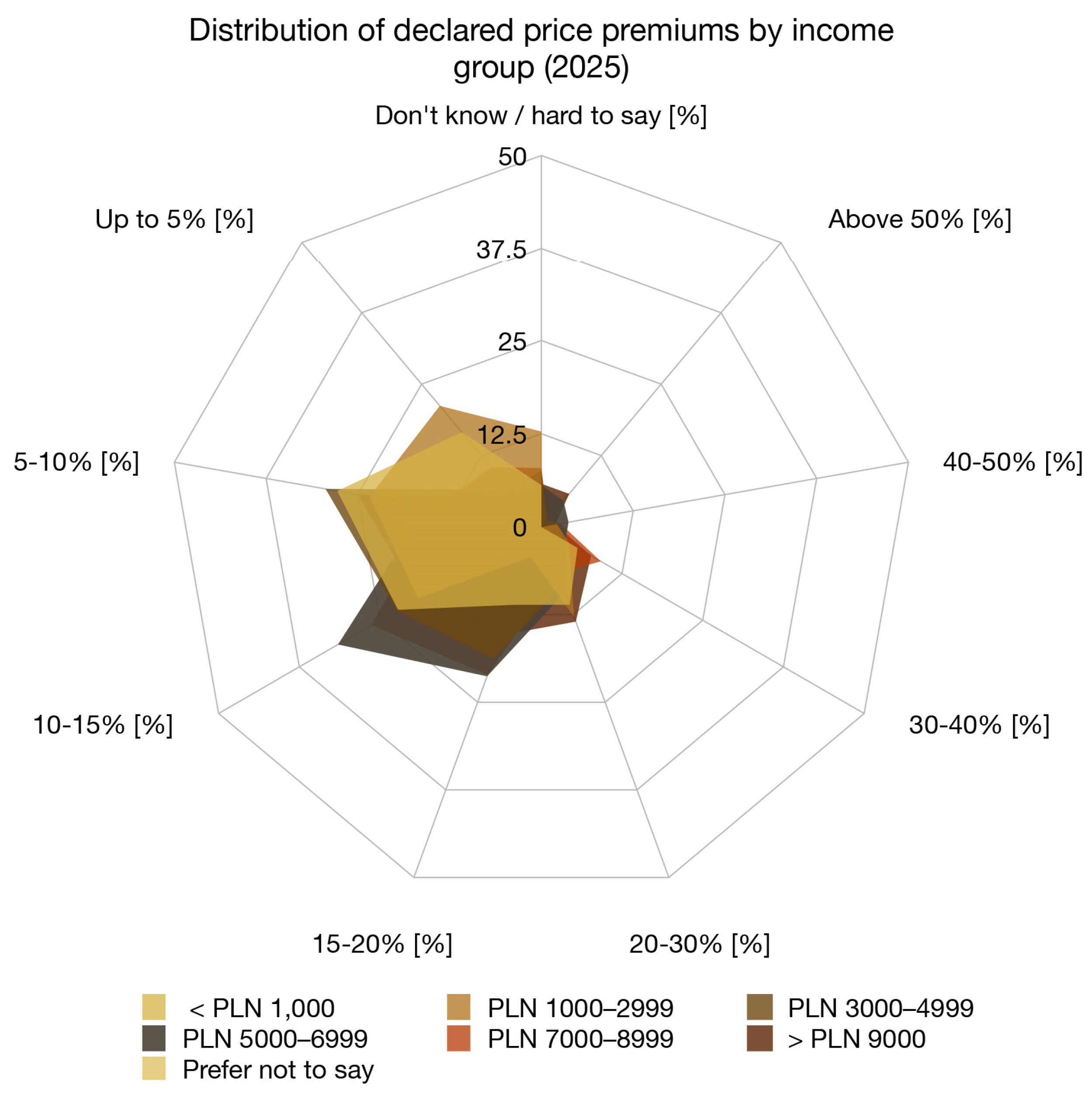
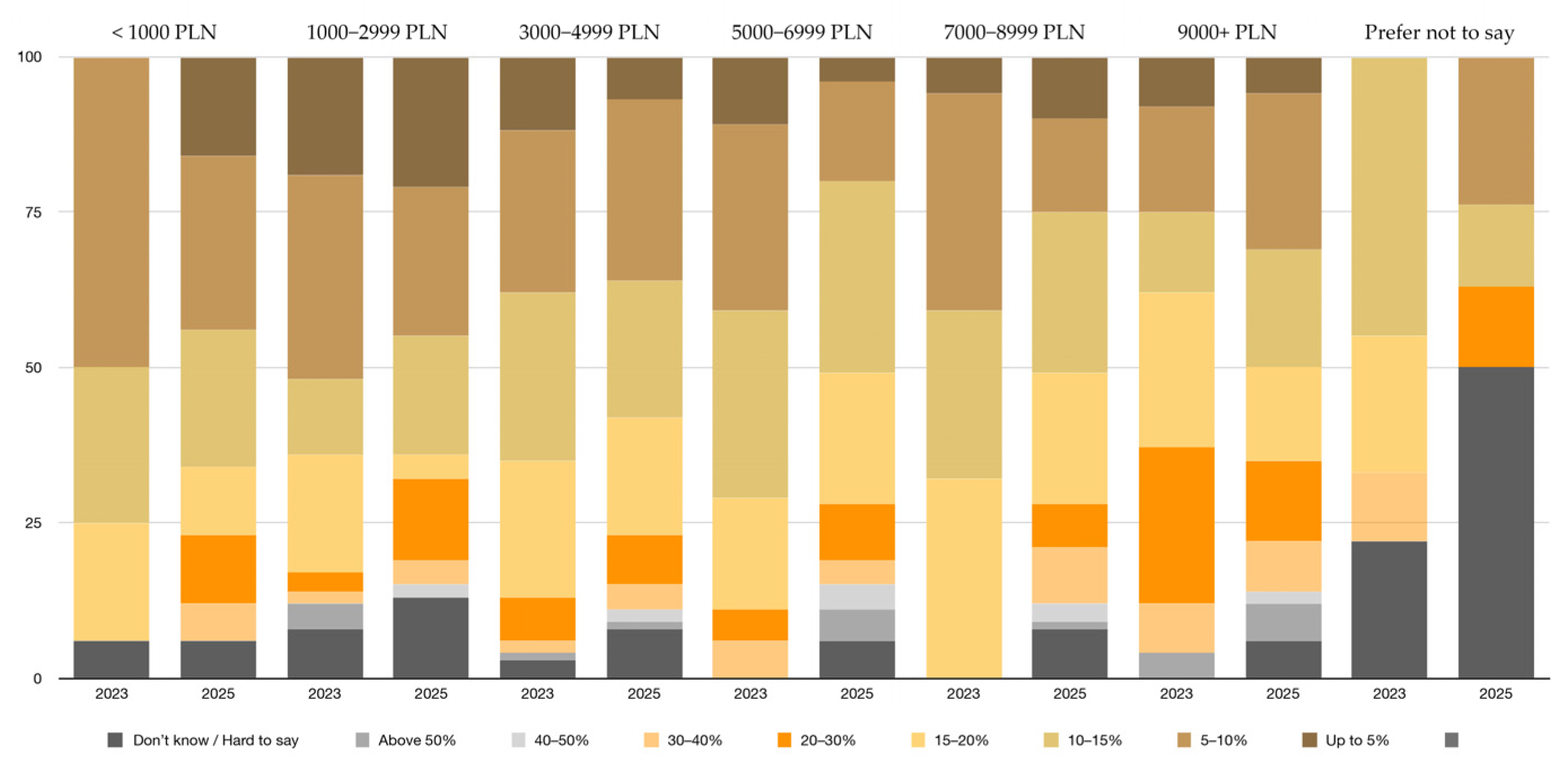
The second question from 2025 examined whether the declared additional cost (expressed as a percentage of the price) depended on monthly net income. The chi-square test indicated a significant but weak/small correlation between income level and willingness to incur additional costs for environmentally friendly solutions. After merging rare categories to satisfy test assumptions, the pattern remained: as income increases, respondents are more likely to choose higher premium ranges, while those with lower incomes concentrate in the lowest premium categories or report uncertainty. The results suggest that communication and pricing may need to be differentiated according to income, but practical implementation should be preceded by further testing (e.g., pricing experiments) to verify the effectiveness of such strategies. Figure 6 and Table 7 show the distribution of declared price premiums by income group in 2025. Changes in willingness-to-pay between 2023 and 2025 for different income groups are summarized in Figure 7.
In 2023, 34.9% of respondents declared willingness to pay more for a house or apartment built with eco-materials, while 34.2% explicitly opposed such a premium; among those open to paying more, almost three quarters accepted a premium of 5–20%. At the same time, 59.8% did not actively search for ecological materials when renovating, and the main barriers were an unfavorable price–quality perception (33.2%) and distrust of “green” claims (29.4%). Support for mandatory regulations increases with age (over 60% in the 65–80 group) and willingness to pay higher premiums is positively associated with income, whereas younger respondents and lower-income groups are more cautious.
By 2025, the landscape shifted towards greater demographic polarization. A distinct gender gap emerged, with men adopting more radical stances: they were significantly more likely than women to express both “definite” support (19.8% vs. 16.6%) and “definite” opposition (8.7% vs. 4.6%) to paying eco-premiums. The economic divide also deepened, as high-income earners frequently declared willingness to accept premiums exceeding 50%, whereas lower-income respondents remained predominantly capped at the 5–15% threshold. This suggests that while financial capacity continues to dictate the scale of investment, gender increasingly influences the certainty of pro-environmental attitudes.

4. Discussion

This study empirically confirms a pronounced attitude–behavior gap in Poland’s sustainable construction market: a substantial share of consumers declare a willingness to pay more for eco-friendly solutions, yet traditional technologies continue to dominate actual purchases. The key barriers are perceptions of an unfavorable price–quality trade-off, limited access to clear and trustworthy information, and low confidence in eco-labels. These findings are consistent with evidence from other European markets and gain interpretive depth when viewed through Ajzen’s Theory of Planned Behavior (1991). While attitudes towards eco-friendly materials are broadly positive, the decisive constraint appears to be perceived behavioral control: many consumers feel they lack the money, knowledge, and confidence to make sound choices in a complex, risk-sensitive decision environment [44]. Subjective norms were not measured directly; however, skepticism among younger respondents toward regulatory measures may signal weaker normative pressure in that cohort.
The implications are clear. Advancing sustainable construction in Poland is less about changing attitudes and more about removing frictions that erode consumers’ sense of agency. Effective responses should prioritize credible, simplified eco-labeling with third-party verification; clear, comparable performance and durability information; accessible, neutral technical advice from trusted intermediaries such as architects, energy advisors, or builders’ merchants; and quality guarantees or warranties that reduce perceived risk. Financial instruments should lower upfront barriers without creating windfalls—for example, well-calibrated subsidies, green mortgages, low-interest loans, or on-bill financing. Defaults in design and procurement that favor low-emission materials can further translate intention into action. Where standards are unambiguous and enforcement is feasible, “hard” instruments are effective: a frequently cited Polish example is Kraków’s program to eliminate the most polluting coal stoves through deadlines, subsidies, and inspections. By contrast, material choices in dispersed, household-level projects are multi-factorial, staged over time, and shaped by perceived quality, durability, safety, contractor availability, and long-term benefits—conditions that make direct enforcement far less practical. In such contexts, “soft” solutions become prerequisites for progress.
The study’s limitations should be noted. Although large in scope and demographically representative on key variables across multiple waves, the CAWI method excludes people without internet access, which may affect full representativeness, and the reliance on self-reports means stated intentions may not perfectly match real-world behavior. Nonetheless, the multi-wave design enables analysis of change over time and strengthens the credibility of the observed patterns.
A coherent research agenda follows. First, qualitative work—such as in-depth interviews across demographic groups—can illuminate why skepticism persists, particularly among younger respondents, and unpack attitudes, stereotypes, and perceptual barriers that surveys may obscure. Second, experimental studies should test the effectiveness of different communication framings—savings, comfort, status, ecological responsibility—and identify which messages move undecided consumers, who account for more than one-fifth of the sample. Adding discrete choice or conjoint experiments would yield more realistic estimates of trade-offs among price, durability, performance, and certification. Third, comparative analyses with more advanced markets (e.g., Scandinavian countries, Germany) can clarify structural, cultural, and policy factors that accelerate or hinder the uptake of sustainable materials and reveal transferable best practices. Fourth, supply-side research with developers and architects is essential to identify logistical, financial, and regulatory constraints that shape what consumers can actually choose—recognizing that many buyers effectively delegate innovation decisions to these actors. Finally, longitudinal designs that track the same respondents over time would allow more rigorous assessment of how policy changes—such as updates to the EU Energy Performance of Buildings Directive (EPBD)—and financing streams from Poland’s National Recovery and Resilience Plan (KPO) translate into concrete behavioral shifts.
The broader context reinforces these conclusions. Survey evidence from Southampton, southern England [7] documents high awareness of climate risks alongside reluctance to undertake deep lifestyle changes, an archetypal value–action gap that mirrors Poland’s attitude–behavior gap in construction. Together, these insights point to a practical strategy: instead of trying to convince those who are already convinced, remove the obstacles in their path. By strengthening perceived control—through trustworthy information, credible labels, accessible advice, quality assurances, and well-designed financial tools—declared willingness to pay can be converted into sustained market adoption of low-emission materials.

5. Conclusions

The contribution of this study is diagnostic rather than predictive. It maps the soft barriers—awareness, trust, perceived risk, and affordability—that shape demand for sustainable building materials in a coal-dependent, post-transition economy. By clarifying which frictions matter most, and how they interact, the research offers an actionable problem definition without over-promising on forecasts. In markets where legacy energy systems, volatile prices, and fragmented supply chains compound consumer uncertainty, such diagnosis is a prerequisite for effective intervention. It reveals not a lack of climate concern but a deficit of perceived control: people struggle to act on their preferences when information is noisy, credibility signals are weak, and near-term costs feel high relative to uncertain long-term benefits. This perspective is particularly valuable for architectural practice, where professionals must recommend concrete solutions under budget, regulatory, and schedule constraints—ideally steering clients toward climate-neutral options.
Above all, the study underscores that advancing climate-neutral construction is less about changing minds than about smoothing the path from intention to action. For architects, that means designing not only buildings but also decision environments in which the low-emission choice is the confident, comprehensible, and financially sensible one.

Author Contributions

Conceptualization, B.D., A.P.; methodology, B.D., A.P.; formal analysis, B.D.,A.P.; investigation, B.D.; resources, B.D.; data curation, B.D.; writing—original draft preparation, B.D.; writing—review and editing, B.D.,A.P.; visualization, B.D.,A.P.; All authors have read and agreed to the published version of the manuscript.

Funding

This research received no external funding.

Institutional Review Board Statement

Ethical review and approval were waived for this study by Senate Ethics Committee of the Cracow University of Technology due to Legal Regulations (The Act of 5 December 1996 on the Professions of Physician and Dentist).

Informed Consent Statement

Informed consent was obtained from all subjects involved in the study.

Data Availability Statement

The data presented in this study are available on request from the corresponding author due to (specify the reason for the restriction).

Conflicts of Interest

The authors declare no conflict of interest.

References

  1. Paris Agreement Signed on 22 April 2026 The Paris Agreement|UNFCCC. Available online: https://unfccc.int/process-and-meetings/the-paris-agreement (accessed on 10 November 2025).
  2. UNEP’s Emissions Gap Report 2025: Off Target. Emissions Gap Report 2025|UNEP—UN Environment Programme. Available online: https://www.unep.org/resources/emissions-gap-report-2025 (accessed on 10 November 2025).
  3. Greenhouse Gas Emissions from Energy Use in Buildings in Europe. European Environment Agency Report. Available online: https://www.eea.europa.eu/en/analysis/indicators/greenhouse-gas-emissions-from-energy (accessed on 10 November 2025).
  4. The European Green Deal. Available online: https://commission.europa.eu/strategy-and-policy/priorities-2019-2024/european-green-deal_en (accessed on 10 November 2025).
  5. Fit for 55: Delivering on the Proposals—European Commission. Available online: https://commission.europa.eu/topics/climate-action/delivering-european-green-deal/fit-55-delivering-proposals_en (accessed on 10 November 2025).
  6. Energy Performance of Buildings Directive. Available online: https://energy.ec.europa.eu/topics/energy-efficiency/energy-performance-buildings/energy-performance-buildings-directive_en (accessed on 10 November 2025).
  7. Brock, A.; Williams, I.; Kemp, S. “I’ll take the easiest option please”. Carbon reduction preferences of the public. J. Clean. Prod. 2023, 429, 139398. [Google Scholar] [CrossRef]
  8. Ganglmair-Wooliscroft, A.; Wooliscroft, B. An investigation of sustainable consumption behavior systems—Exploring personal and socio-structural characteristics in different national contexts. J. Bus. Res. 2022, 148, 161–173. [Google Scholar] [CrossRef]
  9. Passer, A.; Lasvaux, S.; Allacker, K.; De Lathauwer, D.; Spirinckx, C.; Wittstock, B.; Kellenberger, D.; Gschösser, F.; Wall, J.; Wallbaum, H. Environmental product declarations entering the building sector: Critical reflections based on 5 to 10 years experience in different European countries. Int. J. Life Cycle Assess. 2015, 20, 1199–1212. [Google Scholar] [CrossRef]
  10. Kylili, A.; Fokaides, P. Policy trends for the sustainability assessment of construction materials: A review. Sustain. Cities Soc. 2017, 35, 280–288. [Google Scholar] [CrossRef]
  11. Lasvaux, S.; Habert, G.; Peuportier, B.; Chevalier, J. Comparison of generic and product-specific Life Cycle Assessment databases: Application to construction materials used in building LCA studies. Int. J. Life Cycle Assess. 2015, 20, 1473–1490. [Google Scholar] [CrossRef]
  12. Williams, K.; Dair, C. What is stopping sustainable building in England? Barriers experienced by stakeholders in delivering sustainable developments. Sustain. Dev. 2007, 15, 135–147. [Google Scholar] [CrossRef]
  13. Häkkinen, T.; Belloni, K. Barriers and Drivers for Sustainable Building. Build. Res. Inf. 2011, 39, 239–255. [Google Scholar] [CrossRef]
  14. Darko, A.; Chan, A.P.C. Review of Barriers to Green Building. Sustain. Dev. 2017, 25, 167–179. [Google Scholar] [CrossRef]
  15. Darko, A.; Chan, A.P.C.; Owusu-Manu, D.G.; Ameyaw, E.E. Drivers for implementing green building technologies: An international survey of experts. J. Clean. Prod. 2017, 145, 386–394. [Google Scholar] [CrossRef]
  16. Chen, Z.; Yang, L.; Chin, K.; Yang, Y.; Pedrycz, W.; Chang, J.-P.; Martínez, L.; Skibniewski, M.J. Sustainable building material selection: An integrated multi-criteria large group decision making framework. Appl. Soft Comput. 2021, 113, 107903. [Google Scholar] [CrossRef]
  17. Bhuiyan, M.; Hammad, A. A Hybrid Multi-Criteria Decision Support System for Selecting the Most Sustainable Structural Material for a Multistory Building Construction. Sustainability 2023, 15, 3128. [Google Scholar] [CrossRef]
  18. Mergel, C.; Menrad, K.; Decker, T. Which factors influence consumers’ selection of wood as building material for houses? Can. J. For. Res. 2024, 54, 467–478. [Google Scholar] [CrossRef]
  19. Yıldız, S.; Güneş, G. Determining the importance levels of criteria in selection of sustainable building materials and obstacles in their use. J. Sustain. Constr. Mater. Technol. 2024, 9, 144–158. [Google Scholar] [CrossRef]
  20. Bajwa, A.; Siriwardana, C.; Shahzad, W.; Naeem, M. Material selection in the construction industry: A systematic literature review on multi-criteria decision making. Environ. Syst. Decis. 2025, 45, 8. [Google Scholar] [CrossRef]
  21. Raudeliuniene, J.; Trinkuniene, E.; Burinskiene, A.; Bubliene, R. Application of Multi-Criteria Decision-Making Approach COPRAS for Developing Sustainable Building Practices in the European Region. Sustainability 2025, 17, 3740. [Google Scholar] [CrossRef]
  22. Whitmarsh, L.; Seyfang, G.; O’Neill, S. Public engagement with carbon and climate change: To what extent is the public ‘carbon capable’? Glob. Environ. Change 2011, 21, 56–65. [Google Scholar] [CrossRef]
  23. Islam, M.T.; Abdullah, A.B.; Shahir, S.A.; Kalam, M.A.; Masjuki, H.H.; Shumon, R.; Rashid, M.H. A public survey on knowledge, awareness, attitude and willingness to pay for WEEE management: Case study in Bangladesh. J. Clean. Prod. 2016, 137, 728–740. [Google Scholar] [CrossRef]
  24. Hoxha, E.; Jusselme, T. On the necessity of improving the environmental impacts of furniture and appliances in net-zero energy buildings. Sci. Total Environ. 2017, 596–597, 405–416. [Google Scholar] [CrossRef]
  25. Weniger, A.; Del Rosario, P.; Backes, J.; Traverso, M. Consumer Behavior and Sustainability in Construction. Buildings 2023, 13, 638. [Google Scholar] [CrossRef]
  26. Churkina, G.; Organschi, A.; Reyer, C.P.O.; Ruff, A.; Vinke, K.; Liu, Z.; Reck, B.K.; Graedel, T.E.; Schellnhuber, H.J. Buildings as a global carbon sink. Nat. Sustain. 2020, 3, 269–276. [Google Scholar] [CrossRef]
  27. Sharma, A. Consumers’ purchase behaviour and green marketing: A synthesis, review and agenda. Int. J. Consum. Stud. 2021, 45, 127–152. [Google Scholar] [CrossRef]
  28. Mazur, Ł.K.; Winkler, J. Timber Construction in Poland: An Analysis of Its Contribution to Sustainable Development and Economic Growth. Drewno 2025, 68, 1–14. [Google Scholar] [CrossRef]
  29. Węgrzyn, J.; Kania, K. Heterogeneous Preferences for Sustainable Housing in Poland. J. Hous. Built Environ. 2024, 39, 749–767. [Google Scholar] [CrossRef]
  30. Tomaszewska, J. Polish Transition towards Circular Economy: Materials Management and Implications for the Construction Sector. Materials 2020, 13, 5228. [Google Scholar] [CrossRef] [PubMed]
  31. Meena, C.S.; Kumar, A.; Jain, S.; Rehman, A.U.; Mishra, S.; Sharma, N.K.; Bajaj, M.; Shafiq, M.; Eldin, E.T. Innovation in Green Building Sector for Sustainable Future. Energies 2022, 15, 6631. [Google Scholar] [CrossRef]
  32. Vaghefi-Rezaee, H.A.; Sarvari, H.; Khademi-Adel, S.; Roberts, C.J. A Scientometric Review and Analysis of Studies on the Barriers and Challenges of Sustainable Construction. Buildings 2024, 14, 3432. [Google Scholar] [CrossRef]
  33. Ikingura, A.; Grabiec, A.M.; Radomski, B. Examining Key Barriers and Relevant Promotion Strategies of Green Buildings Adoption in Tanzania. Energies 2025, 18, 1081. [Google Scholar] [CrossRef]
  34. Huang, B.; Gao, X.; Xu, X.; Song, J.; Geng, Y.; Sarkis, J.; Fishman, T.; Kua, H.; Nakatani, J. A Life Cycle Thinking Framework to Mitigate the Environmental Impact of Building Materials. One Earth 2020, 3, 564–573. [Google Scholar] [CrossRef]
  35. Wijekoon, R.; Sabri, M. Determinants That Influence Green Product Purchase Intention and Behavior: A Literature Review and Guiding Framework. Sustainability 2021, 13, 6219. [Google Scholar] [CrossRef]
  36. Zalejska-Jonsson, A.; Wilhelmsson, M. Impact of Perceived Indoor Environment Quality on Overall Satisfaction in Swedish Dwellings. Build. Environ. 2013, 63, 134–144. [Google Scholar] [CrossRef]
  37. Zalejska-Jonsson, A. Stated WTP and rational WTP: Willingness to pay for green apartments in Sweden. Sustain. Cities Soc. 2014, 513, 46–56. [Google Scholar] [CrossRef]
  38. David, G.M.; Lakatos, E.S.; Bacali, L.; Lakatos, G.D.; Danu, B.A.; Cioca, L.-I.; Rada, E.C. Key Factors Influencing Consumer Choices in Wood-Based Recycled Products for Circular Construction Sector. Sustainability 2024, 16, 8767. [Google Scholar] [CrossRef]
  39. Shao, J.; Taisch, M.; Mier, M. Influencing factors to facilitate sustainable consumption: From the experts’ viewpoints. J. Clean. Prod. 2017, 142, 203–216. [Google Scholar] [CrossRef]
  40. Farjam, M.; Nikolaychuk, O.; Bravo, G. Experimental evidence of an environmental attitude-behavior gap in high-cost situations. Ecol. Econ. 2019, 166, 106434. [Google Scholar] [CrossRef]
  41. Michalak, J.; Michałowski, B. Understanding Sustainability of Construction Products among Market Actors. Sustainability 2022, 14, 3042. [Google Scholar] [CrossRef]
  42. Climate Change in Europe: Facts and Figures. Updated on 6 December 2024 Climate Change in Europe: Facts and Figures|Topics|European Parliament. Available online: https://www.europarl.europa.eu/topics/en/article/20180703STO07123/climate-change-in-europe-facts-and-figures#the-eus-biggest-greenhouse-gases-emitters-countries-and-sectors-6 (accessed on 5 November 2025).
  43. Steg, L. Psychology of climate change. Annu. Rev. Psychol. 2023, 74, 391–421. [Google Scholar] [CrossRef]
  44. Ajzen, I. The theory of planned behavior. Organ. Behav. Hum. Decis. Process. 1991, 50, 179–211. [Google Scholar] [CrossRef]
Figure 1. Willingness to pay more for properties built with eco-materials, by gender.
Sustainability 18 00102 g001
Figure 2. Willingness-to-pay premium for eco-materials by income group (spider chart) in 2023.
Sustainability 18 00102 g002
Figure 3. Percentage distribution of responses to the question whether respondents search for ecological building materials when renovating their homes.
Sustainability 18 00102 g003
Figure 4. Support for mandatory regulations obliging developers to use ecological materials (including recycled materials) in new housing—distribution by respondent age group.
Sustainability 18 00102 g004
Figure 5. Willingness to pay more for properties built with eco-materials (August 2025), by gender.
Sustainability 18 00102 g005
Figure 6. Distribution of declared price premiums by income group in 2025.
Sustainability 18 00102 g006
Figure 7. Change in declared willingness-to-pay premium for properties built with ecological materials (including recycled materials) between June 2023 and August 2025, by net monthly income.
Sustainability 18 00102 g007
Table 1. Multi-wave survey protocol with four independent samples (2023 baseline and 2025 follow-up).
WaveImplementation PeriodSample Size (N)Target Group (Age)Main Objective of the Wave
Wave 18–11 June 2023103018–65WTP for eco-materials in new housing
Wave 224–26 June 2023100818–80Search behavior and barriers in DIY/building stores
Wave 328–29 September 2023102618–80Support for regulations obliging developers to use eco-materials
Wave 421–23 September 2025100318–80Post-EPBD and KPO: updated WTP and behavioral changes
Table 2. Willingness to pay more for properties built with eco-materials, by gender [%].
AnswerMenWomen
Don’t know/Hard to say19.223.6
Definitely yes12.011.5
Rather yes22.323.8
Rather no22.118.5
Definitely no14.913.2
I don’t intend to buy anything23.69.3
Table 3. Willingness-to-pay premium for eco-materials by income group in 2023.
Answer<PLN
1000
PLN 1000–2999PLN 3000–4999PLN 5000–6999PLN 7000–8999 >PLN
9000
Prefer
Not to Say
Don’t know/
Hard to say
6.3%8.2%2,9%0%0%0%22.2%
Above 50%0%4.1%0.7%0%0%4.2%0%
40–50%0%0%0%0%0%0%0%
30–40%0%1.4%1.5%6.3%0%8.3%11.2%
20–30%0%2.7%7.3%4.8%0%25.0%0%
15–20%18.7%19.2%21.9%17.5%32.4%25.0%22.2%
10–15%25.0%12.3%27.0%30.2%27.0%12.5%44.2%
5–10%50.0%32.9%26.3%30.2%35.1%16.7%0%
Up to 5%0%19.2%12.4%11.0%5.5%8.3%0%
Table 4. Responses to the question whether respondents search for ecological building materials when renovating their homes [%].
Answer[%]
Don’t know/Hard to say24.3
Definitely yes6.8
Rather yes9.1
Rather no33.7
Definitely no26.1
Table 5. Support for mandatory regulations obliging developers to use ecological materials (including recycled materials) in new housing—distribution by respondent age group.
Answer18–24 Years25–34 Years35–44 Years45–54 Years55–64 Years65–74 Years75–80 Years
Don’t know/Hard to say17.2%26.4%25.7%31.8%29.5%28.0%33.3%
Definitely yes18.1%17.6%20.6%23.5%18.7%32.3%16.7%
Rather yes27.6%30.1%27.3%23.5%36.7%31.2%50.0%
Rather no27.6%19.2%17.6%15.6%8.5%7.5%0.0%
Definitely no9.5%6.7%8.8%5.6%6.6%1.0%0.0%
Table 6. Willingness to pay more for properties built with eco-materials (August 2025), by gender.
AnswerMenWomen
Don’t know/Hard to say20.2%25.6%
Definitely yes19.8%16.5%
Rather yes28.9%30.3%
Rather no15.9%17.0%
Definitely no8.7%4.6%
I don’t intend to buy anything6.5%6.0%
Table 7. Willingness-to-pay premium for eco-materials by income group in 2025.
Answer<PLN
1000
PLN 1000–2999PLN 3000–4999PLN 5000–6999PLN 7000–8999>PLN
9000
Prefer
Not to Say
Don’t know/
Hard to say
5.6%12.8%7.6%5.6%7.9%5.8%50.0%
Above 50%0.0%0.0%1.2%4.6%1.3%5.8%0%
40–50%0.0%2.1%2.4%3.7%2.6%1.9%0%
30–40%5.6%4.3%3.5%3.7%9.2%7.7%0%
20–30%11.1%12.8%8.2%9.3%6.6%13.5%12.5%
15–20%11.1%4.3%18.8%21.3%21.1%15.4%0%
10–15%22.2%19.1%22.4%31.5%26.3%19.1%12.5%
5–10%27.8%23.4%29.4%15.7%14.5%25.0%25%
Up to 5%16.6%21.1%6.5%4.6%10.5%5.8%0%
Disclaimer/Publisher’s Note: The statements, opinions and data contained in all publications are solely those of the individual author(s) and contributor(s) and not of MDPI and/or the editor(s). MDPI and/or the editor(s) disclaim responsibility for any injury to people or property resulting from any ideas, methods, instructions or products referred to in the content.