Article

A Dual-Level Prediction Approach for Uncovering Technology Convergence Opportunities: The Case of Electric Vehicles

Department of Technology Management, Gyeongsang National University, Jinju-daero 501, Jinju 52828, Republic of Korea
*
Author to whom correspondence should be addressed.
Sustainability 2025, 17(8), 3607; https://doi.org/10.3390/su17083607
Submission received: 20 February 2025 / Revised: 31 March 2025 / Accepted: 14 April 2025 / Published: 16 April 2025
(This article belongs to the Section Economic and Business Aspects of Sustainability)

Abstract

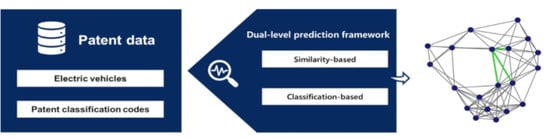
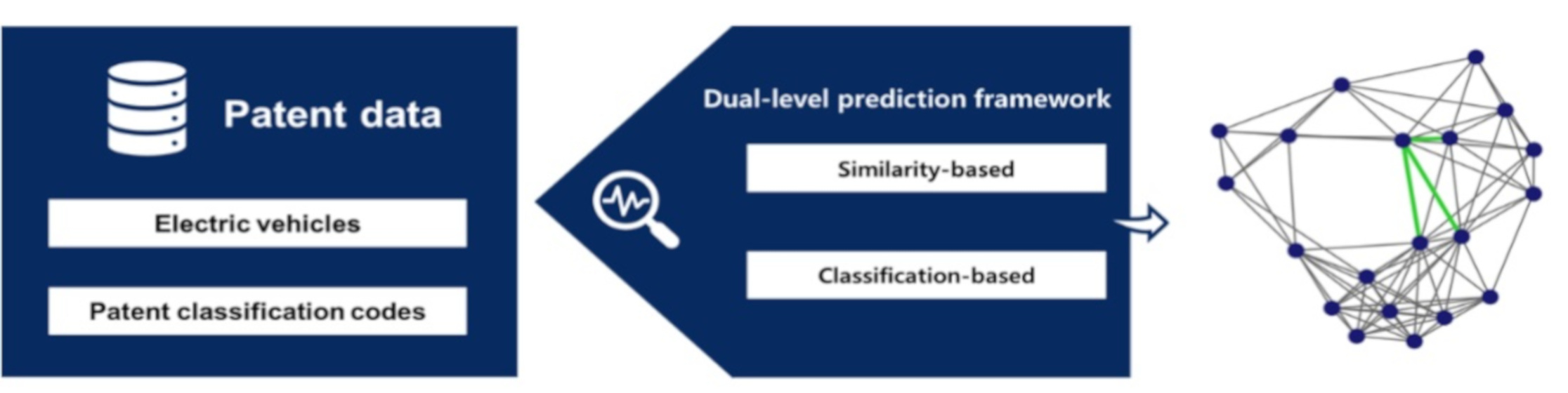
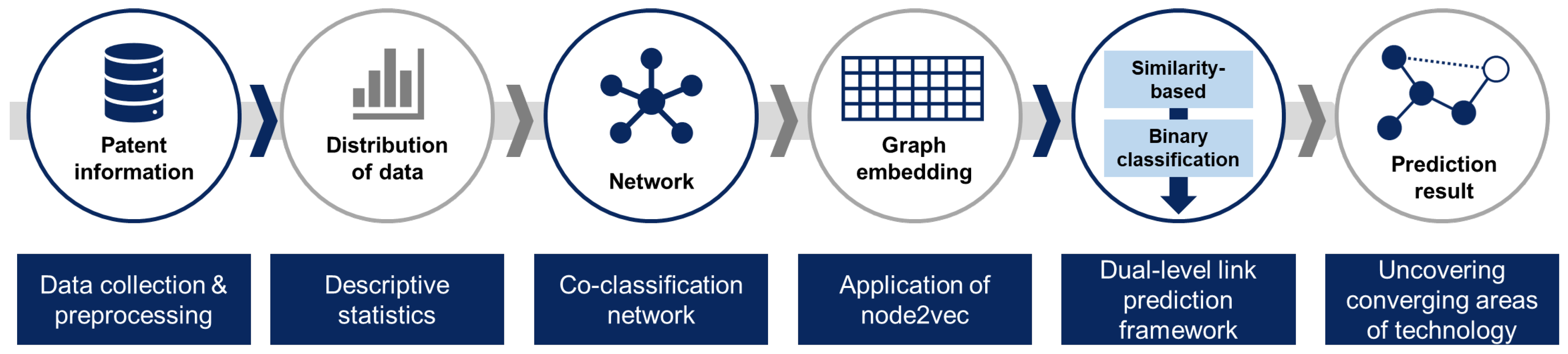
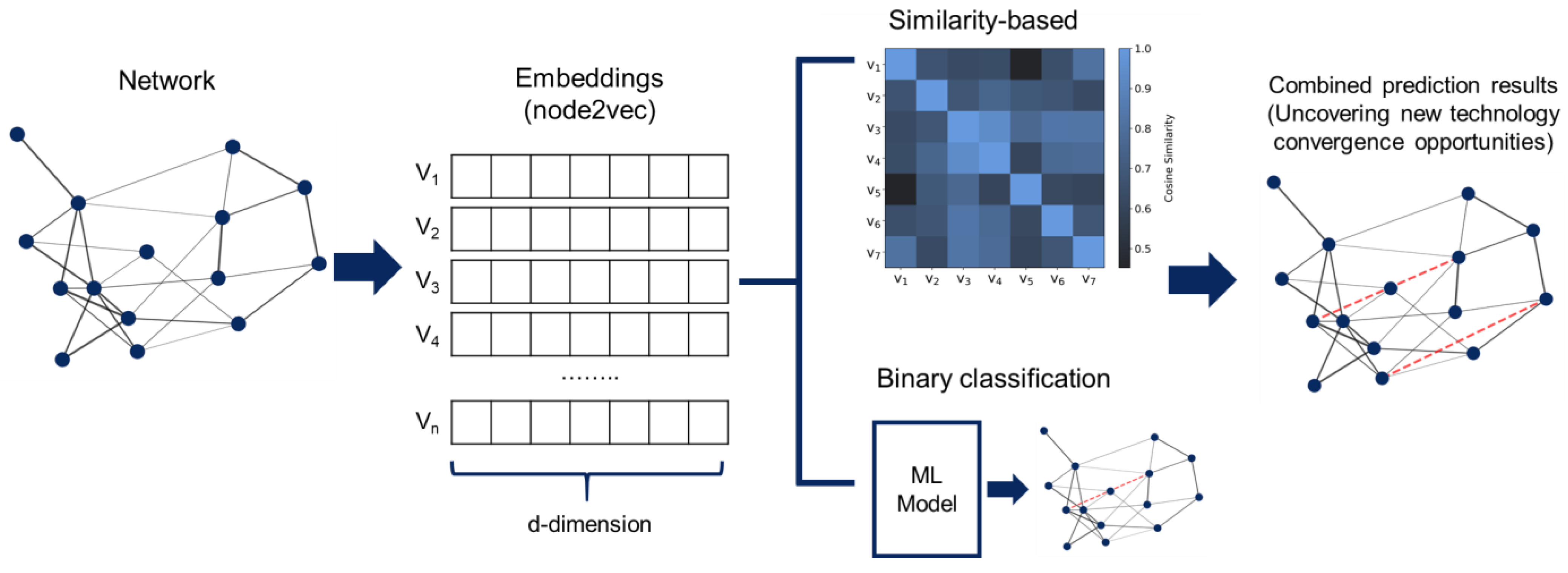
The transition to electric vehicles is a critical step toward achieving carbon neutrality and environmental sustainability. This shift relies on advancements across multiple technological domains, driving the need for strategic technology intelligence to anticipate emerging technology convergence opportunities. To address this challenge, this study aimed at providing an analytical framework for identifying technology convergence opportunities using node2vec graph embedding. A dual-level prediction framework that combines similarity-based scoring and machine learning-based classification was proposed to systematically identify new potential technology linkages between previously unrelated technology areas. The patent co-classification network was used to generate graph embeddings, which were then processed to calculate edge similarity among unconnected nodes and to train the classifier model. A case study in the EV market demonstrated the framework can reliably predict future patterns across disparate technology domains. Consequently, advancements in battery protection, thermal management, and composite materials emerged as relevant for future technology development. These insights not only deepen our understanding of future innovation trends but also provide actionable guidance for optimizing R&D investments and shaping policy strategies in the evolving electric vehicle market. The findings contribute to a systematic approach to forecasting technology convergence, supporting innovation-driven growth in the evolving EV sector.
Keywords: link prediction; node2vec; patent classification; patent analysis; technology management; edge similarity; node embedding link prediction; node2vec; patent classification; patent analysis; technology management; edge similarity; node embedding
Graphical Abstract