Article

A Data-Driven Bayesian Belief Network Influence Diagram Approach for Socio-Environmental Risk Assessment and Mitigation in Major Ecosystem- and Landscape-Modifier Projects

by
Salim Ullah Khan
1,
Qiuhong Zhao
1,*,
Muhammad Wisal
2,
Kamran Ali Shah
3 and
Syed Shahid Shah
2
1
School of Economics & Management, Beihang University, Beijing 100191, China
2
School of Electronics & Information Engineering, Beihang University, Beijing 100191, China
3
Goldwind Science & Technology Co., Ltd., Beijing 100176, China
*
Author to whom correspondence should be addressed.
Sustainability 2025, 17(8), 3537; https://doi.org/10.3390/su17083537
Submission received: 24 February 2025 / Revised: 25 March 2025 / Accepted: 27 March 2025 / Published: 15 April 2025
(This article belongs to the Collection Risk Assessment and Management)

Abstract

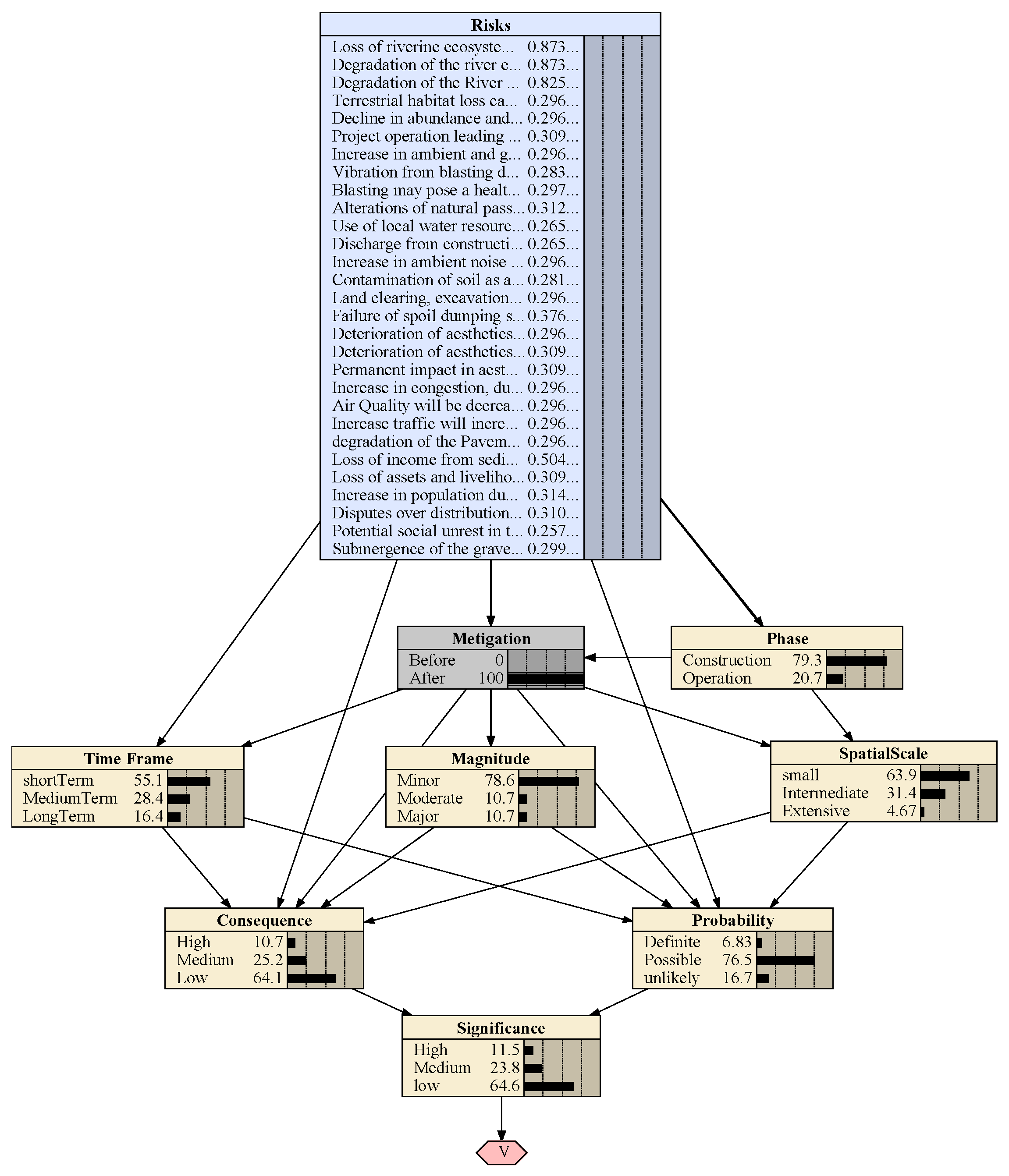
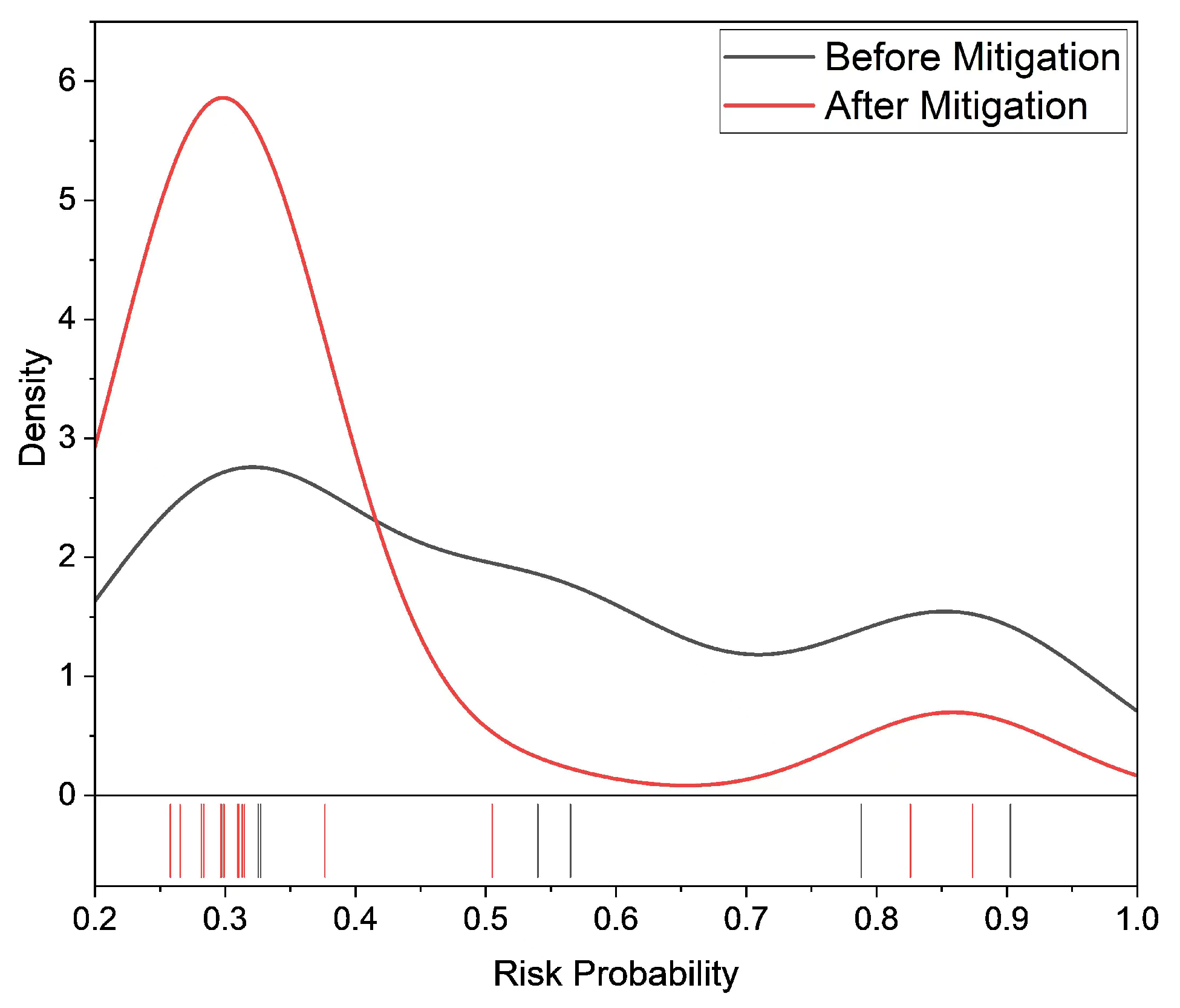
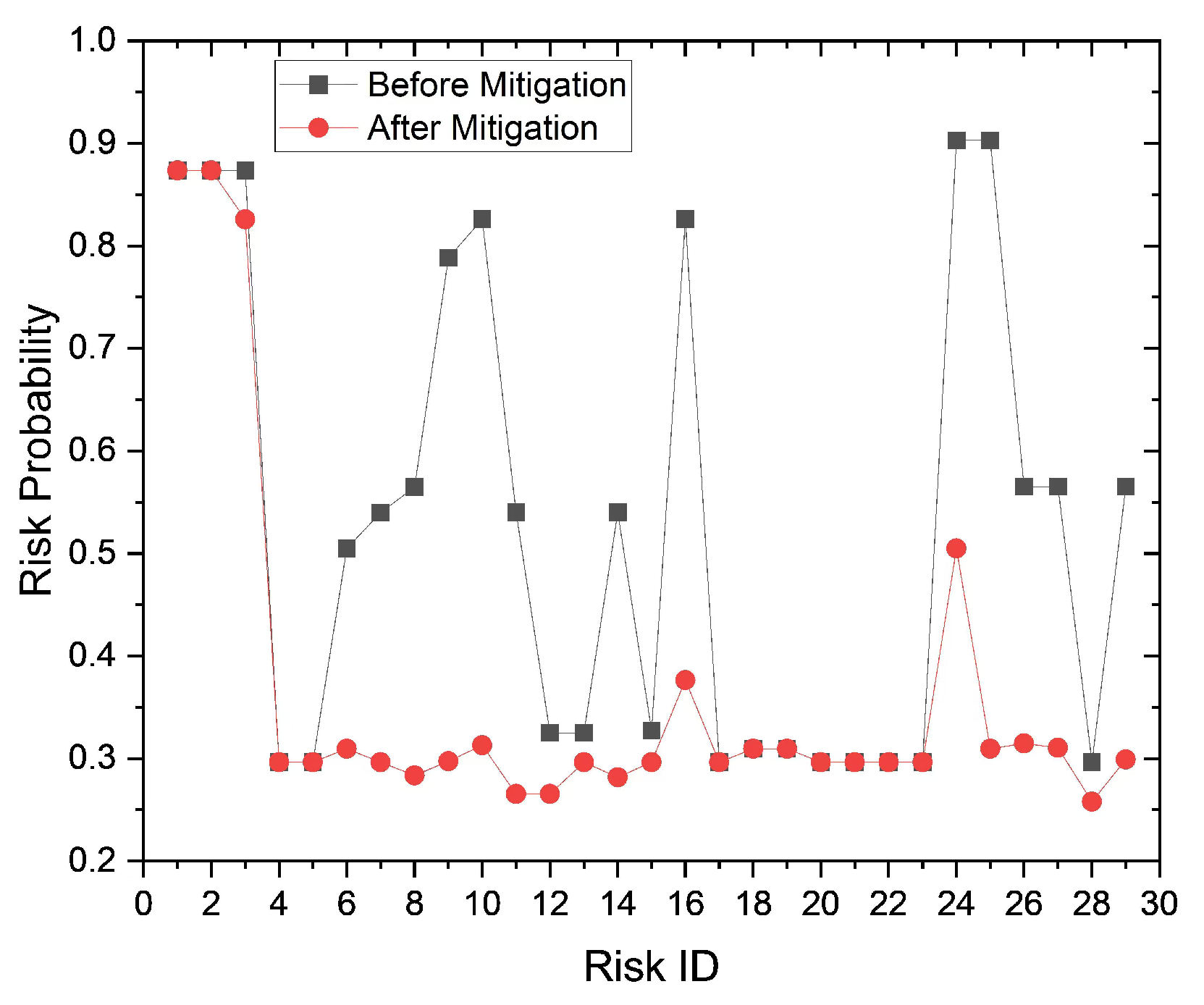
Infrastructure projects that transform ecosystems and landscapes, such as hydropower developments, are essential for economic growth but pose significant socio-environmental challenges. Addressing these complexities requires advanced, dynamic management strategies. This study presents the Bayesian integrated risk mitigation model (BIRMM), a novel probabilistic framework designed to augment traditional environmental impact assessments. BIRMM enables comprehensive risk evaluation, scenario-based analysis, and mitigation planning, empowering stakeholders to make informed decisions throughout project lifecycles. BIRMM integrates socio-environmental and economic risks using a three-dimensional risk assessment approach grounded in a Bayesian belief network influence diagram. It provides a holistic view of risk interactions by capturing interdependencies across spatial, temporal, and magnitude dimensions. Through simulation of risk dynamics and adaptive evaluation of mitigation strategies, BIRMM offers actionable insights for resource allocation, enhancing project resilience, and minimizing socio-environmental disruptions. The framework was validated using the Balakot Hydropower Project in Pakistan. BIRMM successfully simulated proposed risks and assessed mitigation strategies under varying scenarios, demonstrating its reliability in navigating complex socio-environmental challenges. The case study highlighted its potential to support adaptive decision-making across all project phases. With its versatility and practical ease, BIRMM is particularly suited for large-scale energy, transportation, and urban development projects. By bridging gaps in traditional methodologies, BIRMM advances sustainable development practices, promotes equitable stakeholder outcomes, and establishes itself as an indispensable decision-support tool for modern infrastructure projects.
Keywords: risk modeling; bayesian networks; data-driven decision-making; socio-environmental risk assessment; scenario analysis risk modeling; bayesian networks; data-driven decision-making; socio-environmental risk assessment; scenario analysis