Article

Reducing Carbon Emissions: A Multi-Objective Approach to the Hydropower Operation of Mega Reservoirs


1
State Key Laboratory of Water Resources Engineering and Management, Wuhan University, Wuhan 430072, China
2
Bureau of Hydrology, Changjiang Water Resources Commission, Wuhan 430010, China
3
Department of Bioenvironmental Systems Engineering, National Taiwan University, Taipei 10617, Taiwan
4
Department of Geosciences, University of Oslo, P.O. Box 1047, N-0316 Oslo, Norway
*
Authors to whom correspondence should be addressed.
Sustainability 2025, 17(6), 2770; https://doi.org/10.3390/su17062770
Submission received: 17 January 2025 / Revised: 14 March 2025 / Accepted: 18 March 2025 / Published: 20 March 2025
(This article belongs to the Section Sustainable Management)

Abstract

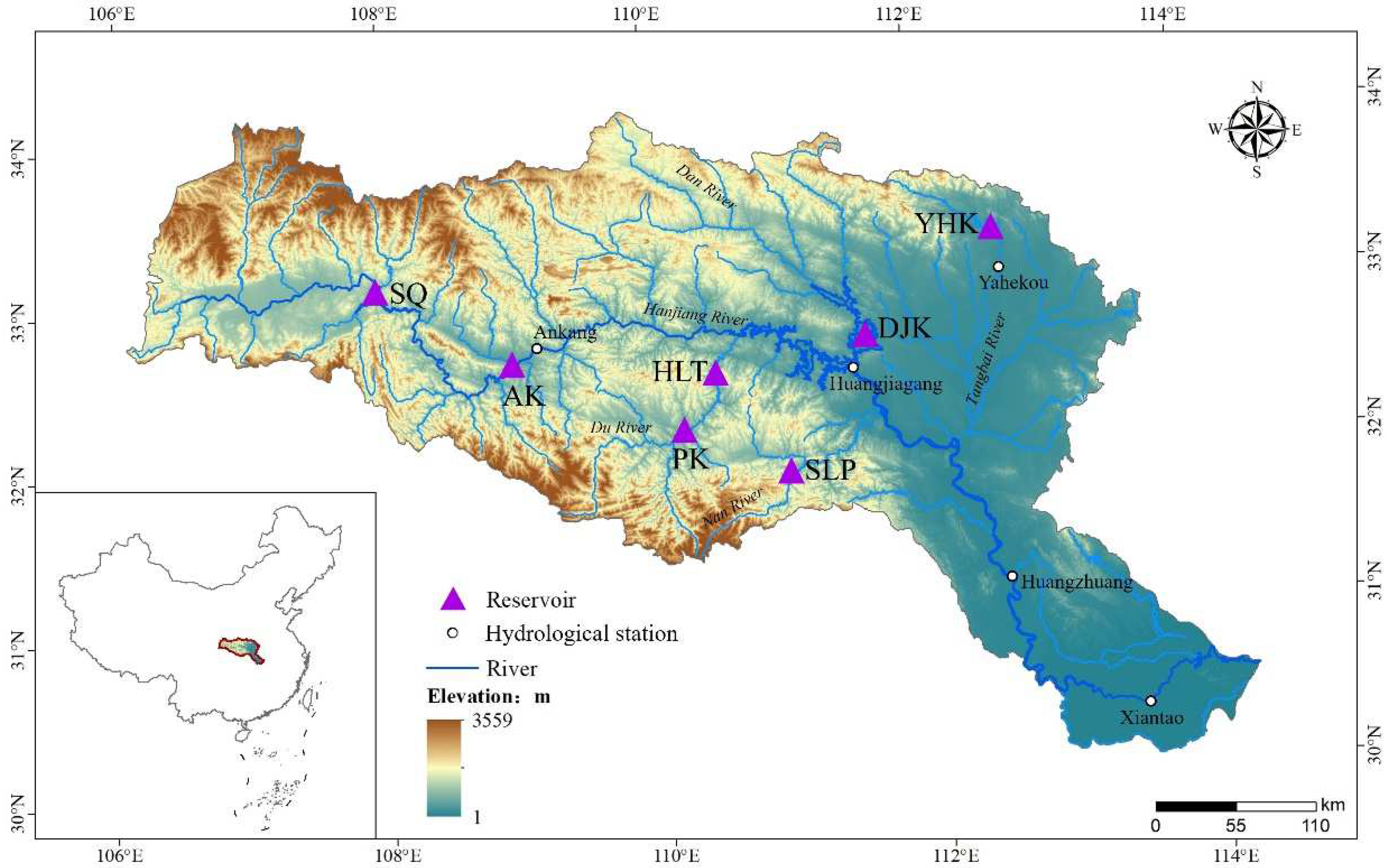
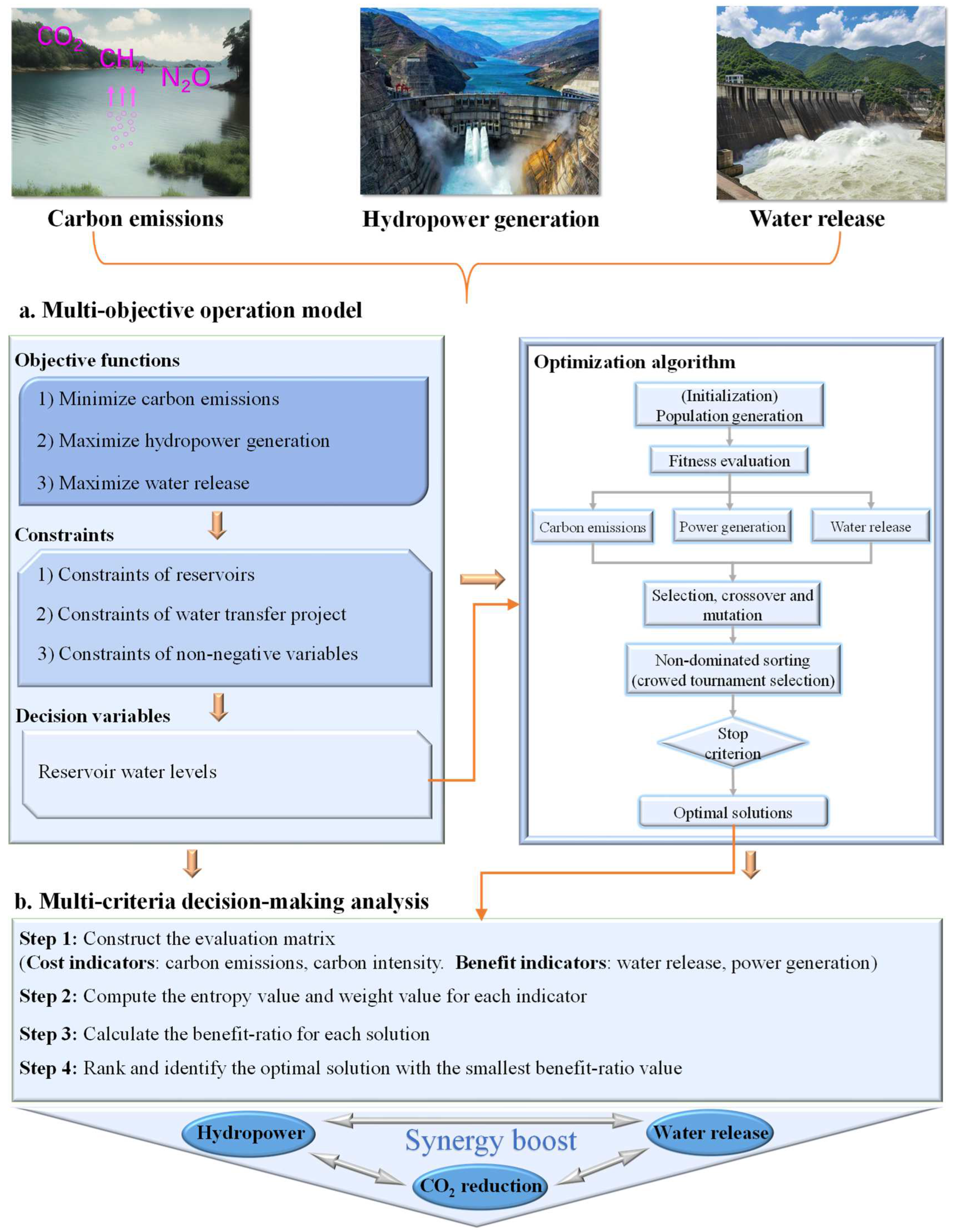
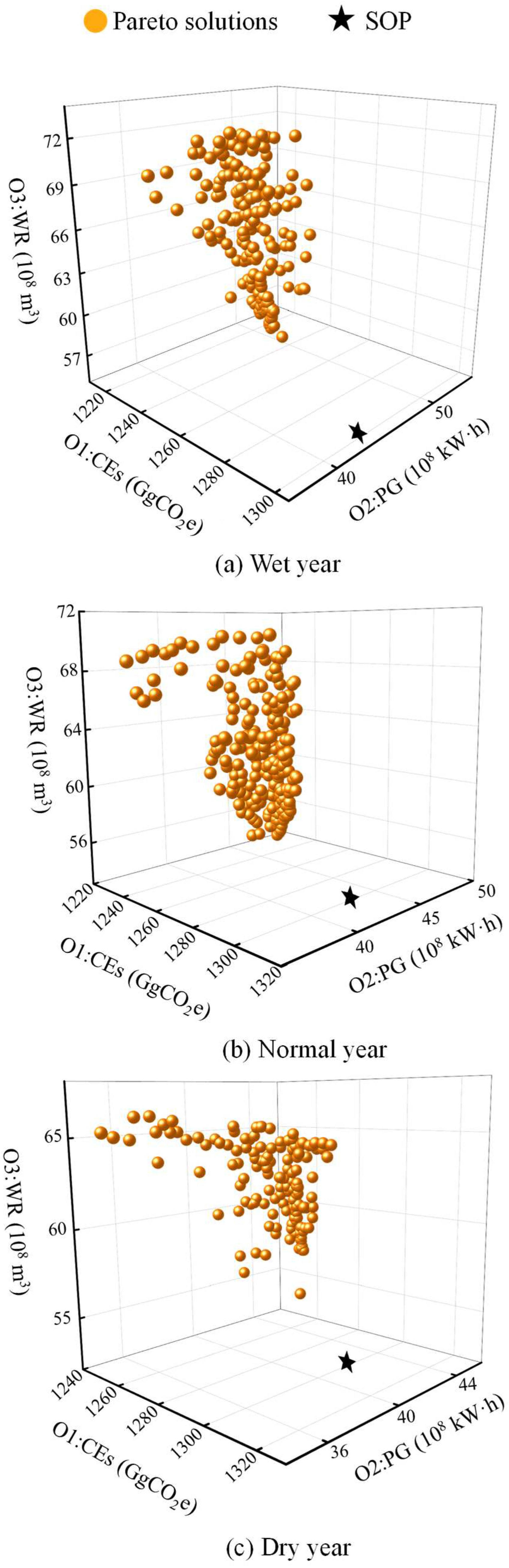
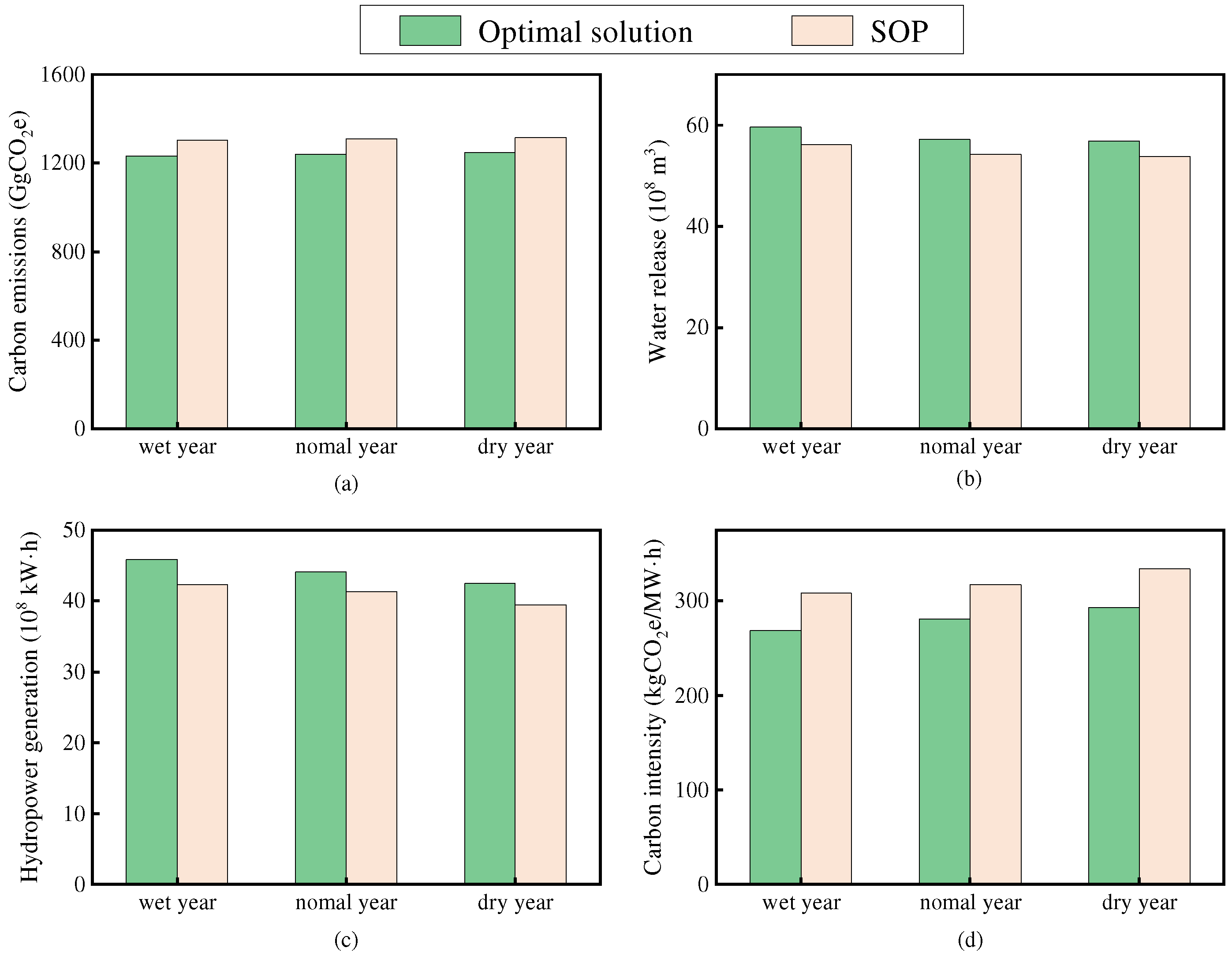
Optimizing the joint drawdown operation of mega reservoirs presents a significant opportunity to enhance the comprehensive benefits among hydropower output, water release, and carbon emission reduction. However, achieving the complementary drawdown operation of mega reservoirs while considering reservoir carbon emissions poses a notable challenge. In this context, this study introduces an innovative multi-objective optimization framework tailored for the joint drawdown operation of mega reservoirs. Firstly, a multi-objective optimization model, leveraging an intelligent evolutionary algorithm, is developed to minimize reservoir carbon emissions (Objective 1), maximize hydropower output (Objective 2), and maximize water release (Objective 3). Subsequently, a multi-criteria decision-making approach to search for the optimal scheme is employed. The proposed framework is applied to seven mega reservoirs within the Hanjiang River basin, China. The results show that the framework is effective in promoting comprehensive benefits, improving hydropower production by 8.3%, reservoir carbon emission reduction by 5.6%, and water release by 6.2% from the optimal solution under wet scenarios, compared to standard operation policies. This study not only provides a fresh perspective on the multi-objective drawdown operation of mega reservoirs but also offers valuable support to stakeholders and decision-makers in formulating viable strategic recommendations that take potential carbon emissions and advantages into account.
Keywords: reservoir drawdown operation; carbon emission; multi-objective optimization; intelligent evolutionary algorithm; Hanjiang River reservoir drawdown operation; carbon emission; multi-objective optimization; intelligent evolutionary algorithm; Hanjiang River