Article

Sustainable Leadership and Conflict Management: Insights from Greece’s Public Sector

1
Department of Early Childhood Education, University of Western Macedonia, 53100 Florina, Greece
2
Department of International and European Studies, University of Macedonia, 54636 Thessaloniki, Greece
3
Department of Applied Informatics, University of Macedonia, 54636 Thessaloniki, Greece
*
Author to whom correspondence should be addressed.
Sustainability 2025, 17(5), 2248; https://doi.org/10.3390/su17052248
Submission received: 21 January 2025 / Revised: 19 February 2025 / Accepted: 25 February 2025 / Published: 5 March 2025

Abstract

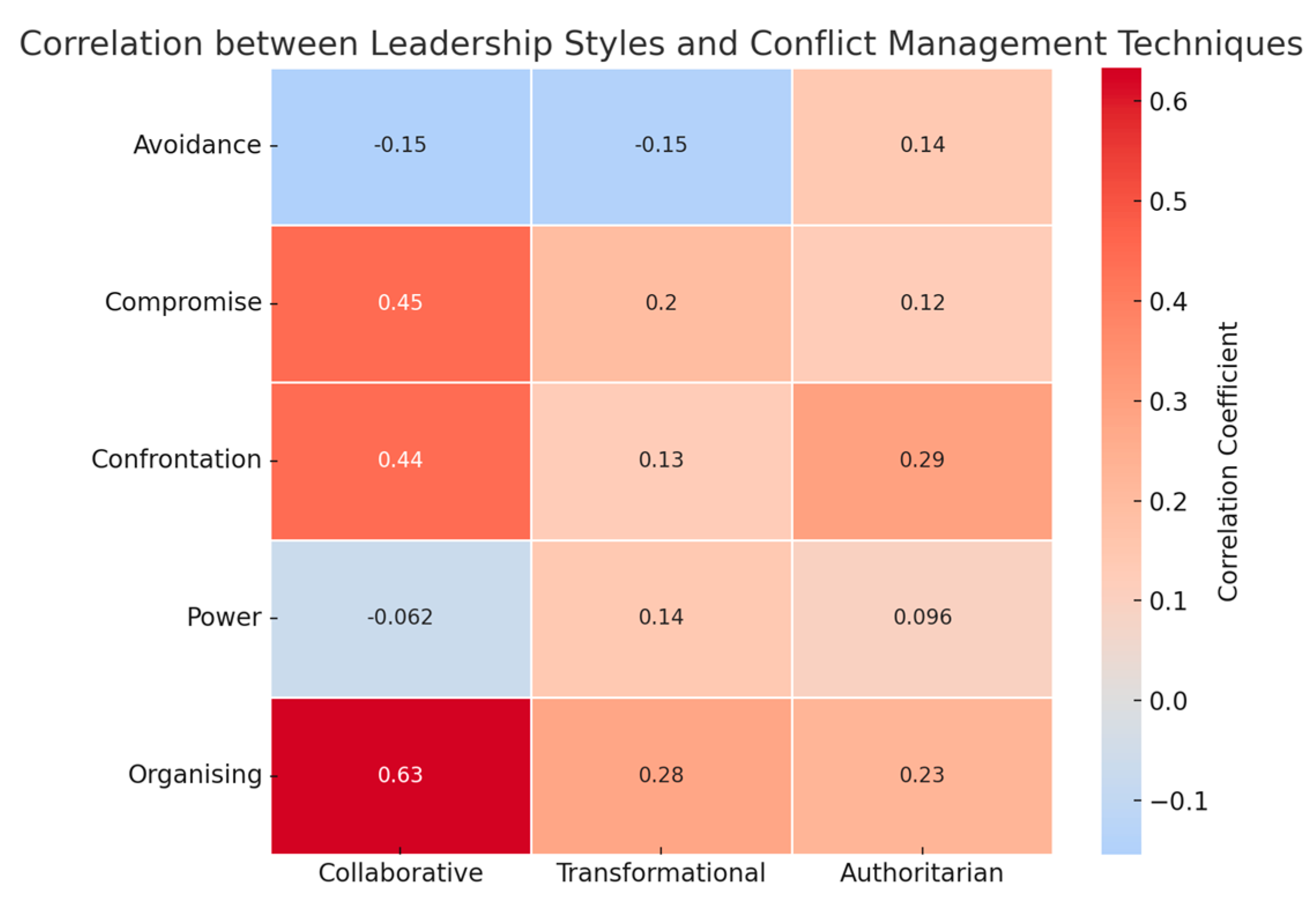
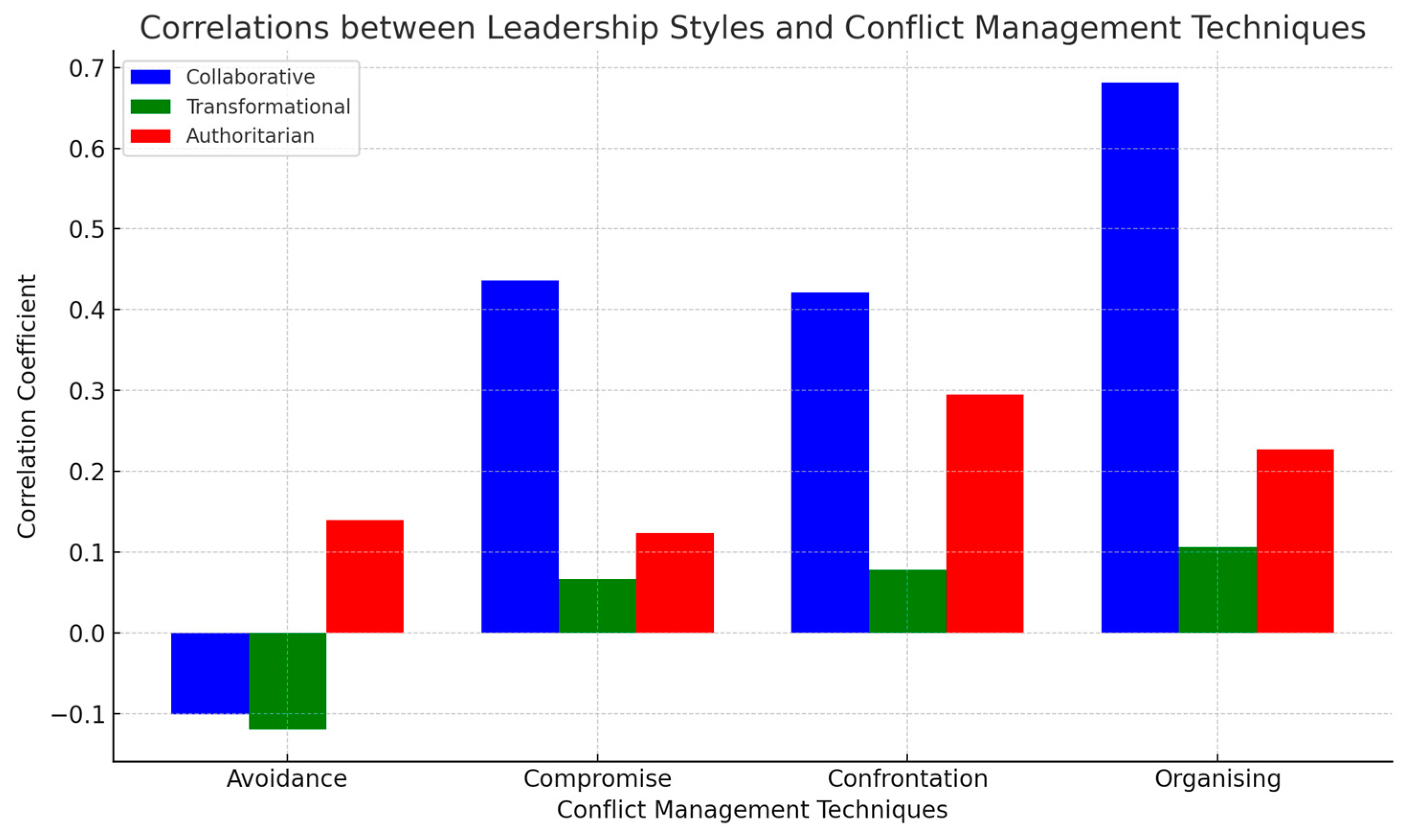
This study investigates the relationship between sustainable leadership styles and conflict management strategies within the context of Greek Public Sector. Specifically, it examines how collaborative, transformational, and authoritarian leadership styles impact workplace conflict resolution. The research adopts a case study methodology, focusing on Departments of Public Works in Greece, where data were collected through questionnaires. The analysis involved quantitative methods, including exploratory factor analysis (EFA), to examine the relationship between leadership styles and conflict management techniques. Results indicate that collaborative leadership is strongly associated with higher employee satisfaction and more effective conflict resolution, particularly in organizations with flat hierarchical structures. Transformational leadership fosters trust and open communication, which further enhance conflict resolution. On the other hand, authoritarian leadership styles correlate with increased workplace tension, lower satisfaction, and less effective conflict management, especially in high power-distance environments. The study also highlights cultural factors, such as the Greek emphasis on interpersonal relationships, as critical influences on leadership effectiveness. These findings underline the need for culturally adaptive and sustainable leadership strategies and provide practical recommendations for promoting harmony and productivity in Greek organizations.
Keywords: conflict resolution strategies; organizational resilience; public administration; leadership effectiveness; transformational leadership; behavioral impact conflict resolution strategies; organizational resilience; public administration; leadership effectiveness; transformational leadership; behavioral impact