

Chemical Composition, Antimicrobial, and Repellant Properties of Lavandula stoechas and Artemisia absinthium Essential Oils Against Ephestia kuehniella



 ,
,  ,
,  ,
, 
Abstract
1. Introduction
2. Materials and Methods
2.1. Plant Material and Extraction of Essential Oils
2.2. Determination of the Chemical Composition of Essential Oils by GC-MS
2.3. Bacterial Strains
2.4. Antibacterial Activity of the Essential Oils
2.5. Determination of Fungal Activity of Essential Oils
2.6. Insect Rearing
2.6.1. Repellent Effect of Essential Oils
2.6.2. Toxicity Activity
2.6.3. Insecticidal Activity on Insect Development
- % Pupal Formation: Determined by the number of larvae that transform into pupae relative to the total number of larvae, multiplied by 100%.
- % Adult Emergence: Determined by the number of adults that emerges relative to the total number of pupae, multiplied by 100%.
- Average Adult Lifespan: Determined by the lifespan (in days) of adults that survived the treatment.
- Female Fecundity: Determined by the total number of eggs laid by a female during the oviposition period.
2.7. Statistical Analysis
3. Results
3.1. Chemical Composition of Essential Oils
3.2. Antibacterial Activity
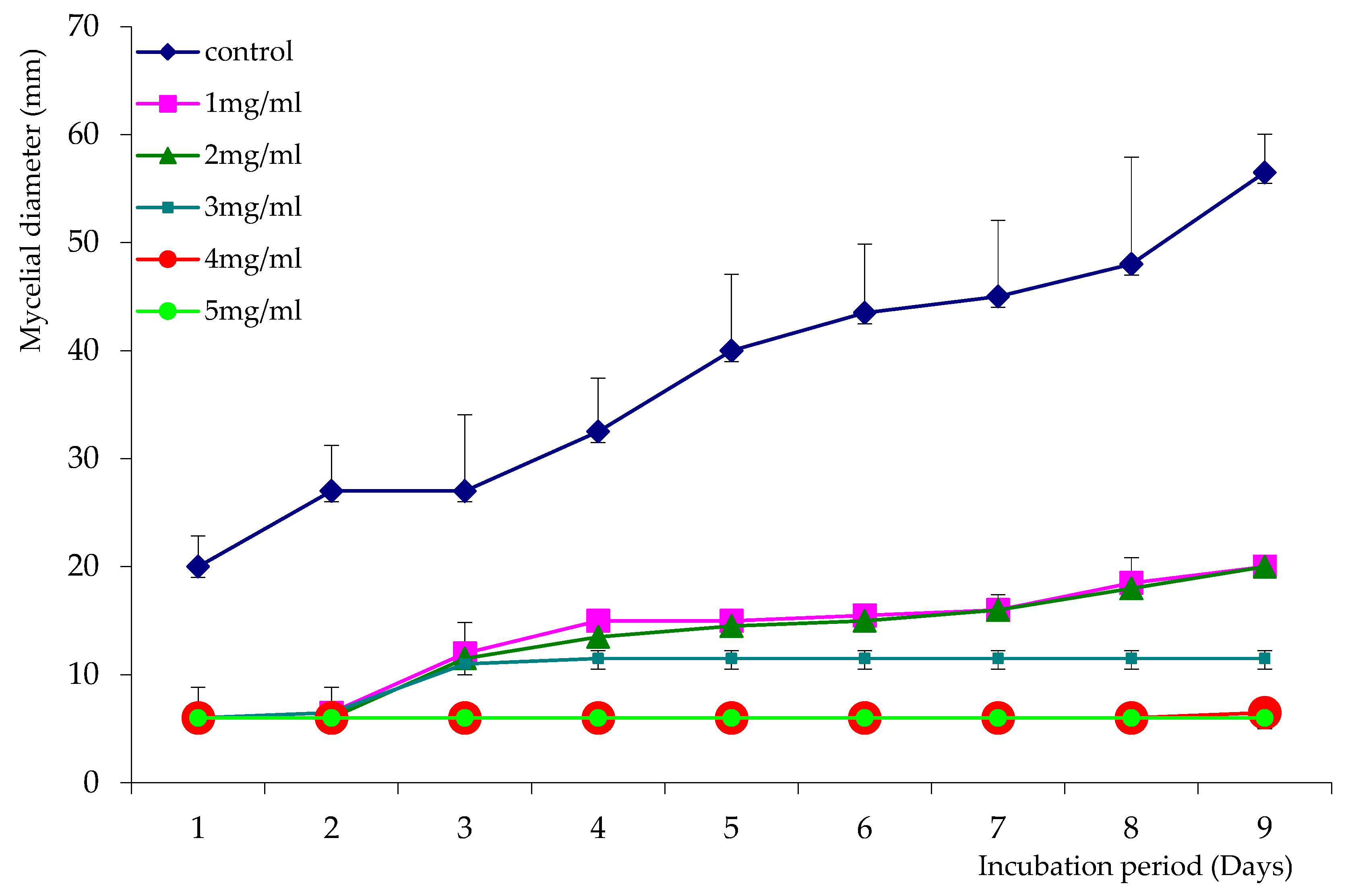
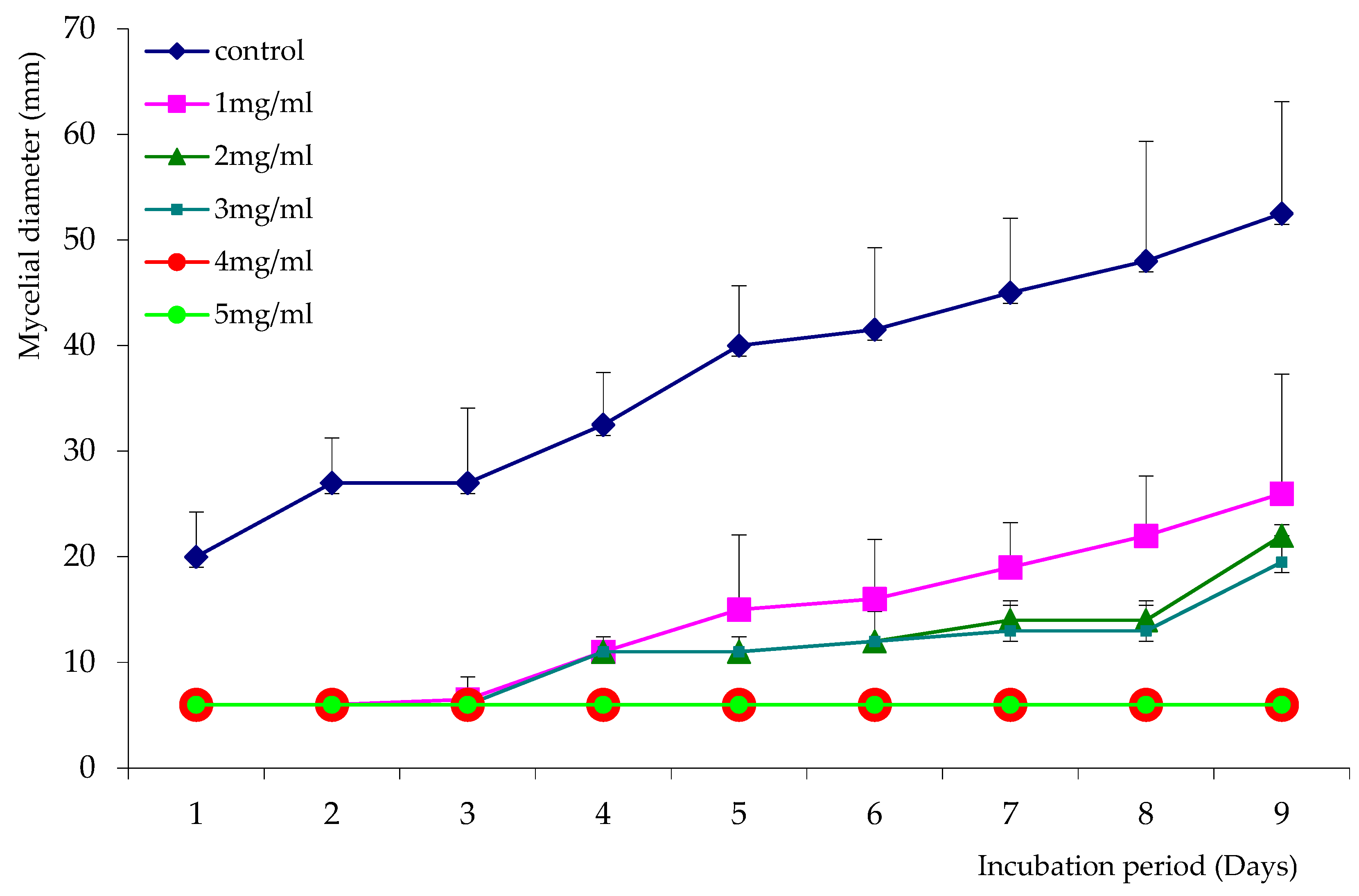
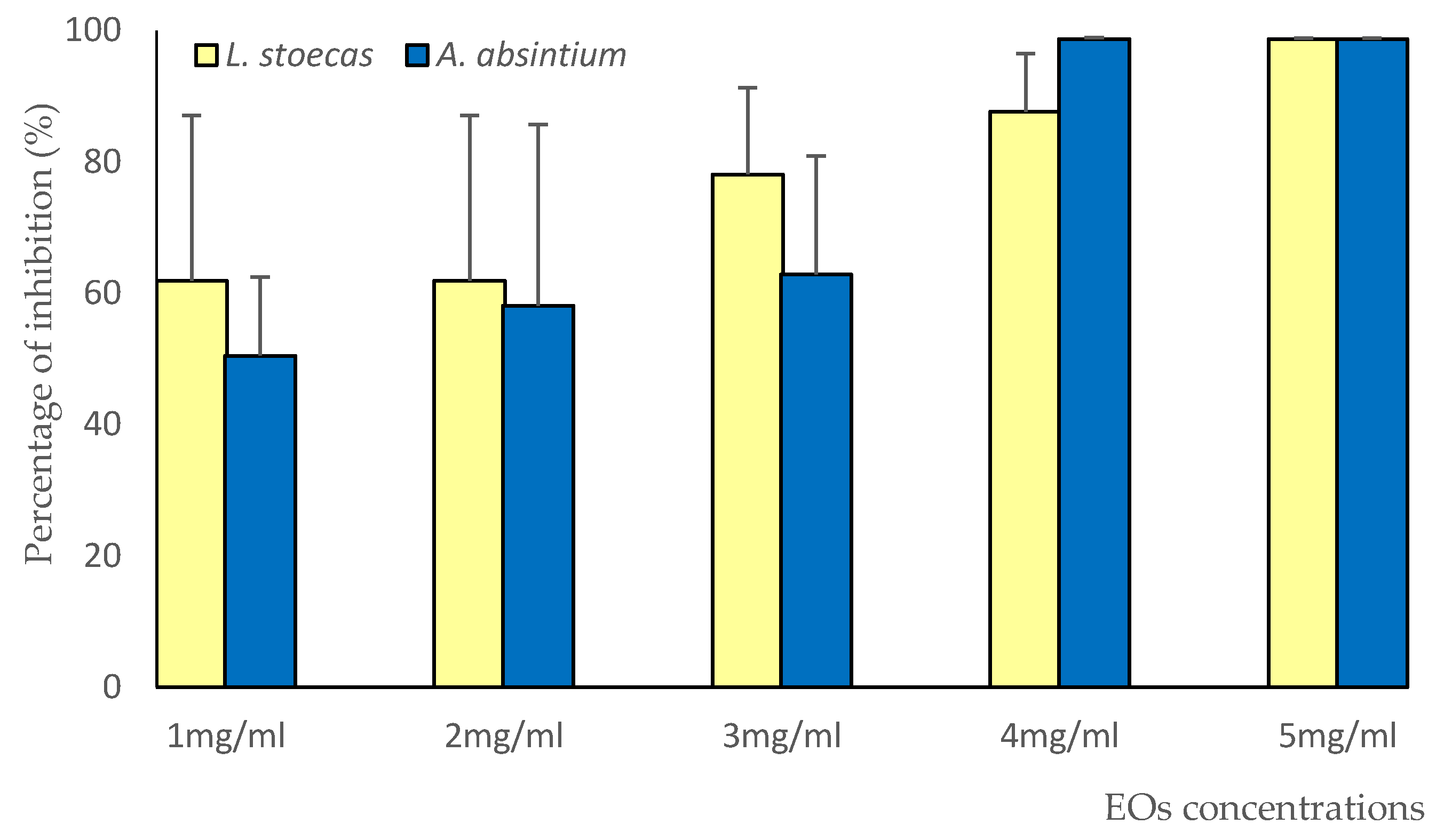
3.3. Antifungal Activity of Essential Oils
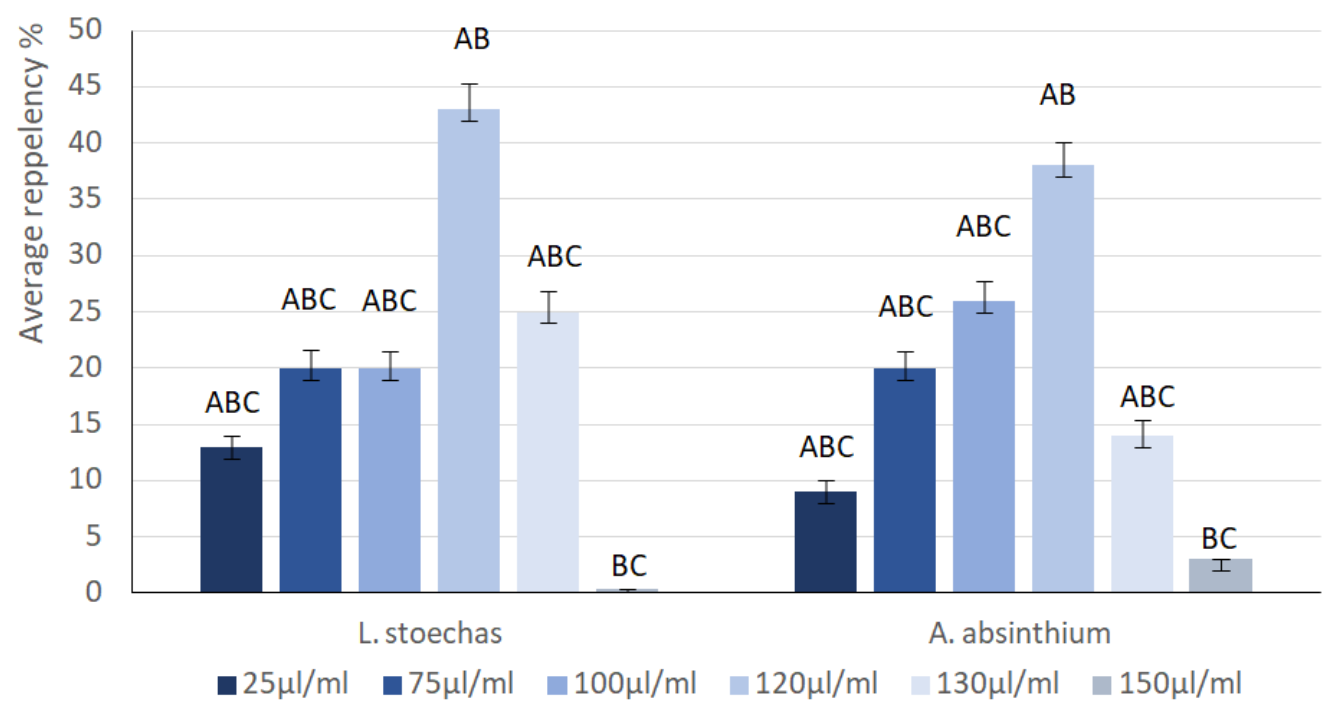
3.4. Determination of the Repellent Activity of Essential Oil
3.5. Determination of the Essential Oils Insecticidal Activity
3.6. Impact on the Development of E. kuehniella After Larval Treatment at LC50
4. Discussion
5. Conclusions
Author Contributions
Funding
Institutional Review Board Statement
Informed Consent Statement
Data Availability Statement
Acknowledgments
Conflicts of Interest
References
- Charoukh, S.; Boumendjel, M. La Biodiversité, Défis et Réponses. Exemple de La Région d’Annaba; GIZ; Deutsche Gesellschaftfür Technische Zusammenarbeit: Frankfurt, Germany, 2010; ISBN 978-3-944152-26-4. [Google Scholar]
- Hamel, T.; Zaafour, M.; Boumendjel, M. Ethnomedical Knowledge and Traditional Uses of Aromatic and Medicinal Plants of the Wetlands Complex of the Guerbes-Sanhadja Plain (Wilaya of Skikda in North eastern Algeria). Herb. Med. 2018, 4, 1–9. [Google Scholar] [CrossRef]
- Delimi, A.; Taibi, F.; Bouchelaghem, S.; Boumendjel, M.; Hennouni-Siakhene, N.; Chefrour, A. Chemical Composition and Insecticidal Activity of Essential Oil of Artemisia herba alba (Asteraceae) against Ephestia kuehniella (Lepidoptera:Pyralidae). Int. J. Biosci. 2017, 10, 130–137. [Google Scholar]
- Lahcene, S.; Taibi, F.; Mestar, N.; Ali Ahmed, S.; Boumendjel, M.; Ouafi, S.; Houali, K. Insecticidal Effects of the Olea europaea Subsp. Laperrinei Extracts on the Flour Pyralid Ephestia kuehniella. Cell. Mol. Biol. 2018, 64, 6–12. [Google Scholar] [CrossRef]
- Rekioua, N.; Boumendjel, M.; Taibi, F.; Samar, M.F.; Mediouni Ben Jemaa, J.; Benaliouch, F.; Negro, C.; Nicoli, F.; De Bellis, L.; Boushih, E.; et al. In Vitro Evaluation of the Insecticidal Effect of Eucalyptus globulusand Rosmarinus officinalis Essential Oils on a Stored Food Pest Ephestia kuehniella (Lepidoptera, Pyralidea). Cell. Mol. Biol. 2022, 68, 144–157. [Google Scholar] [CrossRef]
- Taibi, F.; Boumendjel, M.; Moncef, Z.; Omar, S.; Taha, K.; Amel, D.; Safa, A.; Hassiba, R.; Hanène, C.; Nacira, S.; et al. Conservation of Stored Food Using Plant’s Extracts: Effect of Oregano (Origanum vulgaris) Essential Oils on the Reproduction and Development of Flour Moth (Ephestia kuehniella). Cell. Mol. Biol. 2018, 64, 5–11. [Google Scholar] [CrossRef]
- Taibi, F.; Boumendjel, M. Conservation et Stockage des Denrées Alimentaires; Editions Universitaires Européennes: Saarbrücken, Germany, 2015; ISBN 978-3-8417-4151-6. [Google Scholar]
- Laib, I. Etude Des Activités Antioxydante et Antifongiquede l’huile Essentielle Des Fleurs Sèches de Lavandula officinalis: Application Aux Moisissures Des Légumes Secs. Nat. Technol. 2012, 4, 44–52. [Google Scholar]
- Tian, J.; Ban, X.; Zeng, H.; He, J.; Huang, B.; Wang, Y. Chemical Composition and Antifungal Activity of Essential Oil from Cicutavirosa L. Var. Latisecta Celak. Int. J. Food Microbiol. 2011, 145, 464–470. [Google Scholar] [CrossRef] [PubMed]
- Feknous, N.; Boumendjel, M.; Leblab, F.Z. Updated Insights on the Antimicrobial Activities of Allium Genus (A Review). Russ. J. Bioorganic Chem. 2024, 50, 806–823. [Google Scholar] [CrossRef]
- Feknous, N.; Boumendjel, M. Natural Bioactive Compounds of Honey and Their Antimicrobial Activity. Czech J. Food Sci. 2022, 40, 163–178. [Google Scholar] [CrossRef]
- Rezaeinodehi, A.; Khangholi, S. Chemical Composition of the Essential Oil of Artemisia absinthium Growing Wildin Iran. Pak. J. Biol. Sci. 2008, 11, 946–949. [Google Scholar] [CrossRef] [PubMed]
- Moslemi, H.R.; Hoseinzadeh, H.; Badouei, M.A.; Kafshdouzan, K.; Fard, R.M.N. Antimicrobial Activity of Artemisia absinthium Against Surgical Wounds Infected by Staphylococcus Aureus in a Rat Model. Indian J. Microbiol. 2012, 52, 946–949. [Google Scholar] [CrossRef]
- Msaada, K.; Salem, N.; Bachrouch, O.; Bousselmi, S.; Tammar, S.; Alfaify, A.; Al Sane, K.; Ben Ammar, W.; Azeiz, S.; Haj Brahim, A.; et al. Chemical Composition and Antioxidant and Antimicrobial Activities of Wormwood (Artemisia absinthium L.) Essential Oils and Phenolics. J. Chem. 2015, 2015, 804658. [Google Scholar] [CrossRef]
- Kordali, S.; Cakir, A.; Mavi, A.; Kilic, H.; Yildirim, A. Screeningof Chemical Compositionand Antifungal and Antioxidant Activities of the Essential Oils from Three Turkish Artemisia Species. J. Agric. Food Chem. 2005, 53, 1408–1416. [Google Scholar] [CrossRef]
- Boumendjel, M.; Boucheker, A.; Feknous, S.; Taibi, F.; Rekioua, N.; Bouzeraa, N.; Chibi, A.; Feknous, N.; Baraoui, A.; N’har, S.; et al. Adaptogenic Activity of Cinnamomum camphora, Eucalyptus globulus, Lavandula stoechas and Rosmarinus officinalis Essential Oil Used in North-African Folk Medicine. Cell. Mol. Biol. 2021, 67, 83–88. [Google Scholar] [CrossRef] [PubMed]
- Mahmoudi, M.; Ebrahimzadeh, M.A.; Ansaroudi, F.; Nabavi, S.F.; Nabavi, S.M. Antidepressant and Antioxidant Activities of Artemisia absinthium L. at Flowering Stage. Afr. J. Biotechnol. 2009, 8, 7170–7175. [Google Scholar]
- Bora, K.S.; Sharma, A. Phytochemical and Pharmacological Potential of Artemisia absinthium Linn. and Artemisia asiatic Nakai: A Review. J. Pharm. Res. 2010, 3, 325–328. [Google Scholar]
- Zoubi, Y.E.; El-Akhal, F.; Berrada, S.; Maniar, S.; Bekkari, H.; Lalami, A.E.O. Struggle against Bacterial Diseases: Chemical Composition and Antimicrobial Activity of the Essential Oil of Lavandula stoechas L. from Morocco. Int. J. Pharm. Sci. Rev. Res. 2016, 36, 99–104. [Google Scholar]
- Adams, R. Identification of Essential Oil Components by Gas Chromatography/Mass Spectrometry; Allured Publishing Corporation: Carol Steam, IL, USA, 2007; Volume 8, ISBN 978-1-932633-21-4. [Google Scholar]
- Puškárová, A.; Bučková, M.; Kraková, L.; Pangallo, D.; Kozics, K. The Antibacterial and Antifungal Activity of Six Essential Oils and Their Cyto/Genotoxicity to Human HEL12469 Cells. Sci. Rep. 2017, 7, 8211. [Google Scholar] [CrossRef] [PubMed]
- McDonald, L.L.; Guy, R.H.; Speirs, R.D. Preliminary Evalution of New Candidate Materials as Toxicants, Repellents, and Attractants Against Store-Products Insects; Agriculture Research Service; United States Department of Agriculture (USDA): Washington, DC, USA, 1970. [Google Scholar]
- Abbott, W.S. A Method of Computing the Effectiveness of an Insecticide. J. Econ. Entomol. 1925, 18, 265–267. [Google Scholar] [CrossRef]
- Belhadj Mostefa, M.; Kabouche, A.; Abaza, I.; Aburjai, T.; Touzani, R.; Kabouche, Z. Chemotypes Investigation of Lavandula Essential Oils Growing at Different North African Soils. J. Mater. Environ. Sci. 2014, 5, 1896–1901. [Google Scholar]
- Radi, M.; Eddardar, Z.; Drioiche, A.; Remok, F.; Hosen, M.E.; Zibouh, K.; Ed-Damsyry, B.; Bouatkiout, A.; Amine, S.; Touijer, H.; et al. Comparative Study of the Chemical Composition, Antioxidant, and Antimicrobial Activity of the Essential Oils Extracted from Lavandula abrialis and Lavandula stoechas: In Vitro and in Silico Analysis. Front. Chem. 2024, 12, 1353385. [Google Scholar] [CrossRef] [PubMed]
- Benabdelkader, T.; Zitouni, A.; Guitton, Y.; Jullien, F.; Maitre, D.; Casabianca, H.; Legendre, L.; Kameli, A. Essential Oils fromWild Populations of Algerian Lavandula stoechas L.: Composition, Chemical Variability, and in Vitro Biological Properties. Chem. Biodivers. 2011, 8, 937–953. [Google Scholar] [CrossRef]
- Ez Zoubi, Y.E.; Bousta, D.; Lachkar, M.; Farah, A. Antioxidant and Anti-Inflammatory Properties of Ethanolic Extract of Lavandula stoechas L. From Taounate Region in Morocco. Int. J. Phytopharm. 2014, 5, 21–26. [Google Scholar]
- Insawang, S.; Pripdeevech, P.; Tanapichatsakul, C.; Khruengsai, S.; Monggoot, S.; Nakham, T.; Artrod, A.; D’Souza, P.E.; Panuwet, P. Essential Oil Compositions and Antibacterial and Antioxidant Activities of Five Lavandula stoechas Cultivars Grown in Thailand. Chem. Biodivers. 2019, 16, e1900371. [Google Scholar] [CrossRef]
- Guitton, Y.; Nicolè, F.; Moja, S.; Benabdelkader, T.; Valot, N.; Legrand, S.; Jullien, F.; Legendre, L. Lavender Inflorescence: A Model to Study Regulation of Terpenes Synthesis. Plant Signal. Behav. 2010, 5, 749–751. [Google Scholar] [CrossRef]
- Benkhaled, A.; Boudjelal, A.; Napoli, E.; Baali, F.; Ruberto, G. Phytochemical Profile, Antioxidant Activity and Wound Healing Properties of Artemisia absinthium Essential Oil. Asian Pac. J. Trop. Biomed. 2020, 10, 496–504. [Google Scholar] [CrossRef]
- Lakhdari, W.; Mounir Bouhenna, M.; Salah Neghmouche, N.; Dehliz, A.; Benyahia, I.; Bendif, H.; Garzoli, S. Chemical Composition and Insecticidal Activity of Artemisia absinthium L. Essential Oil against Adults of Tenebrio molitor L. Biochem. Syst. Ecol. 2024, 116, 104881. [Google Scholar] [CrossRef]
- Benchohra, H.A.; Dif, M.M.; Tounsi, M.; Medjaher, H.E.S.; Aissaoui, L. Chemical Composition and Antibacterial Activity of Essential Oil of Aerial Part of Artemisia absinthium L. (Asteraceae) From Algeria. Comptes Rendus L’Acad. Bulg. Des Sci. 2023, 76, 407–414. [Google Scholar] [CrossRef]
- Vieira, T.M.; Dias, H.J.; Medeiros, T.C.T.; Grundmann, C.O.; Groppo, M.; Heleno, V.C.G.; Martins, C.H.G.; Cunha, W.R.; Crotti, A.E.M.; Silva, E.O. Chemical Composition and Antimicrobial Activity of the Essential Oil of Artemisia absinthium Asteraceae Leaves. J. Essent. Oil-Bear. Plants 2017, 20, 123–131. [Google Scholar] [CrossRef]
- Riahi, L.; Chograni, H.; Elferchichi, M.; Zaouali, Y.; Zoghlami, N.; Mliki, A. Variations in Tunisian Worm wood Essential Oil Profiles and Phenolic Contents between Leaves and Flowers and Their Effects on Antioxidant Activities. Ind. Crops Prod. 2013, 46, 290–296. [Google Scholar] [CrossRef]
- Mathlouthi, A.; Belkessam, M.; Sdiri, M.; Diouani, M.F.; Souli, A.; El-Bok, S.; Ben-Attia, M. Chemical Composition and Anti-Leishmania Major Activity of Essential Oils from Artemesia Spp. Grownin Central Tunisia. J. Essent. Oil-Bear. Plants 2018, 21, 1186–1198. [Google Scholar] [CrossRef]
- Houti, H.; Ghanmi, M.; Satrani, B.; ElMansouri, F.; Cacciola, F.; Sadiki, M.; Boukir, A. Moroccan Endemic Artemisia herba-alba Essential Oil: GC-MS Analysis and Antibacterial and Antifungal Investigation. Separations 2023, 10, 59. [Google Scholar] [CrossRef]
- Llorens-Molina, J.A.; Vacas, S.; Castell, V.; Németh-Zámboriné, É. Variability of Essential Oil Composition of Wormwood (Artemisia absinthium L.) Affected by Plant Organ. J. Essent. Oil Res. 2017, 29, 11–21. [Google Scholar] [CrossRef]
- Tehrani, M.S.; Azar, P.A.; Hosain, S.W.; Khalilzadeh, M.A.; Zanousi, M.B.P. Composition of Essential Oil of Artemisia absinthium by Three Different Extraction Methods: Hydrodistillation, Solvent-Free Microwave Extraction & Headspace Solid-Phase Microextraction. Asian J. Chem. 2012, 24, 5371–5376. [Google Scholar]
- Baali, F.; Boumerfeg, S.; Napoli, E.; Boudjelal, A.; Righi, N.; Deghima, A.; Baghiani, A.; Ruberto, G. Chemical Composition and Biological Activities of Essential Oils from Two Wild Algerian Medicinal Plants: Mentha pulegium L. and Lavandula stoechas L. J. Essent. Oil-Bear. Plants 2019, 22, 821–837. [Google Scholar] [CrossRef]
- Yassine, E.Z.; Abdelhakim, E.O.L.; Dalila, B.; Moschos, P.; Dimitra, D.; Mohammed, L.; El Abdessalam, K.; Abdellah, F. Chemical Composition, Antioxidant and Antimicrobial Activities of the Essential Oil and Its Fractions of Lavandula stoechas L. from Morocco. Int. J. Curr. Pharm. Rev. Res. 2017, 8, 60–67. [Google Scholar] [CrossRef]
- Bouyahya, A.; Et-Touys, A.; Abrini, J.; Talbaoui, A.; Fellah, H.; Bakri, Y.; Dakka, N. Lavandula stoechas Essential Oil from Moroccoas Novel Source of Antileishmanial, Antibacterial and Antioxidant Activities. Biocatal. Agric. Biotechnol. 2017, 12, 179–184. [Google Scholar] [CrossRef]
- Aati, H.Y.; Perveen, S.; Orfali, R.; Al-Taweel, A.M.; Aati, S.; Wanner, J.; Khan, A.; Mehmood, R. Chemical Composition and Antimicrobial Activity of the Essential Oils of Artemisia absinthium, Artemisia scoparia, and Artemisia sieberi Grown in Saudi Arabia. Arab. J. Chem. 2020, 13, 8209–8217. [Google Scholar] [CrossRef]
- Ksibi, N.; Saada, M.; Yeddes, W.; Limam, H.; Tammar, S.; Wannes, W.A.; Labidi, N.; Hessini, K.; Dakhlaoui, S.; Frouja, O.; et al. Phytochemical Profile, Antioxidant and Antibacterial Activities of Artemisia absinthium L. Collected from Tunisian Regions. J. Mex. Chem. Soc. 2022, 66, 312–329. [Google Scholar] [CrossRef]
- Nazzaro, F.; Fratianni, F.; De Martino, L.; Coppola, R.; De Feo, V. Effect of Essential Oil son Pathogenic Bacteria. Pharmaceuticals 2013, 6, 1451–1474. [Google Scholar] [CrossRef]
- Asghari, J.; Sadani, S.; Ghaemi, E.; Mazaheri Tehrani, M. Investigation of Composition and Antimicrobial Properties of Lavandula stoechas Essential Oil Using Disk Diffusion and Broth Microdilution. Med. Lab. J. 2016, 10, 53–58. [Google Scholar] [CrossRef]
- Papadopoulos, C.J.; Carson, C.F.; Chang, B.J.; Riley, T.V. Role of the MexAB-OprM Efflux Pump of Pseudomonas aeruginosa in Tolerance to TeaTree (Melaleuca alternifolia) Oil and Its Monoterpene Components Terpinen-4-Ol, 1, 8-Cineole, and α-Terpineol. Appl. Environ. Microbiol. 2008, 74, 1932–1935. [Google Scholar] [CrossRef]
- El Omari, N.; Balahbib, A.; Bakrim, S.; Benali, T.; Ullah, R.; Alotaibi, A.; NaceiriElMrabti, H.; Goh, B.H.; Ong, S.K.; Ming, L.C.; et al. Fenchone and Camphor: Main Natural Compounds from Lavandula stoechas L., Expediting Multiple in Vitro Biological Activities. Heliyon 2023, 9, e21222. [Google Scholar] [CrossRef] [PubMed]
- Demirci, F.; Karaca, N.; Şener, G.; Demirci, B. Synergistic Antibacterial Combination of Lavandula latifolia Medik. Essential Oilwith Camphor. Z. Fur Naturforschung Sect. C-J. Biosci. 2021, 76, 169–173. [Google Scholar] [CrossRef]
- Burt, S. Essential Oils: Their Antibacterial Properties and Potential Applications in Foods—A Review. Int. J. Food Microbiol. 2004, 94, 223–253. [Google Scholar] [CrossRef]
- Zuzarte, M.; Gonçalves, M.J.; Cavaleiro, C.; Cruz, M.T.; Benzarti, A.; Marongiu, B.; Maxia, A.; Piras, A.; Salgueiro, L. Antifungal and Anti-Inflammatory Potential of Lavandula stoechas and Thymus Herba-Barona Essential Oils. Ind. Crops Prod. 2013, 44, 97–103. [Google Scholar] [CrossRef]
- Mahilrajan, S.; Nandakumar, J.; Kailayalingam, R.; Manoharan, N.A.; Sri Vijeindran, S.T. Screening the Antifungal Activity of Essential Oils against Decay Fungi from Palmyrah Leaf Handicrafts. Biol. Res. 2014, 47, 35. [Google Scholar] [CrossRef] [PubMed]
- Wu, X.Z.; Cheng, A.X.; Sun, L.M.; Lou, H.X. Effect of Plagiochin E, an Antifungal Macrocyclic Bis(Bibenzyl), on Cell Wall Chitin Synthesis in Candida Albicans. Acta Pharmacol. Sin. 2008, 29, 1478–1485. [Google Scholar] [CrossRef]
- Sharma, N.; Tripathi, A. Effects of Citrus sinensis (L.) Osbeck Epicarp Essential Oil on Growth and Morphogenesis of Aspergillus niger(L.) Van Tieghem. Microbiol. Res. 2008, 163, 337–344. [Google Scholar] [CrossRef] [PubMed]
- Bakkali, F.; Averbeck, S.; Averbeck, D.; Zhiri, A.; Baudoux, D.; Idaomar, M. Antigenotoxic Effects of Three Essential Oils in Diploid Yeast (Saccharomyces cerevisiae) after Treatments with UVC Radiation, 8-MOP plus UVA and MMS. Mutat. Res./Genet. Toxicol. Environ. Mutagen. 2006, 606, 27–38. [Google Scholar] [CrossRef]
- Haque, E.; Irfan, S.; Kamil, M.; Sheikh, S.; Hasan, A.; Ahmad, A.; Lakshmi, V.; Nazir, A.; Mir, S.S. Terpenoids with Antifungal Activity Trigger Mitochondrial Dysfunctionin Saccharomyces cerevisiae. Microbiology 2016, 85, 436–443. [Google Scholar] [CrossRef]
- Ahmad, A.; Khan, A.; Manzoor, N. Reversal of Efflux Mediated Antifungal Resistance Underlies Synergistic Activity of TwoMonoterpenes with Fluconazole. Eur. J. Pharm. Sci. 2013, 48, 80–86. [Google Scholar] [CrossRef]
- Prakash, B.; Singh, P.; Kedia, A.; Dubey, N.K. Assessment of Some Essential Oils as Food Preservatives Based on Antifungal, Antiaflatoxin, Antioxidant Activities and in Vivo Efficacy in Food System. Food Res. Int. 2012, 49, 201–208. [Google Scholar] [CrossRef]
- Gemeda, N.; Woldeamanuel, Y.; Asrat, D.; Debella, A. Effect of Essential Oils on Aspergillus Spore Germination, Growthand Mycotoxin Production: A Potential Source of Botanical Food Preservative. Asian Pac. J. Trop. Biomed. 2014, 4, S373–S381. [Google Scholar] [CrossRef]
- El Abdali, Y.; Agour, A.; Allali, A.; Bourhia, M.; El Moussaoui, A.; Eloutassi, N.; Mohammed Salamatullah, A.; Alzahrani, A.; Ouahmane, L.; Aboul-Soud, M.A.M.; et al. Lavandula dentata L.: Phytochemical Analysis, Antioxidant, Antifungal and Insecticidal Activities of Its Essential Oil. Plants 2022, 11, 311. [Google Scholar] [CrossRef]
- Chaieb, I.; Hamouda, A.B.; Tayeb, W.; Zarrad, K.; Bouslema, T.; Laarif, A. The Tunisian Artemisia Essential Oil for Reducing Contamination of Stored Cereals by Tribolium castaneum. Food Technol. Biotechnol. 2018, 56, 247–256. [Google Scholar] [CrossRef]
- Mihajilov-Krstev, T.; Jovanović, B.; Jović, J.; Ilić, B.; Miladinović, D.; Matejić, J.; Rajković, J.; Đorđević, L.; Cvetković, V.; Zlatković, B. Antimicrobial, Antioxidative, and Insect Repellent Effects of Artemisia absinthium Essential Oil. Planta Medica 2014, 80, 1698–1705. [Google Scholar] [CrossRef] [PubMed]
- Abdel-Baki, A.A.S.; Aboelhadid, S.M.; Al-Quraishy, S.; Hassan, A.O.; Daferera, D.; Sokmen, A.; Kamel, A.A. Cytotoxic, Scolicidal, and Insecticidal Activities of Lavandula stoechas Essential Oil. Separations 2023, 10, 100. [Google Scholar] [CrossRef]
- Brandão, S.C.; Silies, M.; Martelli, C. Adaptive Temporal Processing of Odor Stimuli. Cell Tissue Res. 2021, 383, 125–141. [Google Scholar] [CrossRef] [PubMed]
- Bedini, S.; Djebbi, T.; Ascrizzi, R.; Farina, P.; Pieracci, Y.; Echeverría, M.C.; Flamini, G.; Trusendi, F.; Ortega, S.; Chiliquinga, A.; et al. Repellence and Attractiveness: The Hormetic Effect of Aromatic Plant Essential Oils on Insect Behavior. Ind. Crops Prod. 2024, 210, 118122. [Google Scholar] [CrossRef]
- Sattayakhom, A.; Wichit, S.; Koomhin, P. The Effects of Essential Oils on the Nervous System: A Scoping Review. Molecules 2023, 28, 3771. [Google Scholar] [CrossRef]
- Ayllón-Gutiérrez, R.; Díaz-Rubio, L.; Montaño-Soto, M.; Haro-Vázquez, M.d.P.; Córdova-Guerrero, I. Applications of Plant Essential Oils in Pest Control and Their Encapsulation for Controlled Release: A Review. Agriculture 2024, 14, 1766. [Google Scholar] [CrossRef]
- Bunse, M.; Daniels, R.; Gründemann, C.; Heilmann, J.; Kammerer, D.R.; Keusgen, M.; Lindequist, U.; Melzig, M.F.; Morlock, G.E.; Schulz, H.; et al. Essential Oils as Multicomponent Mixtures and Their Potential for Human Health and Well-Being. Front. Pharmacol. 2022, 13, 956541. [Google Scholar] [CrossRef]
- El Ouali Lalami, A.; El-Akhal, F.; Maniar, S.; EzZoubi, Y.; Taghzouti, K. Chemical Constituents and Larvicidal Activity of Essential Oil of Lavandula stoechas (Lamiaceae) from Morocco against the Malaria Vector Anopheles labranchiae (Diptera:Culicidae). Int. J. Pharmacogn. Phytochem. Res. 2016, 8, 505–511. [Google Scholar]
- El-Akhal, F.; Ramzi, A.; Farah, A.; Ez Zoubi, Y.; Benboubker, M.; Taghzouti, K.; El Ouali Lalami, A. Chemical Composition and Larvicidal Activity of Lavandula angustifolia Subsp. angustifolia and Lavandula dentate Spp. dentate Essential Oils against Culex pipiens Larvae, Vector of West Nile Virus. Psyche J. Entomol. 2021, 2021, 8872139. [Google Scholar] [CrossRef]
- Bano, P.; Rather, M.A.; Mukhtar, M.; Sherwani, A.; Ganie, S. Fumigant Toxicity of Artemisia absinthium Essential Oil To Common Stored Product Pests. Indian J. Entomol. 2022, 84, 437–440. [Google Scholar] [CrossRef]
- Ghalbane, I.; Alahyane, H.; Aboussaid, H.; Chouikh, N.-e.; Costa, J.; Romane, A.; El Messoussi, S. Chemical Composition and Insecticidal Properties of Moroccan Lavandula dentate and Lavandula stoechas Essential Oils Against Mediterranean Fruit Fly, Ceratitis capitata. Neotrop. Entomol. 2022, 51, 628–636. [Google Scholar] [CrossRef]
- López, M.D.; Campoy, F.J.; Pascual-Villalobos, M.J.; Muñoz-Delgado, E.; Vidal, C.J. Acetylcholinesterase Activity of Electric EelIs Increased or Decreased by Selected Monoterpenoids and Phenylpropanoids in a Concentration-Dependent Manner. Chem.-Biol. Interact. 2015, 229, 36–43. [Google Scholar] [CrossRef] [PubMed]
- Evelyn, M.N.; Edgar, P.N.; Soledad, Q.C.; Carlos, C.A.; Alejandro, M.V.; Julio, A.E. Insecticidal, Antifeedant and Acetylcholinesterase Inhibitory Activity of Sesquiterpenoids Derived from Eudesmane, Their Molecular Docking and QSAR. Pestic. Biochem. Physiol. 2024, 201, 105841. [Google Scholar] [CrossRef]
- Galeano, L.J.N.; Prieto-Rodríguez, J.A.; Patiño-Ladino, O.J. Synergistic Insecticidal Activity of Plant Volatile Compounds: Impact on Neurotransmission and Detoxification Enzymes in Sitophilus zeamais. Insects 2025, 16, 609. [Google Scholar] [CrossRef]
- Devi, J.A.; Thangapandian, R.; Vijayaraghavan, C.; Patel, R.R.D.; Kiran, S.R. Insecticidal Potential of Essential Oil and Sesquiterpene Alcohols from Leaves of Clausena indica (Dalz.) Oliver Against Spodoptera litura, Helicoverpa armigera, and Tribolium castaneum Under Laboratory and Field Conditions. Neotrop. Entomol. 2025, 54, 68. [Google Scholar] [CrossRef]
- Sarma, R.; Adhikari, K.; Mahanta, S.; Khanikor, B. Combinations of Plant Essential Oil Based Terpene Compounds as Larvicidal and Adulticidal Agent against Aedes aegypti (Diptera: Culicidae). Sci. Rep. 2019, 9, 9471. [Google Scholar] [CrossRef]
- Nikolaou, P.; Marciniak, P.; Adamski, Z.; Ntalli, N. Controlling Stored Products’ Pests with Plant Secondary Metabolites: A Review. Agriculture 2021, 11, 879. [Google Scholar] [CrossRef]
- Ebadollahi, A.; Jalali Sendi, J.; Setzer, W.N.; Changbunjong, T. Encapsulation of Eucalyptus largiflorens Essential Oil by Mesoporous Silicates for Effective Control of the Cowpea Weevil, Callosobruchus maculatus (Fabricius) (Coleoptera: Chrysomelidae). Molecules 2022, 27, 3531. [Google Scholar] [CrossRef] [PubMed]
- Ibrahim, S.S.; Sammour, E.A. Evaluating the Persistence and Insecticidal Effects of Emulsifiable Concentrate Containing Cananga Odorata Essential Oil on Survival and Enzymatic Activity of Spodoptera littoralis. Phytoparasitica 2024, 52, 85. [Google Scholar] [CrossRef]
- Fragkouli, R.; Antonopoulou, M.; Asimakis, E.; Spyrou, A.; Kosma, C.; Zotos, A.; Tsiamis, G.; Patakas, A.; Triantafyllidis, V. Mediterranean Plants as Potential Source of Biopesticides:An Overview of Current Research and Future Trends. Metabolites 2023, 13, 967. [Google Scholar] [CrossRef] [PubMed]
- Al-Solami, H.M. Larvicidal Activity of Plant Extracts by Inhibition of Detoxification Enzymes in Culex pipiens. J. King Saud Univ.-Sci. 2021, 33, 101371. [Google Scholar] [CrossRef]
- Czerniewicz, P.; Sytykiewicz, H.; Chrzanowski, G. The Effect of Essential Oils from Asteraceae Plants on Behavior and Selected Physiological Parameters of the Bird Cherry-Oat Aphid. Molecules 2024, 29, 1673. [Google Scholar] [CrossRef]

| N° | RI | Components | (%) Area | |
|---|---|---|---|---|
| LsEO | AaEO | |||
| 1 | 950 | Tricyclene | 0.64 | 0.36 |
| 2 | 953 | α-Thujene | - | 0.36 |
| 3 | 957 | 3-Carene | 1.66 | 0.36 |
| 4 | 967 | Camphene | 4.69 | 0.36 |
| 5 | 971 | Dehydrosabinene | 0.35 | - |
| 6 | 987 | β-Pinene | - | 0.36 |
| 7 | 996 | Methyl-5-heptene-2-one | - | 0.36 |
| 8 | 999 | β-Myrcene | - | 0.36 |
| 9 | 1020 | α-Terpinene | - | 0.36 |
| 10 | 1026 | o-Cymene | 0.70 | 0.36 |
| 11 | 1030 | D-Limonene | 5.58 | 0.36 |
| 12 | 1032 | Eucalyptol (1,8-cineole) | 0.69 | - |
| 13 | 1057 | γ-Terpinene | - | 3.88 |
| 14 | 1070 | Linalool oxide | 0.74 | - |
| 15 | 1078 | Linalyl acetate | - | 2.85 |
| 16 | 1085 | Isoterpinolene | - | 0.91 |
| 17 | 1086 | Fenchone | 11.34 | - |
| 18 | 1090 | γ-Terpinen | - | 0.50 |
| 19 | 1099 | Linalool (marqueur) | 1.37 | - |
| 20 | 1113 | endo-Borneol | - | 1.40 |
| 21 | 1144 | Camphor | 31.83 | 41.92 |
| 22 | 1162 | endo-Borneol | 1.72 | - |
| 23 | 1164 | Cis-vebemol | 1.31 | - |
| 24 | 1174 | Terpinen-4-ol | 0.60 | 9.29 |
| 25 | 1183 | p-Cymen-8-ol | 0.83 | - |
| 26 | 1186 | Cis-Myrtanol | - | 1.49 |
| 27 | 1188 | α-Terpineol | 0.62 | 2.09 |
| 28 | 1193 | (−)-Myrtenol | 1.09 | - |
| 29 | 1206 | Verbenone | 1.20 | - |
| 30 | 1217 | Carveol | 0.70 | - |
| 31 | 1240 | Homoveratrole | - | 1.18 |
| 32 | 1240 | 2,4-Dimethylphenethyl alcohol | - | 0.43 |
| 33 | 1242 | D-Carvone | 0.58 | - |
| 34 | 1273 | Cis-Myrtanol (2) | - | 1.46 |
| 35 | 1287 | Bornyl acetate | 3.93 | - |
| 36 | 1328 | Myrtenyl acetate | 2.21 | - |
| 37 | 1408 | Methyleugenol | - | 0.66 |
| 38 | 1419 | Caryophyllene | 0.85 | - |
| 39 | 1419 | Caryophyllene | - | 0.77 |
| 40 | 1476 | α-acorenol | 0.36 | - |
| 41 | 1479 | β-copaene | 0.36 | - |
| 42 | 1479 | β-Copaene | - | 1.22 |
| 43 | 1484 | β-Selinene | 1.09 | - |
| 44 | 1490 | Unknown | 0.57 | - |
| 45 | 1493 | Unknown | 0.50 | - |
| 46 | 1494 | Bicyclogermacrene | 1.02 | - |
| 47 | 1512 | 3,6-Dihydrochamazulene | - | 1.76 |
| 48 | 1512 | Epicubebol | 0.35 | - |
| 49 | 1520 | δ-Cadinene | 1.50 | - |
| 50 | 1542 | Unknown | 0.75 | - |
| 51 | 1553 | Unknown | 0.80 | - |
| 52 | 1569 | Spathulenol | 0.54 | - |
| 53 | 1573 | Caryophyllene oxide | - | 1.10 |
| 54 | 1573 | Isoaromadendrene epoxide | 1.15 | - |
| 55 | 1578 | Aromadendrene oxide | 0.51 | - |
| 56 | 1582 | β-Guaiene | 5.05 | - |
| 57 | 1593 | Copaborneol | 3.58 | - |
| 58 | 1604 | 3,6-Dihydrochamazulene | - | 2.39 |
| 59 | 1612 | Trans-Nuciferol | - | 0.95 |
| 60 | 1615 | Di-epi-1,10-cubenol | 1.01 | - |
| 61 | 1618 | Unknown | 0.32 | - |
| 62 | 1627 | Tau-murolol | 1.33 | - |
| 63 | 1655 | Azulol | 0.34 | - |
| 64 | 1658 | Mustakone | 0.67 | - |
| 65 | 1702 | Chamazulene | - | 20.19 |
| Bacterial Strain | L. stoechas EO | A. absinthium EO |
|---|---|---|
| S. aureus ATCC 25923 | 16.6 | 17.3 |
| S. aureus ATCC 43300 (MRSA) | 15.5 | 19 |
| Enterococcus faecalis | 25.3 | 15.4 |
| Bacillus cereus | 6 | 6 |
| E. coli ATCC 25922 | 9.1 | 10.3 |
| E. coli (ESBL+) | 9.4 | 8.1 |
| Klebsiella pneumonia | 14.1 | 10.1 |
| P. aeruginosa ATCC 27853 | 6 | 6 |
| Essential Oil | Concentrations (µL/LAir) | % Mortality (24 h) | % Mortality (48 h) | % Mortality (72 h) | % Mortality (96 h) |
|---|---|---|---|---|---|
| LsEO | 120 | 10.20 ± 06.71 A | 26.53 ± 07.80 B | 38.64 ± 09.42 B | 45.45 ± 05.21 B |
| 200 | 12.24 ± 05.37 A | 32.65 ± 07.83 AB | 43.18 ± 04.93 B | 47.73 ± 05.49 B | |
| 280 | 24.49 ± 07.23 A | 36.73 ± 06.92 AB | 45.45 ± 08.92 B | 50.00 ± 10.22 B | |
| 360 | 26.53 ± 11.13 A | 46.93 ± 14.95 AB | 61.36 ± 04.87 AB | 63.63 ± 05.23 B | |
| 500 | 34.69 ± 10.41 A | 65.30 ± 20.41 A | 84.09 ± 08.21 A | 88.63 ± 04.05 A | |
| AaEO | 120 | 00.00 ± 00.00 B | 00.00 ± 00.00 B | 00.00 ± 00.00 B | 12.20 ± 08.52 C |
| 200 | 00.00 ± 00.00 B | 04.08 ± 04.01 B | 11.11 ± 07.41 AB | 21.95 ± 15.09 C | |
| 280 | 04.08 ± 04.01 AB | 06.12 ± 04.01 B | 13.33 ± 02.96 AB | 26.83 ± 09.80 BC | |
| 360 | 06.12 ± 06.02 AB | 28.57 ± 09.13 A | 53.33 ± 17.04 A | 56.10 ± 18.15 AB | |
| 500 | 12.24 ± 02.60 A | 34.69 ± 09.16 A | 55.56 ± 11.11 A | 78.07 ± 06.14 A |
| Period | Essential Oil | Number | Slope | R2 | LC25 (µL/LAir) IC 95% | LC50 (µL/LAir) IC 95% |
|---|---|---|---|---|---|---|
| 24 h | LsEO | 10 | 1.14 | 0.96 | 330 (285.2–389.7) | 860.8 (652.3–1426) |
| AaEO | 10 | 2.51 | 0.97 | 701.8 (612.9–888.9) | 1086 (838.6–1644) | |
| 48 h | LsEO | 10 | 1.06 | 0.88 | 133.1 (61.65–195.4) | 375.2 (282.9–659.7) |
| AaEO | 10 | 3.36 | 0.99 | 435.8 (413.6–457.9) | 604 (564.4–663.2) | |
| 72 h | LsEO | 10 | 1.15 | 0.81 | 85.71 (10.74–155.2) | 221.7 (130.9–355.9) |
| AaEO | 10 | 2.90 | 0.88 | 288 (198.5–374.5) | 420.6 (335.3–689.7) | |
| 96 h | LsEO | 10 | 1.27 | 0.80 | 84.73 (8.95–155.1) | 200.8 (106–317.5) |
| AaEO | 10 | 2.61 | 0.95 | 240.1 (180.1–296.9) | 365.4 (312.7–448.2) |
| Essential Oil | Development and Reproduction Parameters | ||||
|---|---|---|---|---|---|
| Concentrations (µL/L Air) | % Pupal Formation | % Adult Emergence | Adult Life Span (Days) | Female Fecundity (nbr) | |
| L. stoecas | 860.8 (LC50-24 h) 200.8 (LC50-96 h) | 100.0 ± 0.0 A 100.0 ± 0.0 A | 10.30 ± 3.0 A 25.65 ± 5.2 B | 01.0 ± 2.5 A 02.2 ± 0.1 A | 0.0 ± 0.0 A 0.0 ± 0.0 A |
| A. absintium | 1086 (LC50-24 h) 365.4 (LC50-96 h) | 80.01 ± 10.0 A 100.0 ± 0.0 A | 07.10 ± 1.3 A 30.4 3± 4.7 B | 01.3 ± 1.0 A 01.0 ± 1.0 A | 0.0 ± 0.0 A 0.0 ± 0.0 A |
| Control | - | 100.0 ± 0.0 A | 100.0 ± 0.0 C | 13.89 ± 5.6 B | 140.1 ± 16.8 B |
Disclaimer/Publisher’s Note: The statements, opinions and data contained in all publications are solely those of the individual author(s) and contributor(s) and not of MDPI and/or the editor(s). MDPI and/or the editor(s) disclaim responsibility for any injury to people or property resulting from any ideas, methods, instructions or products referred to in the content. |
© 2025 by the authors. Licensee MDPI, Basel, Switzerland. This article is an open access article distributed under the terms and conditions of the Creative Commons Attribution (CC BY) license (https://creativecommons.org/licenses/by/4.0/).
Share and Cite
Bouzeraa, N.; Saoudi, B.; Grine, S.; Bouzeraa, H.; Samar, M.F.; Negro, C.; Luvisi, A.; De Bellis, L.; Djahoudi, A.; Benaliouche, F.; et al. Chemical Composition, Antimicrobial, and Repellant Properties of Lavandula stoechas and Artemisia absinthium Essential Oils Against Ephestia kuehniella. Sustainability 2025, 17, 11380. https://doi.org/10.3390/su172411380
Bouzeraa N, Saoudi B, Grine S, Bouzeraa H, Samar MF, Negro C, Luvisi A, De Bellis L, Djahoudi A, Benaliouche F, et al. Chemical Composition, Antimicrobial, and Repellant Properties of Lavandula stoechas and Artemisia absinthium Essential Oils Against Ephestia kuehniella. Sustainability. 2025; 17(24):11380. https://doi.org/10.3390/su172411380
Chicago/Turabian StyleBouzeraa, Nawel, Bilal Saoudi, Sara Grine, Hayette Bouzeraa, Mohamed Faouzi Samar, Carmine Negro, Andrea Luvisi, Luigi De Bellis, Abdelghani Djahoudi, Fouzia Benaliouche, and et al. 2025. "Chemical Composition, Antimicrobial, and Repellant Properties of Lavandula stoechas and Artemisia absinthium Essential Oils Against Ephestia kuehniella" Sustainability 17, no. 24: 11380. https://doi.org/10.3390/su172411380
APA StyleBouzeraa, N., Saoudi, B., Grine, S., Bouzeraa, H., Samar, M. F., Negro, C., Luvisi, A., De Bellis, L., Djahoudi, A., Benaliouche, F., Houali, K., Taibi, F., & Boumendjel, M. (2025). Chemical Composition, Antimicrobial, and Repellant Properties of Lavandula stoechas and Artemisia absinthium Essential Oils Against Ephestia kuehniella. Sustainability, 17(24), 11380. https://doi.org/10.3390/su172411380

