Article

Distances from Efficiency: A Territorial Assessment of the Performance of the Circular Economy in Italy


Department of Social and Human Science, University of Naples “L’Orientale”, 80134 Naples, Italy
*
Author to whom correspondence should be addressed.
Sustainability 2025, 17(24), 11361; https://doi.org/10.3390/su172411361
Submission received: 11 November 2025 / Revised: 15 December 2025 / Accepted: 16 December 2025 / Published: 18 December 2025

Abstract

This study investigates territorial disparities in transition toward circular economy within Italy, introducing an innovative methodological approach aimed at measuring regional efficiency and inequality. The research develops two complementary analytical tools: the Regional Circular Economy Index (ReCEI), a composite indicator designed for comparative evaluation of circular economy performance across regions, and the Regional Circular Economy Disparity Index (ReCED), inspired by the model of Sen which quantifies both the magnitude and spatial distribution of territorial inequalities. Applying this integrated framework to the 20 Italian regions reveals a pronounced heterogeneity: a select group of regions achieves or approaches efficiency benchmarks, whereas others exhibit persistent structural delays linked to infrastructural, institutional and innovative deficits. These findings, thus, confirm the persistence of a territorial dualism in the circular transition, only partially mitigated by instances of advanced governance and coordinated policies.

1. Introduction

Circular Economy (EC) has assumed a strategic role in global policy agendas, emerging as an integrated and innovative response to the environmental, economic and social challenges of our time [1,2]. In an era marked by increasing climate crises, instability in natural resource markets, and the need to strengthen territorial resilience and sustainability [3], the transition to circular economic models is no longer an option, but an ecological and socio-economic necessity. This transition represents a strategic drive to stimulate economic competitiveness, create quality employment and promote social cohesion at both national and regional levels [4]. However, its practical implementation is hindered by pronounced territorial heterogeneity—linked to structural, institutional, and cultural factors, including the availability and quality of infrastructure, the degree of technological innovation, capacities of multi-level governance, and the effectiveness of public–private partnerships [5,6,7,8]. In countries characterized by significant regional disparities, such as Italy, these conditions foster enduring fragmentation in both the extent of adoption and the efficiency of circular economy models [9].
From this perspective, the place-based approach, already affirmed in the debate on regional development [10,11], also appears crucial in the governance of circularity. Some scholars have highlighted that the adoption of green policies, if not carefully designed, may exacerbate existing disparities by disadvantaging regions with fewer resources, limited administrative capacities, or inadequate infrastructure [12,13]. Recent studies have analyzed these issues about circular economy practices implemented in specific territories. Some studies investigate the circular economy within the broader framework of business dynamics, assessing the direct implications for corporate sustainability performance [14], and exploring the governance mechanisms that affect firms’ strategic engagement with circular practices [15]. Increasing attention has been devoted to the territorial and institutional dimensions of circular economy. Ref. [16] employ a spatial analytical framework to assess the diffusion of circular practices across urban contexts, highlighting territorial specificities. Complementarily, Ref. [17] focus on cities and regions experiencing demographic decline, analyzing how local governance strategies enable territorial regeneration through circular models. At macro institutional scale, Ref. [18] provides a comparative assessment of regulatory and policy developments across European Union Member States, offering critical insights into the evolution of public policies supporting the circular economy. Adopting a data-driven perspective, Ref. [19] applies deep learning techniques to map the diffusion of circular entrepreneurship across Europe, emphasizing the phenomenon’s dynamic and innovative dimensions. Finally, Ref. [20], from an economic geography standpoint, examines the integration of circular practices within industrial networks in a national context, highlighting the importance of inter-firm collaboration and network configurations in fostering circular transformation.
Despite the variety and depth of these analyses, a notable gap persists in the availability of analytical tools that can rigorously and comparably measure circular performance at the regional level, as well as effectively support policymaking through territorially differentiated evidence. Furthermore, there is a lack of adequate tools to guide policy makers’ decisions, particularly concerning a fair and targeted distribution and allocation of financial resources.
This work aims to fill this gap, quantifying regional disparities in circular economy performance and providing analytical support to policymakers for the development of effective territorial programming strategy. This strategy should be designed to mitigate localized inequalities, foster the adoption of circular economy principles, and steer coordinated interventions that enhance environmental sustainability at the regional level. In doing so, we propose an innovative approach based on the combination of two newly developed tools: a Regional Circular Economy Index (ReCEI) has been built for the evaluation of the level of circular economy performance, in order to sup-port policy makers in carrying out cross-regional comparisons [21,22]; and a territorial inequality index, inspired by the Sen model [23], was adapted to capture both the extent of underperformance and its intensity and spatial distribution among the Italian regions [24,25]. The combined application of these tools enables the development of a dynamic mapping of territorial disparities in circular economy, offering a multidimensional and spatially detailed evaluation that directly integrates territorial inequalities into socio-economic planning and financial resources allocation.
The proposed approach is applied to the 20 Italian regions and provides a significant advancement to the ongoing debate on sustainable development, territorial cohesion, and public policy evaluation in the environmental field [24,26,27,28,29,30], by introducing a novel methodological framework tailored for circular economy planning and programming. Specifically, the main innovation of this study consists of its ability to rigorously quantify and compare the levels of circular economy performance and associated spatial disparities across regions. This analytical capacity allows for the generation of detailed and methodologically robust evidence, which is crucial for informing the design of more effective, context-specific, and territorially differentiated policy interventions. Thus, unlike traditional studies focused on static or descriptive assessments, this framework facilitates the rigorous, dynamic quantification of territorial disparities relative to predefined efficiency benchmark, enabling the precise prioritization of policy interventions. Furthermore, the novelty lies also in its methodological robustness and high replicability, integrating both aggregated and disaggregated indicators to deliver a multidimensional, spatially sensitive evaluation. Consequently, it provides policymakers with a sophisticated and comprehensive decision-support tool capable of design targeted, place-based strategies that enhance local specificities and strengthen the effectiveness of environmental governance. Furthermore, the integrated methodological framework enables the use of the territorial inequality index as a weighting vector for the allocation of financial resources, thereby promoting a more equitable and need-based distribution across local territories.
The study is structured as follows. Section 2 provides a literature review on territorial impact of circular economy. Section 3 describes the methodology applied and data collected. Section 4 presents empirical results, highlighting key patterns of inequality and identifying the highest- and lowest-performing regions. Section 5 presents robustness analyses. Finally, 6 discuss policy implications.

2. Literature Review

Territorial economic dynamics are crucial to understanding both the uneven progress of the circular economy transition and the broader success of the environmental ecological transition, which entails the adaptation and transformation of socio-economic systems at local and regional scales [31,32,33,34]. The ecological transition provides a comprehensive framework within which the circular economy serves as a pivotal mechanism for mitigating environmental impacts and fostering sustainable, resilient territorial development. This transformative process depends on the capacity of territories to integrate technological, infrastructural, and institutional innovations, while ensuring effective coordination across multiple levels of governance [5,28,31,32]. This framework is reinforced by objectives of the European Green Deal, which emphasize the need for territorially differentiated and integrated approaches to achieve decarbonization and sustainable transitions [4]. Consequently, a rigorous analysis of territorial dynamics is indispensable to identify disparities along ecological and circular transition pathways, and to design targeted, context-specific policy interventions. Focusing on the circular economy transition, empirical research by [35] highlights the role of multilevel governance and local actor engagement, at the regional level, for the effective implementation of circular economy strategies. Ref. [36], examining the Wielkopolska region in Poland, demonstrates that circular economy strategies must be adapted to regional specificities. Similarly, the comparative analysis carried out by [37] across three European contexts—the Alpine, transboundary, and urban regions—confirms that circular initiatives are more successful in areas with integrated ecosystems, adequate infrastructure, and well-developed administrative capacities.
Given the relevance of territorializing circular strategies, the transition towards circular economy models risks exacerbating both intra- and interregional disparities. Economically advanced regions endowed with substantial structural and institutional resources are better positioned to capitalize on the opportunities presented by the circular economy, whereas less developed regions face the risk of further marginalization [16]. In this regard, Ref. [18] identifies persistent gaps at the national scale, with the most industrialized countries of Western and Northern Europe leading the transition. Even within these most advanced regions, significant variability remains in the capacity of municipalities to integrate circular economy principles into local policies [38,39]. Furthermore, Ref. [17] notes that regions characterized by demographic decline, economic fragility, or institutional weaknesses risk exclusion from the benefits of the circular transition, unless targeted place-based policy interventions are implemented. Likewise, Ref. [20] observes similar dynamics, emphasizing that a robust manufacturing fabric and well-established intersectoral networks facilitate the effective adoption of circular economy practices. In the Italian context, clear disparities have emerged between more industrialized and less developed regions in adopting circular economy models, underscoring the need for localized policies and interventions tailored to specific socio-economic settings [9,40].
From a methodological perspective, most of these studies tend to provide static and descriptive analyses, which do not allow for the evaluation of deviations from an efficiency benchmark nor the capture of evolutionary dynamics over time. Considering the evidence presented, this study aims to advance literature by introducing an innovative indicator of circular inequality, drawing on the theoretical framework of Amartya Sen [23]. This indicator enables a comprehensive assessment by capturing both the extent of territorial disparities and their intensity and spatial distribution, thereby providing a nuanced understanding of inequality within the circular economy. This approach constitutes a novel contribution within the circular economy field, carrying crucial implications for the evaluation and design of policies. It facilitates a dynamic characterization of territorial disparities in the circular economy context, thereby supporting the development of more effective, inclusive, and context-sensitive place-based strategies.

3. Materials and Methods

This section outlines the methodology employed to measure the territorial differences in circular economy performance. Specifically, we propose an approach combining two measurement tools as illustrated in Figure 1.

3.1. Construction of Regional Circular Economy Index (ReCEI)

We develop a novel metric of circular economy performance called Regional Circular Economy Index, ReCEI. It is a composite index designed to evaluate each region’s performance in implementing circular economy processes and policies. In line with the objectives of assessing circular transition progress, some pillars of ReCEI incorporate directionality that favors regions progressively divesting from high-impact environmental practices. This approach assigns higher scores to regions demonstrating significant reductions in unsustainable behavior (such as lower per capita waste production and less use of landfills and incineration), while advancing management methods more consistent with circular economy principles (notably elevated separate waste collection rate). Consequently, the ReCEI captures not only the absolute levels of the indicators, but also the quality of the improvement processes activated by the regions.
The construction of ReCEI follows the methodology proposed by [41] which includes three main steps: standardization, weighting and aggregation.
Prior to the standardization process, sporadic missing data at the level of individual observation (i.e., per region-year) were handled through a multiple imputation procedure [41] based on regional averages and temporal trends of each indicator. This approach ensured the completeness and internal consistency of the dataset, reducing potential distortions in the subsequent weighting and aggregation phases. Sporadic missing values are therefore fully accounted in the subsequent PCA-base weighting stage, which is performed on the imputed dataset to ensure that all indicators contribute consistently to the extraction of components. For variables exhibiting complete absence across specific regions throughout the observation period, detailed data validation analysis was carried out, and it is reported in Appendix C. These cases are treated separately from the PCA weighting procedure, as the systematic unavailability of variables reflects structural or infrastructural constraints rather than random missingness. This analysis examines the root causes of data unavailability and provides contextual insights for interpreting these gaps. This dual approach ensures that both sporadic and systematic missingness are transparently addressed: the former through imputation prior to component extraction, and the latter through dedicated validation rather than forced estimation. As a result, the robustness and interpretability of the composite index are enhanced.
Standardization is essential to make indicators measured in different units comparable [42]; for this purpose, z-score standardization was employed [43]. Thus, the original values are normalized according to the following formula:
z i   =   x i     x ¯ s
With x ¯ is the mean value of the observations considered, while s represents the standard deviation. Based on Equation (1), the z-score z i measures the distance—expressed as the number of standard deviations—between the mean value and the regional rough score x i .
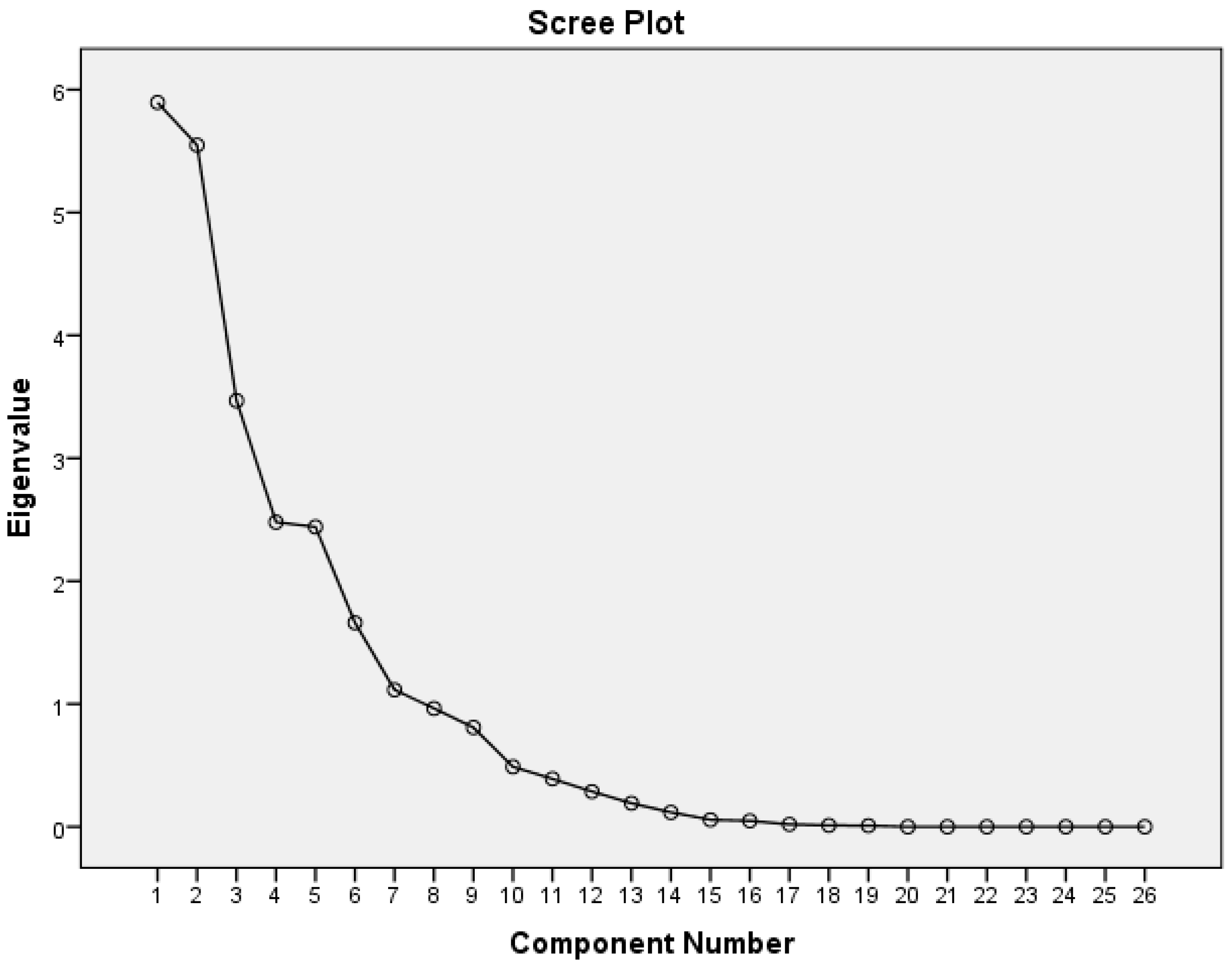
The resulting standardized matrix is used as input for the weighting procedure, which aims to minimize bias and subjectivity in the definition of weights. Hence, the Principal Component Analysis (PCA) with varimax rotation [44] was applied, by using IBM SPSS Statistics software v21. This technique groups indicators into factors based on collinearity, maximizing shared variance among variables, and assigns weights proportional to the variance explained by each factor. Components were selected by following Kaiser’s criteria. According to this rule, the latent factors are identified according to two conditions. Firstly, only components with eigenvalues greater than 1 were retained, as those below this threshold explain less variance than a single standardized variable. Second, only solutions explaining at least 60% of cumulative variance were considered acceptable, thereby preserving substantial portion of the original dataset’s information. These characteristics suggest that additional components would contribute negligible incremental variance. Inspection of the eigenvalue distribution, the scree plot, and the observed communalities (reported in Appendix A for 2021 as a representative example) confirms that the retained components capture the dominant structure of the data. This empirical pattern aligns with the literature, which endorses the Kaiser criterion as appropriate for datasets of comparable dimensionality and complexity [45,46], ensuring an optimal balance dimensionality reduction and information preservation. In addition, the 60% cumulative variance threshold further guarantees that the retained components preserve a substantial portion of the original information. These criteria, aligned with [41] guidelines, ensure an appropriate balance between dimensionality reduction and information completeness.
Additionally, the varimax rotation was applied to compute the loadings of each variable, and to enhance factor interpretability by simplifying the association of indicators with the extracted components. This orthogonal rotation is justified by the assumption that are independence among latent dimensions and allows a clear distribution of indicators to components, facilitating the construction of a transparent and interpretable composite index.
The aggregation procedure combines the weighted scores obtained from the principal components into a single composite index value for each observation, according to the following formula:
S j   =   ( i   =   1 n x i     α i )     λ α   +   ( i   =   1 n x i     β i )     λ β   +     +   ( i   =   1 n x i     ω i )     λ ω
Equation (2) is applied for computing each pillar composite index. Hence, S j represents the pillar values for each j-th region; x i stands for the 26 simple indicators; α, β and ω for the coordinates of each i-th variable on the components extracted through PCA; λ is the eigenvalue associated with each considered component. RCEI is the sum of S j values.
Additionally, to make the results comparable and interpretable, this aggregate score is normalized using Min-Max scaling within a 0 to 100 range to ensure comparability and ease of interpretability. This methodology yields a composite index that is transparent, statistically robust and aligned with best practices, thereby minimizing subjectivity in weighting process.
To define the weakness and straight of each observation, we replicated the prior procedure for each pillar of the circular economy, obtaining seven sub-indices that provide detailed insights into different dimensions. The methodology remains the same, except that in the final step we consider only the factors strongly associated with each pillar for the respective sub-index. After assigning weights to the factor scores, we retain only those scores with a pronounced relevance for individual dimension—namely Waste Production, Decoupling, Waste Management, Secondary Raw Materials, Competitiveness and Innovation, Regional Sustainability, and Regional Resilience. This approach aims to provide policymakers with a comprehensive and practical tool to better calibrate policy interventions across regions [41,42,43,44,45,46,47].

3.2. Measuring Regional Circular Economy Disparity (ReCED)

Once territorial circular economy performance level has been calculated, we have defined the thresholds allowing us to identify the regions not achieving acceptable levels. So, the scores of the ReCEI and its sub-indices were divided into quartiles to facilitate classification and comparative analysis.
Two scenarios were constructed for both the composite index and each sub-index:
  • Scenario 1—Efficient Performance Threshold. It defines an “efficient value”—z1 as the mean value of ReCEI scores (and of each pillar scores) within the interquartile range between the first and third quartile (Q1–Q3). This threshold captures a realistic benchmark for acceptable circular economy performance while mitigating distortions caused by extreme outliers. This approach aligns with methodologies employed in socioeconomic studies on synthetic index construction, which preferentially utilize robust statistics—such as the interquartile range (IQR) to mitigate the distorting effects of outliers [48,49]. In line with established practices in composite indicators design, robust central tendency benchmarks are widely adopted to ensure stability under distributional irregularities. The OECD methodological framework [41] highlights the importance of IQR-based thresholds to avoid distortions linked to high-leverage observations, and similar principles are applied in multidimensional poverty and vulnerability measures [50,51]. These contributions provide a theoretical framework for interpreting Scenario 1 as a justified threshold rather than an ad hoc statistical choice.
  • Scenario 2—Ideal Performance Threshold. It defines an “ideal value”—z2 as the maximum ReCEI value (and the maximum value of each pillar scores) observed within the fourth quartile (Q4). This threshold represents the ideal performance level and highlights the largest disparity in regional performance. The use of an upper-bound or frontier-type benchmark is consistent with the literature on performance gaps, polarization, and frontier evaluation. Studies on relative deprivation and polarization [52,53] employ extreme but empirically observed values to characterize the full span of disparity. This ensures that Scenario 2 captures the upper boundary of feasible performance without relying on hypothetical extreme.
These thresholds are theoretically grounded in Sen’s framework [23], which employs a poverty line to distinguish underperformers from adequately performing units. Scenario 1 establishes a pragmatic efficiency target, whereas Scenario 2 delineates the upper-bound idealistic goal. Within Sen’s conceptual architecture [23,54], evaluative spaces are often characterized using alternative cut-offs to explore how measurement properties vary when benchmarks shift from adequacy to aspiration. The dual threshold structure adopted here reflects this logic: a robust adequacy benchmark (Scenario 1) and a frontier-oriented aspirational benchmark (Scenario 2) jointly span the meaningful evaluative interval. Because the behavior of the index is monotonic across thresholds within the range z1, −z2 range, intermediate scenario is implicitly covered, supporting the sufficiency of these two theoretically grounded cases for the robustness assessment.
After identifying the observations requiring improvement in circular economy performance, territorial imbalances were quantified by calculating the distance between each observation’ current ReCEI (and its pillars) values from the efficient solution (Scenario 1) and the ideal one (Scenario 2).
These estimates were derived by applying different components of disparity, following the axiomatic formulation of poverty measurement introduced by Sen [23], which builds upon a refined version of the Headcount and Income Gap ratio.
The first component is the Circular Disparity Spread ( ReCDS ) computing the proportion of regions falling below the threshold. it is calculated as:
ReCDS   =   q N
where q denotes the number of regions with ReCEI (or one of pillars) score yi below the threshold value—yi < z1 (or z2) and N is the total number of regions.
The second component is Circular Disparity Intensity ( ReCDI ), measuring the intensity of the disparity as the average relative distance of underperforming regions from the relevant thresholds:
ReCDI   =   1 q i   =   i q z     y i z
This indicator can be interpreted as the quantum needed by each region to overcome or reach, at least, the threshold.
The third component is Circular Underperformance Inequality ( ReCUI ), measuring the degree of inequality among underperforming regions:
ReCUI   =   1 2 q 2 m i   =   1 q j   =   1 q | y i     y j |
where m represents the maximum possible difference in ReCEI scores across all regions. This component captures the dispersion of deficits among regions below the threshold.
Combining the above components (Equations (3)–(5)), the Regional Circular Economy Disparity Index ( ReCED ) is defined as:
ReCED   =   ReCDS [ I   +   ( 1     ReCDI ) ReCUI z ]
This formulation allows the ReCED to capture simultaneously the extent, intensity, and inequality of circular economy underperformance across regions.
The values obtained must be interpreted as the relative weight that each region, among those present in the sample but below the threshold value, could assume as an objective to be maximized in an economic-financial planning process.
The methodology illustrated has been applied to the 20 Italian regions, corresponding to NUTS level 2.

3.3. Data

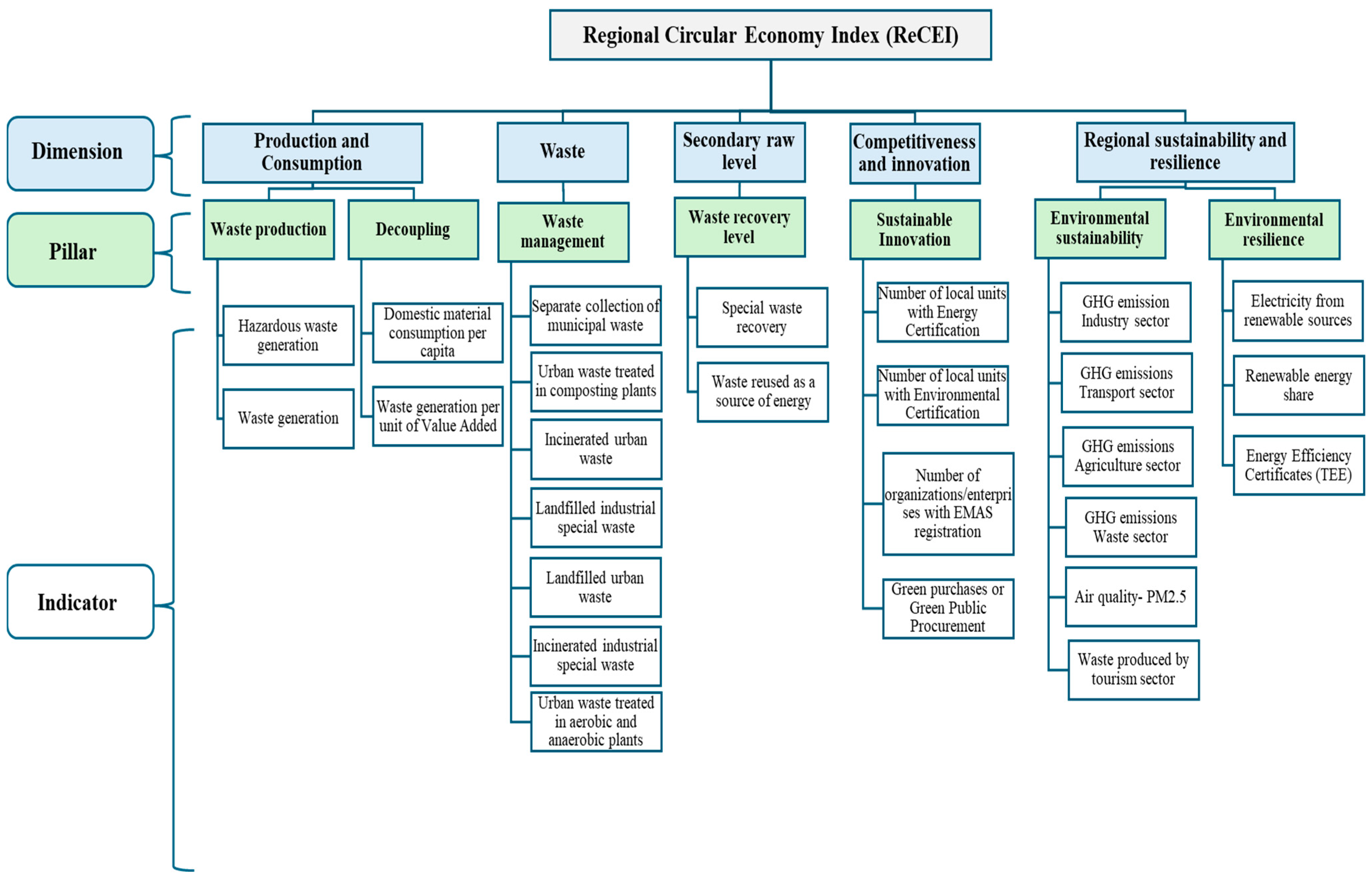
In this sub-section, we explain the variables used to realize the ReCEI. For its formulation we have followed the European Monitoring Framework [4], developed by the European Commission to assess progress in the transition towards the circular economy. Thus, ReCEI comprises a total of 26 indicators grouped into five dimensions:
  • Production and consumption dimension measures the reduction in material and waste consumption, decoupling economic growth from resource use, and green public procurement [3,55,56].
  • Waste management evaluates the effectiveness of minimizing waste and maximizing its recycling and reuse, in line with targets for reducing landfills and increasing separate collection [4,57].
  • Secondary raw materials dimension reflects the regional capacity to re-use waste materials in new production processes, reducing dependence on virgin materials [1,58].
  • Competitiveness and innovation dimension examines regional efforts to make the economy more competitive and innovative through circular practices, new models and technologies [8,59].
  • Regional sustainability and resilience dimension evaluate resource efficiency to promote a self-sustaining local economy that is resilient to climate change and crises [2,60].
This multidimensional structure, as illustrated in Figure 2, allows a comprehensive analysis of regional progress towards circularity, by integrating key environmental, economic and social challenges [1,4,57,59,60]. All variables are collected for each Italian region, for the period 2015–2021, by using the following official databases: indicators for the Sustainable Development Goals (SDGs) developed by ISTAT; the waste register of ISPRA (Higher Institute for Environmental Protection and Research); Eurostat’s ARDECO database.
The choice of the period 2015–2021 for the analysis of variables is in line with international scientific literature, which adopts similar time frames to ensure the availability of harmonized data, methodological consistency and relevance concerning the main circular economy and sustainability policies introduced from 2015 onwards [60,61]. Table 1 contains statistics of all variables used, whereas more details on data validation are illustrated in Appendix B.

4. Results and Discussion

4.1. Regional Circular Economy Performance

Following the procedure outlined in Section 3.1, the Regional Circular Economy Index (ReCEI) and its pillars (subindexes) were constructed for all Italian regions for each year of the period 2015–2021. To enhance transparency and reproducibility, the factor loading matrix and scree plot for 2021 are reported in Appendix A as an illustrative example. Similar patterns were observed for all other years (2015–2020), confirming the stability of the weighting procedure over time.
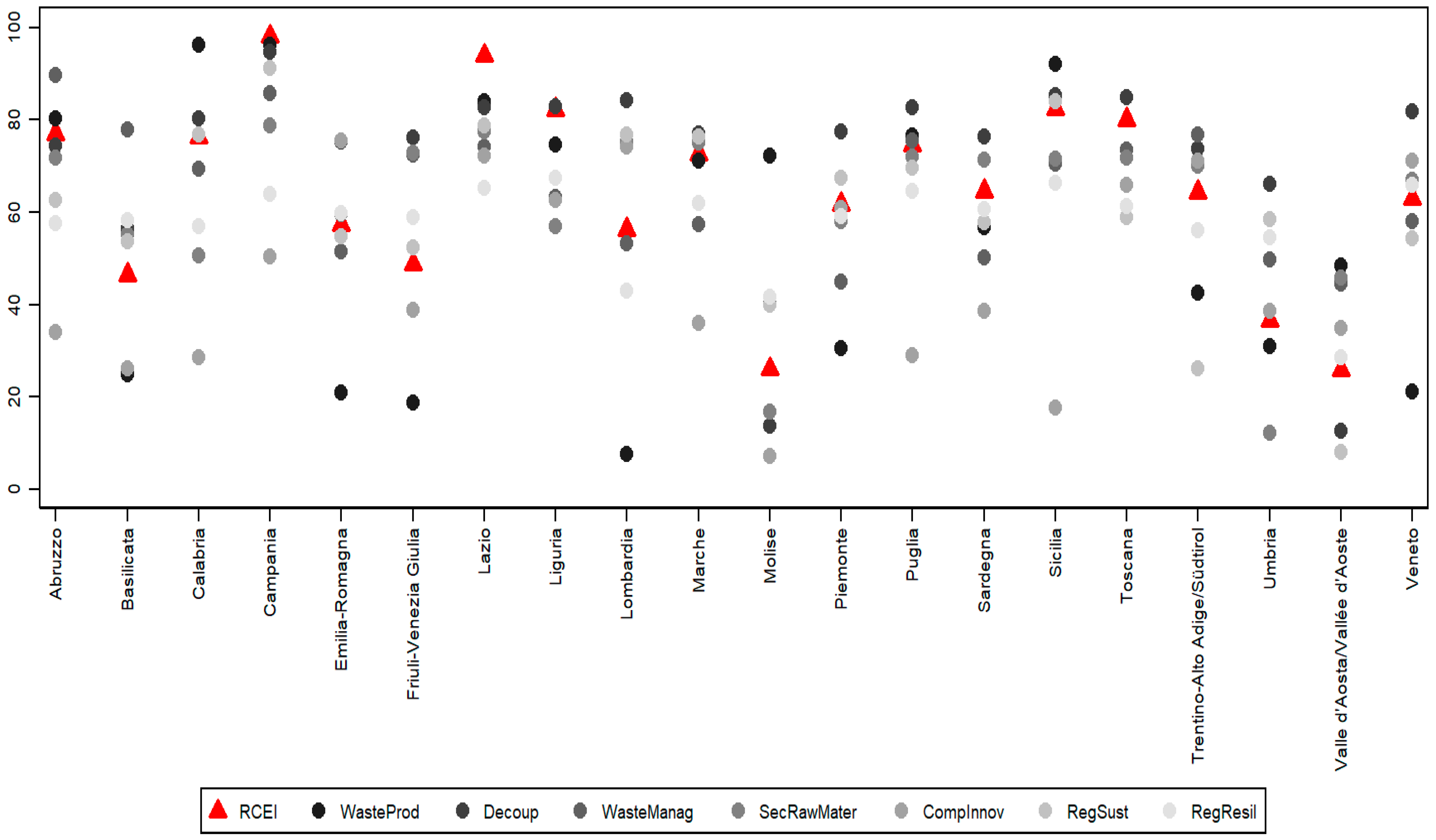
Figure 3 presents the average values for ReCEI and each pillar, while annual values are illustrated in the Supplementary Materials.
The results of ReCEI reveal a significant territorial heterogeneity in circular economy performance across Italian regions from 2015 to 2020, that diverges partly from the traditional Italian dualism characterized by a more developed North and a less developed South. Campania (98.11) and Lazio (94.00) stand out as top performers, driven by strong outcomes in the pillars of Waste Production, Waste Management, and Secondary Raw Materials. These areas reflect efficient waste handling, effective recovery and transformation of secondary materials, and a notable reduction in waste generation—results aligned with focused regional policies and dynamic public–private collaborations [62,63,64].
Campania’s leading position in the composite indicator may initially seem paradoxical, given the well-known regional challenges in waste management over time [65,66]. Nevertheless, the index methodology explicitly prioritizes the reduction in waste generation as well as the discontinuation of the most environmentally damaging disposal methods. Viewed through this lens, Campania’s performance trajectory over the past decade aligns coherently with the resultant scores.
Quantitatively, the region exhibits one of the lowest levels of per capita waste production rates (1.54 t/inhabitant) and provides clear evidence of a decoupling between economic growth and waste generation. Moreover, waste management dynamics have also undergone substantial reconfiguration: the region’s limited reliance on landfills, combined with a steady increase in separate waste collection—exceeding 340 kg per capita in 2021—has significantly strengthened waste management performance. These trends represent a structural break compared to the patterns that characterized previous phases of crisis [66,67,68,69]. During 2015–2016, the average volume of municipal waste disposed of in landfills amounted to 448 kg per capita, whereas after 2016 this value declined to 8 kg per capita, indicating a profound improvement in waste management practices.
These achievements are partially attributable to targeted regulatory interventions. Campania Regional Law No. 14/2016, updated by Regional Law n. 2/2018, formalized the region’s commitment to advancing a circular economy model focused on the integrated reduction, reuse and recycling of materials. This legislation introduced measures to support research and innovation, and to promote the development of facilities for energy recovery from waste: the special waste recycling rate increased on average by 4% after 2016, with peak values recorded in 2018 (+7.15%) and 2021 (+6.48%). Though these comprehensive initiatives, Campania has developed a virtuous model of circularity at the regional scale, positioning itself among leading Italian territories in this domain [9]. This model also reflects the region’s economic structure, which is characterized by a predominance of service sectors and light industries, as highlighted by recent studies [62,69]. Far from suggesting the absence of residual challenges, this outcome illustrates how targeted policy interventions and inherent structural characteristics can synergistically reverse historically adverse trajectories.
The Lazio Region has systematically incorporated the ecological transition within its strategic planning framework, with particular emphasis on the Regional Waste Management Plan (PRGR), which serves as a comprehensive and integrated reference framework. It is designed to promote waste prevention, enhance recycling efforts, and maximize recovery of secondary raw materials through the deployment of advanced technologies and innovative processes within environmental management systems. Such policies reinforce the pivotal role played by technologically advanced firms and cooperatives in disseminating circular economy models, as illustrated in several recent scientific studies [61,70,71,72,73].
Conversely, regions such as Sardinia, Trentino-Alto Adige, Veneto, and Piedmont hold intermediate positions, consistently performing in Waste Management and Material Recovery. By contrast, Lombardy and Emilia-Romagna—despite their roles as economic powerhouses—fall below the national average. These results can be explained by their regional policies, which, although updated and ambitious, face structural challenges. Lombardy’s Regional Waste Management Program (PRGR) adopts an integrated strategy that emphasizes waste prevention, recycling, and landfill reduction. However, the region’s substantial reliance on incineration and the complexity of its treatment infrastructure limit full compliance with circular economy principles. Similarly, Emilia-Romagna’s Regional Waste Management and Remediation Plan (PRRB) sets rigorous targets, including 80% separate collection and 70% recycling rates, yet its efforts contend with the need to modernize existing plants and processes, which remain anchored to traditional disposal methods [74].
Molise and Valle d’Aosta face deeper structural constraints due to limited infrastructure and dependence on land, reflected in their low scores for Waste Management and Regional Resilience. These findings highlight ongoing structural challenges in low-density regions with limited plant infrastructure [75,76], as well as a marked delay in political commitment to the circular economy transition. In 2023, the Molise region introduced a strategic regional development law aimed at orienting the production system toward regenerative and sustainable models inspired by natural cycles. Similarly, in 2022, the Valle d’Aosta region updates its regulatory framework through Regional Law No. 4, which revises the Regional Waste Management Plan for the period 2022–2026. Both legislative measures, aligned with European waste regulations and circular economy principles, aim to foster waste reduction, recovery, and reintegration into production cycles, thereby conserving primary resources and mitigating environmental impacts. The temporal lag in policy development and implementation of both regions, coupled with their limited infrastructural capacity, thus accounts for the comparatively lower performance of these territories relative to more advanced regions.
Despite this territorial diversity, only the Competitiveness and Innovation pillar reveals a clear North–South divide: Emilia-Romagna, Lombardy, and Lazio excel with advanced industrial ecosystems, a high concentration of innovative firms, and a strong ability to attract R&D investment, whereas southern regions lag significantly—with Campania as a notable exception [5,11,77]. In addition, within the Regional Sustainability pillar, southern regions such as Campania and Sicily achieve high scores driven by effective environmental policies targeting emission reductions. This indicates the potential for a more rapid and effective sustainable transition compared to certain industrialized regions burdened by greater environmental pressures [78,79].
The Regional Resilience pillar highlights Liguria and Sicily for their effective efforts in energy efficiency and diversification. Liguria, despite low renewable electricity production (7–9%), demonstrates strong resilience through efficient consumption management and widespread use of Energy Efficiency Certificates (TEEs). This performance is largely attributable to the adoption of regulatory measures such as Regional Law no. 22 of 29 May 2007, which regulates the energy planning and interventions of the Liguria Region. The law promotes improvements in energy efficiency, energy saving, and the development of renewable sources compatible with territorial specificities, including support for initiatives aimed at enhancing local resources through mechanisms such as TEEs. This regulatory framework exemplifies the adaptive strategies of regions overcoming territorial and infrastructural limitations [80]. Sicily shows steady growth in renewable energy generation (from 23% to 28%) alongside strong adoption of efficiency measures, with resilience reinforced by energy diversification, a key factor in reducing vulnerability to shocks [9]. This progress stems from actions supported by Cohesion Funds (EFRD 2014–2020), which provided financial incentives for the construction and modernization of plants, thereby encouraging the diffusion of clean energy sources such as solar and wind. These policies, together with the updating of the Regional Environmental and Energy Plan, promote a diversified and resilient energy model aligned with the principles of sustainable transition. Conversely, Molise and Valle d’Aosta exhibit low resilience due to reliance on less diversified, traditional energy systems [2,80], as well as a comprehensive delay in the adoption of environmental policies.
Overall, the RCEI and its pillars demonstrate that regional circularity depends not only on economic strength but also on the adequacy of infrastructure and innovation capacity. The emerging picture is nuanced: some southern regions—Campania and Sicily— achieve notable success, likely due to targeted waste management interventions and a growing focus on closing material supply chains. In contrast, industrially advanced regions such as Lombardy and Emilia-Romagna, despite larger production volumes, face difficulties fully embracing circular economy principles, highlighting the need for stronger policies to promote innovation and waste reduction.

4.2. Regional Circular Economy Disparity

The second phase of the methodology employed in this study focuses on quantifying the extent of regional disparities in circular economy performance. Specifically, the deviation of each Regional Circular Economy Index (ReCEI) value—and its underlying pillars—is assessed relative to carefully defined benchmark thresholds. As detailed in Section 3.2, two distinct analytical scenarios were developed:
  • Scenario 1 (efficiency threshold, z1): establishes a pragmatic benchmark reflecting a satisfactory level of performance, calculated as an “interquartile” average between the first and third quartiles of the distribution.
  • Scenario 2 (ideal threshold, z2): sets an aspirational benchmark representing best practice, corresponding to values within the fourth quartile.
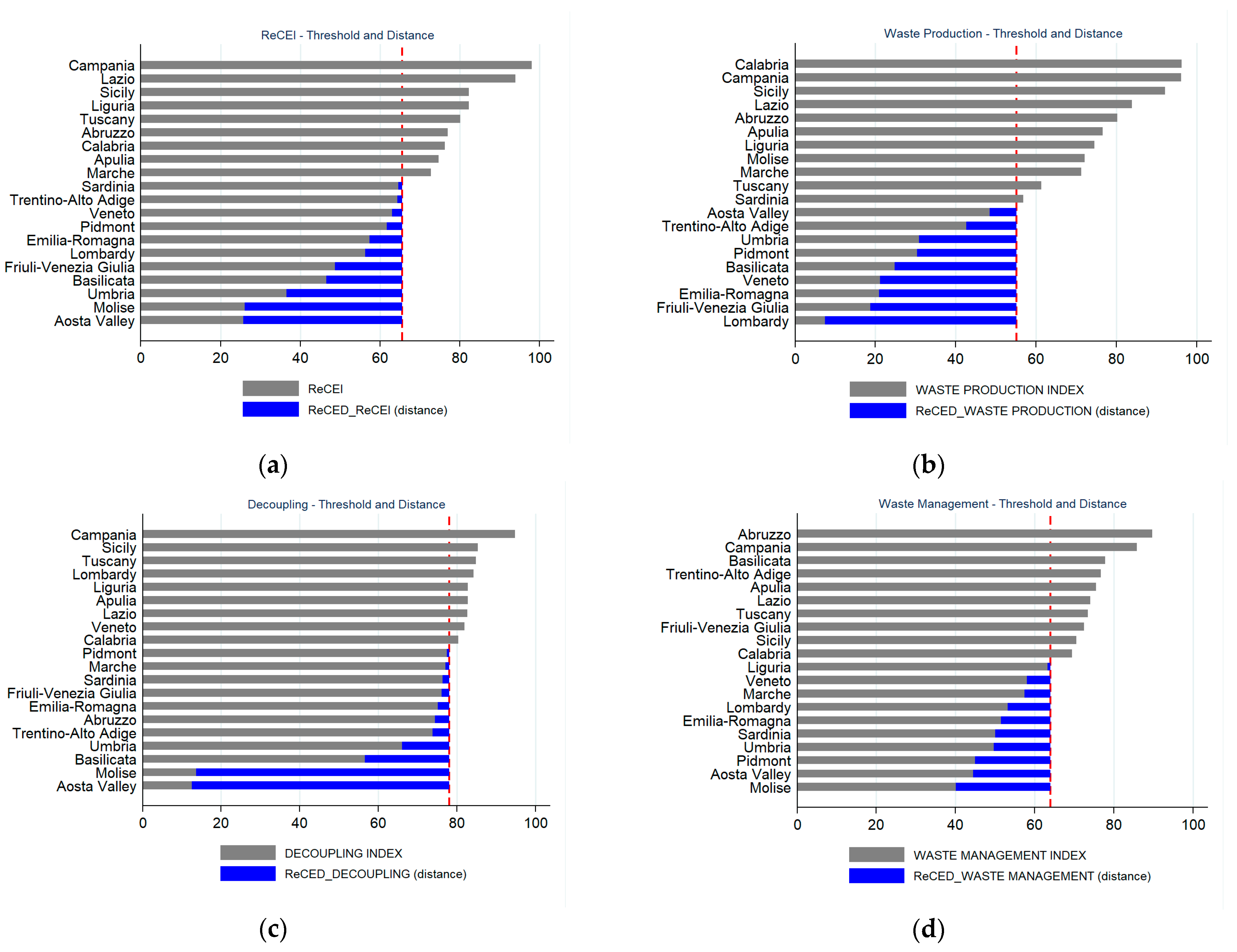
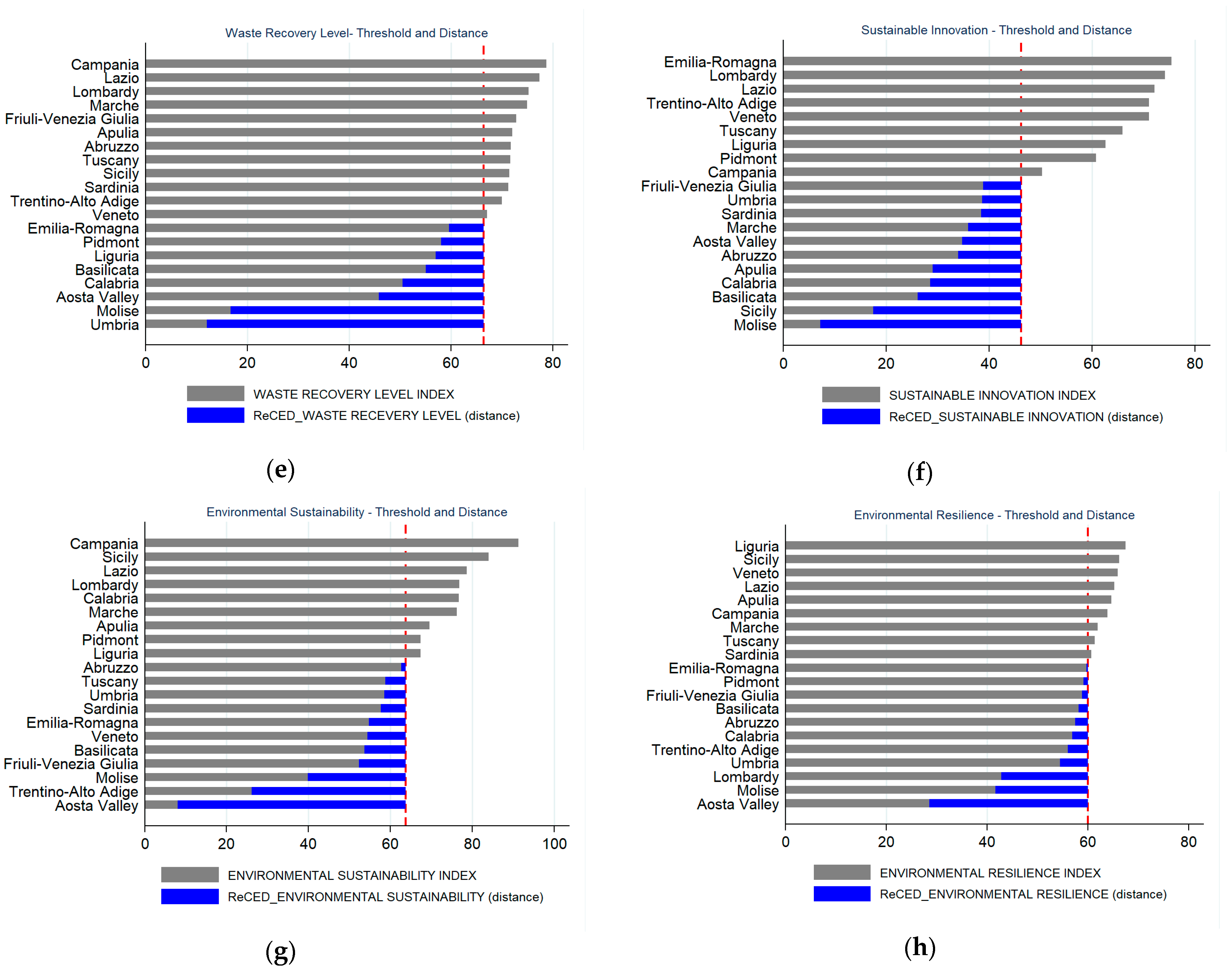
The distances from these benchmarks were quantified using the Regional Circular Economy Disparity Index (ReCED), computed for each region, by applying Equation (6) (see Section 3.2). Lower ReCED values indicate closer proximity to the efficiency threshold, reflecting better performance, while higher values reveal inefficiencies or structural lags in the circular transition. Results for Scenario 1 are illustrated in Figure 4a–h, whereas those for Scenario 2 are provided in Supplementary Materials. The graphs illustrate, with gray bars, the regional distribution of the Regional Circular Economy Index (ReCEI) and of its pillars, as well as the distance (shown with blue bar) from the reference threshold value (indicated by the red line), thereby highlighting the degree of territorial heterogeneity captured by the ReCED Index.
The interregional comparison in Scenario 1 highlights a marked polarization between a limited group of high-performing regions and a broader set of territories that remain distant from the efficiency threshold, thereby confirming the presence of structural territorial dualism in the circular economy transition. These spatial disparities are aligned with existing empirical research on the regional green transition gaps and underscore the critical role of institutional quality in promoting resilience and sustainable growth [81,82].
Specifically, among the twenty regions analyzed, only five—Campania, Lazio, Tuscany, Apulia and Sicily—successfully achieve the efficiency thresholds for the composite index ReCEI (Figure 4a) and for at least six of the seven sub-indexes (Figure 4b–h). This indicates a level of circular maturity and institutional resilience that is crucial for effectively advancing sustainable transition processes [82].
Particularly, Lazio and Campania demonstrate full efficiency in all dimensions, supported by well-established innovative ecosystems and consistent environmental policy frameworks. For example, the Lazio region has embedded ecological transition within key planning instruments—including the Regional Waste Management Plan (PRGR)—complemented by targeted support policies for SMEs focused on eco-innovation and digitalization. A notable initiative is the 2018 public funding call aimed at financing innovative projects in energy and environmental sectors. Such interventions corroborate empirical findings on the pivotal role of technologically advanced firms and cooperatives in driving the diffusion of circular economy models [70,71,72,73,83]. In Campania, the implementation of the new regional waste plan (Regional Law 29/2018), which sets targets of 65% separate waste collection and 70% recovery, has steered the region toward innovative waste management strategies that avoid new landfill development and encourage investments in aerobic treatment facilities. Concurrently, awareness-raising campaigns have contributed to the diffusion of a circular economy culture, positioning Campania as a green innovation hub for the Southern Italy [84,85].
By contrast, Tuscany, Apulia and Sicily are positioned close to the efficiency threshold, exhibiting only minor residual inefficiencies. This reflects the ability of medium-scale regions to offset lower industrial density through strong territorial cohesion and multilevel governance coordination. Thus, Tuscany region has formally recognized the circular economy as a guide principle through the Regional Statute (Regional Law 9/2018) and Regional Law 48/2018, effectively translating these guidelines into integrated strategies that encompass innovation, sustainability and territorial planning. Notably, supply chain agreements and circular industrial districts play a crucial role in this framework by strengthening advanced waste management and material recycling practices [79,86]. Both Apulia and Sicily have promoted a transition to a circular economy by a regional law proposal, developed through an inclusive process with local actors [87,88].
Jointly, these five regions exhibit a sophisticated profile of institutional and territorial capacity, reinforced by proactive policies, mature innovative ecosystems and well-established multilevel governance frameworks. This aligns with the broader literature demonstrating that regions characterized by resilient institutions and sustained long-term policy commitments consistently achieve higher sustainable efficiency levels [2,58,81,83,89,90].
The lagging regions exhibit significantly higher ReCED values, indicating pronounced structural delays and systemic misalignments relative to the efficiency threshold. Regions such as Molise, Umbria, Valle d’Aosta, Friuli-Venezia Giulia and Basilicata, face infrastructural, institutional, and productive vulnerabilities that constrain their capacity to deploy effective circular strategies [91].
Molise exhibits systemic inefficiencies driven by low rates of separate waste collection, insufficient infrastructure, and limited adoption of innovative technologies. This is a dynamic typical of territories with low administrative capacity [2,83,85,92]. Similarly, Basilicata shows moderately high ReCED across several dimensions. The most pronounced inefficiencies are evident in waste production, secondary raw materials use, and in the decoupling of economic growth from resource consumption, indicating a persistent dependence on material-intensive production processes. This is consistent with findings by [81] regarding barriers to eco-innovation. Thus, the lack of a well-established innovation ecosystem constrains Basilicata’s capacity to progress toward more advanced circular economy models [75].
ReCED values for Umbria indicate widespread inefficiencies in all domains, particularly in secondary raw material use and waste production. However, its regional sustainability and resilience indicator suggests a latent capacity for adaptation and response, aligning with the smoother transition patterns identified by [93]. Conversely, Valle d’Aosta shows substantial imbalances in regional sustainability decoupling, reflecting vulnerabilities typical of small-scale economies affected by administrative fragmentation [91]. Finally, Friuli-Venezia Giulia presents a heterogeneous yet broadly critical profile, with high deficiencies in waste generation, alongside moderate inefficiencies regional sustainability. Despite its advanced industrial development, the region’s overall efficiency is hindered by the lack of comprehensive circular governance strategies [91,94].
The comparison between high- and low-performing regions confirms the presence of a territorial gradient of sustainable efficiency, aligning with international literature on regional disparities in the green transition [81]. Campania, Lazio, Tuscany, Apulia and Sicily distinguish themselves through a synergistic combination of institutional maturity, stable environmental policies, and well-established innovative ecosystems. Conversely, Molise and Umbria, Aosta Valley, Basilicata and Friuli-Venezia Giulia exhibit multidimensional vulnerabilities encompassing both material and energetic domains as well as institutional and innovative capacities.
The most notable disparities are evident in waste production, decoupling, and secondary raw materials indicators, which measure regional capacities to decouple economic growth from resource consumption, as well as to promote production models based on reuse and recycling [81,92]. Overall, these fundings underline the need for place-based policies that enhance administrative capacity and integrate sustainable innovation within regional development strategies, thereby promoting territorial convergence toward the efficiency threshold.
Scenario 2 reveals a marked deterioration in performance, since only a limited number of regions exhibit low disparity index (ReCED) values that demonstrate significant proximity to the ideal threshold for the ReCEI and its pillars. Notably, Campania emerges as the most efficient region, achieving the ideal threshold, followed by Lazio and Sicily, which display relatively low overall disparity index, indicative of performance closely approaching, yet not fully attaining, to the ideal objective.
The territorial analysis corroborates the presence of marked regional disparities, consistent with findings from Scenario 1. Northern regions generally exhibit higher levels of disparities in the pillars associated with waste generation and waste management, reflecting a persistent dependence on incineration and less circular waste generation practices [74]. In the Central regions, Umbria exhibits widespread critical vulnerabilities, especially in second raw materials use and in waste production, whereas Tuscany and Lazio show lower disparity values, reflecting more solid performances close to the ideal threshold. The Southern regions present a heterogeneous landscape: Campania maintains low disparity levels across all assessed pillars, highlighting well-established circular economy practices; on conversely, Molise and Basilicata display high disparity values across multiple dimensions, reporting significant structural challenges.
These results underscore the need to design territorially differentiated policy interventions, aimed at overcoming the structural barriers adversely affecting regions with higher disparities. Such targeted approaches are essential to facilitate the broad adoption of circular economy models that are both highly efficient and sustainable.

5. Robustness Analyses

5.1. Conceptual Validation of ReCEI

The assessment of the conceptual validation of the ReCEI is based on theoretical considerations relating to the validity and consistency of composite indicators. The goal is twofold: to verify whether the index designed to measure the circular sustainability of Italian regions aligns with the ASviS SDG12 synthetic indicator, and to explore the effects of adding extra pillars in the full version of the index.
To carry out this assessment, a comparable version of the index, ReCEI_comp, was developed based on four pillars closely associated with the circular economy: “Waste Production”, “Decoupling”, “Waste Management”, and “Secondary Raw Material”. For each pillar, a corresponding variable was selected from the Asvis SDG12 synthetic indicator (see Table 2), ensuring maximal comparability with official metrics. This methodological approach enables the isolation of the index’s core components, thereby providing a robust foundation for rigorous comparisons and minimizing the risk of distortion caused by additional variables absent from the official indicators. Consequently, the construction of ReCEI_comp serves as a clear methodological benchmark for verifying the internal validity of the indicator.
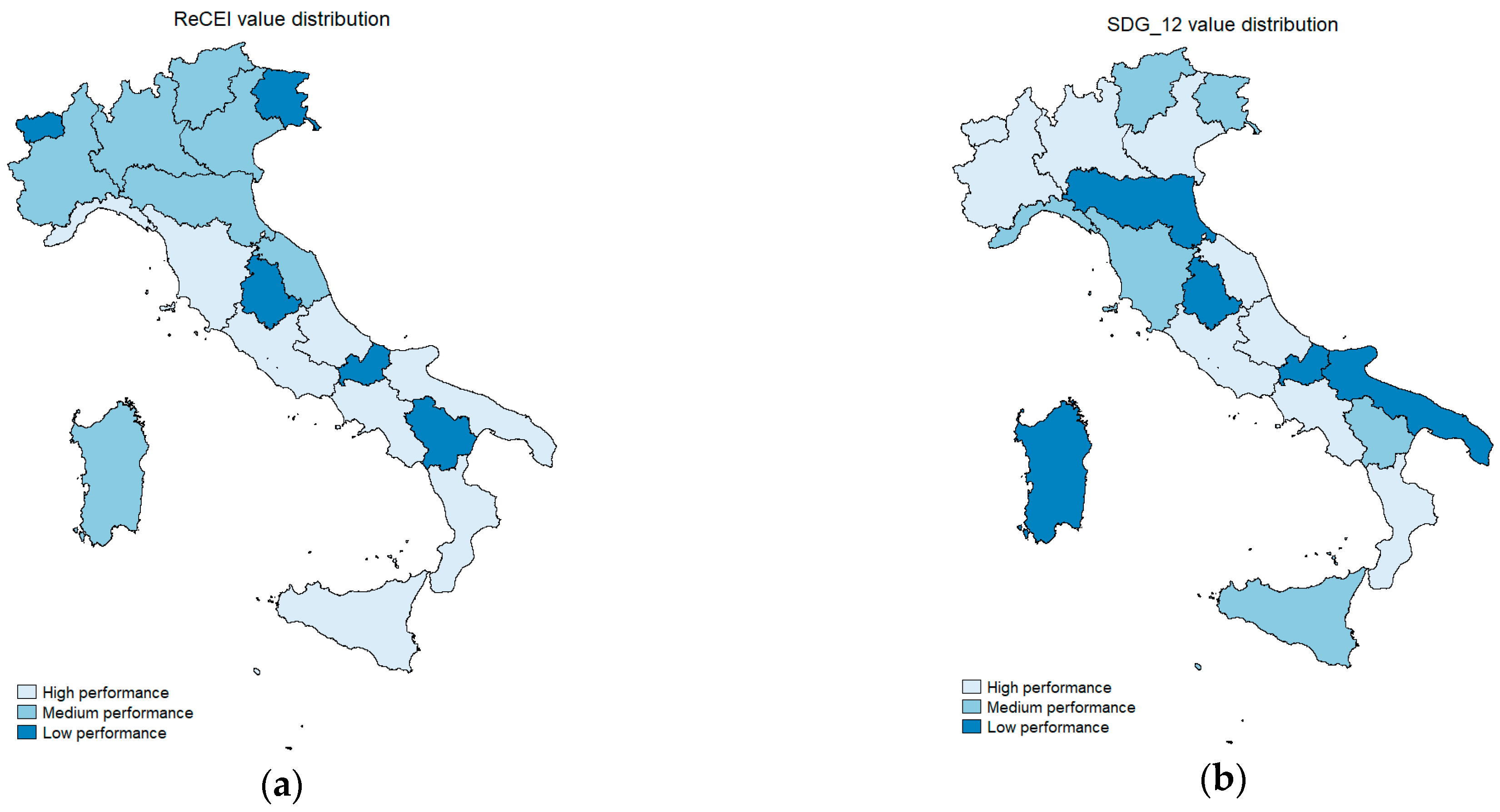
As illustrated by the two maps in Figure 5a,b, the rankings of the two indicators exhibit a high degree of similarity, with only minor exceptions. Notably, Lazio and Campania consistently emerge as leading regions in both classifications. In contrast, Emilia-Romagna, Sardinia and Basilicata show discrepancies, positioning themselves differently in the two rankings.
Three types of correlation were employed to evaluate the consistency between the indicators, capturing both linear relationships and concordance in the regional ranks. Pearson correlations assess the linear relationships between the indicator values, while Spearman and Kendall correlations analyze the consistency of regional rankings, with Kendall being more appropriate for small samples and tie data. This approach ensures a rigorous evaluation of internal consistency and alignment with the official SDG12 indicators.
The correlations analysis between ReCEI_comp and SDG12 reveals a high level of consistency in regional rankings. The results shown in Table 3 indicate that ReCEI_comp effectively captures the key dimensions of sustainable consumption and production, thereby validating the choice of pillars and confirming the comparable index’s capacity to replicate the conceptual framework of the official indicators. Consequently, the comparable index (ReCEI_comp) is both robust and coherent, providing a reliable basis for interregional comparisons.
Overall, the robustness analysis confirms that the ReCEI is methodologically sound and maintains a high degree of consistency with the official SDG12 indicators. Simultaneously, the inclusion of additional pillars and variables in the full version enhances the indicator, providing a broader and more nuanced understanding of regional performances in circular economy and sustainability. From a policy perspective, the robustness of the index ensures that regional evaluations are both reliable and interpretable, providing decision-makers with a rigorous and adaptable tool to guide policies aimed at advancing the circular economy and sustainable development through targeted, evidence-based interventions.

5.2. Robustness Analysis of ReCEI

To verify the robustness of the ReCEI with respect to economic and institutional contextual factors, a panel regression with fixed effects was estimated, encompassing the 20 Italian regions for the period 2015–2021. The primary objective was to evaluate whether the composite circular economy indicator sustains both conceptual validity and empirical stability when accounting for structural determinants such as economic development, territorial density and quality of governance. Specifically, three models were estimated (see Table 4). Model 1 (M1) incorporates GDP per capita (lgdp_pc) and industrial density (ldens_ind) as explanatory variables. Model 2 (M2) extends the specification by including institutional quality (EQI), the Regional Innovation Scoreboard (RIS) and measures of public and private investment in R&D (lpubinvrd and lprivinvrd), thereby examining the interplay between innovative performance, institutional quality and circularity outcomes. Finally, Model 3 (M3) further expands the framework by integrating additional structural variables such as population density (ldens_pop) and industrial value added (lgvaind), thereby capturing broader territorial and economic dynamics that might influence regional circular economy performance.
The results demonstrated that the ReCEI indicator exhibits a consist and coherent response to the key explanatory variables, thereby affirming its conceptual validity. Industrial density emerges as a statistically significant negative determinant of circular performance. This finding suggests that regions characterized by higher industrial concentration experience increased pressures on material flows, aligning with the literature on resource management and the environmental impacts associated with production systems [61]. Similarly, population density presents a significant negative effect on circulatory outcomes, highlighting the infrastructural and environmental challenges faced by densely populated urban areas in managing circular material flows. This result is consistent with studies highlighting the complexities and pressures inherent in high-density contexts [95].
On the contrary, neither GDP per capita nor institutional quality (EQI) are statistically significant determinants of the ReCEI. This outcome suggests that ReCEI captures circular economy performance independently, without confounding influences from regional wealth or institutional capabilities, corroborating prior findings [96,97]. The Regional Innovation Scoreboard (RIS) exhibits a significant negative association in M2, indicating that higher overall innovation performance does not inherently translate into greater circularity. This underscores an important conceptual distinction between profit-oriented innovation and circular economy-specific innovation [98]. This result is also confirmed by private investment in R&D which shows a negative and statistically significant coefficient in M2 but loses significance in the M3 model. In contrast, empirical evidence suggests that public investment in R&D is positively associated with enhanced circularity outcomes, reflecting the strategic role of targeted public funding in fostering sustainable transitions.
Overall, this robustness analysis confirms that the ReCEI represents a methodologically sound and conceptually coherent tool: the most relevant structural variables influence the indicator in a predictable manner, while the economic and institutional context variables do not distort its regional ranking. Thus, empirical evidence supports the ability of ReCEI to capture the operational dimensions of circularity, providing a reliable tool for the comparative analysis of regional performances in the circular economy.

5.3. Sensitivity Analysis of ReCEI

To assess the robustness of the effect of public investment in R&D on the Regional Circular Economy Index (ReCEI), we conducted a sensitivity analysis employing the sensemakr technique. This approach, developed by [99], 2020, extends traditional omitted variable bias techniques by incorporating formalized quantitative robustness metrics and intuitive visual diagnostics. A key feature of the sensemakr framework is its ability to benchmark the explanatory power of hypothetical unobserved confounders against that of observed covariates, thereby enabling a contextualized and data-driven interpretation of sensitivity results. This enhances both transparency and methodological rigor in evaluating the potential influence of hidden biases on casual inferences derived from regression analyses.
As reported in Table 5, the estimated coefficient for public investments in R&D (lpubinvrd) is positive and statistically significant (β = 18,418, standard error = 2946, t = 6.25), demonstrating a robust and favorable impact of such investments on regional circular economy performance. Sensitivity analysis reveals that an extreme confounder, orthogonal to the covariates included in the model, would have to explain at least 22.98% of the residual variance of the treatment to entirely nullify the observed effect (partial R_(yd.x)2 = 0.2298). The Robustness Value (RV) quantifies the minimum strength that an unobserved confounder must possess to alter the estimated casual effect. In this context, an RV of 0.4171 for a total bias (q = 1.00) indicates that an unobserved confounder should explain more than 41.7% of the residual variance in both the treatment and the dependent variable in order to reduce the estimated coefficient to zero. Additionally, the RV_qa value of 0.3097 at the 5% significance level of 5% (α = 0.05), implies that a confounder would have to explain at least 30.97% of the residual joint variance to make the observed effect statistically significant. These findings indicate that the estimated effect is robust, suggesting that it is not readily nullifiable by realistic confounders.
Complementary to this, the Bounds on Omitted Variable Bias analysis (see Table 6), using the European Quality of Government Index (EQI) as a benchmark, confirms the stability of the estimated coefficient. Specifically, an unobserved confounder with explanatory power equivalent to twice or three times that of the EQI induces only marginal changes in the estimated coefficient (18.26, 18.10 and 17.94, respectively), preserving both the sign and substantive significance of the effect. Notably, the effect remains positive even under extreme conditions wherein the confounder accounts for the entirety of the residual variance (ranging between 13.62 and 15.67), thereby underscoring the robustness and practical relevance of the casual inference.
In conclusion, the sensitivity analysis supports the robustness and credibility of the positive effect of public R&D investments on ReCEI, reinforcing the hypothesis that public investment policies in R&D represent an effective mechanism to enhance regional performances in circular economy. The combination of a statistically significant coefficient, high robustness values, and narrow bounds confirms the rigorous methodology employed and substantially reduces the likelihood that omitted confounders could compromise the validity of the findings.

5.4. Sensitivity Analysis of Regional Circular Economy Disparity Index (ReCED)

To assess the robustness of the ReCED index in capturing regional disparities in circular economy performance—as measured by the ReCEI—this section presents a sensitivity analysis based on an alternative benchmark threshold. Specifically, we define a new threshold, z3, as the median of the ReCEI distribution. This measure is widely employed in territorial welfare studies, institutional benchmarking, and comparative evaluations of public service quality, owing to its property as a central point that divides the distribution into equal halves, rendering it insensitive to skewness or outliers [63,100]. Employing the median as an alternative baseline serves two key objectives: first, it tests the index’s stability against a distinct measure of central tendency, distinct from the interquartile mean; second, it aligns with established methodologies in performance indicator construction.
Table 7, Table 8, Table 9 and Table 10 report the results of the sensitivity analysis, displaying ReCED values—computed for the composite ReCEI indicator and its pillars—alongside the absolute distance from the alternative threshold z3 (median). Lower ReCED values, approaching zero, denote proximity to z3; under this metric, the relative structure of regional performance remains substantially unaltered. The regions exhibiting the greatest deviation from z3 mirror those identified under the baseline threshold z1 (interquartile mean), with no substantive shifts in the overall ranking.
This invariance implies that ReCED’s measurement of territorial disparities is insensitive to threshold specification, robustly capturing authentic distributional differences in circular economy performance. Thus, incorporating the median threshold validates that empirical findings are parameter-independent, confirming the solidity of the methodological framework adopted [41,101].

6. Conclusions

In recent years, Italy has consolidated a leading position in Europe in the circular economy domain, standing out for efficiency in the use of resources, high recycling rates, and use of secondary raw materials. Reports from the European Commission [102] and the Circularity Gap Report Italy [103], place Italy among the European leaders in municipal waste recycling—over 54% in 2023, well above the EU average—and in resource productivity and recycled material use.
However, this national excellence is accompanied by significant regional disparities. To address these, the present study introduces a combined methodological approach aimed at quantifying disparities in circular economy performance, thereby providing detailed insights critical for policy design. The initial step involves developing a composite index, called the Regional Circular Economy Index (ReCEI), designed for adaptability across territorial contexts that enables standardized assessment of circular economy performance at the Italian NUTS 2 region level. The index provides a granular perspective on regional progress towards circularity, distinguishing leaders implementing sustainable practices from laggards, in order to provide targeted insights for policy intervention. ReCEI also identifies regional strengths and weaknesses, fostering a better understanding of where additional resources and actions are needed.
The development of ReCEI acknowledges ongoing debates on composite indicators’ (CIs) statistical validity, including methodological biases, subjectivity in indicator selection, normalization, weighting, and aggregation, alongside sensitivity to data quality and measurement errors [104,105,106]. These limitations risk distorting empirical insights and policy recommendations due to opacity or inadequate statistical rigor [107,108,109]. Comprehensive sensitivity and validation analyses (see Section 5) address these concerns, confirming ReCEI’s robustness for regional policymakers to monitor circular economy progress, pinpoint interventions, and enable benchmarking.
The second methodological step deals with the construction of indicators measuring the dissimilarity of territorial areas in circular economy performance, as distance from threshold values. The Regional Circular Economy Disparity Index (ReCED), inspired by Sen’s Theory [23], is designed to capture not only the magnitude of underperformance but also its intensity and spatial distribution [24,25,110]. The integrated application of these indices enables the creation of a dynamic and multidimensional mapping of territorial disparities in the circular economy, providing a spatially detailed evaluation framework that directly incorporates territorial inequalities into socio-economic planning processes.
Empirical findings confirm a heterogeneity in circular economy performance across Italian regions. While some regions –such as Campania, Lazio, Tuscany, Apulia and Sicily—have developed integrated strategies and effective tools to advance the circular economy transition, others—namely Molise, Umbria, Valle d’Aosta, Friuli-Venezia Giulia and Basilicata—still struggle to achieve the desired standards, as evidenced by their regional composite indices. The persistent North–South divide is further reflected in the South’s lower self-sufficiency in waste processing facilities, constraining closure of material cycles and maximizing recycled input. Thus, the success of the circular transition will depend on the ability to bridge these regional gaps through an integrated strategic vision. Embedding circularity into regional planning processes necessitates setting explicit objectives and challenging investments into infrastructure, innovation and skills development—with particular emphasis on supporting SMEs through tailored incentives and facilitation of widespread adoption of circular technologies [14,17,18]. Moreover, fostering active participation from citizens and companies, coupled with transparent and adaptive monitoring systems, is essential for ensuring responsiveness to emerging needs [15,19,20].
Despite the robust insights generated, this study’s methodology bears inherent limitations. First, annual variation in factor structures and weights derived from principal component analysis (PCA) induce variability in indicator interrelationships, thereby impacting the construction of the composite index (CI). Consequently, the index is well-suited for cross-sectional comparisons of statistical units within a given period but presents challenges for longitudinal or temporal analyses. Additionally, while data availability at the national level is comprehensive, regional-level granularity remains limited, constraining finer-scale comparative analyses. Despite these limitations, the proposed methodological approach constitutes a valuable decision-support instrument for regional policymakers, facilitating targeted strategy development aimed at bridging existing circular economy gaps. By interpreting territorial inequality indices as weighting factors, the framework further supports the design of equitable and efficient resource allocation mechanisms, establishing a quantitative amount for prioritizing interventions within territorial planning processes.

Supplementary Materials

The following supporting information can be downloaded at: https://www.mdpi.com/article/10.3390/su172411361/s1. Table S1. Average and annual values of ReCEI and of its pillars; Table S2. ReCEI score. Annual values; Table S3. Waste Production pillar scores. Annual values; Table S4. Decoupling pillar scores. Annual values; Table S5. Waste Management pillar scores. Annual values; Table S6. Waste Recovery Lelev pillarl values; Table S7. Sustainable Innovation pillar scores. Annual values; Table S8. Regional Sustainability pillar scores. Annual values; Table S9. Regional Resilience pillar scores. Annual values; Figure S1. Scenario 2 (a) ReCEI distribution and its distance from threshold z2 (ReCED Index); (b) Waste production index distribution and its distance from threshold z2 (ReCED Index); (c) Decoupling index distribution and its distance from threshold z2 (ReCED Index); (d) Waste Management index distribution and its distance from threshold z2 (ReCED Index); (e) Waste Recovery level index distribution and its distance from threshold z2 (ReCED Index); (f) Sustainable Innovation distribution and its distance from threshold z2 (ReCED Index); (g) Environmental Sustainability distribution and its distance from threshold z2 (ReCED Index); (h) Environmental Resilience distribution and its distance from threshold z2 (ReCED Index).

Author Contributions

Conceptualization, R.A., L.D.S. and A.L.; methodology, R.A., L.D.S. and A.L.; software, R.A. and L.D.S.; validation, R.A. and L.D.S.; formal analysis, R.A. and L.D.S.; investigation, R.A. and L.D.S.; resources, R.A. and L.D.S. data curation, R.A. and L.D.S.; writing—original draft preparation, R.A., L.D.S. and A.L.; writing—review and editing, R.A., L.D.S. and A.L.; visualization, R.A., L.D.S. and A.L.; supervision, R.A. and A.L.; project administration, R.A.; funding acquisition, R.A. All authors have read and agreed to the published version of the manuscript.

Funding

GRINS Project—Spoke 5—National Recovery and Resilience Plan, Mission 4 “Education and Research”—Component 2 “From Research to Business”—Investment 1.3 “Extended Partnerships among Universities, Research Centers and Enterprises” for the Funding of F: PE00000018, CUP D13C22002160001.

Data Availability Statement

Data availability is on request.

Conflicts of Interest

The authors declare no conflict of interest.

Appendix A

The construction of ReCEI for 2021 follows the methodology described in Section 3 of the manuscript. Particularly, according to Kaiser’s criteria, only those factors with an eigenvalue (the variances extracted by the factors) of 1.0 or more are retained. The results are presented both descriptively and graphically to provide full transparency and facilitate replication.
Table A1 presents the initial and extracted communalities for each variable. Extracted communalities are mostly above 0.7, indicating that the retained components effectively summarize the variance of the original indicators. This confirms that each variable is well reprented in the reduced component space and contributes meaningfully to the subsequent PCA-based weighting procedure.
Table A1. Communalities. ReCEI 2021.
CommunalitiesInitialExtraction
Domestic material consumption per capita10.894
Hazard Waste Generation10.918
Waste generation (Urban waste + Special waste)10.831
Waste generation per unit of Value Added10.986
Separate collection of Municipal Waste10.904
Urban waste treated in composting plants10.799
Landfilled Industrial Special Waste10.922
Incinerated Industrial Special Waste10.638
Landfilled urban Waste10.836
Incinerated Urban Waste10.767
Urban waste treated in aerobic and anaerobic plants10.894
Special Waste Recovery10.96
Waste reused as a source of energy10.941
Firms with Energy management system Certification 10.623
Firms with Environmental management system 10.9
Organization/entrerprises with EMAS registration10.857
Greeb Purchases or Green Public Procurement10.926
Electricity from Renewable sources10.932
Renewable energy share10.925
GHG emission—Industry sector10.949
GHG emission—Transport sector10.922
GHG emission—Agriculture sector10.893
GHG emission—Waste sector10.848
Air quality—PM2.510.777
Waste produced from tourism sector10.945
Energy Efficiency Certificates (TEE)10.82
Extraction Method: Principal Component Analysis.
Figure A1 illustrates the eigenvalues of all extracted factors. A clear “elbow” is observed at the seventh factor, supporting the retention of seven components. This visual evidence, together with the high communalities, confirms that additional components would contribute only marginal increases in explained variance.
Figure A1. Screen plot of eigenvalue of factors—ReCEI 2021.
Sustainability 17 11361 g0a1
Table A2 reports the eigenvalues, percentage of variance explained by each component, and cumulative variance. The seven retained components explain more than 86% of the total variance, demonstrating that the PCA reduces dimensionality while preserving the majority of information contained in the original indicators. This confirms that the selected number of components provides a robust representation of the dataset.
Table A2. Eigenvalues and Total explained variance. ReCEI 2021.
FactorsEigenvalue% of VarianceCumulative %
1545120,96520,965
2435316,74137,706
3303111,65749,363
4295511,36760,730
5275410,59471,323
6269110,35181,675
71373528186,955
The results of PCA are illustrated in Table A3, as the unrotated factor loadings of each variable on the seven components. Loadings closer to ±1 indicate a stronger association between a variable and a component. This matrix provides a complete view of how each indicator contributes to the extracted factor before rotation.
Table A3. Full loading factors Matrix. ReCEI 2021.
Component Matrix a
Component1234567
Domestic material consumption per capita−0.246−0.295−0.682−0.2460.4050.201−0.127
Hazard Waste Generation0.3870.5730.248−0.5070.305−0.0070.164
Waste generation (Urban waste + Special waste)0.5790.59−0.0370.063−0.1380.1520.318
Waste generation per unit of Value Added0.689−0.6350.255−0.1470.102−0.101−0.02
Separate collection of Municipal Waste−0.497−0.5410.3810.1020.166−0.0220.425
Urban waste treated in composting plants0.377−0.176−0.2140.2240.5090.3620.373
Landfilled Industrial Special Waste0.330.4610.470.2670.3360.418−0.146
Incinerated Industrial Special Waste0.1720.0270.2320.728−0.09−0.125−0.02
Landfilled urban Waste0.162−0.6270.3960.121−0.138−0.024−0.475
Incinerated Urban Waste0.1840.3350.3050.1920.366−0.5790.15
Urban waste treated in aerobic and anaerobic plants−0.253−0.674−0.074−0.014−0.366−0.485−0.017
Special Waste Recovery−0.7770.562−0.0720.137−0.1080.0120.067
Waste reused as a source of energy−0.3040.11−0.754−0.411−0.2770.0890.118
Firms with Energy management system Certification −0.2480.0320.4030.042−0.5550.1010.28
Firms with Environmental management system −0.9−0.0550.179−0.058−0.117−0.0620.186
Organization/entrerprises with EMAS registration−0.507−0.2790.216−0.4950.2760.362−0.153
Greeb Purchases or Green Public Procurement−0.435−0.5950.455−0.0760.385−0.146−0.002
Electricity from Renewable sources−0.720.5190.1210.1160.1940.072−0.272
Renewable energy share−0.5160.622−0.0730.504−0.111−0.027−0.024
GHG emission—Industry sector0.0610.490.723−0.194−0.2890.241−0.06
GHG emission—Transport sector0.774−0.4370.17−0.227−0.215−0.0280.071
GHG emission—Agriculture sector0.3660.5520.354−0.5140.048−0.2430.064
GHG emission—Waste sector0.3720.699−0.129−0.152−0.145−0.166−0.364
Air quality—PM2.50.2530.029−0.3190.4050.634−0.201−0.058
Waste produced from tourism sector0.667−0.043−0.5380.232−0.3920.0220.033
Energy Efficiency Certificates (TEE)0.2−0.4880.1690.342−0.2580.573−0.034
Extraction Method: Principal Component Analysis. a 7 components extracted.
Table A4 presents the loading after Varimax rotation, which enhances interpretability by producing components where each variable loads predominantly on a single factor. Rotation converged in 10 iterations, ensuring a stable solution. These rotated loadings are directly used to compute the weighted scores for the composite index, enabling transparent and reproducible aggregation of the indicators.
Table A4. Rotated Component Matrix. ReCEI 2021.
Rotated Component Matrix a
Component1234567
Domestic material consumption per capita0.0730.11−0.204−0.16−0.614−0.6550.054
Hazard Waste Generation−0.136−0.1480.7660.4930.07−0.1330.159
Waste generation (Urban waste + Special waste)−0.081−0.6240.2490.3630.1630.1720.43
Waste generation per unit of Value Added−0.9650.131−0.0080.006−0.0950.145−0.084
Separate collection of Municipal Waste0.0020.857−0.192−0.1960.1450.1260.241
Urban waste treated in composting plants−0.2950.043−0.2090.331−0.4720.020.577
Landfilled Industrial Special Waste0.034−0.080.0570.901−0.0080.316−0.021
Incinerated Industrial Special Waste0.043−0.098−0.2640.071−0.010.743−0.01
Landfilled urban Waste−0.4990.259−0.365−0.030.0830.22−0.575
Incinerated Urban Waste0.0510.0750.5960.055−0.1970.5980.06
Urban waste treated in aerobic and anaerobic plants−0.2060.275−0.202−0.820.1040.06−0.221
Special Waste Recovery0.9520.0520.058−0.0510.198−0.0580.052
Waste reused as a source of energy0.296−0.331−0.026−0.435−0.013−0.7160.203
Local units with Energy management system Certification 0.1280.115−0.128−0.0820.7360.1340.104
Local units with Environmental management system 0.5840.579−0.051−0.3020.335−0.1330.005
Organization/entrerprises with EMAS registration0.0630.644−0.0470.1940.073−0.59−0.211
Greeb Purchases or Green Public Procurement−0.1130.926−0.032−0.106−0.070.048−0.19
Electricity from Renewable sources0.8680.210.0940.2370.002−0.04−0.26
Renewable energy share0.894−0.168−0.0660.0450.0670.2920.03
GHG emission—Industry sector0.07−0.0380.2740.5480.7230.107−0.183
GHG emission—Transport sector−0.929−0.170.011−0.0250.1590.0630.013
GHG emission—Agriculture sector−0.154−0.1990.8260.2810.259−0.004−0.042
GHG emission—Waste sector0.123−0.7140.450.2020.0030.012−0.283
Air quality—PM2.50.001−0.0710.0470.094−0.8080.3050.125
Waste produced from tourism sector−0.379−0.787−0.278−0.198−0.1250.0940.201
Energy Efficiency Certificates (TEE)−0.3660.05−0.7610.2250.210.0920.034
Extraction Method: Principal Component Analysis. Rotation Method: Varimax with Kaiser Normalization. a Rotation converged in 10 iterations.

Appendix B

Table A5 illustrates the detailed variables used in ReCEI.
Table A5. List of RecEI variables.
Dimension: Production and Consumption (A)
Waste production (Pillar 1)U.M.Source
Hazardous waste generationtonnes per capitaISTAT
Waste generation (Urban waste + Special waste)tonnes per capitaISPRA
Decoupling (Pillar 2)
Domestic material consumption per capitatonnes per capitaISTAT
Waste generation per unit of Value Addedtonnes per thousand eurosARDECO
Dimension: Waste
Waste management (Pillar 3)U.M.Source
Separate collection of municipal wastekg per capitaISTAT
Urban waste treated in composting plantskg per capitaISPRA
Landfilled industrial special wastekg per capitaISPRA
Landfilled urban waste kg per capitaISPRA
Incinerated industrial special waste kg per capitaISPRA
Incinerated urban wastekg per capitaISPRA
Urban waste treated in aerobic and anaerobic plantskg per capitaISPRA
Dimension: Secondary raw materials
Waste recovery level (Pillar 4)U.M.Source
Special waste recoverytonnes per 1000 inhabitantsISPRA
Waste reused as a source of energy tonnes per 1000 inhabitantsISPRA
Dimension: Competitiveness and innovation
Sustainable innovation (Pillar 5)U.M.Source
Local units with Energy management system Certification (UNI CEI EN ISO 50001)Number per 1000 inhabitantsISTAT
Local units with Environmental management system Certification (UNI EN ISO 14001)Number per 1000 inhabitantsISTAT
Organizations/enterprises with EMAS registrationNumber per 1000 inhabitantsISTAT
Green purchases or Green Public Procurement%ISTAT
Dimension: Regional sustainability and resilience
Environmental sustainability (Pillar 6)U.M.Source
GHG emission Industry sectorkt CO2 eq per capitaARDECO
GHG emissions Transport sectorkt CO2 eq per capitaARDECO
GHG emissions Agriculture sectorkt CO2 eq per capitaARDECO
GHG emissions Waste sectorkt CO2 eq per capitaARDECO
Air quality- PM2.5%ISTAT
Waste produced by tourism sectorkg per capita ISTAT
Environmental Resilience (Pillar 7)
Electricity from renewable sources%ISTAT
Renewable energy share%ISTAT
Energy Efficiency Certificates (TEE)Number per 1000 inhabitantsGSE

Appendix C

Appendix C.1. Missing Data

The methodological approach applied for data validation is based on the procedures and instructions suggested by the statistical analysis of regional economic data [111] and by the main statistical validation rules applied to the study of circular economy and environmental policies [112,113].
In detail, we have carried out summary statistics, and a data quality check. To perform this, the following statistical software has been employed: Microsoft Office Excel (version 365); R-software (version 4.4.1) and R-studio (version 4.4.1); Stata (version 6).
For the different variables in each group, summary statistics have been obtained. Main statistics (mean, min, max, standard deviation) in panel format are useful to identify the presence of errors in data collection processes, figure out data anomalies and check for the reliability of data [111].
From the results obtained in this sub-phase, the following statistical diagnostic issues are worth observing:
  • For the variables in dimension Production and consumption, there are no critical observations.
  • For the variables in the dimension Waste, critical issues are detected for variables “Incinerated Urban Waste”, “Urban waste treated in composting plants”, and “Urban waste treated in aerobic and anaerobic plants”, for which the within-panel minimum value is negative. Further inspection suggests that, for the variable “Incinerated Urban Waste”, there are 4 out of 20 regions that do not present data (have zero values). The lack of specific data on incinerators for special waste in Liguria, Marche, Umbria and Valle d’Aosta is mainly due to the absence of active incineration plants in these regions. In particular, the Valle d’Aosta and Umbria manage special waste mainly through recovery or disposal facilities outside the region [75], while Liguria and Marche have no operational facilities yet and are considering or planning alternative solutions. In addition, the management of special waste in these regions is subject to regulations favoring non-thermal recovery and treatment, limiting the availability of data on specific incinerators [75].
Similarly, concerning the variable “Urban waste treated in composting plants”, 1 out of 20 regions does not present data (has zero values). This is the region of Basilicata, which currently does not have composting plants, forcing the municipalities to export tons of organic waste to installations outside the region, resulting in significant environmental and economic impacts. The Regional Waste Management Plan (PRGR) approved in 2016 provided for the construction of four plants to exploit the organic fraction, but these projects have not yet been implemented. Only recently, with the update of the Regional Plan for 2024, new plants have been planned to be completed by 2024–2026, but, at the time of writing, these plants are not yet operational.
Finally, the variable “Urban waste treated in aerobic and anaerobic plants”, there are 6 out of 20 regions that do not present data (have zero values). This is due to the absence of active plants in these regions. In Basilicata, the projects for biodigesters are still being implemented or planned, with some plants scheduled for 2024–2026 (Region Basilicata PRGR, 2023). Similarly, other regions such as Abruzzo, Marche, Molise, Puglia and Valle d’Aosta rely on facilities outside the region for the treatment of organic matter [75]
  • For the variables in the dimension Secondary Raw Materials, there is one critical observation for the variable “Waste reused as a source of energy” for which the within- panel minimum value is negative. In this case, there is 1 out of 20 regions that does not present data (has zero values). This is the Valle d’Aosta region, where there are no energy recovery plants [75].
  • For the variables in the dimensions Competitiveness and Innovation and Regional sustainability and resilience, there are no critical observations.

Appendix C.2. Checking for Structural Breaks

The panel structure of the variables in the dataset presents a short time and a small sample, namely T = 7 and N = 20. Moreover, data are on an annual frequency, not at a lower level (i.e., monthly, quarterly). In this case, therefore, issues related to co-integration and unit root are not relevant [111].
The period of observation includes the year of the COVID-19 pandemic crisis (2020) and the first post-pandemic year (2021). These years can be problematic from a data collection perspective for two main reasons. Data collection could have been influenced during the years of COVID-19 by the lack of survey respondents, the unreliability of statistical sources, etc. Additionally, the disruptive events related to the COVID-19 health and economic shock, and the simultaneous presence of extraordinary policies adopted at both national and regional levels, could have produced a break in some variable [114,115].
To identify the possible presence of time break(s) in the variables, two main methods can be applied, which are not necessarily mutually exclusive: graphical inspection analysis and testing for structural breaks [115,116]. Given the short time coverage of the panel under analysis, the identification of time breaks has been performed by adopting graphical inspection analysis techniques. This approach is useful to detect turning points and once detected, to identify the exact year of such changes. Also, graphical inspection allows for the identification of unit-specific (i.e., region-specific in this case) occurrence of sudden changes at a given point in time.
From the graphical inspection, the following issues are worth observing:
  • For the variables in the dimension Production and Consumption, there are no significantly critical observations. However, for the variable “Waste generation (Urban waste + Special waste)”, two aspects are worth noticing: one region (Valle d’Aosta; id = 19) reports a very high initial value. This can be explained by the “scale” effect and reduced population. In Valle d’Aosta, even modest absolute variations in the waste produced (for example, a few thousand tons) result in very high per capita variations, given the low number of residents. Moreover, about half of the regions in the sample show a sudden increase in the variable in the aftermath of COVID-19 (year 2021). The graph below (Figure A2) shows the distribution over time of the variable “Waste generation (Urban waste + Special waste)”, as calculated on average for Italy as a whole. The structural break, identified for this variable, mainly reflects the impact of the COVID-19 pandemic, which caused a sharp reduction in waste production due to lockdown, closure of activities and changes in consumption behavior [117,118].
Figure A2. Distribution over time of the variable Waste Generation, as calculated on average for Italy as a whole.
Sustainability 17 11361 g0a2
  • For the variables in the dimension Waste, critical points are detected for variables “Landfilled urban Waste” and “Urban waste treated in aerobic and anaerobic plants”; graphs for the national average are reported below in Figure A3 and Figure A4.
The variable “Landfilled urban waste” shows, for all the regions in the sample, a sudden downward shift in the year 2016. This sharp decline in the share of municipal waste sent to landfill in 2016 can be explained by the entry into force of national and regional policies for the closure of non-compliant landfills and the establishment/identification of alternative treatment and recovery facilities [119]. These changes have been accelerated by European regulatory pressure, such as European Directive 1999/31/EC on landfill receipt by legislative decree n.36/2003, as well as economic sanctions for failing to meet targets.
Figure A3. Distribution over time of the variable Landfilled urban Waste B4, as calculated on average for Italy as a whole.
Sustainability 17 11361 g0a3
The variable “Urban waste treated in aerobic and anaerobic plants” shows, for all the regions in the sample, a sudden upward shift located at the year 2016. This sudden increase can be explained by the entry into operation of numerous new biological treatment plants, the growth of separate collection of organic waste, the adaptation to European and national targets and the activation of incentives and sanctions [120]. These factors acted simultaneously in all regions, producing a visible structural jump in the data.
Figure A4. Distribution over time of the variable Urban waste treated in aerobic and anaerobic plants B7, as calculated on average for Italy as a whole.
Sustainability 17 11361 g0a4
  • For the variables in the dimension Secondary Raw Materials, there are no critical observations.
  • For the variables in the macro-category Competitiveness and Innovation, critical points are detected for variable “Greeb Purchases or Green Public Procurement” (D4). As reported in Figure A5, the variable shows, for all the regions in the sample, a sudden downward shift located at the year 2016. This decrease can be explained by the entry into force of the new Procurement Code (D.Lgs. 50/2016), which has introduced new obligations and more complex procedures for the adoption of CAMs. This has led to a transitional adaptation effect, with a temporary suspension or reduction in green purchases by public administrations, pending clarification and training.
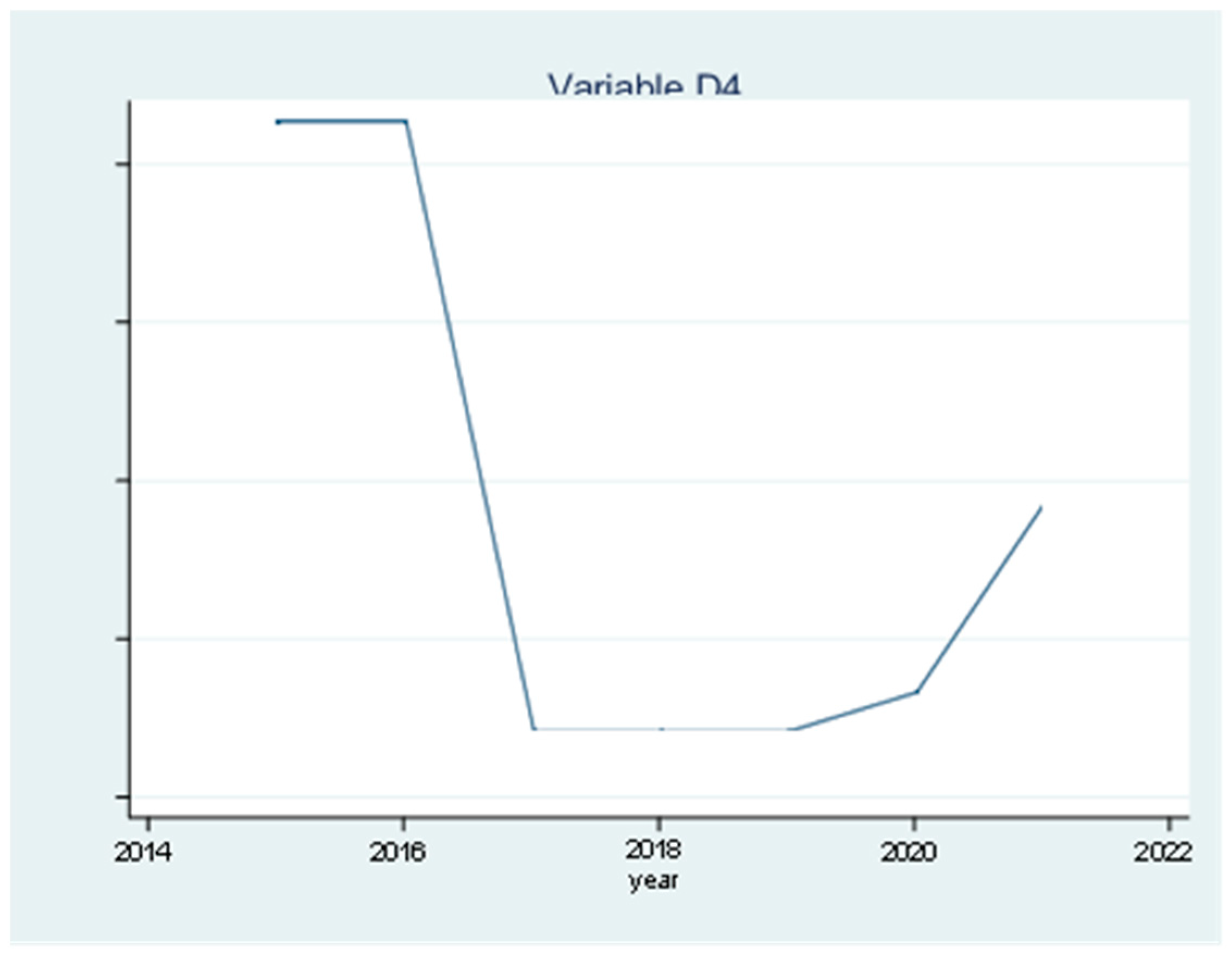
Figure A5. Distribution over time of the variable Greeb Purchases or Green Public Procurement D4, as calculated on average for Italy as a whole.
Sustainability 17 11361 g0a5
  • For the variables in the dimension “Regional sustainability and resilience”, there are no critical observations

Impact of the COVID-19 Period on the ReCEI Index and Its Pillars

To quantitatively assess the impact of the COVID-19 period on the ReCEI index and its pillars, we compared the 2015–2019 pre-pandemic averages with the observed values up to 2021 (Table A6). Results indicate that while some regions experienced notable deviations—such as Valle d’Aosta, which shows a sharp negative change in Waste Management and overall ReCEI due to population-scale effects, and Molise, which exhibits a large decrease in Competitiveness and Innovation—the majority of regions display moderate variations. Pillars directly related to waste production and management were the most sensitive to the pandemic, reflecting lockdown-induced reductions in activity and changes in consumption behavior, whereas other dimensions, such as Secondary Raw Materials and Regional Sustainability, remained relatively stable. A sensitivity analysis, excluding 2020–2021, confirms that regional rankings and overall disparities are largely unaffected, with minor shifts in index scores for specific regions. These findings demonstrate that, despite localized COVID-related fluctuations, the ReCEI index captures long-term regional performance trends robustly, and that the main patterns of disparity are not driven by pandemic-induced anomalies.
Table A6. Percentage Variations in the ReCEI and Its Pillars: Comparison Between 2015–2019 and 2015–2021.
RegionsReCEI WasteProDecoupWasteManagSecRawMaterCompInnovRegSustRegResil
Abruzzo−2.381.67−3.27−2.425.39−11.99−2.4721.76
Basilicata11.2837.752.26−7.6924.572.57−16.284.29
Calabria−0.77−1.53−2.613.0924.949.65−1.2012.14
Campania−0.300.37−1.322.1614.80−0.52−3.5126.08
Emilia-Romagna11.12−29.43−6.52−13.56−7.265.13−1.3130.71
Friuli-Venezia Giulia26.4130.97−4.723.09−7.24−18.54−3.7026.65
Lazio2.82−1.27−6.339.9715.060.390.3331.42
Liguria−0.32−0.05−1.989.04−1.372.07−7.1025.25
Lombardy21.17−10.01−4.20−13.29−1.652.608.9140.00
Marche1.55−0.42−5.8210.31−5.63−4.27−2.2223.66
Molise8.530.89−3.4714.46−8.08−83.78−8.484.58
Piedmont7.31−4.440.642.90−5.43−5.180.5321.33
Apulia7.756.52−0.376.548.27−1.25−2.6925.79
Sardinia4.27−5.633.33−18.8322.989.60−3.0124.22
Sicily2.950.26−2.702.7410.6419.34−2.7229.66
Tuscany0.46−1.62−3.346.6016.39−12.23−7.5827.39
Trentino-Alto Adige−2.2911.012.840.05−1.10−10.94−14.7215.65
Umbria40.00−5.87−1.1619.4819.72−12.40−0.5824.29
Valle d’Aosta−59.68−12.562.79−31.3711.79−28.4140.00−100.00
Veneto8.76−10.15−4.07−16.492.920.52−3.0828.63

References

  1. Kirchherr, J.; Reike, D.; Hekkert, M. Conceptualizing the circular economy: An analysis of 114 definitions. Resour. Conserv. Recycl. 2017, 127, 221–232. [Google Scholar] [CrossRef]
  2. Geissdoerfer, M.; Savaget, P.; Bocken, N.M.P.; Hultink, E.J. The Circular Economy—A new sustainability paradigm? J. Clean. Prod. 2018, 143, 757–768. [Google Scholar] [CrossRef]
  3. European Commission. A New Circular Economy Action Plan for a Cleaner and More Competitive Europe; COM (2020) 98 Final; European Commission: Brussels, Belgium; Luxembourg, 2020. [Google Scholar]
  4. European Commission. European Semester: 2023 Country Reports and Recommendations; European Commission: Brussels, Belgium; Luxembourg, 2023. [Google Scholar]
  5. Crescenzi, R.; Rodríguez-Pose, A. Innovation and Regional Growth in the European Union; Springer: Berlin/Heidelberg, Germany, 2011. [Google Scholar]
  6. Dijkstra, L.; Poelman, H.; Rodríguez-Pose, A. The geography of EU discontent. Reg. Stud. 2020, 54, 737–753. [Google Scholar] [CrossRef]
  7. Nogueira, A.; Ashton, W.; Teixeira, C.; Lyon, E.; Pereira, J. Infrastructuring the circular economy. Energies 2020, 13, 1805. [Google Scholar] [CrossRef]
  8. OECD. The Circular Economy in Cities and Regions: Synthesis Report; OECD Publishing: Paris, France, 2020. [Google Scholar]
  9. Aldieri, L.; Gatto, A.; Vinci, C.P. Evaluation of energy resilience and adaptation policies: An energy efficiency analysis. Energy Policy 2021, 157, 112505. [Google Scholar] [CrossRef]
  10. Barca, F.; McCann, P.; Rodríguez-Pose, A. The case for regional development intervention: Place-based versus place-neutral approaches. J. Reg. Sci. 2012, 52, 134–152. [Google Scholar] [CrossRef]
  11. Iammarino, S.; Rodríguez-Pose, A.; Storper, M. Regional inequality in Europe: Evidence, theory and policy implications. J. Econ. Geogr. 2019, 19, 273–298. [Google Scholar] [CrossRef]
  12. Capello, R.; Caragliu, A. Regional growth and disparities in a post-COVID Europe: A new normality scenario. J. Reg. Sci. 2021, 61, 710–727. [Google Scholar] [CrossRef] [PubMed]
  13. Camagni, R.; Capello, R. Regional competitiveness and territorial capital: A conceptual approach and empirical evidence from the European Union. Reg. Stud. 2013, 47, 1383–1402. [Google Scholar] [CrossRef]
  14. Mamash, A.; Iyiola, K.; Aljuhmani, H.Y. The Role of Circular Economy Entrepreneurship, Cleaner Production, and Green Government Subsidy for Achieving Sustainability Goals in Business Performance. Sustainability 2025, 17, 3990. [Google Scholar] [CrossRef]
  15. Palea, V.; Migliavacca, A.; Gordano, S. Scaling up the transition: The role of corporate governance mechanisms in promoting circular economy strategies. J. Environ. Manag. 2024, 349, 119544. [Google Scholar]
  16. Dąbrowski, M.; Williams, J.; Van den Berghe, K.; Van Bueren, E. 1. Circular regions and cities: Towards a spatial perspective on circular economy. Reg. Stud. Policy Impact Books 2024, 6, 13–28. [Google Scholar] [CrossRef]
  17. Marjanović, M.; Williams, J. Mapping the emergence of the circular economy within the governance paths of shrinking cities and regions: A comparative study of Parkstad Limburg (NL) and Satakunta (FI). Camb. J. Reg. Econ. Soc. 2024, 17, 517–534. [Google Scholar] [CrossRef]
  18. Mazur-Wierzbicka, E. Circular economy: Advancement of European Union countries. Environ. Sci. Eur. 2021, 33, 111. [Google Scholar] [CrossRef]
  19. Morelli, G.; Pozzi, C.; Gurrieri, A.R.; Mele, M.; Costantiello, A.; Magazzino, C. The role of circular economy in EU entrepreneurship: A deep learning experiment. J. Econ. Asymmetries 2024, 30, e00372. [Google Scholar] [CrossRef]
  20. Strom, P.; Hermelin, B. An economic geography approach to the implementation of circular economy-comparing three examples of industry-specific networks in West Sweden. J. Sci. Technol. Policy Manag. 2023, 16, 1–23. [Google Scholar]
  21. Mazziotta, M.; Pareto, A. A non-compensatory composite index for measuring well-being over time. Cogito. Multidiscip. Res. J. 2013, 5, 93–104. [Google Scholar]
  22. Saisana, M.; Tarantola, S. State-of-the-Art Report on Current Methodologies and Practices for Composite Indicator Development; European Commission, Joint Research Centre, Institute for the Protection and the Security of the Citizen, Technological and Economic Risk Management Unit: Ispra, Italy, 2002; Volume 214, pp. 4–15. [Google Scholar]
  23. Sen, A. Poverty: An ordinal approach to measurement. Econometrics 1976, 44, 219–231. [Google Scholar]
  24. Arbolino, R.; Boffardi, R.; De Simone, L.; Ioppolo, G. Who achieves the efficiency? A new approach to measure “local energy efficiency”. Ecol. Indic. 2020, 110, 105875. [Google Scholar] [CrossRef]
  25. Arbolino, R.; Boffardi, R.; Ioppolo, G.; Lantz, T.L.; Rosa, P. Evaluating industrial sustainability in OECD countries: A cross-country comparison. J. Clean. Prod. 2022, 331, 129773. [Google Scholar] [CrossRef]
  26. Boulant, J.; Brezzi, M.; Veneri, P. Income Levels and Inequality in Metropolitan Areas; OECD Publishing: Paris, France, 2016. [Google Scholar]
  27. Martin, R.; Sunley, P. On the notion of regional economic resilience: Conceptualization and explanation. J. Econ. Geogr. 2015, 15, 1–42. [Google Scholar] [CrossRef]
  28. Rodríguez-Pose, A. The revenge of the places that don’t matter (and what to do about it). Camb. J. Reg. Econ. Soc. 2018, 11, 189–209. [Google Scholar] [CrossRef]
  29. Liu, G. Development of a general sustainability indicator for renewable energy systems: A review. Renew. Sustain. Energy Rev. 2014, 31, 611–621. [Google Scholar] [CrossRef]
  30. Ioppolo, G.; Heijungs, R.; Cucurachi, S.; Salomone, R.; Kleijn, R. Urban Metabolism: Many open questions for future answers. In Pathways to Environmental Sustainability: Methodologies and Experiences; Springer International Publishing: Cham, Switzerland, 2014; pp. 23–32. [Google Scholar]
  31. Fitjar, R.D.; Rodríguez-Pose, A. Innovating in the periphery: Firms, values and innovation in Southwest Norway. Eur. Plan. Stud. 2011, 19, 555–574. [Google Scholar] [CrossRef]
  32. Boschma, R.A.; Frenken, K. Why is economic geography not an evolutionary science? Towards an evolutionary economic geography. J. Econ. Geogr. 2006, 6, 273–302. [Google Scholar] [CrossRef]
  33. Balland, P.A.; Boschma, R.; Crespo, J.; Rigby, D.L. Smart specialization policy in the European Union: Relatedness, knowledge complexity and regional diversification. Reg. Stud. 2020, 54, 161–174. [Google Scholar] [CrossRef]
  34. Gibbs, D. Sustainability entrepreneurs, ecopreneurs and the development of a sustainable economy. Greener Manag. Int. 2006, 63–78. [Google Scholar] [CrossRef]
  35. Henrysson, M.; Nuur, C. The role of institutions in creating circular economy pathways for regional development. J. Environ. Dev. 2021, 30, 149–171. [Google Scholar] [CrossRef]
  36. Cader, J.; Koneczna, R.; Marciniak, A. Indicators for a circular economy in a regional context: An approach based on Wielkopolska region, Poland. Environ. Manag. 2024, 73, 293–310. [Google Scholar] [CrossRef]
  37. Tapia, C.; Bianchi, M.; Pallaske, G.; Bassi, A.M. Towards a territorial definition of a circular economy: Exploring the role of territorial factors in closed-loop systems. Eur. Plan. Stud. 2021, 29, 1438–1457. [Google Scholar] [CrossRef]
  38. ESPON. CIRCTER—Circular Economy and Territorial Consequences Applied Research; Final Report; ESPON: Luxembourg, 2019. [Google Scholar]
  39. Heurkens, E.; Dąbrowski, M. Circling the square: Governance of the circular economy transition in the Amsterdam Metropolitan Area. Eur. Spat. Res. Policy 2020, 27, 11–31. [Google Scholar] [CrossRef]
  40. Mura, M.; Longo, M.; Zanni, S. Circular economy in Italian SMEs: A multi-method study. J. Clean. Prod. 2020, 245, 118821. [Google Scholar] [CrossRef]
  41. OECD. Handbook on Constructing Composite Indicators: Methodology and User Guide; OECD: Paris, France, 2008. [Google Scholar] [CrossRef]
  42. Singh, R.K.; Murty, H.R.; Gupta, S.K.; Dikshit, A.K. An overview of sustainability assessment methodologies. Ecol. Indic. 2012, 15, 281–299. [Google Scholar] [CrossRef]
  43. Antony, G.M.; Rao, K.V. A composite index to explain variations in poverty, health, nutritional status and standard of living: Use of multivariate statistical methods. Public Health 2007, 121, 578–587. [Google Scholar] [CrossRef] [PubMed]
  44. Hotelling, H. Analysis of a complex of statistical variables into principal components. J. Educ. Psychol. 1933, 24, 417. [Google Scholar] [CrossRef]
  45. Jolliffe, I.T. Choosing a subset of principal components or variables. In Principal Component Analysis; Springer: New York, NY, USA, 2002; pp. 92–114. [Google Scholar]
  46. Jackson, J.E. A User’s Guide to Principal Components; John Wiley Sons: Hoboken, NJ, USA, 2005. [Google Scholar]
  47. Nicoletti, G.; Scarpetta, S.; Boylaud, O. Summary Indicators of Product Market Regulation with an Extension to Employment Protection Legislation; OECD Publishing: Paris, France, 1999. [Google Scholar] [CrossRef]
  48. Hubert, M.; Vandervieren, E. An adjusted boxplot for skewed distributions. Comput. Stat. Data Anal. 2008, 52, 5186–5201. [Google Scholar] [CrossRef]
  49. Dawson, R. How significant is a boxplot outlier? J. Stat. Educ. 2011, 19, 1–14. [Google Scholar] [CrossRef]
  50. Atkinson, A.B. Multidimensional deprivation: Contrasting social welfare and counting approaches. J. Econ. Inequal. 2003, 1, 51–65. [Google Scholar] [CrossRef]
  51. Alkire, S.; Santos, M.E. Acute multidimensional poverty: A new index for developing countries. In Proceedings of the German Development Economics Conference, Berlin, Germany, 17–18 July 2010. [Google Scholar]
  52. Esteban, J.M.; Ray, D. On the measurement of polarization. Econom. J. Econom. Soc. 1994, 62, 819–851. [Google Scholar] [CrossRef]
  53. Jenkins, S.P.; Van Kerm, P. The Measurement of Economic Inequality; Oxford Academic: Oxford, UK, 2011. [Google Scholar]
  54. Sen, A. Equality of What? In The Tanner Lectures on Human Values; McMurrin, S., Ed.; Cambridge University Press: Cambridge, UK, 1979; pp. 195–220. [Google Scholar]
  55. Fischer-Kowalski, M.; Haas, W.; Wiedenhofer, D.; Weisz, U.; Pallua, I.; Possanner, N.; Behrens, A.; Serio, G.; Alessi, M.; Weis, E. Socio-Ecological Transitions: Definition, Dynamics and Related Global Scenarios; Institute for Social Ecology-AAU, Centre for European Policy Studies: Vienna, Austria; Brussels, Belgium, 2012. [Google Scholar]
  56. Rosa, P.; Sassanelli, C.; Terzi, S. Towards Circular Business Models: A systematic literature review on classification frameworks and archetypes. J. Clean. Prod. 2019, 236, 117696. [Google Scholar] [CrossRef]
  57. Camana, D.; Manzardo, A.; Toniolo, S.; Gallo, F.; Scipioni, A. Assessing environmental sustainability of local waste management policies in Italy from a circular economy perspective. Sustain. Prod. Consum. 2021, 27, 613–629. [Google Scholar] [CrossRef]
  58. Murray, A.; Skene, K.; Haynes, K. The circular economy: An interdisciplinary exploration of the concept and application in a global context. J. Bus. Ethics 2017, 140, 369–380. [Google Scholar] [CrossRef]
  59. Ellen MacArthur Foundation. Towards the Circular Economy: Economic and Business Rationale for an Accelerated Transition; Ellen MacArthur Foundation: Isle of Wight, UK, 2012; Available online: https://www.ellenmacarthurfoundation.org/ (accessed on 1 January 2013).
  60. Lieder, M.; Rashid, A. Towards circular economy implementation: A comprehensive review in context of manufacturing industry. J. Clean. Prod. 2016, 115, 36–51. [Google Scholar] [CrossRef]
  61. Ghisellini, P.; Cialani, C.; Ulgiati, S. A review on circular economy: The expected transition to a balanced interplay of environmental and economic systems. J. Clean. Prod. 2016, 114, 11–32. [Google Scholar] [CrossRef]
  62. OECD. The OECD RE-CIRCLE Project: Building Circular Economy Indicators; OECD Reports; OECD: Paris, France, 2022. [Google Scholar]
  63. OECD. OECD Regional Well-Being; OECD Publishing: Paris, France, 2024. [Google Scholar]
  64. Teixeira, N.; Rodrigues, R.; Antunes, T. Circular Economy Models for Reducing Food Waste and Enhancing Sustainability: A Case Study of Cooperative X. Circ. Econ. Sustain. 2025, 5, 3529–3549. [Google Scholar] [CrossRef]
  65. Moraga, G.; Huysveld, S.; Mathieux, F.; Blengini, G.A.; Alaerts, L.; Van Acker, K.; de Meester, S.; Dewulf, J. Circular economy indicators: What do they measure? Resour. Conserv. Recycl. 2019, 146, 452–461. [Google Scholar] [CrossRef]
  66. Mazzanti, M.; Zoboli, R. Waste generation, waste disposal and policy effectiveness: Evidence on decoupling from the European Union. Resour. Conserv. Recycl. 2008, 52, 1221–1234. [Google Scholar] [CrossRef]
  67. Nicolli, F.; Johnstone, N.; Söderholm, P. Resolving failures in recycling markets: The role of technological innovation. Environ. Econ. Policy Stud. 2012, 14, 261–288. [Google Scholar] [CrossRef]
  68. European Environment Agency. Decoupling Indicators—Monitoring Resource Efficiency in Europe; EEA Report; European Environment Agency: Copenhagen, Denmark, 2021. [Google Scholar]
  69. Wiedenhofer, D.; Wieland, H.; Leipold, S.; Aoki-Suzuki, C.; Edelenbosch, O.Y.; Zanon-Zotin, M.; Kaufmann, L.; Fortes, P.; Haas, W.; Streeck, J. Can the Circular Economy Save the Climate? Annu. Rev. Environ. Resour. 2025, 50, 563–592. [Google Scholar] [CrossRef]
  70. Peyravi, B.; Peleckis, K.; Limba, T.; Peleckienė, V. The circular economy practices in the European Union: Eco-innovation and sustainable development. Sustainability 2024, 16, 5473. [Google Scholar] [CrossRef]
  71. Gusmerotti, N.M.; Testa, F.; Corsini, F.; Pretner, G.; Iraldo, F. Drivers and approaches to the circular economy in manufacturing firms. J. Clean. Prod. 2019, 230, 314–327. [Google Scholar] [CrossRef]
  72. Urbinati, A.; Chiaroni, D.; Chiesa, V. Towards a new taxonomy of circular economy business models. J. Clean. Prod. 2017, 168, 487–498. [Google Scholar] [CrossRef]
  73. Jakhar, S.K.; Mangla, S.K.; Luthra, S.; Kusi-Sarpong, S. When stakeholder pressure drives the circular economy: Measuring the mediating role of innovation capabilities. Manag. Decis. 2019, 57, 904–920. [Google Scholar] [CrossRef]
  74. Haberl, H.; Wiedenhofer, D.; Virág, D.; Kalt, G.; Plank, B.; Brockway, P.; Fishman, T.; Hausknost, D.; Krausmann, F.; Leon-Gruchalski, B.; et al. A systematic review of the evidence on decoupling of GDP, resource use and GHG emissions, part II: Synthesizing the insights. Environ. Res. Lett. 2020, 15, 065003. [Google Scholar] [CrossRef]
  75. ISPRA. Rapporto Rifiuti Urbani—Edizione 2022; Istituto Superiore per la Protezione e la Ricerca Ambientale: Roma, Italy, 2022.
  76. Fankhauser, S.; Averchenkova, A.; Finnegan, J.J. 10 years of the UK Climate Change Act. Clim. Policy 2018, 18, 1194–1205. [Google Scholar]
  77. Audretsch, D.B.; Feldman, M.P. Knowledge spillovers and the geography of innovation. In Handbook of Regional and Urban Economics; Elsevier: Amsterdam, The Netherlands, 2004; Volume 4, pp. 2713–2739. [Google Scholar] [CrossRef]
  78. Ghisetti, C.; Quatraro, F. Green technologies and environmental productivity: A cross-sectoral analysis of direct and indirect effects in Italian regions. Ecol. Econ. 2017, 132, 1–13. [Google Scholar] [CrossRef]
  79. Cainelli, G.; D’Amato, A.; Mazzanti, M. Resource efficient eco-innovations for a circular economy: Evidence from EU firms. Res. Policy 2020, 49, 103827. [Google Scholar] [CrossRef]
  80. Sinsel, S.R.; Markard, J.; Hoffmann, V.H. How deployment policies affect innovation in complementary technologies—Evidence from the German energy transition. Technol. Forecast. Soc. Chang. 2020, 161, 120274. [Google Scholar] [CrossRef]
  81. Costantini, V.; Crespi, F.; Marin, G.; Paglialunga, E. Eco-innovation, sustainable supply chains and environmental performance in European industries. J. Clean. Prod. 2017, 155, 141–154. [Google Scholar] [CrossRef]
  82. Bănică, A.; Ţigănaşu, R.; Nijkamp, P.; Kourtit, K. Institutional quality in green and digital transition of EU regions–A recovery and resilience analysis. Glob. Chall. 2024, 8, 2400031. [Google Scholar] [CrossRef]
  83. Ghisellini, P.; Ulgiati, S. Circular economy transition in Italy. Achievements, perspectives and constraints. J. Clean. Prod. 2020, 243, 118360. [Google Scholar] [CrossRef]
  84. Marchi, V.D.; Maria, E.D.; Micelli, S. Environmental strategies, upgrading and competitive advantage in global value chains. Bus. Strategy Environ. 2013, 22, 62–72. [Google Scholar] [CrossRef]
  85. Antonioli, D.; Chioatto, E.; Mazzanti, M. Innovations and the circular economy: A national and regional perspective. Insights Into Reg. Dev. 2022, 4, 57–70. [Google Scholar] [CrossRef] [PubMed]
  86. Testa, F.; Iraldo, F.; Frey, M. The effect of environmental regulation on firms’ competitive performance: The case of the building construction sector in some EU regions. J. Environ. Manag. 2011, 92, 2136–2144. [Google Scholar] [CrossRef]
  87. D’Adamo, I.; Falcone, P.M.; Imbert, E.; Morone, P. Exploring regional transitions to the bioeconomy using a socio-economic indicator: The case of Italy. Econ. Politica 2022, 39, 989–1021. [Google Scholar] [CrossRef]
  88. Arsova, S.; Genovese, A.; Ketikidis, P.H. Implementing circular economy in a regional context: A systematic literature review and a research agenda. J. Clean. Prod. 2022, 368, 133117. [Google Scholar] [CrossRef]
  89. Moreno, M.; De los Rios, C.; Rowe, Z.; Charnley, F. A conceptual framework for circular design. Sustainability 2016, 8, 937. [Google Scholar] [CrossRef]
  90. Lacy, P.; Rutqvist, J. Waste to Wealth: The Circular Economy Advantage; Harvard Business Review Press: Brighton, MA, USA, 2015; pp. 45–70. [Google Scholar]
  91. Kalmykova, Y.; Sadagopan, M.; Rosado, L. Circular economy–From review of theories and practices to development of implementation tools. Resour. Conserv. Recycl. 2018, 135, 190–201. [Google Scholar] [CrossRef]
  92. Kirchherr, J.; Piscicelli, L.; Bour, R.; Kostense-Smit, E.; Muller, J.; Huibrechtse-Truijens, A.; Hekkert, M. Barriers to the circular economy: Evidence from the European Union (EU). Ecol. Econ. 2018, 150, 264–272. [Google Scholar] [CrossRef]
  93. Costantini, V.; Mazzanti, M.; Montini, A. Environmental performance, innovation and spillovers. Evidence from a regional NAMEA. Ecol. Econ. 2013, 89, 101–114. [Google Scholar] [CrossRef]
  94. Franco, M.A. Circular economy at the micro level: A dynamic view of incumbents’ struggles and challenges in the textile industry. J. Clean. Prod. 2017, 168, 833–845. [Google Scholar] [CrossRef]
  95. Geng, Y.; Sarkis, J.; Bleischwitz, R. How to globalize the circular economy. Nature 2019, 565, 153–155. [Google Scholar] [CrossRef]
  96. Jackson, T. Prosperity Without Growth: Foundations for the Economy of Tomorrow; Routledge: Oxfordshire, UK, 2017. [Google Scholar]
  97. Rodríguez-Pose, A.; Di Cataldo, M. Quality of government and innovative performance in Europe. J. Econ. Geogr. 2015, 15, 673–706. [Google Scholar]
  98. Horbach, J.; Rammer, C.; Rennings, K. Determinants of eco-innovations. Ecol. Econ. 2012, 78, 112–122. [Google Scholar] [CrossRef]
  99. Cinelli, C.; Hazlett, C. Making sense of sensitivity: Extending omitted variable bias. J. R. Stat. Soc. Ser. B Stat. Methodol. 2020, 82, 39–67. [Google Scholar]
  100. Dizdaroglu, D. The role of indicator-based sustainability assessment in policy and the decision-making process: A review and outlook. Sustainability 2017, 9, 1018. [Google Scholar]
  101. Saisana, M.; Saltelli, A.; Tarantola, S. Uncertainty and sensitivity analysis techniques as tools for the quality assessment of composite indicators. J. R. Stat. Soc. Ser. A Stat. Soc. 2005, 168, 307–323. [Google Scholar]
  102. European Commission. Monitoring Framework for the Circular Economy; European Commission: Brussels, Belgium; Luxembourg, 2024. [Google Scholar]
  103. Circular Economy Network; ENEA. Circularity Gap Report Italia 2024; ENEA: Rome, Italy, 2024. [Google Scholar]
  104. Bocci, L.; D’Urso, P.; Vicari, D.; Vitale, V. A regression tree-based analysis of the European regional competitiveness. Soc. Indic. Res. 2024, 173, 137–167. [Google Scholar]
  105. Arbolino, R.; Lantz, T.L.; Napolitano, O. Assessing the impact of special economic zones on regional growth through a comparison among EU countries. Reg. Stud. 2023, 57, 1069–1083. [Google Scholar] [CrossRef]
  106. Greco, S.; Ishizaka, A.; Tasiou, M.; Torrisi, G. On the methodological framework of composite indices: A review of the issues of weighting, aggregation, and robustness. Soc. Indic. Res. 2019, 141, 61–94. [Google Scholar] [CrossRef]
  107. McKenna, S.P.; Heaney, A. Composite outcome measurement in clinical research: The triumph of illusion over reality? J. Med. Econ. 2020, 23, 1196–1204. [Google Scholar] [CrossRef]
  108. Kuc-Czarnecka, M.; Piano, S.L.; Saltelli, A. Quantitative storytelling in the making of a composite indicator. Soc. Indic. Res. 2020, 149, 775–802. [Google Scholar] [CrossRef]
  109. World Bank. Global Economic Prospects, June 2017: A Fragile Recovery; The World Bank: Washington, DC, USA, 2017. [Google Scholar] [CrossRef]
  110. Arbolino, R.; Boffardi, R.; De Simone, L.; Ioppolo, G.; Lopes, A. Circular economy convergence across European Union: Evidence on the role policy diffusion and domestic mechanisms. Socio-Econ. Plan. Sci. 2024, 96, 102051. [Google Scholar] [CrossRef]
  111. Arbia, G. Spatial Data Configuration in Statistical Analysis of Regional Economic and Related Problems; Springer Science Business Media: Luxembourg, 2012; Volume 14. [Google Scholar]
  112. Mayer, D.G.; Butler, D.G. Statistical validation. Ecol. Model. 1993, 68, 21–32. [Google Scholar] [CrossRef]
  113. Bianchi, M.; Cordella, M.; Menger, P. Regional monitoring frameworks for the circular economy: Implications from a territorial perspective. Eur. Plan. Stud. 2023, 31, 36–54. [Google Scholar] [CrossRef]
  114. Ditzen, J.; Karavias, Y.; Westerlund, J. Testing and estimating structural breaks in time series and panel data in Stata. arXiv 2021, arXiv:2110.14550. [Google Scholar] [CrossRef]
  115. Ditzen, J.; Karavias, Y.; Westerlund, J. Multiple structural breaks in interactive effects panel data models. J. Appl. Econom. 2025, 40, 74–88. [Google Scholar] [CrossRef]
  116. Aue, A.; Horváth, L. Structural breaks in time series. J. Time Ser. Anal. 2013, 34, 1–16. [Google Scholar] [CrossRef]
  117. Zambrano-Monserrate, M.A.; Ruano, M.A.; Sanchez-Alcalde, L. Indirect effects of COVID-19 on the environment. Sci. Total Environ. 2020, 728, 138813. [Google Scholar] [CrossRef]
  118. Yousefi, M.; Oskoei, V.; Jonidi Jafari, A.; Farzadkia, M.; Hasham Firooz, M.; Abdollahinejad, B.; Torkashvand, J. Municipal solid waste management during COVID-19 pandemic: Effects and repercussions. Environ. Sci. Pollut. Res. 2021, 28, 32200–32209. [Google Scholar] [CrossRef]
  119. Agovino, M.; Garofalo, A.; Mariani, A. Effects of environmental regulation on separate waste collection dynamics: Empirical evidence from Italy. J. Clean. Prod. 2016, 124, 30–40. [Google Scholar] [CrossRef]
  120. ISPRA. Rapporto Rifiuti Urbani—Edizione 2017; Istituto Superiore per la Protezione e la Ricerca Ambientale: Roma, Italy, 2017.
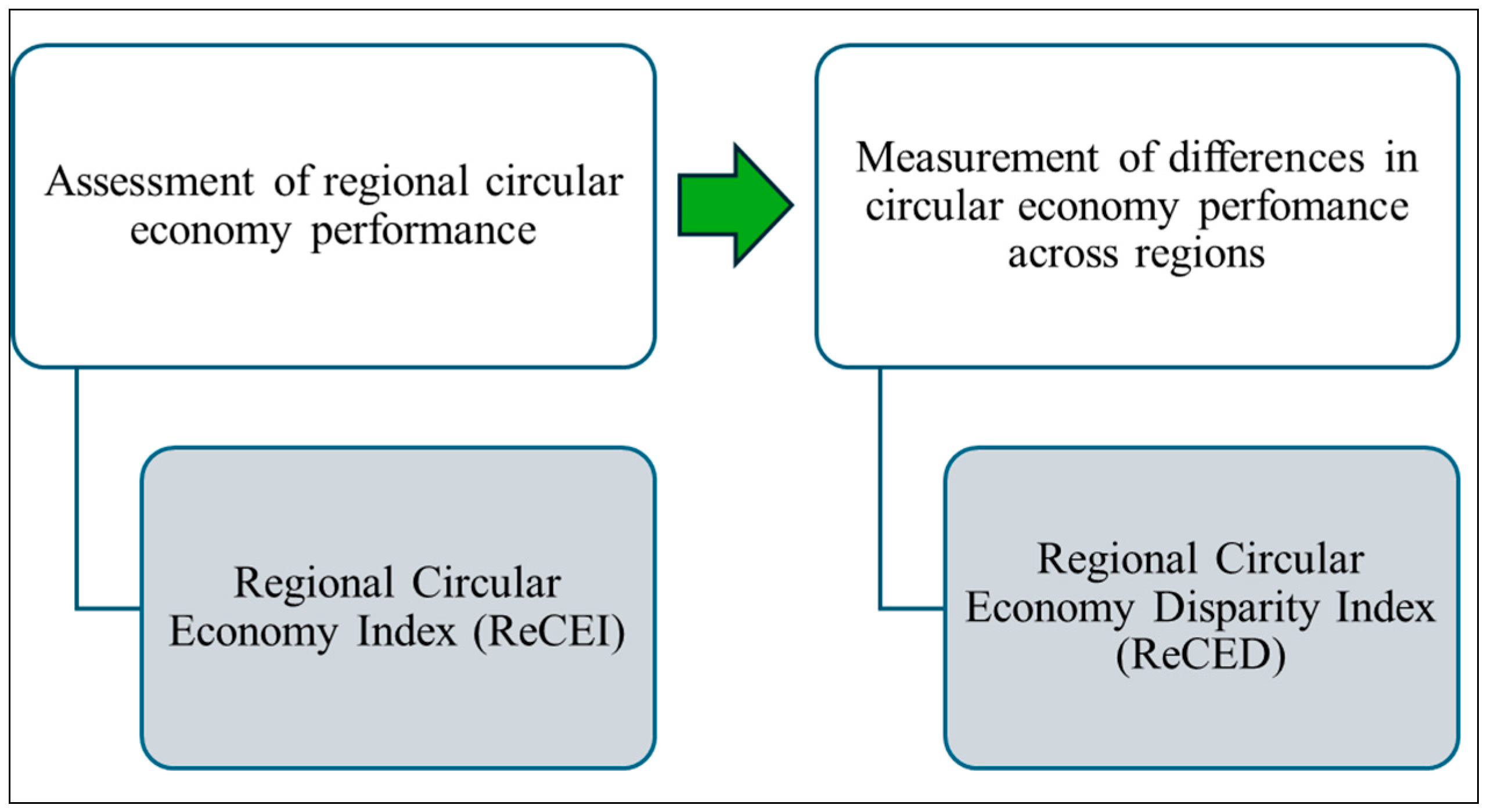
Figure 1. Methodological approach. Source: Authors’ elaboration.
Sustainability 17 11361 g001
Figure 2. ReCEI structure. Source: Authors’ elaboration.
Sustainability 17 11361 g002
Figure 3. Comparison of Regional Circular Economy Index (ReCEI) and its pillars across Italian regions (average value 2015–2020). Source: Authors’ elaboration.
Sustainability 17 11361 g003
Figure 4. Scenario 1 (a) ReCEI distribution and its distance from threshold z1 (ReCED Index); (b) Waste production index distribution and its distance from threshold z1 (ReCED Index); (c) Decoupling index distribution and its distance from threshold z1 (ReCED Index); (d) Waste Management index distribution and its distance from threshold z1 (ReCED Index); (e) Waste Recovery level index distribution and its distance from threshold z1 (ReCED Index); (f) Sustainable Innovation distribution and its distance from threshold z1 (ReCED Index); (g) Environmental Sustainability distribution and its distance from threshold z1 (ReCED Index); (h) Environmental Resilience distribution and its distance from threshold z1 (ReCED Index). Note: the red line marks the efficiency threshold value. Source: authors’ elaboration.
Sustainability 17 11361 g004aSustainability 17 11361 g004b
Figure 5. (a) Regional Ranking of ReCEI_comp and (b) SSGD12. Average value 2015–2021.
Sustainability 17 11361 g005
Table 1. Descriptive analysis of all variables used in ReCEI and its pillars.
VariableU.M.ObsMeanStd. Dev.MinMax
Hazard Waste Generationtonnes per capita1400.150.070.060.34
Waste generation (Urban waste + Special waste)tonnes per capita1402.950.921.415.48
Domestic material consumption per capitatonnes per capita1408.983.293.7016.90
Waste generation per unit of Value Addedtonnes per thousand euros140122.68173.727.90729.22
Separate collection of Municipal Wastekg per capita160284.4284.3759.74468.93
Urban waste treated in composting plantskg per capita14063.9941.270.00214.74
Incinerated Urban Wastekg per capita14070.4476.540.00299.73
Landfilled Industrial Special Wastekg per capita140225.78202.790.00862.04
Landfilled urban Wastekg per capita140238.49179.910.00654.91
Incinerated Industrial Special Wastekg per capita14016.3421.760.0083.17
Urban waste treated in aerobic and anaerobic plantskg per capita14042.1866.460.00287.77
Special Waste Recoverytonnes per 1000 inhabitants14080.2019.1841.00149.79
Waste reused as a source of energytonnes per 1000 inhabitants1401.621.680.006.92
Firms with Energy management system CertificationNumber per 1000 inhabitants1400.030.020.000.13
Firms with Environmental management system CertificationNumber per 1000 inhabitants1400.390.170.140.94
Organization/entrerprises with EMAS registrationNumber per 1000 inhabitants1400.020.020.000.09
Greeb Purchases or Green Public Procurement%14037.6218.2010.7069.90
GHG emission—Industry sectorkt CO2 eq per capita1401.550.850.383.65
GHG emission—Transport sectorkt CO2 eq per capita1402.110.920.785.05
GHG emission—Agriculture sectorkt CO2 eq per capita1400.510.350.061.92
GHG emission—Waste sectorkt CO2 eq per capita1400.250.110.060.49
Air quality—PM2.5%14078.9620.046.10100.00
Waste produced from tourism sectorkg per capita 14011.2012.321.1359.60
Electricity from Renewable sources%14057.1261.447.30323.10
Renewable energy share%14024.4418.930.00106.30
Energy Efficiency Certificates (TEE)Number per 1000 inhabitants140613.77667.6412.593429.17
Table 2. List of variables of SDG 12 used in ReCEI_comp.
VariablesSDG12ReCEI_compReCEI Pillars
Domestic material consumption per capitaDecoupling
Urban wasteproductionWaste production
Separate collection of municipal wasteWaste management
Circular material rateSecondary Raw Material
Table 3. Correlation tests between ReCEI_comp and Sdg12 Asvis.
ReCEI_comp—SDG12Pearson (r)Spearman ρKendall τ-b
Coeffiecient0.75290.89320.7263
p-value0.00010.00000.0000
N202020
Table 4. Fixed-effect regression (Dipendent variable—ReCEI).
Dipendent Variable:
ReCEI
M1M2M3
GDP pro capite−0.7039
(0.8642)
−0.9447
(0.7671)
Industrial density−6.4438 ***
(1.6679)
−9.3755 ***
(2.8296)
EQI 0.1842
(0.1123)
0.0694
(0.1230)
RIS −2.3458 **
(1.0591)
−0.0768
(0.9561)
Public investment in R&D −0.2817
(0.2716)
0.2014
(0.2565)
Private investment in R&D −0.2074 **
(0.0955)
0.3836 *
(0.1891)
Industrial GVA 0.0870
(0.5337)
Population density −7.7414 *
(4.3550)
_cons11.8615
(8.8439)
1.8885 *
(0.9548)
53.3333 **
(25.1026)
N133133133
pseudo R2
Log Likelihood−15.79−27.82−11.87
Chi squared
Time variables not reported. Robust standard error sin parentheses. *** p < 0.01; ** p < 0.05; * p < 0.1. Fixed Effects (FE) Model with Multiple Fixed Effects; Dependent variable: ReCEI.
Table 5. Sensitivity analysis. General results.
Outcome Regional Circular Economic Index (ReCEI)
TreatmentEstimateS.E.T-ValuePartial R2 of the Treatment (R2yd.x)Robustness (RV_q = 1)Robustness of t-Value (RV_q = 1 a = 0.05)
Public Invstment in R&D18.4182.94586.25220.22980.41710.3097
Table 6. Sensitivity analysis. Bounds on Omitted Variable Bias.
BoundR2dz.xR2yz.dxCoef.S.E.t(H0)Lower CIUpper CI
1.00× Institutional quality0.00660.003318.26042.96216.164712.400224.1206
2.00× Institutional quality0.01320.006618.10172.96716.100712.231623.9718
3.00× Institutional quality0.01990.009817.94192.97226.036612.061823.8221
Table 7. ReCED values and absolute distance from z3. ReCEI and Waste Production pillar.
RegionsReCED
ReCEI
Distance
(ReCEI-z3)
RegionsReCED
WasteProd
Distance
(WasteProd-z3)
Trentino-Alto Adige0.003−0.11Sardinia0.007−2.23
Veneto0.004−1.49Aosta Valley0.013−10.61
Piedmont0.004−2.71Trentino-Alto Adige0.017−16.45
Emilia-Romagna0.008−7.04Umbria0.026−28.20
Lombardy0.008−8.19Piedmont0.027−28.61
Friuli-Venezia Giulia0.014−15.71Basilicata0.031−34.22
Basilicata0.016−17.96Veneto0.034−37.95
Umbria0.023−27.92Emilia-Romagna0.034−38.17
Molise0.031−38.38Friuli-Venezia Giulia0.036−40.37
Aosta Valley0.031−38.69Lombardy0.044−51.56
Table 8. ReCED values and absolute distance from z3. Decoupling pillar and Waste Management pillar.
RegionsReCED
Decoup
Distance
(Decoup-z3)
RegionsReCED
WasteManag
Distance
(WasteManag-z3)
Marche0.002−0.16Liguria0.004−3.07
Sardinia0.003−0.91Veneto0.008−8.34
Friuli-Venezia Giulia0.003−1.16Marche0.009−8.89
Emilia-Romagna0.003−2.06Lombardia0.012−13.14
Abruzzo0.004−2.83Emilia-Romagna0.013−14.85
Trentino-Alto Adige0.004−3.48Sardinia0.014−16.30
Umbria0.009−11.14Umbria0.014−16.73
Basilicata0.015−20.68Piedmont0.018−21.37
Molise0.042−63.59Aosta Valley0.018−21.92
Aosta Valley0.042−64.76Molise0.021−26.32
Table 9. ReCED values and absolute distance from z3. Waste recovery level pillar and Sustainable Innovation pillar.
RegionsReCED
WasteRecov
Distance
(WasteRecov-z3)
RegionsReCED
SustInnov
Distance
(SustInn-z3)
Trentino-Alto Adige0.003−0.63Umbria0.003−0.10
Veneto0.005−3.56Sardinia0.003−0.25
Emilia-Romagna0.010−11.02Marche0.006−2.83
Piedmont0.011−12.58Aosta Valley0.007−3.99
Liguria0.012−13.62Abruzzo0.008−4.76
Basilicata0.013−15.55Apulia0.014−9.69
Calabria0.016−20.12Calabria0.015−10.17
Aosta Valley0.019−24.75Basilicata0.018−12.62
Molise0.039−53.93Sicili0.029−21.25
Umbria0.042−58.55Molise0.041−31.56
Table 10. ReCED values and absolute distance from z3. Environmental Sustainability pillar and Environmental Resilience pillar.
RegionsReCED
EnvSust
Distance
(EnvSust-z3)
RegionsReCED
EnvRes
Distance
(EnvRes-z3)
Toscana0.004−1.95Piedmont0.002−0.29
Umbria0.004−2.26Friuli-Venezia Giulia0.002−0.59
Sardinia0.005−3.05Basilicata0.002−1.22
Emilia-Romagna0.007−5.99Abruzzo0.003−1.91
Veneto0.007−6.36Calabria0.003−2.51
Basilicata0.008−7.04Trentino-Alto Adige0.004−3.39
Friuli-Venezia Giulia0.009−8.44Umbria0.005−4.93
Molise0.019−20.88Lombardy0.015−16.53
Trentino-Alto Adige0.030−34.65Molise0.016−17.70
Aosta Valley0.044−52.68Aosta Valley0.027−30.85
Disclaimer/Publisher’s Note: The statements, opinions and data contained in all publications are solely those of the individual author(s) and contributor(s) and not of MDPI and/or the editor(s). MDPI and/or the editor(s) disclaim responsibility for any injury to people or property resulting from any ideas, methods, instructions or products referred to in the content.