1. Introduction
In the current context of intensifying international efforts to mitigate negative environmental impacts and combat climate change, greenhouse gas emissions have become an increasingly critical and urgent concern. Among these greenhouse gases, methane (CH4) is particularly significant due to its global warming potential.
The Intergovernmental Panel on Climate Change (IPCC) [
1], created within the framework of the United Nations (UN), published in its Sixth Assessment Report finding that deep reductions in anthropogenic methane emissions are needed by 2030 to limit global warming to. 1.50 °C That report shows that, although methane has a shorter average atmospheric residence time than CO
2, 10 to 12 years compared to hundreds of years, its greenhouse effect over a 20-year period is over 80 times more significant than that of CO
2. According to the IPCC, while methane has 29.8 times greater global warming potential than CO
2 on a 100-year timescale, it is 82.5 times more potent on a 20-year timescale [
2].
Methane serves as the principal component of natural gas and represents the simplest organic compound. Some key physical properties of methane are colorless gas, lower density than air, water-insoluble, soluble in organic solvents such as alcohol and ether [
3].
Methane emission sources can be classified into two primary categories: natural and anthropogenic emissions. Anthropogenic sources account for 59% of total methane emissions, primarily from agriculture, waste management, and the oil and gas industry [
4]. Agriculture, waste management, and the energy sector collectively generate 95% of global anthropogenic methane emissions. In Europe, these sectors represent an even larger share of total emissions, with agriculture contributing 53%, waste management 26%, and the energy sector 19% [
5].
This research investigates methane emissions from key extraction and production of oil and gas facilities in Romania, with a particular focus on fugitive emissions originating from producing oil and gas wells and associated processing infrastructure. The study is grounded in the results of a survey conducted at representative facilities of oil and gas from Romania, where a comprehensive LDAR (Leak Detection and Repair) methodology was implemented in accordance with OGMP 2.0 [
6]. Systematic on-site inspections using advanced technologies-including Flame Ionization Detectors (FID), Optical Gas Imaging (OGI), and Quantitative Optical Gas Imaging (QOGI)-enabled the identification and quantification of fugitive methane sources across thousands of components. The results indicate that effective methane emissions management not only fulfills environmental responsibilities but also presents economic advantages by reducing product losses and enhancing operational efficiency. The approach developed in this research provides a useful framework for meeting regulatory requirements and for creating better policies and practical guidelines to control methane emissions in the oil and gas industry.
1.1. Classification and Analysis of Methane Emission Sources in the Oil and Gas Industry
Broadly speaking, methane emission sources can be classified into three categories: technological emissions-design-inherent emissions dependent on process requirements and equipment type, which are typically continuous during equipment operation; operational emissions-intentional releases that are generally intermittent and occur over short time periods; and fugitive emissions-unintentional releases resulting from equipment wear or component deterioration, which continue until repairs are completed or defective components are replaced.
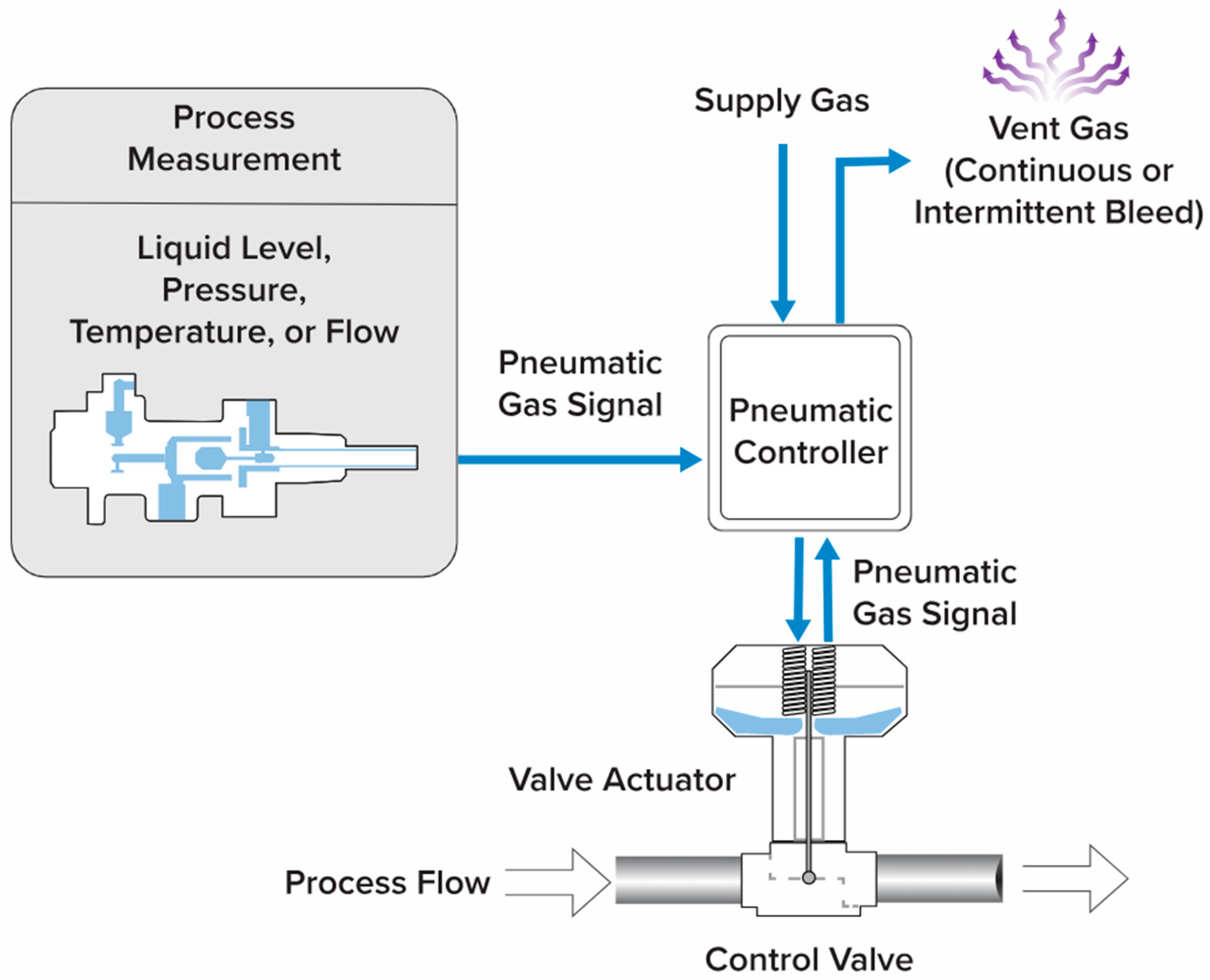
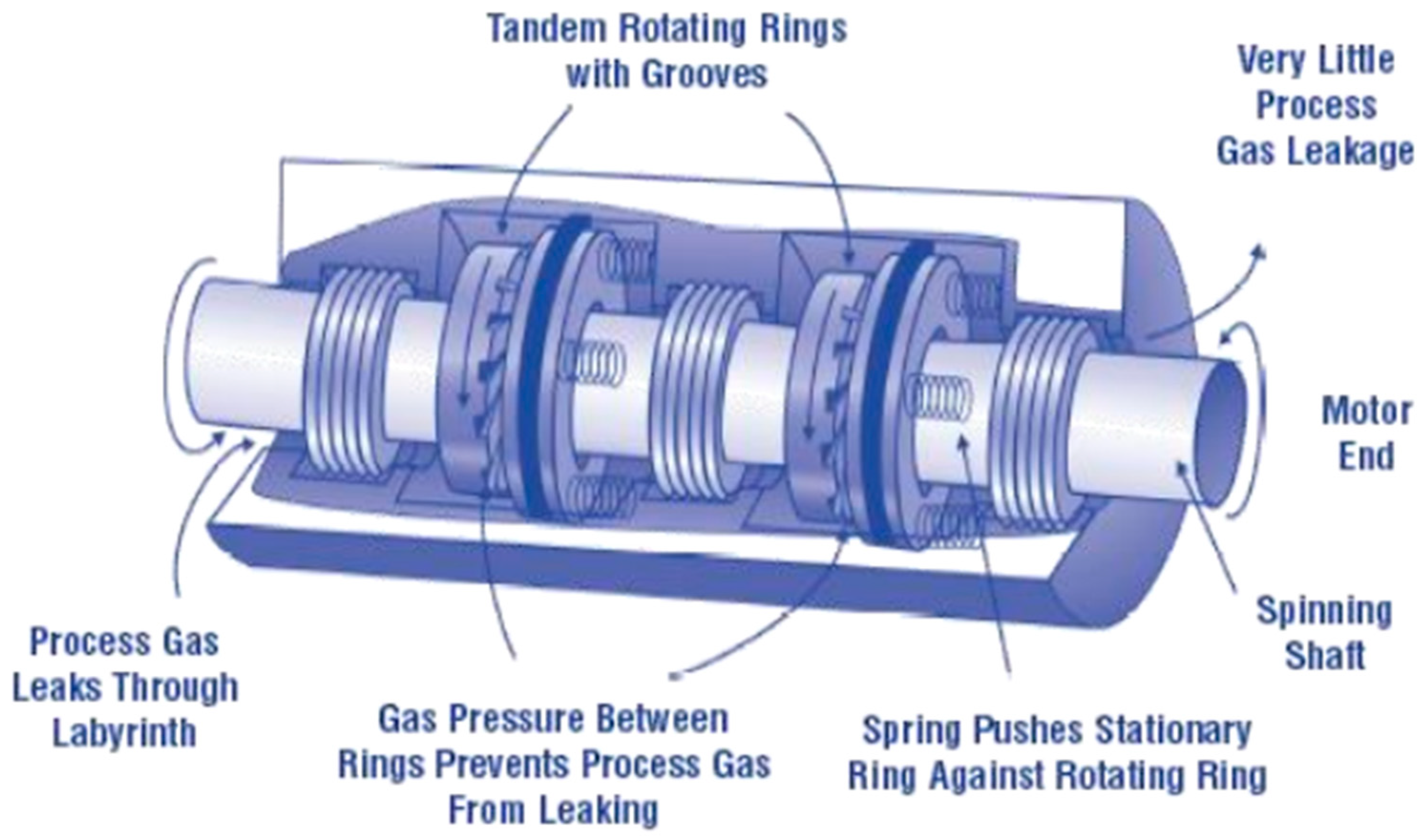
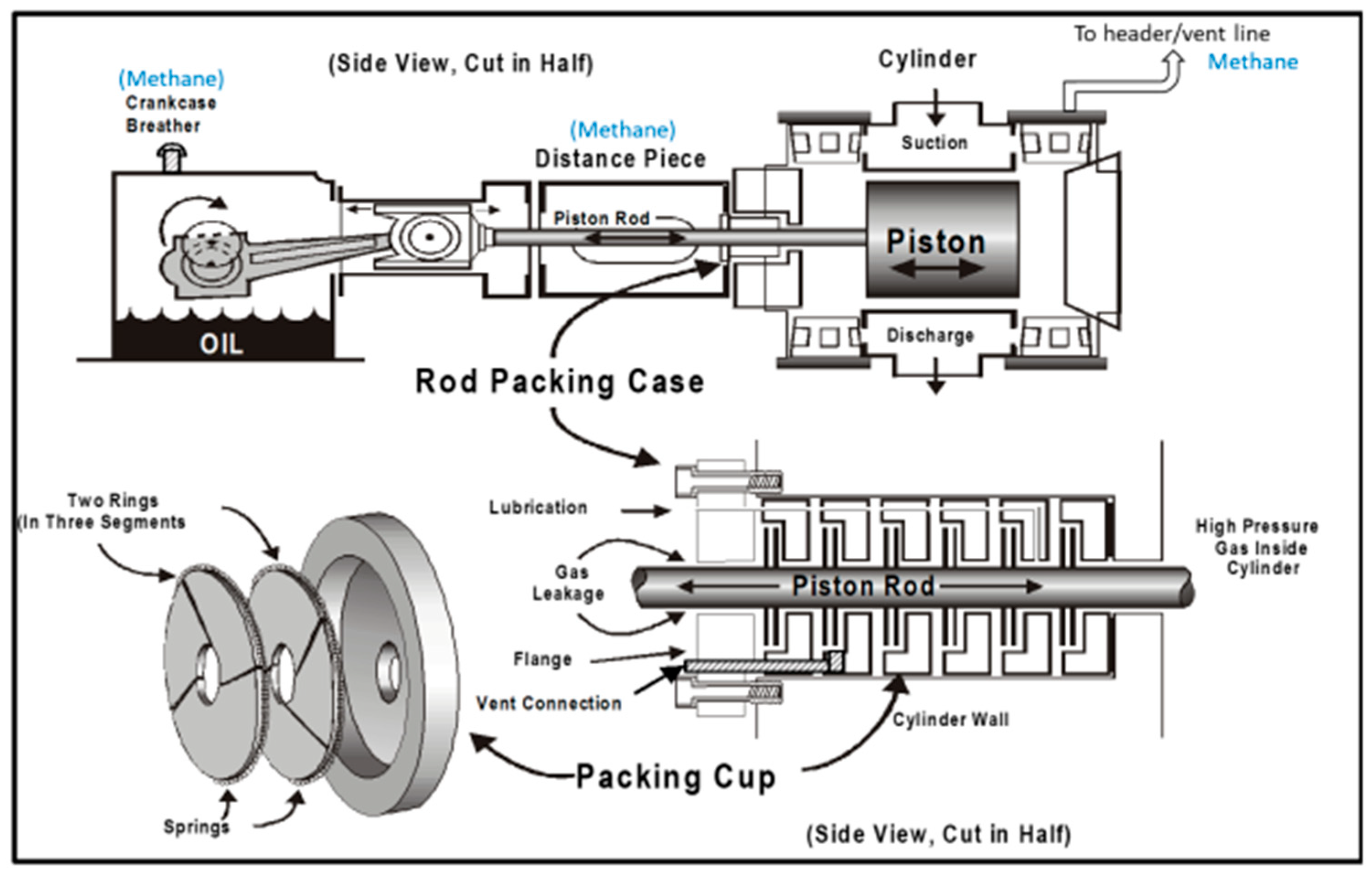
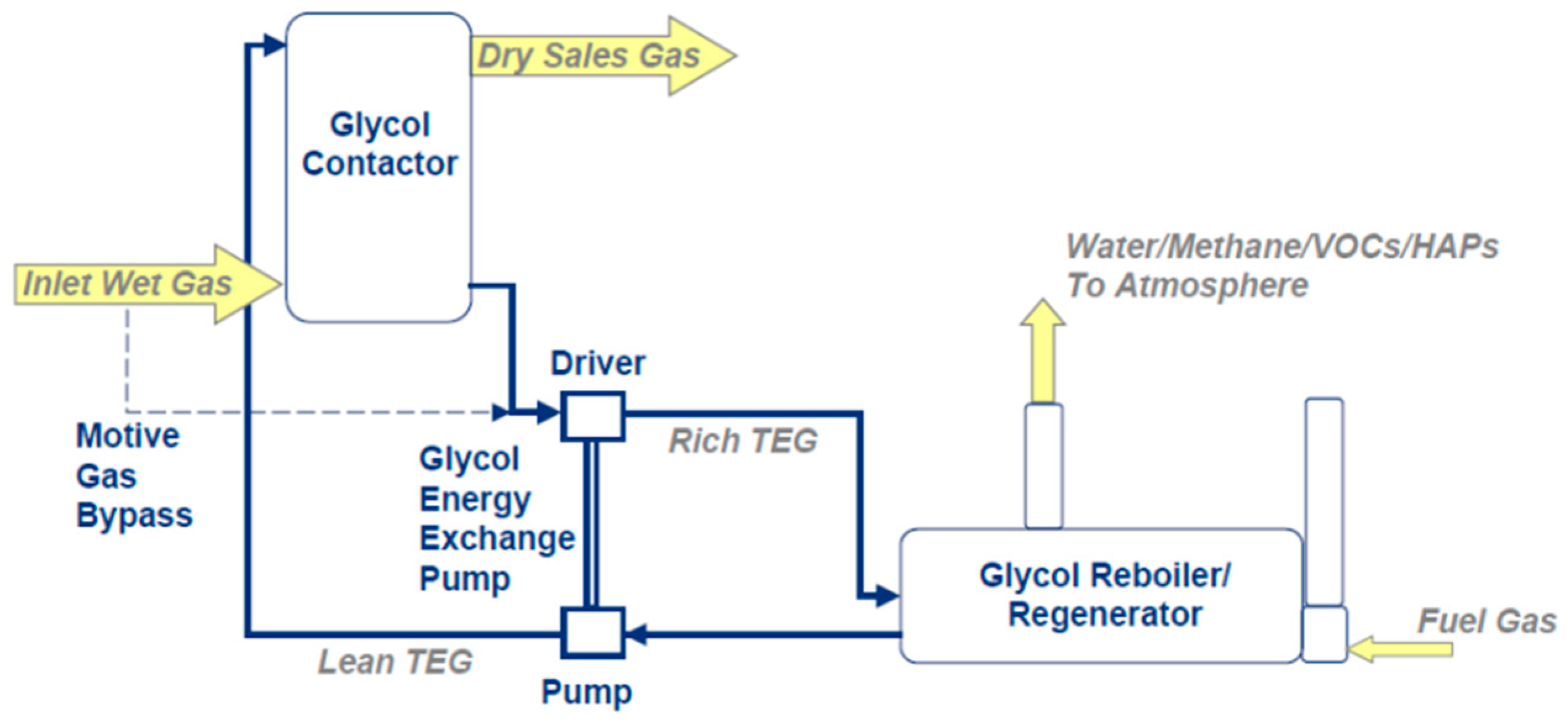
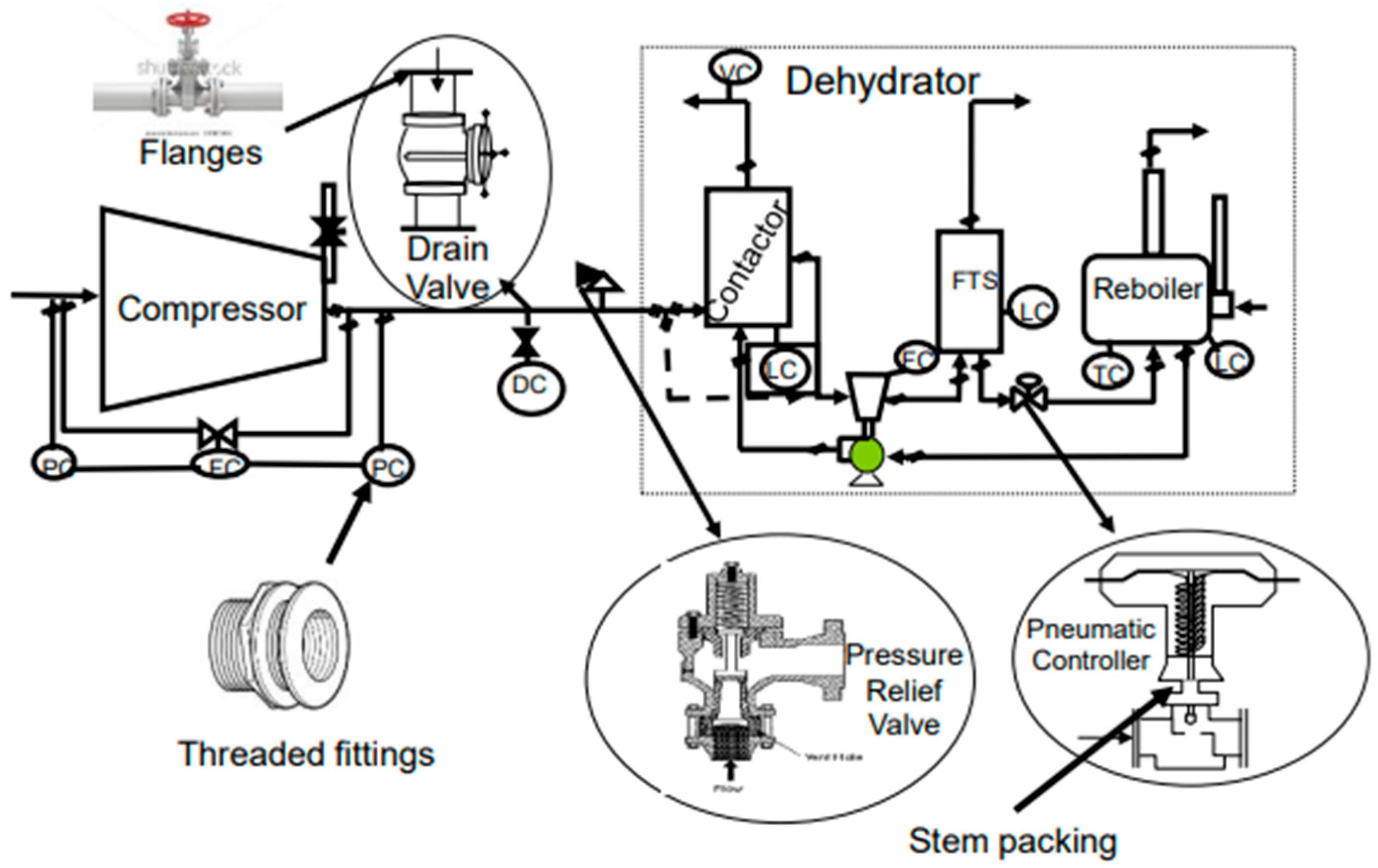
Technological emissions, with some examples presented in
Figure 1,
Figure 2,
Figure 3 and
Figure 4, originate from several key sources: Stationary combustion processes throughout the natural gas value chain result in incomplete fuel conversion to carbon dioxide, causing methane “slip” emissions through equipment exhaust stacks [
7]. Flaring involves the controlled combustion of natural gases released during production operations, which mitigates climate impact by converting methane to less harmful carbon dioxide while ensuring operational safety [
8]. Natural gas driven pneumatic controllers, including remote control valves operated by pneumatic controllers and gas-driven chemical injection pumps, as presented in
Figure 1, inherently releases methane at the design level, with additional emissions occurring from pneumatic controller loops and pump systems [
9].
Centrifugal compressors, as presented in
Figure 2, methane emissions primarily occur at the shaft seals, where pressurized gas can escape from inside the compressor casing to the atmosphere. Additionally, emissions may arise from lubrication systems (especially if oil seals are used) and maintenance access points [
10].
Reciprocating compressors (also referred to as piston compressors), as per
Figure 3, continuously emit natural gas during both operational and pressurized standby conditions due to the dynamic nature of piston rod sealing, with emissions increasing over time as sealing components and piston rods experience wear [
11].
Gas dehydration plants utilize glycol dehydration units, as presented
Figure 4, that remove water vapor through triethylene glycol in counter-current contact towers, followed by glycol regeneration via separation and thermal treatment at approximately 200 C [
12]. Unstabilized liquids storage tanks emit methane primarily through flash, working, and standing losses, with emission volumes influenced by pressure differentials between the separator and tank, tank configuration and integrity, and the properties of the stored liquids [
13].
Operational emissions result from intentional activities, including
Liquid unloading from gas wells occurs when declining reservoir pressure reduces gas velocity below the threshold needed to carry produced liquids, causing liquid accumulation in well tubing. This liquid head pressure eventually stops gas flow, requiring periodic liquid removal to restore production. To reestablish the flow, this liquid is removed and with it some methane may be released in the atmosphere [
14].
Oil well casinghead, which accumulates in the annular space of oil wells as crude oil enters lower pressure zones, must be managed-either by venting, flaring, or recovery-to prevent backpressure that can reduce oil production and cause operational issues [
15].
Well testing involves cleaning and stimulation operations following drilling or maintenance to initiate hydrocarbon flow. The process removes liquid and solid impurities, potentially releasing methane to atmosphere. Recovered fluids are redirected to separators where impurities are captured, and gas accumulations are typically flared. Testing duration ranges from hours to days [
16].
Atmospheric venting involves intentional natural gas release from oil and gas facilities for depressurization, process volume emptying, or safety purposes. These events may be random, periodic, or scheduled, with durations recorded to determine annual totals for each type of event [
17].
Fugitive emissions originate from unintentional leaks in oil and gas sector equipment and components. As summarized in
Table 1 and as presented in
Figure 5, at-risk components include flanged joints, threaded connections, valve stem seals, pump seals, compressor components, valves, tank venting hatches, flow meters, and open lines.
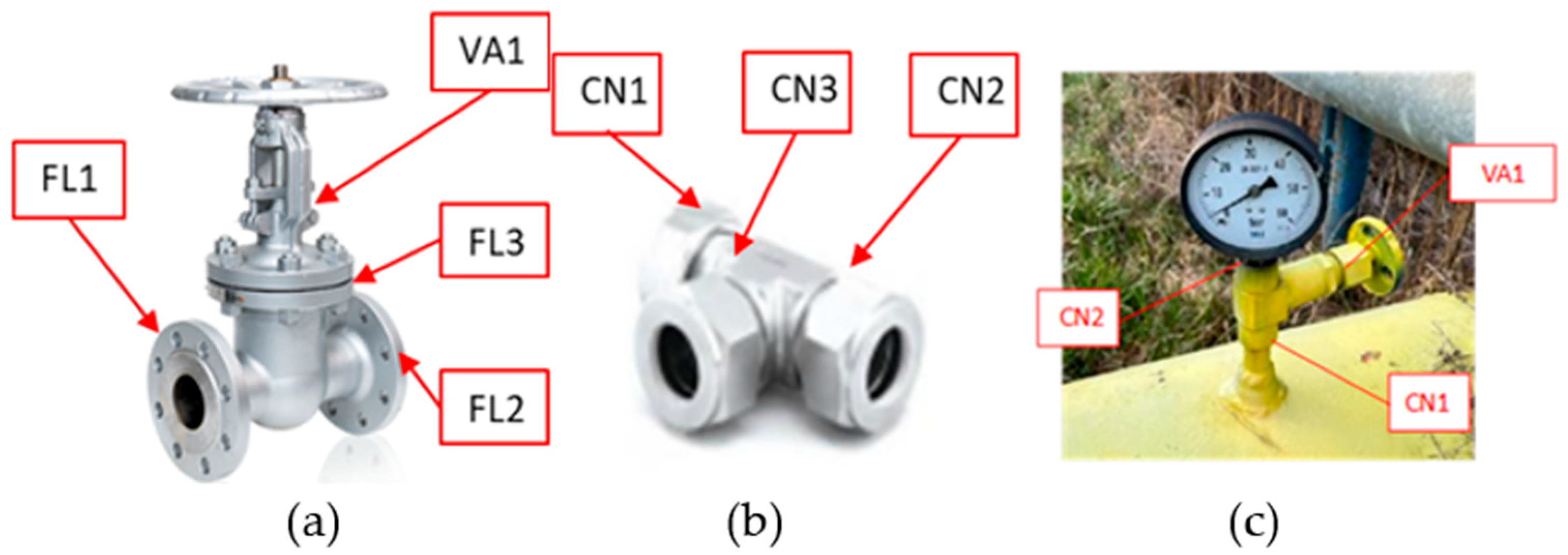
As presented in
Figure 6, primary sources and causes include:
Valves control fluid movement across various configurations adapted to installation specifications and process parameters, e.g., gate valves (
Figure 6a). Gas leaks typically occur at valve stems or stuffing boxes due to seal or closure element failure.
Connection elements (
Figure 6b) comprise flanged or threaded joints connecting piping and process equipment, using gaskets selected for specific operating environments. Leaks result from gasket failure (flanged joints), seal failure (threaded joints), corrosion, or improper tightening.
Sampling/measurement connections (
Figure 6c) obtain process samples/measurements, with leaks typically occurring at valve outlets during line purging for sampling or instrument installation.
Pressure relief valves protect equipment from overpressure conditions, with leaks occurring when valves are improperly seated, operating too close to be set points, or have worn seals.
Open lines or open ends are pipeline elements or components open to atmosphere, with leaks controlled using caps, plugs, and blind flanges. Depressurization stacks and relief valves are excluded from open-end categories.
1.2. International, European, and National Regulations and Policies on Methane Emissions
The Paris Agreement [
19], which entered into force in 2016, is the fundamental international treaty for combating climate change. Its main objective is to limit the increase in global average temperature to below 1.5 C by the end of the century. The agreement promotes transparency, the assumption of national contributions, financial solidarity for vulnerable countries, and increased climate ambition every five years. Although it does not directly target methane emissions, the agreement includes the reduction in all greenhouse gases, with methane implicitly addressed through decarbonization measures.
Global Methane Pledge [
20], launched at COP26 in 2021, the Global Methane Pledge is an international commitment coordinated by the United States and the European Union, with over 110 countries joining, responsible for about 50% of global anthropogenic methane emissions. The goal is to collectively reduce methane emissions by at least 30% compared to 2020 levels by 2030. Although some major states have not joined (China, India, Russia), international collaboration remains essential for achieving climate objectives.
The Oil and Gas Methane Partnership 2.0 (OGMP 2.0) [
21], an initiative of UNEP [
22] and CCAC [
23], represents the international reference standard for methane emissions management in the oil and gas industry. The program establishes a rigorous framework for measurement, reporting, and reduction in emissions, covering the entire value chain (upstream, midstream, downstream). Member companies must implement monitoring and reduction plans, report annual progress, and use advanced quantification methodologies. OGMP 2.0 includes over 160 companies [
24], covering more than 42% of global oil and gas production, including operators from Romania.
The “Fit for 55” legislative package [
25] of the European Union aims to reduce greenhouse gas emissions by 55% by 2030 and achieve climate neutrality by 2050. It includes measures on energy efficiency, increasing the share of energy from renewable sources, energy taxation, the EU Emissions Trading System (EU ETS), promotion of green fuels in transport, carbon border adjustment mechanisms, development of infrastructure for alternative fuels, and strict standards for emissions from transport and agriculture.
Regulation (UE) 2024/1787 of the European Parliament and of the Council of 14 June 2024 on the reduction in methane emissions in the energy sector [
2] is the first binding legal act at the European level that directly targets the reduction in methane emissions in the energy sector (oil, natural gas, coal). It imposes obligations on operators for monitoring, reporting, and detailed inventory of emissions, as well as the implementation of LDAR (Leak Detection and Repair) programs. Intentional releases of methane and flaring are permitted only in exceptional cases, with technical justification. The regulation also applies to suppliers outside the EU who export fossil fuels to the European market, thus ensuring a global and fair approach. Implementation is overseen by national authorities, with penalties for non-compliance.
National energy and climate plans (NECPs) [
26] align Romania’s energy and climate policies with EU objectives for the period 2021–2030, with an extended vision to 2050. Key objectives include reducing greenhouse gas emissions by 85% by 2030 (compared to 1990), increasing the share of renewables, improving energy efficiency, and developing energy infrastructure. Relevant measures for methane include modernization of gas transport and distribution infrastructure, promotion of LDAR technologies, integration of biomethane, and limiting uncontrolled flaring and venting.
The LIFE Programme [
27] is the main EU funding instrument for environmental and climate action projects, supporting the development and implementation of innovative technologies for methane emission reduction. The Just Transition Fund supports regions affected by the transition to a climate-neutral economy, financing modernization of energy infrastructure and promotion of low-emission energy sources.
The National Recovery and Resilience Plan (PNRR) [
28] facilitates access to European funds for infrastructure modernization, efficient waste management, and support for sustainable agriculture, thus contributing to methane emission reduction across various sectors.
The legislative and policy framework for methane emissions is dynamic and complex, integrating international, European, and national initiatives, as well as dedicated financial instruments. Effective implementation of these regulations and policies is essential for achieving decarbonization objectives and reducing the impact of methane on climate change.
1.3. LDAR Program
Leak Detection and Repair (LDAR) is a systematic program implemented in the oil and gas industry to identify, quantify, and repair fugitive emissions of volatile organic compounds (VOCs), especially methane, from equipment and components. The main objective of LDAR is to minimize unintentional emissions by regularly monitoring potential leak sources and ensuring timely remediation. An LDAR program typically involves the following steps: Inventory: creating a detailed list of all components (valves, connectors, flanges, pumps, compressors, etc.) that could potentially leak. Monitoring: regular inspection of these components using specialized detection technologies such as Flame Ionization Detectors (FID), Optical Gas Imaging (OGI), or other portable analyzers.
Quantification: measuring the concentration or flow rate of detected leaks, often using standardized protocols [
29]).
Repair: promptly repairing components that exceed a set leak threshold (e.g., 500 ppmv).
Documentation: recording all findings, repairs, and follow-up actions in a dedicated database for regulatory compliance and performance tracking. The study by Alvarez et al. (2018) [
30] provides a comprehensive assessment of methane emissions across the U.S. oil and gas supply chain and emphasizes the critical role of Leak Detection and Repair (LDAR) programs in identifying and mitigating fugitive methane emissions, demonstrating that systematic implementation of LDAR can significantly reduce overall methane losses in the sector.
1.4. Advances in Methane Detection and Mitigation: Technologies and Best Practices
Reducing methane emissions is a key priority for both environmental protection and the economic performance of companies, especially in the context of global climate objectives. Effective methane mitigation relies on several core principles: collecting accurate data, setting clear emission targets, integrating methane management into company strategies, ensuring transparency through robust reporting protocols, and involving stakeholders in policy development [
4,
31].
A wide range of technical solutions are available for methane reduction [
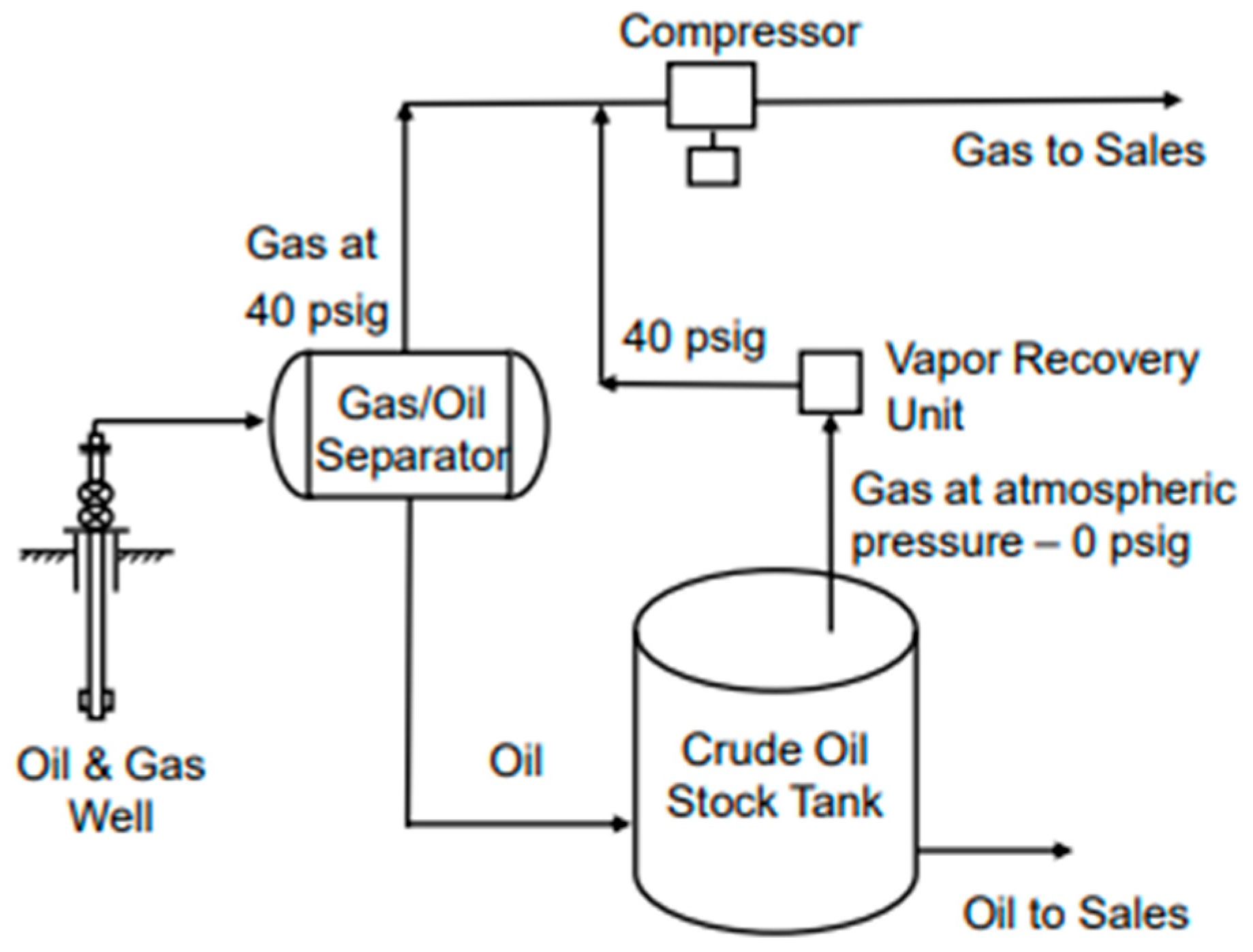
32]. These include the proactive replacement of equipment (such as pumps, compressors, and gas-driven systems), installation of new components like vapor recovery units (VRUs), as presented in
Figure 7, and blowdown capture systems, and the use of advanced detection technologies (notably infrared cameras and laser-based detectors) to identify and repair leaks [
6,
13].
Methane detection is fundamental to emission control and can be performed using three main approaches: On-site (ground-based) detection with infrared cameras (OGI) [
33], Flame Ionization Detectors (FID) [
34], Portable Flow Samplers [
35], and Hyperspectral Cameras [
36], which are highly effective for pinpointing leaks in industrial equipment and infrastructure. Aerial detection [
37] using drones, airplanes, or helicopters equipped with advanced sensors, enabling rapid assessment of large or hard-to-access areas. Satellite-based detection [
38], which is increasingly important for global monitoring, offers wide coverage and the ability to identify major emission sources. Continuous Emissions Monitoring Systems (CEMS) [
39] represent a cutting-edge solution, providing real-time surveillance of methane emissions through networks of static sensors. These systems enable rapid leak identification, support regulatory compliance, and help optimize operational efficiency, though their performance depends on sensor placement, calibration, and environmental conditions.
For methane capture and utilization, technologies such as VRUs are widely used to recover hydrocarbon vapors from low-pressure storage tanks [
13], while adsorption technologies (using materials like activated carbon, zeolites, or MOFs) are applied to selectively capture methane from gas streams [
40]. These solutions offer operational flexibility and can be integrated into existing facilities, delivering both environmental and economic benefits.
2. Materials and Methods
This section describes the methodology used for the identification, monitoring, measurement, and quantification of fugitive emissions, focusing exclusively on fugitive sources measured for the purpose of this work in facilities of oil and gas from Romania. Fugitive sources include uncontrolled gas leaks from components such as valves, connectors, flanges, fixed equipment, instrumentation, safety relief devices, rotating equipment, open-ended lines, and similar items. Controlled venting, flaring, stationary combustion, and other process-related sources are excluded from this work.
The main objectives are to describe the implementation of an emissions management method, present field data from various sites, and evaluate possible solutions for emission reduction.
In the present study, fugitive emissions were measured from several types of extraction and production of oil and gas facilities, including gas parks, gas wells, compressor stations, oil tank farms, and oil parks. A gas park is defined as a surface area where gas extracted from multiple wells is collected and measured before being compressed or transported to other facilities. A gas well is an installation used for extracting natural gas from underground. A compressor station is a unit that compresses natural gas to facilitate its transportation over long distances through pipelines. An oil tank farm refers to a group of storage tanks used for the temporary storage of crude oil before shipment or processing, while an oil park is an area dedicated to the handling and transfer of crude oil, including facilities for separation, measurement, and pumping.
To provide an indication of representativeness, the facilities included in this study were selected to cover a wide range of operational types (as described above) and geo-graphic locations within the extraction and production sector. The sample represents approximately 10% of the total number of such facilities operated by the local operator and includes both older and newer installations, as well as a variety of equipment types and operational practices. Although the sample size is limited, care was taken to ensure that the selected facilities are, in general, representative of the diversity found in the sector. Nevertheless, it should be noted that certain facility types or operational conditions may not be fully captured, and therefore the results should be interpreted with these limitations in mind. The inspection method employed in this study was an on-site (ground-based) approach, utilizing specialized equipment for the detection and quantification of methane emissions.
Components Inventory—prior to the detection of methane emissions, a comprehensive inventory of all components at each site was conducted. This inventory, as exemplified in
Figure 8, included components such as valves, connectors, flanges, fixed equipment, instrumentation, safety relief devices, rotating equipment, open-ended lines, and similar items. The purpose of this inventory was to establish a clear record of all potential methane sources and to facilitate targeted repairs or replacements where necessary. The inventory process followed oil and gas flow path, covering all components within the surface technological installations. By systematically cataloging all components, the inventory provided a clear overview of potential methane emission sources and enabled rapid and precise intervention for repairs or replacements whenever required.
Methane Emission Detection—following the inventory of components with potential for methane leaks, each item was systematically inspected to identify any methane emissions present at the site. Detection was carried out using specialized equipment, including Flame Ionization Detection (for detection and measurement of methane in parts per million), Optical Gas Imaging (for visualization and localization of gas leaks) and Quantitative Optical Gas Imaging (for real-time quantification of leak rates expressed in g/h or L/min).
The Flame Ionization Detection (FID) technology operates by drawing a sample of air or gas containing volatile organic compounds (VOCs), including methane, into a hydrogen flame. Within this flame, the organic compounds are ionized, producing ions and electrons. These charged particles generate an electric current between two electrodes, and the magnitude of this current is directly proportional to the concentration of organic compounds present in the sample. The detector then converts this current into concentration values, typically expressed in parts per million (ppm) or as a percentage. FID, specifically the Thermo Scientific TVA-2020 (Toxic Vapour Analyzer), CleanAir Europe, La Penne-sur-Huveaune, France, is preferred for detailed, component-level inspections where physical access is possible and exact leak quantification is desired. Temperature range: typically 0 °C to 40 °C; relative humidity: 15–95%. Accuracy: ±10% of reading or ±1 ppm (range 1–10,000 ppm); minimum detection limit: 0.5 ppm methane. Limitations: requires physical access to the component; cannot detect leaks at a distance or in inaccessible areas. Reference standard: U.S. EPA Method 21 [
41]. TVA-2020 instrument was calibrated in the field before each monitoring session using a certified methane calibration gas, to ensure measurement accuracy.
Optical Gas Imaging (OGI) employs specialized infrared (IR) cameras, Polytec GmbH, Waldbronn, Germany, which are equipped with imaging sensors integrated with a cryocooler to lower the sensor temperature. These cameras are sensitive to specific IR wavelengths where gases like methane and other VOCs absorb energy. When a gas is present in the camera’s field of view, it absorbs IR radiation, creating a visual contrast between the gas plume and the background. OGI is chosen for rapid visual screening, leak localization over large areas or in hard-to-reach zones, without direct contact. Minimum temperature difference of 2 °C between the gas and background for optimal visualization; the plume concentration must exceed the camera’s detection limit; maximum sensitivity in the 3.2–3.4 μm range (for methane). Influencing factors: atmospheric conditions (temperature, wind, humidity), background, and camera positioning. Limitations: strong wind can disperse the gas plume, reducing visibility; performance depends on temperature difference and environmental conditions. Standard: OGMP 2.0; detection threshold: <9.6 ppm·m for methane (ΔT = 10 °C, distance 1 m) [
6,
18].
Quantitative Optical Gas Imaging (QOGI) builds upon OGI by integrating quantification algorithms that allow real-time measurement of gas leak rates, either by mass or volume. The system, which combines the OGI camera with a tablet, captures the IR image and, using input parameters such as distance, wind speed, and temperature, calculates the concentration path length (ppm-m) at the pixel level and the leak rate (in grams per hour or liters per minute). QOGI is used for precise quantification of leaks identified with OGI, being essential where emission rate data are needed for reporting or intervention prioritization. Extends OGI by real-time quantification of leak rate (g/h or L/min) using algorithms and environmental parameters (distance, wind speed, temperature). Requires input of environmental parameters (distance, wind speed, temperature); the camera must be stabilized on a tripod during measurement. Limitations: quantification errors if parameters are not correctly entered or if the temperature difference is insufficient. Standard: OGMP 2.0 [
6,
18]. Moreover, QOGI is used for both visual detection and quantitative assessment of gas leaks from fugitive components, equipment, and venting sources.
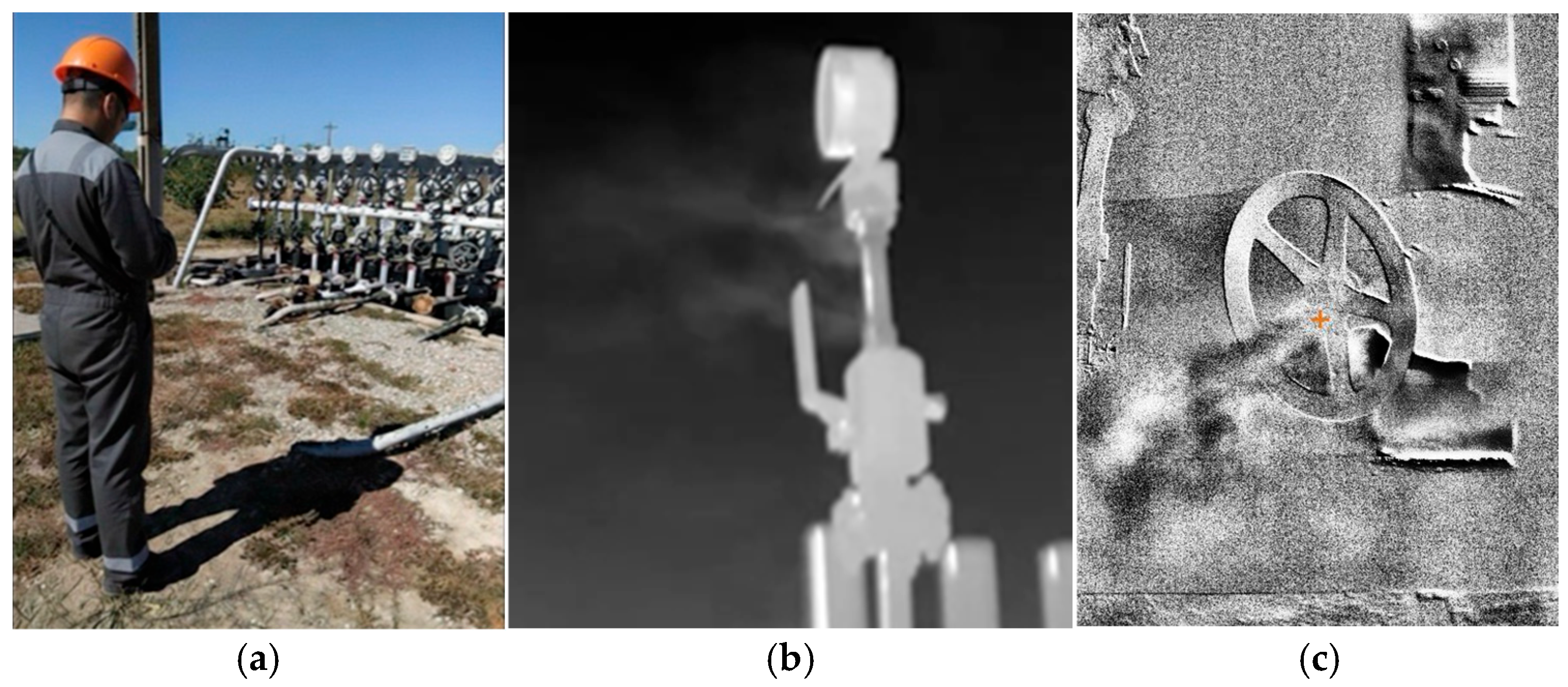
Measurement and Recording Procedure. As shown in
Figure 9, each component was monitored, and screening values were adjusted by subtracting the measured background value at the site. Data were entered into a dedicated database, including component type, adjusted value, location, condition, stream ID, and other relevant parameters. For each source with a screening value > 4 ppm, industry-standard correlation factors were applied to convert ppm to kg/h and subsequently to kg/year (assuming 8760 h/year).
Emission Quantification Method. Direct measurement involves the actual quantification of the mass flow rate of methane emitted from the source, expressed in units such as kg/h or g/h, without resorting to empirical or statistical factors. In this study, this approach was made possible by using advanced Quantitative Optical Gas Imaging (QOGI) technology in full quantification mode. In this case, environmental parameters (distance, wind speed, temperature) are entered into the system, and the emission rate (by mass or volume) is obtained directly, in real time, without requiring additional conversions or the application of correlation factors. This method is used complementarily with FID and OGI, and the results are interpreted in the context of the limitations presented in this work.
Indirect estimation based on correlation factors involves measuring the methane concentration near components (screening, usually in ppm) with instruments such as FID (Flame Ionization Detector) or OGI (Optical Gas Imaging). The measured values are then converted into emission rates (kg/h, kg/year) using standardized correlation factors (EPA 1995 [
29] or OGMP 2.0 [
18]), derived from statistical relationships established in controlled studies between concentrations and measured flow rates. This is an indirect method, widely used in LDAR programs for large-scale efficiency, but with lower accuracy compared to direct measurement, especially in the case of complex leaks or atypical geometries. The correlation factors used in this work were adapted to the chemical composition of the gas, based on the available chemical analyses for each point analyzed. Thus, for all the investigated streams, the correlation values were adjusted according to the specific gas composition determined by the chemical analysis reports.
For most of the sources investigated, emission quantification was performed using the indirect method, namely screening with FID/OGI and conversion of the obtained values into emission rates based on standardized correlation factors. For certain sources, where it was possible to apply QOGI in full quantification mode, direct measurement of the mass flow rate was performed, without using correlation factors.
For components where no leaks are detected during inspection with instruments such as FID or OGI (since detection thresholds are not absolute zero, and very small or intermittent leaks may not be detected at the time of inspection), the OGMP 2.0 standard [
18] and international protocols (EPA 1995) [
29] recommend the use of default-zero emission factors (usually very small values, close to zero but not exactly zero). This is to reflect the fact that, although no leak above the detection threshold was found, there may still be residual emissions below this threshold or intermittent emissions that were not detected during the inspection.
Reporting. As soon as a methane leak was identified, the maintenance team was notified to intervene and repair the leaks, both for those exceeding the reporting/repair threshold and for those below this threshold. After the repair was carried out, a new measurement was immediately performed on the respective component to verify whether the intervention was successful and whether the emission had been eliminated or reduced below the reporting threshold. This process ensures traceability of corrective actions and confirms the effectiveness of the repairs, being an integral part of a rigorous emissions management program.
Limitations and Uncertainties. During monitoring campaigns with portable instruments, it was observed that variations in wind conditions, temperature differences between the gas plume and the background, as well as the proximity of sampling points to potential leak sources, can introduce uncertainties in the estimation of methane flux. To manage and mitigate these influences, we applied several strategies in line with industry best practices and OGMP 2.0 [
18] recommendations: adjustment of background values: for each measurement, screening values were corrected by subtracting the background value measured on site, in order to eliminate the influence of ambient methane concentrations or other volatile compounds; use of standardized correlations: the conversion of measured values (ppm) into emission rates (kg/h or kg/year) was performed using internationally recognized correlation factors, which also include adjustments for typical operating conditions; stabilization of equipment and input of environmental parameters: in the case of QOGI technologies, for accurate quantification of leaks, parameters such as distance, wind speed, and temperature were manually entered, and the equipment was stabilized on a tripod to reduce measurement errors; repetition of measurements and use of multiple technologies: to increase data robustness, several detection methods were used (FID, OGI, QOGI), and the results were compared and reconciled to ensure consistency.
A key limitation of our study is that it focuses exclusively on the assessment of fugitive emissions—specifically, unintentional methane leaks originating from components such as valves, connectors, and compressor seals. However, this approach addresses only a sub-section of the total methane emissions, as it does not include standard technological and operational emission sources, such as emissions from tanks, flaring, controlled venting, or gas-driven pneumatic equipment. As a result, the findings presented here do not provide a comprehensive overview of all methane emissions within the oil and gas sector. In future work, we intend to analyze each type of emission source individually, in order to obtain a complete and accurate picture of methane emissions across the sector.
3. Results
The fugitive emissions measurement campaign at Cluster 1 and Cluster 2 was conducted using a combination of Flame Ionization Detector (FID), Synspec BV, Groningen, the Netherlands, Optical Gas Imaging (OGI), and Quantitative Optical Gas Imaging (QOGI) technologies. Across both clusters, a total of 3787 components were screened for fugitive emissions, with 2938 components physically monitored in Cluster 1 and 849 in Cluster 2. The threshold for reporting a leak was set at 500 ppmv. In Cluster 1, 8 components were identified as leaking above this threshold, while in Cluster 2, 33 components exceeded the treshold. The total estimated methane emissions from fugitive and equipment leaks, as measured by FID, OGI, and QOGI, were 1032.64 kg/year for Cluster 1 and 9458.7 kg/year for Cluster 2. The proportion of leaking components was 0.27% in Cluster 1 and 3.89% in Cluster 2. Most of the leaks were associated with block valves, connectors, and compressor shaft seals, with leak rates ranging from minor (500–10,000 ppmv) to major (>50,000 ppmv).
According to
Table 2, Out of 2889 components screened in the Gas Park of Cluster 1, only 5 leaks were detected, resulting in a total methane emission of 992.28 kg/year. Most of the emissions originated from block valves, which accounted for 970 kg/year, highlighting their critical role as emission sources. Other equipment types contributed minimally, with actuated valves, connectors, and fixed equipment each responsible for less than 5 kg/year. This low leak rate (0.17%) demonstrates effective maintenance but also underscores the disproportionate impact of a small number of leaks.
In the Gas Wells of Cluster 1, as can be seen in
Table 3, 49 components were inspected, and 3 leaks were identified, leading to 40.36 kg/year of methane emissions. Block valves were again the main contributors, responsible for nearly all emissions in this area. The leak rate here was higher (6.12%) compared to the Gas Park, suggesting that wellhead equipment may require more frequent inspection and targeted maintenance.
In
Table 4, a total of 180 components were monitored in the Compressor Station of Cluster 2, with 5 leaks detected and 806.41 kg/year of methane emissions. Block valves and connectors were the primary sources, contributing 476 kg/year and 329 kg/year, respectively. The leak rate was 2.78%, indicating that compressor stations are significant points of fugitive emissions and should be prioritized for LDAR activities.
In the Oil Tank Farm, 374 components were screened, and 10 leaks were found, resulting in 1710.13 kg/year of methane emissions. Actuated valves and block valves were the largest contributors, each responsible for over 850 kg/year, as can be seen in
Table 5. The leak rate was 2.67%, showing that storage and transfer of oil areas can be hotspots for emissions.
As shown in
Table 6, out of 126 components checked in the Gas Park, 7 leaks were detected, totaling 976.67 kg/year of methane emissions. Block valves were again the main source, with 975.95 kg/year. The leak rate was 5.56%, indicating that even a small number of leaks can result in substantial emissions.
In the Oil Park, 169 components were inspected, and 11 leaks were found, leading to 5965.49 kg/year of methane emissions. Connectors were responsible for 3961.85 kg/year, and block valves for 2003.64 kg/year. The leak rate was 6.51%, the highest among all areas, emphasizing the need for focused maintenance in oil handling facilities, as detailed in
Table 7.
4. Discussion
The results of the fugitive emissions measurement campaign conducted at the Romanian oil and gas facilities provide valuable insights into the nature, magnitude, and distribution of methane leaks across different asset types and operational clusters. The methodology employed combining direct measurement techniques (FID, OGI, QOGI) with a comprehensive inventory and systematic screening, ensuring a robust and transparent quantification of fugitive methane emissions.
A key observation is the relatively low proportion of leaking components compared to the total number of monitored items, as presented in
Table 8: 0.27% in Cluster 1 and 3.89% in Cluster 2. Despite this, the cumulative methane emissions from these leaks are significant, with Cluster 1 contributing 1032.64 kg/year and Cluster 2 contributing 9458.7 kg/year. The higher leak rate in Cluster 2 may be attributed to differences in asset age, maintenance practices, or operational conditions, as well as the specific types of equipment present (e.g., compressor stations and tank farms).
To put these results in perspective, the total measured methane emissions of 10,491.34 kg/year from 3787 components measured equates to an average of approximately 2.77 kg/year per leak. Given methane’s global warming potential (GWP) of 82.5 over 20 years, this annual emission is equivalent to 865,522 kg CO2 eq/year. Even a small number of leaks can have a significant climate impact, reinforcing the importance of systematic LDAR programs. If extrapolated, for every 1000 components monitored, approximately 11 leaks may be expected, resulting in about 2770 kg/year of methane emissions. This calculation can help operators estimate potential emissions and prioritize mitigation efforts across larger asset portfolios.
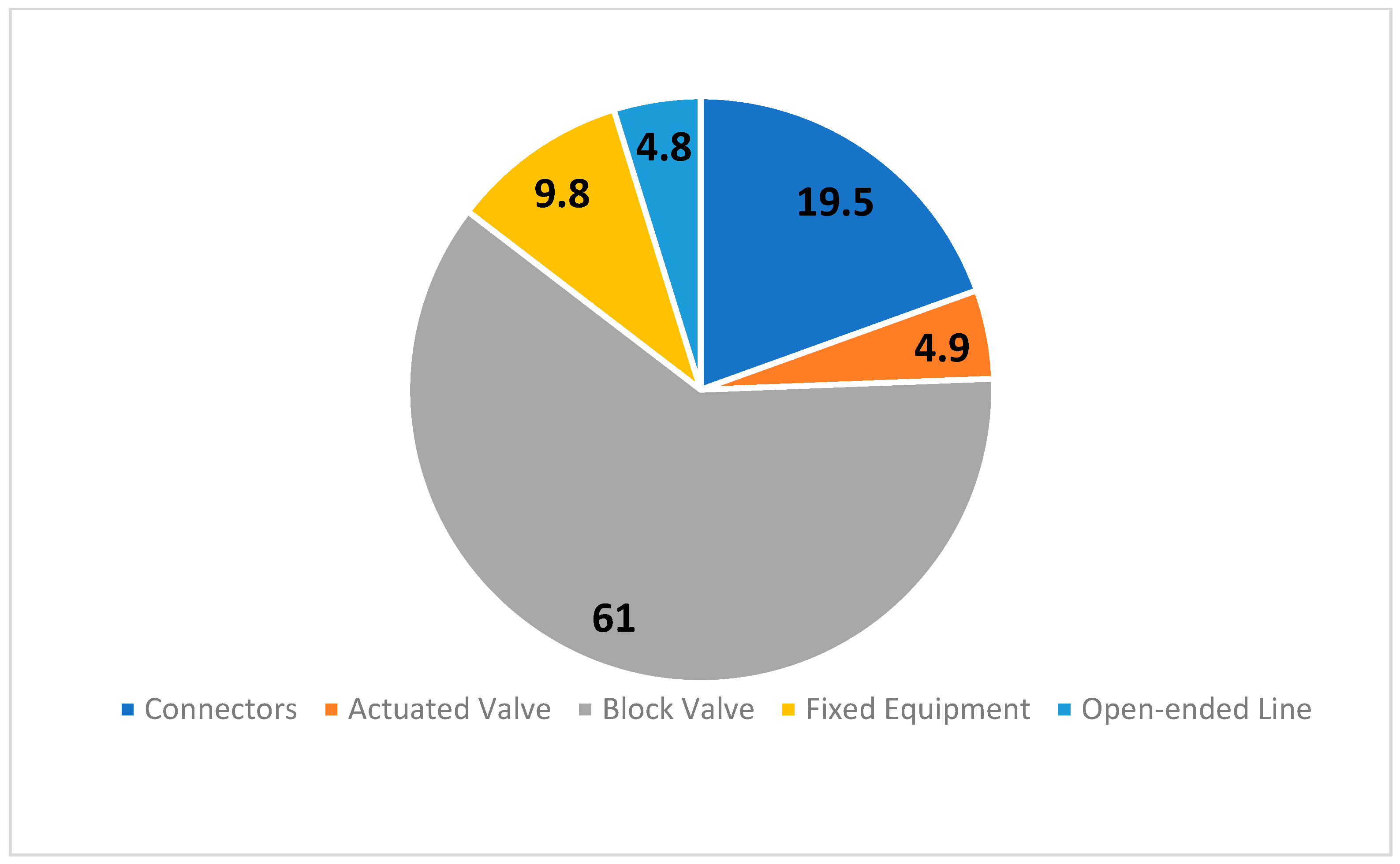
As can be seen in
Table 9 and
Figure 10, the data reveal that block valves, connectors, and compressor shaft seals are the most common sources of major leaks. This highlights the importance of targeted maintenance and repair programs focusing on these component types to achieve meaningful emission reductions.
The use of advanced detection technologies, such as QOGI, enabled not only the localization but also the quantification of leak rates in real time, providing actionable data for maintenance teams. The integration of screening values with industry-standard correlation factors ensured that emission estimates are consistent with regulatory requirements and best practices.
Among the limitations of this study, it is important to note that the number of monitored components was restricted by physical accessibility and on-site safety requirements, which may lead to an underestimation of total methane emissions. Additionally, the variability of atmospheric conditions—such as wind, temperature, and pressure—can influence methane dispersion and detection, introducing variability into the measurement results. Each detection and quantification method used (FID, OGI, QOGI) has its own specific uncertainties, related to equipment sensitivity, calibration procedures, and susceptibility to environmental influences. The field applicability of our methodology was also limited by restricted access to certain facility areas, which may affect the generalization of results to other operational contexts. To address these constraints, we propose several future research directions. These include the development and implementation of continuous emissions monitoring systems (CEMS) and the integration of mobile technologies, such as drones and portable sensors. Such advancements can enhance the robustness of detection and enable workflow assessment across a wider range of operating conditions, including for intermittent or hard-to-reach emission sources. We also recommend extending the study to other types of facilities and operational scenarios to validate and generalize the findings. Furthermore, a systematic analysis of the uncertainties associated with each detection and quantification method, as well as a more detailed evaluation of the impact of environmental factors on equipment performance, would strengthen future research efforts. The 41 identified leaks were grouped according to emission rate and their distribution was analyzed. The results show that 10 leaks (about 20% of the total) have emission rates >300 kg/year and are responsible for approximately 49% of the total measured emissions, while the remaining approximately 80% of leaks contribute 51% of the total. This distribution confirms the strongly asymmetric character of the leak rates and supports the applicability of the empirical 80:20 rule even in a limited sample. The complete distribution of leak rates is presented in
Table 10 and
Table 11.
The results of this study are similar to those reported in some specialized studies regarding the proportion of leaking components and the magnitude of methane emissions in oil and gas facilities. For example, Zavala-Araiza et al. (2015) reported that the percentage of leaking components in U.S. natural gas production facilities typically ranges between 0.5% and 2%, which is similar to the 1.08% observed in this work [
42]. Likewise, studies conducted in U.S., Alvarez, R.A. et al. (2018), have found comparable leak rates and have also identified valves, connectors, and compressor seals as the most frequent sources of significant emissions [
30]. According to Brandt et al. (2014) and Brandt et al. (2016), as well as Allen, D.T. et al. (2013), the distribution of methane emissions is highly heterogeneous: a small proportion of sources (so-called super-emitters) are responsible for the majority of total emissions [
43,
44,
45]. Similarly, in our study, we found that although only 1.08% of the monitored components exhibited leaks above the reporting threshold, these accounted for significant cumulative emissions. The analysis of the data obtained in this study confirms that the distribution of leak rates follows a strongly right-skewed pattern, similar to what is reported in the international literature for other regions [
30,
42,
43]. Thus, the majority of monitored components do not exhibit detectable leaks or have very low emissions, but a small number of components (“super-emitters”) are responsible for a disproportionately large share of total methane emissions. This distribution is illustrative of the empirical 80-20 rule, according to which approximately 80% of emissions originate from 20% or fewer sources. An airborne and ground-based measurement campaigns [
46] have demonstrated that methane emissions from the Romanian oil and gas sector are significantly higher than previously reported in national inventories, highlighting the critical importance of direct measurement approaches for accurate quantification and effective mitigation.
Recent international reports confirm that the proportion of leaking components in oil and gas facilities typically ranges from 0.5% to 3%, with valves, connectors, and compressor seals being the most frequent sources of significant methane emissions (IEA, 2024 [
47]; UNEP, 2021 [
48]; European Commission, 2020 [
49]).
Korben et al. (2022) [
50] estimate that Romania contributes 13% to methane emissions from the oil and gas sector in the EU, and extrapolating the results from our study to the entire sector suggests that total emissions could reach tens of thousands of tonnes per year, highlighting the need for large-scale implementation of LDAR programs and continuous monitoring technologies. Although the present study did not include a direct calculation of the economic impact of methane emission reduction, numerous studies and international reports consistently indicate that a significant share of methane emissions from oil and gas operations can be reduced at zero net cost or even with a net financial benefit [
30,
47,
51]. This is primarily because the value of recovered gas often offsets the costs associated with detection, repair, and preventive maintenance. Furthermore, the literature shows that, in the long term, preventive maintenance and systematic leak detection can actually reduce the frequency and duration of unplanned shutdowns, as they help prevent major failures and uncontrolled product losses [
42]. The campaign also demonstrated the value of immediate feedback to maintenance teams, enabling rapid remediation of leaks identified above the reporting threshold. Importantly, the significance of focused LDAR (Leak Detection and Repair) programs and continuous monitoring for the rapid identification and remediation of major emission sources is also highlighted in other studies, such as Rutherford, J.S. et al., 2021 [
52]. This approach supports a proactive emissions management strategy and aligns with the transition from inventory-based to measurement-based reporting advocated by EU Regulation.
Our analysis of methane emissions has enabled us to identify several practical solutions for reducing these emissions. Implementing a rigorous program of preventive and corrective maintenance for high-risk components, particularly valves, connectors, and compressor shaft seals, is essential for minimizing leaks. Prompt repair of faulty components and replacement of worn seals can significantly lower emission levels. It is essential that all detected leaks are remediated as quickly as possible to minimize ongoing losses. Furthermore, based on the measurement results, it is advisable to establish a stock of spare parts, especially for those components, where the highest number of emissions were found.
Additionally, modernizing equipment by introducing advanced technologies, such as like double-sealed valves, high-quality gaskets, and dry gas seals for compressors, can further reduce both fugitive and technological emissions.
LDAR has previously been identified as successful, and this is further confirmed by our study [
34,
53].
The use of continuous emissions monitoring systems (CEMS) is also advised, as these systems allow for the rapid detection of both persistent and intermittent leaks, including those that might be missed during periodic inspections. CEMS can be supplemented with mobile technologies, such as drones or portable sensors, to monitor hard-to-reach areas.




 ,
,