Article

Using Generative Artificial Intelligence to Evaluate the Quality of Chinese Environmental Information Disclosure in Chemical Firms


College of Economics and Management, Nanjing Forestry University, No. 159 Longpan Road, Xuanwu District, Nanjing 210037, China
*
Author to whom correspondence should be addressed.
Sustainability 2025, 17(24), 11348; https://doi.org/10.3390/su172411348
Submission received: 27 November 2025 / Revised: 13 December 2025 / Accepted: 16 December 2025 / Published: 18 December 2025

Abstract

Environmental information disclosure plays a critical role in corporate sustainability, yet existing evaluation approaches often rely on subjective judgment or limited textual features. This study proposes a structured framework for assessing the environmental information disclosure quality (EIDQ) of chemical enterprises and develops a generative artificial intelligence (GAI)-driven automated scoring system to enhance evaluation consistency. Using 190 Environmental, Social, and Governance (ESG) reports from 38 Chinese chemical firms between 2020 and 2024, we applied a multi-stage process combining indicator construction, DeepSeek-V3.2–based large language model (LLM) scoring, and cross-model validation. The results show that EIDQ exhibited a steady upward trend over the study period, reflecting a shift toward more quantitative and verifiable disclosure practices. The AI-generated scores demonstrated a high degree of alignment with human expert evaluations, and robustness tests confirmed the method’s transferability across different large language models. These findings provide methodological evidence for the feasibility of AI-assisted EIDQ assessment and offer practical implications for corporate sustainability reporting and regulatory oversight.

1. Introduction

With the advancement of China’s “dual-carbon” strategy and the establishment of a sustainable finance system, the country is accelerating the development of an environmental information disclosure (EID) regime that aligns with international standards. In 2021, the Ministry of Ecology and Environment issued the Measures for the Administration of Legal Disclosure of Enterprise Environmental Information, which introduced standardized requirements for truthful, accurate, complete, and comparable reporting. In 2024, the Shanghai, Shenzhen, and Beijing stock exchanges jointly released the Sustainability Reporting Guidelines (Trial), further integrating emissions management, resource utilization, and climate-related risks into a unified disclosure framework. In the same year, the Ministry of Finance unveiled the Corporate Sustainability Disclosure Standards —General Standard (Draft for Comment), laying the foundation for China’s nationwide compulsory sustainability disclosure system starting in 2025. These regulatory developments signal a shift toward more rigorous, transparent, and data-driven sustainability reporting. Consequently, establishing scientific, objective, and reproducible approaches for evaluating the quality of EID has become an urgent task for both regulators and enterprises.
The chemical industry is widely regarded as a representative environmentally sensitive sector, making it an important context for examining the quality of EID. First, chemical production involves diverse pollutants and complex processes, and the sector has a high incidence of environmental emergencies. According to annual reports released by the Ministry of Ecology and Environment, chemical enterprises consistently account for more than 60% of environmental incidents nationwide. Second, the industry is characterized by high energy consumption and carbon intensity. According to the China Petroleum and Chemical Industry Federation, the chemical sector accounts for approximately 12% of China’s total industrial energy consumption, and its carbon emissions rank among the highest among energy-intensive industries, resulting in considerable environmental governance pressure; thus, the completeness and transparency of corporate disclosure are critical for supporting the sector’s green transition. Third, substantial heterogeneity in environmental information disclosure quality (EIDQ) persists across firms. Existing research indicates that chemical companies frequently rely on qualitative descriptions in key domains—such as emissions management, hazardous chemical control, and environmental performance—while providing limited verifiable quantitative information, thereby leading to inconsistent disclosure depth and weak comparability [1,2]. Taken together, these features position the chemical industry as a regulatory priority and an analytically valuable setting for evaluating the applicability and robustness of EIDQ assessment methods.
Existing methods for evaluating the quality of EID primarily include traditional approaches such as manual content analysis, dictionary-based techniques, and word-frequency statistics [3,4,5]. However, manual evaluation is costly and highly subjective [6]. With advances in machine learning, text classification and topic modeling have been increasingly applied to Environmental, Social, and Governance (ESG) and EID research, yet conventional natural language processing (NLP) techniques rely heavily on feature engineering and remain limited in processing Chinese ESG reports that are policy-intensive, context-dependent, and structurally complex. These methodological limitations constrain the ability of existing approaches to capture long-text dependencies, nuanced semantic structures, and institutionally framed disclosure content that are increasingly prominent in sustainability reporting. As digitalization reshapes the broader landscape of evaluation research, Potluka, Harten, Kocks and Dvorak (2025) [7] highlight how AI-driven evaluation methods can enhance accuracy, scalability, and methodological rigor, signaling a paradigmatic shift from traditional manual assessment toward data-driven and automated evaluation. In recent years, large language models (LLMs) have demonstrated significant advantages in long-text comprehension, factual information extraction, and structured output generation. Nevertheless, how these capabilities can be systematically embedded into transparent, reproducible, and industry-adapted evaluation frameworks—particularly in the context of Chinese environmental disclosures—remains insufficiently explored. Studies have shown that LLMs exhibit strong potential in the automated scoring of ESG reports [8] and perform reliably in tasks such as information extraction, risk identification, and compliance detection [9]. In particular, for Chinese-language texts, new-generation models such as DeepSeek offer notable strengths in semantic understanding, logical reasoning, and structured assessment, thereby underscoring the relevance and necessity of exploring an LLM-based framework for EIDQ evaluation.
Building on the above research background, this study developed a comprehensive evaluation process for EIDQ. This study examined 38 Chinese A-share listed chemical enterprises that meet the industry definition of the chemical manufacturing sector and have consistently published ESG-related reports throughout the study period (2020–2024). These firms constitute the complete set of companies in this sector with continuous, publicly accessible disclosure during these five years. Rather than relying on a single methodological step, the proposed research design integrates indicator system construction, LLM-based automated assessment, and robustness verification to provide a coherent and systematic evaluation framework. Drawing on the GRI framework and incorporating the environmental governance characteristics of the chemical industry, an evaluation system consisting of five primary dimensions and thirty secondary indicators was established. Second, the study developed a generative artificial intelligence (GAI)-enabled automated scoring mechanism based on DeepSeek-V3.2 to evaluate the firms’ EIDQ in a consistent and structured manner. Compared with traditional evaluation approaches, this design aims to enhance assessment efficiency and consistency, particularly in the context of complex Chinese environmental disclosure texts. To assess the credibility and stability of the automated evaluation results, robustness analyses were conducted through complementary validation strategies, rather than reliance on a single model output. Finally, the evolution of EIDQ was examined from both overall distributional characteristics and year-by-year trends, providing a systematic overview of disclosure dynamics within the chemical industry.
Against this background, the purpose of this study was to develop a systematic, objective, and reproducible approach for evaluating the quality of EID in the chemical industry. To achieve this goal, the study addressed the following research questions: (1) How can an evaluation framework be constructed that integrates international sustainability standards with industry-specific characteristics? (2) Can LLMs reliably assess disclosure quality in comparison with human evaluations? (3) To what extent are the AI-generated results consistent and robust across different models and over time?
The main contributions of this study are as follows. First, this study develops an evaluation framework for EIDQ that integrates internationally recognized sustainability standards with industry-specific characteristics. By aligning the framework with the GRI standards while embedding the environmental governance features of the chemical industry, the proposed system enables a structured and comparable assessment of firms’ disclosure practices across key dimensions such as environmental responsibility, emissions management, and resource utilization. This framework provides an operational basis for systematic and objective evaluation of EIDQ. Second, this study proposes a GAI-based automated scoring approach for EIDQ assessment. By combining text segmentation, prompt engineering, and structured output control, the proposed procedure facilitates the consistent identification of verifiable information, quantitative disclosures, and institutional reporting elements within ESG reports. Compared with conventional manual or feature-based methods, this approach improves evaluation efficiency and enhances scoring consistency and reproducibility, thereby offering a practical solution for large-scale and objective EIDQ assessment. Third, this study contributes to the broader field of evaluation research by demonstrating how LLMs can be systematically integrated into a structured assessment framework. By incorporating LLM-based reasoning, consistency checks, and cross-model validation, the study advances methodological discussions on digital and automated evaluation and provides new evidence on the reliability, scalability, and reproducibility of AI-enabled assessment processes.
The remainder of this paper is organized as follows. Section 2 reviews the major research developments related to EID and its evaluation methods. Section 3 describes the sample and data, the construction of the evaluation system, and the LLM-based automated scoring procedure. It also presents the correlation analysis between human evaluations and AI-generated results, as well as the cross-model consistency test between DeepSeek and Qwen3. Section 4 reports the overall characteristics and annual trends of the AI-generated scores. Section 5 discusses the main empirical findings and their theoretical and practical implications, while Section 6 concludes the study.

2. Literature Review

2.1. Corporate EID in China

In recent years, as China’s “dual-carbon” strategy and sustainable development goals have advanced, EID has increasingly become an important instrument of corporate environmental governance. Despite continuous improvements in the regulatory framework, disclosure practices among Chinese firms remain predominantly qualitative and policy-oriented, lacking industry-specific, quantitative, and comparable structures—an issue that is particularly pronounced in high-pollution sectors such as the chemical industry.
In terms of disclosure frameworks and content, international research has provided an important foundation for the theoretical development of EID in China. Clarkson, Li, Richardson, and Vasvari (2008) [10] proposed a systematic disclosure model based on the Global Reporting Initiative (GRI) Sustainability Reporting Guidelines [11], covering governance structures, management systems, performance indicators, and strategic objectives, thereby establishing a widely adopted analytical framework for EID studies. Similarly, the content analysis indices and tiered scoring system developed by Aerts, Cormier, and Magnan (2008) [12] have been extensively applied, offering an operational approach for evaluating EIDQ. Collectively, these studies have facilitated the evolution of EID from principle-based narratives to structured and quantifiable systems, providing valuable theoretical references for China’s localized research efforts.
Regarding disclosure practices, the existing literature consistently highlights that Chinese firms still exhibit significant shortcomings in quantitative disclosure. Many reports remain at the level of policy statements and aspirational narratives while providing insufficient quantitative and verifiable information in key areas such as emissions management, energy use, and hazardous waste control [13,14]. This structural gap between reporting practices and regulatory expectations is particularly pronounced in high-risk industries, creating challenges for measuring and comparing EIDQ and underscoring the importance of standardized evaluation methods.
With respect to the determinants of EIDQ, existing studies emphasize the joint influence of external institutional environments and internal governance mechanisms. Externally, government information disclosure requirements and regulatory pressure can significantly enhance firms’ willingness to disclose [15], while public scrutiny and investor expectations often trigger strategic disclosure behaviors [16]. Internally, managerial characteristics, the effectiveness of internal controls, and board structures have been shown to improve the reliability and comprehensiveness of corporate disclosure [17,18,19,20]. Therefore, measuring EIDQ is not only essential for assessing policy implementation outcomes but also central to understanding firms’ incentive structures and the broader economic consequences of environmental governance.
In terms of economic consequences, existing research primarily examined the effects of EID on firms’ cost of capital, corporate value, and market reactions. Evidence shows that high-quality disclosure can reduce capital costs and enhance firm value by improving transparency and mitigating information asymmetry [21,22]. However, when disclosed information is inconsistent with actual environmental performance, it may trigger negative market responses and amplify reputational risks [23]. Accordingly, the measurement of EIDQ is essential not only for evaluating policy implementation but also for understanding firms’ incentive structures and the economic outcomes of environmental governance.
Overall, research on EID in China has developed a systematic analytical framework encompassing regulatory institutions, disclosure content, influencing factors, and economic consequences. However, significant gaps remain in the evaluation of EIDQ. Existing methods rely heavily on manual content analysis or traditional text-mining techniques, which struggle to process ESG reports that are lengthy, contextually complex, and diverse in information types. Moreover, there is a lack of systematic research on constructing evaluation frameworks that are industry-specific, capable of quantitative assessment, and reproducible—particularly for high-pollution sectors. These gaps underscore the necessity and theoretical relevance of applying GAI-based methods and developing an industry-adapted evaluation system for the chemical sector, as undertaken in this study.

2.2. Evaluation Methods for Corporate EIDQ

Methods for evaluating the quality of EID have evolved from manual assessment to data-driven approaches and, more recently, to intelligent text analysis. Early studies primarily relied on manual content analysis, dictionary-based techniques, and word-frequency statistics, constructing disclosure indices based on subjective judgments of disclosure themes and information completeness [10,12]. While these methods contributed to the initial standardization of disclosure research, they are constrained by subjectivity and limited efficiency, making them insufficient to meet the growing demand for objectivity and reproducibility in EID evaluation.
To overcome the limitations of manual approaches, index-based methods gradually became the mainstream in disclosure evaluation. Scholars typically construct quantitative assessment frameworks grounded in disclosure standards such as the GRI, and determine indicator weights through expert judgment or multi-criteria decision-making techniques [24]. Sector-specific index systems have also been developed, including GRI-based climate-risk disclosure scoring for international airports, which revealed persistent gaps in disclosure completeness [25]. Cross-country frameworks using categorical PCA and triadic analysis further extend index-based evaluation by examining the alignment between corporate disclosures and GRI 300 standards [26]. Empirical studies also show that environmental-information transparency indices derived from structured scoring systems can effectively capture differences across firms and are statistically associated with firm size and financial performance [27]. These studies collectively reflect the diversity of index-based applications and their adaptability to different industrial and institutional contexts.
Beyond structural index construction, narrative-based evaluation models have also emerged as an important methodological stream. Recent work has operationalized environmental reporting credibility through narrative indicators such as understandability and exhaustivity, providing analytical tools to assess the quality of mandatory non-financial environmental reports [28]. Complementary evidence indicates that narrative-quality metrics can influence the assessment of environmental reporting, with firm- and country-level incentives shaping the perceived reliability and informativeness of disclosure [29]. These contributions highlight that narrative characteristics constitute a critical dimension of disclosure quality, supplementing indicator-based and quantitative scoring approaches.
With the advancement of text-mining and machine learning techniques, researchers have increasingly adopted topic models, bag-of-words representations, TF–IDF, and clustering algorithms to generate structured features from large volumes of reports [30]. Dictionary-based keyword methods and machine learning classification models enable the automated identification and quantitative coding of disclosure themes [31,32], while hybrid approaches combining multiple algorithms have demonstrated strong applicability in environmental sentiment analysis and text recognition tasks [33]. Although these methods substantially improve processing efficiency, they remain limited in long-text comprehension, deep semantic extraction, and the identification of institutional or governance-related disclosure elements.
In summary, although existing methods have improved the efficiency and objectivity of disclosure evaluation, traditional NLP techniques still struggle to manage ESG reports that are highly policy-oriented, contextually complex, and rich in information. The rapid development of GAI—particularly the breakthroughs achieved by LLMs in semantic understanding, factual extraction, and rule-based structured output—offers new possibilities for enhancing the accuracy and consistency of disclosure identification. These advances also provide a foundation for developing a more objective and reproducible evaluation system for EIDQ.

2.3. AI Applications in ESG

In recent years, artificial intelligence technologies have been rapidly applied in the fields of sustainability and EID. Pretrained language models such as Bidirectional Encoder Representations from Transformers (BERT) and its variants have demonstrated strong capabilities in identifying environmental themes, extracting sentiment patterns, and outperforming traditional feature-engineering approaches in text classification and information extraction tasks [34,35]. Building on this foundation, domain-specific models such as Environmental-BERT (E-BERT) and Environmental, Social, and Governance–Knowledge-Integrated BERT (ESG-KIBERT) further enhance classification accuracy and domain adaptability through industry-specific corpus retraining and optimized attention mechanisms. These developments indicate that pretrained language model-based NLP techniques have become an important foundation for the structured processing of sustainability disclosures.
However, domain-specific models based on the BERT architecture primarily rely on local contextual information and thus face significant limitations in long-text comprehension, cross-paragraph reasoning, and the identification of institutional disclosure elements. To overcome these constraints, research has increasingly shifted toward GAI with stronger semantic modeling capabilities. Leveraging enhanced self-attention mechanisms and Chain-of-Thought prompting strategies, LLMs can conduct deeper semantic association analysis within long texts and produce more coherent and hierarchically structured disclosure judgments [36,37]. Existing studies have shown that generative LLMs exhibit substantial potential for the automated scoring of ESG reports, with their scoring outcomes demonstrating a degree of consistency with human expert evaluations in terms of overall trends and ranking patterns [8]. Moreover, LLMs have also been found capable of detecting potential ESG rating biases and “greenwashing” behaviors [38]. Expanding beyond the ESG reporting domain, conceptual frameworks have also been developed to evaluate AI-enhanced systems in critical infrastructure, highlighting methodological pathways for assessing AI-driven governance mechanisms across complex socio-technical environments [10].
Beyond methodological advances, global ESG research increasingly shows that AI is reshaping sustainability governance across organizational, institutional, and supply chain domains. Applications now extend from carbon-neutrality assessment, land-use monitoring, and ESG scoring to the digitalization of corporate leadership, where AI-enabled systems enhance transparency, cybersecurity safeguards, and responsible decision-making [39]. At the same time, practical implementations reveal both opportunities and risks, as AI may support integrated sustainability management while also generating concerns such as misinformation amplification and elevated energy consumption [40]. Furthermore, recent AI-driven legal analytics tools demonstrate the ability to identify exploitation patterns and human-rights-related ESG risks within global supply chains, thereby strengthening firms’ due-diligence and compliance capabilities [41]. Collectively, these developments illustrate AI’s expanding role in multi-domain ESG accountability that extends well beyond traditional text-analysis tasks.
Overall, AI technologies are driving a shift in EID research from traditional feature-based approaches toward intelligent evaluation methods centered on semantic reasoning and multi-domain ESG analytics. Yet, despite these global advancements, existing studies remain largely focused on English-language texts or generalized ESG corpora, with limited attention to Chinese ESG reports that are policy-intensive, contextually complex, and characterized by industry-specific disclosure patterns—particularly in high-pollution sectors. Therefore, exploring the use of LLMs to assess EIDQ in the Chinese context and developing an evaluation framework tailored to industry characteristics represent important directions for advancing EID research. These gaps also form the core theoretical and methodological foundations of this study.

3. Methodology

3.1. Sample and Data

This study focused on publicly listed companies in China’s chemical industry. As a sector characterized by high pollutant emissions and substantial environmental risks, the chemical industry is particularly sensitive to regulatory requirements and public scrutiny. Consequently, it is widely regarded as a representative environmentally sensitive sector and an appropriate sample for examining the quality of EID [42].
To ensure industry consistency and temporal continuity, this study followed the Industry Classification Guidelines (2012) issued by the China Securities Regulatory Commission (CSRC) to identify firms within the “Manufacture of Chemical Raw Materials and Chemical Products” sector. We further restricted the sample to companies that disclosed relevant reports for five consecutive years during the study period. From all Shanghai and Shenzhen A-share listed firms in this industry, we selected those that published ESG reports continuously from 2020 to 2024, thereby ensuring completeness and year-to-year comparability of disclosure data. A total of 38 companies meet these criteria, and the final sample list is presented in Table 1.
All disclosure texts used in this study were obtained from Cninfo, which provides authoritative and traceable corporate filings. These documents cover key topics such as environmental management, pollutant emissions, energy and resource use, environmental governance, and regulatory compliance. To develop a quantifiable and comparable evaluation framework, this study draws on the disclosure assessment logic of Clarkson et al. based on the GRI standards [11], which serves as a conceptual foundation for guiding the subsequent text recognition and structured scoring performed by the GAI.

3.2. Indicator System and Scoring Rules

The evaluation framework developed in this study was based on the EID structure of the GRI Standards (2016 edition) [43] and incorporates the environmental governance characteristics of the chemical industry. From the perspective of EIDQ, existing research generally identifies verifiability, transparency, and consistency as essential attributes that capture the reliability of disclosure content in external assessment and regulatory contexts [44]. Verifiability refers to the extent to which disclosed information can be independently confirmed, ensuring its accuracy and credibility—particularly quantitative data such as emissions and energy consumption, which can be validated through third-party audits or standardized measurement approaches [45]. Transparency is considered critical for enhancing comparability and decision usefulness, and with advances in information technologies, EID is gradually shifting from narrative formats to structured and machine-readable forms, enabling automated extraction and quantitative analysis [46,47]. Consistency requires that disclosures remain stable and uniform over time, ensuring meaningful comparisons across years and across firms, and preventing variations in reporting formats from distorting evaluation outcomes [48]. Against this backdrop, the evaluation system constructed in this study aligns its content with mainstream frameworks while emphasizing verifiability, transparency, and consistency as key quality dimensions, thereby ensuring both standardization and practical operability.
In constructing the evaluation framework, this study followed a three-step approach of “framework alignment—industry specialization—structured refinement”. First, the core components of mainstream disclosure standards—such as environmental management systems, emissions governance, resource-use efficiency, environmental risks, and governance performance—form the foundational structure of the framework. Second, given the chemical industry’s characteristics, including complex production processes, diverse pollutant types, and stringent requirements for hazardous chemical management, it is widely regarded as a typical environmentally sensitive sector with high analytical value in terms of disclosure depth, completeness, and standardization [42]. Accordingly, this study expands the general disclosure framework by incorporating industry-specific themes such as hazardous chemical management, characteristic pollutant emissions, “three wastes” treatment performance, major hazard source control, and emergency management, thereby capturing the key environmental responsibilities of chemical enterprises more comprehensively. Finally, the framework developed in this study comprises five primary dimensions—environmental management, environmental liabilities and emissions, environmental investment and cost, environmental governance and performance, and compliance and regulation—which are further refined into thirty secondary indicators covering strategic, managerial, performance-related, and compliance-related disclosures. Based on this multi-layered structure, the final evaluation system for EIDQ in the chemical industry is presented in Table 2.
To align with the semantic recognition mechanisms of GAI, this study transformed the disclosure elements in the evaluation framework into unified semantic feature templates. Specifically, three generalizable patterns were designed to cover all indicators: (1) a “value–unit–trend” structure for identifying quantitative disclosures such as emissions, energy consumption, water use, environmental investment, and performance outcomes; (2) a “target value–baseline year–target year” structure for extracting strategic objectives, emission-reduction trajectories, and annual action plans; and (3) a “institution name–frequency of implementation–responsible entity” structure for recognizing institutional disclosures related to organizational governance, emergency management, and risk control. These templates do not represent additional categories within the indicator system; instead, they function purely as unified semantic extraction rules for the LLM. Their purpose is to map heterogeneous disclosure expressions onto a common semantic structure, enabling the model to apply the 0–1–2 scoring rule more consistently across different firms and reporting styles.
Regarding the scoring method, this study adopted a three-level evaluation scheme widely applied in recent ESG disclosure research. Disclosures are classified as non-disclosure (0 points), qualitative disclosure (1 point), and quantitative or verifiable disclosure (2 points), thereby capturing differences in disclosure depth and verifiability [49,50]. Based on this unified evaluation framework and the 0–1–2 scoring system, LLMs were employed to automatically identify and score the disclosure content in each report. The resulting scores were then aggregated to construct an annual AI-EIDQ, which formed the foundation for subsequent model evaluation and empirical analyses.

3.3. GAI Evaluation Process

To achieve an automated and structured evaluation of EIDQ, this study developed a GAI-based scoring procedure using the DeepSeek LLM. In recent years, LLMs have demonstrated notable advantages in long-text comprehension, factual information extraction, and structured output generation, enabling them to effectively process ESG reports that are lengthy, contextually complex, and heterogeneous in structure [9,51]. Existing studies further indicate that large models are capable of transforming complex unstructured text into structured and quantifiable information, thereby providing a solid technical foundation for automated scoring [52]. Building on these capabilities, this study designed a three-stage evaluation process consisting of text segmentation, prompt-driven scoring, and index aggregation.
Stage 1: Text Segmentation. The first step is to convert each firm’s annual ESG report into plain-text format, followed by text segmentation based on the thirty secondary indicators defined in this study. Specifically, the report text is decomposed into highly relevant semantic fragments through a combination of keyword retrieval, semantic similarity filtering, and adjustable window operations. This process effectively reduces long-text noise, prevents topic drift, and improves the precision of information extraction. Prior research indicates that structured segmentation is a crucial preprocessing step for enhancing LLM parsing accuracy, particularly for documents with inconsistent formats or heterogeneous structures [9]. This procedure also aligns closely with the logic of identifying “verifiable information” in EIDQ assessment [51].
Stage 2: Prompt-Driven Scoring. After text segmentation, DeepSeek assigns a score ranging from 0 to 2 for each secondary indicator based on predefined prompts. The prompt design follows the multilayered framework presented in Table 3, which consists of four key components—role specification, concept definition, rule-based judgment, and output control—forming a progressive logical chain from “context setting—semantic alignment—rule execution—output generation.” First, the task role of the model is explicitly defined so that it evaluates disclosure content within the professional context of an “EIDQ expert for chemical enterprises”. Second, core concepts relevant to EID—such as environmental management, pollutant emissions, resource and energy use, environmental governance performance, and compliance information—are clearly defined to establish a unified semantic foundation. Third, the “0–1–2” scoring rules are embedded directly into the prompts to distinguish among quantitative disclosure, qualitative disclosure, and non-disclosure, ensuring that the model applies a consistent evaluation logic across indicators. Finally, structured output requirements—such as “score + brief justification”—are incorporated to constrain the model’s output format, thereby enhancing the standardization, transparency, and auditability of the scoring results. Existing studies have shown that rigorous and clearly structured prompts can significantly improve the consistency and stability of LLMs in text-scoring tasks while effectively reducing hallucination risks during reasoning [53]. Structured prompting has also been demonstrated to improve the interpretability and reproducibility of model outputs [54]. Guided by this evidence, this study adopted a multi-stage prompt optimization strategy to ensure that DeepSeek produces stable, reliable, and reproducible automated judgments when assessing the quality of EID.
Stage 3: Index Aggregation. After the model completes the scoring for each indicator, this study applies the principle of “maximum effective disclosure” to integrate multiple text segments corresponding to the same indicator, thereby avoiding score reduction caused by segmentation of related content. Subsequently, the scores of the thirty secondary indicators are aggregated using an equal-weighted approach to construct the annual AI-EIDQ Index. This equal-weighting strategy aligns with the research principle that “each dimension of environmental responsibility is equally important”, and adheres to the sustainability research norm of adopting evaluation methods that are transparent, reproducible, and independent of subjective weighting. Prior studies highlight that applying a unified scoring structure enhances the consistency and transparency of EIDQ assessment [55]. Moreover, recent research on ESG rating methodologies shows that weighting choices can substantially influence scoring outcomes, whereas equal-weighted structures tend to exhibit stronger robustness and interpretability in cross-company comparisons [56].
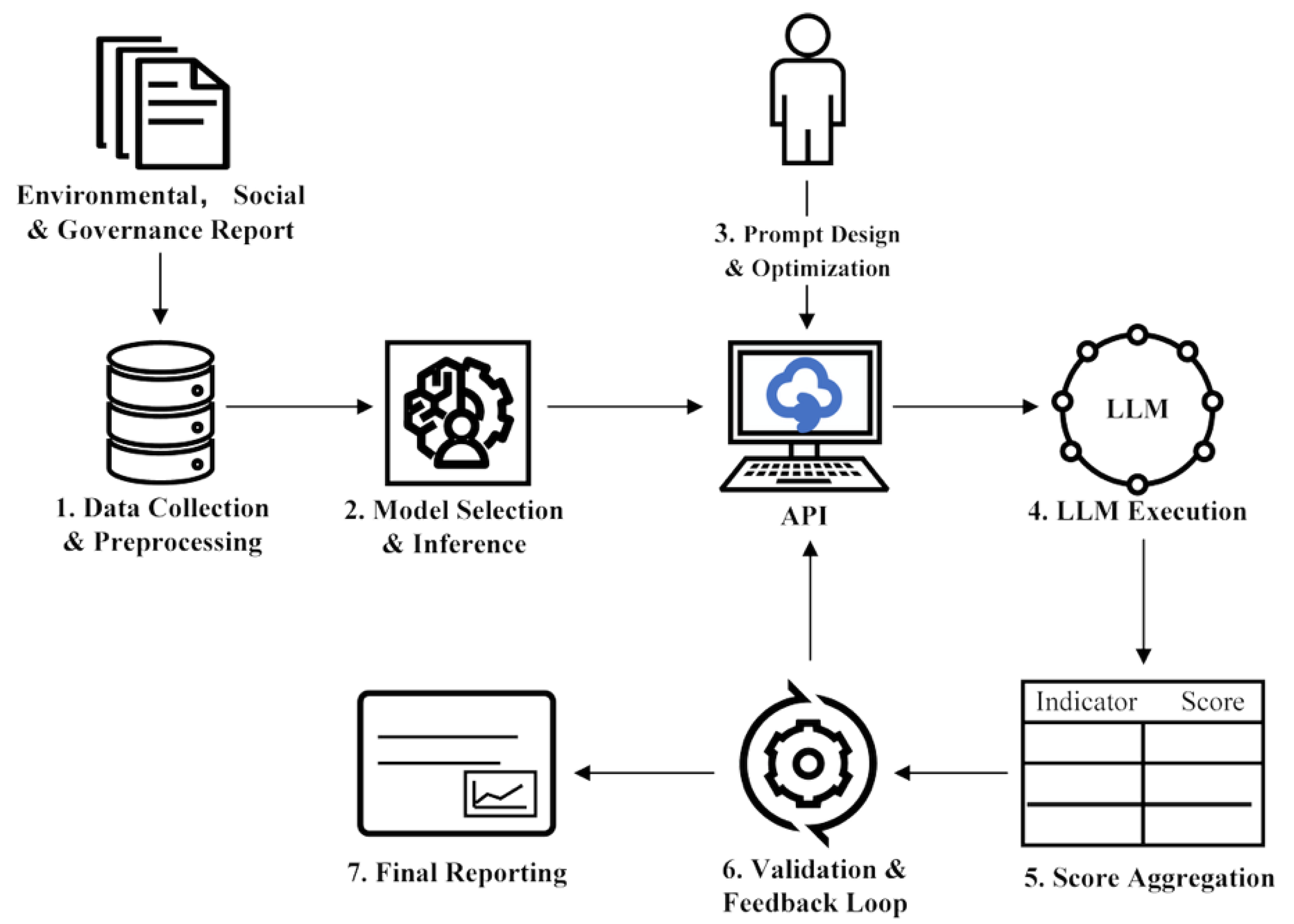
Figure 1 provides an overview of the AI-based EIDQ evaluation workflow adopted in this study. It visually summarizes the main methodological steps—from data collection and text preprocessing, through LLM–based scoring, to score aggregation and validation—thereby clarifying how the proposed framework is operationalized in practice.
After completing the DeepSeek-based automated scoring process, this study consolidated the model-generated AI-EIDQ Index to present the disclosure performance of sample firms across individual years as well as at the overall level. The detailed scoring results are reported in Table 4.

3.4. Correlation Analysis Between Manual Evaluation Results and AI Results

To evaluate the reliability and substitutability of the GAI-generated scores, this study conducted stratified sampling based on the overall “year–AI-EIDQ score” distribution of the dataset. In each year’s set of 38 reports, the AI-EIDQ scores were ranked from high to low and divided into three disclosure-quality subgroups: high, medium, and low. From these subgroups, 3, 2, and 3 reports were randomly selected, respectively, ensuring representative coverage across different disclosure levels. This procedure yielded a validation subsample of 40 reports spanning the five-year period. For each report in the subsample, manual assessment was conducted following the same thirty secondary indicators and the same 0–2 scoring rule used in the GAI scoring process. These manual evaluations produced the Human-EIDQ scores. The detailed results are presented in Table 5.
After obtaining both the human evaluation scores and the AI-generated automated scores, this study conducted statistical consistency tests using the Spearman rank correlation coefficient and the Pearson linear correlation coefficient. The results show that the Pearson correlation between human scores and the AI-EIDQ was 0.9810 (p = 0.0000), while the Spearman rank correlation was 0.9808 (p = 0.0000). Both coefficients were highly significant at the 5% level, indicating that the GAI exhibited an exceptionally high degree of consistency with human assessors in identifying EIDQ. The Pearson coefficient captures the linear consistency between AI and human assessments in terms of absolute score values, whereas the Spearman coefficient reflects the stability of their correspondence in EIDQ ranking and ordinal classification. Given that this study adopted a discrete 0–2 scoring scheme, correlation coefficients approaching 1 suggest that the AI model performed reliably in distinguishing qualitative from quantitative disclosures, identifying verifiable information, and assigning appropriate quality levels. This also indicates the absence of systematic bias or substantial misclassification.
Overall, the strong alignment between AI-EIDQ and human evaluations confirms the reliability of the DeepSeek model as a tool for assessing EIDQ. The findings provide robust support for its application to larger samples and broader industrial contexts.

3.5. Robustness Check: Using Different GAI

To examine the robustness and cross-model reproducibility of the automated scoring results, this study introduced Qwen3 as a parallel benchmark model alongside the primary model, DeepSeek. Under an entirely identical evaluation framework, scoring rules, and prompt structure, both models independently scored the full dataset. By comparing the linear consistency, rank-order consistency, and error metrics between the two models—and further evaluating their performance across individual years—this study provides a comprehensive assessment of the robustness of DeepSeek’s scoring outcomes.

3.5.1. Overall Consistency Check

At the full-sample level, the scoring results of DeepSeek and Qwen3 exhibited remarkably high consistency. First, the Pearson correlation coefficient reached 0.9746 (p = 3.87 × 10−124), indicating extremely strong linear agreement between the two models in terms of absolute score values. Likewise, the Spearman rank correlation coefficient of 0.9759 (p = 2.85 × 10−126) demonstrated that the two models were almost perfectly aligned in their ranking of EIDQ. Second, the error metrics further confirm the close correspondence between the models. The mean squared error (MSE) was 11.9737, the root mean squared error (RMSE) was 3.4603, and the mean absolute error (MAE) was 2.7316. These values suggest that the average score difference for a single report was only about 2–3 points (out of a total score of 60), which falls within a low-deviation range and does not materially affect the qualitative assessment of EIDQ.
In addition, the paired tests indicate that both the t-test (t = 17.6788, p < 0.001) and the Wilcoxon signed-rank test (W = 0.0, p < 0.001) were statistically significant, suggesting that Qwen3 tends to produce slightly lower scores than DeepSeek on average. However, this deviation represents a stable “absolute value offset”, which does not alter the relative distribution or ranking of firms. Overall, although the two models exhibited a minor systematic difference in absolute scoring levels, their judgment direction, ranking structure, and scoring patterns remained highly consistent, providing further evidence of the robustness and reliability of DeepSeek as a tool for evaluating EIDQ.

3.5.2. Annual Consistency Check

At the annual level, to further verify the consistency between DeepSeek and Qwen3 across different years, this study calculated the Pearson correlation coefficient for each year’s sample (n = 38) from 2020 to 2024. The results are presented in Table 6.
The results show that in all years, the correlation coefficients between the two models exceeded 0.91, indicating strong and stable consistency. The correlation in 2020 was relatively lower (r = 0.9181), which may be attributed to the more ambiguous and narrative-oriented nature of early ESG reports, leading to minor divergences between the models on qualitative indicators. From 2021 to 2024, the correlation coefficients remained in the range of 0.97–0.98, suggesting that as disclosure practices became more standardized, the two models’ judgments converged more closely. These annual results further demonstrate that the consistency between DeepSeek and Qwen3 does not depend on a specific year or disclosure environment; rather, both models maintain a high level of alignment across varying EIDQ and reporting standards.
In summary, the consistency tests revealed three key findings. First, the scoring results generated by DeepSeek exhibited strong cross-model reproducibility. The high correlation coefficient of approximately 0.97 between DeepSeek and Qwen3 indicates that the automated scoring outcomes are not driven by model-specific randomness; rather, they can be stably replicated across different models, demonstrating solid cross-model transferability. Second, the score differences between the two models primarily reflect a systematic offset rather than divergences in judgment direction. Although Qwen3 tended to generate slightly lower scores overall, this deviation represents a stable and predictable systematic bias that does not alter firm rankings or the interpretation of yearly trends. Thus, the two models maintained a highly consistent evaluative logic. Third, DeepSeek aligned more closely with human assessments, showing the highest level of agreement with manual scores (r ≈ 0.98). In contrast, Qwen3 exhibited a lower degree of consistency with human evaluators, suggesting that DeepSeek achieved more accurate semantic understanding, information extraction, and recognition of qualitative disclosure—an advantage particularly prominent in hybrid textual contexts such as EID. Therefore, DeepSeek possesses both theoretical and empirical advantages as the primary model for evaluating EIDQ, while Qwen3 serves as an effective supplementary model for robustness checks, thereby enhancing the reliability of the overall model results.

4. Results

4.1. Overall Analysis

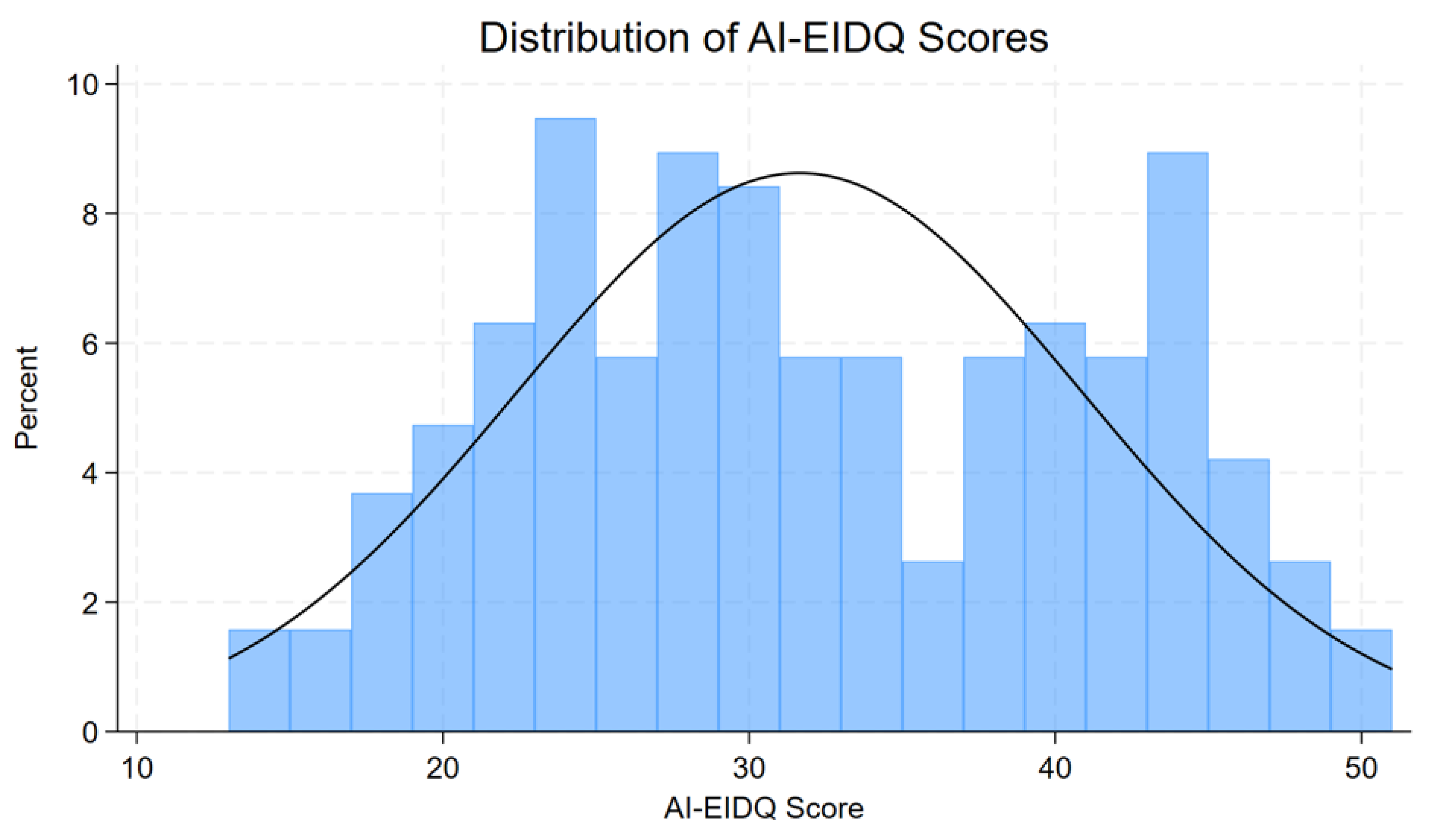
Based on the AI-generated EIDQ scores for the full dataset, this study first analyzed the distributional characteristics of the sample. Overall, the AI-EIDQ exhibited a typical right-skewed distribution, with a mean score of 31.65, a median of 30.00, and an interquartile range of 24.00–40.00. This indicates that most chemical enterprises fell within the medium or relatively low disclosure-quality range, while only a small proportion of firms achieved high scores above 45.00.
In terms of dispersion, the standard deviation of the sample scores was 9.25, indicating substantial variation in EIDQ across firms. The highest score exceeded 50 points, while the lowest was only 13 points, revealing pronounced differentiation within the chemical industry. This structural divergence indicates substantial variation in the maturity of environmental governance systems, the standardization of disclosure practices, and firms’ capacity for quantitative reporting. While some enterprises provide systematic and data-rich disclosures, others remain at the level of narrative statements or fragmented information. Overall, these distributional characteristics align with prior research and indicate that EIDQ in the chemical industry is generally limited, with most firms providing only partial or narrative disclosures. To further illustrate the central tendency and distribution shape of the scores, Table 7 summarizes the descriptive statistics of the AI-EIDQ, and Figure 2 presents a histogram of the score distribution, providing a foundation for subsequent analyses of annual differences and model robustness.

4.2. Annual Analysis

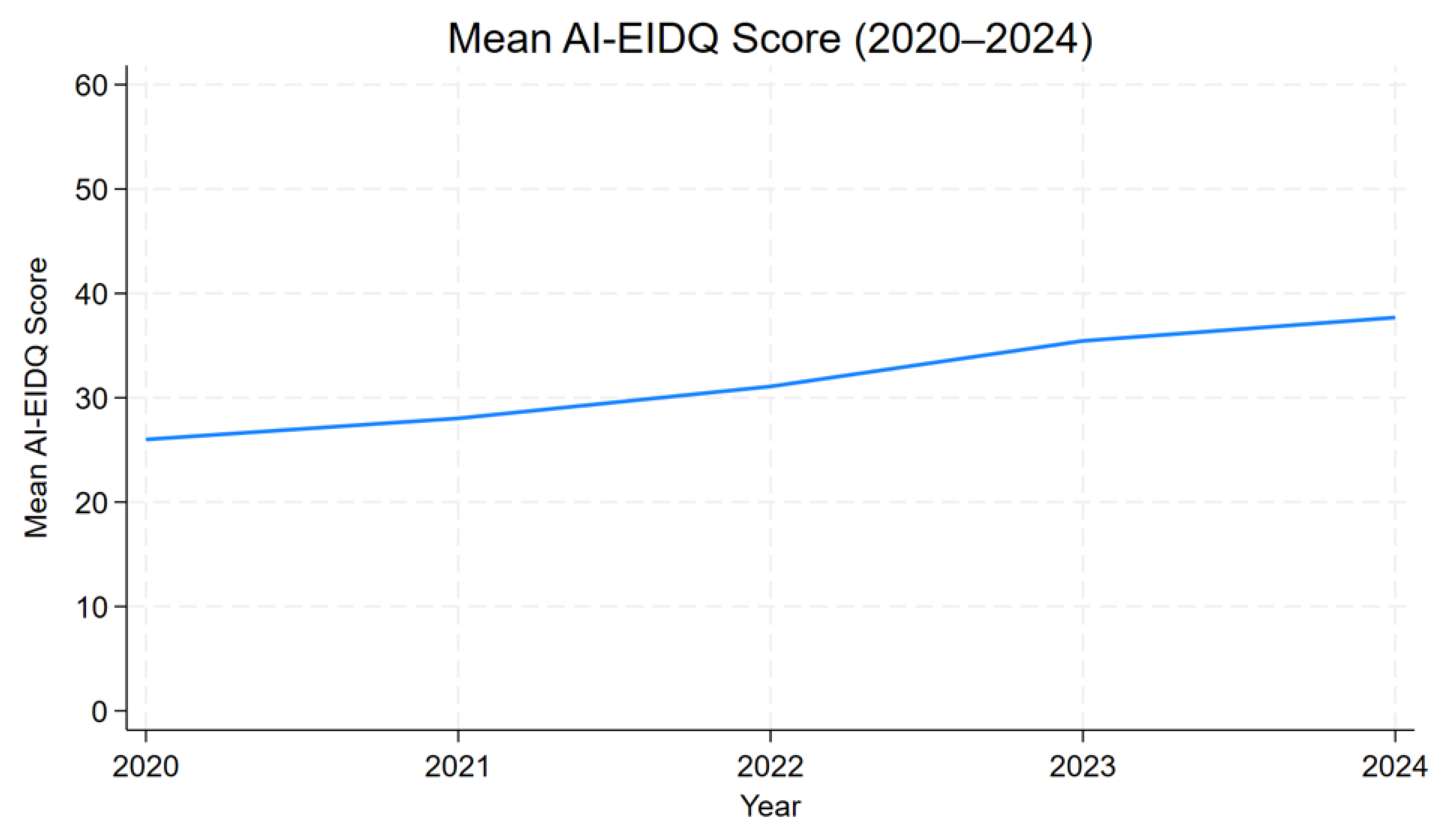
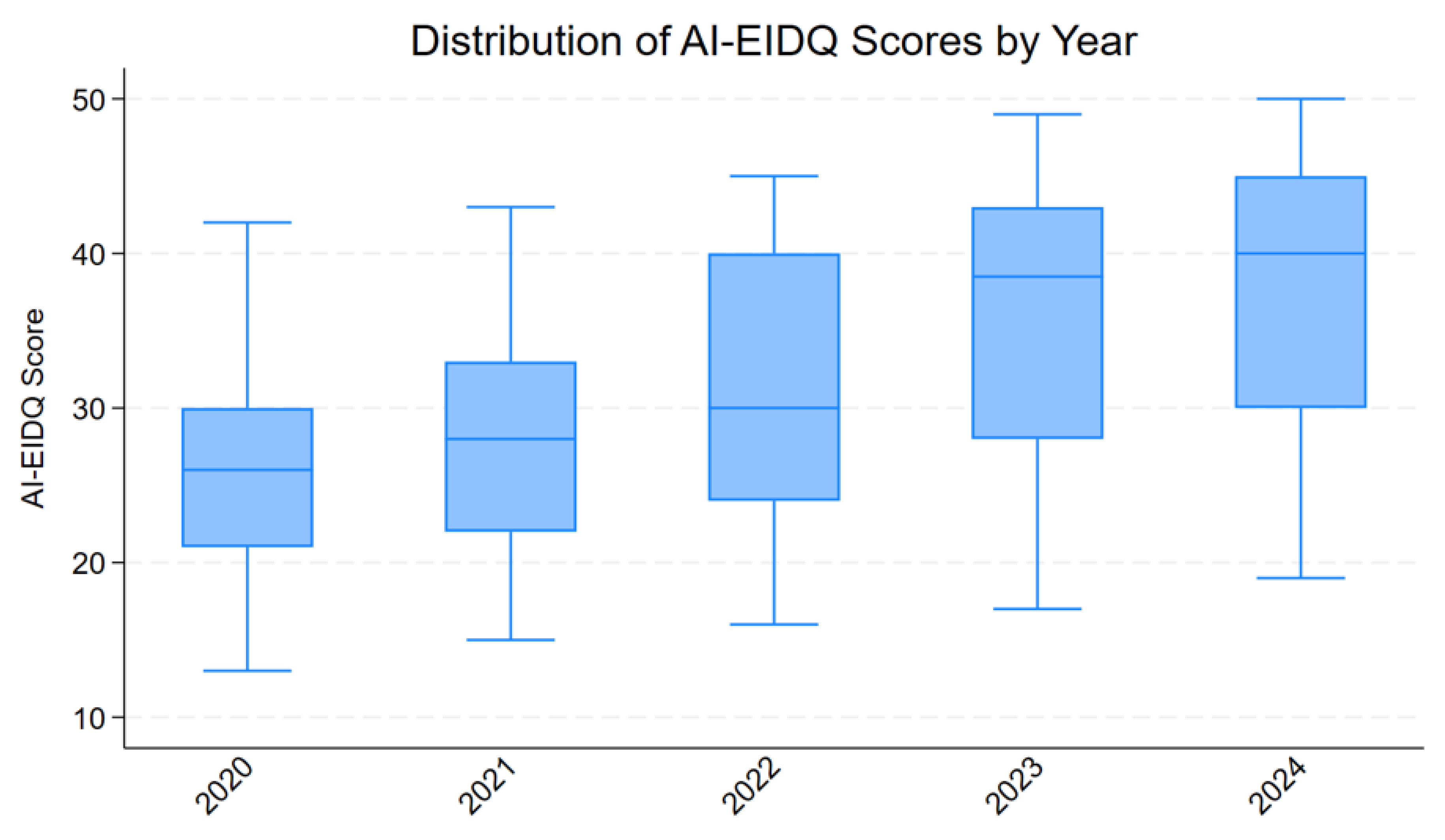
To examine the dynamic trend of EIDQ among chemical enterprises, this study further calculated the annual average scores from 2020 to 2024. The results showed a clear and steady upward trajectory over the five-year period: the industry’s average score increased from 26.00 in 2020 to 37.68 in 2024, representing an overall improvement of approximately 45%. The detailed annual scores are presented in Table 8, while Figure 3 illustrates the trend over time and Figure 4 provides boxplots of the score distributions. This consistent upward trend indicates that EID in the chemical industry is becoming increasingly standardized and structured.
From an annual perspective, disclosure levels showed a marked improvement beginning in 2021, with the average score increasing from 26.00 in 2020 to 28.03 in 2021. This early stage rise is closely associated with external factors such as the introduction of the “dual-carbon” goals, the accelerated development of China’s environmental policy framework, and regulatory efforts to establish more standardized sustainability disclosure requirements. During 2022–2023, firms substantially strengthened their quantitative disclosures regarding emission control, energy-saving and carbon-reduction targets, and environmental performance indicators, which further elevated the annual averages to 31.08 and 35.45, respectively. By 2024, EIDQ reached its highest level to date, with the annual average approaching 38 points, reflecting continued improvements in disclosure depth, quantification, and transparency of governance structures across the industry.
Overall, the annual trend indicates a gradual shift among chemical enterprises from predominantly qualitative reporting toward increasingly quantitative disclosure. The transparency, verifiability, and structural clarity of disclosure content improved significantly, providing a more standardized and machine-readable textual basis for GAI-enabled automated evaluation.

5. Discussion

The main findings of this study align closely with core conclusions established in the sustainability disclosure literature. First, the observed steady improvement in EIDQ among chemical enterprises from 2020 to 2024 is consistent with international evidence showing progressive enhancements in disclosure practices as reporting standards evolve and expectations for transparency intensify. For example, corporate alignment with GRI-based environmental standards has been shown to improve disclosure completeness over time [26], while research in the aviation sector similarly documents gradual normalization and increased rigor in climate-risk disclosure practices [25].
Second, the high level of consistency observed between AI-generated scores and human evaluations corresponds with findings from recent empirical studies validating the reliability of AI systems in sustainability reporting analysis. LLMs have been shown to accurately extract emission-related indicators from airline sustainability reports with strong alignment to human-generated results [51], and AI-assisted ESG scoring models have likewise been demonstrated to produce ratings that substantially agree with expert assessments [57]. Together, these findings reinforce the conclusion that AI can effectively serve as a substitute for manual evaluation.
Finally, the demonstrated robustness and transferability of the automated scoring method across different model settings are also consistent with broader evaluation research highlighting the stability and applicability of AI-enabled assessment frameworks. Conceptual models for evaluating AI-enhanced socio-technical systems have shown that AI can support consistent and transparent evaluative reasoning across diverse governance contexts [58], while studies on environmental-reporting credibility indicate that structured evaluation models remain applicable across varying firms and reporting formats [28]. These parallels further substantiate the generalizability and methodological soundness of the approach proposed in this study.
At the theoretical level, this study broadens the research frontier of EIDQ. Prior studies have primarily relied on dictionary-based counts or topic models to assess disclosure completeness and transparency, but these approaches face notable limitations in semantic recognition, structural alignment, and quality determination [57]. This study contributes to the literature in three key ways. First, it develops an EIDQ framework that integrates both international reporting standards and industry-specific characteristics, incorporating semantic structural features into the definition of EIDQ. This shifts the assessment perspective from mere content presentation toward verifiability-oriented evaluation [59]. Second, it systematically introduces GAI into the assessment of EIDQ and validates its substitutability in identifying quantitative information, determining governance-related attributes, and classifying EIDQ. This provides support for advancing EID research from traditional text-count methods to an intelligent, reasoning-driven analytical paradigm [60]. Third, this study further contributes to evaluation research by illustrating how AI-driven analytical systems can reshape the assessment of disclosure quality. By showing how LLMs support evaluative reasoning and consistency verification in a digital context, the study highlights the potential of AI to enhance key principles of evaluation such as transparency, replicability, and methodological rigor.
At the practical level, this study demonstrates that GAI can serve as an important auxiliary tool for both EID regulation and internal corporate governance in China. By analyzing a large-scale sample and revealing the distributional characteristics and dynamic trends of EIDQ in the chemical industry, the findings provide empirical evidence for regulators to identify disclosure gaps and for firms to enhance their reporting practices. First, for regulatory authorities, LLMs can perform semantic recognition and anomaly detection across vast amounts of disclosure text, helping identify selective disclosure and ESG “greenwashing” risks. This offers an effective complement to existing rule-based supervision and post-disclosure inspections [61]. Second, for enterprises, chemical companies can embed the DeepSeek-based automated scoring process into ESG report preparation and internal review procedures. This enables ex-ante verification of emission control information, target setting, and compliance-related disclosure, allowing firms to detect deficiencies and strengthen disclosure in a targeted manner, thereby improving completeness, transparency, and decision relevance. From an international perspective, this approach is also aligned with emerging practices in some countries where LLMs are being explored as tools to assist sustainability disclosure compliance review [62].

6. Conclusions

This study evaluated the EIDQ of chemical enterprises by constructing a tailored assessment framework and applying GAI-driven automated scoring and validation. In line with the three research questions articulated in the Introduction, the study yielded the following conclusions.
First, the EIDQ of chemical enterprises exhibited a clear upward trajectory from 2020 to 2024. The steady shift from qualitative narrative reporting toward more quantitative, verifiable, and data-driven disclosure indicates that firms are responding to increasingly stringent regulatory expectations and rising stakeholder demands for transparency. This finding demonstrates a continuous improvement in disclosure practices and provides empirical evidence of the evolving maturity of environmental reporting within the chemical industry.
Second, with respect to RQ2, the automated scoring results generated by DeepSeek showed a high level of agreement with human expert evaluations. The model accurately captures semantic meaning, extracts quantitative information, and distinguishes disclosure quality levels in a manner comparable to manual assessments. This strong consistency confirms that GAI—when supported by well-designed prompts and structured evaluation rules—can effectively substitute for traditional manual scoring in EIDQ assessment.
Third, addressing RQ3, the automated scoring method demonstrated robust performance and strong transferability across model configurations. Cross-model consistency tests revealed that the scoring outcomes remained stable when applied to alternative LLMs, suggesting that the analytical framework is not reliant on a single model architecture. This robustness provides a methodological foundation for applying the approach to larger samples, longer timeframes, and additional industries beyond the chemical sector.
These three conclusions collectively indicate that the proposed GAI-enabled framework not only captures the dynamic evolution of EIDQ but also offers a reliable and scalable methodological tool for advancing empirical research and practical evaluation in sustainability disclosure.
This study also has several limitations. First, the sample only included chemical enterprises, which restricts the generalizability of the findings to other industries. Second, the analysis relied primarily on corporate ESG reports and did not incorporate multi-source data such as public opinion, regulatory documents, or supply chain disclosures. Future research may expand the sampling scope to include additional industries, thereby enhancing the broader applicability of the conclusions. Moreover, future work could integrate multi-source textual data—such as social media content and news reports—and leverage multimodal data techniques to further improve the accuracy and comprehensiveness of EIDQ assessments.

Author Contributions

Y.Z. and Q.C.: data preparation and design, formal analysis, original draft preparation, and manuscript preparation sections. M.Z. and Y.Z.: conceptualization, design, manuscript preparation, and supervised this project. Each author contributed to the conceptualization and writing of this paper. All authors have read and agreed to the published version of the manuscript.

Funding

This research was funded by the National Social Science Fund of China (Grant number 25BJY104).

Institutional Review Board Statement

Not applicable.

Informed Consent Statement

Not applicable.

Data Availability Statement

The original contributions presented in this study are included in the article. Further inquiries can be directed to the corresponding author.

Conflicts of Interest

The authors declare no conflicts of interest.

References

  1. Wu, L.; Lam, J.F.I.; Liu, Y. Can semi-mandatory non-financial disclosure requirements drive firms to improve ESG performance—Evidence from Chinese listed companies. Heliyon 2024, 10, e34235. [Google Scholar] [CrossRef]
  2. Peng, Y.; Zhu, H.; Cui, J. Changes in environmental performance with firm relocation and its influencing mechanism: An evidence of chemical industry in jiangsu, China. J. Environ. Manag. 2023, 336, 117712. [Google Scholar] [CrossRef] [PubMed]
  3. Long, F.; Chen, Q.; Xu, L.; Wang, J.; Vasa, L. Sustainable corporate environmental information disclosure: Evidence for green recovery from polluting firms of China. Front. Environ. Sci. 2022, 10, 1019499. [Google Scholar] [CrossRef]
  4. Baier, P.; Berninger, M.; Kiesel, F. Environmental, social and governance reporting in annual reports: A textual analysis. Financ. Mark. Inst. Instrum. 2020, 29, 93–118. [Google Scholar] [CrossRef]
  5. Oehler, A.; Neuss, C. ESG disclosure vs. ESG ratings: Consistent information value? Int. Rev. Financ. Anal. 2025, 107, 104623. [Google Scholar] [CrossRef]
  6. Latella, P.; Veltri, S. The drivers of nonfinancial disclosure quality: A systematic literature review analysis. Corp. Soc. Responsib. Environ. Manag. 2024, 31, 5524–5542. [Google Scholar] [CrossRef]
  7. Potluka, O.; Harten, S.; Kocks, A.; Dvorak, J. Digitalization in evaluations and evaluations of digitalization: The changing landscape of evaluations. Evaluation 2025, 31, 289–302. [Google Scholar] [CrossRef]
  8. Wu, Y.; Hu, P.; Wang, D.D. The AI annotator: Large language models’ potential in scoring sustainability reports. Systems 2025, 13, 899. [Google Scholar] [CrossRef]
  9. Bronzini, M.; Nicolini, C.; Lepri, B.; Passerini, A.; Staiano, J. Glitter or gold? Deriving structured insights from sustainability reports via large language models. EPJ Data Sci. 2024, 13, 41. [Google Scholar] [CrossRef]
  10. Clarkson, P.M.; Li, Y.; Richardson, G.D.; Vasvari, F.P. Revisiting the relation between environmental performance and environmental disclosure: An empirical analysis. Account. Organ. Soc. 2008, 33, 303–327. [Google Scholar] [CrossRef]
  11. Global Reporting Initiative (GRI). Sustainability Reporting Guidelines (2002); Global Reporting Initiative: Boston, MA, USA, 2002. [Google Scholar]
  12. Aerts, W.; Cormier, D.; Magnan, M. Corporate environmental disclosure, financial markets and the media: An international perspective. Ecol. Econ. 2008, 64, 643–659. [Google Scholar] [CrossRef]
  13. Zhang, X.; Song, Y.; Zhang, M. Exploring the relationship of green investment and green innovation: Evidence from Chinese corporate performance. J. Clean. Prod. 2023, 412, 137444. [Google Scholar] [CrossRef]
  14. Zhang, Q.; Xiang, Z. New media surveillance, environmental information uncertainty and corporate environmental information disclosure. Int. Rev. Econ. Financ. 2024, 95, 103477. [Google Scholar] [CrossRef]
  15. Xue, J.; He, Y.; Liu, M.; Tang, Y.; Xu, H. Incentives for corporate environmental information disclosure in China: Public media pressure, local government supervision and interactive effects. Sustainability 2021, 13, 10016. [Google Scholar] [CrossRef]
  16. Chen, H.; Fang, X.; Xiang, E.; Ji, X.; An, M. Do online media and investor attention affect corporate environmental information disclosure? Evidence from Chinese listed companies. Int. Rev. Econ. Financ. 2023, 86, 1022–1040. [Google Scholar] [CrossRef]
  17. Huang, R.; Huang, Y. Does internal control contribute to a firm’s green information disclosure? Evidence from China. Sustainability 2020, 12, 3197. [Google Scholar] [CrossRef]
  18. Kao, M.-F.; Jian, C.-H.; Tseng, C.-H. Managerial ability and voluntary ESG disclosure and assurance: Evidence from Taiwan. Sustain. Account. Manag. Policy J. 2024, 15, 207–231. [Google Scholar] [CrossRef]
  19. Geng, L.; Yin, W.; Wu, X.; Lu, X.; Zhang, C. How green credit affects corporate environmental information disclosure: Evidence from new energy listed companies in China. Front. Ecol. Evol. 2023, 11, 1301589. [Google Scholar] [CrossRef]
  20. Helfaya, A.; Morris, R.; Aboud, A. Investigating the factors that determine the ESG disclosure practices in Europe. Sustainability 2023, 15, 5508. [Google Scholar] [CrossRef]
  21. Plumlee, M.; Brown, D.; Hayes, R.M.; Marshall, R.S. Voluntary environmental disclosure quality and firm value: Further evidence. J. Account. Public Policy 2015, 34, 336–361. [Google Scholar] [CrossRef]
  22. Clarkson, P.M.; Fang, X.; Li, Y.; Richardson, G. The relevance of environmental disclosures: Are such disclosures incrementally informative? J. Account. Public Policy 2013, 32, 410–431. [Google Scholar] [CrossRef]
  23. Wang, K.; Cui, W.; Mei, M.; Lv, B.; Peng, G. The moderating role of environmental information disclosure on the impact of environment protection investment on firm value. Sustainability 2023, 15, 9174. [Google Scholar] [CrossRef]
  24. Hu, A.H.; Chen, L.-T.; Hsu, C.-W.; Ao, J.-G. An evaluation framework for scoring corporate sustainability reports in Taiwan. Environ. Eng. Sci. 2011, 28, 843–858. [Google Scholar] [CrossRef]
  25. Tsalis, T.A.; Botsaropoulou, V.D.; Nikolaou, I.E. A methodology to evaluate the disclosure practices of organisations related to climate change risks: A case study of international airports. Int. J. Glob. Warm. 2018, 15, 257–276. [Google Scholar] [CrossRef]
  26. Gallego-Alvarez, I.; Lozano, M.B.; Rodríguez-Rosa, M. An analysis of the environmental information in international companies according to the new GRI standards. J. Clean. Prod. 2018, 182, 57–66. [Google Scholar] [CrossRef]
  27. Dinca, M.S.; Madaleno, M.; Baba, M.C.; Dinca, G. Environmental information transparency-evidence from Romanian companies. Sustainability 2019, 11, 5040. [Google Scholar] [CrossRef]
  28. Balluchi, F.; Lazzini, A.; Torelli, R. Credibility of environmental issues in non-financial mandatory disclosure: Measurement and determinants. J. Clean. Prod. 2021, 288, 125744. [Google Scholar] [CrossRef]
  29. Arena, C.; Bozzolan, S.; Imperatore, C. Enhancing environmental reporting: A study on the role of narrative disclosure, firm- and country-level incentives. Corp. Soc. Responsib. Environ. Manag. 2024, 31, 3414–3428. [Google Scholar] [CrossRef]
  30. Cai, R.; Lv, T.; Deng, X. Evaluation of environmental information disclosure of listed companies in China’s heavy pollution industries: A text mining-based methodology. Sustainability 2021, 13, 5415. [Google Scholar] [CrossRef]
  31. Belderbos, R.; Grabowska, M.; Leten, B.; Kelchtermans, S.; Ugur, N. On the use of computer-aided text analysis in international business research. Glob. Strateg. J. 2017, 7, 312–331. [Google Scholar] [CrossRef]
  32. Xiang, X.; Liu, C.; Yang, M.; Zhao, X. Confession or justification: The effects of environmental disclosure on corporate green innovation in China. Corp. Soc. Responsib. Environ. Manag. 2020, 27, 2735–2750. [Google Scholar] [CrossRef]
  33. Ong, K.; Mao, R.; Satapathy, R.; Shirota Filho, R.; Cambria, E.; Sulaeman, J.; Mengaldo, G. Explainable natural language processing for corporate sustainability analysis. Inf. Fusion 2025, 115, 102726. [Google Scholar] [CrossRef]
  34. Zhang, M.; Shen, Q.; Zhao, Z.; Wang, S.; Huang, G.Q. Optimizing ESG reporting: Innovating with E-BERT models in nature language processing. Expert Syst. Appl. 2025, 265, 125931. [Google Scholar] [CrossRef]
  35. Lee, H.; Kim, J.H.; Jung, H.S. ESG-KIBERT: A new paradigm in ESG evaluation using NLP and industry-specific customization. Decis. Support Syst. 2025, 193, 114440. [Google Scholar] [CrossRef]
  36. Ooi, K.-B.; Tan, G.W.-H.; Al-Emran, M.; Al-Sharafi, M.A.; Capatina, A.; Chakraborty, A.; Dwivedi, Y.K.; Huang, T.-L.; Kar, A.K.; Lee, V.-H.; et al. The potential of generative artificial intelligence across disciplines: Perspectives and future directions. J. Comput. Inf. Syst. 2023, 65, 76–107. [Google Scholar] [CrossRef]
  37. Tang, K.-S.; Cooper, G. The role of materiality in an era of generative artificial intelligence. Sci. Educ. 2024, 34, 731–746. [Google Scholar] [CrossRef]
  38. Wang, Q. Generative AI-assisted evaluation of ESG practices and information delays in ESG ratings. Financ. Res. Lett. 2025, 74, 106757. [Google Scholar] [CrossRef]
  39. Sklavos, G.; Theodossiou, G.; Papanikolaou, Z.; Karelakis, C.; Ragazou, K. Environmental, Social, and Governance-based artificial intelligence governance: Digitalizing firms’ leadership and human resources management. Sustainability 2024, 16, 7154. [Google Scholar] [CrossRef]
  40. Burnaev, E.; Mironov, E.; Shpilman, A.; Mironenko, M.; Katalevsky, D. Practical AI cases for solving ESG challenges. Sustainability 2023, 15, 12731. [Google Scholar] [CrossRef]
  41. Rocha, H.S.; Da Costa, E.J.; Duarte, J.D.; Da Costa, J.P.J. A new dataset and neural benchmark for multi-label classification of modern slavery litigation. IEEE Access 2025, 13, 180739–180755. [Google Scholar] [CrossRef]
  42. Chung, C.Y.; Kim, I.; Yang, R. Are environmentally sensitive firms more likely to release corporate environmental disclosures? Evidence from environmental risk management. Bus. Strategy Environ. 2025, 34, 3338–3359. [Google Scholar] [CrossRef]
  43. Global Reporting Initiative (GRI). GRI Standards 2016; Global Reporting Initiative: Amsterdam, The Netherlands, 2016. [Google Scholar]
  44. Arvidsson, S.; Dumay, J. Corporate ESG reporting quantity, quality and performance: Where to now for environmental policy and practice? Bus. Strategy Environ. 2022, 31, 1091–1110. [Google Scholar] [CrossRef]
  45. Darnall, N.; Ji, H.; Iwata, K.; Arimura, T.H. Do ESG reporting guidelines and verifications enhance firms’ information disclosure? Corp. Soc. Responsib. Environ. Manag. 2022, 29, 1214–1230. [Google Scholar] [CrossRef]
  46. Demartini, M.C.; Beretta, V.; Larisch, A. Does the transparency of sustainability reports matter? A quantitative assessment. Corp. Soc. Responsib. Environ. Manag. 2025, 32, 18–43. [Google Scholar] [CrossRef]
  47. Stubbs, W.; Higgins, C. Integrated reporting and internal mechanisms of change. Account. Audit. Account. J. 2014, 27, 1068–1089. [Google Scholar] [CrossRef]
  48. Avram, V.; Calu, D.A.; Dumitru, V.F.; Dumitru, M.; Glavan, M.E.; Jinga, G. The institutionalization of the consistency and comparability principle in the european companies. Energies 2018, 11, 3456. [Google Scholar] [CrossRef]
  49. García-Sánchez, I.M.; Hussain, N.; Martínez-Ferrero, J.; Ruiz-Barbadillo, E. Impact of disclosure and assurance quality of corporate sustainability reports on access to finance. Corp. Soc. Responsib. Environ. Manag. 2019, 26, 832–848. [Google Scholar] [CrossRef]
  50. Orazalin, N.S.; Ntim, C.G.; Kalimilo Malagila, J. Corporate governance, national governance quality, and biodiversity reporting: Global evidence. J. Int. Account. Audit. Tax. 2025, 58, 100669. [Google Scholar] [CrossRef]
  51. Martín-Domingo, L.; Fernandez, J.B.; Efthymiou, M.; Ali, M.I. Extracting airline emission KPIs from sustainability reports using large language models (LLMs). Transp. Res. Interdiscip. Perspect. 2025, 33, 101599. [Google Scholar] [CrossRef]
  52. Liu, Z.R.; Dong, S.K.; Zeng, W.; Wang, Y.; Niu, D. Exploring the impact of human-centred AI on firms’ social and operational performance: A large language model approach. Transp. Res. Part E-Logist. Transp. Rev. 2025, 203, 104381. [Google Scholar] [CrossRef]
  53. Zhang, F.; Lai, X.B.; Guo, C. ESG disclosure and investment-financing maturity mismatch: Evidence from China. Res. Int. Bus. Financ. 2024, 70, 102312. [Google Scholar] [CrossRef]
  54. Son, M.; Won, Y.-J.; Lee, S. Optimizing large language models: A deep dive into effective prompt engineering techniques. Appl. Sci. 2025, 15, 1430. [Google Scholar] [CrossRef]
  55. De Villiers, C.; La Torre, M.; Molinari, M. The global reporting initiative’s (GRI) past, present and future: Critical reflections and a research agenda on sustainability reporting (standard-setting). Pac. Account. Rev. 2022, 34, 728–747. [Google Scholar] [CrossRef]
  56. Benuzzi, M.; Bax, K.; Paterlini, S.; Taufer, E. Chasing ESG performance: How methodologies shape outcomes. Int. Rev. Financ. Anal. 2025, 104, 104239. [Google Scholar] [CrossRef]
  57. Schimanski, T.; Reding, A.; Reding, N.; Bingler, J.; Kraus, M.; Leippold, M. Bridging the gap in ESG measurement: Using NLP to quantify environmental, social, and governance communication. Financ. Res. Lett. 2024, 61, 104979. [Google Scholar] [CrossRef]
  58. Pudney, S.; Mills, D.; Alaei, A.R.; Sellers, S.; Dvorak, J.; Potluka, O. Evaluation of artificial intelligence-enhanced critical infrastructure systems: A conceptual framework. Evaluation 2025, 31, 412–443. [Google Scholar] [CrossRef]
  59. Riso, V.; Cantele, S.; Bracci, E. Sustainable but not accountable? A quality assessment of sustainability disclosure in benefit corporations. Bus. Strategy Environ. 2025, 34, 6594–6611. [Google Scholar] [CrossRef]
  60. Alshareef, M.N. Artificial intelligence-enhanced environmental, social, and governance disclosure quality and financial performance nexus in saudi listed companies under vision 2030. Sustainability 2025, 17, 7421. [Google Scholar] [CrossRef]
  61. Lagasio, V. ESG-washing detection in corporate sustainability reports. Int. Rev. Financ. Anal. 2024, 96, 103742. [Google Scholar] [CrossRef]
  62. Alotaibi, E.M.; Alwathnani, A.M. AI-enabled ESG compliance audit for stakeholders. Sustainability 2025, 17, 9513. [Google Scholar] [CrossRef]
Figure 1. Workflow of AI-EIDQ evaluation process.
Sustainability 17 11348 g001
Figure 2. Histogram of AI-EIDQ scores with normal fit. Note: The blue bars show the percentage distribution of AI-EIDQ scores. The black solid line is the normal distribution curve based on the sample mean and standard deviation.
Sustainability 17 11348 g002
Figure 3. Annual trend of mean EIDQ scores (2020–2024).
Sustainability 17 11348 g003
Figure 4. Boxplots of AI-EIDQ score distributions by year (2020–2024). Note: The boxes represent the interquartile range (25th–75th percentiles), the horizontal line within each box denotes the median, and the whiskers extend to the minimum and maximum values within 1.5 times the interquartile range.
Sustainability 17 11348 g004
Table 1. List of sample firms.
Company Name (English)Company Name (Chinese)Stock CodeCityCountry
Gpro Titanium Industry Co., Ltd.金浦钛业股份有限公司000545JilinChina
Ningxia Younglight Chemicals Co., Ltd.宁夏英力特化工股份有限公司000635ShizuishanChina
CGN Nuclear Technology Development Co., Ltd.中广核核技术发展股份有限公司000881DalianChina
Dymatic Chemicals, Inc.广东德美精细化工集团股份有限公司002054FoshanChina
CNNC Hua Yuan Titanium Dioxide Co., Ltd.中核华原钛白股份有限公司002145BaiyinChina
Hongbaoli Group Co., Ltd.红宝丽集团股份有限公司002165NanjingChina
Shenzhen Batian Ecotypic Engineering Co., Ltd.深圳市芭田生态工程股份有限公司002170ShenzhenChina
North Chemical Industries Co., Ltd.北方化学工业股份有限公司002246LuzhouChina
Lianhe Chemical Technology Co., Ltd.联化科技股份有限公司002250TaizhouChina
Do-Fluoride Chemicals Co., Ltd.多氟多新材料股份有限公司002407JiaozuoChina
Limin Group Co., Ltd.利民控股集团股份有限公司002734XinyiChina
Chengdu Guibao Science & Technology Co., Ltd.成都硅宝科技股份有限公司300019ChengduChina
Shenzhen Capchem Technology Co., Ltd.深圳新宙邦科技股份有限公司300037ShenzhenChina
Liaoning Oxiranchem, Inc.辽宁奥克化学股份有限公司300082LiaoyangChina
Fujian Green Pine Co., Ltd.福建青松股份有限公司300132NanpingChina
Fujian Yuanli Active Carbon Co., Ltd.福建元力活性炭股份有限公司300174NanpingChina
Shanghai Sinyang Semiconductor Materials Co., Ltd.上海新阳半导体材料股份有限公司300236ShanghaiChina
Shanghai Phichem New Material Co., Ltd.上海飞凯材料科技股份有限公司300398ShanghaiChina
Guangdong Huiyun Titanium Industry Co., Ltd.广东惠云钛业股份有限公司300891YunfuChina
Yunnan Yuntianhua Co., Ltd.云南云天化股份有限公司600096KunmingChina
Hubei Xingfa Chemicals Group Co., Ltd.湖北兴发化工集团股份有限公司600141YichangChina
Zhejiang Juhua Co., Ltd.浙江巨化股份有限公司600160QuzhouChina
Zhejiang Jiahua Energy Chemical Industry Co., Ltd.浙江嘉化能源化工股份有限公司600273JiaxingChina
Shanghai Jahwa United Co., Ltd.上海家化联合股份有限公司600315ShanghaiChina
Zhejiang Longsheng Group Co., Ltd.浙江龙盛集团股份有限公司600352ShaoxingChina
Guizhou Redstar Developing Co., Ltd.贵州红星发展股份有限公司600367AnshunChina
Nantong Jiangshan Agrochemical & Chemicals Co., Ltd.南通江山农药化工股份有限公司600389NantongChina
Tangshan Sanyou Chemical Industries Co., Ltd.唐山三友化工股份有限公司600409TangshanChina
Jiangsu Yangnong Chemical Co., Ltd.江苏扬农化工股份有限公司600486YangzhouChina
Zhejiang Xinan Chemical Industrial Group Co., Ltd.浙江新安化工集团股份有限公司600596JiandeChina
Shanghai Chlor-Alkali Chemical Co., Ltd.上海氯碱化工股份有限公司600618ShanghaiChina
Shanghai Huayi Group Corporation Limited上海华谊集团股份有限公司600623ShanghaiChina
Shaanxi Beiyuan Chemical Industry Group Co., Ltd.陕西北元化工集团股份有限公司601568YulinChina
Zhejiang Huangma Technology Co., Ltd.浙江皇马科技股份有限公司603181ShaoxingChina
Shanghai Huide Science & Technology Co., Ltd.上海汇得科技股份有限公司603192ShanghaiChina
Skshu Paint Co., Ltd.三棵树涂料股份有限公司603737PutianChina
Lily Group Co., Ltd.百合花集团股份有限公司603823HangzhouChina
Tianjin Jiuri New Materials Co., Ltd.天津久日新材料股份有限公司688199TianjinChina
Table 2. Corporate EIDQ indicator system for chemical firms.
Primary
Dimension
Secondary IndicatorReference Framework
Environmental ManagementEnvironmental Strategy and TargetsGRI 103-3; SASB RT-CH-410a.3
Environmental Management StructureGRI 102-18; GRI 102-19; GRI 102-20; SASB RT-CH-410a.1
Environmental Education and TrainingGRI 404-1; SASB RT-CH-410a.2
Environmental Risk Management and Emergency ResponseGRI 306-3; GRI 102-30; SASB RT-CH-540a.1
Environmental Management System CertificationGRI 103-2; SASB RT-CH-410a.1
Environmental Liabilities and EmissionsWastewater Discharge and Water Quality ImpactGRI 303-4; GRI 303-2; SASB RT-CH-140a.1
Air Pollutants and Greenhouse Gas EmissionsGRI 305-1; GRI 305-7; SASB RT-CH-110a.1
Hazardous Waste ManagementGRI 306-2; SASB RT-CH-150a.1
General Solid Waste and Resource ConsumptionGRI 306-2; GRI 306-4
Disclosure of Characteristic PollutantsGRI 305-7; SASB RT-CH-120a.1
Environmental Impacts of Transportation and ProductsGRI 305-3; SASB RT-CH-540a.2
Environmental Investment and CostTotal Environmental Protection InvestmentGRI 103-2; SASB RT-CH-410a.1
Environmental R&D and Innovation InvestmentGRI 103-2; SASB RT-CH-410a.1
Environmental Taxes, Fees, and PenaltiesGRI 307-1; SASB RT-CH-510a.2
Green Credit and SubsidiesGRI 103-2
Operating Costs of Environmental Protection FacilitiesGRI 103-2; SASB RT-CH-410a.1
Environmental Cost-Saving BenefitsGRI 103-3
Environmental Governance and PerformancePollutant Reduction PerformanceGRI 305-7; SASB RT-CH-120a.1
Resource Efficiency and Energy-Saving PerformanceGRI 302-4; SASB RT-CH-130a.1
“Three Wastes” Treatment and Compliance RateGRI 305-7; SASB RT-CH-120a.1
Cleaner Production and Circular EconomyGRI 301-3; SASB RT-CH-130a.2
Low-Carbon and Climate PerformanceGRI 305-5; SASB RT-CH-110a.1
Environmental Awards and RecognitionGRI 103-3
Green Products and Eco-DesignGRI 301-3; SASB RT-CH-410a.1
Compliance and RegulationCompliance with Environmental Laws and RegulationsGRI 307-1; SASB RT-CH-510a.2
Implementation of “Three Simultaneities” RequirementsGRI 307-1; SASB RT-CH-540a.1
Environmental Auditing and VerificationGRI 103-3; SASB RT-CH-540a.1
Disclosure of Negative Environmental IncidentsGRI 307-1; SASB RT-CH-540a.2
Government Supervision and ResponseGRI 307-1; SASB RT-CH-540a.1
Third-Party Assurance of ReportsGRI 102-56
Note: All GRI indicator numbers reported in this table refer to the GRI Standards 2016 [43].
Table 3. Multilayer prompt design framework for the DeepSeek LLM.
LayerFunctional ObjectiveExample
Role SpecificationDefine the task role of the model“You are an expert in evaluating the environmental information disclosure quality of chemical enterprises.”
Concept DefinitionDefine core concepts in environmental disclosure in the chemical industry“Environmental information disclosure includes qualitative and quantitative information related to environmental management, pollutant emissions, resource use, environmental investment, and compliance.”
Rule-Based JudgmentSpecify scoring criteria and rules“If the report provides quantitative data such as emission levels, energy-saving targets, or reduction metrics, classify it as ‘quantitative disclosure’ and assign 2 points.”
“If the report only provides qualitative statements such as ‘We are committed to reducing emissions’ without specific data, classify it as ‘qualitative disclosure’ and assign 1 point.”
“If the report contains no information related to the specific secondary indicator, classify it as ‘non-disclosure’ and assign 0 points.”
Output ControlStandardize format of model output“The output should follow the format: 0–1–2 + a brief justification.”
Table 4. AI-EIDQ scores of sample firms (2020–2024).
Stock NameCityCountry20202021202220232024
Gpro Titanium Industry Co., Ltd.JilinChina3343373232
Ningxia Younglight Chemicals Co., Ltd.ShizuishanChina2324283533
CGN Nuclear Technology Development Co., Ltd.DalianChina1415424246
Dymatic Chemicals, Inc.FoshanChina3032363946
CNNC Hua Yuan Titanium Dioxide Co., Ltd.BaiyinChina2629343934
Hongbaoli Group Co., Ltd.NanjingChina2227282931
Shenzhen Batian Ecotypic Engineering Co., Ltd.ShenzhenChina2821232639
North Chemical Industries Co., Ltd.LuzhouChina3441393939
Lianhe Chemical Technology Co., Ltd.TaizhouChina2432312829
Do-Fluoride Chemicals Co., Ltd.JiaozuoChina2131404443
Limin Group Co., Ltd.XinyiChina4138424343
Chengdu Guibao Science & Technology Co., Ltd.ChengduChina1915222930
Shenzhen Capchem Technology Co., Ltd.ShenzhenChina2833294647
Liaoning Oxiranchem, Inc.LiaoyangChina2319454244
Fujian Green Pine Co., Ltd.NanpingChina1317164445
Fujian Yuanli Active Carbon Co., Ltd.NanpingChina2930332223
Shanghai Sinyang Semiconductor Materials Co., Ltd.ShanghaiChina2623182144
Shanghai Phichem New Material Co., Ltd.ShanghaiChina2321193027
Guangdong Huiyun Titanium Industry Co., Ltd.YunfuChina2528283533
Yunnan Yuntianhua Co., Ltd.KunmingChina3334444850
Hubei Xingfa Chemicals Group Co., Ltd.YichangChina2025242847
Zhejiang Juhua Co., Ltd.QuzhouChina4238414550
Zhejiang Jiahua Energy Chemical Industry Co., Ltd.JiaxingChina2422404041
Shanghai Jahwa United Co., Ltd.ShanghaiChina3237434345
Zhejiang Longsheng Group Co., Ltd.ShaoxingChina1321253837
Guizhou Redstar Developing Co., Ltd.AnshunChina2424242219
Nantong Jiangshan Agrochemical & Chemicals Co., Ltd.NantongChina3128313230
Tangshan Sanyou Chemical Industries Co., Ltd.TangshanChina2828283844
Jiangsu Yangnong Chemical Co., Ltd.YangzhouChina2025383947
Zhejiang Xinan Chemical Industrial Group Co., Ltd.JiandeChina3330263946
Shanghai Chlor-Alkali Chemical Co., Ltd.ShanghaiChina3735354441
Shanghai Huayi Group Corporation LimitedShanghaiChina2726234337
Shaanxi Beiyuan Chemical Industry Group Co., Ltd.YulinChina2143404948
Zhejiang Huangma Technology Co., Ltd.ShaoxingChina1918191820
Shanghai Huide Science & Technology Co., Ltd.ShanghaiChina3030242729
Skshu Paint Co., Ltd.PutianChina2937444442
Lily Group Co., Ltd.HangzhouChina2622181726
Tianjin Jiuri New Materials Co., Ltd.TianjinChina1723242824
Table 5. Comparison of Human-EIDQ and AI-EIDQ scores for sampled reports.
Stock NameCityCountryYearHuman-EIDQAI-EIDQ
Lianhe Chemical Technology Co., Ltd.TaizhouChina20202624
Liaoning Oxiranchem, Inc.LiaoyangChina20202423
Fujian Green Pine Co., Ltd.NanpingChina20201513
Fujian Yuanli Active Carbon Co., Ltd.NanpingChina20203229
Zhejiang Juhua Co., Ltd.QuzhouChina20204242
Zhejiang Jiahua Energy Chemical Industry Co., Ltd.JiaxingChina20202524
Shanghai Huide Science & Technology Co., Ltd.ShanghaiChina20202930
Tianjin Jiuri New Materials Co., Ltd.TianjinChina20201917
Gpro Titanium Industry Co., Ltd.JilinChina20214243
Ningxia Younglight Chemicals Co., Ltd.ShizuishanChina20212124
CGN Nuclear Technology Development Co., Ltd.DalianChina20211815
Lianhe Chemical Technology Co., Ltd.TaizhouChina20213432
Shenzhen Capchem Technology Co., Ltd.ShenzhenChina20213333
Hubei Xingfa Chemicals Group Co., Ltd.YichangChina20212725
Jiangsu Yangnong Chemical Co., Ltd.YangzhouChina20212625
Zhejiang Huangma Technology Co., Ltd.ShaoxingChina20211918
Liaoning Oxiranchem, Inc.LiaoyangChina20224345
Guangdong Huiyun Titanium Industry Co., Ltd.YunfuChina20222928
Zhejiang Longsheng Group Co., Ltd.ShaoxingChina20222625
Tangshan Sanyou Chemical Industries Co., Ltd.TangshanChina20222428
Jiangsu Yangnong Chemical Co., Ltd.YangzhouChina20223838
Shaanxi Beiyuan Chemical Industry Group Co., Ltd.YulinChina20224140
Zhejiang Huangma Technology Co., Ltd.ShaoxingChina20221919
Lily Group Co., Ltd.HangzhouChina20221818
Gpro Titanium Industry Co., Ltd.JilinChina20233332
CGN Nuclear Technology Development Co., Ltd.DalianChina20234442
Limin Group Co., Ltd.XinyiChina20234843
Shanghai Phichem New Material Co., Ltd.ShanghaiChina20232830
Guangdong Huiyun Titanium Industry Co., Ltd.YunfuChina20233735
Guizhou Redstar Developing Co., Ltd.AnshunChina20232122
Shaanxi Beiyuan Chemical Industry Group Co., Ltd.YulinChina20234949
Zhejiang Huangma Technology Co., Ltd.ShaoxingChina20232018
CNNC Hua Yuan Titanium Dioxide Co., Ltd.BaiyinChina20243534
Limin Group Co., Ltd.XinyiChina20244844
Fujian Green Pine Co., Ltd.NanpingChina20244545
Guangdong Huiyun Titanium Industry Co., Ltd.YunfuChina20243133
Zhejiang Juhua Co., Ltd.QuzhouChina20244650
Shanghai Huayi Group Corporation LimitedShanghaiChina20243637
Zhejiang Huangma Technology Co., Ltd.ShaoxingChina20241920
Tianjin Jiuri New Materials Co., Ltd.TianjinChina20242424
Table 6. Annual consistency between the DeepSeek and Qwen3 LLMs (Pearson correlation coefficients).
YearPearson Correlation Coefficient (r)
20200.9181
20210.9799
20220.9710
20230.9778
Table 7. Overall descriptive statistics of AI-EIDQ scores.
StatisticValue
Sample Size (N)190
Mean31.65
Median30.00
Standard Deviation9.25
Minimum13.00
Maximum50.00
25th Percentile (P25)24.00
75th Percentile (P75)40.00
Table 8. Annual descriptive statistics of AI-EIDQ scores, 2020–2024.
YearNMeanMedianStandard DeviationMinimumMaximum
202038.0026.0026.006.9313.0042.00
202138.0028.0328.007.5515.0043.00
202238.0031.0830.008.7316.0045.00
202338.0035.4538.508.8117.0049.00
202438.0037.6840.008.9119.0050.00
Disclaimer/Publisher’s Note: The statements, opinions and data contained in all publications are solely those of the individual author(s) and contributor(s) and not of MDPI and/or the editor(s). MDPI and/or the editor(s) disclaim responsibility for any injury to people or property resulting from any ideas, methods, instructions or products referred to in the content.