Article

Methodology for the Identification and Evaluation of the Tourism Potential of the Natural and Cultural Heritage Inventory


by
Odette Chams-Anturi
1,*,
Edwin Paipa-Sanabria
2 and
Juan P. Escorcia-Caballero
3
1
Department of Economic Science, Universidad de la Costa, Barranquilla 080003, Colombia
2
Cotecmar, Cartagena 130001, Colombia
3
Department of Entrepreneurship and Management, Universidad del Norte, Barranquilla 080003, Colombia
*
Author to whom correspondence should be addressed.
Sustainability 2025, 17(24), 11311; https://doi.org/10.3390/su172411311
Submission received: 3 November 2025 / Revised: 30 November 2025 / Accepted: 5 December 2025 / Published: 17 December 2025

Abstract

This study presents a replicable methodology for identifying and evaluating the tourism potential of natural and cultural heritage through a comprehensive inventory. It aims to enhance regional competitiveness and foster sustainable destination development. The methodology combines bibliographic review, field observation, and local surveys, and it was validated through its application in a tourist destination city in Colombia, where resources were systematically classified and evaluated using qualitative and quantitative criteria, focusing on preservation quality and market relevance. The results revealed a rich and underutilized heritage portfolio with exceptional potential in categories such as religious architecture, goldsmithing traditions, local festivals, and natural riverine ecosystems. The city demonstrated a high capacity for developing tourism products grounded in cultural identity and environmental preservation. This methodology offers a robust, adaptable tool for tourism planning, bridging heritage valuation with market relevance. By integrating structured evaluation with local knowledge, the model supports data-driven decision-making and inclusive governance—essential for combating overtourism and promoting long-term resilience in heritage towns.

1. Introduction

Tourism has become a popular activity for recreation and enjoyment. The rapid growth of the tourism sector is closely linked to the increasing number of tourist destinations, which brings significant environmental and social impacts to many countries [1,2]. Tourism resources thus represent a fundamental pillar of tourism, making their analysis and evaluation essential for identifying a region’s tourism potential and determining its viability as a driver of development in this sector. Given this importance, it has become evident that as the tourism sector evolves, it demands that public managers adopt innovative methodological approaches. Authors such as [3] point out heritage is not a neutral category, but a social and political construction that reflects collective interests, which must be considered in any tourism planning strategy.
These approaches should not only valorize underexploited resources with potential but also strengthen those already in operation, aligning with emerging trends and the expectations of demand [4]. The need to reorganize territorial resources in accordance with new industry trends has highlighted a shift in their management approach, with one of the most crucial aspects being the creation of tourism inventories [5].
This topic has been addressed by the World Tourism Organization (UNWTO) since the late 1970s, in response to the complexities identified in several studies conducted during that decade, particularly in regions of Europe and the Americas [6]. It was not until the 1980s that the study of tourism resources gained greater prominence, thanks to contributions by seminal researchers such as [7,8,9]. Their work was instrumental in the evaluation of tourism resources, both in terms of valorization and redesign, through the application of an analytical and integrated assessment process. This approach enabled an objective determination of their level of attractiveness and viability from a sustainable perspective.
The unit of analysis for this study is Santa Cruz de Mompox, a city located in the department of Bolívar in northern Colombia. Founded in 1537, Santa Cruz de Mompox emerged as a strategic port on the banks of the Magdalena River, playing a fundamental role in the Spanish colonization of South America. Between the 16th and 19th centuries, the city experienced a remarkable boom as a river port, facilitating trade and the distribution of goods throughout the country. Its historical significance and the excellent preservation of its colonial architecture led to its designation as a UNESCO World Heritage Site in 1995 [10,11].
Santa Cruz de Mompox is widely known for its goldsmithing tradition, particularly the intricate art of filigree, which involves the creation of fine ornamental pieces by joining delicate metal threads. Today, the local economy relies mainly on tourism, fishing, and commercial activities related to regional livestock. Additionally, the city hosts important cultural events, such as the Santa Cruz de Mompox Jazz Festival and various religious festivities, attracting a high volume of visitors during Holy Week [10,11].
Despite its invaluable cultural and architectural heritage, Santa Cruz de Mompox has remained relatively isolated. On the one hand, this isolation has contributed to preserving its historical essence and maintaining an atmosphere evocative of the magical realism found in the works of Gabriel García Márquez. On the other hand, it has led to a lack of awareness among tourists regarding many of the city’s resources.
This study aims to strengthen the competitiveness of Santa Cruz de Mompox as a tourist destination through an analysis of its tourism potential and the identification of its natural and cultural heritage resources. Through this evaluation, the goal is to maximize the city’s competitive advantages and enhance its tourism development. The research seeks to address the following key questions: (a) What is the inventory of natural and cultural tourism resources in Santa Cruz de Mompox? (b) How can the potential of tourism resources in Santa Cruz de Mompox be assessed?
Developing a detailed inventory of these resources not only serves as a critical tool for tourism planning but also enables the design of a catalog tailored to the needs and expectations of visitors [12,13]. The methodology applied in this study was based on the analysis of official documents issued by the Government of Colombia, supplemented by on-site observation and surveys administered to local residents. The bibliographic research included both primary and secondary sources on tourism in the region. The fieldwork phase aimed to gain direct insight into the tourism reality of Santa Cruz de Mompox by systematically cataloging resources from both its cultural heritage and natural environment. The study encompassed attractions in various categories, such as natural resources, gastronomy, folklore, handicrafts, and festivities, among others.
It is important to emphasize that tourism attraction inventories, along with other data generated during tourism planning processes, play a key role in decision-making for both public and private stakeholders at regional and national levels. Conducting an objective evaluation of the available resources and attractions enables the identification of those with immediate tourism potential, as well as the development of improvement strategies to ensure their effective inclusion in the design and development of tourism products. Authors such as [3] argue that a fundamental aspect of tourism researchers lies in their worldview and the way it contributes to the development of tourism services, products, and encounters, aiming to enhance awareness and recognition of cultural sensitivity.
This article is structured as follows: First, an introductory theoretical framework is presented. This is followed by a detailed description of the methodology used to create a database of tourism resources and assess their potential. The next section analyzes the results obtained from the inventory. Finally, the findings are contextualized within the tourism dynamics of Santa Cruz de Mompox, and the study’s limitations and possible future lines of research are discussed.

2. Theoretical Framework

The tourism potential of a territory is determined by the value assigned to its resources. The evaluation of these resources consists of two stages: first, the creation of an inventory of potential resources, and second, the assessment of the identified resources, which can be conducted using either a quantitative or qualitative approach [14,15]. According to authors such as [16], a tourism resource inventory involves organizing and classifying the resources within a specific geographic area based on their quality and the level of interest they generate among visitors. This process requires a structured procedure that includes bibliographic and documentary research to identify points of interest, followed by the completion of registration forms. These forms should include photographs and maps to accurately locate each resource. The information must be collected objectively, and the forms should be filled out during the inventory process to avoid errors in the records.
Authors like [17] have classified the inventory of attractions into “actual” and “potential” and proposed three matrices—functionality, aesthetic interpretation, and integration—that include elements such as mobility, route, distance, materials, points of interest, traditions, flora, and fauna, among others. Additionally, Ref. [18] recommends incorporating local perceptions of each resource through three complementary techniques. The first involves community members creating drawings that reflect their perception of the environment. The second collects narratives describing their lifestyles and the resources available within the community. Lastly, the third technique consists of observing local behavior to gather information about the activities undertaken, who participates, how they are carried out, and when they occur. It is important to note that this last technique applies exclusively to the inventory of cultural resources [16].
In recent years, a wide range of methodological proposals have emerged to operationalize the assessment of tourism potential and the relationship between heritage and local development in different territorial contexts. Quantitative models that combine indicators of resource value and development conditions, such as those applied to monasteries in the cultural tourism zone of Serbia, allow destinations to be classified according to their level of tourism potential and identify gaps between heritage quality and tourism infrastructure [19]. Other studies have focused on geotourism, designing multi-phase methodologies that begin with standardized inventories; continue with field scoring of attributes such as geotourism value, ecological sensitivity, and accessibility; and culminate in databases that support decision-making by protected area managers [20]. In rural and small-town settings, multi-criteria techniques, such as normalization or zero unitarization, have been used to relate the spatial distribution of cultural heritage to tourism and technical infrastructure, revealing mismatches between high heritage values and a scarcity of tourist services, as in Romania [21]. Similarly, heritage inventories in Mexican towns have been combined with surveys and logistic regression to analyze residents’ knowledge, social value, and pride regarding local assets and to propose thematic routes that extend the benefits of tourism beyond the historic center [22]. Complementary research has examined how tourism development in heritage destinations transforms residents’ perceptions and attitudes toward sustainability, highlighting the need to balance economic gains with the protection of cultural landscapes [23]. In this evolving landscape, conceptual frameworks emphasize that cultural and natural heritage should be treated as strategic inputs for sustainable planning and management of heritage assets, linking conservation, investment, and community well-being.
In Colombia, the Ministry of Commerce, Industry, and Tourism has established a methodology for developing an inventory of tourist attractions, aiming to create a useful tool to help regions better understand their technical capacity for tourism development. The methodology also seeks to facilitate the work of regional and municipal tourism actors and foster dialogue to diversify and strengthen competitive tourism products. In order to classify assets and attractions, it is essential to objectively evaluate tourism-use resources recognized as cultural heritage and natural sites. The following section outlines and explains the methodological process used to capture these elements [24].

3. Methodology

3.1. Geographical Location

Santa Cruz de Mompox is a city located on the banks of the Magdalena River, in the department of Bolívar, Colombia. Founded in 1537, it played a crucial role as a river port during the colonial era, facilitating commercial exchange between the country’s interior and the port of Cartagena. Its historic center is notable for the excellent preservation of its colonial architecture, with buildings dating from the 17th to the 19th centuries. Due to this heritage, the city was declared a National Monument in 1959 and later, in 1995, was inscribed on the UNESCO World Heritage List.
Santa Cruz de Mompox is a well-known tourist destination due to its historical significance, well-preserved architecture, and cultural importance. It is also famous for its goldsmithing tradition, religious heritage, ecotourism offerings, festivals, traditions, and gastronomy. Currently, the city holds the title of Special, Tourist, Historic, and Cultural District and is a member of the Network of Colombian Heritage Towns, attracting numerous visitors interested in its historical legacy, architectural charm, and cultural identity.
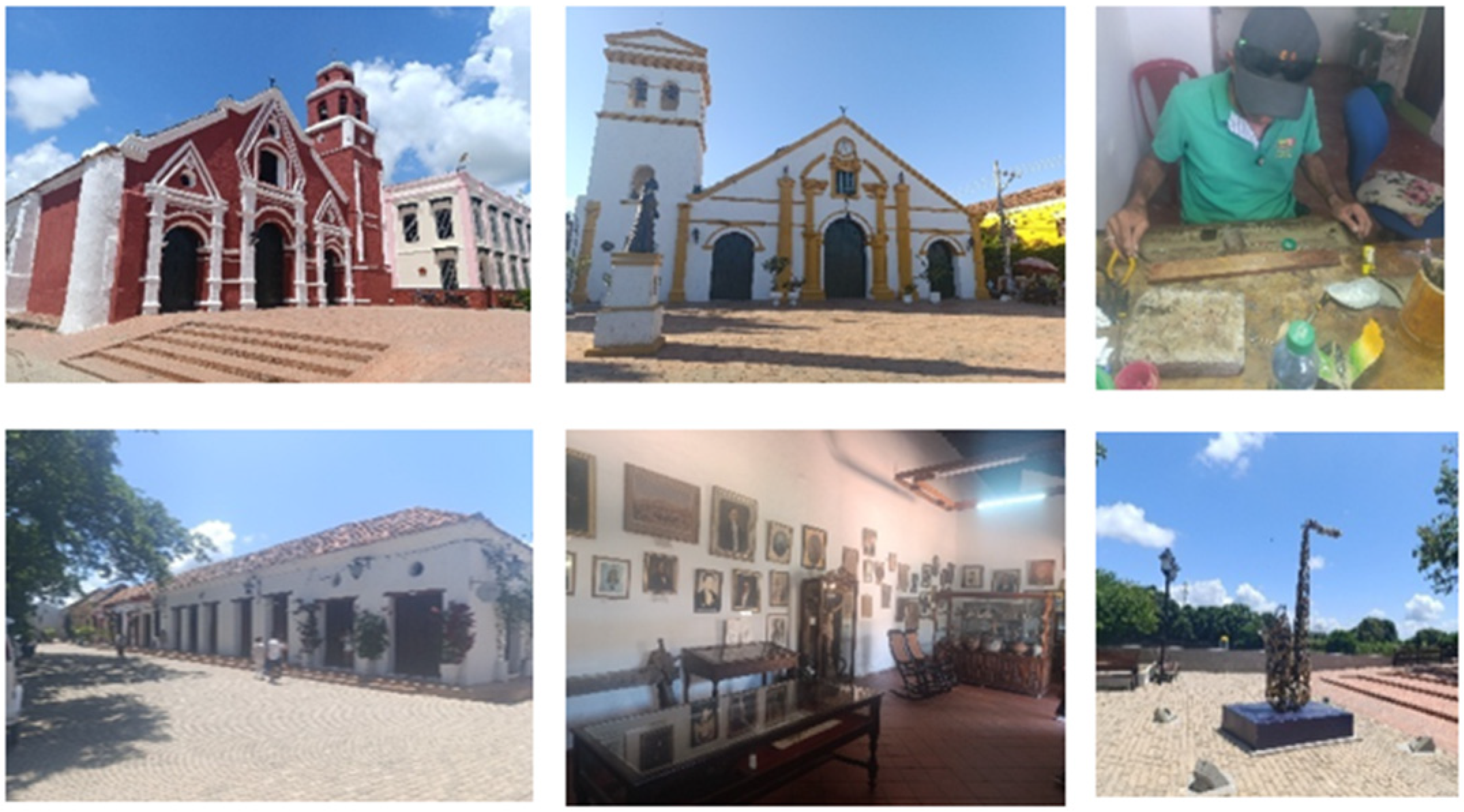
Figure 1 presents an aerial view of the city from Google Earth, while Figure 2 displays some of Santa Cruz de Mompox’s main tourist attractions.

3.2. Definition of Variables

Cultural Heritage: Refers to the tangible and intangible cultural assets and manifestations present in the territory that have been shaped and transformed by local communities. This category includes tangible heritage, intangible heritage, festivities and events, and groups of special interest.
Tangible Heritage: Defined as all elements that have a physical presence and can be perceived by the senses. It includes geographical territory with its natural and environmental resources, as well as constructions and human-made structures such as infrastructure, roads, transportation, and tools that facilitate daily life. Tangible heritage is divided into two main categories: immovable and movable assets.
Intangible Heritage: Encompasses traditions, oral expressions, rituals, social practices, knowledge related to nature and the universe, and artistic expressions that are continuously transmitted and recreated within society. These manifestations, commonly known as folklore, are characterized by being collective, traditional, anonymous, spontaneous, and popular.
Festivities and Events: Attractions that arise from the organization of events, whether contemporary or traditional, in which the community participates either as protagonists or spectators.
Groups of Special Interest: Composed of Indigenous, Afro-Colombian, and Raizal communities, whose traditions are highly valued and respected as a means of genuinely preserving their cultural heritage.
Natural Sites: Includes geographical areas made up of various attractions, as well as individual natural resources that, due to their characteristics, cannot be grouped together but are nonetheless relevant and of interest for tourism purposes.

3.3. Inventory Components

To efficiently manage the information, it is necessary to codify the components by considering the following levels: Type of Heritage, Group, Component, Element, and List of Attractions. The classification levels defined for each component are [24]:
The first level of classification corresponds to the Type of Heritage: 1. Cultural Heritage and 2. Natural Site.
The second classification level, known as Group, further subdivides the resources. For Cultural Heritage, these include sections 1.1 to 1.8, and for Natural Sites, sections 2.1 to 2.12.
The third classification level refers to the Component within each group. For Cultural Heritage, these include sections 1.1.1 to 1.8.5, and for Natural Sites, sections 2.1.1 to 2.12.3.
The fourth classification level identifies the specific Element associated with each component. For Cultural Heritage, these include sections 1.1.1.1 to 1.7.3.6 and for Natural Sites between 2.10.1.1 to 2.10.1.5.
Appendix A.1 shows the coding of the components for Heritage Type, Group, Component, Element.

3.4. Evaluation of Tourist Attractions

The evaluation of the natural and cultural attractions identified in the inventory was carried out following the official methodology established by the Colombian Ministry of Commerce, Industry and Tourism [24], which considers the quality and significance of tourist attractions as key aspects. This methodology classifies each attraction according to various criteria, which contain a predefined scoring range that reflects observable quality thresholds, verified during fieldwork.
The quality criteria vary according to the type of attraction and are mainly associated with its state of conservation, representing 70% of the total score. Each criterion is assigned a specific score, with a defined maximum value. The significance criteria refer to the level of recognition of the attraction, contributing 30% of the total score. Only one of these criteria is applied per case, assigning a single value to the attraction [24].
The scores assigned to each criterion are derived from operational definitions associated with each range of values, as explained in the following subsections. For example, the conservation and constitution of heritage are evaluated on a scale of 0 to 21 points, where values from 0 to 7 indicate deficient conditions, 8 to 14 acceptable conditions, and 15 to 21 optimal conditions (or their equivalents on higher scales). These thresholds correspond to specific indicators evaluated on-site.
The criteria for the evaluation and scoring of cultural heritage and natural sites are explained below.

3.4.1. Criteria for the Evaluation and Scoring of Cultural Heritage

Quality:
Based on the classification of assets and attractions previously outlined, the following aspects must be taken into account when assessing the quality of cultural heritage resources. Table 1 shows the quality assessment of cultural heritage.
Significance:
This criterion aims to evaluate several key aspects: the level of recognition that a tourism resource or attraction holds across various markets (local, regional, national, or international); the distinction between cultural or natural assets that are merely resources and those that function as tourist attractions; the design and characterization of the destination’s tourism product; the identification of accessible markets for immediate promotion and commercialization; and the selection of resources that can be strategically promoted to attract visitors. The significance of a tourist attraction is determined by the extent of public awareness and recognition it receives [24]. Table 2 presents the scoring criteria for evaluating the significance of tourism attractions.
The significance of a tourism attraction is not determined by quality-based criteria or local perceptions of its importance. Instead, it is defined by the level of recognition the asset holds within tourism markets, granting it regional, national, or international relevance. To establish this, the following sources are considered: tourism guidebooks, travel packages developed by local and wholesale travel agencies, specialized tourism magazines, newspapers with tourism sections, and tourism maps at various territorial levels.
When a cultural or natural asset is not recognized in tourism markets, it is classified as a tourism resource. While it may be part of a broader tourism product, it requires enhancement and promotion for potential integration into the tourism value chain. In municipalities where resources are only of local significance, what has been identified are tourism resources rather than fully developed attractions, meaning these areas have not yet established a clear tourism vocation nor completed a comprehensive inventory of attractions.

3.4.2. Criteria for the Evaluation and Scoring of Natural Sites

Quality:
The evaluation of quality for natural attractions considers their state of conservation from an environmental perspective, meaning there should be little or no damage present. Deterioration may be caused by primary pollutants, such as petroleum residues, detergents, plastics, cans, organic waste, and industrial or agricultural byproducts. Additionally, secondary pollutants—including noise, foul odors, visual obstruction, and poor waste management—can significantly affect environmental integrity. The destructive actions of human beings, especially the irrational use of natural resources, further contribute to environmental degradation [24]. Table 3 presents the quality assessment criteria for natural sites.
Significance:
The criteria used to assess the significance of natural sites follow the same structure as those established for Cultural Heritage (Table 2. Significance assessment of tourism attractions).

3.5. Local Survey

To complement the document review and field observation, a local survey was conducted among residents of Santa Cruz de Mompox. A non-probabilistic purposive sampling method was used, appropriate for exploratory studies of heritage and tourism in small, geographically concentrated populations. Between February and March 2025, 72 valid surveys were collected.
The sample consisted of 54% women and 46% men. The age distribution was concentrated in three ranges: 18–30 years (29%), 31–50 years (46%), and over 50 years (25%). In terms of location, 42% resided in the historic center and 58% in peripheral neighborhoods or rural areas, ensuring representation of both communities directly linked to heritage and those located in surrounding areas.
The questionnaire included 20 items distributed across five dimensions, assessed using a 5-point Likert scale: Tangible Cultural Heritage, Intangible Cultural Heritage, Festivals and Events, Special Interest Groups, and Natural Sites. Additionally, three open-ended questions were included to identify significant places, cultural practices, and perceived opportunities for tourism development.
The responses were coded using a standardized template. Closed-ended questions were processed using descriptive statistics in Excel, while open-ended responses were analyzed through manual categorization with an inductive approach. This information is fundamental to the evaluation carried out by the panel of experts.

3.6. Expert Panel and Scoring Procedure

The data collection process began with a review of secondary sources to identify evidence of previous inventories, especially in tourism development plans and land-use plans. Simultaneously, primary sources were consulted to establish contact with municipal governments and local tourism leaders. Perceptions from the previous local survey were also considered, facilitating a systematic process of searching for, organizing, and analyzing information.
Subsequently, the sites to be visited, the necessary equipment, and the logistics for fieldwork were defined. This procedure ensured that each attraction was verified, allowing for accurate data collection and an on-site evaluation.
To reduce evaluator bias, a panel of experts coded the evaluations of each attraction. The scoring process was carried out by three experts selected for their professional experience. Table 4 presents the evaluators’ profiles and selection criteria.
Prior to the rating, the experts participated in a brief calibration session to standardize the evaluation criteria according to the Ministry’s methodology [24]. The session included a review of the scoring scales, examples of classification inconsistencies, and test cases.
The evaluation process was conducted using a structured four-step scoring procedure to ensure methodological rigor. First, each expert independently evaluated all cultural and natural attractions, assigning scores without interacting with the other evaluators. This phase minimized cross-influence and allowed for the identification of natural variability in expert judgment. Second, all individual scoring matrices were compiled into a unified database, enabling comparison of results and the detection of discrepancies. Third, cases where the difference between evaluators exceeded a predefined threshold of 15% were flagged for review and discussed collectively. Finally, a consensus meeting was held to reconcile divergent evaluations; when consensus could not be reached, the final score was calculated as the average of the three evaluations. The scoring process is illustrated below. Figure 3 shows a diagram of the scoring process.
To assess the reliability of the expert evaluations, a consistency analysis was performed using the Coefficient of Variation for each of the main categories. The results showed CV values with low dispersion, indicating high agreement among experts. A CV with values between 10% and 20% indicate low variability [25].
This same interdisciplinary panel applied the evaluation matrix described above, guaranteeing a consistent and reliable process.
Table 5, Table 6, Table 7, Table 8 and Table 9 presents the assessment of the tourism potential of the natural and cultural heritage inventory, integrating the information collected during the visits and reflecting the results of the assessment carried out by the experts. Appendix A.2 shows the complete tables used to assess tourism potential.

4. Results

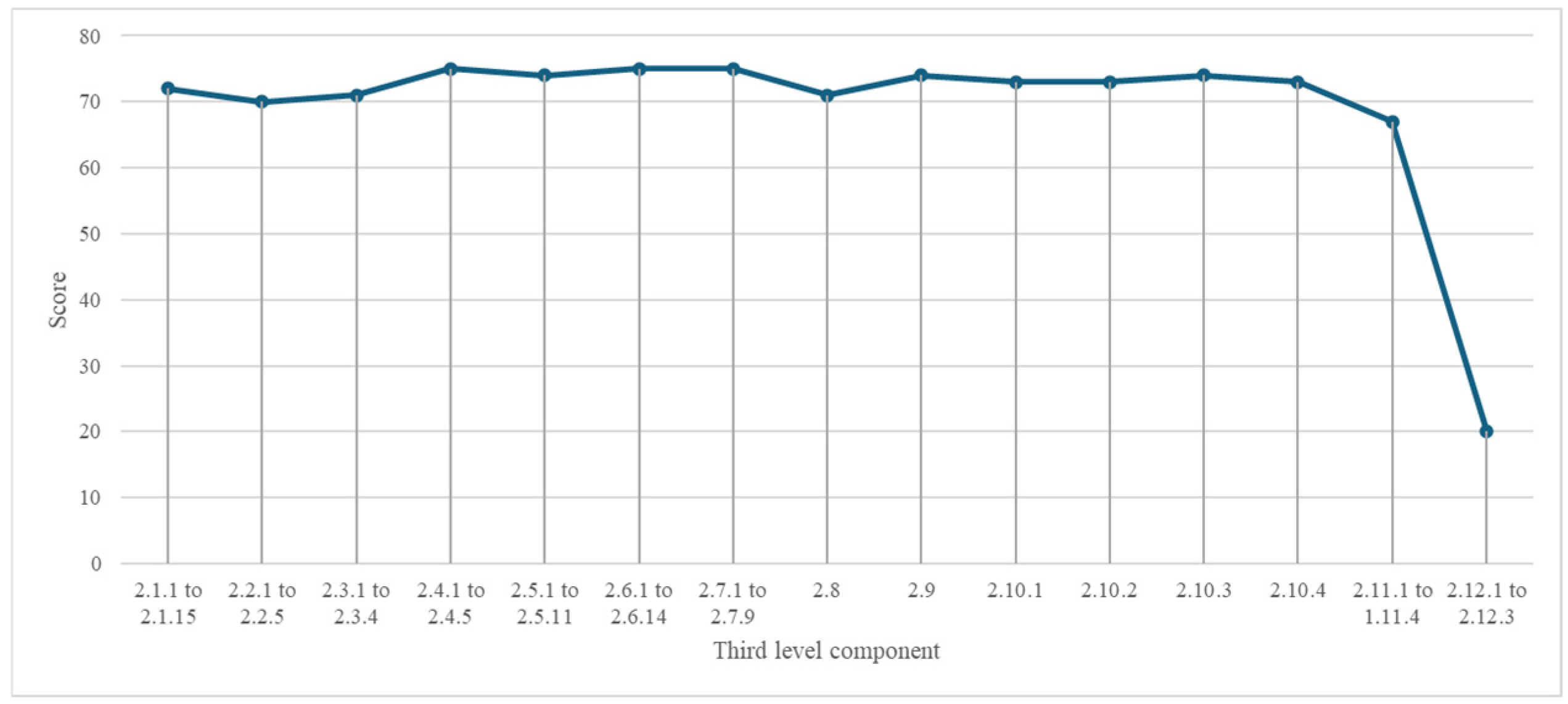
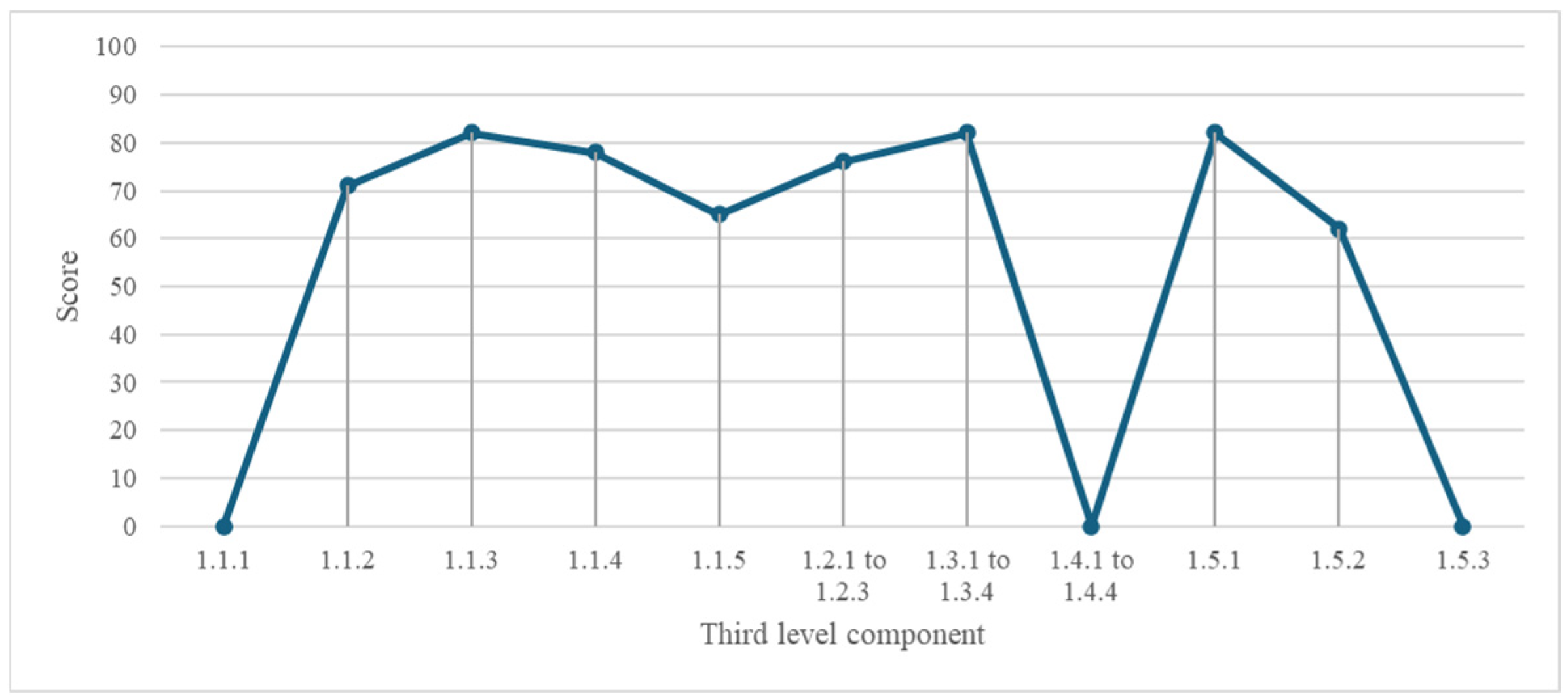
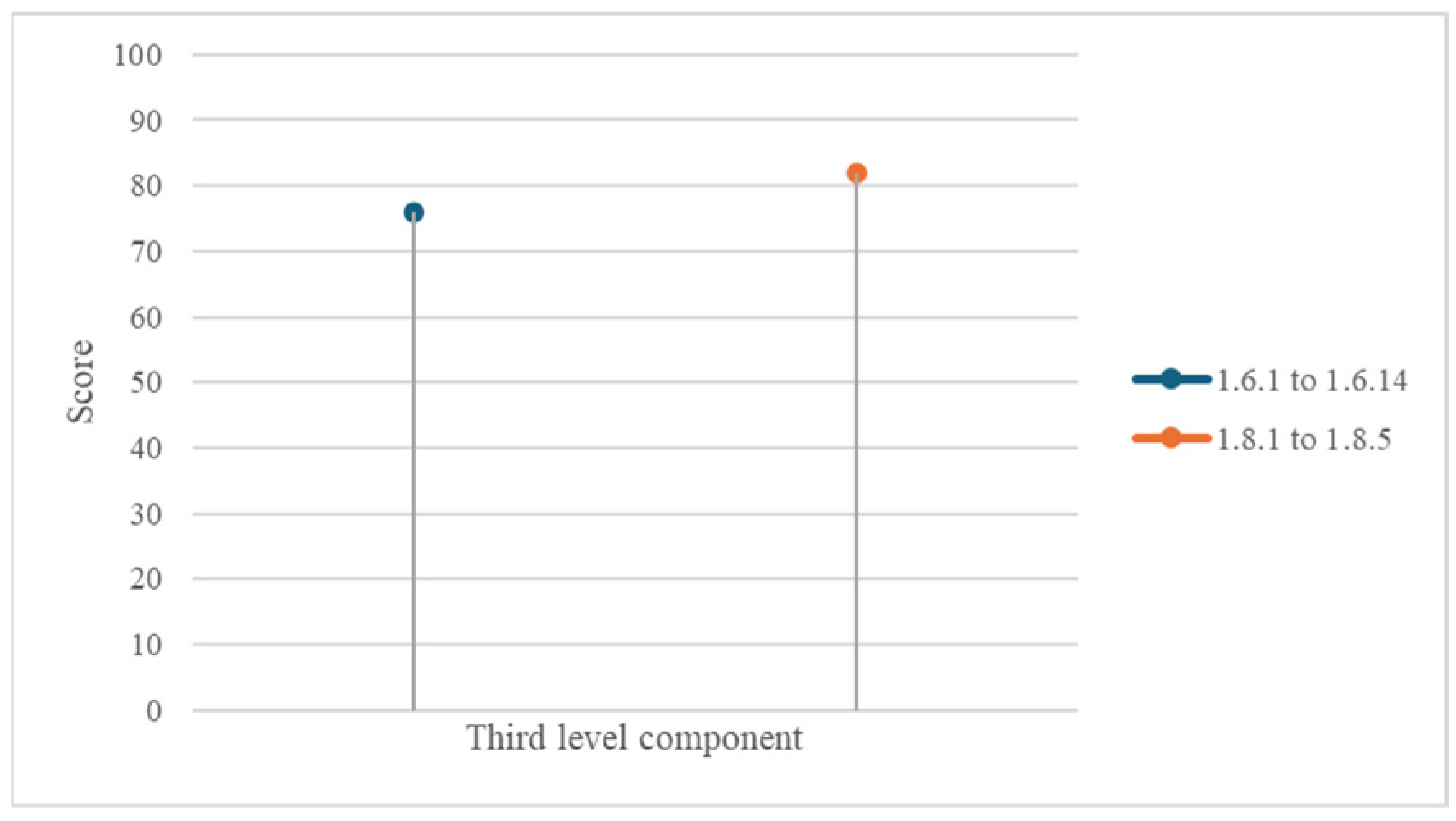
Figure 4, Figure 5, Figure 6 and Figure 7 present the scores obtained for each category: Tangible Heritage (Groups 1.1 to 1.5), Intangible Heritage (Group 1.6), Festivities and Events (Group 1.7), Groups of Special Interest (Group 1.8), and Natural Sites (Groups 2.1 to 2.12).
To establish consistent categories of tourism potential, explicit threshold values were defined based on the maximum possible score (100 points). Following standard practice in indicator-based assessments, three levels were adopted: High Potential (≥70 points), Medium Potential (40–69 points), and Low Potential (<40 points). These cut-off points reflect the weighting scheme established in the official Colombian methodology [24].

4.1. Analysis of Scores—Figure 4: Cultural Heritage

Regarding the quality criteria—state of conservation, constitution of the asset, and representativeness—as well as significance, the highest scores were concentrated in categories that reflect the potential of religious architecture (82 points), particularly due to its churches, parish complexes, rectories, and conventual ensembles. The scientific and technical achievements related to mining, agriculture, industry, and craftsmanship (82 points) also stood out, mainly due to bovine and goat livestock farming, the traditional goldsmithing technique of filigree, and artisanal construction methods such as bahareque and the use of local materials.
Artworks housed in museums, collections, or enclosed spaces (82 points) also scored highly, especially those located in the Museum of Religious Art, which holds a valuable collection of colonial paintings, sacred sculptures, and liturgical objects. In addition, colonial churches with high artistic and religious value were also considered. Institutional architecture (78 points) was recognized for key landmarks such as the traditional municipal palace, courthouse, customs house, the renowned Colegio Nacional Pinillos, the House of Culture, the Religious Art Museum, the public library, sports parks, hospitals, cemetery, plazas, colonial shops, river port, and airport.
Urban or rural sectors of interest and public space elements (76 points) were also significant, including the historic city center, riverfront promenade (Alameda del Río), and local parks. Residential architecture (71 points) was acknowledged for the colonial houses of Santa Cruz de Mompox, notable examples of single-family dwellings with high ceilings, interior courtyards, and ornate balconies. On the outskirts of Santa Cruz de Mompox, estates and country houses reflect the region’s traditional rural life, with popular housing and raizal constructions.
Mid-range scores were observed for engineering works and infrastructure (65 points), particularly for the old routes that connected Santa Cruz de Mompox to other cities during the colonial period and the bridge that links the town to the main highway, improving land access. Public artworks (62 points), such as the statues and the Monument to Filigree—an homage to the town’s master goldsmiths—along with fountains and murals in public spaces that depict historical and cultural scenes of the region, also received moderate scores.
Categories that received no score included military architecture (0 points); archaeological sites, zones, and parks (0 points); and scientific elements (0 points).

4.2. Analysis of Scores—Figure 5: Intangible Heritage and Groups of Special Interest

In the category of Intangible Heritage, considering the quality dimensions—collective, traditional, anonymous, spontaneous, and popular—as well as significance, the highest score reflects the strong potential of various expressions. These include knowledge and practices related to the universe and nature, gastronomy and culinary traditions, languages and oral expressions, traditional medicine, musical and sound expressions, dance, performing arts, traditional games, techniques for crafting handmade objects and instruments, costume and body ornamentation, construction techniques, and celebrations and rituals, all of which achieved a score of 76 points.
In the category of Groups of Special Interest, the evaluation considered both the quality of respect for customs and the significance of these groups. The highest score (82 points) was assigned to the potential of Indigenous, Afro-Colombian, Raizal, and Rom communities, as well as local communities such as filigree artisans, fishing communities, and cultural and artistic groups.

4.3. Analysis of Scores—Figure 6: Festivities and Events

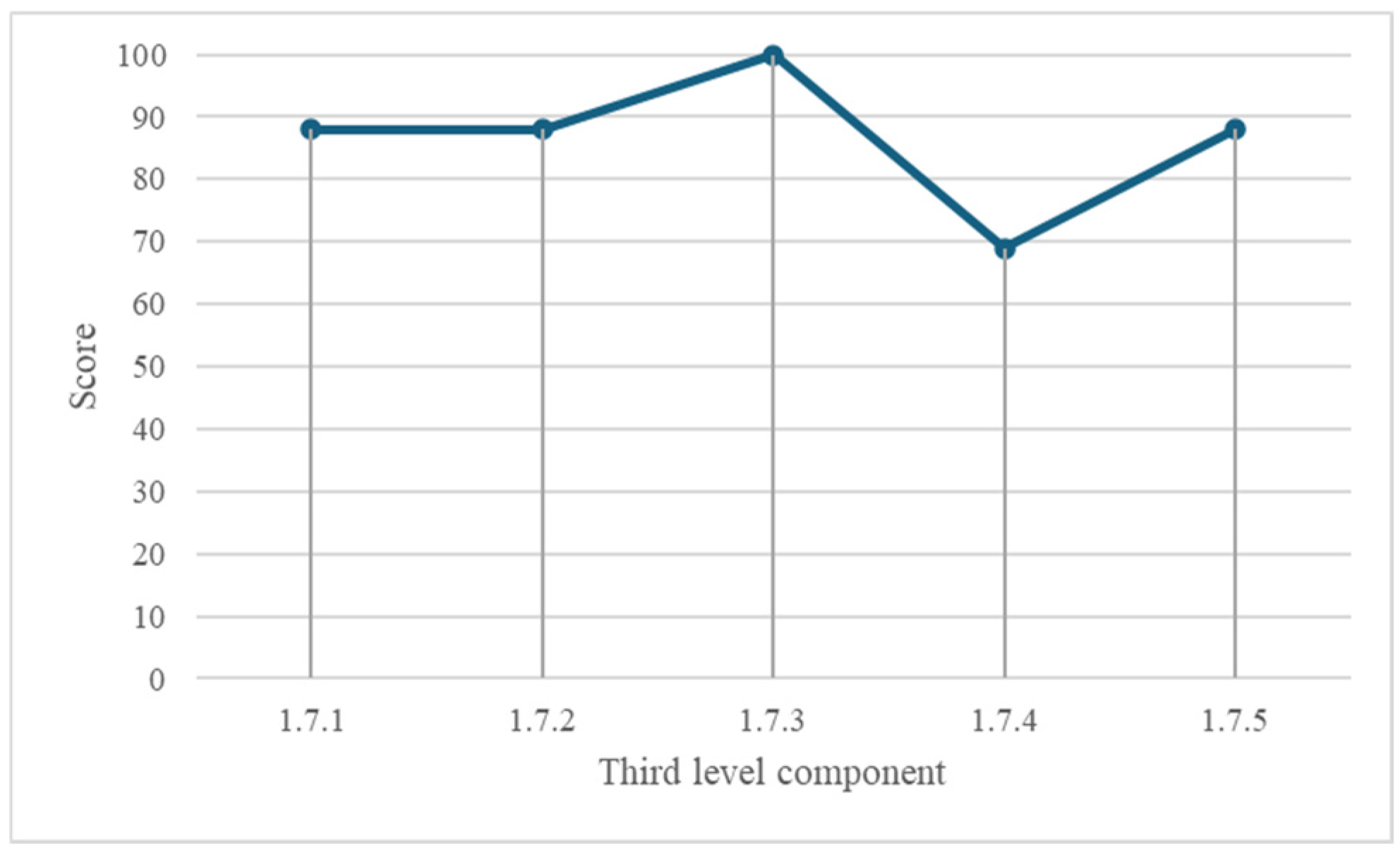
Considering the quality indicators—event organization, socio-cultural benefits for the community, and local economic benefits—along with significance, the highest scores were associated with the potential of artistic and cultural events (100 points). These include a wide variety of traditional dance groups and folkloric ensembles, the International Jazz Festival, literary gatherings, and cultural performances.
Festivals received a score of 88 points, particularly for the foundational anniversary celebrations, which feature parades, official ceremonies, artistic performances, and culinary exhibitions. Other prominent festivities include carnivals, competitions, national holidays (featuring solemn ceremonies, military parades, floral offerings, and cultural activities), religious and patronal festivals, and national band gatherings.
Fairs and exhibitions—agricultural, agro-industrial, artisanal, artistic, scientific, commercial, equine, livestock, gastronomic, industrial, and marketplace events—also scored 88 points, with special emphasis on the Artisan Filigree Fair, dedicated to the local filigree goldsmithing tradition, where artisans showcase and sell their creations. Other highlights include handwoven chairs and rocking chairs made from straw and wood (such as oak), as well as art and photography exhibitions held in cultural spaces like the House of Culture and the Museum of Religious Art. The gastronomic festival, which promotes traditional Momposino cuisine, was also a major contributor to the score.
The “Others” category also scored 88 points, notably including the renowned Festival del Dulce, celebrated during Holy Week. During this event, local families set up stalls in the Historic Center to offer a wide variety of traditional sweets.
Sporting events received medium-range scores (69 points), typically represented by regattas and canoeing or rowing competitions on the Magdalena River, as well as local tournaments in sports such as football and others held in the municipal stadium and local courts.

4.4. Analysis of Scores—Figure 7: Natural Sites

Considering the quality indicators—absence of air, water, visual, and noise pollution, as well as state of conservation, diversity, uniqueness, and significance—the highest total scores were observed in the category of lentic waters (75 points). This is due to their proximity to marshes rich in biodiversity, home to various species of birds and aquatic fauna, as well as the presence of artificial lagoons created for recreational activities and sport fishing. Wetlands are also used for recreation and as stagnant water sources for agricultural and livestock purposes.
Coastal areas (75 points) also received high scores, with nearby riverbanks along the Magdalena River featuring scenic rock formations, suitable for recreation and outdoor activities. Small inlets in the river serve as shelters for boats and fishing zones. Certain formations along the riverbank function as lookout points and access areas to the water. The river port acts as a roadstead, providing a safe docking space for vessels, and anchoring points exist at the pier and along the riverbank for tourism and fishing boats. Some rock formations act as promontories, offering panoramic views, while narrow river sections serve as natural navigation corridors. The riverside is complemented by vegetation and other natural formations.
Island territories (75 points) scored equally high due to their proximity to islands used for recreation and ecotourism, offering natural areas for wildlife observation. Small islets in the Magdalena River serve as reference points and resting spots for boats, while sediment bars are used for fishing and leisure.
Lotic waters (74 points) include estuaries and small streams that feed into the Magdalena River, along with springs used to supply drinking water in nearby rural areas. Minor creeks cross agricultural zones and are used for irrigation. Several brooks and streams feed the river, providing essential water resources for agriculture and daily life. Some river sections feature rapids, utilized for recreational activities like canoeing and sport rowing. The river’s flow rate varies by season, impacting fluvial activities and navigation. Mangroves and riverside vegetation enhance aquatic ecosystems and provide habitats for various species of flora and fauna.
Flora and fauna observation sites (74 points) include marshes and other wetlands that serve as habitats for numerous bird species, such as herons and kingfishers. Local flora and fauna are diverse, with a wide range of fish and aquatic species, and lush vegetation typical of wetlands and riversides, including mangroves and native trees. There are also designated trails for nature walks and observation.
Protected areas—municipally designated (74 points) include parks and riverwalks officially declared as municipal conservation areas, serving both ecological and recreational purposes.
Protected areas—National Natural Parks System (73 points) include nature reserves protecting wetlands and local biodiversity, as well as riverside zones that host endemic species and unique ecosystems. Some of these wetlands function as sanctuaries, safeguarding habitats and supporting species observation.
Protected areas—departmentally designated (73 points) include nearby riverbanks and wetlands designated at the departmental level for conservation purposes.
Protected areas—civil society reserves (73 points) involve private reserves managed by local NGOs, focused on wetland conservation and ecotourism development.
Mountains (72 points) received slightly lower scores due to the flat topography of the region, although small hills and ridges exist in the surrounding areas, suitable for nature walks and scenic observation. Minor elevations around the city provide panoramic views of the Magdalena River and urban landscape. The city lies in a riverine depression, favorable for agriculture and river-based commerce. A few minor peaks and elevated areas offer recreational and ecological opportunities.
Plains (71 points) include savannahs and grasslands used for agriculture, particularly crop cultivation. Riverine meadows near the Magdalena also serve as important biodiversity habitats.
Hunting and fishing sites (71 points) include the Magdalena River, an ideal location for sport fishing, where local fishers use traditional techniques such as nets and lines. Wildlife hunting may occur in nearby rural areas, though it is regulated to protect biodiversity.
Highlands (70 points) include the Magdalena River valley, which surrounds the city and provides fertile lands for agriculture and facilitates river transport. While natural canyons are not present, rock formations along the riverbank create scenic landscapes. The river basin also plays a critical role in local irrigation systems and agricultural development.
Groundwater (67 points) received a medium-range scores, as there are only a few springs and wells used for potable water supply and agricultural activities.
Finally, karst formations (0 points) received no score, as there are no known records or evidence of their presence in the area.
Based on the final overall scores obtained for each category and attraction, priority ranking was developed to facilitate decision-making in the construction of tourism product portfolios. This ranking integrates cultural and natural assets and highlights resources whose high scores reflect significant intrinsic value and favorable conditions for development. Table 10 presents the best-performing categories and representative attractions, along with development recommendations based on carrying capacity.
The priority classification indicates that Santa Cruz de Mompox possesses a wealth of cultural, festive, and natural resources capable of supporting diversified tourism products. High-level categories, such as cultural events, religious architecture, handicrafts, and natural areas, can serve as the basis for themed routes, experiential workshops, and ecocultural itineraries. These recommendations provide a practical foundation for developing tourism product portfolios, while ensuring that development remains aligned with the carrying capacity and cultural integrity of the territory.

5. Discussions and Implications

The results of this research show that Santa Cruz de Mompox possesses a wide range of cultural and natural resources with high potential for tourism development. However, these assets coexist with persistent limitations in terms of accessibility, complementary services, and infrastructure. This imbalance coincides with the findings of studies in other heritage contexts, where high intrinsic value does not automatically translate into effective tourism use, as evidenced in the monasteries of the cultural tourism zone in Serbia, where the high value of the resources contrasted with conditions of lower development [19]. Similarly, a study in Romania demonstrated spatial mismatches between heritage wealth and tourism infrastructure, reinforcing the idea that heritage-based tourism requires adequate support conditions to reach its full potential [21].
Comparing the methodological approach of this study with those used in previous research allows us to clarify the position of other researchers and what this research contributes. Similarly to the quantitative models applied in Serbia and Romania, the approach adapted here integrates resource quality indicators with variables related to tourism development and readiness, enabling classification and prioritization through a standardized scoring system. However, unlike geotourism approaches, such as the multi-phase assessment applied in Kruger, which focuses primarily on geological and ecological attributes [20], our model incorporates tangible and intangible heritage elements, making it more suitable for historic urban environments where cultural practices, festivals, and crafts play a fundamental role. Furthermore, while inventories developed in Towns of México combine classification with logistic regression to identify the factors that shape local pride and social value [22], our study advances this perspective by integrating expert assessment with the perceptions of residents gathered in Mompox, offering a dual and more nuanced understanding of tourism potential.
Our research allows us to highlight new findings, as it provides one of the most comprehensive and organized inventories of cultural and natural tourism resources in Santa Cruz de Mompox. Furthermore, the integration of expert scores with community survey perceptions reveals a more complex picture of tourism readiness, showing that several high-value resources remain underutilized due to low visibility, limited interpretation, or poor accessibility. These patterns have also been identified in studies on residents’ attitudes toward tourism and cultural heritage in Taiwan, where perceived impacts influence support for tourism development [23]. Likewise, the standardized assessment method allows for a clearer identification of priority areas where investment in infrastructure, signage, or conservation would generate the greatest potential benefits.
As with heritage assessments in Serbia and Romania, our findings confirm that destinations with high cultural value often face development obstacles that limit tourism growth. However, unlike these cases focused on rural monasteries or ethnographic regions, Mompox presents the additional challenge of balancing World Heritage preservation with tourism expansion, requiring carefully planned interventions to avoid overcrowding and protect cultural authenticity. Complementary frameworks on sustainable heritage management also highlight that cultural and natural assets should be considered strategic inputs for territorial well-being and inclusive development, an idea supported by ownership-based heritage management models that emphasize the integration of conservation, investment, and community benefit [26,27,28].

5.1. Theoretical Implications

From a theoretical perspective, this study supports the usefulness of the structured inventory and valuation approach proposed by seminal authors such as [8,9], who argue that tourism development must begin with the identification and assessment of a territory’s actual potential. The research validates the relevance of a dual analysis for providing a robust diagnostic of tourism resources, in line with the methodological recommendations of the World Tourism Organization [14,15,29].
Furthermore, the study reinforces the position of scholars like [14], emphasizing that strategic tourism planning must be grounded in detailed inventories. This view aligns with the contributions of [15], who stress that inventories are essential for market segmentation, product definition, and ensuring destination sustainability. Therefore, the study not only provides empirical evidence but also supports well-established theoretical frameworks in the field of tourism planning.

5.2. Practical Implications

On a practical level, the research provides a useful tool for tourism management in the city, enabling the prioritization of high-value attractions for inclusion in routes, tourism packages, and events. This classification can help design targeted promotional strategies and implement programs to improve infrastructure, build capacity, and conserve heritage, based on a clear and hierarchized database of available resources.
Authors such as [30] suggest that the use of complementary tools, such as innovation, could also be leveraged by tourism agencies and public administrations for the design of tourist routes, the improvement of destinations, and the resolution of challenges such as sustainability and overtourism.
Additionally, the applied methodology can be replicated in other regions with similar characteristics, especially those rich in heritage but with limited tourism articulation. With a methodology adapted to the Colombian context, local and regional governments could adopt this approach as a foundation to strengthen their tourism planning and promote participatory tourism governance. Ref. [31] assert that local governance models should evolve into multi-level network frameworks. The involvement of public, private, and community stakeholders is essential for ensuring democratic legitimacy, transparency, and effectiveness in tourism policies.

6. Conclusions and Limitations

This research aimed to present an inventory of natural resources and cultural heritage in Santa Cruz de Mompox, along with a methodology to evaluate the tourism potential of the city’s resources. The findings show that Santa Cruz de Mompox possesses a vast and diverse inventory of both cultural and natural tourism assets, with high potential for consolidation as a competitive tourism destination. The application of a rigorous methodology based on quality and significance criteria made it possible to identify outstanding elements such as religious architecture, goldsmithing traditions, collective intangible heritage, and the ecological richness associated with the Magdalena River. These components offer a solid foundation for the design of differentiated, sustainable tourism products that reflect territorial identity.
Moreover, the recognition and systematic evaluation of tourism resources not only contribute to the planning of local tourism development but also serve as essential tools for heritage and cultural management. By objectively categorizing and assessing resources, strategic information is generated that can be used by both public and private stakeholders to enhance decision-making; strengthen destination promotion; and prioritize investments in infrastructure, conservation, and training.

Limitations and Future Research

Our research also has some limitations that need to be addressed in future studies. First, the assessment of the quality and significance of tourism resources was based primarily on expert judgment, which, despite the interdisciplinary approach, may introduce a degree of subjectivity. Future studies could incorporate visitor perceptions and quantitative satisfaction metrics to validate and complement these evaluations. Second, data collection was conducted during a specific time period, limiting the ability to capture seasonal variations in tourism demand and resource use. Longitudinal studies would enable a more dynamic understanding of tourist flows and attraction performance. Third, although the inventory methodology was effective for categorization and evaluation, it did not assess the economic impact of each resource. Future research could integrate econometric models to estimate the contribution of attractions to local development. Fourth, this study focused exclusively on Santa Cruz de Mompox; comparative studies across multiple heritage towns could reveal patterns and differences that support broader policy recommendations. Finally, contextual factors such as local governance or trust were not analyzed; future studies could explore these dimensions to develop sustainable tourism strategies in rural and culturally significant territories. Some authors, such as [32], highlight the importance of generating practical value by policymakers aiming to improve tourism and heritage management, as well as strengthening trust to facilitate collaboration and the adoption of planning recommendations as [33].

Author Contributions

Conceptualization, O.C.-A., J.P.E.-C. and E.P.-S.; methodology, O.C.-A., J.P.E.-C. and E.P.-S.; validation, O.C.-A., J.P.E.-C. and E.P.-S.; formal analysis, O.C.-A., J.P.E.-C. and E.P.-S.; investigation, O.C.-A., J.P.E.-C. and E.P.-S.; writing—original draft preparation, O.C.-A.; writing—review and editing, O.C.-A., J.P.E.-C. and E.P.-S.; visualization, O.C.-A., J.P.E.-C. and E.P.-S. All authors have read and agreed to the published version of the manuscript.

Funding

This research was funded by the Ministerio de Ciencia, Tecnología e Innovación (MINCIENCIAS) of Colombia under CONV-934-2023-CC1140825876. The APC was funded by the same Source.

Institutional Review Board Statement

Not applicable.

Informed Consent Statement

Not applicable.

Data Availability Statement

Data is contained within the article.

Acknowledgments

The work performed was supported by MINCIENCIAS. Gratitude is extended to the Corporación de Ciencia y Tecnología para el Desarrollo de la Industria Naval, Marítima y Fluvial (COTECMAR) for their supervision and support.

Conflicts of Interest

Edwin Paipa-Sanabria was employed by Cotecmar. The remaining authors declare that the research was conducted in the absence of any commercial or financial relationships that could be construed as a potential conflict of interest.

Appendix A

Appendix A.1. Inventory Components

The first level of classification corresponds to the Type of Heritage: 1. Cultural Heritage and 2. Natural Site.
The second level of classification, known as Group, further subdivides the resources. For Cultural Heritage, these include: 1.1. Tangible Cultural Heritage—Immovable; Architectural Group, 1.2. Tangible Cultural Heritage—Immovable; Urban or Rural Group, 1.3. Scientific and Technical Achievements, 1.4. Tangible Cultural Heritage—Immovable; Archaeological Group, 1.5. Tangible Cultural Heritage—Movable, 1.6. Intangible Cultural Heritage, 1.7. Festivities and Events, and 1.8. Groups of Special Interest. For Natural Sites, the groups include: 2.1. Mountains, 2.2. Highlands, 2.3. Plains, 2.4. Lentic Waters, 2.5. Lotic Waters, 2.6. Coastal Areas, 2.7. Island Territories, 2.8. Hunting and Fishing Sites, 2.9. Flora and Fauna Observation Sites, 2.10. Protected Areas, 2.11. Groundwater, and 2.12. Karst Formations.
The third level of classification refers to the Component within each group. Examples under cultural heritage include: 1.1.1. Military Architecture, 1.1.2. Residential Architecture, 1.1.3. Religious Architecture, 1.1.4. Institutional Architecture, 1.1.5. Engineering Works and Infrastructure (such as royal roads, railway corridors, suspension bridges, metal bridge, cable car tower, tunnel, reservoirs and dams, other), 1.2.1. Urban or Rural Sectors of Interest, 1.2.2. Public Space Elements (such as plaza, main square, small square, small square, alameda, urban park, avenue and street, other), 1.2.3 Others, 1.3.1 Mining, 1.3.2 Agricultural, 1.3.3 Industrial, 1.3.4 Technical, 1.4.1 Archaeological site, 1.4.2 Archaeological zone, 1.4.3 Archaeological park, 1.4.4 Other, 1.5.1 Works of art in museums, collections or closed spaces, 1.5.2 Works in public spaces, 1.5.3 Of a Scientific Nature, 1.6.1 Knowledge and practices about the universe and nature, 1.6.2 Gastronomy and culinary knowledge, 1.6.3 Languages and oral expressions, 1.6.4 Traditional medicine, 1.6.6 Musical and sound expressions, 1.6.7 Dance expressions, 1.6.8 The performing arts, 1.6.9 Traditional games, 1.6.10 Production techniques crafts and instruments, 1.6.11 Costume making and body ornamentation, 1.6.12 Construction techniques, 1.6.13 Celebrations and rituals, 1.6.14 Other, 1.7.1 Festivals, 1.7.2 Fairs and exhibitions, 1.7.3. Artistic and cultural events, 1.7.4 Sporting events, 1.7.5 Others, 1.8.1 Indigenous community, 1.7.2 Black community, 1.8.3 Raizal community, 1.8.4 Rom community, 1.8.5 Other, 2.1.1 Knot, 2.1.2 Massif, 2.1.3 Mountain range, 2.1.4 Sierra, 2.1.5 Serrania, 2.1.6 Mount, 2.1.7 Hill, 2.1.8 Snow-capped mountain, 2.1.9 Volcano, 2.1.10 Depression, 2.1.11 Gorge, 2.1.12 Páramo, 2.1.13 Hill, 2.1.14 High, 2.1.15 Other, 2.2.1 Plateau, 2.2.2 Valley, 2.2.3 Canyon, 2.2.4 Basin, 2.2.5 Other, 2.3.1 Savanna or plain, 2.3.2 Grassland, 2.3.3 Desert, 2.3.4 Other, 2.4.1 Swamps, 2.4.2 Lakes, 2.4.3 Lagoons, 2.4.4 Wetlands, 2.4.5 Other, 2.5.1 Waterfall, cataract or jump, 2.5.2 Estuary, 2.5.3 Source or spring, 2.5.4 Ravine, 2.5.5 River, 2.5.6 Stream or rivulet, 2.5.7 Rapid, 2.5.8 Flow, 2.5.9 Torrent, 2.5.10 Shore, 2.5.11 Other, 2.6.1 Cliff, 2.6.2 Bay, 2.6.3 Inlet, 2.6.4 Gulf, 2.6.5 Beach, 2.6.6 Point, 2.6.7 Roadstead, 2.6.8 Anchorage, 2.6.9 Peninsula, 2.6.10 Cape, 2.6.11 Promontory, 2.6.12 Isthmus, 2.6.13 Strait, 2.6.14 Other, 2.7.1 Continental islands, 2.7.2 Oceanic islands, 2.7.3 Islands in river and lake spaces, 2.7.4 Archipelago, 2.7.5 Islet, 2.7.6 Key, 2.7.7 Reef, 2.7.8 Bar, 2.7.9 Other, 2.10.1 National Natural Parks System, 2.10.2 Areas with departmental declarations, 2.10.3 Areas with municipal declarations, 2.10.4 Civil society reserves, 2.11.1 Mineral waters, 2.11.2 Hot springs, 2.11.3 Geyser, 2.11.4 Other, 2.12.1 Cave, 2.12.2 Caverns, 2.12.3 Other.
Finally, the fourth level of classification identifies the specific Element associated with each component. For example: 1.1.1.1. Walled Compound (Main Gate, Bastion, Curtain Wall, Jetty, Military Quarters), 1.1.1.2 Suburb Wall (Bastion, Curtain), 1.1.1.3 Fortification (Supply Store, Battery, Castle, Fort, Platform, Bridge, Trench), 1.1.1.4 Training School, 1.1.1.5 Battalion, 1.1.1.6 Other, 1.1.2.1 Urban Housing (Single-family, Multi-family), 1.1.2.2 Rural Housing (Hacienda, Quinta, native, traditional, popular housing), 1.1.3.1 Temple (Church, Cloister, Chapel, Hermitage, Parish Temple, Small Temple, Sanctuary, Oratory, Basilica, Cathedral, Synagogue, Mosque, Others), 1.1.3.2 Parish Complex (Church—Rectory), 1.1.3.3 Conventual Complex (Cloister, Convent), 1.1.3.4 Doctrinal Center (Doctrinal Chapel, Doctrinal Church), 1.1.3.5 Palace (Archbishopric, Episcopal), 1.1.4.1 Government Building (National Capitol, National Palace, Government Palace, Municipal Palace, Police Palace, Departmental Revenue Building, Courts and Prisons of the Holy Office, Customs, Bank of the Republic, Civic Center, Administrative Center, Other…), 1.1.4.2 Educational Building (Basic Education Institution, Technical Education Institution, University, University Faculty, Cultural Training Center, Conservatory, Seminary), 1.1.4.3 Scientific Building (Astronomical Observatory, Laboratory, Planetarium, Research Center, Botanical Garden, Other…), 1.1.4.4 Cultural Building (Library, Auditorium, Movie Theater, Concert Hall, Multi-purpose Room, Theater, Museum, House of Culture), 1.1.4.5 Recreation and Sports Venue (Stadium, Bullring, Circus, Social Club, Theme and Recreational Park, Other), 1.1.4.6 Hospital and Assistance Center (Hospital, Clinic, Medical Center, Health Post, Penitentiary, Panopticon, Jail), 1.1.4.7 Funeral Home (Cemetery, Cemetery Park, Mausoleum, Tomb), 1.1.4.8 Architecture for Commerce (Commercial Building, Passage, Market Square, Commercial Complex, Shopping Center, Buildings, Banking Entity), 1.1.4.9 Architecture for Industry (Printing Press, Factory, Oven, Other), 1.1.4.10 Architecture for Transportation (Railway Station, Tram Station, Transportation Terminal, Urban Mass Transportation Terminal, Passenger Airport, Cargo Airport, Transportation, Passenger Port, Cargo Port, Dock), 1.5.1.1 Painting, 1.5.1.2 Sculpture, 1.5.1.3 Other, 1.5.2.1 Head, 1.5.2.2 Bust, 1.5.2.3 Statue, 1.5.2.4 Sculpture, 1.5.2.5 Relief, 1.5.2.6 Monument, 1.5.2.7 Font, 1.5.2.8 Lantern, 1.5.2.9 Temple, 1.5.2.10 Clock, 1.5.2.11 Fountain, 1.5.2.12 Cross, 1.5.2.13 Mural, 1.5.2.14 Other, 1.5.3.1 Biological Specimens, 1.5.3.2 Geological Specimens, 1.5.3.3 Astronomical Bodies, 1.5.3.4 Other, 1.7.1.1 Founding Anniversaries and/or Return Festivals, 1.7.1.2 Carnivals, 1.7.1.3 Contests and/or pageants, 1.7.1.4 National holiday and/or historical event, 1.7.1.5 Religious, patronal and/or secular, 1.7.1.6 Meetings, 1.7.1.7 Others, 1.7.2.1 Agricultural, 1.7.2.2 Agroindustrial, 1.72.3 Artisanal, 1.7.2.4 Artistic, 1.7.2.5 Scientific, 1.7.2.6 Commercial, 1.7.2.7 Equine, 1.7.2.8 Livestock, 1.7.2.9 Gastronomic, 1.7.2.10 Industrial, 1.7.2.11 Market, 1.7.2.12 Others, 1.7.3.1 Dance, 1.7.3.2 Music, 1.7.3.3 Poetry, letters and/or oral narration, 1.7.3.4 Theatre, 1.7.3.5 Cinema and/or Audiovisuals, 1.7.3.6 Others, 2.10.1.1 National natural park, 2.10.1.2 Nature reserve, 2.10.1.3 Unique natural area, 2.10.1.4 Flora and fauna sanctuary, 2.10.1.5 Park road.

Appendix A.2. Inventory Components

The following link illustrates the tables that complement Table 5, Table 6, Table 7, Table 8 and Table 9, used to evaluate the tourism potential of the inventory of natural and cultural heritage: https://drive.google.com/file/d/1ATHo6HiNCnuO09xijvnHSuv2Rqf2_mRM/view?usp=sharing (accessed on 1 December 2025).

References

  1. Wąsowicz, M. Assessment of project success. Is sustainability is relevance? Transform. Bus. Econ. 2021, 20, 939. [Google Scholar]
  2. Streimikiene, D. Sustainability assessment of tourism destinations from the lens of green digital transformations. J. Tour. Serv. 2023, 14, 283–298. [Google Scholar] [CrossRef]
  3. Dinler, M. Formulation of historic residential architecture as a background to urban conservation. J. Cult. Herit. Manag. Sustain. Dev. 2021, 11, 1–17. [Google Scholar] [CrossRef]
  4. Leno Cerro, R. Los recursos turísticos en un proceso de planificación: Inventario y evaluación. Pap. Tur. 1991, 7, 7–24. [Google Scholar]
  5. Camara, C.J.; Morcate Labrada, F.D.L.Á. Metodología para la identificación, clasificación y evaluación de los recursos territoriales turísticos del centro de ciudad de Fort-de-France. Arquit. Urban. 2014, 35, 48–67. [Google Scholar]
  6. Organización Mundial de Turismo. Evaluación de los Recursos Turísticos; Organización Mundial de Turismo: Madrid, Spain, 1978. [Google Scholar]
  7. Leno Cerro, F. Técnicas de Evaluación del Potencial Turístico; Ministerio de Industria, Comercio y Turismo Dirección General de Política Turística: Madrid, Spain, 1993.
  8. Gunn, C.A. Tourism Planning, 2nd ed.; Taylor and Francis: New York, NY, USA, 1988. [Google Scholar]
  9. Boullon, R.C. Planificación del Espacio Turístico; Trillas: Mexico City, México, 1998. [Google Scholar]
  10. The Guardian. Mompós, Colombia, the Town That Time Forgot. 2012. Available online: https://www.theguardian.com/travel/2012/sep/21/colombia-mompos-forgotten-town?utm_source (accessed on 23 February 2025).
  11. UNESCO. Historic Centre of Santa Cruz de Mompox. 2024. Available online: https://whc.unesco.org/en/list/742 (accessed on 23 February 2025).
  12. Silva, J. Planeamento de produtos turísticos. In Planeamento e Desenvolvimento Turístico; Silva, F., Umbelino, J., Eds.; Lidel—Edições Técnicas, Lda.: Lisboa, Portugal, 2017; pp. 197–219. [Google Scholar]
  13. Braga, J.L.; Borges, I.; Brás, S.; Mota, C.; Costa, F. Inventorying tourist resources: Assessment of the tourist potential of Vieira do Minho. Int. Conf. Tour. Res. 2023, 6, 508–516. [Google Scholar] [CrossRef]
  14. Bote, V. Planificación Económica del Turismo; Trillas: Mexico City, México, 2002. [Google Scholar]
  15. Godfrey, K.; Clarke, J. The Tourism Development Handbook; Continuum International Publishing Group: London, UK, 2000. [Google Scholar]
  16. Cartuche, D.; Romero, J.; Romero, Y. Evaluación multicriterio de los recursos turísticos en la Parroquia Uzhcurrumi, Canton Pasaje, Provincia de El Oro. Rev. Interam. Ambiente Tur. 2018, 14, 102–113. [Google Scholar] [CrossRef][Green Version]
  17. Zamorano, F. Turismo Alternativo. Servicios Turísticos Diferenciados; Trillas: Mexico City, México, 2002. [Google Scholar][Green Version]
  18. SECTUR. Planeación y Gestión del Desarrollo Turístico; SECTUR: Mexico City, México, 2004. [Google Scholar][Green Version]
  19. Petrović, D.; Vukoičić, D.; Milinčić, M.; Ristić, D. Tourism potential assessment model of the monasteries of the Ibar cultural tourism zone. J. Environ. Tour. Anal. 2020, 8, 5–19. [Google Scholar] [CrossRef]
  20. Matshusa, K.; Thomas, P.; Leonard, L. A methodology for examining geotourism potential at the Kruger National Park, South Africa. Geoj. Tour. Geosites 2021, 34, 209–217. [Google Scholar] [CrossRef]
  21. Boc, E.; Filimon, A.L.; Mancia, M.-S.; Mancia, C.A.; Josan, I.; Herman, M.L.; Filimon, A.C.; Herman, G.V. Tourism and cultural heritage in Beiuș Land, Romania. Heritage 2022, 5, 1734–1751. [Google Scholar] [CrossRef]
  22. Castellanos Gutiérrez, Y.; Cadena Íñiguez, J.; Almeraya Quintero, S.X.; Ramírez López, A.; Figueroa Sandoval, B. Inventory of heritage resources and interior routes with potential touristic in Pinos, Zacatecas. Rev. Mex. Cienc. Agrícolas 2019, 10, 15–29. [Google Scholar]
  23. Wang, Y.P. A study on Kinmen Residents’ perception of tourism development and cultural heritage impact. Eurasia J. Math. Sci. Technol. Educ. 2016, 12, 2909–2920. [Google Scholar] [CrossRef]
  24. Ministerio de Comercio Industria y Turismo. Metodología para la Elaboración del Inventario de Atractivos Turísticos; Grupo de Planificación y Desarrollo Sostenible del Turismo Bogotá: Bogotá, Colombia, 2020.
  25. Levin, J. Elementary Statistics in Social Research; Pearson Education India: Noida, India, 2006. [Google Scholar]
  26. Azmi, F.A.M.; Ismail, S.; Rahman, R.A.; Sabit, M.T.; Mohammad, J. A sustainable model for heritage property: An integrative conceptual framework. Int. J. Eng. Technol. 2018, 7, 274–280. [Google Scholar] [CrossRef]
  27. Lan, T.; Zheng, Z.; Tian, D.; Zhang, R.; Law, R.; Zhang, M. Resident-tourist value co-creation in the intangible cultural heritage tourism context: The role of residents’ perception of tourism development and emotional solidarity. Sustainability 2021, 13, 1369. [Google Scholar] [CrossRef]
  28. Spiridon-Ursu, P.; Breaban, I.G.; Sandu, I.; Ursu, A. A GIS-based model for multicriteria assessment of architectural cultural heritage conservation status. Present Environ. Sustain. Dev. 2024, 18, 225–251. [Google Scholar] [CrossRef]
  29. UNWTO; WTO; OECD. Aid for Trade and Value Chains in Tourism. 2013. Available online: https://www.wto.org/english/tratop_e/devel_e/a4t_e/global_review13prog_e/tourism_28june.pdf (accessed on 13 September 2024).
  30. Robayo-Acuña, P.V.; Chams-Anturi, O. Open innovation in hospitality and tourism services: A bibliometric analysis. Int. J. Innov. Sci. 2025, 17, 394–418. [Google Scholar] [CrossRef]
  31. De Lurdes Calisto, M.; Costa, T.; Alves Afonso, V.; Rosa Nunes, C.; Umbelino, J. Local governance and entrepreneurship in tourism–a comparative analysis of two tourist destinations. J. Tour. Serv. 2023, 14, 22–38. [Google Scholar] [CrossRef]
  32. Hosseini, K.; Stefaniec, A.; Hosseini, S. World heritage sites in developing countries: Assessing impacts and handling complexities toward sustainable tourism. J. Destin. Mark. Manag. 2021, 20, 100616. [Google Scholar] [CrossRef]
  33. Chams-Anturi, O.; Moreno-Luzon, M.D.; Escorcia-Caballero, J.P. Linking organizational trust and performance through ambidexterity. Pers. Rev. 2020, 49, 956–973. [Google Scholar] [CrossRef]
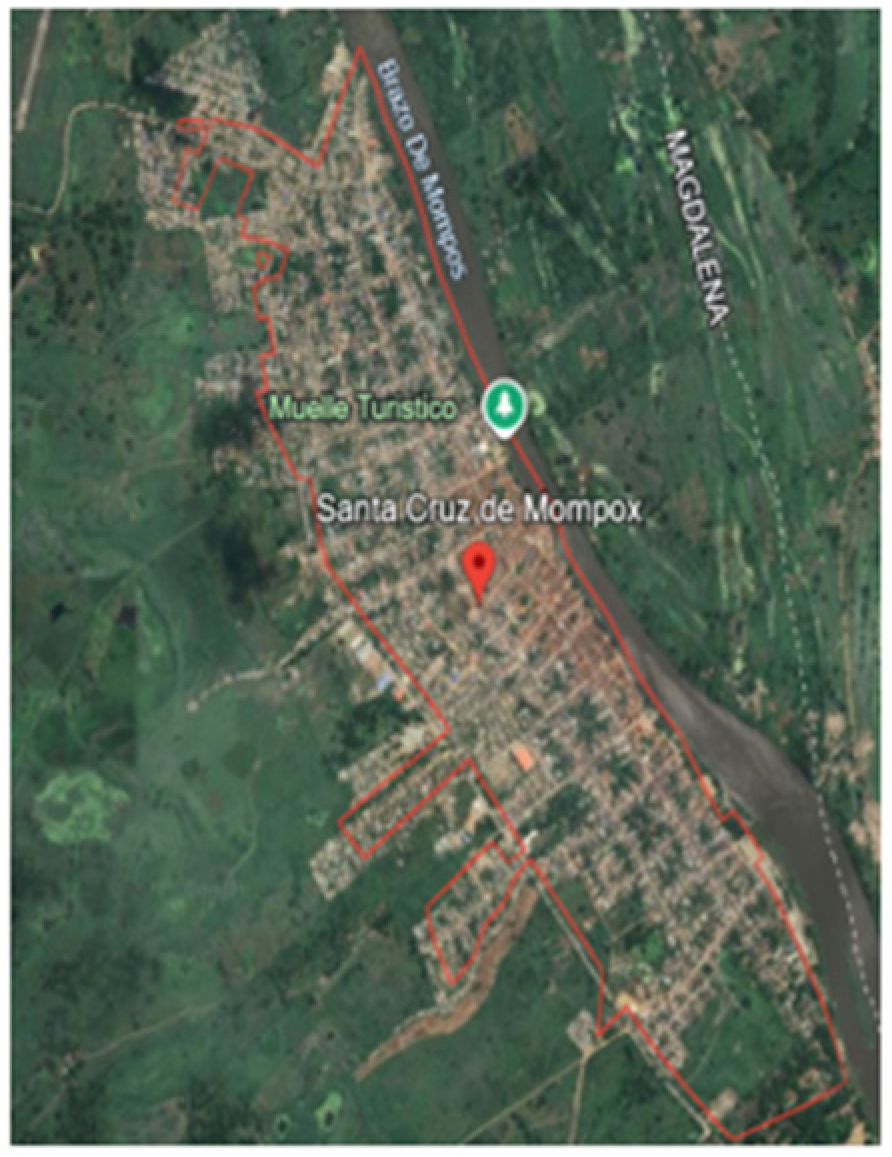
Figure 1. Santa Cruz de Mompox. Source: Google Earth.
Sustainability 17 11311 g001
Figure 2. Santa Cruz de Mompox’s tourist attractions. Source: Author’s own.
Sustainability 17 11311 g002
Figure 3. Diagram of the scoring process. Source: Author’s own.
Sustainability 17 11311 g003
Figure 4. Tangible heritage. Source: Author’s own.
Sustainability 17 11311 g004
Figure 5. Intangible heritage and Groups of special interest. Source: Author’s own.
Sustainability 17 11311 g005
Figure 6. Festivities and events. Source: Author’s own.
Sustainability 17 11311 g006
Figure 7. Natural sites. Source: Author’s own.
Sustainability 17 11311 g007
Table 1. Quality assessment of cultural heritage.
ClassificationScoreTotal
Tangible Heritage
State of conservation: Assesses whether the attraction has retained its aesthetic appearance and physical integrity since its origin, or through human interventions such as restoration aimed at enhancing its quality.2170 points
Constitution of the asset: Considers the materials and techniques used in its creation. Older assets built with outdated or rare methods deserve recognition; however, those using modern techniques may also be valued for their uniqueness or technological innovation.21
Representativeness: Reflects the asset’s significance as a key element in historical, social, or cultural events.28
Intangible Heritage
Collective: Belongs to a group of people who identify with, use, and transmit the practice or tradition.1470 points
Traditional: Passed down from generation to generation, often with origins so ancient they are difficult to trace.14
Anonymous: Has no known author and dates back to remote historical periods.14
Spontaneous: Transmitted naturally, simply, and genuinely.14
Popular: Reflects the everyday life of the general population.14
Festivities and Events
Event organization: Evaluates the quality of the event’s organization, considering aspects such as content, scheduling, compliance, and logistical execution.3070 points
Socio-cultural benefits for the community: Measures the event’s impact on the community, including its connection with regional folklore, promotion of the region, and the degree of community involvement.20
Local economic benefits: Analyzes increases in regional income, improvements in quality of life, and the efficient use of the budget allocated to the event.20
Groups of Special Interest
Respect for traditions: Reflects the authentic preservation of cultural heritage through adherence to traditional customs.7070 points
Source: Adapted from [24].
Table 2. Significance assessment of tourism attractions.
ClassificationScoreTotal
Local: Degree of recognition of the attraction within the municipal area.630 points
Regional: Degree of recognition of the attraction within one or more departments.12
National: Degree of recognition of the attraction throughout the country.18
International: Degree of recognition of the attraction in two or more countries.30
Source: Adapted from [24].
Table 3. Quality assessment of natural sites.
ClassificationScore
Absence of air pollution: Refers to the lack of smog, which typically originates from vehicles and oil plants and can cause damage to vegetation and result in agricultural losses.10
Absence of water pollution: Occurs when water bodies are not affected by chemicals, fuel spills, or fertilizer runoff from agricultural areas, as well as domestic detergents and soaps that harm aquatic life.10
Absence of visual pollution: Related to inappropriate architecture, visual obstructions, and the presence of waste.10
Absence of noise pollution: Refers to noise levels that do not interfere with the enjoyment of nature.10
State of conservation: Describes the condition of local flora and fauna, including signs of erosion or subsistence-level extractive activities.10
Diversity: Refers to the variety of species (both flora and fauna), habitats, landscapes, and sensory elements such as natural scents and scenic views.10
Uniqueness: Covers exceptional or unique characteristics, including endemism (species found only in a specific area) or the rarity of landscapes with distinctive features in a particular environment.10
Total70 points
Source: Adapted from [24].
Table 4. Professional background and selection criteria of the expert panel.
ExpertAcademic BackgroundProfessional ExperienceArea of ExpertiseSelection Criteria
E1MSc in Heritage Management and Cultural Tourism8 years working in conservation projects in the Caribbean regionArchitectural heritage, urban inventoriesExperience with heritage inventories and UNESCO guidelines
E2MSc in Tourism Planning and Management10 years in environmental impact assessment and ecotourism planningNatural sites, biodiversity conservationField experience in ecosystems of the Magdalena River
E3PhD in Tourism 9 years in tourism development, community-based tourism, and destination managementTourism planning, rural tourismParticipation in regional tourism plans
Source: Author’s own.
Table 5. Evaluation of tourism potential. Tangible Cultural Heritage (Groups 1.1 to 1.5).
Tangible Cultural Heritage (Groups 1.1 to 1.5)
GroupQuality (Max. 70 Points)Significance (Max. 30 Points)Total
State of ConservationAsset ConstitutionRepresentativenessTotalLocalRegionalNationalInternationalTotal
1.100000 00
1.1181928656 671
1.121212870 12 1282
1.121212466 12 1278
1.1192020596 665
1.2212128706 676
1.321212870 12 1282
1.400000 00
1.521212870 12 1282
1.5202016566 662
1.500000 00
Source: Author’s own.
Table 6. Evaluation of tourism potential. Intangible Cultural Heritage (Group 1.6).
Intangible Cultural Heritage (Group 1.6)
GroupQuality (Max. 70 Points)Significance (Max. 30 Points)Total
CollectiveTraditionalAnonymousSpontaneousPopularTotalLocalRegionalNationalInternationalTotal
1.614148141464 12 1276
Source: Author’s own.
Table 7. Evaluation of tourism potential. Festivals and Events (Group 1.7).
Festivals and Events (Group 1.7)
GroupQuality (Max. 70 Points)Significance (Max. 30 Points)Total
Event OrganizationSociocultural Benefits for the CommunityLocal Economic BenefitsTotalLocalRegionalNationalInternationalTotal
1.730202070 18 1888
1.730202070 18 1888
1.730202070 3030100
1.728171257 12 1269
1.730202070 18 1888
Source: Author’s own.
Table 8. Evaluation of tourism potential. Groups of Special Interest (Group 1.8).
Groups of Special Interest (Group 1.8)
GroupQuality (Max. 70 Points)Significance (Max. 30 Points)Total
Respect for TraditionsTotalLocalRegionalNationalInternationalTotal
1.87070 12 1282
Source: Author’s own.
Table 9. Evaluation of tourism potential. Natural Sites (Groups 2.1 to 2.12).
Natural Sites (Groups 2.1 to 2.12)
GroupQuality (Max. 70 Points)Significance (Max. 30 Points)Total
No Air PollutionNo Water PollutionNo Visual PollutionNo Noise PollutionConservation StatusDiversityUniquenessTotalLocalRegionalNationalInternationalTotal
2.11071010810560 12 1272
2.21071010810358 12 1270
2.31071010710559 12 1271
2.41071010810863 12 1275
2.51071010810762 12 1274
2.61071010810863 12 1275
2.71071010810863 12 1275
2.8107101088659 12 1271
2.9107101089862 12 1274
2.10107101089761 12 1273
2.10107101088861 12 1273
2.10107101089862 12 1274
2.10107101088861 12 1273
2.11107101078355 12 1267
2.12001010000200 020
Source: Author’s own.
Table 10. Top-performing categories and development recommendations.
RankResource/CategoryScoreRecommended Development Direction
1Artistic and cultural events (International jazz festival, dance and music groups)100Develop an annual cultural program; strengthen crowd management strategies; design premium cultural tourism packages.
2Festivals, fairs, exhibitions (Filigree fair, festival del dulce)88Create gastronomic and artisan circuits; formalize capacity and attendance control for events; improve temporary infrastructure for peak season.
3Religious architecture (churches, convents, parish complexes)82Develop heritage interpretation routes; improve signage; regulate carrying capacity within small temples.
4Craftsmanship and technical heritage (filigree workshops, artisanal construction techniques)82Promote experiential craft workshops; certify authentic filigree; support microenterprises in public spaces.
5Museum collections and sacred art (Museum of religious art)82Create curated themed tours; improve the conditions of conservation exhibits; incorporate digital interpretation tools.
6Groups of special interest (Indigenous, Afro-Colombian, Raizal, Rom, artisans, fishing communities)82Develop community-based tourism products; ensure participatory benefit-sharing models; train hosts and guides.
7Urban/rural sectors and public space (historic center, Alameda)76Improve lighting and signage in public spaces; implement riverside viewpoints.
8Intangible heritage expressions (gastronomy, music, rituals, traditional medicine)76Design culinary routes; promote traditional music and dance experiences; incorporate local narratives into guided tours.
9High-value natural sites (lotic waters, flora-fauna observation zones, protected wetlands)73–74Develop ecological nature trails; improve signage and safety features.
Source: Author’s own.
Disclaimer/Publisher’s Note: The statements, opinions and data contained in all publications are solely those of the individual author(s) and contributor(s) and not of MDPI and/or the editor(s). MDPI and/or the editor(s) disclaim responsibility for any injury to people or property resulting from any ideas, methods, instructions or products referred to in the content.