


Abstract
Supply chain disruptions and climate shocks have exposed the fragility of food systems, highlighting the urgency of reconnecting urban areas with local food production through spatial planning. This study develops a regional-scale ecosystem service (ES)-based foodshed assessment framework, integrating agricultural capacity, ecological functionality, and infrastructure, specifically roads, food industries, and markets. The framework combines the Metropolitan Foodshed and Self-Sufficiency Scenario (MFSS) model with stakeholder-prioritized integrated ES mapping and Geographic Information System (GIS)-based multi-criteria suitability analysis. Applied to Istanbul and the Marmara Region, the assessment focuses on cereals/legumes, vegetables, and fruits/spices under four scenarios projected to 2033. Results show that integrating ESs increases the area classified as suitable by 26%, while infrastructure constraints reduce it to 9%, reflecting the spatial trade-offs between ecological potential and accessibility. Istanbul, with limited agricultural land, achieves self-sufficiency levels below 10% in all scenarios, highlighting its structural dependency. Eliminating food loss and waste reduces regional land demand by 23%. The framework offers policy-relevant insights for conservation, ecological restoration, and decentralized food system development. It remains open to further enhancement through the inclusion of livestock-based systems, updated land cover data, and climate projections, factors essential for assessing long-term resilience. Overall, the ES-based assessment can support food- and ecosystem-sensitive spatial planning in metropolitan regions.
1. Introduction
Extreme weather events, pandemics, and natural hazards increasingly jeopardize global food security, decreasing food availability and access through supply chain disruptions, food inflation, and shortages [1,2]. Each crisis or unexpected shock exposes systemic vulnerabilities in food systems, placing “food resilience” [3,4] on the agenda of local governments and policymakers as an essential component of urban/regional and community resilience. In addition, grassroots initiatives encouraging local and regional food access have gained momentum [5,6], yet remain fragmented, temporary, and variable in reliability and supply quality [7].
One of the drivers of this vulnerability is the marginalization of food in spatial planning. This exclusion of food creates a disconnection between urban areas and their rural hinterlands, increases dependency on distant and fragile food supply chains, and heightens urban populations’ vulnerability to disruptions [8]. Disasters and pandemics have shown through evidence [3,9,10] the value of local food systems in supporting resilience. As a result, cities are seeking new planning approaches and tools to strengthen local food systems and improve food security, resilience, and self-sufficiency [11,12].
Among these approaches, the “foodshed assessment” has emerged as an evaluation tool [13,14,15,16]. It is seen as an effective instrument for informing urban planning and underpinning the creation of spatial strategies at urban and regional scales [15,17]. This study uses the term spatial planning to capture its regional scope and the inclusion of both urban and rural dynamics—both critical for comprehensive food system evaluation.
A foodshed is generally defined as the geographic area required to meet the food needs of a specific urban or regional population [13,16]. Existing foodshed assessment models use different methods. Some focus on production, consumption, and land cover, while others map supply networks. This research uses the “Metropolitan Foodshed and Self-Sufficiency Scenario (MFSS)” model developed by Zasada et al. [14], which follows the first method by connecting regional food production potential to urban demand.
MFSS and similar studies [8,15,18] typically delineate foodshed boundaries by either using a fixed-radius buffer around consumption areas or applying distance-based measures to define zones from which food can be sourced [19]. However, such a theoretical circle or maximum distance lacks practical relevance in spatial decision-making. Therefore, this research argues that conventional foodshed assessment approach should be reconsidered in favor of more spatially grounded, policy-relevant methods.
Land-use suitability analysis can guide spatial planning, but it typically addresses only crop demands and biogeographical factors [20,21]. This research advocates for the inclusion of ecological functionality and connectivity to enhance policy guidance towards food resilience [22,23]. This advocacy is significant, as protecting agricultural land alone often fails to ensure ecological balance [24,25]. Intensive agricultural activity can also harm the sustainability of natural resources [26]. This research suggests that ESs can be important input for foodshed evaluation and that ES-based spatial attributes can serve as a decision-support tool in spatial planning.
ESs are increasingly seen as the result of co-production between ecological systems and human intervention [27]. They rely on natural capital, such as soil and biodiversity, and on human-derived assets, such as labor, knowledge, technology, and institutions [28]. This view moves beyond the traditional notion of ESs as passive “gifts of nature.” Instead, it highlights how human actions actively shape, maintain, and enable service provision [29].
In agroecosystems, this co-production is clear [30]: provisioning services, such as food, emerge from the synergy between ecological functions, such as pollination and nutrient regulation, and human systems like cropping strategies, irrigation, and market infrastructure [31]. However, excessive chemical use can negatively impact ESs, whereas agroecological practices can help preserve and enhance them. Despite this strong interdependence, research often treats ESs in agriculture from a one-sided perspective [32]. Few practical studies link ESs and food systems [33,34], and there is limited integration into spatial planning and decision-making processes [35]. Even though recent studies in Türkiye have begun to explore ESs in spatial contexts [36,37,38], there remains a notable gap in studies linking ESs to agriculture or food systems [39].
Building on this premise, this study treats food resilience as part of urban and community resilience and re-evaluates foodshed assessment through an ES-based perspective. The objective is to develop a planning-oriented framework that guides spatial planning to support local food systems.
This approach, called an “ES-based foodshed assessment,” builds on recent interdisciplinary efforts to connect food systems, ESs, and spatial planning into holistic analytical frameworks. Although several studies have begun to explore this intersection, most focus mainly on urban and peri-urban agriculture, emphasizing green infrastructure and limiting their scope to food provisioning services [40,41]. Meanwhile, Cardoso and Domingos [42] move beyond urban–rural divisions and administrative boundaries, yet still consider only food provisioning ESs and remain centered on agricultural production.
A narrow focus on food provisioning risks overlooking broader ecological processes essential for resilient food systems. As Bethwell et al. [43] note, an integrated framework that includes other provisioning, regulating, and cultural ESs, along with spatially explicit assessments of ecologically valuable or sensitive areas, clarifies spatial trade-offs in food production. Consequently, this approach improves ecological realism and enables spatial decisions to better align with food resilience goals and ecosystem integrity.
Based on this conceptual foundation, the study assumes the following:
- Integrating ESs into spatial suitability models will significantly change land prioritization for food production compared to traditional biogeographical models.
- Integrated ES models will reveal spatial trade-offs between food production and ecosystem integrity; and
- Including food system infrastructure in spatial analyses improves the policy relevance of the foodshed, especially for identifying peri-urban zones with dual ecological and logistical advantages.
These propositions frame the study’s design and provide a framework for testing the added value of ES-based approaches for food resilience. Accordingly, the proposed methodology is applied to the Istanbul Metropolitan Area (hereafter referred to as Istanbul), using the Marmara Region as a reference framework to reflect the functional dynamics of food flows and spatial interactions (Figure 1).
Figure 1.
Location of the Marmara Region and the case-study provinces within the national context of Türkiye.
With only 14% of its area classified as agricultural land and a population nearing 20 million, Istanbul relies heavily on external food sources. This dependence, coupled with urbanization pressures, social vulnerabilities, and unique ecological assets, intensifies the need to reconsider land-use change and resource sustainability.
Over the past three decades, the city has lost approximately 35,000 hectares of forest land, and its agricultural area has declined by 25% [44]. The loss is especially severe for vegetable-producing land, which has decreased by over 70% since 1995 [45]. Major infrastructure projects, such as the Istanbul Airport, the Northern Marmara Highway, and the proposed Canal Istanbul project, threaten to eliminate up to 20% of Istanbul’s remaining agricultural and pastureland, exacerbating ecological fragmentation and food insecurity. Istanbul currently meets only 5.3% of its wheat consumption, with self-sufficiency for most fruits and vegetables below 1% [44], making the city increasingly dependent on distant supply chains.
In addition to being located in an earthquake-prone zone, Istanbul faces compound risks, including climate-induced hazards such as heatwaves, flash floods, and drought-related supply disruptions, as well as socioeconomic inequality, notably between peripheral and central districts, which intensify the vulnerability of certain populations to food insecurity. These combined pressures underline the critical importance of integrating food resilience into Istanbul’s spatial development strategies.
To operationalize the ES-based foodshed assessment, the study applies an integrated methodology across the Marmara Region, comprising complementary and interconnected steps.
- A capacity and food self-sufficiency analysis, using the MFSS model [14], evaluates regional food production potential in relation to its consumption needs, highlighting spatial dependencies and pressure points.
- A qualitative stakeholder-driven prioritization of key ESs, combined with an AHP, enables spatial integration of ecological functions into the decision-making process.
- A suitability analysis combines biogeographical, ecological, and infrastructural spatial criteria to identify areas with high potential for strengthening food system resilience. It also facilitates broader reflection on how synergies among agricultural, forest, and built environment systems can support healthy, ecologically safe food production, particularly within integrated spatial planning strategies.
- Synthesis of spatial suitability outcomes with food demand scenarios to guide policy development, inform spatial decision-making, and support efforts to improve food resilience.
This study introduces an ES-based spatial planning framework that prioritizes food resilience, sustainable land management, and self-sufficiency. It contributes to spatial decision-making processes by evaluating the functional characteristics of ESs from a food systems perspective. Additionally, it seeks to develop a planning-oriented framework that highlights region-specific foodshed characteristics through an ES-based approach. With a particular emphasis on Istanbul and the Marmara Region, the research addresses an important gap in the literature and determines the main drivers for spatial policies and decision-making processes for creating sustainable and resilient food systems.
2. Materials and Methods
The research scope comprises a mixed method based on capacity assessment, qualitative analysis, and GIS-based spatial suitability analysis. These methodological components are designed to bring agricultural production, ecological functionality, and spatial constraints into a comprehensive foodshed assessment framework. Based on the analyses, agricultural land demand, land suitability, and key ESs for food systems were evaluated and mapped together (Figure 2).
Figure 2.
Methodological flowchart of the research. Arrows indicate the direction of the analytical workflow, and numbers (1,2,3) denote distinct outputs, as highlighted in the legend. (* Capacity and food self-sufficiency analysis is conducted based on MFSS model developed by Zasada et al.; ** the ES potential matrix approach by Burkhard et al. was adopted).
2.1. Capacity and Self-Sufficiency Analyses
The capacity assessment draws on the MFSS model developed by Zasada et al. [14], which links regional food production potential with urban consumption needs. This model was adapted using locally sourced parameters, including province-level land availability by food category, provincial crop yields, and food consumption patterns, to assess the spatial extent of foodshed and the theoretical food self-sufficiency capacity of Istanbul and its surrounding provinces. The MFSS model was applied across the Marmara Region to clarify the regional-scale production–consumption dynamics and potential food flows among provinces.
Although the land demand for foodsheds is shaped by the distinct spatial requirements like growth cycles, market orientations, and export dependencies of different agricultural production types—such as crop production, livestock farming, fodder crops, perennial crops, industrial crops, and aquaculture [46]—this study focuses on crop-based production only, specifically cereals and legumes, vegetables, and fruits and spice crops, as they directly contribute to self-sufficiency and nutritional needs.
In this study, alternative scenarios were modeled for three food categories based on population projections for 2033, reflecting a 10-year planning horizon from the most recent available data (2023). These scenarios were designed based on variations in production systems (conventional vs. ecologically sensitive). Ecologically sensitive agriculture refers to a set of production approaches that prioritize ecological integrity and the enhancement of ESs. This includes methods and principles such as agroecology, organic farming, conservation agriculture, and integrated pest management, which reduce chemical inputs, conserve biodiversity, and maintain long-term soil and water health.
In addition to production systems, the scenarios also consider the effects of food loss and waste. This dual approach allows testing of how changes in agricultural practices and system efficiencies affect land demand across the Marmara Region, as follows:
- Scenario 1a: Conventional agriculture, including food loss and waste (CONV33)
- Scenario 1b: Ecologically sensitive agriculture, including food loss and waste (ECO33)
- Scenario 2a: Conventional agriculture, excluding food loss and waste (CONV33-LW)
- Scenario 2b: Ecologically sensitive agriculture, excluding food loss and waste (ECO33-LW)
The MFSS model also enables a comparative evaluation of food demand and self-sufficiency levels across the provinces. Comparative assessment of potential intra-regional food flows by identifying surpluses and deficits will clarify spatial interdependencies in food supply and offer a baseline for regionally informed strategies. Full data sources and calculation details are presented in the Supplementary Material S1.
2.2. Food-Related ESs and AHP
A two-stage qualitative analysis was conducted to identify and evaluate key ESs relevant to the regional food system. First, a stakeholder workshop was held in December 2024. Following a comprehensive stakeholder mapping process, invitations were extended to all identified actors, and participation was voluntary. The group size aligns with standards in ES prioritization studies [47] and provides sufficient stakeholder coverage. The resulting data showed consistent prioritization patterns across diverse actors, supporting the robustness of the findings. Nonetheless, potential biases remain due to the overrepresentation of formal institutions and the limited inclusion of informal or small-scale actors.
A total of 52 representatives from across the Marmara Region attended the workshop, reflecting a self-selected but diverse group across sectors and geographies. Participants included public stakeholders (37%), private sector actors (13%), academics (18%), and civil society organizations (32%). In the workshop, participants completed a structured survey using a 1–5 Likert scale and prioritizing provisioning, regulating, and cultural ESs, as categorized by the MEA [48].
In the second stage, a multivariable matrix was developed incorporating the most highly ranked ESs from the workshop. The relative importance of these variables for food system development was determined using the Analytic Hierarchy Process (AHP), a well-established method for multi-criteria decision-making [49]. A panel of 15 experts, representing diverse domains relevant to the study, performed pairwise comparisons of each ES criterion. This sample size aligns with established norms in AHP literature, which typically range from 5 to 20 experts, balancing methodological robustness with practical feasibility. Factor weight values were normalized and verified for consistency, with acceptable ratios maintained below the threshold (CR < 0.1), ensuring the reliability of input judgments for spatialization of ESs. The qualitative analysis materials and calculations are presented in the Supplementary Material S2 and Supplementary Table S3.
For the mapping of ESs, the matrix approach by Burkhard et al. [50] was adopted. CORINE Land Cover (CLC) classes data—the most recent version available at the time, 2018—linked with food-related ESs and scored based on their supply, demand, flow, and gap capacities. The original scoring matrix was revised based on the AHP-derived weights, resulting in integrated ES maps specific to the landscape and food system priorities of the Marmara Region, aligned with stakeholders’ views.
2.3. Spatial Analyses
Spatial analyses were conducted to identify areas suitable for agricultural production, including climatic (mean temperature, precipitation), topographic (elevation, slope), soil (major soil groups, land capability classes, which indicate land’s potential and limitations for sustained agricultural use, erosion risk), hydrological characteristics, and infrastructure-related variables (distance to roads, city centers, and food industry). Key soil characteristics that are critical for agricultural production—such as soil depth, pH level, salinity, and organic matter content—have been omitted as separate variables in this analysis because their effects are already embedded within the broader soil classification categories of major soil groups and land capability classes, which were used as composite indicators in the suitability model.
These factors were chosen for their relevance to agricultural productivity, accessibility, and resilience, and are supported by literature on agricultural suitability [25]. Soil indicates land suitability and agricultural production limitations [51]. Topographic conditions characterize the biophysical capacity for cultivation, and hydrology indicates access to essential water resources [52]. Food system infrastructure determines logistical efficiency and market access through functionally integrating production areas into supply chains [53]. Lastly, climate places ecological constraints and growing season variability in context [54].
2.4. Suitability Analyses
To perform the suitability analysis, the Marmara Region was divided into 1 km × 1 km grid cells. Each cell was evaluated using the selected criteria, with equal weights assigned (Figure 3). The scoring values (1–5) used in the suitability matrix follow the matrix approach proposed by Burkhard et al. [50], originally developed for evaluating ES supply. This scale, from 1 (very low suitability) to 5 (very high suitability), was applied to all biogeographical and infrastructure-related variables to ensure consistent scoring across spatial layers and enable integrated overlay analysis in the GIS-based suitability model.
Figure 3.
Three criteria sets for suitability analysis. Each set progressively incorporates additional factors to assess agricultural potential and ecological compatibility. Scores represent increasing suitability, from 1 (very low) to 5 (very high). Thresholds were derived from the literature as follows: mean annual temperature [54]; mean annual rainfall [21,54]; great soil groups [51]; land capability classes [55]; elevation, slope, and soil erosion [52,56]; surface water resources [52,57]; aquifers [58]; integrated food-related ESs [50]; proximity to roads and city centers [57], and proximity to food industry [59].
To enable a comparative evaluation, the suitability analysis was repeated based on three distinct sets of factors: (1) biogeographical characteristics; (2) biogeographical characteristics integrated with ESs; and (3) a full set of factors including food infrastructure. This differentiated evaluation approach demonstrates how the inclusion of ecosystem functions and food system components can develop land suitability analysis. All spatial analyses and map generation were conducted using ArcGIS Pro 3.5.3.
2.5. Validation and Uncertainty Considerations
To assess the robustness of the suitability model, a sensitivity analysis was performed by varying each criterion’s weights by ±10%, while holding all other inputs constant. This method, widely used in spatial multi-criteria evaluation [60,61], tests the stability of spatial outputs under slight perturbations of input parameters. The results showed only minor shifts in land suitability classifications, confirming that the equal-weighting approach in the baseline model provides a stable and credible basis for regional-scale planning decisions [60].
In addition to weight sensitivity, several sources of uncertainty are acknowledged in the cartographic outputs, including spatial resolution disparities among datasets, temporal mismatches, and subjectivity in expert-based ES weighting. These uncertainties are well documented in spatial modeling literature [62] and were mitigated through the use of standardized scoring methods, consistent data sources (e.g., TUCBS), and stakeholder participation in the weighting process.
3. Results
The methodological steps were applied across 11 provinces in the Marmara Region to analyze regional food systems through an integrated lens—linking agricultural capacity, ecological functionality, and spatial planning. First, the capacity assessment evaluates each province’s ability to meet food demand based on agricultural land availability, production potential, and foodshed radius. Second, the qualitative and ES analyses identify the priority of food-related ESs through stakeholders’ opinions and AHP-based weighting. Finally, spatial analyses integrate environmental and infrastructural parameters to assess land suitability, thereby informing the planning of sustainable and resilient food systems.
3.1. Capacity and Self-Sufficiency Analyses
The analyses conducted for 2033 using the MFSS model—focusing on agricultural land demand, self-sufficiency levels, and foodshed radius—are based on a 10-year projection from the most recent comprehensive dataset available in 2023, a commonly used medium-term horizon in spatial planning and food policy studies that allows for actionable foresight without excessive uncertainty [14,15]. Findings reveal significant regional disparities in the Marmara Region regarding food resilience and spatial dependencies (Supplementary Table S1).
Due to its high population density and extensive urbanized area, Istanbul exhibits the highest land demand and foodshed radius values across all scenarios within the region (Figure 4 and Figure 5). In every scenario, the estimated per capita land requirement significantly exceeds the available agricultural land, resulting in a potential self-sufficiency level below 10%. For instance, under the most dramatic scenario (CONV33), the estimated per capita land demand (1300 m2) far exceeds the available agricultural land per capita (50 m2), reducing the city’s self-sufficiency level to just 4%. Even under the most favorable scenario (ECO33-LW), self-sufficiency reaches only 8%. To meet its projected food needs in 2033, Istanbul would require 14 times the current amount of agricultural land. These findings clearly indicate that Istanbul will remain heavily dependent on external food sources.
Figure 4.
Projected food self-sufficiency levels (color shading) and radius of agricultural land demand (circle) for Istanbul and the Marmara region under two scenarios (CONV33 and ECO33). Presenting these together illustrates their interdependence: provinces with higher self-sufficiency require smaller radii to meet food needs.
Figure 5.
Projected food self-sufficiency levels (color shading) and radius of agricultural land demand (circle) under scenarios that exclude food loss and waste (CONV33-LW and ECO33-LW). Presenting these together illustrates their interdependence: provinces with higher self-sufficiency require smaller radii to meet food needs.
On the other hand, Kocaeli and Yalova, which lie to the east and southeast of Istanbul, are the only provinces in the region with self-sufficiency levels below 100%. The limited agricultural capacity in these provinces is primarily due to their industrial-based economies [63], high levels of urbanization, and the fragmented nature of agricultural land. As neighboring provinces with significant food deficits, these three areas are likely to form a cluster that generates persistent food stress within the region.
In contrast, the provinces to the west and south of Istanbul exhibit significantly higher self-sufficiency rates (≥500%) due to their extensive, fertile agricultural land and relatively low population densities. Edirne, Kirklareli, and Canakkale stand out as key agricultural production provinces in the region, with the highest levels of self-sufficiency and food surpluses. The notably small foodshed radius in these provinces (15–25 km) indicates that their local food systems can operate with minimal external dependence. This fact suggests strong market supply potential and positions their production surpluses as a strategic opportunity to address food stress in deficit areas.
From the perspective of food categories, the differences in food surpluses and deficits across provinces are evident (Supplementary Table S2). In general, cereals and legumes consistently show a surplus across all scenarios, while vegetables and fruits exhibit more variable patterns. Consistent with the observations above, food deficits are most concentrated in highly urbanized areas, particularly in provinces such as Istanbul and Kocaeli.
The CONV33 scenario shows the highest production surplus in cereals and legumes (+8.7 M tons), while simultaneously leading to significant deficits in vegetables (−2.5 M tons) and fruits (−1.1 M tons), highlighting the region’s dependence on external sources for fresh products. In the ECO33 scenario, total production declines, the fruit deficit increases (−1.6 M tons), and deficits in the cereals and legumes categories emerge in Bursa (−254 thousand tons). These results indicate that relying solely on ecologically sensitive methods may be insufficient to achieve food self-sufficiency.
However, implementing food loss and waste reduction strategies (CONV33-LW) significantly improves the regional food balance. The production surplus of cereals and legumes increases to +10 M tons, while deficits in vegetables and fruits decrease to −1.1 M tons and −486 K tons, respectively, highlighting the potential for waste reduction to enhance regional food security and resilience. Similar trends continue under the ECO33-LW scenario, with a notable surplus in vegetable production (+1.3 M tons), although the fruit deficit (−526 K tons) remains a challenge. These results therefore suggest that avoiding food waste and loss would be close to offsetting the extra land needed to shift from conventional to organic farming [15], reinforcing the critical role of waste reduction strategies in land-constrained regions.
At the provincial level, Balikesir, Canakkale, and Tekirdag stand out for their substantial contributions to cereal, legume, and vegetable production and continue to generate significant surpluses. In contrast, Istanbul and Kocaeli exhibit increasing dependence on external sources, particularly due to severe deficits in vegetables and fruits. While provinces of Bursa and Sakarya achieve moderate surpluses in some categories, smaller provinces such as Yalova face considerable challenges in achieving self-sufficiency, especially in vegetable and fruit production.
In scenarios simulating a transition from conventional to ecologically sensitive agricultural practices, variations in agricultural productivity across provinces result in differences in land demand and self-sufficiency levels. For example, while Canakkale and Balikesir show lower land demand under conventional production compared to the ecological scenario, the opposite trend is observed in Bilecik and Tekirdag. The increased land demand and expanded foodshed radius under ecological scenarios call for a critical evaluation of the balance between sustainability and land-use efficiency.
However, one finding holds across all provinces: the highest levels of food self-sufficiency are achieved in scenarios when food loss and waste are minimized. Correspondingly, these scenarios yield the lowest per capita land demand and the smallest foodshed radius. In summary, approximately 23% of total land demand is associated with food losses throughout the supply chain and household-level waste. This insight reinforces the strategic importance of waste reduction—not just as a food policy tool, but as a lever for easing regional land pressure.
3.2. Food-Related ESs and AHP
Through the stakeholder survey conducted during the workshop, the perspectives of participants involved in food systems were gathered to identify the priority of ESs for the development of food systems in the Marmara Region. The responses were averaged to determine a mean value for each ES. Among the three ES categories considered in the methodology, provisioning services received a mean score of 4.24, regulating services scored 4.31, and cultural services received 3.89 or higher, all of which were included in the integrated evaluation. These averages were calculated separately for each ES category, as participants were asked to rank the services within their respective categories. These ESs were spatialized using the matrix approach proposed by Burkhard et al. [50] (Figure 6).
Figure 6.
Prioritized food-related ESs based on stakeholder evaluations. Average scores represent the mean Likert scale scores (1–5) assigned by participants to each ES, indicating perceived importance for food system sustainability.
The AHP was applied to determine the relative weight (importance) of each of the ten ESs in the development of food systems. According to the AHP results (Table 1), participants indicated that the most critical ESs were regulating services rather than provisioning services. This finding highlights the experts’ emphasis on maintaining ecological integrity rather than merely expanding agricultural land to foster a resilient foodshed.
Table 1.
AHP results of ten food-related ESs. The Consistency Ratio (CR) indicates high internal consistency.
The following key insights emerged from the AHP evaluation regarding the importance of each ES in supporting food systems:
- Climate regulation and pollination emerged as the most influential ESs, underscoring the critical roles of stable climate conditions and pollinator-dependent food production.
- Other essential elements included genetic resources and freshwater supply, underscoring the importance of biodiversity conservation and sustainable water management as conditions for food security.
- Pest and disease control and water regulation were assigned moderate weights, indicative of their role in supporting agricultural stability.
- Food production, despite being core to the study, was assigned a relatively low weight, suggesting that food system resilience depends more on ecological functions than on production alone.
- Cultural ESs received the lowest weight, highlighting that while cultural services contribute to food sustainability, they are considered secondary compared to provisioning and regulating ESs.
To carry out the spatial analysis of food-related ESs, Burkhard et al.’s [50] matrix approach was revised using the AHP-derived weight values. To integrate the ten ES layers, a potential value was computed for each CLC class using the arithmetic mean. This approach allows spatial prioritization of areas with high ecological value and enables a comprehensive assessment of the ESs that support sustainable food systems. The integrated ES map (Figure 7) illustrates the spatial distribution of food-related ESs.
Figure 7.
Spatial distribution of food-related integrated ESs based on stakeholder surveys. High ES potential zones (dark green) deliver multiple services; low-potential zones (orange/red) indicate reduced ecological capacity.
Based on the integrated ES map, the main spatial findings can be summarized as follows:
- Areas with very high and high ES potential—covering approximately 42% and 48% of the Marmara Region, respectively—represent the most valuable zones for the regional foodshed. These areas are concentrated in non-urbanized landscapes and align with ecologically productive zones that provide essential ESs. They demonstrate strong multi-functionality by supporting critical services such as food production, pollination, water regulation, and climate resilience. The Thrace and Kocaeli Peninsulas from the north and Bursa, Balikesir and Canakkale from the south emerge as key ecological corridors of the region that simultaneously sustain biodiversity and agriculture.
- Areas with low and very low ES potential (3% and 2%, respectively) are primarily concentrated in urban and industrial areas, particularly in Tekirdag, where intensive land use and infrastructure development have significantly reduced ecosystem functions. The urbanized areas of Istanbul, Kocaeli, and Bursa are clearly visible in terms of spatial extent and exhibit low food production potential, minimal climate regulation potential, and severely limited biodiversity. This case highlights the high reliance on external food sources in these provinces.
- In provinces with regional food surpluses—such as Balikesir, Canakkale, and Tekirdag—the overlap of critical ESs reinforces their strategic role as primary food production centers, contributing to food security and resilience in the Marmara Region.
- Istanbul presents a stark contrast between its northern and southern zones in terms of ES potential, largely due to the extent of urbanization and infrastructure development in the south. In the southern part of the city, urban sprawl and expanding transportation networks have fragmented and degraded natural ecosystems, resulting in areas with low or negligible ES potential. In contrast, the northern part comprises high-potential zones that play a vital role in climate regulation, carbon sequestration, biodiversity conservation, and water flow management. These areas serve as ecological buffers, offering natural and cost-effective solutions to mitigate climate change and the urban heat island effect.
- One of the most striking examples of the negative impact of urbanization and infrastructure on ES potential is the construction of Istanbul Airport and its connecting road networks. The airport’s construction resulted in the destruction of approximately 6198 hectares of forest land, 211 hectares of agricultural land, and 238 hectares of pasture areas [44]. As clearly illustrated in Map 4, this megaproject has fragmented one of Istanbul’s most ecologically valuable corridors, which passes through forested areas, watersheds, and natural habitats.
3.3. Spatial Analyses
The spatial analysis of the Marmara Region, structured across five key categories—climate, soil, topography, hydrology, and food system infrastructure—reveals a complex interplay of factors influencing agricultural potential and the food system’s resilience (Figure 8).
Figure 8.
Key spatial analysis categories. These layers inform the suitability analysis.
When these five categories are considered together, several spatial trends emerge:
- Thrace and Southern Marmara consistently exhibit high suitability across most criteria, confirming their strategic roles in enhancing regional food resilience and supporting local food systems.
- In contrast, Istanbul, Kocaeli, and Yalova face layered constraints—urban pressures, limited fertile soils, and reduced ecological functionality—increasing their dependence on external food sources.
- Agricultural lands with strong connectivity to food system infrastructure reduce food miles and post-harvest losses while supporting the economic viability of local food producers [64]. In contrast, rural areas with limited infrastructure access remain dependent on long-distance transportation, leading to higher logistical costs and restricted market access [65].
3.4. Suitability Analyses
The suitability analyses, conducted across three factor sets, demonstrate that incorporating multiple criteria yields increasingly refined spatial distributions. While general spatial patterns remain consistent, the analyses differ notably in spatial density and distribution (Figure 9).
Figure 9.
Results of suitability analyses under three factor sets.
For example, the inclusion of ESs (Suitability Analysis 2) increased the area classified as “suitable” from 21.5% to 27.1%. However, with the addition of infrastructure factors (Suitability Analysis 3), this dropped sharply to 9.0%, indicating a significant decline in the suitable area due to access-related constraints. Conversely, the “moderately suitable” class expanded progressively from 60.7% to 78.7% across the three analyses, highlighting how infrastructure access reshapes suitability potential and redefines spatial priorities.
Highly suitable and unsuitable areas are relatively rare across all three results. Moderately suitable zones predominate, particularly in South Marmara (especially in Canakkale and Balikesir), due to their favorable topography, soil quality, and climate. Suitable areas are primarily clustered in Thrace, the Bursa Plain, and the Susurluk Watershed (Balikesir). Major rivers such as the Meric (Edirne) and Sakarya play a significant role in the high agricultural potential of these regions. In contrast, marginally suitable areas are concentrated in higher-elevation regions of Bursa, Bilecik, and Sakarya, where steep slopes and unsuitable soil conditions lower overall scores.
To evaluate reliability, cross-validation was performed using land cover data for forests, pastures, and agricultural areas. In the biogeographical model, 89.8% of the current agricultural land overlaps with areas classified as moderately suitable or suitable, and 10.2% falls in marginally suitable zones (Figure 10). This comparison illustrates spatial coherence between the model output and existing land-use patterns. A similar alignment was observed in the ES-integrated model, supporting the spatial rationality of the existing agricultural land use [52]. This high degree of overlap is considered acceptable for spatial planning and indicates that the model’s suitability classifications are consistent with current agricultural distribution.
Figure 10.
Overlap between biogeography-based suitability analysis and current land cover (agricultural lands and forest areas).
A key finding is that in the ES-integrated model, 80% of the land classified as “highly suitable” or “suitable” overlaps with existing agricultural zones, while 20% coincides with forest areas (Figure 11). This higher overlapping ratio with forest land—compared to the biogeographical model—highlights the influence of ecosystem functions. However, the presence of forests within high-suitability areas should not be interpreted as a potential for conversion to agricultural land. On the contrary, it highlights the ecological co-benefits that forests provide to food systems and the risk of weakening these benefits through land conversion. While this strengthens the ecological rationale behind the current land-use pattern, it also raises critical questions about the future trade-offs between expanding food production and conserving high-value ecosystems. Similar dynamics have been observed in other studies [20,66], where efforts to increase local food production often intensify pressure on natural landscapes, reinforcing the need for integrative planning frameworks that balance food security with ecosystem integrity.
Figure 11.
Overlap between ES-based suitability analysis and current land cover (agricultural lands and forest areas).
Although the biogeographical and ES-integrated analyses yield relatively similar patterns, the inclusion of accessibility criteria results in significant shifts. Regions with better access to roads, cities, and food industry infrastructure show higher suitability rankings. Notably, remote rural areas in the Eastern and the Southern Marmara—despite their environmental potential—are disadvantaged due to the limited accessibility. Meanwhile, heavily urbanized areas like Istanbul and Kocaeli remain unsuitable across all scenarios due to land scarcity and ecological degradation, reinforcing their dependency on external food systems.
4. Discussion
Based on the research findings and relevant literature, this section discusses the methodological innovations introduced by the study. It first examines how integrating ESs and infrastructure factors into suitability modeling redefines agricultural potential and its spatiality. It then explores the spatial limitations of self-sufficiency in metropolitan areas, especially during a crisis. The results are placed within the broader context of the debate on spatial planning, food resilience, and ecological functionality. Finally, the discussion emphasizes the policy implications of the ES-based foodshed framework and its potential to inform and guide spatial decision-making processes.
4.1. Linking Land, ESs, and Food Infrastructure in Suitability Analysis
Research in traditional land suitability assessment typically examines soil, topography, hydrology, and climate as fundamental indicators of agricultural potential [52,67]. Extending this base, one of the important contributions of this research is the inclusion of ESs and infrastructure-related factors, which profoundly alter spatial results and planning priorities.
The incorporation of ESs into the analysis offers a more functionally enriched and sustainability-framed view. Areas with high food-related ESs are assigned high suitability scores, indicating their strategic value in ensuring long-term food system resilience. In contrast, some regions traditionally considered suitable solely on the basis of biogeographical factors exhibit compromised suitability due to poor ecological functionality. For instance, the inclusion of ESs into the suitability analysis increased the “suitable” land class from 21.5% to 27.1% (a 26% relative increase) and the “moderately suitable” class from 60.7% to 64.0% (a 5.4% increase). This comparison highlights the need to harmonize land-use and spatial planning decisions not only with physical potential but also with ecological integrity and service delivery. Vinogradovs et al. [68] emphasize that integrating ecosystem functions and services into spatial analysis supports more effective agri-environmental policy design and improves the targeting of interventions to enhance the supply of ESs. Thus, this study enhances the spatial precision of food system planning and reorients the conceptual framework toward a systems-based, sustainability-driven approach.
Moreover, integrating food system infrastructure into the suitability model highlights the importance of accessibility in shaping the viability of local food systems. Proximity to major roads, urban centers, and food industry facilities significantly enhances the spatial suitability of peri-urban agricultural zones, promoting shorter supply chains and reducing the food miles [12]. In contrast, remote rural areas with strong ecological capacity but limited accessibility are disadvantaged, despite their natural potential. These findings emphasize the need for targeted infrastructure investments to unlock the latent value of such regions within regional food systems.
While this study evaluates proximity to roads as one of the parameters for spatial suitability, it is also important to consider that remoteness may offer distinct ecological and planning advantages. Remote rural areas can support organic or nature-based agricultural practices while minimizing negative externalities such as habitat fragmentation, environmental pollution, and landscape degradation often associated with infrastructure development. These considerations highlight the importance of a more nuanced perspective on infrastructure—one that balances logistical efficiency with ecological trade-offs and recognizes the strategic role that remote areas can play in building resilient food systems.
This trade-off between logistical infrastructure and ecological preservation creates a key dilemma in spatial planning. Well-connected areas offer logistical advantages, such as reduced transport costs, shortened food miles, and improved market links, but often overlap with ecologically degraded zones or regions under significant development pressure. Infrastructure impacts are particularly acute in already fragmented landscapes, pushing ecosystems past critical thresholds [69]. In contrast, remote rural areas lacking infrastructure retain higher ecological integrity and multi-functionality. Prioritizing these regions for ecologically sensitive agriculture can sustain ESs and increase the geographical diversity of food production. Consequently, planning efforts must balance ecological opportunities and infrastructural constraints and, ideally, develop differentiated strategies that align land suitability with broader sustainability goals.
Due to the unreliability of classification data on food-related enterprises in Türkiye, this study represents the food industry through Agriculture-Based Specialized Organized Industrial Zones (ASOIZs). The legal framework governing ASOIZs was first established by the Regulation on Agriculture-Based Specialized Organized Industrial Zones, published in the Official Gazette on 25 November 2017 and amended in October 2022. This regulation institutionalized the concept of clustering agriculture-linked industrial activities within designated areas. While this framework clusters industrial activities in specific localities within each province, it does not reflect the actual diversity and spatial distribution of small- and medium-sized enterprises (SMEs), which play a vital role in regional food systems.
As a result, the infrastructure layer used in the suitability analysis may underestimate true accessibility in regions where food-related SMEs are active but not captured by ASOIZ mapping. This could lead to lower suitability scores for areas that, in reality, have sufficient processing or logistics capacity—particularly in peri-urban or semi-rural zones. Therefore, the results should be interpreted with caution regarding spatial infrastructure equity, especially where non-ASOIZ food enterprises dominate. Despite this limitation, the analysis demonstrates the critical role of infrastructure capacity in spatial planning for resilient and economically viable local food systems.
4.2. Spatializing Foodshed with the Food Demand
Another key focus of this study is to explore the spatial manifestations of theoretical foodshed calculations. Earlier MFSS-based studies, such as Zasada et al. [14], which define foodshed using fixed-distance buffers, and Vicente-Vicente et al. [15], which propose administrative boundaries to delineate theoretical foodshed zones. While both prior studies offer valuable insights into production–consumption dynamics, their foodshed boundaries are not spatialized based on actual land quality, ecological capacity, or accessibility constraints.
In contrast, this study evaluates land demand projections for 2033—generated using the MFSS model—alongside the suitability analysis, which integrates biogeographical characteristics and integrated ESs. This integration enables a more grounded representation of potential production zones that reflects both ecological viability and spatial logic. It moves beyond abstract delineations toward a spatialized foodshed model grounded in the territory’s functional characteristics.
Although access to food system infrastructure is undeniably critical for the functioning of local food systems, this factor was not prioritized in the comparative assessment due to substantial limitations in the spatial classification of food-related industries in Türkiye. Additionally, the literature suggests that logistical barriers can be mitigated through strategic investment [70]. Therefore, this evaluation is based on an idealized scenario in which ecological integrity is preserved, and food infrastructure is improved equally across the Marmara Region.
To support refined understanding of the spatial dimension of foodsheds, forest and pasture lands have been excluded from the final suitability layer, as agricultural activities are legally prohibited in these areas under binding regulations. This exclusion is further supported by research showing that ESs are lost due to historical agricultural encroachment into natural ecosystems, reinforcing the importance of conserving these areas [71]. The remaining areas classified as highly suitable, suitable, or moderately suitable are designated potential food production zones (including agricultural land or agroforestry) and compared with the food demand projections from the four MFSS model scenarios.
Since eight of the eleven provinces in the Marmara Region are self-sufficient or complementary in food production, the comparison centers on the three structurally dependent provinces: Istanbul, Kocaeli, and Yalova. These provinces persistently exhibit food deficits, posing the most acute challenges to regional food system resilience.
Even under the optimal conditions—mobilizing all suitable agricultural land identified in the analysis—structural challenges persist, but some important gains are observed. For example, Kocaeli almost triples its pulses surpluses under the ECO33-LW scenario. In Yalova, ECO33-LW is the only scenario in which the province reaches modest surpluses across all food categories, indicating the value of ecologically sensitive practices combined with food waste reduction.
However, across all food categories and scenarios, deficits remain in Istanbul (Figure 12). Under the most favorable scenario (ECO33-LW), Istanbul still exhibits a vegetable deficit of over 2.3 M tons and a fruit and spice shortfall of approximately 1.1 M tons. These results demonstrate that, barring transformative changes in land use, agricultural practices, or consumption behavior, large metropolitan areas will remain structurally dependent on external food sources. This spatial dependency becomes a critical vulnerability in times of crisis when global or national supply chain disruptions could severely impact food security.
Figure 12.
Current and potential production surpluses and deficiencies in food categories for Istanbul, Kocaeli, and Yalova, according to scenarios (tons). Green cells indicate production surpluses, while red cells indicate production deficits. (All provincial calculations are presented in the Supplementary Table S2).
In this context, preserving existing agricultural land is essential, but it is not enough on its own. Increasing the foodshed’s potential self-sufficiency without compromising that of other nearby metropolitan areas is equally important [15]. Urban food resilience requires a broader reimagining of production spaces. This requirement includes activating underutilized and non-traditional spaces—such as urban green areas, residential backyards, the grounds of public institutions such as schools and hospitals, rooftops, and urban voids—as supplemental food production sites. These areas facilitate the formulation of production-based strategies to address the specific challenges and opportunities of cities [72]. Although spatially dispersed, they offer strategic potential to increase urban food availability, especially during periods of crisis. In addition, they support the ecological well-being and multi-functionality of urban green spaces [73]. This broader spatiality of the foodshed—one that incorporates both functional agricultural lands and potential production sites within and around cities—presents a more realistic and inclusive approach to bolstering food resilience.
4.3. Guiding Spatial/Urban Planning Policies Through ES-Based Foodshed Assessment
The ES-based foodshed assessment provides an integrative and spatially grounded framework for informing food- and ecosystem-sensitive spatial planning in the Marmara Region. It can assist planners and decision-makers in rethinking agricultural land not simply as a production area, but as multifunctional landscapes of paramount importance to ecological connectivity, ecosystem health, food security, and food resilience. The projected growth of foodsheds under intense urban growth scenarios [74], combined with growing difficulties in procuring regional resources [14] and considerable planning contradictions arising in urban and peri-urban transition areas, highlight the timeliness and significance of this effort.
While earlier MFSS-based studies make valuable contributions to regional food self-sufficiency and scenario modeling, their policy implications primarily focus on agricultural production patterns, dietary shifts, or sourcing distances. By contrast, in this study, the multi-criteria suitability analysis, which includes biogeographical features, ecosystem functionality, and food system infrastructure, specifies spatial mismatches, land-use conflicts, and priority areas for targeted strict protection, restoration, or ecological sensitivity. Using GIS-based spatial tools, this evaluation can guide targeted implementation of agri-ecological and soil conservation policies, as well as the creation of protected agricultural areas and ecological restoration zones [25].
This approach encourages movement beyond conventional land-use typologies by identifying situations that correspond with both agricultural productivity and high ES values. For example, areas with high ES values but currently underutilized for agriculture could be targeted for agroecological practices, agroforestry, or community-based food projects that increase food security and biodiversity. Settlements with suitable agricultural land but poor infrastructure would benefit from investments in logistics, such as developing local markets, storage facilities, or small-scale agricultural businesses. Areas with moderate agricultural suitability but high ecosystem functionality could serve as strategic zones for climate adaptation.
Additionally, this assessment questions rigid dichotomies between urban and rural settings by highlighting regional dynamics in food provision and the geographical imbalances between demand and supply. This fact highlights the need for inter-provincial coordination and planning efforts that transcend administrative boundaries [14]. Taking a regional perspective enables the identification of appropriate planning measures and contextual conditions [25]. At the same time, addressing food deficiencies in densely populated metropolitan areas requires extending the boundaries of regional permeability into urban areas [75]. This approach includes examining alternative strategies, such as the productive use of urban green spaces, residential plots, and public land. By expanding the spatial context in this manner, it supports the development of more resilient and decentralized food systems, particularly during crises that disrupt conventional supply chains.
Based on these policy implications, several actionable policy directions can be prioritized. First, planning authorities should designate “Protected Agricultural and ES Areas” within foodshed boundaries in areas that exhibit both high ES capacity and agricultural suitability, particularly in peri-urban regions.
Second, infrastructure investments should be strategically directed toward rural areas that have agricultural potential but limited market access, enabling these regions to become active components of regional food systems. However, such investments should avoid ecologically sensitive areas where infrastructure development could weaken ES provision. In these zones, lower-impact alternatives, such as rural feeder roads that connect small-scale farmers to markets, should be developed [76].
Third, metropolitan planning frameworks should incorporate multifunctional urban green spaces, such as community gardens, rooftop agriculture, and institutional farming (e.g., schools, hospitals), as complementary food production areas, especially in land-constrained, food-deficient contexts like Istanbul, Kocaeli, and Yalova. In addition to urban agriculture, controlled-environment agriculture (e.g., hydroponics and aquaponics) offers high-yield, resource-efficient solutions that are not limited by climate or soil constraints. These systems can enhance local food availability, particularly in dense urban areas.
Furthermore, interregional food cooperation frameworks could formalize supply chains between surplus and deficit provinces, building resilience through decentralized, cross-regional partnerships. These strategies reinforce the need for multi-scalar planning that aligns urban policy, agricultural development, and supply chain logistics.
These actions can collectively contribute to integrating ecological sustainability with food security and resilience objectives and to strengthening the spatial dimension of food systems through ES-based foodshed assessment. However, implementing such an ES-based foodshed framework is not without challenges [77]. Political barriers may arise from conflicting priorities across planning authorities, particularly where short-term economic growth goals conflict with long-term ecological resilience [78]. Economically, the framework requires investments in ecologically sensitive agricultural infrastructure, land protection, and data systems—resources that may be limited in many regions [79]. Institutionally, fragmented governance, lack of cross-sectoral coordination, and limited technical capacity can hinder integrative spatial planning [80]. Recognizing and addressing these barriers is essential for translating the analytical framework into effective, on-the-ground interventions that promote both food resilience and ecosystem integrity.
Beyond the Marmara Region, this assessment offers a transferable framework that can support food- and ecosystem-sensitive spatial planning in other contexts. Its applicability depends on key enablers such as access to high-resolution spatial data, compatibility with local land-use regulations, and institutional capacity for integrated territorial governance. Regions experiencing similar pressures from urbanization, agricultural intensification, and ecological fragmentation, particularly in rapidly developing or peri-urban areas, could adapt the framework to identify spatial trade-offs and inform sustainable transition pathways.
This assessment may offer scientific justification and spatial decision-making support for central and local authorities [81]—particularly, in our case, within the mandates of the Ministry of Environment, Urbanization and Climate Change; provincial planning units; and metropolitan municipalities. This systematic approach, identifying ESs’ contributions to food systems, their interactions, and conservation measures, may also offer valuable insights for future research and ongoing efforts regarding the spatial planning system and its legislation, with ecosystem-based approaches and food resilience priorities in Türkiye. This will also align with Türkiye’s recent shifts toward sustainable agri-food strategies [82,83].
5. Conclusions
General conclusions
This study developed and applied an ES-based foodshed assessment framework to assess the spatial dimensions of food resilience in the Istanbul Metropolitan Area and its broader regional context. By integrating the MFSS model with integrated ES mapping and GIS-based spatial suitability analysis, the framework captured the spatial interplay between food production potential, ecological functionality, and logistical access.
The research validated its core assumptions: integrating ESs into spatial models reshapes land prioritization beyond traditional biogeographical factors; ES-based models reveal spatial trade-offs between ecological integrity and production expansion; and including infrastructure enhances the spatial and policy precision of foodshed planning. Quantitatively, incorporating ESs increased the “suitable” land category by 26%, while infrastructure constraints reduced this to 9%. These findings emphasize the need to balance land-use efficiency with ecological preservation and access, particularly in peri-urban areas where dual benefits can be leveraged.
Spatial outputs reveal where food production potential overlaps or conflicts with ecological priorities and infrastructure capacity. For example, the study identified high-potential areas for agroecological interventions and land protection. Scenarios showed that food loss and waste account for approximately 23% of land demand, highlighting the role of behavioral and systemic interventions alongside land-use policy. These spatial insights offer a roadmap to strengthen regional self-sufficiency without compromising ecosystem integrity.
Methodologically, the framework synthesizes diverse and complex spatial data into a replicable tool that supports food- and ecosystem-sensitive planning. Reliance on official and open-access databases increases their transferability to other urbanizing regions facing similar pressures. Crucially, this approach boldly reframes agricultural land, recognizing it not just as a production area but as a vital, multifunctional asset essential for ecological health and crisis resilience.
In conclusion, the ES-based foodshed assessment offers a potential tool for guiding the decision-making process and spatial planning. It creates opportunities for decision-makers to align spatial food resilience goals with long-term ecological sustainability and to direct both local and regional strategies toward more adaptive spatial policies. For Istanbul and similar metropolitan areas, this framework enables the design of ecologically embedded and regionally coordinated policies—urgently needed as food systems face pressures of urbanization, climate change, and supply chain disruptions.
Research limitations and future research
This study has several limitations that should be addressed in future research to enhance the accuracy, scalability, and policy relevance of the ES-based foodshed assessment:
- While this study operates at a regional scale due to the transboundary nature of food flows beyond the administrative borders of the Istanbul Metropolitan Area, it may inadvertently overlook innovative, small-scale, and localized practices. As noted by Estrada-Carmona et al. [84], there is a clear need for complementary, in-depth case studies that examine how integrated spatial planning is implemented on the ground. Future research should therefore evaluate how the findings of this study translate at the local level, allowing for the inclusion of context-specific socio-cultural factors.
- To reflect crisis conditions in which global trade networks may fail [85], export-based food flows were excluded from the study. However, in reality, export activities significantly influence regional food systems. Incorporating these flows into future models would offer a more realistic representation of the food system’s dynamics and support planning for sustainable economic growth under the compounding stresses of climate change and urbanization.
- The use of generalized food categories—grains and legumes, vegetables, and fruits and spice crops—limits the level of detail in the suitability assessment. Nevertheless, this approach facilitates scenario analysis across the entire region. Additionally, given the study’s focus on spatial planning rather than agricultural sciences, crop-specific analysis falls beyond its intended scope and technical capacity. Still, accounting for crop-level differences could improve the model’s precision and enable more tailored strategies for diverse agricultural contexts.
- This study focuses exclusively on crop-based production (cereals, legumes, vegetables, fruits, and spices), excluding livestock, fodder crops, industrial crops, and aquaculture. While this focus aligns with the study’s aim to assess plant-based nutritional self-sufficiency, the excluded systems also contribute significantly to regional food security, land-use dynamics, and ecological processes, such as nutrient cycling and grassland maintenance. Future models should expand to include these sectors to provide a more comprehensive and ecologically integrated foodshed assessment.
- CLC data were used due to the availability of diverse temporal-spatial data and the compatibility with the matrix approach developed by Burkhard et al. [50] for evaluating integrated ESs. However, using 2018 data may underrepresent recent land-use changes, particularly in the peri-urban areas of the Marmara Region, where urban expansion is rapid. For example, Istanbul’s agricultural interface may have seen notable shrinkage since 2018, potentially affecting the precision of suitability mapping. Integrating more recent land cover data in future work would improve spatial accuracy.
- The current dataset and scenario projections do not account for the potential impacts of climate change and natural hazards on agricultural production. The absence of such projections limits the model’s utility in assessing long-term resilience under dynamic environmental stressors. Developing climate-informed spatial databases and integrating hazard projections would allow for more resilient modeling of future scenarios, addressing challenges such as urbanization, climate change, and the protection of agricultural land.
- While the MFSS-based projections for 2033 provide an actionable medium-term outlook, several limitations and uncertainties should be acknowledged. These include shifts in population dynamics, climate-change-influenced agricultural yields, evolving dietary trends, technological innovation, and land-use policy reforms. Moreover, this model assumes static parameters for consumption patterns, production systems, and ecological conditions, which may not hold beyond the 10-year horizon. As such, the results should be interpreted as exploratory scenario outputs rather than deterministic forecasts. Future research could extend this work by modeling dynamic system responses beyond 2033 using integrated assessment models or adaptive policy simulations. In particular, linking land-use projections with climate mitigation and food system transformation pathways would offer a more comprehensive long-term planning framework. Empirical validation of foodshed behavior during real-world disruptions (e.g., climate shocks or supply chain failures) could also increase the robustness and transferability of the assessment approach.
- While the stakeholder workshop included diverse sectors, the process relied on a formal invitation model, leading to the underrepresentation of informal food system actors, such as small-scale farmers, food vendors, and community-based groups. This may have led to an emphasis on provisioning and regulating ESs from a more policy-oriented perspective, possibly overlooking localized or experiential knowledge of ecosystem dynamics and food practices. Future studies should adopt participatory or mixed-method designs to capture these perspectives and reduce representational bias in ES prioritization.
- This study employed the standard AHP due to its methodological clarity and wide acceptance in spatial decision-making contexts. However, future research could explore Fuzzy AHP or other uncertainty-aware multi-criteria decision-making methods to better capture expert judgment variability and ambiguity, particularly when evaluating ecosystem services with complex and uncertain spatial characteristics [86].
- While the suitability model was informed by extensive stakeholder and expert input—particularly through the AHP weighting and ES prioritization—the final spatial outputs were not externally validated through a formal feedback process. This decision reflects the study’s primary focus on developing and testing a planning-oriented analytical framework, rather than implementing a participatory spatial planning process. Future research could strengthen the framework’s applicability by incorporating iterative validation with local actors to better align outputs with on-the-ground realities.
- One of the key challenges in food production is balancing productivity with the preservation of other critical ESs such as biodiversity, climate regulation, and water management [87]. Expanding agricultural production can reduce ecological connectivity or degrade habitat and water quality [88].
- While not addressed in this study, it is essential that future research include a systematic assessment of trade-offs and synergies between ESs, including their potential interactions with food production and security. This overlap calls for strong policy safeguards to prevent misinterpretation of spatial suitability results as justification for agricultural encroachment into protected or ecologically sensitive zones. Future research should explore governance tools and land-use zoning mechanisms that can support such safeguards.
- While this study emphasizes the conceptual importance of urban agriculture within metropolitan foodsheds, we were unable to provide quantitative estimates due to the lack of spatially detailed data on intra-urban production spaces such as rooftops, institutional grounds, or residential plots. In addition, the spatial modeling of urban agriculture requires the inclusion of parameters beyond biogeophysical suitability—such as land value, housing density, and accessibility—which are particularly important in dense urban settings [89] but were beyond the spatial scale and thematic focus of this study and thus not integrated into the analysis. Future research using higher-resolution and thematically diverse spatial datasets could evaluate the actual capacity of urban areas to contribute to local food supply and resilience through integrated urban agriculture modeling.
Supplementary Materials
The following supporting information can be downloaded at: https://www.mdpi.com/article/10.3390/su172411306/s1, Supplementary Material S1: full data sources and descriptions, MFSS model framework, scenario framework, and calculation procedures of capacity and self-sufficiency analysis, as well as full data sources and descriptions, data preprocessing and suitability evaluation grading of spatial and suitability analysis; Supplementary Material S2: questionnaire of stakeholder participation to assess the relative importance of ESs in the Marmara Region for the sustainable and resilient development of food systems and AHP expert evaluation table; Supplementary Table S1: provincial calculations of area demand, food self-sufficiency levels, and foodshed radius for 11 provinces in the Marmara Region under each scenario; Supplementary Table S2: provincial calculations of food surpluses and deficits by food category under each scenario; Supplementary Table S3: AHP pairwise comparison matrix, normalized pairwise comparison matrix, criteria weights and analysis of consistency indices.
Author Contributions
Conceptualization, S.D.; methodology, S.D.; investigation, S.D. and Z.T.; resources, S.D. and Z.T.; data curation, S.D. and Z.T.; writing—original draft preparation, S.D.; writing—review and editing, A.T.; visualization, S.D. and Z.T.; supervision, A.T.; funding acquisition, S.D. All authors have read and agreed to the published version of the manuscript.
Funding
This research was funded by The Scientific and Technological Research Council of Türkiye (TÜBİTAK), grant number 1059B142200521.
Institutional Review Board Statement
This study was conducted in accordance with the Declaration of Helsinki and received ethical approval from Istanbul Technical University Social and Human Sciences Scientific Research and Publication Ethics Board (Approval Code: 599, Approval Date 9 December 2024).
Informed Consent Statement
Informed consent was obtained from all subjects involved in the study. Participation in the survey was voluntary, and completion of the survey was considered implied informed consent.
Data Availability Statement
No new data were created.
Acknowledgments
This work is based on one of the chapters of an ongoing doctoral dissertation prepared by Serim Dinç and supervised by Azime Tezer, entitled “The Role of Food Systems in Spatial Planning: An Ecosystem Services-Based Foodshed Plan for the Istanbul Metropolitan Area”. The authors gratefully acknowledge Ulrich Schmutz, one of the founders of the MFSS model, and Judith Conroy for generously providing access to the model’s resources and for their insightful discussions that contributed to its further development. The authors additionally thank Judith Conroy for her careful proofreading of the manuscript. Appreciation is extended to the Union of Municipalities of Marmara, especially Ezgi Küçük Çalışkan and Ali Emre Soner, for offering a venue and facilitating the organization of the stakeholders’ workshop. The authors also thank Bahadır Altürk for providing the complete dataset of the Marmara Region, Hatice Kübra Kanca for her valuable assistance in preparing the spatial maps, and Yağız Şehirlioğlu for his support with the AHP analysis. During the preparation of this manuscript, the authors used ChatGPT 5 for the purposes of proofreading and language editing. The authors have reviewed and edited the output and take full responsibility for the content of this publication.
Conflicts of Interest
The authors declare no conflicts of interest.
Abbreviations
The following abbreviations are used in this manuscript:
| AHP | Analytic Hierarchy Process |
| ASOIZs | Agriculture-Based Specialized Organized Industrial Zones |
| CI | Consistency index |
| CLC | CORINE Land Cover |
| CONV33 | Scenario for conventional agriculture, including food loss and waste |
| CONV33-LW | Scenario for conventional agriculture, excluding food loss and waste |
| CR | Consistency ratio |
| ECO33 | Scenario for ecologically sensitive agriculture, including food loss and waste |
| ECO33-LW | Scenario for ecologically sensitive agriculture, excluding food loss and waste |
| ESs | Ecosystem services |
| GIS | Geographic Information System |
| MFSS | Metropolitan Foodshed and Self-Sufficiency Scenario |
| RI | Random index |
| SMEs | Small and medium enterprises |
References
- FAO. Urban Food Systems and COVID-19: The Role of Cities and Local Governments in Responding to the Emergency. Available online: https://openknowledge.fao.org/server/api/core/bitstreams/fe1d1d3c-5530-4a65-84fa-2a3fb2cde0a3/content (accessed on 29 October 2025).
- Clapp, J.; Moseley, W.G. This food crisis is different: COVID-19 and the fragility of the neoliberal food security order. J. Peasant. Stud. 2020, 47, 1393–1417. [Google Scholar] [CrossRef] [Scilit]
- Berno, T. Social enterprise, sustainability and community in post-earthquake Christchurch. J. Enterp. Communities 2017, 11, 149–165. [Google Scholar] [CrossRef] [Scilit]
- Gu, Y.; Sun, J.; Cai, J.; Xie, Y.; Guo, J. Urban planning perspective on food resilience assessment and practice in the Zhengzhou Metropolitan Area, China. Land 2024, 13, 1625. [Google Scholar] [CrossRef] [Scilit]
- Béné, C. Resilience of local food systems and links to food security: A review of some important concepts in the context of COVID-19 and other shocks. Food Secur. 2020, 12, 805–822. [Google Scholar] [CrossRef] [Scilit] [PubMed]
- Marusak, A.; Sadeghiamirshahidi, N.; Krejci, C.; Mittal, A.; Beckwith, S.; Cantu, J.; Morris, M.; Grimme, J. Resilient regional food supply chains and rethinking the way forward: Key takeaways from the COVID-19 pandemic. Agric. Syst. 2021, 190, 102101. [Google Scholar] [CrossRef] [Scilit]
- Reis, K.; Desha, C.; Campbell, S.; Liddy, P. Working through disaster risk management to support regional food resilience: A case study in North-Eastern Australia. Sustainability 2022, 14, 2466. [Google Scholar] [CrossRef] [Scilit]
- Schreiber, K.; Winkler, K.J.; Abellon, K.; MacDonald, G.K. Planning the foodshed: Rural and peri-urban factors in local food strategies of major cities in Canada and the United States. Urban. Agric. Reg. Food Syst. 2023, 8, e20041. [Google Scholar] [CrossRef] [Scilit]
- Forrester, I.T.; Mayaka, P.; Brown-Fraser, S.; Dawkins, N.; Rowel, R.; Sitther, V. Earthquake Disaster Resilience: A Framework for Sustainable Gardening in Haiti’s Vulnerable Population. J. Hunger. Environ. Nutr. 2016, 12, 136–149. [Google Scholar] [CrossRef] [Scilit]
- Nuryartono, N.; Rifai, M.A.; Anggraenie, T.; Setiawan, B.I. Determining factors of regional food resilience in Java-Indonesia. J. Soc. Econ. Dev. 2021, 23, 491–504. [Google Scholar] [CrossRef] [Scilit]
- Dinç, S.; Tezer, A. Spatial planning in the transition of food systems: A systematic literature review. Planning 2025, 35, 106–122. [Google Scholar] [CrossRef] [Scilit]
- Matooane, L.S.; Matamanda, A.; Bhanye, J.; Nel, N. The role of urban planning in strengthening urban food security in Africa: Insights from Lesotho, Zimbabwe and South Africa. Urban. Forum 2025, 36, 209–237. [Google Scholar] [CrossRef] [Scilit]
- Brinkley, C. Avenues into food planning: A review of scholarly food system research. Int. Plan. Stud. 2013, 18, 243–266. [Google Scholar] [CrossRef] [Scilit] [PubMed]
- Zasada, I.; Schmutz, U.; Wascher, D.; Kneafsey, M.; Corsi, S.; Mazzocchi, C.; Monaco, F.; Boyce, P.; Doernberg, A.; Sali, G. Food beyond the city—Analysing foodsheds and self-sufficiency for different food system scenarios in European metropolitan regions. City Cult. Soc. 2019, 16, 25–35. [Google Scholar] [CrossRef] [Scilit]
- Vicente-Vicente, J.L.; Doernberg, A.; Zasada, I.; Ludlow, D.; Damian, S.; Joanna, B.; Hainoun, A.; Loibl, W.; Piorr, A. Exploring alternative pathways toward more sustainable regional food systems by foodshed assessment—City region examples from Vienna and Bristol. Environ. Sci. Policy 2021, 124, 401–412. [Google Scholar] [CrossRef] [Scilit]
- Peters, C.; Bills, N.; Lembo, A.; Wilkins, J.; Fick, G. Mapping potential foodsheds in New York State: A spatial model for evaluating the capacity to localize food production. Renew. Agric. Food Syst. 2009, 24, 72–84. [Google Scholar] [CrossRef] [Scilit]
- Moschitz, H.; Frick, R. City food flow analysis: A new method to study local consumption. Renew. Agric. Food Syst. 2020, 36, 150–162. [Google Scholar] [CrossRef] [Scilit]
- Kriewald, S.; Pradhan, P.; Costa, L.; Ros, A.G.C.; Kropp, J.P. Hungry cities: How local food self-sufficiency relates to climate change, diets, and urbanization. Environ. Res. Lett. 2019, 14, 094007. [Google Scholar] [CrossRef] [Scilit]
- Peters, C.J. Foodshed analysis and carrying capacity estimation. In Food Systems Modelling; Academic Press: Cambridge, MA, USA, 2022; pp. 105–128. [Google Scholar] [CrossRef] [Scilit]
- Akpoti, K.; Kabo-Bah, A.T.; Zwart, S.J. Agricultural land suitability analysis: State-of-the-art and outlooks for integration of climate change analysis. Agric. Syst. 2019, 173, 172–208. [Google Scholar] [CrossRef] [Scilit]
- Hassan, I.; Javed, M.A.; Asif, M.; Luqman, M.; Ahmad, S.R.; Ahmad, A.; Akhtar, S.; Hussain, B. Weighted overlay based land suıtability analysis of agriculture land in Azad Jammu and Kashmir using GIS and AHP. Pak. J. Agric. Res. 2020, 57, 1509–1519. [Google Scholar]
- Filipe, M.; Lomba, A.; Honrado, J.P.; Cardoso, A.S. City-Region Food Systems and Biodiversity Conservation: The Case Study of the Entre-Douro-e-Minho Agrarian Region. Sustainability 2023, 15, 5021. [Google Scholar] [CrossRef] [Scilit]
- Świąder, M.; Szewrański, S.; Kazak, J.K. Foodshed as an Example of Preliminary Research for Conducting Environmental Carrying Capacity Analysis. Sustainability 2018, 10, 882. [Google Scholar] [CrossRef] [Scilit]
- İkram, M. Assessing Food Security and Environmental Sustainability in North Africa: A Composite Indicator Approach Using Data Envelopment Analysis. Sustainability 2025, 17, 6017. [Google Scholar] [CrossRef] [Scilit]
- Morán-Alonso, N.; Viedma-Guiard, A.; Simón-Rojo, M.; Córdoba-Hernández, R. Agricultural land suitability analysis for land use planning: The case of the Madrid Region. Land 2025, 14, 134. [Google Scholar] [CrossRef] [Scilit]
- Herrera Calvo, P.M. An approach to ecological connectivity applied tool and planning: Modelling the case of Valladolid and its environs. In Dosser Ciudades 1: Corredores Ecológicos, 1st ed.; Santos y Ganges, L., Herrera Calvo, P.M., Eds.; Imprenta Manolete S.L.: Valladolid, Spain, 2013; pp. 149–240. (In Spanish) [Google Scholar]
- Kachler, J.; Isaac, R.; Martín-López, B.; Bonn, A.; Felipe-Lucia, M.R. Co-production of nature’s contributions to people: What evidence is out there? People Nat. 2023, 5, 1119–1134. [Google Scholar] [CrossRef] [Scilit]
- Palomo, I.; Felipe-Lucia, M.R.; Bennett, E.M.; Martín-López, B.; Pascual, U. Disentangling the pathways and effects of ecosystem service co-production. Adv. Ecol. Res. 2016, 54, 245–283. [Google Scholar] [CrossRef] [Scilit]
- Jones, L.; Norton, L.; Austin, Z.; Browne, A.; Donovan, D.; Emmett, B.; Grabowski, Z.; Howard, D.; Jones, J.; Kenter, J. Stocks and flows of natural and human-derived capital in ecosystem services. Land. Use Policy 2016, 52, 151–162. [Google Scholar] [CrossRef] [Scilit]
- La Notte, A. Ecologically intermediate and economically final: The role of the ecosystem services framework in measuring sustainability in agri-food systems. Land 2022, 11, 84. [Google Scholar] [CrossRef] [Scilit]
- Power, A.G. Ecosystem services and agriculture: Tradeoffs and synergies. Philos. Trans. R. Soc. B 2010, 365, 2959–2971. [Google Scholar] [CrossRef] [Scilit] [PubMed]
- Tang, H.; Huang, G. A review of research on agroecosystem services based on bibliometric analysis. Res. Ecol. 2021, 3, 46–52. [Google Scholar] [CrossRef] [Scilit]
- Rusinamhodzi, L. Challenges in maximizing benefits from ecosystem services and transforming food systems. In The Role of Ecosystem Services in Sustainable Food Systems; Rusinamhodzi, L., Ed.; Elsevier: Amsterdam, The Netherlands, 2019; pp. 263–274. [Google Scholar] [CrossRef] [Scilit]
- Varyvoda, Y.; Taren, D. Considering ecosystem services in food system resilience. Int. J. Environ. Res. Public Health 2022, 19, 3652. [Google Scholar] [CrossRef] [Scilit]
- Simon Rojo, M.; Moratalla, A.Z.; Alonso, N.M.; Jimenez, V.H. Pathways towards the integration of periurban agrarian ecosystems into the spatial planning system. Ecol. Process. 2014, 3, 13. [Google Scholar] [CrossRef] [Scilit]
- Delibaş, M. Assessing The Impacts of Urban Land Use/Land Cover Change On Soil Ecosystem Services. Ph.D. Thesis, Istanbul Technical University, Istanbul, Türkiye, October 2023. [Google Scholar]
- Terzi, F.; Tezer, A.; Turkay, Z.; Uzun, O.; Köylü, P.; Karacor, E.; Okay, N.; Kaya, M. An ecosystem services-based approach for decision-making in urban planning. J. Environ. Plan. Manag. 2020, 63, 433–452. [Google Scholar] [CrossRef] [Scilit]
- Türkay, Z. Integration of Trade-Offs & Synergies into Spatial Planning for Ecosystem Services Sustainability. Ph.D. Thesis, Istanbul Technical University, Istanbul, Türkiye, August 2024. [Google Scholar]
- Başak, E.; Cetin, N.I.; Vatandaşlar, C.; Pamukçu-Albers, P.; Karabulut, A.A.; Çağlayan, S.D.; Besen, T.; Erpul, G.; Balkız, O.; Avcıoğlu Çokçalışkan, B.A.; et al. Ecosystem services studies in Turkey: A national-scale review. Sci. Total Environ. 2022, 844, 157068. [Google Scholar] [CrossRef] [Scilit]
- Rolf, W.; Diehl, K.; Zasada, I.; Wiggering, H. Integrating farmland in urban green infrastructure planning. An evidence synthesis for informed policymaking. Land Use Policy 2020, 99, 104823. [Google Scholar] [CrossRef] [Scilit]
- Russo, A.; Escobedo, F.J.; Cirella, G.T.; Zerbe, S. Edible green infrastructure: An approach and review of provisioning ecosystem services and disservices in urban environments. Agric. Ecosyst. Environ. 2017, 242, 53–66. [Google Scholar] [CrossRef] [Scilit]
- Cardoso, A.S.; Domingos, T. Integrating food provisioning ecosystem services and foodshed relocalisation targets with edible green infrastructure planning. A case study from Lisbon city region. Sustain. Cities Soc. 2023, 96, 104643. [Google Scholar] [CrossRef] [Scilit]
- Bethwell, C.; Burkhard, B.; Daedlow, K.; Sattler, C.; Reckling, M.; Zander, P. Towards an enhanced indication of provisioning ecosystem services in agroecosystems. Environ. Monit. Assess. 2021, 193, 269. [Google Scholar] [CrossRef] [Scilit] [PubMed]
- Istanbul Metropolitan Municipality. Istanbul Food Strategy Document. 2021. Available online: https://ipa.istanbul/pdf-flipbook-main/index.html?key=/images/Calismalar/istanbul-gida-strateji-belgesi-05889.pdf (accessed on 2 December 2025).
- Yerküre Cooperative. Agricultural Production and Food Supply Systems in Istanbul with Infographics. 2021. Available online: https://yerkure.org/portfolio/infografiklerle-istanbulda-tarimsal-uretim-ve-gida-tedarik-sistemleri-2/ (accessed on 2 December 2025).
- Liao, F.H.; Gordon, B.; DePhelps, C.; Saul, D.; Fan, C.; Feng, W. A land-based and spatial assessment of local food capacity in Northern Idaho, USA. Land 2019, 8, 121. [Google Scholar] [CrossRef] [Scilit]
- Custodio, M.; Moulaert, I.; Asselman, J.; van der Biest, K.; van de Pol, L.; Drouillon, M.; Hernandez Lucas, S.; Taelman, S.E.; Everaert, G. Prioritizing ecosystem services for marine management through stakeholder engagement. Ocean Coast. Manag. 2022, 225, 106228. [Google Scholar] [CrossRef] [Scilit]
- MEA—Millennium Ecosystem Assessment. Ecosystems and Human Well-Being: Synthesis; Island Press: Washington, DC, USA, 2005.
- Saaty, T.L. How to make a decision: The analytic hierarchy process. Eur. J. Oper. Res. 1990, 48, 9–26. [Google Scholar] [CrossRef] [Scilit]
- Burkhard, B.; Kandziora, M.; You, Y.; Müller, F. Ecosystem service potentials, flows and demands—Concepts for spatial localisation, indication and quantification. Landsc. Online 2014, 34, 1–32. [Google Scholar] [CrossRef] [Scilit]
- Akıncı, H.; Yavuz Özalp, A.; Turgurt, B. Agricultural land use suitability analysis using GIS and AHP technique. Comput. Electron. Agric. 2013, 97, 71–82. [Google Scholar] [CrossRef] [Scilit]
- Xu, J.; Jiao, C.; Zheng, D.; Li, L. Agricultural land suitability assessment at the county scale in Taiyuan, China. Agriculture 2024, 14, 16. [Google Scholar] [CrossRef] [Scilit]
- Karg, H.; Drechsel, P.; Akoto-Danso, E.K.; Glaser, R.; Nyarko, G.; Buerkert, A. Foodsheds and city region food systems in two West African cities. Sustainability 2016, 8, 1175. [Google Scholar] [CrossRef] [Scilit]
- AL-Taani, A.; Al-husban, Y.; Farhan, I. Land suitability evaluation for agricultural use using GIS and remote sensing techniques: The case study of Ma’an Governorate, Jordan. Egypt. J. Remote Sens. Space Sci. 2021, 24, 109–117. [Google Scholar] [CrossRef] [Scilit]
- Ministry of Agriculture and Forestry. Soil and Land Classification Standards Technical Instruction. Available online: https://www.tarimorman.gov.tr/belgeler/mevzuat/talimatlar/toprakarazisiniflamasistandartlaritekniktalimativeilgilimevzuat_yeni.pdf (accessed on 29 October 2025). (In Turkish)
- Everest, T.; Sungur, A.; Özcan, H. Determination of agricultural land suitability with a multiple-criteria decision-making method in Northwestern Turkey. Int. J. Environ. Sci. Technol. 2021, 18, 1073–1088. [Google Scholar] [CrossRef] [Scilit] [PubMed]
- Yalew, S.G.; van Griensven, A.; Mul, M.L.; van der Zaag, P. Land suitability analysis for agriculture in the Abbay basin using remote sensing, GIS and AHP techniques. Model. Earth Syst. Environ. 2016, 2, 101. [Google Scholar] [CrossRef] [Scilit]
- Bandyopadhyay, S.; Jaiswal, R.K.; Hegde, V.S.; Jayaraman, V. Assessment of land suitability potentials for agriculture using a remote sensing and GIS based approach. Int. J. Remote Sens. 2009, 30, 879–895. [Google Scholar] [CrossRef] [Scilit]
- Bingham, D.R.; Rushforth, R.R.; Stevens, B.; Ruddell, B.L. Mapping local food self-sufficiency in the U.S. and the tradeoffs for food system diversity. Appl. Geogr. 2022, 143, 102687. [Google Scholar] [CrossRef] [Scilit]
- Hani, H.M.; Nour El Din, M.M.; Khalifa, A.; Elalfy, E. Sensitivity analysis for multi-criteria decision analysis framework for site selection of aquifer recharge with reclaimed water. Sustainability 2023, 15, 5399. [Google Scholar] [CrossRef] [Scilit]
- Fildes, S.G.; Bruce, D.; Clark, I.F.; Raimondo, T.; Keane, R.; Batelaan, O. Integrating spatially explicit sensitivity and uncertainty analysis in a multi-criteria decision analysis-based groundwater potential zone model. J. Hydrol. 2022, 610, 127837. [Google Scholar] [CrossRef] [Scilit]
- Kangas, A.; Myllymäki, M.; Mehtätalo, L. Understanding uncertainty in forest resources maps. Silva Fenn. 2023, 57, 22026. [Google Scholar] [CrossRef] [Scilit]
- MARKA—Eastern Marmara Development Agency. TR42 Level 2 Region Regional Plan 2024–2028. Available online: https://marka.org.tr/wp-content/uploads/2025/06/TR42-Dogu-Marmara-Bolge-Plani_2024-2028.pdf (accessed on 29 October 2025). (In Turkish)
- Papargyropoulou, E.; Bridge, G.; Woodcock, S.; Strachan, E.; Rowlands, J.; Boniface, E. Impact of food hubs on food security and sustainability: Food hubs perspectives from Leeds, UK. Food Policy 2024, 128, 102705. [Google Scholar] [CrossRef] [Scilit]
- OECD. Making Better Policies for Food Systems; OECD Publishing: Paris, France, 2021; Available online: https://www.oecd.org/content/dam/oecd/en/publications/reports/2021/01/making-better-policies-for-food-systems_0fd8c682/ddfba4de-en.pdf (accessed on 29 October 2025).
- Sanz Sanz, E.; Napoléone, C.; Debolini, M.; Martinetti, D.; Moreno Pérez, O.; de Benito, C.; Mouléry, M.; Pinto Correia, T.; Filippini, R.; Arfa, L.; et al. Farmland expansion and intensification do not foster local food self-sufficiency. Insights from the Mediterranean area. J. Environ. Manag. 2024, 351, 119769. [Google Scholar] [CrossRef] [Scilit]
- Andrianarimanana, M.H.; Yongjian, P.; Rabezanahary Tanteliniaina, M.F. Assessment of the importance of climate, land, and soil on the global supply for agricultural products and global food security: Evidence from Madagascar. Food Policy 2023, 115, 102403. [Google Scholar] [CrossRef] [Scilit]
- Vinogradovs, I.; Villoslada, M.; Nikodemus, O.; Ruskule, A.; Veidemane, K.; Gulbinas, J.; Morkvenas, Ž.; Kasparinskis, R.; Sepp, K.; Järv, H.; et al. Integrating ecosystem services into decision support for management of agroecosystems: Viva Grass tool. One Ecosyst. 2020, 5, e53504. [Google Scholar] [CrossRef] [Scilit]
- Madhok, R. Infrastructure, institutions, and the conservation of biodiversity in India. J. Assoc. Environ. Resour. Econ. 2025, 12, 1705–1745. [Google Scholar] [CrossRef] [Scilit]
- Kneafsey, M.; Venn, L.; Schmutz, U.; Balasz, B.; Trenchard, L.; Eyden-Wood, T.; Bos, E.; Sutton, G.; Blackett, M. Short Food Supply Chains and Local Food Systems in the EU. A State of Play of Their Socio-Economic Characteristics; Joint Research Centre: Brussels, Belgium, 2013. [Google Scholar]
- van Haren, N.; Fleiner, R.; Liniger, H.; Harari, N. Contribution of community-based initiatives to the sustainable development goal of Land Degradation Neutrality. Environ. Sci. Policy 2019, 94, 211–219. [Google Scholar] [CrossRef] [Scilit]
- Jansma, J.E.; Veen, E.J.; Müller, D. Beyond urban farm and community garden, a new typology of urban and peri-urban agriculture in Europe. Urban Agric. Reg. Food Syst. 2024, 9, e20056. [Google Scholar] [CrossRef] [Scilit]
- Ghahremani, V.; Noori, O.; Deihimfard, R.; Veisi, H. Understanding resilience: Contributions of urban agriculture to the resilience of urban landscapes. Urban Agric. Reg. Food Syst. 2024, 9, e70003. [Google Scholar] [CrossRef] [Scilit]
- TURKSTAT. Population Projections, 2023–2100. Available online: https://data.tuik.gov.tr/Bulten/Index?p=Nufus-Projeksiyonlari-2023-2100-53699 (accessed on 29 October 2025). (In Turkish)
- Palmer, A.; Santo, R.; Berlin, L.; Bonanno, A.; Clancy, K.; Giesecke, C.; Hinrichs, C.C.; Lee, R.; McNab, P.; Rocker, S. Between global and local: Exploring regional food systems from the perspectives of four communities in the U.S. Northeast. J. Agric. Food Syst. Community Dev. 2017, 7, 187–205. [Google Scholar] [CrossRef] [Scilit]
- Asher, S.; Novosad, P. Rural roads and local economic development. Am. Econ. Rev. 2020, 110, 797–823. [Google Scholar] [CrossRef] [Scilit]
- Even, B.; Minh Thai, H.T.; Mai Pham, H.T.; Béné, C. Defining barriers to food systems sustainability: A novel conceptual framework. Front. Sustain. Food Syst. 2024, 8, 1453999. [Google Scholar] [CrossRef] [Scilit]
- Janin, P.; Fofiri Nzossie, E.J.; Racaud, S. Governance challenges for sustainable food systems: The return of politics and territories. Curr. Opin. Environ. Sustain. 2023, 65, 101382. [Google Scholar] [CrossRef] [Scilit]
- Hurley, P.D.; Rose, D.C.; Burgess, P.J.; Staley, J.T. Barriers and Enablers to Uptake of Agroecological and Regenerative Practices, and Stakeholder Views Towards ‘Living Labs’; Cranfield University and UK Centre for Ecology and Hydrology: Cranfield, UK, 2023. [Google Scholar]
- Durán, A.P.; Smith, M.; Trippier, B.; Godoy, K.; Parra, M.; Lorca, M.; Casali, I.; Leal, G.R.; Orts-Agullo, N.; Rodriguez, A.; et al. Implementing ecosystem service assessments within agribusiness: Challenges and proposed solutions. J. Appl. Ecol. 2022, 59, 2468–2475. [Google Scholar] [CrossRef] [Scilit]
- Han, C.; Chen, S.; Yu, Y.; Xu, Z.; Zhu, B.; Xu, X.; Wang, Z. Evaluation of agricultural land suitability based on RS, AHP, and MEA: A case study in Jilin Province, China. Agriculture 2021, 11, 370. [Google Scholar] [CrossRef] [Scilit]
- Koç, A.A.; Bayaner, A.; Koç, G. Agri-Food policy trends and state of sustainable food system in Türkiye. New Medit. 2024, 23, 17. [Google Scholar] [CrossRef] [Scilit]
- Ministry of Agriculture and Forestry. Towards Sustainable Food Systems. Türkiye’s National Roadmap. 2021. Available online: https://www.tarimorman.gov.tr/ABDGM/Belgeler/Uluslararas%C4%B1%20Kurulu%C5%9Flar/Tu%CC%88rkiye%E2%80%99nin%20Ulusal%20Yol%20Haritas%C4%B1_BOOKLET_4%20Subat%20(1).pdf (accessed on 2 December 2025).
- Estrada-Carmona, N.; Hart, A.K.; DeClercke, F.A.J.; Harvey, C.A.; Milder, J.C. Integrated landscape management for agriculture, rural livelihoods, and ecosystem conservation: An assessment of experience from Latin America and the Caribbean. Landsc. Urban Plan. 2014, 129, 1–11. [Google Scholar] [CrossRef] [Scilit]
- Davis, K.F.; Downs, S.; Gephart, J.A. Towards food supply chain resilience to environmental shocks. Nat. Food 2021, 2, 54–65. [Google Scholar] [CrossRef] [Scilit]
- Fan, Y.; Ma, S. Integrating fuzzy analytic hierarchy process into ecosystem service-based spatial planning: A case study of the Shenyang metropolitan area, China. Ecol. Inform. 2024, 81, 102625. [Google Scholar] [CrossRef] [Scilit]
- Balmford, A.; Green, R.; Phalan, B. What conservationists need to know about farming. Proc. R. Soc. B 2012, 279, 2714–2724. [Google Scholar] [CrossRef] [Scilit] [PubMed]
- Lerouge, F.; Sannen, K.; Gulinck, H.; Vranken, L. Revisiting production and ecosystem services on the farm scale for evaluating land use alternatives. Environ. Sci. Policy 2016, 57, 50–59. [Google Scholar] [CrossRef] [Scilit]
- Kısacık, A.B.; Koramaz, T.K. Where to do urban agriculture? Spatial multicriteria decision making in Beylikdüzü, Istanbul. Planning 2025, 35, 35–58. [Google Scholar] [CrossRef] [Scilit]
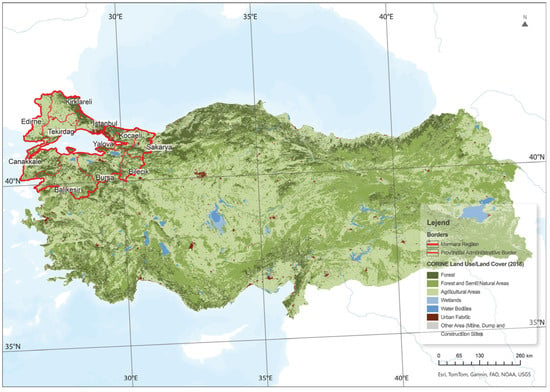
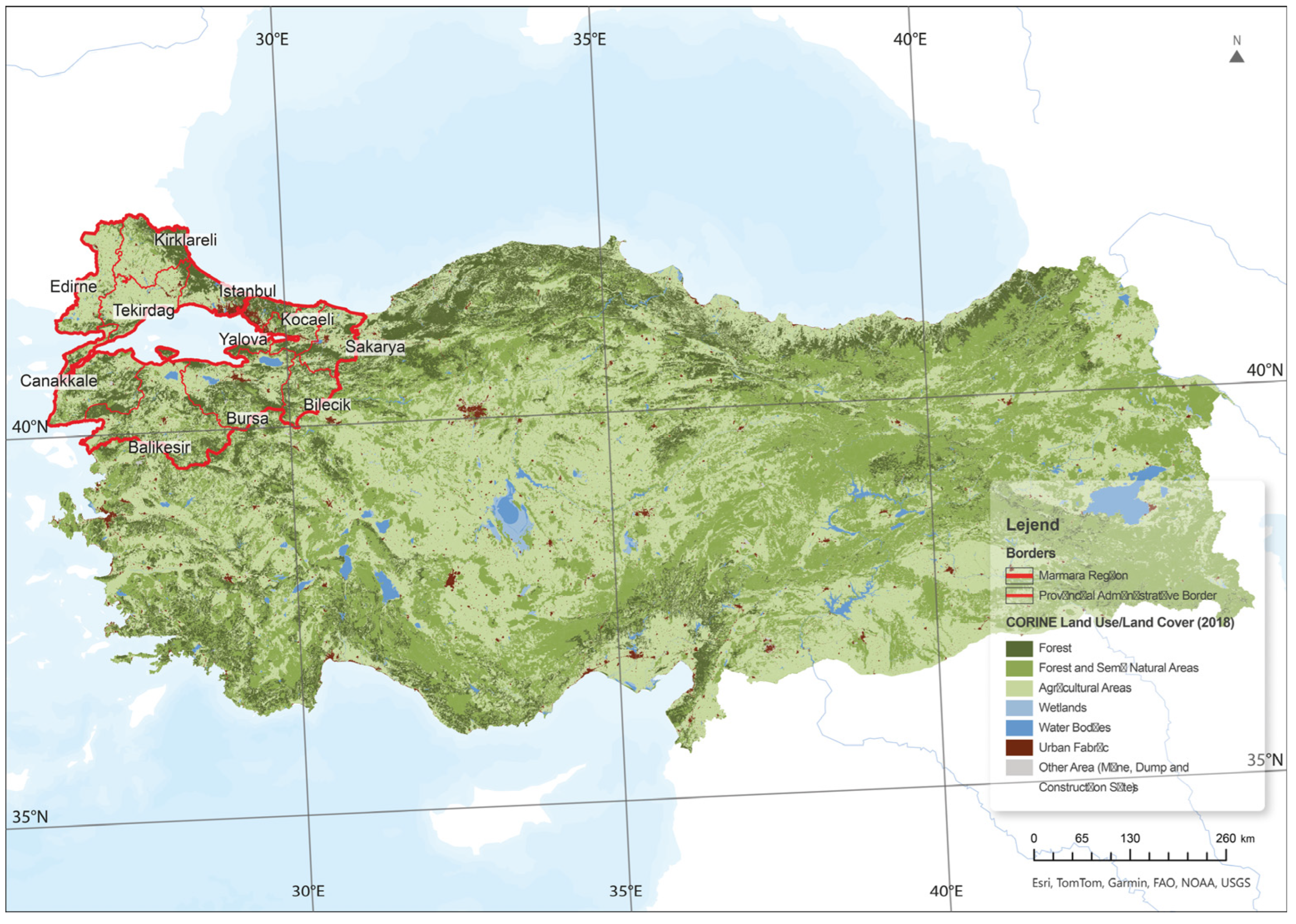
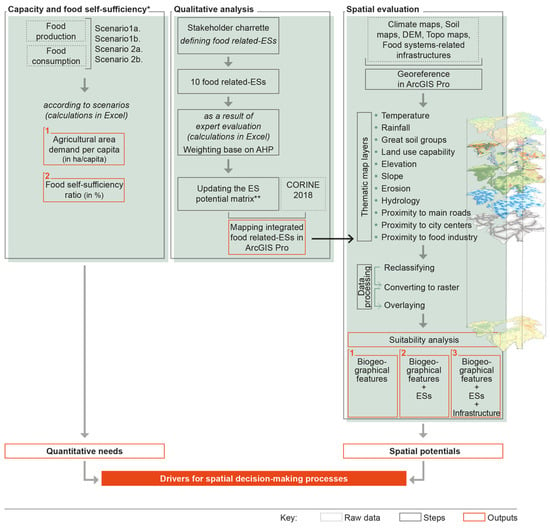
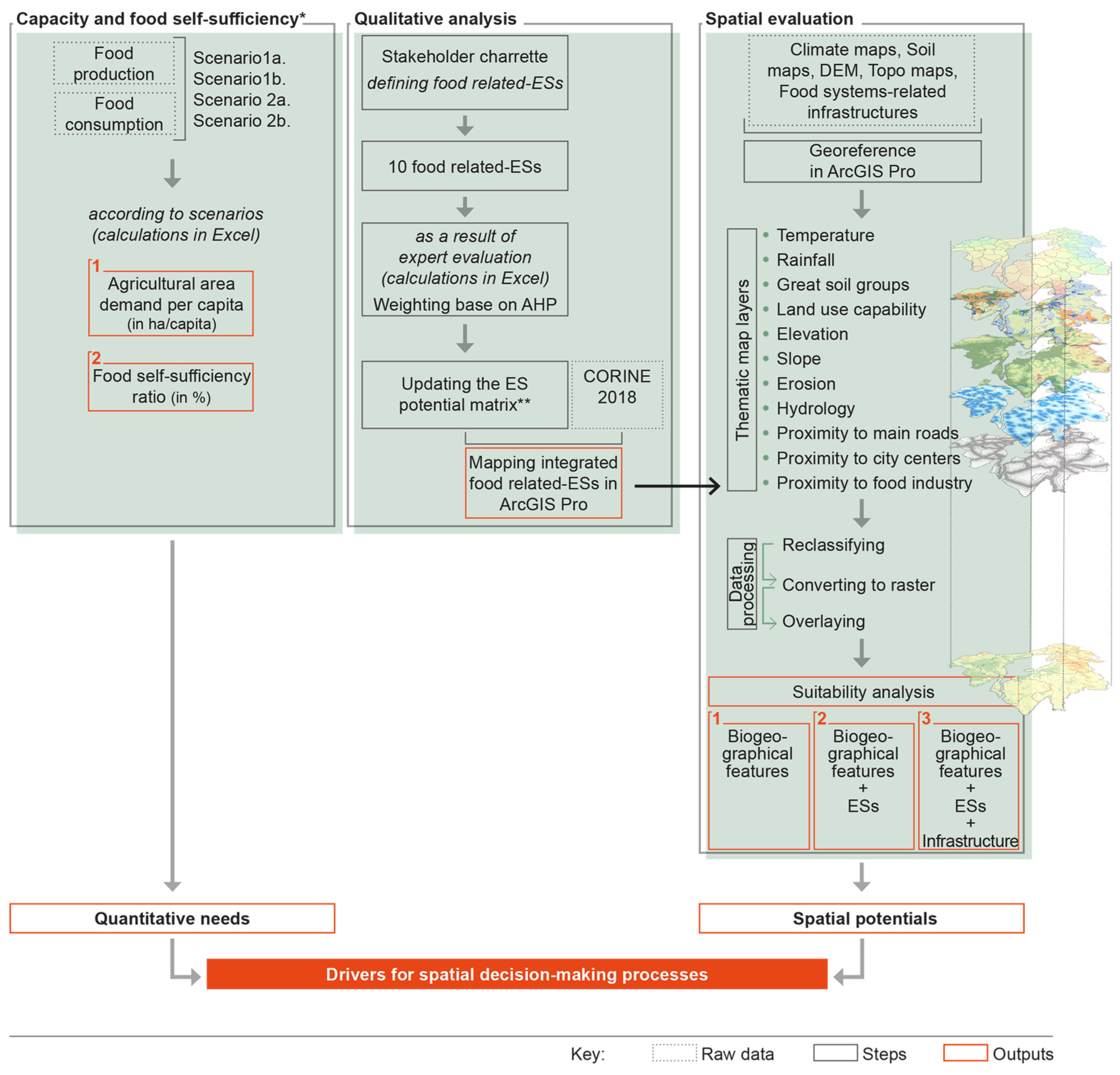
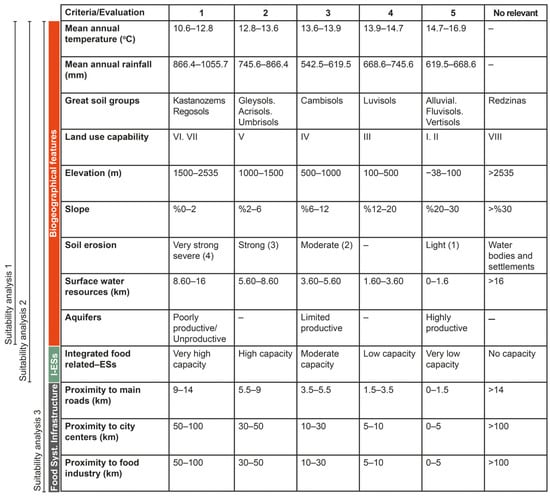
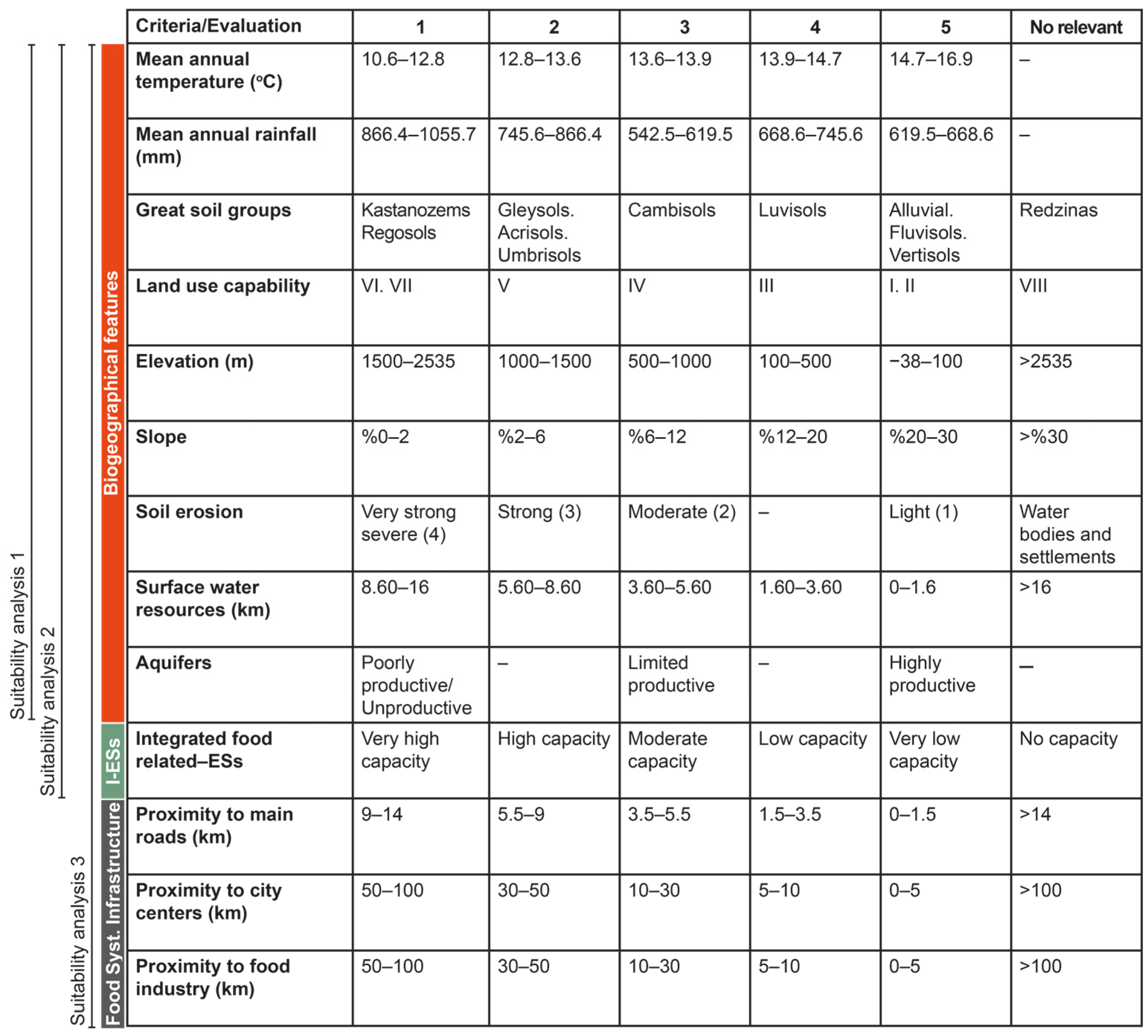
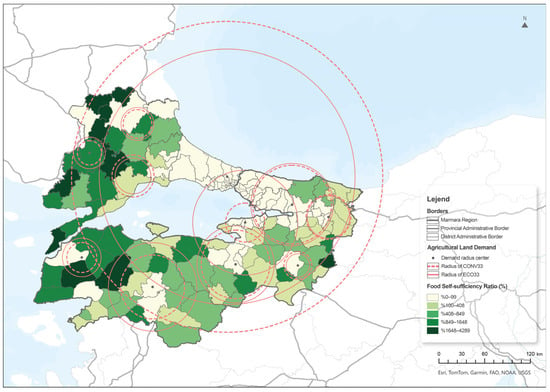
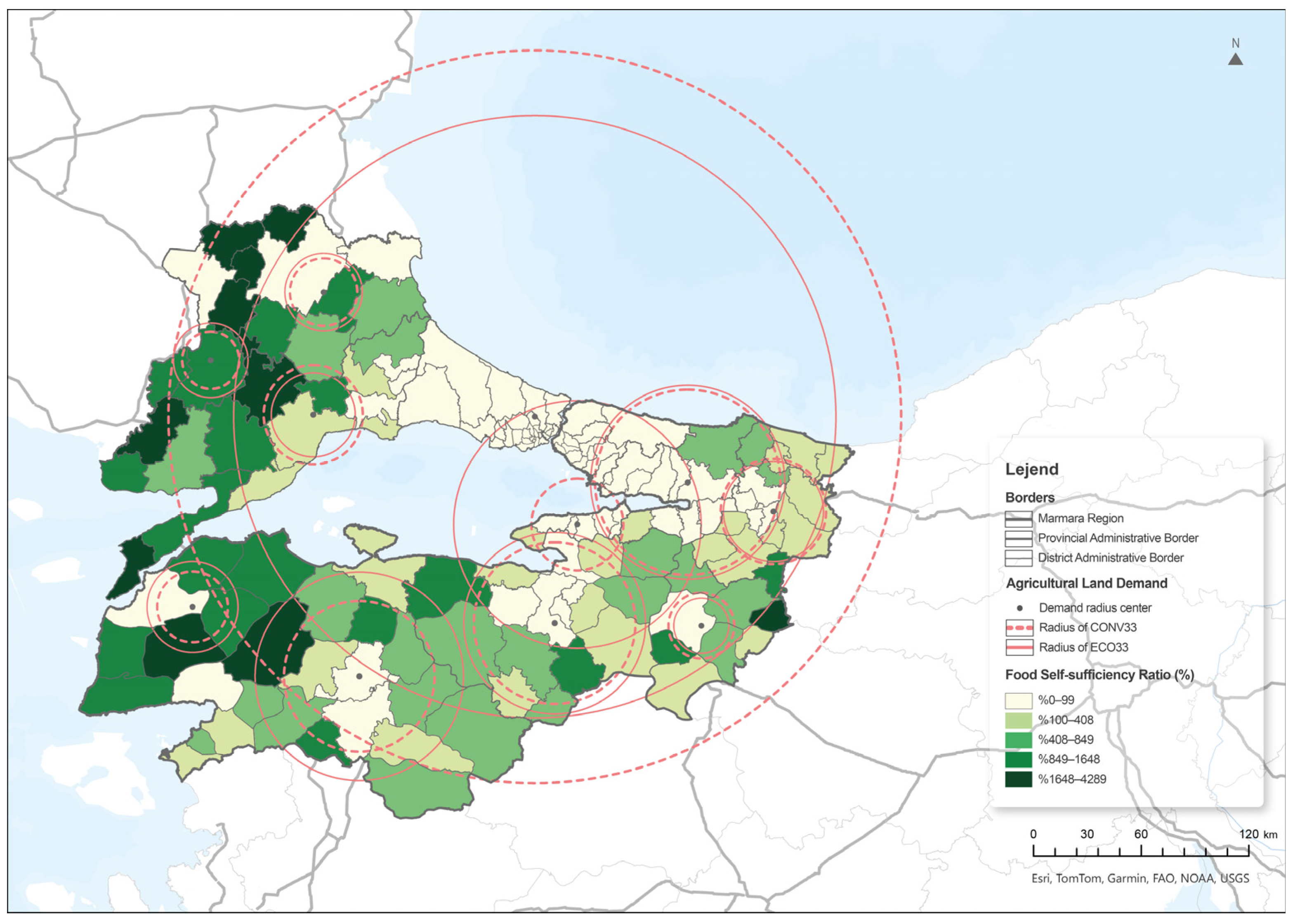
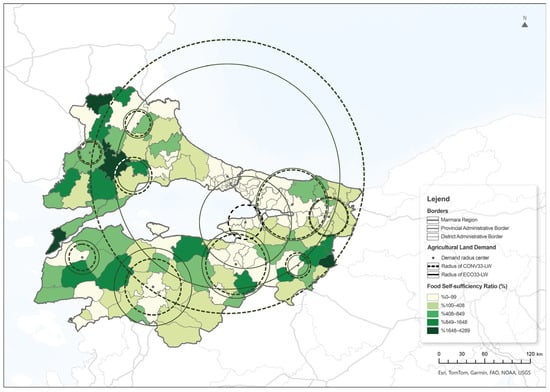
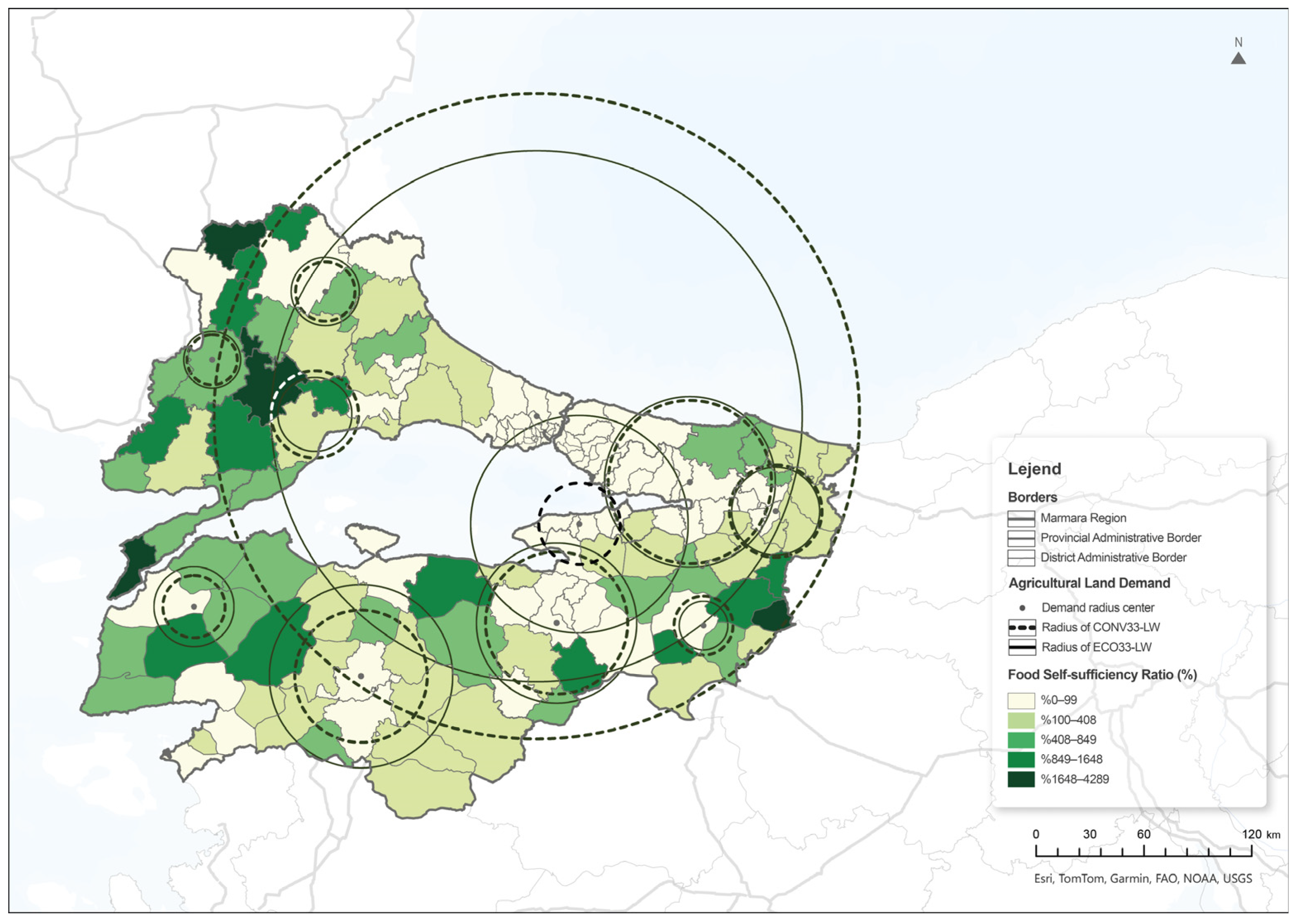
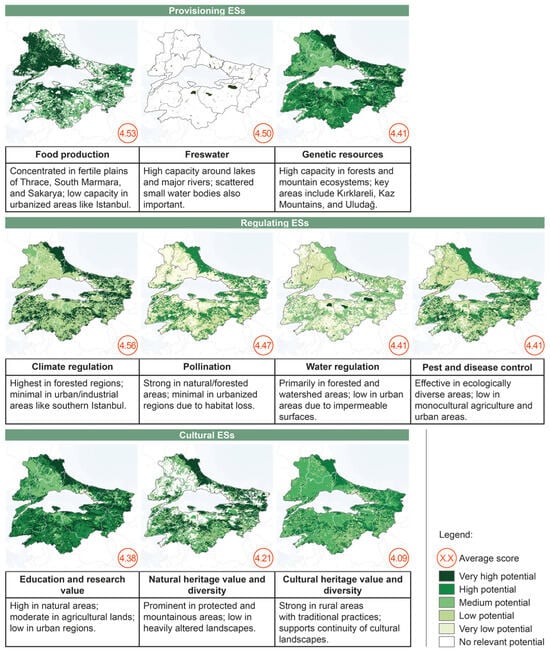
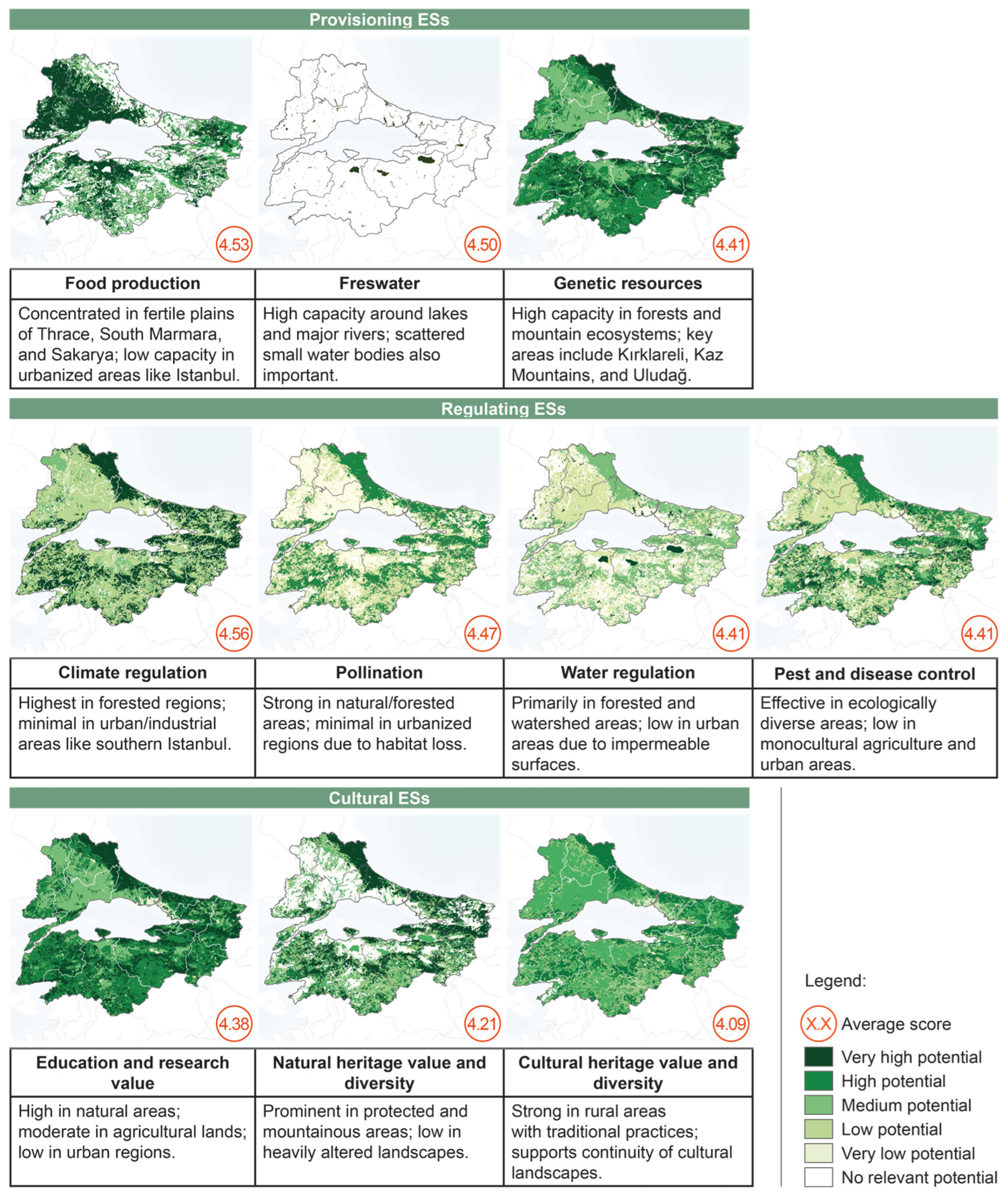
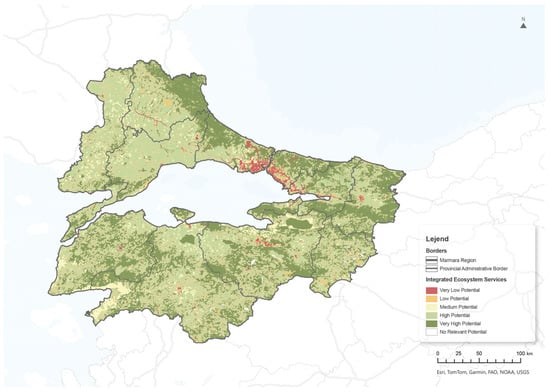
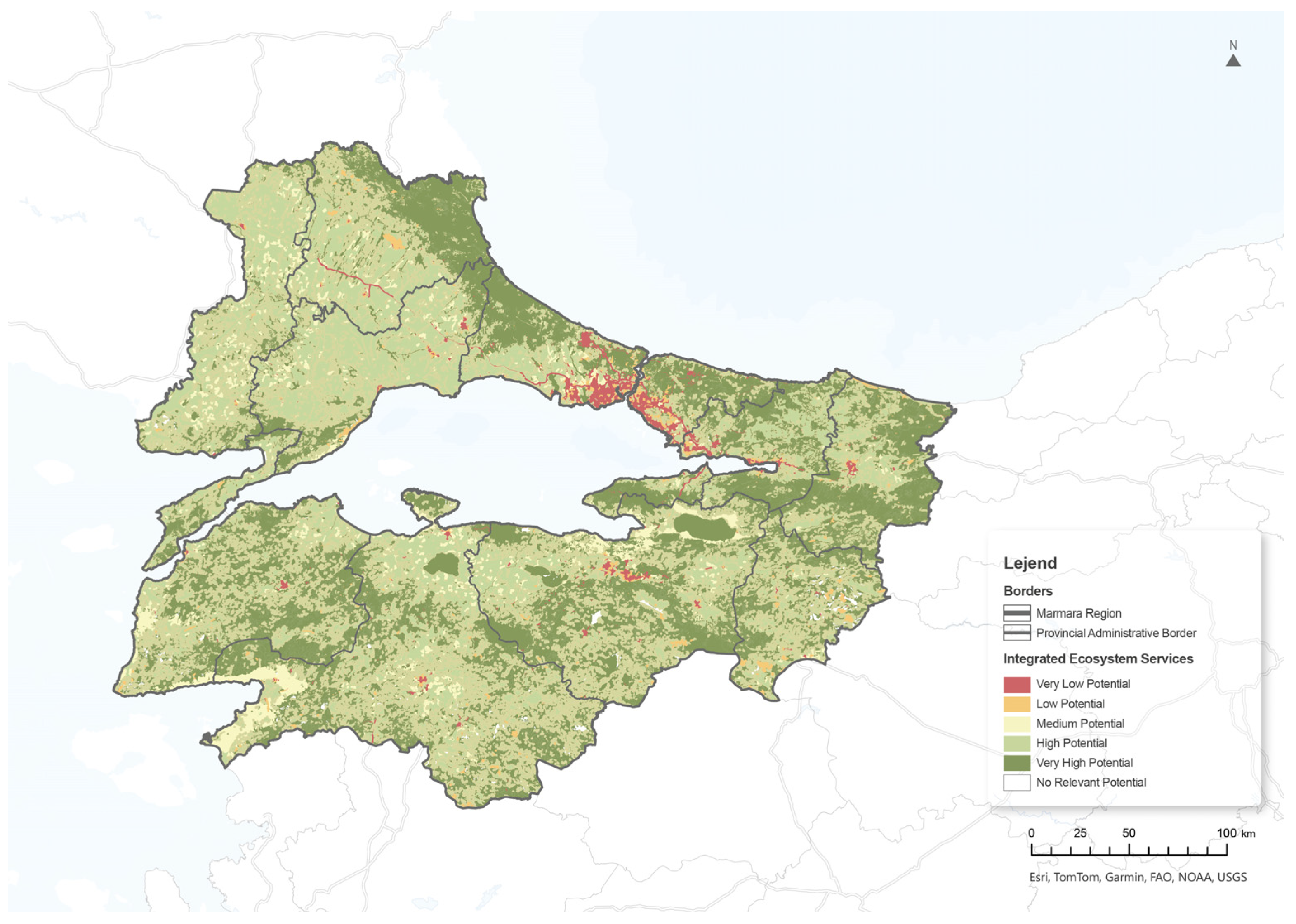
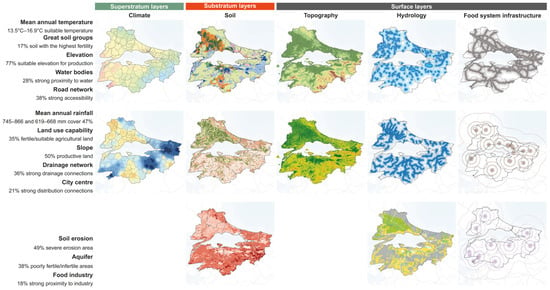
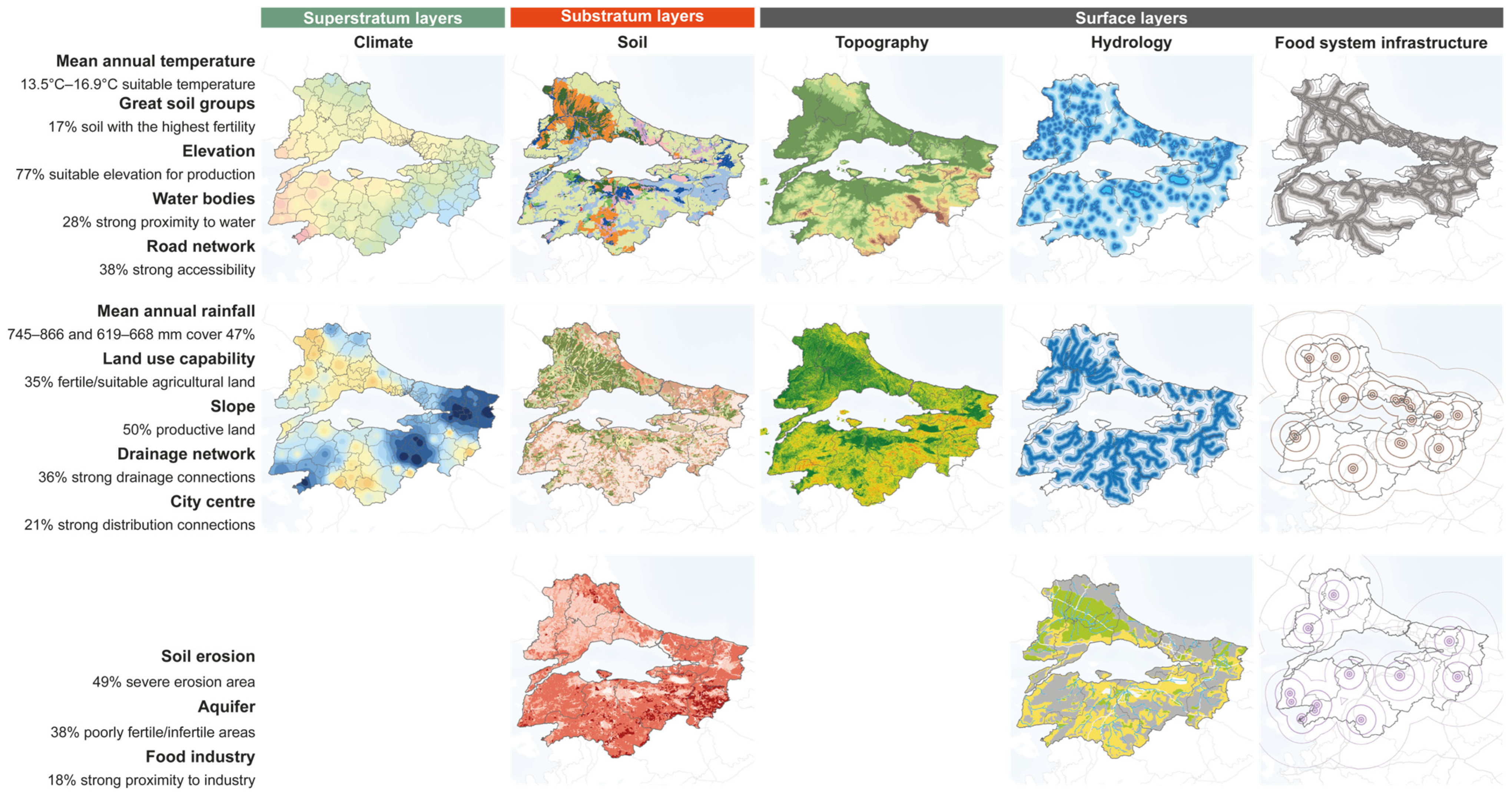
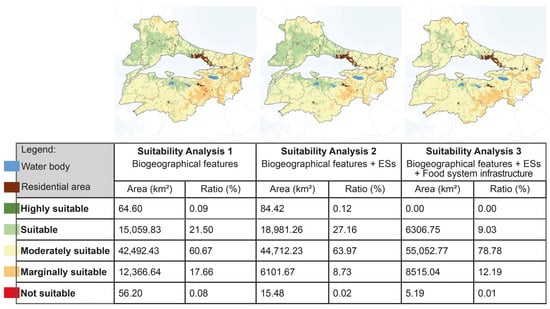
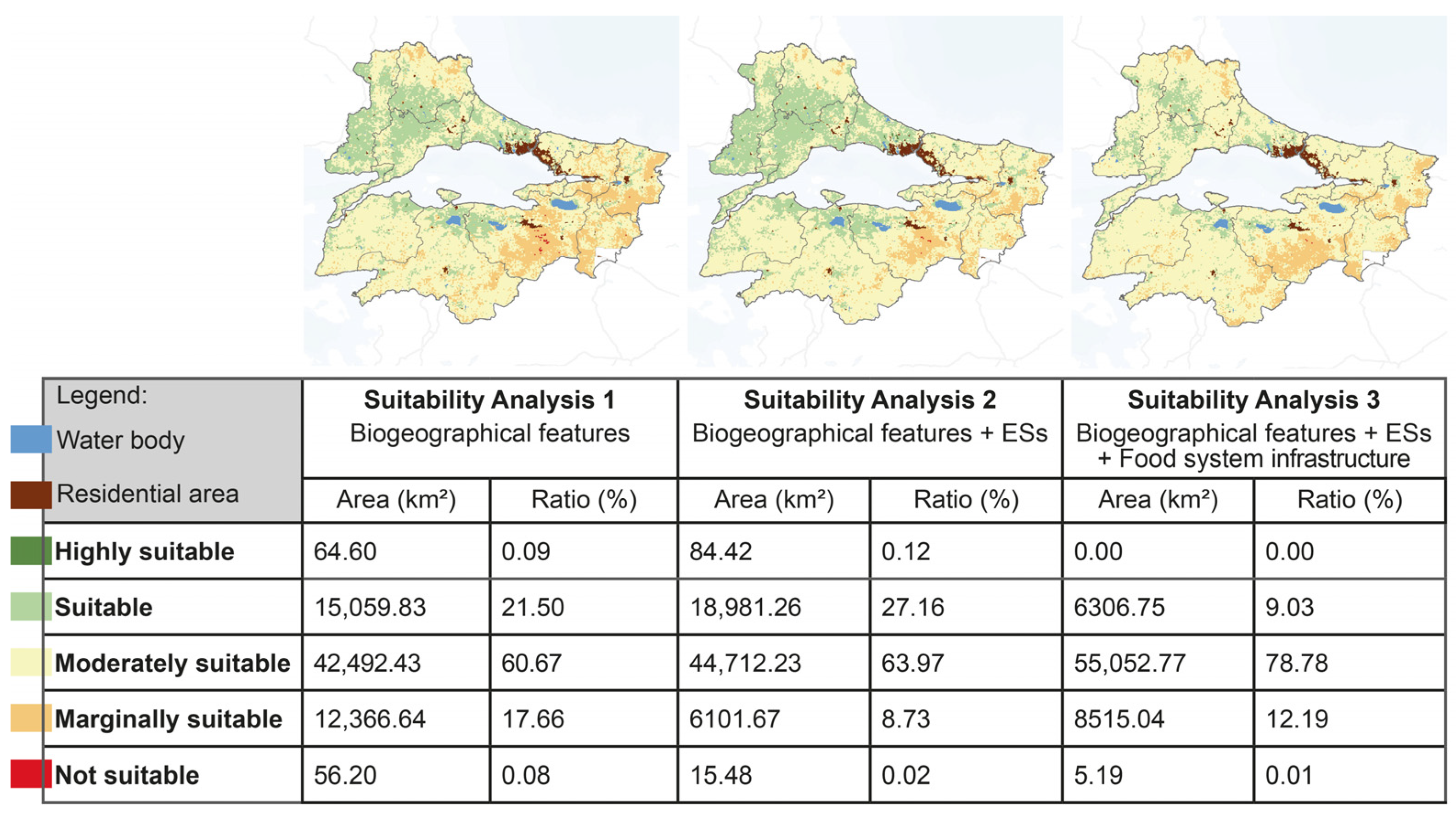
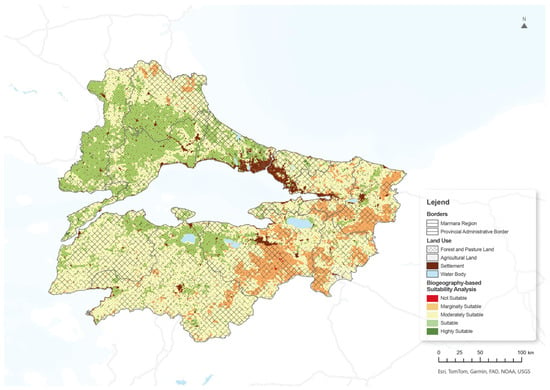
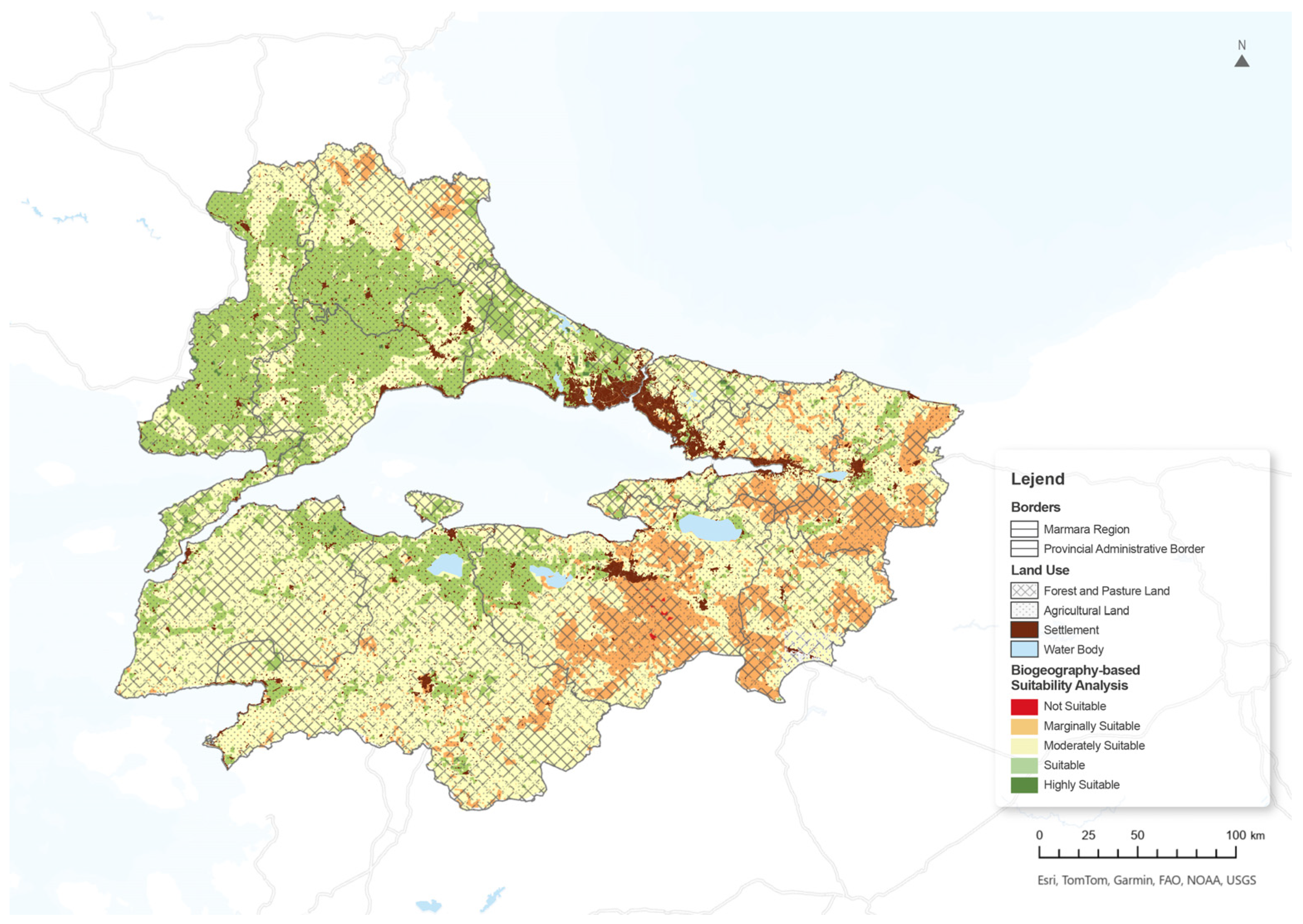
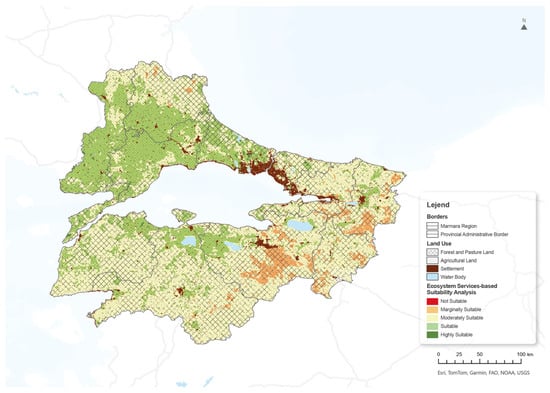
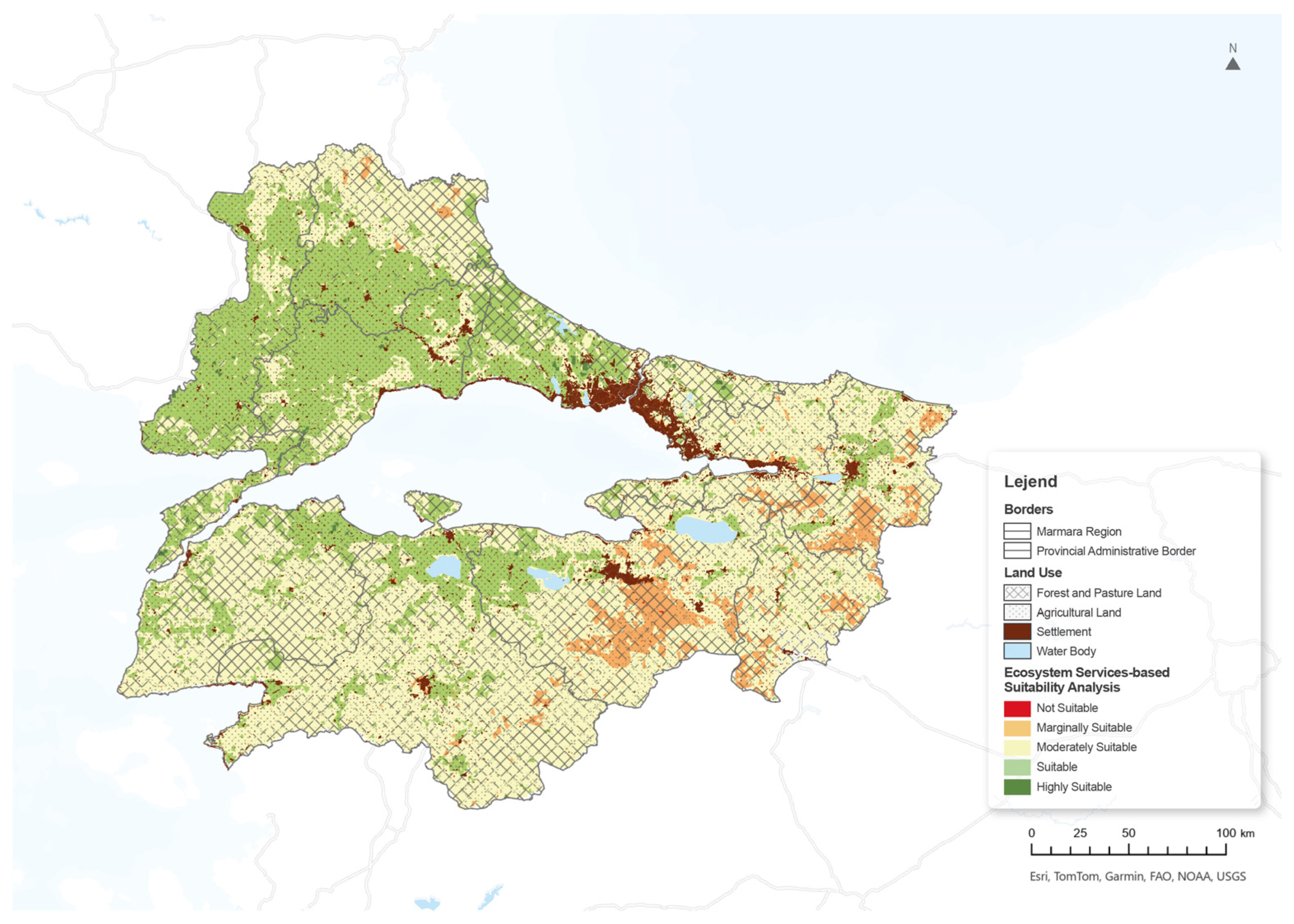
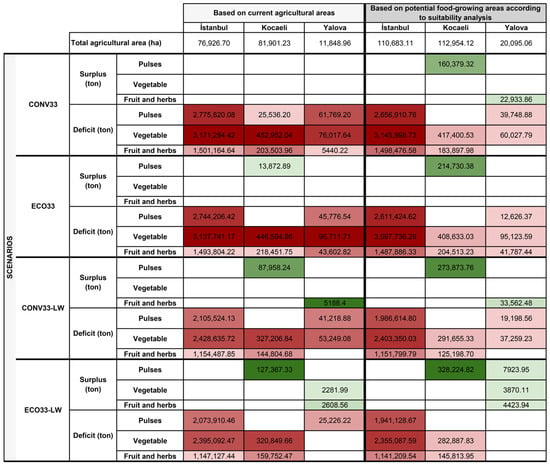
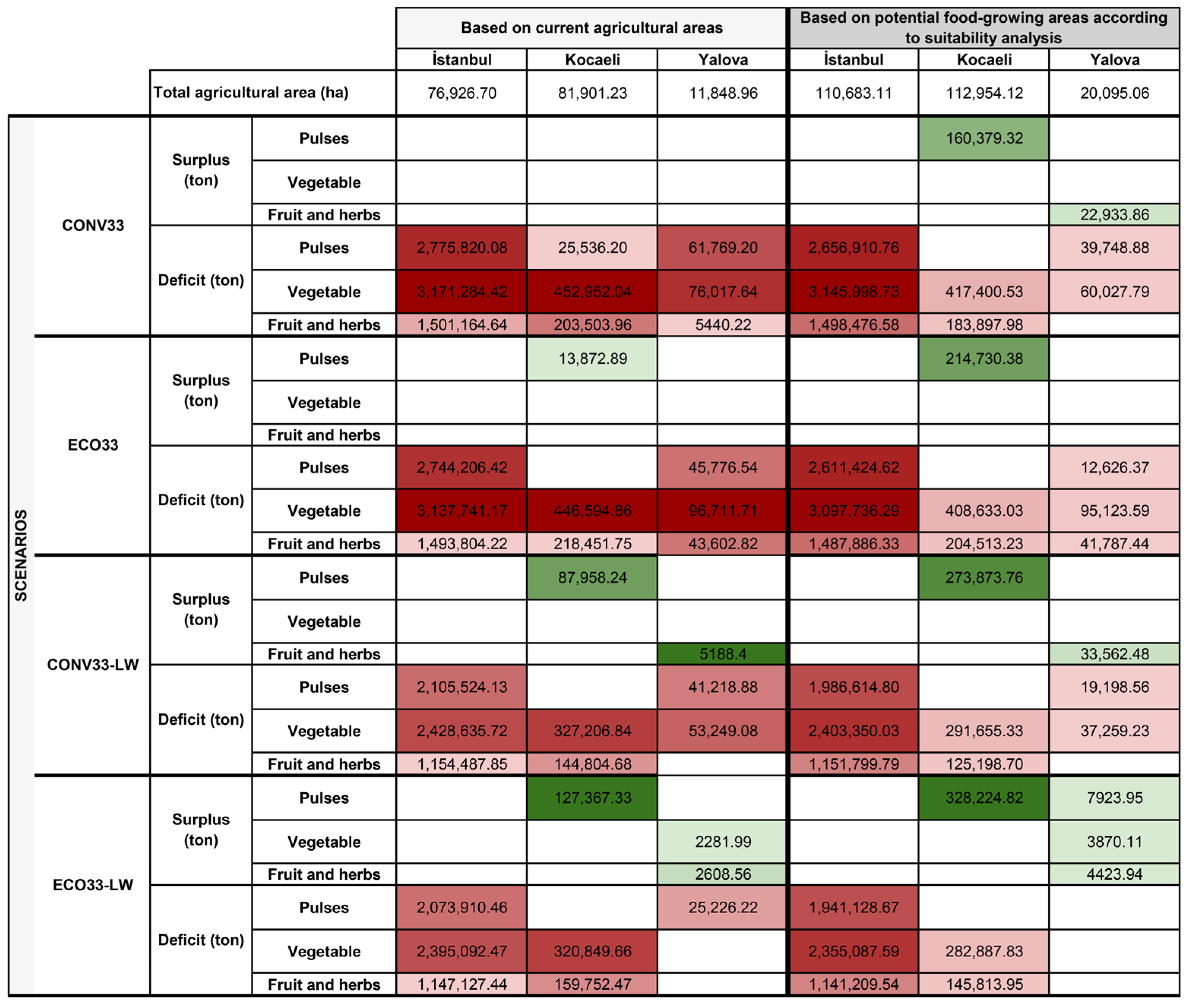

Disclaimer/Publisher’s Note: The statements, opinions and data contained in all publications are solely those of the individual author(s) and contributor(s) and not of MDPI and/or the editor(s). MDPI and/or the editor(s) disclaim responsibility for any injury to people or property resulting from any ideas, methods, instructions or products referred to in the content. |
© 2025 by the authors. Licensee MDPI, Basel, Switzerland. This article is an open access article distributed under the terms and conditions of the Creative Commons Attribution (CC BY) license (https://creativecommons.org/licenses/by/4.0/).