Article

Modulating Secondary Metabolite Content in Olive Leaves Through Foliar Application of Biochar and Olive Leaf-Based Phenolic Extracts


1
Department of Agriculture and Nutrition, Institute of Agriculture and Tourism, Karla Huguesa 8, 52440 Poreč, Croatia
2
Department of Ecology, Agronomy and Aquaculture, University of Zadar, Mihovila Pavlinovića 1, 23000 Zadar, Croatia
3
Faculty of Health Studies, University of Rijeka, Viktora Cara Emina 5, 51000 Rijeka, Croatia
*
Authors to whom correspondence should be addressed.
Sustainability 2025, 17(24), 11290; https://doi.org/10.3390/su172411290
Submission received: 31 October 2025 / Revised: 7 December 2025 / Accepted: 11 December 2025 / Published: 16 December 2025
(This article belongs to the Section Sustainable Agriculture)

Abstract

This research focuses on the additional valorization of olive leaves, a by-product of regular olive pruning, by increasing their secondary metabolite content through the combined application of biochar and a phenolic extract from olive leaves. A suspension of biochar, obtained by the pyrolysis of grapevine pruning residues, was prepared by mixing it in demineralized water (1.5 g; 5 L; 24 h). The phenolic extract was obtained by extracting lyophilized and ground olive leaves in demineralized water (50 g; 5 L; 24 h), while the combined preparation was obtained in an analogous manner (1.5 g biochar; 50 g olive leaf powder; 5 L water; 24 h). Treatments were applied at the beginning of July, 50 days after anthesis (May 16th) and included the following: (i) control treatment (demineralized water), (ii) biochar solution, (iii) phenolic extract solution, and (iv) a combined aqueous preparation of biochar and phenolic extract, all with the addition of a wetting agent. Trees of the olive cultivars Leccino and Istarska bjelica were sprayed with the corresponding preparation until runoff. Olive leaves were sampled three weeks after treatment (July 26th) and, after washing and drying, and were prepared for LC-MSMS analysis. Both biochar-based treatments induced the most potent effects, although responses differed between cultivars. In particular, apigenin derivatives, hydroxytyrosol, luteolin-7-rutinoside, and the secoiridoid oleacein showed apparent differences between biochar treatments and the control. Overall, higher concentrations of the sum of detected secoiridoids were observed in the leaf samples of ‘Istarska bjelica’ under BCH and BCH+PH treatments, whereas no such differences were found for ‘Leccino’ cultivar. Further research is needed to clarify the cultivar-dependent response of secondary metabolism in these olive cultivars and the mechanisms by which biochar foliar application modulates metabolite profiles.

1. Introduction

Olive is one of the oldest and most important agricultural trees in the Mediterranean area. It is, for the most part, used for the production of olive oil and table olives and is characterized by a large number of cultivars [1]. The production of olive oil and table olives generates significant amounts of waste and by-products including olive pomace, wastewater, and leaves [2]. The increasing demand for olive oil increases the generation of by-products and undoubtfully poses an environmental risk [3]. To combat this, focus has been shifted in recent years to the valorization of these by-products and waste and to the implementation of sustainable strategies to reduce the impact on the environment [4]. Olive leaves, as a by-product, are unavoidably generated during regular tree care by pruning. The biomass of olive leaves can reach up to 25% of the total weight harvested, leaving a significant amount of biomass unutilized [5]. Due to the abundance of secondary metabolites, many of which show biological effects [6], they could be utilized in several industries, such as food, pharmaceuticals, and cosmetics [3,7]. Recent studies have demonstrated that geographical origin and cultivar have a significant effect on the content of secondary metabolites, such as polyphenols [8]. Phenolic compounds have a plethora of functions in plants, from antioxidant and radical-scavenging activity [9], seed germination and dormancy, UV radiation protection, role as pigments for attracting pollinators, and seed dispersal [10,11,12], and they also act as signaling molecules in plant–microbe symbiosis [13].
To utilize the abundance of secondary metabolites from leaves, they have to be extracted, and these extracts mainly consist of phenolic compounds (oleuropein, tyrosol, verbascoside, etc.), which comprise approximately 6–9% of leaf dry matter [14]. Foliar application of leaf extracts has not been studied extensively, especially the application of foliar extract on the same plant species from which they were initially obtained. Research on the effects of foliar-applied Moringa leaf extracts on wheat plants has shown significant increases in biomass and grain yield. Sprays applied at tillering and boot stages resulted in a 37% increase in biomass and 34% increase in grain yield compared to non-treated plants [15]. A single spray applied at the boot stage increased grain yield by 30%. The same research showed that Moringa leaf extract could have potential as a fertilizer, especially in areas where P and K are at sub-optimum levels. Such an effect could be explained by relatively high contents of plant hormones (cytokinin, zeatin, and auxins) [16,17]. Moringa leaf extracts also contain an abundance of phenolic compounds such as kaempferol, myricetin, quercetin, chlorogenic acid, gallic acid, luteolin, vanillin, and rutin [18]. Foliar application of chinaberry and sugar beet extracts combined with Si alleviated salinity-induced adverse effects in pea plants, namely, they decreased lipid peroxidation, electrolyte leakage, and H2O2 content [19]. Proline rich perennial ryegrass (Lollium perenne L.) leaf extracts alleviated NaCl and nickel-induced growth inhibition in pea plants when applied through leaves [20]. This research showed that perennial ryegrass leaf extract was more effective than pure proline in improving growth, antioxidant enzyme activities, and gas exchange parameters.
When organic materials (such as wood or agricultural waste) are heated in the absence of air at temperatures between 400 and 600 °C, they produce biochar. It consists of carbon and remaining ash, after the evaporation of water and volatile compounds from the original material [21]. Biochar is a sustainable solution that helps conserve the environment by improving soil health and capturing carbon dioxide from the atmosphere. Produced through the pyrolysis of organic waste materials, biochar reduces greenhouse gas emissions and enhances soil fertility [22]. Its ability to sequester carbon in the soil for hundreds to thousands of years makes it an effective tool for mitigating climate change while promoting healthier ecosystems [23,24]. Various biochar applications have been demonstrated in plant production. For example, foliar fertilization of wheat plants with biochar (300 mg/L) improved growth and yield characteristics, suggesting its potential to reduce mineral fertilizer inputs [21]. The combined application of biochar with other beneficial compounds (such as mineral nutrients Fe and Se, ascorbic acid, and others) on plants has been investigated. Barley plants treated with biochar in combination with ascorbic acid have shown increases in root and shoot length, gas exchange, and chlorophyll content when grown in cadmium-contaminated soil [25]. The use of banana peel waste biochar, along with Fe, on spinach plants grown under chromium (IV) toxicity has significantly improved plant growth, Fe uptake, and chlorophyll content. Shot length, root length, and fresh weight were more than 20% higher compared to the control when 70 mg Cr kg−1 soil was applied [26].
This study aimed to assess the use of two environmentally sustainable solutions (olive leaf phenolic extracts obtained from olive pruning and biochar obtained from grapevine pruning) for their use as foliar sprays on olive plants, applied separately or in combination, as a way to further increase the phenolic content of olive leaves.

2. Materials and Methods

2.1. Plant Material and Experimental Setup

For this experiment, two olive cultivars were used: Istarska Bjelica (IB) and Leccino (L). Four-year-old potted olive plants were grown in 100 L pots filled with Terra rossa soil (Rhodic Cambisol) mixed with peat and fertilizer (Plantacote Top K 6M® 10:9:19, Wrocław, Poland) at 1 kg per m3. Plants were maintained in a well-ventilated greenhouse under natural light and a natural photoperiod. Average outdoor monthly temperature and relative humidity during the experimental period were 26.5 °C and 60%, respectively (data from meteo.hr, accessed on 29 November 2025). Treatments were applied on 5 July, corresponding to 50 days after anthesis (16 May), and sampling was conducted on 26 July.
The greenhouse trial was set up as a completely randomized design with four foliar treatments. During the experiment, olives were grown in accordance with integrated pest management practice (Mark et al., 2024) [27] and were irrigated 3× per week until runoff. Each foliar treatment used approximately 0.5 L of the selected solution per tree, prepared with 0.15 mL L−1 of wetting agent (Optimus, Agrochem Maks d.o.o., Zagreb, Croatia). Applications were carried out early in the morning using a Solo motorized backpack sprayer (model 433 H; Solo Kleinmotoren GmbH, Sindelfingen, Germany) operating at 10 bar and a flow rate of 1.7 L min−1, and continued until the foliage was thoroughly wetted and runoff occurred.
Foliar treatments included control (C), phenolic extract (PH), biochar (BCH), and combined phenolic extract and biochar treatment (PH+BCH). Phenolic extract solution was prepared from lyophilized olive leaves ground to 0.2 mm particles in a mill (Retsch ZM200, Germany). The extract was prepared by mixing 5 L of demineralized water with 50 g of olive leaf powder, resulting in a concentration of 10 g/L. The solution was then mixed for 24 h in a rotator (GFL 3040, Lauda-Königshofen, Germany). The obtained solution was sprayed on olive plants until runoff. A biochar solution was prepared and used in the same manner, but instead of olive leaf powder, 1.5 g of biochar was mixed with 5 L of water, yielding a concentration of 0.2 g/L. Biochar was produced from grapevine pruning by pyrolysis at 400 °C and previously characterized by Anđelini et al. (2023) [28]. Since the same biochar was used, a summary of biochar properties is shown in Table S5. A combined phenolic extract and biochar solution was prepared by mixing 50 g of olive leaf powder and 1.5 g of biochar (which gives the concentration of combined extract and biochar in the final solution 10.3 g/L). For control, 5 L of demineralized water was used. Phenolic extract solution, as well as combined biochar and phenolic extract solution, have been characterized by LC-MS-MS (Table S1). Treatments were applied in the middle of July, and three weeks after the treatments, healthy, whole leaves were sampled from the middle portion of 1-year-old shoots. Collected leaves were taken to the laboratory and carefully rinsed to remove surface-applied residues using a four-pot system: tap water (5 L), 1% acetic acid solution in deionized water (5 L), and two pots of deionized water (2 × 5 L). Water in all pots was changed between the treatments. Plant material was then air-dried at a low temperature (35 °C) until reaching a constant mass, and milled using a Retsch ZM 200 mill (Retsch GmbH, Haan, Germany) into a fine powder before analysis. Leaves were dried at low temperature (35 °C) until constant weight.

2.2. LC-MS-MS

The identification of primary and secondary metabolites in olive leaf extracts was performed using an LC/MSMS system. The system comprised a controller (Shimadzu SCL-40), a degasser (Shimadzu Nexera DGU-405), two solvent delivery units (Shimadzu Nexera LC-40DX3), an autosampler (Shimadzu Nexera SIL-40CX3), a thermostated column compartment (Shimadzu Nexera CTO-40C), and a triple quadrupole mass spectrometer (Shimadzu LCMS-8045).
Polyphenolic compounds in the lyophilized extracts were analyzed following the method of Major et al. (2023) [29], with slight modifications. Separation was performed on a C18 core–shell column (2.1 mm × 150 mm, 2.7 μm; Agilent, Palo Alto, CA, USA) maintained at 37 °C. A 1 μL sample was injected and chromatographic separation was achieved using a linear gradient elution with mobile phase A (water containing 0.1% acetic acid) and mobile phase B (methanol containing 0.1% acetic acid) at a flow rate of 0.35 mL/min. The gradient program was as follows: 0–0.75 min, 98% A; 0.75–15 min, 98% A to 50% A; 15–15.1 min, 50% A to 0% A; 15.1–20 min, 0% A; 20–20.1 min, 0% A to 98% A; and 20.1–25 min, 98% A. Additional data on MS/MS analysis (identification and quantification methods, limits of quantitation and detection, quantification MRM, qualification MRM, ESI mode, etc.) has been added to Table S4.

2.3. ICP-OES

Determination of macro, micro, and beneficial elements was carried out by ICP-OES with both axial and radial viewing (ICPE-9800 system, Shimadzu, Kyoto, Japan) after microwave-assisted digestion (Ethos Up, Milestone, Sorisole, Italy). Briefly, 200 mg of the oven-dried sample was digested with 6 mL of concentrated nitric acid and 2 mL of 30% hydrogen peroxide, transferred to a 25 mL volumetric flask and filled to the mark with ultrapure deionized water. The samples were stored at 4 °C until analysis. Method accuracy was evaluated using four certified reference materials from the WEPAL dried plant material program (WEPAL, Wageningen, The Netherlands).
Operating parameters for the ICP-OES were as follows: RF power 1.15 kW, plasma flow rate 12 L/min, auxiliary gas flow rate 0.5 L/min, and nebulizer flow rate 0.5 L/min. The injection system consisted of a concentric nebulizer and a cyclonic-type spray chamber. Argon gas was used to generate plasma. ICP-OES analysis parameters and quality control metrics are shown in Table S6.

2.4. Statistical Analysis

The experimental setup used a completely randomized design with two main factors: foliar treatment and cultivar—each treatment–cultivar combination comprised eight olive trees, yielding 64 samples in total. Descriptive statistics (mean ± SE) were calculated in Statistica v8.0 (StatSoft Inc., Tulsa, OK, USA) and two-way analysis of variance (ANOVA) was used to assess parameters that were significantly affected by main factors or their interaction. To verify ANOVA assumptions, residual histograms and Q–Q plots were inspected to confirm approximate normality. Homoscedasticity was evaluated using residuals-versus-fitted plots, which showed no systematic patterns indicating unequal variances. Tukey’s honest significance test was performed. Supervised machine learning using linear discriminant analysis (denoted as linear discriminant classification in JASP) was performed in JASP software v0.18.3 (JASP Team, 2024). The best model performance was achieved when the data was split into 30% for testing and 70% for training. Data were scaled using Z-score standardization (mean 0, standard deviation 1). A scatter plot of the first two linear discriminants, which explain most of the variance, was generated to show the separation of data points based on the interaction between treatment and cultivar.

3. Results

Out of 46 measured parameters through LC-MS analysis, only gallic acid (3,4,5-trihydroxybenzoic acid) was not affected by the interaction effect of treatment (T) and cultivar (C). Hence, all other parameters will be further analyzed through their significant T × C interaction effect. Main effects, along with mean values (±SE), ANOVA p values, and post hoc test results are given in Table S2. Since all investigated secondary metabolites that showed significant effects of either cultivar or treatment also showed significant interaction effects, results will be presented based on the interaction effects of cultivar and treatment. Only the significant main effect, which was not constrained by the interaction term, was treatment for gallic acid, where the PH+BCH treatment had a significantly lower value than the BCH treatment (0.83 mg/100 g compared to 0.96 mg/100 g, respectively).

3.1. Effects of Biochar and/or Phenolic Extracts on Phenolic Contents in Olive Leaves

Only parameters that were not affected by treatment, cultivar, or their interaction were flavonols, vanillic acid, hydroxycinnamic acids, oleuropein, and verbascoside. The simplest effect was observed for gallic acid, with only the treatment being significant. Here, the combination of phenolic extract and biochar in the foliar solution resulted in the lowest gallic acid content in olive leaves compared to the control and other treatments. The interaction effects of treatment and cultivar can be summarized into three patterns: (I) phenolic content decrease in L cultivar under BCH and combined PH+BCH treatment compared to its control, and the opposite pattern in IB cultivar (phenolic content increase under BCH and PH+BCH treatments), (II) inversion of the first pattern where BCH and PH+BCH treatments increase phenolic content in L cultivar, while they decrease its contents in IB cultivar, and (III) no obvious patter.

3.1.1. Pattern I

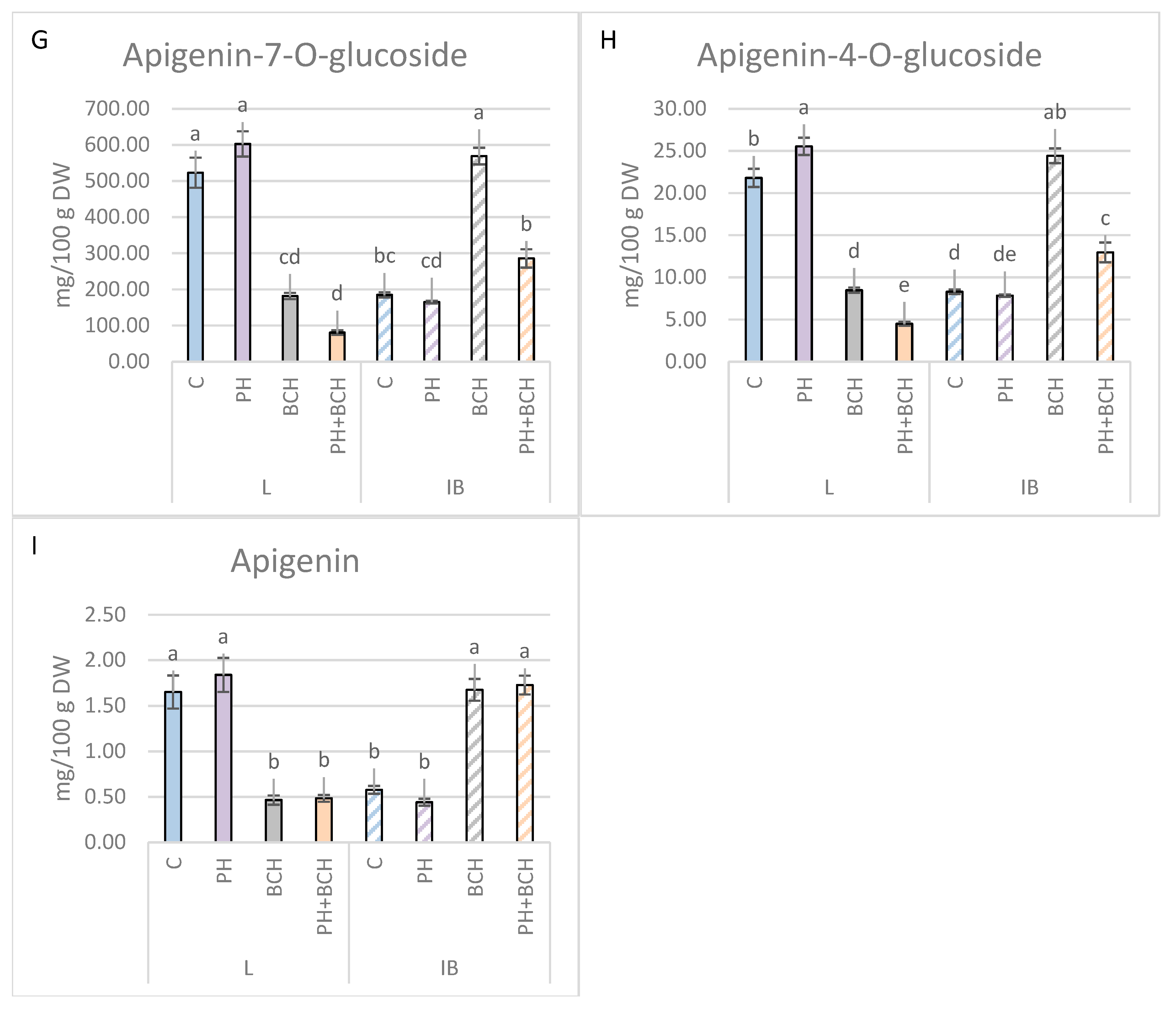
Pattern I generally occurs when L cultivar shows high control values and IB cultivar shows low control values. In most cases, PH treatment alone does not affect the polyphenolic content in olive leaves. Flavones, as a general category, showed this pattern. No significant differences were recorded between control and PH treatment for L cultivar, while significantly lower values of flavones were recorded for BCH and PH+BCH treatment (Figure 1A).
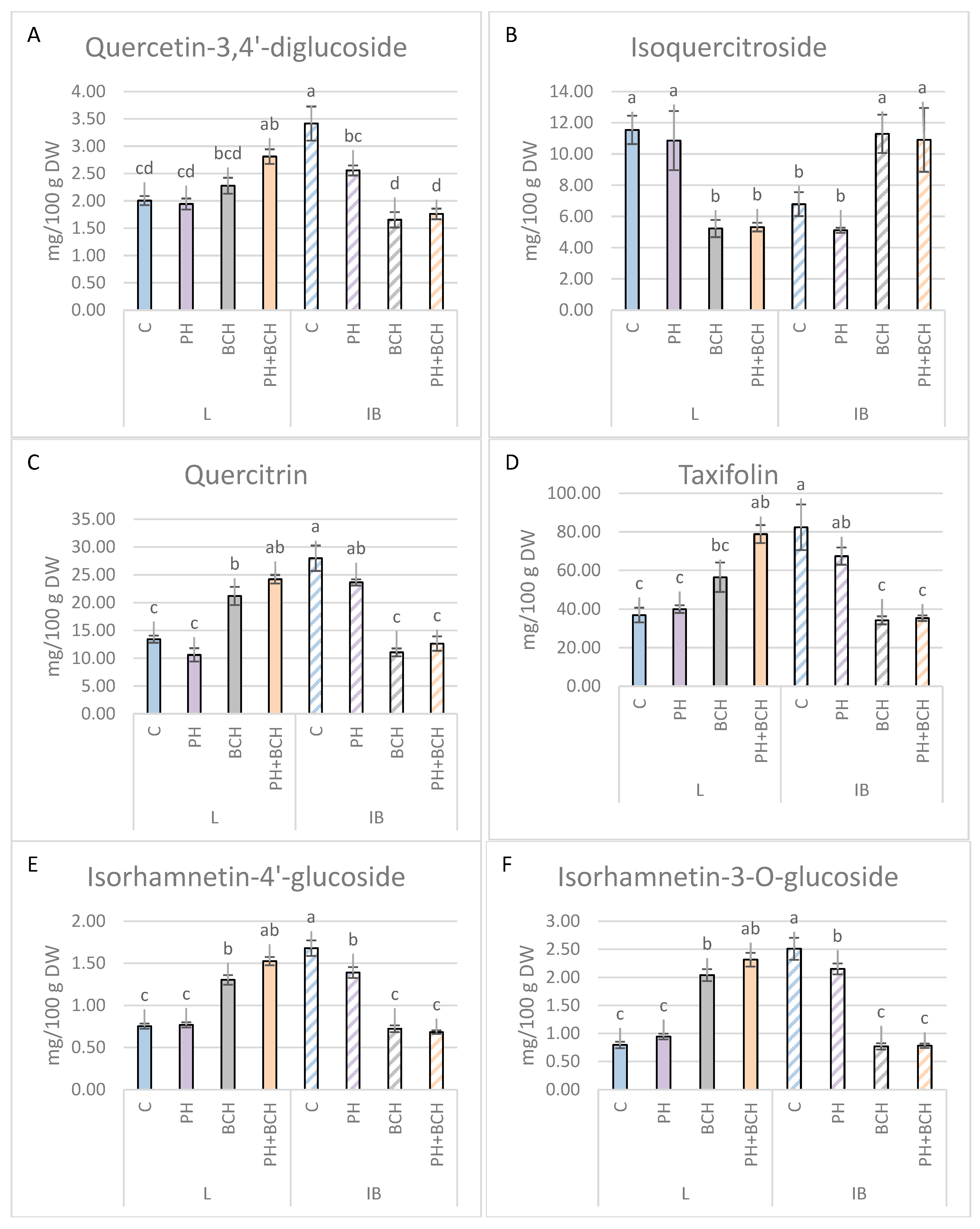
For IB cultivar, the control and PH treatment showed significantly lower values than the BCH and PH+BCH treatments. In this case, BCH treatment alone increased flavone content more than the combined PH+BCH treatment. This pattern was the same for apigenin, apigenin-7-O-glucoside, apigenin-4-O-glucoside, and luteolin, although in IB cultivar, there was no significant difference between the control and the BCH treatment alone (Figure 1D,G–I). Luteolin-7-O-glucoside could also be associated with this pattern, although the differences between treatments were minor and, in part, significant differences were lost (Figure 1B). Within the flavonol group, this pattern was observed only in isoquercitroside (Figure 2B).
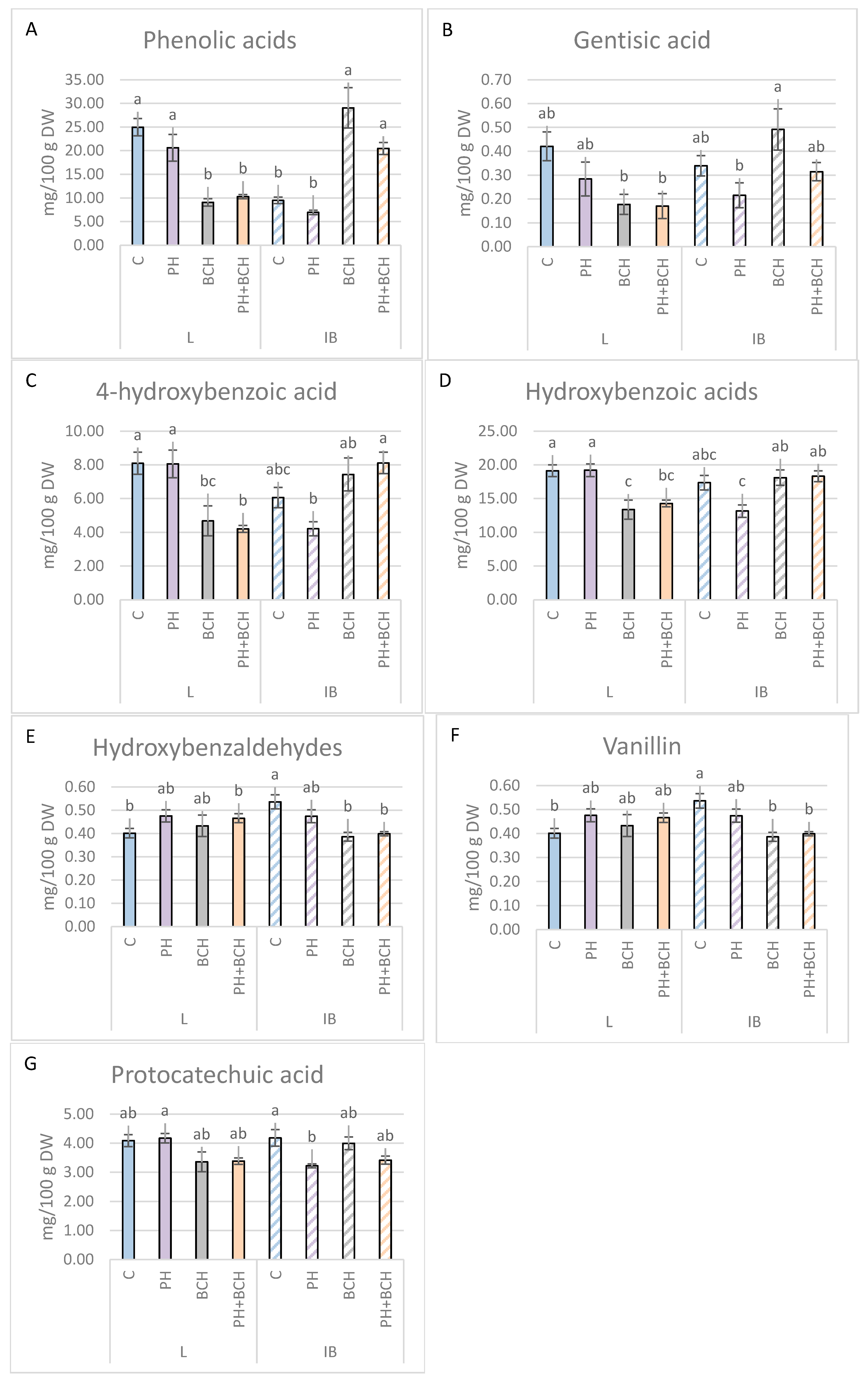
The general pattern of phenolic acids was the same (Figure 3A) where, again, BCH and PH+BCH treatments increased the contents of phenolic acids in IB cultivar, while decreasing them in L cultivar.
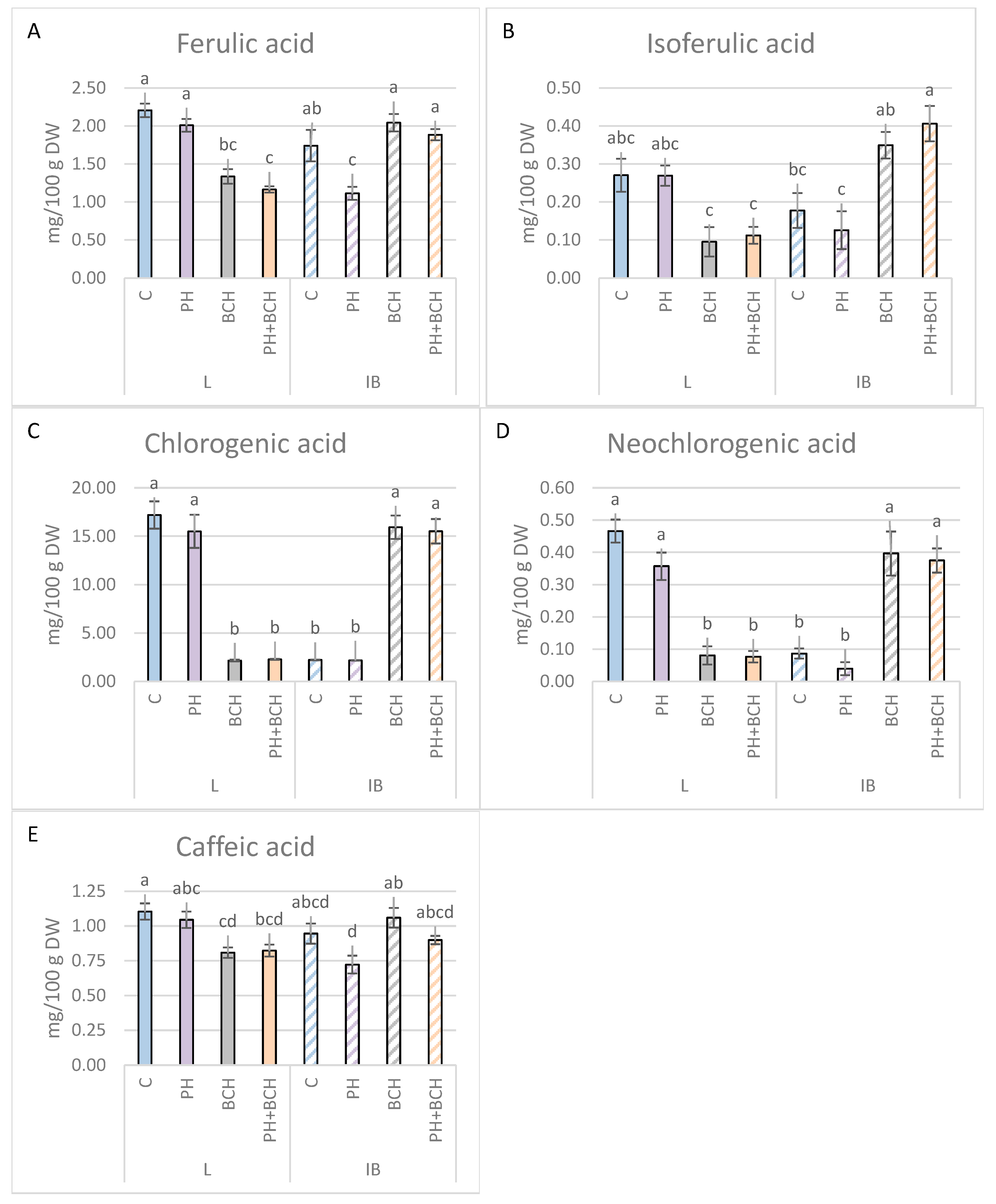
And while hydroxybenzoic acids from the phenolic acids group did not show the same pattern (except 4-hydroxybenzoic acid, Figure 3C), the hydroxycinnamic group mainly exhibited this pattern—ferulic (with IB control breaking the pattern), isoferulic, chlorogenic, and neochlorogenic acids (Figure 4A–D).
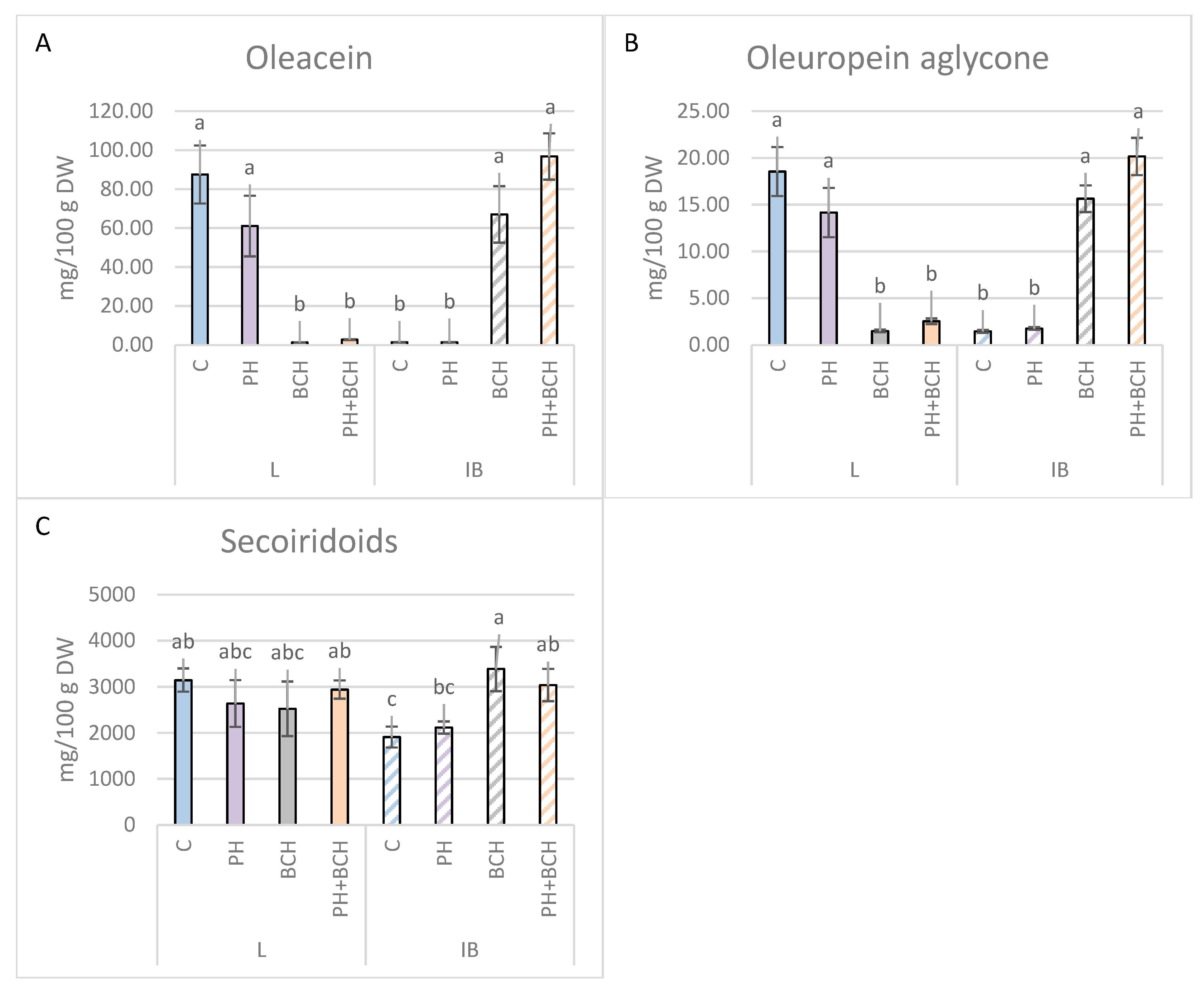
Secoiridoids oleacein and oleuropein aglycone probably exhibited the most prominent pattern (Figure 5A,B), and here the opposite effects of BCH and PH+BCH treatments on two cultivars were clearly visible.
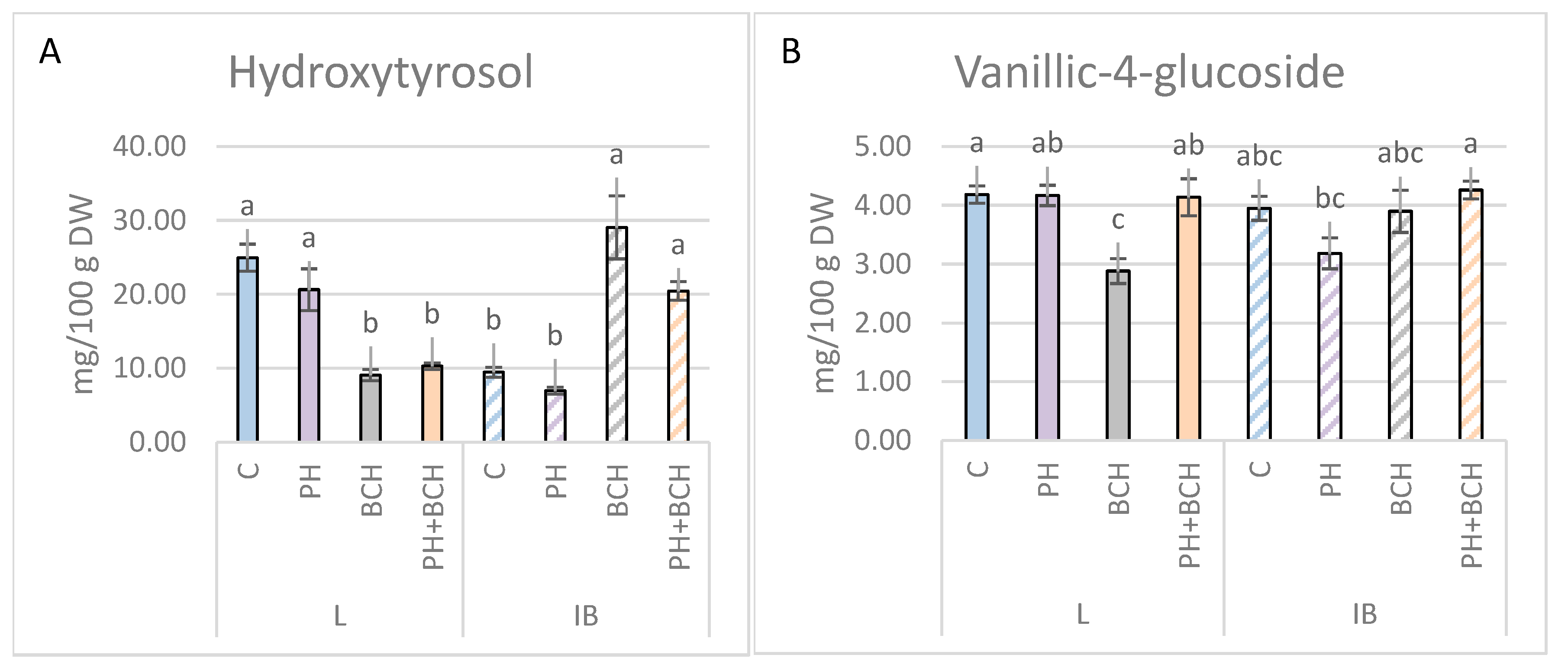
Hydroxytyrosol had, similar to secoiridoids, a strong pattern I expression (Figure 6A), while vanillic-4-glucoside showed somewhat ambiguous response, where significantly lower values were recorded under BCH treatment for L cultivar, and only significant differences in IB cultivar were between PH and PH+BCH treatments.

3.1.2. Pattern II

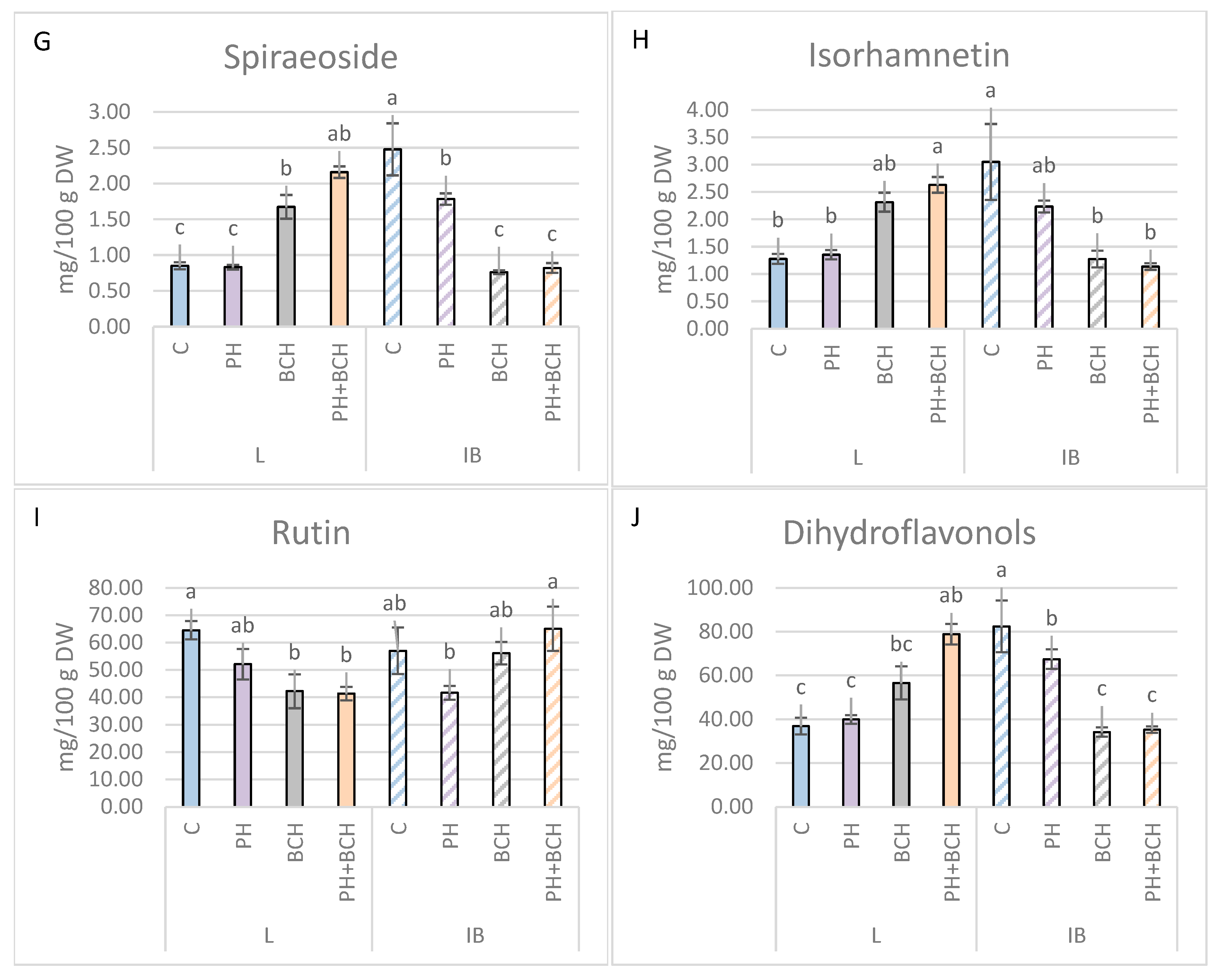
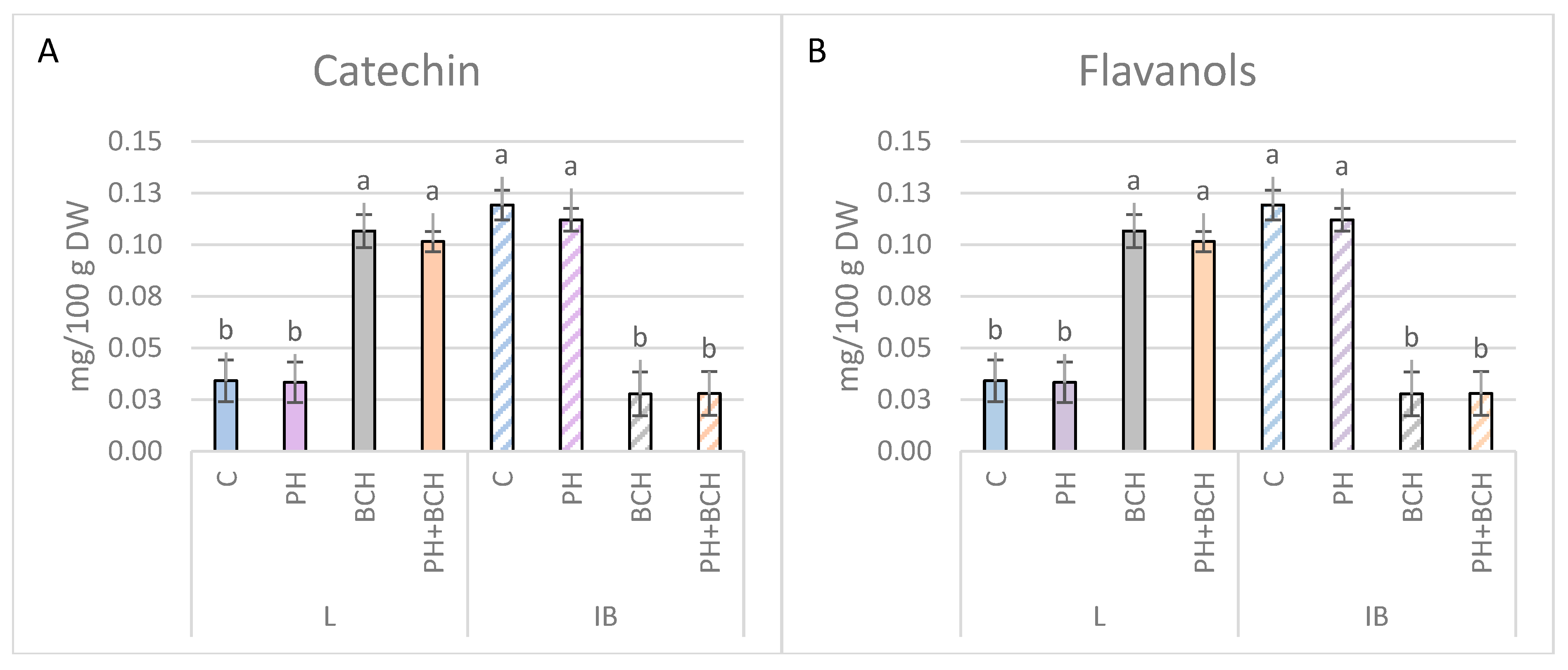
Pattern II occurs when cultivar L shows low control values, while IB cultivar shows high control values. As in pattern I, in most cases, PH treatment alone does not affect polyphenolic content, and values are comparable to those of controls in both cultivars. Significantly higher recorded values in the BCH and PH+BCH treatments compared to the control and PH treatments in L cultivar, and significantly lower values in the BCH and PH+BCH treatments compared to the control and PH treatments in IB cultivar, are the basis for this second pattern. This pattern was observed, to a greater or lesser extent, in flavones, specifically luteolin-7-O-rutinoside, luteolin 4-O-glucoside, and luteolin-4-O-rutinoside (in the latter two, this pattern is somewhat broken for IB cultivar) (Figure 1C,E,F). Flavonols that exhibited this pattern were quercetin-3,4′-diglucoside, quercitrin, taxifolin, isorhamnetin-4′-glucoside, isorhamnetin-3-O-glucoside, spiraeoside, isorhamnetin, and dihydroflavonols (Figure 2A,C–H,J). In the phenolic acids category, none of the compounds from hydroxybrenzoic or hydroxycinnamic acids showed characteristics of pattern II (Figure 3 and Figure 4), nor did the secoiridoids (Figure 5). Catechin and generally flavanols exhibited this pattern (Figure 7A,B) and here, in both cases, control and PH treatments and BCH and PH+BCH treatments did not differ from each other and were significantly lower in values compared to BCH and PH+BCH treatments in L cultivar and control and PH treatment in IB cultivar.

3.1.3. No Evident Pattern

Several compounds could not be assigned to either of the two earlier groups, either because of insignificant differences between treatments or because of random patterns in their data values. One such compound was rutin, for which the only significant differences recorded were between the control and significantly lower BCH and PH+BCH values, and significantly lower PH values for IB cultivar compared to PH+BCH treatment values for IB cultivar (Figure 2I), which loosely resembles pattern I. From the phenolic acids group, hydroxybenzoic acids, hydroxybenzaldehydes, vanillin, protocatechuic acid, and caffeic acid from the hydroxycinnamic group were without an evident pattern (Figure 3D–G and Figure 4E). In most of them, very few significant differences were found to connect the treatment × cultivar interaction with a specific pattern. Vanillic-4-glucoside also showed sporadic effects: a decrease in content under BCH treatment compared to all other treatments in L cultivar, while in the B+IB cultivar, only a significant difference was observed between PH treatment and the significantly higher PH+BCH treatment (Figure 6B).
A summary table of percentage change compared to the control for the main metabolites or metabolite groups is shown in Table 1. In short, the response of olive leaf metabolites to foliar treatments was strongly cultivar-dependent. Cultivar L, which had higher baseline metabolite levels, showed strong suppression of most compounds, particularly secoiridoids, in response to BCH, while PH alone had only mild effects. In contrast, cultivar IB, with lower baseline levels, exhibited dramatic increases in secoiridoids and moderate increases in flavones and flavonols in response to BCH, with the combined PH+BCH treatment often further enhancing this effect. Overall, secoiridoids were the most responsive metabolites, showing opposite trends between cultivars, whereas flavones and flavonols followed the same pattern, with smaller changes. These results indicate that foliar biochar effects on olive leaf phenolics are highly dependent on cultivar, with BCH suppressing accumulation in L and stimulating it in IB leaves.

3.2. Effects of Biochar and/or Phenolic Extracts on Elemental Content in Olive Leaves

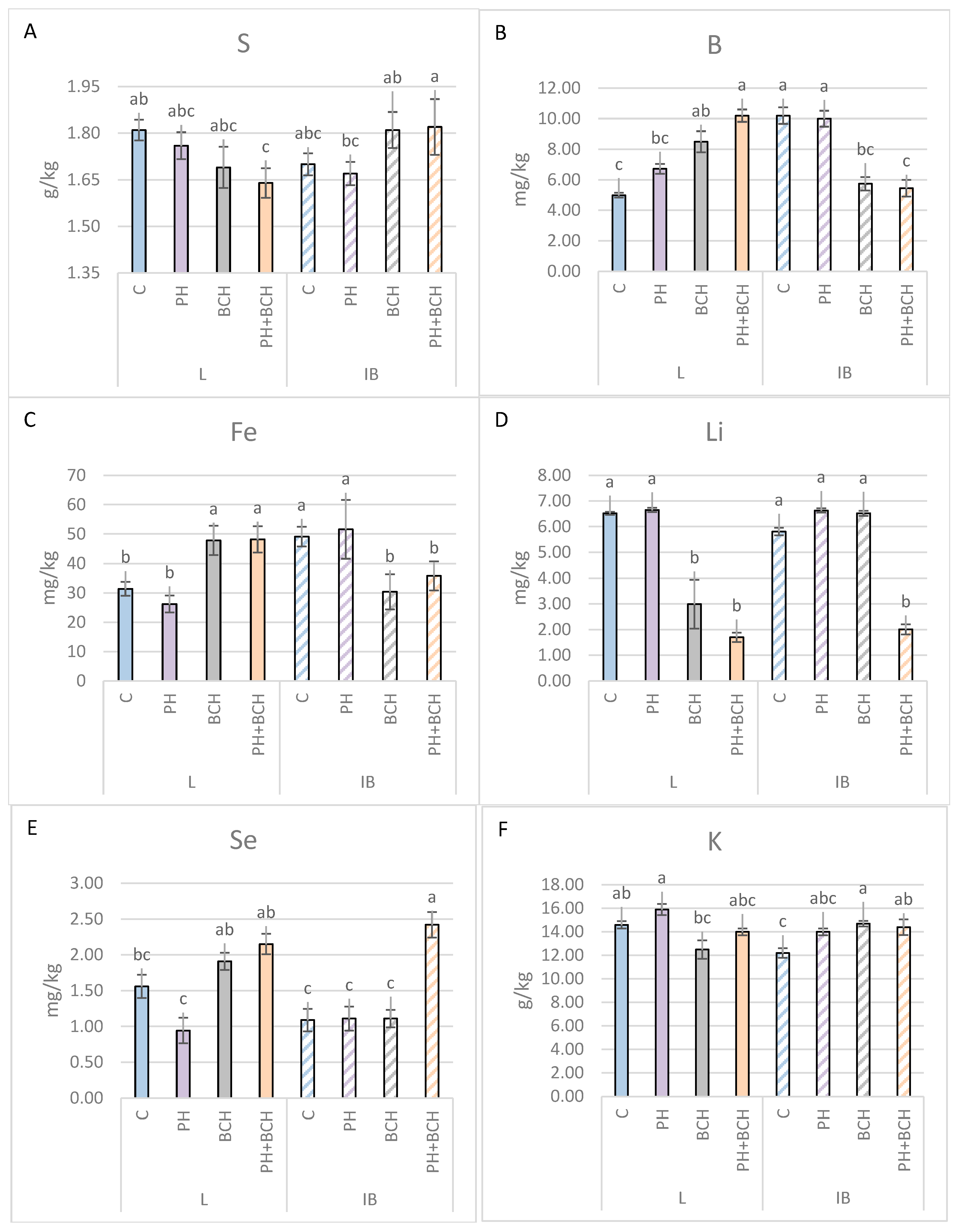
The effect of phenolic and/or biochar treatment on elemental content was less pronounced compared to the impact on secondary metabolites. Elements which were not affected by cultivar, treatment, or the interaction of the two were Ca, Mg, Mn, Si, and Zn (Table S3). The only element that was affected solely by treatment was Na. Here, the sodium content of leaves under BCH and PH+BCH treatments was significantly lower compared to the control and PH treatment (which were not significantly different from each other). The lowest Na content was observed in the PH+BCH treatment (Table S3). All other elements showed significant interaction effects and, hence, their results will be presented based on these interactions, as was the case with secondary metabolites. For P, the post hoc test did not reveal significant differences across any cultivar-by-treatment combinations. Elemental analysis has revealed that some elements exhibit patterns similar to those observed in secondary metabolites. Pattern I, or a pattern very similar to it, was observed for S (Figure 8A), where the control value of L cultivar was significantly higher compared to the PH+BCH treatment. Cultivar IB seems to express the pattern (lower values at C and PH, compared to BCH and PH+BCH), but differences in means were not significant due to larger standard errors. Pattern II was observed for B and Fe values (Figure 8B,C). This pattern was very noticeable for Fe, where Fe content under C and PH treatments was significantly lower than under BCH and PH+BCH treatments in L cultivar. For IB cultivar, this was inverted, with high values at C and PH and significantly lower values at BCH and PH+BCH treatments. For B, it was less noticeable, as C showed values significantly lower than those for the BCH and PH+BCH treatments, whereas there was no difference between the PH and BCH treatments in L cultivar. An inverted but apparent separation was observed for IB cultivar, characterized by significantly higher values for C and PH compared to the BCH and the combined PH+BCH treatment.
Interesting patterns were observed for Li and Se. The pattern for Se was opposite to that for Li (Figure 8D,E). Lithium content in L cultivar was significantly higher under the control and PH treatments than under the BCH and PH+BCH treatments. For the IB cultivar, the PH+BCH treatment resulted in significantly lower Li content in leaves compared to the C, PH, and BCH treatments, which did not differ from each other. As mentioned earlier, Se showed an opposite pattern, and here, for IB cultivar, the PH+BCH treatment showed higher values compared to C, PH, and BCH treatments, which also did not differ from each other. For L cultivar, the slightly higher values in the control disrupted the pattern, with significantly lower values than for the BCH and PH+BCH treatments, with PH showing the lowest. No clear pattern was observed for K content (Figure 8F); for L cultivar, the only difference was between the PH and BCH treatments, while for IB cultivar, the control showed significantly lower values compared to BCH and PH+BCH treatments. A short summary table for percentage change compared to control for elements with significant cultivar × treatment interaction is shown in Table 2. In short, in cultivar L, the combined PH+BCH treatment increased B, Fe, and Se compared to the control, while Li decreased and K and S remained relatively stable. In cultivar IB, PH+BCH enhanced Se and K, whereas B and Li tended to decrease. Overall, the combined treatment generally promoted B, Fe, and Se in cultivar L and Se and K in cultivar IB, with Li consistently reduced under combined treatments.

3.3. Linear Discriminant Analysis (LDA)

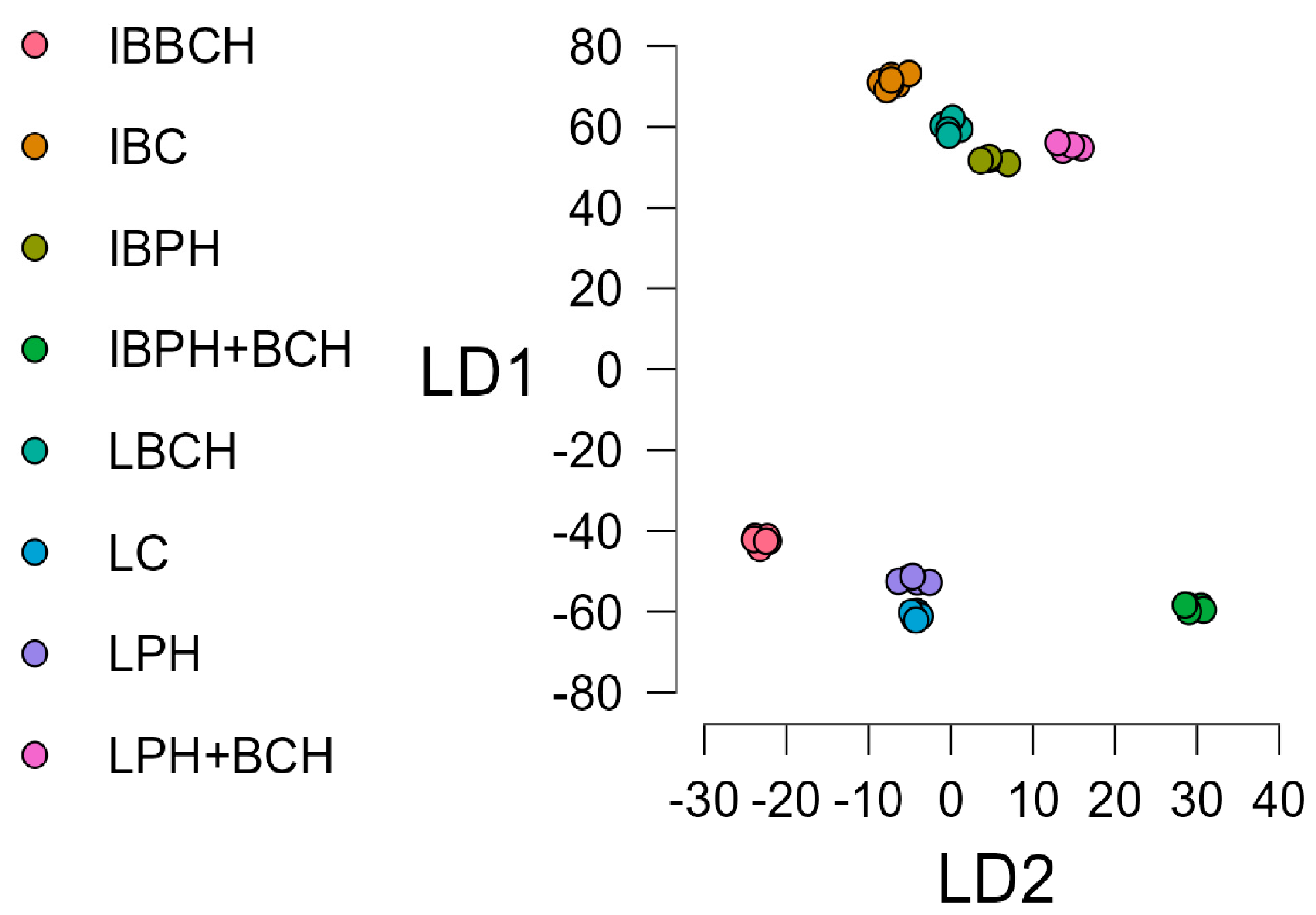
Linear discriminant analysis was able to discern and sort data based on the treatment × cultivar interaction (Figure 9). Regarding model performance metrics, the model performed reasonably well with an accuracy of 0.882, a sensitivity (true positive rate) of 0.526, and a specificity (true negative rate) of 0.931. From the scatter plot in Figure 9, it is evident that the data points are divided into two groups. Each of these two large groups results from the formation of pattern I and pattern II, as shown in the earlier section. Specifically, the group above the x-axis includes the IB control and PH treatment of cultivar IB, which exhibits little to no difference across all parameters evaluated by ANOVA and post hoc tests. Similarly, the group below the x-axis contains the same groups, but with cultivars switching places—cultivar L control and PH treatment, as well as IB cultivar and BCH and PH+BCH treatments (Figure 9).
This exactly corresponds to the figures shown in Section 3.1.1 and Section 3.1.2. Feature importance, based on mean dropout loss, highlights catechin, luteolin-7-O-glucoside, gallic acid, flavanols (as a general category), and apigenin-4-O-glucoside as the most important features in the model. The complete list of all parameters and their importance is provided in Table 3.
On the other hand, parameters that could be omitted without significantly affecting the model’s performance included verbascoside, flavonols (as a broad category), hydroxybenzoic acids, taxifolin, and dihydroflavonols (Table 1). Some of these parameters, such as verbascoside and flavonols, were not influenced by either individual factors or their interaction (as assessed by ANOVA). The scatter plot shows that the control and PH treatment for L cultivar are closely grouped, indicating only minor differences between them (Figure 9). In the same lower part of the graph for IB cultivar, BCH and combined PH+BCH treatments were separated and positioned on opposite sides of the graph. This was not the case with L cultivar; although these treatments were separated, they remained quite close.
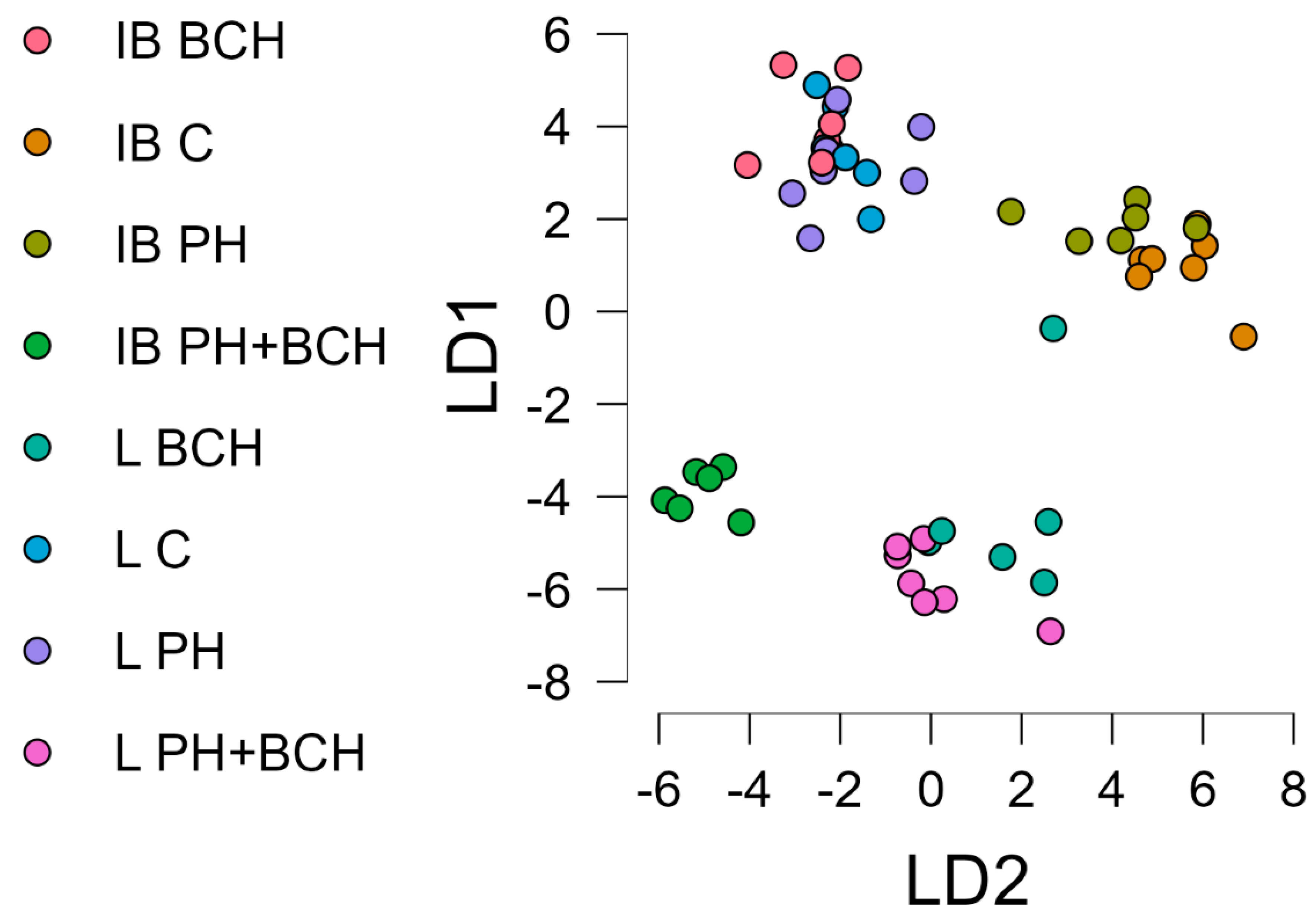
Elemental analysis data were also subjected to LDA in the same way as the LDA for secondary metabolites. Model performance metrics were similar to those based on the secondary metabolites’ data. The model performed well, with an accuracy of 0.947, a sensitivity (true positive rate) of 0.789, and a specificity (true negative rate) of 0.970. Data points separated, similarly compared to secondary metabolites LDA, and four clusters can be seen here (Figure 10).
In the lower left quadrant, IB PH+BCH cluster can be observed, while on the lower right, the combined cluster of L BCH and L PH+BCH is located. Diametrically opposite to IB PH+BCH cluster, a cluster composed of two treatments of cultivar IB (PH and C) is situated. The last cluster comprises IB BCH, L PH, and L C treatment × cultivar combinations. From the scatter plot, it can be seen that for the L cultivar, control, and PH treatment are not clearly separated, and their elemental profiles are very similar. Conversely, for the same cultivar, PH+BCH and BCH treatments are similar and grouped together, but differ significantly from L C and L PH treatments. This grouping closely resembles the grouping based on secondary metabolites (Figure 9). For IB cultivar, the PH+BCH treatment is completely separated from the other treatments, clearly indicating a different elemental profile. Control and PH treatments are situated in the same cluster, again showing their similarity, as observed in the LDA based on metabolic data. Near this cluster, but distinctly separated, IB BCH data points are located. The only difference from the metabolic data-based LDA is that IB BCH is close to IB BCH+PH cluster (Figure 9 and Figure 10). Based on feature importance metrics (Table 4), the most important variables are Li, B, K, and Na, while Mg and Zn are the least important for classification.

4. Discussion

Foliar application of micronutrients, protein hydrolysates, amino acids, humic acid, biochar, and other biologically active compounds has gained attention in recent years and shown promising results. Phenolic compounds have been used, individually or in a combination of several compounds, and their effects have been tested on several plant species, such as vanillic and p-hydroxybenzoic, in rice to enhance drought tolerance [30], tyrosol as a biostimulant for soybean [31], and ferulic and salicylic acids in various stress conditions on wheat and watermelon, respectively [32,33]. Extracts derived from whole leaves have been used less often than foliar sprays, and the research is, for the most part, related to the use of moringa leaves. These extracts have been used as foliar sprays on wheat, safflower, chickpea, fennel and basil plants, among others [34,35,36,37,38]. Biochar, on the other hand, has been investigated mostly in conjunction with other compounds, such as micronutrients (zinc, iron, potassium, and selenium) and compounds (ascorbic acid, methyl jasmonate, and glycine betaine) [25,39,40,41,42,43,44].
Differences between leaf and oil phenolic profiles between olive cultivars have been extensively investigated [45,46]. More concisely, differences in phenolic profiles of Leccino and Istarska Bjelica have been well documented [47,48,49,50]. Higher levels of flavones in the Leccino cultivar under controlled conditions compared to Istarska Bjelica cultivar, as observed in our research, have been identified previously. Pasković et al. (2024) [49] showed higher contents of luteolin-7-O-glucoside, apigenin-7-O-glucoside, luteolin, and oleuropein aglycone in Leccino cultivar, which corresponds to our results. Similarly, the leaf content of hydroxytyrosol was shown to be higher in Leccino cultivar at three different sampling times compared to Istarska Bjelica cultivar. Large differences in phenolic composition, due to cultivar differences, under controlled conditions, could explain the different patterns of response to treatments in these two cultivars.
Although foliar applications of some phenolic compounds, such as vanillic and p-hydroxybenzoic acids, have been shown to increase antioxidant activity, pigment content, and phenolic and flavonoid levels [30], this has not been observed in our case. Even though significant differences between PH and PH+BCH extracts in the context of p-hydroxybenzoic acid have been observed, it did not seem to affect the phenolic contents in leaves. As it is seen from the results, BCH alone and PH+BCH treatment condition the same response, while, for the most part, PH treatment caused the same response (or the lack of it) in secondary metabolites as the control.
Application of biochar (mixed with soil) alone or biochar combined with chitosan on the jujube plant showed that it increased the contents of tannins, flavonoids, total phenolics, terpenoids, anthocyanins, saponins, and carotenoids. Unlike in our case, the combined treatment of biochar and chitosan showed better results than applying biochar alone. Similarly to our study, chitosan applied alone showed the most negligible effect on the investigated compounds [51]. Application of biochar (in soil) and ascorbic acid (foliar) showed increased content of proline compared to Cd non-contaminated control, with the largest effect under combined biochar and ascorbic acid treatment. On the contrary, phenolics showed a decreasing trend with the application of biochar and ascorbic acid treatments.
Combined foliar treatments with biochar and phenolic compounds have shown promise in some plant species. Bibi et al. (2023) [52] showed that foliar application of biochar (30 mg/L) and resorcinol (0.1 µM/L) increased shoot/root fresh and dry weight, along with phytohormone levels, secondary metabolites, and antioxidant activities in tomato. Somewhat similar results were obtained by using a nano-biochar solution as a foliar spray on salt-stressed tomato plants [53]. Secondary metabolism was significantly enhanced using 3% nano-biochar colloidal solution. More concisely, phenolic content increased 2.76-fold, and flavonoid content increased 1.29- and 3.5-fold under non-stressed and stressed (60 mM salt) conditions, respectively. An experiment on wheat, using two varieties and soil and foliar application of nano-biochar, showed responses in secondary metabolism that are relatable to our results. Here, different responses were observed between the two varieties in total phenolic and flavonoid content and, more precisely, some combinations of soil and foliar nano-biochar treatments favored one genotype over the other. This was especially visible for flavonoid content at treatment F1S1 (1% foliar solution, 1% biochar in soil), where flavonoid content did not change for variety 2 compared to the control, but it was more than two times higher for variety 1 [54]. While under treatment, F5S5 varieties showed the opposite response: variety 2 showed a significant increase compared to the control, while variety 1 did not show increased flavonoid content. This difference in response by different varieties needs to be investigated further.
Leaf mineral content in olive has been shown to differ across cultivars grown under the same conditions. It has previously been demonstrated [55] that Leccino cultivar shows lower Fe content than Istarska bjelica cultivar, and this was also observed in our results (Figure 8C). The same trend was observed for B content (Figure 8B) and similar results were obtained by [56]. Such contrasting effects, as observed in the different patterns of B and Fe uptake after the application of amendments or biostimulants in two cultivars, are rare. A similar observation was made with kumquat, where several cultivars were treated with various types of amendments. The study demonstrated cultivar-dependent differences in amendment effects, with the same treatment producing contrasting outcomes depending on the cultivar [57]. Besides the rich carbon fraction of biochar, it can contain higher levels of minerals, such as Ca, K, Na, Mg, and P, which can directly serve as a source of mineral nutrients and thereby promote plant growth [58]. In our case, since biochar extract was used, it can be considered as a mild foliar fertilizer. Besides the mineral content of biochar, Graber et al. (2010) [59] showed that the organic profile of biochar produced under temperatures below 500 °C consists of a range of low-molecular weight organic acids, phenols, alkanes, and aromatic hydrocarbons. Similar organic profiles have been observed in smoke water and wood vinegar, with positive effects on tomato and okra plant growth and development [60,61]. Foliar application of biochar extracts as foliar amendment has been demonstrated in Chinese cabbage, where biochar obtained at lower temperatures (350 °C) showed the best results in terms of growth promotion [62]. This biochar showed higher organic matter content and higher levels of organic molecules. Among these are low-molecular weight acids (protic organic acids) and humic-like substances, which, among other compounds, increase crop performance. Treatment-induced differences in mineral content showed several notable correspondences with changes in polyphenolic metabolites derived from the shikimate–phenylpropanoid (PAL) and secoiridoid (MEP–iridoid) pathways. In cultivar L, increases in Fe and B under BCH- and PH+BCH-treated plants occurred in parallel with higher concentrations of flavones, flavonols, and selected hydroxycinnamic acids as well as secoiridoids such as oleuropein derivatives. This alignment suggests that these mineral patterns reflect physiological states associated with increased flux through both the PAL-derived phenolic branches and the secoiridoid pathway, without implying direct mineral involvement in their biosynthesis. Conversely, decreases in S and Li under the same treatments corresponded with lower levels of several shikimate- and PAL-derived metabolites, including flavanols, hydroxybenzoic acids, and simple phenolic acids, indicating that reduced accumulation of these compounds occurred under mineral profiles characteristic of these treatments. In cultivar IB, the inversion of Fe and B responses relative to cultivar L coincided with opposite trends in both phenylpropanoid and secoiridoid metabolites, supporting a cultivar-dependent coordination of mineral and metabolite responses. Elements that showed no treatment effect (e.g., Ca, Mg, Mn, Si, Zn, P, K) similarly exhibited no clear correspondence with pathway outputs. Together, these patterns indicate that mineral status reflects broader treatment-induced physiological contexts that also shape metabolic activity in the major polyphenol-producing pathways.

5. Conclusions

With the exception of a few investigated secondary metabolites, most secondary-metabolite profiles showed cultivar × treatment interactions, with a clearly expressed cultivar effect. Overall, the two cultivars exhibited opposite responses to the BCH and PH+BCH treatments: where concentrations in Leccino decreased, those in Istarska bjelica tended to increase, and vice versa. The phenolic extract solution alone did not markedly alter secondary-metabolite profiles, and the combined PH+BCH treatment did not generally lead to further changes beyond those observed with BCH alone. The only apparent exceptions were apigenin-4-O-glucoside and apigenin-7-O-glucoside in Istarska bjelica, for which PH+BCH was associated with larger changes than BCH alone and vanillic-4-glucoside in Leccino cultivar. Elemental content was significantly less influenced by treatment and, for the most part, by the interaction of the main factors, where divergence between the two cultivars can be observed. This is especially the case for Fe and B, which retained the patterns observed in secondary metabolites. Observed alterations may plausibly arise from (i) surface adsorption or desorption of compounds at the leaf surface, (ii) short-term nutrient supply via biochar-derived elements, and (iii) induction of plant signaling pathways leading to metabolic adjustment. These possibilities remain speculative and require targeted experimentation. Future work should include controlled mechanistic studies to determine whether and how foliar-applied biochar alters secondary-metabolite profiles in these two olive cultivars.

Supplementary Materials

The following supporting information can be downloaded at: https://www.mdpi.com/article/10.3390/su172411290/s1, Table S1. Characteristics of phenolic extract solution and combined biochar and phenolic extract solution, Table S2. Results of two-way ANOVA with factors cultivar and treatment for analyzed secondary metabolites. IB—Istarska bjelica, L—Leccino, C—control, PH—phenolic extract solution, BCH—biochar solution, PH+BCH—combined phenolic and biochar extract solution. Different lowercase letters represent significantly different values at p < 0.05 level obtained by two-way ANOVA and Tukey´s test, Table S3. Results of two-way anova with factors cultivar and treatment for analyzed elemental content. IB—Istarska bjelica, L—Leccino, C—control, PH—phenolic extract solution, BCH—biochar solution, PH+BCH—combined phenolic and biochar extract solution. Different lowercase letters represent significantly different values at p < 0.05 level obtained by two-way ANOVA and Tukey´s test, Table S4. Additional data on LC-MS-MS analysis, Table S5. Summary of biochar properties used in the experiment, Table S6. Limits of detection, limits of quantification and recovery rates of standard sample.

Author Contributions

Conceptualization, M.F., I.P. (Igor Pasković), I.P. (Igor Palčić), N.M., D.B. and M.P.P.; methodology, M.P., D.C., D.A., N.M., I.P. (Igor Palčić), and M.P.P.; validation, N.M., Z.U., and I.P. (Igor Palčić); formal analysis, N.M., I.P. (Igor Palčić), T.K.K., and M.P.P.; investigation, Š.M., and M.P.P.; resources, I.P. (Igor Pasković) and S.G.B.; data curation, M.F.; writing—original draft preparation, M.F.; writing—review and editing, M.F., I.P. (Igor Pasković), I.P. (Igor Palčić), Š.M., N.M., D.B., T.K.K., D.A., M.P., D.C., S.G.B., Z.U., and M.P.P.; visualization, M.F. and M.P.P.; supervision I.P. (Igor Pasković), N.M. and I.P. (Igor Palčić); project administration, M.F., I.P. (Igor Pasković), and M.P.P.; funding acquisition, I.P. (Igor Pasković). All authors have read and agreed to the published version of the manuscript.

Funding

This research was supported by the Croatian Science Foundation (CSF (HRZZ)) under the project nos. WEAVE HRZZ IP-2022-10-8305 & ARIS project N4-0346 (PROGRESS).

Institutional Review Board Statement

Not applicable.

Informed Consent Statement

Not applicable.

Data Availability Statement

Data is contained within the article or Supplementary Materials.

Conflicts of Interest

The authors declare no conflicts of interest.

References

  1. Difonzo, G.; Crescenzi, M.A.; Piacente, S.; Altamura, G.; Caponio, F.; Montoro, P. Metabolomics Approach to Characterize Green Olive Leaf Extracts Classified Based on Variety and Season. Plants 2022, 11, 3321. [Google Scholar] [CrossRef] [PubMed]
  2. Guinda, Á.; Albi, T.; Pérez-Camino, M.C.; Lanzón, A. Supplementation of Oils with Oleanolic Acid from the Olive Leaf (Olea europaea). Eur. J. Lipid Sci. Technol. 2004, 106, 22–26. [Google Scholar] [CrossRef]
  3. Oliveira, A.L.S.; Gondim, S.; Gómez-García, R.; Ribeiro, T.; Pintado, M. Olive Leaf Phenolic Extract from Two Portuguese Cultivars–Bioactivities for Potential Food and Cosmetic Application. J. Environ. Chem. Eng. 2021, 9, 106175. [Google Scholar] [CrossRef]
  4. Selim, S.; Albqmi, M.; Al-Sanea, M.M.; Alnusaire, T.S.; Almuhayawi, M.S.; AbdElgawad, H.; Al Jaouni, S.K.; Elkelish, A.; Hussein, S.; Warrad, M.; et al. Valorizing the Usage of Olive Leaves, Bioactive Compounds, Biological Activities, and Food Applications: A Comprehensive Review. Front. Nutr. 2022, 9, 1008349. [Google Scholar] [CrossRef]
  5. Debs, E.; Abi-Khattar, A.-M.; Rajha, H.N.; Abdel-Massih, R.M.; Assaf, J.-C.; Koubaa, M.; Maroun, R.G.; Louka, N. Valorization of Olive Leaves through Polyphenol Recovery Using Innovative Pretreatments and Extraction Techniques: An Updated Review. Separations 2023, 10, 587. [Google Scholar] [CrossRef]
  6. Romero-Márquez, J.M.; Navarro-Hortal, M.D.; Forbes-Hernández, T.Y.; Varela-López, A.; Puentes, J.G.; Pino-García, R.D.; Sánchez-González, C.; Elio, I.; Battino, M.; García, R.; et al. Exploring the Antioxidant, Neuroprotective, and Anti-Inflammatory Potential of Olive Leaf Extracts from Spain, Portugal, Greece, and Italy. Antioxidants 2023, 12, 1538. [Google Scholar] [CrossRef]
  7. Innosa, D.; Bennato, F.; Ianni, A.; Martino, C.; Grotta, L.; Pomilio, F.; Martino, G. Influence of Olive Leaves Feeding on Chemical-Nutritional Quality of Goat Ricotta Cheese. Eur. Food Res. Technol. 2020, 246, 923–930. [Google Scholar] [CrossRef]
  8. Lukić, I.; Pasković, I.; Žurga, P.; Germek, V.M.; Brkljača, M.; Marcelić, Š.; Ban, D.; Grozić, K.; Lukić, M.; Užila, Z.; et al. Determination of the Variability of Biophenols and Mineral Nutrients in Olive Leaves with Respect to Cultivar, Collection Period and Geographical Location for Their Targeted and Well-Timed Exploitation. Plants 2020, 9, 1667. [Google Scholar] [CrossRef]
  9. Prakash, D.; Suri, S.; Upadhyay, G.; Singh, B.N. Total Phenol, Antioxidant and Free Radical Scavenging Activities of Some Medicinal Plants. Int. J. Food Sci. Nutr. 2007, 58, 18–28. [Google Scholar] [CrossRef]
  10. Sharma, A.; Shahzad, B.; Rehman, A.; Bhardwaj, R.; Landi, M.; Zheng, B. Response of Phenylpropanoid Pathway and the Role of Polyphenols in Plants under Abiotic Stress. Molecules 2019, 24, 2452. [Google Scholar] [CrossRef]
  11. Chintra, J.; Shivani, K.; Rekha, V. Bioactivity of secondary metabolites of various plants: A review. Int. J. Pharm. Sci. Res. 2019, 10, 494–504. [Google Scholar] [CrossRef]
  12. Takshak, S.; Agrawal, S.B. Defense Potential of Secondary Metabolites in Medicinal Plants under UV-B Stress. J. Photochem. Photobiol. B 2019, 193, 51–88. [Google Scholar] [CrossRef]
  13. Mandal, S.M.; Chakraborty, D.; Dey, S. Phenolic Acids Act as Signaling Molecules in Plant-Microbe Symbioses. Plant Signal Behav. 2010, 5, 359. [Google Scholar] [CrossRef]
  14. El, S.N.; Karakaya, S. Olive Tree (Olea europaea) Leaves: Potential Beneficial Effects on Human Health. Nutr. Rev. 2009, 67, 632–638. [Google Scholar] [CrossRef]
  15. Brockman, H.G.; Brennan, R.F. The Effect of Foliar Application of Moringa Leaf Extract on Biomass, Grain Yield of Wheat and Applied Nutrient Efficiency. J. Plant Nutr. 2017, 40, 2728–2736. [Google Scholar] [CrossRef]
  16. Culver, M.; Fanuel, T.; Chiteka, A. Effect of Moringa Extract on Growth and Yield of Tomato. Greener J. Agric. Sci. 2012, 2, 207–211. [Google Scholar]
  17. Safi-Naz, S.Z.; Mostafa, M.R. Moringa Oleifera Leaf Extract Improves Growth, Physiochemical Attributes, Antioxidant Defence System and Yields of Salt-Stressed Phaseolus vulgaris L. Plants. Int. J. ChemTech Res. 2015, 8, 120–134. [Google Scholar]
  18. Prabakaran, M.; Kim, S.H.; Sasireka, A.; Chandrasekaran, M.; Chung, I.M. Polyphenol Composition and Antimicrobial Activity of Various Solvent Extracts from Different Plant Parts of Moringa Oleifera. Food Biosci. 2018, 26, 23–29. [Google Scholar] [CrossRef]
  19. Balal, R.M.; Shahid, M.A.; Javaid, M.M.; Anjum, M.A.; Ali, H.H.; Mattson, N.S.; Garcia-Sanchez, F. Foliar Treatment with Lolium perenne (Poaceae) Leaf Extract Alleviates Salinity and Nickel-Induced Growth Inhibition in Pea. Braz. J. Bot. 2016, 39, 453–463. [Google Scholar] [CrossRef]
  20. Shahid, M.A.; Balal, R.M.; Pervez, M.A.; Abbas, T.; Aqeel, M.A.; Javaid, M.M.; Garcia-Sanchez, F. Foliar Spray of Phyto-Extracts Supplemented with Silicon: An Efficacious Strategy to Alleviate the Salinity-Induced Deleterious Effects in Pea (Pisum sativum L.). Turk. J. Botany 2015, 39, 408–419. [Google Scholar] [CrossRef]
  21. Abd Elwahed, M.S.; Abd El-Aziz, M.E.; Shaaban, E.A.; Salama, D.M. New Trend to Use Biochar as Foliar Application for Wheat Plants (Triticum aestivum). J. Plant Nutr. 2019, 42, 1180–1191. [Google Scholar] [CrossRef]
  22. Lehmann, J.; Joseph, S. Biochar for Environmental Management. In Biochar for Environmental Management: Science, Technology and Implementation; Routledge: London, UK, 2024; pp. 1–976. [Google Scholar] [CrossRef]
  23. Smith, P. Soil Carbon Sequestration and Biochar as Negative Emission Technologies. Glob. Change Biol. 2016, 22, 1315–1324. [Google Scholar] [CrossRef] [PubMed]
  24. Woolf, D.; Amonette, J.E.; Street-Perrott, F.A.; Lehmann, J.; Joseph, S. Sustainable Biochar to Mitigate Global Climate Change. Nat. Commun. 2010, 1, 56. [Google Scholar] [CrossRef] [PubMed]
  25. Yaseen, S.; Amjad, S.F.; Mansoora, N.; Kausar, S.; Shahid, H.; Alamri, S.A.M.; Alrumman, S.A.; Eid, E.M.; Ansari, M.J.; Danish, S.; et al. Supplemental Effects of Biochar and Foliar Application of Ascorbic Acid on Physio-Biochemical Attributes of Barley (Hordeum vulgare L.) under Cadmium-Contaminated Soil. Sustainability 2021, 13, 9128. [Google Scholar] [CrossRef]
  26. Danish, S.; Tahir, F.A.; Rasheed, M.K.; Ahmad, N.; Ali, M.A.; Kiran, S.; Younis, U.; Irshad, I.; Butt, B. Effect of Foliar Application of Fe and Banana Peel Waste Biochar on Growth, Chlorophyll Content and Accessory Pigments Synthesis in Spinach under Chromium (IV) Toxicity. Open Agric. 2019, 4, 381–390. [Google Scholar] [CrossRef]
  27. Mark, J.; Fantke, P.; Soheilifard, F.; Alcon, F.; Contreras, J.; Abrantes, N.; Campos, I.; Baldi, I.; Bureau, M.; Alaoui, A.; et al. Selected farm-level crop protection practices in Europe and Argentina: Opportunities for moving toward sustainable use of pesticides. J. Clean. Prod. 2024, 477, 143577. [Google Scholar] [CrossRef]
  28. Anđelini, D.; Cvitan, D.; Prelac, M.; Pasković, I.; Černe, M.; Nemet, I.; Major, N.; Ban, S.G.; Užila, Z.; Ferri, T.Z.; et al. Biochar from Grapevine-Pruning Residues Is Affected by Grapevine Rootstock and Pyrolysis Temperature. Sustainability 2023, 15, 4851. [Google Scholar] [CrossRef]
  29. Major, N.; Išić, N.; Kovačević, T.K.; Anđelini, M.; Ban, D.; Prelac, M.; Palčić, I.; Ban, S.G.; Major, N.; Išić, N.; et al. Size Does Matter: The Influence of Bulb Size on the Phytochemical and Nutritional Profile of the Sweet Onion Landrace “Premanturska Kapula” (Allium cepa L.). Antioxidants 2023, 12, 1596. [Google Scholar] [CrossRef]
  30. Quan, N.T.; Xuan, T.D. Foliar Application of Vanillic and P-Hydroxybenzoic Acids Enhanced Drought Tolerance and Formation of Phytoalexin Momilactones in Rice. Arch. Agron. Soil Sci. 2018, 64, 1831–1846. [Google Scholar] [CrossRef]
  31. Silva, G.H.; de Souza, J.A.R.; Macedo, W.R.; Pinto, F.G. Tyrosol, a Phenolic Compound from Phomopsis sp., Is a Potential Biostimulant in Soybean Seed Treatment. Phytochem. Lett. 2021, 43, 40–44. [Google Scholar] [CrossRef]
  32. Mughal, A.; Jabeen, N.; Ashraf, K.; Sultan, K.; Farhan, M.; Hussain, M.I.; Deng, G.; Alsudays, I.M.; Saleh, M.A.; Tariq, S.; et al. Exploring the Role of Caffeic Acid in Mitigating Abiotic Stresses in Plants: A Review. Plant Stress 2024, 12, 100487. [Google Scholar] [CrossRef]
  33. Li, S.; Fu, W.; Li, B.; Wang, Y.; Cheng, Y.; Kang, H.; Zeng, J.; Li, S.; Fu, W.; Li, B.; et al. Insight into Cd Detoxification and Accumulation in Wheat by Foliar Application of Ferulic Acid. Plants 2025, 14, 1436. [Google Scholar] [CrossRef]
  34. Jhilik, N.Z.; Hoque, T.S.; Moslehuddin, A.Z.M.; Abedin, M.A. Effect of Foliar Application of Moringa Leaf Extract on Growth and Yield of Late Sown Wheat. Asian J. Med. Biol. Res. 2017, 3, 323–329. [Google Scholar] [CrossRef]
  35. Hafeez, A.; Tipu, M.I.; Saleem, M.H.; Al-Ashkar, I.; Saneoka, H.; Sabagh, A. El Foliar Application of Moringa Leaf Extract (MLE) Enhanced Antioxidant System, Growth, and Biomass Related Attributes in Safflower Plants. S. Afr. J. Bot. 2022, 150, 1087–1095. [Google Scholar] [CrossRef]
  36. Abdel-Rahman, S.S.A.; Abdel-Kader, A.A.S. Response of Fennel (Foeniculum vulgare, Mill) Plants to Foliar Application of Moringa Leaf Extract and Benzyladenine (BA). S. Afr. J. Bot. 2020, 129, 113–122. [Google Scholar] [CrossRef]
  37. Alkuwayti, M.A.; El-Sherif, F.; Yap, Y.K.; Khattab, S. Foliar Application of Moringa Oleifera Leaves Extract Altered Stress-Responsive Gene Expression and Enhanced Bioactive Compounds Composition in Ocimum basilicum. S. Afr. J. Bot. 2020, 129, 291–298. [Google Scholar] [CrossRef]
  38. Batool, S.; Khan, S.; Basra, S.M.A. Foliar Application of Moringa Leaf Extract Improves the Growth of Moringa Seedlings in Winter. S. Afr. J. Bot. 2020, 129, 347–353. [Google Scholar] [CrossRef]
  39. Rizwan, M.; Noureen, S.; Ali, S.; Anwar, S.; Rehman, M.Z.U.; Qayyum, M.F.; Hussain, A. Influence of Biochar Amendment and Foliar Application of Iron Oxide Nanoparticles on Growth, Photosynthesis, and Cadmium Accumulation in Rice Biomass. J. Soils Sediments 2019, 19, 3749–3759. [Google Scholar] [CrossRef]
  40. Ali, S.; Rizwan, M.; Noureen, S.; Anwar, S.; Ali, B.; Naveed, M.; Abd_Allah, E.F.; Alqarawi, A.A.; Ahmad, P. Combined Use of Biochar and Zinc Oxide Nanoparticle Foliar Spray Improved the Plant Growth and Decreased the Cadmium Accumulation in Rice (Oryza sativa L.) Plant. Environ. Sci. Pollut. Res. Int. 2019, 26, 11288–11299. [Google Scholar] [CrossRef]
  41. Guo, X.; Ji, Q.; Rizwan, M.; Li, H.; Li, D.; Chen, G. Effects of Biochar and Foliar Application of Selenium on the Uptake and Subcellular Distribution of Chromium in Ipomoea Aquatica in Chromium-Polluted Soils. Ecotoxicol. Environ. Saf. 2020, 206, 111184. [Google Scholar] [CrossRef]
  42. Filho, M.N.C.; Melo, L.C.A.; Lustosa Filho, J.F.; de Castro Paes, É.; de Oliveira Dias, F.; Lino Gomes, J.; Nick Gomes, C. Improved Tomato Development by Biochar Soil Amendment and Foliar Application of Potassium under Different Available Soil Water Contents. J. Plant Nutr. 2024, 47, 2620–2644. [Google Scholar] [CrossRef]
  43. Nasiri, S.; Andalibi, B.; Tavakoli, A.; Delavar, M.A.; El-Keblawy, A.; Van Zwieten, L. Using Biochar and Foliar Application of Methyl Jasmonate Mitigates Destructive Effects of Drought Stress Against Some Biochemical Characteristics and Yield of Barley (Hordeum vulgare L.). Gesunde Pflanz. 2023, 75, 1689–1703. [Google Scholar] [CrossRef]
  44. Hafez, E.M.; Gowayed, S.M.; Nehela, Y.; Sakran, R.M.; Rady, A.M.S.; Awadalla, A.; Omara, A.E.D.; Alowaiesh, B.F. Incorporated Biochar-Based Soil Amendment and Exogenous Glycine Betaine Foliar Application Ameliorate Rice (Oryza sativa L.) Tolerance and Resilience to Osmotic Stress. Plants 2021, 10, 1930. [Google Scholar] [CrossRef]
  45. Chiara Di Meo, M.; Izzo, F.; Rocco, M.; Zarrelli, A.; Mercurio, M.; Varricchio, E. Mid-Infrared Spectroscopic Characterization: New Insights on Bioactive Molecules of Olea europaea L. Leaves from Selected Italian Cultivars. Infrared Phys. Technol. 2022, 127, 104439. [Google Scholar] [CrossRef]
  46. Talhaoui, N.; Gómez-Caravaca, A.M.; Roldán, C.; León, L.; De La Rosa, R.; Fernández-Gutiérrez, A.; Segura-Carretero, A. Chemometric Analysis for the Evaluation of Phenolic Patterns in Olive Leaves from Six Cultivars at Different Growth Stages. J. Agric. Food Chem. 2015, 63, 1722–1729. [Google Scholar] [CrossRef]
  47. Klisović, D.; Novoselić, A.; Lukić, M.; Kraljić, K.; Bubola, K.B.; Klisović, D.; Novoselić, A.; Lukić, M.; Kraljić, K.; Bubola, K.B. Thermal-Induced Alterations in Phenolic and Volatile Profiles of Monovarietal Extra Virgin Olive Oils. Foods 2024, 13, 3525. [Google Scholar] [CrossRef] [PubMed]
  48. Polić Pasković, M.; Vidović, N.; Lukić, I.; Žurga, P.; Majetić Germek, V.; Goreta Ban, S.; Kos, T.; Čoga, L.; Tomljanović, T.; Simonić-Kocijan, S.; et al. Phenolic Potential of Olive Leaves from Different Istrian Cultivars in Croatia. Horticulturae 2023, 9, 594. [Google Scholar] [CrossRef]
  49. Pasković, I.; Lukić, I.; Žurga, P.; Germek, V.M.; Brkljača, M.; Koprivnjak, O.; Major, N.; Grozić, K.; Franić, M.; Ban, D.; et al. Temporal Variation of Phenolic and Mineral Composition in Olive Leaves Is Cultivar Dependent. Plants 2020, 9, 1099. [Google Scholar] [CrossRef]
  50. Koprivnjak, O.; Majetić, V.; Bubola, K.B.; Kosić, U. Variability of Phenolic and Volatile Compounds in Virgin Olive Oil from Leccino and Istarska Bjelica Cultivars in Relation to Their Fruit Mixtures. Food Technol. Biotechnol 2012, 50, 216–221. [Google Scholar]
  51. Rasool, B.; Mahmood-ur-Rahman; Zubair, M.; Khan, M.A.; Ramzani, P.M.A.; Dradrach, A.; Turan, V.; Iqbal, M.; Khan, S.A.; Tauqeer, H.M.; et al. Synergetic Efficacy of Amending Pb-Polluted Soil with P-Loaded Jujube (Ziziphus mauritiana) Twigs Biochar and Foliar Chitosan Application for Reducing Pb Distribution in Moringa Leaf Extract and Improving Its Anti-Cancer Potential. Water Air Soil. Pollut. 2022, 233, 344. [Google Scholar] [CrossRef]
  52. Bibi, S.; Ullah, R.; Burni, T.; Ullah, Z.; Kazi, M. Impact of Resorcinol and Biochar Application on the Growth Attributes, Metabolite Contents, and Antioxidant Systems of Tomato (Lycopersicon esculentum Mill.). ACS Omega 2023, 8, 45750–45762. [Google Scholar] [CrossRef]
  53. Shahzadi, J.; Zaib-un-Nisa; Ali, N.; Iftikhar, M.; Shah, A.A.; Ashraf, M.Y.; Chao, C.; Shaffique, S.; Gatasheh, M.K. Foliar Application of Nano Biochar Solution Elevates Tomato Productivity by Counteracting the Effect of Salt Stress Insights into Morphological Physiological and Biochemical Indices. Sci. Rep. 2025, 15, 3205. [Google Scholar] [CrossRef] [PubMed]
  54. Muhammad Mehmood, H.; Yasin Ashraf, M.; Iqra Almas, H.; Zaib-un-Nisa; Ali, N.; Khaliq, B.; Ahmad Ansari, M.; Singh, R.; Gul, S. Synergistic Effects of Soil and Foliar Nano-Biochar on Growth, Nitrogen Metabolism and Mineral Uptake in Wheat Varieties. J. King Saud Univ. Sci. 2024, 36, 103392. [Google Scholar] [CrossRef]
  55. Pasković, I.; Perica, S.; Pecina, M.; Hančević, K.; Polić Pasković, M.; Herak Ćustić, M. Leaf mineral concentration of five olive cultivars grown on calcareous soil. J. Cent. Eur. Agric. 2013, 14, 1488–1495. [Google Scholar] [CrossRef]
  56. Cukrov, M.; Ninkovic, V.; Maslov Bandić, L.; Marcelić, Š.; Palčić, I.; Franić, M.; Žurga, P.; Majetić Germek, V.; Lukić, I.; Lemić, D.; et al. Silicon-Mediated Modulation of Olive Leaf Phytochemistry: Genotype-Specific and Stress-Dependent Responses. Plants 2025, 14, 1282. [Google Scholar] [CrossRef] [PubMed]
  57. Meng, X.; Guo, J.; Zheng, G.; Yang, J.; Yang, J.; Chen, T.; He, M.; Li, Y. Combination of Low-Accumulation Kumquat Cultivars and Amendments to Reduce Cd and Pb Accumulation in Kumquat Grown in Contaminated Soil. J. Clean. Prod. 2022, 365, 132660. [Google Scholar] [CrossRef]
  58. Xu, X.; Zhao, Y.; Sima, J.; Zhao, L.; Mašek, O.; Cao, X. Indispensable Role of Biochar-Inherent Mineral Constituents in Its Environmental Applications: A Review. Bioresour. Technol. 2017, 241, 887–899. [Google Scholar] [CrossRef]
  59. Graber, E.R.; Harel, Y.M.; Kolton, M.; Cytryn, E.; Silber, A.; David, D.R.; Tsechansky, L.; Borenshtein, M.; Elad, Y. Biochar Impact on Development and Productivity of Pepper and Tomato Grown in Fertigated Soilless Media. Plant Soil 2010, 337, 481–496. [Google Scholar] [CrossRef]
  60. Kulkarni, M.G.; Ascough, G.D.; Van Staden, J. Effects of Foliar Applications of Smoke-Water and a Smoke-Isolated Butenolide on Seedling Growth of Okra and Tomato. HortScience 2007, 42, 179–182. [Google Scholar] [CrossRef]
  61. Mungkunkamchao, T.; Kesmala, T.; Pimratch, S.; Toomsan, B.; Jothityangkoon, D. Wood Vinegar and Fermented Bioextracts: Natural Products to Enhance Growth and Yield of Tomato (Solanum lycopersicum L.). Sci. Hortic. 2013, 154, 66–72. [Google Scholar] [CrossRef]
  62. Bian, R.; Joseph, S.; Shi, W.; Li, L.; Taherymoosavi, S.; Pan, G. Biochar DOM for Plant Promotion but Not Residual Biochar for Metal Immobilization Depended on Pyrolysis Temperature. Sci. Total Environ. 2019, 662, 571–580. [Google Scholar] [CrossRef] [PubMed]
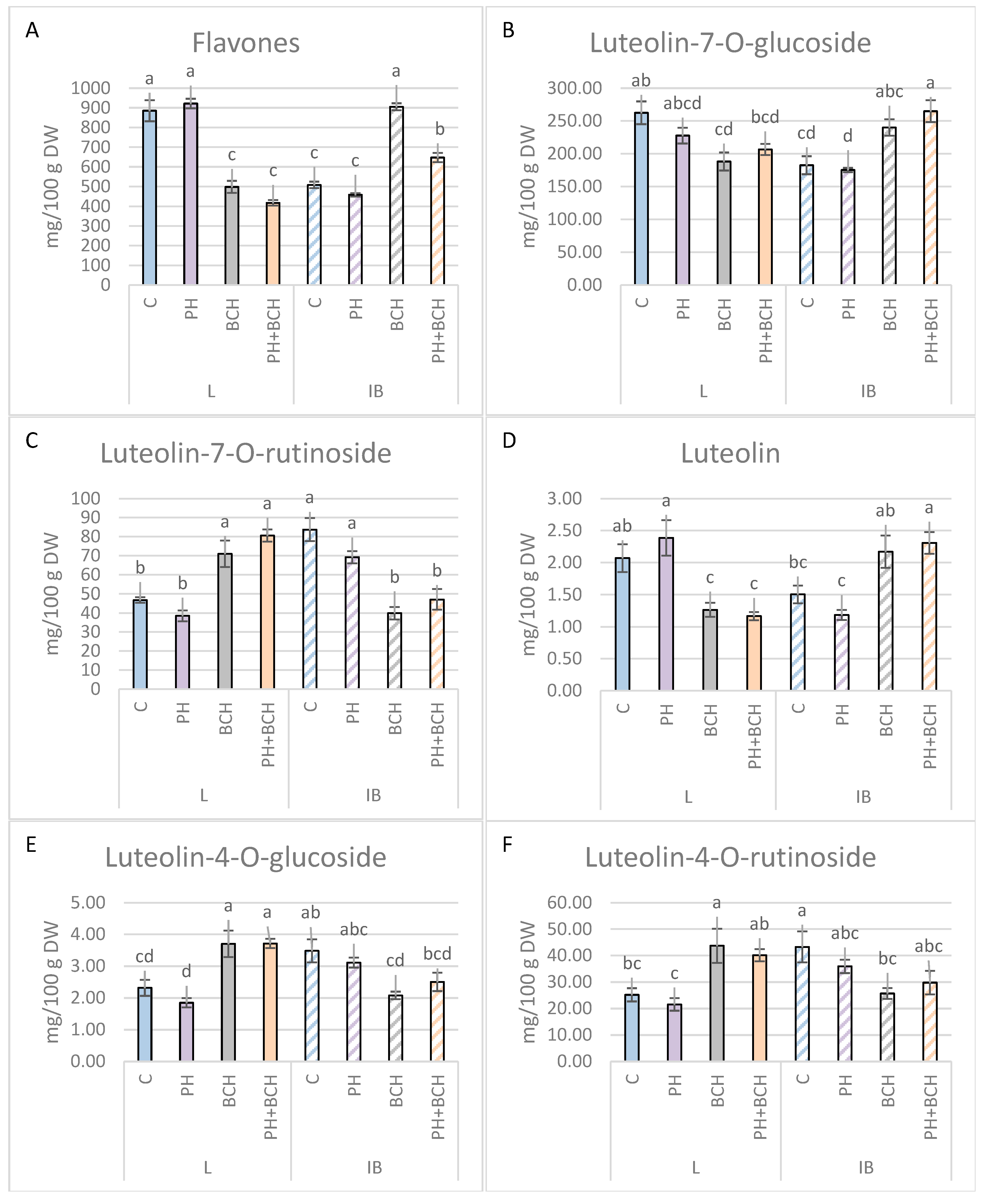
Figure 1. Multiple comparisons of the effects of treatment × cultivar interaction on the contents of (A) flavone, (B) luteolin-7-O-glucoside, (C) luteolin-7-O-rutinoside, (D) luteolin, (E) luteolin-4-O-glucoside, (F) luteolin-4-O-rutinoside, (G) apigenin-7-O-glucoside, (H) apigenin-4-O-glucoside, and (I) apigenin in olive leaves after foliar treatment with phenolic extract solution (PH), biochar solution (BCH), and combined phenolic extract solution and biochar solution (PH+BCH). C—control. IB—Istarska bjelica, L—Leccino. n = 8. All secondary metabolites are expressed as mg/100 g DW. Different lowercase letters represent statistically significant differences between mean values at p < 0.05 obtained by a two-way ANOVA and Tukey’s test.
Sustainability 17 11290 g001aSustainability 17 11290 g001b
Figure 2. Multiple comparisons of the effects of treatment × cultivar interaction on the contents of (A) quercetin-3,4′-digcucoside, (B) isoquercitroside, (C) quercitrin, (D) taxifolin, (E) isorhamnetin-4′-glucoside, (F) isorhamnetin-3-O-glucoside, (G) spiraeoside, (H) isorhamnetin, (I) rutin, and (J) dihydroflavonols in olive leaves after foliar treatment with phenolic extract solution (PH), biochar solution (BCH), and combined phenolic extract solution and biochar solution (PH+BCH). C—control. IB—Istarska bjelica, L—Leccino. n = 8. All secondary metabolites are expressed as mg/100 g DW. Different lowercase letters represent statistically significant differences between mean values at p < 0.05 obtained by a two-way ANOVA and Tukey’s test.
Sustainability 17 11290 g002aSustainability 17 11290 g002b
Figure 3. Multiple comparisons of the effects of treatment × cultivar interaction on the contents of phenolic acids (A) and hydroxybenzoic acids (BG) in olive leaves after foliar treatment with phenolic extract solution (PH), biochar solution (BCH), and combined phenolic extract solution and biochar solution (PH+BCH). C—control. IB—Istarska bjelica, L—Leccino. All secondary metabolites are expressed as mg/100 g DW. n = 8. Different lowercase letters represent statistically significant differences between mean values at p < 0.05 obtained by a two-way ANOVA and Tukey’s test.
Sustainability 17 11290 g003
Figure 4. Multiple comparisons of the effects of treatment × cultivar interaction on the contents of hydroxycinnamic acids: (A) ferulic acid, (B) isoferulic acid, (C) chlorogenic acid, (D) neochlorogenic acid and (E) caffeic acid in olive leaves after foliar treatment with phenolic extract solution (PH), biochar solution (BCH), and combined phenolic extract solution and biochar solution (PH+BCH). C—control. IB—Istarska bjelica, L—Leccino. n = 8. All secondary metabolites are expressed as mg/100 g DW. Different lowercase letters represent statistically significant differences between mean values at p < 0.05 obtained by a two-way ANOVA and Tukey’s test.
Sustainability 17 11290 g004
Figure 5. Multiple comparisons of the effects of treatment × cultivar interaction on the contents of (A) oleacein, (B) oleuropein aglycone, and (C) secoiridoids in olive leaves after foliar treatment with phenolic extract solution (PH), biochar solution (BCH), and combined phenolic extract solution and biochar solution (PH+BCH). C—control. IB—Istarska bjelica, L—Leccino. n = 8. All secondary metabolites are expressed as mg/100 g DW. Different lowercase letters represent statistically significant differences between mean values at p < 0.05 obtained by a two-way ANOVA and Tukey’s test.
Sustainability 17 11290 g005
Figure 6. Multiple comparisons of the effects of treatment × cultivar interaction on the contents of hydroxytyrosol (A) and vanillic-4-glucoside (B) in olive leaves after foliar treatment with phenolic extract solution (PH), biochar solution (BCH), and combined phenolic extract solution and biochar solution (PH+BCH). C—control. IB—Istarska bjelica, L—Leccino. All secondary metabolites are expressed as mg/100 g DW. n = 8. Different lowercase letters represent statistically significant differences between mean values at p < 0.05 obtained by a two-way ANOVA and Tukey’s test.
Sustainability 17 11290 g006
Figure 7. Multiple comparisons of the effects of treatment × cultivar interaction on the contents of catechin (A) and flavanols (B) in olive leaves after foliar treatment with phenolic extract solution (PH), biochar solution (BCH), and combined phenolic extract solution and biochar solution (PH+BCH). C—control. IB—Istarska bjelica, L—Leccino. n = 8. All secondary metabolites are expressed as mg/100 g DW. Different lowercase letters represent statistically significant differences between mean values at p < 0.05 obtained by a two-way ANOVA and Tukey’s test.
Sustainability 17 11290 g007
Figure 8. Multiple comparisons of the effects of treatment × cultivar interaction on the contents of S (A), B (B), Fe (C), Li (D), Se (E), and K (F) in olive leaves after foliar treatment with phenolic extract solution (PH), biochar solution (BCH) and combined phenolic extract solution and biochar solution (PH+BCH). C—control. IB—Istarska bjelica, L—Leccino. Elements K and S are expressed as g/kg DW, while others are described as mg/kg DW. n = 8. Different lowercase letters represent statistically significant differences between mean values at p < 0.05 obtained by a two-way ANOVA and Tukey’s test.
Sustainability 17 11290 g008
Figure 9. Linear discriminant analysis (LDA) scatter plot showing separation of data points based on treatment × cultivar interaction and secondary metabolites data. IBBCH—Istarska bjelica, biochar treatment, IBC—Istarska bjelica, control, IBPH—Istarska bjelica, phenolic extract treatment, IBPH+BCH—Istarska bjelica, combined phenolic extract and biochar treatment, LBCH—Leccino, biochar treatment, LC—Leccino, control, LPH—Leccino, phenolic extract treatment, LPH+BCH—Leccino, combined phenolic extract and biochar treatment.
Sustainability 17 11290 g009
Figure 10. Linear discriminant analysis (LDA) scatter plot showing separation of data points based on treatment×cultivar interaction and elemental content data. IBBCH—Istarska bjelica, biochar treatment, IBC—Istarska bjelica, control, IBPH—Istarska bjelica, phenolic extract treatment, IBPH+BCH—Istarska bjelica, combined phenolic extract and biochar treatment, LBCH—Leccino, biochar treatment, LC—Leccino, control, LPH—Leccino, phenolic extract treatment, LPH+BCH—Leccino, combined phenolic extract and biochar treatment. LD1, LD2—linear discriminants 1 and 2.
Sustainability 17 11290 g010
Table 1. Percent change compared to control for main metabolites or metabolite groups.
MetabolitePHBCHPH+BCH
LIBLIBLIB
Oleuropein aglycone−23.6+21.2−91.9 *+972−86.6+1282
Oleacein−30.3+2.1−98.5+4689−96.9+6184
Hydroxytyrosol−17.3−26.7−63.6+201.6−58.8+115.8
Luteolin+15.5−20.7−38.6+44.7−43.6+54.0
Luteolin-7-O-glucoside−13.24−4.02−28.29+31.47−21.30+45.11
Apigenin-7-O-glucoside+15.2−10.7−65.3+207.7−84.6+54.5
Flavones+4.2−9.9−43.7+78.1−52.8+24.7
Quercetin-3-glucoside (isoquercitroside)−5.9−24.6−54.7+66.4−53.9+60.6
Isorhamnetin+5.5−26.9+80.5−58.3+105.5−62.6
Chlorogenic acid−9.9−2.2−87.4+614.8−86.7+595.1
* Cells in bold show a significant difference assessed by two-way ANOVA and Tukey’s HSD test.
Table 2. Percentage change compared to control for elements with significant Cultivar × Treatment interaction.
ElementPHBCHPH+BCH
LIBLIBLIB
B 34.7−2.070.1 *−43.7104.2−46.5
Fe −16.65.152.2−38.153.4−27.1
K8.914.8−14.420.5−4.118.0
Li2.014.1−54.112.3−73.9−65.4
S−2.8−1.8−6.66.5−9.47.1
Se−39.71.822.41.837.8121.1
* cells in bold show significant difference assessed by two-way ANOVA and Tukey’s HSD test.
Table 3. Feature importance metrics based on mean dropout loss for linear discriminant analysis (LDA) in Figure 9.
MetaboliteMean Dropout Loss
Catechin220.043
Luteolin-7-O-glucoside196.196
3,4,5-Trihydroxybenzoic acid (gallic acid)192.579
Flavanols186.273
Apigenin-4-O-glucoside183.572
Quercetin-4′-glucoside (spiraeoside)165.924
Apigenin164.738
Hydroxybenzaldehydes157.343
Chlorogenic acid149.305
Oleuropein aglycone148.162
3,4-Dihydroxybenzoic acid (protocatechuic acid)144.974
Luteolin-7-O-rutinoside139.818
Quercetin-3-rhamnoside (quercitrin)124.767
Quercetin-3,4′-diglucoside123.736
Vanillin112.430
Flavones109.218
Apigenin-7-O-glucoside105.699
Luteolin-4-O-glucoside92.390
4-hydroxybenzoic acid88.941
Ferulic acid77.077
2,5-Dihydroxybenzoic acid (Gentisic acid)74.333
Isoferulic acid60.998
Oleacein55.830
Luteolin55.118
Luteolin-4-O-rutinoside51.063
Isorhamnetin-3-O-glucoside47.150
Vanillic acid41.809
Neochlorogenic acid35.428
Quercetin-3-rutinoside (rutin)35.393
Secoiridodis30.447
Oleuropein26.513
Phenolic acids25.758
Hydroxytyrosol25.741
Caffeic acid17.619
Quercetin11.559
Quercetin-3-glucoside (Isorquercitroside)11.164
p-Coumaric acid10.306
Isorhamnetin9.681
Vanillic-4-glucoside5.733
Hydroxycinnamic acids1.437
Isorhamnetin-4′-glucoside1.364
Verbascoside0.489
Flavonols0.358
Hydroxybenzoic acids0.204
Dihydroquercetin (taxifolin)0.186
Dihydroflavonols0.184
Note: mean dropout loss is based on 50 permutations.
Table 4. Feature importance metrics based on mean dropout loss for linear discriminant analysis (LDA) in Figure 10.
ElementMean Dropout Loss
Li182.558
B70.275
K66.834
Na41.904
Ca24.805
P24.177
Si23.311
Mg21.907
Se21.835
Fe18.774
S15.177
Mn12.708
Zn11.182
Disclaimer/Publisher’s Note: The statements, opinions and data contained in all publications are solely those of the individual author(s) and contributor(s) and not of MDPI and/or the editor(s). MDPI and/or the editor(s) disclaim responsibility for any injury to people or property resulting from any ideas, methods, instructions or products referred to in the content.