Article

Balancing Cultural Values and Energy Transition: A Multi-Criteria Approach Inspired by the New European Bauhaus


by
Stefania De Medici
1,*,
Giuseppe Cataldi
2,
Vincenzo Costanzo
3 and
Maria Rosaria Vitale
1
1
Department of Civil Engineering and Architecture (DICAR), University of Catania, 96100 Siracusa, Italy
2
Department of Architecture (DiARC), University of Naples Federico II, 80138 Naples, Italy
3
Department of Electrical Electronic and Computer Engineering (DIEEI), University of Catania, 95123 Catania, Italy
*
Author to whom correspondence should be addressed.
Sustainability 2025, 17(24), 11255; https://doi.org/10.3390/su172411255
Submission received: 5 November 2025 / Revised: 6 December 2025 / Accepted: 10 December 2025 / Published: 16 December 2025

Abstract

The energy efficiency of historic buildings is the focus of activities aimed at developing replicable methodologies for implementing innovative technological solutions. In line with this priority, the Sicilian Region has launched a project for the energy retrofitting of 91 heritage sites and buildings across the region. To support the decision-making process, this paper defines criteria and indicators for assessing the compatibility and effectiveness of energy efficiency upgrade solutions for buildings of cultural value. The goal of improving energy performance is framed within broader performance targets, including enhancing user experience, promoting cultural activities for users’ creative growth, and carrying out restoration works to strengthen the identity of the pre-existence. The criteria result from a thorough analysis of the current scientific debate on the energy efficiency of heritage buildings and have been validated through their application to the case study of Palazzo Belmonte-Riso, a listed building in the historical centre of Palermo (Italy). The suggested criteria provide guidance for evaluating implemented projects and developing new design solutions. The research proposes a holistic and multidisciplinary approach aligned with the New European Bauhaus, promoting creative and innovative solutions that embody sustainability, aesthetics, and inclusiveness in addressing key issues on the European Agenda.

1. Introduction

Within the framework of the European Green Deal, the Circular Economy Action Plan [1] and the Energy Efficiency Directive [2] are key European documents driving the energy transition of cultural heritage. These documents emphasise the importance of using innovative and sustainable technological solutions to improve the energy performance of buildings while preserving their historical and cultural value. In line with this goal, UNESCO’s 2030 Agenda for Sustainable Development [3] promotes an approach that balances conservation and technological innovation, underlining the integration of sustainability strategies in the management of World Heritage sites.
Several local authorities in Europe are implementing renovation processes in compliance with this approach. Among them, the Sicilian Region have launched an ambitious project to renovate 91 heritage sites and buildings, which are part of the rich Region’s cultural heritage portfolio, in order to improve their energy efficiency [4]. The Region’s project is a remarkable example of how regional policies can contribute to global sustainability goals by adapting European and international guidelines to local specificities.
This research aims to develop a methodology for assessing advanced technological solutions designed to preserve and enhance cultural heritage while reducing energy consumption and environmental impact.
A key cultural reference for this research is the adoption of a system-oriented approach to the built environment [5,6]. This framework enables the evaluation of design solutions by considering not only the performance improvements of individual building components, but also the wider implications for the system as a whole. To ensure that local improvements do not compromise global functionality, each intervention is analysed in relation to its impact on other building components and the building system. This approach balances multiple priorities—sustainability, conservation, safety and comfort—while optimising component integration and overall building efficiency. The methodological framework refers to the UNI 8290:1981 [7] and UNI 11277:2008 [8] standards.
These principles remain relevant and have been integrated, with updates, into current European and international standards, including UNI EN 16798 [9] (energy performance), ISO 15686 [10] (service life planning), the UNI EN 15643 [11] (sustainability of construction works) series and ISO 21929-1:2011 [12] (sustainability indicators for buildings).
Balancing the need to improve performance with the preservation of cultural values remains one of the most significant challenges in retrofitting historic buildings and integrating renewable energy sources (RES) into the built heritage. This tension, central to the international debate since the mid-20th century, has evolved considerably with the emergence of global sustainability agendas such as the ONU 2030 Agenda [3] and the European Green Deal [13]. Cultural heritage is now widely recognised as both a non-renewable resource and a driver of sustainable development, offering opportunities to reduce environmental impacts while strengthening local identity [14,15,16].
Retrofitting in historic contexts involves strategies aimed at improving energy performance while safeguarding the structural and aesthetic integrity of heritage assets. European policies, such as the EU Directive 2018/844 [17] on the energy performance of buildings, highlight the role of energy retrofitting in reducing greenhouse gas emissions and achieving near-zero energy standards. In Italy, legislative measures such as Decree 192/2005 [18] and the MiBACT guidelines [19,20] have introduced a tailored approach that acknowledge the unique characteristics and historical significance of each building. These measures aim to reconcile conservation needs and energy efficiency requirements through “improvement” actions—understood as sensitive, adaptive, and compatible enhancements of a building’s energy behaviour that preserve its character and authenticity [21,22].
The “energy efficiency first” principle, central to the European Green Deal, prioritises passive design and efficient technologies to reduce consumption [23]. For historic buildings, this often translates into the careful integration of insulation and advanced HVAC systems in ways that preserve material authenticity and avoid irreversible changes [24]. Among the most debated issues is the use of RES, typically installed on roofs or façades, where visual and structural compatibility can be challenging. Best practices favour low-visibility solutions—such as PV roof tiles or glass-embedded cells—that blend with the building’s morphology and materials. Nevertheless, these can raise concerns regarding the architectural integrity of the construction and visual impact on the historic urban landscape [25,26].
Other RES technologies and geothermal systems offer less intrusive alternatives. Solar thermal can be integrated into ancillary structures, while geothermal provides efficient heating and cooling without altering the building envelope. These solutions illustrate the potential for innovation in meeting the dual requirements of heritage preservation and energy sustainability.
International and national frameworks provide essential guidance for RES integration in heritage contexts. The UNI EN 16883 standard [27] sets out compatibility criteria for retrofitting, focusing on reversibility, material conservation and contextual impact. Complementing this, the MiBACT guidelines [19,20] promote a multi-criteria evaluation—technical, economic and cultural—requiring understanding of the historical buildings’ energy behaviour, assessment of aesthetic impacts on the landscape and minimisation of alterations to historical features [28]. This reinforces the need for case-specific design solutions, supported by rigorous evaluation and multidisciplinary collaboration [29]. Effective practice requires recognising different construction phases, techniques and materials, analysing energy consumption and technical systems, and deploying the necessary expertise to achieve a balanced integration of conservation and efficiency [4].
Italy’s architectural heritage—approximately 2.1 million residential buildings built before 1919—embodies a multifaceted historical process spanning centuries. Despite its immense cultural and landscape value, conservation faces financial constraints and regional disparities, particularly in Southern Italy, as reported in the 2019 ISTAT BES report [30]. Material incompatibilities, such as those between traditional stone, brick or wood and certain renewable technologies, further challenging integration [31].
Energy efficiency initiatives in historic buildings offer dual benefits: promoting conservation through enhanced usability and advancing sustainable development goals [32,33]. Successful adaptation must balance renewable energy production with the preservation of architectural identity and landscape compatibility. The ability to adapt heritage buildings to evolving user needs is essential for their conservation; neglect or abandonment accelerates deterioration, lowering property values and urban quality while triggering structural and social decline [34,35,36].
Authenticity remains a cornerstone of this debate. The UNESCO Operational Guidelines and the Faro Convention [37,38] advocate sustainable use of heritage without compromising cultural or environmental integrity. Technological advances and stakeholder participation are key to achieving these objectives, supporting adaptive reuse strategies that follow circular economy principles while safeguarding cultural and material authenticity [29,39,40].
Rehabilitation as a sustainable practice also serves broader economic and environmental goals: reducing material consumption, supporting local craftsmanship, and preserving non-renewable cultural resources. These actions reinforce the intrinsic value of historic architecture as a repository of human creativity and social memory and support a coevolutionary approach to conservation [41,42].
In this context, the European construction sector increasingly prioritises renovation over new construction. Italian policies, including tax incentives for energy retrofitting, have stimulated significant investment, fostering the coexistence of heritage conservation and energy efficiency. Nevertheless, broad acceptance of integrated RES in historic settings requires tailored, case-specific solutions supported by multidisciplinary assessment methods [43,44].
This multifaceted approach must align with international guidelines—such as the UNI EN 16883 standard [27]—and evolving societal expectations, giving priority to sustainability while preserving the cultural and historical integrity of heritage buildings [43,45,46].
This research aims to develop a decision-support tool to improve the performance of heritage buildings; in line with the principles of the New European Bauhaus [47], the study emphasises the role of cultural production, particularly in contemporary art and design, in reconciling architectural heritage with technological innovation [26,48,49]. The adoption of advanced energy solutions is supported by sustainability, while aesthetics ensures that new interventions respect the cultural significance of historic contexts. Inclusion, meanwhile, promotes community engagement in the transformation process.
The underlying hypothesis is that cultural production can facilitate building transformations, such as the installation of renewable energy production systems and performance-enhancement technologies [50], while preserving the tangible and intangible values of historic buildings.
The novelty of the proposed research is to guide designers in the energy adaptation of historic buildings or historic contexts by creating new value through the introduction of art and design installations that have the dual function of contributing to the production of energy from renewable sources and transforming the goals of the Green Deal into a path of cultural production.
The research proposes a systemic approach capable of integrating multiple layers of heritage adaptation, which is a key consideration in the preservation of cultural heritage.
The goal of this perspective is to boost the overall value of heritage assets by reconnecting them to broader heritage value chains [51].
The evaluation criteria developed in this study are designed to increase a building’s energy efficiency while minimising its impact on identity, without compromising its cultural value or the evidence of its transformations over time. Therefore, the approach seeks to calibrate energy retrofit interventions according to the possibilities defined by the building’s values and transformation constraints, guiding design choices towards solutions that are consistent with the building’s historical and typological characteristics. The purpose of the building plays a central role among the variables shaping the decision-making process, as it drives key decisions and helps address challenges related to the compatibility between innovative technologies and traditional architectural language.
This study takes a multidisciplinary approach, combining expertise in building restoration, architectural technology, design and contemporary art with building services engineering to promote the contemporary usability of heritage buildings. This ensures a harmonious balance between conserving historic values and implementing design solutions that enhance sustainability.
The evaluation criteria have been validated through their application to the case study of Palazzo Belmonte Riso in Palermo, which was selected from the list of buildings included in the Sicilian Regional Call for the Sustainable Rehabilitation of Public Cultural Heritage. Currently housing the Regional Museum of Modern and Contemporary Art, this heritage building has served as a testing ground to demonstrate that it is possible to integrate advanced technological solutions and renewable energy production systems while maintaining a balance between cultural tradition and innovation.

2. Materials and Methods

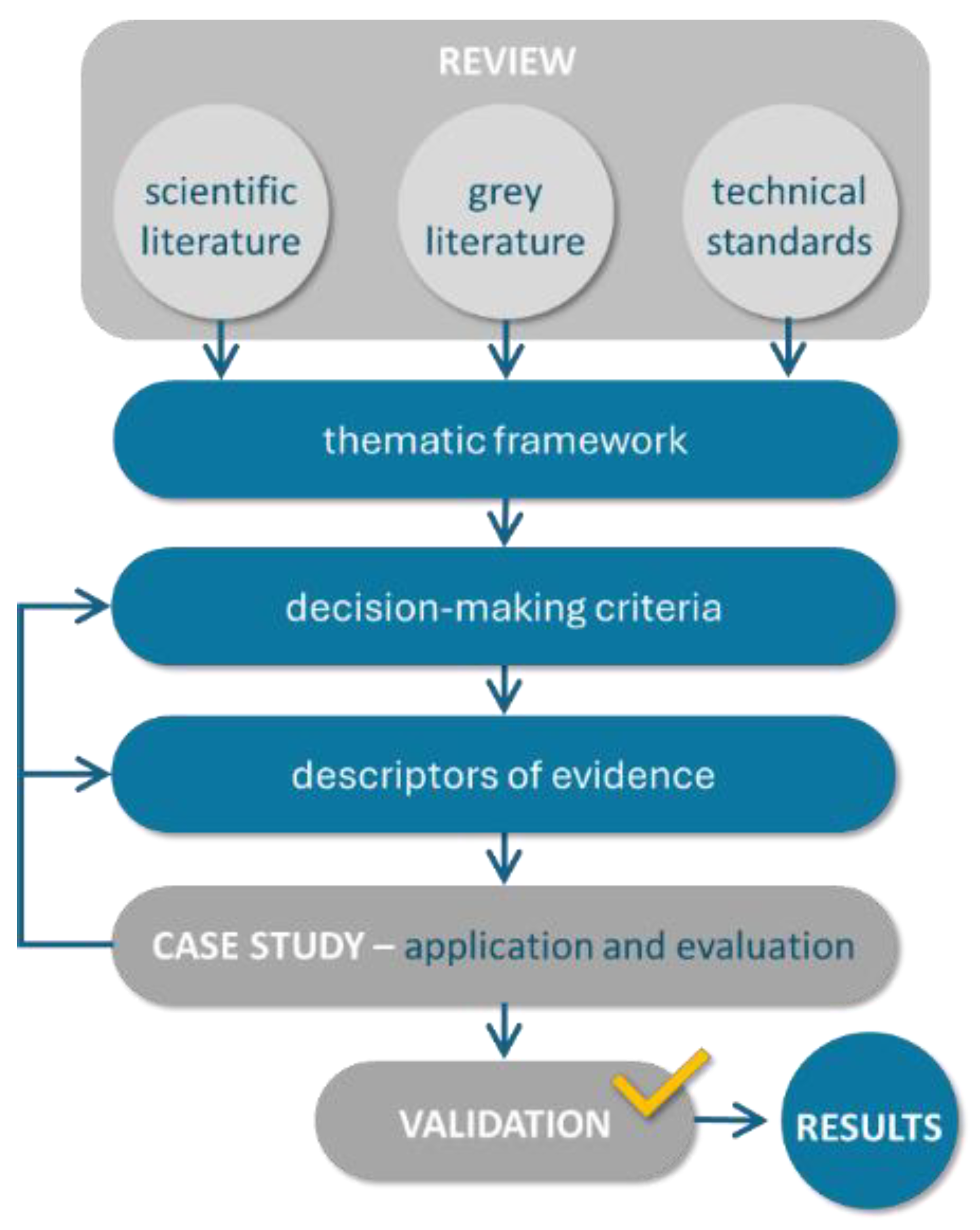
The methodology aims to define and validate a set of decision-making criteria to guide energy retrofitting of architectural heritage, striking a balance between improving performance and conserving the building’s identity and cultural value (Figure 1). The research was developed in different stages of detailed analysis, in order to achieve the following goals:
1.
Identifying criteria to assess the compatibility and effectiveness of energy efficiency interventions in historic buildings.
2.
Translate these criteria into the descriptors of evidence required for consolidated multi-criteria analysis methodologies.
3.
Validate the criteria and descriptors by applying them to the retrofitting of a culturally significant building. Verify that they reflect the values of the NEB (sustainability, aesthetics and inclusion) and comply with current guidelines and standards.

2.1. Thematic Framework: Mapping of Recurring Topics

To address the first objective, a review of the main reference sources is required, through the analysis of the scientific literature on the retrofit of historic buildings, with a dual focus: on the one hand, the integration of RES, and on the other hand, the preservation of authenticity and the compatibility assessment. Knowledge from scientific sources is integrated with the analysis of grey literature—including Italian national and regional guidelines, reports from European projects, UNESCO documents, conservation charters, etc.—as well as a review of the current technical standards [3,14,52].
In particular, compatibility assessment refers to UNI EN 16883 [27] and the MiBACT Guidelines [19]; for the classification of the building system, the conceptual framework of the UNI 8290 [7] and UNI 11277 [8] standards is adopted as a methodological basis, aligning it with current standards (UNI EN 16798 [9] for energy performance; ISO 15686 [10] for service life planning), and in coherence with the sustainability frameworks of the UNI EN 15643 [11] series and ISO 21929-1 [12].
The outcome of this thematic framework consists of a mapping of recurring topics and requirements, organised into the following sub-topics: cultural values and authenticity; energy and environmental performance; technological integration; comfort and usability; landscape and perception; governance, participation, and cultural activation (Table 1).

2.2. Decision-Making Criteria and Pairwise Comparison of Alternatives

A set of decision-making criteria was derived from the thematic framework described in Section 2.1 in order to evaluate the compatibility and effectiveness of energy retrofit interventions in heritage buildings (Table 2). The criteria are designed to be streamlined and transparent, applicable across different case studies while being adaptable to context-specific constraints. The twelve criteria (C1–C12) cover the full spectrum of thematic areas identified in the review (Table 1).
For each criterion, a series of comparison descriptors has been defined. These descriptors provide measurable or observable evidence (e.g., quantitative values, qualitative assessments or regulatory requirements) to support the comparison of project alternatives.
Table 2. Decision-making criteria and indicators for assessing energy retrofit interventions in heritage.
TopicCriterionDescriptionPerformance Indicators (Unit/Scale)
T1C1. Cultural compatibility and authenticityConsistency of interventions with authenticity, integrity, reversibility, and legibility principlesDegree of reversibility; distinguishability of additions;
impact on historical assemblies
C2. Typological and material coherenceMorphological, chromatic, and material compatibility of new elements% of historic surfaces affected; morphological/chromatic coherence; type of anchoring
(reversible/invasive)
T2C3. “Efficiency first” principlePriority to demand reduction before integrating RESShare of demand reduction before RES; ratio between avoided demand and produced energy;
extent of passive solutions
C4. Energy and climatic performanceEnergy use, RES share, and GHG reductionEnergy use intensity (kWh/m2·year); RES coverage (%); avoided emissions (tCO2e/year);
compliance with UNI EN 16798
C5. Environmental performance over
the life cycle
Life cycle impact and resource efficiencyGWP A1–C4; recycled content; properties of deconstruction; simplified LCA (EN 15643/ISO 21929-1)
T4C6. Indoor Environmental Quality (IEQ)Comfort and health conditions for occupants and specific usesOperative temperature; relative humidity; CO2 concentration; illuminance/UGR; noise levels; compliance with specific functional requirements
(e.g., museum standards)
T3C7. Conservation risks and durabilityRisk of physical or chemical damage due to retrofitRisk of surface/interstitial condensation; hygroscopic incompatibility; thermo-hygrometric stress;
service life planning (ISO 15686)
T4C8. Maintainability, management, and monitoringEase of maintenance and performance controlAccessibility for maintenance; expected time to repair (MTTR); presence of BMS/sub-metering;
monitoring-reporting-verification plan
T5C9. Landscape and perceptual impactVisual compatibility with landscape and contextVisibility from public viewpoints (viewshed/sightlines); coherence with skyline and context; minimisation of glare or visual clutter
T6C10. Safety and
compliance
Fulfilment of legal and technical safety requirementsCompliance with fire safety, structural, and plant regulations; management of evacuation routes
and protection of collections
C11. Cost and life cycleEconomic feasibility and long-term valueCAPEX and OPEX; life cycle cost (≥30 years); payback times; assessment of co-benefits (e.g., reduced
degradation, improved usability)
C12. Participation, acceptability, and cultural activation (NEB)Social inclusion and creative engagementExtent of co-design processes; stakeholder participation; survey of public perception; artistic/educational initiatives; inclusiveness and accessibility

2.3. Evaluation of Project Alternatives

Multi-criteria analysis is a valuable tool for supporting decision-making in the renovation of cultural heritage, where different design options must be balanced against conservation requirements. Several Multi-Criteria Decision Aid (MCDA) methods have been developed [55] and successfully applied in real-life contexts over the last few decades, including building reuse and heritage rehabilitation [56,57]. Their purpose is to enable stakeholders to compare alternatives under conditions of uncertainty and based on heterogeneous information (both quantitative and qualitative). A key objective of these methods is to evaluate the potential outcomes of various actions before implementation, thereby facilitating ex-ante evaluation [55].
In this study, the Analytic Hierarchy Process (AHP) [58] was adopted as the reference MCDA method due to its ability to combine quantitative performance data and qualitative expert judgments through pairwise comparisons. The hierarchical structure consists of three levels:
(A)
Goal: identification of the most balanced retrofit solution in terms of performance and conservation requirements;
(B)
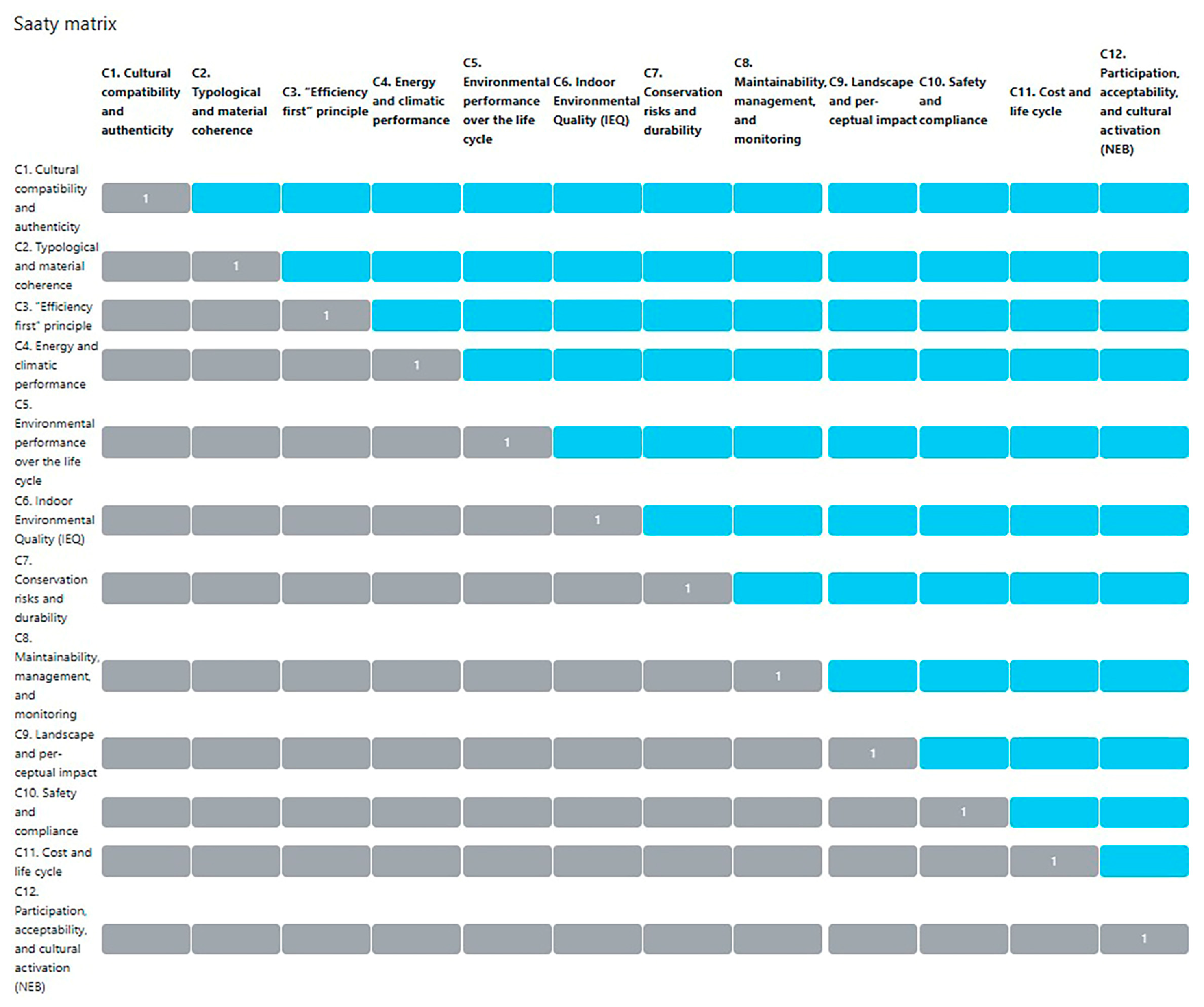
Criteria: the twelve criteria (C1–C12) listed in Table 2 (Figure 2);
(C)
Alternatives: a baseline option (A0 = no intervention) and a set of alternative retrofit solutions conceived as combinable modules. Indeed, the design solutions are not mutually exclusive; the AHP compares a small number of bundles of measures (including the baseline) that were pre-defined to reflect realistic design scenarios and conservation constraints. This allows the assessment to capture both synergies and trade-offs among modules while keeping the decision space manageable.
Figure 2. Example of Pairwise Comparison Matrix for C1–C12 criteria identified. In the matrix, the blue cells contain the comparison values provided by the decision-maker. The grey cells show the reciprocal values required by the AHP matrix’s reciprocity property. The grey cells along the diagonal are set to 1 because each element is considered equal to itself in the comparison. The AHP evaluation has been performed using the Fuzzy AHP software (3.2 version).
Sustainability 17 11255 g002
The comparison of each alternative against the others (including the baseline) for every criterion allows the construction of complete pairwise comparison matrices and the derivation of normalised priority vectors. The explicit inclusion of the “no intervention” option ensures that potential negative impacts of retrofit solutions are accounted for with respect to the existing condition, thus protecting against such outcomes. The AHP procedure applied in this study consists of the following steps:
(1)
construction of pairwise comparison matrices for criteria and alternatives;
(2)
calculation of eigenvectors to derive weights;
(3)
consistency check (CR < 0.1) to validate expert judgments [59];
(4)
sensitivity analysis of criterion weights (±10–20%) to test the robustness of the final ranking.
This process results in a comparative evaluation of alternatives that reflects the multi-dimensional nature of decision-making in heritage contexts. It guides the selection of retrofit strategies that align with conservation values while addressing energy efficiency goals.

3. Framework Validation on a Heritage Retrofit Case Study

3.1. Belmonte-Riso Palace

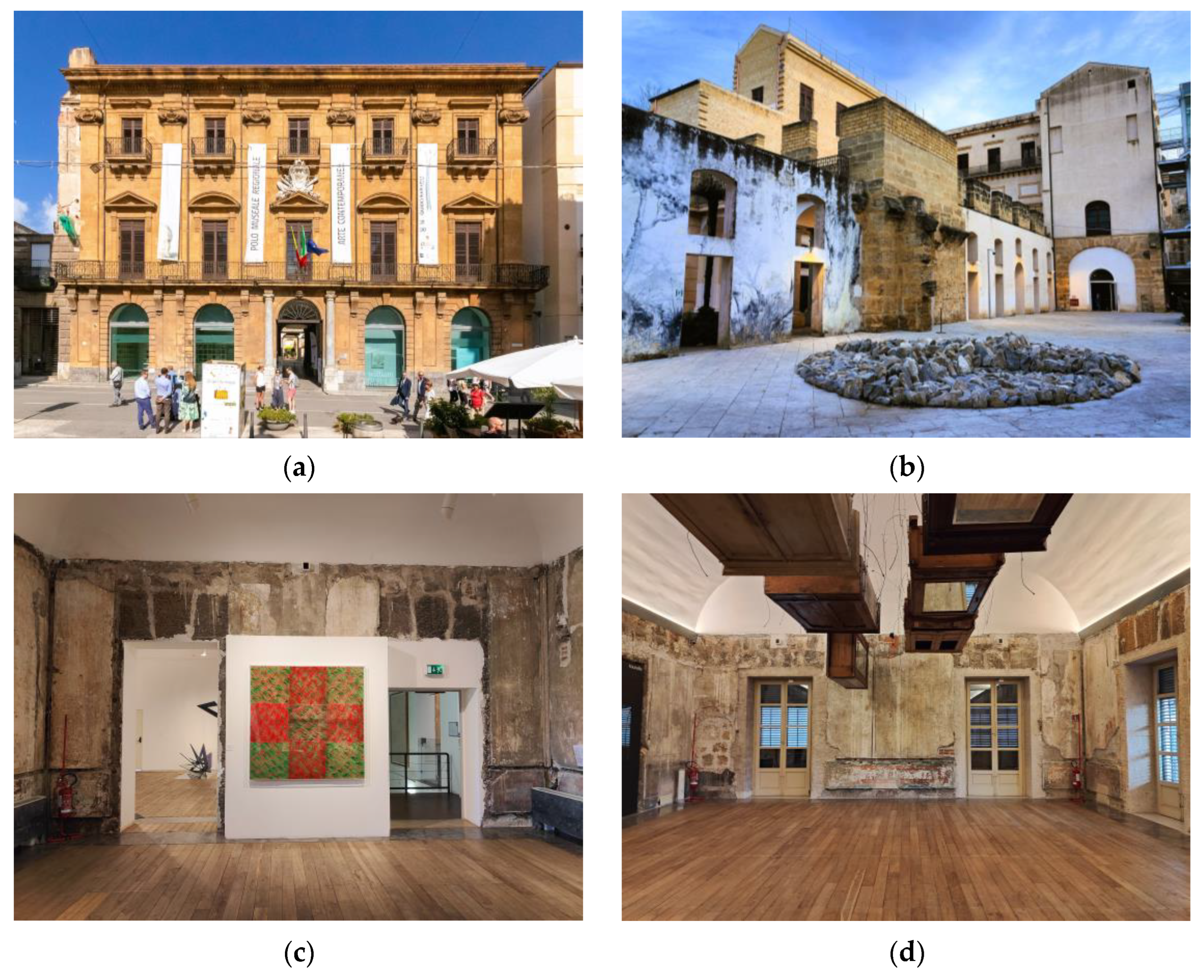
The proposed decision-making criteria were validated by applying the evaluation framework to one of the 91 heritage buildings selected for the energy retrofit programme in the Sicilian Region [4]. The selected case study is Palazzo Belmonte-Riso (Figure 3), located in the historic centre of Palermo and currently functioning as the Regional Museum of Modern and Contemporary Art.
As part of the regional programme, major renovations and energy efficiency upgrades are planned, including improvements to the air conditioning and lighting systems, installation of photovoltaic modules and introduction of advanced automation, control and monitoring solutions.
The main expected results of the project are summarised below:
  • energy production from renewable and clean sources through photovoltaic systems;
  • energy savings of 30% with reference to current consumption, out of which 25% through efficiency improvements in heating and lighting systems, building management systems (BMS) and fixtures, and the remaining 5% through renewable energy production.
Palazzo Belmonte-Riso hosts one of the most important cultural institutions in Palermo for the promotion of the visual arts and contemporary culture is housed in the building, which is known as an important exhibition and cultural centre.
The history of the palace is closely linked to the development of the area in which it stands: al Qasr, the ancient heart of the city. The first settlement dates back to 1407, with the purchase of a hospicium magnum by the Afflitto family.
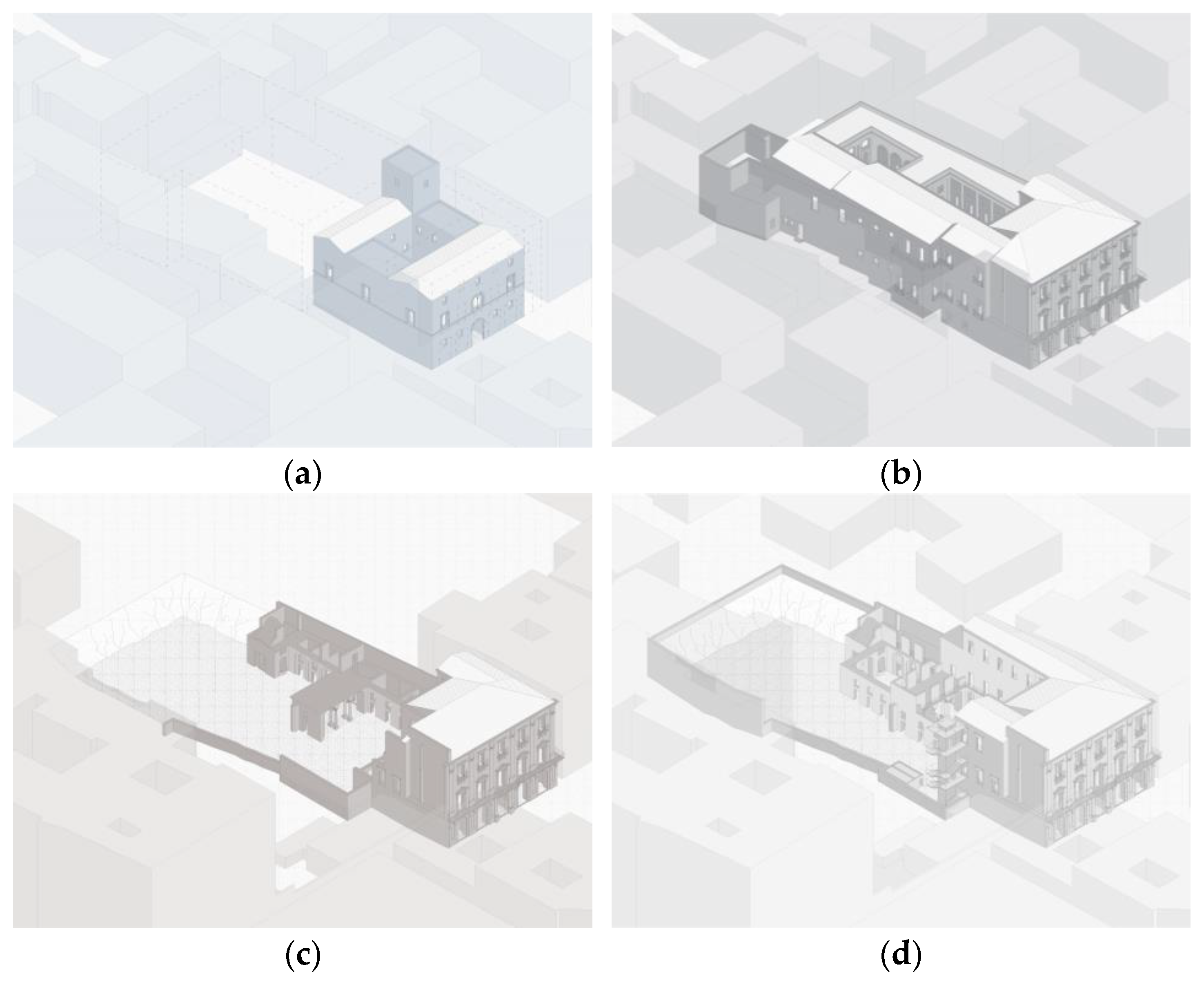
They were one of the most important noble families in Palermo. The few traces found give an idea of a 15th century courtyard building with an open stone staircase and the insertion of Gothic or “modern” elements: a central mullioned window on the piano nobile, square carved windows surrounded by a continuous cornice (chinta). On the eastern side there was probably a tower made of formless stone. The main façade was in rusticated stone on the first level, with rooms used as workshops surmounted by mezzanines used as dwellings [60] (Figure 4a).
In 1776, Prince Giuseppe Emanuele Ventimiglia e Statella, the new owner, ordered a complete reconstruction of the palace, with a horizontal and vertical extension of the volumes perpendicular to the Piano de’ Bologni (today’s Piazza Bologni). The palace, considered an example of the transition between the late baroque Sicilian style and neoclassicism, was completed and inaugurated in June 1784. In 1841 it became the property of the Riso family, who had their marble coat of arms placed in the centre of the façade [60] (Figure 4b).
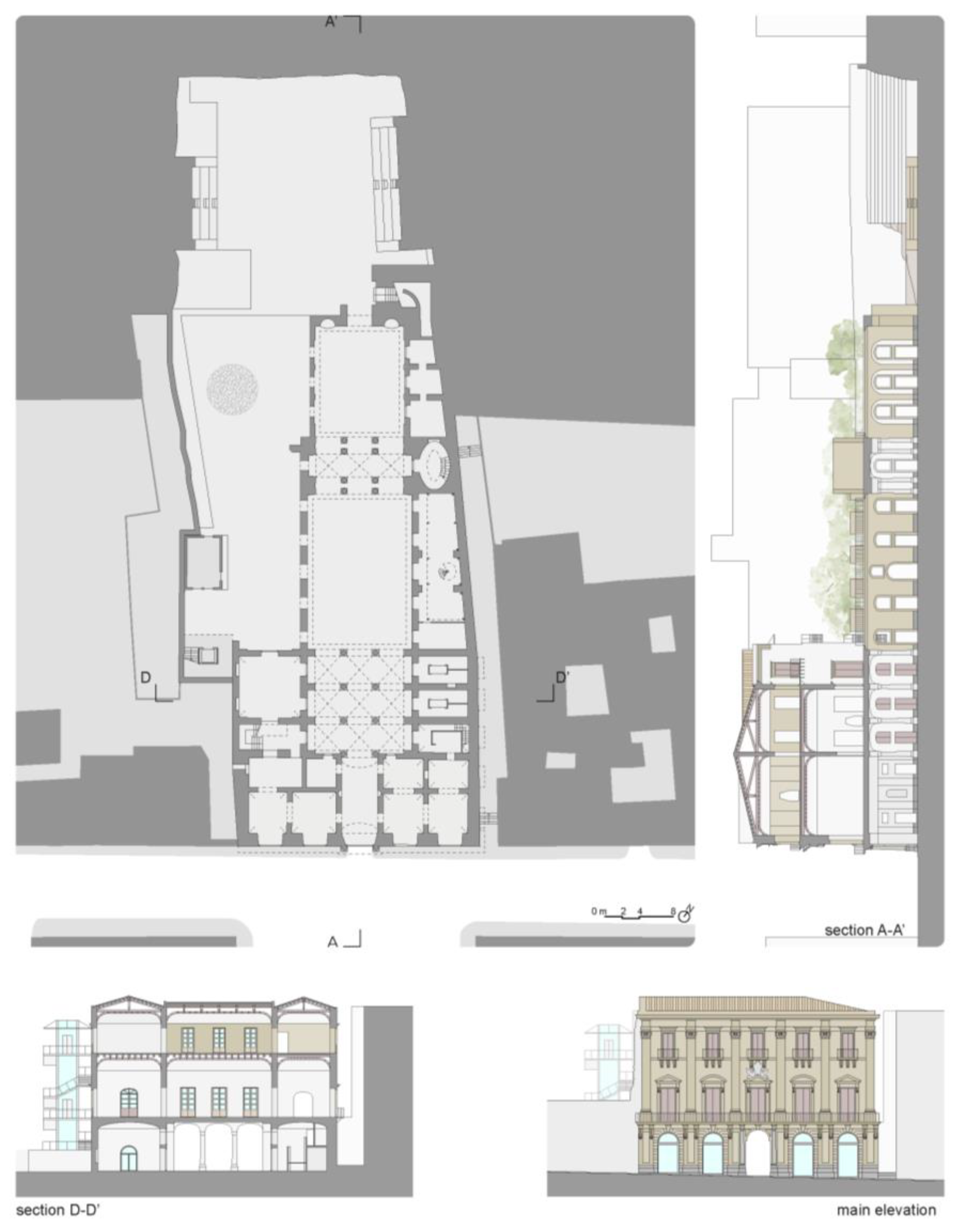
In 1933 the building was transformed into the Casa del Fascio in Palermo [63]. In 1943, the historic centre of Palermo was the target of Allied bombing raids which did serious damage to the city’s buildings. The bombing also severely damaged the Belmonte-Riso Palace [64] (Figure 4c). The Region of Sicily began its restoration in 1980 with the acquisition of the property. The first intervention allowed the philological recovery of some parts of the building, with the reconstruction of the vaults, floors and roofs. The rooms and the two large axial courtyards were redesigned and the internal connections were reorganised. For the museum’s activities, lighting, thermal, fire, burglar alarm and video surveillance systems have also been installed [62] (Figure 4d and Figure 5).
In 2018, the Ministry of Culture launched the Institutional Development Contract (CIS) for the historic centre of Palermo. This initiative included several projects, the most significant of which was the expansion and redevelopment of the RISO museum. The project is designed to be a catalyst for the renewal of the city, creating a lasting connection between the museum and the nearby historical buildings. By integrating the museum’s open spaces with the urban context, the project aims to restore the visual and physical relationship between cultural institutions and the city. The final design, developed by AM3 Architetti Associati, involves extending, renovating and adapting the historic building to European museum standards by integrating its structures, spaces and equipment, thereby strengthening its role as a contemporary art museum. The programme also provides new areas for temporary exhibitions and open-air performances, and the foyer has been redesigned to be a ‘traversable urban space’, connecting the rear square with Palermo’s main urban axis [65].
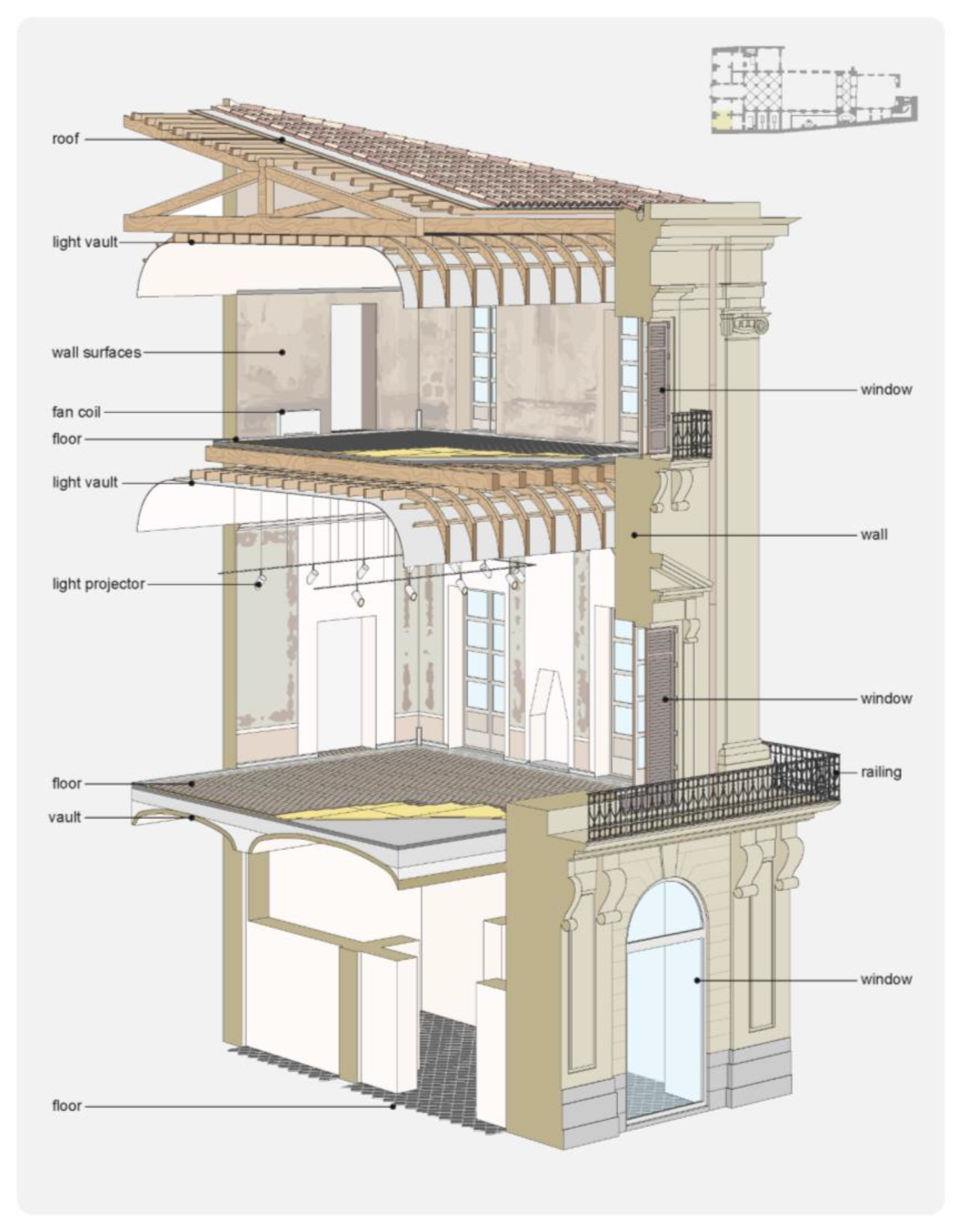
The research required an in-depth analysis of the building’s materials and construction solutions in its current state. This state is the result of progressive transformations that have occurred over time (Figure 6). For the subsequent performance analysis, the UNI 8290 classification system was adopted to assign a numerical code to each technical element, identifying its technological unit and corresponding class of technical elements [7]. Within this framework, the building is considered as a system of interconnected components where constraints and relationships define its dynamic structure. This systemic interpretation enables the building to be perceived as a highly complex organism whose internal connections evolve over time.

3.2. Energy Demand Analysis

At the end of 2023, extensive work was carried out to adapt the technical systems to the new requirements of the exhibition building. The data collected and classified according to UNI 8290 [7] mainly concern the lighting/electrical and thermal system. With regard to the electrical system, it was possible to survey the position and type of devices used for lighting the exhibition halls. The air conditioning system, on the other hand, has recently undergone the replacement of some emission devices, in accordance with the notice induced by the Sicilian Region. The technical features of the technical systems currently installed in the building are listed as follows and reported in Table 3:
  • Fan coils with a chiller located in the technical room;
  • VRF system with an outdoor unit located on the first-floor terrace and indoor units installed on the first and second floors of the east wing of the building.
Analysing the energy requirements of a historic building is a complex process that requires a thorough evaluation of its specific characteristics, the technologies present and possible energy improvement solutions. To this aim, the total electricity consumption measured over the course of one year (from 1 December 2022 to 30 November 2023) and reported in the electricity bills of the energy provider was used on a first instance. In particular, starting from the energy bills values, a reasonable estimate of the consumption breakdown by type of service (lighting and air-conditioning namely) was made by combining the main technical data of the building’s systems with the actual number of operation hours as inferred by the opening/closing schedules of the museum. This calculation used the following heating and cooling periods for the mechanical systems, as prescribed by the Italian regulations for public buildings and for the climate of Palermo:
  • Heating period from 1 December 2022 to 31 April 2023;
  • Cooling period from 1 May 2023 to 30 November 2023.
With regard to the air conditioning system, the number and type of emission terminals (fan coils) present in the museum’s rooms were directly surveyed (Table 3, Table 4 and Table 5). Finally, as concerns the lighting system, the number and type of lamps present in the museum halls were directly surveyed as well (Table 6).
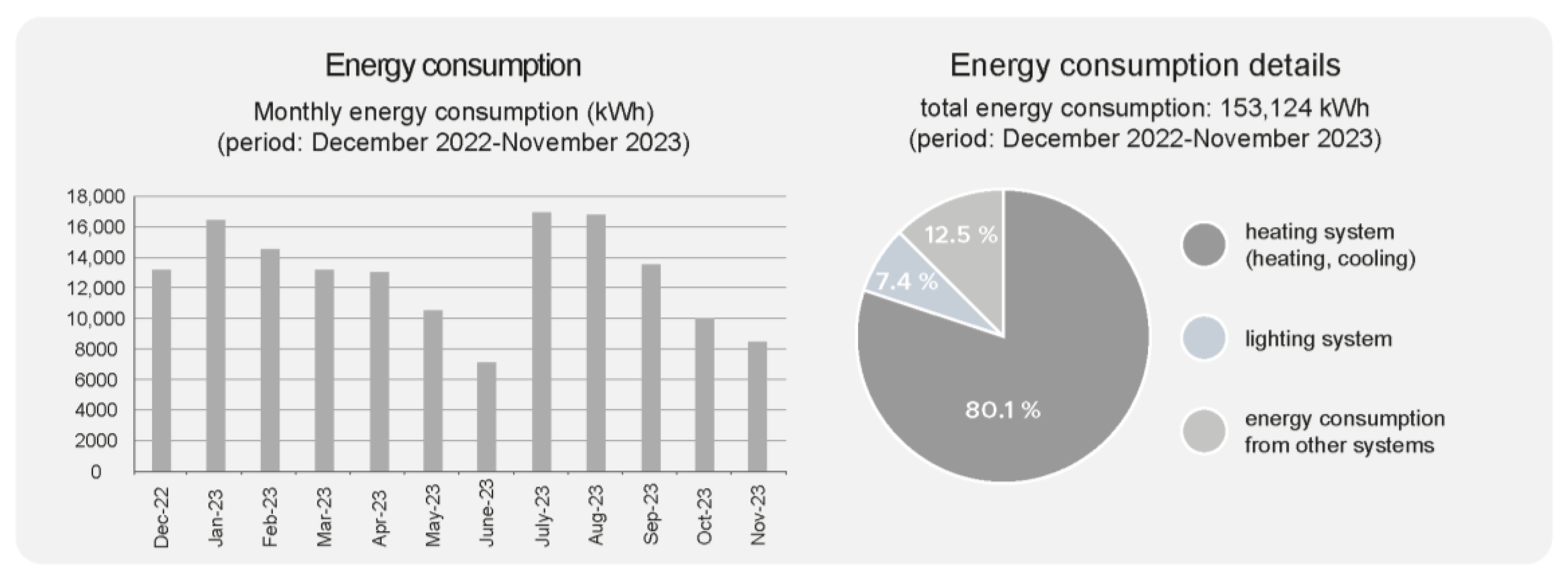
In the end, the electricity consumption for the artificial lighting systems was estimated by multiplying the yearly number of operation hours by the installed power capacity, while for the HVAC systems this calculation was made considering the installed heating and cooling capacity of the emission terminals, a decrement factor of 0.8 to account for non-peak conditions and the number of opening hours during the heating and cooling seasons reported above. The difference between the actual and the electricity consumption estimated in this way turns out to be slightly less than 13%, which is considered acceptable since the estimate excludes the additional electricity consumption related to the electromechanical lift and the video surveillance system (so-called “special” systems), for which no further details could be found (Figure 7). Furthermore, the energy consumption of these systems should not be counted as energy retrofitting measures according to current European and Italian regulations.

3.3. Design Hypotheses

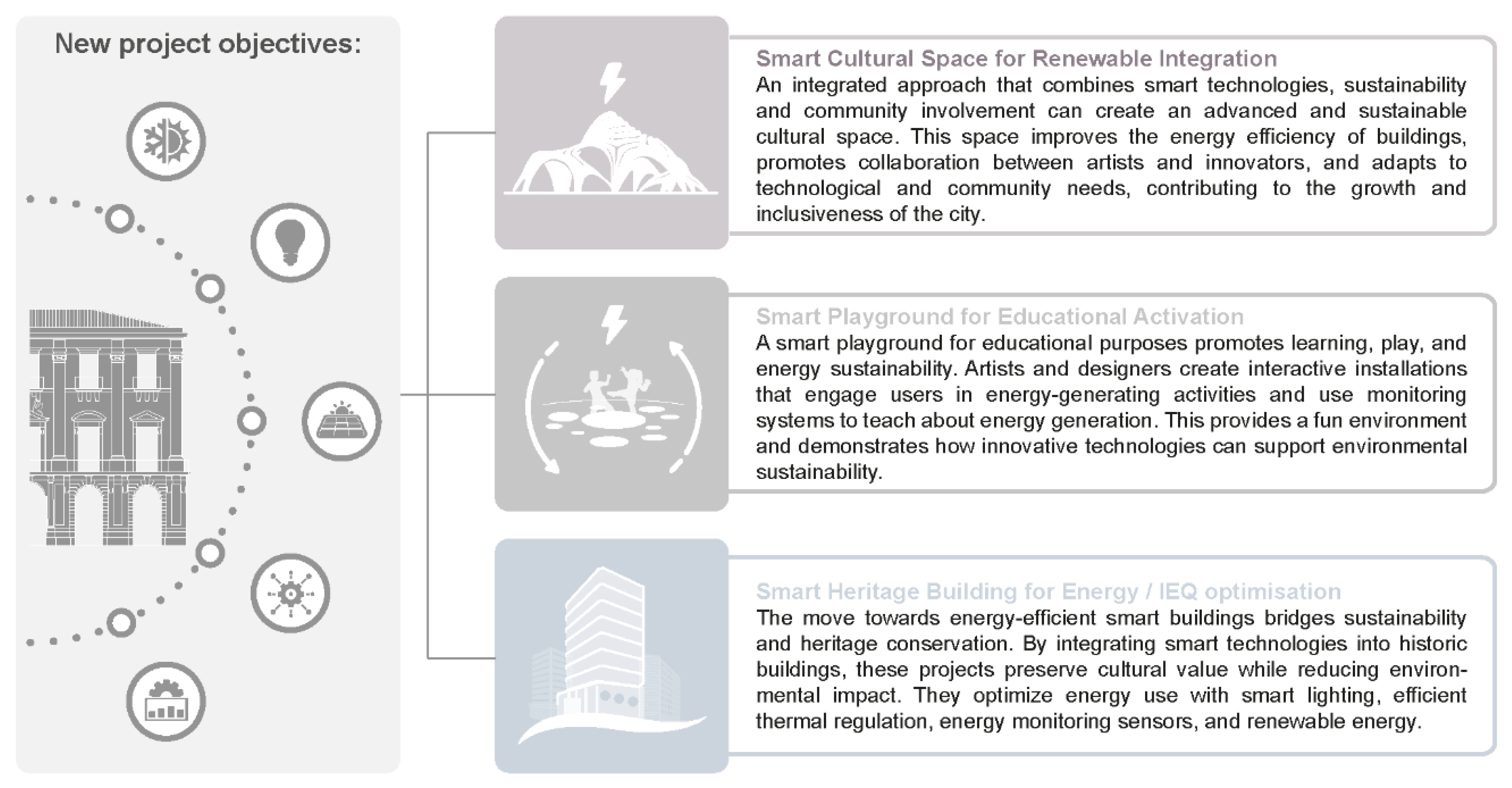
The validation of the decision-making framework was performed by testing a set of design hypotheses for Palazzo Belmonte-Riso, in line with the Sicilian Region’s retrofit programme. Three complementary modules (M1–M3) were defined, addressing renewable integration, educational activation, and energy/IEQ optimisation (Figure 8). They can be deployed individually or combined into bundles, which were compared through the AHP model described in Section 4. The following scenarios were assessed:
B0 = baseline (no intervention);
B1 = M3 (Energy/IEQ optimisation);
B2 = M1 + M3 (Renewable Integration + Energy/IEQ);
B3 = M2 + M3 (Educational Activation + Energy/IEQ);
B4 = M1 + M2 + M3 (full bundle).
This structure enables both the incremental benefits of cultural/participatory modules (M1, M2) and the potential trade-offs in terms of authenticity, conservation risks, or visual impact (C1–C2, C7, C9) to be systematically assessed. Compliance filters for authenticity (C1) and safety (C10) were applied ex ante, so that only admissible bundles entered the evaluation.
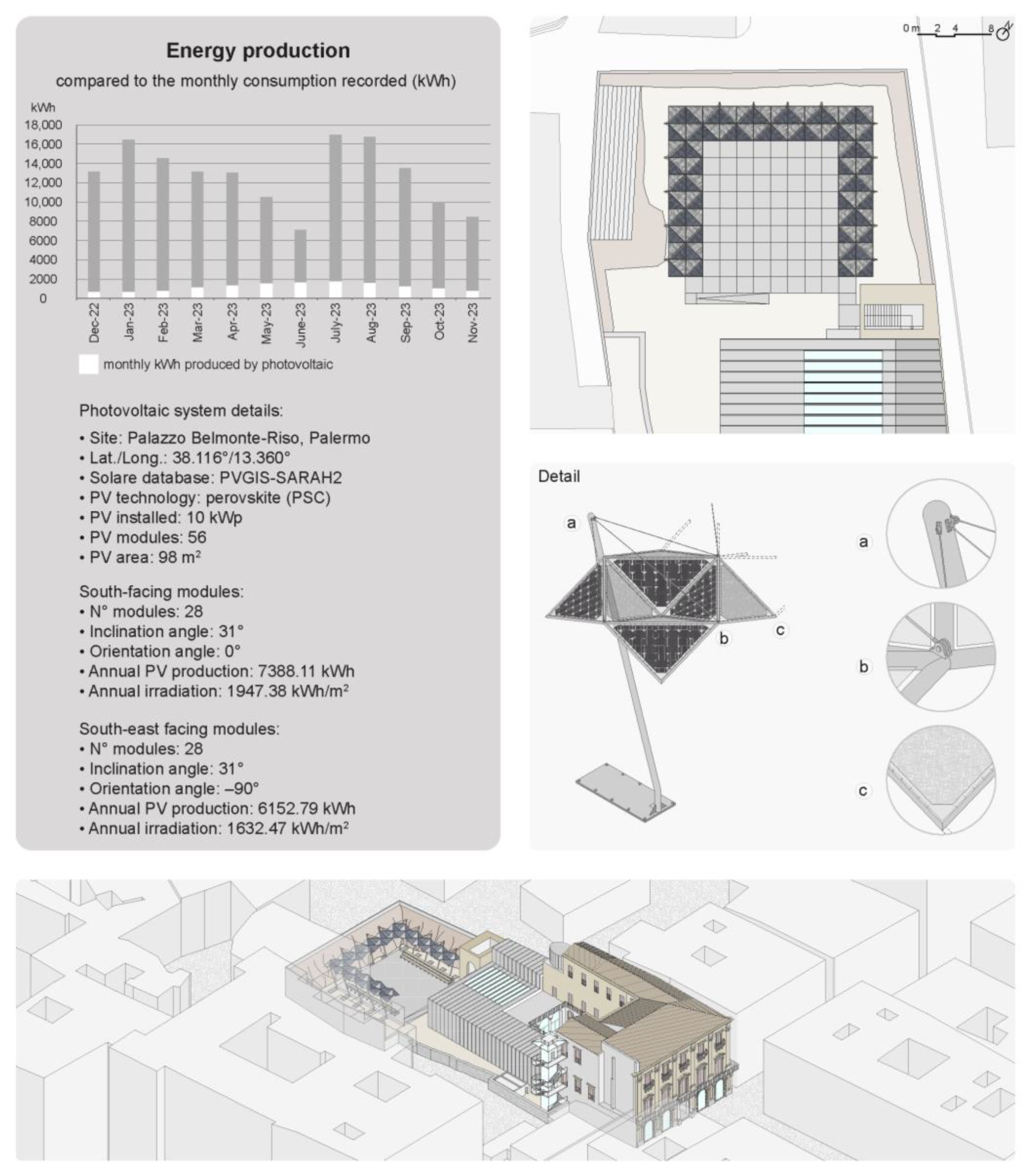
  • Module 1 (M1)—Smart Cultural Space for Renewable Integration: M1 introduces a lightweight canopy inspired by origami geometries, designed to host artistic performances in the museum courtyard. Its micro-perforated membrane ensures solar control and integrates innovative perovskite PV cells (PSC), achieving an estimated annual production of ~13,540 kWh [45], equivalent to 9% of current electricity demand. Beyond energy contribution, this module raises issues of visual compatibility (C9) and material reversibility (C1–C2), while supporting cultural activation (C12);
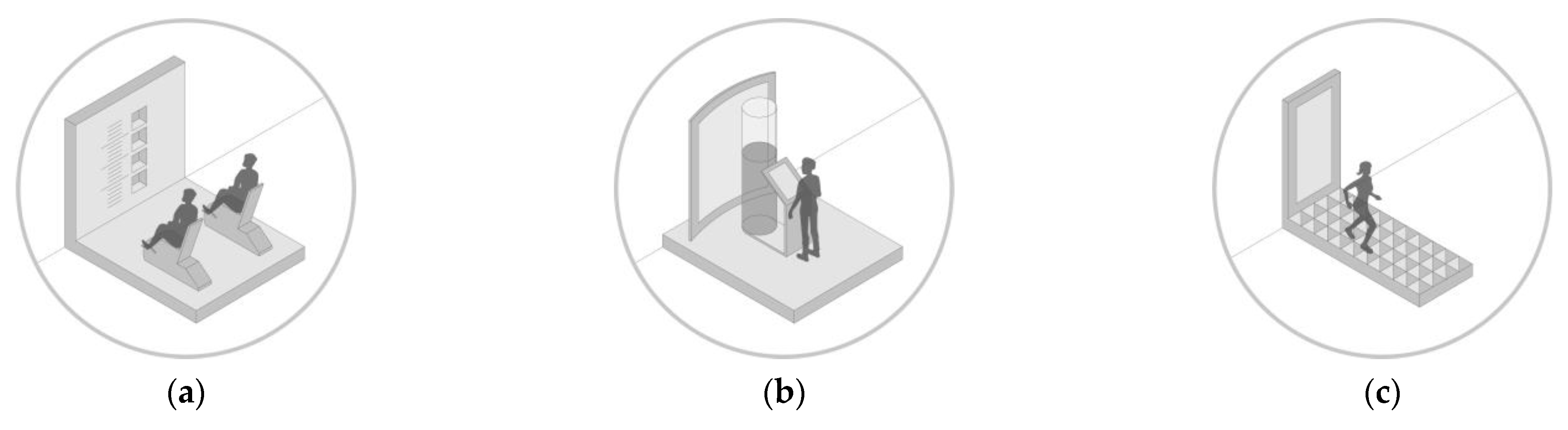
  • Module 2 (M2)—Smart Playground for Educational Activation: M2 proposes interactive installations that combine art and technology to raise public awareness on energy and climate issues: an Energy-Bike generating power through pedalling, a CO2-Game visualising emissions in real time, and a Walk-Power kinetic floor. These devices foster social participation (C12) and educational value, in line with NEB principles, while requiring careful assessment of maintainability (C8) and integration in the heritage context (C2);
  • Module 3 (M3)—Smart Heritage Building for Energy/IEQ optimisation: M3 focuses on improving IEQ and building system integration. Measures include optimised HVAC and lighting controls (UNI EN 15232 [53]), replacement of deteriorated floors to integrate underfloor fan coils, and reversible finishing treatments to preserve the historical layer stratifications while ensuring decorum. This module directly addresses energy performance (C3–C4), conservation risks and durability (C7), and visitor comfort (C6).
The concept of the external canopy (M1) draws inspiration from origami geometries, generating a lightweight and dynamic structure that defines a contemporary setting for artistic performances. The roof, composed of a tilted steel grid supported by slender columns and tie-rods, is covered by a micro-perforated membrane ensuring solar control and hosting innovative perovskite solar cells (PSC). Thanks to their flexibility and high efficiency—comparable to silicon (25.7%) but with lower production costs—PSCs enable a seamless integration of renewable energy within architectural elements. The photovoltaic surface (≈98 m2) provides an estimated peak power of about 10 kWp and an annual electricity production of roughly 13,540 kWh, equivalent to 9% of the building’s total energy demand (Figure 9).
The educational smart playground (M2) represents an innovative strategy to combine learning, play, and sustainability through active citizen participation. It integrates interactive installations that transform physical activity and user choices into real-time demonstrations of energy generation and environmental impact: the Energy-Bike produces electricity through pedalling (Figure 10a), the CO2-Game visualises emissions via a responsive display (Figure 10b), and the Walk-Power floor converts steps into kinetic energy and light (Figure 10c).
Together, these installations foster energy awareness, encourage collaboration, and strengthen community engagement in sustainable practices.
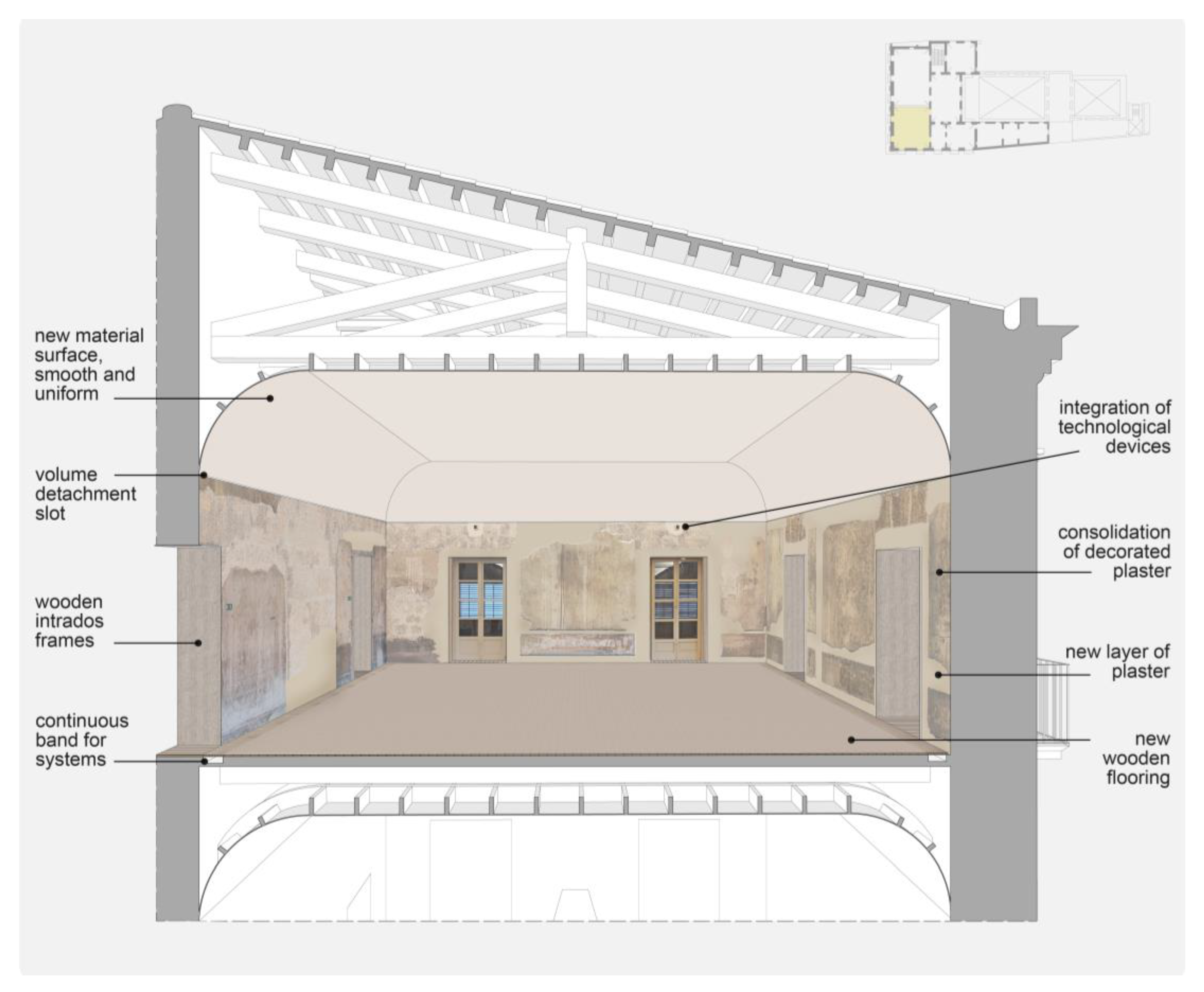
Within Module 3 (M3), the identification of end-user requirements involves a systematic assessment of environmental, cultural, and economic factors that influence the functional performance and perception of museum spaces [8]. The retrofit strategy is based on a critical analysis of the existing technological subsystems, whose interaction with the historic fabric often generates conflicts between conservation objectives and operational efficiency. The complex stratigraphy of the wall surfaces, revealed through recent restoration works, retains a high documentary and aesthetic value; therefore, M3 aims to ensure compatibility between conservation and performance enhancement through reversible and minimally invasive technical solutions (Figure 11). The evaluation of interfaces between building services and finishing layers has guided the formulation of targeted interventions to improve safety, comfort, and environmental quality, while enabling the future integration of advanced energy-efficiency technologies.
The proposed retrofit measures are articulated as follows:
  • Horizontal internal partition. The analyses indicate the need to restore the acoustic and functional performance of the exhibition rooms by replacing the deformed wooden floors with a new interlocking plank system laid on site on a stabilised substrate. The new floor is detached by a few centimetres from the perimeter walls, preserving the perceptual distinction between the historic envelope and the new intervention. A continuous peripheral band accommodates the distribution networks of the building services systems, including the integration of underfloor fan-coil units. This band is finished with an accessible wooden grille to facilitate routine and extraordinary maintenance operations.
  • Artificial lighting control system. In accordance with UNI EN 15232 [53], the introduction of occupancy sensors allows the automatic switching of lighting systems based on a calibrated occupancy factor (Foc), achieving a theoretical 10–15% reduction in electrical consumption for indoor lighting. The implementation of dimming controls enables dynamic adjustment of luminous flux within the exhibition halls, thereby enhancing visual comfort and ensuring optimal conditions for the perception of artworks.
  • Interior finishes. The intervention aims to achieve a coherent interpretation of the surface stratigraphy, stabilising surviving plastered and decorated portions while discreetly concealing later additions and technical service ducts related to electrical or HVAC systems. Wooden inserts in the intrados of window and door frames re-establish the formal and material continuity of the lost cornices. At the junction between reconstructed vaults and the supporting masonry, a narrow separation joint highlights the volumetric independence of the vault, ensuring aesthetic legibility and compatibility with conservation principles.

4. Results and Discussion

The preliminary analysis of the three modules (M1–M3) highlights how cultural, technological, and environmental strategies can be effectively combined to enhance both energy performance and heritage value. The PSC canopy in M1 alone could offset approximately 9% of current electricity demand—equivalent to the entire lighting consumption—while lighting automation and HVAC optimisation in M3 are expected to achieve an additional 10–15% reduction. When combined, these measures potentially exceed the 30% energy-saving target established by the regional programme [4].
Nevertheless, each module introduces specific challenges that extend beyond technical performance: M1 raises issues of authenticity and visual coherence (C1, C9), M2 introduces questions of usability and long-term maintenance (C6, C8), while M3 requires the calibration of compatibility and reversibility (C1, C2). These aspects highlight the need for a systematic evaluation framework, capable of balancing conservation, performance improvement, and participation objectives.
The evaluation involved four independent experts, each representing a distinct disciplinary domain (E1-architectural design, E2-architectural technology, E3-conservation and restoration, E4-building physics and energy systems). An expert in the field of structural engineering was not involved since no interventions on the load-bearing structures of the building were included in the project alternatives. Each expert performed pairwise comparisons between the five bundles (B0–B4) based on the twelve decision criteria (C1–C12) defined in Section 2.1.
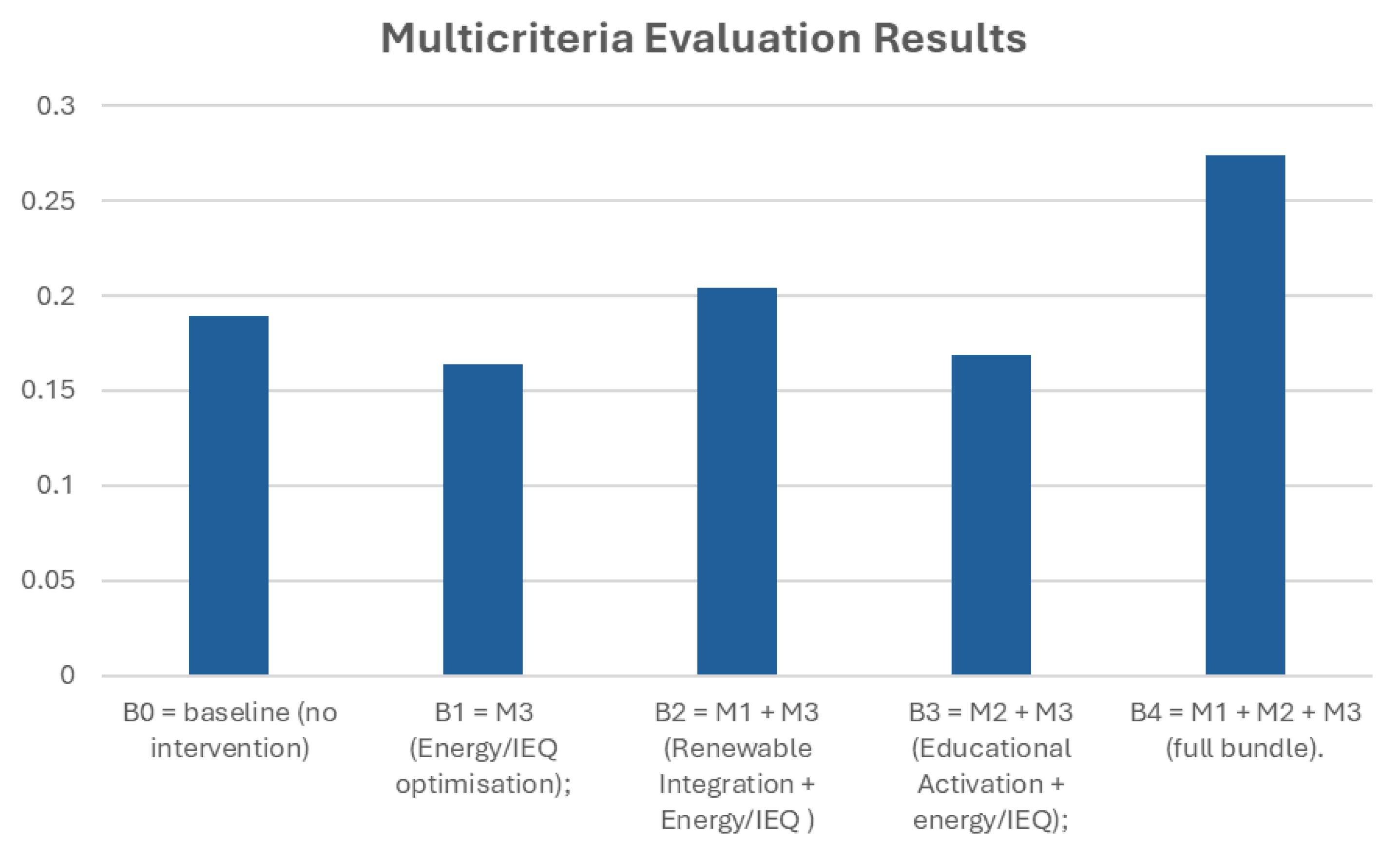
The aggregated results of the AHP analysis are shown in Figure 12, which presents the relative priorities assigned to each bundle. The analysis indicates that the full bundle B4 (M1 + M2 + M3) achieves the highest overall score, representing the most integrated and balanced approach in terms of energy performance, cultural activation, and user engagement. However, this solution also registers the greatest divergence among experts, reflecting differing sensitivities to authenticity (C1, C2) versus efficiency and comfort (C3–C6).
The results of the multi-criteria evaluation, conducted through a multidisciplinary AHP-based approach, show that—when assessed against the defined criteria—the baseline configuration (B0) performs overall better than some of the partial retrofit options, such as the single Energy/IEQ Optimisation (B1) or its combination with the Educational Activation module (B3).
The most significant improvement emerges with the integration of Renewable Energy Systems (M1) in combination with the Energy/IEQ Optimisation (M3), represented by B2, which produces a tangible increase in energy performance and therefore plays a key role in the overall retrofit strategy.
Finally, the full bundle (B4), combining all three modules (M1 + M2 + M3), achieves the highest global score, confirming the potential of integrating technological, environmental and socio-cultural components into a single, coherent design framework.
These results underline the importance of balanced, multi-dimensional strategies in heritage retrofitting: energy efficiency alone is insufficient to maximise value unless combined with actions that enhance cultural engagement, social participation and renewable integration. The progressive improvement across bundles also confirms the scalability and adaptability of the proposed framework, allowing for modular implementation according to site-specific constraints and available resources.
The validation of the proposed evaluation framework through the Palazzo Belmonte-Riso case study demonstrates its capability to support evidence-based decision-making in the energy retrofit of heritage buildings. The modular structure and multi-criteria logic allowed a comprehensive assessment of both measurable and intangible dimensions—from energy performance to cultural compatibility and social engagement.
The AHP results confirm that interventions exclusively focused on efficiency (B1) may not guarantee superior overall performance when conservation and usability aspects are considered. Conversely, the inclusion of renewable energy integration (B2) and cultural participation components (B3) enhances the multidimensional value of retrofit actions. The full bundle (B4) achieved the highest global score, demonstrating that cumulative strategies—integrating technological innovation, cultural activation and participatory governance—yield the best balance across the twelve evaluation criteria.
The application of AHP proved effective in capturing interdisciplinary trade-offs between conservation, technology and community value. The involvement of four domain experts (architectural design, building technology, conservation, and building physics/energy systems) ensured the robustness of pairwise comparisons and consistency across disciplinary perspectives. Each expert performed the comparison independently; the resulting priority matrices were then normalised and aggregated to derive the final synthesis of weights. The average Consistency Ratio (CR) was 0.04, which is below the 0.1 threshold. This confirms the internal consistency of the judgments and the reliability of the process [59].
The framework’s strength lies in its transparency and replicability: it makes explicit the rationale behind prioritisation, allowing stakeholders to trace how qualitative and quantitative criteria jointly influence design decisions. Furthermore, the results highlight that cultural activation and energy transition are not competing objectives but rather complementary levers for sustainable regeneration. This finding aligns with the principles of the New European Bauhaus, reinforcing the notion that aesthetic, cultural and environmental values can coexist in technically robust retrofit strategies.
From a methodological perspective, the use of Analytic Hierarchy Process (AHP) proved effective in capturing both the benefits and potential penalties of each bundle compared to the baseline (B0). The pairwise comparison method made it possible to integrate qualitative judgments (e.g., authenticity, visual perception) with quantitative performance data (e.g., energy savings, RES share), thus reflecting the complexity of heritage retrofitting. The explicit inclusion of the “no intervention” baseline ensured that possible negative impacts of retrofit measures were adequately considered.
Overall, the discussion highlights three key findings:
  • Energy retrofitting in heritage buildings cannot be evaluated solely in technical terms; cultural, perceptual, and governance dimensions must be integrated.
  • Modularity offers a flexible way to combine efficiency, participation, and cultural activation, enabling tailored solutions that can be scaled or adapted.
  • Decision-support methods such as AHP provide transparency and robustness, ensuring that trade-offs are explicit and that stakeholder perspectives can be incorporated into prioritisation.
These findings reinforce the role of cultural heritage as both a constraint and an opportunity in the energy transition. By treating retrofit interventions not as isolated technical fixes but as part of a systemic, multi-criteria framework, it becomes possible to reconcile conservation values with sustainability objectives and to embody the principles of the New European Bauhaus in practice.

5. Conclusions

The proposed multi-criteria decision-support methodology for energy retrofitting in heritage buildings combines technical performance improvement with the preservation of cultural and architectural identity. The framework enables project teams and public administrations to evaluate retrofit options, balancing environmental objectives with conservation requirements.
The Palazzo Belmonte-Riso case study confirmed the feasibility of the approach and showed how technological modules (M3) can be effectively integrated with cultural (M1) and participatory (M2) strategies to enhance sustainability and social impact. The use of an AHP-based evaluation, supported by expert judgments from different disciplines, proved crucial to capture the multidimensional nature of heritage retrofitting and to guide design choices toward context-sensitive and reversible solutions.
The primary issue of the approach used mainly concern the selection of experts and the accessibility of data. The choice of experts involved can be a critical issue because it should be properly calibrated according to the specific characteristics of the building and the objectives of the project; an inadequate selection could compromise the reliability of the assessment. In addition, data on energy consumption and energy performance of the building are not always available or reliable; therefore, gathering basic information can be a critical issue to address.
Despite this, the results indicate that energy retrofitting in heritage contexts should be conceived not only as a technical operation but as a cultural process that enhances environmental performance while reinforcing identity and community engagement. Viewing the building as a system of interrelated components allows the controlled integration of innovative energy systems and materials without compromising historic integrity.
Therefore, it is necessary to find a balance between conservation requirements and sustainability objectives, avoiding the abandonment of transformation projects that may also have a demonstrative value for local communities. Projects that integrate art and design into contexts of high cultural value, on both micro and macro urban scales—such as waterfronts, squares and residual spaces in historic centres or archaeological sites—are important tools for raising awareness of the collective benefits of new technologies. Similarly, an intervention carried out on a public building can serve as an operational model for future renovation of private buildings, promoting the adoption of sustainable practices compatible with cultural heritage.
The further development of this research should not be limited to the identification of new technical solutions but extended to the definition of a new paradigm: a living model adaptable to the actual availability of resources and informed by traditional sustainable knowledge and production processes. Once such a transition is achieved, there will be no need to demonstrate that projects respect local identity—this will naturally emerge as an inherent result. Only then will it be possible to speak of a truly sustainable evolution.

Author Contributions

Conceptualization, G.C. and S.D.M.; formal analysis, M.R.V., S.D.M., G.C. and V.C.; investigation, G.C.; data curation, G.C.; materials and methods, S.D.M.; case study analysis, G.C.; writing—original draft preparation, G.C. and S.D.M.; writing—review and editing, M.R.V., S.D.M., G.C. and V.C.; visualisation, G.C. and S.D.M. All authors have read and agreed to the published version of the manuscript.

Funding

This research was funded by the Department of Civil Engineering and Architecture of the University of Catania, grant PIA.CE.RI. 2024–2026 ACT—Architecture/City/Transformation, PI: Federica Scibilia, WP4—Reuse as a Value-Enhancement Strategy. Evolution of Approaches and Methodologies.

Institutional Review Board Statement

Not applicable.

Informed Consent Statement

Not applicable.

Data Availability Statement

The original contributions presented in this study are included in the article. Further inquiries can be directed to the corresponding author.

Acknowledgments

The authors wish to thank the Department of Cultural and Environmental Heritage of Palermo, the Direction of the RISO Museum in Palermo, and the AM3 Architetti Associati design studio for providing the graphic and iconographic material and documentation.

Conflicts of Interest

The authors declare no conflicts of interest. The funders had no role in the design of the study; in the collection, analyses, or interpretation of data; in the writing of the manuscript; or in the decision to publish the results.

Abbreviations

The following abbreviations are used in this manuscript:
AHPAnalytic Hierarchy Process
BMSBuilding Management System
CAPEXCapital Expenditure
COPCoefficient Of Performance
CRConsistency Ratio
EEREnergy Efficiency Ratio
EUEuropean Union
GWPGlobal Warming Potential
HVACHeating, Ventilation and Air Conditioning
ISOInternational Organization for Standardization
LCALife Cycle Assessment
MCDAMulti-Criteria Decision Analysis
MiBACTMinistry for Cultural Heritage and Activities and Tourism
MTTRMean Time to Repair
NEBNew European Bauhaus
OPEXOperational Expenditure
ONUUnited Nations Organization
PSCPerovskite Solar Cell
PVPhotovoltaic
RESRenewable Energy Sources
UGRUnified Glare Rating
UNIItalian Organization for Standardization
VRFVariable Refrigerant Flow

References

  1. European Commission. Circular Economy Action Plan; European Commission: Brussels, Belgium, 2020. [Google Scholar]
  2. European Parliament; Council of the European Union. Energy Efficiency Directive; Publications Office of the European Union: Luxembourg, 2023. [Google Scholar]
  3. UNESCO. Transforming Our World: The 2030 Agenda for Sustainable Development; Resolution Adopted by the General Assembly on 25 September 2015; UNESCO: Paris, France, 2015; Volume A/RES/70/1. [Google Scholar]
  4. Buda, A.; Pracchi, V.; Sannasardo, R. Built Cultural Heritage and Energy Efficiency. The Sicily Case: Pros and Cons of an Innovative Experience. IOP Conf. Ser. Earth Environ. Sci. 2019, 296, 012001. [Google Scholar] [CrossRef]
  5. Ciribini, G. Il Sistema Normativo. Recuperare 1984, 13, 396–398. [Google Scholar]
  6. Sterman, J. Business Dynamics, System Thinking and Modeling for a Complex World; Shelstad, J.J., Ed.; Irwin McGraw-Hill: London, UK, 2000; ISBN 0-07-231135-5. [Google Scholar]
  7. UNI 8290-1:1981; Residential Building. Building Elements. Classification and Terminology. Ente Nazionale Italiano di Normazione: Milano, Italy, 1981.
  8. UNI 11277:2008; Building Sustainability. Ecocompatibility Requirements and Needs of New and Renovated Residential and Office Building Design. Ente Nazionale Italiano di Normazione: Milano, Italy, 2008.
  9. UNI EN 16798-1:2019; Energy Performance of Buildings—Ventilation for Buildings. Ente Nazionale Italiano di Normazione: Milano, Italy, 2019.
  10. ISO 15686-4:2014; Building Construction—Service Life Planning—Part 4: Service Life Planning Using Building Information Modelling. International Organization for Standardization: Geneva, Switzerland, 2014.
  11. UNI EN 15643:2021; Sustainability of Buildings—A Framework for the Assessment of Buildings and Civil Engineering Works. Ente Nazionale Italiano di Normazione: Milano, Italy, 2021.
  12. ISO 21929-1:2011; Sustainability in Building Construction—Sustainability Indicators. International Organization for Standardization: Geneva, Switzerland, 2011.
  13. European Parliament. Delivering the European Green Deal; Ufficio Delle Pubblicazioni dell’Unione Europea: Brussels, Belgium, 2021. [Google Scholar]
  14. UNESCO; World Heritage Centre. Operational Guidelines for the Implementation of the World Heritage Convention; UNESCO: Paris, France, 2017. [Google Scholar]
  15. Throsby, D. Economics and Culture; Cambridge University Press: Cambridge, UK, 2001. [Google Scholar] [CrossRef]
  16. Lucchi, E.; Polo López, C.S.; Franco, G. A Conceptual Framework on the Integration of Solar Energy Systems in Heritage Sites and Buildings. In Proceedings of the Florence Heritec 2020, Florence, Italy, 14–16 October 2020. [Google Scholar]
  17. European Union. Directive (EU) 2018/844 of the European Parliament and of the Council of 30 May 2018 Amending Directive 2010/31/EU on the Energy Performance of Buildings and Directive 2012/27/EU on Energy Efficiency; European Union: Brussels, Belgium, 2018. [Google Scholar]
  18. European Communities. D.L. 192/2005; Implementation of Directive (EU) 2018/844 Amending Directive 2010/31/EU on the Energy Performance of Buildings and Directive 2012/27/EU on Energy Efficiency, Directive 2010/31/EU on the Energy Performance of Buildings, and Directive 2002/91/EC on the Energy Performance of Buildings; Gazzetta Ufficiale della Repubblica Italiana (GURI): Rome, Italy, 2005. [Google Scholar]
  19. Battisti, A. Guidelines for Energy Efficiency in the Cultural Heritage. TECHNE J. Technol. Archit. Environ. 2016, 12, 65–73. [Google Scholar]
  20. Ministero della Cultura. Linee di Indirizzo per Il Miglioramento Dell’efficienza Energetica Nel Patrimonio Culturale; Ministero della Cultura: Rome, Italy, 2020. [Google Scholar]
  21. Pracchi, V.; Buda, A. Le Linee Di Indirizzo per Il Miglioramento Dell’efficienza Energetica Nel Patrimonio Culturale: Indagine per la Definizione di Uno Strumento Guida Adeguato Alle Esigenze Della Tutela. In Restauro: Conoscenza, Progetto, Cantiere, Gestione; Ercolino, M.G., Ed.; Quasar Edizioni: Roma, Italy, 2020; Volume Sezione 5.2, pp. 772–782. [Google Scholar]
  22. Lucchi, E.; Pracchi, V. Efficienza Energetica e Patrimonio Costruito: La Sfida del Miglioramento Delle Prestazioni Nell’edilizia Storica; Maggioli Editore: Santarcangelo di Romagna, Italy, 2013; Volume 662, ISBN 8838762600. [Google Scholar]
  23. Cabeza, L.F.; de Gracia, A.; Pisello, A.L. Integration of Renewable Technologies in Historical and Heritage Buildings: A Review. Energy Build. 2018, 177, 96–111. [Google Scholar] [CrossRef]
  24. Nair, G.; Verde, L.; Olofsson, T. A Review on Technical Challenges and Possibilities on Energy Efficient Retrofit Measures in Heritage Buildings. Energies 2022, 15, 7472. [Google Scholar] [CrossRef]
  25. Durante, A.; Lucchi, E.; Maturi, L. Building Integrated Photovoltaic in Heritage Contexts Award: An Overview of Best Practices in Italy and Switzerland. IOP Conf. Ser. Earth Environ. Sci. 2021, 863, 012018. [Google Scholar] [CrossRef]
  26. De Medici, S. Italian Architectural Heritage and Photovoltaic Systems. Matching Style with Sustainability. Sustainability 2021, 13, 2108. [Google Scholar] [CrossRef]
  27. UNI EN 16883:2017; Conservation of Cultural Heritage—Guidelines for Improving the Energy Performance of Historic Buildings. Ente Nazionale Italiano di Normazione: Milano, Italy, 2017.
  28. Fusco Girard, L.; Baycan, T.; Nijkamp, P. Sustainable City and Creativity: Promoting Creative Urban Initiatives; Ashgate Publishing: Aldershot, UK, 2018. [Google Scholar]
  29. Della Torre, S. Italian Perspective on the Planned Preventive Conservation of Architectural Heritage. Front. Archit. Res. 2021, 10, 108–116. [Google Scholar] [CrossRef]
  30. ISTAT. BES 2019: Equitable And Sustainable Well-Being in Italy; Italian National Institute of Statistics: Rome, Italy, 2019. [Google Scholar]
  31. Crova, C. Le Linee Guida Di Indirizzo per Il Miglioramento Dell’efficienza Energetica Nel Patrimonio Culturale. Architettura, Centri e Nuclei Storici Ed Urbani: Un Aggiornamento Della Scienza Del Restauro. In Proceedings of the Le Nuove Frontiere del Restauro. Trasferimenti, Contaminazioni, Ibridazioni, Atti del XXXIII Convegno Internazionale Scienza e Beni Culturali, Bressanone, Italy, 27–30 June 2017; pp. 179–188. [Google Scholar]
  32. Carbonara, G. Energy Efficiency as a Protection Tool. Energy Build. 2015, 95, 9–12. [Google Scholar] [CrossRef]
  33. Greffe, X. Is Heritage an Asset or a Liability? J. Cult. Herit. 2004, 5, 301–309. [Google Scholar] [CrossRef]
  34. Plevoets, B.; Van Cleempoel, K. Adaptive Reuse of the Built Heritage: Concepts and Cases of an Emerging Discipline; Routledge: London, UK, 2019. [Google Scholar]
  35. Ashworth, G.J. Senses of Place: Senses of Time; Routledge: London, UK, 2005. [Google Scholar]
  36. Fusco Girard, L. Creativity, Resilience: Toward New Development Strategies of Port Areas through Evaluation Processes. Int. J. Sustain. Dev. 2010, 13, 161–184. [Google Scholar] [CrossRef]
  37. Council of Europe. Framework Convention on the Value of Cultural Heritage for Society. Available online: https://www.coe.int/en/web/conventions/full-list?module=treaty-detail&treatynum=199 (accessed on 5 January 2025).
  38. UNESCO; World Heritage Centre. Intergovernmental Committee for the Protection of the World Cultural and Natural Heritage; UNESCO: Paris, France, 2008. [Google Scholar]
  39. Fusco Girard, L.; Vecco, M. Genius Loci: The Evaluation of Places between Instrumental and Intrinsic Values. BDC Bollettino Del. Centro Calza Bini 2019, 19, 473–495. [Google Scholar] [CrossRef]
  40. Powell, K. Architecture Reborn: Converting Old Buildings for New Uses; Rizzoli: London, UK, 1999. [Google Scholar]
  41. Vandesande, A.; Verstrynge, E.; Van Balen, K. Preventive Conservation—From Climate and Damage Monitoring to a Systemic and Integrated Approach. In Proceedings of the International WTA, Leuven, Belgium, 3–5 April 2019; CRC Press: London, UK, 2020. [Google Scholar]
  42. Della Torre, S. A Coevolutionary Approach as the Theoretical Foundation of Planned Conservation of Built Cultural Heritage. In Preventive Conservation—From Climate and Damage Monitoring to a Systemic and Integrated Approach, Proceedings of the International WTA-PRECOM3OS Symposium, Leuven, Belgium, 3–5 April 2019; CRC Press: London, UK, 2020; pp. 11–18. [Google Scholar] [CrossRef]
  43. Throsby, D. The Value of Cultural Heritage: What Can Economics Tell Us? Capturing the Public Value of Heritage—London; English Heritage: Swindon, UK, 2006; pp. 40–43. [Google Scholar]
  44. Broström, T.; Svahnström, K. Solar Energy and Cultural-Heritage Values. In Proceedings of the World Renewable Energy Conference; Low-Energy Architecture, Louvain-la-Neuve, Belgium, 13–15 July 2011. [Google Scholar]
  45. ICOMOS. International Charter for the Conservation and Restoration of Monuments and Site. In Proceedings of the IInd International Congress of Architects and Technicians of Historic Monuments, Venice, Italy, 25–34 May 1964; ICOMOS: Venice, Italy, 1964. [Google Scholar]
  46. International Energy Agency (IEA). SHC TASK 59. EBC ANNEX 76. Historic Buildings: Deep Renovation of Historic Buildings towards Lowest Possible Energy Demand and CO2 Emission (NZEB); International Energy Agency (IEA): Paris, France, 2017. [Google Scholar]
  47. European Commission. New European Bauhaus Investment Guidelines; European Commission: Brussels, Belgium, 2024. [Google Scholar]
  48. Ciampa, F.; Fabbricatti, K.; Freda, G.; Pinto, M.R. A Playground and Arts for a Community in Transition: A Circular Model for Built Heritage Regeneration in the Sanità District. Sustainability 2024, 16, 2640. [Google Scholar] [CrossRef]
  49. Fabbricatti, K.; Pinto, M.R. Il Ruolo Dell’arte Nella Rigenerazione Dell’ambiente Costruito. Le Residenze d’artista per i Contesti Fragili. In Playgrounds e Arte per Comunità in Transizione. Patto di Cura per le Città; La scuola di Pitagora: Napoli, Italy, 2023; pp. 21–36. [Google Scholar]
  50. Masimba, F.; Appiah, M.; Zuva, T. A Review of Cultural Influence on Technology Acceptance. In Proceedings of the 2019 International Multidisciplinary Information Technology and Engineering Conference (IMITEC), Vanderbijlpark, South Africa, 21–22 November 2019; pp. 1–7. [Google Scholar] [CrossRef]
  51. Fusco Girard, L. Una Nuova Economia Urbana Sostenibile e Solidale. Bene Comune 2016, 2, 171–178. [Google Scholar]
  52. UNESCO; ICCROM; ICOMOS. The Nara Document on Authenticity; UNESCO: Paris, France, 1994. [Google Scholar]
  53. UNI EN 15232-1:2017; Energy Performance of Buildings—Energy Performance of Buildings—Part 1: Impact of Building Automation, Controls and Building Management—Modules M10-4, 5, 6, 7, 8, 9, 10. Ente Nazionale Italiano di Normazione: Milano, Italy, 2017.
  54. Benjamin, W. The Work of Art in the Age of Mechanical Reproduction; Arendt, H., Ed.; Illuminations; Belknap Press: Cambridge, MA, USA, 1969. [Google Scholar]
  55. Ishizaka, A.; Nemery, P. Multi-Criteria Decision Analysis: Methods and Software, 1st ed.; Wiley: Chichester, UK, 2013; ISBN 9781118644928. [Google Scholar]
  56. Ferretti, V.; Bottero, M.; Mondini, G. Decision Making and Cultural Heritage: An Application of the Multi-Attribute Value Theory for the Reuse of Historical Buildings. J. Cult. Herit. 2014, 15, 644–655. [Google Scholar] [CrossRef]
  57. De Montis, A.; De Toro, P.; Droste-Franke, B.; Omann, I.; Stagl, S. Assessing the Quality of Different MCDA Methods. In Alternatives for Environmental Valuation; Routledge: London, UK, 2005; pp. 99–133. [Google Scholar]
  58. Saaty, T.L. Decision Making with the Analytic Hierarchy Process. Int. J. Serv. Sci. 2008, 1, 83–98. [Google Scholar] [CrossRef]
  59. Saaty, T.L. The Analytic Hierarchy Process; McGraw-Hill: New York, NY, USA, 1980. [Google Scholar]
  60. Belvedere, A.; Montana, S. Palazzo Belmonte a Palermo. Lex. Storie E Archit. Sicil. 2013, 16, 41–52. [Google Scholar]
  61. Capitano, V. Giuseppe Venanzio Marvuglia Architetto Ingegnere Docente; Mazzone: Palermo, Italy, 1984; Volume 3. [Google Scholar]
  62. Department of Cultural and Environmental Heritage of Palermo. Palazzo Belmonte—Riso; Archive of Department of Cultural and Environmental Heritage: Palerm, Italy, 2015. [Google Scholar]
  63. Mancuso, C. Palermo in Camicia Nera. Le Trasformazioni Dell’identità Urbana (1922–1943). In Mediterranea Ricerche Storiche; Mediterranea Associazione: Bologna, Italy, 2008. [Google Scholar]
  64. Scaturro, G. Danni Di Guerra e Restauro Dei Monumenti, Palermo 1943–1945. Ph.D. Thesis, Università degli Studi di Napoli Federico II, Napoli, Italy, 2005. [Google Scholar]
  65. Regione Sicilia. CIS Palermo Centro Storico; Regione Sicilia: Sicily, Italy, 2018. [Google Scholar]
Figure 1. Research methodology and paper structure.
Sustainability 17 11255 g001
Figure 3. Photographs of Belmonte-Riso Palace: (a) Front view (ph: Matthias Süßen, 2019 QS: P170, Q59087075, Palazzo Belmonte Riso (Palermo)-msu-0536, CC BY-SA 4.0); (b) View of the internal courtyard (ph: Giuseppe Cataldi); (c) Internal view (ph: Giuseppe Cataldi); (d) Internal view (ph: Giuseppe Cataldi).
Sustainability 17 11255 g003
Figure 4. Historical phases of Belmonte-Riso palace: (a) hypothesis of a 15th/16th century configuration (from analogies with other contemporary buildings); (b) hypothesis of late eighteenth-century configuration (from graphic restitution [60]) (c) post-bombing configuration of WWII (from graphic restitution [61]). (d) Current configuration (from graphic restitution [62]).
Sustainability 17 11255 g004
Figure 5. The current status of Belmonte-Riso Palace.
Sustainability 17 11255 g005
Figure 6. Perspective cutaway of the south side of Belmonte-Riso palace, Corso Vittorio Emanuele.
Sustainability 17 11255 g006
Figure 7. Breakdown of the energy consumption of the building for different services.
Sustainability 17 11255 g007
Figure 8. Project objectives (starting from the top): HVAC and lighting system optimisation, RES integration, integrability and management of technological systems; design modules: (starting from the top) Smart Cultural Space for Renewable Integration, Smart Playground for Educational Activation, Smart Heritage Building for Energy/IEQ optimisation.
Sustainability 17 11255 g008
Figure 9. Energy production compared to the monthly consumption recorded and details (a, b, c) of the PV panels bearing structure.
Sustainability 17 11255 g009
Figure 10. Axonometric diagrams of smart playgrounds: (a) Energy-Bike produces electricity through pedalling; (b) CO2-Game visualises emissions via a responsive display; (c) Walk-Power floor converts steps into kinetic energy and light.
Sustainability 17 11255 g010
Figure 11. Project internal view.
Sustainability 17 11255 g011
Figure 12. Results of AHP evaluation for bundles B0–B4 (aggregated expert priorities).
Sustainability 17 11255 g012
Table 1. Thematic framework.
NEB ValuesMain TopicSub-Topics of AnalysisReferences
Sustainability
Aesthetics
T1. Cultural values
and authenticity
Authenticity and integrity[11,12,28,29,37,52]
Reversibility
Distinguishability
Conservation of historical layer stratifications
SustainabilityT2. Energy and
environmental
performance
Demand reduction[9,18,32,33,34,50]
“Efficiency first” principle
Share of energy demand
covered by RES
Avoided emissions
Compliance with UNI EN 16798
AestheticsT3. Technological
integration
Typological and material compatibility[5,6,14,19,27]
Visual impacts
Morphological adaptation
Mimetic technologies
Compatibility with traditional materials
SustainabilityT4. Comfort and usabilityIEQ (temperature, humidity, CO2,
illuminance, noise)
[9,23,24,27,53]
Use-specific requirements
Accessibility and usability
AestheticsT5. Landscape and perceptionLandscape impact[3,14,15,35,45]
Consistency with context and skyline
Public perception
Minimization of visual alterations
InclusionT6. Governance, participation
and cultural activation
Co-design[15,30,31,46,54]
Stakeholder engagement
Social acceptability
Creative/training/educational activities
consistent with NEB values
Table 3. HVAC systems feature.
System TypeModelNominal
Cooling Power (kW)
Nominal
Heating Power (kW)
EERCOP
Heat PumpWSAN-XIN 30.2 (Clivet S.p.A.)82.293.02.853.21
VRFM5-XMi 450T (Clivet S.p.A.)45453.33.85
Table 4. Energy consumption estimation of heating and cooling services.
Generation
System Type
Fan-Coil
Model
Nominal
Heating
Capacity (kW)
Nominal
Cooling
Capacity (kW)

Fan-Coil
Floor 0

Fan-Coil
Floor 1

Fan-Coil
Floor 2
Total
Number
of
Fan Coils
Total
Heating Power
(kW)
Total
Cooling Power
(kW)
Total
Energy
Consumption
(kWh)
Heat PumpCFCC 5
CC2 R3
3.83.59482179.873.5
CFCC 7
CC2 R3
4.74.3053837.634.4
117.4107.989,059.52
VRFDNB-2-XMiD4554.502242018
DNB-2-XMiD3643.602241614.4
DNB-2-XMiD283.22.8022412.811.2
48.843.630,992.69
120,052.21
Table 5. Energy consumption estimation of auxiliary HVAC systems.
Fan-Coil
Model
Nominal
Electrical
Absorption
(kW)

Fan-Coil
Floor 0

Fan-Coil
Floor 1

Fan-Coil
Floor 2
Total
Number
of Fan Coils
Total
Electrical
Power (kW)
Total
Energy Consumption
(kWh)
CFCC 5 CC2 R30.024948210.504
CFCC 7 CC2 R30.04705380.376
0.881837.22
DNB-2-XMi D450.03502240.14
DNB-2-XMi D360.02502240.1
DNB-2-XMi D280.02502240.1
0.34709.84
2547.06
Table 6. Energy consumption estimation of internal lighting system.
Lamp
Model
Electrical
Absorption (kW)
N° Lamp
Floor 0
N° Lamp
Floor 1
N° Lamp
Floor 2
Total Number of LampsTotal
Electrical Power
(kW)
Total Energy Consumption
(kWh)
QP260.021904937861.88
R9380.0470016160.76
2.647893.5
Disclaimer/Publisher’s Note: The statements, opinions and data contained in all publications are solely those of the individual author(s) and contributor(s) and not of MDPI and/or the editor(s). MDPI and/or the editor(s) disclaim responsibility for any injury to people or property resulting from any ideas, methods, instructions or products referred to in the content.