1. Introduction
In the context of intensifying climate change and the depletion of fossil fuels, the issue of energy transition is becoming one of the greatest challenges of the 21st century. To limit the effects of global warming and achieve carbon neutrality by the middle of this century, a profound change in how energy is produced is mandatory. In this regard, renewable energy sources (solar, wind, hydropower, biomass, and geothermal) represent an indispensable solution, offering a sustainable and clean path to development.
Faced with the global climate crisis, marked by rising global temperatures and extreme weather events, the goal of carbon neutrality has become not only a moral desideratum but also an urgent necessity. To limit global warming below the thresholds set by the Paris Agreement and ensure a sustainable future for future generations, every individual and every organization must drastically reduce greenhouse gas emissions [
1].
Renewable resources are essential in achieving carbon neutrality because they significantly reduce greenhouse gas emissions. The combustion of fossil fuels, the world’s main source of energy, is responsible for over 70% of carbon dioxide emissions. In contrast, energy produced from renewable sources does not release CO
2 into the atmosphere, directly contributing to limiting the increase in global temperatures. In addition, these sources are inexhaustible and can be exploited locally, reducing states’ energy dependence on oil and natural gas imports, which often involve economic and geopolitical instability. Recent data confirms the importance of this transition [
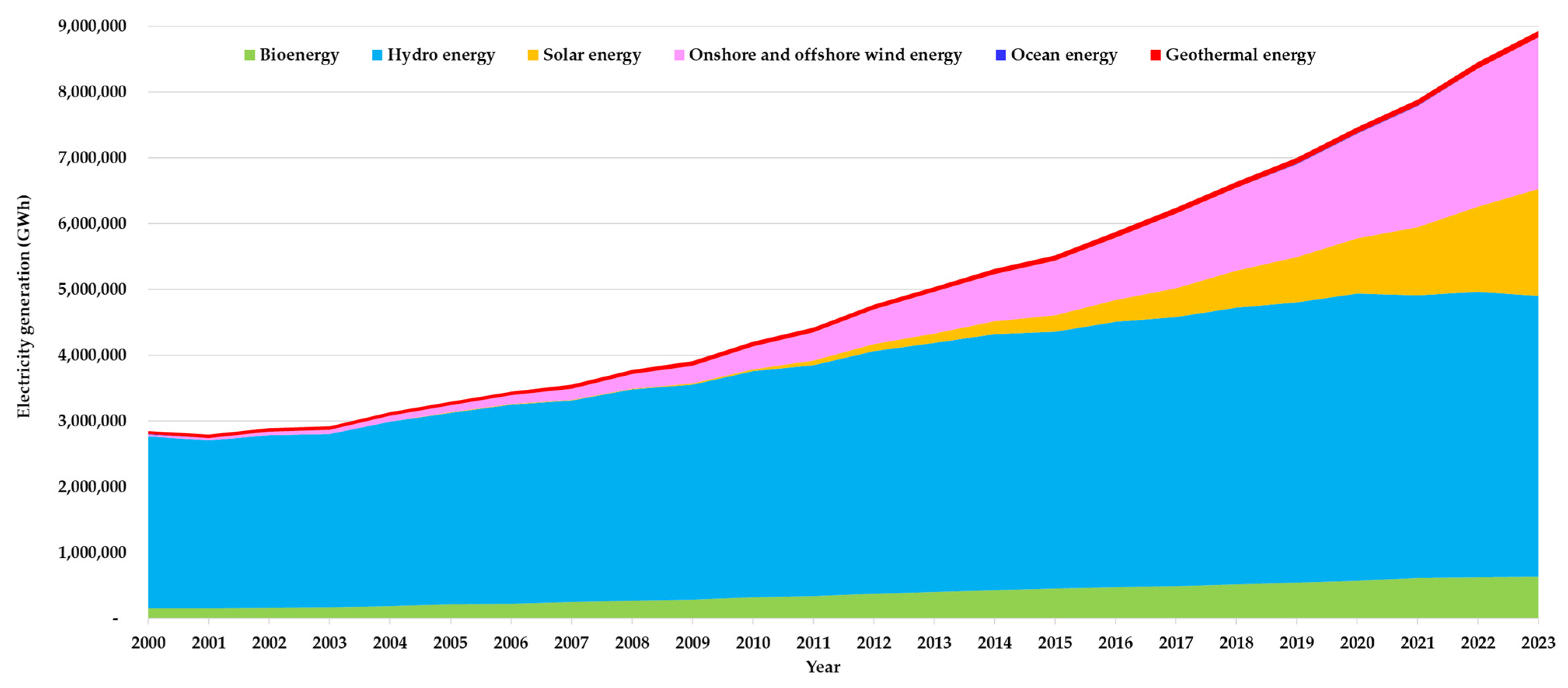
2]. In 2023, renewable sources accounted for approximately 30% of global electricity, and in 2024, the share increased to around 32%, according to data from the International Energy Agency (IEA). Also, “clean” energy (which includes renewables and nuclear power) reached a record 40.9% of global electricity production in 2024 [
3].
The European Union, one of the world leaders in the green transition, has set a target of at least 42.5% of energy consumption coming from renewable sources by 2030, and some optimistic scenarios even predict reaching the 45% threshold. Another positive signal comes from the evolution of the global energy mix: in the first half of 2025, energy production from solar and wind sources exceeded energy obtained from coal for the first time, marking a historic moment. In addition to the ecological benefits, renewable resources also stimulate economic development. Investments in green energy create sustainable jobs in the industries of the future, encourage technological innovation, and modernize energy infrastructure. Expanding renewable energy production also improves air quality, reducing the social and health costs associated with pollution [
4].
By using renewable resources, human society can achieve carbon neutrality, maintain a balanced climate, and ensure a clean future for future generations. Statistics show that progress is already visible, but the speed of implementation must be accelerated. Only with a real global commitment and coherent policies will renewable energy become the engine of a sustainable and equitable world [
5,
6,
7].
This paper adopts a bibliometric perspective on carbon-neutrality research, analyzing publication patterns, collaboration networks, and thematic structures across six major renewable-energy domains from 2018 to 2025. While the title emphasizes “pathways” to carbon neutrality, the aim here is not to construct a normative decarbonization roadmap or model specific transition scenarios. Instead, we examine how the scientific literature itself organizes, prioritizes, and conceptualizes the components of the low-carbon transition. By mapping research trajectories and identifying emerging clusters of technological, environmental, and socio-economic themes, the research provides meta-level insights into how scholarly production reflects the evolving landscape of climate action and sustainable energy innovation.
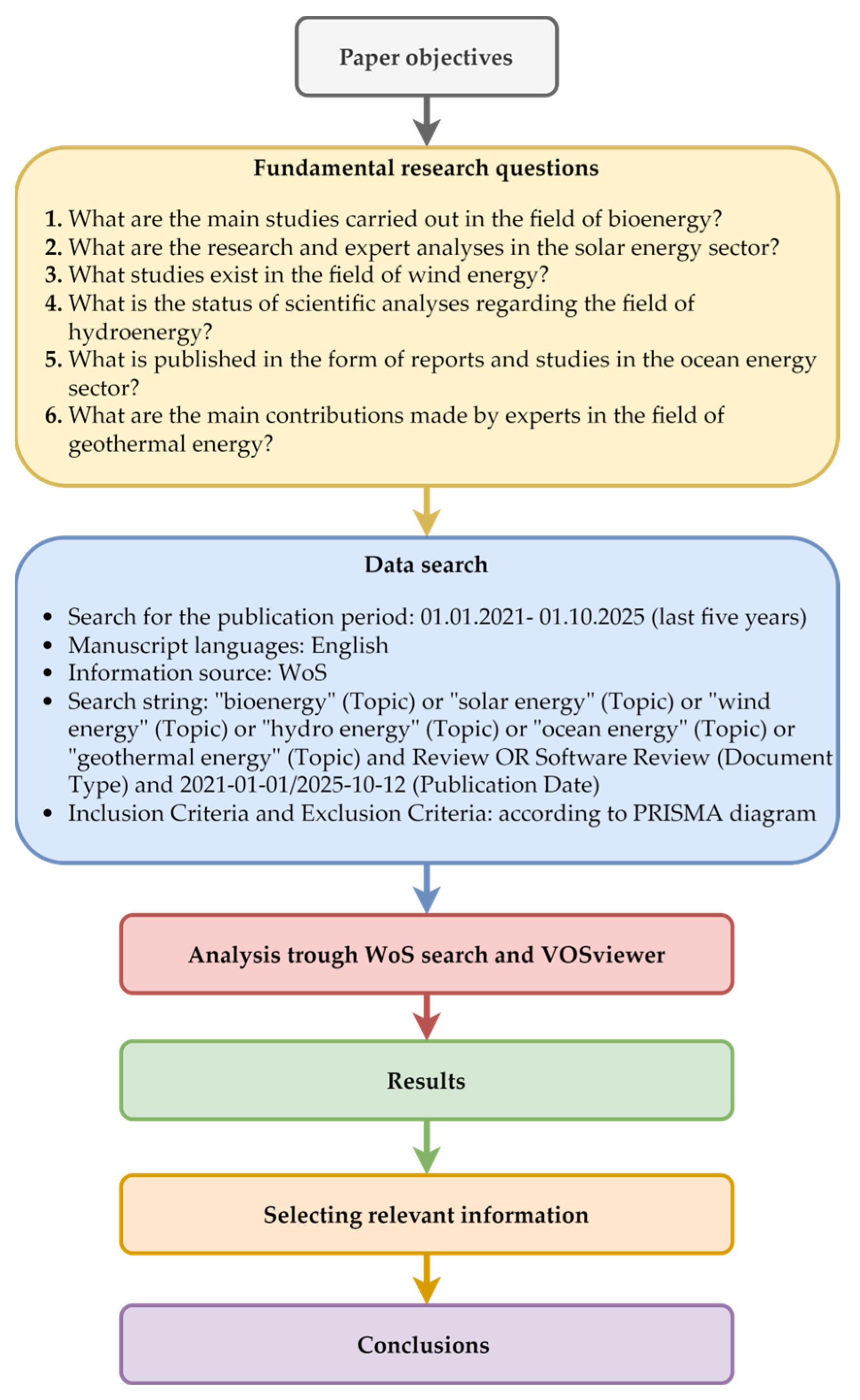
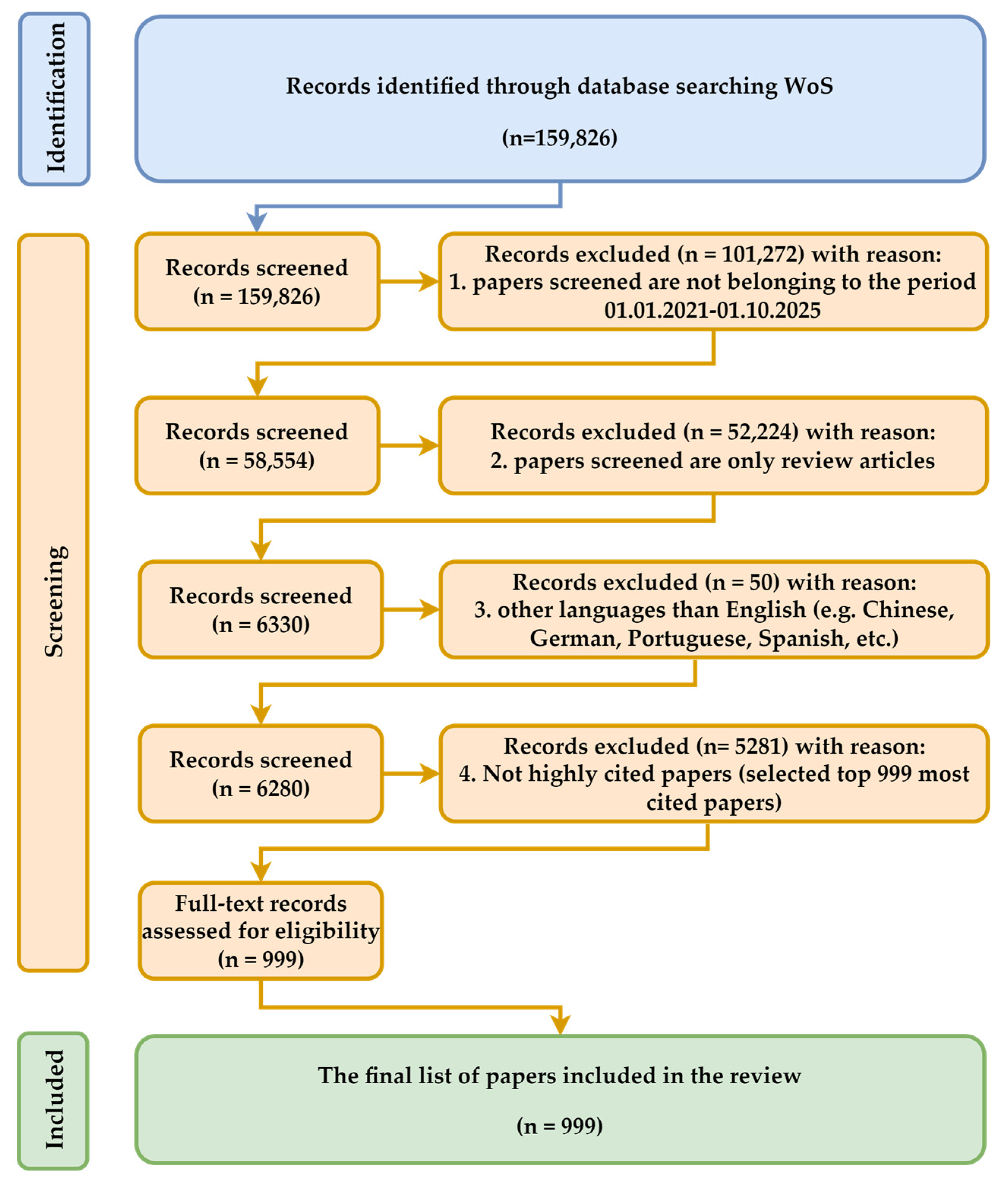
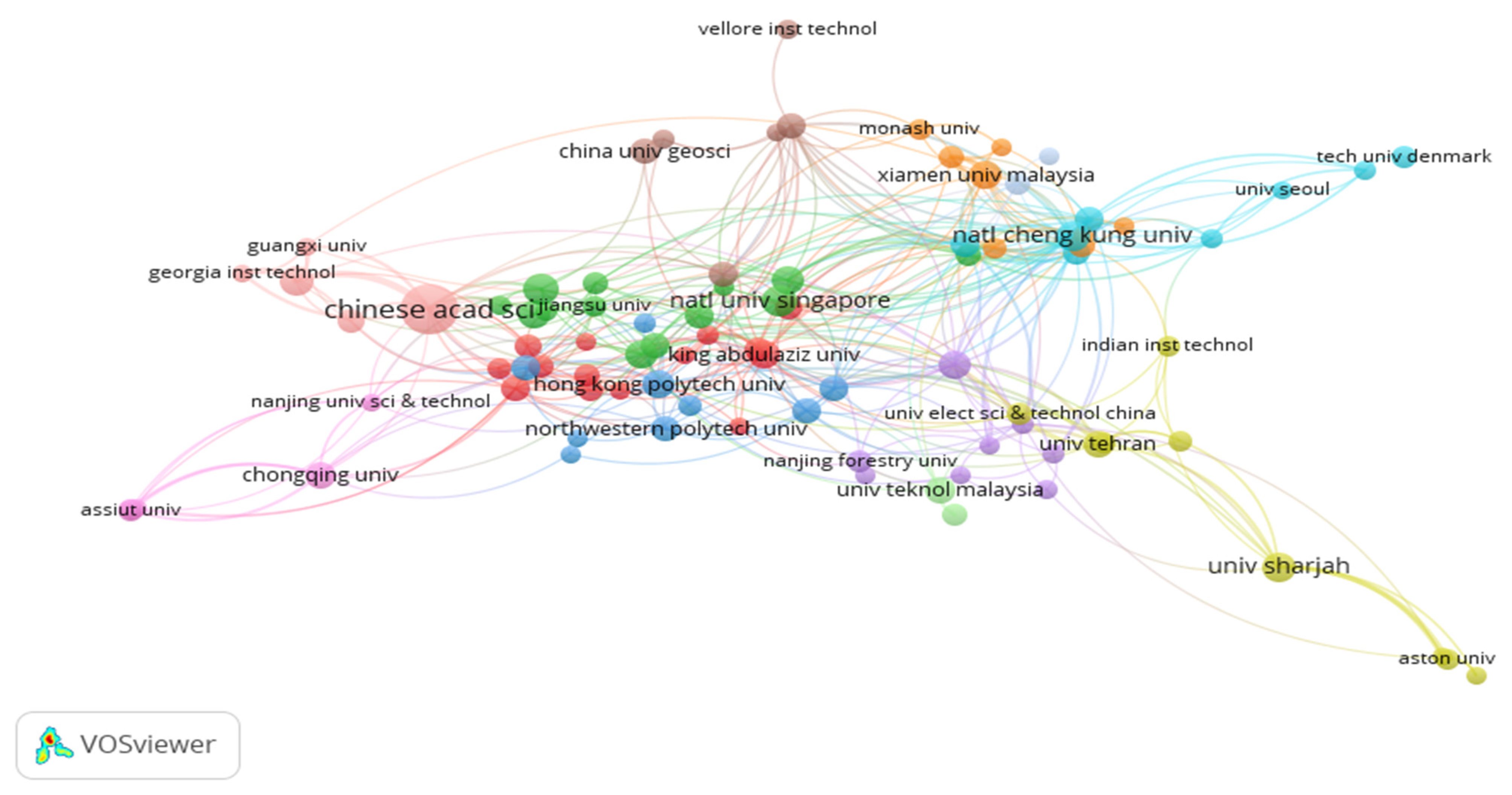
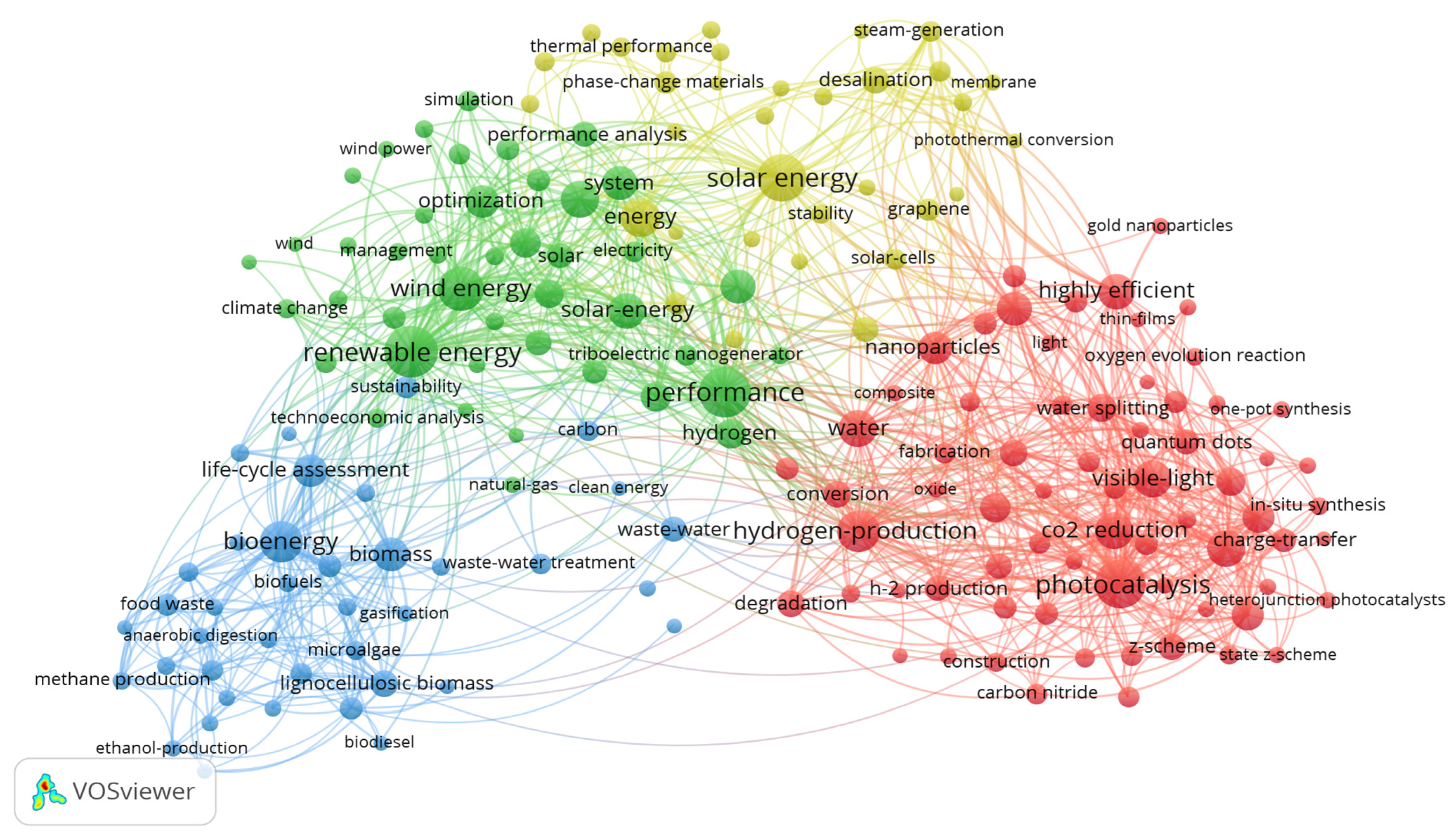
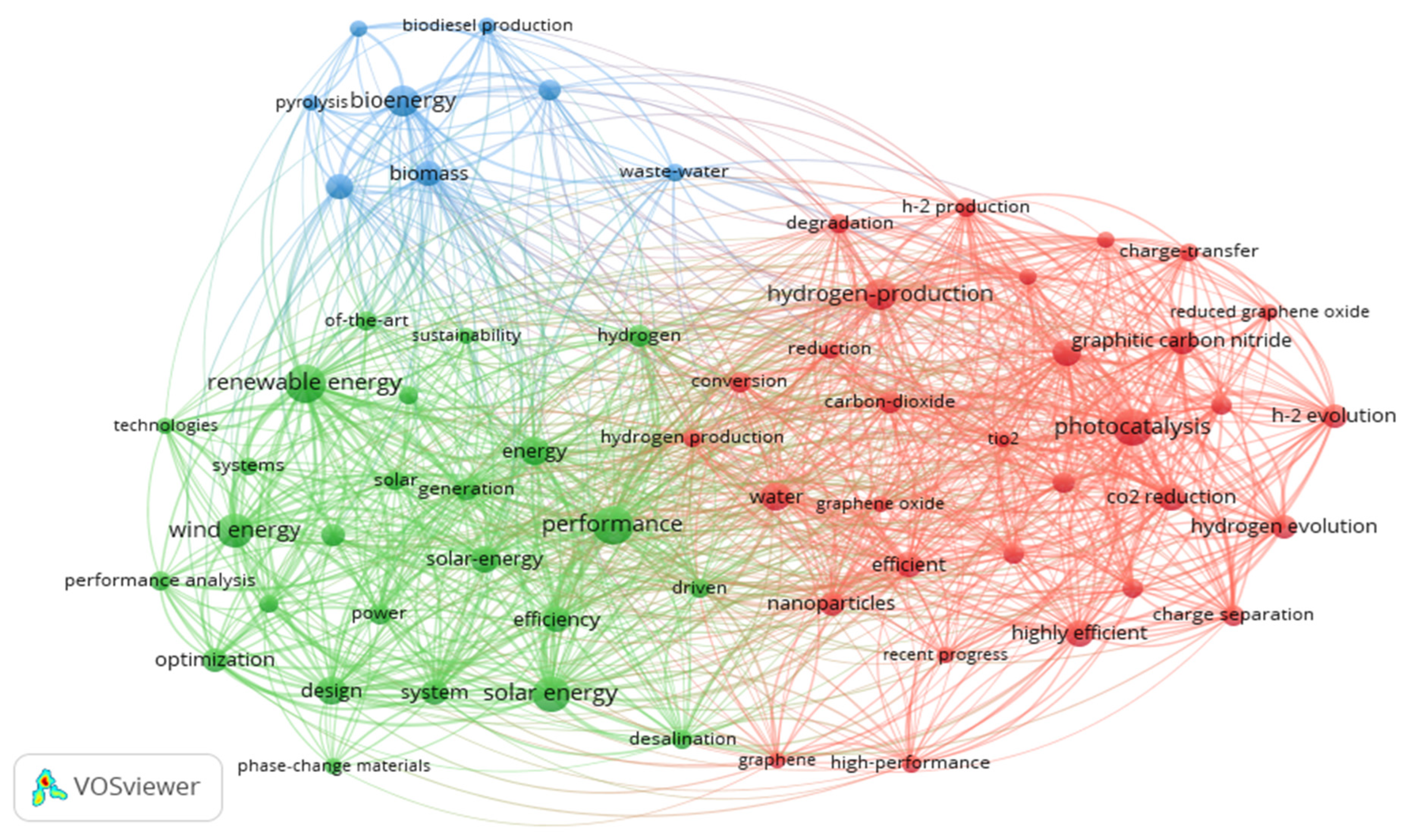
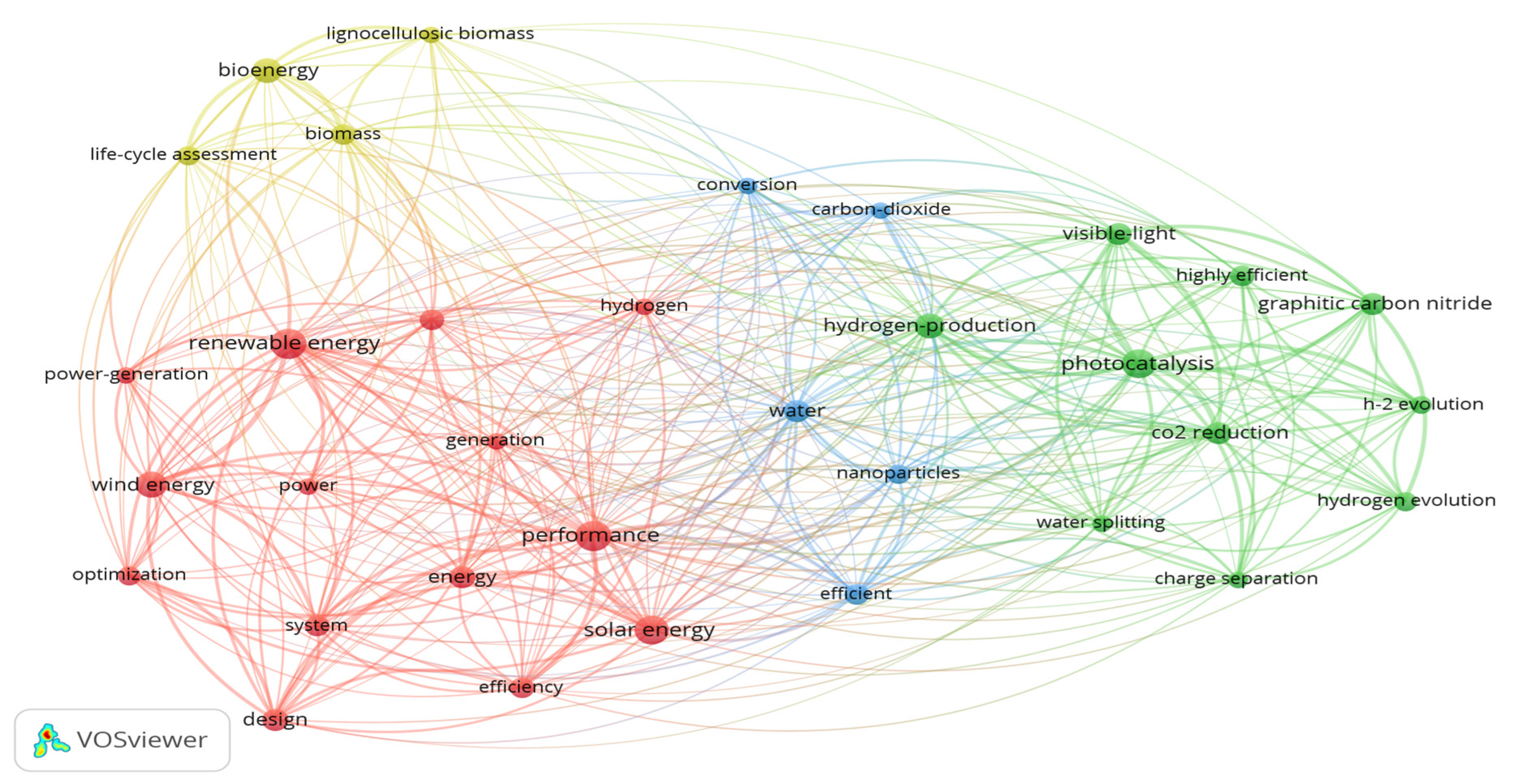
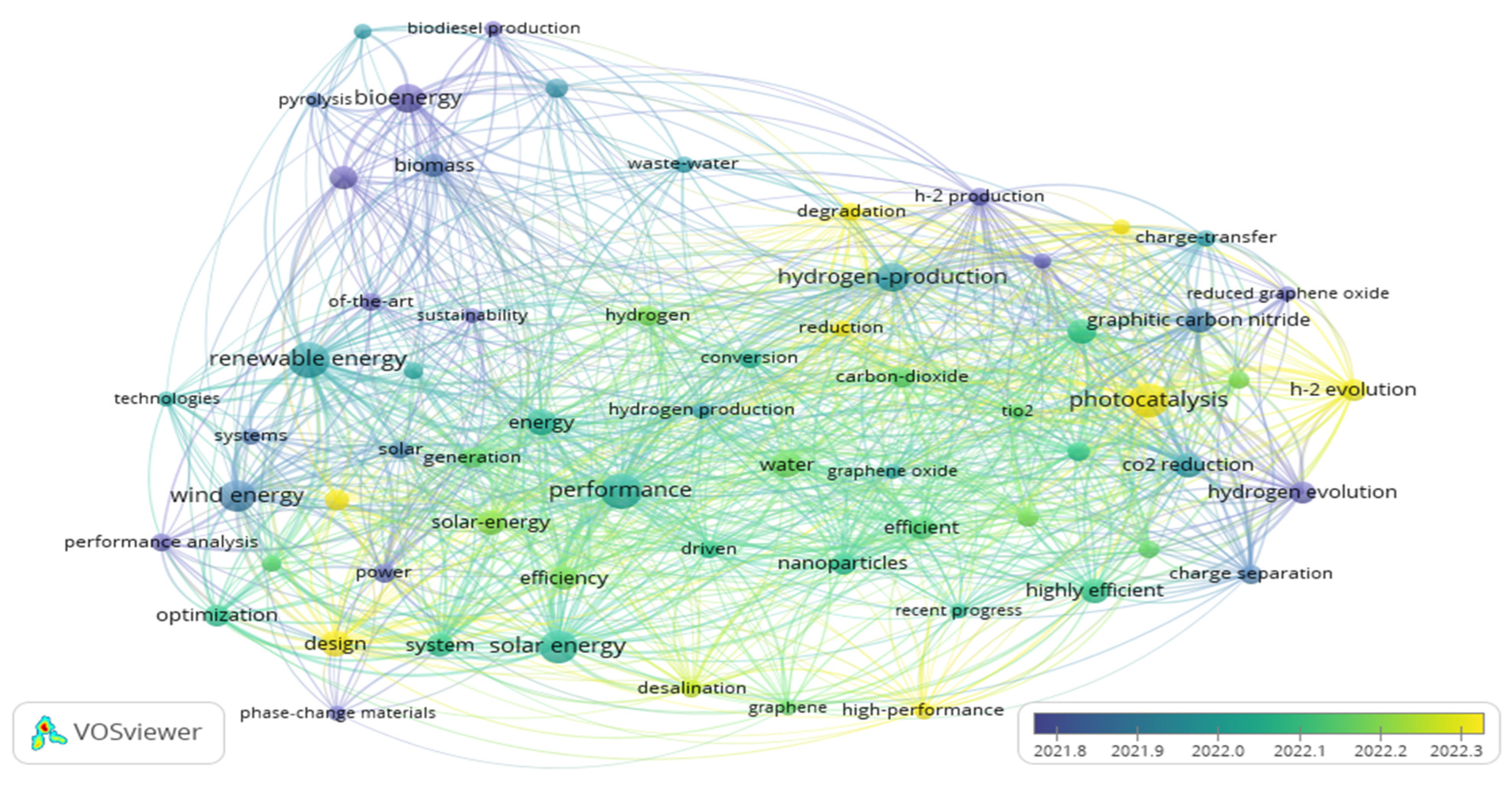
This paper aims to represent a review-type article, broad and representative, which aims to identify, analyze and synthesize the main trends, research directions and emerging innovations in the field of climate action and sustainable energy, to outline viable paths towards achieving carbon neutrality, based on a bibliometric analysis carried out according to the framework provided by the PRISMA methodology and the information generated by the specific VOSviewer version 1.6.20 software.
2. Innovations in Renewable Energies
The development of renewable energy sources has spurred a technological revolution in the energy sector. In the last two decades, the efficiency of photovoltaic solar panels has increased from around 10% to over 25%, thanks to new materials such as monocrystalline silicon and perovskite cell technology. This demonstrates the accelerated pace of technological progress, supporting the idea that society can realistically advance towards the goal of carbon neutrality [
8,
9,
10,
11]. At the same time, modern wind turbines can produce over three times as much energy as those of the 2000s, thanks to advanced aerodynamic designs and intelligent automatic wind-orientation systems. These innovations not only increase efficiency but also reduce production costs, making green energy increasingly accessible to the population and industry [
12,
13].
Another major direction of innovation in renewable energy is the development of energy storage systems. To compensate for the intermittent nature of solar and wind sources, researchers have improved lithium-ion batteries and introduced new solutions based on sodium, green hydrogen, or thermal storage. These technologies allow conserving energy produced during peak periods and releasing it when demand increases. In parallel, the emergence of the smart grid concept has revolutionized energy distribution, enabling digitalized control of flows and more efficient consumption management through sensors, artificial intelligence (AI), and real-time data analysis [
14].
The impact of green energy has also spread to other areas, generating innovations that are transforming how people live and move. Progress in electric vehicles and fast-charging infrastructure has reduced dependence on fossil fuels, while the production of green hydrogen promises to revolutionize heavy transport and the chemical industry. Sustainable architecture has also increasingly integrated green technologies: modern buildings use solar panels, heat pumps, and recyclable materials to reduce their carbon footprint. Furthermore, companies in the mining sector should shift to a multi-business industrial model by implementing new solutions (such as diversifying the activity by focusing on secondary fields to provide new products and services to the community and generate new job opportunities, using energy and raw material more efficiently, employing a higher percentage of renewable energy, etc.) that contribute to the sustainable development of the region in which they operate [
15]. Thus, innovations in renewable energy not only produce clean electricity but also shape a new civilization based on efficiency, sustainability, and environmental responsibility [
16].
2.1. Bioenergy
Bioenergy is energy obtained from biomass and accounted for 55% of renewable energy in 2024. According to the IEA [
17,
18], modern bioenergy comprises only solid biofuels, liquid biofuels, and biogases, without including traditional biomass. Bioenergy has the most diverse material sources among all renewable energy types.
The main contributions in the scientific literature on bioenergy are presented according to the IEA’s classification, which groups biomass into three categories: solid biofuels, liquid biofuels, and biogases.
2.1.1. Solid Biofuels
Solid biofuels can be obtained from various sources, such as lignocellulosic biomass (herbaceous crops, hops, mixed waste wood, multi-crop plants, etc.), vegetal and animal food waste, non-edible plants, algae, sewage sludge, and municipal solid waste (MSW). All these types of biomass are mainly waste generated by industry, agriculture, livestock, forestry, municipalities, hospitals, etc., and can be converted into energy [
19,
20,
21,
22].
Ivanovski et al. [
23] tested the solid biofuel generated from four separate lignocellulosic sources: herbaceous crops (Miscanthus), hops, mixed waste wood, and oak wood waste, by torrefaction in a semi-inert atmosphere. The results underlined that the optimal treatment temperature is approximately 250 °C. The lignin percentage also increases as temperature rises, while the proportions of cellulose and hemicellulose decline.
In complex research, Kwiatkowski et al. [
24] compared annual yield, expressed as hydrogen content, over 13 consecutive years for
Sida hermaphrodita (L.), a perennial, non-edible, multipurpose crop. The energy efficiency ratio reached its maximum at a seed density of 4.5 kg/ha. Furthermore, Cumplido-Marin et al. [
25] show that another similar energy crop is
Silphium perfoliatum (L.), which originated in Canada and the USA but was cultivated in Europe in the 18th century. Both crops registered a positive energy balance, computed as the ratio of output to input energy.
Other authors [
26] obtained biomass ash for plant fertilization and solid biofuel from multi-crop plants using the multifunctional crops (polyculture) method, employed in agriculture to increase yields. The experiment analyzed seven solid biofuel pellets obtained from hemp, maize, and fava beans and tested as mono, binary, and trinary plants.
The rise in coffee consumption produces more spent coffee grounds (SCG), an environmentally unfriendly waste that has generated around 10 million tons worldwide [
27]. Lee et al. [
28] show that if the SCG of
Coffea arabica (L.) species is dried and passed through the pyrolysis process, the SCG-biochar obtained has a high carbon content, a low quantity of volatile substances, a low level of ash, and is cost-efficient, which makes it suitable as a solid biofuel. The conversion of biomass into biochar is imperative because the energy density increases significantly by removing moisture and other components. Other authors [
29] use slow pyrolysis to obtain biochar from another vegetal food waste, namely citrus peel. Thus, the highest potential fuel level biochar is made at 500 °C.
Theppitak et al. [
30] focus on producing solid biofuel from both vegetal and animal food waste (cabbage, chicken, and rice) by comparing the employment of the hydrothermal carbonization (HTC) and pyrolytic carbonization (PC) processes. Although the chars from the PC have superior fuel properties to HTC, the PC needs more energy. Therefore, HTC is appropriate to use, as it excludes interference from food waste heterogeneity in the production of solid biofuel.
López-Sosa et al. [
31] underscore the high potential primary-use solid biofuel of pelagic algae Sargassum spp., which can be found on the beaches in the Caribbean, Brazil, and West Africa, due to the content of cellulose, hemicellulose, and lignin. The energy generated was 0.203 GJ/m
3, and the algae harvested from 8 km of shoreline might produce approximately 40 terajoules of energy.
Silva et al. [
32] analyzed the evolution of hydrochar yield from sewage sludge in Sri Lanka under different temperature and time treatments during the HTC process. The results suggest that the temperature should be 150 °C and the time 30 min, so the char reaches the maximum caloric value of 16.17 MJ/kg. Consequently, the hydrochar can replace peat while being environmentally friendly.
Vasileiadou et al. [
33] conducted a detailed experiment on different categories of MSW (including food waste, organic fraction of MSW, green waste, and paper waste) as primary fuels and their mix with lignite as secondary fuel, considering the gross caloric value potential and environmental impact. The main findings indicate that MSW, used as a primary and secondary fuel, is a suitable renewable energy source and nearly eco-friendly due to its high nitrogen and chlorine content [
34].
With the world population increasing, especially in urban areas with higher standards of living than the countryside, households, schools, shops, and private and public offices generate more waste. The average weight of MSW categories is as follows: organic materials (46%), paper and cardboard (17%), inert waste (13%), plastic (10%), glass (5%), metal (4%), textiles (3%), and miscellaneous (2%). The main chemical components are moisture, volatile matter, organic carbon, and organic nitrogen [
35,
36,
37].
MSW is converted into energy by employing two leading technologies: thermochemical methods and biochemical techniques. The thermochemical technologies comprise four methods with specific operating temperatures, heating rates, duration, and energy output: pyrolysis, incineration, hydrothermal liquefaction, and gasification. The biochemical technologies include landfilling, anaerobic digestion (AD), fermentation, and composting [
38,
39].
Lozynskyi [
40] analyzes nine factors that contribute to increasing the efficiency of the gas generation process in underground coal gasification, including temperature, injection of gasification agents, pressure, pulsating blast, reversing blast flows, catalysts, magnetic fields, gasifier design optimization, and water inrush. The findings show that some factors are correlated, which must be accounted for to understand the chemical and physical processes in the reaction channel and optimize the gasification process.
Mukherjee et al. [
41] underlined that, in the US, waste-to-energy (WtE) technologies for MSW are implemented on a small scale compared to other European and Asian countries, with only a little over one-tenth, whereas landfills are employed twice as much. There are significant differences among US states concerning the weight in which the WtE methods are used, for instance, 41% in Maine, Vermont, New Hampshire, Massachusetts, Connecticut, and Rhode Island, 21% in New York and New Jersey, 17% in Pennsylvania, West Virginia, Delaware, Virginia, and Maryland, 6% in Kentucky, North Carolina, Tennessee, Mississippi, Alabama, Georgia, South Carolina, and Florida, etc.
Munir et al. [
42] state that New Zealand is not effectively managing MSW and is facing an energy deficit compared to other high-income countries. Implementing WtE technologies faces several barriers, including increased costs, incomplete understanding of processes, limited business success, modest community and technology readiness levels, and policy ambiguity. A similar situation exists in Australia. Thus, Dastjerdi et al. [
43] emphasize that effective, cost-effective MSW management must be implemented to address the increasing per capita MSW and to deploy appropriate WtE technologies, including incineration and AD.
In Japan, MSW management has been in place since 1970, when the Waste Cleaning Act was adopted. The MSW has been continuously improved, evolving from a reactive approach to a proactive strategy, focusing on waste reduction and driving policy that makes energy and resource recovery the primary objectives of waste treatment. Thus, nowadays, MSW management includes waste prevention by reducing waste generation, implementing mandatory source separation and sorted collection, achieving full waste collection coverage, continuously improving facilities for waste treatment and disposal, achieving high recovery rates, and minimizing final disposal and landfilling amounts [
44,
45].
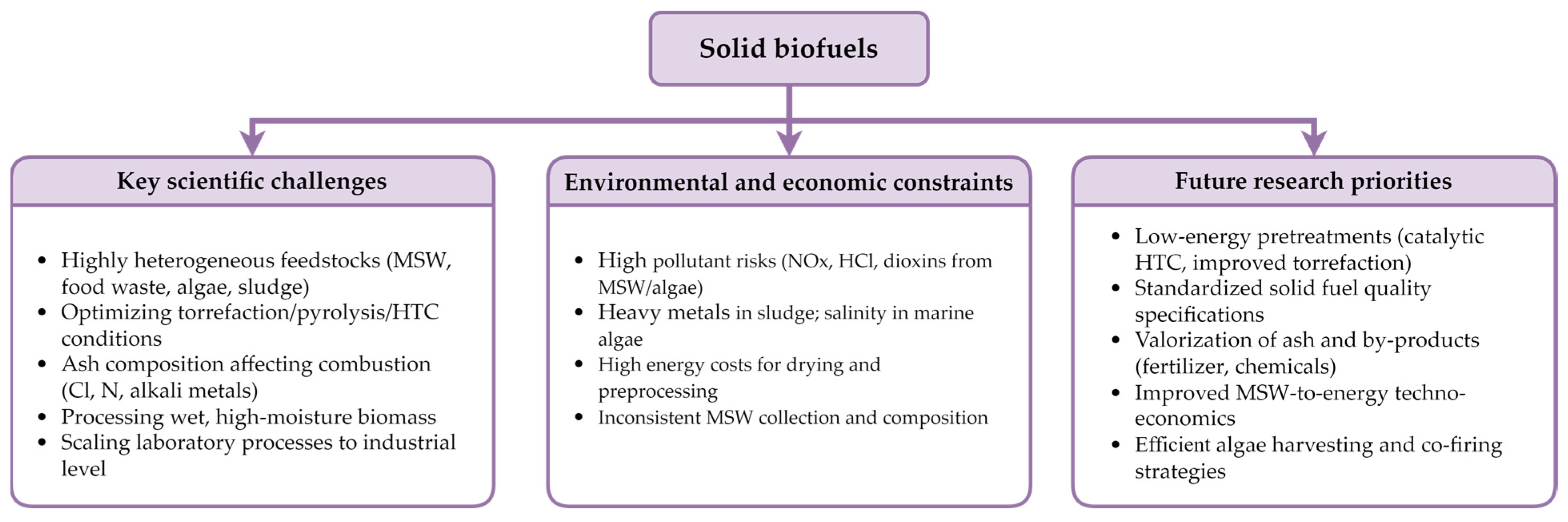
Figure 1 depicts the key scientific challenges, environmental and economic constraints, and future research priorities of solid biofuels. Despite technological advances, some limitations remain, such as high pollutant risks, high energy costs for drying and preprocessing, heavy metal contamination in sludge, salinity in marine algae, etc.
2.1.2. Liquid Biofuels
Regarding liquid biofuels, the primary sources used to produce them are edible and non-edible crops, which include carbohydrates and lignocellulose in the most significant proportion, vegetable oils, animal fats, algae, etc., from which ethanol, methanol, butanol, biodiesel, and other higher alcohols are obtained [
46,
47]. Municipal liquid waste (MLW) is another type of liquid biofuel waste.
Ethanol is the most commonly employed biofuel and is blended with fossil fuels for spark ignition engines (SIEs), compression ignition engines (CIEs), and fuel cells (FCs). The ethanol obtained from corn, as compared to sugarcane, generates a higher quantity of carbon dioxide (CO
2). Other feedstocks include sorghum, wheat, cassava, etc. (
Table 1). In addition, the ethanol content in both gasoline and diesel fuel must be correlated with the engine’s features and the operating workload. Further research is needed to improve ethanol’s physical and chemical properties according to the SIEs, CIEs, and FCs particularities [
48,
49].
El-Sheekh et al. [
56] focus on producing ethanol from wheat straw by optimizing the fermentation process. The results suggest that ethanol quantity is influenced by the components of the feedstock, the incubation period for
Saccharomyces cerevisiae (L.), pH, temperature, hydrolysate conditions (static or agitated), and the concentration of the molasses additives. The ethanol generated in this study was mixed with diesel fuel in various proportions, and NOx emissions decreased significantly when ethanol was at 10%.
As for methanol, its synthesis consists of decomposing the lignin barrier from the lignocellulosic feedstock waste, fermentation of the biomass with various bacteria
Lactobacillus (L.),
Clostridium (L.),
Methanobacterium (L.), etc., obtaining the biogas (methane, hydrogen, carbon dioxide, etc.), removing the hydrogen sulfide from the biogas with specific bacteria, and converting methane (CH
4) to methanol using oxidizing bacteria [
57]. A step forward was made by Chakrabortty et al. [
58], who produced methanol with a high yield from carbon dioxide by employing a new membrane based on hydrogen exfoliation graphene.
Amiri [
59] draws attention to butanol production via acetone–butanol–ethanol (ABE) fermentation or biochemical fermentation (also called the Weizmann process) of carbohydrate biomass by different strains of the
Clostridium (L.) bacterium. Even if ABS fermentation had been used on an industrial scale since 1916, interest in this method decreased ten years later due to low profitability. The ABE fermentation involves breaking down sugars via glycolysis into acetic acid and butyric acid, which are converted by the bacteria into
n-butanol (the main product), acetone, and ethanol [
60,
61]. The second pathway for obtaining butanol is thermochemical synthesis. It begins with the gasification of biomass, by which biomass is chemically decomposed at high temperature into syngas (a mixture of CO, H
2, CO
2, and light hydrocarbons). Next, a water–gas shift reaction occurs, and finally, through catalytic synthesis of alcohols, methanol, ethanol, propanol, and
n-butanol are produced [
62,
63].
Recent studies [
64,
65] show that the production of butanol becomes efficient by combining lignocellulosic biomass from multiple sources (sugar bagasse, corncob, pine, and wheat bran) and additional implementation of the pervaporation process or by pH control and fed-batch processes, which contribute to the appropriate removal of butanol.
Compared to methanol and ethanol,
n-butanol, which is one of the most commonly used isomers of butanol, has some advantages, such as ease of being transported by cargo and pipeline due to its low hygroscopicity and low corrosiveness, is less dangerous to manage because of its low vapor pressure, higher flash point, high energy density (close to gasoline), can be blended with gasoline and diesel in any ratio, and can even be used in its pure form, diminishing the production of soot and NOx when it is employed in homogeneous charge compression ignition (HCCI), is the main fuel in reactivity controlled compression ignition (RCCI), and has higher thermal efficiency, etc. [
66,
67,
68].
Biodiesel is produced by chemical catalysts of vegetable oils (94%) or animal fats (6%) using either the traditional method (acid/alkaline transesterification) or new techniques (enzyme, magnetic-assisted or plasma-assisted transesterifications, and whole-cell biocatalysts). Basically, the triglycerides from vegetable oils or animal fat react in the presence of a catalyst, which breaks ester bonds and forms new ester bonds with alcohol. The resulting products are fatty acid alkyl esters (biodiesel) and glycerol [
69,
70,
71,
72]. Studies underscore that, even though new catalyst methods offer important benefits, they can be further improved. Considering that plant-derived oils account for 90% and recycled oils for 10% of the feedstocks used to produce biodiesel, it is necessary to increase the quantity of recycled and waste oils to enhance sustainability [
73,
74,
75,
76,
77].
Mushtruk et al. [
78] highlight the importance of the quality of the fats and oils used to produce biodiesel, particularly the effect of moisture content on the triglyceride transesterification process. Thus, the interaction between free fatty acids and moisture reduces the technology’s effectiveness.
Other authors [
79,
80] analyzed the influence of biofuel production on food security in particular countries such as Madagascar, Rwanda, Mozambique, and Sierra Leone. Even if official data showed that the population’s food security had not been compromised, some surveys indicated that food security was damaged by land grabs by companies or authorities.
MLW includes the following four types of waste: compost leachate, landfill leachate, sewage slurry, and waste-activated sludge (WAS) [
81]. Zhi et al. [
82] developed a novel microbial electrolysis cell (MEC) to produce methane from WAS.
Mhatre-Naik et al. [
83] propose a new technology named MacroAlgae Remediates Nutrients for Energy in Photobioreactor (MARiNE PBR), which is based on the pollutant-scavenging properties of the marine green macroalga (
Ulva lactuca spp.) on hypersaline brine and MLW. The biomass from this process can be used to produce biomethane, as
Ulva lactuca has a high carbohydrate content (55–60%).
Mhatre et al. [
84] stress that specific treatments to remove inhibitory factors, such as sulfate and proteins, are essential to increase the biomethane potential (BMP) substantially. Trivedi et al. [
85] conducted similar research on extracting numerous fractions from the green seaweed
Ulva fasciata that food, agriculture, pharmaceutical, and chemical industries can use, including cellulose, for making bioethanol [
86].
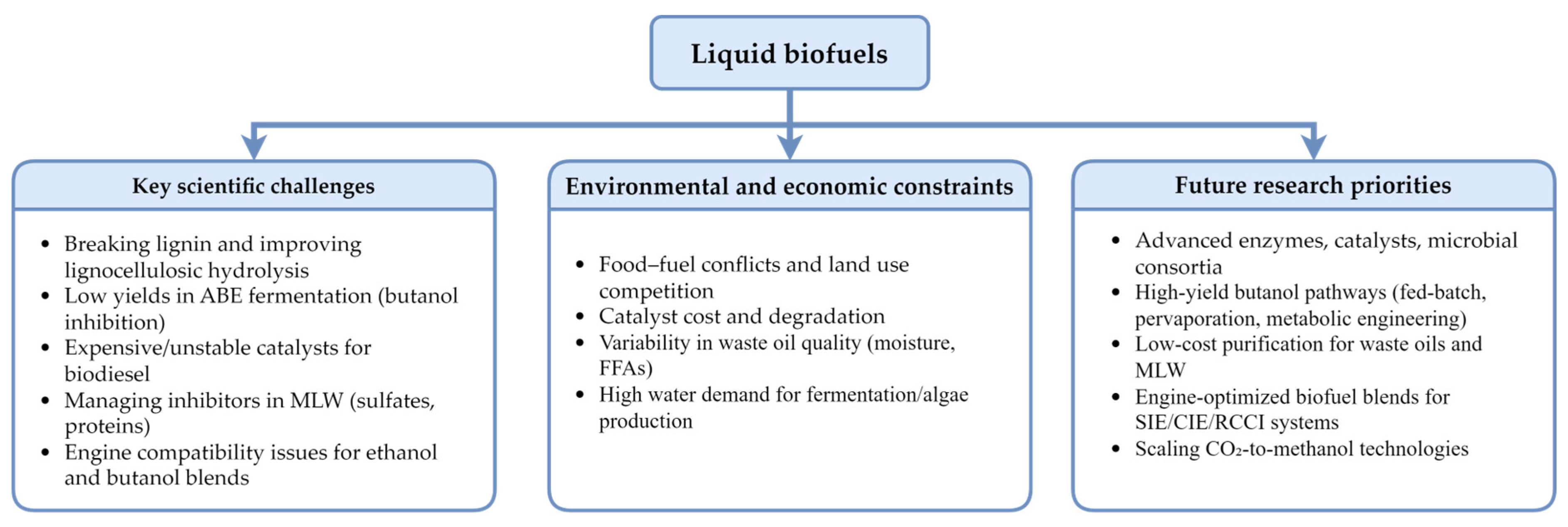
Figure 2 presents the key scientific challenges, environmental and economic constraints, and future research priorities of liquid biofuels. Future studies should focus on improving enzymes, optimizing the purification process for waste oils and MLW, and optimizing biofuel blends for internal combustion engines, among other areas.
2.1.3. Biogases
Biogases are typically gases produced by the biological breakdown of organic matter in an oxygen-free environment. Archana et al. [
87] show that this process, known as AD, is driven by microbial activity and primarily produces methane and carbon dioxide. Biogas production represents a key area in sustainable energy. The studies cover methodologies for assessing biogas potential, the role of nanoparticles in enhancing biogas yield, experimental biogas production setups, Internet of Things (IoT) integration in biogas systems, and the hybridization of biogas with coal-fired power generation.
A systematic literature review by Tjutju et al. [
88] analyzed 97 research papers to evaluate the methodologies employed. The review focused on feedstock types, data sources, and estimation methods. The most common feedstocks were manure and crop residues, while intermediate crops, industrial wastewater, and aquatic feedstocks were less frequently considered. The survey highlighted notable ambiguities concerning the potential being investigated. For instance, laboratory experiments on mono-digestion often fail to represent full-scale conditions accurately. Additionally, most studies emphasized energy aspects, with less attention given to nutrient management and carbon dioxide. The review concluded that improvements in transparency and methodological rigor are necessary for assessing geographically bounded biogas potential.
Jadhav et al. [
89] explored the potential of trimetallic nanoparticles (TMNPs) to boost biogas production by enhancing microbe interactions. The research used a central composite design (CCD) within response surface methodology (RSM) to optimize conditions for the use of iron–cobalt–zinc TMNPs in AD. Key variables, including initial pH, temperature, TMNP concentration, and hydraulic retention time, were modeled to enhance biogas yield. The study found that linear and quadratic model terms significantly influenced biogas production. Optimal conditions resulted in a maximum cumulative biogas production of 3700 mL−1POME, an 85% increase over the control. This suggests that optimizing these parameters can substantially enhance biogas yield.
Another investigation by Suslov and Sedyh [
90] examined biogas production from various agricultural waste substrates in a 5 L bioreactor. The study compared biogas yields from corn silage, poultry manure, pig manure, and cattle manure, finding that corn silage and poultry manure produced the highest biogas volumes. In contrast, pig manure resulted in the least. The methane content was highest in poultry manure (64%) and lowest in corn silage (50%). These findings highlight variability in biogas production across substrate types, underscoring the importance of substrate selection to optimize biogas yields.
Time series data, widely used in various industries for system monitoring, requires specialized databases for storage and retrieval [
91]. Rudakov et al. [
92] introduced several popular time series databases. The authors evaluated them based on criteria like read/write speed, database size, support for time-series tables, and application programming interface (API) convenience. This study highlights the importance of time-series databases for managing the vast amounts of data generated by intelligent technical devices, including those used in biogas production monitoring systems [
93].
Using an Organic Processing Facility designed to produce biogas from organic waste, Vikrant et al. [
94] explored factors affecting biogas generation, such as temperature, pH, and organic loading rate. The study found that biogas generation rates increase with higher temperatures (thermophilic range) and neutral pH, yielding 1900 L from 2.2 kg of domestic waste. However, the study also noted that operating costs rise due to heating and additive requirements, which may limit the feasibility of this approach for larger waste volumes.
Rosca [
95] stresses that, nowadays, IoT solutions using AI are custom-made systems, namely embedded systems, and can be implemented in various domains. Thus, Menaka et al. [
96] introduced a novel approach to enhancing biogas production by integrating IoT technology. The Smart Optimized Biogas Production (SOBP) system connects sensors to the internet, enabling real-time monitoring and dynamic adjustment of critical parameters, such as temperature and acidity levels. This IoT-driven approach accelerates biogas production while maintaining efficiency and environmental sustainability. The potential outcomes include faster energy production, reduced resource consumption, and a move towards innovative energy solutions.
Zongqiang et al. [
97] examined the effect of different temperatures (15 °C, 20 °C, 25 °C, 30 °C, and 35 °C) on biogas yields and methane productivity using swine manure as the substrate and sediment from rural methane fermentation as inoculum. The results showed that higher temperatures accelerate material consumption and shorten the fermentation period, although they also produce more gaseous impurities. Temperature significantly influenced methane production, with lower temperatures hindering methane output. The study concluded that a temperature of 30 °C and a fermentation period of 31 days are optimal for large-scale anaerobic fermentation of swine manure.
Dieudonne and Shima [
98] present efforts to implement biogas digesters in homes and institutions. This approach faced challenges due to limited management knowledge and unreliable data [
99]. To address this, the researchers designed an IoT system that optimizes biogas digesters by providing accurate, real-time data from sensors inside and outside the digesters. This IoT-based approach enables better monitoring and management, potentially stabilizing gas production.
A hybrid power system study by Yu et al. [
100] integrated biogas power with coal-fired generation. The system used biogas from AD to fuel a gas turbine, with the exhaust heat improving the efficiency of a coal-fired steam cycle. This integration increased the coal-fired units’ power generation by 2.5 percentage points, demonstrating the benefits of combining biogas with traditional energy systems.
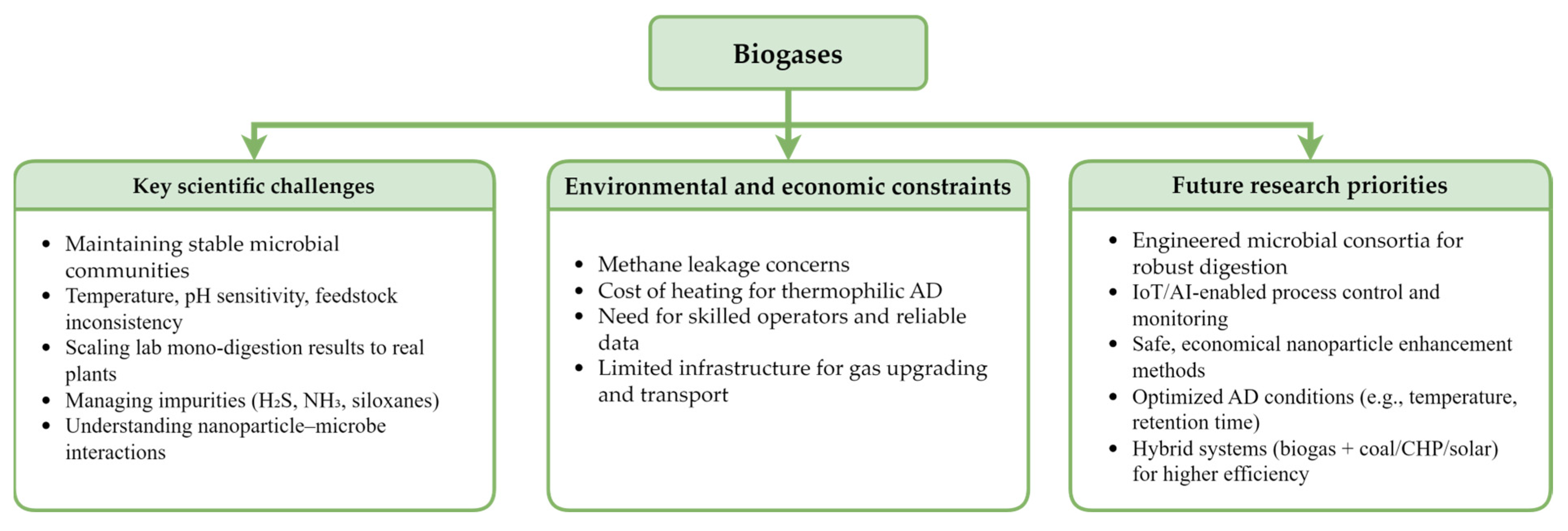
Figure 3 shows the key scientific challenges, environmental and economic constraints, and future research priorities of biogases. The new technologies must address challenges such as feedstock inconsistency, maintaining stable microbial communities, removing impurities, and interactions between nanoparticles and microbes.
Bioenergy is essential because it accounts for more than half of total renewable energy, with numerous types of biomass converted into energy. Furthermore, most biomass is waste generated by industry, agriculture, forestry, municipalities, etc., contributing to pollution reduction.
2.2. Hydro Energy
Hydro energy is the energy derived from water movement. This energy is harnessed by converting the kinetic and potential energy of flowing or falling water into mechanical energy, which is then transformed into electrical energy using turbines and generators. Hydro energy can be classified into several types based on the method of energy conversion: conventional hydropower, pumped hydro energy storage (PHES), ultra-low-head hydropower, and micro and small hydropower.
In the context of reducing global warming and climate change, multiple studies focus on the impact of renewable energy on environmental sustainability [
101]. Ullah and Lin [
102] and Rana et al. [
103] explore how energy sources and economic factors influence ecological health and carbon emissions [
104]. Ullah and Lin [
102] find that while nuclear and renewable energy positively affect sustainability, hydro energy and economic growth can have negative impacts due to reduced load capacity factor. The study suggests policy changes to optimize these energy sources for better environmental outcomes. Rana et al. [
103] investigate the ecological effects of hydro energy production, economic complexity, urbanization, technological innovation, and financial development across 13 Asian economies [
105]. The findings reveal that hydro energy and technological innovation positively contribute to environmental sustainability by reducing ecological footprints and CO
2 emissions. Furthermore, the authors recommend increasing hydroelectric power production to replace fossil fuels and suggest policies that support environmental sustainability in the face of global climate challenges.
Hydro energy systems and storage technologies are analyzed across various aspects, including PHES, its applications, and technical challenges. Wang et al. [
106] examine the technical and economic aspects of ultra-low-head PHES units, specifically focusing on scale effects in energy conversion. The authors conducted an in-depth evaluation of ultra-low-head PHES units from the perspectives of internal flows, energy performance, and hydraulic stability. The results provide essential insights for other researchers choosing, optimizing, and developing ultra-low-head PHES systems.
Blakers et al. [
107] emphasize the importance of PHES in energy storage, particularly in supporting a 100% renewable electricity grid. The authors identified over 22,000 potential PHES sites in Australia, potentially exceeding the storage capacity needed for a renewable energy grid. The study underscores the low cost of balancing renewable energy generation with PHES, additional transmission, and minimal energy spillage. Rana et al. [
108] investigate integrating PHES with wind, solar, and gas turbine power plants to achieve energy autonomy in South Australia. Through mathematical simulations, the study concludes that combining these technologies can make a viable solution for sustainable energy storage [
109].
Prasasti et al. [
110] introduce an innovative contra-rotating, variable-speed, reversible pump-turbine optimized for low-head operations. It allows PHES to perform efficiently across different hydraulic heads and flow rates. Moreover, using multiple CR-RPT units in parallel enhances efficiency and enables fast response times.
Some researchers focus on analyzing the pump as turbine (PAT) of PHES, which is responsible for preventing water losses and recovering hydraulic energy. For instance, He et al. [
111] underline the energy loss associated with the short blade length of the PAT for an ultra-low specific speed pump as a turbine (USSPAT). Thus, in the impeller, the energy loss is the highest. At high flow rates, the length of the short blade primarily influences the variation in entropy production in the downstream region. Tchada et al. [
112] analyzed the performance of two types of PAT impellers, i.e., with sharp and rounded leading edges. As a result, the impeller with a rounded leading edge achieves higher system efficiency by reducing shock, frictional, and swirling losses.
Wang et al. [
113] tested the PAT efficiency of a micro PHES following a power-off event, and the results showed that a power failure harms pressure fluctuations by damaging the PAT, and it is a direct correlation between the power failure and the probability of reduced PAT functionality. Stefanizzi et al. [
114] developed a new methodology for selecting the PAT that can be implemented in any Water Distribution Network (WDN), and centers on energy recovery. This proposed approach was compared with the other two methods, and the results underscore superior production and environmental and economic advantages.
Castorino et al. [
115] propose a methodology for forecasting the performance curves of six PATs, which rotate at different speeds, by analyzing 13 geometric parameters of the impeller and 6 PAT performance indications at the best efficiency point (BEP). The expected PAT performance curves record an acceptable level of deviation from a technical perspective. The Artificial Neural Networks (ANNs) are used across many domains [
116]. Yu et al. [
117] employ an ANN to develop an optimization algorithm that predicts PAT’s energy performance based on six impeller parameters. The results show that the proposed algorithm records a higher head and efficiency prediction accuracy than models developed by other researchers [
118].
Other authors showed that PHES needs optimization. Toufani et al. [
119] underscore the further development of optimization models, particularly Markov decision processes, to better represent uncertainties in the renewable energy sector. The multi-objective models should incorporate both economic and environmental aspects of PHES. Ma et al. [
120] propose a hierarchical optimization model for PHES and electrochemical energy storage to manage wind and photovoltaic (PV) power curtailment. The study demonstrates that the strategic operation of PHES can reduce power curtailment and increase the accommodation of renewable energy.
Bruninx et al. [
121] present the optimization of day-ahead scheduling for renewable energy systems using PHES. The study compares deterministic and stochastic models, highlighting the benefits of incorporating PHES for cost-effective and reliable energy management. The survey by Favaro et al. [
122] optimizes PHES scheduling by developing an algorithm that trains ANN models. This approach is compared with existing methods, such as piecewise linear approximations, using a detailed simulator that replicates PHES’s minute-by-minute behavior. The results show that neural networks can enhance the optimization model’s guidance, increasing profits and efficient solution times, particularly through weight pruning [
123].
Maio et al. [
124] introduce an algorithm for selecting the optimal PHES system that accounts for energy production and costs. Furthermore, comparing PHES with battery energy storage systems (BESSs) revealed that renewable energy provided to the building increased by 25% with BESSs and 13% with PHES, and the electricity purchased from the power grid declined to a greater extent with BESSs than with PHESs.
Bendib and Kesraoui [
125] present a hybrid power system integrating wind, solar, flywheel energy storage systems (FESSs), and PHESs. The system is designed to ensure a continuous power supply to a stand-alone load. Simulation results confirm that the proposed system achieves stable performance, maintaining consistent frequency and voltage levels, thereby supporting reliable energy storage and distribution.
Energy droughts and complementarity in hybrid energy systems discuss challenges related to the variability and complementarity of renewable energy sources, particularly in hybrid systems that combine hydro, wind, and solar power. Lei et al. [
126] address the issue of “energy droughts” in hydro–wind–photovoltaic (HWPS) energy systems. The study explores how these droughts, characterized by low renewable energy output, can propagate through the system. Using a case study from the Yalong River Basin, the research finds that complementary operations of hydro energy can reduce the frequency and severity of energy droughts, thereby improving system reliability and sustainability. Xu et al. [
127] introduce a novel metric for assessing the complementarity of hydro-wind-solar hybrid systems. The study critiques existing metrics for their limitations and proposes an improved method considering multidimensional assessment and fluctuation amplitudes. Applying this metric to a national-level hybrid energy base in China, the research demonstrates varying degrees of complementarity across different time scales, with monthly scales showing the highest synergy between the energy sources.
Zahmoun et al. [
128] designed an algorithm to dynamically reduce peak power loads to control a Wind Farm—PHES hybrid system. The framework optimally schedules system operations based on forecasted wind speeds and load profiles while respecting operational constraints. The effectiveness of the proposed approach is demonstrated through a case study and benchmarked against two nonlinear optimization techniques, showing improved performance through extensive numerical simulations [
129].
The research by Yurter et al. [
130] proposes stochastic programming models to assess different PHES configurations and their impact on the sizing and costs of hybrid systems integrating renewable power sources with PHES. The results reveal that PHES systems offer greater cost-effectiveness than traditional hydropower, leading to notable reductions in system costs and demand mismatches. Open-loop PHES systems are more efficient than closed-loop and seawater-PHES systems, as they reduce reliance on fossil fuels. The most economical setup features natural inflow to the upper reservoir. Furthermore, while solar energy requires larger upper reservoirs in open-loop PHES, it reduces overall system cost across all configurations.
Ghandehariun et al. [
131] show a dynamic analysis of a solar-wind hybrid micro power station combined with PHES. This hybrid renewable energy system (HRES) undergoes multi-objective optimization using the newly developed EO algorithm, which outperforms the widely used GW optimization algorithm. The authors further explore the impact of wind–solar power complementarity on hydropower production within the PHES. Findings reveal that hydropower output diminishes as the correlation between solar and wind power generation strengthens. Thus, small-scale hydropower generation is more viable in areas with abundant solar and wind energy. A similar approach was used by Alqahtani et al. [
132], who explored the effects of overlooking key factors, such as head losses and evaporation rates, on simulation accuracy and component sizing in a HERS that contains PV, wind, and PHES subsystems. Their methodology includes optimal pipe design through comprehensive techno-economic analysis. A comparative evaluation of two scenarios (one that considers head loss and the other that does not) is performed across multiple system configurations. Key performance indicators show significant improvements, such as the renewable energy fraction and energy loss.
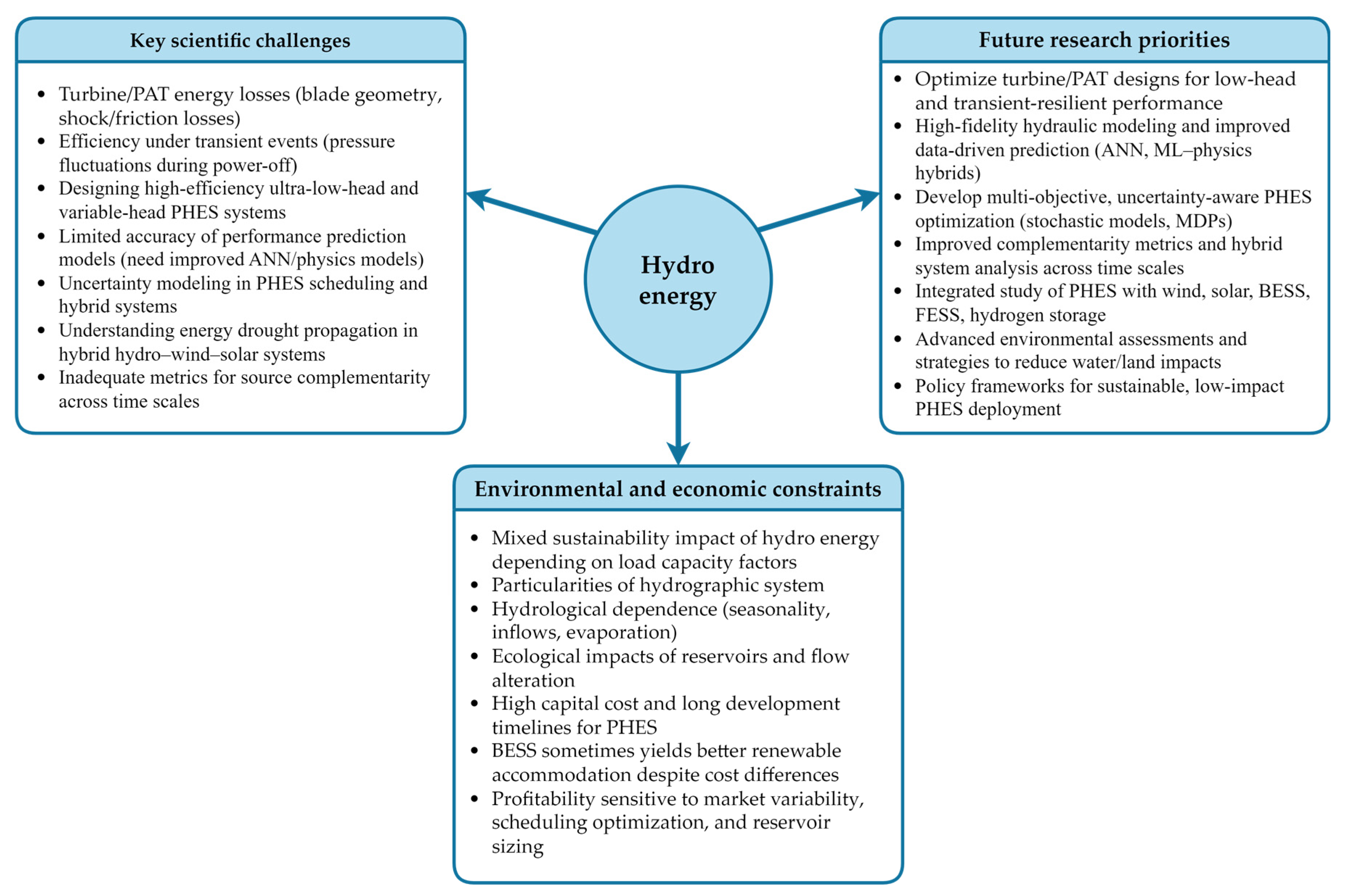
Figure 4 outlines the key scientific challenges, environmental and economic constraints, and future research priorities of hydro energy. The restrictions on developing and using hydro energy include the country’s hydrographic and hydrological systems, low returns on investment when implemented in certain areas due to geographic limitations, slower growth in new technologies compared to other renewable energies, etc.
Hydro energy can significantly reduce global reliance on fossil fuels and support the broader adoption of renewable energy by optimizing hybrid systems, advancing energy storage, and carefully considering environmental impacts.
2.3. Solar Energy
Solar energy is the energy that is emitted by the sun and captured using numerous technologies to generate electricity, heat, or light. This energy originates from nuclear fusion reactions within the sun, where hydrogen is converted into helium, releasing energy. Solar energy is considered a renewable energy source because it is abundant and inexhaustible, unlike fossil fuels, which can be depleted. The primary methods of converting solar energy into electricity include PV cells and solar thermal power plants. PV cells convert sunlight directly into electricity, while solar thermal power plants utilize solar collectors to concentrate sunlight, generating steam to drive turbines [
133].
One of the significant challenges in solar energy utilization is the intermittency of sunlight, which varies with time and weather conditions. Different storage solutions have been explored to address this. For instance, Khaigunha et al. [
134] discuss alternative ways to store solar energy, including battery-based systems and thermal storage using paraffin. The study highlights the cost-effectiveness of thermal storage, particularly for small-scale applications like household energy needs.
Phani Kumar et al.’s research [
135] examines the role of selective absorber coatings in improving the efficiency of solar thermal systems. These coatings enhance energy conversion by selectively absorbing solar radiation while minimizing thermal losses. The review emphasizes the importance of developing durable, economically viable coatings to advance solar energy utilization.
Integrating renewable energy sources such as solar and wind into the power grid poses challenges due to their fluctuating nature. Xuewei et al. [
136] explore the use of energy storage systems to smooth these fluctuations. The study focuses on control strategies for energy storage systems, such as peak shaving and valley filling, which help balance energy supply and demand.
Wang et al. [
137] present a novel approach to addressing challenges in solar energy storage. It proposes a hybrid device that combines a molecular solar thermal (MOST) energy storage system with PV cells. This system stores energy and serves as a cooling agent for the PV cells.
There are multiple solar energy applications across various contexts, such as agriculture and urban environments. In agriculture, as demonstrated in the paper by Benhmidene et al. [
138], where a solar heating system is used to maintain the temperature of a greenhouse in Tunisia, the system consists of thermal solar panels that heat water during the day, which is then stored in a tank and used to warm the greenhouse at night. In urban settings, solar energy production peaks during the summer, and effective energy management strategies, such as energy storage and smart grid technologies, maximize its benefits year-round. The research by Gholami [
139] highlights the need to align solar energy utilization with consumption patterns to optimize energy efficiency in urban areas.
Achieving global decarbonization goals, particularly those outlined in the Paris Agreement, requires a substantial shift towards renewable energy sources. Sharma et al. [
140] discuss the role of solar energy in this transition, emphasizing its potential to reduce carbon emissions by 2050 considerably. The article highlights the two leading solar technologies—PV and concentrating solar power (CSP)—and their capacity to meet growing energy demands sustainably. Solar energy helps reduce environmental impact and offers economic benefits, such as lower energy bills and job creation.
Nawab et al. [
141] reviewed and compared methods for predicting solar irradiation (SI) reported in published papers between 2017 and 2022. The authors’ findings show that AI tools have higher accuracy than empirical methods, and ANN and hybrid models have the highest accuracy among AI tools [
142]. In contrast, support vector machine (SVM) and adaptive neuro-fuzzy inference system (ANFIS) methods registered lower accuracy. The ANN tools use up to 6 input parameters to forecast the SI. Similarly, Khan and Nasir [
143] surveyed AI tools employed in wind and solar energy production, distribution, and management in the literature from 1991 to 2022. Thus, papers that use ML and DL focus on predicting accuracy, while studies that integrate other AI techniques target optimizing different processes. Attar et al. [
144] analyzed 90 research papers published between 2011 and 2015 about solar radiation (SR) modeling and identified that there are approximately nine different AI tools implemented in studies; the ANN is the most employed AI technique by researchers in forecasting SR, and more than half of the papers made daily scale predictions.
Rajasundrapandiyanleebanon et al. [
145] suggest forecasting SI employing machine learning (ML) and deep learning (DL), branches of AI. Ledmaoui et al. [
146] tested and assessed the performance of six ML algorithms for predicting solar energy production. By computing four metrics for each algorithm, we found that the ANN algorithm is the most accurate at forecasting solar energy production, and its output can serve as a basis for producers’ decisions. In addition, the authors emphasize that PV panels must be monitored in real time using sensors to prevent errors and other issues [
147]. Alternatively, Alkahtani et al. [
148] developed a method for forecasting SR that integrates DL convolutional neural networks with long short-term memory techniques. The model was tested using Mexico’s air temperature, humidity, and wind speed as inputs, combined with historical SR data, and computed three statistical indicators. The findings show a link between air temperature and SR. Additionally, the model outperformed other algorithms, achieving low operating costs and high accuracy.
Alzain et al. [
149] designed an algorithm based on an adaptive network-based fuzzy inference system (ANFIS) and a multilayer perceptron (MLP) to predict PV panel power output using data collected over 6 months. The proposed model’s robustness was tested by calculating three statistical indicators, and the results prove that its performance exceeds that of other models.
Shouman [
150] analyzed four ML algorithms, namely Random Forest, ANN, Gradient Boosting, and SVM, for predicting solar energy. After data collection, processing, and feature engineering, each model was trained, assessed according to four statistical indicators, optimized, deployed, post-processed, evaluated, and verified. The Gradient Boosting algorithm recorded the highest accuracy when testing the four ML models for predicting solar energy for a power plant. Sridharan [
151] used another ML model to predict global SI based on six weather-related factors across four Indian cities with varying climatic and geographical conditions. The proposed model, built on a generalized regression neural network (GRNN), was compared with ANN and fuzzy techniques. GRNN outperformed the other two models by producing more accurate forecasts in less time.
Zameer et al. [
152] compared four ML models and three DL models for forecasting solar energy over a very short-term period in Amherst, based on data from a meteorological station. The models were assessed by computing four parameters. The findings underline that Support Vector Regression (SVR), as an ML model, and Bidirectional Long Short-Term Memory (BiLSTM), as a DL model, registered the best performance in forecasting electricity output. The authors also state that energy production from the PV panels directly correlates with the water-saturation deficiency and horizontal solar irradiance.
Mohammad and Musa [
153] developed and employed ANN and recurrent neural network (RNN) controllers to enhance a PV system. Both controllers were created, evaluated using various sample sizes, and integrated into a PV system. The AI controllers were designed to forecast the maximum voltage concerning varying irradiance and temperature conditions. Thus, the RNN controller achieves higher accuracy and efficiency than the ANN controller, and its performance improves as the sample size increases.
Jlidi et al. [
154] developed an application that integrates ANNs and the JAYA algorithm for forecasting and controlling the output energy of PV panels. In contrast to DP methods, the application does not depend on external guidance when an error occurs or a wrong forecast is made. Moreover, the application demonstrates its effectiveness by overcoming the limitations of open-circuit voltage and short-circuit current methods, as well as the need for additional measurements.
Said and Alanazi [
155] propose a model for energy prediction to integrate PV energy into the grid, combining a long short-term memory neural network and an autoencoder. The proposed model surpasses other forecasting models, demonstrating its effectiveness through the achieved results. Prasanna Rani et al. [
156] suggest implementing IoT to monitor and identify issues, maintain solar installations, and adjust the tilt of FV panels to align with the sun’s position to maximize power output. A similar approach is described in the paper by Raman et al. [
157], which highlights the IoT’s advantages for monitoring and testing the PV panels management, such as corrective inspections and optimization, which can be cost-effective and performed instantly with minimal downtime and energy losses.
Bhau et al. [
158] designed a simple IoT-based solar power system that monitors the electrical current, output voltage, and temperature of a PV system using a Raspberry Pi, a microcomputer widely used in a range of applications [
159]. The system can store information about the three parameters and detect errors. Comparable research was conducted by Gupta et al. [
160], which focused on developing an IoT-based system to monitor and analyze a PV plant’s performance in remote mode using ThingSpeak cloud services. The electric current, voltage, and power were the three parameters measured for the PV plant. Muthukumar et al. [
161] developed a dual-axis solar tracker to increase the SI obtained from the sun by the PV panels. The system integrates a microcontroller that repositions the solar panel in response to the sun’s movement. The IoT monitors the solar tracker’s performance and informs users when the system requires adjustment. Thus, energy production is efficient due to the low-cost and simple-to-build device. Furthermore, Hayajneh et al. [
162] analyzed four ML models for real-time and cost-effective forecasting of energy produced by PV panels on IoT devices. Additionally, the authors implement TinyML to predict solar energy output on these devices, accounting for their specific characteristics. The results show significant improvements in the accuracy and stability of the devices’ predictions for both industrial and household use.
Some studies focus on linking solar energy with other renewable energies in an HRES. For instance, Assareh and Ghafouri [
163] designed and tested a solar–geothermal system to produce hydrogen to be stored and used as a fuel for combustion. The results underline that the PV system accounts for the highest exergy destruction, that the HRES output energy is directly correlated with solar radiation intensity, with peaks in summer and spring, and that HRES significantly contributes to reducing CO
2 emissions. Nadeem et al. [
164] propose an HRES that includes PV and biomass subsystems for use in Pakistan’s grid-connected regions, given that these regions have significant potential for solar energy and cattle manure for bioenergy production. This HRES offers an alternative to address the power crisis and the increased energy demand driven by high population growth. The authors optimized the system so solar and biogas energy account for 24.79% and 75.21% of the total energy output, respectively. The economic analysis of the HRES shows a 7.7-year payback period.
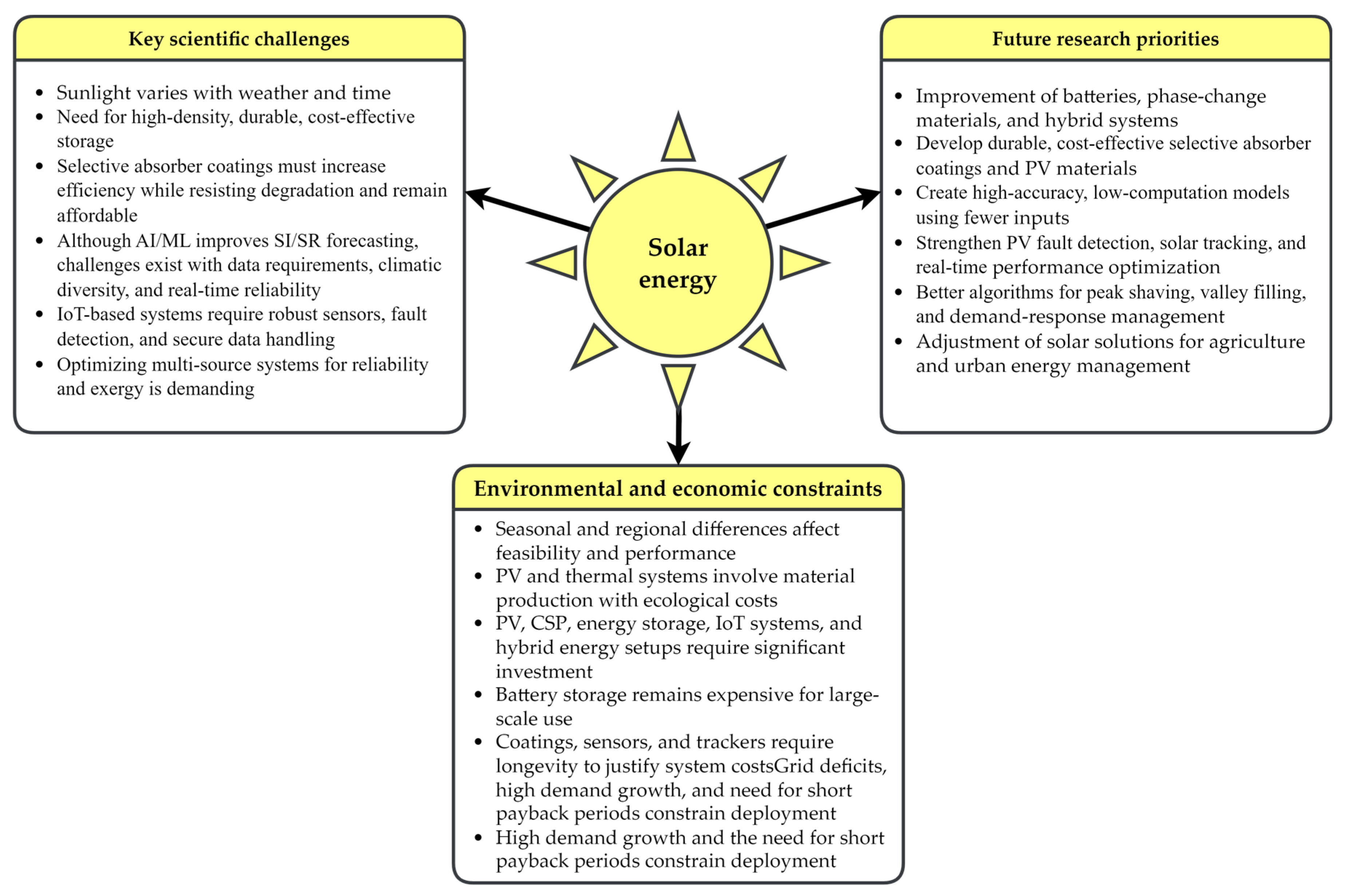
Figure 5 outlines the key scientific challenges, environmental and economic constraints, and future research priorities of solar energy. Difficulties in expanding solar energy include weather and time variability, high-density, durable, and cost-effective energy storage requirements, low-volume, low-cost, long-lasting, and robust absorber coatings, long-lasting sensors and fault detection for IoT-based systems, etc.
From improving solar energy conversion and storage systems to exploring its potential in agriculture and urban environments, solar energy continues to show promise as a cornerstone of a sustainable energy future. Continued research and innovation will help fully realize its potential for global decarbonization efforts.
2.4. Onshore and Offshore Wind Energy
The development of onshore and offshore wind energy is a component of the global transition to renewable energy sources. Onshore wind energy is one of the most suitable renewable energy sectors due to its relatively lower installation costs and proximity to existing utility grids. The cost of onshore wind energy is generally lower than that of offshore wind, mainly because of reduced expenses in installation and maintenance. For instance, reports suggest that offshore wind energy costs more than three times as much as onshore wind due to higher initial installation and ongoing maintenance costs [
165]. Additionally, onshore wind farms benefit from established infrastructure and shorter transmission distances, which improve their economic feasibility [
166]. Onshore sites often face challenges, such as increased turbulence and local geographic constraints, which affect energy output.
Staid et al. [
167] present a study of statistical models applied in the field of wind power production. Statistical models have shown the lowest error rates in estimating wind farm power production, even when predicting outputs for farms that differ from those used for training. This capability is promising for future wind farm planning, mainly since the two evaluated farms in flat agricultural areas exhibit different turbine layouts and wind conditions. While the existing literature emphasizes the importance of turbine layout due to wake effects, the Jensen model, which explicitly accounts for wakes, struggles with real-world complexities. Issues such as measurement errors, natural wind fluctuations, and terrain variations lead to significant discrepancies between model predictions and actual data. The analyses reveal that the primary uncertainty arises from inadequate knowledge of wind conditions across large farms. This suggests that two met towers are insufficient for capturing the diverse wind flows affecting each turbine. Although statistical models do not explicitly model wakes, they effectively identify relationships among turbines, enabling accurate predictions across different farms. Moreover, simple aggregation of turbine power curves yields reliable estimates without detailed modeling. While wake models have been validated in offshore contexts, caution is needed when applying them to onshore farms.
Onshore wind energy is integrated within countries, demonstrating impressive capacity levels. For example, Malaysia has been identified as capable of producing between 500 and 2000 MW from onshore wind turbines. This potential stabilizes Malaysia’s energy supply by adding a renewable source that supports grid reliability and mitigates reliance on fossil fuels. Countries like Iran and Morocco possess vast onshore wind potential, with Iran’s capacity estimated at up to 80 GW and Morocco’s at approximately 2.6 GW [
168]. These examples illustrate the considerable global variability in onshore wind potential, highlighting the need for localized assessments to maximize efficiency and tailor energy generation strategies to regional conditions.
Onshore wind farms differ operationally from offshore installations, primarily due to geographic and atmospheric factors. Onshore farms often experience turbulence and face intricate local wind patterns influenced by land formations, vegetation, and human-made structures, which affect power output and operational efficiency [
167]. Research indicates that interactions between onshore wind farms and the atmospheric boundary layer shift local wind conditions, affecting energy generation rates and environmental variables such as temperature and surface heat flux. Such variations have implications for power output and localized climatic effects, requiring careful monitoring and adaptive management strategies [
169]. The costs associated with onshore wind energy are typically lower than those of offshore installations, making onshore a more economically viable choice in many areas, particularly those with well-developed energy infrastructure [
170].
Despite its advantages, onshore wind energy growth is constrained by challenges, notably public acceptance. Local community resistance, often driven by visual concerns, noise, and perceived impacts on landscapes, increases costs and complicates planning and approval processes. Studies emphasize that integrating social factors into energy system models addresses these barriers and fosters public support, helping stakeholders better anticipate and mitigate social acceptance challenges [
171,
172,
173].
Social acceptance of energy infrastructure projects garners public support and ensures the sustainability of the energy transition. Although extensive research has been conducted on the social acceptance of renewable energy and onshore wind power, most energy system models focus predominantly on techno-economic factors. This emphasis has led to a disconnect between model outcomes and decision-makers’ needs. This study proposes recommendations for integrating disamenity costs and equity considerations into energy system optimization, two social aspects associated with onshore wind power. Various implementations of these aspects were tested using a spatially distributed model for climate-neutral Germany. The results indicate that effective linear formulations as model extensions outperform quadratic alternatives, which take longer to solve. Notably, incorporating disamenity costs reduces human exposure to wind turbines by 53%. Furthermore, applying social welfare functions connects to welfare economics, thereby enabling equitable spatial distribution in energy models. The findings suggest that disamenity costs should be prioritized in onshore wind power distribution within energy optimization models. However, current plans in Germany emphasize equality as the primary concern. By including social dimensions in these models, decision-makers identify more socially accepted wind turbine locations, thereby preventing the overestimation of viable solutions and enhancing energy system designs [
172].
Environmentally, onshore wind energy is generally viewed as having a lower ecological footprint than fossil fuel sources, contributing to reduced emissions and pollution. However, onshore wind farms disrupt local habitats and alter ecosystems, particularly during construction phases and operational adjustments [
167]. To minimize these impacts, careful site selection and thorough environmental assessments are integrated to promote sustainable development, ensuring that renewable energy goals align with conservation priorities and respect local biodiversity [
174,
175,
176].
In contrast, offshore wind energy offers several advantages, making it an appealing option for future energy systems. Offshore wind farms generally experience more consistent and stronger winds, resulting in higher capacity factors than onshore installations. For example, studies show that offshore wind farms in the UK achieve capacity factors of around 36%, compared to approximately 27% for onshore farms [
177]. This higher productivity reduces the need for backup power systems, increasing the overall reliability of the energy supply. Offshore wind projects are less likely to face public opposition due to their distance from populated areas, which helps mitigate the social acceptance challenges often encountered by onshore projects [
178,
179].
Integrating offshore wind energy into existing power grids presents unique challenges, especially regarding reliability and system stability. Offshore wind farms require powerful grid connections, often employing high-voltage direct current (HVDC) systems to transmit electricity back to shore over considerable distances [
180]. This requires advanced control strategies to maintain frequency stability and ensure a reliable energy supply. The reliance on offshore wind energy necessitates complementary onshore resources, such as reserve generation and energy storage, to address potential supply imbalances [
181].
Offshore wind energy has become a key player in the renewable energy landscape, enabling the use of abundant, stable wind resources often found far from urban centers. Unlike onshore projects, offshore wind farms benefit from higher and more consistent wind speeds, which increase their energy yield. Studies [
182,
183] suggest that offshore installations generate 20% to 40% more energy than onshore setups due to reduced turbulence and the steadier wind conditions found at sea. This capability makes offshore wind particularly attractive for large-scale projects in areas with limited land availability or where public opposition to onshore wind farms is high due to aesthetic and noise concerns [
184]. Offshore projects, therefore, serve as a strategic alternative in the energy transition, especially for densely populated coastal regions seeking to balance energy demands with environmental and community considerations.
Xu et al. [
184] focus on factor selection for assessing the location of offshore wind power stations using ERA5 reanalysis data, which includes sea surface temperature and wind field data from 2001 to 2020. Key indicators of wind energy resources derived from this dataset include wind power density, effective wind speed frequency, energy-level frequencies, coefficient of variation in wind power density, effective reserves of wind power density, and extreme wind speed. Each indicator provides a unique perspective on wind energy potential. Natural environmental factors, such as air temperature, water depth, and offshore distance, impact the construction costs of offshore wind facilities [
185,
186]. The study [
184] employs the Earth Topography 1 arc-minute (ETOPO1) dataset for water depth and the Global Self-consistent, Hierarchical, High-resolution Shoreline (GSHHS) dataset for offshore distances, while socio-economic risks are assessed using the International Country Risk Guide (ICRG) dataset, which highlights geo-human risks across regions. An integrated risk assessment system was established, categorizing indicators into benefit and cost types. The Technique for Order Preference by Similarity to Ideal Solution (TOPSIS), entropy, and Analytic Hierarchy Process (AHP) methods evaluate site risk for offshore wind stations. The results indicate that while wind energy resources and environmental factors positively impact location assessments, geo-human risks influence overall risk levels [
187]. The findings underscore the need to incorporate natural and socio-economic factors into offshore wind power location strategies for improved decision-making in future energy developments.
The economic viability of offshore wind energy has also improved considerably in recent years. The levelized cost of electricity (LCOE) for offshore wind is steadily declining, reaching as low as
$0.20/kWh in some configurations, a reduction enabled by rapid advancements in turbine design, economies of scale, and growing investor confidence in the sector’s long-term potential [
188,
189,
190]. For example, innovations in turbine size, with some offshore turbines now exceeding 15 MW per unit, are contributing to lower LCOE. Moreover, offshore wind significantly reduces greenhouse gas emissions, particularly in regions that rely heavily on coal. By integrating offshore wind into the grid, coal-heavy areas reduce emissions, support cleaner air, and meet international climate goals. For instance, China’s offshore wind energy resources have a potential of 17.5 PWh, almost twice the 2023 nationwide power consumption. Due to continuous investment to increase the production capacity, offshore wind is expected to rise from 0.4% in 2019 to 2.5% in 2050, 5.9% in 2035, and 11% in 2050 of the coastal provinces’ electricity consumption, underscoring its role in decreasing fossil fuel dependency [
191,
192].
However, installation and maintenance costs for offshore projects remain high, often due to the need for specialized vessels, marine foundations, and infrastructure suited to withstand harsh ocean conditions. Offshore wind farms typically require initial capital investments that exceed those of onshore installations by more than threefold, given the complexities of marine construction and operational demands in open-water environments [
193]. The potential impacts on aquatic ecosystems, such as habitat disruption for fish and marine mammals, require detailed assessments and mitigation strategies to ensure projects align with sustainability principles [
194].
Looking ahead, the future of offshore wind energy appears promising, as ongoing research continues to optimize turbine designs and enhance operational efficiency. Standardized turbine models, such as the National Renewable Energy Laboratory (NREL) 5 MW baseline turbine, are widely adopted, allowing for industry-wide improvements in technology comparisons, research, and innovation [
195]. Additionally, there is growing interest in co-locating offshore wind farms with other marine energy sources, such as wave energy, to maximize the efficiency of offshore sites by tapping multiple renewable sources within a single area. This multi-source approach can potentially strengthen the reliability of offshore energy systems and support a more diverse, resilient, and sustainable energy infrastructure [
196,
197].
Technological advancements and economies of scale also influence the economic feasibility of offshore wind energy. As turbine sizes increase and installation methods improve, offshore wind energy costs are expected to decrease, making it more competitive with onshore wind energy. The high operational and maintenance costs associated with offshore installations remain a significant obstacle to widespread adoption [
198].
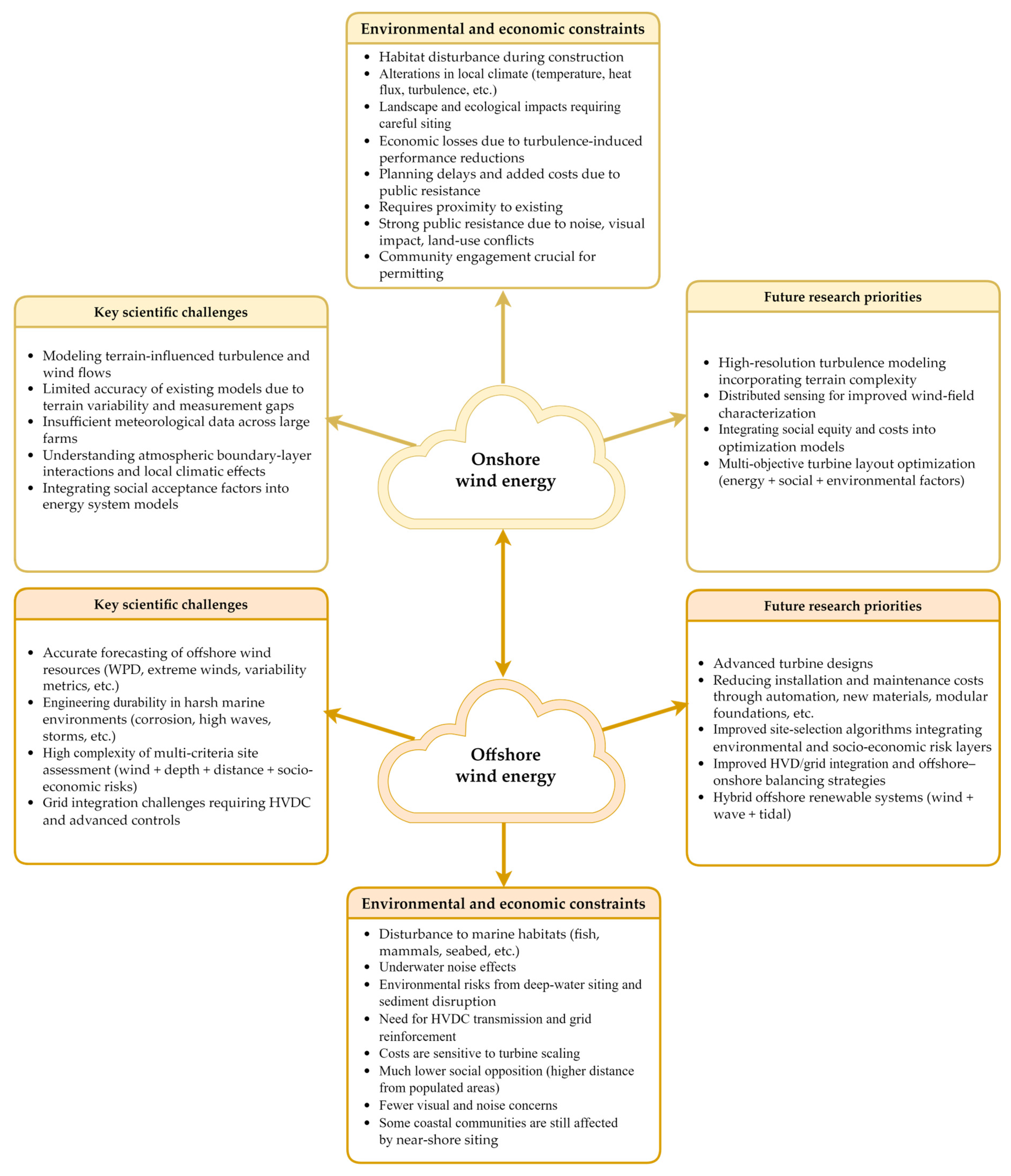
Figure 6 outlines the key scientific challenges, environmental and economic constraints, and future research priorities of onshore and offshore wind energy. Future research should focus on reducing installation and maintenance costs through automation, new materials, and improved turbine designs; integrating environmental and socio-economic risk layers into algorithms; and optimizing hybrid offshore renewable systems.
2.5. Ocean Energy
In the category of renewable resources that aim to replace fossil fuels, ocean energy is included. This includes four categories, namely wave energy, tidal energy, ocean thermal energy, and ocean current energy. Technologies related to this type of energy are intensively studied in the specialized literature, primarily to harness energy from marine resources. These forms of energy have high potential in coastal and insular regions. This type of energy promises to replace the fossil fuels traditionally used for energy production. Tropical areas are well-suited for this type of energy production [
199].
The principle of ocean thermal energy is based on the temperature difference between the warm surface waters of the ocean and the cold waters from the depths. The Ocean Thermal Energy Conversion (OTEC) process uses the temperature difference between the ocean’s surface and its depths to generate electricity. OTEC systems operate based on the Rankine cycle. Basically, a fluid is vaporized using the heat from warm seawater, drives a turbine, and then condenses through heat exchange with cold seawater. This method has been employed since the 19th century [
200,
201,
202,
203].
Wave energy is a second category of marine-renewable energy. This energy is based on waves. In practice, wave energy is generated using mechanical or hydraulic systems that convert the motion of surface waves into usable renewable energy. This type of energy is used mainly in regions with constant wave activity. To produce such energy, an investment in energy converters is necessary. These devices convert the kinetic energy generated by waves as they rise and fall into mechanical motion, which is then converted into electrical energy by turbines. This aspect makes wave energy a benchmark energy source among renewable energies [
200,
204].
Tidal energy is based on the gravitational interactions between the Earth, Moon, and Sun. This type of energy is based on the rise and fall of tides and harnesses their energy. The systems that produce energy use tidal barrages to convert the potential energy of tidal fluctuations into electrical energy. Tidal current systems exploit kinetic energy. Tidal energy, on the other hand, is an oceanic energy capable of providing a certain percentage of the total renewable resources. Tidal energy systems exploit the gravitational attraction of celestial bodies.
According to Neill et al. [
205], tidal resources represent specific mechanisms of interaction with their environment and are being intensively studied for large-scale implementation. The interactions between tidal energy systems and marine ecosystems are intensively studied to assess their environmental impact, as seen in works by Song and Gao [
206] and Isaksson et al. [
207]. Specialized works [
208,
209] mention that tidal energy contributes to the installed capacity in ocean energy generation through investments in optimization.
On the other hand, wave energy generated by wind-driven ocean surface motion is harnessed by wave energy converters (WECs). These systems convert the kinetic energy of the waves into electrical power. Subekti and Parjiman [
210] categorize WECs into three types: oscillating water columns, point absorbers, and oscillating wave surge converters. The WEC technology refers to the energy density of ocean waves. This is higher than that of other renewable resources. For this reason, coastal regions are suitable for the implementation of WEC systems. Elgammal and Boodoo [
211] present the optimization of systems through optimal control methodologies in sliding mode. Additionally, Darwish and Aggidis [
212] present energy extraction and its integration into existing energy networks. The integration of WECs with control systems minimizes operational costs and aims to amortize the technology-related investments. Thus, Ma et al. [
213] state that the theoretical potential for energy from global wave movements is estimated at 3 billion kilowatts.
Another part of the ocean energy category is energy from marine currents. Its operation is based on the kinetic energy of the water flow. This is made possible by turbine systems similar to those used in wind energy production. These types of turbines are adapted to withstand the underwater environment.
Ocean currents are studied for energy generation to stimulate recognition of their potential at a sustainable level [
214,
215]. In the specialized literature, numerous research studies advance marine renewable energy production technologies. The efficiency of these technologies is improved by exploring ocean energy sources. At the academic level, there is a recorded evolution through innovative design that optimizes existing technologies. This category includes thermoelectric generators and heat exchangers. These devices aim to improve performance indicators. Optimization seeks to maximize the efficiency of energy systems.
Secondly, through optimization, the aim is also to minimize the operational costs associated with marine energy production [
216,
217,
218]. Numerous studies on marine biodiversity and ecological impact are required. Therefore, tropical areas where climate change poses irreversible hazards are studied while appropriate security measures are maintained. Research that includes ecological assessments exploring the possibility of harnessing such energies requires the involvement of local communities to ensure good practices, thereby preventing endangerment of the population and the environment [
219,
220,
221].
A resource derived from the continuous flow of ocean currents, influenced by wind patterns and the Earth’s rotation, is ocean current energy. The devices that harness this energy are turbines placed in currents. Current energy converters depend on the specific characteristics of the marine environment [
222,
223].
Yahya et al. [
224] indicate that ocean currents serve as a constant source of energy. Another important classification concerns OTEC. OTEC systems operate in two main modes: closed and open cycles. The closed cycle operates on the principle of vaporizing a working fluid using hot water. It drives the turbines in the open cycle and uses the low pressure of the hot seawater vapor. Thus, it generates low-pressure steam [
225]. OTEC is used in large-scale applications for freshwater production and cogeneration systems. Therefore, its development requires major investments [
200].
These types of renewable energy sources face a range of technical limitations and financial challenges. These marine infrastructures require technologies whose costs are not always offset by the energy they produce. In this category, works [
209,
224] state salinity gradient energy and OTEC. The integration of these systems with existing energy grids requires further research. Marin-Coria et al. [
226] mention that such networks would ensure a constant energy supply, albeit at a high cost. As interest in ocean energy grows, coastal countries are expanding their strategic plans and roadmaps to manage these new technologies.
Studies on economic and environmental assessments are extensive, enabling the minimization of carbon footprints across various sectors. Despite all these benefits, the frameworks that allow investments to remain a critical factor, as they influence the trajectory of ocean energy system implementation [
226]. OTEC is studied by exploiting the temperature gradient between warm and cold water, as seen in works [
227,
228,
229]. Du et al. [
227] establish energy production that is independent of the intermittent conditions characteristic of wind and solar energy. The constant output of OTEC systems strengthens the supply of sustainable energy on islands and in coastal communities with limited resources.
Technological advancements in power-processing systems within ocean energy converters reflect the field’s trend toward optimization. Innovations in pneumatic systems for wave energy are studied in coastal regions in the paper by Zheng [
230]. Additionally, triboelectric nanogenerators are intensively studied technologies for capturing ocean wave energy [
231,
232].
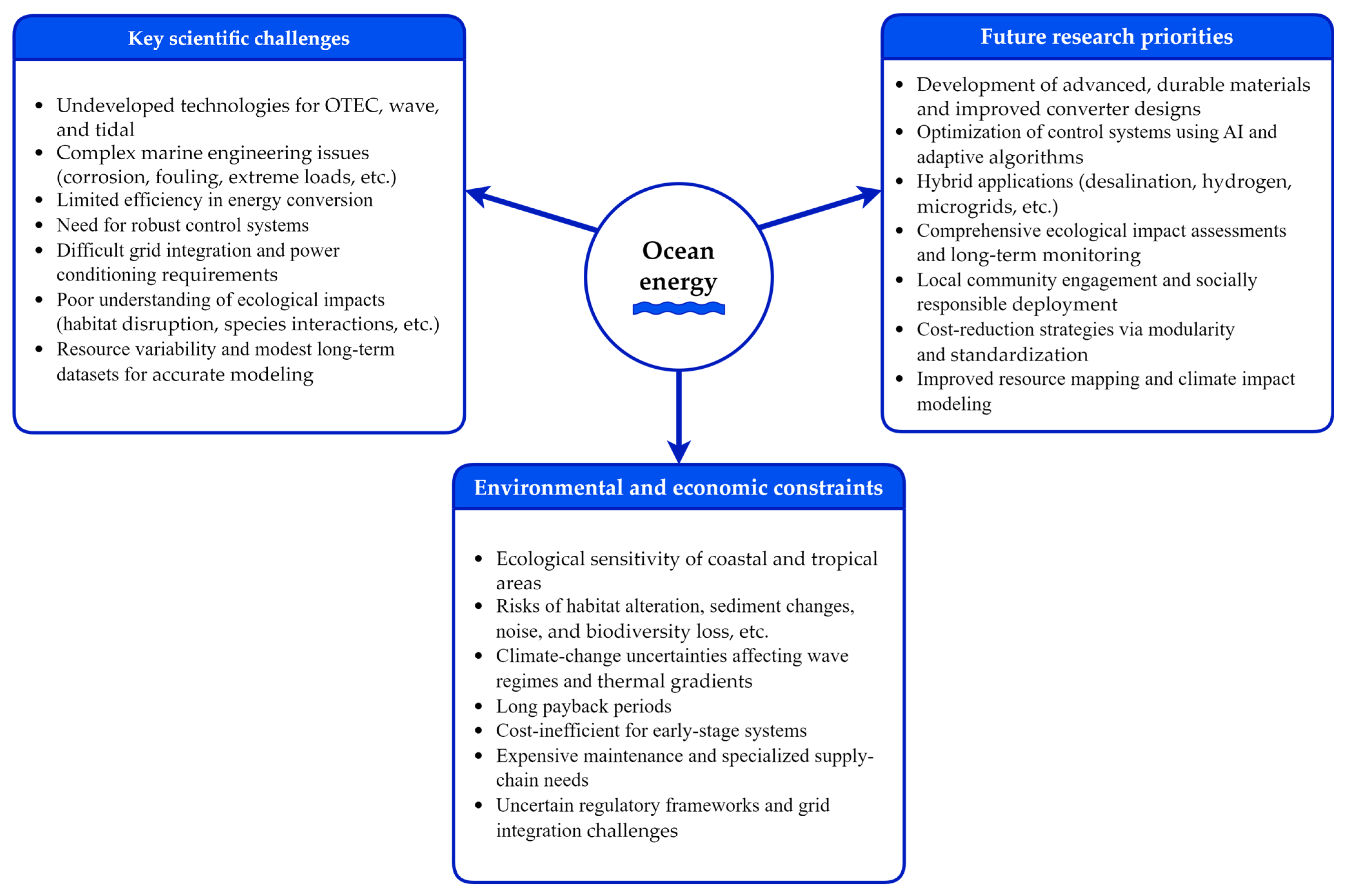
Figure 7 depicts the key scientific challenges, environmental and economic constraints, and future research priorities of ocean energy. The main difficulties include marine engineering issues, energy conversion with limited efficiency, the need for rigorous control systems, difficulties in grid integration, negative impacts on natural habitats, undeveloped technologies for OTEC, wave, and tidal energy, etc.
The use of ocean energy represents an alternative for reducing carbon emissions. The implementation of these strategies requires multidisciplinary research conducted through international collaborations. In this way, marine technologies can overcome a series of technological challenges. The use of ocean energy represents a directive that encourages a green environment.
2.6. Geothermal Energy
Geothermal energy is another alternative energy source that aims to replace traditional energy production methods. This type of energy derives from the Earth’s internal heat. This resource can be accessed through various geothermal systems. These systems harness the natural thermal energy generated within the Earth. Hot water or steam reservoirs are located on Earth’s surface. Geothermal energy utilizes these reservoirs for electricity generation and direct heating [
233,
234].
Within the category of geothermal systems, high-temperature systems are used for electricity production, while low-temperature systems are used for direct heating. Geothermal systems are classified based on reservoir temperature into low-, intermediate-, and high-temperature systems, where temperatures exceed 150 °C [
235,
236]. These high-temperature reservoirs are suitable for energy production [
237].
The use of these geothermal resources requires a balance between extraction and replenishment to prevent depletion. The use of geothermal energy has become increasingly common through the use of climate exchanges generated by natural imbalances. This interest has materialized at both the United Nations Climate Change Conference held in 2021 and in the specialized literature on preventing carbon emissions [
234].
Jolie et al. [
235] mention that geothermal energy is used in over 90 countries worldwide. Current estimates indicate that the total installed capacity for geothermal electricity generation is approximately 15.5–16.0 GW. Investments in technology will enable a transition of up to 107.7 GW. Some countries are naturally endowed with a large volume of geothermal energy, including Iceland, Kenya, New Zealand, and Turkey. In these countries, due to their geothermal resources, electricity can replace a portion of energy production from fossil fuels [
238].
Unlike traditional fossil fuel sources, geothermal energy production reduces the carbon footprint. The specific geothermal energy technology has the lowest carbon emissions of all renewable energies, i.e., 4 g of CO
2 equivalent per kWh [
239,
240]. The discrepancies between the values and the life cycle of the process are mentioned at the ecological impact level by Paulillo et al. [
241].
Geothermal energy systems are resistant to fluctuations in weather patterns. Practically, they do not depend on light or seasonal changes. This characteristic enables geothermal energy to consistently generate a steady flow of electricity, unlike wind and solar energy [
234]. From a functional perspective, geothermal energy is captured through geothermal heat pumps or geothermal power plants. Geothermal heat pumps rely on the relatively constant temperatures found at shallow depths. They offer heating and cooling functions, while deep geothermal systems utilize heat from reservoirs [
236,
242,
243]. These technologies promise to improve environmental sustainability by reducing carbon emissions. Ecological concerns regarding the sustainability of geothermal resources, as well as the techniques and methodologies for life-cycle analysis of these systems, are also detailed by Paulillo et al. [
241].
The classification of geothermal resources is based on extraction depth and temperature. According to studies [
244,
245,
246], geothermal energy is classified into shallow geothermal energy, hydrothermal geothermal energy, and hot dry rock geothermal energy. Each typology is distinct based on temperature, depth, and potential applications. Thus, based on these implications, they are used in residential, industrial, or agricultural sectors.
Shallow geothermal resources are systems located at depths of less than 200 m. These systems operate with the help of a geothermal heat pump. It exploits the stable temperatures found near the Earth’s surface [
244,
245]. Such systems are used for heating and cooling buildings. Therefore, they have applicability at the residential level. In contrast with these resources, there are hydrothermal geothermal resources. These are found at depths ranging from 200 to 3000 m. Hydrothermal geothermal resources are characterized by temperatures exceeding 150 °C [
233,
244,
246,
247,
248]. For this reason, they are used for electricity generation and heating. Geothermal resources from hot dry rocks are located at depths exceeding 3000 m. They require technologies such as enhanced geothermal systems to facilitate heat extraction. This is possible due to their impermeable nature [
244,
245,
249].
Additionally, geothermal resources can be classified based on enthalpy. Enthalpy refers to the total energy of a system. Low-enthalpy systems are used directly, for example, for neighborhood heating or agricultural purposes [
249]. Low-enthalpy geothermal resources, typically sourced from hot springs, have temperatures ranging from 30 °C to 100 °C. These are used for heating or therapeutic purposes [
244,
249]. In recent years, countries that benefit from geothermal resources have implemented them for various purposes. For example, Indonesia uses geothermal resources for electricity production. However, a very large portion of geothermal resources remains untapped. This is due to the susceptibility to exposure to various risks arising from exploitation [
250]. Similarly, regions such as East Africa are harnessing geothermal energy to diversify their energy mix. In practice, East Africa is expanding its system through a combination of hydroelectric and traditional sources [
251].
Several technologies are used in geothermal energy systems to ensure safe exploitation. Geothermal heat pumps represent a category of technology dedicated to shallow geothermal systems. Thus, the process of extracting thermal energy from the ground is facilitated with minimal environmental disruption [
245,
252]. Regarding hydrothermal resources, traditional steam and flash systems are widely used. These allow the use of resources with lower temperatures [
247,
253]. The implementation of enhanced geothermal systems represents a technological frontier whose objective is to be deployed in regions considered difficult to exploit through conventional methods [
254].
Environmental assessments of geothermal centers are conducted periodically to enable life-cycle assessment methodologies to report on the environmental impacts. The empirical investigation of sustainability compared to other renewable sources is studied by Díaz-Ramírez et al. [
255] and Mainar-Toledo et al. [
256]. The ecological footprint resulting from the exploitation of geothermal energy systems and its implications aligns with ecological objectives [
255,
256,
257]. Zuo et al. [
258] and Shen et al. [
259] evaluate the environmental impact of exploiting geothermal solutions. These authors also examine the reduction of greenhouse gas emissions through the use of fossil fuel-based systems. In this way, the viability of geothermal resources as clean energy is established.
Superficial geothermal systems and deep geothermal systems use Hot Dry Rock (HDR) and Enhanced Geothermal Systems (EGSs) technologies. They use the enormous amount of heat stored in the Earth’s crust at depths greater than 3 km [
260]. EGS methods increase rock permeability. This behavior facilitates the creation of geothermal reservoirs [
261]. The implementation of these systems in practice is limited due to geological challenges. Another aspect that hinders their implementation concerns the economic viability of drilling and excavation operations [
262].
Regarding HDR technology, it is a method that can generate energy without the water resources required by traditional geothermal systems. Yuan et al. [
263] propose creating fractures in dry rock formations. This approach allows heat extraction through HDR systems [
264]. The advancements in simulation technologies studied by Li et al. [
264] have allowed for a better understanding of crack mechanics in HDR. The research proposes refining the management of thermal extraction processes.
Figure 8 presents the key scientific challenges, environmental and economic constraints, and future research priorities of geothermal energy. This type of energy faces particular constraints, such as ecosystem disturbances from drilling, potential earthquakes from EGS and HDR, gas leakage from reservoirs, reinjection that can affect groundwater, very high upfront drilling and exploration costs, long payback periods, and uncertain returns in deep geothermal systems, etc.
Geothermal resources represent a form of renewable resource. As presented, shallow systems are ideal for heating buildings. Advanced technologies such as HDR and EGS, which exploit the depths of the Earth’s crust, are suitable for energy production, thereby reducing dependence on fossil fuels. The implementation of these requires additional technological investigations.
Each of the five renewable energies described above has had a different evolution in the last two decades.
Figure 9 shows the evolution of global electricity generation from bioenergy, hydro energy, solar energy, onshore and offshore wind energy, ocean energy, and geothermal energy between 2000 and 2023. Due to low ocean energy generation,
Figure 9 cannot depict its proportion relative to other renewable resources.
From 2001 to 2023, bioenergy, solar, and onshore and offshore wind energy recorded continuous increases in electricity generation compared with previous years, whereas ocean, hydro, and geothermal energy registered declines in 14, 3, and 2 years, respectively. The highest rises of the electricity generation were in 2010 (12.65%), 2005 (11.02%), 2012 (10.62%), 2007 (10.55%), and 2002 (9.36%) as compared to previous year for bioenergy, in 2004 (6.65%), 2010 (5.22%), 2012 (5.08%), 2008 (4.85%), and 2005 (4.17%) for hydro energy, in 2011 (94.33%), 2009 (64.23%), 2010 (61.3%), 2008 (57.84%), and 2012 (54.82%) for solar energy, in 2002 (38.9%), 2004 (32.67%), 2007 (30.4%), 2008 (28.41%), and 2011 (25.53%) for onshore and offshore wind energy, in 2013 (85.81%), 2014 (7.9%), 2010 (5.63%), 2016 (3.56%), 2002 (1.81%), and 2005 (1.52%) for ocean energy, and in 2014 (6.82%), 2015 (5.02%), 2007 (4.85%), 2005 (4.29%), and 2004 (4.25%) for geothermal energy.
Conversely, the largest drops in electricity generation for ocean energy were recorded in 2006 (−4.96%), 2004 (−4.18%), 2001 (−4.09%), 2023 (−4.01%), and 2012 (−2.94%) compared with the previous year. Hydro energy recorded falls only in 2001 (−2.34%), 2023 (−1.65%), and 2021 (−1.64%), whereas geothermal energy registered two reductions in 2001 (−1.7%) and 2021 (−0.87%).
On average over the 23 years, the increase in electricity generation for each energy type was 6.61% for bioenergy, 2.17% for hydro energy, 37.3% for solar energy, 20.84% for onshore and offshore wind energy, 3.34% for ocean energy, and 2.77% for geothermal energy. Thus, solar and onshore and offshore wind energy show the highest increase in electricity generation due to new technologies that improve efficiency. In 2023, the global electricity generation weight of each renewable energy in the total amount of renewable energy was as follows: bioenergy (7.07%), hydro energy (47.83%), solar energy (18.19%), onshore and offshore wind energy (25.8%), ocean energy (0.01%), and geothermal energy (1.1%).
4. Results
This section presents the main findings from the analysis of the WoS database and the use of the specialized bibliometric analysis software VOSviewer version 1.6.20.
Figure 12 presents, combined, the total number of publications for each year between 1 January 2021 and 1 October 2025 and the total number of citations per year in the same period.
The most prolific year in terms of publications is 2023, with 1340 publications, while the best year in terms of number of citations is 2024, with 67,033 citations. This could be explained by increased interest in publishing and quoting papers with such complex content regarding renewable resources. It is also useful and relevant to present the top 10 most-cited papers (
Table 2).
What is important to note is that the range of research areas is very wide (semiconductor quantum, hydrogen storage, nanogenerators, biomass, solar energy, energy storage systems, geothermal energy), and studies are published in many different journals across these areas.
At the same time, the facilities offered by the WoS platform indicate that the first five WoS categories cover more than 95% of the total of 6330 review articles (
Table 3).
Other useful information is related to the main specific citation topics. This information generates a clear picture of the specific areas of great interest covered in studies and research (
Figure 13).
A first finding is that, in most studies between 1 January 2021 and 1 October 2025, the analyses focused on solar and bioenergy. These studies confirm current developments and trends in improving the efficiency of photovoltaic cells and in innovations regarding the use of biofuels in transport and thermal energy production.
Since the topic concerns carbon neutrality and seeks innovations in climate action and sustainable energy, it is necessary to identify the main concerns of researchers regarding the Sustainable Development Goals (SDGs) (
Figure 14).
Figure 14 shows that the most studied topics are SDG 7—Affordable and Clean Energy and SDG 13—Climate Change. In this light, this could be an important proof that our research is more than necessary.
At the same time, when analyzing such a broad and complex topic, it is important to see which entities and organizations carry out important and contributive work. Therefore, the authors’ affiliations for these researchers were extracted (
Figure 15).
In the foreground are important research entities on a national scale: China (Chinese Academy of Sciences; University of Chinese Academy of Sciences), India (Indian Institutes of Technology; National Institute of Technology; Council of Scientific Industrial Research), the United States (United States Department of Energy), and France (Centre National de la Recherche Scientifique).
Since much current research focuses on energy issues, energy transition, climate change, and carbon neutrality, a clear picture of the geographical distribution of these studies could indicate where these topics are adequately addressed (
Table 4).
These data show that three countries are most involved in research on the main topic of the present article (China, India, and the USA).
Because of the complexity of the issues being treated, another useful piece of information is the main research areas. This is very different from what is presented in
Table 3, which contains WoS categories (
Figure 16).
The diagram shows that the most important research area covered in 2295 review articles (out of 6330) refers to the issue of energy fuels.
In addition, the capabilities of the WoS platform for different types of analysis are presented in
Table 5, which contains the most prolific publication titles for this topic range.
Table 5 presents a few important journals, mostly with higher impact factors and well-positioned in international rankings. Continuing with this approach,
Table 6 includes the first four editions of these articles, studies, and research.
The values in
Table 6 confirm the interest of these prestigious publishers in hosting reference papers on the topics analyzed in this research, emphasizing once again their importance and topicality.
The initial stage of the bibliometric analysis, conducted using VOSviewer version 1.6.20, involved selecting co-authorship as the analysis type and organizations as the unit of analysis. By setting a minimum threshold of 6 documents per organization and 20 citations per organization, the analysis revealed that 90 of the organizations in the dataset met the established criteria. Therefore, 90 organizations were selected from 1515 (
Figure 17).
There are 12 different clusters, but the most contributive organizations are coming from Taiwan (National Cheng Kung University; Tunghai University; National Chin-Yi University of Technology), China (The Chinese Academy of Sciences; University of the Chinese Academy of Sciences; Xi’an Jiaotong University), Malaysia (University of Nottingham Malaysia; Xiamen University Malaysia; Universiti Malaysia Terengganu) and Singapore (National University of Singapore). Many representative research and specific studies are carried out in Asia. To confirm this idea, another link was set up between co-authorship and country of origin. Considering a minimum of 6 documents per country and 80 citations per country, among the 86 countries, 48 met the thresholds, divided into 6 clusters (
Figure 18).
The leading countries in the specific research covering the topics in this article are China, India, and Malaysia, as well as the USA, Australia, England, Saudi Arabia, and Germany.
To better understand the main issues related to current trends and perspectives on innovation in renewable energy resources, and the evolution and development of the field toward carbon neutrality, another type of analysis is required. This extends the analysis and provides a clearer picture for potential readers. Three cases were added by connecting the co-occurrence option to all keywords (
Figure 19,
Figure 20 and
Figure 21). In the first case, a minimum of 10 keyword occurrences was imposed, resulting in 6698 keywords, and 184 met the threshold (
Figure 19).
In the third case, the minimum number of occurrences of a keyword was set to 20. Thus, 6698 keywords were returned, and only 64 met the threshold (
Figure 20).
In the third case, the minimum number of occurrences of a keyword was set to 30. Thus, with the same number of keywords (6698), only 33 items met the threshold (
Figure 21).
In this sense, sensitivity panels were generated by comparing network indices at thresholds of 10, 20, and 30 occurrences, allowing the establishment of at least one key topological metric (network density), as presented in
Table 7. Network density establishes the proportion of existing links compared to the maximum possible number of links. As the co-occurrences network is undirected, the relationship is shown in Equation (1) [
276].
where
Table 7.
Network density regarding sensitivity panels, the minimum number of occurrences of a keyword.
Table 7.
Network density regarding sensitivity panels, the minimum number of occurrences of a keyword.
| Minimum Number of Occurrences of a Keyword | N | Total Number of Clusters | E | D |
|---|
| 10 | 184 | 4 | 4486 | 0.266 |
| 20 | 64 | 3 | 1142 | 0.566 |
| 30 | 33 | 4 | 381 | 0.721 |
The D value indicates that the network is highly connected: there are significant connections, and as the minimum number of occurrences of a keyword increases, the D value approaches 1, confirming that most nodes in the network are connected to each other.
To summarize all data, the most used keywords in the articles (using all three different clusters) are depicted in
Table 8.
Based on the data in
Table 8, two types of word clouds could be used to illustrate the trends in occurrences and total link strength (
Figure 22).
To develop more information on the link between occurrences and total link strength, a regression model was developed (
Figure 23). The red line represents the best-fit regression line. Most keywords closely follow the trend, though a few deviate, suggesting that additional factors may influence link strength.
If the type of representation in
Figure 19,
Figure 20 and
Figure 21 is shifted to an overlay visualization, this generates another kind of information. The new diagram presents a chart illustrating the evolution of keywords and the field’s main research topics over time (2021–2025). The changes observed in the appearance of these words reflect shifts in researchers’ priorities, new directions of study, and the concepts used in the analysis of carbon neutrality, climate action, and sustainable energy (
Figure 24).
In a simple interpretation of the chart, it can be stated that at the beginning of 2018, the researchers focused on topics such as bioenergy, biomass, wind energy, sustainability, and biodiesel production; later, the studies shifted to topics such as CO2 reduction, renewable energies, solar energy, wastewater, and hydrogen production. Then, in the first part of 2022, discussions are focused on graphene, water splitting, quantum dots, and nanoparticles, while in 2022 and at the beginning of 2023, researchers focus on subjects such as photocatalysis, degradation, power generation, heterojunctions, or desalination.
Another approach concerns the citation in relation to documents. A limit of at least 100 citations for a document. This generated 447 documents that met the threshold, out of 500 documents (
Figure 25).
As shown, the names in the diagram are similar to those in
Table 2. Each cluster has a prolific research team. For instance, in the magenta cluster is a study by de Arquer et al. [
266]; in the blue clusters are two teams represented by Tao et al. [
270] and Song et al. [
272]; the red cluster represents Zhu et al. [
280]; while the green cluster represents Li’s team [
279].
Equally important for those interested is another representation generated by VOSviewer version 1.6.20. It is quite important and useful to identify the most prolific authors in terms of scientific production and their most cited articles. To achieve this, the citation, as the type of analysis, is linked to the authors (as the unit of analysis). In this light, the minimum number of documents for an author is 3, and the minimum number of citations for an author is 20. The entire process yielded 2479 authors, of whom 47 met the thresholds (
Figure 26).
Figure 26 indicates the most prolific authors: Abdelkareem Mohammad Ali (6 documents and 1900 citations), followed by Huang Hongwei (6 documents and 1774 citations), Ma Tianyi (6 documents and 1774 citations), Zhang Yihe (5 documents and 1564 citations), Show Pau Loke (5 documents and 1491 citations), Chen Wei-Hsin (5 documents and 1440 citations) and Rooney David W (5 documents and 1054 citations).
By synthesizing information on the main ideas derived from the application of the PRISMA methodology, the facilities offered by the WoS platform, and the operation of VOSviewer version 1.6.20, a set of useful elements can be formulated for those interested. In the global search for sustainable, renewable energy, photocatalysis has emerged as a promising approach for generating clean fuels and protecting the environment. Using solar energy and visible light, photocatalytic systems can drive essential reactions, such as water decomposition and CO
2 reduction, enabling hydrogen production and contributing to a low-carbon future [
292].
Among the most studied materials, graphitic carbon nitride stands out for its stability, low cost, and strong visible-light absorption. Its performance can be further improved by integrating nanoparticles and applying optimized design strategies, thereby enhancing the efficiency of hydrogen evolution and other catalytic processes. As the world moves towards renewable energy sources—such as wind power and bioenergy—the development of efficient systems capable of converting sunlight and water into storable chemical fuels is becoming increasingly important. These advanced photocatalytic materials not only complement existing technologies but also offer decentralized solutions for clean energy generation. Integrating photocatalysis with modern energy systems could ultimately revolutionize how natural resources are utilized, building a sustainable framework for clean energy generation, mitigating CO2 emissions, and advancing green technologies essential to future global prosperity.
5. Conclusions
This paper is best understood as a bibliometric perspective on the evolving knowledge structure of carbon-neutrality research, rather than as a prescriptive analysis of operational decarbonization pathways. Through trend mapping, co-authorship networks, and thematic clustering across six renewable-energy domains, the research reveals how the scientific community frames technological priorities, research challenges, and emerging opportunities. These results showcase the research approach of the field, identifying where academic attention is intensifying, where gaps persist, and how research trajectories implicitly outline potential routes toward low-carbon energy systems. While not a complete assessment of pathways, the findings provide a valuable, evidence-based overview of the research ecosystem that underpins future decarbonization strategies.
The review confirms that the global transition to renewable energy is urgent, driven by the climate crisis and the need to achieve carbon neutrality around the middle of this century. This need has driven a major technological revolution, resulting in significant efficiency gains, such as increasing photovoltaic solar panel efficiency from 10% to over 25% through advanced materials. The bibliometric analysis, conducted over the 2021–2025 period and using the PRISMA approach and VOSviewer version 1.6.20, identified key trends and development directions in sustainable energy.
The main focus of current research aligns with two key SDGs: SDG 7 (Affordable and Clean Energy) and SDG 13 (Climate Action). From a geographic point of view, the main contributions come from Asia, with China, India, and the USA being the most prolific contributors. The analysis found that most studies focus on bioenergy and solar energy.
Bioenergy accounts for 55% of the total renewable energy. The process of obtaining bioenergy involves converting solid, liquid, and biogas biofuels into energy. The sources of biomass are agricultural, industrial, forestry, or household waste. The microbial process that generates methane and carbon dioxide is known as biogas. The studies presented in the specialized literature reflect the capacity to reduce carbon emissions in the context of promoting sustainability. Specialized papers highlight the need to balance production and food security. Hybrid systems that integrate biogas with coal power plants are also mentioned. The consequence of these hybrid approaches leads to a reduction in dependence on fossil fuels. The presentation of the specialized literature also highlights the need for further research to optimize energy production yields.
Hydroelectric energy uses turbines and generators to convert the kinetic and potential energy of water into electricity. Hydroelectric energy can be generated from conventional hydroelectric power plants, pumped storage, micro-hydro power plants, or ultra-short-drop systems. In the specialized literature, pumped storage is studied in a regressive manner because it solves the problem of energy fluctuations specific to renewable sources. Research explores the technical and economic aspects of these technologies and proposes optimizing hybrid systems that combine hydroelectric energy with wind or solar energy. Hydroelectric energy has environmental impacts, including altering aquatic habitats and requiring changes in water regimes.
The specialized literature considers solar energy to be the most popular renewable energy source due to its potential to integrate into both agricultural and urban environments. Photovoltaic systems are widely used for capturing solar energy. They face challenges related to energy storage and conversion. Studies in the literature indicate that integrating solar energy into hybrid systems that incorporate geothermal or hydroelectric energy reduces carbon dioxide emissions. Research notes the dependence of this technology on climatic and geographical factors, and areas with intense solar radiation. Obtaining solar energy requires low technological costs. For these reasons, research continues to focus on improving the performance of photovoltaic panels.
Onshore and offshore wind energy convert wind energy into electricity. Onshore wind energy is used due to its low installation costs and proximity to existing electrical grids. Onshore wind farms face challenges related to turbulence and complex wind patterns influenced by landforms, vegetation, and human-made structures. These factors affect energy efficiency. Local communities often oppose the integration of onshore wind energy due to its visual impact, noise, and potential landscape changes. Offshore energy has advantages due to its higher, more consistent wind speeds. The evaluation of offshore locations is based on analyses of temperature, sea surface conditions, water depth, and distance from the coast. Offshore wind technologies are identified in the specialized literature as more efficient. However, the high construction and maintenance costs necessitate further investigations. This type of energy is being researched in integration with hybrid systems. Research shows the importance of developing smart grids to manage the variability of wind energy.
Ocean energy is classified into four main types: wave, tidal, ocean thermal, and marine current. The productivity of ocean energy is linked to coastal and insular regions, where marine resources are abundant. The technology required for ocean energy production involves capturing wave energy and utilizing salinity gradients. Research in the specialized literature notes this energy’s ability to provide a constant supply to power grids. For these reasons, interest in ocean energy is growing, with coastal countries being the most interested in developing strategic plans for its exploitation. The specific challenges associated with producing this type of energy primarily relate to financial considerations and, subsequently, to its impact on the marine environment. These approaches require additional investigations, both within multidisciplinary research and through international collaborations.
Geothermal energy is obtained by extracting heat from geological formations. High-temperature systems produce electricity. Low-temperature systems are used for heating buildings. Geothermal resources are used in over 90 countries. They have installed capacities of approximately 15–16 GW. Their potential is to reach 107 GW through technological investigations. The countries that exploit geothermal energy most intensively are Iceland, Kenya, and Turkey. Works in the specialized literature mention the need for a balance between extraction and regeneration. The implementation of geothermal energy in electrical systems requires additional investigation to integrate climate change into the energy transition.
Key scientific challenges, environmental and economic constraints, and future research priorities for bioenergy, hydro energy, solar energy, onshore and offshore wind energy, ocean energy, and geothermal energy underscore that each new technology implemented in renewable energy faces new issues that must be cost-effectively addressed.
Specifically, achieving global carbon neutrality requires the systemic integration of renewable energy assets, robust and coherent policy architectures, and an ambitious research agenda that anticipates the challenges posed by a rapidly evolving energy landscape. The accelerated diversification of clean energy technologies—solar photovoltaics, onshore and offshore wind, geothermal, bioenergy, hydropower, and advanced storage—has reshaped global energy portfolios. However, the full potential of these technologies only emerges when they operate as coordinated and complementary systems. A framework for renewable energy systems is built on three strengthening pillars: hybrid systems, regional energy planning, and global grid interoperability.
Renewable hybrid systems combine multiple resources and storage solutions to improve reliability and reduce overall system costs. Power-to-hydrogen, power-to-heat, and power-to-ammonia pathways exemplify this new paradigm, transforming excess renewable energy into storable and tradable energy carriers.
On the other hand, renewable resources are unevenly distributed across geographic areas; as such, regional planning is essential. Regions with high solar exposure can prioritize solar panels and concentrated solar power plants, while coastal and wind corridors can generate offshore wind energy, and volcanic or tectonic areas primarily harness geothermal energy.
As renewable energy penetration increases, the grid must evolve from a centralized dispatching model to a dynamic, data-driven grid. Advanced forecasting, automated demand response, digital twins, and real-time market signals enable grids to balance distributed assets while maintaining system stability. In essence, the modern grid becomes not just an infrastructure backbone, but an intelligent platform capable of integrating thousands, hundreds of thousands, or even millions of generation and charging nodes.
Technological innovation cannot thrive without policy structures that create incentives, reduce risk, and strengthen the delivery of long-term results. Carbon neutrality policy instruments must balance economic efficiency, environmental integrity, and social equity. Among the most influential instruments are carbon pricing, emissions trading systems (ETSs), and complementary regulatory frameworks.
A carbon price sends an economy-wide signal that reflects the real social cost of greenhouse gas emissions. Carbon taxes provide price certainty, increase fiscal transparency, and can be used to return funds to households or invest in clean energy initiatives. Effective carbon taxes encourage the substitution of fossil fuels, stimulate low-carbon innovation, and create predictable market conditions for investors.
ETS mechanisms set a descending cap on emissions and use market forces to identify the lowest-cost emission reduction options. When combined with strict monitoring, transparent allowance allocation, and limited use of offsets, well-designed ETS programs deliver significant emission reductions while supporting economic competitiveness. As more regions implement ETS schemes, the emergence of connected or harmonized carbon markets could become a defining development in global climate governance.
Looking ahead, the energy transition will increasingly rely on breakthroughs in artificial intelligence, materials science, and negative-emission technologies.
AI is poised to become a central enabler of next-generation energy systems. AI is improving the forecasting accuracy of renewables, optimizing storage dispatch, coordinating millions of distributed resources, and enabling self-managing microgrids. Advanced algorithms are accelerating the discovery of materials for batteries, hydrogen catalysts, and high-efficiency solar cells. AI-powered digital twins are enabling energy planners to simulate entire energy systems and identify optimal investment and decarbonization paths.
Long-term energy storage (LDES), hydrogen-based synthetic fuels, and thermochemical storage will provide seasonal balancing and support industrial decarbonization. Meanwhile, circular economy principles (recycling critical minerals, low-impact manufacturing, and designing for disassembly) will reduce the energy transition’s environmental footprint and strengthen supply chain resilience.
The path to carbon neutrality is neither singular nor linear. It is a mosaic of interdependent strategies (technological, economic, regulatory, and societal) integrated through well-designed processes. Hybrid renewable systems provide robust physical infrastructure; smart grids and digital intelligence coordinate increasingly complex energy flows; carbon pricing and complementary policies align market behavior with the ambition to achieve climate protection targets. Ultimately, carbon neutrality represents not only a technological transformation but also a redefinition of how societies produce, consume, and value energy. By integrating innovation across sectors and at different scales, humanity can build a resilient, inclusive, and sustainable energy system for future generations.
Carbon neutrality and a resilient energy future can only be achieved by integrating renewable sources into hybrid systems and optimized smart grids. By now, substantial technological progress has been made, but new and old challenges must remain our focus, especially regarding cost-effective, scalable energy storage solutions, including improved lithium-ion technologies and green hydrogen.
The high initial installation and operational costs of offshore wind and ocean energy remain significant, underscoring the need for further research, especially in optimization. Hydroelectric power is a stable resource, but its deployment must be balanced with environmental and ecological assessments to reduce its impact on aquatic ecosystems. Geothermal energy, estimated to reach 107 GW globally, depends on continued technological research into advanced systems such as HDR and EGS. Ultimately, accelerating the global energy transition requires not only scientific advancement but also the development of global policies and commitments to ensure just implementation and social acceptance of new energy infrastructure.




 ,
,