Article

Building a Village Education Community: A Case Study of a Small Agricultural High School in South Korea


by
Qianqian Fan
* and
Youngtaek Kang
Education Department, Woosuk University, Jeonju 55338, Republic of Korea
*
Author to whom correspondence should be addressed.
Sustainability 2025, 17(24), 11217; https://doi.org/10.3390/su172411217
Submission received: 18 October 2025 / Revised: 5 December 2025 / Accepted: 10 December 2025 / Published: 15 December 2025

Abstract

Background: This study reveals how the Village Education Community (VEC) model at Poolmoo School contributes to improving the quality of rural education. Methods: A qualitative case study approach was adopted, with fieldwork carried out at the Poolmoo School using semi-structured interviews with the school faculty, students, parents, and local residents. Findings: The findings indicate that the “Five-Wheel mechanism” integrates the school, parents, students, teachers, and the community, mainly manifested in the following aspects: (1) resource sharing such as cultural centers and organic greenhouses on farmland; (2) community and school democratic self-governance via the community and school democratic committees collaboration; (3) the contextualized pedagogy implemented by the design of a practical organic agriculture course; and (4) applying digital technology to facilitate the exchange of educational resources. Conclusion: The study demonstrates that the VEC model enhances students’ practical competencies, promotes collaborative participation among teachers, students, parents, and local residents, and strengthens overall school–community relations. For effective adaptation in China, this model requires embedding traditional cultural elements into regional curricula, establishing school–community committees to decentralize governance, and utilizing digital platforms to promote equitable sharing of educational resources across urban and rural areas. These strategies contribute to the discourse on context-sensitive and sustainable rural education reform.

1. Introduction

1.1. Research Necessity and Purpose

At present, rural areas in China face several challenges that constrain students’ academic achievement, impeding socioeconomic progress and improvements in overall living standards [1]. Existing research has shown a severe shortage of educational resources in rural areas, where teachers often lack professional training and career development opportunities [2]. Consequently, students in urban areas generally outperform the rural students academically. This disparity is reflected in the fact that the quality of basic education provided by rural schools is significantly lower than that by urban schools [1]. Furthermore, rural education frequently fails to teach students with the necessary skills to contribute to their local communities [3], which foster students’ negative attitudes towards agricultural labor and a preference for urban life, contributing to rural decline and brain drain [4]. Ultimately, this educational gap constrains the economic and social development of rural areas.
As a successful model of the Village Education Community (VEC), Poolmoo School in South Korea has established an educational ecosystem based on the concept of ‘The school is the village, and the village is the school’, and aims to foster collaborative efforts among the school, teachers, parents, and the local community. Poolmoo School activates local resources by offering localized courses such as traditional farming experiences and local history workshops; teachers and parents form an educational cooperation committee to jointly formulate and supervise the implementation of the teaching plan. Community enterprises provide internship sites and financial support for students [5,6]. This multi-dimensional collaborative mechanism alleviates the shortage of rural teachers and significantly enhances students’ cultural identity and social adaptability [7]. Research shows that this community has significant advantages in resource allocation and the operation of collaborative mechanisms, offering valuable insights for building VEC in China. The study reveals that the success of Poolmoo School is attributed to balanced resource allocation, the Five-Wheel collaborative mechanism, which refers to the collaborative governance structure among teachers, parents, students, the community, and the school committee, and strong policy support. This research aims to delve deeply into the key driving forces behind the development of rural education communities and offer some practical suggestions to help improve the quality of rural education. This study addresses a gap in international research by examining how community–school collaborative governance operates in rural settings, an area where cross-country comparative evidence remains limited.

1.2. Research Questions

Guided by collaborative governance mechanism and community participation frameworks, this study addresses the following research questions.
To address these issues, this study adopts a qualitative case study to examine the VEC through the example of Poolmoo School.
  • How does the VEC improve the quality of rural education?
  • What is the background and current status of the VEC in South Korea?
  • What are the key mechanisms through which the VEC promotes improvements in educational quality?
  • What insights can be drawn from the experiences of Poolmoo School in South Korea for improving rural education in China?
This study contributes a theoretically grounded Five-Wheel governance mechanism that integrates community participation, collaborative governance, and place-based education, offering a framework applicable beyond the Korean context.

2. Theoretical Background

2.1. Education Community

The essence of a community lies in its unique collective form, rooted in a mechanism of mutual trust. Shared emotional experiences, cultural identity, normative systems, and a sense of purpose constitute the core characteristics of a community [8,9]. A cohesive community is grounded in mutual trust, feelings of safety, and a sense of belonging among its members [10]. International research similarly conceptualizes educational communities as cooperative networks formed by schools, families, and communities working together to support student learning [11].

2.2. Village Education Community (VEC)

The structure of a VEC embodies a tripartite collaboration among rural areas, the education institutions, and communities. Alternatively, it can be conceptualized as a bidirectional coupling between rural areas and the educational field [12]. A survey report by the Seoul Village Community Support Center [13] noted that a collaborative system based on shared living spaces and oriented toward common goals is the core operational mechanism of a VEC. China exhibits development models analogous to the VEC, characterized by (1) Urban–Rural Collaboration: Leveraging digital platforms to facilitate the sharing of high-quality teachers across schools and enhance resource allocation to remote villages [6]; (2) School–Community Collaboration: Developing locally relevant, school-based curricula aligned with the specific circumstances of rural communities [14]; (3) Regional Resource Integration: Balancing humanistic values with urban–rural relationships in regional education, while fully leveraging geographical and cultural resources. This approach fosters unique regional educational brands, thereby enhancing community cohesion and influence [15]. Studies in Western contexts also highlight that community participation and shared governance are key components of effective educational communities [16].
Existing research [14,15] indicates that VEC is an educational governance system network integrating regions and multiple stakeholders. Its core structural elements can be delineated in the following four dimensions: (1) enhancing community education quality serves as the shared objective pursued by all community members; (2) integration and cyclical circulation of shared community resources (material, human, and cultural resources, etc.); (3) establishing robust institutional frameworks (such as school democratic committees) to ensure communities, schools, and parents exercise their democratic decision-making rights; and (4) fostering a virtuous cycle between communities and education, where communities provide resources within their means, while education promote local cultural development and cultivates outstanding students.

2.3. VEC Practices in South Korea

The development of VEC in Korea has undergone a historical evolution. Its origins can be traced back to Seodang—traditional village schools during the Chosun Dynasty, which were Confucian enlightenment schools based on the community, emphasizing the cultivation of community morals and basic literacy education [17]. From the late 19th to the early 20th century, the emergence of folk and national schools combined local education with modern concepts of civic education, thus preserving organizational and cultural capital for community-based education. After the Korean War and during the democratization process, multiple national and local rural development programs expanded the functions of local schools and strengthened the links between education, sustainable development, and community participation [18]. Under the influence of Grundtvigian educational ideals of “learning for life” and civic participation [17], these ideas have been localized in Korean context. Since the 1990s, alternative education and innovative school movements promoted by grassroots teachers, parents, and civil organizations have further promoted the formation of a community-centered educational ecosystem, thus forming the contemporary rural education community model [19]. As a result, the development process of VEC in Korea reflects the historical transition from Confucian moral education to participatory, community-based learning models.

2.4. Education Quality

The construction of educational objectives is a prerequisite for achieving educational quality. The five-dimensional model proposed by UNESCO [20] redefines educational quality: the adaptability of the educational environment, the balanced distribution of resources, the competency elements centered on the learner group, the efficiency characteristics within the teaching system, and the degree of adaptation related to socio-cultural factors. The OECD [21] re-organizes the five-dimensional model into a three-dimensional structure, consisting of the resource, process, and outcome dimensions. Conceptually, the UNESCO five-dimensional model concerns educational quality evaluation, whereas the Five-wheel collaborative mechanism discussed later pertains to governance within VEC development. Prior comparative education research also shows that educational quality is influenced by resource distribution, instructional processes, and sociocultural conditions [22].
Overall, these frameworks collectively provide the analytical foundation for understanding how VEC governance interacts with educational quality.

2.5. Rural Education Quality in China

At present, the quality of rural education in China faces multiple structural challenges. The unreasonable structure of teacher staffing and insufficient interdisciplinary teaching capabilities severely limit the depth of curriculum implementation [23]. In terms of resource allocation, hardware investments take precedence over service provision, and most rural teachers have not received applied technical training [24]. Rural curriculum design has led to the loss of local traditional culture, significantly impacting the adaptability of local educational practices. Some research indicates that rural schools offer insufficient locally distinctive courses [3]. Against this background, the VEC model could open up new possibilities by activating community human and material capital as its core mechanism. Taking Anji County in Zhejiang Province as an example, the “School-Home-Community Collaborative Education Circle” model implemented locally has significantly improved students’ comprehensive practical abilities after community volunteers participated in after-school services [25].

3. Research Methodology

3.1. Qualitative Case Study Rationale

This study employs Stake’s [26] instrumental case study method to conduct a comprehensive analysis of the development and operational mechanisms of the VEC through the specific case of Poolmoo School, thereby exploring the challenges faced by rural education. Data collection is combined with in-depth analysis [27] to achieve a comprehensive examination of the research subject in its natural state. Therefore, problems were identified through field investigations and interviews, and a fixed research location was selected as part of the case study design [28]. Specifically, Poolmoo School in South Korea was chosen as the research site.
To strengthen analytical rigor, Stake’s instrumental case study was integrated with grounded theory coding procedures [26]. The case study design provided contextual depth, while grounded theory enabled inductive construction of governance-related categories emerging from the data. Theoretical saturation was reached when no new categories appeared in the final coding stage, and all major themes were consistently validated across teacher, parent, student, and community participant groups.

3.2. Research Site: Poolmoo School

Poolmoo Agricultural Higher Technical School (referred to as Poolmoo School) was founded in 1958 as a significant achievement of the grassroots educational reform movement. Despite its small size, with only 73 students, this distinctive school boasts over 60 years of tradition (as of 2025) and attracts students from across South Korea. With the education idea of ‘The village is the school and the school is the village’ [17], after decades of practice, the school has effectively integrated itself with the local community, emphasizing the participation of students, teachers, parents and community members in building the educational ecosystem [29]. This approach has successfully promoted the sustainable development of rural education and society. By promoting collaborative learning and community cooperation, the school encourages parents to actively participate in curriculum design, school operation and the establishment of community resource sharing initiatives, such as ecological farm practices and environmental protection. Driven by a resource integration mechanism, community elements such as farmland resources and handicraft skills are incorporated into the teaching process, which effectively compensates for the lack of hardware facilities.

3.3. Participants

A total of 12 participants took part in this study, including teachers, students, parents, and residents. Their roles and basic information are shown in Table 1.
All participants voluntarily took part in the study and provided informed consent prior to data collection. This study obtained an ethics-exemption document issued by Woosuk University, and the official exemption certificate has been submitted to the journal as a Supplementary File. All interview data were anonymized to ensure participant confidentiality.

3.4. Data Collection and Analysis

Multiple data sources were used. Table 2 summarizes the number of participants and the corresponding data collection methods.
Methodology: This study was conducted in two field visits. The first visit took place in November 2024, during which researchers engaged in discussions with teachers, students, and community members at Poolmoo School. The second field visit took place in April 2025, during which follow-up interviews, classroom observations, and supplementary field notes were collected to verify the initial findings and enrich the earlier data.
This study employed a three-level coding method (Table 3) to refine the interview transcripts and questionnaires of teachers, parents, students, and community residents for core theme classification and coding analysis [30,31].
In this study, the code prefixes indicate data sources: Po = observations, Pd = documents, PS = student competencies, PT = teacher interviews, PP = parent interviews, and PR = resident interviews. (Note: The Pd codes follow a reserved numbering system; PD1, PD4, and PD6 were not used because they did not contain analyzable material, whereas PD2, PD3, PD5, and PD7 correspond to the document categories listed in Supplementary Table S1. In addition, identifiers such as Teacher3-Q5 and Resident1-Q1 refer to the interview item-level codes that are already included in Table S1.)
Supplementary Table S1 outlines the coding structure used to categorize observational records, documents, and interview data.
To ensure the validity of the study, specific methods were employed. These methods are based on the widely recognized validity standards for qualitative research proposed by Lincoln and Cuba [32] and the research validity standards proposed by Enworo [33]. By employing six different techniques—field visits and face-to-face interviews, in-depth interviews, triangulation, study participant reviews, peer verification, and researcher reflection—researcher bias was effectively minimized, ensuring the validity of the research findings.

4. Findings

4.1. Five-Wheel Collaborative Governance

4.1.1. Conceptual Transformation

Through face-to-face participatory dialogues with faculty and staff at Poolmoo School, along with semi-structured surveys (including PT01, PT02, PT03, PT04 and PT05), a consensus was reached: education is deeply embedded in the community, characterized by interaction, and reflects the rural educational philosophy and foundational principle that “the school is the village, and the village is the school.”
Figure 1 illustrates this governance structure by visually presenting the stakeholder interactions identified in our coded qualitative data.
As one teacher noted, “the community farms and workshops are not just places—we use them as part of the learning environment” (PT02).
Teachers develop localized courses, such as practical organic farming programs, to better align curriculum with rural contexts (PD5). These initiatives enhance the relevance of teaching content, foster students’ comprehensive and problem-solving skills, stimulate learning interest, and strengthen critical thinking and practical application abilities.
Parents play an integral role in the development of the VEC. At Poolmoo School, a range of measures have been implemented to actively engage parents in the educational system—shifting their role from passive recipients to active co-creators in the advancement of rural education. On matters involving significant educational policy adjustments—such as curriculum reform, optimization of the assessment system, and the organization of extracurricular activities—parent representatives are invited to participate in decision-making meetings and to contribute their perspectives. Through this collaborative mechanism, parents become partners in school governance, empowering them to provide more scientifically grounded and targeted support for their children’s education.
Poolmoo School has established a resource-sharing mechanism through the VEC, utilizing all available community resources for educational purposes to support student growth and knowledge acquisition (PD7). For example, community museums and cultural centers provide students with platforms for engaging in artistic practice and creation, while shared agricultural greenhouses and other practical training facilities help enhance students’ practical skills, thereby comprehensively improving their overall quality.
Participating in extracurricular activities (such as self-managed clubs and rural service) and project-based learning (such as farm design) significantly enhance students’ leadership, collaboration, and practical skills [34]. This education approach not only helps students focus on academic achievement but also emphasizes the cultivation of community spirit—that is, the importance of collective consciousness and shared values, highlighting the critical role of social relationships, traditional customs, and common interests in personal growth and social stability (Teacher 3-Q5). This is precisely the sense of responsibility and belonging that individuals develop within a community.
Poolmoo School has established a school committee, with teachers holding regular meetings to discuss teaching arrangements, curriculum reforms, and school development plans (PO8). Teachers are encouraged to propose and design new courses in response to student needs and evolving social trends. They also participate in collective discussions on resource allocation—such as funding for extracurricular activities—to ensure the rational use of educational resources and enhance overall teaching quality.

4.1.2. Student Competency Development

As one parent emphasized, “the school committees allow us to jointly decide what the children learn, so everyone feels responsible”. (PP01)
Integrating curriculum optimization with teaching innovation, students participate in interdisciplinary inquiry projects centered on real-world village issues—such as the marketing of organic agricultural products—to develop problem-solving abilities (PS02). Through partnerships with local enterprises, practical courses in agricultural technology, rural tourism, and related fields are offered (PD3), equipping students with vocational skills relevant to their community (PT05) while strengthening their cultural identity (PP03). Community libraries (PO7) are leveraged to provide continuing education opportunities for residents, establishing a mechanism that links education with livelihood (PR01)—a core feature of the VEC’s curriculum reform. For instance, career planning courses are deliberately aligned with rural development needs, enabling students to gain employment skills through hands-on experience and actively contribute to local community development (PO5, PD3).

4.2. Challenges and Developmental Background of VEC in Korea

Drivers: The excessive concentration of urban education resources accelerates the gap between urban and rural areas. Rural schools can explore the path of differentiation through the educational model of the community (such as Poolmoo School) and seek the method of quality instead of scale. (PP01)
The main challenges faced are as follows: (1) Policy Dependency: The teacher 1-Q7 points out that many village projects are too dependent on government funding support [35], and when the government’s funding support and subsidies end, these projects will also face suspension or cancellation. While the after-school service policy of the Sunshine Learning Center has been successful in mitigating family parenting pressure in Hongdong Village, the center’s operational capacity and methodology are limited by funding shortages and are susceptible to financial volatility (PT05). The government should prioritize the development of VEC as a strategy to mitigate regional disappearance, but current policies are still primarily short-term projects, lacking long-term effective mechanisms (Resident 1-Q1) (PR01). (2) Demographic Crisis: Low birth rates and the outflow of ambitious young people have led to the hollowing out of rural areas (Teacher 3-Q9) [36]. Population aging and youth outflow have led to a decrease in the number of participants in rural education (PR04). (3) Systemic and Operational Hurdles: Fully occupied schools lack time for interaction with villages, which limits efforts to improve educational quality (PT02). Rural schools have strong community engagement but lack adequate facilities, posing health risks; excessive focus on higher education admission assessments in the social environment has weakened the incentive for cooperation between families and school institutions, a phenomenon observable through its impacts (PP01).
Recommendations: Establish the Rural Education Contribution Award, and provide corresponding tax relief policies and career development support to teachers and entrepreneurs who have been rooted in rural areas for a long time (PT04).

4.3. VEC-Educational Quality Relationship

Figure 2 synthesizes the key pathways through which the VEC model contributes to educational quality, clarifying the relational mechanisms described in this section.
The Poolmoo School transforms educationally available resources such as village farmland, cooperatives, and libraries into places of educational practice (PD7) as a relational mechanism, and students make up for the lack of teaching facilities in the rural school by participating in the Organic Farming and Planting Practices Program (PO6) and the Traditional Crafts Program (PO7), and by effectively utilizing the resources available in the community for learning.
The community artisans and elderly villagers serve as the native teachers in the classroom (PT03), teaching traditional skills and agricultural knowledge to alleviate the shortage of rural teachers (PP02).
Through the digital education network platform (PD2), high-quality curricular educational resources are introduced to narrow the digital divide between urban and rural education.
The inter-school cooperation and localized application mechanism of the VEC can alleviate rural teachers’ burnout as well as improve the effectiveness of teaching through curriculum innovation and optimization (PT02, PD5).

4.4. Implications for China

Although Poolmoo School represents a Korean case, its governance mechanisms, resource-integration practices, and community–school collaboration patterns align closely with the structural challenges faced by rural schools in China, making these findings transferable and analytically relevant. International experiences suggest that while mechanisms such as resource integration and community participation are widely applicable, certain practices depend on local cultural traditions and governance structures [18]. Nonetheless, transferring the model requires adjustments to national policy structures, cultural norms, and institutional capacities.

4.4.1. Community Support for Teachers’ Professional Development

The collaborative curriculum design and teacher–community partnerships observed at Poolmoo School directly reflect the types of support structures that Chinese rural schools currently lack. Poolmoo School breaks the boundaries of disciplines and combines traditional disciplines with knowledge in different fields to achieve interdisciplinary collaboration, instructing students to understand issues, integrate, and improve comprehensive analytical ability and creativity, thereby directly promoting improving education quality. Teachers have improved their innovation ability and the practice of cooperation between teachers and communities. Teachers’ participation in curriculum design and optimization can enhance their autonomy and sense of responsibility in curriculum teaching (PT04), thereby improving professional ability. For example, teachers and parents participate in curriculum design, school operations, and community resource allocation (PO7). In addition, teaching effectiveness can be improved through curriculum innovation and optimization (PT02, PD5). Based on this, China should strengthen the solution to the problems of poor teacher mobility, shortage of resources, and weak social support in rural areas and realize the teacher mobility mechanism [37]. Through the educational resource-sharing service platform, the classrooms of famous and excellent teachers and online classrooms of famous schools can effectively expand the coverage of high-quality educational resources. The gap between regional and inter-schools has been narrowed, and the digital divide in education has been alleviated, thereby improving educational equity and quality issues [38].

4.4.2. Multiple Evaluations of Students’ Comprehensive Literacy

The mechanisms through which Poolmoo School cultivates students’ practical abilities and social responsibility are consistent with the competency-based reforms promoted in China’s rural education policy. Poolmoo School’s VEC emphasizes the integration of theory and practice in its curriculum design, with the aim of cultivating students’ collective awareness of teamwork and their ability to think independently and solve problems. At the same time, the school and teachers encourage students to participate in volunteer activities organized by the community and the school, with the goal of enhancing students’ sense of social responsibility. Through practical teaching, the school aims to improve the community education environment and incorporate students’ academic achievement and practical skills into the teaching evaluation system (PO5).
However, education in China is still overly reliant on academic achievement, with schools and parents focusing on demanding improved grades, thus neglecting the development of other comprehensive quality competencies such as practice and responsibility of students [39]. Therefore, drawing on the successful experience of Poolmoo School, Chinese rural schools should implement a program that measures an individual’s practical abilities and outcomes as the main measure rather than traditional evaluation criteria [40]. For example, it can be done by practicing participation and accomplishing specific things to respond to certain aspects of competence, especially problem-solving performance ability.

4.4.3. Institutional Guarantee of Resource Integration

Resource integration represents a central component in the development of VEC at Poolmoo School. Departing from the traditional single-school model, Poolmoo has established mechanisms for cooperation across regional resources, thus combining complementary strengths in faculty, teaching materials, and extracurricular activities. Through its collaborative “five-wheel mechanism,” the school has been able to mitigate shortages in both teaching staff and facilities, thus ensuring rural students’ access to higher-quality educational opportunities. For instance, the school mobilizes local community resources—such as libraries, cooperatives, and farmland—for practical teaching (PO6), which not only improves instructional efficiency but also prevents redundant construction and resource waste.
In contrast, rural education in China is still facing structural challenges, with persistent resource scarcity, shortages of qualified faculty, and inadequate infrastructure. Although government investment has increased in recent years, limited fiscal support and disparities in educational quality remain substantial barriers. In this context, the Poolmoo School model provides an instructive view: by integrating resources and improving collaboration among schools, communities, and government, it shows how collective action can remedy deficiencies that are otherwise difficult for individual schools to address. This model emphasizes the cooperation between the government, schools, and communities and jointly promotes educational development through resource integration, consistent with China’s rural revitalization strategy and education policies [41].
Drawing on this experience, the development of VEC in China could benefit from adopting a tripartite model of collaboration among schools, parents, and communities. By institutionalizing mechanisms for resource sharing and collective participation, rural schools would be better positioned to optimize the allocation and equitable distribution of educational resources, enhance teaching effectiveness, and hence improve the quality of rural education. The following Discussion section further interprets these findings by situating them within broader theoretical debates and comparative rural education research.

5. Discussion

Building on the practical implications outlined above, this discussion interprets the broader significance of the VEC model by linking the empirical findings to existing theories of rural education governance, community participation, and resource integration. This study also contributes to comparative theories of rural educational governance by illustrating how community-based models operate across different cultural contexts [19]. The Five-Wheel mechanism further fills a gap in school–community governance literature by clarifying scope and boundary conditions within rural contexts.

5.1. The Improvement of Educational Quality

5.1.1. Cultural Embeddedness

By integrating local culture and community resources into the design of teaching content, Poolmoo School has developed a unique educational system. The school invites elderly community members to serve as teachers, sharing the history and development of local culture with students to enhance their sense of cultural identity. The curriculum includes traditional crafts such as Korean paper-making, pottery, and woodworking. Through practical courses like ecological organic farming, the school teaches students about traditional and modern agricultural theories and practical operations, thereby creating a rural educational ecosystem centered around the school. The village is the school [42,43]. Forming a circular mechanism effect through integrating organic agriculture practice courses and community cooperation allows students to experience the charm of local culture in practice. It enhances their sense of belonging and practical abilities [44]. Poolmoo School’s educational practices align with the critical pedagogy advocated by Gruenewald [42], integrating local cultural resources and human capital into formal curricula and informal learning activities to embed the core principle of “localization” throughout the educational process. This profound integration extends far beyond mere cultural exposition. Through hands-on experiences in organic farming and traditional craft courses, coupled with establishing effective communication channels with “informal community teachers,” students deepen their understanding of local culture and strengthen their emotional connection and sense of belonging to its values. This provides empirical evidence for the development and practice of critical pedagogy in non-Western contexts.

5.1.2. Five-Wheel Collaboration Mechanism

Poolmoo School has established a close and collaborative relationship by establishing a five-wheel drive collaboration model framework that includes five major themes of community, schools, committee, parents, and students, and through regular consultations (such as home–school committees and federations), thus building a close and collaborative relationship [45,46], which means that local communities, councils, teachers unions, parents unions and student unions work together to promote educational activities and supplement resources.
Since 2010, although China has been promoting the urban–rural integrated compulsory education mechanism [47], it has used digital projects such as Three Connections and Two Platforms to narrow the education gap [48]. Despite these efforts, rural education in China is still underdeveloped theoretically and faces a shortage of resources such as old equipment [4]. Drawing on the resource integration mechanism of Poolmoo School, in which all available resources, such as the community, are converted into teaching sites, Chinese rural schools can realize the urban–rural integrated education resource sharing system through the virtual flow of teachers model, unify educational planning, funds, teachers and quality assessment, eliminate institutional barriers, and conduct digital platforms to share high-quality teachers among schools, thereby strengthening the allocation of resources to remote villages [37]. The virtuous cycle transformation is the core essence of the “five-wheel mechanism” in this study [45]. Through democratic deliberative systems, a robust core linkage among communities, schools, and parents can be fostered, thereby strengthening collaborative governance. By incorporating external resources such as local enterprises and regional policies to build a “closed-loop liquidity bridge,” mutual trust is significantly enhanced by these means, hence enabling better integration and operation of educational resources to achieve maximum benefit. In contrast, education community in China remains in a fragmented and exploratory phase; the lack of institutionalized mechanisms has hindered its capacity for substantive, sustained, and cyclical development.

5.1.3. Educational Cycles

Poolmoo School provides learning opportunities for sustainable education [49]. Integrate and utilize all available community resources, such as community agricultural practice bases, cooperatives, cultural centers, libraries, exchange centers, and museums, and transform them into venues for educational practice activities. In this way, all available educational resources can be formed into a benign and sustainable mechanism. This educational concept aligns with UNESCO’s lifelong learning philosophy [50]. China can refer to this based on its local conditions, implementing relevant policies to guide the application of this concept. Poolmoo School integrates with local indigenous culture, community resources, and economic conditions. In the development of the VEC in China, rural indigenous resources can also be integrated into a cycle of resources that can be utilized for education, thereby improving the educational resources of rural schools and achieving a virtuous cycle of interaction, ultimately realizing the balanced distribution of educational resources. Rural schools in China can establish a Rural Education Development Foundation to drive the core driving force behind sustainable educational development [41]. Poolmoo School’s philosophy of “educational sustainability” shares common ground with Ostrom [51] framework of sustainable development. The shared utilization of urban and rural educational resources, active community participation in education, and a long-term orientation toward sustainability collectively reveal intrinsic connections between the two approaches. Community resources like cultural centers, functioning as collective public goods, exhibit unique characteristics in their co-management models. The Five-wheel mechanism integrates all relevant stakeholders into a unified collaborative governance framework. This mechanism helps prevent the overexploitation of public resources that may result from ineffective management. Empirical evidence indicates that it promotes resource recycling and value enhancement. The Five-wheel mechanism offers substantive insights into governance paradigms for transforming underutilized and fragmented public resources in rural areas into high-quality educational resources.

5.1.4. Digital Leverage

China’s policies have significantly increased financial support for education in rural areas. However, teachers face numerous challenges, including a lack of effective teaching improvement pathways and teaching concepts and methods, which hinder the improvement of education quality. This is particularly evident in the scarcity of educational resources, which is most prominent in remote rural areas. Therefore, China needs to increase investment in rural education to overcome regional and spatial challenges, and a basic digital information platform can provide corresponding assistance and support for education in rural areas of China [52].
At this stage, digitalized teaching tools and distance learning modes have shown significant results, playing an important role in the improvement of academic engagement. According to Xiong and Zhang [53] research, education practitioners in remote provinces of China have managed to break through the spatial barriers that have long constrained the development of their pedagogical field through the use of virtualized teaching and learning platforms. It is these platforms that enable cross-institutional academic collaboration and networked dialogue, as well as the technological vehicles that enable teachers to access cutting-edge educational paradigms and advance their professional competencies, and it is within the framework of the Poolmoo model that a composite teacher training system integrating digital interfaces and physical participation may take shape in China. The core elements of the Poolmoo model include e-seminars, field research activities, pedagogical theories, and professional debates. It is the flexibility provided by seminars and other channels that gives rural teachers the space to fully develop their skills in different academic arenas. Empirical evidence suggests that there is an observable positive correlation between the continuous optimization of teaching standards and the long-term development of rural areas.

5.2. Adaptability of Localized Applications

5.2.1. Policy

China should draw on the model of the VEC of Poolmoo School to promote development through comprehensive guidance, ensuring the establishment of a three-pronged collaborative mechanism involving schools, parents, and the community [54]. By implementing tax incentives and optimizations, combined with specific incentive policies, we can drive the effective development of the VEC and steadily improve educational quality [55]. Through guidance and practical operations, cultivate students’ professional technical skills and instill correct values to ensure the sustainable development of rural education.
Teachers should enhance their teaching practice skills through curriculum design and collaborative efforts with multiple stakeholders [56]. The collaborative model in the development of the VEC plays a crucial role in improving teaching standards and strengthening collaboration among teaching teams. Based on an understanding of China’s rural revitalization efforts, the Chinese government also emphasizes the importance of enhancing rural teachers’ professional skills and organizing training activities to improve teaching quality and overall educational standards. Therefore, China should draw on the development model of Poolmoo School to establish a government-led, multi-stakeholder development model involving schools, teachers, parents, and social capital. These approaches are also beneficial in digital education development models, where online platforms can provide rural teachers with high-quality online learning resources, enriching their educational resources and teaching curriculum design ideas [57].
Therefore, it can be inferred that the government aims to strengthen educational exchange between urban and rural areas, promote educational progress through the Poolmoo model, and encourage collaboration among government agencies, urban and rural teachers, and academic institutions to jointly fund teacher training [58]. These initiatives have facilitated the development of digital education models, providing rural teachers with online learning resources and thereby enriching their educational resources.

5.2.2. Culture

The VEC of Poolmoo School development model has promoted community residents’ pursuit and emphasis on academic achievement, encouraging them to actively participate in various activities and contribute economically, thereby fully demonstrating the collaborative partnership between the community and families [59]. However, in rural areas of China, particularly those with relatively poor economic conditions, educational issues are particularly prominent, and the traditional educational mindset focused solely on academic achievement remains dominant. This narrow traditional perspective overlooks the development of students’ comprehensive abilities and, to some extent, hinders the promotion and implementation of the VEC of Poolmoo School Development Model in China [60]. Therefore, collaboration between schools and communities is particularly important, requiring a focus on educational investment to promote mutual cooperation and governance systems, thereby driving educational reform.
To enhance parental engagement in school activities, educational institutions should prioritize strengthening communication with families and regularly invite them to participate in school-organized events [61]. It is advisable for schools to maintain an ongoing dialogue with parents regarding their children’s progress and encourage active involvement in school governance and decision-making through platforms such as parent committees.
Given that rural parents often emphasize the economic returns of education, schools should develop curricula aligned with local specialized industries [62]. By collaborating with community residents and local cooperatives, they can establish an education-industry integration mechanism. Such initiatives not only enhance children’s practical skills but also improve their future employability, thereby helping to shift traditional parental perceptions of education and increasing their motivation to participate.
Furthermore, government agencies and relevant social organizations should provide policy and financial support to reduce the economic burden on families [63]. This could include establishing dedicated rural education funds and offering subsidies for students from economically disadvantaged backgrounds. These measures would encourage parents to actively support their children’s educational engagement.

5.2.3. Local Applicability

The VEC of Poolmoo School development model fully embodies students’ sense of social responsibility and identification with local culture, enabling the school to implement practical teaching activities and community service projects [5,6]. Within Poolmoo School’s educational system, students not only receive academic guidance but also participate in local cultural activities, thereby fostering the development of their integrated theoretical and practical skills [7]. Through an understanding of China’s remote regions, it has been observed that China’s educational methods primarily focus on textbook knowledge and have not been integrated with local culture and provincial experiences [64]. Chinese rural schools can draw inspiration from Poolmoo School’s curriculum design to develop course content with localized characteristics.
China’s adoption of this model facilitates students’ understanding of the linkage between traditional agricultural knowledge and modern technology, while enhancing their practical skills and sense of collective honor and contributing to their holistic development [65]. In addition, practical programs designed around folk art and traditional festivals allow students to engage with traditional techniques embedded in rural customs, thereby promoting cultural literacy and cultivating cultural self-identity and pride [66].

6. Conclusions

6.1. Summary and Implications

This study reveals that enhancing the quality of rural education requires not only increasing the mobilization of external resources but also shaping the local educational governance ecosystem by constructing VEC. The Five-wheel governance mechanism of Poolmoo School has transformed the school from a previously isolated entity into a central hub for community development through cultural integration, social capital operation, and the virtuous cycle of resource utilization. The success of Poolmoo School lies in creating a system for the operational framework of a free and democratic, resource-sharing, and mutually beneficial coexistence of multiple stakeholders.
The findings of this study provide several implications for rural education reform in China. First, the reform agenda should gradually shift from a narrow focus on “educational resource input” toward the construction of a relational and governance-oriented ecosystem. This implies that, in addition to strengthening physical facilities and digital infrastructure, priority should be placed on building the institutional capacity for local participation and collective action. At the current stage, particular emphasis should be given to establishing genuinely functional “school–family–community collaborative committees,” endowed with substantive authority in areas such as democratic governance, curriculum evaluation, and resource allocation. Furthermore, the design of incentive structures that integrate local knowledge and cultural resources into regional curricula represents a critical step toward ensuring the contextual relevance and sustainability of rural education reform.

6.2. Limitations and Future Outlook

Compared with existing studies, this research is subject to several limitations. (1) It adopts a single qualitative case study, which may limit the generalizability of the findings. Moreover, Poolmoo School’s distinctive sociocultural background and its long-standing community–school integration model may constrain the extent to which the Five-Wheel mechanism can be transferred to other rural contexts. (2) This study primarily relies on semi-structured interview data, focusing on stakeholders’ subjective perceptions. As a result, it cannot quantitatively measure or analyze the longitudinal and dynamic trajectories of educational outcomes. In addition, the supportive local governance structures that enable effective collaboration at Poolmoo may not be present in regions where institutional capacity or community participation is weaker.
Future studies could build upon this work in several ways. (1) A mixed-methods approach could be employed to conduct comparative multi-case studies across different VEC development regions, thereby testing the validity of this model in diverse contexts and identifying potential causal mechanisms. (2) Longitudinal designs could be implemented to capture the sustained impact of VECs on students’ long-term outcomes, such as academic achievement and community engagement. (3) Cross-national comparative studies would also help clarify which elements of the Five-Wheel mechanism are universally applicable and which depend on country-specific cultural or policy structures. (4) Moreover, integrating digital technologies with supportive policies could provide insights into how to overcome the limitations of the Poolmoo model—particularly its small scale and relatively elitist orientation—when expanding it to a broader context.

Supplementary Materials

The following supporting information can be downloaded at: https://www.mdpi.com/article/10.3390/su172411217/s1.

Author Contributions

Conceptualization, Q.F. and Y.K.; Methodology, Q.F. and Y.K.; Formal analysis, Q.F. and Y.K.; Investigation, Q.F.; Resources, Q.F.; Data curation, Q.F.; Writing—original draft, Q.F.; Writing—review & editing, Q.F. and Y.K.; Visualization, Q.F.; Supervision, Q.F. and Y.K.; Project administration, Q.F. All authors have read and agreed to the published version of the manuscript.

Funding

This research received no external funding.

Institutional Review Board Statement

The study involved no medical, physiological, or psychological intervention, and all data were collected anonymously through interviews and questionnaires focusing solely on educational experiences and perceptions of community participation. No sensitive personal data were gathered, and the research posed no more than minimal risk to participants. In accordance with the ethical standards of the Declaration of Helsinki (2013 revision). Following review by the Graduate Affairs Office of the Committee of Woosuk University, the project was determined to involve minimal risk and was therefore exempted from formal institutional ethics-committee review, having been registered and approved under university level ethical supervision. The cooperating universities were informed of the research protocol and data-management procedures under the coordination of Woosuk University.

Informed Consent Statement

Informed consent for participation was obtained from all subjects involved in the study.

Data Availability Statement

All data from this study are in the manuscript; please contact the corresponding author if you need anything else.

Conflicts of Interest

The authors declare no conflict of interest.

References

  1. Guo, Y.; Li, X. Regional Inequality in China’s Educational Development: An Urban–Rural Comparison. Heliyon 2024, 10, e26249. [Google Scholar] [CrossRef] [PubMed]
  2. Cui, B.; White, M.A.; McCallum, F. Exploring Rural Chinese Teachers’ Attitudes Towards Wellbeing: Qualitative Findings from Appreciative Semi-Structured Interviews. Int. J. Chin. Educ. 2022, 11, 2212585X2210928. [Google Scholar] [CrossRef]
  3. Han, Z.; Xie, Y. Study on the Path of Clustering Construction of Rural Primary Schools’ Aesthetic Education Programs from the Perspective of Resource Integration. PLoS ONE 2025, 20, e0317099. [Google Scholar] [CrossRef] [PubMed]
  4. Yang, L.; Gai, Y.; Zhang, A. A Study on the Professionalization of Young Part-Time Farmers Based on Two-Way Push–Pull Model. Sustainability 2023, 15, 13791. [Google Scholar] [CrossRef]
  5. Kang, Y.-T. School Communities Embracing Villages: Stories of School Communities Moving on Two Wheels—School and Village; Min-deulle: Seoul, Republic of Korea, 2017. (In Korean) [Google Scholar]
  6. Shi, H.; Ma, L. Embedding Local Cultural Richness in English Language Education: A Place-Based Dual-Core Approach for Rural Schools in China. Front. Educ. 2025, 10, 1580324. [Google Scholar] [CrossRef]
  7. Sun, X.; Zhou, J.; Liu, L.B.; Li, Q. Teacher Resilience Development in Rural Chinese Schools: Patterns and Cultural Influences. Teach. Teach. Educ. 2024, 147, 104656. [Google Scholar] [CrossRef]
  8. Kim, Y.-R. Exploratory Approach to the Principles of Community-Based Education Community Building. J. Educ. Adm. 2015, 33, 259–287. [Google Scholar]
  9. Li, K.; Huang, R.; Liu, G.; Shrestha, A.; Fu, X. Social Capital in Neighbourhood Renewal: A Holistic and State of the Art Literature Review. Land 2022, 11, 1202. [Google Scholar] [CrossRef]
  10. Brieant, A.; Burt, K.B. The Protective Role of Community Cohesion Across Rural and Urban Contexts: Implications for Youth Mental Health. Child Adolesc. Ment. Health 2025, 30, 140–148. [Google Scholar] [CrossRef]
  11. Al-Hail, M.A.; Al-Fagih, L.; Koç, M. Partnering for Sustainability: Parent–Teacher–School (PTS) Interactions in the Qatar Education System. Sustainability 2021, 13, 6639. [Google Scholar] [CrossRef]
  12. Huang, J.; Gao, J.; Yao, M.; Yao, S. The Impact and Mechanism of Neighbourhood Social Capital on Mental Health: A Cross-Sectional Survey Based on the Floating Elderly Population in China. BMC Geriatr. 2025, 25, 164. [Google Scholar] [CrossRef]
  13. Seoul Village Community Support Center. 2014 In-Depth Casebook of Village Communities: Looking Back at Our Village; Seoul Village Community Support Center: Seoul, Republic of Korea, 2014. (In Korean) [Google Scholar]
  14. Liu, J. Teacher Development for Building Rural Educational Community: Liangjiachuan Primary School in Hubei. In New Pathways of Rural Education in China; Han, J., Ed.; Springer: Singapore, 2024; pp. 167–185. [Google Scholar] [CrossRef]
  15. You, L.; Liu, M.; Ji, T.; Wu, X.; Li, Y. Design Reflections on the Integrated Development of Rural Cultural and Ecological Resources in China. Humanit. Soc. Sci. Commun. 2025, 12, 1294. [Google Scholar] [CrossRef]
  16. Malek, A.; Jahangir, Y.; Knutsson, S. Parent–School–Community Partnerships for Sustainable Education: Stakeholder Participation and Collaborative Governance Models in Western Contexts. Sustainability 2022, 14, 1310. [Google Scholar] [CrossRef]
  17. Moon, S. Seodang: A Pilgrimage Toward Knowledge/Action and “Us-ness” in the Community. Cogent Educ. 2018, 5, 1516498. [Google Scholar] [CrossRef]
  18. Hwang, J.; Park, J.; Lee, S.W. The Impact of the Comprehensive Rural Village Development Program on Rural Sustainability in Korea. Sustainability 2018, 10, 2436. [Google Scholar] [CrossRef]
  19. Byun, S.; Kim, K.-K.; Park, H. School Choice and Educational Inequality in South Korea. J. Sch. Choice 2012, 6, 158–183. [Google Scholar] [CrossRef]
  20. UNESCO. Global Education Monitoring Report 2020: Inclusion and Education—All Means All; UNESCO: Paris, France, 2020. [Google Scholar] [CrossRef]
  21. OECD. Unlocking High-Quality Teaching; OECD Publishing: Paris, France, 2025. [Google Scholar] [CrossRef]
  22. Clemons, R.; Jance, M. Defining Quality in Higher Education and Identifying Opportunities for Improvement. Sage Open 2024, 14, 21582440241271155. [Google Scholar] [CrossRef]
  23. Li, J.; Xue, E.; Cao, J.; He, Y.; Wu, Y.; Hou, H. Knowledge Mapping of the Rural Teacher Development Policy in China: A Bibliometric Analysis on Web of Science. Sustainability 2023, 15, 7057. [Google Scholar] [CrossRef]
  24. Wang, M.; Rozelle, S. Teaching Training Among Rural and Urban In-Service Teachers in Central China. Educ. Res. Policy Pract. 2023, 22, 409–425. [Google Scholar] [CrossRef]
  25. Guo, J. Endogenous Development and Ecological Capital Transformation: A Study of Green Economic Models in Anji, Zhejiang. In Proceedings of the 2025 11th International Conference on Humanities and Social Science Research (ICHSSR 2025), Beijing, China, 25–27 April 2025; Atlantis Press: Dordrecht, The Netherlands, 2025; pp. 997–1003. [Google Scholar] [CrossRef]
  26. Stake, R.E. The Art of Case Study Research; SAGE Publications: Thousand Oaks, CA, USA, 1995. [Google Scholar]
  27. Hall, S.; Liebenberg, L. Qualitative Description as an Introductory Method to Qualitative Research for Master’s-Level Students and Research Trainees. Int. J. Qual. Methods 2024, 23, 16094069241242264. [Google Scholar] [CrossRef]
  28. Xiao, C.; Zhou, J.; Shen, X.; Cullen, J.; Dobson, S.; Meng, F.; Wang, X. Rural Living Environment Governance: A Survey and Comparison Between Two Villages in Henan Province of China. Sustainability 2022, 14, 14136. [Google Scholar] [CrossRef]
  29. Hands, C.M. School–Community Collaboration: Insights from Two Decades of Partnership Development. In Schools as Community Hubs; Cleveland, B., Backhouse, S., Chandler, P., McShane, I., Clinton, J.M., Newton, C., Eds.; Springer: Singapore, 2023; pp. 31–43. [Google Scholar] [CrossRef]
  30. Strauss, A.; Corbin, J. Basics of Qualitative Research: Techniques and Procedures for Developing Grounded Theory, 2nd ed.; SAGE Publications: Thousand Oaks, CA, USA, 1998. [Google Scholar]
  31. Creswell, J.W.; Plano Clark, V.L. Designing and Conducting Mixed Methods Research, 3rd ed.; Sage Publications: Thousand Oaks, CA, USA, 2017. [Google Scholar]
  32. Lincoln, Y.S.; Guba, E.G. Naturalistic Inquiry; SAGE Publications: Beverly Hills, CA, USA, 1985. [Google Scholar]
  33. Enworo, O.C. Application of Guba and Lincoln’s Parallel Criteria to Assess Trustworthiness of Qualitative Research on Indigenous Social Protection Systems. Qual. Res. J. 2023, 23, 372–384. [Google Scholar] [CrossRef]
  34. Choi, Y.; Han, J.; Kim, H. Exploring Key Service-Learning Experiences That Promote Students’ Learning in Higher Education. Asia Pac. Educ. Rev. 2023, 24, 1–16. [Google Scholar] [CrossRef]
  35. Zheng, S.; Ye, C.; Hu, W. Effects of the Supervision Down to the Countryside on Village Public Goods Expenditure: Empirical Evidence from Rural China. Sustainability 2025, 17, 8268. [Google Scholar] [CrossRef]
  36. Liu, Y.; Shu, L.; Peng, L. The Hollowing Process of Rural Communities in China: Considering the Regional Characteristic. Land 2021, 10, 911. [Google Scholar] [CrossRef]
  37. Wang, Y.; Zhang, X.; Li, Y. Students’ Career Intention to Teach in Rural Areas by Exploring the Factors of Teacher Shortage in Underserved Areas. Sustainability 2023, 15, 11755. [Google Scholar] [CrossRef]
  38. Wang, P.; Zhang, Y.; Li, X. Exploring the Third Type of Digital Divide for Primary and Secondary Education: Equity Implications of Online Learning. Sustainability 2024, 16, 4868. [Google Scholar] [CrossRef]
  39. Luo, J.; Chan, C.K. Twenty Years of Assessment Policies in China: A Focus on Assessing Students’ Holistic Development. Int. J. Chin. Educ. 2023, 12, 2212585X231173135. [Google Scholar] [CrossRef]
  40. Zhou, Y. Rigidity’s Echo. ECNU Rev. Educ. 2023, 6, 447–466. [Google Scholar] [CrossRef]
  41. Xue, E.; Li, J.; Li, X. Sustainable Development of Education in Rural Areas for Rural Revitalization in China: A Comprehensive Policy Circle Analysis. Sustainability 2021, 13, 13101. [Google Scholar] [CrossRef]
  42. Gruenewald, D.A. Foundations of Place: A Multidisciplinary Framework for Place-Conscious Education. Am. Educ. Res. J. 2003, 40, 619–654. [Google Scholar] [CrossRef]
  43. Lu, Y. Exploring the Path of Farming-and-Reading Education in Agriculture-Related Universities Under the Perspective of Rural Revitalization. Int. J. Multidiscip. Res. Growth Eval. 2024, 5, 703–708. [Google Scholar] [CrossRef]
  44. Goldman, D.; Alkaher, I. Cultivating Environmental Citizenship: Agriculture Teachers’ Perspectives Regarding the Role of Farm-Schools in Environmental and Sustainability Education. Sustainability 2024, 16, 6965. [Google Scholar] [CrossRef]
  45. Putnam, R.D. Bowling Alone: The Collapse and Revival of American Community; Simon & Schuster: New York, NY, USA, 2000. [Google Scholar]
  46. Waldron, N.L.; McLeskey, J. Establishing a Collaborative School Culture Through Comprehensive School Reform. J. Educ. Psychol. Consult. 2010, 20, 58–74. [Google Scholar] [CrossRef]
  47. Guo, R. A Policy Analysis of the Development of Balanced Compulsory Education in Chinese Counties. Sci. Insights Educ. Front. 2023, 18, 2847–2862. [Google Scholar] [CrossRef]
  48. Yan, S.; Yang, Y. Education Informatization 2.0 in China: Motivation, Framework, and Vision. ECNU Rev. Educ. 2021, 4, 410–428. [Google Scholar] [CrossRef]
  49. Oh, H.J. A Study on the Meaning and Nature of Local Community Lifelong Education. J. Lifelong Educ. 2006, 12, 53–80. (In Korean) [Google Scholar]
  50. Elfert, M. Lifelong Learning in Sustainable Development Goal 4: What Does It Mean for UNESCO’s Rights-Based Approach to Adult Learning and Education? Int. Rev. Educ. 2019, 65, 537–556. [Google Scholar] [CrossRef]
  51. Ostrom, E. A General Framework for Analyzing Sustainability of Social-Ecological Systems. Science 2009, 325, 419–422. [Google Scholar] [CrossRef]
  52. Liu, G.L. Digital Empowerment for Rural Migrant Students in China: Identity, Investment, and Digital Literacies Beyond the Classroom. ReCALL 2025, 37, 215–231. [Google Scholar] [CrossRef]
  53. Xiong, Y.; Zhang, L. Ubiquitous e-Teaching and e-Learning: China’s Massive Adoption of Online Education and Launching MOOCs Internationally During the COVID-19 Outbreak. Wirel. Commun. Mob. Comput. 2021, 2021, 6358976. [Google Scholar] [CrossRef]
  54. Gu, J. Impact of Living Conditions on Online Education: Evidence from Low-Income Households in China. Sustainability 2022, 14, 3231. [Google Scholar] [CrossRef]
  55. Gao, M.; Mao, X.; Wang, Z.; Feng, Y. The Impact of Digital Village Policy Implementation on the Innovation and Establishment of New Agricultural Operators: Evidence from China. Front. Sustain. Food Syst. 2025, 9, 1650488. [Google Scholar] [CrossRef]
  56. Wang, X.; Chen, J.; Yue, W.; Zhang, Y.; Xu, F. Curriculum Leadership of Rural Teachers: Status Quo, Influencing Factors and Improvement Mechanism-Based on a Large-Scale Survey of Rural Teachers in China. Front. Psychol. 2022, 13, 813782. [Google Scholar] [CrossRef] [PubMed]
  57. Guo, S.; Sun, T.; Gong, J.; Lu, Z.; Zhang, L.; Wang, Q. Remote Co-Teaching in Rural Classroom: Current Practices, Impacts, and Challenges. In Proceedings of the 2022 CHI Conference on Human Factors in Computing Systems, New Orleans, LA, USA, 29 April–5 May 2022; Association for Computing Machinery: New York, NY, USA, 2022; pp. 1–16. [Google Scholar] [CrossRef]
  58. Zhao, J. The Synergized Quality Improvement Program in Teacher Education: A Policy for Improving the Quality of China’s Rural Teachers. ECNU Rev. Educ. 2024, 7, 442–452. [Google Scholar] [CrossRef]
  59. Cheng, H. Taking Grandparents to School: How School–Community–Family Collaboration Empowers Intergenerational Learning in China. Humanit. Soc. Sci. Commun. 2024, 11, 1163. [Google Scholar] [CrossRef]
  60. Deng, T. The Interdependence of Educational Alienation and Equality. Soc. Sci. 2024, 13, 2385770. [Google Scholar] [CrossRef]
  61. Li, J.; Xue, E.; You, H. Parental Educational Expectations and Academic Achievement of Left-Behind Children in China: The Mediating Role of Parental Involvement. Behav. Sci. 2024, 14, 371. [Google Scholar] [CrossRef]
  62. Chen, X.; Hesketh, T. Educational Aspirations and Expectations of Adolescents in Rural China: Determinants, Mental Health, and Academic Outcomes. Int. J. Environ. Res. Public Health 2021, 18, 11524. [Google Scholar] [CrossRef]
  63. Wei, Y.; Liu, K.; Kang, L.; Behrman, J.R.; Richter, L.M.; Stein, A.; Lu, C. Assessing Household Financial Burdens for Preprimary Education and Associated Socioeconomic Inequalities: A Case Study in China. BMJ Paediatr. Open 2023, 7, e001971. [Google Scholar] [CrossRef]
  64. Deng, S.; Wang, X. Exploring Locally Developed ELT Materials in the Context of Curriculum-Based Value Education in China: Challenges and Solutions. Front. Psychol. 2023, 14, 1191420. [Google Scholar] [CrossRef]
  65. Guo, F.; Duan, Y.; He, S.; Zhang, Q.; Xu, Q.; Miao, S. An Empirical Study of Situational Teaching: Agricultural Location in High School Geography. Sustainability 2022, 14, 8676. [Google Scholar] [CrossRef]
  66. Zhou, Z.; Guo, X.; Chen, L. Exploration of the Cultural Connotation of “Traditional Festivals” Eco-Curriculum in Primary Schools. J. Contemp. Educ. Res. 2024, 8, 274–279. [Google Scholar] [CrossRef]
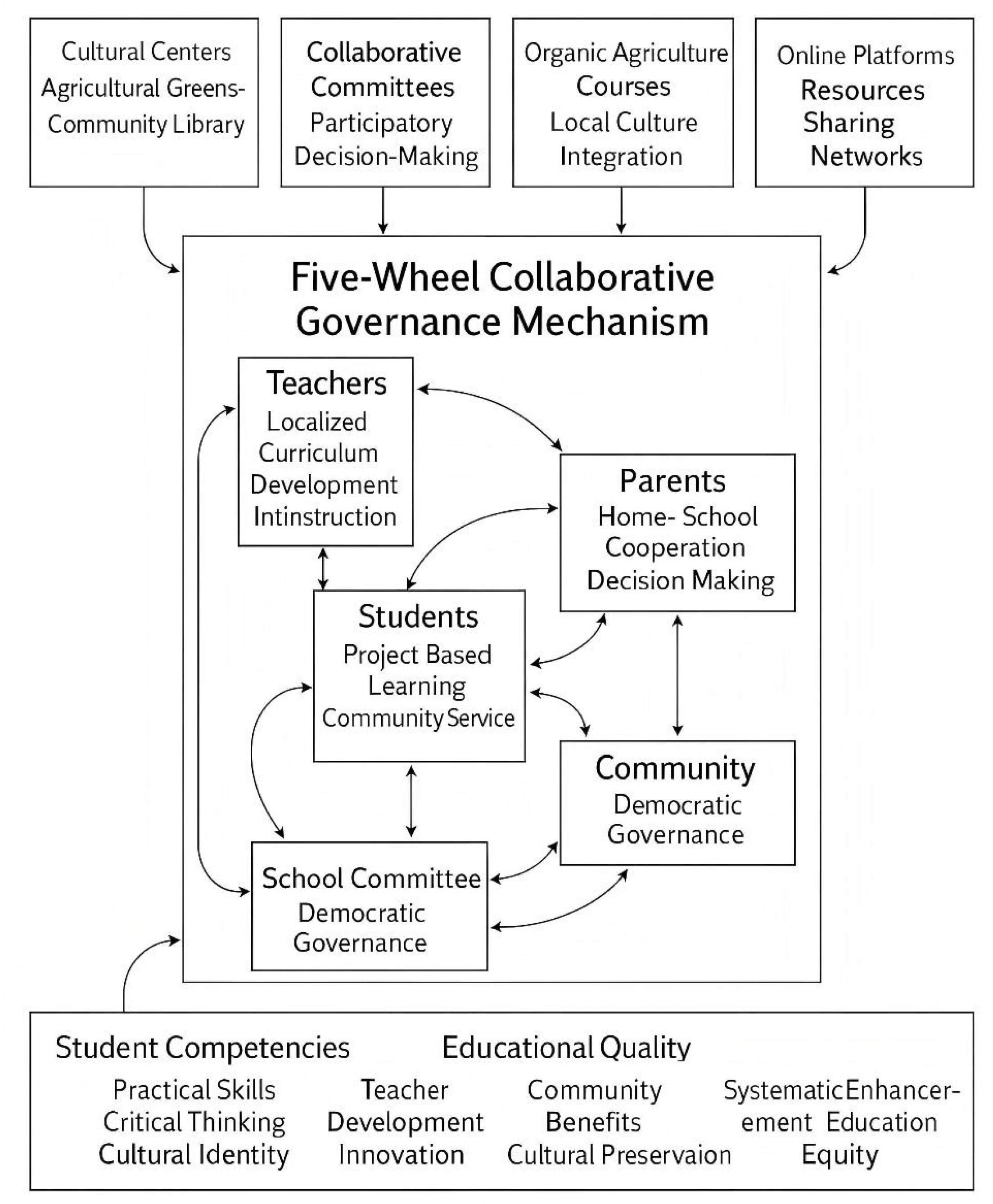
Figure 1. Five-wheel collaborative governance mechanism in VEC development. Note: Bidirectional arrows (↔) indicate mutual collaborative interactions among stakeholders; single arrows (→) indicate one-way resource or support flows from contextual conditions to the Five-Wheel mechanism.
Sustainability 17 11217 g001
Figure 2. The Relationship between VEC and Educational Quality.
Sustainability 17 11217 g002
Table 1. Participants Information.
ParticipantPositionExperience (Years)Note
PT01Senior Teacher>10Leads school–community integration
PT02Teacher5–10Curriculum development
PT03Teacher5–10Parent cooperation
PT04Teacher5–10Community activity coordination
PT05Teacher<5Digital education
PS01StudentParticipates in community activities
PS02StudentAgricultural practice
PS03StudentClub leadership
PP01ParentHome–school cooperation
PP02ParentCommunity volunteer
PP03ParentSchool committee member
PR01ResidentCommunity event organizer
PR02ResidentLocal enterprise representative
Note: To protect the privacy of participants, age and gender information have been anonymized.
Table 2. Data Collection.
RoleNumberData Collection Methods
Teachers5Unstructured interviews and questionnaires
Students3Questionnaire survey, classroom observation
Parents3Unstructured interviews and questionnaires
Residents2Unstructured interviews and questionnaires
Note: Data sourced from analysis of survey questionnaires and semi-structured interviews conducted with teachers, parents, students, and residents.
Table 3. Development Process and Core Insights of VEC Collaborative Governance via Grounded Theory.
CodingCore Tasks and AnalysesKey Output and Theoretical Conceptions
Open CodingAll the interview transcriptions, field notes and document materials were analyzed line by line to extract the initial concepts“Parents participate in curriculum design”, “Community provides practice base”, “Teacher course autonomy”, etc., and preliminary labeling is carried out
Axial CodingDiscover and correlate the logical relationship between these initial concepts and classify them into higher-level categoriesCategorize the above concepts as “resource integration mechanisms”, “democratic decision-making practices”
Selective CodingIn all the discovered categories, systematically identify and determine a “core category” that can overarch other categoriesCore category: “Five-Wheel Collaborative Governance Mechanism.” Storyline is built and presented according to this category (i.e., the “Findings” part of this paper), clearly demonstrating how its subcategories (such as resource sharing, democratic autonomy, etc.) interact and collectively constitute the operational model of VEC
Disclaimer/Publisher’s Note: The statements, opinions and data contained in all publications are solely those of the individual author(s) and contributor(s) and not of MDPI and/or the editor(s). MDPI and/or the editor(s) disclaim responsibility for any injury to people or property resulting from any ideas, methods, instructions or products referred to in the content.