Article

Optimizing Environmental Comfort and Landscape Visibility in Traditional Villages via Digital Platforms: A Case Study of Dazhai Village, Chengbu County, Hunan

School of Architecture and Design, Hunan University of Science and Technology, Xiangtan 411201, China
*
Author to whom correspondence should be addressed.
Sustainability 2025, 17(24), 11147; https://doi.org/10.3390/su172411147
Submission received: 12 November 2025 / Revised: 5 December 2025 / Accepted: 9 December 2025 / Published: 12 December 2025

Abstract

This study investigates the influence of environmental comfort and landscape visibility on node extraction and tour route optimization by integrating spatial data analysis with site design. Three algorithmic models—environmental comfort analysis, dynamic tour route analysis, and multidimensional plot value evaluation—were developed using Grasshopper (GH) combined with Python 3.12.0. These models comprehensively quantified the solar radiation and wind conditions in Dazhai Village, Chengbu County, simulated visitor perspectives to calculate landscape visibility, and derived a quantitative visual perception index. Analysis of 197 sampling points revealed superior environmental comfort and scenic views at the village’s peripheries and open areas. Based on annual comfort duration percentages and dynamic tour evaluation coefficients, 13 activity nodes with comfort duration rates exceeding 25.68% were identified, enabling the extraction of scientifically optimized tour routes. The planning scope was further refined by integrating the village’s visual perception index to account for multi-factor influences. Establishing a digital model for traditional village activity node extraction, tour route optimization, and plot value evaluation effectively enhances spatial analysis’s efficiency and scientific rigor. This approach enriches the design methodology system for environmental comfort and landscape visibility in traditional villages while offering new perspectives for their conservation research.

1. Introduction

As a result of contemporary society’s pursuit of “nostalgia,” traditional villages have garnered increasing attention. In practice, tourism development following the planning and design of conventional villages has become a widespread phenomenon [1,2]. Traditional villages represent a form of human settlement that emerged through the long-term evolution of agrarian civilization, reflecting historical memory and the trajectory of civilizational progress [3]. Their spatial composition and layout characteristics form distinctive regional cultural landscapes, physically embodying the adaptive processes and phased outcomes of the interplay between human settlements and natural environments [4]. Rural revitalization is the cornerstone of building a modern socialist country in all respects and is crucial to the overall economic and social development [5]. Digital transformation can promote the efficient allocation of resources, unleash the innovative potential of rural areas, and inject sustained momentum into rural revitalization [6]. Practice has proven that tourism is one of the key industries driving rural poverty alleviation and revitalization [7]. Many traditional villages have revitalized their economies by developing rural tourism [8]. Simultaneously, the rapid growth of tourism has injected substantial market capital into traditional village development, leading to significant changes in land use and landscape patterns. This has resulted in the widespread scenic area conversion and urbanization of conventional villages, alongside the emergence of large-scale, symbolically reduced rural landscapes and uniform village designs [9,10,11]. Consequently, village cultures are being lost, natural habitats are being destroyed, and visitors’ landscape experiences are diminished, ultimately impacting the sustainable development of these villages. Moreover, planning and design approaches for China’s traditional villages predominantly rely on practitioners’ personal experience, often neglecting comprehensive consideration of the surrounding environment and failing to address the relationship between village environments and visitor perceptions [12]. Consequently, traditional design methods struggle to meet the increasingly complex demands of village environments and subsequent tourism development, severely limiting the protection and development of outstanding traditional village resources.
With deepening research and interdisciplinary integration, Remote Sensing data sources and Grasshopper visualization programming technology have been widely applied in architecture, planning, and related fields. For instance, Zaha Hadid Architects employed GH technology to study urban morphology. The building layout in the master plan for Singapore’s Central Business District [13]. Professor Gao Yan at the University of Hong Kong researched programming language applications in vernacular architecture [14]. Professor Li Biao of Southeast University explored the renovation and architectural design of villages in Yixian County, employing digital techniques to investigate the generation of ancient village textures, building construction methods, and the evolution of village forms [15]. These studies primarily focus on adjusting the relationship between specific buildings and plots through site data. However, research reports exploring activity nodes and tour routes based on digital technology using traditional village spatial data as a foundation remain scarce.
Dazhai Village in Chengbu Miao Autonomous County, Shaoyang City, Hunan Province, is recognized as one of Hunan’s Ten Most Beautiful Ethnic Minority Villages and a provincial model for ethnic tourism development. While Dazhai Village retains its pristine natural environment, its supporting infrastructure remains relatively underdeveloped. Notably, the village lacks comfortable visual landscape nodes for visitor rest and well-designed touring routes, severely limiting its potential for in-depth tourism development. Taking Dazhai Village in Chengbu as a case study, this research employs the Ladybug (LB) + Butterfly (BF) program to analyze the site’s annual climate variations. Concurrently, a GH algorithm is constructed for line-of-sight analysis. The aim is to explore a digital approach for extracting activity nodes and tour routes based on site climate and landscape visibility, thereby providing theoretical and practical foundations for applying digital technologies in the conservation and planning of traditional villages.

2. Materials and Methods

2.1. Overview of the Study Area

Dazhai Village (26°15′40.33″ N, 110°5′26.36″ E) is situated at the convergence of two provinces (Hunan and Guangxi), three cities (Shaoyang, Huaihua, and Guilin), and four counties (Figure 1). The village comprises six residential groups inhabited by six ethnic groups, including the Dong, Miao, and Yao. Traditional stilted houses dominate the architecture. With 632 mu of farmland and 4302 mu of forest land, the primary economic activities are agricultural cultivation and tourism development.

2.2. Data Sources and Processing

Building census information (2016) and the building inventory (2006) for Dazhai Village were provided by the Shaoyang Municipal Bureau of Land and Resources and the Bureau of Cultural Relics. Meteorological data for Chengbu Miao Autonomous County, Hunan Province, covering 2019–2024, was collected and stored in EPW format, sourced from the National Meteorological Information Center [(http://data.cma.cn/)]. The GDEMDEM 30M elevation data with 30 m spatial resolution for terrain construction was obtained from the China Geospatial Data Cloud Center [(http://www.gscloud.cn/)].
Field survey data includes the current village status (building ratings), aerial imagery of the site (captured using a DJI Phantom 4 RTK, self-shot, 2023, The manufacturer of the DJI Phantom 4 RTK drone is Shenzhen DJI Innovation Technology Co., Ltd., headquartered in Shenzhen, Guangdong Province, China), and the distribution mapping of trees and shrubs within the village (2024). High-precision road and building boundary vector data were extracted using DJI TERRA software V3.9.4. and assigned values via ArcGIS 10.2 attribute tables [16]. The preprocessed dataset serves as the foundation for line-of-sight and comfort analysis.

2.3. Environmental Comfort Analysis Model

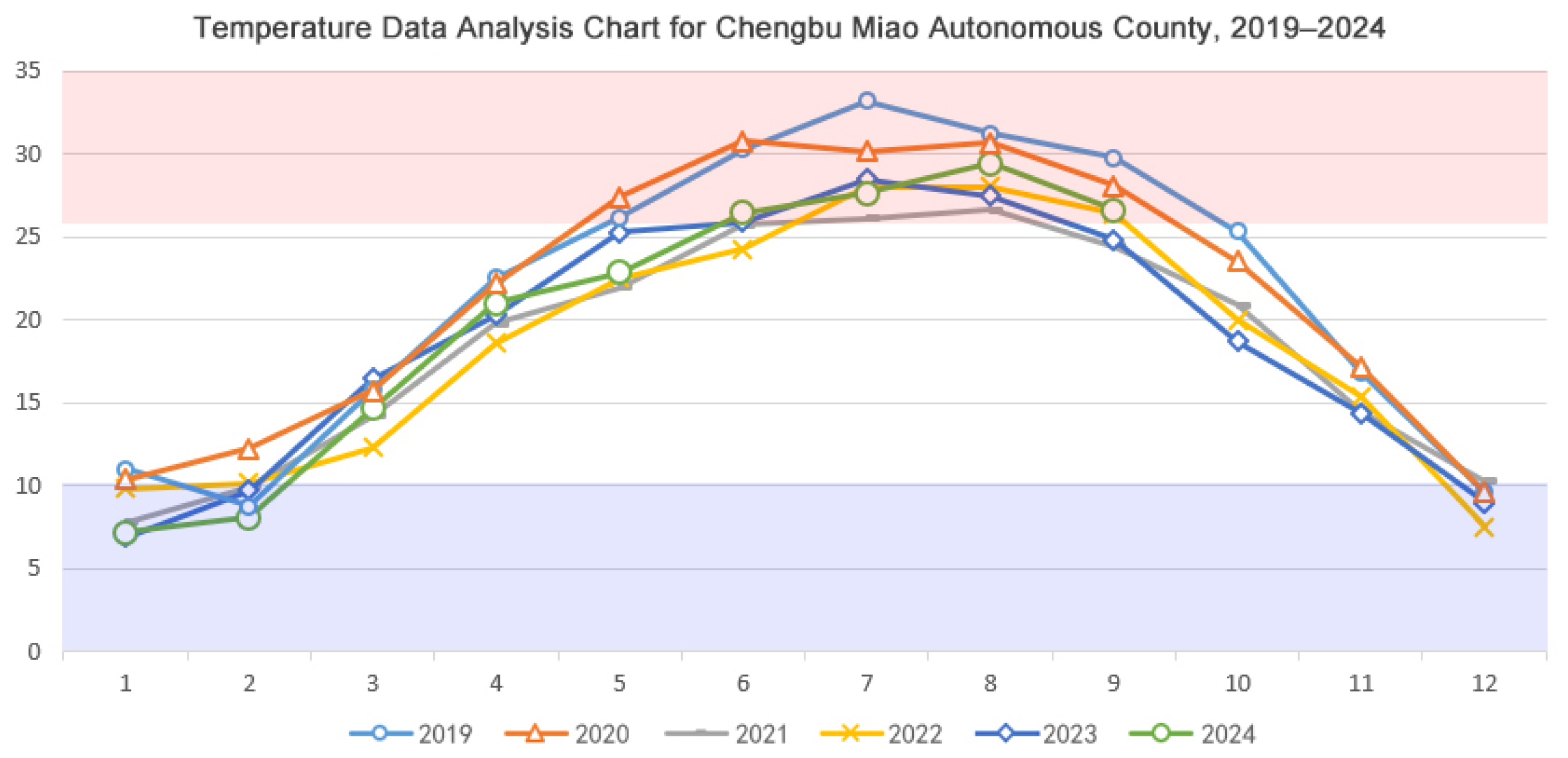
Through literature review and extensive case studies, it was found that climatic conditions are considered the most direct indicator influencing environmental comfort [17]. Based on the geographical environment of Dazhai Village, three key factors affecting the village’s environmental comfort—dry-bulb temperature, solar radiation, and wind speed—were selected to construct the comfort analysis algorithm model (Table 1). Using the Import_EPW component in LB, we extracted and calculated the average values of EPW-format meteorological data for each year from 2019 to 2024 in Chengbu Miao Autonomous County, Hunan Province. This yielded the average values for the three meteorological indicators—dry-bulb temperature, solar radiation, and wind speed—over the past five years. Considering that normal resident activity typically occurs between 6:00 a.m. and 9:00 p.m., totaling 5475 h, data outside these hours were excluded to ensure the scientific validity of the analysis. Simultaneously, Python code was employed to categorize temperatures into three ranges based on human thermal perception: cold (below 10 °C), comfortable (10–26 °C), and hot (above 26 °C) [18,19,20]. This approach enabled secondary classification of residents’ activity periods. Using the Outdoor Solar Temperature Adjustor (OST) component in LB, the solar radiation levels under building shading within these three zones were analyzed. LB and BF were employed to construct wind roses, and the village wind environment was simulated using Phoenics.
Research indicates that traditional village activity areas are typically located along village roads, with minimal environmental variation within 30 m intervals [21]. Therefore, sensing points were set at 30 m intervals for comfort analysis. If the spacing is too small, it may result in overly dense nodes, causing the dynamic path to become fragmented. If the spacing is too large, it may omit some sensing points, making the extracted nodes unrepresentative. The combined analysis results serve as initial values for the Outdoor Comfort Calculator (OCC) component to compute the annual percentage of comfortable time (Cfi) at each sensing point. These results are then fed into the Data Output (DO) component as the data output interface.

2.4. Dynamic Touring Line Analysis Model

The dynamic touring evaluation coefficient is calculated by integrating two factors: landscape visibility and environmental comfort (Table 2). Visibility is primarily determined by the number of visible buildings and the area of the field of view [22]. Through algorithmic program construction, the visibility of village road landscapes is analyzed and visualized. Vector data for road and building boundaries, tree/shrub location data, and terrain DEM data were imported into GH components: Curve (Crv), Construct Point (Pt), and Delaunay Mesh (Del). The Path component linked these with Excel files containing building and tree/shrub height data exported from ArcGIS attribute tables, establishing a comprehensive site mesh model as the analytical foundation. Considering minimal variation in visible landscape effects within 30 m intervals along the same road segment and for data management efficiency, the 30 m-spaced perception points used in environmental comfort analysis were retained as sightline collection nodes. Simultaneously, landscape visibility simulations were conducted for each point using 500 m as the effective sight distance for villages [23] and 1.6 m as the standard viewing height [24]. Visual analysis and field-of-view analysis were conducted by calculating the number of visible buildings and the field-of-view area at each perception point. Furthermore, the annual comfort duration percentage (Cfi) at each perception point was comprehensively evaluated based on Equations (1) and (2):
Fi = V1Pi/2 + V2Cfi
Fi = V1(V11Ni/N + V12Si/S)/2+ V2Cfi
Calculate the dynamic sightseeing evaluation coefficient Fi for the road segment represented by a single perception point. Here, i denotes the observation point number; V1, V2, V11, and V12 represent the weight coefficients for each sub-indicator; N is the total number of village structures; Ni is the number of visible structures at that point; S is the effective field of view area; Si is the visible area within the effective line of sight at that point; and Pi is the landscape visibility evaluation coefficient for the observation point, derived by overlaying the ratio of visible quantity to field of view area. Meanwhile, based on the dynamic tourism evaluation system outlined in Table 2, a panel of 70 experts and scholars from disciplines including landscape architecture, urban planning, and tourism management, along with staff from Dazhai Village, was invited to conduct a scoring evaluation of the selected influence factor weights in March 2024. The scores for each sub-indicator weight were calculated, with the results presented in Table 3. Original scores are converted into weighted values using the entropy weighting method. This method is a relatively objective approach to determining indicator weights based on information content, reducing biases that arise when weights are assigned subjectively and yielding results that better align with reality [25]. Expert selection prioritized professional backgrounds relevant to the study’s theme, ensuring their expertise aligned with the research objectives. This approach ensures that the weighting evaluation is both theoretically grounded and aligned with the developmental needs of traditional villages. Expert evaluations remain susceptible to inherent biases, as evaluators’ professional backgrounds can influence their assessment tendencies, and some experts may be swayed by the opinions of their peers. To mitigate these biases, the selection process should prioritize a balanced mix of disciplinary expertise, while the evaluation phase should employ anonymous scoring by independent experts.

2.5. Multi-Dimensional Plot Value Evaluation Model

The site is divided into a 10 × 10 m grid, with the fields of view for all perception points overlaid. If the grid is visible at a perception point, it is assigned a value of 1; if not visible, it is assigned a value of 0. After analyzing all 197 perception points, the line-of-sight perception index for each unit grid is calculated. The line-of-sight perception index for each grid cell is denoted as Mi, where i represents the sensor point number and n denotes the total number of sensor points, as shown in Equation (3):
M i = K = i n n 1
Simultaneously, by integrating the Excel building rating file exported from the attribute table in ArcGIS and the extracted optimal tour routes, a GH multidimensional parcel value analysis algorithm model was established to derive site parcel value ratings.

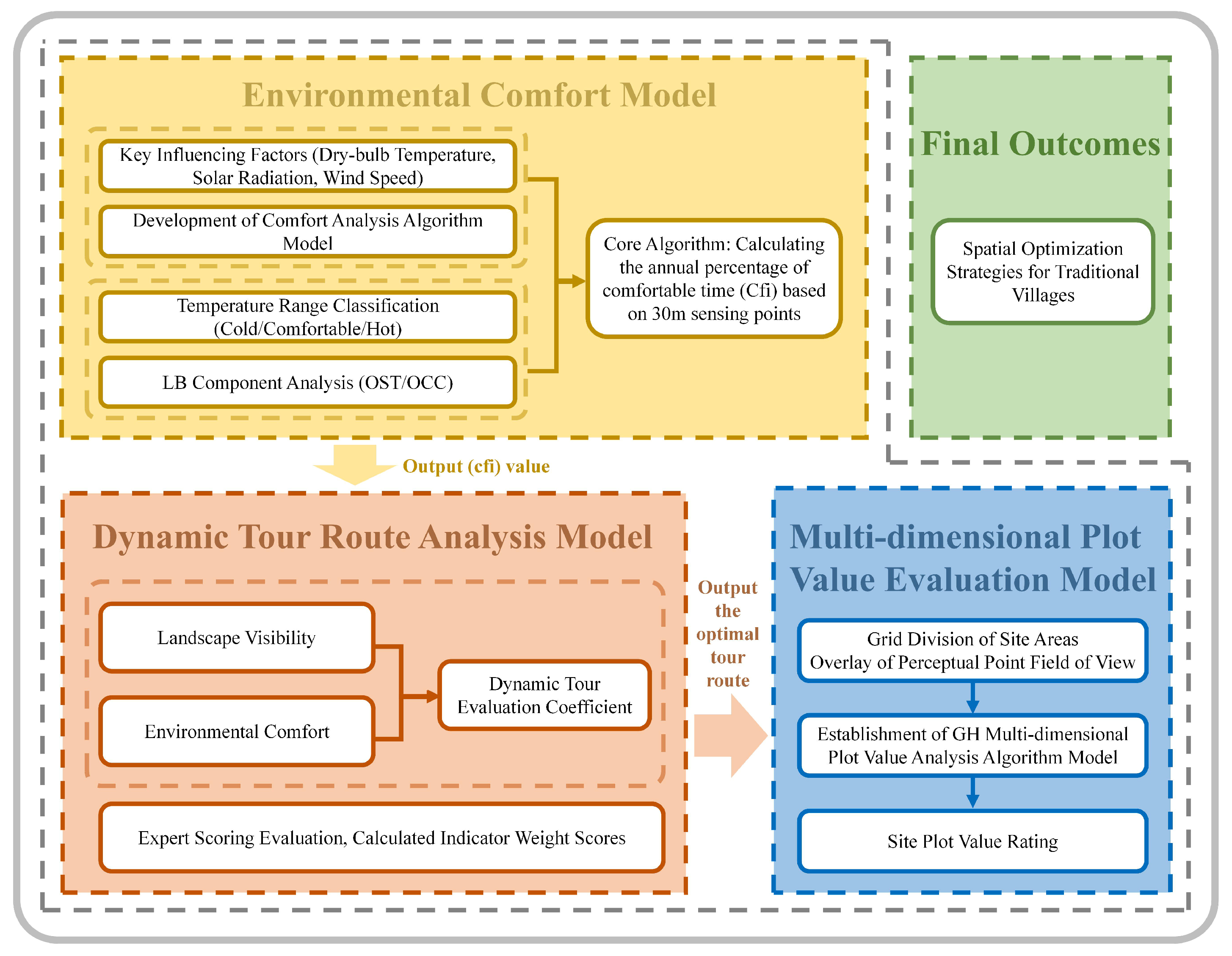
2.6. Three Models, Their Interrelationships, and Design Decision Logic

This study developed three analytical models: an environmental comfort analysis model, a dynamic route analysis model, and a multidimensional land parcel value evaluation model. Through systematic logical connections, a comprehensive conceptual diagram was formed (Figure 2). The environmental comfort analysis model constructs a comfort analysis algorithm by examining meteorological factors such as dry-bulb temperature, solar radiation, and wind speed. It extracts average values using LB components and calculates the annual percentage of comfortable time (Cfi). This model provides a climate-adaptive basis for design decisions like activity node siting and rest area placement. The dynamic tour route analysis model further integrates landscape visibility and environmental comfort evaluation metrics to calculate a comprehensive dynamic tour evaluation coefficient. Through expert and public scoring, it determines indicator weight scores and outputs optimal tour routes. This model supports specific planning elements such as landscape node layout and visitor sightline guidance. The multidimensional plot value evaluation model builds upon the outputs of the preceding models. It divides the site into grids, overlays the fields of view at perception points, and assigns value ratings to site plots. This model provides more scientific and quantitative support for design decisions in traditional villages, such as delineating core conservation zones and determining the sequence of renewal and development.
A clear chain of design decision logic emerges among the three models: the environmental comfort analysis model provides relevant basis for designing specific spatial nodes; the dynamic tour route analysis model connects discrete landscape perception points into systematic touring routes; and the multidimensional plot value evaluation model builds upon the first two models by establishing the GH multidimensional plot value analysis algorithm model, which supports overall design planning strategies. This progressive logic—from micro-level landscape nodes to macro-level design planning—enhances the scientific rigor and practical feasibility of traditional village conservation and tourism development.

3. Results

3.1. Climate Analysis of the Study Area

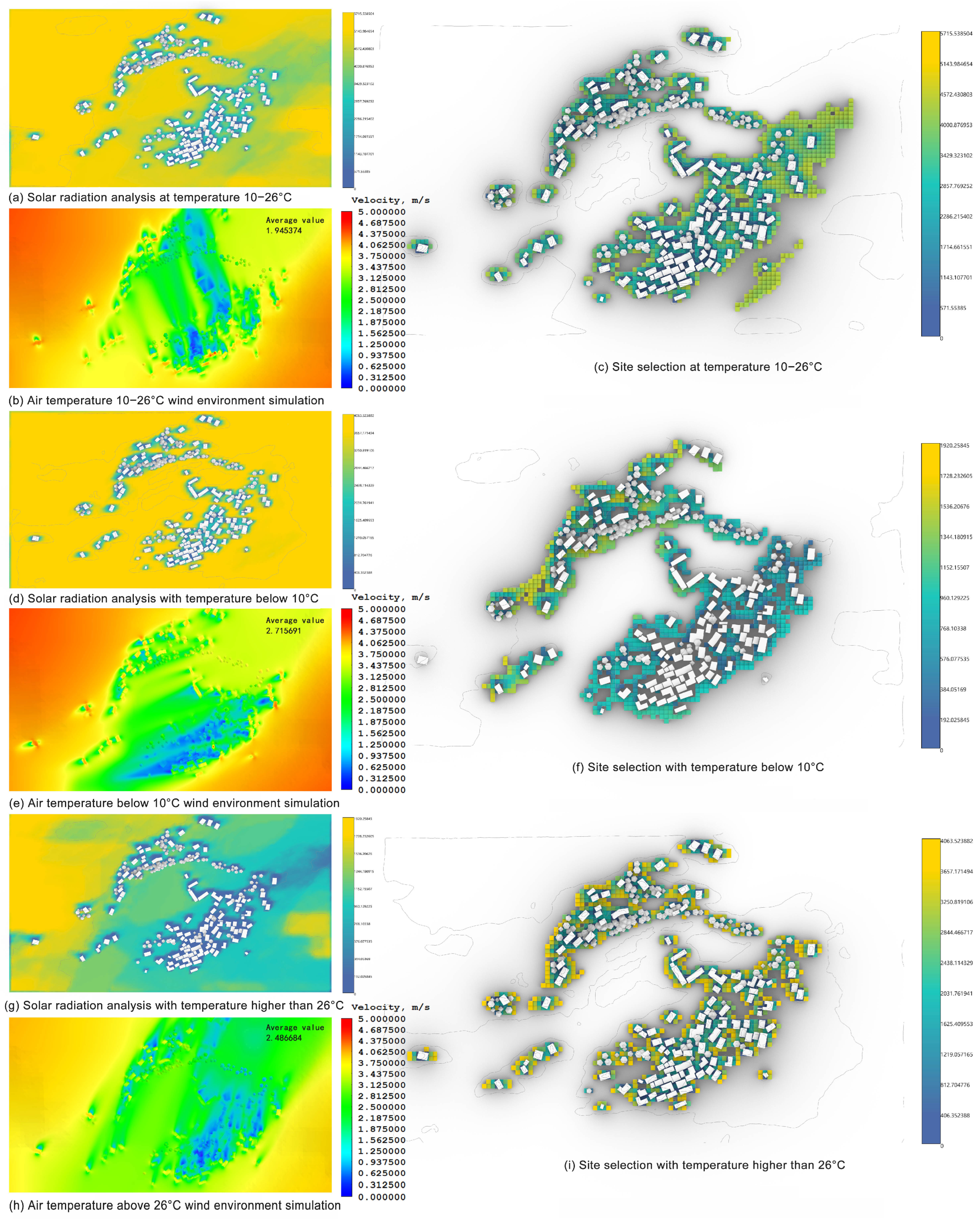
As shown in Figure 1, Dazhai Village currently has only two village gathering spaces: the plaza in front of Shaoyang Wenchang Pavilion and the plaza in front of Yanzhai Huagu Tower. There are a few outdoor activity nodes for visitor-village interaction, and insufficient consideration of the site environment results in inadequate comfort levels. This negatively impacts visitors’ landscape experience and severely hinders the village’s further development. Given this, by analyzing temperature data from Chengbu Miao Autonomous County over the past five years and categorizing it into three temperature perception zones—cold, comfortable, and hot—as described above. As shown in Figure 3, months with average temperatures below 10 °C primarily occur from December to February, while temperatures exceed 26 °C from June to September. March, April, May, October, and November fall within the relatively comfortable temperature range of 10–26 °C. Analysis of climate data across these zones reveals that when temperatures fall below 10 °C (as shown in Figure 4d), high solar radiation areas predominantly occur at the peripheries of village clusters, in sparsely built zones, and on surrounding farmland. Conversely, the densely built village cores experience reduced solar radiation and lower comfort levels. As shown in Figure 4b, the northeast monsoon prevails from December to February. Wind speeds are lower and comfort levels higher within the village and in areas southwest of buildings due to structural shielding. Conversely, maximum wind speeds reach 3.46 m/s at the wind-and-rain bridge, Changping water basin, building peripheries, and surrounding farmlands, resulting in lower comfort levels. After excluding agricultural and forestry lands, analysis and calculations identified the areas with higher comfort levels during December to February (Figure 4f). Similarly, site analyses were conducted for months with temperatures ranging from 10 °C to 26 °C and above 26 °C, with results shown in Figure 3.

3.2. Perception Point Analysis and Activity Node Extraction

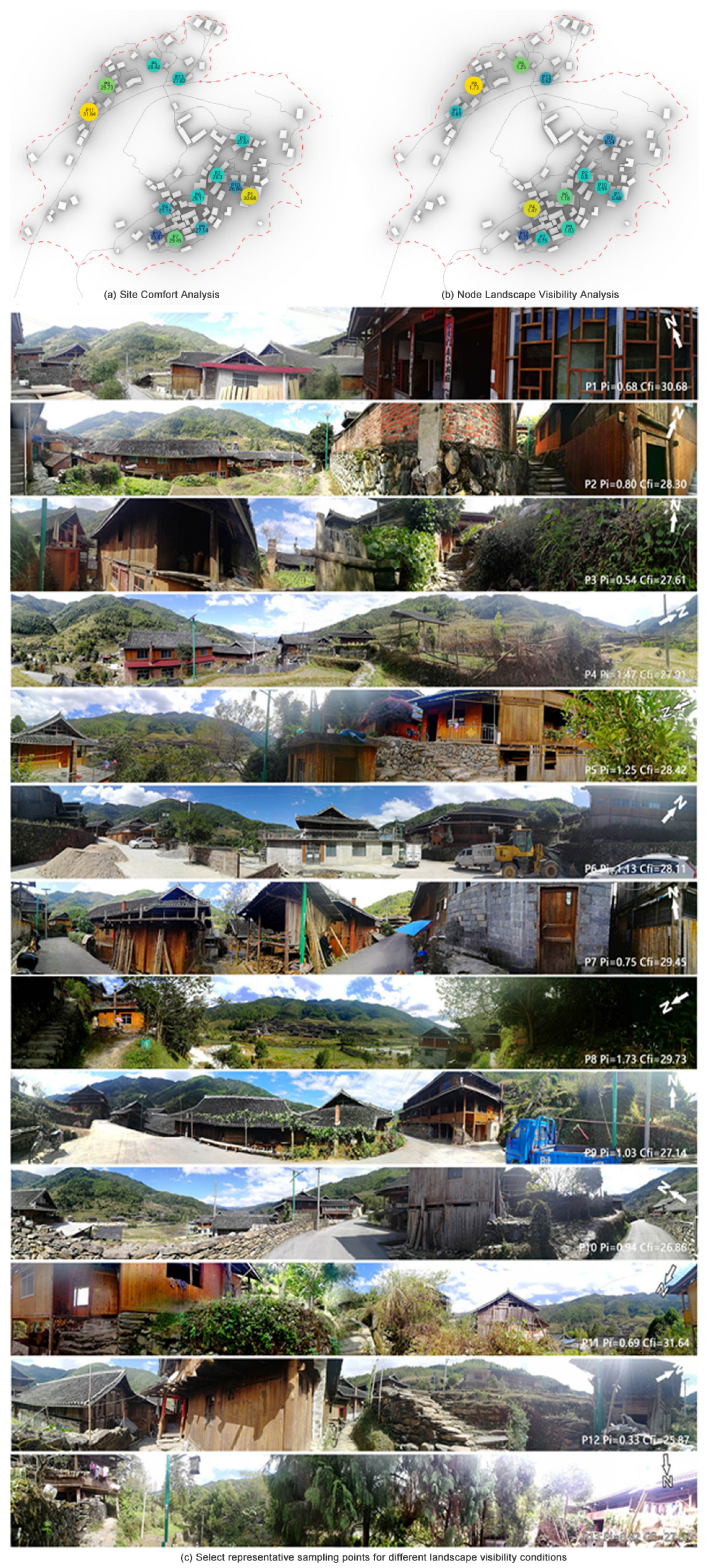
The results from analyzing the three temperature ranges were input into the OCC component to select 19 perception points with higher comfort levels. These were ultimately consolidated into 13 activity nodes (P1–P13). The selected nodes exhibited annual comfort duration percentages (Cf) ranging from a maximum of 32.16% (1760.76 h) to a minimum of 25.68% (1405.98 h), with an average daily comfort duration of approximately 4.17 h (as shown in Figure 5a). Further research reveals that nodes with higher comfort levels are primarily distributed along the relative periphery of villages and within relatively open building clusters. On one hand, compared to fully open sites, village peripheries and semi-open spaces better balance shading and ventilation, creating stable microclimates; On the other hand, compared to densely built-up areas, they avoid excessive shading and dampness. Second, analysis of the 13 selected nodes was conducted based on the range of comfortable land use areas across different temperature intervals (Figure 4c,f,i). When temperatures were below 10 °C, nodes P1, P8, P9, P11, and P12 exhibited higher radiation levels and were less affected by the northeast monsoon, resulting in higher comfort levels. When temperatures exceed 26 °C, P2, P6, P7, and P10 receive lower solar radiation and benefit more from the summer monsoon, offering greater comfort. Thus, design strategies can be developed based on the optimal usage time ranges for each node.
Through line-of-sight analysis, the selected nodes’ landscape visibility was categorized into three classes: High Pi (1.3–2.0), Medium Pi (0.7–1.3), and Low Pi (0–0.7). Activity nodes scoring 0–0.7 include P1, P3, P11, P12, and P13; those scoring 0.7–1.3 include P2, P5, P6, P7, P9, and P10; and only P4 and P8 score 1.3–2.0 (Figure 5b). Therefore, nodes with high comfort and good visibility, such as P6 and P8, can be prioritized for design. These areas should be developed as fully or semi-open activity spaces, with enhanced surrounding infrastructure and focused restoration of nearby buildings that embody village culture. This approach increases visitor dwell time and creates dynamic node environments. Simultaneously, optimize the visible environment within each node’s sightlines—for instance, by planting ornamental crops or vegetation in visible areas. For nodes with high comfort but weak landscape impact (e.g., P1, P7, P11), develop semi-open or relatively enclosed recreational spaces. Prioritize creating a static landscape atmosphere, emphasize the site’s cultural context to highlight village heritage, and cultivate a tranquil village landscape ambiance. For nodes with relatively lower comfort levels, such as P10 and P12, appropriate artificial interventions can regulate solar exposure and wind conditions through measures like strategic planting and structure placement, thereby enhancing the resting experience for residents and visitors.

3.3. Tour Route Extraction and Optimization

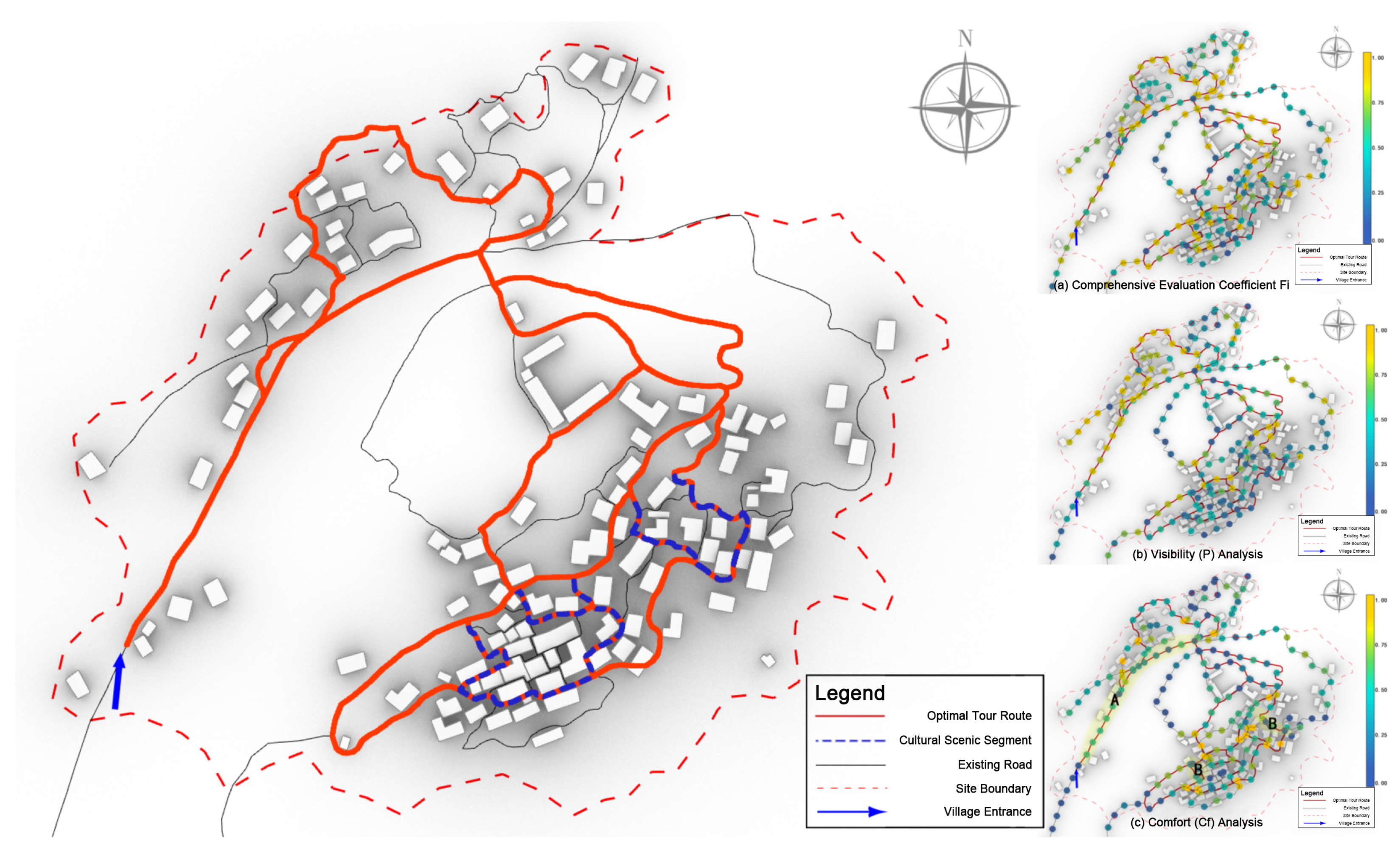
Currently, the tour routes in Dazhai Village only utilize small-scale alleys within the village and two village roads running from south to north. Buildings are connected by stone-paved paths, but some roads lack continuity and clear guidance. The tour routes are largely disorganized and have not been structured based on scenic views or environmental comfort along the paths. Analysis of the roads using the Perception Point Comprehensive Evaluation Coefficient Fi (Figure 6a) reveals that the evaluation coefficient Fi is primarily concentrated between 0.5 and 0.75. Perception points with Fi > 0.75 or Fi < 0.5 each account for approximately 10% of the total, numbering 19 and 21, respectively. Based on the distribution of the comprehensive evaluation coefficient Fi, the points were grouped into three categories for discussion: Fi > 0.75, 0.5 < Fi < 0.75, and Fi < 0.5. Research indicates that when Fi < 0.5, road sections are predominantly located behind single buildings and in front of slopes, where sightlines are significantly obstructed and space is relatively narrow. Both the visibility coefficient Pi and the environmental comfort factor Cfi are relatively low in these sections, thus excluding this group. For perception points with 0.5 < Fi < 0.75, where environmental comfort differences were minor, landscape visibility served as the criterion. As shown in Figure 6c, Point A in the core building area retained visibility despite lower visibility due to its favorable cultural landscape. Point B offered excellent scenic views, allowing observation of the entire village and appreciation of the valley stream. Thus, the sections at Points A and B were retained. When Fi > 0.75, perception points are almost entirely within the aforementioned 13 activity nodes. These sections offer both excellent scenic views and high comfort levels, warranting retention of all segments.
Synthesizing the above analysis yields the optimal touring route and cultural scenic sections (Figure 6). Building upon existing village roads, the optimal tour route was extracted based on visitor visibility and environmental comfort, enabling efficient utilization of existing resources while minimizing construction impacts. Furthermore, guided by the route extraction results, signage installations were strategically placed throughout the village to highlight its cultural heritage, enhance infrastructure, and extend visitor dwell time. Corresponding improvements to the route’s surrounding environment were implemented to further elevate the scenic experience for tourists.

3.4. Revision of Core Planning Boundaries

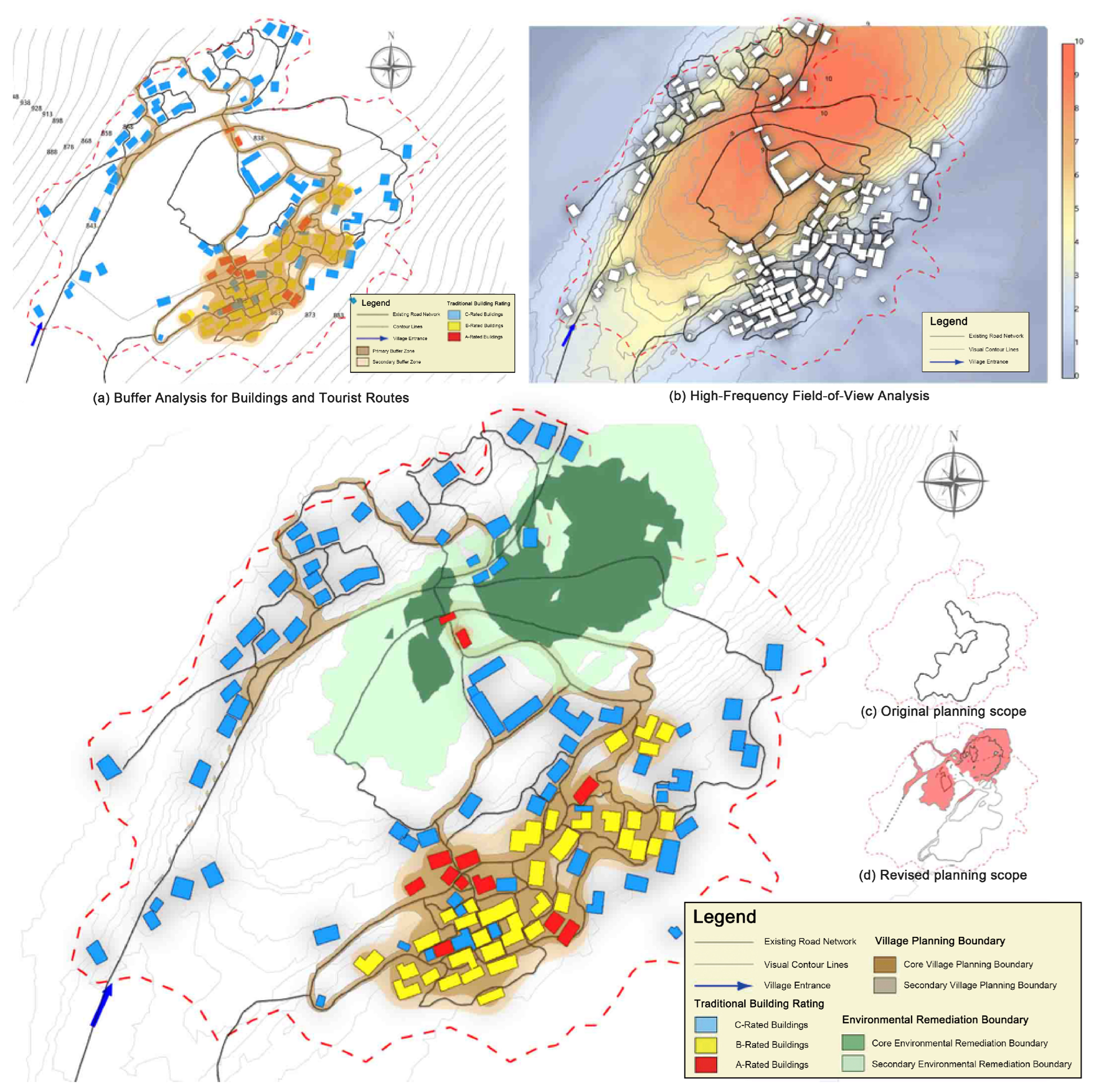
The value of village plots was analyzed from both the cultural environment and landscape visibility perspectives, moving from the interior outward to revise the planning design boundaries. Buffer analysis was conducted using Category A and B buildings and selected tour routes, yielding a cultural planning design area with higher village cultural value (Figure 7a). Based on the existing village environment, buildings and roads within the buffer zone were protected and repaired. Infrastructure improvements included adding appropriate lighting, enhancing surface drainage systems, and installing visual signage systems. Additionally, the visual perception model was used to calculate the site visibility coefficient Mi. Areas with Mi > 9 were defined as high-frequency visible plots, establishing a landscape core planning area primarily guided by visual perception (Figure 7b). The selected area primarily encompasses the lower reaches of the Changping River along the valley’s low-lying banks. Consequently, natural environment improvements were implemented, including clearing riverbank debris, refining shoreline profiles, and adjusting crop cultivation to highlight agricultural heritage. Taking the metasequoia grove south of Huilong Bridge as an example, site debris and weeds were cleared to create shaded waterside spaces suitable for summer relaxation. This enhances usability while preserving the natural landscape’s rustic charm, increasing the site’s interactivity. Finally, the revised boundaries were overlaid with the original core zone, as shown in Figure 7d. The red areas indicate the expanded core protection zone. Integrating these three zones balances Dazhai Village’s cultural value with visitor experience, serving as the basis for adjusting the planning scope (Figure 7).

4. Discussion

This study, based on the research-analysis-design workflow of traditional village planning and design, employs an analytical approach that integrates abstract spatial environmental data with digital platforms. It explores the relationship between environmental comfort and landscape visibility with traditional village planning and design activities, establishing quantitative analysis and evaluation algorithm modules in three aspects: activity node extraction, tour route optimization, and plot value assessment. Findings indicate that establishing Grasshopper algorithmic models effectively identifies areas within Dazhai Village characterized by high environmental comfort and excellent landscape visibility, thereby providing a scientific basis for optimizing activity node layout and tour routes. Previous studies by Zhu Xujia, Mou Tingting et al. [26,27] assessed visible area size through questionnaire surveys of survey images to examine the impact of sightlines on landscape design. However, questionnaire surveys are subject to significant individual perception biases and lack objectivity. This study employs the GH algorithm to simulate and calculate landscape visibility, yielding more scientific and precise results. Yin Jie, Zhang Nan, and others [28,29] explored traditional village road alignment methods using digital platforms. Still, their research only considered the role of visible areas in identifying viewing points and tourist routes, neglecting the impact of environmental comfort on village node placement and route extraction. Numerous studies have examined environmental comfort based on site climate [30,31], but these investigations focused on single environmental variables such as wind conditions or solar radiation, failing to consider the combined effects of temperature, solar radiation, and wind speed on environmental comfort.
Despite methodological and applied progress, this study retains limitations. Human comfort is influenced not only by temperature, solar radiation, and wind speed but also by clothing thermal resistance—specifically, the thermal insulation coefficient of garments. Thus, visitor attire significantly affects perceived environmental comfort. Visitor attire exhibits significant subjectivity and variability. Consequently, this factor was not directly examined in the study; instead, prior research was adopted, stating that “the human comfort temperature range under appropriate clothing is 10–26 °C [32].” Successful application of the analytical method requires support from multi-source data, including meteorological data, topographical data, building information, and field survey data. In practical implementation, emphasis must be placed on data accuracy and timeliness, combined with reasonable weighting settings that account for local cultural characteristics. This study demonstrates methodological innovation, with its core objectives and practical pathways aligning with the sustainability requirements across environmental, social, and economic dimensions. It provides a practical and effective solution for the conservation and development of traditional villages. Building upon the three sustainability dimensions of environment, society, and culture, this study establishes a digital technology-based analytical and planning methodology for traditional villages. By quantitatively assessing environmental comfort and landscape visibility, it scientifically identifies activity nodes and optimizes visitor routes. This approach not only enhances planning rigor and efficiency but also strengthens the sustainable resilience of traditional villages, providing an actionable technical pathway for sustainable tourism development and heritage preservation. In practical terms, this research provides an actionable technical framework for sustainable tourism development and route optimization in traditional villages. By scientifically identifying comfortable visual nodes and premium viewpoints, it maximizes visitor experience with minimal intervention, preventing excessive development and landscape homogenization. Simultaneously, this analytical approach can be applied to other types of cultural heritage sites or historic districts, offering a reference methodology for the in-depth research and application of digital technologies in urban and rural spatial design.

5. Conclusions

5.1. Extraction of Land Use Nodes and Tourist Routes Under Multiple Influences

This study selected seven underlying influencing factors: topography, vegetation, architecture, roads, temperature, solar radiation, and wind speed. After processing, these yielded four composite factors: field of view area, number of visible buildings, environmental comfort, and landscape visibility. The GH algorithm program then linked these factors to corresponding landscape element designs. For instance, activity nodes were extracted based on environmental comfort at perception points, with corresponding design strategies formulated through landscape visibility analysis. Comprehensive evaluation coefficients Fi were derived by overlaying environmental comfort and landscape visibility to extract touring routes. Furthermore, the extracted roads and high-frequency visibility ranges provided a basis for refining the planning scope. By constructing quantitative models for environmental comfort and landscape visibility, this approach scientifically identifies areas within the village offering high comfort levels and favorable scenic vistas. This process successfully extracted 13 key activity nodes and optimized tour routes. Compared to previous studies, this research balances site design comfort with scenic effects. Building upon traditional planning principles, it employs digital technologies like the GH algorithm and Python coding to explore activity node extraction and route optimization. By integrating computer technology with traditional village planning, it significantly reduces judgment errors stemming from decision-makers’ subjective perceptions and substantially enhances analytical efficiency. Design is not only constrained by the objective conditions of the existing site environment but also influenced by subjective factors such as human aesthetic awareness, site culture, and design objectives during the process. These elements impose limitations on the rhythm and sequence of spatial arrangements, consequently affecting the design of site nodes and pathways. Therefore, future research should delve deeper into this aspect.

5.2. Practicality and Limitations of Digital Platforms in Evaluating Human Comfort and Landscape Visibility

Traditional village environmental factors are difficult to evaluate due to their non-quantifiable nature. This study ingeniously employs digital platforms to quantify these factors and link them to specific landscape elements, enabling the quantitative assessment of environmental impact factors. Based on village environmental conditions, landscape characteristics, and conservation needs, it provides objective grounds for village planning, design, and development. Furthermore, the research employs a design process combining spatial environmental data with computer algorithm programs, which are highly flexible and easy to operate in identifying activity nodes, tourist routes, and planning scopes. This design methodology is gaining recognition in fields like architectural design and urban studies. The study further integrates digital platform analysis with design deliberation—for instance, incorporating weighting information for various influencing factors during algorithm development. By synthesizing evaluation results from numerous respondents regarding these factors as input weights, the approach enables more scientific analysis of how different elements impact landscape components, yielding richer insights for planning, design, and management decisions. The accuracy of the program’s computational results also critically depends on the evaluations from respondents at different levels. Therefore, this study collected as many samples as possible, ensuring that all respondents were sufficiently representative.
During sightseeing, individuals’ choice of viewing angles is influenced by subjective factors such as environmental sensitivity and perception of landscape value. These real-time subjective experiences may affect route selection and consequently impact analysis outcomes [33,34]. This study objectively addresses this by focusing on two dimensions: the 360° field of view area from perception points and the number of visible buildings, thereby minimizing a series of human subjective factors. Nevertheless, the analytical method employed in this study also has certain limitations. Although landscape visibility analysis is grounded in the number of visible buildings and objective field of view, visitors’ actual sight selection and attention allocation during tours are influenced by subjective preferences and cultural backgrounds. Current algorithmic models cannot fully simulate this dynamic cognitive process. Furthermore, while digital platforms enhance analytical efficiency, their operation still relies on certain technical thresholds and is constrained by equipment limitations. Future research could integrate virtual reality (VR) or augmented reality (AR) technologies to simulate visitors’ perceptions and behaviors in real environments, thereby enhancing interactivity and immersion during the tour experience.

Author Contributions

Conceptualization, R.L. and J.W.; Methodology, R.L.; Software, R.L.; Formal analysis, S.F.; Investigation, S.F.; Resources, W.P. and C.T.; Data curation, W.P. and C.T.; Writing—original draft, R.L.; Visualization, J.W. and S.F.; Supervision, J.W.; Project administration, J.W.; Funding acquisition, J.W. All authors have read and agreed to the published version of the manuscript.

Funding

Ministry of Education Humanities and Social Sciences Research Planning Fund Project (No.: 24YJAZH144); Hunan Provincial Social Science Achievement Review Committee Project (No.: XSP22YBZ073); Hunan Provincial Enterprise Science and Technology Special Envoy Project (No.: 2021GK5036).

Institutional Review Board Statement

Not applicable.

Informed Consent Statement

Not applicable.

Data Availability Statement

The original data presented in the study are openly available in [National Meteorological Information Center] at [http://data.cma.cn/]. The original data presented in the study are openly available in [China Geospatial Data Cloud Center] at [http://www.gscloud.cn/].

Conflicts of Interest

The authors declare no conflicts of interest.

References

  1. Yuan, C.; Kong, X.; Li, L.-Q.; Li, Y. Traditional Village Image Perception Research Based on Tourist UGC Data: A Case of Chengkan Village. Econ. Geogr. 2020, 40, 203–211. [Google Scholar]
  2. Tu, H.-F. Reflections on the Protection and Development of Traditional Chinese Villages in the Context of Rural Revitalization. Archit. Cult. 2023, 2023, 1. [Google Scholar]
  3. Lü, L. Spatial morphological traits, influencing factors and implications of typical traditional villages situated along the Jiangsu section of the Grand Canal. J. Nat. Resour. 2024, 39, 1993–2007. [Google Scholar] [CrossRef]
  4. Gao, C.-Z.; Fu, H.; Gong, J. Research on the Symbiotic Development Path of Traditional Villages from the Perspective of “Culture Driven”: Taking Five Traditional Villages in Xunxian County of Henan Province as An Example. Areal Res. Dev. 2021, 40, 169–173+180. [Google Scholar]
  5. Yu, J.; Zhang, X.; Hua, J. Research on the Effect and Mechanism of Digital Economy Empowering Rural Revitalization. Agric. Econ. Manag. 2025, 5, 53–65. [Google Scholar]
  6. Zhou, Y. Mechanism and Empirical Test of Digital Economy Driving Rural Revitalization. Stat. Decis. 2025, 41, 11–16. [Google Scholar]
  7. Huang, M.; Zhu, H.; Tan, S.; Xu, Z. Reflections on Tourism-Driven Poverty Alleviation in Shihan Village, Qiongzhong Li and Miao Autonomous County. Tour. Overv. (Second Half Mon.) 2019, 162–163. [Google Scholar]
  8. Li, T.; Luo, Q.; Zhang, J.; Cheng, Y. Research on development of new business forms for traditional villagesin Northern Hainan volcano area based on the Grounded Theory: TakingMeixiao village in Haikou as a case. J. Nat. Resour. 2020, 35, 2079–2091. [Google Scholar]
  9. Dai, Y.-Q.; Chen, W.-Q.; Gao, H.; Ma, Y.H. Spatial Distribution Features and Controlling Factors of Traditional Villages in Henan Province. Areal Res. Dev. 2020, 39, 122–126. [Google Scholar]
  10. Li, W.-B.; Wu, M.-M.; Li, X.; Wu, Z.C.; Li, W. Cognitive Reconstruction and the Evolution of Tourism Innovation in Traditional Village Community: A Case Study of Zhangguying Village in Hunan Province. Areal Res. Dev. 2021, 40, 92–96+102. [Google Scholar]
  11. Li, J.-J.; Luo, D.-Y. Traditional Villages Need “Weak Landscape”—Exploration on the Practice of Traditional Village Landscape Construction. Landsc. Archit. 2018, 25, 26–31. [Google Scholar]
  12. Wang, C.-Y. The Research on the Application of Digital Technology in Ancient Villages Protection—Taking Jingxing County Daliangjiang Village as an Example. Master’s Thesis, Hebei Agricultural University, Shijiazhuang, China, 2015. [Google Scholar]
  13. Zhao, R. Aesthetic Research on the Contemporary Multidimensional Building Skin. Ph.D. Thesis, Harbin Institute of Technology, Harbin, China, 2020. [Google Scholar]
  14. Bi, X.-J.; Liu, C.-H. Parametric Design of Energy Efficiency through Ladybug + Honeybee A Case Study on the Design of Office Complexes in Cold Regions in China. Archit. J. 2018, 65, 44–49. [Google Scholar]
  15. Li, B.; Guo, Z.-F.; Ji, Y.-Z. Modeling and Realizing Generative Design A Case Study of the Assignment of Ji Village. Archit. J. 2015, 62, 94–98. [Google Scholar]
  16. Palmer, J.F. The contribution of a GIS-based landscape assessment model to a scientifically rigorous approach to visual impact assessment. Landsc. Urban Plan. 2019, 189, 80–90. [Google Scholar] [CrossRef]
  17. Gao, J.; Wu, B.-H.; Zhao, Z.-F. A Sustainable Path Model for Tourism-based Revitalization of Traditional Villages Based on A Cultural Geography Perspective. Areal Res. Dev. 2020, 39, 73–78. [Google Scholar]
  18. Algeciras, J.A.R.; Consuegra, L.G.; Matzarakis, A. Spatial-temporal study on the effects of urban street configurations on human thermal comfort in the world heritage city of Camagüey-Cuba. Build. Environ. 2016, 101, 85–101. [Google Scholar] [CrossRef]
  19. Li, K.M.; Zhang, Y.F.; Zhao, L.H. Outdoor thermal comfort and activities in the urban residential community in a humid subtropical area of China. Energy Build. 2016, 133, 498–511. [Google Scholar] [CrossRef]
  20. Yao, J.W.; Yang, F.; Zhang, Z.; Shao, Y.H.; Yuan, P.F. The effect of personal and microclimatic variables on outdoor thermal comfort: A field study in a cold season in Lujiazui CBD, Shanghai. Sustain. Cities Soc. 2018, 39, 181–188. [Google Scholar] [CrossRef]
  21. Palmer, J.F.; English, D.B.K. An index of viewer sensitivity to scenery while engaged in recreation activities on U.S. National Forests. Landsc. Urban Plan. 2019, 189, 91–98. [Google Scholar] [CrossRef]
  22. Wu, D.-R. Study on the Visual Environment Design of Cultural Landscape of the “Huang Yong Ancient Road” in Taizhou, Zhejiang Province. Master’s Thesis, Zhejiang University of Technology, Hangzhou, China, 2018. [Google Scholar]
  23. Nakashima, R.; Shioiri, S. Facilitation of visual perception in head direction: Visual attention modulation based on head direction. PLoS ONE 2015, 10, e0124367. [Google Scholar] [CrossRef]
  24. Yuan, S.-N.; Zhang, H.; He, B.-J.; Zhang, Y.-K. The Research on Visual Perception and Spatial Behavior in Traditional Chinese Villages Based on VR Experiment: A Case Study in Xiamei and Chengcun. New Archit. 2019, 39, 36–40. [Google Scholar]
  25. Xin, H.; Geng, X.; Li, C.; Zhang, Y.; Wang, X. Assessment and lmpact Analysis of Urban Parks Resilience Based on PSR Model and Entropy Weight Method-A Case Study of shanghai. Fudan J. Nat. Sci. 2025, 64, 64–79. [Google Scholar]
  26. Zhu, X.-J. The Production of Spectacle and the Restructuring of Rural Local Space-An Analysis of “Web-Star Village”. Ph.D. Thesis, Nanjing University, Nanjing, China, 2019. [Google Scholar]
  27. Mou, T.-T.; Liu, Y.-F. Research on the Sight Line Organization of Vista View Landscape in Mountainous Park: Taking Phoenix Mountain National Forest Park as an Example. Chin. Landsc. Archit. 2017, 33, 91–94. [Google Scholar]
  28. Yin, J.; Yang, W.; Kong, Z.-H. ArcGIS Based Scenic Route Design of Traditional Villages: Kaiping Watchtowers. Planners 2015, 31, 90–94. [Google Scholar]
  29. Zhang, N.; Jiang, X.-J.; Huang, J.-C.; Liu, H. Research on Tourism Planning of Traditional Village Space Based on Syntax Analysis: Take Xixiangping Village of Linzhou City in Henan Province as Example. Areal Res. Dev. 2019, 38, 111–115. [Google Scholar]
  30. Zeng, S.-P.; Yun, Y.-X.; Tian, J. “Coordination” and “join”: Research on the Theory of “Source-Flow-Sink” Ventilated Corridor System Construction and Planning Strategy. Urban Dev. Stud. 2016, 23, 25–31. [Google Scholar]
  31. Wang, Q.; Li, M.; Li, X.-Y. Research on Landscape Design of Fitness Facilities in Community Park Based on Human Comfort in Microclimate. Chin. Landsc. Archit. 2021, 37, 68–73. [Google Scholar]
  32. Ma, L.-J.; Sun, G.-N.; Wang, J.-J. Evaluation of Tourism Climate Comfortableness of Coastal Cities in the Eastern China. Prog. Geogr. 2009, 28, 713–722. [Google Scholar]
  33. Wang, S.-H. Evolution and Mechanism of Rural Settlement Pattern in Baiyun Mountain Tourist Area, Luoyang City. Areal Res. Dev. 2019, 38, 117–123. [Google Scholar]
  34. Zhang, K.; Su, X.-L.; Su, K.-H.; Wang, Y. Research on Distribution Characteristic of Tourism Resource in Beijing-Tianjin-Hebei Region Based on POI Big Data. Areal Res. Dev. 2021, 40, 103–108+114. [Google Scholar]
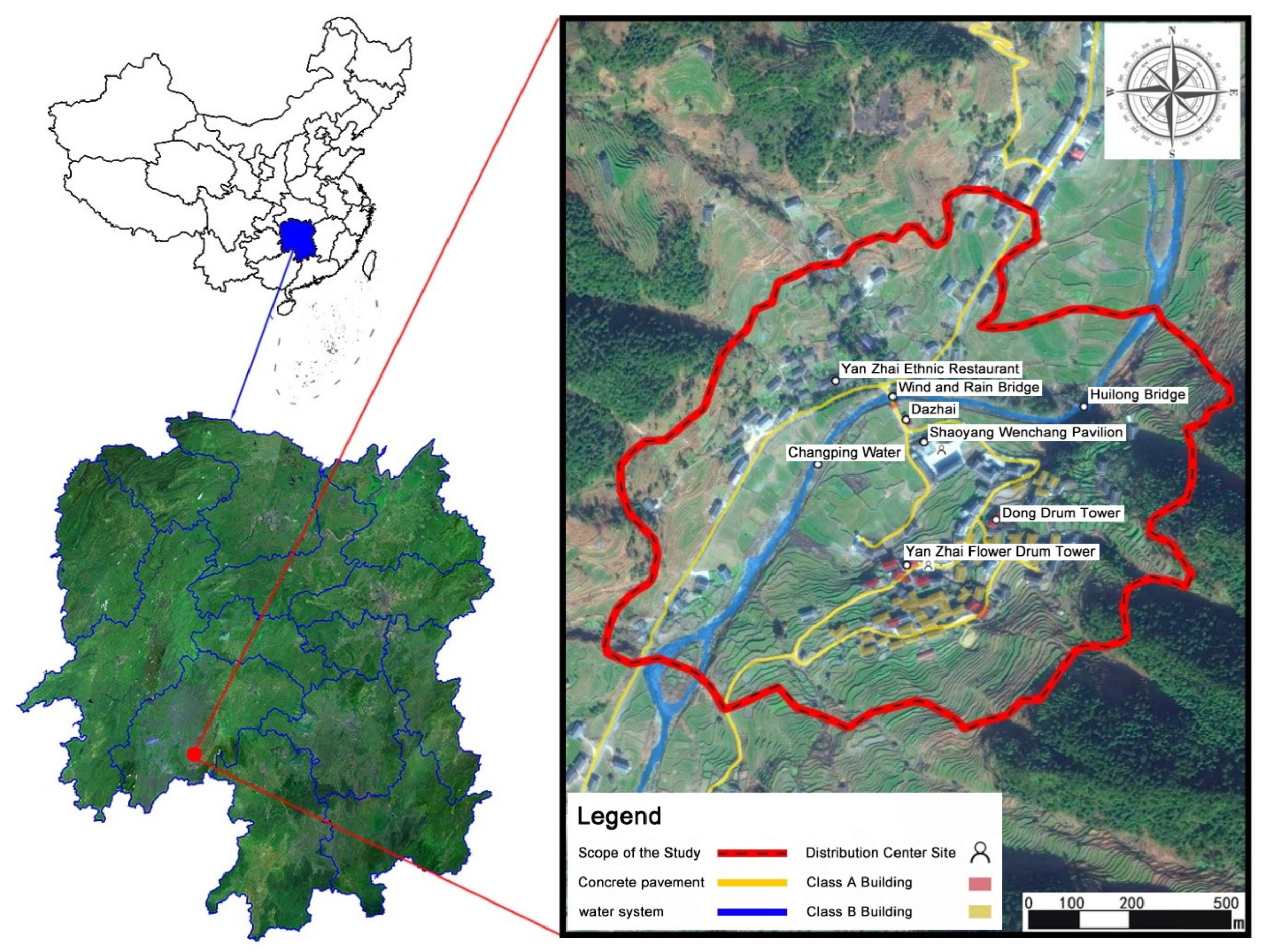
Figure 1. Study Area (Author’s own drawing). Satellite imagery source: google earth.
Sustainability 17 11147 g001
Figure 2. Conceptual Diagram of Three Models and Their Interrelationships.
Sustainability 17 11147 g002
Figure 3. Temperature Data for Chengbu Miao Autonomous County from 2019 to 2024 (Statistical Date: 14 October 2024).
Sustainability 17 11147 g003
Figure 4. Climate Analysis of Dazhai Village, Chengbu County, Shaoyang City.
Sustainability 17 11147 g004
Figure 5. Node Analysis and Extraction for Dazhai Village.
Sustainability 17 11147 g005
Figure 6. Tour Route Extraction and Optimization.
Sustainability 17 11147 g006
Figure 7. Revised Core Planning Area.
Sustainability 17 11147 g007
Table 1. Environmental comfort index.
ItemIndexEvaluation Standard
environmental comfortdry-bulb temperatureThe temperature of 10–26 °C indicates a high level of environmental comfort, and strong discomfort will be generated when the temperature is lower than 10 °C (cold) and higher than 26 °C (hot) [12,13,14]
solar radiationRelated to temperature, the site temperature increases with the increase in solar radiation
wind direction and speedRelated to temperature, every 1 m/s increase in wind speed will make people feel that the temperature has dropped by 2–3 °C
Table 2. Landscape comprehensive evaluation indexes.
ItemIndexEvaluation Standard
landscape visibilityvisible quantity of buildingThe more visible the number of buildings, the more the number of stilted buildings in the field of vision, the better the human feeling, the greater the impact of village culture
visible areaThe larger the field of view, the less occlusions in the field of view, the higher the spatial pleasure
environmental comfortpercentage of comfort timeThe higher the percentage of comfort time, the longer the comfort time, the higher the comfort
Table 3. Comprehensive evaluation score of impact factors.
Evaluation IndexExpert (10 People)Manager (10 People)Villager and Tourist (50 People)Score
landscape visibility6.45.65.35.83
environmental comfort3.64.44.74.17
visible quantity of building4.24.74.84.53
visible area5.85.35.25.47
Disclaimer/Publisher’s Note: The statements, opinions and data contained in all publications are solely those of the individual author(s) and contributor(s) and not of MDPI and/or the editor(s). MDPI and/or the editor(s) disclaim responsibility for any injury to people or property resulting from any ideas, methods, instructions or products referred to in the content.