Article

The Role of Heterogeneous Marine Environmental Regulation in SDGs-Integrated Marine Economic Development


1
Marine Development Studies Institute of OUC, Key Research Institute of Humanities and Social Sciences at Universities, Ministry of Education, Qingdao 266100, China
2
Management College, Ocean University of China, Qingdao 266100, China
3
Southern Marine Science and Engineering Guangdong Laboratory (Zhuhai), Zhuhai 528315, China
*
Author to whom correspondence should be addressed.
Sustainability 2025, 17(24), 11141; https://doi.org/10.3390/su172411141
Submission received: 9 November 2025 / Revised: 27 November 2025 / Accepted: 8 December 2025 / Published: 12 December 2025

Abstract

With the growing global reliance on marine resources, issues pertaining to the marine environment and the Sustainable Development Goals (SDGs)-integrated development of the marine economy have gained worldwide attention. This study employs the synthetic control method (SCM) and difference-in-differences (DID) approach to assess the impact of three heterogeneous types of marine environmental regulations—market incentives, command-and-control, and public participation—on the SDGs-integrated development of the marine economy. Special focus is placed on the detailed mechanisms through which these regulatory approaches influence five key dimensions of the SDGs-integrated development of the marine economy. Overall, the results show that market incentive regulation has a significant positive effect on the SDGs-integrated development of the marine economy. In contrast, command-and-control and public participation regulations demonstrate varying degrees of inhibitory influence. Examining the five dimensions of SDGs-integrated development, innovation-driven development, industrial coordination, green construction, open cooperation, and the sharing of livelihoods, market incentive regulation promotes innovation-driven and open cooperation dimensions while inhibiting industrial coordination, green construction, and the sharing of livelihoods. command-and-control regulation positively promotes people’s sharing of livelihoods but negatively impacts the other four dimensions, with the strongest inhibitory effect on the innovation-driven dimension. Public participation regulations inhibit innovation-driven development and the sharing of livelihoods, with the most pronounced suppression observed in innovation-driven development. Conversely, they promote industrial coordination, green construction, and open cooperation. Based on these findings, this paper proposes a series of policy recommendations aimed at achieving coordinated integration between marine ecological governance and SDGs-integrated development of the marine economy.

1. Introduction

Since the 1940s, coastal nations have increasingly turned to the oceans for economic development amid shrinking terrestrial resources and rapid population growth. China, with its 32,000 km coastline and rich marine resources, has strong foundations for a marine economy. In 2023, China’s marine GDP reached CNY 990.97 billion, representing 7.9% of its total GDP and underscoring the sector’s growing importance. However, frequent marine pollution incidents threaten ecosystem health and sustainable development [1]. In response, China has implemented policies such as pollution discharge fees, carbon trading, and marine protected areas since the 1982 Marine Environmental Protection Law. These measures are recognized as effective in safeguarding marine ecosystems and advancing SDGs-integrated growth in the marine economy.
Nevertheless, current marine environmental protection systems face multiple practical issues. The interaction between marine environmental regulations and regional marine economic development remains unclear, as does the role of different policy types in advancing the SDGs-integrated growth of the marine economy. How to coordinate diverse marine governance policies to achieve both ecological and economic objectives has thus become a key scholarly concern.
Although scholars both domestically and internationally have conducted extensive research on the relationship between environmental regulation and economic growth, no unified consensus has yet emerged, with several prevailing viewpoints emerging. ① Environmental regulation promotes economic growth: the benefit compensation theory, centered on the “Porter hypothesis”, posits that implementing environmental regulation can achieve a win–win outcome of improved environmental quality and economic growth. Porter et al. (1995, 1996) contend that only appropriately stringent environmental regulations can stimulate corporate technological innovation [2,3]. While such regulations may increase production costs in the short term, the compensatory effects of innovation spurred by environmental regulations can offset the costs incurred in the long run [2,3]. ② Environmental regulations inhibit economic growth: scholars advocating the “compliance cost theory” and “pollution haven theory”—countering the “Porter hypothesis” centered on neoclassical economics—contend that implementing environmental regulations stifles economic growth. Denison (1981) posits that such regulations compel enterprises to choose between environmental protection and business development, sacrificing growth opportunities [4]; Chintrakarn (2008) contends that stringent environmental regulations deter certain factor inputs, thereby reducing input–output efficiency [5]. ③ The relationship between environmental regulation and SDGs-integrated development of the marine economy exhibits temporal uncertainty. He Wenhai et al. (2021) propose an inverted U-shaped relationship between environmental regulation and SDGs-integrated development [6]. ④ Regional heterogeneity exists in the effect of environmental regulation on SDGs-integrated development. Du Jun et al. (2022) found that marine environmental regulation has a promoting effect on the SDGs-integrated development of the marine economy in the southern and northern marine economic circles of China, but this effect is not significant in the eastern regions [7].
According to the United Nations’ 2030 Agenda for Sustainable Development Goals (SDGs), the current academic community has basically established a comprehensive evaluation system for the integrated development of the marine economy under the SDGs, which consists of five dimensions: innovation-driven development, industrial coordination, green construction, open cooperation, and the sharing of livelihoods. The establishment of this system is mainly based on two main pillars: firstly, it is directly derived from the core guiding ideology for China’s current economic and social development—the New Development Philosophy (innovation, coordination, greenness, openness, and sharing). This philosophy itself constitutes a systematic framework for development, designed to address issues of unbalanced and inadequate development. Its essence highly aligns with the core principles of the United Nations’ Sustainable Development Goals (SDGs). Applying it to the marine economy provides a theoretical lens that is both contextualized within China’s reality and logically coherent for systematically evaluating the sustainable development of the marine economy. Secondly, by operatively aligning this localized framework with the United Nations’ 2030 Sustainable Development Agenda (SDGs), its international comparability and policy relevance (correspondence details are provided in Table 1 below) are ensured. For example, the “innovation-driven” dimension closely aligns with SDG 9 (industry, innovation, and infrastructure), aiming to capture the fundamental transformation of the development model from factor-driven to innovation-driven; the “industrial coordination” and “livelihood shared” domains jointly align with SDG 8 (decent work and economic growth) while emphasizing its structural dimensions; while the green construction dimension comprehensively reflects the core requirements of SDG 11 (sustainable cities), 13 (climate action), and 15 (land ecology) in the marine field; the “open cooperation” dimension directly resonates with SDG 17 (partnerships for the goals); and “livelihood shared” encompasses the core tenets of universal access and equity found in SDGs 1 to 4 (no poverty, zero hunger, good health, well-being, and quality education).
However, a unified classification for diverse marine environmental regulations is still lacking. Consequently, the distinct mechanisms and impacts of different regulations on these SDG dimensions remain poorly analyzed, and no systematic theoretical framework has been established. Existing studies are often geographically or historically limited, reducing their generalizability. Methodologically, reliance on single-difference approaches with singular indicators, while intuitive, fails to account for pre-existing differences, thus undermining causal inference. In contrast, the synthetic control and difference-in-differences methods offer more rigorous, counterfactual-based quasi-experimental designs compared to the “simple before–after comparison” and “cross-sectional comparison” to better identify the net effects of regulations on the SDGs-integrated marine economy.
To this end, this study aims to evaluate the specific effects of different types of marine environmental regulatory policies in China on the SDGs-integrated development of the marine economy. It seeks to demonstrate the differential impacts of various marine environmental regulations on the five dimensions of innovation-driven development, industrial coordination, green construction, open cooperation, and the sharing of livelihoods within the integrated development of marine economic SDGs. By clarifying the roles of different marine environmental regulations, the research explores the combined application and intensity adjustment of regulatory measures, aiming to provide empirical coastal marine environmental references for nations or regions and promote the refinement of policy frameworks.

2. Mechanism of Marine Environmental Regulation Affects the SDGs-Integrated Development of the Marine Economy

Marine environmental regulation, grounded in the protection and sustainable utilization of marine ecosystems, fully mobilizes the participation of three key stakeholders—government, market, and public—in marine environmental governance. This facilitates effective coordination across regions regarding marine natural resource usage rights and marine environmental rights (Wu Lei et al., 2020) [8]. Effective regulation achieving synergistic outcomes between economic benefits and multiple sustainable development objectives is pivotal for (Jouffray et al., 2020) [9]. This paper draws upon the perspective of Testa et al. (2011) [10], classifying environmental regulatory approaches based on implementing entities and methods into market incentives, command-and-control, and public participation.
The development model of China’s marine economy is transitioning from an extensive to an intensive approach. “SDGs-integrated development” is a framework concept built upon the United Nations’ 17 Sustainable Development Goals (SDGs), as shown in Figure 1. It emphasizes that development strategies and policies must systematically incorporate economic, social, environmental, and governance dimensions, rather than dealing with individual issues in isolation. At its core, this approach focuses on identifying synergies and trade-offs among different goals to achieve optimal resource allocation and maximized benefits. Our framework aligns with the UN’s Sustainable Development Goals (SDGs), integrating innovation-driven growth, industrial coordination, green transition, global partnerships, and inclusive livelihoods. Innovation-driven growth shifts the paradigm from resource-intensive models toward productivity-led, value-added development. Industrial coordination integrates economic structures and spatial plans across regions to rectify imbalances, prevent homogeneous competition, and foster land–sea synergy. Green construction treats marine ecosystem health and blue carbon enhancement as essential prerequisites for sustainable growth. Open cooperation tackles shared challenges through international collaboration, contributing to global ocean governance and a shared maritime future. The sharing of livelihoods distributes economic benefits broadly to ensure social equity, protect fishermen’s welfare, and advance common prosperity. This aspect emphasizes social equity, protects the welfare of groups such as fishermen, promotes marine cultural vitality, and advances common prosperity. The five dimensions reflect an operationalized approach to sustainable development, addressing synergies between SDGs 8, 9, 11, and 17, as illustrated in Table 1.

2.1. Market Incentive Regulations Mechanism

Market incentive regulations operate on the principle of “who pollutes, who governs; who pollutes, who pays.” Using tools like green finance and environmental rights trading, they leverage market forces to internalize pollution costs into product prices. This encourages polluting firms to reduce emissions while granting them autonomy to adjust production levels and determine their own compliance strategies.
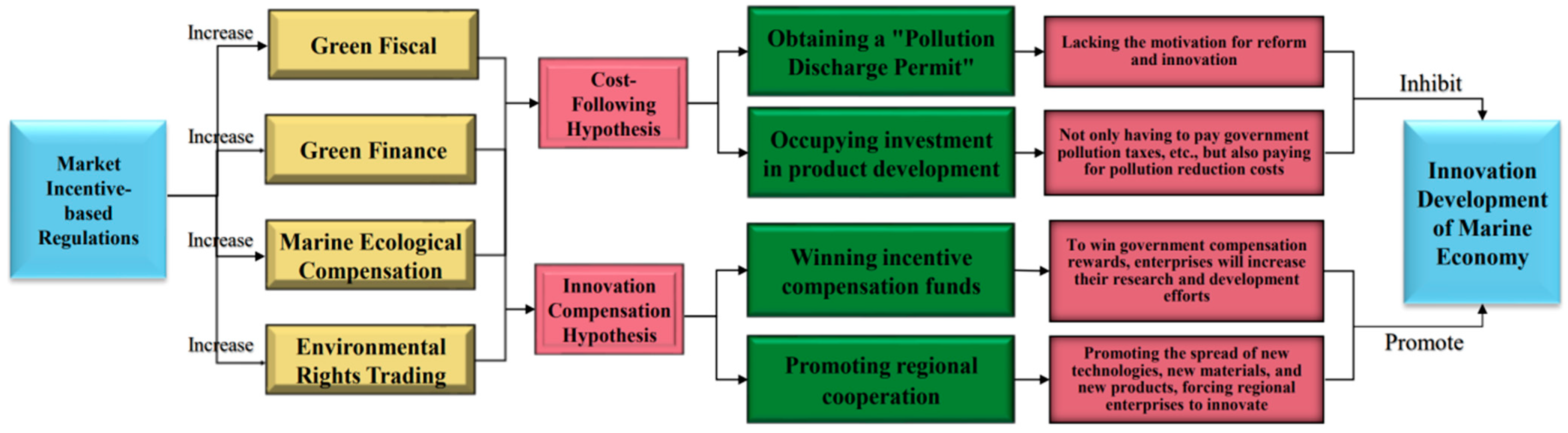
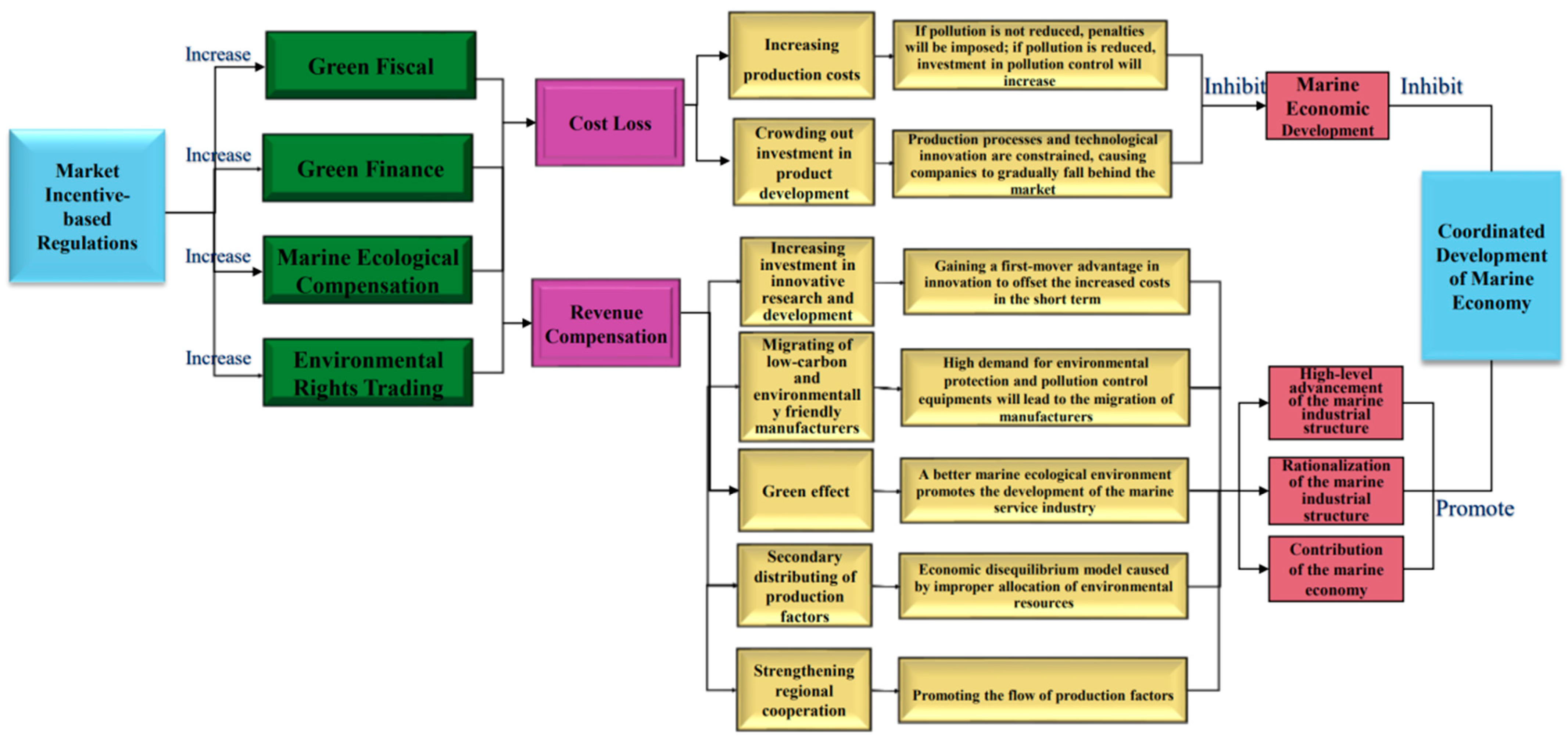
① The influence of marine environmental regulations on innovation-driven growth within the context of SDGs-integrated marine economic development can be analyzed through two competing theoretical lenses: the innovation compensation hypothesis and the compliance cost hypothesis [11]. The compliance cost hypothesis posits that environmental regulations suppress R&D investment by raising pollution control costs, particularly for small firms operating with narrow profit margins [12]. Conversely, the innovation compensation hypothesis (Porter’s hypothesis) argues that regulations can stimulate innovation by incentivizing firms to seek first-mover advantages, ultimately offsetting the costs of compliance [13].
Market incentive-based marine environmental regulations exert a dual influence on innovation. On one hand, increased costs may dampen firms’ willingness to innovate [14]. On the other hand, the compensation effect encourages enterprises to enhance emission reduction and operational efficiency, thereby qualifying for government incentives [15]. In the long term, such regulations promote market collaboration and technology sharing, accelerating the low-carbon transformation of industries. As rational actors, entrepreneurs are likely to pursue strategies where innovation compensation outweighs cost burdens, thereby helping to drive the SDGs-integrated development of the marine economy [16].
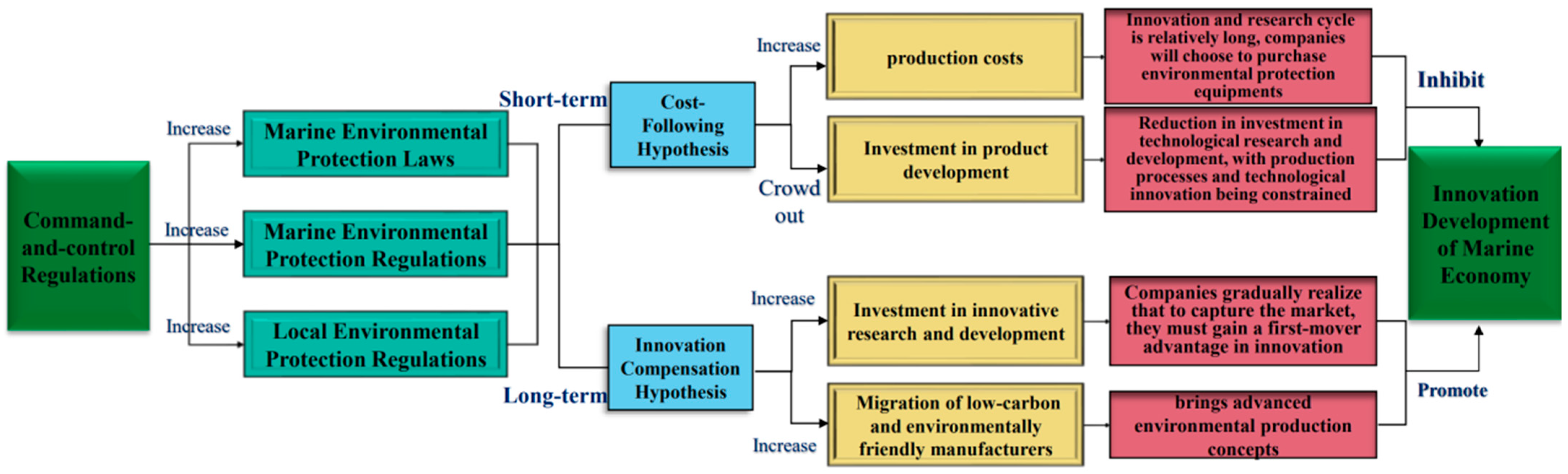
Market incentive marine regulations thus exert a dual influence: while immediate costs may deter innovation, the long-term compensation effect—through government incentives, market collaboration, and technology sharing—encourages firms to pursue efficiency gains and low-carbon transformation. As rational actors, firms are likely to adopt strategies where compensation outweighs costs, thereby advancing SDGs-integrated marine economic development, as depicted in Figure 2.
② Impact on coordination: As a key component of the new development philosophy, coordinated development emphasizes holistic progress. The Blue Book subdivides China’s economic coordination index into five secondary indices: regional coordination, urban–rural coordination, coordination between material and spiritual civilization, coordination between economic and social development, and coordination between economic construction and ecological conservation. These measure the level of coordinated industrial development.
Market incentive regulations guide production factors towards efficient allocation, facilitating economic restructuring and influencing firms’ location choices [17]. While this promotes industrial agglomeration and economies of scale in host regions, it may also cause industrial hollowing-out and unemployment in original areas, thereby widening regional disparities [18]. Concurrently, the accompanying population migration can challenge socio-economic stability, further complicating coordinated development, as presented in Figure 3.
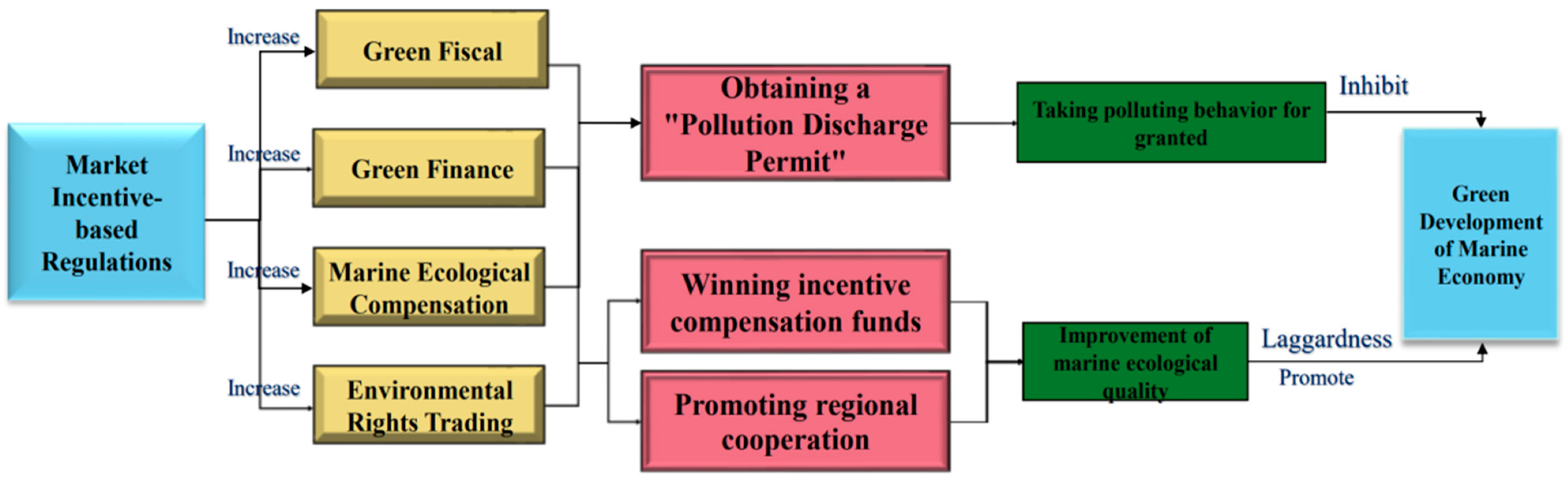
③ Impact on green construction: Although governments continually provide funding to incentivize enterprises to reduce emissions, some polluting enterprises—acting as “rational economic agents”—find that the cost of purchasing emission quotas often exceeds the penalty for non-compliance. As a result, they perceive buying permits or paying fines as a “license to pollute,” which further exacerbates regional pollution [19]. Moreover, ecosystem responses are delayed and environmental damage is often irreversible [20]. Thus, even measures that spur innovation and cooperation typically fail to yield rapid ecological improvements, risking a net increase in pollution, as depicted in Figure 4.
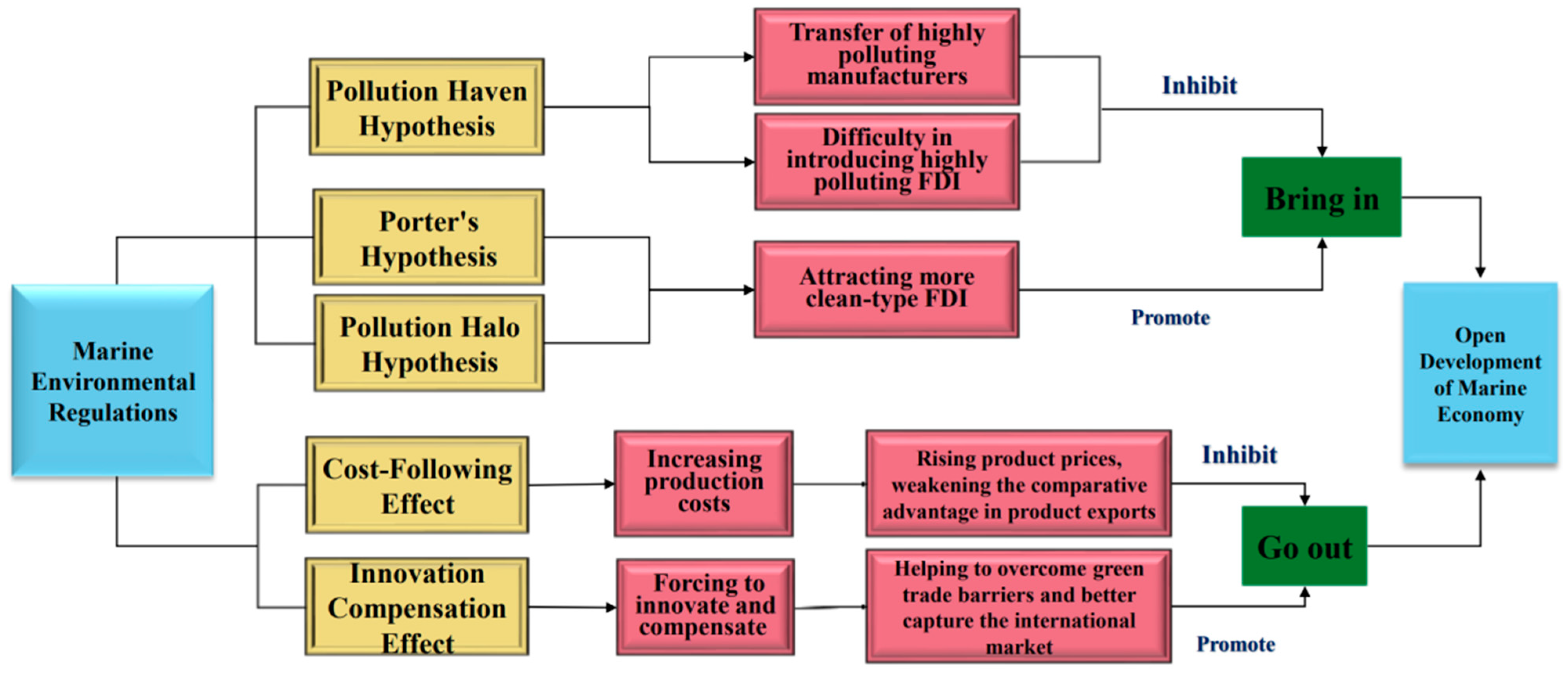
④ Impact on open cooperation: The impact of environmental regulation on openness and cooperation is primarily reflected in two aspects: “bringing in” and “going out” [21]. On the one hand, the “race to the bottom” theory suggests that lowering environmental standards may attract pollution-intensive foreign enterprises, leading to the formation of “pollution havens”. Conversely, stringent environmental regulations may drive such enterprises to relocate, thereby negatively affecting foreign direct investment (FDI) [22]. On the other hand, the “pollution halo” hypothesis, which aligns with the Porter hypothesis, argues that environmental regulations can attract cleaner FDIs, facilitate technological spillovers, and stimulate innovation compensation, ultimately contributing to the transformation and upgrading of economic growth patterns [23].
Market incentive marine environmental regulations boost marine economy openness through two primary channels. Firstly, its financial and policy incentives not only attract clean foreign direct investment (FDI) but also create transitional space for pollution-intensive FDIs, thereby effectively facilitating the “bringing in” of international resources. Secondly, as analyzed in the previous text,, the innovation compensation they trigger helps firms overcome cost pressures, upgrade products to international standards, and thus succeed in “going global”, or global expansion, as illustrated in Figure 5.
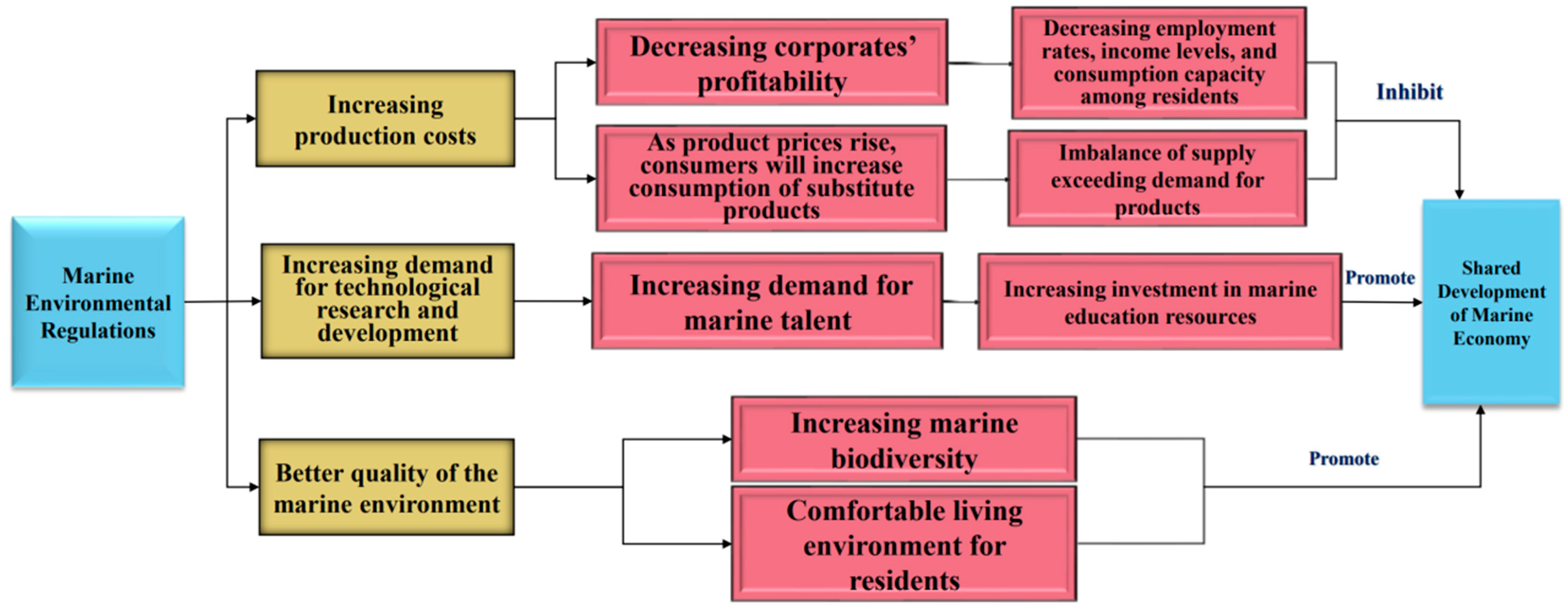
⑤ Impact on the sharing of livelihoods: The impact of marine environmental regulation on benefit-sharing is threefold: (1) enterprises subject to compliance costs may reduce production scale and profits, which can dampen their enthusiasm for pollution control and emission reduction. This may further lead to operational difficulties and rising unemployment, ultimately impairing residents’ quality of life [24]. (2) Such regulations drive up the demand for marine-related professionals, encouraging universities to adjust academic disciplines and prompting governments to reallocate educational resources, thereby facilitating knowledge sharing across society [25]. (3) By enhancing marine biodiversity and improving the living environment, these regulations also contribute positively to residents’ quality of life [26], as presented in Figure 6.
The implementation of market incentive regulations necessitates substantial investment in policy execution costs across human, material, and financial resources to achieve predetermined marine ecological conservation objectives [27]. While SDGs-integrated environments may enhance public welfare to some extent, the substantial cost inputs may divert government investment away from coastal infrastructure development and other sectors, thereby impacting residents’ livelihoods, employment, and education while suppressing shared benefits [28].
In summary, the following hypothesis is proposed:
H1. 
Market incentive marine environmental regulation will enhance the innovation and openness effects of SDGs-integrated development of the marine economy while suppressing the coordination, ecological, and sharing effects of such development.

2.2. Command-and-Control Regulations Mechanism

Command-and-control marine environmental regulation, grounded in legal frameworks, is considered the most direct and efficient governance approach. It mandates strict compliance with emission standards, typically through mechanisms like time-bound remediation, and imposes administrative or criminal penalties on violators.
① Impact on innovation-driven growth: Characterized by coerciveness and immediacy, command-and-control regulation forces rapid compliance, leading firms to purchase external equipment rather than innovate due to the high cost and slow pace of independent R&D. This raises costs and suppresses short-term innovation [29]. Although some large enterprises may sustain long-term innovation investment and benefit from industrial restructuring, many firms with high marginal pollution control costs risk bankruptcy when expenses exceed compensation, as shown in Figure 7.
② Impact on industrial coordination: While government direct intervention can mitigate social conflicts from unequal resource and environmental benefits, it may force high-polluting enterprises to suspend production, increasing unemployment and social stability risks. Additionally, restrictions on marine resource exploitation for ecological purposes may hinder coastal industry development and impede integrated land–sea coordination [30].
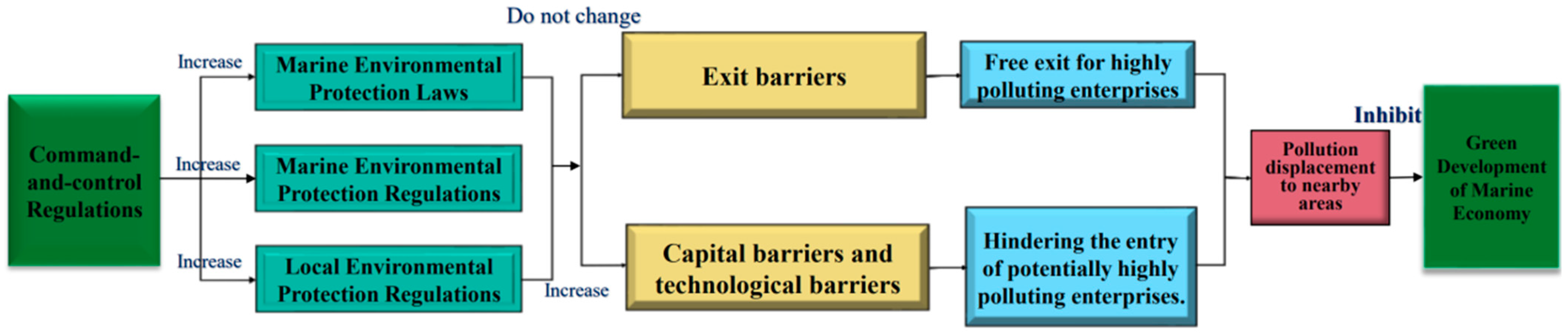
③ Impact on green construction: As command-and-control marine environmental regulations mandate short-term compliance with governance targets, and given that many enterprises—as discussed in the previous text—are unable to bear the associated costs, pollution is often relocated to neighboring regions with less stringent oversight. While such regulations raise environmental standards and increase industry entry barriers in the originating region, they do not impose restrictions on corporate exit. Consequently, firms seek to maintain profitability by transferring pollution to areas with weaker regulatory frameworks. This not only expands industrial scale in recipient regions but also intensifies local pollution levels [17]. Although local environmental quality may improve in the short term, such pollution relocation undermines the overall effectiveness of the policy and exacerbates broader environmental degradation, as shown in Figure 8.
④ Impact on open cooperation: On the one hand, the mandatory nature of such regulations raises production costs, leading to the relocation of highly polluting manufacturers and creating challenges in attracting new investment. Moreover, since improvements in environmental quality take time, it becomes difficult to attract clean foreign direct investment (FDI), thereby inhibiting the “inbound” dimension of economic openness. On the other hand, as analyzed in the previous text, these regulations suppress innovation incentives, increase corporate production costs, and undermine the international competitiveness of products, which consequently restrains the “outbound” aspect. As a result, such regulations impede the open development of the marine economy [29].
⑤ Impact on the sharing of livelihoods: Fines and revenues generated by command-and-control regulations can be used to improve public welfare sectors such as education and healthcare, directly enhancing social welfare and public expectations regarding marine industries. In the long term, a sound ecological environment—as the welfare—not only impacts most public residents’ universal livelihoods but also contributes to promoting intra-generational equity and intergenerational fairness, enabling the public to share governance outcomes.
Revenues and fines generated through command-and-control regulations can be allocated to improve public welfare sectors such as education and healthcare, thereby directly enhancing social well-being and raising public expectations for the marine industry. In the long term, a healthy ecological environment itself serves as a form of public welfare—not only enhancing the quality of life for the general public but also promoting intra-generational and intergenerational equity. This allows the public to benefit more broadly from the outcomes of environmental governance.
In summary, we propose the following hypothesis:
H2. 
Command-and-control marine regulation will suppress the innovation, coordination, green, and open effects of SDGs-integrated development of the marine economy, while promoting the sharing effect of SDGs-integrated development of the marine economy.

2.3. Public Participation Regulation Mechanisms

Public participation marine environmental regulation constrains and penalizes polluters’ environmental damage through voluntary corporate and public engagement in environmental actions [31]. It primarily exerts public pressure on governments and enterprises via marine environmental monitoring transparency, public reporting, and oversight, thereby achieving effective marine governance. This approach exhibits distinct characteristics of soft constraints, broad applicability, and flexibility.
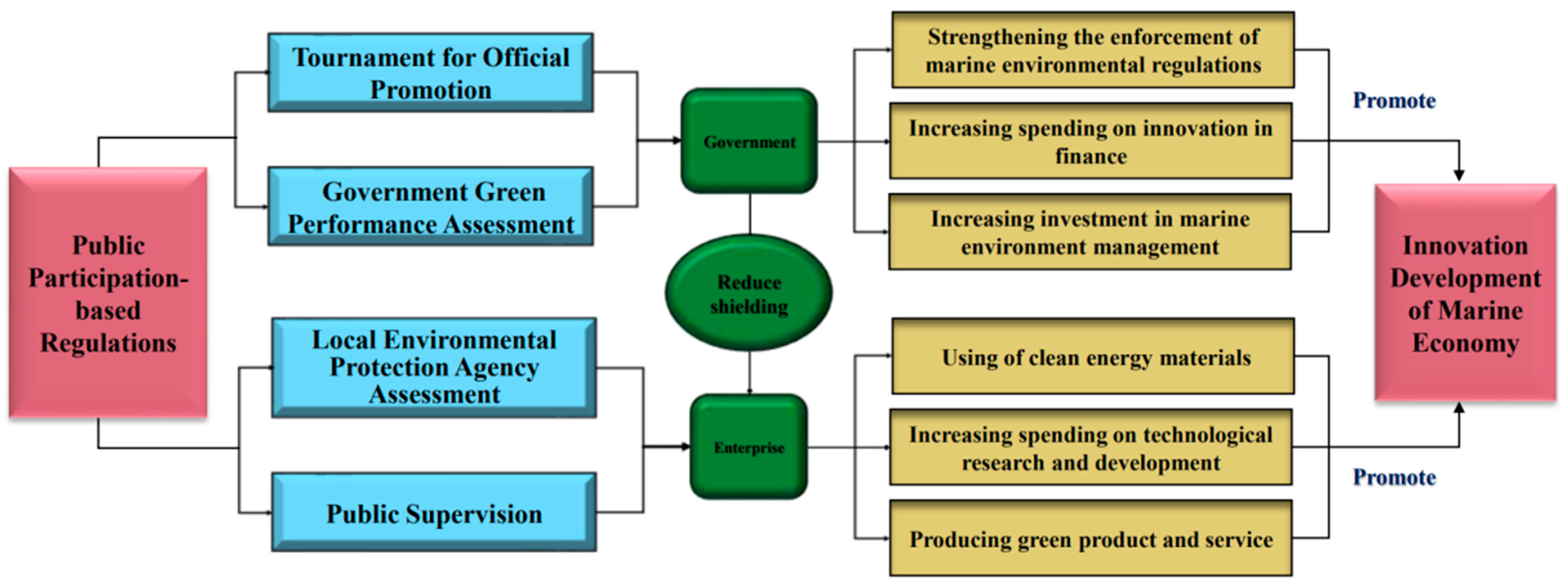
① Impact on innovation-driven growth: ln terms of fostering innovation, this type of regulation functions as a soft constraint, compelling government officials to intensify pollution control efforts [32]. High-polluting enterprises, under pressure from regulatory assessments and public oversight, are driven to increase investment in technological R&D, thereby promoting green innovation in production processes. At the same time, shifting consumer preferences toward environmentally friendly products and services further stimulates market-driven green transformation, as illustrated in Figure 9.
② Impact on industrial coordination: On the one hand, public participation regulation exerts soft constraints through a “reputation” mechanism. Under pressure from green performance assessments, government officials are prompted to strengthen environmental enforcement and increase investment in pollution control, thereby advancing green economic development while enhancing governmental credibility and social stability. On the other hand, public engagement raises environmental awareness among consumers, promotes green product consumption, and facilitates a virtuous cycle within the marine economy alongside industrial restructuring [33], contributing to the coordinated development of material progress and cultural–ethical advancement. Furthermore, voluntary corporate initiatives, such as environmental disclosure and certifications, help better balance market efficiency with social equity.
③ Impact on green construction: This regulatory approach incorporates public oversight to monitor governmental actions, thereby reducing protection for polluting enterprises. It enhances ecological efficiency and resource conservation capacity while exerting public pressure on polluting firms to halt operations, implement corrective measures, or transition toward sustainable practices. As a result, production factors are redirected toward high-efficiency and low-energy-consumption sectors. Furthermore, such regulation strengthens public enthusiasm for environmental governance, fosters consumer preference for eco-friendly products, and facilitates structural reforms on the supply side [34].
④ Impact on open cooperation: Public participation environmental regulation cultivates green consumption awareness through public awareness campaigns and education, thereby expanding local markets for environmentally friendly products and attracting clean foreign direct investment (FDI). Simultaneously, it encourages governments to emphasize environmental standards in investment attraction policies, creating a more favorable environment for clean FDI. Furthermore, as analyzed in the previous text, this type of regulation supports innovation-driven development, thereby bolstering the comparative competitive advantage of exported products.
⑤ Impact on the sharing of livelihoods: Public participation serves as a soft constraint on polluting behavior. However, the low barrier to entry in public oversight can readily engage participants of varying competence levels, potentially leading to group polarization and resource inefficiency. Moreover, oversight that lacks reasonable standards may raise corporate compliance costs to some extent, potentially triggering a chain reaction that includes unemployment, reduced investment in marine education, declining resident incomes, and diminished willingness to engage in decision-making. Such conflicts between individual interests and public benefits could further exacerbate social instability.
In summary, we propose the following hypothesis:
H3. 
Public participation marine environmental regulation will enhance the innovative, coordinating, ecological, and open effects of SDGs-integrated development of the marine economy while suppressing the shared effect of such development.

3. Research Design, Variable Description, and Data Sources

3.1. Marine Environmental Regulation Policies Selection

Quasi-natural experiments require that the implementation of a particular policy affects only the experimental group. In classifying and selecting marine environmental regulation policies for this study, only those policies implemented exclusively in the experimental group regions between 2005 and 2020 were chosen. Furthermore, China’s coastal regions span 22 latitudinal zones with varying resource endowments and locational conditions. To mitigate excessive regional economic disparities that could prevent the accurate modeling of pre-policy conditions, all selected policies were implemented in regions classified as catch-up areas within the measured SDGs-integrated development of the marine economy framework.

3.1.1. Selection of Market Incentive Regulation Policies

China’s early attempts, based on the Pigouvian tax principle, sought to internalize the negative externalities of marine environmental damage through measures such as pollution discharge fees and paid maritime zone usage. However, achieving a balance between marginal social costs and benefits proved challenging in practice. Although the Coase theorem proposes achieving optimal resource allocation through property rights trading, its application is hindered by the difficulty of defining property rights and high transaction costs in environmental issues. Consequently, many local governments have turned to ecological compensation systems to coordinate the interests of polluters and protectors, thereby enhancing the efficiency of marine environmental governance. This study takes the “Shandong Provincial Marine Ecological Compensation Management Measures” as its empirical subject [35]. These measures require enterprises using the sea to pay ecological loss compensation funds, which are then used by the government for ecological restoration. As the nation’s first market incentive regulatory document, it explicitly defines both protective compensation and loss compensation provisions. Marine ecological compensation research constitutes a comprehensive, multidisciplinary field. Internationally, overall publication volume remains limited, collaborative efforts are relatively weak, and research progress is still in its nascent stages [36]. Consequently, analyzing the implementation outcomes of this policy holds significant guidance value for other regions.

3.1.2. Selection of Command-and-Control Regulation Policies

Government-led command-and-control marine environmental regulations are characterized by their mandatory nature, immediacy, and relatively high costs. This study takes the Fujian Provincial Regulations on the Protection and Utilization of the Coastal Zone as its case study [37]. This regulation was selected for two reasons: firstly, it represents China’s first local legislation concerning coastal zone protection and utilization. As the convergence point of land–sea economic patterns, the coastal zone is crucial for marine economic development and constitutes a key element in marine environmental governance; secondly, despite years of legislative and institutional development for integrated coastal zone management in China, Fujian remains the sole province to enact explicit coastal zone management regulations. Effective coastal governance can enhance natural shoreline restoration rates, improve coastal water quality, expand intertidal wetland areas, and fundamentally ameliorate the marine environment.

3.1.3. Selection of Public Participation Regulation Policies

According to the environmental Kuznets curve theory, public participation marine environmental regulation exhibits economic characteristics. Only when economic development reaches a certain level do citizens begin to focus on environmental conditions and demand restrictions on polluting activities. With the continuous improvement in living standards, the Zhejiang Provincial Government formulated the Implementation Plan for Establishing Marine Ecological Construction Demonstration Zones in Zhejiang Province [38]. The plan emphasizes fostering a conducive working environment, requiring provincial marine administrative authorities and relevant units to intensify publicity and professional training for demonstration zone establishment, while promptly summarizing and promoting exemplary practices and successful approaches. Municipalities and counties (county-level cities and districts) must enhance their shared recognition of advancing the construction of a maritime power province. They should actively leverage the role of news media in public opinion advocacy, establish collaborative participation mechanisms, and guide all sectors of society to participate in and support the creation work. This initiative further strengthens current public participation in marine environmental governance, addressing the gap where the public may wish to take action but lacks knowledge of how to do so. It enhances both the enthusiasm and effectiveness of public involvement in marine environmental governance.
As of 31 December 2020, the three exemplary marine environmental regulatory policies mentioned above were only implemented in the aforementioned regions, satisfying the exogeneity condition of the synthetic control method.

3.2. Research Method

3.2.1. Synthetic Control Method

To address the practical difficulty of identifying a control group identical or sufficiently similar to the treatment group, scholars including Abadie and Gardeazabal proposed synthetic control methods (SCMs). This approach enables researchers to construct counterfactual control groups, facilitating comparative studies between policy implementation and non-implementation scenarios to directly observe the net effects of policies [39,40]. Synthetic control groups, also termed counterfactual units, are constructed using the weighted average of mathematically selected untreated comparison units or control units, thereby maximizing the performance of the synthetic units. This study employs synthetic control methodology to analyze the differential impacts of marine environmental regulations on the SDGs-integrated development of the marine economy. Shandong, Fujian, and Zhejiang are sequentially designated as experimental groups, ensuring the synthetic regions and actual regions exhibit comparable characteristics in actual predicted variables prior to policy shocks. The analysis compares the post-shock SDGs-integrated development of the marine economy between actual and synthetic regions.
Assuming panel data for coastal regions over t years N + 1; introducing dummy variables D i t denoting “whether marine environmental regulation policies were implemented”,
D i t = 1 , i = 1 , t T 0 0 , i = N
i indicates the treatment groups in the order of Shandong, Fujian, and Zhejiang; N represents other provinces; T 0 represents the year when the marine environmental regulation policy is implemented, set in the order of 2016, 2018, and 2017; Y i t M represents the SDGs-integrated development effect of the marine economy in city i in period t without regulation impact; Y i t 1 represents the SDGs-integrated development effect on the marine economy in region i when affected by regulation, and α i t represents the SDGs-integrated development effect on the marine economy in region i in period t when affected by regulation.
When t   T 0 , all regions satisfy
α i t = Y i t 1   =   Y i t M
When T 0   < t T , all provinces satisfy
α i t   =   Y i t 1     Y i t M
Therefore, the following equation represents the net impact effect of such marine environmental regulations on the SDGs-integrated development of the marine economy in coastal areas in period t:
τ i t   =   Y i t   1   Y i t M
When α i t   > 0, it indicates that such marine environmental regulations have promoted the SDGs-integrated development of the marine economy; when α i t   = 0, it indicates no impact on the SDGs-integrated development of the marine economy; and when α i t   < 0, it indicates a suppression of the SDGs-integrated development of the marine economy.
Based on the differences in model assumptions, assume
Y 1 t M   = δ t   + θ t Z i   +   γ t μ i   + ε i t
δ t represents the time trend term;   Z i   represents the covariates;   θ t   represents the unknown parameters; μ i represents the fixed effects for different regions; γ t represents the common factors affecting all coastal areas; and ε i t represents the unobservable short-term shocks, with a mean of 0.
SCM is based on a weight vector to synthesize a control group to estimate Y i t M , where the weight values are greater than or equal to 0 and sum to 1.
W = ( ω 2 , ω 3 , ω 3 , ω 4 ω N + 1 )
This results in the following two equations:
j = 2 J + 1 w j Y j t M   = δ t   +   θ t j = 2 J + 1 w j μ j   +   γ t j = 2 J + 1 w j μ j   +   j = 2 J + 1 w j w j t
Y 1 t M - j = 2 J + 1 w j Y j t M   =   θ t Z 1 j = 2 J + 1 w j Z j   +   γ t μ 1 j = 2 J + 1 w j μ j   + j = 2 J + 1 w j ε 1 t ε i t
With the weight vector W, the value of Y 1 t M     j = 2 J + 1 w j Y j t M is made to approach 0. The expression j = 2 J + 1 w j Y j t M represents an unbiased estimate before Y 1 t M , so it is an unbiased estimate of α 1 t :
α 1 t ^   =   Y 1 t j = 2 J + 1 w j Y j t M
In order to assess the fitting quality of the “synthetic region” constructed by the synthetic control method before the policy intervention compared to the “real region”, this study uses the goodness-of-fit (R2) and root mean square prediction error (RMSPE) as the measurement indicators. The formula for calculating the goodness-of-fit (R2) of the synthetic control method is as follows:
R 2 =   1     ( Y 1 t w j Y j t ) j = 2 J + 1 2 t = T 0 T 0 ( Y 1 t Ȳ   ) t = T 0 T 0 2
Among them, T0 represents the period before policy intervention and Ȳ is the mean value of the outcome variable in the treatment group before the policy intervention. The closer R2 is to 1, the better the fitting effect of the synthetic region before the policy.
The mean squared prediction error (MSPE) and its square root (RMSPE) are used to measure the prediction accuracy of the synthetic control, and their definitions are as follows:
MSPE =   1 T 0 t = 1 T 0 ( Y 1 t j = 2 J + 1 w j Y j t ) 2
RMSPE = MSPE
In the sorting test, we assess the significance of the policy effect by comparing the RMSPE ratios of the treatment group and the control group in the post-policy intervention period. A larger posterior or prior RMSPE ratio indicates that the observed policy effect is less likely to be caused by randomness.

3.2.2. Difference-in-Differences Approach

To enhance the robustness of the research conclusions, we introduced the difference-in-differences (DID) method as an additional causal identification strategy. DID identifies the policy effect by comparing the differences in the changes in outcome variables between the treatment group and the control group before and after the policy implementation. The core identification assumption of DID is that the treatment group and the control group should have the same trend over time without policy intervention. The two-way fixed-effect DID model constructed in this study is as follows:
Yit = α + β (Treati × Postt) + γXit + μi + λt + ϵit
Among them, Yit represents the total score of the SDGs-integrated development of the marine economy for region i in year t; Treati is a dummy variable for the treatment group. For regions that implement specific regulations (such as Shandong, Fujian, and Zhejiang), it takes the value of 1; otherwise, it is 0; Postt is a dummy variable representing the policy. It takes the value of 1 in the year when the policy was implemented and thereafter, and 0 otherwise; Treati×Postt is the core explanatory variable, and its coefficient β represents the desired net effect of the policy; Xit represents a series of control variables; μi and λt, respectively, represent the regional fixed effect and the time fixed effect; and ϵit represents the random error term.
In this study, DID has two main functions. As a supplementary method to SCM, when SCM is unable to construct a high-quality counterfactual due to the overly unique characteristics of the treatment group in a certain dimension, we use DID for robustness testing and supplementary argumentation to clarify its model setting, identification assumptions, and the application method in the specific context of this study.

3.2.3. AHP-EW Combined-Weight Model

The AHP-EW model is employed to construct the core dependent variable of this study—namely, the comprehensive score for SDGs-integrated marine economic development. This serves as a foundational step, providing reliable dependent variable data for the subsequent SCM and DID analyses. The AHP-EW combined weighting method mitigates the subjective bias inherent in traditional weighting approaches, thereby more objectively reflecting the weights of evaluation indicators. This study posits that AHP and EW possess equivalent practical value; consequently, the weighting results from AHP and EW are weighted equally at 50% and summed to derive the final combined weight.

3.3. Data Sources and Indicator Selection

This study utilized spatial panel data from 11 coastal regions of China (excluding Hong Kong, Macao, and Taiwan) spanning 2005 to 2020. Data sources include the “China Statistical Yearbook,” “China Ocean Yearbook,” “China Marine Economy Statistical Yearbook,” “China Environmental Statistics Yearbook,” “China Fishery Yearbook,” “China Population and Employment Statistics Yearbook,” and data published on the National Bureau of Statistics website. Minor data gaps were addressed using linear interpolation.
Based on the availability and comparability of indicators, this paper draws upon the research of scholars such as Lu Yayun (2019) [41] and Qiu Rongshan (2023) [42] to conduct an in-depth analysis of the developmental connotations of SDGs-integrated development of the marine economy. Proceeding from the new development philosophy, it constructs an evaluation indicator system for integrated SDG development in the marine economy covering five dimensions: innovation-driven development, industrial coordination, green construction, open cooperation, and the sharing of livelihoods, as shown in Table 2.
The innovation-driven dimension comprises three sub-indicators: agents, inputs, and outputs. It relies on a diverse ecosystem of systematic, market-oriented actors, a fundamental reallocation of resources (like capital and talent) toward innovative activities, and ultimately, the generation of tangible economic benefits and value-added output that reflect the shift to intensive development.
Industrial coordination is measured through two sub-indicators: industrial structure and economic status. The former assesses sectoral balance, sophistication, and diversification to address “inadequate development,” while the latter evaluates spatial layout, regional comparative advantage, and land–sea integration to tackle “unbalanced development.” Together, they provide a comprehensive evaluation of industrial coordination.
The green construction dimension consists of three sub-indicators: ecological carrying capacity (a rigid constraint defining development limits), ecological efficiency (the critical link assessing resource costs and technological transition), and ecological protection (proactive governance and restoration actions). Together, they systematically reflect the progression from bottom line constraints to process optimization and finally to proactive conservation.
Open cooperation is measured through three sub-indicators: port, city, and trade opening. Port opening serves as the fundamental physical hub, determining the efficiency of cross-border flows. City opening acts as the comprehensive platform that aggregates key open elements. Finally, trade opening represents the core economic outcome, reflecting a region’s competitiveness in the global marine value chain.
The “Sharing of livelihoods “ system comprises three sub-indicators: employment opportunities, residents’ lives, and education sharing. These reflect a progression from basic well-being to quality of life and long-term development. Employment provides the foundational channel for sharing economic gains and ensuring social equity. Residents’ lives comprehensively measure the translation of development into tangible improvements in material and spiritual well-being, aligning with common prosperity. Education sharing serves as the fundamental mechanism for breaking intergenerational poverty and enabling sustainable, equitable access to development opportunities.
(1)
Dependent Variable: The score of SDGs-integrated development of the marine economy, calculated using the AHP-EW method.
(2)
Independent Variables: Dummy variables set according to the time and region of the implementation of marine environmental regulation policies, see D i t in the previous text.
(3)
Control Variables: Using word frequency analysis to deeply explore the tendency opinions of scholars on the factors affecting the SDGs-integrated development of the marine economy in a total of twenty papers including those by Li Qiang and Xie Zhoutao (2023) [43]. Since the SDGs-integrated development of the marine economy is a comprehensive indicator, there are differences among scholars when constructing indicators. Therefore, the indicators already included in this study’s SDGs-integrated development of the marine economy are excluded in the word frequency analysis, and the related factors of marine environmental regulation are also excluded. The statistical information is presented in Table 3.
The top five factors with the highest frequency are selected as control variables to analyze the impact of marine environmental regulation on the SDGs-integrated development of the marine economy: ① Government Intervention. Governments can influence economic activities and resource allocation through expenditure adjustments and fiscal policies, thereby positively affecting economic growth [44]. The proportion of government fiscal expenditure to GDP is used to reflect the degree of government intervention. ② Financial Scale. Finance plays a significant role in promoting green economic development and structural optimization [45]. This study calculates the logarithm of the year-end balance of deposits and loans in financial institutions. ③ Marine Industry Scale. This is represented by the logarithm of the added value of major marine industries. For China’s marine economy to develop rapidly, it is essential to expand the scale of emerging marine industries and marine high-tech industries through marine scientific and technological innovation, deepening and broadening the development and utilization of marine resources [46]. ④ Population Density. This is calculated using the logarithm of population density. There is a positive spatial correlation between population density and economic growth, with increased density leading to further regional economic development [47]. ⑤ Road Coverage Rate. Well-developed transportation infrastructure can significantly promote SDGs-integrated development of the regional economy and is an important control variable when studying environmental regulation and economic issues. This is calculated using the proportion of highway mileage to administrative area [48].

4. The Impact of Marine Environmental Regulation on the SDGs-Integrated Development of the Marine Economy

4.1. Comprehensive Evaluation of the SDGs-Integrated Development Level of the Marine Economy

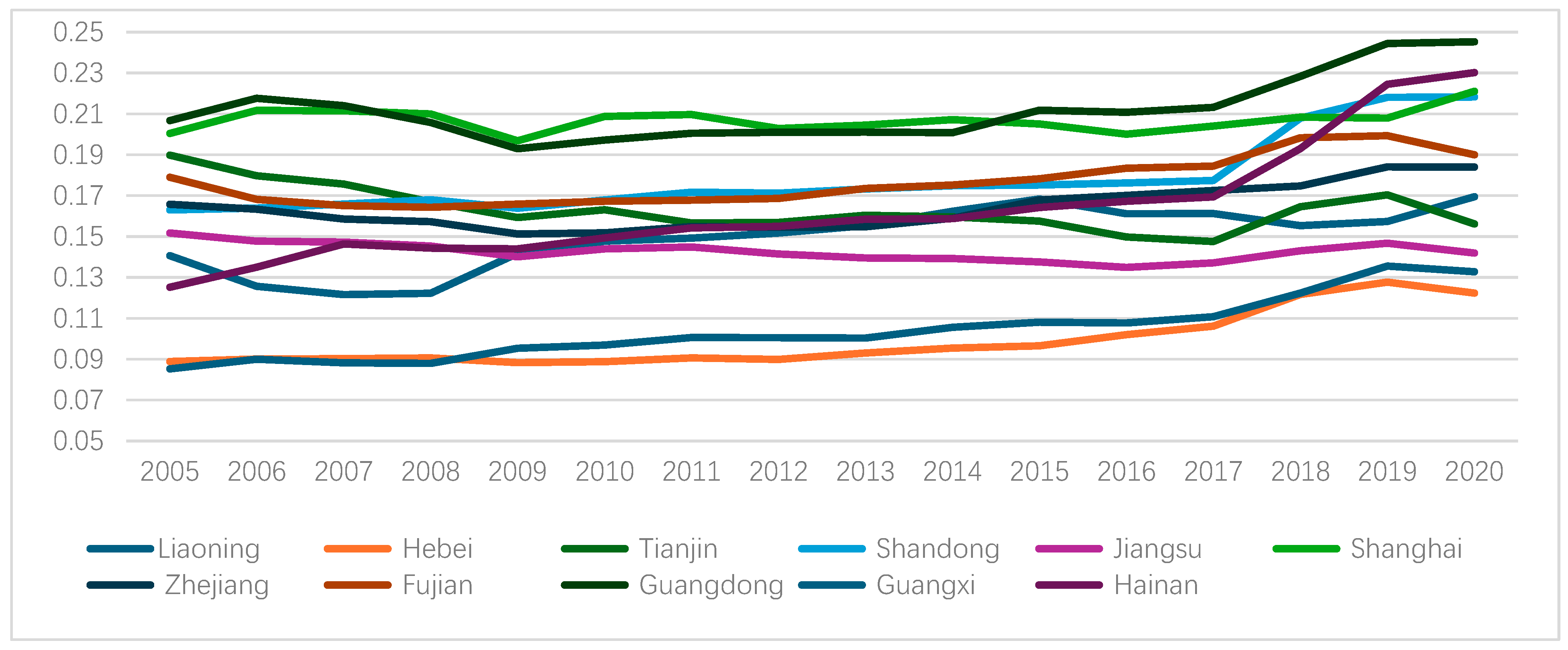
Using the AHP-EW method, the comprehensive evaluation scores for the SDGs-integrated development of the marine economy from 2005 to 2020 were calculated and are shown in the figure below. The overall scores for the SDGs-integrated development of the marine economy range from 0.085 to 0.245, with the SDGs-integrated marine economy scores of various regions generally showing a steady increase, as shown in Figure 10.
To further explore the spatial distribution pattern of the SDGs-integrated development of the marine economy in the 11 coastal provinces and cities, this paper follows the method of Qiu Rongshan et al. (2023) and uses SPSS (26.0) software for hierarchical cluster analysis, classifying the SDGs-integrated development of the marine economy in the 11 coastal provinces and cities into three types: leading, catching-up, and lagging, as illustrated in Table 4 [42].
China’s SDGs-integrated marine economy exhibits significant regional disparities. Shanghai, leveraging its pivotal role in the Yangtze River Delta, leads significantly with strengths in port logistics, economic foundation, and talent. A second tier, including Fujian, Guangdong, Hainan, Shandong, Liaoning, and Zhejiang, scores near the national average. While these regions possess superior port infrastructure and financial markets—even showing recent catch-up growth—detailed dimensional analysis reveals distinct developmental shortcomings. A third group, comprising Hebei, Guangxi, Tianjin, and Jiangsu, lags due to constraints in economic foundations and resource endowments, with composite scores below the coastal regional average.

4.2. The Impact of Marine Environmental Regulation on the SDGs-Integrated Development of the Marine Economy

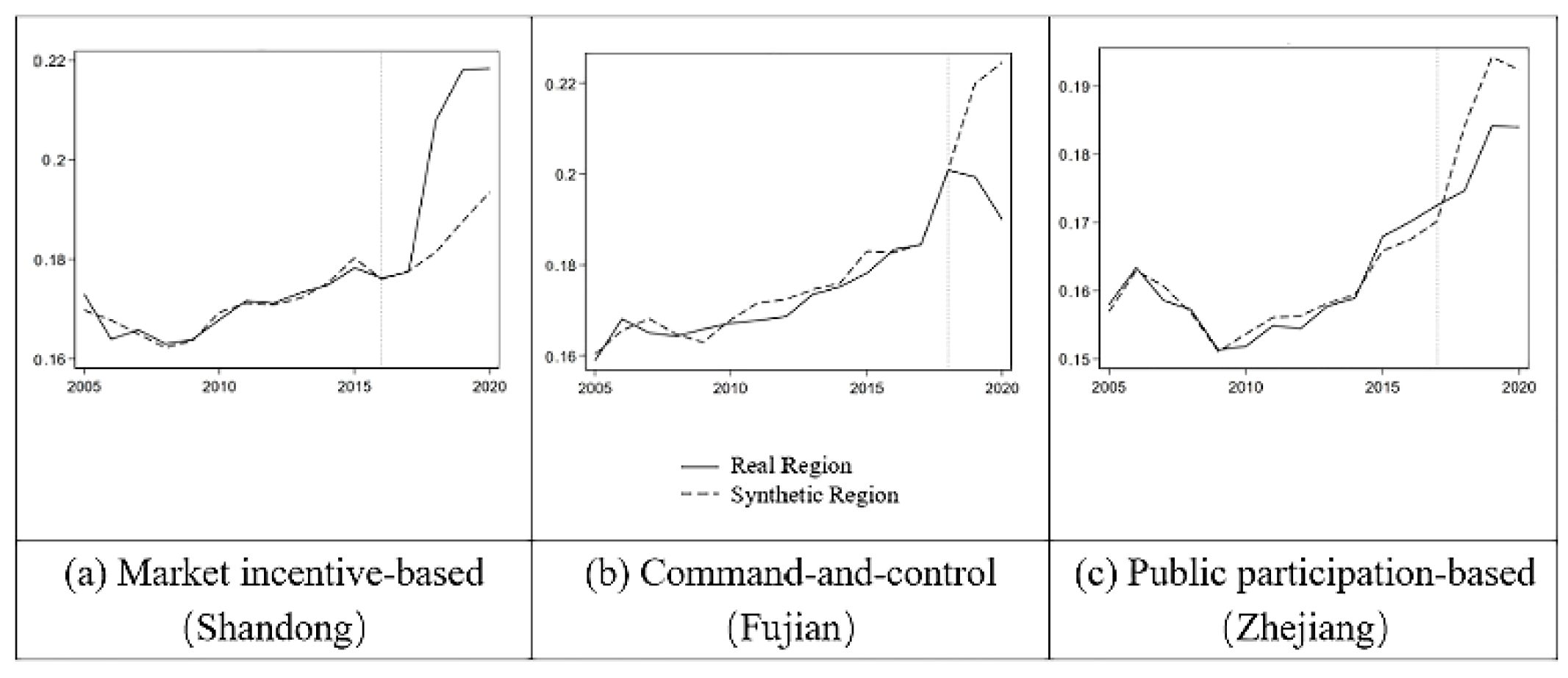
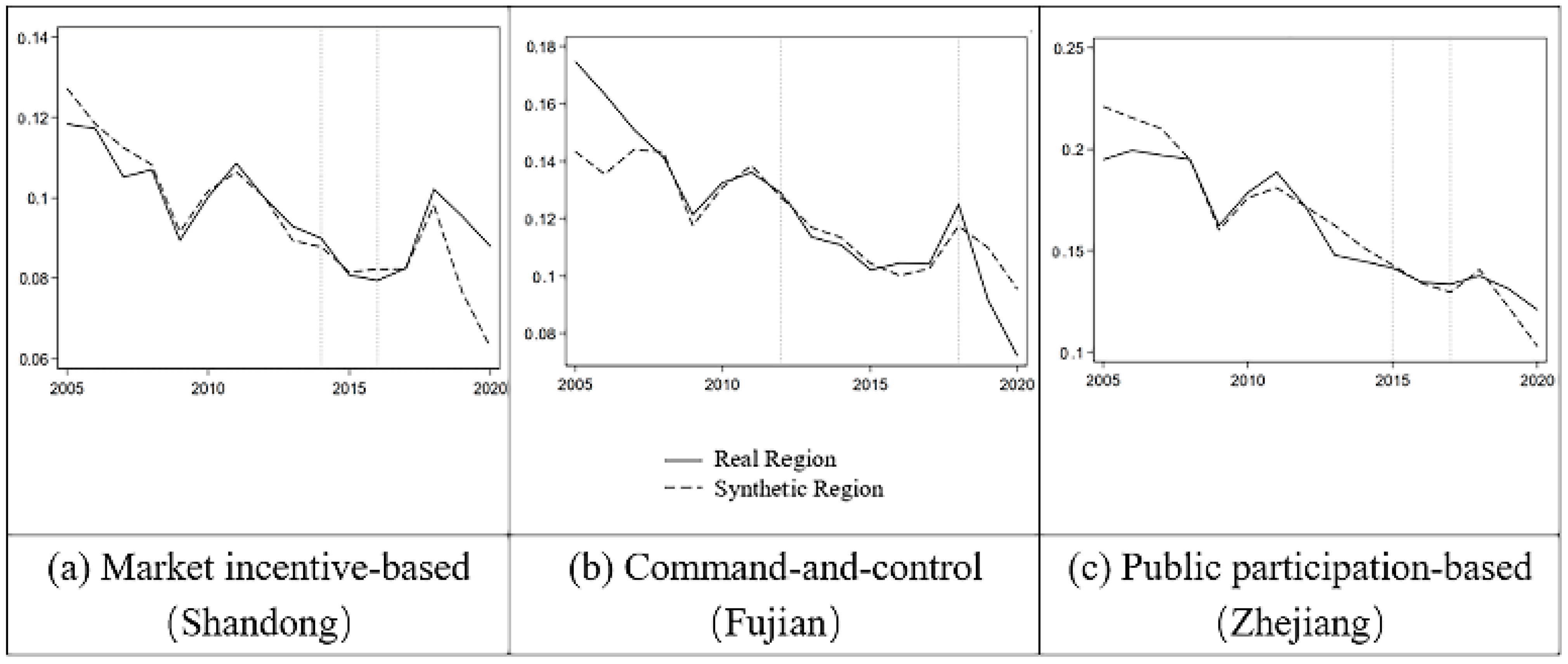
Using the synthetic control method, the optimal weights for Shandong, Fujian, and Zhejiang were calculated, respectively. It was found that the distribution of the synthetic region is basically consistent with the provinces and cities in the catching-up category. The fitting goodness-of-fit   R 2 for Shandong, Fujian, and Zhejiang are 0.76397, 0.94599, and 0.87531, respectively, which can fit well with the synthetic region, indicating that the synthetic control method is applicable to this study.
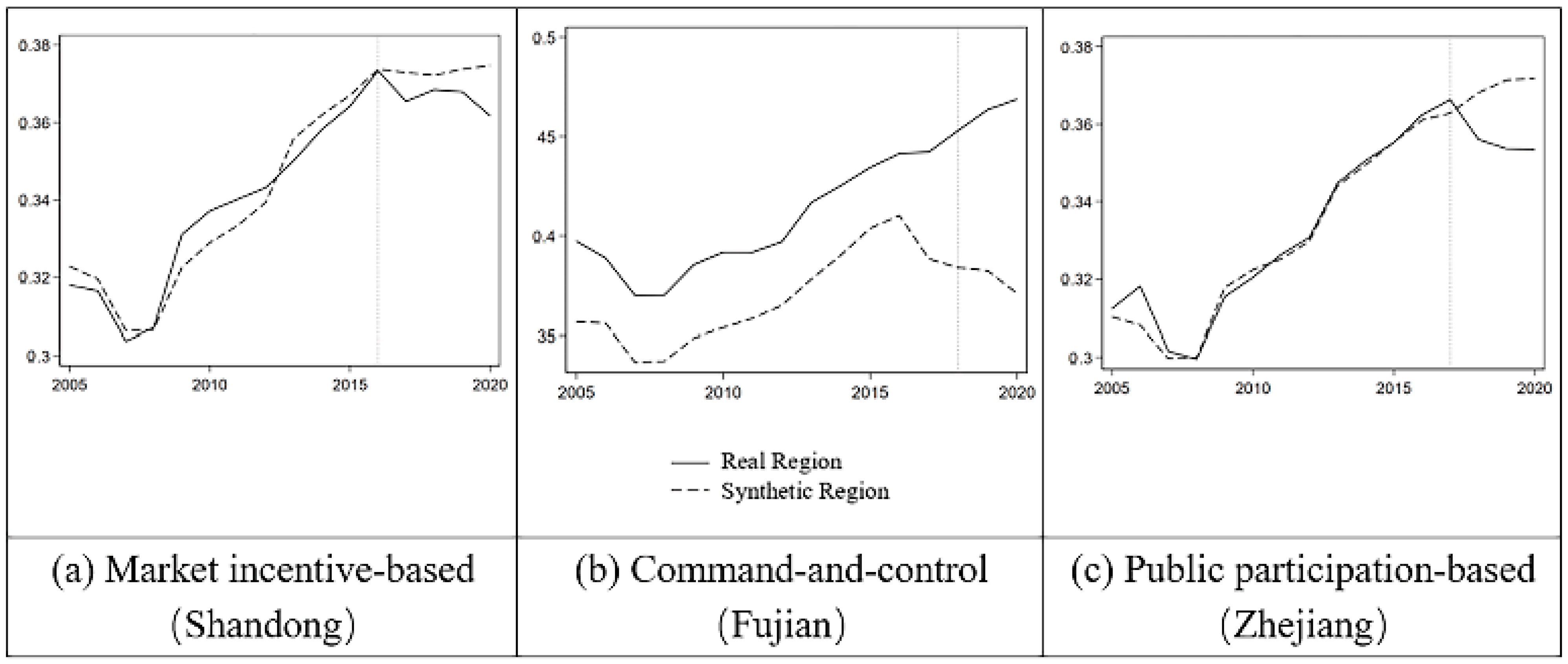
In Figure 11 below, the solid line represents the actual situation of the SDGs-integrated development of the marine economy in the region, the dashed line represents the synthetic situation of the region, and the vertical dashed line represents the implementation time of different types of marine environmental regulation policies. To the left of the vertical dashed line is the situation of the SDGs-integrated development of the marine economy in the marine environmental regulation area before the implementation of the environmental regulation policy, which fits well with the overall synthetic region. However, to the right of the dashed line, the two gradually deviate. This difference between the actual and synthetic regions is the net effect of the marine environmental regulation policy on the SDGs-integrated development of the marine economy. The SDGs-integrated development of Shandong’s marine economy is significantly higher than that of the synthetic region, while Fujian and Zhejiang’s marine economies’ SDGs-integrated development is significantly lower than that of the synthetic region. This means that, compared with areas that have not implemented environmental regulation policies, implementing market incentive regulation policies can significantly promote the SDGs-integrated development of the region’s marine economy, with an average promotion effect of 0.0207; while implementing command-and-control regulations will suppress the SDGs-integrated development of the region’s marine economy, with an average suppression effect of 0.0262, and with the suppression effect continuously strengthening. The average suppression effect of the public participation regulations is 0.0096, which is relatively weak compared to the suppression effect of the command-and-control regulations, and the suppression effect shows a trend of weakening.

4.3. Validity Test

4.3.1. Permutation Test Method

The permutation test is a method with strong objectivity. It involves applying the synthetic control method (SCM) to other coastal areas not affected by the relevant policies, calculating the ratio of the MSPE (mean square prediction error) before and after the implementation of marine environmental regulation policies, and studying the distribution of this ratio. The smaller the MSPE value before the marine environmental regulation policy takes place, the higher the fit between the actual policy-affected region and the synthetic region’s SDGs-integrated development scores of the marine economy, and the greater the impact of the marine environmental regulation shock in the area where the policy occurs. That is, the larger the proportion of mean square prediction error after the implementation of the marine environmental regulation policy, the greater the difference from other coastal cities, indicating a greater impact of the implemented marine environmental regulation on the SDGs-integrated development of the regional marine economy.
According to the test results shown in Figure 12, the root mean square prediction error (RMSPE) for the market incentive (Shandong), command-and-control (Fujian), and Public participation (Zhejiang) regulations are 231.3729, 138.7902, and 171.3043, respectively, all significantly higher than their corresponding similar control groups. The probability P value of obtaining an RMSPE as high as the control group is 9.09% (1/11), indicating that the policy effects of marine environmental regulation on the SDGs-integrated development of the marine economy estimated by SCM are statistically significant and pass the permutation test. This further supports the conclusion drawn above that command-and-control and public participation regulations suppress the SDGs-integrated development of the marine economy, while the market incentive regulations promote it.

4.3.2. Time Placebo Test

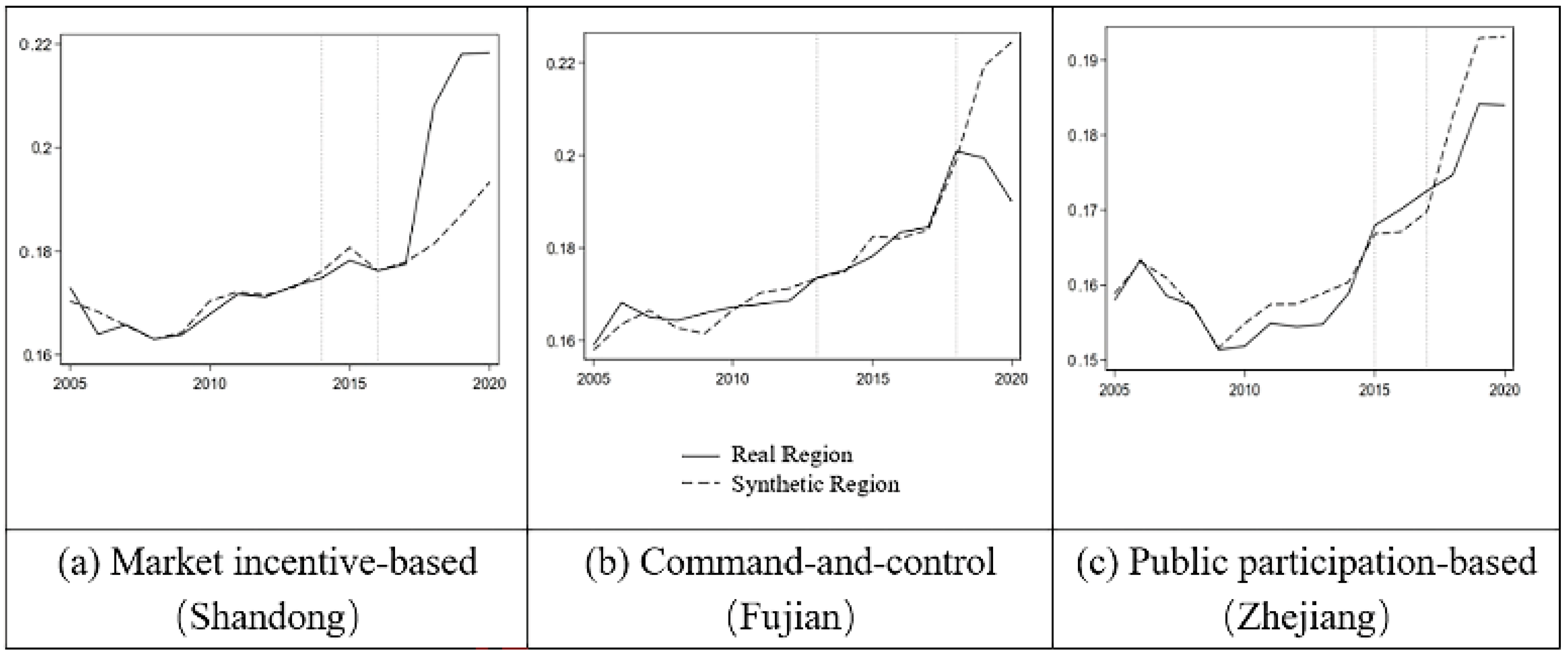
The basic idea of the time placebo test is to analyze the robustness of the above experimental results by changing the time node of the event. The basic operation is to assume that the market incentive regulation occurs one year before the actual policy occurrence time (2016), which is 2015; the command-and-control regulation occurs one year before the actual policy occurrence time (2018), which is 2013; the public participation regulation occurs one year before the actual policy occurrence time (2017), which is 2015. Repeat the synthetic control method experiment; if the time when the policy effect occurs is still the actual policy occurrence time, it indicates that it is indeed the implementation of marine environmental regulation that affects the SDGs-integrated development of the marine economy in the region, not other accidental factors; on the contrary, it indicates that the experimental result is invalid. The test results are shown in Figure 13.
It can be seen that the experimental results of changing the occurrence time of the three types of marine environmental regulations are very close to the actual experimental results mentioned above, and will not cause the advancement of the promotion or suppression effect due to the change in policy time. This indicates that changing the intervention time of the policy has no effect on the experimental results, passing the time placebo test, and further explains the reliability of the above experimental results.

4.4. Robustness Test

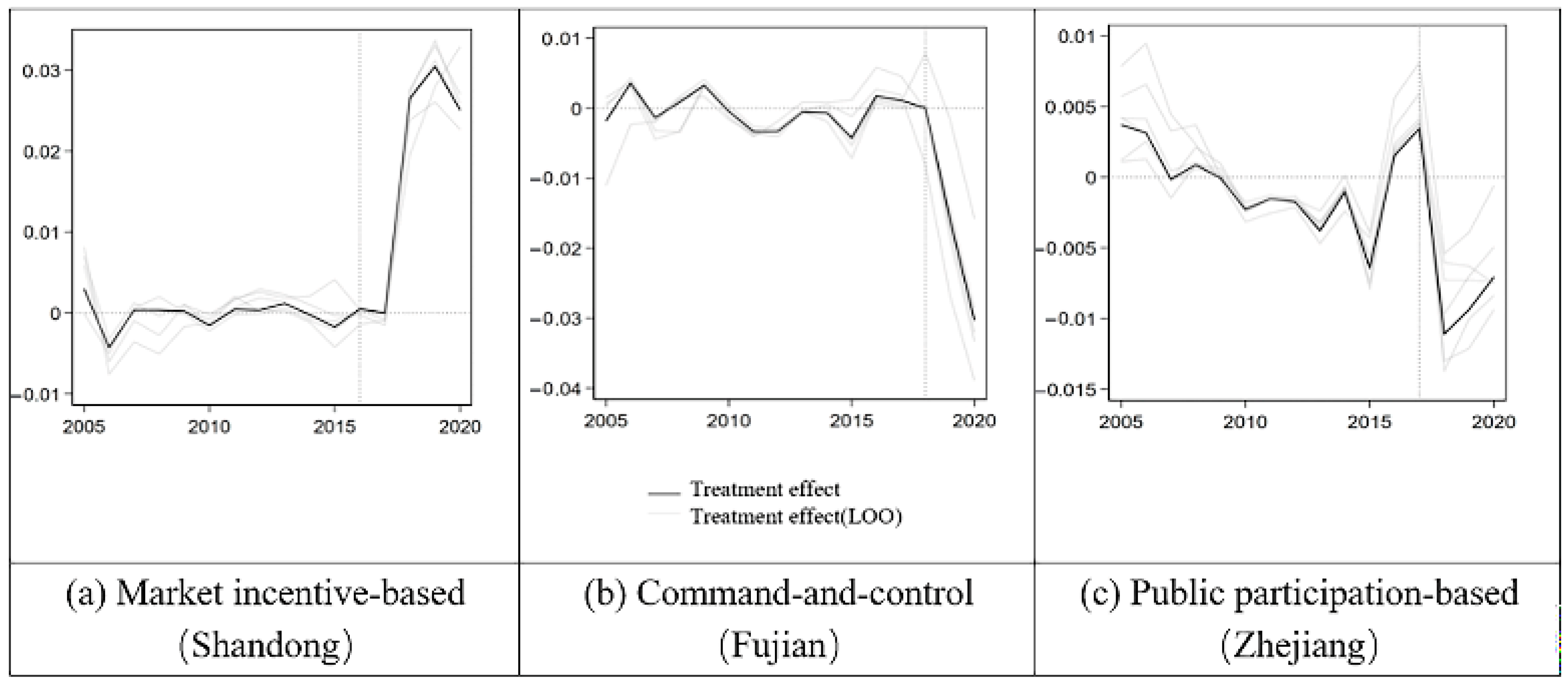
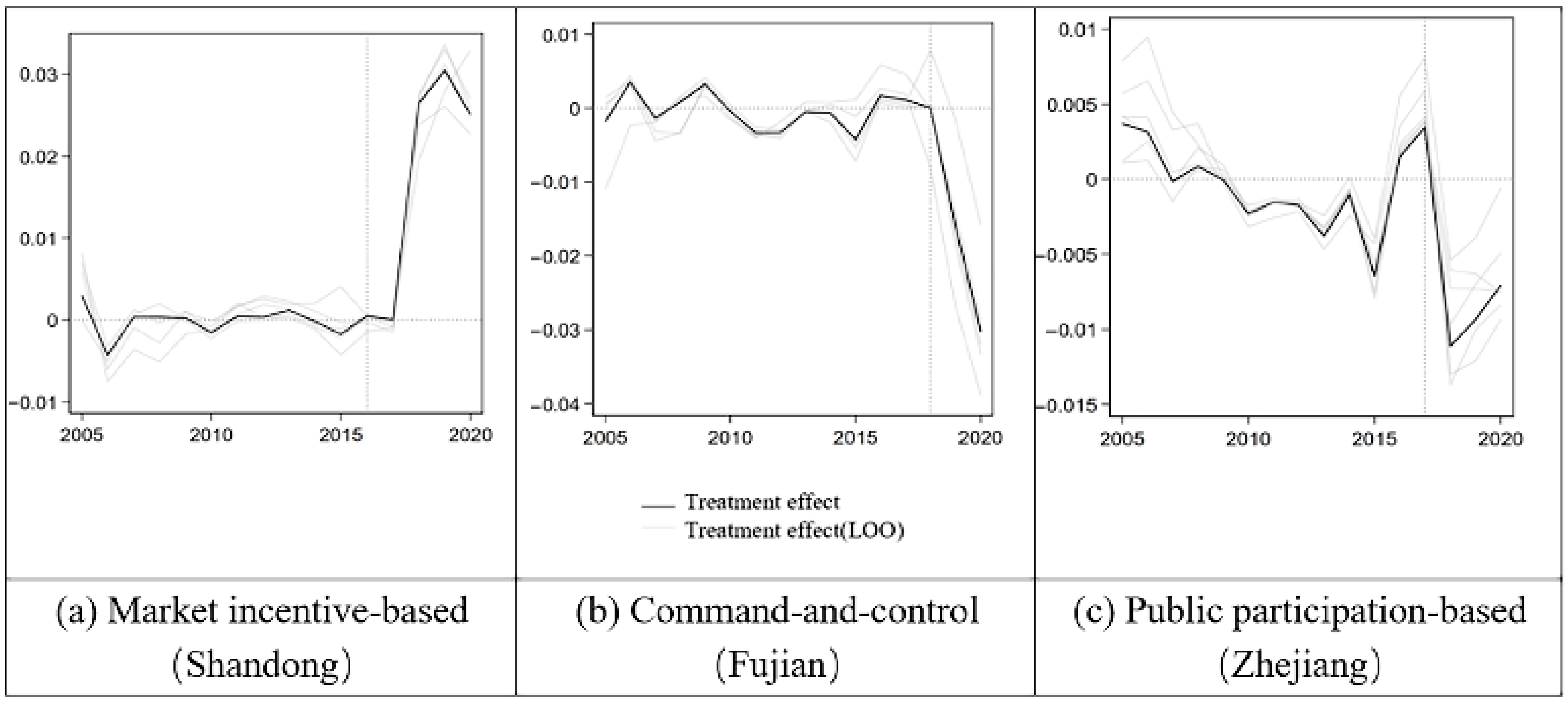
A leave-one-out robustness test is conducted on the synthetic control results, and a sensitivity check is performed on the counterfactual results (sensitivity check: by constructing a synthetic control, the model is re-estimated in each iteration by omitting one control unit with a non-zero weight). The specific method is to remove one region at a time from the regions with weights greater than zero in the SCM and continue to generate treatment effects using the SCM, comparing these results with those without removing the region. The theoretical counterfactual result is actually an estimate of what would have happened in the treated region without the policy, and the results should not be highly sensitive to minor changes in the control group, such as adding or removing one region. If there is a significant deviation, the SCM-estimated results may be driven by a control unit with a non-zero weight.
From Figure 14, it can be seen that the treatment effects of Shandong, Fujian, and Zhejiang are relatively close to their corresponding treatment effects (LOO) distribution, indicating that the empirical effects of the three types of marine environmental regulations have passed the sensitivity check, and the results are robust.

5. Further Analysis—The Impact of Marine Environmental Regulation on the Dimensions of SDGs-Integrated Development of the Marine Economy

The previous analysis found that the three different types of marine environmental regulation policies have significantly different impact effects on the SDGs-integrated development of the marine economy in the provinces where they are located. What are the specific impacts of different types of marine environmental regulations on the SDGs-integrated development of the marine economy? How strong are they? As can be seen from the mechanism analysis section, the impact of different types of marine environmental regulation policies on the SDGs-integrated development of the marine economy is specifically divided into five dimensions: innovation-driven development, industrial coordination, green construction, open cooperation, and the sharing of livelihoods. To identify whether these impacts exist in China and to what extent, this section will test them one by one.

5.1. Model Specification and Data Sources

Although the synthetic control method can effectively overcome the subjectivity and randomness in the selection of the control group, and the problem has been minimized as much as possible in the previous analysis, due to the significant differences in the focus of marine economic development among various coastal regions, there may still be situations where the gap between the treatment group and the control group is too large to be fitted. To address this limitation, when it is impossible to construct a suitable synthetic control group, this study will adopt the difference-in-differences (DID) model as an additional analysis method to enhance the robustness of the conclusion.
If the results of the two methods are inconsistent, we will conduct a detailed analysis and discussion instead of simply ignoring the results of the DID model. This will demonstrate the rigor and transparency of the research. We will take the following steps:
(1)
Carefully examine the model’s assumptions and applicability: Firstly, we will recheck whether the assumptions of the two methods are met in the specific application scenarios. For example, is the “parallel trend” assumption of DID valid in the selected sample? Was the fitting quality of the SCM synthetic control group sufficient before the policy?
(2)
Deeply analyze the sources of differences: We will carefully analyze the potential reasons for the differences in the results, which might include the following: Are there any unobservable confounding factors affecting it? Does the difference in the scope of sample selection lead to bias? Does the policy effect itself have heterogeneity?
(3)
Report and discuss all findings: In the paper, we will present both the results of the SCM and DID analyses simultaneously and candidly discuss any existing inconsistencies. This discussion itself has significant value, as it can more comprehensively reveal the complexity of the policy effect and point the way for further research. The final conclusion will be reached based on the overall weighing and cautious interpretation of the results of the two methods, rather than simply choosing one.

5.2. Results Analysis

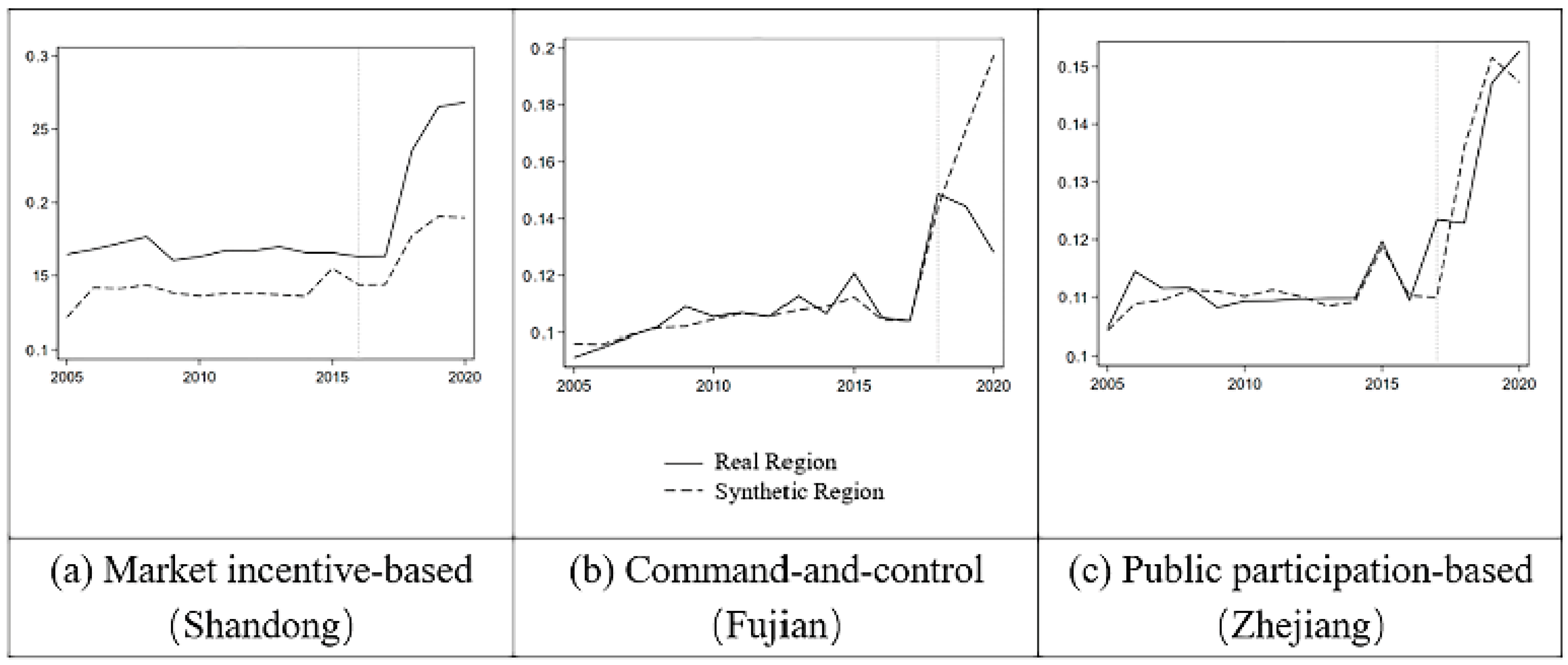
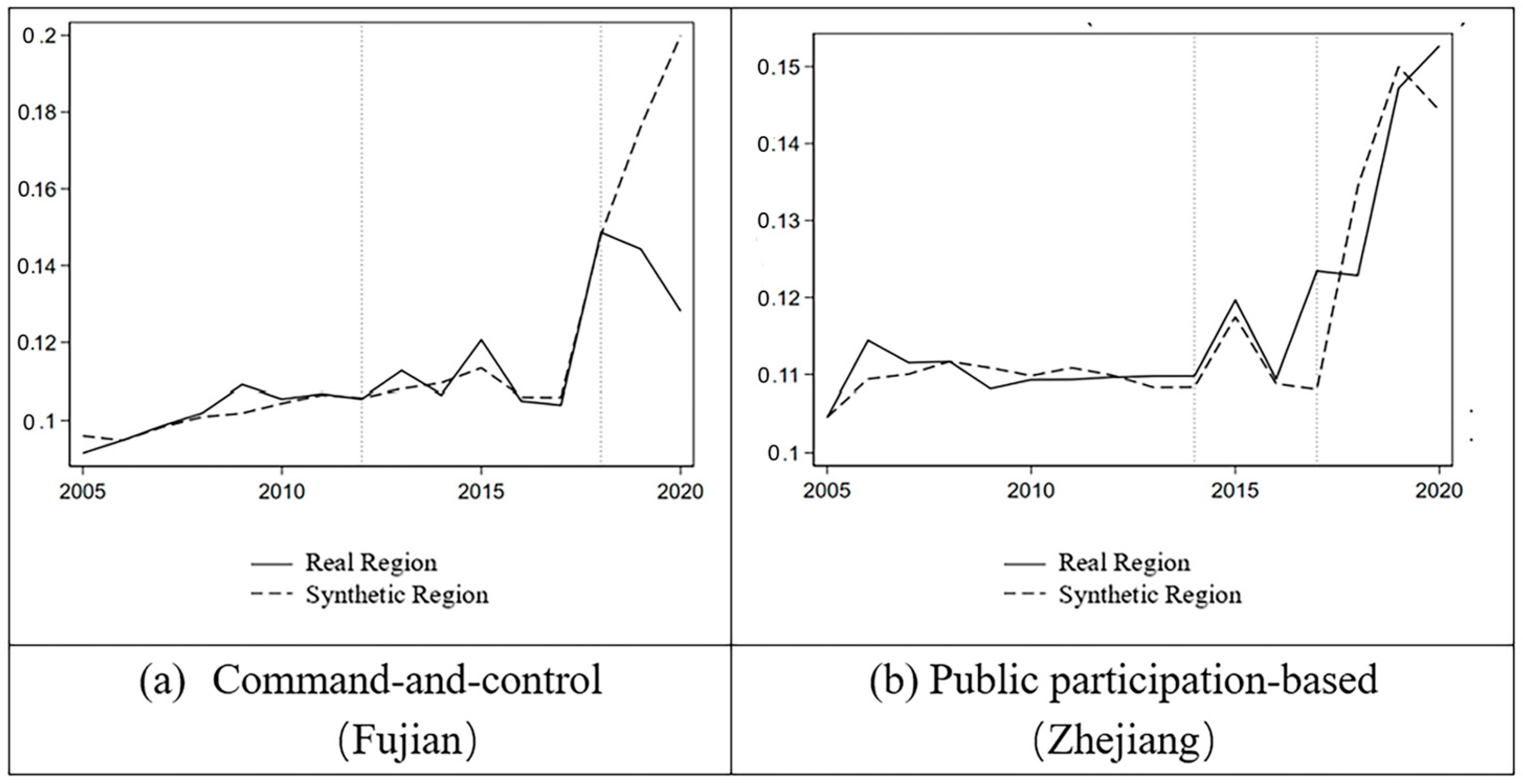
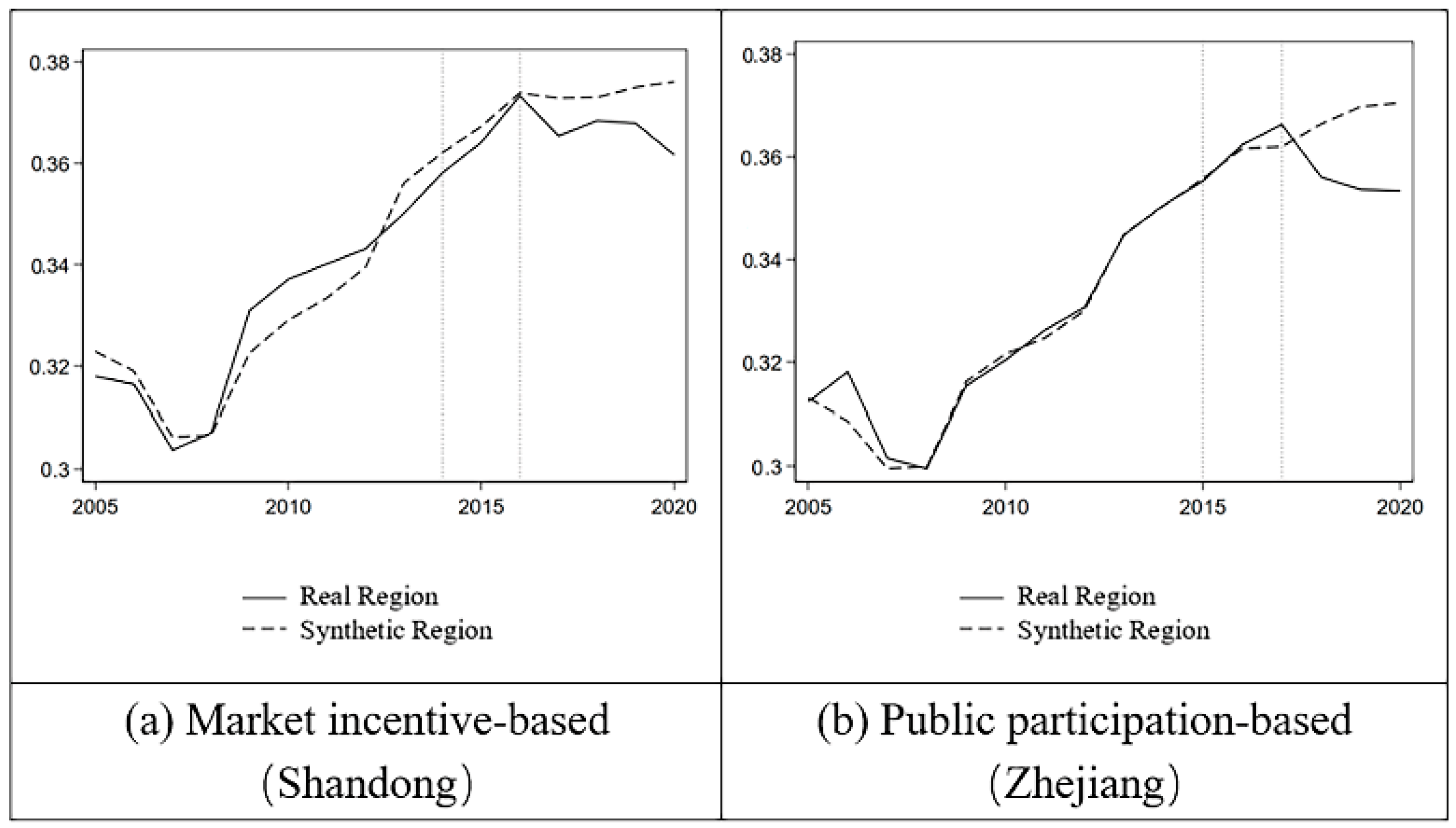
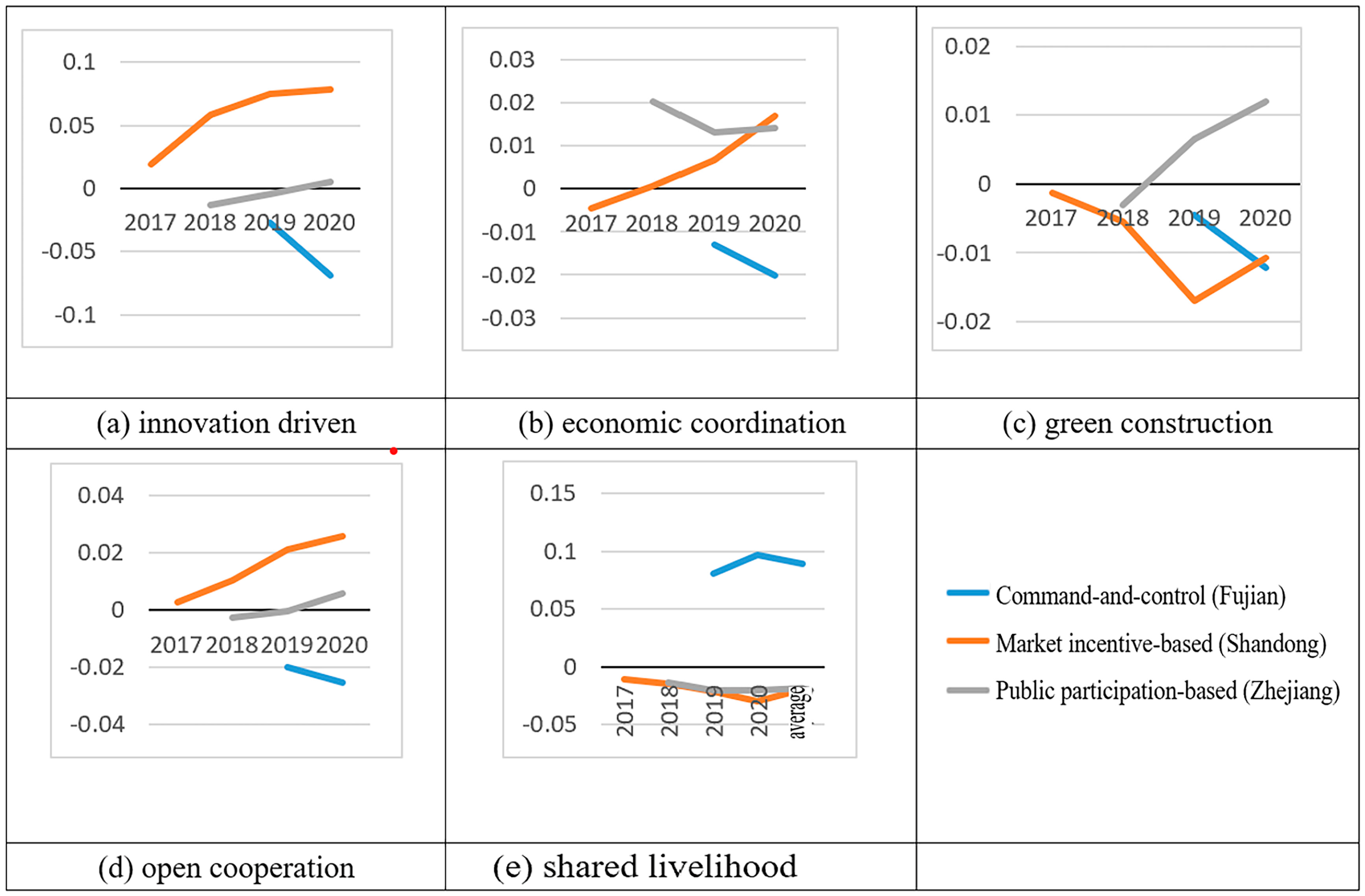
The impact of marine environmental regulation on innovation-driven growth can be seen through the comparison of real and synthetic regions in Figure 15. Command-and-control and public participation regulation policies have a significant inhibitory effect on the innovation-driven levels of Fujian and Zhejiang after implementation, with the average inhibitory effect on Fujian (−0.0481) being stronger than that on Zhejiang (−0.0041). Market incentive regulation has a significant driving effect on innovation-driven growth.
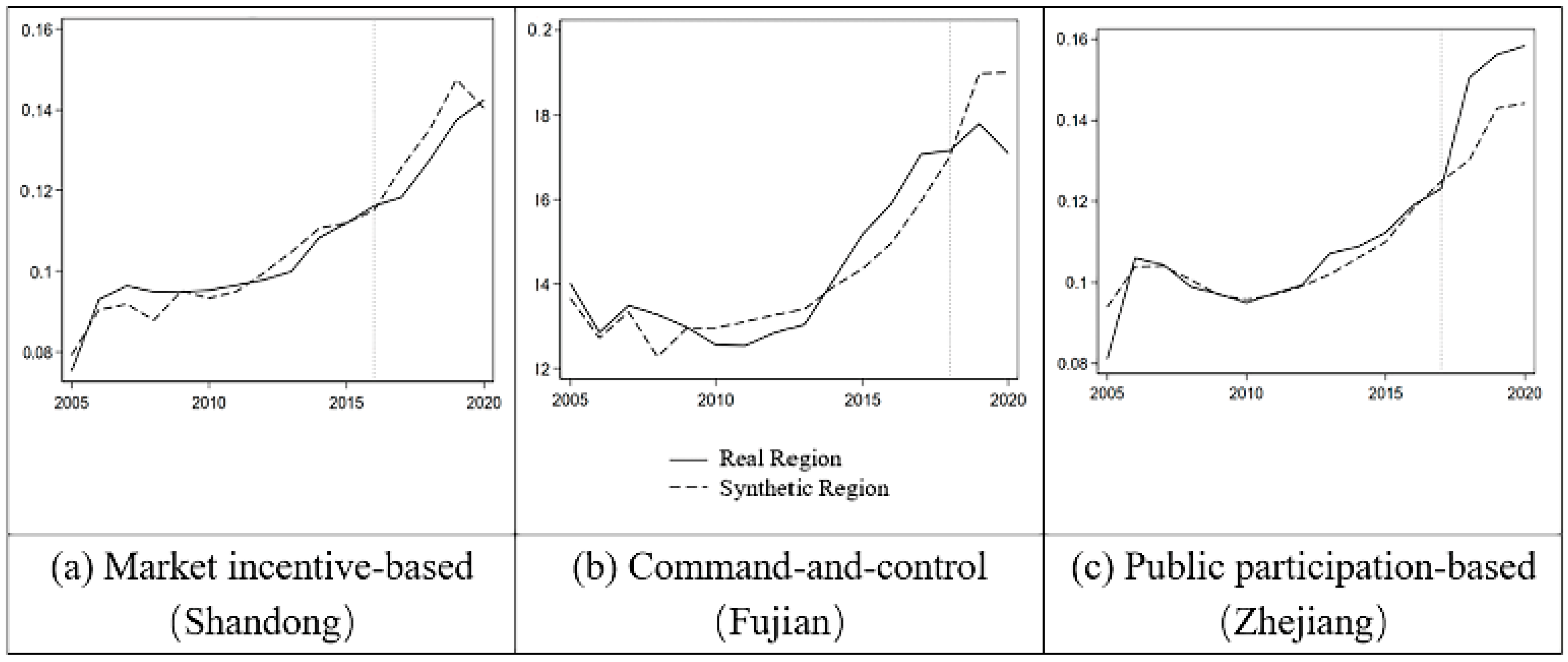
Only the public participation regulation shows a promoting effect of marine environmental regulation on industrial coordination, with an average promotion effect of 0.0159, while the market incentive and command-and-control regulations both show inhibitory effects, with average inhibitory effects of −0.0049 and −0.0165, respectively. The market incentive regulation shows a trend of exceeding the inhibitory effect over time, while the command-and-control regulation, due to its shorter implementation time, still enhances its inhibitory effect, as shown in Figure 16.
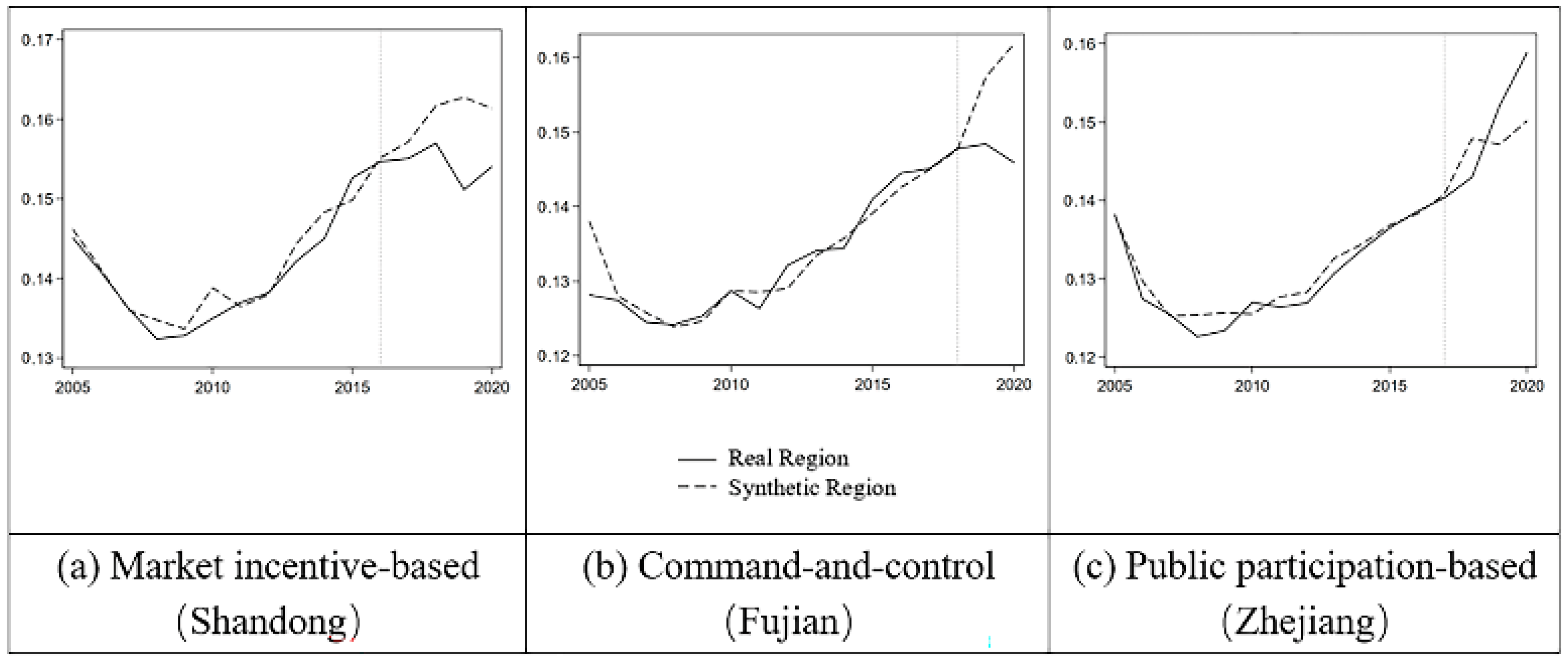
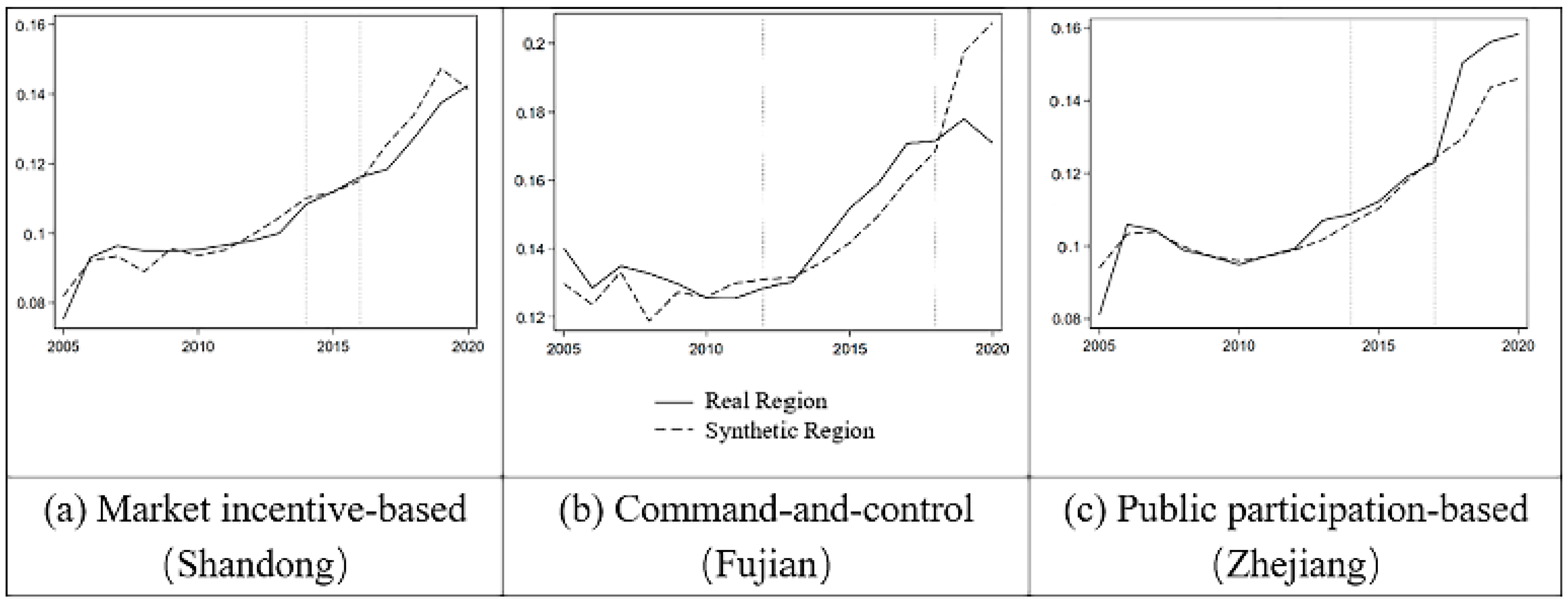
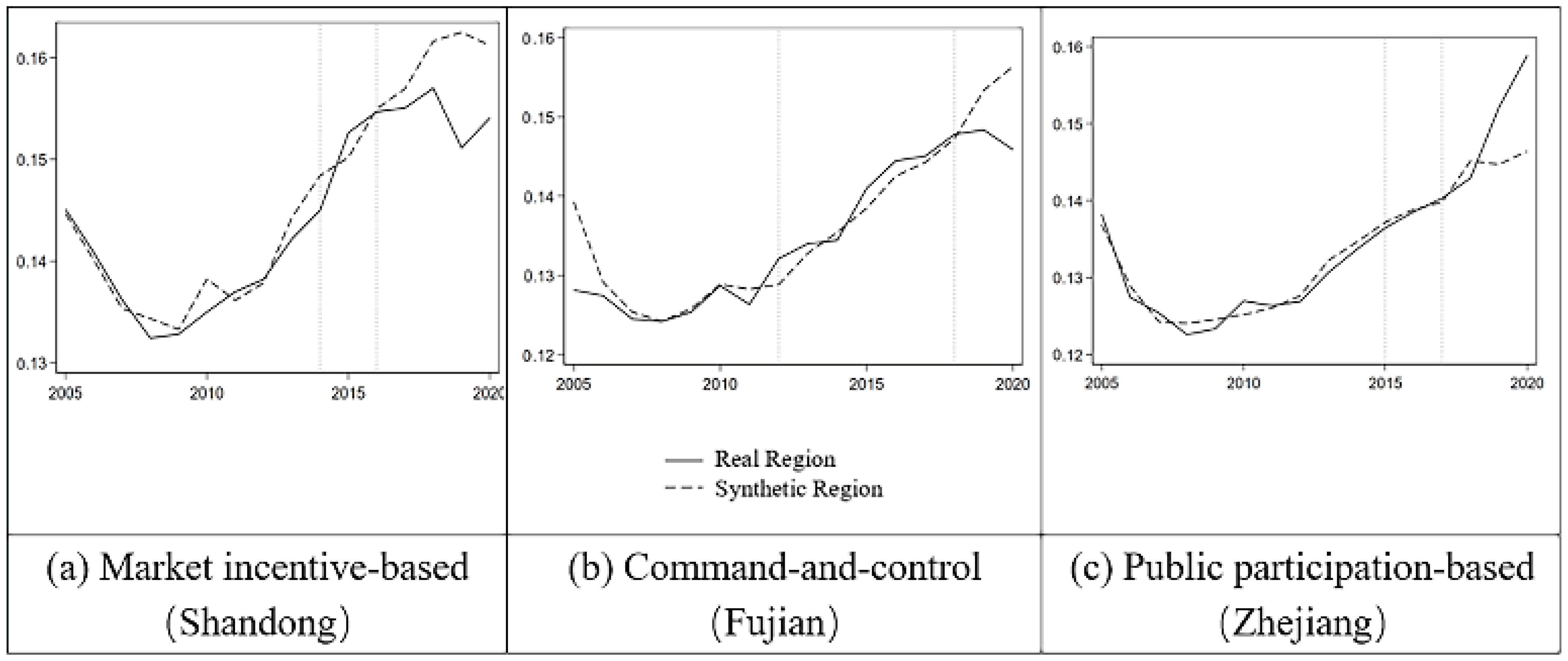
Comparing the results from the control group, both market incentive and command-and-control regulations have inhibitory effects on the green construction dimension, with inhibitory effects of −0.0086 and −0.0084, respectively, while the public participation regulation shows an initial inhibitory effect followed by a promoting effect, with an average promotion effect of 0.0052, as shown in Figure 17.
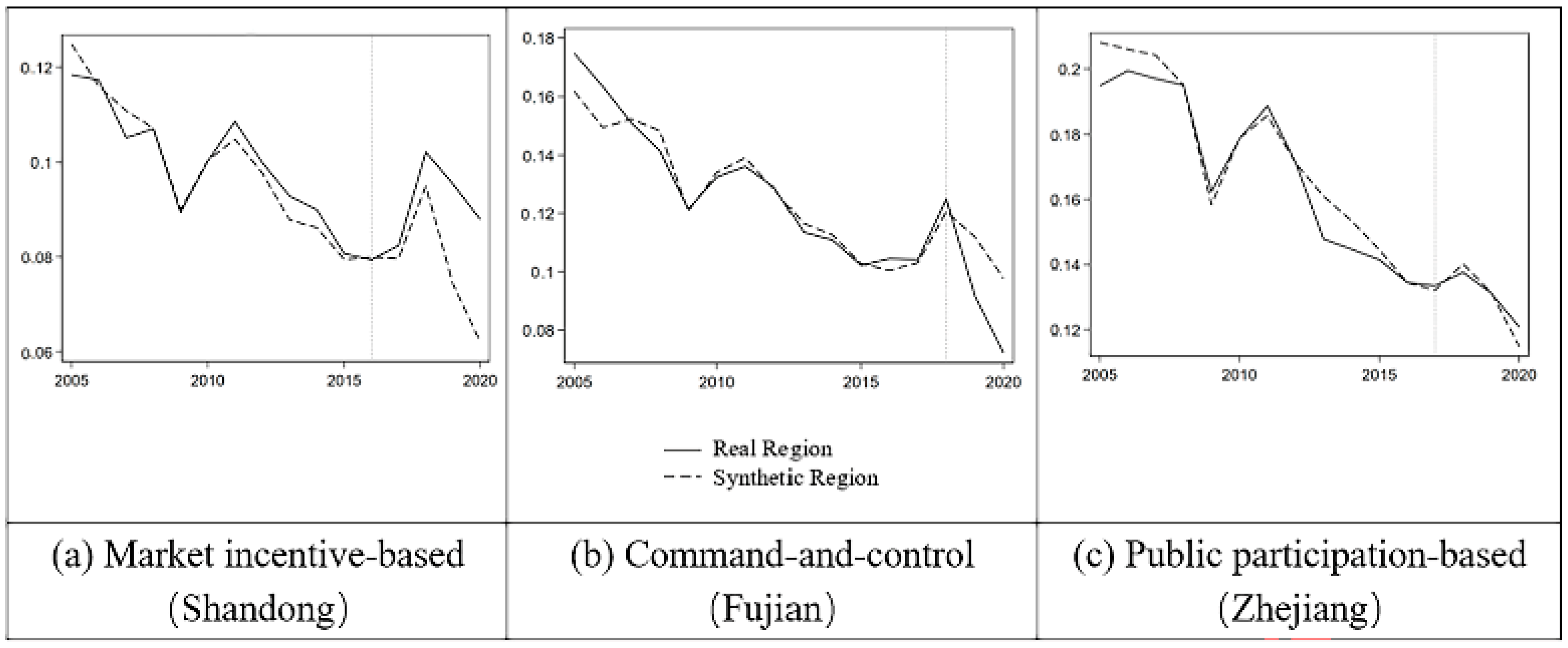
The market incentive regulation has a promoting effect on the dimension of open cooperation and shows an increasing trend, with the largest average promotion effect of 0.0151, followed by the public participation regulation, with an average promotion effect of 0.001, while the command-and-control regulation has an inhibitory effect on the level of marine economic open cooperation, with an average inhibitory effect of −0.0227, as illustrated in Figure 18.
Experiments have found that the market incentive and public participation regulations have a negative impact on the dimension of the sharing of livelihoods in the marine economy, with average inhibitory effects of −0.0192 and −0.0179, respectively. Only the command-and-control regulation has a positive effect on the sharing of livelihoods in the marine economy, with an average promotion effect of 0.0889, as depicted in Figure 19.

5.3. Robustness Test

To further examine the reliability of the impact results of marine environmental regulation on the five dimensions of innovation-driven growth, industrial coordination, green construction, open cooperation, and the sharing of livelihoods, a time placebo test is conducted for each. From Figure 20, Figure 21, Figure 22, Figure 23, Figure 24 and Figure 25 below, it can be seen that changing the policy occurrence time has no effect on the experimental results; all five experiments passed the time placebo test, indicating that the results are robust.
Additionally, Shandong’s overall score in innovation-driven growth ranks second, making it impossible to find suitable weights to average fit the innovation-driven growth scores of other regions before Shandong implemented market incentive regulation. Similarly, Fujian’s level of the sharing of livelihoods consistently ranks first and is far ahead of other regions, making it impossible to find suitable weights to average fit the scores before the implementation of Fujian’s marine environmental regulation policy. Therefore, this study employed the difference-in-differences (DID) method to further validate the above two scenarios. Table 5 shows that the DID results further support the main conclusion of the synthetic control method: market incentive marine environmental regulations have a significant promoting effect on innovation-driven growth, and other control variables also conform to theoretical expectations. Similarly, it also confirmed that the command-and-control type has a significant positive impact on the sharing of livelihoods, as shown in Table 6. The supplementary verification of DID has enhanced the reliability and completeness of the conclusions of this study.
Table 5 presents the benchmark regression results of the impact of command-and-control regulation on the dimension of shared public welfare. Although the R2 values of some models are relatively low, this is not uncommon in the dual difference-in-differences analysis based on macro panel data. This is mainly due to the inherent and difficult-to-observe heterogeneity between regions and the fact that the dimension of shared public welfare is affected by multiple complex factors (such as culture, local policies, and individual behaviors at the micro-level). It is worth noting that the core advantage of the DID method lies in effectively controlling the inherent differences in groups that do not change over time and the common trends that change over time through dual differences between groups and over time, thereby unbiasedly estimating the treatment effect (DID coefficient). As shown in Table 5, the coefficient of the core explanatory variable DID is significantly positive at the 1% level under all model settings, which provides robust statistical support for the core conclusion. To enhance the model’s explanatory power, we have attempted to control a series of key variables (such as government intervention and financial scale, etc.), and the core conclusion remains consistent. We understand that there is room for improvement in the model’s goodness-of-fit, which has enabled beneficial explorations for future research using more granular data. However, for the purpose of the macro policy evaluation in this paper, the significant DID coefficient can provide strong empirical evidence for the core argument that ‘command-and-control regulation promotes shared public welfare’.

5.4. Comparative Analysis of the Impact of Marine Environmental Regulation on the Dimensions of SDGs-Integrated Development of the Marine Economy

From a horizontal perspective, the three different types of marine environmental regulations have varying impacts on the dimensions of SDGs-integrated development of the marine economy, as shown in Figure 25. Specifically,
(1)
The market incentive regulation generally has a promotional average impact on the SDGs-integrated development of the marine economy (0.0207), with the most significant promotion on the innovation-driven dimension (0.0578), followed by open cooperation (0.0151), while it has an inhibitory effect on the industrial coordination, green construction, and sharing of livelihoods dimensions.
(2)
The command-and-control regulation generally has an inhibitory average impact effect on the SDGs-integrated development of the marine economy (−0.0262), with a positive promotion effect only on the dimension of the sharing of livelihoods (0.0889), and a negative effect on the other four dimensions, with the strongest inhibitory effect on the innovation-driven dimension (−0.0481).
(3)
The public participation regulation generally has an inhibitory average impact effect on the SDGs-integrated development of the marine economy (−0.0096), with inhibitory effects on the innovation-driven (−0.0041) and sharing of livelihoods (−0.0179) dimensions, with the most significant inhibition on the innovation-driven dimension, while it has a promotional effect on the industrial coordination, green construction, and open cooperation dimensions.
From the above analysis, it can be seen that the innovation-driven dimension plays a major role in the process of SDGs-integrated development of the marine economy, supporting the Porter hypothesis.

6. Discussion

This study empirically examined the differential impacts of heterogeneous marine environmental regulations on the high-quality development of the marine economy and its five dimensions through the synthesis control method and the difference-in-differences method. The research found that market incentive-based regulations generally had a promoting effect, while command-and-control regulations and public participation regulations showed inhibitory effects. This conclusion has prompted in-depth reflection on the internal logic and applicable boundaries of different regulatory tools.
Firstly, the superiority of market-based regulatory measures has been confirmed in this study, especially in promoting innovation-driven development and open cooperation. This strongly supports the applicability of the “Porter hypothesis” in the marine economy field. The key to its success lies in that it provides enterprises with the flexibility to respond and conduct forward-looking innovation through price signals and market mechanisms. It internalizes environmental costs as part of market decisions, thereby stimulating the “innovation compensation” effect rather than simply imposing “compliance costs”. However, its inhibitory effects in economic coordination, green construction, and shared benefits for the people also remind us that market tools are not omnipotent. It may trigger pollution transfer or the moral hazard of “paying to discharge” due to enterprises’ “rational economic man” behavior, and its policy implementation costs may also encroach on public expenditures in other areas of people’s livelihood.
Secondly, the complex picture presented by command-and-control regulations is worthy of careful consideration. Its significant positive effect in the dimension of shared public welfare demonstrates the advantages of the government’s coercive power in redistributing policy benefits (such as using fines and taxes for public welfare expenditures) and quickly establishing environmental baseline standards. However, its strong inhibitory effect in the other four dimensions (especially in innovation-driven development) exposes the drawbacks of “one-size-fits-all” administrative orders. Overly rigid and hasty compliance requirements often force enterprises to adopt the most costly end-of-pipe solutions, or even lead them to withdraw from the market. This not only stifles technological innovation but may also result in industrial hollowing-out and reduced tax revenues, which, in the long run, are detrimental to the continuous improvement in public welfare.
Finally, the “double-edged sword” effect of public participation-based regulation reveals the complexity of social governance. Its moderate promoting role in economic coordination, green construction, and open cooperation indicates the positive impact of social supervision and green consumption preferences on guiding industrial structure transformation and attracting clean investment. However, its negative effects in innovation-driven development and shared prosperity may be related to the “non-professionalism” and “group polarization” risks of public participation. Unmature public opinion pressure may force enterprises to adopt short-sighted coping strategies rather than making long-term investments; at the same time, irrational social movements may also disrupt normal market order and employment stability.
In summary, the three types of regulatory tools each have their own unique operational mechanisms, advantages, and limitations, and there is no single “optimal solution”. The results of this study indicate that the effectiveness of the future marine environmental governance system largely depends on whether these three types of tools can be precisely and dynamically combined and matched according to specific policy goals (such as pursuing innovation efficiency or social equity), regional development stages, and industrial characteristics.

7. Conclusions and Suggestions

7.1. Conclusions

Advancing the SDGs-integrated marine economy is a priority for China’s maritime power construction. This study develops a mathematical model to analyze the mechanisms through which market incentive, command-and-control, and public participation regulations impact the five SDG dimensions (innovation-driven development, industrial coordination, green construction, open cooperation, and the sharing of livelihoods), proposing corresponding theoretical hypotheses. Employing quasi-natural experiments via the synthetic control and difference-in-differences methods, it examines the horizontal and vertical variations in these impacts. The main conclusions are as follows:
(1)
The empirical results of the synthetic control method show that market incentive regulation uniquely promotes SDGs-integrated marine economic development (avg. +0.0207 annually), whereas command-and-control and public participation measures inhibit it (avg. −0.0262 and −0.0096). The findings, robust across multiple statistical tests, validate both the theoretical framework and the applied methodology.
(2)
Further analysis using the synthetic control method and the difference-in-differences method shows the differences in the impact of heterogeneous marine environmental regulation policies on the five dimensions of SDGs-integrated development of the marine economy: ① Innovation-driven effect: The impact of command-and-control and market incentive regulations on innovation is determined by the interplay between their cost effect and innovation compensation effect. In contrast, public participation regulation imposes only a soft constraint without direct production impact. Market incentive regulation demonstrates superior effectiveness in stimulating innovation, thereby supporting the narrow Porter hypothesis and extending its applicability to the marine context. ② Industrial coordination effect: Regarding industrial coordination, public participation regulation demonstrates the strongest promotional effect, whereas both market incentive and command-and-control types exhibit inhibitory effects, primarily by influencing the rationalization of the industrial structure. ③ Green construction effects: Marine environmental regulation prompts the participation of the government, market, and public in governance together, but the effects vary. The research results show that public participation marine environmental regulation is different from the spontaneous and confrontational “nepotism movement”. It exerts pressure on local governments and polluting enterprises through information disclosure and public opinion supervision, reducing local protectionism and the shielding of pollution behaviors. At the same time, through public education and publicity, it enhances public environmental awareness, changes consumption preferences, and forces enterprises to undergo green transformation from the demand side. As “supervisors” scattered throughout various places, the public can make up for the deficiency of government regulatory power and increase the probability of discovering environmental violations. This government-led, orderly public participation has had a slight promoting effect on green construction in the long term; completely spontaneous and disorderly public participation may indeed hinder ecological improvement due to “nepotism”, and then top-down measures need to be taken. ④ Open cooperation effect: The impact of marine environmental regulation on open cooperation is driven by cost, pollution havens, race-to-the-bottom effects on “bringing in,” and cost and innovation compensation effects on “going out.” Experimentally, market incentive regulation most strongly promotes openness with sustained growth, public participation follows, while command-and-control regulation exerts an inhibitory effect. ⑤ The sharing of livelihoods effect: In its impact on the sharing of livelihoods—reflected in employment, quality of life, and education—command-and-control regulation shows a significant promotional effect, whereas both market incentive and public participation regulations exhibit weak inhibition.

7.2. Suggestions

From this, this study proposes the following policy suggestions: ① It is suggested that policymakers adopt a ‘combined approach’: utilize market incentive regulations to stimulate innovation and deepen open cooperation; employ command-and-control regulations to ensure the basic bottom line of shared public welfare; and apply public participation regulations to promote industrial coordination, green construction, and assist in open cooperation. ② Properly apply and combine the role of market incentive regulation. A synergistic approach is recommended: improve policies such as marine ecological compensation and green credit, guide products to follow the law of value, and at the same time strengthen real-time monitoring to prevent the “pollution discharge permit” effect and pay attention to balancing the policy costs to avoid encroaching on public welfare expenditures. ③ Properly apply and combine the role of command-and-control regulation. Abandon the “one-size-fits-all” approach and implement differentiated and flexible management measures. Combine with the profit cycle of the enterprise to appropriately extend the governance period, and complement it with financial and tax support as well as technical training. Strengthen the innovative compensation effect. ④ Properly apply and combine the role of public participation regulation. Innovate the participation forms, improve the reporting feedback and information disclosure mechanisms, and at the same time strengthen guidance to ensure the scientificity and orderliness of public participation, and prevent the phenomenon of group polarization. ⑤ Establish a multi-party policy evaluation system. Introduce the participation of the market and social entities in policy evaluation, and utilize big data and other means to achieve dynamic and precise feedback and the optimization of policy effects.

Author Contributions

L.G. determined the research conceptualization, methodology, resources, supervision, project administration, and funding acquisition. S.Y. completed formal analysis, data curation, and writing—original draft preparation. L.Z. was responsible for validation, visualization, and writing—reviewing and editing the manuscript. F.W. was in charge of the investigation, validation, and writing—reviewing and editing. X.Y. completed the writing—the reviewing and editing of the manuscript. All authors have read and agreed to the published version of the manuscript.

Funding

This work was supported by the Humanities and Social Science Fund of the Ministry of Education of China [grant number 22YJAZH019]; the Natural Science Foundation of Shandong Province [grant number ZR2025MS1129]; and the Shandong Provincial Key R&D Program (Soft Science) Youth Project [grant number 2025RKY0706].

Institutional Review Board Statement

Not applicable.

Informed Consent Statement

Not applicable.

Data Availability Statement

The data presented in this study are openly available in [Mendeley Database] at [10.17632/b2dtgwcdbx.1].

Conflicts of Interest

The authors declare no conflicts of interest.

References

  1. Park, M.H.; Lee, W.J. Marine oil spill analyses based on Korea Coast Guard big data from 2017 to 2022 and application of data-driven Bayesian Network. J. Clean. Prod. 2024, 436, 140630. [Google Scholar] [CrossRef]
  2. Porter, M.E.; Linde, C. Toward a new conception of the environment-competitiveness relationship. J. Econ. Perspect. 1995, 9, 97–118. [Google Scholar] [CrossRef]
  3. Porter, M. America’s Green Strategy. In Business and the Environment: A Reader; Welford, R., Starkey, R., Eds.; Taylor and Frensis: Washington, DC, USA; Earthscan Publication Limited: London, UK, 1996; p. 33. [Google Scholar]
  4. Denison, E.F. Accounting for slower economic growth: The United States in the 1970’s. Econ. J. 1981, 91, 1044–1046. [Google Scholar] [CrossRef]
  5. Chintrakarn, P. Environmental regulation and US states’ technical inefficiency. Econ. Lett. 2008, 100, 363–365. [Google Scholar] [CrossRef]
  6. He, W.; Zhang, Y. Environmental Regulation, Industrial Structure Adjustment, and High-Quality Economic Development—An Analysis Based on the PVAR Model of 11 Provinces and Cities in the Yangtze River Economic Belt. Stat. Inf. Forum 2021, 36, 21–29. (In Chinese) [Google Scholar]
  7. Du, J.; Su, X.; Yan, B. Study on the Impact of Marine Environmental Regulation on the High-Quality Development of the Marine Economy—An Empirical Analysis Based on Spatial Econometric Model. Ecol. Econ. 2022, 38, 139–147. (In Chinese) [Google Scholar]
  8. Lin, W.; Jin, Y. Research on the Theoretical Construction and Governance Mechanism of Marine Environmental Regulation. Pac. J. 2020, 28, 90–99. (In Chinese) [Google Scholar]
  9. Jouffray, J.-B.; Blasiak, R.; Norström, A.V.; Österblom, H.; Nyström, M. The blue acceleration: The trajectory of human expansion into the ocean. One Earth 2020, 2, 43–54. [Google Scholar] [CrossRef]
  10. Testa, F.; Iraldo, F.; Frey, M. The Effect of Environmental Regulation on Firms’ Competitive Performance: The Case of the Building Construction Sector in Some EU Regions. J. Environ. Manag. 2011, 92, 2136–2144. [Google Scholar] [CrossRef]
  11. Gang, H.; Ting, W.; Jing, H. Does Environmental Regulation Indirect Affect International Competitiveness—Based on the Dual Perspectives of Technological Innovation and Capital Investment. J. Int. Trade 2017, 11, 97–107. (In Chinese) [Google Scholar]
  12. Palmer, K.; Oates, W.E.; Portney, P.R. Tightening environmental standards: The benefit-cost or the no-cost paradigm? J. Econ. Perspect. 1995, 9, 119–132. [Google Scholar] [CrossRef]
  13. Lu, C. The Duality of Environmental Regulation: Hindering or Promoting Technological Progress—Evidence from Wuhan Urban Circle. Prog. Sci. Technol. Policy 2017, 34, 43–48. [Google Scholar]
  14. Zhang, Q.; Xiao, X. Environmental Regulation, Enterprise Profitability and Production Efficiency: A Re-examination Based on Porter’s Hypothesis. Financ. Trade Econ. 2015, 32–43. [Google Scholar]
  15. Sun, C.; Wei, X. Market Incentive-Type Environmental Regulation, Government Subsidies and Enterprise Performance. Financ. Res. 2022, 97–112. [Google Scholar] [CrossRef]
  16. Li, R.; Brink, D.V.M.; Woltjer, J. Market-based instruments for the governance of coastal and marine ecosystem services: An analysis based on the Chinese case. Ecosyst. Serv. 2017, 23, 71–81. [Google Scholar] [CrossRef]
  17. Shen, K.; Jin, G. Did environmental regulations lead to the relocation of pollution to nearby areas? Econ. Res. 2017, 52, 44–59. [Google Scholar]
  18. Jin, S.; Youguo, Z. Environmental Regulation, Industrial Transfer and Regional Coordinated Development. Econ. Dyn. 2021, 68–83. [Google Scholar]
  19. Gray, W.B.; Shimshack, J.P. The effectiveness of environmental monitoring and enforcement: A review of the empirical evidence. Rev. Environ. Econ. Policy 2011, 5, 3–24. [Google Scholar] [CrossRef]
  20. Zhang, J.; Jian, Y. The Impact of Market-Incentive Environmental Regulations on China’s Carbon Emission Reduction: Also Discussing the Moderating Effect and Threshold Effect. J. Resour. Dev. Mark. 2025, 41, 822–831. [Google Scholar]
  21. Elliott, M.; Burdon, D.; Atkins, J.P.; Borja, A.; Cormier, R.; de Jonge, V.N.; Turner, R.K. “And DPSIR begat DAPSI(W)R(M)!”—A unifying framework for marine environmental management. Mar. Pollut. Bull. 2017, 118, 27–47. [Google Scholar] [CrossRef] [PubMed]
  22. Liu, J.; Wan, G. The Impact of Environmental Regulation on the Entry of Foreign Capital. China Ind. Econ. 2021, 98–116. (In Chinese) [Google Scholar]
  23. Gyu, M.B.; Chen, Y.W.; Na, L. Revisiting the Relationship Between the Strength of Environmental Regulation and Foreign Direct Investment. Front. Psychol. 2022, 13, 899918. [Google Scholar] [CrossRef]
  24. Ye, T.; Rui, X. The Social Welfare Effect of Environmental Regulation: Theoretical and Empirical Analysis from the Perspective of Public Perception. Stat. Res. 2022, 39, 125–137. (In Chinese) [Google Scholar]
  25. Wu, S.; Lü, X. Research on the Interactive Relationship between the Professional Structure of Higher Education and the Industrial Structure—Taking Marine Economy as an Example. China High. Educ. 2021, 59–61. [Google Scholar]
  26. Liquete, C.; Piroddi, C.; Drakou, E.G.; Gurney, L.; Katsanevakis, S.; Charef, A.; Egoh, B. Current status and future prospects for the assessment of marine and coastal ecosystem services: A systematic review. PLoS ONE 2017, 8, e67737. [Google Scholar] [CrossRef]
  27. Fu, G.; Wang, Q.; Yang, Y. Research on the Policy Formulation for Marine Ecological Environment Protection in the Development of Methane Hydrate—From the Perspective of Transaction Cost Theory. J. Xiangtan Univ. (Philos. Soc. Sci. Ed.) 2020, 44, 17–22. [Google Scholar] [CrossRef]
  28. Fu, Y.; Zhang, Y. Chinese-style Decentralization and the Bias of Fiscal Expenditure Structure: The Cost of Competing for Growth. Manag. World 2007, 4–12+22. [Google Scholar] [CrossRef]
  29. Zhang, C.; Lu, Y.; Guo, L.; Yu, T.S. The intensity of environmental regulation and technological progress of production. Econ. Res. J. 2011, 2, 113–124. [Google Scholar]
  30. He, G.; Wang, S.; Zhang, B. Watering Down Environmental Regulation in China. Q. J. Econ. 2020, 135, 2135–2185. [Google Scholar] [CrossRef]
  31. Gao, Z.; Li, M. Spatiotemporal Heterogeneity and Synergy of Carbon Emission Reduction Effects of Formal and Informal Environmental Regulations: An Empirical Analysis of 14 Prefectures and Cities in Xinjiang from 2007 to 2017. West. Forum. 2020, 30, 84–100. (In Chinese) [Google Scholar]
  32. Guan, X.; Chai, C.; Zhao, C. Can Pressure of Local Government Performance Appraisal Improve Corporate Green Innovation Performance?—Empirical Evidence from Dual Mediation of Environmental Regulation and Environmental Subsidies. Res. Econ. Manag. 2023, 44, 113–131. [Google Scholar]
  33. Li, G.; Shi, H. Research on the Impact of Different Types of Environmental Regulations on Industrial Structure Upgrading. China Price 2022, 47–49. (In Chinese) [Google Scholar]
  34. Shen, H.; Z, Y. Environmental Enforcement Supervision and Enterprise Environmental Performance: Empirical Evidence from Natural Experiments Based on Environmental Inspection Interviews. Nankai Manag. Rev. 2017, 20, 73–82. [Google Scholar]
  35. Shandong Provincial Finance Department; Shandong Provincial Department of Ocean and Fisheries. Notice on the Issuance of the “Shandong Province Marine Ecological Compensation Management Measures”. Shandong Prov. People’s Gov. Gaz. 2016, 88–90. (In Chinese) [Google Scholar]
  36. Xu, R.; Jiang, X. Progress in the Study of Marine Ecological Compensation Abroad (1960–2018). J. Ocean. Univ. China (Soc. Sci. Ed.) 2020, 4–93. (In Chinese) [Google Scholar]
  37. Regulations on the Protection and Utilization of the Coastal Zone in Fujian Province. Available online: https://sthjt.fujian.gov.cn/zwgk/flfg/201805/t20180508_2243679.htm (accessed on 10 October 2025). (In Chinese)
  38. Notice from the General Office of Zhejiang Provincial People’s Government on the Issuance of the Implementation Plan for the Creation of Zhejiang Marine Ecological Construction Demonstration Zone. Available online: https://www.doc88.com/p-54687158282885.html (accessed on 15 October 2025). (In Chinese).
  39. Zhi, S.; Di, H. Is Inflation Targeting Effective?—New Evidence from the Synthetic Control Method. Econ. Res. 2015, 50, 74–88. (In Chinese) [Google Scholar]
  40. Abadie, A.; Diamond, A.; Hainmueller, J. Synthetic control methods for comparative case studies: Estimating the effect of California’ s tobacco control program. J. Am. Stat. Assoc. 2010, 105, 493–505. [Google Scholar] [CrossRef]
  41. Lu, Y.; Yuan, F.; Li, X. Research on the Construction and Application of the Evaluation Index System for High-Quality Development of China’s Marine Economy—From the Perspective of the Five Major Development Concepts. Enterp. Econ. 2019, 38, 122–130. (In Chinese) [Google Scholar]
  42. Qiu, R.; Yin, W.; Han, L. Evaluation and Typological Division of High-Quality Development Level of Regional Marine Economy in China. Stat. Decis.-Mak. 2023, 39, 103–108. (In Chinese) [Google Scholar]
  43. Li, Q.; Xie, Z. The Impact of Environmental Information Disclosure on High-Quality Economic Development—Evidence from the Yangtze River Economic Belt. J. Manag. Sci. 2023, 36, 1–21. (In Chinese) [Google Scholar]
  44. Xiao, H. Study on the Impact of Fiscal and Tax Policies on Economic Growth. China Collect. Econ. 2024, 16, 25–28. (In Chinese) [Google Scholar]
  45. Zhou, C.; Tian, F.; Zhou, T. Study on the Impact of Green Finance on High-Quality Economic Development. J. Chongqing Univ. (Soc. Sci. Ed.) 2022, 28, 1–13. (In Chinese) [Google Scholar]
  46. Chang, Y. Influencing Factors of China’s Marine Economic Development—An Empirical Study Based on Panel Data of Coastal Provinces and Cities. Resour. Ind. 2011, 13, 95–99. (In Chinese) [Google Scholar]
  47. He, X. Spatial Relationship Analysis between Population Density and Economic Development. Anhui Archit. 2023, 30, 33–34+90. (In Chinese) [Google Scholar]
  48. He, X.; Wang, Z. Can the Construction of Transportation Infrastructure Promote the Convergence of High-Quality Development in the Yangtze River Economic Belt? J. Soochow Univ. (Philos. Soc. Sci. Ed.) 2023, 44, 31–44. (In Chinese) [Google Scholar]
Figure 1. The United Nations’ Sustainable Development Goals.
Sustainability 17 11141 g001
Figure 2. Mechanism diagram of the impact of market incentive regulations on innovation.
Sustainability 17 11141 g002
Figure 3. Mechanism diagram of the impact of market incentive regulations on coordination.
Sustainability 17 11141 g003
Figure 4. Mechanism diagram of the impact of market incentive regulations on ecology.
Sustainability 17 11141 g004
Figure 5. Mechanism diagram of the impact of marine environmental regulations on openness.
Sustainability 17 11141 g005
Figure 6. Mechanism diagram of the impact of marine environmental regulations on sharing.
Sustainability 17 11141 g006
Figure 7. Mechanism diagram of the impact of command-and-control regulations on innovation.
Sustainability 17 11141 g007
Figure 8. Mechanism diagram of the impact of command-and-control regulations on ecology.
Sustainability 17 11141 g008
Figure 9. Mechanism diagram of the impact of public participation regulations on innovation.
Sustainability 17 11141 g009
Figure 10. Scores of SDGs-integrated development of the marine economy.
Sustainability 17 11141 g010
Figure 11. The effect of SDGd-integrated vevelopment of the marine economy in actual and synthetic regions.
Sustainability 17 11141 g011
Figure 12. Permutation test results.
Sustainability 17 11141 g012
Figure 13. Time placebo test results.
Sustainability 17 11141 g013
Figure 14. Leave-one-out robustness test results.
Sustainability 17 11141 g014
Figure 15. Innovation Diven Effects of Real and Synthetic Regions.
Sustainability 17 11141 g015
Figure 16. Industrial coordination effects of real and synthetic regions.
Sustainability 17 11141 g016
Figure 17. Green construction effects of real and synthetic regions.
Sustainability 17 11141 g017
Figure 18. Open cooperation effects of real and synthetic regions.
Sustainability 17 11141 g018
Figure 19. The sharing of livelihoods effects of real and synthetic regions.
Sustainability 17 11141 g019
Figure 20. Time placebo test results for the impact of marine environmental regulations on innovation-driven growth.
Sustainability 17 11141 g020
Figure 21. Time placebo test results for the impact of marine environmental regulations on industrial coordination.
Sustainability 17 11141 g021
Figure 22. Time placebo test results for the impact of marine environmental regulations on green construction.
Sustainability 17 11141 g022
Figure 23. Time placebo test results for the impact of marine environmental regulations on open cooperation.
Sustainability 17 11141 g023
Figure 24. Time placebo test results for the impact of marine environmental regulations on the sharing of livelihoods.
Sustainability 17 11141 g024
Figure 25. The impact effects of marine environmental regulations on the five dimensions of SDGs-integrated development of the marine economy.
Sustainability 17 11141 g025
Table 1. Five dimensions of SDGs-integrated development of the marine economy.
Our DimensionsCorresponding SDGs and Connotations
Innovation-Driven DevelopmentGoal 9: Industry, Innovation, and Infrastructure (Promoting Technological Innovation and Sustainable Industrialization)
Industrial CoordinationGoal 8: Decent Work and Economic Growth (Coordinating Inclusive, Sustainable Economic Structures)
Green ConstructionGoals 11/13/15: Sustainable Cities/Climate Action/Terrestrial Ecosystems (Green Low-Carbon Development)
Open CooperationGoal 17: Global Partnerships (Achieving Development Goals through International Cooperation)
Sharing of LivelihoodsGoals 1/2/3/4: No Poverty/Zero Hunger/Good Well-Being/Quality Education/Health (Universal Access and Shared Benefits)
Table 2. Evaluation system for SDGs-integrated development of China’s marine economy.
Goal LayerCriterion LayerSub-CriterionElement LayerIndicator AttributeCombined Weight
SDGs-integrated Development of the Marine EconomyInnovation-Driven Development 0.345Input of InnovationX1 Number of Marine Science and Technology R&D Personnel (people)+0.127
X2 Intensity of Scientific Research Funding (the ratio of internal expenditure on research and development (R&D) to gross domestic product (%))+0.111
Output of InnovationX3 Number of Marine Scientific Research Papers Published (articles)+0.281
X4 Number of Maritime Patent Applications/Total Number of Domestic Patent Applications (%)+0.175
Main Body of InnovationX5 Proportion of Regional Marine Science and Technology Institutions to the National Total (%)+0.196
X6 Number of Marine Science and Technology Projects (items)+0.111
Industrial Coordination
0.188
Industrial StructureX7 Advanced Marine Industry Structure Ratio (%) (GDP of marine tertiary industry/GDP of marine economy)+0.125
X8 Rational Marine Industry Structure Ratio (%) (GDP of marine tertiary industry/GDP of marine secondary industry)+0.230
Economic StatusX9 Contribution of Marine Economy (ratio of marine gross product to regional gross domestic product) (%)+0.148
X10 Marine Economic Location Entropy (ratio of marine gross product of coastal areas to total marine gross product of all coastal areas/ratio of GDP of coastal areas to total GDP of all coastal areas) (%)+0.160
Green Construction
0.152
Ecological Carrying CapacityX11 Wetland Area per Capita in Coastal Areas/Total Regional Population (thousand hectares per ten thousand people)+0.337
Ecological EfficiencyX12 Ecological Efficiency (marine gross product/industrial wastewater and waste emission volume) (CNY ten thousand per ton)+0.213
X13 Land Efficiency (marine gross product/seawater farming area in coastal areas) (CNY hundred million per hectare)+0.133
X14 Energy Consumption Per Unit Marine GDP (energy consumption of coastal region’s GDP/proportion of marine GDP in regional GDP) (ten thousand tons of standard coal per CNY)0.108
Ecological ProtectionX15 Per Capita Area of Marine-Type Nature Reserves in Coastal Areas (square kilometers per ten thousand people)+0.171
X16 Density of Coastal Observation Stations Per Unit Length of Shoreline (number per meter)+0.376
Open Cooperation
0.155
Port OpeningX17 Proportion of International Container Throughput in Ports to Total Regional Volume (%)+0.177
Urban OpeningX18 Number of Inbound Tourists/Total Regional Population (%)+0.263
Trade OpeningX19 Proportion of Actual Utilized Foreign Investment to GDP (%)+0.206
X20 Degree of Economic Outward Orientation in Coastal Areas (total value of goods trade/gross domestic product) (%)+0.354
Sharing of Livelihoods 0.171Employment OpportunitiesX21 Proportion of Marine-Related Employees to Total Regional Employees (%)+0.114
Resident Living StandardsX22 Seafood Supply Capacity (aquaculture + fishing + deep-sea catch)/Total Regional Population (tons per ten thousand people)+0.200
X23 Per Capita Disposable Income of Coastal Area Residents (CNY per person)+0.119
X24 Engel’s Coefficient for Coastal Area Households (%)0.253
Education SharingX25 Proportion of Students Enrolled in Marine Programs in General Higher Education (%)+0.173
X26 Number of Higher Education Institutions (institutions) Offering Marine Programs (number)+0.142
Table 3. Statistical table of influencing factors on SDGs-integrated development of the marine economy.
Influencing FactorFrequencyProportion (%)Influencing FactorFrequencyProportion (%)
Government Intervention1524.19Marketization Rate23.23
Financial Scale1219.35Urban and Rural Residents’ Savings Deposits Level11.61
Industrial Scale914.52Social Capital Level11.61
Population Density58.06Degree of Resource Endowment11.61
Road Coverage Rate58.06Educational Expenditure11.61
Urbanization Rate46.45Social Consumption Level11.61
Information Technology Level34.84Total62100.00
Industrialization Level23.23
Table 4. Distribution of SDGs-integrated development types for regional marine economies.
TypeRegion
LeadingShanghai
Catching-UpFujian, Guangdong, Hainan, Shandong, Liaoning, Zhejiang
LaggingHebei, Guangxi, Tianjin, Jiangsu
Table 5. Benchmark regression results of the impact of market incentive regulations on innovation-driven growth.
Variables(1)(2)(3)
DID0.01617 **0.04053 ***0.01308 ***
(0.00615)(0.01174)(0.00396)
Other Control Variables Control
Sample Size112176176
R20.14370.14780.3456
Note: ** and *** denote significance at the 5% and 1% statistical levels, respectively, with data in parentheses representing region-level clustered standard errors. The regression results of control variables and constant terms are omitted in Table 5. The same applies to Table 6.
Table 6. Benchmark regression results of the impact of command-and-control regulations on the sharing of livelihoods.
Variables(1)(2)(3)
DID0.9158 ***0.7798 ***0.6348 ***
(0.1663)(0.0793)(0.0990)
Other Control Variables Control
Sample Size80176176
R20.52910.20710.3179
Disclaimer/Publisher’s Note: The statements, opinions and data contained in all publications are solely those of the individual author(s) and contributor(s) and not of MDPI and/or the editor(s). MDPI and/or the editor(s) disclaim responsibility for any injury to people or property resulting from any ideas, methods, instructions or products referred to in the content.