Article

Modeling Sustainable Marketing Innovation Strategies in the Pharmaceutical Industry: A Systemic Approach from Indonesia


1
School of Business, IPB University, Bogor 16128, Indonesia
2
Department of Mechanical and Biosystem Engineering, Faculty of Agricultural Technology, Bogor Agricultural University, Bogor 16680, Indonesia
*
Author to whom correspondence should be addressed.
Sustainability 2025, 17(24), 11101; https://doi.org/10.3390/su172411101
Submission received: 24 October 2025 / Revised: 6 December 2025 / Accepted: 8 December 2025 / Published: 11 December 2025

Abstract

Innovation in the pharmaceutical industry is increasingly recognized as a systemic and interdependent process that requires holistic coordination across technological, organizational, and marketing domains. This study examines the structural interrelationships among six dimensions of marketing innovation—process, product, organization, price, promotion, and distribution—within Indonesia’s pharmaceutical sector. Using Fuzzy Interpretive Structural Modeling (Fuzzy ISM), expert evaluations from clinical, industrial, and regulatory professionals were analyzed to identify causal linkages and feedback loops that characterize sustainable innovation systems. The results show that marketing innovation functions not as a hierarchical structure but as a dynamic, circular configuration termed the Integrated Cycle Model of Sustainable Marketing Innovation. Each dimension simultaneously acts as both a driver and a dependent element, forming continuous reciprocal interactions that enhance adaptability, strategic resilience, and competitive advantage. The absence of a dominant driver highlights the need for systemic orchestration rather than isolated innovation initiatives. The study advances systemic innovation theory by demonstrating that sustainability in pharmaceutical marketing emerges from multidirectional feedback and balanced capability alignment across all innovation dimensions. The Integrated Cycle Model offers theoretical and managerial insights for designing coordinated innovation strategies and policy frameworks that support sustainable growth in emerging markets.

1. Introduction

Innovation has long been recognized as the principal driver of economic development and industrial transformation, as established in the seminal works of Schumpeter [1,2]. Schumpeter’s concept of innovation as a process of creative destruction continues to shape contemporary analyses of industries where technological change, market structure, and institutional frameworks interact intensively. The pharmaceutical industry exemplifies a knowledge-intensive sector in which multiple innovation dimensions are central to maintaining long-term competitiveness [3,4]. The substantial cost and complexity of drug development further highlight the strategic importance of innovation for firm survival and industry renewal [5]. Recent research emphasizes both the opportunities and risks inherent in pharmaceutical innovation, where ethical and governance challenges, including research misconduct and regulatory pressures, significantly influence how firms design and execute innovation strategies [6].
Systematic reviews and conceptual syntheses confirm the critical role of marketing-related innovation as part of firm-level strategic frameworks, particularly when aligned with broader innovation management practices [7,8]. Consequently, analytical frameworks capable of revealing interdependencies among innovation factors provide essential insights for managers and policymakers aiming to establish sustainable pathways to competitiveness. Interpretive Structural Modeling (ISM) and its advanced variants have been widely used to organize expert knowledge regarding pairwise relationships into hierarchical models that clarify causal pathways among factors [9,10]. Classical ISM applies binary logic, which does not adequately reflect the nuanced degrees of influence captured by expert judgment; integrating fuzzy set theory allows linguistic assessments to be transformed into quantitative representations [11,12,13]. Recent advancements in systemic modeling have further improved computational precision and reproducibility, broadening applicability within innovation management research [14,15].
Systemic modeling approaches integrating qualitative insight and quantitative computation have been used across various domains to analyze complex interdependencies, including supply chain risks, innovation drivers, and sectoral competitiveness [15,16]. Within the pharmaceutical context, foundational studies demonstrate that innovation mediates the relationship between strategic orientation and firm performance [17,18]. Empirical findings, such as research on parenteral nutrition, show that clinical, regulatory, and market forces jointly shape innovation trajectories [19]. Additionally, sustainable financing mechanisms and interfirm collaborations accelerate drug discovery and vaccine deployment, particularly within emerging markets [20,21], while business-to-business transactions and out-licensing strategies support scalable innovation under resource constraints [22,23]. The rise of digital health firms further illustrates how technological platforms, sectoral convergence, and data ecosystems redefine innovation landscapes in life sciences [24].
Sustainability-oriented scholarship has expanded the analytical scope of pharmaceutical innovation to include circular economy practices, environmental strategies, and internationalization processes as determinants of long-term resilience [25,26,27,28]. Comparative evidence demonstrates that historical legacies and demographic transitions influence innovation trajectories across countries [29]. Managerial challenges such as balancing trust and confidentiality in mobile supply chains and leveraging intellectual capital for competitive advantage further complicate innovation decision-making [30,31]. Green innovation and policy-driven talent integration continue to shape industrial transformation, while intellectual property regulation remains fundamental to structuring innovation incentives [32,33].
Evidence from Indonesia and other emerging economies shows that market structure, competition, financing mechanisms, and marketing strategies significantly influence innovation diffusion and performance [34,35]. Foundational works on strategy and systems thinking provide a strong methodological basis for structural modeling in analyzing interrelationships among innovation factors [36,37]. Ethical, legal, and technological developments, including blockchain-based intellectual property systems, also broaden the discourse on sustainable pharmaceutical innovation [38,39]. Comparative research on value chains and product life cycles reinforces the need for system-level tools capable of identifying leverage points for innovation-driven growth [40,41]. Case-based evidence from the pandemic period reveals that adaptive marketing strategies play a decisive role in determining product uptake and corporate performance under disruptive conditions [42].
Despite extensive scholarship on pharmaceutical and marketing innovation, the existing literature has not clearly explained how the six dimensions of marketing innovation operate as an interdependent, systemic structure within the pharmaceutical sector. Prior studies tend to emphasize either technological and R&D-driven innovation pathways or treat marketing-related innovation types as isolated categories rather than components of a dynamic, mutually reinforcing system. Existing frameworks, including the Oslo Manual typology and broader pharmaceutical innovation system studies, do not capture the multidirectional interactions linking marketing, organizational, and process-oriented capabilities. Likewise, previous ISM and Fuzzy ISM applications in marketing and healthcare contexts typically yield hierarchical or linear structures and therefore overlook the possibility of a fully integrated, cyclical configuration. These gaps indicate the need for a systemic model capable of illustrating the non-hierarchical, reciprocal, and co-evolutionary relationships among marketing innovation dimensions.
To strengthen the significance of this topic, recent studies highlight that sustainable marketing innovation is increasingly essential for ensuring environmental stewardship, competitive differentiation, and long-term viability in pharmaceutical firms [43,44,45]. As global health systems evolve and regulatory expectations intensify, marketing innovation becomes a strategic mechanism for balancing ethical compliance, value creation, and sustainable growth. In emerging markets such as Indonesia, the alignment between sustainability-driven marketing innovation and national health system priorities has become critical due to demographic transitions, increasing chronic disease burdens, and dynamic market competition [46,47]. Therefore, understanding how multiple marketing innovation dimensions interact systemically is fundamental for designing strategies that support sustainable competitiveness in the pharmaceutical sector [48].
In this context, the present study applies a systemic modeling approach to develop a hierarchical structure of marketing innovation strategies in the pharmaceutical industry. This study adopts a six-dimension innovation framework widely used in innovation research; detailed theoretical justification and construct definitions for these dimensions are presented in Section 2.3. The empirical research was conducted in Indonesia in 2025 to reflect the dynamic transformation of the national pharmaceutical ecosystem and to situate the study in an emerging-market context. By combining expert-driven systemic analysis with quantitative modeling, this study aims to generate empirically grounded and managerially relevant insights for aligning marketing innovation strategies with sustainability imperatives, regulatory frameworks, and market dynamics.
This study offers three key contributions. First, it develops a systemic model that explains how the six dimensions of marketing innovation interact as an integrated structure within the pharmaceutical sector, addressing long-standing gaps in the literature regarding their reciprocal and non-hierarchical relationships. Second, it provides an evidence-based framework tailored to the dynamics of an emerging-market pharmaceutical ecosystem, thereby strengthening the practical relevance of marketing innovation strategies for sustainable competitiveness. Third, the study advances methodological practice by combining expert-driven systemic analysis with quantitative modeling, enabling a more rigorous and transparent interpretation of complex interdependencies.
The remainder of this article is structured as follows. Section 2 presents the theoretical foundations, conceptual background, and construct definitions. Section 3 outlines the research methodology and systemic modeling procedures. Section 4 reports the empirical findings derived from the expert evaluation and fuzzy-based computations. Section 5 discusses the theoretical implications and managerial insights. Finally, Section 6 concludes the study by highlighting limitations and proposing directions for future research.

2. Literature Review

2.1. Theoretical Foundations: Innovation and Marketing Innovation

Innovation is a central mechanism of economic and industrial change in classical and contemporary theory. Schumpeterian perspectives foreground innovation as a driver of creative destruction and firm renewal [1,2]. Subsequent taxonomies distinguish product, process, organizational, and marketing innovations as distinct but interrelated capabilities that contribute to firm competitiveness, particularly in knowledge-intensive sectors [3,4]. In the pharmaceutical industry, the exceptionally high cost, regulatory complexity, and ethical constraints of drug development amplify the strategic salience of innovation across multiple dimensions [5,6]. Marketing innovation, as formalized in comparative typologies, encompasses significant changes in product design, pricing, promotion, and distribution aimed at better meeting market and societal needs [49]. These theoretical strands provide the foundation for investigating marketing innovation not only as discrete practices but also as elements embedded within broader firm-level and system-level dynamics.

2.2. Conceptualizing the Six Marketing-Innovation Dimensions

Prior literature commonly operationalizes marketing innovation through six principal dimensions—product, price, promotion, place/distribution, process, and organizational innovation—each contributing distinct mechanisms for value creation [7,8,49,50]. Empirical and conceptual studies show that these dimensions affect firm performance both directly and indirectly via organizational learning, market orientation, and managerial routines [17,18]. However, much of the extant work treats these dimensions as separable categories used for classification or prioritization, rather than as components of an interacting system. This distinction has methodological and managerial implications: treating dimensions in isolation limits understanding of causality, feedback, and leverage points for coherent sustainability strategies.

2.3. Systemic Modeling and Fuzzy Analytical Methods

Systemic approaches—particularly Interpretive Structural Modeling (ISM) and fuzzy extensions—offer a methodological pathway to map interdependencies and causal linkages among complex factors [9,10,11,12,13,51,52]. Classical ISM constructs binary relations to derive hierarchical structures, while fuzzy ISM and related multi-criteria techniques incorporate expert linguistic judgments (e.g., very low → very high) to quantify degrees of influence and uncertainty [11,12,13,53,54,55]. Recent method developments (e.g., SmartISM 2.0) have increased computational transparency and reproducibility, enabling more robust structural analyses in innovation research [14,52]. These approaches are well-suited to contexts—such as pharmaceutical marketing innovation—where expert knowledge is essential and relationships among factors are non-linear, uncertain, and multi-directional.

2.4. Empirical Evidence in Pharmaceuticals and Emerging Markets

Empirical studies document the multifaceted drivers of pharmaceutical innovation, including clinical imperatives, regulatory regimes, financing mechanisms, and interfirm collaborations [19,20,21,22,23,24]. Sustainability-focused work expands the lens to include environmental strategies, circular economy practices, and internationalization dynamics that affect long-term resilience [25,26,27,28]. In emerging economies, structural differences in market competition, financing, and institutional support shape innovation diffusion and managerial practice [34,35,46,47]. Notably, a recent Indonesian study using Fuzzy AHP identified and prioritized the same six marketing innovation dimensions employed in the present research, thereby providing direct empirical grounding for their relevance in the Indonesian pharmaceutical context [48]. While that study established priority weights for the six dimensions, it did not investigate the structural interdependencies among them.

2.5. Identified Research Gaps

A critical review of the theoretical and empirical literature reveals three interrelated gaps that motivate the present study:
1.
Absence of a systemic perspective on marketing innovation.
Existing scholarship largely classifies or ranks marketing-innovation components without explicating how they collectively form an interacting system. Consequently, causal pathways, reciprocal effects, and emergent systemic properties remain under-theorized.
2.
Methodological limitations in capturing interdependencies.
Conventional multi-criteria and ranking methods (e.g., AHP/Fuzzy AHP) provide prioritization but do not reveal directional influence or structural feedback among elements. Prior ISM applications in healthcare and marketing tend to produce hierarchical (layered) models that may under-represent cyclical or reciprocal relationships [9,10,11,12,13,14,15].
3.
Contextual gap for emerging markets, especially Indonesia.
Although the Indonesian Fuzzy AHP study [48] confirms the salience of the six innovation dimensions, it leaves unanswered how these dimensions interact in practice within the national ecosystem—an important omission for designing actionable, sustainability-aligned marketing strategies.
These gaps jointly indicate a need for a methodological approach that (a) uncovers directional influences among marketing-innovation dimensions, (b) accommodates expert uncertainty, and (c) yields managerially interpretable leverage points tailored to emerging-market conditions.

2.6. Innovative Contributions and Positioning of the Present Study

Building on the theoretical and empirical shortcomings above, the present study makes the following contributions:
  • Theoretical contribution: It reconceptualizes marketing innovation in pharmaceuticals as a systemic configuration rather than a set of isolated categories, thereby advancing theory on how marketing capabilities co-evolve with organizational and process innovations;
  • Methodological contribution: It applies an integrated fuzzy-ISM framework (combining expert linguistic judgments and systemic modeling) to map directional influences and to reveal reciprocal or cyclical patterns that ranking methods cannot detect;
  • Empirical/contextual contribution: By situating the analysis in Indonesia—where prior Fuzzy AHP work established the relevance of the same six dimensions [48]—the study provides context-sensitive insights and prescriptive implications for sustainable marketing strategy in emerging-market pharmaceutical firms.

3. Materials and Methods

3.1. Research Design

This study applied a systemic fuzzy structural modeling procedure to identify and map causal relationships among six marketing innovation dimensions in the pharmaceutical industry: product, process, organization, price, promotion, and distribution [3,4,6,7,8,9,10]. The empirical work combined structured expert elicitation with a standardized scoring protocol and formalized computational processing. The procedure follows established practices that integrate fuzzy quantification and interpretive structural modeling logic for system-level innovation analysis [51,52,53,54,56,57,58]. The approach enables qualitative expert judgments to be transformed into analytic matrices suitable for reachability analysis and interpretive assessment [9,14,15,37]. The Fuzzy ISM analysis was conducted using Python version 3.13.5.

3.2. Conceptual Definitions of the Innovation Dimensions

Because Fuzzy Interpretive Structural Modeling (Fuzzy ISM) depends on well-specified constructs, this study provides refined conceptual definitions for the six innovation dimensions, grounded in established innovation frameworks and pharmaceutical marketing literature [1,2,4,6,12,13,23,41,44,49,50,59,60]. These clarified definitions incorporate regulatory and operational characteristics of the pharmaceutical sector to strengthen construct validity and interpretive rigor.
Promotion innovation refers to the development of novel, compliant, and strategically differentiated mechanisms for communicating product value to healthcare professionals and patient communities. This includes digital detailing, omnichannel scientific communication, evidence-based prescriber engagement, and data-driven personalization of outreach activities consistent with contemporary marketing management principles [4] and innovation taxonomies emphasizing market-facing change [6,23]. Price innovation encompasses the introduction of new pricing systems or economic models that enhance value alignment, affordability, and access. Examples include value-based pricing, differential hospital tender pricing, tiered patient pricing models, and risk-sharing agreements with healthcare institutions. These mechanisms align with literature demonstrating that pricing structures significantly influence pharmaceutical innovation incentives and sustainability outcomes [6,12,41]. Distribution innovation involves redesigning logistical processes, technologies, and distribution networks to improve efficiency, safety, and regulatory compliance. Illustrative mechanisms include cold-chain optimization, digital traceability systems, e-pharmacy channel integration, and decentralized distribution models for critical therapeutics. These approaches reflect recent sustainability-oriented redesigns of pharmaceutical supply chains [8,51,60].
The remaining dimensions—product innovation, process innovation, and organization innovation—follow established definitions within innovation theory, referring, respectively, to new or significantly improved pharmaceutical products, new or optimized internal processes, and structural or managerial redesigns that enhance organizational capability [6,12,13,23]. These conceptual boundaries ensure that each dimension represents a distinct yet interrelated component of the systemic innovation model.

3.3. Theoretical Basis for Selecting the Six Innovation Dimensions

The selection of the six innovation dimensions—product, process, organization, price, promotion, and distribution—is grounded in established theoretical frameworks and cross-disciplinary evidence describing how firms generate, coordinate, and diffuse innovation. The Oslo Manual provides the foundational classification that distinguishes technological innovation (product and process) from non-technological innovation (organizational and marketing-related forms) [49]. This typology aligns with broader innovation scholarship demonstrating that competitive performance emerges from the combined evolution of technological changes, internal capability development, and market-facing strategies [61].
Within the domain of marketing innovation, the marketing mix framework offers additional theoretical justification. Product, price, promotion, and distribution are widely recognized as the primary levers through which firms create, deliver, and communicate value, and they feature prominently across marketing innovation research and managerial practice [50]. Product innovation encompasses the development of new offerings and significant improvements in existing products, while price innovation captures adaptive pricing mechanisms that respond to segmented demand. Promotion innovation includes digital communication, scientific content delivery, and targeted engagement strategies, and distribution innovation reflects advancements in logistics, cold-chain optimization, and multichannel delivery systems.
Organizational and process innovation complement these external-facing activities by reshaping internal systems, workflows, and managerial structures. These forms of innovation enhance firm adaptability, resource recombination, and compliance in highly regulated sectors such as pharmaceuticals, where operational efficiency and regulatory governance are essential to innovation outcomes [45,47].
Comparative studies across diverse industries—such as agro-food value chains, regional innovation systems, and entrepreneurial spin-offs—further reinforce that innovation emerges from the interaction of structural, technological, and market-oriented mechanisms rather than from isolated developments [40,62,63,64]. These studies demonstrate that innovation is shaped by institutional conditions, resource configurations, value-chain dynamics, and market adaptation strategies, thereby supporting a multidimensional view of how innovation dimensions co-evolve.
Taken together, these theoretical foundations justify the selection of the six dimensions used in this study. They represent a coherent multidimensional structure that integrates technological, organizational, and marketing innovation perspectives and aligns with contemporary systems-based theories, which emphasize that innovation evolves through interconnected mechanisms and feedback relationships rather than through linear or sequential pathways [61]. Additional empirical support for this configuration is provided by recent Indonesian research employing a fuzzy multi-criteria framework, which identified strong interdependencies among product, process, organization, price, promotion, and distribution innovation, thereby reinforcing the conceptual basis for the preliminary directional structure developed in this study [48]. To strengthen theoretical continuity and ensure a clear linkage between the literature review and the empirical instrument, a conceptual pre-model was developed to illustrate the hypothesized interdependencies among the six innovation dimensions before applying the Fuzzy ISM procedure (Figure 1).
The figure illustrates the theoretically grounded directional relationships among product, process, organization, price, promotion, and distribution innovation. This conceptual structure served as the foundation for expert assessment and guided the subsequent systemic modeling procedure.

3.4. Data and Expert Profiles

Data were collected through structured pairwise evaluations completed by eight purposively selected experts representing the national pharmaceutical ecosystem, including clinical practice, industry, regulation, and academia. Selection criteria emphasized domain relevance and extensive professional experience (minimum ten years). The questionnaire employed a consistent pairwise format to ensure full coverage of directed relations among the six innovation dimensions. The composition and credentials of the expert panel are summarized in Table 1.
The operationalization of the six innovation dimensions used in the pairwise comparison instrument was adapted from a previously validated framework for sustainable marketing innovation in the Indonesian pharmaceutical sector [48]. This prior study provides item-level definitions and conceptual boundaries for Product, Process, Organization, Price, Promotion, and Distribution Innovation, ensuring that each construct is grounded in established theoretical and empirical foundations. Accordingly, the pairwise evaluation form employed in the present study directly replicates the validated structure in [48], thereby maintaining construct equivalence and strengthening the instrument’s content validity. The complete expert questionnaire, including all pairwise comparison tables and response categories, is provided in Appendix A to ensure full transparency and replicability of the measurement instrument. A pilot test was conducted with two external experts to assess wording clarity, interpretability, and the logical sequencing of comparisons. Consistent with the procedures reported in [48], the pilot confirmed that the items were clear and structurally coherent, requiring only minor linguistic refinements. No substantial modifications were necessary, and therefore a larger pretest was deemed unnecessary for ensuring instrument reliability.
Data collection was conducted between July and August 2025 through a structured expert-based procedure. Experts were recruited via telephone outreach, email communication, and short messaging, during which the purpose and scope of the study were clearly explained. Those who agreed to participate received an online consent form embedded at the beginning of the questionnaire and interview guide; only respondents providing explicit digital consent proceeded to the full set of questions. Data were obtained through online interviews and a structured digital questionnaire completed independently by each expert. Ethical approval for the study was secured from the relevant institutional review board. The sample size of eight experts aligns with methodological guidance in fuzzy multi-criteria decision-making, where expert panels typically range from five to fifteen participants due to the stability of linguistic pairwise comparisons and the limited marginal benefits of enlarging the sample [55]. Consensus validity was ensured through the convergence of triangular fuzzy numbers, the internal consistency of linguistic assessments, and cross-verification during the clarification stage.
The eight experts represent four major stakeholder groups in the Indonesian pharmaceutical ecosystem—clinical practice (n = 3), industry (n = 3), regulation (n = 2), and academia (via dual academic–clinical appointments). This distribution provides a balanced representation of therapeutic, commercial, regulatory, and scientific perspectives. Nevertheless, differences in stakeholder priorities may introduce inherent bias; regulators tend to emphasize safety and compliance, while industry experts focus on market feasibility, and clinicians prioritize therapeutic value. Although the maximum-rule fuzzy aggregation used in Fuzzy ISM helps mitigate individual bias, such variations cannot be fully eliminated [14,52,57].
The panel size of eight experts also represents a methodological limitation. While consistent with recommended ranges for Fuzzy ISM, where 5–15 experts are generally sufficient due to the stability of linguistic judgments [9,14], the small number constrains the generalizability of findings to the wider Indonesian pharmaceutical sector. Thus, the model should be interpreted as a structured representation of expert cognition rather than a definitive sector-wide pattern. Future studies with larger panels or Delphi-based triangulation are recommended to strengthen external validity.

3.5. Analytical Procedure

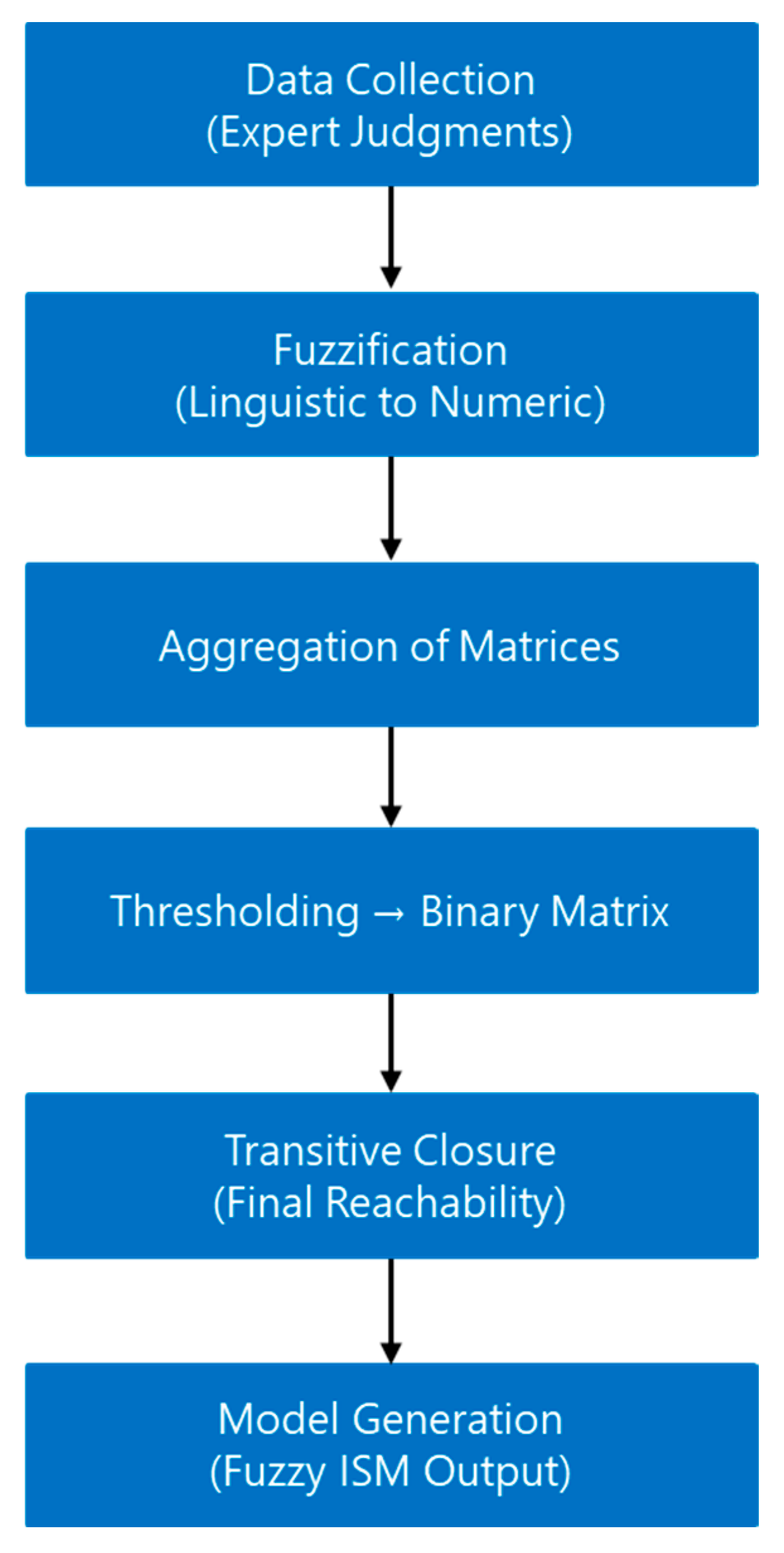
This study applies a Fuzzy Interpretive Structural Modeling (Fuzzy ISM) procedure to analyze the structural interdependencies among the six innovation dimensions. The analytical sequence consists of four primary operations: (i) fuzzification of linguistic expert judgments into triangular fuzzy numbers, (ii) aggregation of individual expert assessments into a consolidated fuzzy comparison structure, (iii) thresholding to derive the binary reachability matrix from the aggregated fuzzy relations, and (iv) hierarchical structuring through transitive closure in accordance with established ISM logic. The methodological architecture of this procedure is grounded in the foundational principles of fuzzy multi-attribute decision-making [55] and is aligned with the formalized steps adopted in prior empirical applications of fuzzy-based systemic modeling within the innovation domain [48]. To ensure analytical transparency and reproducibility, the complete stepwise workflow of the Fuzzy ISM procedure is presented in Figure 2. Detailed numerical matrices underlying each computational stage are provided in full in Appendix B, while the main text reports only summary matrices essential for interpreting the model development process.
The threshold α = 2.8077 was determined using the arithmetic mean of the defuzzified influence values in the aggregated crisp relation matrix, following standard Fuzzy ISM practice as formalized in SmartISM 2.0 [14] and in fuzzy decision-making principles described by Marimin et al. [57]. This mean-based rule is consistent with the foundational formulation of Fuzzy Interpretive Structural Modeling [52] and with subsequent empirical applications in operations and healthcare domains [9]. The chosen value effectively filters out low-intensity or noise-level interactions while preserving substantively meaningful relational strength. A brief sensitivity check using a ±5% adjustment confirmed that lower thresholds produced overly dense and less interpretable structures, whereas higher thresholds yielded excessive sparsity. Accordingly, α = 2.8077 represents a stable and theoretically sound cutoff for constructing the final reachability matrix.
To ensure methodological clarity and terminological consistency, the sequence of matrices generated throughout the modeling procedure is described explicitly. Individual expert judgments are first compiled into separate pairwise comparison matrices, which are then combined to form the aggregated fuzzy relation matrix that preserves the fuzzified structure of the assessments. After defuzzification, the resulting aggregated crisp relation matrix is constructed and subsequently used to derive the Structural Self-Interaction Matrix (SSIM) following standard directional-influence logic in ISM-based studies [9,14]. The SSIM is then converted into the binary reachability matrix through thresholding, from which the reachability, antecedent, and intersection sets are obtained. All matrix labels—aggregated fuzzy relation matrix, aggregated crisp relation matrix, SSIM, binary matrix, and reachability matrix—have been standardized and applied consistently throughout the manuscript to avoid terminological ambiguity.
To strengthen the transparency of the fuzzy component, this study also specifies the fuzzy membership functions used to translate linguistic assessments into quantitative form. In accordance with the foundational formulation of Fuzzy Interpretive Structural Modeling [52] and the implementation guidelines outlined in SmartISM 2.0 [14], the linguistic evaluations provided by experts (e.g., “low,” “medium,” “high”) were mapped onto triangular fuzzy numbers defined by lower, modal, and upper bounds. This representation ensures that expert judgments are captured as graded influence levels rather than discrete ordinal categories, consistent with established fuzzy decision-making principles [57]. As applied in previous Fuzzy ISM studies [9], these membership functions form the basis for the subsequent aggregation and defuzzification stages that precede thresholding and model structuring, thereby confirming that the analytical process operates within a genuinely fuzzy computational framework.
Under certain systemic conditions, ISM and Fuzzy ISM methodologies can produce a configuration in which all elements converge into a single level rather than forming a multi-tier hierarchy, a behavior inherent to ISM procedures. This outcome is consistent with the foundational logic of Fuzzy ISM [52] and has been observed in prior applications involving densely interconnected systems [9,14]. Sensitivity analyses confirmed that variations in the threshold did not result in a stable hierarchical separation, indicating that the observed single-level structure reflects genuine systemic interconnections among marketing innovation capabilities in the pharmaceutical sector rather than a methodological artefact. Accordingly, the term “hierarchical configuration” is retained in line with ISM conventions but should be understood conceptually as a systemic configuration derived through hierarchical inference, rather than as a literal multi-level hierarchy [57].
The figure presents the complete analytical sequence, showing the transition from expert elicitation to fuzzification, aggregation of triangular fuzzy numbers, thresholding to construct the binary reachability matrix, and final hierarchical structuring through transitive closure.
The analytical procedure translated expert pairwise judgments into aggregated relation scores and subsequently into reachability representations for system interpretation. The operations executed are summarized in Table 2. Table 2 provides an overview of the main operations and the methodological references that support each operation.
Experts used an ordinal coding scheme to convert linguistic judgments into integer scores: Not influential = 0; Low influence = 1; Medium influence = 2; High influence = 3 [53,54]. Each expert completed a six-by-six directed-pair matrix covering all ordered relations among the six innovation dimensions [51]. Individual matrices were consolidated using the maximum-rule principle, where the aggregated value for each ordered pair equaled the highest score assigned by any expert [52,57].
To maintain analytical focus and reduce procedural complexity, only aggregated scores of 2 or higher (≥2) were retained for further analysis. This threshold reflects at least a moderate perceived influence and aligns with prior interpretive structural modeling studies [9,10,14,15]. The retained aggregated values are presented in Appendix B, Table A1.
This condensed structure provides a clearer basis for interpreting how innovation elements interact within the Indonesian pharmaceutical industry. The thresholded relationships highlight the dominant pathways that shape sustainable marketing practices, allowing the subsequent analysis in Section 3 to emphasize the systemic implications of these interdependencies rather than the mechanical steps of matrix construction.

3.6. Validity and Reliability

All processing steps and intermediate outputs were reviewed by the expert panel for interpretive plausibility. Methodological decisions, including fuzzification mapping, aggregation rule, threshold computation, and transitivity closure, follow standard guidance for fuzzy structural analysis and systems modeling [51,52,53,54,56,57,58]. Where formal numeric validation metrics are absent from the documentation, interpretive review by subject-matter experts served to confirm face validity and practical relevance of the reported relations.

3.7. Research Context

The elicitation and modeling exercise were conducted to reflect the Indonesian pharmaceutical context in 2025, with particular attention to policy developments, market dynamics, and sectoral priorities relevant to parenteral nutrition and therapeutic product markets [16,20,34,35]. The analytic outputs reported in Section 3 are interpreted with explicit attention to that national context.

3.8. Theoretical Foundations for Systemic Innovation Interdependencies

The rationale for examining the six innovation dimensions through a systemic modeling lens is grounded in theoretical perspectives that conceptualize innovation as an inherently interconnected, co-evolutionary process. Contemporary systems theory rejects linear and sequential interpretations of innovation and instead emphasizes that technological, organizational, and market-facing changes unfold through reciprocal influence, iterative adjustments, and continuous feedback mechanisms [12,13,38]. Recent scholarship further highlights that innovation rarely progresses through isolated steps but develops through overlapping feedback cycles shaped by shifting technological and organizational conditions, reinforcing the need for analytical approaches capable of capturing such complexity [61].
Co-evolutionary and network-based perspectives argue that firms continually reconfigure resources, routines, and capabilities in response to environmental turbulence, regulatory pressures, and technological shifts. These reconfigurations rarely occur independently; rather, they emerge from overlapping cycles of learning, coordination, and capability recombination across functional domains [35,36,42]. In knowledge-intensive and highly regulated sectors such as pharmaceuticals, product development, process optimization, pricing mechanisms, promotional strategies, and distribution systems are deeply interlinked, meaning that innovation outcomes cannot be understood without accounting for their systemic interactions.
Given these theoretical foundations, Fuzzy ISM offers a methodologically appropriate approach for uncovering interdependencies among innovation dimensions. Fuzzy ISM is specifically designed to analyze complex, multi-directional causal structures using expert-informed judgments that reflect the ambiguous, gradated nature of influence relationships [9,10,53,54]. By transforming linguistic assessments into structured matrices and identifying both direct and transitive causal pathways, the method captures the non-linear, feedback-based dynamics that define innovation systems but are not detectable through conventional statistical techniques.
Accordingly, the systemic orientation of Fuzzy ISM is essential for modeling innovation dynamics in the pharmaceutical sector. It enables the identification of integrated patterns of influence that reflect real-world behaviors in which advancements in one domain—such as pricing innovation or distribution redesign—cascade through the system to shape product, process, and organizational outcomes. These theoretical foundations justify the adoption of Fuzzy ISM in this study and support the interpretation of its outputs as representations of an interdependent and adaptive innovation system.

4. Results

The results of the Fuzzy ISM analysis reveal the systemic interrelationships among six marketing innovation dimensions: process innovation, product innovation, organization innovation, price innovation, promotion innovation, and distribution innovation. These findings were derived through a structured analytical sequence involving the development of the Structural Self-Interaction Matrix (SSIM), binary transformation, computation of initial and final reachability matrices, and level partitioning to establish the structural model. The analysis followed the established ISM and Fuzzy ISM methodological procedures [51,52,53,54,56,57].
To avoid excessive procedural detail, the technical descriptions of matrix construction have been condensed, and the emphasis in this section is placed on the substantive implications of the resulting structure. Although the sequence of matrices provides methodological transparency, the substantive contribution of the analysis lies in the systemic structure revealed by the Fuzzy ISM results. The final configuration shows that all six innovation dimensions operate within a tightly interconnected system, characterized by strong mutual influence and extensive feedback loops. This indicates that sustainable marketing innovation in the Indonesian pharmaceutical context is driven by concurrent, cross-functional interactions rather than linear hierarchical progressions. Accordingly, strategic developments in product design, organizational capability, distribution management, pricing, promotion, and process improvement must be approached holistically, as shifts in any single dimension propagate rapidly across the entire system.

4.1. Structural Self-Interaction Matrix (SSIM)

Following the aggregation of expert evaluations, the Structural Self-Interaction Matrix (SSIM) was developed to organize the direct relationships among the six innovation dimensions. Each dimension appears as both a row and a column, with diagonal values fixed at zero because an element cannot directly influence itself [51,52]. The SSIM reflects the perceived intensity of direct influence among the dimensions based on expert evaluations. Appendix C, Table A2 summarizes these collective judgments.
Table A2 provides a concise map of direct influences. Product, organization, and distribution innovation show strong driving power, while process innovation displays limited direct influence but high dependence on other dimensions. Price and promotion innovation function as linkage elements that transmit influence across the system. This structure clarifies how innovation drivers operate within the Indonesian pharmaceutical industry and highlights the pathways that shape sustainable marketing practices. The SSIM therefore forms a focused foundation for the subsequent reachability and transitive analyses [51,57].
A review of the pre-transitivity structure provides additional insight into the relative driving and dependence characteristics of each innovation dimension. In the initial matrices, product, organization, and distribution innovation exhibit strong driving power, indicating their capacity to initiate influence across multiple elements in the system. These dimensions function as upstream enablers that shape marketing and operational decisions, consistent with prior evidence that product development, organizational capability, and distribution infrastructure are fundamental drivers of innovation performance in the pharmaceutical sector [3,4,17,18]. In contrast, process innovation demonstrates higher dependence, reflecting its role in adapting to upstream changes rather than initiating them. Price and promotion innovation act as linkage elements, transmitting influence between the primary drivers and the more dependent dimensions [9,14,52,57].
These pre-transitivity patterns carry important managerial implications for the Indonesian pharmaceutical industry. Dimensions with strong initial driving power—particularly product, organization, and distribution innovation—should be closely monitored and prioritized, as strategic adjustments in these areas are likely to generate system-wide effects. Firms should therefore concentrate on reinforcing product pipelines, organizational processes, and distribution capabilities to create stable foundations for downstream marketing activities. At the same time, the dependent nature of process innovation underscores the need for cross-functional coordination to ensure alignment with upstream changes in product strategy, pricing decisions, and promotional planning. Strengthening these interdependencies enhances coherence across the innovation system and supports more sustainable marketing practices within a competitive and highly regulated pharmaceutical environment [5,6,7,43].

4.2. Binary Matrix (Significant Relationships > α)

The SSIM was converted into a binary matrix by applying a threshold of α = 2.8077. Only relationships at or above this value were coded as “1,” while weaker links were coded as “0,” isolating the significant causal relationships for modeling [53,54]. Appendix D, Table A3 provides the resulting Binary Matrix.
Beyond its procedural role, the binary structure clarifies the dominant causal pathways shaping sustainable marketing innovation in Indonesia. Product and organization innovation retain broad influence, confirming their function as key systemic drivers. These patterns indicate that strategic improvements in these domains can generate substantial spillover effects across pricing, promotion, processes, and distribution, reinforcing the industry’s movement toward integrated and sustainable marketing practices [51,52].

4.3. Initial and Final Reachability Matrices

The binary matrix was expanded by adding the identity matrix to introduce self-reachability, producing the Initial Reachability Matrix used to identify indirect relationships [52,57]. Appendix E, Table A4 provides the resulting structure.
Beyond its procedural role, this step clarifies how each innovation dimension participates in wider systemic influence. The reflexive structure reveals indirect pathways that support cross-functional alignment in the Indonesian pharmaceutical industry, particularly where process, promotion, and price innovation depend on product, organizational, and distribution strengths [51,57].
Using transitivity, the Initial Reachability Matrix was iteratively updated until no further changes occurred, resulting in the Final Reachability Matrix shown in Appendix F, Table A5 [51,52]. The dense pattern of direct and transitive links indicates a highly interconnected innovation system. This configuration shows that shifts in any dimension—product, process, promotion, price, organization, or distribution—spread rapidly across the system, reinforcing the feedback loops that characterize sustainable marketing innovation in the Indonesian pharmaceutical context [9,14,52].

4.4. Level Partition Results

After constructing the final reachability matrix, a level partition analysis was performed to determine the hierarchical positioning of each innovation dimension within the systemic model. This step aimed to group elements according to their driving and dependence characteristics, using the reachability set (R), antecedent set (A), and their intersection (R ∩ A). The results of this analysis are presented in Appendix G, Table A6, which shows the relationship sets for each innovation element.
After examining the level partition results, it becomes evident that all six innovation dimensions share identical reachability and antecedent sets, resulting in a complete overlap between R, A, and R ∩ A. This means that every innovation element in the system simultaneously acts as both a driver and a dependent factor. Therefore, no multi-level hierarchy was generated; instead, the structure reflects a single integrated layer in which all dimensions are mutually influential. This configuration highlights the systemic interdependence and feedback cycles that characterize sustainable marketing innovation in the pharmaceutical industry [9,14,51,52,57].
To ensure that this non-hierarchical configuration does not arise from methodological artifacts, further clarification of the Fuzzy ISM procedure is warranted. The use of maximum-rule aggregation preserves the strongest evaluations provided by any expert, the narrow 0–3 linguistic scale compresses variation in judgment, and the application of a relatively high threshold increases the likelihood that multiple relationships are retained. In addition, the inherent transitivity of the reachability algorithm can amplify matrix density by generating indirect links even when direct expert agreement is limited. These methodological characteristics help explain why all six innovation dimensions converge into a single integrated layer and provide the necessary analytical context for interpreting the absence of hierarchical differentiation in the resulting model.
The use of maximum-rule aggregation, low thresholds on a narrow scale, and the mathematical effects of transitivity in dense matrices may also contribute to generating a fully interconnected system even when expert judgments vary. Without robustness checks or sensitivity analyses, it remains difficult to determine the extent to which the resulting structure reflects actual systemic dynamics or methodological artifacts. This limitation is acknowledged and highlighted as an important direction for future validation.
Future research could further evaluate the stability of this structure by applying threshold-sweep tests, comparing alternative aggregation rules, or triangulating the results with complementary methods such as Fuzzy DEMATEL or MICMAC.

4.5. Integrated Cycle Model of Sustainable Marketing Innovation

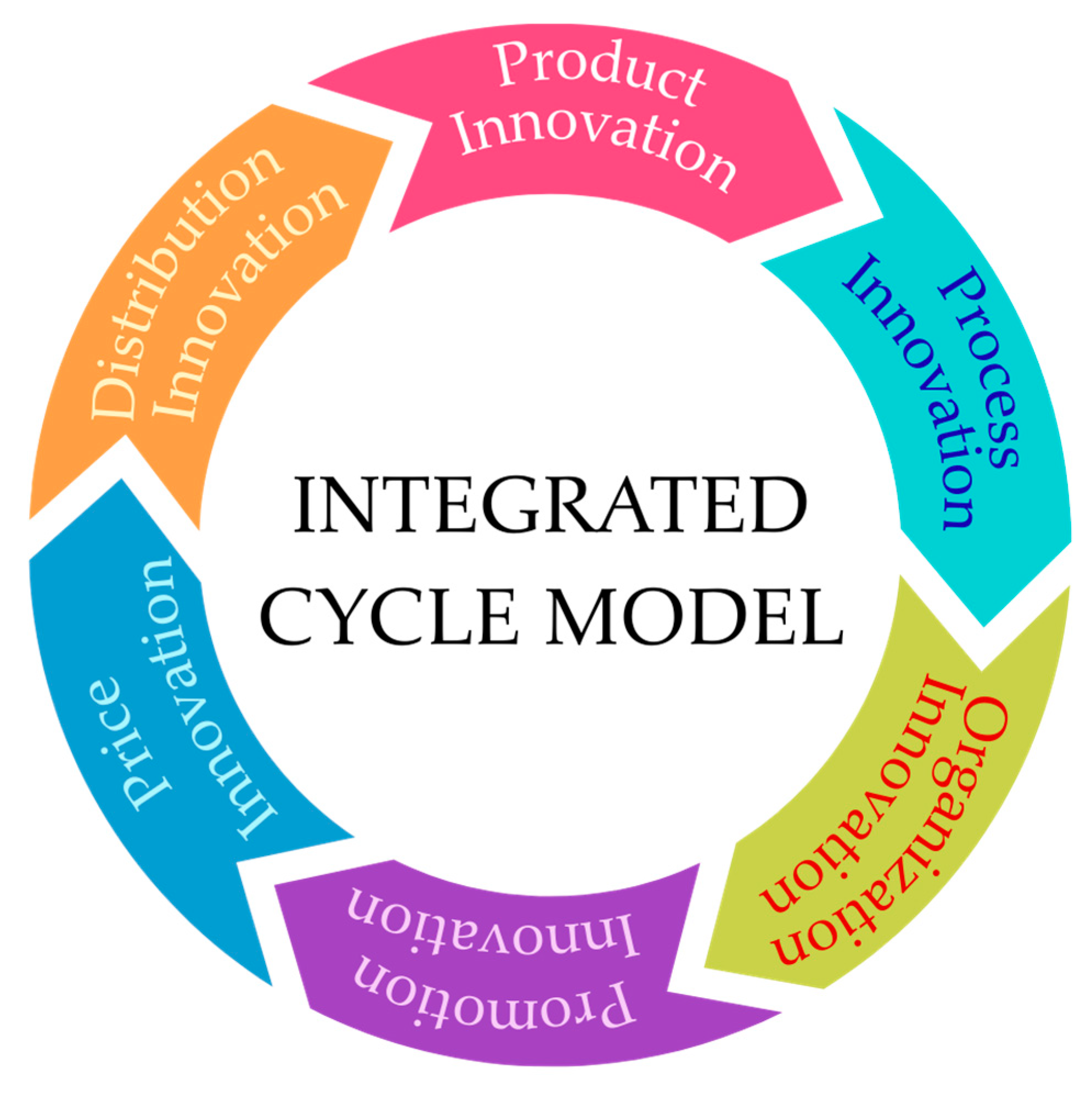
Based on the empirical findings, the resulting structure does not follow a conventional hierarchical pyramid in which the driving innovation dimensions occupy the lower levels and the dependent elements are positioned at the top. Instead, the analysis reveals an Integrated Cycle Model, a framework that positions the six innovation dimensions—Process Innovation, Product Innovation, Organization Innovation, Price Innovation, Promotion Innovation, and Distribution Innovation—within a single interconnected system that functions as a unified and adaptive structure [9,10,14,51,52]. Each element is reciprocally linked to all others, forming a dynamic and continuous feedback mechanism that collectively enhances the firm’s sustainable innovation capability [3,4,7,22].
A defining feature of this model is the absence of a dominant initiating element. Unlike hierarchical models that identify one dimension as the primary source of influence, the Integrated Cycle Model demonstrates that innovation evolves simultaneously across all dimensions, generating multidirectional and synergistic interactions [17,18,32,41,43,65,66,67,68,69,70,71]. For instance, Product Innovation does not necessarily precede Process Innovation; rather, both evolve concurrently in a mutually reinforcing relationship, where improvements in one element immediately stimulate adaptive responses in the others [5,25,65,66,68,71].
The configuration also reveals the existence of strong feedback loops across all innovation dimensions. Successful Promotion Innovation can generate insights and resources that stimulate Product Innovation, while the introduction of new products often necessitates more creative and targeted promotional strategies. Such reciprocal causality demonstrates that the relationships among these innovation dimensions are circular and iterative rather than linear, reflecting the adaptive and self-reinforcing nature of sustainable marketing innovation systems [8,20,22,43,67,69,70].
The feedback loops depicted in the Integrated Cycle Model are reflected in real-world decision-making within the Indonesian pharmaceutical industry. In the parenteral nutrition segment, firms introducing reformulated amino acid and electrolyte products must simultaneously adjust their process innovation, such as sterilization and aseptic-fill technologies, to comply with BPOM’s evolving quality requirements. These product and process adjustments often stimulate promotion innovation through updated educational materials for clinicians and dietitians. The new materials then require revised organizational coordination involving medical, marketing, and regulatory teams. This sequence illustrates how product, process, promotion, and organizational innovation evolve together in practice.
A similar pattern is evident in vaccine introduction and distribution reforms supported by the Ministry of Health and BPOM. When a new vaccine is added to the national program, firms must redesign distribution innovation to ensure cold-chain reliability across Indonesia’s geographically dispersed regions. These distribution improvements influence price innovation because logistical efficiencies or constraints directly affect allowable pricing structures within national procurement mechanisms. Pricing decisions subsequently shape promotion innovation by determining how firms communicate value to healthcare providers and government stakeholders. These examples demonstrate the dynamic and cyclical interactions among the six innovation dimensions and align with the feedback mechanisms identified through the Fuzzy ISM analysis.
From a strategic management perspective, this integrated configuration underscores the necessity of adopting a holistic innovation strategy. Firms should avoid implementing partial or isolated innovation initiatives and instead coordinate all six dimensions to achieve systemic synergy [6,24,31,43,65,66,68]. Sustainable marketing performance, as reflected in the Integrated Cycle Model, can only be achieved through a holistic orchestration in which all six innovation dimensions—Product, Process, Organization, Price, Promotion, and Distribution—are managed simultaneously and mutually reinforce one another within a dynamic, continuous, and non-hierarchical system. This integrated configuration highlights that no single element acts as a dominant driver; instead, each dimension interacts reciprocally, creating an adaptive and self-sustaining network of innovation that collectively enhances strategic effectiveness and long-term competitiveness [16,26,27,69,70,71]. The final hierarchical configuration derived from the Fuzzy ISM analysis is illustrated in Figure 3, which presents the Integrated Cycle Model of Sustainable Marketing Innovation.
Figure 3 integrated cycle model of sustainable marketing innovation, illustrating the reciprocal and cyclical feedback relationships among the six innovation dimensions (Product, Process, Organization, Price, Promotion, and Distribution). The model synthesizes the results of the Fuzzy ISM analysis by showing how each dimension mutually reinforces the others within a continuous, non-hierarchical innovation cycle.
To strengthen its theoretical contribution, the Integrated Cycle Model extends existing views of pharmaceutical marketing innovation by moving beyond linear or hierarchical representations commonly found in ISM-based studies [3,7,10,17]. Instead of positioning product, organizational, or distribution innovation as dominant initiators, the model shows that all six dimensions co-evolve within a continuous, non-hierarchical cycle. This demonstrates that innovation in the Indonesian pharmaceutical industry operates as an adaptive system in which shifts in one dimension immediately influence the others [22,31,65].
The structure also enables the formulation of concise, testable propositions for future research. First, improvements in any single dimension are expected to generate positive spillover effects across the entire system due to its dense reciprocal links. Second, the pre-transitivity results suggest that product, organization, and distribution innovation may function as early indicators of system-wide change, a hypothesis suitable for longitudinal or PLS-SEM studies [37]. Third, promotion and price innovation may act as mediating linkage elements that channel cross-dimensional effects. These propositions provide a clear pathway for future empirical validation and position the model as a foundation for subsequent quantitative investigations.

5. Discussion

The findings of this study confirm that marketing innovation in the pharmaceutical industry operates as a complex and interconnected system rather than as a hierarchical structure. The Integrated Cycle Model of Sustainable Marketing Innovation derived from the Fuzzy ISM analysis shows that the six dimensions of innovation—Process, Product, Organization, Price, Promotion, and Distribution—mutually reinforce one another, forming a continuous feedback network that enhances adaptive capability and strategic resilience. While the model provides a coherent representation of how these dimensions interact systemically, its theoretical contribution should be interpreted with appropriate nuance. The Integrated Cycle Model does not aim to replace existing theories of innovation systems; rather, it refines their application within the pharmaceutical marketing context by emphasizing circular and mutually reinforcing relationships that have been less explicitly articulated in previous studies. Its contribution lies in clarifying and empirically illustrating these interdependencies through Fuzzy ISM, rather than proposing an entirely new theoretical paradigm, thereby ensuring conceptual precision and appropriately situating the study within the broader field of systemic innovation research.
The circular configuration identified in this study aligns closely with several established theoretical perspectives. First, the cyclical structure reflects the Schumpeterian view of innovation as an evolutionary and dynamic process, in which new combinations initiate adaptive changes across organizational subsystems [1,2]. The Integrated Cycle Model extends this logic by illustrating how marketing-related innovations develop through reciprocal interactions among product development, internal processes, and market-facing activities. Second, the model corresponds with the dynamic capabilities framework, particularly the sensing–seizing–reconfiguring sequence [36]. Product and promotion innovations represent sensing and seizing activities, whereas process and organizational innovations reflect reconfiguration capabilities that enable firms to respond to environmental uncertainty and competitive pressures. Third, the multiple feedback loops in the model are consistent with open innovation theory, especially within the biopharmaceutical sector where firms increasingly depend on external knowledge flows, partnerships, and collaborative R&D mechanisms [65,72]. For example, the bidirectional relationship between promotion and process innovation demonstrates how external market signals can influence internal operational adjustments, while internal process readiness determines the effectiveness of external engagement. Fourth, the model reflects principles of systems theory and ISM-based interrelationship modeling, which emphasize that innovation emerges from complex, non-linear interactions rather than isolated activities [9,10,52]. The presence of cross-level feedback loops—such as distribution influencing promotion, or organizational capabilities influencing process innovation—illustrates the multidirectional and systemic nature of sustainable innovation pathways.
These insights also build upon prior empirical research on sustainable marketing innovation in the Indonesian pharmaceutical industry, which highlighted the interdependence of innovation drivers and emphasized the need for an integrated, system-oriented framework [48]. The present model advances this line of inquiry by offering a more explicit representation of how the six innovation dimensions reinforce one another in a continuous cycle. Overall, the Integrated Cycle Model contributes both conceptually and practically to the literature on sustainable pharmaceutical innovation by demonstrating that marketing innovation evolves through a dynamic and mutually reinforcing system of innovation activities.

5.1. Theoretical Implications

The findings offer several theoretical contributions to innovation systems research by positioning the six innovation dimensions within a system-wide, mutually connected structure. Importantly, the systemic configuration detected by the Fuzzy ISM analysis supports contemporary perspectives that conceptualize innovation as a co-evolutionary process shaped by reciprocal interactions among technological, organizational, and market-oriented changes. Recent scholarship demonstrates that innovation rarely progresses through isolated or sequential steps but instead develops through iterative, overlapping feedback loops driven by shifts in technological capabilities and organizational routines [61]. This framework helps explain why interdependencies among marketing, organizational, and process-related innovation dimensions emerge in complex industries such as pharmaceuticals.
Rather than interpreting the integrated structure as a hierarchy of causal pathways, the model reinforces theoretical views that innovation outcomes arise from dynamic recombination of resources, capabilities, and market knowledge. This aligns with co-evolution and dynamic capabilities theory, which posit that firms adapt through continuous updating of technical, managerial, and market-facing competencies under uncertainty and regulatory complexity [10,15,52]. The interconnections identified in this study provide empirical grounding for these theoretical propositions by demonstrating how innovation dimensions function as interlinked components of a broader adaptive system.
Methodologically, the study contributes to the theoretical advancement of fuzzy and interpretive modeling by showing that Fuzzy ISM can capture graded, non-linear, and overlapping causal structures in innovation research. By translating linguistic expert judgments into structured reachability relationships, the method aggregates these assessments into a coherent expert consensus that supports theoretical perspectives viewing innovation as non-binary, path-dependent, and structurally embedded [53,54,71]. This reinforces the methodological relevance of fuzzy-based systemic approaches for analyzing innovation ecosystems where causal boundaries are blurred and interactions are multidirectional.
Finally, distinguishing between analytical outputs and sustainability implications clarifies the theoretical positioning of the model. Although the six innovation dimensions can contribute to long-term sustainability through capability development and organizational coherence, the Fuzzy ISM model itself does not quantify sustainability-related outcomes. This distinction ensures theoretical accuracy while reinforcing the argument that sustainability emerges indirectly through system-level innovation alignment rather than through isolated environmental or social metrics [43,45,47].
Beyond its theoretical positioning, the Integrated Cycle Model can be explicitly connected to tangible sustainability outcomes across the pharmaceutical value chain. Product and process innovation strengthen resource efficiency by advancing formulation optimization, improving material utilization, and reducing operational waste, thereby supporting public health improvements and sustainability commitments aligned with SDG 3 [73]. Price and promotion innovation enhance equitable access to essential medicines by enabling affordability mechanisms and fostering evidence-based communication, both of which contribute to reducing health disparities and supporting inclusive health outcomes [74]. Distribution innovation further reinforces sustainability performance by improving system-wide logistics efficiency, minimizing product losses, and ensuring stable access to treatment, thereby enhancing the resilience and equity of healthcare delivery systems [75]. Collectively, these mechanisms demonstrate that coordinated innovation across all six dimensions can generate sustainability-oriented outcomes that extend well beyond firm-level performance.
The Integrated Cycle Model also aligns closely with several Sustainable Development Goals (SDGs), underscoring its relevance for sustainability-driven strategic and policy frameworks. Product, process, and distribution innovation advance SDG 3 (Good Health and Well-Being) by strengthening system capacity, improving treatment availability, and enabling more resilient healthcare infrastructures [73,74]. Organizational and process innovation contribute to SDG 9 (Industry, Innovation, and Infrastructure) by fostering capability development, facilitating digital transformation, and supporting collaborative innovation ecosystems that enhance institutional readiness for sustainable growth [75]. Price and promotion innovation indirectly support SDG 12 (Responsible Consumption and Production) by promoting informed decision-making, transparency in health communication, and equitable access pathways that encourage responsible health-related consumption patterns. Together, these SDG linkages demonstrate that the Integrated Cycle Model offers not only conceptual coherence but also a practical roadmap for advancing sustainability objectives through systemic alignment of innovation activities.

5.2. Managerial Implications

From a managerial perspective, the Integrated Cycle Model underscores the necessity of adopting holistic innovation governance within pharmaceutical organizations. Firms must manage all six dimensions of innovation simultaneously, ensuring alignment between technical, organizational, and marketing subsystems [6,16,26,65]. For instance, improvements in product innovation should be supported by adaptive process innovation and reinforced by targeted promotion innovation strategies that ensure market uptake and brand differentiation [17,18,41].
The interpretation of the ISM findings becomes more meaningful when situated within the structural characteristics of Indonesia’s pharmaceutical sector. The absence of a hierarchical ordering and the emergence of a fully integrated cycle align with the institutional realities in which firms must simultaneously comply with regulatory requirements, manage intense competition in the generic-dominated market, and respond to the restructuring of distribution channels [45,46]. Strict promotional and pricing regulations require companies to coordinate innovation activities across product development, market access, and communication functions rather than relying on isolated initiatives. At the same time, the expansion of digital health platforms, the increasing role of e-pharmacy channels, and the need for resilient logistics systems have made integrated innovation across distribution, promotion, and organizational processes indispensable for sustaining competitiveness [47]. These contextual factors reinforce why the six innovation dimensions function as an interdependent system rather than a sequential hierarchy in the Indonesian pharmaceutical landscape.
The presence of strong feedback loops among innovation dimensions implies that management must establish mechanisms for cross-functional learning and continuous communication. The model highlights that innovation in Pricing and Distribution often depends on timely information flow from marketing and R&D teams, suggesting the need for integrated data systems and collaborative decision-making platforms [20,22,43,69,70]. In practice, pharmaceutical firms can use this framework to diagnose bottlenecks and identify leverage points that enhance system-wide innovation performance [7,16,69].
Moreover, the findings suggest that managerial focus should shift from isolated project-based innovation to sustained systemic orchestration. Strategic leaders must cultivate innovation cultures that value experimentation, tolerance for ambiguity, and iterative feedback across departments [24,31]. Such managerial adaptability is particularly critical in the context of emerging markets like Indonesia, where regulatory shifts, supply chain constraints, and market volatility demand high levels of strategic flexibility [34,35,66].

5.3. Policy Implications

At the policy level, the Integrated Cycle Model provides valuable guidance for designing innovation-support mechanisms in the pharmaceutical sector. Since no single innovation dimension acts as the dominant driver, policy instruments should aim to foster balanced capability development across all six dimensions [20,27,43,67]. Governments and regulatory agencies can facilitate this balance by encouraging collaborative innovation ecosystems that link universities, industry, and healthcare institutions [21,23,24].
The presence of multidirectional linkages among innovation dimensions also implies that regulatory frameworks should be adaptive rather than prescriptive. Policies that promote flexible pricing schemes, transparent marketing regulations, and sustainable distribution systems can reinforce the systemic stability of the innovation network [25,26,33,65]. Furthermore, public–private partnerships and open-innovation initiatives can strengthen feedback loops across sectors, promoting resource efficiency and knowledge diffusion [22,65,70,71].
From a sustainability standpoint, the integrated nature of the model aligns with global policy goals related to responsible consumption and production. Encouraging circular innovation practices, digital transformation, and green distribution systems can enhance both economic performance and environmental responsibility in the pharmaceutical industry [8,25,28,32].

5.4. Methodological Contributions

Methodologically, this study advances the application of Fuzzy ISM in the field of marketing innovation by demonstrating its capability to model interdependencies among conceptual dimensions that are not easily captured through conventional statistical approaches. By integrating fuzzy logic with interpretive modeling, the research captures the ambiguity inherent in expert judgment while maintaining computational consistency [9,10,53,54].
The study also extends the use of systemic modeling to emerging-market contexts, contributing empirical evidence from Indonesia’s pharmaceutical industry—an environment characterized by high uncertainty and rapid transformation [16,20,34]. This contextual application confirms that fuzzy-based modeling can serve as a robust decision-support tool for both researchers and practitioners seeking to understand complex innovation dynamics [14,15,57,66,70].

5.5. Limitations and Future Research

Although the Fuzzy ISM approach provides a structured analytical framework, it remains dependent on expert interpretation and subjective assessment. Future research should extend this systemic model through longitudinal validation and hybrid quantitative approaches such as Partial Least Squares Structural Equation Modeling (PLS-SEM) to test causal stability [36,37,65]. Expanding expert participation across multiple emerging economies would enable comparative benchmarking and strengthen the external validity of the model [16,20,27,69,70].
Integrating emerging research topics such as blockchain-based intellectual property management, ethical artificial intelligence, and digital marketing analytics would further refine the model’s applicability in sustainability-driven innovation studies [38,39,71]. Additionally, simulation-based approaches or fuzzy cognitive mapping could be employed to visualize feedback intensities and dynamic interactions over time, thereby enhancing the explanatory power of the Integrated Cycle Model.
In addition, the generalizability of the findings is constrained by the Indonesia-specific context and by the pharmaceutical subsectors represented within the expert panel, which may not reflect the full diversity of the industry. Future quantitative studies could operationalize the six innovation dimensions using measurable indicators—such as digital promotion intensity, pricing flexibility indices, process efficiency metrics, organizational agility scales, product development cycle times, and distribution responsiveness scores—to empirically test the Integrated Cycle Model across broader samples. Complementary analytical tools, including fuzzy cognitive maps, system dynamics, and simulation models, also offer promising avenues for examining how innovation interdependencies evolve over time and for assessing the dynamic behavior of the system under varying market or regulatory conditions.

6. Conclusions

This study developed and validated a systemic framework for understanding marketing innovation interdependencies in the pharmaceutical industry using Fuzzy ISM. The analysis demonstrated that marketing innovation does not operate as a linear or hierarchical construct but rather as an integrated and self-reinforcing system. The six innovation dimensions—Process, Product, Organization, Price, Promotion, and Distribution—were found to be interconnected, forming a dynamic network of reciprocal influences that collectively sustain competitive advantage and adaptive capacity. This empirical configuration provides a comprehensive foundation for interpreting innovation as a multidimensional structure rather than as a sequence of isolated activities.
Building upon this finding, the resulting Integrated Cycle Model of Sustainable Marketing Innovation emphasizes that no single innovation dimension functions as a dominant driver. Instead, sustainable performance depends on the simultaneous orchestration of all dimensions, where strategic balance among technological, organizational, and market-oriented innovations generates systemic resilience [7,16,24,43,66]. This observation challenges traditional hierarchical perspectives of innovation management and supports a multidirectional, feedback-based understanding of how pharmaceutical firms adapt to environmental and market pressures [9,10,15,57,68]. Such a perspective underscores the importance of viewing innovation as an evolving and mutually reinforcing process.
From a theoretical standpoint, the study contributes to the advancement of systemic innovation theory by providing empirical evidence that innovation evolution in pharmaceutical marketing is circular and iterative rather than sequential. The integration of fuzzy logic within interpretive structural modeling enhances methodological precision in capturing the complexity of expert-driven knowledge structures [52,53,54]. In doing so, the framework bridges qualitative interpretation with quantitative rigor, offering a robust analytical model for studying interconnected innovation systems in dynamic industries [14,15,57,71].
Managerially, the results highlight the importance of developing governance mechanisms that ensure cross-functional alignment among marketing, production, and organizational units. Companies should adopt holistic innovation management strategies that reinforce collaboration between Product and Process Innovation while leveraging Promotion and Distribution Innovation to strengthen market reach [17,18,26,27,69]. In emerging markets such as Indonesia, where institutional and infrastructural challenges are pronounced, this integrated approach can improve innovation diffusion, resource allocation, and strategic responsiveness [20,34,35,66].
At the policy level, the Integrated Cycle Model underscores the necessity of designing innovation support mechanisms that promote balanced capability development across all innovation dimensions. Governments and industry regulators should encourage collaborative ecosystems, adaptive regulatory environments, and digital infrastructure investments that sustain systemic innovation growth [22,23,25,43,70]. These policy interventions can ensure that innovation systems evolve cohesively across technological, organizational, and market layers.
Future research should extend this model through longitudinal validation and hybrid approaches such as Partial Least Squares Structural Equation Modeling (PLS-SEM) to evaluate causal stability [36,37]. Comparative studies across different national contexts could further enhance external validity and reveal contextual variations in innovation dynamics. Incorporating emerging topics such as blockchain-based intellectual property systems and ethical artificial intelligence could also deepen the sustainability and governance dimensions of innovation research [38,39,71].
In conclusion, this study provides a comprehensive analytical framework that captures the systemic and cyclical nature of marketing innovation in the pharmaceutical sector. By revealing the structural interdependencies among key innovation dimensions, the Integrated Cycle Model offers both theoretical and managerial insights for achieving sustainable competitiveness in complex, fast-evolving markets.
This study also provides several distinct theoretical and practical contributions. Theoretically, it refines systemic innovation theory in the pharmaceutical context by demonstrating that innovation evolution occurs through circular, mutually reinforcing dynamics rather than linear progressions. The Fuzzy ISM-based configuration clarifies how interdependent innovation capabilities co-develop within a unified system, thereby extending current understandings of multidimensional innovation structures in emerging markets. Practically, the findings offer actionable insights for managers and policymakers seeking to strengthen innovation performance under resource constraints. Firms are encouraged to adopt coordinated, cross-functional innovation strategies, while policymakers in emerging economies may use the model to design more balanced innovation-support mechanisms that cultivate ecosystem-wide capability development. Despite its contributions, the study has limitations, including its reliance on expert judgment and its cross-sectional design. Future research should validate the model using longitudinal data, investigate cross-country comparisons, and incorporate complementary analytical techniques to enhance generalizability and deepen theoretical insight.

Author Contributions

Conceptualization: Z.; methodology: Z., R.H., Z.A. and T.N.; validation: R.H. and Z.A.; formal analysis: Z.; investigation: Z.; resources: Z.; data curation: R.H., Z.A. and T.N.; writing—original draft preparation: Z.; writing—review and editing: Z., R.H., Z.A. and T.N.; visualization: Z.; supervision: R.H., Z.A. and T.N. All authors have read and agreed to the published version of the manuscript.

Funding

This research received no external funding.

Institutional Review Board Statement

Not applicable.

Informed Consent Statement

Not applicable.

Data Availability Statement

The data presented in this study are available on request from the corresponding author.

Conflicts of Interest

The authors declare no conflicts of interest.

Appendix A

Part 1: Instructions for Completing the Questionnaire
You will be asked to evaluate the direction and strength of influence between marketing innovation dimensions based on the ISM (Interpretive Structural Modeling) method.
Please assess how strongly Dimension A influences Dimension B by selecting one category:
CodeDescription
NINo Influence
IIIndirect Influence
SIStrong Influence
WIWeak Influence
Guidelines:
  • Select only one category per item;
  • Answer all questions;
  • There are 30 evaluation items across six tables;
  • Please base your answers on your professional knowledge, experience, and judgment.
Part 2: Expert Questionnaire Form
The following tables present the evaluation items for assessing the direction and strength of influence among the six marketing innovation dimensions based on the ISM (Interpretive Structural Modeling) method. Please indicate your judgment by selecting the appropriate category (NI, II, SI, WI) for each pair of dimensions.
Influence of Process Innovation on Other Dimensions.
No.A: Process InnovationB: Affected DimensionNIIISIWI
1Process InnovationProduct Innovation
2Process InnovationOrganizational Innovation
3Process InnovationPrice Innovation
4Process InnovationPromotion Innovation
5Process InnovationDistribution Innovation
Influence of Product Innovation on Other Dimensions.
No.A: Product InnovationB: Affected DimensionNIIISIWI
1Product InnovationProcess Innovation
2Product InnovationOrganizational Innovation
3Product InnovationPrice Innovation
4Product InnovationPromotion Innovation
5Product InnovationDistribution Innovation
Influence of Organizational Innovation on Other Dimensions.
No.A: Organizational InnovationB: Affected DimensionNIIISIWI
1Organizational InnovationProcess Innovation
2Organizational InnovationProduct Innovation
3Organizational InnovationPrice Innovation
4Organizational InnovationPromotion Innovation
5Organizational InnovationDistribution Innovation
Influence of Price Innovation on Other Dimensions.
No.A: Price InnovationB: Affected DimensionNIIISIWI
1Price InnovationProcess Innovation
2Price InnovationProduct Innovation
3Price InnovationOrganizational Innovation
4Price InnovationPromotion Innovation
5Price InnovationDistribution Innovation
Influence of Promotion Innovation on Other Dimensions.
No.A: Promotion InnovationB: Affected DimensionNIIISIWI
1Promotion InnovationProcess Innovation
2Promotion InnovationProduct Innovation
3Promotion InnovationOrganizational Innovation
4Promotion InnovationPrice Innovation
5Promotion InnovationDistribution Innovation
Influence of Distribution Innovation on Other Dimensions.
No.A: Distribution InnovationB: Affected DimensionNIIISIWI
1Distribution InnovationProcess Innovation
2Distribution InnovationProduct Innovation
3Distribution InnovationOrganizational Innovation
4Distribution InnovationPrice Innovation
5Distribution InnovationPromotion Innovation

Appendix B

Table A1. Aggregated relation matrix (maximum aggregated scores, scale 0–3).
Process
Innovation
Product
Innovation
Organization
Innovation
Price
Innovation
Promotion
Innovation
Distribution
Innovation
Process Innovation2323
Product Innovation33333
Organization Innovation33333
Price Innovation33223
Promotion Innovation32332
Distribution Innovation3333

Appendix C

Table A2. Initial Structural Self-Interaction Matrix (SSIM).
Process
Innovation
Product
Innovation
Organization
Innovation
Price
Innovation
Promotion
Innovation
Distribution
Innovation
Process Innovation000023
Product Innovation303333
Organization Innovation330333
Price Innovation332023
Promotion Innovation323302
Distribution Innovation333300

Appendix D

Table A3. Binary Matrix (Significant Relationships > α).
Process
Innovation
Product
Innovation
Organization
Innovation
Price
Innovation
Promotion
Innovation
Distribution
Innovation
Process Innovation000001
Product Innovation101111
Organization Innovation110111
Price Innovation110001
Promotion Innovation011100
Distribution Innovation111100

Appendix E

Table A4. Initial Reachability Matrix (D = Binary Matrix + Identity).
Process
Innovation
Product
Innovation
Organization
Innovation
Price
Innovation
Promotion
Innovation
Distribution
Innovation
Process Innovation100001
Product Innovation111111
Organization Innovation111111
Price Innovation110101
Promotion Innovation101110
Distribution Innovation111101

Appendix F

Table A5. Final Reachability Matrix.
Process
Innovation
Product
Innovation
Organization
Innovation
Price
Innovation
Promotion
Innovation
Distribution
Innovation
Process Innovation11 *1 *1 *1 *1
Product Innovation111111
Organization Innovation111111
Price Innovation111 *11 *1
Promotion Innovation11 *1111 *
Distribution Innovation11111 *1
* Indicates an indirect relationship derived through transitivity.

Appendix G

Table A6. Level Partition Analysis of Innovation Dimensions.
ElementReachability Set (R)Antecedent Set (A)Intersection (R ∩ A)
Process
Innovation
{Distribution Innovation, Price Innovation, Organization Innovation, Product Innovation, Promotion Innovation, Process Innovation}{Distribution Innovation, Price Innovation, Organization Innovation, Product Innovation, Promotion Innovation, Process Innovation}{Distribution Innovation, Price Innovation, Organization Innovation, Product Innovation, Promotion Innovation, Process Innovation}
Product
Innovation
{Distribution Innovation, Price Innovation, Organization Innovation, Product Innovation, Promotion Innovation, Process Innovation}{Distribution Innovation, Price Innovation, Organization Innovation, Product Innovation, Promotion Innovation, Process Innovation}{Distribution Innovation, Price Innovation, Organization Innovation, Product Innovation, Promotion Innovation, Process Innovation}
Organization
Innovation
{Distribution Innovation, Price Innovation, Organization Innovation, Product Innovation, Promotion Innovation, Process Innovation}{Distribution Innovation, Price Innovation, Organization Innovation, Product Innovation, Promotion Innovation, Process Innovation}{Distribution Innovation, Price Innovation, Organization Innovation, Product Innovation, Promotion Innovation, Process Innovation}
Price
Innovation
{Distribution Innovation, Price Innovation, Organization Innovation, Product Innovation, Promotion Innovation, Process Innovation}{Distribution Innovation, Price Innovation, Organization Innovation, Product Innovation, Promotion Innovation, Process Innovation}{Distribution Innovation, Price Innovation, Organization Innovation, Product Innovation, Promotion Innovation, Process Innovation}
Promotion
Innovation
{Distribution Innovation, Price Innovation, Organization Innovation, Product Innovation, Promotion Innovation, Process Innovation}{Distribution Innovation, Price Innovation, Organization Innovation, Product Innovation, Promotion Innovation, Process Innovation}{Distribution Innovation, Price Innovation, Organization Innovation, Product Innovation, Promotion Innovation, Process Innovation}
Distribution
Innovation
{Distribution Innovation, Price Innovation, Organization Innovation, Product Innovation, Promotion Innovation, Process Innovation}{Distribution Innovation, Price Innovation, Organization Innovation, Product Innovation, Promotion Innovation, Process Innovation}{Distribution Innovation, Price Innovation, Organization Innovation, Product Innovation, Promotion Innovation, Process Innovation}

References

  1. Schumpeter, J.A. The Theory of Economic Development; Harvard University Press: Cambridge, MA, USA, 1934. [Google Scholar]
  2. Schumpeter, J.A. Capitalism, Socialism and Democracy; Harper & Brothers: New York, NY, USA, 1942. [Google Scholar]
  3. Boer, H.; During, W.E. Innovation, what innovation? A comparison between product, process and organisational innovation. Int. J. Technol. Manag. 2001, 22, 83–107. [Google Scholar] [CrossRef]
  4. Bowonder, B.; Dambal, A.; Kumar, S.; Shirodkar, A. Innovation strategies for creating competitive advantage. Res.-Technol. Manag. 2010, 53, 19–32. [Google Scholar] [CrossRef]
  5. DiMasi, J.A.; Hansen, R.W.; Grabowski, H.G. The price of innovation: New estimates of drug development costs. J. Health Econ. 2003, 22, 151–185. [Google Scholar] [CrossRef]
  6. Arnold, D.G.; Amato, L.H.; Troyer, J.L.; Stewart, O.J. Innovation and misconduct in the pharmaceutical industry. J. Bus. Res. 2022, 144, 1052–1063. [Google Scholar] [CrossRef]
  7. Garcia, L.J.; Botura Junior, G.; Riccó Plácido da Silva, J.C. Innovation and marketing strategy: A systematic review. J. Strateg. Mark. 2023, 31, 519–542. [Google Scholar]
  8. Barbosa, B. Contemporary Trends in Innovative Marketing Strategies; IGI Global: Hershey, PA, USA, 2024. [Google Scholar]
  9. Ajmera, P.; Jain, V. A Fuzzy Interpretive Structural Modeling Approach for Evaluating the Factors Affecting Lean Implementation in Indian Healthcare Industry. Int. J. Lean Six Sigma 2020, 11, 376–397. [Google Scholar] [CrossRef]
  10. Attri, R.; Attri, R.; Dev, N.; Sharma, V. Interpretive Structural Modelling (ISM) Approach: An Overview. Res. J. Manag. Sci. 2013, 2, 3–8. [Google Scholar]
  11. He, Z.; Chen, H. An ISM-based methodology for interrelationships of critical success factors for construction projects in ecologically fragile regions: Take Korla, China as an example. Appl. Sci. 2021, 11, 4668. [Google Scholar] [CrossRef]
  12. Chang, D.Y. Applications of the extent analysis method on fuzzy AHP. Eur. J. Oper. Res. 1996, 95, 649–655. [Google Scholar] [CrossRef]
  13. Buckley, J.J. Fuzzy hierarchical analysis. Fuzzy Sets Syst. 1985, 17, 233–247. [Google Scholar] [CrossRef]
  14. Ahmad, N. SmartISM 2.0: A roadmap and system to implement fuzzy ISM and fuzzy MICMAC. Sustainability 2024, 16, 8873. [Google Scholar] [CrossRef]
  15. Chaudhuri, A.; Srivastava, S.K.; Srivastava, R.K.; Parveen, Z. Risk propagation and its impact on performance in food processing supply chain: A fuzzy interpretive structural modeling-based approach. J. Model. Manag. 2016, 11, 660–693. [Google Scholar] [CrossRef]
  16. Damle, M.; Krishnamoorthy, B. Identifying critical drivers of innovation in the pharmaceutical industry using TOPSIS method. MethodsX 2022, 9, 101677. [Google Scholar] [CrossRef]
  17. Baker, W.E.; Sinkula, J.M. Market orientation, learning orientation and product innovation: Delving into the organization’s black box. J. Mark.-Focus. Manag. 2002, 5, 5–23. [Google Scholar] [CrossRef]
  18. Han, J.K.; Kim, N.; Srivastava, R.K. Market orientation and organizational performance: Is innovation a missing link? J. Mark. 1998, 62, 30–45. [Google Scholar] [CrossRef]
  19. Sephani, A.R.; Rudijanto, A. Nutrisi parenteral: Literature review. J. Ilm. 2023, 12, 142–156. [Google Scholar]
  20. Fonjungo, F.; Banerjee, D.; Abdulah, R.; Diantini, A.; Kusuma, A.S.W.; Permana, M.Y.; Suwantika, A.A. Sustainable financing for new vaccines in Indonesia: Challenges and strategies. Sustainability 2020, 12, 9265. [Google Scholar] [CrossRef]
  21. Djurian, A.; Makino, T.; Lim, Y.; Sengoku, S.; Kodama, K. Trends of business-to-business transactions to develop innovative cancer drugs. Sustainability 2020, 12, 5535. [Google Scholar] [CrossRef]
  22. Harada, Y.; Wang, H.; Kodama, K.; Sengoku, S. Drug discovery firms and business alliances for sustainable innovation. Sustainability 2021, 13, 3599. [Google Scholar] [CrossRef]
  23. Kim, E.; Lee, I.; Kim, H.; Shin, K. Factors affecting outbound open innovation performance in bio-pharmaceutical industry: Focus on out-licensing deals. Sustainability 2021, 13, 4122. [Google Scholar] [CrossRef]
  24. Kikuchi, S.; Kadama, K.; Sengoku, S. Characteristics and classification of technology sector companies in digital health for diabetes. Sustainability 2021, 13, 4839. [Google Scholar] [CrossRef]
  25. Zilia, F.; Bacenetti, J.; Sugni, M.; Matarazzo, A.; Orsi, L. From waste to product: Circular economy applications from sea urchin. Sustainability 2021, 13, 5427. [Google Scholar] [CrossRef]
  26. Ahmed, R.R.; Kyriakopoulos, G.L.; Streimikiene, D.; Streimikis, J. Drivers of proactive environmental strategies: Evidence from the pharmaceutical industry of Asian economies. Sustainability 2021, 13, 9479. [Google Scholar] [CrossRef]
  27. Vieira, J.; Frade, R.; Ascenso, R.; Martinho, F.; Martinho, D. Determinants of internationalization as levers for sustainability: A study of the Portuguese pharmaceutical sector. Sustainability 2021, 13, 9792. [Google Scholar] [CrossRef]
  28. Jakovljevic, M.; Cerda, A.A.; Liu, Y.; García, L.; Timofeyev, Y.; Krstic, K.; Fontanesi, J. Sustainability challenge of Eastern Europe: Historical legacy, Belt and Road Initiative, population aging and migration. Sustainability 2021, 13, 11038. [Google Scholar] [CrossRef]
  29. Kang, M.Y. What makes companies to survive over a century? The case of Dongwha Pharmaceutical in the Republic of Korea. Sustainability 2022, 14, 946. [Google Scholar] [CrossRef]
  30. Ghondaghsaz, N.; Chokparova, Z.; Engesser, S.; Urbas, L. Managing the tension between trust and confidentiality in mobile supply chains. Sustainability 2022, 14, 2347. [Google Scholar] [CrossRef]
  31. Niwash, M.N.K.; Cek, K.; Eyupoglu, S.Z. Intellectual capital and competitive advantage and the mediation effect of innovation quality and speed, and business intelligence. Sustainability 2022, 14, 3497. [Google Scholar] [CrossRef]
  32. Hu, Q.; Wu, F.; Qu, Y.; Guo, K.; Du, X. Green innovation’s promoting impact on the fusion of industry and talent: The case of pharmaceutical industry in the Yangtze River Economic Belt of China. Sustainability 2022, 14, 7335. [Google Scholar] [CrossRef]
  33. Habiyaremye, A. Optimal patent protection length for vital pharmaceuticals in the age of COVID-19. Sustainability 2022, 14, 9799. [Google Scholar] [CrossRef]
  34. Fikri, M.K.; Firmansyah, F. Analysis of market structure and performance on the go public pharmaceutical industry in Indonesia. JEJAK J. Econ. Policy 2023, 15, 401–411. [Google Scholar] [CrossRef]
  35. Erlangga, H.; Sifatu, W.O.; Wibisono, D.; Siagian, A.O.; Salam, R.; Mas’adi, M.; Oktarini, R.; Manik, C.D.; Nurhadi, A.; Sunarsi, D.; et al. Pharmaceutical business competition in Indonesia: A review. Syst. Rev. Pharm. 2020, 11, 617–623. [Google Scholar]
  36. Grant, R.M. Contemporary Strategy Analysis; Wiley: Andover, UK, 2016. [Google Scholar]
  37. Hair, J.F.; Hult, G.T.M.; Ringle, C.M.; Sarstedt, M. A Primer on Partial Least Squares Structural Equation Modeling (PLS-SEM); SAGE Publications: Thousand Oaks, CA, USA, 2017. [Google Scholar]
  38. Hillerbrand, R.; Werker, C. Ethical and strategic challenges in pharmaceutical R&D. Sci. Eng. Ethics 2019, 25, 1497–1517. [Google Scholar]
  39. Compagnucci, M.C.; Nilsson, N.; Stankovski Wagner, P.; Olsson, C.; Fenwick, M.; Minssen, T.; Szkalej, K. Non-fungible tokens as a framework for sustainable innovation in pharmaceutical R&D: A smart contract-based platform for data sharing and rightsholder protection. J. Intellect. Prop. Law Pract. 2023, 18, 441–452. [Google Scholar]
  40. Caiazza, R.; Volpe, T.; Stanton, J.L. Innovation in agro-foods: A comparative analysis of value chains. J. Int. Food Agribus. Mark. 2016, 28, 240–253. [Google Scholar] [CrossRef]
  41. Fain, D.; Volinsky, C.; Madigan, D. Infinite innovation and competition in the product life cycle. Mark. Sci. 2018, 37, 451–467. [Google Scholar]
  42. Hamsal, S.; Sundari, E. Strategi Pemasaran Usaha Produk Farmasi Masa Pandemi COVID-19 di PT. Ferron Par Pharmaceutical (Studi Kasus Peningkatan Volume Penjualan Produk Farmasi). SYARIKAT: J. Rumpun Ekon. Syariah 2022, 5, 46–54, Universitas Islam Riau. p-ISSN 2654-3923; e-ISSN 2621-6051. [Google Scholar] [CrossRef]
  43. Chomać-Pierzecka, E. Pharmaceutical Companies in the Light of the Idea of Sustainable Development—An Analysis of Selected Aspects of Sustainable Management. Sustainability 2023, 15, 8889. [Google Scholar] [CrossRef]
  44. Ievseitseva, O.; Mihalatii, O. The Importance of Marketing Innovations as the Basis of Management of the Enterprise’s Competitiveness. Management 2023, 38, 85–95. [Google Scholar] [CrossRef]
  45. Chomać-Pierzecka, E. Innovation as an Attribute of the Sustainable Development of Pharmaceutical Companies. Sustainability 2025, 17, 2417. [Google Scholar] [CrossRef]
  46. BPOM. Laporan Tahunan Badan POM 2023; BPOM RI: Jakarta, Indonesia, 2023; Available online: https://pusakom.pom.go.id/report/download/laporan-tahunan-2023 (accessed on 4 October 2025).
  47. Kementerian Kesehatan RI. Profil Kesehatan Indonesia Tahun 2023; Kementerian Kesehatan RI: Jakarta, Indonesia, 2023; Available online: https://repository.kemkes.go.id/book/1276 (accessed on 4 October 2025).
  48. Zuldekra; Hasbullah, R.; Asikin, Z.; Novianti, T. Prioritizing Sustainable Marketing Innovation for Pharmaceutical Firms in Indonesia. Sustainability 2025, 17, 9917. [Google Scholar] [CrossRef]
  49. OECD/Eurostat. Oslo Manual 2018: Guidelines for Collecting, Reporting and Using Data on Innovation; OECD Publishing: Paris, France, 2018. [Google Scholar]
  50. Kotler, P.; Keller, K.L. Marketing Management, 16th ed.; Pearson: London, UK, 2022. [Google Scholar]
  51. Warfield, J.N. Developing Interconnected Matrices in Structural Modeling. IEEE Trans. Syst. Man Cybern. 1973, SMC-3, 81–87. [Google Scholar]
  52. Ragade, R.K. Fuzzy Interpretive Structural Modeling. J. Cybern. 1976, 6, 189–211. [Google Scholar] [CrossRef]
  53. Zadeh, L.A. Fuzzy Sets. Inf. Control 1965, 8, 338–353. [Google Scholar] [CrossRef]
  54. Van Laarhoven, P.J.M.; Pedrycz, W. A Fuzzy Extension of Saaty’s Priority Theory. Fuzzy Sets Syst. 1983, 11, 229–241. [Google Scholar] [CrossRef]
  55. Hosseinzadeh Lotfi, F.; Allahviranloo, T.; Pedrycz, W.; Shahriari, M.; Sharafi, H.; Razipour Ghaleh Jough, S. Fuzzy Decision Analysis: Multi Attribute Decision Making Approach; Studies in Computational Intelligence Series; Springer: Cham, Switzerland, 2023. [Google Scholar]
  56. Upadhyay, A. A Critical Study of Joseph A. Schumpeter’s Theory of Economic Development. Int. J. Res. Soc. Sci. 2018, 8, 452–466. [Google Scholar]
  57. Marimin, D.; Suharjito, H.; Utama, N.D.; Astuti, R.; Martini, S. Teknik dan Analisis Pengambilan Keputusan Fuzzy dalam Manajemen Rantai Pasok; IPB Press: Bogor City, Indonesia, 2013. [Google Scholar]
  58. Metcalfe, S.J.A. Schumpeter and the Theory of Economic Evolution (One Hundred Years Beyond the Theory of Economic Development); Papers on Economics and Evolution; Max Planck Institute of Economics: Jena, Germany, 2012. [Google Scholar]
  59. Moreno, S.G.; Epstein, D. The Price of Innovation—The Role of Drug Pricing in Financing Pharmaceutical Innovation: A Conceptual Framework. J. Market Access Health Policy 2019, 7, 1583536. [Google Scholar] [CrossRef]
  60. Shakouhi, F.; Tavakkoli-Moghaddam, R.; Baboli, A.; Bozorgi-Amiri, A. A Competitive Pharmaceutical Supply Chain under the Marketing Mix Strategies and Product Life Cycle with a Fuzzy Stochastic Demand. Ann. Oper. Res. 2023, 324, 1369–1397. [Google Scholar] [CrossRef]
  61. Neumeyer, X.; Santos, S.C.; Liguori, E.; Walsh, S.T.; Mahto, R.V. The Ever-Evolving Relationship between Technology, Innovation, and Entrepreneurship: Current State and Future Research Needs. Technol. Forecast. Soc. Change 2025, 215, 124059. [Google Scholar] [CrossRef]
  62. Caiazza, R.; Volpe, T. How Campanian SMEs Can Compete in the Global Agro-Food Industry. J. Food Prod. Mark. 2013, 19, 406–412. [Google Scholar] [CrossRef]
  63. Caiazza, R.; Audretsch, D.B.; Volpe, T.; Singer, J. Policy and Institutions Facilitating Entrepreneurial Spin-Offs: USA, Asia and Europe. J. Entrep. Public Policy 2014, 3, 186–196. [Google Scholar] [CrossRef]
  64. Caiazza, R.; Volpe, T. Main Rules and Actors of the Italian System of Innovation: How to Become Competitive in Spin-Off Activity. J. Enterprising Communities 2014, 8, 188–197. [Google Scholar] [CrossRef]
  65. Bhatnagar, B.; Dörfler, V.; MacBryde, J. Navigating the open innovation paradox: An integrative framework for adopting open innovation in pharmaceutical R&D in developing countries. J. Technol. Transf. 2023, 48, 2204–2248. [Google Scholar] [CrossRef]
  66. Anzules-Falcones, W.; Novillo-Villegas, S. Innovation Capacity, Entrepreneurial Orientation, and Flexibility: An Analysis from Industrial SMEs in Ecuador. Sustainability 2023, 15, 10321. [Google Scholar] [CrossRef]
  67. Khatoon, U.T.; Velidandi, A. An Overview on the Role of Government Initiatives in Nanotechnology Innovation for Sustainable Economic Development and Research Progress. Sustainability 2025, 17, 1250. [Google Scholar] [CrossRef]
  68. Kaya, P.H. Joseph A. Schumpeter’s Perspective on Innovation. Int. J. Econ. Commer. Manag. 2015, 3, 25–37. [Google Scholar]
  69. Yosefine da Costa, Y.; Hubeis, M.; Palupi, N.S. Pengembangan Strategi dan Kelayakan Usaha pada Industri Farmasi Lokal. J. Manaj. Bisnis Farm. 2021, 16, 109–121. [Google Scholar]
  70. Asikin, Z.; Baker, D.; Villano, R.; Daryanto, A. The Use of Innovation Uptake in Identification of Business Models in the Indonesian Smallholder Cattle Value Chain. J. Agribus. Dev. Emerg. Econ. 2024, 14, 845–864. [Google Scholar] [CrossRef]
  71. Schuhmacher, A. Pharma Innovation: How Evolutionary Economics Is Shaping the Future of Pharma R&D. Drug Discov. Today 2024, 29, 104222. [Google Scholar] [CrossRef]
  72. McKelvey, M.; Saemundsson, R.J. Biopharmaceutical Entrepreneurship, Open Innovation, and the Knowledge Economy. J. Bus. Innov. 2023, 45, 210–229. [Google Scholar]
  73. Petelos, E.; Antonaki, D.; Angelaki, E.; Lemonakis, C.; Alexandros, G. Enhancing Public Health and SDG 3 Through Sustainable Agriculture and Tourism. Sustainability 2025, 17, 6253. [Google Scholar] [CrossRef]
  74. Dvulit, Z.; Maznyk, L.; Horbal, N.; Melnyk, O.; Dluhopolska, T.; Bartnik, B. Harmonizing the Interplay Between SDG 3 and SDG 10 in the Context of Income Inequality: Evidence from the EU and Ukraine. Sustainability 2025, 17, 7442. [Google Scholar] [CrossRef]
  75. Bueno, C.; Macharete, R.; Rodrigues, C.A.; Kamia, F.; Moreira, J.; Freitas, C.R.; Nascimento, M.; Gadelha, C.G. Global Knowledge Asymmetries in Health: A Data-Driven Analysis of the Sustainable Development Goals (SDGs). Sustainability 2025, 17, 6449. [Google Scholar] [CrossRef]
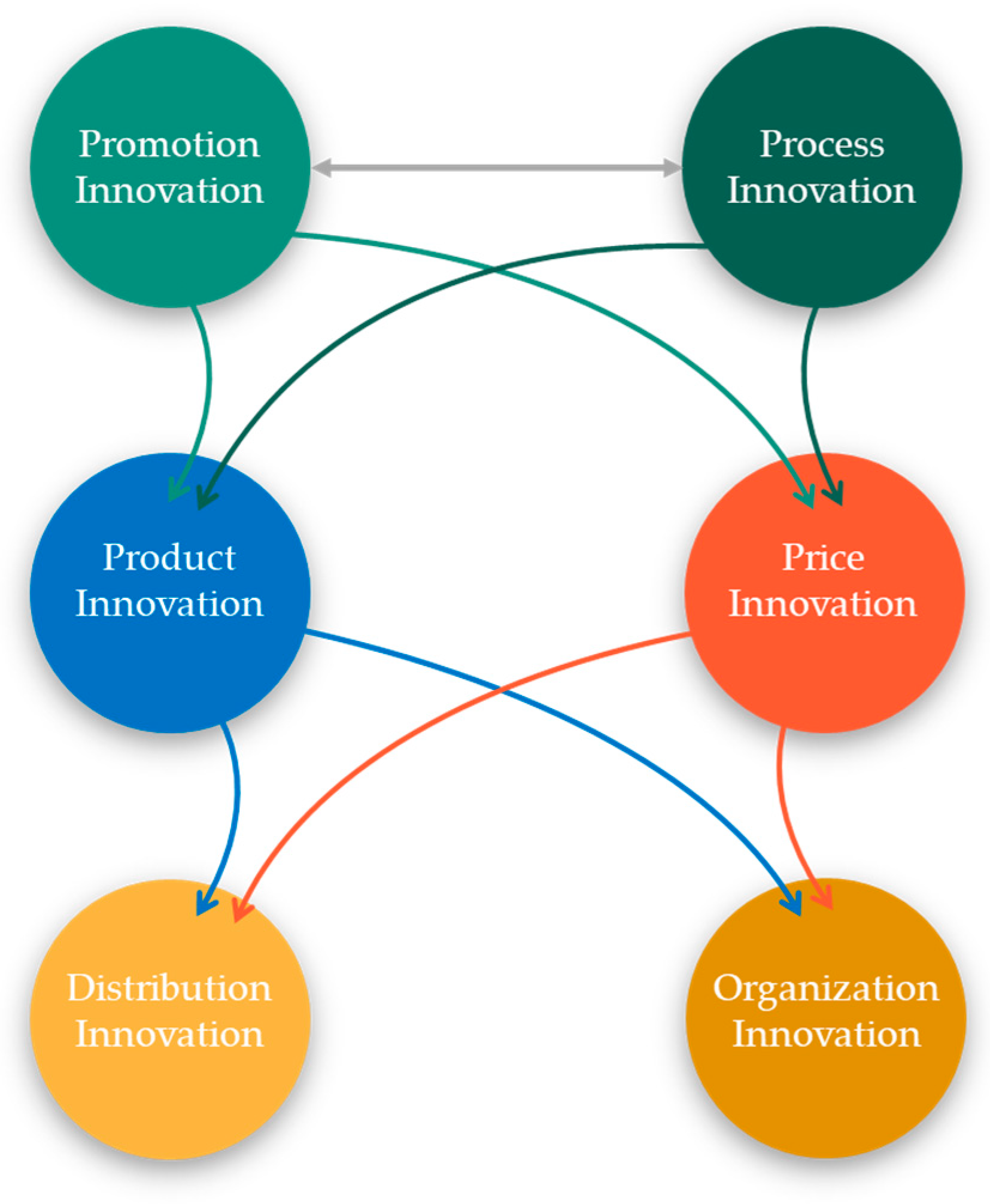
Figure 1. Conceptual Pre-Model of Hypothesized Relationships Among the Six Innovation Dimensions.
Sustainability 17 11101 g001
Figure 2. Stepwise Workflow of the Fuzzy Interpretive Structural Modeling (Fuzzy ISM) Procedure.
Sustainability 17 11101 g002
Figure 3. Integrated Cycle Model of Sustainable Marketing Innovation.
Sustainability 17 11101 g003
Table 1. Expert profiles (n = 8).
NoPosition/ProfessionInstitutionCore ExpertiseAdditional Competence
1Professor of Pulmonology and Respiratory Medicine; Director of Postgraduate ProgramsUniversity of Indonesia; YARSI; Griffith UniversityPulmonology, Respiratory Medicine, Environmental HealthEpidemiology, health policy, cross-national research
2Consultant and Executive Coach; Former Marketing DirectorSTEM Healthcare; Pharos; Fresenius Kabi; MerckPharmaceutical Marketing ManagementBrand management, sales excellence, leadership
3Professor of Surgical OncologyUdayana UniversitySurgical Oncology, Clinical MedicineCancer management, clinical research
4Specialty Care Medical Lead (Regional)PfizerMedical Affairs, Clinical Trials, Market AccessHEOR, compliance, pharmacovigilance
5Country Group HeadWellesta IndonesiaStrategic Management and Pharmaceutical Business LeadershipBusiness development, market expansion
6Medical and Market Access HeadPT Anvita Pharma IndonesiaMarket Access Strategy and Medical AffairsHealth economics, policy advocacy
7Director General of Pharmaceuticals and Medical Devices; Former Head of BPOMMinistry of Health of Indonesia; BPOMNational Pharmaceutical Regulation and PolicyGovernance, industry supervision
8Director of Pharmaceutical Management and ServicesMinistry of Health of IndonesiaPharmaceutical Supply Chain and Distribution ManagementHospital service quality, regulatory compliance
Table 2. Summary of the modeling procedure and methodological support.
StepDescriptionReference(s)
1Fuzzification: mapping linguistic judgments into numeric representations.[53,54]
2Pairwise recording and symbolic encoding.[51,54]
3Aggregation: maximum-rule aggregation of individual matrices.[52,57]
4Thresholding and binary conversion to form initial reachability.[52,56]
5Iterative transitive closure to obtain final reachability.[51,56]
6Level partitioning for structural interpretation.[56,58]
Disclaimer/Publisher’s Note: The statements, opinions and data contained in all publications are solely those of the individual author(s) and contributor(s) and not of MDPI and/or the editor(s). MDPI and/or the editor(s) disclaim responsibility for any injury to people or property resulting from any ideas, methods, instructions or products referred to in the content.