Article

Pasture Restoration Reduces Runoff and Soil Loss in Karst Landscapes of the Brazilian Cerrado

by
Isabela Fernanda L. G. Camargo
1,
Henrique Marinho Leite Chaves
2,* and
Maria Rita Souza Fonseca
2
1
Forestry Department, School of Technology, University of Brasília, Brasília 70910-900, Brazil
2
Watershed Management Laboratory, School of Technology, University of Brasília, Brasília 70910-900, Brazil
*
Author to whom correspondence should be addressed.
Sustainability 2025, 17(24), 11079; https://doi.org/10.3390/su172411079
Submission received: 18 November 2025 / Revised: 5 December 2025 / Accepted: 9 December 2025 / Published: 10 December 2025

Abstract

Water erosion is a major driver of soil degradation in the Brazilian Cerrado, intensified by the conversion of natural vegetation into agricultural land. The excessive runoff and sediment generated in poorly covered karst slopes impact the hydrologic cycle of the biome’s sinkholes and underground rivers. This study evaluated the effectiveness of pasture restoration in reducing runoff and soil loss in three experimental farms situated in a vulnerable karst area of Central Brazil. Runoff and soil loss were monitored during three hydrologic years in plots of degraded pasture (DP), restored pasture (RP), and natural savannah (NS), using unbound Gerlach settings. The experiment was carried out on three farms in the Vermelho river basin, which were treated as blocks. The results indicate that pasture restoration reduced runoff by 50% and soil loss by 55–95% when compared to degraded pasture conditions, below on-site erosion tolerance thresholds. Runoff and soil loss in restored pasture (RP) plots fell between DP and NS, though in some cases, soil loss in RP reached levels that are comparable to the natural savannah. Normalized soil loss was highly correlated with runoff (R2 = 0.94), allowing for the latter to be used as a proxy of the former. The increased groundwater recharge and reduced sediment yield resulting from pasture restoration improve on- and off-site resilience in vulnerable karst landscapes and could be utilized as a sustainable soil conservation policy.

1. Introduction

Water erosion is a primary driver of soil degradation which is aggravated by the removal of natural vegetation, resulting in decreased land productivity [1,2]. Permanent vegetation is considered to be the only natural component of soil protection [3], stabilizing the soil through its canopy and root system, enhancing infiltration, reducing surface runoff [4] and retaining soil moisture [5].
In addition to other on-site impacts, such as soil degradation and declining agricultural productivity [6], soil erosion also generates off-site effects, such as downstream silting and eutrophication [7], nutrient enrichment of sediments [8,9], and the consequent deterioration of downstream water quality [10,11,12,13].
The Brazilian Cerrado, in Central Brazil, has been increasingly subjected to anthropogenic pressures, with profound impacts on its natural landscape [13], including stressed aquifer systems [14] and excessive soil erosion [15]. More than 50 million hectares of the Cerrado biome are now at high risk of water erosion, a process intensified by a combination of high rainfall erosivity, high soil erodibility, and the conversion of natural vegetation into agricultural land [16], culminating in permanent soil degradation [17]. It was shown that soil loss is positively correlated to and even predicted by surface runoff. However, maintaining permanent soil cover, such as natural vegetation and well-managed pastures, is critical for minimizing runoff generation and reducing soil erosion [18].
Within the Brazilian Cerrado, there are highly vulnerable karst areas, such as the Vermelho river basin, where poorly structured sandy soils, lying over fractured limestones, are severely affected by soil erosion, leading to the silting of sinkholes and subterranean rivers [3].
Pasturelands, which dominate the majority of the Brazilian Cerrado landscapes, have been severely degraded in the last 50 years, largely due to erosion and inadequate soil management [19,20]. Natural restoration of these areas has proven insufficient, as it fails to restore key soil properties and ecosystem functions [19].
In contrast, active reclamation strategies, such as pasture restoration and the establishment of adequate vegetation cover, have significantly reduced erosion and improved ecosystem services [21,22], while enhancing the well-being of rural communities [23]. However, effective pasture restoration requires adaptive management, including regulated stocking rates to allow for regrowth and the creation of appropriate soil cover, and cattle fencing during critical germination and seedling periods [24]. Additionally, effective restoration is achieved when on- and off-site soil loss in the landscape is reduced below the accepted tolerance values, i.e., below 10 Mg ha−1yr−1 and 1.0 Mg ha−1yr−1, respectively [18].
In a pioneer study carried out in a karst area of the Brazilian Cerrado, it was found that active pasture restoration with grasses and shrubs reduced runoff by 50% and soil loss by 80%, with respect to fallow, uncovered areas [3]. However, the research looked at one soil type only and could not be generalized to different landscapes.
To assess runoff and soil erosion under different land-uses, several methods have been used, including standard (bound) runoff plots [3] and erosion pins [25], which are complex and time consuming [26]. Simpler devices, such as unbound Gerlach troughs [26,27] are more practical and inexpensive to install and to operate, although non-cumulative runoff collection is a challenge [24]. Additionally, traditional bounded runoff plots are unnatural erosion monitoring setups, since plot borders of bounded plots force runoff and sediment in a pre-determined direction, affecting the natural flow path [28].
Considering the existing data and knowledge gaps about the theme, the objective of this research was to assess the effectiveness of pasture restoration in different soils, land-use, and landscape settings of the karst landscape of the Brazilian Cerrado, and to evaluate the ecosystem services provided with respect to runoff and erosion abatement, using unbound Gerlach plots, and to evaluate the relationship between them.

2. Materials and Methods

2.1. Study Area

The study area consisted of three cattle farms located at the Vermelho basin, in the Brazilian Cerrado, situated 20–30 km apart (Figure 1).
The selected experimental sites had different soils but similar topographies, land use and management practices (Table 1), spanning the typical landscape variability of the Vermelho river basin.
Because of intrinsic soil and landscape characteristics of the three sites, each one was considered to be an experimental block, following the randomized complete block design (RCBD), with one factor (land use and management) and three treatments (DP, RP, NS). This design is recommended for large experimental units that must be subdivided, grouping them into relatively homogeneous subsets before assigning treatments [29].
Degraded pasture (DP) was characterized by reduced grass cover (0–20% ground cover), planted with Brachiaria sp. and Andropogon sp., high soil compaction [30], assessed by a ring penetrometer, low infiltrability, and low fertility and organic matter. The plot areas of degraded pasture (DP) in the three sites were between 0.5 hectares and 1.0 hectare (Table 2).
Adjacent to the degraded pasture (DP) plots, restored pasture (RP) plots were established on formerly degraded pastureland, with areas varying between 0.5 and 1.0 ha. Pasture restoration was implemented during the dry season preceding the first monitoring year and included disc ploughing (25 cm), liming (2.0 Mg ha−1 of dolomitic limestone) and fertilization (240 kg of 4-14-8 NPK granular fertilizer), herbicide (2 L ha−1 of glyphosate), planting of Massai grass (Panicum maximum v. Massai), and control of leafcutter ants (10 kg ha−1 of sufuramid). One year after planting, the Massai grass cover was suitable for grazing, and cattle were allowed to graze in the three restored plots.
The natural savannah (NS) plots comprised small remnants of original vegetation cover (0.2 to 2.0 ha) within each experimental farm. These sites contained small trees (3 to 5 m), covering approximately 50% of the area, surrounded by shrubs and natural grasses [31].
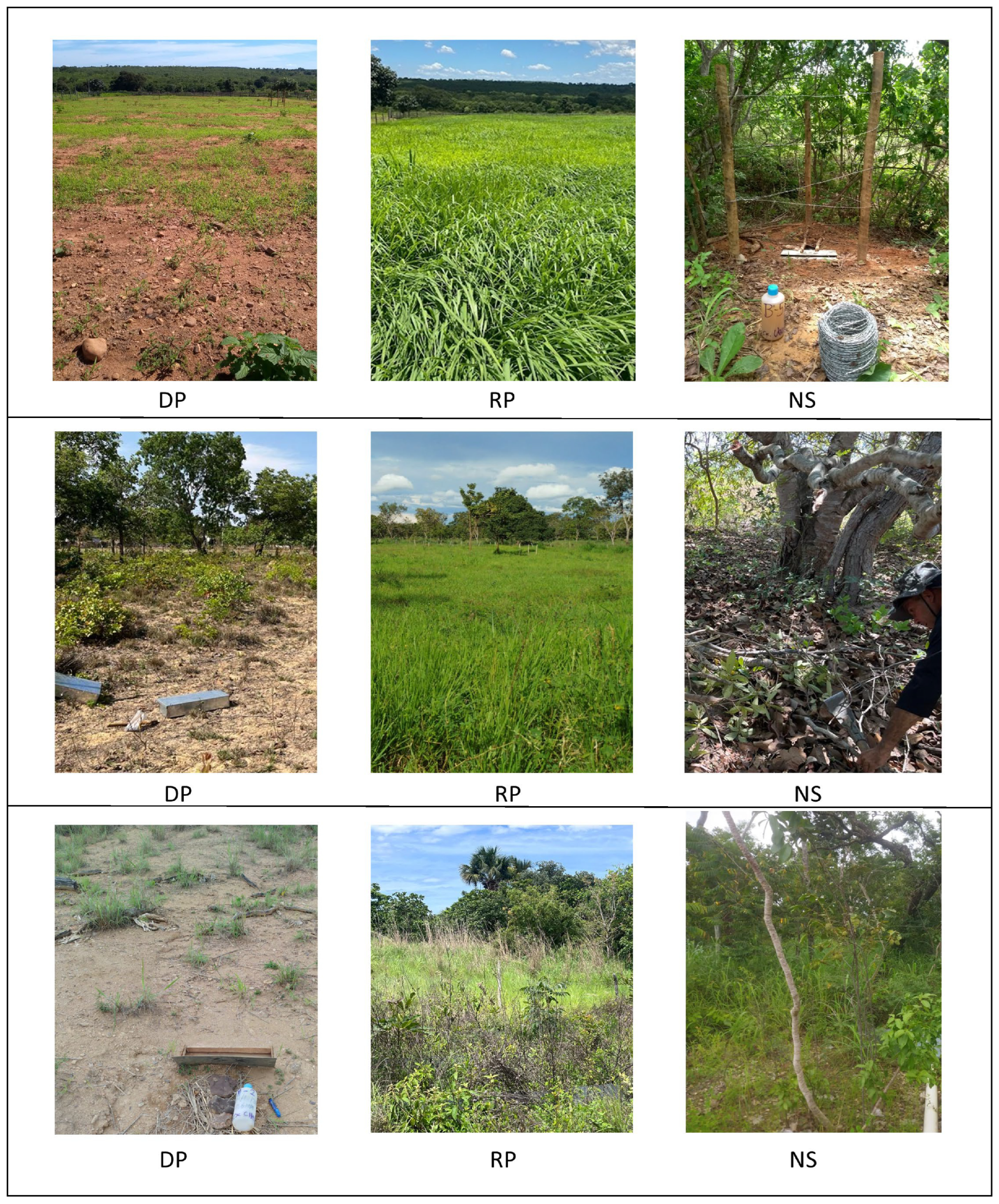
Within each block (farm), the NS, DP, and RP treatments were installed in the same soil type and had similar slope gradients (Table 1), allowing for the plots to be taken as independent treatments (Figure 2). All plots were fenced to prevent cattle intrusion.

2.2. Runoff Plots

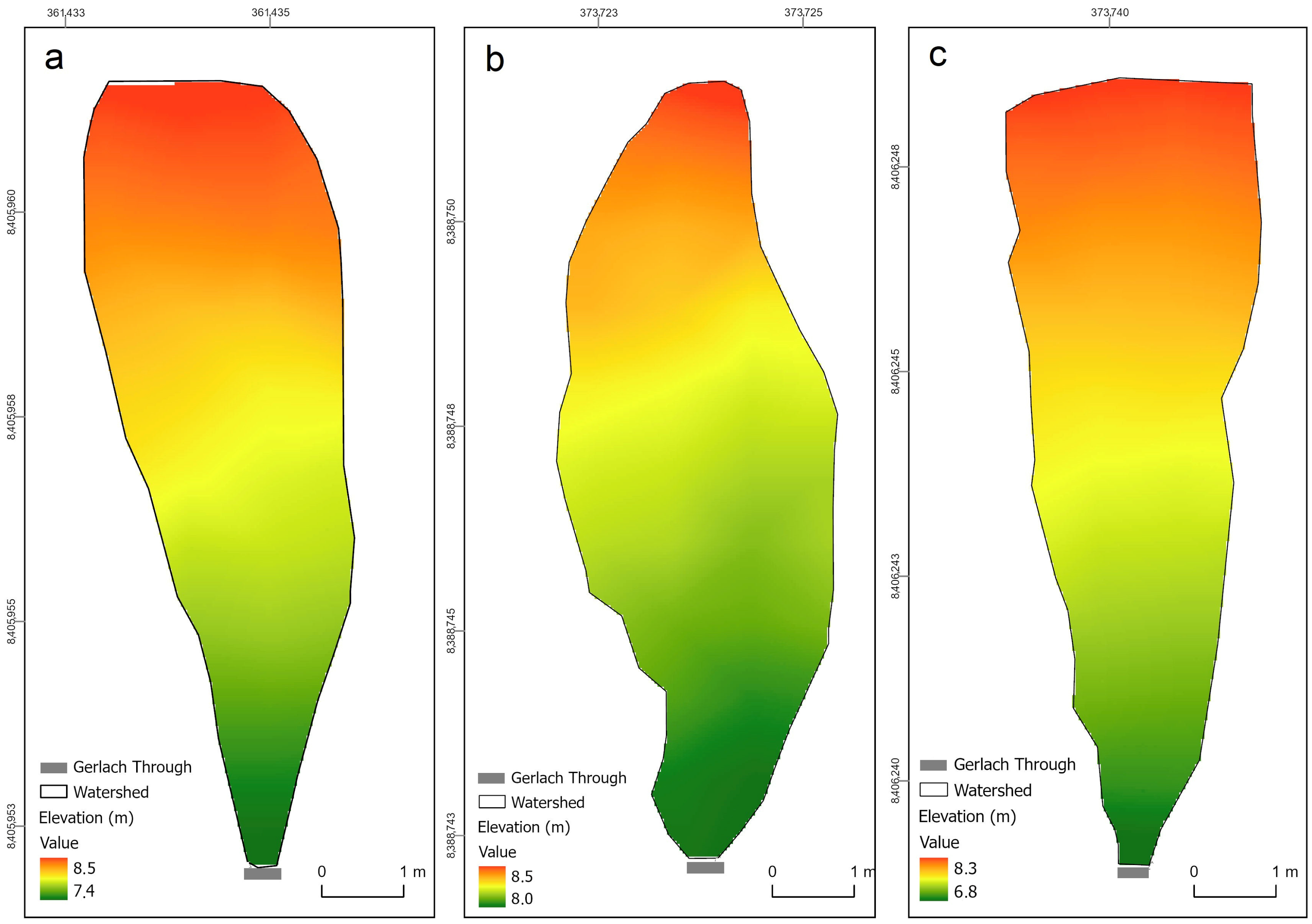
Within each treatment plot, two Gerlach troughs were installed, one on the upper slope area and the other on the lower slope, to collect the upstream runoff and sediment. To avoid the interference of the vegetative cover, a planialtimetric survey of the plot areas was carried out with RTK surveying equipment, using pins installed in a 0.5 × 0.5 mesh, to determine the exact plot drainage area and slope grade (Figure 3). The drainage areas of the runoff plots of the three farms are presented in Table 3.
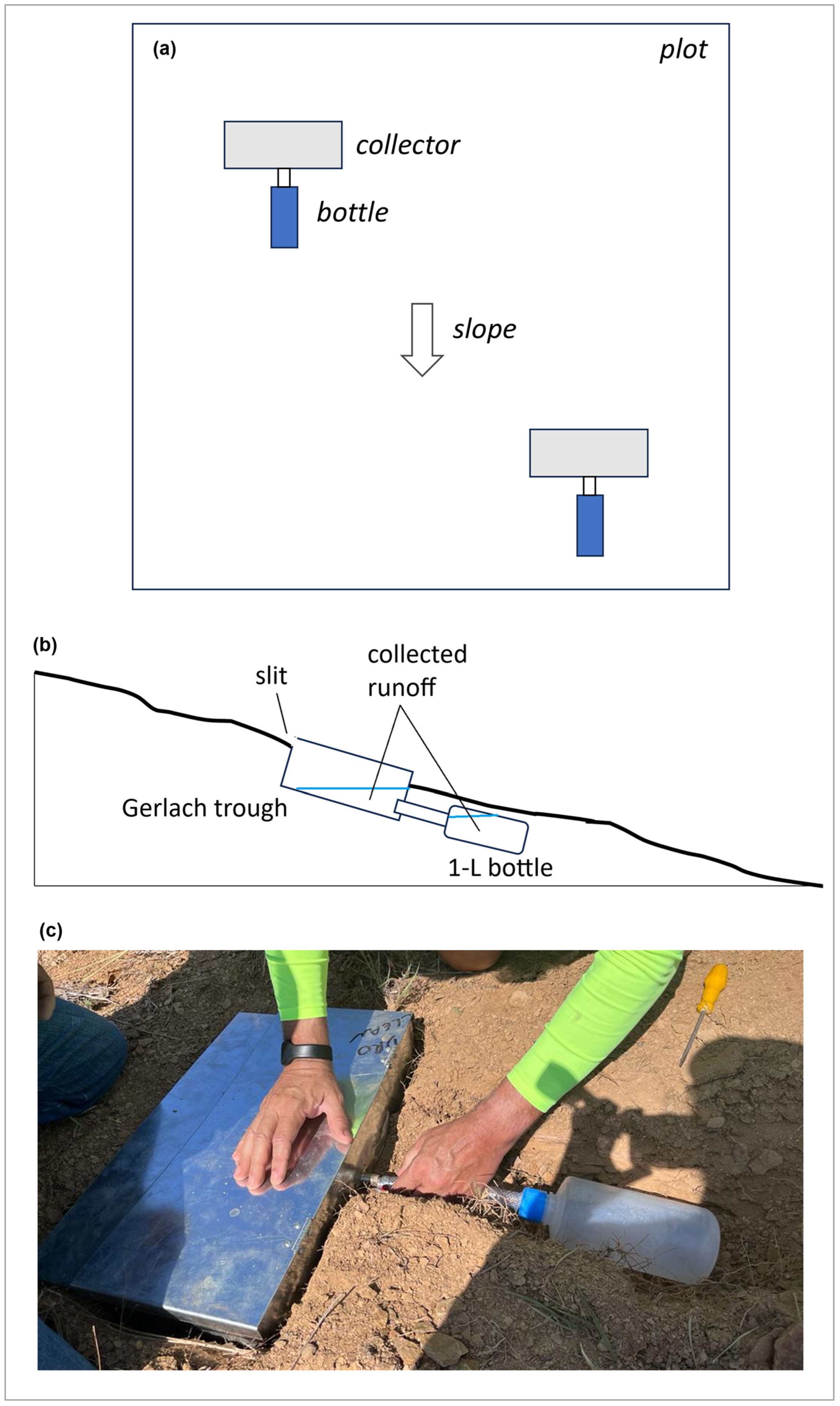
At the lower end of each runoff plot, a metallic Gerlach trough [24] was installed flush with the soil surface to ensure the proper collection of runoff and sediment. A 1 L Nalgene® bottle was connected to the trough’s downstream outlet by a plastic hose to collect the runoff samples (Figure 4).

2.3. Rainfall Erosivity

At each experimental site, a WMO-type stainless steel rain gauge (ϕ = 0.15 m) was installed, and precipitation volumes were recorded on a daily basis, concurrently with the runoff and sediment sampling. The rain gauge had a minimum resolution of 0.2 mm, and it was placed at a safe distance from buildings and trees, to avoid rainfall interception.
Rainfall erosivity in each farm was calculated on a monthly and yearly basis, using a Fournier-type equation [32] developed for Central Brazil:
R = 12.59 i = 1 12 M i 2 P 0.60
where R (MJ mm ha−1 h−1) = site annual rainfall erosivity; Mi (mm) = monthly precipitation; and P (mm) = annual precipitation.

2.4. Runoff Sampling and Laboratory Analyses

Gerlach troughs were used to collect the runoff and sediment from the plots, since they avoid the flow restriction of the traditional bound plots, being easier to install and to operate [26].
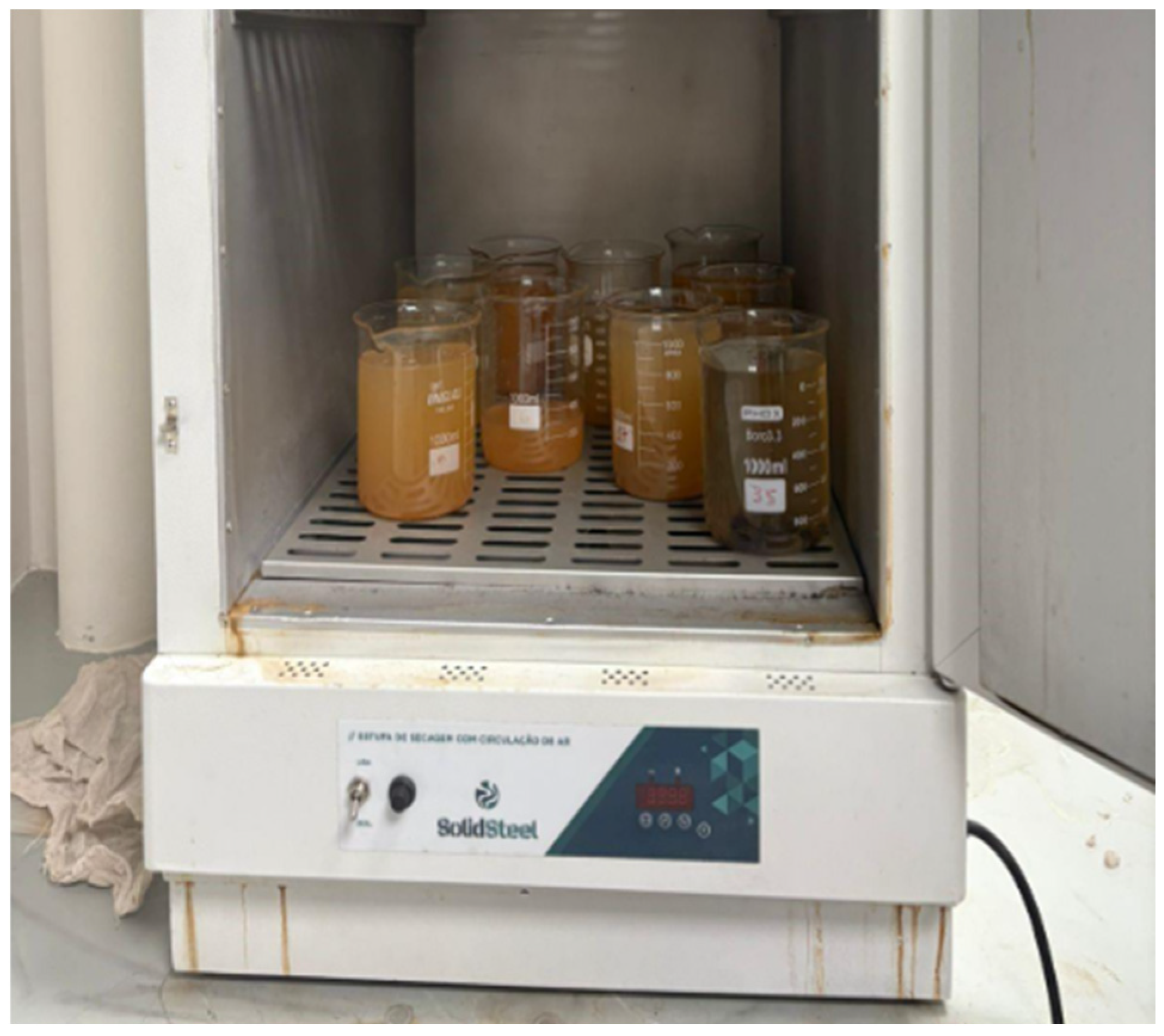
The 1 L runoff bottles were collected whenever rainfall exceeded 10 mm, since this is the threshold for runoff generation [31], which was confirmed empirically in a previous study in a nearby experiment [3]. In the laboratory, the contents of the Gerlach bottles were transferred to beakers, decanted with alum, oven-dried at 100 °C for 48 h (Figure 5), and weighed to determine the runoff volume and sediment concentration.

2.5. Runoff Volume and Soil Loss

Because the Gerlach bottles collected only 1 L samples of the generated runoff and sediment during each significant rainfall event, hydrological calculations were required to estimate the total runoff and the subsequent sediment yield from the plots. The NRCS equation [33] was used to obtain the total runoff in each event:
Q = (P − 0.2 S)2/(P + 0.8 S)
and
S = (25,400/CN) − 254
where Q = surface runoff volume (mm), P = precipitation volume (mm), S = abstraction factor (dimensionless), and CN = NRCS curve number (dimensionless). CN values for the experimental sites were derived from observed and calibrated data that were collected at 22.1 m-long bounded runoff plots of a previous study conducted at the Tarimba farm [3].
Soil loss in each significant rainfall event (P > 10 mm) was calculated as the product of sediment concentration obtained from the 1 L samples and the runoff volume estimated from Equations (2) and (3), namely:
SL = Fc Cs Q/100
where SL (Mg ha−1) = soil loss in each event in the Gerlach plot; FC (dimensionless) = correction factor for the 22.1 m-long (observed) runoff plots of the Tarimba farm; CS (g/L) = sediment concentration in the 1 L sampling bottle; Q (L) = Gerlach plot runoff.
The correction factor FC was obtained by dividing the observed 22.1 m bounded plot soil loss of the Tarimba farm from a previous study [3] by the corresponding Gerlach plot soil loss (Equation (4)), assuming that, due to plot setup and sediment collection conditions, a difference could arise [34]. The same correction factor was used in the other two farms, since no corresponding bounded plots existed. However, due to the proximity of the three experimental areas and their similar climate and landscape characteristics, this assumption was hydrologically acceptable [35].
To allow for a direct comparison of the runoff and soil loss between the three experimental sites [18], surface runoff and soil loss were normalized by the precipitation volume and rainfall erosivity, respectively:
Q n = Q P
S L n = S L R
where Qn = normalized runoff; Q (mm) = runoff volume; P (mm) = rainfall volume; SLn = normalized soil loss (Mg MJ−1 mm−1 h); SL (Mg ha−1) = soil loss; and R (MJ mm ha−1 h−1).
To assess the relationship between soil loss and runoff of permanent (NS and RP) and non-permanent (DP) soil covers, normalized means of annual runoff (Qn) and normalized annual soil loss (SLn) were plotted in a log-log plot, and the corresponding adjusted function and p-value were obtained [18] and compared with soil loss tolerance thresholds.
Runoff and soil loss were monitored during three consecutive hydrologic years (2022/23, 2023/24, 2024/25), coinciding with the rainy season in the Brazilian Cerrado, which extends from November to May [18]. This three year monitoring period enabled the evaluation of restoration progress over time and accounted for intrinsic inter-annual climatic variability.

2.6. Statistical Analyses

The treatment means and their significance were calculated using ANOVA and the Tukey-HSD multiple comparison test [36] at the 0.05 significance level. Previously, the plot data were tested for normality using the Kolmogorov–Smirnov test, with the R-Studio® package v. 2025.09.0.

3. Results

3.1. Precipitation and Erosivity

The monthly and annual precipitation volumes, with corresponding rainfall erosivities, are presented in Table 4, for the three hydrologic years.

3.2. Runoff

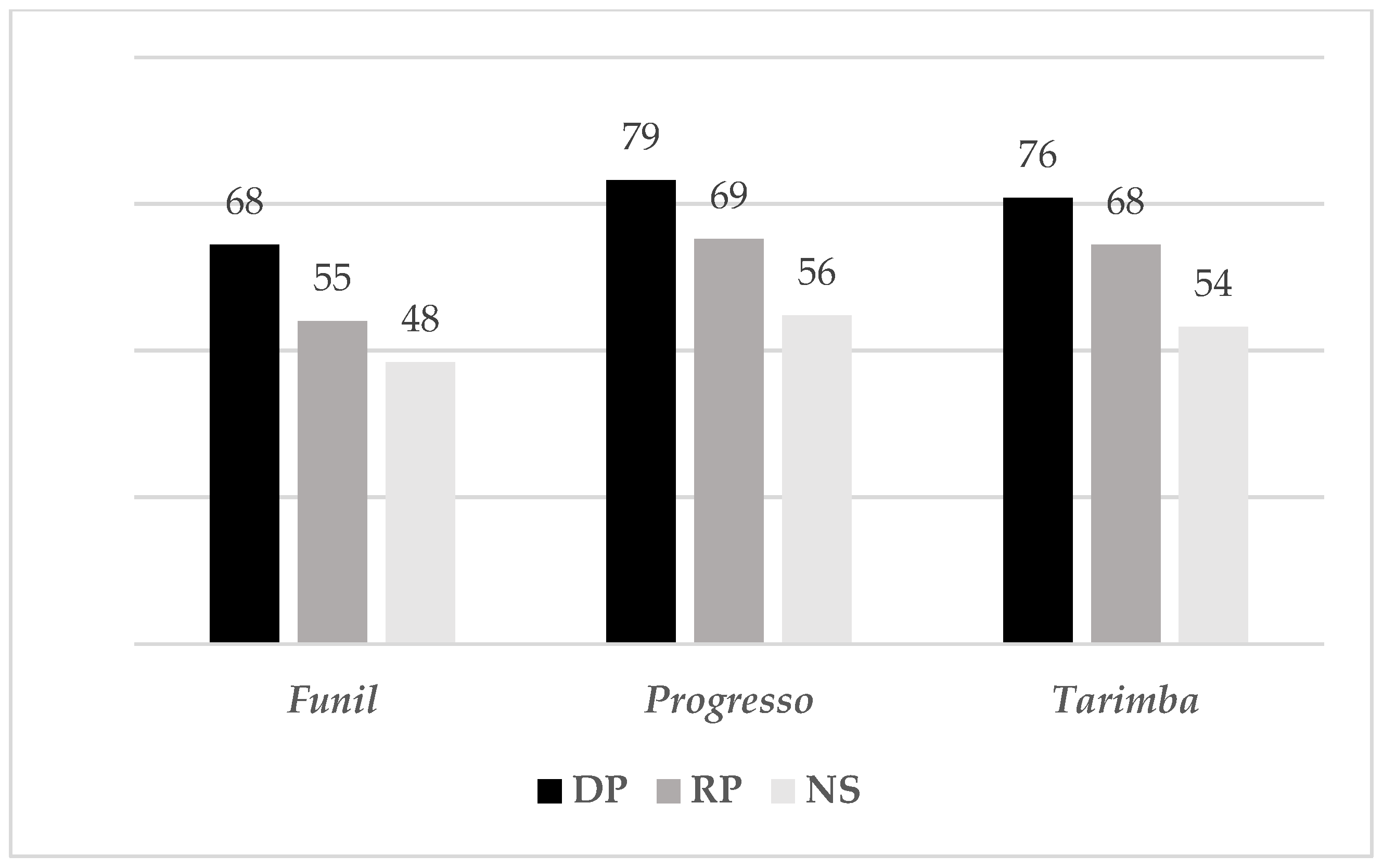
The calibrated runoff curve numbers (CN) of Equations (2) and (3) of the three sites are presented in Figure 6.
Table 5 presents the mean annual normalized runoff (mean of two replicates) for the Funil, Progresso, and Tarimba farms for the three consecutive years. At the Funil farm, normalized runoff differed significantly among all treatments, with degraded pasture (DP) showing the highest mean. At the Progresso farm, the restored pasture (RP) and natural savannah (NS) were statistically similar, both exhibiting significantly lower runoff than DP. At the Tarimba Farm, RP did not differ significantly from either DP or NS, indicating an intermediate response.
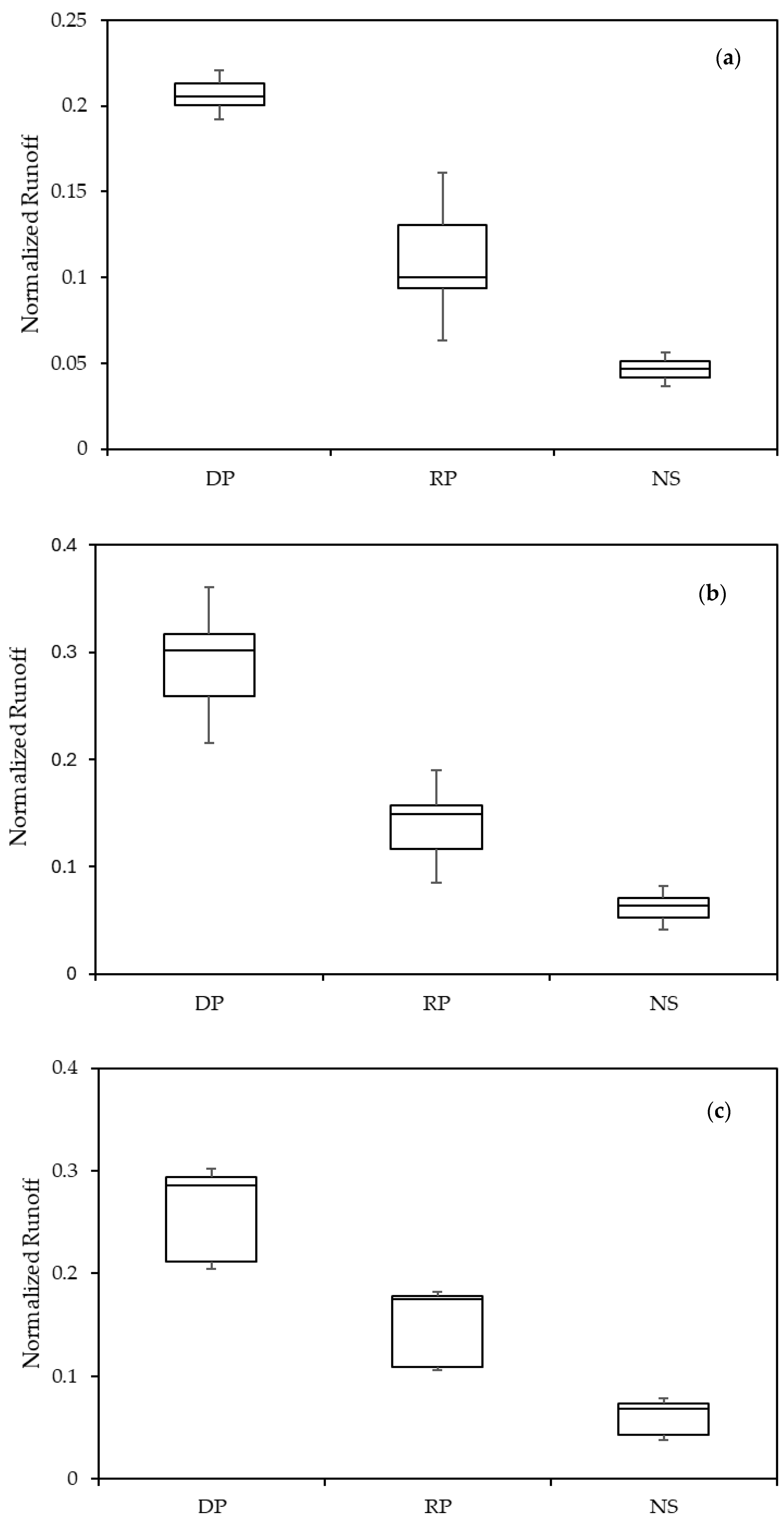
The box plots of the normalized mean annual runoff are presented in Figure 7. In all cases, NS exhibited the lowest values with minimal variability, while DP consistently showed the highest runoff. RP, in turn, occupied an intermediate position between the other treatments.

3.3. Soil Loss

Table 6 indicates that, overall, soil loss with RP and NS were statistically similar, with both showing lower values than DP. In the Progresso farm, RP showed an intermediate position, not differing significantly from either DP or NS.
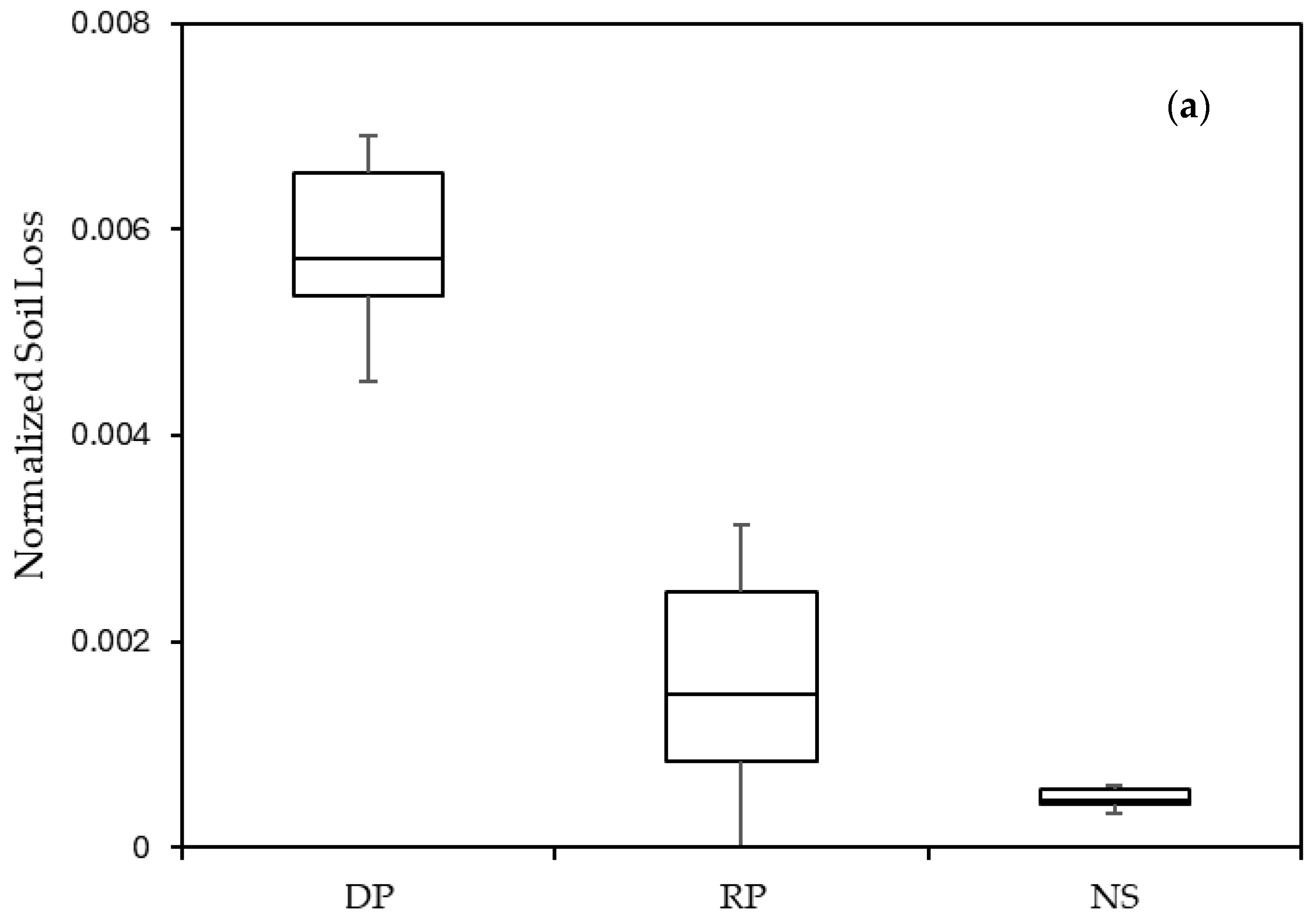
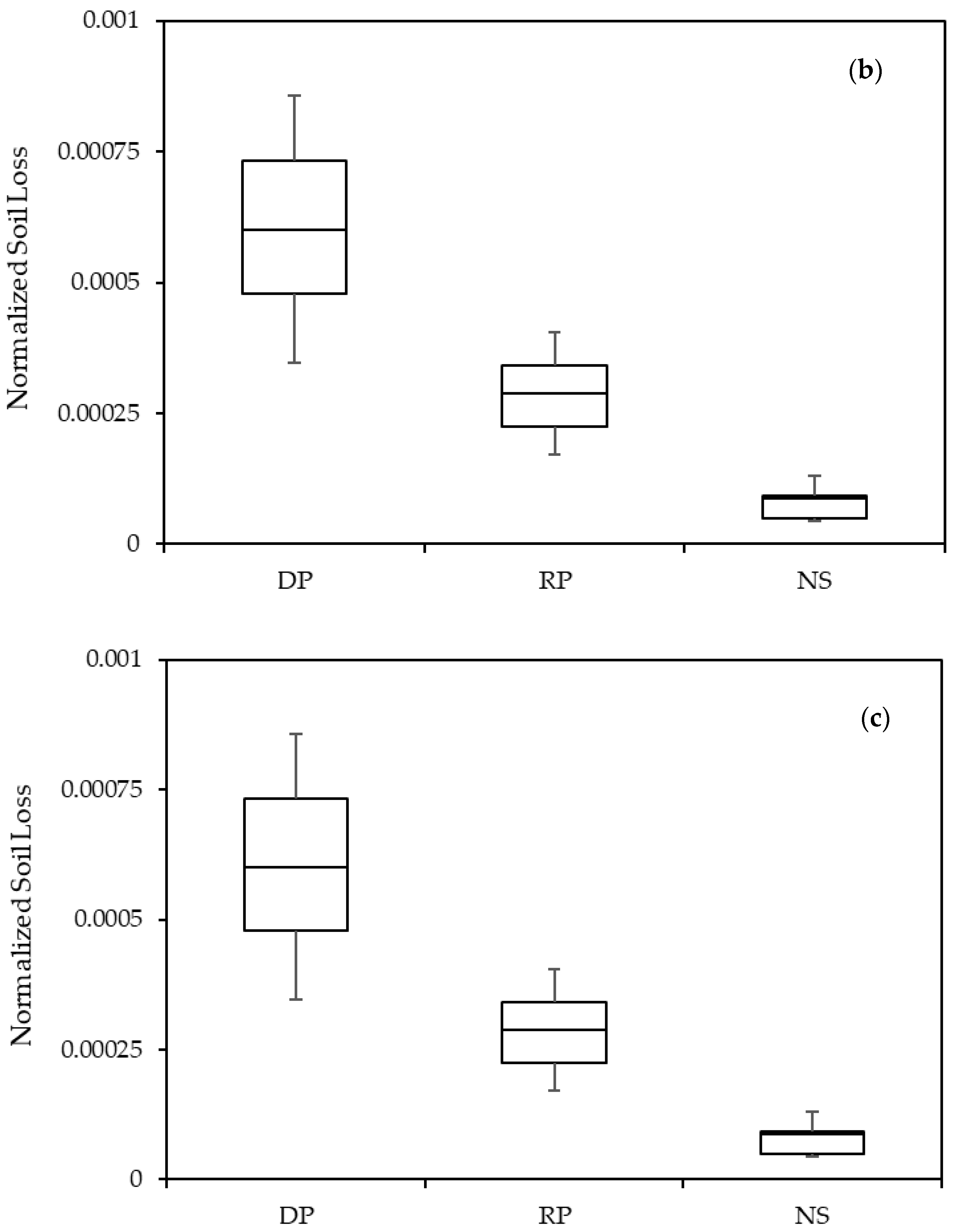
The box plots of normalized soil loss are presented in Figure 8 for the three sites. In all cases, NS exhibited the lowest values with minimal variability, while DP consistently showed the highest soil loss. RP, on the other hand, occupied an intermediate position.

3.4. Relationship Between Runoff and Soil Loss and On- and Off-Site Tolerance

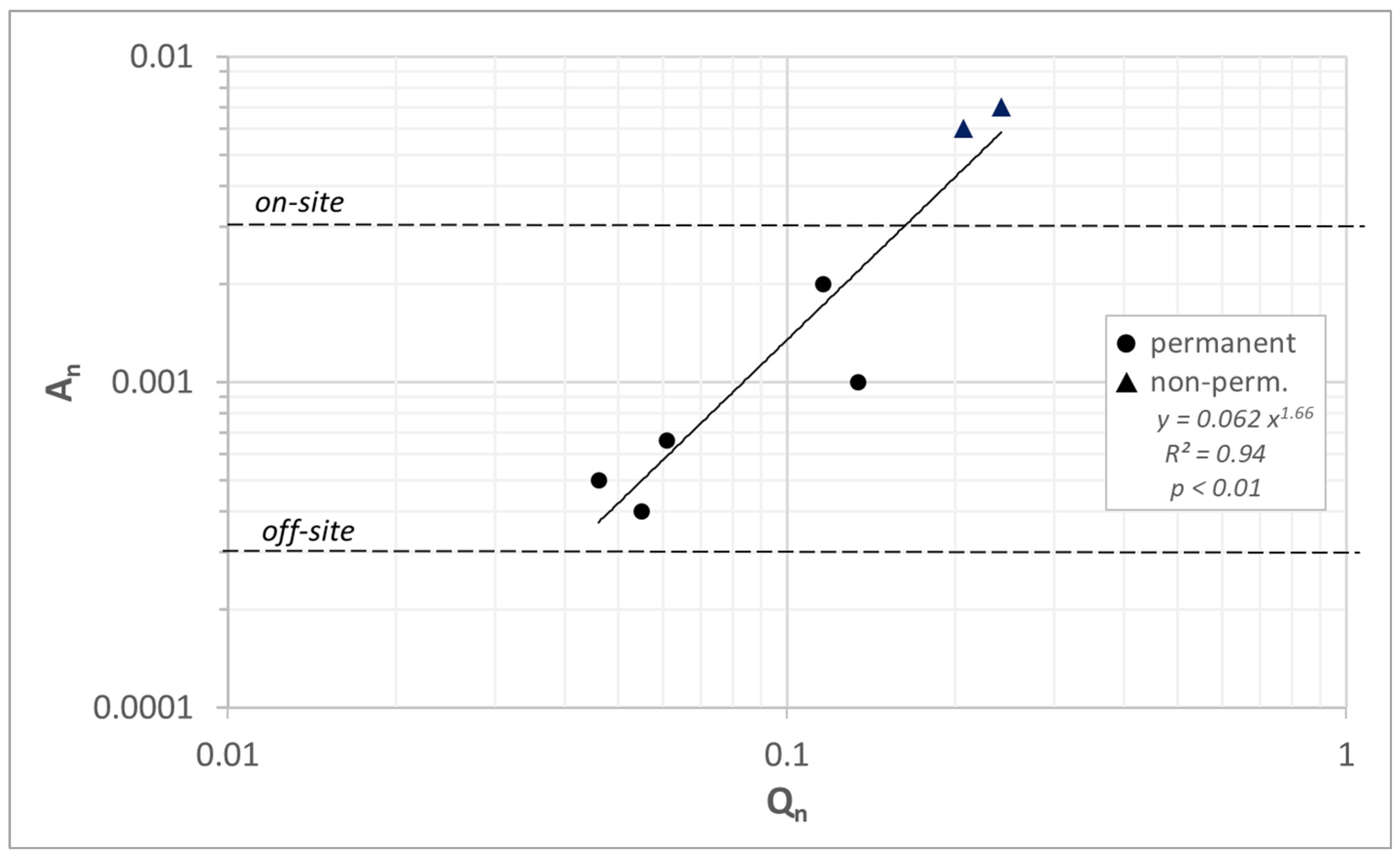
The relationship between normalized annual runoff and annual soil loss is presented in Figure 9. In this figure, a good fit (R2 = 0.94, p < 0.01) was obtained for a power function, similarly to that of non-karst landscapes of the Brazilian savannah [18].
Additionally, the soil loss of all permanently covered plots (NS and RP) fell below the on-site soil loss tolerance, as opposed to the degraded pasture plots (non-covered plots).

4. Discussion

4.1. Precipitation and Rainfall Erosivity

The results of Table 4 indicate that there was spatial (inter-block) and temporal (inter-annual) variability in rainfall volume and erosivity, which are key drivers of runoff and soil loss, respectively, as reported previously [18]. The relationship between rainfall and erosivity has also been widely documented, with several studies reporting strong correlations between them [37]. Since these sources of variability were minimized through the normalization of runoff and soil loss, respectively (Equations (5) and (6)), they allowed for the unbiased comparison of runoff and soil loss means between treatments and years.

4.2. Runoff

According to Figure 6, CN decreased from degraded pasture (DP) to natural savannah (NS), with restored pasture in between. The differences arise from the diverse soil infiltrability in the three farms, which affect CN [32].
At all sites, runoff from the restored pasture (RP) plots was reduced by at least 50% compared with degraded pasture (DP). The runoff in RP at all experimental sites was situated between DP and NS. This finding indicates that, within a short period, the hydrological behavior of the restored pasture approached that of the natural savannah. Previous research [38] showed that pasture restoration is indeed an interesting conservation practice, since it reduces the runoff, improving water quality in the process.
As shown in Figure 7, normalized runoff was similar in the three farms, ranging from 0.05 to 0.3, despite the pedological variation among them, with the observed differences being associated with the land-use treatments. As indicated in Figure 7, reduced runoff was associated with improved soil cover [18], which enhances water infiltration and mitigates soil compaction [24]. Additionally, the tillage, fertilization, and improved rooting of the restored pastures may have contributed to the increase in infiltration and reduction in runoff [3]. Runoff reduction was more pronounced during the first hydrologic year because of the rapid soil cover in RP, and it equilibrated in the subsequent years, as expected.

4.3. Soil Loss

Soil loss in RP was significantly lower than in DP, with reductions ranging from 55% to 95%, depending on the site analyzed. Comparable reductions were also reported in a nearby restored savannah site established with native grasses and shrubs in bounded 22.1 m plots [39]. Soil loss in the RP plots fell between those of DP and NS in all sites. These findings suggest that pasture restoration can be nearly as effective as, and in some cases comparable to, the natural savannah in reducing soil erosion, only a few years after restoration.
The observed reductions could be attributed to increased ground cover and improved soil structure in RP, which together mitigate the erosion processes. Enhanced soil tilth reduces rill erosion [18] while improved grass cover diminishes sheet erosion by decreasing raindrop impact and runoff [37]. These findings underscore the long-term importance of restoration measures for soil conservation [18] and sustainable land management.
Since the three experimental farms, with their inherent pedological and landscape characteristics, were treated as blocks to avoid unnecessary variability in the treatments [29], a comparison between their soil loss data was irrelevant in the present study. However, soil texture, depth, and natural fertility could have played a role in the restoration process, which was not accounted for.

4.4. Practical Implications of the Study

The significant reductions in runoff and soil loss after 3 years of restoration indicate that degraded pastures, which dominate both karst and non-karst areas of the Brazilian Cerrado, are hydrologically effective, and could be implemented as part of a financial compensation policy based on the hydrologic services provided.
Because of the high correlation between soil loss and runoff (Figure 9), the latter could be used as a proxy to the former, which is more difficult to obtain. Furthermore, soil loss in the permanently covered plots (NS and RP) were below the on-site soil loss tolerance threshold, indicating that the restored pasture is effective for increasing landscape stability and the sustainability of karst areas [3].
Finally, the simple and inexpensive Gerlach troughs were effective in assessing runoff and soil loss, being suitable for developing countries with little research infrastructure, and being able to provide robust data for the establishment of sound soil conservation policies.

4.5. Methodological Limitations

The main methodological limitation of the experiment was the non-integrative runoff sampling of the Gerlach troughs, since only episodic sediment concentration samples were obtained, as opposed to the cumulative sampling of traditional runoff plots [27]. This was solved by the indirect obtention of storm runoff volume, via the NRCS method. However, the high correlation found between the normalized runoff and soil loss (Figure 9) indicates that the indirect method was appropriate.
Also, the correction factor (Fc) of Equation (4), obtained for one of the farms, was assumed to be the same for the two others, despite the local landscape differences. However, considering the proximity of the three experimental sites, and the fact that Fc was very close to 1.0, this evidence reinforces the validity of the assumption [35].

5. Conclusions

Pasture restoration reduced runoff by over 50% and soil loss between 55 and 95%, reaching levels that were comparable to the natural savannah, during a period of three hydrologic years, indicating that pasture restoration and permanent soil cover is an effective hydrologic measure, generating significant hydrologic services both on- and off-site, particularly in vulnerable karst areas. The good fit between normalized runoff and soil loss allows for the utilization of the former as a proxy of the latter. Additionally, simple and inexpensive Gerlach troughs proved to be useful in the assessment of soil loss of natural, degraded, and restored karst areas, and were suitable in the assessment of active restoration services in developing countries.

Author Contributions

Conceptualization, H.M.L.C.; Methodology, H.M.L.C. and M.R.S.F.; Software, M.R.S.F.; Validation, H.M.L.C. and M.R.S.F.; Formal analysis, H.M.L.C.; Investigation, I.F.L.G.C.; Data curation, I.F.L.G.C.; Writing—original draft, I.F.L.G.C.; Writing—review & editing, H.M.L.C. and M.R.S.F.; Visualization, I.F.L.G.C.; Supervision, H.M.L.C.; Project administration, H.M.L.C. All authors have read and agreed to the published version of the manuscript.

Funding

This research received no external funding.

Institutional Review Board Statement

Not applicable.

Informed Consent Statement

Not applicable.

Data Availability Statement

The original contributions presented in this study are included in the article. Further inquiries can be directed to the corresponding author.

Conflicts of Interest

The authors declare no conflict of interest.

Abbreviations

The following abbreviations are used in this manuscript:
DPDegraded Pasture
RPRestored Pasture
NSNatural Savannah

References

  1. Zhou, J.; Fu, B.; Gao, G.; Lü, Y.; Liu, Y.; Lü, N.; Wang, S. Effects of Precipitation and Restoration Vegetation on Soil Erosion in a Semi-Arid Environment in the Loess Plateau, China. Catena 2016, 137, 1–11. [Google Scholar] [CrossRef]
  2. Mullan, D. Soil Erosion under the Impacts of Future Climate Change: Assessing the Statistical Significance of Future Changes and the Potential on-Site and off-Site Problems. Catena 2013, 109, 234–246. [Google Scholar] [CrossRef]
  3. Fonseca, M.R.S.; Uagoda, R.; Chaves, H.M.L. Runoff, Soil Loss, and Water Balance in a Restored Karst Area of the Brazilian Savanna. Catena 2023, 222, 106878. [Google Scholar] [CrossRef]
  4. Wiśniewski, P.; Märker, M. The Role of Soil-Protecting Forests in Reducing Soil Erosion in Young Glacial Landscapes of Northern-Central Poland. Geoderma 2019, 337, 1227–1235. [Google Scholar] [CrossRef]
  5. Wiśniewski, P.; Märker, M. Comparison of Topsoil Organic Carbon Stocks on Slopes under Soil-Protecting Forests in Relation to the Adjacent Agricultural Slopes. Forests 2021, 12, 390. [Google Scholar] [CrossRef]
  6. Majoro, F.; Wali, U.G.; Munyaneza, O.; Naramabuye, F.-X.; Mukamwambali, C. On-Site and Off-Site Effects of Soil Erosion: Causal Analysis and Remedial Measures in Agricultural Land—A Review. Rwanda J. Eng. Sci. Technol. Environ. 2020, 3, 1–19. [Google Scholar] [CrossRef]
  7. Boardman, J.; Vandaele, K.; Evans, R.; Foster, I.D.L. Off-Site Impacts of Soil Erosion and Runoff: Why Connectivity Is More Important than Erosion Rates. Soil Use Manag. 2019, 35, 245–256. [Google Scholar] [CrossRef]
  8. Flanagan, D.C.; Nearing, M.A. Sediment Particle Sorting on Hillslope Profiles in the Wepp Model. Trans. ASAE 2000, 43, 573–583. [Google Scholar] [CrossRef]
  9. Wang, Q.; Li, Y. Phosphorus Adsorption and Desorption Behavior on Sediments of Different Origins. J. Soils Sediments 2010, 10, 1159–1173. [Google Scholar] [CrossRef]
  10. Walker, P.H.; Kinnell, P.I.A.; Green, P. Transport of a Noncohesive Sandy Mixture in Rainfall and Runoff Experiments. Soil Sci. Soc. Am. J. 1978, 42, 793–801. [Google Scholar] [CrossRef]
  11. Nie, X.; Li, Z.; He, J.; Huang, J.; Zhang, Y.; Huang, B.; Ma, W.; Lu, Y.; Zeng, G. Enrichment of Organic Carbon in Sediment under Field Simulated Rainfall Experiments. Environ. Earth Sci. 2015, 74, 5417–5425. [Google Scholar] [CrossRef]
  12. Wacha, K.M.; Papanicolaou, A.N.T.; Abban, B.K.; Wilson, C.G.; Giannopoulos, C.P.; Hou, T.; Filley, T.R.; Hatfield, J.L. The Impact of Tillage Row Orientation on Physical and Chemical Sediment Enrichment. Agrosystems Geosci. Environ. 2020, 3, e20007. [Google Scholar] [CrossRef]
  13. Rabelo, L.M.; Souza-Silva, M.; Ferreira, R.L. Priority Caves for Biodiversity Conservation in a Key Karst Area of Brazil: Comparing the Applicability of Cave Conservation Indices; Springer: Dordrecht, The Netherlands, 2018; Volume 27, ISBN 1053101815546. [Google Scholar]
  14. Cadamuro, A.L. Relatório dos Estudos das Atividades Antrópicas Potencialmente Contaminantes do Sistema Cárstico e Pontos de Pressão no Ambiente Espeleológico na Região da Área da Bacia do São Francisco; Instituto Brasileiro do Meio Ambiente e dos Recursos Naturais Renováveis: Brasília, Brazil, 2006.
  15. Anache, J.A.A.; Flanagan, D.C.; Srivastava, A.; Wendland, E.C. Land Use and Climate Change Impacts on Runoff and Soil Erosion at the Hillslope Scale in the Brazilian Cerrado. Sci. Total Environ. 2018, 622–623, 140–151. [Google Scholar] [CrossRef] [PubMed]
  16. Oliveira, P.T.S.; Wendland, E.; Nearing, M.A. Rainfall Erosivity in Brazil: A Review. Catena 2013, 100, 139–147. [Google Scholar] [CrossRef]
  17. Checchia, T. Avaliação de Perda de Solo por Erosão Hídrica e Estudo de Emergia na Bacia do Rio Caeté, Alfredo Wagner-Santa Catarina; UFSC: Florianópolis, Brazil, 2005. [Google Scholar]
  18. Fonseca, M.R.S.; Uagoda, R.; Chaves, H.M.L. Rates, Factors, and Tolerances of Water Erosion in the Cerrado Biome (Brazil): A Meta-Analysis of Runoff Plot Data. Earth Surf. Process. Landforms 2021, 47, 582–595. [Google Scholar] [CrossRef]
  19. Cava, M.G.B.; Pilon, N.A.L.; Ribeiro, M.C.; Durigan, G. Abandoned Pastures Cannot Spontaneously Recover the Attributes of Old-Growth Savannas. J. Appl. Ecol. 2018, 55, 1164–1172. [Google Scholar] [CrossRef]
  20. Oliveira, P.T.S.; Nearing, M.A.; Wendland, E. Orders of Magnitude Increase in Soil Erosion Associated with Land Use Change from Native to Cultivated Vegetation in a Brazilian Savannah Environment. Earth Surf. Process. Landforms 2015, 40, 1524–1532. [Google Scholar] [CrossRef]
  21. Montagnini, F. Management for Sustainability and Restoration of Degraded Pastures in the Neotropics. In Post-Agricultural Succession in the Neotropics; Springer: New York, NY, USA, 2008; pp. 265–295. [Google Scholar]
  22. Galdino, S.; Sano, E.E.; Andrade, R.G.; Grego, C.R.; Nogueira, S.F.; Bragantini, C.; Flosi, A.H.G. Large-Scale Modeling of Soil Erosion with RUSLE for Conservationist Planning of Degraded Cultivated Brazilian Pastures. Land Degrad. Dev. 2016, 27, 773–784. [Google Scholar] [CrossRef]
  23. Buisson, E.; Le Stradic, S.; Silveira, F.A.O.; Durigan, G.; Overbeck, G.E.; Fidelis, A.; Fernandes, G.W.; Bond, W.J.; Hermann, J.M.; Mahy, G.; et al. Resilience and Restoration of Tropical and Subtropical Grasslands, Savannas, and Grassy Woodlands. Biol. Rev. 2019, 94, 590–609. [Google Scholar] [CrossRef]
  24. Chaves, H.M.L.; Concha Lozada, C.M.; Gaspar, R.O. Soil Quality Index of an Oxisol under Different Land Uses in the Brazilian Savannah. Geoderma Reg. 2017, 10, 183–190. [Google Scholar] [CrossRef]
  25. Kearney, S.P.; Fonte, S.J.; García, E.; Smukler, S.M. Improving the Utility of Erosion Pins: Absolute Value of Pin Height Change as an Indicator of Relative Erosion. Catena 2018, 163, 427–432. [Google Scholar] [CrossRef]
  26. Morgan, R.P.C. Soil Erosion and Conservation; Longman: London, UK, 1992. [Google Scholar]
  27. Gerlach, T. Hillslope Troughs for Measuring Sediment Movement. Rev. Geomorphol. Dyn. 1967, 17, 173. [Google Scholar]
  28. Mastura, S.A.S.; Toum, S. A Study on Surface Wash and Runoff Using Open System Erosion Plots. Trop. Agric. Sci. 2000, 23, 43–53. [Google Scholar]
  29. Jones, B.; Montgomery, D. Design of Experiments: A Modern Approach; Wiley: New York, NY, USA, 2010. [Google Scholar]
  30. da Silva Júnior, M.C.; Sarmento, T.R. Comunidades Lenhosas No Cerrado Sentido Restrito Em Duas Posições Topográficas Na Estação Ecológica Do Jardim Botânico de Brasília, DF, Brasil. Rodriguésia 2009, 60, 277–294. [Google Scholar] [CrossRef]
  31. Da Silva, A.M. Rainfall Erosivity Map for Brazil. Catena 2004, 57, 251–259. [Google Scholar] [CrossRef]
  32. Montgomery, D.C. Design and Analysis of Experiments; John Wiley & Sons: Hoboken, NJ, USA, 2017. [Google Scholar]
  33. NRCS. Chapter 9-Hydrologic Soil-Cover Complexes. In Part 630 Hydrology National Engineering Handbook; NRCS: Washington, DC, USA, 2004. [Google Scholar]
  34. Las Heras, J.; Merino-Martin, L.; Wilcox, B.P. Plot-Scale Effects on Runoff and Erosion along a Slope Degradation Gradient. WRR 2009, 46, W04503. [Google Scholar] [CrossRef]
  35. Vélez, J.J.; Puricelli, M.; Unzu, F.L.; Francés, F. Parameter Extrapolation to Ungauged Basins with a Hydrological Distributed Model in a Regional Framework. Hydrol. Earth Sys. Sci 2009, 13, 229–246. [Google Scholar] [CrossRef]
  36. Nearing, M.A.; Foster, G.R.; Lane, L.J.; Finkner, S.C.F. A Process-Based Soil Erosion Model for USDA-Water Erosion Prediction Project Technology. Am. Soc. Agric. Biol. Eng. 1989, 32, 1587–1593. [Google Scholar] [CrossRef]
  37. Liu, Y.F.; Dunkerley, D.; López-Vicente, M.; Shi, Z.H.; Wu, G.L. Trade-off between Surface Runoff and Soil Erosion during the Implementation of Ecological Restoration Programs in Semiarid Regions: A Meta-Analysis. Sci. Total Environ. 2020, 712, 136477. [Google Scholar] [CrossRef]
  38. Wilding, L.P.; Drees, L.R. Spatial Variability and Pedology. In Developments in Soil Science; Elsevier: Amsterdam, The Netherlands, 1982; pp. 83–116. [Google Scholar]
  39. Klik, A.; Rosner, J. Long-Term Experience with Conservation Tillage Practices in Austria: Impacts on Soil Erosion Processes. Soil Tillage Res. 2020, 203, 104669. [Google Scholar] [CrossRef]
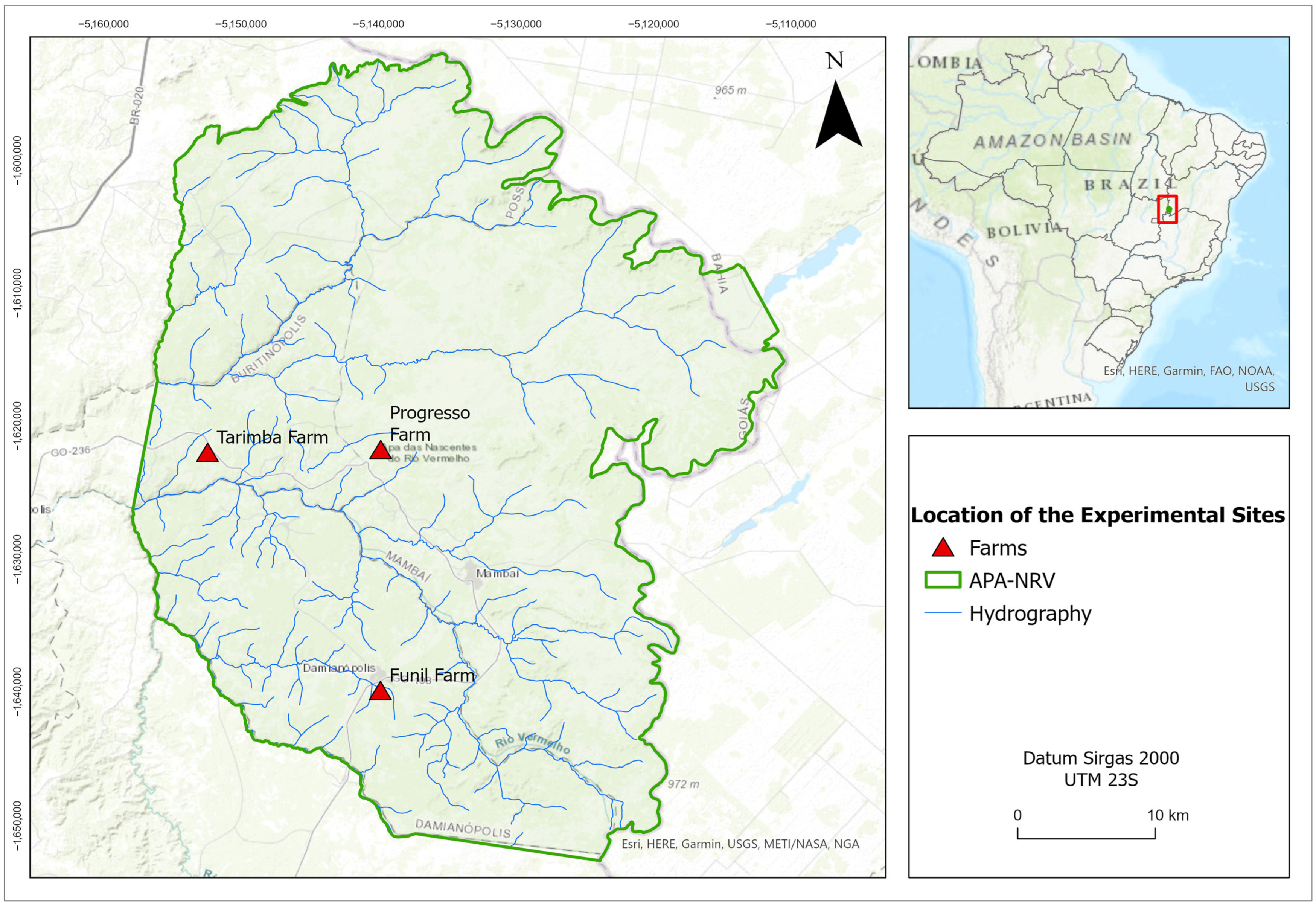
Figure 1. Vermelho river basin (APA-NRV), in Central Brazil, showing the three experimental sites. Datum: SIRGAS 2000.
Sustainability 17 11079 g001
Figure 2. Soil covers under different treatments in the three experimental sites. From top to bottom: Funil farm, Progresso farm, Tarimba farm. DP = degraded pasture; RP = restored pasture; and NS = natural savannah.
Sustainability 17 11079 g002
Figure 3. Examples of drainage areas and elevation of selected Gerlach plots: (a) Funil farm; (b) Progresso farm; and (c) Tarimba farm, showing the Gerlach troughs in the plot outlets.
Sustainability 17 11079 g003
Figure 4. Layout and arrangement of the Gerlach troughs: (a) top view; (b) slope cross-section; and (c) Gerlach trough and bottle detail.
Sustainability 17 11079 g004
Figure 5. Oven-drying of runoff samples in the laboratory.
Sustainability 17 11079 g005
Figure 6. Calibrated runoff curve numbers (CN) of the experimental sites and plots. DP = degraded pasture; RP = restored pasture; and NS = natural savannah.
Sustainability 17 11079 g006
Figure 7. Box plots of normalized runoff for the Funil farm (a), Progresso farm (b), and Tarimba farm (c). DP = degraded pasture; RP = restored pasture; and NS = natural savannah.
Sustainability 17 11079 g007
Figure 8. Distribution of normalized soil for Funil farm (a), Progresso farm (b), and Tarimba farm (c). DP = degraded pasture; RP = restored pasture; and NS = natural savannah.
Sustainability 17 11079 g008aSustainability 17 11079 g008b
Figure 9. Relationship between normalized runoff (Qn) and soil loss (An) for permanent and nonpermanent treatment covers, showing the on- and off-site tolerance thresholds (dotted lines).
Sustainability 17 11079 g009
Table 1. Topography, soils, and land uses of the three experimental sites.
SiteTopography (Slope Grade)Soil TypeLand Uses
Funil farmGentle (9.3%)Red Orthox (sandy loam)Pasture and savannah
Progresso farmGentle (6.8%)Psamment (sand)Pasture and savannah
Tarimba farmModerate (11.5%)Orthent (silt loam)Pasture and savannah
Table 2. Penetration resistance and final infiltration rate of the degraded pastures (DP) in the three experimental sites.
Experimental SitePenetration Resistance, 0–10 cm (MPa)Infiltration Rate (cm min−1)
Funil farm3.330.28
Progresso farm0.780.91
Tarimba farm1.950.80
Table 3. Runoff plot drainage areas (m2) in each experimental site/treatment.
SiteDegraded PastureRestored PastureNatural Savannah
ababab
--------------------------------- (m2) -----------------------------------------------
Funil farm17.020.718.421.221.019.0
Progresso farm12.722.315.121.620.022.0
Tarimba farm28.522.720.920.820.016.0
Table 4. Monthly and annual rainfall volumes (P) and rainfall erosivities (R) of the three experimental sites, during the three hydrologic years.
Month/YearFunil FarmProgresso FarmTarimba Farm
P (mm)R (MJ mm ha−1 h−1)P (mm)R (MJ mm ha−1 h−1)P (mm)R (MJ mm ha−1 h−1)
Aug/220.00.00.00.00.00.0
Sep/220.00.00.00.00.00.0
Oct/220.00.00.00.00.00.0
Nov/22252.7155.9150.084.2242.2116.8
Dec/22264.0164.3295.5190.6214.5100.8
Jan/23176.2100.9166.595.4225.7107.2
Feb/2327.710.934.514.3406.4218.0
Mar/23108.756.4105.054.7126.753.5
Apr/23155.186.5212.2127.9244.5118.1
May/230.00.00.00.00.00.0
Jun/230.00.00.00.00.00.0
Jul/230.00.00.00.00.00.0
Total984.57236.5963.617140.91460.08994.0
Aug/230.00.00.00.019.377.1
Sep/2312.64.149.719.50.00.0
Oct/2329.211.527.59.698.443.6
Nov/2398.349.584.637.169.728.8
Dec/23188.5108.5125.259.6152.273.9
Jan/24170.696.2228.5123.0183.992.8
Feb/24255.3156.4303.7173.3333.8190.5
Mar/24136.373.3165.283.2173.586.5
Apr/24108.255.6208.0109.8199.4102.3
May/240.00.00.00.00.00.0
Jun/240.00.00.00.00.00.0
Jul/240.00.00.00.00.00.0
Total999.06988.51192.57743.11231.97871.4
Aug/240.00.00.00.00.00.0
Sep/240.00.00.00.00.00.0
Oct/24283.6161.0156.199.3261.6124.1
Nov/24231.0125.7276.6132.2293.1142.3
Dec/24167.885.5481.1257.6271.5129.8
Jan/25204.8108.7206.392.8286.5138.5
Feb/25105.248.7122.649.5129.753.2
Mar/2556.823.2181.479.4164.570.9
Apr/25125.760.3126.451.4105.941.7
May/250.00.00.00.00.00.0
Jun/250.00.00.00.027.18.1
Jul/250.00.00.00.00.00.0
Total1174.97719.61550.59181.71540.08920.8
Table 5. Mean normalized runoff (Q/P) across treatments and farms (N = 2). Different letters within the same farm indicate significant differences in Tukey’s HSD test (p < 0.05).
SiteTreatmentNormalized Runoff
Funil farmDP0.207 a
RP0.116 b
NS0.046 c
Progresso farmDP0.283 a
RP0.133 b
NS0.061 b
Tarimba farmDP0.242 a
RP0.134 ab
NS0.055 b
Table 6. Mean normalized soil loss for the three sites. Different letters within the same farm indicate significant differences in Tukey’s HSD test (p < 0.05).
SiteTreatmentNormalized Soil Loss (Mg hr−1 MJ mm)
Funil farmDP0.0060 a
RP0.0020 b
NS0.0005 b
Progresso farmDP6.05 × 10−4 a
RP2.80 × 10−4 ab
NS6.61 × 10−4 b
Tarimba farmDP0.0070 a
RP0.0010 b
NS0.0004 b
Disclaimer/Publisher’s Note: The statements, opinions and data contained in all publications are solely those of the individual author(s) and contributor(s) and not of MDPI and/or the editor(s). MDPI and/or the editor(s) disclaim responsibility for any injury to people or property resulting from any ideas, methods, instructions or products referred to in the content.