Article

Molecular Biomarker and Principal Component Analysis of Agricultural Soil in Oued Rhiou, Algeria: Insights into Organic Matter Dynamics and Management Practices

1
Laboratory “PRAVDURN” (UKHM), Faculty of Nature and Life Sciences, (Algeria) Agricultural Production and Sustainable Valorization of Natural Resources, Hassiba Benbouali University of Chlef, Chlef 02180, Algeria
2
Laboratory Management and Valorization of Agriculture and Aquatic Ecosystems (LMVAAE), University Center of Tipaza, Tipaza 42065, Algeria
3
Institut de Chimie des Milieux et Matériaux de Poitiers IC2MP, Université de Poitiers, UMR CNRS 7285, Equipe Eaux, Biomarqueurs, Contaminants Organiques, Milieux, B27, 4 rue Michel Brunet, CEDEX 9, 86073 Poitiers, France
4
College of Engineering and Technology, American University of the Middle East, Egaila 54200, Kuwait
*
Authors to whom correspondence should be addressed.
Sustainability 2025, 17(24), 11074; https://doi.org/10.3390/su172411074
Submission received: 15 November 2025 / Revised: 4 December 2025 / Accepted: 8 December 2025 / Published: 10 December 2025

Abstract

Understanding how soil organic matter (SOM) responds to agricultural management at the molecular scale remains a central challenge, particularly in semi-arid Mediterranean systems where long-term monitoring is limited, and soils face marked seasonal fluctuations, salinity constraints, and sustained cultivation pressure. In this study, lignin and lipid biomarkers were combined to provide complementary views of SOM dynamics in the agricultural soils of Oued Rhiou (Algeria), enabling the simultaneous assessment of plant-derived inputs, microbial processing, and stabilization pathways under cultivation and subsequent rest periods. Depth-dependent patterns showed that lignin indicators responded strongly to shifts between crop residue inputs and root-derived material, while lipid proxies captured changes in microbial activity, biosynthesis, and OM stabilization. Surface soils exhibited enhanced microbial turnover during cultivation, whereas deeper layers were characterized by selective preservation of recalcitrant compounds. Principal Component Analysis (PCA) further highlighted these processes by distinguishing vegetation-driven variability from microbial reworking patterns, with subset analyses (lignin-only and lipid-only) providing clearer explanatory power than the combined dataset. Collectively, the findings underscore the importance of integrating rest periods into agricultural cycles to promote SOM stabilization, highlight the complementarity of lignin and lipid proxies for deciphering SOM transformation pathways, and offer molecular-level insights that can guide sustainable soil management strategies aimed at balancing productivity, soil resilience, and long-term carbon sequestration.

1. Introduction

Soil organic matter (SOM) plays a fundamental role in supporting soil health and sustainable land use practices. SOM contributes to critical soil functions, including nutrient cycling, water retention, structural stability, and erosion prevention [1]. These functions are indispensable for maintaining agricultural productivity and ecosystem resilience, making SOM a central focus for achieving Sustainable Development Goals (SDGs). Specifically, SDG 2 (Zero Hunger) emphasizes the need for sustainable food production systems, which rely on SOM to maintain fertile and productive soils [2]. Furthermore, SOM’s role as a major carbon reservoir connects it to SDG 13 (Climate Action), as its sequestration potential helps mitigate greenhouse gas emissions, reducing the impact of climate change [3]. The balance between SOM turnover and stabilization determines its effectiveness in achieving these goals, underscoring the importance of its study in diverse soil contexts, particularly under agricultural use [2,3].
Agricultural soils are considered a dynamic environment of OM, driven by the continual interaction between plant inputs, microbial activity, and soil processes [1,4]. Intensive agricultural practices (e.g., tillage, fertilization, and monocropping) may increase SOM turnover and deplete its stocks, causing loss of fertility and greater carbon losses [5]. Restorative practices, including crop rotation, organic amendments, and fallow periods, are key to both maintaining SOM and increasing its quality [6]. The study of SOM in agricultural soils is important for understanding how management practices impact its cycling and stabilization. Therefore, the crop-residue inputs during the growing seasons add new OM to the soil that is aggressively decomposed by microbes, whilst the inter-crop rest periods promote the accumulation of more stabilized organic compounds [1,4]. More effective approaches to improving soil health and sustainability, optimized between production and carbon sequestration, may be obtained by understanding the dynamics of SOM, at the molecular level, under diverse agricultural practices [1].
Lignin analysis provides valuable insights into the dynamics of plant-derived organic matter in soil. As a major contributor to soil organic matter (SOM), lignin is highly resistant to microbial degradation due to its complex aromatic structure and can persist in soils over long periods. Its study reveals important information about vegetation inputs and the biogeochemical processes underlying SOM formation. Changes in lignin composition with soil depth and under different agricultural practices offer a window into microbial activity, organic inputs, and SOM stabilization [1,4,7,8]. Lipid analyses are widely used as biomarkers for assessing microbial contributions, plant inputs, and OM stability in soils. These compounds are relatively resistant to degradation and serve as indicators of SOM dynamics under various management regimes [9]. Lipids have been extensively applied to track microbial community structure and activity and to distinguish between microbial and plant-derived organic matter. Their use enhances understanding of how agricultural practices affect microbial processes and the long-term stabilization of SOM [8,10,11,12]. Together, lignin and lipid fractions serve as complementary tools in revealing the molecular-level transformations of SOM in agricultural soils, offering a robust framework for evaluating the effects of land management on soil health and carbon cycling.
By combining these lipid biomarkers with lignin analyses, researchers can gain a comprehensive understanding of SOM dynamics in agricultural soils. This integrative approach provides insights into the complex interplay between microbial activity, plant inputs, and stabilization processes, contributing to the development of sustainable soil management strategies. In this study, we aimed to investigate lignin and lipid proxies, coupled with Principal Component Analysis (PCA), for the purpose of uncovering patterns of SOM turnover and stabilization. This will contribute to advancing our understanding of how agricultural practices influence soil health and carbon sequestration. Soil samples were collected from an agricultural field in Oued Rhiou, Algeria, under artichoke cultivation (2008–2011), followed by a rest period (2011–2012).

2. Materials and Methods

2.1. Site Description and Sampling

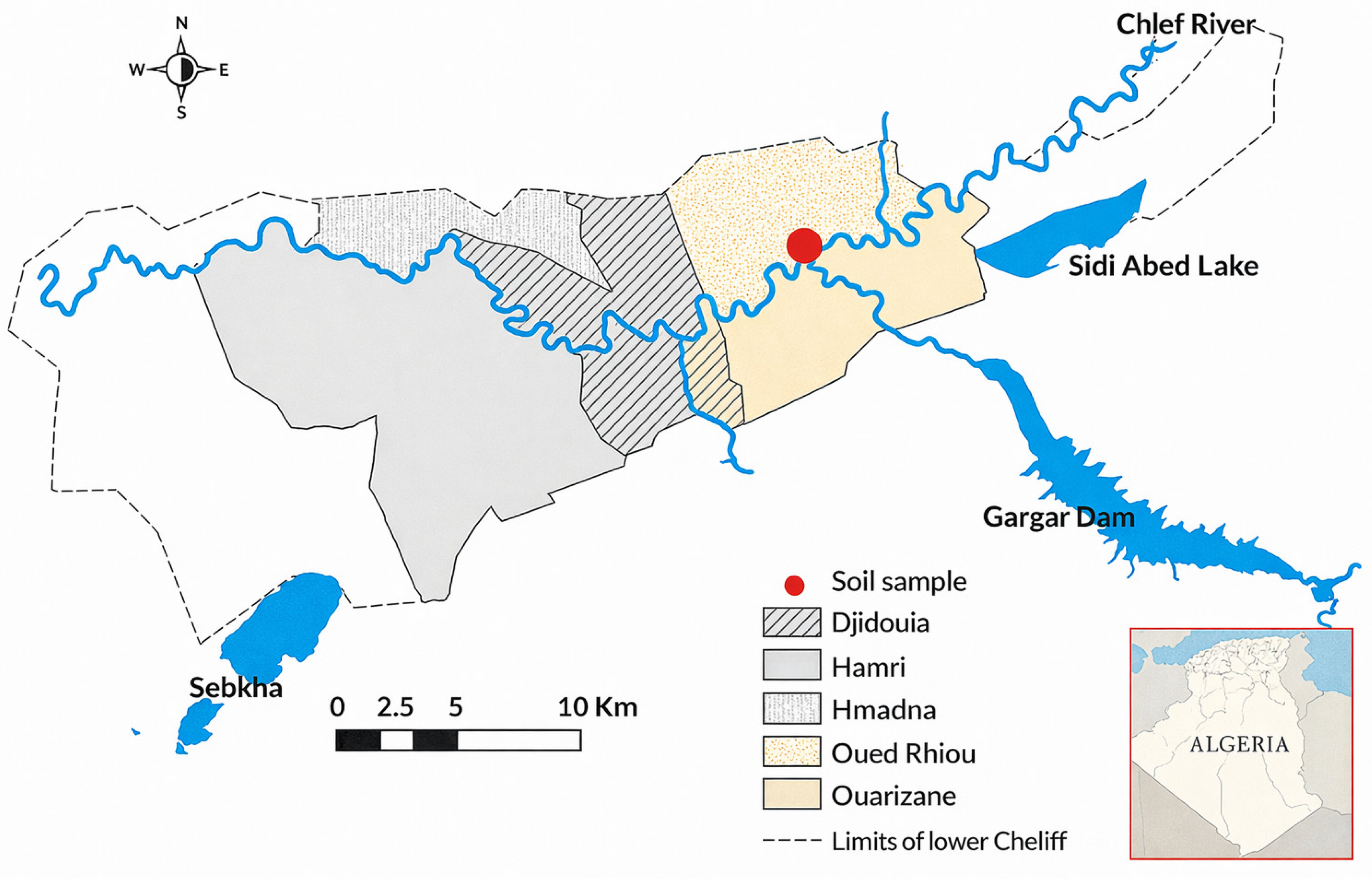
The plain of lower-Cheliff, which is located in the North-West of Algeria, covers an area of about 65,000 ha, of which 40,000 ha represents irrigated areas (Oued Rhiou, Ouarizane, Djidouia, Hamri, and Hmadna, from upstream to downstream) (Figure 1) [13]. This plain is characterized by a semi-arid climate with particularly high temperatures in summer (30 °C average) and low temperatures in winter (10 °C average) [14], and an average annual rainfall of about 297.59 mm and an average annual evaporation of about 1200 mm/year [15]. The main details of the farm characteristics, for the studied area of Oued Rhiou, are presented in Table 1.
Soil samples were collected biannually between 2009 and 2012 at three depth intervals (0 to −20 cm, −20 to −60 cm, and −60 to −100 cm) to capture both seasonal and vertical variability in OM dynamics. The sampling schedule, conducted in May and November, was designed to reflect contrasting environmental conditions—late spring moisture following rainfall and post-harvest dryness, respectively. The studied soils belong to a clay-rich group, characteristic of the semi-arid Cheliff plain, and are known for their shrink–swell behavior. These soils exhibit a well-defined vertical structure with an active plow layer (0 to −20 cm), a transitional root-influenced zone (−20 to −60 cm), and a deeper subsoil (−60 to −100 cm) where reduced aeration and salinity accumulation are often observed (Table 1). After collection, all samples were immediately freeze-dried to preserve their compositional integrity. They were then finely ground to ensure homogeneity and to minimize any discrepancies during subsequent chemical analyses.
Among irrigated perimeters, a plot was selected for this study. The main criteria for selecting this plot were: the presence of natural drainage systems (River), irrigation type (micro irrigation by drip), the types of crops grown (Artichoke), and the degree of soil salinity (Table 1). The selection of different depth layers corresponds to agronomic practices common in Oued Rhiou. The 0 to −20 cm layer represents the active plow zone, influenced by tillage and organic inputs. The −20 to −60 cm interval captures transitional processes such as root activity and nutrient redistribution. The −60 to −100 cm subsoil layer reflects deeper soil conditions, where microbial reworking is limited, and OM tends to be better preserved under higher salinity and reduced oxygen availability. This stratification aligns with known salinity gradients in semi-arid, clay-rich soils where salt accumulation occurs due to restricted leaching and capillary rise.

2.2. Lignin Analysis by Alkaline Oxidation with CuO

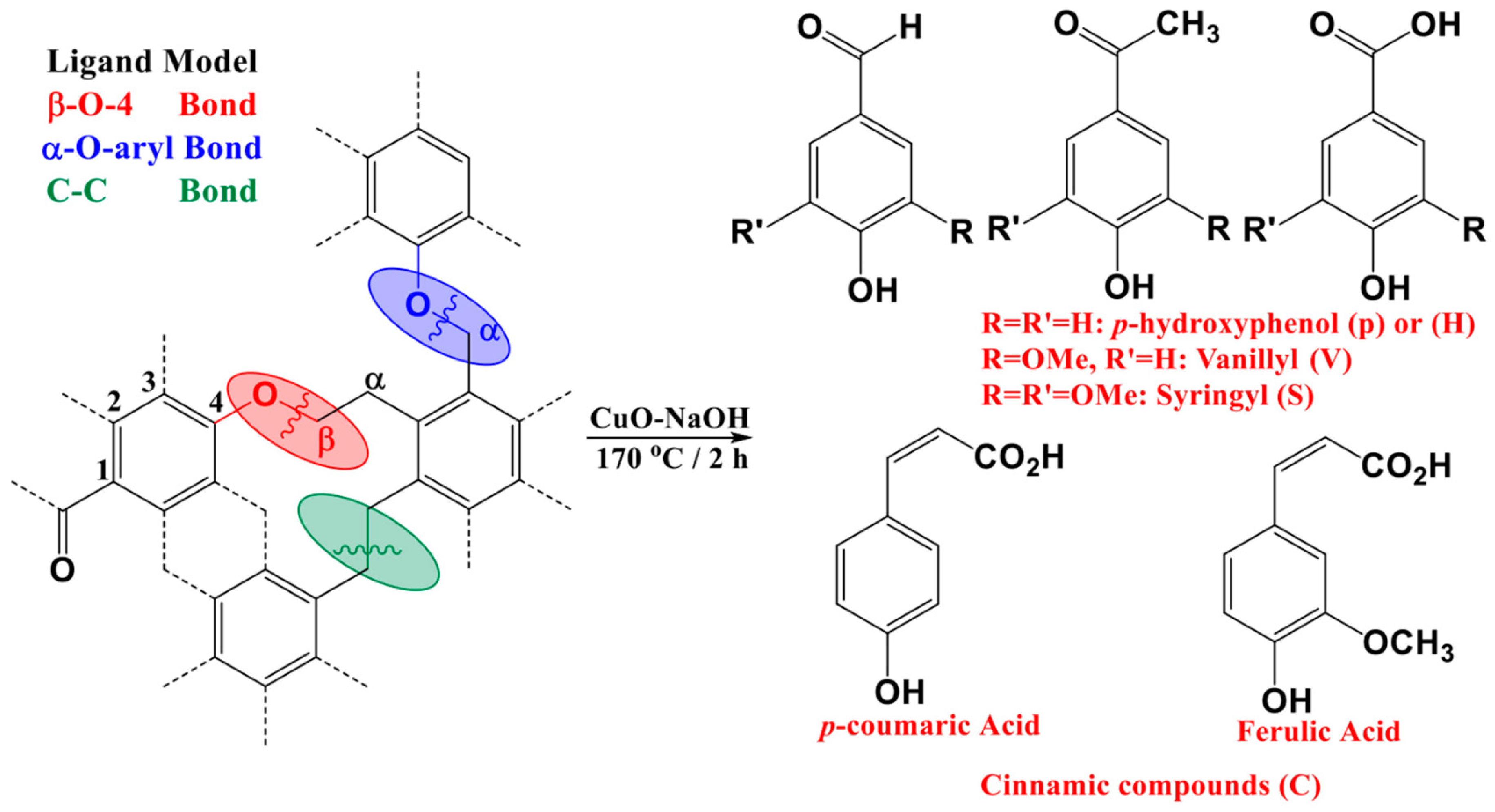
In this work, eleven phenolic lignin-derived compounds (Figure 2) were quantified following alkaline oxidation using cupric oxide (CuO). Briefly, a mixture containing 1 g of CuO, 100 mg of freeze-dried soil, and 7 mL of 1 M NaOH was placed in a sealed Parr reactor and heated at 170 °C for 2 h. After completion of the reaction, the solution was subjected to a purification sequence involving filtration, acidification, and extraction with organic solvents. The obtained extract was subsequently silylated and analyzed by gas chromatography (GC) equipped with a Flame Ionization Detector (FID) (Shimadzu, Japan). Additional methodological details are available in Younes et al. [16].
SVC, representing the combined abundance of syringyl (S), vanillyl (V), and cinnamyl (C) phenols released during CuO oxidation, provides a measure of total lignin input. Because SVC decreases as lignin undergoes microbial breakdown, it serves as an integrated indicator of both lignin quantity and its degradation state across soil depths and management periods [1]. Lignin proxies were employed to assess vegetation sources and the degree of lignin decomposition in the SOM. S/V and C/V ratios obtained from CuO-oxidized lignin are widely used as indicators of vegetation source and botanical origin. Specifically, higher S/V ratios reflect a greater contribution of angiosperm-derived lignin, which contains more syringyl (S) units, whereas lower values are typical of gymnosperm lignin, which is dominated by vanillyl (V) units. Likewise, the C/V ratio provides information on the relative input of non-woody tissues, which are richer in cinnamyl phenols (C units) [1,17]. The Ad/Al (Acid-to-Aldehyde) ratios for both syringyl (S) and vanillyl (V) units are indicators of oxidative degradation, with higher values reflecting advanced microbial decomposition [1,18]. The H/S (Hydroxyphenyl-to-Syringyl) ratio was used to infer the relative contribution of root-derived inputs (H-units), which tend to be more prevalent in deeper layers and during rest periods [1,19]. The Fer/Coum (Ferulic-to-Coumaric acid) ratio served as a marker of crop residue freshness, as ferulic acid is more labile and subject to preferential microbial degradation [4,20].

2.3. Lipid Extraction

The total lipid extract (TLE) of each dried soil sample was isolated using the Bligh and Dyer (1959) [21] protocol, as adapted by Smedes and Askland [22]. In summary, 500 mg of soil from each depth interval was agitated for 1 h in a CHCl3/MeOH/phosphate buffer mixture (1:2:0.8, v/v/v). Afterwards, equal amounts of chloroform (CHCl3) and phosphate buffer were added, and the mixture was left to stand overnight to ensure complete phase separation. The lipid fraction was recovered from the CHCl3 layer, and the solvent was evaporated. Prior to GC–MS analysis, the fatty acid (FA) fraction was derivatised by heating at 70 °C for 15 min in BSTFA with 1% TMCS.
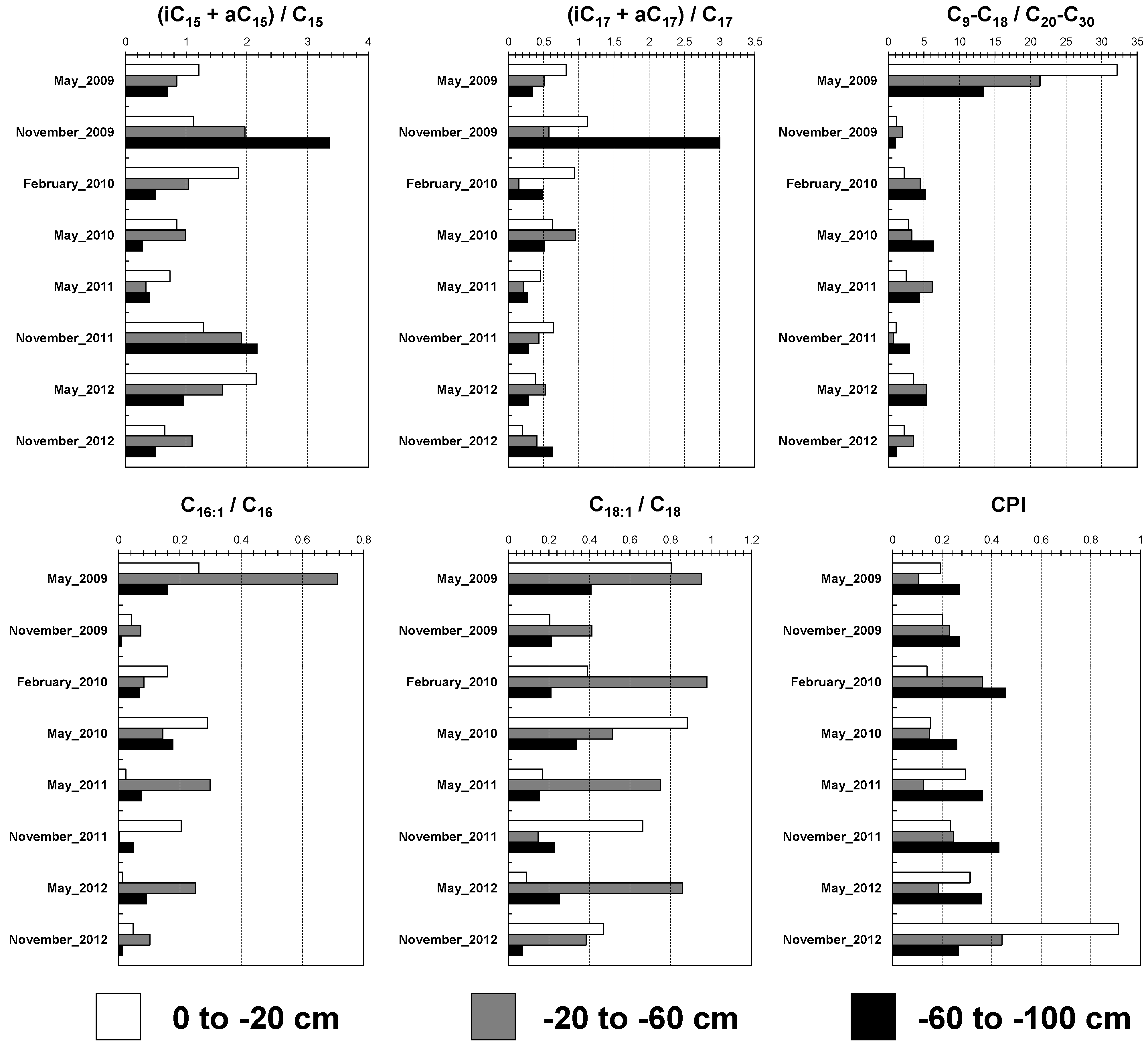
FA proxies were applied to evaluate microbial contributions, activity, and the degree of OM stabilization. The i15+a15/C15 and i17+a17/C17 ratios represent the contribution of terminally branched chain FAs, with respect to their linear homologues, and were employed to infer the contribution of Gram-positive bacteria [10,23]. The C16:1/C16 and C18:1/C18 ratios represent the contribution of monounsaturated FAs, with respect to their linear homologues, and exhibit proxies for Gram-negative bacterial [8,10]. The C9-C18/C20-C30 ratio distinguishes microbial short-chain FAs from long-chain plant waxes, thus helping to interpret the balance between microbial and plant-derived inputs across depths [8,24]. Lastly, CPI represents odd/even FA prevalence and highlights OM maturity and stabilization [11,12,25].

2.4. Gas Chromatography Coupled with Mass Spectrometry (GC-MS)

Compound identification was carried out by GC–MS using a Trace GC system (Thermo Finnigan, Somerset, NJ, USA) coupled to an Automass mass spectrometer. The injector (Thermo Finnigan PTV) was operated at 250 °C, and separations were achieved on a fused-silica Supelco Equity 5% column (30 m × 0.25 mm i.d., 0.25 µm film). Helium served as the carrier gas at a constant flow of 1 mL/min. The oven program started at 60 °C, increasing to 300 °C at 5 °C/min, followed by a 15-min hold at 300 °C. The mass spectrometer utilized electron ionization at 70 eV, with ion filtering performed via a quadrupole analyzer. Data were acquired in full-scan mode (m/z 50–650; 2 scans/s). Identification of compounds relied on retention times, comparison of mass spectra with reference standards, and verification with published sources.

2.5. PCA

PCA is commonly employed to simplify complex, high-dimensional datasets by converting a group of correlated variables into a new set of linearly independent variables known as principal components (PCs). While this reduction in dimensionality can sometimes compromise certain details—since fewer variables may capture less nuance [26]—the technique aims to preserve as much of the original information as possible. This is achieved through an orthogonal transformation that generates a smaller number of uncorrelated components which statistically represent the structure of the initial correlated variables [26].
The PCs indicate the directions along which the data show the greatest variability, effectively capturing the most meaningful patterns with minimal information loss. They are arranged in descending order of explained variance: the first PC accounts for the highest proportion of variation in the dataset, the second PC explains the next largest share, and the sequence continues in this manner [26]. In this study, PCA was carried out using XLSTAT 2024.3.0 software (Addinsoft, Paris, France), following the procedures described by Younes et al. [16].

3. Results and Discussion

3.1. Lignin Proxies

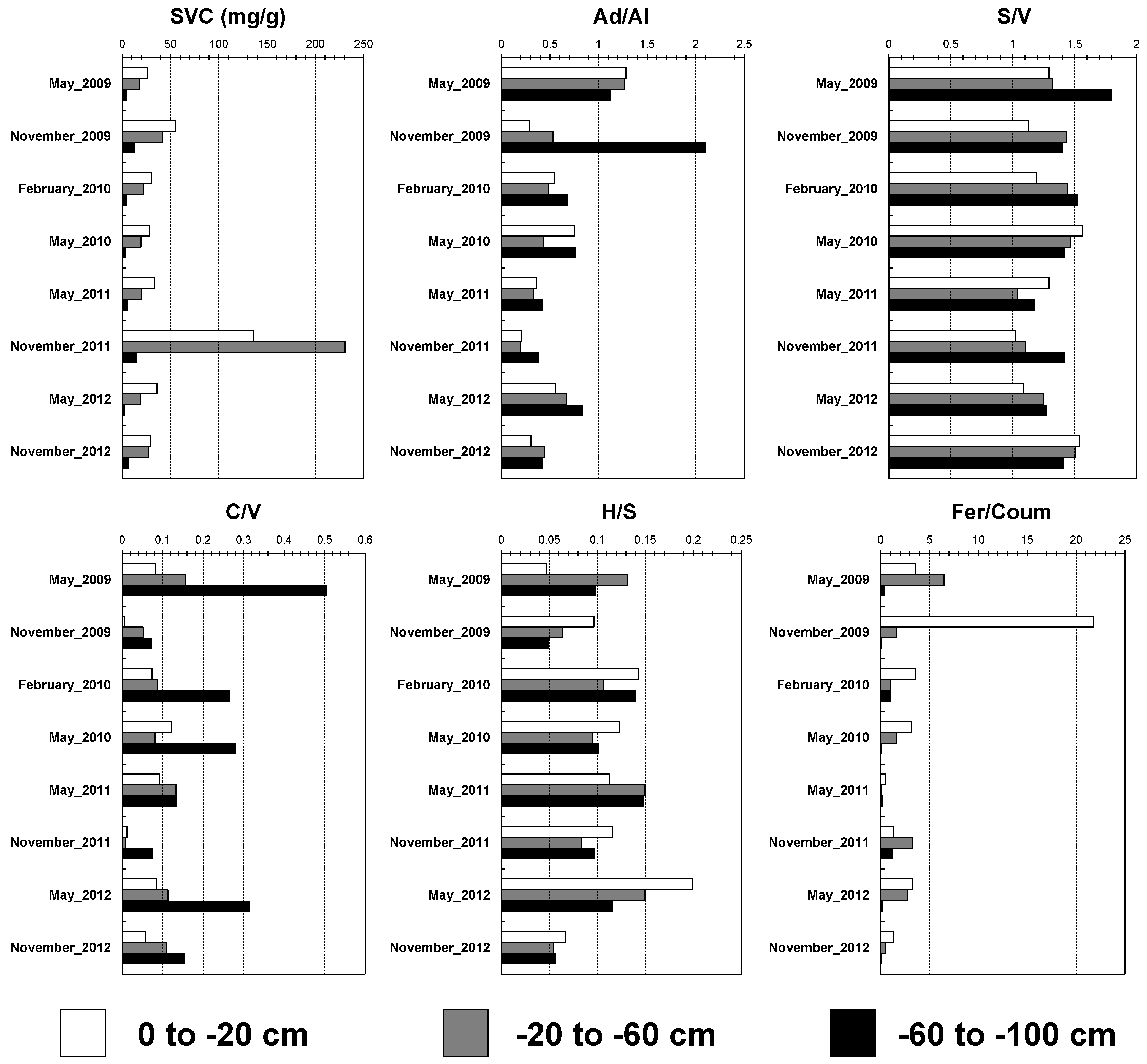
The lignin proxies examined exhibited significant temporal and depth-dependent variations in lignin biomarkers, highlighting the effects of artichoke cultivation (2008–2011) and resting (2011–2012) practices on SOM dynamics (Figure 3). In the surface layer (0 to −20 cm), SVC values increased under cultivation, reaching a maximum in November 2011 during the rest period. This increase reflects improved stabilization and microbial treatment of lignin under low disturbance and changing soil conditions [1,18,20]. The reduction in the Ad/Al ratio during the resting period indicates increased lignin degradation, driven by microbial breakdown of aromatic structures. These patterns align with findings from Thevenot et al. [1], who reported decreased trends for lignin degradation under reduced soil management intensity.
The H/S ratio is higher during resting periods compared to cultivation, indicating a relative increase in H-units within the lignin composition. This reflects changes in lignin inputs, microbial metabolism, and decomposition dynamics. During cultivation, crop residues such as artichoke, which predominantly contain S-units, lead to lower H/S ratios [4,8]. Conversely, resting periods are dominated by root-derived inputs, naturally higher in H-units content [1,19]. Additionally, since H-units are more stable than S-units, microbial activity during resting periods may preferentially degrade S-units, further enhancing H-units’ proportions [1,27]. This shift is further influenced by the absence of fresh aboveground plant exudates, directing microbial communities to utilize resistant root-exuded lignin while stabilizing H-compounds [4,8]. These mechanisms underscore the significance of resting periods in promoting SOM stabilization and suggest that higher H/S ratios can serve as indicators of reduced fresh biomass inputs and the selective preservation of recalcitrant lignin-associated compounds through sustainable soil management practices [1].
In the middle layer (−20 to −60 cm), SVC values remained moderate during the cultivation phase but spiked sharply during the rest period in November 2011, with leaching and root-derived inputs identified as key contributors [8,19] (Figure 3). Compared to surface samples, the middle layer exhibited similar or higher Ad/Al ratios, reflecting ongoing microbial activity that facilitates the breakdown of aromatic compounds and stabilization of more resistant lignin derivatives [1,18]. The consistent C/V ratios (approximately 0.1; Figure 3) across this depth highlight the steady influence of C-based compounds, primarily associated with root structures and their gradual incorporation into SOM [4,8].
The lowest SVC values, indicating reduced input of fresh OM and a dominance of aged, stabilized compounds, were observed at the deepest layer (−60 to −100 cm; Figure 3) [1,18]. The high S/V ratios at this depth suggest that S-compound deposition, primarily derived from vascular plant roots, dominates, consistent with findings by Hedges and Mann [17]. Variations in Ad/Al ratios at this depth imply that decomposition processes, although slower, are still occurring due to limited microbial activity and improved substrate quality. These results underscore the recalcitrant nature of lignin fractions and their significant role in maintaining SOM stability in deeper soil profiles [19].
Fer/Coum ratio indicates changes in lignin composition and microbial activity and varied significantly between cultivation and rest periods across all depths (Figure 3). During cultivation, a comparatively higher Fer/Coum ratio highlighted the significant influence of ferulic-rich residues from crop inputs [4,8]. In contrast, during the rest period, this ratio decreased due to microbial degradation of ferulic-rich components, which are less recalcitrant compared to coumaric-rich components [20]. Similarly, the H/S ratio significantly declined with depth during resting periods (particularly in May 2012, Figure 3), reflecting the increased contributions of root-derived lignin and the selective decomposition of H-units by microbes [4,8].
These findings highlight the complex interactions between agricultural practices, microbial processes, and lignin stabilization in shaping SOM dynamics. The rest period in 2011–2012 appeared to promote microbial activity, enhancing lignin turnover and stabilization in subsurface layers. Sustainable management practices, such as fallow periods and periodic tillage, can significantly influence SOM quality and contribute to long-term carbon sequestration. These insights align with broader literature [18,19,20], emphasizing the critical role of agricultural management in maintaining soil health and mitigating carbon loss.

3.2. Lipid Proxies

Lipid biomarker proxies demonstrate remarkable differences both over time and across soil depths, reflecting the effects of agricultural practices (artichoke cultivation from 2008–2011) and a subsequent rest period (2011–2012) (Figure 4). These changes underline significant shifts in microbial activity, OM dynamics, and stabilization processes. Microbial communities in the surface layer (0 to −20 cm; Figure 4) were highly responsive to management practices. During the rest period, the i15+a15/C15 ratio peaked (May 2012: 2.15; Figure 4), indicating enhanced microbial activity due to reduced soil disturbance. This finding aligns with Conant et al. [28], who observed that fallow systems promote microbial adaptations. Conversely, during cultivation, the C9-C18/C20-C30 ratio reached its highest level (May 2009: 32.15; Figure 4), reflecting fresh OM inputs and the rapid turnover of plant-derived lipids, as crop residues served as microbial substrates [4,18]. The decline in C16:1/C16 and C18:1/C18 ratios during the rest period (May 2012: 0.014 and 0.088; Figure 4) suggests reduced lipid biosynthesis, indicating a microbial shift toward stabilization rather than fresh lipid production [8]. Similarly, the rise in CPI values during the rest period (November 2012: 0.91; Figure 4) indicates the accumulation of stable lipid fractions, reflecting slower decomposition rates and long-term OM stabilization, as noted by Rasse et al. [19].
In the intermediate layer (−20 to −60 cm), the lipid profile indicates a transition zone influenced by both surface inputs and deeper soil processes. During rest periods, the i15+a15/C15 ratio showed a moderate increase (November 2011: 1.91; Figure 4), suggesting microbial utilization of OM transported from above, such as leached compounds or root exudates [4,19]. Conversely, a decline in the C9-C18/C20-C30 ratio during rest periods (November 2011: 0.70; Figure 4) points to reduced contributions of short-chain lipids, likely due to the limited availability of fresh OM from the surface. This finding aligns with Kögel-Knabner [4], who observed that contributions of recent organic inputs diminish with increasing soil depth. Furthermore, microbial activity, as indicated by the C16:1/C16 ratio, decreased significantly during rest (November 2011: 0.002; Figure 4), reflecting constrained microbial activity due to limited substrate availability. Despite these declines, the CPI value showed moderate increases (February 2010: 0.36; Figure 4), indicating that stabilization processes led to the accumulation of more resistant lipid fractions. This pattern is consistent with studies highlighting slower turnover in intermediate soil layers [29].
At the deepest layer (−60 to −100 cm), lipid biomarkers indicate low microbial activity and a predominance of stabilized OM. This is reflected in the consistently low C9-C18/C20-C30 ratios (November 2012: 1.21; Figure 4), suggesting the absence of fresh lipid contributions from microbial organisms [4,8]. Similarly, the low values of C16:1/C16 and C18:1/C18 (November 2012: 0.014 and 0.072, respectively; Figure 4) highlight reduced lipid biosynthesis, likely due to nutrient limitations and reduced oxygen availability at this depth [1]. Despite these constraints, occasional spikes in the i15+a15/C15 ratio (November 2009: 3.36; Figure 4) suggest sporadic microbial activity in the deeper layers. A similar upward trend in this ratio was also observed in November 2011.
These findings emphasize how agricultural practices and soil management shape lipid dynamics over time and across depths. Cultivation periods encourage microbial turnover and fresh OM inputs, while rest periods promote the stabilization of organic compounds, particularly at greater depths. This interplay of processes underscores the importance of sustainable soil management strategies that balance OM turnover with long-term stabilization, ensuring soil health, fertility, and carbon storage.

3.3. OM Dynamics with Time and Depth

The comparison of lignin-derived and lipid biomarker proxies provides interesting insights into SOM dynamics in response to agricultural practices and fallow periods. This comparison highlights both shared trends and unique behaviors across time and depth, illustrating how these compounds react differently to changes in soil management. The findings align with prior investigations, emphasizing the critical roles of microbial activity, organic inputs, and stabilization mechanisms. Through a long-term study of a Mediterranean agricultural soil system (artichoke cultivation: 2008–2011; rest period: 2011–2012), the temporal and spatial variability of these proxies offers valuable information to enhance our understanding of SOM responses, contributing to improved soil management practices.
In the surface soil layer (0 to −20 cm), both lignin and lipid biomarkers showed clear responses to agricultural activities and subsequent rest periods. At the transition between cultivation and rest (November 2011; Figure 3), SVC increased significantly, suggesting enhanced microbial processing and stabilization of lignin compounds under conditions of reduced disturbance. Similarly, lipid biomarkers like i15+a15/C15 exhibited increases in November 2011 and May 2012 compared to the directly preceding sampling times (Figure 4), reflecting heightened microbial activity when the soil was less disturbed. These findings align with previous studies showing that fallow periods foster microbial growth due to reduced rest [4,8,18]. During rest periods, Ad/Al ratios decreased (Figure 3), indicating intensified lignin decomposition driven by microbial breakdown of its complex aromatic structures, consistent with findings by Thevenot et al. [1]. Conversely, lipid biomarkers such as C16:1/C16 and C18:1/C18 exhibited reduced synthesis during rest periods, suggesting a shift in microbial lipid production toward stabilization rather than the creation of fresh lipids [4,8].
During cultivation, lignin proxies indicated elevated S/V ratios, reflecting a stronger contribution of angiosperm-derived lignin—rich in syringyl units—from crop residues such as artichoke, consistent with the dominance of herbaceous plant inputs in surface soils [1]. This aligns with findings by Kögel-Knabner [4], who highlighted the significant role of plant residues in surface SOM. Similarly, lipid proxies exhibited high C9-C18/C20-C30 ratios during cultivation (May 2009: 32.15; Figure 4), reflecting the abundance of short-chain lipids typically associated with fresh organic inputs and active microbial turnover. As the soil transitioned to the rest period, CPI increased markedly (November 2012: 0.91; Figure 4), suggesting the stabilization of odd-chain, plant-derived lipid components [25,30]. Following a similar pattern, lignin decomposition slowed during rest periods, as indicated by declining Ad/Al ratios. This illustrates the shared pathways through which lignin and lipid compounds contribute to SOM stabilization (Figure 3).
In the middle layer (−20 to −60 cm), the proxies suggest a transitional zone influenced by surface inputs and subsurface processes. SVC values moderately decreased during cultivation but spiked significantly during the rest period (November 2011; Figure 4), reflecting contributions from leaching and root-derived inputs [19]. Similarly, i15+a15/C15 ratio increased during the rest period (November 2011: 1.91; Figure 4), aligning with microbial utilization of OM transported from the surface layer. However, both lignin and lipid proxies indicated a decline in markers associated with fresh inputs—C/V for lignin and C9-C18/C20-C30 for lipids—suggesting reduced contributions of short-chain and C-based compounds. These findings are consistent with Kögel-Knabner’s [4] observation of diminishing fresh OM inputs with depth and a shift toward more stabilized compounds.
Microbial activity, indicated by proxies such as C16:1/C16, declined markedly during the rest period (November 2011: 0.002; Figure 4), reflecting substrate limitations [4,8]. Ad/Al ratios steadily increased from November 2011 to May 2012 (Figure 3), pointing to the ongoing decomposition of aromatic structures. While lignin decomposition persisted, lipid turnover appeared to slow, which facilitated lipid stabilization, as evidenced by the moderate decrease in CPI observed between November 2011 and May 2012 (Figure 4). These dynamics highlight the intricate interactions in transitional soil layers, where both leaching and microbial activity significantly influence the composition and stabilization of SOM [8,19].
At the deepest layer (−60 to −100 cm), both lignin and lipid proxies consistently indicated reduced inputs of fresh OM and slower decomposition. SVC values remained low throughout, reflecting the limited availability of fresh material (Figure 3). This aligns with the low C9-C18/C20-C30 ratios observed in these depths, signifying the dominance of stabilized, long-chain FAs (Figure 4). High S/V ratios for lignin suggest contributions of S-units lignin from vascular plant roots (Figure 3), emphasizing inputs from woody tissues [1,17]. CPI values remained stable (0.2–0.4; Figure 4), further confirming the persistence of recalcitrant compounds in deep soil layers [25,30].
The comparison of lignin and lipid proxies demonstrates that while both highlight overarching trends in SOM dynamics, they provide complementary perspectives. Lignin biomarkers are particularly responsive to plant-derived inputs and decomposition dynamics, offering valuable insights into the turnover of aromatic compounds and the contributions of above- and belowground biomass [1,17,19]. Lipid biomarkers, by contrast, are more sensitive to microbial activity, lipid synthesis, and stabilization processes, capturing shifts in microbial community composition and the preservation of recalcitrant compounds [4,8,25]. Together, these proxies reveal the interplay of agricultural practices, microbial activity, and stabilization processes in shaping SOM composition across soil depths.

3.4. Application of PCA to Molecular Proxies

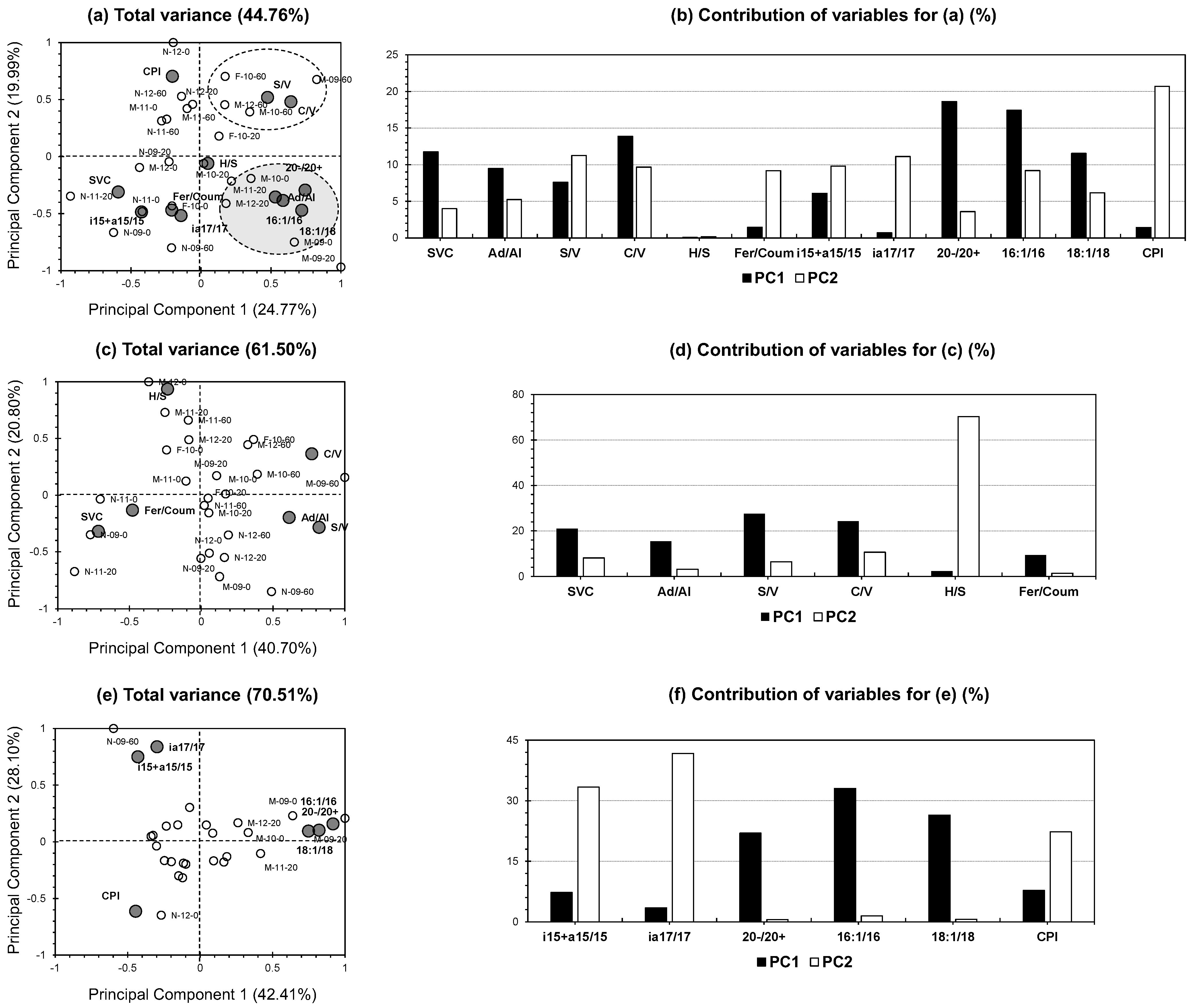
PCA is a versatile multivariate analysis tool widely employed in geochemistry and soil studies to simplify complex datasets and reveal significant patterns and relationships [16]. It aids in determining the origins of OM—whether terrestrial or marine—and tracing its transformations across various environments [31]. PCA also facilitates the comparison of samples, identifies trends such as similarities and differences, and helps create meaningful metrics like degradation indices [16,32]. For instance, Schellekens [32,33,34] applied PCA to study molecular changes in peat, uncovering long-term vegetation shifts and decomposition pathways. Cordovil et al. [35] utilized PCA to examine how organic amendments, such as compost and slurry, aid in post-fire soil recovery. Similarly, Zhou et al. [9] employed PCA to explore how decaying plant material impacts dissolved organic carbon and nitrogen in tropical soils. By reducing the complexity of intricate relationships into easily interpretable components, PCA serves as an invaluable tool for deriving insights and visualizing data, making it essential for advancing sustainable soil and environmental management [9,35]. In this study, PCA was applied to assess similarities and differences between the lipid and lignin proxies utilized. The application of this multidimensional statistical method has the potential to validate or question the interrelationships among the proxies, thereby extending our understanding of SOM dynamics. To ensure clearer interpretation of molecular patterns, three separate PCA models were generated: one incorporating all lignin and lipid proxies (Figure 5a,b), one restricted to lignin-derived ratios (Figure 5c,d), and one restricted to lipid-derived ratios (Figure 5e,f), allowing plant-derived and microbial-derived contributions to be examined independently.

3.4.1. PCA All Dataset

Figure 5a,b illustrate the PCA-biplot incorporating the entire dataset (both lignin and lipid proxies). The first two PCs accounted for 44.76% of the total variance, with PC1 contributing 24.77% and PC2 contributing 19.99% (Figure 5a). Compared to other PCA studies in geochemical contexts, our results indicate a moderate to low contribution [16]. This discrepancy may be attributed to differences in the mechanistic approaches between the two molecular analysis techniques: CuO-NaOH oxidation and lipid extraction. The first involves the cleavage of C-C and C-O bonds in lignin through high-temperature redox reactions (170 °C; [17]), while the second consists of a simpler process involving the maceration of soil samples with organic/aqueous solvents followed by fraction separation using liquid chromatography. Despite this, the analyzed samples exhibit a well-distributed pattern across the biplot, aiding in the identification of distinct temporal and spatial trends. Two primary clusters are evident: a white cluster and a gray cluster. The white cluster, comprising exclusively deepest samples (−60 to −100 cm; Figure 5a), correlates strongly with lignin vegetation indicator proxies, such as C/V and S/V. In contrast, the gray cluster is predominantly composed of middle-depth samples (−20 to −60 cm; Figure 5a) and exhibits high correlations with Ad/Al, C16:1/C16, C18:1/C18, and C9-C18/C20-C30—proxies often associated with microbial activity. This distinction highlights the middle depth as a transitional zone between two ecological niches: a fresh OM input zone at the upper layers and a vegetation deposition zone at the lower layers [9,20]. This integrative approach not only underscores the utility of combining lignin and lipid proxies in soil studies but also reveals nuanced patterns of OM cycling [1,18,19].
SVC, i15+a15/15, i17+a17/17, and Fer/Coum exhibit a negative influence on the first two PCs (Figure 5a). These proxies are closely related, indicating a shared response to the dynamic interplay between lignin inputs, microbial activity, and OM stabilization. Microbial activity, which decomposes lignin and synthesizes branched FAs, explains the tight linkage of SVC with microbial biomarkers i15+a15/C15 and i17+a17/C17 [36]. This relationship suggests that microbial reworking zones, particularly in surface and middle soil layers, lead to a simultaneous decline in lignin concentration and microbial lipid synthesis as OM stabilizes [1,18,20]. This dynamic is highlighted by the proximity of probable surface samples to these proxies in terms of arrangement, contrasting with the negative positioning of these proxies relative to the white cluster (representing middle-layer samples; Figure 5a). The inclusion of Fer/Coum further underscores the likelihood of microbial preference for degrading ferulic acids during active OM turnover [37,38]. Together, these proxies portray a unified view of OM dynamics, where lignin decomposition is closely tied to microbial lipid synthesis and the preferential degradation of C-compounds.
Figure 5b displays the contributions of the studied variables to the first two PCs. For PC1, the largest contributors were C9-C18/C20-C30 and C16:1/C16 (18.62% and 17.42%, respectively; Figure 5b), underscoring the dominant role of microbial lipid proxies in explaining primary dataset variance. Conversely, the low contributions of other proxies to PC1 suggest that, while these variables capture niche-specific dynamics, they have a less significant impact on overall variability. For PC2, CPI emerged as the leading contributor (20.70%), reflecting the impact of lipid chain length and stabilization processes on the secondary axis. This finding highlights the utility of CPI as an indicator of OM maturity, particularly in deeper soil layers dominated by stabilized lipids. The PCA-biplot further illustrates this strong association between CPI and deeper soils through its high positive correlation with the white cluster representing lower-depth samples (Figure 5a).

3.4.2. PCA of Subsets

Figure 5c,d present the PCA biplot focusing exclusively on lignin proxies, with the first two PCs accounting for 61.50% of the total variance (40.70% for PC1 and 20.80% for PC2; Figure 5c). No specific clustering is evident among the individuals, as the soil samples are distributed throughout the plot. Notably, positive correlations are observed for Ad/Al along with the vegetation indicator proxies’ C/V and S/V. These ratios, widely recognized as vegetation source markers, are also effective indicators of lignin degradation under certain soil conditions [1].
The phenol ratios derived from S, V, and C-lignin distributions provide valuable insights into both the types of plant inputs and the extent of lignin decomposition. Studies demonstrate that S- and C-units are degraded more rapidly than V-units during lignin breakdown [17,39,40]. This discrepancy arises from the structural characteristics of the phenols, with V-units showing greater resistance to microbial and enzymatic degradation [1,17]. Consequently, lower S/V and C/V ratios in soil lignin profiles often signal advanced stages of decomposition, particularly in soils experiencing microbial activity and oxidative processes [1]. Shifts in these ratios, linked to oxidative degradation intensity, underscore their utility as indicators of SOM decomposition [41]. These ratios serve a dual role as both source and degradation indicators, enabling the tracing of vegetation inputs and the tracking of lignin alterations across different environmental contexts. This enhances understanding of lignin’s role in carbon cycling and turnover in soils [1]. Similar to the PCA results for the entire dataset (Figure 5a), SVC and Fer/Coum exhibited close proximity, both positioned negatively along the axes of both PCs. This proximity reflects their shared responsiveness to OM dynamics, especially those driven by lignin inputs and microbial degradation processes. Their alignment on the negative axis also suggests high sensitivity to the availability of fresh lignin and its decomposition, supported by the proximity of surface samples to SVC and Fer/Coum (N-11-0 and N-09-0; Figure 5c). Regarding variable contributions along the first two PCs (Figure 5d), all variables displayed moderate to low contributions to PC1, except for H/S, which made a significant contribution to PC2 (70.28%; Figure 5d). Statistically, this result indicates that H/S captures unique variance within the dataset not shared with other lignin proxies, consistent with the concept that PCA, by design, generates orthogonal (independent) components, each reflecting distinct underlying patterns in the data [42].
Figure 5e,f display the PCA biplot focusing solely on lipid proxies, where the first PCs account for 70.51% of the total variance (42.41% for PC1 and 28.10% for PC2; Figure 5e). Notably, microbial proxies exhibit two distinct patterns. The close proximity of i15+a15/C15 and i17+a17/C17 on PC2, alongside the grouping of C16:1/C16, C18:1/C18, and C9-C18/C20-C30 on PC1, highlights differences in microbial dynamics related to soil depth in agricultural settings (Figure 5e). The first group, composed of branched FAs ratios, reflects the contributions of Gram-positive bacteria [10,23]. The strong loading of this group on PC2 indicates that it captures variance related to microbial community composition rather than metabolic activity. This association suggests a link to long-term microbial stability and resilience [10,23]. The predominance of Gram-positive bacteria, often associated with deeper soil layers, reflects their resistance to environmental stressors such as oxygen limitation and lower nutrient availability, conditions prevalent in depths beyond immediate agricultural inputs. This finding is supported by the proximity of deep-layer samples (N-09-60) to these proxies (Figure 5e). Conversely, the second group (C16:1/C16, C18:1/C18, and C9-C18/C20-C30; Figure 5e) correlates positively with intermediate soil depths (−20 to −60 cm), suggesting these ratios indicate active microbial metabolism in transitional zones. These regions serve as interfaces where OM inputs from surface layers meet stabilized OM from deeper layers. These proxies are associated with monounsaturated FAs, which are markers of Gram-negative bacteria, highlighting their dominance in metabolically active zones [10,23]. Together, these groups provide complementary perspectives on microbial contributions to soil microbial activity. The differentiation between PC1 and PC2 illustrates how microbial functions vary with soil depth and bacterial community composition in response to agricultural practices. Regarding variable contributions along the first two PCs (Figure 5f), a clear independence between the two clusters of microbial proxies is evident.
In brief, PCA offers critical insights into the interactions between lignin and lipid proxies, shedding light on depth-dependent processes in OM cycling. When considering the entire dataset (simultaneous inclusion of lignin and lipid proxies; Figure 5a,b), distinct clustering of samples highlights ecological niches across depths. Deep soil layers (−60 to −100 cm) are predominantly associated with lignin-derived proxies such as C/V and S/V, indicative of stabilized vegetation inputs. In contrast, middle depths (−20 to −60 cm) are characterized by microbial reworking proxies like Ad/Al, C16:1/C16, and C18:1/C18, reflecting active microbial processing. CPI stands out as a key indicator of OM maturity along the secondary axis, particularly in deeper soils. The grouping of proxies such as SVC, i15+a15/C15, i17+a17/C17, and Fer/Coum underscores their shared roles in linking lignin decomposition, microbial activity, and OM stabilization.
However, the analysis is constrained by a relatively low total variance explained by the first two PCs (44.76%; Figure 5a), likely due to methodological differences between CuO-NaOH oxidation and lipid extraction. This overlap highlights the necessity for complementary methods or additional variables to enhance PCA accuracy.
When the subset approach was employed (Figure 5c–f), higher variance was observed (60–70%). In lignin PCA, C/V and S/V positively correlated with Ad/Al [1,17], while SVC and Fer/Coum clustered on the negative side, associated with surface samples. In lipid PCA, i15+a15/C15 and i17+a17/C17 grouped along PC2 (deep layers), and C16:1/C16, C18:1/C18, and C9-C18/C20-C30 along PC1 (intermediate depths), indicating contrasting microbial dynamics [10,23].

4. Conclusions

This study provides a comprehensive understanding of how agricultural practices and fallow periods influence soil organic matter (SOM) through lignin and lipid biomarkers. Depth-dependent and temporal trends revealed distinct patterns: for lignin, SVC peaked during the rest period in surface soils, while elevated H/S ratios and stable C/V and S/V ratios in deeper layers highlighted selective preservation of root-derived inputs. For lipids, i15+a15/C15 increased during rest periods, indicating microbial shifts toward stabilization, whereas C16:1/C16 and C18:1/C18 declined, reflecting reduced biosynthesis. The C9-C18/C20-C30 ratio and CPI values revealed decreasing fresh inputs and increasing stability with depth.
Principal Component Analysis (PCA) reinforced these molecular trends by clustering lignin proxies (C/V, S/V) with deep soil layers and microbial lipid proxies (Ad/Al, C16:1/C16, C18:1/C18) with intermediate depths. The overlap of proxies like SVC, i15+a15/C15, and Fer/Coum indicated shared roles in linking microbial activity with lignin decomposition and OM stabilization. Although PCA on the full dataset explained a modest 44.76% of variance, separate PCA of lignin and lipid subsets achieved 60–70%, highlighting the importance of targeted statistical approaches.
The yielded findings underline the critical role of rest periods in enhancing SOM stabilization, especially in subsurface layers. The dual use of lignin and lipid proxies provides complementary insights into microbial activity and plant-derived OM processing, offering valuable tools for assessing soil health.

Author Contributions

Conceptualization, A.D., L.G. and K.Y.; Methodology, L.G. and K.Y.; Validation, L.G. and K.Y.; Formal analysis, A.A. and K.Y.; Investigation, A.A.; Resources, A.A., L.G. and K.Y.; Data curation, A.A. and K.Y.; Writing—original draft, A.A., S.E.-Z., C.E.S. and K.Y.; Writing—review & editing, A.D., L.G., S.E.-Z. and C.E.S.; Visualization, L.G., S.E.-Z. and C.E.S.; Supervision, A.D., L.G. and K.Y.; Project administration, A.A., L.G. and K.Y.; Funding acquisition, A.A. and L.G. All authors have read and agreed to the published version of the manuscript.

Funding

The PhD funding has been acquired from Erasmus Mundus—Al Idrisi scholarship (Action 2—Strand 1—Lot 1). The analysis was covered by Laurent Grasset at the University of Poitiers.

Institutional Review Board Statement

Not applicable.

Informed Consent Statement

Not applicable.

Data Availability Statement

The original contributions presented in this study are included in the article. Further inquiries can be directed to the corresponding author.

Acknowledgments

We dedicate this article to the memory of Abderrahmen Akkacha, our esteemed colleague and friend. His passion for science, unwavering commitment, and kind presence left a lasting impact on all of us. We honour his memory and acknowledge his invaluable role in this study.

Conflicts of Interest

The authors declare no conflict of interest.

References

  1. Thevenot, M.; Dignac, M.-F.; Rumpel, C. Fate of Lignins in Soils: A Review. Soil. Biol. Biochem. 2010, 42, 1200–1211. [Google Scholar] [CrossRef]
  2. Furey, S. Food Poverty: Zero Hunger and the Right to Food. In Zero Hunger; Leal Filho, W., Azul, A.M., Brandli, L., Özuyar, P.G., Wall, T., Eds.; Encyclopedia of the UN Sustainable Development Goals; Springer International Publishing: Cham, Switzerland, 2020; pp. 329–338. ISBN 978-3-319-95674-9. [Google Scholar]
  3. Abbasi, K.R.; Zhang, Q.; Alotaibi, B.S.; Abuhussain, M.A.; Alvarado, R. Toward Sustainable Development Goals 7 and 13: A Comprehensive Policy Framework to Combat Climate Change. Environ. Impact Assess. Rev. 2024, 105, 107415. [Google Scholar] [CrossRef]
  4. Kögel-Knabner, I. The Macromolecular Organic Composition of Plant and Microbial Residues as Inputs to Soil Organic Matter. Soil. Biol. Biochem. 2002, 34, 139–162. [Google Scholar] [CrossRef]
  5. Dămătîrcă, C.; Moretti, B.; Bertora, C.; Ferrarini, A.; Lerda, C.; Mania, I.; Celi, L.; Gorra, R.; Zavattaro, L. Residue Incorporation and Organic Fertilisation Improve Carbon and Nitrogen Turnover and Stabilisation in Maize Monocropping. Agric. Ecosyst. Environ. 2023, 342, 108255. [Google Scholar] [CrossRef]
  6. Lal, R. Restoring Soil Quality to Mitigate Soil Degradation. Sustainability 2015, 7, 5875–5895. [Google Scholar] [CrossRef]
  7. Hedges, J.I.; Clark, W.A.; Come, G.L. Organic Matter Sources to the Water Column and Surficial Sediments of a Marine Bay: Organic Matter Sources. Limnol. Oceanogr. 1988, 33, 1116–1136. [Google Scholar] [CrossRef]
  8. Kögel-Knabner, I. The Macromolecular Organic Composition of Plant and Microbial Residues as Inputs to Soil Organic Matter: Fourteen Years On. Soil. Biol. Biochem. 2017, 105, A3–A8. [Google Scholar] [CrossRef]
  9. Zhou, W.-J.; Sha, L.-Q.; Schaefer, D.A.; Zhang, Y.-P.; Song, Q.-H.; Tan, Z.-H.; Deng, Y.; Deng, X.-B.; Guan, H.-L. Direct Effects of Litter Decomposition on Soil Dissolved Organic Carbon and Nitrogen in a Tropical Rainforest. Soil. Biol. Biochem. 2015, 81, 255–258. [Google Scholar] [CrossRef]
  10. Harji, R.R.; Bhosle, N.B.; Garg, A.; Sawant, S.S.; Venkat, K. Sources of Organic Matter and Microbial Community Structure in the Sediments of the Visakhapatnam Harbour, East Coast of India. Chem. Geol. 2010, 276, 309–317. [Google Scholar] [CrossRef]
  11. Li, J.; Tan, S.; Xu, Z. Anisotropic Nanocellulose Aerogel Loaded with Modified Uio-66 as Efficient Adsorbent for Heavy Metal Ions Removal. Nanomaterials 2020, 10, 1114. [Google Scholar] [CrossRef]
  12. Wiesenberg, G.L.; Schneckenberger, K.; Schwark, L.; Kuzyakov, Y. Use of Molecular Ratios to Identify Changes in Fatty Acid Composition of Miscanthus\times Giganteus (Greef et Deu.) Plant Tissue, Rhizosphere and Root-Free Soil during a Laboratory Experiment. Org. Geochem. 2012, 46, 1–11. [Google Scholar] [CrossRef]
  13. Douaoui, A.; Hartani, T. Impact de l’irrigation Par Les Eaux Souterraines Sur La Dégradation Des Sols de La Plaine Du Bas-Chéliff. In Proceedings of the Troisième Atelier Régional du Projet Sirma, Nabeul, Tunisia, 4–7 June 2007. [Google Scholar]
  14. Douaoui, A.; Lépinard, P. Télédétection et Salinité, Cartographie de La Salinité Des Sols de La Plaine Algérienne Du Bas-Chéliff. Géomatique Expert 2010, 76, 36–41. [Google Scholar]
  15. Sameut, M.K.; Hartani, T.; Mailhol, J.C.; Douaoui, A. Modeling Soil Water Reserves and Biomass in a Semiarid, Drip Irrigated Artichoke Plot Using PILOTE. J. Soil. Water Conserv. 2017, 72, 150–157. [Google Scholar] [CrossRef]
  16. Younes, K.; Moghrabi, A.; Moghnie, S.; Mouhtady, O.; Murshid, N.; Grasset, L. Assessment of the Efficiency of Chemical and Thermochemical Depolymerization Methods for Lignin Valorization: Principal Component Analysis (PCA) Approach. Polymers 2022, 14, 194. [Google Scholar] [CrossRef]
  17. Hedges, J.I.; Mann, D.C. The Characterization of Plant Tissues by Their Lignin Oxidation Products. Geochim. Cosmochim. Acta 1979, 43, 1803–1807. [Google Scholar] [CrossRef]
  18. Amelung, W.; Martius, C.; Bandeira, A.G.; Garcia, M.V.; Zech, W. Lignin Characteristics and Density Fractions of Termite Nests in an Amazonian Rain Forest—Indicators of Termite Feeding Guilds? Soil. Biol. Biochem. 2002, 34, 367–372. [Google Scholar] [CrossRef]
  19. Rasse, D.P.; Rumpel, C.; Dignac, M.-F. Is Soil Carbon Mostly Root Carbon? Mechanisms for a Specific Stabilisation. Plant Soil. 2005, 269, 341–356. [Google Scholar] [CrossRef]
  20. Zhang, Z.; Suseela, V. Nitrogen Availability Modulates the Impacts of Plant Invasion on the Chemical Composition of Soil Organic Matter. Soil. Biol. Biochem. 2021, 156, 108195. [Google Scholar] [CrossRef]
  21. Bligh, E.G.; Dyer, W.J. A rapid method of total lipid extraction and purification. Can. J. Biochem. Physiol. 1959, 37, 911–917. [Google Scholar] [CrossRef]
  22. Smedes, F.; k Askland, T. Revisiting the Development of the Bligh and Dyer Total Lipid Determination Method. Mar. Pollut. Bull. 1999, 38, 193–201. [Google Scholar] [CrossRef]
  23. Srivastava, M.; Mishra, A.K. Comparative Analysis of Paddy Soil Denitrifying Bacteria with Soil Phospholipid Fatty Acid Profile. Geomicrobiol. J. 2021, 38, 404–414. [Google Scholar] [CrossRef]
  24. El Fels, L.; Lemee, L.; Ambles, A.; Hafidi, M. Identification and Biotransformation of Aliphatic Hydrocarbons during Co-Composting of Sewage Sludge-Date Palm Waste Using Pyrolysis-GC/MS Technique. Environ. Sci. Pollut. Res. 2016, 23, 16857–16864. [Google Scholar] [CrossRef]
  25. Li, Y.; Li, Y.; Zhang, Y.; Wu, B.; Zhou, D.; Peng, H.; Li, F.; Wu, M. Conversion of Natural Soil to Paddy Promotes Soil Organic Matter Degradation in Small-Particle Fractions: δ13C and Lipid Biomarker Evidence. Agronomy 2024, 14, 818. [Google Scholar] [CrossRef]
  26. Jolliffe, I. Principal Component Analysis. In Encyclopedia of Statistics in Behavioral Science; Wiley: Hoboken, NJ, USA, 2005. [Google Scholar] [CrossRef]
  27. Jeffries, T.W. Biodegradation of Lignin-Carbohydrate Complexes. Biodegradation 1990, 1, 163–176. [Google Scholar] [CrossRef]
  28. Conant, R.T.; Ryan, M.G.; Ågren, G.I.; Birge, H.E.; Davidson, E.A.; Eliasson, P.E.; Evans, S.E.; Frey, S.D.; Giardina, C.P.; Hopkins, F.M.; et al. Temperature and Soil Organic Matter Decomposition Rates-Synthesis of Current Knowledge and a Way Forward. Glob. Change Biol. 2011, 17, 3392–3404. [Google Scholar] [CrossRef]
  29. Mueller-Niggemann, C.; Schwark, L. Chemotaxonomy and Diagenesis of Aliphatic Hydrocarbons in Rice Plants and Soils from Land Reclamation Areas in the Zhejiang Province, China. Org. Geochem. 2015, 83, 215–226. [Google Scholar] [CrossRef]
  30. Li, F.; Chang, Z.; Khaing, K.; Zhou, Y.; Zhao, H.; Liang, N.; Zhou, D.; Pan, B.; Steinberg, C.E. Organic Matter Protection by Kaolinite over Bio-Decomposition as Suggested by Lignin and Solvent-Extractable Lipid Molecular Markers. Sci. Total Environ. 2019, 647, 570–576. [Google Scholar] [CrossRef]
  31. Hu, J.; Zhang, H. Fatty Acid Composition of Surface Sediments in the Subtropical Pearl River Estuary and Adjacent Shelf, Southern China. Estuar. Coast. Shelf Sci. 2006, 66, 346–356. [Google Scholar] [CrossRef]
  32. Schellekens, J.; Bindler, R.; Martínez-Cortizas, A.; McClymont, E.L.; Abbott, G.D.; Biester, H.; Pontevedra-Pombal, X.; Buurman, P. Preferential Degradation of Polyphenols from Sphagnum–4-Isopropenylphenol as a Proxy for Past Hydrological Conditions in Sphagnum-Dominated Peat. Geochim. Cosmochim. Acta 2015, 150, 74–89. [Google Scholar] [CrossRef]
  33. Schellekens, J.; Buurman, P.; Pontevedra-Pombal, X. Selecting Parameters for the Environmental Interpretation of Peat Molecular Chemistry–a Pyrolysis-GC/MS Study. Org. Geochem. 2009, 40, 678–691. [Google Scholar] [CrossRef]
  34. Schellekens, J.; Horak-Terra, I.; Buurman, P.; Silva, A.C.; Vidal-Torrado, P. Holocene Vegetation and Fire Dynamics in Central-Eastern Brazil: Molecular Records from the Pau de Fruta Peatland. Org. Geochem. 2014, 77, 32–42. [Google Scholar] [CrossRef]
  35. Cordovil, C.; De Varennes, A.; Pinto, R.; Fernandes, R.C. Changes in Mineral Nitrogen, Soil Organic Matter Fractions and Microbial Community Level Physiological Profiles after Application of Digested Pig Slurry and Compost from Municipal Organic Wastes to Burned Soils. Soil. Biol. Biochem. 2011, 43, 845–852. [Google Scholar] [CrossRef]
  36. Wang, H.; Wang, J.; Li, K.; Gao, L.; Wang, A.; Wei, S.; Lyu, L.; Zhang, C. The Effect of Different Gravity Fields on Mass Transfer in the Rat Bone Lacunar-Canalicular System. Med. Nov. Technol. Devices 2023, 17, 100208. [Google Scholar] [CrossRef]
  37. Otto, A.; Shunthirasingham, C.; Simpson, M.J. A Comparison of Plant and Microbial Biomarkers in Grassland Soils from the Prairie Ecozone of Canada. Org. Geochem. 2005, 36, 425–448. [Google Scholar] [CrossRef]
  38. Wang, Q.; Wu, A.; Zhong, S.; Wang, B.; Zhou, R. Highly (H0h)-Oriented Silicalite-1 Membranes for Butane Isomer Separation. J. Membr. Sci. 2017, 540, 50–59. [Google Scholar] [CrossRef]
  39. Dittmar, T.; Lara, R.J. Molecular Evidence for Lignin Degradation in Sulfate-Reducing Mangrove Sediments (Amazonia, Brazil). Geochim. Cosmochim. Acta 2001, 65, 1417–1428. [Google Scholar] [CrossRef]
  40. Opsahl, S.; Benner, R. Early Diagenesis of Vascular Plant Tissues: Lignin and Cutin Decomposition and Biogeochemical Implications. Geochim. Cosmochim. Acta 1995, 59, 4889–4904. [Google Scholar] [CrossRef]
  41. Benner, R.; Weliky, K.; Hedges, J.I. Early Diagenesis of Mangrove Leaves in a Tropical Estuary: Molecular-Level Analyses of Neutral Sugars and Lignin-Derived Phenols. Geochim. Cosmochim. Acta 1990, 54, 1991–2001. [Google Scholar] [CrossRef]
  42. Joliffe, I.; Morgan, B. Principal Component Analysis and Exploratory Factor Analysis. Stat. Methods Med. Res. 1992, 1, 69–95. [Google Scholar] [CrossRef]
Figure 1. Study area and sampling sites in Oued Rhiou, Algeria.
Sustainability 17 11074 g001
Figure 2. The 11 phenolic sub-units yielded by cupric (II) oxide alkaline oxidation. Adapted from [16].
Sustainability 17 11074 g002
Figure 3. Temporal and depth-related changes in lignin’s biomarker proxies.
Sustainability 17 11074 g003
Figure 4. Temporal and depth-related changes in lipid’ biomarker proxies.
Sustainability 17 11074 g004
Figure 5. (a,c,e) presents PCA biplot of the entire dataset, lignin and lipids biomarker proxies (variables; gray bullets) for the investigated soil samples (individuals; white bullets), respectively; (b,d,f) present contribution of the variables along PC1 and PC2, for PCAs of the entire dataset, lignin and lipids biomarker proxies, respectively. Soil samples are described following the code “A-yy-xx”: A is the first letter of the month, yy is the year number in two digits, and xx is the start of the depth.
Sustainability 17 11074 g005
Table 1. Characteristics of the farms analyzed in Oued Rhiou: agricultural activity, irrigation system, soil texture, and depth-level salinities.
Crop TypeType of IrrigationDrainageSoil TextureSalinity (dS/m)
Artichoke (2008–2011)
Rest + Autumn Labor (2011–2012)
Micro irrigation
Groundwater (water source)
Natural (River)Clay1.45 (0 to −20 cm)
2.39 (−20 to −60 cm)
2.47 (−60 to −100 cm)
Disclaimer/Publisher’s Note: The statements, opinions and data contained in all publications are solely those of the individual author(s) and contributor(s) and not of MDPI and/or the editor(s). MDPI and/or the editor(s) disclaim responsibility for any injury to people or property resulting from any ideas, methods, instructions or products referred to in the content.