Article

Sustainability-Oriented Higher Education Activities: Insights from Institutional Isomorphism Perspective


1
Department of Economyics and Informatics, Faculty of Organization and Management, Silesian University of Technology, 2A Akademicka, 44-100 Gliwice, Poland
2
Digital Cultural Heritage Laboratory, Department of Land Management and Landscape Architecture, Faculty of Environmental Engineering and Land Surveying, University of Agriculture in Krakow, Balicka 253c, 30-198 Krakow, Poland
3
Department of Landscape Planning and Land Consolidation, Slovak University of Agriculture in Nitra, Hospodárska 7, 949 76 Nitra, Slovakia
*
Author to whom correspondence should be addressed.
Sustainability 2025, 17(24), 11034; https://doi.org/10.3390/su172411034
Submission received: 21 October 2025 / Revised: 3 December 2025 / Accepted: 5 December 2025 / Published: 9 December 2025
(This article belongs to the Section Sustainable Education and Approaches)

Abstract

The article identifies clusters of higher education institutions that are most oriented towards sustainable development (SD). We analysed the types of educational activities in which these institutions engaged and the institutional mechanisms affecting their implementation. The study addresses questions about the types of educational activities that are pursued today and how higher education institutions adapt to global norms and expectations concerning SD. The study employs a mixed approach. The first stage involved a cluster analysis based on QS World University Rankings: Sustainability 2025 data, which identified higher education institutions most engaged in SD. Next, we analysed 53 ESG reports from these institutions with qualitative content analysis and text mining. Sustainable development-oriented higher education institutions tend to cluster in Europe, North America, East Asia, and Australia. We identified four main educational activity areas: academic curricula and courses, teaching methods that support SD, practical student engagement, and cooperation with third parties. The results demonstrate an increase in professionalisation and institutionalisation of education for SD, which can suggest effects of institutional isomorphism. With its structured approach to university activities and selection of quantitative indicators that could be employed in ESG reports, the article contributes to the literature on education for SD. The proposed classification could be of practical value to institutions intent on intensifying their SD educational efforts.

1. Introduction

Higher education institutions (HEIs) are critical for education and attitude building. They also guide the multidimensional efforts of global societies for sustainable development (SD) [1,2]. They are expected to participate in the resolution of issues such as dwindling natural resources, environmental pollution, loss of biodiversity, climate change adaptation, transition into a circular economy, and prevention of social inequalities. Being inherently innovative, HEIs are perceived as the organisations that should generate the knowledge necessary to solve complex SD problems using their research and scientific potential. Moreover, they are also expected to guide the development of the current and future leaders who will implement sustainable production and consumption postulates in their professional practices [3,4]. Living up to these expectations is a must if HEIs want to retain their social roles and public trust. Therefore, it is necessary to monitor the effectiveness of HEIs’ responses to these challenges.
The article focuses on the educational role of HEIs linked to their research and innovation activities. This role has a significant potential for transferring values and building positive attitudes towards SD. It is necessary for economic transition towards a better coexistence with the environment and communities. Despite the growing prominence of education for sustainable development (ESD), no comprehensive study is available that would analyse specific activities of HEIs on a global scale. Additionally, the literature suggests major research gaps because there are few studies that investigate HEIs’ efforts towards SD with combined quantitative and qualitative approaches [5,6]. The available reports focus on narrow domains of academic activity (case studies) or cover limited samples, thus failing to encompass the full scale of the global diversity of HEI behaviours [7]. Besides, studies to date, such as [2,8], suggest that there is a need to support HEIs with SD implementation. Moreover, Holdsworth and Sandri [8] called for intensified research to support the pedagogical development of academics for improved ESD.
In light of the research gap identified above, we pose two primary research questions:
RQ1:
Can global HEIs be grouped according to the type of SD activities they undertake?
RQ2:
What actions do HEIs take to include SD in their educational efforts, and do the activity patterns exhibit isomorphic processes?
The article aims to answer these questions. It targets two main domains: to diagnose the current extent of SD implementation and identify desirable HEI activities that support this process. Research question 1 was addressed with a cluster analysis of data from the QS World University Rankings: Sustainability 2025. Research question 2 was answered by analysing ESG reports of HEIs with a strong SD focus. The reports were subjected to qualitative content analysis and text mining. The results interpretation was based on the institutional isomorphism framework [9] to gain insight into the mechanisms that affect HEI isomorphism regarding SD implementation.
The article fills in the research gap and contributes to the understanding of how universities approach SD implementation in their organisational, research, scientific, and managerial activities. It also offers an example of how the theory of organisational isomorphism can be employed to analyse educational activities in HEIs. First, we characterise the methodological approach, a combination of cluster analysis of ranks and a qualitative and quantitative analysis of the content of ESG reports concerning the HEIs. Second, we identified clusters of HEIs that were most focused on SD and the main areas of ESD. Then, the article presents how institutional isomorphism mechanisms affect university strategies, leading to increasing similarities.
The structure of the article is intended to facilitate a logical and complete argument flow. Section 2 offers a detailed literature review as a theoretical background for the study. Section 3 describes the methodological aspects of the research, followed by the primary results in Section 4. They are discussed in Section 5. The article is concluded with a summary, focusing on the implications and limitations of the research, with a look at the potential of future investigations.

2. Research Context and Topic Conceptualization

2.1. Education for Sustainable Development

The literature defines education for sustainable development (ESD) as a process of developing competencies necessary to build a more sustainable society [10,11]. Higher education institutions play a central role in the process. Not only do they transfer knowledge, but they also shape attitudes and social norms [12,13]. For sustainable development goals (SDGs) to be integrated into academic education, curricula have to be adjusted, teaching methods changed, and the organisation of academic functioning modified, as noted by Barth [14] and Tilbury [10].
Akinsemolu et al. [15] refer to ESD using diverse labels such as ‘green education’, ‘environmental education’, and ‘sustainable education’. It involves the transfer of knowledge of ecological principles, environmental challenges, and practices furthering sustainable development [16]. It focuses on climate change, environmental pollution, resource depletion, loss of biodiversity, and similar problems [17], while suggesting steps to address them [18]. It is set to develop environmental awareness and promote environmentally sustainable actions aimed at pursuing SDGs [17,19]. It is of no small importance because historically, HEIs have always been catalysts of technological progress, innovative thinking, and social transformations [20,21,22,23]. Today, HEIs remain the central venues where future leaders develop, innovative solutions to complex problems emerge, and SD ethical values thrive [23,24].
Studies on ESD in higher education identified several primary trends. First, an increasing number of HEIs offer curricula and courses dedicated to ESD, as noted by Ceulemans et al. [25] and Leal Filho et al. [26]. Second, academic staff have to be prepared to adjust their teaching to SD by improving their relevant teaching competencies, as highlighted by Barth & Rieckmann [27] and Holdsworth & Sandri [8]. Third, the literature emphasises the role of institutional pressures in shaping SD-focused university activities, particularly through organisational isomorphism, as discussed by DiMaggio & Powell [9] and Wijen & Ansari [28].
Several authors argue that HEIs have a great potential for meaningfully contributing to solving complex environmental, social, and economic problems. They are referred to as “agents of change,” which highlights their transformational role, as noted by Etzkowitz et al. [20], Urbano et al. [29], and Bui et al. [23]. As pointed out by Cortese [30], HEIs’ potential for SD promotion is founded on four main pillars: education, research, university activity, and the external community. Educational initiatives of HEIs make room for including SD principles and practices in curricula. Educational initiatives of HEIs make room for including SD principles and practices in curricula. This way, their graduates have the competencies to implement SD values in their professional environments [31]. Research initiatives contribute to new knowledge and innovative solutions that support sustainable development. Interdisciplinary integration is particularly valuable in this context [31,32]. HEIs’ campus and management initiatives can be examples of SD engagement for students and the public in general [26]. Higher education institutions engage a broad range of external stakeholders in SD actions: central and local governmental institutions, the private sector, international organisations, the media, cultural and art institutions, and local communities. This way, they co-create and disseminate knowledge and support idea sharing [29].

2.2. How Institutional Isomorphism Shapes Organisations

Considering the increasing role of ESD, a review of the mechanisms that affect how HEIs implement ESD activities is justified. Despite the diversity and heavy context-dependence of the actions taken by HEIs, institutional pressures can potentially foster international similarities.
The idea of institutional isomorphism was proposed by DiMaggio and Powell [9,33]. Its assumption is that organisations strive for legitimation to ensure survival and access to resources. Therefore, when faced with similar constraints, organisations tend to assume similar structures and forms, which is referred to as isomorphism. This convergence is driven by the ambition to handle internal and environmental constraints and uncertainty better. There are three types of organisational isomorphism: coercive, mimetic, and normative [9].
Coercive isomorphism is driven by social and cultural expectations of the organisation’s milieu (informal principles) and political impacts in the form of laws and regulations (formal principles). A new law exerts pressure on organisations to comply. Institutions that provide quality regulations, effectively enforced laws, and ensure stable governance promote a reliable business environment. Low-quality regulations or non-enforcement of laws increase business uncertainty and make room for criminal activity [34,35,36]. Often, it is the closest partners that coerce organisations to mimic them [37]. It can happen when an organisation adopts a specific technology, such as radio-frequency identification to manage its supply chain [38] or closed-circuit technology for material production and dying for sustainable brands, or even in environmental management accounting systems [39]. The public sector can also be an impactful stakeholder. It pressures the subordinate organisations through public procurement procedures [40,41]. Institutional pressure can also come from financial institutions, such as banks [42], non-governmental organisations, or citizens [40]. In the context of HEIs, coercive isomorphism is driven by the social expectations regarding the role of academic organisations in adjusting societies to changes in their surroundings brought by climate change, dwindling resources, aggravating environmental pollution, and biodiversity loss. The institutions can be pressured by businesses or regular individuals to amend their basic research and educational activities. Importantly, ref. [43] consider academics to be the key agents disseminating SD knowledge and skills.
Mimetic isomorphism emerges from organisational uncertainty and ambiguity. Organisations constantly face new challenges and are not always sure how to handle them. They may want to observe other organisations, especially those that address challenges particularly well, and try to follow in their footsteps [36]. In the context of higher education, mimetic isomorphism may be embodied in duplicating solutions from top-ranking universities [1,44]. It is especially alluring considering that the university brand affects funding through its impact on enrolment figures and research grants [45,46]. Higher education institutions often work together, exchange knowledge, and share experiences [47,48,49]. They even use special cooperation formats, such as placements in partner universities, guest lectures, commercial lectures, or conferences, to facilitate the flow of knowledge and experiences.
This insight provides a transition into the last type of isomorphism, normative isomorphism. It is fuelled by professionalism and specific professional practices that exert normative pressure. The mechanism is linked to qualifications, experience, and professional norms that are established and disseminated by members of organisations [49,50]. Placements, guest lectures, and research visits are valuable in this context [49,51]. These collaboration schemes disseminate professional norms among institutions. Interdisciplinary cooperation is particularly important because it facilitates the spread of norms across disciplines. This aspect is pertinent to SD challenges that involve economic, social, and environmental considerations.

3. Methods

3.1. Research Process

Research question 1 was addressed using data from QS World University Rankings: Sustainability 2025 (https://www.topuniversities.com/sustainability-rankings, accessed on 3 December 2025). We analysed the data with combined k-means clustering and agglomerative hierarchical clustering with Euclidean distance and Ward’s method. These methods offered an answer to the research question and stratified the HEIs in terms of their engagement in SD. The initial dendrogram visualisation was unclear. In response, we presented the clustering results with a scatter plot. The coordinate system for the plot was founded on principal components extracted from SD indicators and the QS World University Rankings: Sustainability 2025 ranks. Therefore, the first step was to analyse the correlation between the SD indicators of the investigated HEIs. Correlation coefficients were calculated using the Pearson correlation coefficient. Next, we performed a principal component analysis (PCA). This approach yielded a scatter plot with points colour-coded according to the clustering results.
Research question 2 was tackled with content analysis. It involved the contents of ESG reports of the universities ranking the highest in the QS World ranking. It was a two-stage analysis. First, we coded the content of the ESG reports and identified the main topics linked to the inclusion of SD in education. The ESG reports were analysed with a large-language model (LLM), ChatGPT 4.0 Plus (OpenAI, San Francisco, CA, USA) as a semantic analysis and natural language processing tool. The model extracted quotations from the ESG reports concerning educational activities for SD and classified the quotations into predefined thematic categories. The reports were analysed one by one. We verified whether the quotations were selected correctly and saved them as a spreadsheet to build a data frame. At the same time, they identified the main topics represented by the quotation. After several iterations, we determined the four main topics of educational activities for SD.
The other stage was a quantitative text mining analysis. It was performed in R, mainly with the UDpipe package. The analysis identified keywords and key diagrams for the quotations assigned to the main topics. They were then presented in figures. The keywords were identified solely using nouns, while key diagrams involved nouns and adjectives. The keywords were visualised as word clouds and key diagrams as bar charts. The visualisations were the points of reference for data interpretation. For example, a word in a word cloud was analysed in the context of its entire source sentence. Hence, it was necessary to employ the data frame and filter it accordingly. The quotations were searched to identify detailed SD activities of the HEIs and the actors they involved. The data were interpreted under the institutional isomorphism framework.

3.2. Data Collecting and Research Sample

The study sample was data from the QS World University Rankings: Sustainability 2025, with 1743 global HEIs records. The data set consisted of 12 numerical variables representing the HEIs’ results for SD indicators (environmental, social, and governance) and five nominal categorical variables with the HEIs’ names and geographic locations: countries, regions, and subregions. There was also one ordinal variable reflecting the HEI’s rank. The data were used to investigate RQ1 by clustering the HEIs.
Research question 2 was addressed by analysing the HEIs’ ESG reports. The reports were scanned for quotations indicating educational activities of the HEIs for SD. The authors built a data frame with the quotations and categorised them into groups and subgroups based on qualitative content analysis. Next, the data frame was used in a quantitative text mining analysis. A total of 576 quotations from 53 ESG reports of the HEIs were collected. They were classified as very SD-oriented in the cluster analysis.

4. Results

4.1. Stratified Structure of HEIs Ordered by Engagement in Sustainable Development

The number of HEI clusters for the cluster analysis was determined with the Caliński-Harabasz criterion and the average silhouette criterion (Figure 1). Both criteria suggested two clusters. Therefore, two clustering methods were employed: k-means and hierarchical clustering (Euclidean distance and Ward’s clustering method). The data frame was expanded with two more variables generated by the k-means method and Ward’s method. They conveyed a categorical number of the cluster (1 or 2) to which the HEI was assigned.
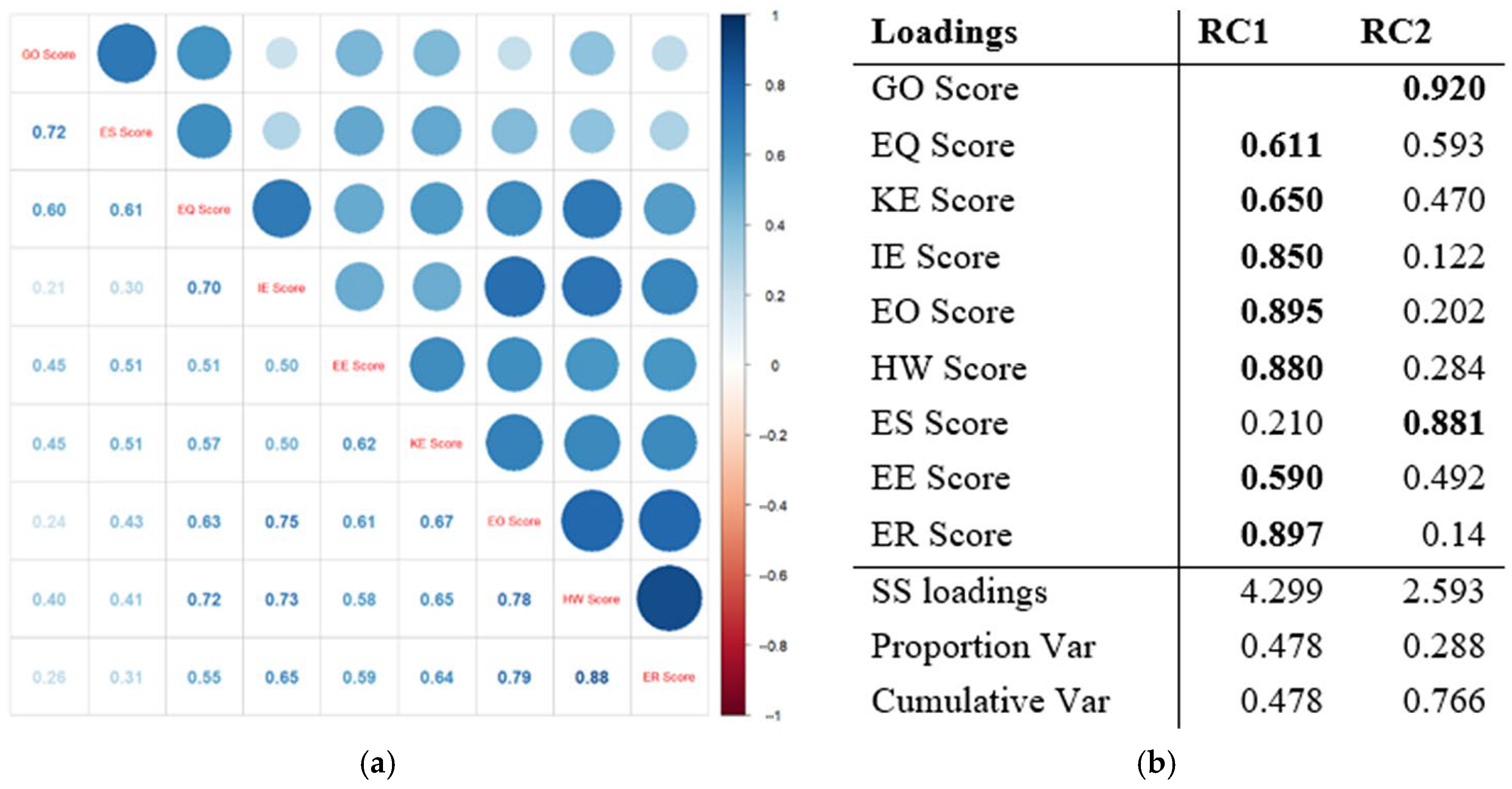
Then, we visualised the data and generated the scatter plot with axes based on the principal components of the SD indicators. Before PCA, we analysed SD indicator correlations. To this end, we computed the Pearson correlation coefficients for the indicators (Figure 2). They show that GO Score (governance) is well-correlated with ES Score (environmental sustainability), r = 0.72. The other variables are much less correlated with GO Score (0.21 < r < 0.45), but very correlated with each other.
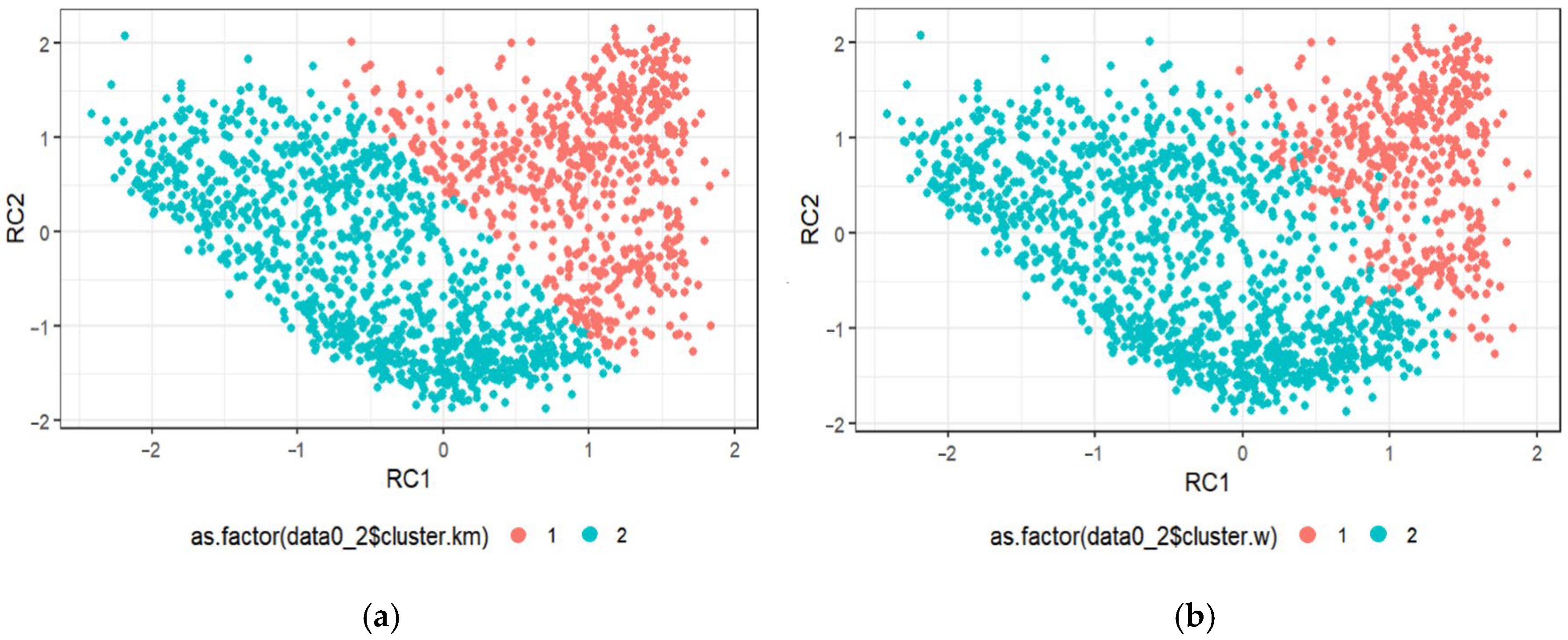
Next, a varimax rotation PCA was performed. As the correlation analysis suggested, the first component was correlated with seven indicators, while the other was correlated with two indicators (GO and ES). Both components account for about 77% of data variability, which is an acceptable result for 2D clustering analysis (Figure 3). It shows that Ward’s method of hierarchical agglomerative clustering yielded more restrictive results. The cluster with the best SD results (Cluster 1) covered 463 HEIs, which is 27% of the sample.
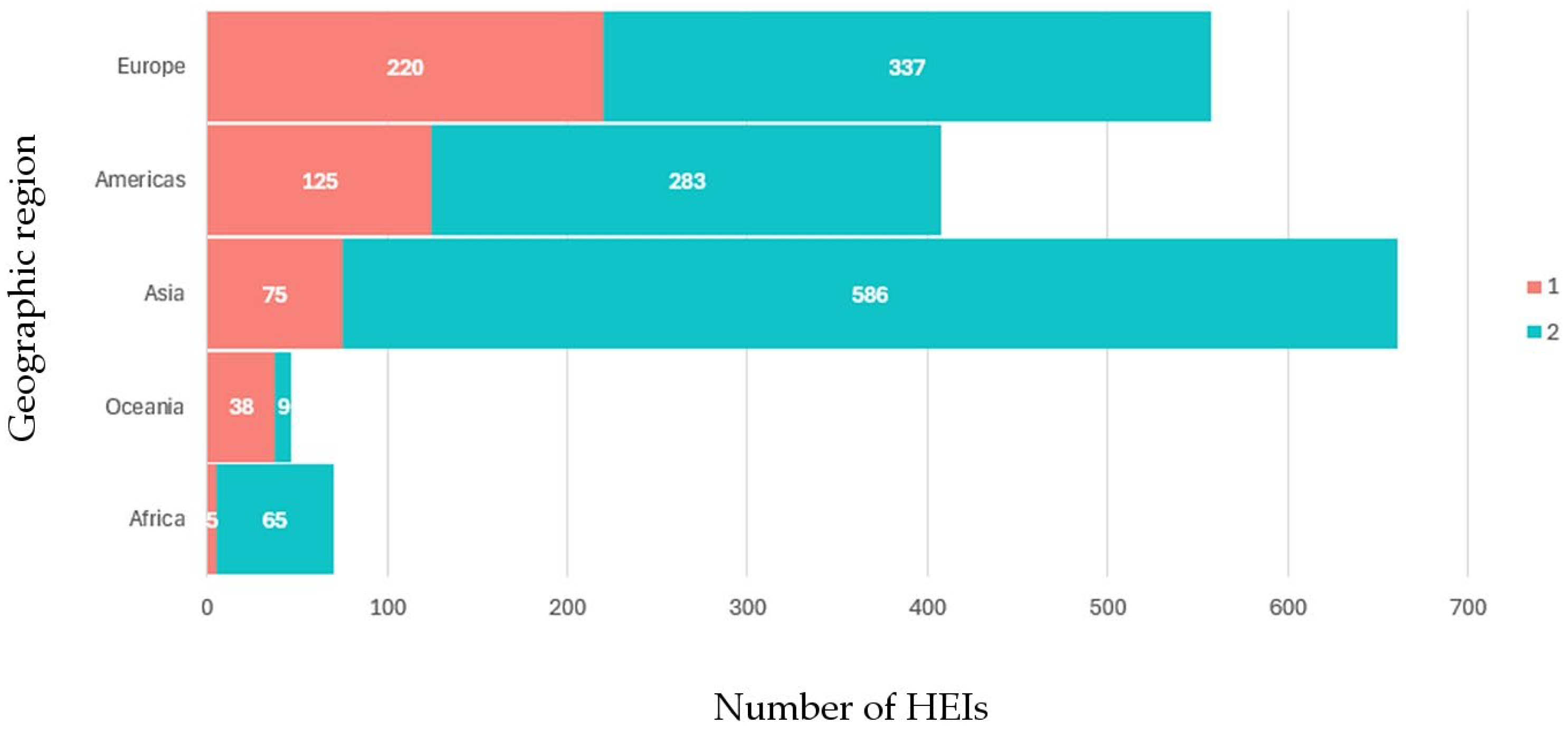
Figure 4 shows which geographic regions were home to the HEIs with the best ESD results. They were most numerous in Europe. There were 220 of them there, which is 47.5% of HEIs in Cluster 1. The second-largest population of top-ranking HEIs was in the Americas (125 or 27% of the cluster). In the ranking dataset, Africa had the lowest number of Cluster 1 HEIs (5 or 1%).
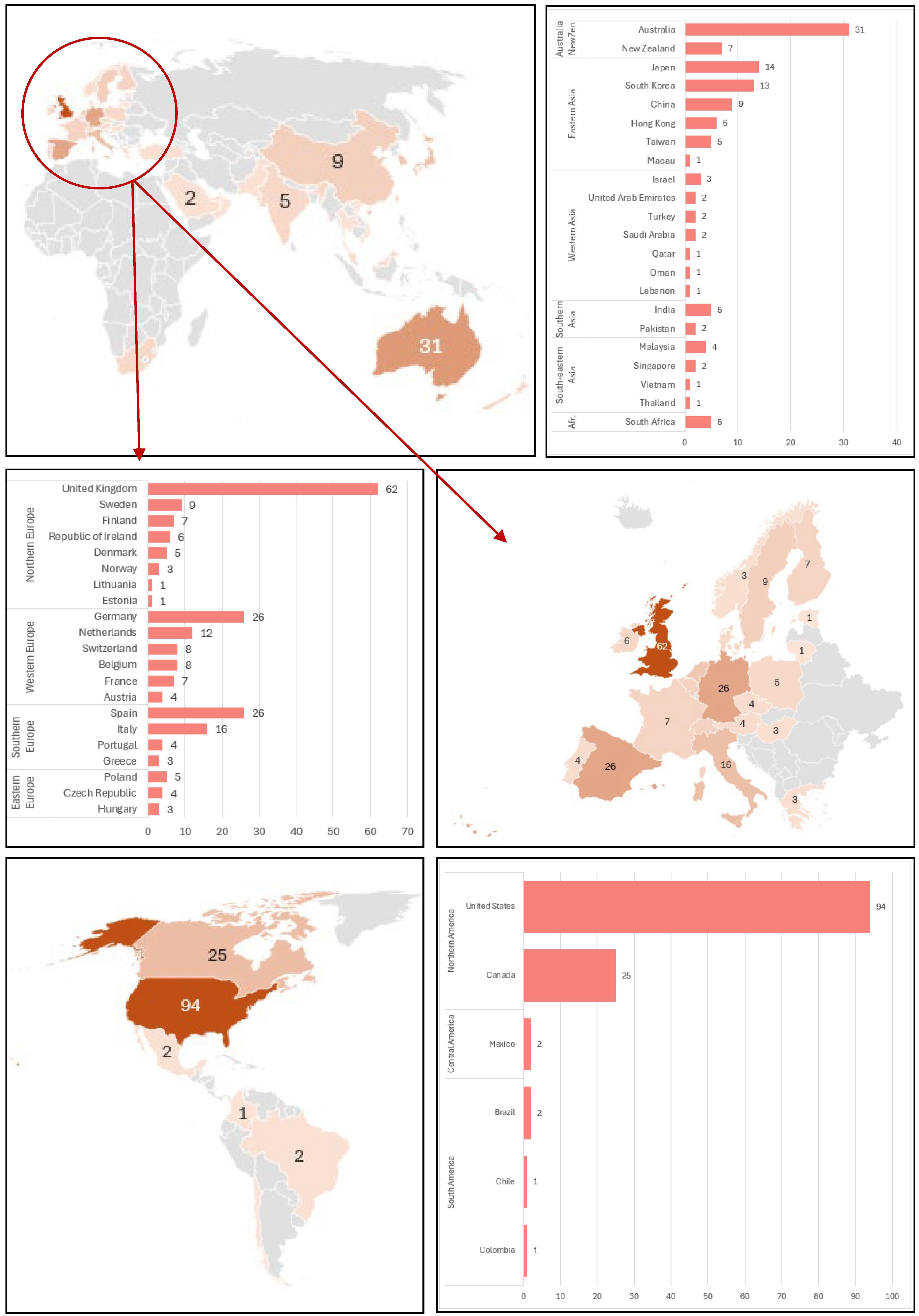
Next, we created Figure 5. It shows SD-oriented HEI counts on a map and by subregions. They tend to accumulate in Northern and Western Europe and North America. They also aggregated in East Asia and Australia. The only African subregion with an array of such universities is South Africa.

4.2. Actions Taken by Higher Education Institutions to Include Sustainable Development in Education

4.2.1. Academic Curricula and Courses

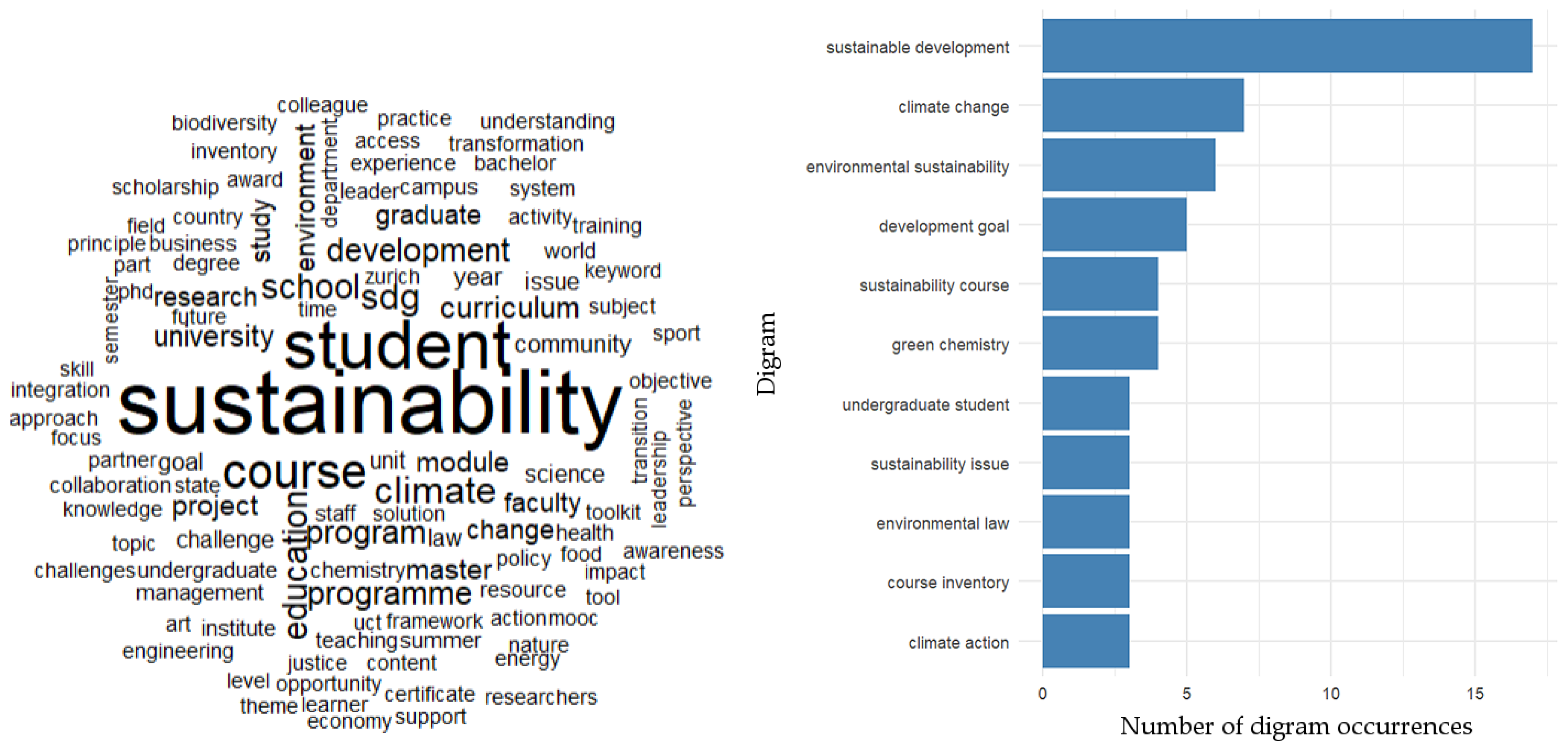
This category covers such HEI activities as creating SD-oriented curricula and courses (‘course’, ‘curriculum’, ‘unit’, ‘module’, ‘program’) (Figure 6) for all study cycles (‘undergraduate’, ‘bachelor’, ‘master’, ‘phd’) and as postgraduate courses. They are intended to inform (‘knowledge’) about SD. The category includes the domains of energy, renewable resources management, food security, climate justice, environmental protection law, health, chemical substance application, and sustainable development goals. (‘energy’, ‘resource’, ‘management’, ‘food’, ‘justice’, ‘climate, ‘law’, ‘health’, ‘chemistry’, ‘sdg’). Students can be granted SD ‘certificates’ or badges. Some of the certificates are the Community-Informed Practice for Health and Well-being Certificate, Climate Change and Health Certificate, and Sustainability Certificate. The analysis found ESD elements not only among ‘engineering’ courses that teach ‘skills’ but also in relation to ‘art’, which builds positive attitudes towards SD. These solutions include music, eco-theatre, and community art-making, for example. Furthermore, the analysis revealed reports on the number of courses, curricula, and participants (‘inventory’). This demonstrates a quantitative approach, suggesting that these inventories are considered quantifiable indicators of HEI engagement in SD. Collaboration between the academics and students was also highlighted in the reports (‘staff’, ‘student’).
This category demonstrates that HEIs increasingly integrate SD into curricula and their courses. This enables the students to acquire the knowledge and skills necessary to work towards a sustainable future.

4.2.2. External Collaboration and Partnerships

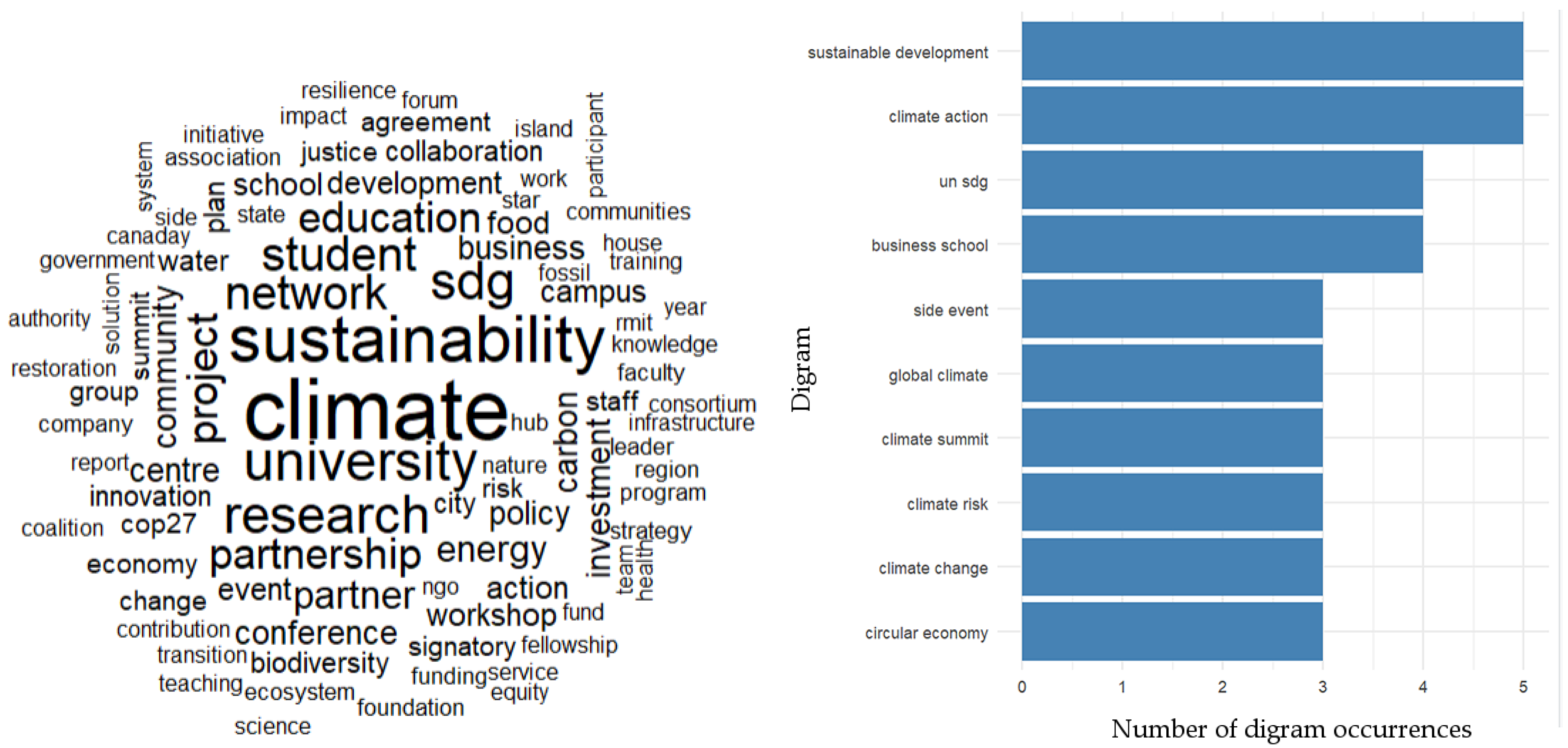
This category concerns HEIs’ engagement in partnerships with third parties. The stakeholders were searched with a qualitative content analysis and quantitative text mining (Figure 7). The HEI stakeholders include local authorities (‘city’, ‘authority’) with which they cooperate to engage students in climate and low-carbon projects, workshops, and biodiversity projects (‘project’, ‘workshop’, ‘carbon’, ‘biodiversity’). Other stakeholders include NGOs, governmental organisations, and public organisations, including those focusing on health (‘ngo’, ‘state’, ‘government’, ‘region’, ‘policy), with which HEIs collaborate by involving students in joint projects or other SD-oriented initiatives. They form regional networks aimed at redesigning policy by expressing dedication to the environment, economic strength, and social responsibility. Higher education institutions also participate in such events as COP (Conference of the Parties to the United Nations Framework Convention on Climate Change). Another subgroup of stakeholders includes other HEIs that participate in coalitions, consortia, and global sustainability networks (‘network’, ‘coalition’, ‘consortium’, ‘foundation’). They hold conferences, staff placements, internship schemes, and joint projects (‘conference’, ‘project’, ‘fellowship’). Such networks can establish task groups to deploy SD-focused actions in everyday activities (such as public procurement). The last group of stakeholders includes the private sector and industry. They join forces with HEIs to develop sustainable energy solutions, build resilience, drive circular economy schemes, and promote sustainable business transformation (‘business’, ‘company’, ‘energy’, ‘innovation’, ‘transition’, ‘fossil’, ‘economy’, ‘resilience’).
This category highlights the impact of cooperation between HEIs and their socioeconomic milieus, local authorities, NGOs, and other institutions. These partnerships further joint SD initiatives and improve the influence of higher education on social and environmental transitions.

4.2.3. Practical Experience and Student Engagement

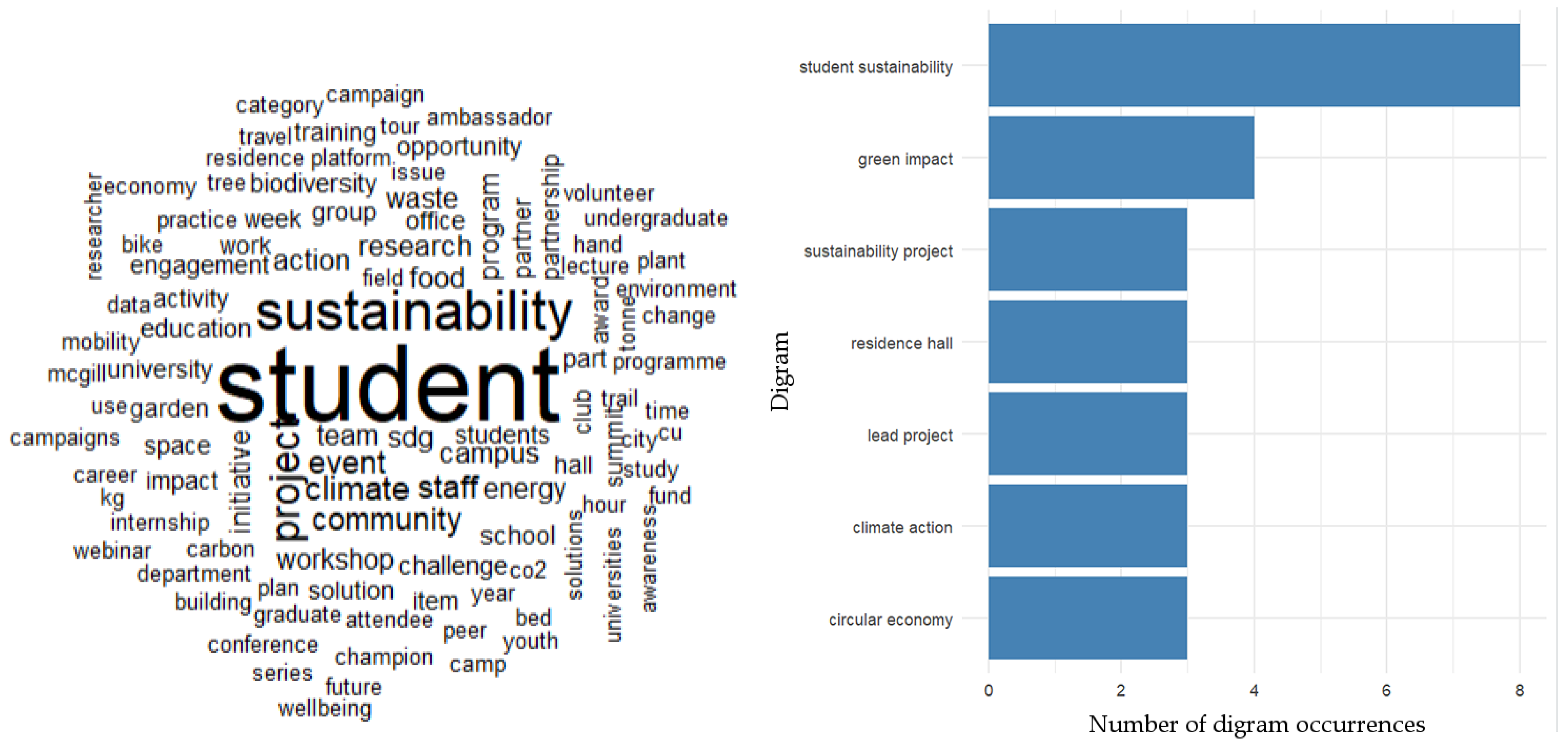
The combination of qualitative and quantitative content analyses of this category (Figure 8) revealed that HEIs hold diverse events and activities for their students and other stakeholders (‘event’, ‘activity’, ‘action’, ‘challenge’). They are organised by the HEI staff and students. They foster sustainability ‘awareness’. The main focus is on sustainable consumption. One example is participation in the Fairtrade Fortnight ‘campaign’ that promotes Fairtrade products and ethical consumer choices. Other awareness-building efforts concern sustainable ‘travel’, such as the Sustainability Trail Tour. ‘Food’, ‘waste’ reduction and ‘biodiversity’ promotion are fostered as well. Students are offered ‘internships’ in companies involved in SD, and sustainable ‘career’ panels are held. Sustainability is promoted in campuses (‘campus’, ‘residence’, ‘building’). Their ‘gardens’ have local ‘tree’ and other ‘plant’ varieties that aid pollinators. They are places of ‘workshops’ on how to repair and reuse things, and artistic performances focused on SD promotion. Other activities include promotion of ‘energy’ waste reduction in buildings or travelling to HEI campuses by bike to reduce the carbon footprint. Many activities on campuses are part of voluntary effort (‘volunteer’) by ‘staff’ and ‘student’ contributors.
This category demonstrates that HEIs actively engage students in SD-oriented activities through internships, social projects, and collaboration with third parties. These forms of engagement elevate competencies and allow students to shape their surroundings.

4.2.4. Teaching Methods Supporting Sustainability

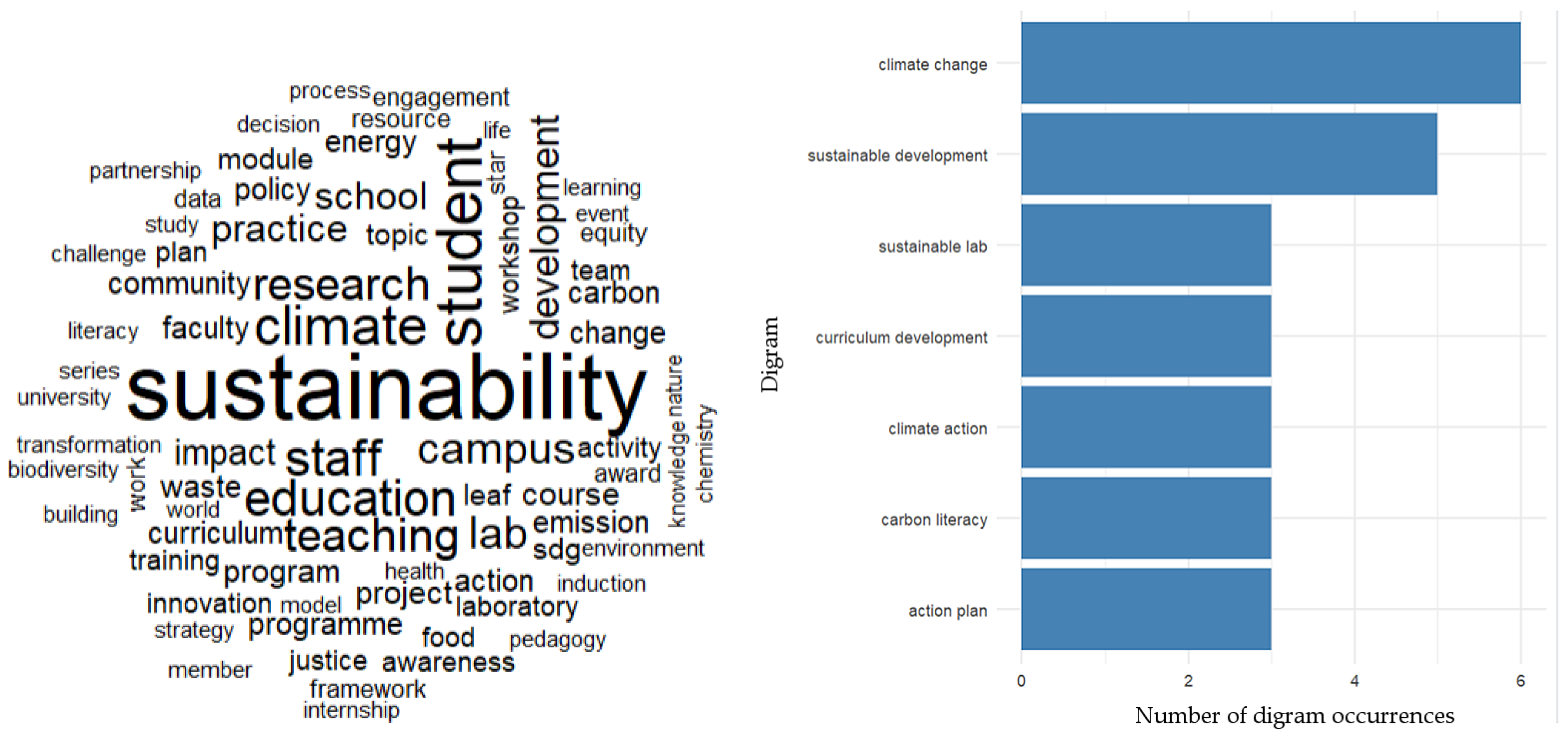
This category covers activities dedicated to two targets: ‘student’ and ‘staff’. (cf. Figure 9). Efforts aimed at students include special SD laboratories (‘laboratory’, ‘lab’, ‘… Sustainable Conferences, Biodiversity, Open Education, Sustainable Mobility’). Some hold special SD modules (‘module’) (‘New module introduces planetary health and climate change’, ‘…embed sustainability across all taught university compulsory modules’). Dedicated programmes help introduce SD to innovation and industry (‘…programs expose students to sustainability and innovation in industry’). Educational campaigns help segregate waste, and students can participate in special training courses (‘…offered a waste sorting training to new students’). Dual-mode teaching is expanded to combine brick-and-mortar and remote learning (‘…extend dual-mode teaching, further methods of self-study, increase online examinations, educational innovation especially where it can generate added value’). Additionally, campuses are treated like living SD laboratories (‘Our campus serves as both a testing ground and a living laboratory for innovation, where ideas take root and grow’). Laboratories employ SD-oriented techniques to manage resources, such as energy consumption measurements, to inform laboratory equipment purchases. Technicians actively participate in implementing environmentally friendly solutions in laboratories.
University teachers can participate in regular workshops to redesign courses. The workshops cover the complexity of SD and interactive methods (‘workshop’, ‘staff’, ‘practice’, ‘curriculum’). Videos with the best practices are recorded (‘Programme Manager worked with staff to record videos sharing their approaches to sustainability education’), toolboxes are offered (‘…established… toolkit and workshops to support Education for Sustainable Development in teaching practice’, ‘…align assessment practices with transformative, interdisciplinary, and transdisciplinary sustainability pedagogy’). Teachers associate to offer each other support when implementing SD in curricula (‘over 100 members sharing teaching innovations and resources on the SDGs’).
This category shows that HEIs employ modern and stimulating teaching methods, such as hands-on learning, problem solving, or team projects. This makes education more compelling and effectively supports the growth of SD competencies.
The analysis identified several prospective quantitative indicators that could be employed to assess HEIs’ commitment to ESD. These include the number of courses and curricula with SD components, the number of students who participate in such courses, the number of SD certificates and badges granted, and the presence of digital records of educational activities (in open training resources, inventories, reports, etc.). These indicators are quantifiable and repetitive, which makes them useful for monitoring the institution’s progress and for ESG reports. When used, they can foster greater transparency and comparability of university activities for EDS.

5. Discussion

When discussing the results supporting RQ1, note the significant concentration of SD-oriented HEIs in the Global North. We expected a strong concentration of HEIs in Europe, considering its world-famous climate policy. Therefore, we found it interesting that large groups of these HEIs were also located in North America and Great Britain, as these economies focus on liberal values and transactional culture, supporting the ‘constant growth’ economic paradigm, which Janssens and colleagues [21] named the primary barrier to SD. We interpret the clusters in these regions as a sign of the universities’ efforts to preserve public legitimation in the face of the growing public sympathy for social and environmental problems and the need for balanced coexistence of anthropogenic and natural ecosystems. Our findings converge with the results in [21] regarding SD-oriented HEIs in the UK. Although these authors found little support for transformative learning for SD in most quality assurance frameworks of European HEIs, the UK is an exception. British frameworks include a special guide on ESD, mentioning transformative learning explicitly. We believe it is particularly meaningful because transformative learning supports individuals to become more autonomous, critical, and responsible, which fosters orientation on SD. Our results are also consistent with [23]. They demonstrated that by making SD part of their curricula, HEIs try to play their social roles, leading to improved renown and more funding. This context explains our results well.
The classification of educational activities proposed in this article is somewhat linked to that presented by Montenegro De Lima et al. [46], although that analysis focused on research areas rather than education directly. Those authors identified five main thematic clusters in the literature on SD in higher education: (1) SD competencies, (2) campus greening, (3) knowledge co-creation and sharing, (4) sustainability science, and (5) SD in university courses and curricula. Although this classification pertains to research, it overlaps with certain areas of our four educational categories: academic curricula and courses, cooperation with third parties, hands-on student engagement, and SD-oriented teaching methods. These similarities demonstrate that educational practice and scientific reflection on SD in higher education follow convergent paths. They also confirm the integrative nature of SD-promoting activities that combine teaching, research, and university operations as socially responsible institutions.
The concentration of SD-oriented HEIs in the Global North may be indicative of strong coercive isomorphism mechanisms of institutional pressure, ESG regulation, and public expectations [9,33]. We also noted certain components of mimetic isomorphism as other HEIs follow in the footsteps of top-ranking institutions. In this context, QS World University Rankings: Sustainability 2025 is not only an evaluation tool but also a source of institutional conformity pressure. This means that HEIs that want to be ranked high or keep high positions feel pressured to adapt their operations to the standards and criteria evaluated in the ranking. They grow similar to the best-ranked HEIs by adopting their ESG strategies, reporting methods, course structure, etc. On the other hand, our ESG report analysis revealed diversified educational practices. Therefore, SD is not implemented the same way everywhere. Such categories as ‘external collaboration and partnerships’ or ‘student engagement’ are heavily context-dependent and often emerge from local public and market needs, cultural constraints, and available resources. Hence, our analysis highlights the limitations of normative isomorphism. Apparently, proposed structured operating frameworks are deployed in unique manners depending on local conditions.
Our results addressing RQ2 show that the SD-oriented HEI activities we identified constitute a classification similar to that in [30]. The author pointed out four HEI activity areas critical for SD support: education, research, institutional functioning, and cooperation with third parties. According to Cortese [30], effective transition into SD requires coordination among all these domains. They focused in particular on the role of education as having the greatest potential to influence the implementation of SD. It is through the teaching process that universities shape the values, competencies, and attitudes of future leaders, decision-makers, or citizens in general. Our empirical data focus on education; we investigate how universities incorporate SD principles into their teaching and formation efforts. The four activity categories: academic curricula and courses, external collaboration and partnerships, practical experience and student engagement, and teaching methods supporting ESD are well aligned with the paradigm proposed by Cortese [30]. They demonstrate that educational activities are not limited to curriculum adaptations. Instead, they cover teaching methods, student engagement forms, and teaching collaboration with social and business partners. Notably, many of the investigated HEIs take actions that reinforce the links between education and the three other areas Cortese [30] discussed, for example, by combining scientific, research, and deployment projects with classes, engaging socioeconomic circles in student projects, or following SD principles in campus organisational frameworks. Although it is not the main focal point of our analysis, the results revealed that education can traverse all four areas of HEI activity, which makes it more than a pillar of higher education transformation: the primary means for shaping the future of a sustainable society.
Our results on curricula and partnerships are consistent with [23] and Shiel et al. [24]. We have also demonstrated that pursuing sustainability reinforces the social legitimation of HEIs and their relationships with stakeholders. This situation also proves that transformative SD-oriented learning engages local communities and businesses. Apparently, it is necessary to follow SD trends to be able to reach out to international partners and adopt their standards. This scheme can be perceived as coercive isomorphism processes at work. Additionally, HEIs form networks and engage in exchanges or joint projects, which indicates normative isomorphism. Hence, the two types of isomorphism processes interweave. Coercive isomorphism is evident in international cooperation and on the local scale, when rural and urban areas work together, local communities join forces, or local public organisations and businesses pursue common goals. Faced with the imperative to further sustainability, stakeholders look to HEIs as potential partners in addressing complex challenges to integrate economic, environmental, and social objectives. Involvement in local socioeconomic matters improves HEIs’ position and visibility as reputable institutions [23].
Our results on teaching methods and student engagement are convergent with the findings in [21]. We also diagnosed a strong student-focused approach: active learning and hands-on learning. Therefore, we can confirm the relevant results reported in [31]. Note that campuses are considered living sustainability laboratories, and academic teachers come together and share ESD experiences. Our study revealed a certain focus on student activity stimulation through hands-on activities and social and environmental events, campaigns, and projects. Higher education institutions offer SD-focused placements, workshops, and career panels. They also turn their campuses into joint activity and experimental sites. As a ‘living laboratory’, the campus helps students experience SD values first-hand through urban gardening, waste management, or energy-saving efforts. Notably, HEIs support the pedagogical growth of their staff, offering training and platforms for exchanging teaching experiences. Academics engage in networking to share tested methods and teaching resources. These practices foster normative isomorphism. This approach not only improves the effectiveness of ESD but also integrates diverse HEI functions: teaching, research, and social, making universities cohesive and powerful sustainability transformation actors.

6. Conclusions

The article offers answers to the two research questions. The stratification analysis of HEIs regarding their engagement in SD has identified two clear-cut HEI clusters. The first one consists of leaders, HEIs with substantial SD orientation. The others are less engaged in SD. The largest concentrations of SD-oriented HEIs were found in Europe, particularly in its northern and western parts. The second and third large groups were found in North America and also Asia, notably in its eastern regions. Another noteworthy collection of SD-oriented HEIs is in Australia. Within the QS Sustainability Ranking dataset, Africa is represented by the smallest number of SD-oriented HEIs. The main activities among ESD-focused HEIs involve four areas: (1) academic curricula and courses, (2) external collaboration and partnerships, (3) practical experience and student engagement, and (4) teaching methods supporting sustainability.
The results show that our study confirms the general literature consensus that education is the primary driver of SDGs. However, we found certain tensions between the pursuit of unified standards of ESD as a realisation of institutional isomorphism and the need for adapting activities to local social, cultural, and economic contexts of individual HEIs. Although standards help with comparisons and interinstitutional cooperation, they may curb flexibility and effectiveness on a local and regional level if followed blindly. According to our observations, effective ESD is possible only when a balance is struck between global goals and local constraints, which is a challenge for the global academic community.

6.1. Practical Implications

The present results support significant practical implications for HEIs and stakeholders involved in SD promotion. Institutions that pursue increased SD engagement may be inspired by the identified specific educational activities for SD implemented commonly by HEIs in the top positions in QS Sustainability rankings. Organisations at the early stages of environmental efforts may draw on the experience of these leaders, adapting effective practices to their specific cultural, economic, and structural contexts.
The classification of educational activities proposed in the article (academic curricula and courses, teaching methods, student engagement, and cooperation with third parties) can be employed as a framework for deploying ESD. This model can be a point of reference for institutional strategies, but it can also support self-evaluation and monitoring of the progress towards engagement in SD promotion through education.
Furthermore, the results can be used to devise and improve ESG reports. The identified activity categories can structure the report content as logical thematic sections, while such quantitative indicators as the number of SD courses, the number of students participating in environmental activities, or the number of certificates can help evaluate the effectiveness of any actions taken. Such standardised indicators could improve reporting transparency and facilitate comparisons between the efforts of various HEIs on a national or international scale. Additionally, the analysis highlights the weight of institutional mechanisms, including isomorphic pressure, for shaping HEI strategies for ESD. Understanding of how these mechanisms work can help decision-makers and institutional leaders design more informed internal policies that would conform to external expectations as well as further the growth of the HEI’s unique identity. This could involve establishing interdisciplinary SD workgroups, introducing innovative teaching methods, or working on relationships with external stakeholders.
Finally, accreditation bodies and education policymakers could benefit from the concrete grounds for guidelines and tools supporting ESD in higher education offered in these results. Inclusion of the recommended activities and indicators in national and international frameworks can contribute meaningfully to the global SDG transition in systems of education. Therefore, the study makes a theoretical contribution as well as proposes several tools HEIs, decision-makers, external stakeholders, and supervisory institutions could use to build informed and effective ESD schemes.

6.2. Limitations and Future Research

The primary limitation of cluster analysis is the use of secondary data from the QS World University Rankings: Sustainability 2025 report, which were collected beyond our control. Hence, we had no influence on the data acquisition methodology. Still, we interpret the popularity of the ranking and HEIs’ efforts to be included in the ranking as a sign of general acknowledgement of its importance, which is why we have used it.
Another limitation, this time at the ESG analysis stage, is the limited access to and variable structure of the documents. As not all the reports were written in English, we had to translate some of them using machine translation. We are well aware that the quotations we classified to specific activity groups make up fuzzy sets, i.e., one quotation could be classified to several activity groups. The problem is accounted for by the complexity of human interactions, additionally exacerbated by the multiplexity of the domain of SD. In addition, it is important to recognise that both the ranking data and the ESG reports used in this study are forms of institutional self-reporting. HEIs may have incentives to emphasise selected sustainability initiatives when participating in rankings or preparing ESG documentation, while omitting areas that are less developed. Given the highly decentralised nature of universities, ESG reports may also present an incomplete picture of campus-wide activities, potentially overstating some practices and understating others. Therefore, our findings should be interpreted strictly within the boundaries of the analysed datasets rather than as a full representation of global HEI engagement in sustainable development. Future research could address these limitations through methodological triangulation, such as independent audits, case studies, on-site evaluations, or integrating multiple data sources to validate whether reported activities align with actual institutional practice.

Author Contributions

Conceptualization, I.Z., D.Z., K.K. and J.H.; methodology, I.Z., D.Z., K.K. and J.H.; formal analysis, I.Z.; investigation, I.Z. and D.Z.; data curation, I.Z. and D.Z.; writing—original draft preparation, I.Z., D.Z., K.K. and J.H.; writing—review and editing, I.Z., D.Z., K.K. and J.H.; visualization, I.Z.; supervision, I.Z. and K.K.; funding acquisition, I.Z. and K.K. All authors have read and agreed to the published version of the manuscript.

Funding

This publication is supported by a rector’s habilitation grant implemented as part of the Excellence Initiative—Research University program. Silesian University of Technology, grant number 13/010/SDU/10-07-02.

Institutional Review Board Statement

Not applicable.

Informed Consent Statement

Not applicable.

Data Availability Statement

The original contributions presented in this study are included in the article. Further inquiries can be directed to the corresponding author.

Conflicts of Interest

The authors declare no conflicts of interest.

References

  1. Mo, F.; Wang, D.D. Emerging ESG Reporting of Higher Education Institutions in China. Heliyon 2023, 9, e22527. [Google Scholar] [CrossRef] [PubMed]
  2. Leal, S.; Azeiteiro, U.M.; Aleixo, A.M. Sustainable Development in Portuguese Higher Education Institutions from the Faculty Perspective. J. Clean. Prod. 2024, 434, 139863. [Google Scholar] [CrossRef]
  3. Sanchez-Carrillo, J.C.; Cadarso, M.A.; Tobarra, M.A. Embracing Higher Education Leadership in Sustainability: A Systematic Review. J. Clean. Prod. 2021, 298, 126675. [Google Scholar] [CrossRef]
  4. Koehn, P.H.; Uitto, J.I. Universities and the Sustainable Development Future: Evaluating Higher-Education Contributions to the 2030 Agenda, 1st ed.; Routledge: London, UK, 2017; ISBN 978-1-315-44996-8. [Google Scholar]
  5. Stephens, J.C.; Graham, A.C. Toward an Empirical Research Agenda for Sustainability in Higher Education: Exploring the Transition Management Framework. J. Clean. Prod. 2010, 18, 611–618. [Google Scholar] [CrossRef]
  6. Verhulst, E.; Lambrechts, W. Fostering the Incorporation of Sustainable Development in Higher Education. Lessons Learned from a Change Management Perspective. J. Clean. Prod. 2015, 106, 189–204. [Google Scholar] [CrossRef]
  7. Lozano, R. The State of Sustainability Reporting in Universities. Int. J. Sustain. High. Educ. 2011, 12, 67–78. [Google Scholar] [CrossRef]
  8. Holdsworth, S.; Sandri, O. Investigating Undergraduate Student Learning Experiences Using the Good Practice Learning and Teaching for Sustainability Education (GPLTSE) Framework. J. Clean. Prod. 2021, 311, 127532. [Google Scholar] [CrossRef]
  9. DiMaggio, P.J.; Powell, W.W. The Iron Cage Revisited: Institutional Isomorphism and Collective Rationality in Organizational Fields. Am. Sociol. Rev. 1983, 48, 147. [Google Scholar] [CrossRef]
  10. Tilbury, D. Education for Sustainable Development: An Expert Review of Processes and Learning; UNESCO: Landais, France, 2011. [Google Scholar]
  11. Sterling, S. Transformative Learning and Sustainability: Sketching the Conceptual Ground. Learn. Teach. High. Educ. 2010, 5, 17–33. [Google Scholar]
  12. Leal Filho, W.; Vargas, V.R.; Salvia, A.L.; Brandli, L.L.; Pallant, E.; Klavins, M.; Ray, S.; Moggi, S.; Maruna, M.; Conticelli, E.; et al. The Role of Higher Education Institutions in Sustainability Initiatives at the Local Level. J. Clean. Prod. 2019, 233, 1004–1015. [Google Scholar] [CrossRef]
  13. Lozano, R.; Lukman, R.; Lozano, F.J.; Huisingh, D.; Lambrechts, W. Declarations for Sustainability in Higher Education: Becoming Better Leaders, through Addressing the University System. J. Clean. Prod. 2013, 48, 10–19. [Google Scholar] [CrossRef]
  14. Barth, M. Implementing Sustainability in Higher Education: Learning in an Age of Transformation; Routledge: London, UK, 2015. [Google Scholar]
  15. Akinsemolu, A.A.; Onyeaka, H. The Role of Green Education in Achieving the Sustainable Development Goals: A Review. Renew. Sustain. Energy Rev. 2025, 210, 115239. [Google Scholar] [CrossRef]
  16. Ardoin, N.M.; Bowers, A.W.; Gaillard, E. Environmental Education Outcomes for Conservation: A Systematic Review. Biol. Conserv. 2020, 241, 108224. [Google Scholar] [CrossRef]
  17. Manteaw, B.O.; Enu, K.B. Mindscapes and Landscapes: Framing Planetary Health Education and Pedagogy for Sustainable Development in Africa. Glob. Transit. 2025, 7, 136–143. [Google Scholar] [CrossRef]
  18. Shin, Y.; Midgley, G.F.; Archer, E.R.M.; Arneth, A.; Barnes, D.K.A.; Chan, L.; Hashimoto, S.; Hoegh-Guldberg, O.; Insarov, G.; Leadley, P.; et al. Actions to Halt Biodiversity Loss Generally Benefit the Climate. Glob. Change Biol. 2022, 28, 2846–2874. [Google Scholar] [CrossRef]
  19. Ramírez Suárez, V.; Acosta-Castellanos, P.M.; Castro Ortegon, Y.A.; Queiruga-Dios, A. Current State of Environmental Education and Education for Sustainable Development in Primary and Secondary (K-12) Schools in Boyacá, Colombia. Sustainability 2023, 15, 10139. [Google Scholar] [CrossRef]
  20. Etzkowitz, H.; Webster, A.; Gebhardt, C.; Terra, B.R.C. The Future of the University and the University of the Future: Evolution of Ivory Tower to Entrepreneurial Paradigm. Res. Policy 2000, 29, 313–330. [Google Scholar] [CrossRef]
  21. Janssens, L.; Kuppens, T.; Mulà, I.; Staniskiene, E.; Zimmermann, A.B. Do European Quality Assurance Frameworks Support Integration of Transformative Learning for Sustainable Development in Higher Education? Int. J. Sustain. High. Educ. 2022, 23, 148–173. [Google Scholar] [CrossRef]
  22. Milley, P.; Szijarto, B. Understanding Social Innovation Leadership in Universities: Empirical Insights from a Group Concept Mapping Study. Eur. J. Innov. Manag. 2022, 25, 365–389. [Google Scholar] [CrossRef]
  23. Bui, H.T.M.; Bui, T.; Pham, B.T. The Role of Higher Education in Achieving Sustainable Development Goals: An Evaluation of Motivation and Capacity of Vietnamese Institutions. Int. J. Manag. Educ. 2024, 22, 101088. [Google Scholar] [CrossRef]
  24. Shiel, C.; Leal Filho, W.; Do Paço, A.; Brandli, L. Evaluating the Engagement of Universities in Capacity Building for Sustainable Development in Local Communities. Eval. Program Plann. 2016, 54, 123–134. [Google Scholar] [CrossRef]
  25. Ceulemans, K.; Molderez, I.; Van Liedekerke, L. Sustainability Reporting in Higher Education: A Comprehensive Review of the Recent Literature and Paths for Further Research. J. Clean. Prod. 2015, 106, 127–143. [Google Scholar] [CrossRef]
  26. Leal Filho, W.; Dinis, M.A.P.; Sivapalan, S.; Begum, H.; Ng, T.F.; Al-Amin, A.Q.; Alam, G.M.; Sharifi, A.; Salvia, A.L.; Kalsoom, Q.; et al. Sustainability Practices at Higher Education Institutions in Asia. Int. J. Sustain. High. Educ. 2022, 23, 1250–1276. [Google Scholar] [CrossRef]
  27. Barth, M.; Rieckmann, M. Academic Staff Development as a Catalyst for Curriculum Change towards Education for Sustainable Development: An Output Perspective. J. Clean. Prod. 2012, 26, 28–36. [Google Scholar] [CrossRef]
  28. Wijen, F.; Ansari, S. Overcoming Inaction through Collective Institutional Entrepreneurship: Insights from Regime Theory. Organ. Stud. 2007, 28, 1079–1100. [Google Scholar] [CrossRef]
  29. Urbano, V.M.; Arena, M.; Azzone, G.; Mayeres, M. Sustainable Development in Higher Education: An In-Depth Analysis of Times Higher Education Impact Rankings. J. Clean. Prod. 2025, 501, 145302. [Google Scholar] [CrossRef]
  30. Cortese, A. The Critical Role of Higher Education in Creating a Sustainable Future. Plan. High. Educ. 2003, 31, 15–22. [Google Scholar]
  31. Podgórska, M.; Zdonek, I. Interdisciplinary Collaboration in Higher Education towards Sustainable Development. Sustain. Dev. 2024, 32, 2085–2103. [Google Scholar] [CrossRef]
  32. Thiam, S.; Aziz, F.; Kushitor, S.B.; Amaka-Otchere, A.B.K.; Onyima, B.N.; Odume, O.N. Analyzing the Contributions of Transdisciplinary Research to the Global Sustainability Agenda in African Cities. Sustain. Sci. 2021, 16, 1923–1944. [Google Scholar] [CrossRef]
  33. DiMaggio, P.J.; Powell, W.W. The Iron Cage Revisited Institutional Isomorphism and Collective Rationality in Organizational Fields. In Advances in Strategic Management; Emerald (MCB UP): Bingley, UK, 2000; Volume 17, pp. 143–166. ISBN 978-0-7623-0661-9. [Google Scholar] [CrossRef]
  34. Banerjee, S. Foreign Direct Investments: Examining the Roles of Democracy, Corruption and Judicial Systems across Countries. J. Appl. Bus. Econ. 2019, 21, 2–46. [Google Scholar] [CrossRef]
  35. Chen, Z.; Fuller, D.B.; Zheng, L. Institutional Isomorphism and Chinese Private Corporate Philanthropy: State Coercion, Corruption, and Other Institutional Effects. Asian Bus. Manag. 2018, 17, 83–111. [Google Scholar] [CrossRef]
  36. Troisi, R. Illegal Land Use by Italian Firms: An Empirical Analysis through the Lens of Isomorphism. Land Use Policy 2022, 121, 106321. [Google Scholar] [CrossRef]
  37. Aizawa, A. Institutional Isomorphism in Japanese Firms’ Compliance Activities. Ann. Bus. Adm. Sci. 2018, 17, 57–68. [Google Scholar] [CrossRef]
  38. Lai, K.; Wong, C.W.Y.; Cheng, T.C.E. Institutional Isomorphism and the Adoption of Information Technology for Supply Chain Management. Comput. Ind. 2006, 57, 93–98. [Google Scholar] [CrossRef]
  39. Amoako, G.K.; Adam, A.M.; Arthur, C.L.; Tackie, G. Institutional Isomorphism, Environmental Management Accounting and Environmental Accountability: A Review. Environ. Dev. Sustain. 2021, 23, 11201–11216. [Google Scholar] [CrossRef]
  40. Jacob Nsiah-Sarfo, D.; Ofori, D.; Agyapong, D. Sustainable Procurement Implementation among Public Sector Organisations in Ghana: The Role of Institutional Isomorphism and Sustainable Leadership. Clean. Logist. Supply Chain 2023, 8, 100118. [Google Scholar] [CrossRef]
  41. Mungkung, R.; Sorakon, K.; Sitthikitpanya, S.; Gheewala, S.H. Analysis of Green Product Procurement and Ecolabels towards Sustainable Consumption and Production in Thailand. Sustain. Prod. Consum. 2021, 28, 11–20. [Google Scholar] [CrossRef]
  42. Sutheewasinnon, P.; Hoque, Z.; Nyamori, R.O. Development of a Performance Management System in the Thailand Public Sector: Isomorphism and the Role and Strategies of Institutional Entrepreneurs. Crit. Perspect. Account. 2016, 40, 26–44. [Google Scholar] [CrossRef]
  43. Ferguson, T.; Roofe, C.; Cook, L.D. Teachers’ Perspectives on Sustainable Development: The Implications for Education for Sustainable Development. Environ. Educ. Res. 2021, 27, 1343–1359. [Google Scholar] [CrossRef]
  44. Stensaker, B.; Lee, J.J.; Rhoades, G.; Ghosh, S.; Castiello-Gutiérrez, S.; Vance, H.; Çalıkoğlu, A.; Kramer, V.; Liu, S.; Marei, M.S.; et al. Stratified University Strategies: The Shaping of Institutional Legitimacy in a Global Perspective. J. High. Educ. 2019, 90, 539–562. [Google Scholar] [CrossRef]
  45. Mudambi, R.; Peng, M.W.; Weng, D.H. Research Rankings of Asia Pacific Business Schools: Global versus Local Knowledge Strategies. Asia Pac. J. Manag. 2008, 25, 171–188. [Google Scholar] [CrossRef]
  46. Montenegro De Lima, C.R.; Coelho Soares, T.; Andrade De Lima, M.; Oliveira Veras, M.; Andrade Guerra, J.B.S.O.D.A. Sustainability Funding in Higher Education: A Literature-Based Review. Int. J. Sustain. High. Educ. 2020, 21, 441–464. [Google Scholar] [CrossRef]
  47. De Filippo, D.; Casani, F.; Sanz-Casado, E. University Excellence Initiatives in Spain, a Possible Strategy for Optimising Resources and Improving Local Performance. Technol. Forecast. Soc. Change 2016, 113, 185–194. [Google Scholar] [CrossRef]
  48. Tzeng, C.-H. How Foreign Knowledge Spillovers by Returnee Managers Occur at Domestic Firms: An Institutional Theory Perspective. Int. Bus. Rev. 2018, 27, 625–641. [Google Scholar] [CrossRef]
  49. Yoon, H.; Belkhouja, M.; Wei, Y.; Lee, S. Born to Be Similar? Global Isomorphism and the Emergence of Latecomer Business Schools. Int. Bus. Rev. 2021, 30, 101863. [Google Scholar] [CrossRef]
  50. Seyfried, M.; Ansmann, M.; Pohlenz, P. Institutional Isomorphism, Entrepreneurship and Effectiveness: The Adoption and Implementation of Quality Management in Teaching and Learning in Germany. Tert. Educ. Manag. 2019, 25, 115–129. [Google Scholar] [CrossRef]
  51. Meyer, R.E.; Boxenbaum, E. Exploring European-Ness in Organization Research. Organ. Stud. 2010, 31, 737–755. [Google Scholar] [CrossRef]
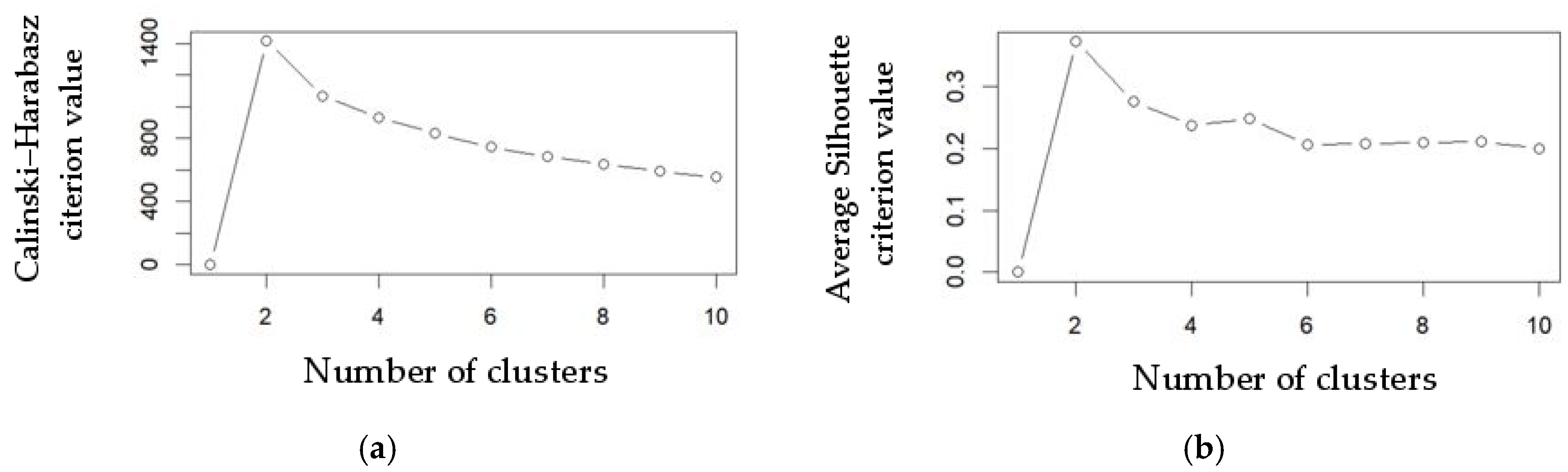
Figure 1. Selecting the number of clusters: Caliński-Harabasz criterion (a) and average silhouette criterion (b). Source: original work.
Sustainability 17 11034 g001
Figure 2. Correlation of sustainable development (SD) indicators for the HEIs (a) and PCA results for the indicators (b). Note: GO—Governance Score; EQ—Education Quality Score; KE—Knowledge Exchange Score; IE—International Engagement Score; EO—Environmental Outreach Score; HW—Health & Wellbeing Score; ES—Environmental Sustainability Score; EE—Environmental Education Score; ER—Environmental Research Score; SS loadings—Social Sustainability Score. Bold values indicate the dominant loading for each variable (highest absolute loading), used to identify its primary association with a given component. Source: original work.
Sustainability 17 11034 g002
Figure 3. Two-dimensional scatter plot with clusters: k-means (a) and Ward’s method (b). Note: RC1 and RC2 were created based on the indicators described in Figure 2b. Source: original work.
Sustainability 17 11034 g003
Figure 4. HEI clusters by geographic region. Source: original work.
Sustainability 17 11034 g004
Figure 5. Cluster 1 in subregions. Note: The horizontal axis of each bar graph represents the number of HEIs belonging to Cluster 1. Source: original work.
Sustainability 17 11034 g005
Figure 6. Keywords and key diagrams concerning academic curricula and courses. Source: original work.
Sustainability 17 11034 g006
Figure 7. Keywords and key diagrams concerning external collaboration and partnerships. Source: original work.
Sustainability 17 11034 g007
Figure 8. Keywords and key diagrams concerning practical experience and student engagement. Source: original work.
Sustainability 17 11034 g008
Figure 9. Keywords and key diagrams concerning teaching methods supporting sustainability. Source: original work.
Sustainability 17 11034 g009
Disclaimer/Publisher’s Note: The statements, opinions and data contained in all publications are solely those of the individual author(s) and contributor(s) and not of MDPI and/or the editor(s). MDPI and/or the editor(s) disclaim responsibility for any injury to people or property resulting from any ideas, methods, instructions or products referred to in the content.