Article

Carbon Fraction Distribution in Forest Soils and Leaf Litter Across Vegetation Types in El Chico National Park, Mexico


by
Otilio A. Acevedo-Sandoval
*,
Aline Romero-Natale
,
Claudia Romo-Gómez
,
César Camacho-López
,
José Belisario Leyva-Morales
,
Fernando Salas-Martínez
and
César A. González-Ramírez
Área Académica de Química, Instituto de Ciencias Básicas e Ingeniería, Universidad Autónoma del Estado de Hidalgo, Carretera Pachuca-Tulancingo km 4.5, Mineral de la Reforma, Pachuca 42184, Hidalgo, Mexico
*
Author to whom correspondence should be addressed.
Sustainability 2025, 17(24), 11028; https://doi.org/10.3390/su172411028
Submission received: 19 October 2025 / Revised: 25 November 2025 / Accepted: 4 December 2025 / Published: 9 December 2025

Abstract

Soils are the largest terrestrial carbon (C) reservoirs and play a key role in regulating the global C cycle and supporting essential ecosystem services. Soil C sequestration is a viable strategy to reduce atmospheric CO2 concentrations and mitigate climate change. This study quantified soil C fractions and litter C stocks across five vegetation types in El Chico National Park, Hidalgo, Mexico (2015.55 ha): pine–oak, oyamel–oak, cedar, oyamel–Tlaxcal, and oyamel forests, all occurring under comparable climatic and edaphic conditions. Soil organic matter (SOM) was quantified as the organic fraction originating from decomposed plant and animal residues. No statistically significant differences (p > 0.05) were found among vegetation types for organic matter, total C, oxidizable C, or recalcitrant (non-oxidizable) C, indicating relative homogeneity across strata. Significant differences (p < 0.05) were detected in organo-mineral C (Cp) and poorly oxidizable C (Cdox), with oyamel–Tlaxcal and oyamel forests showing the highest values, respectively, suggesting enhanced potential for C stabilization and turnover. Oyamel forests stored 32.94% of total soil organic C and contributed disproportionately to park-wide C stocks given their dominance (85.6% of the total area). Leaf litter contained on average 6.60 Mg C ha−1, representing 13,302.63 Mg C and 48,836.8 Mg CO2 across the park. When integrated with soil C to 60 cm depth, total C and CO2 stocks reached 643,474.26 Mg and 2,361,566.66 Mg, respectively. These findings highlight the critical role of oyamel forests as the main carbon sink in the park and reinforce the importance of conserving these ecosystems as a nature-based solution for climate change mitigation.

1. Introduction

Forest ecosystems play a fundamental role in the global carbon (C) cycle, covering approximately 4.1 billion hectares worldwide and storing an estimated 861 petagrams of carbon (Pg C, 1 Pg = 1015 g). This carbon stock is distributed mainly in the soil down to one meter depth (44%, 383 Pg C), followed by biomass both above- and belowground (42%, 363 Pg C), dead wood (8%, 73 Pg C), and leaf litter (5%, 43 Pg C). The relative distribution of these pools varies depending on biome type, species composition, and forest use intensity, although the largest and most stable proportion of carbon is consistently found in the soil [1,2,3]. Indeed, soils represent the most significant carbon reservoir in the biosphere, containing nearly three times more carbon than vegetation and the atmosphere combined. Globally, soils store approximately 3200 Pg C as soil organic carbon (SOC) within the First three meters of depth, including about 2344–2500 Pg C, of which 1550 Pg correspond to organic forms and 950 Pg to inorganic forms [4,5].
Forest ecosystems are critical components of the global carbon (C) cycle, storing about 861 Pg C worldwide, of which nearly half is held in soils. At the biosphere level, soils constitute the largest carbon reservoir, with approximately 3200 Pg C stored within the First three meters of depth, highlighting their central role in regulating terrestrial carbon dynamics.
Small changes in global soil carbon storage can have significant impacts on atmospheric CO2 concentrations. From 1990 to 2015, there was a net loss of approximately 129 million hectares of forest, representing an annual deforestation rate of 0.13%, which equates to the annual release of 546.35 million Mg of carbon. Understanding soil carbon dynamics is crucial, as forest soils can act as carbon sinks, helping to mitigate climate change by reducing atmospheric CO2 levels [5,6,7,8].
Soil organic matter (OM) is a fundamental component of soil, playing a role in a wide range of physical, chemical, and biological processes [8,9]. Therefore, the conversion of natural ecosystems into agricultural land may result in the loss of soil carbon, contributing to the intensification of global climate change and threatening food security [4].
The potential for carbon storage in soil depends not only on its physical, biological, and chemical properties but also on the type of vegetation, climate, topography, parent material, geomorphological characteristics, pedogenesis, land use history and management practices [10,11,12,13,14]. Other influencing factors include mineral composition, texture, depth, bulk density, erosion, deforestation, and forest fragmentation. Good forest management practices play a key role in determining the quantity and quality of soil organic matter, decomposition rates, and the processes involved in soil organic carbon stabilization.
The carbon that remains in the soil is incorporated and stabilized in different SOC reservoirs through three main mechanisms: (a) physical stabilization [14], encapsulation of OM fragments by clay particles or macro/micro-aggregates; (b) chemical stabilization, through specific bonds between OM and soil constituents, colloids or clays [15]; and (c) biochemical stabilization, determined by the chemical composition of OM (e.g., recalcitrant compounds such as lignin or polyphenols).
Andosols are volcanic soils characterized by high organic matter content, low bulk density, and a predominance of amorphous minerals such as allophane and imogolite. Andosols cover approximately 0.84% of the Earth’s surface and exhibit significant SOC accumulation worldwide (310 Mg ha−1), largely due to the stabilization of OM through the formation of organo-metallic and organo-mineral complexes. This stabilization makes OM highly resistant to decomposition, resulting in a long residence time for carbon and a very low turnover rate [16,17,18,19,20].
Despite the large carbon reservoir present in soils worldwide, research efforts on carbon sequestration have focused primarily on geological and vegetative carbon capture and storage, with less attention given to soils as viable carbon sinks. This has been the case in El Chico National Park (PNCh), Hidalgo, Mexico. Razo-Zarate et al. [21] studied 30.34 ha affected by a forest Fire in 1998 in an oyamel forest and concluded that carbon capture reached 297.33 Mg C from vegetation regrowth 12 years after the disturbance. Zamora [22] estimated the aboveground biomass carbon content at 69 Mg C ha−1 in a forest in Michoacán, Mexico, with carbon storage potentials of 6.58 Mg C ha−1 in Quercus, 35.07 Mg C ha−1 in Abies, and 28.85 Mg C ha−1 in Pinus. However, little is known about carbon dynamics in PNCh soils and the mechanisms regulating the stabilization of organic compounds.
For this reason, the aim of this study was to determine the carbon fractions (TC: total carbon; Cox: oxidizable carbon; Cnox: non-oxidizable carbon; Cp: carbon in the humic fraction; Cdox: resistant carbon) and the carbon content in forest litter under different types of vegetation in PNCh, Hidalgo, Mexico. This information can support the development of carbon stabilization strategies and help reduce atmospheric CO2 levels.

2. Materials and Methods

2.1. Study Area

This study was conducted within El Chico National Park (PNCh), which spans 2739 hectares and is located in the municipality of Mineral del Chico, Hidalgo, in the westernmost part of the Sierra de Pachuca, within the Sierra Madre Oriental physiographic province, between the geographic coordinates 20°10′10″ to 20°13′25″ N and 98°41′50″ to 98°46′02″ W (Figure 1). Elevations range from 2320 to 3090 m above sea level [23].
Geologically, the region belongs to the Trans-Mexican Volcanic Belt and is characterized by Tertiary volcanic rocks, primarily extrusive igneous formations such as volcanic breccia and andesite [24]. The climate is temperate sub-humid (Cb(m)(w)(i)gw), with long, cool summers. The average annual temperature ranges from 12 to 18 °C, and average annual precipitation is approximately 1386 mm, with a summer rainfall pattern [23].
The predominant soils are Haplic Andosols [25] and the IUSS Working Group [26], or Typic Hapludands according to the [27]. These well-drained, moderately deep to deep soils developed from volcanic ash, possess a loamy sand texture, and contain amorphous minerals such as allophane or imogolite, with high phosphorus and water retention capacities [28].

2.2. Sampling Design and Representativeness

The sampling design followed a proportional stratified approach, where each stratum corresponded to one of the five dominant vegetation types mapped within the 2015.70 ha study area. These vegetation types and their respective surface areas were: S1: Pine–oak (23.88 ha), S3: Fir–oak (106.62 ha), S6: White cedar (31.75 ha), S9: Fir–tlaxcal (127.90 ha), S12: Fir (1725.55 ha). To ensure clarity and consistency throughout the manuscript, these strata are coded as S1, S3, S6, S9, and S12 in all tables and figures.
Based on their proportional extent, a total of 25 sampling plots were allocated among the five forest types as follows: S1 = 1 plot, S3 = 1 plot, S6 = 1 plot, S9 = 2 plots, and S12 = 20 plots. This distribution follows the widely accepted principle of area-proportional stratified sampling in ecological studies, ensuring that each vegetation type is represented according to its spatial extent.
Each plot measured 20 × 20 m (400 m2), a size widely used in forest and soil studies for capturing stand-level variability while maintaining manageable field logistics. Plots were established in areas representative of the dominant canopy and understory characteristics of each vegetation type.
Within each plot, soil sampling followed a standardized protocol. At each plot, five random subsamples were collected at three depths (0–5 cm, 5–20 cm, and 20–60 cm). Subsamples from each depth were composited, resulting in three final samples per plot. In total, 75 composite soil samples were obtained across all strata (25 plots × 3 depths). Additionally, 375 field subsamples were collected (25 plots × 3 depths × 5 subsamples), increasing representativeness and reducing microsite-scale variability.
The following soil physical and chemical properties were determined according to standard methodologies [29]: bulk density (BD; Mg m−3), particle size distribution (%), pH in water and KCl (1:2.5), ΔpH calculated as pH (KCl)—pH(water), total nitrogen (Nt), C/N ratio, Alo + 0.5 Feo, and cation exchange capacity (CEC; cmol+ kg−1).
Among the CO fractions, Cox was determined using the Walkley and Black technique [30]. The OM content was calculated according to the relation OM = Cox × 1.724. SOC or total stored carbon (TSC) was calculated based on the equation proposed by [31]:
SOC (Mg/ha) = Cox (%) × BD (kg/m3) × P (m),
where Cox is oxidizable carbon, BD is bulk density, and P is sampling depth. Total carbon (TC) was determined using a SHIMADZU Solids TOC Analyzer 1020A elemental analyzer (Shimadzu Corporation, Kyoto, Japan). The difference between TC and Cox was used as an estimate of non-oxidizable or more recalcitrant carbon (Cnox). Carbon bound to the humic fraction of the soil (Cp) was determined according to the methodology described by [32], based on the complexing power of sodium pyrophosphate. The fractions of carbon not complexed by OM, which are poorly oxidizable (Cdox), were calculated by the difference between Cox and Cp. COO corresponds to the non-complexed and slowly oxidizable forms, obtained by the difference between total carbon (TC) and the extractable carbon with pyrophosphate (Cp). The stratification ratio of OM (REmos), an indicator of soil quality, was calculated as the OM of the upper layer divided by the OM of the lower layer [30,33,34].
To measure the amount of litter deposited on the soil, a 50 × 50 cm frame (0.25 m2) was used, taking six random samples in each vegetation type or association. The samples were homogenized by zone to create a composite sample, which was placed in a bag. In the laboratory, samples were dried in an oven at 75 °C for 48 h to obtain the dry weight. A 20 mg subsample was taken, and the percentage of carbon was determined using a SHIMADZU Solids TOC Analyzer 1020A elemental analyzer.
To determine the fixed CO2, once the carbon content was determined, the following equation was used: CO2 = Kr × C, where Kr is the conversion factor to CO2 of 3.67, resulting from the ratio of the molecular weights of carbon dioxide 44 and carbon 12.
Differences among vegetation types were evaluated using one-way ANOVA in R (version 4.3.1). When significant effects were detected (α = 0.05), Tukey’s HSD test was applied for post hoc comparisons. Data are reported as mean ± standard deviation (SD), with superscript letters indicating statistically significant differences within each soil property. All analyses were performed in R v.4.x.

3. Results

The physical and chemical properties of the soils varied according to vegetation type (Table 1). The soils analyzed generally exhibit bulk densities below 0.93 Mg m−3, reflecting a well-structured condition that favored root growth, aeration, and water infiltration. They are moderately acidic and show medium to high total nitrogen contents as well as high organic matter levels, except for the soil under white cedar vegetation, which displays moderate values typical of volcanic soils. The mean C:N ratio of 11.43 across sites suggests slow organic matter decomposition and limited mineralization, likely influenced by the region’s cool climate and acidic soil pH (mean 5.84).
The clay content (Clay%) showed statistically significant differences among vegetation types (Tukey HSD, p < 0.05). Sites white cedar, pine-oak, and Fir-oak had the highest clay proportions (20.83%, 15.67%, and 10.44%, respectively), whereas Fir-tlaxcal and Fir registered substantially lower values (7.67% and 6.16%). These contrasts indicate that some vegetation types are associated with finer soil textures, influencing water retention, structural stability, and nutrient dynamics. In contrast, the lower clay content in Fir-tlaxcal and Fir suggests sandier or less weathered soils, consistent with the characteristics of their vegetation cover.
Although total nitrogen (Nt, %) did not differ significantly among vegetation types (p > 0.05), its numerical variation remains ecologically relevant. The highest Nt values occurred in Fir and Fir-tlaxcal (0.70% and 0.64%, respectively), while white cedar showed the lowest content (0.17%). These patterns may reflect differences in litter inputs, decomposition processes, and nutrient cycling associated with each vegetation type. The lack of statistical significance indicates, however, that the overall supply of organic nitrogen remains broadly comparable across the vegetation types examined.
In contrast, CEC exhibited clear differences linked to vegetation. Site Fir-tlaxcal showed the highest cation exchange capacity (30.35 cmol+ kg−1), significantly greater than that of pine-oak (17.20 cmol+ kg−1). Sites Fir-oak, white cedar, and Fir presented intermediate values without significant variation among them. These results suggest that vegetation type affects the quantity and quality of soil exchange sites, likely through differences in organic matter accumulation, root-derived inputs, and clay mineralogy.
The differences between pH in water (active acidity) and pH in KCl (potential acidity) expressed as ∆pH provide insight into clay mineralogy, surface charge characteristics, and organic matter dynamics. In this study, ∆pH values ranged from −0.97 to −1.33, indicating that soils possess predominantly variable negative charges associated with the presence of allophane clays, Fe and Al oxides, and active organic matter. Such chemical properties promote high reactivity and contribute to the stabilization of soil organic carbon through organo-mineral interactions.
The combined oxalate-extractable aluminum and iron index (Alo + 0.5 Feo) exceeded 2% in all soil samples, confirming the presence of Andic properties across vegetation types. Values ranged from 2.16% (white cedar) to 3.41% (Fir–tlaxcal), with the latter showing the greatest expression of these amorphous constituents. However, no statistically significant differences were found among sites (p > 0.05), suggesting that similar pedogenic processes operate under comparable climatic and parent material conditions within the park.
Overall, these results indicate that the soils of El Chico National Park are highly reactive, structurally stable, and chemically buffered systems, which favored the accumulation and stabilization of soil organic carbon. Their Andic nature and strong organo-mineral associations play a central role in maintaining ecosystem fertility and long-term carbon storage.
Table 2 summarizes the principal carbon fractions in forest soils, detailing their biochemical characteristics, functional roles, and ecological importance.
As shown in Table 3, the carbon fractions displayed distinct patterns across vegetation types, although several variables did not differ statistically. Total carbon (TC) ranged from 3.06% in white cedar forest to 9.44% in mixed Fir–tlaxcal forest, with no significant differences among vegetation types (p > 0.05). This similarity suggests that, despite structural differences in vegetation, overall carbon accumulation remains comparable across forest types.
The oxidizable carbon (Cox) fraction was consistently high, representing 49–96% of TC, and was particularly dominant in Fir forest soils (96%). The only markedly lower value occurred under cedar forest (1.97%). This pattern is characteristic of Andosols enriched in low-crystallinity minerals that stabilize organic matter through adsorption and metal–humus complexes. The consistently high Cox values across forests (p > 0.05) indicate that these ecosystems share a strong potential for organic matter protection through mineral interactions.
The non-oxidizable carbon (Cnox) fraction accounted for 4–51% of TC, reflecting the most stable and recalcitrant carbon pool. Although no significant differences were detected among vegetation types (p > 0.05), Cnox was proportionally highest in cedar soils (51%) and lowest in Fir soils (4%). Cnox content ranged from 0.39% (Fir) to 3.14% (Fir–oak), highlighting that Fir–oak soils store a greater quantity of long-lived carbon. Lower Cnox values, such as those in Fir forests, may reduce water retention, ion exchange capacity, aggregate stability, and the persistence of organic matter.
The pyrophosphate-extractable carbon (Cp) fraction, associated with humified and metal-complexed organic matter, varied from 10.6% (Fir–oak) to 18.4% (cedar). Unlike other fractions, Cp showed statistically significant differences among vegetation types (p ≤ 0.05), with Fir–tlaxcal soils exhibiting the highest levels of humified carbon. This indicates that vegetation influences the degree of organic matter stabilization through complexation processes.
Finally, the poorly oxidizable carbon (Cdox) fraction represented 75–86% of TC, with Fir and Fir–oak forests reaching the highest proportions (86%). On average, 79.7% of Cox was associated with this fraction, reflecting carbon highly resistant to biological and oxidative degradation. The significantly greater Cdox content in Fir soils (p ≤ 0.05) underscores their enhanced potential for long-term carbon stabilization.
Together, these patterns indicate that although most carbon fractions do not differ statistically among vegetation types, subtle shifts in recalcitrant and humified carbon pools reveal functional differences in carbon stabilization pathways and potential CO2 sequestration capacity across forest ecosystems
Leaf litter is a component that continuously accumulates on the soil over time, and its deposition rates depend on tree species, stand age, tree density, and site microclimate (e.g., wind and temperature). It represents an important carbon sink and is one of the main pathways for carbon input into forest soils. Its impact is not limited to surface layers but also affects deeper horizons through decomposition products [37,38]. Approximately 5% of TC stored in forest systems is found in the litter layer. In the present study, average carbon concentrations in litter were statistically similar among forest types (p ≤ 0.05). However, carbon and CO2 stocks in the litter per hectare were highest in the oyamel forest, accounting for 26.47% of the total, whereas the lowest values were found in the cedar forest, with 15.23% of the total (Table 4). These results indicate that the biomass input to the forest soil is greater in the oyamel forest compared to the cedar forest, likely because its needle leaves are rich in lignin and form low-degradability litter [14].
The total soil carbon (TC) and SOC content varied substantially across vegetation types in the PNCh. Oyamel forest exhibited the highest TC value (328.77 Mg C ha−1), classifying it as a very high carbon-storage ecosystem, whereas the cedar forest showed the lowest TC value (43.25 Mg C ha−1) (Table 4). Across the five vegetation types evaluated, the total estimated CO2 stored in the top 60 cm of soil was 2,312,729.86 Mg CO2, with oyamel vegetation contributing approximately 90% of this total. This confirms oyamel stands as the most important carbon sink within the park.
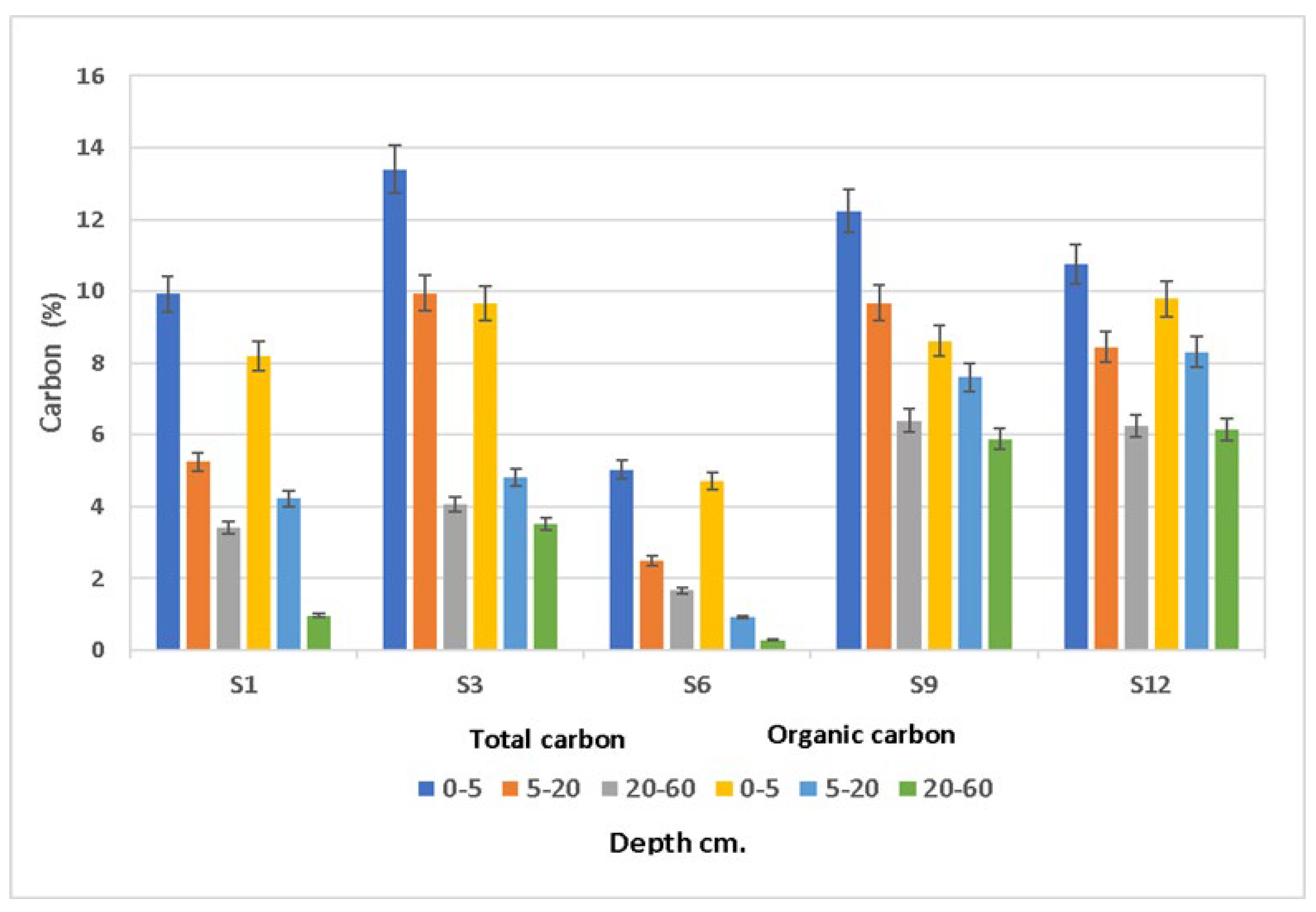
The vertical distribution of carbon showed a consistent decline with increasing soil depth across vegetation types (Figure 2). Both TC and SOC concentrations decreased progressively from the surface to deeper horizons, reflecting higher organic matter turnover and greater microbial activity in upper soil layers.
Litter carbon content also varied among vegetation types, ranging from 5.03 Mg C ha−1 (cedar) to 8.74 Mg C ha−1 (oyamel) (Table 5). The average litter carbon content across all sites was 6.60 Mg C ha−1. When extrapolated to the total study area, litter contributed 13,302.63 Mg C and 48,836.8 Mg CO2.

4. Discussion

Soil acidity can influence the structure and diversity of microbial communities and is directly related to the mineralization and stability of organic carbon, thereby affecting the forms and contents of total organic carbon [33,39]. Yang et al. [40] report that in acidic soils, OM is generally stabilized by exchange bonds with non-crystalline Fe and Al oxides. Acevedo-Sandoval et al. [28] and Cano-Flores et al. [41], indicate that Andosols with acidic pH have high contents of exchangeable aluminum (Al3+). The low bulk density and C/N ratio values indicate an accumulation of labile organic matter predominantly from slightly decomposed plant residues, suggesting recent organic residue accumulation [13]. OM affects soil reaction (pH) due to active groups that contribute acidity levels, exchangeable bases, and the nitrogen content present in the organic residues added to the soil [42].
Cation exchange capacity (CEC) is high in soils under Fir-tlaxcal cover (30.35 cmol+ kg−1) due to the presence of amorphous allophanic materials and humus-Al complexes [43], which have a high capacity to retain cations on their colloidal surfaces. These materials are characteristic of soils formed in cold, humid environments where processes favor the accumulation of minerals with high surface reactivity [44]. In contrast, CEC decreases in soils under pine-oak cover (17.2 cmol+ kg−1), possibly due to a lower presence of allophanic minerals and a reduced content of active organic matter.
Rodríguez-Rodríguez et al. [45] report that TC values around 3% are considered the minimum for adequate structural stability in soils. Values below 3% TC are associated with erosion problems and low cation exchange and moisture retention capacities, often resulting from low organic material inputs and high organic matter mineralization rates.
The soils of PNCh are of volcanic origin and contain high levels of aluminum oxyhydroxides and hydroxides, which are associated with humic substances, forming stable Al-humus complexes [12,28,46].
The high accumulation of SOC in our study is also consistent with the nature of Andosols. Galicia et al. [17] noted that Andosols can accumulate up to 310 Mg C ha−1 due to the stabilization of organic matter through the formation of organo-metal and organo-mineral complexes. Our findings in PNCh align with this, with SOC values at 60 cm depth ranging from 43.25 Mg C ha−1 (cedar forest) to 328.77 Mg C ha−1 (Fir forest). This range is higher than that reported for similar forest types in other studies. For instance, Pérez-Ramírez et al. [47] found an average of 153 Mg C ha−1 in Fir forests and 70 to 136 Mg C ha−1 in pine-oak forests in the Monarch Butterfly Biosphere Reserve. Similarly, Cano-Flores et al. [41] reported values of 53.8 and 98.3 Mg C ha−1 at 20 cm depth in pine-oak and oak-pine forests, respectively. Our maximum value of 328.77 Mg C ha−1 exceeds the ranges of 92 to 216 Mg ha−1 reported for the same forest type by other authors [48,49], highlighting the exceptional carbon sequestration potential of the PNCh soils.
The soil C content across the different vegetation types in the PNCh indicates that soils with higher SOC concentrations are associated with greater biodiversity [13]. Additionally, the stratification ratio of organic matter (REmos) exhibited marked spatial variation among the evaluated sites, reflecting clear differences in soil quality and disturbance levels. Cedar recorded the highest REmos value (5.12), indicating a strongly stratified distribution of organic matter typically associated with well-conserved soils, stable vegetation cover, and minimal surface disturbance. In contrast, pine–oak (1.93) and Fir–oak (2.01) showed moderate stratification, with values close to the threshold commonly interpreted as indicative of acceptable soil functioning. Their shared statistical grouping suggests similar ecological conditions and intermediate levels of management influence [34]. The lowest values were observed in Fir–tlaxcal (1.13) and Fir (1.18), where ratios close to unity denote a homogenized vertical distribution of organic matter. Such conditions are often linked to soil degradation processes, including surface erosion, reduced organic inputs, and recurrent physical disturbance. The significant differences among groups (a–c) therefore highlight varying degrees of soil conservation, with cedar representing a well-preserved system, pine–oak and Fir–oak reflecting moderate disturbance, and Fir–tlaxcal and Fir indicating the most degraded conditions within the study area.
Rodríguez-Rodríguez et al. [45] concluded that the accumulation and stabilization of organic carbon in Andosols and Andic soils of Garajonay National Park (La Gomera, Canary Islands) is more related to the maturity and stability of the ecosystem than to the type of vegetation. Vargas-Larreta et al. [50] concluded that, based on their results, the type of forest does not influence SOC stocks, but the soil type does. In the Andosol soils of PNCh, the type of vegetation does influence SOC stocks, where statistically significant differences were found among the five sites (p ≤ 0.05) (Table 3). Soils under oyamel cover showed the highest SOC content (328.77 Mg C ha−1) in the first 60 cm. This indicates that this forest has soils with better physical, chemical, and biological properties, and consequently, lower CO2 emissions to the atmosphere [51]. Carrillo-Arizmendi et al. [16] concluded that SOC stocks exhibit lower decomposition rates at higher altitudes, favoring their accumulation, a condition that prevails in PNCh.
As Galicia et al. [17] reported, SOC storage depends on the interaction of various factors (biotic, abiotic, and anthropogenic), and therefore good forest management practices play a key role in preserving soil organic matter and its stabilization processes.
The results show that oyamel forests contain 32.94% more SOC than the Fir-tlaxcal, Fir-oak, Pine-oak, and Cedar forests, which have 28.15%, 21.02%, 13.55%, and 4.33%, respectively. In Mexican soils, an average of 56.1 Mg ha−1 of SOC is reported in the top 20 cm of depth. In PNCh, soils under different vegetation covers exhibit higher values than the national average, except for soils under cedar forest, which contain 43.25 Mg ha−1 of SOC in the top 60 cm. This higher SOC content can be attributed to the natural condition of the study area as a forest with minimal human disturbance, located within a protected natural area (ANP).
Our findings on soil carbon stocks align with a wide range of studies, while also revealing the exceptional sequestration capacity of the PNCh. For example, Amaguaya-Llamuca [52] reported a total carbon capture stored in native Ceja Andina Forest soils of 252.57 Mg C ha−1 at a depth of 0 to 30 cm, while Vásquez-Polo et al. [53] reported a total carbon accumulation of 42.4 Mg C ha−1 in forested areas of Magdalena, Colombia, at a 20 cm depth. Meanwhile Chirilus et al. [54] reported 36.19 Mg ha−1 of organic carbon in forest plantations at a 0–10 cm depth. These studies underscore that land use and sampling depth are key factors influencing the physicochemical properties, carbon sequestration and water retention capacity.
A study by Vela-Correa et al. [49] measuring total organic carbon levels in conservation areas of Mexico City defined SOC interval thresholds for the 0–30 cm layer to provide a general reference of what is considered high and low values. The established ranges were
  • Low: <50 Mg C ha−1;
  • Medium: 50–100 Mg C ha−1;
  • High: 100–150 Mg C ha−1;
  • Very High: >150 Mg C ha−1.
The carbon stocks observed in PNCh align with values reported for other temperate forests in Mexico and Latin America. Previous studies have documented SOC values of 148.5 Mg C ha−1 in Pinus spp. on pyroclastic soils [48], 118 ± 7 Mg C ha−1 in cloud forests of Michoacán [55], and more than 145 Mg C ha−1 in conserved oyamel forests. The high SOC values recorded in oyamel stands in PNCh are consistent with the well-preserved condition of these forests and their capacity to retain substantial organic matter in surface layers.
The decreasing SOC pattern with depth observed in PNCh is well supported by regional and global studies [37,40,54,55]. Vertical SOC distribution is known to be influenced by vegetation structure, litter quality, decomposition rates, rhizodeposition, and pedogenetic processes such as eluviation. These mechanisms, combined with topographic and climatic factors, regulate soil carbon accumulation and stabilization.
Globally, more than 50% of SOC can occur in subsoil horizons [56], although stability tends to increase with depth due to reduced decomposition rates [14]. However, in many temperate forest ecosystems, including PNCh, the highest carbon concentrations remain in the top 20–30 cm, as reported for El Salto, Durango [37] and pine–oak forests under silvicultural treatment [1]. Regarding litter, carbon values in PNCh were within the range reported for temperate forests in other regions. Higher values have been documented in pine–oak forests in Tamaulipas (9.88 Mg C ha−1) [57], Eucalyptus plantations in Uruguay [58], and coniferous stands in Patagonia [59]. Nonetheless, the average litter carbon content observed in PNCh (6.60 Mg C ha−1) aligns with the 5–6% contribution of litter to total carbon pools reported for tropical and temperate forests [60,61].
The substantial carbon stocks identified in oyamel vegetation reinforce the importance of prioritizing its conservation and sustainable management, as recommended by [47]. Furthermore, long-term studies indicate that degraded soils can recover SOC stocks over decades, given appropriate land stewardship practices [62]. At a broader scale, avoiding deforestation is critical, as highlighted by carbon emission estimates from native forest loss in Ecuador [63].

5. Conclusions

This study demonstrates that the different vegetation types within El Chico National Park (PNCh) contribute variably to soil organic carbon (SOC) capture and storage, collectively providing a critical ecosystem service through CO2 sequestration within the upper 60 cm of soil. The park’s soils are estimated to store approximately 2.31 × 10⁶ Mg of CO2 across 2015.55 ha, underscoring its substantial role as a terrestrial carbon sink in central Mexico. Among vegetation types, oyamel forests stand out as the dominant reservoir, accounting for 32.94% of the SOC and nearly 90% of the total CO2 storage, primarily due to their extensive spatial coverage (85% of the park).
The stabilization of soil organic matter in PNCh is primarily driven by the formation of organo-mineral and organometallic complexes, which enhance carbon persistence by reducing decomposition rates. The oyamel–tlaxcal forest soils exhibited the highest proportions of these stable complexes, suggesting a greater potential for long-term carbon sequestration. Although total carbon (TC), oxidizable carbon (Cox), and non-oxidizable carbon (Cnox) did not vary significantly among vegetation types, the differences observed in organo-mineral carbon (Cp), readily poorly oxidizable carbon (Cdox), and overall SOC highlight the heterogeneous nature of carbon dynamics within the park’s ecosystems.
Additionally, the litter layer represents an important transient carbon pool, averaging 6.60 Mg C ha−1, equivalent to 13,302.6 Mg of C or 48,836.8 Mg of CO2 across PNCh. When integrated with soil carbon stocks, the total carbon storage potential rises to 2.36 × 10⁶ Mg of CO2, reinforcing the park’s strategic importance in regional climate regulation.
In summary, assessing carbon dynamics from litter to mineral soil offers a comprehensive understanding of forest ecosystem functioning in PNCh and their role in the global carbon cycle. These findings provide a scientific basis for designing evidence-based forest management and conservation strategies that enhance soil carbon retention, strengthen ecosystem resilience, and support nature-based solutions for climate change mitigation.

Author Contributions

O.A.A.-S., conceptualization and methodology. A.R.-N., C.R.-G., C.C.-L., J.B.L.-M., F.S.-M. and C.A.G.-R. have contributed in an equal manner to writing, reviewing, editing, visualization and draft preparation. All authors have read and agreed to the published version of the manuscript.

Funding

This research received no external funding.

Institutional Review Board Statement

Not applicable.

Informed Consent Statement

Not applicable.

Data Availability Statement

The original contributions presented in this study are included in the article. Further inquiries can be directed to the corresponding author.

Conflicts of Interest

The authors declare no conflicts of interest.

References

  1. Ambrosio-Lazo, A.; Rodríguez-Ortiz, G.; Santiago-García, W.; Ruiz-Luna, J.; Velasco-Velasco, V.A.; Enríquez-del Valle, J.R. Biomasa aérea y carbono en el suelo en rodales de pino-encino bajo tratamiento silvícola. Madera Bosques 2024, 30, 1–15. [Google Scholar] [CrossRef]
  2. Galicia, L.; Saynes, V.; Campo, J. Biomasa aérea, subterránea y necromasa en una cronosecuencia de bosques templados con aprovechamiento forestal. Bot. Sci. 2015, 93, 473. [Google Scholar] [CrossRef]
  3. Dincă, L.C.; Dincă, M.; Vasile, D.; Spârchez, G.; Holonec, L. Calculating Organic Carbon Stock from Forest Soils. Not. Bot. Horti Agrobo 2015, 43, 568–575. [Google Scholar] [CrossRef]
  4. Lal, R. Soil carbon sequestration impacts on global climate change and food security. Science 2004, 304, 1623–1627. [Google Scholar] [CrossRef]
  5. Stockmann, U.; Adams, M.; Crawford, J.; Field, D.; Henakaarchchi, N.; Jenkins, M.; Minasny, B.; McBratney, A.; Courcelles, V.R.d.; Singh, K.; et al. The knowns, known unknowns and unknowns of sequestration of soil organic carbon. Agric. Ecosyst. Environ. 2013, 164, 80–99. [Google Scholar] [CrossRef]
  6. FAO (Food and Agriculture Organization). Global Forest Resources Assessment 2015; Food and Agriculture Organization of the United Nations: Rome, Italy, 2015; ISBN 978-92-5-108826-5. [Google Scholar]
  7. FAO. Secuestro de carbono en tierras áridas. FAO Soils Bull. 2007, 102, 107. [Google Scholar]
  8. Bruun, T.B.; Elberling, B.; De Neergaard, A.; Magid, J. Organic carbon dynamics in different soil types after conversion of forest to agriculture. Land Degrad. Dev. 2013, 26, 272–283. [Google Scholar] [CrossRef]
  9. Willaarts, B.A.; Oyonarte, C.; Muñoz-Rojas, M.; Ibáñez, J.J.; Aguilera, P.A. Environmental factors controlling soil organic carbon stocks in two contrasting Mediterranean climatic areas of southern Spain. Land Degrad. Dev. 2016, 27, 603–611. [Google Scholar] [CrossRef]
  10. Chaplin-Kramer, R.; Ramler, I.; Sharp, R.; Haddad, N.; Gerber, J.; West, P.; Mandle, L.; Engstrom, P.; Baccini, A.; Sim, S.; et al. Degradation in carbon stocks near tropical forest edges. Nat. Commun. 2015, 6, 10158. [Google Scholar] [CrossRef]
  11. Segura-Castruita, M.; Sánchez-Guzmán, P.; Ortiz-Solorio, C.; Gutiérrez-Castorena, M.C. Carbono orgánico de los suelos de México. Terra Latinoamericana 2005, 23, 21–29. [Google Scholar]
  12. Broquen, P.; Candan, F.; Lobartini, J.C.; Girardin, J.L. Relaciones entre carbono orgánico y propiedades edáficas y del sitio en suelos derivados de cenizas volcánicas, sudoeste de Neuquén (Argentina). Cienc. Suelo 2004, 22, 73–82. [Google Scholar]
  13. De Souza, J.J.L.L.; Souza, B.I.; Xavier, R.A.; Cardoso, E.C.M.; de Medeiros, J.R.; da Fonseca, C.F.; Schaefer, C.E.G.R. Organic carbon rich-soils in the Brazilian semiarid region and paleoenvironmental implications. Catena 2022, 212, 106101. [Google Scholar] [CrossRef]
  14. Betancourt, P.; González, J.; Figueroa, B.; González, F. Materia orgánica y caracterización de suelos en proceso de recuperación con coberturas vegetativas en zonas templadas de México. Terra Latinoamericana 1999, 17, 139–148. [Google Scholar]
  15. FAO. Captura de carbono en los suelos para un mejor manejo de la tierra. FAO Soils Bull. 2002, 96, 61. [Google Scholar]
  16. Carrillo-Arizmendi, L.; Pérez-Suarez, M.; Vargas-Hernández, J.J.; Rozenberg, P.; Correa-Díaz, A. Existencias de carbono orgánico del suelo a lo largo de un gradiente altitudinal en bosques de montaña de Pinus hartwegii Lind. Rev. Mex. Cienc. For. 2025, 16, 87–112. [Google Scholar] [CrossRef]
  17. Galicia, L.; Gamboa, C.A.M.; Cram, S.; Chávez, V.B.; Peña, R.V.; Saynes, V.; Siebe, V. Almacén y dinámica del carbono orgánico del suelo en bosques templados de México. Terra Latinoamericana 2016, 34, 1–29. [Google Scholar]
  18. Óskarsson, H.; Arnalds, Ó.; Gudmundsson, J.; Gudbergsson, G. Organic carbon in Icelandic Andosols: Geographical variation and impact of erosion. Catena 2004, 56, 225–238. [Google Scholar] [CrossRef]
  19. Tsui, C.; Tsai, C.; Chen, Z. Soil organic carbon stocks in relation to elevation gradients in volcanic ash soils of Taiwan. Geoderma 2013, 209–210, 119–127. [Google Scholar] [CrossRef]
  20. Imaya, A.; Yoshinaga, S.; Inagaki, Y.; Tanaka, N.; Ohta, S. Volcanic ash additions control soil carbon accumulation in brown forest soils in Japan. Soil Sci. Plant Nutr. 2010, 56, 734–744. [Google Scholar] [CrossRef]
  21. Razo-Zárate, R.; Gordillo-Martínez, A.J.; Rodríguez-Laguna, R.; Maycotte-Morales, C.C.; Acevedo-Sandoval, O.A. Estimación de biomasa y carbono almacenado en árboles de oyamel afectados por el fuego en el Parque Nacional “El Chico”, Hidalgo, México. Madera Bosques 2013, 19, 73–86. [Google Scholar] [CrossRef]
  22. Zamora, J. Estimación del Contenido de Carbono en Biomasa Aérea en el Bosque de Pino del Ejido La Majada, Municipio de Peribán de Ramos, Michoacán. Bachelor’s Thesis, Universidad Michoacana de San Nicolás de Hidalgo, Morelia, Mexico, 2003. [Google Scholar]
  23. CONANP (Comisión Nacional de Áreas Naturales Protegidas). Programa de Conservación y Manejo Del Parque Nacional El Chico; CONANP: Ciudad de México, México, 2005; p. 236. [Google Scholar]
  24. Enciso-de la Vega, S. Propuesta de nomenclatura estratigráfica para la cuenca de México. Rev. Mex. Cienc. Geol. 1992, 10, 26–36. [Google Scholar]
  25. World Reference Base for Soil Resources (WRB). Report No. 84; FAO-ISRIC-IUSS: Rome, Italy, 1998. [Google Scholar]
  26. WRB; IUSS Working Group. Base Referencial Mundial del Recurso Suelo. Sistema Internacional De Clasificación De Suelos Para La Nomenclatura De Suelos Y La Creación De Leyendas De Mapas De Suelos, 4th ed.; Unión Internacional de las Ciencias del Suelo (IUSS): Viena, Austria, 2022. [Google Scholar]
  27. Soil Survey Staff. Keys to Soil Taxonomy, 9th ed.; USA Department of Agriculture, Natural Resources Conservation Service: Washington, DC, USA, 2003. [Google Scholar]
  28. Acevedo-Sandoval, O.; Prieto-García, F.; Gordillo-Martínez, A. Identificar las fracciones de aluminio en un andosol del estado de Hidalgo, México. Rev. Soc. Geol. Esp. 2009, 21, 125–132. [Google Scholar]
  29. Soil Survey Laboratory. Methods Manual; Soil Survey Investigations Report No. 42; Ver. 3.0; USA Department of Agriculture: Washington, DC, USA, 1996. [Google Scholar]
  30. Norma Oficial Mexicana. Que Establece Las Especificaciones De Fertilidad, Salinidad Y Clasificación De Suelos, Estudio, Muestreo Y Análisis. NOM-021-SEMARNAT-2000; Secretaría de Medio Ambiente y Recursos Naturales: Mexico City, Mexico, 2000.
  31. González-Molina, L.; Etchevers-Barra, J.D.; Hidalgo-Moreno, C. Carbono en suelos de ladera: Factores que deben considerarse para determinar su cambio en el tiempo. Agrociencia 2008, 42, 741–751. [Google Scholar]
  32. Smith, B.F.L. Characterization of poorly ordered minerals by selective chemical methods. In Clay Mineralogy: Spectroscopic and Chemical Determinative Methods; Wilson, M.J., Ed.; Chapman and Hall: London, UK, 1994; pp. 333–357. [Google Scholar]
  33. Vásquez-Polo, J.R.; Macías-Vásquez, F. Fraccionamiento químico del carbono en suelos con diferentes usos en el departamento de Magdalena, Colombia. Terra Latinoamericana 2017, 35, 7–17. [Google Scholar] [CrossRef]
  34. Martínez, H.E.; Fuentes, E.J.P.; Acevedo, H.E. Carbono orgánico y propiedades del suelo. Rev. Cienc. Suelo Nutr. Veg. 2008, 8, 68–96. [Google Scholar] [CrossRef]
  35. Vásquez-Polo, J.R.; Macías-Vásquez, F.; Menjivar, J.C. Respiración del suelo según su uso y su relación con algunas formas de carbono en el departamento del Magdalena, Colombia. Biagro 2013, 25, 175–180. [Google Scholar]
  36. Eswaran, H.; Van den Berg, E.; Reich, P. Organic carbon in soils of the world. Soil Sci. Soc. Am. J. 2000, 57, 192–194. [Google Scholar] [CrossRef]
  37. Morales-Inocente, M.A.; Nájera-Luna, J.A.; Escobedo-Bretado, M.A.; Cruz-Cobos, F.; Hernández, F.J.; Vargas-Larreta, B. Carbono retenido en biomasa y suelo en bosques de El Salto, Durango, México. Investig. Cienc. Univ. Autón. Aguascalientes 2020, 28, 5–13. [Google Scholar] [CrossRef]
  38. Wang, H.; Liu, S.; Wang, J.; Shi, Z.; Lu, L.; Guo, W. Dynamics and speciation of organic carbon during decomposition of leaf litter and fine roots in four subtropical plantations of China. For. Ecol. Manag. 2013, 300, 43–52. [Google Scholar] [CrossRef]
  39. Fernández, I.E. Caracterización química de los suelos del Bosque de Fray Jorge. In Historia Natural del Parque Nacional Bosque Fray Jorge; Squeo, F.A., Gutiérrez, J.R., Hernández, I.R., Eds.; Ediciones Universidad de La Serena: La Serena, Chile, 2004; Volume 15, pp. 265–279. [Google Scholar]
  40. Yang, Q.; Zheng, F.; Jia, X.; Liu, P.; Dong, S.; Zhang, J.; Zhao, B. The combined application of organic and inorganic fertilizers increases soil organic matter and improves soil microenvironment in wheat-maize field. J. Soils Sediments 2020, 20, 2395–2404. [Google Scholar] [CrossRef]
  41. Cano-Flores, O.; Vela-Correa, G.; Acevedo-Sandoval, O.A.; Valera-Pérez, M.Á. Concentraciones de carbono orgánico en el arbolado y suelos del área natural protegida El Faro en Tlalmanalco, Estado de México. Terra Latinoamericana 2020, 38, 895–905. [Google Scholar] [CrossRef]
  42. Wong, M.T.F.; Gibbs, P.; Nortcliff, S.; Swift, R.S. Measurement of the acid neutralizing capacity of agroforestry tree prunings added to tropical soils. J. Agric. Sci. 2000, 134, 269–276. [Google Scholar] [CrossRef]
  43. Shoji, S.; Fujiwara, Y. Active aluminum and iron in the humus horizons of andosols from Northeastern Japan: Their forms, properties, and significance in clay weathering. Soil Sci. 1984, 137, 266–276. [Google Scholar] [CrossRef]
  44. Nanzyo, M.; Dahlgren, R.; Shoji, S. Chemical characteristics of volcanic ash soils. In Volcanic Ash Soils: Genesis, Properties and Utilization; Shoji, S., Nanzyo, M., Dahlgren, R., Eds.; Elsevier: Amsterdam, Netherlands, 1993; Volume 21, pp. 145–187. [Google Scholar]
  45. Rodríguez-Rodríguez, A.; Arbelo, C.D.; Notario, J.S.; Mora, J.L.; Guerra, J.A.; Armas, C.M. Contenidos y formas de carbono orgánico en andosoles forestales: Aproximación a su dinámica. Edafología 2004, 11, 67–102. [Google Scholar]
  46. Grand, S.; Lavkulich, L.M. Depth distribution and predictors of soil organic carbon in southwestern Canada. Soil Sci. 2011, 176, 164–174. [Google Scholar] [CrossRef]
  47. Pérez-Ramírez, S.; Ramírez, M.; Jaramillo-López, P.; Bautista, F. Contenido de carbono orgánico en el suelo bajo diferentes condiciones forestales: Reserva de la Biósfera Mariposa Monarca, México. Rev. Chapingo Ser. Cienc. For. Ambient. 2013, 19, 157–173. [Google Scholar] [CrossRef]
  48. Cruz-Flores, G.; Etchevers-Barra, J. Contenidos de carbono orgánico de suelos someros en pinares y abetales de áreas protegidas de México. Agrociencia 2011, 45, 849–862. [Google Scholar]
  49. Vela-Correa, G.; López-Blanco, J.; Rodríguez-Gamiño, M.L. Niveles de carbono orgánico total en el suelo de conservación del Distrito Federal, centro de México. Invest. Geogr. Boletín Inst. Geogr. UNAM 2012, 77, 18–30. [Google Scholar]
  50. Vargas-Larreta, B.; Amezcua-Rojas, M.; López-Martínez, J.O.; Cueto-Wong, A.; Cruz-Cobos, F.; Nájera-Luna, J.A.; Aguirre-Calderón, C.G. Estimación de los almacenes de carbono orgánico en el suelo en tres tipos de bosque templado en Durango, México. Bot. Sci. 2023, 101, 90–101. [Google Scholar] [CrossRef]
  51. Barrezueta-Unda, S. Efecto de diversos atributos topográficos sobre el carbono orgánico en varios usos del suelo. Cienc. UNEMI 2021, 14, 43–53. [Google Scholar] [CrossRef]
  52. Amaguaya-Llamuca, J.L. Determinación de Carbono en el Suelo de Bosque Nativo de Ceja Andina en el Sector Guangra, Parroquia Achupallas, Cantón Alausí, Provincia de Chimborazo. Bachelor’s Thesis, Escuela Superior Politécnica de Chimborazo, Riobamba, Ecuador, 2015. [Google Scholar]
  53. Vásquez-Polo, J.R.; Macías-Vásquez, F.; Menjivar-Flores, J.C. Formas de carbono orgánico en suelos con diferentes usos en el departamento del Magdalena (Colombia). Acta Agron. 2011, 60, 369–379. [Google Scholar]
  54. Chirilus, G.V.; Lakatos, E.S.; Bălc, R.; Bădărău, A.S.; Cioca, L.I.; David, G.M.; Rpsian, G. Assessment of organic carbon sequestration from Romanian degraded soils: Livada forest plantation case study. Atmosphere 2022, 13, 1452. [Google Scholar] [CrossRef]
  55. Anaya, C.A.; Mendoza, M.; Rivera, M.; Páez, R.; Olivares-Martínez, D. Contenido de carbono orgánico y retención de agua en suelos de un bosque de niebla en Michoacán México. Agrociencia 2016, 50, 251–269. [Google Scholar]
  56. Schiedung, M.; Tregurtha, C.S.; Beare, M.H.; Thomas, S.M.; Don, A. Deep soil flipping increases carbon stocks of New Zealand grasslands. Glob. Change Biol. 2019, 25, 2296–2309. [Google Scholar] [CrossRef] [PubMed]
  57. Laguna, R.R.; Pérez, J.J.; Calderón, Ó.A.A.; Garza, E.J.T.; Zárate, R.R. Estimación del carbono almacenado en el bosque de pino-encino en la Reserva de la Biósfera el Cielo, Tamaulipas, México. Ra Ximhai 2009, 5, 317–327. [Google Scholar] [CrossRef]
  58. Hernández, J.; del Pino, A.; Salvo, L.; Arrarte, G. Nutrient export and harvest residue decomposition patterns of a Eucalyptus dunnii Maiden plantation in temperate climate of Uruguay. For. Ecol. Manag. 2009, 258, 92–99. [Google Scholar] [CrossRef]
  59. Laclau, P. Biomass and carbon sequestration of ponderosa pine plantations and native cypress forest in northwest Patagonia. For. Ecol. Manag. 2003, 180, 317–333. [Google Scholar] [CrossRef]
  60. Pan, Y.; Birdsey, R.A.; Fang, J.; Houghton, R.; Kauppi, P.E.; Kurz, W.A.; Phillips, O.L.; Shvidenko, A.; Lewis, S.L.; Canadell, J.G.; et al. A Large and Persistent Carbon Sink in the World’s Forests. Science 2011, 333, 988–993. [Google Scholar] [CrossRef]
  61. Flores-Garnica, J.G.; Wong-González, J.C.; Paz-Pellat, F. Camas de combustibles forestales y carbono en México. Madera Bosques 2018, 24, 1–15. [Google Scholar] [CrossRef]
  62. Hu, P.; Liu, S.; Ye, Y.; Zhang, W.; He, X.; Su, Y.; Wang, K. Soil carbon and nitrogen accumulation following agricultural abandonment in subtropical karst region. Appl. Soil Ecol. 2018, 130, 169–178. [Google Scholar] [CrossRef]
  63. MAE (Ministerio del Ambiente Ecuador). Estadísticas de Patrimonio Natural. Datos de Bosques, Ecosistémas, Especies, Carbono y Deforestación del Ecuador Continental. Gobierno de Ecuador. 2015. Available online: https://mluisforestal.files.wordpress.com/2016/01/estadisticas-patrimonio-natural-mae.pdf (accessed on 10 October 2025).
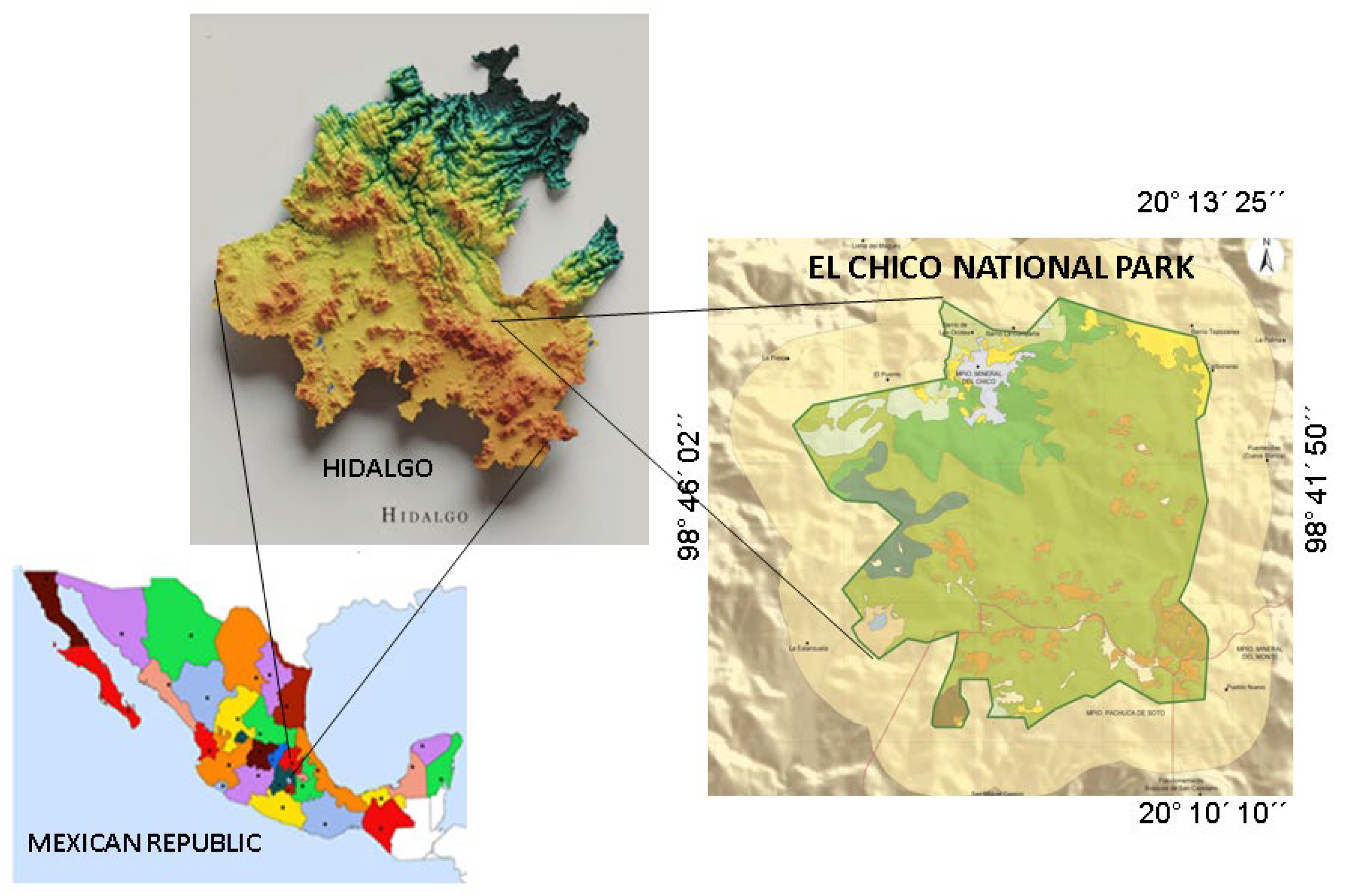
Figure 1. Geographic location of “El Chico” National Park, Hidalgo.
Sustainability 17 11028 g001
Figure 2. Total and organic carbon content by depth under different vegetation types: S1: Pine-oak; S3: Fir-oak; S6: Cedar; S9: Fir-Tlaxcal; S12: Fir.
Sustainability 17 11028 g002
Table 1. Physical and chemical soil properties (mean ± SE) according to vegetation type.
PropertiesS1S3S6S9S12
BD (Mg m−3)0.93 ± 0.23 a0.75 ± 0.14 a0.93 ± 0.16 a0.69 ± 0.08 a0.71 ± 0.15 a
Clay (%)15.67 ± 5.69 ab10.44 ± 0.77 ab20.83 ± 8.85 a7.67 ± 2.03 b6.16 ± 0.17 b
pH (water 1:2.5)5.57 ± 0.29 b6.33 ± 0.28 a5.84 ± 0.09 ab5.58 ± 0.01 b5.89 ± 0.06 ab
pH (KCl 1:2.5)4.24 ± 0.64 a5.28 ± 0.49 a4.69 ± 0.39 a4.58 ± 0.20 a4.92 ± 0.07 a
∆pH−1.33 ± 0.35 a−1.05 ± 0.22 a−1.14 ± 0.33 a−1.00 ± 0.20 a−0.97 ± 0.08 a
Nt (%)0.38 ± 0.31 a0.53 ± 0.27 a0.17 ± 0.21 a0.64 ± 0.12 a0.70 ± 0.16 a
C/N11.74 ± 0.33 a11.30 ± 0.57 a10.26 ± 0.81 a12.01 ± 0.69 a11.86 ± 3.32 a
Alo + 0.5 Feo (%)2.79 ± 0.21 a2.74 ± 0.23 a2.16 ± 0.52 a3.41 ± 0.52 a3.21 ± 0.60 a
CEC cmol+ kg−117.20 ± 5.80 b22.77 ± 6.09 ab23.84 ± 2.99 ab30.35 ± 3.47 a25.21 ± 3.30 ab
Values represent mean ± standard error (SE). Different superscript letters within a row indicate statistically significant differences among vegetation types according to one-way ANOVA followed by Tukey’s HSD test (p < 0.05). S1: Pine-oak; S3: Fir-oak; S6: White cedar; S9: Fir-tlaxcal; S12: Fir.
Table 2. Carbon fractions in forest soils, their role and importance.
FractionDescriptionRole in Forest SoilsEcological ImportanceReferences
Labile Carbon (active)Easily degradable SOC (sugars, recent residues, organic acids)Immediate energy source for microorganisms; drives nutrient recyclingSensitive indicator to management and disturbances[35]
Recalcitrant CarbonHighly decomposed organic matter (humic substances, aromatic compounds)Accumulates slowly and decomposes very littleKey for carbon sequestration and humus formation[4,35]
Organo-mineral Carbon FractionSOC bound to mineral particles (clays, oxides)Physical/chemical protection against decompositionProvides long-term carbon stability[33]
Oxidizable CarbonChemically estimated by oxidation (Walkley-Black or variants)Represents accessible labile carbonUseful for evaluating management impact, disturbances, or ecological recovery[33,34]
Non-oxidizable CarbonSOC fraction unreactive to strong oxidants (e.g., humins, pyrolitic carbon)Very stable; persists for decades or centuriesKey for long-term carbon sequestration and stable humic matter formation[33,34]
Total Carbon Sum of organic and inorganic carbonOverall measure of soil carbon stockGeneral indicator of storage potential[34]
Inorganic CarbonCarbonates (CaCO3, MgCO3); very low in forestPractically absent in acidic forest soilsNo relevant biological function here[36]
Organic MatterComplete set of organic compoundsRegulates fertility, water, structure, and biodiversityBasis for ecological functioning of forest soils[34]
Difficult-to-oxidize CarbonSOC resistant to oxidation or microbial degradationAccumulates slowly; conserves carbon in soilKey for durable sequestration and long-term storage[33,35]
Table 3. Average carbon fractions in forest soils (0–60 cm) under different vegetation types.
FractionS1S3S6S9S12
TC (%)6.20 ± 3.36 a9.14 ± 4.71 a3.06 ± 1.75 a9.44 ± 2.93 a8.48 ± 2.26 a
Cox (%)4.46 ± 3.61 a6.00 ± 3.24 a1.97 ± 2.39 a7.18 ± 1.68 a8.09 ± 1.83 a
Cnox (%)1.74 ± 0.70 a3.14 ± 2.34 a1.10 ± 0.67 a2.26 ± 1.28 a0.39 ± 0.49 a
Cp (%)0.83 ± 0.29 ab0.83 ± 0.19 ab0.49 ± 0.17 b1.43 ± 0.26 a1.11 ± 0.40 ab
Cdox (%)3.62 ± 3.34 ab5.17 ± 3.06 ab1.48 ± 2.27 a5.75 ± 1.42 ab6.97 ± 1.43 b
SOC (Mg C/ha)135.22 ± 4.77 ab209.82 ± 8.16 bc43.25 ± 2.77 a280.99 ± 1.15 cd328.77 ± 1.51 d
COO (%)5.36 ± 3.12 a8.31 ± 4.53 a2.58 ± 1.64 a8.01 ± 2.68 a7.37 ± 1.88 a
REmos (%)1.93 ± 0.02 b2.01 ± 0.04 b5.12 ± 0.07 c1.13 ± 0.08 a1.18 ± 0.04 a
S1: Pine–oak; S3: Fir–oak; S6: White cedar; S9: Fir–tlaxcal; S12: Fir; TC: Total carbon; SOC: Soil organic carbon; Cox: Oxidizable carbon; Cnox: Non-oxidizable or recalcitrant carbon; Cp: Pyrophosphate-extractable carbon; Cdox: Poorly oxidizable carbon; COO: Uncomplexed and slowly oxidizable forms; REmos: Stratification ratio of OM. Equal letters in the same row are statistically significant (p ≤ 0.05).
Table 4. Area covered by the studied vegetation types in PNCh, SOC content and CO2 in the soil in the First 60 cm of depth.
Vegetation
Type
Area
(ha)
SOC Content (Mg ha−1)Total
Mg C/Area
CO2
(Mg)
S123.88135.223229.0511,850.61
S3106.62209.8222,371.0182,101.60
S631.7543.251373.195039.60
S9127.90280.9935,938.62131,894.74
S121725.40328.77567,259.762,081,843.31
Total2015.55 630,171.632,312,729.86
S1: Pine–Oak; S3: Fir–Oak; S6: Cedar; S9: Fir–tlaxcal; S12: Fir. Source: [23].
Table 5. Average total carbon content in litter and CO2 estimation under different vegetation types in PNCh, Hidalgo, Mexico.
Vegetation TypeBiomass Carbon (Mg C ha−1)CO2 (Mg CO2 ha−1)
S16.4323.59
S36.7624.80
S65.0318.46
S96.0622.24
S128.7432.07
Average6.6024.23
Disclaimer/Publisher’s Note: The statements, opinions and data contained in all publications are solely those of the individual author(s) and contributor(s) and not of MDPI and/or the editor(s). MDPI and/or the editor(s) disclaim responsibility for any injury to people or property resulting from any ideas, methods, instructions or products referred to in the content.