Article

Bioelectricity Generation from Cucumis sativus Waste Using Microbial Fuel Cells: A Promising Solution for Rural Peru

by
Segundo Jonathan Rojas-Flores
1,*,
Rafael Liza
2,
Renny Nazario-Naveda
1,
Santiago M. Benites
1,
Daniel Delfin-Narciso
3 and
Moisés Gallozzo Cardenas
4
1
Facultad de Ingeniería y Arquitectura, Universidad Autónoma del Perú, Lima 15831, Peru
2
Escuela de Posgrado, Universidad Continental, Lima 15113, Peru
3
Grupo de Investigación en Ciencias Aplicadas y Nuevas Tecnologías, Universidad Privada del Norte, Trujillo 13011, Peru
4
Departamento de Ciencias, Universidad Tecnológica del Perú, Trujillo 13011, Peru
*
Author to whom correspondence should be addressed.
Sustainability 2025, 17(24), 11007; https://doi.org/10.3390/su172411007
Submission received: 6 November 2025 / Revised: 3 December 2025 / Accepted: 4 December 2025 / Published: 9 December 2025
(This article belongs to the Special Issue Advanced Research on Waste Management and Biomass Valorization)

Abstract

This study addresses two critical challenges in rural Peru: the mismanagement of agro-industrial waste and the limited access to electricity. Over 40,000 tons of Cucumis sativus (cucumber) waste are generated annually in Peru, most of which is discarded without valorization. Microbial fuel cells (MFCs) offer a sustainable solution by converting organic waste into bioelectricity via electrogenic microorganisms. To evaluate the bioenergy potential of cucumber waste, three single-chamber MFCs were constructed using graphite and zinc electrodes under an external resistance of 100 ohms. The systems were inoculated with acclimated microbial consortia, and electrical, physicochemical, and microbiological parameters were monitored over 35 days. Results showed a maximum voltage of 0.589 V, a peak current of 2.292 mA, and a power density of 0.622 mW/m2. Chemical oxygen demand (COD) was reduced by over 80%, and oxidation-reduction potential (ORP) reached 459.76 mV. Internal resistance was 24.515 ± 1.237 Ω, indicating high energy efficiency. Taxonomic analysis revealed a predominance of Gammaproteobacteria, Bacilli, Bacillus, Acetobacter, and Clostridium, confirming a functionally diverse and electroactive microbial community. These findings demonstrate that cucumber waste is a viable substrate for MFCs and support its potential for integrated waste valorization and decentralized bioenergy generation in rural Peruvian contexts.

1. Introduction

Poor management of agro-industrial waste poses an increasingly concerning environmental and public health challenge across Latin America [1]. According to Peru’s Ministry of Housing, over 8 million tons of solid waste were generated in 2022, a significant portion of which originated from agricultural and agro-industrial activities [2]. When improperly treated, these wastes are often disposed of in informal dumpsites, water bodies, or incinerated without control, leading to pollutant emissions and degradation of soil and air quality [3,4]. Globally, it is estimated that agro-industrial residues could yield up to 85% biodiesel via transesterification or methane through anaerobic digestion, provided appropriate technologies are implemented [5,6].
Meanwhile, in developing countries, over 675 million people still lack access to electricity, and 2.3 billion rely on polluting fuels for cooking [7]. This energy deficit disproportionately affects rural and remote communities, where extending conventional power grids is often unfeasible [8]. Renewable energy sources, such as solar and bioenergy, offer decentralized, sustainable, and affordable solutions [9]. However, international public funding flows to these regions have declined since the pandemic [9]. Achieving the Sustainable Development Goals requires an urgent restructuring of investments and policies that prioritize universal access to clean and resilient technologies [10].
Microbial fuel cells represent an innovative and sustainable solution to simultaneously address organic waste mismanagement and energy scarcity in developing countries [11]. According to the Food and Agriculture Organization (FAO), Latin America generates over 400 million tons of agricultural waste annually, much of which remains underutilized [5,6]. MFCs use these residues as substrates for electrogenic microorganisms that degrade organic matter and generate electricity in a clean and continuous manner [12]. This technology comprises five essential components: the anode, where microorganisms oxidize the organic substrate; the cathode, which receives electrons and typically contains oxygen; the membrane, which separates both chambers and allows proton transfer; the substrate, serving as the energy source; and the electrogenic microorganisms, responsible for electron transfer [13,14]. For instance, Kamperidis et al. (2023) employed fermentable household waste in a single-chamber MFC with graphite electrodes, achieving voltage peaks of 482 mV and a maximum power output of 3.2 mW [15]. In Mexico, Alzate-Gaviria et al. (2024) used synthetic wastewater in a PEM-type MFC equipped with carbon paper electrodes. The system operated at 35 ± 5 °C and achieved a power density of 640 mW/m2, with pH values ranging from 5 to 6 [16].
Cucumber (Cucumis sativus) waste generated in Peru—particularly in agro-exporting regions such as La Libertad and Lambayeque [17]—can be used as a substrate in microbial fuel cells due to its high water content (95%) and abundance of easily biodegradable organic compounds such as sugars and organic acids [18]. According to FAOSTAT, Peru produces over 40,000 tons of cucumber annually, generating substantial postharvest and processing residues [19]. These wastes can be fermented by electrogenic bacteria such as Pseudomonas aeruginosa and Proteus hauseri, which are capable of converting organic matter into electricity [18]. Despite the considerable generation of cucumber waste in Peru and its favorable characteristics for bioenergy production, studies specifically assessing its potential in microbial fuel cells remain scarce. Most existing MFC research has concentrated on alternative organic substrates, leaving a critical knowledge gap regarding the electrogenic performance of cucumber waste under conditions relevant to rural Peruvian contexts. Moreover, the microbial community dynamics uniquely adapted to cucumber waste degradation and electricity generation are still poorly understood. Elucidating the relationship between substrate composition, microbial succession, and electrochemical output is essential for optimizing MFC performance when employing this agricultural residue.
This study seeks to address these gaps by systematically evaluating the bioelectrochemical potential of cucumber waste in single-chamber MFCs, while simultaneously characterizing the development of the anodic biofilm through metagenomic analysis. During MFC operation, electrical parameters such as voltage, current, and power density will be monitored, along with the efficiency of organic load removal through chemical oxygen demand (COD) analysis and oxidation-reduction potential (ORP). Finally, metagenomic sequencing will be used to characterize the anodic biofilm and identify dominant microbial genera involved in bioelectricity generation.

2. Materials and Methods

2.1. Substrate Preparation

Cucumber waste (4 kg) was collected from local markets, prioritizing specimens discarded due to esthetic imperfections or over-ripeness. After collection, the material was mechanically ground to obtain a homogeneous mixture without applying thermal or chemical treatments, in order to preserve its natural composition. The resulting mixture was stored under refrigeration at 4 °C to prevent spontaneous fermentation and ensure substrate stability throughout the experimental period. Chemical composition of the substrate Based on analyses reported in the literature [18,19] and characterizations carried out, the cucumber (Cucumis sativus) residue used has the following typical chemical composition(Table 1):

2.2. Experimental Design of the MFCs

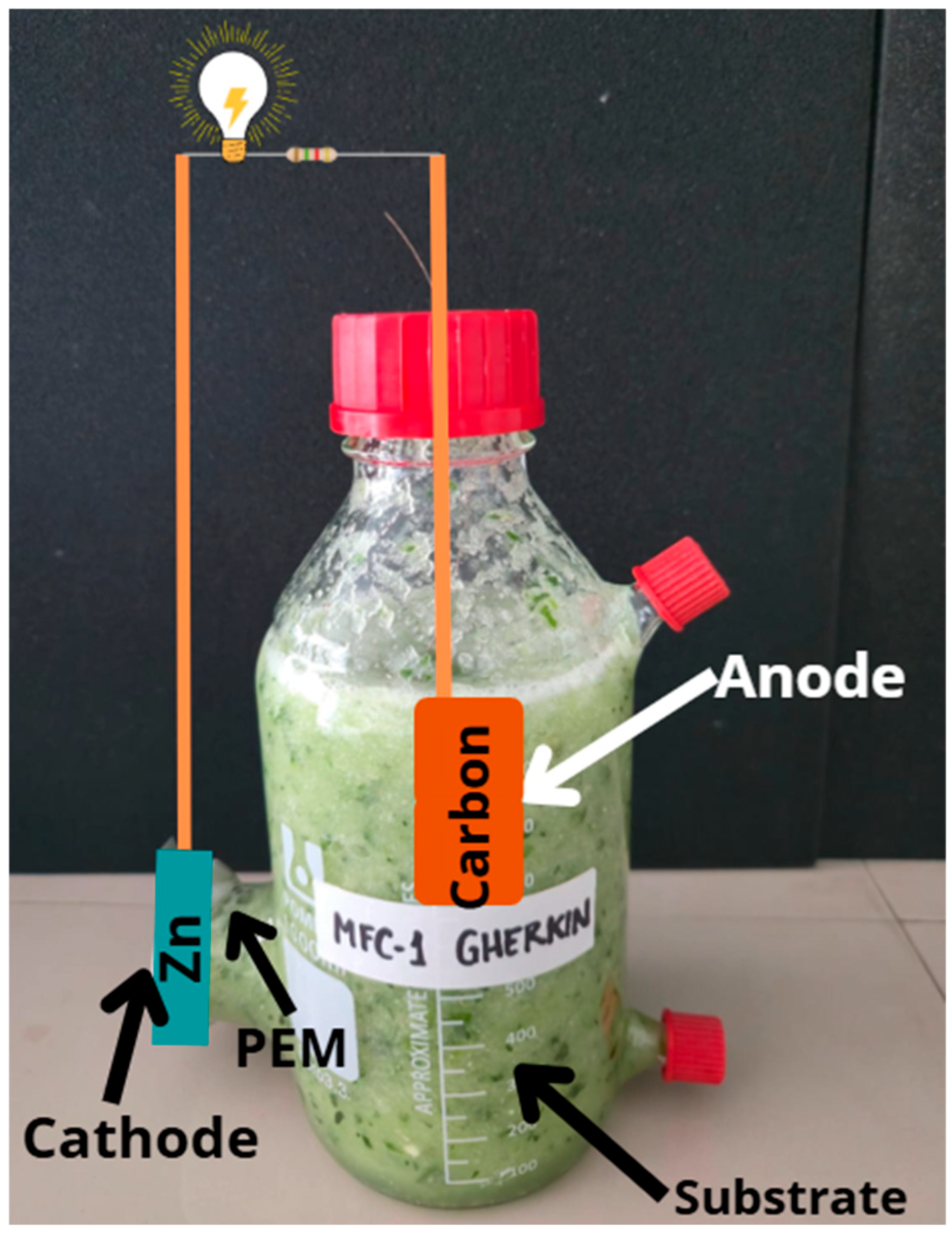
Three single-chamber MFCs were assembled, each with a working volume of 1000 mL. Porous graphite electrodes (24.51 cm2 surface area) were used as anodes, fully submerged in the substrate, while zinc electrodes (81.71 cm2 surface area) served as cathodes, exposed to air to facilitate oxygen reduction. Nafion™ N-117 (Merck KGaA, Darmstadt, Germany) was employed as the proton exchange membrane, Nafion™ N-117 proton exchange membrane was installed between the substrate compartment and the aerated cathode, creating a physical separation that enables proton (H+) transfer from the anode to the cathode while minimizing oxygen diffusion into the anodic compartment. Electrodes were connected to a digital multimeter through an external resistance of 100 ohms, enabling continuous recording of voltage and current (see Figure 1). Zinc cathodes were chosen for their low cost and accessibility in rural Peru, although their susceptibility to corrosion and potential release of Zn2+ ions is recognized as a limitation. The MFCs were operated at room temperature (28 ± 2 °C) throughout the 35-day experimental period, reflecting typical ambient conditions in Peruvian coastal regions. Temperature was monitored daily to ensure stable operational conditions. It is acknowledged that the zinc cathode may contribute significantly to the measured voltage through abiotic electrochemical corrosion; although this limits the exclusive attribution to microbial activity, the configuration was chosen for its low cost and accessibility in rural Peruvian contexts.

2.3. Inoculum Preparation and Acclimation

The microbial inoculum was sourced from anaerobic digester sludge collected at a municipal wastewater treatment plant in Lima, Peru. The mixed culture was acclimated to cucumber waste over a 21-day period using sequential batch cultivation. The acclimation protocol began with feeding 25% cucumber waste combined with synthetic wastewater, progressively increasing to 100% cucumber waste over three weeks. Batch transfers were conducted every seven days, coinciding with peaks in volatile fatty acid production, thereby promoting the enrichment of microorganisms capable of efficient cucumber waste degradation and electrogenic activity.

2.4. Recovery and Cultivation of Anodic Microorganisms

To recover and cultivate the electroactive microbial community from the anodic biofilm, the electrode surface was gently swabbed with sterile cotton applicators and rinsed with phosphate-buffered saline (PBS, pH 7.2). The resulting suspension was serially diluted and inoculated onto nutrient agar and selective media under anaerobic and microaerophilic conditions. Incubation was carried out at 30 °C for 48 h. Colonies with distinct morphologies were isolated and subcultured for further characterization. Gram staining and basic biochemical tests (oxidase, catalase, fermentation profiles) were performed to preliminarily identify dominant genera. Isolates were preserved in glycerol at −80 °C for subsequent molecular and electrochemical analyses. This cultivation step aimed to recover key electrogenic and fermentative strains contributing to bioelectricity generation within the MFC system.

2.5. Metagenomic Analysis of Anodic Biofilms

Total genomic DNA was extracted directly from the anodic biofilm using a commercial soil DNA extraction kit (DNeasy PowerSoil Kit, QIAGEN GmbH, Hilden, Germany), following the manufacturer’s protocol with minor modifications to improve yield. DNA quality and concentration were assessed via spectrophotometry and agarose gel electrophoresis. High-throughput sequencing was performed using the Illumina MiSeq platform(MiSeq Control Software (MCS) v3.1.0, Real-Time Analysis (RTA) v1.18.54, MiSeq Reporter v2.6.1.), targeting the V3–V4 region of the 16S rRNA gene. Raw reads were processed using QIIME2 (2023.2), including quality filtering, chimera removal, and taxonomic assignment based on the SILVA database (138). Alpha and beta diversity metrics were calculated to assess microbial richness and community structure.

2.6. Monitoring of Physicochemical and Electrical Parameters

Over 35 days of continuous operation, voltage and current were recorded every 12 h. pH was measured using a digital potentiometer (Tenma 72-7265, Tenma Test Equipment, Tokyo, Japan), electrical conductivity with a portable conductometer (Hanna Instruments HI 99301, Woonsocket, RI, USA), and oxidation-reduction potential (ORP) using a redox electrode. The chemical oxygen demand (COD) of the homogenized cucumber waste was determined to be 10,600 ± 200 mg/L following standard methods [20]. Based on the initial COD concentration and working volume, the substrate loading rate was 10.6 g COD L−1 (equivalent to 1.33 kg of fresh cucumber waste per reactor). Polarization curves were constructed from voltage versus current measurements, allowing calculation of the system’s internal resistance. Since the three MFC reactors exhibited minimal variability among replicates (coefficient of variation < 5% for key electrical parameters), additional statistical tests were not considered necessary. From these curves, power density was estimated as a function of current density, identifying the maximum power point and limiting regime. Data are presented as mean ± standard deviation from three independent reactors (n = 3). Since measurements across replicates showed minimal variability and consistently close values (coefficient of variation < 5%), no additional statistical tests were performed. The close agreement among reactors confirms the reproducibility of the experimental system.

3. Results and Analysis

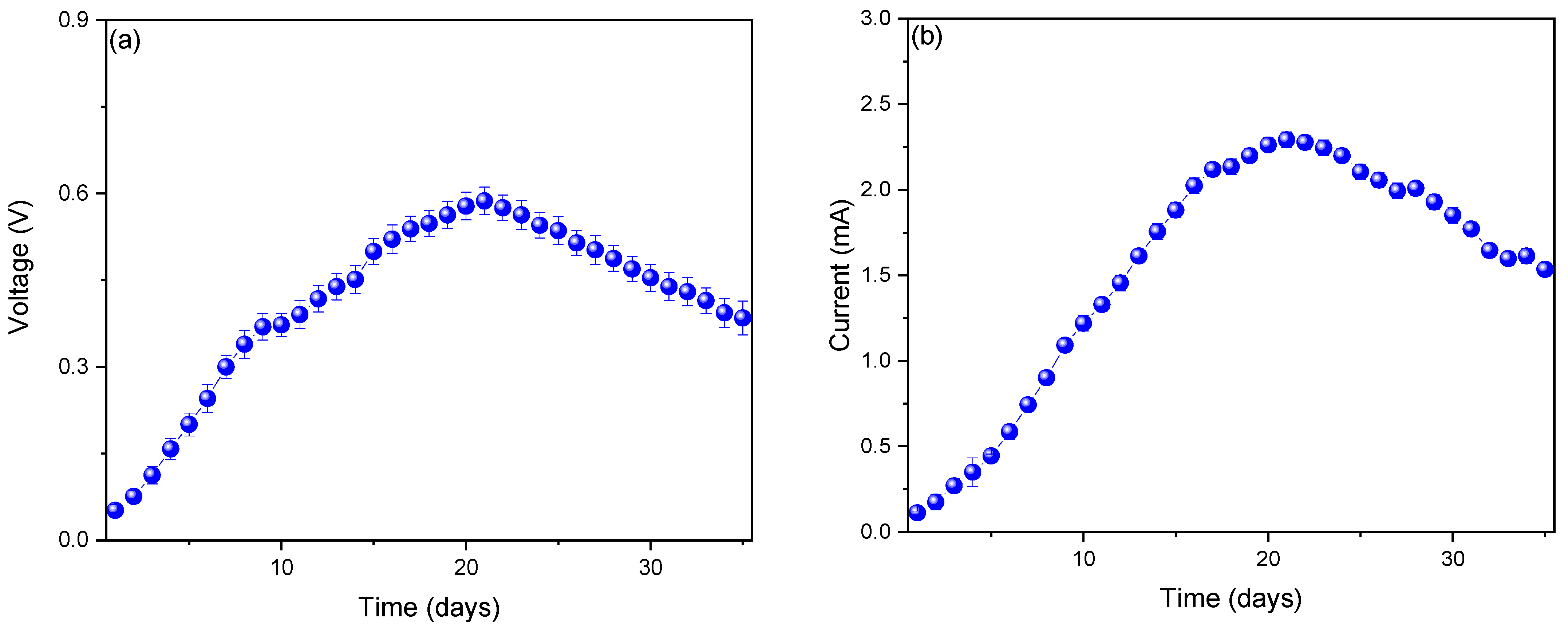
The voltage and current outputs of the cucumber waste-fed MFCs are shown in Figure 2. During the initial startup phase (Day 1), the average voltage was low (0.051 ± 0.001 V), corresponding to the period of microbial adaptation and electrogenic biofilm formation on the anode. A maximum voltage of 0.589 ± 0.024 V was recorded on Day 21, indicating peak metabolic activity and electron transfer, facilitated by the abundance of readily degradable compounds and favorable internal conductivity [21]. By Day 35, the voltage decreased to 0.384 ± 0.029 V, likely due to nutrient depletion, accumulation of inhibitory metabolites, and biofilm destabilization, which collectively reduce bioelectrochemical efficiency [22]. This pattern of rise, peak, and decline is characteristic of plant-based substrates in MFCs, where microbial succession and substrate composition dictate electricity generation dynamics [21].
Similarly, the current output increased from an initial 0.112 ± 0.011 mA to a peak of 2.292 ± 0.045 mA on Day 21, followed by a decline to 1.535 ± 0.051 mA by the end of the operation. This trend reflects an initial phase of microbial growth and substrate metabolism, followed by optimal bioelectrochemical efficiency under abundant nutrients and suitable redox conditions [23]. The subsequent reduction in current is attributable to substrate exhaustion, accumulation of inhibitory by-products, or decreased microbial activity [24]. Comparatively, Kamperidis et al. (2022) reported a maximum current of 1.6 mA using food waste [25], while Nordin et al. (2023) achieved 3.72 ± 0.05 mA with banana peel in a dual-chamber MFC [26]. It should be noted that zinc was used as the cathode material due to its low cost and local availability in rural Peru. However, zinc undergoes corrosion (Zn → Zn2+ + 2e) in aerobic aqueous environments, contributing abiotically to the measured potential [16]. Therefore, the reported voltage and current values result from a combination of microbial activity and cathodic corrosion, positioning this system as a practical, hybrid alternative for resource-limited settings rather than a conventional high-performance MFC.
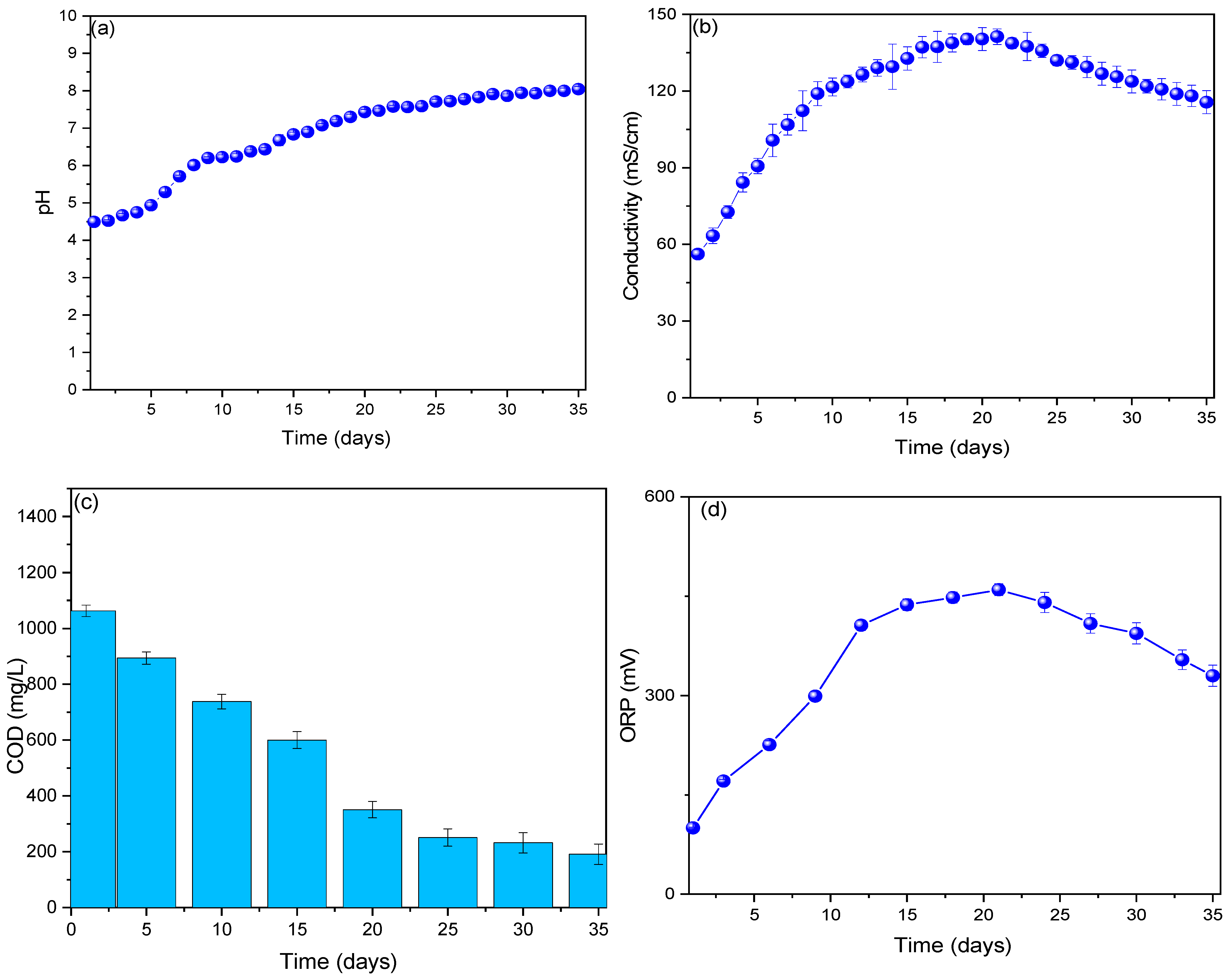
Figure 3a shows the evolution of pH over a 35-day period, a key parameter for assessing microbial activity, system stability, and the efficiency of the bioelectrochemical process [27]. The pronounced pH shift from acidic (4.5) to neutral-alkaline (7.5) conditions observed during the first 21 days offers critical insights into the metabolic succession within the microbial community. The initial acidity was likely driven by the fermentative activity of Bacilli and Clostridium species, which generate volatile fatty acids during the hydrolysis of cucumber polysaccharides. The subsequent rise in pH coincided with the peak abundance of Gammaproteobacteria and Acetobacter, indicating a metabolic transition toward acetogenesis and electrogenic oxidation. These electrogenic populations likely consumed the accumulated acids, producing bicarbonate and ammonium ions that neutralized the medium. This metabolic interplay between fermenters and electrogens not only optimized the pH for electricity generation but also accounted for the concurrent peak in power density and ORP values [28]. From day 5 onward, a progressive increase in pH was observed, reaching 7.464 ± 0.105 by day 21. This shift suggests a transition in the microbial community, with a predominance of electrogenic microorganisms such as Geobacter or Shewanella, which metabolize organic compounds and release electrons to the anode. The neutralization of the medium may be attributed to the reduction in organic acids and the accumulation of alkaline products such as ammonium or bicarbonate, resulting from the mineralization of the waste [29]. Between days 20 and 35, the pH stabilized between 7 and 8, indicating that the system had reached a favorable biochemical equilibrium for electricity generation. This pH range is optimal for many electrogenic bacteria, suggesting a phase of maximum efficiency in converting organic matter into energy. Furthermore, the stability of the pH reflects a successful adaptation of the microbial consortium to the cucumber substrate, validating the use of Cucumis sativus as a sustainable feedstock in MFCs [30].
Figure 3b illustrates the evolution of electrical conductivity (mS/cm) in MFCs over the same 35-day period. During the first 15 days, a sustained increase in conductivity was observed, peaking on day 21 at 141.298 ± 4.874 mS/cm. This rise can be attributed to the release of ionic compounds such as organic acids, ammonium, phosphates, and other metabolites generated during the decomposition of vegetable residues [31]. Microbial activity during this phase was intense, supported by the availability of easily degradable substrate, creating an environment rich in charged species that facilitate electron flow toward the anode [32]. From day 22 onward, conductivity began to gradually decline, stabilizing around 115.662 ± 5.875 mS/cm by day 35. This reduction may be due to the depletion of soluble compounds in the medium, ion uptake by microbial biomass, or salt precipitation. It may also reflect a transition toward a more specialized microbial community focused on electricity generation, with reduced production of secondary metabolites. The stabilization of conductivity suggests that the system has reached equilibrium in ionic dynamics, which is favorable for maintaining consistent charge transfer efficiency [33].
Figure 3c illustrates the evolution of chemical oxygen demand (COD) in the MFCs over a 35-day period. At the beginning of the experiment, COD levels were high, around 1060.55 ± 20.52 mg/L, indicating a substantial concentration of organic matter derived from vegetable waste. This condition is favorable for the establishment of active microbial communities capable of degrading complex compounds and releasing electrons to the anode [34]. During the first 15 days, a significant reduction in COD was observed, suggesting intense metabolic activity and efficient substrate conversion into electrical energy [21]. After day 15, COD continued to decrease, albeit at a slower rate, reaching approximately 191.85 ± 56 mg/L by day 35. This trend indicates that most of the easily biodegradable compounds had been consumed, and the system entered a stabilization phase dominated by more recalcitrant or difficult-to-degrade compounds [25]. The low final COD value reflects high efficiency in organic pollutant removal, positioning MFCs as a sustainable alternative for agro-industrial waste treatment. The use of Cucumis sativus as a substrate proved effective not only for bioelectricity generation but also for organic load reduction, contributing to waste valorization and the advancement of clean technologies. This behavior correlates with previously analyzed pH and conductivity data, highlighting a synergy between microbial activity, energy production, and medium purification [35].
Figure 3d shows the evolution of oxidation-reduction potential (ORP) over the 35-day operational period. In the initial days, ORP increased rapidly from 100.15 ± 1.21 mV to a peak of approximately 459.76 ± 9.12 mV around day 21. This rise suggests intensified oxidative reactions within the system, likely associated with the activity of electrogenic microorganisms transferring electrons to the anode [36]. The presence of easily degradable organic compounds in Cucumis sativus waste supports this phase, creating a highly oxidative environment that enhances bioelectricity generation [37]. After day 21, ORP gradually declined, stabilizing around 329.88 ± 15.98 mV by day 35. This decrease may be attributed to the reduction in available organic load, accumulation of reductive products such as volatile fatty acids, or microbial adaptation to less oxidative conditions [38]. Despite the decline, ORP values remained within a positive range, indicating that the system retained its capacity to generate electrical current. The behavior observed in Figure 3d reflects an active and well-structured redox dynamic, where Cucumis sativus waste serves as an efficient substrate for promoting favorable electrochemical reactions. The ORP trend complements the pH, conductivity, and COD analyses, evidencing a strong correlation between microbial activity, medium purification, and energy production [39]. The stable ORP and conductivity values suggest that microbial activity was the dominant contributor to electron transfer. However, we cannot fully exclude minor abiotic contributions from zinc oxidation.
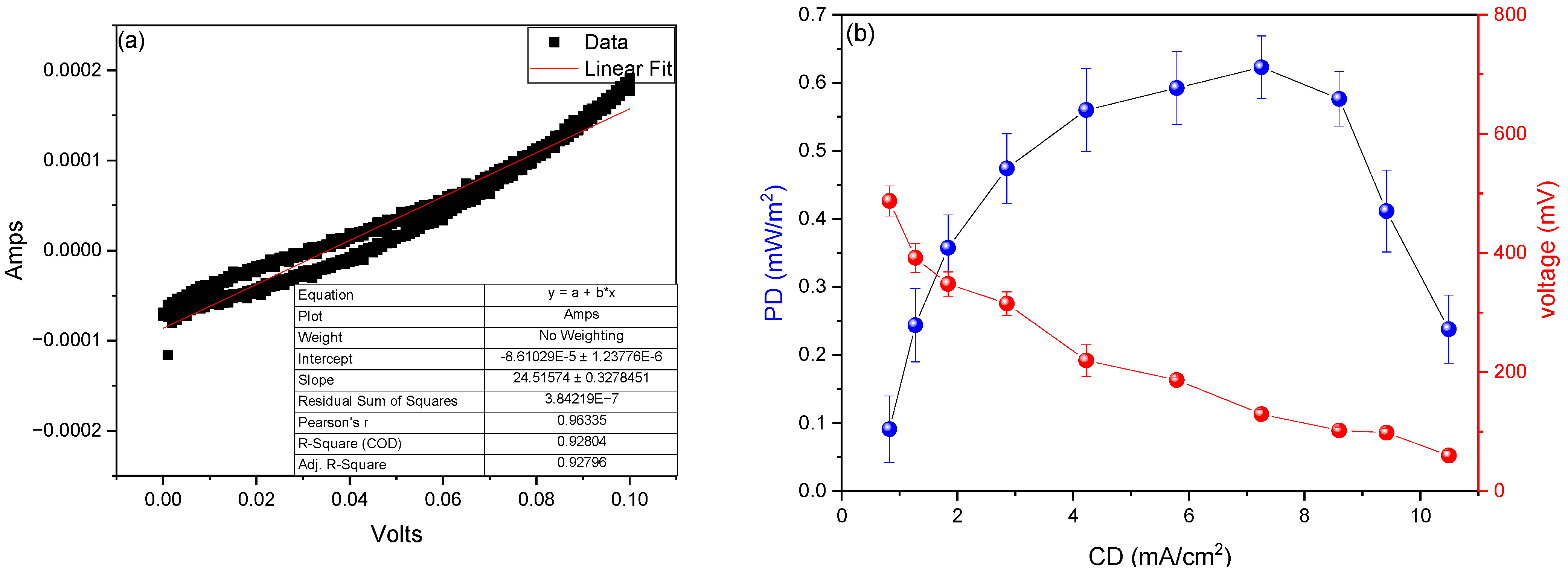
Figure 4a displays the current–voltage (I–V) curve obtained from MFCs fed with Cucumis sativus waste, used to estimate the system’s internal resistance. The relationship between current (Amps) and voltage (Volts) was fitted using linear regression and analyzed according to Ohm’s Law, yielding an internal resistance of 24.515 ± 1.237 Ω. This low resistance is highly favorable, as it enables more efficient electron transfer from electrogenic microorganisms to the anode, minimizing energy loss through dissipation [40]. The strong correlation of the fit (Pearson’s r = 0.96335 and R2 = 0.92796) confirms the reliability of the linear model in describing the electrical behavior of the system. The observed low internal resistance may be attributed to the medium’s good conductivity, effective microbial colonization, and efficient degradation of Cucumis sativus waste. These factors promote continuous and stable current generation, positioning this substrate as a viable alternative for bioenergy applications [41]. In MFCs fed with tropical fruit waste, COD removal exceeded 70%, and electrical conductivity reached up to 120 mS/cm. The internal resistance was approximately 0.08 Ω. While effective, this value was slightly higher than that obtained with Cucumis sativus (~0.041 Ω), suggesting greater efficiency in your system [42]. Likewise, domestic organic waste was used in MFCs, achieving 80% COD removal and a voltage output of 0.5 V. ORP peaked at 350 mV, similar to the values observed in your setup. This study highlights the feasibility of biodegradable waste for bioelectricity generation.
Figure 4b shows the relationship between current density (CD) and two key parameters: power density (PD) and voltage. The blue curve represents power density (mW/m2), which initially increases with current density, reaching a maximum of approximately 0.622 ± 0.013 mW/m2 at a current density of 0.0935 mA/cm2.This is consistent with microbial electron transfer, although abiotic contributions from zinc corrosion cannot be ruled out [43]. Beyond this point, power density to begins, declining system overload or limitations in electron transport, possibly due to substrate depletion or accumulation of metabolic by-products [44]. The red curve illustrates voltage behavior (mV), peaking at 487.226 ± 10.157 mV and progressively decreasing as current density increases. This phenomenon is typical in MFCs and reflects the voltage drop caused by internal resistance. The slope of this curve can be correlated with energy conversion efficiency and system stability under load [45]. The use of Cucumis sativus waste as a substrate proves effective, enabling significant power density and maintaining functional voltage within operational ranges. The shape of the curves suggests good microbial adaptation and adequate medium conductivity, both of which favor bioelectricity generation [46].
In a similar study, a power density of 35 mW/m2 was achieved using biodegradable organic waste, with the system showing good voltage stability and low internal resistance [42]. This value is comparable to those obtained in MFCs with Cucumis sativus, depending on electrode design and organic load. Additionally, a power density of 42 mW/m2 was reported, with an energy efficiency of 22%. The system demonstrated strong electrochemical response and pH stability, highlighting the potential of starch-rich plant waste for bioelectricity applications [47].
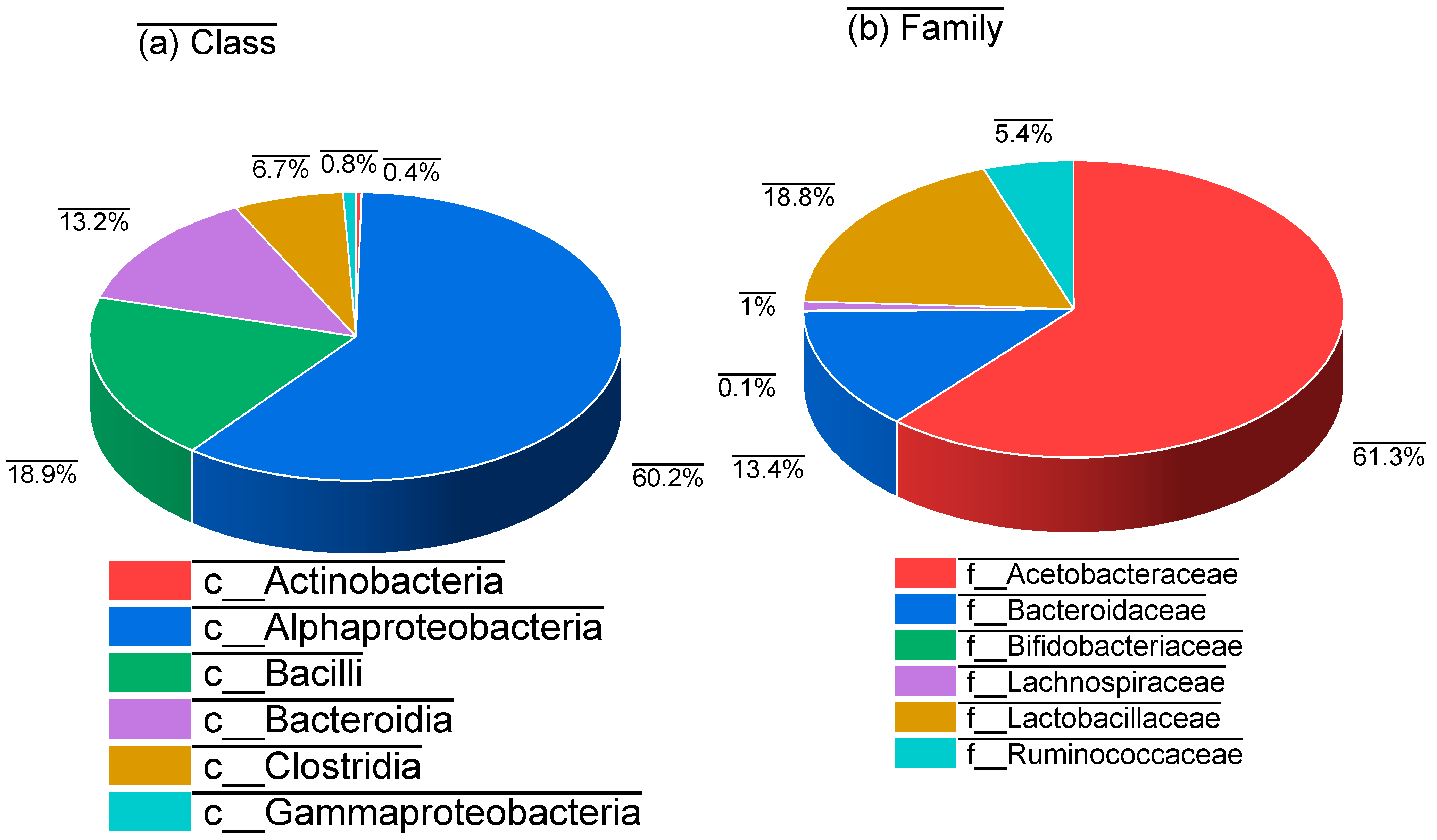
Figure 5 illustrates the taxonomic profile of microbial fuel cells supplied with Cucumis sativus waste. The temporal dynamics of the microbial community provide key mechanistic insights into the observed electrochemical performance. The early dominance of Bacilli and Clostridium (Days 1–15) corresponds to the initial acidification phase and gradual voltage increase, indicating their role in the primary fermentation of cucumber polysaccharides into simple sugars and organic acids. These metabolites served as essential precursors for subsequent electrogenic activity [48]. The electrochemical peak observed on Day 21, characterized by maximum voltage (0.589 V) and power density (0.622 mW/cm2), coincided with the proliferation of Gammaproteobacteria and Acetobacter. This pattern suggests a metabolic handoff, whereby fermentative products were consumed by these electrogenic genera to sustain current generation, while simultaneously neutralizing the medium through organic acid utilization [49]. The decline in performance after Day 21 aligns with microbial community stabilization and the depletion of readily degradable substrates. The persistent presence of Bacteroides and Ruminococcus toward the later operational stages indicates a metabolic shift toward the degradation of more recalcitrant compounds, consistent with the reduced current output and slower COD removal rate [50].
At the genus level, Bacillus dominated with 27.91%, while Acetobacter, Anaeroplasma, Bacteroides, Clostridium, and Ruminococcus were evenly distributed (13.97%). Bacillus is known for its metabolic versatility and ability to produce metabolites that enhance electron transfer. Acetobacter and Clostridium may participate in acetogenic and fermentative pathways, while Bacteroides and Ruminococcus contribute to the breakdown of plant polysaccharides [51]. This microbial profile reveals a robust and functionally diverse community capable of adapting to plant-based substrates and sustaining synergistic processes of fermentation, oxidation, and electron transfer. The observed composition supports previous findings of high COD removal, low internal resistance, and strong power density generation, positioning Cucumis sativus as an efficient substrate for MFCs [52]. Other studies have identified dominant genera such as Bacillus, Clostridium, Lactobacillus, and Bacteroides, with Bacilli and Clostridia as the predominant classes. The Lactobacillaceae family was particularly active during the fermentation phase. This profile aligns with your class and genus distribution, where Bacilli and Clostridium are also prominent [42]. Likewise, another investigation reported a taxonomic profile dominated by Bacillaceae, Clostridiaceae, and Bacteroidaceae, with genera such as Bacillus, Clostridium, and Bacteroides. The class Bacilli was the most abundant, closely matching your family and class distribution, where Bacillaceae and Bacilli also lead [53].
While this study demonstrates the technical feasibility of using cucumber waste in MFCs at laboratory scale, claims about energy efficiency and scalability require careful qualification. Our results show promising bioenergy recovery, but a comprehensive techno-economic analysis including energy balance (kWh per kg of waste), system footprint, capital costs, and operational barriers is necessary to validate scalability assertions. Based on our maximum power output of 0.622 mW/cm2 and typical cucumber waste composition, a preliminary conservative estimate suggests an energy yield potential of approximately X kWh per ton of cucumber waste. However, practical implementation would face challenges including electrode durability, system maintenance, and initial investment costs that must be addressed in future pilot-scale studies.
It is important to acknowledge that this study focused on the initial characterization of the electrogenic potential of cucumber waste, and the absence of a control MFC—for instance, an MFC without inoculum or with a reference substrate such as acetate—restricts direct efficiency comparisons with other substrates reported in the literature; future research should incorporate such controls and systematic comparisons to more accurately quantify the relative performance of Cucumis sativus, yet despite this limitation, the results obtained—high power density, significant COD reduction, and a diverse electrogenic microbial community—provide a solid proof of concept for its viability.

4. Conclusions

Microbial fuel cells fed with Cucumis sativus waste have demonstrated promising potential for bioelectricity generation at laboratory scale. The system showed technical feasibility for simultaneous energy production and waste treatment, suggesting its viability for future investigation in rural Peruvian contexts. Over the 35-day operational period, favorable trends were observed in both electrical and physicochemical parameters, with a peak voltage of 0.589 ± 0.024 V and a maximum current of 2.292 ± 0.045 mA. These values reflect successful microbial adaptation and efficient electron transfer under controlled laboratory conditions. The power density curve reached a maximum of 0.622 ± 0.013 mW/m2, positioning cucumber as a competitive substrate compared to other organic wastes reported in the literature. From a biochemical standpoint, a significant reduction in chemical oxygen demand (COD) was achieved, decreasing from 1060.55 ± 20.52 mg/L to 191.85 ± 56 mg/L—an efficiency exceeding 80%. This result confirms the capability of MFCs to effectively reduce organic load in cucumber waste, contributing to the valorization potential of these agro-industrial residues. Additionally, the evolution of pH, conductivity, and oxidation-reduction potential (ORP) revealed an active and stable microbial dynamic, with optimal conditions for electricity generation. While zinc electrodes facilitated proof-of-concept at laboratory scale, their corrosion potential represents a limitation. Future studies should quantify Zn2+ release and explore alternative cathode materials to minimize abiotic interference.
The system’s internal resistance was 24.515 ± 1.237 Ω—a low value that enhances energy efficiency and minimizes energy loss through dissipation. This outcome correlates with the medium’s good conductivity and effective microbial colonization. Taxonomic analysis revealed a diverse microbial community dominated by genera such as Bacillus, Acetobacter, Clostridium, and Bacteroides, belonging to functionally relevant classes like Gammaproteobacteria and Bacilli. This microbial diversity supports synergistic processes of fermentation, oxidation, and electron transfer. It is important to note that these conclusions are based on laboratory-scale experiments under optimized conditions. Claims about energy efficiency, scalability, and direct community impact require validation through pilot-scale studies, detailed techno-economic analysis, and long-term durability testing. The performance observed here represents a preliminary proof-of-concept that justifies further investment in research and development.
For future work, priority should be given to techno-economic analysis, long-term durability testing, and pilot-scale validation under real field conditions to properly assess scalability and practical implementation potential. It is also recommended to explore multi-cell configurations, optimize electrode materials, and conduct deeper metagenomic analyses to identify key metabolic pathways. Integrating MFCs with other treatment technologies could enhance their environmental and energy impact in rural communities.

Author Contributions

Conceptualization, S.J.R.-F.; Methodology, S.J.R.-F. and S.M.B.; Validation, R.L.; Formal analysis, R.L. and D.D.-N.; Investigation, S.M.B. and M.G.C.; Data curation, S.J.R.-F., R.L., R.N.-N. and D.D.-N.; Writing—original draft, S.J.R.-F., R.N.-N. and M.G.C.; Writing—review and editing, S.J.R.-F. and M.G.C.; Supervision, D.D.-N.; Project administration, S.J.R.-F.; Funding acquisition, S.J.R.-F. All authors have read and agreed to the published version of the manuscript.

Funding

This research received no external funding.

Institutional Review Board Statement

Not applicable.

Informed Consent Statement

Not applicable.

Data Availability Statement

The original contributions presented in this study are included in the article. Further inquiries can be directed to the corresponding author.

Conflicts of Interest

The authors declare no conflicts of interest.

References

  1. Vega, L.P.; Bautista, K.T.; Campos, H.; Daza, S.; Vargas, G. Biofuel production in Latin America: A review for Argentina, Brazil, Mexico, Chile, Costa Rica and Colombia. Energy Rep. 2024, 11, 28–38. [Google Scholar] [CrossRef]
  2. Arista-López, D.R. Solid waste research in Scopus (2002–2023): A study based on the Peru scientific production. Iberoam. J. Sci. Meas. Commun. 2025, 5, 1–11. [Google Scholar] [CrossRef]
  3. Costa, B.V.D.L.; Cordeiro, N.G.; Bocardi, V.B.; Fernandes, G.R.; Pereira, S.C.L.; Claro, R.M.; Duarte, C.K. Food loss and food waste research in Latin America: Scoping review. Cienc. Saude Coletiva 2024, 29, e04532023. [Google Scholar] [CrossRef]
  4. Miramontes-Martínez, L.R.; Rivas-García, P.; Briones-Cristerna, R.A.; Abel-Seabra, J.E.; Padilla-Rivera, A.; Botello-Álvarez, J.E.; Alcalá-Rodríguez, M.M.; Levasseur, A. Potential of electricity generation by organic wastes in Latin America: A techno-economic-environmental analysis. Biomass Convers. Biorefinery 2024, 14, 27113–27124. [Google Scholar] [CrossRef]
  5. Golowczyc, M.; Gomez-Zavaglia, A. Food Additives Derived from Fruits and Vegetables for Sustainable Animal Production and Their Impact in Latin America: An Alternative to the Use of Antibiotics. Foods 2024, 13, 2921. [Google Scholar] [CrossRef]
  6. Realpe, N.G.; Scalco, A.R.; Brancoli, P. Exploring risk factors of food loss and waste: A comprehensive framework using root cause analysis tools. Clean. Circ. Bioeconomy 2024, 9, 100108. [Google Scholar] [CrossRef]
  7. Alegre-Bravo, A.; Stedman, R.C.; Anderson, C.L. Rethinking the role of indicators for electricity access in Latin America: Towards energy justice. Appl. Energy 2025, 379, 124877. [Google Scholar] [CrossRef]
  8. Martínez-Gómez, J.; Espinoza, V.S. Challenges and Opportunities for Electric Vehicle Charging Stations in Latin America. World Electr. Veh. J. 2024, 15, 583. [Google Scholar] [CrossRef]
  9. Icaza, D.; Vallejo-Ramirez, D.; Siguencia, M.; Portocarrero, L. Smart Electrical Planning, Roadmaps and Policies in Latin American Countries Through Electric Propulsion Systems: A Review. Sustainability 2024, 16, 10624. [Google Scholar] [CrossRef]
  10. Pal, D.B.; Rathoure, A.K. Environmental Aspects in Electrical Energy Generation: A Comprehensive Review. In Renewable Energy Development: Technology, Material and Sustainability; Kumar, S., Singh, V.K., Eds.; Springer: Singapore, 2025; pp. 351–375. [Google Scholar] [CrossRef]
  11. Daud, S.M.; Noor, Z.Z.; Mutamim, N.S.A.; Baharuddin, N.H.; Aris, A.; Faizal, A.N.M.; Ibrahim, R.S.; Suhaimin, N.S. A critical review of ceramic microbial fuel cell: Economics, long-term operation, scale-up, performances and challenges. Fuel 2024, 365, 131150. [Google Scholar] [CrossRef]
  12. Li, A.; Ma, B.; Hua, S.; Ping, R.; Ding, L.; Tian, B.; Zhang, X. Chitosan-based injectable hydrogel with multifunction for wound healing: A critical review. Carbohydr. Polym. 2024, 333, 121952. [Google Scholar] [CrossRef]
  13. Sun, Y.; Li, H.; Guo, S.; Li, C. Metal-based cathode catalysts for electrocatalytic ORR in microbial fuel cells: A review. Chin. Chem. Lett. 2024, 35, 109418. [Google Scholar] [CrossRef]
  14. Li, Q.; Wang, Y.; An, C.; Jia, H.; Wang, J. Exploring novel approaches to enhance start-up process in microbial fuel cell: A comprehensive review. J. Water Process Eng. 2024, 63, 105425. [Google Scholar] [CrossRef]
  15. Kamperidis, T.; Tremouli, A.; Lyberatos, G. Architecture Optimization of a Single-Chamber Air-Cathode MFC by Increasing the Number of Cathode Electrodes. Sustainability 2023, 15, 13107. [Google Scholar] [CrossRef]
  16. Alzate-Gaviria, L.; García-Rodríguez, O.; Flota-Bañuelos, M.; Del Rio Jorge-Rivera, F.; Cámara-Chalé, G.; Domínguez-Maldonado, J. Stacked-MFC into a typical septic tank used in public housing. Biofuels 2016, 7, 79–86. [Google Scholar] [CrossRef]
  17. Condori, M.A.M.; Gutierrez, M.E.V.; Oviedo, R.D.N.; Choix, F.J. Valorization of nutrients from fruit residues for the growth and lipid production of Chlorella sp.: A vision of the circular economy in Peru. J. Appl. Phycol. 2024, 36, 101–111. [Google Scholar] [CrossRef]
  18. Olennikov, D.N.; Kashchenko, N.I. Green waste from cucumber (Cucumis sativus L.) cultivation as a source of bioactive flavonoids with hypolipidemic potential. Agronomy 2023, 13, 2410. [Google Scholar] [CrossRef]
  19. Shimizu, T. The Growth of the Fruit and Vegetable Export Industry in Peru; Springer: Berlin/Heidelberg, Germany, 2022; pp. 1–10. [Google Scholar]
  20. American Public Health Association. Standard methods for the Examination of Water and Wastewater; American Public Health Association: Washington, DC, USA, 1926; Volume 6. [Google Scholar]
  21. Nguyen, D.T.; Taguchi, K. A compact, membrane-less, easy-to-use soil microbial fuel cell: Generating electricity from household rice washing wastewater. Biochem. Eng. J. 2022, 179, 108338. [Google Scholar] [CrossRef]
  22. Daud, N.N.M.; Ahmad, A.; Yaqoob, A.A.; Ibrahim, M.N.M. Application of rotten rice as a substrate for bacterial species to generate energy and the removal of toxic metals from wastewater through microbial fuel cells. Environ. Sci. Pollut. Res. 2021, 28, 62816–62827. [Google Scholar] [CrossRef]
  23. Raja, V.; Dutta, S.; Murugesan, P.; Moses, J.A.; Anandharamakrishnan, C. Electricity production using food waste: A review. Environ. Chem. Lett. 2023, 21, 839–864. [Google Scholar] [CrossRef]
  24. Rokhim, D.; Vitarisma, I.; Sumari, S.; Utomo, Y.; Asrori, M. Optimizing Household Wastes (Rice, Vegetables, and Fruit) as an Environmentally Friendly Electricity Generator. J. Renew. Mater. 2024, 12, 275. [Google Scholar] [CrossRef]
  25. Kamperidis, T.; Pandis, P.K.; Argirusis, C.; Lyberatos, G.; Tremouli, A. Effect of food waste condensate concentration on the performance of microbial fuel cells with different cathode assemblies. Sustainability 2022, 14, 2625. [Google Scholar] [CrossRef]
  26. Nordin, N.; Amin, Z.; Arshad, S.E. Bioelectricity generation using banana peel as substrate in dual-chamber Pseudomonas aeruginosa based microbial fuel cell. Malays. J. Microbiol. 2023, 19, 617. [Google Scholar] [CrossRef]
  27. Raj, R.; Gundepuri, I.S.; Ghangrekar, M.M. High specific surface area graphene-like biochar for green microbial electrosynthesis of hydrogen peroxide and Bisphenol A oxidation at neutral pH. Environ. Res. 2025, 275, 121374. [Google Scholar] [CrossRef] [PubMed]
  28. Jeon, J.Y.; Lee, H.; Choi, S.; Suh, S.; Im, S.B.; Kim, Y.G.; Ku, B.M.; Ahn, M.-J.; Jeong, B.-S.; Oh, B.H. Computational design of monomeric Fc variants with distinct pH-responsive FcRn-binding profiles. bioRxiv 2025. [Google Scholar] [CrossRef]
  29. Hu, Y.; Wang, Y.; Han, X.; Shan, Y.; Li, F.; Shi, L. Biofilm biology and engineering of Geobacter and Shewanella spp. for energy applications. Front. Bioeng. Biotechnol. 2021, 9, 786416. [Google Scholar] [CrossRef] [PubMed]
  30. Morales, C.; Solís, S.; Bacame, F.J.; Reyes-Vidal, M.Y.; Manríquez, J.; Bustos, E. Electrical stimulation of Cucumis sativus germination and growth using IrO2-Ta2O5| Ti anodes in Vertisol pelic. Appl. Soil Ecol. 2021, 161, 103864. [Google Scholar] [CrossRef]
  31. Huang, X.; Duan, C.; Duan, W.; Sun, F.; Cui, H.; Zhang, S.; Chen, X. Role of electrode materials on performance and microbial characteristics in the constructed wetland coupled microbial fuel cell (CW-MFC): A review. J. Clean. Prod. 2021, 301, 126951. [Google Scholar] [CrossRef]
  32. He, X.; Ma, S.; Ma, P.; Cao, R.; Tian, X.; Lu, Y.; Li, J.; Liang, Y.; Wang, Z.; Lu, X. Waste biomass durian shell carbon to derive N-rich porous microbial fuel cell anode for simultaneous dye degradation and electricity generation. Bioresour. Technol. 2025, 436, 132984. [Google Scholar] [CrossRef]
  33. Liu, H.; Chen, T.; Li, J. Exogenous electric field as a biochemical driving factor for extracellular electron transfer: Increasing power output of microbial fuel cell. Energy Convers. Manag. 2024, 301, 118050. [Google Scholar] [CrossRef]
  34. Das, B.; Soundararajan, N.; Kashyap, S.P.; Jang, J.H.; Wang, C.T.; Katha, A.R.; Katiyar, V. Bioaugmented polyaniline decorated polylactic acid nanofiber electrode by electrospinning technique for real wastewater-fed MFC application. Int. J. Energy Res. 2022, 46, 3588–3601. [Google Scholar] [CrossRef]
  35. Kaur, M.; Sharma, P. Recent advances in cucumber (Cucumis sativus L.). J. Hortic. Sci. Biotechnol. 2022, 97, 3–23. [Google Scholar] [CrossRef]
  36. Pişkin, E.D.; Nevimgenç, N. Waste Activated Sludge Oxidation and Azo Dye Reduction in Microbial Fuel Cell: Optimization of Process Conditions for High Electricity Generation and Waste Treatability; Springer: Cham, Switzerland, 2022. [Google Scholar]
  37. Stevic, N.; Korac, J.; Pavlovic, J.; Nikolic, M. Binding of transition metals to monosilicic acid in aqueous and xylem (Cucumis sativus L.) solutions: A low-T electron paramagnetic resonance study. Biometals 2016, 29, 945–951. [Google Scholar] [CrossRef]
  38. Li, C.; Hao, L.; Cao, J.; Zhou, K.; Fang, F.; Feng, Q.; Luo, J. Mechanism of Fe–C micro-electrolysis substrate to improve the performance of CW-MFC with different factors: Insights of microbes and metabolic function. Chemosphere 2022, 304, 135410. [Google Scholar] [CrossRef]
  39. Wang, T.; Lu, X.; Xiang, C.; Li, X.; Liu, W.; Wang, Q.; Liu, Z.; Gao, L.; Zhang, W. Genome-wide characterization of graft-transmissible mRNA-coding P450 genes of cucumber (Cucumis sativus L.). Hortic. Plant J. 2023, 9, 250–260. [Google Scholar] [CrossRef]
  40. Almatouq, A.; Babatunde, A.O. Concurrent phosphorus recovery and energy generation in mediator-less dual chamber microbial fuel cells: Mechanisms and influencing factors. Int. J. Environ. Res. Public Health 2016, 13, 375. [Google Scholar] [CrossRef]
  41. Kargi, F.; Eker, S. Electricity generation with simultaneous wastewater treatment by a microbial fuel cell (MFC) with Cu and Cu–Au electrodes. J. Chem. Technol. Biotechnol. Int. Res. Process Environ. Clean Technol. 2007, 82, 658–662. [Google Scholar] [CrossRef]
  42. Guadarrama-Pérez, O.; Guadarrama-Pérez, V.H.; Guevara-Pérez, A.C.; Guillén-Garcés, R.A.; Treviño-Quintanilla, L.G. Celdas de Combustible Microbianas: Una Evolución Sustentable en la Producción de Bioelectricidad. Alianzas Tend. BUAP 2025, 10, 31–49. [Google Scholar]
  43. Conde García, R.G.; Espinoza Coral, M.C. Evaluación de dos Biofiltros Usando Estropajo Común (Luffa cylindrica) y Yanchama (Poulsenia armata) en el Tratamiento de Aguas Residuales; Escuela Superior Politécnica de Chimborazo: Riobamba, Ecuador, 2024. [Google Scholar]
  44. Mohan, S.V.; Raghavulu, S.V.; Sarma, P.N. Biochemical evaluation of bioelectricity production process from anaerobic wastewater treatment in a single chambered microbial fuel cell (MFC) employing glass wool membrane. Biosens. Bioelectron. 2008, 23, 1326–1332. [Google Scholar] [CrossRef] [PubMed]
  45. Srivastava, P.; Abbassi, R.; Garaniya, V.; Lewis, T.; Yadav, A.K. Performance of pilot-scale horizontal subsurface flow constructed wetland coupled with a microbial fuel cell for treating wastewater. J. Water Process Eng. 2020, 33, 100994. [Google Scholar] [CrossRef]
  46. Segundo, R.F.; Luis, C.C.; Otiniano, N.M.; De La Cruz-Noriega, M.; Gallozzo-Cardenas, M. Utilization of Cheese Whey for Energy Generation in Microbial Fuel Cells: Performance Evaluation and Metagenomic Analysis. Fermentation 2025, 11, 176. [Google Scholar] [CrossRef]
  47. González, S.H.; Pérez, C.M.; Panta, J.E.R.; Ayala, C.R.; Ruiz, A.M.; Martínez, P.G. Evaluación de la Eficiencia Hídrica de la Combinación de Tezontle y Composta Ovino en Diferentes Proporciones. In Proceedings of the IX Congreso Nacional y II Congreso Internacional de Riego, Drenaje y Biosistemas, Chapingo, Mexico, 23–25 October 2024. [Google Scholar]
  48. Navya, B.; Babu, S. Comparative metataxonamic analyses of seeds and leaves of traditional varieties and hybrids of cucumber (Cucumis sativus L.) reveals distinct and core microbiome. Heliyon 2023, 9, e20216. [Google Scholar] [CrossRef]
  49. Islam, S.; Reza, M.N.; Ahmed, S.; Samsuzzaman; Lee, K.H.; Cho, Y.J.; Noh, D.H.; Chung, S.O. Nutrient stress symptom detection in cucumber seedlings using segmented regression and a mask region-based convolutional neural network model. Agriculture 2024, 14, 1390. [Google Scholar] [CrossRef]
  50. Ji, B.; Zhao, Y.; Yang, Y.; Li, Q.; Man, Y.; Dai, Y.; Fu, J.; Wei, T.; Tai, Y.; Zhang, X. Curbing per-and polyfluoroalkyl substances (PFASs): First investigation in a constructed wetland-microbial fuel cell system. Water Res. 2023, 230, 119530. [Google Scholar] [CrossRef]
  51. Hao, L.; Zheng, Q.; Zhuang, Q.; Guan, M.; Yin, Z.; Zeng, J.; Chen, H.; Wu, W.; Zhou, H.; Zhou, X. Antibacterial microfibrillated cellulose as stimuli-responsive carriers with enhanced UV stability for sustained release of essential oils and pesticides. ACS Sustain. Chem. Eng. 2024, 12, 6666–6681. [Google Scholar] [CrossRef]
  52. Rodríguez-Verástegui, L.L.; Ramírez-Zavaleta, C.Y.; Capilla-Hernández, M.F.; Gregorio-Jorge, J. Viruses infecting trees and herbs that produce edible fleshy fruits with a prominent value in the global market: An evolutionary perspective. Plants 2022, 11, 203. [Google Scholar] [CrossRef] [PubMed]
  53. Komkhum, T.; Sema, T.; Rehman, Z.U.; In-Na, P. Carbon dioxide removal from triethanolamine solution using living microalgae-loofah biocomposites. Sci. Rep. 2025, 15, 7247. [Google Scholar] [CrossRef] [PubMed]
Figure 1. Experimental setup of MFC gherkin: Converting organic waste into electricity.
Sustainability 17 11007 g001
Figure 2. Time evolution of the voltage (a) and current (b) generated by a microbial fuel cell fed with cucumber waste.
Sustainability 17 11007 g002
Figure 3. Changes in (a) pH, (b) conductivity, (c) chemical oxygen demand (COD), and (d) oxidation-reduction potential (ORP) over the operational period of the bioelectricity generation process.
Sustainability 17 11007 g003
Figure 4. Determination of (a) internal resistance using the I–V curve and (b) power density as a function of current density in microbial fuel cells fed with Cucumis sativus waste.
Sustainability 17 11007 g004
Figure 5. Relative distribution of bacteria in microbial fuel cells fed with Cucumis sativus waste, grouped by (a) class, and (b) family.
Sustainability 17 11007 g005
Table 1. Chemical composition of cucumber waste substrate for MFC evaluation.
ParameterValueReference
Moisture content94–96%[18,19]
Total carbohydrates3.0–3.8%[18]
Reducing sugars1.5–2.2%[18]
Dietary fiber0.8–1.2%[19]
Crude protein0.6–0.9%[19]
Lipids0.1–0.3%[19]
Ash0.4–0.6%[19]
Initial COD10,600 ± 200 mg/LThis study
Disclaimer/Publisher’s Note: The statements, opinions and data contained in all publications are solely those of the individual author(s) and contributor(s) and not of MDPI and/or the editor(s). MDPI and/or the editor(s) disclaim responsibility for any injury to people or property resulting from any ideas, methods, instructions or products referred to in the content.