
Article

Can Imports of Clean Energy Equipment Inhibit a Country’s Carbon Emissions? Evidence from China’s Manufacturing Industry for Solar PVs, Wind Turbines, and Lithium Batteries

by
Zhaohua Li
1,2,† and
Wenxin Cui
1,*,†
1
School of Economics, Huazhong University of Science and Technology, Wuhan 430074, China
2
Center for Innovation and Development, Huazhong University of Science and Technology, Wuhan 430074, China
*
Author to whom correspondence should be addressed.
These authors contributed equally to this work.
Sustainability 2025, 17(24), 10972; https://doi.org/10.3390/su172410972
Submission received: 6 November 2025 / Revised: 24 November 2025 / Accepted: 4 December 2025 / Published: 8 December 2025

Abstract

Against the backdrop of China’s “triple carbon” goals, carbon peaking by 2030, carbon reduction by 2035, and carbon neutrality by 2060, examining the impacts of the clean energy equipment manufacturing industry’s (CEEMI’s) imports on carbon emissions holds significant practical importance for promoting sustainable development. Based on provincial panel data from 2001 to 2023, we employed a STIRPAT model to analyze how the CEEMI’s imports affect China’s carbon emissions. We further explored the sustainable transformation mechanism from two perspectives, global value chain (GVC) participation and green technological progress. The results indicate that a 1% increase in imports leads to a 0.1312% reduction in carbon emissions. Mechanism tests show that imports lower emissions primarily by increasing backward GVC participation and promoting green patent innovation. Heterogeneity analysis further reveals that the emission-abating effects are more pronounced in high-income and industry-dominated provinces, and that imports of lithium batteries exhibit stronger emission-abating effects than those of wind turbines and solar PVs.

1. Introduction

In September 2025, China announced its new Nationally Determined Contribution (NDC) at the UN Climate Change Summit, pledging to cut net greenhouse gas emissions by 7–10% below 2030 levels by 2035. This is China’s third carbon goal following its earlier commitments to carbon peaking by 2030 and carbon neutrality by 2060. This update underscores China’s role in global climate governance and marks a critical phase of its green transition. China also pledged to raise the share of non-fossil fuels in total energy consumption to over 30% and expand wind and solar power capacity to 3.6 billion kilowatts by 2035, indicating a structural shift toward clean energy deployment.
Within this transition, the clean energy equipment manufacturing industry (CEEMI) plays a pivotal role. Large-scale deployment of wind, solar, and storage equipment is essential for China’s non-fossil energy expansion and emission reduction targets. However, surging demand places heavy pressure on the industry’s capacity and innovation. Although domestic production of solar photovoltaic (PV) exceeds 70% of global output, high-end machinery, key components, and critical materials still rely on imports. To meet domestic installation demands and technological upgrading needs, China must continue importing globally advanced clean energy equipment. In 2023, China’s imports of solar PVs, lithium battery materials, and other clean energy equipment exceeded USD 2.7 billion, reflecting an “import, learn, re-innovate” model that supports the 2035 goal.
This raises two key questions: What is the net impact of technology-oriented imports on China’s carbon emissions? Do these imports merely accelerate the expansion of clean energy, or do they also reshape industrial structure to reduce emissions more fundamentally? Addressing these questions clarifies how import trade and industrial policies contribute to emission inhibition. We thus empirically examined how the CEEMI’s imports affect China’s carbon emissions and the mechanisms through which these effects occur, offering theoretical and policy insights for achieving the “triple carbon” goals.
There are three strands of literature relevant to this paper. The first strand concerns the relationship between trade liberalization and environmental pollution. At the national level, the pollution haven hypothesis (PHH) suggests that trade liberalization may shift emission-intensive industries from developed countries to developing countries with less stringent environmental regulations [1,2]. However, empirical evidence supporting the widespread existence of PHH is limited, with many scholars finding that the technological effects of trade dominate pollution outcomes [3,4,5,6,7]. At the firm level, the pollution offshoring hypothesis indicates that trade liberalization may lead firms to outsource pollution-intensive activities to countries with lax environmental policies. This closely relates to PHH but focuses on links among globalization, environmental regulation, and firms’ internal value chain outcomes. At the industry level, the rationalization hypothesis, where output reallocates toward cleaner and more productive firms, also contributes to environmental improvement [8,9,10]. While numerous studies explore the trade–environment relationship, none, to our knowledge, examine this from the perspective of clean energy equipment which is crucial for sustainable global development.
The second strand of literature examines GVC participation and carbon emissions. The relationship between GVCs and the environment has been contentious. Due to PHH, some scholars argue that the rapid growth of GVC activities significantly drives environmental degradation in developing countries [11,12]. Although theoretically addressed, empirical support is mixed, leading to three main views. Some studies find that GVC embedding increases emissions [12], while others document emission-reducing effects [13,14] or non-linear impacts [15,16,17]. These varying outcomes likely stem from differing research samples and metrics, including total emissions, carbon intensity [18,19,20], emissions efficiency [21], and embedded or shifted emissions [22,23,24].
The third strand explores the drivers of environmental pollution. Such literature is based on two main theoretical frameworks. Firstly, Ehrlich and Holdren (1971) proposed that environmental shocks can be conceptualized as a product of population size, affluence, and technology, encapsulated in the well-known IPAT equation [25]. Secondly, Kaya (1989) proposed the Kaya identity to examine the relationship between energy consumption and carbon dioxide emissions [26]. These two frameworks break down the environmental impact into socioeconomic components but are not suitable for econometric analysis [27]. Dietz and Rosa (1994, 1997) extended the IPAT equation into a model of stochastic impacts by regression on population (P), affluence (A), and technology (T) [28,29]. This model is called the STIRPAT model and can be transformed easily into a logarithmic form for estimation and hypothesis testing. Because of the high tractability of the STIRPAT model in econometric analysis, we chose it to investigate the socioeconomic driving forces of carbon emissions. Although previous literature has extended the STIRPAT model, especially for the technology T-variable, most of it treats exports and imports as a whole, i.e., foreign trade. However, such literature does not separate the impacts of exports and imports [30], much less clarify how industry-specific imports affect the environment.
Despite substantial progress, existing studies still have notable gaps. First, most focus on clean energy consumption or exports, neglecting the carbon footprint and reduction potential of imports. Second, few examine the specific mechanisms through which the CEEMI affects emissions, such as the role of GVC participation. Third, the environmental effects of import trade remain ambiguous. On the one hand, imports can replace domestic production of high-pollution goods, leading to cleaner outcomes. On the other hand, imported intermediates used for re-production may embed the importing country in carbon-intensive global production chains. Yet, few studies distinguish between these effects. In order to clarify the marginal contribution of this study, we compared it with the three most representative types of literature in the field, as shown in Table 1.
Given China’s strong demand for clean energy equipment and continued reliance on imported key components under the “triple carbon” goals, we aim to fill these gaps. We extend the traditional STIRPAT framework using provincial panel data from 2001 to 2023 to assess the impact of the CEEMI’s imports on carbon emissions, testing the mediating roles of GVC participation and technological progress and exploring heterogeneity across regions, industries, and products.
This paper contributes to the current literature in three aspects. First, we proposed that imports of clean energy equipment result in an emission-generating effect and emission-shifting effect on the production side, and an emission-abating effect on the consumption side, extending the emission-generating and emission-shifting effects outlined by [30]. Second, we investigated the impact of imports on China’s carbon emissions from the perspective of the CEEMI, identifying the effects of the CEEMI’s imports on carbon emissions. This research is vital for improving China’s energy structure and achieving “triple carbon” goals. Third, we introduced GVC indicators and technological progress as mechanisms to explain how trade openness shapes environmental outcomes.
The remainder of this paper is organized as follows. Section 2 presents the theoretical framework and hypotheses. Section 3 specifies the model and describes variables and data sources. Section 4 reports baseline results and robustness tests, followed by heterogeneity analyses and mechanism tests. Section 5 concludes with policy implications.

2. Influence Mechanisms and Research Hypotheses

2.1. CEEMI’s Imports and Carbon Emissions: A Theoretical Framework

Production and consumption of goods are fundamental drivers of a country’s carbon emissions. The CEEMI’s imports influence domestic carbon emissions on both the production side and the consumption side (Figure 1). On the production side, the CEEMI’s imports have two effects: imported clean energy equipment going into re-production results in a “carbon emission-generating effect”. However, when a country opts to import rather than produce clean energy equipment, the carbon emissions from the production process in the home country are shifted to the exporting country, creating an “emission-shifting effect”.
On the consumption side, clean energy equipment generates near-zero direct emissions during operation, as it eliminates the emissions that would have occurred from using traditional high-carbon technologies. This creates a “emission-abating effect”. However, from a life-cycle assessment (LCA) perspective, clean energy equipment involves “embodied emissions” and “recycling emissions” during production, transport, installation, and end-of-life treatment. These emissions arise in the upstream manufacturing and downstream processing stages and, in our analytical framework, are classified as production-side emissions rather than consumption side. In the case of imports, most embodied emissions occur in the producing country. Although recycling generates some process emissions, efficient recycling can substitute for primary material production and thus reduce total emissions. Recent evidence shows that battery recycling in electric vehicles not only reduces the demand for key materials such as nickel, cobalt, and lithium, but also lowers life-cycle carbon emissions by about 36–38% [33]. In contrast, the consumption of other goods still generates carbon emissions, reinforcing the emission-generating effect on production side.
Thus, the net impact of the CEEMI’s imports on carbon emissions depends on the offsetting of the emission-generating effect, emission-shifting effect, and emission-abating effect. Existing research generally suggests that importing clean energy equipment abates the carbon emissions of the importing country [34,35]. By optimizing the energy structure, promoting renewable energy deployment, and improving energy efficiency, the sum of the emission-abating effect on consumption side and the emission-shifting effect on production side exceeds the emission-generating effect, ultimately leading to a reduction in domestic carbon emissions. Based on this analysis, we propose Hypothesis 1:
Hypothesis 1.
Imports of the CEEMI have a significant net carbon-abating effect: the emission-abating effect on the consumption side and the emission-shifting effect on the production side jointly outweigh the emission-generating effect occurring in production.
Expected pathway: Imports↑ → Carbon emissions↓

2.2. Mechanisms Analysis of How the Imports of the CEEMI Affects Carbon Emissions

2.2.1. GVC Participation

GVC participation, a core indicator of international trade, is widely viewed as a bridge linking trade activities with environmental outcomes [36]. Following the decomposition framework of Koopman et al. (2014) and Wang et al. (2017), backward GVC participation captures the share of foreign value added in a country’s exports [37,38], while forward participation measures the share of domestic value added that is re-exported by third countries. Under China’s “triple carbon” goals and its ongoing technological catch-up, imports in the CEEMI show a clear pattern: they raise backward participation but reduce forward participation.
According to the theory of intermediate products trade, imports function not only as a channel for material inputs but also as an important source of cross-border technology transfer [39]. China’s imports in solar PV, wind turbines, and lithium-ion industries mainly consist of high-end core components produced in advanced economies. These imported inputs are used in domestic production, and as Chinese firms assemble final products for export, the foreign value added embodied in each unit of exports rises. This naturally leads to higher backward participation.
At the same time, when firms adopt advanced imported intermediates to improve production efficiency, they reduce their exports of low-value components [40]. As noted by Humphrey and Schmitz (2000), this reflects a process upgrade path [41]. Chinese firms use imported equipment to enhance production capabilities and shift from exporting raw materials such as polysilicon to producing high-value battery modules and other final products at home. This import-driven upgrading absorbs domestic intermediate inputs that were previously exported, lowering the share of intermediate exports in total exports and thus reducing forward participation. This aligns with Veeramani et al. (2022), who show that imports shift developing countries away from carbon intensive forward exports toward efficiency- and innovation-driven backward integration [42]. Such transformation not only boosts growth and productivity but also supports carbon reduction.
The environmental effects of GVC participation remain debated. Some studies highlight a “pollution haven” effect [18,43]. Yet growing evidence suggests that moving to higher-value segments of the GVC improves environmental performance [44,45]. We think that changes in GVC participation reduce emissions through efficiency gains and technology diffusion. On the one hand, imported intermediates transfer low-carbon technologies, improving productivity and cutting emissions during production. At the same time, fewer exports mean outsourcing high-carbon stages, preventing domestic accumulation of emissions. On the other hand, integration into the GVC requires compliance with strict environmental standards in advanced economies, pushing Chinese firms to adopt cleaner processes, advanced equipment, and better management. These green spillovers transmitted through supply chains further reduce emissions. Based on the above analysis, we propose the following Hypotheses 2a and 2b.
Hypothesis 2a.
Imports inhibit carbon emissions by raising backward GVC participation, which brings technology spillovers and efficiency gains.
Expected pathway: Imports↑ → Backward participation↑ → Carbon emissions↓
Hypothesis 2b.
Imports inhibit carbon emissions by lowering forward GVC participation, which curbs exports of high-carbon intermediate goods.
Expected pathway: Imports↑ → Forward participation↓ → Carbon emissions↓

2.2.2. Technological Advance

According to endogenous growth theory, technological progress arises from knowledge accumulation and external spillovers, with trade as a key channel of diffusion. Evidence shows that trade in environmental goods stimulates local green innovation, especially through imports of advanced low-carbon technologies [46,47]. Imports of efficient solar modules and related equipment not only fill domestic gaps but also enhance firms’ learning capacity, providing a knowledge base for later innovation. By studying imported technologies, firms also cut trial and error costs, boosting green patent output.
Green technological progress curbs emissions by improving energy structure and efficiency. First, it aims to lower production costs, accelerating the substitution of clean energy for fossil fuels and driving structural change at the source of emissions. Second, it raises energy efficiency in production by improving processes, reducing waste, and cutting emissions. Based on the above analysis, we propose Hypothesis 3.
Hypothesis 3.
Imports foster green technological progress that improves the energy mix and energy efficiency, thereby inhibiting carbon emissions.
Expected pathway: Imports↑ → Green technological progress↑ → Carbon emissions↓

3. Research Design

3.1. Model Specification

(1)
Baseline Model
To study the impact of the CEEMI’s imports on carbon emissions in China, we adopted the STIRPAT model extended by Li et al. (2020) [30] and set a fixed effects model as follows:
l n C O 2 i t = α 0 + α 1 l n I M i t + β l n Z i t + γ t + μ i + ε i t
where i denotes province and t denotes year. The dependent variable   C O 2 , measures carbon emissions. The key explanatory variable I M i t represents imports of the CEEMI. Z i t is the vector of control variables, including: exports of the CEEMI ( E X i t ), domestic sales ( D S i t ), imports of other goods excluding the CEEMI ( O I M i t ), population density ( P O P i t ), per capita GDP ( P G D P i t ), energy efficiency ( E N R G i t ), and industrial structure ( S E R V i t ). γ t and μ i represent year and province fixed effects, respectively, controlling for time-varying unobservable factors and province-specific invariant characteristics that could influence estimation results. ε i t denotes the random error term.
(2)
Impact Mechanism Model
Based on the analysis of the impact mechanisms in the previous section, we specified the following model:
l n G V C p t i t = θ 0 + θ 1 l n I M i t + θ 2 l n Z i t + θ t + δ i + u 1 i t
l n P a t e n t i t = σ 0 + σ 1 l n I M i t + σ 2 l n Z i t + θ t + δ i + u 3 i t
where G V C p t i t represents the degree of GVC participation of the CEEMI in province i in year t , including forward participation G V C p t f and backward participation G V C p t b . P a t e n t i t refers to the technological advance of the CEEMI in province i in year t , and the meanings of the other variables and coefficients are the same as those of the benchmark regression.

3.2. Description of Variables

3.2.1. Dependent Variable

The dependent variable is carbon emissions for each province in China, based on the explicit carbon emission inventory (CEADs) data. Given that the latest provincial level carbon emission data from CEADs are available only up to 2021, this article extended the dataset to 2023 by forecasting emissions for 2022 and 2023. Following the Kaya (1989) identity, carbon emissions are decomposed into four driving factors: population size (P), economic development level (A), energy efficiency (EI), and carbon intensity (CI) [26]. This article assumed that each province’s annual rates of change in energy efficiency and carbon intensity during 2022–2023 follow their respective averages from China’s 13th Five-Year Plan period (2016–2020). This reference period captures the steady pre-“dual carbon” trend in energy conservation and emission reduction, while avoiding the short term volatility caused by pandemic-related lockdowns and subsequent recovery in 2020–2021. Based on these assumptions, this article projected provincial carbon emissions for 2022 and 2023 to construct a panel dataset.
The specific prediction formula is:
C O 2 , i , t = C O 2 , i , t 1 × 1 + P g , i , t × 1 + P G D P g , i , t   × 1 + E I g , i , 2016 2020 × 1 + C I g , i , 2016 2020
where C O 2 , i , t denotes the predicted carbon emission of province i in year t . P g , i , t and P G D P g , i , t represent the population growth rate and per capita GDP growth rate of province i in year t , respectively. E I g , i , 2016 2020 and C I g , i , 2016 2020 indicate the average annual growth rates of energy efficiency and carbon intensity for province i during 2016–2020. In addition, due to data availability and to mitigate the influence of extreme values on the regression results, the Tibet Autonomous Region (TAR) is excluded. The final dataset thus includes 30 provinces, including autonomous regions and municipalities.

3.2.2. Explanatory Variable

The explanatory variable is imports of the CEEMI ( I M i t ). Based on the classification in the Green Industry Guidance Catalogue (2019), the manufacturing of new energy and clean energy equipment includes the production of wind power equipment, solar power equipment, biomass energy utilization equipment, hydropower and pumped-storage equipment, smart grid products and equipment, gas turbine equipment, fuel cell equipment, geothermal energy development and utilization equipment, and marine energy development equipment, we define clean energy equipment as primarily including solar PV, wind turbines, and lithium-ion batteries. Since the dependent variable is at the provincial level, the data for clean energy equipment imports is obtained from the customs database, categorized by the registered location of the clean energy equipment importers.

3.2.3. Control Variables

(1)
Clean energy equipment exports ( E X i t ): Data on the exports of clean energy equipment is obtained from the customs database, categorized by the registered location of the exporters.
(2)
Domestic sales of clean energy equipment ( D S i t ): Considering data availability, and the fact that clean energy equipment is primarily used in power generation and optimizing the energy structure, we use the ratio of non-coal and non-nuclear electricity generation to total electricity generation as a proxy for domestic sales of clean energy equipment.
(3)
Other imports ( O I M i t ): Imports of other goods, excluding clean energy equipment manufacturing imports.
(4)
Population density ( P O P i t ): Measured as the ratio of population to administrative area, representing population density.
(5)
Per capita GDP ( P G D P i t ): Defined as the GDP of the province divided by its population size.
(6)
Energy efficiency ( E N R G i t ): Defined as the ratio of GDP to electricity consumption, reflecting the energy efficiency of a province.
(7)
Industrial structure ( S E R V i t ): Measured by the share of the tertiary sector in GDP, representing the structure of the local economy.

3.2.4. Mechanism Variables

(1)
GVC participation ( G V C p t ): G V C p t measures the depth of participation in the GVC by a country’s or region’s industry. It is a key indicator of the industry’s integration into the global production network. Following the method proposed by Koopman et al. (2014) [37], we calculated this index by summing forward ( G V C p t b ), as shown in Equation (5). The calculation formula for G V C p t f pt f is as follows: G V C p t f = V _ G V C V a = V _ G V C _ S V a + V _ G V C _ C V a . GVC forward participation V _ G V C V a is the sum of simple GVC forward participation V _ G V C _ S V a and complex GVC forward participation V _ G V C _ C V a . Here, V a represents the value-added of various countries and industries, and V _ G V C represents the domestic value-added contained in exported intermediate goods. V _ G V C _ S is the portion of the value-added in exported intermediate goods that is absorbed by the direct importing country for the production of domestically consumed goods, i.e., simple GVC. V _ G V C _ C represents the portion of the value-added in exported intermediate goods that is absorbed by the direct importing country for the production of export goods, i.e., complex GVC [38]. ( G V C p t f ) and backward GVC participation: The calculation formula for G V C p t b is as follows: G V C p t b = Y _ G V C Y = Y _ G V C _ S Y + Y _ G V C _ C Y . GVC backward participation Y _ G V C Y is the sum of simple GVC backward participation Y _ G V C _ S Y and complex GVC backward participation Y _ G V C _ C Y . Here, Y represents the value-added of the final output of various countries and industries, and Y _ G V C represents the value-added contained in imported intermediate goods. Y _ G V C _ S is the portion of the value-added in imported intermediate goods used for the production of domestically produced consumer goods, i.e., simple GVC. Y _ G V C _ C represents the portion of the value-added in imported intermediate goods used for the production of export goods or returned to the home country, i.e., complex GVC [38]. The larger the G V C p t , the greater the extent to which a country’s industry participates in the division of labor within GVC.
G V C p a r t i c i p a t i o n = G V C p t _ f + G V C p t _ b
(2)
Green technological progress is a core driver in environmental economics, often represented by the number of green patent grants. An increase in patent numbers typically indicates technological advancements, which can reduce carbon emission intensity by improving production efficiency and energy utilization [48]. Therefore, we use green patent grants (Patent) as an indicator of technological innovation’s role in emission reduction.

3.3. Data Sources

Carbon emission data for Chinese provinces are sourced from the China carbon accounting database (CEADs). The CEEMI trade data are obtained from the China customs database. Control variable data is from the China Statistical Yearbook, with patent data provided by the China National Intellectual Property Administration (CNIPA).
According to the National Economic Industry Classification (NEIC), the manufacturing of energy storage devices such as solar PVs and lithium-ion batteries is classified under C38, “Electrical Machinery and Equipment Manufacturing.” Wind turbine manufacturing is classified under C34, “General Machinery Manufacturing.” Due to limited availability of wind turbine data, we used C38 as a proxy for (CEEMI) when calculating the global value chain (GVC) participation index ( G V C p t ).
We used global value chain indicators from the Beijing International Economic and Trade University (UIBE) GVC database, with all indicators constructed based on the 2022 multiregional input–output table (MRIO) from the Asian Development Bank (ADB). Since the ADB MRIO industry classification does not fully align with NEIC, we selected the category C14, “Electrical and Optical Equipment,” which is closest to NEIC’s C38 for calculating G V C p t . The ADB MRIO database spans 2000 and 2007–2023, so to ensure data continuity we selected the period 2010–2023 for the mechanism analysis. All data were log-transformed prior to regression analysis. Descriptive statistics for the variables are provided in Table 2.

4. Results and Discussion

4.1. Benchmark Regression Results

Table 3 reports the baseline results on the impact of clean energy equipment imports on provincial carbon emission. Column (1), without province and time fixed effects, shows a significant positive link between imports and emissions, a result inconsistent with our hypothesis. This likely reflects omitted variable bias: provinces with stronger economies and industry both emit more and import more equipment. A simple OLS model cannot control for such fixed characteristics, leading to bias.
Columns (2–4) add province and time fixed effects. In the two-way fixed effects model of column (4), the coefficient of l n I M is significantly negative at the 1% level. This means that, within a province, greater imports of clean energy equipment inhibit emissions after we controlled for heterogeneity and common shocks. In short, the carbon emission-abating effect plus the carbon emission-shifting effect of clean energy equipment imports outweighs the carbon emission-generating effect. This is consistent with Hypothesis 1 and confirms the role of imports in emission inhibition.

4.2. Endogeneity Test

Although the two-way fixed effects model controls for some unobserved factors, the baseline results may still suffer from endogeneity. On the one hand, there may be reverse causality between imports of clean energy equipment and carbon emissions. On the other hand, many factors affect emissions while our control variables are limited, which may lead to omitted variable bias. To address this issue, we employed the instrumental variable (IV) approach.
We used two instruments: the first and second lags of l n I M and the average imports of other provinces in the same year [49,50,51]. The instruments must satisfy relevance and exogeneity. In terms of relevance, imports exhibit strong dynamic inertia. Once import channels and supply chain relationships are established, they tend to persist. Thus, past imports are a strong predictor of current import behavior. Average imports of other provinces reflect “common external shocks” faced by all Chinese provinces, such as changes in national tariff policies, exchange rate fluctuations, and global technology price trends.
In terms of exogeneity, a province’s past imports are historical variables and cannot be influenced by current shocks to carbon emissions. At the same time, import decisions in other provinces are independent of local production activities. As proxies for external market conditions, they may affect a province’s imports through aggregate price mechanisms, but they are not determined by the province’s own carbon emissions and they do not enter its production process directly. Thus, they satisfy the exclusion restriction.
Based on these instruments, we estimated the model using two-stage least squares (2SLS). Table 4 shows that all instruments pass the identification and weak instrument tests, and the coefficient of l n I M remains significantly negative. This confirms that, after addressing potential endogeneity, imports of clean energy equipment still contribute to inhibiting carbon emission.

4.3. Robustness Tests

To test the robustness of the baseline results, we estimated the model using five approaches: changing the dependent variable, adding controls, trimming outliers, adjusting the sample, and using alternative methods. First, we replaced emissions with C O 2 per unit of land area, which better reflects local environmental pressure. Second, we added two time-varying provincial controls, urbanization rate and number of motor vehicles, to capture changes in population concentration, energy use, and transport emission. Third, extreme sample values were eliminated, and all continuous variables were subjected to upper and lower 1% shrinkage. Fourth, we dropped the years 2020 and 2021 due to the abnormal impact of COVID-19 on trade and economic activity. Fifth, given the persistence of emission and possible endogeneity, we estimated the model using system GMM, which accounts for lagged dependent variables and endogenous regressors.
As shown in Table 5, the coefficient of l n I M remains significantly negative across all specifications, confirming that imports of clean energy equipment inhibit carbon emissions. In column (5), the Hansen test yields a p-value above 0.1, indicating no overidentification, and the AR (2) test (p = 0.127) shows no second-order autocorrelation. These results support the robustness of our conclusion.

4.4. Heterogeneity Analysis

4.4.1. Heterogeneity of Economic Development Level

To examine how regional economic development shapes the link between imports of clean energy equipment and carbon emissions, we divided the 30 provinces into three income groups, high, middle, and low (high-income group: Beijing, Tianjin, Shanghai, Jiangsu, Zhejiang, Inner Mongolia, Fujian, Guangdong, Hubei, and Shandong; middle-income group: Chongqing, Shaanxi, Shanxi, Xinjiang, Ningxia, Liaoning, Jilin, Hunan, Hainan, and Hebei; low-income group: Heilongjiang, Anhui, Jiangxi, Henan, Guangxi, Sichuan, Guizhou, Yunnan, Gansu, and Qinghai), based on the average per capita GDP from 2001 to 2023. The regression results are reported in Table 6. In high-income provinces, imports significantly inhibit emissions. In middle-income provinces, the effect is insignificant. In low-income provinces, imports are positively associated with emissions.
High-income regions, such as Jiangsu and Zhejiang, have higher public demand for environmental quality. Beijing and Shanghai also host leading research institutions and universities, with strong capacity to absorb and innovate, enabling faster conversion of imported equipment into local technological gains. In addition, provinces such as Guangdong and Hubei serve as pilots for green development and carbon markets, where stricter environmental regulation helps reduce emissions.
In middle-income regions, such as Liaoning, Jilin, and Hebei, industries are still shifting and energy use is being restructured. Although imports improve efficiency, coal remains dominant in the energy mix, weakening emission reductions. Moreover, weaker green finance, lax enforcement of environmental regulations, and limited absorptive capacity further reduce the effectiveness of imports.
In low-income provinces, such as Gansu and Qinghai, growth and industrial expansion remain the priority. Imports are often tied to infrastructure and capacity expansion, which generate substantial emissions, leading to a positive but insignificant effect. Similarly, provinces such as Anhui and Jiangxi, which have absorbed industry relocated from the east, mostly receive energy-intensive sectors. In these areas, imports expand capacity rather than generate meaningful inhibition of carbon emissions.

4.4.2. Heterogeneity of Product

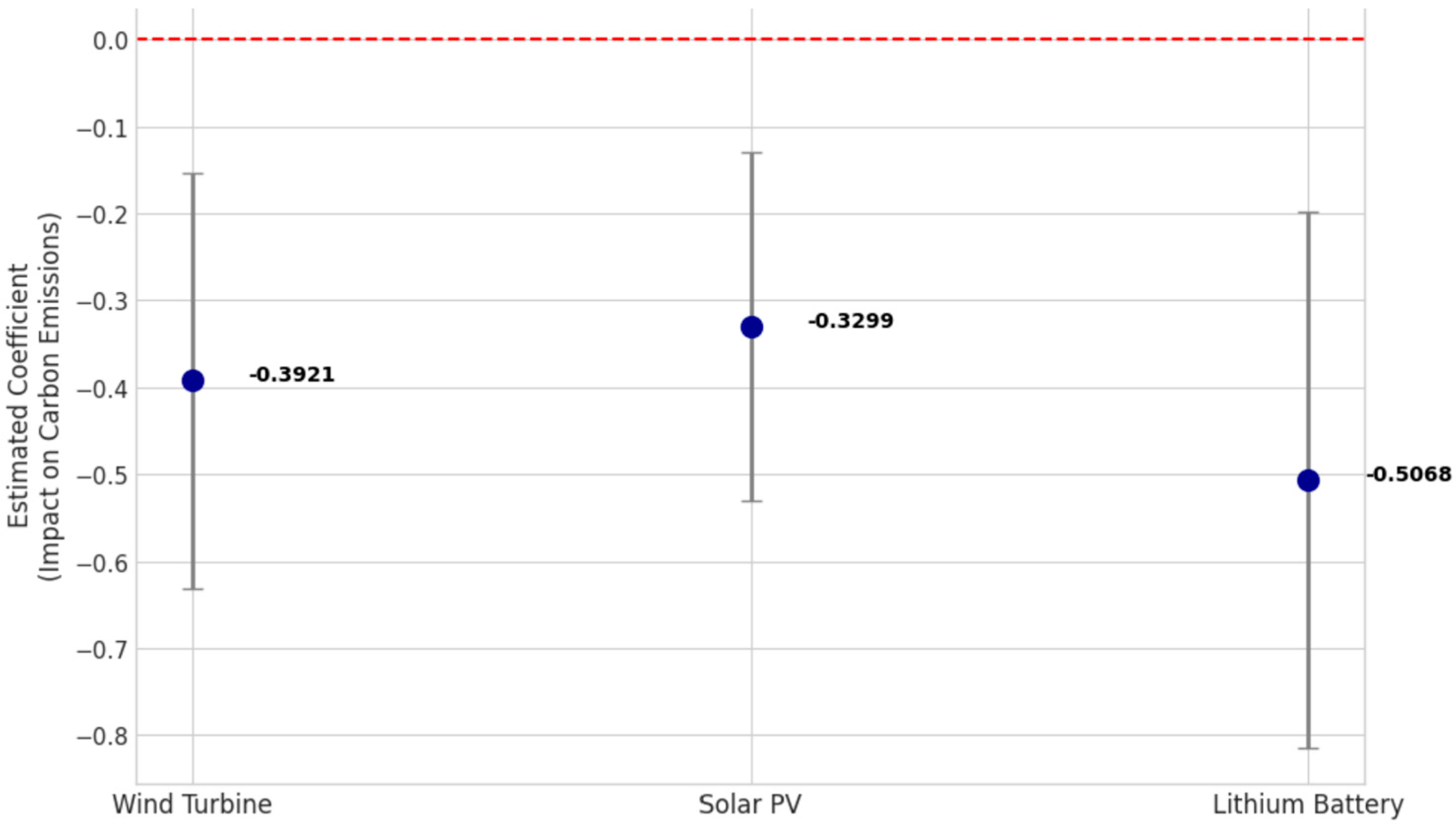
To capture product heterogeneity, we group regressions by wind turbines, solar PVs, and lithium-ion batteries to test whether their imports affect emissions differently. The results in Figure 2 show that all three significantly inhibit emissions, consistent with the baseline regression result, but with notable differences. Imports of lithium-ion batteries have a stronger effect than wind turbines and solar PVs. China has become the world’s largest producer of solar PV and wind turbine equipment, supported by a highly localized industrial chain and strong policy backing for innovation [52]. As a result, imports in these two sectors are concentrated in a few core components, such as IGBTs and main bearings, whose marginal contribution to replacing fossil fuels is now limited.
By contrast, lithium-ion batteries are used mainly in electric vehicles (EVs) and energy storage. China’s EV market is expanding rapidly, and imported high-end cells and battery management systems are essential for overcoming key technological bottlenecks. These imports directly substitute for large volumes of gasoline and diesel combustion, producing a much stronger marginal abating effect.

4.4.3. Heterogeneity of Provinces of Different Industrial Structure

Provincial industrial structure directly shapes energy use and emission intensity. To test its moderating role, we divided provinces into industry-dominated and service-dominated groups based on the median share of tertiary value-added in GDP from 2001 to 2023. The regression results are reported in Table 7.
The estimates show that imports of clean energy equipment significantly inhibit emissions in industry-dominated provinces but have no significant effect in service-dominated provinces. This reflects both the stage of clean energy imports in China and regional structural differences. In industry-heavy provinces, such as Shanxi, Inner Mongolia, and Hebei, energy-intensive sectors account for a large share of output, creating strong pressure to reduce emissions. Imports improve industrial energy efficiency, support the green transformation of high carbon sectors, and replace fossil fuels through wind turbines and solar PVs expansion, yielding strong emission inhibitions.
In contrast, service-dominated provinces already have a more efficient energy and emission structure, with lower intensity and weaker reliance on heavy industry. In these regions, imports mainly contribute to energy optimization or industrial upgrading, with limited short-term impact on aggregate emissions. Moreover, in cities such as Shanghai and Beijing, some imported equipment is used for innovation or re-export processing. The benefits are more evident in long-term industrial upgrading rather than immediate emission inhibitions, which explains the weaker short-run effect.

4.5. Mechanism Test

The preceding analyses demonstrate that imports of the CEEMI can inhibit carbon emissions in China. In order to analyze the mechanism of its potential impact, we used forward participation ( G V C p t f ), backward participation ( G V C p t b ), GVC participation ( G V C p t ), and technological advancement ( P a t e n t ) as mechanism variables. We first examined the impact of the CEEMI’s imports on each mechanism variable, and then explored the impact of each mechanism variable on carbon emissions.

4.5.1. GVC Participation

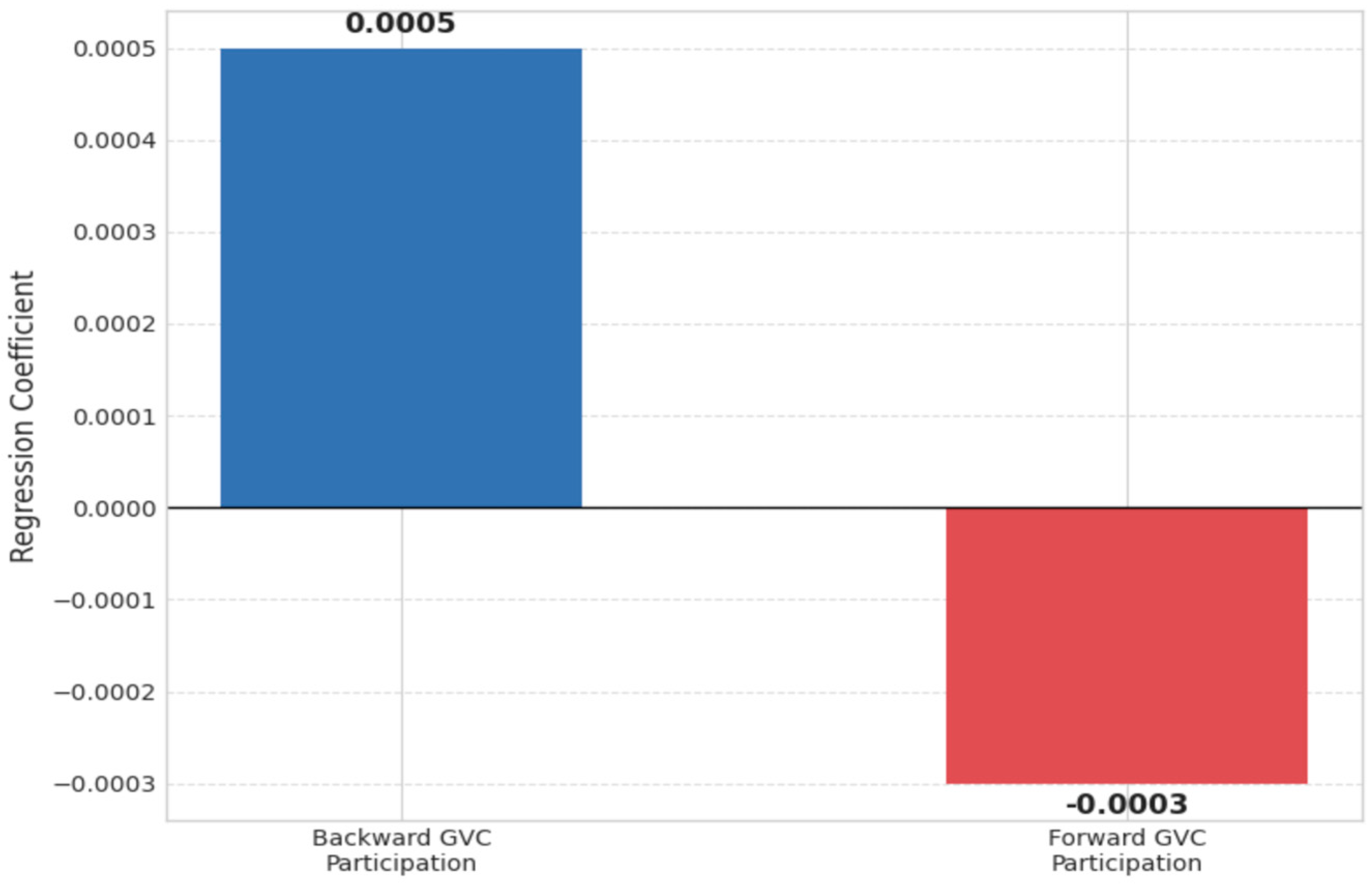
Table 8 reports the effects of clean energy equipment imports on GVC participation. Imports reduce forward participation, increase backward participation, and raise overall participation. Forward participation refers to domestic intermediates that are exported, used abroad, and then re-exported, reflecting an upstream position in the GVC. Imports reduce this share by acting as substitutes for some energy-intensive domestic intermediates, lowering forward exports. In contrast, imports increase backward participation, measured as the share of imported intermediates used in domestic production. For example, importing Swiss PECVD equipment integrates foreign technology into domestic value chains, raising efficiency and upgrading local firms. Since the gain in backward participation exceeds the loss in forward participation, overall GVC participation increases. Specifically, a 1% increase in imports raises backward participation by about 0.0005% while lowering forward participation by 0.0003%, yielding a net positive effect (see Figure 3). Through high-end intermediate imports, China’s clean energy equipment sector is moving up the GVC from low-end to mid- and high-end segments.
Higher GVC participation lowers emission through spillovers and efficiency gains. Backward participation enhances learning of low-carbon practices, as seen in Xinjiang, where early wind turbine imports enabled firms like Goldwind to acquire new technology and expand capacity to 43.6 GW by 2024, cutting emissions. High-end imported components also improve efficiency and reduce waste. Meanwhile, reduced forward participation lowers exports of carbon-intensive intermediates. Together, these shifts increase overall GVC participation and reduce emissions.

4.5.2. Technological Advance

Column (4) of Table 8 shows that clean energy equipment imports significantly drive technological innovation. Imports promote green technology innovation through a “learning-by-doing” effect. As Chinese firms install, debug, and maintain imported equipment, they often learn advanced foreign technologies, leading to new inventions and increased green patents. Additionally, imports are typically accompanied by training, multinational cooperation, and knowledge exchange, boosting human capital and local innovation. Empirical results show that a 1% increase in imports raises green patents by 0.0681%, indicating that imports serve not only as a substitute but also as a catalyst for technological progress, enhancing domestic R&D.
Green technological innovation inhibits emissions through efficiency improvements and technological spillovers. Green patents increase energy efficiency in production, reducing material and electricity consumption, thus lowering carbon emissions. Moreover, green patents related to clean energy equipment are highly transferable, benefiting other energy-intensive industries. For example, high-efficiency power electronics developed for solar PV inverters can be applied to large motors in sectors like steel and cement, significantly improving energy savings.

5. Conclusions

We used a provincial panel dataset from China, spanning 2011 to 2023, to examine the impact of the CEEMI’s imports on carbon emissions, with further analysis from heterogeneity and mechanism perspectives. The study focuses on three key clean energy products, solar PVs, lithium-ion batteries, and wind turbines, employing the classic STIRPAT model for analyzing the socioeconomic drivers of environmental impacts. Our key findings are as follows: First, imports of the CEEMI significantly inhibit carbon emissions in China. A 1% increase in imports leads to a 0.1312% reduction in emission.
Second, in high-income provinces imports strongly suppress emissions. In middle-income regions the effect is negative but insignificant, while in low-income provinces a positive effect is observed. This suggests that regions with higher economic development can better absorb and convert imported technologies for emission inhibition, while lower-income provinces struggle with industrial foundations and technological absorption.
Third, the emission inhibition impact of lithium-ion batteries imports is 1.29 and 1.54 times that of wind turbines and solar PVs, respectively. This aligns with China’s renewable energy landscape. Lithium battery imports, attributed to their direct substitution for fuel oil and stronger technological dependence, exhibited the strongest emission-abating effect, while the marginal contribution of wind and solar equipment imports was relatively smaller due to localized industrial chains.
Fourth, in industry-dominated provinces, imports significantly inhibit emissions, while in service-dominated provinces, the effect is not significant. This indicates that regions with stronger industrial bases benefit more from clean energy equipment, while service-oriented regions, with already lower emissions, see less impact.
Fifth, imports influence emissions through two main pathways: increasing GVC participation and fostering green patent growth.
Based on these findings, we reveal the following policy implications. First, implement a differentiated import strategy in regions of different income levels. High-income regions should continue to promote open trade, facilitating the integration of imports with local R&D for faster technology absorption and innovation. For low-income regions, subsidies, technology transfer, and training should be emphasized to improve their ability to absorb imported technologies.
Second, develop regional import policies based on industrial structure. In industrial-dominated provinces, focus on importing clean energy equipment for green transformation in energy intensive sectors like energy, steel, and chemicals. In service-dominated provinces, policies should target green consumption and clean transportation to enhance the marginal impact of imported equipment.
Third, promote the upgrading of GVCs. Policies should guide clean energy equipment imports toward high-end segments by promoting trade facilitation, helping domestic firms engage more in R&D and services within the global value chain.
Fourth, strengthen the institutional guarantees for green technology innovation. Governments should improve the institutional framework for green patents by improving protection and incentives, such as R&D subsidies and international cooperation, to enhance domestic firms’ ability to absorb and innovate on imported technologies, ensuring sustainable emission reductions.

Author Contributions

Conceptualization, Z.L. and W.C.; Formal analysis, Z.L.; Investigation, Z.L.; Writing—original draft, Z.L. and W.C.; Writing—review & editing, Z.L. and W.C.; Project administration, Z.L.; Supervision, Z.L.; Funding acquisition, Z.L.; Data curation, W.C.; Methodology, W.C. All authors have read and agreed to the published version of the manuscript.

Funding

This research was funded by (1) Humanities and Social Sciences Research Planning Fund Project of Ministry of Education, PRC for the year of 2023, “Global Value Chain’s Newly Emerging Market Hypothesis and China’s Clean Energy Equipment Firms: Drive for Embedding Position Rising, Internationalization Strategy and Carbon Emissions”, grant number 23YJA790046; and (2) Huazhong University of Science and Technology Double First-Class Fund Project for Humanities and Social Sciences: Development Economics Team Construction Project and Innovation Development Research Center Construction Project, grant number 0. And The APC was funded by Humanities and Social Sciences Research Planning Fund Project of Ministry of Education, PRC for the year of 2023.

Institutional Review Board Statement

Not applicable.

Informed Consent Statement

Not applicable.

Data Availability Statement

Data available on request from the authors: the data that support the findings of this study are available from the corresponding author Wenxin Cui, upon reasonable request.

Conflicts of Interest

The authors declare no conflict of interest.

References

  1. Copeland, B.R.; Taylor, M.S. Trade, growth, and the environment. J. Econ. Lit. 2004, 42, 7–71. [Google Scholar] [CrossRef]
  2. Kellenberg, D.K. An empirical investigation of the pollution haven effect with strategic environment and trade policy. J. Int. Econ. 2009, 78, 242–255. [Google Scholar] [CrossRef]
  3. Antweiler, W.; Copeland, B.R.; Taylor, M.S. Is free trade good for the environment? Am. Econ. Rev. 2001, 91, 877–908. [Google Scholar] [CrossRef]
  4. Grether, J.-M.; Mathys, N.A.; de Melo, J. Scale, technique and composition effects in manufacturing SO2 emissions. Environ. Resour. Econ. 2009, 43, 257–274. [Google Scholar] [CrossRef]
  5. Levinson, A. Technology, international trade, and pollution from US manufacturing. Am. Econ. Rev. 2009, 99, 2177–2192. [Google Scholar] [CrossRef]
  6. Brunel, C. Pollution offshoring and emission reductions in EU and US manufacturing. Environ. Resour. Econ. 2017, 68, 621–641. [Google Scholar] [CrossRef]
  7. Shapiro, J.S.; Walker, R. Why is pollution from US manufacturing declining? The roles of environmental regulation, productivity, and trade. Am. Econ. Rev. 2018, 108, 3814–3854. [Google Scholar] [CrossRef]
  8. Bloom, N.; Genakos, C.; Martin, R.; Sadun, R. Modern management: Good for the environment or just hot air? Econ. J. 2010, 120, 551–572. [Google Scholar] [CrossRef]
  9. Martin, L.A. Energy Efficiency Gains from Trade: Greenhouse Gas Emissions and India’ s Manufacturing Sector. Mimeograph, Berkeley ARE. 2011. Available online: https://arefiles.ucdavis.edu/uploads/filer_public/2014/03/27/martin-energy-efficiencynov.pdf (accessed on 27 March 2014).
  10. Qi, J.; Tang, X.; Xi, X. The size distribution of firms and industrial water pollution: A quantitative analysis of China. Am. Econ. J. Macroecon. 2021, 13, 151–183. [Google Scholar] [CrossRef]
  11. Peters, G.P.; Minx, J.C.; Weber, C.L.; Edenhofer, O. Growth in emission transfers via international trade from 1990 to 2008. Proc. Natl. Acad. Sci. 2011, 108, 8903–8908. [Google Scholar] [CrossRef]
  12. Bogmans, C. Can the terms of trade externality outweigh free-riding? The role of vertical linkages. J. Int. Econ. 2015, 95, 115–128. [Google Scholar] [CrossRef]
  13. Sun, C.; Li, Z.; Ma, T.; He, R. Carbon efficiency and international specialization position: Evidence from global value chain position index of manufacture. Energy Policy 2019, 128, 235–242. [Google Scholar] [CrossRef]
  14. Yan, Y.; Wang, R.; Zheng, X.; Zhao, Z. Carbon endowment and trade-embodied carbon emissions in global value chains: Evidence from China. Appl. Energy 2020, 277, 115592. [Google Scholar] [CrossRef]
  15. Stern, D.I. The environmental Kuznets curve after 25 years. J. Bioecon. 2017, 19, 7–28. [Google Scholar] [CrossRef]
  16. Wang, J.; Wan, G.; Wang, C. Participation in GVCs and CO2 emissions. Energy Econ. 2019, 84, 104561. [Google Scholar] [CrossRef]
  17. Hertwich, E.G. Carbon fueling complex global value chains tripled in the period 1995–2012. Energy Econ. 2020, 86, 104651. [Google Scholar] [CrossRef]
  18. Wang, S.; He, Y.; Song, M. Global value chains, technological progress, and environmental pollution: Inequality towards developing countries. J. Environ. Manag. 2021, 277, 110999. [Google Scholar] [CrossRef] [PubMed]
  19. Shi, Q.; Zhao, Y.; Qian, Z.; Zheng, L.; Wang, S. Global value chains participation and carbon emissions: Evidence from Belt and Road countries. Appl. Energy 2022, 310, 118505. [Google Scholar] [CrossRef]
  20. Wang, S.; Wang, X.; Chen, S. Global value chains and carbon emission reduction in developing countries: Does industrial upgrading matter? Environ. Impact Assess. Rev. 2022, 97, 106895. [Google Scholar] [CrossRef]
  21. Zhao, Y.; Liu, S. Global value chains and carbon emission efficiency: Evidence from 30 provinces in China. Appl. Econ. 2024, 57, 7123–7138. [Google Scholar] [CrossRef]
  22. Meng, B.; Peters, G.P.; Wang, Z.; Li, M. Tracing CO2 emissions in global value chains. Energy Econ. 2018, 73, 24–42. [Google Scholar] [CrossRef]
  23. Zheng, Z. Re-calculation of responsibility distribution and spatiotemporal patterns of global production carbon emissions from the perspective of global value chain. Sci. Total Environ. 2021, 773, 145065. [Google Scholar] [CrossRef]
  24. Zheng, L.; Zhao, Y.; Shi, Q.; Qian, Z.; Wang, S.; Zhu, J. Global value chains participation and carbon emissions embodied in exports of China: Perspective of firm heterogeneity. Sci. Total Environ. 2022, 813, 152587. [Google Scholar] [CrossRef]
  25. Ehrlich, P.R.; Holdren, J.P. Impact of Population Growth. Science 1971, 171, 1212–1217. [Google Scholar] [CrossRef] [PubMed]
  26. Kaya, Y. Impact of Carbon Dioxide Emission Control on GNP Growth: Interpretation of Proposed Scenarios; Intergovernmental Panel on Climate Change/Response Strategies Working Group: Paris, France, 1989. [Google Scholar]
  27. O’Mahony, T. Decomposition of Ireland’s carbon emissions from 1990 to 2010: An extended Kaya identity. Energy Policy 2013, 59, 573–581. [Google Scholar]
  28. Dietz, T.; Rosa, E.A. Rethinking the environmental impacts of population, affluence and technology. Hum. Ecol. Rev. 1994, 1, 277–300. [Google Scholar]
  29. Dietz, T.; Rosa, E.A. Effects of population and affluence on CO2 emissions. Proc. Natl. Acad. Sci. USA 1997, 94, 175–179. [Google Scholar] [CrossRef]
  30. Li, Z.; Fang, Z.; Tang, Z. Effects of Imports and Exports on China’s PM2.5 Pollution. China World Econ. 2020, 28, 28–50. [Google Scholar] [CrossRef]
  31. Hasanov, F.J.; Khan, Z.; Hussain, M.; Tufail, M. Theoretical Framework for the Carbon Emissions Effects of Technological Progress and Renewable Energy Consumption. Sustain. Dev. 2021, 29, 810–822. [Google Scholar] [CrossRef]
  32. Wang, Z.; Jebli, M.B.; Madaleno, M.; Doğan, B.; Shahzad, U. Does export product quality and renewable energy induce carbon dioxide emissions: Evidence from leading complex and renewable energy economies. Renew. Energy 2021, 171, 360–370. [Google Scholar] [CrossRef]
  33. Jiang, R.; Wu, C.; Feng, W.; You, K.; Liu, J.; Zhou, G.; Liu, L.; Cheng, H.-M. Impact of electric vehicle battery recycling on reducing raw material demand and battery life-cycle carbon emissions in China. Sci. Rep. 2025, 15, 2267. [Google Scholar] [CrossRef]
  34. Edziah, B.K.; Sun, H.; Adom, P.K.; Wang, F.; Agyemang, A.O. The role of exogenous technological factors and renewable energy in carbon dioxide emission reduction in sub-Saharan African. Renew. Energy 2022, 196, 1418–1428. [Google Scholar] [CrossRef]
  35. Herzer, D. The impact on domestic CO2 emissions of domestic government-funded clean energy, R&D; of spillovers from foreign government-funded clean energy, R&D. Energy Policy 2022, 168, 113126. [Google Scholar]
  36. Siewers, S.; Martínez-Zarzoso, I.; Baghdadi, L. Global value chains and firms’ environmental performance. World Dev. 2023, 173, 106395. [Google Scholar] [CrossRef]
  37. Koopman, R.; Wang, Z.; Wei, S.J. Tracing value-added and double counting in gross exports. Am. Econ. Rev. 2014, 104, 459–494. [Google Scholar] [CrossRef]
  38. Wang, Z.; Wei, S.-J.; Yu, X.; Zhu, K. Measures of Participation in Global Value Chains and Global Business Cycles. NBER Working Paper 23222. 2017. Available online: https://www.nber.org/system/files/working_papers/w23222/w23222.pdf (accessed on 9 September 2025).
  39. Şeker, M.; Ulu, M.F.; Rodriguez-Delgado, J.D. Imported intermediate goods and product innovation. J. Int. Econ. 2024, 150, 103927. [Google Scholar] [CrossRef]
  40. Fedyunina, A.; Averyanova, Y. Empirical Analysis of Competitiveness Factors of Russian Exporters in Manufacturing Industries. Econ. Policy 2018, 6, 102–121. [Google Scholar] [CrossRef]
  41. Schmitz, H.; Humphrey, J. Governance and Upgrading: Linking Industrial Cluster and Global Value Chain Research; IDS Working Paper No. 120; Institute of Development Studies, University of Sussex: Brighton, UK, 2000. [Google Scholar]
  42. Veeramani, C.; Dhir, G. Do developing countries gain by participating in global value chains? Evidence from India. Rev. World Econ. 2022, 158, 1011–1042. [Google Scholar] [CrossRef]
  43. Duan, Y.; Ji, T.; Yu, T. Reassessing pollution haven effect in global value chains. J. Clean. Prod. 2021, 284, 124705. [Google Scholar] [CrossRef]
  44. Hu, D.; Jiao, J.; Tang, Y.; Han, X.; Sun, H. The effect of global value chain position on green technology innovation efficiency: From the perspective of environmental regulation. Ecol. Indic. 2021, 121, 107195. [Google Scholar] [CrossRef]
  45. Yuan, Q.; Cai, H.H.; Jiang, Y.; Khan, N.U.; Qamri, G.M. The asymmetric effect of global value chain on environmental quality: Implications for environmental management. J. Environ. Manag. 2024, 365, 121470. [Google Scholar] [CrossRef]
  46. Liu, H.; Lei, H.; Zhou, Y. How does green trade affect the environment? Evidence from China. J. Econ. Anal. 2022, 1, 1–19. [Google Scholar] [CrossRef]
  47. Yu, Y.; Qayyum, M.; Li, S. Trade dynamics of environmental goods within global energy economy and their impacts on green technological innovation: A complex network analysis. Energy Econ. 2024, 140, 107957. [Google Scholar] [CrossRef]
  48. Zeng, S.; Li, T.; Wu, S.; Gao, W.; Li, G. Does green technology progress have a significant impact on carbon dioxide emission? Energy Econ. 2024, 133, 107524. [Google Scholar] [CrossRef]
  49. Autor, D.H.; Dorn, D.; Hanson, G.H. The China Syndrome: Local Labor Market Effects of Import Competition in the United States. Am. Econ. Rev. 2013, 103, 2121–2168. [Google Scholar] [CrossRef]
  50. Burke, P.J.; Kurniawati, S. Electricity subsidy reform in Indonesia: Demand-side effects on electricity use. Energy Policy 2018, 116, 410–421. [Google Scholar] [CrossRef]
  51. Goldsmith-Pinkham, P.; Sorkin, I.; Swift, H. Bartik Instruments: What, When, Why, and How. Am. Econ. Rev. 2020, 110, 2586–2624. [Google Scholar] [CrossRef]
  52. Shubbak, M.H. The technological system of production and innovation: The case of photovoltaic technology in China. Res. Policy 2019, 48, 993–1015. [Google Scholar] [CrossRef]
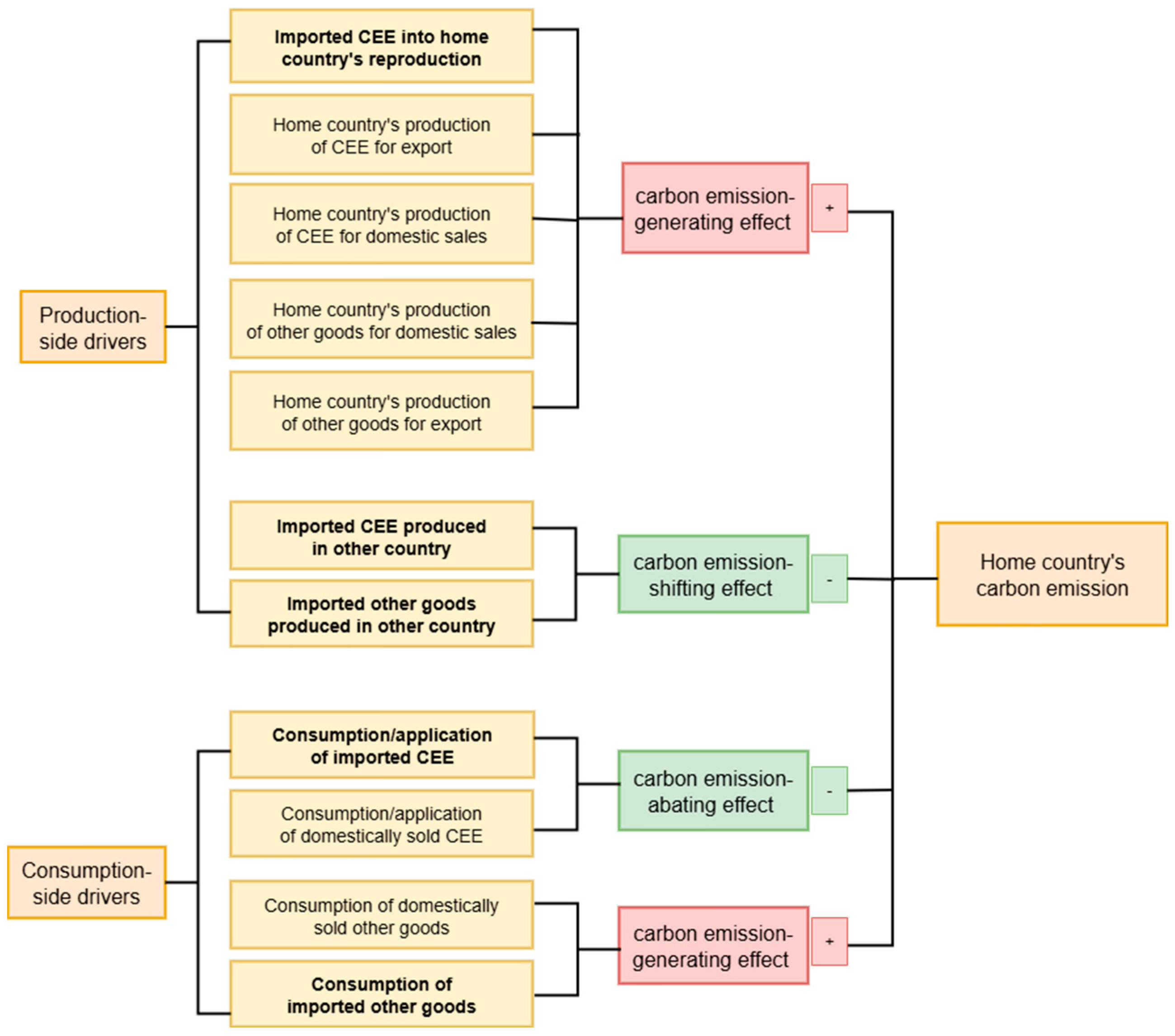
Figure 1. Linkage mechanism of the CEEMI’s imports and exports with home country’s carbon emissions. Note: the “carbon emission-abating effect” on the consumption side refers to the emission reduction during the equipment operation phase, excluding embedded carbon from upstream production and emission from downstream recycling.
Sustainability 17 10972 g001
Figure 2. Heterogeneity of product.
Sustainability 17 10972 g002
Figure 3. Opposing effects on GVC participation paths.
Sustainability 17 10972 g003
Table 1. Comparison of this study with related literature.
CategoryRepresentative StudiesFocusMain Mechanism ExploredLimitationsContribution of This Paper
1. Trade and EnvironmentCopeland & Taylor (2004) [1]; Shapiro & Walker (2018) [7] General Manufacturing/All SectorsPollution haven hypothesis (PHH); scale/technique effectsTreats all imports as similar; ignores the unique environmental impact of clean energy products.Propose and verify the net emission-abating effect of CEEMI: production transfer + consumption substitution > reprocessing emission.
2. GVC and Carbon EmissionsMeng et al. (2018) [22]; Wang et al. (2021) [18]Aggregate Global Value ChainsGVC participation; embodied carbon in exportsOften uses aggregate GVC indices; results on environmental impact are mixed/inconclusive.Distinguishes between backward and forward participation paths.
3. Clean Energy TradeHasanov et al. (2021) [31]; Jebli et al. (2021) [32]Clean Energy Consumption/ExportsImpact of clean energy’s consumption on growth/CO2Focuses on the use or export of energy; neglects the production and import of the equipment itself.Focus on the import of CEEMI, analyzing the net effect of production emission and usage abatement.
Table 2. Descriptive statistics.
VariablesObs.MeanSdMinMax
l n C O 2 i t 6905.34840.94290.65757.7378
l n I M i t 6908.744612.9328014.7621
l n E X i t 6909.61612.7691015.2219
l n D S i t 6900.22470.231400.9189
l n O I M i t 69014.16141.81379.692818.5713
l n P O P i t 6907.66630.68124.02548.8250
l n P G D P i t 69010.37530.87467.970712.3112
l n E N R G i t 6902.17960.70311.060424.4568
l n S E R V i t 6903.77370.19773.35344.4415
l n G V C p t i t 4200.01350.0232−0.014450.1500
l n P a t e n t i t 6909.36431.82964.248413.6787
Table 3. Benchmark regression results.
Variables(1)(2)(3)(4)
l n I M 0.2466 ***−0.1327 ***−0.3012 ***−0.1312 ***
(0.0420)(0.0400)(0.0352)(0.0407)
l n E X 0.0583 **0.0352 **0.0637 ***0.0376 ***
(0.0249)(0.0145)(0.0203)(0.0139)
l n D S −1.2451 ***−1.0427 ***−1.4376 ***−0.4966 **
(0.1146)(0.1962)(0.1174)(0.2002)
l n O I M 0.02790.01320.0344 **−0.0006
(0.0219)(0.0117)(0.0175)(0.0113)
l n P O P 0.06550.0934 ***−0.05600.0111
(0.0491)(0.0294)(0.0430)(0.0302)
l n P G D P 0.7755 ***0.8743 ***−0.2537 *0.5404 ***
(0.0778)(0.0740)(0.1373)(0.1166)
l n E N R G −2.1491 ***−0.3849 *−0.8909 ***0.2712
(0.1992)(0.2275)(0.2402)(0.2341)
l n S E R V −0.6872 ***−0.6399 ***−0.6799 ***−0.5974 ***
(0.0522)(0.0715)(0.0475)(0.0679)
_cons2.8587 ***0.21148.6415 ***1.5646 *
(0.4283)(0.4640)(0.8641)(0.9361)
Obs.690690690690
R20.58780.88510.64260.9049
Year FE
Province FE
NoNoYesYes
NoYesNoYes
Note: ***, **, and * denote significance at 1%, 5% and 10% confidence levels, respectively; with robust standard errors in parentheses.
Table 4. Endogeneity test.
VariableLag One Phase
( L l n I M )
Lag Two Phases
( L 2 l n I M )
Instrumental Variable ( m e a n l n I M )
l n I M (1)(2)(1)(2)(1)(2)
0.9342 ***
(0.0121)
−0.2976 ***
(0.0397)
0.8806 ***
(0.0159)
−0.3461 ***
(0.0337)
0.0942 **
(0.0406)
−2.9284 **
(1.5221)
Control VariableYesYesYesYesYesYes
Year/Province FEYesYesYesYesYesYes
Obs.660660630630690690
Adj-R20.9875 0.9743 0.8743
Kleibergen–Paap rk LM
statistic
217.233 205.285 18.852
Cragg–Donald Wald F
statistic
6225.264 2868.389 21.026
Kleibergen–Paap rk Wald F
statistic
4590.158 2424.096 22.584
Note: *** and ** denote significance at 1% and 5% confidence levels, respectively; with robust standard errors in parentheses; (1) (2) represent the first and second stages of the 2SLS regression, respectively; Stock–Yogo weak ID test critical values: 10% maximal IV size 16.38.
Table 5. Other robustness tests.
Variable(1)(2)(3)(4)(5)
l n I M −0.1225 *** (0.0402)−0.1262 ***
(0.0419)
−0.0975 ***
(0.0327)
−0.1228 ***
(0.0416)
−0.0684 **
(0.0308)
Control VariableYesYesYesYesYes
Year/Province FEYesYesYesYesYes
AR (1) 0.007
AR (2) 0.115
Hansen test 0.829
Obs.690690690690660
R20.94660.88750.92880.8966
Note: *** and ** denote significance at 1% and 5% confidence levels, respectively; with robust standard errors in parentheses.
Table 6. Heterogeneity of economic development level.
VariableLow-IncomeMiddle-IncomeHigh-Income
l n I M 0.0342
(0.0528)
−0.0684
(0.0936)
−0.2809 ***
(0.0755)
Constant0.8485
(1.7847)
4.3920 *
(2.3681)
−0.7180
(1.9873)
Obs.230230230
R20.95670.87550.9195
Control VariableYesYesYes
Year FEYesYesYes
Province FEYesYesYes
Note: *** and * denote significance at 1% and 10% confidence levels, respectively; with robust standard errors in parentheses.
Table 7. Heterogeneity of industrial structure.
VariableIndustry-Dominated ProvincesService-Dominated Provinces
l n I M −0.1324 **
(0.0635)
−0.0549
(0.0377)
Constant4.8236
(2.9394)
0.8039
(1.1055)
Obs.345345
R20.84960.9448
Control VariableYesYes
Year FEYesYes
Province FEYesYes
Note: ** denotes significance at 5% confidence levels; with robust standard errors in parentheses.
Table 8. Mechanism test.
Variable G V C p t f G V C p t b G V C p t P a t e n t
(1)(2)(3)(4)
l n I M −0.0003 **
(0.0001)
0.0005 ***
(0.0002)
0.0008 ***
(0.0003)
0.0681 **
(0.0337)
Constant−0.0854 ***
(0.0133)
−0.0999 ***
(0.0195)
−0.1856 ***
(0.0321)
2.8293 ***
(0.7707)
Obs.690690690690
R20.91750.87990.90210.9817
Control VariableYesYesYesYes
Year FEYesYesYesYes
Province FEYesYesYesYes
Note: *** and ** denote significance at 1% and 5% confidence levels, respectively; with robust standard errors in parentheses.
Disclaimer/Publisher’s Note: The statements, opinions and data contained in all publications are solely those of the individual author(s) and contributor(s) and not of MDPI and/or the editor(s). MDPI and/or the editor(s) disclaim responsibility for any injury to people or property resulting from any ideas, methods, instructions or products referred to in the content.