Article

Outdoor Learning in Belgium and Türkiye: Cultural Heritage Sensitivity and Sustainability

1
Faculty of Education, Yıldız Technical University, Istanbul 34220, Türkiye
2
Institute Provincial Mons-Borinage, 7000 Mons, Belgium
3
Ministry of National Education, Istanbul 34307, Türkiye
*
Author to whom correspondence should be addressed.
Sustainability 2025, 17(23), 10849; https://doi.org/10.3390/su172310849
Submission received: 21 October 2025 / Revised: 23 November 2025 / Accepted: 27 November 2025 / Published: 3 December 2025
(This article belongs to the Section Sustainable Education and Approaches)

Abstract

In educational settings, the transfer of knowledge to daily life and the permanence of learning outcomes are essential goals. In this context, Outdoor Learning (OL) has gained growing attention as an approach that connects students with real-life experiences. This study compares OL practices in Türkiye and Belgium, examining their impact on educational sustainability and cultural heritage awareness through multiple stakeholder perspectives. Using a qualitative case study design with a holistic multiple-case approach, data were collected through field observations and semi-structured interviews conducted between January and June 2025. The research included five OL activities in Türkiye and six in Belgium, involving students, teachers, administrators, and external observers. Data were analyzed using descriptive and content analysis. The findings show that OL fosters environmental awareness, respect for cultural heritage, local–European identity, collaboration, and responsibility, while enhancing learning retention and motivation. In Belgium, OL is implemented systematically within educational programs, whereas in Türkiye it is expanding rapidly under new policy guidelines. However, challenges such as large class sizes, safety concerns, logistics, and financial limitations hinder consistent practice. The study concludes that OL should be organically integrated into curricula, supported by in-service teacher training and institutional financial–logistical frameworks to ensure sustainable and meaningful implementation.

1. Introduction

Studies have consistently shown that learning experiences built through concrete engagement lead to more permanent and functional knowledge acquisition. Within this framework, Outdoor Learning (OL)—though referred to by different names—has always constituted an integral part of educational processes. Philosophers such as Aristotle and Plato, who emphasized the pedagogical value of nature, can be considered the early advocates of this approach. Similarly, John Dewey’s belief that education grounded in natural settings would find meaningful correspondence in real life provides a philosophical foundation for outdoor-based practices.
Outdoor Learning refers to educational experiences that occur in natural or historical environments beyond the formal physical boundaries of schools. A variety of settings can be used for this purpose, including museums, historical sites, nature and botanical parks, arboretums, memorial parks, martyrdoms, factories, and business centers [1,2,3,4]. The other key dimension of OL involves the activities themselves, which can be freely designed according to learning objectives—such as orienteering, inquiry-based tasks, mapping, discussions, and team games.
OL expands the boundaries of formal education, making learning more meaningful, lasting, and engaging. Rooted in Dewey’s philosophy of experiential education, it allows students to take active roles and gain firsthand experiences in historical and natural settings [5,6]. It also supports lesson reinforcement and enhances motivation by linking school-based instruction with real-life applications [7]. In contrast, schools relying solely on traditional, teacher-centered methods limit the learner’s natural curiosity and restrict cognitive and social growth [8]. While conventional classroom models foster limited interaction, outdoor environments promote dynamic, experiential learning that enhances both retention and diversity of knowledge [9].
Through OL, students integrate knowledge into daily life, strengthen social communication, and become more aware of their own needs and capacities in collaborative learning settings. By enabling children to explore nature, gain authentic experiences, and share their excitement with peers, OL enhances both teaching and learning quality [5,10,11,12]. Moreover, OL has been found to provide firsthand experiences, stimulate scientific curiosity and motivation, make learning meaningful and relevant, strengthen perception and observation skills, and foster personal and social development [13]. In addition to reinforcing theoretical knowledge, OL contributes to critical thinking, social competencies, value education, and multidisciplinary learning. Thus, utilizing outdoor environments actively in educational processes is crucial for enriching learning experiences. This approach emphasizes not only academic but also social development, with outdoor settings offering diverse opportunities for engagement [14].
The literature presents several findings regarding the perceptions of school administrators and teachers toward outdoor-supported educational activities, highlighting their cognitive, affective, social, and psychomotor dimensions. National and international studies suggest that OL has become an essential component of the teaching–learning process, influencing the overall quality of education. Research indicates that OL-based teaching enhances conceptual understanding, academic achievement, attitudes toward lessons, and skill development [15] and promotes environmental awareness and literacy [16,17,18]. Activities conducted outside the classroom improve motivation, support remedial learning, and reinforce in-class instruction [19,20,21,22,23]. Allowing students to physically interact with cultural artifacts fosters concrete and lasting learning [24,25].
Most administrators and teachers acknowledge that OL activities are necessary yet challenging to implement. Factors such as large class sizes, transportation and traffic issues, safety concerns, financial limitations, bureaucratic procedures, and parental attitudes restrict their widespread application—particularly in Türkiye [26,27,28].
In contrast, educational programs in high socioeconomic countries such as Switzerland, Belgium, the United Kingdom, and Scotland place strong emphasis on out-of-school learning environments [29]. In these contexts, OL activities are planned parallel to classroom instruction [30,31], enabling students to develop deeper and more enduring understandings of their cultural, historical, and environmental heritage. Recent research in Türkiye indicates growing policy recognition of OL. The 2024 Maarif Curriculum Report highlights new initiatives designed to facilitate outdoor activities for all teachers. In addition, provincial directorates of national education have published Out-of-School Learning Guides identifying local sites relevant to education, demonstrating a rapid and institutionalized adoption of OL [32,33]. Numerous national and international studies confirm that integrating OL into educational processes enhances learning effectiveness, permanence, interest in lessons, curiosity, and research motivation [34,35].

1.1. Cultural Heritage

One of the concepts directly associated with Outdoor Learning (OL) is cultural heritage. Cultural heritage encompasses the tangible and intangible assets that reflect a society’s historical accumulation, identity, and collective memory. It includes a wide range of elements such as monuments, buildings, traditions, languages, art forms, and ways of life [36].
Preserving cultural heritage does not merely involve safeguarding information and artifacts of the past; it also entails understanding the present and shaping the future. Accordingly, sensitivity to cultural heritage has become one of the key principles of sustainable development. The protection of local cultural values is directly linked to both environmental awareness and economic vitality [37,38]. Today, the relationship between heritage sensitivity and sustainability is gaining growing significance, as the preservation of cultural values reinforces the social dimension of sustainability by ensuring the continuity of identity and social cohesion. Intangible cultural heritage encompasses production techniques, lifestyles, rituals, belief practices, and traditional knowledge systems, whereas tangible cultural heritage manifests through architectural structures, archeological findings, handicrafts, clothing culture, and gastronomic elements that serve as concrete evidence of social creativity and historical memory. This multilayered structure functions as a reference source reflecting a society’s historical continuity, cultural diversity, and identity construction [39].
Sensitivity to cultural heritage maintains an integrated relationship with the three pillars of sustainability—environmental, economic, and social. The preservation of both tangible and intangible cultural assets, along with natural resources, plays a crucial role in building sustainable welfare [40]. Safeguarding local knowledge, traditional practices, and architectural textures promotes environmental awareness and supports culture-based development models [41]. Therefore, heritage-sensitive policies not only ensure cultural continuity but also contribute to the creation of inclusive, resilient, and sustainable societies.
The United Nations 2030 Agenda for Sustainable Development emphasizes culture as a lever for sustainability, particularly through Goal 11: Sustainable Cities and Communities, which explicitly targets the protection of cultural and natural heritage [42]. The relationship between cultural heritage and sustainability extends beyond the social dimension: traditional production techniques, local ecological knowledge, and climate-responsive architectural practices all contribute to environmental sustainability. Meanwhile, culture-based tourism and creative industries offer significant opportunities for economic sustainability [43]. As a core reference point for collective memory and identity, cultural heritage must be preserved and transmitted across generations. In this regard, Outdoor Learning environments, such as museums and archeological sites, play a functional role in protecting, interpreting, and transferring cultural assets to future generations.
A dialectical relationship exists between education and culture. Culture, at its core, generates content composed of the knowledge, values, and norms internalized through educational processes. Therefore, a culture independent of education—or an education devoid of cultural foundations—is inconceivable [23,44]. In this context, the construction and dissemination of cultural heritage awareness at the societal level, as well as the evaluation of heritage assets in their economic, social, and symbolic dimensions, represent fundamental functions of education. Through these functions, education contributes to the formation of national identity and collective memory while ensuring the sustainable preservation, development, and management of cultural heritage values [45]. From a cultural perspective, education prevents the erosion of cultural values during intergenerational transmission and equips individuals with cultural adaptation, awareness, and responsibility, protecting them against the homogenization and assimilation risks brought by globalization. In this regard, education functions as a strategic tool not only for individual identity development but also for cultural sustainability, the reproduction of social memory, and the strengthening of collective identity. This developmental progression in cultural heritage awareness—moving from knowledge to appreciation and ultimately to active engagement—is effectively illustrated in the Cultural Heritage Cycle Figure 1. The visual design of this figure was created by the authors. The conceptual content of the Cultural Heritage Cycle is adapted from Simon Thurley [45].
The preservation and intergenerational transmission of cultural heritage can be achieved only by raising public awareness [46] and cultivating individual sensitivity toward cultural heritage—objectives attainable through a sustainable and holistic educational approach [47]. The primary goal of heritage education is to enhance students’ knowledge, awareness, and appreciation of the historical, aesthetic, and symbolic values of their natural and human environments [48]. Beyond transmitting factual information about historical sites or material culture, heritage education also fosters collective memory and a sense of belonging, encouraging students to take active roles in preserving and sustaining cultural heritage [49]. Consequently, cultural heritage education serves a strategic function in ensuring cultural sustainability and advancing participatory heritage management at the societal level [42].

1.2. Cultural Heritage Sensitivity Within the Axis of Sustainability

Sustainability refers to the transmission of existing resources to future generations, while cultural heritage encompasses assets inherited from the past that hold particular value for tourism and collective identity [50]. The historical and cultural values of a region are crucial for the development of tourism [51]. Sustainable tourism can be achieved by reducing negative impacts and enhancing positive outcomes; thus, the preservation and intergenerational transfer of cultural assets are regarded as a rational and necessary approach [52,53]. However, the non-reproducible nature of cultural heritage, combined with increasing tourist demand and the standardization of cultural products, has led to the imbalanced growth of cultural tourism and raised significant sustainability challenges [54]. To mitigate such risks, it is essential that the principles of social, environmental, economic, and cultural sustainability be implemented in a coordinated manner, a responsibility shared primarily by tourism stakeholders [55,56].
Achieving global sustainable development goals is not limited to environmental and economic strategies but also depends directly on the preservation and vitality of cultural values. Cultural heritage is a fundamental element that nurtures identity [57], a sense of belonging, and historical continuity [58] within societies. In this regard, sensitivity to cultural heritage is not merely an effort to protect the past, but a commitment to sustaining cultural diversity and leaving a meaningful and livable world for future generations [57,59]. Indeed, the United Nations Sustainable Development Goals (SDGs) define the protection of cultural and natural heritage—particularly under Goal 11 (Sustainable Cities and Communities)—as an integral component of sustainable urban and community development [42].
The 2030 Agenda for Sustainable Development, adopted by the United Nations in 2015, presents a global roadmap for a sustainable future, encompassing 17 main goals and 169 sub-targets. Among these, Goal 11 (Sustainable Cities and Communities) stands out for its explicit inclusion of Target 11.4, which calls for strengthening efforts to protect and safeguard the world’s cultural and natural heritage [42].

1.3. Problem Statement

This study aims to compare Outdoor Learning (OL) practices conducted in schools in Belgium and Türkiye and to examine these activities in terms of sustainability and sensitivity to cultural heritage. In the research, educational sustainability is operationally defined as “implementing the sustainable development goals in education with an experience-oriented approach that contributes to lifelong learning”. The implementation of OL is influenced by various factors such as the curriculum of the respective country, educational level, teacher competencies, and physical conditions [60,61]. In addition, the educational policies and the expected outcomes of education in each country constitute the main contextual variables. Therefore, examining OL practices carried out in two countries organized under different educational policies and institutional structures is expected to contribute to a better understanding of current OL practices, sustainability within outdoor learning processes, and awareness of cultural heritage sensitivity.
In Türkiye, the concept of outdoor learning has gained a systematic framework, particularly with the introduction of the 2018 Social Studies Curriculum. Visits to museums, historical sites, science centers, natural environments, and social institutions are among the core practices that support students in acquiring knowledge, values, and skills through experiential learning. The “Out-of-School Learning Environments Guide” prepared by the Ministry of National Education provides teachers with guidance on planning, safety, and assessment, thereby extending learning processes beyond the classroom and integrating them with the local environment. In this context, out-of-school learning activities implemented in Türkiye contribute to the permanent development of students’ awareness of sustainable living and sensitivity to cultural heritage.
In Belgium, however, practices similar to Türkiye’s concept of “out-of-school learning” are implemented under different terminology and institutional frameworks. Within the Francophone community (Wallonie–Bruxelles Federation), the program Parcours d’Éducation Culturelle et Artistique (PECA—Cultural and Artistic Education Pathway) forms the foundation of this approach by mandating the participation of all students—from preschool to upper secondary—in annual cultural and artistic experiences. Through the PECA portal, schools are matched with museums, art centers, or cultural institutions, and teachers are provided with activity suggestions, materials, and planning tools. In addition, free access to museums for school groups is legally guaranteed. Furthermore, Classes de Dépaysement (CDPA—On-Site Outdoor Learning Centers), which include nature-, sea-, or forest-themed residential trips, enable students to engage in interactive learning experiences related to the environment and cultural heritage. This structure is supported by civil networks such as Réseau IDée (Educational Environmental Network) and Centres Régionaux d’Initiation à l’Environnement (CRIE—Regional Environmental Education Centers), while local governments prepare thematic field-trip catalogs for school groups.
In the Flemish community, Erfgoededucatie (Cultural Heritage Education) policies institutionalize cooperation among schools, museums, and archives through Erfgoedweken (Heritage Weeks). Coordination, teacher training, and the dissemination of best practices are carried out by FARO (Flemish Interface Centre for Cultural Heritage), the national heritage institution. Moreover, Cultuurkuur (Culture Pathway Platform) and CANON Cultuurcel (Culture Cell in Education) function as digital networks enabling direct communication between teachers and cultural organizations. The Buitenlesdag (Outdoor Lesson Day) initiative, implemented through Milieuzorg Op School (MOS—Environmental Management at School), encourages schools to conduct lessons in outdoor settings and promotes nature-based learning.
This situation demonstrates that in Belgium, Outdoor Learning is not perceived merely as an extracurricular activity but is adopted as a permanent learning strategy integrated into cultural, environmental, and heritage education policies.
Compared to Türkiye, Belgium is a relatively small country in terms of both land area and population. Nevertheless, it is administratively divided into three regions—the Walloon Region, the Flemish Region, and the Brussels-Capital Region—and functions as a trilingual country, with French, Flemish, and German as its official languages. This multilingual and multi-regional structure has led to varied administrative and educational practices, directly influencing the organization of the education system and school classifications. In Belgium, there are three main types of schools: municipal schools, church-affiliated schools, and private schools. Although the curricular content is largely consistent across these types, instructional practices differ significantly from one institution to another. This diversity provides valuable opportunities to observe varied teaching methods and pedagogical applications. Outdoor Learning (OL) activities play a substantial role in enhancing education in Belgian schools. Similarly, in Türkiye, the integration of OL activities into instructional processes has been steadily increasing in recent years. In this context, the study aims to examine the rich samples from both countries to identify:—the effects of OL practices on sustainability and cultural-heritage sensitivity,—the views of school administrators and teachers as educational stakeholders regarding OL, sustainability, and cultural-heritage awareness, and—the development of implementation standards for OL activities. Accordingly, the research was designed around the following three main questions;
  • What is the immediate and end-of-term impact of Outdoor Learning activities on educational sustainability in Türkiye and Belgium?
  • What is the impact of Outdoor Learning activities on sensitivity to cultural heritage in Türkiye and Belgium?
  • What are the views of school administrators, teachers, and external observers regarding Outdoor Learning activities?

2. Methodology

This study is based on a comparative examination of Outdoor Learning (OL) practices implemented in schools in Belgium and Türkiye, focusing on the use of OL as an instructional method.
The primary objective is to conduct field observations of OL activities in both countries and to collect stakeholder perspectives regarding these practices within the context of sustainability and sensitivity to cultural heritage. Additionally, the study aims to explore the place of OL within national curricula, examine the correlation between curricular frameworks and OL applications, and analyze the existing standards related to OL implementation. The research was designed according to the case study method, one of the qualitative research approaches. Qualitative research methods are particularly suitable for studies formulated around “how” and “why” questions, seeking to obtain in-depth understanding. They allow the examination of the phenomenon within its real-life context, enabling observation, document analysis, and the derivation of findings relevant to the research objectives. In this respect, qualitative research facilitates a realistic and comprehensive inquiry into a phenomenon in its natural setting, leading to more nuanced results. Therefore, the case study method, which allows for in-depth exploration of a limited data set, was deemed appropriate for the nature of this research. The study employed a holistic multiple-case design, one of the case study patterns. In multiple-case designs, several cases are analyzed individually and then compared as a whole to identify patterns and contrasts [62]. Accordingly, field observations of OL practices conducted in Belgium and Türkiye, along with interviews with educational stakeholders, were first analyzed within their own contexts and subsequently compared cross-nationally.
For data analysis, both descriptive analysis and content analysis techniques were used. These methods allow the systematic organization of data obtained through observations and interviews around predetermined themes, followed by interpretation and the establishment of cause-and-effect relationships. While descriptive analysis involves organizing data according to themes defined beforehand, content analysis allows themes to emerge inductively from the data. Given the potential uncertainty about which themes might best cluster the data collected through interviews and forms, a combined use of descriptive and content analysis was considered the most appropriate strategy. The analysis procedure of the research was constructed as follows: descriptive analysis of each data type, coding-categorizing all data, inter-rater check for codes and categories, selecting themes from all data types (individually for each rater), inter-rater check for themes. Each author was a rater of the data individually. This dual approach was expected to enhance the credibility, clarity, and interpretive depth of the findings.
To clarify the research context, little information on the ethnic composition of two counties might help. Belgium has a diverse population composed primarily of Flemish (Dutch-speaking) and Walloon (French-speaking) communities, along with a smaller German-speaking minority. In addition, Belgium hosts significant migrant-origin communities, particularly from Italy, Morocco, Türkiye, and more recently from Eastern Europe, contributing to the country’s multicultural character. Türkiye’s population is similarly diverse, with the majority identifying as ethnic Turkish, alongside recognized Kurdish, Arab, Circassian, and other smaller ethnic and linguistic communities. In both countries, internal cultural and linguistic diversity shapes social life and educational experiences; however, the specific ethnic composition of research samples may vary depending on region and recruitment context and should therefore be described in relation to the actual respondent group.
In selecting the study sample, the criterion sampling method, one of the purposeful sampling techniques, was employed. The main criterion for sampling was the active engagement in Outdoor Learning activities in Istanbul, Türkiye and Mons, Belgium, where the researchers lived. To select schools in Türkiye, ten Istanbul districts Istanbul that reported active OL implementation during the Social Studies Teachers’ Annual District Meeting were identified. After interviewing 10 districts’ coordinators, Kucukcekmece distrct was selected for their high engagement in outdoor learning. Similarly, school principals were interviewed in Mons to select a high-engaging school in OL. The selected Turkish school was a public school while the selected Belgian school was a municipal school in the Walloon Region.
The Turkish sample was conducted at a public middle school in a socioeconomically well-off district of Istanbul. Outdoor Learning activities were conducted with 5th graders (approximately 11–12 years of age), which corresponds to the first years of middle school in Türkiye. The activities were conducted within the context of Social Studies, specifically within a unit focusing on cultural heritage, sustainability, and local and global changes. All observed Outdoor Learning activities and subsequent student surveys were generally conducted during the normal course of study.
The Belgian sample was conducted in a municipality outside the city center of Mons, in an area known to have been shaped by Turkish immigrant families who settled in the 1960s and 1970s, and later joined by communities of Italian and Arab origin. Because primary school education in Belgium lasts six years, the study was conducted with 5th graders (approximately 11–12 years of age). Open Learning practices in Belgium were implemented within the context of a five-point history and one-point region course, focusing on cultural heritage, European identity, and sustainable environment.
Table 1 presents the demographic characteristics of participants from Türkiye and Belgium, including their roles, gender distribution, ages, and education levels. In both contexts, the same groups of students who participated in the fieldwork completed the surveys and participated in the interviews. This ensured consistency between the observation and interview data. The participating teachers and administrators were educators who planned and implemented outdoor learning activities at the respective schools. Additionally, external observers accompanied the researchers throughout the fieldwork to ensure independent evaluation.
The outdoor activities were implemented between September 2024 and June 2025. The activities were planned over one course in both countries, in different times over the school year. They were planned in accordance with the yearly curriculum consulting the teachers in both countries.
The data collection process extended from January to May 2025. Accordingly, five distinct OL activities were observed in Türkiye, involving 40 student interviews, 5 teachers, 3 administrators, and 2 external observers. In Belgium, six OL activities were observed, involving 37 student interviews, 4 teachers, 2 administrators, and 2 external observers. The interviews were conducted after the activities and at the end of the term, in June. Student interview forms included 10 questions while the teacher and administrator interview forms included 8 questions.
The Outdoor Learning sites observed in Belgium were as follows:
The Outdoor Learning sites observed in Türkiye were as follows:
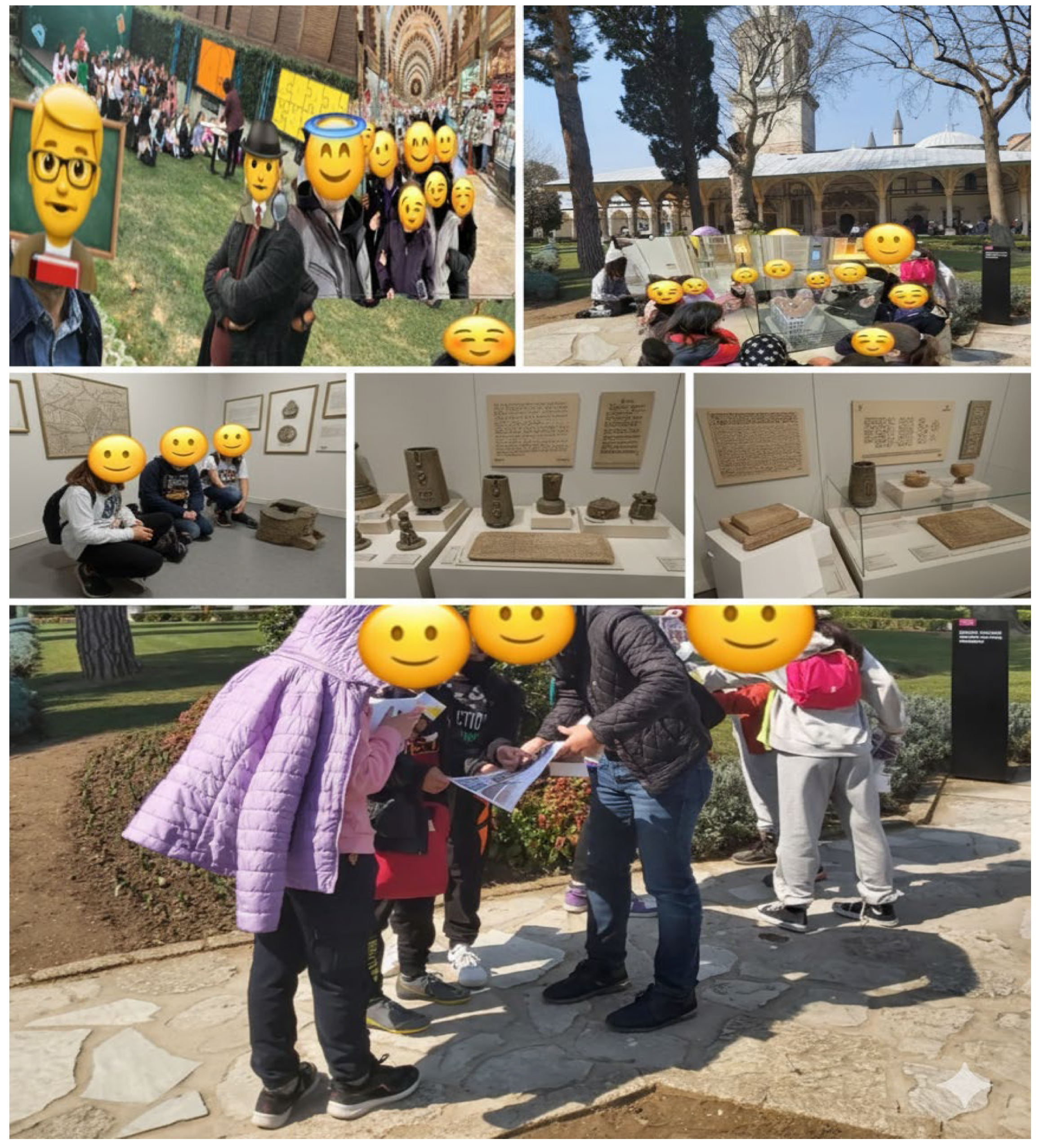
Some images from the conducted Outdoor Learning activities are presented below.
Figure 2 presents sample photographs illustrating the outdoor learning activities conducted during the study.
Following the field observations, the interviews were conducted in June 2025. Semi-structured interview forms were used during interviews with teachers and administrators, while student views were collected through open-ended questions included in a questionnaire form.
To ensure reliability and validity, specific procedural standards were followed throughout the research. In scientific studies that include field observations and interviews, the accuracy of data representation depends on the precise and objective reflection of findings by both external observers and participants. Therefore, it was crucial that the data collection instruments were capable of conveying information in the most accurate way.
The instruments used in the study—namely, the external observer field-observation form, teacher and school administrator interview forms, student questionnaire, and curriculum evaluation forms—were developed based on an extensive literature review. These forms were then reviewed by three field experts, and after the necessary revisions, finalized versions were produced.
It was assumed that the use of multiple data collection tools and analytical techniques would contribute positively to the internal validity of the study. To strengthen construct validity, the findings obtained during the research process were presented in a comprehensive, detailed, and in-depth manner. In addition, to ensure external validity, each participant involved in the research was assigned a code, and a voluntary informed-consent form was utilized.

3. Results

3.1. The Impact of Outdoor Learning Activities on Educational Sustainability

As shown in Table 2, in the case of Türkiye, students frequently used expressions such as “awareness of nature,” “protection of natural resources,” “efficient use of resources,” “gaining experience through Outdoor Learning environments,” and “preservation of historical and cultural values” when describing how Outdoor Learning activities contribute to sustainability. These responses suggest that Turkish students tend to associate sustainability with collective responsibility, cultural continuity, and experiential learning. Their emphasis on local values and out-of-school learning experiences reflects an understanding of sustainability rooted in community engagement and moral responsibility toward the environment and heritage. In Belgium, student perspectives indicate that Outdoor Learning activities contribute to sustainability education from multiple dimensions. Students reported developing greater environmental consciousness through bicycle use, preference for public transportation, and awareness of energy conservation in their daily lives. They also stated that they had gained awareness of climate change and become more sensitive to environmental issues by participating in various student movements. Through recycling and composting practices, they emphasized having internalized a zero-waste culture. Furthermore, they expressed that museum visits helped them build a sense of European identity through the study of European history and the symbolic representation of Brussels, while activities connecting local and European heritage enabled them to recognize historical linkages. Students highlighted that active use of French, Flemish, German, and English within a linguistically diverse environment enriched their cultural learning. Participation in problem-solving and discovery-oriented activities at science centers was reported to enhance their curiosity, while city routes and historical sites provided opportunities for on-site experiential learning. Finally, students emphasized that they had developed greater initiative in terms of taking personal responsibility, setting their own learning goals, and generating creative ideas. These findings demonstrate that Belgian students view sustainability through an individual and innovation-oriented lens, emphasizing agency, ecological action, and intercultural competence.
Comparatively, the differences between the two groups reflect how socio-cultural and educational contexts shape students’ sustainability perspectives. Turkish students’ collective and value-based interpretations align with educational traditions emphasizing social harmony and moral development, whereas Belgian students’ focus on climate action, autonomy, and urban learning mirrors the European Union’s sustainability and green transition agenda. In this sense, outdoor learning functions as a culturally responsive medium for cultivating both shared and context-specific sustainability competencies.
The themes and codes obtained from students’ reflections on outdoor learning activities were organized under five main sustainability dimensions. These themes and the corresponding codes are presented in Table 2.
Additionally, excerpts from semi-structured interviews with students were included to illustrate these findings, showing that the responses summarized in the table were supported and enriched by students’ interpretive comments.
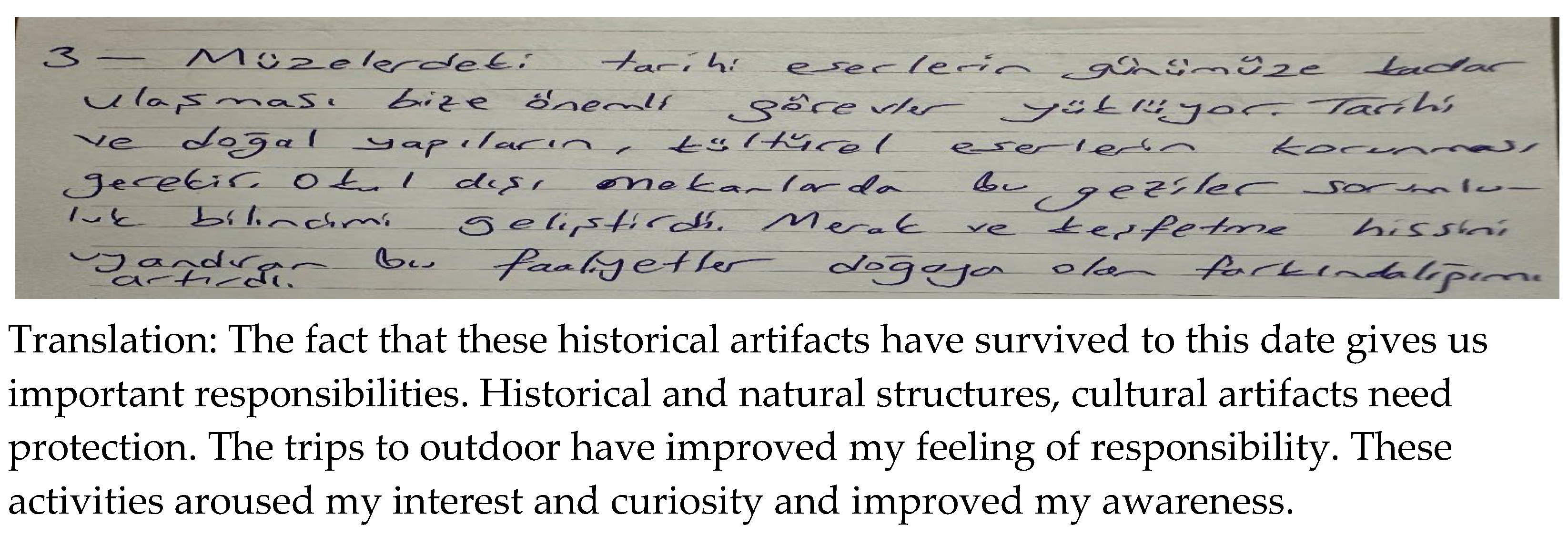
As seen in Figure 3, it was emphasized that students’ awareness of sustainability increased through out-of-school environments, that the preservation of cultural assets contributed to their sense of responsibility, and that their awareness of nature and the environment improved.
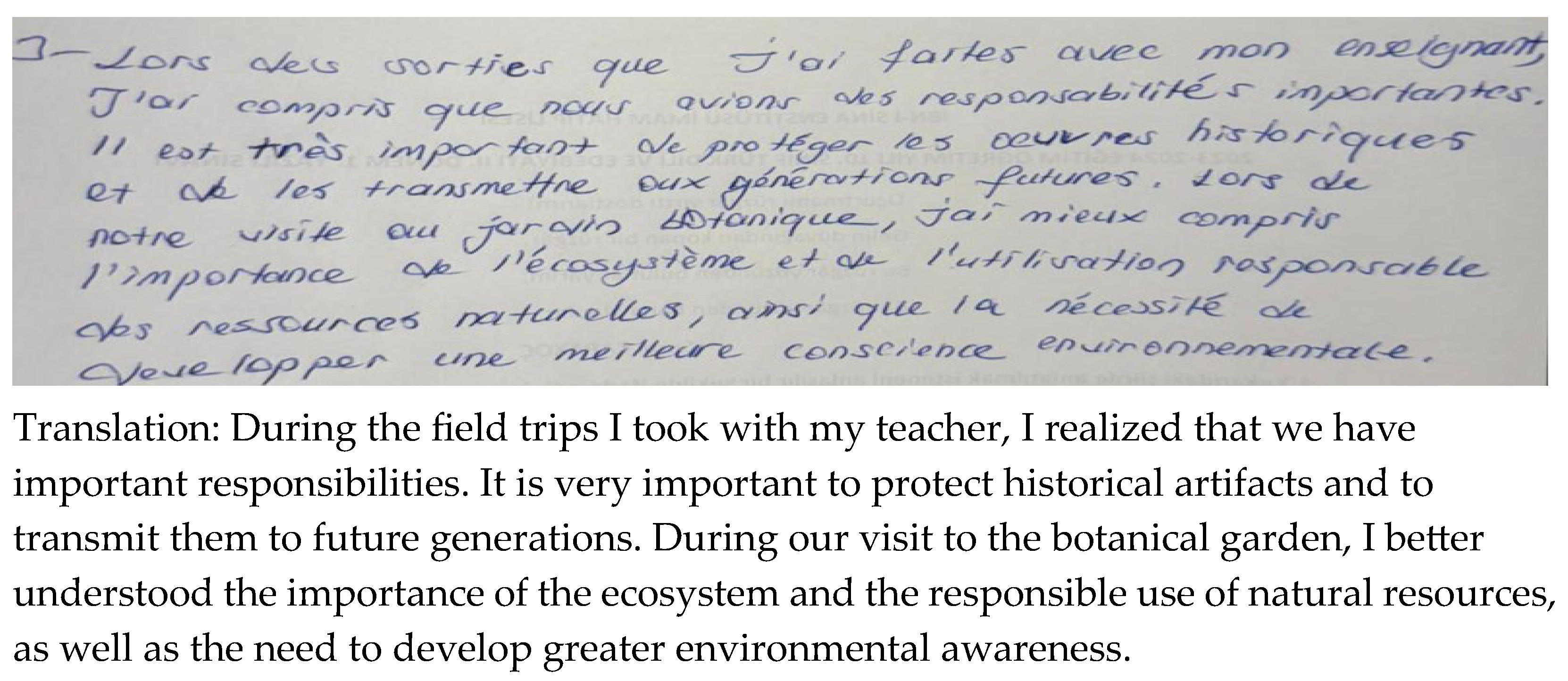
Based on the quotation presented in Figure 4, it was observed that the statements emphasized the sub-themes of Cultural and Educational Sustainability and Environmental Sustainability. The excerpt, which highlights ecosystem awareness and the preservation of nature, also underlined that the visited sites instilled a sense of responsibility in students.
In addition to the excerpts shown in Figure 3 and Figure 4, several quotations from students in Türkiye and Belgium emphasized the concept of sustainability. In these student quotations, where no linguistic alterations were made, it was noted that the concepts listed in Table 2 were frequently reiterated. The relevant quotations are as follows:
TRS2: “Outdoor learning activities gave me the opportunity to directly observe what I learned in class. For example, the historical artifacts I saw in the museum helped me understand how people lived in the past and how they used resources. This showed me why protecting nature and historical values is important for sustainability.”
TRS7: “Observing different plants and animals during nature walks helped me understand the importance of protecting them. Thanks to this experience, I now use the environment more carefully and pay attention to behaviors such as recycling and energy saving.”
TRS11: “During the trip, I saw historical bridges and houses. I was very saddened to see that some of them were damaged. Through this, I realized how important protecting cultural heritage is for a sustainable society.”
BES15: “The natural areas and historical buildings I saw during outdoor learning activities made me realize that I must take responsibility to avoid losing them. This helped me develop more sustainable behaviors.”
BES18: “At the science centers, we were allowed to create our own projects. It was also very impressive to see during the museum visits how different languages and cultures once lived together.”
BES20: “During school trips, we closely observed bike paths, recycling areas, and green urban planning. This made me understand that I need to behave more consciously toward the environment.”
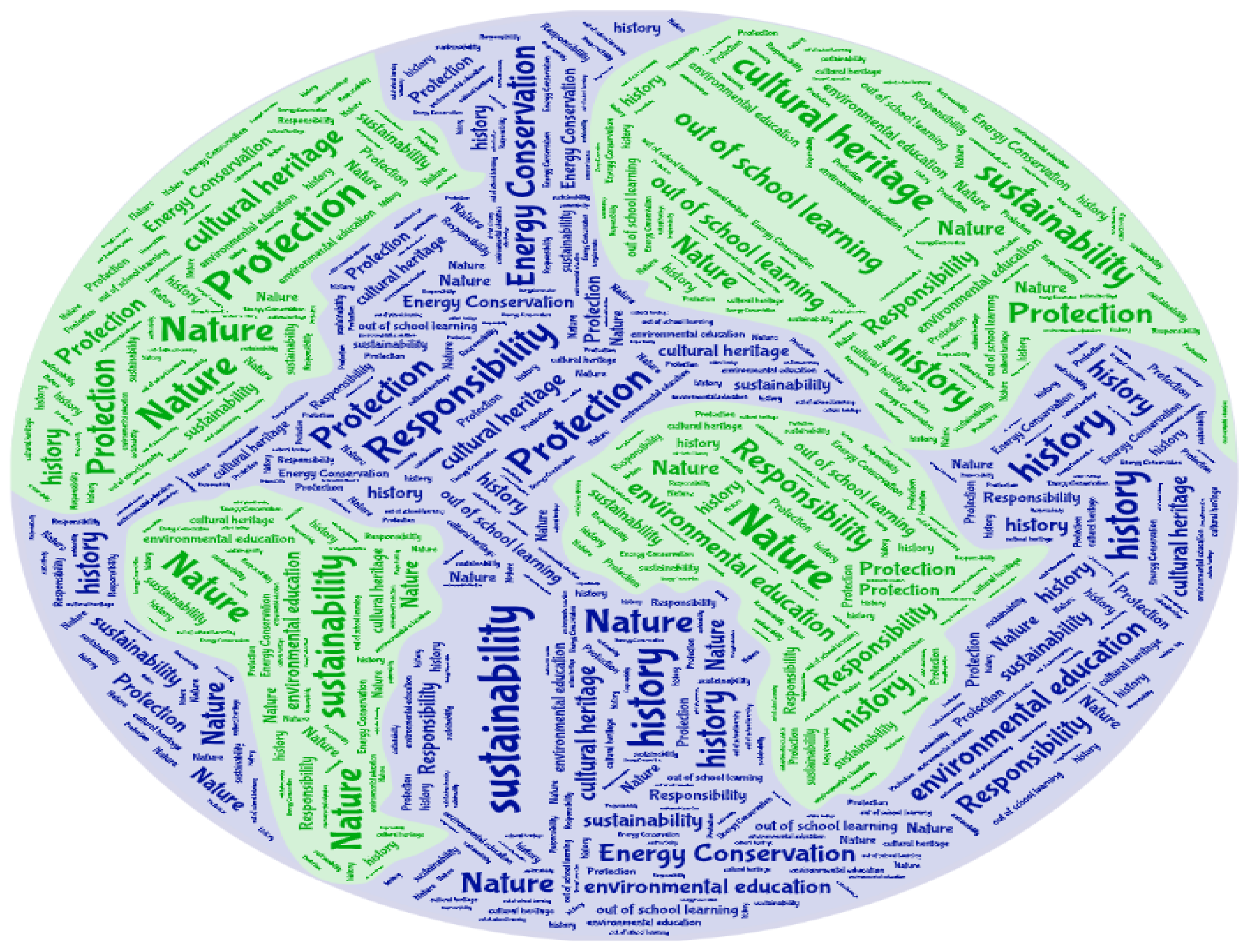
As shown in Figure 5, the word cloud visualizes the conceptual associations students made regarding sustainability within the context of outdoor learning. The most prominent words—sustainability, nature, protection, and responsibility—indicate that students perceive sustainability primarily through ethical and environmental dimensions, emphasizing personal responsibility and the protection of nature as core principles. The presence of history and cultural heritage highlights the social and cultural layers of sustainability, suggesting that students also link sustainable learning to the preservation of collective memory and local traditions.
Additionally, terms such as environmental education, energy conservation, and out-of-school learning point to a growing awareness of the educational and behavioral aspects of sustainability, emphasizing experiential and action-oriented learning. The frequent co-occurrence of these words suggests that outdoor learning activities foster a multi-dimensional understanding of sustainability that integrates ecological awareness, cultural sensitivity, and active participation.
Overall, this visualization illustrates that while cultural contexts (Türkiye and Belgium) shape students’ interpretations differently, both groups converge on a shared conceptual structure where sustainability embodies a holistic relationship between nature, culture, and responsibility.
In addition to the interview forms and the word cloud, after the completion of the Türkiye and Belgium implementations, students were asked by the researchers to create metaphors related to sensitivity toward cultural heritage. The most significant metaphors and their underlying rationales, as expressed by students, are presented in Table 3.
The metaphors presented in Table 3 are significant in terms of illustrating the ideas students have conceptualized about sustainability. These metaphors, which can be seen as reflections of students’ creativity and imaginative thinking, demonstrate that visits to Outdoor Learning environments have a positive impact on sustainability awareness.

3.2. The Impact of Outdoor Learning Activities on Sensitivity to Cultural Heritage

Table 4 reveals clear differences in how sustainability is conceptualized in Türkiye and Belgium. In Türkiye, students emphasized the moral, cultural, and emotional dimensions of sustainability, highlighting awareness of nature, respect for cultural heritage, and the importance of authentic, out-of-school learning environments. Themes such as empathy, responsibility, and lifelong learning show that sustainability is viewed as a value-based and character-forming process, intertwined with cultural preservation and personal growth rather than limited to environmental awareness.
In contrast, Belgian students reflected a more future-oriented and systemic perspective, linking sustainability with climate action, innovation, and European identity. The prominence of reducing carbon footprints, zero-waste culture, and urban learning spaces illustrates a policy-driven and practical approach, while the emphasis on autonomy and personal initiative reflects an education system encouraging individual agency and innovation within a multicultural and technologically advanced context.
Across both contexts, cultural heritage emerged as a key component. Frequently mentioned concepts included historical awareness, preservation of artifacts, continuation of cultural elements, transmission to future generations, traditional arts, tolerance toward different cultures, and protection of natural beauty. Students reported that Outdoor Learning activities deepened their understanding and awareness of cultural heritage through museum visits, guided explorations, and dramatization activities. Many also noted that they connected local and European cultural identities through family stories and migration narratives, demonstrating that Outdoor Learning fosters multidimensional sensitivity to heritage and sustainability.
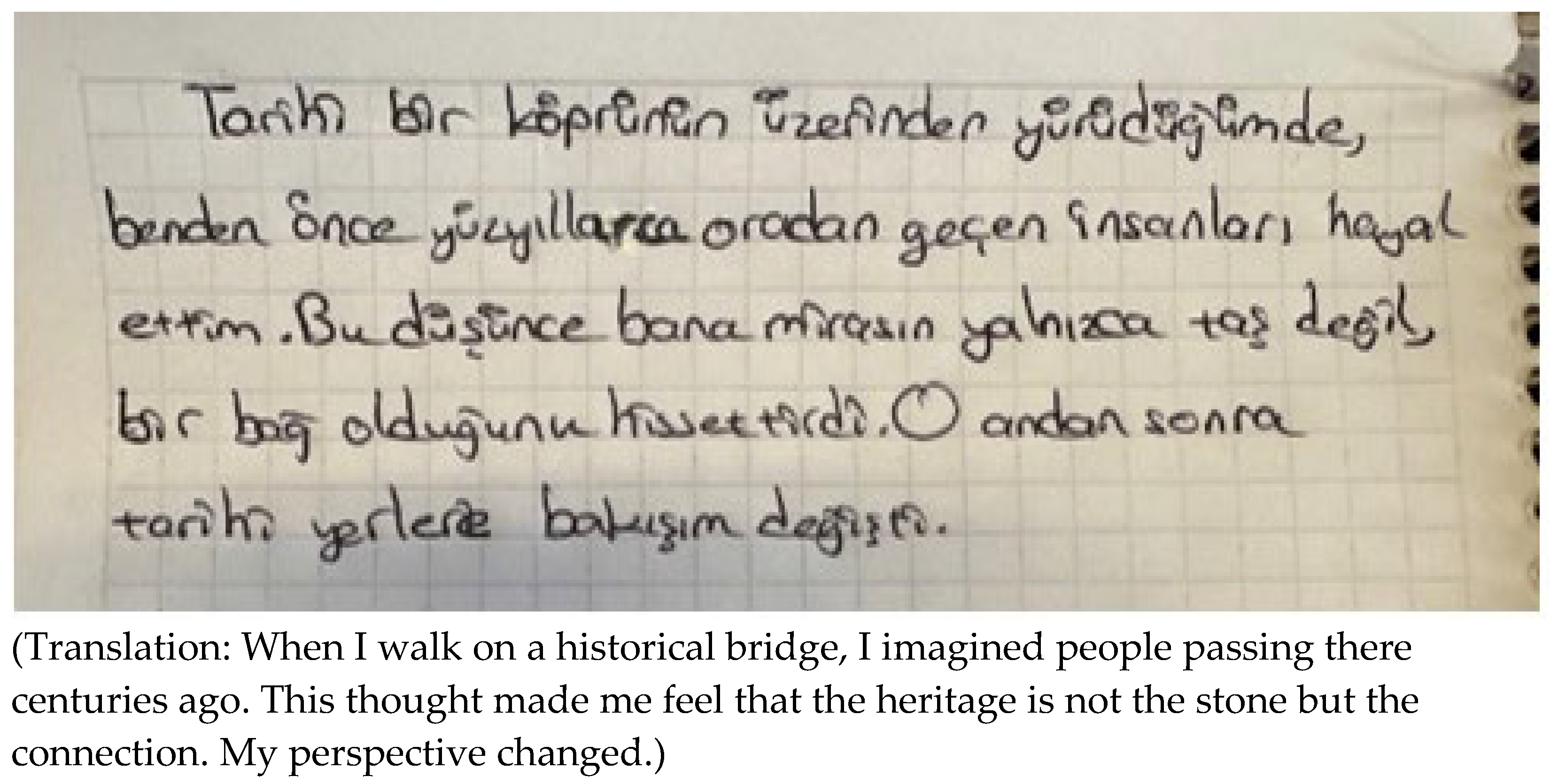
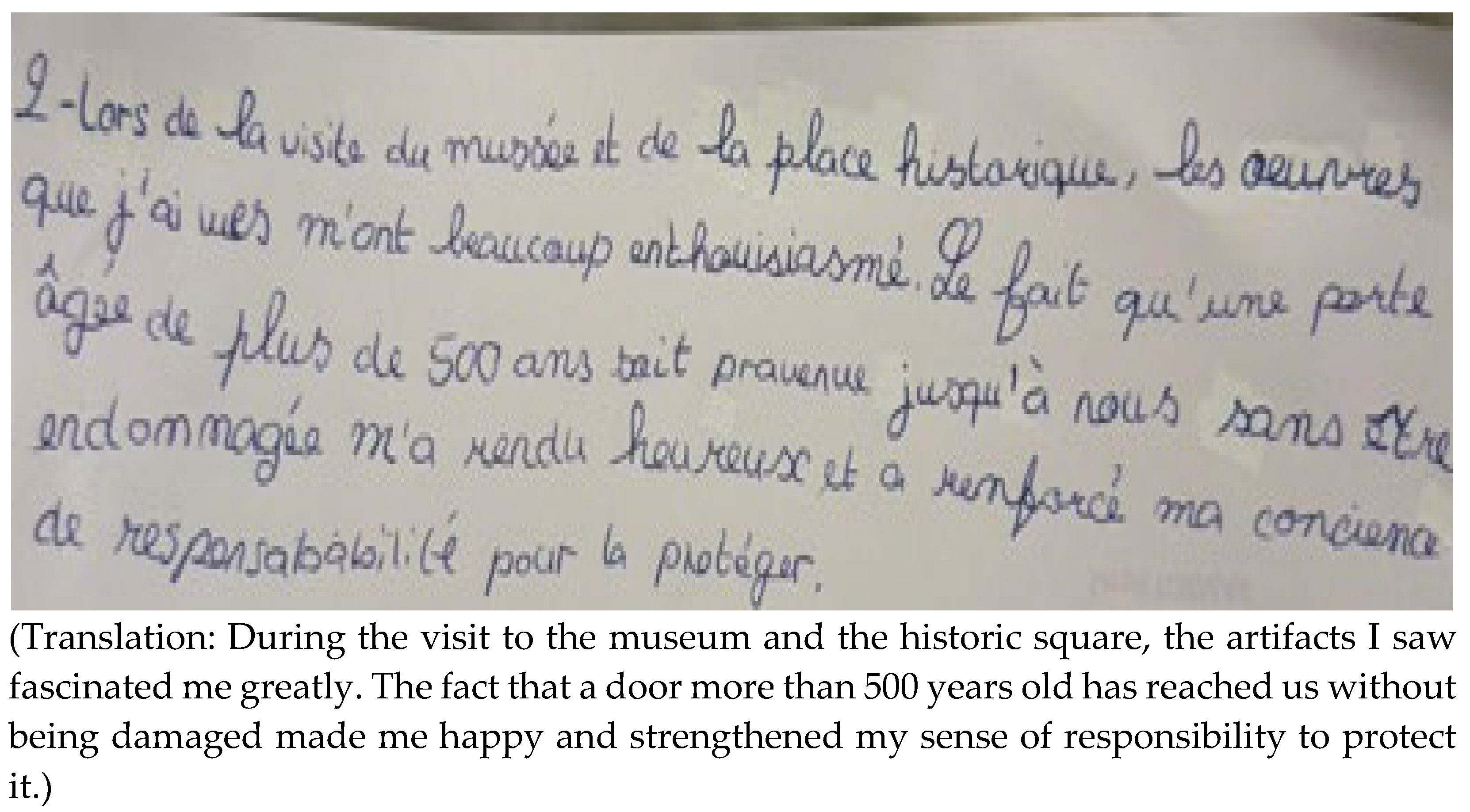
In the excerpts presented in Figure 6 and Figure 7, students stated that historical sites excited them, that artifacts preserved for centuries instilled a sense of responsibility, and that cultural assets serve as a bridge connecting the past and the present. Some excerpts from student interviews display:
Some significant responses obtained from the semi-structured interview form with students are as follows:
TRS3: “The stories told by the guide in a historical palace deeply affected me. I imagined the people who once lived there. I felt that cultural heritage is actually a bridge between the past and the present.”
TRS5: “We visited a palace. I learned that even the small vases I saw there were very valuable. Since then, I’ve realized that preserving cultural heritage is not only about protecting great monuments but also the smallest pieces.”
TRS10: “During the tour of historical squares and fountains, I watched elderly women preparing traditional dishes. I realized that cultural heritage is not only stone buildings but also living traditions. Now, I look at my family’s cooking with a different perspective.”
BES7: “Listening to the stories of old buildings during our exploration tours in historical neighborhoods allowed me to see the past of my hometown from a different point of view.”
BES18: “During the museum visits, we learned how different cultures once lived together. Listening to the stories of immigrant communities was truly impressive.”
BES33: “Being allowed to ask questions and share ideas during guided tours enabled me to participate actively in the learning process. Through this, I was able to understand cultural heritage much better.”
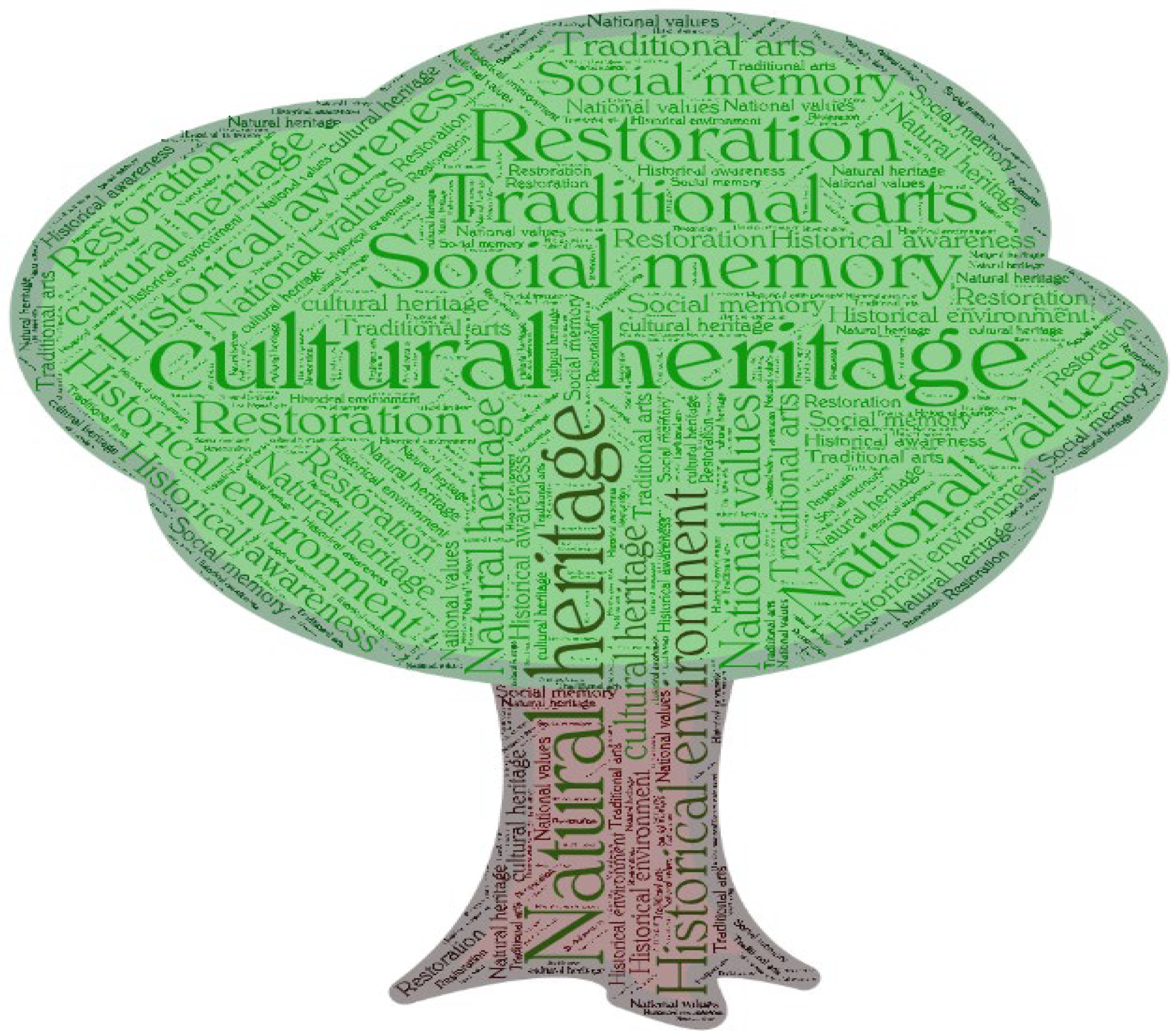
As shown in Figure 8, the word cloud shows that combining cultural heritage education with outdoor learning helped students develop awareness of identity, historical continuity, and values, while also creating a shared sense of heritage among students from different cultures. The largest and most central word, cultural heritage, appears as the main theme. Around it, the words historical environment and natural heritage are strongly clustered, showing that students understand heritage as both human-made and natural.
The frequent appearance of social memory shows that students see cultural heritage not only as physical structures but also as a social and emotional value. The presence of historical awareness and national values indicates that the learning activities supported both cognitive and affective goals. Finally, the words traditional arts and restoration reflect students’ growing awareness of protecting and maintaining heritage, connecting sustainability with creative and preservation-oriented thinking. Overall, the word cloud suggests that outdoor learning helps students build a holistic understanding of cultural sustainability, combining nature, history, and cultural identity in meaningful ways.
When examining the expressions in the word cloud, it was observed that students frequently used terms such as “cultural heritage,” “historical environment,” “natural heritage,” “historical awareness,” “social memory,” “national values,” “traditional arts,” and “restoration.”
In addition to the interview forms and the word cloud, after the Türkiye and Belgium implementations, students were asked by the researchers to create metaphors related to sensitivity toward cultural heritage. The most significant metaphors and their justifications, as expressed by the students, are presented in Table 5.
In Table 5, the metaphors are significant as they concretize the ideas that students have formed in their minds regarding sensitivity to cultural heritage. These metaphors, which are important for reflecting students’ diverse ways of thinking, demonstrate that visits to Outdoor Learning environments influence their sensitivity toward cultural heritage. The educational activities and sites visited within Outdoor Learning environments were clearly reflected in the students’ metaphors. Indeed, it was observed that the statements in student interviews and the word cloud were reinforced through these metaphors.

3.3. Opinions of School Administrators, Teachers, and External Observers on Outdoor Learning Activities

When Table 6 is examined, it can be seen that school administrators’ opinions mainly focus on the following aspects: permanence of learning, development of social skills, cultural belonging, safety, and sustainability.
In parallel with the statements in the table, several excerpts from administrators’ views on Outdoor Learning are presented below.
TR–Administrator 1: “Outdoor Learning activities enable our students to experience knowledge not only in theory but also in practice. Since they learn by observing, researching, and touching, the permanence of learning increases. Such activities function as a natural extension of the lessons. In addition, communication and cooperation among students are strengthened; they learn teamwork, empathy, and taking responsibility. Visiting historical and cultural sites reinforces students’ sense of identity and enhances their awareness of social responsibility. Of course, careful planning is essential in such activities; transportation and guidance responsibilities must be organized meticulously, and student safety should be the top priority. Another important point for me is continuity: these activities should not be one-time events but a regular part of the curriculum.”
BE–Administrator 2: “Outdoor Learning helps our students concretize knowledge; they make what they learn in class more permanent by relating it to real life. I particularly believe that these activities serve as a complementary tool to the curriculum. Children develop their ability to act together, share, and take responsibility. Strengthening social bonds also helps them behave more harmoniously in the school environment. Through cultural heritage visits, students reinforce their sense of identity and gain an awareness of the past. Of course, organization and safety are critical; transportation arrangements, teacher responsibilities, and risk prevention require careful preparation. Ensuring the continuity of these activities is also important, because when repeated regularly, they foster a conscious and lasting learning habit among students.”
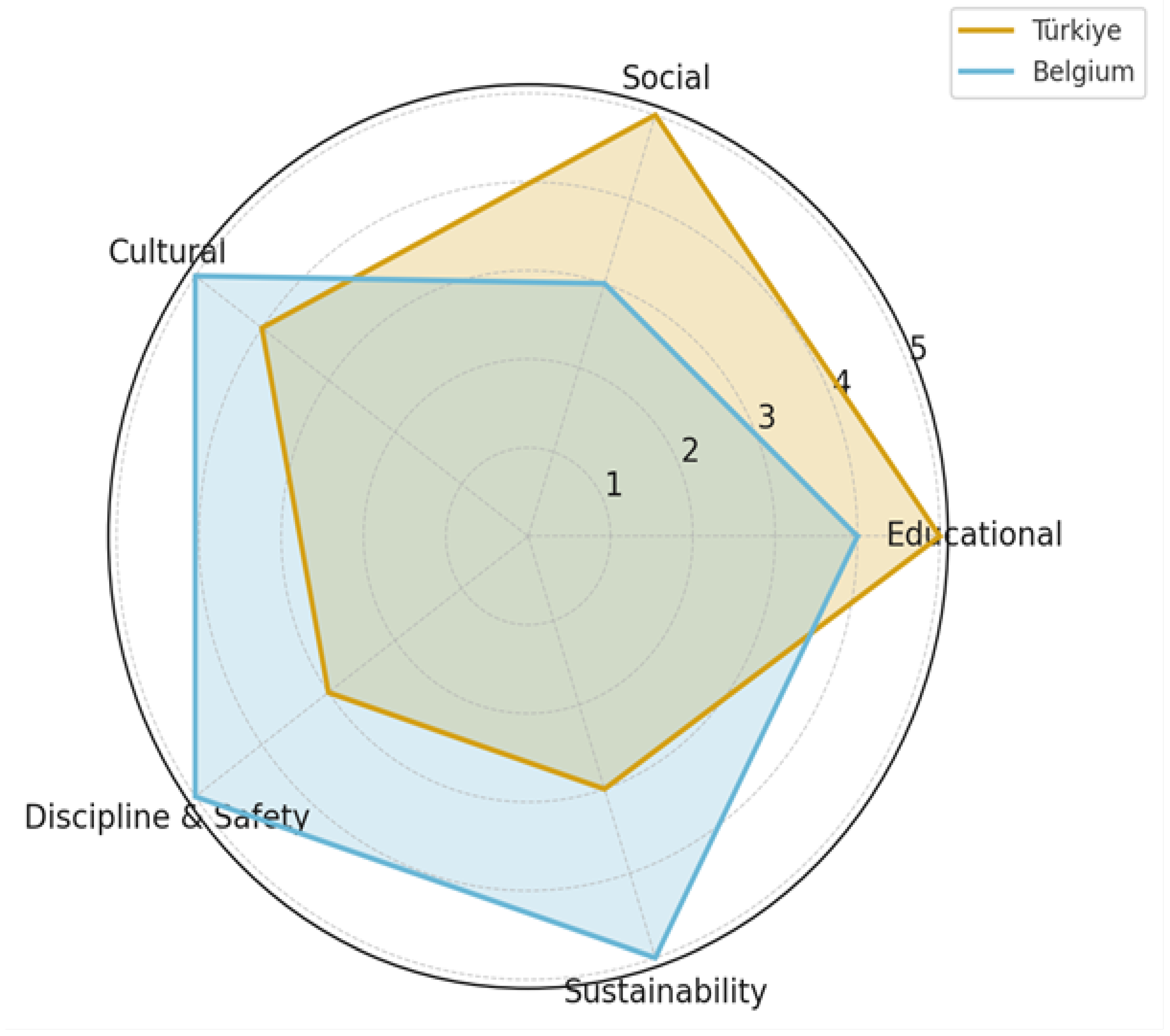
In Table 7, teachers’ opinions, Outdoor Learning (OL) provides strong support for students in concretizing knowledge and transferring theoretical understanding into practice in terms of educational contributions. In the context of social contributions, it was observed that students developed skills such as collaboration, sharing, and taking responsibility. The cultural dimension of OL helps students strengthen their sense of identity and cultural belonging. Discipline and safety constitute one of the most critical aspects of Outdoor Learning activities; when planning is insufficient, risks increase, yet a careful preparation process minimizes these risks. Sustainability, on the other hand, requires that these activities become a regular component of the curriculum rather than one-time events, allowing learning to evolve into a long-term strategic process.
The following teacher quotations support these findings:
TR–Teacher 1: “This educational approach enables our students to reinforce their knowledge through real-life experience. The concretization of abstract theoretical information increases their interest in the lesson. Moreover, our students develop communication skills through group work and learn to take responsibility. Observing stronger friendship bonds and enhanced empathy among them is a very valuable contribution for us as teachers.”
BE–Teacher 2: “When we take our students to cultural and historical sites, we observe that they not only gain knowledge but also develop a sense of identity and belonging. Recognizing cultural heritage and strengthening historical awareness make them more socially responsible individuals. I believe such activities create lasting social awareness among children. Students begin to see themselves as part of the culture.”
When the opinions of teachers from Türkiye and Belgium are compared, it is evident that the evaluation of Outdoor Learning activities was approached from four main perspectives. From an educational perspective, teachers in both countries stated that field experiences reinforce theoretical knowledge, increase students’ interest in lessons, and contribute to permanent learning. Turkish teachers particularly emphasized the impact of museum and historical site visits on knowledge retention, whereas Belgian teachers placed more emphasis on integrating such activities into regular programs.
From a social perspective, teachers highlighted the development of communication skills through teamwork, empathy, and sharing. Turkish teachers especially emphasized teamwork and taking responsibility, while Belgian teachers underlined that structured and well-planned activities strengthened guidance and the sharing of responsibility.
From a cultural perspective, Turkish teachers noted that museum and historical site visits enhance historical awareness and a sense of social responsibility, whereas Belgian teachers pointed out that cultural awareness also reinforces students’ sense of identity and belonging.
In terms of discipline and safety, teachers in both countries stressed the importance of planning, guidance, and safety measures, with these aspects being handled in a more systematic manner in Belgium.
Finally, from a sustainability perspective, Belgian teachers stood out with their emphasis on continuity; they stated that conducting activities regularly throughout the year within an integrated program framework supports permanent learning among students.
In Figure 9 it is shown that teachers and students who participated in the Outdoor Learning activities were evaluated impartially by two external observers.
The analyses conducted by the external observers focused on the advantages and disadvantages across the teacher, student, and process dimensions. The findings from the external observers’ analyses are presented in Table 8.
The external observers’ notes included several important findings. In both countries, the observers found the teachers’ guiding and inquiry-encouraging approaches to be positive. However, large class sizes and outdoor conditions made individual attention and classroom management particularly challenging in the activities conducted in Türkiye. Overall, students were observed to have high levels of motivation and curiosity. Group work enhanced communication and cooperation, yet distraction and the passivity of some students created inequalities in the learning process. The spatial features of the activity sites contributed positively to learning; nevertheless, noise, time-management, and logistical problems prevented the process from being as efficient as planned.

4. Discussion and Conclusions

This study aimed to comparatively examine the impact of Outdoor Learning (OL) activities conducted in Türkiye and Belgium on the dimensions of sustainability in education and sensitivity to cultural heritage. The findings revealed that OL has significant effects on students’ cognitive, affective, and social development in both countries and that it serves as a strategic pedagogical tool for building a sustainable future and transmitting cultural identity. The results derived from a comprehensive analysis were interpreted in relation to the existing literature.

4.1. The Role of Outdoor Learning in the Context of Sustainability

Findings emphasized that OL is effective in fostering environmental awareness, the internalization of ecological values, and ethical attitudes toward nature. Through direct interaction with the natural environment, students were able to concretize abstract environmental topics and connect concepts such as biodiversity, natural resource use, recycling, and energy conservation with their own experiences. This aligns with the concept of “outdoor education for sustainable development” highlighted by Hu & Mou [63] and Zong [64]. Similarly, the GewässerCampus project by Jekel Könnel et al. [65] demonstrated that outdoor education significantly enhances environmental values, ecological knowledge, and motivation. In line with the idea that sustainable change occurs through consistent long-term practices, students developed environmental sustainability awareness by engaging directly with nature through OL activities. In student interviews, frequently mentioned concepts such as “awareness of nature,” “protection of natural resources,” “importance of biodiversity,” “recycling,” and “energy conservation” reflect the positive influence of OL on environmental education and ecological literacy. Although not holistic as expected for sustainability, the comments of students outline the scope of this research in environmental awareness. This finding corresponds with the experiential learning approach [7], which allows students to make sense of abstract concepts through direct experience, as well as with research emphasizing the development of environmental literacy [16,17,18]. Students’ development of values such as responsibility, empathy, respect for cultural heritage, and social consciousness indicates that OL contributes to building a more responsible and connected society. The skills of teamwork and taking responsibility, emphasized by teachers, administrators, and external observers, demonstrate OL’s role in constructing the social capital necessary for sustainable societies. This finding aligns with arguments that cultural-heritage sensitivity enhances social cohesion and solidarity [53].
In addition, the present findings resonate with international Outdoor Learning research conducted across diverse contexts. For example, Nazir and Pedretti [66] and Lauterbach [67] found that outdoor learning enhances students’ ecological responsibility and sense of belonging to the environment in both European and non-European settings. By comparing the Turkish and Belgian cases, this study expands these findings through a cross-cultural lens, revealing how policy context and cultural background influence sustainability-oriented learning outcomes. Such transnational parallels strengthen the universality and transferability of the study’s conclusions.

4.2. Strengthening Sensitivity to Cultural Heritage

Another major finding of the research is that OL activities fostered in students a sense of sensitivity and belonging toward cultural heritage, along with gains in historical awareness, collective memory, national identity, traditional arts, and restoration awareness. The metaphors developed by students (bridge, tree, treasure chest, compass) linked cultural heritage with concepts such as continuity, roots, and belonging. This is consistent with studies emphasizing that cultural heritage education is a process not only of knowledge transmission but also of identity, belonging, and collective memory formation [45,47,49]. The findings align with other studies that position cultural heritage education as a bridge between past and future. Recent literature increasingly explores how cultural heritage education influences learners’ sustainability perceptions and participatory heritage attitudes. Moreover, Guo’s [68] proposed “Bichronous Modes” approach demonstrates potential to enhance the effects of heritage education programs on motivation, learning outcomes, and behavioral intentions. In Belgium, students’ exposure to a multicultural environment fostered respect for cultural diversity and awareness of shared heritage, demonstrating OL’s potential in this context. An important result is that students associated cultural heritage not only with tangible structures but also with living cultural values (culinary traditions, oral heritage, religious structures, traditional arts). This approach corresponds with UNESCO’s Convention for the Safeguarding of the Intangible Cultural Heritage and aligns with the literature emphasizing that considering both tangible and intangible dimensions of heritage is crucial for cultural sustainability [43,69]
OL activities improved students’ sensitivity and personal engagement into cultural heritage. However, there is a conflict in the literature about the relationship between personal engagement and learning/understanding. Scholars outline that there is a gap between personal engagement and understanding and the type of enjoyment is significant [70]. However, there are various research that conclude that students learn better when they enjoy [71], and when they are personally engaged in the learning field [72].

4.3. Differences in Implementation and Systemic Challenges Between Türkiye and Belgium

Although OL practices in both countries yielded similar educational gains, differences emerged in institutional support, curriculum integration, and sustainability of implementation. The systematic structure in Belgium has placed OL on stronger foundations for sustainability, while in Türkiye, policy-level support and implementation guides have gained significant momentum in recent years.
  • Implementation Systematics: In Belgium, OL practices are conducted more systematically and institutionally, supported by program integration and administrative frameworks. In Türkiye, the updated 2024 Maarif Curriculum [33] provided strong policy-level support. This parallels findings indicating that outdoor learning is more institutionalized in socioeconomically advanced countries [73,74]. The recent rise of guides, location inventories, and teacher facilitation efforts in Türkiye reflects growing institutional initiatives in this area.
  • Implementation Challenges and Limitations: While teachers and administrators recognized OL’s pedagogical benefits, they also highlighted serious challenges such as safety, transportation, costs, crowded classrooms, logistics, and bureaucratic procedures. These obstacles, often noted in the literature [75,76], constrain OL’s potential. Overcoming them requires logistical support, teacher competence development, and policy-level institutional arrangements. The key limitations identified include large class sizes, lack of financial resources, transportation and logistics issues, and safety concerns. Moreover, when OL activities are conducted as one-time events, their long-term impact remains limited. Zhang et al. [77] emphasized the importance of sensory experiences in preserving cultural heritage.
Teachers and external observers emphasized that OL is a complementary method to traditional classroom teaching, helping theoretical knowledge become more concrete and increasing student engagement. However, they also noted practical difficulties such as logistical challenges, classroom management, safety concerns, and time constraints. Frances [78] highlighted that while OL enhances teachers’ instructional capacity, it also brings challenges such as workload and uncertainty. Similarly, Akarsu’s [79] study “Beyond the Walls” demonstrated that preservice teachers gain pedagogical flexibility through OL experiences.
Beyond being an activity outside the classroom, OL represents a strategic educational policy tool for sustainable development, cultural heritage preservation, and the cultivation of social consciousness. This research confirms that by taking students beyond the walls of traditional classrooms—into the living spaces of history, culture, and nature—OL not only provides them with knowledge for today but also instills in them the responsibility, sensitivity, and awareness needed to shape the world of tomorrow. Also, the research theoretically contributes to the field by expanding the theoretical framework for cross-cultural comparisons of OL with Türkiye-Belgium cooperative and comparative study.
In line with the 2030 Sustainable Development Goals (SDGs), OL should be adopted as a key educational component that develops cultural and environmental awareness in the construction of sustainable cities and communities.

4.4. Recommendations

  • Integrate OL systematically into curricula, ensuring it becomes an organic and continuous component rather than a marginal activity.
  • Provide in-service training for teachers focusing on the pedagogical, safety, and management aspects of OL. Training should center on sustainability and cultural heritage education.
  • Enhance financial and logistical support to minimize challenges related to transportation, materials, and safety. Schools should be granted flexibility and funding to plan and implement activities.
  • Address both tangible and intangible aspects of cultural heritage to instill in students a sense of collective identity and cultural consciousness.
  • Develop standards for OL activities that ensure goal-oriented implementation, including pre- and post-activity preparation, site selection and diversity, and assessment tools measuring both academic and behavioral outcomes such as awareness and attitude change.
  • As sustainability is a rather broad concept, environment and cultural heritage were focused in this study. Further research is recommended for intra-generational equity, gender equity, vulnerable groups and socioeconomic inequity within sustainability.

4.5. Limitations

This research is limited to the Turkish and Belgian implementation, and the honesty of the participants. Also, the study is structured as a qualitative research and limited to the qualitative research methods. For more generalizability, quantitative international further research is recommended. Also, the study focuses on the environmental and cultural heritage dimensions of sustainability, leaving significant other dimensions such as poverty education, gender inequity, and intra-generational inequity. Further research on these dimensions are recommended.

Author Contributions

Conceptualization, G.O.İ.; methodology, G.O.İ.; data collection, V.A. and A.T.; formal analysis, G.O.İ.; writing—original draft preparation, A.T. and V.A.; writing—review, editing, and revision, G.O.İ. All authors have read and agreed to the published version of the manuscript.

Funding

This research was supported by Yıldız Technical University Scientific Research Projects (BAP) under grant number SBA-2025-6912.

Institutional Review Board Statement

The study was conducted in accordance with the Declaration of Helsinki and approved by the Ethics Committee of Istanbul Aydın University (protocol code 2023/09, approval date 5 October 2023).

Informed Consent Statement

Informed consent was obtained from all subjects involved in the study. Participants were informed about the purpose and scope of the research, and their voluntary participation was ensured in accordance with research ethics principles.

Data Availability Statement

The data supporting the findings of this study are available from the corresponding author upon reasonable request. Due to privacy and ethical restrictions, the data are not publicly available.

Acknowledgments

The authors would like to thank the participating schools, teachers, and students in Türkiye and Belgium for their valuable contributions to this research.

Conflicts of Interest

Author Veysi Aktaş is from the Ministry of National Education, Türkiye. The remaining authors declare that the research was conducted in the absence of any commercial or financial relationships that could be construed as a potential conflict of interest. The authors declare no conflicts of interest. The funders had no role in the design of the study; in the collection, analyses, or interpretation of data; in the writing of the manuscript; or in the decision to publish the results.

References

  1. Bunting, C.J. Interdisciplinary Teaching Through Outdoor Education; Human Kinetics: Champaign, IL, USA, 2006. [Google Scholar]
  2. SAPOE. Curriculum Beyond the Classroom: Our Strategy for 2024–2029. 2023. Available online: https://sapoe.org.uk/wp-content/uploads/2023/11/sapoe-strategy-document-2024-2029.pdf (accessed on 12 October 2025).
  3. ETBI. ETB Outdoor Education and Training Provision: A Strategic Framework for the Sector 2021–2023. 2022. Available online: https://www.etbi.ie/wp-content/uploads/2022/02/FET-Outdoor-Education-Training-12.11.pdf (accessed on 12 October 2025).
  4. Maynard, T.; Waters, J.; Clement, J. Moving outdoors: Further explorations of ‘child-initiated’ learning in the outdoor environment. Educ. 3–13 2013, 41, 282–299. [Google Scholar] [CrossRef]
  5. Aylward, T.; Coulter, M.; Farrelly, T. Outdoor learning on the edge of Europe: A systematic review of practices in Ireland. J. Adventure Educ. Outdoor Learn. 2025, 1–24. [Google Scholar] [CrossRef]
  6. Falk, J.H.; Dierking, L.D. School field trips: Assessing their long-term impact. Curator Mus. J. 1997, 40, 211–218. [Google Scholar] [CrossRef]
  7. Dewey, J. Experience and Education; Macmillan/Kappa Delta Pi: New York, NY, USA, 1938. [Google Scholar]
  8. Rotaru, C. The triad: Grundtvig, Haret, Gusti—Outdoor education in the history of international pedagogy. Procedia Soc. Behav. Sci. 2014, 142, 531–535. [Google Scholar] [CrossRef]
  9. Nichols, D.R. Outdoor educators: The need to become credible. J. Environ. Educ. 1982, 14, 1–3. [Google Scholar] [CrossRef]
  10. Alleman, J.; Brophy, J. Taking advantage of out-of-school opportunities for meaningful social studies learning. Soc. Stud. 1994, 85, 262–267. [Google Scholar] [CrossRef]
  11. Foran, A. An outside place for social studies. Can. Soc. Stud. 2008, 41, 1–9. [Google Scholar] [CrossRef]
  12. Eshach, H. Bridging in-school and out-of-school learning: Formal, non-formal, and informal education. J. Sci. Educ. Technol. 2007, 16, 171–190. [Google Scholar] [CrossRef]
  13. Behrendt, M.; Franklin, T. A review of research on school field trips and their value in education. Int. J. Environ. Sci. Educ. 2014, 9, 235–245. [Google Scholar]
  14. Şimşek, A.; Kaymakçı, S. Okul Dışı Sosyal Bilgiler Öğretiminin Amacı ve Kapsamı. In Okul Dışı Sosyal Bilgiler Öğretimi; Şimşek, A., Kaymakçı, S., Eds.; Pegem Akademi: Ankara, Türkiye, 2015; pp. 2–3. [Google Scholar]
  15. Beames, S.; Higgins, P.; Nicol, R.; Smith, H. Outdoor Learning Across the Curriculum: Theory and Guidelines for Practice, 2nd ed.; Routledge: London, UK, 2023. [Google Scholar]
  16. Küçük, S. Environmental education and outdoor learning. J. Environ. Educ. Res. 2020, 16, 55–72. [Google Scholar]
  17. Vivier, M.; Lee, J. Outdoor learning and environmental literacy. Environ. Educ. Res. 2018, 24, 1250–1266. [Google Scholar]
  18. Williams, D.R. Environmental learning in informal contexts: Field trips to natural history museums. J. Mus. Educ. 2021, 46, 345–359. [Google Scholar]
  19. Uğurlu, A.; Sever, R. Examining the Anxiety Levels of Classroom Teachers Regarding Out-of-School Learning Environments. İnönü Univ. J. Fac. Educ. 2024, 25/2, 670–690. [Google Scholar]
  20. Özdemir, L.A. Views of Pre-Service Science Teachers About Informal Learning Environments Before and After Science and Technology Museum Visit. Master’s Thesis, Middle East Technical University, Ankara, Türkiye, 2019. [Google Scholar]
  21. Richmond, D.; Sibthorp, J.; Gookin, J.; Annarella, A.; Ferri, S. Complementing classroom learning through outdoor adventure education: Out-of-school time experiences that make a difference. J. Adventure Educ. Outdoor Learn. 2017, 18, 36–52. [Google Scholar] [CrossRef]
  22. Wernholm, M. Children’s out-of-school learning in digital gaming communities. Des. Learn. 2021, 13, 8–19. [Google Scholar] [CrossRef]
  23. Aktaş, V.; Tokmak, A.; İlhan, G.O. Improving sensitivity to cultural heritage through out-of-school learning activities. Particip. Educ. Res. 2025, 12, 98–117. [Google Scholar] [CrossRef]
  24. Özyıldırım, H.; Durmaz, H. The effect of an interdisciplinary field trip on pre-service teachers’ attitudes toward outdoor learning activities. Trak. J. Educ. 2022, 12, 522–541. [Google Scholar]
  25. Taytaş, G. Evaluation of school trips based on teachers’ opinions. J. Int. Educ. Res. 2022, 2, 389–425. [Google Scholar]
  26. Ürey, M.; Kaymakçı, S. Elementary school teachers’ perceptions about out-of-school environments and applications in life studies course. Milli Eğitim 2020, 49, 7–32. [Google Scholar]
  27. Acar, L. Examination of Science Teachers’ Views About Out of School Learning Environments and Their Use of These Environments. Master’s Thesis, Trabzon University, Trabzon, Türkiye, 2022. [Google Scholar]
  28. Henriksson, A.-C. Primary school teachers’ perceptions of out-of-school learning within science education. LUMAT Int. J. Math Sci. Technol. Educ. 2018, 6, 9–26. [Google Scholar] [CrossRef]
  29. Wang, J.W. Using process drama in museum theatre educational projects to reconstruct postcolonial cultural identities in Hong Kong. J. Appl. Theatre Perform. 2014, 19, 39–49. [Google Scholar] [CrossRef]
  30. Cosgriff, M. The reconceptualisation of outdoor education in the primary school classroom in Aotearoa New Zealand: How might we do it? Educ. 3–13 2015, 4, 2–14. [Google Scholar]
  31. Norodahl, K.; Johannesson, I.A. Children’s outdoor environment in Icelandic educational policy. Scand. J. Educ. Res. 2015, 59, 1–22. [Google Scholar] [CrossRef]
  32. Ministry of National Education (MEB). Outdoor Learning Guide; Ministry of National Education Publications: Ankara, Türkiye, 2023. [Google Scholar]
  33. Ministry of National Education (MEB). Maarif Curriculum Report/2024 Detailed Maarif Curriculum Report; Ministry of National Education: Ankara, Türkiye, 2024. [Google Scholar]
  34. Aktaş, V.; Yılmaz, A.; İlhan, G.O. Developing the spatial thinking skill scale in the scope of social studies teaching. RumeliDE J. Lang. Lit. Stud. 2023, Ö13, 610–623. [Google Scholar] [CrossRef]
  35. Kubat, U. Science teacher candidates’ opinions about out-of-school learning environments. Mehmet Akif Ersoy Univ. J. Educ. Fac. 2018, 48, 111–135. [Google Scholar]
  36. UNESCO. Convention for the Safeguarding of the Intangible Cultural Heritage; UNESCO: Paris, France, 2003; Available online: https://ich.unesco.org/en/convention (accessed on 20 August 2025).
  37. Kara, İ.; Tokmak, A. The place and importance of social studies in teaching natural and cultural heritage. Nevşehir Hacı Bektaş Veli Univ. J. Soc. Sci. Inst. 2023, 13, 177–199. [Google Scholar] [CrossRef]
  38. Throsby, D. Culturally sustainable development: Theoretical concept or practical policy instrument? Int. J. Cult. Policy 2017, 23, 133–147. [Google Scholar] [CrossRef]
  39. Aydın, E. The Impact of Cultural Heritage on the Formation of Sustainable Destination Image: The Example of Istanbul Kalkhedon. Master’s Thesis, Kapadokya University, Nevsehir, Türkiye, 2024. [Google Scholar]
  40. Auclair, E.; Fairclough, G. Theory and Practice in Heritage and Sustainability: Between Past and Future; Routledge: London, UK, 2020. [Google Scholar]
  41. Soini, K.; Svels, K.; Abernethy, P.; Jokinen, M.; Ojala, A. Socially and Culturally Sustainable Natural Resource Governance (SOCCA). Luonnonvarakeskus (Luke): Helsinki, Finland,, 2021. [Google Scholar]
  42. UNWTO. Tourism Highlights; UNWTO: Madrid, Spain, 2014; Available online: https://www.e-unwto.org/doi/epdf/10.18111/9789284416226 (accessed on 20 August 2025).
  43. Duxbury, N.; Hosagrahar, J.; Pascual, J. Why must culture be at the heart of sustainable urban development? Urban Sustain. 2021, 1, 1–13. [Google Scholar]
  44. Çengelci, T. Cultural heritage education in social studies courses: Teachers’ views and experiences. Eğitim Bilim 2012, 37, 17–31. [Google Scholar]
  45. Thurley, S. Into the Future. Our Strategy for 2005–2010. Conserv. Bull. 2005, 49, 26–27. [Google Scholar]
  46. Dönmez, C.; Yeşilbursa, C.C. The effect of cultural heritage education on attitudes toward tangible heritage. İlköğretim Online 2014, 13, 2. [Google Scholar]
  47. Curtis, D.J.; Seymour, J. Heritage education: Approaches and experiences. Int. J. Herit. Stud. 2004, 10, 57–73. [Google Scholar]
  48. Europa, N. Heritage and Education: A European Perspective. The Hague Forum 2004. Available online: http://www.europanostra.org (accessed on 20 August 2025).
  49. Barghi, R.; Rahimian, M.; Ranjbar, V. Heritage education and sustainable cultural development. J. Cult. Herit. Manag. Sustain. Dev. 2017, 7, 298–314. [Google Scholar]
  50. WCED. Our Common Future; Oxford University Press: Oxford, UK; New York, NY, USA, 1987. [Google Scholar]
  51. Ismagilova, G.N.; Safiullin, L.N.; Bagautdinova, N.G. Tourism development in the region based on historical heritage. Life Sci. J. 2014, 11, 363–367. [Google Scholar]
  52. Kim, S.; Whitford, M.; Arcodia, C. Development of intangible cultural heritage as a sustainable tourism resource: The intangible cultural heritage practitioners’ perspectives. In Authenticity and Authentication of Heritage; Routledge: London, UK, 2021; pp. 34–47. [Google Scholar]
  53. Pai, C.H.; Zhang, Y.; Wang, Y.L.; Li, K.; Shang, Y. Current challenges and opportunities in cultural heritage preservation through sustainable tourism practices. Curr. Issues Tour. 2025, 1–19. [Google Scholar] [CrossRef]
  54. Chhabra, D. Proposing a sustainable marketing framework for heritage tourism. J. Sustain. Tour. 2009, 17, 303–320. [Google Scholar] [CrossRef]
  55. Soini, K.; Birkeland, I. Cultural sustainability and heritage: From policy to practice. J. Environ. Plan. Manag. 2021, 64, 1514–1530. [Google Scholar]
  56. Giliberto, F.; Labadi, S. Harnessing cultural heritage for sustainable development: An analysis of three internationally funded projects in MENA countries. Int. J. Herit. Stud. 2022, 28, 133–146. [Google Scholar] [CrossRef]
  57. Soper, A.K. Developing Mauritianness: National Identity, Cultural Heritage Values and Tourism. J. Herit. Tour. 2007, 2, 94–109. [Google Scholar] [CrossRef]
  58. Yehia, E.F.; Ali Amer Alkhashil, M. The Power of Digital Storytelling in Preserving Saudi Cultural Heritage and Fostering National Identity. Herit. Soc. 2025, 1–29. [Google Scholar] [CrossRef]
  59. Lei, X.; Guo, W.; Xu, T. Heritage memory and identity: The central role of residents’ topophilia in cultural heritage tourism development. Curr. Issues Tour. 2025, 1–19. [Google Scholar] [CrossRef]
  60. Oberle, E.; Zeni, M.; Munday, F.; Brussoni, M. Support factors and barriers for outdoor learning in elementary schools: A systemic perspective. Am. J. Health Educ. 2021, 52, 251–265. [Google Scholar] [CrossRef]
  61. Yokuş, G. Integrating Outdoor School Learning Into Formal Curriculum: Designing Outdoor Learning Experiences and Developing Outdoor Learning Framework For PreService Teachers. Int. J. Educ. Technol. Sci. Res. 2020, 5, 1330–1388. [Google Scholar]
  62. Yıldırım, A.; Şimşek, H. Qualitative Research Methods in Social Sciences; Seçkin Publications: Ankara, Türkiye, 2021. [Google Scholar]
  63. Hu, R.; Mou, S. Outdoor education for sustainable development: A systematic literature review. Sustainability 2025, 17, 3338. [Google Scholar] [CrossRef]
  64. Zong, B. Advances, hotspots, and trends in outdoor education. Sustainability 2024, 16, 10034. [Google Scholar] [CrossRef]
  65. Jekel Könnel, E.; Geuer, L.; Schlindwein, A.; Perret, S.; Ulber, R. The effects of an outdoor learning program “GewässerCampus” in the context of environmental education. Educ. Sci. 2025, 15, 550. [Google Scholar] [CrossRef]
  66. Nazir, J.; Pedretti, E. Educators’ perceptions of bringing students to environmental consciousness through engaging outdoor experiences. Environ. Educ. Res. 2016, 22, 288–304. [Google Scholar] [CrossRef]
  67. Lauterbach, G. “Building Roots”—Developing Agency, Competence, and a Sense of Belonging through Education outside the Classroom. Educ. Sci. 2023, 13, 1107. [Google Scholar] [CrossRef]
  68. Guo, M. Bichronous modes in heritage education for enhancing motivation and learning outcomes via the ARCS model. npj Herit. Sci. 2025, 11, 22. [Google Scholar] [CrossRef]
  69. Labadi, S. Cultural Heritage and Sustainable Development: A Framework for Action; UCL Press: London, UK, 2022. [Google Scholar]
  70. Lumby, J. Enjoyment and learning: Policy and secondary school learners’ experience in England. Br. Educ. Res. J. 2010, 37, 247–264. [Google Scholar] [CrossRef]
  71. Blunsdon, B.; Reed, K.; McNeil, N.; McEachern, S. Experiential Learning in Social Science Theory: An investigation of the relationship between student enjoyment and learning. High. Educ. Res. Dev. 2003, 22, 43–56. [Google Scholar] [CrossRef]
  72. McNew-Birren, J.; Gaul-Stout, J. Understanding scientific literacy through personal and civic engagement: A citizen science case study. Int. J. Sci. Educ. Part B 2022, 12, 126–142. [Google Scholar] [CrossRef]
  73. Gray, T.; Martin, P. The role and place of outdoor education in the Australian National Curriculum. J. Outdoor Environ. Educ. 2012, 16, 39–50. [Google Scholar] [CrossRef]
  74. Wang, J.; Zhang, X.; Dolah, J. Mobile-enhanced outdoor education for Tang Sancai heritage tourism: An interactive experiential learning approach. Educ. Sci. 2025, 15, 743. [Google Scholar] [CrossRef]
  75. Ürey, M.; Kaymakçı, S. Primary school teachers’ views on the use and implementation of out-of-school learning environments in life sciences courses. Milli Eğitim Derg. 2020, 49, 7–32. [Google Scholar]
  76. Henriksson, C. Teachers’ challenges in outdoor learning. Educ. Inq. 2018, 9, 143–160. [Google Scholar]
  77. Zhang, J.; Shi, Y.; Zhao, L.; Cai, C.; Furuya, K. Toward sustainable and differentiated protection of cultural heritage: A multisensory analysis of Suzhou and Kyoto using deep learning. npj Herit. Sci. 2025, 13, 287. [Google Scholar] [CrossRef]
  78. Frances, L. It makes me a better teacher: The benefits of outdoor education. J. Adventure Educ. Outdoor Learn. 2025, 25, 1–15. [Google Scholar] [CrossRef]
  79. Akarsu, A.H. Beyond the walls: Investigating outdoor learning experiences of social studies teacher candidates in Türkiye. Teach. Teach. Educ. 2025, 154, 104876. [Google Scholar] [CrossRef]
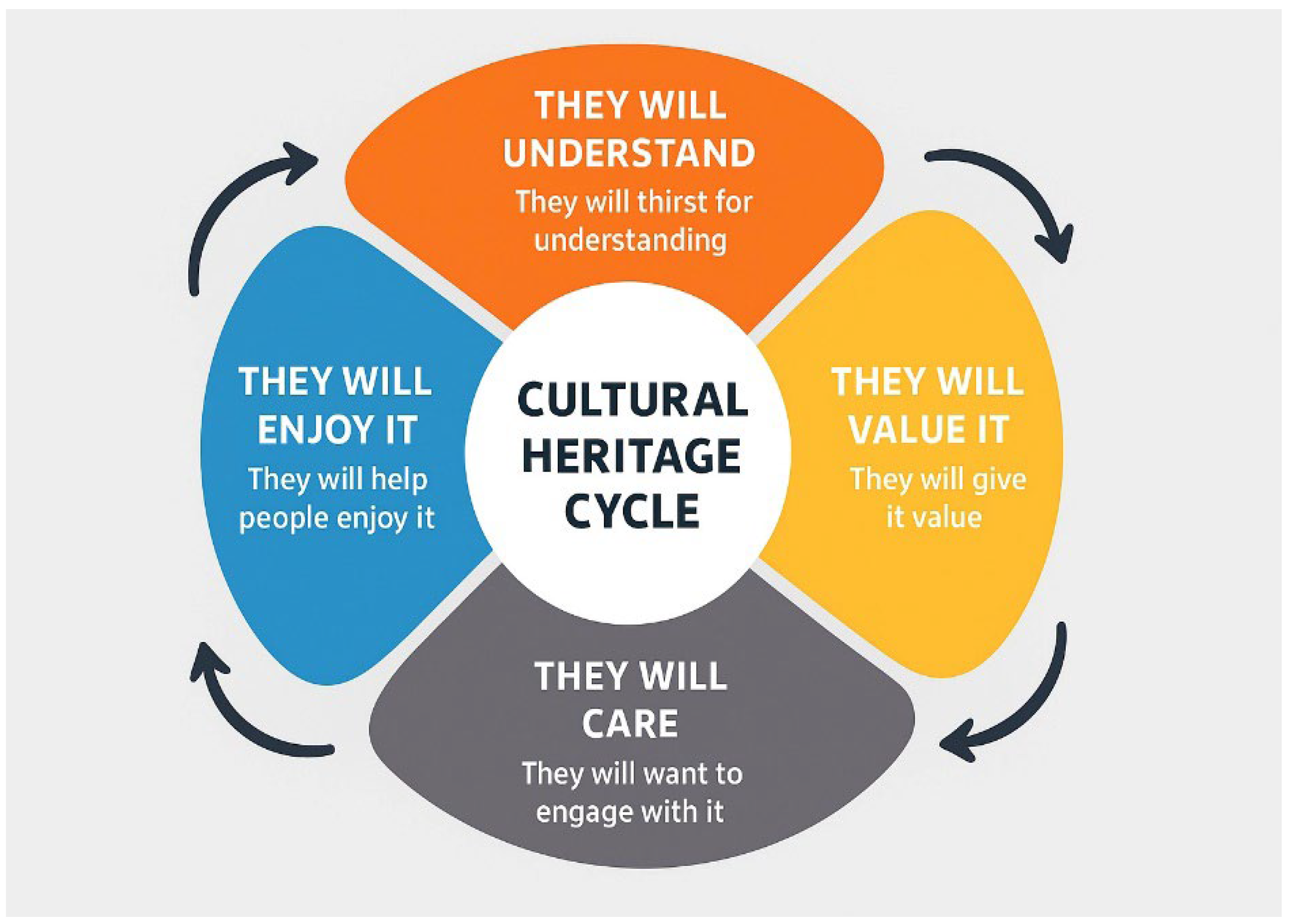
Figure 1. The Cultural Heritage Cycle.
Sustainability 17 10849 g001
Figure 2. Some Images From The Conducted Outdoor Learning Activities.
Sustainability 17 10849 g002
Figure 3. A Student Reflection Highlighting Cultural and Historical Responsibility.
Sustainability 17 10849 g003
Figure 4. Note on environmental awareness and ecosystem understanding.
Sustainability 17 10849 g004
Figure 5. Word cloud generated from the opinions of Turkish and Belgian students (created by the authors; no copyrighted material is included).
Sustainability 17 10849 g005
Figure 6. Reflection on the symbolic meaning of historical heritage.
Sustainability 17 10849 g006
Figure 7. Note on preserving historical artifacts and cultural responsibility.
Sustainability 17 10849 g007
Figure 8. Word cloud generated from the opinions of students on cultural heritage, natural environment, and related concepts (created by the authors).
Sustainability 17 10849 g008
Figure 9. Graph of Teachers’ Opinions on Outdoor Learning Activities.
Sustainability 17 10849 g009
Table 1. Participants of the study.
CountryParticipantsNGender (F/M)AgeLevel of Education
TürkiyeStudents4017F/23M11–125th grade
Teachers (social studies teachers)53F/2MF: 39, 45, 46/M: 35, 41Bachelor’s degree
School Principals30F/3M46, 49, 50Bachelor’s degree
Exterior Observers21F/1MF: 31/M: 29F: PhD candidate/M: Master’s degree
BelgiumStudents3717F/20M11–125th grade
Teachers (history and geography teachers)43F/1MF: 41, 45, 46/M: 44Master’s degree
School Principals20F/2M45, 48Master’s degree
Exterior Observers21F/1MF: 32/M: 35F: PhD student/M: PhD
Table 2. Student Opinions on the Impact of Outdoor Learning Activities on Educational Sustainability.
CountryThemeSub-ThemesCodes
TürkiyeSustainabilityEnvironmental SustainabilityAwareness of nature
Conservation of natural resources
Importance of biodiversity
Social SustainabilityRespect for cultural heritage
Social awareness
Learning local values
Empathy and sense of responsibility
Cultural and Educational SustainabilityPreservation of historical and cultural values
Gaining experience through out-of-school learning environments
Lifelong learning
Emotional and Personal SustainabilitySelf-awareness and self-confidence
Curiosity and desire for exploration
Stress management and interaction with nature
BelgiumClimate Change Awareness and Green TransitionReducing carbon footprint
Participation in climate actions
Zero-waste culture
Multicultural Heritage and European IdentityCommon European culture
Building local–international connections
Linguistic diversity
Innovative Learning and Urban Space UtilizationScience and technology parks
Urban learning spaces
Awareness of sustainable urbanism
Personal Initiative and AutonomyTaking individual responsibility
Autonomy in learning
Willingness to innovate
Table 3. Students’ Sustainability Metaphors and Their Justifications.
MetaphorStudent Justification (In Their Own Words)
TR1—Sustainability is the breath of life.I realized that protecting nature and resources is essential for life.
TR8—Sustainability is the compass of nature.I understood that humans must live in balance with nature.
TR11—Environmental protection is the wings of life.I thought that protecting nature makes the lives of both humans and living beings sustainable.
TR15—Sustainability is the window opening to the future.I believed that protecting the environment means leaving a better world for children.
BE2—Sustainability is like the roots of a tree.I thought that strong foundations are needed for future generations to grow up in a healthy environment.
BE5—Energy saving is the insurance of life.I realized that unnecessary energy consumption will have negative effects in the future.
BE7—Forests are the lungs of the Earth.I understood that protecting trees and green areas is vital for life.
Table 4. Student Opinions on the Impact of Outdoor Learning Activities on Sensitivity to Cultural Heritage in Education.
CountryThemeSub-ThemesCodes
TürkiyeSensitivity to Cultural HeritageAwareness and ConsciousnessHistorical awareness
Connection with the past
Cultural awareness
Protection and ResponsibilityPreservation of historical artifacts
Continuation of cultural elements
Restoration
Transmission to future generations
Identity and BelongingNational identity
Collective memory
Connection with local culture
Preservation and TransmissionTraditional arts
Oral culture (tales, folk songs, epics)
Environmental and Natural HeritageProtection of natural beauty
Awareness of historical environment
BelgiumAwareness of European Cultural HeritageAwareness of shared European history
Awareness of multilingual heritage
Multiculturalism and CoexistenceAwareness of cultural diversity in history
Connection with contemporary multicultural life
On-Site Learning and ParticipationContact with local heritage
Participatory learning
Cultural Identity and European CitizenshipLinking local identity with European identity
Connection with the past
Intangible Cultural Heritage and Linguistic DiversityFestivals and traditions
Linguistic diversity and cultural transmission
Table 5. Students’ Metaphors of Sensitivity to Cultural Heritage and Their Justifications.
MetaphorStudent Justification (In Their Own Words)
TRS9—Bridge“A bridge connects the past and the future. If we destroy the bridge, the two sides are separated, and we become detached from our roots.”
TRS26—Tree“Its roots are in the past, and its branches reach into the future. If we don’t water those roots, the tree dries up—meaning our culture disappears.”
TRS6—Carpet“Each motif tells a story. If one thread breaks, the whole pattern is ruined, meaning culture loses its values.”
BES12—Compass“Because a compass helps us find our direction. Our culture shows us who we are and where we came from.”
BES11—Mirror“Because it shows us who we are. If we don’t look at it, we cannot recognize ourselves.”
BES25—Clock“It shows the past, the present, and the future together. If the clock breaks, we cannot tell the time; if culture breaks, we cannot understand the past.”
BES13–Treasure Chest“It holds priceless values inside. If we do not take care of it, these treasures will be stolen or lost.”
Table 6. School Administrators’ Opinions on Outdoor Learning Activities.
CountryThemeSub-ThemesCodesf
TürkiyeEducational ContributionsPermanence of learningConcretization of knowledge, learning through experience, complement to lessons3
Application of theoretical knowledgeField experience, observation, extension of the lesson2
Contribution to the curriculumComplementary tool, natural extension, permanent learning3
Social ContributionsCommunication and cooperationTeamwork, sharing, empathy, acting together3
Development of social skillsStrengthening friendship ties, taking responsibility, solidarity3
BelgiumCultural ContributionsCultural awarenessRecognition of historical and cultural sites, learning about the past2
Cultural belongingReinforcement of identity, values education, social responsibility awareness2
Discipline and SafetyPlanning and organizationOrganization of transportation, responsibility of guide teachers, careful preparation1
Priority of safetyStudent safety, behavior control, risk prevention2
SustainabilityRegular and repeated activitiesNot one-time only, being part of the program2
Long-term learning strategyContinuity, development of awareness, persistence in learning2
Table 7. Teachers’ Opinions on Outdoor Learning Activities.
CountryThemeSub-Themesf
TürkiyeLearning Experience and PermanenceReinforcement of knowledge through field experience5
Concretization of theoretical knowledge3
Increased interest in lessons2
Continuity of learning2
Communication and CooperationDevelopment of communication skills4
Teamwork and taking responsibility3
Empathy and sharing2
Strengthening of friendship bonds3
BelgiumCultural Awareness and BelongingRecognition of cultural heritage5
Development of historical awareness3
Awareness of social responsibility2
Strengthening sense of identity and belonging3
Organization and Risk ManagementSafety measures5
Detailed planning4
Discipline and behavior control4
Guidance and sharing of responsibility2
Planned and Continuous PracticeRegular and well-organized activities5
Permanent learning experience3
Integration into the annual program2
Avoidance of one-time activities3
Table 8. Comparative Analysis of External Observers’ Reports.
DimensionExternal Observer 1 (BE)External Observer 2 (TR)External Observer 3
(BE)
External Observer 4
(TR)
TeacherTook on a guiding role and provided opportunities for students to explore.Could not give equal attention to all students due to the large group size.Encouraged students’ curiosity through questions and supported inquiry.Outdoor conditions made classroom management difficult, and some discipline issues occurred.
StudentParticipated with motivation; cooperation and communication were strengthened.Some students were distracted and could not fully engage in the process.By connecting with real-life situations, they grasped knowledge more easily and enhanced social interaction.Some students remained passive and could not benefit equally from the activity.
ProcessThe venue and materials enriched learning.Noise and crowding negatively affected the process.The harmony between content and environmental opportunities made learning more permanent.Transportation and time management problems reduced the efficiency of the process.
Disclaimer/Publisher’s Note: The statements, opinions and data contained in all publications are solely those of the individual author(s) and contributor(s) and not of MDPI and/or the editor(s). MDPI and/or the editor(s) disclaim responsibility for any injury to people or property resulting from any ideas, methods, instructions or products referred to in the content.