Article

Improving the Value Realization Level of Eco-Products as a Key Pathway to Achieving Sustainable Ecological Protection and Economic Development in Highly Regulated Rivers


by
Wenjuan Cheng
,
Bo Cheng
*,
Huaien Li
*,
Qing Li
,
Qingzhi Duan
and
Yunfu Shi
State Key Laboratory of Water Engineering Ecology and Environment in Arid Area, Xi’an University of Technology, Xi’an 710048, China
*
Authors to whom correspondence should be addressed.
Sustainability 2025, 17(23), 10845; https://doi.org/10.3390/su172310845
Submission received: 16 September 2025 / Revised: 27 November 2025 / Accepted: 1 December 2025 / Published: 3 December 2025

Abstract

More than half of the world’s highly regulated rivers are currently experiencing an unsustainable balance between ecological protection and economic development. The value realization of river eco-products is considered a key pathway to addressing this challenge; however, its effectiveness remains to be empirically verified. Therefore, the objective of this study is to develop an integrated framework for evaluating the sustainability of river ecological protection and economic development through eco-product value realization. The framework integrates the classification of river eco-products, the estimation of their potential and realized values, and the analysis of value realization pathways. Taking the Baoji section of the Weihe River (BSWHR) as a case study, the framework is applied with hydrological, hydraulic, and socio-economic datasets to empirically evaluate the coordination between ecological protection and economic development. The main results showed that: (1) River eco-products are divided into three types: public, operational, and physical operational eco-products; (2) The potential ecological value of all river eco-products in the BSWHR is estimated at 549 million CNY; (3) The realized value of all river eco-products is 288.75 million CNY under current realization paths, corresponding to a sustainability index of 0.63, indicating that the BSWHR is less sustainable and represents an asset liability river; and (4) Enhancing the protection level of river ecological flow (e-flow) and establishing a multi-stakeholder compensation mechanism can improve the sustainability of ecological protection and economic development in highly regulated rivers. The proposed framework provides a practical basis for assessing river sustainability and guiding the effective allocation of ecological protection funds.

1. Introduction

River ecosystems are a vital component of terrestrial aquatic systems, providing essential ecological functions and diverse eco-products that sustain both biodiversity and human socioeconomic development [1,2]. However, under the pressures of climate change and intensive human activities, these critical systems are facing severe degradation [3,4]. The IPBES report identifies inland waters as one of the most rapidly declining ecosystems globally, with wetland extent having plummeted by approximately 75% since 1700 [5]. This crisis severely undermines ecological security and threatens the sustainability of regional economies [6,7], propelling the search for sustainable economic models to the forefront of global agendas, evolving from the Millennium Development Goals (MDGs) [8] to a central tenet of the 2030 Agenda for Sustainable Development [9]. This global push reflects the urgent need to address mismatches between environmental ambitions and actual conditions [6], a situation that requires the complex and balanced approach recommended in recent studies [10,11].
This challenge is particularly acute in many developing regions, where economic growth has often occurred at the expense of the river environment [7,12]. A key obstacle to effective ecological protection and restoration is the singularity and insufficiency of funding sources [13,14]. In this context, a growing body of scholars generally believe in the concept of realizing the value of eco-products as a pivotal, market-inspired approach to reconciling ecological and economic objectives [15]. However, there is a lack of systematic sustainability assessment methods for river ecological protection and economic development from the perspective of value realization. This gap makes it difficult to determine the optimal value realization path that is suitable for the region. Existing approaches often lack a systematic framework to assess how these economic mechanisms translate into tangible sustainability outcomes. This study aims to bridge this gap by developing and applying a novel sustainability assessment framework grounded in eco-product value realization.

1.1. Theoretical Foundations and Research Gaps

1.1.1. Evolution of Ecosystem Service Valuation and Market-Based Instruments

At present, there are few reports on sustainability assessment frameworks based on the value realization level of river eco-products; however, there have been some research findings on the contribution to humanity, value calculation, and partial value realization paths of river eco-product value. Costanza et al. (1997) [16] first proposed the value of global eco-products, which greatly promoted the quantitative research of the value of eco-products, including the value of river eco-products. Subsequent methodological advances have significantly enriched this domain. For instance, studies have applied resource and environmental economics to construct valuation methods [17]; employed contingent valuation and regression analysis [18]; and utilized value equivalent factor tables to evaluate the eco-product value and analyze the spatiotemporal variation characteristics of its value [19]. Collectively, these studies have not only confirmed the critical role of nature in underpinning human well-being and economic opportunity, but have also laid the methodological groundwork for quantifying the value of eco-products [20].
Internationally, Payments for Ecosystem Services (PES) have received much attention as tools for internalizing ecological value [13,21]. Proponents argue that such mechanisms can improve the efficiency of ecological management [22]. However, research has also evolved to critically examine the theoretical foundations, effectiveness, and equity implications of PES [23], highlighting that its success is highly context-dependent and that its market-based approach may not be universally applicable. Furthermore, recent interdisciplinary research underscores the importance of legal and institutional tools, such as sustainable land-use regulations and legal easements, in promoting integrated ecological infrastructure planning [24,25]. These legal-institutional frameworks are increasingly recognized as essential enablers for scaling up conservation efforts and ensuring their long-term viability. In China, however, eco-product transactions are often strongly guided by the government, resulting in distinct mechanisms like eco-compensation, government procurement, etc. [26]. Chinese scholars are also actively exploring market-oriented pathways compatible with China’s specific context for eco-products [27]. For instance, Zheng et al. (2019) [28] explored the basic framework of watershed diversified eco-compensation and established the research idea of a diversified compensation mechanism based on stakeholder theory and synergy theory. Zhu et al. (2018) [29] took Chishui River Basin in the Guizhou Province as an example, combined with its economic structure and current environment and resource situation, and discussed the selection idea of an market-oriented eco-compensation mechanism from the perspective of ecological capital mechanism design. The above research has confirmed the importance of river eco-product value and the research process of partial value realization paths.

1.1.2. The Critical Gap: Integrating Value Realization into Sustainability Assessment

While the literature on valuation and MBIs is robust, a significant disconnect remains. As White et al. (2021) [10] argue, the sustainability of a solution can be measured by its reliance on ecosystem services. This perspective reveals a key limitation: current research seldom provides a systematic methodology to explicitly link the process of value realization to the overarching goal of basin sustainability. A central challenge is to understand how value realization can mediate the inherent trade-off between ecological health and economic development, potentially transforming it into a synergy. This gap is compounded by a scarcity of empirical research that integrates hydrological, ecological, and socio-economic dimensions at the basin scale. Consequently, it remains unclear to what extent, and through which pathways, the realization of river eco-product value tangibly enhances the coordinated development of river ecology and the regional economy. The primary reason is a lack of assessing sustainability methods; in addition, it is not clear whether the existing value realization paths are reasonable.
Accordingly, this study addresses the following research questions as follows:
(1) How can the concept of eco-product value realization be systematically integrated into river sustainability assessment?
(2) To what extent can the realization of river eco-product value enhance the coordinated development of river ecology and the regional economy?
To answer these questions, this study develops a novel sustainability assessment framework for river basins grounded in the concept of eco-product value realization. Unlike traditional valuation methods, this framework links eco-product value realization with sustainability assessment and uses the sustainability coefficient to assess the balance between ecological protection and economic development. The framework is constructed by (1) establishing a theoretical basis and classification system for river eco-products, (2) integrating methods to assess their potential and realized value, and (3) linking these values to sustainability outcomes through specific realization pathways. It is applied to the Baoji section of the Weihe River (BSWHR) to examine its practical applicability and to derive relevant policy implications. The findings are expected to provide a valuable basis for improving eco-product value realization mechanisms and for promoting sustainable river basin management. This framework provides not only a theoretical foundation for integrating ecological value realization into sustainability science but also a practical tool for policy innovation in river basin management.

2. Materials and Methods

2.1. Study Area

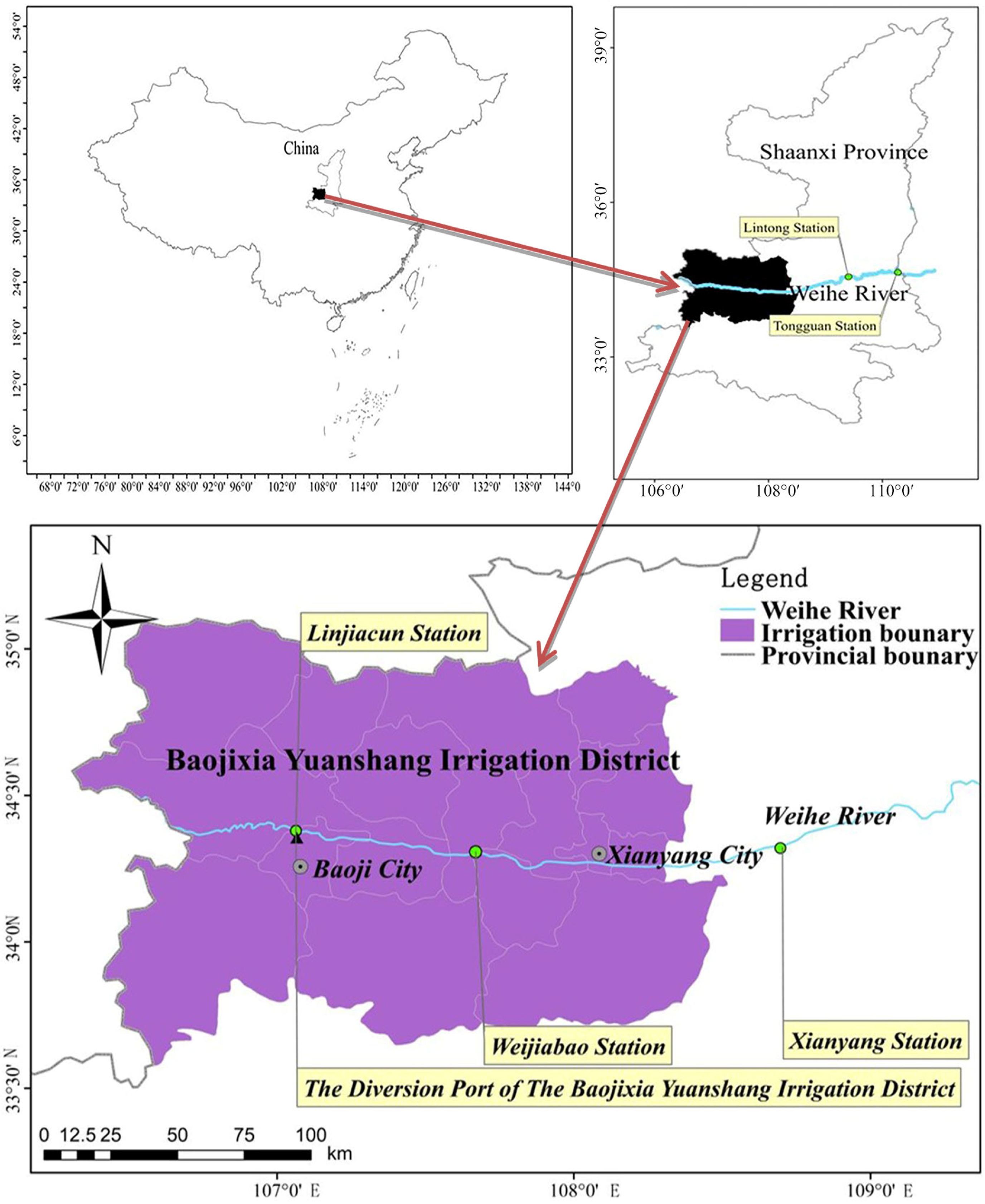
We utilized the case of the Baoji section of the Weihe River (BSWHR) to confirm that improving the value realization level of eco-products is the key to the coordinated development of river protection and economy. The Weihe River, the largest tributary of the Yellow River, which is the second largest river in China, is a typical river that urgently needs ecological water restoration, but the funding required for ecological restoration is substantially insufficient. It enters the Shaanxi Province from Baoji City and is situated in the hinterland of Shaanxi Province (see Figure 1) between the Linjiacun and Weijiabao sections, covering a length of 65 km. It provides irrigation water for Baojixia Yuanshang Irrigation District (BYID) (see Figure 1).
The Linjiacun section of the BSWHR can supply more than 70% of the nature water to the BYID, and can reach more than 90% in dry years. For example, the water diversion by the BYID constitutes about 95% of the total water inflow in 2010, significantly encroaching upon e-flow use in this section. Consequently, the ecological environment in this part of the river has deteriorated significantly [30,31]. In order to prevent the river water ecology from deteriorating further, the authority will adopt a decision that puts e-flow first, but will cause some losses to farmers in the irrigation area [32]. A large amount of ecological water protection funds are urgently needed. Since 2016, the provincial government has provided 6 million CNY in subsidies for e-flow protection every year. At present, the value realization paths of various river eco-products in the BSWHR are mainly the sale of water, tourism, subsidies, hydropower, etc. However, it is unclear whether the value realization through these paths can promote the ecological protection and economic development of this section of rivers; therefore, it is urgent to explore and study it.
Figure 1. Location of the Baoji section of the Weihe River (BSWHR) and Baojixia Yuanshang Irrigation District (BYID) (Cheng and Li, 2018) [32].
Sustainability 17 10845 g001

2.2. Methods

A complete and healthy river should maintain a self-reliant circular chain of “river production—value realization—ecological protection”, as shown Figure 2. In this cycle, the realization of river eco-product value (REV) enables the costs of ecological protection and productivity enhancement to be internally compensated for by the benefits generated from the river’s ecological and economic functions. When the realized value fully offsets ecological protection costs, the river section is considered to have achieved sustainable and high-quality development. Otherwise, it remains in an unsustainable or transitional state. The specific calculation method is as follows.

Calculation of River Eco-Product Potential Value

The concept of eco-products, rooted in Chinese ecological civilization theory, is broadly equivalent to ecosystem services but emphasizes tangible outcomes jointly produced by human activities and natural ecosystems [15,26]. River eco-products thus refer to the final ecological goods and services generated by rivers, such as water purification, habitat provision, flood regulation, and esthetic enjoyment, which are supported by both natural processes and human management efforts [33].
Based on the material characteristics and the clarity of property rights, river eco-products are classified into four categories: public, quasi-operational, physical operational, and enjoyment eco-products, as summarized in Table 1. The classification aligns with the varying degrees of marketability and ownership definitions, which determine their corresponding valuation approaches.
Several established methods are commonly employed to quantify eco-product value, including the Market Value Method, Equivalent Factor Method, Replacement Cost Method, Achievement Reference Method, Fuzzy Mathematical Method, and Energy Analysis Method [34]. In this study, we integrated the Market Value, Replacement Cost, Achievement Reference, and Equivalent Factor approaches to comprehensively estimate the potential value of river eco-products, as shown in Table 1.
Table 1. Type division and economic value calculation methods of river eco-products.
ItemsClassificationBasis of ClassificationMethods
Provision of aquatic productsOperationalMaterial objectRiver eco-products that can be used for market transactions, including physical purchase and spiritual enjoyment.Market value method [35]
Cultural products
Leisure tourismEnjoymentAchievement reference method [36]
HydropowerQuasi operationalRiver eco-products that can be used for market platform transactions can only be carried out with the authorization of government departments.Market value method
Production water supply
Water purificationReplacement cost method [37]
Water conservationPublicityProperty rights are not clear and can not be used for market transactions. They are public eco-products, which usually produce externalities.Equivalent factor method [38]
Regulate climate
Air purification
Maintain aquatic biodiversity
Soil conservation
(1)
The Realization Amount of Various Public Eco-Product Values
To comprehensively assess the degree to which river eco-products generate measurable benefits, this study quantifies the realized value of public, quasi-operational, operational, and enjoyment eco-products. The corresponding models (Equations (1)–(4)) are established according to the nature of property rights and the market behavior of different product types.
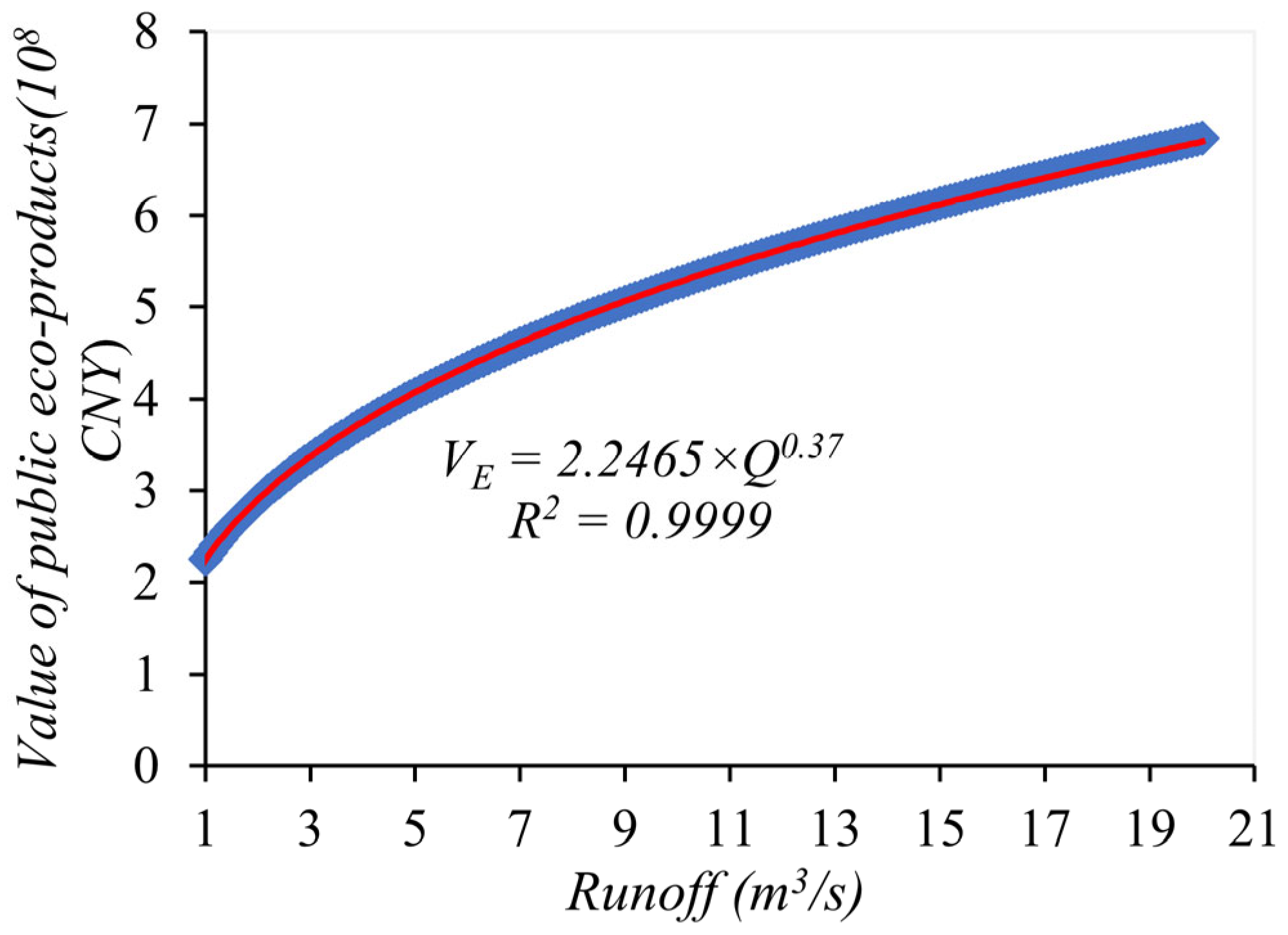
Generally, the property rights of public eco-products are unclear and have no transaction value, and they exhibit relatively obvious externalities. Willingness to Pay (WTP) can be used to eliminate externalities to achieve the purpose of realizing eco-product value, so this study calculates the Willingness to Pay for the value of river public eco-products in combination with the Peel Growth Model [39,40]. The calculation methods of various eco-product values are shown in Table 1, and the process of value change with runoff is shown in Formulas (1)–(4).
In addition, combined with the existing research results, we can determine that the property rights of various public eco-products can be converted under certain policies and owner choices to be a private product [41,42], such as land conversion. In this way, their market value can be calculated in combination with the market price, the market price after land conversion is mainly expressed in the price of housing, and the housing price is mainly determined by the logarithmic function relationship between the house and the source of supply of eco-products, which is shown in Formulas (5)–(6).
V i , t 0 Q t = a 0 + a j X j
V i , t Q t = V i , t 0 Q t e f E n ,
V T , t Q t = V i , t Q t 1 + γ t t 0
S R 1 , t = P A V T , t Q t
where SR1,t refers to the realization amount for the eco-products of rivers, 100 million CNY; PA refers to the willingness to pay for the public river eco-product value, %; VT,t (Qt) refers to the value of the eco-product corresponding to Qt at the end of the period, 100 million CNY; e refers to a natural constant; En refers to the Engel’s coefficient in a certain area,%; Vi,to (Qt) refers to the public eco-product value of the benchmark year, 100 million CNY; Vi,t (Qt) refers to the value of the eco-products corresponding to the beginning Qt of the period, 100 million CNY; Qt refers to the runoff at the end of a certain period of time, m3/s; Xj refers to the j-th characteristic variable affecting the value of eco-products; f() refers to the value growth function representing the impact of socio-economic factors on ecological value; aj refers to the regression coefficient for the j-th characteristic variable; γ is the annual average growth rate of eco-product value, %.
P I N = g Y T ,
ln P H = a 0 + a 1 ln A i a j C j + λ d x + ε
PIN refers to the market price after land rotation, CNY/m3; YT refers to the total amount of purchases made by consumers, kg, m3, etc.; a0, ai, aj refer to constants, dimensionless; ln is a logarithm with base e; Ai refers to area of the house, km2; Cj refers to the j-th characteristic variable, dimensionless; PH refers to the market price before the land type is converted, CNY/m3; g() refers to market price function; λ refers to the coefficient of change in housing price caused by the change in the distance from the house to the study area, dimensionless; dx refers to the distance, km; ε refers to the error term, dimensionless.
(2)
Realization Amount of Quasi Operational and Physical Operational Eco-Products
For quasi operational and operational eco-products, the realized value equals the product of unit value and the purchased quantity. Given the trade-offs between river eco-products (where a change in one affects others and the total value), any change in an eco-product’s supply requires the value changes in others to be factored in, as shown in Formula (7):
S R 2 = i = 1 n j = 1 j i m v i , j · Y i , j · β j β i · W G
where SR2 refers to the realization of the quasi operational and physical operational value, 100 million CNY; vi,j is the quasi operational and physical operational eco-product value per unit, CNY/(kg, m3, etc.); Yi,j refers to the amount of eco-products purchased by the consumers, kg, m3, etc.; βi and βj refers to the supply coefficient of river eco-products with a trade-off relationship, dimensionless (this value is mainly calculated by using the scenario design method); WG refers to the total amount of ecological flow (e-flow) allocated to the river, 100 million m3; i and j refer to the numbers of the two types of eco-products with trade-offs, respectively; n and m refer to total numbers of eco-product types in the quasi operational and operationalcategories, respectively.
(3)
Realization Amount of the Enjoyment Eco-Product Value
The value realization of enjoyment eco-products (SR3) is evaluated using the personal travel cost method [42], and the calculation method is shown in Equations (8)–(10) [43].
S R 3 = T C + C S × T N N
T C = T R + O C + P C + E C + C T
C S = p o q f x d x
where SR3 refers to the realization of enjoyment eco-product value, 100 million CNY; TC refers to the cost of travel, 100 million CNY; CS refers to the consumer surplus, CNY; N refers to the total number of samples, 10,000 people; TN refers to the number of tourists visiting the study area, 10,000 people; TR refers to the cost of food and beverages during the trip, CNY; OC refers to the cost of accommodation in the course of travel, CNY; PC refers to the cost of travel during the trip, CNY; EC refers to the entertainment consumption in the course of travel, CNY; CT refers to the time cost of the whole process of tourism, CNY; po refers to the travel cost when the number of tourists is 0, CNY; q refers to the lowest actual cost of the trip paid, CNY; f(x) refers to the function of people’s recreation demand for the study area.
(4)
Value Realization Level and Sustainability
The sustainability of the river ecosystem is assessed by an indicator, SC, defined as the ratio of the total realized value of eco-products (LT) to the ecological protection cost (DT), as expressed in Equations (11) and (12) [44]. The system is considered sustainable if SC > 1, and unsustainable otherwise.
S C = L T D T = S R 1 + S R 2 + S R 3 + P G D T
D T = A 0 · 1 + λ t · I α · W η W · W E W R · μ
where SC refers to the sustainable indicators of ecological protection and economic development in rivers; LT refers to the value realization level of the eco-products in rivers, 100 million CNY; DT refers to the cost of ecological protection, 100 million CNY; PG refers to the additional financial support of the government, 100 million CNY; μ refers to the water use utilization coefficient, dimensionless; WE refers to the different protection levels of river e-flow, 100 million m3; WR refers to the surplus water after the production department diverts water, 100 million m3; A0 refers to a constant factor, dimensionless; λ refers to the science and technology coefficient, dimensionless; t refers to the time series, year; I refers to the input elements, kg, J, m3, etc.; α refers to the output elasticity coefficient of input elements, dimensionless; W refers to the total amount of water resource inputs, 100 million m3; η refers to the output elasticity coefficient of water, dimensionless. The values of parameters μ, λ, α, and η were obtained from Cheng et al. (2024) [14].
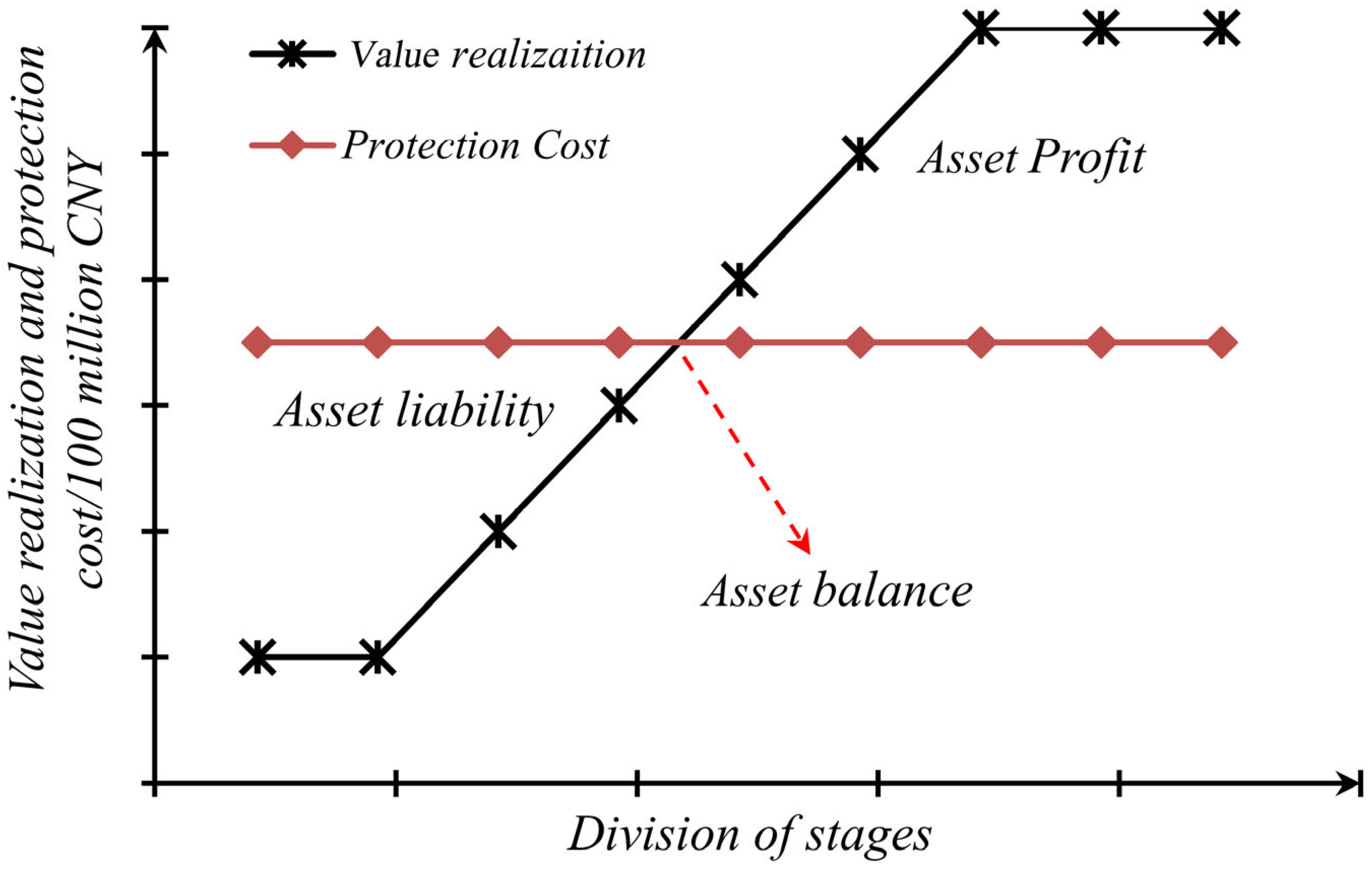
In addition, based on the magnitude of the relationship between the total value realization of river eco-products and the cost required to enhance river production capacity, we can divide the river section in this study into three types: Asset liability, Asset balance, and Asset profit, as shown in Figure 3.

2.3. Data Sources

The data used in this study mainly include hydrological data, water conservancy statistical data, hydraulic data, regional social economic data, e-flow protection level, equivalence factors, etc. The specific sources of these data are detailed in Table 2. The cost data of ecological protection were primarily obtained from the study by Cheng and Li (2018) [32] and Zhang et al. (2019) [45], which is shown in Table 2.

3. Results

3.1. Potential Economic Value of River Eco-Products

3.1.1. Economic Value of Public Eco-Products of Rivers

Based on the runoff data in Linjiacun Station from 1972 to 2022, with Frequency Analysis Software used to analyze the above runoff data, it is concluded that 2010 is a typical dry year. In 2010, the average runoff after water diversion in Linjiacun Headworks was 10.78 m3/s.
Combining the research results of Xie and other coauthors (2015) [38] and the actual situation of the BSWHR, Cheng and Li (2018) [32] formulated the river eco-product value table per unit area, and constructed the Equivalent Factor Method for calculating the river eco-product value in the BSWHR based on the value table. Because the BSWHR is wide and shallow, the river eco-product value can only be taken as 0.5 times as much [51]. Combined with the equivalent factor method, the public eco-product value in the BSWHR is 282 million CNY.

3.1.2. Economic Value of Quasi Operational Eco-Products

Quasi operational eco-products mainly include hydropower, water purification, and production water supply. Generally, the revenue subject is the government. The value calculation process of the three is as follows:
(1) According to the issued statistical display, the average annual power generation of Weijiabao hydropower station in the BSWHR is 45 million kW·h. The national market electricity price is 0.5 CNY/kW·h. Through analysis and calculation, the hydropower value is 23 million CNY.
(2) It is found that the capacity of COD and ammonia in the BSWHR are 5657 × 104 and 365.1 × 10⁴ kg/a [52], and the market purification costs of the two are 3.5 and 1.5 CNY/kg [29]. So, the value of water purification is 203 million CNY.
(3) In 2010, the annual water diversion volume of the Linjiacun head of Weihe River was 403 million m3. Combined with the measured data of the water diversion of the Weijiabao Hydropower Station and the water diversion volume of Baojixia Yuanshang Irrigation Area, it can be obtained that the annual average agricultural irrigation water diversion accounts for 30.77% of the total water diversion, of which the agricultural irrigation water diversion of the BYID is 124 million m3. According to the Statistical Yearbook of Shaanxi Province [47], the price of agricultural water use is 0.25 CNY/m3, and the water supply value is 31 million CNY.
Therefore, the quasi operational eco-product value in the BSWHR is 257 million CNY.

3.1.3. Economic Value of Operational Eco-Products

Operational eco-products mainly refer to the provision of aquatic eco-products and recreational tourism. The provision of aquatic products is mainly determined by the Equivalent Factor method.
Combined with the method in Section 3.1.1, the result of the aquatic product value provided in the BSWHR is 5 million CNY.
The calculation results of recreational tourism value mainly rely on the previous research results. Gao et al. used the Personal Tourism Cost Method to calculate the tourism cost for the purpose of the BSWHR [53]. The calculation result in 2010 is 5 million CNY.
Therefore, the river operational eco-product value in the BSWHR is 10 million CNY.

3.2. Realization Amount of Various River Eco-Products Under the Current Path

3.2.1. Realization Amount of Public Eco-Product Value

The realization of public eco-product value comes from two pathways:
(1) Eco-compensation helps the value transformation of public eco-products in rivers.
As shown in Section 3.1.1, the public eco-product value in rivers is 282 million CNY. However, this section of the basin has not established a long-term eco-compensation mechanism with the participation of multiple subjects; only the Shaanxi Provincial Government provides 6 million CNY to support the value realization amount of river public eco-products every year. Therefore, the value realization amount of public eco-products in rivers is 6 million CNY.
(2) Carrier premium helps the value transformation of public eco-products in rivers.
On the one hand, tourists can promote the value transformation of public eco-products, and on the other hand, river-view houses can increase housing prices with the help of high-quality public eco-products; that is, the house as a carrier, generating a premium, which is also the embodiment of the value transformation of public river eco-products [26]. In other words, transferring the land around rivers to developers for river-view housing within a safe range can increase residential prices by 8% to 10% in the Netherlands [54] and 5.71% in Chongqing, China [55]. By checking the housing trading APP, it was found that the average price of commercial houses adjacent to Weihe River wetland and Daijiawan Ecological Park is about 6129.54 CNY/m2, and the average price of conventional new houses is about 5217.28 CNY/m2, which can increase the price of residential houses by about 15%. With the help of Equation (1), 15.75 million CNY can be added every year.
Consequently, the total value realization of public eco-products is the sum of the carrier premium and the amount of eco-compensation; that is, 21.75 million CNY.

3.2.2. Realization Amount of Quasi Operational and Operational Eco-Product Value

It can be seen from Section 3.1.2 and Section 3.1.3 that the quasi operational and operational river eco-product values in the BSWHR are 10 million CNY and 257 million CNY, respectively. Quasi operational and operational river eco-products are calculated according to the actual price in the current market. Therefore, this study takes the operational and quasi operational river eco-product value as the value realization amount for the quasi operational and operational river eco-product value, with a value of 267 million CNY.

3.3. Total Realization Amount and Sustainability Assessment in the BSWHR

The total realized value of all river eco-products in the BSWHR is the sum of realized public, quasi-operational, and operational values, amounting to 288.75 million CNY.
In order to alleviate the deterioration of river water ecology, it is necessary to limit the water consumption of agricultural water use, which will cause the loss of grain production and agricultural economy in the irrigation area [53]. The ecological restoration cost is mainly obtained by the product of reducing agricultural water use and benefit of unilateral agricultural water use [45]. When the average runoff is 10.8 m3/s, the reducing agricultural water use in the non-flood season of 2010 is 191 million m3. Gao et al. (2018) [53] obtained the benefit of unilateral agricultural water use in the BSWHR by the improved C-D function method, with a value of 4.63 CNY/m3, and the ecological restoration cost in the BSWHR is 457 million CNY.
The total value of various river eco-products in the BSWHR is 549 million CNY. However, due to existence of externalities, the value realization of river eco-products is 288.75 million CNY, which is difficult to meet the cost of river ecological protection, and the sustainable indicator is 0.63, with a difference of 168.25 million CNY.

3.4. Realization Amount of Various River Eco-Products Under the Future Protection Compensation Policy

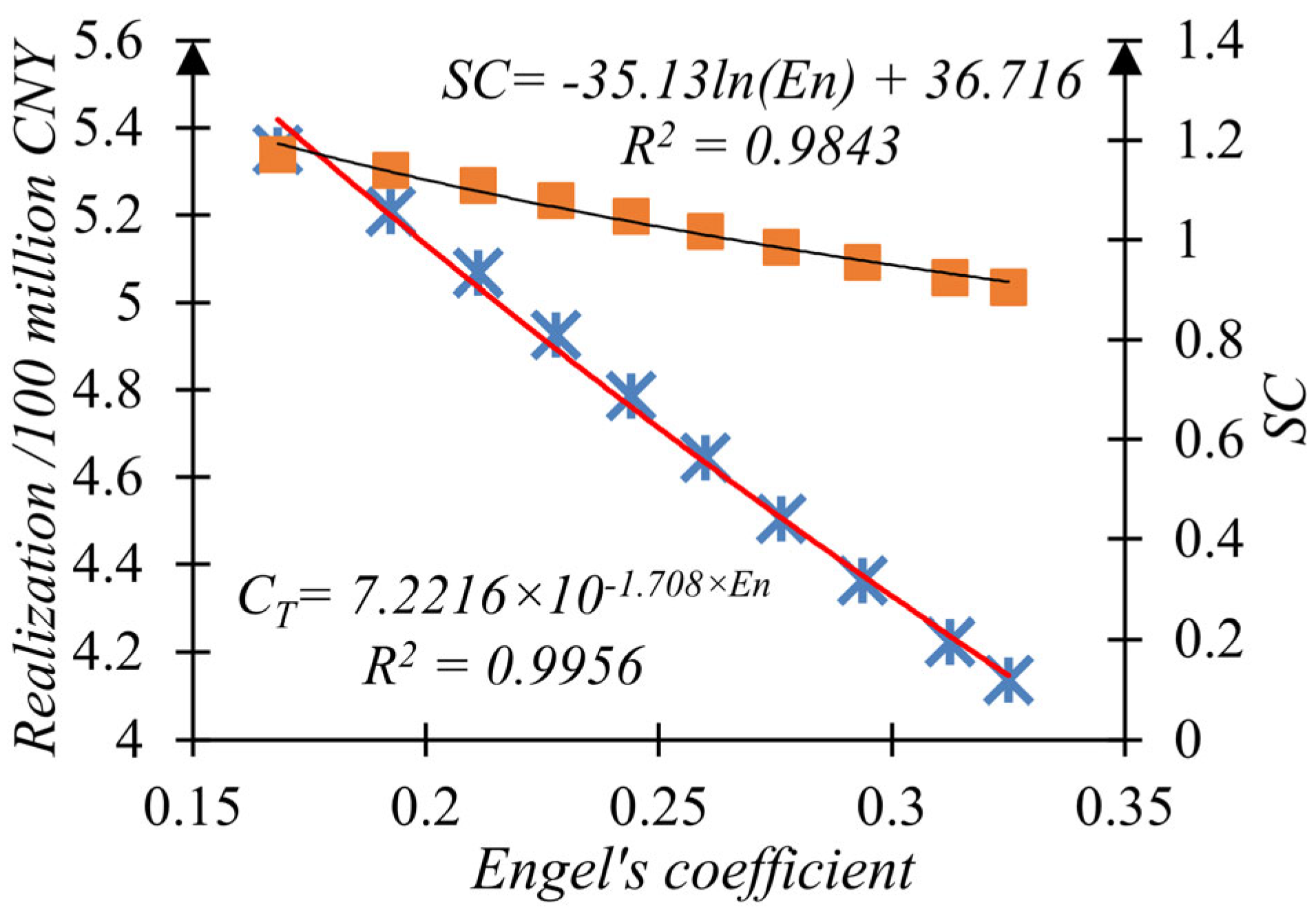
We combine the Pearson growth model and the ecological value of public eco-products to construct an eco-compensation mechanism with the participation of multiple subjects. Combined with Engel’s coefficients (a parameter that characterizes the living standards of residents; data are from the Statistical Yearbook of Shaanxi Province and the Regional Statistical Yearbook of Shaanxi Province; we set 10 values from 0.15 to 0.35) and the value of public river eco-products in 2010, the value realization is determined under different living standards (Engel’s coefficients), and the value realization of all eco-products is shown in Figure 2 (Figure 4).
From Figure 5, it can be seen that there is a nonlinear positive correlation between the value realization of river eco-products and the living standards of local residents in the BSWHR. A decrease of 0.1 in the Engel’s coefficient is associated with an increase of 85 million CNY in value realization. At present, with Engel’s coefficients for farmers in the BSWHR (29.3%), the model projects a total realized value of 436.2 million CNY, and a SC (sustainable indicator) of 0.95, which is a high degree of equilibrium [56].

4. Discussion

4.1. A Significant Value Realization Gap Undermines River Sustainability

This study establishes a novel framework linking eco-product classification, valuation, realization pathways, and sustainability assessment. The application to the BSWHR demonstrates its utility in providing a quantitative benchmark for river basin management.
The core finding is the significant disparity between the potential and realized value of eco-products, leading to an SC of 0.63 under the current pathway. This indicates a severely unsustainable state, where ecological protection costs far exceed the revenue generated from eco-products, classifying the BSWHR as an “asset liability river.” This deficit underscores the inadequacy of existing value realization mechanisms.
However, scenario analysis reveals that this state is not inevitable. The future policy scenario, centered on a multi-subject eco-compensation mechanism tied to living standards (proxied by the Engel’s coefficient), shows that the SC can be elevated to 0.95. This demonstrates a viable pathway towards a near-sustainable equilibrium and provides a positive answer to the second research question regarding the potential for improving sustainability through policy intervention. The nonlinear relationship underscores that small improvements in public welfare and economic structure can yield substantial gains in value realization.

4.2. Discussion of the Research Methods and Outputs

(1) Comparative analysis with the previous methods and outputs
Based on the classification of river eco-products and determining calculation methods of their potential value, combined with the realization path of various eco-products and their research methods, this manuscript proposes a research framework to evaluate the sustainability of rivers. Compared to the preceding methods [17,18,32], the model proposed here possesses the following improvements. (i) This framework reveals from a quantitative perspective that improving the value realization amount of river eco-products can improve the sustainability of river ecological protection and economic development. (ii) This study also explores the value realization paths of public river eco-products, and these paths can broaden the funding sources beyond those provided by government departments, making up for the lack of a single source for water ecological restoration in rivers. (iii) The sustainability assessment framework can reveal the rationality and appropriateness of the current value realization paths of various river eco-products, and can provide a basis for the optimization of value realization paths of various river eco-products and the transformation of regional economic structure in the future.
(2) Applicability analysis of the research methods
This proposed model is intended for highly regulated rivers, particularly rivers with prominent water ecological environment problems and an urgent need to be repaired. This model has also been validated based on the Baoji section of the Weihe River (BSWHR), which is a typical highly regulated river with prominent environmental problems and an urgent need for restoration [32]. However, the problem also exists all over the world [57,58,59,60], and more than 65% of the world’s rivers are highly regulated, plus about 41% of rivers develop their economies at the cost of ecological health, resulting in a serious decline in river ecological health [61]. There is an urgent need for water ecological restoration, mainly including China, Australia, India, Russia, Africa, Mexico, and other countries [62,63,64]. Most countries have also invested a lot of funding in the process of managing these highly regulated rivers, such as the Shaanxi Provincial Government providing 6 million CNY in compensation funds for the e-flow protection of the Weihe River every year. However, due to there being a single source of funding, there is still a problem of a lack of ecological protection funds. While the framework in this study is developed and demonstrated within the Chinese institutional context, its underlying logic can be applied in many other regions. The core components of the framework include the classification of river eco-products, the calculation of potential value and realized value, and the evaluation of sustainability based on the balance between ecological protection cost and value realization. These elements are not limited by specific governance arrangements. In practice, the classification of eco-products is generally applicable, and the calculations of potential value, realized value, and sustainability can be adjusted by selecting parameters that reflect the local economic development level, hydrological conditions, and the current status of river protection and management. For example, in regions that have payments for ecosystem service programs or watershed trading systems, the realized value can be estimated by using existing transaction prices or agreed compensation levels. The sustainability coefficient can also be recalculated by using local ecological protection costs and local valuation results. Such adjustments do not change the logic of the framework and allow it to be used in different regions for river management. Therefore, the model of this problem has a wide range of applications, which can provide important reference significance for improving the sustainable development of rivers.
In addition, a brief sensitivity assessment indicates that the sustainability coefficient (SC) is generally robust to moderate variations in key parameters. Changes in government support (PG), the allocation of ecological flow (WG), and the value realization of public and quasi-operational eco-products (SR1 and SR2) can influence SC, but the overall classification of river sections and the identification of realization gaps remain largely consistent under reasonable parameter ranges. This suggests that the framework provides reliable guidance for assessing sustainability and prioritizing value realization pathways, even when local economic or hydrological conditions differ from the study case.

4.3. Policy Implications for the River Eco-Product Value Transformation Efficiency

This paper mainly studies how improving the value realization level of eco-products is the key to the coordinated development of ecological protection and economy in rivers. It is found that the current value realization paths of eco-products is at a lower level (just over half of the total value provided by various eco-products in rivers), and improving the protection level of e-flow and establishing an eco-compensation mechanism with the participation of multiple subjects are the top priorities to improve the value realization level of eco-products, which can provide some relevant policies:
(a)
Strengthen the Construction of the Socio-Ecological Feedback Mechanism between Ecosystem Services and Human Well-being: To establish a feedback mechanism between eco-products and human well-being, it is crucial to address the current weak public willingness for collaborative governance, which stems from a limited understanding of the value of eco-products. We recommend a shift from generic publicity to targeted interventions. For instance, policymakers should design tailored information programs for different stakeholder groups. Demonstrating to farmers the direct economic losses resulting from water quality degradation due to reduced ecological flows can effectively foster their support for sustainable water allocation policies. The core of this approach is to adopt a data-driven method that quantitatively illustrates the costs of ecological degradation and the benefits of protection, thereby enhancing public understanding and motivation for action.
Concurrently, it is essential to create tangible feedback channels that enable communities to perceive the linkages between ecosystem services and their well-being. Practices such as participatory monitoring and community forums can vividly demonstrate how eco-products (e.g., clean water, fisheries, and recreational landscapes) directly contribute to local livelihoods and economic prosperity. Transforming residents from passive information recipients into active governance participants helps cultivate a sense of shared responsibility, which is fundamental for stimulating collective action and enhancing the long-term resilience of the social-ecological system.
(b)
Strengthen Institutional Mechanisms for Property Rights and Eco-Product Industrialization: Improving eco-product value realization requires clear property rights and support for the industrial development of river eco-products. At present, the industrialization level of various river eco-products in the BSWHR makes the river ecological protection and green transformation of economy slow. Given that our results demonstrate that well-defined property rights and strategic industrialization are key drivers for enhancing value realization efficiency, it is imperative to develop targeted policies that promote these mechanisms. To this end, policymakers should establish robust institutional frameworks that clarify ownership, usage rights, and benefit-sharing arrangements. Concurrently, policies should promote eco-product industries that effectively translate ecological value into tangible economic opportunities. Practical mechanisms such as co-management agreements, public–private partnerships, and market-based incentives can be leveraged to guide investment and innovation.
(c)
Strengthen Integrated Water Governance and Multi-Actor Eco-Compensation Mechanisms: Effective ecological flow management requires coordinated water governance and participation from multiple stakeholders, improving the protection level of e-flow, and establishing the eco-compensation mechanism. At present, the water resources of the BSWHR are mainly used for agricultural irrigation, and there is a lack of high-tech industries with a high water use efficiency, leading to ecological stress. Under the premise of food security, the protection level of the river e-flow should be further improved. Combined with the eco-compensation mechanism, the value realization level of river eco-products will be further improved to promote the coordinated high-quality development of ecological protection and economy.
(d)
Strengthen Alignment Mechanisms between Local Actions and Global Sustainability Goals: Linking local eco-product management to global sustainability agendas enhances policy innovation and knowledge exchange. The framework developed in this study integrates eco-product value realization, ecological-flow protection, and the sustainability coefficient, providing a practical tool for river basin management. Mechanisms for cross-scale learning, such as benchmarking against SDG 6 (clean water) and SDG 15 (life on land) or adopting Nature-based Solutions (NbS), can guide local practices while enabling comparisons across regions [6,10]. Institutionalizing these learning processes helps align local decisions with global sustainability standards, fostering strategic and effective eco-product value realization and sustainable development in river basins worldwide.

5. Conclusions and Perspectives

Based on the classification of river eco-products and calculation method of their potential value, combined with the value realization paths of various river eco-products and their research methods, this study proposes a research framework to evaluate the sustainability of highly regulated rivers. The main research results are as follows. (1) River eco-products include public, operational, and physical operational eco-products. (2) The potential ecological value of all river eco-products in the BSWHR is 549 million CNY, and the value realization is 288.75 million CNY; the realization level has only reached 53% of its potential value, which is relatively low. The sustainability indicator is 0.63, meaning the BSWHR is less sustainable and belongs to an asset liability river. (3) Improving the protection level of e-flow and establishing a sound compensation mechanism with the participation of multiple subjects is the key to improving sustainability between ecological protection and economic development. (4) The research framework is widely applicable, and this study proposes some relevant policies to further improve sustainability in highly regulated rivers.
Although the framework has been validated for the Baoji section of the Weihe River, its application in rivers with different hydrological, socio-economic, and governance conditions still needs further exploration. Future research should apply the framework to a broader set of river basins, and combine empirical and qualitative analyses to test the robustness of value realization pathways and the sustainability coefficient. In addition, expanding the framework to include a wider range of eco-products and ecosystem services could help provide a more comprehensive assessment of river sustainability.

Author Contributions

W.C., B.C., H.L., Q.L., Q.D. and Y.S. conceived and designed the framework; W.C. and B.C. finished the manuscript. All authors have read and agreed to the published version of the manuscript.

Funding

This research was supported by the National Natural Science Foundation of China (Grant No. 52309033) and the Open Fund of Key Laboratory of Xi’an University of technology (No. 2019KFKT-13).

Institutional Review Board Statement

Not applicable.

Informed Consent Statement

Not applicable.

Data Availability Statement

The publicly available data supporting this study were obtained from the following resources: Shaanxi Statistical Yearbook, available at: https://tjj.shaanxi.gov.cn/tjsj/ndsj/tjnj/ (accessed on 7 November 2025). Water Statistical Yearbook of Shaanxi, available at: https://slt.shaanxi.gov.cn/zfxxgk/fdzdgknr/tjxx/ (accessed on 7 November 2025). Part of the data are from non-public sources and are available from the corresponding author upon reasonable re-quest.

Acknowledgments

We are so grateful to the editors and the anonymous reviewers for their insightful comments and suggestions.

Conflicts of Interest

The authors declare no conflicts of interest.

References

  1. Harvey, J.; Gooseff, M. River Corridor Science: Hydrologic Exchange and Ecological Consequences from Bedforms to Basins. Water Resour. Res. 2015, 51, 6893–6922. [Google Scholar] [CrossRef]
  2. Pitt, J.; Kendy, E. Shaping the 2014 Colorado River Delta Pulse Flow: Rapid Environmental Flow Design for Ecological Outcomes and Scientific Learning. Ecol. Eng. 2017, 106, 704–714. [Google Scholar] [CrossRef]
  3. Langan, C.; Farmer, J.; Rivington, M.; Smith, J.U. Tropical Wetland Ecosystem Service Assessments in East Africa; A Review of Approaches and Challenges. Environ. Model. Softw. 2018, 102, 260–273. [Google Scholar] [CrossRef]
  4. Zhang, P.; Li, K.; Liu, Q.; Liu, R.; Qin, L.; Wang, H.; Zhang, Z.; Wang, K.; Wang, Y.; Liang, R.; et al. Linking Bait and Feeding Opportunities to Fish Foraging Habitat for the Assessment of Environmental Flows and River Restoration. Sci. Total Environ. 2021, 768, 144580. [Google Scholar] [CrossRef]
  5. IPBES. Global Assessment Report on Biodiversity and Ecosystem Services; Brondizio, E.S., Settele, J., Díaz, S., Ngo, H.T., Eds.; IPBES secretariat: Bonn, Germany, 2019. [Google Scholar]
  6. Yuan, M.-H.; Lo, S.-L. Ecosystem Services and Sustainable Development: Perspectives from the Food-Energy-Water Nexus. Ecosyst. Serv. 2020, 46, 101217. [Google Scholar] [CrossRef]
  7. Pires, A.P.F.; Rodriguez Soto, C.; Scarano, F.R. Strategies to Reach Global Sustainability Should Take Better Account of Ecosystem Services. Ecosyst. Serv. 2021, 49, 101292. [Google Scholar] [CrossRef]
  8. United Nations. United Nations Millennium Declaration; Resolution adopted by the General Assembly, A/RES/55/2; United Nations: New York, NY, USA, 2000; Available online: https://www.un.org/en/development/desa/population/migration/generalassembly/docs/globalcompact/A_RES_55_2.pdf (accessed on 9 November 2025).
  9. United Nations. Transforming Our World: The 2030 Agenda for Sustainable Development; Resolution adopted by the General Assembly, A/RES/70/1; United Nations: New York, NY, USA, 2015; Available online: https://sdgs.un.org/2030agenda (accessed on 9 November 2025).
  10. White, C.; Collier, M.J.; Stout, J.C. Using Ecosystem Services to Measure the Degree to Which a Solution Is Nature-Based. Ecosyst. Serv. 2021, 50, 101330. [Google Scholar] [CrossRef]
  11. Pessina, S. The Link Between Environmental Rights and the Rights of Nature: The Virtues of a Complexity-Based Approach. Jurid. Trib. Rev. Comp. Int. Law 2025, 15, 406–422. [Google Scholar]
  12. Benra, F.; Brück, M.; Sigman, E.; Pacheco-Romero, M.; Shumi, G.; Abson, D.J.; Frietsch, M.; Fischer, J. National Ecosystem Restoration Pledges Are Mismatched with Social-Ecological Enabling Conditions. Commun. Earth Environ. 2024, 5, 731. [Google Scholar] [CrossRef]
  13. Salzman, J.; Bennett, G.; Carroll, N.; Goldstein, A.; Jenkins, M. The Global Status and Trends of Payments for Ecosystem Services. Nat. Sustain. 2018, 1, 136–144. [Google Scholar] [CrossRef]
  14. Cheng, B.; Li, H.; Cheng, W.; Li, J. Fund Allocation Modeling of Compensation Subjects for Various Protection Levels of the Ecological Flow in Rivers under Runoff Variations. J. Environ. Manag. 2024, 370, 122690. [Google Scholar] [CrossRef]
  15. Cheng, B.; Li, H. Research Progress on River Ecological Products and Mechanism for Realizing Their Market Values. Adv. Water Resour. 2024, 34, 680–688. [Google Scholar] [CrossRef]
  16. Costanza, R.; d’Arge, R.; de Groot, R.; Farber, S.; Grasso, M.; Hannon, B.; Limburg, K.; Naeem, S.; O’Neill, R.V.; Paruelo, J.; et al. The Value of the World’s Ecosystem Services and Natural Capital. Nature 1997, 387, 253–260. [Google Scholar] [CrossRef]
  17. Castro, A.J.; Vaughn, C.C.; García-Llorente, M.; Julian, J.P.; Atkinson, C.L. Willingness to Pay for Ecosystem Services among Stakeholder Groups in a South-Central U.S. Watershed with Regional Conflict. J. Water Resour. Plan. Manag. 2016, 142, 05016006. [Google Scholar] [CrossRef]
  18. Nyongesa, J.M.; Bett, H.K.; Lagat, J.K.; Ayuya, O.I. Estimating Farmers’ Stated Willingness to Accept Pay for Ecosystem Services: Case of Lake Naivasha Watershed Payment for Ecosystem Services Scheme-Kenya. Ecol. Process. 2016, 5, 15. [Google Scholar] [CrossRef]
  19. Gao, Z.; Wang, X.; Su, J.; Chen, Z.; Zheng, M.; Sun, Y.; Ji, D. Ecological Compensation of Dongjiang River Basin Based on Evaluation of Ecosystem Service Value. J. Ecol. Rural Environ. 2018, 34, 563–570. [Google Scholar] [CrossRef]
  20. Díaz, S.; Pascual, U.; Stenseke, M.; Martín-López, B.; Watson, R.T.; Molnár, Z.; Hill, R.; Chan, K.M.A.; Baste, I.A.; Brauman, K.A.; et al. Assessing Nature’s Contributions to People. Science 2018, 359, 270–272. [Google Scholar] [CrossRef]
  21. OECD. Financing Water Supply, Sanitation and Flood Protection: Challenges in EU Member States and Policy Options; OECD Publishing: Paris, France, 2021. [Google Scholar] [CrossRef]
  22. Mazaheri, M.; Bonnin Roca, J.; Markus, A.; Walrave, B. Market-Based Instruments and Sustainable Innovation: A Systematic Literature Review and Critique. J. Clean. Prod. 2022, 373, 133947. [Google Scholar] [CrossRef]
  23. Gómez-Baggethun, E.; de Groot, R.; Lomas, P.L.; Montes, C. The History of Ecosystem Services in Economic Theory and Practice: From Early Notions to Markets and Payment Schemes. Ecol. Econ. 2010, 69, 1209–1218. [Google Scholar] [CrossRef]
  24. Peráček, T.; Kaššaj, M. Legal Easements as Enablers of Sustainable Land Use and Infrastructure Development in Smart Cities. Land 2025, 14, 681. [Google Scholar] [CrossRef]
  25. Goździewicz-Biechońska, J.; Brzezińska-Rawa, A. Protecting Ecosystem Services of Urban Agriculture against Land-Use Change Using Market-Based Instruments. A Polish perspective. Land Use Policy 2022, 120, 106296. [Google Scholar] [CrossRef]
  26. Zhang, L.; Yu, H.; Li, D.; Jia, Z.; Wu, F.; Liu, X. Connotation and Value Implementation Mechanism of Ecological Products. Trans. Chin. Soc. Agric. Mach. 2019, 50, 173–183. [Google Scholar] [CrossRef]
  27. Pan, X.; Xu, L.; Yang, Z.; Yu, B. Payments for Ecosystem Services in China: Policy, Practice, and Progress. J. Clean. Prod. 2017, 158, 200–208. [Google Scholar] [CrossRef]
  28. Zheng, Y.; Ge, Y.; Jie, Y.; Zhang, H. Analysis Framework of Diversified Watershed Eco-Compensation: A Perspective of Compensation Subject. China Popul. Resour. Environ. 2019, 29, 131–139. [Google Scholar]
  29. Zhu, J.; Zhang, H.; Hao, H.; Hu, X. Market-Based Watershed Eco-Compensation: A Case Study of Chishui Watershed in Guizhou Province. Environ. Prot. 2018, 46, 26–31. [Google Scholar]
  30. Yue, S.; Li, H.; Cheng, B. Variation of Economic Value Produced by Environmental Flow in Water-Scarce Basins of Northwest China. J. Water Clim. Change 2020, 12, 955–968. [Google Scholar] [CrossRef]
  31. Lin, Q.; Li, H. Influence and Guarantee on Ecological Basic Flow of Weihe River from Baojixia Water Diversion. J. Arid Land Resour. Environ. 2010, 24, 114–119. [Google Scholar]
  32. Cheng, B.; Li, H. Agricultural Economic Losses Caused by Protection of the Ecological Basic Flow of Rivers. J. Hydrol. 2018, 564, 68–75. [Google Scholar] [CrossRef]
  33. Zhang, W.; Xu, D. Benefits Evaluation of Ecological Restoration Projects Based on Value Realization of Ecological Products. J. Environ. Manag. 2024, 352, 120139. [Google Scholar] [CrossRef]
  34. Yin, N.; Wang, S.; Liu, Y. Ecosystem Service Value Assessment: Research Progress and Prospects. Chin. J. Ecol. 2021, 40, 233–244. [Google Scholar] [CrossRef]
  35. Li, L.; Fan, Z.; Xiong, K.; Shen, H.; Guo, Q.; Dan, W.; Li, R. Current Situation and Prospects of the Studies of Ecological Industries and Ecological Products in Eco-Fragile Areas. Environ. Res. 2021, 201, 111613. [Google Scholar] [CrossRef] [PubMed]
  36. Sun, B.; Cui, L.; Li, W.; Kang, X.; Zhang, M. A Review of Spatial-Scale Transformation in Wetland Ecosystem Service Evaluation. Acta Ecol. Sin. 2018, 38, 2607–2615. [Google Scholar] [CrossRef]
  37. Li, Z.; Song, R.; Yang, M. Approach to the Environmental Economics Analysis of Benefit from Watershed Management. Sci. Soil Water Conserv. 2003, 1, 56–62. [Google Scholar]
  38. Xie, G.; Zhang, C.; Zhang, L.; Chen, W.; Li, S. Improvement of the Evaluation Method for Ecosystem Service Value Based on per Unit Area. J. Nat. Resour. 2015, 30, 1243–1254. [Google Scholar] [CrossRef]
  39. Li, F.; Li, W.; Zhen, L.; Huang, H.; Wei, Y.; Yang, L. Estimating Eco-Compensation Requirements for Forest Ecosystem Conservation—A Case Study of Hainan Island. J. Nat. Resour. 2010, 25, 735–745. [Google Scholar]
  40. Zhou, C.; Ding, X.; Li, G.; Wang, H. Ecological Compensation Standards in the Water Source Area of the Middle Route Project of the South-North Water Transfer Project. Resour. Sci. 2015, 37, 792–804. [Google Scholar]
  41. Chen, H.; Sloggy, M.R.; Evans, S. How Land Property Rights Affect the Effectiveness of Payment for Ecosystem Services: A Review. Land Use Policy 2025, 151, 107496. [Google Scholar] [CrossRef]
  42. Yang, H.; Yang, W.; Zhang, J.; Connor, T.; Liu, J. Revealing Pathways from Payments for Ecosystem Services to Socioeconomic Outcomes. Sci. Adv. 2018, 4, eaao6652. [Google Scholar] [CrossRef]
  43. Zhou, J.; Tong, Y.; Ding, Q.; Zhang, Y.; Zhang, J.; Yang, W. Economic Evaluation of Ecotourism Service in “One Village Ten Thousand Trees” Area of Kecheng District, Quzhou City Using Travel Cost Method. Acta Ecol. Sin. 2021, 41, 6440–6450. [Google Scholar] [CrossRef]
  44. Liu, Z.; Lai, Y.; Wang, H.; Cui, Q.; Yao, L. Has the Realization of Ecological Product Value Diminished Carbon Emission Intensity? Evidence from Chinese Counties. Environ. Res. 2025, 285, 122615. [Google Scholar] [CrossRef]
  45. Zhang, Q.; Li, H.; Gao, Z.; Cheng, B.; Jia, B.; Dang, F. Study on Agricultural Compensation Mechanism Based on River Flow Protection for Basic Ecological Demand in Irrigation District—Baoji Section of the Weihe River as an Example. Agric. Res. Arid Areas 2019, 37, 51–57. [Google Scholar] [CrossRef]
  46. Bureau of Hydrology, Ministry of Water Resources of the People’s Republic of China. Annual Hydrological Report P. R. China: Volume IV, Hydrological Data of Yellow River Basin, Book 7 (Jing, Luo, Wei Region: Weihe River Basin) (1972–2022); Bureau of Hydrology: Beijing, China, 2022.
  47. Shaanxi Provincial Bureau of Statistics; Shaanxi Survey Team, National Bureau of Statistics of China. Shanxi Statistical Yearbook (2000–2022); China Statistics Press: Beijing, China, 2022. Available online: https://tjj.shaanxi.gov.cn/tjsj/ndsj/tjnj/ (accessed on 7 November 2025).
  48. Shaanxi Provincial Department of Water Resources. Water Statistical Yearbook of Shaanxi (2000–2022); Shaanxi Science and Technology Press: Xi’an, China, 2022. Available online: https://slt.shaanxi.gov.cn/zfxxgk/fdzdgknr/tjxx/ (accessed on 7 November 2025).
  49. Shaanxi Provincial Bureau of Statistics. Shaanxi Regional Statistical Yearbook (2000–2022); China Statistics Press: Beijing, China, 2022.
  50. Xu, Z.; Wu, W.; Yu, S. Ecological Baseflow: Progress and Challenge. J. Hydroelectr. Eng. 2016, 35, 1–11. Available online: https://d.wanfangdata.com.cn/periodical/slfdxb201604001 (accessed on 7 November 2025).
  51. Chen, B. Study on water resources protection countermeasures of Shaanxi section of the main stream of Weihe River. Shaanxi Water Conserv. 2014, 50–52. [Google Scholar] [CrossRef]
  52. Yang, X.; Song, J.; Cheng, D.; Wang, Z.; Liu, C. Estimation of Instream’s Ecosystem Service Value for the Weihe River in Shaanxi Province. Arid Land Geogr. 2014, 37, 958–965. [Google Scholar]
  53. Gao, Z.; Li, H.; Zhang, Q.; Cheng, B.; Jia, B.; Tian, R. Analysis of Irrigation Benefit of Baoji Gorge Irrigation District Using Ridge Regression of C-D Production Function. Agric. Res. Arid Areas 2018, 36, 33–40. [Google Scholar] [CrossRef]
  54. Luttik, J. The Value of Trees, Water and Open Space as Reflected by House Prices in the Netherlands. Landsc. Urban Plan. 2000, 48, 161–167. [Google Scholar] [CrossRef]
  55. Liu, G.; Wang, X.; Gu, J.; Liu, Y.; Zhou, T. Temporal and Spatial Effects of a ‘Shan Shui’ Landscape on Housing Price: A Case Study of Chongqing, China. Habitat Int. 2019, 94, 102068. [Google Scholar] [CrossRef]
  56. Liu, W. Value Realization Mechanism Optimization and Efficience Evaluation of Aquatic Ecological Products. Environ. Sci. Manag. 2025, 50, 184–188. [Google Scholar]
  57. Gou, J.; Miao, C.; Ni, J.; Sorooshian, S.; Duan, Q.; Yan, D.; Slater, L.; Xu, Z.; Borthwick, A.G.L.; Su, L.; et al. Warming Climate and Water Withdrawals Threaten River Flow Connectivity in China. Proc. Natl. Acad. Sci. USA 2025, 122, e2421046122. [Google Scholar] [CrossRef]
  58. Feng, D.; Gleason, C.J. More Flow Upstream and Less Flow Downstream: The Changing Form and Function of Global Rivers. Science 2024, 386, 1305–1311. [Google Scholar] [CrossRef]
  59. Haase, P.; Bowler, D.E.; Baker, N.J.; Bonada, N.; Domisch, S.; Garcia Marquez, J.R.; Heino, J.; Hering, D.; Jähnig, S.C.; Schmidt-Kloiber, A.; et al. The Recovery of European Freshwater Biodiversity Has Come to a Halt. Nature 2023, 620, 582–588. [Google Scholar] [CrossRef]
  60. Palmer, M.; Ruhi, A. Linkages between Flow Regime, Biota, and Ecosystem Processes: Implications for River Restoration. Science 2019, 365, eaaw2087. [Google Scholar] [CrossRef]
  61. Wang, D.; Jia, Y.; Niu, C.; Yan, X.; Hao, C. A Multiple Criteria Decision-Making Approach for Water Allocation of Environmental Flows Considering the Value Trade-Offs—A Case Study of Fen River in China. Sci. Total Environ. 2024, 912, 169588. [Google Scholar] [CrossRef]
  62. Qureshi, M.E.; Connor, J.; Kirby, M.; Mainuddin, M. Economic Assessment of Acquiring Water for Environmental Flows in the Murray Basin. Aust. J. Agric. Resour. Econ. 2007, 51, 283–303. [Google Scholar] [CrossRef]
  63. Jones, R.; Crean, J.; Aluwihare, P.; Letcher, R. Economic Cost of Environmental Flows in an Unregulated River System. Aust. J. Agric. Resour. Econ. 2007, 51, 305–321. [Google Scholar] [CrossRef]
  64. Pang, A.P.; Sun, T. Bayesian Networks for Environmental Flow Decision-Making and an Application in the Yellow River Estuary, China. Hydrol. Earth Syst. Sci. 2014, 18, 1641–1651. [Google Scholar] [CrossRef]
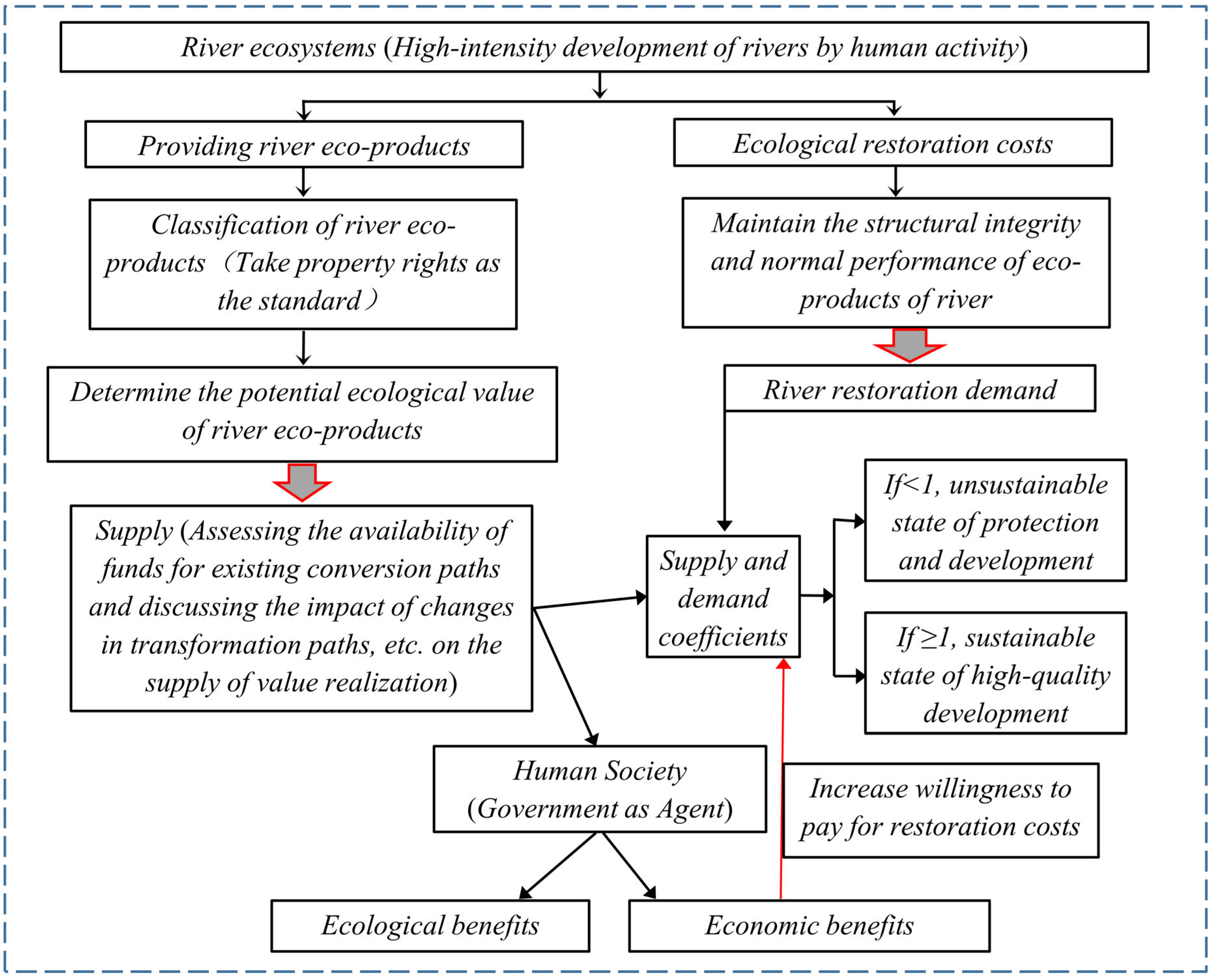
Figure 2. A framework for judging sustainable development of river ecosystems.
Sustainability 17 10845 g002
Figure 3. Realization of eco-product value and the protection cost of the river ecosystem.
Sustainability 17 10845 g003
Figure 4. Realization amount and SC of river eco-product value under different living standards.
Sustainability 17 10845 g004
Figure 5. Nonlinear relationship between runoff and the value of river eco-products.
Sustainability 17 10845 g005
Table 2. Detailed description and initial source of the data sources used in this study.
ItemsData Sources
Hydrological and hydraulic data (1972 to 2022)Hydrological data such as runoff and hydraulic data such as water level, water surface width, velocity, etc.People’s Republic of China Hydrological Yearbook (Weihe River system) [46]
Social data
(2000 to 2022)
Grain output, grain market price, agricultural water use, agricultural production input (such as fertilizer, film, energy, manpower, machinery, etc.), gross agricultural output, Engel’s coefficient, etc.Shaanxi Statistical Yearbook (http://tjj.shaanxi.gov.cn/tjsj/ndsj/tjnj/ accessed on 7 November 2025) [47]
Water Statistical Yearbook of Shaanxi (http://slt.shaanxi.gov.cn/zfxxgk/fdzdgknr/tjxx/ accessed on 7 November 2025) [48]
Shaanxi Provincial Regional Statistical Yearbook [49]
(A paper version that has been publicly released)
Ecological flow (e-flow) in riversRefs. [32,50]
abandoning the social development costRefs. [32,45]
Equivalence factorsRef. [38]
Disclaimer/Publisher’s Note: The statements, opinions and data contained in all publications are solely those of the individual author(s) and contributor(s) and not of MDPI and/or the editor(s). MDPI and/or the editor(s) disclaim responsibility for any injury to people or property resulting from any ideas, methods, instructions or products referred to in the content.