
Article

Life Cycle Assessment of Small Passenger Cars in the Context of Smart Grid Integration and Sustainable Power System Development

by
Katarzyna Piotrowska
1,*,
Izabela Piasecka
2 and
Marek Opielak
3
1
Faculty of Mechanical Engineering, Lublin University of Technology, 20-618 Lublin, Poland
2
Faculty of Mechanical Engineering, University of Science and Technology in Bydgoszcz, 85-796 Bydgoszcz, Poland
3
Faculty of Transportation and Information Technology, Academia WSEI, 20-209 Lublin, Poland
*
Author to whom correspondence should be addressed.
Sustainability 2025, 17(23), 10788; https://doi.org/10.3390/su172310788
Submission received: 15 October 2025 / Revised: 20 November 2025 / Accepted: 28 November 2025 / Published: 2 December 2025

Abstract

The accelerating integration of electromobility into renewable-based power systems necessitates a comprehensive understanding of vehicle life cycles and their interactions with emerging smart grid infrastructures. This study employs a Life Cycle Assessment (LCA) approach to evaluate the environmental performance of materials and components used in A- and B-segment passenger vehicles, within the framework of sustainable energy system development. Four propulsion technologies—petrol, diesel, compressed natural gas (CNG), and battery electric vehicles (BEVs)—were analyzed across two technological horizons (2020 and 2050), considering both landfilling and recycling end-of-life scenarios. The results demonstrate that while BEVs offer the lowest operational emissions and the greatest potential for supporting grid flexibility and renewable energy integration, they also exhibit the highest environmental burdens during production, primarily due to battery manufacturing. Nevertheless, the adoption of advanced recycling technologies significantly mitigates these impacts by reducing resource depletion, global warming potential, and cumulative energy demand. The findings highlight that circular material management and high-efficiency recycling are critical enablers of sustainable electromobility. By linking vehicle charging, energy storage, and recycling strategies, the integration of transport and energy systems can enhance grid stability, improve resource efficiency, and accelerate progress toward a decarbonized, resilient, and smart energy future.

1. Introduction

Modern developments in automotive technology, combined with increasing environmental requirements, are leading to a growing interest in environmental impact assessment of materials used in motor vehicles. In recent decades, the automotive sector has undergone dynamic transformations, in which both technological innovation and growing environmental awareness have played a key role. The modern transport sector needs to align itself with global efforts to fully support the objectives of the 2015 Paris Agreement. These objectives include keeping the rise in global temperatures well below 2 °C—ideally limited to 1.5 °C—compared to pre-industrial levels, in order to reduce the risks and impacts associated with climate change. They also involve adapting to climate-related consequences, mitigating their effects, promoting low-carbon growth without compromising food production, and ensuring that financial sector activities are consistent with climate goals. Achieving this requires that greenhouse gas emissions from worldwide transport in 2050 fall far below current levels. According to projections by the International Council on Clean Transportation (ICCT), meeting the 1.5 °C warming limit necessitates reducing emissions from fuel and electricity production and use in transport by at least 80% by 2050 relative to today. Passenger cars must account for the largest share of this reduction [1,2,3].
Due to rising oil costs, energy security concerns, and climate change, the global demand for sustainable resources and transportation is increasing. A and B segment cars, i.e., small and compact vehicles, are an important part of the automotive market, especially in Europe, where they are quite popular due to their fuel efficiency and smaller carbon footprint compared to larger models. These features make them attractive not only to consumers, but also to municipalities promoting sustainable mobility. However, the increasing number of end-of-life vehicles poses a major environmental challenge, especially in terms of disposal and recycling [4].
Each car consists of many different materials, such as steel, aluminum, polymer plastics, rubber, glass, as well as electronic and chemical components. In the case of the A and B segments, due to the specificity of their design, a higher share of lightweight polymer materials and composite materials is often recorded. While these materials contribute to reducing vehicle weight and thus fuel consumption, they also pose challenges in terms of end-of-life processing. Recycling and disposal of automotive materials are key elements in the management of waste from the automotive sector. Many countries, including the European Union, have strict regulations in place to minimize the negative effect of these materials on the environment. The End-of-Life Vehicles (ELVs) Directive requires manufacturers to ensure that at least 95% of the vehicle’s weight can be recycled or reused. Despite this, some materials, especially those difficult to separate or with low market value, still end up in landfills, contributing to soil, water, and air pollution [5,6].
Employing vehicles with higher sustainability can help reduce the environmental burdens associated with road transportation [7]. Battery electric vehicles (BEVs) do not emit greenhouse gases from the tailpipe during operation [8,9]. Therefore, given the increase in the share of renewable energy sources (RES) in the energy mix by 2030, the use of BEVs could reduce GHG emissions by about half compared to emissions from an equivalent fleet of internal combustion engine vehicles (ICEVs) [10]. However, the reduction in greenhouse gas emissions during the use phase of BEVs is not sufficient to demonstrate their improved environmental performance compared to vehicles with internal combustion engines [11]. A key element of BEVs from an environmental point of view is the battery. About 80% of the environmental impact of BEVs over their entire life cycle depends on the type and capacity of the battery and the amount of energy consumed during vehicle operation, with the battery accounting for 40–50% of total greenhouse gas emissions [12,13,14,15].
Various legislative measures have been introduced within the European transport sector to address its adverse ecological effects and promote a shift toward a low-carbon, circular economy. Road transport specifically contributes significantly to environmental harm. Therefore, gaining a deeper insight into the life-cycle environmental footprint of vehicles is essential for informed decision-making. The use phase of a car is an important part of the environmental impact of the life cycle of vehicles, but the use of fuels with lower emissions of hazardous substances, better emission control and alternative powertrains increase the importance of environmental impact assessment also within the other stages of the cycle [16,17].
The integration of battery electric vehicles (BEVs) into smart power systems represents a key element of future energy transition strategies. Modern concepts such as Vehicle-to-Grid (V2G) and Vehicle-to-Home (V2H) enable bidirectional energy exchange between electric vehicles and the power grid or household installations. Through controlled charging and discharging cycles, BEVs can act as distributed energy storage units, providing ancillary services such as load balancing, peak shaving, and frequency regulation. This bidirectional interaction not only increases grid flexibility and stability but also enhances the utilization efficiency of renewable energy sources, particularly under conditions of variable generation from wind and solar power. In this context, the battery capacity of a growing BEV fleet constitutes a significant, dynamically controllable storage potential that can support grid decarbonization and resilience. The effective implementation of V2G and V2H systems requires the development of advanced communication protocols, real-time demand-response algorithms, and smart metering infrastructure ensuring secure and efficient energy flow management.
Based on these considerations, the study’s primary aim was to evaluate the environmental impacts associated with the materials and components of end-of-life vehicles in segments A and B.
The life cycle assessment of small passenger cars presented in this study aligns with the contemporary discourse on the transition towards sustainable power systems and smart energy infrastructures. By examining the environmental and material implications of emerging vehicle technologies, particularly in the context of electrified mobility and the use of low-carbon materials, the research contributes to understanding how transport systems can be integrated into renewable-energy-based grids. The study’s systemic approach, linking life cycle performance with energy resource management and material recovery, reflects the broader goals of enhancing efficiency, flexibility, and sustainability within interconnected energy and mobility networks.

2. Research Methodology

2.1. Plan, Program and Object of Research

The study conducted a life cycle assessment (LCA) of small passenger vehicles in segments A and B. The assessment primarily examined recycling and landfill pathways, as well as potential risks arising from improper handling of plastics, materials, and vehicle components at end-of-life. Particular attention was paid to materials that are difficult to recycle, such as polymer plastics, heavy metals, and car components, which can negatively affect the soil, water, and atmospheric environment.
This study focused primarily on the vehicle cycle, encompassing the production, operation, and end-of-life phases, with the aim of identifying material and structural differences among vehicle types. The analysis did not include the full well-to-wheel energy cycle, which covers the upstream processes of fuel production, electricity generation, and energy distribution. As a result, the assessment represents a partial life cycle perspective focused on vehicle-related impacts rather than the complete energy supply chain. The inclusion of full well-to-wheel or cradle-to-grave energy processes is planned for future research to provide a more comprehensive understanding of the total environmental burdens associated with both internal combustion and electric vehicle operation.
The environmental impact assessment considered four powertrain types—internal combustion vehicles running on petrol, diesel, or CNG, as well as battery electric vehicles. Two end-of-life management scenarios were analyzed: one emphasizing maximum landfilling and the other maximizing recycling. Additionally, two temporal perspectives were applied: one reflecting vehicles registered in 2020 and another projecting conditions for vehicles anticipated to be registered in 2050. The selection of the reference years 2020 and 2050 was determined by the adopted comparative framework between the current situation and a long-term development scenario for the transport and energy sectors. The year 2020 reflects the actual technological and energy conditions for which complete empirical datasets were available, whereas the year 2050 represents a prospective horizon commonly used in the European Union’s strategic climate policies, assuming full climate neutrality. Although the inclusion of more recent data, for instance from 2024, could potentially broaden the analytical perspective, complete and verified datasets for that period were not yet available from vehicle manufacturers at the time of the study. Therefore, the year 2020 was selected as the base year to ensure data consistency, methodological comparability, and a 30-year projection horizon.
The study began by defining its objectives and scope. A review of existing research and technological developments revealed a lack of comprehensive environmental assessments focusing on the life cycle impacts of materials and components used in passenger cars from segments A and B. Such an analysis became feasible through collaboration with manufacturers supplying materials and parts for the investigated vehicle types. Subsequently, the life cycles of the selected cars were examined. Simulation modeling was performed using SimaPro 9.4 (PRé Sustainability) and the Ecoinvent 3.8 database, applying calculation methods such as ReCiPe 2016, IPCC 2021, CED V1.11, CML-IA baseline, and Ecological Scarcity 2021. The key methodological assumptions are detailed in Section 2.3, Section 2.4, Section 2.5, Section 2.6 and Section 2.7, while the findings and their interpretation are discussed in Section 3. The concluding phase of the study involved interpreting the results, presented in Section 3 and Section 4.
For the purposes of the analysis, it was assumed that cars registered in Europe are used for an average period of 18 years, adopted as a weighted mean based on data (2019–2023). This value reflects regional variation across Europe, ranging from approximately 16–17 years in Western European countries to 19–21 years in Central and Eastern Europe [18,19]. This assumption is based on the average age of end-of-life vehicles in several countries: in Germany in 2014–2016 it was 17–18 years, in France in 2018 it was 19 years, and in Portugal and Poland in 2015 it was 20 years [20,21,22]. The average age of vehicles in Greece, Romania, Estonia and Lithuania in 2018, which ranged from 16 to 17 years, was also taken into account [23]. Since the above-mentioned figures refer to cars that were registered about two decades ago, and the lifespan of vehicles is increasing every year, the assumption of an 18-year life cycle of cars registered in 2020 and 2050 can be considered a conservative estimate. The adopted uniform 18-year operational period for both time horizons ensures methodological consistency and comparability between scenarios, while representing the average conditions across the European market. The analysis focused on passenger vehicles belonging to segments A and B, representing small and urban cars, which together account for the largest share of the European vehicle fleet. Within these categories, three propulsion systems were examined: conventional internal combustion engine vehicles (ICEVs) powered by petrol, hybrid electric vehicles (HEVs), and fully battery electric vehicles (BEVs). This selection ensures representativeness for the European market and allows assessment of the most relevant drivetrain technologies within a harmonized life cycle framework.
Shorter vehicle lifespans reported in earlier LCA studies often correspond to the average age of cars removed from registration in specific countries—for instance, 13 years in Germany between 2005 and 2009, or 14 years in the UK during 2012–2013 [24,25]. However, in nations that export significant quantities of used vehicles, such as Germany and other European countries [26,27], these cars continue to operate abroad. Therefore, the 13–14 year figure does not accurately represent the complete operational lifetime of such vehicles. With the average annual mileage for small segment cars (A and B) amounting to approx. 11,000 km/year [21], the range of their operation was estimated at 198,000 km. The data from the German Mobility Survey also showed that the annual mileage of passenger cars is decreasing by around 5% per year. Therefore, fuel-electric mixes in the first years of vehicles have a greater destructive impact on the environment than mixes that will be characteristic of the years at the end of their life cycle [22].
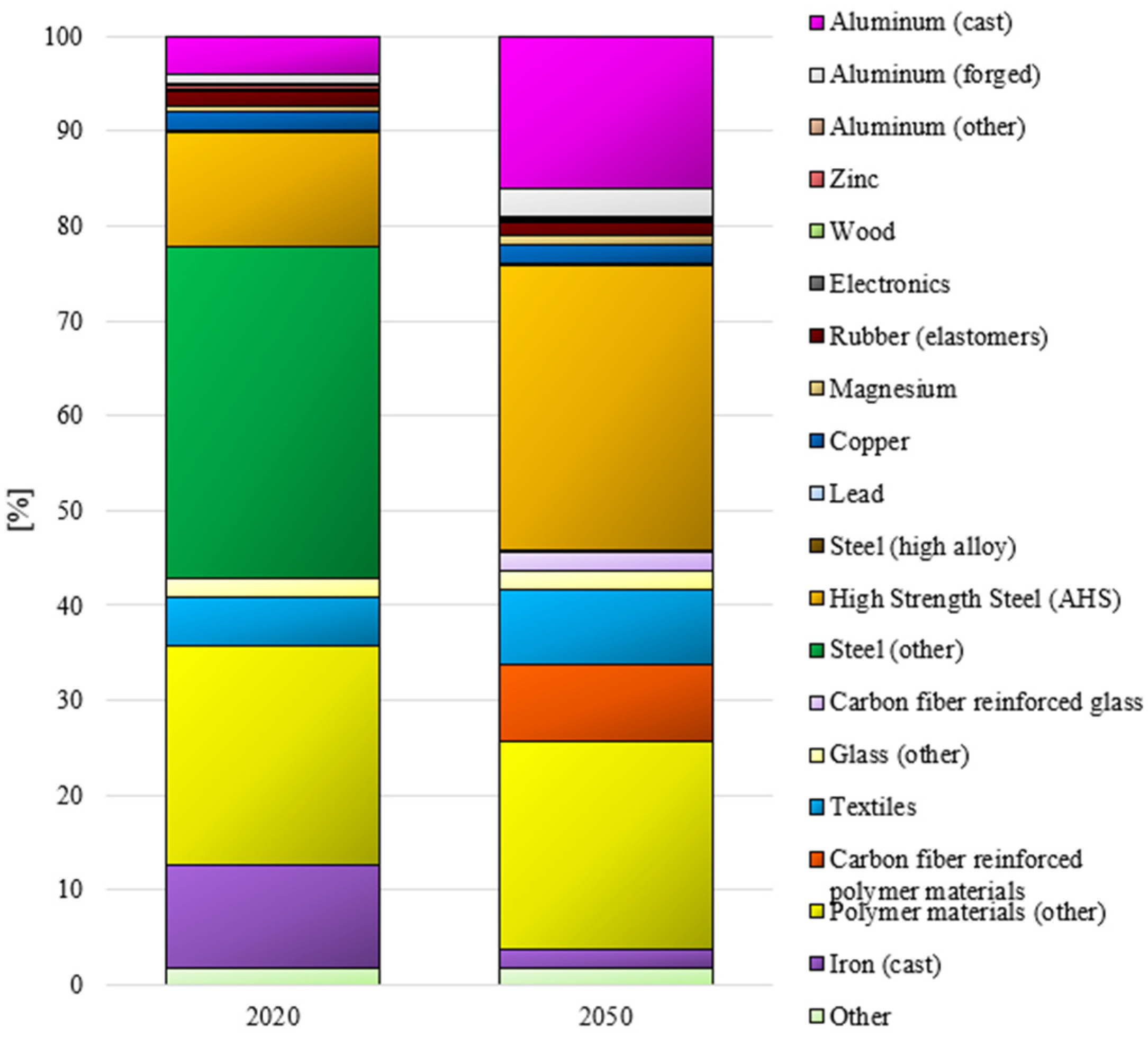
In the EU and the UK, small-segment vehicles (A and B) registered in 2020 had an average mass of 1155 kg. Projections indicate that over the coming three decades, vehicle weights will decline by approximately 20% overall. Nowadays, steel, polymer plastics and iron have a particularly large mass share. It is forecast that for cars registered in 2050, the share of high-strength steel, aluminum and carbon fiber-reinforced polymers will increase, while the share of iron, other types of polymer materials and other types of steel will decrease (Figure 1 and Figure 2). This reduction is primarily driven by continuous advancements in lightweight structural materials, including the substitution of conventional steel with aluminum, magnesium alloys, and composite materials, as well as the development of high-strength, low-density steels. Furthermore, progress in the miniaturization and integration of electronic and powertrain components contributes to overall vehicle mass reduction. Lower vehicle weight directly enhances energy efficiency, extends driving range in electric vehicles, and decreases life cycle emissions, which are essential factors for meeting long-term sustainability and decarbonization targets in the transport sector [28].
The battery production assumptions for BEVs were established using region-wide average emission factors, accounting for the relevant time frame and battery capacity. For vehicles registered in 2020, these factors reflected the dominant battery chemistry at the time—NMC622–graphite cells—and the 2020 European battery market composition. For vehicles projected to be registered in 2050, the emissions assumptions aligned with NMC811–graphite batteries manufactured within Europe. The battery capacities considered for BEVs in 2020 were the market averages for that year. It was assumed that the cost of purchasing batteries would decrease and their capacity would increase. Due to the uncertainty regarding the life of batteries, the second-life applications were not taken into account during the research. The scenario for 2050, however, takes into account forecasted technological trends in battery development, including a gradual reduction in the content of critical and high-impact metals such as cobalt and nickel, and an increasing share of lithium iron phosphate (LFP) chemistries. These changes are supported by industrial and academic projections indicating a transition toward resource-efficient and less toxic battery formulations. The adopted parameters therefore reflect aggregated, long-term trends in material composition and production efficiency rather than specific technological solutions that may emerge over the next three decades [29].
It is estimated that contemporary lithium-ion batteries can undergo between 1500 and 15,000 charge–discharge cycles before their capacity drops to 80% of the original level. This broad range reflects substantial variations in battery longevity, influenced by factors such as electrode composition and operating conditions, including charging and discharging rates, storage duration, and temperature. In the case of NMC532–graphite cells, extended cycling tests indicate that they retain 90–95% of their initial capacity even after 3000 complete cycles. For battery electric vehicles with driving ranges of 200–400 km, this number of cycles corresponds to roughly 600,000 to 1,200,000 km—far exceeding the typical lifetime mileage of a passenger car. As a result, such batteries have considerable potential for second-life applications [29,30].
The highest mass share in the batteries of cars in the A and B segments is characterized by aluminum (approx. 30%), graphite (approx. 20%), and nickel (approx. 10%). The mass of the electrolyte is about 10% of the weight of the entire battery. For the 2050 scenario, these proportions are expected to evolve, with a lower share of nickel and cobalt due to material substitution and improved cathode design, and a slightly higher proportion of aluminum and lithium compounds resulting from advances in lightweight and energy-dense cell architectures.
It is also assumed that at the end of the life cycle of electric vehicles produced in 2020 and 2050, i.e., in the perspective of 2040 and 2070, batteries will be largely recycled. The use of recycled materials instead of virgin materials will also have an impact on the level of emissions of harmful chemical compounds, and its level will significantly depend on the materials from which the electrodes will be made and the recycling processes used. It is estimated that in the case of NMC622 graphite batteries using cobalt, nickel and (in some cases) lithium, hazardous emissions occurring at the production stage could be reduced by up to 14–25% through recycling (this corresponds to the European Commission’s proposed recycling target of 95% for Co and Ni and 70% for Li) [31,32,33].
According to data published by the Polish Energy Market Agency, in 2020, Poland’s total electricity generation amounted to approximately 157.7 TWh, with the energy mix remaining strongly dominated by fossil fuels. Hard coal accounted for the largest share, producing about 71.6 TWh (46%), followed by lignite (brown coal) with 38.3 TWh (24%). Together, coal-based sources contributed roughly 70% of total electricity generation. Among other sources, natural gas played a growing but still moderate role, generating 16 TWh (10%) of electricity. Renewable energy sources jointly contributed around 18%, including wind power with 15.7 TWh (10%), biomass and biogas with 8.2 TWh (5%), hydropower with 2.9 TWh (2%), and solar energy with 2 TWh (1%). The remaining 2% (3 TWh) came from other minor sources such as oil and waste. This structure highlights the strong dependence of Poland’s power sector on coal, while also illustrating the emerging role of renewable energy, particularly wind and biomass, as the country began its gradual transition towards a more sustainable energy system.

2.2. LCA Method

Life cycle assessments as instruments of environmental analysis have been created since the 80s of the twentieth century. The LCA approach is an important method for characterizing and identifying the environmental burdens of systems. So far, it is the only instrument designed for environmental assessment standardized by the ISO standard [34,35,36,37].
ISO 14040:2006 (Environmental Management—Life Cycle Assessment—Principles and Structure) and ISO14044:2006 (Environmental Management—Life Cycle Assessment—Requirements and Guidelines) provide a common basis for all modern LCA studies in a standardized form. They contain general requirements for most spheres of the lifecycle of objects. However, due to the wide range of LCA studies, ISO standards still leave many methodological aspects that require further definition during practical analyses [34,38,39].
Life cycle assessment (LCA) is a methodology designed to identify and evaluate processes that exert significant environmental impacts. Although initially intended primarily for product assessment, it is now widely applied to the examination of processes, services, and other systems. LCA outcomes can support both the optimization of production toward greater sustainability and the formulation of guidelines such as best practices, policies, or regulatory measures. Depending on whether the focus is on current or future conditions, different modeling approaches may be implemented. One of the main strengths of LCA is its ability to encompass all phases of an object’s or process’s life cycle, though the analysis may also be limited to specific stages (for example, the vehicle manufacturing phase). Additionally, defining the intended audience or stakeholders of the assessment is an essential part of the procedure [40,41,42,43,44,45].
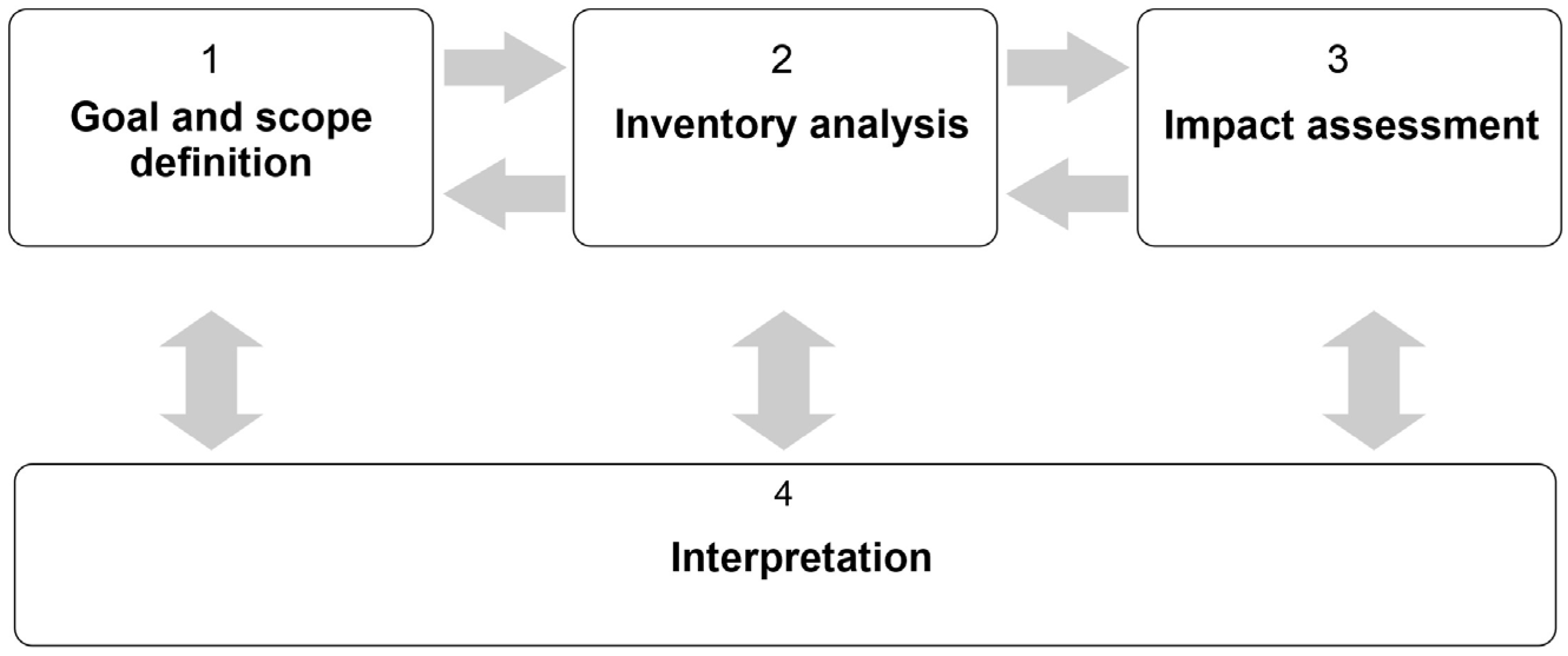
Within an LCA study, it is essential to consider all significant potential environmental impacts—including those affecting air, water, soil, and human health—as well as all material flows linked to the system being analyzed (input of raw materials and emissions, post-consumer supply and management processes, energy generation, transport, etc.). The LCA framework defined in the ISO standards is summarized in Figure 3 [38,39].
The first phase, goal and scope definition, defines the purpose of the study, its intended applications, and the target audience. It also determines the system boundaries, the functional unit, and key assumptions used in modeling. Clearly stating the goal and scope ensures that the study’s results are both relevant and comparable across different systems or scenarios. In the context of vehicle assessment, this step specifies the propulsion technologies analyzed, the life cycle stages included (e.g., raw material extraction, production, use, and end-of-life), and the reference unit (1 km of vehicle operation), against which all environmental flows are normalized [38,39].
The second phase, Life Cycle Inventory (LCI), involves compiling a detailed inventory of all energy and material inputs as well as environmental releases (emissions to air, water, and soil) throughout the defined system boundaries. Data collection can include both primary data (obtained directly from manufacturers or experiments) and secondary data (sourced from databases such as Ecoinvent). The comprehensiveness and quality of inventory data directly influence the credibility of the results. In vehicle LCAs, the LCI encompasses materials used in vehicle components, fuel or electricity consumption during operation, and waste or recycling flows at the end of life [38,39].
The third phase, Life Cycle Impact Assessment (LCIA), translates inventory data into potential environmental impacts by applying scientifically established characterization models. This step quantifies how different emissions and resource uses contribute to impact categories such as Global Warming Potential (GWP), Acidification Potential (AP), Eutrophication Potential (EP), or Resource Depletion (RD). The LCIA thus enables the identification of critical environmental hotspots within the system and facilitates the comparison of alternative technologies or scenarios. The method and impact categories chosen should align with the study objectives and the decision-making context [38,39].
The final phase—interpretation, involves analyzing and summarizing the results in relation to the study’s goal and scope. Interpretation aims to identify the main contributors to environmental burdens, assess data quality and uncertainty, and formulate conclusions and recommendations. In the context of electromobility and smart grid integration, interpretation helps highlight pathways for reducing environmental impacts through improved material circularity, energy efficiency, and integration with renewable energy systems [38,39].

2.3. ReCiPe 2016

ReCiPe is among the methodologies applied in Life Cycle Impact Assessment (LCIA). It was originally introduced in 2008 through a joint effort involving the Dutch National Institute for Public Health and the Environment (RIVM), Radboud University Nijmegen, Leiden University, and PRé Sustainability. Its primary function is to convert life cycle inventory data into environmental impact metrics. These metrics reflect the potential magnitude of impacts within specific environmental categories. The ReCiPe framework provides indicators at two distinct levels: 22 midpoint impact categories and 3 endpoint areas of protection. Midpoint indicators address particular environmental issues, whereas endpoint indicators represent overarching impacts across three broader damage categories [46,47,48].
As part of the research, twenty-two categories of impact and three areas of impact (human health, ecosystem quality, raw material resources) were analyzed (the models used were ReCiPe 2016, Endpoint (H), World (2010), and H/A). The Endpoint (H) version of ReCiPe 2016 was selected because it applies a hierarchist perspective that reflects a scientifically balanced, consensus-based time horizon and cause–effect chain, making it particularly suitable for policy-relevant and comparative analyses. Moreover, the “World (2010)” normalization and weighting set provides globally representative yet regionally compatible characterization parameters, ensuring methodological consistency with European datasets and supporting the comparability of results with other vehicle life cycle assessments conducted within the EU context. The results of grouping and weighting in the ReCiPe 2016 model are expressed in environmental points (Pt), where one thousand points correspond to the average annual environmental impact of one person [49,50].

2.4. IPCC 2021

The primary gases that contribute to the intensification of the greenhouse effect include CO2, N2O, CH4, and CFCs [51]. In analyses, it is crucial to consider the atmospheric lifetime of each gas, since estimating the greenhouse effect requires accounting for long-lasting impacts with a global reach. Using the IPCC (Intergovernmental Panel on Climate Change) Global Warming Potential (GWP) model, the greenhouse effect is quantified in terms of GWP, with carbon dioxide serving as the reference substance. Consequently, results are expressed in kilograms of CO2 equivalent (kg CO2 eq), with CO2 assigned a total impact index of 1. For this study, the effects of individual gases were evaluated over a 100-year time horizon. Employing the IPCC 2021 methodology, environmental impacts were assessed across three impact categories (the models used were IPCC 2021 and GWP100) [52,53].

2.5. Model CED

In order to determine the environmental impact of processes related to energy generation in the life cycle of the passenger cars in question, the CED (Cumulative Energy Demand) model was used, which made it possible to assess the cumulative energy demand. The CED method is a tool used in the Life Cycle Analysis (LCA) of products, processes, or systems to assess the total amount of energy consumed throughout their life cycle. It measures the energy used at various stages of production, from the extraction of raw materials, through their processing, production, distribution, use, to recycling or utilization [54,55,56].
The CED method is particularly useful in assessing the ecological efficiency of technological processes and products, helping to identify the most energy-intensive stages of the life cycle. This makes it possible to implement optimization measures to reduce energy consumption and improve energy efficiency. As part of the research, all categories of impact characteristic of the CED model were analyzed—three relating to non-renewable sources (nuclear energy, fossil fuels, non-renewable biomass) and three from the area of renewable sources (renewable biomass, hydro energy and, jointly, solar, wind, and geothermal energy) (the model used was Cumulative Energy Demand, V1.11). The results of the characterization are presented in the MJ of energy demand [57,58].

2.6. Model CML-IA Baseline

The CML (Centre for Milieukunde, Leiden) model, like CED, is characterized by a midpoint approach. Impact categories are expressed in terms of the level of emissions of harmful substances to the environment or energy demand [59]. It allows to obtain results for a number of categories of environmental impact, expressed as emissions to the environment or use of resources. The analyses carried out using the CML model in this monograph included eleven categories of impact (the model used was CML-IA baseline, V3.08, EU25) [60].
The results of characterization in the CML-IA baseline model are presented in the form of emission values of reference substances (similar to the IPCC model), depending on the impact category, it can be, e.g., kg SO2 eq (acidifying substances), kg PO4 eq (eutrophicating compounds), etc.

2.7. Ecological Scarcity 2021

The use of the Ecological Scarcity model made it possible to determine the environmental impact of the life cycle of the vehicles under consideration in the form of pollutant emissions and resource consumption, through the use of so-called “eco-factors”. They vary depending on the substance being analyzed and their values are based on environmental guidelines. The more the amount of emissions or resource consumption exceeds the acceptable level, the higher the values of the ecological factor (expressed in environmental points) [61].
The Ecological Scarcity model includes a number of factors characterizing many different emissions to the atmospheric environment, soil, groundwater, and surface water, as well as describing the use of energy resources and certain types of waste. All factors are determined on the basis of the current level of pollution (current flows) and the degree of pollution considered to be maximum, critical flows, developed on the basis of Swiss assumptions in the field of environmental protection [62].
Although the Ecological Scarcity 2021 model is based on Swiss environmental reference values, the methodological framework and structure of the eco-factors are largely consistent with European environmental standards. The differences between Swiss and EU assumptions are limited primarily to energy sector emission intensities, and therefore do not significantly affect the relative outcomes of the assessment. In this study, the Ecological Scarcity 2021 model was used as a complementary tool, enabling a comparative evaluation of environmental impacts through established methodology. Its application is further justified by the high transparency of the Swiss reference system and its wide adoption in environmental assessments at the European level.
Under this model, ecofactors are used to weigh destructive environmental impacts, as well as resource consumption. This allows them to be expressed in ecopoints (UBP); for e.g., the emission of one kilogram of CO2 is equal to 1000 UBP, the emission of one kilogram of phosphate to a water reservoir is about 970,000 UBP, and the extraction of one kilogram of gravel is 2.8 UBP. Each amount of the impact on the environment included in the inventory analysis is multiplied by the value of the corresponding eco-factor, and the points obtained are added up [63].
As part of the analyses carried out using the Ecological Scarcity 2021 model, nineteen categories of impact were analyzed (the model used was Ecological Scarcity 2021, V1.00, eiv3). The results are presented in ecopoints (UBP).

3. Results and Their Analysis

3.1. Model ReCiPe 2016

Analyses of the assessment of the potential impact on the environment were carried out for vehicles of the A and B (small) segments, taking into account four different drive systems (ICEV powered by petrol, diesel and CNG and BEV). Two scenarios of post-consumer management were considered—landfill (as much as possible) and recycling (also at the maximum possible level). Two scenarios of the time horizon were also adopted, the first for cars registered in 2020, and the second—including a forecast for cars to be registered in 2050. The assessment was carried out only for the life cycle of plastics, materials and elements of the considered means of transport. Fuel and energy cycles were not taken into account.
In the first stage of the research, the ReCiPe 2016 model was used. Twenty-two categories of impact and three areas of impact were evaluated. The monograph presents only the most important of the results obtained. The results of the analyses are presented in the unit of environmental points (Pt). A thousand Pt is equal to the impact of one person on the environment in one year.
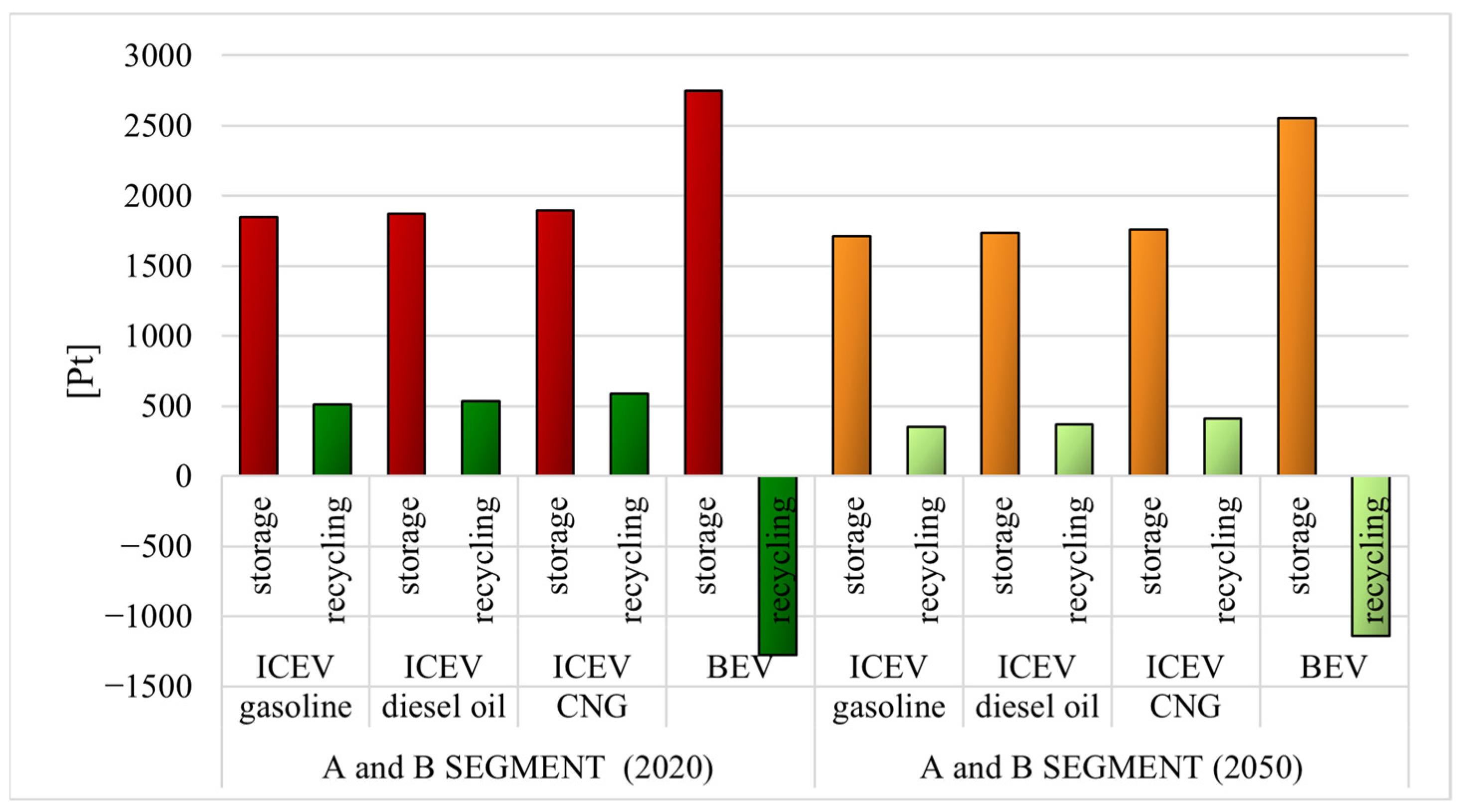
Figure 4 illustrates the results of grouping and weighing the projected environmental consequences occurring throughout the life cycle of the considered passenger cars of the A and B segments. It is visible that cars registered in 2020 will have a significantly higher harmful impact on the environment compared to those that are to be registered 30 years later. Given economies of scale (the number of new vehicles registered and operated each year), these differences will be even more pronounced. The life cycle of all the cars in question, assuming their form of post-consumer management in the form of landfilling instead of recycling, will result in more negative environmental consequences (by about 80 to about 250%). The highest level of hazardous impacts is characteristic of BEVs, whose plastics, materials and components would be destined for end-of-life storage (2.75 × 10³ Pt for those registered in 2020 and 2.55 × 10³ Pt—in 2050). The use of recycling processes would result in a significant reduction in the amount of destructive impacts in the perspective of their entire life cycle (−1.27 × 10³ Pt for cars from 2020 and −1.14 × 10³ Pt for those from 2050). The life cycles of ICEVs were characterized by a similar level of harmful impact on the environment, with the lowest being those with gasoline engines and the highest—CNG-powered drive systems, which was mainly caused by additional elements of this type of installation (including, m.in others, a gas cylinder/tank).
Table 1 presents the results of grouping and weighting the projected environmental consequences occurring in the life cycle of the analyzed passenger cars, with particular emphasis on three areas of impact (human health, ecosystems, raw material resources). Results are also presented in environmental points (Pt). The highest number of harmful impacts was recorded in the context of the impact on human health, while the least—in relation to the problem of the depletion of raw material resources. The maximum level of total negative impacts was characterized by the life cycle of battery electric vehicles, assuming their storage at the end of their life (2.75 × 10³ Pt for those registered in 2020 and 2.55 × 10³ Pt—in 2050, including in the area of human health 2.60 × 10³ Pt for cars from 2020 and 2.40 × 10³ Pt for those from 2050). Recycling of this type of vehicles would make it possible to significantly reduce the destructive impact over their entire life cycle (−1.27 × 10³ Pt for those registered in 2020 and −1.14 × 10³ Pt—in 2050, including in the area of human health −1.07 × 10³ Pt for cars from 2020 and −9.61 × 10² Pt for those from the year 2050). The life cycles of vehicles with internal combustion engines powered by various types of fuel resulted in relatively similar levels of hazardous environmental impacts. The most harmful effects were again noticed in the case of cars with a CNG drive system, and the least—gasoline.

3.2. Model IPCC 2021

The second stage of the study used the IPCC 2021 model, which made it possible to assess the level of greenhouse gas emissions. Three categories of impact were analyzed. Only the key results obtained are presented. The results are presented in kilograms of carbon dioxide equivalent (kg CO2 eq).
Greenhouse gases are those components of the Earth’s atmosphere which, through their physicochemical properties, have the ability to retain solar energy within it. These include primarily water vapor, carbon dioxide, nitrous oxide, methane and freons. Some of these compounds are natural components of the atmosphere, which have been present in it for millions of years. Thanks to them, climatic conditions were created on Earth, which enabled the emergence and development of life. However, due to human activity, their concentration increases. In addition, gases absent in natural conditions appeared in the atmosphere, exhibiting analogous properties consisting in the absorption of radiation. Nowadays, an increase in the average air temperature in the near-surface layers of the atmosphere is observed. The increase in greenhouse gas concentrations caused by human activity is the main reason for global warming. The dominant share in the greenhouse effect is characterized by water vapor, the content of which in the atmosphere varies over time and varies over individual areas of the planet (from about 40 to about 95%). The cause of this phenomenon is the cycle of water circulation in the environment as a result of the processes of condensation, evaporation, sublimation and resublimation. Human activity has a negligible direct impact on the content of this gas in the atmosphere. The second chemical compound important for the greenhouse effect is carbon dioxide. Anthropogenic interactions, including transport processes, have a significant impact on its share in the atmosphere. Since the beginning of the industrial era, its content has been steadily increasing. Methane, nitrous oxide and freons, which also exacerbate the greenhouse effect, are most often released in industrial and transport processes and as a result of agricultural activities [64,65].
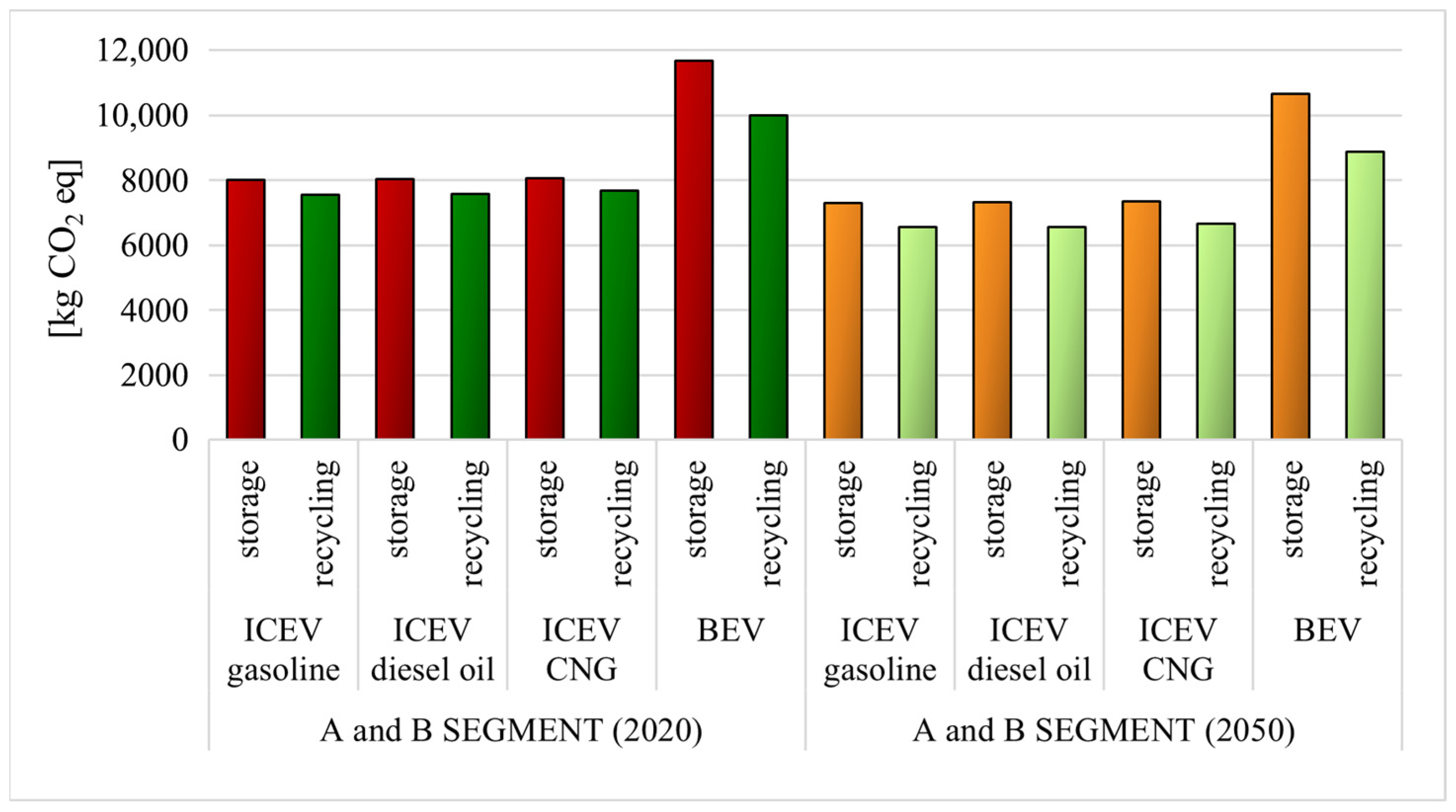
Figure 5 shows the results of characterization of greenhouse gas emissions in the life cycle of the analyzed passenger cars of the A and B segments, differing from each other in the type of drive system, taking into account different post-consumer development scenarios and different time horizons. The highest number of harmful impacts was recorded for life cycles involving post-consumer management in the form of landfilling, while the fewest—in the form of recycling. The life cycles of cars to be registered in 2050 would result in fewer negative impacts in terms of greenhouse gas emissions compared to those in 2020. Again, the highest level of destructive impacts was distinguished by the life cycle of BEVs, which assumes their storage (1.17 × 10⁴ kg CO2 eq for those registered in 2020 and 1.06 × 10⁴ kg CO2 eq—in 2050). The life cycle of all vehicles concerned, including landfilling instead of recycling, results in higher GHG emissions (by around 5 to around 17%). The life cycles of ICEVs were characterized by a similar level of harmful impact on the environment, but the lowest level of greenhouse gas emissions were distinguished by those with gasoline engines, and the highest—those powered by CNG.

3.3. Model CED

The third stage of the study involved the use of the CED model. Six impact categories were analyzed, but only the most important results were presented. The results are presented in MJ energy demand.
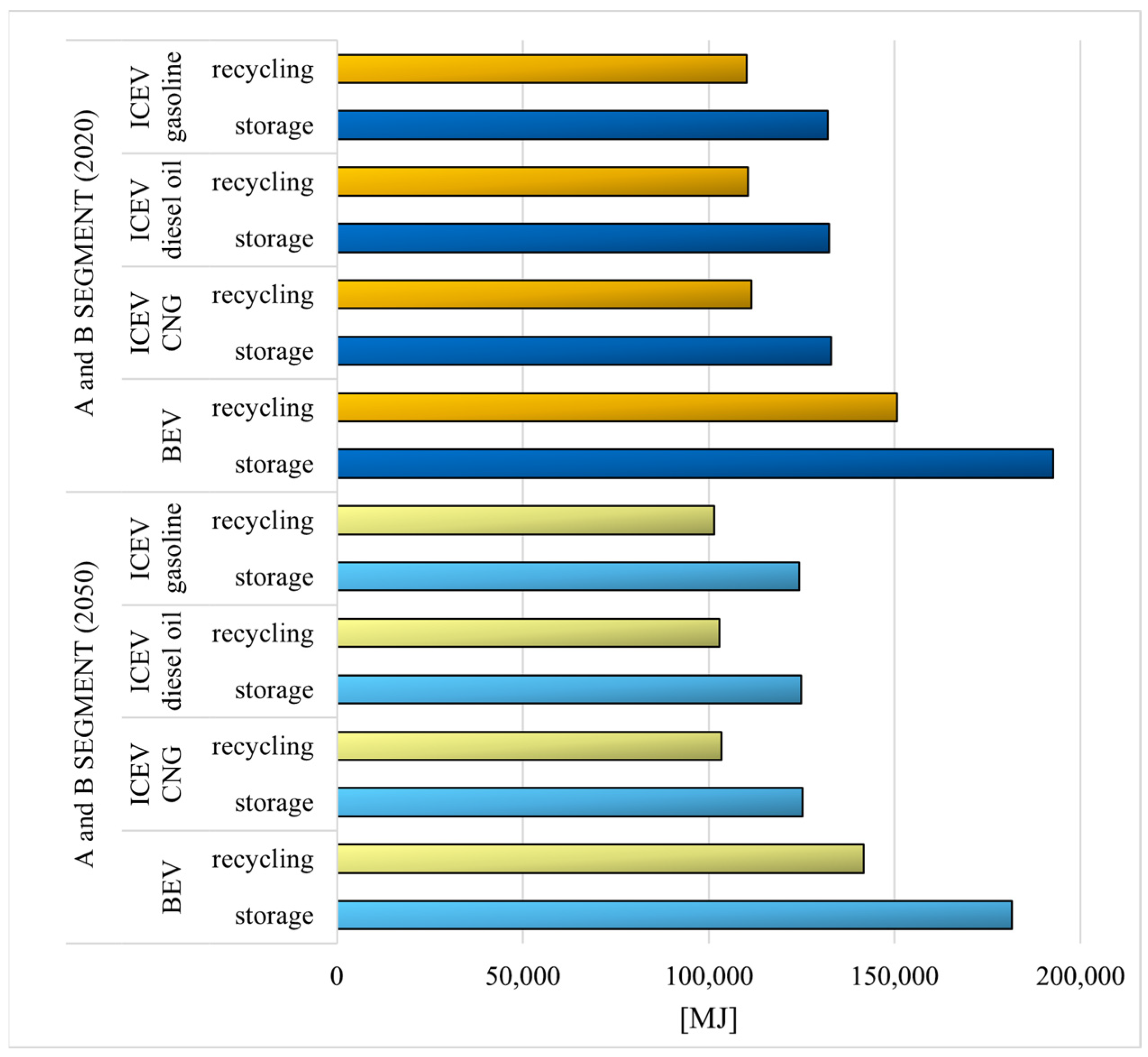
Figure 6 presents the characterization results for energy demand across the life cycle of the analyzed A- and B-segment passenger cars. The life cycles of vehicles registered in 2020 exhibit higher energy consumption than those projected for registration 30 years later. The results of characterizing the energy demand in the life cycle of the considered passenger cars of the A and B segments are presented in Figure 6. The life cycles of cars registered in 2020 are characterized by higher energy consumption compared to those that are to be registered 30 years later. The method of post-consumer management also affects the level of energy demand. In the case of life cycles of cars to be stored at the end of their life, a significantly higher level of energy consumption was recorded (by approx. 20 to approx. 28%). The highest energy demand distinguishes the life cycles of battery electric vehicles (1.93 × 10⁵ MJ for those registered in 2020 and 1.82 × 10⁵ MJ—in 2050). The life cycles of vehicles with internal combustion engines powered by different types of fuels were characterized by a generally similar level of energy consumption. The highest demand for energy was recorded in the case of cars with a CNG drive system, and the lowest—gasoline.

3.4. Model CML-IA Baseline

In the fourth stage of the study, the CML-IA baseline model was used. Eleven categories of impact were evaluated. The monograph presents only selected results. The results of the analyses are presented in the form of the emission of the reference substance—for the acidifying substance in kg SO2 eq and for eutrophicating compounds—in kg PO4 eq.
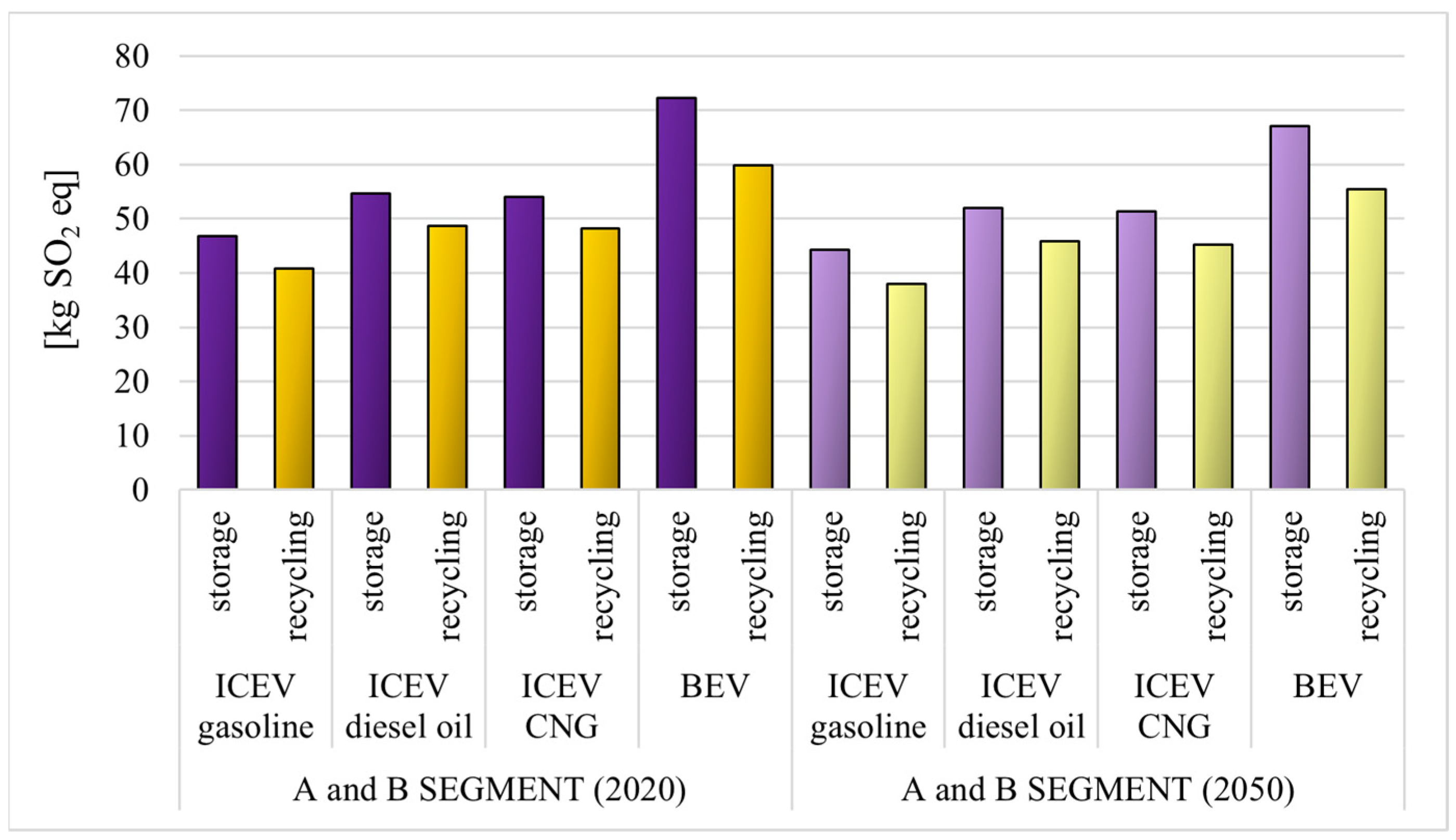
Figure 7 illustrates the results of characterization of emissions of eutrophicating substances over the entire life cycle of the considered passenger cars of the A and B segments. Vehicles registered in 2020 will have a significantly higher harmful impact on the environment compared to those to be registered in 2050. The life cycle of all the cars in question, assuming their form of post-consumer management in the form of landfilling, results in more emissions of substances that acidify the environment (by about 12 to about 21%). The highest level of destructive impacts in the analyzed area is characteristic of BEVs, whose plastics, materials and components would be destined for landfill at the end of their life (7.23 × 101 kg SO2 eq for those registered in 2020 and 6.71 × 101 kg SO2 eq—in 2050). The use of recycling processes would reduce the amount of destructive impacts in the perspective of their entire life cycle (5.99 × 101 kg SO2 eq for cars from 2020 and 5.54 × 101 kg SO2 eq for those of the year 2050). The life cycles of ICEVs were characterized by a similar level of hazardous impact on the environment in the context of emissions of substances that increase the acidity of the environment.
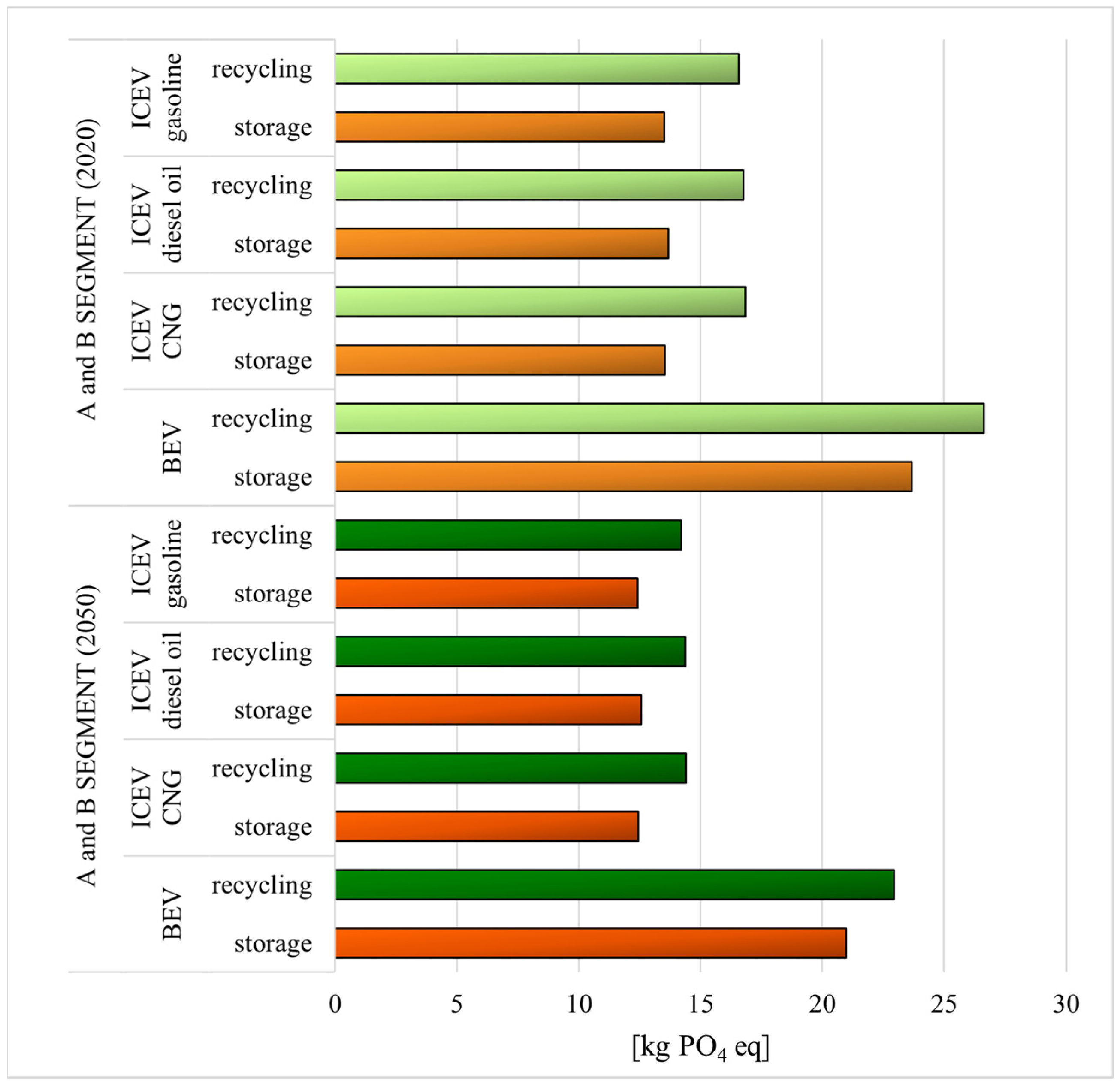
The results of characterization of emissions of eutrophication substances in the life cycle of the analyzed passenger cars of the A and B segments, differing from each other in the type of drive system, taking into account different post-consumer development scenarios and time horizons, are presented in Figure 8. The highest number of negative impacts in this respect was recorded for life cycles assuming post-consumer management in the form of landfilling, and the least—in the form of recycling. The life cycles of cars to be registered in 2050 would result in fewer negative impacts in the area of eutrophication emissions compared to those in 2020. The highest level of destructive impacts was distinguished by the life cycle of BEVs, which assumes their recycling (2.66 × 101 kg PO4 eq for those registered in 2020 and 2.30 × 101 kg PO4 eq—in 2050). The life cycles of all the vehicles concerned, including landfilling, result in lower emissions of eutrophicating chemicals (by around 9 to around 24%). This is due to the substances used in recycling processes, which have a strong negative impact on the environment in this respect. The life cycles of ICEVs were characterized by a similar level of emissions of compounds increasing the degree of eutrophication of the environment.

3.5. Model Ecological Scarcity 2021

The last, fifth stage of the research involved the use of the Ecological Scarcity 2021 model. Nineteen categories of impact were analyzed, but only key results relating to the emission of selected groups of chemical compounds to the atmospheric environment (carcinogenic) and substances (heavy metals) and processes (land use change) affecting the soil environment were presented. The results of the analyses are presented in ecopoints (UBP).
According to the definition of the International Agency for Research on Cancer (IARC) operating at the WHO, a carcinogenic substance is a compound or mixture of chemical compounds that initiate the formation of a malignant tumor or increase the frequency of its recurrence. As a result of metabolic activation in the body, mutagenic substances can interact with DNA nucleic acids, which can lead to changes in the genetic code. If this type of error is not corrected, mutation, excessive gene expression and uncontrolled division of the cancer cell occur, and consequently—the development of cancer. Gene dysfunction can be caused by physical factors (e.g., ultraviolet radiation), chemical compounds (e.g., as a result of environmental pollution) or biological vectors (e.g., by the interaction of viruses, bacteria, parasites). It is estimated that environmental factors may be responsible for about 70–90% of cancer cases [66].
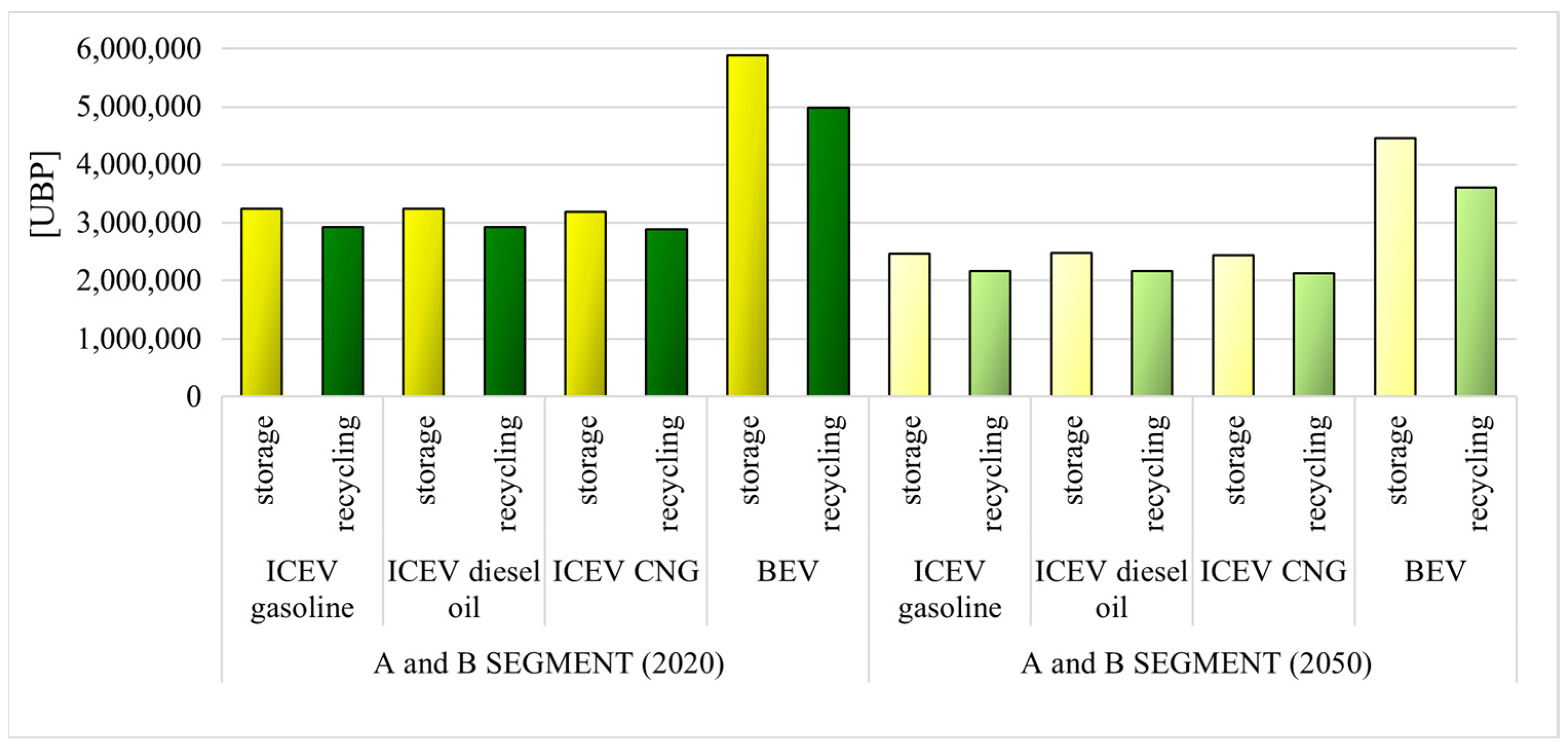
Figure 9 presents the results of grouping and weighing emissions of carcinogenic substances into the atmospheric environment in the life cycle of the analyzed passenger cars of segment A and B. The life cycles of cars registered in 2020 are characterized by a higher level of harmful environmental consequences in the analyzed scope, compared to those to be registered 30 years later. Also, the choice of post-consumer management method affects the level of emissions of carcinogenic chemical compounds. In the life cycles of cars to be landfilled at the end of their life, a higher level of destructive emissions was recorded (by around 9 to around 19%). The highest values of the considered emissions are the life cycles of battery electric vehicles, assuming their storage (5.88 × 10⁶ UBP for those registered in 2020 and 4.46 × 10⁶ UBP—in 2050). The life cycles of vehicles with internal combustion engines powered by different types of fuels were characterized by generally similar levels of carcinogenic emissions.
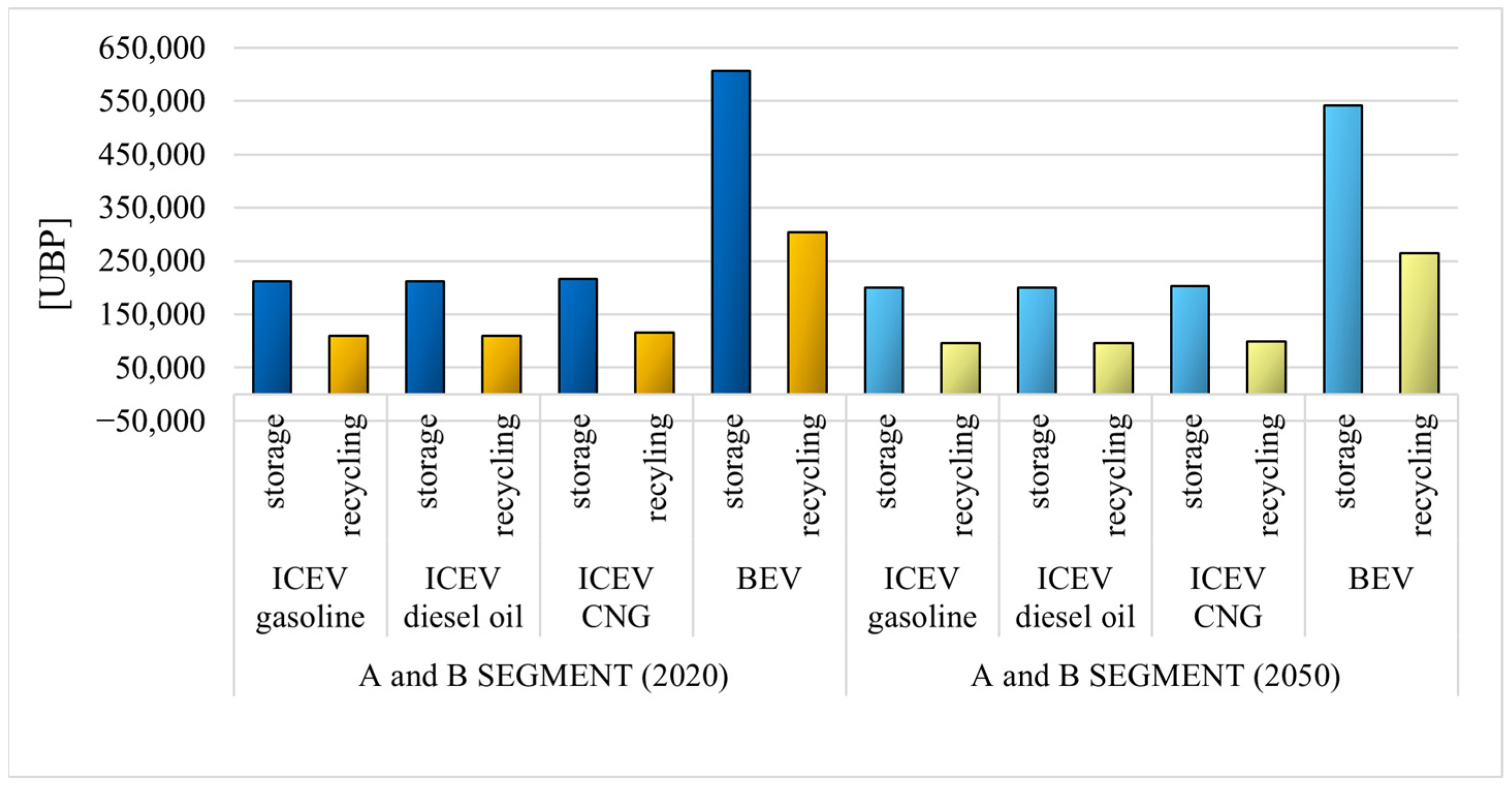
The results of grouping and weighing emissions of heavy metals to the soil environment in the life cycle of the considered passenger cars of the A and B segments are presented in Figure 10. Vehicles registered in 2020 will have a greater negative impact on the environment in the analyzed area compared to those that are to be registered in 2050. The life cycles of all the cars in question, assuming their form of post-consumer management in the form of recycling, carry about half the amount of heavy metal emissions. The highest level of hazardous impacts in the considered scope is characteristic of BEVs, whose plastics, materials and components would be destined for landfill at the end of their life (6.06 × 10⁶ UBP for those registered in 2020 and 5.41 × 10⁵ UBP—in 2050). The use of recycling processes would reduce the amount of harmful impacts in the perspective of their entire life cycle (3.04 × 10⁵ UBP for cars from 2020 and 2.64 × 10⁵ UBP for those of the year 2050). The life cycles of ICEVs were characterized by a similar level of negative environmental consequences in relation to the environment, but the lowest level of heavy metal emissions were distinguished by those with gasoline engines, and the highest—those powered by CNG.
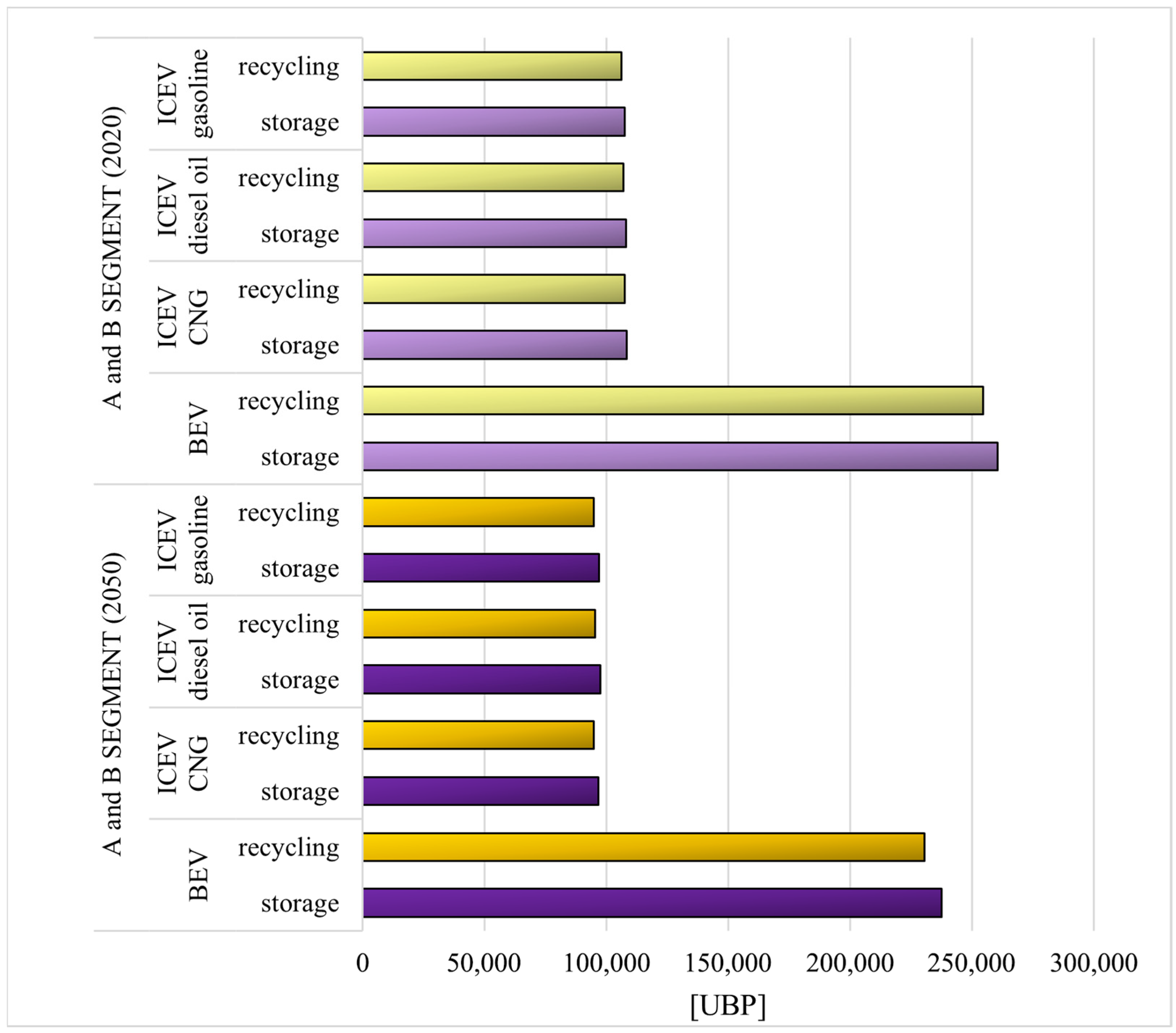
Figure 11 presents the results of grouping and weighing the environmental consequences of processes related to land use change in the life cycle of the analyzed passenger cars of the A and B segments. The life cycles of cars to be registered in 2050 would result in fewer destructive impacts in the area of land use change compared to those in 2020. Again, the highest level of harmful impacts was distinguished by the life cycle of battery electric vehicles, assuming their storage (2.60 × 10⁵ UBP for those registered in 2020 and 1.38 × 10⁵ UBP—in 2050). The life cycle of all the cars in question, including landfilling instead of recycling, causes more negative processes related to land use change (by about 1 to about 4%). The life cycles of vehicles with internal combustion engines powered by different types of fuels were characterized by a similar level of harmful environmental consequences in the analyzed area.

4. Summary and Conclusions

The primary aim of the study was fulfilled through an environmental evaluation of the impacts associated with the materials and components of end-of-life vehicles in segments A and B. The demand for sustainable and more efficient transport systems continues to rise in response to increasing concerns over global climate change, energy security, and escalating oil prices. The transport sector remains one of the leading contributors to greenhouse gas emissions and energy use. Approximately 93% of the energy consumed in this sector still originates from oil. Moreover, within transport, light-duty vehicles account for 63% of total oil consumption, 59% of overall energy use, and 60% of total greenhouse gas emissions [67,68,69].
Based on the results obtained, the following relationships were found:
(1)
All vehicles registered in 2020 have a significantly higher harmful impact on the environment compared to those expected to be registered in 2050 (analyses using the ReCiPe 2016 model, excluding fuel and energy cycles). This is visible, among others in the area of greenhouse gas emissions (IPCC 2021 model), energy intensity (CED V1.11 model), acidification and eutrophication of the environment (CML-IA baseline model), emissions of carcinogenic substances into the atmosphere, emissions of heavy metals into the soil, and land use change (Ecological Scarcity 2021 model).
(2)
The largest number of negative impacts was recorded in the context of the impact of the cars in question on human health, while the least—in relation to the problem of depletion of raw material resources (excluding fuel and energy cycles). The maximum level of total disruptive impacts was recorded for the lifetime of battery electric vehicles (BEVs), assuming their end-of-life storage. Recycling would make it possible to significantly reduce hazardous impacts over the entire life cycle of these vehicles (ReCiPe 2016 analyses).
(3)
Among the substances characterized by harmful effects on human health in the life cycles of all the evaluated cars, the maximum level of emissions was distinguished by chromium (VI), carbon dioxide, sulfur dioxide, zinc, fine particulate matter (PM), nitrogen oxide, arsenic, and methane (tests using the ReCiPe 2016 model).
(4)
The categories of impacts with the highest level of negative environmental consequences for the environment, identified in the life cycles of all the analyzed vehicles, including processes causing the depletion of water resources affecting human health and terrestrial ecosystems, emissions of substances causing the formation of fine particulate matter (PM), toxic substances with carcinogenic effects on humans and substances causing global warming (assessment using the use of ReCiPe 2016 model, which does not take into account fuel and energy cycles).
(5)
The life cycles of the tested cars (excluding fuel and energy cycles), assuming their form of post-consumer management in the form of landfilling instead of recycling, cause more destructive environmental consequences, including higher greenhouse gas emissions, higher energy intensity, higher degree of acidification of the environment, higher emissions of carcinogenic substances, heavy metals into the soil and wider changes in the way of land use (analyses using ReCiPe 2016, IPCC 2021, CED V1.11, CML-IA baseline and Ecological Scarcity 2021 models).
(6)
The maximum level of negative environmental impacts for each of the areas under consideration is distinguished by BEVs, whose plastics, materials and components would be landfilled. However, the use of recycling would result in a significant reduction in the level of destructive impacts over their entire life cycle (assessment using ReCiPe 2016, IPCC 2021, CED V1.11, and CML-IA baseline and Ecological Scarcity 2021 models, excluding fuel and energy cycles).
(7)
The life cycles of ICEVs were characterized by a similar level of hazardous environmental impact, both in terms of greenhouse gas emissions, energy intensity, eutrophication of the environment, emissions of carcinogenic substances into the atmosphere, emissions of heavy metals to the soil and land use change (analyses using the ReCiPe 2016, IPCC 2021, CED V1.11, and CML-IA baseline and Ecological Scarcity 2021 models, not taking into account fuel and energy cycles).
(8)
Among the processes related to energy generation, identified in the life cycles of the analyzed cars, characterized by the highest level of harmful environmental consequences for the environment, processes related to the use of non-renewable fossil fuels can be distinguished, in particular the processes of using natural gas, crude oil and hard coal (tests using the CED V1.11 model).
(9)
The maximum level of emissions among acidifying substances, in the life cycles of all the vehicles considered, was characterized by sulfur dioxide, nitrogen oxide, ammonia and sulfur trioxide. On the other hand, among the compounds causing the deepening eutrophication of the environment, the highest level of emissions was characterized by phosphates, nitrates, and phosphorus (assessment using the CML-IA baseline model).
(10)
In the case of chemical compounds with a carcinogenic effect on humans, the highest level of emissions to the atmosphere in the life cycles of the analyzed cars were distinguished by benzo(α)pyrene, 2,3,7,8-tetrachlorodibenzodioxin (TCDD), benzene, chloroethene, and polycyclic aromatic hydrocarbons (PAHs). On the other hand, the maximum level of emissions among heavy metals was recorded for: chromium (VI), zinc, copper, nickel, cadmium, and lead (analyses using the Ecological Scarcity 2021 model).
(11)
Among the processes related to the change in land use, with the highest level of negative impacts in the life cycles of all the vehicles considered, the following processes can be distinguished: land occupation by landfills, occupation by the area of mineral resources extraction, occupation by an industrial area, occupation by construction sites, and consequently—built-up area, and occupation of agricultural land and its use for purposes other than plant cultivation (research on Ecological Scarcity 2021).
(12)
For all the cars analyzed, vehicles registered in 2020 have higher greenhouse gas emissions compared to those expected to be registered in 2050. Achieving the key targets of the Paris Agreement would result in a significant reduction in the considered emissions to the environment (assessment using the IPCC 2021 model).
(13)
Among the chemical compounds causing the deepening of the greenhouse effect, the highest level of emissions in the life cycles of all the cars assessed stood out: carbon dioxide, methane, tetrafluoromethane (CFC-14), nitrous oxide, sulfur hexafluoride, trifluoromethane (HFC-23) and hexafluoroethane (HFC-116) (assessment using the IPCC 2021 model).
For all the vehicles assessed, actions are required to lessen their adverse environmental impacts while enhancing their beneficial effects. A comprehensive life cycle assessment, based on the methodological framework proposed here, can serve as an effective tool for fostering sustainable development within the transport sector. This approach supports continuous improvement of the assessed vehicles and is consistent with modern strategies for quality assessment and efficiency improvement in transport.
In practical terms, the results of this study provide valuable guidance for both industry stakeholders and policy makers. Based on the comparative LCA results, the following recommendations and strategic directions can be formulated to support the sustainable transformation of the automotive and energy sectors:
-
promote the integration of vehicle charging infrastructure with smart grids, enabling bidirectional energy flows, demand-side management, and increased utilization of renewable electricity;
-
encourage lightweight design and the use of advanced, recyclable materials such as high-strength steels, aluminum, and composite structures to improve vehicle energy efficiency and reduce life-cycle emissions;
-
expand recycling and circular material flows, particularly for traction batteries and critical metals, to minimize resource depletion and dependence on virgin raw materials;
-
support the harmonization and standardization of LCA methodologies across the European automotive industry, ensuring consistency, transparency, and comparability of environmental assessments;
-
promote R&D in next-generation battery technologies, focusing on improved durability, recyclability, and lower reliance on critical or hazardous elements such as cobalt and nickel;
-
strengthen policy incentives for manufacturers implementing closed-loop supply chains, eco-design principles, and modular architectures facilitating easier disassembly and material recovery;
-
integrate LCA-based decision tools into transport policy planning to evaluate environmental trade-offs and prioritize investments aligned with EU climate neutrality targets.
In a broader perspective, the findings highlight that technological innovation in vehicle design, combined with systemic integration of recycling and energy management strategies, is fundamental to achieving long-term decarbonization and resource efficiency goals. The transition towards electromobility must therefore be accompanied by a parallel evolution of energy, material, and infrastructure systems, ensuring that environmental benefits are realized across the entire value chain.
The study contributes to the growing body of knowledge linking electromobility with smart grid development and circular economy principles. By aligning environmental assessment outcomes with actionable recommendations, it provides a practical framework to guide automotive manufacturers, policymakers, and infrastructure planners in implementing sustainable mobility solutions.
Therefore, determining the most efficient form of road transport will depend largely on selecting the appropriate vehicle design that will ensure the required product quality, as well as defining process parameters that will minimize energy and material consumption at each stage of the vehicle life cycle.
However, the findings suggest the need for further research into innovative recycling technologies and the development of more sustainable materials that could replace current problematic components. However, it is also very important to properly manage waste in the context of the increasing number of end-of-life vehicles in order to achieve sustainability goals in the automotive sector.
The findings of the life cycle assessment of small passenger cars highlight the relevance of sustainable mobility solutions as integral components of future energy systems. By linking material efficiency, vehicle electrification, and end-of-life recycling strategies with the broader goals of renewable energy integration and smart grid development, the study supports the transition toward a more resilient and resource-efficient power infrastructure. In this way, the research contributes to the ongoing discourse on creating interconnected, low-carbon systems that balance technological innovation with environmental responsibility.
Technological progress in vehicle design and materials engineering is expected to have a substantial influence on the service life of passenger cars in the coming decades. In particular, advances in traction battery cycle life, lightweight structural materials, and enhanced corrosion resistance may extend the operational lifetime of vehicles beyond the 18-year period assumed in this study. However, in the present analysis, the same 18-year service life was adopted for vehicles from 2020 and 2050 in order to ensure a consistent and comparable operational period in both cases, since the use phase plays an important role in determining the overall environmental impact throughout the life cycle. Such methodological consistency allows for a more balanced comparison between current and future scenarios.
Another important issue is the potential for second-life applications of traction batteries represents an important opportunity for further reduction in the overall environmental burden of electric mobility. After their use in vehicles, batteries typically retain 70–80% of their initial capacity, which makes them suitable for stationary energy storage systems, grid balancing, or integration with renewable energy sources. Reusing batteries in such applications can significantly extend their functional lifetime, delay recycling processes, and reduce the total carbon footprint of the system by offsetting the environmental impacts associated with the production of new storage units. Although second-life scenarios were not included in the current LCA model due to the high uncertainty regarding future technological and regulatory developments, they constitute a promising direction for future research aimed at a more comprehensive assessment of the circular economy potential of electric vehicle batteries.
From an economic perspective, the large-scale implementation of advanced recycling processes remains a critical factor for the sustainable transition of the transport sector. While current recycling costs for lithium-ion batteries still exceed those of traditional disposal or landfilling methods, technological advancements and economies of scale are expected to narrow this gap significantly over the next decade. According to recent projections, hydrometallurgical and direct recycling technologies could achieve cost parity with conventional waste management by around 2035, particularly as the value of recovered critical materials—such as lithium, cobalt, and nickel—increases under circular economy regulations [70,71]. However, a comprehensive techno-economic assessment of these processes extends beyond the scope of this study and is identified as an important direction for future research. Such an analysis will be essential to verify the financial feasibility of policy recommendations and to ensure that environmental benefits are aligned with realistic economic pathways toward sustainable mobility.
The study provides a comprehensive life cycle perspective on small passenger cars under different powertrain and waste management scenarios. Future research may extend this analysis by incorporating more recent datasets (e.g., for vehicles registered after 2024), once such data become fully available and validated by manufacturers and statistical agencies. This would allow for a more detailed assessment of the technological progress achieved in the transport sector and its implications for long-term sustainability goals.
When evaluating the life cycle environmental performance of passenger vehicles, the inclusion of the entire fuel and energy cycle can substantially influence comparative outcomes. Internal combustion engine vehicles (ICEVs) are directly affected by the environmental impacts of fuel extraction, refining, and distribution, while battery electric vehicles (BEVs) depend on the carbon intensity of the electricity used for charging. In the present study, the analysis was deliberately focused on the material life cycle of vehicles—from production to end-of-life—in order to identify critical material flows, recycling potentials, and waste management challenges. These material-oriented investigations provide an essential foundation for understanding the environmental implications of vehicle design and resource efficiency, and thus represent a highly valuable contribution to the field.
In future research, the scope of the analysis will be extended to include the energy-cycle stage, which are expected to yield equally valuable insights into the total environmental performance of different vehicle technologies. Under the ongoing decarbonization of the European energy mix, the environmental advantages of BEVs are expected to strengthen significantly by 2050. A cleaner electricity mix with higher shares of renewables will reduce the life cycle greenhouse gas emissions of BEVs, while the relative environmental burden of ICEVs will remain strongly tied to fossil fuel combustion. Therefore, integrating both material and energy life cycle assessments in future studies will be crucial to fully capture the dynamic interactions between technological progress, resource efficiency, and systemic energy transformations.
Recent studies in computational optimization have demonstrated the growing potential of metaheuristic algorithms to support complex analyses in sustainable energy and mobility systems. Advanced and hybrid approaches, such as the Hybrid Grey Wolf-Particle Swarm Optimizer (HGWPSO), have proven highly effective in improving convergence, stability, and solution accuracy in engineering design and energy management problems. Integrating such intelligent optimization frameworks into future LCA research could significantly enhance the modeling of vehicle-grid interactions, allowing for a more dynamic evaluation of environmental performance under varying technological and energy scenarios. This methodological direction offers a promising pathway for coupling life cycle modeling with adaptive optimization to better capture system-level interdependencies in the transition toward low-carbon and smart power systems [72,73].

Author Contributions

Conceptualization, K.P. and I.P.; methodology, K.P. and I.P.; software, I.P.; validation, K.P., I.P. and M.O.; formal analysis, K.P., I.P. and M.O.; investigation, I.P. and M.O.; resources, K.P. and I.P.; data curation, K.P.; writing—original draft preparation, K.P.; writing—review and editing, I.P. and M.O.; visualization, K.P.; supervision, K.P. and M.O.; project administration, K.P. and I.P.; funding acquisition, K.P. All authors have read and agreed to the published version of the manuscript.

Funding

This research received no external funding.

Institutional Review Board Statement

Not applicable.

Informed Consent Statement

Not applicable.

Data Availability Statement

The original contributions presented in this study are included in the article. Further inquiries can be directed to the corresponding author.

Conflicts of Interest

The authors declare no conflicts of interest.

References

  1. International Council on Clean Transportation, Vision 2050. A Strategy to Decarbonize the Global Transport Sector by Mid-century. Available online: https://theicct.org/wp-content/uploads/2021/06/ICCT_Vision2050_sept2020.pdf (accessed on 20 September 2025).
  2. Adoption of the Paris Agreement. 12 December 2015. Available online: http://unfccc.int/resource/docs/2015/cop21/eng/l09r01.pdf (accessed on 20 September 2025).
  3. Tolley, R. Sustainable Transport; CRC Press: Boca Raton, FL, USA, 2010. [Google Scholar]
  4. Verma, S.; Dwivedi, G.; Verma, P. Life cycle assessment of electric vehicles in comparison to combustion engine vehicles: A review. Mater. Today Proc. 2022, 49, 217–222. [Google Scholar] [CrossRef]
  5. Merkisz-Guranowska, A.; Pielecha, J. Emisja Zanieczyszczeń z Pojazdów Samochodowych a Parametry Ruchu Drogowego; Oficyna Wydawnicza Politechniki Warszawskiej: Warszawa, Poland; Poznań, Poland, 2014. [Google Scholar]
  6. Goldman, T.; Gorham, R. Sustainable urban transport: Four innovative directions. Technol. Soc. 2006, 28, 261–273. [Google Scholar] [CrossRef]
  7. Dillman, K.J.; Árnadóttir, Á.; Heinonen, J.; Czepkiewicz, M.; Davíðsdóttir, B. Review and meta-analysis of EVs: Embodied emissions and environmental breakeven. Sustainability 2020, 12, 9390. [Google Scholar] [CrossRef]
  8. International Roadmap Agency, Technology Roadmap—Electric and Plug-in Hybrid Electric Vehicles. 2011. Available online: https://www.iea.org/reports/technology-roadmap-electric-and-plug-in-hybrid-electric-vehicles (accessed on 20 September 2025).
  9. Karaaslan, E.; Zhao, Y.; Tatari, O. Comparative life cycle assessment of sport utility vehicles with different fuel options. Int. J. Life Cycle Assess. 2018, 23, 333–347. [Google Scholar] [CrossRef]
  10. Temporelli, A.; Carvalho, M.L.; Girardi, P. Life Cycle Assessment of Electric Vehicle Batteries: An Overview of Recent Literature. Energies 2020, 13, 2864. [Google Scholar] [CrossRef]
  11. Messagie, M. Life Cycle Analysis of the Climate Impact of Electric Vehicles Transport & Environment. Available online: https://www.transportenvironment.org/uploads/files/TE20-20draft20report20v04.pdf (accessed on 22 September 2025).
  12. Bouter, A.; Hache, E.; Ternel, C.; Beauchet, S. Comparative environmental life cycle assessment of several powertrain types for cars and buses in France for two driving cycles: “worldwide harmonized light vehicle test procedure” cycle and urban cycle. Int. J. Life Cycle Assess. 2020, 25, 1545–1565. [Google Scholar] [CrossRef]
  13. Picatoste, A.; Justel, D.; Mendoza, J.M. Circularity and life cycle environmental impact assessment of batteries for electric vehicles: Industrial challenges, best practices and research guidelines. Renew. Sustain. Energy Rev. 2022, 169, 112941. [Google Scholar] [CrossRef]
  14. Gerssen-Gondelach, S.J.; Faaij, A.P. Performance of batteries for electric vehicles on short and longer term. J. Power Sources 2012, 212, 111–129. [Google Scholar] [CrossRef]
  15. Faria, R.; Marques, P.; Moura, P.; Freire, F.; Delgado, J.; de Almeida, A.T. Impact of the electricity mix and use profile in the life-cycle assessment of electric vehicles. Renew. Sustain. Energy Rev. 2013, 24, 271–287. [Google Scholar] [CrossRef]
  16. Gudmundsson, H.; Hall, R.P.; Marsden, G.; Zietsman, J. Sustainable Transportation—Indicators, Frameworks, and Performance Management; Springer: Berlin/Heidelberg, Germany, 2015; Springer Texts in Business and Economics. [Google Scholar] [CrossRef]
  17. Merkisz, J.; Pielecha, J.; Radzimirski, S. New Trends in Emission Control in the European Union; Springer International Publishing: Cham, Switzerland, 2014. [Google Scholar]
  18. Litman, T.; Burwell, D. Issues in sustainable transportation. Int. J. Glob. Environ. 2006, 6, 331–347. [Google Scholar] [CrossRef]
  19. Mehlhart, G.; Möck, A.; Goldman, D. Effects on ELV Waste Management as a Consequence of the Decisions from the Stockholm Convention on Decabde, Dokument Öko-Institut, 2018, Fryburg. Available online: https://www.oeko.de/fileadmin/oekodoc/ACEA-DecaBDE-final-report.pdf (accessed on 22 September 2025).
  20. Taszka, S.; Domergue, S. Prime à la Conversion des Véhicules Particuliers en 2018. Une Évaluation Socio-Économique ex Post; Ministère de la Transition Écologique et Solidaire: Paris, France, 2019. [Google Scholar]
  21. Bäumer, M.; Hautzinger, H.; Pfeiffer, M.; Stock, W.; Lenz, B.; Kuhnimhof, T.; Köhler, K. Fahrleistungserhebung 2014—Inländerfahrleistung; Berichte der Bundesanstalt für Straßenwesen: Brema, Germany, 2017. [Google Scholar]
  22. Bieker, G. A Global Comparison of the Life-Cycle Greenhouse Gas Emissions of Combustion Engine and Electric Passenger Cars; ICCT: Washington, DC, USA, 2021; Volume 49, p. 847129-102. [Google Scholar]
  23. European Automobile Manufacturers Association, Report: Vehicles in Use—Europe 2019. Available online: https://www.acea.be/uploads/publications/ACEA_Report_Vehicles_in_use-Europe_2019.pdf (accessed on 23 September 2025).
  24. Kraftfahrt-Bundesamt, Raport: Fahrzeugzulassungen (FZ). Available online: https://www.kba.de/SharedDocs/Publikationen/DE/Statistik/Fahrzeuge/FZ/Fachartikel/alter_20110415.pdf (accessed on 23 September 2025).
  25. Dun, C.; Horton, G.; Kollamthodi, S. Improvements to the Definition of Lifetime Mileage of Light Duty Vehicles; Report for European Commission—DG Climate Action, 2015, Brussels; Ricardo-AEA: London, UK, 2015; Available online: https://climate.ec.europa.eu/system/files/2016-11/ldv_mileage_improvement_en.pdf (accessed on 23 September 2025).
  26. Baron, Y.; Kosinska-Terrade, I.; Loew, C.; Kohler, A.; Moch, K.; Sutter, J.; Graulich, K.; Adjei, F.; Mehlhart, G.; Hermann, A. Study to Support the Impact Assessment for the Review of Directive 2000/53/EC on End-of-Life Vehicles. Document Öeko-Institut, 2023, Brussels. Available online: https://mehlhart-consulting.de/wp-content/uploads/2023/09/ELV_IA_supporting-study_final_report_20230613_final.pdf (accessed on 23 September 2025).
  27. United Nations Environment Program. Used Vehicles and the Environment: A Global Overview of Used Light Duty Vehicles—Flow, Scale and Regulation; United Nations Environment Program: Nairobi, Kenya; Available online: https://wedocs.unep.org/handle/20.500.11822/34175 (accessed on 24 September 2025).
  28. Díaz, S.; Mock, P.; Bernard, Y.; Bieker, G.; Pniewska, I.; Ragon, P.L.; Rodríguez, F.; Tietge, U.; Wappelhorst, S. European Vehicle Market Statistics 2020/21; ICCT: Washington, DC, USA, 2021. [Google Scholar]
  29. Harlow, J.E.; Ma, X.; Li, J.; Logan, E.; Liu, Y.; Zhang, N.; Ma, L.; Glazier, S.L.; Cormier, M.M.E.; Genovese, M.; et al. A wide range of testing results on an excellent lithium-ion cell chemistry to be used as benchmarks for new battery technologies. J. Electrochem. Soc. 2019, 166, 3031–3044. [Google Scholar] [CrossRef]
  30. Few, S.; Schmidt, O.; Offer, G.J.; Brandon, N.; Nelson, J.; Gambhir, A. Prospective improvements in cost and cycle life of off-grid lithium-ion battery packs: An analysis informed by expert elicitations. Energy Policy 2018, 114, 578–590. [Google Scholar] [CrossRef]
  31. Ciez, R.E.; Whitacre, J.F. Examining different recycling processes for lithium-ion batteries. Nat. Sustain. 2019, 2, 148–156. [Google Scholar] [CrossRef]
  32. Argonne National Laboratory, The Greenhouse Gases, Regulated Emissions, and Energy Use in Transportation Model (GREET). Available online: https://greet.es.anl.gov/index.php (accessed on 24 September 2025).
  33. Słowik, P.; Lutsey, N.; Hsu, C.W. How Technology, Recycling, and Policy Can Mitigate Supply Risks to the Long-Term Transition to Zero-Emission Vehicles; ICCT: Washington, DC, USA, 2021. [Google Scholar]
  34. Guinée, J.; Heijungs, R.; Huppes, G.; Zamagni, A.; Masoni, P.; Buonamici, R.; Rydberg, T. Life Cycle Assessment: Past, present, and future. Environ. Sci. Technol. 2011, 45, 90–96. [Google Scholar] [CrossRef]
  35. Bałdowska-Witos, P.; Piasecka, I.; Flizikowski, J.; Tomporowski, A.; Idzikowski, A.; Zawada, M. Life Cycle Assessment of Two Alternative Plastics for Bottle Production. Materials 2021, 14, 4552. [Google Scholar] [CrossRef]
  36. Kłos, Z.; Kalkowska, J.; Kasprzak, J. Towards a Sustainable Future—Life Cycle Management. Challenges and Prospects; Springer Nature: London, UK, 2022. [Google Scholar] [CrossRef]
  37. Zamagni, A.; Buttol, P.; Porta, P.L.; Buonamici, R.; Masoni, P.; Guinée, J.; Heijungs, R.; Ekvall, T.; Bersani, R.; Bieńkowska, A.; et al. Critical Review of the Current Research Needs and Limitations Related to ISO-LCA Practice, ENEA, Italian National Agency for New Technologies; Energy and the Environment: Washington, DC, USA, 2008. [Google Scholar]
  38. ISO 14040:2006; Environmental Management—Life Cycle Assessment—Principles and Framework. International Organization for Standardization: Geneva, Switzerland, 2022.
  39. ISO 14044:2006; Environmental Management—Life Cycle Assessment—Requirements and Guidelines. International Organization for Standardization: Geneva, Switzerland, 2022.
  40. Heijungs, R.; Guinée, J.B.; Huppes, G.; Lankreijer, R.M.; Udo de Haes, H.; Wegener, A.; Sleeswijk, A. Environmental Life Cycle Assessment of Products. Part I: Guide. Part II: Backgrounds; Multicopy Press: Leiden, The Netherlands, 1992. [Google Scholar]
  41. Klöpffer, W.; Grahl, B. Life Cycle Assessment (LCA): A Guide to Best Practice; John Wiley & Sons: Hoboken, NJ, USA, 2014; pp. 1–396. [Google Scholar] [CrossRef]
  42. Piasecka, I.; Tomporowski, A.; Piotrowska, K. Environmental analysis of post-use management of car tires. Przemysł Chem. 2018, 97, 1649–1653. [Google Scholar] [CrossRef]
  43. Piotrowska, K.; Kruszelnicka, W.; Bałdowska-Witos, P.; Kasner, R.; Rudnicki, J.; Tomporowski, A.; Flizikowski, J.; Opielak, M. Assessment of the Environmental Impact of a Car Tire throughout Its Lifecycle Using the LCA Method. Materials 2019, 12, 4177. [Google Scholar] [CrossRef]
  44. Bauer, C.; Hofer, J.; Althaus, H.-J.; Del Duce, A.; Simons, A. The environmental performance of current and future passenger vehicles: Life cycle assessment based on a novel scenario analysis framework. Appl. Energy 2015, 157, 871–883. [Google Scholar] [CrossRef]
  45. Koroma, M.S.; Costa, D.; Philippot, M.; Cardellini, G.; Hosen, M.S.; Coosemans, T.; Messagie, M. Life cycle assessment of battery electric vehicles: Implications of future electricity mix and different battery end-of-life management. Sci. Total Environ. 2022, 831, 154859. [Google Scholar] [CrossRef] [PubMed]
  46. Dekker, E.; Zijp, M.C.; van de Kamp, M.E.; Temme, E.H.M.; van Zelm, R. A taste of the new ReCiPe for life cycle assessment: Consequences of the updated impact assessment method on food product LCAs. Int. J. Life Cycle Assess. 2020, 25, 2315–2324. [Google Scholar] [CrossRef]
  47. Huijbregts, M.A.J.; Steinmann, Z.J.N.; Elshout, P.M.F.; Stam, G.; Verones, F.; Vieira, M.; Zijp, M.; Hollander, A.; van Zelm, R. ReCiPe2016: A harmonised life cycle impact assessment method at midpoint and endpoint level. Int. J. Life Cycle Assess. 2017, 22, 138–147. [Google Scholar] [CrossRef]
  48. Lamnatou, C.; Chemisana, D. Evaluation of photovoltaic-green and other roofing systems by means of ReCiPe and multiple life cycle–based environmental indicators. Build. Environ. 2015, 93, 376–384. [Google Scholar] [CrossRef]
  49. Rashedi, A.; Khanam, T. Life cycle assessment of most widely adopted solar photovoltaic energy technologies by mid-point and end-point indicators of ReCiPe method. Environ. Sci. Pollut. Res. 2020, 27, 29075–29090. [Google Scholar] [CrossRef] [PubMed]
  50. Mallela, G.; Mohamed, S.I. Environmental impact analysis of organic phase change materials for energy storage by using ReCiPe endpoint method. Mater. Today Proceedings. 2023. [Google Scholar] [CrossRef]
  51. Goel, M.; Sudhakar, M. Carbon Utilization: Applications for the Energy Industry; Springer: Singapore, 2017. [Google Scholar]
  52. Kendall, A. Time-adjusted global warming potentials for LCA and carbon footprints. Int. J. Life Cycle Assess. 2012, 8, 1042–1049. [Google Scholar] [CrossRef]
  53. Muñoz, I.; Schmidt, J.H. Methane oxidation, biogenic carbon, and the IPCC’s emission metrics. Proposal for a consistent greenhouse-gas accounting. Int. J. Life Cycle Assess. 2016, 21, 1069–1075. [Google Scholar] [CrossRef]
  54. Frischknecht, R.; Wyss, F.; Büsser-Knöpfel, S.; Lützkendorf, T.; Balouktsi, M. Cumulative energy demand in LCA: The energy harvested approach. Int. J. Life Cycle Assess. 2015, 20, 957–969. [Google Scholar] [CrossRef]
  55. Puig, R.; Fullana-Palmer, P.; Baquero, G.; Riba, J.R.; Bala, A.A. Cumulative Energy Demand indicator (CED), life cycle based, for industrial waste management decision making. Waste Manag. 2013, 33, 2789–2797. [Google Scholar] [CrossRef]
  56. Scipioni, A.; Niero, M.; Mazzi, A.; Manzardo, A.; Piubello, S. Significance of the use of non-renewable fossil CED as proxy indicator for screening LCA in the beverage packaging sector. Int. J. Life Cycle Assess. 2013, 18, 673–682. [Google Scholar] [CrossRef]
  57. Borda, F.; Ingarao, G.; Ambrogio, G.; Gagliardi, F. Cumulative energy demand analysis in the current manufacturing and end-of-life strategies for a polymeric composite at different fibre-matrix combinations. J. Clean. Prod. 2024, 449, 141775. [Google Scholar] [CrossRef]
  58. Neha, K.; Vinita, C.; Sonal, T. Life Cycle Analysis of Electric Vehicles; IGI Global Scientific Publishing: Hershey, PA, USA, 2024. [Google Scholar] [CrossRef]
  59. Guinée, J. Handbook on Life Cycle Assessment: Operational Guide to the ISO Standards; Springer: Berlin, Germany, 2002. [Google Scholar]
  60. Xue, M.; Xu, Z. Application of Life Cycle Assessment on Electronic Waste Management: A Review. Environ. Manag. 2017, 59, 693–707. [Google Scholar] [CrossRef]
  61. Acero, A.P.; Rodríguez, C.; Ciroth, A. Impact Assessment Methods in Life Cycle Assessment and Their Impact Categories; GreenDelta GmbH: Berlin, Germany, 2016. [Google Scholar]
  62. Rebitzer, G.; Loerincik, Y.; Jolliet, O. Input-output life cycle assessment: From theory to applications. Int. J. Life Cycle Assess. 2002, 7, 174–176. [Google Scholar] [CrossRef]
  63. Frischknecht, R.; Krebs, L.; Dinkel, F.; Kägi, T.; Stettler, C.; Zschokke, M.; Braunschweig, A.; Ahmadi, M.; Itten, R.; Stucki, M. Swiss Eco-Factors 2021 According to the Ecological Scarcity Method. Methodological Fundamentals and Their Application in Switzerland; Federal Office for the Environment: Bern, Switzerland, 2021. [Google Scholar]
  64. Burke, P.J.; Shahiduzzaman, M.; Stern, D.I. Carbon dioxide emissions in the short run: The rate and sources of economic growth matter. Glob. Environ. Change 2015, 33, 109–121. [Google Scholar] [CrossRef]
  65. Worsfold, P.; Townshend, A.; Poole, C.; Miró, M. Encyclopedia of Analytical Science, Reference Module in Chemistry, Molecular Sciences and Chemical Engineering; Elsevier: Amsterdam, The Netherlands, 2019. [Google Scholar]
  66. Hartwig, A.; Arand, M.; Epe, B.; Guth, S.; Jahnke, G.; Lampen, A.; Martus, H.J.; Monien, B.; Rietjens, I.M.; Schmitz-Spanke, S.; et al. Mode of action-based risk assessment of genotoxic carcinogens. Arch. Toxicol. 2020, 94, 1787–1877. [Google Scholar] [CrossRef] [PubMed]
  67. Onat, N.C.; Kucukvar, M.; Tatari, O. Conventional, hybrid, plug-in hybrid or electric vehicles? State-based comparative carbon and energy footprint analysis in the United States. Appl. Energy 2015, 150, 36–49. [Google Scholar] [CrossRef]
  68. Ma, H.; Balthasar, F.; Tait, N.; Riera-Palou, X.; Harrison, A. A new comparison between the life cycle greenhouse gas emissions of battery electric vehicles and internal combustion vehicles. Energy Policy 2012, 44, 160–173. [Google Scholar] [CrossRef]
  69. Bembenek, M.; Melnyk, V.; Karwat, B.; Hnyp, M.; Kowalski, Ł.; Mosora, Y. Jerusalem Artichoke as a Raw Material for Manufacturing Alternative Fuels for Gasoline Internal Combustion Engines. Energies 2024, 17, 2378. [Google Scholar] [CrossRef]
  70. Cheng, P.; Li, Z.; Zheng, Y.; Meng, O.; Yu, Y.; Jin, Y.; Gao, X.; Guo, X.; Jia, L. Study on the regulation of performance and Hg0 removal mechanism of MIL-101(Fe)-derived carbon materials. Sep. Purif. Technol. 2025, 379, 134939. [Google Scholar] [CrossRef]
  71. Zheng, Y.; Cheng, P.; Li, Z.; Fan, C.H.; Wen, J.; Yu, Y.; Jia, L. Efficient removal of gaseous elemental mercury by Fe-UiO-66@BC composite adsorbent: Performance evaluation and mechanistic elucidation. Sep. Purif. Technol. 2025, 372, 133463. [Google Scholar] [CrossRef]
  72. Suhail, M.; Raj, S.; Zheng, G.; Xie, S.; Wang, C.H.; Dong, X.; Lin, Y.; Wang, C.H.; Junejo, N. Applications, classifications, and challenges: A comprehensive evaluation of recently developed metaheuristics for search and analysis. Artif. Intell. Rev. 2025, 58, 390. [Google Scholar] [CrossRef]
  73. Suhail, M.; Lin, H.; Xie, S.; Dong, X.; Lin, Y.; Shiva, C.H.; Fendzi Mbasso, W. An intelligent hybrid grey wolf-particle swarm optimizer for optimization in complex engineering design problem. Sci. Rep. 2025, 15, 18313. [Google Scholar] [CrossRef] [PubMed]
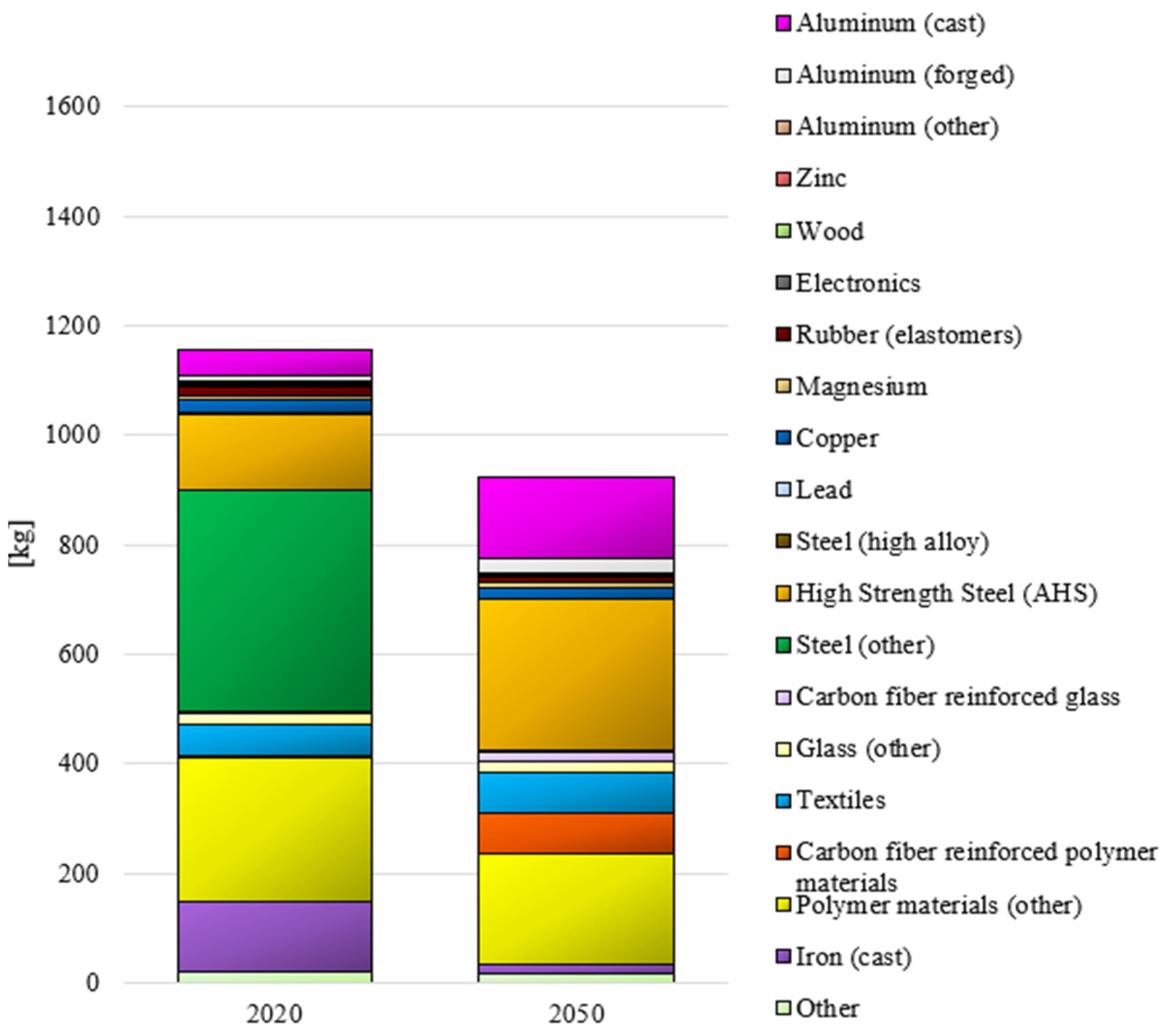
Figure 1. Forecast of the simplified material composition of passenger cars in segments A and B registered in 2020 and 2050. Own study based on the analysis of literature [18,19,20,21,22,23,24,25,26,27,28,29,30,31,32,33] and data obtained from manufacturers.
Sustainability 17 10788 g001
Figure 2. Forecast of the share of key materials in the construction of passenger cars in segments A and B recorded in 2020 and 2050. Own study based on the analysis of literature [18,19,20,21,22,23,24,25,26,27,28,29,30,31,32,33] and data obtained from manufacturers.
Sustainability 17 10788 g002
Figure 3. Main stages of LCA. Own study based on [38,39].
Sustainability 17 10788 g003
Figure 4. Results of grouping and weighting of the projected environmental consequences occurring in the life cycle of the analyzed passenger cars of the A and B segments differing from each other in the type of drive system, considering various end-of-life management (ReCiPe 2016 model) (own study).
Sustainability 17 10788 g004
Figure 5. Results of characterization of greenhouse gas emissions in the life cycle of the analyzed passenger cars of the A and B segments differing from each other in the type of powertrain, considering various end-of-life management (IPCC 2021 model) (own study).
Sustainability 17 10788 g005
Figure 6. Results of characterization of energy demand in the life cycle of the analyzed passenger cars of the A and B segments differing from each other in the type of drive system, considering various end-of-life management (CED V1.11 model) (own study).
Sustainability 17 10788 g006
Figure 7. Results of characterization of emissions of acidifying substances in the life cycle of the analyzed passenger cars of the A and B segments differing from each other in the type of drive system, considering various end-of-life management (CML-IA baseline model) (own study).
Sustainability 17 10788 g007
Figure 8. Results of characterization of emissions of eutrophication substances in the life cycle of the analyzed passenger cars of the A and B segments differing from each other in the type of drive system, considering various end-of-life management (CML-IA baseline model) (own study).
Sustainability 17 10788 g008
Figure 9. Results of grouping and weighing emissions of carcinogenic substances into the atmospheric environment in the life cycle of the analyzed passenger cars of segment A and B differing from each other in the type of drive system, considering various end-of-life management (Ecological Scarcity model) (own study).
Sustainability 17 10788 g009
Figure 10. Results of grouping and weighing of heavy metal emissions into the soil environment in the life cycle of the analyzed passenger cars of the A and B segments differing from each other in the type of drive system, considering various end-of-life management (Ecological Scarcity 2021 model) (own study).
Sustainability 17 10788 g010
Figure 11. Results of grouping and weighing the environmental consequences of processes related to land use change in the life cycle of the analyzed A and B segment passenger cars differing from each other in the type of drive system, considering various end-of-life management (Ecological Scarcity 2021 model) (own study).
Sustainability 17 10788 g011
Table 1. Results of grouping and weighting of the projected environmental consequences occurring in the life cycle of the analyzed passenger cars of the A and B segments differing from each other in the type of drive system, considering various different post-consumer development scenarios and three areas of impact (ReCiPe model 2016) [unit: Pt] (own study).
A and B SegmentHuman HealthEcosystemsRaw Material ResourcesTotal
2020ICEV
gasoline
storage1.72 × 1031.20 × 1025.66 × 1001.85 × 103
recycling5.04 × 102−1.41 × 1004.96 × 1005.08 × 102
ICEV diesel oilstorage1.74 × 1031.20 × 1025.68 × 1001.87 × 103
recycling5.28 × 102−9.82 × 10−14.98 × 1005.32 × 102
ICEV CNGstorage1.77 × 1031.22 × 1025.74 × 1001.90 × 103
recycling5.78 × 1023.28 × 1005.05 × 1005.86 × 102
BEVstorage2.60 × 1031.39 × 1021.19 × 1012.75 × 103
recycling−1.07 × 10³−2.19 × 1029.97 × 100−1.27 × 10³
2050ICEV
gasoline
storage1.59 × 1031.16 × 1025.42 × 1001.71 × 103
recycling3.48 × 102−6.06 × 1004.72 × 1003.48 × 102
ICEV diesel oilstorage1.61 × 1031.16 × 1025.46 × 1001.74 × 103
recycling3.72 × 102−5.62 × 1004.74 × 1003.70 × 102
ICEV CNGstorage1.64 × 1031.18 × 1025.51 × 1001.76 × 103
recycling4.06 × 102−3.04 × 1004.81 × 1004.08 × 102
BEVstorage2.40 × 1031.39 × 1021.12 × 1012.55 × 103
recycling−9.61 × 10²−1.88 × 1029.33 × 100−1.14 × 10³
Disclaimer/Publisher’s Note: The statements, opinions and data contained in all publications are solely those of the individual author(s) and contributor(s) and not of MDPI and/or the editor(s). MDPI and/or the editor(s) disclaim responsibility for any injury to people or property resulting from any ideas, methods, instructions or products referred to in the content.