Article

Revisiting the Technology–Organization–Environment Framework: Disruptive Technologies as Catalysts of Digital Transformation in the Turkish Banking Sector


by
Uğur Küçükoğlu
1,* and
Ahmet Kamil Kabakuş
2
1
Big Data Management Office, Ataturk University, 25000 Erzurum, Türkiye
2
Department of Management Information Systems, Faculty of Economics and Administrative Sciences, Ataturk University, 25000 Erzurum, Türkiye
*
Author to whom correspondence should be addressed.
Sustainability 2025, 17(23), 10787; https://doi.org/10.3390/su172310787
Submission received: 27 October 2025 / Revised: 19 November 2025 / Accepted: 28 November 2025 / Published: 2 December 2025
(This article belongs to the Section Economic and Business Aspects of Sustainability)

Abstract

Digitalization is rapidly transforming organizational strategies and structures; disruptive technologies now play a central role in driving this transformation. However, the impact of disruptive technologies on digital transformation remains a complex and context-dependent phenomenon, particularly in highly regulated sectors. This study examines the impact of disruptive technologies on digital transformation in the banking sector in Turkey within the framework of the Technology–Organization–Environment (TOE) model. Data were collected from 513 participants at the managerial level (managers, IT staff, and experts) working in public and private banks through a standardized questionnaire and analyzed using Confirmatory Factor Analysis (CFA), Structural Equation Modeling (SEM), and Hayes PROCESS Macro (Model 4) techniques. The findings show that disruptive technologies have a meaningful and direct effect on digital transformation; technological, organizational, and environmental factors play a partial mediating role in this relationship. The results reveal that this transformative effect varies across TOE dimensions depending on the context. The study contributes to the literature by extending the TOE model in a tightly regulated context and provides practical implications for managers and policymakers to develop sustainability-focused digital transformation strategies.

1. Introduction

Digital transformation represents a strategic process that integrates digital technologies into business processes and drives organizational change. This transformation not only encourages business model innovation but also plays a critical role in ensuring organizational sustainability and increasing operational efficiency. The strategic adoption and integration of digital technologies requires a fundamental redesign of business processes, products, and services, thereby directly impacting organizations’ competitive advantage [1].
Although there is extensive literature on the factors shaping digital transformation, the unique role of disruptive technologies is often addressed from a narrow perspective in most studies and is generally limited to the individual dimensions of the Technology–Organization–Environment (TOE) framework. Previous research [2,3] has mostly examined these dimensions separately, failing to sufficiently consider the interactions between them and the fundamental mediating mechanisms that enable digital transformation. The lack of a holistic analysis limits the understanding of how disruptive technologies trigger organizational transformation, particularly in highly regulated sectors such as banking. Addressing this gap, this study uses the TOE framework to examine the effects of disruptive technologies on digital transformation. The TOE model enables a more comprehensive assessment by addressing the technological, organizational, and environmental factors that shape transformation processes within a single holistic structure. Within this framework, the study aims to examine how disruptive technologies impact digital transformation, both directly and through technological, organizational, and environmental change.
The Turkish banking sector provides a particularly suitable and highly representative context for this research. It is one of the sectors that invests the most in digital infrastructure while operating within a developing economy and strict regulatory and compliance frameworks. This dual structure provides important insights into how institutions operating in regulatory environments balance innovation, risk management, and sustainability. Therefore, the Turkish example offers a highly representative model for understanding the dynamics of digital transformation in developing economies with mature financial systems.
This research contributes to the literature in three key ways: (1) It theoretically extends the TOE model to include disruptive technologies, (2) it provides empirical evidence from a tightly regulated national context, and (3) it presents practical implications for managers and policymakers to develop sustainability-focused digital strategies that support innovation, resilience, and long-term competitive strength. The originality of the study lies in clarifying the direct effects of disruptive technologies on digital transformation, as well as revealing the indirect mechanisms through which these effects operate.

2. Literature Review

2.1. Disruptive Technologies

The concept of disruptive technology has found its place in the literature through the work of Bower and Christensen [4]. It refers to innovative technologies that fundamentally transform existing ones, radically changing lifestyles, business processes, and structural dynamics.
Disruptive technologies are fundamentally transforming corporate business applications, enabling the emergence of new market areas while significantly reshaping the functioning of existing markets. Such technologies often start as niche products or services but eventually spread to broader audiences, ultimately replacing established technologies and business models. They also create turbulence in competitive environments by introducing radical changes to existing technologies. This does not necessarily mean that these technologies are always expensive or complex; rather, they are perceived as innovative solutions that attract potential users and have the capacity to meet their needs [5].
Throughout history, numerous significant transformation processes have occurred through various disruptive technology concepts. Innovations such as the automobile, electricity services, television, email, and mobile phones were considered groundbreaking technologies of their time. Today, examples of disruptive technologies include e-commerce, social media, and smartphones, as well as emerging innovations such as artificial intelligence, cloud-based systems, virtual and augmented reality, the Internet of Things (IoT), and blockchain technologies, which are considered fundamental factors shaping the future. Figure 1 below summarizes some of the most frequently cited and prominent disruptive technologies [6].

2.2. Digital Transformation and Organizations

Digital transformation is a comprehensive transformation process supported by information systems that triggers economic and technological change at both the organizational and sectoral levels. Accelerated by the combined effect of digital innovations, this process functions as a strategic renewal dynamic that enables businesses to achieve sustainable competitive advantage by restructuring their business models, collaboration methods, and organizational cultures [7].
The fundamental purpose of digital transformation is to reevaluate existing business models, strategically integrate digital technologies, establish a transformation-focused organizational culture, and enhance the organization’s capacity to respond effectively to changing conditions. This process not only enables companies to adapt more quickly to dynamic market conditions, but also contributes to achieving a sustainable competitive advantage [8]. Furthermore, through digital transformation processes, companies can strategically adopt new technologies to increase the efficiency of operational automation and significantly improve the digital technology experience in the services they offer [9].
The effective use of digital technologies offers organizations the potential to gain a competitive advantage, thereby widening the competitive gap between organizations that rapidly embrace digital transformation processes and traditional structures that lag behind [10].
Therefore, digital transformation has emerged as a strategic priority for companies aiming to increase their competitive strength and improve business performance, and it is having an increasingly profound impact on industries, societies, organizations, and individuals. This process represents not only a technological change but also a catalyst for socio-technical and economic transformation. At the organizational level, digital transformation facilitates the development of new operational structures, encourages innovative forms of collaboration between people and machines, and enables the definition of new roles and responsibilities while providing new channels for both internal and external communication. At the individual level, it requires managers and employees to acquire new skills for effective interaction with digital technologies, reshape their attitudes towards teamwork, and strengthen their capacity to adapt to change processes. Ultimately, digital transformation constitutes a comprehensive transformation process that redefines individuals’ productivity and leadership capacities while strengthening organizations’ strategic alignment and flexibility [11].

2.3. TOE Framework

The TOE model developed by Tornatzky and Fleischer [12] provides a comprehensive theoretical framework for explaining the adoption and implementation processes of technological innovations in organizations [13]. The model argues that three fundamental dimensions are decisive in the adoption of technological innovations: technological, organizational, and environmental factors. These factors define both the elements that influence change processes and the conditions necessary for these changes to occur. For example, an organization’s decision to adopt a new technology is influenced by technological characteristics such as the complexity of the technology, its compatibility with existing systems, and its perceived benefits; internal factors such as organizational structure and resource adequacy; and external environmental conditions such as competitive pressure and regulatory requirements [14]. In this context, the TOE model provides a robust theoretical foundation that allows for a holistic examination of the interaction between internal (technological and organizational) and external (environmental) factors.
The defining elements of disruptive technologies can be examined in three fundamental dimensions: technological change, organizational change, and environmental change. These dimensions provide a multidimensional perspective on technological transformation by explaining the dynamics that influence the emergence, adoption, and diffusion of disruptive technologies [15]. These three dimensions, which interact with each other, directly shape companies’ decisions regarding technology adoption. Technological change encompasses factors such as a technology’s compatibility with organizational structures, the degree of complexity in its use, and its perceived value. Organizational change refers to elements such as firm size and capabilities, the degree of centralization and formalization in management structures, the level of organizational complexity, the quality of human resources, and the availability of loose resources within the organization. Environmental change encompasses external factors such as industry and market structures, competitive dynamics, relationships with regulatory agencies, and other external conditions that shape the market or community in which the organization operates. Taken together, these dimensions provide a comprehensive lens through which to assess the opportunities and barriers encountered in the adoption of technological innovations [16].
The TOE framework is accepted as a comprehensive theoretical basis explaining the adoption and diffusion of innovative technological platforms. It is widely used by the research community to better understand companies’ adaptation processes to new technologies. This approach emphasizes that technological transformation occurs not only at the individual or organizational level, but also through interactions with organizational structures and external environmental factors. In this context, the successful adoption of new technologies is considered a multidimensional process that requires attention not only to technological factors, but also to organizational alignment and environmental pressures [17].
Recent studies reaffirm the validity and adaptability of the TOE model across different sectors and contexts. Hoang [18] and Nguyen [19] have shown that technological readiness, managerial competence, and competitive pressure are critical factors shaping digital transformation in Vietnamese businesses. In the financial sector, Ajili Ben Youssef and colleagues [20] and Al-Smadi [21] have shown that technological, organizational, and environmental dimensions jointly influence transformation processes in banking institutions. Furthermore, Annisa and Sutjipto [22] highlighted the mediating role of digital transformation in the relationship between TOE factors and sustainable corporate performance in the Indonesian insurance sector. When these studies are evaluated together, it is seen that the TOE model provides a robust and up-to-date theoretical framework for explaining sustainable digital transformation processes through the interaction of technological, organizational, and environmental dynamics.
The TOE model provides a comprehensive theoretical framework that enables the analysis of how technological, organizational, and environmental factors jointly shape digital transformation processes in the banking sector. It also allows for an assessment of how disruptive technologies function as catalysts for sustainable digital transformation, ensuring that technological innovations are aligned with organizational adaptability and environmental sensitivity. Therefore, the TOE model provides an appropriate theoretical foundation in this study to explain the effects of disruptive technologies on digital transformation, enabling a comprehensive analysis of the holistic interaction of technological, organizational, and environmental factors.

3. Materials and Methods

3.1. Research Model and Hypotheses Development

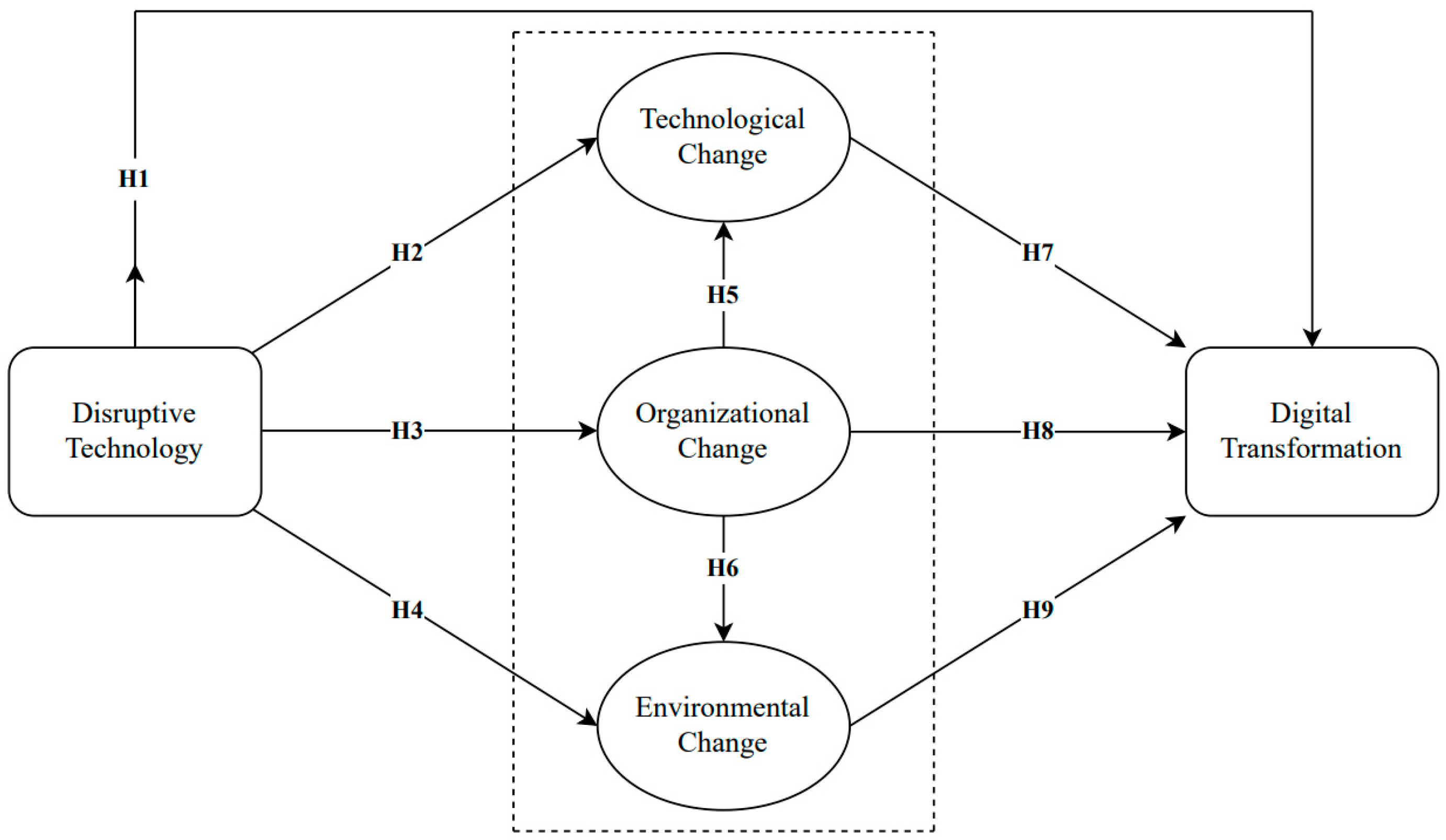
The model developed within the scope of the research is presented in Figure 2.
The hypotheses developed to highlight the purpose and significance of the study are explained below.

3.1.1. Disruptive Technologies and Digital Transformation

Disruptive technologies are radical innovations that fundamentally transform organizations’ structures, processes, and strategies [23]. These technologies accelerate digital transformation processes by increasing organizations’ agility and operational efficiency through advanced digital solutions, data-driven processes, and innovative business approaches [24]. Integrating these technologies into their processes increases businesses’ digital maturity and strengthens their capacity to adapt to changing market conditions. In this context, it is predicted that disruptive technologies will positively impact digital transformation, and the following hypothesis is proposed.
H1: 
Disruptive technologies have a positive impact on digital transformation.

3.1.2. Disruptive Technologies and TOE

Disruptive technologies are driving multidimensional transformations in technological, organizational, and environmental domains. These technologies accelerate technological change by prompting businesses to renew their existing systems, strengthen their digital infrastructure, and develop new solutions [25]. They also support organizational change by encouraging the formation of innovative cultures, new organizational structures, and agile management styles [26]. Therefore, it is anticipated that disruptive technologies will have positive effects on different dimensions of change, and hypotheses regarding this are presented below.
H2: 
Disruptive technologies have a positive impact on technological change.
H3: 
Disruptive technologies have a positive impact on organizational change.
H4: 
Disruptive technologies have a positive impact on environmental change.

3.1.3. TOE Dimensions

The mutual interaction between the dimensions of the TOE model is of great importance in terms of evaluating digital transformation at the organizational level from a holistic perspective. Organizational change, in particular, paves the way for technological renewal and shapes how decision-makers evaluate and adopt new technologies. Factors such as leadership support, organizational flexibility, and managerial competencies facilitate the effective adoption of new technologies and their integration into organizational processes [27]. This multifaceted interaction also influences organizations’ responses to environmental change by determining how they adapt to regulatory requirements, competitive conditions, and other pressures within the ecosystem [28]. Therefore, the synergistic relationship between these processes plays a critical role in understanding both technological and environmental transformation. Based on these reasons, it is predicted that organizational change will have a positive impact on technological and environmental change, and the following hypotheses are proposed.
H5: 
Organizational change has a positive effect on technological change.
H6: 
Organizational change has a positive effect on environmental change.

3.1.4. TOE and Digital Transformation

Digital transformation is a multidimensional process that enables organizations to increase their efficiency and competitiveness by strategically restructuring their technological, organizational, and environmental competencies. Technological change contributes to transformation through the integration of digital solutions and the support of innovation-focused applications [29]. Organizational change, on the other hand, refers to the restructuring of corporate structures, processes, and roles in line with the requirements of the digital age; it is supported by corporate capacity, internal transformation dynamics, and employee competencies [30]. Environmental change accelerates the digital transformation process through external adaptation pressures such as competitive conditions, customer behavior, and regulatory demands [31]. Within this framework, it was assumed that each dimension of the TOE model would have a positive effect on digital transformation, and the following hypotheses were developed.
H7: 
Technological change has a positive impact on digital transformation.
H8: 
Organizational change has a positive impact on digital transformation.
H9: 
Environmental change has a positive impact on digital transformation.

3.2. Sampling Process and Data Collection Method

The target audience of this research consists of individuals working in public and private banks operating in Turkey. Due to the study’s focus on technology-based organizational transformation, the sample consists primarily of participants at the managerial level (senior and middle managers, information technology (IT) specialists, and technical staff). Data was collected between 20 February and 14 May 2025, using both online and face-to-face survey methods. Participation was voluntary, and informed consent was obtained from all participants in accordance with ethical research principles. Due to the national scope of the study and confidentiality restrictions, no information was collected about the cities where the participating banks operate. Instead, data was obtained from banks operating in different regions of Turkey to ensure diversity and representativeness.
Participating banks did not share their total number of employees due to corporate confidentiality, so the exact size of the population could not be determined. Therefore, the statistical formula n = (π(1 − π))/(e/Z)2, which is often used when the population is unknown, was applied, and the minimum sample size was calculated as 384 people with a 5% margin of error and a 95% confidence level [32]. In this context, data obtained from 513 participants at the managerial level were analyzed. This number is above the specified minimum threshold and ensures the reliability and adequacy of the analyses. Furthermore, according to the general rule in the Structural Equation Modeling (SEM) literature, the sample size should be at least ten times the number of observed variables [33,34]. Accordingly, the sample size achieved also meets this criterion.
The questionnaire used in the study consists of a total of 30 items. Twenty-two of these measure the variables included in the research model: disruptive technologies (5 items), technological change (5 items), organizational change (3 items), environmental change (4 items), and digital transformation (5 items). Additionally, there are 8 questions aimed at determining the demographic characteristics of participants, such as gender, age, educational status, income status, position within the institution, length of service at the institution, length of service in the position, and type of bank they work for (public/private). The scales were adapted from validated sources: disruptive technologies, technological change, and organizational change [5]; environmental change [35]; digital transformation [36]. All items were evaluated using a five-point Likert scale with response options ranging from “strongly disagree” to “strongly agree”. The survey was administered in Turkish. The scales were carefully translated into Turkish to ensure conceptual clarity, and no issues were reported regarding language or comprehensibility during the data collection process.
To ensure transparency and reproducibility, the full list of survey items used in the study is provided in Appendix A. The research has been approved by the Ethics Committee of the relevant university (Decision No: 153, Date: 31 May 2024), and the study has been conducted in accordance with all ethical principles.

3.3. Data Analysis Methods

Descriptive statistics, reliability and validity tests, CFA, SEM, and bootstrap methods for mediation analysis were used in the analysis of the data. Prior to the main analyses, assumptions of normality, multicollinearity, and correlation were tested, and the results confirmed that the data were suitable for structural modeling. Statistical calculations were performed using SPSS 26.0, while structural modeling processes were conducted using AMOS 24.0. SEM was applied to test the hypotheses developed for this study. Since the abbreviations for Disruptive Technologies and Digital Transformation (DT) are the same, the Digital Transformation variable is defined as DTF in the structural equation model to ensure technical clarity. Additionally, Hayes’ PROCESS macro (Model 4) was used to examine mediating effects [37].

4. Results

4.1. Participant Demographics

The results regarding the general demographic characteristics of the participants are presented in Table 1.
As shown in Table 1, 71.2% of participants are male and 28.8% are female. Looking at the age distribution, the largest group is in the 40–49 age range (43.9%). In terms of education, 75.2% of participants have a bachelor’s degree and 24.8% have a master’s/doctoral degree. In terms of income level, the highest percentage of participants is in the 50,000–75,000 TL range (34.9%). Professionally, 45.6% are senior managers, 30% are middle managers, and 24.6% are specialists or technical staff. In terms of organizational tenure, the most common group has 12–16 years of service (27.3%). In terms of tenure in their current position, the majority (52.6%) have 0–5 years of experience in their current roles. Finally, the distribution by bank type is balanced, with 49.9% working in public banks and 50.1% in private banks.

4.2. Reliability and Validity Values of the Factors

Table 2 presents reliability and validity indicators for all measured constructs, including factor loadings, Average Explained Variance (AVE), Composite Reliability (CR), Maximum Shared Variance (MSV), and Cronbach’s Alpha coefficients.
According to Table 2, factor loadings range from 0.751 to 0.941, all exceeding the 0.50 threshold. For structures in a CFA model to demonstrate convergent validity, the conditions AVE > 0.50, CR > 0.70, CR > AVE, and MSV < AVE must be met [38]. The internal consistency of the measurement tools was assessed using Cronbach’s Alpha, which is commonly used to evaluate the reliability of multi-item scales. Values exceeding 0.60 were considered acceptable [39,40,41]. Considering these criteria, it was observed that all AVE, CR, MSV, and Cronbach’s Alpha (α) values met the required thresholds.

4.3. Measurement Model Results and Goodness-of-Fit Indices

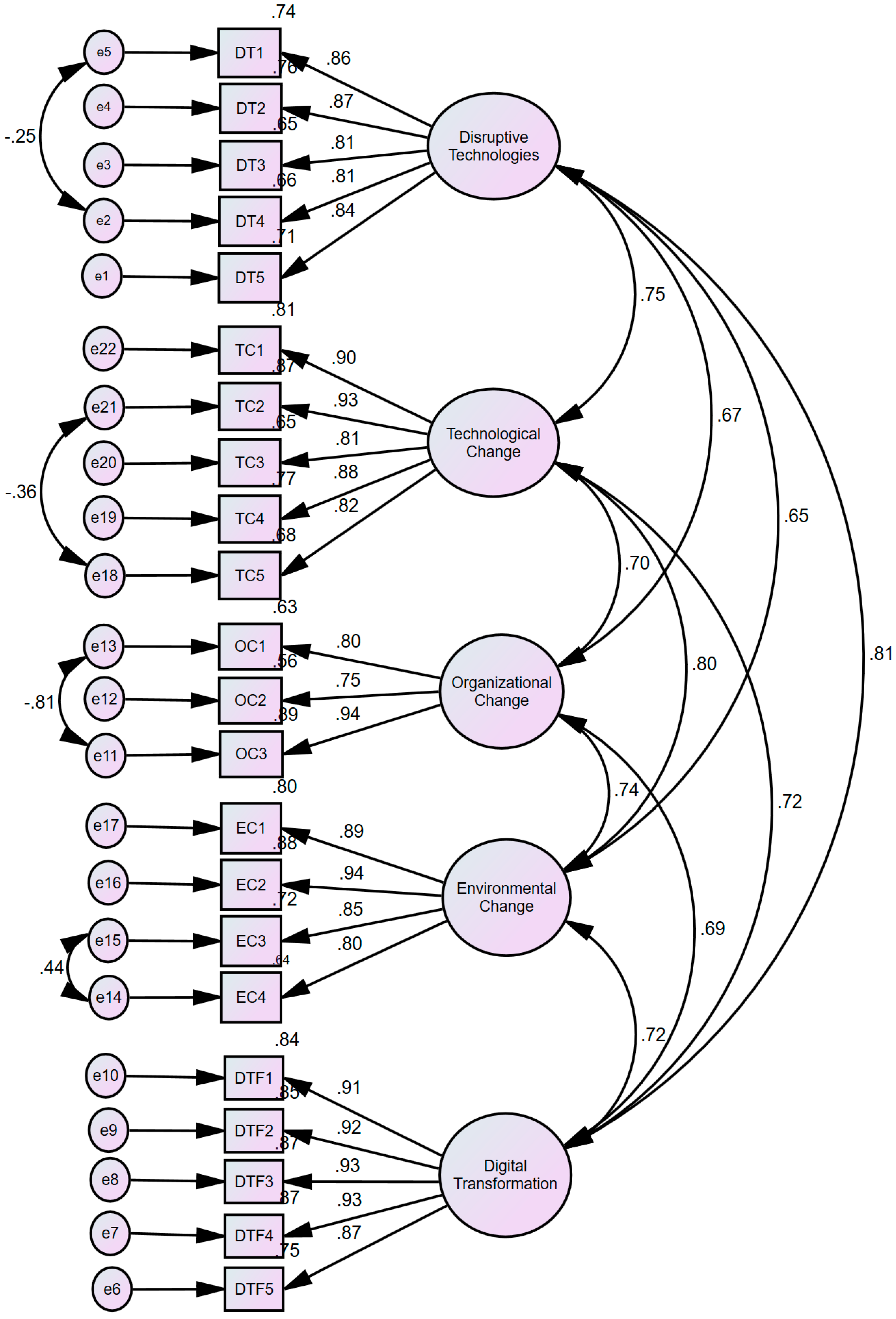
CFA was applied to evaluate the construct validity of the scales. CFA allows for testing model-data fit and structural validity by examining the extent to which the relationships established between the measurement items and the theoretical factor structure predetermined by the researcher are statistically validated [42]. The analysis results confirmed the validity of the structure, and the obtained factor structure is shown in Figure 3.
CFA results indicate that all factor loadings are above 0.50 and are at acceptable levels [43]. Model fit indices met the recommended threshold values, and no misfit or items/factors requiring removal were identified. Following CFA, the structural definitions were evaluated considering the accepted threshold values and model fit indicators. A summary of the findings is presented in Table 3.
According to the results of CFA, the model fit indices CMIN/df (2.703), GFI (0.912), AGFI (0.886), CFI (0.971), NFI (0.955), RFI (0.947), IFI (0.971), and TLI (0.966) are within acceptable ranges, while RMSEA (0.058) and SRMR (0.038) are within ideal thresholds. These results demonstrate that the model generally fits well and represents a valid structure.

4.4. Discriminant Validity

One of the methods used to evaluate the validity of the model is discriminant validity. Discriminant validity confirms that the constructs included in the model are independent of each other and that each construct measures a different concept [46]. In this context, the Fornell-Larcker criterion and Heterotrait–Monotrait Ratio (HTMT) analyses were applied to examine discriminant validity. The results of the Fornell–Larcker test are presented in Table 4.
According to the Fornell-Larcker criterion [47], the square root of each construct’s AVE value must be higher than the correlation coefficients with other constructs. The analyses show that this condition is met for all variables and confirm the discriminant validity.
The results of the HTMT analysis, another method used to assess discriminant validity, are presented in Table 5 below.
According to the HTMT criterion developed by Henseler and colleagues [48], HTMT values below 0.85 or 0.90 indicate that discriminant validity is achieved. The findings reveal that all HTMT coefficients are below 0.85, clearly demonstrating that discriminant validity is confirmed.

4.5. Structural Model and Hypothesis Testing

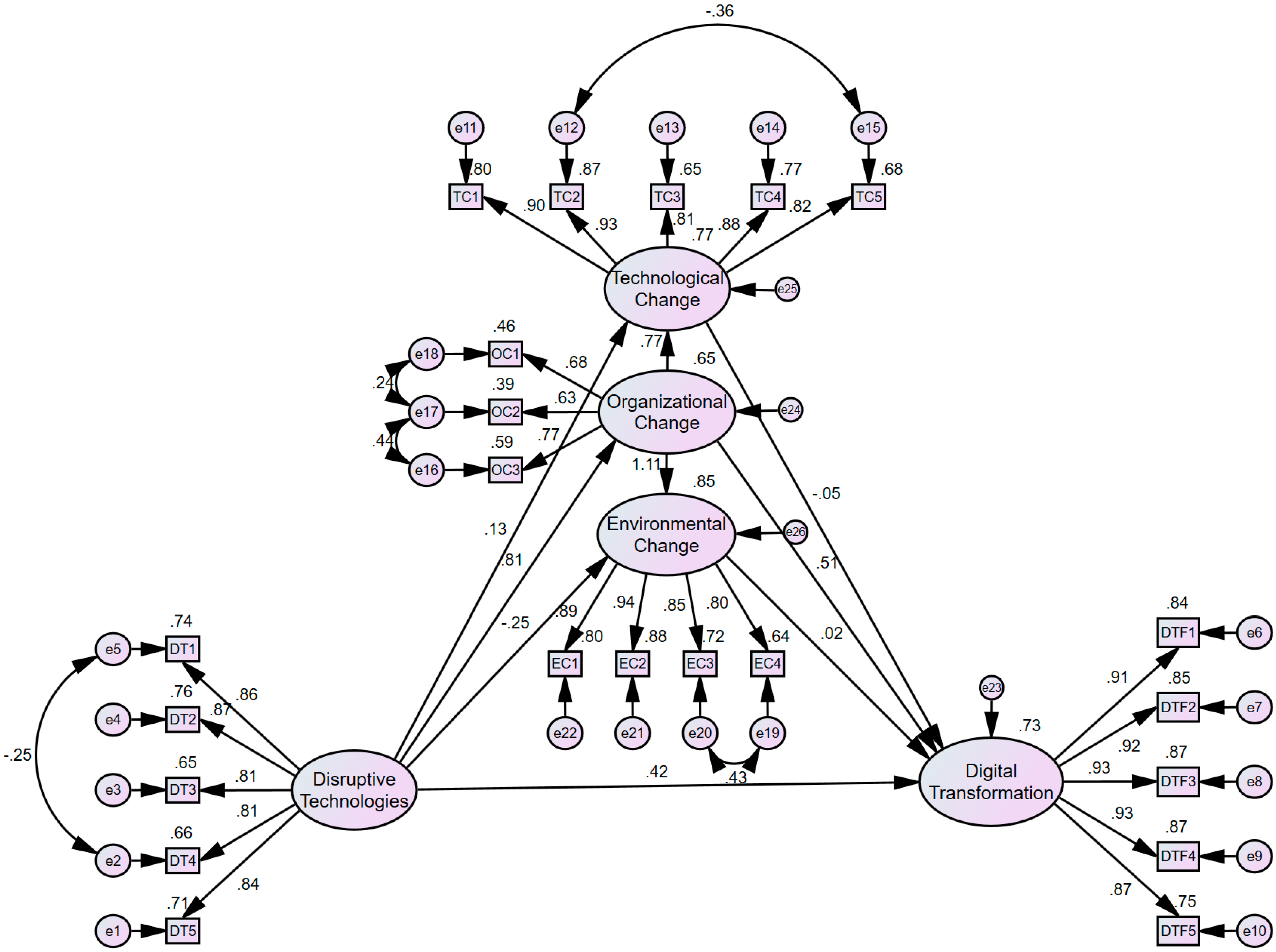
SEM was applied to estimate model parameters and test hypotheses. SEM allows for the simultaneous assessment of both the measurement model (validity and reliability) and the structural model by considering observed and latent variables within the same framework [49]. Within the scope of the analysis, direct and indirect effects between variables were determined, and the structural model was interpreted to validate the hypotheses. The final model is presented in Figure 4.
Following SEM, various fit criteria are considered. Acceptable limits for these criteria and the conformity values obtained from the analysis are presented in Table 6.
According to SEM analysis results, model fit indices were found to be within acceptable ranges: CMIN/df (2.771), GFI (0.911), AGFI (0.885), CFI (0.970), NFI (0.954), RFI (0.946), IFI (0.970), TLI (0.965), RMSEA (0.059), and SRMR (0.038). Overall, the findings confirm that all fit indices are within acceptable thresholds and that the model shows a strong fit with the data. In addition, the covariance links between error terms were created based solely on theoretical justifications and suggestions derived from model improvement indices (Modification Indices). These covariances reflect the common variance between items measuring similar conceptual content (e.g., similarity of statements or functional proximity). The differences between CFA and SEM stem from the structural model now including additional latent relationships, which partially alter the correlations.
The relationships specified in the structural model were tested to evaluate the validity of the proposed hypotheses. For each path coefficient, the standardized estimate, standard error, critical ratio, and significance level were examined, and hypotheses were accepted or rejected based on the findings. This determined the statistical support for the relationships predicted by the model. The findings obtained from these analyses are summarized in Table 7.
In the hypothesis test, the significance of the relationships between variables was evaluated based on standardized loadings (β), standard errors (S.E.), critical ratios (C.R.), and p-values. In the literature, β coefficients are accepted as indicators of effect size, with values between 0.10 and 0.29 representing weak effects, values between 0.30 and 0.49 representing moderate effects, and values of 0.50 and above representing strong effects [50,51,52]. Standard error is an important measure used to determine confidence intervals, where smaller values indicate more reliable estimates [53]. Critical ratio values above ±1.96 indicate that the estimate is significant at the 0.05 level [54]. The t-value reported in AMOS outputs is also referred to as the critical ratio (C.R.) in the literature [55]. Additionally, the p < 0.05 threshold has been adopted as the primary criterion for statistical significance in analyses [56].
The results of the hypotheses tested within the structural equation model are presented in Table 7. The findings indicate that Disruptive Technologies have a positive and significant effect on Digital Transformation (β = 0.422; p < 0.001; H1 accepted). Furthermore, Disruptive Technologies were found to have significant effects on both Technological Change (β = 0.130; p < 0.05; H2 accepted) and Organizational Change (β = 0.806; p < 0.001; H3 accepted). However, the effect of Disruptive Technologies on Environmental Change is negative and statistically significant (β = −0.250; p < 0.01; H4 accepted). When examining the findings for the mediating variables, it is seen that Organizational Change has strong and significant effects on both Technological Change (β = 0.770; p < 0.001; H5 accepted) and Environmental Change (β = 1.113; p < 0.001; H6 accepted). In contrast, the effects of Technological Change (β = −0.052; p > 0.05; H7 rejected), Organizational Change (β = 0.505; p > 0.05; H8 rejected), and Environmental Change (β = 0.023; p > 0.05; H9 rejected) were not found to have statistically significant effects on Digital Transformation. Overall, the results indicate that Disruptive Technologies have a direct and strong effect on Digital Transformation, as well as indirect effects through organizational factors. In contrast, the direct effects of the Technological and Environmental Change variables on Digital Transformation were not found to be statistically significant; however, the strong relationships between these variables and Organizational Change indicate that they contribute indirectly to digital transformation.

4.6. Findings of the Mediation Analysis

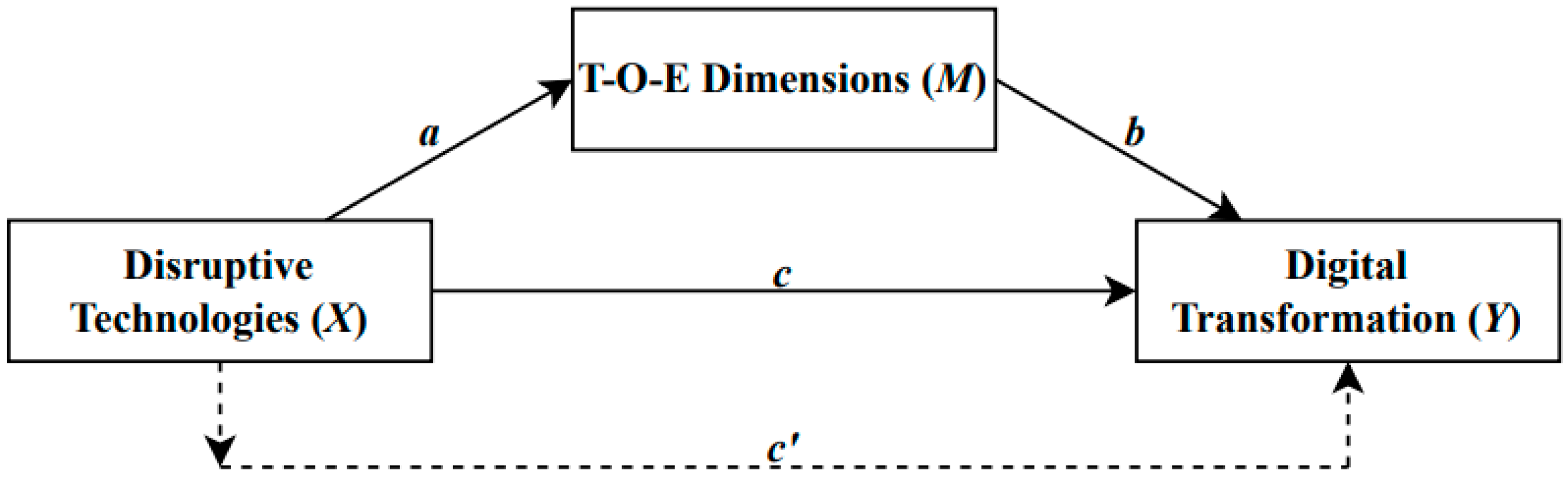
To examine mediation effects, Hayes’ PROCESS macro (Model 4) was used, and direct, indirect, and total effects between variables were tested using hierarchical regression analyses [37]. The analysis process applied is based on Preacher and Hayes’ mediation model, which separates the total effect of the independent variable (c) into its direct effect (c′) and indirect effect (a * b) transmitted through the mediating variables [57,58].
As shown in Figure 5, the model represents the total (c), direct (c), and indirect (a * b) effects between the independent variable (X) and the dependent variable (Y). Within this framework, the total effect (c) of disruptive technologies (X) on digital transformation (Y) is divided into two components: the direct effect (c’) reflecting the effect of X on Y without considering the mediating variable, and the indirect effect (a * b) emerging through the mediating variable (M). Thus, the model examines the extent to which the impact of disruptive technologies on digital transformation operates through mediating mechanisms within the TOE framework [37,57,58].
The mediation analysis was conducted using observed composite scores obtained by taking the average of the validated scale items for each variable. Factor scores obtained from CFA were not used because measurement validity and reliability were methodologically validated during the confirmatory factor analysis stage. The findings of the intermediary analysis are presented in Table 8 below, which explains the results of the total impact, direct impact, and indirect impact, respectively. This table reports the findings regarding the total and direct impacts of disruptive technologies on digital transformation, as well as their general indirect impacts.
According to the analysis results shown in Table 8, the total effect (c) of Disruptive Technologies (DT) on Digital Transformation (DTF) was found to be quite high and statistically significant (β = 0.733; t = 26.542; p < 0.001). The 95% confidence interval lower limit (LLCI) and upper limit (ULCI) were calculated as ((0.679)–(0.787)), and the condition of not including zero [37] was met. The model’s explained variance was calculated as R2 = 0.580. In other words, the independent variable, disruptive technologies, explains 58% of the total variance in the dependent variable, digital transformation.
When the mediating variables (TC, OC, and EC) were included in the model, the direct effect (c’) of Disruptive Technologies (DT) on Digital Transformation (DTF) decreased to β = 0.449, but this effect was still statistically significant (t = 12.495; p < 0.001). The lower confidence limit (LLCI) and upper confidence limit (ULCI) were calculated as ((0.378)–(0.519)), satisfying the condition of not including zero [37]. The variance explained by the direct effect model is R2 = 0.466. In other words, when the mediating variables are included in the model, the independent variable of disruptive technologies explains 46.6% of the total variance in the dependent variable of digital transformation.
When examining the total indirect effect, the total indirect effect of Disruptive Technologies (DT) on Digital Transformation (DTF) (cc′) was calculated as β = 0.284. The 95% confidence interval lower limit (LLCI) and upper limit (ULCI) for this effect were found to be between ((0.212) and (0.385)), and the fact that it does not include zero [37] indicates that the indirect effect is statistically significant. The variance explained by the total indirect effect is R2 = 0.114. In other words, the mediating mechanisms included in the model provided a meaningful explanation of digital transformation and showed that the effect of the independent variable emerged not only directly but also indirectly; in this context, approximately 11.4% of the variance in digital transformation was explained through mediating variables. This result reveals that the effect of disruptive technologies on digital transformation is transmitted not only through direct channels but also meaningfully through mediators such as technological change (TC), organizational change (OC), and environmental change (EC).

5. Discussion

The findings of the study reveal that disruptive technologies have a strong and statistically significant impact on digital transformation in the Turkish banking sector. This result is consistent with recent studies emphasizing the role of disruptive technologies as a strategic driving force in transformation processes [59,60,61]. Furthermore, disruptive technologies were found to positively influence both technological and organizational change. These findings are in line with contemporary research suggesting that disruptive technologies accelerate the adoption of innovations and create a transformative effect on organizational structures [62,63,64]. Beyond their technological implications, these results provide empirical evidence that the adoption of disruptive technologies contributes not only to promoting digital transformation but also to sustainable growth and organizational resilience by fostering innovation capacity, enhancing operational efficiency, and optimizing resource utilization.
However, the negative impact of disruptive technologies on environmental change is noteworthy. Compared to findings generally reported as positive in the literature [65,66,67], this result shows that technological transformation in the banking sector is perceived as reducing external environmental pressures. Furthermore, the strong effects of organizational change on both technological and environmental change confirm the central role of organizational dynamics in the transformation process [68,69,70]. This finding provides a critical perspective on the sustainability of digital transformation and shows that, despite disruptive technologies increasing operational efficiency, their environmental integration may still be limited. Therefore, ensuring sustainable digital transformation requires aligning technological innovations with environmental sustainability goals and green banking practices to achieve balanced and responsible growth in the sector.
The findings should also be evaluated in the context of Turkey’s socio-economic and cultural characteristics. As a rapidly digitizing developing economy with a young, tech-savvy population, Turkey offers a dynamic environment for the adoption of disruptive technologies. However, traditional, hierarchical management structures and a high aversion to uncertainty can limit the agility required for digital transformation. In this context, the strong mediating role of organizational change identified in the research reflects the need for structural flexibility, leadership support, and an innovation-focused culture. Furthermore, cultural factors such as collectivism, respect for authority, and risk avoidance influence decision-making behaviors, explaining why organizational readiness is more decisive in digital transformation. These socio-cultural dynamics demonstrate that sustainable digital transformation in Turkey depends not only on the level of technological readiness, but also on the development of a cohesive organizational culture that can balance innovation with regulatory and hierarchical constraints.
In addition, the regulatory and institutional environment in Turkey has a decisive impact on the dynamics of digital transformation. The Turkish banking sector operates under the strict supervision of institutions such as the Banking Regulation and Supervision Agency (BRSA) and the Central Bank of the Republic of Turkey (CBRT), which ensures system stability and data security. However, such regulations can limit the flexibility required for the adoption of innovations. This institutional rigidity may explain the relatively weak or negative impact of the environmental factors observed in the study. Therefore, striking a balance between compliance-focused governance and innovation-focused strategies emerges as a fundamental requirement for the success of sustainable digital transformation in the Turkish banking sector.
On the other hand, the absence of statistically significant direct effects of technological, organizational, and environmental change on digital transformation contradicts recent studies that emphasize these factors as critical determinants. Although previous research has reported strong relationships in the technological and organizational dimensions [71,72,73] and positive direct effects in the environmental dimension [74,75,76], the current findings differ from such results. Instead, evidence suggests that, in the banking context, these variables shape digital transformation not through direct channels but via indirect mechanisms. This indicates that sustainable digital transformation in the banking sector depends on the synergistic interaction of technological, organizational, and environmental factors rather than isolated effects. In this context, the study provides empirical evidence that long-term sustainability and digital resilience can only be achieved if these dimensions are integrated into a consistent strategy and innovation is aligned with environmental and organizational alignment.

6. Theoretical Contributions

This research contributes significantly to the existing literature with several noteworthy theoretical contributions. First, the findings reveal that the dimensions within the Technology–Organization–Environment (TOE) framework do not have uniform effects on digital transformation. According to the findings, Disruptive Technologies exert their strongest and most meaningful impact on Organizational Change, while producing a limited and low-level effect on Technological Change. In contrast, Environmental Change has a negative effect, indicating that TOE dimensions may vary depending on the context and have a conditional structure. This finding contributes to sustainability theory by showing that the results of digital transformation depend on organizational readiness and environmental compatibility, which are necessary for long-term sustainable performance.
Secondly, this study demonstrates that the impact of disruptive technologies on digital transformation is shaped not only directly but also through indirect mechanisms. In particular, indirect effects arising from organizational change emphasize that internal structural transformations play a critical role in the digitalization process. This multidimensional perspective enriches existing theoretical approaches that typically highlight unidirectional relationships. This finding advances theoretical understanding by linking internal organizational transformation to sustainable digital capability and emphasizes that sustainability in digital ecosystems requires consistent integration across technological and managerial layers.
Finally, the research was conducted in an economic context subject to high levels of regulation and development, revealing the sensitivity of digital transformation theories to contextual conditions. Findings specific to the banking sector show that institutional factors such as strict regulations and centralized governance significantly shape the ways in which disruptive technologies promote digital transformation. This contribution expands the applicability of the TOE framework to different contexts, adding a unique perspective to the international literature. Furthermore, by extending the applicability of the TOE framework to sustainability-focused contexts, it demonstrates that digital transformation in regulated sectors can promote responsible innovation and contribute to sustainable economic development.

7. Conclusions

This study examines the role of disruptive technologies in shaping digital transformation in Turkey’s banking sector within the framework of the Technology–Organization–Environment (TOE) model. The findings show that disruptive technologies act as powerful catalysts in digital transformation processes. These effects are not limited to technological adoption; they also accelerate organizational change and amplify the impact of environmental dynamics such as regulatory pressures, customer expectations, and competitive factors.
The research results reveal that organizational change plays a central role in the relationship between disruptive technologies and digital transformation; conversely, technological and environmental factors exhibit more limited or context-dependent effects. This situation demonstrates that the success of digital transformation depends not only on technological investments but also on the level of organizational readiness and adaptability.
Theoretically, the study reveals the context-sensitive nature of the TOE model by showing that its dimensions do not have equal effects on digital transformation. In terms of application, the findings indicate that managers in the banking sector should prioritize strengthening organizational competencies and internal capacity in their digital transformation strategies. In this regard, senior managers, digital transformation leaders, and strategic management units are the main actors responsible for developing and coordinating initiatives to increase organizational readiness and capacity. Since external environmental pressures may not always play a transformative role, developing internal capabilities appears critical to the success of digital transformation.
In conclusion, disruptive technologies are not merely technological innovations; they are systemic change catalysts that fundamentally transform how institutions adapt to their environments and shape their digital transformation strategies. These technologies, which promote innovation, resource efficiency, and organizational resilience, contribute not only to digital transformation but also to sustainable economic development in the banking sector and beyond.
Overall, this study has empirically validated the TOE model in the context of disruptive technologies within the banking sector and made a significant contribution to the digital transformation literature. The findings reveal that technological, organizational, and environmental factors jointly shape sustainable digital transformation; they demonstrate that not only technological capabilities but also organizational alignment and environmental sensitivity play a critical role in transformation success.

Limitations and Future Research Directions

This study presents meaningful findings on how disruptive technologies have driven digital transformation in the banking sector. However, since the data is based on subjective perceptions, future qualitative or mixed-method research could strengthen these findings. Although statistically significant relationships were identified in the structural model, this does not imply a direct causal relationship. The hypothetical relationships in the model reveal a directional structure, but this does not imply a strict claim of causality; the relationships are based on the incremental logic of the TOE framework. As the analysis is based on cross-sectional data, the relationships between variables are presented as directional and correlational rather than causal. In future research, longitudinal or experimental designs could be used to better reveal the causal dynamics between disruptive technologies and digital transformation.
The fact that the study is limited to the banking sector restricts the generalizability of the results. Testing the model in different sectors such as education, financial technology (FinTech), healthcare, logistics, or manufacturing could enable a comparative assessment of context-specific dynamics. Furthermore, this study does not directly examine the mechanisms through which disruptive technologies influence digital transformation. Future studies could provide a more in-depth explanation of how technological adoption translates into organizational change by evaluating intermediary or regulatory variables such as cybersecurity, data governance, risk management, or fraud prevention.
Future research may expand the conceptual model by adding elements such as digital leadership, digital culture, or innovation performance as mediating or moderating variables; such variables may contribute to the emergence of new mechanisms explaining the effects of disruptive technologies on organizational transformation. Furthermore, since this study treats digital transformation as a single construct, it would be useful for future research to distinguish between different types of digital innovation, such as product, process, and service innovation, and to examine the comparative effects of disruptive technologies on these types. Such a distinction would further enrich the explanatory power of the TOE model.
Finally, examining sub-technologies such as artificial intelligence, big data analytics, the Internet of Things, blockchain, and robotic process automation at a micro level can reveal which technologies are more decisive for digital transformation. Furthermore, comparative studies between different countries will provide a broader perspective on how sustainable digital transformation is shaped by the institutional and cultural context.

Author Contributions

Conceptualization, U.K.; methodology, U.K.; validation, A.K.K.; formal analysis, U.K.; writing—original draft preparation, U.K.; writing—review and editing, A.K.K.; supervision, A.K.K. All authors have read and agreed to the published version of the manuscript.

Funding

This research received no external funding.

Institutional Review Board Statement

Ethical approval for this study was obtained from the Ethics Committee of Atatürk University’s Faculty of Social and Human Sciences (Protocol code E.88656144-000-2400176105 and date of 31 May 2024 approval).

Informed Consent Statement

Informed consent was obtained from all subjects involved in the study.

Data Availability Statement

The data provided in this study are available upon request from the corresponding author.

Conflicts of Interest

The authors declare no conflicts of interest.

Appendix A

ConstructsDescriptionsSources
Disruptive TechnologyOur institution makes significant use of e-learning technology.[5]
Our institution makes significant use of artificial intelligence technology.
Cloud computing technology is used extensively in our institution.
Our institution makes extensive use of robotic technology.
Our institution makes extensive use of big data technologies.
Technological ChangeTechnologies used in recent years have changed.[5]
Changes in working methods will be dependent on technological changes.
Changing the technology used will have a positive impact on the organization.
The technological infrastructure is constantly changing.
Our institution has full authority to change the technology used.
Organizational ChangeExternal conditions necessitate organizational change within our institution.[5]
Our institution has undergone organizational change in recent years.
Our institution has undertaken numerous initiatives aimed at continuous change in recent periods.
Environmental ChangeOur organization operates in an environment where technological changes are rapidly evolving.[35]
Technological changes present significant opportunities for the organization’s growth.
The demands of those receiving services from the organization regarding products and services frequently change.
Those receiving services from the organization tend to seek out new products and services.
Digital TransformationOur institution has taken action in response to digital transformation efforts and has the ability to finance the process.[36]
Our institution carries out strategic initiatives to create scalable, flexible, and value-generating operations aimed at achieving digital transformation.
Our institution carries out strategic initiatives to leverage digital information to provide better data optimization.
Our organization continuously executes strategic initiatives to monitor research and applications of digital platforms and technologies.
Our organization establishes intensive interactive digital connections with domestic and international organizations.

References

  1. Adama, H.E.; Okeke, C.D. Digital Transformation as a Catalyst for Business Model Innovation: A Critical Review of Impact and Implementation Strategies. Magna Sci. Adv. Res. Rev. 2024, 10, 256–264. [Google Scholar] [CrossRef]
  2. Hanelt, A.; Bohnsack, R.; Marz, D.; Antunes Marante, C. A Systematic Review of the Literature on Digital Transformation: Insights and Implications for Strategy and Organizational Change. J. Manag. Stud. 2021, 58, 1159–1197, Correction in J. Manag. Stud. 2022, 59, 583. https://doi.org/10.1111/joms.12799. [Google Scholar] [CrossRef]
  3. Plekhanov, D.; Franke, H.; Netland, T.H. Digital Transformation: A Review and Research Agenda. Eur. Manag. J. 2023, 41, 821–844. [Google Scholar] [CrossRef]
  4. Bower, J.L.; Christensen, C.M. Disruptive Technologies: Catching the Wave. Harv. Bus. Rev. 1995, 73, 43–53. [Google Scholar]
  5. Al-Aawawdeh, R. The Impact of Implementing Disruptive Technology on Organizational Change. Master’s Thesis, University of Petra, Amman, Jordan, 2023. [Google Scholar]
  6. Zighan, S. Disruptive Technology from an Organizational Management Perspective. In Proceedings of the 2022 International Conference on Business Analytics for Technology and Security (ICBATS), Dubai, United Arab Emirates, 16–17 February 2022; IEEE: Piscataway, NJ, USA, 2022; pp. 1–5. [Google Scholar] [CrossRef]
  7. Faro, B. Continuous Transformation of Government Agencies in the Digital Era: A Technological and Non-Technological Assessment. Ph.D. Thesis, University of Technology Sydney, Sydney, Australia, 2020. [Google Scholar]
  8. Lim, J.; Hwang, J. Disruptive Technologies for Knowledge Management: Bibliometric Review and Patent Analysis. Kybernetes 2024, 53, 6977–7002. [Google Scholar] [CrossRef]
  9. Kabakus, A.K.; Bahcekapili, E.; Ayaz, A. The Effect of Digital Literacy on Technology Acceptance: An Evaluation on Administrative Staff in Higher Education. J. Inf. Sci. 2025, 51, 930–941. [Google Scholar] [CrossRef]
  10. Reyes-Geiggar, C. Business Sustainability: A Qualitative Study Exploring Digital Transformation as a Key Driver for Organizational Leaders. Ph.D. Thesis, National University, San Diego, CA, USA, 2023. [Google Scholar]
  11. Elia, G.; Solazzo, G.; Lerro, A.; Pigni, F.; Tucci, C.L. The Digital Transformation Canvas: A Conceptual Framework for Leading the Digital Transformation Process. Bus. Horiz. 2024, 67, 381–398. [Google Scholar] [CrossRef]
  12. Tornatzky, L.G.; Fleischer, M. Processes of Technological Innovation; Lexington Books: Lexington, MA, USA, 1990. [Google Scholar]
  13. Shiau, W.L.; Liu, C.; Zhou, M.; Yuan, Y. Insights into customers’ psychological mechanism in facial recognition payment in offline contactless services: Integrating belief-attitude-intention and TOE-I frameworks. Internet Res. 2023, 33, 344–387. [Google Scholar] [CrossRef]
  14. Ahmad, S.F.; Alam, M.M.; Rahmat, M.K.; Shahid, M.K.; Aslam, M.; Salim, N.A.; Al-Abyadh, M.H.A. Leading edge or bleeding edge: Designing a framework for the adoption of AI technology in an educational organization. Sustainability 2023, 15, 6540. [Google Scholar] [CrossRef]
  15. Schmitt, G.; Mladenow, A.; Strauss, C.; Schaffhauser-Linzatti, M. Smart Contracts and Internet of Things: A Qualitative Content Analysis Using the Technology–Organization–Environment Framework to Identify Key Determinants. Procedia Comput. Sci. 2019, 160, 189–196. [Google Scholar] [CrossRef]
  16. Alsetoohy, O.; Ayoun, B.; Arous, S.; Megahed, F.; Nabil, G. Intelligent Agent Technology: What Affects Its Adoption in Hotel Food Supply Chain Management? J. Hosp. Tour. Technol. 2019, 10, 286–310. [Google Scholar] [CrossRef]
  17. Kumar, A.; Singh, R.K.; Swain, S. Adoption of Technology Applications in Organized Retail Outlets in India: A TOE Model. Glob. Bus. Rev. 2022, 26, 1482–1505. [Google Scholar] [CrossRef]
  18. Hoang, H. Navigating the Digital Landscape: An Exploration of the Relationship Between Technology-Organization-Environment Factors and Digital Transformation Adoption in SMEs. SAGE Open 2024, 14, 21582440241276198. [Google Scholar] [CrossRef]
  19. Nguyen, T.-H. Investigating Driving Factors of Digital Transformation in the Vietnam Shipping Companies: Applied for TOE Framework. SAGE Open 2024, 14, 21582440241301210. [Google Scholar] [CrossRef]
  20. Ajili Ben Youssef, W.; Bouebdallah, N.; Long, H. Factors Influencing Generative Artificial Intelligence Adoption in Vietnam’s Banking Sector: An Empirical Study. Financ. Innov. 2025, 11, 119. [Google Scholar] [CrossRef]
  21. Al-Smadi, M.O. Factors Driving Digital Transformation: Technological, Organizational, and Environmental Perspectives from Jordanian Banks. Banks Bank Syst. 2025, 20, 74–82. [Google Scholar] [CrossRef]
  22. Annisa, S.; Sutjipto, M.R. Technology, Organization, Environment, and Digital Transformation for Sustainability. J. Ilm. Manaj. Kesatuan 2025, 13, 2591–2604. [Google Scholar] [CrossRef]
  23. Christensen, C.M. The Innovator’s Dilemma: When New Technologies Cause Great Firms to Fail; Harvard Business School Press: Boston, MA, USA, 1997. [Google Scholar]
  24. Verhoef, P.C.; Broekhuizen, T.; Bart, Y.; Bhattacharya, A.; Dong, J.Q.; Fabian, N.; Haenlein, M. Digital Transformation: A Multidisciplinary Reflection and Research Agenda. J. Bus. Res. 2021, 122, 889–901. [Google Scholar] [CrossRef]
  25. Baiyere, A.; Salmela, H.; Tapanainen, T. Digital Transformation and the New Logics of Business Process Management. Eur. J. Inf. Syst. 2020, 29, 238–259. [Google Scholar] [CrossRef]
  26. Butt, A.; Imran, F.; Helo, P.; Kantola, J. Strategic Design of Culture for Digital Transformation. Long Range Plan. 2024, 57, 102415. [Google Scholar] [CrossRef]
  27. Huang, D.; Gao, Q.; Peng, C.; Yang, K.; Liu, R. A Study on the Impact of Different Organizational Levels on Digital Transformation in Enterprises. Sustainability 2023, 15, 16212. [Google Scholar] [CrossRef]
  28. Vladimirov, Z.D.; Harizanova, O.B. The Mediating Role of Organizational Factors between Environmental Changes and SMEs’ Digital Transformation. Cent. Eur. Manag. J. 2025, 33, 1–15. [Google Scholar] [CrossRef]
  29. Abdurrahman, A.; Gustomo, A.; Prasetio, E.A. Impact of Dynamic Capabilities on Digital Transformation and Innovation to Improve Banking Performance: A TOE Framework Study. J. Open Innov. Technol. Mark. Complex. 2024, 10, 100215. [Google Scholar] [CrossRef]
  30. Alakaş, E.Ö. Digital Transformational Leadership and Organizational Agility in Digital Transformation: Structural Equation Modelling of the Moderating Effects of Digital Culture and Digital Strategy. J. High Technol. Manag. Res. 2024, 35, 100517. [Google Scholar] [CrossRef]
  31. N’Dri, A.B.; Su, Z. Successful Configurations of Technology-Organization-Environment Factors in Digital Transformation: Evidence from Exporting Small and Medium-Sized Enterprises in the Manufacturing Industry. Inf. Manag. 2024, 61, 104030. [Google Scholar] [CrossRef]
  32. Cengiz, E.; Akyuz, I.; Omay, G.G.; Bosat, M. Defining health mavens on demographic characteristics: A pilot study in Istanbul. Eur. Sci. J. 2016, 12, 93–104. [Google Scholar] [CrossRef]
  33. Kline, R.B. Principles and Practice of Structural Equation Modeling; The Guilford Press: New York, NY, USA, 1994. [Google Scholar]
  34. Altunışık, R.; Coşkun, R.; Bayraktaroğlu, S.; Yıldırım, E. Sosyal Bilimlerde Araştırma Yöntemleri: SPSS Uygulamalı (Research Methods in Social Sciences: Applied with SPSS); Sakarya Yayıncılık: Sakarya, Turkey, 2015. (In Turkish) [Google Scholar]
  35. Wang, X.; Liu, Z.; Li, J.; Lei, X. How Organizational Unlearning Leverages Digital Process Innovation to Improve Performance: The Moderating Effects of Smart Technologies and Environmental Turbulence. Technol. Soc. 2023, 75, 102395. [Google Scholar] [CrossRef]
  36. Sağlam, M. İşletmelerde Geleceğin Vizyonu Olarak Dijital Dönüşümün Gerçekleştirilmesi ve Dijital Dönüşüm Ölçeğinin Türkçe Uyarlaması (Realization of Digital Transformation as a Vision of the Future in Businesses and Turkish Adaptation of the Digital Transformation Scale). İstanbul Ticaret Univ. Sos. Bilim. Derg. 2021, 20, 395–420. (In Turkish) [Google Scholar] [CrossRef]
  37. Hayes, A.F. Introduction to Mediation, Moderation, and Conditional Process Analysis: A Regression-Based Approach; The Guilford Press: New York, NY, USA, 2013. [Google Scholar]
  38. Gürbüz, S. AMOS ile Yapısal Eşitlik Modellemesi (Structural Equation Modeling with AMOS); Seçkin Yayıncılık: Ankara, Turkey, 2024. (In Turkish) [Google Scholar]
  39. Saidi, S.S.; Siew, N.M. Investigating the Validity and Reliability of Survey Attitude towards Statistics Instrument among Rural Secondary School Students. Int. J. Educ. Methodol. 2019, 5, 651–661. [Google Scholar] [CrossRef]
  40. Şahin, H.; Bircan, H. Ortaokul Öğrencilerinin Başarı Odaklı Motivasyonlarının Demografik Özelliklere Göre Belirlenmesi (Determining the Success-Oriented Motivations of Secondary School Students According to Demographic Characteristics). Turk. Res. J. Acad. Soc. Sci. 2023, 5, 134–144. (In Turkish) [Google Scholar]
  41. Gürcüoğlu, S.; Köseoğlu, İ. Kamu Çalışanlarında Yapay Zekâ Algısını Ölçmeye Yönelik Ölçek Geliştirme (Scale Development to Measure the Perception of Artificial Intelligence Among Public Employees). Karamanoğlu Mehmetbey Univ. J. Soc. Econ. Res. 2024, 26, 1009–1024. (In Turkish) [Google Scholar] [CrossRef]
  42. Yuan, M.; Zang, W.; Li, L.; Yi, Z. Unveiling the Multifaceted Driving Mechanism of Digital Transformation in the Construction Industry: A System Adaptation Perspective. Systems 2024, 13, 11. [Google Scholar] [CrossRef]
  43. Hair, J.F., Jr.; Black, W.C.; Babin, B.J.; Anderson, R.E. Multivariate Data Analysis, 7th ed.; Pearson Prentice Hall: Upper Saddle River, NJ, USA, 2009. [Google Scholar]
  44. Hu, L.T.; Bentler, P.M. Cutoff Criteria for Fit Indexes in Covariance Structure Analysis: Conventional Criteria versus New Alternatives. Struct. Equ. Model. Multidiscip. J. 1999, 6, 1–55. [Google Scholar] [CrossRef]
  45. Schermelleh-Engel, K.; Moosbrugger, H.; Müller, H. Evaluating the Fit of Structural Equation Models: Tests of Significance and Descriptive Goodness-of-Fit Measures. Methods Psychol. Res. Online 2003, 8, 23–74. [Google Scholar]
  46. Lim, W.M. A Typology of Validity: Content, Face, Convergent, Discriminant, Nomological and Predictive Validity. J. Trade Sci. 2024, 12, 155–179. [Google Scholar] [CrossRef]
  47. Fornell, C.; Larcker, D.F. Evaluating Structural Equation Models with Unobservable Variables and Measurement Error. J. Mark. Res. 1981, 18, 39–50. [Google Scholar] [CrossRef]
  48. Henseler, J.; Ringle, C.M.; Sarstedt, M. A New Criterion for Assessing Discriminant Validity in Variance-Based Structural Equation Modeling. J. Acad. Mark. Sci. 2015, 43, 115–135. [Google Scholar] [CrossRef]
  49. Albahri, A.S.; Alnoor, A.; Zaidan, A.A.; Albahri, O.S.; Hameed, H.; Zaidan, B.B.; Yass, A.A. Based on the Multi-Assessment Model: Towards a New Context of Combining the Artificial Neural Network and Structural Equation Modelling: A Review. Chaos Solitons Fractals 2021, 153, 111445. [Google Scholar] [CrossRef]
  50. Raffaele, B.; Biagioli, V.; Cirillo, L.; De Marinis, M.G.; Matarese, M. Cross-Validation of the Self-Care Ability Scale for Elderly (SASE) in a Sample of Italian Older Adults. Scand. J. Caring Sci. 2018, 32, 1398–1408. [Google Scholar] [CrossRef] [PubMed]
  51. Komal, B.; Janjua, U.I.; Anwar, F.; Madni, T.M.; Cheema, M.F.; Malik, M.N.; Shahid, A.R. The Impact of Scope Creep on Project Success: An Empirical Investigation. IEEE Access 2020, 8, 125755–125775. [Google Scholar] [CrossRef]
  52. Sheffield, D.; Butler, C.W.; Richardson, M. Improving Nature Connectedness in Adults: A Meta-Analysis, Review and Agenda. Sustainability 2022, 14, 12494. [Google Scholar] [CrossRef]
  53. Kim, H.Y. Statistical Notes for Clinical Researchers: Understanding Standard Deviations and Standard Errors. Restor. Dent. Endod. 2013, 38, 263–265. [Google Scholar] [CrossRef] [PubMed]
  54. Hox, J.J.; Bechger, T.M. An Introduction to Structural Equation Modeling. Fam. Sci. Rev. 1998, 11, 354–373. [Google Scholar]
  55. Lu, C.S.; Lai, K.H.; Cheng, T.E. Application of Structural Equation Modeling to Evaluate the Intention of Shippers to Use Internet Services in Liner Shipping. Eur. J. Oper. Res. 2007, 180, 845–867. [Google Scholar] [CrossRef]
  56. Marshall, G.; Jonker, L. An Introduction to Inferential Statistics: A Review and Practical Guide. Radiography 2011, 17, e1–e6. [Google Scholar] [CrossRef]
  57. Preacher, K.J.; Hayes, A.F. SPSS and SAS Procedures for Estimating Indirect Effects in Simple Mediation Models. Behav. Res. Methods Instrum. Comput. 2004, 36, 717–731. [Google Scholar] [CrossRef]
  58. Preacher, K.J.; Hayes, A.F. Asymptotic and Resampling Strategies for Assessing and Comparing Indirect Effects in Multiple Mediator Models. Behav. Res. Methods 2008, 40, 879–891. [Google Scholar] [CrossRef]
  59. Roblek, V.; Meško, M.; Pušavec, F.; Likar, B. The Role and Meaning of the Digital Transformation as a Disruptive Innovation on Small and Medium Manufacturing Enterprises. Front. Psychol. 2021, 12, 592528. [Google Scholar] [CrossRef]
  60. Olszak, C.; Pałys, M. Disruptive Technologies as a Driver to Organizational Success: Organizational Culture Perspective. In Proceedings of the 56th Hawaii International Conference on System Sciences, Maui, HI, USA, 3–6 January 2023; pp. 269–278. [Google Scholar] [CrossRef]
  61. Xu, Y.; Ji, J.; Qiao, Y.; Huang, J. How and When Does Digital Transformation Promote Technological Innovation Performance? A Study of Chinese High-Tech Firms. Technovation 2025, 146, 103294. [Google Scholar] [CrossRef]
  62. Sadri, H.; Yitmen, I.; Tagliabue, L.C.; Westphal, F.; Tezel, A.; Taheri, A.; Sibenik, G. Integration of Blockchain and Digital Twins in the Smart Built Environment Adopting Disruptive Technologies-A Systematic Review. Sustainability 2023, 15, 3713. [Google Scholar] [CrossRef]
  63. Vural, M.F. Süreksiz Teknolojilere ve Tamamlayıcı Yeniliklere Çalışanlar Nasıl Uyum Sağlar? (How Do Employees Adapt to Discontinuous Technologies and Complementary Innovations?). Yönetim Bilimleri Derg. 2024, 22, 1925–1945. (In Turkish) [Google Scholar] [CrossRef]
  64. Bindel Sibassaha, J.L.; Pea-Assounga, J.B.B.; Bambi, P.D.R. Influence of Digital Transformation on Employee Innovative Behavior: Roles of Challenging Appraisal, Organizational Culture Support, and Transformational Leadership Style. Front. Psychol. 2025, 16, 1532977. [Google Scholar] [CrossRef]
  65. Ali, Q.; Parveen, S.; Yaacob, H.; Zaini, Z. The Management of Industry 4.0 Technologies and Environmental Assets for Optimal Performance of Industrial Firms in Malaysia. Environ. Sci. Pollut. Res. 2022, 29, 52964–52983. [Google Scholar] [CrossRef] [PubMed]
  66. Tao, Y.; Lu, H.; Ye, Y.; Wu, H. Does the Firms’ Digital Transformation Drive Environmental Innovation in China? Sustain. Dev. 2024, 32, 2139–2152. [Google Scholar] [CrossRef]
  67. Kopeinig, J.; Woschank, M.; Olipp, N. Industry 4.0 Technologies and Their Implications for Environmental Sustainability in the Manufacturing Industry. Procedia Comput. Sci. 2024, 232, 2777–2789. [Google Scholar] [CrossRef]
  68. Jewapatarakul, D.; Ueasangkomsate, P. Digital Organizational Culture, Organizational Readiness, and Knowledge Acquisition Affecting Digital Transformation in SMEs from Food Manufacturing Sector. Sage Open 2024, 14, 1–15. [Google Scholar] [CrossRef]
  69. Yang, J.; Shan, H.; Xian, P.; Xu, X.; Li, N. Impact of Digital Transformation on Green Innovation in Manufacturing under Dual Carbon Targets. Sustainability 2024, 16, 7652. [Google Scholar] [CrossRef]
  70. He, Q. The Influence of Organizational Policies on Firm Environmental Performance through Sustainable Technologies and Innovation and Stakeholder Concerns. Sci. Rep. 2025, 15, 10019. [Google Scholar] [CrossRef]
  71. Kitsios, F.; Giatsidis, I.; Kamariotou, M. Digital Transformation and Strategy in the Banking Sector: Evaluating the Acceptance Rate of E-Services. J. Open Innov. Technol. Mark. Complex. 2021, 7, 204. [Google Scholar] [CrossRef]
  72. Wang, D.; Shao, X. Research on the Impact of Digital Transformation on the Production Efficiency of Manufacturing Enterprises: Institution-Based Analysis of the Threshold Effect. Int. Rev. Econ. Finance 2024, 91, 883–897. [Google Scholar] [CrossRef]
  73. Shahzad, K.; Imran, F.; Butt, A. Digital Transformation and Changes in Organizational Structure: Empirical Evidence from Industrial Organizations. Res. Technol. Manag. 2025, 68, 25–40. [Google Scholar] [CrossRef]
  74. Kumar, S.; Bhatia, M.S. Environmental Dynamism, Industry 4.0 and Performance: Mediating Role of Organizational and Technological Factors. Ind. Mark. Manag. 2021, 95, 54–64. [Google Scholar] [CrossRef]
  75. Sun, Z.; Hu, D.; Lou, X. The Impact of Digital Transformation on the Sustainable Growth of Specialized, Refined, Differentiated, and Innovative Enterprises: Based on the Perspective of Dynamic Capability Theory. Sustainability 2024, 16, 7823. [Google Scholar] [CrossRef]
  76. Nguyen, T.; Song, G.; Zhao, S.; Zuo, C. Market Competition and Digital Transformation in Firms. Finance Res. Lett. 2025, 73, 106684. [Google Scholar] [CrossRef]
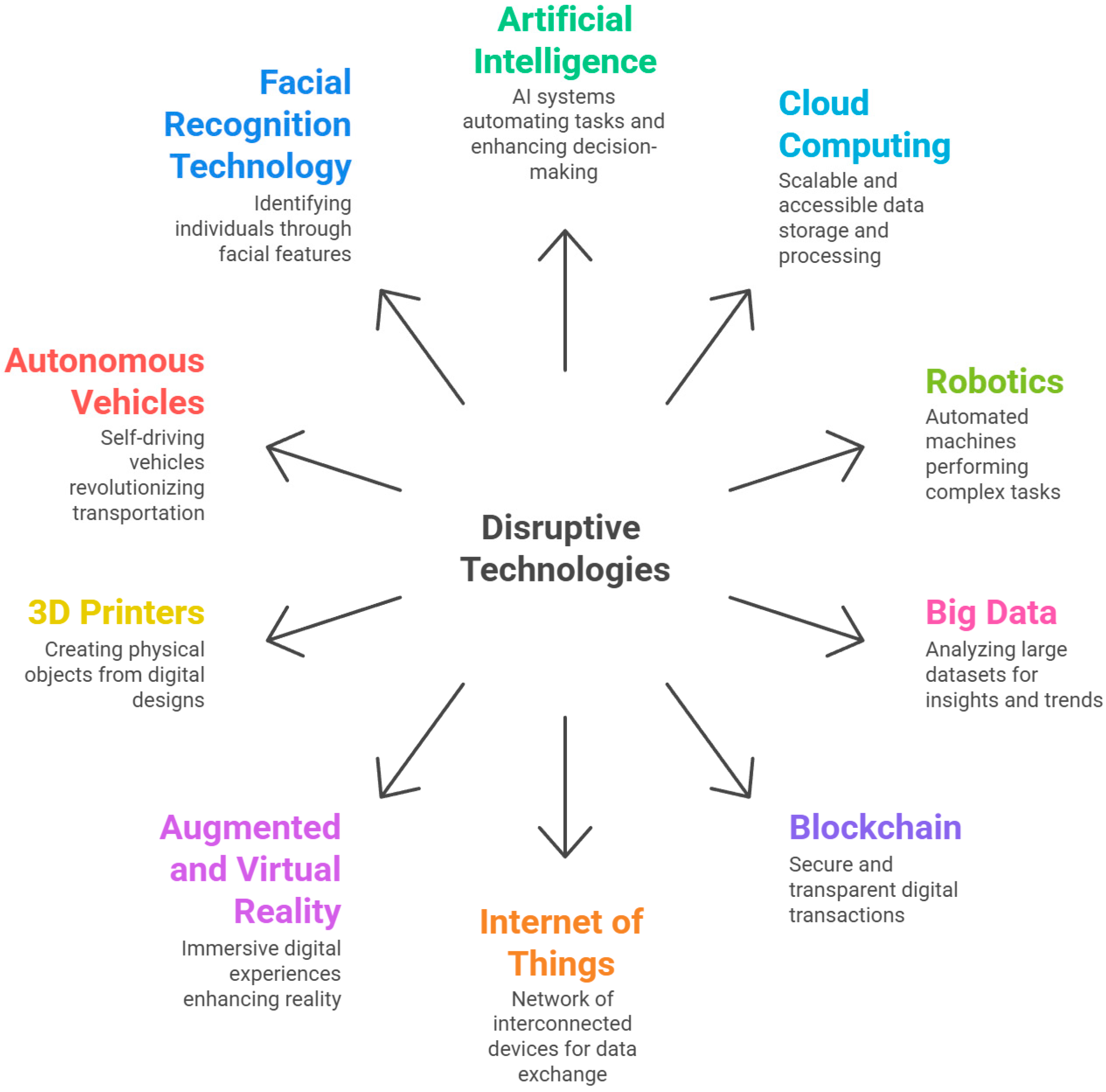
Figure 1. Key components of disruptive technologies (Developed based on the conceptual structure proposed by Zighan [6]).
Sustainability 17 10787 g001
Figure 2. Research Model.
Sustainability 17 10787 g002
Figure 3. Measurement Model. (Abbreviation clarification: DT = Disruptive Technologies; DTF = Digital Transformation).
Sustainability 17 10787 g003
Figure 4. Structural Model. (Abbreviation clarification: DT = Disruptive Technologies; DTF = Digital Transformation).
Sustainability 17 10787 g004
Figure 5. Conceptual mediation model illustrating the total (c), direct (c′), and indirect (a * b) effects of disruptive technologies (X) on digital transformation (Y) through TOE dimensions (M).
Sustainability 17 10787 g005
Table 1. Participant Demographics (N = 513).
VariableCategoryFrequency (f)/Percentage (%)
GenderMale365 (71.2)
Female148 (28.8)
Age20–29 age73 (14.2)
30–39 age196 (38.2)
40–49 age225 (43.9)
50 and above19 (3.7)
Educational StatusBachelor’s degree386 (75.2)
Master’s/Doctorate Degree127 (24.8)
Income Level *<50.000 TL53 (10.3)
50.000–75.000 TL179 (34.9)
76.000–100.000 TL129 (25.1)
101.000–125.000 TL67 (13.1)
126.000–150.000 TL42 (8.2)
>150.000 TL43 (8.4)
Position in the InstitutionSenior Executive234 (45.6)
Middle-Level Manager154 (30.0)
Specialist and Technical Staff125 (24.4)
Tenure in the Institution0–5 years126 (24.6)
6–11 years96 (18.7)
12–16 years140 (27.3)
17–21 years111 (21.6)
22–26 years31 (6.0)
27 years and above9 (1.8)
Tenure in the Position0–5 years270 (52.6)
6–11 years133 (25.9)
12–16 years82 (16.0)
17–21 years24 (4.7)
22–26 years4 (0.8)
27 years and above… (…)
Type of BankPublic Bank256 (49.9)
Private Bank257 (50.1)
* Income values are reported monthly. Euro equivalents are provided based on the average exchange rate (1 Euro ≈ 34 TL) during the survey period, February–May 2024.
Table 2. Scale Item Reliability and Validity Statistics.
FactorItemFactor LoadingsAVECRMSVCronbach’s Alpha (α)
Disruptive
Technologies
DT10.8580.7050.9230.6490.920
DT20.874
DT30.807
DT40.815
DT50.843
Technological ChangeTC10.8970.7560.9390.6330.935
TC20.935
TC30.808
TC40.877
TC50.824
Organizational ChangeOC10.7960.6940.8710.5430.835
OC20.751
OC30.941
Environmental ChangeEC10.8920.7590.9260.6330.932
EC20.939
EC30.847
EC40.801
Digital
Transformation
DT10.9150.8350.9620.6490.961
DT20.923
DT30.932
DT40.931
DT50.866
Table 3. Fit Statistics for the Measurement Model.
Fit IndexRecommended ValueModel Fit
CMIN/df≤52.703
GFI≥0.900.912
AGFI≥0.800.886
CFI≥0.900.971
NFI≥0.900.955
RFI≥0.850.947
IFI≥0.900.971
TLI≥0.900.966
RMSEA≤0.080.058
SRMR≤0.080.038
Source: The goodness-of-fit threshold values have been adapted from sources [44,45].
Table 4. Fornell-Larcker Test.
FactorDTTCOCECDT
Disruptive Technologies0.840
Technological Change0.7510.869
Organizational Change0.6740.7010.833
Environmental Change0.6460.7960.7370.871
Digital Transformation0.8060.7250.6900.7160.914
Table 5. HTMT Test.
Table 5. HTMT Test.
FaktorDTTCOCECDT
Disruptive Technologies
Technological Change0.760
Organizational Change0.6960.761
Environmental Change0.6540.7950.795
Digital Transformation0.8100.7380.7070.721
Table 6. Fit Statistics for the Structural Model.
Fit IndexRecommended ValueModel Fit
CMIN/df≤52.771
GFI≥0.900.911
AGFI≥0.800.885
CFI≥0.900.970
NFI≥0.900.954
RFI≥0.850.946
IFI≥0.900.970
TLI≥0.900.965
RMSEA≤0.080.059
SRMR≤0.080.038
Source: The goodness-of-fit threshold values have been adapted from sources [44,45].
Table 7. Findings Related to the Hypotheses.
HypothesesStandardized Estimate (β)Standard Error (S.E.)Critical Ratio (C.R.)p-ValueHypothesis Result
Disruptive Technologies → Digital Transformation (H1)0.4220.0934.4640.000 *Accepted
Disruptive Technologies → Technological Change (H2)0.1300.0621.9900.047 **Accepted
Disruptive Technologies → Organizational Change (H3)0.8060.04615.8320.000 *Accepted
Disruptive Technologies → Environmental Change (H4)−0.2500.080−2.7430.006 *Accepted
Organizational Change → Technological Change (H5)0.7700.07610.7840.000 *Accepted
Organizational Change → Environmental Change (H6)1.1130.10410.4180.000 *Accepted
Technological Change → Digital Transformation (H7)−0.0520.087−0.6110.541Rejected
Organizational Change → Digital Transformation (H8)0.5050.3091.7920.073Rejected
Environmental Change → Digital Transformation (H9)0.0230.1860.1390.889Rejected
* p < 0.001, ** p < 0.05.
Table 8. Findings on Total, Direct, and Overall Indirect Effects.
PathStandardized Estimate (β)Standard Error (S.E.)tpLLCIULCIR2
DT → DTF Total
Effect (c)
0.7330.02826.5420.0000.6790.7870.580
DT → DTF Direct Effect (c′)0.4490.03612.4950.0000.3780.5190.466
Total Indirect Effect
(cc′)
0.2840.044--0.2120.3850.114
p < 0.001: Indicates the level of statistical significance. LLCI–ULCI: Lower and upper bounds of the 95% confidence interval (should not include 0). t: The ratio of the standardized estimate (β) to the standard error (S.E.), used to test the statistical significance of the coefficient. R2: Represents the variance explained by the mediation model. DT = Disruptive Technologies; DTF = Digital Transformation.
Disclaimer/Publisher’s Note: The statements, opinions and data contained in all publications are solely those of the individual author(s) and contributor(s) and not of MDPI and/or the editor(s). MDPI and/or the editor(s) disclaim responsibility for any injury to people or property resulting from any ideas, methods, instructions or products referred to in the content.