Article

GIS-Based Spatial–Temporal Analysis of Development Changes in Rural and Suburban Areas

1
Department of Geomatics and Land Management, Institute of Forest Sciences, Warsaw University of Life Sciences, 159 Nowoursynowska St., 02-776 Warsaw, Poland
2
Department of Forest Utilization, Institute of Forest Sciences, Warsaw University of Life Sciences, 159 Nowoursynowska St., 02-776 Warsaw, Poland
*
Author to whom correspondence should be addressed.
Sustainability 2025, 17(23), 10782; https://doi.org/10.3390/su172310782
Submission received: 14 October 2025 / Revised: 28 November 2025 / Accepted: 29 November 2025 / Published: 2 December 2025

Abstract

In recent years, European cities have experienced rapid changes in their functional and spatial organisation, which have affected, among others, the natural environment, the economy and society. The intensive and often uncontrolled growth of residential development associated with suburbanisation significantly impacts areas located around urban areas. Growing investment pressures usually lead to the transformation of rural and naturally valuable areas, altering their character and functions. Solving these problems requires developing a method to determine the main directions and intensity of land use changes in the context of urbanisation pressures and sustainable spatial development. This article presents the results of a spatiotemporal analysis of the dynamics of built-up area development in rural and suburban zones, utilising Geographic Information Systems (GIS) technology. The study focused on the expansion of single- and multi-family housing around the city of Białystok, Poland, between 1997 and 2022. The analysis was based on spatial data, including available orthomosaics and cadastral data from the Topographic Objects Database (BDOT10k). The GIS-based analysis covered an area of nearly 2000 km2 and included methods for change detection, analysis, and land cover classification. The results indicated a marked intensification in landscape transformations, particularly in transition zones between rural and urban areas. At the same time, forests and protected zones significantly influenced the direction and pace of development, acting as natural barriers limiting spatial expansion. The results indicate the need to consider environmental factors (e.g., protected areas and forests) in spatial planning processes and sustainable development policies. The study confirms the high usefulness of GIS tools in monitoring and forecasting spatial change at both the local and regional scales. This research also contributes to the discussion on urbanisation, its characteristics, causes, and consequences, and highlights the role of green spaces in limiting sprawl.

1. Introduction

Rural areas have undergone significant transformations for many years. The socio-economic transformation of the rural regions is driving changes in the economic structure, lifestyle, and production in rural areas [1,2,3]. One of the primary reasons for this transformation is the processes that stimulate the development of intensive residential areas, often resulting in changes in land use and the rapid expansion of urban areas [4]. Today’s suburban regions in larger urban centres are more diverse socially, culturally, and socio-economically [5].
The most visible phenomenon of such changes is urbanisation, and even suburbanisation, resulting in the development of new housing estates on the outskirts of cities. As a result of urban development and specific changes in spatial development, rural and naturally valuable areas are being transformed into investment areas with dispersed development [6]. Urban functions, including residential, service, commercial, and industrial, are becoming increasingly evident in these areas, and this trend is noticeable worldwide [7]. Despite this, it is the development of residential development that is most characteristic [8]. Europe, and particularly Central and Eastern Europe, due to varying degrees of socio-political change, is an ideal example of noticeable urbanisation and suburbanisation processes, accompanied in particular by the influx of people from cities to suburban areas [9,10,11] and dynamic changes in land use [12]. It is predicted that by 2030, especially in developing countries, urban areas will become home to 1.75 billion new inhabitants [13]. Influenced by urban settlement pressures and market mechanisms that drive the increase in real estate prices in cities, urban decision-makers will continue to designate new areas for residential development. Development correlated with the functioning of the city extends beyond its established boundaries and spreads widely into surrounding areas. This process of suburbanisation takes place, resulting in the often chaotic and difficult-to-control development of technical infrastructure (access roads, sewage systems, water supply systems, and energy transmission lines) [14].
Excessive urbanisation can be contrary to the principle of sustainable development, which underpins all spatial development activities. Suburbanisation can cause significant, often unfavourable changes in land use [15] and also contributes to the loss of agricultural land, forests, and open spaces [16]. This process has a particularly negative impact on protected areas, resulting in habitat fragmentation, the destruction of natural ecological corridors, the loss of rare species, reduced water quality and quantity, air pollution [17,18,19,20], as well as negative social and economic consequences [21]. Uncontrolled urban sprawl is often accompanied by deforestation and changes in the use of forest land for purposes unrelated to forest management, such as the construction of essential technical infrastructure and increased recreational and leisure pressure on forests [22,23] and other naturally valuable areas.
Analysing suburban areas is challenging because their spatial complexity and fragmentation characterise them [24]. In the past, land use analysis was based primarily on statistical and descriptive data. Currently, GIS tools, spatial models, and satellite data have become the basis for spatial analysis. Spatiotemporal analysis of urbanisation and suburbanisation processes can be a key tool for assessing the direction and dynamics of uncontrolled development. The use of GIS tools, particularly in the suburbanisation process, enables a rational planning process [25]. GIS tools, by increasing access to a growing pool of data, allow precise spatial analysis, the identification of changes, and their visualisation, making them an essential element of research on the transformation of rural and suburban areas. In recent years, various methods have been employed to study the changes caused by suburbanisation. Due to the availability of current resources and the size of the areas, most of these methods utilise GIS [12]. They are mainly used to analyse land use, the degree of development, and landscape transformations. In addition to GIS tools, remote sensing data and statistical methods play an essential role in spatial analysis. Hegedüs et al. [26], examining the trends of inner-city suburbanisation in Debrecen (Hungary), used the dataset construction methodology to apply longitudinal analysis based on the obtained point layers at the plot level. Wolny et al. [27] employed quadratic kernel estimation using SAGA GIS software (version 6.2.0) to identify areas of land transformation concentration. Kalogiannidis et al. [28] used satellite data from Sentinel-2 and Landsat 8 satellites, as well as supervised classification techniques—random forest algorithms and support vector machines, and spatial metrics—to assess, analyse and control urban sprawl in Europe, while Zahrichuk and Lozynskyy [29] used Landsat5, Landsat8 and Sentinel-2 satellite images to analyse land use and landscape changes, Oşşlobanu and Alexe [30] used Sentinel data to analyse built-up areas in Transylvania (Romania), and Ianoş et al. [31] used spectral mixture analysis of Landsat 5 Thematic Mapper data to determine land cover dynamics by mapping the percentage of impervious surface. Very high-resolution aerial photographs [32], as well as CLC (Corine Land Cover) and CLCC (Corine Land Cover Change) databases [14,33,34] and Urban Atlas Change layers [12,35] are also used to analyse built-up areas. Many studies on built-up development base their research on temporal and spatial analyses, utilising historical maps and Landsat images through supervised classification and change detection methods [36].
This article aims to present the potential application of selected GIS tools in identifying and analysing the spatiotemporal changes in development in rural and suburban areas of the city of Białystok. The research placed particular emphasis on the use of geoinformatics methods to precisely determine development directions and diagnose urbanisation pressures on areas adjacent to the urban area. Achieving this goal enabled the identification of areas where development has occurred, the identification of development trends, and the determination of how urbanisation processes influence the transformation of rural and suburban areas. Additionally, the research demonstrated the importance of forest areas and protected areas, among other factors, in the spread of development. The research can provide a basis for a better understanding of development directions in peripheral regions and can also serve as a foundation for sustainable planning.

2. Materials and Methods

The area of the conducted analyses of development changes in the spatiotemporal perspective of the city of Białystok was the peripheral zones of the city—rural and suburban areas (Figure 1). The following arguments supported the selection of this area. Firstly, Białystok is the main centre of the Podlaskie Voivodeship and the largest city and multifunctional centre in northeastern Poland (102 km2 [37]). Secondly, Białystok is located near many valuable natural areas. Forest cover in the Białystok district is approximately 18% [38] and within its range there are two areas covered by the legal form of nature protection: the Narew National Park and the Knyszyńska Forest Landscape Park, as well as Natura 2000 sites. The high proportion of green areas makes it an interesting site for research on the relationship between emerging development and valuable natural areas. Third, due to the city’s depopulation since 2019 (2010—2880.5 people/km2; 2019—2912.2 people/km2; 2024—290.39 people/km2) [39], the selection of Białystok’s peripheral zones allowed for the examination of urbanisation processes occurring in a medium-sized European city. The analysed area comprises areas with diverse land use patterns. These areas include extensive forest complexes, scattered patches of mid-field woodlots, arable fields, and areas of varying degrees of development. Agricultural and forest areas dominate the spatial structure, while development is predominantly scattered. In rural areas, farmsteads and single-family homes are the predominant types of housing. Locally, there are also clusters of more compact, urban-style developments, concentrated within larger towns and adjacent to major transportation routes. The analysis covered an area of approximately 2000 km2, created from a buffer zone of 25 km radius around the centre of Białystok. The choice of radius was dictated by the results of research on the distance a rural resident must travel to the nearest city [40]. Since only the city’s peripheral zones were examined, the administrative area of Białystok (5% of the analysis area) was excluded from the analysis (Figure 1). The analysed area includes areas with diverse land use patterns. The areas encompass extensive forest complexes, scattered patches of mid-field woodlots, arable fields, and areas of varying degrees of development. Agricultural and forest areas dominate the spatial structure, while development is predominantly scattered. In rural areas, farmsteads and single-family homes are the predominant types of housing. Locally, there are also clusters of more compact, urban-style developments, concentrated within larger towns and near major transport routes.
The timeframe for the analyses covered the years 1997–2022. The starting year was chosen based on the first visible phenomena of uncontrolled urbanisation in Poland, while the availability of spatial data determined the ending year. All spatial analyses were conducted in a GIS environment using QGIS (v. 3.34.9, QGIS Development Team) and ArcGIS Desktop (v. 10.8.2, ESRI). Working in a GIS environment enabled the use of multi-source spatial data, including information on the location of forest complexes, protected and naturally valuable areas, and areas limiting development (floodplains). Data used for the analysis were obtained from the National Geodetic and Cartographic Resource, which is managed and made available by the Head Office of Geodesy and Cartography in Poland.
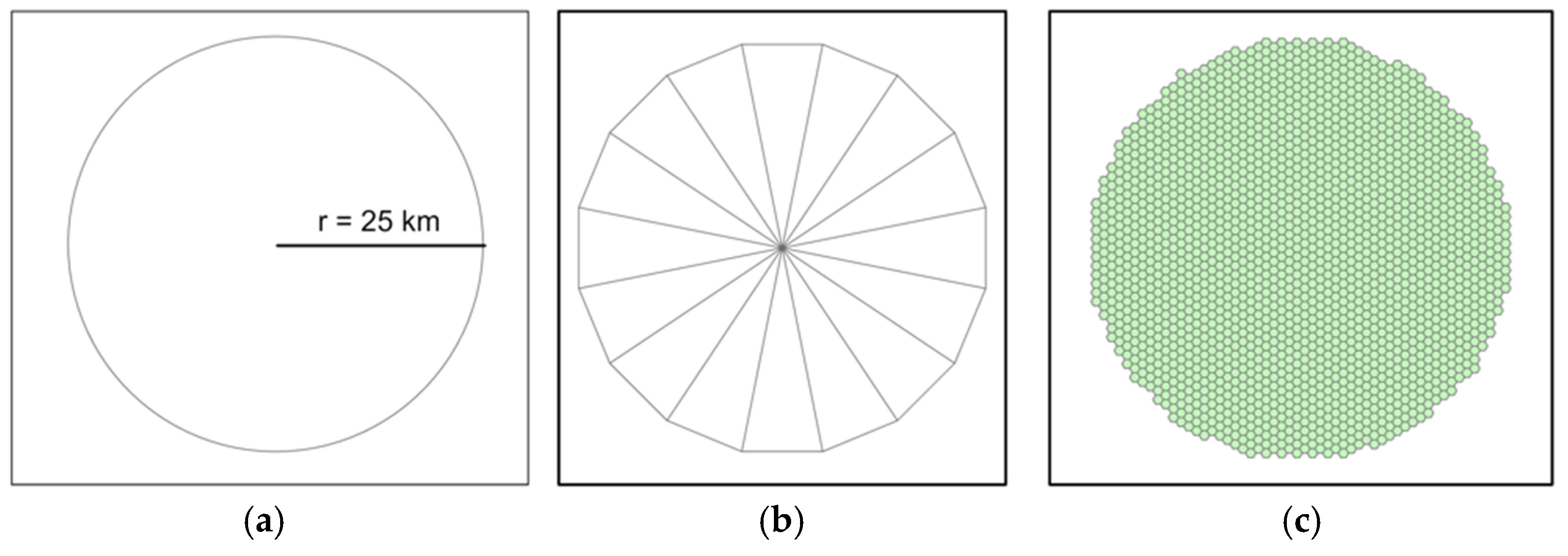
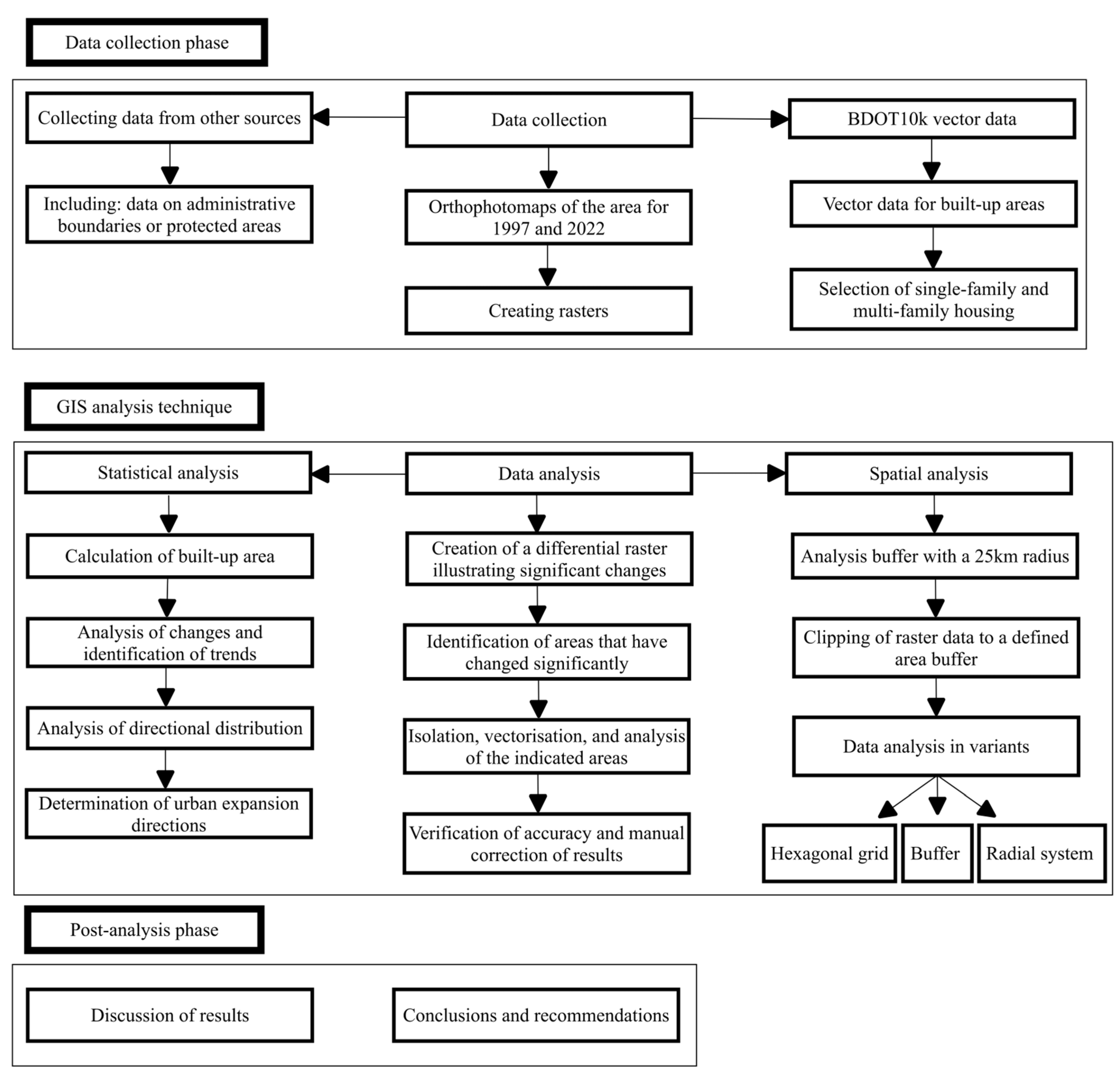
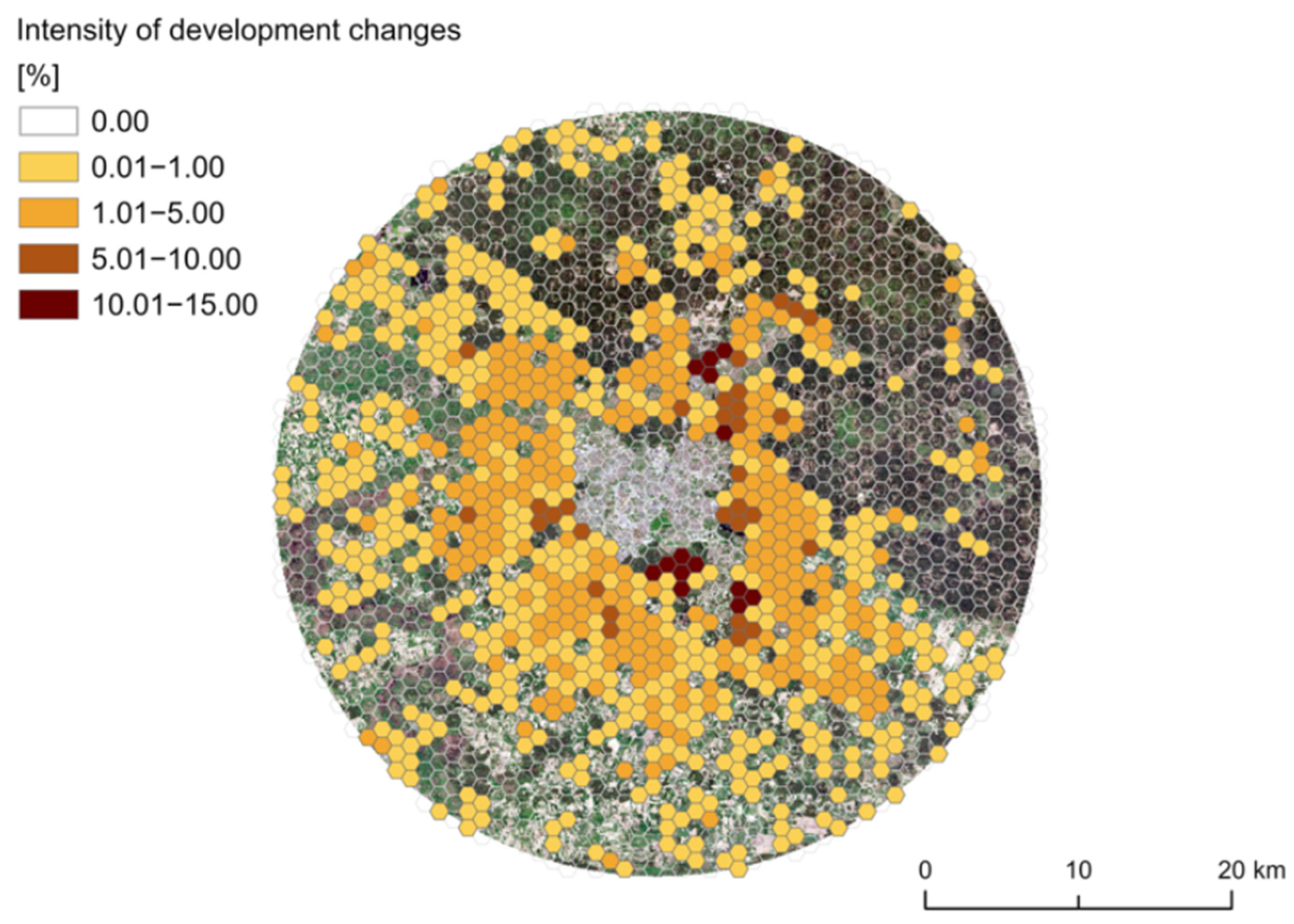
The analysis was conducted in three analytical and spatial variants: (a) a general system—for the entire study area; (b) a sectoral system—dividing the study area into 16 equal sectors; and (c) a hexagonal system (Figure 2). The first variant aimed to examine the overall extent of development and its intensity, with particular attention paid to its correlation with areas of natural value [41,42]. In the second variant, which illustrates the cardinal and intermediate directions of the compass, the dynamics of development and its differentiation were assessed using a radial approach, divided into five classes of development intensity [43,44]. The third variant enabled detailed identification of local areas of accumulation of development processes. The study area consisted of a network of hexagons with an area of 1 km2, fully covering the study area. The study was conducted using five classes of change [45,46]. The detailed GIS research process is presented in the diagram (Figure 3). The individual stages of the spatiotemporal analysis of Białystok’s peripheral areas are illustrated in the figure below (Figure 3). The work was divided into three phases. The first stage involves data collection, the second stage consists of applying GIS tools, and the third stage includes discussion and the formulation of proposed recommendations.
During the data collection phase, information was obtained on the location and spatial distribution of development in 1997 and 2022. The type of development analysed was single-family and multi-family housing, based on data on residential buildings classified in the BDOT10k data as single-family or multi-family. The research utilised remote sensing data in the form of natural-colour aerial orthophotomaps with resolutions of 0.5 m (1997) and 0.25 m (2022). The image data was supplemented with vector data in the form of a polygon layer representing built-up areas in 2022, according to the Topographic Objects Database (BDOT10k) at a scale of 1:10,000. Based on the acquired data (Table 1), a differential model was developed illustrating changes in development between 1997 and 2022. During the data preparation phase, a vector layer of buildings for 2022 was created from the BDOT10k database, and their location and extent were manually verified against the 2022 aerial orthophotomap. This verified 2022 layer was then compared with the 1997 orthophotomap to identify changes in the built-up areas. The resulting differential model is a GIS-based spatial analysis that highlights areas where buildings appeared, remained unchanged, or were absent in 1997. The accuracy of this model depends on the precision of the source data and the accuracy of manual verification. Based on the processed data, the built-up area was calculated for the years studied. The obtained results enabled a comparison of the scale of changes and the identification of urban development trends in the study area.
The research was conducted in three main parts: statistical analysis, data analysis, and spatial analysis in a GIS environment. The spatial analysis part involved preparing a 25-km buffer around the city of Białystok and cropping the raster data to the defined study area. Subsequently, the analysis was conducted in three spatial variants: hexagonal, sectoral (16 directions), and general (for the entire buffer). In the data analysis part, raster difference maps illustrating changes in development were created, then extracted and vectorised. Areas of significant transformation were also verified as part of this part. The statistical section included calculations of built-up areas, identification of changes over time, and a directional analysis of urban development.
The post-analysis phase identified conclusions that could be drawn from the conducted research and the obtained results, and proposed recommendations for the potential use of the GIS methods presented in this article in future research.

3. Results

3.1. Main Development Directions in the Suburban and Rural Zones of the City of Białystok

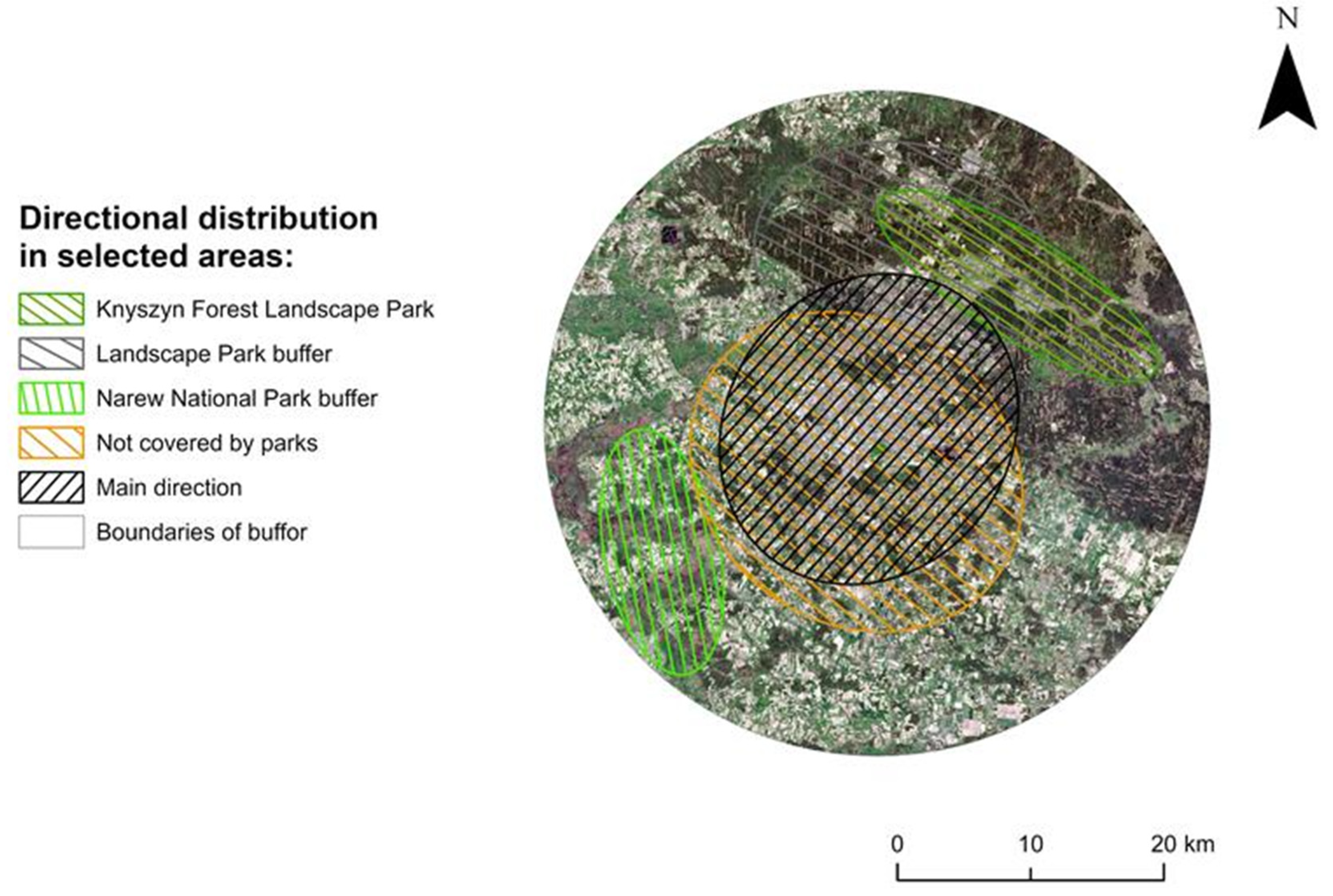
As a result of preliminary research, the main development directions resulting from excessive urbanisation in the city of Białystok are presented (Figure 4). In this variant, special analysis was performed on facilities located within the Knyszyńska Forest Landscape Park and its buffer zone, as well as the buffer zone of the Narew National Park.
The spatial distribution of the standard deviation ellipse indicates a southwest-to-northeast orientation of development in the city of Białystok. The directional distribution of development in the southwest, where the Narew National Park is located, does not intersect with the general distribution for the entire study area. Its location may not influence the development distribution as much as it does in the Knyszyńska Forest Landscape Park. The directional distributions intersect within the Park and in the buffer zone in the northeast. This is due to existing and ongoing development both within the Park and in its buffer zone.

3.2. Dynamics of Residential Development from a Radial Perspective

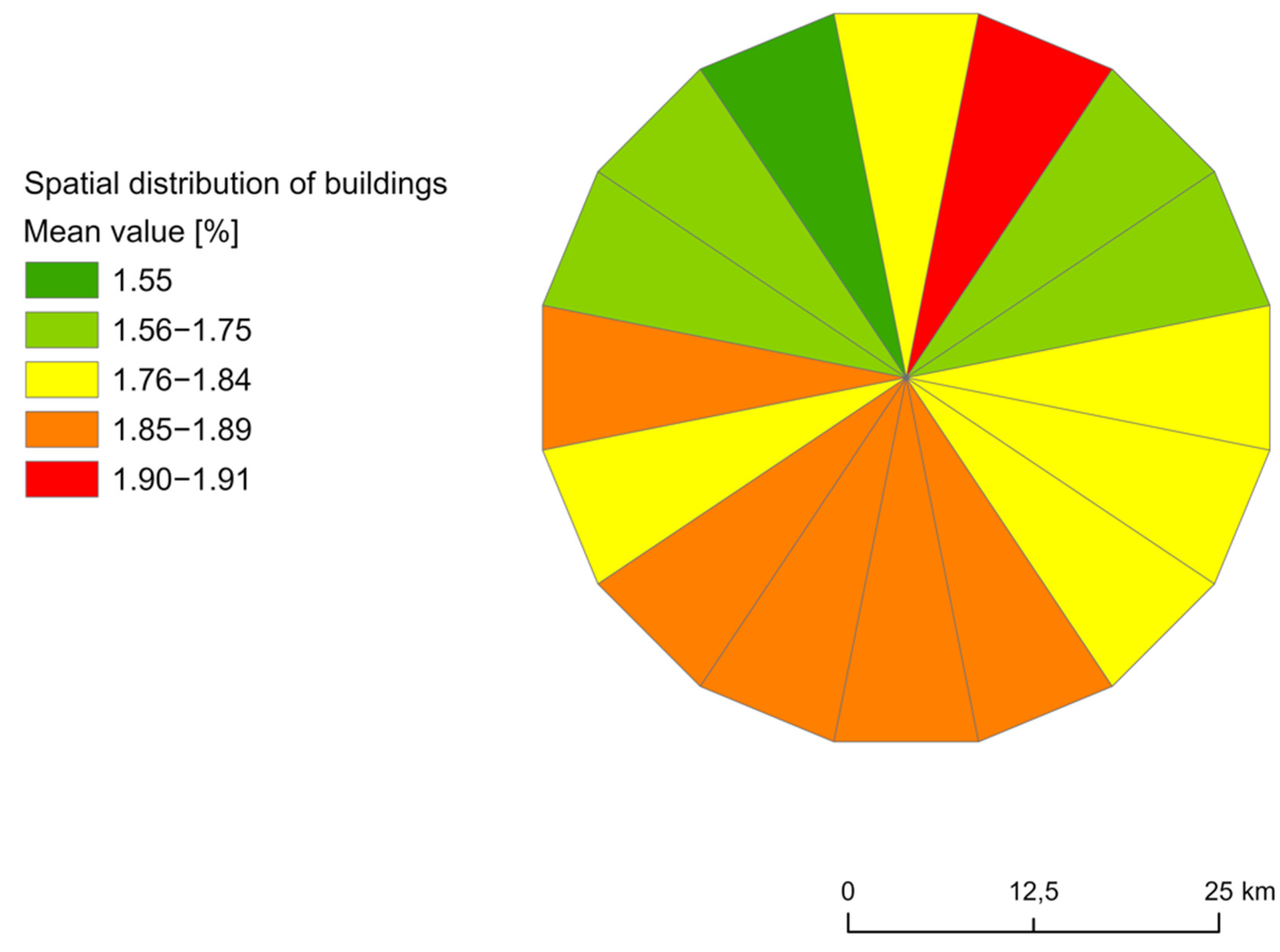
The analysis conducted in the second variant, based on 16 sectors, allowed us to determine the dynamics of residential development divided into five intensity classes. The average building density for each sector was calculated by summing the total building footprint within the industry and dividing it by the sector area. These values were then categorised into five intensity classes to illustrate the gradient of development across directions. Based on zonal spatial statistics, the highest average building density value was observed in the north–northeast (NNE) direction. The lowest values were observed in the northwest and east directions (Figure 5).

3.3. The Intensity of Development Changes in a Grid System Based on Hexagonal Fields

The analysis conducted using a hexagonal grid allowed for a detailed assessment and visualisation of changes in residential development. To reflect the results that demonstrate the dynamics of suburbanisation processes, the hexagons were divided into five classes of change (Figure 6). Four areas with a concentration of development changes exceeding 10% were identified, located north and south of the city of Białystok. At the same time, hexagons were identified where no significant changes in development were observed. These are most often located within forests, national parks, and floodplains, where suburbanisation processes are either naturally limited or completely blocked by law. The division into five classes made it possible to capture the gradient of change intensity, from areas with no development growth, through units with minor and moderate changes (hexagons located in the vicinity of the city in the southern and north-western part), to zones with the highest development dynamics. The percentage change for each hexagon was calculated by comparing the total building footprint within the hexagon in 1997 and 2022. These values were then classified into five classes to illustrate the gradient of development intensity across the suburban area.

3.4. Correlation of Residential Development Intensity in Białystok’s Suburban Zone

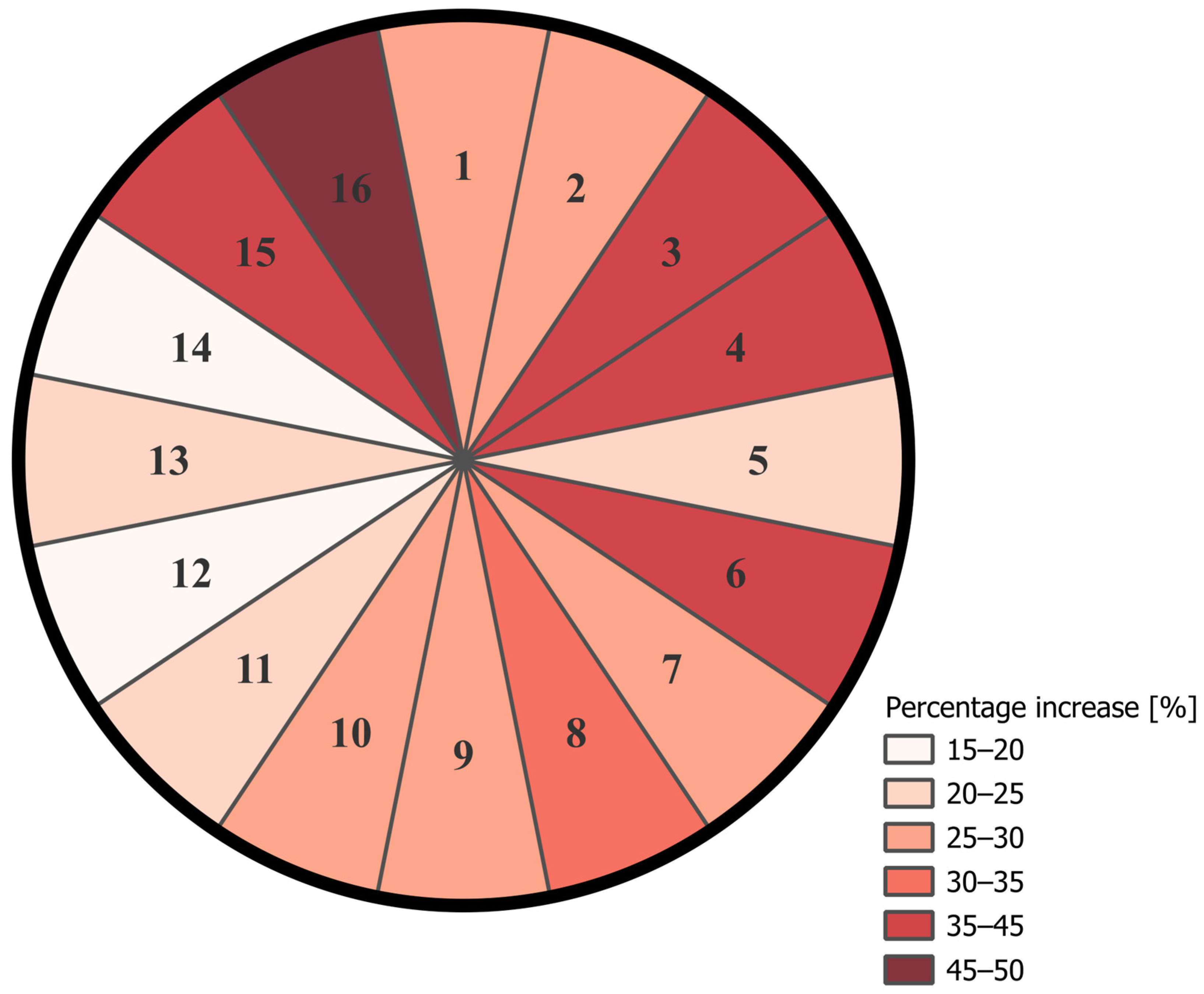
The expansion of residential development in Białystok’s suburban zone between 1997 and 2022 demonstrates various trends in change. For this analysis, the total building footprint was summed separately for the years 1997 and 2022 within each buffer zone. The percentage growth of residential development over this period was then calculated by comparing the summed areas between the two years. This approach provides a precise and quantitative measure of development dynamics and allows for direct comparison of growth rates across different zones. Spatial analyses indicate that the highest development intensity occurs near the Knyszyńska Forest Landscape Park and within its interior, particularly in its north-western and northeastern parts (Figure 7). The buffer zones in this area demonstrate high development growth rates, suggesting that proximity to the landscape park is a factor favouring settlement development. In contrast, the area around Narew National Park exhibits less development, possibly due to more stringent conservation regulations or less attractive development sites.
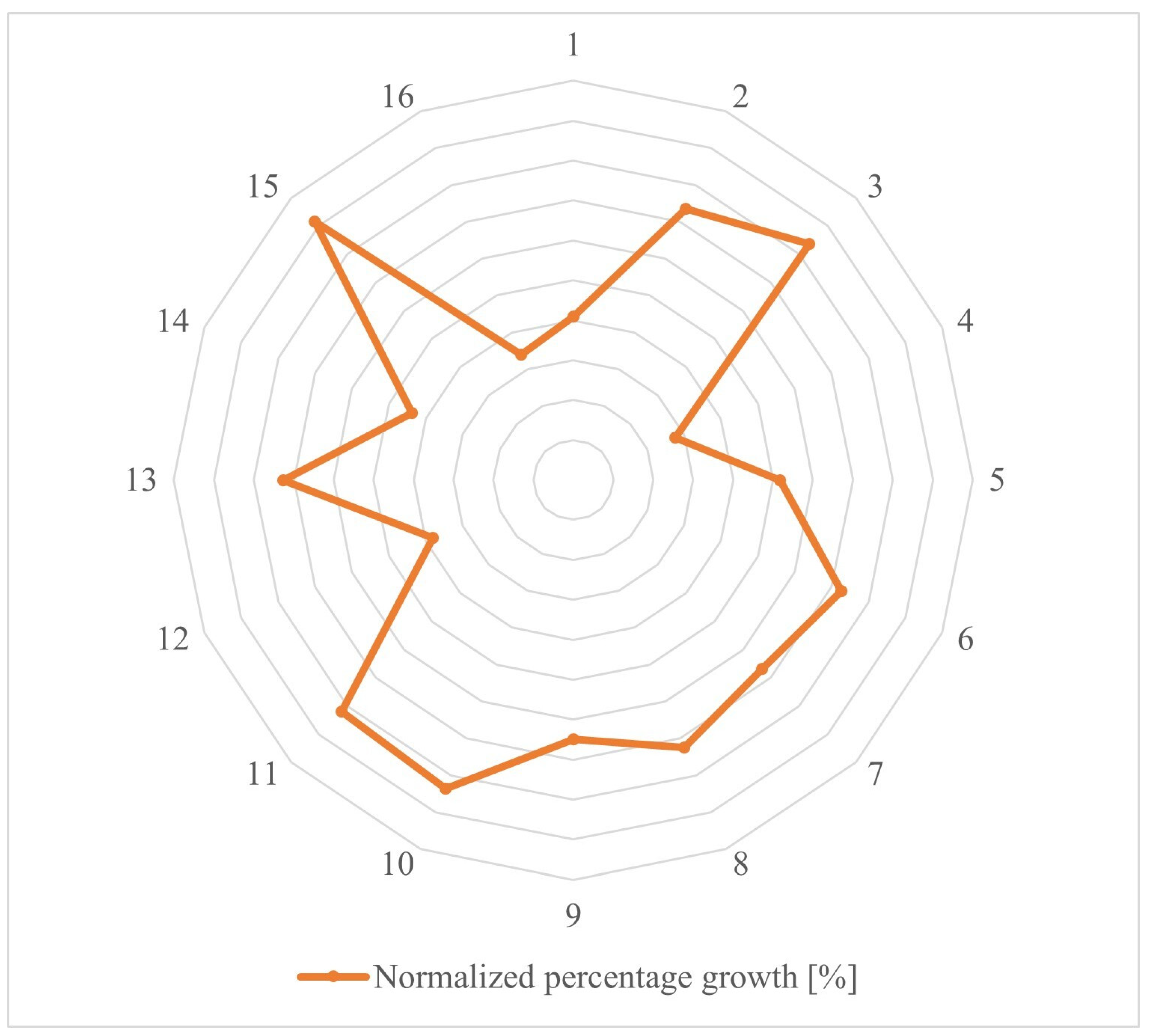
Changes in the residential area between 1997 and 2022 within a 25-km buffer from the Białystok city center, broken down by zone, are presented in Table 2. The table presents the growth in built-up area for a given sector, both in percentage and hectares. It also presents the normalised percentage growth, in which the values for all sectors have been rescaled to add up to 100%. The normalised value allows for a comparison of the relative growth dynamics between sectors, regardless of their actual built-up area. Analysis of the numerical values in the table illustrating the increase in built-up area between 1997 and 2022 confirms the above observations. The most significant increases in built-up area were recorded in sectors located within or near the Knyszyńska Forest, where values often exceeded 40%. The radar diagram below illustrates changes in the built-up area in individual sectors (Figure 8).
Studies of the development of buildings in the Białystok suburban area have shown that the central expansion resulting from the city’s urbanisation is directed towards areas located within the Knyszyńska Forest, and to a lesser extent, within or adjacent to the buffer zone. Development is evident in the north-western (sectors 15), northeastern (sectors 2 and 3), and southeastern (sectors 6, 7, and 8) outskirts of Białystok.

4. Discussion

The occurrence of suburbanisation in Białystok’s suburban zone is similar to that in other larger cities, where suburbanisation is spilling out beyond the city limits due to urbanisation. Białystok is an area characterised by the lowest degree of suburbanization, but with the highest degree of change in its spatial structure [47]. These changes may result primarily from the quality of the immediate surroundings, which is one of the most critical determinants of residence [48].
The results indicate several reasons for the observed spatial changes in the vicinity of Białystok. The first is undoubtedly demographic factors, related to the noticeable migration of Białystok residents to the suburbs. Another factor is the forest landscape, which influences the attractiveness of properties for development [49]. The proximity of the Knyszyńska Forest Landscape Park, as observed, increases attractiveness for new residents and investors. Single-family housing, as the analysis shows, is approaching the boundaries of the landscape park. Such phenomena are noticeable in many areas and can cause landscape changes [50,51,52]. Access to infrastructure is a key determinant of development, also in the regions adjacent to Białystok. Areas further from the Białystok urban centre, less equipped with technical and social infrastructure, are characterised by lower development dynamics than those located closer to the city. Transportation systems facilitate population mobility, including commuting [53]. Other, equally important reasons for population migration from Białystok may include a greater need for change in space as an escape from the hustle and bustle of the city [54], lower land prices [55], the desire to increase living space [56], lifestyle changes, and improved environmental conditions [57]. The decreasing distance between cities and protected areas has also been noted in other scientific studies for many years [15]. It should also be noted that development in the sectors with the highest density and the most significant growth is dispersed, which is typical of suburbanisation [58,59]. The application of three variants of spatial analyses allowed for a multifaceted picture of the dynamics of development in rural and suburban areas of Białystok. The presented variants are characterised by different spatial scopes, degrees of detail, and interpretative potentials (Table 3).
Building on these observations, our results align with broader European and global patterns of suburbanization, where proximity to natural areas and high-quality landscapes consistently drives residential expansion. For example, studies in Central Europe highlight that suburban growth is frequently concentrated near attractive landscapes or ecological corridors, with expansion intensity decreasing with distance from urban centers [9,12]. Similarly, Szmytkie [8] and Źróbek-Rożańska et al. [7] report in Polish contexts that suburbanisation is most pronounced within 20–30 km from city centers, a pattern consistent with our buffer analysis around Białystok. Moreover, the influence of protected areas on settlement patterns observed in Białystok parallels findings in other global studies. McDonald et al. [13] and Uehara-Prado & Fonseca [17] show that urban expansion near protected areas is often constrained legally, yet these zones remain highly desirable for residential development due to scenic and ecological values. Our findings that single-family housing is approaching the boundaries of Knyszyńska Forest Landscape Park echo these dynamics.
The multi-method GIS approach, including buffer, sectoral system, and hexagonal system, allowed for both macro- and micro-level insights, which is strongly supported by the literature on spatial–temporal urban analysis. Li et al. [1] and Ma et al. [2] highlight the benefits of combining multiple spatial scales to capture suburbanisation gradients, while Burdziej [58] emphasizes that hexagonal grids reduce adjacency biases and improve detection of local change hotspots.
Further, studies on Polish city sprawl document a phenomenon, where irregular and fragmented expansion patterns reflect limited planning control [60]. Gachowski & Walusiak [61] also demonstrate via GIS-based metrics that suburban sprawl in Poland challenges sustainable development, underlining the value of high-resolution spatial analysis in understanding local patterns. Lityński [41] provides evidence that suburban expansion intensity varies considerably within Poland depending on urban functional characteristics. Podawca et al. [62] similarly show the utility of GIS-based methods for evaluating suburbanisation in Warsaw Functional Area.
In terms of socio-economic drivers, our results confirm the importance of migration patterns, lifestyle preferences, and land affordability, which are repeatedly highlighted in global suburban studies [3,21]. Additionally, demographic-economic analyses in Poland suggest that suburbanisation is strongly linked to post-socialist transformation, household aspiration changes, and land price dynamics [63,64]. The observed decrease in development intensity with distance from Białystok’s urban core is consistent with patterns reported in other post-socialist European cities, where urban sprawl is uneven and directional, often following transport corridors and areas with high ecological or recreational value [5,31].
Finally, comparing Białystok with other Polish cities such as Wrocław, Lublin, and the Warsaw functional area shows that while absolute suburbanisation levels may be lower, the relative change and spatial restructuring in its rural and suburban zones are significant. This underscores the value of multi-scalar GIS analysis for capturing dynamic urban–rural transformations and aligns with recent approaches emphasizing the need for spatially explicit, high-resolution analyses for planning and sustainability assessment [11,28]. Majewska et al. [60] and Gachowski & Walusiak [61] further support the relevance of high-resolution spatial analyses for suburban monitoring in Poland.
The use of GIS tools allowed for a comprehensive assessment of the dynamics and direction of development. By utilising high-resolution spatial data (aerial orthophotomaps), it was possible to precisely identify areas with the highest intensity of suburbanisation processes and determine their relationships with the natural environment. Depending on the variant used, the dynamics of urbanisation processes can be assessed both at a general and a very detailed level. This approach can serve as a model for similar studies in other Central European contexts, enabling a deeper understanding of the spatial–temporal dynamics of rural and suburban development. This is particularly important when evaluating sustainable development over time.

5. Conclusions and Recommendations

The complexity of factors determining development in the vicinity of urban agglomerations changes over time and space. We currently have sufficient spatial data and technological tools (including GIS) to assess these phenomena and relate them to sustainable development. The study, which utilised GIS tools, enabled a comprehensive analysis of the city of Białystok, providing insights into its development directions and assessing the dynamics of change over time and space. The spatiotemporal analysis enabled the identification of areas with particular investment development over 25 years (approximately 15%).
Despite the high precision of the spatial analyses, the conducted research is subject to certain limitations resulting from both the quality and availability of the source data (accuracy and scale). The orthophotomaps used in this study from 1997 (0.5 m) and 2022 (0.25 m) differed in technical parameters, such as spatial resolution. These differences could have impacted the precision of spatial change detection, particularly in cases involving small developments or border zones between land use classes. Analysis errors may also result from insufficiently accurate change detection or insufficient analysis error correction. Another limitation to interpretation is the fact that observed changes in the development structure are not always the result of suburbanisation processes. Therefore, the obtained results should be considered an approximate representation of actual spatial processes, not their absolute representation. Conducting similar studies in another area may prove impossible due to the limited availability of spatial data.
Despite these limitations, the performed analyses confirm that GIS tools are an effective and reliable solution for assessing the directions and dynamics of development over long time periods. The use of GIS tools represents a significant contribution to rational spatial management, particularly in suburban and rural areas, which are vulnerable to the adverse effects of excessive urbanisation. The use of GIS analyses can not only identify areas subject to the pressure of uncontrolled urbanisation but also support decision-making processes, identifying areas where there is a need to preserve agricultural functions or protect valuable natural and landscape elements. Achieving smart suburban growth through coordination and planning is crucial. In this regard, rational spatial management based on sustainable development is vital, especially in areas covered by legal forms of nature conservation. Spatial planning at the local level, where spatial policies are implemented, should serve as an instrument for nature and landscape protection.
The obtained results support the conclusion that the dynamics of change in Białystok’s suburban zones and rural areas are diverse. The analysis revealed different directions of development, as well as varying degrees of intensity. The sectoral study enabled us to identify the areas of the city with the highest concentration of development. The forest complexes occurring here clearly influence the inequality and spatial distribution of building density—especially the dense forest complexes of the Knyszyńska Forest Landscape Park. At the same time, the areas with the highest development intensity (from the northeast to the southwest) are located nearby. Intensive residential development is developing particularly in the Park’s buffer zone. In other directions, building density decreases as the distance from the city increases.
The original contribution of this study lies in the integration of three complementary analytical variants—global, directional, and high-resolution local analysis—within a unified GIS framework. Although the tools used are widely available, their combined workflow enables a multi-scale and replicable assessment of long-term suburbanisation dynamics. This approach is particularly valuable in areas located near protected landscapes, where suburban expansion occurs under specific environmental constraints. The methodology demonstrates how publicly accessible data can be operationalised to produce actionable insights for spatial planning practice, thereby bridging the gap between theoretical suburbanisation studies and applied geospatial analysis.
Although the research focuses on a single peri-urban area adjacent to a medium-sized European city, the methodological framework is fully transferable to other regions, provided that comparable spatial datasets—such as aerial orthophotomaps and vector building layers—are available. The workflow includes clearly defined stages (data preparation, verification, standardisation, and differential modelling), which ensures its repeatability in other suburban and rural contexts experiencing development pressure. At the same time, the presented methodology can be successfully applied to analysing built-up area development around cities of any size and under various regional conditions. The universality of the adopted buffer zone, sector division, and hexagonal grid enables meaningful comparisons of urbanisation dynamics between different urban centres and supports the identification of broader development patterns. This combination of methodological clarity and spatial flexibility reinforces the broader applicability of the study’s results, demonstrating that it goes beyond a single case study and contributes to methodological practice in GIS-based suburbanisation research. The research presented above provides several recommendations for the use of research methods in a GIS environment.
  • A multivariate analytical approach—combining analyses at various levels of detail (global, directional, and local) is recommended, as this enables a comprehensive interpretation of suburbanisation processes. This approach allows for the identification of general and regional development trends, which are essential from the perspective of sustainable development.
  • Integrating environmental data into suburbanisation analyses—including global analyses of information on land cover (protected areas, forests, etc.)—should be a standard procedure in spatial development studies, as it allows for the assessment of environmental factors and the identification of natural barriers to development.
  • Directional analysis as a tool for spatial planning—analysis of 16 directions allows for the identification of preferred axes of city development, which can provide significant support to local governments in planning sustainable infrastructure development and the protection of green spaces. In this case, it is worth considering expanding the analysis to include the study of current and planned communication networks (roads, railways).
  • Use of hexagonal grids—the hexagonal system is particularly useful in studying land use changes, as it eliminates distortions resulting from classic administrative divisions and allows for comparable spatial analysis.
  • Possibility of replicating the methods in other urban and suburban centres—the multi-variant methodology used can be used in assessments in different cities and peripheral areas experiencing suburbanisation pressures in the vicinity of valuable natural areas.

Author Contributions

Conceptualization, J.B.-K., J.G., E.J. and Ł.K.; methodology, J.G., E.J. and Ł.K.; software, J.G. and Ł.K.; validation, J.G. and Ł.K.; formal analysis, J.B.-K., J.G., E.J. and Ł.K.; investigation, J.B.-K., J.G., E.J. and Ł.K.; resources, J.G. and Ł.K.; data curation, J.G. and Ł.K.; writing—original draft preparation, J.B.-K., J.G., E.J. and Ł.K.; writing—review and editing, E.J., J.B.-K., J.G. and Ł.K.; visualization, J.G. and Ł.K.; supervision, J.B.-K. And E.J. All authors have read and agreed to the published version of the manuscript.

Funding

This research received no external funding.

Data Availability Statement

The data for this research can be shared upon request to the author.

Conflicts of Interest

The authors declare no conflicts of interest.

References

  1. Li, Y.; Long, H.; Liu, Y. Spatio-temporal pattern of China’s rural development: A rurality index perspective. J. Rural Stud. 2015, 38, 12–26. [Google Scholar] [CrossRef]
  2. Ma, W.; Jiang, G.; Wang, D.; Li, W.; Guo, H.; Zheng, Q. Rural settlements transition (RST) in a suburban area of metropolis: Internal structure perspectives. Sci. Total Environ. 2018, 615, 672–680. [Google Scholar] [CrossRef] [PubMed]
  3. Widada, R.; Barus, B.; Bambang, J.; Mulatsih, S. The Differences in Factors that Influence Poverty in Urban, Suburban, and Rural Areas. J. Econ. Financ. Manag. Stud. 2023, 6, 1793–1798. [Google Scholar] [CrossRef]
  4. Tian, Y.; Wang, L. The Effect of Urban-Suburban Interaction on Urbanization and Suburban Ecological Security: A Case Study of Suburban Wuhan, Central China. Sustainability 2020, 12, 1600. [Google Scholar] [CrossRef]
  5. Hesse, M.; Siedentop, S. Suburbanisation and Suburbanisms—Making Sense of Continental European Developments. Raumforsch. Und Raumordnung. Spat. Res. Plan. 2018, 76, 97–108. [Google Scholar] [CrossRef]
  6. Pagliarin, S.; de Pascal, D. Regionalised sprawl: Conceptualising suburbanisation in the European context. Urban Res. Pract. 2018, 14, 138–156. [Google Scholar] [CrossRef]
  7. Źróbek-Rożańska, A.; Źróbek-Sokolnik, A.; Lizińska, W. Suburbanisation of the rural areas and the implementation of local authorities’ own responsibilities: Needs and challenges. Eur. Res. Stud. J. 2012, 24, 425–434. [Google Scholar] [CrossRef]
  8. Szmytkie, R. The impact of residential suburbanization on chages in the morphology of villages in the suburban area of Wrocław, Poland. Environ. Socio-Econ. Stud. 2020, 8, 24–43. [Google Scholar] [CrossRef]
  9. Hlaváček, P.; Kopáček, M.; Horáčková, L. Impact of Suburbanisation on Sustainable Development of Settlements in Suburban Spaces: Smart and New Solutions. Sustainability 2019, 11, 7182. [Google Scholar] [CrossRef]
  10. Kryczka, P.; Sikorski, D.; Figlus, T.; Lisowska-Kierepka, A.; Musiaka, Ł.; Spórna, T.; Sudra, P.; Szmytkie, R. Defining suburbanization in Central and Eastern Europe: A systematic literature review. Cities 2025, 158, 105626. [Google Scholar] [CrossRef]
  11. Keil, R. After Suburbia: Research and action in the suburban century. Urban Geogr. Annu. Plenary Lect. 2018, 41, 1–20. [Google Scholar] [CrossRef]
  12. Pénzes, J.; Hegedűs, L.D.; Makhanov, K.; Túri, Z. Changes in the Patterns of Population Distribution and Built-Up Areas of the Rural–Urban Fringe in Post-Socialist Context—A Central European Case Study. Land 2023, 12, 1682. [Google Scholar] [CrossRef]
  13. Mcdonald, R.I.; Kareiva, P.; Forman, R.T.T. The implications of current and future urbanization for global protected areas and biodiversity conservation. Biol. Conserv. 2008, 141, 1695–1703. [Google Scholar] [CrossRef]
  14. Cieślak, I.; Biłozor, A.; Szuniewicz, K. The Use of the CORINE Land Cover (CLC) Database for Analyzing Urban Sprawl. Remote Sens. 2020, 12, 282. [Google Scholar] [CrossRef]
  15. Mutuga, F. The Effect of Urbanization on Protected Areas. The Impact of Urban Growth on a Wildlife Protected Area: A Case Study of Nairobi National Park. H2—Master’s Degree (Two Years). The International Institute for Industrial Environmental Economics. Lund, Sweden, June, 2009. Available online: https://www.lunduniversity.lu.se/lup/publication/1513631 (accessed on 27 August 2025).
  16. Wilson, B.; Chakraborty, A. The Environmental Impacts of Sprawl: Emergent Themes from the Past Decade of Planning Research. Sustainability 2013, 5, 3302–3327. [Google Scholar] [CrossRef]
  17. Uehara-Prado, M.; Fonseca, R.L. Urbanization and Mismatch with Protected Areas Place the Conservation of a Threatened Species at Risk. Biotropica 2007, 39, 264–268. [Google Scholar] [CrossRef]
  18. Connor, E.F.; Hafernik, J.; Levy, J.; Lee Moore, V.; Rickman, J. Insect Conservation in an Urban Biodiversity Hotspot: The San Francisco Bay Area. J. Insect Conserv. 2002, 6, 247–259. [Google Scholar] [CrossRef]
  19. Trzyna, T. Global Urbanization and Protected Areas; California Institute of Public Affairs: Sacramento, CA, USA, 2007; Available online: https://webdoc.sub.gwdg.de/ebook/mon/2008/ppn%20566501791.pdf (accessed on 29 May 2007).
  20. Parnell, S.; Schewenius, M.; Sendstad, M.; Seto, K.C.; Wilkinson, C. Urbanization, Biodiversity and Ecosystem Services: Challenges and Opportunities; Springer: Dordrecht, The Netherlands, 2013; Available online: https://link.springer.com/content/pdf/10.1007/978-94-007-7088-1.pdf (accessed on 9 October 2025).
  21. Vasárus, G.L.; Lennert, J. Suburbanization within City Limits in Hungary—A Challenge for Environmental and Social Sustainability. Sustainability 2022, 14, 8855. [Google Scholar] [CrossRef]
  22. Janeczko, E.; Dąbrowski, R.; Budnicka-Kosior, J.; Woźnicka, M. Influence of Urbanization Processes on the Dynamics and Scale of Spatial Transformations in the Mazowiecki Landscape Park. Sustainability 2019, 11, 3007. [Google Scholar] [CrossRef]
  23. Atmis, E.; Özden, S.; Lise, W. Urbanization pressure on the natural forests in Turkey: An overview. Urban For. Urban Green 2007, 6, 83–92. [Google Scholar] [CrossRef]
  24. Kaim, D.; Grabska, E. Assessing suburban transformations with freely available spatial data. Geogr. Stud. 2025, 178, 13–33. [Google Scholar] [CrossRef]
  25. Ahmed, F.C. Using 3D GIS as a Decision Support Tool in Urban Planning. In Proceedings of the ICEGOV’17: 10th International Conference on Theory and Practice of Electronic Governance 2017, New Delhi, India, 7–9 March 2017; Association for Computing Machinery: New York, NY, USA, 2017; pp. 401–404. [Google Scholar] [CrossRef]
  26. Hegedűs, D.L.; Túri, Z.; Apáti, N.; Pénzes, J. Analysis of the intra-urban suburbanization with GIS methods the case of Debrecen since the 1980s. Folia Geogr. 2023, 65, 23–39. [Google Scholar]
  27. Wolny, A.; Dawidowicz, A.; Źróbek, R. Identification of the spatial causes of urban sprawl with the use of land information systems and GIS tools. Bulletin of Geography. Socio-Econ. Ser. Sciendo 2017, 35, 111–122. [Google Scholar] [CrossRef]
  28. Kalogiannidis, S.; Spinthiropoulos, K.; Kalfas, D.; Chatzitheodoridis, F.; Tziampazi, F. Integration of Remote Sensing and GIS for Urban Sprawl Monitoring in European Cities. Eur. J. Geogr. 2025, 16, 75–90. [Google Scholar]
  29. Zahriichuk, L.; Lozynskyy, R. Spatial Analysis of Land Use Changes Based on Remote Sensing Data (on the Example of the Suburban Area of Ivano-Frankivsk). In Proceedings of the International Conference of Young Professionals GeoTerrace-2024, Lviv, Ukraine, 7–9 October 2024; European Association of Geoscientists & Engineers: Utrecht, The Netherlands, 2024; pp. 1–5. [Google Scholar] [CrossRef]
  30. Oșlobanu, C.; Alexe, M. Built-up area analysis using Sentinel data in metropolitan areas of Transylvania, Romania. Hung. Geogr. Bull. 2021, 70, 3–18. [Google Scholar] [CrossRef]
  31. Ianoş, I.; Sîrodoev, I.; Pascariu, G.; Henebry, G. Divergent patterns of built-up urban space growth following post-socialist changes. Urban Stud. 2015, 53, 3172–3188. [Google Scholar] [CrossRef]
  32. Mucsi, L.; Liska, C.M.; Henits, L.; Tobak, Z.; Csendes, B.; Nagy, L. The Evaluation and Application of an Urban Land Cover Map With Image Data Fusion and Laboratory Measurements. Hung. Geogr. Bull. 2017, 66, 145–156. [Google Scholar] [CrossRef]
  33. Diaz-Pacheco, J.; Gutiérrez, J. Exploring the limitations of CORINE Land Cover for monitoring urban land-use dynamics in metropolitan areas. J. Land Use Sci. 2013, 9, 243–259. [Google Scholar] [CrossRef]
  34. Izakovičová, Z.; Petrovič, F.; Pauditšová, E. The Impacts of Urbanisation on Landscape and Environment: The Case of Slovakia. Sustainability 2022, 14, 60. [Google Scholar] [CrossRef]
  35. Kolcsár, R.A.; Csikós, N.; Szilassi, P. Testing the limitations of buffer zones and Urban atlas population data in urban green space provision analyses through the case study of Szeged, Hungary. Urban For. Urban Green 2021, 57, 126942. [Google Scholar] [CrossRef]
  36. Kerekes, A.-H.; Alexe, M. Evaluating Urban Sprawl and Land-Use Change Using Remote Sensing, Gis Techniques and Historical Maps. Case Study: The City of Dej, Romania. Analele Univ. Din Oradea Ser. Geogr. 2019, 29, 52–63. [Google Scholar] [CrossRef]
  37. Development Strategy of the City of Białystok Until 2030. Available online: https://www.bialystok.pl/pl/dla_mieszkancow/rozwoj_miasta/strategia-rozwoju-miasta-bialegostoku-do-2030-roku.html (accessed on 27 August 2025).
  38. Statistic Poland. Available online: https://bdl.stat.gov.pl (accessed on 20 September 2025).
  39. Satistical Office in Białystok. Available online: https://bialystok.stat.gov.pl/ (accessed on 27 February 2024).
  40. Public Opinion Research Center. Available online: https://www.cbos.pl/SPISKOM.POL/2015/K_015_15.PDF (accessed on 28 August 2025).
  41. Landré, M. Geoprocessing Journey-to-Work Data: Delineating Commuting Regions in Dalarna, Sweden. ISPRS Int. J. Geo-Inf. 2012, 1, 294–314. [Google Scholar] [CrossRef]
  42. Marique, A.F.; Dujardin, S.; Teller, J.; Reiter, S. Urban Sprawl, Commuting and Travel Energy Consumption. Proc. Inst. Civ. Eng. Energy 2013, 166, 29–41. [Google Scholar] [CrossRef]
  43. Liu, M.; Wang, J.; Luo, Q.; Sun, L.; Wang, E. Simulating Urban Expansion from the Perspective of Spatial Anisotropy and Expansion Neighborhood. ISPRS Int. J. Geo-Inf. 2024, 13, 91. [Google Scholar] [CrossRef]
  44. Wang, Y.; Han, Y.; Pu, L.; Jiang, B.; Yuan, S.; Xu, Y. A Novel Model for Detecting Urban Fringe and Its Expanding Patterns: An Application in Harbin City, China. Land 2021, 10, 876. [Google Scholar] [CrossRef]
  45. Burdziej, J. Using Hexagonal Grids and Network Analysis for Spatial Accessibility Assessment in Urban Environments—A Case Study of Public Amenities in Toruń. Misc. Geogr. 2019, 23, 99–110. [Google Scholar] [CrossRef]
  46. Birch, C.P.D.; Oom, S.P.; Beecham, J.A. Rectangular and Hexagonal Grids Used for Observation, Experiment and Simulation in Ecology. Ecol. Model. 2007, 206, 347–359. [Google Scholar] [CrossRef]
  47. Lityński, P. The Intensity of Urban Sprawl in Poland. ISPRS Int. J. Geo-Inf. 2021, 10, 95. [Google Scholar] [CrossRef]
  48. Włoch-Szymla, A. Urban sprawl and smart growth versus quality of life. Tech. Trans. 2019, 12, 12. [Google Scholar] [CrossRef]
  49. Janeczko, E.; Budnicka-Kosior, J.; Dawidziuk, A.; Woźnicka, M.; Kwaśny, Ł.; Fornal-Pieniak, B.; Chyliński, F.; Goljan, A. Impact of Forest Landscape on the Price of Development Plots in the Otwock Region, Poland. Sustainability 2022, 14, 14426. [Google Scholar] [CrossRef]
  50. Cui, N.; Feng, C.-C.; Wang, D.; Li, J.; Guo, L. The Effects of Rapid Urbanization on Forest Landscape Connectivity in Zhuhai City, China. Sustainability 2018, 10, 3381. [Google Scholar] [CrossRef]
  51. Zhou, D.; Shi, P.; Wu, X.; Ma, J.; Yu, J. Effects of urbanization expansion on landscape pattern and region ecological risk in Chinese coastal city: A case study of Yantai city. Scientific. World J. 2014, 2014, 21781. [Google Scholar] [CrossRef]
  52. Antrop, M. Landscape change and the urbanization process in Europe. Landsc. Urban Plan. 2004, 67, 9–26. [Google Scholar] [CrossRef]
  53. Li, X.; Wang, Y. The Relationship Between the Urban Rail Transit Network and The Population Distribution in Shanghai. In Proceedings of the 4th International Conference on Humanities and Social Science Research (ICHSSR 2018), Wuxi, China, 25–27 April 2018; Atlantis Press: Dordrecht, The Netherlands, 2018. Available online: https://www.atlantis-press.com/proceedings/ichssr-18/25895821 (accessed on 30 September 2025).
  54. Mara Almeida, M.; Loupa-Ramos, I.; Menezes, H.; Carvalho-Ribeiro, S.; Guiomar, N.; Pinto-Correia, T. Urban population looking for rural landscapes: Different appreciation patterns identified in Southern Europe. Land Use Policy 2016, 53, 44–55. [Google Scholar] [CrossRef]
  55. Lityński, P.; Hołuj, A. Urban sprawl costs: The valuation of households’ losses in Poland. J. Settl. Spat. Plan. 2017, 8, 11–35. [Google Scholar] [CrossRef]
  56. Źróbek-Różańska, A.; Zadworny, D. Can urban sprawl lead to urban people governing rural areas? Evidence from the Dywity Commune, Poland. Cities 2016, 59, 57–65. [Google Scholar] [CrossRef]
  57. Nagy, G.; Hegedus, T. Urban sprawl or/and suburbanisation?: The case of Zalaegerszeg. Belvedere Meridionale 2016, 28, 106–119. [Google Scholar] [CrossRef]
  58. Wilson, E.H.; Hurd, J.D.; Civco, D.L.; Prisloe, S.; Arnold, C. Development of a Geospatial Model to Quantify, Describe and Map Urban Growth. Remote Sens. Environ. 2003, 86, 275–285. [Google Scholar] [CrossRef]
  59. Galster, G.; Hanson, R.; Wolman, H.; Coleman, S.; Freihage, J. Wrestling Sprawl to the Ground: Defining and measuring an elusive concept. Hous. Policy Debate 2001, 12, 681–717. [Google Scholar] [CrossRef]
  60. Majewska, A.; Denis, M.; Krupowicz, W. Urbanization Chaos of Suburban Small Cities in Poland: ‘Tetris Development’. Land 2020, 9, 461. [Google Scholar] [CrossRef]
  61. Gachowski, M.; Walusiak, Ł. Urban Phenomena in Lesser Poland Through GIS-Based Metrics: An Exceptional Form of Urban Sprawl Challenging Sustainable Development. Sustainability 2025, 17, 9394. [Google Scholar] [CrossRef]
  62. Podawca, K.; Karsznia, K.; Zawrzykraj, A.P. The Assessment of the Suburbanisation Degree of Warsaw Functional Area Using Changes of the Land Development Structure. Misc. Geogr. 2019, 23, 215–224. [Google Scholar] [CrossRef]
  63. Kudłacz, M.; Karwińska, A. The Specificity of Urban Sprawl in Poland: The Spatial, Social, and Economic Perspectives. Zarządzanie Publiczne 2021, 55, 50–67. [Google Scholar] [CrossRef]
  64. Dawid, M.; Dawid, W.; Kudłacz, K. Suburbanization in Poland and Its Consequences: A Research and Analytical Perspective on the Phenomenon. Reg. Barometer. Anal. Progn. 2023, 19, 157–170. [Google Scholar] [CrossRef]
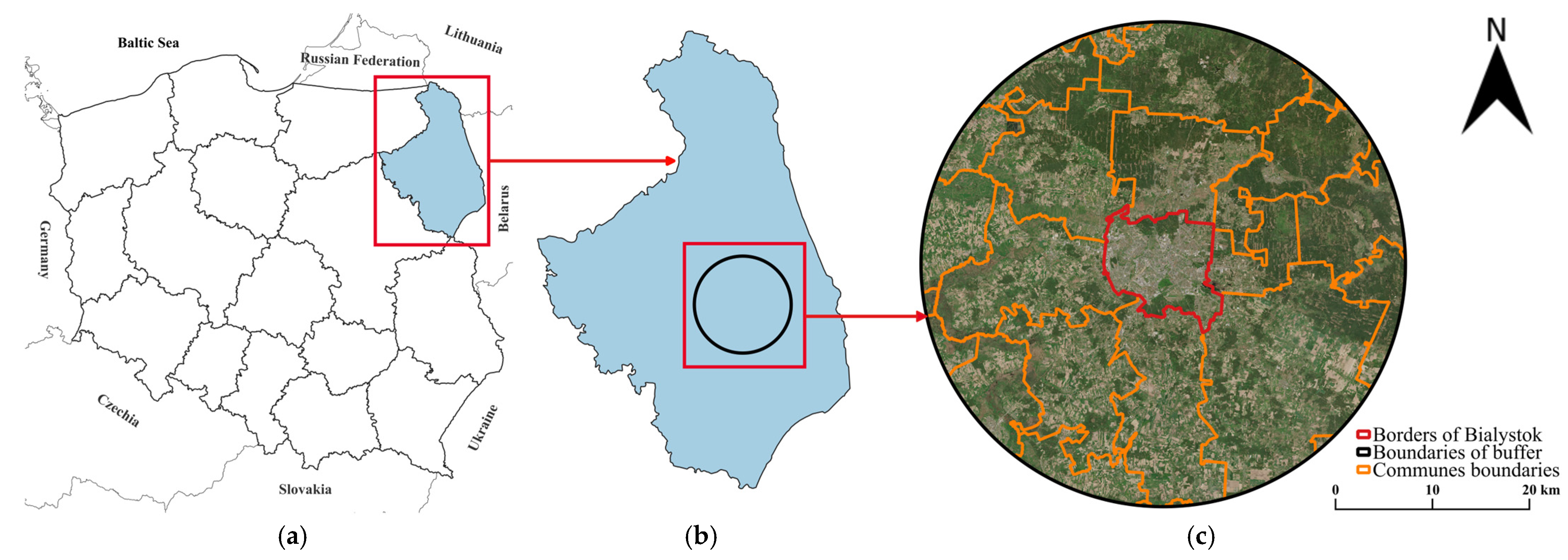
Figure 1. Location of the city of Białystok in the context of (a) Poland; (b) the voivodeship and (c) neighboring municipalities.
Sustainability 17 10782 g001
Figure 2. Variants of spatial analyses of the peripheral zones of Białystok: (a) in a general arrangement; (b) in a sectoral arrangement; (c) in a hexagonal arrangement.
Sustainability 17 10782 g002
Figure 3. Stages of research on the peripheral zones of Białystok.
Sustainability 17 10782 g003
Figure 4. Directions of development in the peripheral zones of the city of Białystok in general.
Sustainability 17 10782 g004
Figure 5. Spatial distribution of buildings within a radius of 25 km from the centre of Białystok—based on zonal spatial statistics, 2022.
Sustainability 17 10782 g005
Figure 6. Intensity of development changes in the peripheral zones of Białystok in a hexagonal arrangement.
Sustainability 17 10782 g006
Figure 7. Increase in the development area in individual sectors within a radius of 25 km from the center of Białystok, 2022.
Sustainability 17 10782 g007
Figure 8. Radar chart showing the normalized percentage growth in individual parts of the analysed buffer.
Sustainability 17 10782 g008
Table 1. Summary table of the characteristics of the datasets used in the study.
DatasetYearScale/ResolutionData SourceUpdate/AvailabilityData Type
Aerial orthophotomap19970.50 mHead Office of Land Surveying and Cartography (GUGiK)Historical datasetRaster (RGB)
Aerial orthophotomap20220.25 mGUGiKLatest availableRaster (RGB)
BDOT10k (buildings)20221:10,000Topographic Objects Database (BDOT10k)Regular updatesVector (polygons)
Forest and protected areas20221:10,000GUGiKRegular updatesVector
Floodplain 20221:10,000GUGiKRegular updatesVector
25-km buffer1952 km2Generated in GISVector
16-sector radial system122 km2 in sector Generated in GIS Vector
Hexagonal grid1 km2 per hexagonGenerated in GISVector
Table 2. Changes in the residential development area in the years 1997–2022 in subsequent sectors/sections (sectors with the greatest changes are marked in bold).
Section1997 (ha)2022 r. (ha)Growth (ha)Growth [%]Normalized Growth [%]
1187.66239.7752.1127.774.1
2365.49459.2593.7625.657.4
3238.18344.73106.5544.748.4
480.02155.2235.243.992.8
5265.67331.6966.0224.855.2
6217.39309.9392.5442.577.3
7290.38375.7385.3529.396.7
8293.95386.4992.5431.487.3
9314.35397.0982.7426.326.5
10382.03488.57106.5427.898.4
11496.04600.59104.5521.088.2
12260.19308.6648.4718.633.8
13401.52494.2492.7223.097.3
14295.83351.6455.8118.874.4
15332.12449.02116.9035.209.2
1691.22134.6243.4047.583.4
Sum4512.045827.241275.20X100
Table 3. Three variants of spatial analyses of development in the GIS environment—comparison.
VariantScope of StudyAdvantagesLimitations
General layout—25 km bufferThe entire city’s peripheral zoneEasy interpretation of general development trendsLow level of detail
Ability to indicate the overall dynamics of changeMasking spatial variations in development
Suitable for regional comparisonsInability to analyse individual cases
Sector layout—16 radial directionsSectorsAbility to identify asymmetries and preferred directions of developmentLocation of changes limited to indicating general directions
Appropriate correspondence with the routes of major transportation routesOriental values for the occurrence of local development hotspots
Hexagonal layoutRegularly shaped units (hexagons)Very high level of detailGreater complexity of interpretation
Unambiguous location of the most dynamic areasSignificant dispersion of results
The possibility of any classification of changesLonger analysis preparation time
Disclaimer/Publisher’s Note: The statements, opinions and data contained in all publications are solely those of the individual author(s) and contributor(s) and not of MDPI and/or the editor(s). MDPI and/or the editor(s) disclaim responsibility for any injury to people or property resulting from any ideas, methods, instructions or products referred to in the content.