Article

Green Knowledge Management and Green Technology Innovation: Roles of Green Organizational Identity and Incentive Environmental Regulation


School of Management, Huazhong University of Science and Technology, Wuhan 430074, China
*
Author to whom correspondence should be addressed.
Sustainability 2025, 17(23), 10781; https://doi.org/10.3390/su172310781
Submission received: 5 November 2025 / Revised: 22 November 2025 / Accepted: 25 November 2025 / Published: 2 December 2025

Abstract

Green knowledge management represents a critical strategic resource for firms, enabling the acquisition, integration, and application of environmentally relevant knowledge to support green technological advancement. However, the mechanisms by which green knowledge management fosters green technology innovation remain underexplored. Grounded in the dynamic capabilities theory perspective, this research develops a moderated mediation framework to investigate how green knowledge management, through dynamic capabilities, impacts green technology innovation, particularly considering the moderating effects of green organizational identity and incentive environmental regulation. Using responses collected from 358 enterprises in China, the proposed framework was validated through hierarchical regression analysis, combined with the PROCESS procedure. The empirical findings demonstrate that green knowledge management strengthens firms’ dynamic capabilities, which in turn promote green technology innovation. Specifically, absorptive and transformative capability serve as partial mediators in the relationship between green knowledge management and green technology innovation. Furthermore, green organizational identity strengthens the positive effect of green knowledge management on dynamic capabilities, while incentive environmental regulation enhances the impact of dynamic capabilities on green technology innovation. These findings advance understanding of how green knowledge management promotes firms’ green technological development by activating and leveraging dynamic capabilities, thereby yielding important contributions to theoretical research and managerial practice.

1. Introduction

Environmental issues have become urgent challenges to global sustainable development. The traditional development model, which relies excessively on natural resources, ignores ecological assets, and fails to consider pollution externalities, has exacerbated environmental risks [1]. As firms play a central role in economic activities, their operations inevitably affect the environment, making environmental protection a strategic priority for sustainable development [2]. In this context, green technology innovation (GTI), which refers to firms’ efforts to develop and apply eco-efficient technologies that lessen pollution and improve resource productivity, has become a critical response. It integrates green patents, eco-friendly processes, and sustainable practices across production and operations [3]. It is crucial for enhancing firms’ competitiveness, facilitating the transition to a low-carbon economy, and balancing economic growth and environmental protection [4].
Prior research has demonstrated that factors including policy measures, green credit, competitive pressure, customer requirements, and public expectations significantly affect GTI [5,6,7,8,9,10,11]. However, existing research has predominantly emphasized external drivers, with relatively less emphasis placed on internal drivers, especially how green knowledge management (GKM) fosters GTI. GKM, as a strategic asset, encompasses the process of acquiring and integrating environmental knowledge to support continuous technological innovation [12]. By effectively leveraging green knowledge, firms can attain their environmental objectives and enhance long-term competitiveness [13,14]. Yet the internal mechanism through which GKM promotes GTI remains insufficiently understood, especially under dynamic and uncertain environmental conditions.
To address this gap, dynamic capabilities theory (DCT) provides a valuable framework for explaining how firms transform green knowledge into innovative outcomes. Firms lacking dynamic capabilities (DC) face significant challenges in sustaining their competitiveness within rapidly changing environments [15], whereas those with strong dynamic capabilities can better utilize green knowledge and respond to stakeholder expectations to advance green innovation [16,17]. Within this framework, absorptive capability and transformative capability constitute two core dimensions: the former concerns identifying and assimilating valuable external green knowledge, while the latter involves reconfiguring and applying that knowledge to generate innovation [18,19,20]. Accordingly, this study introduces DC as a mediating mechanism to systematically examine how GKM enhances GTI.
Although existing research has examined the impact of DC in driving firm innovation [21,22,23], there has been limited focus on the boundary conditions linking GKM, DC, and GTI. GKM offers firms the necessary environmental knowledge base, but whether this knowledge can be internalized and translated into practice hinges on the firm’s underlying cognitive and value foundations. From the perspective of organizational identity theory, a strong green organizational identity establishes shared environmental values, which guide employees in recognizing, assimilating, and mobilizing green knowledge. This identity enhances knowledge integration, fosters coordinated resource reconfiguration, and ultimately strengthens DC [24,25]. Therefore, green organizational identity functions as a key internal contextual factor that amplifies the influence of GKM on DC.
Meanwhile, firms operating in volatile green technology markets often face high uncertainty in converting DC into innovation outcomes. In this context, incentive environmental regulation serves as a market-oriented policy tool that plays a crucial external role. Unlike control environmental regulation that imposes compliance pressure, incentive environmental regulation not only alleviates firms’ concerns about innovation risks but also effectively stimulates their green innovation vitality and improves their economic benefits [26]. To address this gap in the literature, this study investigates the moderating role of green organizational identity in the relationship between GKM and DC, as well as how incentive environmental regulation moderates the link between DC and GTI.
This study draws on DCT to construct a moderated mediation framework and empirically tests it using data from firms across multiple industries in China. It provides three primary contributions. First, this research highlights internal knowledge-based drivers by clarifying the role of GKM in advancing firms’ green technology innovation, addressing a gap in prior research. Second, this research explores the mediating roles of absorptive and transformative capabilities, thereby extending the application of DCT to the green innovation context. Third, this research posits that green organizational identity, as an internal motivational factor, strengthens the connection between GKM and DC. Meanwhile, incentive environmental regulation, as an external motivational factor, facilitates the transformation of DC into GTI, thereby elucidating the contextual conditions under which GKM fosters GTI.

2. Theory and Hypothesis

2.1. Dynamic Capabilities Theory

DCT, originally proposed by Teece et al. [27], refers to the core capabilities of firms to integrate, construct, and reconfigure internal and external resources in response to fast-changing and unpredictable environments. By leveraging dynamic capabilities, firms can innovate more effectively amidst rapid technological changes and environmental turbulence [28]. As pointed out by Wang and Ahmed [29], DC rely on a firm’s ability to generate innovative behaviors, and they can be further decomposed into absorptive and transformative capabilities [20]. Of these, absorptive capability is outward-looking and reflects the ability to acquire, develop, and transform external knowledge [20,30], while transformative capability is inward-looking and specializes in applying and integrating existing knowledge into a firm’s internal processes to ultimately trigger a novel progression [20,31].
Existing studies have established that DC are a critical antecedent to GTI in an environment of rapid technological change [32]. GTI requires firms to be able to absorb and integrate knowledge from different sources while reconfiguring internal and external resources. This underscores the importance of DC in facilitating GTI. Therefore, drawing on the DCT, this study proposes that GKM promotes GTI by enhancing firms’ dynamic capabilities.

2.2. Green Knowledge Management and Green Technology Innovation

GTI involves the improvement of existing products and processes or the development of new products through the combination of environmental knowledge and technology, aiming to reduce energy usage, minimize emissions, and improve resource efficiency [33,34,35,36]. As a critical factor in promoting sustainable development, GTI not only boosts environmental performance but also strengthens a firm’s market competitiveness [37]. Amid global climate change and the depletion of resources, firms face increasing pressure to achieve a green transition, underscoring the importance of exploring the factors that foster GTI.
GKM is essential in driving GTI [38,39,40]. GKM significantly enhances the capability for innovation in green technology by integrating green knowledge and turning it into unique advantages, ensuring that firms maintain a leading position in fierce market competition [41,42]. First, the core of GKM involves converting tacit knowledge into explicit forms, facilitating the free flow of knowledge within the organization [43]. This process allows employees to quickly access and implement the most up-to-date green practices [44]. Second, by implementing the green knowledge management strategy, firms can screen valuable information from the external environment and cooperate with various stakeholders to absorb key green knowledge and information [45,46], which contributes to cultivating the capabilities of the firm’s green innovation [47]. Third, firms with strong knowledge management capabilities can integrate green knowledge from different sources to improve research and development, optimize processes, and create more innovative, eco-friendly products and services that align with low-carbon standards [48,49]. Therefore, understanding the connotation of GKM and its role in advancing GTI is significant for firms striving toward sustainable development. Building on this foundation, we propose the following hypothesis:
H1. 
Green knowledge management is positively related to green technology innovation.

2.3. Green Knowledge Management and Dynamic Capabilities

Knowledge serves as a fundamental pillar for firms in cultivating dynamic capabilities [50,51]. Through the structured acquisition, integration, and utilization of internal and external knowledge resources, knowledge management enables firms to proactively adapt to environmental changes, thereby fostering the development of dynamic capabilities [52]. Amid the growing emphasis on green and low-carbon development, GKM has emerged as a focal point in organizational strategy. As an environmentally driven approach to knowledge management, it is a critical mechanism for strengthening firms’ dynamic capabilities.
Existing research shows that GKM can enhance firms’ dynamic capabilities, particularly in two key dimensions: absorptive capability and transformative capability [20,29,31]. On the one hand, GKM can systematically identify, acquire, and utilize green resources, enabling firms to effectively absorb external green knowledge and further update their prior knowledge by promoting the integration of internal knowledge with external knowledge, which can improve absorptive capability and respond quickly and effectively to environmental changes [53,54]. On the other hand, GKM enhances the firm’s transformative capability by enabling the application of internal knowledge to novel or unforeseen contexts, thereby fostering the generation of new insights while simultaneously maximizing the utility of existing knowledge. When faced with new challenges or opportunities, GKM enables firms to mobilize existing green knowledge and quickly update it according to market demand. This process promotes knowledge innovation within the firm and optimizes resource allocation [31,55]. Given this premise, we put forward the following hypothesis:
H2. 
Green knowledge management is positively related to dynamic capabilities.
H2a. 
Green knowledge management is positively related to absorptive capability.
H2b. 
Green knowledge management is positively related to transformative capability.

2.4. Dynamic Capabilities and Green Technology Innovation

GTI is widely acknowledged as a vital strategy for firms to tackle environmental challenges and drive sustainable development. DC empower firms to identify emerging green opportunities [56], optimize internal resource allocation [57], and transform innovative insights into concrete outcomes. Through these mechanisms, firms can more effectively engage in the research, development, and innovation of green products and processes. This fosters green technologies and their practical applications, ultimately driving green innovation. Notably, the two key dimensions of dynamic capabilities—absorptive and transformative capabilities—are essential in advancing GTI, each contributing from distinct perspectives.
Absorptive capability is a pivotal mechanism through which firms acquire, integrate, and apply external green knowledge. It directly influences the initial stage of GTI. Firms with strong absorptive capability can adeptly identify emerging green trends and environmental demands in the market. By sourcing and integrating external green knowledge and technologies, they establish a robust intellectual foundation for advancing green innovation [17]. Absorptive capability enhances their agility in responding to market shifts, enabling them to swiftly align with consumer preferences and ultimately improving the success rate of green product innovation [17,58,59].
Transformative capability serves as a crucial mechanism for firms to optimize internal knowledge and reconfigure processes. It directly influences the effective implementation of GTI. This capability enables firms to integrate and refine internal green knowledge, enhancing its applicability in production processes and product design [60,61,62]. Empirical research indicates that firms with strong transformative capability engage in dynamic resource orchestration, whereby the strategic recombination of internal and external assets fosters the iterative enhancement of green production processes. More specifically, such firms demonstrate superior proficiency in reallocating knowledge, technology, and human capital, reinforcing their level of continuous green innovation [17,63,64]. Drawing from this analysis, we contend that:
H3. 
Dynamic capabilities are positively related to green technology innovation.
H3a. 
Absorptive capability is positively related to green technology innovation.
H3b. 
Transformative capability is positively related to green technology innovation.

2.5. The Mediating Effect of Dynamic Capabilities

Although GKM can help firms acquire green knowledge resources, the improvement of GTI performance also hinges on whether firms can leverage these resources to carry out innovation activities [37,65]. According to the DCT, the possession of unique resources alone does not necessarily lead to high performance for a firm. The key lies in the firm’s resource allocation capabilities [56]. DC, as a higher-order capability, emphasize the acquisition of external green knowledge and the integration of internal cross-functional environmental knowledge. These capabilities are essential for advancing firms’ dual green innovation—exploratory and exploitative innovation [17,57].
Building on the theoretical framework, this study defines dynamic capabilities as the mediating variable through which GKM affects innovation performance. Its specific path of action is as follows: on the one hand, GKM can enhance the ability of firms to perceive and capture new knowledge, so that they can accurately grasp consumer needs, thereby accurately predicting market frontiers and improving the success rate of green product research and development [17]. On the other hand, firms possessing dynamic capabilities can enhance the interaction between new and existing knowledge, enabling them to transcend the technological limitations of original knowledge components, achieve the recombination of knowledge elements, and then carry out timely process optimization and transformation according to actual needs [17], and ultimately implement GTI. Accordingly, under conditions of heightened environmental uncertainty, DC are indispensable for enabling firms to leverage GKM to respond effectively to environment-driven change. Building on this analysis, we argue that:
H4. 
Dynamic capabilities mediate the relationship between green knowledge management and green technology innovation.

2.6. The Moderating Effect of Green Organizational Identity

The organizational identity theory posits that organizational identity serves as a cognitive framework shaping members’ perceptions of the organization’s collective attributes and core values [66,67]. Previous research has demonstrated that organizational identity has a profound impact on the behaviors and attitudes of members. The organizational identity usually comes from the core values and beliefs established by the organization’s leadership. It guides and regularizes members’ behaviors in their daily practices [68,69]. Green organizational identity represents an extension of the broader concept of organizational identity. It serves as a shared interpretive framework co-constructed by organizational members, offering meaning and guidance to their actions in environmental management and sustainability practices [70,71]. When employees align with their firm’s green mission and objectives, they become more proactive in assimilating emerging green technologies and discerning novel environmental protection demands. This alignment deepens their comprehension and internalization of green knowledge and strengthens their motivation to acquire green information and integrate sustainable resources [72,73]. Thus, green organizational identity is crucial in driving the adoption of proactive environmental strategies and improving environmental performance [74].
In a situation where green organizational identity is dominant, employees are easily inspired by the green values set by the leadership. This sense of identity makes employees more willing to participate in green knowledge management activities, actively seek green opportunities in the market [72], and take the initiative to collect information and ideas that meet customer requirements. Firms with a high degree of green organizational identity place greater emphasis on the co-construction of new green paradigms of thinking [74,75]. Within this framework, employees become more actively engaged in acquiring, integrating, developing, and disseminating green knowledge. This process enables firms to access new resources while optimizing existing ones, thereby strengthening both their absorptive capability and transformative capability. Overall, green organizational identity can interact with GKM to further facilitate the development of DC. Based on this analysis, we hypothesize that:
H5. 
Green organizational identity positively moderates the relationship between green knowledge management and dynamic capabilities.

2.7. The Moderating Effect of Incentive Environmental Regulation

Environmental regulation (ER) encompasses a range of policy instruments implemented by governments to reduce environmental pollution, enhance ecological quality, and foster sustainable development. It also includes the normative pressures exerted by social organizations and the public on polluting entities to regulate their emission behaviors [76]. ER can be broadly categorized into control environmental regulation and incentive environmental regulation [77]. The former entails the government’s stringent oversight of firm practices through laws, regulations, and standards, imposing mandatory compliance requirements [76]. In contrast, incentive environmental regulation relates to the use of market-oriented mechanisms by the government to influence and encourage firms to adopt environmentally responsible governance practices. It fosters pollution reduction of firms through instruments such as emissions taxes and fees, environmental subsidies, emissions trading schemes, and deposit-refund systems. This approach is inherently flexible and incentive [78]. Incentive environmental regulation grants firms greater autonomy, enabling them to take proactive measures and channel investments into green innovation through multiple avenues. It facilitates the internalization of environmental externalities while improving firms’ expectations of R&D income [79,80]. Consequently, incentive environmental regulation can promote firms’ innovation intentions in green technology.
Whether firms with strong dynamic capabilities can give full play to their information and knowledge advantages to accelerate GTI is closely related to incentive environmental regulation. In a situation dominated by incentive environmental regulation, firms can enjoy the positive feedback brought about by policy and market incentives. This outward incentive encourages firms to more actively seek opportunities for green innovation and optimize resource allocation to adapt to market changes [81]. Specifically, incentive environmental regulation stimulates firms to intensify investment in green technology by mitigating R&D risks and enhancing the expected returns on green innovation. Within this framework, firms will be more likely to pay attention to policy shifts, regulatory dynamics, and market trends related to green technology. They swiftly assimilate environmental knowledge, proactively integrate existing resources, and expedite the development of environmentally sustainable products and services to secure greater market returns. Therefore, incentive environmental regulation serves as a robust external catalyst, reinforcing the role of DC in promoting GTI. Building on the analysis, we propose the following hypothesis:
H6. 
Incentive environmental regulation positively moderates the relationship between dynamic capabilities and green technology innovation.
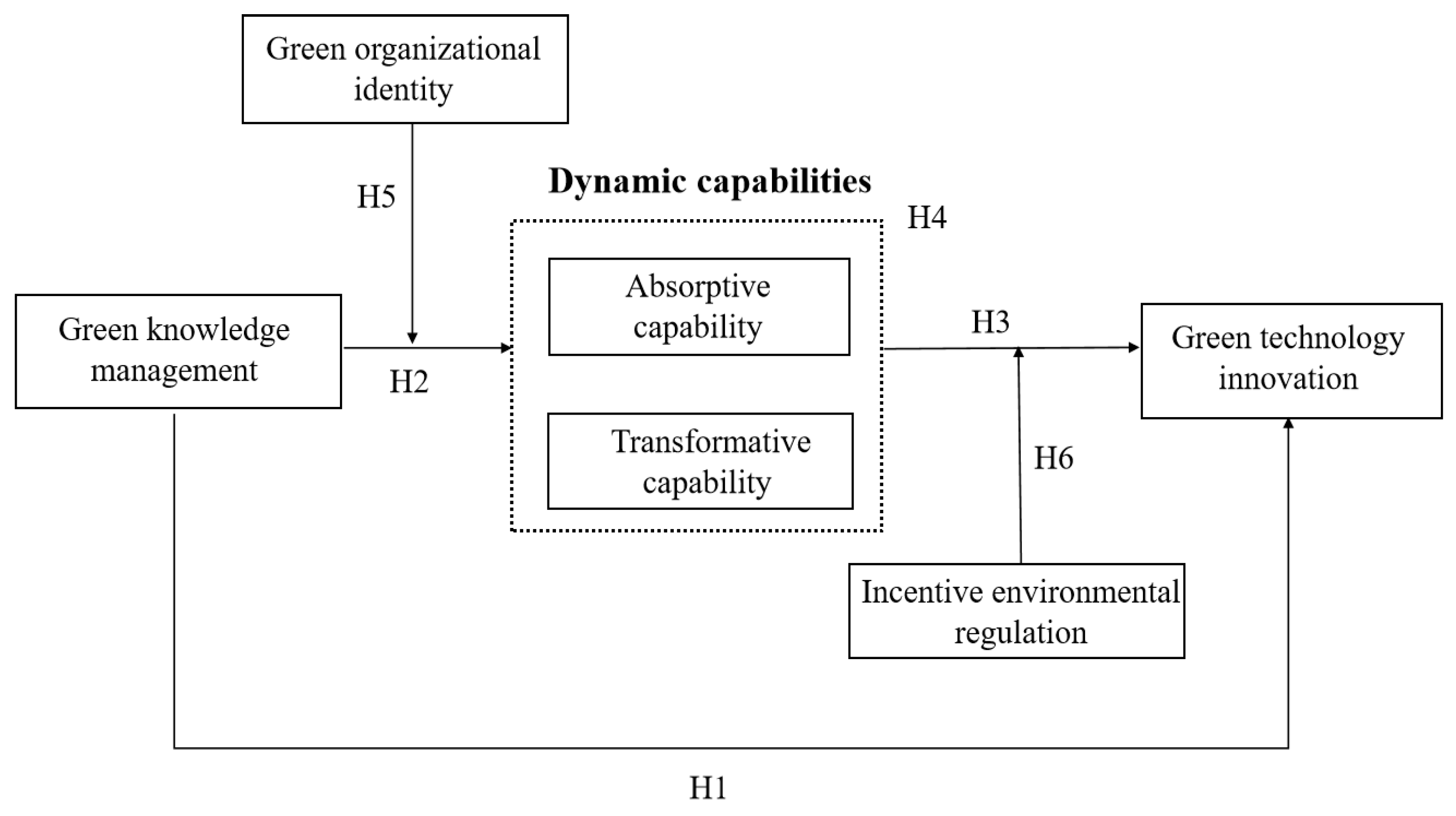
Drawing on the above analysis, the theoretical framework depicted in Figure 1 is developed.

3. Methodology

3.1. Sample and Data Collection

This study empirically tests the proposed hypotheses using data collected from 358 Chinese firms across various industries, including manufacturing, construction, information transmission, software, and information technology services. China has been chosen as the research context for several key reasons. First, the Chinese government is vigorously promoting the creation of a resource-efficient and environmentally sustainable society, with sustainable development now a core element of national strategy [82]. Second, China has achieved remarkable economic growth in recent decades, but it concurrently faces significant challenges related to environmental pollution and the over-exploitation of natural resources [83,84]. This dual context has driven Chinese firms to increase their investment in GTI in response to environmental challenges, with the need for GTI becoming particularly urgent [85].
The survey targeted senior, middle, and grass-roots managers across various firms. The data were collected through the Credamo platform, which is widely recognized in management and behavioral research due to its rigorous identity verification system, comprehensive industry coverage, and stable response quality, thus ensuring the reliability of enterprise-level samples [86]. A total of 480 questionnaires were sent to managers from a randomly chosen sample of Chinese firms. To further clarify the sampling process, we noted that Credamo’s random distribution mechanism was employed, which automatically and randomly pushes surveys to qualified respondents across industries, thereby reducing selection bias. To enhance response rates and ensure data integrity, participants were offered appropriate financial incentives, and assurances of anonymity and confidentiality were provided throughout the process. After excluding questionnaires with completion times of less than 10 min, duplicate responses, and substantial missing data, new participants were invited to complete the survey as replacements. Finally, 358 valid questionnaires were collected, with an effective recovery rate of 74.58%. Among the respondents, 31.30% were senior managers, 41.90% were middle managers, and 26.80% were grass-roots managers. Table 1 displays respondent demographics. The responses covered a broad spectrum of industries, including manufacturing (46.40%), construction (15.90%), software and information technology services (17.90%), wholesale and retail (5.60%), financial (7.50%), as well as other industries (6.70%). Additionally, the sample encompassed firms of varying sizes and ownership types, with detailed characteristics summarized in Table 2. Therefore, our samples are representative [87] and offer robust support for the generalization of findings in related studies [88].

3.2. Measures

During the questionnaire design process, we followed the steps proposed by Churchill [89]. First, we reviewed pertinent domestic and international literature to identify variable definitions and initially constructed the related questionnaire items by drawing on established scales. Second, since the mature scales we referenced were mainly derived from the English literature while our survey targeted Chinese firms, we used the translation and back-translation approach to ensure content accuracy and consistency [90]. For the questionnaire items with ambiguities during the translation, we refined the measurement scale to enhance its clarity and comprehensibility by communicating with two academic scholars and discussing with seven managers from manufacturing firms. Third, we invited 15 middle and senior managers excluding the previous seven to participate in a pretest, and the questionnaire was further improved based on their feedback, finally forming the questionnaire used for the formal research. We used a five-point Likert scale ranging from “1 = strongly disagree” to “5 = strongly agree” to measure the questionnaire items. Table A1 shows the measurement scales (see Table A1 in Appendix A).
GKM was assessed using five items adapted from Mao et al. [40] and Soto-Acosta et al. [91]. Green organizational identity (GOI), a concept introduced by Chen [71], was operationalized using a six-item scale based on prior organizational identity research by Gioia and Thomas [92] and Chen [71]. Based on the existing literature, DC were divided into two dimensions: absorptive capability (AC) and transformative capability (TC). AC was measured using three items adapted from Wang et al. [20], while TC was measured using six items developed by Pandza and Holt [31] and Wang et al. [20], which were widely recognized and employed. The measurement of Incentive environmental regulation (IER) consisted of two items adopted from Chappin et al. [93] and Peng et al. [10]. Although the IER scale contains only two items, it has been widely adopted in prior environmental management research and demonstrates strong reliability [10,94]. Moreover, incentive regulation in China is a relatively unified and policy-driven construct, making its operationalization more concentrated. GTI was captured through five items adapted from Huang and Li [34] and Singh and El-Kassar [95]. A detailed list of all measurement items is presented in Table A1.
Existing research showed that respondents’ job title, respondents’ gender, firm age, firm size, type of ownership, and industry type may affect GTI [96,97,98]. Thus, this study chose job title, gender, firm age, firm size, type of ownership, and industry as the control variables.

3.3. Common Method Bias

To minimize and assess potential common method bias (CMB), several procedures were employed. First, we provided respondents with clear and detailed explanations of each variable to ensure accurate comprehension of all measurement items. We also ensured data reliability by designing multiple items for each construct and guaranteeing respondent anonymity to encourage authentic answers. Furthermore, to reduce measurement bias, we employed a randomization strategy in the questionnaire design, with items for independent and dependent variables distributed across different sections of the survey. Second, Harman’s single-factor test was performed to examine the possible presence of CMB. A principal component analysis, conducted without rotation, identified six factors, which collectively accounted for 70.26% of the total variance. The first factor explained 25.30% of the variance, falling below the 50% threshold [99], suggesting that CMB was within an acceptable range. Third, we adopted the confirmatory factor analysis (CFA) approach to Harman’s single-factor test. The fit indices of the one-factor model (χ2/df = 12.032, RMSEA = 0.176, SRMR = 0.175, CFI = 0.336, TLI = 0.281) were significantly worse than those of the measurement model (χ2/df = 2.066, RMSEA = 0.055, SRMR = 0.046, CFI = 0.939, TLI = 0.930), indicating CMB was unlikely to be a major concern [100]. Fourth, we further introduced a latent method factor, and the new model fit indices were slightly improved (χ2/df = 2.250, RMSEA = 0.059, SRMR = 0.050, CFI = 0.928, TLI = 0.919), indicating that CMB did not pose a significant concern [101].

3.4. Reliability and Validity

We employed SPSS 27.0 and AMOS 27.0 to evaluate the reliability and validity of the sample data. As presented in Table A1, in terms of reliability, the Cronbach’s α coefficients for all variables exceed 0.80, and the composite reliability (CR) values were all above 0.80, indicating strong internal consistency and adequate reliability of the questionnaire [102]. Regarding validity, the measurement items were derived from established scales in the literature and were pretested, confirming high content validity. Furthermore, CFA revealed that all factor loadings were statistically significant (p < 0.001) and above 0.60, and the average variance extracted (AVE) values for all variables were above 0.50, indicating adequate convergent validity [103]. In addition, as shown in Table 3, the square roots of the AVE values for each variable are greater than the correlations between the variable and any other variable [104], further confirming the discriminant validity of the data. To ensure robustness, we also calculated the Heterotrait–Monotrait (HTMT) ratio. As presented in Table 4, all HTMT values fall below the recommended threshold of 0.90 [105], thereby confirming the discriminant validity of the constructs within the sample data.

4. Results

4.1. Descriptive Statistics and Correlation

Table 3 presents the means, standard deviations, square roots of AVE, and the correlation coefficient matrix for the variables. The results revealed a positive association between GKM and absorptive capability (r = 0.191, p < 0.01), transformative capability (r = 0.247, p < 0.01), and GTI (r = 0.423, p < 0.01). Additionally, absorptive capability (r = 0.291, p < 0.01) and transformative capability (r = 0.297, p < 0.01) were also significantly correlated with GTI. These findings provided preliminary support for the model construction and hypothesis testing. Moreover, the results of the variance inflation factor (VIF) analysis revealed that all variables exhibited VIF values significantly below the commonly accepted threshold of 10, indicating no serious multicollinearity concerns in the model.

4.2. Hypotheses Testing

In this study, hierarchical regression analysis was utilized as the primary method to examine the proposed research model. The detailed results are reported in Table 5.
To test H1, GTI was designated as the dependent variable, followed by the inclusion of control variables, including respondents’ job title, gender, firm age, firm size, ownership type, and industry type. Subsequently, the independent variable, GKM, was incorporated into the regression model. Model 1 revealed that job title exerted a significant impact on GTI (β = 0.177, p < 0.01). Model 2 revealed a favorable association between GKM and GTI (β = 0.413, p < 0.001), indicating that GKM significantly enhanced GTI. Thus, H1 is supported.
To test H2, dynamic capabilities were designated as the dependent variable. Control variables were subsequently incorporated, followed by the introduction of the independent variable, GKM, into the regression equation. Model 8 confirmed the positive impact of GKM on dynamic capabilities (β = 0.238, p < 0.001), suggesting that GKM facilitated dynamic capabilities. Therefore, H2 is supported. Additionally, H2a and H2b posited that the two sub-dimensions of dynamic capabilities—absorptive and transformative capabilities—were positively influenced by GKM. The analysis of Models 9 and 10 revealed significant positive correlations between GKM and AC (β = 0.201, p < 0.001) as well as TC (β = 0.257, p < 0.001). These results offer strong evidence in support of H2a and H2b.
To test H3, GTI was designated as the dependent variable, with control variables entered first. DC were then introduced. Model 3 demonstrated that DC exerted a positive effect on GTI (β = 0.354, p < 0.001), suggesting that DC were instrumental in driving the enhancement of firms’ green technology innovation. Thus, H3 is supported. Additionally, H3a and H3b suggested that the two sub-dimensions of DC influenced GTI. Analysis of Model 4 revealed that both absorptive capability (β = 0.167, p < 0.01) and transformative capability (β = 0.195, p < 0.001) positively affected GTI. These findings strongly support H3a and H3b.
To test H4, we implemented a regression model, setting GTI as the dependent variable. Control variables were entered initially, followed by GKM, and then dynamic capabilities were incorporated. The results demonstrated that GKM significantly enhanced GTI, validating the initial hypothesis. Further analysis revealed that GKM significantly enhanced dynamic capabilities, which in turn positively influenced GTI. When dynamic capabilities were incorporated into Model 5, the effect of GKM on GTI decreased from 0.413 to 0.352, yet remained significant (p < 0.001). These results indicate that DC partially mediate the relationship between GKM and GTI. To further verify the mediating effect, a bootstrap analysis was conducted using the SPSS PROCESS macro, with 5000 resamples and a 95% confidence interval (CI) to ensure the reliability of the findings. As illustrated in Table 6, the results indicated the indirect effect of GKM on GTI via dynamic capabilities was significant, with a 95% CI of [0.029, 0.101], excluding zero. These findings provide robust support for H4, confirming the mediating role of DC in this relationship.
To test H5 and H6, we first used the mean values of the respective dimensions of the independent variable, mediator, and dependent variable as overall representatives, and then centered all variables (i.e., subtracting the mean from each variable’s value) to eliminate multicollinearity issues [106]. We then constructed interaction terms and sequentially introduced control variables, independent variables, mediators, and interaction terms into the regression equation to assess the significance of the interaction term’s coefficient. The results of the analysis are shown in Table 7. Model 2 demonstrated that green organizational identity positively moderated the relationship between GKM and DC (β = 0.185, p < 0.001), thus supporting H5. Furthermore, Model 4 showed that incentive environmental regulation positively moderated the relationship between DC and GTI (β = 0.109, p < 0.05), providing support for H6.
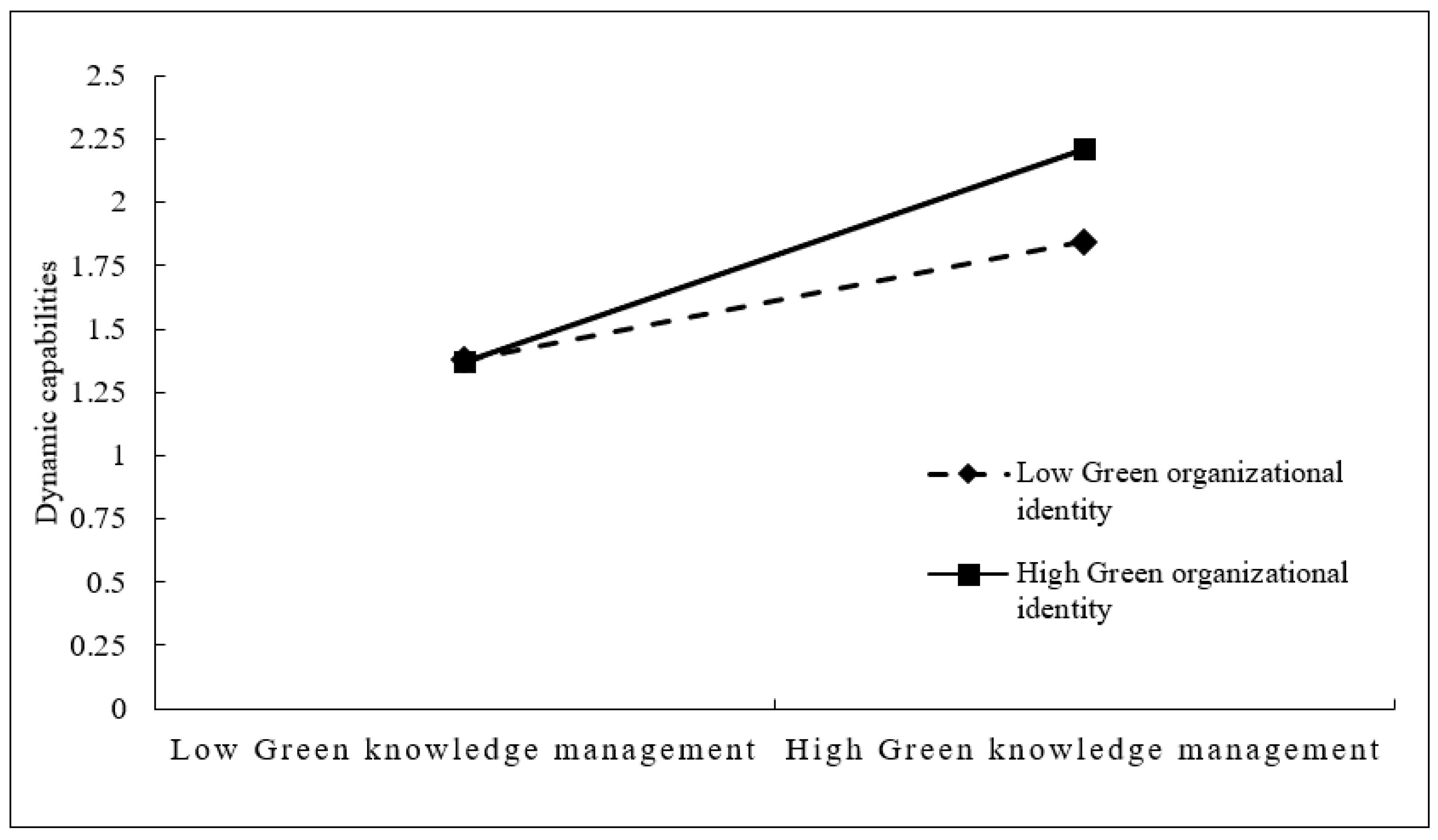
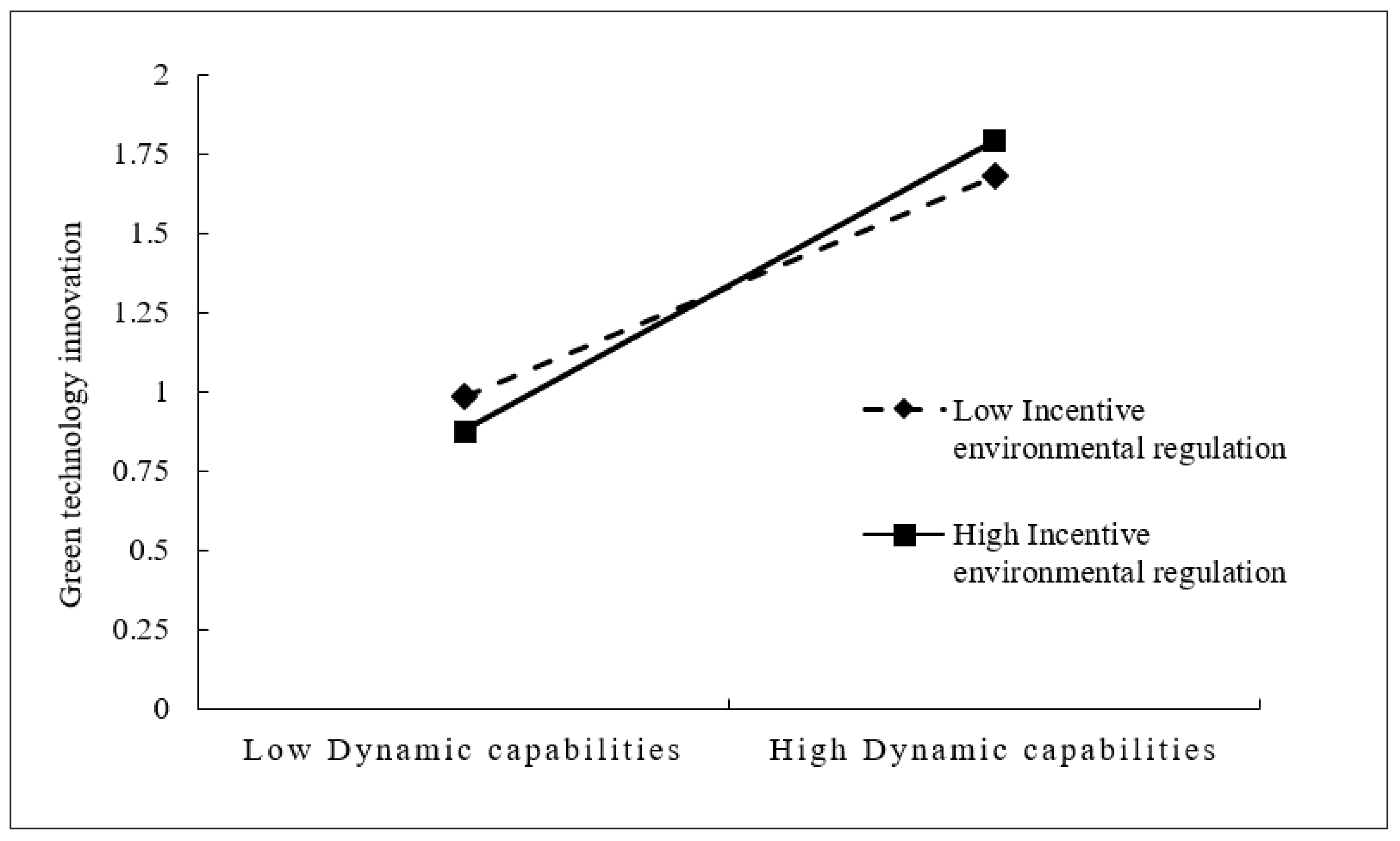
Additionally, to better illustrate the moderating effect of GOI, we plotted the moderating effect following the suggestions of Stone and Hollenbeck [107]. Specifically, we formed high and low green organizational identity groups by adding and subtracting one standard deviation from the mean of GOI, as illustrated in Figure 2. The results indicate that the slope of the high green organizational identity group is steeper than that of the low green organizational identity group, suggesting that a stronger sense of green organizational identity amplifies the positive impact of GKM on dynamic capabilities. This confirms that GOI plays a positive moderating role between GKM and dynamic capabilities. The same approach was applied to illustrate the moderating effect of incentive environmental regulation. Figure 3 shows that as the strictness of incentive environmental regulation increases, the positive effect of dynamic capabilities on firms’ green technology innovation becomes more significant, indicating that incentive environmental regulation positively moderates the relationship between dynamic capabilities and GTI. Thus, these findings provide further support for H5 and H6.

5. Discussion, Implications, and Limitations

This study provides a comprehensive examination of the mechanisms linking GKM, green organizational identity, dynamic capabilities, incentive environmental regulation, and GTI in the context of Chinese firms. All proposed hypotheses have been rigorously tested and empirically supported, thereby reinforcing the robustness of the theoretical framework. The findings make a meaningful contribution to the advancement of DCT within the context of green innovation. The following sections discuss these findings, highlighting their theoretical and managerial implications.

5.1. Theoretical Implications

The research offers several theoretical contributions. First, this research enriches the knowledge management literature by integrating fragmented insights on green innovation through the lens of GKM. Prior studies have mainly attributed firms’ green technology innovation to external factors such as stakeholder pressure [83], green credit [108], and environmental regulation [109], while research on internal drivers remains limited. The findings reveal that GKM enables firms to identify green innovation opportunities through knowledge acquisition and transform them into technological achievements through knowledge integration. By addressing this gap, this study develops a systematic framework that deepens the understanding of the internal mechanisms driving GTI.
Second, we extend DCT by demonstrating that absorptive capability and transformative capability constitute the key mechanisms through which GKM affects GTI. Although previous studies have explored the relationship between GKM and GTI [37], the mediating role of DC remains underexplored. This research incorporates the two fundamental dimensions of dynamic capabilities to elucidate the process by which firms transform green knowledge into innovation outcomes. Specifically, absorptive capability enhances a firm’s ability to acquire and interpret external green knowledge, enabling timely recognition of environmental changes and emerging green innovation opportunities [110,111]. Transformative capability strengthens the internal integration and reconfiguration of green knowledge, allowing firms to convert accumulated green knowledge into effective innovation outcomes through the activation of critical knowledge elements and the efficient deployment of resources [55]. These findings enrich the theoretical scope of dynamic capabilities and offer a more comprehensive explanation of how GKM enhances green technological progress.
Third, our evidence broadens the theoretical scope of organizational identity and environmental regulation research by elucidating how internal and external contextual forces moderate the relationship between GKM and GTI. From an internal perspective, green organizational identity strengthens the extent to which GKM enhances firms’ dynamic capabilities. A strong green identity cultivates employees’ sense of belonging and purpose, motivating greater engagement in knowledge acquisition and integration activities and thereby reinforcing absorptive and transformative capabilities [112]. From an external perspective, incentive environmental regulation amplifies the contribution of dynamic capabilities to GTI. Stronger regulatory incentives provide more favorable policy and market feedback, which motivates firms to proactively cultivate dynamic capabilities, strengthen their competitive advantages, and ultimately engage more actively in GTI [87,113]. Collectively, these insights clarify the boundary conditions under which GKM contributes to GTI. These contextual contingencies provide novel theoretical insights that extend existing organizational theories into sustainability domains.

5.2. Managerial Implications

This study provides valuable practical guidance for firms and policymakers. First, firms must treat GKM as a core strategic by optimizing the selection and utilization of knowledge sources to ensure a robust supply of high-value information for GTI. Management should prioritize external knowledge exploration by fostering robust collaboration with universities, research institutes, and key intermediaries to obtain novel knowledge and cutting-edge technologies (related to ecological design, cleaner production, etc.). These collaborations must go beyond traditional exchanges, focusing on joint R&D projects that directly expedite the commercialization of technological achievements. Concurrently, firms should proactively align R&D strategies with policy incentives by establishing dedicated teams or processes to monitor and interpret regulatory changes and track the activities of industry leaders. This strategic approach to GKM ensures that knowledge inputs are always directed toward high-value, market-relevant green innovation opportunities.
Second, the study emphasizes the critical importance of dynamic capabilities as the key mechanism for converting unstructured knowledge into the knowledge needed for GTI. To cultivate these high-order capabilities, firms must focus on optimizing internal and cross-organizational mechanisms that govern knowledge flow and reconstruction. Firms should promote the interaction, assimilation, reconfiguration, and reconstruction of diverse knowledge through intentional cross-sector collaboration and the continuous optimization of organizational structures. Furthermore, to enhance absorptive capability, firms must deepen the frequency and scope of exchanges with key external partners, such as core customers and specialized suppliers, to facilitate cross-organizational heterogeneous knowledge transfer. Crucially, to maximize transformative capability, firms must establish sophisticated knowledge feedback loops and process control systems. These mechanisms enable the firm to promptly identify deviations and uncertainties within the knowledge management process, achieving dynamic adjustment, enhancing process efficiency, and ensuring that accumulated knowledge is effectively and rapidly applied to promote successful GTI [114].
Third, based on the findings concerning the unique moderating roles of internal and external contextual forces, firms must adopt a strategic approach. On the one hand, a well-established green organizational identity significantly amplifies the contribution of GKM to DC. Therefore, firms must actively cultivate a strong green organizational culture by integrating environmental protection concepts directly into the corporate culture and ensuring broad employee buy-in. Management should formalize this commitment by establishing green values, green corporate visions, and green purpose statements within the firm’s development strategy. Moreover, firms should implement green rules and regulations and reward systems tied directly to employees’ environmental contributions. These measures are conducive to improving employee engagement, loyalty, and enhancing the efficiency and effectiveness of the firm’s knowledge absorption and transformation processes. On the other hand, since incentive environmental regulation strengthens the translation of dynamic capabilities into GTI, managers should pay close attention to market dynamics and actively seek to align their innovation efforts with available regulatory incentives. By tracking policy signals and capitalizing on policy and financial benefits, firms can maximize the competitive advantages derived from their dynamic capabilities, thereby accelerating their engagement in GTI.
Finally, from the government’s perspective, policymakers should continue to improve incentive environmental regulatory measures for firms. On the one hand, it should enhance financial support mechanisms to address the capital constraints of green innovation. Specifically, policymakers should strengthen the standardization and market penetration of mechanisms such as green credit and green bonds, and increase direct and indirect financial support for firms’ green technology innovation. This includes prioritizing and facilitating support for firms seeking listing and financing on specialized capital markets like the Sci-Tech Innovation Board and ChiNext Board, thereby diversifying funding channels and signaling strong governmental backing for environmental entrepreneurship. On the other hand, the government should bolster economic incentives to increase the profitability and security of green investments. It should increase tax benefits for firms’ pollution control projects, offering accelerated depreciation schedules for green equipment and R&D tax credits specifically for environmental innovations. These measures effectively protect the long-term returns and competitive advantages of GTI, and stimulate firms’ willingness to innovate through various incentives such as interest subsidies, special subsidies, and tax reductions and exemptions, ensuring that the cost of developing and adopting green technologies is significantly lower than that of maintaining conventional, polluting practices.

5.3. Limitations and Future Research

This study has several limitations that provide opportunities for further research. First, although we examined the moderating effects of green organizational identity and incentive environmental regulation, other contextual factors, such as resource orchestration capability, environmental dynamism, and opportunity recognition, may also shape how GKM influences GTI. Future work may incorporate these variables to deepen the contextual understanding of the proposed relationships. Second, this study relied on established measurement scales and cross-sectional data, which may not fully capture the causal dynamics among GKM, dynamic capabilities, and GTI. Future research may employ longitudinal designs or multi-informant data to enable researchers to observe temporal effects more accurately and reduce potential endogeneity. The use of more rigorous identification strategies would further enhance the robustness of causal claims. Third, because the data were collected from a single respondent in each firm, common method bias remains a potential concern. Although multiple statistical remedies, including the Hausman single-factor test and confirmatory factor analyses, were employed, residual bias cannot be fully ruled out. Future studies should consider collecting independent and dependent variables at different time points to mitigate this issue. Finally, the measurement of incentive environmental regulation and GTI could be further refined. The current operationalization may not fully capture the multidimensional nature of policy incentives or the increasing complexity of green innovation activities. Future research could adopt more comprehensive policy indicators and apply emerging analytical methods [115] to enhance construct validity and provide a more precise evaluation of firms’ green innovation performance.

5.4. Conclusions

Anchored in the dynamic capabilities theory perspective, this study examines how GKM promotes GTI through the mediating roles of dynamic capabilities and the moderating effects of green organizational identity and incentive environmental regulation. Based on survey data from 358 Chinese firms, hierarchical regression analysis was employed to test the proposed hypotheses. The empirical results show that GKM significantly enhances GTI. Further analysis reveals that absorptive and transformative capabilities serve as key mediating mechanisms that translate knowledge resources into innovation outcomes. Moreover, green organizational identity acts as an internal motivational driver that strengthens the link between GKM and dynamic capabilities, while incentive environmental regulation functions as an external motivational factor that facilitates the transformation of dynamic capabilities into GTI. Overall, the results indicate that firms can achieve lasting GTI by effectively managing green knowledge, building dynamic capabilities, strengthening green organizational identity, and making good use of incentive environmental regulation.

Author Contributions

Conceptualization, Z.W., M.H. and W.L.; Methodology, M.H. and W.L.; Validation, M.H. and W.L.; Formal analysis, W.L.; Investigation, M.H. and W.L.; Resources, M.H.; Data curation, W.L.; Writing—original draft preparation, Z.W., M.H. and W.L.; Writing—review and editing, Z.W., M.H. and W.L.; Supervision, Z.W.; Funding acquisition, Z.W. All authors have read and agreed to the published version of the manuscript.

Funding

This research was funded by the Fundamental Research Funds for the Central Universities (HUST: 2020WKYXZX008).

Institutional Review Board Statement

The study was conducted in accordance with the Declaration of Helsinki, and the protocol was approved by the Ethics Committee of Huazhong University of Science and Technology on 1 November 2024.

Informed Consent Statement

Informed consent was obtained from all subjects involved in the study.

Data Availability Statement

The data are not publicly accessible due to privacy and ethical constraints. However, data supporting the findings of this study are available upon request from the corresponding author.

Conflicts of Interest

The authors declare no financial conflicts of interest related to this research.

Appendix A

Table A1. Measurement scales, reliability, and validity tests.
ConstructsLoadings
Green knowledge management (α = 0.888, CR = 0.890, AVE = 0.618)
GKM-1: Employees and partners at our firm have easy access to information on best-in-class environmentally friendly practices.0.755
GKM-2: Our firm has procedures in place to gain knowledge about the environmental practices of our competitors, suppliers, clients, and strategic partners.0.785
GKM-3: Our firm has structured mechanisms in place to exchange best practices across multiple disciplines of business operations.0.823
GKM-4: Our firm develops initiatives (such as seminars, periodic meetings, and collaborative projects) that promote green information exchange across divisions/stakeholders. 0.797
GKM-5: Our firm actively engages in processes that apply knowledge to solve new challenges across organizational departments and beyond departmental boundaries.0.768
Green organizational identity (α = 0.891, CR = 0.893, AVE = 0.583)
GOI-1: The firm’s top managers, middle managers, and employees have a sense of pride in the firm’s environmental goals and missions.0.804
GOI-2: The firm’s top managers, middle managers, and employees have a strong sense of the firm’s history about environmental management and protection.0.738
GOI-3: The firm’s top managers, middle managers, and employees feel that the firm has carved out a significant position with respect to environmental management and protection.0.828
GOI-4: The firm’s top managers, middle managers, and employees feel that the firm have formulated a well-defined set of environmental goals and missions.0.838
GOI-5: The firm’s top managers, middle managers, and employees are knowledgeable about the firm’s environmental traditions and cultures. 0.688
GOI-6: The firm’s top managers, middle managers, and employees identify strongly with the firm’s actions with respect to environmental management and protection. 0.669
Absorptive capability (α = 0.813, CR = 0.820, AVE = 0.604)
AC-1: This firm has the necessary skills to implement newly acquired knowledge.0.752
AC-2: This firm has the competences to transform the newly acquired knowledge.0.854
AC-3: This firm has the competences to use the newly acquired knowledge.0.719
Transformative capability (α = 0.895, CR = 0.895, AVE = 0.589)
TC-1: People in this firm are encouraged to challenge outmoded practices.0.766
TC-2: This firm evolves rapidly in response to shifts in our business priorities.0.728
TC-3: This firm is creative in its methods of operation.0.828
TC-4: This firm seeks out new ways of doing things. 0.796
TC-5: People in this firm get a lot of support from managers if they want to try new ways of doing things.0.825
TC-6: This firm introduces improvements and innovations in our business.0.646
Incentive environmental regulation (α = 912, CR = 0.912, AVE = 0.838)
IER-1: The firm has been awarded a special fund for technological progress to support cleaner production.0.925
IER-2: Tradable permits and pollution control subsidies have stimulated the innovation enthusiasm of the firm.0.906
Green technology innovation (α = 877, CR = 0.878, AVE = 0.590)
GTI-1: Our firm continuously optimizes the manufacturing and operational processes by using cleaner methods or green technologies to make savings.0.773
GTI-2: Our firm is actively involved in the redesign and improvement of products or services in order to comply with existing environmental or regulatory requirements.0.768
GTI-3: Our firm specializes in recycling practices to ensure that end-of-life products are recovered for reuse in new product manufacturing.0.713
GTI-4: Our firm is rigorously involved in “eco-labeling” activities to make our clients conscious of our sustainable management practices.0.785
GTI-5: The Research & Development team at our firm ensures that the current technical advancement is included in the development of new eco-products.0.798
Abbreviations: α, Cronbach’s alpha; AVE, average variance extracted; CR, composite reliability; GKM, Green knowledge management; AC, absorptive capability; TC, transformative capability; GOI, green organizational identity; IER, Incentive environmental regulation; GTI, green technology innovation.

References

  1. Naidoo, R.; Fisher, B. Reset Sustainable Development Goals for a pandemic world. Nature 2020, 583, 198–201. [Google Scholar] [CrossRef]
  2. Wang, J.X.; Ma, M.D.; Dong, T.Y.; Zhang, Z.Y. Do ESG ratings promote corporate green innovation? A quasi-natural experiment based on SynTao Green Finance’s ESG ratings. Int. Rev. Financ. Anal. 2023, 87, 102623. [Google Scholar] [CrossRef]
  3. Braun, E.; Wield, D. Regulation as a means for the social control of technology. Technol. Anal. Strateg. Manag. 1994, 6, 259–272. [Google Scholar] [CrossRef]
  4. Chien, F.S.; Sadiq, M.; Nawaz, M.A.; Hussain, M.S.; Tran, T.D.; Le Thanh, T. A step toward reducing air pollution in top Asian economies: The role of green energy, eco-innovation, and environmental taxes. J. Environ. Manag. 2021, 297, 113420. [Google Scholar] [CrossRef] [PubMed]
  5. Albino, V.; Dangelico, R.M.; Pontrandolfo, P. Do inter-organizational collaborations enhance a firm’s environmental performance? a study of the largest US companies. J. Clean. Prod. 2012, 37, 304–315. [Google Scholar] [CrossRef]
  6. Cai, W.G.; Zhou, X.L. On the drivers of eco-innovation: Empirical evidence from China. J. Clean. Prod. 2014, 79, 239–248. [Google Scholar] [CrossRef]
  7. Li, W.; Cheng, H.H.; He, J.H.; Song, Y.F.; Bu, H. The impacts of green credit policy on green innovation of high-polluting enterprises in China. Financ. Res. Lett. 2024, 62, 105167. [Google Scholar] [CrossRef]
  8. Fan, L.; Xu, W.D. Green Credit Policy, Analyst Attention, and Corporate Green Innovation. Sustainability 2025, 17, 3362. [Google Scholar] [CrossRef]
  9. Martínez-Zarzoso, I.; Bengochea-Morancho, A.; Morales-Loge, R. Does environmental policy stringency foster innovation and productivity in OECD countries? Energy Policy 2019, 134, 110982. [Google Scholar] [CrossRef]
  10. Peng, H.; Shen, N.; Ying, H.Q.; Wang, Q.W. Can environmental regulation directly promote green innovation behavior?—Based on situation of industrial agglomeration. J. Clean. Prod. 2021, 314, 128044. [Google Scholar] [CrossRef]
  11. Pfarrer, M.D.; Pollock, T.G.; Rindova, V.P. A tale of two assets: The effects of firm reputation and celebrity on earnings surprises and investors’ reactions. Acad. Manag. J. 2010, 53, 1131–1152. [Google Scholar] [CrossRef]
  12. Papa, A.; Chierici, R.; Ballestra, L.V.; Meissner, D.; Orhan, M.A. Harvesting reflective knowledge exchange for inbound open innovation in complex collaborative networks: An empirical verification in Europe. J. Knowl. Manag. 2021, 25, 669–692. [Google Scholar] [CrossRef]
  13. Duke, J.; Igwe, V.; Tapang, A.; Usang, O. The innovation interface between knowledge management and firm performance. Knowl. Manag. Res. Pract. 2023, 21, 486–498. [Google Scholar] [CrossRef]
  14. Gauthier, J.; Zhang, Z.P. Green knowledge management and strategic renewal: A discursive perspective on corporate sustainability. Int. J. Product. Perform. Manag. 2020, 69, 1797–1811. [Google Scholar] [CrossRef]
  15. Zollo, M.; Winter, S.G. Deliberate learning and the evolution of dynamic capabilities. Organ. Sci. 2002, 13, 339–351. [Google Scholar] [CrossRef]
  16. Achi, A.; Adeola, O.; Achi, F.C. CSR and green process innovation as antecedents of micro, small, and medium enterprise performance: Moderating role of perceived environmental volatility. J. Bus. Res. 2022, 139, 771–781. [Google Scholar] [CrossRef]
  17. Yousaf, Z. Go for green: Green innovation through green dynamic capabilities: Accessing the mediating role of green practices and green value co-creation. Environ. Sci. Pollut. Res. 2021, 28, 54863–54875. [Google Scholar] [CrossRef]
  18. Cohen, W.M.; Levinthal, D.A. Absorptive capacity: A new perspective on learning and innovation. Adm. Sci. Q. 1990, 35, 128–152. [Google Scholar] [CrossRef]
  19. Lichtenthaler, U.; Lichtenthaler, E. A Capability-Based Framework for Open Innovation: Complementing Absorptive Capacity. J. Manag. Stud. 2009, 46, 1315–1338. [Google Scholar] [CrossRef]
  20. Wang, C.L.; Senaratne, C.; Rafiq, M. Success Traps, Dynamic Capabilities and Firm Performance. Br. J. Manag. 2015, 26, 26–44. [Google Scholar] [CrossRef]
  21. Alves, A.C.; Barbieux, D.; Reichert, F.M.; Tello-Gamarra, J.; Zawislak, P.A. Innovation and dynamic capabilities of the firm: Defining an assessment model. Rae-Rev. Adm. Empresas 2017, 57, 232–244. [Google Scholar] [CrossRef]
  22. Arslan, M.; Ince, H.; Imamoglu, S.Z. Effects of Standardized Innovation Management Systems on Innovation Ambidexterity and Innovation Performance. Sustainability 2025, 17, 116. [Google Scholar] [CrossRef]
  23. Schoemaker, P.J.H.; Heaton, S.; Teece, D. Innovation, Dynamic Capabilities, and Leadership. Calif. Manag. Rev. 2018, 61, 15–42. [Google Scholar] [CrossRef]
  24. Albort-Morant, G.; Leal-Millán, A.; Cepeda-Carrión, G.; Henseler, J. Developing green innovation performance by fostering of organizational knowledge and coopetitive relations. Rev. Manag. Sci. 2018, 12, 499–517. [Google Scholar] [CrossRef]
  25. Soewarno, N.; Tjahjadi, B.; Fithrianti, F. Green innovation strategy and green innovation: The roles of green organizational identity and environmental organizational legitimacy. Manag. Decis. 2019, 57, 3061–3078. [Google Scholar] [CrossRef]
  26. Chen, J.Y.; Wang, X.C.; Shen, W.; Tan, Y.Y.; Matac, L.M.; Samad, S. Environmental Uncertainty, Environmental Regulation and Enterprises’ Green Technological Innovation. Int. J. Environ. Res. Public Health 2022, 19, 9781. [Google Scholar] [CrossRef]
  27. Teece, D.J.; Pisano, G.; Shuen, A. Dynamic capabilities and strategic management. Strateg. Manag. J. 1997, 18, 509–533. [Google Scholar] [CrossRef]
  28. Teece, D.J. The foundations of Enterprise performance: Dynamic and ordinary capabilities in an (economic) theory of firms. Acad. Manag. Perspect. 2014, 28, 328–352. [Google Scholar] [CrossRef]
  29. Wang, C.L.; Ahmed, P.K. Dynamic capabilities: A review and research agenda. Int. J. Manag. Rev. 2007, 9, 31–51. [Google Scholar] [CrossRef]
  30. Zahra, S.A.; George, G. Absorptive capacity: A review, reconceptualization, and extension. Acad. Manag. Rev. 2002, 27, 185–203. [Google Scholar] [CrossRef]
  31. Pandza, K.; Holt, R. Absorptive and transformative capacities in nanotechnology innovation systems. J. Eng. Technol. Manag. 2007, 24, 347–365. [Google Scholar] [CrossRef]
  32. Karaman Kabadurmus, F.N. Antecedents to supply chain innovation. Int. J. Logist. Manag. 2020, 31, 145–171. [Google Scholar] [CrossRef]
  33. Fernando, Y.; Jabbour, C.J.C.; Wah, W.X. Pursuing green growth in technology firms through the connections between environmental innovation and sustainable business performance: Does service capability matter? Resour. Conserv. Recycl. 2019, 141, 8–20. [Google Scholar] [CrossRef]
  34. Huang, J.W.; Li, Y.H. Green Innovation and Performance: The View of Organizational Capability and Social Reciprocity. J. Bus. Ethics 2017, 145, 309–324. [Google Scholar] [CrossRef]
  35. Pan, C.; Dong, C.H. Quantity or quality? The impacts of environmental regulation and government R&D funding on green technology innovation: Evidence from China. Appl. Econ. Lett. 2025, 32, 697–701. [Google Scholar] [CrossRef]
  36. Singh, S.K.; Del Giudice, M.; Chierici, R.; Graziano, D. Green innovation and environmental performance: The role of green transformational leadership and green human resource management. Technol. Forecast. Soc. Change 2020, 150, 119762. [Google Scholar] [CrossRef]
  37. Sahoo, S.; Kumar, A.; Upadhyay, A. How do green knowledge management and green technology innovation impact corporate environmental performance? Understanding the role of green knowledge acquisition. Bus. Strategy Environ. 2023, 32, 551–569. [Google Scholar] [CrossRef]
  38. Benabdellah, A.C.; Zekhnini, K.; Cherrafi, A.; Garza-Reyes, J.A.; Kumar, A. Design for the environment: An ontology-based knowledge management model for green product development. Bus. Strategy Environ. 2021, 30, 4037–4053. [Google Scholar] [CrossRef]
  39. Cegarra-Navarro, J.G.; Kassaneh, T.C.; Caro, E.M.; Martínez, A.M.; Bolisani, E. Technology Assimilation and Embarrassment in SMEs: The Mediating Effect on the Relationship of Green Skills and Organizational Reputation. IEEE Trans. Eng. Manag. 2023, 70, 4278–4286. [Google Scholar] [CrossRef]
  40. Zhao, Y.T.; Xin, L. Research on green innovation countermeasures of supporting the circular economy to green finance under big data. J. Enterp. Inf. Manag. 2022, 35, 1305–1322. [Google Scholar] [CrossRef]
  41. Abbas, J.; Sagsan, M. Impact of knowledge management practices on green innovation and corporate sustainable development: A structural analysis. J. Clean. Prod. 2019, 229, 611–620. [Google Scholar] [CrossRef]
  42. Zhou, M.; Govindan, K.; Xie, X.B. How fairness perceptions, embeddedness, and knowledge sharing drive green innovation in sustainable supply chains: An equity theory and network perspective to achieve sustainable development goals. J. Clean. Prod. 2020, 260, 120950. [Google Scholar] [CrossRef]
  43. Lubit, R. Tacit knowledge and knowledge management: The keys to sustainable competitive advantage. Organ. Dyn. 2001, 29, 164–178. [Google Scholar] [CrossRef]
  44. Khurshid, F.; Park, W.Y.; Chan, F.T.S. Innovation shock, outsourcing strategy, and environmental performance: The roles of prior green innovation experience and knowledge inheritance. Bus. Strategy Environ. 2019, 28, 1572–1582. [Google Scholar] [CrossRef]
  45. Ashrafi, A.; Ravasan, A.Z.; Trkman, P.; Afshari, S. The role of business analytics capabilities in bolstering firms’ agility and performance. Int. J. Inf. Manag. 2019, 47, 1–15. [Google Scholar] [CrossRef]
  46. Wang, S.H.; Wang, H. Big data for small and medium-sized enterprises (SME): A knowledge management model. J. Knowl. Manag. 2020, 24, 881–897. [Google Scholar] [CrossRef]
  47. Shahzad, M.; Qu, Y.; Zafar, A.U.; Rehman, S.U.; Islam, T. Exploring the influence of knowledge management process on corporate sustainable performance through green innovation. J. Knowl. Manag. 2020, 24, 2079–2106. [Google Scholar] [CrossRef]
  48. Mao, H.Y.; Liu, S.; Zhang, J.L.; Deng, Z.H. Information technology resource, knowledge management capability, and competitive advantage: The moderating role of resource commitment. Int. J. Inf. Manag. 2016, 36, 1062–1074. [Google Scholar] [CrossRef]
  49. Yusliza, M.Y.; Yong, J.Y.; Tanveer, M.I.; Ramayah, T.; Faezah, J.N.; Muhammad, Z. A structural model of the impact of green intellectual capital on sustainable performance. J. Clean. Prod. 2020, 249, 119334. [Google Scholar] [CrossRef]
  50. Grant, R.M. Toward a knowledge-based theory of the firm. Strateg. Manag. J. 1996, 17, 109–122. [Google Scholar] [CrossRef]
  51. Yuan, C.; Xue, D.D.; He, X. A balancing strategy for ambidextrous learning, dynamic capabilities, and business model design, the opposite moderating effects of environmental dynamism. Technovation 2021, 103, 102225. [Google Scholar] [CrossRef]
  52. Baert, C.; Meuleman, M.; Debruyne, M.; Wright, M. Portfolio entrepreneurship and resource orchestration. Strateg. Entrep. J. 2016, 10, 346–370. [Google Scholar] [CrossRef]
  53. Wang, C.; Zhang, X.E.; Teng, X.Y. How to convert green entrepreneurial orientation into green innovation: The role of knowledge creation process and green absorptive capacity. Bus. Strategy Environ. 2023, 32, 1260–1273. [Google Scholar] [CrossRef]
  54. Makhloufi, L.; Djermani, F.; Meirun, T. Mediation-moderation model of green absorptive capacity and green entrepreneurship orientation for corporate environmental performance. Manag. Environ. Qual. 2024, 35, 139–157. [Google Scholar] [CrossRef]
  55. Lee, M.J.; Kim, Y.; Roh, T. Exploring the role of digital servitization for green innovation: Absorptive capacity, transformative capacity, and environmental strategy. Technol. Forecast. Soc. Change 2024, 207, 123614. [Google Scholar] [CrossRef]
  56. Teece, D.J. Explicating dynamic capabilities: The nature and microfoundations of (sustainable) enterprise performance. Strateg. Manag. J. 2007, 28, 1319–1350. [Google Scholar] [CrossRef]
  57. Joshi, G.; Dhar, R.L. Green training in enhancing green creativity via green dynamic capabilities in the Indian handicraft sector: The moderating effect of resource commitment. J. Clean. Prod. 2020, 267, 121948. [Google Scholar] [CrossRef]
  58. Warner, K.S.R.; Wäger, M. Building dynamic capabilities for digital transformation: An ongoing process of strategic renewal. Long Range Plan. 2019, 52, 326–349. [Google Scholar] [CrossRef]
  59. Yu, D.N.; Tao, S.; Hanan, A.; Ong, T.S.; Latif, B.; Ali, M. Fostering Green Innovation Adoption through Green Dynamic Capability: The Moderating Role of Environmental Dynamism and Big Data Analytic Capability. Int. J. Environ. Res. Public Health 2022, 19, 10336. [Google Scholar] [CrossRef] [PubMed]
  60. Bianchi, G.; Testa, F.; Boiral, O.; Iraldo, F. Organizational Learning for Environmental Sustainability: Internalizing Lifecycle Management. Organ. Environ. 2022, 35, 103–129. [Google Scholar] [CrossRef]
  61. Cannas, R. Exploring digital transformation and dynamic capabilities in agrifood SMEs. J. Small Bus. Manag. 2023, 61, 1611–1637. [Google Scholar] [CrossRef]
  62. Coreynen, W.; Matthyssens, P.; Vanderstraeten, J.; van Witteloostuijn, A. Unravelling the internal and external drivers of digital servitization: A dynamic capabilities and contingency perspective on firm strategy. Ind. Mark. Manag. 2020, 89, 265–277. [Google Scholar] [CrossRef]
  63. Favoretto, C.; Mendes, G.H.S.; Oliveira, M.G.; Cauchick-Miguel, P.A.; Coreynen, W. From servitization to digital servitization: How digitalization transforms companies’ transition towards services. Ind. Mark. Manag. 2022, 102, 104–121. [Google Scholar] [CrossRef]
  64. Lin, H.F.; Jing-Qin, S.A.; Higgins, A. How dynamic capabilities affect adoption of management innovations. J. Bus. Res. 2016, 69, 862–876. [Google Scholar] [CrossRef]
  65. Mousavi, S.; Bossink, B.; van Vliet, M. Microfoundations of companies’ dynamic capabilities for environmentally sustainable innovation: Case study insights from high-tech innovation in science-based companies. Bus. Strategy Environ. 2019, 28, 366–387. [Google Scholar] [CrossRef]
  66. Albert, S.; Whetten, D.A. Organizational identity. In Research in Organizational Behavior; JAI Press: London, UK, 1985. [Google Scholar]
  67. Mesmer-Magnus, J.R.; Asencio, R.; Seely, P.W.; DeChurch, L.A. How Organizational Identity Affects Team Functioning: The Identity Instrumentality Hypothesis. J. Manag. 2018, 44, 1530–1550. [Google Scholar] [CrossRef]
  68. Voss, Z.G.; Cable, D.M.; Voss, G.B. Organizational identity and firm performance: What happens when leaders disagree about “who we are?”. Organ. Sci. 2006, 17, 741–755. [Google Scholar] [CrossRef]
  69. Xing, X.P.; Wang, J.H.; Tou, L.L. The Relationship between Green Organization Identity and Corporate Environmental Performance: The Mediating Role of Sustainability Exploration and Exploitation Innovation. Int. J. Environ. Res. Public Health 2019, 16, 921. [Google Scholar] [CrossRef] [PubMed]
  70. Sharma, S.; Pablo, A.L.; Vredenburg, H. Corporate environmental responsiveness strategies: The importance of issue interpretation and organizational context. J. Appl. Behav. Sci. 1999, 35, 87–108. [Google Scholar] [CrossRef]
  71. Chen, Y.S. Green organizational identity: Sources and consequence. Manag. Decis. 2011, 49, 384–404. [Google Scholar] [CrossRef]
  72. Chang, C.H.; Chen, Y.S. Green organizational identity and green innovation. Manag. Decis. 2013, 51, 1056–1070. [Google Scholar] [CrossRef]
  73. Song, W.H.; Ren, S.C.; Yu, J. Bridging the gap between corporate social responsibility and new green product success: The role of green organizational identity. Bus. Strategy Environ. 2019, 28, 88–97. [Google Scholar] [CrossRef]
  74. Song, W.H.; Yu, H.Y. Green Innovation Strategy and Green Innovation: The Roles of Green Creativity and Green Organizational Identity. Corp. Soc. Responsib. Environ. Manag. 2018, 25, 135–150. [Google Scholar] [CrossRef]
  75. Chang, T.W.; Chen, F.F.; Luan, H.D.; Chen, Y.S. Effect of Green Organizational Identity, Green Shared Vision, and Organizational Citizenship Behavior for the Environment on Green Product Development Performance. Sustainability 2019, 11, 617. [Google Scholar] [CrossRef]
  76. Xiaomin, Z.; Na, W.; Jia, W.; Qiang, F.; Zeqiang, F. Review on the connotation, characterization and application of environmental regulation. J. Environ. Eng. Technol. 2021, 11, 1250–1257. [Google Scholar] [CrossRef]
  77. Zhao, X.L.; Yin, H.T.; Zhao, Y. Impact of environmental regulations on the efficiency and CO2 emissions of power plants in China. Appl. Energy 2015, 149, 238–247. [Google Scholar] [CrossRef]
  78. Ren, S.G.; Li, X.L.; Yuan, B.L.; Li, D.Y.; Chen, X.H. The effects of three types of environmental regulation on eco-efficiency: A cross-region analysis in China. J. Clean. Prod. 2018, 173, 245–255. [Google Scholar] [CrossRef]
  79. Li, P.N.; Zou, H.Y.; Coffman, D.; Mi, Z.F.; Du, H.B. The synergistic impact of incentive and regulatory environmental policies on firms’ environmental performance. J. Environ. Manag. 2024, 365, 121646. [Google Scholar] [CrossRef]
  80. Lin, H.; Zeng, S.; Ma, H.; Chen, H. How political connections affect corporate environmental performance: The mediating role of green subsidies. Hum. Ecol. Risk Assess. Int. J. 2015, 21, 2192–2212. [Google Scholar] [CrossRef]
  81. Cainelli, G.; D’Amato, A.; Mazzanti, M. Resource efficient eco-innovations for a circular economy: Evidence from EU firms. Res. Policy 2020, 49, 103827. [Google Scholar] [CrossRef]
  82. Bai, X.S.; Coelho, A.; Cancela, B.L. The relationship between green supply chain and green innovation based on the push of green strategic alliances. Corp. Soc. Responsib. Environ. Manag. 2024, 31, 1026–1041. [Google Scholar] [CrossRef]
  83. Zhang, F.; Zhu, L. Enhancing corporate sustainable development: Stakeholder pressures, organizational learning, and green innovation. Bus. Strategy Environ. 2019, 28, 1012–1026. [Google Scholar] [CrossRef]
  84. Zhu, Q.H.; Geng, Y.; Lai, K.H. Circular economy practices among Chinese manufacturers varying in environmental-oriented supply chain cooperation and the performance implications. J. Environ. Manag. 2010, 91, 1324–1331. [Google Scholar] [CrossRef]
  85. Yu, Z.C.; Farooq, U.; Alam, M.M.; Dai, J.P. How does environmental, social, and governance (ESG) performance determine investment mix? New empirical evidence from BRICS. Borsa Istanb. Rev. 2024, 24, 520–529. [Google Scholar] [CrossRef]
  86. Liu, J.W.; Zou, P.; Ma, Y. The Effect of Air Pollution on Food Preferences. J. Acad. Mark. Sci. 2022, 50, 410–423. [Google Scholar] [CrossRef]
  87. Laguir, I.; Stekelorum, R.; El Baz, J. Proactive environmental strategy and performances of third party logistics providers (TPLs): Investigating the role of eco-control systems. Int. J. Prod. Econ. 2021, 240, 108249. [Google Scholar] [CrossRef]
  88. Feder, M.; Weissenberger, B.E. Towards a holistic view of CSR-related management control systems in German companies: Determinants and corporate performance effects. J. Clean. Prod. 2021, 294, 126084. [Google Scholar] [CrossRef]
  89. Churchill, G.A., Jr. A paradigm for developing better measures of marketing constructs. J. Mark. Res. 1979, 16, 64–73. [Google Scholar] [CrossRef]
  90. Cha, E.S.; Kim, K.H.; Erlen, J.A. Translation of scales in cross-cultural research: Issues and techniques. J. Adv. Nurs. 2007, 58, 386–395. [Google Scholar] [CrossRef]
  91. Soto-Acosta, P.; Popa, S.; Martinez-Conesa, I. Information technology, knowledge management and environmental dynamism as drivers of innovation ambidexterity: A study in SMEs. J. Knowl. Manag. 2018, 22, 824–849. [Google Scholar] [CrossRef]
  92. Gioia, D.A.; Thomas, J.B. Identity, image, and issue interpretation: Sensemaking during strategic change in academia. Adm. Sci. Q. 1996, 41, 370–403. [Google Scholar] [CrossRef]
  93. Chappin, M.M.H.; Vermeulen, W.J.V.; Meeus, M.T.H.; Hekkert, M.P. Enhancing our understanding of the role of environmental policy in environmental innovation: Adoption explained by the accumulation of policy instruments and agent-based factors. Environ. Sci. Policy 2009, 12, 934–947. [Google Scholar] [CrossRef]
  94. Zameer, H.; Yasmeen, H.; Wang, Y.; Saeed, M.R. Sustainability-oriented corporate strategy: Green image and innovation capabilities. Manag. Decis. 2024, 62, 1750–1774. [Google Scholar] [CrossRef]
  95. Singh, S.K.; El-Kassar, A.N. Role of big data analytics in developing sustainable capabilities. J. Clean. Prod. 2019, 213, 1264–1273. [Google Scholar] [CrossRef]
  96. Epicoco, M. Patterns of innovation and organizational demography in emerging sustainable fields: An analysis of the chemical sector. Res. Policy 2016, 45, 427–441. [Google Scholar] [CrossRef]
  97. Qiu, L.; Jie, X.W.; Wang, Y.N.; Zhao, M.J. Green product innovation, green dynamic capability, and competitive advantage: Evidence from Chinese manufacturing enterprises. Corp. Soc. Responsib. Environ. Manag. 2020, 27, 146–165. [Google Scholar] [CrossRef]
  98. Wang, J.R.; Xue, Y.J.; Yang, J. Boundary-spanning search and firms’ green innovation: The moderating role of resource orchestration capability. Bus. Strategy Environ. 2020, 29, 361–374. [Google Scholar] [CrossRef]
  99. Podsakoff, P.M.; MacKenzie, S.B.; Lee, J.Y.; Podsakoff, N.P. Common method biases in behavioral research: A critical review of the literature and recommended remedies. J. Appl. Psychol. 2003, 88, 879–903. [Google Scholar] [CrossRef]
  100. Kong, T.; Feng, T.W.; Huo, B.F. Green supply chain integration and financial performance: A social contagion and information sharing perspective. Bus. Strategy Environ. 2021, 30, 2255–2270. [Google Scholar] [CrossRef]
  101. Flynn, B.B.; Huo, B.F.; Zhao, X.D. The impact of supply chain integration on performance: A contingency and configuration approach. J. Oper. Manag. 2010, 28, 58–71. [Google Scholar] [CrossRef]
  102. Zhou, C.; Xia, W.L.; Feng, T.W.; Jiang, J.J.; He, Q.S. How environmental orientation influences firm performance: The missing link of green supply chain integration. Sustain. Dev. 2020, 28, 685–696. [Google Scholar] [CrossRef]
  103. Chau, P.Y. Reexamining a model for evaluating information center success using a structural equation modeling approach. Decis. Sci. 1997, 28, 309–334. [Google Scholar] [CrossRef]
  104. Fornell, C.; Larcker, D.F. Evaluating structural equation models with unobservable variables and measurement error. J. Mark. Res. 1981, 18, 39–50. [Google Scholar] [CrossRef]
  105. Henseler, J.; Ringle, C.M.; Sarstedt, M. A new criterion for assessing discriminant validity in variance-based structural equation modeling. J. Acad. Mark. Sci. 2015, 43, 115–135. [Google Scholar] [CrossRef]
  106. Aiken, L.S. Multiple Regression: Testing and Interpreting Interactions; Sage: Thousand Oaks, CA, USA, 1991. [Google Scholar]
  107. Stone, E.F.; Hollenbeck, J.R. Clarifying some controversial issues surrounding statistical procedures for detecting moderator variables: Empirical evidence and related matters. J. Appl. Psychol. 1989, 74, 3. [Google Scholar] [CrossRef]
  108. Hong, M.; Li, Z.H.; Drakeford, B. Do the Green Credit Guidelines Affect Corporate Green Technology Innovation? Empirical Research from China. Int. J. Environ. Res. Public Health 2021, 18, 1682. [Google Scholar] [CrossRef]
  109. Yan, Z.M.; Yu, Y.; Du, K.R.; Zhang, N. How does environmental regulation promote green technology innovation? Evidence from China’s total emission control policy. Ecol. Econ. 2024, 219, 108137. [Google Scholar] [CrossRef]
  110. Dzhengiz, T.; Niesten, E. Competences for Environmental Sustainability: A Systematic Review on the Impact of Absorptive Capacity and Capabilities. J. Bus. Ethics 2020, 162, 881–906. [Google Scholar] [CrossRef]
  111. Shahzad, M.; Qu, Y.; Rehman, S.U.; Zafar, A.U.; Ding, X.A.; Abbas, J. Impact of knowledge absorptive capacity on corporate sustainability with mediating role of CSR: Analysis from the Asian context. J. Plan. Lit. 2022, 37, 175–176. [Google Scholar] [CrossRef]
  112. Chen, Y.S.; Chang, C.H. The Determinants of Green Product Development Performance: Green Dynamic Capabilities, Green Transformational Leadership, and Green Creativity. J. Bus. Ethics 2013, 116, 107–119. [Google Scholar] [CrossRef]
  113. Hu, D.X.; Jiao, J.L.; Tang, Y.S.; Xu, Y.W.; Zha, J.R. How global value chain participation affects green technology innovation processes: A moderated mediation model. Technol. Soc. 2022, 68, 101916. [Google Scholar] [CrossRef]
  114. Zhang, X.; Wang, Z.J.; Luo, W.Y.; Guo, F.F.; Wang, P. How Digital Orientation Affects Innovation Performance? Exploring the Role of Digital Capabilities and Environmental Dynamism. Systems 2025, 13, 346. [Google Scholar] [CrossRef]
  115. Zhu, S.; Cai, J.; Xiong, R.; Zheng, L.; Ma, D. Singular pooling: A spectral pooling paradigm for second-trimester prenatal level II ultrasound standard fetal plane identification. IEEE Trans. Circuits Syst. Video Technol. 2025. early access. [Google Scholar] [CrossRef]
Figure 1. The theoretical model.
Sustainability 17 10781 g001
Figure 2. Moderating effect of Green organizational identity on green knowledge management and dynamic capabilities.
Sustainability 17 10781 g002
Figure 3. Moderating effect of Incentive environmental regulation on dynamic capabilities and green technology innovation.
Sustainability 17 10781 g003
Table 1. Respondent demographics.
CharacteristicsFrequency% of Samples
Job title
Grass-roots managers9626.80
Middle managers15041.90
Senior managers11231.30
Gender
Female17649.20
Male18250.80
Table 2. A statistical description of the characteristics of sample firms.
CharacteristicsFrequency% of Samples
Firm age
Less than 5 years 3610.10
6–10 Years 6919.20
11–15 Years 11131.00
More than 16 years14239.70
Firm size
Fewer than 50 employees 257.00
51–300 Employees10128.20
301–1000 Employees9827.40
More than 1000 employees13437.40
Type of ownership
State-owned11532.10
Private17649.20
Foreign-owned5014.00
others174.70
Industry
Manufacturing16646.40
Construction 5715.90
Information transmission, software and information technology services 6417.90
Wholesale and retail 205.60
Financial277.50
Other industries246.70
Table 3. Mean, standard deviation, correlation matrix and the square root of AVE.
123456789101112
1. Job title
2. Gender0.006
3. Firm age−0.0590.031
4. Firm size−0.043−0.008−0.011
5. Type of ownership−0.0580.019−0.003−0.031
6. Industry−0.105 *−0.0370.0880.076−0.004
7. GKM0.0570.0370.007−0.011−0.0130.0030.786
8. AC0.070−0.0010.0790.0310.0130.0740.191 **0.777
9. TC0.0100.0760.078−0.022−0.0160.0350.247 **0.510 **0.767
10. GOI−0.0480.029−0.0260.0040.0610.0090.0130.103 *0.228 **0.764
11. IER0.0680.014−0.0520.086−0.106 *0.110 *0.129 *0.156 **0.107 *0.211 **0.915
12. GTI0.153 **0.032−0.055−0.0430.0140.0420.423 **0.291 **0.297 **0.0470.0930.768
Mean2.0401.5103.0002.9501.9102.3203.7163.4923.4283.4523.3663.630
SD0.7620.5010.9970.9680.8031.5880.8680.9300.9150.9501.1360.864
Note: * p < 0.05. ** p < 0.01; The italic values are the square root of AVE. Abbreviation: SD, standard deviation.
Table 4. Heterotrait–monotrait ratio (HTMT).
GKMACTCGOIIERGTI
GKM1
AC0.2181
TC0.2770.5901
GOI0.0130.1210.2521
IER0.1420.1820.1160.2341
GTI0.4770.3430.3310.0530.1031
Table 5. Results of hierarchical regression analysis.
GTIDCACTC
VariablesModel 1Model 2Model 3Model 4Model 5Model 6Model 7Model 8Model 9Model 10
Control variable
Job level0.177 **0.150 **0.160 **0.156 **0.142 **0.137 *0.0470.0310.0910.002
Gender0.0590.0320.0270.0320.0130.0190.0910.076−0.0150.121
Firm age−0.046−0.049−0.070−0.071−0.066−0.0670.0690.0670.0710.065
Firm size−0.036−0.033 −0.035−0.037−0.032−0.035−0.005−0.0030.031−0.020
Type of ownership0.0230.028 0.0250.0230.0280.026−0.005−0.0030.025−0.016
Industry0.0360.034 0.0270.0250.0270.0260.0280.0260.0420.019
Independent
GKM 0.413 *** 0.352 ***0.353 *** 0.238 ***0.201 ***0.257 ***
Mediator
DC 0.354 *** 0.257 ***
AC 0.167 ** 0.139 **
TC 0.195 *** 0.128 *
R20.033 0.204 0.1420.144 0.2580.261 0.0150.0790.0540.073
ΔR20.016 0.1880.125 0.124 0.241 0.241 0.001 0.0610.0350.054
F1.97212.809 ***8.254 ***7.339 ***15.161 ***13.626 ***0.9044.311 ***2.835 **3.909 ***
Note: * p < 0.05, ** p < 0.01, *** p < 0.001, two-tailed test.
Table 6. Bootstrap test results of the mediating effect of dynamic capabilities.
Dependent Variable: GTI (Bootstrap 95%)
Independent VariableEffect TypeValueBoot SELLCIULCIRate (%)
GKMTotal effect0.4130.0480.3200.507100
Direct effect0.3520.0480.2580.44685.23
Indirect effect0.0610.0180.0290.10114.77
Table 7. Test results of the moderating effect of green organizational identity and incentive environmental regulation.
DCGTI
VariablesModel 1Model 2Model 3Model 4
Control variable
Job level0.0420.0520.142 **0.130 *
Gender0.0660.0610.0130.023
Firm age0.0730.074−0.066−0.070
Firm size−0.003−0.031−0.032−0.035
Type of ownership−0.015−0.0130.0290.029
Industry0.0260.0190.0270.027
Independent
GKM0.235 ***0.234 ***0.352 ***0.347 ***
Mediator
DC 0.257 ***0.256 ***
Moderator
GOI0.180 ***0.179 ***
IER 0.0010.003
Interaction term
GKM × GOI 0.185 ***
DC × IER 0.109 *
R20.1230.1600.2580.269
ΔR20.1030.1380.2390.248
F6.141 ***7.366 ***13.438 ***12.763 ***
Note: * p < 0.05, ** p < 0.01, *** p < 0.001, two-tailed test.
Disclaimer/Publisher’s Note: The statements, opinions and data contained in all publications are solely those of the individual author(s) and contributor(s) and not of MDPI and/or the editor(s). MDPI and/or the editor(s) disclaim responsibility for any injury to people or property resulting from any ideas, methods, instructions or products referred to in the content.