
Article

Community Perceptions of Ecosystem Services from Homegarden-Based Urban Agriculture in Bandung City, Indonesia


1
Master Program on Environmental Science, Graduate School, Universitas Padjadjaran, Jalan Dipatiukur No. 35, Bandung 40132, Indonesia
2
Department of Anthropology, Faculty of Social and Political Sciences, Universitas Padjadjaran, Jalan Raya Bandung Sumedang Km. 21 Jatinangor, Sumedang 45363, Indonesia
3
Center for Environment and Sustainability Science (CESS), Universitas Padjadjaran, Bandung 40134, Indonesia
4
Faculty of Agro-Industrial Technology, Universitas Padjadjaran, Jalan Raya Bandung Sumedang Km. 21 Jatinangor, Sumedang 45363, Indonesia
5
Department of Biology, Faculty of Mathematics and Natural Sciences, Universitas Padjadjaran, Bandung 45363, Indonesia
6
Department of Statistics, Faculty of Mathematics and Natural Sciences, Universitas Padjadjaran, Bandung 45363, Indonesia
*
Authors to whom correspondence should be addressed.
Sustainability 2025, 17(23), 10726; https://doi.org/10.3390/su172310726
Submission received: 26 February 2025 / Revised: 9 May 2025 / Accepted: 20 May 2025 / Published: 30 November 2025

Abstract

Urban agriculture, particularly homegarden-based urban agriculture, has gained recognition as a valuable tool for promoting sustainability in rapidly urbanizing cities. This study investigates community perceptions of the ecosystem services provided by homegarden-based urban agriculture in Bandung City, Indonesia. The research aims to assess how urban residents perceive the contributions of homegardens to food security, environmental sustainability, and social well-being. Using a mixed-methods approach, qualitative data were collected through semi-structured interviews with key informants, while quantitative data were obtained from a survey of members of the urban agriculture community. The results revealed that homegardens play a supplementary role in food production, providing fresh produce but contributing only minimally to overall food security. They were recognized for their role in biodiversity conservation, microclimate regulation, disaster risk reduction, social cohesion, and improving mental well-being. Despite these benefits, challenges such as limited space, lack of knowledge, and competing land uses hinder the full integration of homegardens into urban systems. The findings suggest that enhancing education and policy support for urban agriculture can help maximize the utilization of the potential of homegardens in urban sustainability. Future research should focus on overcoming these barriers and exploring strategies for expanding homegarden practices in urban areas.

1. Introduction

Urbanization is a global trend reshaping cities worldwide, particularly in rapidly growing regions such as Indonesia [1,2,3]. In Indonesia, urban expansion often reduces agricultural land, leading to challenges such as food security, environmental sustainability, and social cohesion [4,5,6,7,8,9]. Bandung, a city in West Java, Indonesia, exemplifies these issues. Rapid urban growth presents significant challenges in maintaining food security and ensuring sustainable environmental management [10,11]. Urban agriculture, particularly homegarden-based systems, has emerged as a promising solution to these challenges [12,13]. Homegardens, small-scale agricultural systems within urban households, provide food and offer a variety of ecosystem services, contributing to the ecological, economic, and social resilience of cities. Homegardens are multifunctional, playing key roles in biodiversity conservation, food production, and community well-being, making them crucial for urban sustainability in cities like Bandung [12,14,15,16].
Homegardens in urban settings offer significant advantages in tackling issues caused by rapid urbanization [17]. Research by Aerts et al. (2016) and George (2024) highlights that homegardens play an essential role in enhancing urban food security by providing a steady supply of diverse crops and fresh produce [18,19]. These gardens help households maintain nutritional resilience, particularly during times of economic strain or food price fluctuations [20,21,22]. Homegardens are also critical in promoting biodiversity [23,24]. They act as reservoirs for traditional plant varieties, often neglected in large-scale agriculture, ensuring the conservation of local species [25,26,27,28,29]. Homegardens mitigate urbanization’s environmental impacts, such as the urban heat island effect, by providing green spaces that cool the environment and improve air quality [29,30,31,32]. The ecological, social, and economic benefits of homegardens make them essential for long-term sustainability in rapidly urbanizing cities [33,34,35].
In cities like Bandung, the loss of agricultural land due to urban expansion exacerbates food insecurity and environmental degradation [36,37]. As urban development progresses, the availability of land for agricultural use decreases, increasing reliance on external food sources typically transported from rural areas. This reliance not only raises food costs but also increases the carbon footprint from transportation [38,39,40,41,42]. Additionally, urban sprawl leads to the loss of vital green spaces, which play a key role in biodiversity, environmental health, and community well-being [21,43,44,45,46,47]. In contrast to rural areas, where agriculture is naturally located, urban centers like Bandung face the challenge of accommodating food production within limited space. Homegardens, which utilize small plots of land within the urban environment, offer a sustainable solution. By promoting local food production, homegardens reduce the need for long-distance food transportation, thus lowering greenhouse gas emissions associated with food supply chains [48,49,50]. Furthermore, they provide urban residents with direct access to fresh, nutritious produce, enhancing food security and reducing the environmental impact of urban living [18,39,51,52,53]. Although the potential for increasing urban food production in cities like Bandung is limited by land constraints, supporting homegardens could still significantly enhance local food resilience and sustainability.
Despite their benefits, challenges remain in fully utilizing homegardens in rapidly urbanizing cities like Bandung [37,54,55]. Several barriers hinder the effective use of homegardens in urban areas. These challenges include limited land availability, insufficient access to resources, lack of knowledge about sustainable agriculture, and competition for land due to urbanization [22,56,57,58,59,60]. These obstacles prevent homegardens from reaching their full potential in contributing to urban food systems and biodiversity [7,39,61]. While urban agriculture is generally viewed positively, there is limited understanding of how different demographic groups perceive the ecosystem services of homegardens. Research by Sanyé-Mengual et al. (2020) suggests urban agriculture enhances social cohesion and access to fresh produce, yet socio-economic factors influencing perceptions are often overlooked, particularly in diverse cities like Bandung [62,63,64,65]. This gap highlights the need to investigate how socio-economic factors impact perceptions and how these challenges can be addressed to optimize homegardens’ role in urban sustainability.
Previous studies suggest strategies to integrate homegardens into urban planning. Aerts et al. (2016) and Artmann and Sartison (2018) emphasize the importance of providing technical support and resources to urban residents for engaging in homegarden-based agriculture [18,39]. This includes training in sustainable agricultural practices, providing access to water and land, and raising awareness of the ecological and social benefits [48,66,67,68,69,70]. Fostering community engagement through participatory planning helps identify local needs, ensuring urban agriculture initiatives align with community values [64,71,72]. Engaging residents in these practices enhances the effectiveness of urban agriculture, contributing to more sustainable and resilient urban environments [73,74,75]. Integrating homegardens into broader urban sustainability frameworks, like the SDGs, aligns local initiatives with global sustainability goals, contributing to long-term resilience [29,76,77,78,79].
Studies show that positive community perceptions of homegardens and urban agriculture significantly influence their adoption and success. Diekmann et al. (2020) and Anwar et al. (2023) argue that when communities perceive the benefits, such as improved food security, biodiversity, and social ties, they are more likely to engage in these practices [21,80,81,82,83]. Negative perceptions, often based on land use competition or environmental impacts, can hinder urban agriculture adoption [73,84,85,86]. Understanding public perception is crucial to the success of urban agriculture, as it informs the services provided by homegardens. This understanding can inform policies and interventions to address barriers and maximize urban agriculture’s benefits [33,87,88,89,90,91].
Several indicators have been used to assess homegardens’ effectiveness in urban environments. These include crop diversity, food production volume, and ecological benefits such as improved soil health and increased green space [58,92,93,94,95]. These indicators provide a comprehensive view of urban agriculture’s contributions to food security and environmental health. Community engagement in homegardens contributes to urban sustainability goals, including SDGs related to food security (SDG 2), sustainable cities (SDG 11), and climate action (SDG 13) [29,77,96,97]. Engaging communities in homegarden practices enhances food security, promotes social cohesion, fosters environmental stewardship, and empowers residents for sustainable urban development [72,98,99,100].
Urban agriculture, particularly through homegardens, provides a valuable solution to challenges posed by rapid urbanization in cities like Bandung. Homegardens contribute to food security, promote biodiversity, and offer ecosystem services enhancing urban sustainability. To realize their full potential, barriers to their adoption and integration into urban systems must be addressed. This study explores community perceptions of homegardens in Bandung, aiming to identify strategies to strengthen their role in urban sustainability. By understanding public views and challenges regarding homegardens, this research aims to inform policies that support their adoption and foster more resilient, sustainable urban environments in rapidly urbanizing cities across Indonesia.

2. Materials and Methods

2.1. Research Design and Study Locations

This study employs a mixed-methods research design, combining both qualitative and quantitative data collection techniques to provide a comprehensive understanding of community perceptions regarding homegarden-based urban agriculture [101,102]. The qualitative component examines the detailed experiences and perceptions of key stakeholders, while the quantitative data provide a broader, generalizable overview of the community’s views on homegardens and their associated ecosystem services, following the approach outlined by Creswell et al. (2022) [103].
For the qualitative component, semi-structured interviews were conducted with 13 key informants (leaders and active members of urban agriculture communities) across 13 purposively selected locations in Bandung. These interviews aimed to gather in-depth insights into the role of homegardens in local food systems, biodiversity conservation, food security, and community well-being. To ensure consistency and reliability across the interviews, an interview guide was developed. The guide covered core themes related to the study’s objectives, including food security, biodiversity conservation, and ecosystem services. Some sample questions included:
  • “How do you perceive the role of homegardens in improving food security within your community?”
  • “What are the challenges you face in managing your homegarden, and how do you overcome them?”
  • “In your opinion, how does urban agriculture contribute to environmental sustainability in your area?”
  • “Can you describe how your community benefits from homegardens in terms of social cohesion and cultural practices?”
These semi-structured interviews were conducted in person, recorded with participant consent, and subsequently transcribed for thematic analysis. The responses were then coded to identify key themes and patterns.
For the quantitative component, a structured survey was administered to 3–4 randomly selected members from each of the 13 urban agriculture communities. The survey measured respondents’ perceptions of the ecosystem services provided by homegardens, focusing on their contribution to food security, environmental sustainability, and social cohesion. The survey included both closed-ended questions and Likert-scale items to quantify perceptions and provide a broad overview of community attitudes.
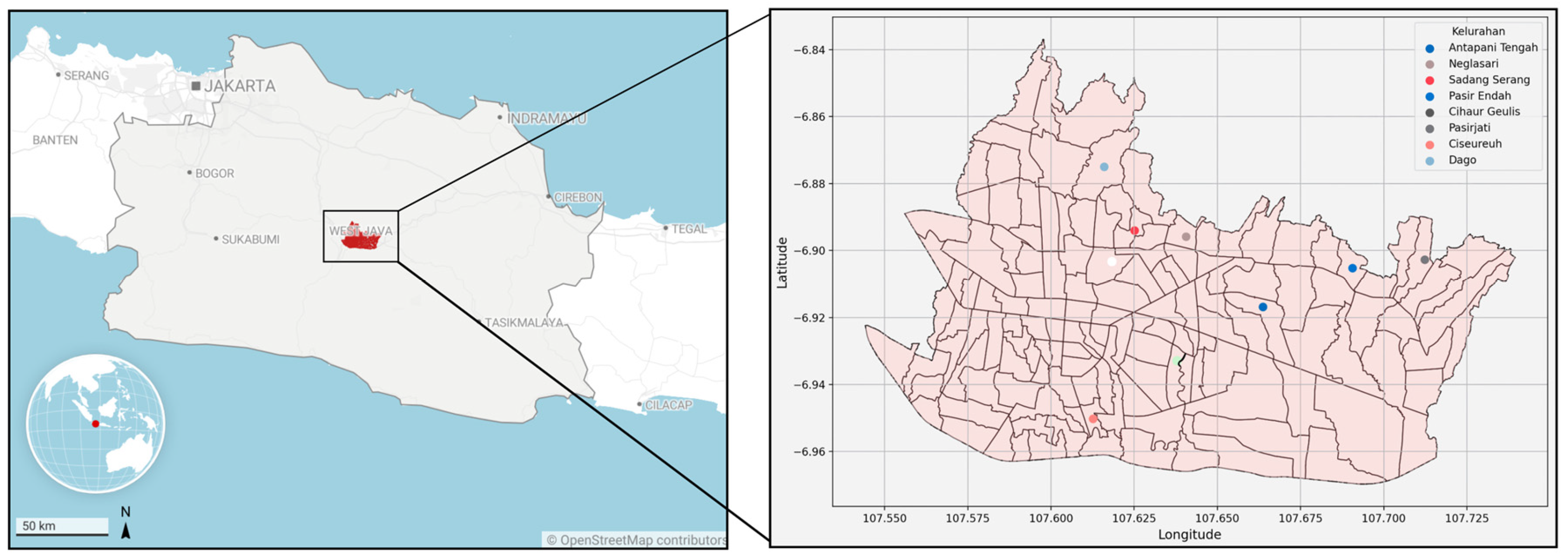
The study was conducted in Bandung, Indonesia, a rapidly urbanizing city facing challenges related to food security, biodiversity conservation, and environmental sustainability. As shown in Figure 1, the study area includes 13 homegarden-based urban agriculture sites in Bandung City, which are distributed across 8 sub-districts. These locations were purposively selected to ensure diverse representation of homegarden practices in the city. The survey and interviews were conducted between August and October 2024, providing a focused and in-depth assessment of community experiences during this period.

2.2. Data Collection

The data collection process for this study combined qualitative and quantitative methods to gain a comprehensive understanding of community perceptions of homegarden-based urban agriculture in Bandung [103,104]. These methods ensured that both detailed individual perspectives and broader community insights were captured. Qualitative data were collected through semi-structured interviews with key informants who had direct experience and knowledge of homegarden management in Bandung. Semi-structured interviews were chosen for their flexibility, allowing for in-depth exploration while ensuring that key topics such as ecosystem services, food security, and biodiversity conservation were addressed [105]. An interview guide was developed to align with the study’s objectives. The interviews were conducted in person, recorded with participant consent, and subsequently transcribed for thematic analysis. Quantitative data were gathered through a structured survey administered to urban residents involved in homegarden-based urban agriculture communities. The survey consisted of closed-ended questions and Likert scale items designed to measure respondents’ perceptions of various aspects of homegardens, including their contributions to food security, biodiversity, and social well-being. The surveys were distributed in eight sub-districts of Bandung, covering a total of 13 homegarden-based urban agriculture locations to ensure a representative sample of the community. This method provided a broader view of the community’s attitudes toward homegardens and their role in promoting urban sustainability [101,102,103].

2.3. Data Analysis

The data collected were analyzed using both qualitative and quantitative techniques to ensure a comprehensive interpretation of the findings. Qualitative data from the semi-structured interviews were analyzed using thematic analysis. This method is widely used in qualitative research due to its flexibility and effectiveness in identifying recurring patterns and themes [106]. In this study, the interview transcripts were manually coded to identify key themes related to food security, biodiversity, and urban sustainability. The identified themes were then categorized and analyzed to explore the underlying patterns and relationships. Quantitative data from the survey were analyzed using descriptive statistics. Descriptive statistics were employed to summarize demographic characteristics and quantify the perceptions of respondents regarding the benefits and challenges of homegardens. Frequencies, percentages, and mean scores for Likert scale items were used to present a clear and concise summary of the data. This analysis provided an overall picture of community attitudes and helped identify trends in perceptions of homegarden-based urban agriculture [105,107,108].

2.4. Ethical Considerations

Ethical considerations were a key component of this study to ensure the protection of participants and the integrity of the research process. Informed consent was obtained from all participants prior to data collection, ensuring that they were fully informed about the study’s purpose, procedures, and any potential risks. Participation was voluntary, and participants were assured of their right to withdraw from the study at any time without any consequence. Confidentiality was maintained throughout the study by anonymizing participant data and securely storing all records [109,110].

2.5. Limitations of the Study

While the study provides valuable insights into community perceptions of homegardens in Bandung, there are some limitations to consider. First, the study was conducted in a specific urban context, which may limit the generalizability of the findings to other cities in Indonesia. Second, the reliance on self-reported data may introduce potential biases, such as social desirability bias or recall bias. Finally, the focus on homegarden-based urban agriculture communities may not fully represent the broader urban population of Bandung, as these participants may already have an interest in or experience with homegardens.

3. Results and Discussion

This study investigates community perceptions of ecosystem services provided by homegarden-based urban agriculture in Bandung, categorized into provisioning, regulating, cultural, and supporting services. The data obtained from a sample of survey respondents and key informants were analyzed using both descriptive statistics and thematic analysis.
Demographic analysis based on the survey responses indicates that the majority (56%) of participants have completed high school, followed by 14% with elementary education, 10% holding a bachelor’s degree, and 8% with a diploma. The mean age of respondents is 49.8 years, with a large proportion of participants being housewives, highlighting the important role of women in urban agriculture. Occupation also plays a significant role, as housewives reported higher engagement in home gardening activities compared to other occupations, such as informal workers and small business owners. Gender distribution was predominantly female (79.2%). Land access data revealed that most participants had private land (44.4%) or public land (43.1%), with some using government land. Seed sourcing was most commonly from self-propagation (44.4%) and government programs (43.1%).
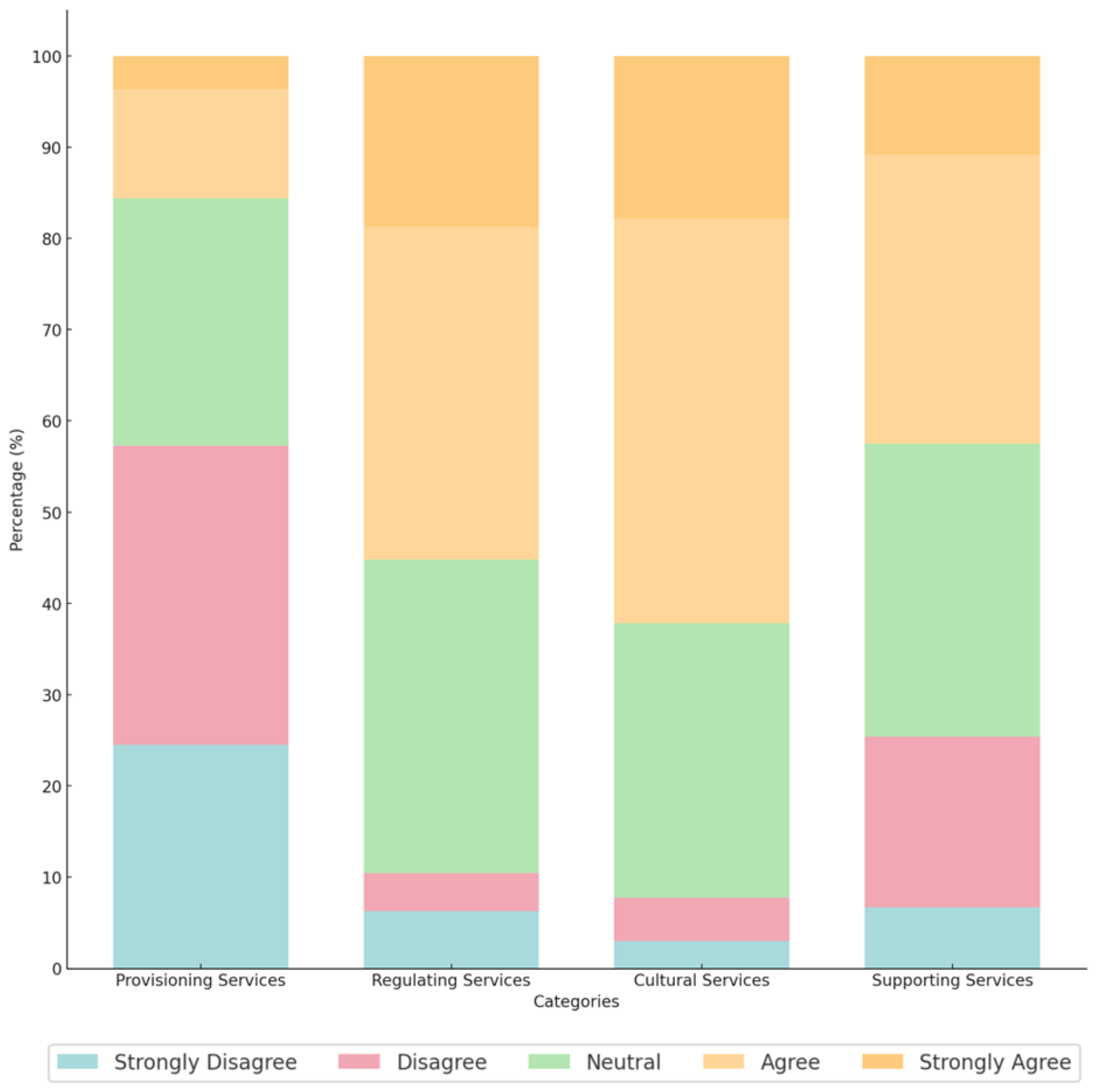
As illustrated in Figure 2, community perceptions of ecosystem services provided by homegarden-based urban agriculture in Bandung City are categorized into four main services: provisioning, regulating, cultural, and supporting services. The percentages represent the distribution of responses in each category. In the provisioning services category, 32.81% of respondents disagreed, and 27.08% were neutral, indicating uncertainty and dissatisfaction, which is attributed to the limited knowledge and skills of the community in managing homegardens effectively. In contrast, regulating services were met with higher acceptance, with 36.46% agreeing and 18.75% strongly agreeing, suggesting a general perception of their benefits. Cultural services were also highly valued, with 44.35% agreeing and 17.86% strongly agreeing, reflecting recognition of the importance of cultural heritage and traditions in homegarden-based agriculture. Feedback for supporting services was mostly positive, with 31.67% agreeing and 32.08% neutral, indicating potential for improvement and greater engagement in enhancing these services to better support homegarden practices.

3.1. Provisioning Services

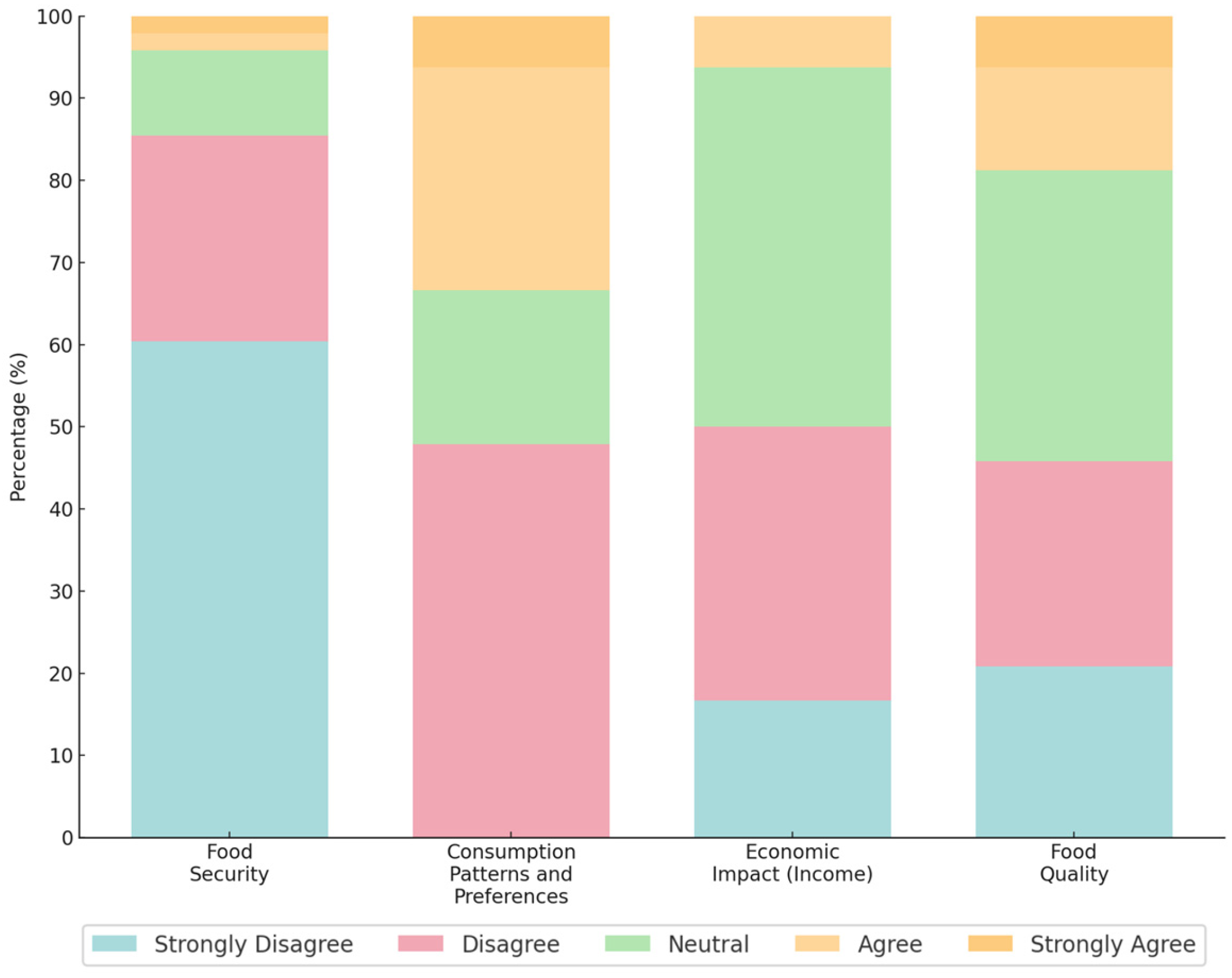
This section examines the public perception of the provisioning services provided by homegarden-based urban agriculture in Bandung City. Provisioning services, which include food security, consumption patterns, economic impact (income), and food quality, are crucial in understanding how homegarden-based agriculture contributes to urban sustainability and food systems. As shown in Figure 3, perceptions of these provisioning services vary among respondents. The findings reveal a mixed perception of the effectiveness of these services, with some respondents expressing uncertainty about their role in urban food security and local economies.
This divergence in opinion presents an opportunity for growth and improvement. As noted by Sriyadi (2022), although many urban residents are motivated to use their homegardens for agriculture, improving technical training and management skills could significantly boost productivity and the impact of homegarden-based farming [111]. With the right knowledge and support, the potential for homegardens to contribute more effectively to food security and economic well-being could be enhanced, making homegarden-based urban agriculture a more reliable and efficient component of Bandung’s food system.

3.1.1. Perception of Food Security

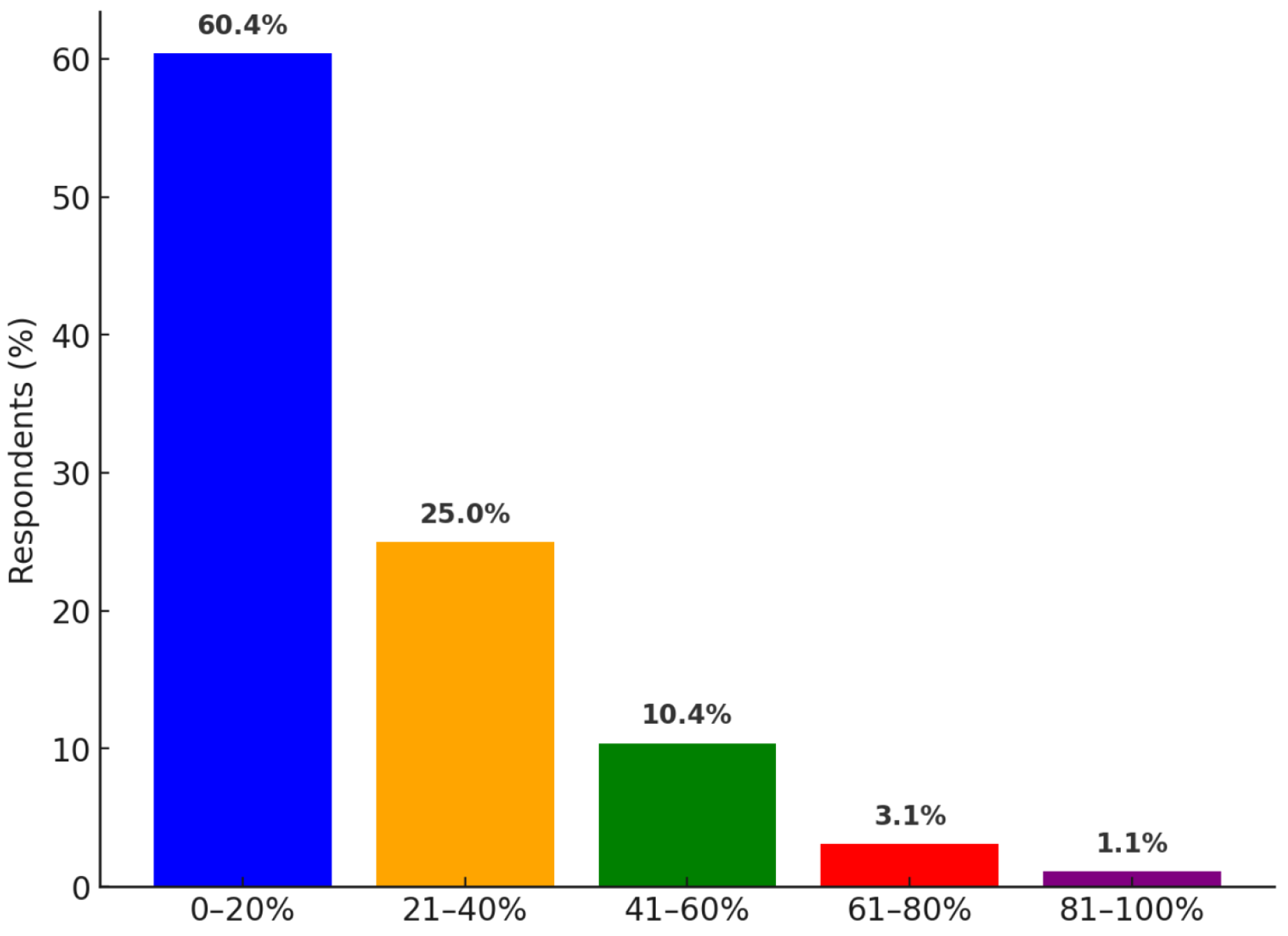
The results from the Likert scale analysis reveal that the majority of respondents perceived homegardens as having a limited contribution to food security. In the “Food Security” category, the mean score of 1.60 indicates that a significant portion of respondents (60.42%) strongly disagreed that homegardens significantly contribute to their daily food supply (Figure 4). This suggests that, for most respondents, homegardens serve more as a supplementary rather than a primary source of food. While homegardens do provide supplementary foods such as vegetables, fruits, and herbs, their overall contribution to meeting daily food needs is limited. These findings align with the distribution of responses, where most of the answers fell within the lower scales (1 and 2), indicating a perception of limited support provided by homegardens to daily food requirements. Factors such as the small size of gardens, limited knowledge of farming techniques, and time constraints due to urban living were likely contributors to this perception. Despite these limitations, homegardens remain a supplementary food source, particularly in providing fresh, organic produce.

3.1.2. Perception of Food Quality

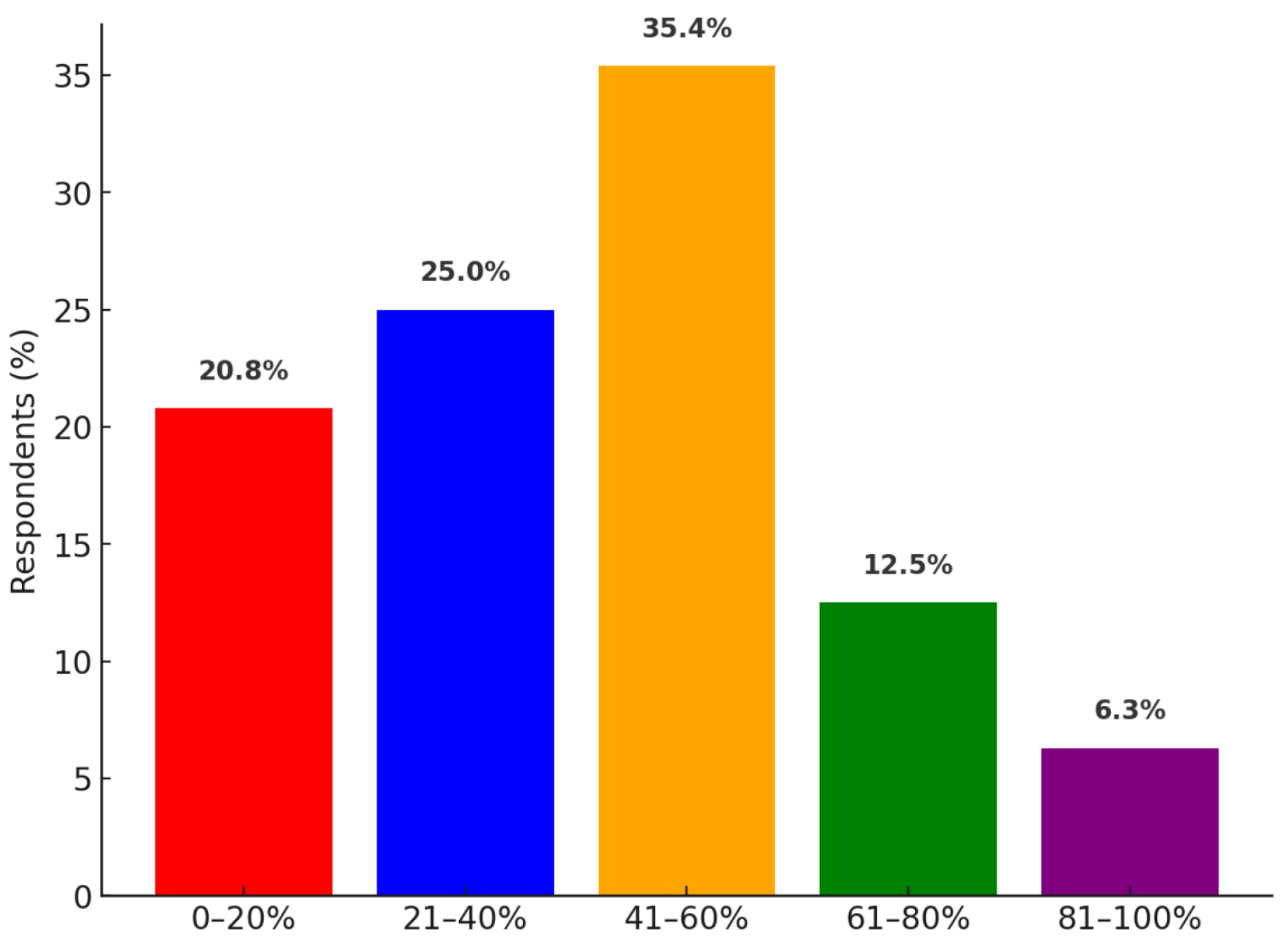
The results from the Likert scale analysis indicate that a significant number of respondents expressed positive perceptions of produce from homegarden-based urban agriculture. In the “Food Quality” category, the mean score of 2.58 suggests that most respondents had a favorable view of the quality of homegrown food. Specifically, a large portion of respondents (35.42%) rated the quality of food from homegardens as higher compared to market-bought produce, indicating a preference for homegrown food in terms of quality (Figure 5). This was reflected in the distribution of responses, where many respondents rated the quality of homegrown food as superior, in line with the findings of studies by Goldstein et al. (2017) and Steenkamp et al. (2021), which suggest that homegarden-based urban agriculture offers healthier and more sustainable alternatives to conventionally grown food [58,92]. However, despite this perceived higher quality, respondents still expressed a preference for purchasing food from markets or supermarkets. This is supported by the higher percentages of responses on the lower Likert scale (2 and 3), pointing to the challenge of integrating homegarden-based urban agriculture into urban food systems, where the convenience of market-bought food often outweighs the perceived benefits of local, organic food.

3.1.3. Perception of Consumption Patterns and Preferences

The results from the Likert scale analysis support the survey findings regarding the consumption of homegrown food. In the “Consumption Patterns and Preferences” category, the mean score of 2.92 indicates that while some respondents regularly consume food grown in their own homegardens, the majority still prefer other sources of food. As shown by the distribution of responses, 47.9% of respondents disagreed with the idea of regularly consuming food from their homegardens, reflecting a stronger preference for other food sources, possibly due to convenience and variety offered by local markets. However, 27.1% of respondents agreed with regularly consuming homegrown food, pointing to a smaller yet notable group that values homegrown produce, especially organic, pesticide-free products. This aligns with the trend observed in the Likert scale data, where a larger portion of respondents fell in the neutral (3) and disagree (2) categories, highlighting that homegrown food remains relatively uncommon in daily consumption despite its perceived benefits. This preference for market-bought food is primarily driven by convenience and product diversity, which are factors that urban dwellers prioritize. However, the growing interest in homegrown food, particularly in organic produce, suggests a shift toward more sustainable consumption practices. Studies by Sugiyanto et al. (2022) and Saputri et al. (2016) further emphasize that consumption patterns are closely linked to food security, with urban agriculture, particularly homegarden-based practices, offering potential improvements in access to nutritious food [112,113].

3.1.4. Perception of Economic Impact (Income)

The results from the Likert scale analysis align with the survey findings regarding the economic impact of homegarden-based urban agriculture on household income. In the “Economic Impact” category, the mean score of 2.40 suggests that the majority of respondents perceive homegardens as having a limited impact on household income. As shown in Figure 3, 43.75% of respondents expressed a neutral opinion, indicating that they neither agreed nor disagreed on the role of homegardens in contributing to household income. Additionally, 33.33% of respondents disagreed, and 16.67% strongly disagreed, further emphasizing that homegarden-based agriculture is not viewed as a significant source of income. Despite this, many respondents acknowledged the economic benefits homegardens provide in terms of household consumption savings, particularly in reducing grocery expenses, especially for vegetables. This is consistent with the neutral to negative responses observed in the Likert scale data, which suggest that while homegardens may not be a primary income source, they do play a role in alleviating food costs. The relatively small scale of production limits the potential of homegardens to function as a major income generator, but they remain an important supplementary tool, especially for households looking to reduce their food expenditure. This finding is in line with research by Abdoellah et al. (2023) and Amalia and Mahmudiono (2017), which emphasize that homegarden-based urban agriculture can help supplement household food budgets, especially for lower-income households [22,114].

3.2. Regulating Services

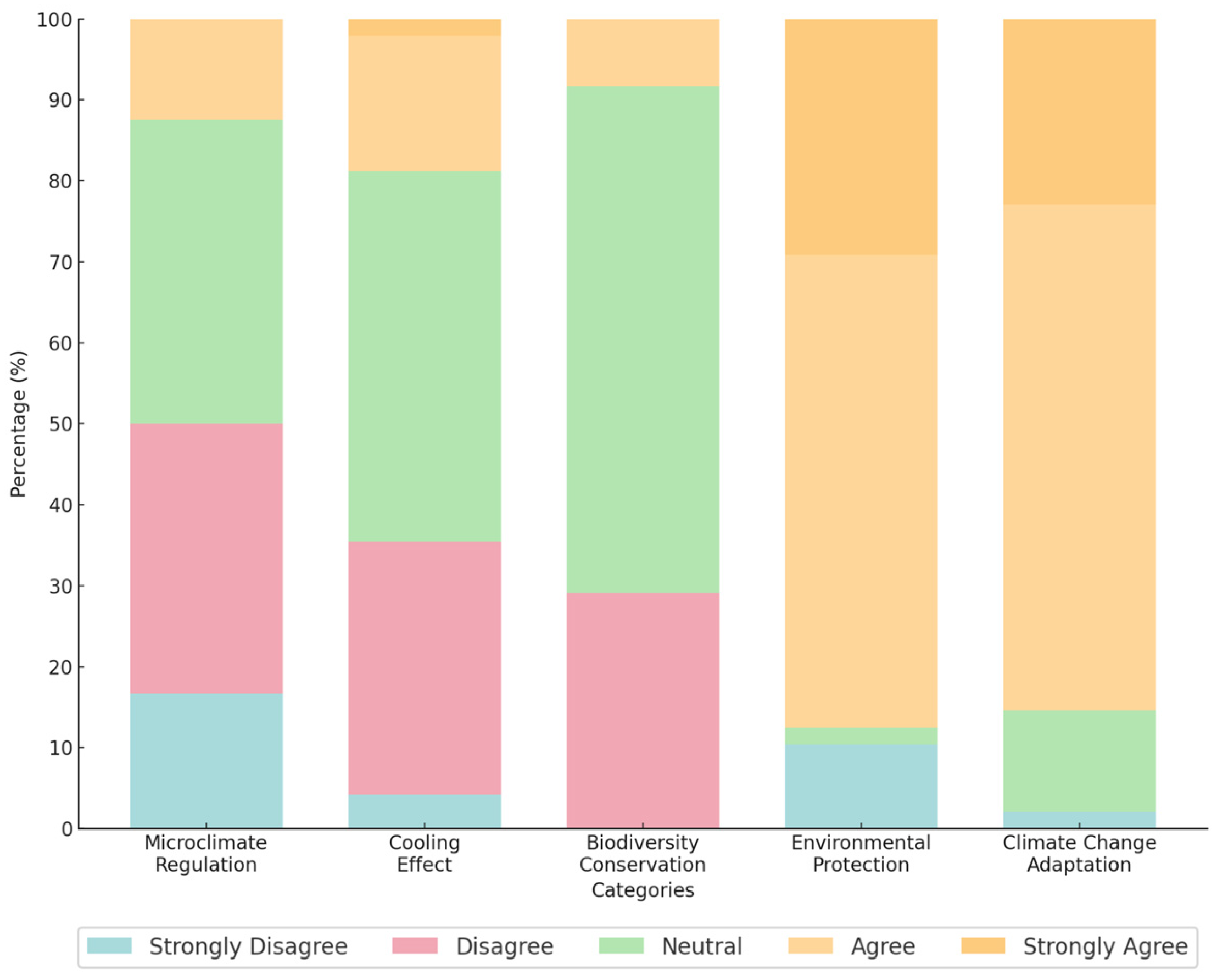
This section examines public perception of the regulating services provided by homegarden-based urban agriculture in Bandung City. As illustrated in Figure 6, respondents perceive homegardens as valuable in providing regulating services, including microclimate regulation, biodiversity conservation, and disaster risk reduction, such as mitigating flood risks and promoting climate resilience. Respondents generally recognized the importance of these services, especially in enhancing environmental resilience and supporting sustainable development. The positive reception of regulating services is likely due to growing awareness of biodiversity and environmental sustainability in urban areas. Public acceptance is closely linked to knowledge about the environmental benefits of homegardens, and community support is shaped by social and cultural norms, which influence the willingness to adopt these services [115].

3.2.1. Perception of Microclimate Regulation and Cooling Effects

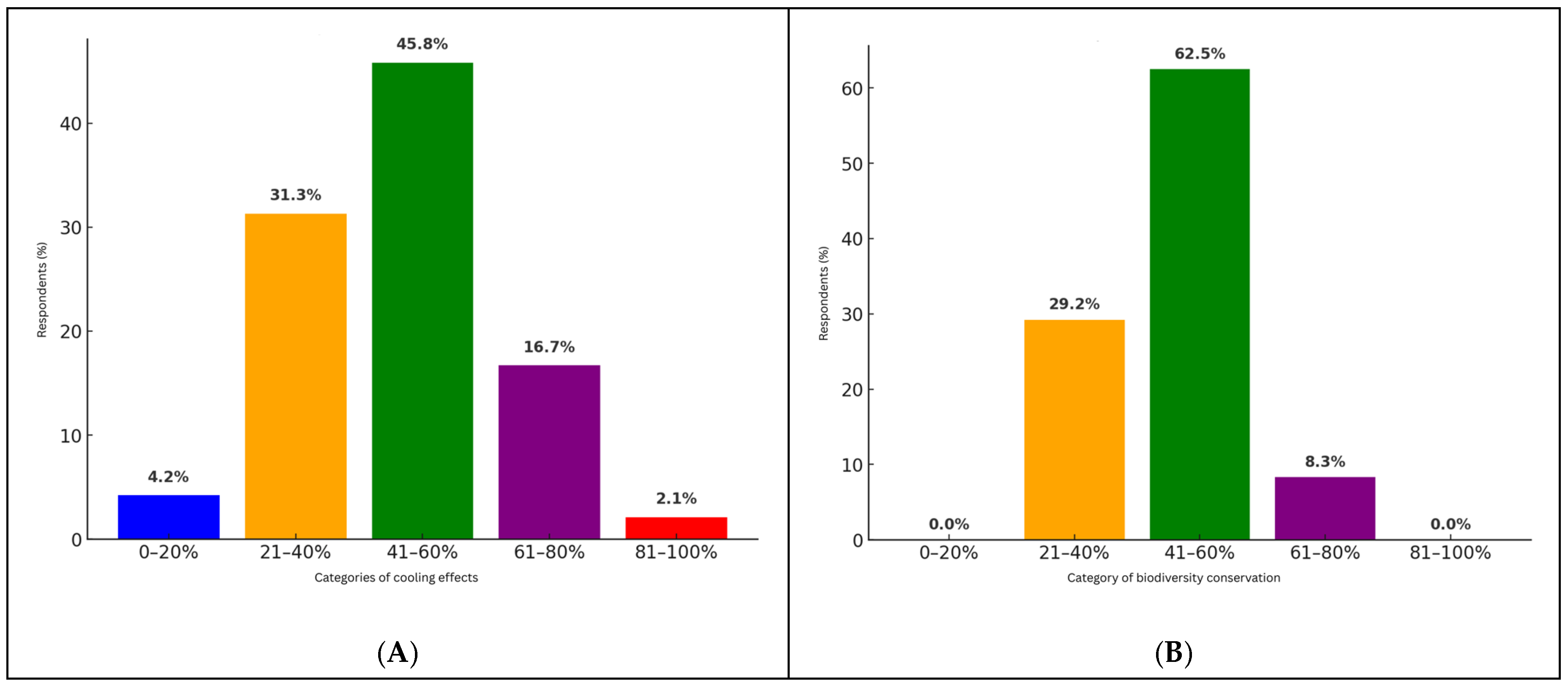
The findings indicate that respondents have a moderate perception of the cooling effects of homegardens, with an average Likert score of 2.81. This suggests that while respondents recognize the role of homegardens in regulating microclimates, they feel that the broader environmental impact may be limited. While the broader impact on microclimate regulation may be uncertain, respondents acknowledged the role of urban agriculture in mitigating heat. These effects are influenced by factors such as plant species, vegetation density, and yard conditions. Supporting research shows that vegetation density and plant species, particularly trees with dense canopies, play a significant role in cooling [116,117,118]. Despite some uncertainty, the potential of homegardens to mitigate the Urban Heat Island (UHI) effect is clear. Studies suggest that green spaces, including homegardens, can reduce the UHI effect by lowering temperatures and improving air quality [119,120]. Though rated as moderate in this study, homegardens play a crucial role in microclimate regulation and contribute to climate change mitigation.

3.2.2. Perception of Biodiversity Conservation

As depicted in Figure 7B, the contribution of homegarden-based urban agriculture to biodiversity conservation is acknowledged, with many respondents perceiving it as moderate, suggesting that homegardens have the potential to support urban biodiversity. The average Likert score for this perception is 2.79, reflecting a neutral to somewhat disagreeing stance. A majority rated the contribution as moderate (41–60%), followed by lower ratings (21–40%) and higher ratings (61–80%). This indicates that while homegarden-based urban agriculture is recognized for supporting biodiversity, its impact is perceived as limited in some instances.
Research indicates that homegarden-based urban agriculture, particularly when designed with biodiversity in mind, contributes to species conservation by integrating a variety of plants, both food and non-food species. These mixed-use gardens provide habitats for pollinators and other beneficial species, enhancing ecosystem services [57,121]. Additionally, the incorporation of agroforestry practices in urban areas, like homegardens, can support biodiversity conservation by providing habitats for various species, including pollinators, which are crucial for agricultural productivity [122,123,124,125].
However, the perceived moderate contribution of homegarden-based urban agriculture to biodiversity could stem from limited awareness or engagement with biodiversity conservation practices. Respondents focusing more on food production may not fully recognize the biodiversity benefits of their homegarden-based agricultural practices. The effectiveness of biodiversity conservation through homegarden-based agriculture may also depend on how many species are incorporated into these spaces and the overall design of the yard [126,127,128].

3.2.3. Perception of Disaster Risk Mitigation and Climate Change Adaptation

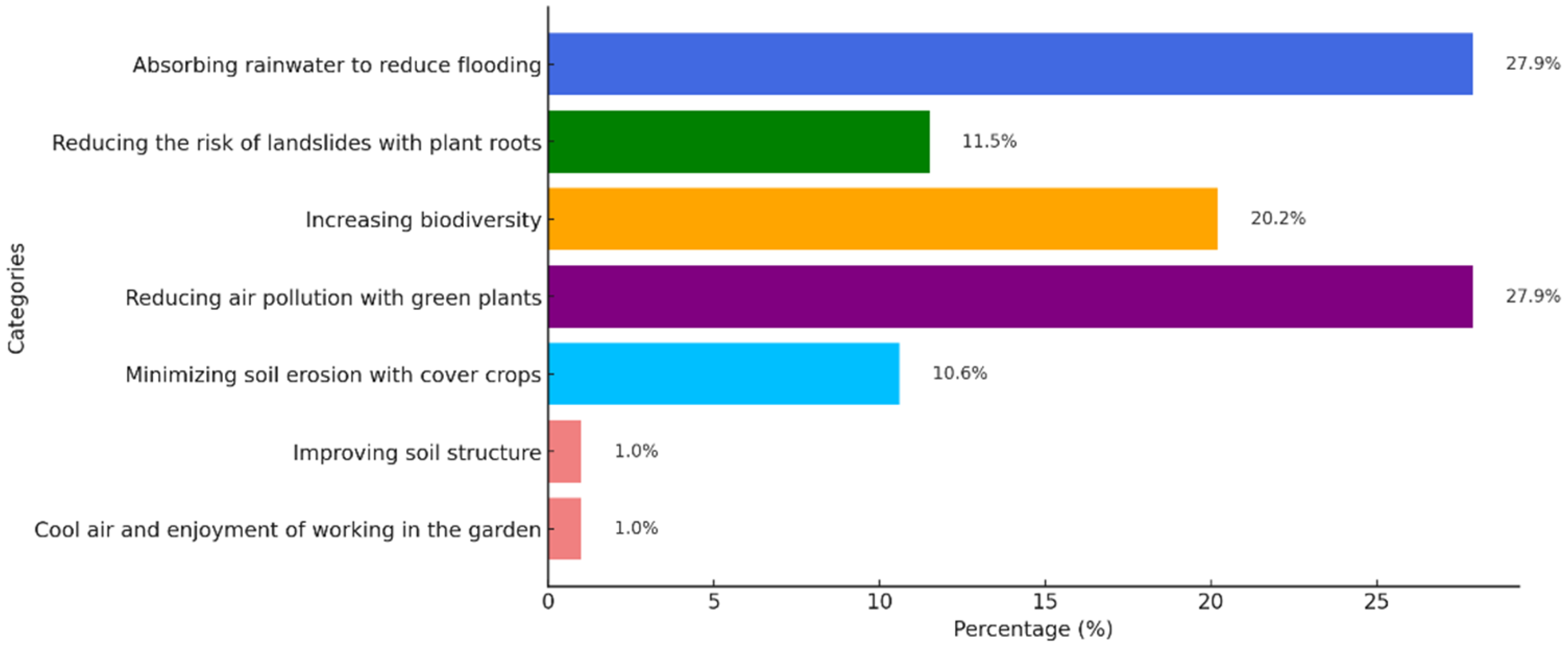
The study found recognition of homegarden-based urban agriculture’s role in mitigating natural disaster risks, such as floods and landslides. The average Likert score for this perception is 4.00, reflecting a generally positive view of the role of homegardens in disaster risk mitigation and climate adaptation. As shown in Figure 8, homegardens are perceived by respondents to play an important role in mitigating disaster risks, particularly by absorbing rainwater to reduce flood risks and improving air quality through plant-based filtration. These findings emphasize homegardens’ contribution to disaster risk reduction and climate change adaptation. Homegarden-based agriculture also supports environmental sustainability by improving biodiversity, managing water resources, and regulating temperatures. Integrating homegardens into urban planning can enhance food security and contribute to climate change adaptation.
Furthermore, 20.2% of respondents highlighted homegardens’ role in maintaining biodiversity, while others pointed to benefits such as soil stabilization (11.5%) and erosion prevention (10.6%). These results underscore the ecological benefits of homegardens in building resilient communities capable of adapting to climate challenges.
Interview results revealed that respondents have implemented various strategies to cope with climate change impacts, such as water storage systems for drought management and protective measures for plants during heavy rains. These adaptive strategies reflect a proactive approach in protecting homegarden-based agriculture against changing weather patterns. Water storage systems, including rainwater harvesting and reservoirs, are crucial for managing drought and water scarcity, improving water availability, soil retention, and mitigating the impacts of droughts, ensuring continued crop productivity. Additionally, plant protection strategies, such as drought-resistant crop varieties and improved irrigation techniques, help reduce crop loss during extreme weather events, which are becoming more frequent due to climate change. Proactive strategies like crop diversification and climate-smart agricultural practices further enhance the resilience of homegardens, fostering community resilience and improving food security [65,129].

3.3. Cultural Services

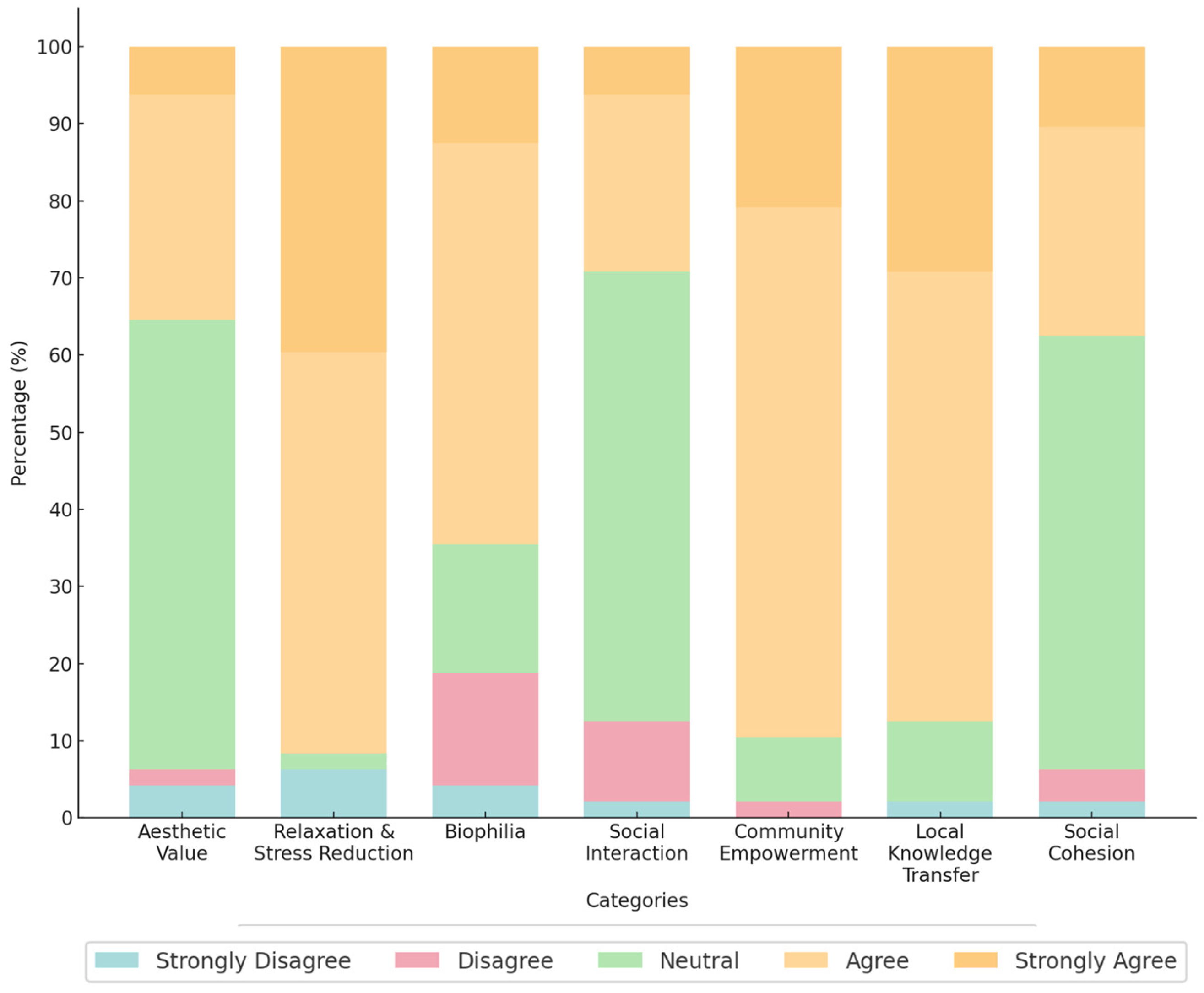
This section explores public perceptions of cultural services provided by homegarden-based urban agriculture in Bandung City. Cultural services refer to the non-material benefits people gain from interacting with ecosystems, such as esthetic value, relaxation, community empowerment, and the transmission of local knowledge. These services play a critical role in enhancing urban residents’ quality of life by promoting mental well-being, fostering social cohesion, and preserving cultural heritage. As depicted in Figure 9, cultural services provided by homegardens received the most positive feedback, with respondents emphasizing their value in enhancing esthetic appeal, fostering social interaction, and supporting community cohesion. The following subsections discuss respondents’ perceptions of these services, highlighting their importance within the context of homegarden-based agriculture.

3.3.1. Perception of Esthetic Value

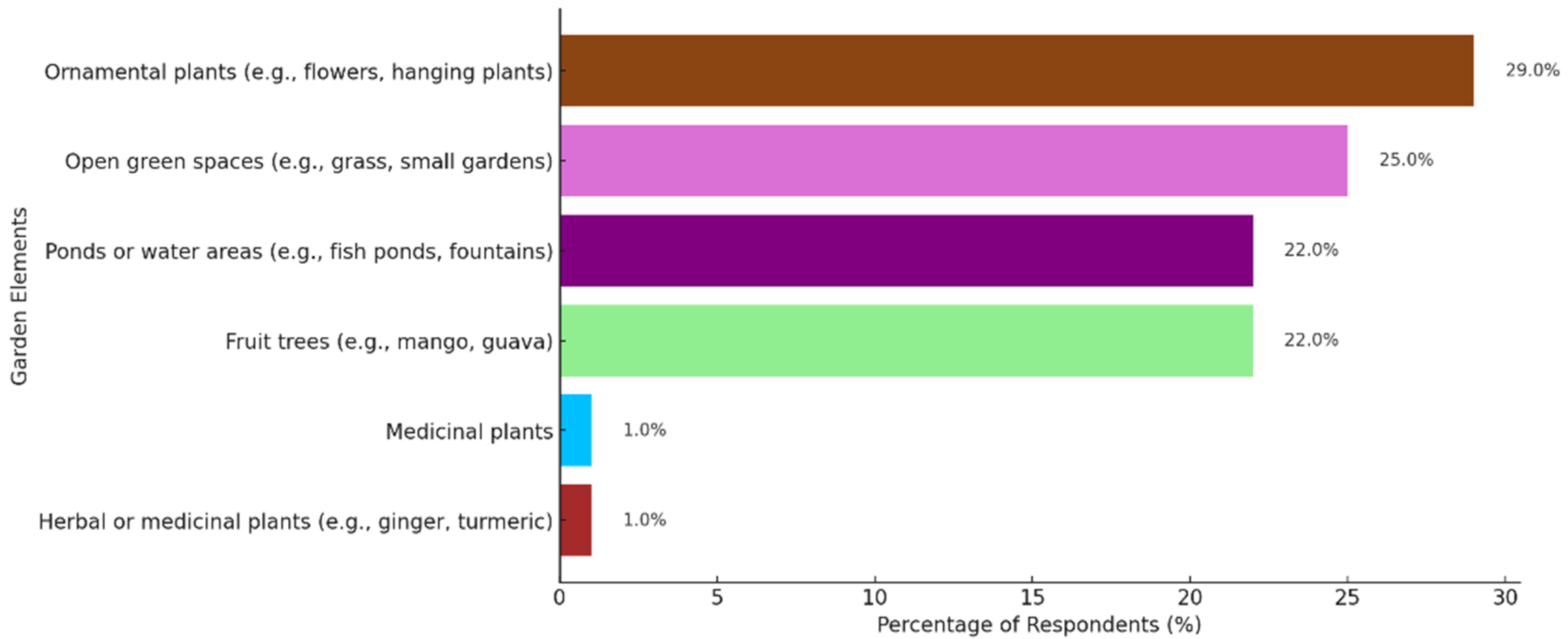
The findings suggest that esthetic value in homegarden-based urban agriculture plays a moderate role in shaping community perceptions. The average Likert score for this perception is 3.31, indicating a generally neutral view on the esthetic value of homegardens. A majority of respondents (58.33%) expressed a neutral opinion on the esthetic value of homegardens, while 29.17% agreed and 6.25% strongly agreed. A small portion (6.25%) disagreed, and 2.08% strongly disagreed, indicating that while esthetic considerations are valued, they do not significantly influence the overall perception of homegardens (Figure 9). Despite not being the dominant factor, visually pleasing green spaces in urban yards still provide environmental benefits. Studies by Kuo (2015) highlight that esthetic spaces, such as decorative plants and small gardens, can improve mental well-being by reducing stress [130]. As shown in Figure 10, respondents identified ornamental plants, flowers, and hanging plants as key features that contribute to the esthetic value of homegardens, enhancing both their visual appeal and relaxation potential. These findings align with the understanding that urban green spaces can serve as places for relaxation and visual enjoyment, ultimately enhancing residents’ quality of life.

3.3.2. Perception of Relaxation and Stress Reduction

Relaxation and stress reduction services were highly valued by respondents, with 52.08% agreeing and 39.58% strongly agreeing that homegarden-based agriculture provides effective spaces for relaxation (Figure 9). The average Likert score for this perception is 4.19, reflecting a strong agreement on the role of homegardens in offering relaxation and stress reduction benefits. These results align with studies by Lin et al. 2023 and Felappi et al. 2020, which emphasize the positive effects of green spaces on mental health, particularly in reducing stress and anxiety [131,132]. Additionally, Berg et al. (2015) highlighted that well-structured outdoor spaces play a significant role in psychological well-being by alleviating mental tension [133].
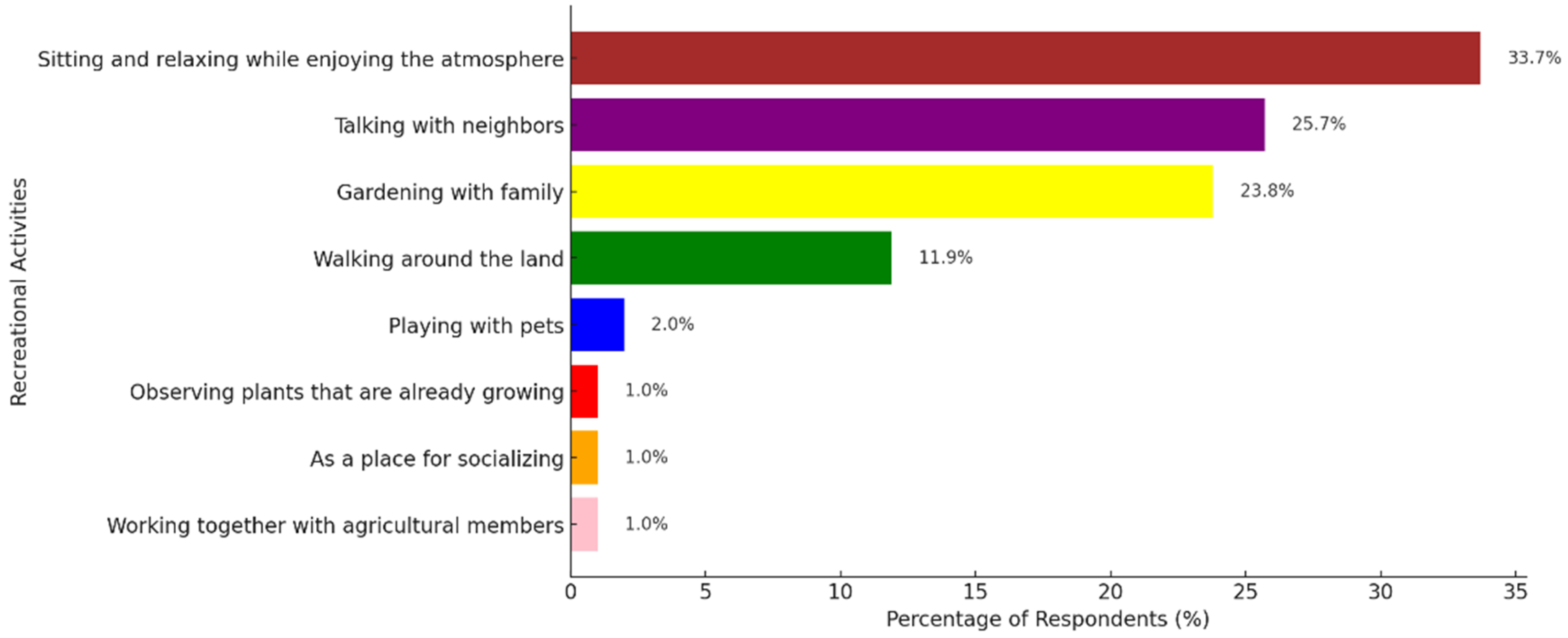
As illustrated in Figure 11, common relaxation activities in homegardens include sitting and enjoying the peaceful environment, as well as socializing with neighbors, reflecting the mental health benefits of green spaces. Social activities, such as chatting with neighbors and gardening with family, were also common, illustrating that these spaces promote individual relaxation while fostering social interaction. These findings emphasize the dual role of homegarden-based urban agriculture as both a personal retreat and a communal space that strengthens relationships among community members.
Interviews with respondents revealed that gardening or spending time in the yard provides mental clarity and stress relief. One respondent mentioned that observing plants grow and watering them brought a sense of joy and refreshment. This aligns with the idea that interacting with plants is not only a physical activity but also offers psychological benefits, especially in urban environments.

3.3.3. Perception of Biophilia

Biophilia, the emotional and physical connection between humans and nature, was another important cultural service identified in this study. The majority of respondents (52.1%) reported that homegarden-based urban agriculture enhanced their connection to nature (Figure 9). The average Likert score for this perception is 3.54, indicating a generally positive but moderate view on the role of homegardens in fostering biophilia. This supports the concept of biophilia, which suggests that humans have an inherent tendency to connect with the natural world. Naghibi et al. (2024) argue that this connection offers psychological and physical benefits, including improved mood and stress reduction [134].
Respondents’ positive views on biophilia suggest that homegarden-based urban agriculture plays a key role in strengthening emotional and physical connections to nature. As demonstrated by Kuo (2015), urban green spaces promote well-being by fostering these connections and enhancing ecological awareness [130]. Furthermore, biophilic design in urban environments can increase environmental awareness and encourage more sustainable living practices [130].
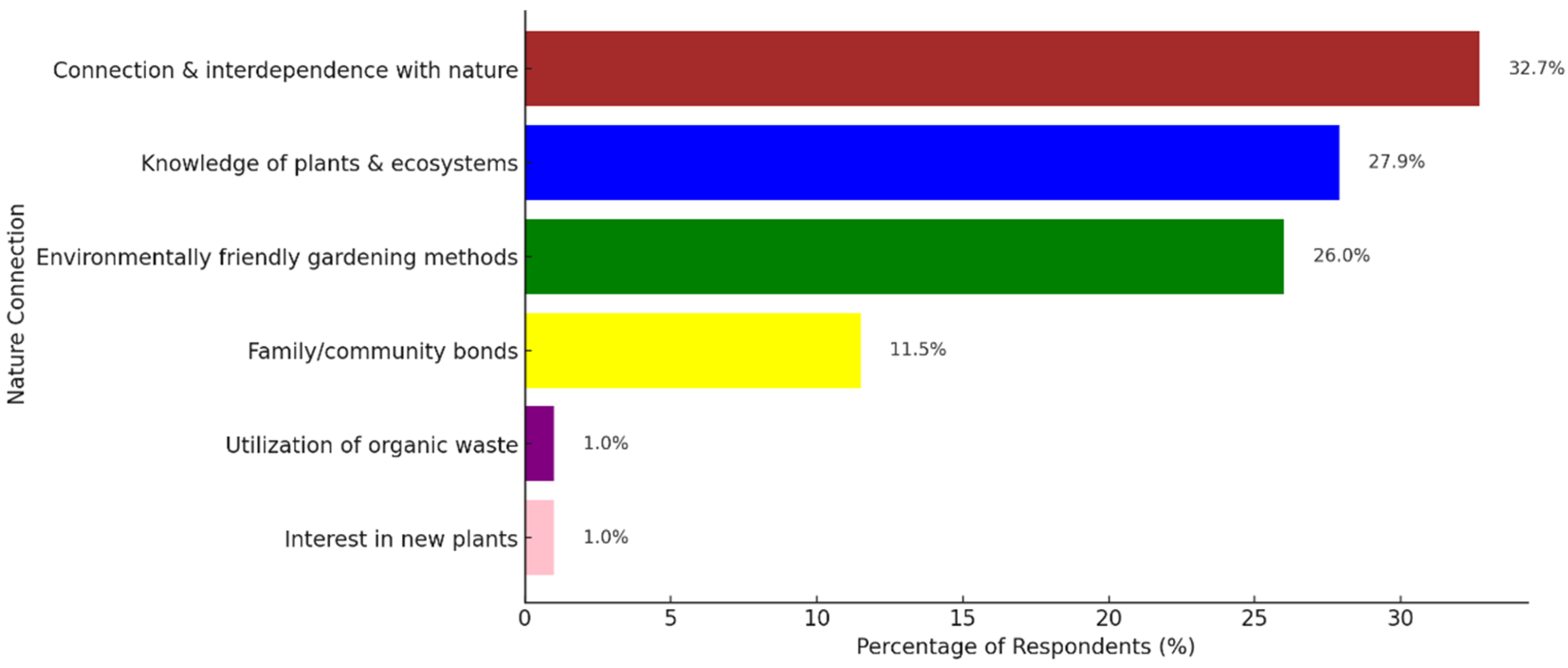
Figure 12 further highlights the significant impact of homegarden-based urban agriculture on fostering a connection with nature, with 32.7% of respondents feeling more connected to and responsible for the environment after engaging in gardening activities. Additionally, 27.9% reported increased knowledge about plants and ecosystems, while 26.0% were motivated to adopt more environmentally friendly gardening practices. These findings indicate that homegarden-based agriculture not only strengthens the connection between individuals and nature but also serves as an informal learning tool that promotes environmental awareness.

3.3.4. Perception of Social Interaction and Community Cohesion

Social interaction and community cohesion, key cultural services, were also valued by respondents. The average Likert score for this perception is 3.31, reflecting a neutral to moderately positive view on the role of social interaction in homegarden-based urban agriculture. Figure 9 shows that 58.33% of respondents expressed a neutral opinion about the role of social interaction in homegarden-based urban agriculture, with 22.92% agreeing and 6.25% strongly agreeing that it plays an important role. This reflects an acknowledgment that, while social interactions may not be a primary focus, they still contribute to the overall success and sustainability of homegarden-based agriculture in urban settings.
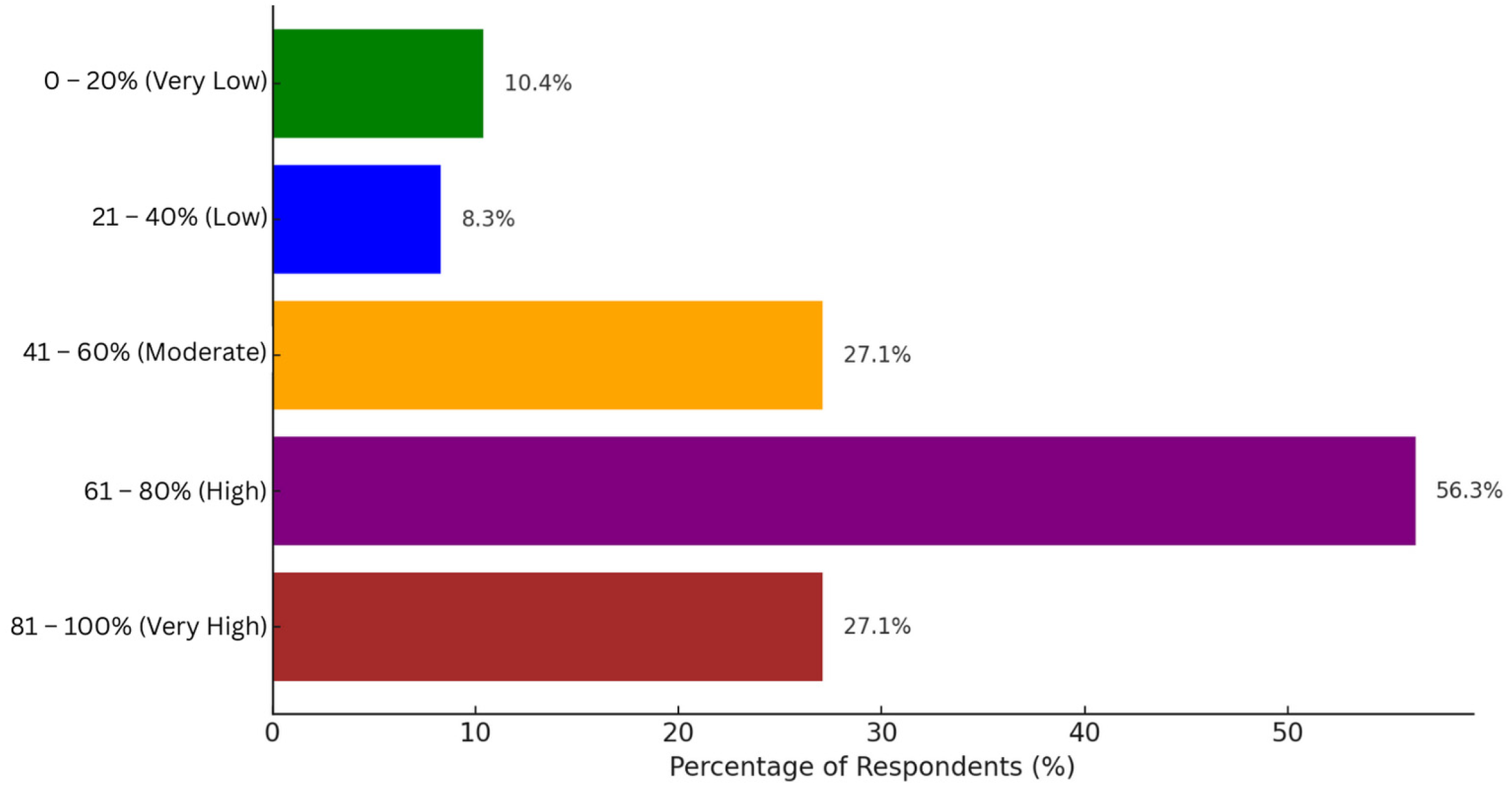
Figure 13 further underscores the impact of homegarden-based urban agriculture on community cohesion. A significant portion of respondents (61–80%) recognized the value of homegarden-based agriculture in fostering social solidarity within the community. This highlights the role of homegarden-based urban agriculture not only as a means of producing food but also as a catalyst for building networks of support and cooperation. The shared experience of gardening, exchanging produce, and working together in the yard strengthens social ties and promotes a sense of shared responsibility within the neighborhood.
The importance of community empowerment through homegarden-based urban agriculture was further highlighted in interviews, where respondents noted that gardening activities helped build stronger relationships and fostered a spirit of mutual support. This aligns with the concept of community empowerment, where collective action in homegarden-based urban agriculture can enhance social networks and improve the resilience of urban communities.

3.3.5. Perception of Community Empowerment and Knowledge Sharing

Community empowerment and the transfer of local knowledge were highly valued by respondents. The average Likert score for this perception is 4.11, reflecting a strong agreement on the importance of community empowerment and knowledge sharing in homegarden-based urban agriculture. A substantial 68.75% agreed, and 20.83% strongly agreed that community empowerment is crucial for homegarden-based urban agriculture (Figure 9), highlighting the importance of active community participation in managing these agricultural spaces. Empowering communities through gardening activities not only enhances individual skills but also strengthens social ties, contributing to the sustainability of these initiatives. Similarly, 58.33% of respondents agreed, and 29.17% strongly agreed that sharing local knowledge is vital for the success of homegarden-based agriculture. The transfer of traditional farming knowledge, such as sustainable practices and resource management, is key to increasing food security and optimizing land use in urban areas. Interviews further revealed that gardening activities foster social cohesion and solidarity, with respondents noting that working together and sharing harvests helps strengthen social bonds and build a sense of belonging. These findings underscore the potential of homegardens as a tool for enhancing community well-being and social capital [26,37,135,136].

3.4. Supporting Services

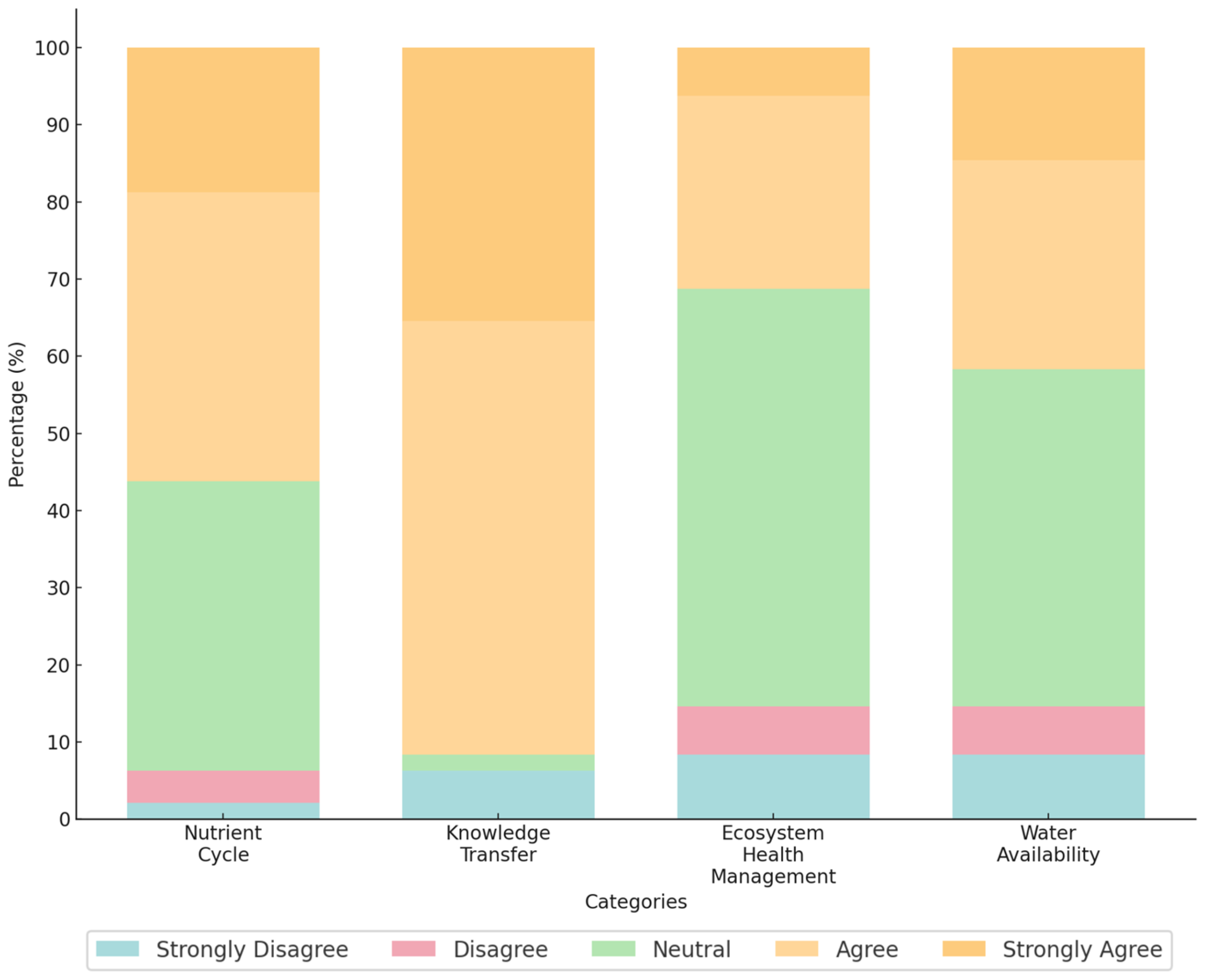
This section explores the public perception of supporting services provided by homegarden-based urban agriculture in Bandung City. Supporting services, including knowledge transfer, nutrient cycling, ecosystem health management, and water availability, play a crucial role in maintaining sustainable urban agricultural systems and enhancing the resilience of urban environments. These services contribute to long-term soil health, biodiversity, and overall ecosystem stability, making them an essential component of urban food production. The following subsections discuss how respondents perceive these services and their potential benefits.
Supporting services are fundamental processes that enable other ecosystem services, such as nutrient cycling, water management, and soil fertility, to function effectively. As shown in Figure 14, respondents expressed a range of opinions regarding these services, with many acknowledging their importance, while some remained neutral. This suggests that while awareness exists, further engagement and education could help strengthen public understanding of the role supporting services play in homegarden-based urban agriculture.
Barnaud et al. (2018) highlight that effective supporting services, such as soil fertility and pollination, are critical for sustaining homegarden-based urban agriculture [137]. However, as noted in Fida and Purwandari (2022), the perception of supporting services can be enhanced through targeted interventions such as training programs, technology access, and knowledge sharing [138]. The mixed responses to supporting services in this study may indicate a need for improved support structures to help residents understand and optimize these services within their homegarden-based urban agriculture practices.

3.4.1. Perception of Knowledge Transfer Supporting Ecosystems

Knowledge transfer supporting ecosystems was the most positively perceived service, with a majority of respondents agreeing or strongly agreeing on its importance (Figure 14). The average Likert score for this perception is 4.15, reflecting strong support for the role of knowledge transfer in supporting ecosystems. This reflects the broader role of homegarden-based agriculture not only as a space for food production but also as an educational tool. It allows community members to acquire practical knowledge on sustainable farming, which enhances their skills and fosters innovation in resource management [139,140].
As a space for learning, homegarden-based agriculture serves as a laboratory where community members can experiment with agricultural practices, share knowledge, and implement sustainable techniques. Collaboration between farmers, government, and educational institutions can broaden the adoption of environmentally friendly and sustainable farming practices, which are essential for maintaining local food security [139,140]. By raising awareness of sustainability and resource management, urban gardens encourage more efficient and sustainable land management [141,142]. Therefore, the role of knowledge transfer is critical for empowering the community and fostering practices that contribute to sustainable ecosystems [143].

3.4.2. Perception of Nutrient Cycling and Soil Fertility

Regarding nutrient cycling and soil fertility, 37.5% of respondents agreed that these services were important, with an equal number remaining neutral, and 18.75% strongly agreeing (Figure 14). The average Likert score for this perception is 3.67, reflecting a moderate level of agreement on the importance of nutrient cycling and soil fertility. Most respondents recognized the value of nutrient cycling, particularly in enhancing soil fertility through organic materials or sustainable practices. However, the neutral responses suggest variability in understanding soil management, with some respondents possibly having limited access to information or resources on practices like using organic fertilizers. These findings highlight the importance of improving education and access to resources to optimize soil fertility. Research shows that organic fertilizers, such as compost and manure, not only improve soil fertility but also promote microorganisms essential for nutrient release, contributing to long-term soil health and reducing environmental degradation [144,145,146,147].
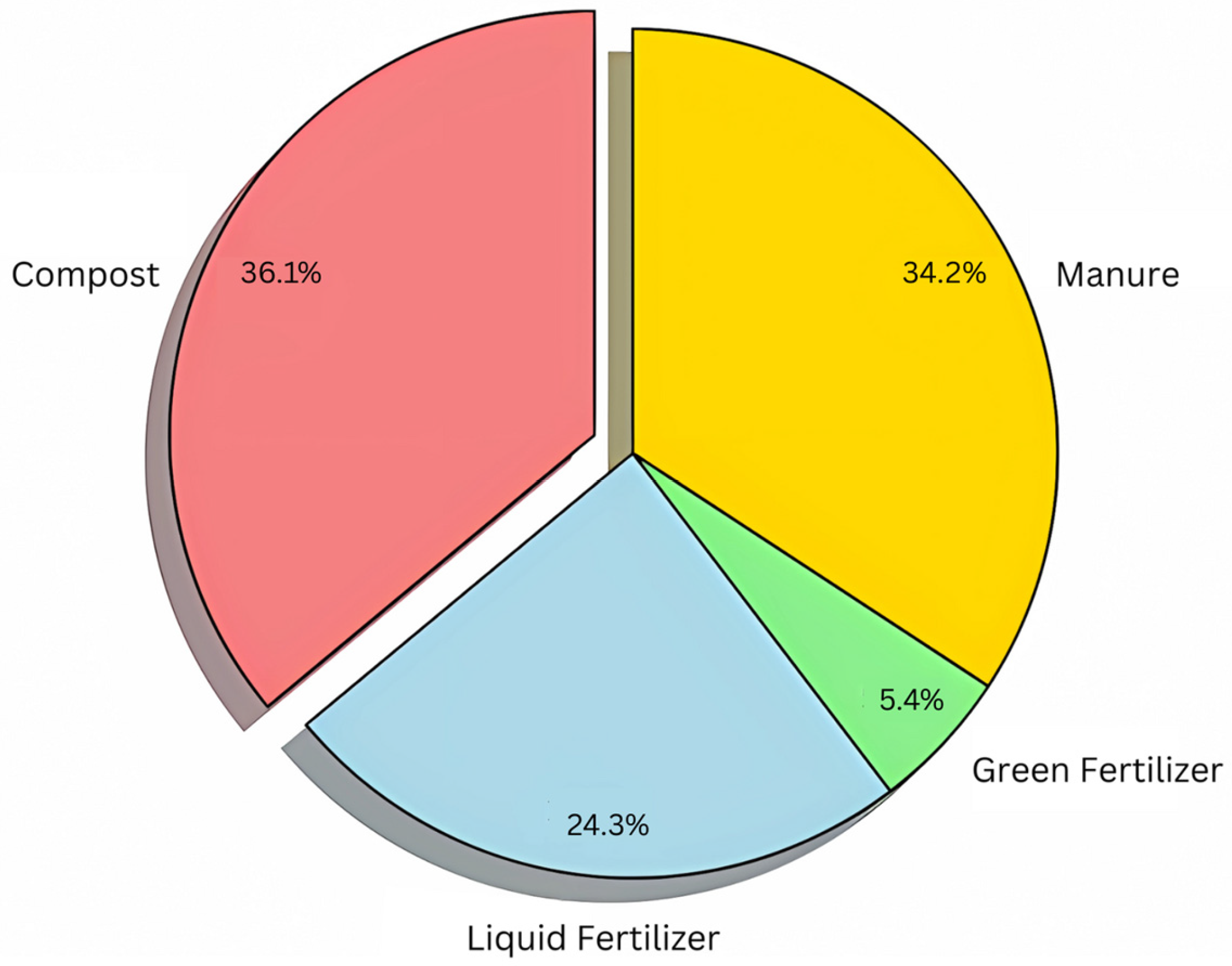
Figure 15 shows that homegarden farmers in Bandung primarily use organic fertilizers. Compost is used at 36%, manure at 34.2%, liquid fertilizer at 24.3%, and green fertilizer at only 5.4%. The selection of organic fertilizers indicates a trend towards more environmentally friendly farming practices. The use of compost and manure not only improves soil fertility but also supports microorganism activity involved in decomposition and nutrient release for plants [145,148,149]. Previous studies also show that organic fertilizers enhance the soil’s capacity to absorb and retain water, which is crucial in homegarden-based urban agriculture systems with limited land and water resources [144,146,147]. In addition to improving soil fertility, organic fertilizers also contribute to maintaining environmental quality by reducing reliance on chemical fertilizers. Several studies indicate that long-term use of chemical fertilizers can lead to soil degradation and environmental pollution [144,146,147,150]. The decline in soil fertility due to the accumulation of chemical residues can reduce agricultural productivity and increase the risk of groundwater pollution and surrounding ecosystems [110,144]. By using organic fertilizers sustainably, urban farmers in Bandung can maintain more stable soil quality and enhance land productivity support [147,151].

3.4.3. Perception of Ecosystem Health Management

Ecosystem health management, which includes pest and disease control, soil fertility enhancement, and the use of sustainable farming techniques, was met with mixed responses. The average Likert score for this perception is 3.15, indicating a neutral to moderate view on the importance of ecosystem health management in homegarden-based urban agriculture. As shown in Figure 14, 54.17% of respondents expressed a neutral stance, while 25% agreed that ecosystem health management plays an important role in homegarden-based urban agriculture. This variation reflects the differing levels of understanding and application of ecosystem health management practices.
Some urban farmers have adopted sustainable farming techniques that support ecosystem balance, while others may not fully recognize the benefits or may face challenges in implementation [152,153,154]. A key practice in ecosystem health management is the use of organic pest control methods and diversifying crops to reduce pest pressure. These methods maintain ecological balance and promote healthier harvests. Studies have shown that biological control agents, such as natural predators and microorganisms, can effectively control pest populations without harming the soil or other components of the ecosystem [152,153,154]. Respondents showed an awareness of the importance of maintaining ecosystem health but may not consistently apply these practices. The neutral responses suggest that while some urban farmers engage in ecosystem health management, there is a gap in widespread adoption of such practices. Continued education and access to resources will be crucial for expanding the use of sustainable farming techniques across urban gardens.

3.4.4. Perception of Water Availability

Water availability is a crucial factor for sustaining homegarden-based urban agriculture, especially in areas where water resources are limited. The average Likert score for this perception is 3.33, indicating a neutral to moderately positive view on the role of water availability in supporting homegarden-based agriculture. The study found that over 40% of respondents expressed a neutral opinion on the role of homegarden-based agriculture in providing water for farming systems, while 27.08% agreed and 14.58% strongly agreed (Figure 14). This variation in responses highlights differences in access to water sources and the implementation of water conservation technologies.
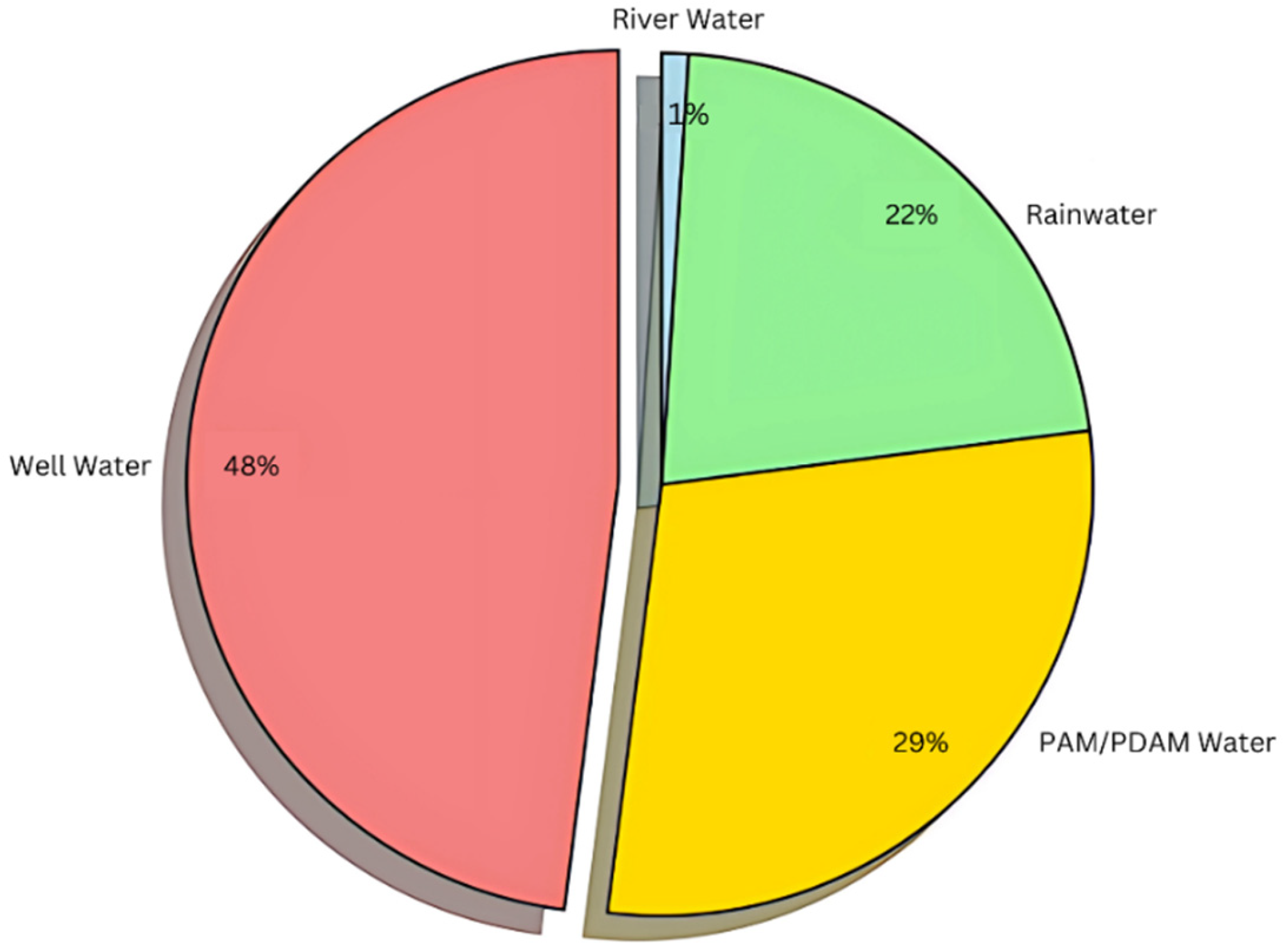
The data on water sources used for homegarden-based urban agriculture in Bandung reveals that well water is the most common source (48%), followed by PAM/PDAM (29%) and rainwater (22%) (Figure 16). The heavy reliance on well water indicates that urban farmers are dependent on groundwater for irrigation, which can present challenges, particularly in areas where groundwater levels become depleted due to overuse [155,156,157]. On the other hand, the use of rainwater harvesting systems, although lower in percentage, demonstrates an effort to conserve water and reduce reliance on external water sources. Rainwater harvesting can help mitigate pressure on groundwater resources, especially in areas with high rainfall [158,159].
While water availability is acknowledged as a vital aspect of homegarden-based urban agriculture, the results suggest that access to water resources is not uniform across all areas. Some farmers face difficulties in obtaining clean water for irrigation, while others have more stable access. Addressing disparities in water access and promoting water-saving techniques will be essential for supporting the sustainability of homegarden-based urban agriculture in the long term.

4. Conclusions

This study explores the contributions of homegarden-based urban agriculture to sustainability in Bandung, Indonesia, focusing on its impact on food security, biodiversity conservation, microclimate regulation, and social well-being. While homegardens play a supplementary role in food production, they provide valuable ecosystem services, such as enhancing biodiversity, mitigating the Urban Heat Island effect, and fostering social cohesion. Despite these benefits, homegardens’ contribution to overall urban food security remains limited due to challenges like space constraints, insufficient knowledge, and land use competition.
To fully unlock the potential of homegardens, targeted interventions are needed, including improving community education on sustainable agricultural practices, offering technical support, and developing policies that encourage integrating homegardens into urban planning. These actions could significantly improve productivity, resource management, and resilience in urban food systems. Moreover, fostering a stronger connection between urban residents and their environment through homegardens could contribute to long-term urban sustainability and resilience.
This study emphasizes the importance of overcoming existing barriers and integrating homegardens more effectively into urban environments. It calls for collaboration between policymakers, urban planners, and community stakeholders to enhance the viability and impact of homegardens in promoting sustainable cities. Ultimately, such efforts will contribute to broader sustainability goals, such as those outlined in the United Nations Sustainable Development Goals (SDGs).

Author Contributions

Conceptualization, O.S.A. and G.L.U.; Methodology, A.S., G.L.U. and Y.S.; Validation, O.S.A., I.W., D.M. and Y.S.; Formal analysis, A.S.; Investigation, A.S. and I.W.; Data curation, A.S., G.L.U., I.W. and D.M.; Writing—original draft, A.S.; Writing—review & editing, O.S.A. and G.L.U.; Supervision, O.S.A., G.L.U., I.W., D.M. and Y.S.; Funding acquisition, A.S. and O.S.A. All authors have read and agreed to the published version of the manuscript.

Funding

This research was funded by Academic Leadership Grants-Universitas Padjadjaran through grants for Prof. Oekan S. Abdoellah PhD. Faculty of Social and Political Sciences. Additional funding was provided by VolksWagen Foundation 9A970 the INSUAH Projects and Hibah Pusat Unggulan Universitas Padjadjaran.

Institutional Review Board Statement

Ethical review and approval were waived for this study due to legal regulations as specified by the applicable research guidelines at Universitas Padjadjaran.

Informed Consent Statement

Informed consent was obtained from all subjects involved in the study.

Data Availability Statement

Data will be made available upon request.

Acknowledgments

The authors would like to thank the Rector of Universitas Padjadjaran, the Direktorat Riset, Hilirisasi dan Pengabdian Pada Masyarakat (DRHPM) Universitas Padjadjaran, the Center for Environment and Sustainability Science (CESS), INSUAH (Integrated Study on Urban Agriculture as Heritage), the community at the research location, the informants and respondents, as well as the Agency of Food Security and Agriculture in Bandung for their support.

Conflicts of Interest

The authors declare no conflicts of interest.

References

  1. Giyarsih, S.R.; Armansyah; Zaelany, A.A.; Latifa, A.; Setiawan, B.; Saputra, D.; Haqi, M.; Lamijo; Fathurohman, A. Interrelation of Urban Farming and Urbanization: An Alternative Solution to Urban Food and Environmental Problems Due to Urbanization in Indonesia. Front. Built Environ. 2024, 9, 1192130. [Google Scholar] [CrossRef]
  2. Prastiyo, S.E.; Irham; Hardyastuti, S.; Jamhari, F. How Agriculture, Manufacture, and Urbanization Induced Carbon Emission? The Case of Indonesia. Environ. Sci. Pollut. Res. 2020, 27, 42092–42103. [Google Scholar] [CrossRef]
  3. Pribadi, D.O.; Pauleit, S. The Dynamics of Peri-Urban Agriculture During Rapid Urbanization of Jabodetabek Metropolitan Area. Land Use Policy 2015, 48, 13–24. [Google Scholar] [CrossRef]
  4. Specht, K.; Schimichowski, J.; Fox-Kämper, R.; Specht, K.; Fox-Kämper, R.; Fox-Kämper, R.; Schimichowski, J. Multifunctional Urban Landscapes: The Potential Role of Urban Agriculture as an Element of Sustainable Land Management. In Sustainable Land Management in a European Context: A Co-Design Approach; Springer: Berlin/Heidelberg, Germany, 2021; pp. 291–303. [Google Scholar] [CrossRef]
  5. Rondhi, M.; Pratiwi, P.A.; Handini, V.T.; Sunartomo, A.F.; Budiman, S.A. Agricultural Land Conversion, Land Economic Value, and Sustainable Agriculture: A Case Study in East Java, Indonesia. Land 2018, 7, 148. [Google Scholar] [CrossRef]
  6. Sunardi, S.; Ghulam, I.; Istiqomah, N.; Fadilah, K.; Safitri, K.I.; Abdoellah, O.S. Environmental Sustainability and Food Safety of the Practice of Urban Agriculture in Great Bandung. Int. J. Sustain. Dev. Plan. 2023, 18, 737–743. [Google Scholar] [CrossRef]
  7. Tan, B.A.; Gaw, L.Y.; Masoudi, M.; Richards, D.R. Nature-Based Solutions for Urban Sustainability: An Ecosystem Services Assessment of Plans for Singapore’s First “Forest Town”. Front. Environ. Sci. 2021, 9, 610155. [Google Scholar] [CrossRef]
  8. Stefani, M.C.; Orsini, F.; Magrefi, F.; Sanyé-Mengual, E.; Pennisi, G.; Michelon, N.; Bazzocchi, G.; Gianquinto, G. Toward the Creation of Urban Foodscapes: Case Studies of Successful Urban Agriculture Projects for Income Generation, Food Security, and Social Cohesion. In Urban Horticulture: Sustainability for the Future; Springer: Berlin/Heidelberg, Germany, 2018; pp. 91–106. [Google Scholar] [CrossRef]
  9. Cohen, N.; Reynolds, K. Resource Needs for a Socially Just and Sustainable Urban Agriculture System: Lessons From New York City. Renew. Agric. Food Syst. 2014, 30, 103–114. [Google Scholar] [CrossRef]
  10. Abdoellah, O.S.; Suparman, Y.; Safitri, K.I.; Basagevan, R.M.; Fianti, N.D.; Wulandari, I.; Husodo, T. Food Security of Urban Agricultural Households in the Area of North Bandung, West Java, Indonesia. Sustainability 2023, 15, 16683. [Google Scholar] [CrossRef]
  11. Purnomo, D.; Sitepu, G.L.; Nugraha, Y.R.; Permana Rosiyan, M.B. Social Metabolism in Buruan SAE: Individual Rift Perspective on Urban Farming Model for Food Independence in Bandung, Indonesia. Sustainability 2023, 15, 10273. [Google Scholar] [CrossRef]
  12. Soemarwoto, O.; Conway, G.R. The Javanese Homegarden; CABI: Wallingford, UK, 1992. [Google Scholar]
  13. Kefale, B. Homegarden Agroforestry in Ethiopia—A Review. Int. J. Bio-Resour. Stress Manag. 2020, 11, 345–352. [Google Scholar] [CrossRef]
  14. Karyono, K. Traditional homegarden and its transforming trend. Bionatura 2000, 2, 218427. [Google Scholar]
  15. Iskandar, B.S.; Suryana, Y.; Mulyanto, D.; Iskandar, J.; Gunawan, R. Ethnomedicinal Aspects of Sundanese Traditional Homegarden: A Case Study in Rural Sumedang, West Java, Indonesia. J. Trop. Ethnobiol. 2023, 6, 57–78. [Google Scholar] [CrossRef]
  16. Faisal, B.; Dahlan, M.; Arifin, H.; Nurhayati; Kaswanto; Nadhiroh, S.; Wahyuni, T.; Budiadi; Irawan, S. Landscape Character Assessment of Pekarangan towards Healthy and Productive Urban Village in Bandung City, Indonesia. In Proceedings of the International Conference on Sustainable Environment, Agriculture and Tourism (ICOSEAT 2022); Atlantis Press: Paris, France, 2022; Volume 26, pp. 778–784. [Google Scholar] [CrossRef]
  17. Ramaiah, M.; Avtar, R. Urban Green Spaces and Their Need in Cities of Rapidly Urbanizing India: A Review. Urban Sci. 2019, 3, 94. [Google Scholar] [CrossRef]
  18. Aerts, R.; Dewaelheyns, V.; Achten, W. Potential Ecosystem Services of Urban Agriculture: A Review. PeerJ Prepr. 2016, 4, e2286v1. [Google Scholar]
  19. George, M.A. Influence of Livelihood Assets on Biodiversity and Household Food Security in Tropical Homegardens Along Urbanisation Gradients. Environ. Res. Lett. 2024, 19, 114049. [Google Scholar] [CrossRef]
  20. Lal, R. Home Gardening and Urban Agriculture for Advancing Food and Nutritional Security in Response to the COVID-19 Pandemic. Food Secur. 2020, 12, 871–876. [Google Scholar] [CrossRef]
  21. Iyiola, A.O.; Babafemi, O.P.; Ogundahunsi, O.E.; Ojeleye, A.E. Food Security: A Pathway Towards Improved Nutrition and Biodiversity Conservation. In Biodiversity in Africa: Potentials, Threats and Conservation; Springer Nature: Singapore, 2022; pp. 79–107. [Google Scholar] [CrossRef]
  22. Abdoellah, O.S.; Wulandari, I.; Safitri, K.I.; Fianti, N.D.; Basagevan, R.M.F.; Aini, M.N.; Amalia, R.I.; Suraloka, M.P.A.; Utama, G.L. Urban Agriculture in Great Bandung Region in the Midst of Commercialization, Food Insecurity, and Nutrition Inadequacy. Sustainability 2023, 15, 10241. [Google Scholar] [CrossRef]
  23. Royer, H.; Yengue, J.L.; Bech, N. Urban Agriculture and Its Biodiversity: What Is It and What Lives in It? Agric. Ecosyst. Environ. 2023, 346, 108342. [Google Scholar] [CrossRef]
  24. Wiryono; Kristiansen, P.; De Bruyn, L.L.; Saprinurdin; Nurliana, S. Ecosystem Services Provided by Agroforestry Home Gardens in Bengkulu, Indonesia: Smallholder Utilization, Biodiversity Conservation, and Carbon Storage. Biodiversitas 2023, 24, 2657–2665. [Google Scholar] [CrossRef]
  25. Luo, Z. On the Functions and Environmental Effects of Urban Agriculture. Int. J. Food Sci. Agric. 2023, 7, 430–436. [Google Scholar] [CrossRef]
  26. Luo, J. Local Knowledge of Homegarden Plants in Miao Ethnic Communities in Laershan Region, Xiangxi Area, China. J. Ethnobiol. Ethnomed. 2024, 20, 37. [Google Scholar] [CrossRef]
  27. Abdoellah, O.S.; Schneider, M.; Nugraha, L.M.; Suparman, Y.; Voletta, C.T.; Withaningsih, S.; Parikesit; Heptiyanggit, A.; Hakim, L. Homegarden Commercialization: Extent, Household Characteristics, and Effect on Food Security and Food Sovereignty in Rural Indonesia. Sustain. Sci. 2020, 15, 797–815. [Google Scholar] [CrossRef]
  28. Suwardi, A.B.; Navia, Z.I.; Mubarak, A.; Rahmat, R.; Christy, P.; Wibowo, S.G.; Irawan, H. The Diversity and Traditional Use of Home Garden Plants near Kerinci Seblat National Park, Indonesia. Biodiversitas 2024, 25, 3284–3299. [Google Scholar] [CrossRef]
  29. deHaan, R.; Odame, H.H.; Thevathasan, N.V.; Nissanka, S.P. Local Knowledge and Perspectives of Change in Homegardens: A Photovoice Study in Kandy District, Sri Lanka. Sustainability 2020, 12, 6866. [Google Scholar] [CrossRef]
  30. Lourdes, K.; Gibbins, C.; Hamel, P.; Sanusi, R.; Azhar, B.; Lechner, A.M. A Review of Urban Ecosystem Services Research in Southeast Asia. Land 2021, 10, 40. [Google Scholar] [CrossRef]
  31. Octarino, C.N. Efektivitas Pertanian Perkotaan (Urban Farming) Dalam Mitigasi Urban Heat Island Di Kawasan Perkotaan. ATRIUM J. Arsit. 2022, 8, 189–198. [Google Scholar] [CrossRef]
  32. Marando, F.; Heris, M.P.; Zulian, G.; Udías, A.; Mentaschi, L.; Chrysoulakis, N.; Parastatidis, D.; Maes, J. Urban Heat Island Mitigation by Green Infrastructure in European Functional Urban Areas. Sustain. Cities Soc. 2022, 77, 103564. [Google Scholar] [CrossRef]
  33. Kansanga, M.M.; Luginaah, I.; Bezner Kerr, R.; Dakishoni, L.; Lupafya, E. Determinants of Smallholder Farmers’ Adoption of Short-Term and Long-Term Sustainable Land Management Practices. Renew. Agric. Food Syst. 2021, 36, 265–277. [Google Scholar] [CrossRef]
  34. Barthel, S.; Isendahl, C. Urban Gardens, Agriculture, and Water Management: Sources of Resilience for Long-Term Food Security in Cities. Ecol. Econ. 2013, 86, 224–234. [Google Scholar] [CrossRef]
  35. Paganin, G.; Orsini, F.; Migliore, M.; Venis, K.; Poli, M. Metropolitan Farms: Long Term Agri-Food Systems for Sustainable Urban Landscapes. Urban Book Ser. 2023, F813, 649–657. [Google Scholar] [CrossRef]
  36. Hamadani, H.; Rashid, S.M.; Parrah, J.D.; Khan, A.A.; Dar, K.A.; Ganie, A.A.; Gazal, A.; Dar, R.A.; Ali, A. Traditional Farming Practices and Its Consequences. In Microbiota and Biofertilizers, Vol 2: Ecofriendly Tools for Reclamation of Degraded Soil Environs; Springer: Berlin/Heidelberg, Germany, 2021; pp. 119–128. [Google Scholar] [CrossRef]
  37. Saputra, A.; Abdoellah, O.S.; Utama, G.L. Harnessing Cultural Heritage Knowledge for Sustainable Urban Agriculture in Bandung. E3S Web Conf. 2024, 495, 03002. [Google Scholar] [CrossRef]
  38. Arfanuzzaman, M.; Dahiya, B. Sustainable Urbanization in Southeast Asia and Beyond: Challenges of Population Growth, Land Use Change, and Environmental Health. Growth Change 2019, 50, 725–744. [Google Scholar] [CrossRef]
  39. Artmann, M.; Sartison, K. The Role of Urban Agriculture as a Nature-Based Solution: A Review for Developing a Systemic Assessment Framework. Sustainability 2018, 10, 1937. [Google Scholar] [CrossRef]
  40. Vazquez, A.; De Marco, A.; Proietti, P.; Arellano Vazquez, D.A.; Gagliano, E.; Del Borghi, A.; Tacchino, V.; Spotorno, S.; Gallo, M. Carbon Farming of Main Staple Crops: A Systematic Review of Carbon Sequestration Potential. Sustainability 2024, 16, 7907. [Google Scholar] [CrossRef]
  41. Velasco, E.; Roth, M.; Norford, L.; Molina, L.T. Does Urban Vegetation Enhance Carbon Sequestration? Landsc. Urban Plan. 2016, 148, 99–107. [Google Scholar] [CrossRef]
  42. Ganeshamurthy, A.N.; Kalaivanan, D.; Rajendiran, S. Carbon Sequestration Potential of Perennial Horticultural Crops in Indian Tropics. In Carbon Management in Tropical and Sub-Tropical Terrestrial Systems; Springer: Berlin/Heidelberg, Germany, 2020; pp. 333–348. [Google Scholar] [CrossRef]
  43. Zutter, C.; Stoltz, A. Community Gardens and Urban Agriculture: Healthy Environment/Healthy Citizens. Int. J. Ment. Health Nurs. 2023, 32, 1452–1461. [Google Scholar] [CrossRef]
  44. Yang, S.; Wang, L.; Stathopoulos, T.; Marey, A.M. Urban Microclimate and Its Impact on Built Environment—A Review. Build. Environ. 2023, 238, 110334. [Google Scholar] [CrossRef]
  45. Koay, W.I.; Dillon, D. Community Gardening: Stress, Well-Being, and Resilience Potentials. Int. J. Environ. Res. Public Health 2020, 17, 6740. [Google Scholar] [CrossRef]
  46. Sultana, S.; Haque, M.E.; Afrad, M.S.I.; Rahman, G.M.M.; Rahman, M.M. Farmers’ Perception Towards Forest Ecosystem Services and Human Well-Being. Eur. J. Agric. Food Sci. 2023, 5, 25–32. [Google Scholar] [CrossRef]
  47. Ma, L.; Qin, Y.; Zhang, H.; Zheng, J.; Hou, Y.; Wen, Y. Improving Well-Being of Farmers Using Ecological Awareness Around Protected Areas: Evidence From Qinling Region, China. Int. J. Environ. Res. Public Health 2021, 18, 9792. [Google Scholar] [CrossRef]
  48. Tuomala, V.; Grant, D. Exploring Supply Chain Issues Affecting Food Access and Security Among Urban Poor in South Africa. Int. J. Logist. Manag. 2021, 33, 27–48. [Google Scholar] [CrossRef]
  49. Silitonga, R.M.; Wee, H.-M.; Jou, Y.-T. Framework for Blockchain Technology Adoption in Supply Chain for Small and Medium Indonesian Urban Farming: A Case Study. In Proceedings of the 5th IEEE Eurasian Conference on Educational Innovation 2022, ECEI 2022, Taipei, Taiwan, 10–12 February 2022; pp. 181–184. [Google Scholar]
  50. Cleveland, D.A.; Phares, N.; Nightingale, K.D.; Weatherby, R.L.; Radis, W.; Ballard, J.; Campagna, M.; Kurtz, D.; Livingston, K.; Riechers, G.; et al. The Potential for Urban Household Vegetable Gardens to Reduce Greenhouse Gas Emissions. Landsc. Urban Plan. 2017, 157, 365–374. [Google Scholar] [CrossRef]
  51. Purushothaman, S.; Sadashiva, V.P.; Dhanush, K.M. Agroecological Impacts of Urban Demand for Fresh Vegetables: Preliminary Insights from Exploratory Surveys in Bengaluru. Ecol. Econ. Soc.–INSEE J. 2022, 5, 107–117. [Google Scholar] [CrossRef]
  52. Gerster-Bentaya, M. Nutrition-Sensitive Urban Agriculture. Food Secur. 2013, 5, 723–737. [Google Scholar] [CrossRef]
  53. Pandiyaraj, P.; Lekha, S.S.; Lakshmi, N.V.; Sanmaya, A.M.; Vinisha, V.; Gopika, B.; Chezhiyan, K.K.; Prithiviraj, M.R.; Willson, M.A.S.; Udhayavanan, U. Underutilized Vegetable Crops: Potential Sources of Nutrition and Livelihood Security. Eur. J. Nutr. Food Saf. 2024, 16, 248–254. [Google Scholar] [CrossRef]
  54. Saputra, A.; Abdoellah, O.S.; Utama, G.L. Challenges and Opportunities of Urban Agriculture Programme Implementation in Indonesia: Social, Economic, and Environmental Perspectives. Local. Environ. 2024, 29, 1490–1498. [Google Scholar] [CrossRef]
  55. Rahmasary, A.N.; Koop, S.H.A.; van Leeuwen, C.J. Assessing Bandung’s Governance Challenges of Water, Waste, and Climate Change: Lessons from Urban Indonesia. Integr. Environ. Assess. Manag. 2021, 17, 434–444. [Google Scholar] [CrossRef]
  56. Wulandari, I.; Husodo, T.; Mulyanto, D.; Abdoellah, O.S.; Amalia, C.A.; Farhaniah, S.S. Supporting Food Security through Urban Home Gardening, Rancasari Sub-District, Bandung City, West Java, Indonesia. Biodiversitas 2023, 24, 5618–5625. [Google Scholar] [CrossRef]
  57. Blanchette, A.; Trammell, T.L.E.; Pataki, D.E.; Endter-Wada, J.; Avolio, M.L. Plant Biodiversity in Residential Yards Is Influenced by People’s Preferences for Variety but Limited by Their Income. Landsc. Urban Plan. 2021, 214, 104149. [Google Scholar] [CrossRef]
  58. Goldstein, B.; Hauschild, M.Z.; Fernández, J.; Birkved, M. Contributions of Local Farming to Urban Sustainability in the Northeast United States. Environ. Sci. Technol. 2017, 51, 7340–7349. [Google Scholar] [CrossRef]
  59. Nugroho, R.W.; Sutrisno, J. Urban Farming Development Strategy to Achieve Sustainable Agriculture in Magelang, Indonesia. Int. J. Adv. Sci. Eng. Inf. Technol. 2023, 13, 289–296. [Google Scholar] [CrossRef]
  60. Gozdziewicz-Biechonska, J.; Brzezińska-Rawa, A. Protecting Ecosystem Services of Urban Agriculture Against Land-Use Change Using Market-Based Instruments. A Polish Perspective. Land Use Policy 2022, 120, 106296. [Google Scholar] [CrossRef]
  61. Kuller, M.; Farrelly, M.; Marthanty, D.R.; Deletic, A.; Bach, P.M. Planning Support Systems for Strategic Implementation of Nature-Based Solutions in the Global South: Current Role and Future Potential in Indonesia. Cities 2022, 126, 103693. [Google Scholar] [CrossRef]
  62. Sanyé-Mengual, E.; Specht, K.; Vávra, J.; Artmann, M.; Orsini, F.; Gianquinto, G. Ecosystem Services of Urban Agriculture: Perceptions of Project Leaders, Stakeholders and the General Public. Sustainability 2020, 12, 10446. [Google Scholar] [CrossRef]
  63. Sanyé-Mengual, E.; Gasperi, D.; Michelon, N.; Orsini, F.; Ponchia, G.; Gianquinto, G. Eco-Efficiency Assessment and Food Security Potential of Home Gardening: A Case Study in Padua, Italy. Sustainability 2018, 10, 2124. [Google Scholar] [CrossRef]
  64. Canedoli, C.; Bullock, C.; Collier, M.; Joyce, D.; Padoa-Schioppa, E. Public Participatory Mapping of Cultural Ecosystem Services: Citizen Perception and Park Management in the Parco Nord of Milan (Italy). Sustainability 2017, 9, 891. [Google Scholar] [CrossRef]
  65. Liere, H.; Egerer, M.; Sanchez, C.; Bichier, P.; Philpott, S.M. Social Context Influence on Urban Gardener Perceptions of Pests and Management Practices. Front. Sustain. Food Syst. 2020, 4, 547877. [Google Scholar] [CrossRef]
  66. Wonde, K.M.; Tsehay, A.S.; Lemma, S.E. The Impact of Training on the Application of Modern Agricultural Inputs: Evidence from Wheat and Maize Growers in Northwest Ethiopia. Int. J. Train. Res. 2023, 21, 243–265. [Google Scholar] [CrossRef]
  67. Eom, B.H.; Jang, E.J. Awareness of Daegu Citizens on Urban Agriculture. J. People Plants Environ. 2016, 19, 539–547. [Google Scholar] [CrossRef]
  68. Petzke, N.; Konig, B.; Bokelmann, W. Plant Protection in Private Gardens in Germany: Between Growing Environmental Awareness, Knowledge and Actual Behaviour. Eur. J. Hortic. Sci. 2021, 86, 59–68. [Google Scholar] [CrossRef]
  69. Neil, K.; Wu, J.; Bang, C.; Faeth, S. Urbanization Affects Plant Flowering Phenology and Pollinator Community: Effects of Water Availability and Land Cover. Ecol. Process 2014, 3, 17. [Google Scholar] [CrossRef]
  70. Prastica, R.M.S.; Apriatresnayanto, R.; Marthanty, D.R. Structural and Green Infrastructure Mitigation Alternatives Prevent Ciliwung River from Water-Related Landslide. Int. J. Adv. Sci. Eng. Inf. Technol. 2019, 9, 1825–1832. [Google Scholar] [CrossRef]
  71. Salim, M.N.; Wibowo, E.; Susilastuti, D.; Diana, T.B. Analysis of Factors Affecting Community Participation Expectations on Sustainability Urban Farming in Jakarta City. Int. J. Sci. Soc. 2022, 4, 94–105. [Google Scholar] [CrossRef]
  72. Nie, X. Empowering Informal Settlements in Jakarta with Urban Agriculture: Exploring a Community-Based Approach. Urban Res. Pract. 2021, 14, 325–339. [Google Scholar] [CrossRef]
  73. Ayoni, V.D.N.; Ramli, N.N.; Shamsudin, M.N.; Hadi, A.H.I.A. Urban Agriculture and Policy: Mitigating Urban Negative Externalities. Urban For. Urban Green. 2022, 75, 127710. [Google Scholar] [CrossRef]
  74. Tantirasari, A.J.; Subianto, A.; Tamrin, M.H. Analysis Of City Government And Farming Community Partnership in Food Security Policy: Urban Farming Program. Soc. Sci. Humanit. J. 2024, 8, 5276–5288. [Google Scholar] [CrossRef]
  75. Baker, L.; Kuhns, J.; Nasr, J. Urban Agriculture Practice, Policy and Governance. In Routledge Handbook of Urban Food Governance; Routledge: London, UK, 2022; pp. 293–307. [Google Scholar] [CrossRef]
  76. Alam, A.N. Geo-Sustainable Practices in Urban Agriculture: A Study of Sustainable Land Use and Natural Resource Conservation at Household Level. Res. J. Soc. Issues 2024, 6, 412–438. [Google Scholar] [CrossRef]
  77. Alpopi, C.; Burcea, S.G.; Popescu, R.I.; Burlacu, S. Evaluation of Romania’S Progress in Achieving Sdg 11: Sustainable Cities and Communities. Appl. Res. Adm. Sci. 2022, 3, 76–87. [Google Scholar] [CrossRef]
  78. Sharma, R.; Mina, U.; Kumar, B.M. Homegarden Agroforestry Systems in Achievement of Sustainable Development Goals. A Review. Agron. Sustain. Dev. 2022, 42, 44. [Google Scholar] [CrossRef]
  79. Li, Y.; Huang, Y. Sustainable Development Goals (SDGs) and Local Self-Government: Approaches and Strategies for Sustainable Education. Lex Localis J. Local. Self-Gov. 2024, 22, 277–292. [Google Scholar] [CrossRef]
  80. Diekmann, L.; Gray, L.E.; Thai, C.L. More Than Food: The Social Benefits of Localized Urban Food Systems. Front. Sustain. Food Syst. 2020, 4, 534219. [Google Scholar] [CrossRef]
  81. Anwar, M.M.; Breuste, J.; Ahmad, A.; Aziz, A.; Aldosari, A. Quantifying the Impacts of Urbanization on Urban Agriculture and Food Security in the Megacity Lahore, Pakistan. Sustainability 2023, 15, 12143. [Google Scholar] [CrossRef]
  82. Muhialdin, B.J.; Filimonau, V.; Qasem, J.M.; Algboory, H. Traditional Foodstuffs and Household Food Security in a Time of Crisis. Appetite 2021, 165, 105298. [Google Scholar] [CrossRef]
  83. Siegner, A.B.; Sowerwine, J.; Acey, C. Does Urban Agriculture Improve Food Security? Examining the Nexus of Food Access and Distribution of Urban Produced Foods in the United States: A Systematic Review. Sustainability 2018, 10, 2988. [Google Scholar] [CrossRef]
  84. Szabo, S. Urbanisation and Food Insecurity Risks: Assessing the Role of Human Development. Oxf. Dev. Stud. 2015, 44, 28–48. [Google Scholar] [CrossRef]
  85. Corrêa, C.J.P.; Tonello, K.C.; Nnadi, E. Urban Gardens and Soil Compaction: A Land Use Alternative for Runoff Decrease. Environ. Process. 2021, 8, 1213–1230. [Google Scholar] [CrossRef]
  86. Qureshi, S.; Tarashkar, M.; Matloobi, M.; Wang, Z.; Rahimi, A. Understanding the Dynamics of Urban Horticulture by Socially-Oriented Practices and Populace Perception: Seeking Future Outlook through a Comprehensive Review. Land Use policy 2022, 122, 106398. [Google Scholar] [CrossRef]
  87. Pan, Y.; Che, Y.; Marshall, S.; Maltby, L. Heterogeneity in Ecosystem Service Values: Linking Public Perceptions and Environmental Policies. Sustainability 2020, 12, 1217. [Google Scholar] [CrossRef]
  88. Gai, M.Y.; Hassan, M.L.; Anak Empidi, A.V.; Juraimi, U.F.; Mohd Noorazman, N.; Emang, D. Public Perceptions on the Importance of Ecosystem Services From Vulnerable Forest: A Case Study of Ampang Forest Reserve, Selangor, Malaysia. J. Manaj. Hutan Trop. 2024, 30, 61. [Google Scholar] [CrossRef]
  89. Ge, Y. Ecosystem Services and Public Perception of Green Infrastructure From the Perspective of Urban Parks: A Case Study of Luoyang City, China. Sustainability 2024, 16, 7657. [Google Scholar] [CrossRef]
  90. Boukharta, O.F.; Huang, I.Y.; Vickers, L.; Navas-Gracia, L.M.; Chico-Santamarta, L. Benefits of Non-Commercial Urban Agricultural Practices—A Systematic Literature Review. Agronomy 2024, 14, 234. [Google Scholar] [CrossRef]
  91. Gómez-Villarino, M.T.; Briz, T. With Sustainable Use of Local Inputs, Urban Agriculture Delivers Community Benefits beyond Food. Calif. Agric. 2022, 76, 121–130. [Google Scholar] [CrossRef]
  92. Steenkamp, J.; Cilliers, E.J.; Cilliers, S.S.; Lategan, L. Food for Thought: Addressing Urban Food Security Risks Through Urban Agriculture. Sustainability 2021, 13, 1267. [Google Scholar] [CrossRef]
  93. Wan, N.F.; Cai, Y.M.; Shen, Y.J.; Ji, X.Y.; Wu, X.W.; Zheng, X.R.; Cheng, W.; Li, J.; Jiang, Y.P.; Chen, X.; et al. Increasing Plant Diversity with Border Crops Reduces Insecticide Use and Increases Crop Yield in Urban Agriculture. eLife 2018, 7, e35103. [Google Scholar] [CrossRef]
  94. Safari, J.B.; Abias, M.; Mupenzi, C. Assessing the Use of Hillside Rainwater Harvesting Ponds on Agricultural Production, a Case of Unicoopagi Cooperative Union. Int. J. Nat. Resour. Ecol. Manag. 2020, 5, 64–71. [Google Scholar] [CrossRef]
  95. Han, B.; Ouyang, Z.; Liu, H.; Cui, Z.; Lu, Z.; Crittenden, J.C. Courtyard Integrated Ecological System: An Ecological Engineering Practice in China and Its Economic-Environmental Benefit. J. Clean. Prod. 2016, 133, 1363–1370. [Google Scholar] [CrossRef]
  96. Born, B. Review: Agricultural Urbanism: Handbook for Building Sustainable Food & Agriculture Systems in 21st Century Cities. J. Plan. Educ. Res. 2014, 34, 237–239. [Google Scholar]
  97. Patil, S.; Rao, N.; Koduganti, M.; Singh, C.; Poonacha, P.; Sharma, S.; Roy, P.; Mahalingam, A.; Nishant, S. Sowing Sustainable Cities: Lessons for Urban Agriculture Practices in India; Indian Institute For Human Settlements (IIHS): Bangalore, India, 2023. [Google Scholar]
  98. Awang, N. Fostering Empowerment of Urban Community Gardening Through Urban Agriculture Initiatives in Malaysia. Int. J. Acad. Res. Bus. Soc. Sci. 2024, 14, 3115–3124. [Google Scholar] [CrossRef]
  99. Safitri, K.I.; Abdoellah, O.S.; Gunawan, B. Urban Farming as Women Empowerment: Case Study Sa’uyunan Sarijadi Women’s Farmer Group in Bandung City. In Proceedings of the E3S Web of Conferences; EDP Sciences: Les Ulis, France, 2021; Volume 249. [Google Scholar]
  100. Nazuri, N.S.; Rosnon, M.R.; Salim, S.S.M.; Ahmad, M.F.; Suhaimi, S.S.A.; Safwan, N.S.Z. Promoting Economic Empowerment Through Effective Implementation and Linking Social Capital in Urban Agriculture Programs. J. Law Sustain. Dev. 2023, 11, e726. [Google Scholar] [CrossRef]
  101. McClintock, N.; Mahmoudi, D.; Simpson, M.; Santos, J.F.F. Socio-Spatial Differentiation in the Sustainable City: A Mixed-Methods Assessment of Residential Gardens in Metropolitan Portland, Oregon, USA. Landsc. Urban Plan. 2016, 148, 1–16. [Google Scholar] [CrossRef]
  102. Creswell, J.W.; Clark, V.L.P. Designing and Conducting Mixed Methods Research; SAGE Publications: Thousand Oaks, CA, USA, 2018. [Google Scholar]
  103. Creswell, W.J.; Creswell, J.D. RESEARCH DESIGN: Qualitative, Quantitative, and Mixed Methods Approaches; SAGE Publications: Newbury Park, CA, USA, 2022; Volume 283. [Google Scholar]
  104. Campbell, C.; DeLong, A.; Diaz, J.M. Commercial Urban Agriculture in Florida: A Qualitative Needs Assessment. Renew. Agric. Food Syst. 2022, 38, e4. [Google Scholar] [CrossRef]
  105. Bryman, A.; Bell, E.; Reck, J.; Fields, J. Social Research Methods; Oxford University Press: Oxford, UK, 2022; p. 412. [Google Scholar]
  106. Braun, V.; Clarke, V. Using Thematic Analysis in Psychology. Qual. Res. Psychol. 2006, 3, 77–101. [Google Scholar] [CrossRef]
  107. Batini, C.; Cappiello, C.; Francalanci, C.; Maurino, A. Methodologies for Data Quality Assessment and Improvement. ACM Comput. Surv. 2009, 41, 1–52. [Google Scholar] [CrossRef]
  108. Harrison, P.A.; Dunford, R.W.; Barton, D.N.; Kelemen, E.; Martín-López, B.; Norton, L.; Termansen, M.; Saarikoski, H.; Hendriks, K.; Gómez-Baggethun, E.; et al. Selecting Methods for Ecosystem Service Assessment: A Decision Tree Approach. Ecosyst. Serv. 2018, 29, 481–498. [Google Scholar] [CrossRef]
  109. Zasada, I.; Benninger, S.; Weltin, M. Survey Data on Home Gardeners and Urban Gardening Practice in Pune, India. Data Brief. 2019, 27, 104652. [Google Scholar] [CrossRef]
  110. Case, S.D.C.; Oelofse, M.; Hou, Y.; Oenema, O.; Jensen, L.S. Farmer Perceptions and Use of Organic Waste Products as Fertilisers—A Survey Study of Potential Benefits and Barriers. Agric. Syst. 2017, 151, 84–95. [Google Scholar] [CrossRef]
  111. Sriyadi, E.I. Pemberdayaan Masyarakat Dusun Sanan Melalui Pemanfaatan Lahan Pekarangan Dengan Budidaya Sayuran Dan Tanaman Obat. J. Pengabdi. Kpd. Masy. Membangun Negeri 2022, 6, 201–212. [Google Scholar] [CrossRef]
  112. Saputri, R.; Lestari, L.A.; Susilo, J. Pola Konsumsi Pangan Dan Tingkat Ketahanan Pangan Rumah Tangga Di Kabupaten Kampar Provinsi Riau. J. Gizi Klin. Indones. 2016, 12, 123–130. [Google Scholar] [CrossRef]
  113. Sugiyanto, S.; Nurhadi, I.; Pintakami, L.B. Pemberdayaan Dan Penanganan Pola Konsumsi Pangan Masyarakat Di Wilayah Kota Batu. J. Ekon. Pertan. Dan Agribisnis 2022, 6, 199–208. [Google Scholar] [CrossRef]
  114. Amalia, I.N.; Mahmudiono, T. Hubungan Pendapatan, Total Pengeluaran, Proporsi Pengeluaran Pangan Dengan Status Ketahanan Rumah Tangga Petani Gurem (Studi Di Desa Nogosari Kecamatan Rambipuji Kabupaten Jember). Amerta Nutr. 2017, 1, 143–152. [Google Scholar] [CrossRef]
  115. If’all; Unsunnidhal, L.; Hakim, I. Tumbuh Bersama: Mendukung Pertanian Lokal, Ketahanan Pangan, Kelestarian Lingkungan, Dan Pengembangan Masyarakat. J. Pengabdi. West Sci. 2023, 2, 364–373. [Google Scholar] [CrossRef]
  116. Armson, D.; Stringer, P.; Ennos, A.R. The Effect of Tree Shade and Grass on Surface and Globe Temperatures in an Urban Area. Urban For. Urban Green. 2012, 11, 245–255. [Google Scholar] [CrossRef]
  117. Yin, Y.; Li, S.; Xing, X.; Zhou, X.; Kang, Y.; Hu, Q.; Li, Y. Cooling Benefits of Urban Tree Canopy: A Systematic Review. Sustainability 2024, 16, 4955. [Google Scholar] [CrossRef]
  118. Cai, Y.; Li, C.; Ye, L.; Xiao, L.; Gao, X.; Mo, L.; Du, H.; Zhou, Y.; Zhou, G. Effect of the Roadside Tree Canopy Structure and the Surrounding on the Daytime Urban Air Temperature in Summer. Agric. For. Meteorol. 2022, 316, 108850. [Google Scholar] [CrossRef]
  119. Suripto, S.; Jupri, A.; Farista, B.; Virgota, A.; Ahyadi, H. Ecological Valuation of City Parks (Case Study for Mataram City). J. Biol. Trop. 2021, 21, 1003–1012. [Google Scholar] [CrossRef]
  120. Lin, J.; Qiu, S.; Tan, X.; Zhuang, Y. Measuring the Relationship between Morphological Spatial Pattern of Green Space and Urban Heat Island Using Machine Learning Methods. Build. Environ. 2023, 228, 109910. [Google Scholar] [CrossRef]
  121. Barman, A.; Saha, P.; Patel, S.; Bera, A.; Barman, A.; Saha, P.; Patel, S.; Bera, A. Crop Diversification an Effective Strategy for Sustainable Agriculture Development. In Sustainable Crop Production—Recent Advances; IntechOpen: Rijeka, Croatia, 2022. [Google Scholar] [CrossRef]
  122. Vanderi, A.R.; Arsi, A.; Utami, M.; Bintang, A.; Amanda, D.S.; Sakinah, A.N.; Malini, R. Peranan Serangga Untuk Mendukung Sistem Pertanian Berkelanjutan. Semin. Nas. Lahan Suboptimal 2021, 9, 249–259. [Google Scholar]
  123. Schueller, S.K.; Li, Z.; Bliss, Z.; Roake, R.; Weiler, B. How Informed Design Can Make a Difference: Supporting Insect Pollinators in Cities. Land 2023, 12, 1289. [Google Scholar] [CrossRef]
  124. Cocco, A.; Speranza, S.; Onofre Costa, A.; Soares, M.; Zappala, L.; Bugin, G.; Lenzi, L.; Ranzani, G.; Barisan, L.; Porrini, C.; et al. Agriculture and Pollinating Insects, No Longer a Choice but a Need: EU Agriculture’s Dependence on Pollinators in the 2007–2019 Period. Sustainability 2022, 14, 3644. [Google Scholar] [CrossRef]
  125. Samways, M.J.; Barton, P.S.; Birkhofer, K.; Chichorro, F.; Deacon, C.; Fartmann, T.; Fukushima, C.S.; Gaigher, R.; Habel, J.C.; Hallmann, C.A.; et al. Solutions for Humanity on How to Conserve Insects. Biol. Conserv. 2020, 242, 108427. [Google Scholar] [CrossRef]
  126. Biasi, R.; Brunori, E. Agrobiodiversity-Based Landscape Design in Urban Areas. Plants 2023, 12, 4121. [Google Scholar] [CrossRef] [PubMed]
  127. Hu, X.; Lima, M.F. The Association between Maintenance and Biodiversity in Urban Green Spaces: A Review. Landsc. Urban Plan. 2024, 251, 105153. [Google Scholar] [CrossRef]
  128. Sekarlangit, N.; Satwiko, P. Arsitektur Nabati: Respon Ruang Paska Pandemi COVID-19 Di Indonesia. MODUL 2023, 23, 1–9. [Google Scholar] [CrossRef]
  129. Saikanth, D.R.K. Advancing Sustainable Agriculture: A Comprehensive Review for Optimizing Food Production and Environmental Conservation. Int. J. Plant Soil. Sci. 2023, 35, 417–425. [Google Scholar] [CrossRef]
  130. Kuo, M. How Might Contact with Nature Promote Human Health? Promising Mechanisms and a Possible Central Pathway. Front. Psychol. 2015, 6, 141022. [Google Scholar] [CrossRef]
  131. Lin, B.B.; Chang, C.C.; Astell-Burt, T.; Feng, X.; Gardner, J.; Andersson, E. Nature Experience from Yards Provide an Important Space for Mental Health during Covid-19. Npj Urban Sustain. 2023, 3, 1. [Google Scholar] [CrossRef]
  132. Felappi, J.F.; Sommer, J.H.; Falkenberg, T.; Terlau, W.; Kötter, T. Green Infrastructure through the Lens of “One Health”: A Systematic Review and Integrative Framework Uncovering Synergies and Trade-Offs between Mental Health and Wildlife Support in Cities. Sci. Total Environ. 2020, 748, 141589. [Google Scholar] [CrossRef]
  133. van den Berg, M.; Wendel-Vos, W.; van Poppel, M.; Kemper, H.; van Mechelen, W.; Maas, J. Health Benefits of Green Spaces in the Living Environment: A Systematic Review of Epidemiological Studies. Urban For. Urban Green. 2015, 14, 806–816. [Google Scholar] [CrossRef]
  134. Naghibi, M.; Farrokhi, A.; Faizi, M. Small Urban Green Spaces: Insights into Perception, Preference, and Psychological Well-Being in a Densely Populated Areas of Tehran, Iran. Environ. Health Insights 2024, 18, 11786302241248314. [Google Scholar] [CrossRef]
  135. Mabon, L.; Shih, W.-Y.; Jou, S.-C. Integration of Knowledge Systems in Urban Farming Initiatives: Insight from Taipei Garden City. Sustain. Sci. 2022, 18, 857–875. [Google Scholar] [CrossRef]
  136. Mack, E.A. Perceptions and Knowledge of Ecosystem Services in Urban River Systems, Eastern Cape, South Africa. Urban Ecosyst. 2024, 27, 1905–1914. [Google Scholar] [CrossRef]
  137. Barnaud, C.; Corbera, E.; Muradian, R.; Salliou, N.; Sirami, C.; Vialatte, A.; Choisis, J.P.; Dendoncker, N.; Mathevet, R.; Moreau, C.; et al. Ecosystem Services, Social Interdependencies, and Collective Action: A Conceptual Framework. Ecol. Soc. 2018, 23, 15. [Google Scholar] [CrossRef]
  138. Fida, N.N.; Purwandari, H. Hubungan Produktivitas Kerja Kelompok Dengan Keberlanjutan Program Urban Farming. J. Sains Komun. Dan Pengemb. Masy. 2022, 6, 627–642. [Google Scholar] [CrossRef]
  139. Mukti, G.W.; Charina, A.; Andriani, R.; Kusumo, B.; Ir, J.; Km, S.; Sumedang, K.; Barat, J. Model Kolaborasi Petani Muda Dalam Ekosistem Wirausaha Pertanian (Sebuah Pengalaman Pada Petani Muda Hortikultura Di Jawa Barat). Mimb. Agribisnis J. Pemikir. Masy. Ilm. Berwawasan Agribisnis 2024, 10, 932–945. [Google Scholar] [CrossRef]
  140. Luthfiasari, A.; Nurhadi, N.; Purwanto, D. Kebijakan Petani Urban Di Tengah Keterbatasan Lahan Di Kota Cilacap. J. Socius J. Sociol. Res. Educ. 2022, 9, 52–61. [Google Scholar] [CrossRef]
  141. Lasmini, L.; Fadilah, F.; Dwi Yulianto, U.; Fitria, W.; Suhendar, N.; Malik Adnani, W.; Nur Afifah Sunarya, S. PENERAPAN SISTEM HIDROPONIK UNTUK LAHAN PERKEBUNAN DI DESA CIBALONGSARI. J. Buana Pengabdi. 2021, 3, 112–121. [Google Scholar] [CrossRef]
  142. Adetya, A. Optimasi Program Urban Farming Untuk Mengatasi Kerawanan Pangan Di Daerah Perkotaan. Policy Brief Pertan. Kelaut. Dan Biosains Tropika 2024, 6, 766–770. [Google Scholar] [CrossRef]
  143. Suryani, S.; Nuraini, A.; Windiyaningsih, C.; Alviansyah, M.D.; Gumilar, M. Pendampingan Kemandirian Ekonomi Kerakyatan Melalui Program Pertanian Perkotaan “Budikdamber Dan Hidroponik Sistem Sumbu”. J. Pelayanan Dan Pengabdi. Kesehat. Untuk Masyarakat 2023, 1, 57–63. [Google Scholar] [CrossRef]
  144. Zhang, J.; Li, S.; Jiang, P.; Wang, R.; Guo, J.; Xiao, H.; Wu, J.; Shaaban, M.; Li, Y.; Huang, M. Organic Fertilizer Substituting 20% Chemical N Increases Wheat Productivity and Soil Fertility but Reduces Soil Nitrate-N Residue in Drought-Prone Regions. Front. Plant Sci. 2024, 15, 1379485. [Google Scholar] [CrossRef]
  145. Ortiz-Liébana, N.; Crespo-Barreiro, A.; Mazuecos-Aguilera, I.; González-Andrés, F. Improved Organic Fertilisers Made from Combinations of Compost, Biochar, and Anaerobic Digestate: Evaluation of Maize Growth and Soil Metrics. Agriculture 2023, 13, 1557. [Google Scholar] [CrossRef]
  146. Lazcano, C.; Zhu-Barker, X.; Decock, C. Effects of Organic Fertilizers on the Soil Microorganisms Responsible for N2O Emissions: A Review. Microorganisms 2021, 9, 983. [Google Scholar] [CrossRef]
  147. Verma, B.C.; Pramanik, P.; Bhaduri, D. Organic Fertilizers for Sustainable Soil and Environmental Management. In Nutrient Dynamics for Sustainable Crop Production; Springer: Berlin/Heidelberg, Germany, 2019; pp. 289–313. [Google Scholar] [CrossRef]
  148. Scully, D.J.; Young, J.A.; Hains, B.J.; Hains, K. The Development of a Backyard Composting Project Through Community Engagement. J. Ext. 2023, 61, 15. [Google Scholar] [CrossRef]
  149. Pathak, A. Impact of Crop Residue and Green Manure Management in Rice Crop on Soil Nutrient Dynamics in Tarai Belt of Shivalik Himalaya, India. Int. J. Plant Soil. Sci. 2023, 35, 783–792. [Google Scholar] [CrossRef]
  150. Jiang, Y.; Zhang, J.; Manuel, D.B.; Op de Beeck, M.; Shahbaz, M.; Chen, Y.; Deng, X.; Xu, Z.; Li, J.; Liu, Z. Rotation Cropping and Organic Fertilizer Jointly Promote Soil Health and Crop Production. J. Environ. Manag. 2022, 315, 115190. [Google Scholar] [CrossRef] [PubMed]
  151. Nunes, M.R.; Veum, K.S.; Parker, P.A.; Holan, S.H.; Karlen, D.L.; Amsili, J.P.; van Es, H.M.; Wills, S.; Seybold, C.A.; Moorman, T.B. The Soil Health Assessment Protocol and Evaluation Applied to Soil Organic Carbon. Soil Sci. Soc. Am. J. 2021, 85, 1196–1213. [Google Scholar] [CrossRef]
  152. Rosário, J.; Madureira, L.; Marques, C.; Silva, R. Understanding Farmers’ Adoption of Sustainable Agriculture Innovations: A Systematic Literature Review. Agronomy 2022, 12, 2879. [Google Scholar] [CrossRef]
  153. Chaminuka, N.; Dube, E.; Kabonga, I.; Mhembwe, S. Enhancing Urban Farming for Sustainable Development Through Sustainable Development Goals. Sustain. Dev. Goals Ser. 2021, F2673, 63–77. [Google Scholar] [CrossRef]
  154. Toku, A.; Twumasi Amoah, S.; Nyabanyi N-yanbini, N. Exploring the Potentials of Urban Crop Farming and the Question of Environmental Sustainability. City Environ. Interact. 2024, 24, 100167. [Google Scholar] [CrossRef]
  155. Du, J.; Laghari, Y.; Wei, Y.-C.; Wu, L.; He, A.-L.; Liu, G.-Y.; Yang, H.-H.; Guo, Z.-Y.; Leghari, S.J.; Du, J.; et al. Groundwater Depletion and Degradation in the North China Plain: Challenges and Mitigation Options. Water 2024, 16, 354. [Google Scholar] [CrossRef]
  156. Sherif, M.; Liaqat, M.U.; Baig, F.; Al-Rashed, M. Water Resources Availability, Sustainability and Challenges in the GCC Countries: An Overview. Heliyon 2023, 9, e20543. [Google Scholar] [CrossRef]
  157. Yar, P. Urban Development and Its Impact on the Depletion of Groundwater Aquifers in Mardan City, Pakistan. Groundw. Sustain. Dev. 2020, 11, 100426. [Google Scholar] [CrossRef]
  158. Richards, S.; Rao, L.; Connelly, S.; Raj, A.; Raveendran, L.; Shirin, S.; Jamwal, P.; Helliwell, R. Sustainable Water Resources through Harvesting Rainwater and the Effectiveness of a Low-Cost Water Treatment. J. Environ. Manag. 2021, 286, 112223. [Google Scholar] [CrossRef] [PubMed]
  159. Abd-Elaty, I.; Kuriqi, A.; Ahmed, A.; Ramadan, E.M. Enhanced Groundwater Availability through Rainwater Harvesting and Managed Aquifer Recharge in Arid Regions. Appl. Water Sci. 2024, 14, 1–18. [Google Scholar] [CrossRef]
Figure 1. Location of the study area. The map was created using Datawrapper (https://datawrapper.de, accessed 10 January 2025).
Sustainability 17 10726 g001
Figure 2. Community perceptions of ecosystem services.
Sustainability 17 10726 g002
Figure 3. Community perceptions of provisioning services.
Sustainability 17 10726 g003
Figure 4. Perceived contribution of homegarden-based urban agriculture to food security.
Sustainability 17 10726 g004
Figure 5. Perceived quality of food grown in homegardens.
Sustainability 17 10726 g005
Figure 6. Community perceptions of regulating services.
Sustainability 17 10726 g006
Figure 7. Cooling effects (A) and biodiversity conservation (B) contributions of homegarden-based urban agriculture.
Sustainability 17 10726 g007
Figure 8. Perceived benefits of homegarden-based urban agriculture.
Sustainability 17 10726 g008
Figure 9. Community perceptions of cultural services.
Sustainability 17 10726 g009
Figure 10. Preferred elements of homegarden-based urban agriculture.
Sustainability 17 10726 g010
Figure 11. Most Common relaxation activities in homegarden-based urban agriculture.
Sustainability 17 10726 g011
Figure 12. Connection with nature (biophilia).
Sustainability 17 10726 g012
Figure 13. Impact of homegarden-based urban agriculture on community cohesion.
Sustainability 17 10726 g013
Figure 14. Community perceptions of supporting services.
Sustainability 17 10726 g014
Figure 15. Percentage of organic fertilizer usage in homegarden-based urban agriculture.
Sustainability 17 10726 g015
Figure 16. Water Sources in homegarden-based urban agriculture in Bandung City.
Sustainability 17 10726 g016
Disclaimer/Publisher’s Note: The statements, opinions and data contained in all publications are solely those of the individual author(s) and contributor(s) and not of MDPI and/or the editor(s). MDPI and/or the editor(s) disclaim responsibility for any injury to people or property resulting from any ideas, methods, instructions or products referred to in the content.