Article

Exploring Honey Consumption and Sustainable Practices in a Segment of Algerian Households

by
Rifka Nakib
1,2,*,
Sonia Harbane
1,2,
Asma Ghorab
1,
Yasmine Saker
1,
Olga Escuredo
1,2,
María Shantal Rodríguez-Flores
1,2 and
María Carmen Seijo-Coello
1,2
1
Department of Plant Biology and Soil Sciences, Universidade de Vigo, Campus As Lagoas, 32004 Ourense, Spain
2
Instituto de Agroecoloxía e Alimentación (IAA), Universidade de Vigo, Campus Agua, 32004 Ourense, Spain
*
Author to whom correspondence should be addressed.
Sustainability 2025, 17(23), 10669; https://doi.org/10.3390/su172310669
Submission received: 23 September 2025 / Revised: 25 November 2025 / Accepted: 27 November 2025 / Published: 28 November 2025

Abstract

In Algeria, honey plays an important role in nutrition, traditional medicine and sustainable food practices. However, little is known about how consumers perceive and use this product in their daily lives. This study aims to explore how honey consumption patterns among a specific segment of Algerian households, mainly young, educated, and digitally active individuals, relate to traditional practices and contribute to sustainable food systems and cultural heritage. An online survey remained open for four months, and the final number of participants was 770 individuals from 51 wilayas, using convenience sampling through academic and social media networks. As this was an exploratory study, no fixed statistical population was defined. Chi-square tests revealed significant associations between age and honey consumption frequency (χ2 = 45.33, p = 0.0010), annual purchase quantity (χ2 = 111.49, p < 0.0001), and buying frequency (χ2 = 47.26, p < 0.0001), as well as between climatic zone and buying source (χ2 = 34.90, p = 0.0097). The findings highlight honey’s multifunctional role, not only as a food product, but also as a traditional remedy and cosmetic ingredient, embedded in cultural routines and health practices. Consumer preferences are shaped by sensory attributes such as taste, type, and appearance, while purchasing decisions are strongly influenced by trust-based relationships, with most respondents favoring direct acquisition from beekeepers or known individuals. These informal sourcing habits reflect sustainable traditions that support local producers and reinforce consumer confidence. However, widespread misconceptions, such as the belief that crystallized honey is adulterated, reveal a need for targeted consumer education. To promote sustainable honey consumption, the study recommends clearer labeling, school-based programs, and public awareness campaigns.

1. Introduction

Beekeeping has emerged as a vital pillar of sustainable development, offering a unique intersection between environmental stewardship, economic resilience, and cultural heritage within sustainable food systems, which aim to ensure food security and nutrition while preserving environmental, economic, and social resources for future generations. As global awareness of biodiversity loss and food insecurity intensifies, apiculture is increasingly recognized not only for its production of honey and other hive products, but also for its essential role in pollination, ecosystem services, and rural livelihoods [1]. Honey, in particular, is a multifunctional product valued for its nutritional richness, therapeutic properties, and symbolic significance across cultures, rich in antioxidants, enzymes, and trace minerals. It has been used for centuries to treat respiratory ailments, digestive issues, and skin conditions [2], and Algerian honeys have demonstrated strong antioxidant and antimicrobial properties, reinforcing their role in traditional medicine [3]. Despite this potential, Algeria’s honey sector faces persistent challenges: climate change, habitat degradation, pesticide use, and diseases like Varroa mite infestation threaten bee populations and reduce honey yields [4]. A national survey conducted in 2021 across 19 wilayas in Algeria revealed that most beekeepers practiced sedentary beekeeping, while a smaller proportion adopted migratory practices to follow seasonal floral availability [4]. These findings highlight the need for improved disease management, technical training, and youth engagement to ensure long-term sustainability [5]. In Algeria, however, consumer behavior remains underexplored. Misconceptions about crystallized honey, for example, often lead to product rejection and waste, underscoring the need for public education and awareness campaigns [6]. Furthermore, the interplay between traditional knowledge, regional identity, and sustainability-oriented consumption has not been adequately studied. According to recent reports [7,8], demand for honey is rising due to its perceived health benefits and its use as a natural alternative to refined sugar. However, this surge in demand has also led to increased adulteration and counterfeit products, posing risks to consumer health and undermining trust in the industry [9]. Despite the recognized importance of honey, existing research has primarily focused on production practices and physicochemical quality [3,4,5], while consumer behavior, traditional uses, and sustainability perspectives remain underexplored, representing a clear theoretical and methodological gap.
To guide the analysis and reflect the thematic structure of the questionnaire, the study is framed around the following key research questions. These questions represent a synthesis of the main topics explored in the survey:
Q1: What are the consumption patterns, preferences, and traditional uses of honey among digitally active and educated segment Algerian households?
Q2: What factors—sensory, economic, and perceptual—influence consumer attitudes toward honey, including crystallized honey?

2. Literature Review

Honey consumption has been widely studied in different cultural and economic contexts, highlighting its nutritional, therapeutic, and symbolic roles [2,3]. Algerian honeys, for example, are rich in antioxidants and antimicrobial compounds, reinforcing their importance in traditional medicine [3]. Beekeeping practices vary globally, but in Algeria, ecological diversity from the humid Mediterranean coast to the arid Sahara supports distinct floral resources and native subspecies such as Apis mellifera intermissa and Apis mellifera sahariensis, which contribute to biodiversity and resilience [3,10]. Traditional methods, including clay and straw hives, remain common in rural areas, offering low-impact and sustainable approaches aligned with ecological goals [3].
In Algeria, honey production was estimated at 5165 tons in 2021, with average yields of 4–8 kg per hive, a modest output given the country’s ecological diversity [11]. Domestic production remains insufficient to meet demand, leading to imports of up to 150,000 tons annually [11]. A national survey revealed that 69% of beekeepers practice sedentary beekeeping, while 31% adopt migratory practices [4]. Despite these figures, per capita consumption is relatively low, around 0.2 kg per year, and purchasing habits are dominated by informal channels, with 58.3% buying from trusted individuals and only 18.3% directly from beekeepers [5]. These patterns highlight structural challenges and cultural preferences that shape the Algerian honey market.
Studies in Europe and North Africa show strong cultural ties to honey consumption. In Morocco, consumers favor informal channels based on trust [5], while in Slovenia and Italy, labels and certifications play a central role in purchasing decisions [9], and recent research emphasizes the health-promoting properties of honey and bee products [12]. Mediterranean consumers often associate honey with health and sustainability values [6,13], and willingness to pay for organic or local honey is well documented in Serbia and Italy, where premiums range from 20% to 30% above conventional prices [14,15]. Similar trends appear in Mexico, where education and income strongly influence honey preferences [16], and in Australia, where origin and brand reputation drive choices [17]. In China, health benefits are the primary motivation for 74% of consumers [18], confirming the global perception of honey as a functional food.
Honey consumption aligns with sustainable food practices by promoting short supply chains and preserving traditional knowledge [2,3]. This perspective is consistent with broader research on mindful and responsible consumption, which emphasizes reducing environmental impact and supporting local economies [19]. Informal networks reduce packaging and transport emissions, while emerging innovations such as plant-based honey alternatives address environmental and ethical concerns [20]. These behaviors support SDG 12 (Responsible Consumption) and SDG 15 (Life on Land) by encouraging biodiversity-friendly practices [21]. Similar findings in Europe and North America show that consumers increasingly value natural, traceable, and ethically produced food products [9,21].
Despite honey’s recognized benefits, misconceptions persist. Crystallization is often perceived as adulteration, leading to product rejection and waste [6]. Similar gaps in consumer education have been reported in Europe [9]. Addressing these issues through labeling and awareness campaigns is essential to reduce waste and strengthen trust. Studies recommend school-based programs and public outreach to correct these misconceptions [7,8,21].
Although demand for honey is rising due to health benefits and its role as a natural sugar alternative [7,8], this trend has also led to adulteration and counterfeit products, undermining trust [9]. Most research focuses on production and physicochemical quality [3,4,5], while consumer behavior, traditional uses, and sustainability perspectives remain underexplored, representing a clear theoretical and methodological gap. This study addresses this gap by analyzing consumption patterns, cultural practices, and sustainability perceptions among Algerian households.

3. Materials and Methods

3.1. Survey Composition and Thematic Focus

As part of a survey on honey-related practices in Algerian households, a structured online questionnaire was developed to comprehensively capture consumer behavior, purchasing habits, perceptions, and traditional uses of honey. The instrument was organized into two main sections. The first section collected demographic information, including age, gender, education level, professional status, and region of residence. The second section explored various aspects of honey consumption, such as purchase frequency, periods of consumption, preferred points of purchase (e.g., direct purchases from producers, local markets, supermarkets), typical quantities purchased, key product attributes considered during purchase, price perceptions, and opinions regarding crystallized honey—a characteristic often associated with purity or authenticity. In addition, this section addressed methods of consumption, cultural and medicinal uses, and consumer attitudes toward honey quality. The questionnaire combined multiple-choice and open-ended questions, enabling respondents to provide both structured responses and nuanced insights into their experiences and beliefs. The complete list of questions and research fields is provided in Supplementary Materials for full transparency and replicability, it was designed to address two central research questions which are outlined at the end of the introduction.
To ensure content validity, the questionnaire was reviewed by three experts in food science and apiculture. A pilot test with 20 participants was conducted to refine wording and structure. Reliability was assessed using Cronbach’s alpha for attitude-related items (α = 0.82), indicating good internal consistency. These steps confirm that the instrument was both clear and robust for capturing the intended constructs.

3.2. Sample Description

The national survey collected responses from 770 individuals across 51 wilayas in Algeria (Table 1). The sample was predominantly female (71.2%) and notably well-educated, with 60% holding a university degree. The Tell region was the most represented (41.18%), followed by the High Plateaux (33.33%), the Saharan region (15.69%), and the Saharan Atlas (9.8%). In terms of age, the largest group was 20–30 years old (44.3%), followed by 30–40 years old (33.5%). The least represented were those under 20 and over 50.
This demographic profile reflects the nature of online survey distribution and should be considered when interpreting the findings. The results are indicative of behaviors within this segment, rather than the general Algerian population.

3.3. Data Collection

Data collection was carried out over a four-month period, from February to May 2024. The online questionnaire was disseminated through academic and professional networks, as well as social media platforms, allowing for broad participation across Algeria. Prior to its launch, the survey was pilot-tested with a small group of honey consumers to ensure clarity and relevance. Feedback from this phase helped refine the structure and wording of the questions.

3.4. Statistical Analysis

The data were analyzed using descriptive statistics to summarize demographic characteristics, consumption patterns, and purchasing preferences. To assess relationships between categorical variables, chi-square tests of independence were applied. These tests evaluated whether age was associated with consumption frequency, annual buying quantity, and perception of crystallized honey, as well as whether climatic zone influenced buying source. This approach allowed us to identify significant associations and confirm where consumer behaviors varied meaningfully across demographic and geographic factors. Additionally, to explore the relationships among multiple categorical variables, a Multiple Correspondence Analysis (MCA) was performed. This technique is suitable for qualitative data and allows visualization of associations between different modalities in a reduced-dimensional space.

4. Results

4.1. Honey Consumption Patterns and Preferences

The findings provide insight into the cultural and practical dimensions of honey use among Algerian consumers. The primary motivations include medicinal use (43%), culinary enjoyment (27%), and health benefits (17%), while cosmetic applications represented (13%). Medicinal use was particularly prominent, especially for treating respiratory ailments, digestive issues, and general immune support. Regarding purchasing behavior, most consumers preferred informal and trusted sources. Consumers emphasized trust, authenticity, and product quality as key factors in their choices. While price was considered, origin and purity were consistently prioritized. The survey also revealed honey’s strong cultural and symbolic significance.

4.2. Sustainable Consumption and Buying Patterns

The results reveal a pattern of moderate honey consumption among Algerian households, which aligns with principles of sustainable food use. Honey consumption patterns differ noticeably across age categories. Figure 1 illustrates these differences, showing the distribution of consumption frequencies (daily, often, occasionally, rarely, never) across six age groups.
To verify whether these differences are statistically significant, a chi-square test of independence was conducted. The results confirm a significant association between age and consumption frequency (Chi2 = 45.33, df = 20, p = 0.0010), indicating that honey consumption habits vary meaningfully across age groups.
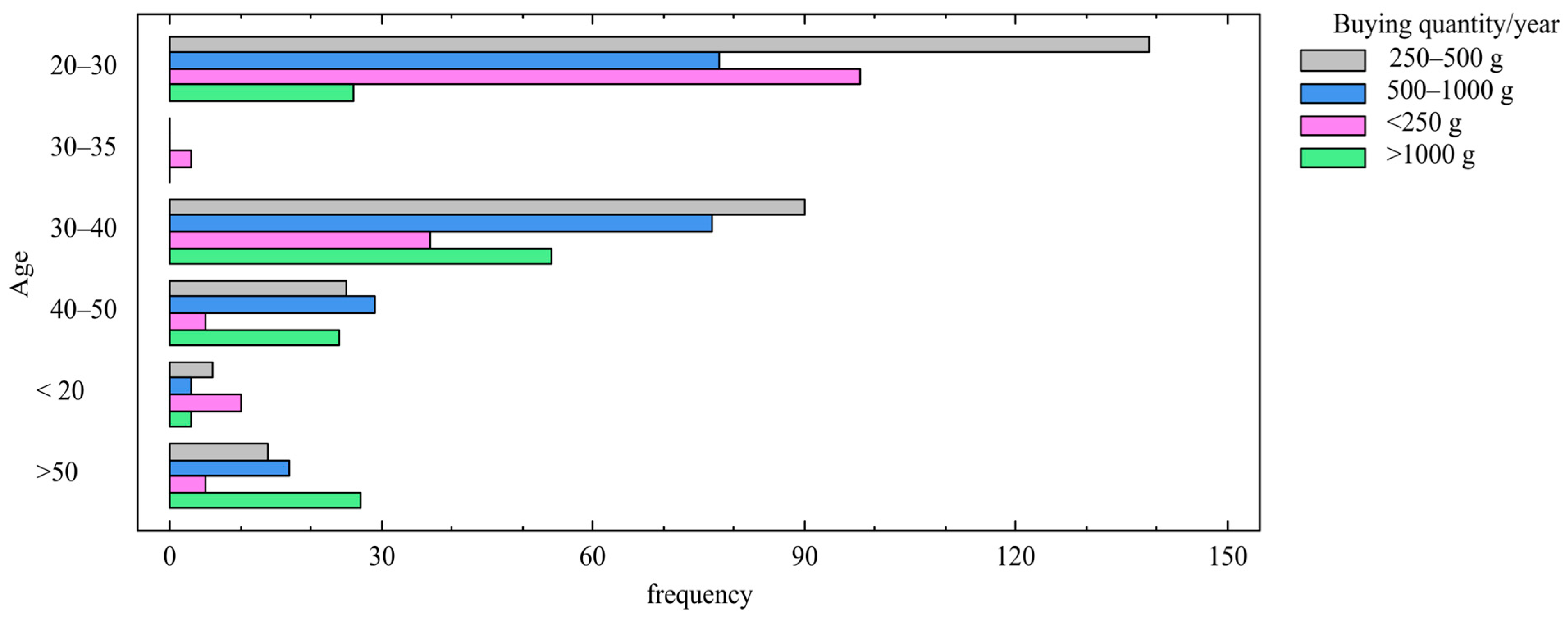
The analysis shows clear differences in the quantity of honey purchased across age groups. Young adults and the 30–40 age group are the most likely to buy moderate quantities, typically between 250–500 g or 500–1000 g per year. Respondents over 50 years display a tendency toward larger purchases (>1000 g), while the under 20 and 40–50 groups mostly buy smaller amounts (<250 g). These patterns suggest that younger and middle-aged consumers maintain sustainable buying habits, while older consumers may stock larger quantities, possibly for traditional or medicinal uses. Figure 2 illustrates these differences, showing the distribution of annual honey purchase quantities (<250 g, 250–500 g, 500–1000 g, >1000 g) across six age groups.
The chi-square statistical test yielded χ2 = 111.493 with 15 degrees of freedom and a p-value < 0.0001. Since the p-value is less than 0.05, we reject the null hypothesis of independence at the 95% confidence level. This indicates that the observed buying quantity is significantly associated with age group. In other words, the amount of honey purchased per year varies meaningfully across different age categories.
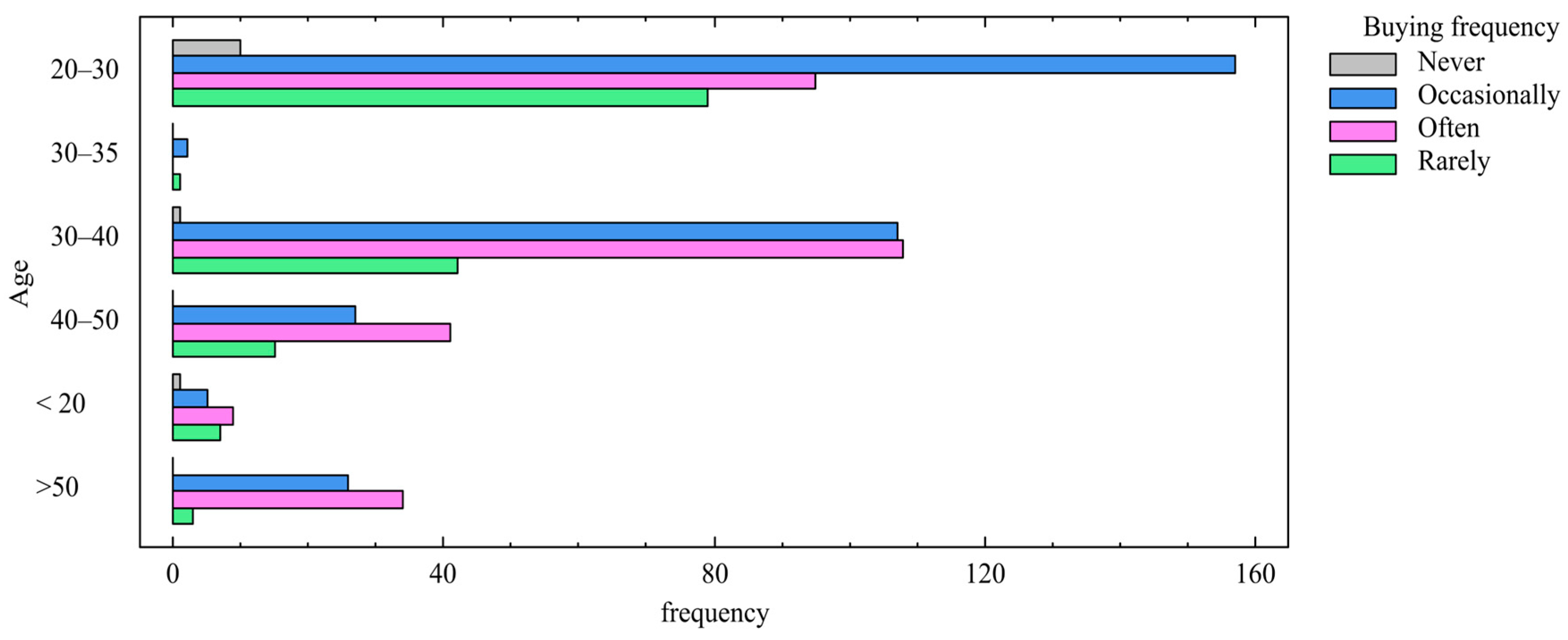
Honey purchasing habits differ across age categories. Young adults (20–30 years) and the 30–40 age group show the highest frequency of buying honey “occasionally” or “often.” Respondents over 50 years also demonstrate regular purchases, though less frequent compared to younger groups. The 40–50 and under–20 categories exhibit lower buying frequencies, often classified as “rarely” or “occasionally.” These patterns indicate that trust-based and sustainable sourcing behaviors are maintained across generations, with younger consumers actively engaging in honey purchases. Figure 3 illustrates these differences, showing the distribution of buying frequencies (never, occasionally, often, rarely) across six age groups.
The chi-square test of independence was conducted to examine the relationship between age and honey-buying frequency. The results confirm a significant association (Chi2 = 47.26, df = 15, p < 0.0001), indicating that purchasing habits differ meaningfully across age groups.

4.3. Influence of Climatic Zone on Honey Buying Sources

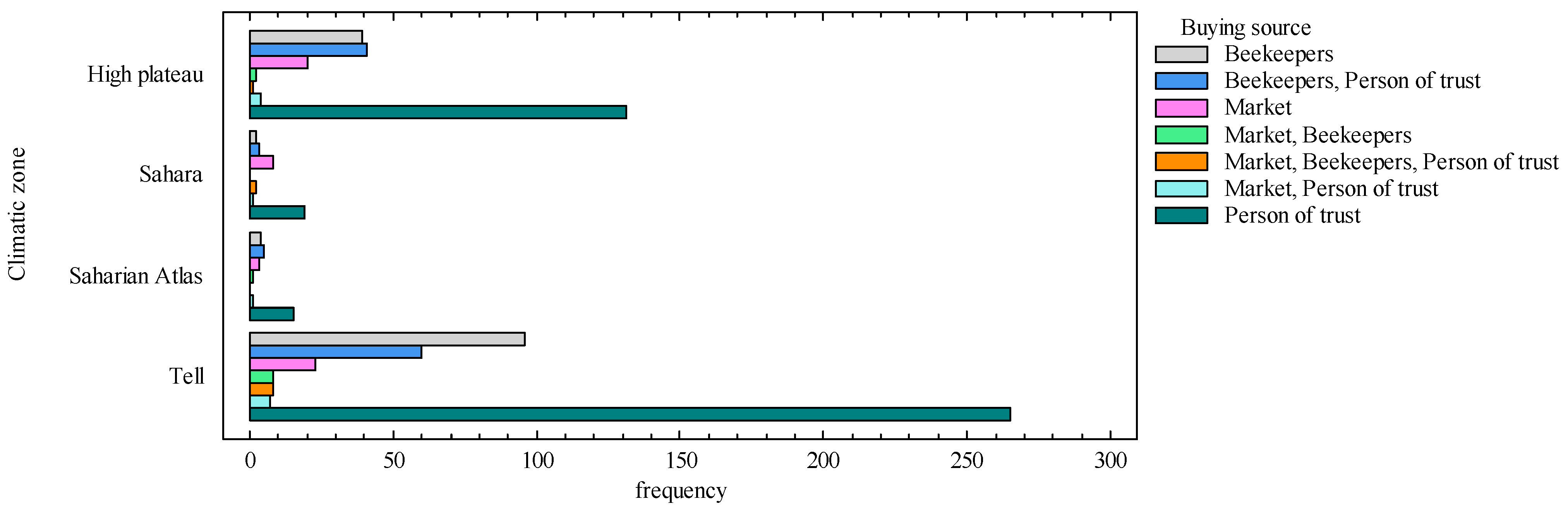
The survey results show clear differences in honey purchasing habits across Algeria’s four major climatic zones: Tell, High Plateau, Saharian Atlas, and Sahara. Consumers in the Tell region, which is the most populated and agriculturally diverse, reported the highest reliance on trusted individuals and local markets, reflecting strong informal networks and cultural traditions. In contrast, respondents from the Saharan and Saharian Atlas zones exhibited a stronger preference for direct purchases from beekeepers, likely due to limited market infrastructure and closer ties to primary producers. The High Plateau presented a mixed pattern, balancing informal trust-based sourcing with occasional market purchases. These variations suggest that geographic and socio-economic factors significantly influence sourcing behaviors, reinforcing the role of local identity and accessibility in shaping sustainable consumption practices.
Figure 4 illustrates the predominance of informal networks in all zones, with notable regional differences in the share of purchases from beekeepers and markets.
The statistical test confirmed that the relationship between climatic zone and buying source is statistically significant (χ2 = 34.90, df = 18, p = 0.0097). This indicates that purchasing habits vary meaningfully across climatic zones, supporting the hypothesis that regional context influences consumer behavior.
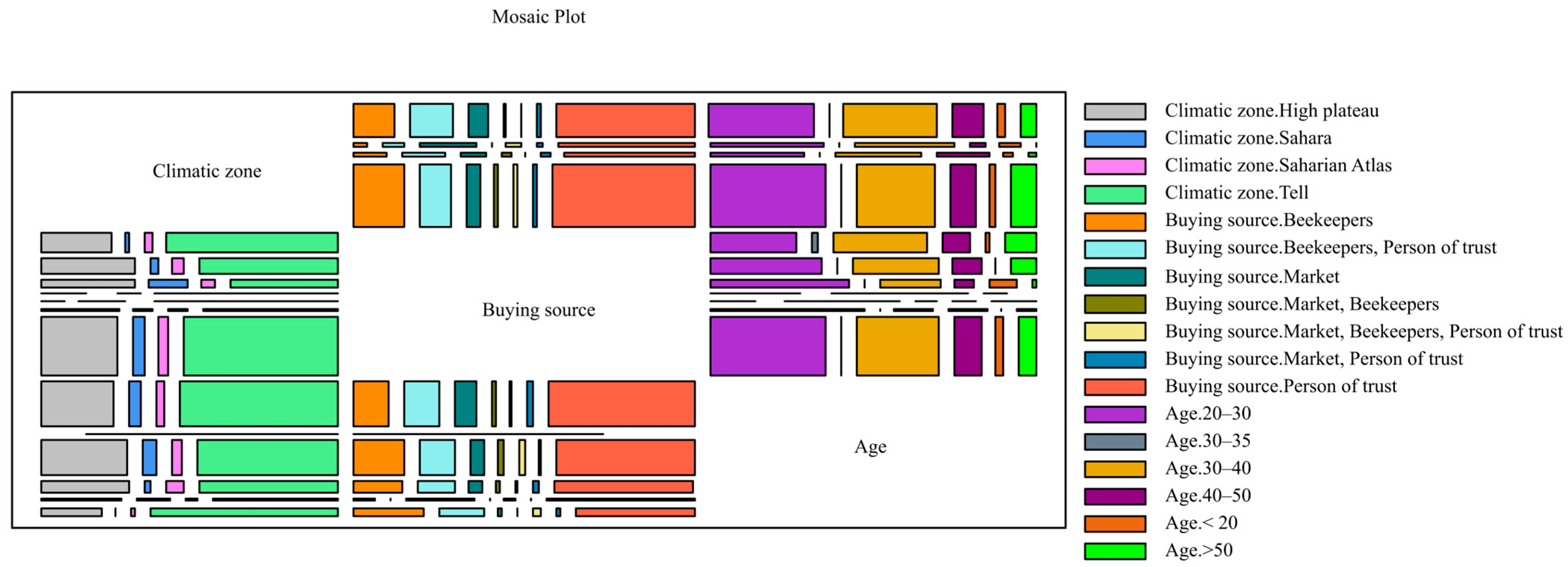
A mosaic plot was generated to visualize the relationships among three categorical variables: climatic zone, buying source, and age group (Figure 5). The size of each rectangle represents the proportion of respondents within the corresponding combination of categories. The plot reveals clear patterns: Respondents from the Tell region show a higher proportion of purchases from trusted individuals and local markets, particularly among younger age groups (20–30 and 30–40 years). In contrast, respondents from Saharan and Saharian Atlas zones exhibit a stronger tendency to buy directly from beekeepers, with notable representation among older age groups (>40 years). Purchases from markets are more evenly distributed across regions but remain less frequent compared to informal sources.

4.4. Preservation of Traditional Knowledge

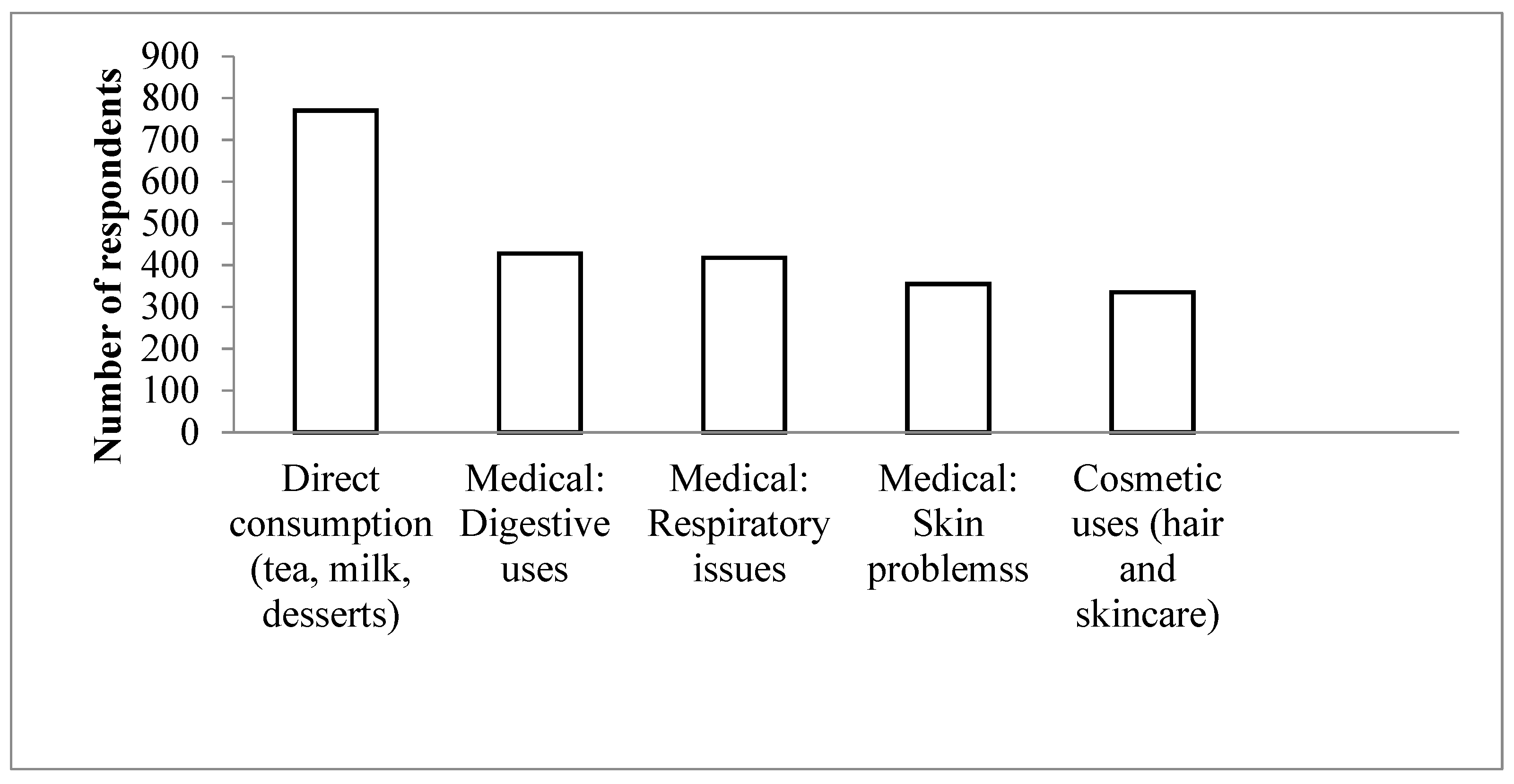
The traditional use of honey in Algerian households goes far beyond consumption frequency. It encompasses a rich set of cultural practices, therapeutic applications, and sourcing habits that reflect inherited knowledge and sustainable values. Survey data show that older respondents (particularly those aged 40–50 and over 50) are more likely to use honey for medicinal purposes, such as treating respiratory, digestive, and skin conditions (Figure 6). This indicates that ancestral knowledge about honey’s healing properties remains actively practiced among older generations. However, younger adults (especially those under 30) also demonstrate significant engagement with traditional uses, particularly in cosmetic applications and natural wellness routines. This suggests a revival or reinterpretation of traditional practices among younger demographics, possibly influenced by modern interest in natural products. Traditional knowledge is also reflected in sourcing behaviors. Many respondents prefer to buy honey from trusted individuals or directly from beekeepers, avoiding industrial supply chains. This trust-based acquisition method is not only culturally rooted but also supports local economies and aligns with sustainable consumption principles. Furthermore, beliefs about honey’s physical properties, such as crystallization, serve as indicators of traditional understanding. Respondents who correctly identify crystallization as a natural process tend to be those with stronger ties to traditional knowledge, while misconceptions persist among others. In summary, traditional honey use in Algeria is a multifaceted phenomenon involving therapeutic, cosmetic, and cultural dimensions, as well as sourcing preferences and product perceptions. While older generations remain key custodians of this heritage, younger groups are increasingly adopting and adapting these practices, offering hope for their preservation and evolution.

4.5. Biodiversity and Ecosystem Services

Although not directly measured in the survey, the preference for natural honey and trust in local sources imply a consumer base that values authenticity and potentially supports biodiversity. Promoting honey from local beekeepers who use sustainable, pollinator-friendly methods can enhance ecosystem services, such as pollination, and contribute to the conservation of Algeria’s diverse floral landscapes.
The results show that many respondents prefer natural honey and buy it directly from beekeepers, reflecting environmental awareness and support for sustainable practices. This preference contributes to the preservation of biodiversity by promoting short supply chains and local producers, while strengthening ecosystem services related to beekeeping.
The age groups most committed to this approach are 30–40-year-olds and 20–30-year-olds, followed by 40–50-year-olds, indicating intergenerational adoption of environmentally friendly practices. This suggests that awareness of biodiversity is well established among young adults, while also being supported by older generations.

4.6. Consumer Education

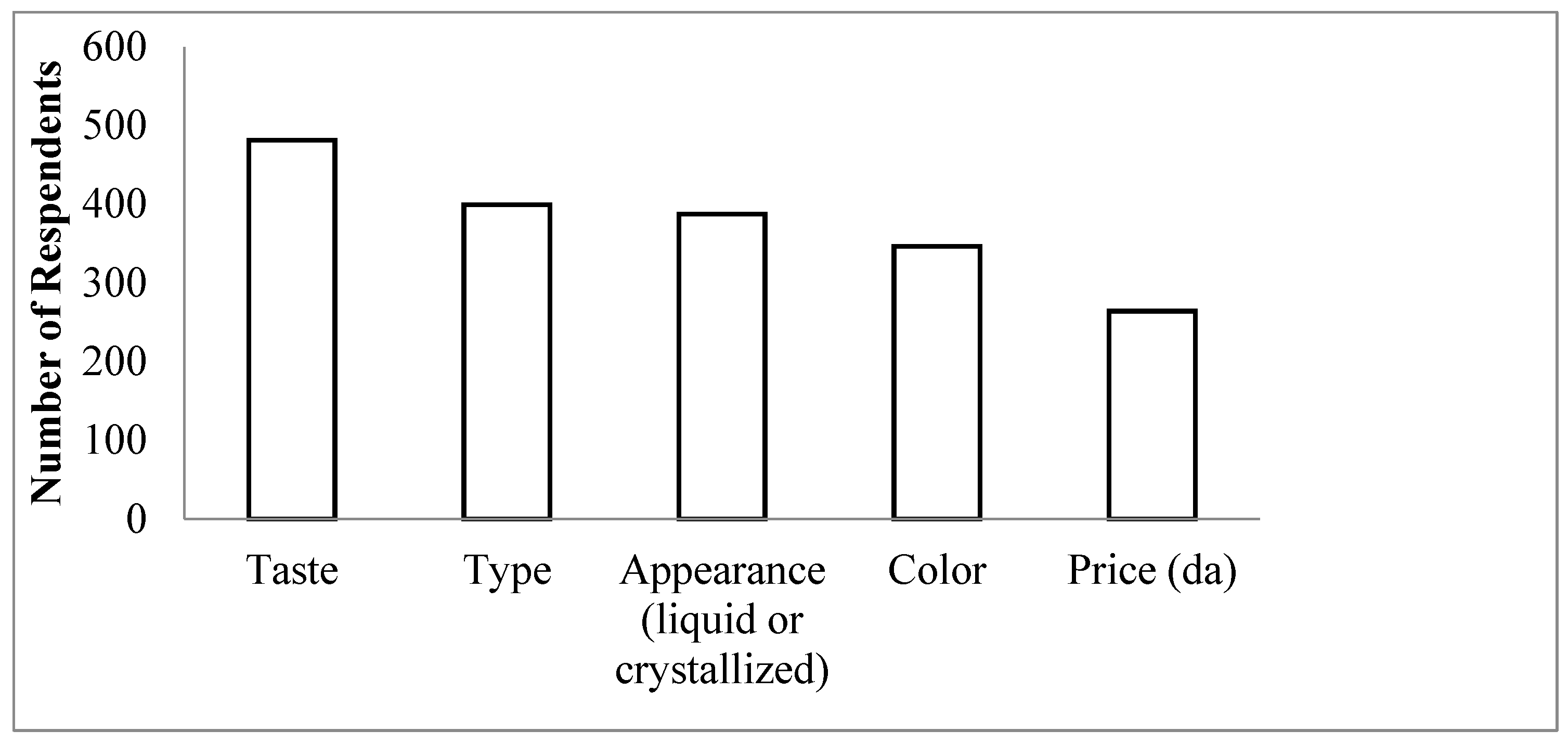
The results indicate notable gaps in the knowledge of Algerian consumers regarding the characteristics of honey. Regarding crystallization, 40.52% of respondents recognised it as a natural process, 32.47% associated it with adulteration and 27.01% were unaware of its meaning. When it came to evaluation criteria, taste was the most frequently mentioned factor, cited by around 500 respondents. This was followed by type (monofloral or multifloral) and physical appearance (liquid or crystallized), which were mentioned by around 400 respondents each. Color was cited by 346 respondents and price (in Algerian dinars) received the fewest mentions at around 300. Furthermore, 399 respondents identified the type of honey as a determining factor in their purchasing decisions. The data also show that consumer perceptions are influenced by visual characteristics, oral traditions and family habits (Figure 7). The common misconceptions about honey crystallization often arise from a lack of consumer education, unclear labeling, and a reliance on informal knowledge handed down through families. These misunderstandings can result in customers rejecting products and lead to food waste, which undermines efforts toward sustainable consumption.
Following this, a chi-square test was also conducted to examine whether age group influences perceptions of crystallized honey. The result (χ2 = 17.47, df = 10, p = 0.0646) indicates no significant association, meaning attitudes toward crystallization are relatively consistent across age categories.

5. Discussion

The study reveals how Algerian consumers use honey in ways that reflect their cultural traditions, daily habits, and personal values. It highlights that people, often rely on trusted sources, such as family or local producers, and use honey not only as food but also for health and cosmetic purposes. These behaviors are shaped by long-standing traditions and practical knowledge passed down through generations. When compared with other countries, Algerian consumers show both similarities and unique patterns, especially in how they connect honey use with well-being and sustainability, often without being fully aware of it. The differences and similarities between Algerian honey consumption and other regions may be due to cultural habits, trust in informal networks, and how food is sold or labeled. In Algeria, people often buy honey from someone they know and use it for traditional health and beauty purposes. In Europe, consumers may rely more on labels and certifications. These factors help explain the unique patterns found in our study.
To better understand these behaviors, it is important to first look at who the consumers are and the cultural context in which they use honey.

5.1. Cross-Cultural and Demographic Insights

This study offers a detailed overview of honey consumption patterns among a specific segment of Algerian consumers, based on a diverse sample from 51 wilayas (Towns), based on a sample of 770 respondents. These findings should be interpreted with caution, as they reflect the views of a digitally engaged and educated population, rather than the full demographic spectrum of Algeria. Compared to previous national studies, such as Haderbach et al. (2015) [10], who surveyed 800 individuals from 20 wilayas, our research offers broader geographic coverage and more recent insights. Both studies highlight the cultural and medicinal importance of honey; however, our findings indicate emerging patterns in sourcing, consumer awareness, and the diverse applications of honey. Demographically, the sample was predominantly female (71.2%) and concentrated in the 20–40 age range. This contrasts with findings from [22], who observed higher honey consumption among older adults in Europe. Kleisiari et al. (2023) [9] also noted gender differences, with men consuming more honey in the Balkans and Western Europe. In our case, women appear more engaged in honey-related decisions, possibly due to their role in household health and food choices, also the demographic skew of our study might reflect the nature of online survey distribution, which tends to engage younger and more digitally active populations. While this may limit the generalizability of the findings, the data still provide valuable insights into honey consumption patterns among a key segment of Algerian households. Similar cultural contrasts were observed in Western Australia, where Batt and Liu (2012) [17] found that brand reputation, product origin, and value for money were the key drivers of honey purchasing decisions. Their study also highlighted that Asian consumers placed more emphasis on value and brand recognition, while Anglo-Saxon consumers prioritized origin. Future research should consider more balanced sampling strategies, including stratified or mixed-method approaches, to ensure broader representation of older adults and male respondents. Although chi-square tests confirmed significant associations, these results should be interpreted as indicative rather than causal. Future research should apply multivariate techniques to control for confounding factors such as age and education, providing a more robust understanding of the determinants of honey consumption. Similar findings were observed in Mexico, where Ávila Ramos et al. (2022) [16] identified three consumer profiles based on educational attainment and income. Middle-income individuals were the most frequent consumers of honey. These individuals preferred buying honey directly from beekeepers and recognized its health benefits. In contrast, younger, low-income consumers primarily used honey as a sugar substitute and preferred to buy it from the market. In Italy, Blanc et al. (2021) [23] identified four distinct consumption profiles among millennials, highlighting their strong preference for sustainability, label information, and local origin rather than intrinsic characteristics such as taste or texture. These findings underscore the importance of extrinsic cues and demographic factors, such as gender, urban origin, or sports participation, in shaping honey consumption behaviors.
Moreover, the survey results show that honey consumption in Algeria reflects a mindful and purposeful pattern that aligns with sustainable food practices. Moderate annual purchase volumes and restrained daily use suggest a conscious approach to consumption, often reserved for specific culinary or therapeutic purposes. Notably, honey also plays a central role in traditional Algerian pastries and festive desserts such as Makrout and Tamina, highlighting its cultural significance during special occasions. This pattern might demonstrate careful use that helps prevent overconsumption and supports the sustainable management of resources. Some findings also align with previous research conducted in Algeria, which reported an average annual honey consumption of approximately 0.2 kg per person. In these studies, honey was frequently regarded as a medicinal product and was predominantly purchased through informal, trust-based channels [10]. Similar trends are observed in Tunisia, where honey production is primarily dedicated to domestic use, and beekeeping practices are shaped by climate conditions and traditional transhumance [24].
The multifunctional use of honey—as food, medicine, and in cosmetics—not only increases its overall value but also decreases dependence on synthetic products, thereby supporting both environmental and public health sustainability [2]. These practices mirror sustainable behaviors observed in other Mediterranean contexts, where natural products are valued for their versatility and cultural significance, which is consistent with recent research by Herreros & Ali [25], which highlights practical approaches to sustainability in honey production, reinforcing the importance of environmentally responsible practices in the honey sector. In Greece, consumers showed a high willingness to purchase honey perceived as rich in antioxidants and vitamins, confirming the central role of health consciousness in honey consumption. A large-scale European study also confirms that health benefits are the main driver of honey consumption. According to Kleisiari et al. (2025), consumers perceive honey as a therapeutic and nutritious food and incorporate it into their diet as a healthy habit [9].
Figure 5 above, illustrating the interaction between climatic zone, age group, and honey buying source, reveals how geographic and demographic factors jointly shape consumer behavior. Respondents from the Tell region show a clear preference for purchases through trusted individuals and local markets, particularly among younger age groups (20–30 and 30–40 years). This pattern likely reflects the dense social networks and strong cultural traditions in this agriculturally rich zone, where informal trust-based channels substitute for formal certification. In contrast, consumers in the Saharan and Saharian Atlas zones exhibit a stronger tendency to buy directly from beekeepers, especially among older respondents (>40 years), which may be explained by limited market infrastructure and closer proximity to primary producers. These findings suggest that sourcing behaviors are not only age-dependent but also context-specific, influenced by accessibility, cultural norms, and perceived authenticity. From a sustainability perspective, these informal and direct channels reduce packaging and transport emissions, reinforcing short supply chains and supporting local economies. However, the reliance on informal networks also underscores the need for targeted education and labeling initiatives to ensure quality assurance and consumer confidence across regions.

5.2. Informal and Local Market Channels

Informal sourcing networks, particularly purchases from trusted individuals such as family members or local beekeepers, dominate acquisition practices. Among our respondents, 58.3% reported buying honey from a person of trust, while only 18.3% purchased directly from beekeepers. These trust-based relationships reinforce consumer confidence, reduce dependence on industrial supply chains, and minimize packaging and transport-related emissions. According to Zanchini et al. (2021) [2], consumers who purchase honey at local markets or directly from producers are more likely to associate it with health benefits. This suggests that short supply chains not only strengthen trust but also reinforce the perception of honey as a natural and therapeutic product. In Hungary, consumers show a strong preference for honey purchased directly from beekeepers or farmers’ markets. This direct relationship not only builds trust but also reinforces the perception of honey as an authentic, high-quality product. Certification marks play a crucial role in guiding informed consumers to safe and authentic sources of honey [16]. This sourcing behavior supports local economies and reflects deep-rooted cultural traditions. However, the relatively low rate of direct purchases from beekeepers highlights an untapped opportunity; similar trends were observed in Greece, where over 77% of consumers preferred buying conventional honey directly from beekeepers. This reinforces the importance of direct sourcing in building trust and ensuring product authenticity, especially for organic varieties [15]. Strengthening direct links between consumers and producers could enhance traceability, encourage pollinator-friendly practices, and provide economic incentives for sustainable beekeeping. A similar trend was observed in Croatia, where 75% of consumers preferred buying honey directly from producers. This behavior was driven by trust and the perceived health benefits of domestic honey, with Protected Designation of Origin PDO labels reinforcing product authenticity and regional identity [26].

5.3. Traditional Knowledge and Environmental Sustainability

In Algeria, traditional knowledge continues to guide honey use, with older generations emphasizing medicinal purposes and younger adults favoring cosmetic and wellness applications. This intergenerational transmission is complemented by emerging innovations such as plant-based honey alternatives, which aim to address sustainability and ethical concerns [20]. Honey is also used in traditional ceremonies and festivals, reinforcing its role as a culturally embedded product. These practices contribute to the preservation of intangible heritage and support sustainable consumption rooted in local identity. In this context, consuming honey sustainably entails supporting small-scale beekeepers, choosing locally sourced products, and using honey sparingly and mindfully. These actions support local economies, protect traditional knowledge, and lessen their negative effects on the environment. By reducing packaging and transportation-related emissions and preserving close cultural and social ties, the use of unofficial, trust-based networks also promotes sustainability.

5.4. Sustainable Food Practices, Consumer Awareness, and SDG Integration

Beyond honey, Algerian households engage in sustainable consumption behaviors through other traditional foods such as olive oil, dates, legumes, and herbal products. These foods share similar cultural and multifunctional roles, often used in culinary, medicinal, and ceremonial contexts. Olive oil, for instance, is a staple in Mediterranean diets and is increasingly valued for its health benefits and sustainability attributes. Studies show that consumers are willing to pay more for olive oil with sustainability labels, although their motivations are often linked more to perceived quality and origin than to environmental concerns [16,27]. This parallels honey consumption, where trust and traditional sourcing outweigh formal certifications. Legumes also play a vital role in sustainable diets due to their low environmental footprint and high nutritional value. Their integration into daily meals supports biodiversity and reduces reliance on animal protein. Similarly, native foods and traditional crops contribute to food security and cultural preservation, especially when promoted through community-based interventions [27]. These findings suggest that Algerian food practices—though often informal and culturally driven—align with global sustainability goals. By recognizing and supporting these behaviors, policymakers can leverage traditional knowledge to promote resilient food systems across the region [27].
Regarding Consumer education, it has emerged as a critical issue. Misunderstandings about crystallization—only 40.52% recognized it as a natural process—affect purchasing decisions and trust. In Algeria, crystallized honey is often perceived as adulterated, typically associated with the addition of artificial sugars. These misconceptions, if not addressed, can lead to product rejection and food waste, undermining sustainability goals. Based on descriptive trends, younger consumers and individuals with limited awareness appear more prone to these beliefs, suggesting that targeted education campaigns could be more effective than generic interventions. Similar gaps were noted by Kleisiari et al. (2023) [9] in Europe. Addressing these misconceptions through labeling, outreach, and school programs could enhance consumer autonomy and reduce waste. Other sensory attributes, such as color, texture, and floral origin, also influence purchasing decisions. Recent studies on caper honey (Capparis spinosa L.) have shown that its aroma evolves over time, with vegetal notes perceived first, and followed by floral and sweet caramel sensations. This dynamic sensory profile, evaluated by analyzing temporal intensity, highlights the complexity and richness of certain monofloral honeys, which can appeal to experienced consumers [28]. However, many consumers lack the knowledge to interpret these characteristics accurately. Educational initiatives could empower consumers to choose honey based on specific needs—such as digestion, respiratory health, or skincare—while promoting local Algerian varieties.
It is noted also that the respondents are from diverse professional backgrounds, including employed individuals, students, and retirees. Although not analyzed in depth, this diversity may influence purchasing power, health awareness, and sustainability values. Mascarello et al. (2024) [15] found that employed individuals and retirees in Italy showed greater interest in traceability and were more likely to engage with digital tools such as QR codes. Future research could explore how occupational status correlates with sustainable purchasing behaviors in Algeria. By framing honey consumption within a sustainability context, this study aligns with and contributes to multiple United Nations Sustainable Development Goals (SDGs), these findings align with broader calls for robust metrics to evaluate sustainability and resilience in food systems, as highlighted by Hassan et al. (2025), who emphasize the importance of context-specific indicators to guide evidence-based decision-making [29]. Specifically, it supports SDG 3 (Good Health and Well-being) by highlighting the nutritional and medicinal benefits of honey; SDG 12 (Responsible Consumption and Production) through the promotion of environmentally conscious consumer behavior; and SDG 15 (Life on Land) by emphasizing the role of sustainable apiculture in preserving biodiversity and ecosystems.

5.5. Policy Implications and Recommendations

Although most consumers prefer informal and local channels, the Algerian market remains exposed to imports of foreign honey, which is sometimes cheap but of uncertain quality. This competition can undermine small local producers. According to the World Beekeeping Organization [28], traceability and certification of origin are key levers for promoting local honey on national and international markets. Encouraging regional labels or protected geographical indications (PGIs) could strengthen the competitiveness of Algerian honey while supporting sustainable practices. According to Zeng et al. (2023) [30], packaging also plays a crucial role in consumer perception. Unique jar shapes can significantly increase willingness to pay, suggesting that design and presentation are essential components of product differentiation in the honey market. These recommendations are consistent with findings from Uganda, where Amuko et al. (2023) [31] demonstrated that timely, accurate, credible, and usable market information significantly enhances entrepreneurial orientation among smallholder honey producers. Their study highlights how access to relevant market intelligence fosters innovation, proactiveness, and risk-taking, ultimately improving product development and competitiveness. In light of these findings, several recommendations can be made: integrate education on sustainable consumption into school curricula, support small-scale beekeepers through targeted subsidies and training in sustainable beekeeping, promote awareness campaigns on the benefits of local honey and quality criteria, and strengthen links between scientific research, producers, and consumers. These actions would help to build a more resilient beekeeping ecosystem, in line with sustainable development goals. These recommendations are supported by findings from Indonesia, where Febrianto et al. (2023) [32] demonstrated that product quality and promotional efforts are the most influential factors in honey-purchasing decisions. The study also confirmed that repeat purchases are a strong indicator of consumer loyalty, underlining the importance of maintaining product standards and effective communication strategies.

5.6. Technological Innovations and Future Directions

A recent study employing a multi-omic approach demonstrated that environmental conditions and agricultural practices markedly influence honeybee health—through mechanisms such as protein depletion and metal regulation—which subsequently affect honey quality and sector sustainability [33]. Blockchain-based systems offer a promising solution for tracking organic honey production, ensuring transparency and authenticity while supporting sustainable certification and consumer confidence [21]. Responsible consumption and production patterns, as outlined in SDG 12, are essential to mitigate environmental degradation. Honey, when locally sourced and ethically produced, aligns with these global sustainability targets [34]. Combining DNA metabarcoding with melissopalinological analysis enables a more accurate identification of the honey’s botanical origin, thereby strengthening product authenticity control, helping to detect counterfeits, facilitating access to international markets, and increasing consumer confidence [35]. Unsustainable consumption and production are major challenges, contributing to climate change, biodiversity loss, and pollution. Promoting responsible consumption in food systems, such as honey production, is crucial for protecting both livelihoods and the environment for future generations [34]. Unsustainable consumption and production are major challenges, contributing to climate change, biodiversity loss, and pollution. Promoting responsible consumption in food systems, such as honey production, is crucial for protecting both livelihoods and the environment for future generations [35]. In China, honey is increasingly perceived as a healthy and nutritious food, with 74.48% of consumers citing health benefits as their primary motivation for purchase. This highlights the importance of consumer awareness and education in promoting sustainable honey consumption [18]. Despite these contributions, the study has some limitations worth noting. Although the questionnaire reached people from all 51 wilayas, it was shared online, which may have favored younger and more educated respondents. Also, since the data are self-reported, some answers might reflect personal perceptions rather than objective facts. Future studies could include more rural and offline communities, and combine surveys with interviews to better capture the diversity of honey consumption practices across Algeria.
Practical Implications: Based on the findings, several actionable strategies can be proposed to promote sustainable honey consumption in Algerian households. Encourage direct purchases from local beekeepers to strengthen trust and reduce environmental impact. Implement consumer education programs and clear labeling to address misconceptions about crystallization. Highlight honey’s health and cosmetic benefits in marketing campaigns targeting younger demographics. Support short supply chains and traceability initiatives to enhance product authenticity and sustainability. Recent studies also highlight honey’s health benefits and functional properties [36], the development of innovative honey-based products [37], and the integration of honey into functional food formulations to meet sustainability and health trends [38].

6. Conclusions

This study highlights the cultural and sustainable dimensions of honey consumption among a specific segment of Algerian households. Honey is not only a nutritional product but also a multifunctional substance embedded in traditional practices, with uses in medicine and cosmetics. Consumer behavior is strongly influenced by trust-based sourcing, favoring local and informal channels that support short supply chains and sustainability. To strengthen consumer confidence and reduce misconceptions—such as those related to crystallization—targeted education and clear labeling are essential. Additionally, integrating digital tools such as QR codes for traceability can enhance transparency and authenticity, connecting consumers directly to producers and production practices. These measures, combined with awareness campaigns and support for local beekeepers, can promote responsible consumption and reinforce biodiversity-friendly practices. Future research should expand to rural and offline populations and explore technological innovations, including blockchain and QR-based systems, to build a resilient and transparent honey sector aligned with global sustainability goals.

Supplementary Materials

The following supporting information can be downloaded at: https://www.mdpi.com/article/10.3390/su172310669/s1, File S1: Enquête sur la consommation et l′utilisation traditionnelle du miel en Algérie.

Author Contributions

Conceptualization, R.N. and M.C.S.-C.; methodology, R.N., S.H., Y.S. and A.G.; formal analysis, R.N. and S.H.; data curation, R.N., S.H., A.G., Y.S. and M.S.R.-F.; investigation, R.N.; writing—original draft preparation, R.N., S.H.; writing—review and editing, M.C.S.-C.; supervision, M.C.S.-C., O.E. and M.S.R.-F. All authors have read and agreed to the published version of the manuscript.

Funding

This research received no external funding.

Institutional Review Board Statement

Ethical review and approval were waived for this study by the Institutional Committee due to Spanish national legislation (specifically Ley Orgánica 3/2018 on the protection of personal data and digital rights (BOE link); only data that allow the identification of individuals are considered personal and subject to ethical review. As the survey was fully anonymous and did not collect identifiable information, it was exempt from formal ethics review.

Informed Consent Statement

Informed consent for participation was obtained from all subjects involved in the study.

Data Availability Statement

The data presented in this study are available on request from the corresponding author due to privacy restrictions.

Acknowledgments

The authors sincerely thank all online respondents for their valuable contribution and for generously sharing their experiences and insights, which made this research possible.

Conflicts of Interest

The authors declare that they have no known competing financial interests or personal relationships that could have appeared to have influenced the work reported in this paper.

References

  1. Prodanović, R.; Brkić, I.; Soleša, K.; Pelić, D.L.; Pelić, M.; Bursić, V.; Tankosić, J.V. Beekeeping as a tool for sustainable rural development. J. Agron. Technol. Eng. Manag. JATEM 2024, 7, 1054–1066. [Google Scholar] [CrossRef]
  2. Zanchini, R.; Blanc, S.; Pippinato, L.; Di Vita, G.; Brun, F. Consumers’ attitude towards honey consumption for its health benefits: First insights from an econometric approach. Br. Food J. 2022, 124, 4372–4386. [Google Scholar] [CrossRef]
  3. Bereksi-Reguig, D.; Allali, H.; Taib, N.; Aissaoui, N.; Wlodarczyk-Stasiak, M.; Kowalski, R. Bioactive Compounds, Antioxidant Properties, and Antimicrobial Profiling of a Range of West Algerian Honeys: In Vitro Comparative Screening Prior to Therapeutic Purpose. Foods 2024, 13, 4120. [Google Scholar] [CrossRef]
  4. Haider, Y.; Adjlane, N.; Haddad, N. Environmental impacts and behavioral adaptations of honeybees in Algeria: A review of Apis mellifera intermissa and Apis mellifera sahariensis characteristics. Insects 2025, 16, 617. [Google Scholar] [CrossRef]
  5. Haider, Y.; Adjlane, N.; Martín-Hernandez, R.; Haddad, N. Beekeeping in Algeria: Evaluation of beekeeping practices, trends of management, and challenges. Afr. J. Food Agric. Nutr. Dev. 2025, 25, 25542–25564. [Google Scholar] [CrossRef]
  6. Di Vita, G.; Pippinato, L.; Zanchini, R.; Blanc, S.; Brun, F. PDO Labeling and Sustainability Perceptions in Mediterranean Honey Markets. Br. Food J. 2024, 126, 1374–1389. [Google Scholar] [CrossRef]
  7. Fortune Business Insights. Global Honey Market Size, Share & Industry Analysis, by Type, Application, Packaging, and Regional Forecast, 2024–2032; Fortune Business Insights: Pune, India, 2025; Available online: https://www.fortunebusinessinsights.com/industry-reports/honey-market-100551 (accessed on 25 November 2025).
  8. Maximize Market Research. Honey Market: Global Industry Analysis by Market Share, Trends, and Forecast (2025–2032); Maximize Market Research: Pune, India, 2025; Available online: https://www.maximizemarketresearch.com/market-report/global-honey-market/120330/ (accessed on 25 November 2025).
  9. Kleisiari, C.; Kleftodimos, G.; Vlontzos, G. Be(e)ha(i)viour(e): Assessment of honey consumption in Europe. Br. Food J. 2023, 125, 1374–1389. [Google Scholar] [CrossRef]
  10. Haderbache, L.; Mohammedi, A. Etude sur le comportement de consommation du miel en Algérie: Attentes et préférences. Rev. Agric. 2015, 9, 19–24. [Google Scholar]
  11. Derrar, S.; Lo Turco, V.; Albergamo, A.; Sgrò, B.; Ayad, M.A.; Litrenta, F.; Saim, M.S.; Potortì, A.G.; Aggad, H.; Rando, R.; et al. Study of Physicochemical Quality and Organic Contamination in Algerian Honey. Foods 2024, 13, 1413. [Google Scholar] [CrossRef]
  12. Saad, B. Immunomodulatory and Anti-Inflammatory Properties of Honey and Bee Products. Immuno 2025, 5, 19. [Google Scholar] [CrossRef]
  13. Bendahbia, K.; Nabih, Z.; Abidli, Z.; Soulaymani, A.; Chahbi, A.; Khadmaoui, A. Consumption, preferences and habits of purchasing consumers of honey in Morocco. J. Hyg. Eng. Des. 2019, 28, 61–65. [Google Scholar]
  14. Vapa-Tankosić, J.; Cvijanović, D.; Tankosić, M.; Vapa-Tankosić, N. Consumers’ Willingness to Pay for Organic and Local Honey in Serbia. Sustainability 2020, 12, 1234. [Google Scholar] [CrossRef]
  15. Mascarello, G.; Pinto, A.; Crovato, S.; Pezzoli, B.T.; Pietropaoli, M.; Bertola, M.; Mutinelli, F.; Formato, G. Consumers’ perceptions and behaviors regarding honey purchases and expectations on traceability and sustainability in Italy. Sustainability 2024, 16, 8846. [Google Scholar] [CrossRef]
  16. Ramos, F.Á.; Mancera, L.P.B.; Bravo, M.B.; Reyes, V.C.; Toledano, B.I.S. Tipología de consumidores de miel con educación universitaria en México. Rev. Mex. Cienc. Pecu. 2022, 13, 879–893. [Google Scholar] [CrossRef]
  17. Batt, P.J.; Liu, A. Consumer Behaviour Towards Honey Products in Western Australia. Br. Food J. 2012, 114, 285–297. [Google Scholar] [CrossRef]
  18. Almiani, K.; Mirza, S.B.; Zufferey, C.; Alyammahi, K.M.; Lamghari, F. Fujairah Honey Chain (FHC): A Blockchain Framework for Monitoring Honey Production. Information 2025, 16, 626. [Google Scholar] [CrossRef]
  19. De, T.; Singh, N.; Ibrahim, K.S.M.K.; Dikkatwar, R.; Chaudhary, M.K. Mindful, Responsible, and Sustainable Consumption: A Hybrid Review of Evolving Research Trends. Discov. Sustain. 2025, 6, 512. [Google Scholar] [CrossRef]
  20. Mandich, D.; Schaller, A.M. Reinventing Honey Through a Plant-Based Alternative. Food Business News. 2 July 2024. Available online: https://www.foodbusinessnews.net/articles/26352-reinventing-honey-through-a-plant-based-alternative (accessed on 25 November 2025).
  21. Lukovac, P.; Miletić, A.; Radenković, B. A System for Tracking Organic Honey Production Using Blockchain Technologies. In Sustainable Business Management and Digital Transformation: Challenges and Opportunities in the Post-COVID Era; Mihić, M., Jednak, S., Savić, G., Eds.; Springer: Cham, Switzerland, 2022; pp. 239–254. [Google Scholar] [CrossRef]
  22. Vida, V.; Ferenczi, A.F. Trends in honey consumption and purchasing habits in the European Union. Appl. Stud. Agribus. Commer. 2023, 17, 47–54. [Google Scholar] [CrossRef]
  23. Blanc, S.; Zanchini, R.; Di Vita, G.; Brun, F. The Role of Intrinsic and Extrinsic Characteristics of Honey for Italian Millennial Consumers. Br. Food J. 2021, 123, 2183–2198. [Google Scholar] [CrossRef]
  24. Ismail, H.B.; Hamzaoui, M.; Jribi, S.; Salem, H.B.; Jmal, S.; Debbabi, H. Assessment of Honey Production System in Tunisia. In Recent Advances in Environmental Science from the Euro-Mediterranean and Surrounding Regions, 4th ed.; EMCEI 2022; Springer: Cham, Switzerland, 2024; pp. 527–531. [Google Scholar] [CrossRef]
  25. Herreros, S.; Ali, M. Sustainable Practices in Honey Production. Int. J. Agric. Nutr. 2023, 5, 54–56. [Google Scholar] [CrossRef]
  26. Brščić, K.; Šugar, T.; Poljuha, D. An Empirical Examination of Consumer Preferences for Honey in Croatia. Appl. Econ. 2017, 49, 5877–5889. [Google Scholar] [CrossRef]
  27. Matías, J.; Rodríguez, M.J.; Carrillo-Vico, A.; Casals, J.; Fondevilla, S.; Haros, C.M.; Pedroche, J.; Aparicio, N.; Fernández-García, N.; Aguiló-Aguayo, I.; et al. From ‘farm to fork’: Exploring the potential of nutrient-rich and stress-resilient emergent crops for sustainable and healthy food in the Mediterranean region in the face of climate change challenges. Plants 2024, 13, 1914. [Google Scholar] [CrossRef]
  28. Apimondia. Beekeeping contributes to achieve the Sustainable Development Goals. In Apimondia International Federation of Beekeepers’ Associations; Apimondia: Copenhagen, Denmark, 2021. [Google Scholar]
  29. Hassan, R.; Di Martino, M.; Daher, B. Quantifying Sustainability and Resilience in Food Systems: A Systematic Analysis for Evaluating the Convergence of Current Methodologies and Metrics. Front. Sustain. Food Syst. 2025, 9, 1479691. [Google Scholar] [CrossRef]
  30. Zeng, M.; Yan, W.Y.; Zeng, Z.J. Analysis of Consumers’ Willingness to Pay for Honey in China. Sustainability 2023, 15, 1500. [Google Scholar] [CrossRef]
  31. Amuko, W.; Kalule, S.W.; Odongo, W. The Relationship between Market Information and Entrepreneurial Orientation: The Case of Smallholder Honey Producers in Northern Uganda. Agric. Food Econ. 2023, 11, 8. [Google Scholar] [CrossRef]
  32. Febrianto, N.; Akhiroh, P.; Masyithoh, D.; Helmi, M.; Hartono, B. Factors affecting consumers’ loyalty and purchase decisions on honey products: An emerging market perspective. Open Agric. 2023, 8, 20220235. [Google Scholar] [CrossRef]
  33. Rudelli, C.; Bellei, E.; Andreani, G.; Isani, G. An Innovative Multi-Omics Approach Reveals the Interactions Between Honeybees and Their Environment. Animals 2025, 15, 2660. [Google Scholar] [CrossRef]
  34. Arora, N.K.; Mishra, I. Responsible Consumption and Production: A Roadmap to Sustainable Development. Environ. Sustain. 2023, 6, 1–6. [Google Scholar] [CrossRef]
  35. Daugaliyeva, S.; Daugaliyeva, A.; Amirova, K.; Yelubayeva, A.; Toktarov, N.; Peletto, S. Identifying Honey Species Composition and Verifying Label Accuracy Using Melissopalynological Analysis and DNA Metabarcoding. Food Anal. Methods 2025, 18, 697. [Google Scholar] [CrossRef]
  36. Palma-Morales, M.; Huertas, J.R.; Rodríguez-Pérez, C. A Comprehensive Review of the Effect of Honey on Human Health. Nutrients 2023, 15, 3056. [Google Scholar] [CrossRef]
  37. Arsić, B.; Mrmošanin, J.; Petrović, S.; Kostić, D.; Pavlović, A.; Tošić, S.; Georgijev, A. Creation of Products Made from Honey Based on the Content of Elements Determined by ICP-OES. Environ. Sci. Pollut. Res. 2023, 31, 40530–40537. [Google Scholar] [CrossRef] [PubMed]
  38. Gulzar, I.; Kaur, S. Development of Honey-Based Functional Foods. Stud. Sci. Sci. 2024, 42, 747. [Google Scholar]
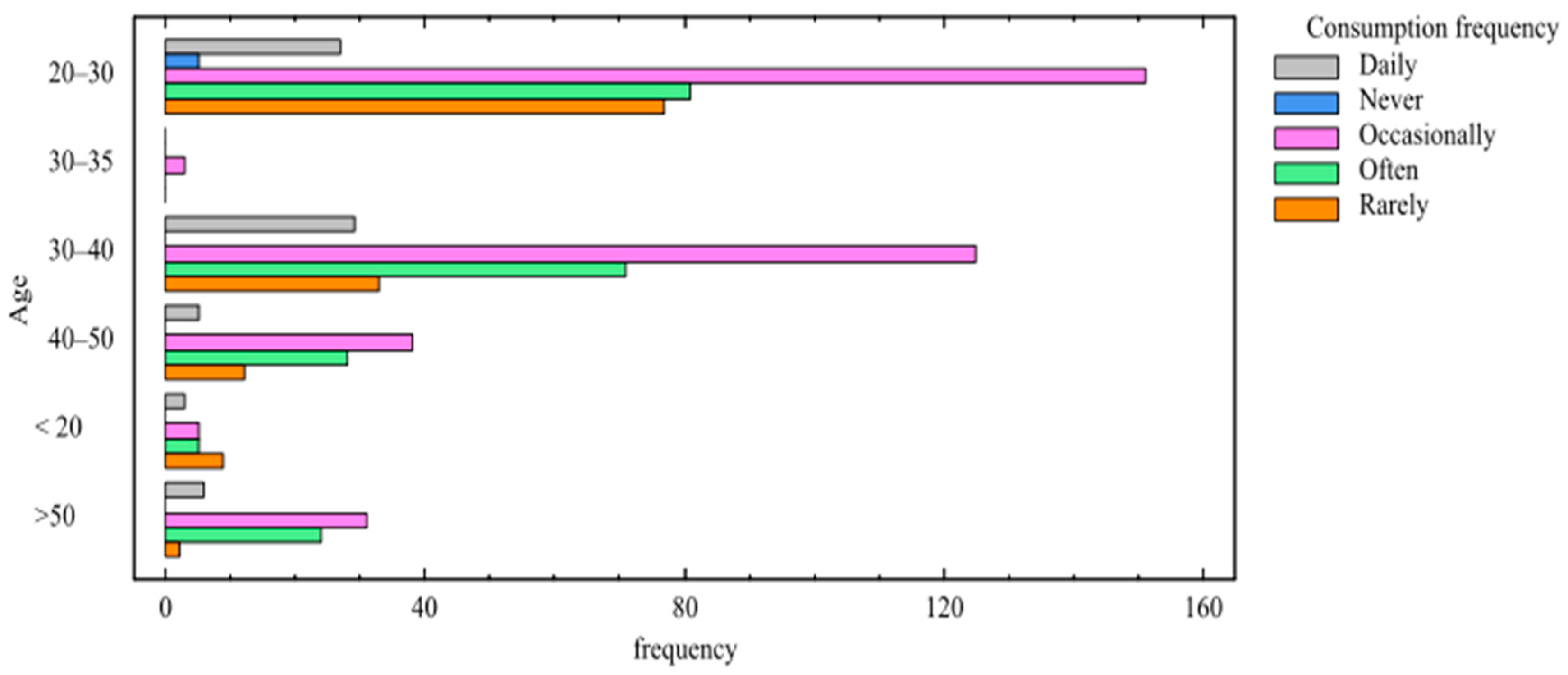
Figure 1. Distribution of Honey Consumption Frequencies across Age Groups.
Sustainability 17 10669 g001
Figure 2. Distribution of annual honey purchase quantities across age groups.
Sustainability 17 10669 g002
Figure 3. Distribution of buying frequencies across age groups.
Sustainability 17 10669 g003
Figure 4. Distribution of Honey Buying Sources across Algeria’s Climatic Zones.
Sustainability 17 10669 g004
Figure 5. Cross-Analysis of Honey Purchasing Channels by Age and Climatic Region.
Sustainability 17 10669 g005
Figure 6. The reported uses of honey in Algerian households.
Sustainability 17 10669 g006
Figure 7. Primary criteria influencing honey purchase decisions.
Sustainability 17 10669 g007
Table 1. Sociodemographic characteristics of the survey respondents.
VariableCategoriesFrequency
GenderFemale548 (71.2%)
male222 (28.8%)
Gender (Mean ± SD)Not applicable
Education levelUniversity degree462 (60.0%)
Other308 (40.0%)
Education level (Mean ± SD)Not applicable
Age group<2022 (3.9%)
20–30341 (44.3%)
30–40258 (33.5%)
40–5083 (15.6%)
>5066 (2.7%)
Age (Mean ± SD)32.8 ± 9.8
Disclaimer/Publisher’s Note: The statements, opinions and data contained in all publications are solely those of the individual author(s) and contributor(s) and not of MDPI and/or the editor(s). MDPI and/or the editor(s) disclaim responsibility for any injury to people or property resulting from any ideas, methods, instructions or products referred to in the content.