Article

Factors Influencing Sustainable Eco-Friendly Housing Purchase Intention in Thailand: A Structural Equation Model Analysis

Department of Hospitality Innovation and Intercultural Communication, Faculty of Hospitality Industry, Kasetsart University, Bangkok 10900, Thailand
*
Author to whom correspondence should be addressed.
Sustainability 2025, 17(23), 10668; https://doi.org/10.3390/su172310668
Submission received: 31 October 2025 / Revised: 20 November 2025 / Accepted: 24 November 2025 / Published: 28 November 2025
(This article belongs to the Special Issue Advances in Green Consumption: Pathways to Sustainability)

Abstract

This study develops and validates a structural equation model (SEM) to investigate the determinants of sustainable eco-friendly housing purchase intention in Thailand. Based on survey data from 320 potential homebuyers, the integrated model exhibits strong predictive power. The analysis identifies Service Quality as the most influential direct driver of purchase intention, with Marketing Communication and Environmental Awareness also being significant direct predictors. Critically, Marketing Communication plays a central role by exerting substantial indirect effects through the other constructs. These findings provide a strategic framework for developers, highlighting that market success requires an integrated strategy that leverages persuasive communication, superior service quality, and aligned environmental values.

1. Introduction

In an era of increasing global environmental discourse, there is a growing collective emphasis on living in greater harmony with the natural world. This shift in awareness emphasizes practical stewardship, minimizing pollution, promoting waste recycling, and utilizing resources more efficiently to create a cleaner, healthier living environment for both current and future generations [1]. This philosophy has catalyzed a significant trend across industries, characterized by eco-innovation in the business and construction sectors [2]. This approach focuses on creating products, services, and processes that support sustainable development, create competitive advantages, and reduce negative environmental impacts [3]. Concurrently, environmental management strategies have gained prominence, emphasizing material efficiency and accelerating technologies that drive innovation and stimulate responsible investment [4].
The construction industry holds particular significance in this transition. As a major consumer of resources, its choices, from the selection of building materials to project execution, have a direct impact on waste generation and energy consumption. Thus, the industry is uniquely positioned to champion practices that support material efficiency and sustainable substitutes, contributing to a more circular economy [3,5].
However, Thailand’s business, tourism, and construction industries are currently facing a slowdown in growth [6]. This is driven by rising raw material costs and a labor shortage in quantity and quality [7]. The industry’s reliance on unskilled labor often results in output value below wage costs. Furthermore, raw materials and labor costs constitute approximately 80% of the total production cost for construction contractors. This situation is further compounded by a slowdown in the real estate sector due to stricter loan-to-value (LTV) regulations [8], economic and political uncertainties, and the aftermath of the COVID-19 pandemic [9], resulting in a noticeable deceleration in both industries. Household debt remains one of the biggest economic hurdles, with household debt to gross domestic product (GDP) at 86.8% as of June 2025, one of the highest in Asia [10].
The construction materials industry, encompassing cement, steel, concrete, and glass, is a cornerstone of the Thai economy [11]. The residential sector accounted for 35.7% of the total real estate market value in 2024 [12]. Moreover, according to the Office of the National Economic and Social Development Council (NESDC), the construction and real estate sector collectively contributed approximately 6.5% to Thailand’s GDP in 2023, a significant share of the national economic output. The growth of this sector remains intrinsically linked to the performance of the real estate market. To better align with global sustainability trends and enhance competitiveness, Thai construction material entrepreneurs have increasingly invested in research and development, adopting advanced technologies such as industrial IoT [13] and process automation to improve efficiency and production, while reducing costs and minimizing environmental impact [14]. A key outcome of this innovation drive is the development of ‘eco-friendly construction materials’ [15], including low-carbon cement and recycled aggregates, positioning the industry as a critical enabler of sustainable development [16].
Modern buyers place greater importance on the location, security, and connectivity of a property, as well as its sustainability [17]. Features such as energy efficiency and the use of eco-friendly materials are becoming increasingly important when purchasing a home [15,18]. Moreover, Shen et al. [19] reported that developers are under pressure to implement sustainable green building practices while reducing carbon emissions and complying with Thailand’s Taxonomy Phase 2 environmental, social, and governance (ESG) framework. In such an environment, marketing and branding efforts will be crucial for establishing a reliable image and reassuring customers of a commitment, thereby inspiring consumer interest [20].
Despite rebounding from the post-pandemic slump, the real estate sector in Bangkok faces its first-ever structural crisis in 2025 [7]. Home loan growth is expected to turn negative for the first time due to a massive oversupply, poor consumer purchasing power, and stricter bank lending policies. The downturn, which experts say is worse than the pandemic, began in the low-end housing market but is now spreading to mid- and high-end housing. Experts also say price wars could ensue as property’s long-term value is destroyed, eroding homeowners’ wealth and threatening to undermine the broader economy. As such, the Bank of Thailand (BOT) [21] has relaxed its LTV rule on new mortgage loans for a limited period from May 2025 to 1 July 2026, extending a lifeline to ailing parts of the Thai economy.
In the context of a developing country progressing towards future growth, Thailand has an increasingly strong and sustained demand for housing, with its main urban center being Bangkok. Thus, this research aims to examine the factors influencing the decision to purchase green housing [22], particularly the impact of marketing communication (MC), environmental awareness (EA), and service quality (SQY) on home purchase intention (PI) [23]. The results of this study will help businesses refine their marketing strategies, gain a deeper understanding of consumer needs, and ultimately establish a competitive edge in the growing market for green housing.
However, despite the growing global demand for sustainable housing, a significant research gap persists in the Thai context. While previous studies have often examined factors such as marketing communication, service quality, and environmental awareness in isolation or within different cultural contexts, there is a lack of integrated models that simultaneously examine how these factors interact to drive purchase intention. This study aims to fill this gap by developing and validating a comprehensive structural equation model (SEM) that elucidates the complex interrelationships between these constructs.
The primary objective of this research is to identify and validate the determinants of sustainable eco-friendly housing purchase intention (PI) among consumers in Bangkok, Thailand. Specifically, the study pursues the following research objectives (ROs):
RO1: To examine the direct effect (DE) of Marketing Communication (MC) on PI.
RO2: To investigate the direct effect (DE) of Service Quality (SQY) on PI.
RO3: To analyze the direct effect (DE) of Environmental Awareness (EA) on PI.
RO4: To develop and validate an SEM that predicts sustainable eco-friendly housing PI based on these three key constructs.
These objectives are operationalized through the following research questions (RQs):
RQ1: What is the DE of MC on the sustainable eco-friendly housing PI in Thailand?
RQ2: What is the DE of SQY on the sustainable eco-friendly housing PI in Thailand?
RQ3: What is the DE of EA on the sustainable eco-friendly housing PI in Thailand?
RQ4: To what extent can the integrated MC, SQY, and EA model explain the variance in sustainable eco-friendly housing PI in Thailand?
By addressing these questions, this study provides much-needed empirical evidence and a strategic framework for understanding the Thai sustainable housing market.

2. Literature Review and Hypotheses Development

2.1. Theoretical Foundation and Research Gap

Existing research on green real estate has often focused on either macroeconomic factors or general environmental attitudes [24,25], leaving a gap in understanding how targeted marketing efforts and perceived service quality interact with EA to shape specific purchase intentions in emerging economies like Thailand. This study addresses this gap by developing and testing a strong model that integrates MC, SQY, and EA to predict the PI [26] of sustainable eco-friendly housing [27].
Sustainable consumer behavior (SCB) adoption is a complex process influenced by cognitive, social, and contextual factors, particularly in high-investment sectors like real estate [28]. While established technology adoption models provide a foundation, the specific context of eco-friendly housing necessitates an integrated framework that considers both the practical aspects of the purchase and the underlying psychological drivers of sustainable behavior.

2.2. Marketing Communication (MC) and Purchase Intention (PI)

A growing body of research confirms that MC is a decisive driver of eco-friendly housing PI [29]. Similar studies have also shown that targeted sustainability messaging significantly enhances buyer interest in high-investment real estate sectors. This finding is consistent with Ho et al. [30], who demonstrated that integrated advertising, promotions, and public relations efforts reduce perceived risk and stimulate intention in residential green building markets.
Marketing communication is also an essential strategic tool for informing, persuading, and reminding consumers about products and services [31]. Effective communication is paramount in the context of eco-friendly housing, which represents benefits that are not immediately observable. To achieve this, modern digital marketing strategies, including social media platforms, now enable targeted messaging [32] that educates potential buyers on the long-term economic and environmental benefits of sustainable features [33], thereby reducing perceived uncertainty [34].
The Hierarchy of Effects Model suggests that communication moves consumers from awareness to knowledge to liking, preference, conviction, and finally, PI [35]. Considering a purchase like a house involves a multi-channel approach, including advertising, which builds brand awareness and educates on green features. It also involves sales promotions (e.g., green rebates, free smart home devices), which can provide immediate incentives and enhance public relations, thereby increasing credibility through third-party endorsements and certifications. Personal selling is critical, as it allows for detailed and customized explanations of complex sustainable technologies [32]. Finally, direct marketing facilitates timely and personalized follow-up [31]. When consumers are consistently exposed to clear and compelling messages about the unique value proposition of eco-friendly homes, their PI is likely to be strengthened [36]. We therefore hypothesize:
H1: 
Marketing communication (MC) has a positive DE on sustainable eco-friendly housing purchase intention (PI).
H2: 
Marketing communication (MC) has a positive DE on sustainable eco-friendly housing environmental awareness (EA).
H3: 
Marketing communication (MC) has a positive DE on sustainable eco-friendly housing service quality (SQY).

2.3. Service Quality (SQY) and Purchase Intention (PI)

Service quality (SQY) likewise strongly influences purchase decisions [37]. Additionally, perceived quality of low-carbon building features, especially assurance and reliability, enhances housing PI [19,38]. Shen et al. [19] further document that the higher environmental, social, and governance (ESG)—related service performance of property management firms translates into premium housing prices, underscoring the trust-building role of service excellence [36].
Moreover, SQY determines customer satisfaction and loyalty, particularly in service-intensive industries like real estate development [39]. It reflects the gap between customer expectations and perceptions of the service delivered [40]. In the context of purchasing a house, which is a high-involvement decision, SQY extends beyond the point of sale to encompass the entire customer journey.
The SERVQUAL model dimensions are highly relevant to PI [41]. These include tangibles (the aesthetic and functional quality of the show unit and sales office) [42]; assurance (the knowledge, courtesy, and trustworthiness of sales and project staff) [43]; reliability (the developer’s ability to deliver the promised project on time and with the advertised green specifications) [42]; responsiveness (the promptness and efficiency in addressing client inquiries and concerns); and empathy (the provision of individualized attention and understanding of the customer’s specific needs).
The assurance dimension is essential for a sustainable home, where consumers may have technical questions about energy efficiency or the materials used. High service quality also reduces perceived risk and builds developer trust, a critical precursor to forming a PI for a high-value asset. Thus, we propose:
H4: 
Service quality (SQY) has a positive DE on sustainable eco-friendly housing purchase intention (PI).

2.4. Environmental Awareness (EA) and Purchase Intention (PI)

Environmental Awareness (EA) remains a core antecedent of sustainable consumption [44] and has been identified as a significant predictor of sustainable housing PI in Germany, aligning with value–belief–norm theory. Moreover, Camilleri et al. [45] have reported that pro-environmental habits and concerns positively shape consumers’ willingness to adopt green products, including eco-friendly homes.
As a multi-dimensional construct, EA reflects an individual’s awareness of ecological issues, concern for the environment, and willingness to act pro-environmentally [46]. It is also grounded in value–belief–norm theory, which posits that individuals who hold strong biospheric values are more likely to engage in acts that reduce environmental harm [47].
This construct can also be broken down into cognitive (knowledge about environmental issues and the impact of one’s choices), affective (concern and attitude towards environmental protection), and behavioral (readiness to act) components [46,48]. In the housing market, environmentally aware consumers are not just buying a physical structure but investing in a lifestyle and a set of values [49]. They derive satisfaction from knowing their home reduces their carbon footprint, conserves resources, and contributes to a healthier ecosystem. This alignment between personal values and product attributes is a powerful motivator, with studies in Malaysia confirming that EA significantly influences the purchase decision for green residential properties [50,51]. Therefore, we hypothesize:
H5: 
Environmental awareness (EA) has a positive DE on sustainable eco-friendly housing purchase intention (PI).

2.5. The Integrated Research Model and Hypotheses

Collectively, recent studies advocate for an integrated model in which MC activates EA, while high SQY reinforces the message’s credibility, jointly amplifying purchase intention [52]. This parsimonious framework addresses the identified gap by linking communication, service excellence, and environmental values to sustainable housing adoption in emerging markets such as Thailand.
The integrated research model posits that MC, SQY, and EA are three pivotal antecedents that explain a significant portion of the variance in sustainable eco-friendly housing PI. The model suggests that while environmental values are a key driver, they are activated and channeled by effective market communications and reinforced by the confidence instilled through high-quality service interactions.

3. Materials and Methods

The present study adopted a quantitative, cross-sectional research approach to create a Structural Equation Model (SEM) explaining the sustainable eco-friendly housing PI among consumers in Thailand. A structured questionnaire and a sample of potential homebuyers were utilized in the study. Bangkok, Thailand, was selected as the study area because it is home to a dynamic real estate market and urban sustainability initiatives. While cross-sectional data provide valuable insights into the formation of intentions, causal relationships cannot be inferred from them. Therefore, future longitudinal research is recommended.
Further, the questionnaire included a consumer preferences section, which elicited information on the individuals involved in the decision-making process, the time of purchase, location and price preferences, and attitudes toward the importance of various eco-friendly features (rated on a 5-point Likert scale).

3.1. Conceptual Framework

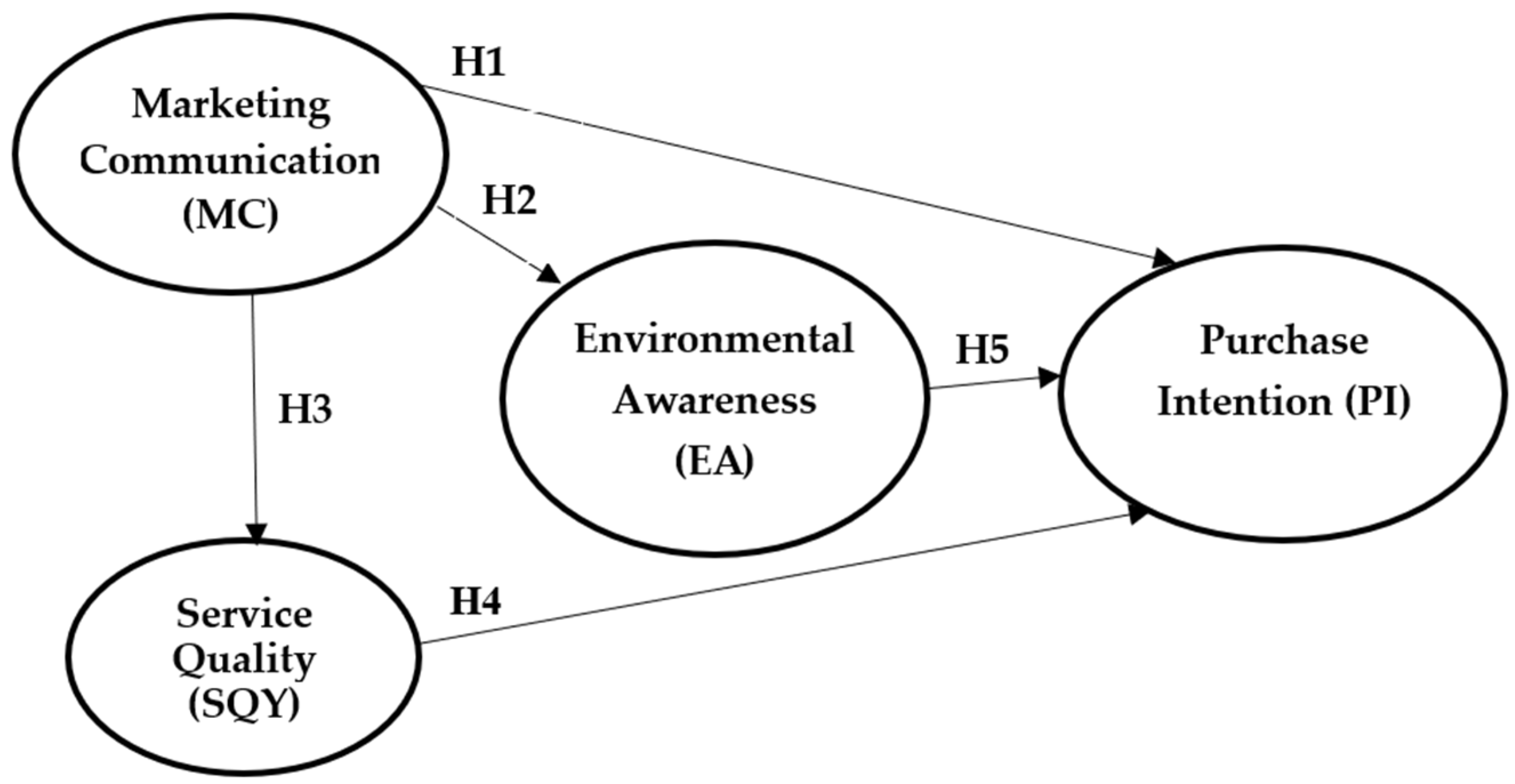
This conceptual framework (Figure 1) postulates that three latent constructs, including marketing communication (MC), environmental awareness (EA), and service quality (SQY), have a direct and positive influence on consumers’ purchase intention (PI) in the sustainable housing market in Bangkok. The framework was developed based on an integrative literature review and verified by three academic experts in consumer behavior and green marketing to ensure that the constructs aligned with theory and fit within the contextual setting.

3.2. Population and Sampling

The target population consisted of potential homebuyers who had registered interest in or inquired about purchasing sustainable, eco-friendly homes in the Bangkok Metropolitan Region (BMR). This population segment was chosen because it reflects latent demand and awareness relevant to green housing adoption [22,53]. Bangkok was selected due to its high urban density and environmental initiatives. However, it is acknowledged that this approach limits the generalizability of the findings to the broader population of mainstream buyers who lack pre-existing interest.

3.3. Data Collection and Ethical Considerations

Data were collected in April and May 2025 using a mixed-mode approach, which combined structured face-to-face interviews and online surveys to enhance coverage and reduce sampling bias. Respondents were screened for inclusion criteria and provided informed consent prior to participation.
For in-person interviews, written consent was obtained under the authority of the Faculty of Hospitality Industry, Kasetsart University. For online participation, electronic consent was secured via Google Forms (“Yes, I agree to participate”). Respondents declining consent were automatically excluded.
All participants were informed of the study’s purpose, assured of anonymity, and reminded of their rights to voluntary participation. No identifying information was collected. Ethical approval was granted by the Kasetsart University Research Ethics Committee (KUREC) (Exemption No. KUREC-KPS68/109, 18 August 2025). The study complied with the Declaration of Helsinki (2013 revision) and the NRCT Guidelines for Behavioral and Social Science Research [54,55].

3.4. Sample Size Determination

The sample size was determined according to SEM guidelines. According to Legate et al. [56], an adequate SEM sample should comprise between 10 and 20 respondents per observed variable. With 16 observed indicators, a minimum of 320 respondents was required. The study achieved this target (n = 320), ensuring statistical power for model estimation and stable covariance structures. A priori power analysis (G*Power 3.1) confirmed sufficient sensitivity to detect medium effect sizes (f2 = 0.15, α = 0.05, power = 0.95).

3.5. Sampling Technique

A multi-stage sampling strategy was applied to enhance representativeness and control for district-level variation (Table 1).
Stage 1: Random Selection
All 50 Bangkok districts were assigned equal selection probability. Ten districts were randomly selected using a lottery method, with proportional allocation based on population size.
Stage 2: Purposive Screening
Within selected districts, potential respondents were screened using the qualifying question:
“Have you previously registered interest in purchasing an eco-friendly home?” (☐ Yes ☐ No)
Only “Yes” responses were included. This ensured that all participants were genuine potential buyers, not general residents.

3.6. Research Instrument and Measurement

Data were collected via a six-section structured questionnaire. Constructs were measured using five-point Likert scales (1 = strongly disagree to 5 = strongly agree). The original English questionnaire was translated into Thai using the DeepSeek V-3 AI model. This initial translation was then thoroughly reviewed and refined by a native English-speaking academic editor to ensure conceptual equivalence, linguistic accuracy, and contextual appropriateness. The instrument underwent pilot testing with 30 respondents for clarity, item comprehension, and scale reliability prior to full deployment (Cronbach’s α > 0.80 for all constructs).
The instrument underwent pilot testing with 30 respondents for clarity, item comprehension, and scale reliability prior to full deployment (Cronbach’s α > 0.80 for all constructs).
Section 1: Demographic variables (gender, age, marital status, education, income, occupation, housing type, living arrangement).
Section 2: Marketing Communication (MC)—5 items adapted from Mocanu and Szkal [34] and Armstrong et al. [31]; reliability α = 0.86.
Section 3: Service Quality (SQY)—5 items (tangibles, reliability, responsiveness, assurance, empathy); α = 0.87 [53].
Section 4: Environmental Awareness (EA)—3 items reflecting cognitive, affective, and behavioral dimensions [46,48]; α = 0.89.
Section 5: Purchase Intention (PI)—3 items (satisfaction, trust, word-of-mouth intention) [50]; α = 0.88.

3.7. Data Analysis Strategy

The normality of the data was assessed prior to SEM analysis. The skewness and kurtosis values for all observed variables fell within the acceptable range of ±2, indicating no severe departure from univariate normality. Data analysis followed a two-step SEM approach using LISREL 9.10.

3.7.1. Step 1: Measurement Model Validation

Confirmatory factor analysis (CFA) was used to assess construct reliability, convergent validity, and discriminant validity. Composite reliability (CR > 0.7), average variance extracted (AVE > 0.5), and Fornell–Larcker criteria were used to verify validity [56]. Harman’s single-factor test and variance inflation factors (VIF < 3.0) confirmed the absence of significant common method bias.

3.7.2. Step 2: SEM Assessment

The hypothesized model was tested for the DEs of MC, SQY, and EA on PI. Model fit was evaluated using χ2/df (<3.0), comparative fit index (CFI > 0.90), Tucker–Lewis Index (TLI > 0.90), and root mean square error of approximation (RMSEA < 0.08). Bootstrapping with 5000 resamples was employed to estimate standard errors and path stability, thereby enhancing the robustness of the results.

4. Results

4.1. The Sample’s Descriptive Statistics

Three hundred twenty prospective or current homeowners participated in a survey regarding sustainable, eco-friendly housing PI in Thailand (Table 2). The participants in the sample were almost equally divided by gender, with 51.25% female and 48.75% male. Moreover, the largest age group was 21–40 (39.06%). The majority of respondents (92.82%) held a bachelor’s degree or higher, were married (47.82%), and worked as employees of private companies (30.00%) or business owners (29.37%). A large portion, 38.75%, had an income of 40,001–60,000 THB per month, equivalent to $1100–$1667. Most respondents lived in a single-detached house (42.50%), which they or their family owned (57.50%), and the vast majority lived with their family (79.68%).

4.2. Consumer Preferences for Eco-Friendly Homes

Participants were asked about their decision-making process, buying timeframe, location, price sensitivity, and which specific environmentally friendly forms were important to them. The results are presented in Table A1 and Table A2 of Appendix A. The majority of those who made purchase decisions for an eco-friendly home were family members (49.06%) and buyers who made decisions independently (48.44%) (Table A1). Immediate interest in this market was demonstrated, with 37.50% indicating they would purchase an eco-friendly home within one year. The most preferred location was the suburban area of Bangkok (37.50%). Regarding price sensitivity, the largest group of respondents (42.19%) was willing to pay a premium of 10% for an eco-friendly home compared to a standard house.
The importance ratings of various eco-friendly features are presented in Table A2. The overall mean (M) score was 4.29 (SD = 0.65), indicating that respondents, on average, rated all features as being of “Highest” importance. The top three most important features were ‘building materials that help reduce heat’ (M = 4.35), ‘ventilation structure’ (M = 4.33), and ‘the use of environmentally friendly materials’ (M = 4.32).

4.3. Descriptive Statistics and Measurement Model Validation

Before testing the structural model, the measurement model was validated. As shown in Table 3, all latent constructs demonstrated high mean scores for their indicator items, ranging from 4.07 to 4.18 on a 5-point scale. This suggests respondents generally agreed with all measured variables. The constructs of MC, SQY, EA, and PI were all perceived at a high level. The “word-of-mouth intention” indicator of PI had the highest average score (M = 4.21, SD = 0.70), indicating that satisfied potential buyers are highly willing to recommend eco-friendly homes to others.

4.4. Assessment of Reliability and Validity

To verify the robustness of the measurement model, convergent and discriminant validity were assessed. As shown in Table 4, all constructs demonstrated strong convergent validity. The Average Variance Extracted (AVE) for each construct exceeded the recommended threshold of 0.50, and the Composite Reliability (CR) values were all above 0.80, confirming the internal consistency and reliability of the constructs [56,57].
Discriminant validity was established using the Fornell-Larcker criterion [58]. As presented in Table 5, the square root of the AVE for each construct (shown on the diagonal) was greater than its highest correlation with any other construct (off-diagonal values), confirming that the constructs are distinct from one another.
The overall fit of the measurement model was excellent across all standard indices (χ2/df = 0.73, RMSEA = 0.00, CFI = 0.99, GFI = 0.99), surpassing established benchmarks for excellent fit [59,60,61]. The Cronbach’s Alpha values for all constructs ranged from 0.86 to 0.89, indicating high internal consistency reliability [62]. This confirms that the measured variables reliably represent their underlying theoretical constructs.

4.5. Correlation Matrix Between Latent Variables Testing

The correlation matrix between latent variables (Table 6) showed significant positive relationships among all constructs, with correlation coefficients ranging from 0.43 to 0.68. These correlations provide preliminary evidence for the proposed relationships in the structural model. The results also confirmed discriminant validity, as the square root of the AVE for each construct was greater than its correlations with other constructs.

4.6. Assessment of the Structural Model and Hypothesis Testing

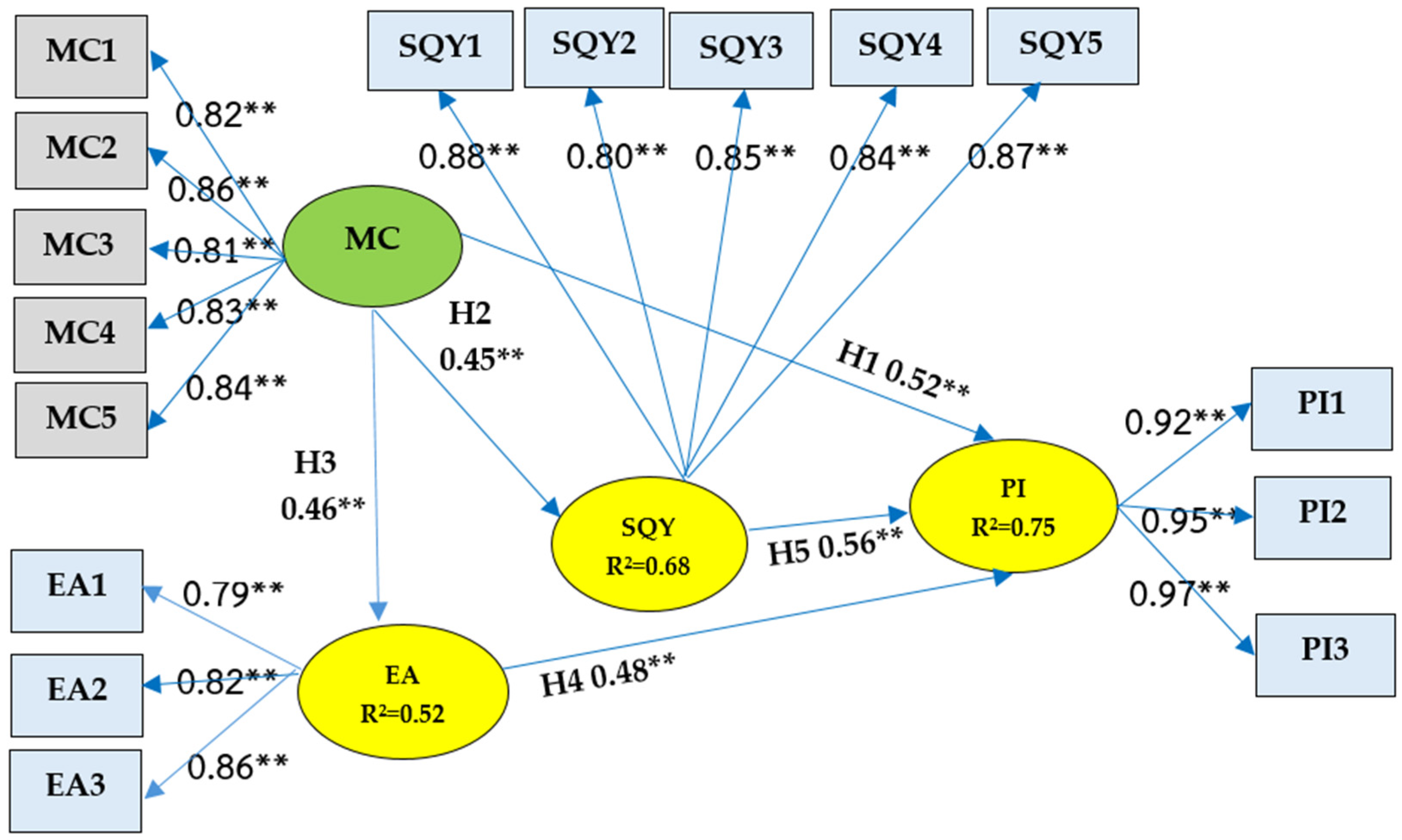
The structural equation model (SEM) was examined to test the hypothesized relationships. The model perfectly fit the data (χ2/df = 0.73, RMSEA = 0.00, CFI = 0.99, GFI = 0.99). The model’s explanatory power was strong, explaining 75% (R2 = 0.75) of the variance in PI, as shown in Table 7.
Path analysis provided strong support for all five direct-effect hypotheses.
H1, H2, H3: Marketing communication (MC) demonstrated a strong DE on Purchase Intention (PI) (β = 0.52, p < 0.01), supporting H1. It also significantly directly affected SQY (β = 0.45, p < 0.01; H2) and EA (β = 0.46, p < 0.01; H3).
H4 and H5: Both SQY (β = 0.56, p < 0.01; H4) and EA (β = 0.48, p < 0.01; H5) had significant positive DEs on PI.

4.7. Mediation Analysis (Indirect Effects)

A bootstrapped mediation analysis was conducted to explore the indirect (IE) pathways through which MC influences PI. The results, presented in Table 8, confirm the presence of significant mediation effects.
The analysis reveals that MC directly fosters purchase intention and sequentially enhances perceptions of SQY and EA. Specifically, the significant IEs demonstrate that:
SQY is a significant mediator between MC and PI (MC → SQY → PI);
EA is a significant mediator between MC and PI (MC → EA → PI);
There is a significant serial mediation path where MC improves SQY, thereby strengthening EA, which ultimately leads to higher PI (MC → SQY → EA → PI).
This underscores that the effect of MC is partially channeled through building positive service perceptions and elevating EA.

4.8. Theoretical Implications of the Final Model

The final model (Figure 2) integrates all findings. The results align with the Theory of Planned Behavior (TPB), where external information (MC) shapes attitudes (EA) and perceived behavioral control (linked to SQY as a proxy for developer reliability), which in turn drives intention (PI) (Table 9). The strong TE of MC (TE = 0.84) highlights its role not just as a direct persuader but as a fundamental antecedent that activates and strengthens other key drivers, namely service perceptions and environmental values. The fact that SQ had the strongest DE on PI underscores that tangible reliability remains paramount for high-investment decisions, even for environmentally motivated consumers.

5. Discussion

This study developed and validated a structural equation model (SEM) to explain purchase intention (PI) for sustainable eco-friendly housing in Thailand. The integrated model, incorporating Marketing Communication (MC), Service Quality (SQY), and Environmental Awareness (EA), demonstrated strong predictive power. The discussion is organized to interpret the key findings, relate them to established theory, and elucidate their broader implications.

5.1. Interpretation of Key Findings and Theoretical Integration

5.1.1. The Pivotal Role of Service Quality (SQY)

The finding that Service Quality (SQY) was the strongest direct predictor of purchase intention (β = 0.56) underscores a critical insight for the sustainable housing market: even for environmentally motivated consumers, pragmatic trust in the developer is paramount. This aligns strongly with the SERVQUAL framework [40,41]. Purchasing a house is a high-involvement decision fraught with perceived risk. High SQY—manifested through reliability (delivering on promises), assurance (knowledgeable staff), and responsiveness—signals developer competence and integrity. This reduces the perceived risk associated with a major financial commitment, giving buyers the confidence to proceed and effectively acting as a form of perceived behavioral control within the Theory of Planned Behavior (TPB). Our results suggest that for Thai consumers, excellent service is not just a value-add but a fundamental prerequisite that validates the entire purchase decision.

5.1.2. The Direct and Catalytic Power of Marketing Communication (MC)

Marketing Communication (MC) demonstrated a significant DE on PI (β = 0.52), confirming its role as a primary driver. In the context of eco-friendly housing, where benefits are often latent (e.g., energy efficiency, indoor air quality), effective MC is essential to educate consumers and build a compelling value proposition [31,34]. This finding aligns with the Hierarchy of Effects Model [35], which posits that communication progresses consumers from awareness to conviction. Furthermore, MC’s significant direct effects on both SQY (β = 0.45) and EA (β = 0.46) reveal its catalytic function. It shapes perceptions of service quality before a sale is even made (e.g., through professional marketing materials and responsive sales agents) and plays an educational role in elevating EA. Thus, MC operates not only as a direct persuader but also as an antecedent that cultivates the other two key drivers in the model.

5.1.3. The Influence of Environmental Awareness (EA)

The significant direct effect of Environmental Awareness (EA) on PI (β = 0.48) confirms that value-expressive motives drive a segment of the Thai housing market. This finding strongly supports the Value–Belief–Norm (VBN) theory [63], which posits that individuals holding strong biospheric values are more likely to undertake pro-environmental actions [47]. For these consumers, purchasing a sustainable home is not merely a transaction but an act of aligning their consumption with their personal values concerning environmental stewardship [49]. This transforms the decision from a purely economic calculus to one involving normative beliefs and self-identity, providing a powerful motivational force that complements the more pragmatic drivers of SQY and MC.

5.2. Synthesis: The Integrated Model and Its Theoretical Contribution

The integrated model’s high explanatory power (R2 = 0.75) robustly demonstrates that isolated factors do not drive purchase intention, but by a synergistic interplay of cognitive (MC), pragmatic (SQY), and affective (EA) drivers. The most profound insight from this synthesis is the central, multifaceted role of Marketing Communication. Its total effect (TE = 0.84) was the strongest in the model, achieved through its significant direct influence on PI and its substantial indirect effects mediated through both SQY and EA. This indicates that strategic communication is the linchpin of the model: it directly persuades, simultaneously builds the perception of service reliability, and actively cultivates the environmental values that make the product appealing in the first place.
While individual constructs are established in the literature, this study’s theoretical contribution lies in empirically validating a specific configuration of relationships within the unique context of Thailand’s emerging eco-housing market. It demonstrates that in a high-involvement, collectivist culture, successful market penetration requires an approach where communication strategies are designed not just to inform, but to build trust and resonate with deeper environmental values simultaneously.

5.3. Practical Implications

The findings offer a clear and actionable strategic framework for developers and policymakers.

5.3.1. For Developers: Communicate Value Comprehensively

Move beyond technical specifications. Craft multi-channel campaigns that articulate both the tangible benefits (e.g., cost savings from energy efficiency) and the intangible, value-expressive benefits (e.g., a healthier lifestyle, ethical consumption) of eco-friendly homes.

5.3.2. Operationalize Service Excellence

Prioritize training for sales and project staff on the reliability and assurance dimensions of SERVQUAL. Ensure flawless execution from initial contact through to post-purchase service, building the critical trust that directly translates to purchase intention.
Authentically Engage Environmental Values: Use “green storytelling” in marketing materials and show units. Pursue credible third-party certifications (e.g., GREEN MARK, LEED) to validate environmental claims and connect with the segment of buyers motivated by Environmental Awareness.

5.3.3. For Policymakers

Support the development and promotion of clear, national standards and certification for sustainable housing. This reduces information asymmetry, increases consumer trust, and helps accelerate the maturation of the green building market.

6. Conclusions

This study successfully constructed and validated a comprehensive model that explains the purchase intention for sustainable, eco-friendly housing in Thailand. The findings clearly demonstrate that purchase intention is not the result of a single factor, but rather emerges from the synergistic effect of three key drivers: strategic marketing communication (SMC), high service quality (HSQ), and a deeply held environmental awareness (DEA).
The primary theoretical insight of this research is the elucidation of the central, multifaceted role of MC. It acts not only as a direct persuader but also as a fundamental catalyst that enhances perceptions of service quality and elevates environmental awareness, thereby exerting the strongest total influence on purchase intention.
While the individual constructs are established in the literature, this study’s main contribution lies in empirically validating this specific integrated model within the understudied context of Thailand’s emerging eco-housing market. The results provide a robust empirical framework for understanding the decision-making of a crucial segment of Thai homebuyers. For practitioners, the findings offer a clear mandate: successful market penetration requires an integrated strategy that simultaneously leverages persuasive communication, demonstrates unwavering service reliability, and authentically connects with the environmental values of modern consumers.

7. Theoretical and Practical Implications

From a practical standpoint, our findings offer a clear and actionable strategic roadmap for industry stakeholders:
For Developers: Making successful homes does not end at building “green” houses. This customer segment requires a new strategic orientation that:
Communicates value comprehensively: Craft multi-channel campaigns that articulate both the tangible benefits (e.g., “building materials that reduce heat by X%, leading to Y% savings on air conditioning”) and the intangible lifestyle value (e.g., “live in harmony with nature for a healthier family”) of eco-friendly features.
Operationalizes Service Excellence: Focus on the ‘Reliability’ (delivering projects on time with promised green specifications) and ‘Assurance’ (training sales staff to be knowledge experts on sustainable technologies) dimensions of SERVQUAL to build trust and reduce perceived risk.
Authentically Engages Environmental Values: Utilize “green storytelling” in show units, pursue credible third-party certifications, and provide transparent data on environmental impact to align with buyers’ values.
For policymakers, this result highlights the need to support public awareness campaigns and help develop comprehensive certification standards for environmentally friendly housing projects, thereby increasing consumer trust, reducing information asymmetry, and accelerating the market adoption of sustainable building practices.


8. Future Research

Future research using a random sample split can be performed to test the model. Secondly, the data are drawn from Thailand. Cross-cultural studies would be beneficial to test the model in other emerging economies. Thirdly, a longitudinal study can be undertaken to examine how the intention is executed and how prospective buyers make decisions regarding sustainable real estate, thereby depicting their decision-making process more accurately.

Author Contributions

Conceptualization, S.M. and A.D.; methodology, S.M. and A.D.; software, S.M. and A.D.; validation, S.M. and A.D.; formal analysis, A.D.; investigation, S.M. and A.D.; resources, S.M. and A.D.; data curation, A.D.; writing—original draft preparation, S.M.; writing—review and editing, S.M. and A.D.; visualization, S.M. and A.D.; supervision, A.D.; project administration, A.D. All authors have read and agreed to the published version of the manuscript.

Funding

This research received no external funding.

Institutional Review Board Statement

This study involved adult participants employed in small businesses in Bangkok. It did not include vulnerable populations or collect sensitive personal information. Participation was voluntary, and informed consent was obtained either electronically or in writing prior to the participant’s involvement. The research conformed to the Declaration of Helsinki (2013 revision) and the Guidelines for Conducting Human Subjects Research in Behavioral and Social Sciences (National Research Council of Thailand, TSRI Guidance No. 3(3)), which specify that social-science research conducted anonymously and without physical or psychological risk is exempt from institutional review in Thailand. Notwithstanding this exemption, Kasetsart University Research Ethics Committee (KUREC) (Exemption Certificate No. KUREC-KPS68/109, dated 18 August 2025) was issued to ensure compliance with international publication standards. All participants provided informed consent before data collection, either by signing a written ICF for interviews or by confirming consent via a “Yes/No” choice in the Google Forms survey. No personally identifying data was collected, and participants could withdraw without penalty. The study’s ICF is available for review upon reasonable request.

Informed Consent Statement

Informed consent was obtained either electronically or during person-to-person interviews from all participants involved in the study.

Data Availability Statement

The data presented in this study are available on request from the corresponding author.

Acknowledgments

All final interpretations, revisions, and conclusions are the authors’ responsibility.

Conflicts of Interest

The authors declare that they have no conflicts of interest.

Abbreviations

The following abbreviations are used in this manuscript:
χ2/dfChi-square/degrees of freedom
AGFIadjusted goodness-of-fit index
BMRBangkok Metropolitan Region
CFAconfirmatory factor analysis
CFIComparative Fit Index
DEdirect effect
EAEnvironmental Awareness
ESGEnvironmental, Social, and Governance
GFIGoodness-of-Fit Index
IEindirect effect
IOCIndex of Item-Objective Congruence
MCmarketing communications
NFINormed Fit Index
PIPurchase Intention
RMRRoot Mean Square Residual
RMSEARoot Mean Square Error of Approximation
SEMStructural Equation Modeling
SERVQUALService Quality Framework
SQService Quality
TEtotal effect

Appendix A

Table A1. Consumer opinions on purchasing eco-friendly homes (n = 320).
Opinionsn%
Q2.1: If you decided to purchase an eco-friendly home, who would be involved in the decision-making process with you?
Only myself15548.43
Family15749.06
Friends51.57
Partner30.94
Totals320100.00
Q2.2. When would you consider purchasing an eco-friendly home?
Within the next year12037.50
In 1–3 years7824.37
In 4–5 years5416.87
In more than 5 years3210.00
Not sure/Undecided3611.26
Totals320100.00
Q2.3. In which location would you prefer to buy an eco-friendly home?
Other provinces (outside the Bangkok metropolitan area)5416.87
Suburban area of Bangkok (Outer Bangkok)12037.51
The Bangkok area is connected to the city center8426.25
Central Bangkok area6219.37
Totals320100.00
Q2.4. What is a suitable price point for an eco-friendly home compared to a standard single house?
A similar price point10633.13
10% higher13542.14
20% higher237.19
30% higher144.38
40% higher175.32
50% higher123.75
Price is not a primary concern134.07
Totals320100.00
Source: The authors.
Table A2. Level of importance of eco-friendly home features (most to least).
Environmentally Friendly Housing ComponentsM (Mean)SD
Building materials that help reduce heat4.350.80
Ventilation structure4.330.81
Use of environmentally friendly materials4.320.81
Water-saving toilets and plumbing systems4.320.83
Roof insulation4.280.82
Sufficient green space4.270.82
Solar roof panels4.240.81
Features that absorb indoor pollution4.240.84
Note: 5-point scale where 5 = Strongly Agree (Most Important) and 1 = Strongly Disagree (Least Important). Source: The authors.

References

  1. Karim, R.; Waaje, A.; Roshid, M.M.; Yeamin, M.B. Turning the waste into wealth: Progressing toward global sustainability through the circular economy in waste management. In Sustainable Waste Management in the Tourism and Hospitality Sectors; IGI Global: Hershey, PA, USA, 2025; pp. 507–552. [Google Scholar] [CrossRef]
  2. Kuttimarks, M.S.; Singh, V.; Venkatamuni, T.; Sharma, R.; Pandey, R.K.; Sudhakar, M. Building a sustainable future through innovations in green construction and recycling waste materials. In Innovations in Energy Efficient Construction Through Sustainable Materials; IGI Global: Hershey, PA, USA, 2025; pp. 33–64. [Google Scholar] [CrossRef]
  3. Victar, H.C.; Waidyasekara, A.S. Optimizing construction waste management in Sri Lanka through Circular economy strategies: Focusing on construction and renovation, and use and operate stages. Eng. Constr. Arch. Manag. 2025, 32, 4275–4309. [Google Scholar] [CrossRef]
  4. Alamandi, M. Sustainable Innovation Management: Balancing Economic Growth and Environmental Responsibility. Sustainability 2025, 17, 4362. [Google Scholar] [CrossRef]
  5. Marrucci, L.; Daddi, T.; Iraldo, F. Boosting circular economy solutions in the construction sector using a life cycle assessment. J. Ind. Ecol. 2025, 29, 473–485. [Google Scholar] [CrossRef]
  6. Bobek, V.; Steigenberger, K.; Horvat, T. Navigating Uncertainty: Political and Economic Dynamics Shaping Tourism Enterprises in Thailand. In Modern Cross-Cultural Management; Akande, A., Ed.; Springer: Cham, Germany, 2025; pp. 287–307. [Google Scholar] [CrossRef]
  7. Phumplab, M. Thai Industrial Policies Towards the Challenges of an Aging Society. Econ. Cult. Hist. Jpn. Spotlight Bimon. 2023, 42, 28–33. Available online: https://tinyurl.com/34tb7wj4 (accessed on 14 October 2025).
  8. Kaewpitoon, P. The Role of Financial Stability in Supporting Sustainable Economic Development: Policy Solutions and Strategic Directions for Strengthening Thailand’s Financial System. Public Adm. Law Rev. 2025, 2, 37–46. [Google Scholar] [CrossRef]
  9. Noinam, S.; Piaseu, N.; Junda, T.; Tantiprasoplap, S.; Kraithaworn, P.; Krongthaeo, S.; Keawpugdee, J.; Sanongdej, W.; Kongcheep, S.; Srisuk, W. Civil Society Involvement in Managing the COVID-19 Pandemic: A Case Study of a Large and Congested Urban Community in Bangkok, Thailand. Health Equity 2024, 8, 269–278. [Google Scholar] [CrossRef]
  10. Tantivangphaisal, P. Tourism Dips as Thailand Tackles Debt and Sluggish Growth: Officials Eye Debt Relief and Stimulus to Counter Slowdown; Thaiger: Singapore, 2025; Available online: https://thethaiger.com/hot-news/tourism/tourism-dips-as-thailand-tackles-debt-and-sluggish-growth (accessed on 1 November 2025).
  11. Liong, R.; Puspitasari, S.D.; Binhudayb, F.S.; Hesham, S. Advancements in green materials for concrete in South East Asia: A mini review. Trop. Environ. Biol. Technol. 2024, 2, 44–56. [Google Scholar] [CrossRef]
  12. Ciba, K. Construction Industry in Thailand—Statistics & Facts; Statista: Hamburg, Germany, 2025; Available online: https://tinyurl.com/94nyajsj (accessed on 14 October 2025).
  13. Abrishami, S.; Martín-Durán, R. BIM and DfMA: A Paradigm of New Opportunities. Sustainability 2021, 13, 9591. [Google Scholar] [CrossRef]
  14. Prasittisopin, L. Machine learning (ML) and deep learning (DL) in sustainable concrete construction: Review, trend and gap analyses. J. Asian Archit. Build. Eng. 2025, 1–29. [Google Scholar] [CrossRef]
  15. Suksiripattanapong, C.; Phetprapai, T.; Singsang, W.; Phetchuay, C.; Thumrongvut, J.; Tabyang, W. Utilization of recycled plastic waste in fiber-reinforced concrete for eco-friendly footpath and pavement applications. Sustainability 2022, 14, 6839. [Google Scholar] [CrossRef]
  16. Lawsakul, A.; Kuensman, W.; Photiwichayanon, K. Causal Factors Influencing Decision-Making Use Environmentally Friendly Building Materials of Construction Business Operators in Bangkok. Asia Soc. Issues 2025, 18, e273206. [Google Scholar] [CrossRef]
  17. Katharangsiporn, K. Sustainable Housing, the New Trend: Younger Generations Demand Real Estate that Reflects Their Environmental Values; Bangkok Post: Bangkok, Thailand, 2025; Available online: https://www.bangkokpost.com/sustainability/3023441/sustainable-housing-the-new-trend (accessed on 14 October 2025).
  18. Al-Gasawneh, J.A.; AlZubi, K.N.; Ngah, A.H.; Ahmad, A.M.K. Multidimensionality of visual social media marketing and its impact on customer purchase intention on the real estate market. Innov. Mark. 2023, 19, 101. [Google Scholar] [CrossRef]
  19. Shen, J.; Fan, K.Y.; Hui, E.C.; Ho, S.M. The value of sustainable property management in real estate: Evidence from Hong Kong. J. Real Estate Res. 2024, 46, 389–419. [Google Scholar] [CrossRef]
  20. Thai Real Estate on the Brink of Collapse Amid Unprecedented Crisis. The Nation. 13 August 2025. Available online: https://www.nationthailand.com/business/property/40053949 (accessed on 14 October 2025).
  21. Bank of Thailand. Banking Sector Quarterly Brief (Q1 2025). 20 May 2025. Available online: https://tinyurl.com/ybxfbk6p (accessed on 14 October 2025).
  22. Chanda, R.C.; Vafaei-Zadeh, A.; Hanifah, H.; Thurasamy, R. Modeling eco-friendly house purchasing intention: A combined study of PLS-SEM and fsQCA approaches. Int. J. Hous. Mark. Anal. 2025, 18, 123–157. [Google Scholar] [CrossRef]
  23. Rashid, N.R.N.A.; Shaharudin, M.R. Customer’s purchase intention for a green home. Int. J. Procure. Manag. 2017, 10, 581–599. [Google Scholar] [CrossRef]
  24. Zhang, X. Green real estate development in China: State of art and prospect agenda—A review. Renew. Sustain. Energy Rev. 2015, 47, 1–13. [Google Scholar] [CrossRef]
  25. Zhang, L.; Fan, Y.; Yang, X.; Zhang, J. Promoting green real estate development by increasing residents’ satisfaction. Sustainability 2021, 13, 9156. [Google Scholar] [CrossRef]
  26. Jacob, J.; Chully, A.A.; Godwin, B.J.; George, J.P. Young consumers’ green marketing orientation: Role of customer citizenship behaviour in determining real estate purchase intention in India. Int. J. Hous. Mark. Anal. 2024, 17, 1086–1103. [Google Scholar] [CrossRef]
  27. Kumar, J.; Rani, V.; Rani, G.; Rani, M. Understanding purchase behaviour towards green housing among millennials: The mediating role of purchase intention. Int. J. Hous. Mark. Anal. 2025, 18, 987–1004. [Google Scholar] [CrossRef]
  28. O’Rourke, D.; Ringer, A. The impact of sustainability information on consumer decision making. J. Ind. Ecol. 2016, 20, 882–892. [Google Scholar] [CrossRef]
  29. Sharma, N.; Akinwalere, S.N. Evaluating Consumer’s Behaviour Towards Investing in Sustainable Luxury Real Estate. Transnatl. Bus. Manag. 2023, 1, 69–91. [Google Scholar] [CrossRef]
  30. Ho, S.P.; Wen, S.C.; Hsu, W.C.; Bambo, I.M.A. Raising the demand for residential green buildings: A general consumer behavior model, the evidence, and the strategies. Build. Environ. 2024, 252, 111267. [Google Scholar] [CrossRef]
  31. Kotler, P. Philip Kotler: Some of my adventures in marketing. J. Hist. Res. Mark. 2017, 9, 203–208. [Google Scholar] [CrossRef]
  32. Vittayavarakorn, N.; Sornsaruht, P. Word-of-mouth innovation: A product development shortcut for organic skin care entrepreneurs in Thailand? Bus. Strategy Dev. 2024, 7, e331. [Google Scholar] [CrossRef]
  33. Mohamad, Z.Z.; Yang, F.C.; Ramendran, S.P.R.C.; Rehman, M.; Nee, A.Y.H.; Yin, Y.C. Embedding eco-friendly and smart technology features in affordable housing for community happiness in Malaysia. GeoJournal 2022, 87, 167–181. [Google Scholar] [CrossRef]
  34. Mocanu, A.A.; Szakal, A.C. Digital marketing strategies: A comprehensive literature review. Bull. Transilv. Univ. Braşov. Ser. V Econ. Sci. 2023, 16, 37–44. [Google Scholar] [CrossRef]
  35. Chakravarty, R.; Sarma, N.N. Evolutionary framework of hierarchy of effects models: Exploring relevance in the shifting of customer path. Vilakshan-XIMB J. Manag. 2022, 19, 59–68. [Google Scholar] [CrossRef]
  36. Savale, T.K.; Anand, P.B.; Varalaxmi, A.B.P.; Quaye, J.A. Green Marketing Strategies: Assessing Consumer Perception and Adoption of Eco-friendly Products. Remit. Rev. 2023, 8, 2490–2503. [Google Scholar] [CrossRef]
  37. Barqah, P.L.; Sakti, I.; Lubis, A. The influence of service quality and brand image on customer satisfaction through purchase decision as an intervening variable at Mansyur Residence Medan. Economit J. Sci. J. Account. Manag. Financ. 2024, 4, 24–35. [Google Scholar] [CrossRef]
  38. Qi, B.; Deng, T.; Yang, Z. The Role of User Experience in the Impact of Low-Carbon Building Characteristics on Consumer’s Housing Purchase Intention. Sustainability 2023, 15, 10194. [Google Scholar] [CrossRef]
  39. Sao, A.; Mohite, S.; Jain, S.; Bapat, G. Evaluating Relationship between CRM, Customer Satisfaction and Client Loyalty in Indian Real Estate. Acta Univ. Bohem. Merid. 2022, 25, 113–125. [Google Scholar] [CrossRef]
  40. Fazal-e-Hasan, S.M.; Ahmadi, H.; Mortimer, G.; Grimmer, M.; Kelly, L. Examining the role of consumer hope in explaining the impact of perceived brand value on customer–brand relationship outcomes in an online retailing environment. J. Retail. Consum. Serv. 2018, 41, 101–111. [Google Scholar] [CrossRef]
  41. Thamtarana, K.; Sornsaruht, P. Antecedents to Thai Consumer Insurance Policy Purchase Intention: A Structural Equation Model Analysis. SAGE Open 2024, 14, 1–20. [Google Scholar] [CrossRef]
  42. Liu, R.; Sucala, V.I.; Luis, M.; Khaled, L.S. Systematic review of service quality models in construction. Buildings 2025, 15, 2331. [Google Scholar] [CrossRef]
  43. Raphael, A.O.; Samuel, O.S.; Dipeolu, A.A. Evaluation of service quality gaps in construction professional service firms in Nigeria. J. Constr. Dev. Ctries. 2022, 27, 25–40. [Google Scholar] [CrossRef]
  44. Kumar, J.; Rani, G.; Rani, M.; Rani, V. Exploring sustainable pathways in the green housing market: An investigation of green housing purchase behavior by using PLS-SEM. Prop. Manag. 2025, 43, 288–304. [Google Scholar] [CrossRef]
  45. Camilleri, M.A.; Cricelli, L.; Mauriello, R.; Strazzullo, S. Consumer perceptions of sustainable products: A systematic literature review. Sustainability 2023, 15, 8923. [Google Scholar] [CrossRef]
  46. Boermans, D.D.; Jagoda, A.; Lemiski, D.; Wegener, J.; Krzywonos, M. Environmental awareness and sustainable behavior of respondents in Germany, the Netherlands, and Poland: A qualitative focus group study. J. Environ. Manag. 2024, 370, 122515. [Google Scholar] [CrossRef]
  47. Stern, P.C. New environmental theories: Toward a coherent theory of environmentally significant behavior. J. Soc. Issues 2000, 56, 407–424. [Google Scholar] [CrossRef]
  48. Praimee, U.; Wongchantra, P.; Junkaew, L.; Ongon, S.; Sookngam, K.; Wongchantra, K.; Phothibat, P.; Bunnaen, W.; Sommala, L. Factors Affecting Awareness of Environmental Conservation of Undergraduate Students. World J. Educ. 2023, 13, 23–35. [Google Scholar] [CrossRef]
  49. Perumandla, S.; Bhattacharyya, S.S. Unveiling the drivers of sustainable housing choices among millennials in emerging markets. Int. J. Hous. Mark. Anal. 2024; ahead-of-print. [Google Scholar] [CrossRef]
  50. Chuweni, N.N.; Saraf, M.H.M.; Fauzi, N.S.; Kasim, A.C. Factors determining the purchase decision of green residential properties in Malaysia. Plan. Malays. 2022, 20, 272–282. [Google Scholar] [CrossRef]
  51. Noor, N.H.M.; Sahabudin, N.B.; Haniff, N.I.Y.; Taufiq, M.M.A. Eco-friendly house purchase decisions among Gen Z: Implications for policymakers & housing developers. Malays. J. Sustain. Environ. 2025, 12, 99–120. [Google Scholar] [CrossRef]
  52. Kempeneer, S.; Peeters, M.; Compernolle, T. Bringing the user back in the building: An analysis of ESG in real estate and a behavioral framework to guide future research. Sustainability 2021, 13, 3239. [Google Scholar] [CrossRef]
  53. Sittiasa, N.; Poo-Udom, A. An Integrated Model for Sustainable Customer Loyalty: Drivers in Thailand’s High-End Home-Building Industry. Sustainability 2025, 17, 9327. [Google Scholar] [CrossRef]
  54. Forum for Ethical Review Committees in Thailand. The Ethical Guidelines for Research on Human Subject in Thailand; Forum for Ethical Review Committees in Thailand: Bangkok, Thailand, 2007; Available online: https://tinyurl.com/mt3xny7b (accessed on 14 October 2025).
  55. Techagaisiyavanit, W.; Mingmontchaikul, B.; Keitleartthum, S. Navigating ethical challenges in research ethics approval: A case study of social science research in Thailand. Res. Ethics 2025. [Google Scholar] [CrossRef]
  56. Legate, A.E.; Ringle, C.M.; Hair, J.F., Jr. PLS-SEM: A Method Demonstration in the R Statistical Environment. Hum. Resour. Dev. Q. 2024, 35, 501–529. [Google Scholar] [CrossRef]
  57. Barros, C.; Cunha, L.; Rocha, A.; Baylina, P. The psychosocial risk factors scale: Factorial validity and reliability analysis. Int. J. Occup. Saf. Ergon. 2025, 1–15. [Google Scholar] [CrossRef]
  58. Isher, A.K.; Gangwar, V.P. Can innovation cultivate growth? A quantitative exploration of agri-tech startups and incubation impact. J. Innov. Entrep. 2025, 14, 87. [Google Scholar] [CrossRef]
  59. Sukkamart, A.; Pimdee, P.; Leekitchwatana, P.; Kongpiboon, W.; Kantathanawat, T. Predicting student-teacher self-directed learning using intrinsic and extrinsic factors: A Theory of Planned Behavior adoption. Front. Psychol. 2023, 14, 1211594. [Google Scholar] [CrossRef]
  60. Elias, S.; Ismail, N.; Basri, B.S. The Confirmatory Factor Analysis (CFA) of E-Procurement Adoption Model in Malaysian Construction Industry. Int. J. Acad. Res. Bus. Soc. Sci. 2022, 12, 623–635. [Google Scholar] [CrossRef]
  61. Pimdee, P.; Ridhikerd, A.; Moto, S.; Siripongdee, S.; Bengthong, S. How social media and peer learning influence student-teacher self-directed learning in an online world under the ‘New Normal’. Heliyon 2023, 9, e13769. [Google Scholar] [CrossRef] [PubMed]
  62. Tavakol, M.; Dennick, R. Making sense of Cronbach’s alpha. Int. J. Med. Educ. 2011, 2, 53–55. [Google Scholar] [CrossRef] [PubMed]
  63. Nguyen, V.H.; Nguyen, T.P.L.; Nguyen, T.V. Customers’ intention to purchase recycled products: Building on the theory of planned behavior and value-belief-norm theory. J. Glob. Responsib. 2025. [Google Scholar] [CrossRef]
Figure 1. The study’s conceptual model. Source: The Authors.
Sustainability 17 10668 g001
Figure 2. Final model. Note: ** Sig. < 0.01, Chi-Square = 68.74, df = 94, p = 0.78, χ2/df = 0.73, RMSEA = 0.00, RMR = 0.00, CFI = 0.99, GFI = 0.99, AGFI = 0.99. Source: The authors.
Sustainability 17 10668 g002
Table 1. Sample distribution across selected Bangkok districts.
DistrictPopulationSample Size%
1. Phra Nakhon43,062144.22%
2. Dusit81,494268.28%
3. Nong Chok178,8565918.59%
4. Bang Rak45,015144.37%
5. Bang Khen186,2006219.37%
6. Lat Krabang178,4245918.59%
7. Yan Nawa75,076257.65%
8. Samphanthawong20,77761.89%
9. Phaya Thai66,212226.72%
10. Thon Buri101,2173310.32%
Total976,333320100%
Source: The authors.
Table 2. Demographic characteristics of the sample (n = 320).
CharacteristicCategoryn%
GenderMale15648.75%
Female16451.25%
Age18–20 years3711.56%
21–40 years12539.06%
41–56 years7824.38%
57–75 years5717.82%
Over 75 years237.18%
Relationship StatusSingle14344.68%
Married15347.82%
Divorced247.50%
EducationBelow Bachelor’s Degree237.18%
Bachelor’s Degree17454.38%
Above Bachelor’s Degree12338.44%
Monthly income (THB)<20,000 THB ≈ $55651.56%
20,001 THB–40,000 THB ≈ $556–$11005617.50%
40,001 THB–60,000 THB ≈ $1100–$166712438.75%
60,001 THB–80,000 THB ≈ $1667–$22226821.25%
80,001 THB–100,000 THB ≈ $2222–$27784514.07%
>100,000 THB ≈ $2778+226.87%
OccupationFreelance/Self-employed5818.12%
Government/State Enterprise7222.51%
Private Company Employee9630.00%
Business Owner9429.37%
Current Housing TypeSingle-detached House13642.50%
Townhouse7623.75%
Twin House4213.13%
Condominium6620.62%
Home Ownership
Status
Owner (Self/Family)18457.50%
Non-owner (Renting, etc.)13642.50%
Living ArrangementsAlone4514.06%
With Family25579.68%
With Friends206.26%
Note. During the survey, the Thai baht to USD conversion rate was approximately 1 USD ≈ = 36 THB. Source: The authors.
Table 3. Descriptive statistics of variables.
Latent & Observed VariablesMSD
Marketing communication (MC)4.080.70
Advertising (MC1)4.100.70
Sales promotion (MC2)4.040.75
Public relations (MC3)4.070.71
Personal selling (MC4)4.070.73
Direct marketing (MC5)4.110.71
Service quality (SQY)4.120.68
Tangibles (SQY1)4.130.73
Reliability (SQY2)4.190.75
Responsiveness (SQY3)4.090.72
Assurance (SQY4)4.040.76
Empathy (SQY5)4.140.74
Environmental awareness (EA)4.070.74
Environmental knowledge (EA1)4.040.75
Environmental attitude (EA2)4.120.74
Environmental behavior (EA3)4.060.75
Purchase intention (PI)4.180.72
Purchase satisfaction (PI1)4.140.74
Trust (PI2)4.190.74
Word-of-Mouth (PI3)4.210.70
Note. All mean values were evaluated as ‘highest’. Source: The authors.
Table 4. Confirmatory factor analysis (CFA), reliability, and convergent validity results.
Latent VariableOVλSEt-ValueR2CRAVE
MCMC10.82 **0.0514.600.600.920.69
MC20.86 **0.0614.740.63
MC30.81 **0.0613.420.59
MC40.83 **0.0613.570.61
MC50.84 **0.0513.630.61
SQYSQY10.88 **--0.650.930.72
SQY20.80 **0.0713.020.59
SQY30.85 **0.0813.740.62
SQY40.84 **0.0813.650.62
SQY50.87 **0.0714.820.63
EAEA10.79 **--0.570.830.62
EA20.82 **0.0714.620.61
EA30.76 **0.0711.720.54
PIPI10.92 **--0.670.960.90
PI20.95 **0.0715.620.68
PI30.97 **0.0815.780.70
Note: ** p < 0.01, ov = observed variable, λ indicates standardized component weights. <-> Indicates mandatory parameters; therefore, SE and t values are not reported. CR = Composite Reliability, AVE = Average Variance Extracted. Source: The authors.
Table 5. Discriminant validity assessment using the Fornell-Larcker criterion.
ConstructsMCSQYEAPI
MC0.83
SQY0.68 **0.85
EA0.62 **0.59 **0.79
PI0.64 **0.43 **0.57 **0.95
Note: ** p < 0.01; Diagonal elements (in bold) are the square roots of the AVE. Off-diagonal elements are the correlations between constructs. Discriminant validity is established as the square root of AVE for each construct is greater than its correlation with other constructs.
Table 6. Correlation matrix between latent variables.
ConstructsMeanSDSkewnessKurtosisMCSQYEAPI
MC4.080.70−0.22−4.491
SQY4.120.68−0.35−4.750.68 **1
EA4.070.74−0.38−5.170.62 **0.59 **1
PI4.180.72−1.09−4.890.64 **0.43 **0.57 **1
Note: ** p < 0.01, Source: The authors.
Table 7. Standardized direct (DE), indirect (IE), and total (TE) effects among constructs.
Dependent Variable R2EffectCausal Variable
SQYEAMC
EA0.52DE--0.46 **
IE---
TE--0.46 **
SQY0.68DE-0.48 **0.45 **
IE---
TE-0.48 **0.45 **
PI0.75DE0.56 **0.48 **0.52 **
IE- 0.32 **
TE0.56 **0.48 **0.84 **
Note: ** p < 0.01. According to the research hypothesis, the symbol <-> means no parameter line. Source: The authors.
Table 8. Bootstrapped indirect effects (IEs).
Mediation PathIE (β)95% CI (Lower–Upper)p-ValueResults
MC → SQY → PI0.250.18–0.34<0.001Significant
MC → EA → PI0.220.15–0.31<0.001Significant
MC → SQY → EA→ PI0.100.05–0.170.001Significant
Note: Bootstrapped with 5000 samples; All effects standardized.
Table 9. Hypothesis testing.
Hypotheses StatementsCoef.t-TestSupported
H1: Marketing Communication (MC) has a positive DE on sustainable eco-friendly housing Purchase Intention (PI).0.5210.42 **confirmed
H2: Marketing Communication (MC) has a positive DE on Sustainable Eco-Friendly Housing Environmental Awareness (EC).0.469.77 **confirmed
H3: Marketing Communication (MC) has a positive DE on sustainable eco-friendly housing Service Quality (SQY).0.459.36 **confirmed
H4: Service Quality (SQY) has a positive DE on sustainable eco-friendly housing Purchase Intention (PI).0.5610.85 **confirmed
H5: Environmental Awareness (EC) has a positive DE on sustainable eco-friendly housing Purchase Intention (PI).0.4810.14 **confirmed
Note: ** p < 0.01, Source: The authors.
Disclaimer/Publisher’s Note: The statements, opinions and data contained in all publications are solely those of the individual author(s) and contributor(s) and not of MDPI and/or the editor(s). MDPI and/or the editor(s) disclaim responsibility for any injury to people or property resulting from any ideas, methods, instructions or products referred to in the content.