Review

The Potential of Zero Liquid Discharge for Sustainable Palm Oil Mill Effluent Management in Malaysia: A Techno-Economic and ESG Perspective


by
Mohd Usman Mohd Junaidi
1,2,
Aubaid Ullah
1,3,*,
Noor Hafizah Mohd Amin
1,
Mohamad Fairus Rabuni
1,2,*,
Zulhelmi Amir
1,2,
Faidzul Hakim Adnan
1,2,
Niswah Nafiat
1,
Aiman Hakim Roslan
4,
Muhamad Farhan Haqeem Othman
4 and
Natasha Laily Noor Bakry
4
1
Department of Chemical Engineering, Faculty of Engineering, Universiti Malaya, Kuala Lumpur 50603, Malaysia
2
Sustainable Process Engineering Center (SPEC), Faculty of Engineering, Universiti Malaya, Kuala Lumpur 50603, Malaysia
3
Department of Chemical Engineering, Pakistan Institute of Engineering and Applied Sciences, Islamabad 45650, Pakistan
4
SD Guthrie Research Sdn. Bhd., KM 10, Jalan Banting-Kelanang, Simpang Sungai Arak, P.O. Box 207, Banting 42700, Malaysia
*
Authors to whom correspondence should be addressed.
Sustainability 2025, 17(23), 10665; https://doi.org/10.3390/su172310665
Submission received: 23 October 2025 / Revised: 21 November 2025 / Accepted: 26 November 2025 / Published: 28 November 2025

Abstract

The Malaysian palm oil industry faces significant environmental challenges from Palm Oil Mill Effluent (POME), a high-strength wastewater. Conventional ponding systems for POME treatment are inefficient, land-intensive, and major sources of methane emissions. Zero Liquid Discharge (ZLD) presents a transformative solution by eliminating effluent discharge while recovering water, energy, and nutrients, aligning with circular economy principles. This review provides a critical techno-economic and Environmental, Social, and Governance (ESG) assessment of ZLD integration for POME management in Malaysia. A key contribution is the novel framework for categorizing ZLD integration at three strategic points in the treatment process, supported by comparative quantitative data on performance and costs. The review thoroughly examines hybrid technologies and delivers an in-depth analysis of the Social and Governance implications of ZLD integration, alongside its Environmental benefits, demonstrating ZLD’s role in meeting regulatory demands and advancing the United Nations Sustainable Development Goals (SDGs). The paper concludes by exploring future directions, including digital twin integration and novel financing, positioning ZLD as a strategic imperative for the industry’s long-term viability and global competitiveness.

1. Introduction

The palm oil industry is a cornerstone of the Malaysian economy, serving as a major contributor to the national gross domestic product (GDP) and a vital source of employment. Yet, this rapid growth has entailed a significant environmental cost, especially the challenge of managing huge quantities of Palm Oil Mill Effluent (POME). This by-product is a dark, viscous, and highly acidic wastewater, produced at a rate of approximately 0.67 m3 for every tonne of fresh fruit bunches processed [1,2]. POME’s high organic load, characterized by a Chemical Oxygen Demand (COD) of 15,000–100,000 mg/L and a Biochemical Oxygen Demand (BOD) of 10,250–43,750 mg/L, renders it a potent pollutant if discharged without adequate treatment [3,4].
Historically, the industry has relied on conventional ponding systems for POME treatment, which involve anaerobic and aerobic lagoons for biological degradation [5,6]. While their low capital cost was initially appealing, these systems pose serious environmental drawbacks. They are a major source of methane (CH4) emission, a greenhouse gas (GHG) with a global warming potential far exceeding that of carbon dioxide (CO2) [7]. Furthermore, they require extensive land area and often fail to meet increasingly stringent environmental regulations [6,8]. These critical limitations highlight an urgent need for a paradigm shift toward more sustainable, efficient, and compliant POME management strategies.
In this context, Zero Liquid Discharge (ZLD) has gained attention as an emerging strategy that presents a transformative solution [9]. ZLD is a treatment process that reclaims and reuses all water from an effluent stream, leaving behind only solid or semi-solid waste [10,11]. By aiming for zero discharge, ZLD not only eliminates water pollution but also facilitates the recovery of valuable resources such as clean water, nutrients, and energy [12]. This approach is in direct alignment with the principles of a circular economy, which seeks to minimize waste and maximize resource utilization [13,14].
This comprehensive review critically assesses the application of ZLD systems for POME treatment. Section 2 provides a detailed techno-economic assessment of various ZLD technologies, including membrane-based, thermal-based, and hybrid systems, with a focus on their technical performance, economic viability, and operational challenges in the context of the Malaysian palm oil industry [15]. Section 3 delves into the Environmental, Social, and Governance (ESG) implications of ZLD, examining its environmental benefits, social impacts, and the role of governance in its successful implementation. Finally, Section 4 offers an outlook on future directions and strategic opportunities for advancing ZLD adoption.

2. Techno-Economic Assessment of ZLD Technologies

The implementation of a ZLD system for POME necessitates a careful selection of technologies based on their technical efficacy, economic viability, and operational performance. These technologies can be broadly categorized as membrane-based, thermal-based, and hybrid systems [16]. Each approach offers distinct advantages and faces unique challenges when applied to the complex matrix of POME.

2.1. Current POME Treatment Stages

The conventional POME treatment process in Malaysia, as in Figure 1, typically involves a series of biological treatment ponds, often referred to as the ponding system [17]. This system comprises four main stages, namely an acidification pond, anaerobic pond, aerobic pond, and polishing pond [18,19]. Initially, before entering the acidification pond, the POME undergoes a series of pre-treatment stages, including cooling, oil recovery, and screening to remove excess heat, residual oil, and coarse debris.
In the acidification stage, the organic matter is hydrolysed and fermented into volatile fatty acid (VFA) through hydrolytic and acidogenic bacteria, preparing the POME for further biological processes [20]. Next, the anaerobic pond is the primary stage for biological degradation, where methanogenic archaea convert VFAs into biogas. This stage is highly effective for reducing BOD and COD but is also the primary source of methane emissions from POME treatment [21,22]. The anaerobic pond is typically covered with a high-density polyethylene (HDPE) liner to capture this biogas, preventing atmospheric release and enabling its recovery. The captured biogas is then purified (into methane) and utilized, often for electricity generation that can be sold to the national grid operator, Tenaga Nasional Berhad (TNB), providing a valuable renewable energy source and revenue stream [17]. After this, the aerobic pond is the final stage for biological degradation, where the remaining organic matter is stabilized under aerobic conditions to further reduce BOD. However, this stage is often land-intensive and energy-intensive if mechanical aeration is used. Finally, the waste is sent to the polishing pond for sedimentation and final quality control before discharge [23].
The conventional ponding system has major drawbacks, despite presenting a cost-effective solution in terms of initial investment and equipment. These include a large land footprint, long hydraulic retention times, a complicated operation system for biological processing that can disrupt the whole treatment process, and the aforementioned GHG emission of methane (CH4) if the gas is not being captured [24,25]. As a result, many mills are exploring more advanced technologies, including ZLD systems, to replace or supplement their current treatment infrastructure. The choice of which ZLD technology to implement is heavily influenced by the position into which it will be integrated in the existing treatment process.

2.2. ZLD Implementation at Different POME Treatment Stages

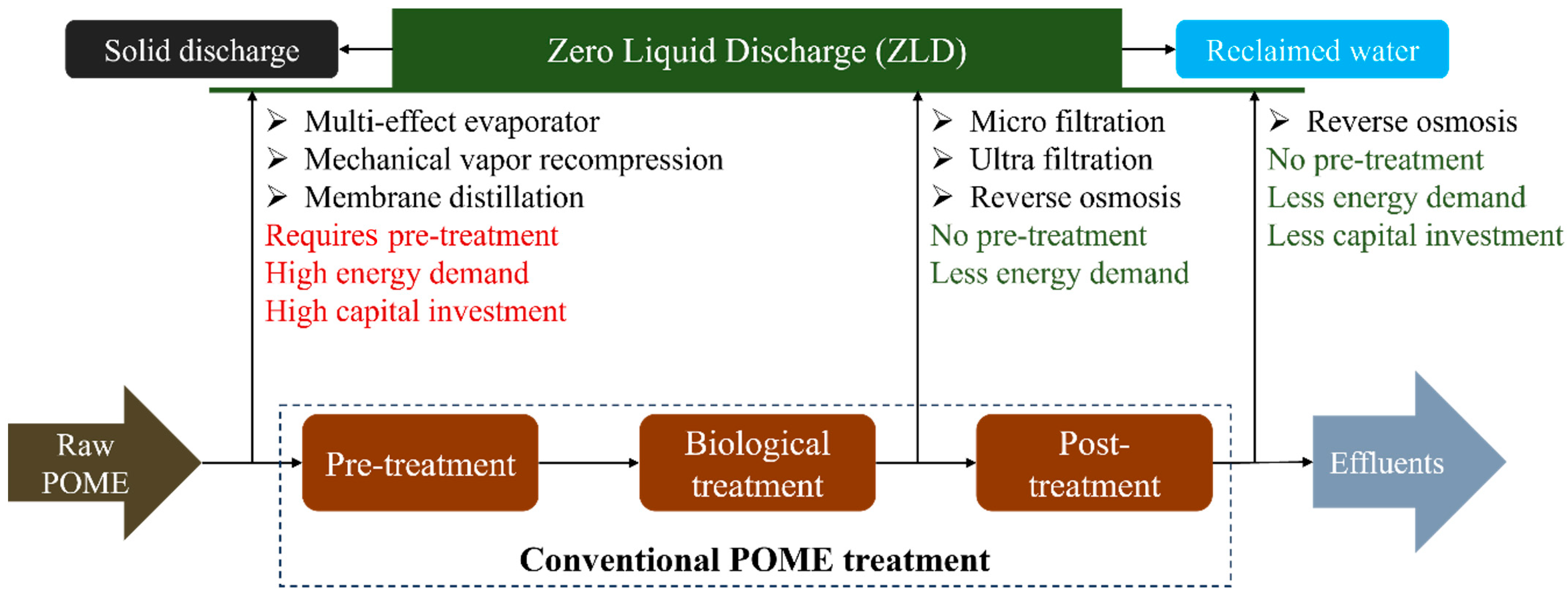
The integration of ZLD systems can be classified into three distinct strategies based on the stage of POME treatment at which they are implemented, such as integration at initial stage (raw POME), integration after biological treatment (partially treated POME), and post-treatment integration (highly treated POME), as shown in Figure 2. Each approach has a unique techno-economic aspect. At the end of this section, a summary of the techno-economic characteristics and challenges for each integration strategy is provided in Table 1.

2.2.1. Integration at Raw POME

Integrating ZLD systems directly at the raw POME stage offers a streamlined approach that bypasses the extensive conventional biological treatment. This strategy is particularly suitable for new mills or those looking to overhaul their entire wastewater management system.
  • Required Pre-treatment and Challenges
Even for systems designed for raw POME, initial pre-treatment steps like screening and oil skimming are crucial to remove gross solids and residual oil before the core ZLD process [26]. The high organic content, such as fats, proteins, carbohydrates, and phenolic compounds, present in raw POME pose significant challenges to further processing. These include severe membrane fouling, which reduces performance and increases maintenance costs, and high energy consumption for thermal processes due to its high water content and organic load [27,28]. Integrating a ZLD system directly into the raw POME stage is a more straightforward idea. It could save space and process wastewater faster. However, the downside is that it demands much more from the technology. The equipment has to be incredibly durable to handle the harsh properties of raw POME, which likely means a more expensive setup and tougher day-to-day operation.
2.
Energy Demand and Operational Complexity
Thermal systems like Mechanical Vapor Recompression (MVR) are energy-intensive when treating raw POME due to its high organic strength [29,30]. Design strategies such as forced circulation can mitigate fouling and reduce downtime, which indirectly benefits overall energy efficiency. The operational complexity of these systems is undeniably high. However, this is frequently counterbalanced by a more streamlined overall process that bypasses multiple biological stages.
3.
Quality and Value of Recovered Resources
Introducing ZLD at this point is the most effective way to capture residual oil. In fact, some newer systems can reclaim as much as half of this trapped oil, turning a waste product into a significant source of revenue [31]. An added benefit is the high quality of the water recovered by thermal systems like MVR. The process creates a boiler-grade condensate in which mill’s operator can reuse directly. Previous study performed by Tan et al., 2021 [29] shows that thermal systems like MVR treating high-strength wastewater demonstrated water recovery rates exceeding 95% and producing water with boiler-grade quality at the condensate. For a medium-sized mill processing 60 tons of fresh fruit bunches (FFB)/hour, this could translate to reclaiming over 40 m3 of water per hour, significantly reducing freshwater intake by up to 70–80% and substantially lowering operating costs associated with water procurement and heating [32].

2.2.2. Integration After Biological Treatment (Partially Treated POME)

This strategy involves integrating ZLD after a biological pre-treatment step, serving as a strategic cost-optimization measure. This is a common approach for mills with existing ponding systems.
  • Benefits and Challenges
Using biological treatment first to reduce organic content (BOD, COD, TSS) makes the later ZLD steps much more efficient. It helps prevent fouling and can lower the energy needed for these advanced processes [8,33]. Furthermore, when proper emission control strategies are employed, biological treatment is recognized as an eco-friendly and cost-effective method for pollutant reduction [34]. A key advantage of this approach is the production of biogas, which offers both economic and environmental benefits. In well-operated industrial-scale anaerobic digestion systems, a typical biogas yield of 28–34 Nm3 per m3 of POME (with a methane content of 55–65%) is achievable [35]. This energy source can offset a significant portion of the ZLD’s high electricity demand, improving the plant’s overall energy balance and economic viability while reducing reliance on the grid and associated carbon emissions. Particularly, a pilot-scale ZLD plant treating 100 m3 of POME per day demonstrated the technical feasibility of this integrated approach, achieving zero liquid discharge while highlighting the critical role of biogas in improving the energy balance and economic viability [2]. To sustainably achieve this, maintaining subtle operational factors like pH, temperature, mixing, and retention time is crucial to keep the microbes working efficiently, which adds another hurdle to the process [36]. Ultimately, by reducing the harsh POME properties through biological degradation, the subsequent advanced ZLD stages (membrane filtration, evaporation, etc.) face a less challenging influent. This translates to using fewer chemicals, cleaning or replacing membranes less often, and lowering energy consumption. Together, these savings can reduce both the overall capital expenditure (CAPEX) and operation expenditure (OPEX) [34]. This approach is appealing for mills that already have biological treatment facilities in place.
2.
Energy Demand and Operational Complexity
Although biological treatments offer a low-cost and practical starting point, achieving ZLD remains an energy-intensive endeavor. While this integrated approach is less complex than treating raw POME directly, it still demands skilled operators to manage the system effectively [37].
3.
Quality and Value of Recovered Resources
Integrating ZLD after biological treatment shifts the goal of resource recovery. Although less oil may be recovered initially, the process gains a new focus: producing high-quality reusable water and nutrient-rich solids [38]. This high-quality water can be recycled within the mill, directly reducing freshwater consumption and its associated costs. Meanwhile, the recovered solids, abundant in nutrients like nitrogen, phosphorus, and potassium (NPK), can be repurposed as bio-fertilizer. This not only valorizes a waste product but also opens a valuable revenue stream, helping to sustainably offset OPEX [2,37].

2.2.3. Integration as Post-Treatment (Highly Treated POME)

When ZLD is implemented as a final post-treatment step, the core objective shifts from broad waste treatment to achieving ultra-high water purity for internal reuse.
  • Primary Objective
The primary objective at this stage is to achieve very high-purity water, typically boiler-grade water, via processes like Reverse Osmosis (RO) [16]. This level of purity is critical for demanding industrial applications, reducing freshwater consumption and minimizing boiler scaling. Pilot plant studies demonstrate that advanced membrane technology combining ultrafiltration (UF) and RO with substantial pre-treatment can produce water suitable for demanding industrial applications. A specific study by Ghani et al. (2018) showed that such a system achieved remarkable reductions in turbidity (completely removed), COD (98.8%), and BOD (99.4%), producing effluent that consistently met quality standards for boiler feed water [33]. The economic justification for high-cost systems at this stage is less about direct waste valorization and more about securing a reliable, high-quality internal water supply and extending the operational lifespan of critical mill equipment [39,40].
2.
Specific Challenges
Despite significant pre-treatment, membrane fouling remains a major limitation for advanced membrane technologies [27,33,41]. Scaling from minerals and salts combined with biological fouling from residual microbes severely compromises membrane permeability and impedes flow. Even after initial treatment, the high residual concentrations of organic matter, oil, and grease in POME continue to clog membranes, reducing filtration efficiency and triggering a cycle of frequent cleaning and premature replacement [33]. Even when POME has undergone extensive pre-treatment and biological degradation, the inherent characteristics of the effluent continue to pose significant operational and maintenance challenges for advanced ZLD technologies, particularly membrane systems. Consequently, achieving ZLD is not just about adding treatment stages, but also necessitates a continuous commitment to anti-fouling strategies and robust cleaning protocols [42,43].
3.
Energy Demand and Operational Complexity
Achieving ultra-high water purity often involves energy-intensive processes like RO. A crucial economic consideration for mills is whether the long-term cost savings derived from using reused high-purity water sufficiently outweigh the increased energy expenditure [44,45]. The operational complexity of these systems is high, necessitating specialized operator skills and frequent attention to prevent fouling and ensure optimal performance [46].
4.
Quality and Value of Recovered Resources
The primary recovered resource at this stage is high-purity water, suitable for critical applications like boiler feed, cooling towers, or even, potentially, drinking water [47]. The primary value shifts to the provision of a highly reliable, high-quality water source and the mitigation of various operational and regulatory risks, which are critical for long-term business resilience and operational continuity [48].

2.3. Solid Residue Consideration for ZLD System

Although water recovery is a primary goal for any ZLD implementation, the management of residual solids from ZLD systems is a critical concern. These concentrates or brines, often valorized as bio-fertilizer, can contain high levels of salts, heavy metals, and persistent organic compounds accumulated from the POME [2]. Pilot-scale studies have demonstrated the feasibility of this approach; for example, an industrial pilot plant treating POME via a ZLD process produced a nutrient-rich sludge that was effectively utilized as a fertilizer, showcasing a direct path for nutrient recycling [2]. However, the complex composition of POME means these concentrates can accumulate salts (K+, Na+, etc.) and potentially heavy metals, which could lead to soil salinization or contamination if applied without oversight [43]. Therefore, while the recovered solids represent a valuable resource, their safe use may necessitate quality control measures, such as periodic chemical analysis or blending with other organic materials, to ensure long-term agricultural sustainability and avoid negative environmental impacts. In summary, the complete ZLD concept must include strategies for these final solids, such as stabilization processes, thermal conversion to biochar to immobilize contaminants, or exploring safe disposal routes [37,38].

2.4. Comparison of ZLD Technologies for POME Treatment

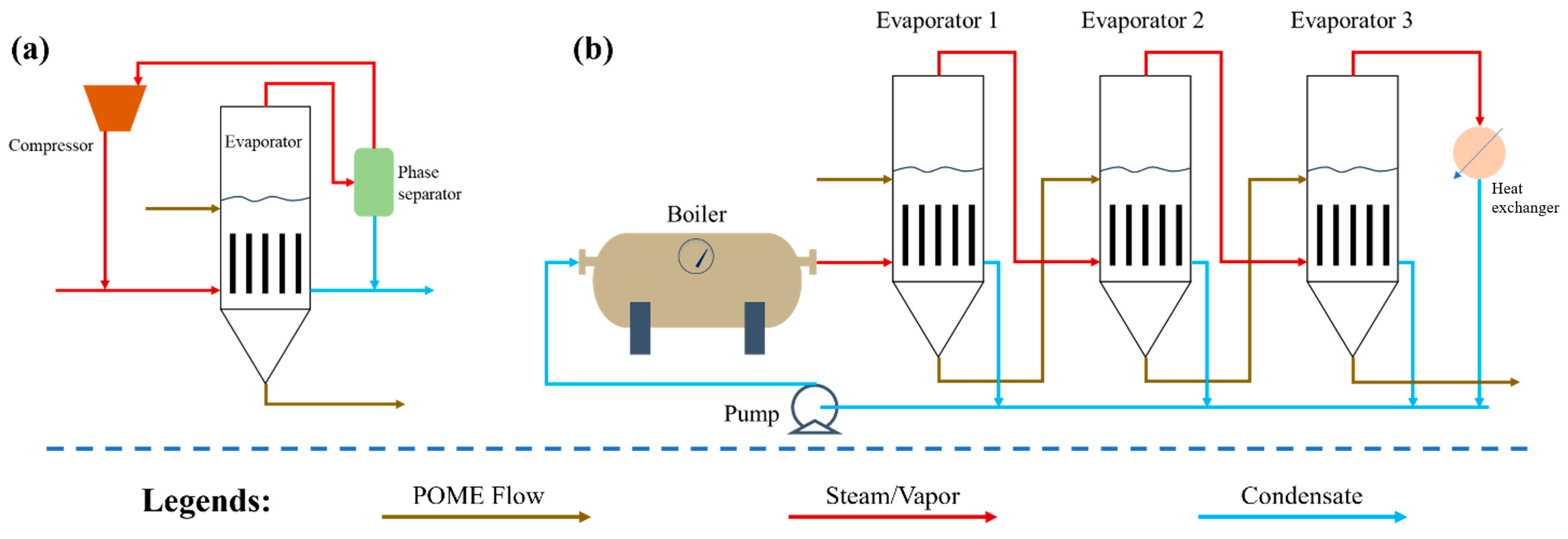
As alternatives to conventional ponding systems, several technologies have emerged which work either as standalone methods or through integration with existing systems. These technologies primarily include thermal methods, membrane distillation, membrane filtration, and hybrid systems, as summarized in Table 2 [32].Thermal methods work on the principle of the phase transition of the water in POME to vapors by adding thermal energy. Although these methods consume a significant amount of energy, this process offers high water recovery in a single step [49]. A single effect evaporator (SEE) is a basic demonstration of these thermal methods, in which water is evaporated from POME with the addition of a substantial amount of heat. SEE technology is the simplest form of thermal equipment but is not feasible for implementation in ZLD operations due to its intensive energy use. Thus, the MVR system has been introduced to overcome this shortcoming. As shown in Figure 3a, MVR is a modification system based on SEE, which introduces a recompression process for the vapor formed in SEE and reinserts this back into the steam inlet, reducing the requirement for fresh steam.
As mentioned in Section 2.2.1, the MVR system could achieve a 64% reduction in thermal energy costs compared to a typical SEE unit [29], indicating a growing trend in the industry towards integrated thermal solutions for industrial ZLD. Another prominent thermal system is the multi-effect evaporator (MEE) [50], which uses multiple evaporator units in a series, wherein the vapor generated is used as a heating source in the next unit, as shown in the schematic in Figure 3b. MEE is advantageous in terms of energy efficiency, profitability, and fouling resistance [50,51].
Other than thermal methods, membrane-based operations provide more energy-efficient alternatives for extracting water from POME. However, the high organic loading of raw POME poses a significant risk of rapid membrane fouling and irreversible damage [52]. Consequently, membrane systems are typically employed as a tertiary step following biological treatment and a substantial reduction in this organic load. The most common configurations incorporate microfiltration (MF), UF, and RO. MF often serves as a crucial pre-treatment step, removing coarse suspended particles to protect the more sensitive UF and RO membranes downstream from excessive fouling. The choice between UF and RO depends on the feed water characteristics, the upstream processes, and the desired purity of the final effluent. UF effectively removes suspended solids and microbes, significantly reducing BOD and COD [53,54]. On the other hand, RO membranes are installed for producing high quality boiler feed water by removing nearly all dissolved solids and turbidity [55]. However, the energy demand of meeting the high pressure on the feed side of the RO increases the OPEX of the plant. This requires further R&D in the field of low- and ultra-low-pressure RO systems to enable the system to cope with these energy intensive challenges and make the process industrially applicable.
To leverage the advantages of both thermal and membrane processes, hybrid systems have been developed. Combining the effects of thermal processes and membrane operations, membrane distillation (MD) works on the principle of producing water vapors on the feed side and transferring them across the membrane on the basis of differential vapor pressure [56,57]. In this process, relatively lower heating is required on the feed side for vapor generation, while on the permeate side, several effects such as vacuum and seeping gas flow can be applied to remove the permeated vapors [58]. The MD process offers membrane processes applicability to high strength POME and has the potential to effectively remove less-volatile components. However, further research is required to resolve the issues of membrane wetting and integrating the mill’s waste heat to run the MD process to further improve its overall economy.
Table 2. Comparison of different technologies adapted in ZLD system for POME treatment.
TechnologyTechnical PerformanceDrawbacks and Improvement StrategiesEconomic AssessmentRef.
Reverse Osmosis (RO) & Nanofiltration (NF)High water recovery (>90%), excellent removal of dissolved salts and organics.Drawbacks: Severe membrane fouling from POME’s complex composition leads to flux decline and reduces lifespan. Improvements: Implement advanced pre-treatment (UF, MBR); use anti-fouling membranes.CAPEX: Medium-High. OPEX: High (energy consumption 3–5 kWh/m3, chemical cleaning, membrane replacement).[55]
Mechanical Vapor Recompression (MVR)Very high water recovery (>95%), can handle high-strength POME, robust against organic load.Drawbacks: High CAPEX and OPEX due to energy consumption; susceptible to corrosion. Improvements: Integrate with biogas energy; use corrosion-resistant materials.CAPEX: High.
OPEX: High (energy consumption 15–25 kWh/m3). May be offset by heat recovery.
[29]
Membrane Distillation (MD)Effective for highly concentrated POME, high rejection of non-volatile solutes.Drawbacks: High thermal energy demand; risk of membrane wetting. Improvements: Utilize mill’s low-grade waste heat; develop superhydrophobic membranes.CAPEX: Medium-High. OPEX: High (Thermal energy consumption 150–250 kWh/mth).
Potential for heat integration to lower cost.
[58]
Hybrid Systems (Anaerobic-UF-RO-MVR)Superior performance, high water recovery (>99%), robust against varying POME composition.Drawbacks: Very high CAPEX and operational complexity. Improvements: Implement modular designs; use smart control systems and digital twin technology for optimization.CAPEX: Very High (complex system).
OPEX: Moderate (energy is optimized, less membrane fouling).
[59]
Single-effect evaporator system (SEE)Moderate water recovery per kg of steam, applicable to small millsDrawbacks: High steam consumption, prone to fouling. Improvements: use anti-fouling agents, integration of waste heat.CAPEX: Low to medium OPEX: High due to steam consumption.[60]
Multi-effect evaporator system (MEE)High water recovery per kg of steam, applicable to large throughput mills.Drawbacks: Complex operation due to involvement of multiple units. Improvements: Use of smart integrated control system. CAPEX: High OPEX: Medium due to efficient steam consumption.[29]
The strategic integration of ZLD, as discussed, offers a paradigm shift from conventional ponding. To quantitatively illustrate this shift, Table 3 provides a comparative overview of key performance indicators between a conventional ponding system and a representative hybrid ZLD system for a medium-sized palm oil mill. The data underscores the transformative potential of ZLD, highlighting a drastic reduction in land footprint (70–85%) and near-complete elimination of greenhouse gas emissions when biogas is captured and utilized. Furthermore, ZLD enables a circular water economy by recovering over 90% of process water, a resource entirely lost in conventional systems. While the payback period for the high capital investment remains a significant hurdle, these quantitative environmental and resource recovery benefits make a compelling case for ZLD as a cornerstone of sustainable POME management.

3. ESG Review of ZLD for POME for Advancing Sustainability

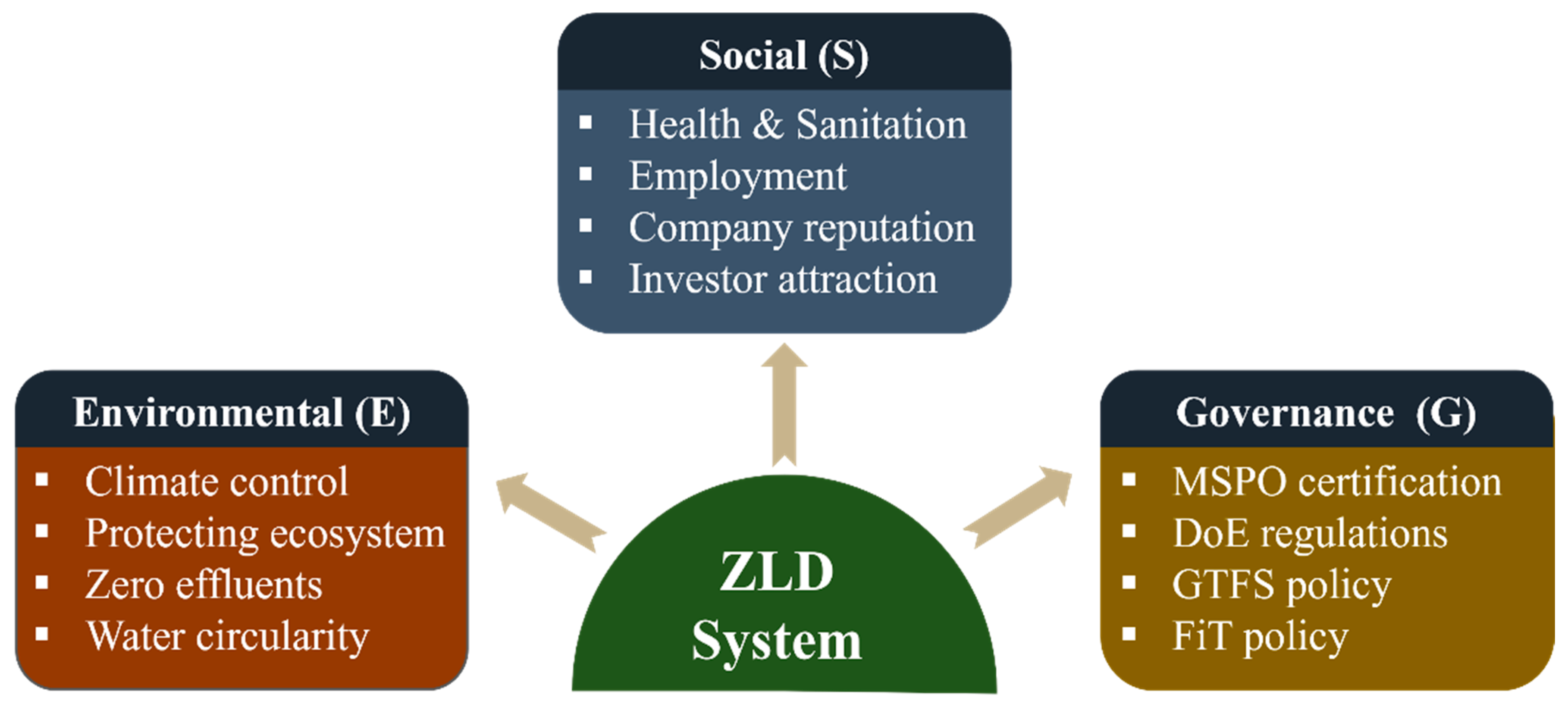
The shift towards ZLD systems in the palm oil industry is driven not only by techno-economic factors but also by a growing emphasis on ESG principles [61,62], as shown in Figure 4. ZLD systems offer a pathway for the industry to enhance its sustainability profile and secure its “social license to operate” in a global market, which is increasingly sensible to environmental and social impacts [63].

3.1. Environmental (E)

The primary environmental benefit of ZLD implementation is the complete elimination of liquid effluent discharge [64]. This directly addresses a major source of water pollution, which assists in protecting local rivers and ecosystems and supports a key component of the United Nations (UN) Sustainable Development Goal (SDG) 6 (Clean Water and Sanitation) [65,66]. Meanwhile, integrating a ZLD system after biological treatment captures a significant amount of biogas as a renewable energy source. This integration directly offsets the conventional fossil fuel energy required to operate energy-intensive ZLD processes or any energy-related equipment in mills, reducing the carbon footprint of the mill’s operation, which can be used as a potential carbon tax liability. This initiative aligns directly with SDG 7 (Affordable and Clean Energy). On the other hand, ZLD system implementation at the raw POME stage, which avoids ponding systems entirely, could reduce emissions of CH4, a GHG with a global warming potential over 25 times that of CO2 [7]. This action will assist in reducing climate change and contribute to SDG 13 (Climate Action) [67]. Furthermore, ZLD systems facilitate the recovery and reuse of process water, minimizing the freshwater footprint of mills and promoting water circularity [68]. The recovered solids and nutrients can be returned to the palm oil plantation as an organic fertilizer, closing the loop in the nutrient cycle and reducing reliance on synthetic fertilizer. Both initiatives directly assist the growth of SDG 12 (Responsible Consumption and Production) [69,70].
However, the environmental performance of ZLD systems is not without its trade-offs. Addressing this energy–carbon nexus is a critical focus for future innovation. The high energy consumption, particularly for thermal processes, can lead to a significant increase in the mill’s carbon footprint if the electricity is sourced from fossil fuels [71]. This highlights the importance of integrating renewable energy sources, such as biogas from anaerobic digestion, into the ZLD system to mitigate this negative environmental impact [72].

3.2. Social (S)

The social dimension of ZLD implementation focuses on its impact on communities and stakeholders [73]. In the prevention of the discharge of polluted POME into waterways, ZLD systems directly safeguard the health of local communities, who rely on these sources for drinking, bathing, and irrigation. This eliminates exposure to the harmful bacteria and pathogens present in untreated effluent, which will minimize waterborne diseases and improve overall public health [74,75]. The reliability of the ZLD system ensures consistent pollution prevention, reinforcing food security by protecting agricultural lands and fisheries from contamination. This reliability also builds community resilience against drought by creating a closed-loop water system that is less dependent on external freshwater sources. These combined benefits significantly enhance the industry’s social license to operate. The operation and maintenance of advanced ZLD systems create a demand for a technically skilled workforce, leading to new, high-value job opportunities in fields such as process engineering, automation, and environmental management. This promotes SDG 8 (Decent Work and Economic Growth) within local communities. Furthermore, ZLD systems accelerate the development and deployment of innovative and hybrid water treatment technologies, supporting the creation of resilient and resource-efficient infrastructure, which is a core objective of SDG 9 (Industry, Innovation, and Infrastructure). From a stakeholder perspective, ZLD can significantly improve a company’s reputation among consumers, investors, and regulatory bodies, who increasingly favor products from sustainable and responsible supply chains, by providing a reliable treatment system [76].

3.3. Governance (G)

Strong governance is crucial for the successful and sustainable adoption of ZLD. This includes corporate governance, which dictates a company’s commitment to ESG principles, and national-level policy and regulatory frameworks [77,78]. In Malaysia, the Malaysian Sustainable Palm Oil (MSPO) certification provides a framework that encourages sustainable practices, and the Department of Environment (DOE) regulations impose strict effluent discharge standards. These efforts are further reinforced by national strategic plans. The Malaysia Environment Sustainability Plan (2020–2030) and the Water Sector Transformation 2040 (WST 2040) roadmap provide a clear long-term policy direction towards integrated water resource management and zero pollution, which offers convincing incentives for mills to invest in ZLD to ensure regulatory compliance and future-proof their operations [79,80,81]. Government policies, such as the Green Technology Financing Scheme (GTFS) and the Feed-in Tariff (FiT) for biogas, play a vital role in de-risking financial investment in ZLD technology while making it more accessible to a wider range of producers [82]. Despite supportive policies, several governance-related barriers hinder widespread ZLD implementation, particularly for smallholder mills. A primary challenge is financial accessibility; the CAPEX of ZLD systems is often prohibitive for smaller operations, despite the availability of schemes like GTFS. Moreover, inconsistent enforcement of discharge standards across regions can create an unlevel playing field, reducing the incentive for mills to invest in advanced treatment [78]. Strengthening monitoring and enforcement mechanisms is therefore critical. Finally, a lack of technical expertise and awareness among smaller mill operators presents a significant hurdle. Addressing these barriers requires targeted financial instruments, capacity-building programs, and a firm, uniform regulatory stance to accelerate the industry-wide transition to sustainable practices [80].

3.4. Summary of ESG Review

The comprehensive ESG review confirms that ZLD systems are not only just a technological solution, but also represent a fundamental shift towards sustainable and responsible operations in the palm oil industry [83]. Although the initial investment and operational complexities are significant, the environmental gains (clean water, reduced methane emissions), social benefits (improved public health, enhanced reputation), and alignment with robust governance frameworks (GTFS, FiT) make ZLD a cornerstone for a more sustainable future [84].

4. Outlook and Future Directions

The adoption of ZLD across the industry will rely on gradual but critical technological advancements. The initial focus is on developing robust predictive and preventive automation capabilities through advanced process control and data analytics. Installing sensors and building a database of historical performance is a crucial preliminary step for the ultimate goal of implementing digital twin technology. These digital twins will empower real-time monitoring, simulate operational scenarios, and optimize energy efficiency, which could eventually lead to fully autonomous ZLD operation [85].
Furthermore, while pilot studies have demonstrated technical feasibility, there is a pronounced lack of published data on the long-term operational stability, maintenance costs, and consistent performance of integrated ZLD systems treating POME. Filling this data gap is crucial for building investor and operator confidence in these capital-intensive technologies.
Learning from global ZLD implementations in other sectors can provide valuable insights for Malaysia. For example, the stringent ZLD mandate in the textile cluster in Tirupur, India [74] demonstrated the technological feasibility of achieving zero discharge but also highlighted the challenges of high OPEX and the management of solid waste. Similarly, the challenge of treating flue gas desulfurization wastewater in the United States and China has also led to the large-scale adoption of ZLD systems, demonstrating the robust application of thermal evaporation and crystallization technologies in the power sector [86]. The key lesson for Malaysia is the importance of adaptable, cost-effective technologies and robust regulatory enforcement. The Malaysian context presents unique challenges, such as the fragmented nature of the industry, with many smallholder mills, and the seasonal variation in POME production, which require tailored solutions and phased implementation strategies.
The techno-economic comparison in Section 2.3 revealed a critical gap and highlighted the importance of a decision-support framework to guide mill operators in selecting the optimal ZLD configuration. Such a framework would evaluate key parameters, including mill capacity, POME characteristics, land availability, capital investment potential, and the cost of local energy and water. For example, large mills with high energy costs might prioritize hybrid systems leveraging biogas, while smaller mills might select ZLD with a membrane-based system post POME treatment. Developing such a tailored selection tool would be a beneficial outcome, especially for industry players. At the same time, innovations and advances in materials science are significant. Robust membranes with stronger fouling-resistant and corrosion-proof materials for thermal components could help cut OPEX and extend the lifespan of ZLD systems [87].
Furthermore, financing will also play a huge role. New mechanisms, like green bonds or other sustainable investment options can provide the capital needed for mills to move away from ponding systems and adopt ZLD solutions. This creates a direct link between financial markets and environmental sustainability [88]. Beyond green bonds, policy-driven economic factors will be a major catalyst. Drastic changes in Malaysia’s water tariff structures, reflecting the true cost of water scarcity and treatment, would significantly improve the return on investment for water reclamation projects like ZLD. Similarly, stricter carbon pricing or enhanced incentives for biogas utilization would directly improve the economics of energy-intensive thermal ZLD processes, making them more financially attractive.
Finally, success will depend on close collaboration. Stronger partnerships between universities, research bodies, and industries can speed up the design of practical, cost-effective solutions tailored to POME [89,90]. An example of this is the ongoing collaboration between Universiti Putra Malaysia and Felda Global Ventures, which focuses on developing an integrated bio-refinery approach for POME. This partnership aims to pilot-scale advanced technologies for concurrent biogas production, bio-compound extraction, and treated water reuse, demonstrating a practical pathway for transforming POME from a waste burden into a valuable resource stream. Fostering such partnerships is essential for de-risking technology adoption and creating solutions that are both technologically sound and economically viable for mills. Alongside this, policies must continue to evolve, offering clear incentives and pathways for mills ready to invest in these game-changing technologies.

5. Conclusions

This review has provided a comprehensive examination of the techno-economic and ESG dimensions of implementing ZLD systems for POME treatment. The analysis demonstrates that, despite high capital and operational expenditures, ZLD presents a transformative alternative to conventional ponding through its superior treatment performance, strong alignment with circular economy principles via resource recovery, and significant contributions to a range of SDGs.
However, this review also highlights critical areas for future research that are essential to guide informed decision-making. A primary limitation in the current literature is the lack of systematic Life-Cycle Assessment (LCA) studies that quantitatively compare the full environmental footprint of integrated ZLD systems against other advanced treatment paradigms, such as high-rate anaerobic digesters. Furthermore, detailed cost–benefit analyses are needed to move beyond general techno-economic assessments and provide a clear financial comparison between ZLD and these alternative technologies, factoring in long-term resource valorization, carbon credits, and avoided liability costs.
Therefore, while ZLD offers the Malaysian palm oil industry a tangible pathway to elevate its environmental standards and build social trust, its strategic adoption must be guided by more robust, data-driven comparisons. A concerted effort combining targeted technological innovation, supportive policy, and rigorous future research on LCA and cost–benefit analysis will be pivotal in steering the sector towards a truly sustainable and competitive future.

Author Contributions

Conceptualization, M.U.M.J., N.H.M.A., A.H.R., M.F.H.O., and N.L.N.B.; data curation, A.H.R., M.F.H.O., and N.L.N.B.; writing—original draft, M.U.M.J. and A.U.; funding acquisition, M.U.M.J., investigation, A.U., M.F.R., and Z.A.; writing—review and editing, M.U.M.J., N.H.M.A., F.H.A., N.N., and M.F.R. All authors have read and agreed to the published version of the manuscript.

Funding

The authors would like to acknowledge the Universiti Malaya (GPF013A-2023; GPF022A-2023) for their financial support.

Institutional Review Board Statement

Not applicable.

Informed Consent Statement

Not applicable.

Data Availability Statement

No new data were created or analyzed in this study.

Conflicts of Interest

Authors Aiman Hakim Roslan, Muhamad Farhan Haqeem Othman, and Natasha Laily Noor Bakry were employed by the company SD Guthrie Research Sdn. Bhd. The remaining authors declare that the research was conducted in the absence of any commercial or financial relationships that could be construed as a potential conflict of interest.

Abbreviations

The following abbreviations are used in this manuscript:
BODBiochemical Oxygen Demand
CAPEXCapital Expenditure
CH4Methane
CODChemical Oxygen Demand
CO2Carbon Dioxide
DOEDepartment of Environment (Malaysia)
ESGEnvironmental, Social, and Governance
FFBFresh Fruit Bunches
FiTFeed-in Tariff
GDPGross Domestic Product
GHGGreenhouse Gas
GTFSGreen Technology Financing Scheme
HDPEHigh-Density Polyethylene
LCALife-Cycle Assessment
MBRMembrane Bioreactor
MDMembrane Distillation
MEEMulti-Effect Evaporator
MFMicrofiltration
MSPOMalaysian Sustainable Palm Oil
MVRMechanical Vapor Recompression
NFNanofiltration
NPKNitrogen, Phosphorus, Potassium (fertilizer)
OPEXOperational Expenditure
POMEPalm Oil Mill Effluent
ROReverse Osmosis
SDGSustainable Development Goal (United Nations)
SEESingle-Effect Evaporator
TNBTenaga Nasional Berhad (Malaysian national grid operator)
TSSTotal Suspended Solids
UFUltrafiltration
UNUnited Nations
VFAVolatile Fatty Acids
WST 2040Water Sector Transformation 2040
ZLDZero Liquid Discharge

References

  1. Sabiani, N.H.M.; Alkarimiah, R.; Ayub, K.R.; Makhtar, M.M.Z.; Aziz, H.A.; Hung, Y.-T.; Wang, L.K.; Wang, M.-H.S. Treatment of Palm Oil Mill Effluent BT. In Waste Treatment in the Biotechnology, Agricultural and Food Industries; Wang, L.K., Wang, M.-H.S., Hung, Y.-T., Eds.; Springer International Publishing: Cham, Switzerland, 2024; Volume 2, pp. 227–284. [Google Scholar] [CrossRef]
  2. Wang, J.; Mahmood, Q.; Qiu, J.-P.; Li, Y.-S.; Chang, Y.-S.; Chi, L.-N.; Li, X.-D. Zero discharge performance of an industrial pilot-scale plant treating palm oil mill effluent. Biomed Res. Int. 2015, 2015, 617861. [Google Scholar] [CrossRef]
  3. Hashiguchi, Y.; Zakaria, M.R.; Maeda, T.; Yusoff, M.Z.M.; Hassan, M.A.; Shirai, Y. Toxicity identification and evaluation of palm oil mill effluent and its effects on the planktonic crustacean Daphnia magna. Sci. Total Environ. 2020, 710, 136277. [Google Scholar] [CrossRef] [PubMed]
  4. Madaki, Y.S.; Seng, L. Palm oil mill effluent (POME) from Malaysia palm oil mills: Waste or resource. Int. J. Sci. Environ. Technol. 2013, 2, 1138–1155. [Google Scholar]
  5. Hassan, M.A.; Yacob, S.; Shirai, Y.; Hung, Y.-T. Treatment of palm oil wastewaters. In Waste Treatment in the Food Processing Industry; CRC Press: Boca Raton, FL, USA, 2005; pp. 101–117. [Google Scholar]
  6. Igwe, J.C.; Onyegbado, C.C. A review of palm oil mill effluent (POME) water treatment. Glob. J. Environ. Res. 2007, 1, 54–62. [Google Scholar]
  7. IPCC Guidelines for National Greenhouse Gas Inventories. 2006. Available online: https://www.ipcc-nggip.iges.or.jp/public/2006gl/pdf/1_Volume1/V1_7_Ch7_Precursors_Indirect.pdf (accessed on 4 August 2025).
  8. Yashni, G.; Al-Gheethi, A.; Mohamed, R.M.S.R.; Arifin, S.N.H.; Salleh, S.N.A.M. Conventional and advanced treatment technologies for palm oil mill effluents: A systematic literature review. J. Dispers. Sci. Technol. 2021, 42, 1766–1784. [Google Scholar] [CrossRef]
  9. Tabassum, S.; Zhang, Y.; Zhang, Z. An integrated method for palm oil mill effluent (POME) treatment for achieving zero liquid discharge—A pilot study. J. Clean. Prod. 2015, 95, 148–155. [Google Scholar]
  10. Patel, M.S.K.; Badea, M.H.; Kambekar, M.A.A. Effluent Treatment Technologies for Zero Liquid Discharge System; The Institution of Engineers (India): Kolkata, India; p. 60.
  11. Wang, W.; Wu, F.; Yu, H.; Wang, X. Assessing the effectiveness of intervention policies for reclaimed water reuse in China considering multi-scenario simulations. J. Environ. Manage. 2023, 335, 117519. [Google Scholar] [CrossRef]
  12. Mohammad, S.; Baidurah, S.; Kobayashi, T.; Ismail, N.; Leh, C.P. Palm Oil Mill Effluent Treatment Processes—A Review. Processes 2021, 9, 739. [Google Scholar] [CrossRef]
  13. Teow, Y.H.; Takriff, M.S.; Masdar, M.S.; Mutalib, S.A.; Abdul, P.M.; Jahim, J.M.; Yaakob, Z.; Harun, S.; Yunus, M.F.M. Zero-Waste Technologies for the Sustainable Development of Oil Palm Mills. In Sustainable Technologies for the Oil Palm Industry. Latest Advances and Case Studies; Springer: Berlin/Heidelberg, Germany, 2022; pp. 249–273. [Google Scholar]
  14. MacArthur, E. Towards the circular economy. J. Ind. Ecol. 2013, 2, 23–44. [Google Scholar]
  15. Panagopoulos, A. Techno-economic assessment and feasibility study of a zero liquid discharge (ZLD) desalination hybrid system in the Eastern Mediterranean. Chem. Eng. Process. Intensif. 2022, 178, 109029. [Google Scholar] [CrossRef]
  16. Ho, Q.N.; Lau, W.J.; Jaafar, J.; Othman, M.H.D.; Yoshida, N. Membrane Technology for Valuable Resource Recovery from Palm Oil Mill Effluent (POME): A Review. Membranes 2025, 15, 138. [Google Scholar] [CrossRef]
  17. Yong, G.T.; Chan, Y.J.; Lau, P.L.; Ethiraj, B.; Ghfar, A.A.; Mohammed, A.A.A.; Shahid, M.K.; Lim, J.W. Optimization of the Performances of Palm Oil Mill Effluent (POME)-Based Biogas Plants Using Comparative Analysis and Response Surface Methodology. Processes 2023, 11, 1603. [Google Scholar] [CrossRef]
  18. Jumadi, J.; Kamari, A.; Wong, S.T.S. Water quality assessment and a study of current palm oil mill effluent (POME) treatment by ponding system method. IOP Conf. Ser. Mater. Sci. Eng. 2020, 980, 012076. [Google Scholar] [CrossRef]
  19. Muda, K.; Liew, W.L.; Kassim, M.A.; Loh, S.K. Performance evaluation of POME treatment plants. ARPN J. Eng. Appl. Sci. 2006, 11, 2153–2159. [Google Scholar]
  20. Hamzah, M.A.F.; Jahim, J.M.; Abdul, P.M.; Asis, A.J. Investigation of temperature effect on start-up operation from anaerobic digestion of acidified palm oil mill effluent. Energies 2019, 12, 2473. [Google Scholar] [CrossRef]
  21. David, B.J.; Lalung, J.; Ismail, N. Palm oil mill effluent (POME) treatment “Microbial communities in an anaerobic digester”: A Review. Int. J. Sci. Res. Publ. 2014, 4, 1–24. [Google Scholar]
  22. Poh, P.E.; Chong, M.F. Development of anaerobic digestion methods for palm oil mill effluent (POME) treatment. Bioresour. Technol. 2009, 100, 1–9. [Google Scholar] [CrossRef]
  23. Bashir, M.J.K.; Han, T.M.; Wei, L.J.; Aun, N.C.; Amr, S.S.A. Polishing of treated palm oil mill effluent (POME) from ponding system by electrocoagulation process. Water Sci. Technol. 2016, 73, 2704–2712. [Google Scholar] [CrossRef]
  24. Chin, M.J.; Poh, P.E.; Tey, B.T.; Chan, E.S.; Chin, K.L. Biogas from palm oil mill effluent (POME): Opportunities and challenges from Malaysia’s perspective. Renew. Sustain. Energy Rev. 2013, 26, 717–726. [Google Scholar] [CrossRef]
  25. Chan, Y.J.; Chong, M.F. Palm oil mill effluent (POME) treatment—Current technologies, biogas capture and challenges. In Green Technologies for the Oil Palm Industry; Springer: Singapore, 2018; pp. 71–92. [Google Scholar]
  26. Azmi, N.S.; Yunos, K.F.M. Wastewater treatment of palm oil mill effluent (POME) by ultrafiltration membrane separation technique coupled with adsorption treatment as pre-treatment. Agric. Agric. Sci. Procedia 2014, 2, 257–264. [Google Scholar] [CrossRef]
  27. Ahmad, M.A.; Zainal, B.S.; Jamadon, N.H.; Yaw, T.C.S.; Abdullah, L.C. Filtration analysis and fouling mechanisms of PVDF membrane for POME treatment. J. Water Reuse Desalin. 2020, 10, 187–199. [Google Scholar] [CrossRef]
  28. Wu, T.Y.; Mohammad, A.W.; Jahim, J.M.; Anuar, N. Palm oil mill effluent (POME) treatment and bioresources recovery using ultrafiltration membrane: Effect of pressure on membrane fouling. Biochem. Eng. J. 2007, 35, 309–317. [Google Scholar] [CrossRef]
  29. Tan, Y.D.; Lim, J.S.; Alwi, S.R.W.; Walmsley, T.G. Comparative Assessment for Mechanical Vapour Recompression and Multi-effect Evaporation Technology in Palm Oil Mill Effluent Elimination. CET J.-Chem. Eng. Trans. 2021, 83, 19. [Google Scholar]
  30. Lestari, I.; Amalia, D.; Prastistho, W.; Angin, J.B.P.; Zenatik, M.H. Combination Process of Rice Husk Ash Coagulation and Electrocoagulation for Palm Oil Mill Effluent Treatment. Eksergi 2025, 22, 113–119. [Google Scholar] [CrossRef]
  31. Salih, M.H.; Al-Alawy, A.F.; Ahmed, T.A. Oil skimming followed by coagulation/flocculation processes for oilfield produced water treatment and zero liquid discharge system application. AIP Conf. Proc. 2021, 2372, 060006. [Google Scholar] [CrossRef]
  32. Mahmod, S.S.; Takriff, M.S.; AL-Rajabi, M.M.; Abdul, P.M.; Gunny, A.A.N.; Silvamany, H.; Jahim, J.M. Water reclamation from palm oil mill effluent (POME): Recent technologies, by-product recovery, and challenges. J. Water Process Eng. 2023, 52, 103488. [Google Scholar] [CrossRef]
  33. Ghani, M.S.H.; Haan, T.Y.; Lun, A.W.; Mohammad, A.W.; Ngteni, R.; Yusof, K.M.M. Fouling assessment of tertiary palm oil mill effluent (POME) membrane treatment for water reclamation. J. Water Reuse Desalin. 2018, 8, 412–423. [Google Scholar] [CrossRef]
  34. Lam, M.K.; Lee, K.T. Renewable and sustainable bioenergies production from palm oil mill effluent (POME): Win–win strategies toward better environmental protection. Biotechnol. Adv. 2011, 29, 124–141. [Google Scholar] [CrossRef]
  35. Amin, M.A.; Shukor, H.; Yin, L.S.; Kasim, F.H.; Shoparwe, N.F.; Makhtar, M.M.Z.; Yaser, A.Z. Methane Biogas Production in Malaysia: Challenge and Future Plan. Int. J. Chem. Eng. 2022, 2022, 2278211. [Google Scholar] [CrossRef]
  36. Yusof, M.A.M. Performance Optimization of Industrial Scale In-Ground Lagoon Anaerobic Digester for Palm Oil Mill Effluent (POME) Treatment. Ph.D. Thesis, University of Nottingham, Nottingham, UK, 2024. [Google Scholar]
  37. Amosa, M.K.; Jami, M.S.; Muyibi, S.A.; Alkhatib, M.F.R.; Jimat, D.N. Zero liquid discharge and water conservation through water reclamation & reuse of Biotreated Palm Oil Mill Effluent: A review. Int. J. Acad. Res. 2013, 5, 170–183. [Google Scholar] [CrossRef]
  38. Ahmad, A.L.; Idris, I.; Chan, C.Y.; Ismail, S. Reclamation from palm oil mill effluent using an integrated zero discharge membrane-based process. Polish J. Chem. Technol. 2015, 17, 49–55. [Google Scholar] [CrossRef]
  39. Jami, M.S.; Amosa, M.K.; Alkhatib, M.F.R.; Jimat, D.N.; Muyibi, S.A. Boiler-feed and process water reclamation from biotreated palm oil mill effluent (BPOME): A developmental review. Chem. Biochem. Eng. Q. 2013, 27, 477–489. [Google Scholar]
  40. Abdurahman, N.H.; Rosli, Y.M.; Azhari, N.H. Palm Oil Mill Effluent (POME) Treatment: A Review. In International Perspectives on Water Quality Management and Pollutant Control; BoD Books on Demand: Hamburg, Germany, 2013; p. 87. [Google Scholar]
  41. Haan, T.Y.; Ghani, M.S.H.; Mohammad, A.W. Physical and chemical cleaning for nanofiltration/reverse osmosis (NF/RO) membranes in treatment of tertiary palm oil mill effluent (POME) for water reclamation. J. Kejuruter. 2018, 24, 51–58. [Google Scholar] [CrossRef]
  42. Khan, I.U.; Rahman, M.A.; Othman, M.H.D.; Iftikhar, M.; Jilani, A.; Mehmood, S.; Shakoor, M.B.; Rizwan, M.; Yong, J.W.H. Innovative Solutions for Palm Oil Mill Effluent Treatment: A Membrane Technology Perspective. ACS EST Water 2025, 5, 3538–3562. [Google Scholar] [CrossRef]
  43. Kristanti, R.A.; Hadibarata, T.; Yuniarto, A.; Muslim, A. Palm oil industries in Malaysia and possible treatment technologies for palm oil mill effluent: A review. Environ. Res. Eng. Manag. 2021, 77, 50–65. [Google Scholar] [CrossRef]
  44. Date, M.; Patyal, V.; Jaspal, D.; Malviya, A.; Khare, K. Zero liquid discharge technology for recovery, reuse, and reclamation of wastewater: A critical review. J. Water Process Eng. 2022, 49, 103129. [Google Scholar] [CrossRef]
  45. Riazi, F.; Fidélis, T.; Teles, F. Governance Arrangements for Water Reuse: Assessing Emerging Trends for Inter-Municipal Cooperation through a Literature Review. Water 2022, 14, 2789. [Google Scholar] [CrossRef]
  46. Yuniarto, A. Palm Oil Mill Effluent Treatment Using Aerobic Submerged Membrance Bioreactor Coupled with Biofouling Reducers. Ph.D. Thesis, Universiti Teknologi Malaysia, Johor Bahru, Malaysia, 2015. [Google Scholar]
  47. Brunetti, A.; Barbieri, G. Membrane Engineering for Biogas Valorization. Front. Chem. Eng. 2021, 3, 775788. [Google Scholar] [CrossRef]
  48. Mansour, M.S.M.; Abdel-Shafy, H.I.; Ibrahim, A.M. Zero liquid discharge of petrochemical industry wastewaters via environmentally friendly technologies: An overview. Egypt. J. Pet. 2025, 34, 6. [Google Scholar] [CrossRef]
  49. Patel, P. Zero discharge of palm oil mill effluent through outdoor flash evaporation at standard atmospheric conditions. Oil Palm Bull. 2015, 71, 14–24. [Google Scholar]
  50. Chandwankar, R.R.; Nowak, J. Thermal Process for Seawater Desalination: Multi-effect Distillation, Thermal Vapor Compression, Mechanical Vapor Compression and Multistage Flash. In Handbook of Water and Used Water Purification; Springer: Berlin/Heidelberg, Germany, 2024; pp. 465–502. [Google Scholar]
  51. Kandiah, S.; Batumalai, R. Palm oil clarification using evaporation. J. Oil Palm Res. 2013, 25, 233–235. [Google Scholar]
  52. Liu, J.; Zhao, M.; Duan, C.; Yue, P.; Li, T. Removal characteristics of dissolved organic matter and membrane fouling in ultrafiltration and reverse osmosis membrane combined processes treating the secondary effluent of wastewater treatment plant. Water Sci. Technol. 2021, 83, 689–700. [Google Scholar] [CrossRef]
  53. Haan, T.Y.; Takriff, M.S. Zero waste technologies for sustainable development in palm oil mills. J. Oil Palm. Environ. Heal. 2021, 12, 55–68. [Google Scholar]
  54. Iskandar, M.J.; Baharum, A.; Anuar, F.H.; Othaman, R. Palm oil industry in South East Asia and the effluent treatment technology—A review. Environ. Technol. Innov. 2018, 9, 169–185. [Google Scholar] [CrossRef]
  55. Ahmad, A.L.; Chong, M.F.; Bhatia, S. Mathematical modeling of multiple solutes system for reverse osmosis process in palm oil mill effluent (POME) treatment. Chem. Eng. J. 2007, 132, 183–193. [Google Scholar] [CrossRef]
  56. Yi, C.W.; Xin, N.H.; Mokhtar, N.M. Development of Bench-Scale Direct Contact Membrane Distillation System for Treatment of Palm Oil Mill Effluent. J. Appl. Membr. Sci. Technol. 2023, 27, 103–113. [Google Scholar] [CrossRef]
  57. Muhamad, N.A.S.; Mokhtar, N.M.; Naim, R.; Lau, W.J.; Ismail, N.H. Treatment of wastewater from oil palm industry in Malaysia using polyvinylidene fluoride-bentonite hollow fiber membranes via membrane distillation system. Environ. Pollut. 2024, 361, 124739. [Google Scholar] [CrossRef]
  58. Said, I.A.; Chomiak, T.; Floyd, J.; Li, Q. Sweeping gas membrane distillation (SGMD) for wastewater treatment, concentration, and desalination: A comprehensive review. Chem. Eng. Process.-Process Intensif. 2020, 153, 107960. [Google Scholar] [CrossRef]
  59. Ibrahim, M.; Nawaz, M.H.; Rout, P.R.; Lim, J.W.; Mainali, B.; Shahid, M.K. Advances in Produced Water Treatment Technologies: An In-Depth Exploration with an Emphasis on Membrane-Based Systems and Future Perspectives. Water 2023, 15, 2980. [Google Scholar] [CrossRef]
  60. Alnaizy, R.; Dawood, F. Optimization of a single-effect evaporation system to effectively utilize thermal energy. Environ. Prog. Sustain. Energy Off. Publ. Am. Inst. Chem. Eng. 2009, 28, 259–264. [Google Scholar] [CrossRef]
  61. Chong, T.; Loh, L. Innovating ESG Integration as Sustainable Strategy: ESG Transparency and Firm Valuation in the Palm Oil Sector. Sustainability 2023, 15, 15943. [Google Scholar] [CrossRef]
  62. Jagaba, A.H.; Kutty, S.R.M.; Hayder, G.; Baloo, L.; Noor, A.; Yaro, N.S.A.; Saeed, A.A.H.; Lawal, I.M.; Birniwa, A.H.; Usman, A.K. A systematic literature review on waste-to-resource potential of palm oil clinker for sustainable engineering and environmental applications. Materials 2021, 14, 4456. [Google Scholar] [CrossRef]
  63. Owen, D.L. Public–private partnerships in the water reuse sector: A global assessment. Int. J. Water Resour. Dev. 2016, 32, 1–10. [Google Scholar] [CrossRef]
  64. Shah, A.V.; Varjani, S.; Srivastava, V.K.; Bhatnagar, A. Zero liquid discharge (ZLD) as sustainable technology—Challenges and perspectives. Indian J. Exp. Biol. 2020, 58, 508–514. [Google Scholar]
  65. United Nations. The Sustainable Development Goals Report; United Nations: New York, NY, USA, 2022. [Google Scholar]
  66. Bachi’, N.A.; Mohtar, W.H.M.W.; Zin, W.Z.W.; Takeuchi, H.; Hanafiah, Z.M. Recycled water for non-potable use: Understanding community perceptions and acceptance in Malaysia. Water Policy 2023, 25, 399–414. [Google Scholar] [CrossRef]
  67. Küfeoğlu, S. SDG-13: Climate Action. In Emerging Technologies: Value Creation for Sustainable Development; Springer: Cham, Switzerland, 2022; pp. 429–451. [Google Scholar]
  68. Pandey, A.K. Sustainable water management through integrated technologies and circular resource recovery. Environ. Sci. Water Res. Technol. 2025, 11, 1822–1846. [Google Scholar] [CrossRef]
  69. Küfeoğlu, S. SDG-12: Responsible consumption and production. In Emerging Technologies: Value Creation for Sustainable Development; Springer: Cham, Switzerland, 2022; pp. 409–428. [Google Scholar]
  70. Chan, S.; Weitz, N.; Persson, Å.; Trimmer, C. SDG 12: Responsible consumption and production. In A Review of Research Needs. Technical Annex to the Formas Report Forskning för Agenda, 2030; Stockholm Environment Institute: Stockholm, Sweden, 2018. [Google Scholar]
  71. Elewa, M.M. Emerging and conventional water desalination technologies powered by renewable energy and energy storage systems toward zero liquid discharge. Separations 2024, 11, 291. [Google Scholar] [CrossRef]
  72. Gadalla, M.A.; Fatah, A.A.; Elazab, H.A. A novel renewable energy powered zero liquid discharge scheme for RO desalination applications. Case Stud. Chem. Environ. Eng. 2023, 8, 100407. [Google Scholar] [CrossRef]
  73. MPOB. Malaysian Palm Oil Board MPOB; MPOB: Kajang, Malaysia, 2003. [Google Scholar]
  74. Grönwall, J.; Jonsson, A. The impact of zero coming into fashion: Zero liquid discharge uptake and socio-technical transitions in Tirupur. Water Altern. 2017, 10, 602–624. [Google Scholar]
  75. Prasath, G.A.; Velmurugan, D.; Ravichandran, S. The scenario of groundwater pollution after implementation of zero liquid discharge: An agricultural economic perspective. Asian J. Agric. Ext. Econ. Sociol 2024, 42, 230–240. [Google Scholar] [CrossRef]
  76. Kodialbail, V.S.; Sophia, S. Concept of zero liquid dischare—Present scenario and new opportunities for economically viable solution. In Concept of Zero Liquid Discharge; Elsevier: Amsterdam, The Netherlands, 2023; pp. 3–31. [Google Scholar]
  77. Malaysia, T.I. Corporate Integrity System Malaysia. 2025. Available online: https://transparency.org.my/pages/what-we-do/corporate-integrity-system-malaysia (accessed on 23 August 2025).
  78. Majid, N.A.; Ramli, Z.; Sum, S.M.; Awang, A.H. Sustainable palm oil certification scheme frameworks and impacts: A systematic literature review. Sustainability 2021, 13, 3263. [Google Scholar] [CrossRef]
  79. Abidin, M.N.Z.; Fatah, F.A.; Noor, W.; Aris, N.F.M. A review on adoption of the Malaysian Sustainable Palm Oil (MSPO) certification scheme. IOP Conf. Ser. Earth Environ. Sci. 2024, 1397, 12035. [Google Scholar] [CrossRef]
  80. Hamid, S.R.; Arzaman, A.F.M.; Razali, M.A.; Yasin, N.I.; Masrom, N.R.; Sabri, N.A.A.; Margono, M. The deployment of the Malaysian sustainable palm oil standard in the agriculture sector. Multidiscip. Sci. J. 2024, 6, 2024115. [Google Scholar] [CrossRef]
  81. Water Sector Transformation (WST2040). 2025. Available online: https://wst2040.my/ (accessed on 11 September 2025).
  82. Ludin, N.A.; Phoumin, H.; Chachuli, F.S.M.; Hamid, N.H. Sustainable energy policy reform in Malaysia. In Revisiting Electricity Market Reforms: Lessons for ASEAN and East Asia; Springer: Singapore, 2022; pp. 251–281. [Google Scholar]
  83. Ahmad, S.N.H.N.; Amran, A.; Siti-Nabiha, A.K.; Rahman, R.A. Sustainable palm oil: What drives it and why aren’t we there yet? Asian J. Bus. Account. 2022, 15. [Google Scholar] [CrossRef]
  84. Leong, W.; Heng, L.; Leong, Y. Malaysia renewable energy policy and its impact on regional countries. IET Conf. Proc. CP843 2023, 2023, 7–13. [Google Scholar] [CrossRef]
  85. Fang, X.; Wang, H.; Liu, G.; Tian, X.; Ding, G.; Zhang, H. Industry application of digital twin: From concept to implementation. Int. J. Adv. Manuf. Technol. 2022, 121, 4289–4312. [Google Scholar] [CrossRef]
  86. Tong, T.; Elimelech, M. The global rise of zero liquid discharge for wastewater management: Drivers, technologies, and future directions. Environmental science & technology. ACS Publ. 2016, 50, 6846–6855. [Google Scholar]
  87. Khoiruddin, K.; Boopathy, R.; Kawi, S.; Wenten, I.G. Towards next-generation membrane bioreactors: Innovations, challenges, and future directions. Curr. Pollut. Rep. 2025, 11, 15. [Google Scholar] [CrossRef]
  88. Aromolaran, O.; Oyeku, O.G.; Falodun, O.I.; Unuabonah, E.I. Sustainable Management of Wastewater from Oil Palm Processing Industry. In Strategic Management of Wastewater from Intensive Rural Industries; Springer: Cham, Switzerland, 2025; pp. 213–231. [Google Scholar]
  89. Mwafy, E.A.; Mouneir, S.M.; El-Shamy, A.M. Flowing towards Sustainability: Achieving Water Neutrality through Effective Water Management. In Water Neutrality: Towards Sustainable Water Management; ACS Publications: Washington, DC, USA, 2025; pp. 1–40. [Google Scholar]
  90. Yan, H. Bibliometric Analysis on Socio-Technological Innovation in Water Governance under the High Water-Intensive Industry Perspective: A Case Based on the CDP Water Impact Index Report. Master’s Thesis, City University of Hong Kong, Hong Kong, 2023. [Google Scholar]
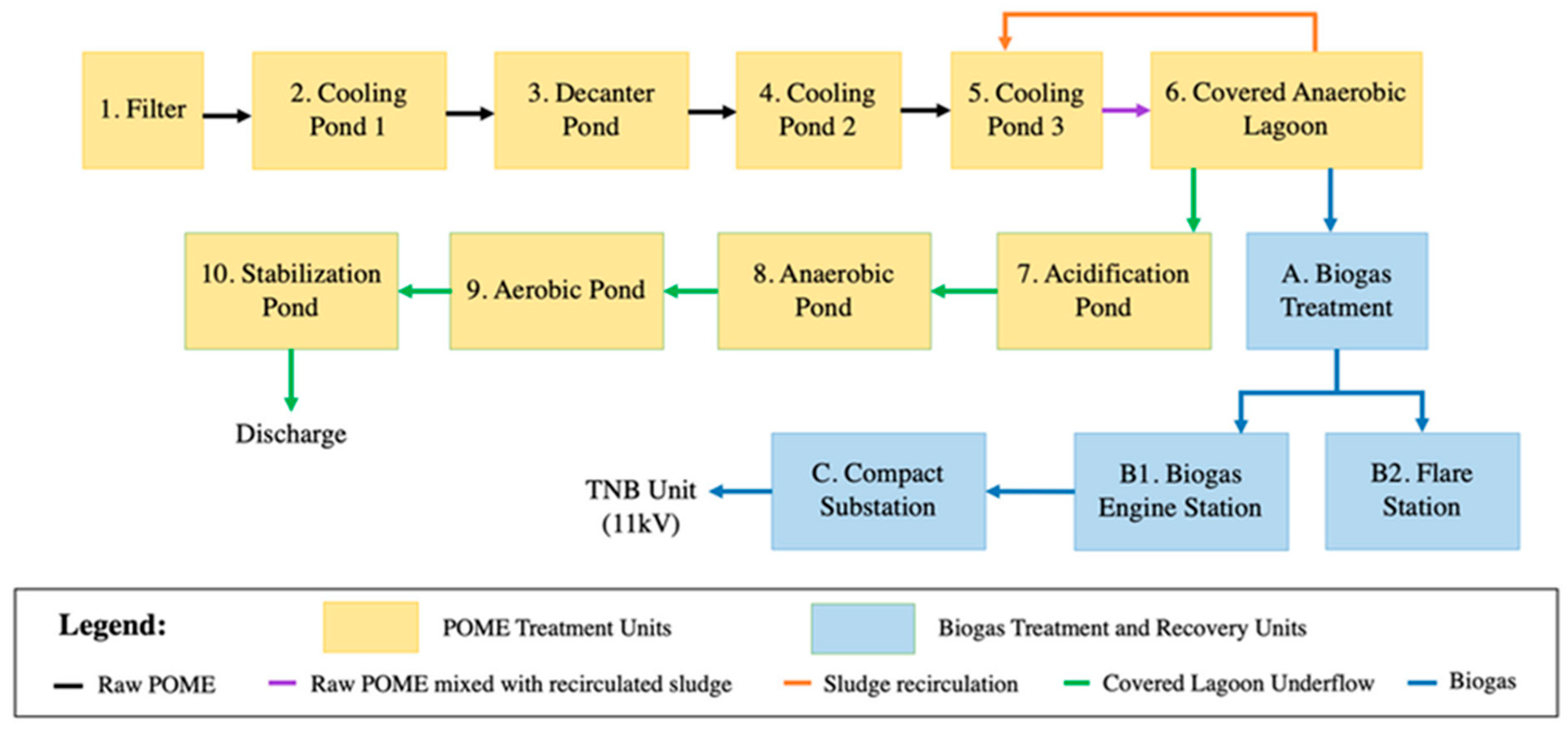
Figure 1. Basic POME treatment stages in Malaysia. Adapted from Yong et al. (2023) [17].
Sustainability 17 10665 g001
Figure 2. Integration of ZLD technologies with existing POME treatment systems.
Sustainability 17 10665 g002
Figure 3. Schematic flow diagrams of (a) MVR and (b) MEE in ZLD system for POME treatment.
Sustainability 17 10665 g003
Figure 4. Summary of ESG impact of ZLD implementation in POME treatment systems.
Sustainability 17 10665 g004
Table 1. Summary of integration of ZLD methods with existing ponding systems.
Integration PointRequired
Pre-Treatment
Energy
Demand
Capital
Required
Process OutputsRemarks
Raw POMEHigh; Coarse solid removal, oil recoveryHighHighSolid discharge
(biofertilizer), boiler feed water
Applicable to new plants
replacing the ponding system. High risk of severe membrane fouling and scaling. High operational complexity.
After
Biological Treatment
Minimal; removal of suspended solidsModerateModerateConcentrated solid, Reclaimed waterInstalled after biological treatment;
advantage of capturing biogas.
Requires high technical expertise to couple both systems. Microbial management in biological stage is critical.
Post-
Treatment
No pre-treatmentLowLowHigh Purity
Reclaimed water
Installed after biological and post- treatment; easy installation to existing plant. Performance is highly dependent on the efficiency of upstream biological treatment. Membrane fouling remains a concern.
Table 3. Quantitative comparison of conventional ponding system and ZLD system for a medium-sized palm oil mill processing 60 tons FFB/hour.
ParameterConventional Ponding SystemZLD System (Hybrid Systems)ImprovementRef.
Land Area Occupied1–2 hectares (baseline)0.2–0.5 hectares70–85% Reduction[24]
GHG Emissions~18 kg CO2-eq/m3 POME
(uncaptured)
<1 kg CO2-eq/m3 POME
(with biogas capture)
>95% Reduction[7]
Water Recovery0%90–95%90–95% Recovery[29,33]
BOD Removal Efficiency~90%
(often non-compliant)
>99%Significant enhancement[33]
Payback PeriodN/A
(baseline)
5–10 years
(highly variable)
Dependent on financing and energy credits[15,59]
Disclaimer/Publisher’s Note: The statements, opinions and data contained in all publications are solely those of the individual author(s) and contributor(s) and not of MDPI and/or the editor(s). MDPI and/or the editor(s) disclaim responsibility for any injury to people or property resulting from any ideas, methods, instructions or products referred to in the content.