Article

Environmental Effects of Static Drill-Rooted Energy Piles in Coastal Soft Soil Areas

1
Collaborative Innovation Center of Coastal Urban Rail Transit, Ningbo University, Ningbo 315211, China
2
Ningbo Key Laboratory of Energy Geostructure, Ningbo University, Ningbo 315211, China
3
Ningbo Zhongchun High-Tech Co., Ltd., Ningbo 315145, China
*
Author to whom correspondence should be addressed.
Sustainability 2025, 17(23), 10663; https://doi.org/10.3390/su172310663
Submission received: 4 October 2025 / Revised: 9 November 2025 / Accepted: 13 November 2025 / Published: 28 November 2025

Abstract

The static drill-rooted energy pile is an emerging green technology increasingly applied in coastal soft soil areas. Existing research has mainly focused on its heat transfer and bearing characteristics, while studies on its environmental impacts remain limited. Based on the Green Building Evaluation Standard and the Life Cycle Assessment method and drawing on practical energy pile projects in coastal areas, this study developed an environmental impact assessment system for energy piles. A comprehensive evaluation method was established, incorporating four indicators: muck and slurry discharge, vibration, noise, and carbon reduction benefits. Using a pilot project, field testing and theoretical analysis were conducted to assess the environmental impact of static drill-rooted energy piles. The results revealed that muck and slurry discharge is significantly lower compared to bored energy piles. Vibration levels at a site office located 30 m from the construction point were below the annoyance threshold of 0.05 g in terms of relative vibration acceleration. Noise levels dropped below the emission limit of 85 dB at a distance of 5 m. Carbon emissions during the material production stage were reduced by 22–45% compared to bored energy piles and by 12% during the construction stage. During the operation stage, compared to air-source heat pumps, electricity savings of 0.691–0.836 kWh per hour and CO2 emission reductions of 0.471–0.57 kg per hour were achieved. Based on the comprehensive scoring of all indicators, the static drill-rooted energy pile technology received an overall rating of ‘‘excellent.’’ This study provided an evaluation framework for the environmental assessment of energy piles and contributed positively to promoting the development of green infrastructure.

1. Introduction

The rapid growth of global energy demand has raised widespread concerns regarding the security of energy supply, environmental degradation, and the urgency of a low-carbon transition [1]. According to statistics, civil engineering and construction activities alone account for approximately 30–40% of total global energy consumption and greenhouse gas emissions [2]. In the renewable energy sector, the development of hydropower and nuclear energy has approached saturation, while solar and wind energy are constrained by climatic conditions and intermittent output. In contrast, geothermal energy has significant advantages, including high stability, renewability, and a high utilization rate, positioning it as a key driver in the ongoing energy transition [3].
As an innovative approach to geothermal energy utilization, energy pile technology allows for the simultaneous support of structural loads and the exploitation of shallow geothermal energy through embedded heat exchange pipes [4]. Compared with conventional ground source heat pump systems, energy piles offer several advantages, such as shorter construction periods, lower installation costs, and more efficient land use [5]. These benefits significantly improve geothermal energy utilization while reducing reliance on traditional energy sources and associated carbon emissions. Currently, the main types of energy pile foundations include steel pipe piles, bored piles, precast piles, and static drill-rooted piles. Although steel pipe piles can be used for energy pile construction, their structural limitations often prevent them from meeting high load-bearing requirements. Conventional precast piles, limited by construction techniques, also tend to fall short of achieving the ideal depths required for energy pile applications. In contrast, bored piles and static drill-rooted piles demonstrate clear advantages in load-bearing capacity and geological adaptability, offering broader application prospects. Notably, static drill-rooted piles combine the advantages of both bored and precast piles, providing high pile quality alongside significant environmental benefits, and are increasingly adopted in coastal areas.
Recently, the application of energy pile technology has expanded across diverse fields. Kong et al. [6] developed a bridge deck geothermal snow-melting system that uses pile-based heat exchangers and investigated its performance under snowfall conditions. Ren et al. [7] conducted a thermal response field test on a group of energy piles under embankment loads during winter as part of the China Sanmenxia National Highway 310 project. They analyzed temperature profiles, stress variations, and thermal properties while also assessing the feasibility of a new pipe installation technique. Wang et al. [8] applied energy pile technology by integrating heat exchange pipes to harness shallow geothermal energy, effectively reducing the maximum temperature differential by 53.4% in large-volume concrete structures of high-altitude bridge piers. This approach also minimized expansion strain, had minimal impact on the pile foundation, achieved high heat exchange efficiency, and demonstrated a coefficient of performance (COP) of 4.0, highlighting its potential to enhance infrastructure resilience and service life. Cerra et al. [9] assessed the feasibility of an energy pile-based collective heating and cooling network in the new district of Vejle, Denmark, and developed a temperature model based on hydrogeological and building energy consumption data to estimate the long-term performance and maximum serviceable building area of the system. The results indicated that energy piles could support heating and cooling for three- to four-story buildings, depending on the design and usage. Pagola et al. [10] studied a ground-source heat pump system based on energy piles at the Vejle Rosborg High School in Denmark, which has been providing heating and cooling for a 4000 m2 building since 2011. Operational data indicated that, although asymmetric soil usage could cause temperature drops, the winter heating supply temperature remained above 4.2 °C, and summer soil recovery occurred. The system achieved seasonal performance factors of 2.7 for heating and 4.2 for cooling, demonstrating its feasibility for buildings with high heating demands while suggesting room for optimization in energy management. Loveridge et al. [11] discussed the thermal performance measurement of energy pile systems under different environmental conditions based on the case of the Zurich Airport dock section. Hassam et al. [12] conducted a 30-year numerical simulation calibrated with field data and found that, in a residential building project in Melbourne, Australia, the use of an energy pile system reduced energy consumption by 75% and energy costs by 5% compared to a natural gas boiler. Furthermore, compared to air-source heat pumps, the heating and cooling mode with energy piles resulted in a 39% reduction in energy consumption, carbon emissions, and costs. Optimizing pile spacing, pile length, and the number of piles could enhance energy pile benefits by 76–119%, emphasizing the critical role of building thermal loads and pile configuration in early-stage design.
As energy pile technology has evolved and its application in building heating and cooling has expanded, scholars have increasingly studied its environmental impacts. A major focus has been the effects of energy piles on the thermodynamic behavior of surrounding soils, particularly concerning soil temperature, pore water pressure, and consolidation settlement. Cherati et al. [13] investigated the effects of various parameters on transient heat transfer in the unsaturated soils surrounding energy piles, with particular emphasis on soil moisture, temperature changes, and the potential environmental impacts of the heat transfer process. The environmental impact of energy piles extends beyond soil behavior but also involves comprehensive life cycle assessments (LCA). Zhang et al. [14] systematically evaluated low-carbon optimization measures across the design, construction, and operation stages of energy piles from a life cycle perspective and proposed systematic theories and methods for optimal decarbonization. In addition, Sutman et al. [15] analyzed the long-term performance of energy piles under three different climate conditions using finite element simulations and LCA. Their results indicated that energy pile systems performed excellently in both heating and cooling. Although geothermal operation caused soil temperature fluctuations, the overall environmental impact was significantly reduced. Kong et al. [16] performed experimental analysis on a ground source heat pump system used for a 25 m2 building in Yichang, Hubei Province. They explored the thermal response and performance of the energy pile system, finding that it achieved a 12.2% to 21.2% higher COP and faster start-up speed compared to air-source heat pump systems under both continuous and intermittent operation. Shen et al. [17] introduced an innovative approach by using alkali-activated concrete (AAC) in energy piles. A systematic comparison between AAC and Portland cement concrete energy piles revealed that AAC piles offered approximately 17% higher thermal energy extraction and 32% lower carbon dioxide emissions. Han et al. [18] conducted an in-depth sustainability analysis of energy pile systems by establishing an integrated evaluation framework. They comprehensively assessed the energy-saving, economic, and environmental benefits using OpenStudio and GLHEPro software. You et al. [19] investigated the thermal imbalance in helical coil energy pile groups under seepage conditions and found that groundwater flow effectively mitigated soil temperature declines around piles, thus improving heating efficiency and reducing energy consumption. Moel et al. [20] emphasized that the main environmental benefit of geothermal systems is their ability to reduce fossil energy consumption by harnessing clean, renewable energy. Compared to air-source heat pumps, geothermal systems inherently operate more efficiently due to the relatively stable ground temperature. This stability, with less fluctuation as a heat source or sink, allows the system to function near its optimal design conditions throughout the year, achieving a higher COP. Regarding system design, energy pile technology demonstrates wide adaptability and can be applied under various ground conditions, not just in urban areas. Rawlings and Sykulski [21] highlighted several additional technical advantages of energy pile heat pump systems, including low operational noise (due to the absence of external fans), no need for roof penetrations, higher safety (due to the absence of external equipment), and enhanced overall building safety, since no explosive gases are involved.
Recently, as a novel energy pile technology that combines the advantages of precast piles and bored piles, static drill-rooted energy piles have been increasingly applied in foundation engineering projects in coastal areas. The construction process of this technology primarily includes key steps, such as borehole grouting, reinforcement and heat exchanger pipe installation at the pile head, pile pressing with simultaneous heat exchanger embedding, pile connection, and heat exchanger integration and protection. During the drilling process, the technique mixes cement slurry with in situ soil to form a continuous cement-soil medium. The pile and heat exchanger pipes are simultaneously installed using a static pressing method, which not only facilitates easy installation with low resistance but also improves heat exchange efficiency due to direct contact between the exchanger and the surrounding soil and a shortened heat transfer path. Current research mainly focuses on the heat transfer performance, mechanical properties, and environmental impacts of static drill-rooted energy piles. Fang et al. [22] conducted thermal-mechanical tests under both short-term and long-term conditions to systematically analyze changes in pile temperature, performance coefficient, axial additional stress, and shaft friction. They revealed how pile head and toe constraints influence the mechanical behavior of the pile and provided theoretical support for the application of energy pile technology. Chang et al. [23] conducted indoor model tests to compare the thermo-mechanical responses of static drill-rooted energy piles (SEP) and ordinary energy piles under 20 cycles of monotonic cooling. Their results revealed that SEP exhibited smaller displacements and minimal bearing capacity degradation under thermal loading, highlighting the significant impact of pile structure and soil constraint differences on thermo-mechanical coupling behavior. Chen et al. [24] studied the effect of SEP operation on the consolidation of surrounding soil using ABAQUS simulations to assess changes in temperature, pore water pressure, and settlement of the soil around the pile, providing a theoretical basis for understanding SEP behavior in soil environments. With the growing application of SEP, its environmental impact has drawn growing attention. In particular, there is a need to investigate the energy-saving and emission-reduction potential of this technology. On the other hand, further research is needed to evaluate its suitability for deployment near sensitive structures, such as in densely built urban areas and adjacent to subways.
In summary, the application of energy pile technology continues to expand across fields such as building construction and transportation. As an emerging construction method, the static drill-rooted energy pile offers distinct technical advantages and environmental sustainability. Consequently, it is crucial to conduct in-depth research into its environmental characteristics, particularly to assess its applicability in sensitive areas such as dense urban environments and near metro infrastructures. Currently, there is a lack of a systematic environmental impact assessment framework, and project-specific environmental impact studies are also limited. In particular, research on the environmental impacts of static drill-rooted energy piles remains notably insufficient. This study aimed to investigate the environmental impacts of static drill-rooted energy piles, establish a comprehensive environmental impact assessment system, and apply it to a real-world project, thereby providing theoretical support for the broader adoption of this technology.
Unlike conventional LCA-based research that mainly focuses on carbon emissions and resource consumption during material production, construction, and operation, this study extends the assessment scope by incorporating direct environmental disturbance factors, such as muck and slurry discharge, vibration, and noise. Building upon the LCA framework and guided by the Chinese national standard GB/T 50378 Assessment Standard for Green Buildings [25], a multi-dimensional indicator system is established to integrate construction-phase environmental impacts with life-cycle carbon reduction effects. This enables a more comprehensive and quantifiable evaluation of the environmental performance of static drill-rooted energy piles, particularly in coastal soft-soil areas and metro-adjacent environments.

2. Environmental Impact Assessment Method for Energy Piles

2.1. Evaluation System

To comprehensively assess the environmental impacts of energy piles, this study developed a multi-dimensional, quantifiable indicator system based on the Chinese national standard GB/T 50378 Assessment Standard for Green Buildings [25] and the LCA methodology, establishing a systematic evaluation framework that covers the entire life cycle.
Division of Evaluation Dimensions: (1) Construction Phase: This dimension primarily assesses environmental disturbances caused during construction, including pile-induced settlement, muck and slurry discharge, and noise and vibration. (2) Operation Phase: This dimension evaluates the environmental effects during the operational stage, focusing on heat exchange performance, the extent of temperature disturbance, changes in pore water pressure, and resulting consolidation settlement. (3) Full Life Cycle: This dimension evaluates the carbon reduction potential of static drill-rooted energy piles across all stages—material production, transportation, construction, operation, and decommissioning. Considering that energy piles are often used as permanent foundation structures and typically remain underground after the end of a building’s life cycle, without demolition or recycling, and that the decommissioning stage involves negligible energy consumption and carbon emissions, this study does not treat decommissioning as a separate evaluation dimension in the LCA.
In this system, some physical response indicators during the construction and operation phases, such as pile settlement, temperature disturbance range, changes in pore water pressure, and consolidation settlement, are not subjected to specific quantitative analysis. This is because these factors primarily pertain to structural safety and functionality performance, which are typically verified in the design stage according to relevant standards (for example, Code for Design of Building Foundations GB 50007-2011 [26]). Instead, the evaluation process prioritizes actual environmental impact and resource use, with a focus on key dimensions such as energy savings, carbon reduction, resource sustainability, and operational energy efficiency. The evaluation mainly focuses on two aspects: (1) Environmental disturbances during construction, including muck and slurry discharge, noise, and vibration; (2) Carbon emissions associated with material production, construction, and operation phases.
Table 1 presents the weights assigned to each sub-indicator in the environmental impact assessment of energy piles based on expert inputs. Table 2 provides the total environmental impact score (out of five), calculated by applying these weights to the corresponding sub-indicator scores.
Notably, in the carbon footprint and resource recycling assessment of the static drill-rooted energy pile in this study, carbon emissions during the transportation stage were not included in the evaluation for the following reasons: (1) Compared to traditional bored piles, the transportation methods, distances, and vehicle types for static drill-rooted energy piles are generally similar. As a result, differences in carbon emission during transportation are minimal and do not meaningfully reflect the environmental performance differences of the pile type itself. (2) Although the static drill-rooted pile uses a hollow, high-strength design that slightly reduces material usage, transportation is primarily priced based on full truckloads. Under bulk transport conditions, the material reduction has a limited impact on transportation frequency. (3) Carbon emissions during the transportation stage typically account for only 2–5% of the total carbon footprint and thus have a relatively minor impact on the overall assessment. Therefore, this system focuses on the stages with significant differences, such as material production, construction energy consumption, and operational efficiency, while simplifying the analysis of transportation emissions.

2.2. Quantification of Sub-Indicators

In the specific scoring process, when the measured data of the indicator is within a range, this study adopts the “best value principle” to make grade determinations, that is, the upper limit of the range is used as the basis for the rating. This approach aims to evaluate the best performance potential achievable by technical solutions.

2.2.1. Muck and Slurry Discharge

  • Muck and Slurry Discharge Scoring Criteria
Based on engineering experience in coastal areas, the muck and slurry discharge levels are graded and scored according to their characteristics, as presented in Table 3.
2.
Muck Generation Calculation Method
The muck and slurry discharge scoring table evaluates the emission reduction effects and management measures at the construction site, whereas the muck calculation provides the foundational data support for scoring. Specifically, by accurately calculating the total amount of muck and the emission reduction during the construction of the static drill-rooted energy pile, the ‘‘muck emission reduction ratio’’ can be quantified, which corresponds to the appropriate score level in Table 3.
During the construction of bored energy piles, changes in the soil density within the pile hole, as well as the volume and density of slurry injected for wall protection, are core parameters for calculating muck discharge. These parameters interact in a complex manner: the slurry injection not only maintains the stability of the hole wall and prevents collapse, but the adjustment of the injection volume and density also directly affects the compression state and density distribution of the soil inside the hole. To ensure the smooth progress of construction and effective protection of the hole wall, the slurry density is typically controlled within the range of 1.15–1.25 g/cm3, with the injection volume adjusted based on the hole volume, allowing for an additional margin. Therefore, by analyzing the changes in soil density within the hole and combining them with the actual slurry injection conditions, it becomes possible to more accurately estimate the amount of muck discharged during the entire drilling process.
Based on the specific diameter of the borehole and the achieved depth, the mass of the undisturbed soil within the borehole area (m1), the mass of the soil within the pile hole after the slurry wall is completed, m2, and the mass of the injected slurry (m3) can be calculated as follows:
m 1 = ρ 1 π r 2 l
m 2 = ρ 2 π r 2 l
m 3 = α ρ 3 π r 2 l
Here, r is the radius of the pile hole (m); l is the inner radius of the pipe pile (m); m 1 is the mass of the original soil within the pile hole area (kg); r 1 is the density of the original soil within the pile hole area (kg/m3); m 2 is the mass of the soil within the pile hole after slurry wall completion (kg); r 2 is the density of the soil within the pile hole after slurry wall completion (kg/m3); α is slurry excess factor used for the slurry wall (dimensionless); m 3 is mass of the slurry used for the slurry wall (kg); r 3 is the density of the slurry used for the slurry wall (kg/m3).
By using Formulas (1)–(3), the volume of muck discharge V 1 during the drilling process of the bored pile foundation energy pile can be calculated as follows:
V 1 = m 1 m 2 + m 3 ρ 4
In the formula, r4-the density of the muck discharged after completion of the slurry wall protection (kg/m3).
During the construction of static drill-rooted energy piles, the drilling method is similar to that used for bored energy piles; however, the key difference is that static drill-rooted piles do not require slurry wall protection. Instead, a solid cement-soil mixture is formed in situ by injecting cement slurry that mixes directly with the surrounding soil. As the drill bit advances, this process alters the soil density within the hole. By analyzing changes in the soil density within the hole, we can more accurately estimate the volume of muck discharged during the drilling process. Based on the specific diameter of the hole and the achieved depth, the mass of the soil in the pile hole after cement slurry injection—denoted as m2′—can be calculated after the slurry injection is completed:
m 2 = ρ 2 π r 2 l
m 3 = 0.3 π r 2 r 2 o u t + r 2 i n l ρ 3
Here, m 2 is the mass of the soil inside the pile hole after cement slurry injection (kg), and r2′ is the density of the soil within the pile hole after cement slurry injection (kg/m3).
By applying Formulas (1) and (6), the muck discharge volume ( V 2 ) during the drilling process of the static drill-rooted energy pile can be calculated as follows:
V 2 = m 1 m 2 + m 3 ρ 4
Here, r4′ is the density of the muck discharged after the cement slurry injection is completed (kg/m3).

2.2.2. Vibration Response

  • Vibration Evaluation Indicators
Numerous psychological and physiological studies consistently indicate that vibration can be harmful to the human body. The extent of this harm largely depends on the transmission method and the inherent characteristics of the vibration. Specifically, the human body can detect harmful vibrations as small as 0.003 g, while those of 0.05 g or higher are typically perceived as unpleasant. When the vibration reaches 0.5 g, it is considered unbearable. Consequently, this study established evaluation indicators based on both human perception and physiological effects of vibration and assigned scores to the vibration acceleration measurement at a depth of 30 m for the static drill-rooted energy pile, as presented in Table 4. The monitoring point at 30 m is used as the reference for subsequent vibration impact scoring based on two main considerations. First, this distance is close enough to the construction source to capture strong vibration responses, allowing for effective reflection of intensity changes and ensuring a conservative assessment. Second, based on engineering experience and the spatial distribution of typical urban built-up areas, residential buildings and other sensitive structures are generally located more than 30 m from the construction site. Consequently, vibration data at this distance is both representative and practically applicable.
2.
Vibration Testing Standards
To systematically assess the impact of construction-induced vibrations on the surrounding environment, a high-precision vibration testing system capable of synchronous three-axis (x, y, and z) measurement capabilities should be used for quantitatively monitoring ground vibration responses. This system must accurately capture the propagation characteristics of these vibrations across different spatial dimensions.
To reflect the source strength and propagation pattern of vibration, testing points should include both the source location (for example, the construction site) and the point located 30 m away.
During the installation of the testing equipment, all sensors should be firmly bonded to the ground using high-adhesion materials to prevent loosening or displacement, thereby ensuring the accuracy and stability of the monitoring data throughout the testing period.

2.2.3. Noise

  • Noise Evaluation Indicators
During construction activities, common noise evaluation indicators include sound pressure level, frequency characteristics, and noise duration. This study used the A-weighted sound pressure level as the primary evaluation indicator. Table 5 lists the noise emission limits for different types of construction activities across different periods.
Given that construction activities generally occur during the daytime, this study adopted the daytime limit of 85 dB(A) for pile driving, as specified in the ‘‘Noise Emission Limits for Different Stages of Construction’’ as the baseline for scoring. By measuring noise attenuation during pile foundation construction at varying distances, the minimum distance at which the noise level falls below 85 dB(A) is determined. This distance serves as the basis for evaluating the noise impact range, with the corresponding scoring criteria provided in Table 6.
2.
Noise Measurement Standards
To ensure the accuracy of noise monitoring data, the selected calibrator must comply with the performance requirements for calibration equipment compatible with Class 1 or Class 2 sound level meters, as specified in GB/T 15173 [27], and must provide stable output frequency and sound pressure levels.
To comprehensively assess the noise impact of construction equipment operation on the surrounding environment, the testing scope should include the following dimensions: (1) Time Dimension: Measurement should cover all actual periods of construction activities, including both daytime and nighttime, to fully capture the environmental noise impact. (2) Spatial Dimension: Multiple measurement points should be set in different directions around the target equipment (for example, a pile driver), covering both the interior and boundary areas of the construction site. (3) Functional Zones: Noise exposure should be evaluated across different functional zones, including work areas within the construction site, living areas (for example, temporary housing), and sensitive receptors outside the site boundary (for example, residential areas).
Measurement equipment can be installed in two ways: Tripod Mounting: (1) Tripod Mounting: This is suitable for long-term use or scenarios requiring high measurement precision, as it ensures equipment stability and data accuracy. (2) Handheld Operation: This is suitable for temporary setups and convenient operation. During measurement, the operators should maintain a stable posture and ensure that the device is kept away from the body and any obstructions to minimize measurement errors.
To reduce the influence of random factors, each measurement point should be measured multiple times, and the average value should be used as the representative result.

2.2.4. Carbon Emission

This study evaluates the carbon emissions associated with material production, equipment energy consumption during construction, and the operational phase. The construction processes for static drill-rooted energy piles and bored cast-in-place energy piles are broadly similar, including steps such as site layout, pile positioning, drilling and pile sinking, slurry circulation, and pile formation. The overall structure of the construction workflow remains fundamentally unchanged. Equipment operation is the primary source of energy consumption and carbon emissions during construction, while other factors—such as labor energy use, site lighting, and electricity consumption by temporary facilities—contribute only marginally and have a negligible impact on the overall carbon footprint. As a result, the carbon emission reduction assessment during the construction phase focuses on optimizing equipment energy consumption.
  • Carbon Emission Reduction Scoring Criteria
Table 7 classifies and assigns scores to levels of CO2 emission reduction based on the carbon reduction rate and operational energy efficiency. In the table, COP means coefficient of system performance.
2.
Calculation Method
The carbon emissions during the material production stage were calculated as follows:
C sc = i = 1 n M i F i
Here, Csc is Carbon emissions during the material production stage (kgCO2eq); Mi is the consumption amount of the ith primary building material (kg); Fi is the carbon emission factor of the ith primary building material (kgCO2eq/unit quantity of material).
The carbon emissions during the construction stage were calculated as follows:
C e = i = 1 n T B i × E F s , i
Here, n is the number of types of construction machinery; TBi denotes the number of operating shifts for the ith type of construction machinery (in shifts); EFs,i represents the carbon emission factor per operating shift for the ith type of construction machinery, expressed in kgCO2eq/shift.
This study used the inlet and outlet of the static drill-rooted energy pile as the calculation baseline for evaluating the system’s heat exchange efficiency and COP. By monitoring and analyzing temperature variations alongside the system’s thermodynamic performance parameters, this study aimed to quantify the heat exchange capacity and energy utilization efficiency of the static drill-rooted energy pile under actual operating conditions.
The operating COP of the static drill-rooted energy pile system is defined as the ratio of the system’s heat exchange efficiency to its total power consumption. The calculation formula was expressed as follows:
C O P = Q W
Q = ρ w × v w × c w × Δ T
Here, COP is the coefficient of performance of the heat pump system; Q is the heat exchange power of the energy pile (kW); vw denotes heat transfer fluid flow rate (m3/h); rw represents the density of water (kg/m3), taken as 1 × 10³ kg/m3; cw is the specific heat capacity of water (J/kg.°C), taken as 4.2 × 10³ J/kg.°C; ∆T denotes the temperature difference between the inlet and outlet of the heat exchange pipe (°C).
The COP of the air-source heat pump system can be used to convert its power consumption during operation. The calculation formula was as follows:
E = Q C O P
The carbon emissions during the operation phase of static drill-rooted energy piles and air-source heat pumps were calculated using the following formula:
C = E × f
Here, E represents the electricity consumption (kWh); C denotes the carbon emissions (kgCO2eq); f represents the carbon emission factor of the power grid (kgCO2eq/kWh).

3. Case Study for Static Drill-Rooted Energy Piles

3.1. Project Overview

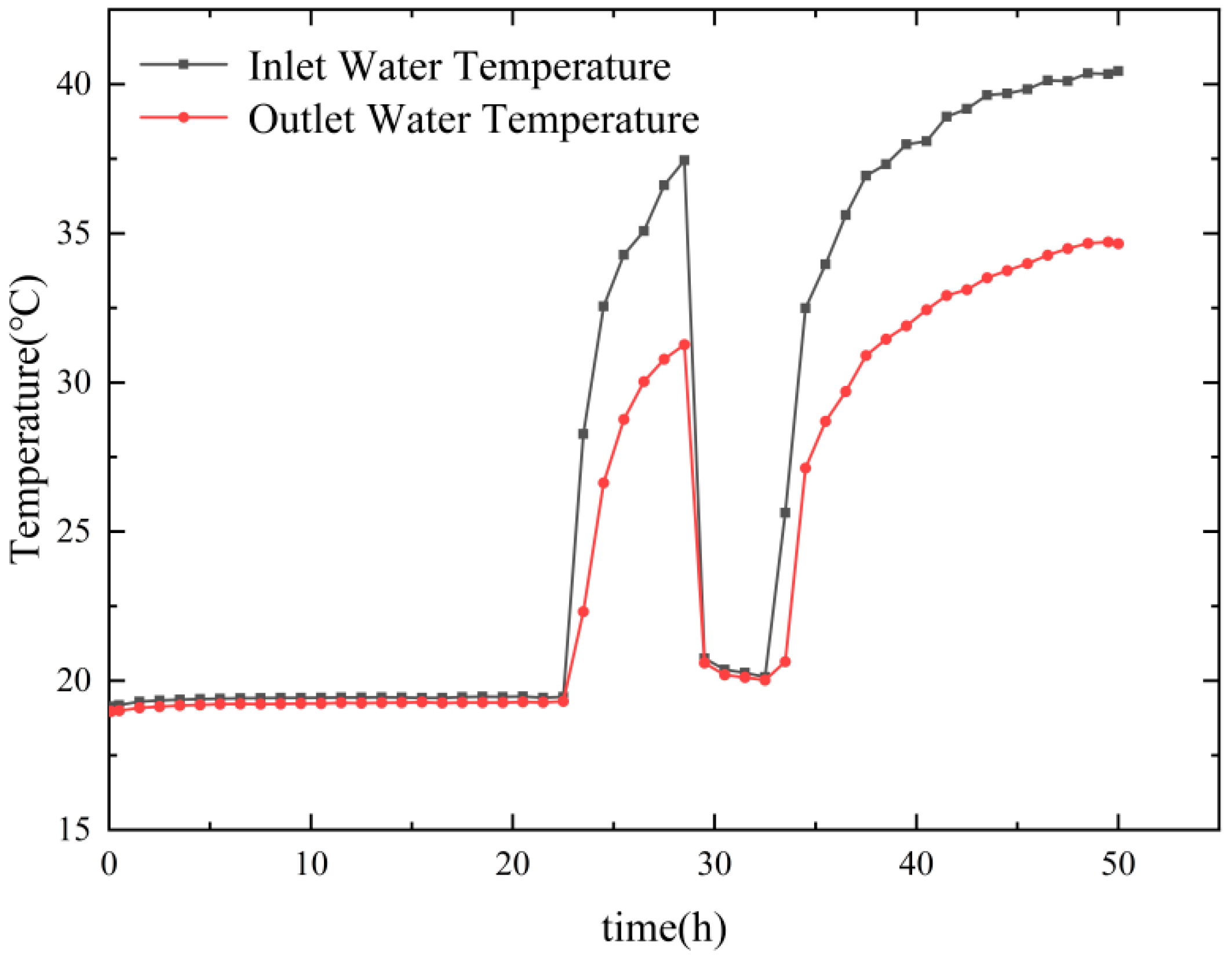
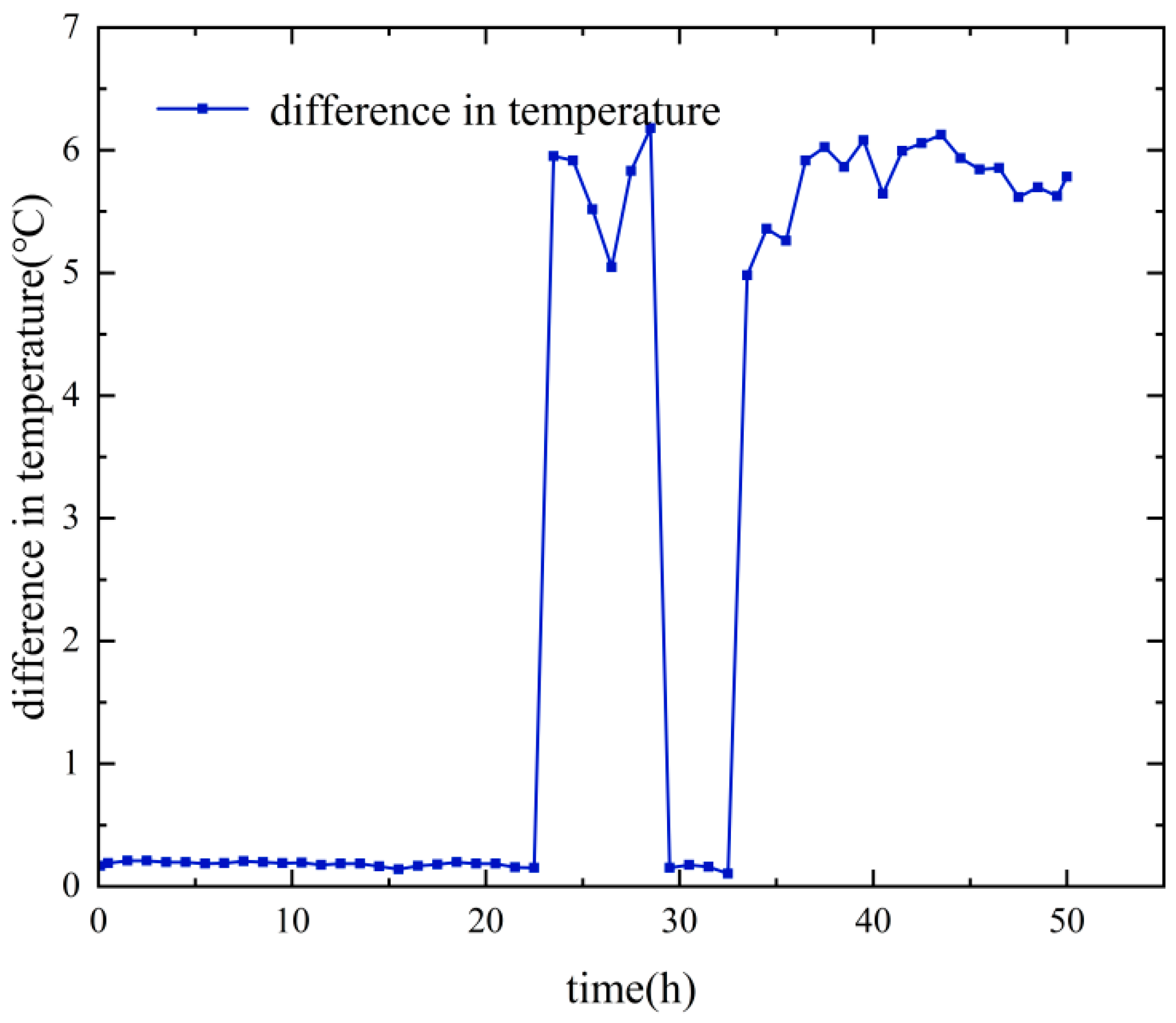
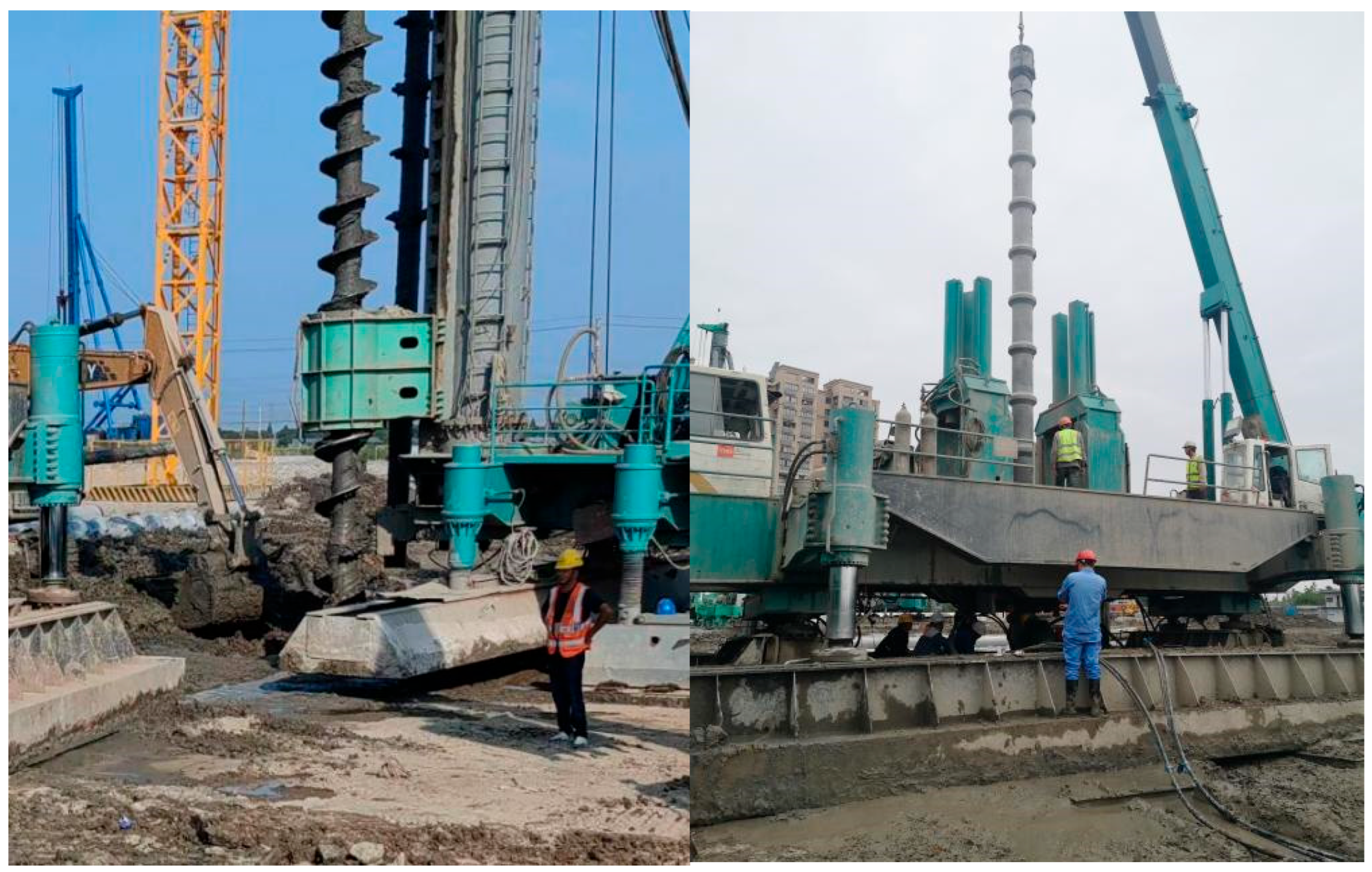
The project is located in Longshan Town, Cixi City, Ningbo, Zhejiang Province, China. It utilizes a ground-source heat pump system that combines energy piles with vertical borehole heat exchangers. The system primarily serves a comprehensive building, a cafeteria, and a dormitory, providing domestic hot water. The dormitory building uses PHC600(110)AB+PHDC650-500(100)AB-500/600 piles, each 60 m long. The comprehensive building uses PHC800(110)AB+PHDC800-600(110)AB-600/800 piles with lengths of 58 and 63 m. The static drill-rooted energy piles are constructed without base expansion. Basic project information is presented in Table 8, and the site soil conditions are detailed in Table 9. The inlet and outlet water temperatures for the static drill-rooted energy pile system are illustrated in Figure 1, and the temperature difference between the inlet and outlet water is demonstrated in Figure 2. The construction of the static drill-rooted energy piles is exhibited in Figure 3.

3.2. Muck Discharge

  • Muck Discharge during Drilling Construction
To analyze the muck discharge during construction at different pile hole sizes, the site’s muck layer parameters were used in the calculation. These parameters, including key indicators such as thickness, density, and cohesion, are presented in Table 2. Based on engineering experience and on-site testing, the following values were adopted: r2 = 1150 kg·m−3, r2′ = 1300·kg·m−3, r3 = 1200 kg·m−3, r4 = 1150 kg·m−3, r4′ = 1450 kg·m−3, and a = 1.1. The calculation results are presented in Table 10.
The data in Table 10 indicates a clear positive correlation between drilling diameter and discharged soil volume—the larger the diameter, the greater the volume of discharged soil. For static drill-rooted energy piles, increasing the drilling diameter from 700 to 1000 mm results in an increase in soil discharge from 12.37 to 26.41 m3. In contrast, for bored energy piles, the same increase in diameter leads to a rise in soil discharge from 39.46 to 80.53 m3. The soil discharge for static drill-rooted energy piles is significantly lower than that of bored energy piles for the same drilling diameter. For example, based on the data from the Ningbo Longshan Base project, when the drilling diameter is 800 mm, the soil discharge for static drill-rooted energy piles is 16.16 m3, compared to 51.54 m3 for bored energy piles. This represents a 68.65% reduction in soil discharge when using static drill-rooted energy piles. When the drilling diameter is 1000 mm, the soil discharge for static drill-rooted energy piles is 26.41 m3, whereas, for bored energy piles, it reaches 80.53 m3, resulting in a 67.2% reduction in soil discharge when using static drill-rooted energy piles.
2.
Slurry Discharge
For bored piles, concrete is injected from the bottom of the pile hole upwards, gradually displacing the slurry. The main purpose of the slurry is to stabilize the hole walls and prevent collapse. After drilling, the slurry within the hole is discharged, typically in relatively large volumes. Bored piles generally require a substantial amount of slurry to maintain wall stability, and their design often features larger diameters to accommodate this process.
Although static drill-rooted energy piles do not require large-scale concrete injection, cement slurry is still sprayed into the pile hole to mix with the surrounding soil, forming a cement-soil composite that enhances the pile’s stability and load-bearing capacity. Compared to bored piles, static drill-rooted energy piles have smaller diameters and require relatively less cement slurry, resulting in a smaller overall volume. For the same load-bearing capacity, the volume of bored piles is generally 1.5–2 times larger than that of static drill-rooted energy piles. Thus, slurry discharge for static drill-rooted energy piles is typically reduced by 40–60%.
During the construction of static drill-rooted energy piles, the pile body exerts pressure on the surrounding soil as it advances after the cement slurry is injected. This pressure not only facilitates the integration of the pile with the soil but also forces a portion of the cement-soil mixture into the surrounding ground, thereby reducing slurry discharge. Additionally, due to the pressure exerted by the pile body on the surrounding soil, the cement-soil mixture blends with the original soil, which not only enhances the stability of the pile but also reduces the slurry discharge. Considering the effects of this pressure, the slurry discharge for static drill-rooted energy piles is reduced by 60–70% compared to bored piles. Based on field surveys, the Longshan base has a slurry pit, and each static drill-rooted energy pile position discharges approximately 15–20 tons of slurry. Compared to bored piles, the entire project saves 2530 tons of slurry discharge.
3.
Evaluation of Muck and Slurry Discharge
The static drill-rooted energy piles exhibit significant emission reduction advantages during the construction phase. Compared to traditional bored piles, they eliminate the need for large amounts of drilled soil and circulating slurry, resulting in a 67.2–68.65% reduction in soil discharge and an approximately 60–70% reduction in slurry discharge. According to field surveys and data, the construction company has established a closed slurry pit on-site to temporarily store and centrally process the small amount of slurry generated during pile construction. The construction area is kept clean, with no spillage observed, and the discharge practices adhere to regulations. Based on the evaluation criteria, the soil and slurry discharge performance of this static drill-rooted energy pile project is rated as ‘‘Good’’.

3.3. Vibration Response

During construction, traditional diesel-driven pile-driving technologies generate intense vibrations, with the large impact force often posing a health risk to humans. These vibrations can also cause cracks or even damage to nearby buildings and pipelines. Consequently, in sensitive areas—such as densely populated districts, areas around existing subway lines, and historic building protection zones—it is necessary to select pile foundation types that minimize environmental impact.
  • On-site Testing
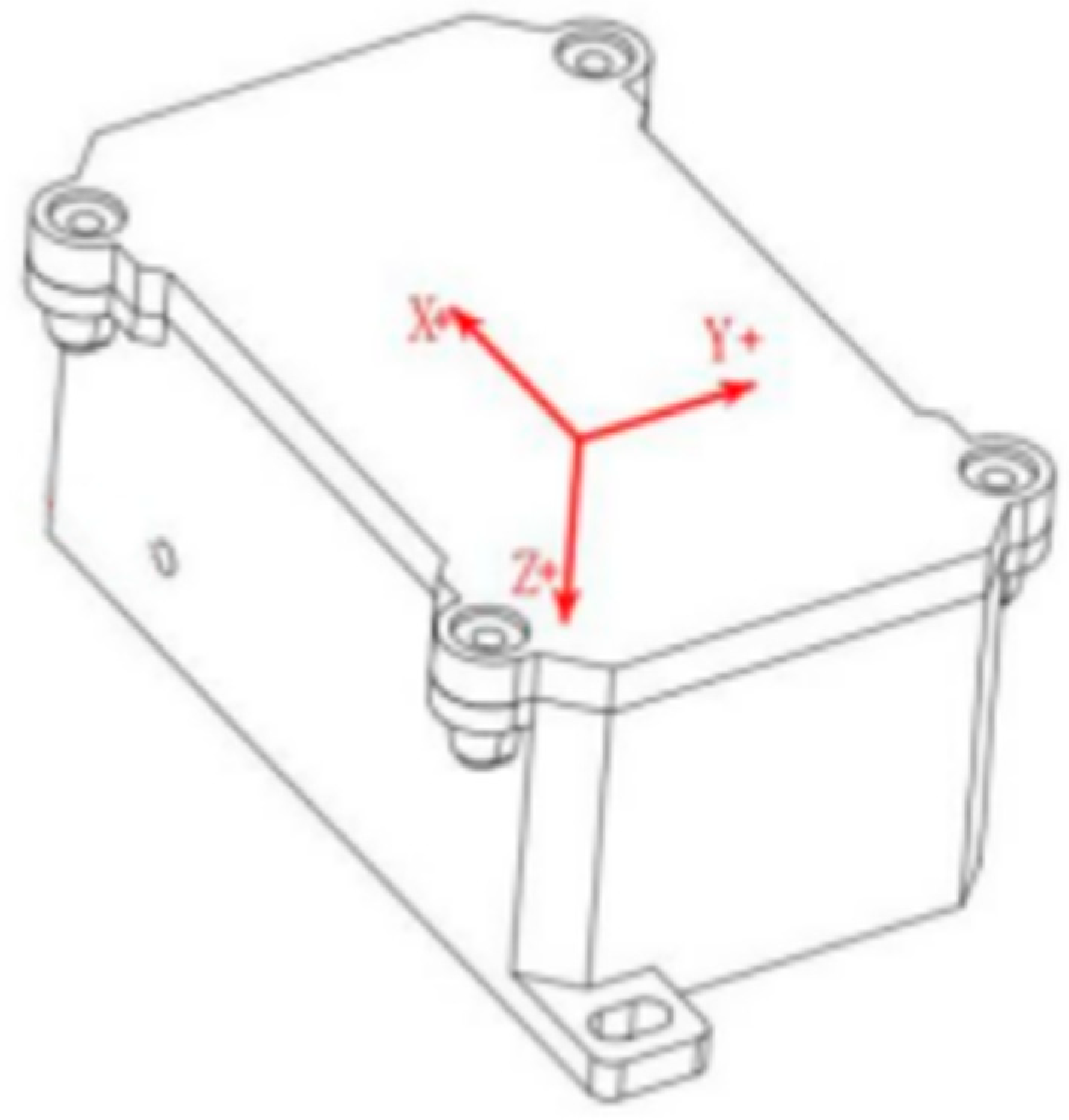
A custom wireless vibration accelerometer, with a range of 8 g and a minimum scale of 1 g, was selected to continuously measure vibration acceleration. The initial recording frequency was set to 60 times/min. The vibration acceleration in the x, y, and z directions of the accelerometer is considered positive in the direction indicated by the arrows, as illustrated in Figure 4.
The arrangement of measurement points is designed to record the distance and illustrate the attenuation curve of vibration acceleration with distance. Table 11 presents the detailed locations of the vibration accelerometer, which are sequentially arranged on the construction machine and at distances of 30 m and 40 m from the vibration source.
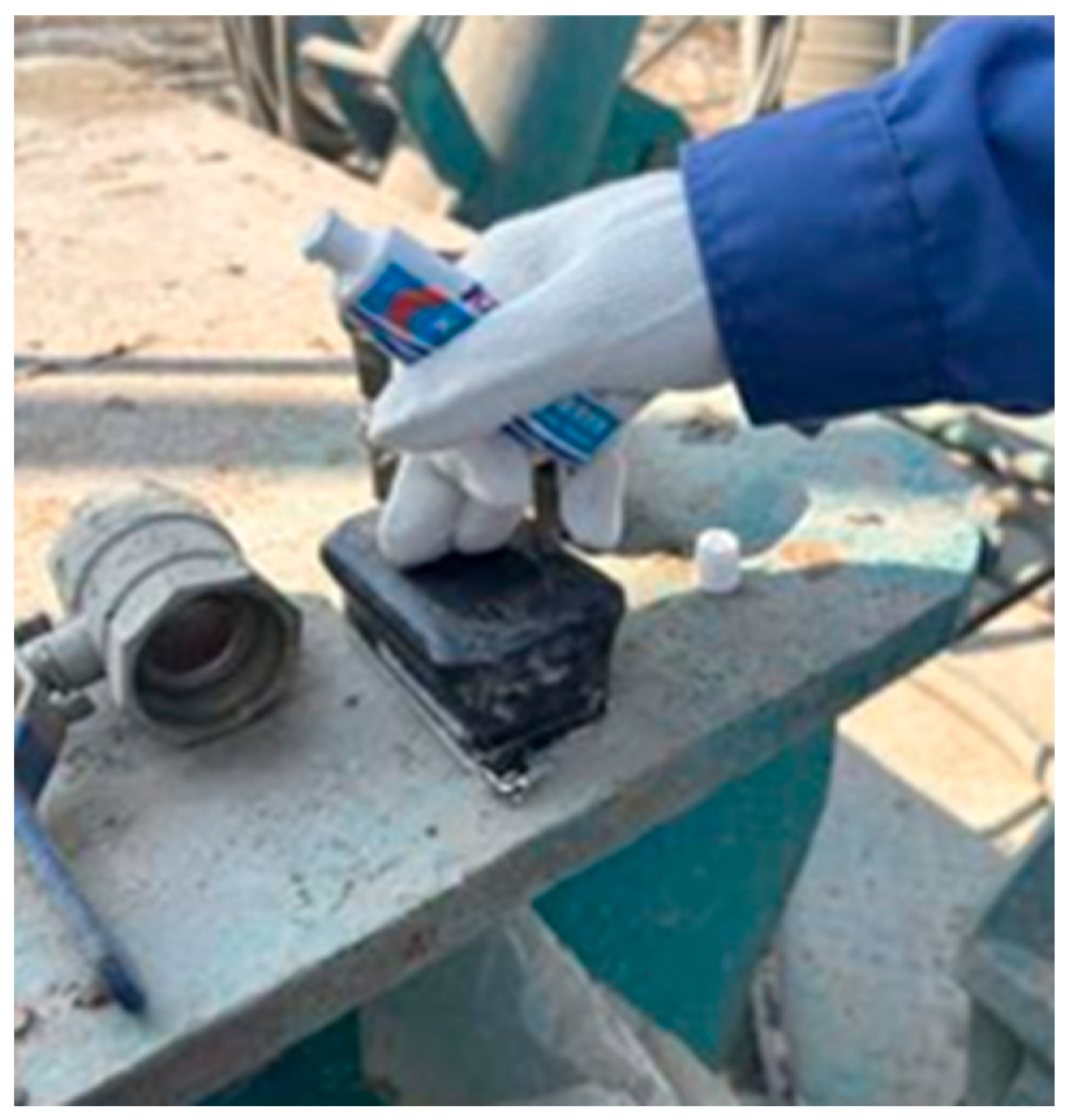
The installation of the vibration accelerometer directly impacts the measurement results, and the material properties and transmissibility of the surface where it is installed are highly correlated. To maintain a strong adhesive bond while reducing vibration damping from rubber, Kraft 704 silicone rubber electronic adhesive is used. It is important to ensure that the adhesive layer thickness does not exceed 2 mm during bonding. The installation of the vibration accelerometer is illustrated in Figure 5.
2.
Vibration Data Processing
The vibration accelerometer uploads data to the ‘‘Grafana’’ website via a gateway for data aggregation. The effective vibration acceleration values are used for sorting, with each measurement point including vibration values in the x, y, and z directions. During on-site measurements, the vibration accelerometer is installed with the same orientation. When there is no vibration, the acceleration in the z-axis direction (the direction of free fall motion) is 1 g, while the accelerations in the x and y axes (perpendicular to the direction of free fall motion) are 0.
3.
Vibration Evaluation and Analysis
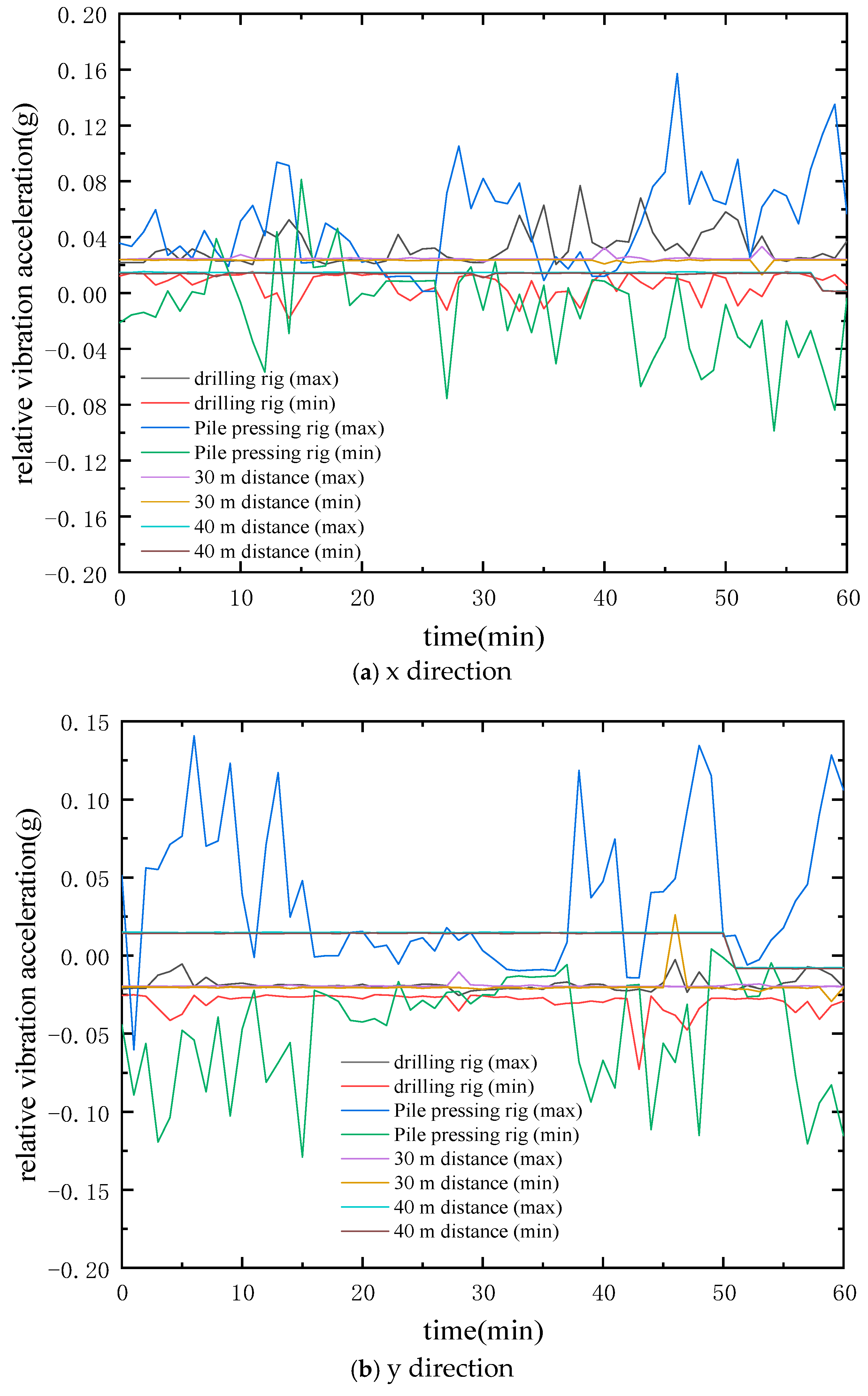
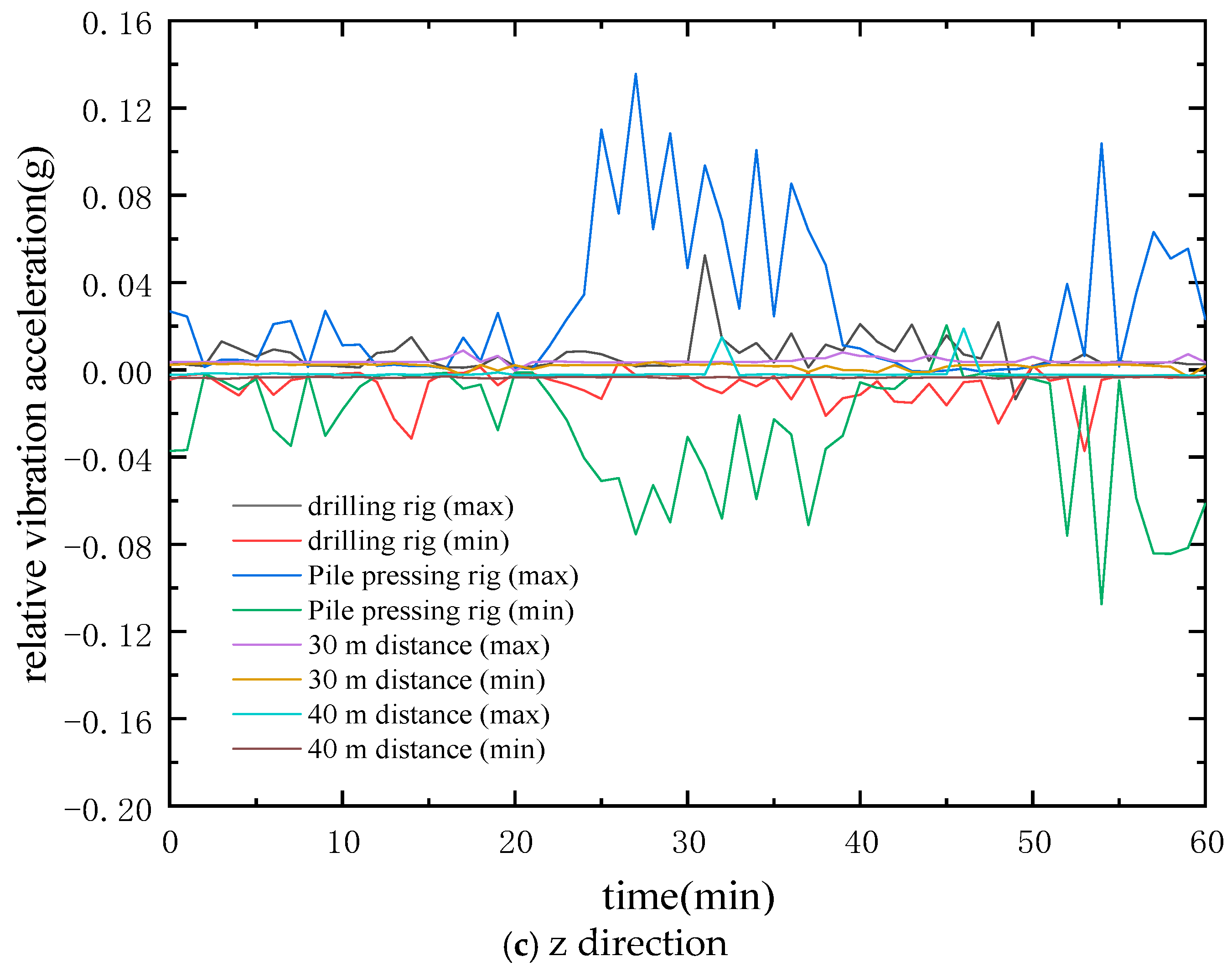
Under normal circumstances, on-site measurements are often affected by various interference factors, making it impractical to isolate vibrations from a specific construction stage. Therefore, the records also capture other vibrations occurring on the site. The relative vibration acceleration in all directions during the static drill-rooted energy pile construction phase is illustrated in Figure 6.
During the pile-driving process, vibration acceleration typically ranges from 0.1 to 1.5 g. In contrast, the vibration generated by the static drilled pile energy system is significantly milder. The vibration intensity during the construction of the static drill-rooted pile energy system decreases with increasing distance from the construction equipment. As revealed in Figure 6, the relative vibration acceleration in different directions during construction varies significantly with distance. At 30 and 40 m from the construction equipment, the vibration acceleration amplitude typically remains within 0.015 g, well below the discomfort threshold of 0.05 g, resulting in weak vibration perception and no discomfort. However, in areas closer to the construction equipment, especially during pile driving operations, the vibration acceleration exceeds 0.05 g at several intervals, which may cause mild discomfort, particularly if the vibration persists over time. The vibration acceleration generated by the drilling rig itself is relatively mild. Although it exceeds 0.05 g during a few periods, it does not cause significant discomfort. Overall, a greater distance from the vibration source significantly reduces its impact. However, at a closer distance, vibration reduction measures or shift work methods may be needed to reduce discomfort for the workers.
Based on the measured results, the vibration acceleration at a distance of 30 m during the static drill-rooted pile energy system construction is consistently maintained within 0.015 g. According to the vibration rating standard established in this study, this level of impact is rated as ‘‘Good’’. In response to the relatively low vibration impact score in this study, a series of technical and management mitigation measures can be considered to further improve its adaptability in densely populated areas. In terms of source control, the drill bit design and drive system can be optimized, and hydraulic static pressure is used instead of vibration impact; on the transmission path, vibration damping trenches or sheet pile barriers are set up between the vibration source and sensitive points, which can effectively reduce vibration wave energy; in terms of construction management, time avoidance and personnel shift systems for high-vibration processes are implemented. Engineering practice shows that these measures can significantly reduce the vibration acceleration at 30 m to less than 0.01 g, thereby raising the vibration score to the “excellent” level and further strengthening the comprehensive environmental friendliness of statically drilled energy piles.

3.4. Noise

During the installation and construction of static drill-rooted energy piles, some noise is generated; however, it is usually temporary and can be reduced through proper construction management and technical measures. When energy piles replace traditional air conditioning and heating systems in buildings, operational noise has minimal impact on residents, as the piles are typically installed underground or at a distance from residential areas.
  • On-site Measurement
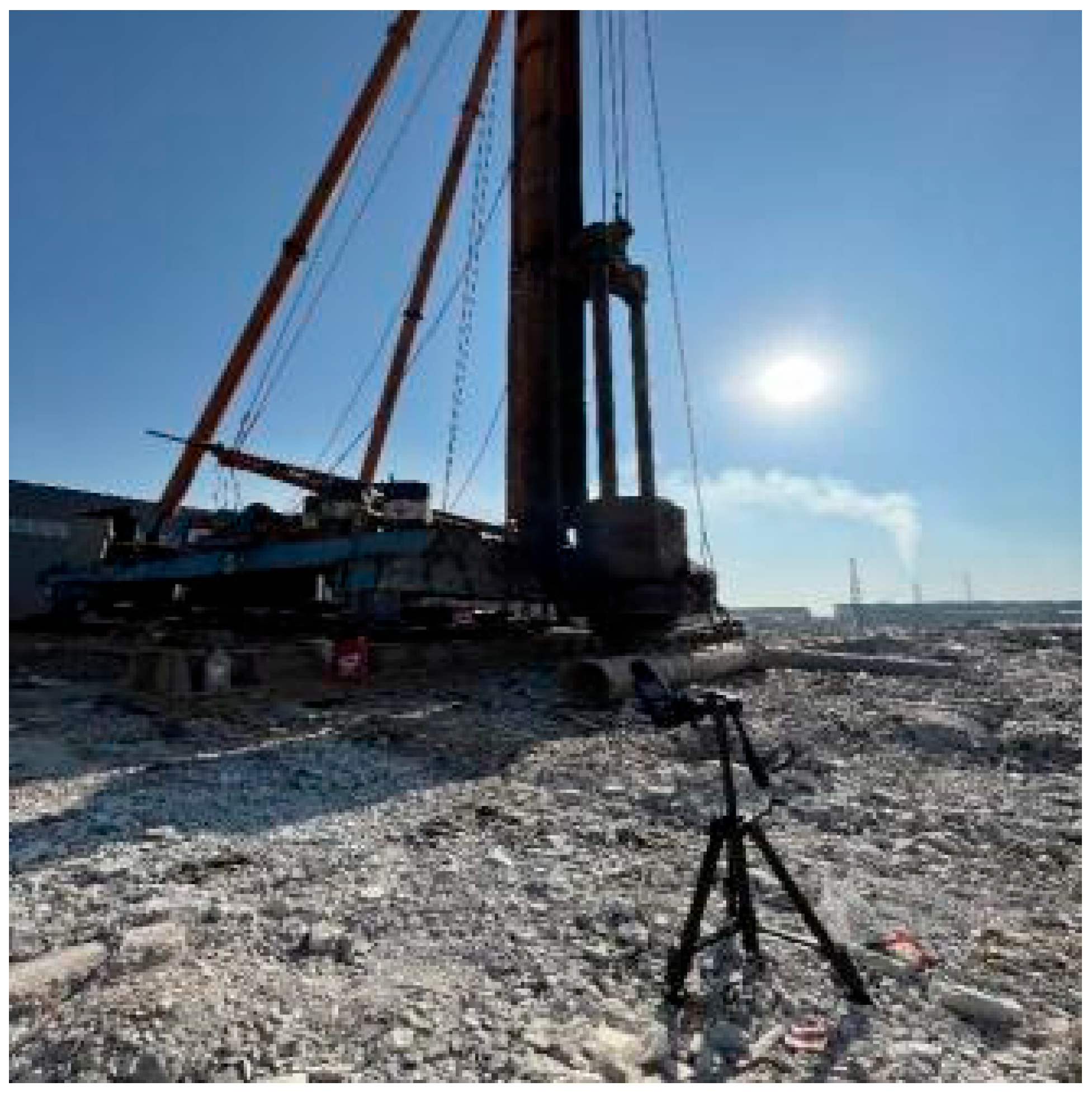
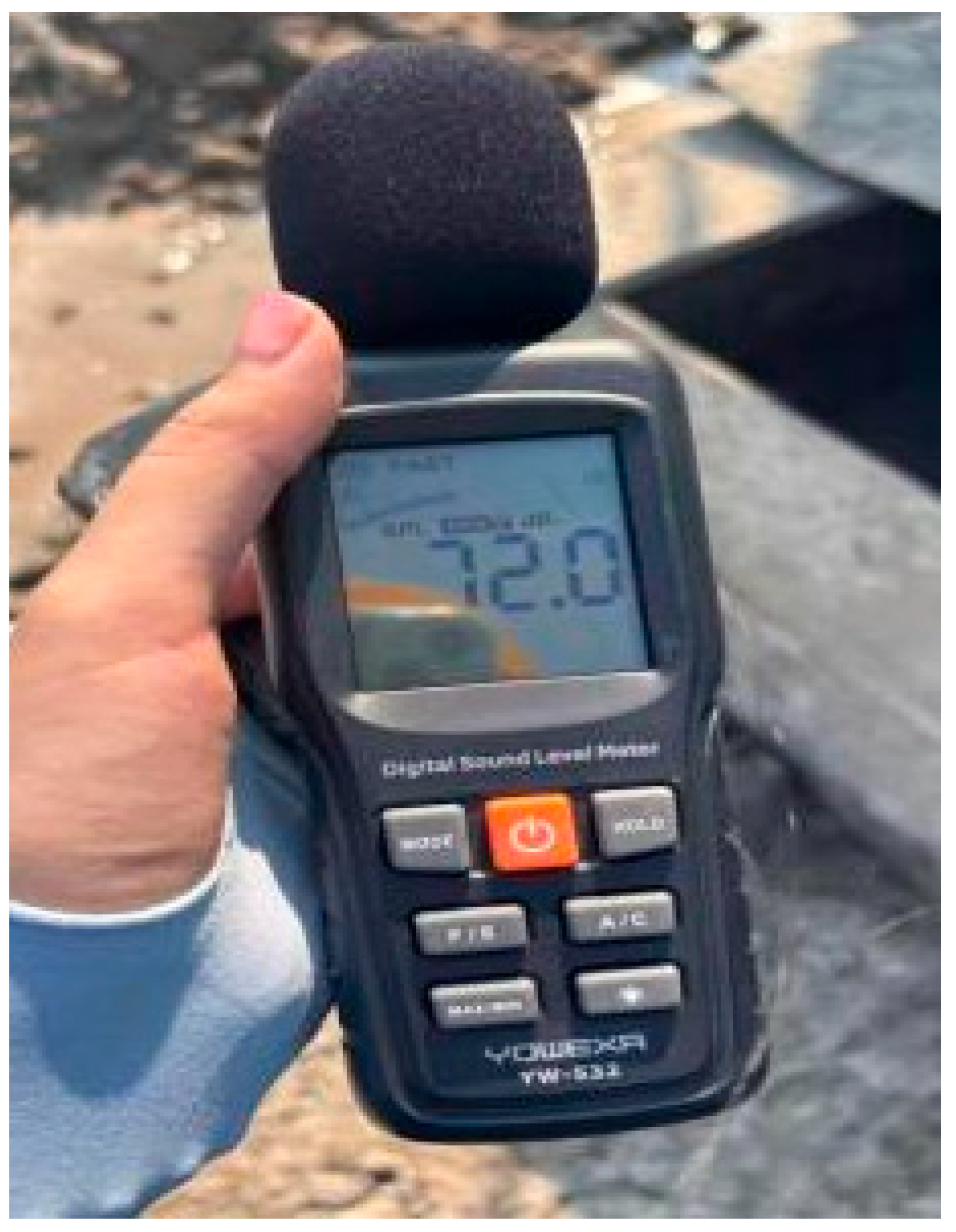
A Yuwen YW-532 decibel meter, with a measurement resolution of 0.1 dB and an accuracy of ±1.5 dB, was used for the noise measurements. The instrument supports both A- and C-weighted frequency and meets or exceeds the performance requirements for a Class 1 or Class 2 sound level meter, following GB/T 15173. The microphone was equipped with a windshield, and the instrument’s time-weighting setting was configured to the Fast (F) mode. Noise measurements were conducted at various distances from the pile machine—1, 5, 10 (near temporary structures), and 20 m (outside the site), with the measurement equipment set at a height of 1.2 m. Measurements were recorded using both tripod-mounted and handheld methods, as demonstrated in Figure 7 and Figure 8.
2.
Noise Evaluation
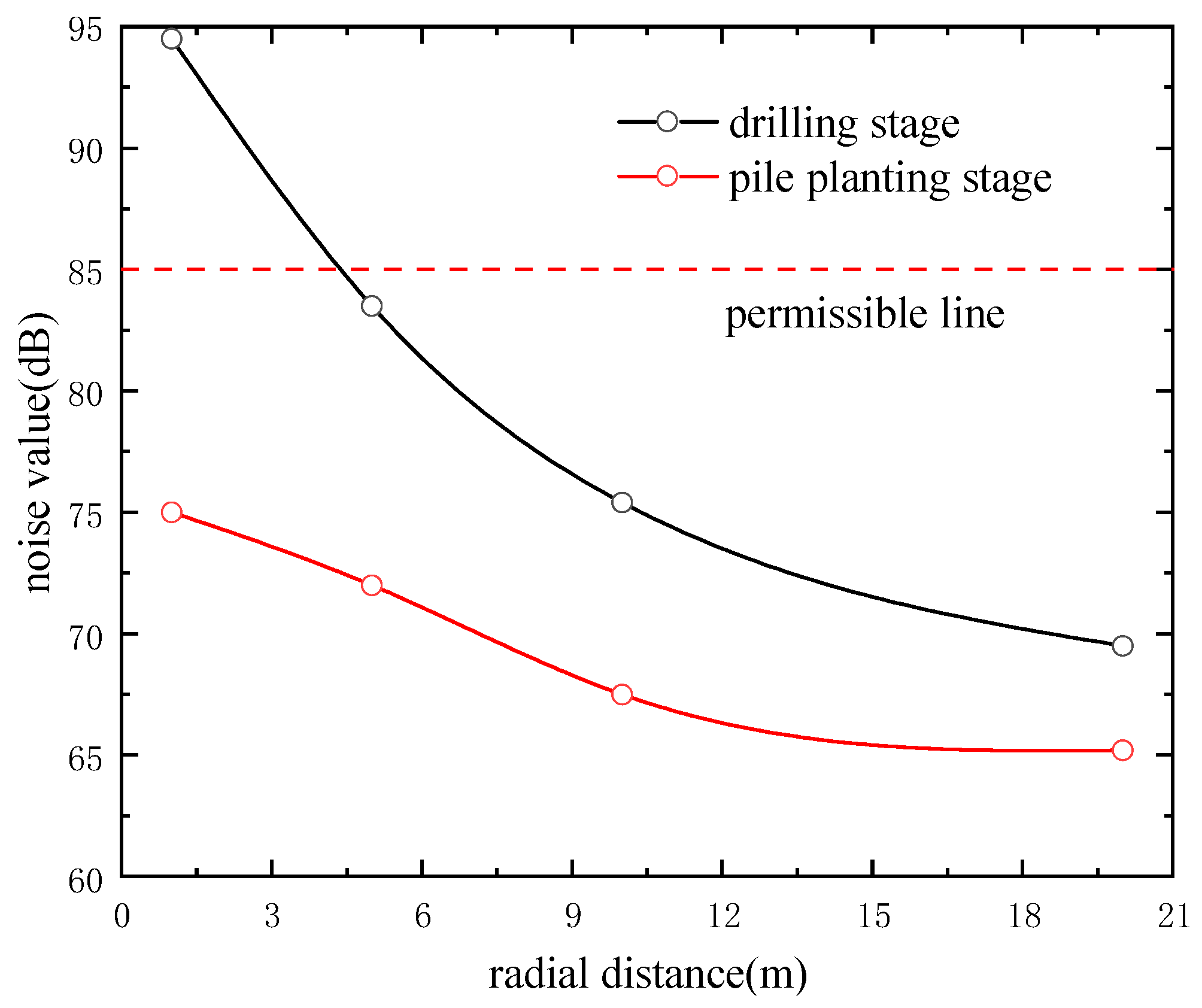
In general, on-site noise measurements are subject to various interfering factors, with ambient noise levels reaching up to 60 dB. Due to these conditions, it was impossible to isolate noise generated solely by the piling activity; therefore, the recorded data also included other site-related noise. The noise levels during the static drill-rooted energy pile construction phase are indicated in Figure 9.
Pile hammering usually generates significant noise, with sound pressure levels reaching up to 100 dB, mainly due to the strong impact forces involved. In contrast, static drill-rooted energy piles adopt a gentler construction method, resulting in significantly lower levels of noise and vibration. This method involves drilling a borehole, placing the prefabricated pile into the hole using its weight, and then grouting to enhance the bond between the pile and the soil. This method causes minimal disturbance to the soil, effectively reducing vibration and noise during construction, and has a smaller impact on the surrounding environment. During construction, the noise from static drill-rooted energy piles mainly comes from the machine’s engine. While the noise during the drilling stage is relatively high, reaching 95 dB at 1 m, it drops below the emission limit at a distance of 5 m from the construction site.
According to the noise evaluation results, the noise level has attenuated to below 85 dB within 5 m of the construction point, and the noise control effect is rated as ‘‘Excellent’’.

3.5. Evaluation of Energy Conservation and Emission Reduction

3.5.1. Production Stage

According to the mechanical principles, there is an inverse relationship between pressure and the required bearing area. At a constant load, higher material strength allows for a reduced bearing area (i.e., cross-sectional area of the pile). In other words, high-strength concrete can support the same load with a smaller cross-section. Compared to normal concrete, high-strength concrete exhibits superior compressive strength, allowing for reduced material volume to support identical loads. Bored energy piles typically employ solid C30 or C40 grade concrete, resulting in greater material consumption and higher carbon emissions during production. In contrast, static drill-rooted energy piles utilize C80 or C100 high-strength concrete in tubular form. Although this type of concrete requires more cement, the overall concrete volume per pile is reduced due to smaller cross-sectional areas and thinner walls, ultimately lowering total carbon emissions.
The carbon emission factor of C30 is 262.39 kg CO2/kg, [28] and the carbon emission factor of C80 is 470 kg CO2/kg. [29] The corresponding carbon emission coefficients for various grades of concrete are detailed in Table 12.
Assuming the same outer diameter pipe piles are used for both static drill-rooted energy piles and bored energy piles, Table 13 presents the carbon emissions generated during their production stage.
The static drill-rooted energy pile significantly reduces carbon emissions due to its smaller volume and tubular design. Even with high-strength C80 concrete, its carbon emissions remain significantly lower than those of the traditional bored pile energy piles. With the same outer diameter, the static drill-rooted design requires less material and produces fewer emissions. Calculations reveal that static drill-rooted energy piles reduce carbon emissions by 22–45% compared to bored pile energy piles, making them a more environmentally friendly option.

3.5.2. Construction Stage

This study adopted the 2010 China Regional and Provincial Power Grid Average Carbon Emission Factor, which indicates that the carbon emission factor for electricity in Zhejiang Province is 0.6822 kg CO2/kWh. The diesel carbon emission factor of 0.491 kg CO2/L. [29]
Table 14 lists the energy consumption per machinery shift during the construction of static drilling rooted energy piles and bored cast-in-place energy piles. The static drilling rooted energy piles are constructed using two types of equipment: the JB178B fully hydraulic crawler static composite pile machine and the intelligent pile planting machine ZM60, which are provided by Fujian Xiaming Heavy Industry Co., Ltd. in Quanzhou, Fujian, China, and Zhejiang Zhongrui Heavy Industry Technology Co., Ltd. in Ningbo, Zhejiang, China, respectively. The construction of bored cast-in-place energy piles, on the other hand, uses the XR220D rotary drilling rig, which is manufactured by XCMG Group in Xuzhou, China.
According to Table 14, when the number of piles and pile depth are the same, the carbon emissions from static drill-rooted energy piles—constructed using electric-powered intelligent equipment and high-efficiency diesel pile drivers—are 12% lower compared to the bored energy piles.

3.5.3. Operation Stage

Table 15 presents the operational performance data of the static drill-rooted energy pile system, including the system’s average input power, inlet and outlet temperature difference, heat transfer fluid flow, heat transfer power, and energy efficiency ratio.
According to the ‘‘Performance Standards for Room Air Conditioners: GB/T 7725—2004,’’ [30] the specified energy efficiency ratio (COP) for air-source heat pumps ranges from 2.50 to 2.70. The actual measured results in this study indicate that the COP of the static drill-rooted energy pile system during winter operation reaches 4.367, representing an improvement of 61.74–74.68% over the specified value. Assuming that both systems provide the same effective heat exchange—specifically 4.887 kW per hour—the power consumption of the static drill-rooted energy pile system is 1.119 kW, whereas the power consumption of the air-source heat pump ranges from 1.81 to 1.9548 kW. Using the static drill-rooted energy pile system saves 0.691–0.8358 kWh of energy per hour compared to the air-source heat pump, reducing CO2 emissions by 0.471–0.57 kg per hour.

3.5.4. Evaluation of Energy Saving and Emission Reduction

The static drill-rooted energy pile demonstrates significant advantages in energy saving and emission reduction performance. Compared to traditional bored pile energy piles, this process has optimized material design and construction equipment energy consumption control. In the building material production stage; the use of high-strength hollow pipe pile design significantly reduces the concrete usage and carbon emissions per unit pile; achieving an overall emission reduction of 22–45%, earning a rate of ‘‘Good.’’ In the construction stage; the introduction of electric-driven intelligent equipment combined with high-efficiency diesel pile machines; effectively reduces mechanical energy consumption; achieving an energy consumption reduction of approximately 12%, also rated as ‘‘Good.’’ During the operation stage; the COP reaches 4.367; earning ‘‘Good’’ as rating. This COP is much higher than the average level of air-source heat pumps, demonstrating significant potential for long-term electricity savings and carbon emission reduction benefits

3.6. Comprehensive Environmental Impact Assessment and Score Summary

Based on the constructed environmental impact assessment system, this study systematically analyzed and comprehensively evaluated the environmental impact of the static drill-rooted energy pile throughout its entire lifecycle. The evaluation dimensions include excavated soil and slurry discharge, construction vibration, noise impact, and carbon emission reduction benefits (covering material production, construction, and operation stages). Actual engineering case data was used to quantify the environmental indicators, and weighted scores were assigned according to the dimension weight distribution table.
In terms of excavated soil and slurry discharge, the static drill-rooted energy pile reduces emissions by approximately 68% compared to the bored pile, with slurry discharge reduced by 60–70%, earning a rating of ‘‘Good’’ (4 points).
For construction vibration, the vibration acceleration is significantly below the threshold of discomfort, and only auxiliary vibration reduction measures are needed during close-distance operations, earning a rating of ‘‘Good’’ (3 points).
Regarding noise, although the noise peak is high, it attenuates quickly, and at a distance of 5 m, it can be controlled within the 85 dB limit, demonstrating a significant improvement compared to impact piling, earning a rating of ‘‘Excellent’’ (5 points).
For carbon emission reduction benefits, carbon emissions are reduced by 22–45% during the material production stage, by 12% during construction, and the COP during operation is 4.367, continuously reducing energy consumption and carbon emissions, demonstrating green advantages throughout the entire lifecycle, earning a ‘‘Good’’ (4 points) rating.
In summary, of the individual evaluation indicators, 1 received an ‘‘Excellent’’ score, and 3 received a ‘‘Good’’ score. The highest score was for noise control because the technology employs a ‘‘drill first, pile later’’ technique, significantly reducing construction noise. The lowest score was for vibration because the machinery uses large construction equipment, causing noticeable site vibration. Future reductions in vibration can be achieved through equipment development, further enhancing the environmental advantages of static drill-rooted energy piles.
Based on the weight distribution of each evaluation dimension in Table 1 and using the weighted average method for comprehensive scoring, the overall environmental impact evaluation score for the static drill-rooted energy pile project is 4.0, earning a comprehensive rating of ‘‘Excellent.’’ This result indicates that the static drill-rooted energy pile has notable advantages in environmental friendliness and is suitable for environmentally sensitive areas such as coastal soft soil regions and urban geothermal development scenarios, with broad engineering adaptability and promotional value.


4. Conclusions

This study constructed an environmental impact assessment system applicable to energy piles, systematically evaluating their environmental impact throughout the entire from the bored lifecycle, including excavated soil and slurry discharge, vibration, noise, and carbon emission reduction benefits (covering material production, construction, and operation stages). An empirical study was conducted based on the actual engineering project of the static drill-rooted energy pile in Longshan Town, Ningbo City. The project received an overall score of 4 points and an ‘‘Excellent’’ rating. The main conclusions of this study are as follows:
  • The static drill-rooted energy pile produces significantly less excavated soil discharge compared to the bored pile energy pile under the same borehole diameter. For a borehole diameter is 800 mm, the excavated soil volume of the static drill-rooted energy pile is 16.16 m3, 68.65% less than the 51.54 m3 produced by the bored pile energy pile. For a borehole diameter of 1000 mm, the static drill-rooted energy pile generates 26.41 m3 of excavated soil, representing a 67.2% reduction compared to the 80.53 m3 pile energy pile. Additionally, its slurry discharge is reduced by 60–70% compared to that of the bored pile energy pile. These results indicate the static drill-rooted energy pile’s significant advantage in reducing soil and slurry discharge, reflecting its environmental benefits.
  • The construction vibration of the static drill-rooted energy pile is controlled within a radial distance of 30 m, with a relative vibration acceleration far below the discomfort threshold of 0.05 g. Compared to impact piling, the vibration acceleration is significantly lower, and its impact on the environment is minimal when working further from the construction site. However, during close-distance operations, some discomfort may occur, requiring the implementation of vibration mitigation measures to optimize the construction environment.
  • The maximum noise generated by the static drill-rooted energy pile reaches 95 dB, but it decreases significantly with distance. At a radial distance of 5 m, the noise can be reduced to below the 85 dB regulatory limit. Compared to impact piling, it produces significantly lower noise levels, making it more suitable for noise-sensitive environments.
  • The static drill-rooted energy pile exhibits low carbon emissions across all stages of its lifecycle, offering significant environmental benefits. During the material production stage, with the same outer diameter, its carbon emissions are 22–45% lower compared to the bored pile energy pile. In the construction stage, assuming the same number of piles and pile depth, the static drill-rooted energy pile emits 12% less carbon than the bored pile energy pile. During the operational stage, its heating system saves between 0.691 and 0.8358 kWh of energy per hour compared to an air-source heat pump, reducing CO2 emissions by 0.471–0.57 kg per hour.
  • Among the individual evaluation indicators for the static drill-rooted energy pile, 1 received an ‘‘Excellent’’ rating, and 3 received ‘‘Good’’ ratings. The highest score was for noise control, primarily due to the ‘‘drill first, pile later’’ technique, which significantly reduces noise. Vibration from large construction equipment was more noticeable, resulting in the lowest score for the vibration impact. The overall environmental impact evaluation score was 4.0, with an ‘‘Excellent’’ rating, indicating that the static drill-rooted energy pile is environmentally friendly, offering broad engineering adaptability and significant potential for promotion.

Author Contributions

Conceptualization, Z.D. and Y.D.; methodology, Z.D., Y.D.; validation, Z.D., Y.D. and S.C.; formal analysis, Z.D.; investigation, Z.D.; resources, R.Z.; data curation Z.D.; writing-original draft preparation, Z.D.; writing-review and editing, Y.D.; visualization, Y.D.; supervision, S.C.; project administration, Y.D.; funding acquisition, Y.D. All authors have read and agreed to the published version of the manuscript.

Funding

This work was supported by the Key Project of Ningbo Natural Science Foundation (Grant no. 2023J004) and the Key Scientific and Technological Task Research Project of Ningbo City (Grant no. 2022Z224).

Institutional Review Board Statement

Not applicable.

Informed Consent Statement

Not applicable.

Data Availability Statement

Data is contained within the article.

Conflicts of Interest

Author Rihong Zhang was employed by the company Ningbo Zhongchun High-Tech Co., Ltd. The remaining authors declare that the research was conducted in the absence of any commercial or financial relationships that could be construed as a potential conflict of interest.

References

  1. Caineng, Z.; Feng, M.; Songqi, P.; Minjie, L.; Ying, W.; Zhi, Y. Earth energy evolution, human development and carbon neutral strategy. Pet. Explor. Dev. Online 2022, 49, 468–488. [Google Scholar]
  2. Shen, L.; Ma, Z.; Liu, C. Study on Life-Cycle Carbon Emission of Urban Residential Buildings: A Case Study of Xi’an. Sustainability 2025, 17, 1602. [Google Scholar] [CrossRef]
  3. Tester, J.W.; Anderson, B.J.; Batchelor, A.S.; Blackwell, D.D.; DiPippo, R.; Drake, E.M.; Garnish, J.; Livesay, B.; Moore, M.C.; Nichols, K.; et al. The Future of Geothermal Energy: Impact of Enhanced Geothermal Systems (EGS) on the United States in the 21st Century; MIT Press: Cambridge, MA, USA, 2006. [Google Scholar]
  4. Jinli, X.; Yinghong, Q. Heat Transfer and Bearing Characteristics of Energy Piles: Review. Energies 2021, 14, 6483. [Google Scholar] [CrossRef]
  5. Yu, L.; Deng, Y.B.; Cao, G.X.; Han, Y.D.; Zhang, R.H. The effect of thermal consolidation on bearing characteristics of static drilling rooted energy pile. IOP Conf. Ser. Earth Environ. Sci. 2021, 861, 72137. [Google Scholar] [CrossRef]
  6. Kong, G.; Wu, D.; Liu, H.; Laloui, L.; Cheng, X.; Zhu, X. Performance of a geothermal energy deicing system for bridge deck using a pile heat exchanger. Int. J. Energy Res. 2019, 43, 596–603. [Google Scholar] [CrossRef]
  7. Ren, L.W.; Han, Z.P.; Wang, S.B.; Gao, Y.J. Field Tests on Thermal Performance of Bridge Pile Groups under Embankment Load and Cap Constraint Condition. Int. J. Energy Res. 2023, 2023, 8901464. [Google Scholar] [CrossRef]
  8. Wang, T.; Liu, H.; Kong, G.; Wang, C.; Hu, X. Field test on thermal control for bridge piers on plateau through energy pile. Renew. Energy 2024, 230, 120896. [Google Scholar] [CrossRef]
  9. Cerra, D.; Alberdi-Pagola, M.; Andersen, T.R.; Tordrup, K.W.; Poulsen, S.E. Feasibility study of collective heating and cooling based on foundation pile heat exchangers in Vejle (Denmark). Q. J. Eng. Geol. Hydrogeol. 2021, 54, qjegh2020-114. [Google Scholar] [CrossRef]
  10. Pagola, M.A.; Jensen, R.L.; Poulsen, S.E. A performance case study of energy pile foundation at Rosborg Gymnasium (Denmark). In Proceedings of the CLIMA 2016-12th REHVA World Congress, Aalborg, Denmark, 22–25 May 2016; Department of Civil Engineering, Aalborg University: Aalborg, Denmark, 2016; p. 472. [Google Scholar]
  11. Loveridge, F.; McCartney, J.S.; Narsilio, G.A.; Sanchez, M. Energy geostructures: A review of analysis approaches, in situ testing and model scale experiments. Geomech. Energy Environ. 2020, 22, 100173. [Google Scholar] [CrossRef]
  12. Hassam, A.; Mohammed, F.; Abdelmalek, B. Energy, economic, and carbon emission analysis of a residential building with an energy pile system. Renew. Energy 2024, 220, 119712. [Google Scholar]
  13. Cherati, Y.D.; Fare, G.O.; Senejani, H.H. Effects of different parameters on transient heat transfer surrounding energy piles in unsaturated soils. In E3S Web of Conferences; EDP Sciences: Les Ulis, France, 2020; Volume 205, p. 5015. [Google Scholar]
  14. Zhang, L.; Han, H.; Li, W.; Guo, K.; Yuan, M.; Liu, Z. A critical assessment and summary on the low carbon energy pile technologies based on the life-cycle perspective: Challenges and prospects. Appl. Therm. Eng. 2024, 243, 122605. [Google Scholar] [CrossRef]
  15. Sutman, M.; Speranza, G.; Ferrari, A.; Larrey-Lassalle, P.; Laloui, L. Long-term performance and life cycle assessment of energy piles in three different climatic conditions. Renew. Energy 2020, 146, 1177–1191. [Google Scholar] [CrossRef]
  16. Kong, G.; Chen, Y.; Yang, Q. System monitoring and evaluation and thermo-mechanical characteristics of energy piles during winter operation. Chin. J. Geotech. Eng. 2024, 46, 1309–1317. [Google Scholar]
  17. Shen, Y.; Qu, B.; Chen, K.; Gong, C.; Han, C. Environmental and energy benefits assessment of alkali-activated concrete (AAC) energy pile. J. Build. Eng. 2022, 61, 105282. [Google Scholar] [CrossRef]
  18. Han, C.; Zhu, C.; Shen, Y.; Yu, X.B. Energy, environmental and economic performance evaluation of energy pile system under different climate conditions. Energy Convers. Manag. 2022, 252, 115041. [Google Scholar] [CrossRef]
  19. You, T.; Li, X.; Cao, S.; Yang, H. Soil thermal imbalance of ground source heat pump systems with spiral-coil energy pile groups under seepage conditions and various influential factors. Energy Convers. Manag. 2018, 178, 123–136. [Google Scholar] [CrossRef]
  20. De Moel, M.; Bach, P.M.; Bouazza, A.; Singh, R.M.; Sun, J.O. Technological advances and applications of geothermal energy pile foundations and their feasibility in Australia. Renew. Sustain. Energy Rev. 2010, 14, 2683–2696. [Google Scholar] [CrossRef]
  21. Rawlings, R.H.D.; Sykulski, J.R. Ground source heat pumps: A technology review. Build. Serv. Eng. Res. Technol. 1999, 20, 119–128. [Google Scholar] [CrossRef]
  22. Fang, P.; Zhang, R.; Lou, Y.; Liu, C.; Pan, W.; Zhang, Q.; Wang, Z.; Xie, X. Technology and application of static drilling rooted geothermal energy pile. J. Shenzhen Univ. 2022, 39, 101–109. [Google Scholar] [CrossRef]
  23. Chang, H.; Gan, Z.; Wu, Q.; Wu, X.; Jiang, S.; Zhao, S. Thermo-mechanical response of static drilled rooted energy piles under monotonic cooling cycle. Constr. Build. Mater. 2024, 456, 139276. [Google Scholar] [CrossRef]
  24. Chen, S.; Deng, Y.; Niu, S.; Zhang, R.; Ming, W.; Yao, Y. Study on the Influence of Heat Exchange of Static Drill Rooted Energy Pile on the Consolidation of Coastal Soft Soil Site. Energy Sci. Eng. 2025, 13, 598–610. [Google Scholar] [CrossRef]
  25. GB/T 50378-2019; Assessment Standard for Green Buildings. China Architecture & Building Press: Beijing, China, 2019.
  26. GB 50007-2011; Code for Design of Building Foundation. China Architecture & Building Press: Beijing, China, 2011.
  27. GB/T 15173-2010; Electroacoustics—Sound Calibrators. Standards Press of China: Beijing, China, 2010.
  28. Zhou, H. Research on Quantification of Carbon Emissions and Carbon Reduction Strategies in the Materialization Stage of Buildings. Master’s Thesis, Xi’an University of Technology, Xi’an, China, 2022. [Google Scholar] [CrossRef]
  29. Lin, W.K.; Tang, X.W.; Zou, Y.; Liang, J.X.; Li, K.Y. Research on the Bearing Capacity and Sustainable Construction of a Vacuum Drainage Pipe Pile. Sustainability 2023, 15, 7555. [Google Scholar] [CrossRef]
  30. GB/T 7725—2004; Room Air Conditioner Performance Standard. China Standards Press: Beijing, China, 2004.
Figure 1. Inlet and Outlet Water Temperature.
Sustainability 17 10663 g001
Figure 2. Inlet and Outlet Water Temperature Difference.
Sustainability 17 10663 g002
Figure 3. Construction Diagram of Static Drill-Rooted Energy Pile.
Sustainability 17 10663 g003
Figure 4. Vibration Accelerometer.
Sustainability 17 10663 g004
Figure 5. Installation of Vibration Measurement Equipment.
Sustainability 17 10663 g005
Figure 6. Relative Vibration Acceleration Record Values in Each Direction During the Construction Phase. (a) x direction. (b) y direction. (c) z direction.
Sustainability 17 10663 g006aSustainability 17 10663 g006b
Figure 7. Tripod Setup.
Sustainability 17 10663 g007
Figure 8. Handheld Recording.
Sustainability 17 10663 g008
Figure 9. Noise Levels during the Static Drill-Rooted Energy Pile Construction Phase.
Sustainability 17 10663 g009
Table 1. Weight of Sub-indicators for Environmental Impact of Energy Piles.
Sub-IndicatorsSuggested Weights
Muck and Slurry Discharge20%
Construction Vibration15%
Construction Noise15%
Carbon EmissionsMaterial Production Phase15%
Construction Phase15%
Operation Phase20%
Table 2. Environmental Impact Score for Energy Piles.
GradeScore RangeEvaluation Description
Excellent4–5Minimal environmental impact, strong applicability, and excellent overall green value performance.
Good3–4Relatively low environmental impact, wide applicability, and good engineering adaptability.
Average2–3Applicability depends on specific project conditions.
Poor1–2Significant environmental impact, limited applicability, and requires supporting optimization measures for implementation.
Not Applicable0–1Significant negative environmental impact, not recommended for use.
Table 3. Scoring Criteria for Muck and Slurry Discharge.
GradeMuck and Slurry Reduction RatioManagement and Disposal Measures
Excellent
(5 points)
≥70%Muck-closed transportation, centralized piling using a slurry circulation system, fully enclosed sedimentation, and pressure filtration dewatering equipment
Good
(4 points)
60–70%Closed muck transportation, controlled discharge with sedimentation ponds and regular cleaning, and enclosed transportation with no random discharge
Average
(3 points)
40–60%No circulation system, muck, and slurry rely on manual or third-party disposal
Pass
(2 points)
˂40%Loose control, no environmental protection measures, risk of secondary pollution at the site
Poor
(1 point)
No Reduction or IncreaseNo sedimentation, no recycling, in violation of the ‘‘Water Pollution Prevention and Control Law’’ and ‘‘Foundation Construction Code’’
Table 4. Scoring Standards for Vibration.
Grade Vibration Acceleration Range (g) Description
Excellent (5 points)≤0.003No perception
Very Good (4 points)0.003–0.01Almost imperceptible
Good (3 points)0.01–0.05Slight perception
Pass (2 points)0.05–0.5Obvious perception (requires attention)
Poor (1 point)>0.5Strong perception (not recommended)
Table 5. Noise Emission Limits for Different Construction Phases.
Construction PhaseDaytime (dB(A))Nighttime (dB(A))
Excavation7555
Pile Driving85Prohibited
Structure7055
Decoration6555
Table 6. Noise Impact Scoring Criteria.
GradeDistance
Excellent (5 points)≤10 m
Good (4 points) 10–15 m
Fair (3 points) 15–20 m
Pass (2 points)20–30 m
Poor (1 point)>30 m
Table 7. Carbon Reduction Rate Scoring Criteria.
GradeCarbon Reduction Rate in Material Production StageCarbon Reduction Rate in Equipment Energy ConsumptionCOP
Excellent (5 points)≥60%≥20%≥4.5
Good (4 points) 40–60%10–20%4.0–4.5
Fair (3 points) 30–40%5–10%3.5–4.0
Pass (2 points)20–30%3–5%3.0–3.5
Poor (1 point)<20%<3%<3.0
Table 8. Energy Pile Project Overview.
BuildingsAir Conditioning AreaHeating RequirementCooling RequirementNumber of Energy PilesNumber of Borehole for Heat Exchanger tubes
Comprehensive Building15,000 m21023 kW2102 kW314 piles60 boreholes (90 m depth)
Dormitory Building6000 m2150 kW795 kW168 piles110 boreholes (90 m depth)
Table 9. Construction Site Soil Layer Parameters.
Soil LayersSoil TypesThickness (m)Density (kg·m−3)c (kPa)φ (°)vE (MPa)Cu (kPa)
① 2Silty Clay1.6175028.814.80.352557.80
② 2cSilty Clay with Silt7.0178042.917.00.402829.32
② 2tSilty Clay3.8176037.816.90.352559.5
② 2cSilty Clay5.3179042.917.00.402829.32
④ 1bSilty Clay with Silt8.9177013.89.40.353045.21
⑥ 2Silty Clay18.7180037.816.90.352570.25
⑥ 2tSandy Silty Clay3.918208.527.00.37576.53
⑥ 3aSilty Clay18.2183031.115.10.35672.42
⑥ 3bSandy Silty Clay3.118508.728.00.38083.35
Table 10. Muck Discharge during Energy Pile Drilling Stage.
Pile TypeDrilling Diameter (mm)Outer Diameter of Pile (mm)Wall Thickness of Pile (mm)Hole Depth (m)Discharged Volume (m3)
Bored energy Pile700//6039.46
800//6051.54
1000//6080.53
Static Drill-Rooted Energy Pile7005001256012.37
8006001306016.16
10008001106026.41
Table 11. Detailed Placement Points of Vibration Accelerometer.
Working ConditionSpecific LocationRadial Distance (m)
Static Drill-Rooted Energy PileDrilling Machine0
Pile Installation Machine0
30 m from the Construction Machine (Flat Ground)30
40 m from the Construction Machine (Flat Ground)40
Table 12. Carbon Emission Coefficients for C30 and C80 Concrete.
Pile TypeConcrete StrengthCarbon Emission (kgCO2/m3)
Static Drill-Rooted Energy PileC80470
Bored Pile Energy PileC30262.39
Table 13. Carbon Emissions During the Production Stage.
Pile TypeOuter Diameter (mm)Inner Diameter (mm)Pile Length (m)Volume (m3)Carbon Emission (kg/pile)
Static Drill-Rooted Energy Pile600500605.22444
Bored Pile Energy Pile600/6016.964449.1
Static Drill-Rooted Energy Pile8006005812.755992.5
Bored Pile Energy Pile800/5829.197657.2
Static Drill-Rooted Energy Pile8006006313.86486
Bored Pile Energy Pile800/6331.698313.1
Table 14. Energy Consumption of Construction Machinery.
Pile TypeMachinery NameEnergySpecificationConstruction EfficiencyUsage Duration (h)Carbon Emission (kg)
Static Drill-Rooted Energy PileJB178B Fully Hydraulic Crawler Static Composite Pile DriverDiesel35 L/h150 m/h19346,841.07
Smart Pile Planting Machine ZM60Electricity220 KW100 m/h290
Bored Pile Energy PileXR220D Rotary Drilling RigDiesel30 L/h7.5 h/pile361553,248.95
Table 15. Operational Performance Data of the Static Drill-Rooted Energy Pile System.
Average Input Power (kW)Inlet-Outlet Temperature Difference (°C)Average Heat Transfer Flow (m3/h)Heat Transfer Power (kW)COP
1.1195.7540.7284.8874.367
Disclaimer/Publisher’s Note: The statements, opinions and data contained in all publications are solely those of the individual author(s) and contributor(s) and not of MDPI and/or the editor(s). MDPI and/or the editor(s) disclaim responsibility for any injury to people or property resulting from any ideas, methods, instructions or products referred to in the content.