
Article

A Hybrid Spatial–Experiential Design Framework for Sustainable Factory Tours: A Case Study of the Optical Lens Manufacturer

1
Graduate School of Culture Technology, Korea Advanced Institute of Science and Technology (KAIST), Daejeon 34141, Republic of Korea
2
Department of Industrial Design, National Cheng Kung University, Tainan 70101, Taiwan
*
Author to whom correspondence should be addressed.
Sustainability 2025, 17(23), 10650; https://doi.org/10.3390/su172310650
Submission received: 14 September 2025 / Revised: 17 October 2025 / Accepted: 30 October 2025 / Published: 27 November 2025

Abstract

Industrial tourism has become an increasingly important means of promoting corporate identity and fostering public engagement, yet many factory tours suffer from fragmented layouts, congestion, and low visitor engagement. This study addresses these challenges by developing a hybrid framework that integrates expert-driven spatial zoning with bottom-up visitor analytics. Using an optical lens manufacturer in Taiwan as a case study, we applied a three-step process: (1) Delphi-based zoning of key subareas into functional zones, (2) empirical analysis of visitor movement, feedback, and shadowing data, and (3) computational spatial evaluation through Visibility Graph Analysis (VGA). The findings revealed thematic inconsistencies, overlooked exhibits, and bottlenecks that disrupted narrative flow and reduced engagement. Spatial reorganization—such as relocating interactive subareas to visually integrated zones—enhanced circulation, storytelling alignment, and experiential coherence. A complementary service blueprint linked spatial redesign to operational delivery, ensuring consistency between frontstage activities and backstage support. The data-driven spatial analytics validated the effectiveness of this study’s hybrid approach—combining expert-driven insights with grounded visitor behavior data—to optimize factory tours. Spatial efficiency contributes to reduced energy use and congestion, participatory experiences enhance education and inclusivity, and improved visitor satisfaction strengthens brand resilience and economic viability. The framework thus provides a replicable and sustainable model for industrial tourism development across diverse manufacturing sectors.

1. Introduction

Industrial tourism—a niche but rapidly expanding sector—offers visitors access to production processes, industrial heritage, and brand stories at operational or deactivated sites [1,2]. Such experiences foster understanding of manufacturing technologies and corporate culture while serving as instruments for branding and regional revitalization [3,4]. The sector is gaining global attention, with projections estimating growth from USD 18.4 billion in 2025 to nearly USD 38.7 billion by 2035, growing at a CAGR of 7.8% during the period [5].
Across Asia, governments have actively supported industrial tourism. Japan’s Ministry of Land, Infrastructure, Transport, and Tourism launched factory tour initiatives in 2007, emphasizing experiential participation and visitor feedback [6,7]. Taiwan’s 2002 Tourism Factory Counseling Program revitalized traditional industries [8,9], while China and Korea introduced policies integrating branding, education, and urban development [10,11,12,13]. These efforts have led to the rise of hybrid spaces such as factory tours, corporate museums, and visitor centers [14], which increasingly blend manufacturing transparency with cultural and educational storytelling [15,16].
Despite growing interest, factory tours’ spatial and experiential design remains fragmented. Previous studies have mainly taken a case-based or descriptive approach, focusing on layout, contents composition, or display arrangement without establishing transferable frameworks [17,18,19,20,21]. While these works—such as Danilov’s planning principles for corporate museums [17] or Ramshaw’s and Cudny & Horňák’s analyses of BMW and Audi experiences [18,21]—offer valuable insights, they rarely connect spatial configuration to visitor engagement or brand storytelling. Theoretical frameworks that bridge physical form and human experience—such as narrative environment design [22] and spatial cognition theory [23]—have not yet been systematically applied in this domain. This gap highlights the need for an integrative perspective that connects spatial logic with experiential outcomes.
Visitor-centered research has also underscored the importance of human perception, movement, and embodied experience in shaping satisfaction and engagement. Studies using journey mapping, service quality surveys, and interviews [24,25,26,27] show that spatial legibility, tactile interaction, and sensory immersion significantly influence visitor evaluation [28,29,30,31]. Building on environmental psychology, affordance-based design [32,33] explains how physical and perceptual environmental cues invite particular behaviors such as exploration or interaction. At the same time, embodied cognition Wilson [34] suggests that sensorimotor engagement strengthens emotional and cognitive involvement. These perspectives highlight the need for spatial experiences that balance design intent with intuitive usability.
This study proposes a hybrid framework that integrates top-down expert zoning with bottom-up visitor analysis to address these gaps. The top-down approach employs Delphi-based expert consensus and cross-case benchmarking to establish spatial zoning aligned with corporate narratives and branding goals [35]. The bottom-up approach captures empirical visitor insights through shadowing, surveys, and semi-structured interviews. These are synthesized through Visibility Graph Analysis (VGA) to quantitatively evaluate visibility, integration, and spatial coherence. By combining these complementary perspectives, the framework aims to produce spatial configurations that are both strategically coherent and experientially engaging, ensuring alignment between curatorial intent, visitor behavior, and sustainable spatial management.
Using a factory tour in Taiwan as a case study, the following hypotheses are tested:
Hypothesis 1.
Expert-driven spatial planning can systematically identify key subareas and zoning strategies.
Hypothesis 1-1.
Case studies of exemplary factory tours reveal recurring spatial subareas that contribute to standardized spatial elements.
Hypothesis 1-2.
Applying the Delphi method to these subareas yields expert consensus on key areas and appropriate zoning strategies.
Hypothesis 2.
Visitor movement and feedback analyses provide insights into spatial inefficiencies and improvement.
Hypothesis 2-1.
Movement patterns visualized through spaghetti diagrams and journey maps identify inefficiencies and congestion points.
Hypothesis 2-2.
Visitor satisfaction levels, measured via net scores, highlight high and low engagement areas.
Hypothesis 2-3.
Semi-structured interviews offer qualitative insights to guide subarea redesign and enhance satisfaction.
Hypothesis 3.
Integrating expert zoning, visitor movement, and feedback, VGA optimizes spatial layouts and visitor experiences.
Hypothesis 3-1.
Spatial layouts refined through expert-driven zoning (Hypothesis 1-2) and movement analysis (Hypothesis 2-1) improve configuration and circulation when further analyzed using VGA.
Hypothesis 3-2.
Incorporating visitor feedback (Hypothesises 2-2 and 2-3) enhances the development of a practical service blueprint based on the optimized layout (Hypothesis 3-1).
This research contributes a replicable, data-informed framework for factory tour design in industrial tourism. It bridges spatial logic with user-centered experience and provides practical guidance for sustainable tour development.

2. Related Work

2.1. Spatial Organization and Experiential Elements in Tourism Spaces

Research in industrial tourism increasingly focuses on the experiential, spatial, and analytical elements that shape visitor engagement. Among these, experiential activities are crucial in enhancing visitor engagement in industrial tourism. Lee [36] identified 34 determinants of tourism site appeal through expert evaluation, highlighting accessibility, amenities, and services as key factors. The study also emphasized the role of experiential subareas—such as galleries, brand history zones, production demonstrations, souvenir shops, and event spaces—in facilitating engagement and learning. Lin [37], using Network Relationship Mapping (NRM), classified innovation strategies that included product exhibitions, marketing, educational storytelling, and interactive experiences. These features—certification displays, live demonstrations, and product applications—enable immersive and academic encounters. Similarly, Jia [30] highlighted dynamic exhibits and experience-driven activities as key tools that connect brand identity with cognitive and emotional visitor engagement.
Spatial zoning is a key design strategy that enhances functional clarity, visitor orientation, and narrative delivery in tourism spaces. Björk [38] emphasized zoning as a planning tool for logical spatial sequencing, while Peponis et al. [39] highlighted thematic clustering as essential for conceptual coherence. Shim [40] and Tzortzi [41] further noted that grouping related spaces improves legibility and flow, critical in complex spaces. In museum and brand exhibition contexts, Yu [42] and Yu [43] analyzed spatial divisions at Samsung and SK brand galleries, demonstrating how functional zoning reinforces brand storytelling and maintains visitor engagement. Dera and Ridzqo [44] found that strategically zoned zoo landscapes significantly increased educational and recreational value. Recent research also shows that macro-level zoning activities foster shared understanding and problem-solving in collaborative environments [45].
Researchers have applied expert consensus methods and spatial analysis tools to optimize layout and visitor flow. The Delphi method has been widely used to develop expert-informed zoning and design principles. Ruhanen-Hunter [46] utilized Delphi panels in sustainable tourism planning, while Garrod et al. [47] applied the method to heritage tourism for more compelling narrative layouts. Zátori et al. [48] extended its use to prioritize experiential elements in museums that maximize emotional and cognitive engagement. In parallel, space syntax analysis, particularly Visibility Graph Analysis (VGA), has proven effective for diagnosing spatial inefficiencies and predicting visitor flow. Peponis et al. [39] demonstrated how visually integrated areas at MoMA encouraged exploratory behavior. Nubani et al. [49] mapped visibility and movement patterns in exhibitions to identify bottlenecks and improve circulation. Li et al. [50] applied VGA to museum layouts, leading to spatial rearrangements that enhanced both navigation clarity and visitor dwell time.
Beyond optimizing physical layouts, spatial zoning also serves as a sequencing mechanism that structures how visitors experience and interpret the exhibition. From the perspective of narrative environments in design studies [22], spatial sequencing transforms the tour route into an experiential framework in which each subarea functions as a temporal or thematic segment within the overall visitor journey. In parallel, theories of visibility and legibility from spatial cognition [23] explain how spatial configuration supports intuitive navigation and engagement, providing the conceptual foundation for VGA-based spatial analysis.

2.2. Visitor-Centered Approaches to Experience-Driven Spatial Design

Research on visitor behavior and spatial response provides key insights for enhancing industrial tourism. Studies have explored how tourists navigate, interact, and respond to spatial elements. For example, Yoon and Yoon [51] used traffic flow models and the Muse ethogram to analyze literary tourism behavior at Chuncheon’s Kim Yujeong Village. Park et al. [52] employed AS-IS analysis and surveys to identify service design needs in Jeonju’s traditional village. Lim et al. [53] investigated how exhibition layouts influence visitor movement.
Based on movement analysis, Hilda [54] examined interactive design in a math exhibition through field observations and questionnaires, highlighting its effect on movement and engagement. To enhance visitor engagement and create memorable experiences, researchers have explored how spatial design and service elements influence perceptions. Choi [55] proposed guidelines to improve information accessibility and viewing convenience in exhibitions. Nam and Ha [56] applied an ecological tourism service design process in Gyeryongsan National Park, using visual tools such as Venn diagrams and context maps to validate its effectiveness. In industrial tourism, Rocha and Azevedo [25] used consumer journey mapping to analyze visitor experiences in a chocolate factory museum in Portugal, highlighting the role of themed environments. Tsai et al. [26] examined service interactions at Taiwan’s Brand Health Museum, demonstrating that service quality significantly shapes the visitor experience.
Research on visitor engagement and feedback highlights the importance of incorporating user input to improve spatial design and service quality. Ponsignon and Holmqvist [57] analyzed Les Visites Hennessy through interviews with 61 visitors, offering insights into experience design and service interactions in luxury factory tours. Goulding [58] examined museum visitor expectations through behavioral analysis and surveys, providing transferable methods for factory tours. Fyall et al. [59] emphasized best practices in managing industrial tourism based on visitor feedback. Research from healthcare contexts also shows that spatial features like natural views, personal items, and minimal clutter enhance emotional engagement, while overly clinical environments reduce psychological comfort [60].
In summary, these frameworks provide the conceptual foundation for this study’s hybrid spatial–experiential design approach. They bridge expert-driven spatial planning (top-down zoning) with user-centered behavioral analysis (bottom-up visitor feedback), situating the research within broader theoretical discourses on experience design, spatial cognition, and human–environment interaction.

3. Materials and Methods

3.1. Research Framework: A Hybrid Approach

This study adopts a hybrid framework integrating top-down spatial planning and bottom-up visitor analysis to optimize factory tour design. The top-down component applies expert-driven zoning strategies through case benchmarking and Delphi surveys to ensure alignment with strategic and operational goals. The bottom-up component uses shadowing, surveys, and semi-structured interviews to capture behavioural patterns and experiential needs. Combining these perspectives enables iterative, data-informed refinements to spatial configuration and visitor engagement (Figure 1).

3.2. Top-Down Approach: Spatial Planning

The top-down approach uses strategic zoning to optimize visitor flow and thematic coherence. Representative factory tours across Korea, Japan, Taiwan, Germany, and the USA were analyzed to identify recurring spatial components—heritage displays, manufacturing demonstrations, interactive experiences, and retail areas—that informed the initial zoning structure. We adopted a Delphi-based expert consensus process to refine these preliminary zones and define key subareas. The iterative feedback ensured that the final zoning framework reflected professional insight, cross-industry relevance, and conceptual coherence across multiple cultural contexts.

3.2.1. Identifying Spatial Patterns in Factory Tours: Fieldwork and Case Analysis

To analyse spatial subareas and their composition in factory tours, we conducted a comparative case study of representative sites from the light manufacturing industry—including eyewear, apparel, jewelry, footwear, toys, cosmetics, and sporting goods. The selection followed four steps: (1) choosing eyewear companies such as Hwa Meei as focal cases, (2) identifying countries active in industrial tourism, (3) selecting two notable factory tours per country, and (4) analysing spatial subareas through on-site visits, videos, and literature.
The six cases included ZEISS Museum of Optics (Oberkochen, Germany), Oakley Factory Tour (Lake Forest, USA), Megane Museum (Sabae, Japan), Amorepacific Factory (Osan, Republic of Korea), Eminent Creative Luggage Tourist Factory (Tainan, Taiwan), and the Shiseido Factory (Osaka, Japan), alongside other regionally significant sites. Six Asian factories were visited in person, while the US and German cases were examined through secondary materials. This approach enabled a cross-national comparison of spatial organization and curatorial intent in factory tours.

3.2.2. Delphi-Based Spatial Zoning and Key Subarea Identification

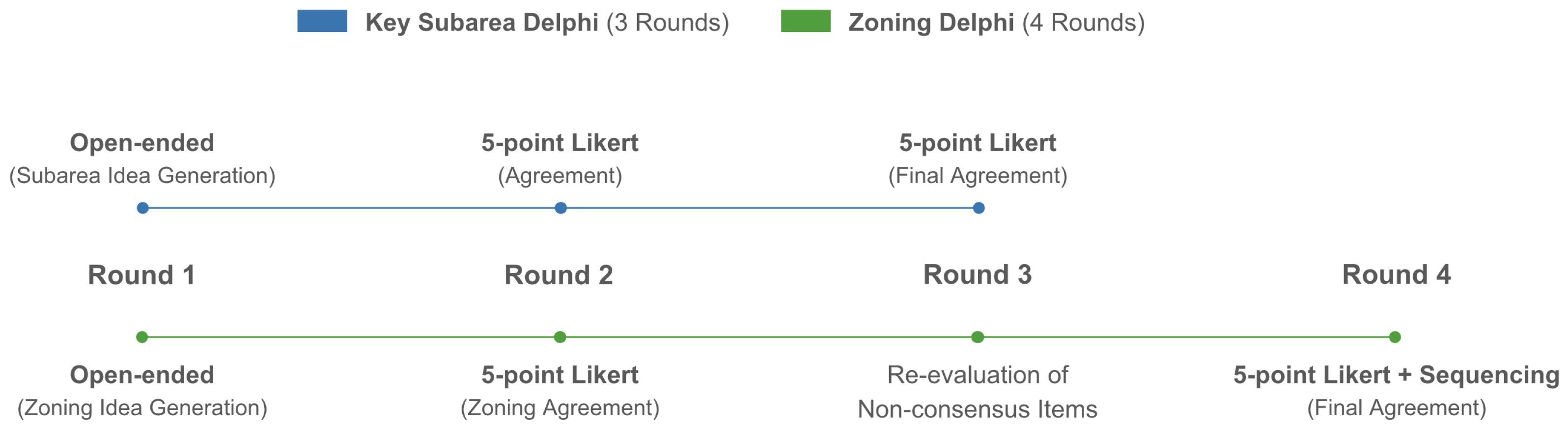
The Delphi method was applied to identify key subareas and establish functional zoning for factory tours [61]. Two Delphi rounds were conducted over separate annual periods to ensure iterative refinement and temporal validity of expert consensus (Figure 2). Expert selection followed the guideline that 10–15 participants are sufficient for achieving qualitative consensus [62]. Candidates were screened based on three criteria: (1) proven expertise in spatial or experiential design related to industrial, cultural, or exhibition environments; (2) substantial professional experience in planning or curating visitor-oriented spaces; and (3) balanced representation across academic and industry domains.
The final panel comprised twelve experts (seven women and five men), aged between 31 and 53, all holding at least a bachelor’s degree and representing multiple disciplines, including architecture, design, fine arts, art history, cultural policy, and exhibition management. Their current positions included professors of spatial and environmental design, senior managers of exhibition planning, museum curators, and team leaders in content strategy and project management. Collectively, the experts had between 4 and 27 years of professional experience, with an average of approximately 10.5 years.
  • First Delphi Round (13 February–29 March 2024): Focused on identifying and evaluating key subareas based on cross-national case analysis and site observations. The process involved three iterative rounds: (1) an open-ended questionnaire allowing additions or removals of subareas, and (2–3) two rating rounds using a 5-point Likert scale (ranging from 1 = strongly disagree to 5 = strongly agree) to assess each subarea’s importance for visitor engagement and spatial planning.
  • Second Delphi Round (17 February–25 March 2025): Focused on refining and validating the spatial zoning framework. Conducted in four rounds, the first two grouped and rated the 11 subareas into functional zones, while the latter two refined areas lacking consensus and finalized the preferred visitor flow sequence. Two experts from the first phase were replaced by new participants of a similar background, maintaining a 10-member panel.
Throughout the Delphi process, four validation indicators were applied: Content Validity Ratio (CVR), convergence, consensus, and stability. CVR [63] measures the proportion of experts rating an item as essential, with thresholds varying by panel size (Table 1); items below the threshold were excluded or revised in subsequent rounds. Convergence (<0.50) indicated strong alignment of opinions, consensus (>0.75) reflected high agreement, and stability (CV = SD/Mean <0.50) measured response consistency. These criteria were applied iteratively to refine subareas and zoning until expert agreement was achieved. These metrics ensured that only subareas and zoning schemes meeting minimum validity, agreement, and reliability standards were retained.
CVR = N e ( N 2 ) N 2 .
Convergence = Q 3 Q 1 2 , Consensus = 1 Q 3 Q 1 Median , CV = S D Mean .

3.3. Bottom-Up Approach: Visitor Behavior and Experiential Needs

A mixed-method study—surveys, semi-structured interviews, and shadowing—was conducted between 23 June and 30 September 2023, at a tourism factory operated by a Taiwanese optical manufacturer. A total of 102 visitors participated in surveys and interviews, and 45 participated in shadowing. Participation was voluntary, and informed consent was obtained on-site.
Participants were recruited using a purposive sampling approach during regular operating hours to ensure diversity in age, gender, and visitor purpose. This approach reflected the demographic composition of the factory’s visitor population based on annual attendance data provided by site management, thereby enhancing representativeness. To ensure data quality and consistency, researchers involved in observation and interviewing were trained using a standardized protocol before fieldwork. Shadowing forms and survey instruments were pilot-tested for clarity and reliability before formal data collection.
The rationale behind employing three complementary methods—shadowing, surveys, and semi-structured interviews—was to comprehensively understand visitor experiences from multiple perspectives. Shadowing enabled real-time observation of behavioral patterns and spatial interactions. Surveys captured quantitative trends in satisfaction and dissatisfaction, while semi-structured interviews provided deeper qualitative insights into experiential and emotional aspects that were not easily observable. These approaches produced behavioral data and interpretive insights that informed the subsequent spatial optimization process.

3.3.1. Shadowing: Investigating Visitor Movement Patterns

Shadowing was employed to unobtrusively observe natural visitor behavior within the factory tour, following established approaches in museum and exhibition studies [64,65]. Researchers discreetly accompanied 45 participants, recording their movement paths and behavioral responses in real time. This method enabled the capture of authentic visitor interactions with each subarea, yielding contextual insights into spatial engagement. Routes were visualized as a journey map and spaghetti diagrams to capture circulation patterns.
Visitor tracking is a well-established method for understanding spatial behavior in museum and exhibition settings, offering objective data on circulation patterns and engagement levels [66,67]. This study used a structured shadowing form (Table 2) to systematically document each participant’s path, including the subarea sequence, dwell time, observed behaviors, and total visit duration [68,69].

3.3.2. Survey and Interview: Identifying Visitor Preferences and Pain Points

Following the factory tour, 102 participants completed a survey and semi-structured interview to capture quantitative and qualitative feedback. The survey recorded demographics and awareness channels and asked participants to select three of the 21 subareas as the most satisfying and three that needed improvement, rating each on a 5-point Likert scale (1 = low satisfaction/minor issue; 5 = high satisfaction/significant issue) with explanations.
This combined method ensured data triangulation and aligned with prior research [6,26] that integrates structured surveys and interviews to evaluate satisfaction and guide design improvements in industrial tourism.

3.4. Research Setting: Hwa Meei’s Eye Fun Vision

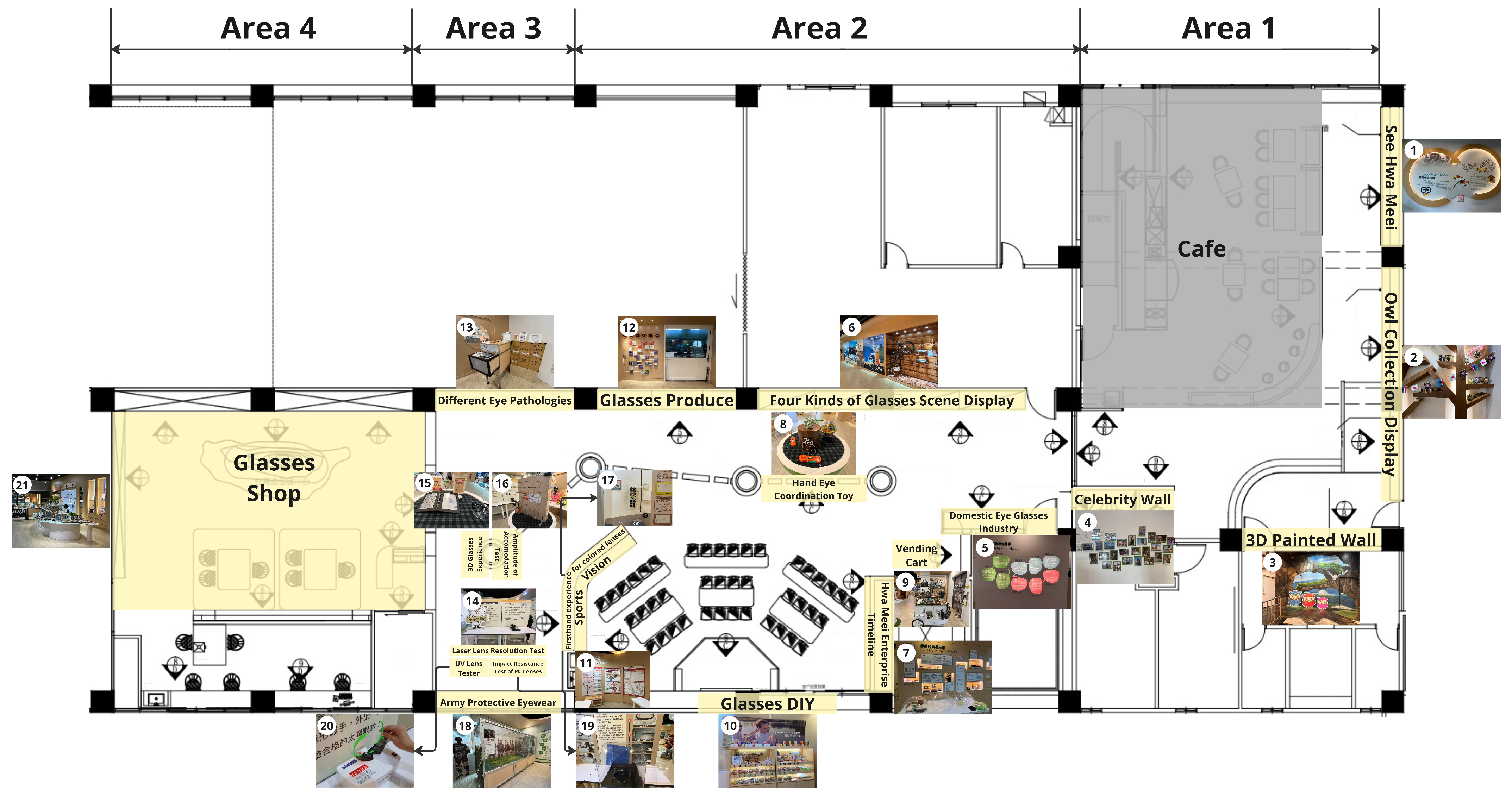
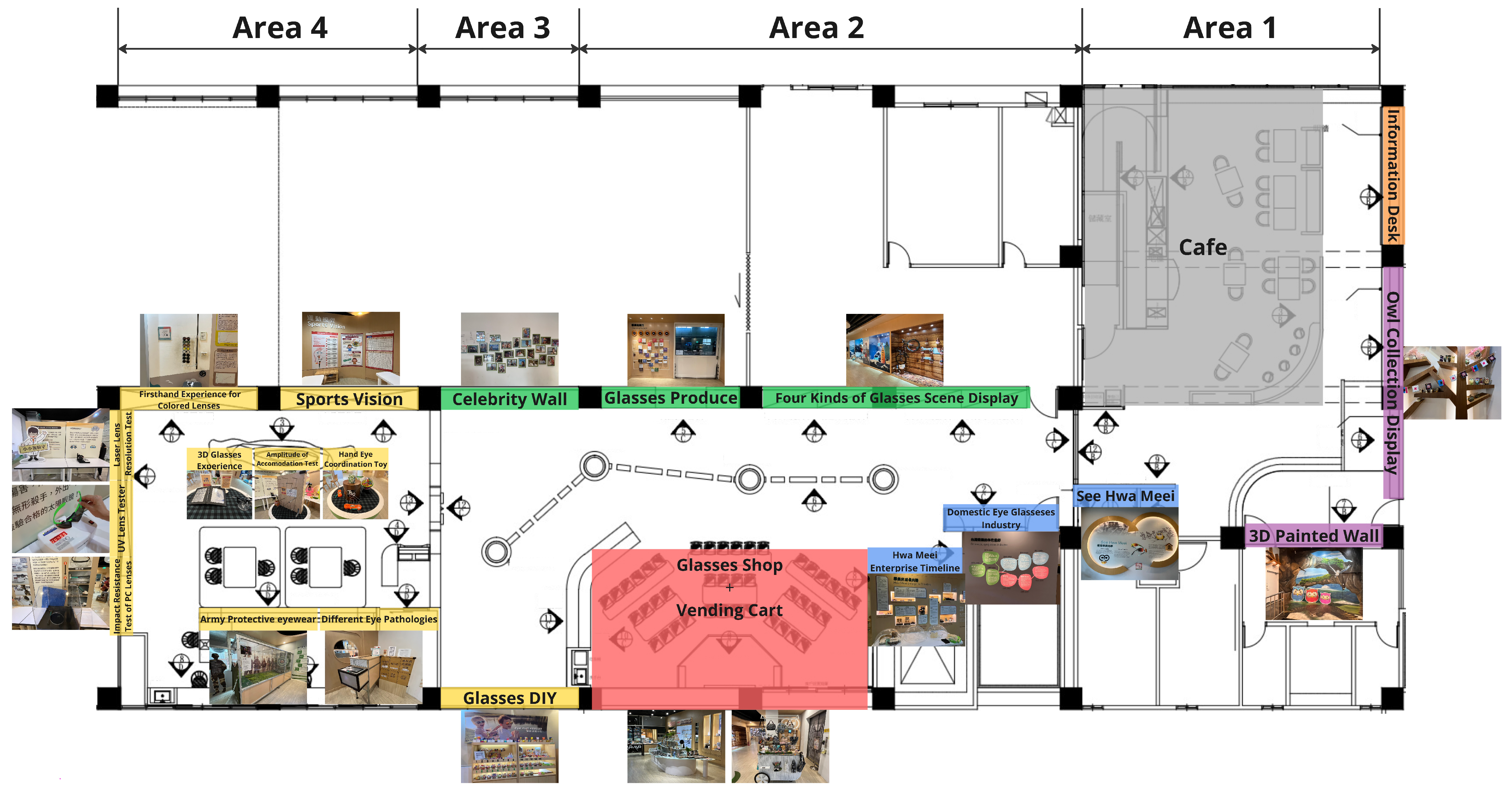
Hwa Meei, a global sports eyewear manufacturer with over 800 employees, established Taiwan’s first eyewear tourism factory, “Eye Fun Vision,” in 2016. The facility serves as both a production site and an educational platform, aiming to raise public awareness about the heritage of eyewear manufacturing and the importance of vision care. Visitors can experience interactive optical games, DIY sunglasses-making workshops, professional optometry demonstrations, and diverse optical and sports eyewear product displays. The factory tour comprises four main areas and 21 subareas designed to blend manufacturing transparency with engaging educational experiences. To maintain focus on exhibition spaces, the on-site café (operated by an external vendor) was excluded from the analysis (Figure 3) [70].
Area 1 serves See Hwa Meei, Owl Collection Display, 3D Painted Wall, Celebrity Wall. Area 2 covers the Domestic Eyeglasses Industry, Four Kinds of Glasses Scene Display, Hwa Meei enterprise timeline, Hand–Eye Coordination Toy, Vending Cart, Glasses DIY, Sports Vision, and Glasses Produce. Area 3 offers experiential learning through Different Eye Pathologies, Laser Lens Resolution Test, 3D Glasses Experience, Amplitude of Accommodation Test, Firsthand Experience for Colored Lenses, Army Protective Eyewear, Impact Resistance Test of PC Lenses, and UV Lens Tester. Area 4 features the Glasses Shop. Numbers in the figure correspond to subareas listed in the (Figure A1).

4. Results

4.1. Top-Down Approach: Analysis of Spatial Zoning Strategies

4.1.1. Comparative Case Study of Factory Tours

This section addresses Hypothesis 1-1, which posits that case studies of exemplary factory tours can identify recurring spatial subareas and contribute to developing standardized components for factory tour design. We analyzed six representative cases from Korea, Japan, Taiwan, Germany, and the USA, focusing on light manufacturing sectors (cosmetics, eyewear, and travel goods) to examine this (Table 3). The 12 subareas were identified: Photo Zone, Introduction of Founder and CEO, Company History, Company Product History, Entire Product History, Manufacturing Equipment, Manufacturing Process, Company Product Line, Games and Quizzes, Hands-on Activities, DIY Workshop, and Goods Shop.

4.1.2. Delphi Analysis of Spatial Zoning and Key Subareas

This section addresses Hypothesis 1-2, which posits that the Delphi method can effectively derive expert consensus on key spatial subareas and zoning strategies in factory tours. A three-round Delphi survey was conducted to refine spatial subareas, initially proposed from on-site observation and a case study.
  • Round 1: Added Information Center, Community Contribution, and Café; renamed categories (e.g., Founder and CEO → Company Founding Background and MVC; Hands-on Activities → Hands-on and Interactive Activities). Games and Quizzes were removed; Manufacturing Equipment merged with Manufacturing Process.
  • Round 2: Entire Product History excluded (CVR = 0.2, agreement = 0.375, convergence = 1.25). Further renaming (e.g., Information Center → Information Desk; CSR → ESG).
  • Round 3: Company ESG excluded (CVR = 0.4, agreement = 0.625, convergence = 0.75). Final 11 subareas: Information Desk, Company Founding Background and MVC, Company History, Company Product History, Manufacturing Process, Company Product Line Archive, Hands-on and Interactive Activities, DIY Workshop, Goods Shop, Café, Photo Zone.
A four-round Delphi process was undertaken to determine spatial zoning strategies and validate expert consensus.
  • Round 1: Experts responded to open-ended questions to propose and refine initial zoning ideas. Based on their professional judgment, the 11 subareas were grouped according to functional and thematic coherence.
  • Round 2: Using a 5-point Likert scale, experts rated the appropriateness of the proposed zones and key subarea groupings. Consensus was reached on four primary zones: Heritage·History, Manufacture·Product, Experience, and Convenience.
  • Round 3: Items not meeting the convergence threshold were re-evaluated. This round focused on the naming and scope of the Convenience Zone and the placement of the Information Desk and Photo Zone. Experts agreed that the Convenience Zone label was appropriate and that the Information Desk could serve as an independent or embedded zone depending on contextual needs. The Photo Zone was deemed flexible and transferable across zones.
  • Round 4: Experts conducted a final 5-point Likert-scale evaluation and determined the optimal visitor flow sequence. The Information Desk did not reach the statistical threshold for content validity (CVR = 0.00, convergence = 0.71), indicating that it was not associated with any specific thematic zone. The Photo Zone was reaffirmed as a flexible subarea adaptable across spatial layouts and movement designs.
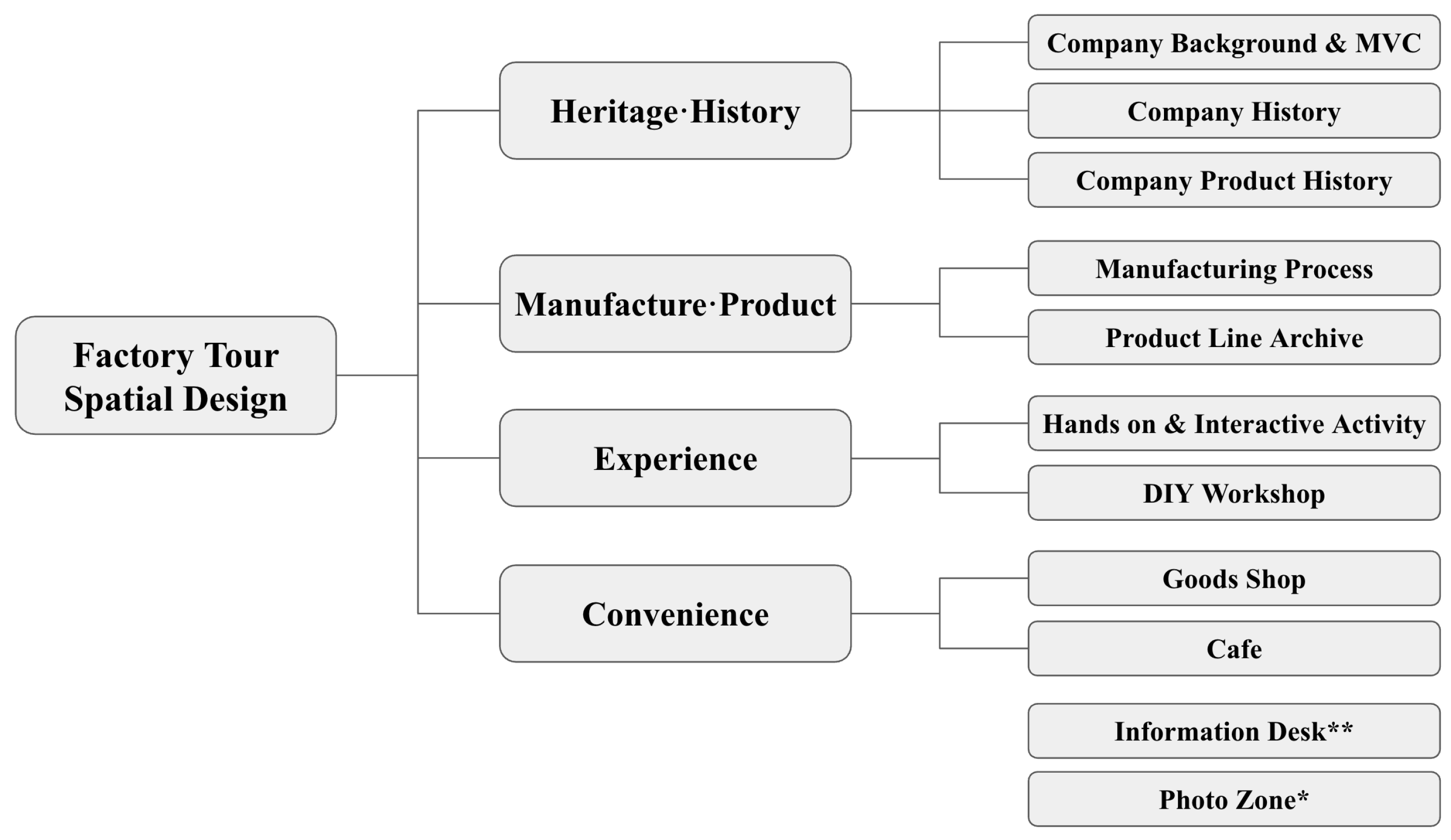
The finalized spatial configuration comprises four primary zones and two supplementary subareas (Figure 4):
  • Heritage·History Zone: Includes subareas focused on the company’s founding background, mission–vision–core values (MVC), and corporate history.
  • Manufacture·Product Zone: Highlights the manufacturing process and showcases a product line archive to convey technical expertise and innovation.
  • Experience Zone: Consists of hands-on and interactive activities, including a DIY workshop, designed to engage visitors actively.
  • Convenience Zone: Provides visitor amenities such as the retail shop and café, encouraging longer stays and enhancing comfort.
  • Information Desk (**): Serves as a critical orientation point. Although not formally part of the four primary zones, it may be positioned independently or integrated contextually based on spatial layout and visitor flow.
  • Photo Zone (*): A flexible key subarea that may be embedded within any of the four zones or configured, depending on curatorial intent and site constraints.
To determine the optimal exhibition sequence, experts were asked to rank the six spatial categories by assigning a number from 1 to 6, or marking with an asterisk (*) to indicate uncertainty or flexibility. Their aggregated responses are summarized as follows:
  • Information Desk: Ranked 1st by 9 out of 10 experts, showing strong agreement. One expert also marked it with an asterisk to emphasize its foundational role.
  • Heritage·History Zone: Ranked 2nd by 8 experts. The remaining two were assigned 1st and uncertain (2nd–4th).
  • Manufacture·Product Zone: Received 3rd place from 8 experts; one placed it 2nd and another marked it as uncertain (2nd–4th).
  • Experience Zone: Ranked 4th by 7 experts. Other rankings included 3rd (1 expert), 5th (1 expert), and uncertain (2nd–4th, one expert).
  • Convenience Zone: Typically ranked 5th by 8 experts. Outliers included rankings of 4th and either 1st or 6th (ambiguous response).
  • Photo Zone: Marked as uncertain by 5 experts. Among others, it was placed 6th by three experts and notably higher by two—1st and 3rd—indicating diverse perceptions of its importance.
Based on this input, the expert-recommended sequence is: Information Desk → Heritage·History → Manufacture·Product → Experience → Convenience. The Photo Zone is suggested to function as a flexible feature that can be placed independently of the main sequence, depending on spatial and curatorial considerations. This optional but impactful element can be positioned to enhance specific moments within the visitor journey without disrupting the primary narrative flow.

4.2. Bottom-Up Approach: Insights from Visitor and Feedback

The bottom-up approach integrates demographic data, movement patterns, and visitor feedback to optimize the factory tour experience. The demographic results reveal a predominantly family-oriented visitor profile: approximately 69.61% of visitors arrived as family groups with children, while 30.39% were adult-only groups. Most respondents (92.16%) reported “just visiting” as their primary purpose, indicating that most participants approached the factory tour as an experiential and educational activity rather than a transactional visit. Only small proportions engaged in specific activities such as trying on or purchasing eyewear (2.94%), participating in DIY workshops (1.96%), or receiving optometry or makeup consultations (0.98% each) (Table A1).
Geographic data show that 42.16% of visitors were residents from Tainan, followed by Kaohsiung (13.73%) and Taichung (10.78%), with a small percentage of international attendees (0.98%). Regarding visit duration, 42.57% stayed between 30 min and one hour, 22.77% stayed less than 30 min, and 34.65% stayed longer than an hour, suggesting moderate to extended engagement. These patterns are consistent with the factory’s annual visitor statistics provided by the site management, supporting the representativeness of the sample (Table A1).
Shadowing analysis, visualized through journey maps and spaghetti diagrams, identified spatial inefficiencies, congestion points, and engagement density across the four main areas. Survey and interview feedback complemented these findings by revealing high-performing subareas and areas needing improvement, offering practical guidance for enhancing visitor satisfaction and spatial organization.

4.2.1. Visitor Movement Analysis via Journey Map and Spaghetti Diagram

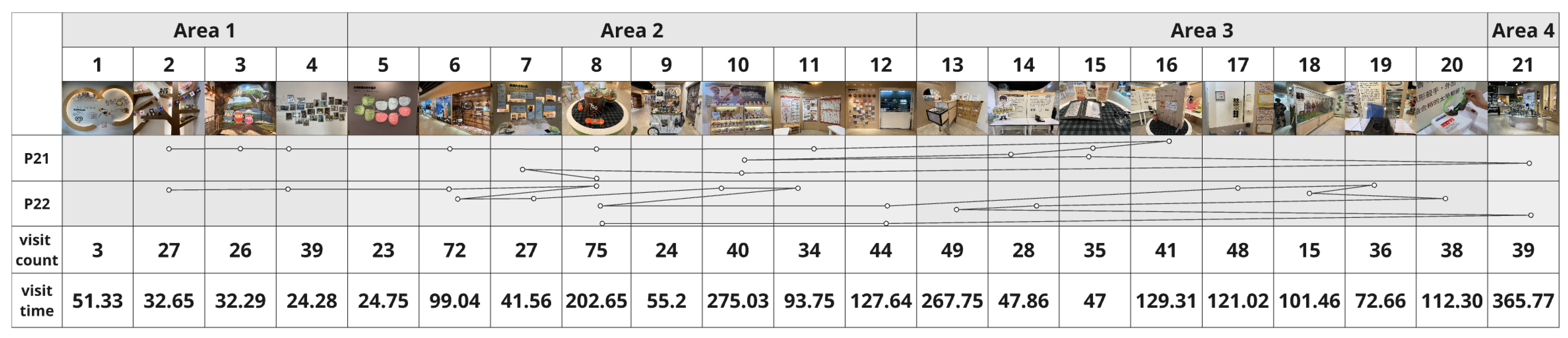
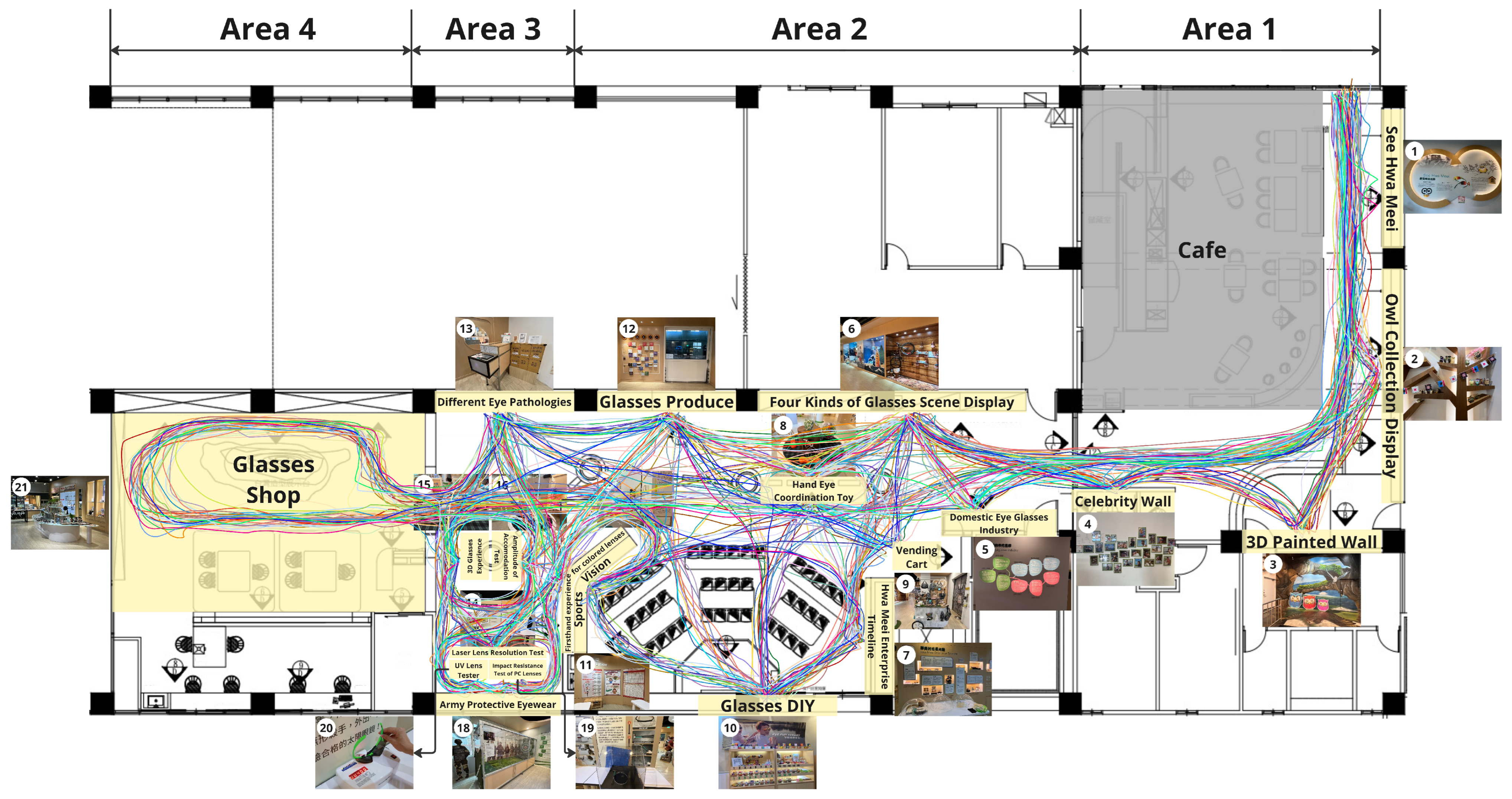
Hypothesis 2-1 posits that spaghetti diagrams and journey maps (Figure 5 and Figure A2) reveal spatial inefficiencies and engagement patterns. Figure 5 illustrates sample movement data from two representative visitors to visualize typical path tendencies, while Figure A2 presents the complete anonymized journey map data for all 45 participants across 21 subareas. Movement data were analyzed by dividing the space into four areas based on layout and theme, and engagement was classified as high (≥45 visits and ≥130 s), moderate (30–44 visits and 60–129 s), or low (<30 visits or <60 s).
Area 1 (Subareas 1–4) All subareas showed uniformly low engagement(<40 visits; dwell <52 s). As this area serves as the entrance, visitors pass quickly with little interaction, reflecting a lack of immersive or narrative elements.
Area 2 (Subareas 5–12) demonstrated varied engagement levels. Subareas 8 (Hand–Eye Coordination Toy) and 10 (Glasses DIY) achieved high engagement with both high visit counts and long average dwell times (over 200 s), indicating strong interactivity and experiential value. Subareas 5, 6, 7, 9, and 12 fell into the moderate category, balancing decent visit counts and dwell times. Subarea 11, however, exhibited low traffic and short stays, suggesting low attraction or unclear relevance.
Area 3 (Subareas 13–20) contained two high-engagement subareas: Subarea 13 (Different Eye Pathologies) and Subarea 16 (Amplitude of Accommodation Testing), both offering extended interaction and high visitor traffic, due to their educational and hands-on nature. Subareas 14, 15, 17, 19, and 20 achieved moderate engagement, showing consistent but not intensive use. Subarea 18 had an unusually long average dwell time despite a low visit count, but under the ’and’ criteria, it is still categorized as low engagement due to its limited reach.
Area 4 (Subarea 21) acted as the final stop and retail zone. While its visit count (39) was just below the high threshold, its exceptionally high dwell time (365 s) suggests a sustained engagement typical of spaces involving browsing, purchasing, or concluding activities.
  • High-Engagement Subareas (8, 10, 13, 16, 21): Their strong performance suggests that tactile interaction, DIY elements, or sensory experiences drive prolonged interest. These areas should be preserved and potentially expanded to reinforce experiential value.
  • Moderate-Engagement Subareas (5, 6, 7, 9, 12, 14, 15, 17, 19, 20): These subareas consistently attract visitors for a moderate duration. While functional, they may benefit from enhanced storytelling, interactive features, or environmental cues to deepen visitor immersion and elevate them to high engagement.
  • Low-Engagement Subareas (1–4, 11, 18): These subareas failed to meet the visit count and dwell time thresholds. Their limited impact suggests a need for redesign, incorporating multimedia, gamification, hands-on displays, or spatial repositioning to increase visibility and engagement.
This study employed a spaghetti diagram based on customer shadowing data to evaluate visitor movement patterns and identify spatial inefficiencies (Figure 6). The spaghetti diagram is a Lean tool used to visualize customer flow, assess movement efficiency, and detect spatial bottlenecks [71]. Two primary forms of analysis were applied:
  • Path Optimization: Identifies frequently and infrequently used routes. Complex or lengthy routes are flagged for simplification and improved wayfinding.
  • Bottleneck Analysis: Detects areas of congestion or repeated visitor clustering, enabling layout adjustments or redistribution of foot traffic.
Area 1 is an introductory area with overlooked exhibits. The entry path is generally smooth, but Subarea 1 (See Hwa Meei), located on the left wall near the entrance, was frequently overlooked. Upon entry, most visitors instinctively looked to the right, bypassing the initial subarea. This suggests the need for visual cues or spatial anchoring to redirect attention and ensure all subareas are perceived.
Area 2 shows the emergence of directional bias. Similar to Area 1, visitors tend to favor the right side of the space. As a result, left-side subareas receive lower foot traffic, leading to uneven flow distribution. The disparity in engagement suggests a need to balance visual and spatial weight on both sides of the exhibit zone.
Area 3 has high engagement but poor flow. It contains numerous hands-on and interactive subareas with long dwell times. However, the spatial layout was scattered, cramped, and difficult to navigate, leading to frequent bottlenecks. The combination of high visitor density and poor spatial organization indicates a strong need for reconfiguration through widening circulation paths, spatial zoning, or exhibit clustering.
Area 4 is a spacious but underperforming retail area. Visitors typically approached the glasses shop (Subarea 21) from the right, following a predictable flow. While the area is spacious and conducive to extended dwell times, the conversion (purchase) rate remained low. This gap between attention and transaction suggests that improved retail layout, product visibility, or reinforcement of sales strategy is needed to encourage purchases.

4.2.2. Visitor Feedback Analysis: Satisfaction Metrics and Thematic Insights

This section addresses Hypothesises 2-2 and 2-3, which propose that quantitative and qualitative methods effectively evaluate visitor satisfaction with spatial subareas. Hypothesis 2-2 suggests that Net Scores—based on comparative counts of positive and negative feedback—serve as a proxy for measuring spatial satisfaction. Hypothesis 2-3 posits that qualitative insights from semi-structured interviews can uncover factors shaping visitor preferences and guide future improvements. Two core indicators were collected post-tour to assess visitor sentiment across the 21 subareas: the number of “likes” and “dislikes”, where participants were asked to select their three most and least satisfying subareas. A Net Score was computed for each subarea using the formula:
Net   Score = Number of Likes Number of Dislikes
All 21 subareas were ranked based on their raw Net Scores (Table 4). In the case of identical Net Scores, the number of “likes” was used as a secondary criterion—subareas with more likes were ranked higher, as this was interpreted as a stronger indication of positive sentiment. For example, Subarea 10 received 41 likes and 6 dislikes, resulting in the highest Net Score of 35. Although Subarea 8 received more total likes (44), it also had more dislikes (15), yielding a lower Net Score of 29 and thus a lower rank. This ranking approach provided a balanced perspective by considering favorable and unfavorable feedback.
To complement survey results, semi-structured interviews were analyzed through a two-stage process combining Affinity Diagramming and Thematic Analysis [72]. First, interview transcripts were coded by extracting key phrases and expressions that reflected visitor impressions, emotional responses, and critical comments. Each code was recorded on a Post-it note and grouped with similar codes into clusters based on thematic similarity.
The combined results showed that Subareas 10, 8, 17, and 3 consistently received high Net Scores and positive thematic associations. In contrast, Subareas 18, 13, 1, 14, 5, and 9 ranked lower and were often linked to concerns including unclear spatial flow, weak narrative delivery, and limited engagement. These findings highlight how integrating quantitative satisfaction metrics with qualitative insights provides actionable guidance for improving factory tour design and visitor experience.
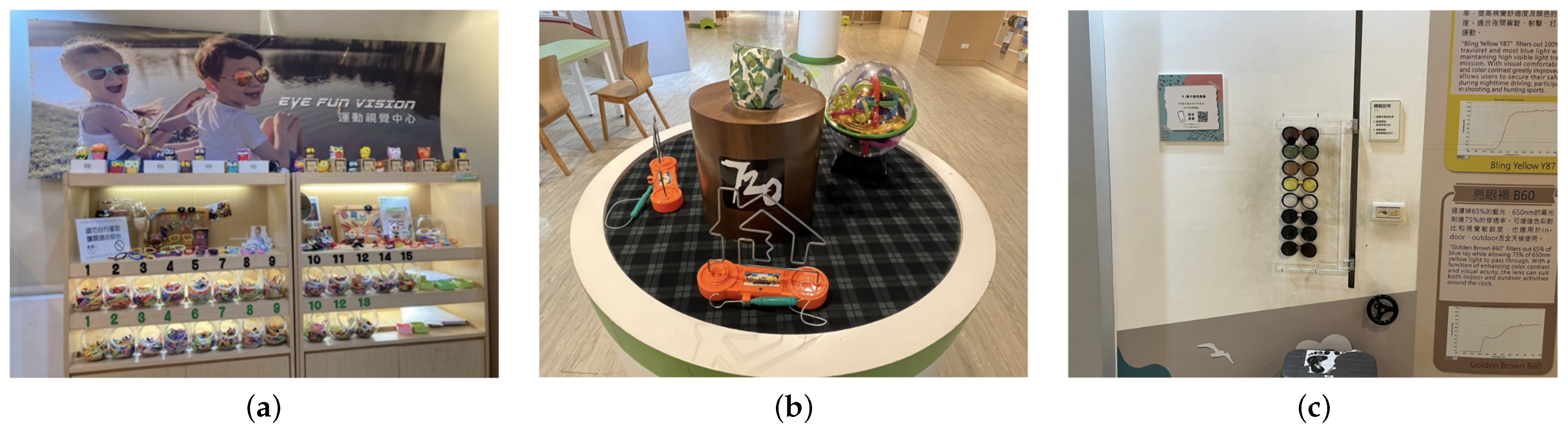
The top-rated subareas received high visitor feedback for their strong interactivity, educational value, and engaging design. These spaces offered hands-on activities, playful elements, and meaningful learning experiences that appealed to many visitors (Figure 7).
  • Glasses DIY (No. 10): Visitors appreciated the opportunity to assemble and personalize glasses, finding the creative and educational activity. It encouraged parent-child interaction and was especially popular with families. The aesthetic quality of the final product and the ability to take it home further enhanced satisfaction.
  • Hand–Eye Coordination Toy (No. 8): This subarea was praised for its entertaining and competitive nature. Visitors noted improvements in concentration and coordination and enjoyed the playful yet meaningful interaction it provided, particularly for children.
  • Firsthand Experience for Colored Lenses (No. 17): Visitors enjoyed exploring various lens colors through immersive visuals. The experience was informative and memorable, offering a creative perspective on visual perception.
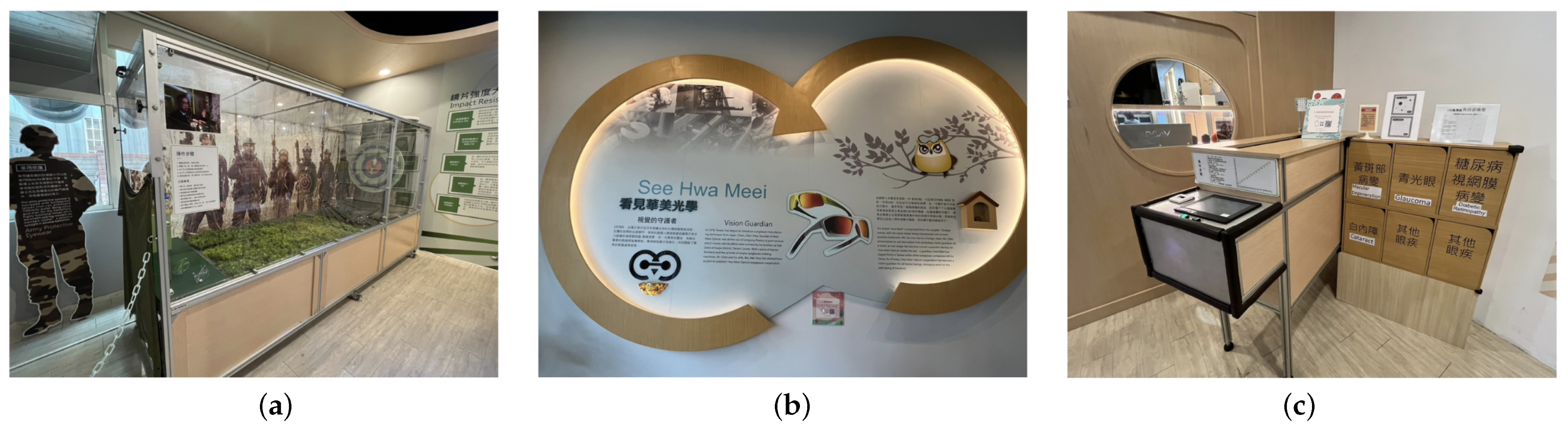
The lowest-rated subareas were commonly associated with usability issues, low engagement, and accessibility concerns. Others also received negative feedback due to unclear instructions, limited interactivity, and weak relevance to the overall theme (Figure 8).
  • Army Protective Eyewear (No. 18): Visitors struggled with unclear reservation and usage instructions. Technical malfunctions, limited accessibility for children, and confusion about interaction methods negatively impacted the experience. Improvements in guidance, equipment functionality, and inclusive design are needed.
  • Different Eye Pathologies (No. 13): Users found the equipment difficult to operate due to vague instructions and poor accessibility (e.g., instruction height, device layout). Limited interactivity and emotionally unsettling content (e.g., disease imagery) further reduced engagement.
  • See Hwa Meei (No. 1): Many visitors overlooked this introductory section due to excessive text, low visual appeal, and limited interactivity. Making the content more concise, visually engaging, and interactive could help draw attention and communicate the company’s story better.
Based on open-ended responses to the questions “What would you like to experience before you enter here that we do not offer?” and “What do you think we can improve to make it easier for more people to visit here?”, the analysis identified seven major themes that reflect broader expectations for enhancing the factory tour experience. Figure A3 summarizes their frequency of mention.
First, the most frequently mentioned theme concerned the need for interactive, hands-on, and educational experience enhancements (41 mentions). Visitors requested more child-centered activities, sensory-based games, AR/VR features, and opportunities for active engagement, emphasizing that current offerings were too limited. Additionally, respondents noted a lack of educational content on children’s eye health, optical science, and lens production, suggesting the importance of combining immersive interaction with meaningful learning opportunities.
Second, a large number of mentions highlighted the lack of guidance, staff support, and clear explanations (36 mentions). Visitors reported difficulties due to the lack of guided tours, insufficient staffing, unclear instructions for using the interactive stations, and limited narrative interpretation. These comments indicate that mediation—both human and digital—remains a critical gap in the visitor experience.
Third, issues related to spatial capacity and facility quality were mentioned in 19 cases. Respondents pointed to limited overall space, narrow circulation, insufficient play areas, dim lighting, QR code errors, and occasional device malfunctions. These concerns suggest that environmental comfort and the physical adequacy of facilities play a significant role in shaping satisfaction.
Fourth, external signage and entrance visibility were mentioned 18 times. Many visitors struggled to locate the entrance, mistook the building for a non-factory tour, or found road signs and entrance markers insufficiently visible. These findings highlight the importance of threshold design, wayfinding clarity, and the first impression created before entering the site.
Fifth, concerns regarding exhibition layout, storyline coherence, and display richness were reflected in 17 mentions. Visitors described unclear movement flows, scattered or monotonous exhibits, and a lack of visual focal points or creativity in content presentation, indicating the need for stronger spatial storytelling and curatorial coherence.
Sixth, DIY activities and product variety were mentioned 15 times. Respondents requested more diverse DIY options, age-appropriate craft activities, frame-assembly experiences, and a broader selection of eyewear products and related merchandise—particularly for children.
Finally, production-line visibility and process demonstration were mentioned 12 times. Visitors expected clearer views of manufacturing processes, larger transparent windows, closer observation distances, and more detailed explanations of how glasses are made.

4.3. Hybrid Approach: Integrated Spatial and Experiential Design for Factory Tours

The hybrid approach combines top-down strategic zoning with bottom-up visitor analysis to create an adaptable factory tour environment. Based on industry cases and Delphi consensus, top-down planning ensures structural coherence, while bottom-up insights from real visitor data allow targeted adjustments. This combination enables a data-driven and theory-backed decision-making process, balancing expert-driven spatial organization with empirical insights from visitors.

4.3.1. Integrating Zoning, Visitor Behavior, and VGA for Spatial Optimization

This section addresses Hypothesis 3-1, which posits that spatial layouts refined through expert-defined zoning and visitor movement analysis, when further analyzed using Visual Graph Analysis (VGA), lead to improved spatial configuration and circulation. We adopted a three-step integrative process combining top-down zoning, bottom-up behavioral data, and computational spatial analysis to validate this hypothesis.
The first phase of layout optimization was grounded in the zoning framework developed through Delphi expert consensus (Hypothesis 1-2). This framework categorized the 21 subareas into four thematic zones—Heritage·History, Manufacture·Product, Experience, and Convenience—alongside a flexible Photo Zone and an added Information Desk not present in the original layout. Table 5 presents this framework in detail, listing each subarea under its designated thematic zone. This classification provided the structural basis for analyzing the visitor movement patterns and identifying spatial challenges.
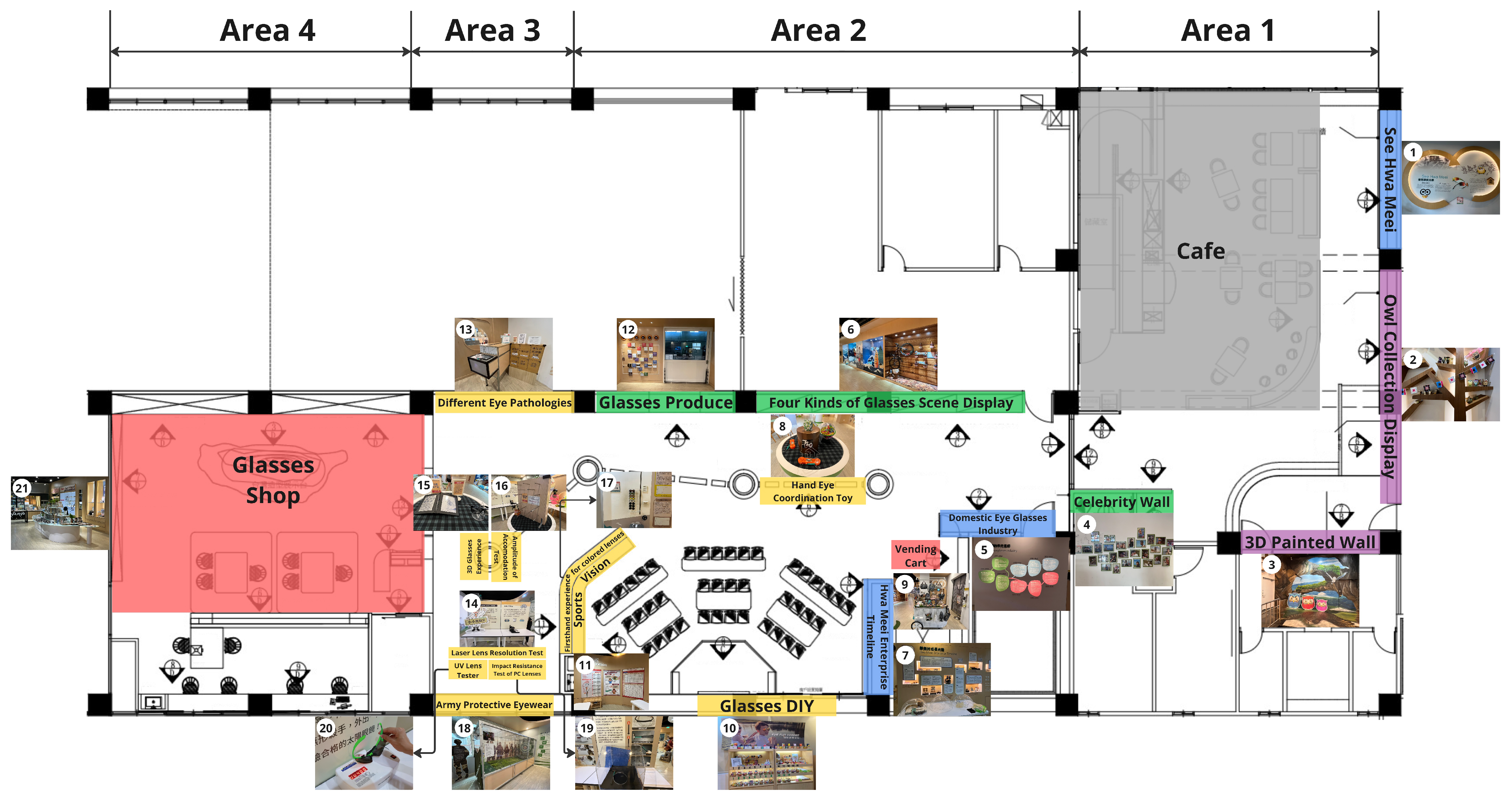
The second phase focused on bottom-up visitor behavior analysis. Visitor journey maps and spaghetti diagrams (Hypothesis 2-1) revealed several spatial challenges: disrupted narrative flow, thematic inconsistency, and congestion points. For instance, See Hwa Meei, intended as an entry point to the Heritage·History zone, was physically separated from related exhibits like the Domestic Eyeglasses Industry and Hwa Meei Enterprise Timeline, leading to its frequent overlooking.
Similarly, the Hand–Eye Coordination Toy, part of the Experience zone, was positioned at a corridor junction, unintentionally distracting from nearby heritage exhibits and disrupting thematic continuity. The Vending Cart, part of the Convenience zone, was located between two Heritage·History subareas, fragmenting the spatial storyline and causing localized congestion.
Moreover, as Area 3 has many hands-on and interactive activities, it was found to be overly compact. The limited space made it difficult for groups to participate comfortably, reducing engagement duration and satisfaction.
Building on this zoning and behavioral analysis, Figure 9 visualizes the original spatial layout before optimization. Each zone is color-coded for clarity—blue (Heritage·History), green (Manufacture·Product), yellow (Experience), red (Convenience), and purple (Photo Zone)—and the figure highlights the misalignments identified above, including the isolated position of See Hwa Meei and the misplaced locations of the Hand-Eye Coordination Toy and Vending Cart.
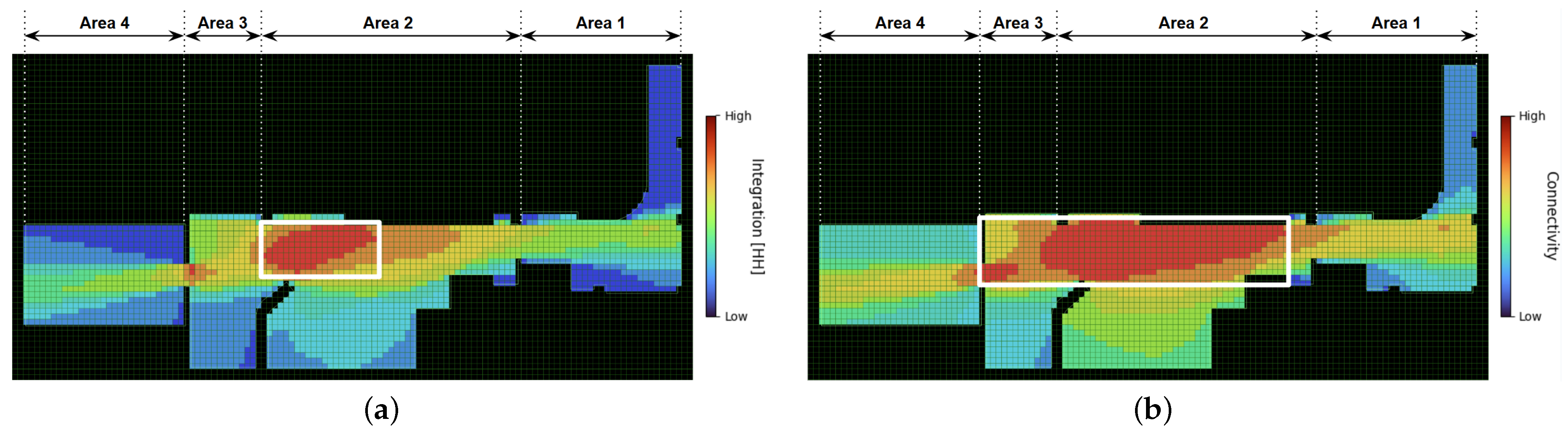
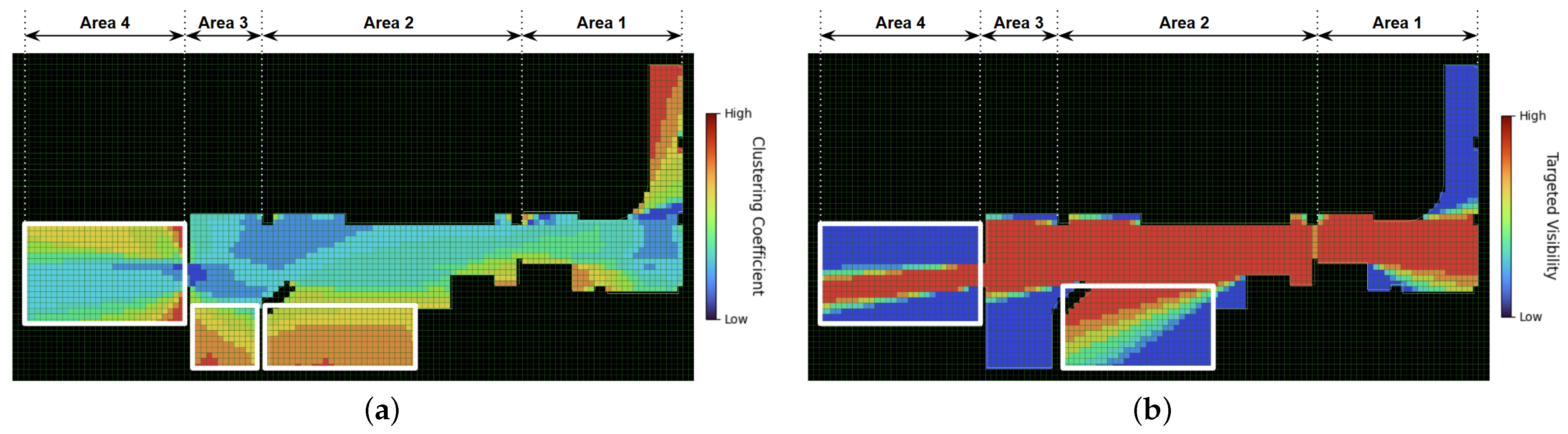
The Eye Fun Vision floor plan was modeled in CAD 2025 and imported into Depthmap 8.0 for visibility graph analysis. Several spatial metrics were used to evaluate and refine the layout: visual integration revealed overall accessibility; connectivity highlighted well-connected nodes; clustering coefficient identified areas likely to support engagement; and target visibility assessed how noticeable a location is from critical viewpoints [23,73,74].
The analysis revealed that the Manufacturing Process subarea, located in the upper part of Area 2, exhibited the highest level of visual integration, and the upper section of Areas 2 (Lens Manufacturing Process, Four Types of Eyeglasses Display, and Hand–Eye Coordination Toy)—corresponding to the main hallway—showed the highest connectivity (Figure 10). These findings indicate that the Manufacturing Process is a central spatial node with strong visual and functional links to adjacent subareas. Accordingly, the Manufacture·Product Zone was reorganized around this anchor to optimize spatial coherence and reinforce the narrative centered on production and technical expertise.
The Heritage·History Zone was positioned directly before the manufacturing exhibits to ensure a logical visitor flow and smooth transition from the brand story to production processes. However, the spaghetti diagram showed that many visitors moved directly from Four Types of Eyeglasses Display to the Hand–Eye Coordination Toy, a thematically unrelated element. This behavioral jump disrupted the intended narrative and diluted thematic immersion. As a result, the Hand–Eye Coordination Toy was reassigned to the Experience Zone, aligning its function with other interactive exhibits and supporting a more cohesive spatial and experiential sequence.
Clustering coefficient analysis identified strong visual cohesion in the lower sections of Area 2 and Area 3, especially within subareas of the Experience Zone, such as the DIY Workshop and other hands-on and interactive activities. Despite this thematic and visual coherence, the spatial constraints in lower Area 3 limited simultaneous engagement, leading to localized congestion and reduced experiential quality. Targeted visibility analysis further revealed that the Goods Shop in Area 4 was visually peripheral and poorly integrated into the main circulation flow. Although dwell times were relatively high, its moderate visit count (39) and low conversion rate indicated limited retail engagement (Figure 11).
To address these issues, we proposed a spatial reconfiguration: all hands-on and interactive subareas were relocated from the constrained lower Area 3 to the former Goods Shop space in Area 4. With a high clustering coefficient and greater spatial capacity, this area offered improved circulation and engagement potential. The Glasses Shop, formerly in Area 4, was relocated below Area 2 to improve circulation and thematic flow. The glasses DIY, which requires focused, stationary participation, was moved to the lower Area 3, where spatial size and clustering values remained suitable. This exchange optimized space usage and preserved thematic coherence within the Experience Zone. Also, it enhanced the flow of visitor engagement across adjacent subareas.
Based on insights from expert-driven zoning, visual graph analysis (VGA), and visitor movement analysis, the original layout of Hwa Meei’s factory tour was systematically redesigned to improve spatial coherence and experiential flow. The revised layout addresses previously identified issues such as thematic inconsistency, fragmented spatial composition, and inefficient visitor circulation. The final layout establishes a precise narrative sequence—from the Information Desk and Photo Zone, through the Heritage·History, Manufacture·Product, and Experience Zones, culminating in the Convenience Zone (Figure 12).
  • Information Desk (Orange): Located at the entrance, the newly added Information Desk provides essential safety guidance and a comprehensive overview of the tour, improving visitor orientation and facilitating smoother transitions throughout the space.
  • Photo Zone (Purple): Positioned adjacent to the entrance, this area includes the 3D Painted Wall and Owl Collection Display. Although outside the fixed tour route, it serves as a visually engaging prelude where visitors can casually interact and take photos before beginning the formal tour.
  • Heritage·History (Blue): Starting with “See Hwa Meei” in Area 1 and continuing into Area 2 with the Domestic Eyeglass Industry and Enterprise Timeline exhibits, this zone introduces the company’s origins, mission, and legacy within the eyewear industry.
  • Manufacture·Product (Green): Spread across the upper sections of Areas 2 and 3, this zone showcases Hwa Meei’s production processes and branding through exhibits such as the Four Types of Eyeglasses Display, Glasses Produce, and Celebrity Wall.
  • Experience (Yellow): Located in the lower part of Area 3 and reconfigured Area 4, this zone provides hands-on programs such as the glasses DIY Workshop, aiming to deepen engagement through interactive and educational activities.
  • Convenience (Red): Situated at the end of the visitor flow in Area 2, this zone includes the relocated Glasses Shop and Vending Cart, offering a comfortable and satisfying conclusion to the tour through retail interaction and staff support.

4.3.2. Service Blueprint Linking Spatial Zones and Visitor Experience

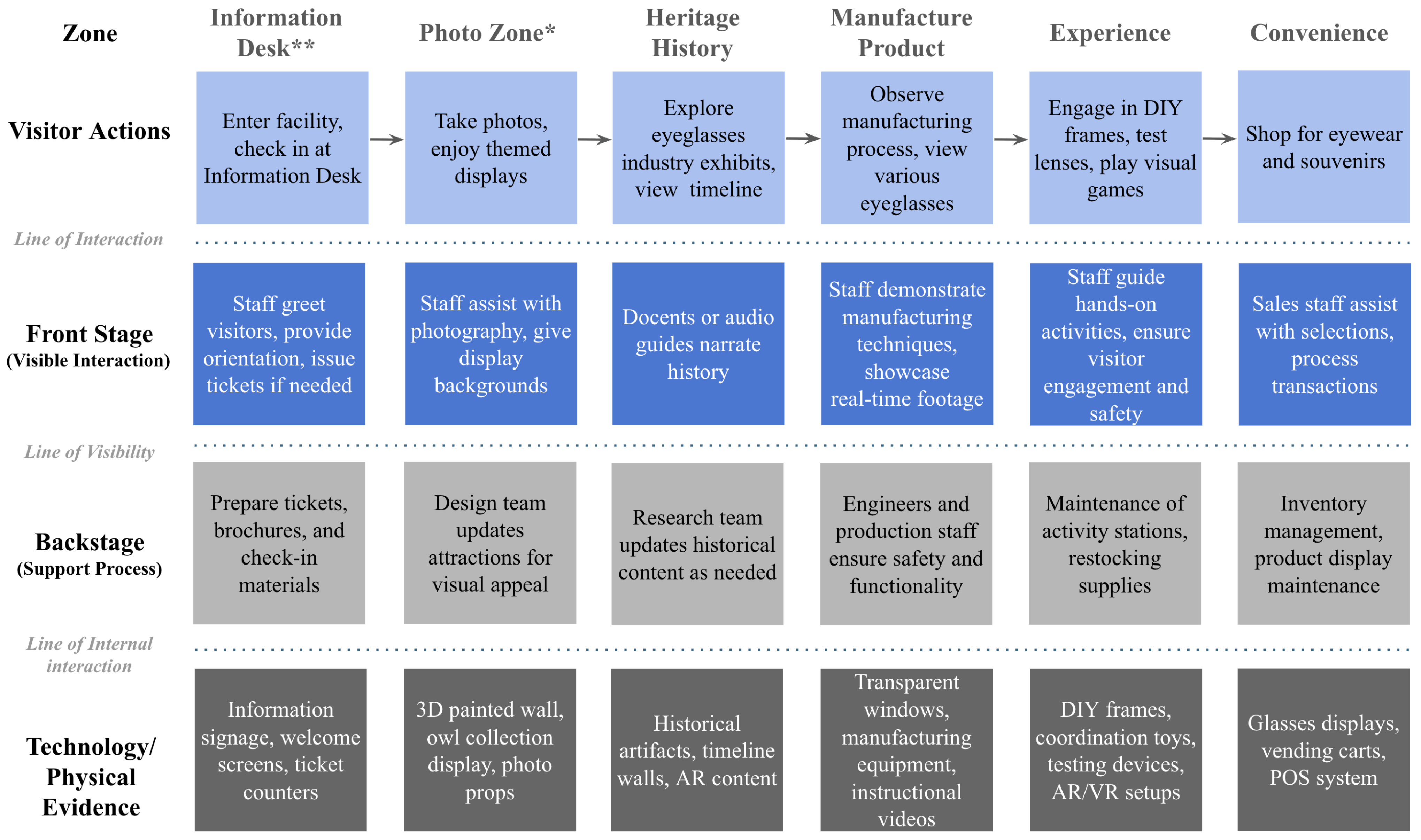
Building upon the spatial reconfiguration presented in Section 4.3.1, the service blueprint integrates insights from top-down spatial planning (Section 4.1) and bottom-up analysis of visitor movement and feedback (Section 4.2), providing a structured overview of how each spatial zone supports both service delivery and user experience (Figure 13).
  • Information Desk: The Information Desk offers essential guidance on the tour route and safety protocols, helping structure the visitor experience from the outset. Frontstage staff handle inquiries, while backstage teams manage informational materials and signage updates.
  • Photo Zone: The Photo Zone is a visually engaging entry or exit point, where visitors can capture memories through installations like the 3D Painted Wall and Owl Collection. Design staff support by maintaining props and updating visual elements.
  • Heritage History: The Heritage History Zone tells the story of Hwa Meei’s founding and industrial legacy through curated exhibits, timeline panels, and augmented reality (AR) content. Interpretive support is provided via docents or audio guides, with backstage teams managing historical curation and media systems.
  • Manufacture·Product: The Manufacture·Product Zone offers direct views of live lens production, with staff explaining the process and engineers ensuring operational safety. This zone reinforces technical credibility through frontstage demonstration and backstage coordination.
  • Experience: The Experience Zone engages visitors in hands-on activities, including DIY frame-making and lens testing. Frontstage facilitators lead the interactions, while backstage teams ensure the availability of materials and maintain AR/VR systems.
  • Convenience: The Convenience Zone completes the tour with retail opportunities. Sales staff support visitors in product selection and purchase, while inventory and merchandising teams manage stock levels and display organization behind the scenes.

5. Discussion

This study examined how the integration of expert-driven zoning, visitor-centered analysis, and computational spatial evaluation can improve the spatial and experiential design of a factory tour. The top-down approach established through Delphi consensus and cross-case benchmarking successfully structured the factory tour into four coherent zones—Heritage·History, Manufacture·Product, Experience, and Convenience. This zoning process provided thematic clarity and narrative order, enabling the space to function as a sequenced visitor experience rather than a collection of disconnected exhibits. However, while the expert-defined structure offered logical coherence, its practical implementation revealed several mismatches between curatorial intent and visitor behavior. Exhibits related to company history and brand heritage were often underexplored due to peripheral placement and limited interactivity, suggesting that spatial sequencing must consider perceptual salience and intuitive accessibility alongside conceptual hierarchy.
The behavioral data derived from visitor shadowing clarified how spatial configuration directly influenced engagement. Spaghetti diagrams and journey maps revealed that areas with minimal interaction or linear circulation patterns generated low engagement and short dwell times, whereas hands-on and interactive subareas such as glasses DIY and Hand–Eye Coordination Toy promoted longer stays and repeated visits. These findings highlight the central role of physical interactivity and education in sustaining attention and facilitating learning within industrial tourism settings. From the perspective of embodied cognition [34], such sensorimotor interaction enables deeper cognitive processing and emotional involvement, illustrating how spatial and bodily engagement contribute to both experiential richness and environmental sustainability.
The satisfaction survey and thematic analysis reinforced these behavioral tendencies. Subareas offering tactile participation or sensory discovery received high Net Scores, while those with unclear interaction cues or accessibility barriers were rated lower. This convergence between spatial behavior and subjective satisfaction indicates that visitors evaluate experiences not solely through content but through how the space enables agency, clarity, and comfort. Engagement is an experiential metric linking physical environment, cognitive response, and emotional value. The relationship between movement data and satisfaction outcomes also underscores the importance of balancing curatorial and behavioral perspectives in factory tour design—spaces must invite exploration while maintaining coherence with the intended storyline.
Integrating these top-down and bottom-up insights into the hybrid optimization framework produced measurable spatial and experiential improvements. The reconfiguration of subareas based on visibility graph analysis aligned high-engagement exhibits with visually integrated zones, enhancing circulation and reducing congestion. The final layout seamlessly transitioned from historical to experiential content, connecting cognitive understanding with embodied participation. This reorganization improved visitor navigation and narrative continuity and strengthened the interpretive relationship between brand identity and manufacturing transparency. Furthermore, the resulting service blueprint operationalized this integration by connecting frontstage activities—such as guided storytelling and interactive demonstrations—with backstage support systems that sustain them, thereby ensuring long-term management feasibility.
The findings confirm that sustainable factory tour design depends on the continuous alignment between spatial logic, visitor experience, and organizational operation. The hybrid framework demonstrates how evidence-based zoning, behavioral observation, and spatial analysis can generate actionable insights for spatial storytelling, experiential engagement, and resource efficiency. By combining curatorial structure with empirical feedback, tourism factories can evolve into adaptive environments that communicate industrial culture while fostering visitor satisfaction and sustainability across environmental, social, and economic dimensions.

6. Conclusions

This study developed and tested a hybrid methodology that combines expert-driven spatial zoning with empirical visitor analytics to create a more adaptive and engaging factory tour environment. Using an optical lens manufacturer in Taiwan as a case study, we demonstrated that neither top-down narrative planning nor bottom-up visitor data alone is sufficient. Integrating Delphi-based zoning, shadowing, satisfaction surveys, and Visibility Graph Analysis (VGA) produced a spatial layout that improved circulation, engagement, and storytelling alignment. The resulting service blueprint further extended these benefits by integrating spatial configuration with service operations, offering a comprehensive experience management tool.
The primary contribution of this research lies in presenting a replicable, evidence-based design framework that bridges computational analysis and human-centered design. Compared with prior case-based studies that described best practices, the proposed hybrid approach establishes a transferable methodological process that can be systematically replicated and scaled. By combining expert zoning logic with visitor data and visibility metrics, it advances current approaches from descriptive observation toward analytical validation.
Beyond methodological contribution, the framework also offers practical guidance. Tour operators and spatial designers can apply the framework flexibly according to available resources—using expert workshops for zoning, low-cost digital mapping, and qualitative visitor feedback to iteratively refine tour design. For small and medium-sized enterprises (SMEs), this adaptability provides an actionable pathway toward sustainable visitor experience design without requiring high technological or financial investment.
This study is limited to a single case within the eyewear industry, which constrains the generalizability of its findings. Moreover, while the mixed-method approach effectively captured visitor behavior and satisfaction, demographic segmentation and longitudinal analysis were not fully addressed. The combination of top-down and bottom-up approaches may also introduce interpretive tension: expert-driven zoning can embed curatorial bias, while visitor data often reflects heterogeneous preferences that are difficult to generalize. Taken together, these limitations highlight the need for further research that extends both the methodological and theoretical scope of the proposed framework.
Future research will deepen the theoretical grounding of this framework by incorporating perspectives from environmental psychology, affordance-based design [32,33], and embodied cognition [34]. These perspectives can provide a richer understanding of how visitors perceive and act within designed environments, emphasizing the reciprocal relationship between spatial cues, sensory–motor interaction, and experiential meaning-making.
By integrating these theoretical dimensions, future research in this domain may extend the framework’s applicability to diverse cultural and industrial contexts. Other researchers could also apply the hybrid framework across industries—such as automotive, electronics, or food manufacturing—to comparatively evaluate its adaptability and scalability. In addition, emerging methods such as AI-based real-time tracking and longitudinal analyses of revisit behavior could be employed to explore how spatial design influences sustained engagement and brand loyalty.
By framing the factory tour as both a spatial system and a service platform, this research advances the conceptualization of industrial tourism as a sustainable, experience-centered practice. It contributes to the environmental, social, and economic dimensions of sustainability while offering a flexible, data-informed model that continuously evolves with changing visitor expectations and organizational goals.

Author Contributions

Conceptualization, J.Y. and J.-H.L.; methodology, J.Y., J.-H.L. and Y.-H.H.; software, J.Y.; validation, J.Y.; formal analysis, J.Y.; investigation, J.Y.; resources, Y.-H.H.; data curation, J.Y.; writing—original draft preparation, J.Y.; writing—review and editing, J.Y., J.-H.L. and Y.-H.H.; visualization, J.Y.; supervision, J.-H.L. and Y.-H.H.; project administration, Y.-H.H.; funding acquisition, J.Y. and J.-H.L. All authors have read and agreed to the published version of the manuscript.

Funding

This work was supported by the Technology Innovation Program (Development of Design Element Evaluation Framework and Database, RS-2025-05802968) funded by the Ministry of Trade Industry & Energy (MOTIE, Korea); This work was supported by the National Research Foundation of Korea (NRF) grant funded by the Korean government (MSIT) (RS-2022-NR068758); This work was supported by the National Research Foundation of Korea (NRF) Grant funded by the Ministry of Education (MOE) (NRF-2025S1A5B5A17013735).

Institutional Review Board Statement

This study was approved by the KAIST Institutional Review Board (Approval No. KH2024-012, dated 2 February 2024).

Informed Consent Statement

All survey and interview data collected from visitors to the Hwa Meei Optical Company’s factory tour, Eye Fun Vision, were obtained with prior oral consent and used solely for research purposes. Participation was voluntary, and all responses were anonymized to ensure the privacy and confidentiality of the participants. In the case of shadowing observations, the procedure was conducted exclusively with individuals who provided explicit permission, and the resulting data were likewise anonymized and utilized strictly for academic research.

Data Availability Statement

Due to privacy concerns regarding visitor information and confidentiality agreements with Delphi participants, the data are not publicly available. Anonymized data may be obtained from the corresponding author upon reasonable request.

Acknowledgments

We would like to express our sincere gratitude to Hwa Meei Optical Company in Taiwan for their invaluable support and cooperation. We are particularly thankful for the access granted to the “Eye Fun Vision” tourism factory, as well as the logistical and technical assistance provided throughout the research process. We also extend our heartfelt appreciation to the students from the Department of Industrial Design at National Cheng Kung University, affiliated with the Lean Product Development Center, for their enthusiastic support in conducting surveys, interviews, and shadowing observations.

Conflicts of Interest

The authors declare no conflicts of interest.

Appendix A. Twenty-One Subareas of ‘Eye Fun Vision’
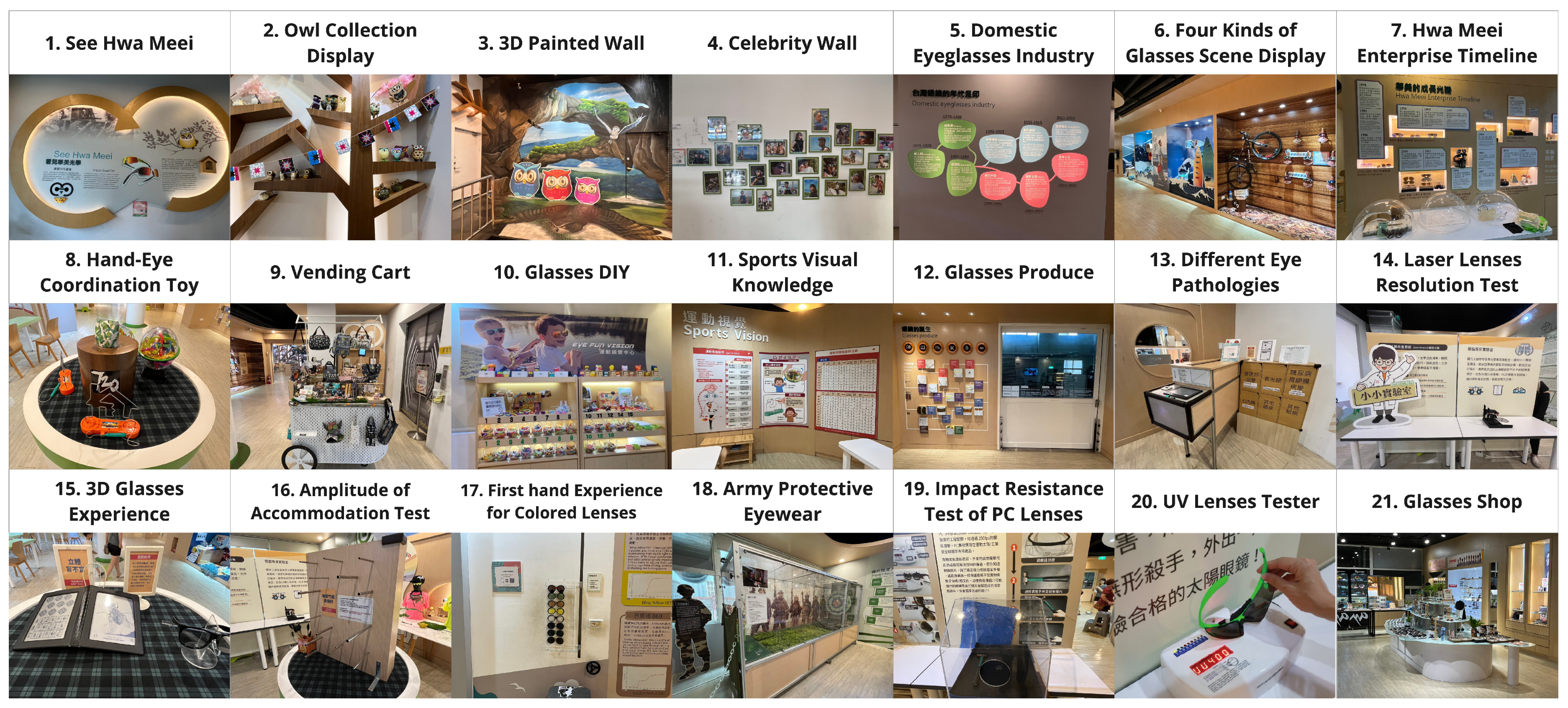
Figure A1. Subareas of Hwa Meei’s Factory Tour ‘Eye Fun Vision’.
Sustainability 17 10650 g0a1

Appendix B. Demographic Profile of Visitors

Table A1. Demographic Profile of Visitors who Participated in the Study.
   ItemsNumberPercent (%)
Visit TypeGroup with children7169.61
Group without children3130.39
Visit PurposeJust visit9492.16
Try or buy glasses32.94
Try DIY21.96
Prescription of eyeglasses10.98
Replace eyewear parts10.98
Learn about Hwa Meei10.98
ResidenceTainan4342.16
Kaohsiung1413.73
Taichung1110.78
Chiayi54.90
Yongkang54.90
Taoyuan54.90
Changhua43.92
Taipei32.94
Hsinchu21.96
Taitung21.96
New Taipei21.96
Yilan21.96
Pingtung21.96
Hualien10.98
USA10.98
Visit DurationLess than 30 min2322.55
30 min to 1 h4443.14
More than 1 h3534.31

Appendix C. Customer Journey Map of 45 Visitors
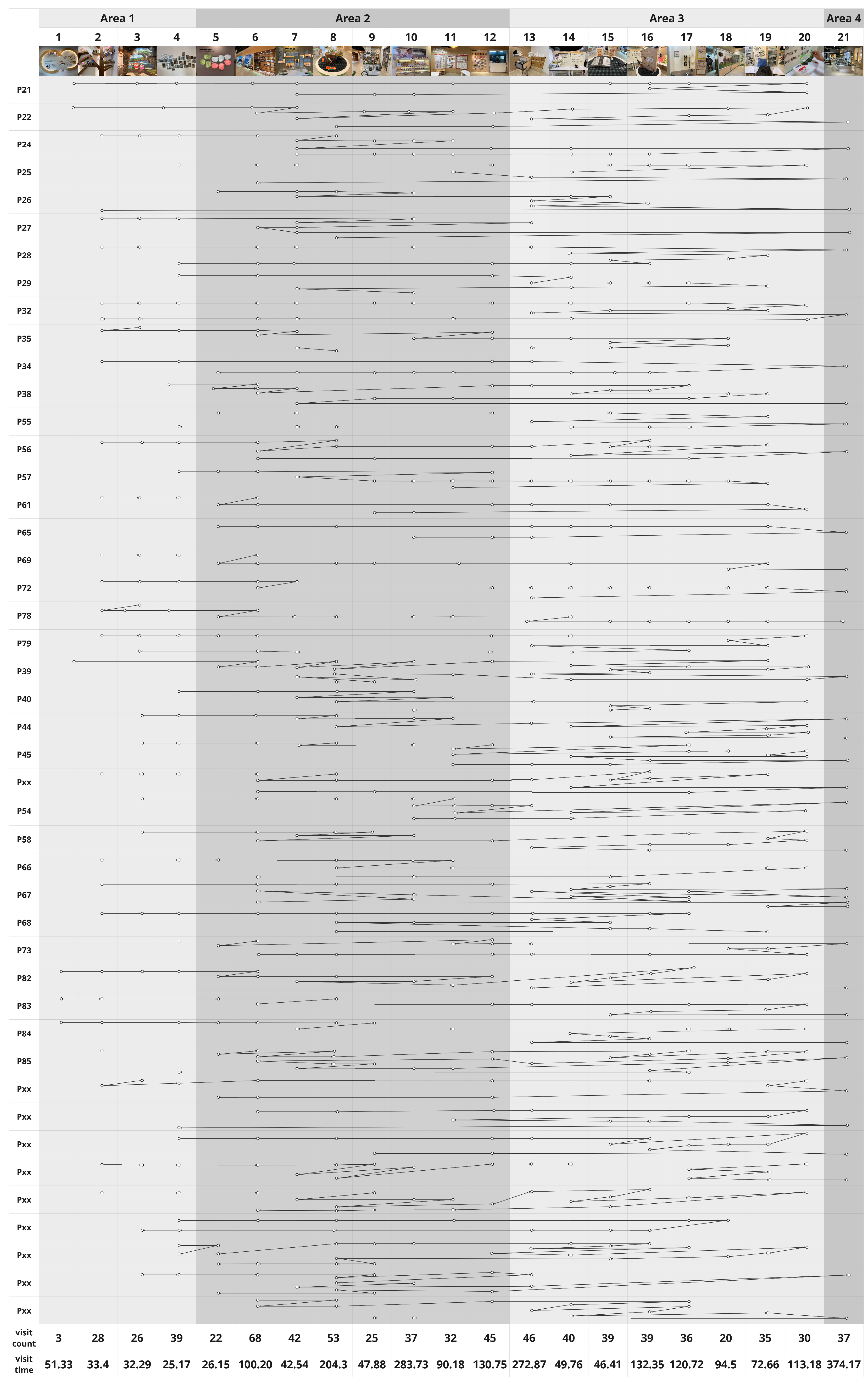
Figure A2. Comprehensive Customer Journey Map of 45 Participants across 21 Subareas.
Sustainability 17 10650 g0a2

Appendix D. Themes Identified in Visitor Feedback
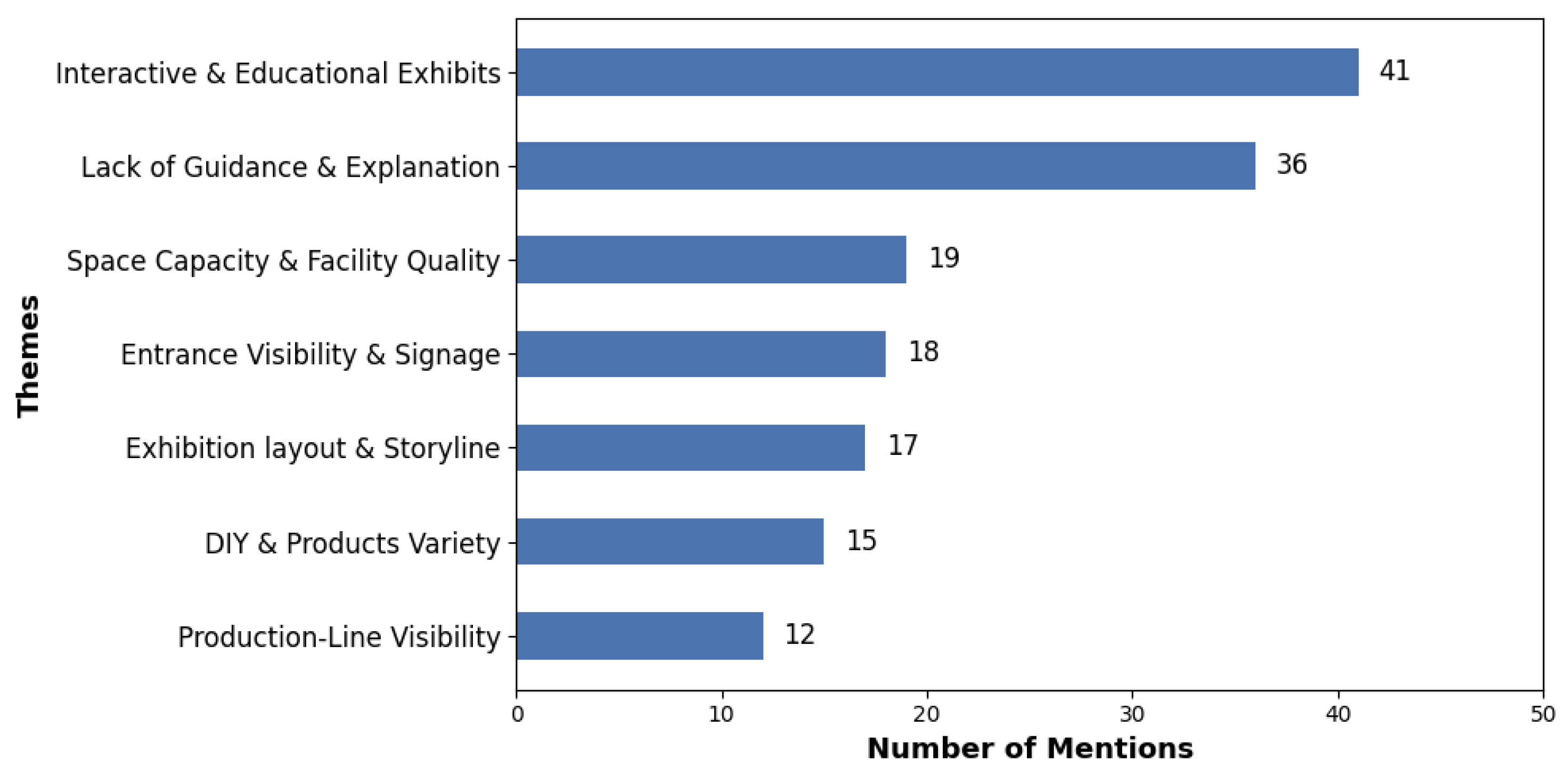
Figure A3. Themes Identified in Visitor Feedback.
Sustainability 17 10650 g0a3

References

  1. Frew, E.A. Industrial Tourism: A Conceptual and Empirical Analysis. Ph.D. Thesis, Victoria University, Melbourne, VIC, Australia, 2000. [Google Scholar]
  2. Otgaar, A. Industrial Tourism: Where the Public Meets the Private; Erasmus University Rotterdam, Erasmus Research Institute of Management (ERIM): Rotterdam, The Netherlands, 2010; Report No. EPS-2010-219-ORG. [Google Scholar]
  3. Montenegro, Z.; Marques, J.; Sousa, C. Industrial tourism as a factor of sustainability and competitiveness in operating industrial companies. Sustainability 2023, 15, 14243. [Google Scholar] [CrossRef]
  4. Sorochan, V. Definition of industrial tourism stages. Glob. Natl. Probl. Econ. 2014, 2, 60–61. [Google Scholar]
  5. Future Market Insights. Industrial Tourism Market Analysis by Experience Type, by End, by Tourist, by Booking Channel, and by Region—Forecast for 2025 to 2035. Available online: https://www.futuremarketinsights.com/reports/industrial-tourism-market (accessed on 29 October 2025).
  6. Nasuno, I. Measures to revitalize industrial tourism in the Nagoya and Chukyo areas of Japan using structural equation modeling. In Proceedings of the International Conference on Hospitality and Tourism Management, Online, 27–28 October 2022; Volume 7, pp. 1–12. [Google Scholar] [CrossRef]
  7. Kawamura, H. Service quality survey of technical visits for foreign visitors. J. Glob. Tour. Res. 2022, 7, 101–104. [Google Scholar] [CrossRef]
  8. Tai, H.I.; Liu, L.W.; Yang, L.S.; Hsieh, C.C. Strategic planning for Taiwanese industrial tourism parks themed on local characteristic industries. J. Environ. Manag. Tour. 2023, 14, 1942–1949. [Google Scholar] [CrossRef]
  9. Weng, H.Y.; Yang, C.H. Culture conservation and regeneration of traditional industries derived by tourism factory: Case study of Kwong Xi Paper Factory in Taiwan. Int. J. Humanit. Arts Soc. Sci. 2016, 2, 172–180. [Google Scholar] [CrossRef]
  10. Wang, H.; Fu, Y. A comparative study of industrial tourism of cities in China. Chin. Stud. 2019, 8, 13. [Google Scholar] [CrossRef]
  11. Kim, S.-T. The Future Development Directions of Industrial Tourism in Korea; Seoul Research Institute: Seoul, Republic of Korea, 2011. [Google Scholar]
  12. Korea Tourism Organization. Analysis of the Results of Industrial Tourism Project and Establishment of Activation Measures; Korea Tourism Organization: Wonju, Republic of Korea, 2015. [Google Scholar]
  13. Cho, H.-Y.; Park, J.-B.; Han, W.-M.; Yoo, G.-W. Status of Industrial Tourism Operations and Activation Measures; Korea Industrial Complex Corporation: Seoul, Republic of Korea, 2016. [Google Scholar]
  14. Mitchell, M.A.; Orwig, R.A. Consumer experience tourism and brand bonding. J. Prod. Brand Manag. 2002, 11, 30–41. [Google Scholar] [CrossRef]
  15. Eumseong County. Eumseong Tourism Factory. Available online: https://www.eumseong.go.kr/factory/index.do (accessed on 21 April 2023).
  16. Taiwan Tourism Factory Website. Available online: https://www.tourismfactory.tw/en/ (accessed on 21 April 2023).
  17. Danilov, V.J. A Planning Guide for Corporate Museums, Galleries, and Visitor Centers; Greenwood Press: Westport, CT, USA, 1992. [Google Scholar]
  18. Cudny, W.; Horňák, M. The tourist function in a car factory Audi Forum Ingolstadt example. Bull. Geogr. Socio-Econ. Ser. 2016, 33, 23–38. [Google Scholar] [CrossRef]
  19. Lehman, K.; Byrom, J.W. Corporate Museums in Japan: Institutionalising a Culture of Industry and Technology; University of Tasmania: Dynnyrne, Australia, 2007; Available online: https://hdl.handle.net/102.100.100/493191 (accessed on 29 October 2025).
  20. Piątkowska, K. The corporate museum: A new type of museum created as a component of marketing company. Int. J. Incl. Mus. 2014, 6, 29–37. [Google Scholar] [CrossRef]
  21. Ramshaw, G. Assembling heritage tourism: The BMW museum and factory tour. In Automobile Heritage and Tourism; Routledge: Abingdon, UK, 2016; pp. 65–75. [Google Scholar]
  22. Austin, T. Narrative Environments and Experience Design: Space as a Medium of Communication; Routledge: London, UK, 2020. [Google Scholar]
  23. Hillier, B.; Hanson, J.; Peponis, J. What Do We Mean by Building Function? E & FN Spon Ltd.: London, UK, 1984. [Google Scholar]
  24. Chow, H.W.; Ling, G.J.; Yen, I.Y.; Hwang, K.P. Building brand equity through industrial tourism. Asia Pac. Manag. Rev. 2017, 22, 70–79. [Google Scholar] [CrossRef]
  25. Rocha, J.; Azevedo, A. Visitor journey mapping: The Chocolate Factory Museum in Viana do Castelo (Portugal). In Proceedings of the 2nd International Conference on Tourism Research, Porto, Portugal, 14–15 March 2019; p. 407. [Google Scholar]
  26. Tsai, C.H.; Peng, Y.J.; Wu, H.H. Evaluating service process satisfaction of a tourism factory—Using Brands’ Health Museum as an example. In Proceedings of the 2012 6th International Conference on New Trends in Information Science, Service Science and Data Mining (ISSDM), Taipei, Taiwan, 25–27 October 2012; pp. 244–247. [Google Scholar]
  27. Yeh, T.M.; Chen, S.H.; Chen, T.F. The relationships among experiential marketing, service innovation, and customer satisfaction—A case study of tourism factories in Taiwan. Sustainability 2019, 11, 1041. [Google Scholar] [CrossRef]
  28. Hsieh, H.C.L.; Guo, J.A.; Luo, F.Y. Construction of experience aesthetics centered innovative experience design model for tourism factories—Example of industries in Douliu Industrial Park in Yunlin County. In Proceedings of the 2017 International Conference on Applied System Innovation (ICASI), Sapporo, Japan, 13–17 May 2017; pp. 1395–1398. [Google Scholar] [CrossRef]
  29. Hsieh-Ching, H.; Chun-Yu, H.; Yun-Ci, Z. Discussing the innovative experience design model of tourism factory: A case study on Shiroi Koibito Park in Hokkaido, Japan. Educ. Innov. Appl. 2018, 1, 45–48. [Google Scholar]
  30. Jia, Y. Analysis and suggestions on Chinese industrial tourism development. Int. Bus. Res. 2010, 3, 169. [Google Scholar] [CrossRef]
  31. Packer, J.; Ballantyne, R. Conceptualizing the visitor experience: A review of literature and development of a multifaceted model. Visit. Stud. 2016, 19, 128–143. [Google Scholar] [CrossRef]
  32. Gibson, J.J. The theory of affordances (1979). In The People, Place, and Space Reader; Routledge: New York, NY, USA, 2014; pp. 56–60. [Google Scholar] [CrossRef]
  33. Norman, D.A. The Psychology of Everyday Things; Basic Books: New York, NY, USA, 1988. [Google Scholar]
  34. Wilson, M. Six views of embodied cognition. Psychon. Bull. Rev. 2002, 9, 625–636. [Google Scholar] [CrossRef]
  35. Broadbent, G. Design in Architecture: Architecture and the Human Sciences; E & FN Spon Ltd.: London, UK, 1973. [Google Scholar]
  36. Lee, C.F. Tourist satisfaction with factory tour experience. Int. J. Cult. Tour. Hosp. Res. 2015, 9, 261–277. [Google Scholar] [CrossRef]
  37. Lin, C.L. The analysis of sustainable development strategies for industrial tourism based on IOA-NRM approach. J. Clean. Prod. 2019, 241, 118281. [Google Scholar] [CrossRef]
  38. Björk, B.C. A conceptual model of spaces, space boundaries and enclosing structures. Autom. Constr. 1992, 1, 193–214. [Google Scholar] [CrossRef]
  39. Peponis, J.; Dalton, R.C.; Wineman, J.; Dalton, N. Measuring the effects of layout upon visitors’ spatial behaviors in open plan exhibition settings. Environ. Plan. Plan. Des. 2004, 31, 453–473. [Google Scholar] [CrossRef]
  40. Shim, S.-H. A study on spatial zoning in museums. J. Archit. Inst. Korea Plan. Des. 2005, 21, 109–116. [Google Scholar]
  41. Tzortzi, K. Museum building design and exhibition layout. In Proceedings of the 6th International Space Syntax Symposium, Istanbul, Turkey, 12–15 June 2007; Volume 1215, p. 072. [Google Scholar]
  42. Yu, S.H. Development of brand exhibition hall design to improve corporate image—Focusing on the Samsung Delight renovation project. J. Korean Soc. Spat. Des. 2017, 12, 157–165. [Google Scholar]
  43. Yu, S.H. A study on corporate exhibition hall plans for brand revitalization. In Proceedings of the Korean Society of Interior Design Conference, Seoul, Republic of Korea, 28 May 2011; Volume 13, pp. 220–223. [Google Scholar]
  44. Dera, R.; Ridzqo, I.F. Spatial zoning analysis of zoo in urban area as a preliminary assessment for improving the education and recreation roles. In Proceedings of the IOP Conference Series: Earth and Environmental Science, The 20th Sustainable, Environment and Architecture, Online, 10 November 2020; IOP Publishing Ltd.: Bristol, UK, 2021; Volume 738, p. 012064. [Google Scholar] [CrossRef]
  45. Mateescu, M.; Kauffeld, S. Interactive external representations for knowledge-building processes and performance in dyads: An experimental study. Comput. Hum. Behav. Rep. 2024, 16, 100519. [Google Scholar] [CrossRef]
  46. Ruhanen-Hunter, L.M. Sustainable Tourism Planning: An Analysis of Queensland Local Tourism Destinations. Ph.D. Thesis, University of Queensland, St. Lucia, Australia, 2006. [Google Scholar] [CrossRef]
  47. Garrod, B.; Fyall, A.; Leask, A.; Reid, E. Engaging residents as stakeholders of the visitor attraction. Tour. Manag. 2012, 33, 1159–1173. [Google Scholar] [CrossRef]
  48. Zátori, A.; Smith, M.K.; Puczkó, L. Experience-involvement, memorability and authenticity: The service provider’s effect on tourist experience. Tour. Manag. 2018, 67, 111–126. [Google Scholar] [CrossRef]
  49. Nubani, L.; Puryear, A.; Kellom, K. Measuring the effect of visual exposure and saliency of museum exhibits on visitors’ level of contact and engagement. Behav. Sci. 2018, 8, 100. [Google Scholar] [CrossRef]
  50. Li, Y.; Huang, J.; Yang, L. From functional space to experience space: Applying space syntax analysis to a museum in China. Int. Rev. Spat. Plan. Sustain. Dev. 2020, 8, 86–99. [Google Scholar] [CrossRef]
  51. Yoon, H.; Yoon, H.J. Analysis of visitor movement patterns and behaviors in literary tourism using direct observation: A case study of the Kim Yu-Jeong Literature Village. J. Tour. Res. 2021, 35, 23–36. [Google Scholar] [CrossRef]
  52. Park, J.-K.; Hyung, S.-E.; Cho, K.-S. A proposal for regional design services to specialize regional tourism: Focusing on Jeonju Hanok Village. J. Ind. Des. Stud. 2013, 7, 39–48. [Google Scholar]
  53. Lim, C.-J.; Jung, S.-U.; Park, M.-H. A study on museum spatial composition based on exhibition methods and visitor behavior analysis. J. Korean Inst. Inter. Des. 2003, 39, 108–115. [Google Scholar]
  54. Hilda, A. Movements and Behaviors in Exhibition Spaces: An Exploratory Case Study in a Science Center. Master’s Thesis, Chalmers University of Technology, Gothenburg, Sweden, 2023. [Google Scholar]
  55. Choi, J.H. Circulation Planning and Visitor Behavior Characteristics in Museum Exhibition Spaces; Dongrim Publishing: Seoul, Republic of Korea, 2008; Available online: https://product.kyobobook.co.kr/detail/S000000764694 (accessed on 1 September 2025).
  56. Nam, Y.; Ha, K.S. Ecotourism service design process and methodology. J. Korea Contents Assoc. 2019, 19, 376–387. [Google Scholar] [CrossRef]
  57. Ponsignon, F.; Holmqvist, J. A framework for designing visitor experiences in branded tourist attractions: Insights from a luxury Cognac brand. J. Vacat. Mark. 2023, 31, 240–253. [Google Scholar] [CrossRef]
  58. Goulding, C. The museum environment and the visitor experience. Eur. J. Mark. 2000, 34, 261–278. [Google Scholar] [CrossRef]
  59. Fyall, A.; Garrod, B.; Leask, A.; Wanhill, S. Managing Visitor Attractions; Routledge: London, UK, 2022. [Google Scholar]
  60. Sathyanarayanan, H.; Jiang, Y.; Caldas, L.; Cheshire, C. Visual engagement and comfort perceptions in pediatric patient rooms: A virtual reality and eye-tracking study using photographic stimuli. Comput. Hum. Behav. Rep. 2025, 18, 100636. [Google Scholar] [CrossRef]
  61. Linstone, H.A.; Turoff, M. The Delphi Method: Techniques and Applications; Addison-Wesley: Reading, MA, USA, 1976. [Google Scholar]
  62. Delbecq, A.L.; Van de Ven, A.H.; Gustafson, D.H. Group Techniques for Program Planning: A Guide to Nominal Group and Delphi Processes; Scott, Foresman and Company: Glenview, IL, USA, 1975. [Google Scholar]
  63. Lawshe, C.H. A quantitative approach to content validity. Pers. Psychol. 1975, 28, 563–575. [Google Scholar] [CrossRef]
  64. McDonald, S. Studying actions in context: A qualitative shadowing method for organizational research. Qual. Res. 2005, 5, 455–473. [Google Scholar] [CrossRef]
  65. Meunier, D.; Vásquez, C. On shadowing the hybrid character of actions: A communicational approach. Commun. Methods Meas. 2008, 2, 167–192. [Google Scholar] [CrossRef]
  66. Klein, H.J. Tracking visitor circulation in museum settings. Environ. Behav. 1993, 25, 782–800. [Google Scholar] [CrossRef]
  67. Lanir, J.; Kuflik, T.; Sheidin, J.; Yavin, N.; Leiderman, K.; Segal, M. Visualizing museum visitors’ behavior: Where do they go and what do they do there? Pers. Ubiquitous Comput. 2017, 21, 313–326. [Google Scholar] [CrossRef]
  68. Sirris, S.; Lindheim, T.; Askeland, H. Observation and shadowing: Two methods to research values and values work in organisations and leadership. In Researching Values: Methodological Approaches for Understanding Values Work in Organisations and Leadership; Springer International Publishing: Cham, Switzerland, 2022; pp. 133–151. [Google Scholar] [CrossRef]
  69. Yalowitz, S.S.; Bronnenkant, K. Timing and tracking: Unlocking visitor behavior. Visit. Stud. 2009, 12, 47–64. [Google Scholar] [CrossRef]
  70. Yum, J.; Hung, Y.H.; Lee, J.H. Optimizing Tourism Factory Design: A Strategic Framework for Enhancing Visitor Experience Through Spatial Zoning and Visual Graph Analysis. In Proceedings of the DS 136: Asia Design and Innovation Conference (ADIC) 2024, Shanghai, China, 5–6 December 2024; pp. 379–389. [Google Scholar]
  71. Gunnsteinsson, Á. Analysis of an Assembly Process of Electric Detonators with Application of Lean Manufacturing. Master’s Thesis, Royal School of Technology, Stockholm, Sweden, 2011. [Google Scholar]
  72. Joffe, H. Thematic analysis. In Qualitative Research Methods in Mental Health and Psychotherapy: A Guide for Students and Practitioners; Wiley-Blackwell: Chichester, UK, 2011; pp. 209–223. [Google Scholar]
  73. Lu, Y.; Zimring, C. Can intensive care staff see their patients? An improved visibility analysis methodology. Environ. Behav. 2012, 44, 861–876. [Google Scholar] [CrossRef]
  74. Turner, A. Depthmap 4: A Researcher’s Handbook; Bartlett School of Graduate Studies, University College London: London, UK, 2004. [Google Scholar]
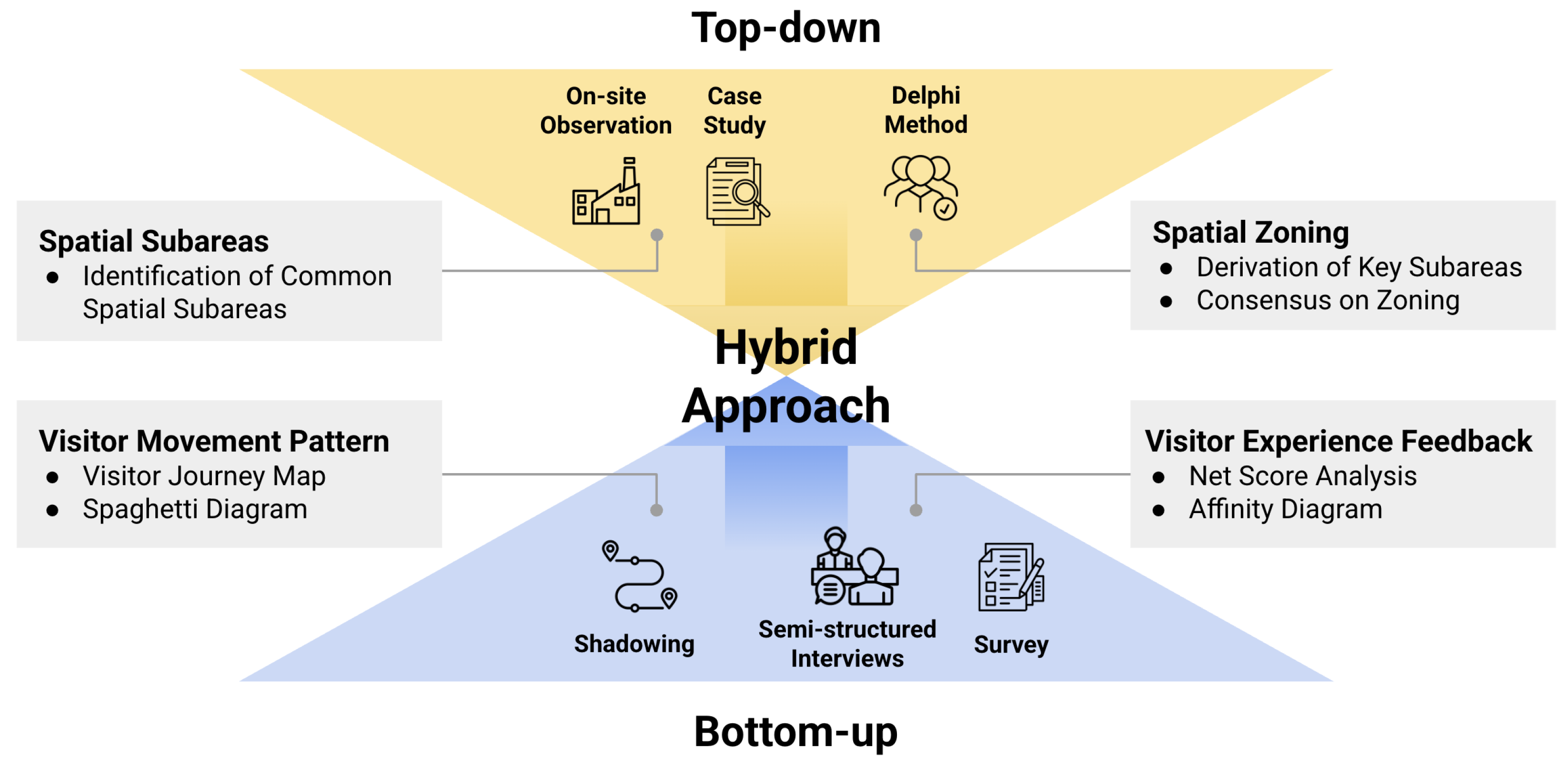
Figure 1. Hybrid Approach for Spatial and Experiential Design in Factory Tour.
Sustainability 17 10650 g001
Figure 2. Delphi Method Process for Key Subareas and Zoning.
Sustainability 17 10650 g002
Figure 3. Spatial Layout of 21 Subareas in Eye Fun Vision.
Sustainability 17 10650 g003
Figure 4. Hierarchical Structure of Factory Tour Zones and Subareas. * Flexible placement outside the fixed sequence. ** Newly added in the revised layout.
Sustainability 17 10650 g004
Figure 5. Visitor Journey Map with Visit Count and Dwell Time.
Sustainability 17 10650 g005
Figure 6. Spaghetti Diagram of Visitor Movement Across 21 Subareas.
Sustainability 17 10650 g006
Figure 7. (a) Glasses DIY; (b) Hand–Eye Coordination Toy; (c) Firsthand Experience for Colored Lenses.
Sustainability 17 10650 g007
Figure 8. (a) Army Protective Eyewear; (b) Different Eye Pathologies; (c) See Hwa Meei.
Sustainability 17 10650 g008
Figure 9. Initial Spatial Layout Before Zoning and Sequencing.
Sustainability 17 10650 g009
Figure 10. (a) Visual Integration and (b) Connectivity Analysis.
Sustainability 17 10650 g010
Figure 11. (a) Clustering Coefficient and (b) Targeted Visibility Analysis.
Sustainability 17 10650 g011
Figure 12. Optimized Spatial Layout Post-Zoning and Sequencing.
Sustainability 17 10650 g012
Figure 13. Service Blueprint for Eye Fun Vision. * Flexible placement outside the fixed sequence. ** Newly added in the revised layout.
Sustainability 17 10650 g013
Table 1. The Minimum Threshold for CVR Based on the Number of Respondents.
N567891011121314152025303540
Min.0.990.990.990.750.780.620.590.560.540.510.490.420.370.330.310.29
Table 2. Example Format for the Shadowing Data.
NumberSubareaVisit PathVisit TimeBehaviorTotal Time
1subarea 2130 secObserving35 min
Table 3. Subareas Composition in Exemplary Factory Tours.
City / CountryCompanySectorSubareas
Osan, Republic of KoreaAmore FactoryCosmeticsIntroduction of Founder/CEO, Photo Zone, Company History, Company Product History, DIY, Manufacturing Equipment, Manufacturing Process
Tainan, TaiwanEminent Luggage Tourist FactoryLuggagePhoto Zone, Introduction of Founder/CEO, Company History, Company Product History, Manufacturing Equipment, Manufacturing Process, Company Product Line, Quiz, DIY, Cafe, Goods Shop
Sabae, JapanMegane MuseumEyewearIntroduction of Founder/CEO, Company History, Company Product History, Entire Product History, Manufacturing Equipment, DIY, Cafe, Goods Shop, Company Product Line
Osaka, JapanShiseido FactoryCosmeticsManufacturing Process, Company Product History, Hands-on Activity, DIY, Company History, Photo Zone, Manufacturing Equipment, Manufacturing Process, Company Product Line
Oberkochen, GermanyZEISS MuseumEyewearCompany History, Company Product History, Goods Shop, Hands-on Activity, Company Product Line, Photo Zone
Lake Forest, USAOakley Factory TourEyewearIntroduction of Founder/CEO, Company History, Hands-on Activity, Manufacturing Process, Company Product History, Goods Shop, Company Product Line, Cafe
Table 4. Ranking and Net Scores of 21 Subareas based on Visitor Feedback.
RankSubareaNumber of LikesNumber of DislikesNet Score
11041635
28441529
317341123
4324717
52018810
61619109
719972
8211101
921810−2
10151113−2
1161719−2
12759−4
13121117−6
1411314−11
154718−11
169720−13
175316−13
1814216−14
191217−15
20132238−16
2118725−18
Table 5. Spatial Zoning and Subareas Configuration.
ZoneKey SubareasSubareas of Eye Fun VisionOrder
Heritage·HistoryCompany Founding Background & MVC; Company History; Company Product HistorySee Hwa Meei; Domestic Eyeglasses Industry; Hwa Meei Enterprise Timeline2
Manufacture·ProductManufacturing Process; Company Product Line ArchiveCelebrity Wall; Four Types of Eyeglasses Display; Glasses Produce3
ExperienceHands-on & Interactive Activity; DIY WorkshopGlasses DIY; Hand Eye Coordination Toy; Different Eye Pathologies; Sports Vision; Firsthand Experiences for Colored Lenses; 3D Glasses Experience; Amplitude of Accommodation Testing; Laser Lens Resolution Test; UV Lens Tester; Impact Resistance Test of PC Lenses; Army Protective Eyewear4
ConvenienceGoods Shop; CafeGlasses Shop; Vending Cart5
Information Desk **1
Photo Zone *Owl Collection Display; 3D Painted Wall*
* Flexible placement outside the fixed sequence. ** Newly added in the revised layout.
Disclaimer/Publisher’s Note: The statements, opinions and data contained in all publications are solely those of the individual author(s) and contributor(s) and not of MDPI and/or the editor(s). MDPI and/or the editor(s) disclaim responsibility for any injury to people or property resulting from any ideas, methods, instructions or products referred to in the content.