


Abstract
Climate change is intensifying droughts and threatening water security worldwide, particularly in arid and semi-arid regions. Israel’s innovative response has been to integrate large-scale desalination into its water supply and climate resilience strategy, recently constructing the Reverse Water Carrier, a pioneering project that conveys desalinated seawater from the Mediterranean inland to Lake Kinneret (Sea of Galilee). This study examines the objectives, rationale, and feasibility of this system as a model for climate-resilient water management. Using a qualitative case study approach, it evaluates the project across four dimensions: water security, environmental sustainability, economic feasibility and regional cooperation. Data were drawn from policy documents, expert interviews, and government reports. The analysis finds that replenishing the Kinneret with surplus desalinated water enhances national water reliability, reduces salinity, stabilizes agricultural production, and provides a critical emergency reserve, while introducing manageable energy and ecological trade-offs. Although long-term sustainability will depend on continued efficiency improvements and adaptive management, Israel’s experience demonstrates how inter-basin desalination transfers can strengthen water security and offer a replicable framework for other regions confronting climate-induced scarcity.
1. Introduction
Climate change has significantly intensified the rate of “flash droughts” worldwide, amplified the magnitude of evapotranspiration and increased precipitation deficit [1]. Several generations of climate models consistently project a significant rise in drought intensity, frequency, and duration [2]. From the southwest of the US [3] to the southwest of China [4], in the absence of dramatic climate adaptation efforts, acute water shortages and lake shrinkage are expected to become more common globally. For areas with access to seawater or large quantities of brackish groundwater, desalination provides a cost-effective solution to the rising demand for drinking water created by growing populations and increased consumption amid dwindling supply [5]. Indeed, in many countries, seawater desalination is emerging as the single greatest component of local and regional efforts to build climate resilience in the water sector. As of 2022, there were 21,000 operating desalination plants worldwide, with the number increasing by 6 to 12 percent ever year [6].
The problem is that inland countries and many parts of littoral nations do not lie contiguous to the sea. Ostensibly, they face a significant structural disadvantage due to their inability to integrate desalinated water into a climate resilience strategy. Countries without coastlines, like many in sub-Saharan Africa or Central Asia, are thus excluded from direct use of this technology. Even for coastal countries, only communities located near desalination plants benefit directly, leaving interior populations reliant on increasingly depleted water sources like rivers and groundwater. This is part of the reason that more than half of the world’s large natural lakes and reservoirs have experienced climate-driven volume loss over the past three decades [7], while increased temperatures and evaporation rates have increased salinity in lakes around the world [8]. This geographic limitation has critical implications for water resilience and equity, especially as climate change intensifies water scarcity in some places and increases rainfall elsewhere [9].
Inter-basin water transfers: The conventional wisdom amongst water managers in much of the world is that transferring water across watersheds to inland regions or recharging depleted surface water bodies with water from another basin poses major logistical, financial and ethical challenges [10]. Many experts question the sustainability of such initiatives [11]. Long-distance water conveyance requires extensive pipeline infrastructure, energy-intensive pumping stations and often complex regulatory coordination across geographical boundaries, raising questions of their cost effectiveness [12]. Logistically, moving desalinated seawater into inland basins can disrupt hydrological balances and may require crossing mountain ranges or politically sensitive territories. Environmentally, there are concerns about disrupted and reduced flow regimes [13] that can alter sediment deposition [14], drawndown water resources as well as degrade biodiversity and habitat quality in contributing basins or destroy them altogether [15]. There are also apprehensions about the potential to transfer pollutants or invasive species [16]. As climate change reduces the reliability of hydrological patterns [17], it can be argued that investing in inter-basin infrastructure may be a “fool’s errand” [18].
European water policy makers have taken a particularly jaundiced view towards inter-basin water transfer, unless all local alternatives are exhausted. Implicit to their perspective is a “zero sum game” assumption that any gains in receiving basins will be enjoyed at the expense of hydrological decimation in water donor basins. Article 4(1)a of the European Water Framework Directive proscribes any transfer that “causes deterioration in any water body” or that could “worsen status in the donor or receiving basins” [19]. Annex II and V of the Directive require arduous ecological assessments of water bodies, making approval of large-scale transfers difficult in practice, even when they do not endanger hydrological integrity or ecological health.
There is of course a contrasting position. Many hydrologists and water managers argue that inter-basin transfers are actually critical for stabilizing water supply in water scarce regions. They have no shortage of empirical examples: globally, one estimate suggests that 500 billion m3—about 1.2% of all water resources on the planet—are already redistributed via inter-basin transfers [20]. In parts of the US, many states’ policies are predicated on the importance (and legitimacy) of sharing water resources, sometimes at great distances. In an era of ever more frequent climate-driven droughts and precipitation changes, asymmetries in water access within countries or regions are becoming more acute. Stress Relief Index studies show conclusively that inter-basin transfers can significantly water stressed regions. For instance, a recent evaluation of some 200-American inter-basin transfers relying on “Stress Relief Index” found that less than a third might be considered inefficient, with the benefits amongst most recipient communities growing more compelling as climate change exacerbates shortages [21].
Historic Israeli Policy Regarding Inter-basin Water Transfers: From its inception Israel always prioritized the need to overcome pervasive scarcity of water resources in peripheral, dryland regions [22]. Water policy was designed to correct the inherent asymmetry in water availability between the country’s northern, relatively temperate zones, where rainfall averages 500–800 mm/year—and the semi-arid and arid southlands, where annual precipitation is 90 to 95 percent lower. Inter-basin transfers were essentially baked into the DNA of Israel’s water strategy from the outset: For over sixty years, water has been conveyed at considerable expense across the country to guarantee equal access to irrigation water. In what has been called “hydro-Socialism”, Israel’s water policies ensured that southern citizens and farmers in dryland communities not only had access to the same amounts of water as their fellow countrymen living in rainier regions, but also enjoyed prices that were slightly higher [23]. In 2017, Amendment 27 to Israel’s Water Law formalized this modest disparity [24], so that in practice today, an 18% difference separates the price of water for farmers living adjacent to fresh water sources (53 cents for a cubic of water) and 68 cents charged to farmers to whom water is transported [25]. This also means that the price of water paid by Israeli farmers today, is amongst the highest in the world.
The steady increase in agricultural water price is partly due to the fact that over the years farming became less central to the national economy, notwithstanding its role in contributing to food security [26]. Even so, today well over half of the calories consumed in Israel come from imported food [27]. By the start of the 21st century, urban and domestic users replaced irrigation as the largest consumers of Israel’s freshwater [28]. Agricultural irrigation still uses about half of the total water supplied, but the majority of Israel’s agricultural irrigation water now comes from recycled municipal sewage [29]. At the same time, the country’s demographic growth continued relentlessly, at an annual rate of 2%, with population size increasing ten-fold, from 1 million in 1950 to 10 million today [30]. To meet this mounting demand, beginning in 2002, a network of desalination plants began to operate along the country’s Mediterranean coast, transforming the country’s water management strategy and significantly reducing the intermittent scarcity dynamics that informed the country’s hydrological history [31]. Within a decade, desalination provided at least 40% of total water supplied—and 80% of domestic drinking water [32,33]. At the same time, climate-driven changes in precipitation have exacerbated the condition of Israel’s water resources and led to the recognition that more dramatic adaptive measures were necessary [34]. This article evaluates the first such major intervention.
The Reverse Water Carrier is a new, major infrastructure initiative in Israel, based on inter-basin transfers of desalinated water from the Mediterranean Sea to Lake Kinneret (the Sea of Galilee). The project challenges many of the “zero-sum game” assumptions behind policies that discourage inter-basin transfers. To begin with, taking water from the sea means that “donor basins” are unaffected hydrologically. Nonetheless, while many jurisdictions do not a priori prohibit inter-basin desalination transfers, the cost of delivered water is often thought to be prohibitively high for inland users, limiting the perceived economic feasibility of large-scale water redistribution and reservoir restoration. It is widely assumed that while desalination offers a solution for water scarcity in coastal regions, it remains spatially and economically constrained by geography. Recent experience in Israel suggests that this is not necessarily the case.
The decision to establish a Reverse Water Carrier was driven by two primary objectives: utilizing the seasonal surplus of desalinated water; and reestablishing the status of Lake Kinneret as a national reservoir. In retrospect, its construction constitutes a turning point for Israeli water management, reflecting a sober acknowledgement that rainfall reduction and the adverse hydrological impacts of climate change constitute the “new normal”. The project can also be seen as the country’s first significant investment in water infrastructure designed to strengthen climate resilience. The Reverse Water Carrier offers an important case study of what dryland countries can do to maintain the hydrological and ecological integrity of lakes through inter-basin transfer, while ensuring a steady water supply to growing populations in the face of global warming and increasing water per capita demand.
The first stage of the project is now largely completed and is about to begin full operation. Assessing its likely impacts has value not only for understanding Israel’s dynamic hydrological circumstances, but for water management in general. Many places that face mounting water scarcity due to climate change are not located by the coast and lack access to unlimited quantities of seawater. Linking landlocked regions to desalination networks offers a possible solution for regions facing acute water shortages. The article considers whether Israel’s experience in transporting desalinated water across basins constitutes a scalable model for managers in water scarce regions and in basins that do not have immediate access to desalinated water
After a brief description of the research methodology, the case study begins by describing the evolution of Israel’s water policy, particularly regarding Lake Kinneret’s historic role as a “national reservoir”, a function that ultimately led to the establishment of the Reverse Carrier. It then presents the logistical and engineering challenges that emerged during its planning and construction phases. The central section of the article evaluates the project according to a range of criteria: water security, environmental sustainability; economic feasibility; and geopolitical (water diplomacy) opportunities. Early indications suggest that utilizing desalinated water to address shortages and replenish reservoirs in distant, water-scarce regions can be a cost-effective response to climate-induced reductions in precipitation, averting traditional ecological and hydrological concerns about inter-basin water transfers.
2. Methodology
This study adopts a qualitative case study design [35,36] combining documentary analysis, publicly available quantitative datasets, and semi-structured expert interviews. The approach follows widely used protocols in political ecology [37] and environmental management research [38] where multiple types of evidence are integrated to capture both formal policy design and implementation while evaluating (and where appropriate, projecting) performance and effectiveness according to predetermined criteria [39]. First, a documentary corpus was assembled that included national and municipal policy documents from Israel’s Water Authority, the water industry (the Mekorot Utility), government decisions, civil society position papers and peer-reviewed academic studies published between 2017 and 2025. Publicly accessible datasets from Israel’s Central Bureau of Statistics (In Hebrew) involving Israel’s water and sewage systems were also analyzed [40,41]. These materials were selected to reflect both the official and unofficial descriptions of the new water infrastructure, relevant and reliable data to allow for independent assessments of performance as well as subjective perspectives of relevant players and key stakeholders.
Second, the study evaluated the case along four analytical dimensions: water security, environmental sustainability; economic feasibility; and geopolitical (water diplomacy) opportunities. These dimensions were adapted from established evaluation frameworks for evaluation of water management projects and limnology, especially in terms of their sustainability in the face of climate change [42,43,44,45]. In this study, environmental sustainability refers to the capacity of the Reverse Water Carrier project to maintain or enhance the ecological integrity of Lake Kinneret and its watershed over time, as reflected in indicators such as water quality, salinity levels, biodiversity, and the stability of aquatic and riparian ecosystems. Economic feasibility refers to the extent to which the Reverse Water Carrier project can be justified and sustained within Israel’s closed water economy, given its costs, financing mechanisms, and anticipated long-term benefits to national water security and economic stability. In other words, does it represent a financially sustainable and socially beneficial investment in Israel’s national water system? Each dimension was operationalized through a set of guiding questions applied to the collected documents, interviews and water quality data.
Third, triangulation was used to increase the robustness and auditability of inferences [46,47]. Key claims or trends identified in one source (e.g., a government report) were cross-checked against alternative sources (datasets, independent evaluations, or interview testimony). Semi-structured interviews with some 10 practitioners and experts directly involved with the Reverse Carrier project—including senior government officials (including the former Minister of Energy and Water), NGO leaders, and water industry representatives—were conducted between 10 June and 10 August 2025. Interviews followed a common protocol [48] but allowed informants to elaborate on unexpected themes; transcripts were coded using thematic analysis. When discrepancies arose between official documents and experiential accounts, the analysis privileged contemporaneous primary sources, including a comprehensive review of Israeli media coverage regarding the Reverse Carrier and Israel’s water management challenges. This approach allowed for confirmation through the secondary literature Using such a multi-source strategy, common in environmental policy case studies [49,50] allows for presenting the rational behind reasoning and conclusions, making each inference auditable and replicable, while acknowledging the interpretive nature of qualitative policy evaluation. Overall, this methodological approach aligns with established practices in conducting case studies on water management and sustainability, emphasizing the importance of integrating multiple data sources and divers perspectives to elucidate the intricacies of real-world water policy challenges.
3. A Very Brief History of Israeli Water Management
The Reverse Water Carrier must be understood as part of the steady evolution in Israel’s water management policies. Even before the state was established, Israel’s founding Prime Minister, David Ben Gurion espoused natural resource polices [51] that reflected his Socialist inclinations [52]. Notwithstanding Israel’s diminutive dimensions, the country’s rain gradient is enormously steep: from the hyper-arid south to the relatively rainy Galilee in the north (with a contrast of 23 mm average rainfall per year versus 694 mm [53]). Ben Gurion saw the country’s asymmetrical hydrological dynamics as part of an overall national challenge to ensure equal opportunity: he believed that people living in the desert southlands, were entitled to the same access to water as citizens who happen to enjoy the “abundant rains of the north” which drained, often unused, into the Kinneret, before spilling into the southern Jordan River [54].
Lake Kinneret is the lowest fresh water body in the world, lying roughly 213 m below sea level. Transforming it into a national reservoir required massive pumping, the likes of which the Middle East had never seen: lifting billions of liters of water 250 m uphill where it could be treated and distributed throughout the country. Realizing this vision demanded extraordinary government leadership, ingenuity, resource prioritization and pricing subsidies [55].
Early years of Israeli Water Management: To make Ben Gurion’s aspirational principle of “hydrological equality” operational, a National Water Carrier had to be built capable of carrying copious quantities of water across the country: from the Kinneret to the water scarce center and south of the country. In 1956, following six years of detailed planning, the Israeli government granted its final approval for construction. Mekorot, the national water utility, was entrusted with implementing the project. It took the company a full eight years to overcome a range of technical obstacles [56]. Money was not one of them. Over the course of nearly a decade, the National Carrier project absorbed between 3 and 5% of the new nation’s gross capital formation [57], approximately 80% of Israel’s total investment in water infrastructure [58].
In June 1964, the roaring pumps were activated, propelling vast quantities of water up the slopes of the central Galilee hills to a newly fashioned Eshkol reservoir, named after the finance minister who found the budget to pay the bills [59]. The Eshkol reservoir became home to Mekorot’s central water filtration plant, water quality laboratories and more recently an interactive company visiting center. There the water is treated and sent southbound via a 130 km long national network based on 108-inch steel and concrete pipes, canals and tunnels blasted through mountains and rocky terrain—the longest of which, the Menashe tunnel, stretches for 6.5 km [56]. The water only flowed south, along the rain gradient.
For some fifty years, this paradigm, rooted in inter-basin water transfer, informed Israeli water policy. The strategy enabled Israeli farmers nationwide to dramatically expand their yields and become operate far efficiently [60]: during the second half of the twentieth century, agricultural production grew by a factor of 21.2—while irrigation water use increased only fourfold [61]. During these decades, Israel’s population increased fivefold [62], and there was a dramatic increase in the country’s standard of living that led to a rise in per capita water consumption [63]. Over time, water usage in the municipal and industrial sector rose far faster than in agriculture [64]. A foreseeable result of the heightened demand for water resources was ever-intensive pumping from Lake Kinneret.
Hydrologists in the 1960s already noted with concern that there would be water quality consequences for excessively drawing down the lake’s water levels. Accordingly, they set a “Red Line” for the lake at 213.0 m below sea level, at which point pumping should stop. Extracting water below this level risks exposure to subterranean saline streams and brackish water, significantly increasing salinity in the lake, along with potential harm to shoreline ecosystems [65]. Years later, the Water Authority established a “Black Line”, set even lower than the “Red Line”, at −214.87 m. Concerns about irreversible ecological havoc and damage to the pumping infrastructure of the national carrier grid means that any withdrawal below this level is absolutely prohibited, even in cases of emergency [66].
It was during these year that Israel turned its attention to wastewater reuse. Effluents used in irrigation tend to be relatively saline. For instance, supplying naturally saline Kinneret water for domestic use generates effluents with a salinity of 350–400 mg/L. When this water is recycled, it has even higher concentrations of NaCl. Over time, irrigating with such salty reused wastewater has proven highly destructive to soil fertility [67]. But even after recycling most of the country’s sewage and the chronic overpumping of groundwater, national water shortages during dry years became more acute. By the 1990s, the mismanagement of Israel’s water resources emerged as a major national scandal, after publication of a special report by the government’s State Comptroller who slammed the massive “deficits” in water levels, which endangered Israel’s water resources [68]. It became clear that a fundamental change in water policy was required. Demand management, irrigation efficiency and raising the price of water for farmers was part of the solution [69]. But expanding supply was also considered imperative.
The Desalination Era: Already, the price of desalinating seawater had begun to drop precipitously, changing the prevailing economic calculus: today a thousand liters of water (one cubic meter) can be desalinized for less than 60 cents. When one calculates for 35% inflation over the past twenty years, this represents a considerable drop in price relative to the initial 57 cent/m3 price of desalination production [70]. Half of the price of desalinated water pays for the requisite energy expenses and half covers the initial capital costs. The cost reduction is due to a series of converging factors including improved membrane efficiency for reverse osmosis processes, increase in competition between equipment suppliers, and the lower energy demand associated with greater economies of scale (and heat recycling) attained in larger desal facilities [71]. Many of these technological innovations were developed by Israeli researchers [72].
After several years of technical planning, in March 1999, the Water Commission’s engineers brought their program to the Israeli government for approval. The government decision instructed the relevant ministers to:
“carry out the necessary actions for the early preparation of the economy for seawater desalination, including: promoting the general and detailed planning for the location of desalination facilities; integrating the desalination facilities into the water supply system; reserving land for desalination facilities; and approving the national outline plan for desalination… Tender documents shall be prepared for the construction of a desalination facility using a finance-build-operate method involving private entrepreneurs.”[73]
Beyond the technological transformation, an institutional makeover was also deemed essential. Efficient management of Israel’s water resources suffered from the arcane division of authorities between a range of disparate government agencies, who frequently did not work in harmony. The Israel Water Commission, the main agency responsible for overseeing water supply, was replaced in 2007 with a more independent and powerful Water Authority. The Authority was given the responsibility of ensuring the quantity and quality of the country’s water supply and given the legal authorities to do so [74]. Other players remained relevant to Israel’s water management system: Mekorot, the national water utility was founded in 1937, a full decade before Israel’s establishment [75]. The public company established its dominant role in water delivery without delay. Mekorot continues to supply about two-thirds of the country’s water and run key wastewater facilities, as well as the National Water Carrier. Municipalities and the municipal water and sewage companies they own, also play an important role in water delivery as well as collecting and treating sewage [76].
In the face of several multi-year drought cycles, the Water Authority did not lose any time in embracing an entirely new approach to ensuring water supply [77]. The time had come to “turn to the sea” [78]. Starting in 2005, one by one, five major desalination facilities were quickly built along Israel’s Mediterranean coasts. Table 1 details the location of the desalination facility, amount of desalinated water annually produced and the date of the plant’s establishment, along with the significant expansion anticipated in the near future.
Table 1.
Summary of Primary Seawater Desalination Facilities in Israel (2005–2033).
Fears by environmentalists about adverse ecological consequences were proven to be largely unfounded [79], with the exception of copious quantities of green house gas emissions associated with the high-energy, reverse osmosis desalination process [80]. As a result, Israel’s environmental organizations typically do not oppose expanding Israel’s desalination infrastructure. Figure 1 depicts the relevant contribution of different water sources to Israel’s water system over the past thirty years. The transition to desalinated water for municipal use coincided with a steady increase in both the quality and quantity of effluents available for irrigation [81]. No longer were the center and south of the country dependent on water from the precipitation-rich north for their water resources [82].
Figure 1.
Sources of Water in Israel’s Water Systems. Source: Data taken from Israel Central Bureau of Statistics, 2025 (https://www.cbs.gov.il/he/publications/doclib/2022/23.shnatonwaterandsewage/st23_06.xls, accessed on 3 November 2025).
This transition also meant that for the first time in history, Israeli water supply was not dependent on the vicissitudes of the local weather and distribution became extremely reliable. One scholar even identified a “moral hazard” phenomenon emerging amongst citizens, who began to consume water more liberally after years of being parsimonious due to relentless education campaigns [83]. With a modest surplus, even during dry years, Israel’s natural water resources could once again make a meaningful contribution—not only to agricultural production, but also to fresh water ecosystems, biodiversity restoration and recreational activities. At this stage in the country’s water management history, global warming was not yet recognized as a factor affecting water supply. But this was soon to change.
4. The Construction of a Reverse Water Carrier
Yuval Steinitz, by local standards, had an unusually long tenure as Israel’s Minister of Energy and Water, from 2015 until 2021. As a former professor of philosophy, he was among the more intellectual national politicians and closely followed global trends and concerns in the area of climate change. In retrospect, he frames the Reverse Water Carrier project in this context:
“The reverse carrier was my idea originally. There were projections that climate change would lead to 3–4 years of consecutive droughts. I looked at our Lake Kinneret and realized that if we did not act, it could end up like Lake Chad or the Aral Sea. I said to myself: ‘the Kinneret is our national reservoir. Our population is growing. Desalination could be seriously disabled due to a military attack or to a pollution event. In such circumstances, the country’s emergency reservoir has to be the Kinneret. We need to leave its water level to be at a maximum. It’s not just security. The lake has historic and cultural significance, especially for Christianity. I used to joke: ‘If Jesus does come back, I need to ensure that he‘ll be able to cross the Kinneret.’ This seems to me to be a revolutionary idea. For the first time, desalination is not just for immediate domestic consumption but also for preserving natural ecosystems and for water security.”[84]
A Climate Resilience Response to Perennial Droughts: On 6 June 2018, the Israeli cabinet approved Government Decision 3866, entitled: “A strategic plan to address periods in the water sector for the years 2018–2030.” The decision approved a “National Emergency Plan” designed to confront the severe water shortage caused by the “prolonged drought affecting Israel’s water sector over the past five years”. In fact, the government decision understated the alarming climatic dynamics: Israel experienced almost seven consecutive years of drought between 2003/4 and 2010/11; only three-years later it suffered an additional five-year drought between 2013 and 2018 [85].
Characterizing the reduced rainfall as a “drought” might be a misnomer. Precipitation data during the preceding decade and a half appeared to reflect a new hydrological reality. Less rain was falling across the region, especially in Israel’s northern, Galilee region which is part of the Kinneret watershed. Projections at the time estimated that future precipitation could soon fall by as much as 30% below historic averages [86]. While weather fluctuates, this climatic trend continues to the present. Over time, Lake Kinneret’s natural recharge dwindled, evaporation increased and Israel’s Water Authority, slowly reduced extraction from its “national reservoir” to a minimum [87,88].
The new climatic dynamics were sufficiently conspicuous for top Israeli political leaders to listen to the experts at the government’s leading water agency. The Water Authority staff enjoys a long tradition of being a highly professional government agency and one of the few corners in Israel’s executive branch that plans far into the future. In 2012, Miki Zaide, the head of planning division of the Authority, along with his staff, began updating a national masterplan for water with projections and goals that extended until 2050. Most of the work on the plan took place during a five year drought. Some of the pessimistic scenarios presented by the Hydrological Service began to look more realistic than water managers had previously realized. It was at that time that the need to deliver water to the Kinneret—rather than extract from it, emerged as self-evident [89].
It might be argued that the change in hydrological direction and orientation actually began in 2009, when the Hadera desalination plant opened for operation. At the time, it was the most northern Israeli desal facility, annually producing 127 million cubic meters of water. The plant’s discharge of pure H2O was connected to the National Water Carrier, where it joined the southbound flow coming from the Kinneret. For the first time, pipeways in the national grid could be utilized to send water in either direction: north or south [90]. This addition to the national water infrastructure laid the groundwork for the initial stage of the Reverse Water Carrier.
The Inception of the Reverse Water Carrier: Giora Shaham was appointed Director of Israel’s Water Authority in 2017, during the period when the government was approving the Reverse Water Carrier project. Shaham was a highly experienced water engineer who earlier in his career had overseen the restoration of the Hula wetlands. He had also taken an active role coordinating the water agreement in the peace accords with Jordan. This gave him a broad, regional perspective about how to manage Israel’s limited water resources. Shaham’s colleagues give him much of the credit for pushing what appeared like an unlikely engineering initiative and garnering the political support for its adoption. Shaham recalls the prevailing dynamics at the time:
“Big things can happen as a result of a crisis. I took over as director of the Water Authority in June 2017. We were just ending four consecutive years of drought. On July 15—Gabriel Weinberger, the head of Israel’s hydrological service (the governmental scientific agency that monitors water resources—A.T.) published the Service’s projection for the coming winter. They confidently predicted that the drought would continue for a fifth year. We understood that if there was another year of drought, there was a serious risk that Lake Kinneret would fall below what we call “the Black Line”.
It was clear that I needed to get the government to expand the amount of desalinated water—and create an infrastructure that would allow us to recharge the Lake Kinneret so that we would never be in a position of having the water level fall below the black line. The question was: ‘how much?’ The government actually wanted to desalinate more water than I did—600 million cubic meters. Of course I would have liked to produce more water—200 million would have been ideal. But you have to remember: in a closed economic system, the associated investment would immediately be reflected in higher water prices. And I worried a lot about keeping water affordable for Israelis in lower economic strata. In the end we compromised on 300.”[91]
In retrospect, Shaham argues that implementing the Reverse National Water Carrier probably never really required formal government approval, or even the approval of the Minister of Energy and Water. Technically he issued the directive to Mekorot and informed the Water Authority Council of his decision [92].
A Paradigm Shift: The government decision had called for adding at least 300 MCM/year by 2024 by building two new desalination plants (in the Western Galilee and near the Soreq stream). There have been construction delays, largely caused by protracted wars, but these facilities will soon be operational. Section 6 of the decision called for reinforcing the Kinneret Basin by “creating infrastructure enabling annual supply of at least 30 MCM to the Kinneret by 30 June 2020” and called on the Israel Water Authority “to prepare a plan to increase this to at least 100 MCM annually by 30 June 2022” [93]. Eight months later, a subsequent decision called for “Connecting the Kinneret (Sea of Galilee) to the National System: Planning for increased capacity to transfer water into the Kinneret (from 100 to 300 MCM/year by 30 June 2021” [94].
The laconic language of the decision did little to acknowledge the enormity of the shift in thinking amongst local water engineers. The resolution changed the spatial and conceptual nature of Israel’s water management paradigm. It reflected a redefining of hydrological priorities and the growing importance of regional water diplomacy. The project not only constitutes an historic reversal of flow, but also of management paradigms: desalinated seawater, once channeled solely to the center and south of the country, was now to be routed towards the north-east until it reached the Kinneret. From there not only could it help supply Israeli farmers with irrigation water, but also increase transfer of potable water to Jordan and the Palestinian Authority.
In practice, the project involves connecting desalination facilities along the Mediterranean Sea to a pipeline that heads north to the Kinneret. With a projected 1 billion shekel (275 million dollar) price tag, it was deemed Israel’s most expensive publicly funded climate resilience projects to date and one of the more ambitious water infrastructure initiatives in decades. Construction was again entrusted to Mekorot, Israel’s venerable, national water utility that also raised the capital for the project. The plan for the Reverse Carrier was based on three basic components:
Israel’s Desalination Plants: The five existing desal plants, combined with two new planned facilities, provide surplus water for discharging into the Kinneret. While a detailed description of each facility is beyond the scope of this article, desalination systems typically include intake pipes from the sea, pretreatment systems, extensive reverse osmosis infrastructure, brine discharge systems that release treated concentrate deep into the Mediterranean, along with continuous monitoring networks.
Pipeline Network: Roughly 100 km of large pipes (ranging from 2 to 2.5 m in diameter) delivers water from the Mediterranean coast to the Beit Netofa Valley (an elevation of 140 m)—and from there to a reservoir (an additional 30 m climb) before making dropping via gravitation the full 383 m down towards Lake Kinneret, with water released at the Tzalmon stream. This is not a trivial task as an optimal route had to be found across challenging terrain and diverse zoning constraints. From the outset, Shaham understood that the Reverse Carrier could not utilize the existing conduits of the National Carrier: the original carrier is powered by gravitation—conveying water from north to south through an open canal, In contrast, the Reverse National Water Carrier delivers water against the topography, requiring a pressurized pipeline along most of its route until it crosses the watershed eastward. Still, the new system was able to take advantage of the geographic corridor and zoning designation already established by the National Carrier. By placing new pipes alongside the old, water could now flow in either direction [92]. In order to cross highway 65, a major thoroughfare, a tunnel was dug through which water could continue its eastward journey.
Pumping Stations and Reservoirs: High-capacity stations needed to be built in order to regulate flow sufficiently to distant reservoirs. At the Eshkol reservoir, for the example, the pump needed to push15,000 cubic meters an hour northbound towards the Kinneret through a 64-inch pipe [92]. These required custom construction of pumps, pumping stations and interim reservoirs. Existing reservoirs en route needed to be covered in order to maintain water quality.
The “Northern System”, operating from near Hadera to Kinneret, was to have an initial capacity of ~50 million m3/year, but is expected to expand to nearly 100 million m3/year before long. A flow of this magnitude was calculated to be sufficient to raise Lake Kinneret levels by 70 cm every year if sustained. The project was designed to unfold in stages—each one delivering an increasing volume of water to the lake.
The center piece of the first stage of the Reverse Carrier construction involved laying a 30 km 80 cm (30-inch) pipeline, from the Eshkol treatment center to the Tzalmon stream. The Eshkol reservoir is located 22 km to the south of the Kinneret and lies about 300 m above the lake. Table 2 summarizes the major physical parameters of the project:
Table 2.
Reverse Water Carrier—Key Parameters.
It took some four years of construction, to bring the water to a concrete outlet channel leading into the Kinneret tributary. Figure 2 presents a map of Israel’s Reverse Water Carrier’s route, alongside the original National Water Carrier.
Figure 2.
Israel’s Water Carriers.
Project Stages: Construction of the second stage of the project has already begun: it involves the construction of four pumping stations in the area of Rosh Ha’Ayin in Israel’s central region, with additional reservoirs and piping. When complete, the expansion should increase the Reverse Carrier’s potential flow northward to the Kinneret to as much as 200 million cubic meters a year [95]. All of the work is being overseen by Mekorot and its subsidiary, EMS Mekorot Projects [96].
During construction of the first stage, the project faced several engineering obstacles due to the constraints posed by the undulated topography, the existing civilian and security infrastructure in route as well as a bevy of environmental concerns. For instance, pipes had to cross major roads, railroad crossings and overcome high ground water levels. The area’s dense vegetation required construction of a new access route to enable pipeline installation. The pipeline also crosses four streams, located in protected nature reserve. This necessitated meticulous efforts to avoid causing any ecological damage. Once the pipe was laid, landscaping was designed so that evidence of the pipe would be hidden after the surrounding vegetation grew back.
Initially, the Israel Water Authority and Mekorot planned to channel the water through the Arbel Stream en route to the Kinneret—involving a somewhat shorter distance. But the Israel Nature and Parks Authority emphatically objected to this proposal. The Arbel stream is naturally dry most of the year. Seeking to preserve the ecological integrity of a sensitive nature reserve, there was concern that the native vegetation would be decimated, as the stream lacks the capacity to handle copious amounts of water [97]. As a result, the route was modified to divert the water through the nearby Tzalmon Stream [98]. All of these complications produced delays which turned a two-year timetable into a four-year endeavor. Zaide refers to the project as a construction debacle, although less costly than first estimated, with the final price tag only reaching 700 million shekels (~200 million dollars) [95], presumably because the pipeline was shortened and water released long before reaching the lake [89].
A Sporadic Start: At the very end of December 2022, the Mekorot company opened the valve at the Tzalmon outflow station and began a pilot run of the new system. During the trial phase, water from the national grid surged out of the newly laid pipes, into the Tzalmon River tumbling downhill, eastward to the Kinneret. At that point, Mekorot was only able to supply 5000 cubic meters an hour, which translates into a maximum of 30 million cubic meters a year.
The system appeared to work fine. The trouble was that 2023 was a year when an unusually rainy winter exceeded average precipitation and Lake Kinneret was already full. At 80 cents per cubic meter of water (which includes the cost of desalinating the water and transporting it from the Mediterranean Sea to the Kinneret) pumping more water into the lake was deemed an unnecessary expense. At the same time, during years of low rainfall, there is very little surplus desalinated water in Israel. With population steadily growing, prudence dictates the steady expansion of Israel’s desalination network. Mekorot’s planners expect that by 2033, with an additional 500 million cubic meters of desalination production, the country will “not know what to do” with the profusion of available water. At that point, the potential for delivering 220 million cubic meters in the Reverse Carrier system—could increase the lake’s natural recharge by 50% [95].
Shaham describes the dynamics differently: Israel’s water balance is continuously monitored to ensure that supply never falls below demand. Moreover, the Water Authority uses stochastic models to estimate the anticipated fluctuations in precipitation due to climate change as part of its risk management process. This drives the timing for building additional desalination plants. Because construction takes several years, by definition, upon the start of its operation, there should be a certain surplus [92]. He estimates that during an average year, available water in the Reverse Carrier will never exceed 120 million cubic meters a year, with the potential to add 20% to the lake’s increase inflow—or roughly 70 cm to water level.
Having completed its pilot phase, the Reverse Carrier project is set to become operational in the fall of 2025. As an unprecedented water management experiment designed to strengthen climate resilience in the water sector, it is well to evaluate its likely effects and effectiveness. The following sections evaluate four aspects of the project:
- Contribution to water security;
- Environmental Sustainability;
- Economic feasibility;
- Potential to improve regional stability and cooperation.
5. Evaluating the Reverse National Water Carrier
5.1. Water Security
According to a 2012 review published in Science assessing 400 articles on the subject, “water security” is defined as “an acceptable level of water-related risks to humans and ecosystems, coupled with the availability of water of sufficient quantity and quality to support livelihoods, national security, human health, and ecosystem services.” Specifically, strengthening water security means reducing the “threats to drinking water supply systems [e.g., from contamination, human impact on aquatic ecosystems and lack of water access or terrorist attacks.]” [99] The field of “critical infrastructure security” in general is emerging of an area of growing interest to researchers [100,101] both due to mounting environmental risks [102] as well as the increasingly precise targeting of infrastructure during military conflicts [103].
From its inception, Israel’s water managers saw ensuring “water security” and defending critical associated infrastructure as a paramount priority in its water resource development strategy. For instance, the National Water Carrier was designed to be run by enormous subterranean diesel engines due to concerns that in the next war, Israel’s enemies might succeed in bombing Israel’s electric power stations [104]. Due to the country’s general aridity, rainfall variability and growing population, during the first decades of its history, the country’s water supply was considered highly vulnerable. And indeed it was. This was exacerbated by the “supply side” approach Israeli water managers took to the water security challenge, adopting a strategy based on maximum exploitation of the country’s natural freshwater sources, including Lake Kinneret along with the Coastal and Mountain Aquifers [105].
By the late 1990s, decisionmakers realized the limitations of this paradigm, manifested in the increased nitrate and salinity caused by chronic over-extraction of groundwater, as well as a range of adverse environmental impacts associated with declining water levels in Lake Kinneret. The new approach to addressing water security challenges, involved reliance on large-scale seawater desalination plants, which by 2026 will provide 85–90% of domestic water supply [106]. Concentrating water production in seven very visible facilities is not without its own security risks: it leaves the drinking water system supply exposed to myriad threats, from military attacks to pollution events in the Mediterranean [95]. As most of the country’s irrigation water comes from recycled effluents that are based on the desalinated municipal water supply, agricultural water supply is also vulnerable.
Responding to Water Security Threats: In a 2019 interview, Hassan Nasrallah, the head of Lebanese terrorist organization Hezbollah, opened a map and proudly showed the location of Israeli “centers for water desalination” [107]. Two years later, in April 2021, the country’s six desalination plants were reported to be the target of Iranian cyber attacks. Neutralized before they could cause any damage, hackers apparently sought to increase the concentration of chlorine in the water to dangerously high levels [108] (Some consider these reports to be exaggerated, deliberately inflated to create the perception of a major security threat [92]).
If Israel’s desalination facilities were to be destroyed, the country would need to return to its natural water supply, until production could be resumed. Ensuring the viability of Israel’s original backup system is a central component of the country’s “water resilience” strategy. In presenting the Reverse Carrier, Minister of Energy and Water. Yuval Steinitz explained that the project would return the Kinneret to its original role as the national reservoir and reserve an ample supply of water for the Israeli public “The goal is to raise the Kinneret’s water level and save it…. because it also holds national and historical significance. We will not allow global warming and the droughts affecting us to destroy the Kinneret and the northern streams.” [109].
Indeed, in 2024, Lake Kinneret reemerged as a “national reservoir”. This followed a long period during which the lake’s contribution to national water supply was steadily reduced. After receiving approval from the Water Council, Mekorot pumped an unprecedented 282 million cubic meters of water from the lake to the National Water Carrier grid, supplying myriad consumers throughout the country. This was uncharacteristic and considered by some experts to be “misguided” [92]. Water Authority and Mekorot experts acknowledge that it was a landmark year for lake extraction after a long period when the National Water Carrier received extremely modest quantities from the Kinneret. But with delays in the opening of a new desal plant (Sorek-2) and stalled renovations at a major desalination facility (Ashdod), senior water managers felt it was the most reasonable option [110].
After three consecutive rainy winters, it also made sense economically. After all, water from Lake Kinneret still costs a fraction of desalinated seawater. It is worth noting that Mekorot profits also rise whenever pumping from the Kinneret is increased. In retrospect, however, the results of the gamble were disastrous: immediately thereafter, the winter of 2025 turned out to be the dryest in Israeli history [111]. By springtime of that year, Lake Kinneret’s water line had fallen three meters and was tottering just above the dreaded redline [95].
The lesson for water security is self-evident: if managed correctly, on a summer day, Lake Kinneret can still provide a quarter of the country’s water supply. But drawing from this source should only be viewed as a temporary solution. If the Kinneret is to serve as a backup national reservoir and a water security safety net, it needs to have a reliable source of recharge that goes beyond its increasingly unreliable natural sources. Topping off the lake with desalinated water from the Reverse Carrier on a regular basis will allow the lake to serve this critical role and reduce water salinity, so that the Kinneret’s water can be used without compromising agricultural yields and soil health.
5.2. Environmental Sustainability
The environmental impacts of desalinated water production in general [112] and its effects on the Mediterranean marine environment in particular [113], have been assessed in numerous studies. As long as electricity grids are not fully decarbonized, sustainability concerns about desalination should focus on mitigating the high energy footprint of reverse osmosis [80]. In Israel, for example, 4% of total electricity produced is used to desalinate seawater. In the present case, however, it is unlikely that the desalinated water supplied to the Kinneret will contribute additional greenhouse gases appreciably or even affect the eastern Mediterranean marine environment at all. That is because the Reverse Carrier construction did not create new desalination plants. Rather, a central rationale of the project involves using excess desalinated water potential that goes unutilized, particularly during the rainy winter months when local demand plummets and the marginal price for water is limited to energy costs [97].
Nonetheless, there will certainly be changes in the Kinneret’s water quality as a result of the project. For instance, the chemical characteristics of desalinated water are fundamentally different than those in the lake. Reverse osmosis removes all dissolved ions including calcium (Ca2+) and magnesium (Mg2+). The natural lake water contains moderate levels of such minerals, leaving the water much harder. Besides softening Kinneret water, the Reverse Carrier contains much lower salinity levels. This makes the water better for irrigation and improves other drinking water parameters [114]. With a slightly acidic tendency, desalinated water tends to have a pH that is lower (ranging between 6 and 7) than lake water, which can be neutral or slightly alkaline (pH ~ 7.5–8.5). Post-treatment can address these differences by lowering pH and adjusting the desalinated water to a level comparable to receiving waters. The natural Kinneret lake water is also higher in bicarbonates, which provides better buffering capacity and chemical stability. Total Dissolved Solids (TDS) are by design extremely low in desalinated water, which affects its taste—and in the present context—also its biological compatibility with the lake’s ecosystem.
Water Quality Adjustments: Cognizant of these disparities, the Reverse Carrier planners at Mekorot sought to avoid adversely affecting any aspect of the Kinneret’s water quality. To this end authorities opted against discharging desalinated water directly into the Kinneret. Instead the Carrier’s water is released into the Tzalmon stream, a dry riverbed that lies to the west of the lake. From the outflow, the desalinated water flows downhill in the channel for three kilometers before reaching the shoreline. During its journey along the riverbed, the desalinated water naturally picks up some minerals, releases chlorine and undergoes other changes in its composition that should make for better mixing after reaching the lake. The enhanced stream flow also promises to create a new recreational resource for the Galilee region.
Accordingly, the construction and operation of the Reverse Carrier raises key two areas of ecological misgivings that should be evaluated:
The effect the water releases will have on the Tzalmon Stream; and
The impact of desalinated water on the limnological environment in Lake Kinneret.
The Tzalmon Stream and Associated Ecosystems: The Reverse Carrier transforms the Tzalmon stream—which previously only received water during major rainstorms—into a perennial watercourse. For several months of the year, the streambed will serve as a major tributary to the Lake Kinneret. There has long been a debate in Israel over the legitimacy of water management strategies that alter natural flow regimes in intermittent streams by adding water into riverbeds that are usually dry. There are legitimate philosophical questions about the wisdom and ethics of redesigning nature and valid concerns about unintended consequences. But it is also true that the public prefers water-filled streams to dry river beds. In an earlier study, we found that both Israelis and Palestinians were willing to pay significantly more for a perennial stream flowing in a historically dry channel with treated effluents than for a naturally dry riverbed [115]. When the water discharged into a dry stream is pure, desalinated H2O and the stream is eminently “swimmable”, support for policies that enable artificial flow is likely to be much greater.
In an ancient country like Israel, where profound changes in the physical environment have continuously taken place over millennia, and dramatically so over the past century, it is easy to forget what the natural conditions of local water bodies actually were. In the case of the Reverse Carrier, environmental concerns about the transformation of an ostensibly intermittent stream into a perennial one—are simply ill-advised [116]. The Tzalmon stream for centuries flowed freely and consistently enough to provide year-round, reliable hydropower to run a series of Ottoman-era flour mills, remnants of which are still located along its banks [117]. This was possible due to the steady 700–900 cubic meters/hour flow from Ein Ravid, a karstic spring located on the northern slopes of the Tzalmon stream.
Until the 1980s this stream remained active and provided a modest but steady source of water for the Tzalmon. Nearby were other springs, the “Kalanit” and Golani, that had extremely elevated concentrations of salt—levels sufficient to affect water quality in the Kinneret. When the spring water was pumped and diverted to a bypass canal to reduce salinity in the lake, it affected the aquifer and Ein Ravid went dry.
Addressing Ecological Concerns: Israel’s Nature and Parks Authority was initially wary of the Reverse Carrier project, and as described, the agency dug in its heels, when early plans proposed discharging desalinated directly into the naturally ephemeral Arbel spring. Cognizant that it had no legal authority to override ecological objections inside a nature reserve, the Water Authority pivoted and agreed to release the desalinated water in the Tzalmon stream, located just to the north. In preliminary discussions about the project, the Parks and Nature Authority rangers took Giora Shaham on a field trip along the stream where he was impressed by the well-preserved remains of the old flour mills. Shaham saw the project as an historic opportunity to rehabilitate the Tzalmon Stream [92], promising that in return for the Nature and Parks Authority agreeing to massive seasonal flow of desalinated water in the Tzalmon, he would deliver 1000 cubic meters/hour of water to the Ein Ravid site, year-round. Returning the original flow constituted an implicit “ecological compensation” to the area [118].
In navigating the project through the inter-ministerial labyrinth of permitting and permissions, Israeli Minister of Energy and Water, Steinitz initially found himself in a conflict with “green” representatives. They were uncomfortable with desalinated water, and its unnaturally clean chemistry, flowing in Israel’s streams. He recalls arguing: “As Israel becomes drier due to climate change, if we still have gazelles in the country, don’t you think it’s better that they receive desalinated water and are able to live here—than leaving things “natural” and having them die? People are very happy to drink desalinated water. Why not give it to animals?” [84].
The government ecologists eventually came to believe that the release of copious quantities of Reverse Carrier water into the Tzalmon, especially during the winter months, to some extent, approximates the original seasonality of stream flow [119] (At present 120 million cubic meters appears to be the upper bound that can be released annually due to capacity limits imposed by 64-inch pipeline and the Eshkol pumping station). Restoration of the original levels of year-round flow from Ein Ravid was even more welcome and helped them to justify their agreement.
Shaham and the Israel Nature and National Parks Authority also agreed to upgrade the newly flooded Tzalmon as a national park, rehabilitating some of the better preserved mills so that tourists could observe what flour production was like in days of old (A visit to the site reveals that these initiatives have not yet begun—presumably due to budget cuts associated with Israel’s protracted war and military expenses). Israelis are avid hikers during their leisure time [120]. It is safe to assume that with extremely high quality desalinized water, the large cohort of hikers amongst the Israeli public [121] will happily take advantage of the new trail network planned and dive into a free-flowing Tzalmon stream as a new recreational resource.
At same time, ecological concerns about the Reverse Carrier remain. The Tzalmon capacity historically was ~26 cubic meters/second during major rain events. Such deluges were relatively rare. The stream’s average natural flow was far below the 100–200 million cubic meters per year that were planned for eventual release. Hikers’ safety in the face of torrential currents gushing through the wadi, as well as establishment of the natural flora and fauna in an artificial flow regime, are among the apprehensions expressed [97]. In addition, the highly purified water will be “hungry” for sediment and may accelerate erosion processes [119].
Israel Water Authority experts point out that the Tzalmon Stream naturally accommodated much greater flows of water, so the likelihood of significant erosion is modest. Moreover, geologically, the river has a limestone base, which typically undergoes chemical rather than mechanical erosion. The major initial concern among water engineers was the extent of percolation into the riverbed. But during the trial test, their best estimates suggested that a mere 2–3 percent of the desalinated water released failed to reach Lake Kinneret. The Water Authority is also complying with the directives of the Kinneret Authority’s environmental experts, who have limited the annual release for the initial phase of the Reverse Carrier’s operation to 150 million cubic meters. For the foreseeable future, they expect to release approximately 20 percent below that maximum flow level, which should assuage concerns about hiker safety [122].
Overall, ecological experts from the government’s Nature and Parks Authority see the project as an opportunity for nature preservation despite the adverse impacts of climate change [118]. As is often the case following massive human intervention, there is always the possibility of “unanticipated consequences”. The project will need to be closely monitored. At the very least, government ecologists anticipate the need to intervene a few years into the project and eliminate opportunistic invasive species that are likely to take advantage of the new hydrological dynamics [119]. In general, however there appears to be a consensus that with proper management, much of the original biological diversity from this relatively lush part of the country can be restored. It may not be natural, but little in the Kinneret watershed is. Overall, the Parks and Nature Authority leadership see the project as a “win”.
Calls to Expand the National Water Network: A broader critique has been vociferously sounded by the Society for Protection of Nature in Israel (SPNI), Israel’s largest and oldest conservation organization, with moderate agreement from the government Nature and Parks Authority scientists and Water Authority managers [118,122]. This position argues that the Reverse Carrier does not go far enough! North of the Tzalmon stream lies the Jordan River’s tributaries and the Hula Valley. For millennia, the valley was home to a sizable lake and wetland habitat, with unique ecosystems and extraordinarily diverse ornithology. During the 1950s, the “swamp” was drained and converted to farmlands, eliminating what was believed to be a malaria hotspot. Yet, it soon became clear that when the rich alluvial/peat soils were exposed to air, they were prone to oxidation and sinking, causing frequent (and difficult to extinguish) underground fires that undermined agricultural productivity [123]. A process of rewilding began, with two highly popular parks reestablishing some of the original wetland flora and fauna [124].
In the past decades, intermittent droughts periodically threatened the newly created wetland ecosystems, the surrounding spring flow and many associated recreational attractions. During these water scarce periods, agricultural irrigation takes the lion’s share of available water from the Jordan’s natural tributaries, with the flow in many streams dropping to a modest trickle. Researchers have attributed the decreased flow to long-term trends of diminished aquifer recharge, increased water consumption in the Upper Galilee and the Golan Heights and a significant rise in water consumption in Lebanon [125]. Not only water resources are affected. The new hydrological dynamics also contribute to a steady increase in soil salination [126].
Israeli conservation advocates have traditionally been pragmatic. In the debate over the Reverse Carrier, they opted not to adopt a “purist” ecological stance that categorically dismissed the large-scale introduction of desalinated seawater into the Hula ecosystem as “unnatural”. Rather they want the upper Kinneret basin—both its wildlife and farmers—to get a piece of the action in the new “desal bonanza”! Accordingly, the SPNI has campaigned to expand the operation of the Reverse Water Carrier so that desalinated water would first be stored in a series of reservoirs across the Hula Valley prior to release. When natural flow diminishes, the reservoirs can be opened, providing irrigation water for farmers and sustaining nature habitats. Once introduced into the watershed, much of the desalinated water would ultimately drain to the Jordan River and reach the Kinneret [119].
In an article in Israel’s national environmental journal Ecology and Environment, SPNI ecologist, Dr. Idan Barnea argues passionately for a change in policy:
“Ensuring adequate water supply to the upper basin could meet most of the agricultural demand and would enable releasing at least an equivalent amount to flow naturally downstream toward the lake. Such a move would:
Strengthen agriculture in the region and its stability;
Reduce competition over water resources between nature and agriculture;
Boost tourism in the “Land of Streams,” and
Most importantly, help preserve the unique aquatic ecosystems of the Kinneret Basin, ensure natural water flow from the basin to the lake and guarantee that natural water continues to enter the Kinneret to support its ecological stability.
Lakes do not exist in isolation from their surroundings—they are part of a lake–basin system: the watershed contributes water and nutrients to the lake, and in addition, there are a variety of biological and ecological interactions and processes between them.”[127]
Government Water Authority Director, Giora Shaham did not agree. He preferred constructing a new rainwater harvesting system based on reservoirs with a 20 million cubic meter storage capacity. He believed this approach to be significantly less expensive and a way to reduce the monopolistic control by the Mekorot corporation [92]. In a rejoinder to the piece, he countered:
“Dr. Barnea proposes to send water to the upper watershed instead of directly into the Kinneret—in effect, ceasing the use of natural water in the upper basin and replacing it with desalinated water from the national system. Aside from the logistical difficulties raised by the proposal, during drought years, when the national system likely cannot supply this water; and in wet years, when it would lead to the opening of the Degania Dam to release excess water, it also raises economic questions: Who will bear the enormous costs involved—over 4 shekels ($1.20) per cubic meter? Supplying such volumes of water would require the construction of an additional desalination plant. The proposal to fund this from outside the water economy is utterly unrealistic and instills false hope.”[128]
Today, however, the official water establishment has come to adopt the position of the NGO, whose perspective appears to be consistent with the original decision of Israel’s cabinet about water management in the area. Responding to concerns about perennial water shortages in Israel’s northern-most peripheral regions (the Golan Heights, Upper and Western Galilee and Eastern Valleys) on 6 June 2018, the Israeli government passed a formal decision that directed the Water authority to connect “the disconnected areas in the Upper Kinneret region to ensure long-term reliability of water supply for agriculture, nature conservation, and tourism.” [93].
In 2025, the Planning Department in Israel’s Water Authority presented its cost projections for three competing scenarios to provide additional water to the Upper Galilee region. These could either connect the area to the national grid and its network of desalination plants or pump water up from the Kinneret. While there are moderate cost differences for the initial capital investments, the cost for all the alternatives assessed falls below 200 million dollars. Over time, however, pumping water up from the Kinneret will require more energy making it operationally more expensive and raising the cost of water to as much as 80 cents per cubic meter [129]. The planners assume that a 40% drop in average annual precipitation in the future is likely. This suggests that even if agricultural irrigation comes from the national grid, natural rainfall alone will not be enough to maintain the aquatic ecosystems and the recreational uses of the Jordan River tributaries in the Upper Galilee. Desalinated water will have to make up the difference [122].
The Ecological Implications of Perennial Droughts: Four years after this exchange, Israel faced its driest winter in a century. Despite approval in formal engineering and financial reviews conducted by the Water Authority, the upper Galilee reservoir storage system was never created by the local agricultural association. As a result, real concerns exist that the upper Jordan River tributary system may simply dry up. The possibility of such an ecological and touristic disaster highlights the need for a water importation solution for the upper Kinneret basin’s intermittent water shortages, making calls to expand the Reverse Carrier to the Hula region more compelling than ever [130].
There have been innumerable cases over the years where Israel’s water managers found themselves at odds with nature conservation advocates. It is interesting, therefore, that Mekorot’s top leadership generally agrees with the SPNI position that calls for expanding the national water grid to the northern periphery: the Upper and Western Galilee and the Golan Heights. They see it as critical for both agriculture and for nature. Mekorot President for Engineering, Yossi Yaacoby explains that climate change should fundamentally alter the traditional perspective of the Galilee’s farmers. Traditionally, they preferred to tap local water sources, over which they have some control through regional water associations. But this approach is no longer sustainable given projected rainfall patterns.
After the extremely dry winter of 2025, the natural recharge through water harvesting of irrigation reservoirs in the Golan Heights was only 20% of the annual average. Such paltry precipitation marked a record low. Negligible storage reserves will literally leave farmers in the area “high and dry” during the summer months. The local Druze community, for example, which has typically received water from Mekorot for its agricultural activities, will face a scarcity crisis. To mitigate the damage to agriculture in the Galilee, water will need to be diverted from the natural tributaries to the Jordan River. Mekorot believes this to be a terrible idea. Its prefers to have agriculture receive its water in the future from the national grid, through a series of new water lines and reservoirs. At the same time, all natural flow from the basin into Lake Kinneret should continue unhindered by human enterprises [95]. There is a rare consensus that climate change needs to shake up old paradigms and assumptions about water management.
5.3. Lake Kinneret Water Quality
The second potential significant environmental effect caused by the Reverse Carrier’s discharge involves Lake Kinneret’s water quality and ecological integrity. But will its impact necessarily be negative? The Kinneret is an internationally iconic water body, inter alia due to the stories in the synoptic Gospel describing the early public ministry of Jesus and miracles performed in the villages surrounding the “Sea of Galilee” [131]. Yet, for all its “fame”, the Kinneret is a small lake with an area of only 166 square kilometers, on average holding some 4200 million cubic meters of water. With a watershed of roughly 2700 square kilometers [132], most of the water reaching the Kinneret comes via the Jordan River basin. While in the past, this flow was 511 million cubic meters/year, due to climate change, the upper Jordan system today only contributes an average of ~400 million cubic meters into the lake each year.
Water quality in Lake Kinneret has never been very good. Indeed, historically, the most prominent environmental problem that the lake posed to water managers was chemical: its high natural salinity: Before anthropogenic intervention in the second half of the twentieth century, the lake had natural Cl concentrations of 450 mg/L of Cl [133], far too saline for sustainable irrigation or drinking [134]. One of the primary sources of the salt was associated with saline, subterranean streams. Historically, they contributed an estimated 72,000 tons of chloride, to the lake’s water every year [135]. As of 1965, however, much of this water is pumped and diverted away from the Kinneret to the lower Jordan, via a “Salt Diversion Canal.” Today, the upper Jordan River provides most of the lake’s natural water. The river actually has relatively low salinity,15 mg/L of Cl− [136]. Nonetheless, residual flow from a few extremely salty springs (some with Cl concentrations as high as 18,000 mg/L) still percolates into the lake, affecting salinity concentrations which remain relatively high [137].
Reducing Salinity through Reduced Water Residence Time: Part of the solution to the salinity conundrum involves reducing water residence time, or the “average time water stays in a lake before being replaced” [138]. This parameter has an enormous influence on water quality [139], ecological health and eutrophication [140]. Water managers generally seek to prevent long residence time because of the resulting nutrient accumulation [141]—which accelerates algal growth—along with chemical and thermal stratification [142]. This can lead to anoxic lower levels and the persistence of pollutants. The most effective way to counter the phenomena is to increase flushing rates by bringing clean water sources to the lake or its watershed, while accelerating outflow through artificial channels [143]. By the end of the 20th century, interventions reducing residence time contributed to ecological success stories in such iconic American lakes as Lake Washington [144] and Lake Errie [145] as well as Lake Trummen in Sweden [146]. They offer limnological management models that can be emulated.
Giora Shaham first became concerned about the issue of water turnover as a young engineer in the 1980s when he learned of (and vehemently opposed) a plan to divert the natural flow from the Jordan River catchment in order to avert its reaching the relatively saline Kinneret, by capturing the river’s flow in a pipe. From there, “untainted”, the higher quality water would have been sent directly to the national grid. Shaham understood that this proposal would reduce inflow into the Kinneret so much that the residence time of water in the lake would be significantly extended, exacerbating eutrophication and seasonal algal blooms, which at the time, were severe. Thirty years later, after assuming the position of Director of the Water Authority, he brought a life-long commitment to reducing Lake Kinneret water residence time with him to the position. Shaham told his staff to adopt an “Aquarium model” for lake management. He describes this as a simplistic but intuitively satisfying analogy that relies on a simple insight: “if you don’t switch the water in an aquarium frequently enough, it becomes foul.” [147]. One of the benefits of the Reverse Water Carrier is shortening the water turnover rate in the Kinneret.
Despite the many management challenges, water in the Kinneret is arguably as healthy today as it has ever been. Eliminating the ubiquitous sewage discharges to the lake, while diverting much of the discharge of saline streams, was critical in the past to reaching Cl levels as low as 160–220 mg/L [148]. Even at this reduced concentration, irrigating with moderately salty water contributes to increase uptake of sodium in the soil and the salinizing of the coastal aquifer in Israel’s western districts. Considerable research in Israel has demonstrated damage from irrigation with water that contain high concentrations of sodium [149], with reduced yields in a range of agricultural crops that are exposed to salinity markedly greater than globally acceptable levels [150]. Chlorine concentrations in large parts of Israel’s groundwater have doubled from 100 to 200 mg/L over the past fifty years as a result [151].
This is also a surface water problem: in recent years, global warming has contributed to increased evaporation in the Kinneret and reduced inflow. As a result chlorine concentrations have climbed back up, reaching a maximum of 323 mg/L [88]. Water planners at the Israel Water Authority calculated that if they could maximize water flowing into Lake Kinneret, chlorine concentrations could be reduced from an average of 270 mg/L to 240. Their proposal to maximize water flow (and increase extraction) from the Kinneret, to date, however, has not yet been accepted by the Authority [122].
During rainy years, the Jordan River system can deliver 800 million cubic meters to the Kinneret and the national grid; during dry years, the amount of sustainable water available can drop to 80 mcm (The contribution of rainfall to lake volume is trivial). As Director of the Water Authority, Shaham changed the destination of water pumped from the lake to the National Carrier. He pushed to have Kinneret water utilized solely by farmers in the eastern part of Israel, where soils were already fairly saline and damage would be marginal—release it into the lower Jordan River. The Reverse Water Carrier creates an opportunity to improve overall water quality as the desalinated flow moderately dilutes the lake water, reducing salinity for all consumers [147].
Biologically, Lake Kinneret’s phytoplankton community has been dominated by non-toxic varieties (dinoflagellate Peridinium gatunense) which contribute to a relatively stable food web. In recent decades, however, warming temperatures, nutrient shifts and longer water residence times have led to more frequent cyanobacterial blooms (e.g., Aphanizomenon ovalisporum, Microcystis spp.). Cyanobacteria blooms are associated with deterioration in water quality by generating anoxia, altering and disrupting existing food webs in freshwater environments [152]. Indeed, toxins and carcinogens released from cyanobacteria can be enriched through the food web and endanger human health [153]. These events are interpreted by limnologists as indicators of ecological stress, signaling eutrophication and altered nutrient cycling.
Prior to the trial release of water from the Reverse Carrier into the Tzalmon stream, the Water Authority funded research designed to assess the effect on Kinneret water quality. A series of studies was performed by the Kinneret Limnological Laboratory, a government supported scientific facility that offers a range of professional services, including environmental surveys, chemical and biological testing of water bodies, and expert guidance on water quality issues [154]. In 2020 the Laboratory released a report which evaluated the likely biological (and chemical) effect of releasing low nutrient, desalinated water from the Reverse Carrier into these troubling limnological dynamics. While acknowledging uncertainties, the prognosis was generally sanguine: “It is possible that reducing water residence time by increasing inflows and withdrawals from the lake, together with the introduction of nutrient-free water that dilutes the lake water, could lead to a decrease in the amount of available phosphorus and, consequently, to a reduction in the extent of summer cyanobacterial blooms.” [155].
Water Quality Evaluation: To understand water chemistry impacts, three studies were also conducted. The first undertaken by the Laboratory was a mixing experiment, using relatively large containers, in which desalinated water was blended with Kinneret water, based on varying mixing ratios. The research objective was to understand the implications of desalinated water for the lake’s biological communities. The second experiment created a three-dimensional model of Lake Kinneret with the goal of studying the effect of desalinated water upon entering the lake; how it would spread; and what the dilution rates would be. This was carried out based on different scenarios defined by the Water Authority, with specific flow assumptions, months of discharge, and maximum annual discharge volume [156]. Finally, an analysis was conducted assessing the implications of introducing desalinated water into the lake on the water’s residence time, compared it to alternative options that had been considered. Three regimes for importing water into Lake Kinneret were considered, assuming different climate scenarios. The experiments indicated that even when variation in flow is small, the cumulative changes may indeed meaningfully affect the water age distribution and mean residence [157]. A team led by Technion university scientists predicts that without intervention, mean residence time for Kinneret water will increase significantly, from to 8.0 years in 2000 to 12.6 years in 2060 [158]. This bodes poorly for the lake’s future and supports the new management strategy.
In the original 2023 release of water into the Kinneret during the pilot run, as a precautionary measure, rather than use desalinated water, the Mekorot team simply recycled Kinneret water that had been pumped up to the Eshkol reservoir. The water collected considerable sediment during its brief trip through the Tzalmon river bed, with turbidity so high that the released water could be seen clearly for some time, until it finally dissipated into the lake. The prevailing assumption is that turbidity will steadily drop as flow through the Tzalmon becomes continuous. Water mangers plan to continue to closely monitor the water chemistry and impacts of the desalinated water upon reaching Lake Kinneret [159].
Ultimately, the anticipated drop in lake water salinity due to an annual 100 mcm desalinated discharge, is considered to be a positive outcome, unlikely to affect the endemic fish. Some natural microorganisms that largely disappeared 20 years ago due to water quality deterioration in the Kinneret may actually rebound. The great unknown is how the water will mix and affect the different microenvironments in the stratified waters [156]. The Kinneret Limnology Institute scientists are planning to conduct continuous chemical and biological monitoring around the outflow of the Tzalmon stream to answer this question.
It is impossible to precisely predict, a priori, the eventual outcome of Reverse Water Carrier discharges on Kinneret water quality. Fundamental questions remain unanswered. How much water will ultimately be released? What will precipitation be? What time of year will water discharged? What will the ambient temperature be? And for how many years will the project continue? [156].
If the Reverse Water Carrier can operate continuously over many years—water quality in the lake will ultimately be affected, but probably for the better. Given the many examples around the world of unintended consequences, limnologists are naturally cautious about predicting healthier conditions in a lake due to human interventions. Nonetheless, given the naturally high salinity, the Parks and Nature Reserve authority ecologists are positively sanguine about the long-term effect of releasing massive quantities of salt-free water. Today, for example, farmers in the Golan Heights do not even want to receive water from the Kinneret to irrigate their crops, having learned from experience that the lake water’s high salinity harms their yields and contributes to soil salinization [118]. As rising temperatures steadily increase evaporation and raise salinity in the lake, release of desalinated water into the Kinneret to counter these adverse impacts should be seen as a proactive, adaptive “climate resilience strategy”. Lake Kinneret should have as many releases and extractions as possible.
6. Economic Feasibility
Full Cost Recovery: A discussion about the economics of the Reverse Water Carrier is particularly germane because Israeli water supply projects are less subject to the politicization that plagues and delays other major Israeli infrastructure projects. For many years Israel’s water infrastructure was funded from the national treasury, appearing as a budget item in the country’s annual budget. After seven years of transitioning, beginning in 2017, a policy of “Full Cost Recovery” through the country’s Water Tariffs was fully implemented. Essentially, Israel decided to make its water sector a “closed economic system”. That means that with the exception of reused wastewater, water tariffs paid by consumers must cover the cost of operating the country’s water production and supply systems [160].
One of the advantages of this policy is that leadership at the Water Authority, as well as its overseeing board of directors, can make decisions with long-term national interests in mind, confident that a project’s budget will be covered by the water fees they set. During the transition towards Full Cost Recovery, water prices for consumers remained steady and surprisingly inexpensive. For example, municipal water prices increased by only 2% between 2010 and 2025. Of course, actual consumer prices have little to do with the marginal cost associated with delivering the water received.
When energy use (including transport and delivery) [92] is factored in, water from the Kinneret still costs a mere 0.7 shekels (21 cents) per MCM. In contrast, officially priced desalinated water is nearly four times higher at 2.75 shekels (82 cents) per MCM [159].
Water Pricing and Investment: Israel remains a country which unhesitatingly integrates social policy priorities into its water economy. In order to ensure that low-income households have access to a reasonable amount of water, municipal water rates in Israel are bifurcated: every month, households pay 8.314 shekels ($2.45) per cubic meter for the first 3.5 cubic meters of water per person. After that initial use price, the charge essentially doubles—going up to 15.26 shekels or $4.50. Wealthier households, which may have gardens or other high water consumption gadgets, essentially subsidize basic needs for all.
Israel also has different water “Tariffs” for different types of water usage. The lowest price is charged to agricultural operations, albeit to help cover the costs of the water system, the price increased modestly over the past decade (Treated wastewater for irrigation remains highly subsidized). The price for municipal users is slightly more; and industrial water users pay the highest tariffs of all [161]. Water prices for industry are anomalous, having increased during this period by almost 100 percent. The general steadiness of water prices in all other sectors can be partially explained by the constant improvements in efficiency and upgrades in water technologies, especially the desalination process. But part of the explanation has to do with the reliability in the growth function of Israel’s water sector, which allows for thoughtful long-term planning and increased economies of scale.
For decades now, the average rate of demographic growth in Israel has hovered around 2%, with population essentially doubling every 36 years. This means that the amount of water supplied to the municipal sector needs to expand at a comparable pace. A “back of the envelope” calculation suggests that if Israel adds 200,000 new people each year—it will need to increase domestic water supply by 20 million cubic meters a year. At the same time, the Israel Meteorological Service estimates that rainfall will decline in Israel between 10% and 24% by the end of the century [162]. This suggests a high probability that the country will need to dramatically increase desalination to maintain present levels of per capita water supply, which are already among the lowest in the world.
To meet this challenge, Israel annually invests between five and six billion shekels in building out its water infrastructure [91]. The continuous growth in consumer demand means that Israeli water managers can depend on steadily rising revenues from water far into the future to cover present investments. As long as the costs associated with operating the water system remain constant (e.g., electricity generation; construction) water prices generally remain unchanged.
Project Financing: The financing of the Reverse Water Carrier offers an excellent example of how this works. Giora Shaham explains that the actual total additional investment required for Mekorot to build the Reverse carrier came to 700 million shekels. When this cost is amortized over a 20–35-year period, additional costs might be 2 Israeli agurot per cubic meter of water or 0.6 additional cents for 1000 L of water [91] (A 2-billion shekel increase in investment would require a price increase of roughly 1.5 cents [163]).
The economic viability of the Reverse Water Carrier, therefore, needs to be considered in this context. Ostensibly, a narrow criterion for evaluating the feasibility of the project should focus on the optimization of water distribution based on marginal utility. As desalinated seawater production from Israel’s Mediterranean coast expanded and became less expensive, Israel began to produce the least expensive desalinated water in the world. But it is not free. Given the expanded economies of scale and technological improvements, new desal plants can now produce water at 41 cents cubic meter [164]. The energy to convey the water across the country to the Kinneret adds at least 20 cents more per cubic meter to the full cost of water delivered. While the costs are clear, the benefits are more difficult to quantify.
A Hydrological Insurance Policy: A national reservoir, and the associated delivery infrastructure that allows reasonably priced, reliable sources of water to reach Israel’s most remote regions can be compared to an insurance policy. The objective of insurance coverage is to create conditions of intertemporal indifference [165]: Israel’s farms and factories need to be confident that their crops and their products will not suffer catastrophically during dry years. The initial investment of 700 million shekels (~200 million dollars) amortizing over 50 years at a 4% annual interest rate results in an annual cost of approximately $9.31 million. This constitutes a very modest collective premium for such significant societal protection.
On the one hand, the “insurance policy” metaphor is appropriate because the cost of the policy is actually being borne by its potential beneficiaries: Israel’s water consumers—who would otherwise pay a far higher price for bottled water or for, in the event of agricultural failure.
The problem with using the insurance metaphor in characterizing the Reverse Carrier, according to Israel’s senior water planner, Miki Zaide, is that it implies infrequent payouts. “Given the present climatic trends in Israel—we will be using the Reverse Carrier every year. So, it is no longer a ‘nice to have’—but a ‘must’” [122]. It is also worth noting, that if decisionmakers excessively emphasize this framing in their policy decisions, there is a risk of underrepresenting opportunity costs or alternative investments which might offer a more cost-effective utilization of public funds.
Perhaps the central economic benefit of the Reverse Water Carrier is the stabilization of agricultural productivity in areas that receive water from the Kinneret via the National Carrier on a regular basis. This includes the many farming communities on the eastern side of Israel, as well as the northern Galilee, the upper Jordan Valley and the Golan Heights. During “rainy” years when the Kinneret is full, the National Carrier can continue pump significant quantities of water that will then need to be “topped off”. By ensuring a predictable water supply, the Reverse Carrier allows farmers to plan crop cycles and make investments with greater certainty, improving yields and reducing risk.
Beyond the value of crops grown during years when water would otherwise not be available, there are important indirect positive economic effects on the balance sheet as well: preserving employment in rural communities, increasing land values, and supporting agri-business supply chains [166]. The Kinneret itself, also constitutes an important fresh-water fishery, providing about 5% of the country’s total fish supply [167]. By helping to dilute the salinity of the lake’s water and prevent its steady biological deterioration, the Reverse Water Carrier over time will contribute to enhanced domestic fish production [168].
Additionally, the Reverse Water Carrier contributes to the economic value of the Kinneret as a recreational and tourism asset. Overextraction harms the lake’s aesthetic and functional qualities.
The low water level in the Kinneret leads to drops in water quality and has led to the closure of swimming beaches [169]. The project may serve to encourage investment in tourist ventures, helping to avoid the “boom-bust” cycles for lake related activities caused by the vicissitudes of Israeli weather [170].
Project Benefits and Costs: There are many more intangible “benefits” which the Reverse Water Carrier will deliver. It is probably impossible to put a price on the additional systemic flexibility that it provides Israel’s water economy. In a country with a commitment to ensuring universal access to water, the system strengthens adaptive management by allowing for dynamic redistribution of water based on real-time demand, climatic fluctuations, and cost considerations.
Despite these benefits, there are economic disadvantages that need to be mentioned in the present context. The operational costs associated with pumping desalinated are significant. The actual price depends on several factors including elevation gain, pumping efficiency and electricity prices, which have increased by 36% in Israel during the past five years [171]. If Israel adopts a “carbon tax”, it will contribute to higher water prices. In addition, the Reverse Carrier infrastructure, including its pipelines, will require ongoing maintenance and upgrades, which introduce long-term fiscal liabilities.
In fact, the economic branch at Israel’s Water Authority has never conducted a formal “cost–benefit” analysis of the project. Future hydrological projections led to a conclusion by water managers (and subsequently, a political decision) that the project was a priority and essential to ensuring the future reliability of Israel’s water system. Accordingly, Water Authority economists saw the project as an exogenous constraint. Their approach was to run ensure that project implementation be as effective and inexpensive as possible [172]. A proper cost–benefit evaluation would need to include the rising cost of Israeli electricity, which recently increased by as much as 10% a year [173] as well as the likely expense of a carbon tax, which has been supported by several governments, but has yet to be implemented [174].
In summary, it is difficult to precisely quantify the full benefits or costs—that the Reverse Water Carrier will provide. But they are myriad and many: the 700-million-shekel (~200 million dollar) initial price tag and subsequent operational energy expenses associated with desalination and pumping need to be weighed against the increased water security provided by a more reliable national reservoir and its readiness for times of crisis. Environmental benefits include lower salinity levels and decreased water residency time over the long term, enabling the lake water to be used for irrigation with reduced damage to crops or soil. And regionally, the project improves Israel’s ability to provide water to Jordan and the Palestinian Authority, ostensibly increasing their intangible “peace dividends” for maintaining diplomatic relations with Israel.
7. Geopolitical Implications of Desalinized Water Storage in Lake Kinneret
Early Water Agreements: The 1994 Israel–Jordan Peace Treaty included a detailed appendix (Annex II) addressing water-sharing arrangements between the two countries [175]. Recognizing the severe water scarcity both nations face, the agreement established principles for cooperation, including joint management, data sharing, and development of new water resources. Israel committed to transferring 50 million cubic meters (MCM) of water annually to Jordan—30 MCM from the Jordan River and 20 MCM from Lake Kinneret [176]. Thirty years later, these commitments have largely been met. The problem is that the amount of water stipulated by the peace accord is not enough.
Jordan’s population has grown from 500,000 to over 12 million in less than 80 years. By 2050, by official estimates, there may be 19 million people living in the Hashemite Kingdom [177]. It is widely considered to be the second most water scarce country in the world [178], with many residents of major cities receiving water once a week [179]. The country is almost entirely land locked and still does not have a major, functioning desalination plant.
Israel’s formal 1994 commitment to transfer water to Jordan is still just 50 MCM. In practice, Israel has often exceeded this initial water quantity quota when rain is plentiful. Notably, a 2010 agreement facilitated seasonal flexibility in water delivery, and a 2021 deal, brokered with U.S. support, informally doubled Israel’s annual water supply to Jordan to 100 MCM [180]. Since that time, Israel has for the most part been supplying an additional 55 MCM per year to Jordan, except when droughts lead to regional water shortages [181]. The water transferred is typically of reasonable quality. Jordan receives the first 50 million cubic meters promised in the treaty essentially for free, but pays the full costs for the additional 55 million mcm (at a price of roughly 85 cents/cubic meter) [89]. Yet, during dry years like 2025, the amount is likely to be cut by half [89].
Recent Drought-Driven Developments: The increase in Israeli transboundary water conveyance came amidst growing water insecurity in Jordan, driven primarily by population pressures, the increased standard of living and reduced precipitation [182]. Under the peace agreement, Israel also pledged to help Jordan develop desalination capacity and improve infrastructure efficiency. At times, this commitment precipitated considerable negotiation and planning surrounding a shared desalination facility in Aqaba as well as one that would treat Red Sea water at the Dead Sea [183]. None of these projects, however, have become operational yet due to the high costs and the souring of relations between Jordan and Israel [184]. Mekorot is highly committed to increasing water delivery to Jordan given the extreme scarcity prevailing in the Hashemite Kingdom. Its leadership talks of eventually pumping 400 to 500 million cubic meters a year across Israel’s eastern border. At the same time, the company emphatically opposes allowing international companies any involvement in the delivery system which it believes needs to remain under full Israeli control [110].
To that end, Israel’s planning system has begun the process for permitting an expanded pipeline that would bring 200 million additional cubic meters of desalinated water to Jordan. The water would be pumped from a major new desalination plant established near the Hefer Valley Regional Council that would be among the largest in the world—producing 400 million cubic meters per year, half of which would be sold to the Hashemite Kingdom for roughly a dollar per cubic meter [185].
Israeli water managers are cognizant of the associated risks. During a rainy year, the Jordanian government might resist paying 200 million dollars for water that was naturally replenished anyway. The history of Israeli-Jordanian cooperation has been extremely uneven, with Jordan pulling back on several occasions due to political differences with its Israeli neighbors. Cautiously stated, Jordanian suspension of future payments is a non-zero probability.
In such a scenario, the Israeli water administration, which has designed a “closed”—or balanced economic system, would find itself with stuck with a significant financial burden for its investment in infrastructure without anyone to cover these outlays. Its economic analysts are well aware of Jordan’s low credit rating internationally: BB- or speculative (non-investment grade) [186] and the reluctance of private international financers to invest in Jordanian infrastructure projects. It is no wonder that neither the Israeli Ministry of Finance nor the UAE government have been willing to guarantee the necessary investment in infrastructure [185]. In general, while greater UAE involvement and involvement by the private sector would surely expand water transfers and improve their political legitimacy, during the past few years there has been little enthusiasm by the UAE for playing such a role.
This means that in the case of Jordanian default on payments for water as part of a 25-year agreement, Israel would be stuck with a surfeit of desalinated water and significant loan payments. The electricity import from Jordan associated with Project Prosperity does not provide meaningful leverage. If Jordan defaults on water payments, Israel will still need the clean electricity coming for Jordan. And even if Israel refuses to receive it, finding Jordanian consumers would not be a problem for its electrical utilities. From the perspective of Israel’s water bureaucracy, water transfers to Jordan constitute a “political” or “humanitarian” venture rather than an economic one.
Yet with Jordan’s water crisis only getting worse, more water will soon be transferred across Israel’s borders and basins. Conservation advocates would very much like for that water to be delivered via the upper Kinneret/northern Galilee, as part of an expanded Reverse Carrier infrastructure. Their motivation, as previously described, is to improve the ecological conditions in the upper Galilee valley and contribute to Kinneret water quality [187]. This was surely the position of the Water Authority during Steinitz’s tenure as Minister of Energy and Water [84], as well as Shaham who envisioned Lake Kinneret, as the distribution hub for the entire region—including reinforcing water supply to the Hashemite Kingdom of Jordan, the Palestinians in the Jordan Valley, and the farmers of the Golan Heights [92].
Mekorot, however, believes that this makes no sense. Jordan is willing to pay for high quality drinking water. It would seem disingenuous (and inefficient) to take high quality, desalinated water and before delivering it across the border, intentionally “salinize” it in Lake Kinneret, ultimately sending to Jordan water with CL concentrations that approach 300 mg/L [95]. Moreover, Kinneret water sent to Jordan via the Abdullah Canal needs to be treated to meet drinking water standards. In effect, Reverse Water Carrier delivered via the lake would need to be treated a second time [95].
Palestinian Water Needs: The Israeli-Palestinian Interim Agreement on the West Bank and Gaza Strip (Oslo II, 1995) also included provisions for water sharing, stipulated in Article 40 of Annex III [188]. The agreement recognized Palestinian water rights in principle and allocated approximately 70–80 MCM of water per year to Palestinian use from the Mountain Aquifer. Israel also agreed to supply an additional 28.6 MCM annually to Palestinian communities. A Joint Water Committee was established to manage coordination, approve new projects, and monitor compliance. The agreement was only intended to serve as an interim measure for five years. But for the subsequent thirty-years, no formal supplementary water-cooperation arrangement has emerged. In the meantime, to regulate and decentralize control of water resources, the Palestinian Authority passed water legislation in 2002 and then an updated Water Law in 2014 [189]. Implementation of intended policy reforms has been imperfect, according to one explanation because of the Palestinian Water Authority’s limited authority and the agency’s tendency to ignore local hydropolitical constellations and power struggles between the different actors involved in water management [190].
Over time, Israeli allocations of water to the Palestinian Authority increased to an average of 98 MCM, primarily to the West Bank, with much lower volumes reaching Gaza due to political and logistical barriers [191]. These non-binding increases have hardly kept pace with population growth or the infrastructure needs in the Palestinian Authority. For instance, recently, Palestinian farmers in the Jericho region planted massive amounts of date trees. As the saplings grow, each will need some 300 L of water a day. It is not at all clear where the water for these crops will come from.
In general, Palestinian water access remains constrained by limited development of new wells and infrastructure, whose construction is often delayed by the need to receive approval from the Joint Water Committee. Critics argue that this technically gives Israel veto power over Palestinian water resource development [192]. Israel, on the other hand, argues that it is poor water governance by the Palestinian Authority that undermines a sustainable, coordinated water strategy [193]. After many years of promotional work, only 11% of Palestinian farmers report using recycled effluents for irrigation, notwithstanding the copious volumes of treated sewage available for reuse in agriculture [194]. Moreover, roughly half of the water available to the Palestinian Authority on the West Bank is lost because of leakages from outdated and neglected water networks, inaccurate water metering and illegal connections [195].
The quality of water transferred by Israel to the Palestinian Authority generally meets high potable standards. But chronic shortages and over-extraction from local wells continue to degrade water quality within Palestinian controlled areas [196]. In practice, local Palestinian municipal water shortages are often addressed by purchasing water from Israel’s Mekorot water utility, which today provides 20% of the water in the West Bank [197]. International donors have sought to improve sanitation and wastewater treatment, but substantial infrastructure deficiencies remain.
The asymmetry in water access remains a central issue in broader Israeli–Palestinian negotiations. Difference in the perception of water resource sovereignty along with political distrust continue to hamper a new, comprehensive water-sharing arrangement [198]. Many experts hold that the fundamentally new hydrological reality in the region—where climate change has reduced natural supply, populations have grown and desalinated water is available at a low price—could break the historic deadlock [199]. There are many reasons to believe that negotiating a new water agreement would produce a favorable outcome for both sides [200].
Prosperity Blue: Scholars agree that wars are not fought over water [201]. At the same time, water can help “lubricate” the troubled relationships between Israel and its neighbors. Improved relations between Jordan and Israel after Naftali Bennet’s “Government of Change” took over in 2021 were surely connected to King Abdulah’s dissatisfaction with the policies of Israeli Prime Minister, Benjamin Netanyahu [202]. Notwithstanding the recommendation of the Water Authority, Netanyahu had opposed granting Jordan an additional 50 million cubic meters of water from the Kinneret, presumably due to a range of disagreements he had with the King. One of the first things that Bennet did as Prime Minister was approve the water transfer. The change in the countries’ relationship was immediate: Less than a month in office, Bennet quietly visited King Abdullah and the two discussed a range of expanded cooperative environmental projects [203]. Progress was swift.
On 8 November 2022, Jordan, the United Arab Emirates and Israel convened a special side event at the UN Climate Conference in Sharm el-Sheikh to announce a Declaration of Intent for Prosperity Green and Prosperity Blue—an agreement already generally known as “Project Prosperity”—with “Prosperity Blue” referring to water transfer provisions [204]. As part of the tri-lateral accord that started as an Memorandum of Understanding in Dubai in 2021 [205], Israel agreed to sell Jordan 200 million cubic meters of desalinated seawater from the coast—an amount that promises to cover 50% of Jordan’s annual water deficit. This water would be sent from Israel’s coastal Hefer Valley, via the border crossing at Beit Shean and delivered directly into the Jordan Water supply system [110]. At the same time, a massive solar plant is to be established in Jordan by Masdar, a UAE energy company would receive half of an annual 180 million dollar payment for clean electricity from Israel.
The idea of a “water for energy swap” had been promoted for almost a decade by the regional NGO, Ecopeace Middle East [206]. Given Israel’s lack of land resources for solar and wind electricity projects and Jordanian water shortages—it makes sense [207]. Like most environmental cooperation between Israel and its neighbors, as of 7 October 2023, the project was frozen for the foreseeable future. But when the prolonged military conflicts between Israel and its other neighbors are resolved, Project Prosperity is likely to be renewed. When that happens, a long-term, 25-year contract will provide a sufficiently long time horizon to make investment in the desalination and water delivery infrastructure viable [172]. The involvement of a UAE commercial firm as energy supplier in the initiative, enhances the political legitimacy of the arrangement [208]. Even though Israel is planning on building a separate pipe to deliver such massive amounts of desalinated water to Jordan as part of this arrangement, the Reverse Water Carrier offers a backup system that makes transboundary natural resource collaboration imaginable.
For three decades now, Israel has sent water to Jordan that originated in Lake Kinneret. The water is provided free of charge, though Jordan covers the marginal cost of pumping. The Kinneret water meets Israel’s agricultural irrigation standards but needs additional treatment before being supplied if it is to meet drinking water standards. As described, Lake Kinneret water is relatively salty, averaging about 250 mg/L of chlorine. Accordingly, dilution with desalinated or water with lower salinity is required to reduce these concentrations for some crops with that are highly sensitive to salt (e.g., avocados). Israeli water managers are not privy to specific information about what Jordan does with Israeli water once it crosses the border, although they are aware that almost half of it is lost to leakages and illegal theft of water from the delivery system [209]. It is generally assumed that the additional treatment needed to bring Lake Kinneret water up to WHO drinking-water standards would cost Jordanian water suppliers at least 15 cents per cubic meter and possibly far more [172].
Although the 1994 peace agreement only addressed transfer of Lake Kinneret water, Jordan is now insisting on receiving higher-quality water in future water-sharing agreements. Indeed, in negotiations over the additional 200 million cubic meters that Israel would transfer to Jordan as part of the Prosperity Blue energy-water exchange, water quality emerged as a highly salient issue. Accordingly, Article 1 of the 2001 Memorandum of Understanding specifically stipulates that the goal of the agreement is to supply Jordan with desalinated water [210]. Efforts by Israeli negotiators to limit Israel’s commitment to Kinneret water or insert some flexibility about water quality were unsuccessful [122].
Notwithstanding chronic political tensions, water cooperation has remained one of the most resilient pillars of the Israel–Jordan peace framework, often described as a quiet success in regional diplomacy, with water cooperation seen as “a key component of bilateral relations” [211]. When the Reverse Carrier becomes fully operational, the additional quantities of water will allow Israel to be more generous in interactions with its easterly neighbor.
8. Conclusions
On 23 October 2025, Israel’s Reverse National Water Carrier became operational and water began flowing via the Tzalmon Stream to Lake Kinneret [212]. Born as a crisis-induced innovation, the project is far enough along to offer valuable insights about desalination’s potential for averting climate-driven, water scarcity crises in other countries. Ecological and economic conventional wisdom favors in-basin water optimization before resorting to inter-basin transfers, especially given the energy requirements involved. Opposition to inter-basin water transfer is often grounded in the precautionary principle and the law of unexpected consequences: diverting large volumes of water from one region to a different watershed may harm the ecological integrity and economic well-being of the contributing basin. Low cost desalination, however, changes these dynamics, eliminating many of the associated liabilities.
International Implications: The story of the Reverse Carrier is globally germane. Around the world, precipitation patterns are changing and major lakes are disappearing [213]. From Lake Chad [214] and the Aral Sea [215] to Nevada’s Lake Meade [216] and Iran’s Lake Urmia [217], iconic surface water resources are dramatically shrinking [218]. In recent years, the phenomenon of lake depletion has become more common. For instance, Lake Poopó and Lake Titicaca, important South American water bodies, dropped several meters recently as a result of continuous drought [219]. The question of whether a Reverse Water Carrier model could be adopted in such places, to a large extent, hinges on comparative cost-dynamics, which are linked to topography, distance of water transfer, etc. For countries with advanced desalination capacity, such as the Gulf States or coastal regions in southern Europe, the potential for implementing similar schemes may well be economically viable. This is particularly true if there are seasonal desal surpluses and if the alternative involves investing in costly local water purification or long-distance trucking.
For water managers faced with the overwhelming challenges brought on by the climate crisis, Israel’s Reverse Water Carrier suggests that trend need not be destiny. Seawater desalination can provide significant amounts of water to replace declining precipitation and runoff, without harming a source basin. The brave new world of climate-driven water scarcity means that infrastructure everywhere need to be designed more effectively than in the past. Creating a flexible water delivery system that allows for flow, in and out of a major reservoirs, allows for integration of complex objectives like resilience, ecology, diplomacy, and sustainability into a coherent infrastructure paradigm.
At the same time, it is important to note that there are three unique characteristics of Israel’s water system, which should be taken account by other countries before they seek to emulate the project:
Israel’s small dimensions means that distances are relatively short so the transfer of water across the country can be implemented at a modest cost;
Israel’s Mediterranean climate creates a seasonality for water demand. Because desalination plants need to run year round, there will inevitably be periods when there is a surplus of unutilized water. Inter-basin transfer and refilling lakes provides a solution to managers seeking a beneficial use for surplus water during rainy seasons.
Israel remains a highly regulated country, with universal monitoring and metering of water, allowing for meticulous oversight of its water system.
While careful monitoring and environmental safeguards continue to shape its evolution, the Reverse Water Carrier already constitutes a model for the kind of integrated water management required in an era increasingly defined by climate volatility. Miki Zaide’s job is to consider Israel’s long-term hydrological needs. He jocularly reports that because of the rainy years that coincided with construction of the Reverse Carrier, at times he was accused of building a “White Elephant”. But no-one knows local climatic trends and the probability of dramatic swings in local precipitation better than the planning division in Israel’s Water Authority. Zaide remains undeterred and sees a need to start planning and building a second “Reverse Carrier”—and envisions Israel ultimately desalinating 3 billion cubic meters by the year 2050 [89].
Other countries could benefit from the pragmatic and farsighted perspective that led Israel to double down on inter-basin water transfer. Indeed, Israel water managers look at Europe’s unspoken water crisis with a bit of bemusement [89]. Spain, for example, has areas like Catalonia which are short on water, which could easily be addressed by inter-basin transfer of water. Yet, EU regulations forces them to spend on expensive and carbon-intensive desalination instead [220]. With annual renewable water availability of 6142 cubic meters per person, Zambia ostensibly is a water rich country. Yet, the World Bank estimates that about a third of citizens lack access to basic water delivery [221] and almost half the country faces water shortages and hunger [222]. That is because the average precipitation statistic of 967 mm/year belies the fact that the north receives 1366 mm of rain while the south only enjoy 600 mm [223].
The present case study offers many insights, five of which appear to be particularly salient:
- Climate adaptation and strengthening resilience requires moving beyond basin boundaries.
In light of intensifying, climate-change–driven droughts, inter-basin water transfers—supported by large-scale desalination—will be indispensable to sustaining regions whose traditional hydrological sources are collapsing.
- 2.
- Desalination enables regional cooperation but exposes an element of economic risk.
Israel’s commitment to supply Jordan with 200 million m3 of desalinated water annually represents a new form of cross-border climate diplomacy, yet it also introduces financial vulnerability if Jordan defaults or political relations deteriorate.
- 3.
- Desalinated water strategies must anticipate systemic imbalances.
Israel’s “closed” water economy, built on cost recovery and internal balance, risks destabilization if external international agreements (e.g., with Jordan) fail—underscoring the need for contingency mechanisms and regional risk-sharing frameworks in climate adaptation planning.
- 4.
- Desalination should change inter-basin rigidity but alone cannot guarantee resilience.
Historically, opposition to inter-basin water transfer has largely centered on potential damage and drawndown in donor basins, a concern which seawater extraction largely averts. But desalination also is electricity intensive, increasing greenhouse gas emissions, energy dependence, infrastructure costs, and ecological feedbacks (e.g., brine discharge, coastal vulnerability). This suggests that climate resilience will also need to depend on efficiency, diversification, and governance integration—and not mere on new supply.
- 5.
- The Reverse Water Carrier and Israel’s willingness to transfer water across basins illustrates the potential of engineered resilience.
The case demonstrates how technological water security transforms political geography, recasting water from a local natural constraint into a transnational, politically mediated commodity—a shift that other water scarce nations will increasingly confront.
This case study is the first of its kind in the literature, offering an in-depth evaluation of the role that desalination could play if there was a far greater openness to inter-basin water transfers. Many questions remain and further research could surely offer important additional insights. A formal cost–benefit analysis or even cost-effectiveness evaluation would surely be valuable to more comprehensively quantify the associated costs and potential risks: economic, security and environmental. Conducting high resolution modeling of potential inter-basin transfers based on varying climate scenarios or economic conditions would be valuable, as would recommendations for the monitoring of limnological conditions of natural lakes into which desalinated water might be released.
In conclusion, Israel’s experience suggests that efficient seawater desalination can positively affect water scarce basins even when they are not contiguous geographically to a sea or an ocean. Creating new water should assuage the ecological and hydrological concerns about depleting local resources in donor basins, upending the zero-sum dynamics historically associated with inter-basin water transfers. Ensuring climate resilience will require water managers to think outside the box… and outside the basin.
Funding
This research received no external funding.
Institutional Review Board Statement
Not applicable.
Informed Consent Statement
Not applicable.
Data Availability Statement
No new data were created or analyzed in this study. Data sharing is not applicable to this article.
Acknowledgments
The extremely valuable comments of Yossi Yaakoby, Giora Shaham and Gilad Fernandes on an earlier draft of this article, as well as the very thoughtful and extensive suggestions of three anonymous reviewers are gratefully acknowledged. Miki Zaide’s patient and extremely helpful explanations have also been invaluable.
Conflicts of Interest
The author declares no conflict of interest.
References
- Yuan, X.; Wang, Y.; Ji, P.; Wu, P.; Sheffield, J.; Otkin, J.A. A global transition to flash droughts under climate change. Science 2023, 380, 187–191. [Google Scholar] [CrossRef] [Scilit] [PubMed]
- Qiu, J.; Shen, Z.; Xie, H. Drought impacts on hydrology and water quality under climate change. Sci. Total Environ. 2023, 858, 159854. [Google Scholar] [CrossRef] [Scilit] [PubMed]
- Brown, T.C.; Mahat, V.; Ramirez, J.A. Adaptation to future water shortages in the United States caused by population growth and climate change. Earth’s Future 2019, 7, 219–234. [Google Scholar] [CrossRef] [Scilit]
- Liu, J.; Fu, Z.; Liu, W. Impacts of precipitation variations on agricultural water scarcity under historical and future climate change. J. Hydrol. 2023, 617, 128999. [Google Scholar] [CrossRef] [Scilit]
- Gude, V.G. Desalination and water reuse to address global water scarcity. Rev. Environ. Sci. Bio/Technol. 2017, 16, 591–609. [Google Scholar] [CrossRef] [Scilit]
- Eyl-Mazzega, M.A.; Cassignol, E. The Geopolitics of Seawater Desalination, 2012 Institut Francais des Relations Internationales. Available online: https://www.ifri.org/en/studies/geopolitics-seawater-desalination#:~:text=In%202022%2C%20there%20were%20more,and%20+12%25%20per%20year (accessed on 3 November 2025).
- Yao, F.; Livneh, B.; Rajagopalan, B.; Wang, J.; Crétaux, J.F.; Wada, Y.; Berge-Nguyen, M. Satellites reveal widespread decline in global lake water storage. Science 2023, 380, 743–749. [Google Scholar] [CrossRef] [Scilit]
- Jiang, X.; Liu, C.; Hu, Y.; Shao, K.; Tang, X.; Zhang, L.; Gao, G.; Qin, B. Climate-induced salinization may lead to increased lake nitrogen retention. Water Res. 2023, 228, 119354. [Google Scholar] [CrossRef] [Scilit] [PubMed]
- Collins, M.; Beverley, J.D.; Bracegirdle, T.J.; Catto, J.; McCrystall, M.; Dittus, A.; Freychet, N.; Grist, J.; Hegerl, G.C.; Holland, P.R.; et al. Emerging signals of climate change from the equator to the poles: New insights into a warming world. Front. Sci. 2024, 2, 1340323. [Google Scholar] [CrossRef] [Scilit]
- Davies, B.R.; Meador, T.M. An assessment of the ecological impacts of inter-basin water transfers, and their threats to river basin integrity and conservation. Aquat. Conserv. Mar. Freshw. Ecosyst. 1992, 2, 325–349. [Google Scholar] [CrossRef] [Scilit]
- Purvis, L.; Dinar, A. Are intra-and inter-basin water transfers a sustainable policy intervention for addressing water scarcity? Water Secur. 2020, 9, 100058. [Google Scholar] [CrossRef] [Scilit]
- Liu, Y.; Xin, Z.; Sun, S.; Zhang, C.; Fu, G. Assessing environmental, economic, and social impacts of inter-basin water transfer in China. J. Hydrol. 2023, 625, 130008. [Google Scholar] [CrossRef] [Scilit]
- Wang, X.; Liu, Z.; Wu, J. Inter-basin water transfer and water security: A landscape sustainability science perspective. J. Environ. Manag. 2025, 390, 126326. [Google Scholar] [CrossRef] [Scilit] [PubMed]
- Tien Bui, D.; Talebpour Asl, D.; Ghanavati, E.; Al-Ansari, N.; Khezri, S.; Chapi, K.; Amini, A.; Thai Pham, B. Effects of Inter-Basin Water Transfer on Water Flow Condition of Destination Basin. Sustainability 2020, 12, 338. [Google Scholar] [CrossRef] [Scilit]
- Yi, S.; Kondolf, G.M. Environmental planning and the evolution of inter-basin water transfers in the United States. Front. Environ. Sci. 2024, 12, 1489917. [Google Scholar] [CrossRef] [Scilit]
- Gallardo, B.; Aldridge, D.C. Inter-basin water transfers and the expansion of aquatic invasive species. Water Res. 2018, 143, 282–291. [Google Scholar] [CrossRef] [Scilit]
- Mu, L.; Bai, T.; Liu, D.; Li, L. Impact of Climate Change on water diversion risk of Inter-basin Water Diversion Project. Water Resour. Manag. 2024, 38, 2731–2752. [Google Scholar] [CrossRef] [Scilit]
- Bai, T.; Li, L.; Mu, P.F.; Pan, B.Z.; Liu, J. Impact of climate change on water transfer scale of inter-basin water diversion project. Water Resour. Manag. 2023, 37, 2505–2525. [Google Scholar] [CrossRef] [Scilit]
- EU, Water Framework Directive, (2000/60/EC), the Date It Was Issued (23 October 2000), and the Official Journal Reference (OJ L 327, 22.12.2000, p. 1–73). Available online: https://environment.ec.europa.eu/topics/water/water-framework-directive_en (accessed on 3 November 2025).
- Shiklomanov, I.A. Appraisal and assessment of world water resources. Water Int. 2000, 25, 11–32. [Google Scholar] [CrossRef] [Scilit]
- Duan, K.; Caldwell, P.V.; Sun, G.; McNulty, S.G.; Qin, Y.; Chen, X.; Liu, N. Climate change challenges efficiency of inter-basin water transfers in alleviating water stress. Environ. Res. Lett. 2022, 17, 044050. [Google Scholar] [CrossRef] [Scilit]
- Tal, A. Seeking sustainability: Israel’s evolving water management strategy. Science 2006, 313, 1081–1084. [Google Scholar] [CrossRef] [Scilit]
- Tal, A. Has Technology Trumped Adaptive Management? A Review of Israel’s Idiosyncratic Hydrological History. Glob. Environ. 2016, 9, 484–515. [Google Scholar] [CrossRef] [Scilit]
- Water Law, Amendment, 27, Israel Legislation Book 2604, p. 394, 13 February 2017. Available online: https://main.knesset.gov.il/activity/legislation/laws/pages/lawbill.aspx?t=lawreshumot&lawitemid=575299 (accessed on 3 November 2025).
- Fernandes, G. (Israel Water Authority, Jerusalem, Israel). Personal communication, 21 July 2025.
- Tal, A. To Make a Desert Bloom—The Israeli Agriculture Adventure and the Quest for Sustainability. Agric. Hist. 2007, 81, 228–258. [Google Scholar] [CrossRef] [Scilit]
- Soh, E.; Berry, E.M.; Feitelson, E. Expert opinion survey on Israel’s food system: Implications for food and health policies. Isr. J. Health Policy Res. 2024, 13, 4. [Google Scholar] [CrossRef] [Scilit]
- Becker, N. Water pricing in Israel: Various waters, various neighbors. In Water Pricing Experiences and Innovations; Springer: Dordrecht, The Netherlands, 2015; pp. 181–199. [Google Scholar]
- Ben Mordechay, E.; Abdeen, Z.; Robeen, S.; Schwartz, S.; Abdeen, A.M.; Mordehay, V.; Troen, A.M.; Chefetz, B.; Tal, A. Regional Water and Food Security Require Joint Israeli-Palestinian Guidelines for Wastewater Reuse and Food Safety. Food Nutr. Bull. 2024, 45, 113–124. [Google Scholar] [CrossRef] [Scilit]
- TOI Staff, Israel’s Population Tops 10 Million for 1st Time, on Eve of 77th Independence Day, Times of Israel, 29 April 2025. Available online: https://www.timesofisrael.com/israeli-population-tops-10-million-for-1st-time/#:~:text=In%20an%20annual%20report%20ahead,country%20was%20founded%20in%201948 (accessed on 3 November 2025).
- Kramer, I.; Tsairi, Y.; Roth, M.B.; Tal, A.; Mau, Y. Effects of population growth on Israel’s demand for desalinated water. Npj Clean Water 2022, 5, 67. [Google Scholar] [CrossRef] [Scilit]
- Cohen, E. The Israeli Water Policy and Its Challenges During Times of Emergency. Water 2024, 16, 2995. [Google Scholar] [CrossRef] [Scilit]
- Some Estimates Calculate That the Figure Is Actually 80%. Roeh, A. Desalination in Israel: 80% of the Drinking Water Is No Longer Under State Control, Calcalist, 21 October 2021. Available online: https://www.calcalist.co.il/local_news/article/skhdgapbf (accessed on 3 November 2025).
- Tal, A. The implications of climate change driven depletion of Lake Kinneret water levels: The compelling case for climate change-triggered precipitation impact on Lake Kinneret’s low water levels. Sci. Total Environ. 2019, 664, 1045–1051. [Google Scholar] [CrossRef] [Scilit]
- Yin, R.K. Case Study Research: Design and Methods, 5th ed.; Sage: Thousand Oaks, CA, USA, 2014. [Google Scholar]
- Flyvbjerg, B. Five misunderstandings about case-study research. Qual. Inq. 2006, 12, 219–245. [Google Scholar] [CrossRef] [Scilit]
- Helmcke, C.; Schillo, R.S.; Tõnurist, P.; Thapa, R.; Torfing, J. Ten recommendations for political ecology case research. J. Political Ecol. 2022, 29, 694–713. [Google Scholar] [CrossRef] [Scilit]
- National Center for Environmental Health. How to Write a Case Study. 2023. Available online: https://www.cdc.gov/nceh (accessed on 3 November 2025).
- Bardach, E.; Patashnik, E.M. A Practical Guide for Policy Analysis: The Eightfold Path to More Effective Problem Solving; CQ Press: Washington, DC, USA, 2020. [Google Scholar]
- Israel Central Bureau of Statistics. Water and Waste Water, 2019. Available online: https://www.cbs.gov.il/he/publications/doclib/2019/23.shnatonwaterandsewage/diagrams23.pdf (accessed on 3 November 2025).
- Israel Central Bureau of Statistics. 2025, Israel Statistical Yearbook, 2025, Water and Wastewater. Available online: https://www.cbs.gov.il/he/publications/Pages/2025/%D7%9E%D7%99%D7%9D-%D7%95%D7%A9%D7%A4%D7%9B%D7%99%D7%9D-%D7%A9%D7%A0%D7%AA%D7%95%D7%9F-%D7%A1%D7%98%D7%98%D7%99%D7%A1%D7%98%D7%99-%D7%9C%D7%99%D7%A9%D7%A8%D7%90%D7%9C-2025-%D7%9E%D7%A1%D7%A4%D7%A8-76.aspx (accessed on 3 November 2025).
- OECD. Implementing the OECD Principles on Water Governance: Indicator Framework and Evolving Practices; OECD Publishing: Paris, France, 2018. [Google Scholar]
- UN-Water. Water Security and the Global Water Agenda (Analytical Brief); United Nations University Institute for Water, Environment and Health: Hamilton, ON, Canada, 2013. [Google Scholar]
- Shafee, F.A.; Shafiq, N.; Farhan, S.A.; Adebanjo, A.; Abd Razak, S.N.; Kumar, V. Sustainable Lake Management Framework for Performance Monitoring and Quality Assessment. Migr. Lett. 2024, 21, 771–783. [Google Scholar]
- Hajkowicz, S.; Collins, K. A review of multiple criteria analysis for water resource planning and management. Water Resour. Manag. 2007, 21, 1553–1566. [Google Scholar] [CrossRef] [Scilit]
- Denzin, N.K. The Research Act: A Theoretical Introduction to Sociological Methods, 2nd ed.; McGraw-Hill: New York, NY, USA, 1978. [Google Scholar]
- Bowen, G.A. Document analysis as a qualitative research method. Qual. Res. J. 2009, 9, 27–40. [Google Scholar] [CrossRef] [Scilit]
- Patton, M.Q. Qualitative Research & Evaluation Methods, 4th ed.; Sage: Thousand Oaks, CA, USA, 2015. [Google Scholar]
- Meadowcroft, J. What about the politics? Sustainable development, transition management, and long-term energy transitions. Policy Sci. 2009, 42, 323–340. [Google Scholar] [CrossRef] [Scilit]
- Tal, A. A Charismatic Hyena: Insights for Human-Wildlife Interaction in Shared Urban Environments. Case Stud. Environ. 2024, 8, 2302549. [Google Scholar] [CrossRef] [Scilit]
- Ben Gurion, D. Testimony Before United Nations Special Committee on Palestine, Report of the General Assembly, 4 July 1947. Available online: https://www.un.org/unispal/document/auto-insert-182033/ (accessed on 3 November 2025).
- Ben Gurion, D. Southbound. In Studies in the Bible; Am Oved: Tel Aviv, Israel, 1969; pp. 132–144. [Google Scholar]
- Ziv, B.; Saaroni, H.; Pargament, R.; Harpaz, T.; Alpert, P. Trends in rainfall regime over Israel, 1975–2010, and their relationship to large-scale variability. Reg. Environ. Change 2014, 14, 1751–1764. [Google Scholar] [CrossRef] [Scilit]
- David Ben-Gurion, Southbound (1956) Reprinted in the Original Hebrew in the Ben Yehuda Project Website. Available online: https://benyehuda.org/read/36026 (accessed on 3 November 2025).
- Menahem, G. Policy paradigms, policy networks and water policy in Israel. J. Public Policy 1998, 18, 283–310. [Google Scholar] [CrossRef] [Scilit]
- Cohen, N. Israel’s national water carrier. Present Environ. Sustain. Dev. 2008, 2, 15–27. [Google Scholar]
- Galnoor, I. Water Policy Making in Israel’. Policy Anal. 1978, 4, 339–367. [Google Scholar]
- Galnorr, I. Water Policy Making in Israel. In Water Quality Management Under Conditions of Scarcity, Israel as a Case Study; Shuval, H., Ed.; Academic Press: New York, NY, USA, 1980; p. 296. [Google Scholar]
- Orni, E.; Efrat, E. Geography of Israel; Israel Universities Press: Jerusalem, Israel, 1971; p. 156. [Google Scholar]
- Tal, A. Israeli Agriculture—Innovation and Advancement. In Food Scarcity Surplus; Springer: Singapore, 2021. [Google Scholar] [CrossRef] [Scilit]
- Avidar, O. Israel: From Water Scarcity to Water Surplus. In The Palgrave International Handbook of Israel; Springer Nature: Singapore, 2023; pp. 1–14. [Google Scholar]
- Tal, A. The Land is Full, Addressing Overpopulation in Israel; Yale University Press: New Haven, CT, USA, 2016; pp. 46–78. [Google Scholar]
- Katz, D. Policies for water demand management in Israel. In Water Policy in Israel: Context, Issues and Options; Springer: Dordrecht, The, Netherlands, 2013; pp. 147–163. [Google Scholar]
- Portnov, B.A.; Meir, I. Urban water consumption in Israel: Convergence or divergence? Environ. Sci. Policy 2008, 11, 347–358. [Google Scholar] [CrossRef] [Scilit]
- Tal, A. The Environment in Israel, Natural Resources, Crises, Campaigns and Policy, From the Advent of Zionism Until the 21st Century; Kibbutz HaMeuchad Press: Bnei Brak, Israel, 2006; pp. 290–340. [Google Scholar]
- Rimmer, A.; Givati, A.; Zohary, T. Hydrology. In Lake Kinneret: Ecology and Management; Sukenik, A., Berman, T., Nishri, A., Eds.; Springer: New York, NY, USA, 2014; pp. 97–112. [Google Scholar]
- Tal, A. Rethinking the sustainability of Israel’s irrigation practices in the Drylands. Water Res. 2016, 90, 387–394. [Google Scholar] [CrossRef] [Scilit]
- Israel State Comptroller. Report on Water Management in Israel; Israel State Comptroller: Jerusalem, Israel, 1990; pp. 22–23. [Google Scholar]
- Plant, S. Water Policy in Israel. Policy Stud. 2000, 47, 1–26. [Google Scholar]
- Tal, D.; Golan, G. Ashkelon Desalination Plant Begins Operations. Globes, 7 August 2005. Available online: https://en.globes.co.il/en/article-942504 (accessed on 3 November 2025).
- Tal, A. The desalination debate—Lessons learned thus far. Environ. Sci. Policy Sustain. Dev. 2011, 53, 34–48. [Google Scholar] [CrossRef] [Scilit]
- Siegel, S.M. Let There be Water: Israel’s Solution for a Water-Starved World; Macmillan: New York, NY, USA, 2015. [Google Scholar]
- Government Decision 4895, 7 March 1999. Available online: https://www.gov.il/he/pages/07mar19994895 (accessed on 3 November 2025).
- Fietelson, E. The four Eras of Israeli water policy. In Water Policy in Israel: Context, Issues and Options; Becker, N., Ed.; Springer: Dordrecht, The Netherlands, 2013; pp. 15–32. [Google Scholar]
- Naor, M. The Founding of Mekorot, Mekorot Website (Last Visited, 18 June 2025). Available online: https://web.archive.org/web/20210625060238/https://wold.mekorot.co.il/Eng/newsite/InformationCenter/Milestones/Pages/Founders.aspx (accessed on 3 November 2025).
- Teschner, N.; Negev, M. The Development of Water Infrastructures in Israel: Past, Present and Future. Shared Borders, Shared Waters: Israeli-Palestinian and Colorado River Basin Water Challenges; CRC Press: London, UK, 2013; pp. 7–19. [Google Scholar]
- Dreizin, Y.; Tenne, A.; Hoffman, D. Integrating large scale seawater desalination plants within Israel’s water supply system. Desalination 2008, 220, 132–149. [Google Scholar] [CrossRef] [Scilit]
- Teff-Seker, Y.; Eiran, E.; Rubin, A. Israel turns to the sea. Middle East J. 2018, 2, 610–630. [Google Scholar] [CrossRef] [Scilit]
- Tal, A. The Desalination Debate–Lessons Learned Thus Far. Environment 2011, 53, 35–49. [Google Scholar] [CrossRef] [Scilit]
- Tal, A. Addressing Desalination’s Carbon Footprint: The Israeli Experience. Water 2018, 10, 197. [Google Scholar] [CrossRef] [Scilit]
- Ben Gal, A.; Tal, A.; Tel-Zur, N. The sustainability of arid agriculture: Trends and challenges. Ann. Arid Zone 2021, 45, 227–258. [Google Scholar]
- Feitelson, E.; Rosenthal, G. Desalination, space and power: The ramifications of Israel’s changing water geography. Geoforum 2012, 43, 272–284. [Google Scholar] [CrossRef] [Scilit]
- Katz, D. Undermining demand management with supply management: Moral hazard in Israeli water policies. Water 2016, 8, 159. [Google Scholar] [CrossRef] [Scilit]
- Steinitz, Y. (Israel Water Authority, Jerusalem, Israel). Personal interview, 10 August 2025.
- OECD. Israel: Agriculture and Water Policies-Main Characteristics and Evolution from 2009 to 2019. 2019. Available online: https://www.oecd.org/content/dam/oecd/en/topics/policy-sub-issues/water-and-agriculture/oecd-water-policies-country-note-israel.pdf (accessed on 3 November 2025).
- Chenoweth, J.; Hadjinicolaou, P.; Bruggeman, A.; Lelieveld, J.; Levin, Z.; Lange, M.A.; Xoplaki, E.; Hadjikakou, M. Impact of climate change on the water resources of the eastern Mediterranean and Middle East region: Modeled 21st century changes and implications. Water Resour. Res. 2011, 47, W06506. [Google Scholar] [CrossRef] [Scilit]
- Udasin, S. Lake Kinneret Experiences Worst May Since 1920, Jerusalem Post. 5 June 2017. Available online: https://www.jpost.com/israel-news/lake-kinneret-experiences-worst-may-since-1920-494791?utm_source=chatgpt.com (accessed on 3 November 2025).
- Tal, A. Climate change’s impact on Lake Kinneret: Letting the data tell the story. Sci. Total Environ. 2019, 685, 1272–1275. [Google Scholar] [CrossRef] [Scilit] [PubMed]
- Zaide, M. (Israel Water Authority, Jerusalem, Israel). Personal interview, 26 June 2025.
- Bar-Eli, A. Desalinated Water Is Flowing in the National Water Carrier, The Desalination Facility in Hadera has Begun Running, The Marker, 23 December 2009. Available online: https://www.themarker.com/misc/2009-12-23/ty-article/0000017f-dbf7-d856-a37f-fff7524a0000 (accessed on 3 November 2025).
- Shaham, G. (Israel Water Authority, Jerusalem, Israel). Personal communication, 18 June 2025.
- Shaham, G. (Israel Water Authority, Jerusalem, Israel). Personal communication, 6 August 2025.
- Government Decision 3866, 10 June 2018. Available online: https://www.gov.il/he/pages/dec3866_2018 (accessed on 3 November 2025).
- Government Decision 4514, 24 February 2019. Available online: https://www.gov.il/he/pages/dec4514_2019 (accessed on 3 November 2025).
- Yaacoby, Y. (Mekorot, Tel Aviv, Israel). Personal communication, 3 July 2025.
- Mekorot. For the First Time in Israel–Mekorot Will Carry Desalinated Seawater from the Mediterranean to the Kinneret, 1 January 2025. Available online: https://www.globalwaterintel.com/articles/for-the-first-time-in-israel-mekorot-will-carry-desalinated-seawater-from-the-mediterranean-to-the-kinneret-mekorot (accessed on 3 November 2025).
- Keshet, N. (Nature and Parks Authority, Jerusalem, Israel). Personal interview, 24 June 2025.
- Rinat, Z. National Water Project Faces Changes: Inside the Efforts to Refill Israel’s Dwindling Lake Kinneret, Haaretz, 24 February 2020. Available online: https://www.haaretz.com/israel-news/2020-02-24/ty-article-magazine/.premium/inside-the-efforts-to-refill-israels-dwindling-lake-kinneret/0000017f-e396-d568-ad7f-f3ff115b0000 (accessed on 3 November 2025).
- Bakker, K. Water security: Research challenges and opportunities. Science 2012, 337, 914–915. [Google Scholar] [CrossRef] [Scilit]
- Gritzalis, D.; Theocharidou, M.; Stergiopoulos, G. Critical Infrastructure Security and Resilience; Springer International Publishing: Cham, Switzerland, 2019; pp. 978–983. [Google Scholar]
- Hurst, W.; Merabti, M.; Fergus, P. A survey of critical infrastructure security. In International Conference on Critical Infrastructure Protection; Springer: Berlin/Heidelberg, Germany, 2014; pp. 127–138. [Google Scholar]
- Huddleston, P.; Smith, T.; White, I.; Elrick-Barr, C. Adapting critical infrastructure to climate change: A scoping review. Environ. Sci. Policy 2022, 135, 67–76. [Google Scholar] [CrossRef] [Scilit]
- Fixler, A.; Montgomery, M.; Lane, R. Military Mobility Depends on Secure Critical Infrastructure. 2025. Available online: https://ismg-cdn.nyc3.cdn.digitaloceanspaces.com/asset_files/external/fdd-csc20reportmilitarymobility.pdf (accessed on 3 November 2025).
- Blass, S. Water in Strife and Action; Masada: Givataim, Israel, 1973; p. 168. [Google Scholar]
- Tal, A. The evolution of Israeli water management: The elusive search for environmental security. In Water Security in the Middle East; Cahan, J., Ed.; Anthem Press: London, UK, 2017; pp. 119–143. [Google Scholar]
- Israel Water Authority, General Background on Water Desalination. Available online: https://www.gov.il/he/pages/project-water-desalination-background (accessed on 6 July 2025).
- Hassan Nasrallah, Secretary General of Hezboolah, Televised Interview, 12 July 2019, Uploaded by Alma Research and Education Website. Available online: https://www.youtube.com/watch?v=Przcf2SGwV0 (accessed on 3 November 2025).
- Gross, J.A. After Alleged Iranian Cyberattack, Israel’s Water Authority Beefs up Defenses, Times of Israel, 21 July 2021. Available online: https://www.timesofisrael.com/after-alleged-iranian-cyberattack-israels-water-authority-beefs-up-defenses/ (accessed on 3 November 2025).
- Alexandra Lukash, A.; Somfalvi, A. Steinitz: The National Carrier Will Carry Water to the Kinneret from the Desalination Facilities, Ynet, 30 August 2018. Available online: https://www.ynet.co.il/articles/0,7340,L-5337864,00.html (accessed on 3 November 2025).
- Yaacoby, Y. (Mekorot, Tel Aviv, Israel). Personal communication, 24 July 2025.
- Surkes, S. Water Authority Says Israel Experiencing Driest Winter in a Century, Times of Israel 2 February 2025. Available online: https://www.timesofisrael.com/water-authority-says-israel-experiencing-driest-winter-in-a-century/ (accessed on 3 November 2025).
- Elsaid, K.; Kamil, M.; Sayed, E.T.; Abdelkareem, M.A.; Wilberforce, T.; Olabi, A. Environmental impact of desalination technologies: A review. Sci. Total Environ. 2020, 748, 141528. [Google Scholar] [CrossRef] [Scilit]
- Kress, N.; Gertner, Y.; Shoham-Frider, E. Seawater quality at the brine discharge site from two mega size seawater reverse osmosis desalination plants in Israel (Eastern Mediterranean). Water Res. 2020, 171, 115402. [Google Scholar] [CrossRef] [Scilit]
- Yermiyahu, U.; Tal, A.; Ben-Gal, A.; Bar-Tal, A.; Tarchisky, J.; Lahav, O. Rethinking Desalinated Water Quality and Agriculture. Science 2007, 318, 920–921. [Google Scholar] [CrossRef] [Scilit]
- Abramson, A.; Tal, A.; Becker, N.; El-Khateeb, N.; Asaf, L.; Assi, A.; Adar, E. Stream restoration as a basis for Israeli–Palestinian cooperation: A comparative analysis of two transboundary streams. Int. J. River Basin Manag. 2010, 8, 39–53. [Google Scholar] [CrossRef] [Scilit]
- Katz, D. Basin management under conditions of scarcity: The transformation of the Jordan River basin from regional water supplier to regional water importer. Water 2022, 14, 1605. [Google Scholar] [CrossRef] [Scilit]
- Shkolnik, Y.; Lerner, Y. Middle Tzalmon Stream and Tzalmon Ruins–Recommended Hiking Trail in Tzalmon Stream National Park, Nature and National Parks Authority Website, 2019. Available online: https://www.parks.org.il/trip/tzalmon-creek/ (accessed on 3 November 2025).
- Dolev, A. (Nature and Parks Authority, Jerusalem, Israel). Personal interview, 24 June 2025.
- Tsoar, A. (Nature and Parks Authority, Jerusalem, Israel). Personal interview, 24 June 2025.
- Tal, A. Natural Heritage: Leisure Services in Israel’s National Parks, Forests, and Nature Reserves. In Israeli Life and Leisure in the 21st Century; Sagmore-Venture Publishing: Champaign, IL, USA, 2014. [Google Scholar]
- Rabineau, S. Walking the land: A History of Israeli Hiking Trails; Indiana University Press: Bloomington, Indiana, 2023. [Google Scholar]
- Zaide, M. (Israel Water Authority, Jerusalem, Israel). Personal communication, 15 October 2025.
- Hambright, K.D.; Zohary, T. Lakes Hula and Agmon: Destruction and creation of wetland ecosystems in northern Israel. Wetl. Ecol. Manag. 1998, 6, 83–89. [Google Scholar] [CrossRef] [Scilit]
- Uzan, A. Wetlands of Israel, Wetlands of Tropical and Subtropical Asia and Africa: Biodiversity, Livelihoods and Conservation; John Wiley & Sons: Hoboken, NJ, USA, 2025; pp. 111–135. [Google Scholar]
- Givati, A.; Tal, A. The hydrological situation in the Kinneret basin–Observed trends and projections based on hydro-climatic models. Ecol. Environ. 2017, 8, 12–19. [Google Scholar]
- Litaor, M.I.; Badihi, N.; Amouyal, A.; Reichman, O. The influence of irrigation with Lake Kinneret water on the chemistry of soils in the headwater basin. Soil. Sci. Soc. Am. J. 2025, 89, e70087. [Google Scholar] [CrossRef] [Scilit]
- Barnea, I. Is It Right to Disconnect the Kinneret from Its Watershed? Ecology and Environment, 2021. Available online: https://magazine.isees.org.il/wp-content/uploads/2021/11/EE_autumn2021_pages-70-71.pdf (accessed on 3 November 2025).
- Shaham, G. Response: The Changes in the Role of the Kinneret in Israel’s Water Economy. Ecology and Environment, 202112. Available online: https://magazine.isees.org.il/?p=36520 (accessed on 3 November 2025).
- Israel Water Authority Planning Department. Master Plan for the Upper Kinneret Basin–Expanding Supply of Water to the Upper Kinneret, August, 2025, (Hebrew Powerpoint Presentation Available from Author); Israel Water Authority Planning Department: Jerusalem, Israel, 2025. [Google Scholar]
- Barnea, I. Our Natural Water Resources Are Not Infinite-It’s Time to Make Bold Decisions, Kalkalist, 20 March 2025. Available online: https://www.calcalist.co.il/local_news/article/sycrstt31e (accessed on 3 November 2025).
- See for Example: Matthew 4–9; Mark 1, 4 and 6; Luke 5, 8–9 and John 6:1–25, New Testament. Available online: https://www.catholic.org/bible/new_testament.php (accessed on 3 November 2025).
- Barnea, I. Environmental Aspects of the Issue Connecting the Upper Kinneret Region to the National Water System during an Era of Climate Change. Water Eng. Isr. Water Mag. 2021, 130, 55–61. [Google Scholar]
- Tal, A. Pollution in a Promised Land, An Environmental History of Israel; University of California Press: Berkeley, CA, USA, 2002; pp. 213–214. [Google Scholar]
- World Health Organization. Guidelines for Drinking-Water Quality, 4th ed., Incorporating the 1st Addendum, 24 April 2017. Available online: https://www.who.int/publications/i/item/9789241549950 (accessed on 3 November 2025).
- Nishri, A.; Stiller, M.; Rimmer, A.; Geifman, Y.; Krom, M. Lake Kinneret (The Sea of Galilee): The effects of diversion of external salinity sources and the probable chemical composition of the internal salinity sources. Chem. Geol. 1999, 158, 37–52. [Google Scholar] [CrossRef] [Scilit]
- Dror, G.; Ronen, D.; Stiller, M.; Nishri, A. Cl/Br ratios of Lake Kinneret, pore water and associated springs. J. Hydrol. 1999, 225, 130–139. [Google Scholar] [CrossRef] [Scilit]
- Rimmer, A.; Hurwitz, S.; Gvirtzman, H. Spatial and temporal characteristics of saline springs: Sea of Galilee, Israel. GroundWater 1999, 37, 663–673. [Google Scholar] [CrossRef] [Scilit] [PubMed]
- Chudy, J. Back to Basics: Lake Residence Time, How Fresh Is Your Fresh Water? International Institute for Sustainable Development, 2021. Available online: https://www.iisd.org/ela/blog/lake-residence-time-how-fresh-is-your-fresh-water/#:~:text=Lake%20residence%20time%20is%20calculated,differ%20from%20lake%20to%20lake (accessed on 3 November 2025).
- Ambrosetti, W.; Barbanti, L.; Sala, N. Residence time and physical processes in lakes. J. Limnol. 2003, 62, 1–15. [Google Scholar] [CrossRef] [Scilit]
- Lerman, A. Eutrophication and water quality of lakes: Control by water residence time and transport to sediments. Hydrol. Sci. J. 1974, 19, 25–34. [Google Scholar] [CrossRef] [Scilit]
- Tong, Y.; Li, J.; Qi, M.; Zhang, X.; Wang, M.; Liu, X.; Zhang, W.; Wang, X.; Lu, Y.; Lin, Y. Impacts of water residence time on nitrogen budget of lakes and reservoirs. Sci. Total Environ. 2019, 646, 75–83. [Google Scholar] [CrossRef] [Scilit]
- Olsson, F.; Mackay, E.B.; Barker, P.; Davies, S.; Hall, R.; Spears, B.; Exley, G.; Thackeray, S.J.; Jones, I.D. Can reductions in water residence time be used to disrupt seasonal stratification and control internal loading in a eutrophic monomictic lake? J. Environ. Manag. 2022, 304, 114169. [Google Scholar] [CrossRef] [Scilit]
- Dillon, P.J. The phosphorus budget of Cameron Lake, Ontario: The importance of flushing rate to the degree of eutrophy of lakes. Limnol. Oceanogr. 1975, 20, 28–39. [Google Scholar] [CrossRef] [Scilit]
- Michelsen, T.; Read, L. Lake Washington Area Regional Background Data Evaluation and Summary Report 2017, Washington State Department of Ecology. Available online: https://apps.ecology.wa.gov/publications/documents/1609064.pdf (accessed on 3 November 2025).
- Quinn, F.H. Hydraulic residence times for the Laurentian Great Lakes. J. Great Lakes Res. 1992, 18, 22–28. [Google Scholar] [CrossRef] [Scilit]
- Björk, S.; Pokorný, J.; Hauserm, V. Restoration of lakes through sediment removal, with case studies from lakes Trummen, Sweden and Vajgar, Czech Republic. In Restoration of Lakes, Streams, Floodplains, and Bogs in Europe: Principles and Case Studies; Springer: Berlin/Heidelberg, Germany, 2010; pp. 101–122. [Google Scholar]
- Shaham, G. (Israel Water Authority, Jerusalem, Israel). Personal interview, 29 June 2025.
- Kolodny, Y.; Katz, A.; Starinsky, A.; Moise, T.; Simon, E. Chemical tracing of salinity sources in Lake Kinneret (Sea of Galilee), Israel. Limnol. Oceanogr. 1999, 44, 1035–1044. [Google Scholar] [CrossRef] [Scilit]
- Mirlas, V.; Anker, Y.; Aizenkod, A.; Goldshleger, N. Irrigation quality and management determine salinization in Israeli olive orchards. Geosci. Model Dev. 2022, 15, 129–15143. [Google Scholar] [CrossRef] [Scilit]
- Raveh, E.; Ben-Gal, A. Irrigation with water containing salts: Evidence from a macro-data national case study in Israel. Agric. Water Manag. 2016, 170, 176–179. [Google Scholar] [CrossRef] [Scilit]
- Gvirtzman, H. Water Resources of Israel, 2nd ed.; Yad Ben Tzvi: Jerusalem, Israel, 2019. [Google Scholar]
- Hadas, O.; Kaplan, A.; Sukenik, A. Long-term changes in cyanobacteria populations in Lake Kinneret (Sea of Galilee), Israel: An eco-physiological outlook. Life 2015, 5, 418–431. [Google Scholar] [CrossRef] [Scilit] [PubMed]
- Zhang, W.; Liu, J.; Xiao, Y.; Zhang, Y.; Yu, Y.; Zheng, Z.; Liu, Y.; Li, Q. The impact of cyanobacteria blooms on the aquatic environment and human health. Toxins 2022, 14, 658. [Google Scholar] [CrossRef] [Scilit]
- Kinneret Limnological Laboratory. Available online: https://www.ocean.org.il/kinneret-limnological-laboratory-center/ (accessed on 3 November 2025).
- Israel Oceanic and Limnological Research, Assessment of the Implications of Two Alternatives for Connecting Disconnected Areas to Lake Kinneret, (Hebrew) February, 2020. (Copy with Author).
- Gal, G. (Kinneret Limnological Institute, Migdal, Israel). Personal communication, 24 June 2025.
- Letter from Eran Friedlander and Gilboa, The Technion, Israel Institute of Technology to Firas Talhami, Israel Water Authority, Average Age of Water in the Kinneret and Different Future Scenarios, 2 February 2020 (copy with author).
- Gilboa, Y.; Friedler, E.; Talhami, F.; Gal, G. A novel approach for accurate quantification of lake residence time—Lake Kinneret as a case study. Water Res. X 2022, 16, 100149. [Google Scholar] [CrossRef] [Scilit]
- Zaide, M. (Israel Water Authority, Jerusalem, Israel). Personal communication, 6 July 2025.
- Marin, P.; Tal, S.; Yeres, J.; Ringskog, K. Water Management in Israel Key Innovations and Lessons Learned for Water-Scarce Countries, World Bank, August 2017. Available online: https://documents1.worldbank.org/curated/en/657531504204943236/pdf/Water-management-in-Israel-key-innovations-and-lessons-learned-for-water-scarce-countries.pdf (accessed on 3 November 2025).
- Israel Water Authority, Water and Sewage Prices for Household Consumers in Municipal Water and Sewage Companies. Available online: https://www.gov.il/he/pages/rates_general1 (accessed on 26 June 2025).
- Venger, D.; Halfon, N.; Yosef, H. Historical Trends and Future Projected Trends in Rainfall Patterns Israel by the End of This Century, Israel Metereological Service: Jerusalem, 2022. Available online: https://ims.gov.il/he/node/228 (accessed on 3 November 2025).
- Salomons, E.; Housh, M.; Katz, D.; Sela, L. Water-energy nexus in a desalination-based water sector: The impact of electricity load shedding programs. npj Clean Water 2023, 6, 67. [Google Scholar] [CrossRef] [Scilit]
- Ferris, N. Can desalination save a drying world? Energy Monitor, 17 January 2023. Available online: https://www.energymonitor.ai/tech/can-desalination-save-a-drying-world/?utm_source=chatgpt.com&cf-view (accessed on 3 November 2025).
- Ellickson, B.; Penalva-Zuasti, J. Intertemporal insurance. J. Risk Insur. 1997, 64, 579–598. [Google Scholar] [CrossRef] [Scilit]
- Kimhi, A. Food security in Israel: Challenges and policies. Foods 2024, 13, 187. [Google Scholar] [CrossRef] [Scilit]
- Food and Agricultural Organization of the UN, State of Israel, Fisheries, Data, 2007. Available online: https://www.fao.org/fishery/docs/DOCUMENT/fcp/en/FI_CP_IL.pdf?utm_source=chatgpt.com (accessed on 3 November 2025).
- Gophenm, M. Fishery management in Lake Kinneret: A review. J. Fish. Aquac. Dev. 2018, 2, 2577. [Google Scholar]
- Gal, S. The Ministry of Interior is Checking the State of the Kinneret Beaches Where Bathing is Banned Again, Haaretz, 16 May 2001. Available online: https://www.haaretz.co.il/misc/2001-05-16/ty-article/0000017f-df85-df9c-a17f-ff9d54380000 (accessed on 3 November 2025).
- Fleischer, A.; Gindin, Y.; Tsur, Y. Integrating recreational ecosystem service valuations into Israel’s Water Economy. Ecol. Econ. 2025, 227, 108391. [Google Scholar] [CrossRef] [Scilit]
- Israel Electricity Prices, Global Petrol Prices, Website. Available online: https://www.globalpetrolprices.com/Israel/electricity_prices/?utm_source=chatgpt.com (accessed on 17 July 2025).
- Fernandes, G. (Israel Water Authority, Jerusalem, Israel). Personal interview, 15 July 2025.
- Sharon, Y. Israel’s Energy Prices are the Highest They’ve been in Nine Years, Jerusalem Post, 26 January 2023. Available online: https://www.jpost.com/business-and-innovation/energy-and-infrastructure/article-729757 (accessed on 3 November 2025).
- Israel Ministry of Environmental Protection, Carbon Pricing in Israel, 29 June 2023. Available online: https://www.gov.il/he/pages/carbon_pricing_in_israel/ (accessed on 3 November 2025).
- Fathallah, R.M. Water disputes in the Middle East: An international law analysis of the Israel-Jordan Peace Accord. J. Land Use Environ. Law 1996, 12, 119–151. [Google Scholar]
- Peace Treaty Between the State of Israel and the Hashemite Kingdom of Jordan, Annex II, “Water Related Matters,” 26 October 1994. Available online: https://peacemaker.un.org/sites/default/files/document/files/2024/05/il20jo941026peacetreatyisraeljordan.pdf (accessed on 3 November 2025).
- Jordan Department of Statistics. Population Projections for the Kingdom’s Residents during the Period 2015–2050, 2016, Amman, Jordan. Available online: https://dosweb.dos.gov.jo/DataBank/Population/Population_Estimares/POP_PROJECTIONS(2015-2050).pdf (accessed on 3 November 2025).
- UNICEF, Water, Sanitation and Hygiene, Access to Safe Water and Sanitation for Every Child, 2025. Available online: https://www.unicef.org/jordan/water-sanitation-and-hygiene# (accessed on 3 November 2025).
- Tal, A. The Environmental Impacts of Overpopulation. Encyclopedia 2025, 5, 45. [Google Scholar] [CrossRef] [Scilit]
- Israel Formally Agrees to Double Water Supply to Jordan, The Arab Weekly, 12 October 2021. Available online: https://thearabweekly.com/israel-formally-agrees-double-water-supply-jordan (accessed on 3 November 2025).
- Cohen, G.; Winter, O.; Shani, G. Thirty Years of the Peace Agreement with Jordan: Time to Upgrade Water Cooperation, INSS Insight No. 1908, 31 October 2024. Available online: https://www.inss.org.il/wp-content/uploads/2024/10/No.-1908.pdf (accessed on 3 November 2025).
- Al-Addous, M.; Bdour, M.; Alnaief, M.; Rabaiah, S.; Schweimanns, N. Water Resources in Jordan: A Review of Current Challenges and Future Opportunities. Water 2023, 5, 3729. [Google Scholar] [CrossRef] [Scilit]
- Janowitz, D.; Margheri, M.; Yakhoul, H.; Bensabat, J.; Rusteberg, B.; Yüce, S. Contribution to implementing a fair water and energy exchange between Israel and Jordan. In Water Resources Management and Sustainability: Solutions for Arid Regions; Springer: Cham, Switzerland, 2023; pp. 409–419. [Google Scholar]
- Tal, A.; Roth, M.B. Reenergizing Peace: The Potential of Cooperative Energy to Produce a Sustainable and Peaceful Middle East. Energy Law J. 2020, 41, 167–209. [Google Scholar]
- Fernandes, G. (Israel Water Authority, Jerusalem, Israel). Personal communication, 16 October 2025.
- World Government Bonds, Jordan Credit Rating. Available online: https://www.worldgovernmentbonds.com/credit-rating/jordan/?utm_source=chatgpt.com (accessed on 17 October 2025).
- Barnea, I. (Society for Protection of Nature in Israel, Tel Aviv, Israel). Personal interview, 2 July 2025.
- The Israeli-Palestinian Interim Agreement-Annex III, Article 40, “Water”, 28 September 1995. Available online: https://www.gov.il/en/pages/the-israeli-palestinian-interim-agreement-annex-iii (accessed on 3 November 2025).
- PWA (Palestinian Water Authority). 2014. Decree Law No. 14 of 2014 Relating to the Water Law. Available online: https://www.fao.org/faolex/results/details/fr/c/LEX-FAOC147322/ (accessed on 3 November 2025).
- Perrier, J. Palestinian Water Laws: Between Centralization, Decentralization, and Rivalries, Agence Française de Développement. Available online: https://www.pseau.org/outils/ouvrages/afd_palestinian_water_laws_between_centralization_decentralization_and_rivalries_2020.pdf (accessed on 3 November 2025).
- Israel Ministry of Environmental Protection. The Main Water Resources in Israel, 27 March 2024, Ministry of Environmental Protection Website. Available online: https://www.gov.il/en/pages/main_water_resources_in_israel (accessed on 3 November 2025).
- Jayousi, A. The Oslo II Accords in Retrospect: Implementation of the Water Provisions in the Israeli and Palestinian Interim Peace Agreement. In Water Wisdom: Preparing the Groundwork for Cooperative and Sustainable Water Management in the Middle East; Tal, A., Rabbo, A.A., Eds.; Rutgers University Press: New Brunswick NJ, USA, 2010; pp. 43–48. [Google Scholar]
- Kerret, D. Article 40, An Israeli Retrospective. In Water Wisdom: Preparing the Groundwork for Cooperative and Sustainable Water Management in the Middle East; Tal, A., Rabbo, A.A., Eds.; Rutgers University Press: New Brunswick, NJ, USA, 2010; pp. 49–61. [Google Scholar]
- Hamdan, M.; Abu-Awwad, A.; Abu-Madi, M. Willingness of farmers to use treated wastewater for irrigation in the West Bank, Palestine. Int. J. Water Resour. Dev. 2022, 38, 497–517. [Google Scholar] [CrossRef] [Scilit]
- Hoffman, H.B. Water Scarcity and the Israeli Occupation: How Territorial Fragmentation is Worsening Water Stress in Palestine, Fanack: Water of the Middle East and North Africa, 14 March 2025. Available online: https://water.fanack.com/publications/water-scarcity-and-the-israeli-occupation-how-territorial-fragmentation-is-worsening-water-stress-in-palestine/?utm_source=chatgpt.com (accessed on 3 November 2025).
- Sarsour, A.; Nagabhatla, N. Options and strategies for planning water and climate security in the occupied Palestinian territories. Water 2022, 14, 3418. [Google Scholar] [CrossRef] [Scilit]
- Yaqoub, E. Water Resources Management Crisis in Palestine. In Environmental Consequences of International Conflicts. The Handbook of Environmental Chemistry; Semenov, A.V., Zonn, I.S., Kostianoy, A.G., Zhiltsov, S.S., Negm, A., Eds.; Springer: Cham, Switzerlands, 2023. [Google Scholar] [CrossRef] [Scilit]
- Obidallah, M.T. Water and the Palestinian-Israeli conflict. Cent. Eur. J. Int. Secur. Stud. 2008, 129, 103–118. [Google Scholar]
- Tal, A. Thirsting for Pragmatism: A Constructive Alternative to Amnesty International’s Report on Palestinian Access to Water. Isr. J. Foreign Aff. 2015, 4, 59–73. [Google Scholar] [CrossRef] [Scilit]
- Feitelson, E. Implications of shifts in the Israeli water discourse for Israeli-Palestinian water negotiations. Political Geogr. 2002, 21, 293–318. [Google Scholar] [CrossRef] [Scilit]
- Wolf, A.T. Water Wars and Water Reality: Conflict and Cooperation Along International Waterways, In Environmental Change, Adaptation, and Security; Lonergan, S.C., Ed.; 1999 NATO ASI Series; Springer: Dordrecht, The Netherlands, 1999; Volume 65. [Google Scholar] [CrossRef] [Scilit]
- Goren, N. The Slowing Down of Israel-Arab Relations Under the Netanyahu Government Nimrod Goren, Middle East Institute, Policy Brief, May 2023. Available online: https://www.mei.edu/publications/slowing-down-israel-arab-relations-under-netanyahu-government (accessed on 3 November 2025).
- Times of Israel Staff, Bennett Met Secretly Last Week with Jordan’s King Abdullah in Amman, Times of Israel 8 July 2021. Available online: https://www.timesofisrael.com/bennett-met-secretly-with-jordans-king-abdullah-in-amman-reports/ (accessed on 3 November 2025).
- Declaration of Intent Between the Hashemite Kingdom of Jordan, The State of Israel, and the United Arab Emirates, 8 November 2021. Available online: https://www.gov.il/en/pages/press_081122 (accessed on 3 November 2025).
- Israel Ministry of Energy and Infrastructure, UAE, Jordan and Israel Ate to Mitigate Climate Change with Sustainability Project, 22 November 2021. Available online: https://www.gov.il/en/pages/press_221121 (accessed on 3 November 2025).
- Nada Majdalani, Director, Ecopeace Palestine, Presentation at UN Security Council, May 2019. Available online: https://time.com/5927349/heirs-of-the-arab-spring/?utm (accessed on 3 November 2025).
- Riedel, B.; Sachs, N. Israel, Jordan, and the UAE’s Energy Deal Is Good News, Brookings, 23 November 2021. Available online: https://www.brookings.edu/articles/israel-jordan-and-the-uaes-energy-deal-is-good-new (accessed on 3 November 2025).
- Hechtman, J. A Firm Handshake: States, Corporations, and Diplomacy in the Levant. 2025. Available online: https://purl.stanford.edu/vm164vw6484/version/2 (accessed on 3 November 2025).
- Mahmoud, M. The Looming Climate and Water Crisis in the Middle East and North Africa. Carnegie Endowment for International Peace, 19 April 2024. Available online: https://carnegieendowment.org/research/2024/04/the-looming-climate-and-water-crisis-in-the-middle-east-and-north-africa?lang=en&utm_source=chatgpt.com (accessed on 3 November 2025).
- Declaration of Intent Between the Hashemite Kingdom of Jordan, the State of Israel and the United Arab Emirates, 22 November 2021. Available online: https://www.mwi.gov.jo/EBV4.0/Root_Storage/AR/EB_Ticker/%D9%88%D8%AB%D9%8A%D9%82%D8%A9_%D8%A7%D8%B9%D9%84%D8%A7%D9%86_%D8%A7%D9%84%D9%86%D9%88%D8%A7%D261l9%8A%D8%A7.pdf (accessed on 3 November 2025).
- Ratka, E.; Rimmel, M. Israeli-Jordanian Water Management Relations, Konrad Adenauer Siftung–International Reports, 14 April 2025. Available online: https://www.kas.de/en/web/auslandsinformationen/artikel/detail/-/content/israeli-jordanian-water-management-relations (accessed on 3 November 2025).
- Surkes, S. In World First, Israel Begins Pumping Desalinated Water into Depleted Sea of Galilee, Times of Israel, 11 November 2025. Available online: https://www.timesofisrael.com/in-world-first-israel-begins-pumping-desalinated-water-into-depleted-sea-of-galilee (accessed on 3 November 2025).
- Miao, Q.; Liu, X.; Shi, H.; Wei, Z.; Luo, Y.; Wang, Y.; Gonçalves, J.M.; Feng, W. Lake-area shrinkage driven by the combined effects of climate change and human activities. Ecol. Indic. 2025, 175, 113606. [Google Scholar] [CrossRef] [Scilit]
- Zhao, S.; Cook, K.H.; Vizy, E.K. How shrinkage of Lake Chad affects the local climate. Clim. Dyn. 2023, 61, 595–619. [Google Scholar] [CrossRef] [Scilit]
- Huang, S.; Chen, X.; Chang, C.; Liu, T.; Huang, Y.; Zan, C.; Ma, X.; De Maeyer, P.; Van de Voorde, T. Impacts of climate change and evapotranspiration on shrinkage of Aral Sea. Sci. Total Environ. 2022, 845, 157203. [Google Scholar] [CrossRef] [Scilit] [PubMed]
- Barnett, T.P.; Pierce, D.W. When will Lake Mead go dry? Water Resour. Res. 2008, 44, W03201. [Google Scholar] [CrossRef] [Scilit]
- Feizizadeh, B.; Lakes, T.; Omarzadeh, D.; Pourmoradian, S. Health effects of shrinking hyper-saline lakes: Spatiotemporal modeling of the Lake Urmia drought on the local population, case study of the Shabestar County. Sci. Rep. 2023, 13, 1622. [Google Scholar] [CrossRef] [Scilit]
- Yao, F.; Livneh, B.; Rajagopalan, B. Earth’s large lakes are shrinking. TheScienceBreaker 2023, 9. Available online: https://www.thesciencebreaker.org/breaks/earth-space/earths-large-lakes-are-shrinking (accessed on 3 November 2025). [CrossRef] [Scilit]
- Zubieta, R.; Molina-Carpio, J.; Laqui, W.; Sulca, J.; Ilbay, M. Comparative analysis of climate change impacts on meteorological, hydrological, and agricultural droughts in the lake Titicaca basin. Water 2021, 13, 175. [Google Scholar] [CrossRef] [Scilit]
- Frost, R. Desalination and Circularity: How Catalonia Is Planning to Solve Its Water Crisis Without Rain, EuroNews, 2 September 2024. Available online: https://www.euronews.com/green/2024/09/02/desalination-and-circularity-how-catalonia-is-planning-to-solve-its-water-crisis-without-r#:~:text=Catalonia’s%20drought%20emergency,worst%20drought%20in%20modern%20history (accessed on 3 November 2025).
- Mugabi, J.; Kennedy-Walker, R. How Zambia’s Inefficient Commercial Water Utilities Are Slowing Down Progress in Service Coverage and What to Do About It, World Bank Blogs, 16 February 2022. Available online: https://blogs.worldbank.org/en/water/how-zambias-inefficient-commercial-water-utilities-are-slowing-down-progress-service-coverage (accessed on 3 November 2025).
- Mwiikisa, M.K.; Mubanga, K.H. In the Trenches in the Fight Against Drought, National Adaptation Plans, Global Network, 2024. Available online: https://napglobalnetwork.org/stories/zambia-trenches-fight-against-drought/ (accessed on 3 November 2025).
- Maluleke, L. Water Water Everywhere, But Zambia Is Water Insecure, 21 June 2024, Good Governance for Africa. Available online: https://gga.org/water-water-everywhere-but-zambia-is-water-insecure/ (accessed on 3 November 2025).
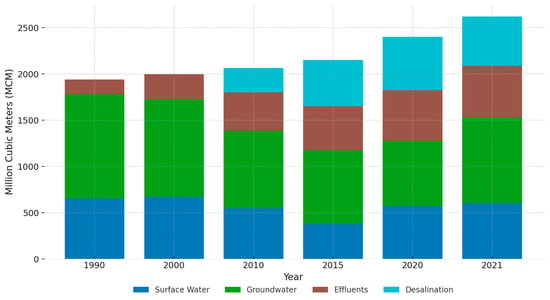
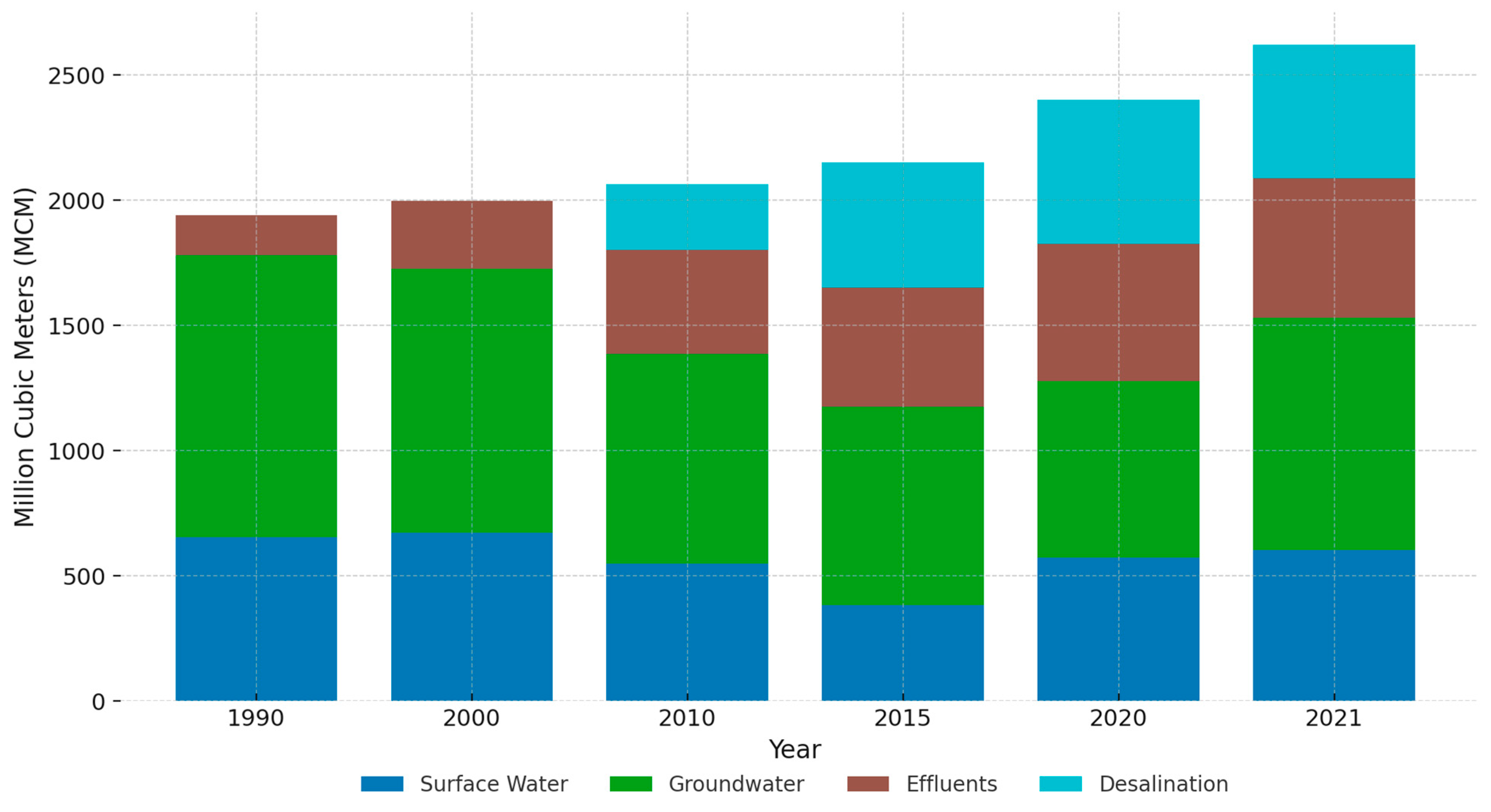
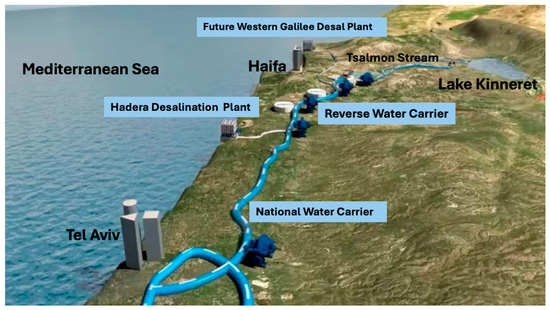
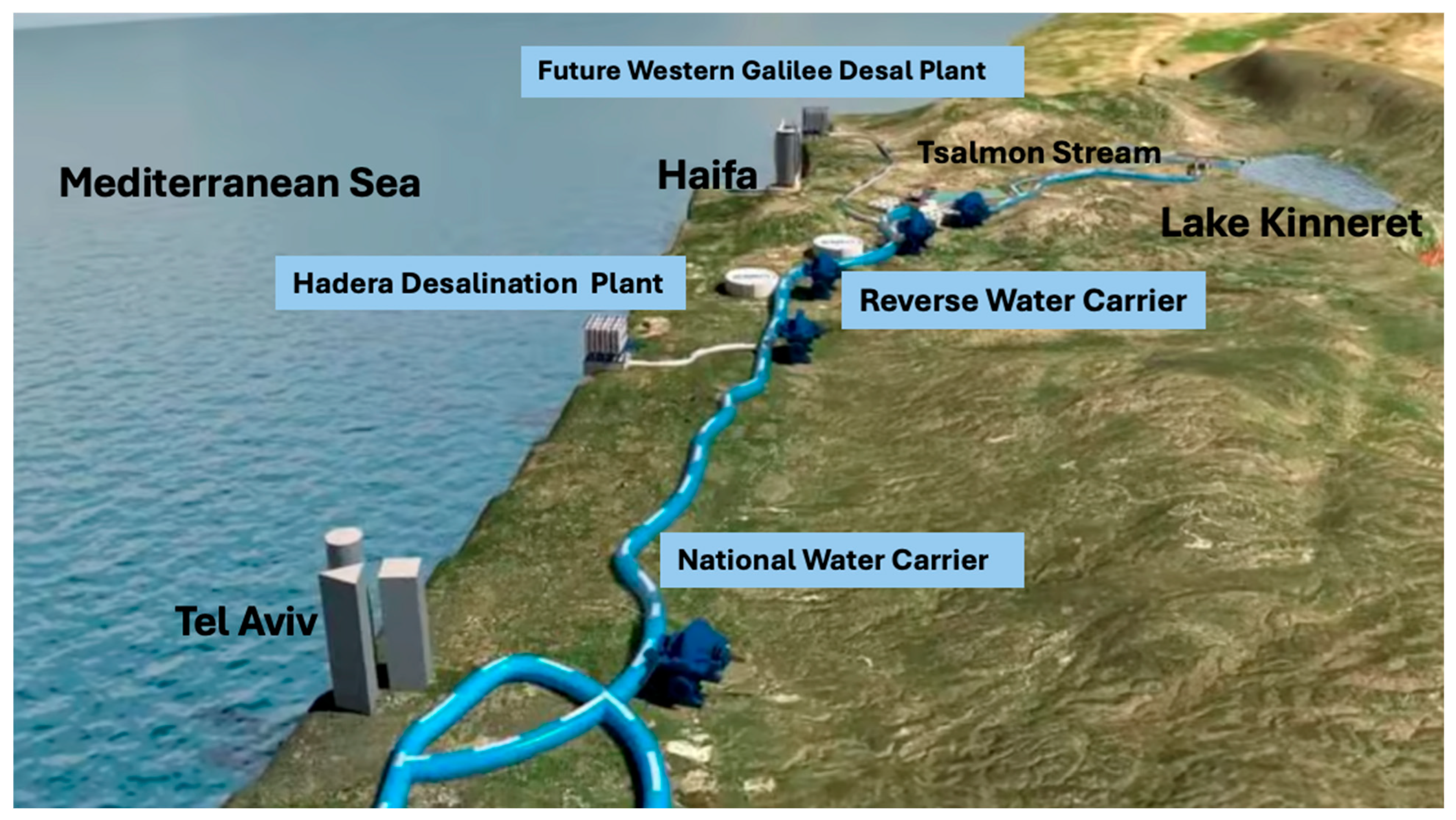

Disclaimer/Publisher’s Note: The statements, opinions and data contained in all publications are solely those of the individual author(s) and contributor(s) and not of MDPI and/or the editor(s). MDPI and/or the editor(s) disclaim responsibility for any injury to people or property resulting from any ideas, methods, instructions or products referred to in the content. |
© 2025 by the author. Licensee MDPI, Basel, Switzerland. This article is an open access article distributed under the terms and conditions of the Creative Commons Attribution (CC BY) license (https://creativecommons.org/licenses/by/4.0/).