Article

Linking Sustainability and Brand Love Through Employees’ Insights on ESG Practices in the Airline Industry


1
Ph.D. Program in Nutrition and Food Science, Fu Jen Catholic University, Xinzhuang, New Taipei City 242062, Taiwan
2
Department of Restaurant, Hotel and Institutional Management, Fu Jen Catholic University, Xinzhuang, New Taipei City 242062, Taiwan
*
Authors to whom correspondence should be addressed.
Sustainability 2025, 17(22), 10408; https://doi.org/10.3390/su172210408
Submission received: 13 October 2025 / Revised: 17 November 2025 / Accepted: 18 November 2025 / Published: 20 November 2025

Abstract

This study investigates the intricate mechanisms linking ESG practices, innovation performance, and brand outcomes from the perspective of internal stakeholders—employees. This study investigates employees’ perceptions of ESG practices and their influence on brand identification and brand love, based on a quantitative survey conducted among 346 employees from three major Taiwanese airlines; the findings reveal that ESG practices positively influence innovation performance, which, in turn, significantly enhances brand loyalty and brand value, ultimately fostering greater brand love. Moreover, the results indicate that an innovative organizational climate exerts a significant positive moderating effect on the relationship between ESG practices and innovation performance. In contrast, the moderating effect of human capital was not found to be significant.

1. Introduction

With the rise of global sustainability trends, investors and other stakeholders have increasingly focused on corporate performance across environmental, social, and governance (ESG) dimensions [1]. In response, firms are placing greater emphasis on ESG management to enhance their sustainability [2]. As corporate demands for sustainable development and corporate social responsibility (CSR) intensify, the ability to implement ESG initiatives—covering environmental, social, and governance aspects—has become a critical component of firm competitiveness. Environmental and social performance, combined with CSR-based governance approaches, form the core pillars of ESG and contribute to long-term corporate sustainability [3]. Firms across industries increasingly recognize that effective ESG practices can enhance corporate value [4] and mitigate risks [5]. ESG has thus evolved from a mere investment consideration to a central element of corporate sustainability strategy, extending to brand management and consumer decision-making [6]. ESG, as a core aspect of non-financial performance, is a vital driver of sustainable corporate operations and a cornerstone for future economic and social development [1].
When ESG activities effectively address the needs of stakeholders critical to a firm’s core operations, they can generate significant returns [7]. Achieving excellence in ESG implementation not only enhances brand image but also strengthens competitive advantage [8]. Innovation, widely regarded as a key component of competitiveness, should be embedded into organizational structures, processes, products, and services [9], serving as a mechanism to adapt to rapidly changing market environments. Beyond consumers, employees constitute a critical internal stakeholder group and their alignment with corporate sustainability efforts is increasingly vital for maintaining competitive advantage. While prior studies have primarily focused on ESG’s impact on firm value, stock performance, or financial outcomes [10,11], employee attitudes and behaviors are equally important, as workforce turnover can negatively affect both service and product quality, ultimately reducing customer satisfaction [12].
The relationship between sustainability initiatives and employee outcomes has become a burgeoning research area. CSR not only supports organizational sustainability but also fosters employees’ growth and work thriving, with positive perceptions of CSR strengthening commitment and enhancing engagement and performance [13]. This effect is often more pronounced among employees with higher trait gratitude. Moreover, CSR activities, especially those addressing environmental issues, enhance employee engagement and support sustainable organizational practices [14]. The impact of CSR, however, varies across employee groups: white-collar employees tend to respond more to external CSR initiatives, while blue-collar employees often value internal measures such as financial support, highlighting CSR’s critical role in fostering workforce sustainability [14]. Importantly, emotionally intelligent employees can leverage a firm’s brand image and CSR initiatives to strengthen commitment to work and organizational goals, which in turn improves service quality, promotes positive work outcomes, and enhances corporate reputation, performance, and sustainable competitiveness [15]. Within this context, human resources and an organizational climate that fosters innovation serve as internal capabilities that enhance innovation performance, ultimately influencing brand value, customer loyalty, and brand affection.
Given its high resource consumption and public visibility, the aviation industry has been proactive in improving sustainability ratings and publicly promoting ESG initiatives [3]. Airlines’ ESG strategies must not only focus on financial performance but also emphasize contributions to economic, social, and environmental spheres [16,17]. Notably, as travelers become more environmentally conscious, airlines’ ESG practices influence not only consumer behavior and perception but also the corporate brand image and like ability [18]. Consumer brand engagement positively impacts brand love, which in turn enhances brand evaluation, behavioral commitment, brand affection, and brand equity [19,20,21].
In the highly competitive service industry, particularly in aviation, enhancing brand value is essential for attracting new customers, retaining existing ones, and increasing market share and profitability. When travelers associate a company’s corporate image with positive values, this image becomes a significant source of brand value [22]. According to De Chernatony (2001) [23] the foundation for achieving brand differentiation is brand value, which is based on an organization’s core values [24] and reflects what the brand stands for. Building a strong and sustainable brand is thus crucial for major industries to navigate market challenges and ensure long-term development. Employees play a pivotal role in this process: as the first point of contact for a company’s brand, influence service quality, corporate image and customer loyalty [12].
Despite growing attention, a gap remains in empirical research on how the synergy between ESG practices and internal organizational innovation mechanisms particularly from the employee perspective affects employees’ brand identification and loyalty. Achieving excellence in ESG performance, both brand image and competitive advantage. To maintain sustainable growth, airlines must ensure that their operating models, strategies, products, and services are aligned with evolving societal values. Accordingly, this research employs an employee-based empirical investigation within the airline industry to examine whether effective ESG practices enhance employee brand loyalty through innovation performance. It further explores the moderating effects of innovative organizational climate and human capital on this relationship.

2. Literature Review and Hypothesis Development

2.1. Relationships Between ESG, Innovation Performance and Brand Dimensions

ESG encompasses non-financial practices related to environmental protection, social responsibility, and corporate governance [25,26], aiming to reduce risks, promote sustainability, and generate positive social impact [5,27]. With its increasing importance, non-financial performance now considered a critical metric for assessing corporate sustainability alongside financial performance [2]. ESG reporting and disclosure can enhance overall firm performance by attracting revenue and supporting more efficient managerial decision-making [28]. Firms with strong marketing capabilities tend to engage more in ESG activities, achieve higher ESG scores, and reduce investment inefficiency, particularly driven by environmental and social dimensions [29]. In the airline industry, ESG is especially crucial due to its significant environmental impact and the regulatory pressures implement green management practices [30]. Although ESG investments may involve initial costs [31], they can drive technological and process innovations through resource integration and reputation enhancement, ultimately increasing market value for high-performing firms [11,32]. High ESG performance in aviation and related industries is positively associated with innovation input and enables firms to proactively address environmental and social risk [9,33,34,35,36]. Accordingly, integrating ESG into core strategies alongside innovation is essential to maintain competitive advantage and prevent imitation [37]. Firms leading in environmental and social initiatives can co-create with stakeholders, drive green innovation, strengthen market competitiveness, and shape a green brand identity [38,39]. Employees play a critical role in translating these sustainability initiatives into organizational outcomes, fostering brand love and supporting integrated reporting practices [28]. For example, the financial sector demonstrates its key role in sustainable transformation through innovative instruments such as green bonds and green funds [40], whereas the hospitality and tourism industry leverages ESG practices to reduce operational risks and accelerate the development of new products and processes [41,42]. Taken together, moderate ESG practices—including environmental investment, social responsibility, and sound governance—enhance corporate reputation, attract investors and consumers, and foster business model innovation [43]. Based on this discussion, Hypothesis 1 is proposed.
Hypothesis 1.
ESG practice has a positive effect on innovation performance.
Innovation is a firm’s ability to transform new knowledge and technologies into usable products, services, or processes [44,45]. It is crucial for achieving competitive advantage long-term development [46,47]. Active innovation enhances service quality and customer satisfaction, thereby building trust and loyalty [9,48]. CSR further enhances airlines performance [49], as firms proactively address environmental expectations through eco-friendly technologies and products, regulatory compliance and the reduced environmental impact [50].
CSR has a positive impact on passengers’ purchasing behavior and decisions, providing a competitive advantage for airlines [30]. Research indicates that the launch of new products and experiences significantly strengthens customers’ intention to repurchase and their word-of-mouth recommendations [19,22]. Sustainability initiatives also strengthen brand value by promoting responsible practices, enhancing reputation, and supporting long-term growth, particularly in markets with established brands and high R&D investment, underscoring the strategic role of sustainability in brand development [51]. Brand loyalty reflects consumers’ internal attachment to a brand. Service and product innovations can enhance quality and customer satisfaction, thereby increasing customer retention and repurchase intentions [52]. Innovation performance not only strengthens brand differentiation but also improves brand awareness and the ability to command premium pricing [53,54]. Numerous studies indicate that firms with high innovation performance exhibit superior brand equity and market share compared to their competitors [55,56]. Brand value thus represents a firm’s tangible and externally observable capability. Therefore, Hypothesis 2&3 are proposed as below.
Hypothesis 2.
Innovation Performance has a positive effect on Brand Loyalty.
Hypothesis 3.
Innovation Performance has a positive effect on Brand Value.
Brand loyalty is defined as the consumer’s psychological and behavioral tendency to repeatedly purchase or consistently prefer the same brand [57,58]. When consumers show high brand loyalty, their emotional connection deepens, leading to a strong emotional attachment known as “brand love” [1,19]. Airlines products are consumed outside the customer’s residential area and cannot escape various environmental/ecological issues [50]. Corporate sustainability actions in which airlines assume social and environmental responsibilities are rapidly becoming key aspects of a company’s successful operations and marketing strategies in the airline market [35,59]. Transparent sustainability communication is considered both an ethical responsibility and an important consumer management strategy, helping to foster consumer loyalty and brand trust [60].
Research shows that loyal customers are more likely to proactively endorse a brand through social media and word of mouth, and to support the brand’s long-term development [21]. Brand value is defined as the sum of consumers’ differentiated responses and subjective evaluations of a brand [61,62]. Brand value includes functional, symbolic, and experiential value [61]. When these values are highly recognized by customers, the emotional connection deepens, leading to brand love [63,64]. In other words, when a brand can provide superior quality and symbolic meaning, consumers develop a more profound emotional identification with the brand, which evolves into brand love [63,65]. Firms with stronger brand equity can achieve a stronger emotional connection, which is inextricably linked to customer trust [66], thereby enhancing customer word-of-mouth influence and loyalty [19,67].
Hypothesis 4.
Brand Loyalty has a positive effect on Brand Love.
Hypothesis 5.
Brand Value has a positive effect on Brand Love.

2.2. The Moderating Roles of Innovative Organizational Climate and Human Capital

In highly competitive market environments, airlines increasingly emphasize corporate social responsibility and environmental initiatives, positioning ESG practices as essential tools for attracting and retaining customers, enhancing brand reputation, and supporting marketing strategies [50]. Firms that demonstrate exceptional ESG performance and achieve notable sustainability outcomes typically gain a significant competitive advantage. This competitive advantage extends to internal operations: Sustainable employer branding, which emphasizes transparency, ethics, and inclusivity, enhances employee engagement and safety voice behavior. Aligning organizational values with intrinsic motivations fosters internal communication, trust, and long-term resilience, reflecting the strategic role of sustainability in internal stakeholder management [68]. Accordingly, understanding how firms integrate, generate, transfer, and utilize intellectual capital provides stakeholders with long-term insights into corporate development [37]. Research further indicates that ESG initiatives positively influence corporate performance, with firms in the Asia–Pacific region leveraging ESG practices to enhance competitive advantage, strengthen stakeholder trust, and support long-term sustainability [2]. In the value creation process, integrating individual expertise with manufacturing and learning-driven innovation, alongside hierarchical and social innovation strategies, enables more rigorous organizational operations [69]. This integration effectively transforms external resources into internal capabilities, thereby preserving and enhancing organizational value [70]. However, top management governance structures exert a significant impact on ESG performance, and the effectiveness of different governance mechanisms varies [71]. Knowledge networks play a critical role in facilitating corporate innovation [41]. Interdepartmental or employee networks support information exchange and the dissemination of creative ideas, enabling firms to convert employee creativity into tangible performance outcomes [72]. Through “latent connections” among internal departments or employees, firms can explore innovative approaches to improve service quality and operational efficiency [73], thereby enhancing capability development. An organizational innovation climate further allows employees’ creative ideas to be internalized as organizational knowledge, encompassing attitudes toward authority and responsibility as well as understanding of core organizational culture. Such a climate represents a critical asset for fostering organizational creativity and sustaining innovation [74].
An innovation organizational climate can help convert employees’ creativity into organizational knowledge. The innovation organizational climate is the sum of all assets that enable an organization’s creativity, such as employees’ attitudes toward power and responsibility and their awareness of the organization’s core culture [74]. By combining prior organizational culture with new concepts to develop employees’ innovative capabilities, firms can facilitate the brainstorming of new ideas and processes [75], which can further lead to desirable innovation outcomes. In addition, extensive empirical research suggests that an innovation organizational climate may help translate employees’ creativity into organizational knowledge [76,77]. Innovation is a major determinant of corporate sustainability and competitiveness [78,79,80]. In a competitive business ecosystem, firms must formulate diverse strategies based on their resources and capabilities to enhance their innovation, sustainability, and business performance outcomes [78,79,80]. Orfila-Sintes & Mattsson (2009) [81] point out that innovative behavior can cultivate an organization’s ability to absorb new information and a knowledge-sharing culture. By applying new ideas in practice, it promotes the continuous accumulation of human capital, accelerates the capture of market opportunities, and leads to better performance [82]. Moreover, through the establishment of interaction and mutual trust, firms can create more possibilities for applying new concepts in practice and promote inter-organizational and inter-departmental collaboration [83].
Hypothesis 6.
Innovative organizational climate moderates the relationship between ESG practice and innovation performance.
A firm’s human capital represents the intellectual power and innovative capacity of its employees, which determines its future growth [84]. It is an intangible organizational asset, often correlated with performance [85]. Under the synergistic effect of human capital and innovative organizational climate, firms can quickly adapt to market changes, meet customer demands, and sustain long-term profitability and value creation in a highly competitive environment [85,86]. The accumulation of human capital is a process that requires not only appropriate training and education but also significant resource investment and incentive mechanisms to cultivate organizational innovation capabilities [87]. Human capital can help organizations gain a competitive advantage [88,89,90]. In other words, the knowledge and skills embedded in human capital can provide a differentiating advantage for a firm. According to studies by Hamadamin & Atan (2019) [88], Kryscynski et al. (2021) [89], and Minbaeva (2018) [90], firms with high levels of human capital are more likely to strengthen their market position through product and process innovation [91]. The skills and knowledge possessed by employees can solve problems that arise within the company [92]. Furthermore, human capital is a source that accelerates innovation and creativity. It helps to brainstorm new ideas and processes [93]. Firms with good innovative behavior can keenly perceive changes in the external environment and quickly internalize new knowledge through internal learning mechanisms to stimulate innovative actions, thereby reducing uncertainty and gaining a significant competitive advantage [94]. Based on the literature reviewed above, we hypothesize as follows:
Hypothesis 7.
Human capital has a moderating effect on the relationship between ESG practice and innovation performance.

3. Methods

3.1. Sample and Procedure

This study surveyed in-service flight and ground crew members from three major airlines in Taiwan to accurately reflect the current situation and operational mechanisms between sustainable innovation transformation and brand strategy in the airline industry. The questionnaire was administered anonymously and online. Participation was voluntary and confidential to ensure data integrity. Relevant information about the study was provided to all participants. The data were collected from September to December 2024. The study was conducted in accordance with the ethical guidelines of the Declaration of Helsinki [95].

3.2. Measurement of Scales

This study employed a seven-point Likert scale to measure seven key dimensions: ESG practice, Innovation Performance, Brand Loyalty, Brand Value, Brand Love, Innovative Organizational Climate, and Human Capital. The ESG practice scale was adapted from Kim and Hwang (2023) [18]. Innovation Performance was assessed using the scale developed by Lim (2021) [96]. The constructs of Brand Loyalty and Brand Love were measured based on the scales proposed by Puriwat and Tripopsakul (2023) [97]. The Brand Value dimension adopted items from Muhonen et al. (2017) [98]. Innovative Organizational Climate was evaluated using the scale by Minh Hieu (2023) [99], and Human Capital was measured with reference to Liu (2017) [85] (Appendix A). All scales demonstrated strong internal consistency, with Cronbach’s α values exceeding 0.70, indicating good reliability and validity of the questionnaire.

3.3. Data Analysis

This study employs Partial Least Squares–Structural Equation Modeling (PLS-SEM) to test the proposed hypotheses, as it is a widely used tool for developing new models [97]. Furthermore, the questionnaire for this study was measured using a seven-point Likert scale to examine the current state and operational mechanisms between sustainable innovation transformation and brand strategy and to verify the causal relationships among them.
The model validation process of this study references standards proposed by several scholars. For path analysis, a two-tailed test was used to determine the critical t-value. For collinearity diagnostics, a VIF value of less than 5 indicates the absence of multicollinearity issues among variables. In terms of discriminant validity, the HTMT value should be below 0.95 to be considered acceptable. According to recommended standards, an R2 value of 0.67 represents a high level of explanatory power, while 0.33 indicates moderate explanatory power [100,101,102,103,104,105,106]. It is also recommended to test for moderating effects by examining the interaction of all path coefficients and their corresponding p-values [107,108]. The structure and hypotheses of this study are shown in Figure 1.

4. Results

4.1. Demographic Analysis

Based on a literature review, this study conducts an empirical investigation into the current state of sustainable innovation transformation and brand strategy within the airline industry. The research focuses on five core variables: ESG practice, Innovation Performance, Brand Loyalty, Brand Value, and Brand Love. Innovative Organizational Climate and Human Capital are also included as moderating variables to verify their mechanisms of action in the relationship between ESG practices, innovation, and brand strategy.
The questionnaire was revised based on scales from relevant literature. To ensure the semantic clarity and accuracy of the cross-language translation, the research team invited two scholars with extensive experience in airline research to review the translation and assess its content validity.
Data were collected via an online survey conducted from September to December 2024. The target population consisted of flight and ground crew members from major airlines in Taiwan. A total of 421 questionnaires were collected. After excluding incomplete or inconsistent responses, a final sample of 346 valid questionnaires was obtained, resulting in an effective response rate of 82%. The demographic information and distribution of the surveyed sample are detailed in Table 1.

4.2. Evaluation of the Measurement Model

This study employed Smart-PLS 4.0 software to analyze the research model. The evaluation of the measurement model was conducted based on the guidelines proposed by [103,104]. The resulting values for the model evaluation are as follows.
The measurement model results are presented in Table 2. The factor loadings of all indicators ranged from 0.789 to 0.981, all exceeding the recommended threshold of 0.70, indicating satisfactory indicator reliability. The Cronbach’s α values ranged from 0.964 to 0.985, demonstrating high internal consistency and strong reliability. CR values ranged from 0.977 to 0.987, further confirming the model’s internal consistency. The AVE values ranged from 0.821 to 0.933, all above the recommended threshold of 0.50, suggesting that the model exhibits good convergent validity [100,101,102,103,104,105,106].
Furthermore, Table 3 presents the results of the Fornell–Larcker criterion, which was used to assess discriminant validity. The square root of the AVE for each construct was greater than its correlations with other constructs, indicating satisfactory discriminant validity [102]. Table 4 shows that all HTMT values among the constructs are below the threshold of 0.95, indicating acceptable discriminant validity [105]. Therefore, the measurement model in this study demonstrates good reliability and validity, allowing for subsequent verification through SEM.

4.3. Structural Model Analysis

The hypotheses were tested using PLS-SEM, with the results presented in Table 5. VIF values for all constructs in the structural model ranged from 1.000 to 3.803, all below the threshold of 5, indicating no multicollinearity among the constructs and no adverse effect on the estimation of path coefficients. The R2 values of the endogenous constructs ranged from 0.593 to 0.850, suggesting moderate to high explanatory power.
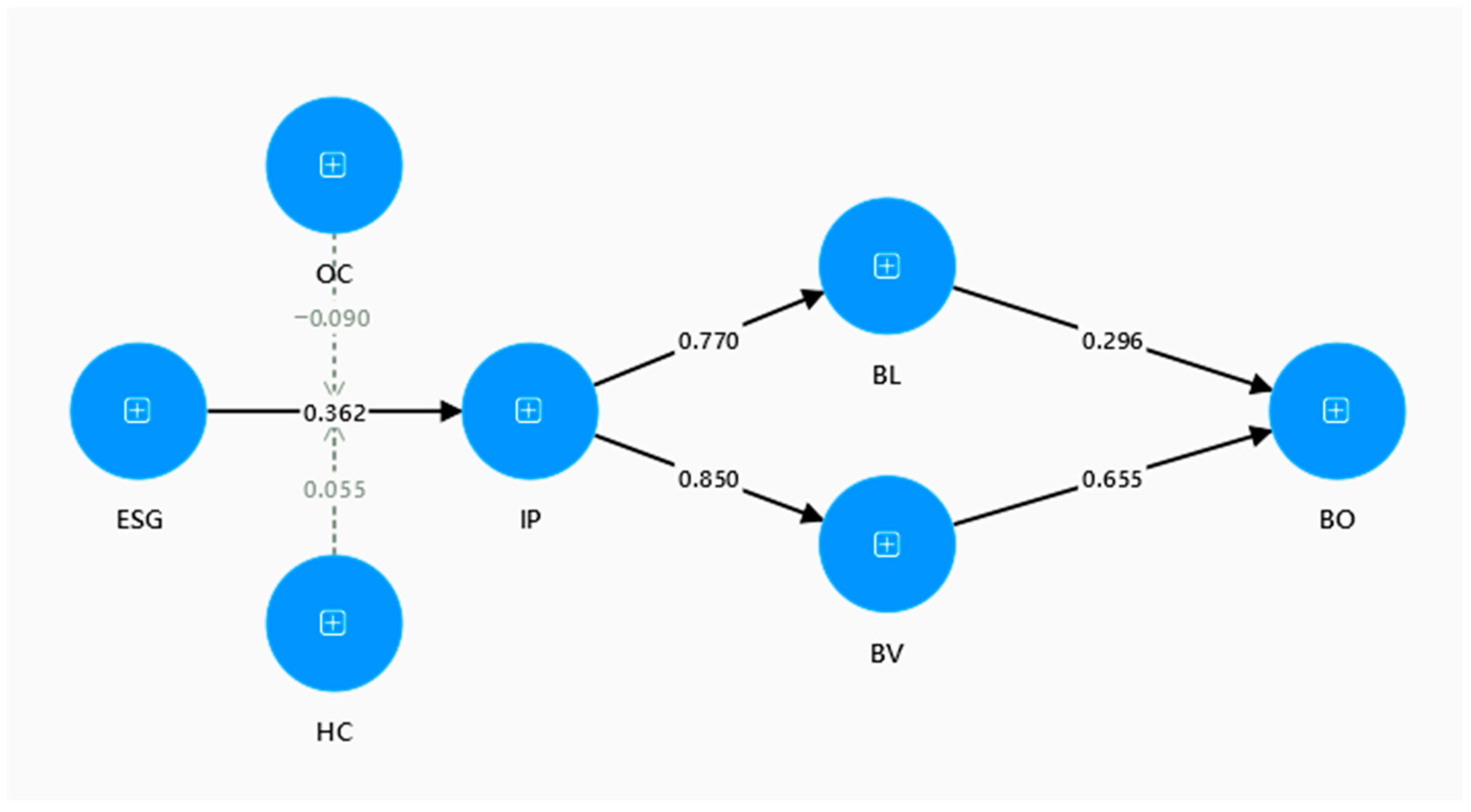
The results revealed that ESG practice significantly influenced Innovation Performance (β = 0.362, p < 0.001, [0.870, 0.922]); Innovation Performance significantly influenced Brand Loyalty (β = 0.770, p < 0.001, [0.703, 0.826]) and Brand Value (β = 0.850, p < 0.001, [0.807, 0.885]); Brand Loyalty significantly influenced Brand Love (β = 0.296, p < 0.001, [0.186, 0.414]); and Brand Value also significantly influenced Brand Love (β = 0.655, p < 0.001, [0.535, 0.760]). Therefore, all five hypotheses (H1 to H5) were supported, as illustrated in Figure 2.

4.4. Examination and Analysis of the Moderating Effect

In the moderation analysis results (Table 6), we examined the interaction effects of ESG practice with innovative Organizational Climate (OC) and Human Capital (HC) on Innovation Performance. First, H6 investigated whether innovative Organizational Climate moderates the relationship between ESG practice and Innovation Performance. The results show that the interaction term (ESG × OC) had a path coefficient of −0.038 with a t-value of 1.981, which was statistically significant (p < 0.05). This indicates that innovative Organizational Climate has a significant, but negative, moderating effect on the relationship between ESG practice and Innovation Performance. Second, H7 explored whether Human Capital moderates the relationship between ESG practice and Innovation Performance. The results show that the interaction term (ESG × HC) had a path coefficient of β = 0.006 with a t-value of 0.372, which was not statistically significant (p > 0.05). This indicates that Human Capital does not have a significant moderating effect on the relationship, and thus, H7 was not supported.

5. Discussion

Previous research on ESG has predominantly emphasized financial performance and investor returns. This study, however, shifts the focus to internal stakeholders, specifically employees, and examines the underlying mechanisms linking corporate ESG practices, innovation performance, brand loyalty and value, and brand love. Utilizing a sample of 346 employees from the Taiwanese airline industry, the study empirically validates these relationships and further investigates the moderating roles of human capital and innovative organizational climate.
The results demonstrate that ESG practice positively influences innovation performance, which in turn strengthens employee-related brand loyalty, brand value, and brand love. Furthermore, recent studies indicate that corporate social responsibility has a significant effect on passenger loyalty [30] and is equally important in cultivating passenger affection for airline brands [18]. This study extends these findings by showing that from the employees’ perspective, airlines’ ESG and innovation performance similarly influence brand value, loyalty, and love. This finding aligns with the growing body of literature highlighting that ESG reporting and disclosure can enhance financial and overall performance by attracting revenues and supporting more efficient managerial decision-making [28], emphasizing the broad impact of sustainability on organizational outcomes.
In addition, this study’s analysis reveals that innovative organizational climate has a positive moderating effect on the relationship between ESG practice and innovation performance. This suggests that internal resources can amplify the impact of sustainability efforts on organizational benefits. An innovative organizational climate can facilitate knowledge flow and employee engagement within the organization, thereby enhancing the impact of ESG practices on innovation performance [99]. Although ESG practices generally promote innovation, their positive effects may diminish within highly mature innovation climates. This attenuation may stem from diminishing marginal returns—where employees perceive ESG activities as repetitive or disconnected from core innovation goals—as well as goal conflicts between ESG’s emphasis on compliance and innovation’s orientation toward risk-taking. Procedural constraints associated with ESG may also reduce innovation-related flexibility [109], while resource competition and greenwashing can divert investments away from substantive innovation efforts, weakening overall performance [110]. Consequently, this study identifies a negative moderating role of an innovative organizational climate in the ESG–innovation relationship and suggests that longitudinal research is needed to examine ESG’s influence over time. This finding aligns with existing research that views innovative organizational climate as an intangible asset, which is generally positively correlated with organizational performance [85] and can effectively transform external resources into internal developmental capabilities to maintain and enhance organizational value [70].
Finally, previous research has shown that the knowledge and skills embedded within human capital not only create a differentiating advantage and strengthen market position but also help solve organizational problems and serve as a core source of innovation for new ideas and processes [88,91,93]. However, the empirical results of this study show that human capital does not have a significant moderating effect on the relationship between ESG practice and innovation performance. This may reflect that human capital primarily has a direct influence on innovation capability rather than strengthening the link between ESG practice and innovation. In other words, even if an enterprise possesses a high level of human capital, its innovation performance may not be significantly enhanced by ESG practice if there is a lack of institutional design and resource allocation that integrates with ESG practices. This viewpoint is consistent with some studies that emphasize that the accumulation of human capital is a continuous process requiring appropriate training, education, resource investment, and incentive mechanisms to cultivate organizational innovation capability [87] and requires effective organizational management and strategic integration to be transformed into sustainable innovative outcomes [89,90]. We suggest that the moderating influence of human capital may only exert a stronger effect when complemented by sustainability-oriented training programs, leadership development, and higher levels of employee engagement. Furthermore, future studies should explore the interaction between human capital and leadership style or resource allocation to provide a more nuanced understanding of these mechanisms.

6. Implications

6.1. Theoretical Implications

The theoretical contributions of this study are as follows. First, most prior empirical research on ESG has predominantly focused on financial performance or investor returns, with a relative scarcity of studies from the perspective of internal stakeholders, particularly employees. By collecting a sample of 346 employees from the Taiwanese airline industry, this study verifies the impact of ESG practice on employee-related brand behaviors. This addresses a gap in the existing literature by exploring the mechanisms of ESG from an internal perspective, offering a new viewpoint for airline companies to cope with dual environmental and market pressures. This aligns with the work of Chen, Song, and Gao (2023) [111], who emphasized the crucial role of ESG in internal performance within large and high-risk environments. This internal focus further supports the argument that prior studies, which identified employees as a key theme in sustainability reports linked to ESG and innovation [28], should be empirically validated from the employee’s perception, which this study successfully accomplishes.
Second, this study introduces innovation performance into the mediation model between ESG practice and brand behaviors. It empirically demonstrates that ESG practice can enhance brand loyalty, brand value, and brand love by improving innovation performance. This result not only expands the theoretical framework of how ESG practice influences the brand value chain but also supports the key theoretical perspectives from Ozturkoglu et al. (2019) [16] and Deegan (2002) [17] that innovation is a source of sustainable competitive advantage for businesses. Furthermore, while some literature suggests that the environmental and social aspects of ESG practice may have a short-term negative impact on firm value [112], this study, by focusing on long-term employee behavior and brand aspects, offers an alternative theoretical perspective on the positive impact of ESG. Specifically, the findings reinforce the strategic role of sustainability in brand development, confirming that sustainability initiatives strengthen brand value by promoting responsible practices and enhancing long-term growth [51].
Third, this study verifies the positive moderating effect of innovative organizational climate on the relationship between ESG practice and innovation performance. This indicates that intangible assets such as organizational systems, culture, and processes can amplify the positive influence of ESG practice on innovative output. This finding is consistent with the theories of Liu (2017) [85] and Dineen & Allen (2016) [70], who propose that an innovative organizational climate facilitates resource transformation and enhances organizational value. For airline companies, this implies that in addition to focusing on external ESG reporting, they must also prioritize the integration of internal resources and the enhancement of management capabilities to adapt to the complex and evolving industry environment.
Finally, this study finds that human capital does not have a significant moderating effect on the relationship between ESG practice and innovation performance. This result suggests that even with a high level of human capital, innovation capability may not be significantly enhanced by ESG practices unless effectively integrated with ESG systems and resource allocation. This finding aligns with prior research which states that the full benefits of human capital’s influence on innovation can only be realized through effective organizational management and strategic integration [89,90]. Furthermore, considering the liberalized and high-risk market environment of the airline industry [113], the strategic combination of human capital and ESG becomes even more critical, offering new directions for future research.

6.2. Empirical Implications

This study provides several managerial implications for the airline and other high-service-intensive industries. First, as a crucial component of corporate sustainability strategy, ESG not only strengthens the trust and support of external stakeholders [114,115] but also stimulates internal employees’ innovative momentum, thereby boosting brand loyalty, brand value, and ultimately, brand love. The finding that transparent sustainability communication helps foster consumer loyalty and brand trust [60] underscores the need for organizations to ensure internal clarity as well. When implementing ESG practices, airlines should concurrently focus on employees’ psychological identification and behavioral performance, viewing ESG as a core force that drives the co-creation of both internal and external corporate value.
Second, this study indicates that innovative organizational climate is a key factor for the positive impact of ESG practice on innovation performance. Previous research also shows that airlines’ ESG practices can enhance brand image and brand love, thereby strengthening customer loyalty [116]. Therefore, Airlines should continuously strengthen institutional management, optimize operational processes, and cultivate a corporate culture that supports sustainable development. This ensures that ESG practices are deeply integrated with internal operations, allowing the sustainability strategy to not only be a tool for building an external image but also to be substantially transformed into innovative outcomes and a competitive brand advantage, effectively responding to the challenges of high carbon emissions and environmental pressure faced by the airline industry [117].
Third, although this study did not observe a moderating effect of human capital between ESG practice and innovation performance, for the airline industry, continuous investment in human capital’s professional capabilities and incentive mechanisms, and their tight integration with ESG goals, is essential for ensuring innovation performance and sustainable development. Through this strategy, airlines can enhance employees’ sense of participation and commitment to ESG, thereby strengthening the company’s overall risk resilience and innovative vitality. This integrated approach is essential for successful sustainable employer branding, which emphasizes transparency, ethics, and inclusivity, enhancing engagement and long-term resilience [68].
Finally, brand loyalty and brand love are critical assets for maintaining long-term competitive advantages in the face of intense market competition and deregulation pressures. This study empirically proves that a virtuous cycle between ESG practice and innovation performance can effectively strengthen employees’ emotional connection and behavioral commitment to the brand. It is recommended that airline companies integrate sustainability strategies, innovation management, and brand operations into a unified strategic blueprint to enhance market competitiveness and social responsibility performance, thereby increasing overall corporate value [118].

6.3. Research Limitations and Future Research

While this study provides valuable insights into the relationships among ESG practices, innovation performance, and brand loyalty—as well as the moderating effects of human capital and an innovative organizational climate—several limitations remain that warrant further investigation. From an ESG perspective, research at Incheon International Airport indicates that implementing environmental, social, and governance practices enhances trust, public image, and sustainability awareness, and improves overall business performance [119]. First, the unique characteristics of the airline industry, such as its substantial environmental impact and high brand visibility, may amplify the influence of ESG initiatives on employee attitudes and behaviors. Regarding sampling, although this study’s focus on employees in the Taiwanese airline industry offers meaningful regional representation, different industries (e.g., finance, manufacturing) may exhibit distinct pathways and underlying logics linking ESG practices to brand strategies. Therefore, future research could extend to other industries and countries to explore potential cross-industry and cross-cultural variations. Similarly, cultural traits may shape how employees perceive and respond to corporate social responsibility activities [120]. Future studies should thus incorporate diverse cultural contexts to develop a more comprehensive understanding of the mechanisms through which ESG practices enhance brand love.
Second, although this study demonstrates a positive impact of innovation performance on brand value and loyalty, ESG represents a long-term strategic approach that not only influences customer relationship management [121] but also deeply shapes employee cognition. Future research could focus on airlines with established, long-term ESG management practices and integrate consumer or employee data to explore the sustained effects of such practices on brand love. Moreover, demographic factors such as gender, age, job role, and seniority may influence employees’ perceptions of ESG practices and, consequently, their impact on innovation and brand loyalty.
Third, this study’s assessment of brand loyalty and brand love relies on employees’ subjective perceptions, which may be susceptible to measurement bias influenced by individual traits, emotions, or the internal organizational climate. Future studies could validate the variations in employees’ perceptions of ESG and investigate how these differences affect their brand attitudes.
Finally, while this study focused on innovation performance as a mediating variable and explored the moderating roles of human capital and innovative organizational climate, other potential mediating variables may exist between ESG and brand identity, such as corporate identity, internal communication quality, employee engagement, and organizational trust, organizational pride, psychological empowerment, and perceived external prestige. It is suggested that future research incorporates more psychological and organizational factors to construct a more complete mechanism model, deepening the understanding of how sustainable practices influence employee attitudes and brand building.

7. Conclusions

The findings reveal that ESG practices positively influence innovation performance, which, in turn, significantly enhances brand loyalty and brand value, ultimately fostering stronger brand love. Furthermore, the study identifies that an innovative organizational climate exerts a significant positive moderating effect on the relationship between ESG practices and innovation performance. In contrast, human capital does not exhibit a significant moderating effect. Overall, these results highlight the critical role of ESG-driven innovation and organizational climate in cultivating long-term emotional connections between employees and the brand.

Author Contributions

Conceptualization, F.-R.C. and W.-H.K.; Methodology, M.-Y.L.; Software, M.-Y.L.; Investigation, F.-R.C.; Data curation, F.-R.C.; Writing—original draft, M.-Y.L.; Writing—review & editing, F.-R.C.; Supervision, W.-H.K.; Project administration, W.-H.K. All authors have read and agreed to the published version of the manuscript.

Funding

This research received no external funding.

Institutional Review Board Statement

Ethical review and approval were waived for this study due to this study was conducted in accordance with the Department’s Scope of Human Research Cases Exempt from IRB Review (Order No. 1010265075, issued on 5 July 2012). According to the exemption criteria, research involving observation of public behavior or surveys/interviews of non-identifiable individuals, without collecting identifiable private information, is exempt from Institutional Review Board (IRB) review. Furthermore, this study used legally and publicly available information, and its use was consistent with the purpose of the original public disclosure. Therefore, the study qualifies for exemption from IRB review.

Informed Consent Statement

Informed consent was obtained from all subjects involved in the study.

Data Availability Statement

The original contributions presented in this study are included in the article. Further inquiries can be directed to the corresponding authors.

Conflicts of Interest

The authors declare no conflicts of interest.

Appendix A

Table A1. Questionnaires.
DetentionItemsSource
ESG practiceER1. The company participates in environmental protection activities.Kim & Hwang (2023) [18]
ER2. The company reduces waste and uses eco-friendly products.
ER3. The company effectively utilizes energy and resources.
ER4. The company has reduced the pollution caused by its business activities.
ER5. The company conducts business activities in compliance with environmental laws and policies.
ER6. The company uses renewable energy and reduces ground energy consumption.
SR7. The company raises funds for social causes.
SR8. The company supports sports and cultural activities.
SR9. The company encourages employees to participate in volunteer activities in the local community.
GR11. The company contributes to society and the economy through investment and profit creation.
GR12. The company creates new job opportunities.
GR13. The company creates more value for national economic development.
Innovation performancePI14. The company launches many new sustainability-related services.Lim (2021) [96]
PI15. The company has made many sustainability-related adjustments to existing services.
PI16. The company continuously seeks new sustainability service initiatives
PI17. The company launches more new sustainability services than its competitors.
PI18. The sustainability initiatives launched by the company have led to significant changes in the industry.
PrI19. The company often compares its sustainability initiatives with those of top international companies to stay up-to-date.
PrI20 The company regularly updates its sustainability services to improve productivity.
PrI21. The company often adopts new technologies to improve the efficiency of its sustainability initiatives.
PrI22. The company often adopts new technologies to improve the quality of our sustainability services.
PrI23. The company invests in integrating sustainable technologies, equipment, and/or procedures to respond to market changes.
PrI24. The company regularly trains employees on new technologies in the field of sustainability.
AI25. The company continuously introduces new management methods to adapt to sustainability initiatives.
AI26. The company invests in new administrative procedural systems that are more aligned with sustainability.
AI27. Management continuously seeks to improve administrative procedural systems for sustainability.
AI28. The company empowers employees to take initiative in response to sustainability changes in the market.
AI29. Competitors use the company’s sustainability practices as a benchmark.
Brand valuesBV38. The brand represents the organizational values of our company.Muhonen, Hirvonen, and Laukkanen (2017) [98]
BV39. The company’s marketing methods follow our brand values.
BV40. We are committed to integrating the marketing activities of our company’s brand.
Brand loveBO41. I have strong feelings for the company’s brand.Puriwat & Tripopsakul (2023) [97]
BO42. You think I am suitable for this company’s brand.
BO43. I evaluate the company’s brand as the same as your personal preferences.
BO44. I can build a long-term relationship with the company’s brand.
Brand loyaltyBL45. I will continue to work for the company.Puriwat & Tripopsakul (2023) [97]
BL46. I am willing to identify with this company.
BL47. I am willing to make a commitment to this company.
BL48. I am willing to give more to this company compared to switching to another.
Innovative organizational climateOC30. At the company, I am often encouraged to propose new sustainability ideas.Hieu (2023) [99]
OC31. At the company, my sustainability innovation behaviors are praised.
OC32. At the company, I can challenge others through positive thinking.
OC33. At the company, I am expected to act in a more sustainable and creative way.
OC34. At the company, a sufficient budget is provided to support sustainability innovation.
OC35. At the company, it is acceptable for employees not to achieve the expected results when executing sustainability innovation learning plans.
OC36. At the company, my superior values the sustainability contributions I make.
OC37. At the company, I am free to exchange sustainability ideas.
Human CapitalHC49. The company’s employees receive appropriate sustainability education to complete their work.Liu (2017) [85]
HC50. The company’s employees have appropriate sustainability experience to successfully complete their work.
HC51. The company’s employees are well-trained to respond to global sustainability changes.
HC52. No one understands this sustainability work better than the employees of our company.
HC53. If anyone can find the best executor for sustainable work, it’s the employees of our company.
HC54. Mastering the execution of sustainable work is of great significance to the employees of our company.

References

  1. Lee, H.J.; Rhee, T.H. How does corporate ESG management affect consumers’ brand choice? Sustainability 2023, 15, 6795. [Google Scholar] [CrossRef]
  2. Lee, J.; Ok, Y.S.; Rhee, J.H. How to enhance ESG credentials through corporate governance innovation: The case of DGB Financial Group in South Korea. Asia Pac. Bus. Rev. 2025, 1–23. [Google Scholar] [CrossRef]
  3. Ionescu, G.H.; Firoiu, D.; Pirvu, R.; Vilag, R.D. The impact of ESG factors on market value of companies from travel and tourism industry. Technol. Econ. Dev. Econ. 2019, 25, 820–849. [Google Scholar] [CrossRef]
  4. Lins, K.V.; Servaes, H.; Tamayo, A. Social capital, trust, and firm performance: The value of corporate social responsibility during the financial crisis. J. Financ. 2017, 72, 1785–1824. [Google Scholar] [CrossRef]
  5. Price, J.M.; Sun, W. Doing good and doing bad: The impact of corporate social responsibility and irresponsibility on firm performance. J. Bus. Res. 2017, 80, 82–97. [Google Scholar] [CrossRef]
  6. Jeong, J.; Choi, J. Artificial intelligence-based toxicity prediction of environmental chemicals: Future directions for chemical management applications. Environ. Sci. Technol. 2022, 56, 7532–7543. [Google Scholar] [CrossRef]
  7. Park, Y.; Lee, K.P.; You, C.Y. Does ESG performance enhance the financial performance and valuation of Chinese private enterprises? The moderating role of political connection and state ownership. Asia Pac. Bus. Rev. 2025, 1–20. [Google Scholar] [CrossRef]
  8. Sim, M.; Kim, H. Measurement validation of a consumer-driven environmental, social, and governance (ESG) index for the airline industry. J. Sustain. Tour. 2025, 33, 474–499. [Google Scholar] [CrossRef]
  9. Gunday, G.; Ulusoy, G.; Kilic, K.; Alpkan, L. Effects of innovation types on firm performance. Int. J. Prod. Econ. 2011, 133, 662–676. [Google Scholar] [CrossRef]
  10. Eccles, R.G.; Ioannou, I.; Serafeim, G. The impact of corporate sustainability on organizational processes and performance. Manag. Sci. 2014, 60, 2835–2857. [Google Scholar] [CrossRef]
  11. Fatemi, A.; Fooladi, I.; Tehranian, H. Valuation effects of corporate social responsibility. J. Bank. Financ. 2015, 59, 182–192. [Google Scholar] [CrossRef]
  12. Sims, W.J. Antecedents of labor turnover in Australian alpine resorts. J. Hum. Resour. Hosp. Tour. 2007, 6, 1–26. [Google Scholar] [CrossRef]
  13. Han, X.; Li, Q.; Wang, X. Investigating how corporate social responsibility affects employees’ thriving at work: A social exchange perspective. Sustainability 2024, 16, 1095. [Google Scholar] [CrossRef]
  14. Andruszkiewicz, K.; Wierzejski, T.; Siemiński, M. The effect of corporate social responsibility and sustainable development practices on employer branding—A case study of an international corporation operating in Poland. Sustainability 2024, 16, 2654. [Google Scholar] [CrossRef]
  15. Tahhan, S.A. Emotional Intelligence and Employees’ Commitment: Analyzing the Role of Brand Image and Corporate Social Responsibility Among Lebanese SMEs. Sustainability 2025, 17, 9602. [Google Scholar] [CrossRef]
  16. Ozturkoglu, Y.; Kazancoglu, Y.; Ozkan-Ozen, Y.D. A sustainable and preventative risk management model for ship recycling industry. J. Clean. Prod. 2019, 238, 117907. [Google Scholar] [CrossRef]
  17. Deegan, C. Introduction: The legitimising effect of social and environmental disclosures—A theoretical foundation. Account. Audit. Account. J. 2002, 15, 282–311. [Google Scholar] [CrossRef]
  18. Kim, S.; Hwang, J. Airline CSR and Quality Attributes as Driving Forces of Passengers’ Brand Love: Comparing Full-Service Carriers with Low-Cost Carriers. Sustainability 2023, 15, 7293. [Google Scholar] [CrossRef]
  19. Chen, X.; You, E.S.; Lee, T.J.; Li, X. The influence of historical nostalgia on a heritage destination’s brand authenticity, brand attachment, and brand equity: Historical nostalgia on a heritage destination’s brand authenticity. Int. J. Tour. Res. 2021, 23, 1176–1190. [Google Scholar] [CrossRef]
  20. Levy, S.; Hino, H. Emotional brand attachment: A factor in customer-bank relationships. Int. J. Bank Mark. 2016, 34, 136–150. [Google Scholar] [CrossRef]
  21. Gómez-Suárez, M. Examining customer–brand relationships: A critical approach to empirical models on brand attachment, love, and engagement. Adm. Sci. 2019, 9, 10. [Google Scholar] [CrossRef]
  22. Javed, A.; Khan, Z. Fostering sustainable relationships in Pakistani cellular service industry through CSR and brand love. S. Asian J. Bus. Stud. 2023, 12, 293–314. [Google Scholar] [CrossRef]
  23. De Chernatony, L. Succeeding with brands on the Internet. J. Brand Manag. 2001, 8, 186–195. [Google Scholar] [CrossRef]
  24. Urde, M.; Greyser, S.A. The Nobel Prize: The identity of a corporate heritage brand. J. Prod. Brand Manag. 2015, 24, 318–332. [Google Scholar] [CrossRef]
  25. Whitelock, V.G. Relationship Between Environmental Social Governance (ESG) Management and Performance–The Role of Collaboration in the Supply Chain. Doctoral Dissertation, University of Toledo, Toledo, OH, USA, 2015. [Google Scholar]
  26. Bae, J.H.; Park, J.W. Research into individual factors affecting safety within airport subsidiaries. Sustainability 2021, 13, 5219. [Google Scholar] [CrossRef]
  27. Ortas, E.; Álvarez, I.; Garayar, A. The environmental, social, governance and financial performance effects on companies that adopt the United Nations Global Compact. Sustainability 2015, 7, 1932–1956. [Google Scholar] [CrossRef]
  28. Bogdan, V.; Rus, L.; Gherai, D.S.; Florea, A.G.; Bugnar, N.G. A streamline sustainable business performance reporting model by an integrated FinESG approach. Sustainability 2023, 15, 16860. [Google Scholar] [CrossRef]
  29. Hu, W.; Sun, J.; Lin, Y.E.; Hu, J. ESG and investment efficiency: The role of marketing capability. Sustainability 2023, 15, 16676. [Google Scholar] [CrossRef]
  30. Han, H.; Yu, J.; Kim, W. Environmental corporate social responsibility and the strategy to boost the airline’s image and customer loyalty intentions. J. Travel Tour. Mark. 2019, 36, 371–383. [Google Scholar] [CrossRef]
  31. Palmer, K.; Oates, W.E.; Portney, P.R. Tightening environmental standards: The benefit-cost or the no-cost paradigm? J. Econ. Perspect. 1995, 9, 119–132. [Google Scholar] [CrossRef]
  32. Malik, M. Value-enhancing capabilities of CSR: A brief review of contemporary literature. J. Bus. Ethics 2015, 127, 419–438. [Google Scholar] [CrossRef]
  33. Abdullah, M.A.; Chew, B.C.; Hamid, S.R. Benchmarking key success factors for the future green airline industry. Procedia-Soc. Behav. Sci. 2016, 224, 246–253. [Google Scholar] [CrossRef]
  34. Chen, F.Y.; Chang, Y.H.; Lin, Y.H. Customer perceptions of airline social responsibility and its effect on loyalty. J. Air Transp. Manag. 2012, 20, 49–51. [Google Scholar] [CrossRef]
  35. Ilkhanizadeh, S.; Karatepe, O.M. An examination of the consequences of corporate social responsibility in the airline industry: Work engagement, career satisfaction, and voice behavior. J. Air Transp. Manag. 2017, 59, 8–17. [Google Scholar] [CrossRef]
  36. Vural-Yavaş, Ç. Economic policy uncertainty, stakeholder engagement, and environmental, social, and governance practices: The moderating effect of competition. Corp. Soc. Responsib. Environ. Manag. 2021, 28, 82–102. [Google Scholar] [CrossRef]
  37. Pham, C.V.; Liu, S.F.; Chen, S.H. Corporate ESG performance and intellectual capital: International evidence. Asia Pac. Manag. Rev. 2024, 29, 306–346. [Google Scholar] [CrossRef]
  38. Chen, Y.S.; Lai, S.B.; Wen, C.T. The influence of green innovation performance on corporate advantage in Taiwan. J. Bus. Ethics 2006, 67, 331–339. [Google Scholar] [CrossRef]
  39. Bodhanwala, S.; Bodhanwala, R. Exploring relationship between sustainability and firm performance in travel and tourism industry: A global evidence. Soc. Responsib. J. 2022, 18, 1251–1269. [Google Scholar] [CrossRef]
  40. Tung, P.H.; Chiu, Y.H.; Huang, C.H. Exploring the research development trajectory and trends of green finance. Asia Pac. Manag. Rev. 2025, 30, 100329. [Google Scholar] [CrossRef]
  41. Hu, C.; Racherla, P. Visual representation of knowledge networks: A social network analysis of hospitality research domain. Int. J. Hosp. Manag. 2008, 27, 302–312. [Google Scholar] [CrossRef]
  42. Koh, H.K.; Burnasheva, R.; Suh, Y.G. Perceived ESG (environmental, social, governance) and consumers’ responses: The mediating role of brand credibility, Brand Image, and perceived quality. Sustainability 2022, 14, 4515. [Google Scholar] [CrossRef]
  43. Jin, J.; Chin, T. ESG performance and the ecosystem-based business model innovation: Evidence from Chinese firms. Asia Pac. Bus. Rev. 2024, 1–27. [Google Scholar] [CrossRef]
  44. Lawson, B.; Samson, D. Developing innovation capability in organisations: A dynamic capabilities approach. Int. J. Innov. Manag. 2001, 5, 377–400. [Google Scholar] [CrossRef]
  45. Zheng, Y.; Liu, J.; George, G. The dynamic impact of innovative capability and inter-firm network on firm valuation: A longitudinal study of biotechnology start-ups. J. Bus. Ventur. 2010, 25, 593–609. [Google Scholar] [CrossRef]
  46. Damanpour, F. Organizational innovation: A meta-analysis of effects of determinants and moderators. Acad. Manag. J. 1991, 34, 555–590. [Google Scholar] [CrossRef]
  47. Alon, A.; Elron, D.; Jackson, L. Innovation: Clear vision, cloudy execution. Accenture 2015 US innovation survey. Retrieved Oct. 2015, 26, 2017. [Google Scholar]
  48. Khan, S.A.R.; Sheikh, A.A.; Ashraf, M.; Yu, Z. Improving consumer-based green brand equity: The role of healthy green practices, green brand attachment, and green skepticism. Sustainability 2022, 14, 11829. [Google Scholar] [CrossRef]
  49. Seo, K.; Moon, J.; Lee, S. Synergy of corporate social responsibility and service quality for airlines: The moderating role of carrier type. J. Air Transp. Manag. 2015, 47, 126–134. [Google Scholar] [CrossRef]
  50. Han, H.; Yu, J.; Lee, K.S.; Baek, H. Impact of corporate social responsibilities on customer responses and brand choices. J. Travel Tour. Mark. 2020, 37, 302–316. [Google Scholar] [CrossRef]
  51. Yu, L.; Zou, Q.; Isabel, J.Z.A.; Mao, Z.; Jiang, J. Green Fiscal Policy and Brand Development Potential: Evidence from China’s Comprehensive Demonstration Cities for Energy Conservation and Emission Reduction. Sustainability 2025, 17, 9817. [Google Scholar] [CrossRef]
  52. Rawson, A.; Duncan, E.; Jones, C. The truth about customer experience. Harv. Bus. Rev. 2013, 91, 90–98. [Google Scholar]
  53. Gorska-Warsewicz, H.; Dębski, M.; Fabuš, M.; Kováč, M. Green brand equity—Empirical experience from a systematic literature review. Sustainability 2021, 13, 11130. [Google Scholar] [CrossRef]
  54. Lei, S.; Chu, L. The mediating role of consumer satisfaction in the relationship between brand equity and brand loyalty based on PLS-SEM Model. Int. Bus. Res. 2015, 8, 62. [Google Scholar] [CrossRef]
  55. Dhar, R.L. Service quality and the training of employees: The mediating role of organizational commitment. Tour. Manag. 2015, 46, 419–430. [Google Scholar] [CrossRef]
  56. Bekk, M.; Spörrle, M.; Hedjasie, R.; Kerschreiter, R. Greening the competitive advantage: Antecedents and consequences of green brand equity. Qual. Quant. 2016, 50, 1727–1746. [Google Scholar] [CrossRef]
  57. Carroll, B.A.; Ahuvia, A.C. Some antecedents and outcomes of brand love. Mark. Lett. 2006, 17, 79–89. [Google Scholar] [CrossRef]
  58. Batra, R.; Ahuvia, A.; Bagozzi, R.P. Brand love. J. Mark. 2012, 76, 1–16. [Google Scholar] [CrossRef]
  59. Hwang, J.; Choi, J.K. An investigation of passengers’ psychological benefits from green brands in an environmentally friendly airline context: The moderating role of gender. Sustainability 2017, 10, 80. [Google Scholar] [CrossRef]
  60. Daou, L.; Sayegh, E.; Atallah, E.; Jabbour Al Maalouf, N.; Sarkis, N. Greenwashing as a Barrier to Sustainable Marketing: Expectation Disconfirmation, Confusion, and Brand Consumer Relationships. Sustainability 2025, 17, 9979. [Google Scholar] [CrossRef]
  61. Sarker, M.; Mohd-Any, A.A.; Kamarulzaman, Y. Validating a consumer-based service brand equity (CBSBE) model in the airline industry. J. Retail. Consum. Serv. 2021, 59, 102354. [Google Scholar] [CrossRef]
  62. Susanty, A.; Kenny, E. The relationship between brand equity, customer satisfaction, and brand loyalty on coffee shop: Study of Excelso and Starbucks. ASEAN Mark. J. 2015, 7, 14–27. [Google Scholar] [CrossRef]
  63. Nassar, M.A. Customer satisfaction and hotel brand equity: A structural equation modelling study. J. Tour. Hosp. Manag. 2017, 5, 144–162. [Google Scholar] [CrossRef][Green Version]
  64. Iglesias, O.; Markovic, S.; Rialp, J. How does sensory brand experience influence brand equity? Considering the roles of customer satisfaction, customer affective commitment, and employee empathy. J. Bus. Res. 2019, 96, 343–354. [Google Scholar] [CrossRef]
  65. Mizik, N. Assessing the total financial performance impact of brand equity with limited time-series data. J. Mark. Res. 2014, 51, 691–706. [Google Scholar] [CrossRef]
  66. Chaudhuri, A.; Holbrook, M.B. The chain of effects from brand trust and brand affect to brand performance: The role of brand loyalty. J. Mark. 2001, 65, 81–93. [Google Scholar] [CrossRef]
  67. Shekhar Kumar, R.; Dash, S.; Chandra Purwar, P. The nature and antecedents of brand equity and its dimensions. Mark. Intell. Plan. 2013, 31, 141–159. [Google Scholar] [CrossRef]
  68. Ta’Amnha, M.; Kurtishi-Kastrati, S.; Magableh, I.K.; Riyadh, H.A. Sustainable Employer Branding as a Catalyst for Safety Voice Behavior in Healthcare: The Mediating Role of Employee Engagement. Sustainability 2025, 17, 4890. [Google Scholar] [CrossRef]
  69. Salinas-Avila, J.; Abreu-Ledón, R.; Tamayo-Arias, J. Intellectual capital and knowledge generation: An empirical study from Colombian public universities. J. Intellect. Cap. 2020, 21, 1053–1084. [Google Scholar] [CrossRef]
  70. Dineen, B.R.; Allen, D.G. Third party employment branding: Human capital inflows and outflows following “best places to work” certifications. Acad. Manag. J. 2016, 59, 90–112. [Google Scholar] [CrossRef]
  71. Arhinful, R.; Mensah, L.; Owusu-Sarfo, J.S. Board governance and ESG performance in Tokyo stock exchange-listed automobile companies: An empirical analysis. Asia Pac. Manag. Rev. 2024, 29, 397–414. [Google Scholar] [CrossRef]
  72. Dai, W.D.; Mao, Z.E.; Zhao, X.R.; Mattila, A.S. How does social capital influence the hospitality firm’s financial performance? The moderating role of entrepreneurial activities. Int. J. Hosp. Manag. 2015, 51, 42–55. [Google Scholar] [CrossRef]
  73. Adler, P.S.; Kwon, S.W. Social capital: Prospects for a new concept. Acad. Manag. Rev. 2002, 27, 17–40. [Google Scholar] [CrossRef]
  74. Bozbura, F.T.; Beskese, A. Prioritization of organizational capital measurement indicators using fuzzy AHP. Int. J. Approx. Reason. 2007, 44, 124–147. [Google Scholar] [CrossRef]
  75. Olusegun Adedipe, C.; Olusola Adeleke, B. Human capital development in the Nigerian hospitality industry: The imperative for a stakeholder driven initiative. Worldw. Hosp. Tour. Themes 2016, 8, 195–206. [Google Scholar] [CrossRef]
  76. Li, Y.; Chen, H.; Liu, Y.; Peng, M.W. Managerial ties, organizational learning, and opportunity capture: A social capital perspective. Asia Pac. J. Manag. 2014, 31, 271–291. [Google Scholar] [CrossRef]
  77. Mention, A.L. Intellectual capital, innovation and performance: A systematic review of the literature. Bus. Econ. Res. 2012, 2, 1–37. [Google Scholar] [CrossRef]
  78. Clauss, T.; Abebe, M.; Tangpong, C.; Hock, M. Strategic agility, business model innovation, and firm performance: An empirical investigation. IEEE Trans. Eng. Manag. 2019, 68, 767–784. [Google Scholar] [CrossRef]
  79. Parra-Requena, G.; Ruiz-Ortega, M.J.; Garcia-Villaverde, P.M.; Ramírez, F.J. Innovativeness and performance: The joint effect of relational trust and combinative capability. Eur. J. Innov. Manag. 2022, 25, 191–213. [Google Scholar] [CrossRef]
  80. Ruiz-Ortega, M.J.; García-Villaverde, P.M.; De La Gala-Velásquez, B.; Hurtado-Palomino, A.; Arredondo-Salas, Á.Y. Innovation capability and pioneering orientation in Peru’s cultural heritage tourism destinations: Conflicting environmental effects. J. Hosp. Tour. Manag. 2021, 48, 441–450. [Google Scholar] [CrossRef]
  81. Orfila-Sintes, F.; Mattsson, J. Innovation behavior in the hotel industry. Omega 2009, 37, 380–394. [Google Scholar] [CrossRef]
  82. Sundbo, J.; Orfila-Sintes, F.; Sørensen, F. The innovative behaviour of tourism firms—Comparative studies of Denmark and Spain. Res. Policy 2007, 36, 88–106. [Google Scholar] [CrossRef]
  83. Yang, J.T. Individual attitudes to learning and sharing individual and organisational knowledge in the hospitality industry. Serv. Ind. J. 2009, 29, 1723–1743. [Google Scholar] [CrossRef]
  84. Choudhary, A.I.; Akhtar, S.A.; Zaheer, A. Impact of transformational and servant leadership on organizational performance: A comparative analysis. J. Bus. Ethics 2013, 116, 433–440. [Google Scholar] [CrossRef]
  85. Liu, C.H. Creating competitive advantage: Linking perspectives of organization learning, innovation behavior and intellectual capital. Int. J. Hosp. Manag. 2017, 66, 13–23. [Google Scholar] [CrossRef]
  86. Albertini, E. An inductive typology of the interrelations between different components of intellectual capital. Manag. Decis. 2016, 54, 887–901. [Google Scholar] [CrossRef]
  87. Subramaniam, M.; Youndt, M.A. The influence of intellectual capital on the types of innovative capabilities. Acad. Manag. J. 2005, 48, 450–463. [Google Scholar] [CrossRef]
  88. Hamadamin, H.H.; Atan, T. The impact of strategic human resource management practices on competitive advantage sustainability: The mediation of human capital development and employee commitment. Sustainability 2019, 11, 5782. [Google Scholar] [CrossRef]
  89. Kryscynski, D.; Coff, R.; Campbell, B. Charting a path between firm-specific incentives and human capital-based competitive advantage. Strateg. Manag. J. 2021, 42, 386–412. [Google Scholar] [CrossRef]
  90. Minbaeva, D.B. Building credible human capital analytics for organizational competitive advantage. Hum. Resour. Manag. 2018, 57, 701–713. [Google Scholar] [CrossRef]
  91. Kuo, F.I.; Fang, W.T.; LePage, B.A. Proactive environmental strategies in the hotel industry: Eco-innovation, green competitive advantage, and green core competence. J. Sustain. Tour. 2022, 30, 1240–1261. [Google Scholar] [CrossRef]
  92. Faggian, A.; McCann, P. Human capital, graduate migration and innovation in British regions. Camb. J. Econ. 2009, 33, 317–333. [Google Scholar] [CrossRef]
  93. Akhmetshin, E.M.; Sharafutdinov, R.I.; Gerasimov, V.O.; Dmitrieva, I.S.; Puryaev, A.S.; Ivanov, E.A.; Miheeva, N.M. Research of human capital and its potential management on the example of regions of the Russian Federation. J. Entrep. Educ. 2018, 21, 1–14. [Google Scholar]
  94. Camisón, C.; Monfort-Mir, V.M. Measuring innovation in tourism from the Schumpeterian and the dynamic-capabilities perspectives. Tour. Manag. 2012, 33, 776–789. [Google Scholar] [CrossRef]
  95. Rickham, P.P. Human experimentation. Code of ethics of the world medical association. Declaration of Helsinki. Br. Med. J. 1964, 2, 177. [Google Scholar]
  96. Lim, S.E. Fostering absorptive capacity and facilitating innovation in hospitality organizations through empowering leadership. Int. J. Hosp. Manag. 2021, 94, 102780. [Google Scholar] [CrossRef]
  97. Puriwat, W.; Tripopsakul, S. Sustainability matters: Unravelling the power of ESG in fostering brand love and loyalty across generations and product involvements. Sustainability 2023, 15, 11578. [Google Scholar] [CrossRef]
  98. Muhonen, T.; Hirvonen, S.; Laukkanen, T. SME brand identity: Its components, and performance effects. J. Prod. Brand Manag. 2017, 26, 52–67. [Google Scholar] [CrossRef]
  99. Hieu, V.M. The moderating role of innovative organizational climate on the relationship between environmental monitoring social monitoring, governance monitoring and sustainable development goals (case of Vietnam). Econ. Res.-Ekon. Istraživanja 2023, 36, 2111976. [Google Scholar] [CrossRef]
  100. Becker, J.M.; Cheah, J.H.; Gholamzade, R.; Ringle, C.M.; Sarstedt, M. PLS-SEM’s most wanted guidance. Int. J. Contemp. Hosp. Manag. 2023, 35, 321–346. [Google Scholar] [CrossRef]
  101. Chin, W.W. The partial least squares approach to structural equation modeling. Mod. Methods Bus. Res. 1998, 295, 295–336. [Google Scholar]
  102. Fornell, C.; Larcker, D.F. Evaluating structural equation models with unobservable variables and measurement error. J. Mark. Res. 1981, 18, 39–50. [Google Scholar] [CrossRef]
  103. Hair, J.F.; Ringle, C.M.; Sarstedt, M. PLS-SEM: Indeed a silver bullet. J. Mark. Theory Pract. 2011, 19, 139–152. [Google Scholar] [CrossRef]
  104. Hair, J.F., Jr.; Hult, G.T.M.; Ringle, C.M.; Sarstedt, M. A Primer on Partial Least Squares Structural Equation Modeling (PLS-SEM); Sage publications: Thousand Oaks, CA, USA, 2021. [Google Scholar]
  105. Henseler, J.; Ringle, C.M.; Sarstedt, M. A new criterion for assessing discriminant validity in variance-based structural equation modeling. J. Acad. Mark. Sci. 2015, 43, 115–135. [Google Scholar] [CrossRef]
  106. Ringle, C.M. Gütemaße für den Partial-Least-Squares-Ansatz zur Bestimmung von Kausalmodellen. 2004. Available online: https://www.researchgate.net/profile/Christian-Ringle/publication/237525868_Gutemasse_fur_den_Partial_Least_Squares-_Ansatz_zur_Bestimmung_von_Kausalmodellen/links/540073c40cf24c81027df146/Guetemasse-fuer-den-Partial-Least-Squares-Ansatz-zur-Bestimmung-von-Kausalmodellen.pdf (accessed on 12 October 2025).
  107. Kelloway, E.K. Structural equation modelling in perspective. J. Organ. Behav. 1995, 16, 215–224. [Google Scholar] [CrossRef]
  108. Zhao, X.; Lynch, J.G., Jr.; Chen, Q. Reconsidering Baron and Kenny: Myths and truths about mediation analysis. J. Consum. Res. 2010, 37, 197–206. [Google Scholar] [CrossRef]
  109. Peng, D.; Kong, Q. Corporate green innovation under environmental regulation: The role of ESG ratings and greenwashing. Energy Econ. 2024, 140, 107971. [Google Scholar] [CrossRef]
  110. Lu, J.; Rong, D.; Eweje, G.; Yuan, X.; Song, M.; Searcy, C. Effective environmental strategy or illusory tactics? Corporate greenwashing and innovation willingness. Bus. Strategy Environ. 2025, 34, 1338–1356. [Google Scholar] [CrossRef]
  111. Chen, S.; Song, Y.; Gao, P. Environmental, social, and governance (ESG) performance and financial outcomes: Analyzing the impact of ESG on financial performance. J. Environ. Manag. 2023, 345, 118829. [Google Scholar] [CrossRef]
  112. Behl, A.; Kumari, P.R.; Makhija, H.; Sharma, D. Exploring the relationship of ESG score and firm value using cross-lagged panel analyses: Case of the Indian energy sector. Ann. Oper. Res. 2022, 313, 231–256. [Google Scholar] [CrossRef]
  113. Arrigo, U.; Beccarello, M.; Di Foggia, G. Strategic response of European airlines to market dynamics: A comparative analysis. Adm. Sci. 2023, 13, 255. [Google Scholar] [CrossRef]
  114. Belobaba, P.; Odoni, A.; Barnhart, C. (Eds.) The Global Airline Industry; John Wiley & Sons: Hoboken, NJ, USA, 2015. [Google Scholar]
  115. Wittmer, A.; Bieger, T.; Müller, R. (Eds.) Aviation Systems: Management of the Integrated Aviation Value Chain; Springer: Heidelberg, Germany, 2011; pp. 355–386. [Google Scholar]
  116. Han, H.; Yu, J.; Chua, B.L.; Lee, S.; Kim, W. Impact of core-product and service-encounter quality, attitude, image, trust and love on repurchase: Full-service vs low-cost carriers in South Korea. Int. J. Contemp. Hosp. Manag. 2019, 31, 1588–1608. [Google Scholar] [CrossRef]
  117. Abdi, Y.; Li, X.; Càmara-Turull, X. Impact of sustainability on firm value and financial performance in the air transport industry. Sustainability 2020, 12, 9957. [Google Scholar] [CrossRef]
  118. Abdi, Y.; Li, X.; Càmara-Turull, X. Exploring the impact of sustainability (ESG) disclosure on firm value and financial performance (FP) in airline industry: The moderating role of size and age. Environ. Dev. Sustain. 2022, 24, 5052–5079. [Google Scholar] [CrossRef]
  119. Lee, S.; Park, J.W.; Choi, D. The Effects of ESG management on business performance: The case of Incheon International Airport. Sustainability 2023, 15, 16831. [Google Scholar] [CrossRef]
  120. Kim, S.; Bae, J. Cross-cultural differences in concrete and abstract corporate social responsibility (CSR) campaigns: Perceived message clarity and perceived CSR as mediators. Int. J. Corp. Soc. Responsib. 2016, 1, 6. [Google Scholar] [CrossRef]
  121. Lamberti, L.; Lettieri, E. CSR practices and corporate strategy: Evidence from a longitudinal case study. J. Bus. Ethics 2009, 87, 153–168. [Google Scholar] [CrossRef]
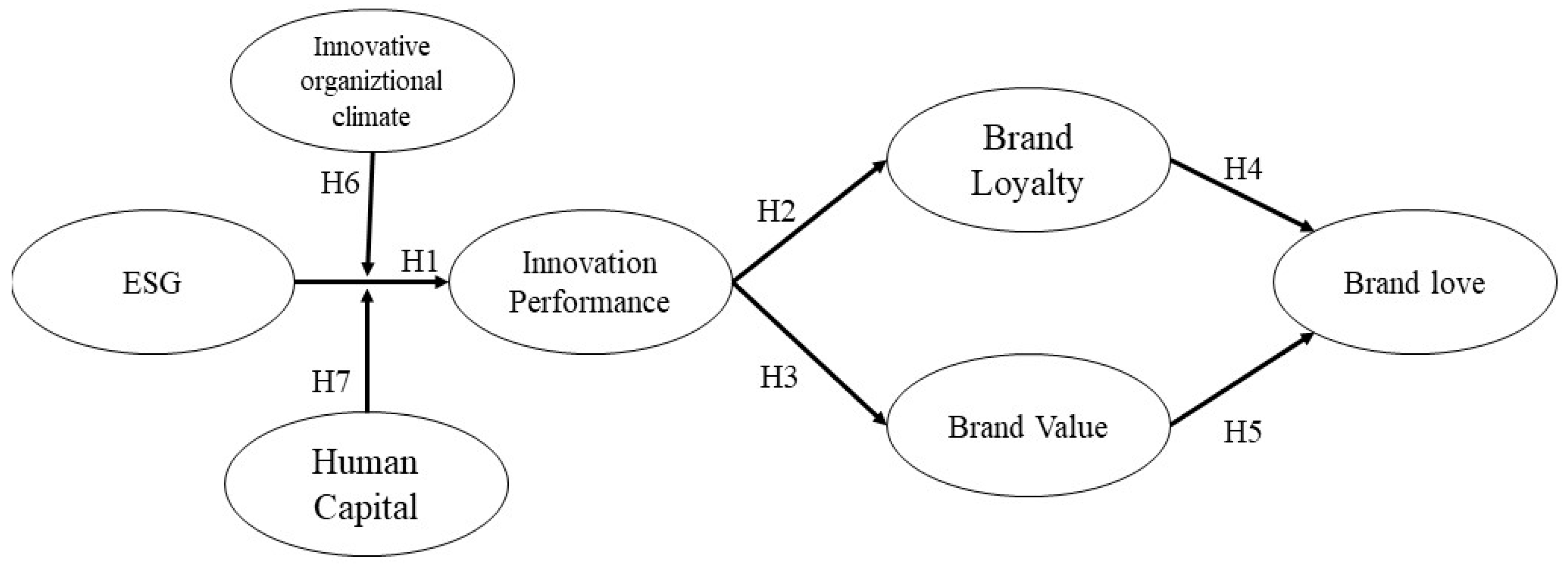
Figure 1. Research structure.
Sustainability 17 10408 g001
Figure 2. Standardized theoretical path coefficients.
Sustainability 17 10408 g002
Table 1. Analysis of demographic background variables.
Background VariablesCategoryTotalPercentage (%)
SexMale9427.2
Female25272.8
Age21~305014.5
31~4016046.1
41~508424.3
51~605014.5
61 up20.6
EducationCollege diploma/undergraduate25774.3
Postgraduate8925.7
Service typeAir duty19656.6
Ground service15043.4
Job titleFlight Attendant14742.5
Chief Flight Attendant246.9
Cabin Manager195.5
Ground Staff Supervisor236.6
Ground Staff11332.7
Other205.8
seniorityUnder 5 years236.6
5–10 years6318.2
11~15 years12837.0
16~20 years288.1
21~25 years5415.6
over 25 years5014.5
n = 346.
Table 2. Confirmatory factor analysis results for the measurement scale.
ItemVariablesFactor LoadingsCronbach’s αComposite ReliabilityAVE
ESG practiceER10.8670.9700.9730.752
ER20.820
ER30.888
ER40.918
ER50.881
ER60.895
SR70.789
SR80.899
SR90.894
GR110.864
GR120.837
GR130.845
Innovation performancePI140.8980.9850.9870.821
PI150.897
PI160.902
PI170.911
PI180.915
PrI190.916
PrI200.933
PrI210.949
PrI220.954
PrI230.902
PrI240.911
AI250.896
AI260.842
AI270.907
AI280.903
AI290.851
Brand valuesBV380.9570.9640.9770.933
BV390.974
BV400.966
Brand loyaltyBL450.9500.9770.9830.934
BL460.981
BL470.975
BL480.960
Brand loveBO410.9340.9700.9780.918
BO420.967
BO430.969
BO440.962
Innovative Organizational ClimateOC300.9450.9790.9820.870
OC310.938
OC320.937
OC330.951
OC340.933
OC350.922
OC360.950
OC370.886
Human CapitalHC490.9290.9730.9780.880
HC500.951
HC510.949
HC520.926
HC530.949
HC540.922
Table 3. Discriminant Validity Assessment Using the Fornell–Larcker Criterion.
BLBOBVESGHCIPOC
Brand loyalty0.967
Brand love0.8580.958
Brand values0.8590.9090.966
ESG practice0.8000.8440.8130.867
Human Capital0.8690.8680.8580.8570.938
Innovation performance0.7700.8340.8500.8990.8630.906
Innovative Organizational Climate0.7310.8140.8210.8320.8240.8990.933
Table 4. Intercorrelations of the HTMT variables.
BLBOBVESGIP
Brand loyalty
Brand love0.881
Brand values0.8850.939
ESG practice0.8210.8680.838
Innovation performance0.7840.8530.8720.917
Table 5. Path analysis and test.
HypothesisPathβtR2f2VIF95% CI
LL
95% CI
UL
Results
H1ESG→IP0.36268.846 ***0.8094.2431.0000.8700.922supported
H2IP→BL0.77024.810 ***0.5931.4601.0000.7030.826supported
H3IP→BV0.85043.342 ***0.7232.6081.0000.8070.885supported
H4BL→BO0.2965.046 ***0.8500.1533.8030.1860.414supported
H5BV→BO0.65511.302 ***0.8500.7513.8030.5350.760supported
Note: *** p < 0.001; ESG: Environmental, Social, and Corporate Governance; IP: Innovation performance; BL: Brand loyalty; BV: Brand Values; BO: Brand love.
Table 6. Test for Moderating Effects Interference Effect Evaluation Form.
HypothesisPathβtResults
H6ESG*OC → IP−0.0381.981 *supported
H7ESG*HC → IP0.0060.372not supported
Note: * p  <  0.05; ESG: Environmental, Social, and Corporate Governance; IP: Innovation performance; HC: Human Capital; OC: Innovative Organizational Climate.
Disclaimer/Publisher’s Note: The statements, opinions and data contained in all publications are solely those of the individual author(s) and contributor(s) and not of MDPI and/or the editor(s). MDPI and/or the editor(s) disclaim responsibility for any injury to people or property resulting from any ideas, methods, instructions or products referred to in the content.