
Article

The Economic Evaluation of Cultural Ecosystem Services: The Case of Recreational Activities on the “Via degli Dei Pilgrim Route” (Italy)

1
Department of Agriculture, Food, Environment and Forestry, University of Florence, P.le delle Cascine 18, 50144 Florence, Italy
2
Faculty of Agriculture, Master’s Degree in Forestry Systems Science and Technology, University of Florence, P.le delle Cascine 18, 50144 Florence, Italy
*
Author to whom correspondence should be addressed.
Sustainability 2025, 17(22), 10179; https://doi.org/10.3390/su172210179
Submission received: 15 October 2025 / Revised: 3 November 2025 / Accepted: 10 November 2025 / Published: 13 November 2025

Abstract

Recreation, aesthetic appreciation, identity, and spiritual values are among the cultural ecosystem services (CES) produced by long-distance historic and pilgrimage trails. However, it is still difficult to convert these experiential benefits into quantifiable economic flows. This study collected 560 valid responses from an in-field survey conducted along the Via degli Dei (Bologna–Florence). Robust visitor clusters were created using Gower dissimilarities, Partitioning Around Medoids (PAM), silhouette diagnostics, and Factor Analysis for Mixed Data (FAMD). Each cluster was then profiled according to seasonal patterns, information channels, individual-level, per-category expenditures (accommodation, food, transport, services, and equipment), as well as motivations. Four segments are identified—Student Campers (low-budget, peak-summer), Working-Age Male B&B Hikers (short stays, B&B), Young Women on Mixed Lodging (mixed accommodation), and Midlife Comfort-Seekers (higher spend, shoulder-season)—underpinning our spending, seasonality, and managerial implications. Student Campers had the lowest absolute expenditures, while Midlife Comfort-Seekers had the highest (median lodging €180; food €175). The study offers practical levers for route governance (targeted communications, low-impact lodging strategies, shoulder-season promotion) to improve local value capture while reducing environmental pressure by connecting typologies to monetary CES flows. The findings provide a reproducible model for implementing recreational CES on historical-cultural tours.

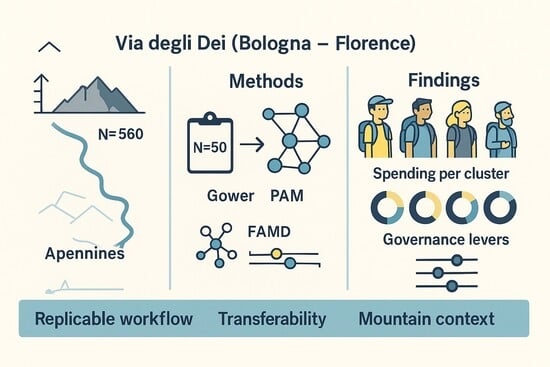
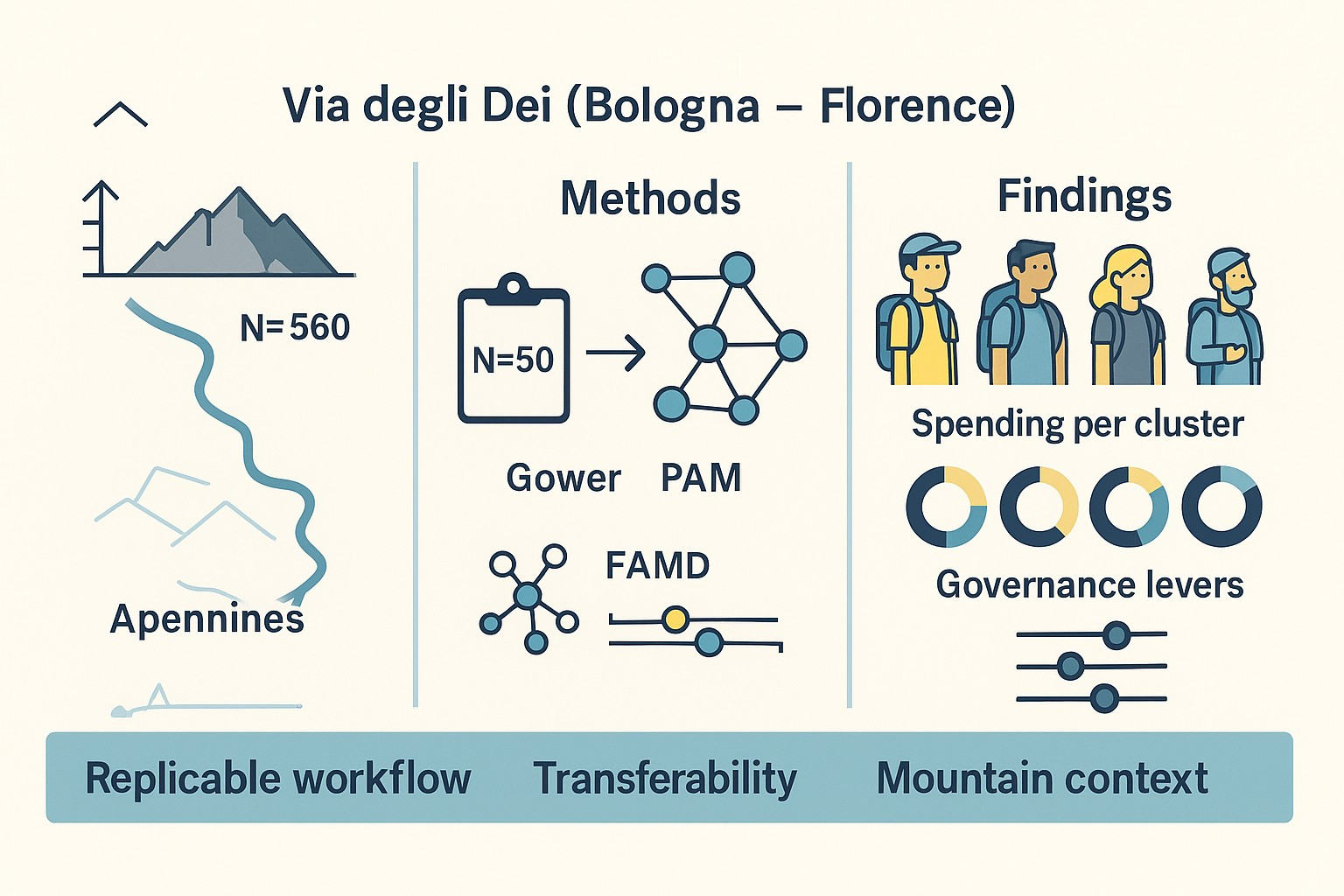
Graphical Abstract

1. Introduction

Historic and cultural itineraries, in particular long-distance pilgrim and heritage trails, constitute significant providers of cultural ecosystem services (CES), delivering non-material benefits such as recreation, aesthetic experience, cultural identity, and spiritual value [1,2,3,4].
Foundational studies (e.g., Millennium Ecosystem Assessment 2005; Daniel et al. 2012) established the policy relevance of CES, yet methodological reviews still note difficulties in translating subjective, experiential values into indicators usable for planning and assessment [1,2,5,6]. While spatially explicit and participatory mapping has helped identify cultural-value hotspots [7,8,9], a persistent gap is linking individual motivations and experiences to measurable service flows (e.g., expenditures, accommodation demand, temporal concentration) required for governance and management [10,11,12].

1.1. Literature Review—Valuation of Cultural Ecosystem Services, Visitor Profiling and Methods

The scientific literature on cultural ecosystem services includes conceptual syntheses, methodological reviews and applied case studies. Conceptual contributions emphasise the integration of social values and stakeholder perspectives within CES assessments, whereas empirical studies propose candidate indicators and mapping procedures at multiple spatial scales [8,10,13,14,15,16]. Mapping frameworks that combine supply–demand logic have informed policy applications (e.g., Burkhard et al.; Maes et al.), but mapping alone does not resolve the empirical translation of perceptual values into economic flows that influence local decision making [7,8].
An emergent applied literature addresses this translation by coupling visitor profiling (segmentation and clustering) with behavioural and expenditure data. Empirical investigations of pilgrimage routes and long-distance trails (e.g., studies on the Camino de Santiago and the West Highland Way) consistently identify recurrent visitor typologies—ranging from low-budget, younger cohorts to smaller groups of higher-spending, mid-life visitors—that differ in temporal patterns, trip organisation, information sources and per capita expenditure [17,18,19,20,21,22,23].
Methodological advances relevant to mixed-type survey data and skewed expenditure distributions support the operationalization of CES. For mixed categorical and continuous variables, Gower’s coefficient provides an appropriate distance metric, while medoid-based clustering (e.g., PAM) affords robustness to atypical observations and yields representative medoids for interpretation. Dimension-reduction tools such as Factor Analysis for Mixed Data (FAMD) assist cluster interpretation in mixed-data contexts [11,24,25,26]. On the expenditure modelling side, finite and infinite mixture models and compound-distribution approaches enable estimation of cluster-specific spending distributions and facilitate counterfactual scenario analysis for policy appraisal [27,28].
Important knowledge gaps persist. First, secular long-distance trails, as distinct from explicitly religious pilgrimages, have received comparatively limited empirical attention and may exhibit different motivational and economic profiles. Second, some segmentation studies do not exploit methods designed for mixed-data structures, reducing robustness and interpretability. Third, few studies empirically link cluster membership to sustainability indicators (e.g., seasonal pressure, leakage of expenditure). Finally, the influence of information channels on timing and expenditure patterns remains understudied. Addressing these gaps requires an integrated workflow combining rigorous mixed-data segmentation, individual-level expenditure decompositions, econometric modelling, and stakeholder engagement [3,4,9,12,13,29,30].

1.2. Research Objectives

Responding to the evaluative needs and methodological gaps outlined above—i.e., linking subjective CES valuations to measurable economic/behavioural flows and using techniques suited to mixed survey data—the study focuses on a concise set of aims. Through an integrated workflow (mixed-data clustering, individual-level expenditure decomposition, mixture-distribution modelling), it delivers management-relevant indicators for the Via degli Dei to inform governance and policy [1,2,5,6,7,8,25]. Specifically, the study addresses the following objectives:
  • Derive empirically supported visitor typologies.
Identify homogeneous hiker clusters with mixed-data methods (Gower dissimilarity; medoid partitioning, e.g., PAM) and validate them via stability checks and FAMD to ensure reproducibility and managerial interpretability [20,21,22].
2.
Translate typologies into monetary and operational CES flows.
Characterise each cluster by motivations, seasonal visitation patterns, information channels, and mobility choices, and compute detailed individual-level expenditure profiles across key categories (accommodation, food, transport, services, equipment). Compare expenditure structures and intensity across clusters to assess their differentiated contributions to local economic flows and to identify behavioural patterns relevant to sustainable management. Derive policy-relevant indicators—such as average local spending per cluster, seasonality ratios, and accommodation use intensity—that operationalise the concept of cultural ecosystem services (CES) for decision-making in trail governance [23,27,28].
3.
Produce cluster-specific governance recommendations and scenario assessments.
Formulate actionable, cluster-tailored management measures—such as targeted communication strategies, promotion of low-impact accommodation, incentives to redistribute demand toward shoulder seasons, and service zoning—based on the empirical differentiation of visitor profiles. The results are interpreted in consultation with existing governance frameworks to ensure that quantitative evidence aligns with local priorities, sustainability objectives, and stakeholder perspectives [13,29].
Collectively, these objectives are designed to convert visitor heterogeneity into quantifiable, policy-usable outputs that (i) address the methodological shortcomings identified in the literature, (ii) provide immediate decision-support metrics for local managers and policymakers, and (iii) advance the operationalisation of cultural ecosystem services in the context of secular long-distance trails [5,6,7].

1.3. Study Area

The study area is the Via degli Dei, an approximately 130 km route linking Bologna and Florence (Figure 1). Typically completed in five–seven stages depending on fitness, it largely follows Club-Alpino-Italiano-managed trails and retraces an ancient Etruscan–Roman road connecting Felsina (Bologna) to Fiesole, historically for trade and strategic movement [31,32]. About 18 km of the Via degli Dei coincide with the Flaminia Militare, largely along today’s third stage. In Roman times it was a strategic corridor for troops and goods between northern and central Italy; later it served pilgrims travelling to Rome via the Via Francigena. The route’s name reflects deity-linked peaks—Mount Venere, Mount Adone, and Mount Luario (associated with the goddess Lua). It also crosses the World War II Gothic Line at several points, adding another historical layer.
Appennino Slow (2022) reports users rising from approximately 8000 (2017) to 22,000 (2022), based on regional surveys and guide data—evidence of growing slow/trekking demand [33]. The route is prized for the Contrafforte Pliocenico Nature Reserve and sites like Monte Senario Sanctuary and Trebbio Castle.
We selected the Via degli Dei—a secular Apennine crossing—because it offers a true mountain context distinct from major pilgrimage routes. Its 120–130 km length (about five stages) enables standardised fieldwork, yet spans varied elevation, land cover, and service supply, which is useful for typology and expenditure analysis. The route intersects the heritage Flaminia Militare, supporting cultural wayfinding narratives. Active, well-documented governance (coordinated mapping/credentialing) allows operational, transferable metrics. It is also a strong model for European thematic trails: medium difficulty, feasible year-round, and closely linked to CAI/GEA.

2. Materials and Methods

2.1. Hypotheses and Analytical Framework

We pre-registered concise, literature-grounded expectations to guide segmentation and spending analyses. We anticipate that a four-cluster solution will maximise cohesion/separation and interpretability with Gower–PAM and FAMD (H1) [11,17,18,19,20,21,22,23,24,25,26]; that mid-life segments spend more per capita—especially on accommodation/food—than younger budget cohorts (H2) [17,18,19,20,21,22,23]; that comfort-oriented segments allocate a higher budget share to accommodation and a lower share to transport than camping/low-budget segments (H3) [19,20,21,22]; that seasonal profiles differ by segment, with younger cohorts concentrating in peak summer and higher-spending cohorts in shoulder seasons (H4) [17,18,19,20,21,22,23]; and that heavy-tailed spending is better captured by mixture/compound models with segment-specific parameters than single-family models (H5) [27,28]. These hypotheses explicitly link perceptual CES dimensions to measurable flows, addressing the mapping-to-decision gap noted in CES studies [7,8].

2.2. Data Collection

The empirical basis of this research is a structured survey administered to hikers along the Via degli Dei, a long-distance trail linking Bologna and Florence across the Apennines. The questionnaire was collected in situ during the peak hiking season and gathered information on socio-demographic characteristics, organisational aspects of the trip, motivations, and sources of information. After screening for completeness and consistency, a total of N = 560 valid observations were retained for the analysis.

2.3. Variables

The questionnaire covered several thematic blocks:
-
Socio-demographics: gender, age class, education, country of residence.
-
Trip organisation: travel period, accommodation type, means of transport, daily and total expenditure.
-
Behavioural and motivational dimensions: travel motivation, information sources and communication channels, travel companions.
Because the dataset is largely composed of categorical variables, it was necessary to apply an appropriate pre-processing strategy. Particular attention was devoted to the treatment of multiple-response questions, such as those related to travel motivation and information channels. For these variables, each possible response option was transformed into a binary indicator. Formally, if a question offered q possible categories {c1, …, cq}, each category was represented by a dummy variable such that for respondent i,
V c j i = f x = 1 if   respondent   i   selected   option   c j 0 otherwise
This transformation ensured that the multiple-choice nature of the questionnaire was fully captured in the analytical dataset. The final data matrix therefore contained, for each respondent, a combination of nominal, ordinal, and binary indicators.

2.4. Dissimilarity Measure

The choice of a suitable dissimilarity measure is critical when analysing categorical survey data. Traditional distance metrics, such as Euclidean or Manhattan, presuppose numerical continuity and equal spacing between categories and are therefore not appropriate in this context. In order to accommodate the heterogeneous structure of the data, Gower’s dissimilarity coefficient was adopted [20]. This measure has become a standard in the analysis of survey data involving mixed variable types because it allows categorical, ordinal, and binary variables to be combined consistently in a single metric [21]. Gower’s coefficient also accommodates missing values by excluding them from the pairwise comparison, thus maximising data usage without imputation.
Formally, the dissimilarity between individuals i and j is expressed as follows:
d i , j   =   k = 1 p w i , j , k δ i , j , k k = 1 p w i , j , k
where p is the number of variables, wi,j,k is an indicator equal to one when both individuals provide valid responses on variable k, and δi,j,k is the partial dissimilarity for that variable. The flexibility of this metric makes it particularly suited to tourism surveys, where socio-demographic, behavioural, and motivational information must be combined.

2.5. Clustering Procedure

Having computed the dissimilarity matrix, the subsequent methodological decision concerned the clustering algorithm. The k-means procedure, widely used in numerical data analysis, was deemed unsuitable since it assumes Euclidean geometry and continuous variables, which are not compatible with the categorical structure of the present data. For this reason, the Partitioning Around Medoids (PAM) algorithm was implemented. PAM minimises the sum of dissimilarities between each individual and the representative medoid of its cluster. Unlike the centroid used in k-means, the medoid is an actual observation from the dataset, which enhances robustness to outliers and improves interpretability. This property enhances interpretability and robustness to outliers [34]. The objective function can be expressed as follows:
min m 1 , , m k i = 1 N m i n 1 h K d x i , m h
where N is the number of respondents, xi is the profile of respondent i, and mh is the medoid of cluster h. This approach ensures that clusters are not only statistically coherent, but also interpretable in terms of real response patterns.

2.6. Selection of the Number of Clusters: The Silhouette Method

The determination of the appropriate number of clusters was carried out through the silhouette method (Rousseeuw, 1987) [35], which provides a measure of cohesion and separation. For each respondent i, the silhouette coefficient is defined as follows:
s i = b i a ( i ) m a x a i , b ( i )
where a(i) is the average dissimilarity between i and members of its own cluster, and b(i) is the minimum average dissimilarity between i and members of any other cluster. The global silhouette value, calculated as the mean of all s(i), was used to compare solutions with different numbers of clusters. Values approaching one indicate well-separated clusters, while values close to zero indicate ambiguity in the assignments [36].

2.7. Dimensionality Reduction and Visualisation

To complement the clustering analysis and facilitate interpretation, Factorial Analysis of Mixed Data (FAMD) was conducted. This technique simultaneously treats quantitative variables through principal component analysis and categorical variables through multiple correspondence analysis, thereby projecting respondents into a reduced factorial space [37]. The graphical representation provided by FAMD offers a useful tool to visualise the relative separation among clusters and to explore latent dimensions in tourist profiles.

2.8. Cluster Characterisation

After establishing the final clustering solution, each group was profiled by examining the distribution of all survey variables. Particular emphasis was placed on the computation of the lift index, defined for a category c within cluster h as
Lift c , h = P ( c | h ) P ( c )
where P(c|h) is the proportion of cluster-h members reporting category c, and P(c) is the proportion of the entire sample reporting that category. A lift greater than one signals that the category is over-represented in the cluster, thereby enabling the identification of distinctive features and providing substantive interpretations of the hiking typologies along the Via degli Dei.

3. Results

To ensure the reliability and interpretability of the identified clusters, several complementary validation procedures were conducted, including silhouette diagnostics, sensitivity analysis with respect to the number of clusters, and bootstrap stability assessment. These approaches follow established methodological guidelines for clustering validation in social and tourism research [19,21,35,36].
The average silhouette coefficient across all observations was 0.275 for the four-cluster solution, the highest among the configurations tested. For comparison, the average silhouette was 0.239 at k = 2 and 0.259 at k = 3, then decreased to 0.166 at k = 5 and 0.169 at k = 6. Per-cluster silhouettes for the retained solution were as follows: Cluster 1 = [s1], Cluster 2 = [s2], Cluster 3 = [s3], and Cluster 4 = [s4].
These values suggest moderate internal consistency and limited overlap, which is consistent with the complexity of motivational and behavioural data in tourism studies. While none of the clusters achieve a silhouette above 0.5—typical for datasets with many categorical variables—the coefficients confirm that the four-cluster model captures meaningful but partially intersecting typologies of hikers [19,38].
Sensitivity analysis across different numbers of clusters ( k   =   2 6 ) revealed a clear elbow-shaped trajectory in the average silhouette coefficients. The silhouette increased steadily from 0.239 at k   =   2 to its maximum at k   =   4 , and then declined sharply. This pattern indicates that additional clusters lead to over-segmentation, fragmenting coherent groups without improving separation. Therefore, the four-cluster configuration was retained as the most parsimonious and interpretable solution, aligning statistical adequacy with conceptual clarity.
To evaluate the stability of the clustering solution, a nonparametric bootstrap procedure was implemented using the cluster bootstrap function in the fpc package [36]. Fifty bootstrap resamples were generated, and the mean Jaccard similarity coefficient was computed for each cluster, quantifying how consistently cluster memberships were reproduced under resampling perturbations. The resulting Jaccard values were 0.70, 0.91, 0.99, and 0.56 for Clusters 1 through 4, respectively.
Following Hennig’s (2007) guidelines, Jaccard values above 0.75 indicate high stability, values between 0.60 and 0.75 indicate moderate stability, and values below 0.60 indicate weak stability [36]. Accordingly, Clusters 2 and 3 exhibit very high stability, Cluster 1 shows moderate stability, and Cluster 4 demonstrates lower consistency, likely due to its more diffuse behavioural composition. Despite the lower value for Cluster 4, the overall mean Jaccard index across clusters (~0.79) confirms that the cluster structure is robust to resampling and statistically defensible.
The cluster analysis identified four distinct groups of hikers (N = 560). Cluster 1 comprised 130 respondents (23.2%), Cluster 2 included 132 respondents (23.6%), Cluster 3 represented the largest share with 171 respondents (30.5%), and Cluster 4 accounted for 127 respondents (22.7%). In all clusters, the Via degli Dei was overwhelmingly experienced on foot, in small groups of two to five, and overall satisfaction was consistently high, with mean values ranging from 4.43 to 4.72 on a five-point scale. Despite these commonalities, each cluster displayed distinctive socio-demographic, motivational, behavioural, and economic characteristics, which allow us to provide representative labels.
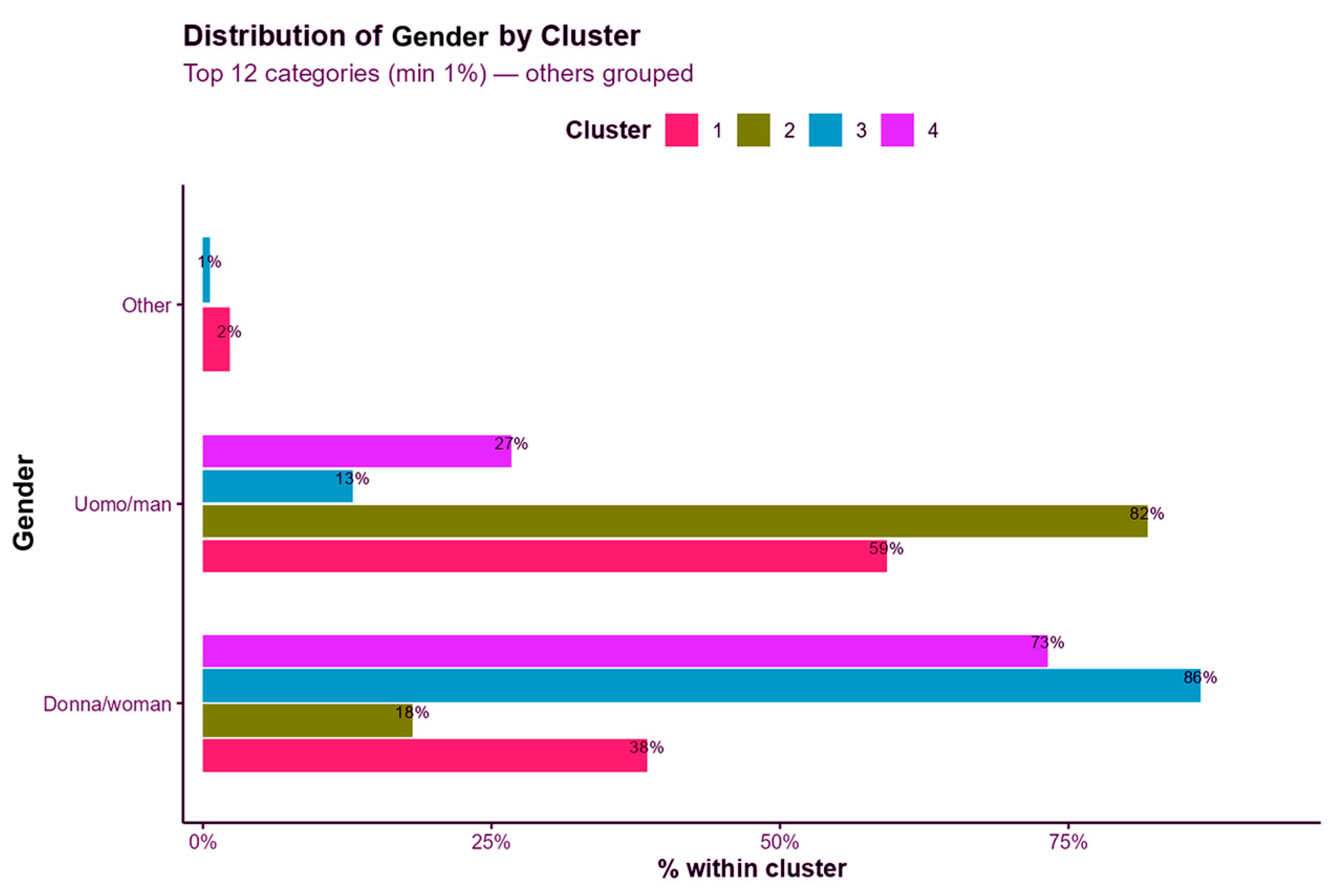
The descriptive figures provide a first overview of the distinctive socio-demographic and behavioural traits of the identified clusters. Figure 2 illustrates the gender distribution across clusters, revealing marked differences in the prevalence of male and female hikers that contribute to the sociocultural characterisation of each segment.
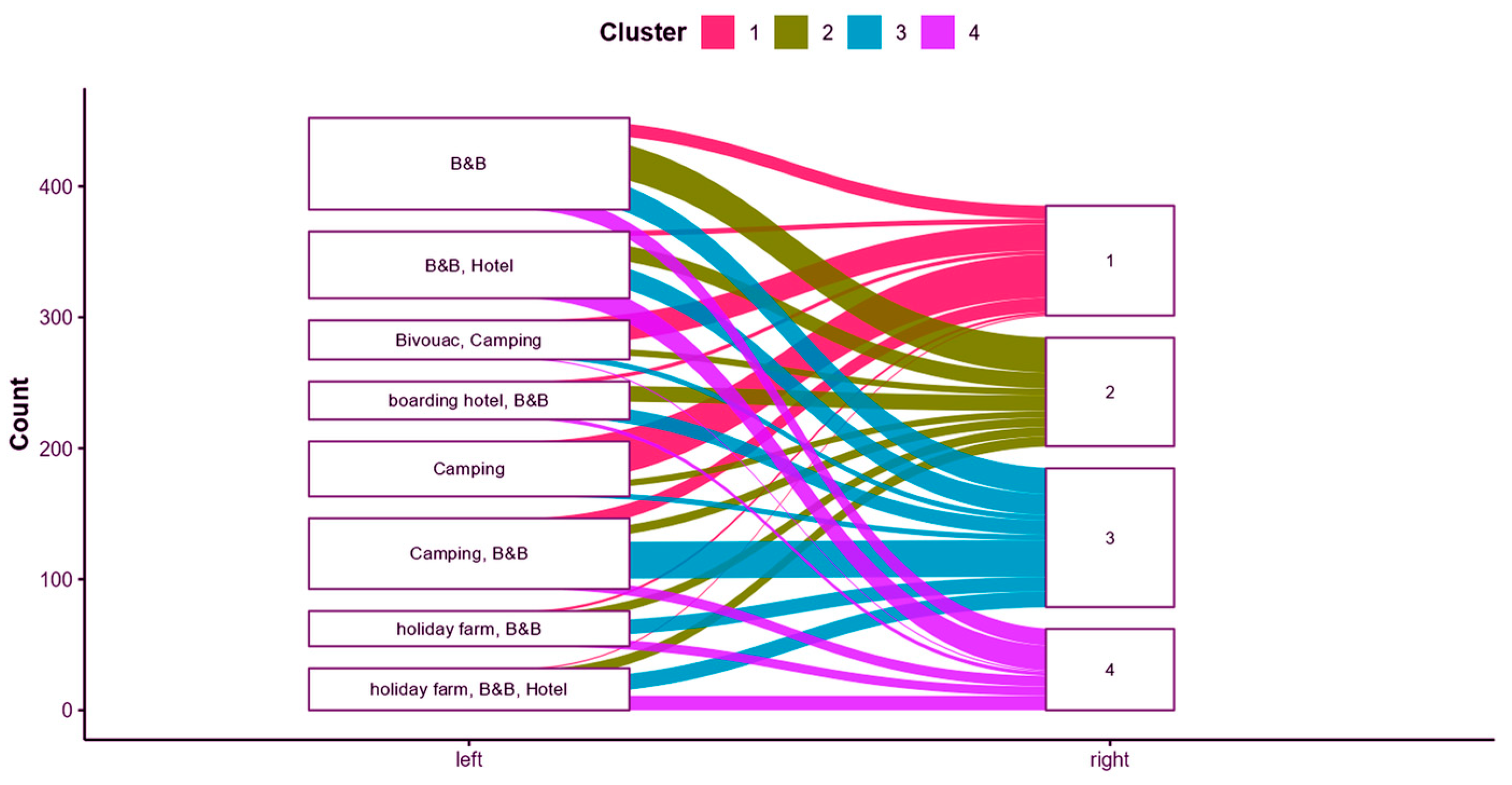
Figure 3 displays the distribution of accommodation types by cluster, highlighting how preferences for hotels, guesthouses, or camping facilities vary substantially and may be interpreted as indicators of both budget constraints and experiential expectations.
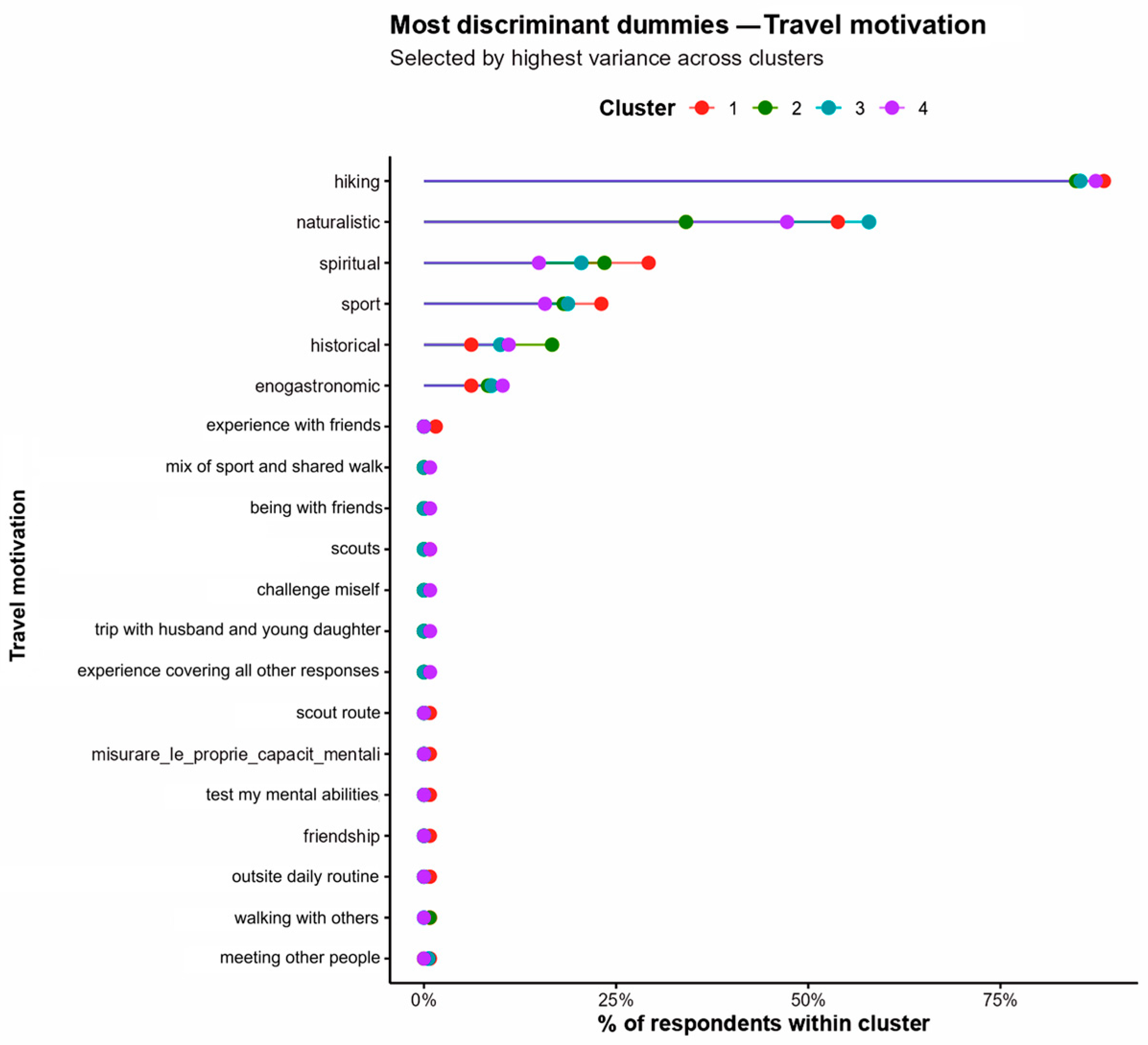
Turning to motivations, Figure 4 presents the top 20 travel motivations of the journey by cluster, where recreational, spiritual, cultural, and sporting reasons emerge with heterogeneous intensity across groups, thereby confirming the multidimensional nature of hiking along the Via degli Dei Pilgrim Route.
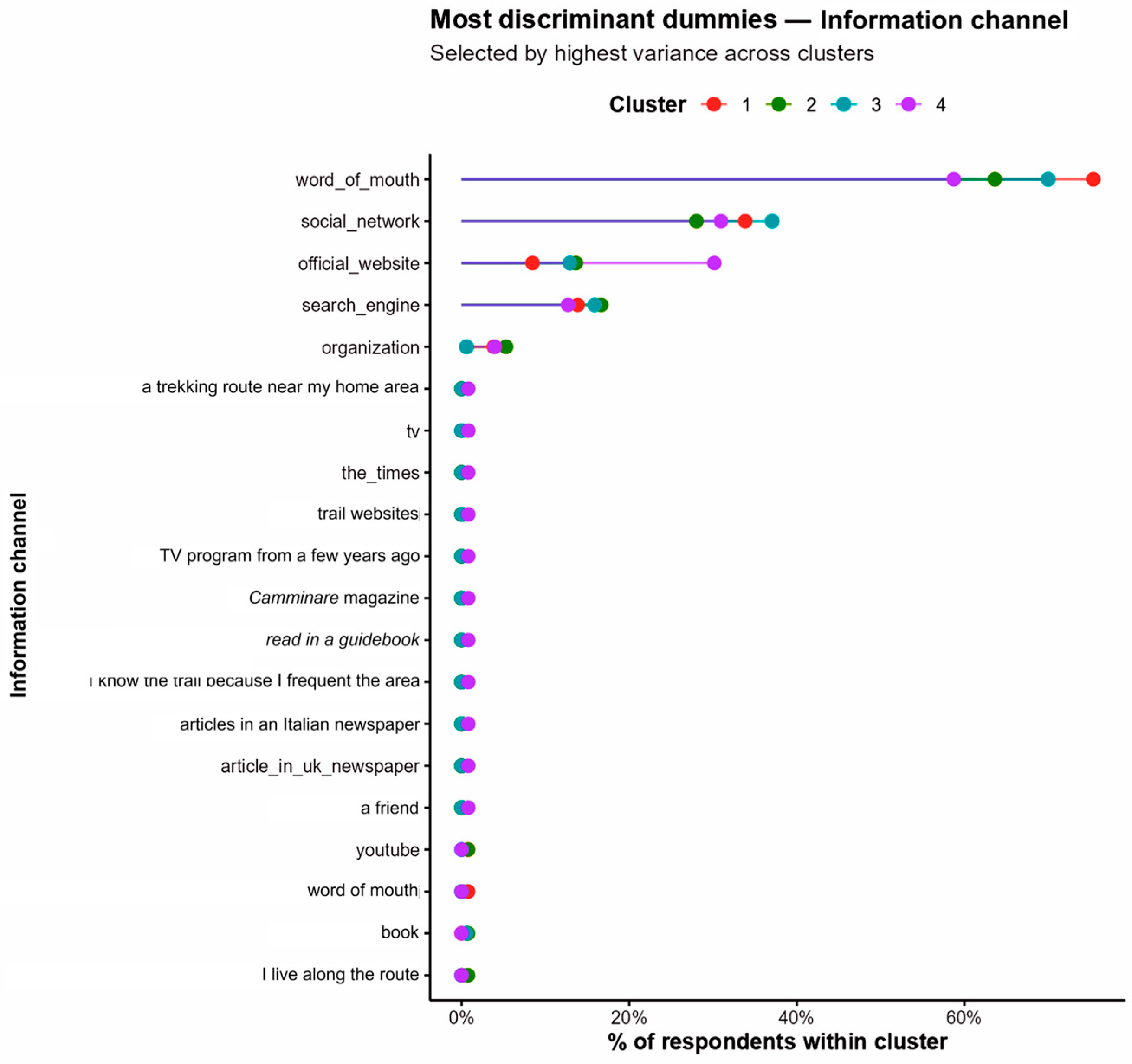
Finally, Figure 5 depicts the distribution of the top 20 information channels used by respondents in each cluster, emphasising the role of word-of-mouth, digital platforms, and traditional media as differentiated sources of cultural ecosystem service experiences.
The complete profile of the clusters, with all 88 variables considered, is provided in the Supplementary Material.

3.1. Cluster Characterisation for Hikers on the Via degli Dei Pilgrim Route

Cluster 1 may be labelled “Student Campers”. It consists predominantly of very young hikers, with 80% aged 15–24, most of them still studying (77%), and with limited incomes (39% below €35,000, 29% between €35,001 and €70,000). The group is male-skewed (59%) and highly reliant on camping and bivouac solutions. Trips are short, usually five days, and concentrated in September and August. Motivations are dominated by hiking (88%) and nature (54%), with spiritual and sporting interests as secondary drivers. Word of mouth (75%) and social media (34%) are their main information sources. This profile clearly identifies a youthful, budget-oriented, peer-dependent segment.
Cluster 2 can be defined as “Working-age Male B&B Hikers”. It is male-dominated (82%), with a core in the 35–44 age range (41%), highly educated (55% master’s degree), and economically stable (42% reporting between €35,001 and €70,000). Trips are short, usually five days, and often take place in October, marking this group as off-peak travellers. Accommodation preferences lean toward B&Bs, reflecting a moderate comfort orientation. Hiking (85%) and nature (34%) remain primary motivations, complemented by spirituality, sport, and history. Word of mouth (64%) remains the leading channel, followed by social networks (28%) and search engines (17%). This cluster reflects middle-income, educated men in stable employment, favouring short, organised trips in less crowded periods.
Cluster 3 may be characterised as “Young Women on Mixed Lodging”. It is strongly female (86%), with a majority aged 25–34 (68%). Education is distributed across high school, bachelor’s, and master’s levels, while income is modest (74% below €35,000), reflecting early career stages. Trips are short (five days), mainly in August, and lodging is flexible, often combining camping and B&B. Hiking (85%) and nature (58%) are their main motivations, supported by spirituality (20%) and sport (19%). Information channels are dominated by word of mouth (70%) and social networks (37%), indicating a digitally connected and socially influenced segment. This group represents young women who blend outdoor and comfort-oriented lodging, travel during the summer peak, and seek highly social experiences.
Cluster 4 is best described as “Midlife Comfort-Seekers”. It consists mainly of women (73%), aged 45–54 (51%) and 55–64 (21%), with stable employment (56% employees, 13% freelancers, 9% retired) and higher incomes (54% between €35,001 and €70,000). Trips are slightly longer, typically six days, and concentrated in September and May. Accommodation choices emphasise comfort, with B&B + hotel (15%) and B&B (10%) prevailing. Hiking (87%) and nature (47%) are the main motivations, complemented by sport (16%) and spirituality (15%). This cluster distinguishes itself by its reliance on formal planning, as official websites (30%) are consulted almost as much as social networks (31%). With a mean satisfaction of 4.72, it represents the most satisfied group, embodying mature, economically secure women who value comfort and careful organisation.
In conclusion, the four representative segments—Student Campers, Working-age Male B&B Hikers, Young Women on Mixed Lodging, and Midlife Comfort-Seekers—highlight the diversity of hikers along the Via degli Dei. While all share the core experience of small-group, pedestrian itineraries, they diverge in age, gender, income, accommodation, information strategies, and seasonal preferences, demonstrating how socio-demographic and economic backgrounds shape motivations and experiences on long-distance hiking routes.

3.2. Expenditure Patterns Across Clusters

The analysis of expenditures shows clear differences across the four clusters (Table 1 and Table 2), consistent with the socio-demographic and behavioural profiles described earlier. The data include absolute spending values (mean, median, quartiles) as well as the share of each category relative to individual budgets. Importantly, the statistics on percentages are calculated at the individual level before aggregation, thereby reflecting the average budget composition of hikers within each cluster.
Table 1 shows descriptive statistics of hikers’ expenditures along the Via degli Dei, by cluster and spending category (accommodation, food, travel, other). Values are reported in euros with mean, median, and interquartile range (p25–p75). In particular, tmean10 represents the 10% trimmed mean for each cluster. It is a mean value computed after removing the lowest 10% and highest 10% of observations. This yields a more robust measure because it is not influenced by outliers.
Table 2 shows the percentage distribution of individual expenditures across categories (accommodation, food, travel, other) for each cluster. Statistics were calculated at the individual level prior to aggregation so as to reflect the average composition of hikers’ budgets.
Cluster 1, the “Student Campers,” displayed the lowest expenditure levels. Median spending on accommodation was €75 (IQR €50–125), food costs reached €75 (IQR €30–125), and travel expenditures were modest at €33 (IQR €30–80). Other costs, though limited in percentage terms, reached a median of € 0 (IQR €0–25). When considering relative allocations at the individual level, accommodation and food each absorbed about one third of the budget (34.8% and 34.8%), while travel represented nearly one quarter (24%) and other items about 5.8%. This pattern confirms the constrained economic capacity of young students, who prioritise essentials and opt for camping or bivouac solutions.
Cluster 2, the “Working-age Male B&B Hikers,” showed a more substantial financial commitment. Median spending on accommodation was €125 (IQR €75–200) and food also €125 (IQR €75–175), with travel costs at €50 (IQR €30–90). Other expenses reached €25 (IQR €0–25). At the individual level, accommodation accounted for 36.6% of the budget, food 37.3%, travel 19.9%, and other costs 5.5%. This distribution matches the profile of educated, employed men with middle incomes, who prefer B&B lodging and travel in the shoulder season.
Cluster 3, the “Young Women on Mixed Lodging,” registered higher expenditure in “other” categories. Median accommodation spending was €125 (IQR €100–200), food €125 (IQR €75–175), and travel €60 (IQR €33–105). Median other expenditures reached €25 (IQR €0–25), surpassing Clusters 1 and 2. Proportional analysis based on individual shares shows that accommodation absorbed 37.9% of budgets, food 36.0%, travel 19.5%, and other costs 6%. This profile aligns with young women who, despite modest incomes, combine camping and B&B lodging and diversify their expenditures, channelling resources into additional activities and services that enrich the hiking experience.
Cluster 4, the “Midlife Comfort-Seekers,” displayed the highest absolute spending levels. Accommodation reached a median of €180 (IQR €125–200), food €175 (IQR €125–225), travel €80 (IQR €40–120), and other items €25 (IQR €0–25). When considering individual budget composition, accommodation accounted for 38.7% of spending, food 35.4%, travel 19.7%, and other categories 5.8%. This cluster reflects midlife women with stable and higher incomes, who favour B&Bs and hotels, travel in shoulder seasons, and plan trips using formal information sources. Their stronger purchasing power translates into higher absolute expenditures and greater attention to comfort.
In conclusion, expenditure structures calculated both in absolute terms and as individual budget shares corroborate the socio-demographic and motivational profiles of the clusters. Cluster 1 allocates limited resources to basic needs, Cluster 2 reflects balanced spending by middle-income men, Cluster 3 shows diversified allocation among young women despite modest means, and Cluster 4 confirms the higher spending capacity and comfort orientation of midlife hikers. The calculation of percentages at the individual level ensures that these distributions capture genuine differences in spending priorities rather than being driven by aggregate values.

4. Discussion

The findings of the cluster analysis demonstrate that the Via degli Dei attracts a heterogeneous population of hikers whose socio-demographic characteristics, motivations, behavioural patterns, and expenditure levels correspond to distinct visitor profiles. The identification of four clusters—“Student Campers,” “Working-age Male B&B Hikers,” “Young Women on Mixed Lodging,” and “Midlife Comfort-Seekers”—directly addresses the first objective of the study, namely to capture the diversity of recreational demand and cultural ecosystem services experienced along the trail. Each group engages with the landscape and its cultural ecosystem services in a different way. Younger, low-budget hikers value the recreational and social dimensions of the experience, while older and more affluent visitors seek comfort and combine physical activity with cultural appreciation and careful planning. This segmentation highlights the multifaceted ways in which natural and cultural landscapes are appropriated as sources of recreation, identity, and spiritual enrichment, thereby confirming the multidimensional character of cultural ecosystem services as outlined by the Millennium Ecosystem Assessment (2005) and later reviews [1,2,5]. Compared with religiously framed routes such as the Camino de Santiago, our ‘secular’ context shows motivations that are more recreation- and nature-oriented and less explicitly spiritual. This aligns with Camino segmentations, where older, higher-spending visitors report stronger spiritual/cultural drivers than younger budget hikers [15,16,18].
Accordingly, our four-cluster solution—contrasting younger budget hikers with midlife, higher-spending, comfort-seeking segments—matches the types identified on the Camino, reinforcing external validity and managerial implications for pricing, capacity, and service zoning [15].
The second objective concerned the relationship between visitor typologies and local sustainable development. The analysis of expenditures reveals clear differences across clusters in both absolute values and budget composition. Students and early-career hikers spend modestly and rely on camping and bivouacs, thus exerting relatively low direct economic impacts, though their concentration in peak summer months can intensify pressure on fragile environments. By contrast, midlife comfort-seekers, who represent a smaller but more affluent segment, exhibit the highest absolute expenditures, particularly on accommodation and food, and travel outside the peak summer season. These results resonate with the argument that different tourist profiles generate differentiated contributions to local economies and to the temporal distribution of demand [26,39].
These results speak directly to slow-tourism goals in rural Apennine communities: segments with longer stays, formal lodging, and off-peak travel increase local value capture and spread demand beyond the summer peak [26,39]. Comparative evidence from long-distance routes—including the West Highland Way, the John Muir coast-to-coast, and the transnational Peaks of the Balkans—links overnight intensity and service use to higher local revenue and measurable community income effects, supporting our inference that accommodation-intensive segments raise local value capture and validating our cluster-specific revenue and leakage benchmarks [40]. They also corroborate earlier evidence that long-distance trails function as important vehicles for local development when they attract higher-spending, off-peak visitors who align with community-based service provision [6]. For rural Apennine communities, prioritising shoulder-season, accommodation-intensive segments offers higher local value capture with lower peak pressure, aligning economic and stewardship objectives [26,39,40].
From a governance perspective, comparison with Hadrian’s Wall Path studies shows linear trails suffer peak-month transport and crowding, supporting our call to shift higher-spending segments to shoulder seasons and manage access/mobility at hotspots. Slow-tourism reviews likewise find longer and deeper engagement boosts local value capture and social benefits, aligning with our results on segment duration and spending mix [41].
Translating these insights into action, we outline segment-specific measures:
  • Midlife Comfort-Seekers (shoulder season): bundle B&B + restaurant menus and luggage transfer; 5–6-day midweek departures in May/September; themed products (foliage/history) with certified local guides; channels: official website and targeted campaigns to 45–64 cohorts; incentives: early-booking and weekday discounts.
  • Student Campers (peak management): expand low-impact camping/bivouac capacity; pre-bookable plots to smooth peaks; shuttle links to trailheads; nudges on Leave-No-Trace and quiet hours.
  • Young Women on Mixed Lodging: highlight safety, well-signed sections, small-group options; mixed lodging passes (B&B + one campground night); storytelling on heritage/nature.
  • Working-Age Male B&B Hikers: shoulder-season ‘trail-to-table’ packages (B&B + local dinners), micro-events, and last-minute weekday offers.
Operational Key Performance Indicators (KPIs) include booking lead time, share of shoulder-season nights, Average Daily Rate (ADR)/Revenue per Available Room (RevPAR) for partner lodgings, and the seasonal pressure index by stage; shifts towards off-peak and accommodation-intensive spending should be prioritised [26,39,40].
Segmentation therefore translates into clear governance tools: provide low-cost, low-impact accommodation and ethics campaigns for youth clusters; use midlife, higher-spending segments to upgrade lodging/food and shift demand to shoulder seasons; and tailor communication by channel (word-of-mouth/social vs. official sites). In line with slow-tourism governance, the goal is to maximise local value capture while safeguarding environmental and community wellbeing [26,39,40].
In summary, the results confirm that the Via degli Dei functions simultaneously as a cultural ecosystem service provider, a catalyst for local sustainable development, and a management challenge. The identification of four distinct clusters demonstrates that trails can cater to diverse visitor expectations, and that management strategies should not assume a homogeneous user base. By situating micro-level visitor typologies within broader sustainability goals, the study contributes to bridging the gap between ecosystem services research and practical tourism governance, in line with recent advances in both tourism and environmental sciences [2,6].

Strengths and Limitations

The strengths of this study are represented by the replicability of the methodology adopted—integrating Gower dissimilarities, PAM clustering with silhouette diagnostics, and FAMD for interpretation—and by a large, in-field sample (N = 560). Moreover, the integration of user typologies with individual-level expenditure decomposition yields operational indicators that are directly useful for trail governance (e.g., cluster-specific spending profiles, seasonal usage, and communication levers). Nevertheless, several weaknesses should be acknowledged. The cross-sectional, self-reported nature of motivations and expenditures may introduce recall or social desirability bias; the single-case focus on a secular long-distance trail constrains generalizability, and the survey window, concentrated in peak/shoulder seasons, may under-represent off-season dynamics. In addition, the lack of biophysical/pressure indicators coupled with the economic profiles prevents a direct linkage between monetary flows and environmental impacts; some aggregated spending categories (e.g., “other”) may mask heterogeneous items, and cluster stability would benefit from further stress-testing (e.g., alternative variable weightings, distance metrics, or clustering algorithms).
Moreover, another limiting aspect is that we used equal variable weights for the baseline Gower distance. With a view to future developments, we envisage, (i) domain-balanced weights, assigning equal total weight to each construct (motivations, trip organisation, accommodation type, seasonality, information channels, demographics) so that no domain dominates due to variable count; (ii) prevalence-adjusted weights for binary/categorical items (e.g., inverse frequency or 1/√p weighting) to reduce the influence of very common/rare modalities; (iii) outcome-informed weights proportional to each variable’s mutual information or effect size with policy outcomes (e.g., total/segment spending, shoulder-season travel), while keeping clustering unsupervised in estimation; (iv) policy-salience weights that upweight variables tied to governance levers (accommodation choice, trip timing, booking channel) to test managerial robustness; and (v) FAMD-derived weights, using loading magnitudes to temper collinearity within domains. Robustness would be assessed via changes in average silhouette, adjusted Rand/NMI vs. the baseline partition, and stability of medoids/cluster labels. Future research should therefore address these issues to strengthen causal interpretation and broaden transferability to other European thematic trails.

5. Conclusions

This study analysed 560 in-field survey responses collected along the Via degli Dei and implemented a rigorous mixed-data workflow (Gower dissimilarities, PAM clustering, silhouette validation and FAMD) to derive visitor typologies, per-category individual expenditure profiles, and management-relevant indicators for cultural ecosystem services (CES).
The empirical analysis produced four stable and interpretable clusters—“Student Campers,” “Working-age Male B&B Hikers,” “Young Women on Mixed Lodging,” and “Midlife Comfort-Seekers”—that differ systematically in socio-demographics, motivations, seasonal patterns, information channels, and absolute as well as relative spending. Student Campers represent the largest low-expenditure cohort concentrated in peak summer months; Midlife Comfort-Seekers are fewer but generate the highest per capita economic contribution, particularly through accommodation and food, and tend to visit in shoulder seasons. Intermediate clusters exhibit mixed lodging strategies and diversified expenditure portfolios. These patterns demonstrate that visitor heterogeneity maps directly onto heterogeneity in monetary flows that are relevant for local economic capture and temporal pressure on resources.
From a management and policy perspective, the results offer immediately actionable levers. Translating typologies into cluster-specific indicators (cluster-level revenue, seasonal-pressure index, leakage estimates) enables targeted interventions: (i) communication strategies calibrated to the dominant information channels of each cluster; (ii) promotion of low-impact, locally anchored accommodation to increase local value capture; (iii) shoulder-season marketing and product packaging to redistribute demand; and (iv) service zoning and capacity planning that reflect cluster spatial–temporal behaviour. By framing these measures in CES terms, the study provides a reproducible pathway for aligning conservation objectives with socio-economic benefits for host communities.
The study also has limitations that condition interpretation and suggest avenues for further research. Data are cross-sectional and self-reported, which may introduce bias in expenditures and restrict causal inference. The geographic focus on a single secular long-distance trail limits immediate generalizability, though the methodological workflow is transferable. Future work should (a) validate cluster dynamics through longitudinal or repeat-survey designs, (b) integrate ecological pressure metrics (visitor-based impacts on trails and sensitive sites) to link monetary flows with biophysical outcomes, (c) complement quantitative segmentation with deliberative and participatory valuation to capture collective and relational CES values, and (d) test economic-behavioural counterfactuals (e.g., changing accommodation mixes or promotion strategies) via simulation and stakeholder co-design to assess distributional effects on local communities.
In sum, by converting experiential heterogeneity into quantifiable, policy-usable outputs, the present study advances the operationalization of cultural ecosystem services for historic-cultural itineraries. The combined use of robust mixed-data clustering and expenditure modelling generates an evidence base that supports differentiated governance measures aimed at maximising local economic benefits while mitigating seasonal and environmental pressures.

Supplementary Materials

The following supporting information can be downloaded at https://www.mdpi.com/article/10.3390/su172210179/s1. ClustersCompleteProfile.xls: cluster database with the indicator values; Expenditures.cvs: expenditure of each respondent on Food, Accommodation, Rentals, Travel, Other; ViaDegliDei.csv: database for each respondent, with data on Purpose of visit, level of Satisfaction, number of Group members, Period of visit, number of days of the visit, Means of transport used, Distance travelled, type of Accommodation, Age Class, Gender, Education Level, Current Occupation and Average Household Income.

Author Contributions

Conceptualization, I.B. and C.F.; methodology, I.B.; software, I.B. and C.F.; validation, I.B. and C.F.; formal analysis, I.B. and C.F.; investigation, A.M., M.F. and T.V.; resources, A.M., M.F. and T.V.; data curation, I.B., A.M., M.F., T.V. and C.F.; writing—original draft preparation, I.B. and C.F.; writing—review and editing, I.B. and C.F.; supervision, I.B. All authors have read and agreed to the published version of the manuscript.

Funding

This research received no external funding. The study was carried out as part of the course Valutazioni dei Beni Ambientali e Politiche Forestali (Environmental Asset Evaluation and Forest Policy), academic year 2023–2024, within the Master’s Degree in Forest Systems Science and Technology at the University of Florence. The survey and analyses were developed voluntarily and without financial support.

Institutional Review Board Statement

Ethical review and approval were waived for this study by the Institution Committee due to EU Regulation 2016/679 (GDPR).

Informed Consent Statement

Informed consent was obtained from all subjects involved in the study.

Data Availability Statement

The original contributions presented in this study are included in the Supplementary Materials. Further inquiries can be directed to the corresponding author.

Acknowledgments

The authors wish to thank all the respondents who kindly agreed to take part in the anonymous questionnaire.

Conflicts of Interest

The authors declare no conflicts of interest. No funding was received for this study. In addition, the authors declare that they have no known competing financial interests or personal relationships that could have appeared to influence the work reported in this paper.

References

  1. Millennium Ecosystem Assessment (Program). Ecosystems and Human Well-Being: Synthesis; Island Press: Washington, DC, USA, 2005; ISBN 1597260401. [Google Scholar]
  2. Daniel, T.C.; Muhar, A.; Arnberger, A.; Aznar, O.; Boyd, J.W.; Chan, K.M.A.; Costanza, R.; Elmqvist, T.; Flint, C.G.; Gobster, P.H.; et al. Contributions of Cultural Services to the Ecosystem Services Agenda. Proc. Natl. Acad. Sci. USA 2012, 109, 8812–8819. [Google Scholar] [CrossRef]
  3. Ardoin, N.M.; Gould, R.K.; Lukacs, H.; Sponarski, C.C.; Schuh, J.S. Scale and Sense of Place among Urban Dwellers. Ecosphere 2019, 10, e02871. [Google Scholar] [CrossRef]
  4. Chan, K.M.A.; Guerry, A.D.; Balvanera, P.; Klain, S.; Satterfield, T.; Basurto, X.; Bostrom, A.; Chuenpagdee, R.; Gould, R.; Hannahs, N.; et al. Where Are ‘Cultural’ and ‘Social’ in Ecosystem Services? A Framework for Constructive Engagement. Bioscience 2012, 62, 744–756. [Google Scholar] [CrossRef]
  5. Milcu, A.I.; Hanspach, J.; Abson, D.; Fischer, J. Cultural Ecosystem Services: A Literature Review and Prospects for Future Research. Ecol. Soc. 2013, 18, 44. [Google Scholar] [CrossRef]
  6. Plieninger, T.; Dijks, S.; Oteros-Rozas, E.; Bieling, C. Assessing, Mapping, and Quantifying Cultural Ecosystem Services at Community Level. Land Use Policy 2013, 33, 118–129. [Google Scholar] [CrossRef]
  7. Burkhard, B.; Kroll, F.; Nedkov, S.; Müller, F. Mapping Ecosystem Service Supply, Demand and Budgets. Ecol. Indic. 2012, 21, 17–29. [Google Scholar] [CrossRef]
  8. Maes, J.; Egoh, B.; Willemen, L.; Liquete, C.; Vihervaara, P.; Schägner, J.P.; Grizzetti, B.; Drakou, E.G.; La Notte, A.; Zulian, G.; et al. Mapping Ecosystem Services for Policy Support and Decision Making in the European Union. Ecosyst. Serv. 2012, 1, 31–39. [Google Scholar] [CrossRef]
  9. Tew, E.R.; Simmons, B.I.; Sutherland, W.J. Quantifying Cultural Ecosystem Services: Disentangling the Effects of Management from Landscape Features. People Nat. 2019, 1, 70–86. [Google Scholar] [CrossRef]
  10. Hernández-Morcillo, M.; Plieninger, T.; Bieling, C. An Empirical Review of Cultural Ecosystem Service Indicators. Ecol. Indic. 2013, 29, 434–444. [Google Scholar] [CrossRef]
  11. Nickerson, N.P.; Jorgenson, J.; Boley, B.B. Are Sustainable Tourists a Higher Spending Market? Tour. Manag. 2016, 54, 170–179. [Google Scholar] [CrossRef]
  12. Gómez-Baggethun, E.; de Groot, R.; Lomas, P.L.; Montes, C. The History of Ecosystem Services in Economic Theory and Practice: From Early Notions to Markets and Payment Schemes. Ecol. Econ. 2010, 69, 1209–1218. [Google Scholar] [CrossRef]
  13. Kenter, J.O.; Bryce, R.; Christie, M.; Cooper, N.; Hockley, N.; Irvine, K.N.; Fazey, I.; O’brien, L.; Orchard-Webb, J.; Ravenscroft, N.; et al. Shared Values and Deliberative Valuation: Future Directions. Ecosyst. Serv. 2016, 21, 358–371. [Google Scholar] [CrossRef]
  14. Romanazzi, G.R.; Koto, R.; De Boni, A.; Ottomano Palmisano, G.; Cioffi, M.; Roma, R. Cultural Ecosystem Services: A Review of Methods and Tools for Economic Evaluation. Environ. Sustain. Indic. 2023, 20, 100304. [Google Scholar] [CrossRef]
  15. Mercadé-Melé, P.; Barreal Pernas, J. Study of Expenditure and Stay in the Segmentation of the International Tourist with Religious Motivation in Galicia. Rev. Galega De Econ. 2021, 30, 1–18. [Google Scholar] [CrossRef]
  16. Carvache-Franco, M.; Regalado-Pezúa, O.; Carvache-Franco, O.; Carvache-Franco, W. Segmentation by Motivations in Religious Tourism: A Study of the Christ of Miracles Pilgrimage, Peru. PLoS ONE 2024, 19, e0303762. [Google Scholar] [CrossRef]
  17. Tomatis, F.; Lozano-Castellanos, L.F.; García-Navarrete, O.L.; Correa-Guimaraes, A.; Wilhelm, M.S.; Boukharta, O.F.; Murcia Velasco, D.A.; Méndez-Vanegas, J.E. Evaluation of Urban Sustainability in Cities of The French Way of Saint James (Camino de Santiago Francés) in Castilla y León According to The Spanish Urban Agenda. Sustainability 2022, 14, 9164. [Google Scholar] [CrossRef]
  18. den Breejen, L. The Experiences of Long-Distance Walking: A Case Study of the West Highland Way in Scotland. Tour. Manag. 2007, 28, 1417–1427. [Google Scholar] [CrossRef]
  19. Dolnicar, S. A Review of Data-Driven Market Segmentation in Tourism. Tour. Manag. 2002, 23, 367–376. [Google Scholar] [CrossRef]
  20. Gower, J.C. A General Coefficient of Similarity and Some of Its Properties. Biometrics 1971, 27, 857–871. [Google Scholar] [CrossRef]
  21. Kaufman, L.; Rousseeuw, P.J. Finding Groups in Data: An Introduction to Cluster Analysis; John Wiley: New York, NY, USA, 1990; ISBN 0-471-87876-6. [Google Scholar] [CrossRef]
  22. Lê, S.; Josse, J.; Husson, F. FactoMineR: An R Package for Multivariate Analysis. J. Stat. Softw. 2008, 25, 2–18. [Google Scholar] [CrossRef]
  23. Gómez-Déniz, E.; Dávila-Cárdenes, N. Modelling the Heterogeneity of Tourist Spending in a Mature Destination: An Approach through Infinite Mixture. Heliyon 2024, 10, e37799. [Google Scholar] [CrossRef] [PubMed]
  24. Iniesta-Arandia, I.; García-Llorente, M.; Aguilera, P.A.; Montes, C.; Martín-López, B. Socio-Cultural Valuation of Ecosystem Services: Uncovering Links between Values, Drivers and Wellbeing. Ecol. Econ. 2014, 108, 36–48. [Google Scholar] [CrossRef]
  25. Hyde, K.F.; Lawson, R. The Nature of Independent Travel. J. Travel. Res. 2003, 42, 13–23. [Google Scholar] [CrossRef]
  26. Saarinen, J. Critical Sustainability: Setting the Limits to Growth and Responsibility in Tourism. Sustainability 2014, 6, 1–17. [Google Scholar] [CrossRef]
  27. Fagarazzi, C.; Sergiacomi, C.; Stefanini, F.M.; Marone, E. A Model for the Economic Evaluation of Cultural Ecosystem Services: The Recreational Hunting Function in the Agroforestry Territories of Tuscany (Italy). Sustainability 2021, 13, 11229. [Google Scholar] [CrossRef]
  28. Czúcz, B.; Arany, I.; Potschin-Young, M.; Bereczki, K.; Kertész, M.; Kiss, M.; Aszalós, R.; Haines-Young, R. Where Concepts Meet the Real World: Systematic Review of Ecosystem Service Indicators and Classification Using CICES. Ecosyst. Serv. 2018, 29, 145–157. [Google Scholar] [CrossRef]
  29. Palomo, I.; Felipe-Lucia, M.R.; Bennett, E.M.; Martín-López, B.; Pascual, U. Disentangling the Pathways and Effects of Ecosystem Service Co-Production. Adv. Ecol. Res. 2016, 54, 245–283. [Google Scholar] [CrossRef]
  30. Martin-López, B.; Gómez-Baggethun, E.; Lomas, P.L.; Montes, C. Effects of Spatial and Temporal Scales on Cultural Services Valuation. J. Env. Manag. 2009, 90, 1050–1059. [Google Scholar] [CrossRef]
  31. De Benedictis, L.; Licio, V.; Pinna, A. From the Historical Roman Road Network to Modern Infrastructure in Italy. J. Reg. Sci. 2023, 63, 1162–1191. [Google Scholar] [CrossRef]
  32. Agostini, C.; Santi, F. La Strada Flaminia Militare Del 187 a. C.: Tutto Il Percorso Bologna-Arezzo; Nuove Ricerche e Rinvenimenti; Grafis: Viersen, Germany, 2012. [Google Scholar]
  33. Appennino Slow. Via degli Dei—Annual Report 2022 (Consortium Report, 2023). Available online: https://www.appenninoslow.it (accessed on 9 November 2025).
  34. Struyf, A.; Hubert, M.; Rousseeuw, P.J. Clustering in an Object-Oriented Environment. J. Stat. Softw. 1996, 1, 1–30. [Google Scholar] [CrossRef]
  35. Rousseeuw, P.J. Silhouettes: A Graphical Aid to the Interpretation and Validation of Cluster Analysis. J. Comput. Appl. Math. 1987, 20, 53–65. [Google Scholar] [CrossRef]
  36. Hennig, C. Cluster-Wise Assessment of Cluster Stability. Comput. Stat. Data Anal. 2007, 52, 258–271. [Google Scholar] [CrossRef]
  37. Pagès, J. REVUE DE STATISTIQUE APPLIQUÉE Analyse Factorielle de Données Mixtes Article Numérisé Dans Le Cadre Du Programme Numérisation de Documents Anciens Mathématiques. Rev. Stat. Appl. 2004, 52, 93–111. [Google Scholar]
  38. Everitt, B.S.; Landau, S.; Leese, M.; Stahl, D. Cluster Analysis, 5th ed.; Wiley Series in Probability and Statistics; Balding, D.J., Cressie, N.A.C., Fitzmaurice, G.M., Johnstone, I.M., Molenberghs, G., Scott, D.W., Smith, A.F.M., Tsay, R.S., Weisberg, S., Eds.; Jon Wiley and Sons: Hoboken, NJ, USA, 2011; ISBN 978-0-470-74991-3. [Google Scholar]
  39. Hall, C.M. Constructing Sustainable Tourism Development: The 2030 Agenda and the Managerial Ecology of Sustainable Tourism. J. Sustain. Tour. 2019, 27, 1044–1060. [Google Scholar] [CrossRef]
  40. York, C. The West Highland Way—A Strategic Review of Management and Maintenance; Slater Business Services: Stirling, Scotland, 2017.
  41. Guiver, J.; Lumsdon, L.; Weston, R. Traffic Reduction at Visitor Attractions: The Case of Hadrian’s Wall. J. Transp. Geogr. 2008, 16, 142–150. [Google Scholar] [CrossRef]
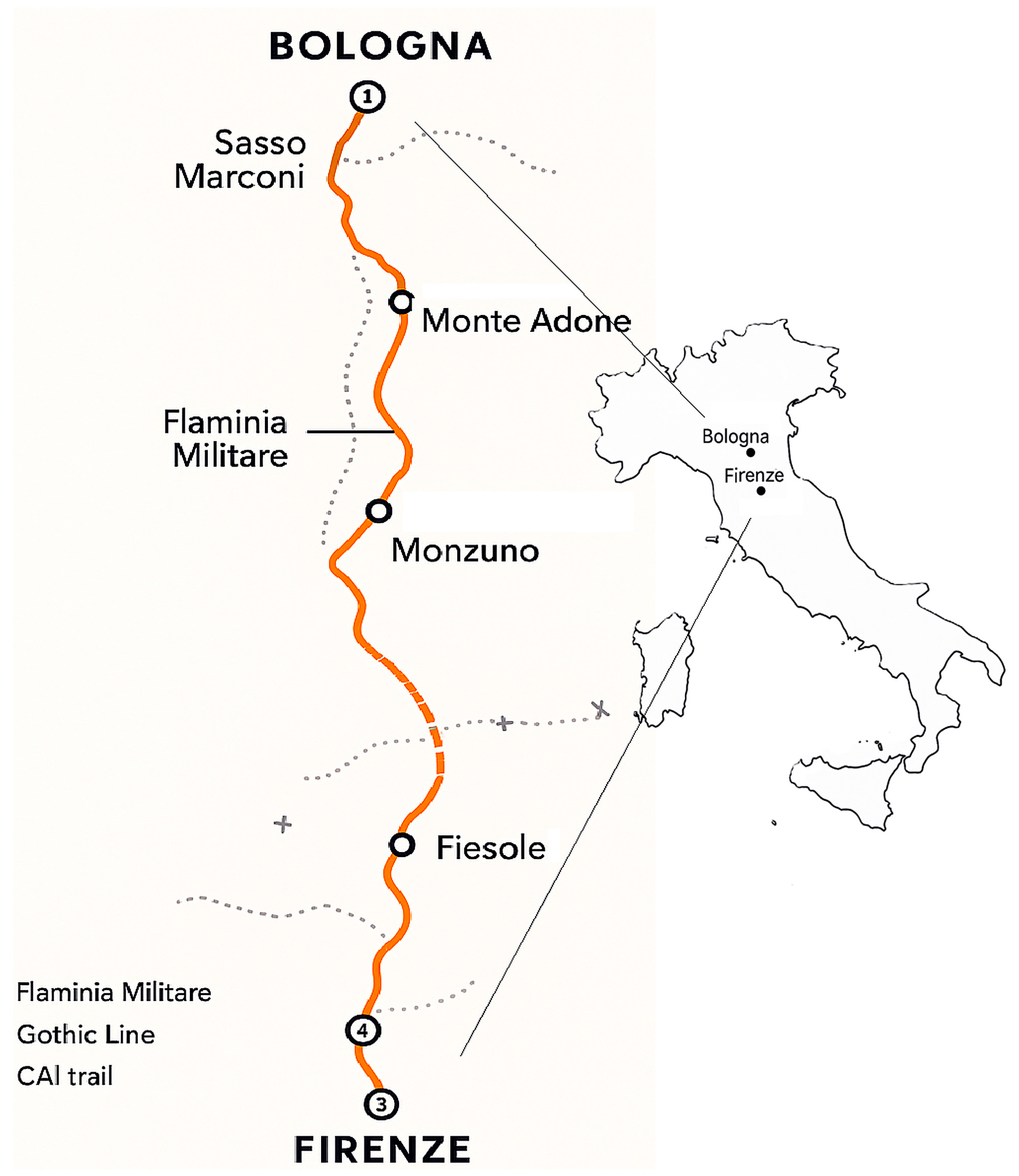
Figure 1. Location map of the “Via degli Dei” at national and local scales.
Sustainability 17 10179 g001
Figure 2. Gender distribution across the identified clusters.
Sustainability 17 10179 g002
Figure 3. Accommodation preferences by cluster.
Sustainability 17 10179 g003
Figure 4. Top 20 travel motivations by cluster.
Sustainability 17 10179 g004
Figure 5. Top 20 information channels by cluster.
Sustainability 17 10179 g005
Table 1. Type of hikers’ expenditures.
ClusterExpensesMeanMedianp25p75tmean10
1Accommodation89.7775.0050.00125.0084.90
2125.62125.0075.00200.00127.81
3137.99125.00100.00200.00139.56
4161.14180.00125.00200.00165.91
1Other *14.920.000.0025.0011.30
219.8125.000.0025.0015.14
326.2325.000.0025.0017.52
428.2925.000.0025.0018.38
1Travel60.0533.0030.0080.0051.49
265.7050.0030.0090.0057.90
373.5960.0033.00105.0065.74
488.0180.0040.00120.0078.32
1Food93.2775.0030.00125.0079.42
2132.71125.0075.00175.00126.05
3140.18125.0075.00175.00134.30
4160.77175.00125.00225.00159.75
(*) Other expenditure includes souvenirs, food and wine purchases, playing cards, gadgets such as themed t-shirts and hats, etc.
Table 2. Percentage of individual expenditures across categories.
ClusterExpensesMeanMedianp25p75tmean10
1Accommodation34.8%34.8%25.0%46.9%35.4%
236.6%36.2%28.1%45.5%36.5%
337.9%37.1%29.4%47.0%37.9%
438.7%37.6%30.6%46.5%38.4%
1Other5.8%0.0%0.0%9.8%4.3%
25.5%5.1%0.0%9.1%4.6%
36.0%5.5%0.0%8.2%4.8%
45.8%4.9%0.0%7.2%4.3%
1Travel24.0%21.4%14.2%31.0%22.0%
219.9%18.2%11.7%25.9%18.7%
319.5%18.0%11.1%24.7%18.4%
419.7%18.2%10.5%25.3%18.5%
1Food34.8%32.6%22.7%44.6%34.3%
237.3%38.0%27.8%46.5%37.2%
335.9%36.2%28.2%44.6%35.8%
435.4%36.2%25.9%44.6%35.6%
Note: Percentages denote each respondent’s budget share for a given category (category expenditure/individual total trip expenditure × 100). Statistics summarise these individual shares by cluster (mean, median, p25–p75, 10% trimmed mean). Totals may be <100% because the rental category (with very low value) is omitted from this table; minor differences also arise from rounding and occasional missing items (categories shown: accommodation, food, travel, other).
Disclaimer/Publisher’s Note: The statements, opinions and data contained in all publications are solely those of the individual author(s) and contributor(s) and not of MDPI and/or the editor(s). MDPI and/or the editor(s) disclaim responsibility for any injury to people or property resulting from any ideas, methods, instructions or products referred to in the content.