Article

A Proposal of an Integrated Framework for the Strategic Implementation of Product-Service Systems in Brazilian Industrial Small and Medium-Sized Enterprises


by
Rodrigo Reis Favarin
1,
Jordana Marques Kneipp
2,*,
Andreza Rodrigues de Araujo
2,
Roberto Schoproni Bichueti
2,
Clandia Maffini Gomes
3,
Kamila Frizzo
2 and
Luísa Margarida Cagica Carvalho
4
1
Business Administration Program, Franciscan University—UFN, Santa Maria 97010-030, Brazil
2
Postgraduate Program in Administration and Accounting Sciences, Department of Administrative Sciences, Federal University of Santa Maria—UFSM, Santa Maria 97105-900, Brazil
3
Postgraduate Program in Administration, Federal University of Rio Grande, Rio Grande 96201-900, Brazil
4
Life Quality Research Centre (CIEQV), Instituto Politécnico de Setúbal (IPS), Campus do IPS, 2810-583 Setúbal, Portugal
*
Author to whom correspondence should be addressed.
Sustainability 2025, 17(22), 10020; https://doi.org/10.3390/su172210020
Submission received: 4 September 2025 / Revised: 24 October 2025 / Accepted: 4 November 2025 / Published: 10 November 2025
(This article belongs to the Special Issue Advances in Economic Development and Business Management)

Abstract

The adoption of Product-Service Systems (PSSs) is an important strategy for Small and Medium-Sized Enterprises (SMEs), although they face challenges connected to the scarcity of financial, human, and technological resources. Thus, this article seeks to propose a framework that integrates the barriers, drivers, innovation process, and business model elements associated with the adoption of PSSs in Brazilian industrial SMEs to offer guidelines for improvements to the strategies and practices adopted by such enterprises. The research adopted the Fuzzy Delphi method, applied to a panel of ten executives and managers of Brazilian industrial SMEs. This approach was employed to consensually validate a set of variables obtained from recent scientific literature. The results indicate that the adoption of PSSs by Brazilian industrial SMEs is influenced by structural, cultural, and technological barriers, yet driven by factors such as sustainability, customer relations, and competitiveness. Despite the acknowledgement of the importance of innovation, the processes remain little structured, with value proposition, the human factor, and stakeholder relations standing out as central elements in the business models. Through this study proposes specific strategic guidelines for four critical categories: provider enterprise, consumers, PSSs, and environmental aspects. Such guidelines can support managers in formulating practical actions for adopting PSSs, in addition to being replicable by other SMEs with similar characteristics. This research contributes to the literature originally by expanding the knowledge about the reality of PSS adoption by SMEs in emerging economies, thereby bridging a literature gap that still addresses their specificities generically.

1. Introduction

In recent years, the global market has undergone significant transformations driven by Industry 4.0, globalization, and growing customer demands. This scenario requires enterprises to revise their business models to remain competitive, given that traditional mass production no longer meets the diversified consumer needs. The search for more flexibility and added value has driven the adoption of more agile and adaptable productive approaches that favor differentiation and rapid responses to market demands. Hence, in a volatile, uncertain, and complex environment, the capability to innovate and adapt swiftly becomes indispensable to maintaining organizational competitiveness [1,2].
In the face of this dynamic and uncertain scenario, Small and Medium-Sized Enterprises (SMEs) of the manufacturing sector need to adapt their business models to respond to the growing demands for customization by customers [2]. However, this transition process proved challenging, given that many SMEs faced significant restrictions of financial, human, and technological resources, which hampered the implementation of structural changes necessary for adaptation and competitiveness in the then-current scenario [3].
In this context, Product Service Systems (PSSs) emerge as a strategic response by integrating products and services into a single offering. This approach not only favors innovation in products and processes but also expands business opportunities by strengthening the relations with existing customers and attracting new markets [4]. According to [5], a PSS may be structured from modularity, i.e., through the decomposition of the system into independent and interchangeable modules that facilitate customization and the flexibility of the offering without compromising operational efficiency. Hence, PSS modularity contributes to reconciling customization with cost efficiency, thereby enhancing the competitiveness and sustainability of enterprises in increasingly dynamic markets [4].
Despite their strategic potential, PSSs still present limitations regarding the clarity of elements that must be considered in their design, which is characterized as a relatively abstract concept. In addition, the accelerated advancement of digital technologies imposes both opportunities and challenges to their implementation. The integration of manufactured goods and services is sensitive to changes. Any modification to one of the components may significantly impact the performance of the set, which hinders the adaptation to new market requirements, the incorporation of emerging standards, and the adoption of new technologies [6,7].
This structural complexity of PSSs—intensified by the interdependency between the physical elements and associated services—imposes significant challenges for enterprises. Consequently, their implementation in real contexts becomes even more limited, specifically in the case of small and medium-sized enterprises (SMEs), which often depend on PSSs to diversify their offerings but face barriers such as the absence of professionals specialized in service engineering and restricted access to advanced digital technologies capable of boosting the integrated performance of products and services [7].
In the face of such challenges, it becomes necessary to deepen studies on the design and implementation of PSSs in SMEs, considering the contextual particularities, such as geographical location and the level of regional economic development. This is because such enterprises are positioned differently from large organizations, particularly due to lower financial and personnel resources, in addition to structural and organizational differences, which require specific approaches. Although the literature is focusing more and more on the servitization topic, special requirements such as the lack of knowledge, capabilities, resources, or information of SMEs are still little considered in depth [8]. Moreover, we stress the importance of exploring how the limitations in resources and adaptive strategies, which are characteristics of such enterprises, influence their capacity to innovate in their business models [9]. In addition, the drivers, preparation processes, and primary barriers related to PSS implementation in enterprises still lack more clarification in the literature [10].
Upon considering the geographical and economic contexts in which the enterprises were inserted, Ref. [11] highlighted the potential of PSSs as a strategy to reduce consumption levels in emerging economies. In the Brazilian context, Ref. [12] observed that studies were still incipient and mostly restricted to case studies, which reinforces the urgency of more comprehensive and systematized research. Hence, it is necessary to expand investigations about the implementation of PSSs in SMEs inserted in realities such as the Brazilian, considering the economic and sectoral particularities of the country, particularly in the industrial sector.
We stress that, in Brazil, SMEs account for about 62% of total employment and 50% of the national added value, playing a fundamental role in economic growth and social inclusion. Despite their expressive representativeness, Brazilian SMEs face structural challenges that compromise their competitiveness, especially in the industrial sector. Among the primary hindrances, low productivity, the limited propensity to innovation and export, and the scarcity of growth-oriented entrepreneurial initiatives stand out [13].
From this perspective, although PSS represents a promising strategy for adding value, innovating, and strengthening business models, its adoption in emerging economies, especially in industrial SMEs, remains limited and marked by structural and contextual gaps. In Brazil, Ref. [14] highlight that the operationalization of PSS models faces specific barriers—such as lack of strategic alignment, low maturity in business models, and difficulties in coordination between actors—emphasizing the numerous challenges that Brazilian SMEs face, unlike developed contexts, which justifies a geographical contextual approach. Complementarily, Ref. [15] identify internal barriers often present in SMEs, such as scarcity of financial resources, skills gaps, and cultural resistance to servitization, reinforcing the need to understand these limitations in an integrated manner with the innovation and decision-making process.
With regard to innovation and business models, Ref. [16] demonstrate that SMEs depend on dynamic adjustments to their business models in order to grow and respond to the complexity of the competitive environment, but that many lack the structured capabilities to innovate consistently. Similarly, Ref. [17] highlights those drivers such as entrepreneurial orientation, collaboration with stakeholders, and strategic use of technologies are decisive for business model innovation (BMI) in micro and small enterprises, but these factors are still under-explored in emerging industrial contexts. Thus, it is relevant to investigate how barriers, drivers, elements of innovation, and components of the business model are articulated in Brazilian industrial SMEs, since the literature points to these gaps as obstacles to the transition to the PSS, while recognizing its potential to boost competitiveness and resilience in emerging economies.
Based on the presented discussions, this study proposed the following research question: How may the identification of barriers, drivers, innovation processes, and business model elements support the adoption of PSSs in Brazilian industrial SMEs and contribute to improvements in their organizational strategies and practices? Through this, this research sought to propose a framework that integrates the barriers, drivers, innovation process, and business model elements associated with the adoption of PSSs in the context of Brazilian industrial SMEs to offer guidelines for improvements to the strategies and practices adopted by such enterprises.
In the next section, the literature related to the implementation of PSSs is reviewed, with an emphasis on its relationship with the business model, the innovation process, and the barriers and drivers. Next, through the Fuzzy Delphi method, this article defines the context of Brazilian industrial SMEs at the time of writing and proposes improvements to this scenario. Lastly, the study conclusions, their theoretical and managerial implications, the study limitations, and future research suggestions are presented.

2. Barriers and Drivers Related to the Adoption of PSSs

The motivations (drivers) for adopting PSSs vary significantly, particularly when analyzed from the perspective of the supplier or the customer [18]. In parallel to the factors that boost this transition, enterprises face various challenges throughout the process, such as the need for high customization levels, uncertainties in the product design and use phases, conflicts between design attributes, and the internal complexity of service provision processes [19].
Regarding the barriers, based on a Systematic Literature Review (SLR), Ref. [15] identified 44 obstacles that hinder the adoption of PSSs by industrial SMEs. Such barriers were organized into 17 categories, covering financial limitations such as lack of resources and economic vulnerability, to strategic and organizational issues, e.g., absence of long-term planning, resistance to change, and internal conflicts. Market-related barriers also stood out, such as the difficulty in identifying demands and the low commercial performance of products, besides behavioral hindrances, such as conservative mentality and low engagement in innovation.
In the field of competencies, a lack of managerial, design, and sustainability abilities was observed, in addition to knowledge gaps. The motivation for sustainability was also limited, focusing primarily on economic aspects, with little understanding of social and environmental issues. Other barriers concern the complexity of PSS processes, the lack of methods and tools appropriate for SMEs, difficulties in collaboration with the supply chain, and the absence of committed leadership. Added to this is the weak articulation with the external ecosystem (e.g., academia, government, and society) and consumer resistance to the transition from the property model to the use model. Together, these factors reveal the complexity of the transition toward more sustainable models, which requires coordinated and integrated approaches.
In this sense, addressing the barriers in the context of SMEs is relevant since innovative business models present significantly distinct characteristics compared to those of large enterprises, with the literature aimed at this group still being limited [20]. Moreover, as pointed out by [12], the degree of impact of the barriers may vary according to the country in which the business model is implemented, which requires attention to factors such as local culture, management practices, and consumption habits. Such variables directly influence the viability and speed of PSS adoption. Another factor is that the structure of PSSs itself may hinder the internal alignment of ideas and the communication between areas, compromising the construction of an integrated vision for the transition to service-based models [21].
Regarding the drivers, Ref. [22] conducted a study with executives of 81 Brazilian enterprises from different sectors that resulted in the identification of six primary categories of drivers that motivate the adoption of PSSs by provider enterprises: environment, competitive advantage, coproduction, portfolio, integrated solution, and cocreation. In the environmental field, PSSs are perceived as natural extensions of the existing offering, contributing to environmental impact reduction through practices such as integrated maintenance, better exploitation of product capacity, end-of-life solutions, and material flow reduction. They also offer customers equivalent performance with lower environmental impacts.
Concerning the competitive advantage, PSSs allow enterprises to identify new market opportunities, promote proposals more adherent to customer needs, and strengthen internal collaboration networks, including practices such as part reuse and recycling. In the coproduction aspect, benefits such as flexibility in payment formats (e.g., use, rent, leasing), more significant customer involvement in the process, and the potential to dissociate value from the amount of physical material stand out.
Regarding the portfolio, PSSs expand and diversify the offering of products and services, favoring the adaptation to different market demands. In turn, in the case of integrated solutions, enterprises that adopt PSSs show more significant capability of meeting customer needs, sharing risks, and, in some cases, reducing them, particularly in contexts involving coproduction. Lastly, cocreation emerges as a relevant driver since, by involving customers in the value generation process, the possibility of innovations in the delivery of solutions is expanded.
In general, the authors argued that these drivers reflect three main fronts in PSS development: (i) strategic alignment, (ii) attention to environmental issues, and (iii) rapprochement between supplier and customer. Through a systematic literature review, Ref. [23] identified the primary drivers of the adoption of Industry 4.0 technologies by SMEs in the manufacturing sector. Among the most recurring motivators were market and customer pressure for greater customization, speed, and quality, as well as expected competitive advantages, such as increases in productivity and operational efficiency and process innovation.
Moreover, cost reduction through automation and digitization, improved decision-making based on real-time data, and increased operational flexibility in high-variability environments stood out. Environmental sustainability also figures as a relevant factor, aligned with regulatory and social requirements. Lastly, institutional factors such as governmental support and financial incentives, in addition to the technological guidance of leadership, also contribute to boosting this digital transformation process in industrial SMEs.
Thus, with the closing of the discussion about barriers and drivers, it was observed that PSS adoption involves a multitude of factors, among which the central role of consumers, the growing socioenvironmental awareness, digitization, and the need for precise diagnosis of the current and future situation of enterprises stand out. In this context, it becomes necessary to understand how enterprises are challenged or driven by such issues in their transformation processes.

3. PSS Implementation and Its Relationship with the Business Model and Innovation Process

Ref. [24] argued that, to facilitate the adoption of PSSs, it is important to conceptualize them from the business model perspective, given that they may be redesigned so as to make feasible and support the offerings.
The relationship between PSSs and business models is widely discussed in the literature. Several authors have highlighted different perspectives, such as the following: (i) the design of PSSs as business models themselves [25,26]; (ii) the characterization of PSSs as environmentally responsible business models, upon integrating sustainability and business strategies [27]; (iii) the importance of business models to promote the transition from the linear paradigm of production and consumption to more sustainable practices aligned with the circular economy [28,29]; (iv) the potential of business models to boost sustainable development, generating benefits for all stakeholders [30,31]; and (v) the contribution of business models to strengthening both the circular economy and the shared economy [32].
Hence, PSSs allow for a better meeting of consumer needs and for increasing enterprise competitiveness. However, the transition from the traditional business model to the PSS presents itself as a complex task. And for this transition to be possible, it becomes necessary to profoundly understand the elements that define the business model, particularly the value proposition [33].
Hence, the importance of the value proposition is associated with how value is created in PSS-oriented business models, especially those focused on the result. To [34], consumers and their needs are the starting point for the value proposition in servitization and are related to the business model since they are characterized by the “general” involvement of consumers through value cocreation—a process that begins in the design phase and extends to the product-service offering delivery phase–unlike in the traditional model, in which consumers only receive value in the products and services.
The business model transition may be conducted in diverse ways and levels, varying according to the strategy and risk sensitivity of the enterprise [35]. Reference [36] clarified that these different levels are related to incremental and radical innovation, and the core value proposition does not change drastically from incremental business model innovation, although other components of the business model may vary. On the other hand, with radical business model innovation, the value architecture alters significantly. The authors exemplified that, at the incremental levels, the enterprise offers the primary product and some related services such as logistics and distribution, installation and commissioning, maintenance and updates, and personal support and training. In turn, at a radical innovation level, products are made available as services.
Ref. [35] described four scenarios for PSS implementation: (i) the simultaneous and innovative development of products and services since the beginning of the process, which may increase business risks; (ii) the joint offering of already existing products and services, resulting in a minimal risk combination; (iii) the introduction of a new product associated with an already consolidated service platform; and (iv) the offering of an existing and fully developed product integrated with a new service platform. To define the most appropriate approach, the enterprise must evaluate if the product already has the necessary functionalities to make the offering of the PSS feasible or if adaptations are required. Moreover, it is fundamental to decide whether the operation will take place exclusively through the PSS-based business model or combined with the traditional business model.
Concerning the PSS-based business model specifically, Ref. [37] associated the three main archetypes proposed by [38]—(i) product-oriented, (ii) use-oriented, and (iii) result-oriented—to the central elements of the business model—value creation, delivery, and capture—to clarify the specificities of each category. Differences may be noticed regarding the property and usability of the products and services (value creation), the model through which such products and services are offered to consumers (value delivery), and how consumers are accountable for the payment of the offerings (value capture). In this context, Ref. [34] highlighted that, as the level of servitization increases, customer needs become more abstract, which generates a dualism of opportunities and threats in the way enterprises deliver results to consumers.
Another tool with the potential to support PSS implementation is the structure of the business model innovation process proposed by [39], composed of four main stages: (i) generation of ideas, with the analysis of the then-current model, definition of expectations, and understanding of the market context; (ii) definition of the future state, in which ideas are translated into concrete characteristics of the PSS business model; (iii) analysis of gaps, which involves evaluating customer needs and the internal readiness of the enterprise in the face of the requirements of the new model; and (iv) definition and prioritization of actions, with the use of an importance-impact-effect matrix to select and organize the actions necessary for implementing the PSS.
Ref. [39] highlighted the importance of the process structure they proposed, which enables enterprises to systematically organize ideas for new businesses, managing relevant elements and identifying critical requirements throughout the servitization journey. Complementarily, Ref. [40] stated that, regarding the knowledge of the PSS provider enterprise about the business processes of its clients, the more significant its capability of adding value to the operations of such clients will be. In this sense, the use of Industry 4.0 digital technologies proves essential to allow enterprises to monitor product use and anticipate service needs [41].
In short, adopting a PSS requires a significant cultural change for the enterprise, the customers, and other parties involved, in addition to different strategies to develop integrated products and services. Varied business models help structure the value creation, delivery, and capture, whereas transparent innovation processes assist in organizing ideas, identifying gaps, and defining priority actions. Hence, profound knowledge of customers and the use of technologies to monitor product use are essential to offering adequate services and generating value. However, the path to PSS implementation faces barriers and depends on motivating factors, as discussed in the previous section.

4. Summary of the Theoretical Model Developed

Based on the literature review, a theoretical model was developed to analyze the barriers and drivers to PSS adoption and its relationship with the business model and innovation process. This model integrates different conceptual perspectives, allowing for an integrated understanding of companies’ transition to PSS-based offerings, as shown in Figure 1.
Below are details of each of the elements that make up the theoretical model of the study.

4.1. Barriers to the Adoption of PSS

The barriers were organized into six dimensions, based on [12,15,42,43]: (i) provider company; (ii) adoption by customers; (iii) impact on sustainability; (iv) market; (v) PSS system; (vi) supply chain. This structure makes it possible to identify internal obstacles, market limitations, challenges in the supply system, and barriers related to customer acceptance and sustainability.

4.2. Drivers for PSS Adoption

The drivers were grouped into six categories, based on [22,42]: (i) environmental; (ii) competitive advantage; (iii) co-production; (iv) portfolio; (v) integrated solution; (vi) legislation. These elements summarize the main incentives that lead companies to migrate to PSS models, such as the search for differentiation, regulatory requirements, and opportunities to generate value together with the customer.

4.3. The Innovation Process and Business Model for PSS

The innovation process and business model structure adopted in this study are based on the proposal by [39]. The innovation process consists of four stages: (i) idea generation; (ii) definition of the desired future state; (iii) identification of gaps between the current and desired situations; and (iv) definition and prioritization of necessary actions. This sequence allows us to understand the path of organizational transformation in the transition to PSS.
At the same time, the business model was analyzed using the Business Model Canvas adapted to the PSS context by the same authors, covering the following elements: (i) value proposition; (ii) customer segments; (iii) key resources; (iv) key activities; (v) partners; (vi) channels; (vii) cost structure; and (viii) revenue streams. This structure makes it possible to examine how companies articulate, deliver, and capture value in product-service-based models. The next section presents the methodological procedures adopted in the research.

5. Methods

This research adopts the Fuzzy Delphi Method (FDM) as a multi-criteria approach to decision support, as it is suitable for achieving the proposed objective. It should be noted that multi-criteria decision-making methods have been widely applied in industrial contexts, covering both pre-planning and post-evaluation of built systems and environments, configuring a subfield of multi-criteria and multi-subject decision-making in the field of planning. In this scenario, Fuzzy Delphi stands out for combining expert knowledge with fuzzy theory, being especially useful for complex problems that are difficult to quantify or involve subjective interpretations [44]—as is the case with the identification of barriers, drivers, the innovation process, and the business model in Product-Service Systems, which reinforces its relevance and applicability in this study.
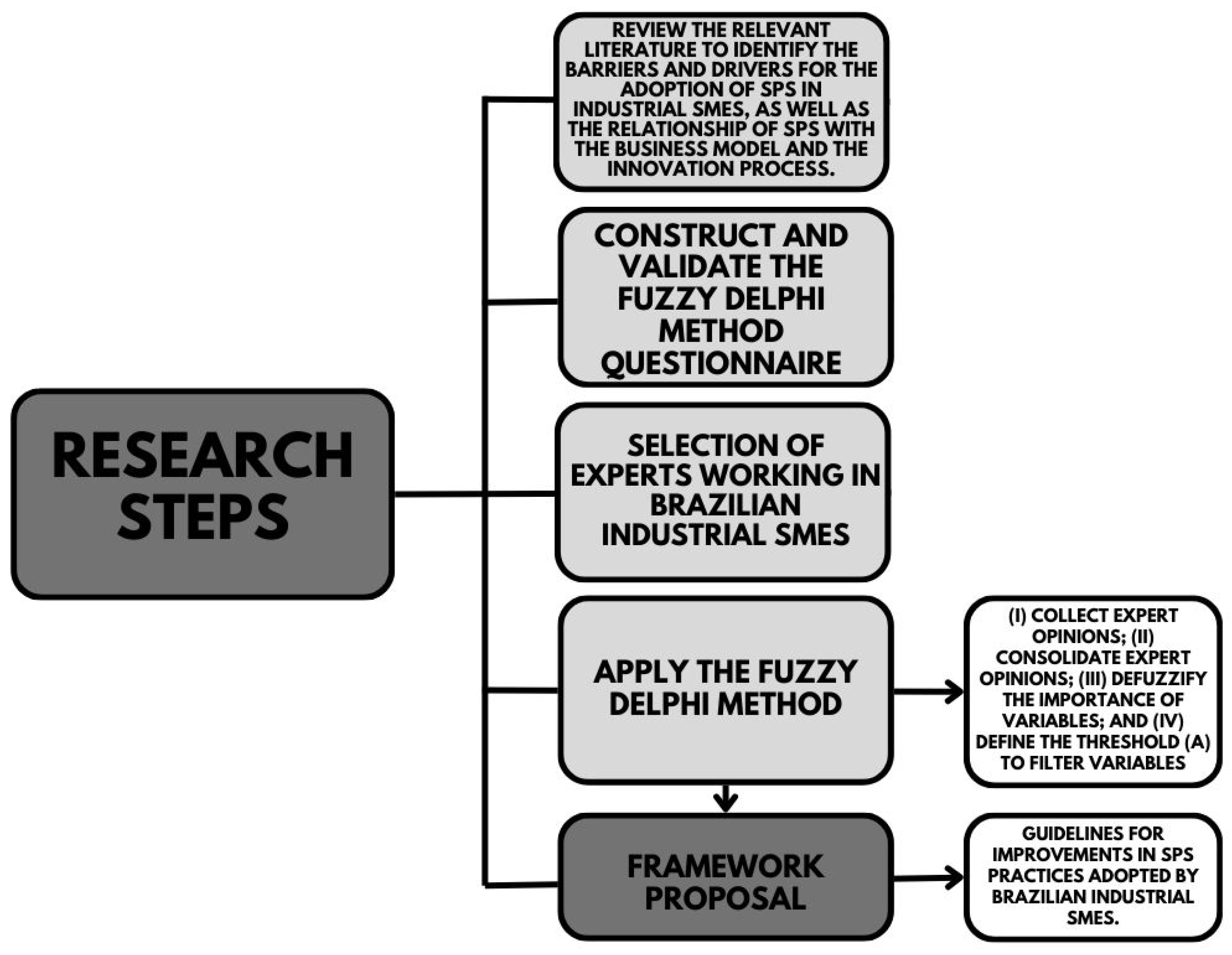
The research stages are represented in Figure 2 and follow a methodological approach structured in four phases, respectively: (i) review of the relevant literature to identify the barriers and drivers of PSS adoption in industrial SMEs, as well as the relationship between PSSs and business models and the innovation process; (ii) construction and validation of the questionnaire of the Fuzzy Delphi method; (iii) selection of the experts who work in Brazilian industrial SMEs; and (iv) application of the Fuzzy Delphi method—the selected variables will be used to propose the research framework, which will result in guidelines for improvements to the PSS practices adopted by Brazilian industrial SMEs.
The 90 variables used in this study were defined based on the first stage of the research, which consisted of a theoretical review and the structuring of the analysis model (Figure 1). With regard to the innovation process and the business model, variables derived from consolidated models in the literature were adopted, as they reflect the main stages involved in the organizational transition to PSS. This selection sought to represent the structural logic and elements that make up PSS-oriented business models, allowing us to assess the degree of alignment of the companies investigated with this paradigm.
For the barriers and drivers to PSS adoption, we first identified the most recurrent dimensions in the specialized literature. Based on these dimensions, the most cited and relevant variables were selected, both for their frequency in previous studies and for their adherence to the context of Brazilian industrial SMEs. Thus, the final set of variables represents a consistent theoretical synthesis applied to the empirical reality analyzed.
Thus, the construction of the questionnaire (Appendix B) took place through the identification and grouping of such variables into four blocks: (i) barriers, (ii) drivers, (iii) innovation process, and (iv) business model. For the purpose of validating the content of this instrument, a group of 32 academic experts (19 foreigners and 13 Brazilians) participated in the study. Most of these experts held doctoral degrees and had significant research experience, most ranging from five to fifteen years of experience. Regarding their research fields, the following stood out: Engineering and Product-Service Systems (PSSs), followed by Sustainability and Management/Administration.
From the analysis of the feedback obtained from the experts, the average of the Likert-scale responses concerning the barriers and drivers was calculated, with the elimination of aspects with averages under 3.0 points. In addition, aspects were excluded/included based on the responses to the qualitative questions in the questionnaire.
The target population of this study comprises small and medium-sized Brazilian industrial companies that operate with PSS. The research design was structured to collect and analyze the perceptions of experts working in these companies about the barriers, drivers, innovation process, and business models related to PSS. To this end, a five-point Likert scale associated with fuzzy language terms was used, allowing for greater sensitivity in the representation of opinions.
The participating companies were selected from a database containing 2100 companies belonging to different industrial sectors, located in three Brazilian states: São Paulo (the state with the highest number of industrial establishments in the country) and Rio Grande do Sul and Santa Catarina (representatives of the South region of Brazil, recognized by its solid activity in the Brazilian industrial sector). The validated questionnaire was administered to experts from industrial companies during the period from 30 September 2022 to 25 October 2023, through email and LinkedIn dissemination.
A two-stage process was adopted to select the enterprises based on the focus of the study. First, the sample was composed of the enterprises that effectively received, responded to, and returned the questionnaires duly filled out, totaling 52 responses. Next, based on the initial responses, a filter question was applied in the questionnaire to exclude companies that did not work directly with PSS. These responses were disregarded for the calculations and analyses in this study, as shown in Table 1. In addition, only the responses of industry experts who met the following inclusion criteria were validated: (i) hold management positions or functions related to sustainability in small and medium-sized Brazilian industrial companies; and (ii) have professional experience and academic training compatible with the function performed.
As a result of this process, 10 experts participated, all executives and managers of Brazilian industrial SMEs, through a single round of evaluation. The choice of a single round is justified by the method itself, which, by incorporating fuzzy logic, allows opinions with degrees of uncertainty to be captured and optimistic, pessimistic, and realistic perspectives to be differentiated. This ensures accuracy in the evaluations without the need for multiple rounds, especially when the panel is composed of qualified experts and the objective is to validate or prioritize previously identified variables [45,46,47].
Among the 10 experts, 80% are male and 20% are female, with a predominance of professionals with degrees and more than 5 years of experience in the manufacturing sector. This profile meets the panel’s qualification recommendations, which require practical experience and training compatible with the topic under investigation.
It should be noted that for the application of FDM, the literature recommends that the panel of experts be composed of at least 10 participants in order to reduce individual biases and increase the reliability of the consensus generated. Studies also suggest that the ideal number of experts varies between 10 and 50 participants, ranging from 15 to 50 depending on the scope and complexity of the topic under investigation [48,49,50]. This is because panels with fewer than 10 participants compromise the diversity of knowledge, while excessively large panels hinder convergence and management of the method.
This study followed four stages for the application of the Fuzzy Delphi method, as per the framework proposed by [51]: (i) collection of expert opinions; (ii) consolidation of expert opinions; (iii) defuzzification of the importance of the variables; and (iv) definition of the limit (a) to filter variables regarding which the experts did not reach a consensus to consider as the most important. The stages will be detailed next.
Stage I: collection of expert opinions—Expert responses are represented by linguistic variables in the questionnaire, as shown in Table 1.
Table 1. Linguistic scale for the Fuzzy Delphi method.
Response Option According to the Likert Scale UsedLinguistic VariableAssessmentTFN Corresponding
Totally disagreeVery low1(0.1, 0.1, 0.3)
DisagreeLow2(0.1, 0.3, 0.5)
NeutralAverage3(0.3, 0.5, 0.7)
I agreeHigh4(0.5, 0.7, 0.9)
I totally agreeVery High5(0.7, 0.9, 0.9)
Does not applyWorthless0(Will not be used in the calculation)
Source: Adapted from [52,53].
Stage II: consolidation of expert opinions—The consolidated opinions are expressed by a triangular fuzzy number (TFN), which is represented by a triplet ( a i j , b i j , c i j ), where
a j = m i n a i j
b j = ( i n = 1 ( b i j ) ) 1 n
c j = m a x c i j
Stage III: defuzzification of the importance of the variables—This study uses Reference [53] as a basis, and the defuzzification value was calculated according to Equation (4).
ã j = a j + b j + c j ,   j 3 = 1 , 2 , 3   m
Stage IV: definition of the limit (a) to filter variables regarding which the experts did not reach a consensus to consider as the most important—After calculating the defuzzification average, values larger than or equal to 0.60 were selected, and values outside this standard were rejected [53].
If ã j   ≥ 0.60, then variable (j) is considered important, i.e., it is selected.
If ã j < 0.60, then variable (j) is excluded, i.e., it is rejected and will not be part of the final model proposed.
In this sense, the framework proposed by this research was structured through the variables selected from the Fuzzy Delphi method, and it integrates the barriers, drivers, innovation process, and business model elements associated with PSS adoption considering the context of Brazilian industrial SMEs at the time of writing, so as to enable the formulation of guidelines for improvements to the strategies and practices adopted by such enterprises.

6. Results

This section presents the results concerning the characterization of Brazilian industrial SMEs and the opinions of the experts who participated in this research, who were classified as executives and managers of their respective enterprises. We emphasize that, based on these results, a framework representative of the scenario of these SMEs relative to PSSs at the time of writing was proposed, along with guidelines for improving such practices.
For the purpose of defining the size of the enterprises participating in this research, the criterion based on the number of employees was adopted, as widely employed in Brazil by institutions such as the Ministry of Labor, the Brazilian Service to Support Micro and Small Enterprises (Sebrae), and the Brazilian Institute of Geography and Statistics (IBGE). This criterion predominates in Brazilian research about SMEs, particularly in the industrial sector, in which microenterprises are defined as those with zero to 19 employees, small enterprises as those with 20 to 99 employees, and medium-sized enterprises as those with 100 to 499 employees. The use of this criterion also aligns with international classifications, which adopt the number of collaborators as the primary parameter, albeit independently from the economic sector [54].
Table 2 reveals that 90% of the participating enterprises were micro or small, with up to 99 employees, while only 10% reached medium size. This result aligns with the Brazilian business scenario, which is predominantly composed of micro and small enterprises, accounting for 93.6% of formalized enterprises in Brazil at the time of writing [55].
According to Table 3, 80% of the investigated SMEs had been active for 11 to 50 years at the time of writing. This datum may be considered a positive factor, especially given the Brazilian scenario, in which, despite the predominance of SMEs, a sizable portion ends their activities within a few years of operation [56].
As one may observe in Table 4, all SMEs investigated belong to the manufacturing industry sector. Ref. [57] pointed out that the development of PSSs has grown rapidly in this sector, which contributes to operational improvements. In turn, Ref. [58] highlighted that manufacturing SMEs play a fundamental role in economic development and that PSS adoption may promote greater sustainability, although there are challenges related to resource integration and the feasibility of such solutions.
To understand how it was calculated and make the procedure transparent, we present the example of the defuzzification calculation of variable BPSS2 (Resistance to change) corresponding to the block “Barriers to PSS adoption in industrial companies” and the analysis category “Provider company.” As a first step, Expert 1 gave a score of ‘5’, whose TFN is (0.7, 0.9, 0.9) (see Table 1).
Similarly, through the scores of the other nine experts, the TFN of each classification assigned to the BPSS2 variable was identified, as shown in Table 5.
In this context, the first value (0.3) of the corresponding TFN for variable BPSS2, expressed as (0.3; 0.7; 0.9), was found as follows: the first entry, i.e., 0.3, was obtained from the minimum value among all the first 10 entries listed in Table 5, namely:
Minimum (0.7; 0.3; 0.7; 0.3; 0.3; 0.5; 0.5; 0.5; 0.7; 0.5) = 0.3
The second entry, i.e., 0.7, was calculated by the geometric mean of the geometric means of all the second 10 entries, as shown in Table 5, as follows:
Mean   ( 0.9 × 0.5 × 0.9 × 0.5 × 0.5 × 0.7 × 0.7 × 0.7 × 0.9 × 0.7 × 0.7 ) 1 10 = 0.7
The third and last entry, i.e., 0.9, was determined by selecting the maximum value among all 10 third entries mentioned in Table 5, as follows:
Maximum (0.9; 0.7; 0.9; 0.7; 0.7; 0.9; 0.9; 0.9; 0.9; 0.9) = 0.9
Finally, we have the defuzzification calculation. Thus, the value for each variable was obtained by the average of the TFN (according to Equation (4)). As an example, the defuzzification value of variable BPSS2, with a corresponding TFN of (0.3; 0.7; 0.9), is obtained by calculating (0.3 + 0.7 + 0.9)/3, resulting in a value of 0.60, as shown in Table A1. Therefore, as the value is within the standard ≥ 0.60, the variable is selected; otherwise, the variable would be rejected. It should be noted that this same defuzzification calculation was applied to all 90 variables in this study.
Table A1 (Appendix A) presents the results of the Fuzzy Delphi method. In all, 90 variables distributed into four primary blocks were evaluated: (i) barriers to PSS adoption, (ii) drivers of PSS adoption, (iii) innovation process in industrial enterprises oriented toward the PSS offering, and (iv) business model elements in industrial enterprises oriented toward the PSS offering. Among them, 20 variables were selected (defuzzification value ≥ 0.60) and 70 were rejected (value < 0.60).
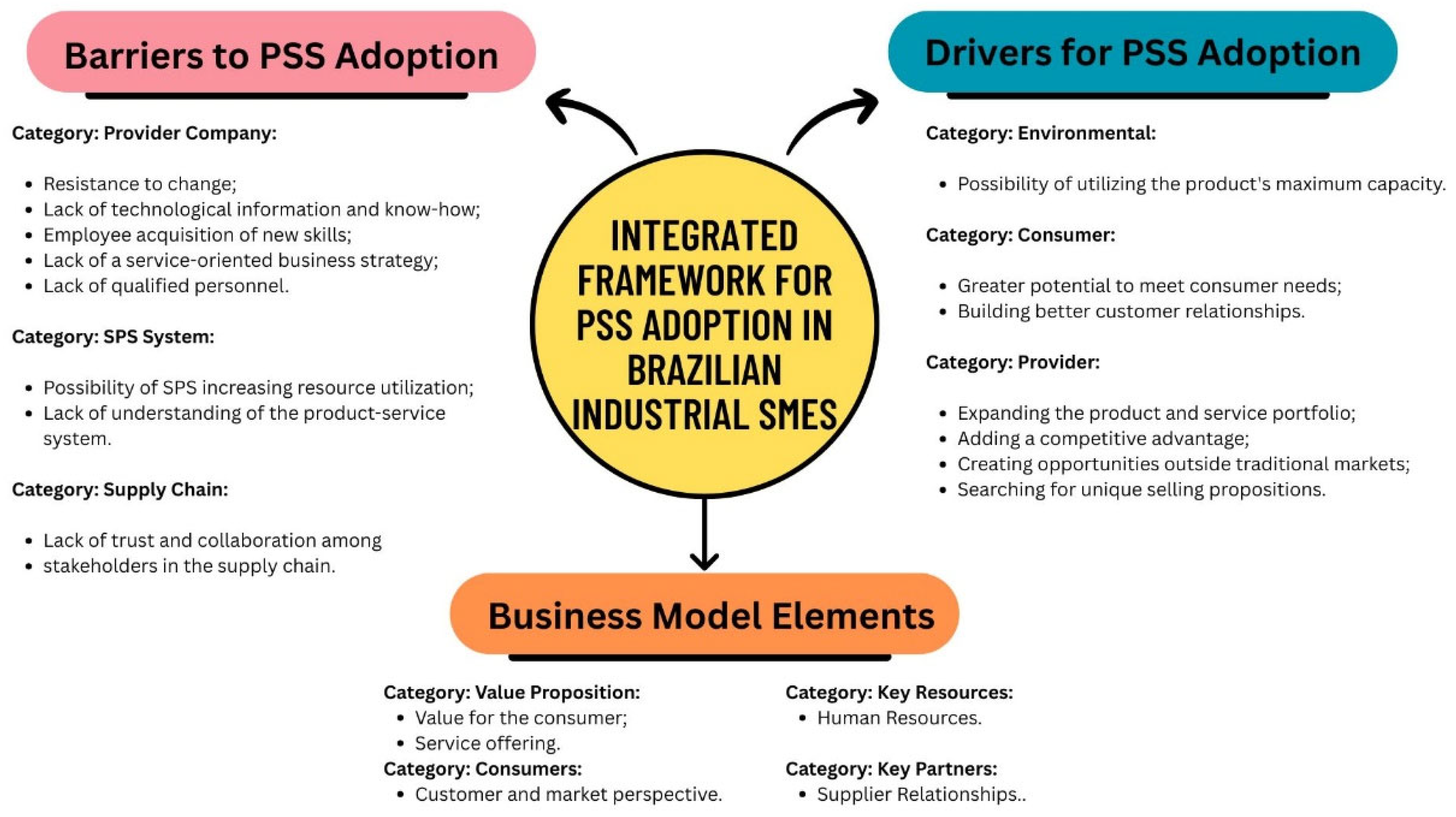
The block with the most selected variables was that of barriers, with 33 items, eight of which were selected, particularly in the “provider enterprise”, “PSS”, and “supply chain” categories. Hence, the barriers to PSS adoption by Brazilian industrial SMEs reflect structural, cultural, and strategic challenges. Resistance to change in factors that boost Industry 4.0 is recurrent, which hampers the transition to more innovative models [59]. Added to this is the lack of technological information and know-how on the part of employees, which directly impacts the implementation success of changes associated with the new technological demands of the market. This scenario requires investments in employee qualification and organizational adaptation to develop the competencies and abilities necessary in this field [10,23]. In view of this, still in the technological field, Ref. [60] found that, although it primarily benefits the digital strategy and construction of ecosystem networks in SMEs, digital servitization is harmed by insufficient human capabilities and still underdeveloped ecosystem networks, which compromise the advancement of these initiatives in an integrated and strategic manner.
Another significant barrier is the lack of service-oriented business strategies. Reference [9] highlighted that many SMEs lack formal guidelines for service integration, compromising PSS development. Also, there is a lack of conceptual understanding, a scarcity of qualified personnel, and the fear that PSSs may increase resource use, which hinders their acceptance. Lastly, the low collaboration between value chain stakeholders limits the construction of integrated solutions.
In this sense, the literature reveals a clear gap regarding the definition of strategic guidelines that support PSS adoption in SMEs, evidencing the urgency for tools that translate this process into practical and structured actions.
The driver block had 25 variables, seven of which were selected, with the “consumer”, “provider enterprise”, and “environmental” categories standing out. In the environmental category, the possibility of using the maximum product capacity, associated with efficient resource use and the transition to more sustainable and circular production models stood out, as indicated by [61], who stressed the role of SMEs in the circular economy and the maximization of resource use in the face of the requirements of the 2030 Agenda and the mitigation of climate change.
In the consumer category, the construction of better relationships with customers was evidenced as a strategic factor by [62], who related the relationship quality with more significant loyalty and willingness to pay for perceived value, whereas Ref. [63] underscored relational capital as the basis for innovation and business performance. Lastly, in the provider enterprise category, competitive advantage and innovation are strongly related. Reference [64] showed that the scarcity of strategic resources in SMEs may compromise their competitive performance, with the development of dynamic capabilities being necessary. In this sense, Ref. [65] reinforced the importance of investments in Research and Development (R&D), intellectual capital, and innovative technologies, while Ref. [66] added that service innovation may be converted into sustainable competitive advantages.
The innovation process had seven variables analyzed, and all were rejected. This indicates that, although the executives and managers of Brazilian industrial SMEs perceived innovation as a facilitator in PSS application, such enterprises still had no structured innovation processes at the time of writing. Therefore, this result is concerning, given that innovation is associated with the generation of competitive advantages for enterprises.
Finally, the business model block included 25 variables, with five being selected that focused on the categories of “value proposition”, “consumers”, “key resources”, and “key partners”. These categories align with the understanding that value is the central unit of analysis in business models and also the primary objective of the strategy, as argued by [67].
Hence, value creation involves the identification of opportunities from the analysis of the business ecosystem and the articulation of internal resources, with a view to delivering superior value to customers and stakeholders. In this sense, aspects such as the clear definition of products and services, the understanding of consumer needs, the strategic exploitation of human resources, and the strengthening of supplier relationships contribute in an integrated manner to the competitive differentiation of SMEs. Therefore, value appropriation is not only an expected result, but a dynamic process of organizational learning based on experimentation, feedback, and continuous adaptation [67].
Through this information, it was possible to identify the scenario of Brazilian industrial SMEs regarding PSS application at the time of writing, integrating eight barriers, seven drivers, and the five business model elements. It is highlighted that the barriers, drivers, and business model elements indicate how the perceptions of the executives and managers materialized—or not—in the organizational structure and practices of the enterprises.
In summary, the data revealed the following: (i) the SMEs investigated did not have well-defined strategic frameworks at the time of writing; (ii) although they acknowledged the human factor as a key resource, they faced difficulties in potentiating it, particularly referring to labor qualification; (iii) these enterprises placed customers at the center of their operations but evidenced fragilities in the relationships with other stakeholders; (iv) even recognizing PSS as a business model capable of generating demand in non-traditional markets, the absence of innovation processes represents a significant obstacle to the growth and expansion of these businesses, constituting a practical gap that the proposed guidelines should seek to mitigate; and (v) although the SMEs identified the possibility of using the maximum product capacity, the environmental factor seemed to be neglected by such enterprises.
The results obtained converge with current findings in the literature, which highlight structural and capacity limitations in SMEs as barriers to the adoption of servitized and circularity-oriented solutions. A recent review pointed out that the transition to circularity and PSS requires training, integration into digital ecosystems, and portfolio reconfigurations—factors that are often absent in small and medium-sized enterprises, especially in emerging economies such as Brazil [68]. In particular, the literature on digital servitization emphasizes four key themes, according to [60]—digital strategy, ecosystem networks, operational organization, and human skills—which consistently appear as critical conditions for the successful implementation of PSS in SMEs, corroborating the identification, in the present study, of deficiencies in strategic planning and workforce qualification.
However, the study presented here also nuances and, to a certain extent, contradicts some recent expectations. While recent mappings and theoretical proposals attribute strong potential to servitization for promoting circular practices [69], the Brazilian SMEs analyzed showed a relative neglect of the environmental factor, suggesting a practical gap between the theoretical discourse on circularity and the effective adoption of environmental measures in smaller companies. Furthermore, although the literature recommends the joint action of digital facilitators and interorganizational partnerships to overcome barriers [60], the results of this research indicate weaknesses in stakeholder relations and chain integration, reinforcing the need for specific interventions (training, pilot projects, and collaborative governance).
Furthermore, the evidence from this study confirms general trends identified by recent reviews (limited capacity, emphasis on human skills, and importance of digitization), tempers expectations of automatic environmental results with PSS in SMEs, and contradicts, in the local practice investigated, the evidence that the mere adoption of PSS ensures greater attention to sustainability—pointing to the need for support policies and strategies that articulate innovation, digitization, and circularity measures adapted to the context of SMEs in emerging economies.

Integrated Framework of the Context of Product-Service Systems (PSSs) Adoption by Brazilian Industrial Small and Medium-Sized Enterprises at the Time of Writing

Based on the 20 variables selected through the Fuzzy Delphi analysis and the literature, an integrated framework was developed (as shown in Figure 3) that articulates barriers, drivers, and business model elements associated with PSS adoption in the context of Brazilian industrial SMEs at the time of writing.
This framework serves as a basis for the development of practical strategic guidelines gathered in Table A2 (Appendix A) that aim to contribute to improvements in the strategies and practices adopted by Brazilian industrial SMEs in the context of the transition to more sustainable and service-oriented models. From this, it was observed that, although PSSs are pointed out as promising alternatives for sustainability, their characteristics also impose significant barriers to their adoption, as perceived in this study. The recent literature has focused on identifying these challenges; however, the absence of a strategic guide or practical orientations that support the PSS design and implementation process is evident, particularly in the context of SMEs [70].
Table A2 identifies the main elements that require improvements and strategic actions in the context of Brazilian industrial SMEs that integrate products and services into their business model. Its construction results from the integration of the empirical findings of this research and the recommendations of recent literature on PSS in SMEs, which highlights converging points between different authors. The categories were structured according to the main elements identified as critical for the transition to PSS—provider company, consumers, PSS, and environment—allowing for a practical view of “what to do,” “when to do it,” and “how to measure it.” Thus, for each area to be improved, specific actions, time horizon (short, medium, and long term), and performance indicators (KPIs) are presented in order to transform the research results into a roadmap applicable to management.
Therefore, the table represents not only a theoretical consolidation, but also a practical implementation tool capable of guiding Brazilian industrial SMEs in overcoming the gaps identified, such as a lack of structured innovation, low integration with stakeholders, environmental weaknesses, and insufficient organizational training.
From this perspective, according to [9], success in PSS adoption in SMEs depends both on internal factors—such as risk aversion and lack of strategy—and external factors—such as the absence of partnerships and market uncertainties. The authors also stressed that using digital technologies may support the customization of the value proposition and operational efficiency.
In accordance, Ref. [58] suggested that the balanced integration between acceptability and sustainability is critical in the initial PSS design stage. They alerted that, without considering the specific limitations of SMEs, there is a risk of generating impractical solutions or the waste of already existing resources. This view is in line with that of [10], who emphasized the need for sociotechnical adjustment and an organizational culture of learning to promote the diffusion of innovation in SME environments—to reinforce the strategic role of collaborators in value cocreation.
In the field of customer relations, Ref. [71] highlighted that entrepreneurial and marketing orientation are determining factors for the market performance of SMEs, while Ref. [72] alerted that the absence of integrated communication compromises service innovation and weakens the relational governance between partners. This lack of governance was also discussed by [73], who pointed out the lack of succession, fragile organizational structures, and transparency issues as constant barriers to SME sustainability.
In terms of technical development, Ref. [74] observed that the evolution in the PSS field has incorporated topics such as digitization and life cycle management, which are factors essential to rendering the business model viable and sustainable. However, Ref. [75] drew attention to a critical gap: knowledge management is still neglected in the more detailed stages of PSS design, which hinders the formalization and sharing of organizational learning.
Lastly, Ref. [63] reinforced that the construction of relational capital and the stimulus to innovation must be addressed as strategic priorities. In turn, Ref. [76] pointed out that the use of tools such as Life Cycle Analysis (LCA) contributes to integrating environmental sustainability into the PSS offerings and may facilitate the implementation of the circular economy, bringing organizational practices closer to market and regulatory requirements.
From the obtained results, it was found that the Brazilian industrial SMEs investigated still faced significant challenges regarding PSS adoption at the time of writing. However, despite the resource limitations, this was not an irreversible scenario since the strategic guidelines proposed in this study could be integrated with the framework of these and other organizations with similar characteristics, particularly because they were enterprises in the growth phase. Considering that most had up to 50 years of operation at the time of writing, there was potential for them to advance toward organizational maturity and consolidate their market presence.

7. Conclusions, Implications, and Future Research

In this research, we conducted an analysis of the context of Brazilian industrial small and medium-sized enterprises (SMEs) at the time of writing and examined the opinions of their executives and managers about the barriers, drivers, innovation process, and business model elements associated with adopting Product-Service Systems (PSSs), so as to offer guidelines for improvements to the strategies and practices adopted by these enterprises.
According to the sample SMEs, these enterprises faced structural, cultural, and strategic barriers to PSS adoption, particularly those related to resistance to change, lack of strategies, low collaborator qualification, lack of technological information, and limited collaboration in the value chain. On the other hand, the drivers made opportunities evident, including the strengthening of customer relations, greater environmental efficiency, and the role of innovation as a competitive differential, although structured innovative and sustainable processes were still lacking. As for the business model, the importance of value creation and appropriation as strategic axes stood out. Thus, the combination of these elements allows understanding the challenges and opportunities of the transition to PSSs and evidences the need to define practical strategic guidelines adapted to the organizational reality of SMEs, as advised by authors such as [9].
As a theoretical contribution, this study presents an approach distinct from the existing literature on PSS adoption in SMEs, upon investigating not only barriers and drivers—the predominant focus of many studies [15,23,60,77]—but also upon integrating two other fundamental factors: innovation processes and business model elements, which are essential to a more effective implementation. Moreover, the empirical context adopted allowed for identifying theoretical factors more aligned to the business reality, which generally does not occur in review studies, e.g., [2,8,9,15,23]. Hence, the scenario of Brazilian industrial SMEs at the time of writing revealed the need for further investigations to contribute to the development of these businesses and the broadening of the discussion of the topic.
This study also provided practical implications upon mapping the scenario of Brazilian industrial SMEs at the time of writing, considering their resource restrictions and the context of an emerging economy. Its primary contribution is in the proposal of strategic guidelines for the four categories—(i) provider enterprise, (ii) consumers, (iii) PSS, and (iv) environmental—that may help executives and managers in improving the PSS adoption processes. Furthermore, the results indicate that the adoption of PSS may be hindered not so much by strategic intentions, but mainly by poorly structured innovation routines in SMEs, showing that the transition to this type of business model depends not only on managerial will, but also on the organizational capacity to structure consistent and integrated innovation processes. In this sense, the proposed guidelines can contribute to strengthening these routines and reducing internal asymmetries that compromise the effective implementation of PSS.
These guidelines may also be applied to other SMEs with characteristics similar to those investigated in this research as a way of minimizing the closure of so many SMEs in so little time, and may also serve as a basis for new studies that wish to replicate or adapt the method employed. This contributes to the development of more effective strategies in PSS adoption by Brazilian industrial SMEs, as well as to the improvement of their organizational practices.
This study fills a significant gap in the literature on the adoption of PSS in SMEs, especially in emerging economies such as Brazil. However, some limitations must be acknowledged. The exploratory nature of the research presents inherent restrictions, as it relies heavily on the perceptions of executives and managers, using a relatively small panel of experts in a single country.
Moreover, although a comprehensive analysis was conducted in the literature on the barriers, drivers, innovation process, and business model elements, one cannot ensure that the list of variables identified is exhaustive. It is possible that other relevant boosting forces, structural limitations, factors connected to innovation, and organizational capabilities have not been identified. In this sense, the absence of certain variables may partially limit the generalization of results.
From the point of view of external validity, the findings specifically reflect the reality of Brazilian industrial SMEs, so that direct generalization to large companies, other sectors, or developed economies should be done with caution. In addition, due to the subjectivity inherent in the Delphi method and the absence of longitudinal validation, the results may only reflect the current landscape of the SMEs studied, limiting their temporal applicability. Nevertheless, considering that the study is set in the context of an emerging economy, the results may have a certain degree of applicability or adaptability to other countries with similar socioeconomic and structural characteristics, such as Sub-Saharan African and Latin American economies, providing support for comparative studies and future validations in similar contexts.
In view of these considerations, it is recommended that future studies deepen research in different industrial sectors and explore comparative approaches between developing countries in order to assess the applicability of the guidelines in different contexts. It is also suggested that pilot implementations of the proposed strategic guidelines be carried out, allowing for a practical analysis of their impact on PSS adoption processes. In addition, conducting comparative panels in other sectors or national contexts may contribute to identifying additional critical factors and adapting the recommendations to the local reality. Finally, it is recommended that the adoption of PSS be linked to organizational performance indicators, using quantitative methods and modeling, in order to build more robust frameworks and tools applicable to the reality of industrial SMEs that adopt PSS, strengthening the practical relevance of the proposed strategies.

Author Contributions

Methodology, A.R.d.A.; Investigation, R.R.F. and A.R.d.A.; Writing—original draft, R.R.F. and A.R.d.A.; Writing—review & editing, J.M.K., R.S.B., C.M.G., K.F. and L.M.C.C.; Visualization, J.M.K., R.S.B., C.M.G., K.F. and L.M.C.C.; Supervision, J.M.K. All authors have read and agreed to the published version of the manuscript.

Funding

This research was carried out with support from the Coordination for the Improvement of Higher Education Personnel—Brazil (Capes)—Financing Code 001, from the National Council for Scientific and Technological Development (CNPq, project number 405510/2023-3), from the Pro-international publications program—internal selection notice PRPGP/UFSM 021/2025 and Portuguese Foundation for Science and Technology I.P. (FCT) (grant number UID/CED/04748/2023).

Institutional Review Board Statement

Ethical review and approval were waived for this study. In Brazil, according to Resolution 510 of April 2016 (CNS, 2016, p. 2), the plenary session of the National Health Council decided, in its article 1 Sole Paragraph, that “VII Research that aims at theoretical deepening in situations that emerge spontaneously or contingently from professional practice, provided that they do not reveal data that could indicate the subjects” will not be registered or evaluated by the system of ethics committees. As the interviewees were not identified by name and reported situations related to their professional practice, there was no need to submit them for approval by the ethics system, since there was no manipulation of physical bodies or situations of vulnerability.

Informed Consent Statement

All participants read the consent form and agreed to participate in the research, marking this option in the online questionnaire.

Data Availability Statement

The data presented in this study are available on request from the corresponding author.

Conflicts of Interest

The authors declare no conflicts of interest.

Appendix A. Table

Table A1. Barriers, drivers, innovation process, and business model elements of Brazilian industrial enterprises from the perspective of the PSS.
BlockAnalysis CategoriesVariable CodeVariable DescriptionTFNDefuzzification ValueDecision
Barriers to PSS adoption in industrial companiesProvider companyBPSS1Technological adequacy(0.1; 0.5; 0.9)0.50Rejected
BPSS2Resistance to change(0.3; 0.7; 0.9)0.60Selected
BPSS3Lack of technological information and know-how (knowledge)(0.3; 0.6; 0.9)0.60Selected
BPSS4Lack of experience with services(0.1; 0.4; 0.9)0.50Rejected
BPSS5High financial risk(0.1; 0.5; 0.9)0.50Rejected
BPSS6Need for company adjustments(0.1; 0.6; 0.9)0.50Rejected
BPSS7Acquisition of new skills by employees(0.1; 0.7; 0.9)0.60Selected
BPSS8Lack of infrastructure(0.1; 0.5; 0.9)0.50Rejected
BPSS9Changes in source of income(0.1; 0.6; 0.9)0.50Rejected
BPSS10Super diversification of product/service offerings(0.1; 0.6; 0.9)0.50Rejected
BPSS11Internal competition (between products and services)(0.1; 0.5; 0.9)0.50Rejected
BPSS12Difficulty recognizing the changes needed in the company(0.1; 0.6; 0.9)0.50Rejected
BPSS13Low engagement in innovation activities(0.1; 0.6; 0.9)0.50Rejected
BPSS14Lack of a service-oriented business strategy(0.3; 0.7; 0.9)0.60Selected
BPSS15Short-term management practices(0.1; 0.5; 0.9)0.50Rejected
BPSS16Need for high investments(0.1; 0.6; 0.9)0.50Rejected
BPSS17Low commitment from company management(0.1; 0.5; 0.9)0.50Rejected
BPSS18Shortage of qualified personnel(0.1; 0.7; 0.9)0.60Selected
BPSS19Complex transition(0.1; 0.6; 0.9)0.50Rejected
ConsumerBPSS20Lack of customer acceptance(0.1; 0.4; 0.9)0.50Rejected
BPSS21Lack of customer confidence(0.1; 0.3; 0.9)0.40Rejected
BPSS22Access to information on service usage(0.1; 0.5; 0.9)0.50Rejected
BPSS23Complexity and cost of acquisition for the consumer(0.1; 0.5; 0.9)0.50Rejected
BPSS24Responsibility shared between provider and user(0.1; 0.6; 0.9)0.50Rejected
SustainabilityBPSS25Uncertainty that PSS will generate sustainability benefits(0.1; 0.6; 0.9)0.50Rejected
BPSS26Limited knowledge regarding sustainability issues(0.1; 0.6; 0.9)0.50Rejected
MarketBPSS27Lack of consumer demand for services(0.1; 0.4; 0.9)0.50Rejected
PSS
System
BPSS28Possibility of PSS increasing resource use(0.3; 0.6; 0.9)0.60Selected
BPSS29Lack of acceptance of servitization(0.1; 0.4; 0.9)0.50Rejected
BPSS30Lack of understanding of the product-service system(0.3; 0.6; 0.9)0.60Selected
Supply chainBPSS31Lack of trust and collaboration among stakeholders in the chain(0.3; 0.6; 0.9)0.60Selected
BPSS32Difficult relationships between stakeholders(0.1; 0.5; 0.9)0.50Rejected
BPSS33Inappropriate mindset of stakeholders(0.1; 0.5; 0.9)0.50Rejected
Drivers for PSS adoption in industrial companiesEnvironmentalDPSS1Focus on environmental aspects(0.1; 0.3; 0.9)0.40Rejected
DPSS2Possibility of product maintenance and repair(0.1; 0.6; 0.9)0.50Rejected
DPSS3Possibility of utilizing the product’s maximum capacity(0.3; 0.7; 0.9)0.60Selected
DPSS4Assistance in the correct disposal of products after use(0.1; 0.5; 0.9)0.50Rejected
DPSS5Possibility of maintaining profits and reducing environmental impact(0.1; 0.5; 0.9)0.50Rejected
DPSS6Reduction in the use of materials(0.1; 0.6; 0.9)0.50Rejected
DPSS7Developing offers that benefit the environment and that customers can afford(0.1; 0.5; 0.9)0.50Rejected
ConsumerDPSS8Greater potential to meet consumer needs(0.3; 0.7; 0.9)0.60Selected
DPSS9Allows payment flexibility(0.1; 0.6; 0.9)0.50Rejected
DPSS10Enables the co-production process with customers(0.1; 0.5; 0.9)0.50Rejected
DPSS11Building better relationships with customers(0.3; 0.7; 0.9)0.60Selected
PSS
System
DPSS12Disconnecting from the idea of the value of physical material(0.1; 0.5; 0.9)0.50Rejected
DPSS13Offers flexibility in use/rental(0.1; 0.4; 0.9)0.50Rejected
DPSS14Possibility of using more than one PSS model(0.1; 0.4; 0.9)0.50Rejected
Provider companyDPSS15Expansion of the product and service portfolio(0.3; 0.7; 0.9)0.60Selected
DPSS16Senior management commitment(0.1; 0.5; 0.9)0.50Rejected
DPSS17Adding competitive advantage(0.1; 0.7; 0.9)0.60Selected
DPSS18Identifying ways to co-create value(0.1; 0.6; 0.9)0.50Rejected
DPSS19Improvement in asset utilization(0.1; 0.6; 0.9)0.50Rejected
DPSS20Market share protection(0.1; 0.6; 0.9)0.50Rejected
DPSS21Creating opportunities outside traditional markets(0.1; 0.7; 0.9)0.60Selected
DPSS22Search for exclusive sales proposals(0.3; 0.7; 0.9)0.60Selected
DPSS23Increased engagement with suppliers(0.1; 0.5; 0.9)0.50Rejected
DPSS24Discourage new competitors(0.1; 0.5; 0.9)0.50Rejected
LegislationDPSS25Compliance with legislation(0.1; 0.4; 0.9)0.50Rejected
Innovation process in industrial companies focused on offering PSSIdea generationIPPSS1Business model assessment(0.1; 0.5; 0.9)0.50Rejected
IPPSS2Business model expectations(0.1; 0.6; 0.9)0.50Rejected
IPPSS3Context analysis(0.1; 0.6; 0.9)0.50Rejected
Definition of future stateIPPSS4Business model structure(0.1; 0.6; 0.9)0.50Rejected
Gap analysisIPPSS5Analysis of consumer needs(0.1; 0.6; 0.9)0.50Rejected
IPPSS6Gap analysis(0.1; 0.6; 0.9)0.50Rejected
Definition and prioritization of actionsIPPSS7Importance-impact-effect matrix(0.1; 0.6; 0.9)0.50Rejected
Elements of the business model in industrial companies focused on offering PSSValue propositionBMPSS1Value for the consumer(0.1; 0.7; 0.9)0.60Selected
BMPSS2Value creation(0.1; 0.6; 0.9)0.50Rejected
BMPSS3Product ownership(0.1; 0.5; 0.9)0.50Rejected
BMPSS4Service offering(0.3; 0.6; 0.9)0.60Selected
ConsumersBMPSS5Interactions with consumers(0.1; 0.6; 0.9)0.50Rejected
BMPSS6Interactions with consumers(0.1; 0.5; 0.9)0.50Rejected
BMPSS7Customer and market insight(0.3; 0.7; 0.9)0.60Selected
BMPSS8Target segments and customers(0.1; 0.6; 0.9)0.50Rejected
Key featuresBMPSS9ICTs and technology monitoring(0.1; 0.5; 0.9)0.50Rejected
BMPSS10Installed base of information(0.1; 0.6; 0.9)0.50Rejected
BMPSS11Human resources(0.3; 0.7; 0.9)0.60Selected
BMPSS12Financial resources(0.1; 0.6; 0.9)0.50Rejected
Key ActivitiesBMPSS13Product design and development(0.1; 0.5; 0.9)0.50Rejected
BMPSS14Service design and engineering(0.1; 0.5; 0.9)0.50Rejected
BMPSS15Support for product and service configuration(0.1; 0.5; 0.9)0.50Rejected
BMPSS16Delivery of products and services(0.1; 0.5; 0.9)0.50Rejected
BMPSS17Integration and collaboration between companies(0.1; 0.6; 0.9)0.50Rejected
Key partnersBMPSS18Network(0.1; 0.6; 0.9)0.50Rejected
BMPSS19Relationship with suppliers(0.3; 0.6; 0.9)0.60Selected
ChannelsBMPSS20Configuration with the sales channel(0.1; 0.5; 0.9)0.50Rejected
BMPSS21After-sales channel and field service network(0.1; 0.5; 0.9)0.50Rejected
CostBMPSS22Cost structure management and composition(0.1; 0.5; 0.9)0.50Rejected
BMPSS23Risk(0.1; 0.6; 0.9)0.50Rejected
RevenuesBMPSS24Revenue stream(0.1; 0.5; 0.9)0.50Rejected
BMPSS25Contractual agreements(0.1; 0.5; 0.9)0.50Rejected
Note: Values ≥ 0.60 will be selected.
Table A2. Proposition of improvements for the scenario of Brazilian industrial SMEs at the time of writing from the PSS perspective.
Analysis CategoryArea to Be ImprovedRequired ActionsTime Horizon (Short, Medium, and Long Term)KPIs (Key Performance Indicator)Authors/Year
Provider companyInternal training and developmentTraining focused on technical, technological and digital skills, knowledge management and know-how developmentShort term (0–12 months)Number of employees trained;
Percentage of employees with digital/technological training;
Knowledge retention rate (facilitators, repositories, recorded practices).
[10,75]
Business StrategyPortfolio redesign, digitalization and innovation in business modelsMedium term (1–2 years)Percentage of portfolio adapted to PSS;
Number of new services/solutions added;
Revenue generated by services vs. products.
[9,74]
Value Chain IntegrationPartnerships and collaboration with stakeholders and governance mechanismsMedium to long term (1–3 years)Number of new strategic partnerships;
Level of data/process integration with partners;
Average collaborative response time in the chain.
[9,63,73]
ConsumersCustomer RelationshipCo-creation, customization of products and services, value marketingShort to medium term (6–18 months)Customer satisfaction index;
Number of co-creation projects carried out;
Percentage of customizable products/services.
[10,71]
PSS SystemPSS Risk ReductionPilot projects, integrated communication and focus on the life cycleShort term for pilots; medium term for implementation (6–24 months)Number of pilot projects carried out and validated; Success/adoption rate of pilot projects;
Costs and failures per PSS life cycle.
[72,76]
EnvironmentalSustainability and circular economyEnvironmental Impact Analysis of Services and Products, Resource Management and Planning of Solutions Based on Use, Reuse and Life Cycle ExtensionMedium to long term (1–3 years)Reduction in waste and emissions (percentage of or tons); Percentage of materials reused or remanufactured;
Percentage of or tons of resource savings (energy, water, raw materials)
Level of circularity of the PSS.
[58,74,76]
Source: Authors (2025).

Appendix B. Survey Questionnaire

Block I–Expert Profile
1. Position:2. Length of service at the company (years):3. Years of experience in the sector:
4. Education: Mark one option with an X.
(    )Elementary school
(    )High school
(    )Higher education
(    )Postgraduate studies
Block II–Company Profile
5. Company name:
6. Industry sector (considering the main product or product line in terms of revenue):
7. Time since company was founded (years):
8. Company’s gross operating revenue in 2023 (in Brazilian reais). Mark one of the alternatives with an X (For Brazilian companies)9. Total number of employees in the company.
Mark one of the alternatives with an X:
(    ) Up to 19
(    ) From 20 to 99
(    ) From 100 to 499
(    ) Over 499
(    ) Up to R$ 2.4 million
(    ) Above R$ 2.4 million up to R$ 16 million
(    ) Above R$ 16 million up to R$ 90 million
(    ) Above R$ 90 million up to R$ 300 million
(    ) Above R$ 300 million
10. Does the company provide services?
(    ) Yes
(    ) Not
11. What service(s) are offered?
12. What is the share of services in the company’s revenue?
(    ) Up to 20%
(    ) Between 21% and 40%
(    ) Between 41% and 60%
(    ) Between 61% and 80%
(    ) Above 80%
13. Select the type(s) of product/service offering(s) that are similar to what the company offers.
(    ) The company’s business model focuses on product sales, but we add services to the offer (e.g., maintenance, supply of inputs, advisory and consulting services, etc.).
(    ) The company retains ownership of the products and sells the utility, availability, or function of the products, such as leasing, renting, and sharing (e.g., rental of items/machines, sharing of items/equipment, etc.).
(    ) The company sells the results of a product. (e.g., contract for number of copies, companies that offer a “pleasant climate” in offices, rather than gas or cooling equipment).
Block III–Barriers
The following questions seek to measure the RELEVANCE of each aspect presented. Mark the degree (score) that best reflects its relevance to the actions taken by the company, according to the following scale, in which 1 represents the lowest degree of relevance and 5 the highest relevance. The option “not applicable” should be used when the question is not related to the company’s reality or deals with practices that are not yet developed by it:
Indicate the degree of relevance of barriers to the adoption of PSS in the company:Level of relevance
12345Not applicable
1. Technological adequacy
2. Resistance to change
3. Lack of technological information and know-how (knowledge)
4. Lack of experience with services
5. High financial risk
6. Need for company adjustments
7. Acquisition of new skills by employees
8. Lack of infrastructure
9. Changes in source of profit
10. Over-diversification of product/service offerings
11. Internal competition (between products and services)
12. Difficulty in recognizing necessary changes in the company
13. Low engagement in innovation activities
14. Lack of service-oriented business strategy
15. Short-term management practices
16. Need for high investments
17. Low commitment from company management
18. Lack of qualified personnel
19. Complex transition
20. Lack of customer acceptance
21. Lack of customer confidence
22. Access to information on service use
23. Complexity and cost of acquisition for the consumer
24. Responsibility divided between provider and user
25. Uncertainty that PSS will generate benefits for sustainability
26. Limited knowledge of sustainability issues
27. Lack of consumer demand for services
28. Possibility that PSS will increase resource use
29. Lack of acceptance of servitization
30. Lack of understanding of the product-service system
31. Lack of trust and collaboration among stakeholders in the chain
32. Difficult relationships between stakeholders
33. Inappropriate mindset among stakeholders
Block III–Drivers
Indicate the degree of relevance of the drivers for the adoption of PSS:Level of relevance
12345Not applicable
1. Focus on environmental aspects
2. Possibility of product maintenance and repair
3. Possibility of using the product’s maximum capacity
4. Assistance in the correct disposal of products after use
5. Possibility of maintaining profit and reducing environmental impact
6. Reduction in the use of materials
7. Development of offers that benefit the environment and that the customer can afford
8. Greater potential to satisfy consumer needs
9. Allows for payment flexibility
10. Enables co-production with customers
11. Builds better customer relationships
12. Disconnects the idea of value from physical material
13. Offers flexibility in use/rental
14. Possibility of using more than one PSS model
15. Expansion of the product and service portfolio
16. Commitment from senior management
17. Addition of competitive advantage
18. Identification of ways to co-create value
19. Improved asset utilization
20. Protection of market share
21. Creation of opportunities outside traditional markets
22. Search for unique sales proposals
23. Increased engagement with suppliers
24. Discouraging new competitors
25. Compliance with legislation
Block IV–Innovation Process
With regard to the innovation process for adopting PSS service offerings, the company considers the following to be important:Level of relevance
12345Not applicable
1. Evaluation of the business model prior to PSS adoption
2. Generation of new concepts for the business model in line with expectations regarding PSS
3. Analysis of the context prior to PSS adoption (inhibitors, obstacles, facilitators, and opportunities)
4. Structuring of the elements of the future business model in accordance with the expectations of the previous stage
5. Assessment of the company’s maturity for the transition to PSS (resources, capabilities, and tools)
6. Definition of actions to implement the PSS business model
Block V–Elements of the Business Model
With regard to the elements of the company’s business model from the perspective of PSS, the company considers the following to be important:Level of relevance
12345Not applicable
1. Purpose of generating value for the consumer by reducing initial investment, guaranteeing operating costs, or minimizing risk for the customer throughout the life cycle with PSS
2. The goal of creating value through consumer use of the product
3. The intention to retain ownership of products and deliver service to the consumer
4. The goal of emphasizing service in the total offering to the consumer
5. Consumer participation in the design, production, sales, and delivery processes of products/services.
6. Sharing information with the consumer
7. Processes designed to create and deliver a value proposition that matches consumer needs and preferences.
8. Consumer segmentation and analysis processes to create specific value propositions.
9. Information and communication technologies for better communication/interaction with consumers and suppliers.
10. Information collected from consumers about product use to improve processes.
11. People trained to increase their service orientation at all levels.
12. Financial capacity to await the return on services.
13. Product design and development services.
14. Company design and engineering processes that enable the extension of service offerings and their integration with tangible components.
15. Ability to communicate the value of services to consumers, given the complexity of PSS offerings.
16. Monitoring of PSS delivery to consumers.
17. Integration of the sales/after-sales team with the research and development departments to develop PSS offerings
18. The development of collaborative networks among employees so that everyone is aware of their tasks throughout the product life cycle.
19. Relationships with partners in order to share information efficiently
20. A sales channel capable of conveying the value of the PSS offering to consumers.
21. Integrated sales and after-sales teams
22. Reorganized cost structure for service delivery.
23. Risk management to make PSS offers, unlike traditional product-only offers.
24. Management of your revenue structure in line with service integration.
25. Specific commercial agreements with consumers and suppliers to protect against problems arising from PSS offers, such as misuse of products.

References

  1. Abdulnour, S.; Baril, C.; Abdulnour, G.; Gamache, S. Implementation of industry 4.0 principles and tools: Simulation and case study in a manufacturing SME. Sustainability 2022, 14, 6336. [Google Scholar] [CrossRef]
  2. Bouchard, S.; Gamache, S.; Abdulnour, G. Operationalizing mass customization in manufacturing SMEs—A systematic literature review. Sustainability 2023, 15, 3028. [Google Scholar] [CrossRef]
  3. Leipziger, M.; Kanbach, D.K.; Kraus, S. Business model transition and entrepreneurial small businesses: A systematic literature review. J. Small Bus. Enterp. Dev. 2024, 31, 473–491. [Google Scholar] [CrossRef]
  4. Mastrapa, L.H.; Assumpção, M.P.; Tasé Velázquez, D.R.; Gennaro, C.K.; de Oliveira, E.D. Product-Service System Modularization: A Systematic Review. In International Joint Conference on Industrial Engineering and Operations Management; Springer International Publishing: Cham, Switzerland, 2019; pp. 143–153. [Google Scholar] [CrossRef]
  5. Larsen, M.S.S.; Andersen, A.L.; Nielsen, K.; Brunoe, T.D. Modularity in product-service systems: Literature review and future research directions. In IFIP International Conference on Advances in Production Management Systems; Springer: Cham, Switzerland, 2018; pp. 150–158. [Google Scholar] [CrossRef]
  6. Lechuga, A.G.; Robles, G.C.; Soto, K.C.A.; Ackerman, M.A.M. The integration of the business model canvas and the service blueprinting to assist the conceptual design of new product-service systems. J. Clean. Prod. 2023, 415, 137801. [Google Scholar] [CrossRef]
  7. Yang, M.; Yang, Y.; Jiang, P. A design method for edge–cloud collaborative product service system: A dynamic event-state knowledge graph-based approach with real case study. Int. J. Prod. Res. 2024, 62, 2584–2605. [Google Scholar] [CrossRef]
  8. Michalik, A.; Besenfelder, C.; Henke, M. Servitization of small-and medium-sized manufacturing enterprises: Facing barriers through the dortmund management model. IFAC-PapersOnLine 2019, 52, 2326–2331. [Google Scholar] [CrossRef]
  9. Åkesson, J.; Sundström, A.; Johansson, G.; Chirumalla, K.; Grahn, S.; Berglund, A. Design of product-service systems in SMEs: A review of current research and suggestions for future directions. J. Manuf. Technol. Manag. 2024, 35, 874–893. [Google Scholar] [CrossRef]
  10. Li, A.Q.; Rich, N.; Found, P.; Kumar, M.; Brown, S. Exploring product–service systems in the digital era: A socio-technical systems perspective. TQM J. 2020, 32, 897–913. [Google Scholar] [CrossRef]
  11. Tokarz, B.; Kohlbeck, E.; Fagundes, A.B.; Pereira, D.; Beuren, F.H. Systematic literature review: Opportunities and trends to the post-outbreak period of COVID-19. Braz. J. Oper. Prod. Manag. 2021, 18, 1–16. [Google Scholar] [CrossRef]
  12. Labbate, R.; Silva, R.F.; Rampasso, I.S.; Anholon, R.; Quelhas, O.L.G.; Leal Filho, W. Business models towards SDGs: The barriers for operationalizing Product-Service System (PSS) in Brazil. Int. J. Sustain. Dev. World Ecol. 2021, 28, 350–359. [Google Scholar] [CrossRef]
  13. Organisation for Economic Co-Operation and Development. SME and Entrepreneurship Policy in Brazil 2020; OECD Publishing: Paris, France, 2020; Available online: https://www.oecd.org/content/dam/oecd/en/publications/reports/2020/04/sme-and-entrepreneurship-policy-in-brazil-2020_445942b8/cc5feb81-en.pdf (accessed on 3 September 2025).
  14. Rampasso, I.S.; Siqueira, R.G.; Martins, V.W.; Anholon, R.; Quelhas, O.L.G.; Filho, W.L.; Salvia, A.L.; Santa-Eulalia, L.A. Implementing social projects with undergraduate students: An analysis of essential characteristics. Int. J. Sustain. High. Educ. 2021, 22, 198–214. [Google Scholar] [CrossRef]
  15. Jesus Pacheco, D.A.; ten Caten, C.S.; Jung, C.F.; Sassanelli, C.; Terzi, S. Overcoming barriers towards Sustainable Product-Service Systems in Small and Medium-sized enterprises: State of the art and a novel Decision Matrix. J. Clean. Prod. 2019, 222, 903–921. [Google Scholar] [CrossRef]
  16. Cosenz, F.; Bivona, E. Fostering growth patterns of SMEs through business model innovation. A tailored dynamic business modelling approach. J. Bus. Res. 2021, 130, 658–669. [Google Scholar] [CrossRef]
  17. ElNaggar, R.A.; ElSayed, M.F. Drivers of business model innovation in micro and small enterprises: Evidence from Egypt as an emerging economy. Future Bus. J. 2023, 9, 4. [Google Scholar] [CrossRef]
  18. Pereira, V.R.; Carvalho, M.M.D.; Rotondaro, R.G. Product-service systems in a clinical laboratory: A case study. Production 2015, 26, 445–458. [Google Scholar] [CrossRef][Green Version]
  19. Song, W.; Sakao, T. A customization-oriented framework for design of sustainable product/service system. J. Clean. Prod. 2017, 140, 1672–1685. [Google Scholar] [CrossRef]
  20. Clegg, B.; Little, P.; Govette, S.; Logue, J. Transformation of a small-to-medium-sized enterprise to a multi-organisation product-service solution provider. Int. J. Prod. Econ. 2017, 192, 81–91. [Google Scholar] [CrossRef][Green Version]
  21. Ferreira Junior, R.; Scur, G.; Nunes, B. Preparing for smart product-service system (PSS) implementation: An investigation into the Daimler group. Prod. Plan. Control 2022, 33, 56–70. [Google Scholar] [CrossRef]
  22. Pereira, V.R.; de Carvalho, M.M.; Ribeiro, J.L.D. Product-Service System–PSS: A Study of Business Drivers. 2013. Available online: https://www.researchgate.net/publication/271703163_Product-service_system_-_PSS_a_study_of_business_drivers (accessed on 3 September 2025).
  23. Ghobakhloo, M.; Iranmanesh, M.; Vilkas, M.; Grybauskas, A.; Amran, A. Drivers and barriers of Industry 4.0 technology adoption among manufacturing SMEs: A systematic review and transformation roadmap. J. Manuf. Technol. Manag. 2022, 33, 1029–1058. [Google Scholar] [CrossRef]
  24. Tukker, A.; Tischner, U. Product-services as a research field: Past, present and future. Reflections from a decade of research. J. Clean. Prod. 2006, 14, 1552–1556. [Google Scholar] [CrossRef]
  25. Boons, F.; Montalvo, C.; Quist, J.; Wagner, M. Sustainable innovation, business models and economic performance: An overview. J. Clean. Prod. 2013, 45, 1–8. [Google Scholar] [CrossRef]
  26. Tukker, A. Product services for a resource-efficient and circular economy–A review. J. Clean. Prod. 2015, 97, 76–91. [Google Scholar] [CrossRef]
  27. Michelini, G.; Moraes, R.N.; Cunha, R.N.; Costa, J.M.; Ometto, A.R. From linear to circular economy: PSS conducting the transition. Procedia CIRP 2017, 64, 2–6. [Google Scholar] [CrossRef]
  28. Bocken, N.M.; De Pauw, I.; Bakker, C.; Van Der Grinten, B. Product design and business model strategies for a circular economy. J. Ind. Prod. Eng. 2016, 33, 308–320. [Google Scholar] [CrossRef]
  29. Yang, M.; Smart, P.; Kumar, M.; Jolly, M.; Evans, S. Product-service systems business models for circular supply chains. Prod. Plan. Control 2018, 29, 498–508. [Google Scholar] [CrossRef]
  30. Sousa-Zomer, T.T.; Miguel, P.A.C. Exploring the critical factors for sustainable product-service systems implementation and diffusion in developing countries: An analysis of two PSS cases in Brazil. Procedia CIRP 2016, 47, 454–459. [Google Scholar] [CrossRef]
  31. Catulli, M.; Cook, M.; Potter, S. Consuming use orientated product service systems: A consumer culture theory perspective. J. Clean. Prod. 2017, 141, 1186–1193. [Google Scholar] [CrossRef]
  32. Pieroni, M.P.; McAloone, T.C.; Pigosso, D.C. Configuring new business models for circular economy: From patterns and design options to action. In Proceedings of the 4th International Conference on New Business Models: New Business Models for Sustainable Entrepreneurship, Innovation, and Transformation, Berlin, Germany, 1–3 July 2019; Europe Business School: Munich, Germany, 2019; pp. 74–89. [Google Scholar]
  33. Orellano, M.; Neubert, G.; Gzara, L.; Le-Dain, M.A. Business Model configuration for PSS: An explorative study. Procedia CIRP 2017, 64, 97–102. [Google Scholar] [CrossRef]
  34. Annarelli, A.; Battistella, C.; Nonino, F.; Annarelli, A.; Battistella, C.; Nonino, F. How product service system can disrupt companies’ business model. In The Road to Servitization: How Product Service Systems Can Disrupt Companies’ Business Models; Springer: Berlin/Heidelberg, Germany, 2019; pp. 175–205. [Google Scholar] [CrossRef]
  35. Pieroni, M.; Marques, C.; Campese, C.; Guzzo, D.; Mendes, G.; Costa, J.; Rosa, M.; de Oliveira, M.G.; Macul, V.; Rozenfeld, H. Transforming a traditional product offer into PSS: A practical application. Procedia CIRP 2016, 47, 412–417. [Google Scholar] [CrossRef][Green Version]
  36. Ayala, N.F.; Paslauski, C.A.; Ghezzi, A.; Frank, A.G. Knowledge sharing dynamics in service suppliers’ involvement for servitization of manufacturing companies. Int. J. Prod. Econ. 2017, 193, 538–553. [Google Scholar] [CrossRef]
  37. Reim, W.; Parida, V.; Örtqvist, D. Product–Service Systems (PSS) business models and tactics–a systematic literature review. J. Clean. Prod. 2015, 97, 61–75. [Google Scholar] [CrossRef]
  38. Tukker, A. Eight types of product–service system: Eight ways to sustainability? Experiences from SusProNet. Bus. Strat. Environ. 2004, 13, 246–260. [Google Scholar] [CrossRef]
  39. Adrodegari, F.; Pashou, T.; Saccani, N. Business model innovation: Process and tools for service transformation of industrial firms. Procedia CIRP 2017, 64, 103–108. [Google Scholar] [CrossRef]
  40. Orellano, M.; Medini, K.; Lambey-Checchin, C.; Neubert, G. A system modelling approach to collaborative PSS design. Procedia CIRP 2019, 83, 218–223. [Google Scholar] [CrossRef]
  41. Bortoluzzi, G.; Chiarvesio, M.; Romanello, R.; Tabacco, R.; Veglio, V. Servitisation and performance in the business-to-business context: The moderating role of Industry 4.0 technologies. J. Manuf. Technol. Manag. 2022, 33, 108–128. [Google Scholar] [CrossRef]
  42. Annarelli, A.; Battistella, C.; Nonino, F. Product service system: A conceptual framework from a systematic review. J. Clean. Prod. 2016, 139, 1011–1032. [Google Scholar] [CrossRef]
  43. Pessôa, M.V.P.; Becker, J.M.J. Overcoming the product-service model adoption obstacles. Procedia CIRP 2017, 64, 163–168. [Google Scholar] [CrossRef]
  44. Dong, W.; Lin, L. Evaluating the Whole-Process Management of Future Communities Based on Integrated Fuzzy Decision Methods. Sustainability 2023, 15, 16306. [Google Scholar] [CrossRef]
  45. Murray, T.J.; Pipino, L.L.; Van Gigch, J.P. A pilot study of fuzzy set modification of Delphi. Hum. Syst. Manag. 1985, 5, 76–80. [Google Scholar] [CrossRef]
  46. Petrudi, S.H.H.; Ghomi, H.; Mazaheriasad, M. An Integrated Fuzzy Delphi and Best Worst Method (BWM) for performance measurement in higher education. Decis. Anal. J. 2022, 4, 100121. [Google Scholar] [CrossRef]
  47. Rejeb, A.; Rejeb, K.; Keogh, J.G.; Zailani, S. Barriers to blockchain adoption in the circular economy: A fuzzy Delphi and best-worst approach. Sustainability 2022, 14, 3611. [Google Scholar] [CrossRef]
  48. Dawood, K.A.; Sharif, K.Y.; Ghani, A.A.; Zulzalil, H.; Zaidan, A.A.; Zaidan, B.B. Towards a unified criteria model for usability evaluation in the context of open source software based on a fuzzy Delphi method. Inf. Softw. Technol. 2021, 130, 106453. [Google Scholar] [CrossRef]
  49. Kapoor, K.; Bigdeli, A.Z.; Dwivedi, Y.K.; Schroeder, A.; Beltagui, A.; Baines, T. A socio-technical view of platform ecosystems: Systematic review and research agenda. J. Bus. Res. 2021, 128, 94–108. [Google Scholar] [CrossRef]
  50. Chiu, J.Z.; Hsieh, C.C. Fuzzy Delphi Evaluation on Long-Term Care Nurse Aide Platform: Socio-Technical Approach for Job Satisfaction and Work Effectiveness. Appl. Syst. Innov. 2025, 8, 30. [Google Scholar] [CrossRef]
  51. Karnavas, S.I.; Peteinatos, I.; Kyriazis, A.; Barbounaki, S.G. Using fuzzy multi-criteria decision-making as a human-centered AI approach to adopting new technologies in maritime education in Greece. Information 2025, 16, 283. [Google Scholar] [CrossRef]
  52. Singh, P.K.; Sarkar, P. A framework based on fuzzy Delphi and DEMATEL for sustainable product development: A case of Indian automotive industry. J. Clean. Prod. 2020, 246, 118991. [Google Scholar] [CrossRef]
  53. Kumar, A.; Zavadskas, E.K.; Mangla, S.K.; Agrawal, V.; Sharma, K.; Gupta, D. When risks need attention: Adoption of green supply chain initiatives in the pharmaceutical industry. Int. J. Prod. Res. 2019, 57, 3554–3576. [Google Scholar] [CrossRef]
  54. Freire, D.A.L.; Muritiba, S.N.; Muritiba, P.M. Taxonomy of company size in research: Characterizing Medium-sized Enterprises. Hermes Sci. J. 2017, 19, 536–560. [Google Scholar] [CrossRef][Green Version]
  55. Ministry of Economy, Special Secretariat for Productivity and Competitiveness. Company Map: Bulletin for the First Four Months of 2025 (1st ed.). 2025. Available online: https://www.gov.br/empresas-e-negocios/pt-br/mapa-de-empresas/boletins/mapa-de-empresas-boletim-1o-quadrimestre-2025-pdf.pdf (accessed on 3 September 2025).[Green Version]
  56. Neves, M.L.; Cruz, P.B.D.; Locatelli, O. Factors influencing the survival of micro and small businesses in Brazil. RAM. Mackenzie Manag. J. 2024, 25, eRAMC240073. [Google Scholar] [CrossRef]
  57. Suaily, S.; Ismail, S.Z. Development of Product Service System Modelling in SMED: The Case of Inventory Control. J. Mod. Manuf. Syst. Technol. 2018, 1, 94–109. [Google Scholar] [CrossRef]
  58. Feng, D.; Lu, C.; Jiang, S. An iterative design method from products to product service systems—Combining acceptability and sustainability for manufacturing SMEs. Sustainability 2022, 14, 722. [Google Scholar] [CrossRef]
  59. Herceg, I.V.; Kuč, V.; Mijušković, V.M.; Herceg, T. Challenges and driving forces for industry 4.0 implementation. Sustainability 2020, 12, 4208. [Google Scholar] [CrossRef]
  60. Le-Dain, M.A.; Benhayoun, L.; Matthews, J.; Liard, M. Barriers and opportunities of digital servitization for SMEs: The effect of smart Product-Service System business models. Serv. Bus. 2023, 17, 359–393. [Google Scholar] [CrossRef]
  61. Sanz-Torró, V.; Calafat-Marzal, C.; Guaita-Martinez, J.; Vega, V. Assessment of European countries’ national circular economy policies. J. Environ. Manag. 2025, 373, 123835. [Google Scholar] [CrossRef]
  62. Casidy, R.; Nyadzayo, M. Drivers and outcomes of relationship quality with professional service firms: An SME owner-manager perspective. Ind. Mark. Manag. 2019, 78, 27–42. [Google Scholar] [CrossRef]
  63. Ramírez-Solis, E.R.; Llonch-Andreu, J.; Malpica-Romero, A.D. Relational capital and strategic orientations as antecedents of innovation: Evidence from Mexican SMEs. J. Innov. Entrep. 2022, 11, 42. [Google Scholar] [CrossRef]
  64. Fabrizio, C.M.; Kaczam, F.; de Moura, G.L.; da Silva, L.S.C.V.; da Silva, W.V.; da Veiga, C.P. Competitive advantage and dynamic capability in small and medium-sized enterprises: A systematic literature review and future research directions. Rev. Manag. Sci. 2022, 16, 617–648. [Google Scholar] [CrossRef]
  65. Otache, I. Innovation capability, strategic flexibility and SME performance: The roles of competitive advantage and competitive intensity. Afr. J. Econ. Manag. Stud. 2024, 15, 248–262. [Google Scholar] [CrossRef]
  66. Wang, X.; Yusof, R.N.R.; Jaharuddin, N.S. Driving SMEs’ Sustainable Competitive Advantage: The Role of Service Innovation, Intellectual Property Protection, Continuous Innovation Performance, and Open Innovation. Sustainability 2025, 17, 4093. [Google Scholar] [CrossRef]
  67. Meirelles, D.S.E. Business Model and Strategy: In search of dialog through value perspective. Rev. Adm. Contemp. 2019, 23, 786–806. [Google Scholar] [CrossRef]
  68. Andrade, A.F.; Hollnagel, H.C.; Santos, F.D.A. Servitization as a Circular Economy Strategy: A Brazilian Tertiary Packaging Industry for Logistics and Transportation. Sustainability 2025, 17, 6492. [Google Scholar] [CrossRef]
  69. Henriques, R.; Figueiredo, F.; Nunes, J. Product-services for a resource-efficient and circular economy: An updated review. Sustainability 2023, 15, 12077. [Google Scholar] [CrossRef]
  70. Mitake, Y.; Hiramitsu, K.; Tsutsui, Y.; Sholihah, M.A.; Shimomura, Y. A Strategic Planning Method to Guide Product—Service System Development and Implementation. Sustainability 2020, 12, 7619. [Google Scholar] [CrossRef]
  71. Hendrayati, H.; Marimon, F.; Hwang, W.Y.; Yuliawati, T.; Susanto, P.; Rahmiati, R. Customer relationship management and value creation as key mediators of female-owned MSMEs’ market performance. J. Innov. Entrep. 2025, 14, 69. [Google Scholar] [CrossRef]
  72. Zulkepli, Z.H.; Hasnan, N.; Mohtar, S. Communication and service innovation in small and medium enterprises (SMEs). Procedia—Soc. Behav. Sci. 2015, 211, 437–441. [Google Scholar] [CrossRef]
  73. Dzingirai, M.; Sikomwe, S.; Tshuma, N. Corporate Governance Challenges for Small and Medium Enterprises in the Constrained Zimbabwean Economy. Int. J. Appl. Manag. Sci. Eng. 2022, 9, 14. [Google Scholar] [CrossRef]
  74. Kohlbeck, E.; Cauchick-Miguel, P.A.; Mendes, G.H.D.S.; Zomer, T.T.D.S. A longitudinal history-based review of the product-service system: Past, present, and future. Sustainability 2023, 15, 11922. [Google Scholar] [CrossRef]
  75. Sassanelli, C.; Da Costa Fernandes, S.; Rozenfeld, H.; Mascarenhas, J.; Terzi, S. Enhancing knowledge management in the PSS detailed design: A case study in a food and bakery machinery company. Concurr. Eng. 2021, 29, 295–308. [Google Scholar] [CrossRef]
  76. Nunes, I.C.; Kohlbeck, E.; Beuren, F.H.; Fagundes, A.B.; Pereira, D. Life cycle analysis of electronic products for a product-service system. J. Clean. Prod. 2021, 314, 127926. [Google Scholar] [CrossRef]
  77. Confente, I.; Buratti, A.; Russo, I. The role of servitization for small firms: Drivers versus barriers. Int. J. Entrep. Small Bus. 2015, 26, 312–331. [Google Scholar] [CrossRef]
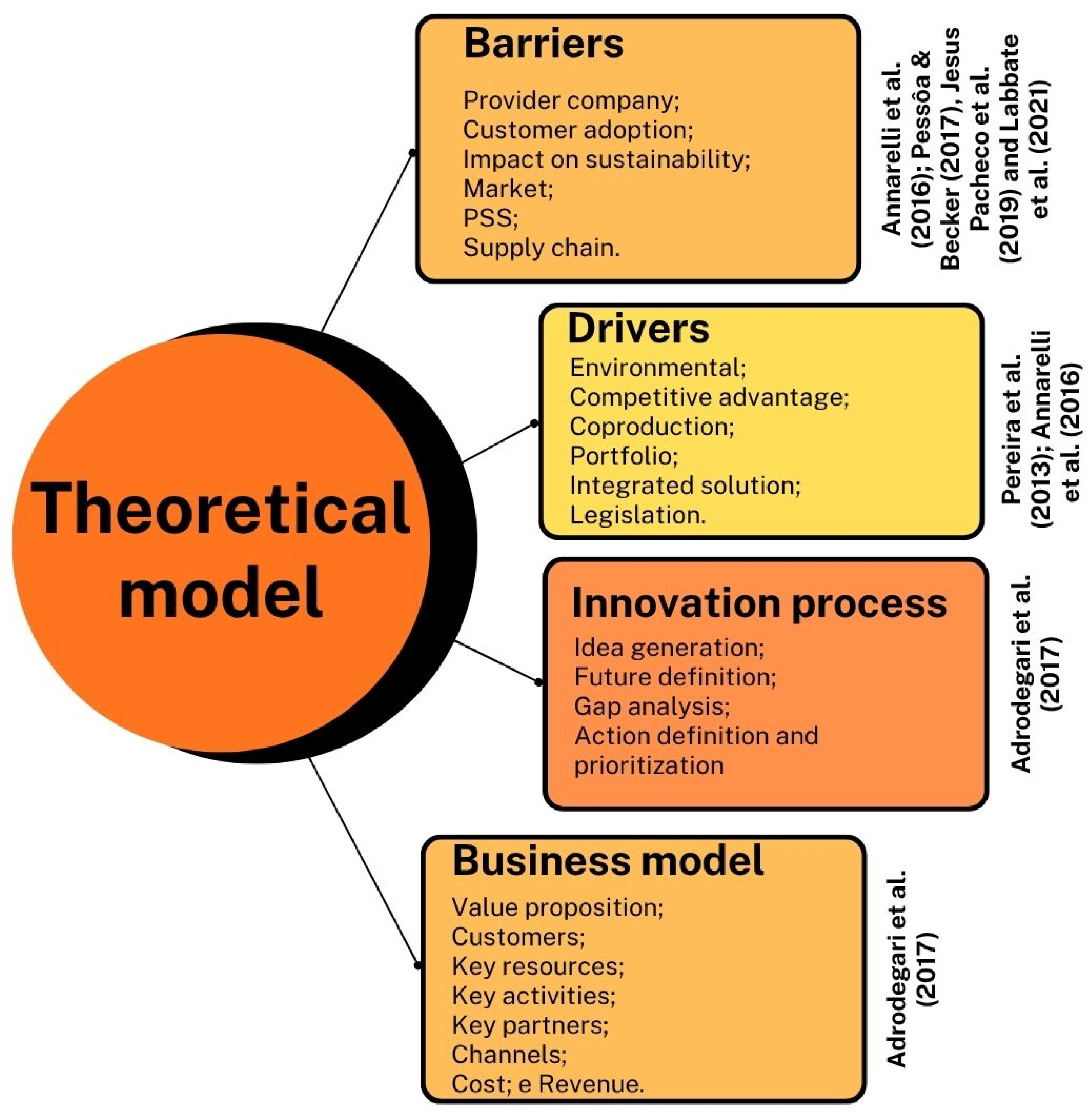
Figure 1. Proposed theoretical model. Source: based on [12,15,22,39,42,43].
Sustainability 17 10020 g001
Figure 2. Stages of the proposed methodology.
Sustainability 17 10020 g002
Figure 3. Integrated Framework of PSS Adoption in Brazilian Industrial SMEs.
Sustainability 17 10020 g003
Table 2. Number of employees of the Brazilian industrial enterprises investigated.
Number of EmployeesFrequencyPercentage
Until 19440.00%
From 20 to 99550.00%
From 100 to 499110.00%
Total10100.00%
Source: research data (2023).
Table 3. Time since the founding of the industrial SMEs investigated.
Age Range (in Years)FrequencyPercentage
Up to 10 years110%
11 to 50 years880%
Over 50 years110%
Total10100%
Source: research data (2023).
Table 4. Sector of operation of the industrial SMEs investigated.
IndustryFrequencyPercentage
Industrial Assembly110.00%
Component Industry110.00%
Metallurgical Industry110.00%
Rubber Industry110.00%
Industrial Equipment220.00%
Metalworking Industry110.00%
Industrial Transport Equipment110.00%
Food Industry110.00%
Industrial Ventilation Equipment110.00%
Total10100.00%
Source: research data (2023).
Table 5. Corresponding TFN for variable BPSS2 (Resistance to change).
Number of SpecialistsTFNGrade Assigned
Expert 1(0.7; 0.9; 0.9)[Note 5]
Expert 2(0.3; 0.5; 0.7)[Note 3]
Expert 3(0.7; 0.9; 0.9)[Note 5]
Expert 4(0.3; 0.5; 0.7)[Note 3]
Expert 5(0.3; 0.5; 0.7)[Note 3]
Expert 6(0.5; 0.7; 0.9)[Note 4]
Expert 7(0.5; 0.7; 0.9)[Note 4]
Expert 8(0.5; 0.7; 0.9)[Note 4]
Expert 9(0.7; 0.9; 0.9)[Note 5]
Expert 10(0.5; 0.7; 0.9)[Note 4]
TFN corresponding(0.3; 0.7; 0.9)
Source: research data (2023).
Disclaimer/Publisher’s Note: The statements, opinions and data contained in all publications are solely those of the individual author(s) and contributor(s) and not of MDPI and/or the editor(s). MDPI and/or the editor(s) disclaim responsibility for any injury to people or property resulting from any ideas, methods, instructions or products referred to in the content.