Article

Balancing Forecast Accuracy and Emissions for Hourly Wind Power at Dumat Al-Jandal: Sustainable AI for Zero-Carbon Transitions

by
Haytham Elmousalami
1,*,
Felix Kin Peng Hui
2 and
Aljawharah A. Alnaser
3,*
1
Infrastructure Department, Faculty of Engineering and IT, University of Melbourne, Melbourne, VIC 3052, Australia
2
Department of Infrastructure Engineering, Faculty of Engineering and Information Technology, The University of Melbourne, Melbourne, VIC 3010, Australia
3
Department of Architecture and Building Science, College of Architecture and Planning, King Saud University, Riyadh 11421, Saudi Arabia
*
Authors to whom correspondence should be addressed.
Sustainability 2025, 17(21), 9908; https://doi.org/10.3390/su17219908
Submission received: 25 September 2025 / Revised: 25 October 2025 / Accepted: 4 November 2025 / Published: 6 November 2025
(This article belongs to the Special Issue Sustainable Energy Systems and Applications)

Abstract

This paper develops a Sustainable Artificial Intelligence-Driven Wind Power Forecasting System (SAI-WPFS) to enhance the integration of renewable energy while minimizing the environmental footprint of deep learning computations. Although deep learning models such as CNN, LSTM, and GRU have achieved high accuracy in wind power forecasting, existing research rarely considers the computational energy cost and associated carbon emissions, creating a gap between predictive performance and sustainability objectives. Moreover, limited studies have addressed the need for a balanced framework that jointly evaluates forecast precision and eco-efficiency in the context of large-scale renewable deployment. Using real-time data from the Dumat Al-Jandal Wind Farm, Saudi Arabia’s first utility-scale wind project, this study evaluates multiple deep learning architectures, including CNN-LSTM-AM and GRU, under a dual assessment framework combining accuracy metrics (MAE, RMSE, R2) and carbon efficiency indicators (CO2 emissions per computational hour). Results show that the CNN-LSTM-AM model achieves the highest forecasting accuracy (MAE = 29.37, RMSE = 144.99, R2 = 0.74), while the GRU model offers the best trade-off between performance and emissions (320 g CO2/h). These findings demonstrate the feasibility of integrating sustainable AI into wind energy forecasting, aligning technical innovation with Saudi Vision 2030 goals for zero-carbon cities and carbon-efficient energy systems.

1. Introduction

1.1. Cities, Wind Energy Supply, and Saudi Arabia 2023 Vision

Wind energy is a pivotal element in the pursuit of zero-carbon smart cities, providing a clean and abundant energy source that directly displaces fossil fuel generation. In the context of the Dumat Al-Jandal Wind Farm, the Kingdom’s first utility-scale wind project with 400 MW capacity, advanced AI-driven hourly forecasting could dramatically enhance grid integration by reducing variability and enabling reliable dispatch [1,2]. The wind farm, which became operational in 2022, supplies enough clean electricity to power roughly 70,000 homes and is estimated to avoid nearly one million tonnes of CO2 emissions annually. Accurate, sustainable AI modelling thus has the potential to strengthen the firm rhythmic contribution of wind to urban energy systems, reducing dependence on thermal backup and supporting resilient, low-carbon urban infrastructure [3,4].
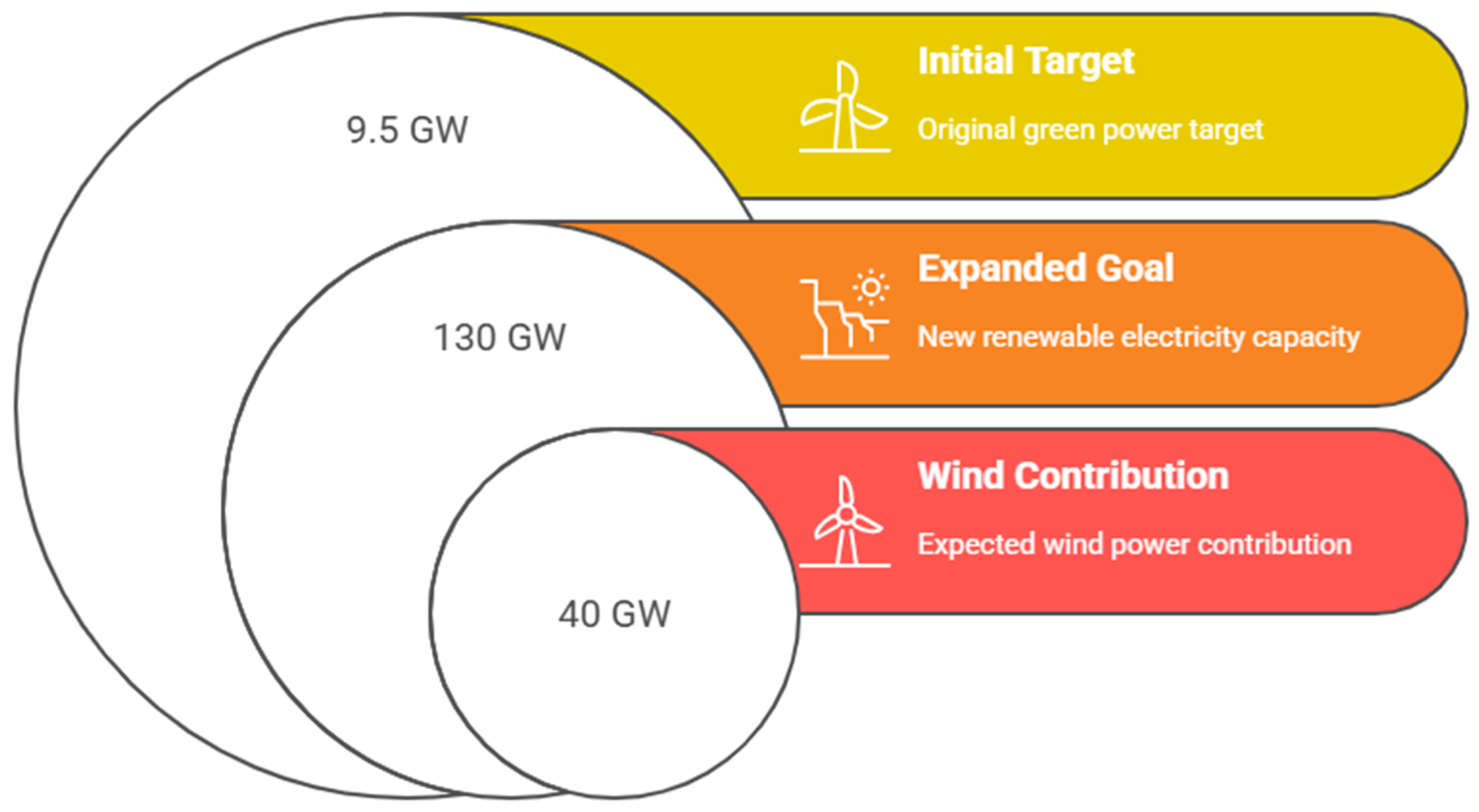
Saudi Vision 2030 serves as the Kingdom’s ambitious roadmap for economic diversification and climate stewardship, with renewable energy at its core. Initially targeting 9.5 GW of green power by 2030, Saudi Arabia has since expanded this goal to a bold 130 GW of renewable electricity capacity, as shown in Figure 1. The target mix aims for a 50% share of electricity from renewables by 2030, with roughly 40 GW expected to come from wind and the balance from solar [5,6]. To support this trajectory, the Public Investment Fund (PIF) is spearheading 70% of renewable projects and pushing for the localization of green technology manufacturing. These large-scale, policy-driven investments, estimated at $270 billion in solar, wind, and green hydrogen through 2030, underline the strategic position of wind in realizing zero-carbon cities and a sustainable energy future [7].
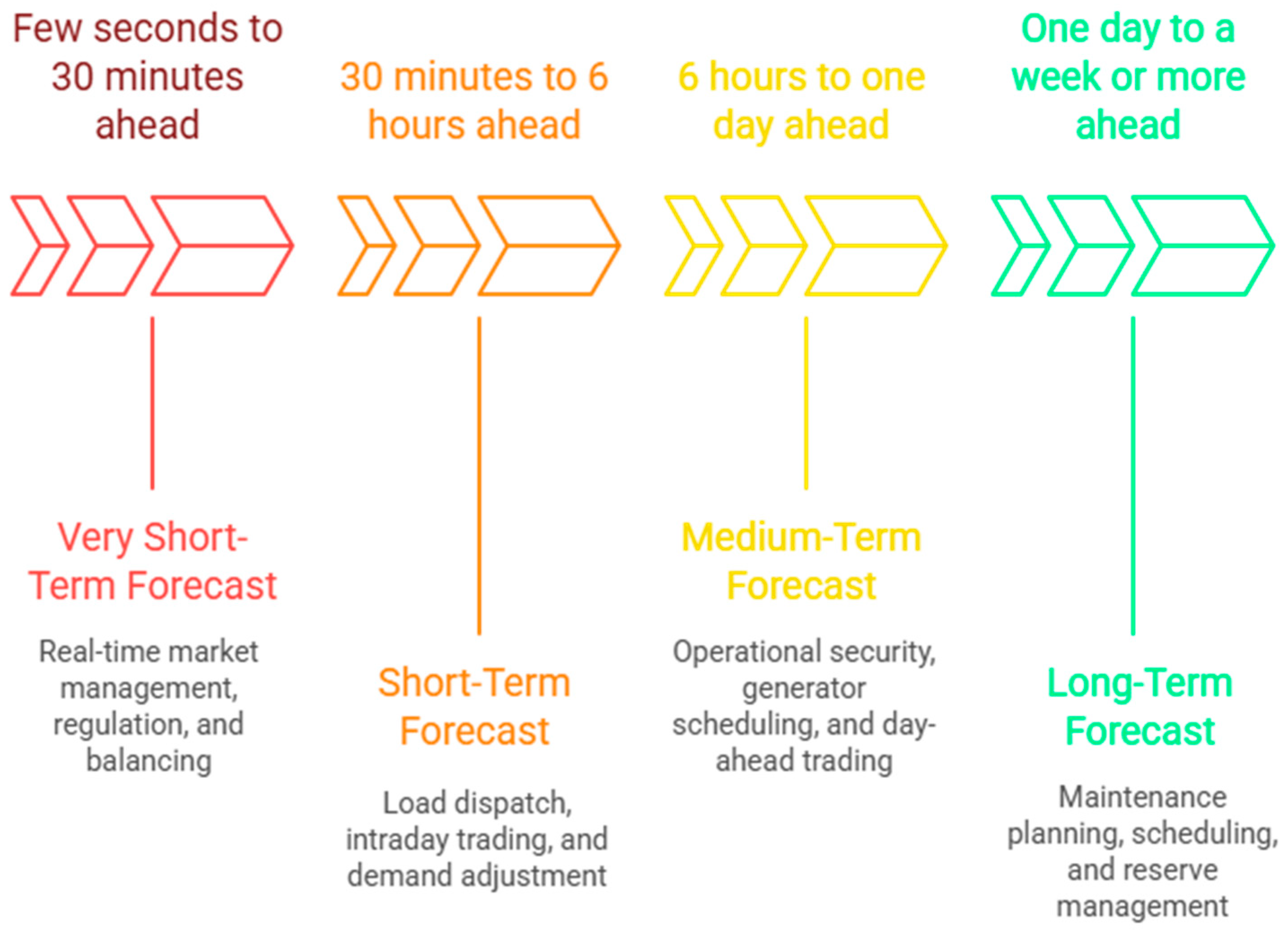
Figure 2 illustrates the forecasting time horizons for wind energy and their associated applications within electricity systems. At the very short-term range (a few seconds to 30 min ahead), forecasts support real-time electricity market management, regulation actions, and balancing, which are critical for system stability and the operation of virtual power plants. The short-term horizon (30 min to 6 h ahead) is primarily used for load dispatch management, intraday trading, and adjusting load demand, enabling operators to respond flexibly to fluctuations in wind generation [9,10]. Moving to the medium-term horizon (6 h to one day ahead), forecasts contribute to operational security precautions, generator scheduling, and day-ahead trading, ensuring reliable integration of wind energy into market operations [11,12,13]. Accordingly, the long-term horizon (ranging from one day to a week or more) informs maintenance planning, scheduling, and reserve management, providing a strategic framework for grid reliability and efficient resource allocation [14]. Collectively, these forecasting ranges demonstrate how predictive models significantly enhance both operational efficiency and long-term planning in renewable energy systems, as shown in Figure 2.

1.2. Sustainable Artificial Intelligence (SAI)

SAI represents a paradigm shift in the development and application of AI technologies, prioritizing predictive accuracy and environmental responsibility, and long-term societal benefits [17,18]. Conventional AI and deep learning models often require extensive computational resources, generating significant CO2 emissions that can offset the sustainability benefits of integrating renewable energy. SAI directly addresses this issue by emphasizing energy-efficient algorithms, optimized model architectures, and computational strategies that reduce emissions while ensuring reliable performance [19,20]. Within the wind energy domain, SAI supports the dual objectives of enhancing forecasting accuracy and lowering the environmental footprint of computational processes. By aligning predictive modeling with ecological efficiency, SAI ensures that artificial intelligence contributes positively to climate goals rather than inadvertently undermining them [21,22].
In Saudi Arabia, SAI is particularly relevant to the ambitions of Vision 2030, which seeks to expand renewable energy capacity to 130 GW by 2030 while fostering sustainable, zero-carbon cities [21,23]. Incorporating SAI into wind energy forecasting, such as at the Dumat Al-Jandal Wind Farm, ensures that advanced AI systems stabilize grid operations through accurate hourly forecasts and remain consistent with national decarbonization strategies. By embedding carbon efficiency metrics, such as CO2 emissions per computational hour, alongside traditional accuracy indicators like MAPE and RMSE, SAI provides a framework that integrates precision, sustainability, and policy alignment. This dual focus reflects Saudi Arabia’s broader energy transition, where technological innovation, environmental stewardship, and economic diversification converge to position the Kingdom as a global leader in sustainable AI-driven renewable energy management [17,24].

1.3. Research Gaps and Problems

Despite significant progress in artificial intelligence applications for wind energy forecasting, several research gaps remain that limit the scalability and sustainability of these solutions. A large portion of existing studies focuses primarily on improving predictive accuracy without giving sufficient attention to the environmental costs of computation. Deep learning architectures, while highly effective at capturing nonlinear and temporal dependencies, often require extensive energy resources during training and deployment, which conflict with the sustainability objectives of zero-carbon energy systems [25,26]. Moreover, many forecasting models are developed for specific geographic regions and datasets, which reduces their generalizability when applied to new environments such as Saudi Arabia’s desert climate. The absence of standardized frameworks for benchmarking both accuracy and carbon performance further complicates the selection of optimal algorithms for operational use [17,27].
Another key limitation lies in the insufficient integration of forecasting models with broader urban decarbonization strategies. While accurate wind speed and power prediction enhance grid stability, few studies have fully embedded forecasting tools within city-scale frameworks that account for long-term emissions reduction, energy equity, and resilience. Additionally, many models treat wind speed and power forecasting as separate tasks, rather than as interconnected components within a holistic urban energy supply chain [28]. This creates a gap in translating advances in machine learning into practical tools that can directly accelerate the transition to zero-carbon cities. Addressing these problems requires technical innovation in AI modeling and interdisciplinary approaches that connect computational sustainability with national policies, such as Saudi Arabia’s Vision 2030, and urban planning strategies that prioritize carbon neutrality [16,29,30].

1.4. Research Objectives

The primary objective of this paper is to develop and evaluate a Sustainable AI-Driven Wind Energy Forecasting System (SAI-WEFS) that accurately predicts wind speed and power while minimizing computational carbon emissions. By systematically assessing a range of machine learning and deep learning algorithms, this research aims to identify models that strike a balance between predictive accuracy and environmental sustainability. Traditional metrics such as the mean absolute percentage error (MAPE) and root mean squared error (RMSE) are combined with carbon performance indicators, including CO2 emissions per computational hour, to create a dual evaluation framework. This approach ensures that algorithm selection does not prioritize accuracy at the expense of sustainability but instead aligns with the broader goal of enabling eco-efficient forecasting solutions for renewable energy systems.
In addition to model evaluation, the study aims to integrate SAI-WEFS into the Urban Energy Supply Decarbonization Framework (UESDF), linking wind forecasting with city-scale energy transition strategies. Through this integration, the system contributes to monitoring and reducing the urban carbon footprint, supporting Saudi Arabia’s Vision 2030 targets for renewable energy expansion and the development of zero-carbon cities. By providing multi-time horizon forecasts, ranging from very short-term operational planning to long-term strategic scheduling, SAI-WEFS enhances grid reliability, optimizes resource allocation, and reduces dependency on fossil-fuel-based backup systems. Ultimately, the research objective is to advance technical performance in wind energy forecasting and to establish a sustainable, policy-aligned framework that accelerates the decarbonization of urban energy supply systems.

2. Literature Review

Modern wind-power forecasting has shifted decisively toward deep learning, with Transformers and hybrid CNN/LSTM variants outperforming earlier statistical baselines on short-term horizons (ranging from minutes to hours). Recent work in Applied Energy proposes interpretable Transformer architectures that fuse multivariate weather and SCADA signals while exposing variable/temporal attributions, which are useful for operations and compliance in critical grids [31,32]. In Energy, researchers integrate wavelet decompositions with Transformer encoders to stabilize non-stationary wind series and improve multi-hour accuracy, complementing hybrid pipelines that combine convolutional feature extractors with sequence models [32,33]. Collectively, these studies report consistent gains in MAE/RMSE and tighter prediction intervals for intraday horizons, indicating that attention mechanisms and multiscale feature extraction are now state-of-the-art for hourly wind prediction.
A second thread emphasizes operational realism: probabilistic forecasting, interpretability, and robustness to ramps. Interpretable seasonal-trend decomposition combined with deep learners improves transparency and stability in Energy, while ramp-aware models explicitly focus loss on local peak/ramp intervals that drive reserve commitments and curtailment risk [31,34]. Online and distribution-free probabilistic frameworks in Energy move training from offline batches to adaptive learning for real-time uncertainty quantification, and transfer-learning modules ease deployment to new farms with limited history [35,36]. Together, these advances better support dispatch, bid-curve construction, and risk-aware market participation under high renewable penetration, where interval and quantile forecasts often matter as much as point accuracy.
Finally, sustainability and deployability are emerging priorities alongside accuracy to reduce computation while preserving forecast skill, aligning with “green AI” goals [37,38]. In practice, these choices, interpretable attention, online/transfer learning, and multiscale pre-processing form a toolkit for sustainable, high-fidelity hourly wind forecasting that can scale across sites and policies (e.g., zero-carbon city programs) without inflating the carbon cost of computation.

3. Deep Learning Models

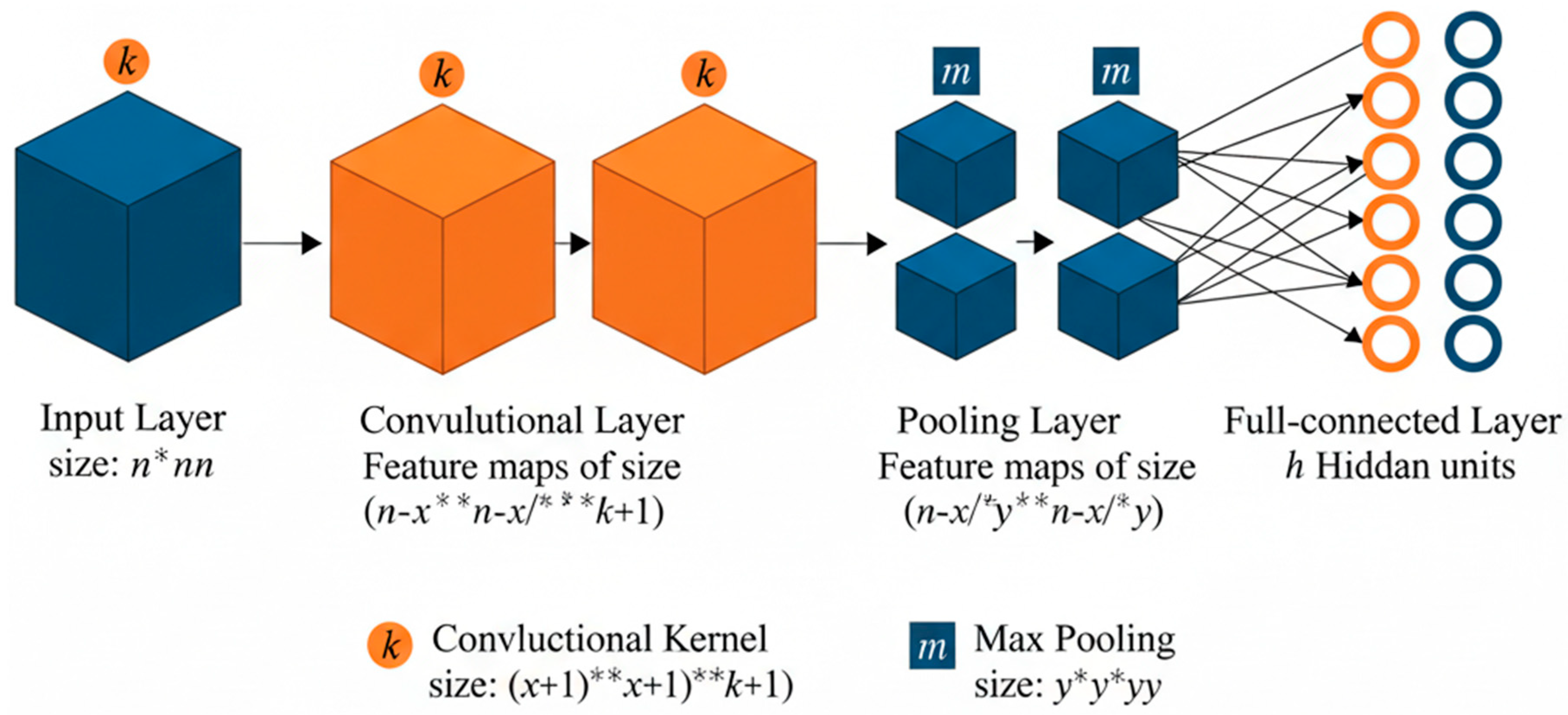
Deep learning has become a cornerstone in time-series forecasting, particularly for renewable energy applications such as wind and solar power prediction [30,31]. Recurrent Neural Networks (RNNs) represent one of the earliest architectures designed to process sequential data by incorporating memory of past states [32,33,34]. Although effective in modeling temporal dependencies, conventional RNNs face difficulties with vanishing gradients, which limit their ability to capture long-term patterns [35,36]. Convolutional Neural Networks (CNNs), originally developed for image recognition, have been adapted to time-series tasks by automatically extracting local features and short-term fluctuations from raw meteorological data, thereby reducing noise and improving the representation of dynamic signals, as in Figure 3.
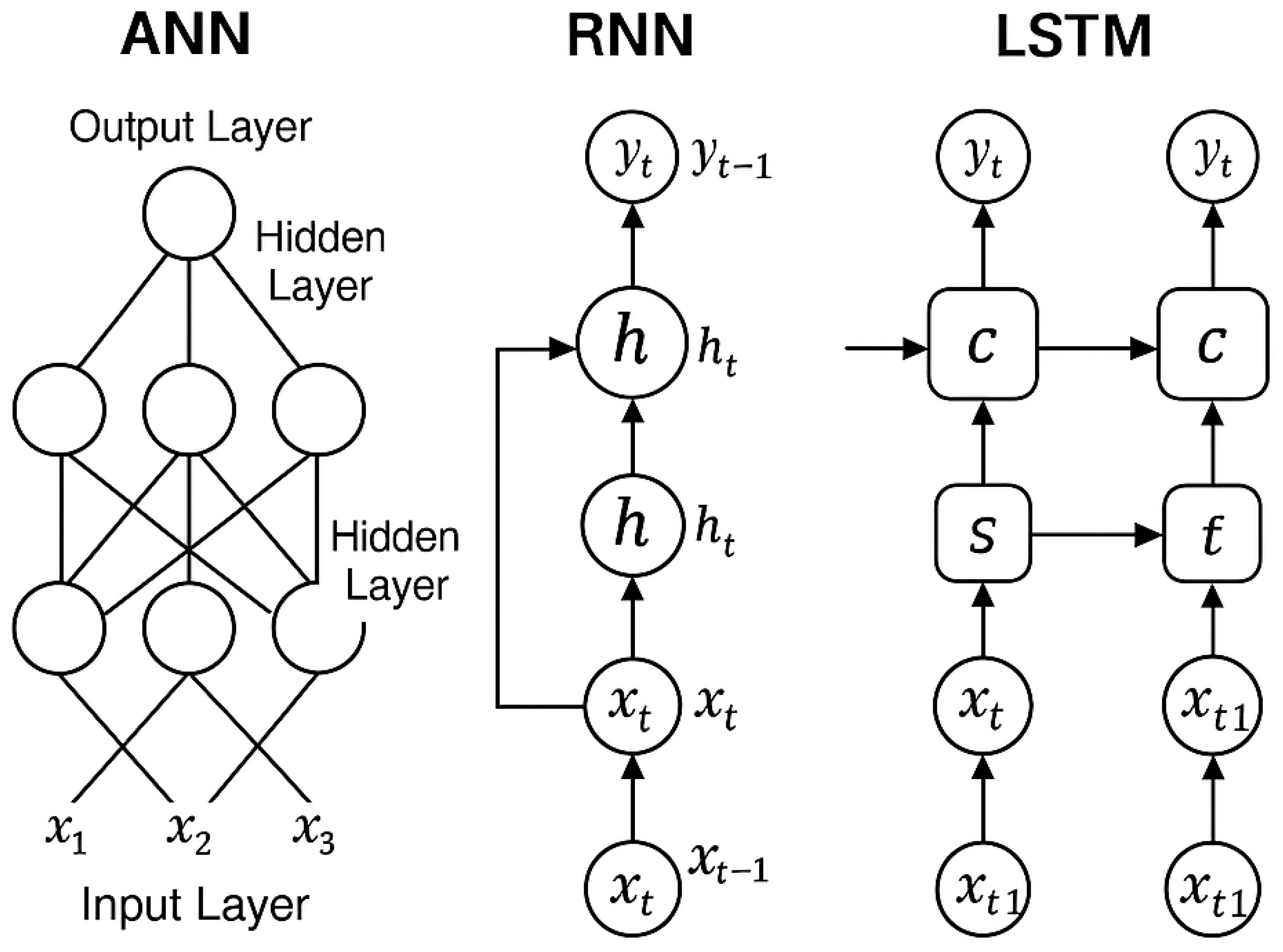
To overcome the limitations of standard RNNs, advanced architectures such as Gated Recurrent Units (GRUs) and Long Short-Term Memory (LSTM) networks were developed. GRUs simplify the gating mechanism by combining update and reset gates, making them computationally efficient while retaining strong predictive capacity for sequential data. LSTMs, by contrast, employ three distinct gates, input, forget, and output, alongside a memory cell, enabling them to learn both short-term and long-term dependencies as shown in Figure 4. These models are widely applied in energy forecasting as they can capture cyclical patterns, seasonal effects, and abrupt changes in wind dynamics more effectively than traditional statistical models.
This study linked the number of gates in the model to its computational cost and corresponding carbon emissions. For a recurrent unit with input size m, hidden size h, and sequence length T, the multiply–accumulate (MAC) cost per time step increases with the number of gates k, approximately proportional to k × h × (m + h). The total computational cost, therefore, depends on the batch size and sequence length. Carbon emissions are then proportional to the total computational load multiplied by the energy consumed per operation, which includes hardware efficiency and data center energy use. Concretely, the GRU has three gates (update, reset, candidate), while the LSTM has four (input, forget, output, candidate), resulting in roughly 25–33% lower computation and therefore lower emissions for similar configurations. This theoretical relationship extends to other gated models since emissions scale linearly with the number of affine transformations per step. Fewer gates lead to fewer operations and memory transfers, reducing both computational energy and carbon emissions under the same model size and sequence length.
More recently, the Attention Mechanism (AM) has been introduced to enhance sequential models by enabling them to selectively focus on the most relevant parts of input sequences. This approach improves both accuracy and interpretability by assigning varying importance to different time steps or features [13]. Furthermore, hybrid architectures such as CNN-LSTM integrate the strengths of convolutional layers in feature extraction with the temporal learning capacity of LSTMs, yielding robust performance across multiple forecasting horizons. Together, these models form a comprehensive toolkit for advancing accurate, efficient, and sustainable forecasting systems, aligning with the goals of zero-carbon cities and national renewable energy strategies.
In this study, a Convolutional Neural Network (CNN) was applied to tabular meteorological data to enhance local feature extraction and capture short-term spatial–temporal dependencies among input variables such as wind speed, direction, temperature, and pressure. Although CNNs are traditionally used for image data, recent research has demonstrated their strong performance in structured or time-series tabular datasets by automatically identifying correlated feature patterns and reducing noise through convolutional filtering. This improves generalization and stability compared to fully connected networks, which often overfit small fluctuations. By using CNN layers before the recurrent components (LSTM or GRU), the model effectively learns localized interactions and passes more refined representations to the sequence-learning stage, resulting in higher forecasting accuracy and smoother temporal transitions in wind power prediction.

4. Research Methodology

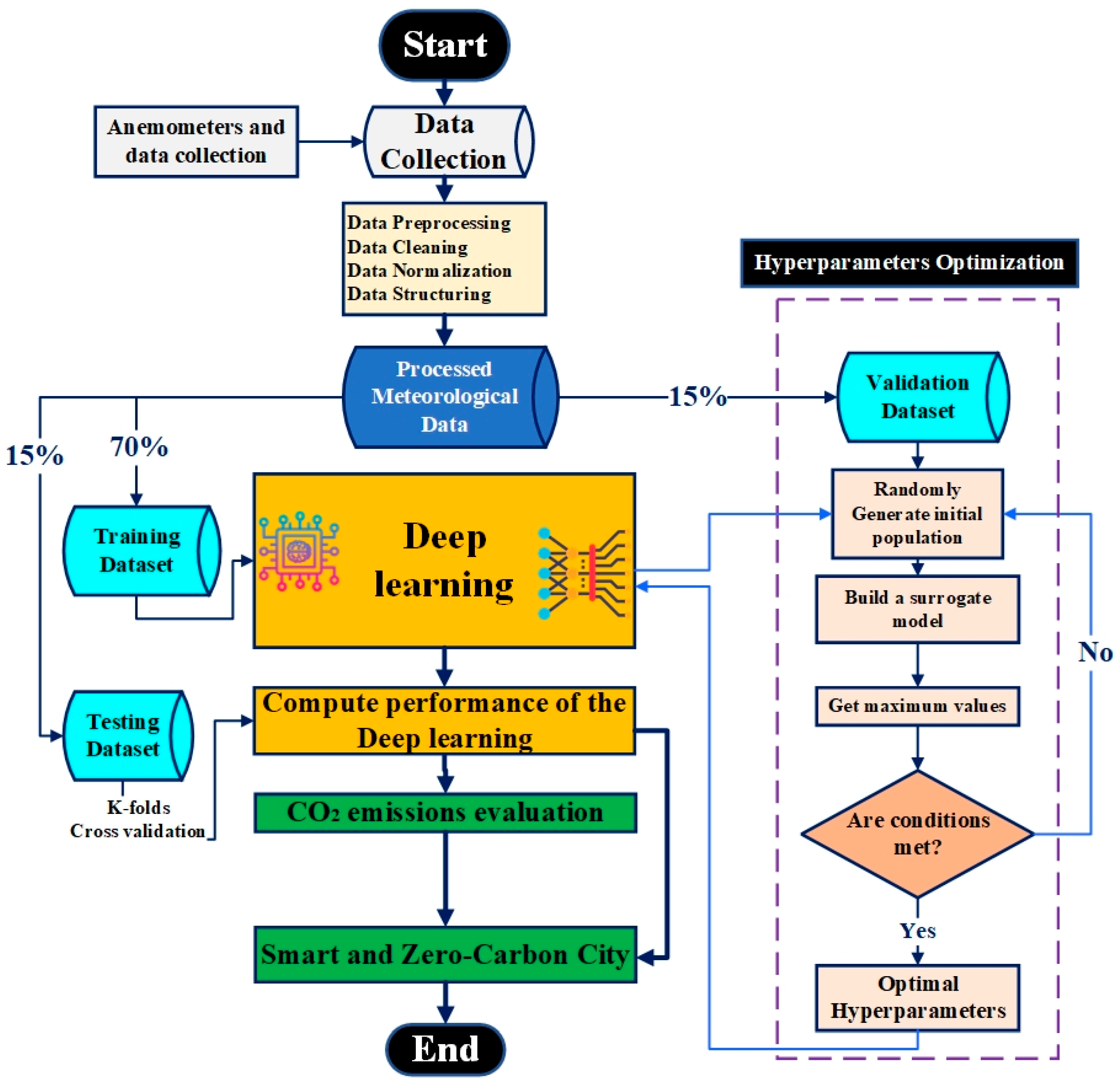
The research methodology begins with the systematic collection of real-time wind and meteorological data from anemometers installed at the Dumat Al-Jandal Wind Farm. The raw data undergoes pre-processing, including cleaning, normalization, and feature structuring, to ensure quality and consistency. The processed dataset is then divided into 70% for training, 15% for testing, and 15% for validation. The training set is used to develop the deep learning models, while the testing set applies k-fold cross-validation to evaluate model generalization. The validation set supports hyperparameter tuning, where Bayesian optimization iteratively searches for the best parameter configuration to maximize model performance, as illustrated in Figure 5.

4.1. CNN-LSTM-AM Model Architecture

The proposed CNN-LSTM-AM framework integrates three complementary components, convolutional layers, long short-term memory (LSTM) units, and an attention mechanism, to effectively capture and learn spatial–temporal dependencies in meteorological data for wind power forecasting. The convolutional layers serve as the foundation of the framework, acting as feature extractors that scan the input meteorological matrix using sliding filters. This process detects localized spatial and temporal correlations among critical variables such as wind speed, wind direction, temperature, and pressure. By emphasizing dominant features while reducing background noise and irrelevant fluctuations, the convolutional layers produce refined feature maps that encapsulate the essential spatial–temporal patterns in the data. These maps are then passed to the subsequent recurrent layers, enabling the model to transition from static spatial understanding to dynamic temporal learning. This hierarchical feature extraction allows the CNN to generalize across varying weather conditions while maintaining stability and robustness in feature representation.
The LSTM component is designed to process the sequential feature representations generated by the convolutional layers and to model long-term temporal dependencies inherent in wind dynamics. It utilizes a gated architecture, comprising input, forget, and output gates, that regulates the flow of information across time steps. The forget gate determines which past information to discard, the input gate decides which new information to add, and the output gate governs how much of the updated state is exposed to the next layer. This internal memory mechanism enables the model to retain relevant historical patterns, such as diurnal cycles, seasonal variations, and sudden ramp events, while mitigating issues, such as vanishing gradients that often affect traditional recurrent networks. By learning both short-term fluctuations and long-term trends, the LSTM enhances the temporal resolution and predictive reliability of the forecasting system, ensuring that the model remains sensitive to variations in atmospheric dynamics while maintaining overall stability.
To further refine the temporal representation and improve interpretability, an attention mechanism is incorporated at the final stage of the sequential modelling process. The attention layer assigns adaptive weights to each time step in the input sequence, effectively determining the relative importance of different temporal features for predicting future wind power output. This selective focusing allows the model to prioritize informative time intervals, such as sudden changes in wind speed or pressure, while down-weighting less significant or redundant data segments. Consequently, the attention mechanism enhances both accuracy and transparency by enabling the model to explain which temporal patterns most strongly influence its predictions. The final fully connected output layer then consolidates the weighted representations and transforms them into a continuous wind power prediction for the next time interval. Collectively, the CNN-LSTM-AM framework forms a powerful and interpretable hybrid architecture that achieves superior predictive performance and aligns with sustainable AI principles through efficient data processing and model optimization.

4.2. Model Evaluation and Sustainability Metrics

The performance of each model is evaluated using statistical measures including the Mean Absolute Percentage Error (MAPE), Root Mean Square Error (RMSE), and the Coefficient of Determination (R2). These indicators quantify prediction accuracy and reliability. In addition, the computational energy consumption and carbon emissions (grams of CO2 per computational hour) are calculated to assess environmental performance.
To combine these perspectives, a dual evaluation framework is implemented that integrates forecasting accuracy with carbon efficiency into a single Sustainable AI (SAI) score. The weights assigned to accuracy and emissions were determined through focus group discussions with experts in renewable energy and AI. This ensures that the evaluation reflects both operational performance and environmental responsibility.
Overall, this integrated methodology merges advanced data processing, hybrid deep learning modeling, and sustainability assessment into a unified system. It provides a transparent, replicable, and policy-aligned framework that supports accurate and eco-efficient wind power forecasting for zero-carbon energy development. Following model training and optimization, the performance of the deep learning algorithms is rigorously evaluated using statistical metrics such as MAPE, RMSE, and R2, as well as sustainability criteria that assess CO2 emissions from computational processes. This dual evaluation framework ensures that the models achieve both predictive accuracy and computational efficiency, aligning with sustainable artificial intelligence (SAI) principles. Insights from performance evaluation inform a broader framework that supports the design of zero-carbon cities by enabling precise wind energy forecasting and reducing reliance on fossil fuel-based energy backup. Ultimately, this integrated methodology combines advanced data processing, machine learning, and environmental evaluation to create a robust and eco-conscious forecasting system for renewable energy management.

5. Deep Learning Algorithms Application

5.1. Dumat Al-Jandal Wind Farm Dataset

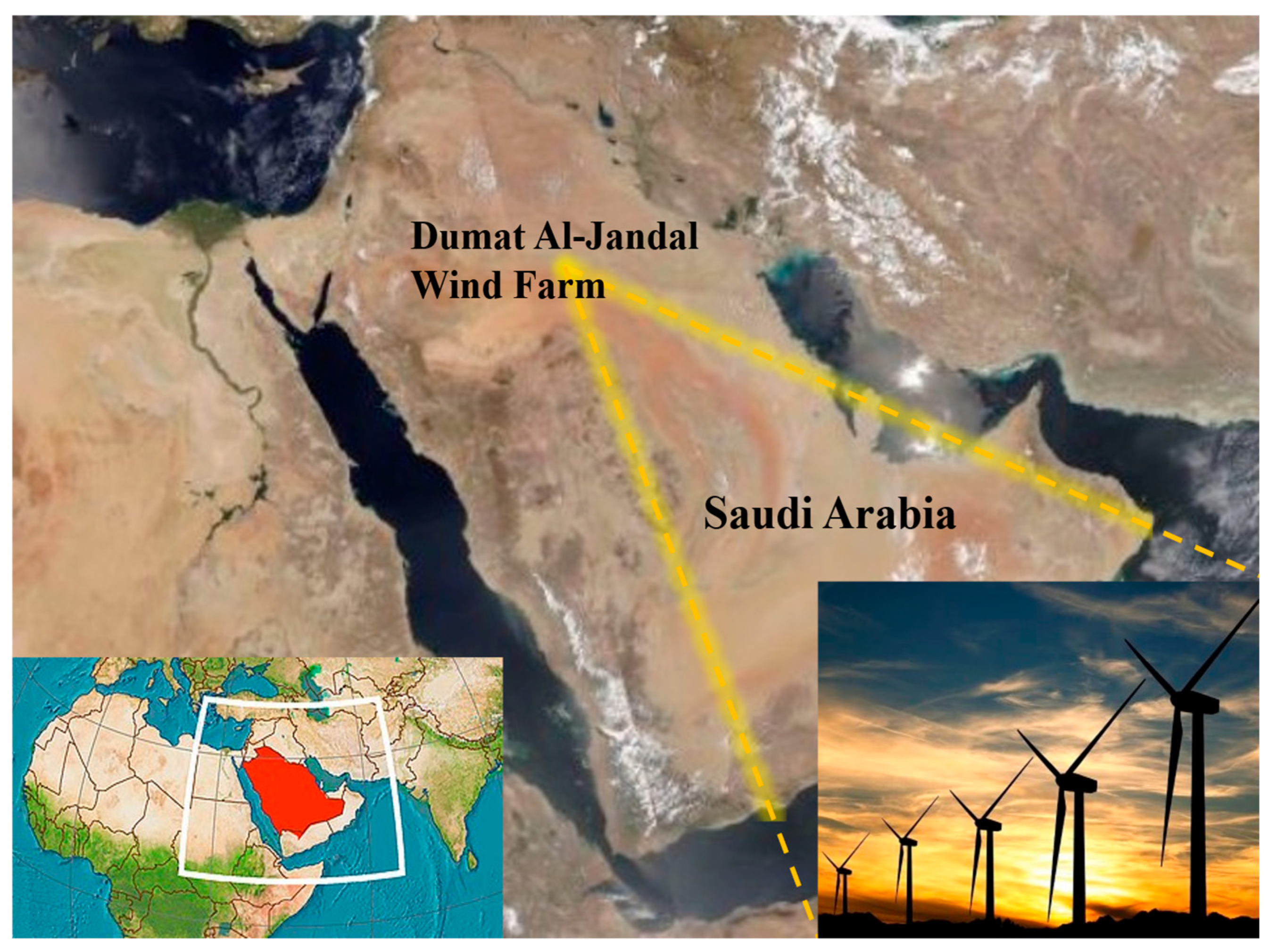
The Dumat Al-Jandal Wind Farm, located in the Al Jouf region of Saudi Arabia, is the Kingdom’s first and largest utility-scale wind project with an installed capacity of 400 MW, as shown in Figure 5. For this study, a comprehensive dataset was collected from the wind farm between April 2024 and April 2025 using calibrated anemometers installed at turbine hub height. The dataset comprises approximately 200,000 observations recorded at a 10 min resolution, capturing variations in wind speed, direction, and related meteorological conditions [24,40]. This high-frequency dataset provides a robust foundation for developing and validating AI-driven forecasting models, as it reflects both seasonal cycles and short-term fluctuations in wind dynamics as in Figure 6.
The selected parameters form the essential inputs for wind energy forecasting models, as they collectively capture the physical, environmental, and temporal dynamics of power generation. Hub height and wind speed directly influence the kinetic energy available for conversion, while wind direction ensures optimal turbine orientation and efficiency. Atmospheric temperature, pressure, and humidity together determine air density, a critical factor in calculating power output. Wind power measurements serve as the target variable, providing ground-truth data for model training and validation. Meanwhile, temporal indicators such as month and hour embed seasonal cycles, daily patterns, and diurnal variability into the dataset, enabling models to anticipate both predictable and stochastic fluctuations. Incorporating these variables allows deep learning algorithms, such as CNNs for pattern extraction, RNNs and LSTMs for sequence learning, and attention mechanisms for feature prioritization, to achieve higher forecasting accuracy across multiple time horizons, as in Table 1.

5.2. Hyperparameter Optimization

In this paper, Bayesian optimization is applied to determine the most suitable hyperparameters, with performance assessed using the validation dataset [42]. Two key error metrics are employed: the Mean Absolute Percentage Error (MAPE), expressed in Equation (1), and the Root Mean Squared Error (RMSE), shown in Equation (2). Here, n denotes the number of validation samples, i is the index of each case, y ^ i is the predicted value from the model, and y i is the observed value.
To further evaluate predictive machine learning models, additional performance indicators are considered, including MAPE, RMSE, the coefficient of determination (R2), and its adjusted form (R2). The R2 statistic, presented in Equation (3), measures the proportion of variance in the actual data explained by the model, with values ranging from 0 to 1. Adjusted R2, calculated by Equation (4), accounts for the number of predictor variables included in the model. This adjustment ensures that the measure penalizes unnecessary complexity, meaning R*2 is typically lower than the unadjusted R2 value. Collectively, these evaluation metrics provide a comprehensive framework for judging both the accuracy and efficiency of forecasting algorithms. This paper conducts Bayesian optimization to select the optimal hyperparameters based on the validation dataset using Equations (1)–(4).
M A P E = 1 n i = 1 n y i y ^ i y ^ i × 100
R M S E = 1 n i = 1 n [ y i y ^ i ] 2
R 2 = 1 i = 1 n y i y ^ i 2 i = 1 n y i y ¯ i 2 ,   0 R 2 1
R * 2 = R 2 1 R 2 K n K + 1
where n is the number of the validation cases, i is the iterator of the validation case, and y ^ i is the predicted output of the algorithm and y i this is the actual output.
Table 2 presents the optimized hyperparameters for each deep learning model used in the paper, derived through Bayesian optimization to ensure a balance between predictive performance and computational sustainability. Each model was fine-tuned using a systematic search strategy across key parameters, including learning rate, batch size, number of epochs, hidden units, activation functions, dropout rate, and regularization strength. The optimization process aimed to minimize validation RMSE while concurrently reducing computational carbon intensity, consistent with the Sustainable AI (SAI) framework adopted in this study. Models employing convolutional layers (e.g., CNN-LSTM, CNN-GRU) were optimized for filter size and stride to capture localized spatial–temporal dependencies efficiently, while recurrent architectures (RNN, LSTM, GRU) focused on optimizing hidden units and sequence length to enhance temporal learning and stability. The use of ReLU and Tanh activation functions provided nonlinear flexibility, whereas dropout and L2 regularization mitigated overfitting and excessive energy consumption during training.
The inclusion of the attention mechanism (AM) in selected hybrid models (e.g., LSTM-AM, CNN-LSTM-AM) introduced additional softmax-based weight parameters optimized to dynamically prioritize relevant temporal features. As shown in the table, models with higher architectural complexity, such as CNN-LSTM-AM, required smaller learning rates and longer training epochs to converge effectively without escalating energy costs. Conversely, simpler architectures like GRU and RNN achieved optimal performance with fewer epochs and moderate dropout rates, highlighting their efficiency advantage. Collectively, these optimized configurations enhanced model accuracy and generalization and maintained computational efficiency, supporting the study’s dual objective of maximizing predictive performance while minimizing environmental impact. This table thus provides a transparent methodological foundation for reproducibility and future comparative benchmarking in sustainable AI-driven wind power forecasting.

6. Results and Analysis

6.1. Results Before Sustainable AI Assessment

The comparative performance of various deep learning models highlights clear differences in accuracy, error minimization, and generalization ability. Models such as RNN, LSTM, and GRU demonstrate reasonable predictive capabilities, but their relatively higher Mean Absolute Error (MAE) and Root Mean Squared Error (RMSE) values indicate limitations in capturing complex temporal dependencies within wind power data. For example, the RNN and LSTM models exhibit RMSE values above 158, suggesting challenges in handling longer-term dependencies despite achieving acceptable coefficients of determination (R2 values ranging from 71% to 85%). While GRU performs slightly better in terms of reduced error metrics, it still lags compared to more advanced hybrid models.
The integration of convolutional and recurrent structures provides significant improvements in predictive performance. Models such as CNN-RNN, CNN-GRU, and CNN-LSTM show noticeable reductions in MAE and RMSE, benefiting from CNN’s ability to extract local patterns before passing features to recurrent layers. Additionally, the inclusion of attention mechanisms (AM) further refines forecasting by enabling the models to selectively focus on the most relevant input features. CNN-RNN-AM and LSTM-AM achieve lower errors compared to their standalone counterparts, reflecting the effectiveness of attention in enhancing accuracy and robustness, particularly in capturing short-term fluctuations and ramping events in wind data.
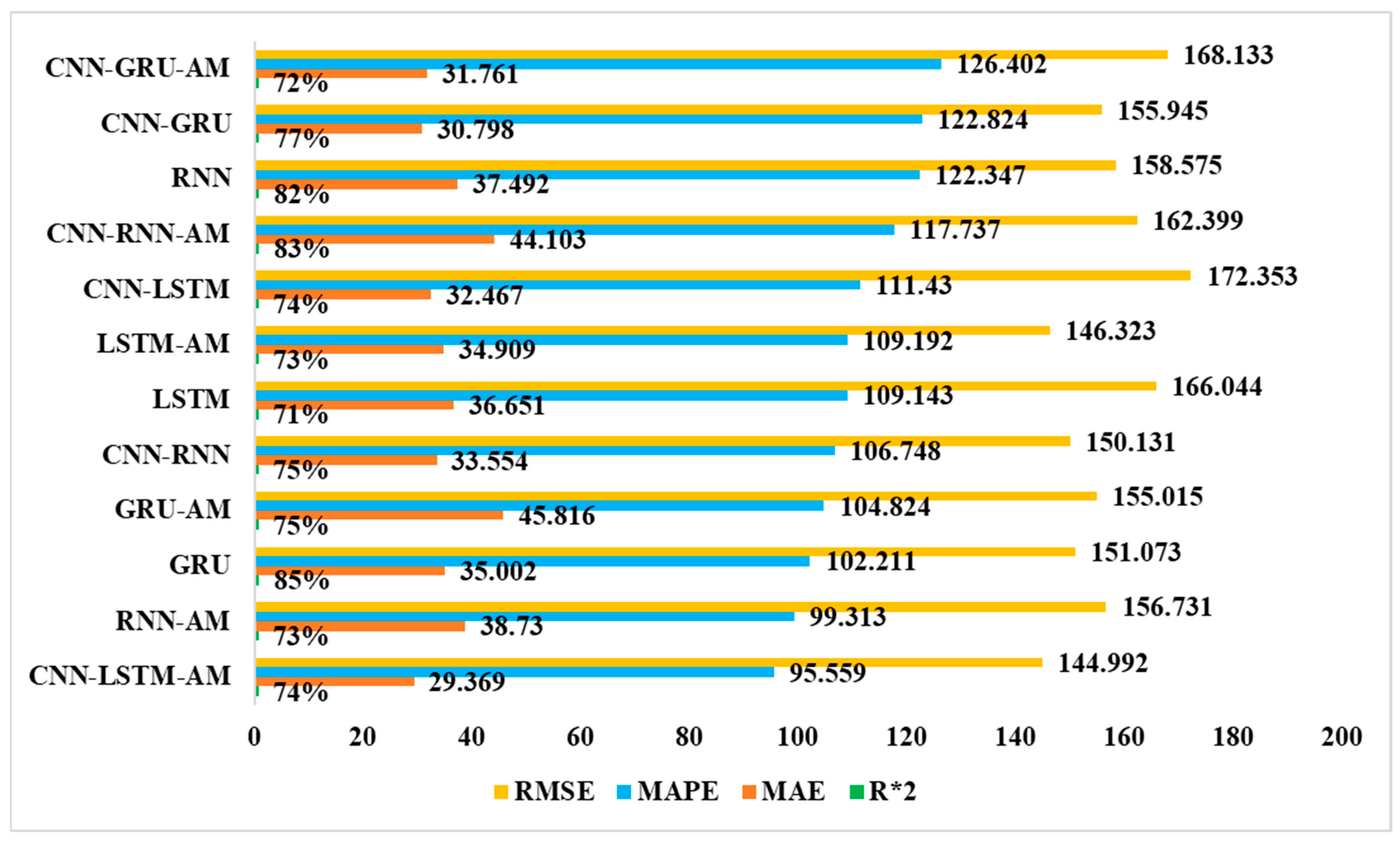
Among all evaluated architectures, the CNN-LSTM-AM model stands out as the best-performing approach. It achieves the lowest MAE (29.369) and MAPE (95.559), alongside a competitive RMSE (144.992) and a solid R2 of 74% as in Figure 7. This combination demonstrates superior forecasting precision and stability compared to other models. By leveraging CNN’s feature extraction, LSTM’s sequence learning, and the attention mechanism’s selective focus, CNN-LSTM-AM effectively balances error reduction and generalization. These results confirm that hybrid architectures with attention mechanisms offer the highest accuracy and reliability, making CNN-LSTM-AM the most suitable model for hourly wind energy forecasting in the context of smart and zero-carbon city planning.

6.2. Sustainable AI Trade-Off

This paper emphasizes that both the predictive performance of algorithms and their environmental footprint must be considered when selecting computational methods [18,34]. As shown in Equation (5), the total CO2 emissions of a computational process can be expressed as:
CO 2 total = ( N u × T u ) × CO 2 t
In this equation, CO2total represents the overall carbon emissions of the system, measured in grams. Nu refers to the total number of users engaged with the system, while Tu indicates the average computational time per user, expressed in hours. Finally, CO2t denotes the carbon emissions generated per computational hour. Together, these parameters provide a practical way to quantify and monitor the environmental cost of algorithmic operations as outlined in Equations (6)–(10).
RMSE m norm = RMSE m min RMSE max RMSE min RMSE
R m 2 norm = R m 2 min R 2 max R 2 min R 2
MAE m norm = MAE m min MAE max MAE min MAE
CO 2 m norm = CO 2 m min CO 2 max CO 2 min CO 2
SAI m = w rmse 1 RMSE m norm + w R 2 R m 2 norm + w CO 2 1 CO 2 m norm
Using the Sustainable-AI composite score S A I = 0.4 1 R M S E n o r m + 0.3 R n o r m 2 + 0.3 1 C O 2 n o r m SAI = 0.4 1 RMSE norm + 0.3 R norm 2 + 0.3 1 CO 2 norm , the models rank as follows: GRU achieves the best overall balance with SAI = 0.861 (R2 = 85%, RMSE = 151.07, CO2 = 320 g/h); RNN follows at 0.737 (82%, 158.58, 300), offering the highest accuracy per gram of CO2; CNN-RNN scores 0.611 (75%, 150.13, 340), reflecting a strong trade-off; LSTM-AM reaches 0.523 (73%, 146.32, 380) with low RMSE but higher emissions; then CNN-GRU 0.518 (77%, 155.95, 360); GRU-AM 0.514 (75%, 155.02, 350); RNN-AM 0.496 (73%, 156.73, 330); CNN-RNN-AM 0.478 (83%, 162.40, 390); CNN-LSTM-AM 0.464 (74%, 144.99, 420), the most accurate but most carbon-intensive; LSTM 0.267 (71%, 166.04, 350); CNN-LSTM 0.164 (74%, 172.35, 380); and CNN-GRU-AM 0.158 (72%, 168.13, 390) as shown in Table 3.
In this study, the priority weights assigned to accuracy, carbon efficiency, and social benefit were determined through focus group discussions and brainstorming sessions with renewable energy experts, AI researchers, and policy advisors. This participatory approach ensured that the weighting process reflected both technical performance goals and Saudi Arabia’s Vision 2030 priorities for decarbonization and sustainable development. The group reached a consensus assigning higher importance to forecasting accuracy, followed by carbon efficiency and social impact, as these align with operational reliability and national sustainability objectives. This expert-informed weighting process provides a practical and policy-relevant balance between model performance and environmental responsibility.
A normalized fusion model, guided by the sustainable-AI paradigm proposed by Elmousalami et al. (2025), is employed to balance accuracy and carbon cost metrics across different time scales [18]. Each indicator (prediction error and carbon emissions) is first mapped to a common, dimensionless scale using min–max normalization or alternative monotonic transformations with direction alignment, wherein the emission metric is inverted so that lower values indicate superior performance. A linear weighted aggregation of the normalized scores is then formulated, ensuring that improvements in either metric lead to non-decreasing composite scores, thereby preserving monotonicity. Sensitivity analyses and robustness checks, consistent with the procedures reported by Elmousalami et al. (2025) [18] across multiple time horizons, are performed to confirm the stability of rankings under varying normalization schemes and weight perturbations. This two-step normalization and weighted aggregation procedure ensures that the fused score remains unit-free, dimensionally compatible, and mathematically coherent, enabling the combined “accuracy–carbon efficiency” metric to reflect a rational and unbiased integration of heterogeneous performance dimensions.

7. Discussion and Key Contributions

7.1. Sustainable AI Wind Power Forecasting System (SAI-WPFS)

The Sustainable AI Wind Power Forecasting System (SAI-WPFS) represents an advanced framework that integrates artificial intelligence, energy forecasting, and sustainability assessment into a unified decision-support tool for renewable energy systems. Its primary contribution lies in balancing high predictive accuracy with ecological efficiency, ensuring that the computational processes underlying AI models do not offset the environmental gains achieved through clean energy generation. Traditional forecasting systems typically optimize for statistical accuracy alone, often disregarding the significant energy and carbon costs of deep learning computation. In contrast, SAI-WPFS introduces a dual-evaluation paradigm that simultaneously considers forecasting precision, measured by RMSE, MAE, and R2, and computational sustainability, measured by CO2 emissions per computational hour. This enables a more holistic evaluation of model performance, aligning algorithmic efficiency with environmental responsibility.
By employing hybrid deep learning architectures such as CNN-LSTM with attention mechanisms, SAI-WPFS effectively captures both short-term wind fluctuations and long-term temporal dependencies while allocating computational focus to the most relevant input features. This architecture not only improves accuracy but also reduces redundant processing, contributing to lower energy consumption per forecast cycle. The inclusion of a Sustainable AI composite score (SAI) further provides a standardized metric that quantifies the trade-off between predictive performance and carbon intensity, supporting evidence-based model selection and deployment decisions. For instance, the GRU model, with an SAI score of 0.861 (R2 = 85%, RMSE = 151.07, CO2 = 320 g/h), achieved the most sustainable balance, while CNN-LSTM-AM provided the highest precision (MAE = 29.37, RMSE = 144.99) at a higher carbon cost of 420 g/h. Such comparative insights allow stakeholders to select the optimal model configuration based on operational and sustainability priorities.
While the integration of CNN and LSTM has been explored in prior studies, the novelty of this research lies in its incorporation of the Sustainable AI framework, which jointly optimizes forecasting accuracy and computational carbon efficiency, an aspect rarely addressed in the existing literature. The proposed CNN-LSTM-AM architecture is not a simple combination but a systematically optimized hybrid that leverages CNN for localized feature extraction, LSTM for temporal dependency learning, and the Attention Mechanism for adaptive feature weighting, thereby improving both interpretability and robustness. Furthermore, the study introduces a dual evaluation framework that quantifies model sustainability by integrating carbon emission metrics with conventional accuracy indicators. This approach advances the field beyond algorithmic performance toward environmentally responsible computation, representing a methodological and conceptual innovation that aligns with emerging global trends in green and sustainable artificial intelligence.
Beyond algorithmic innovation, SAI-WPFS has practical implications for urban energy transition and climate policy. It supports grid operators by improving the reliability of short- and medium-term forecasting, which in turn enhances grid flexibility, minimizes curtailment, and reduces dependence on fossil-fuel-based backup systems. These operational benefits directly translate into broader sustainability outcomes, including reduced greenhouse gas emissions, increased renewable energy penetration, and enhanced energy security. Within the context of Saudi Arabia’s Vision 2030, SAI-WPFS strengthens the technological foundation required to achieve the national goal of 130 GW of renewable capacity by improving the predictability and efficiency of wind energy integration.
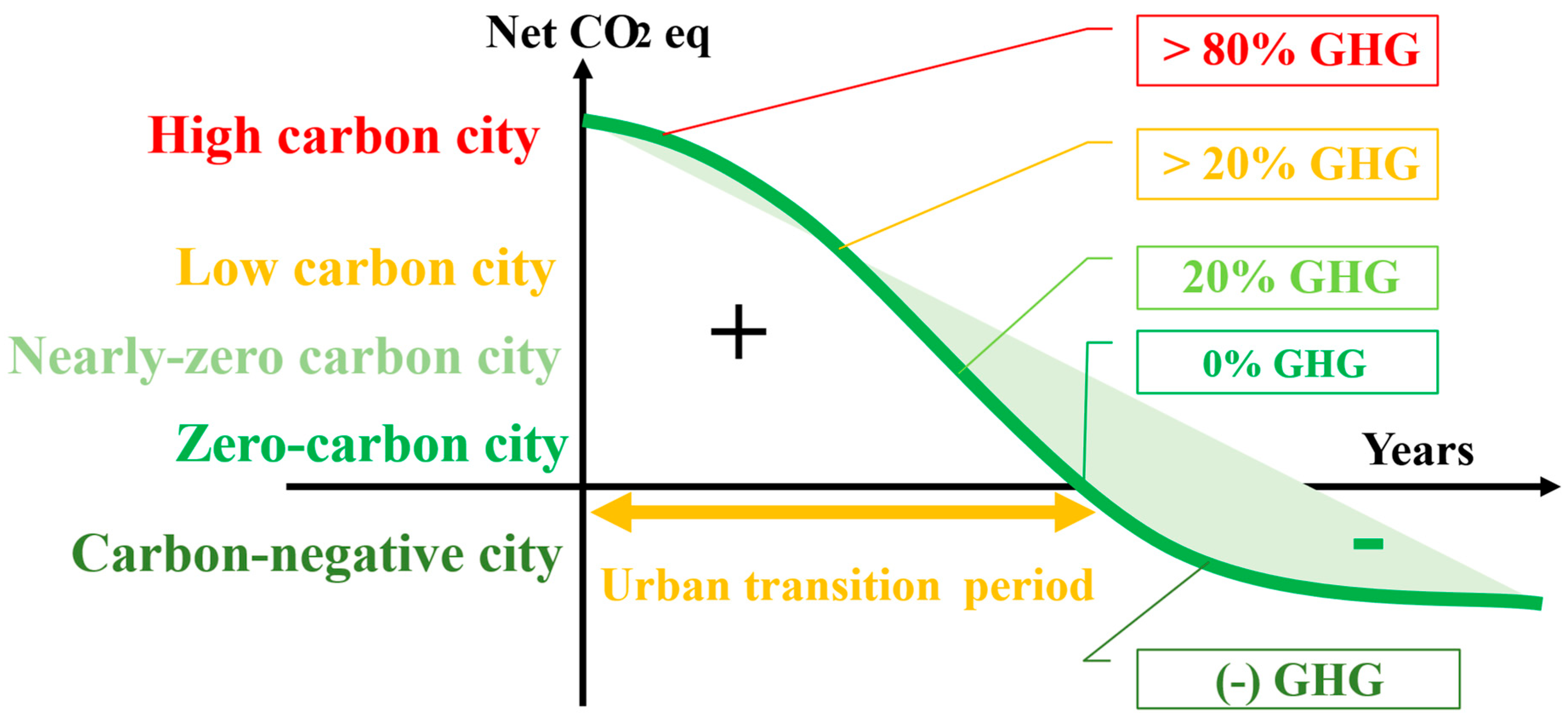
Figure 8 illustrates the Urban Carbon Transition Curve (UCTC), which conceptualizes the trajectory from high-carbon to carbon-neutral or carbon-negative urban systems. SAI-WPFS contributes to this transition by enabling accurate and carbon-conscious energy forecasting, which facilitates optimal resource scheduling and long-term planning in urban power systems. During the critical transition phase, when cities shift from moderate to near-zero emissions, the availability of accurate, sustainable forecasting tools becomes essential for maintaining grid stability amid growing renewable penetration. Therefore, SAI-WPFS is not only a forecasting innovation but also a strategic enabler of low-carbon urban transformation, linking technical performance to environmental, economic, and policy outcomes. This directly relates to the Sustainable AI-Driven Wind Power Forecasting System (SAI-WPFS), as accurate, eco-efficient forecasting enables greater renewable integration, supporting the transition to zero and carbon-negative cities.
Figure 8, which illustrates the Urban Carbon Transition Curve, is conceptually linked to this study as it contextualizes how improvements in sustainable AI-driven forecasting, such as the proposed SAI-WPFS, contribute to broader urban decarbonization pathways. The figure demonstrates the progressive shift in cities from high-carbon to low-carbon and eventually zero-carbon states, emphasizing that accurate and carbon-efficient forecasting supports this transition by enabling greater integration of renewable energy, reducing fossil fuel dependency, and enhancing grid reliability. Thus, Figure 8 adds strategic value to the discussion by connecting the technical outcomes of the forecasting model with their long-term implications for sustainable urban development and policy alignment with Saudi Arabia’s Vision 2030 and global climate goals.

7.2. Contribution to Sustainability

The integration of a Sustainable AI-Driven Wind Power Forecasting System (SAI-WPFS) makes a direct contribution to sustainability by combining predictive accuracy with environmental responsibility. Unlike conventional approaches that primarily emphasize forecast precision, SAI-WPFS incorporates carbon-aware evaluation metrics to minimize the environmental impact of computational processes. This ensures that the system enhances renewable energy utilization by enabling precise grid integration of wind power, reducing dependence on fossil-fuel-based backup systems, and lowering greenhouse gas emissions. In this way, the framework supports long-term decarbonization pathways, guiding the transition of urban energy systems from high-carbon toward zero- and eventually carbon-negative states.
In addition to emission reduction, SAI-WPFS contributes to socio-economic and infrastructural sustainability by strengthening energy security and supporting national decarbonization policies such as Saudi Arabia’s Vision 2030. The system enhances grid reliability across multiple forecasting horizons, thereby facilitating operational efficiency, optimizing resource allocation, and ensuring stable integration of renewable energy. Furthermore, its alignment with the United Nations Sustainable Development Goals (SDGs) underscores its broader relevance, particularly in promoting the adoption of clean energy, driving innovation in renewable technologies, advancing sustainable urban development, and fostering international collaboration. Through these contributions, SAI-WPFS establishes a scientific framework that advances both technological progress and ecological responsibility within energy transition strategies, as in Table 4.

8. Conclusions

This paper developed and validated a Sustainable AI-Driven Wind Power Forecasting System (SAI-WPFS) to enhance renewable energy integration while minimizing the computational carbon footprint. Using data from the Dumat Al-Jandal Wind Farm, twelve deep learning architectures were evaluated based on both forecasting accuracy and carbon efficiency. The CNN-LSTM-AM model achieved the highest accuracy with a Mean Absolute Error (MAE) of 29.37, Root Mean Squared Error (RMSE) of 144.99, and Coefficient of Determination (R2) of 0.74, whereas the GRU model provided the optimal sustainability–performance trade-off with R2 of 0.85 and CO2 emissions of 320 g/h. These results quantitatively demonstrate that hybrid models integrating attention mechanisms deliver superior predictive performance but at a higher computational cost, highlighting the importance of balancing precision and eco-efficiency. The findings align with Saudi Arabia’s Vision 2030 goals, showing that sustainable AI can contribute to reliable grid operation and lower carbon emissions. Future work will extend this framework to multi-time-horizon forecasts and hybrid energy systems, enabling comprehensive optimization across technical, environmental, and policy dimensions.

8.1. Research Limitations

Despite the significant contributions of the Sustainable AI-Driven Wind Power Forecasting System (SAI-WPFS), certain limitations constrain its broader applicability. A primary challenge lies in the dependency on high-quality, high-resolution meteorological and operational datasets. Data inconsistencies, missing values, or limited historical records can significantly influence model accuracy and restrict generalizability across diverse climatic conditions. In particular, the unique characteristics of Saudi Arabia’s desert climate present challenges in adapting models originally developed for temperate or coastal regions. Moreover, the computational intensity of advanced deep learning models remains a constraint, as high-performance training and deployment environments may not be readily available in all contexts, thereby limiting scalability and accessibility.
Another limitation concerns the scope of integration between forecasting models and broader urban energy transition frameworks. While SAI-WPFS demonstrates strong performance at the wind farm and grid operation level, its application within city-wide decarbonization strategies remains underdeveloped. Current models often treat wind forecasting as an isolated task, without fully embedding it into interconnected energy systems that include solar, storage, and demand-response mechanisms. Additionally, sustainability metrics, such as carbon emissions from computational processes, are still in the early stages of standardization, which complicates cross-comparison between studies. Addressing these limitations requires future research to develop more adaptive, transferable models, incorporate multi-energy forecasting, and establish unified benchmarks for evaluating both predictive accuracy and computational sustainability.
This paper is limited to hourly wind power forecasting, focusing on optimizing prediction accuracy and computational sustainability for real-time grid operations. Multi-scale forecasting, such as ultra-short-term or long-term horizons, requires different model designs and data processing, which are beyond the current scope. Future research will extend the SAI-WPFS framework to multiple time scales to evaluate model adaptability and performance across diverse grid operation scenarios.
This paper primarily focuses on developing and validating the SAI-WPFS for hourly wind power forecasting and does not attempt to establish a detailed mathematical relationship between prediction accuracy and the installed capacity of renewable energy. Future research will address this by formulating a theoretical framework that quantifies the impact of improvements in forecasting accuracy on grid reliability and renewable capacity expansion. This framework will incorporate intermediate factors such as grid reserve requirements, energy storage capacity, and capacity credit coefficients to model the causal relationship between forecasting precision and the achievable renewable energy targets outlined in Saudi Arabia’s Vision 2030.

8.2. Future Research

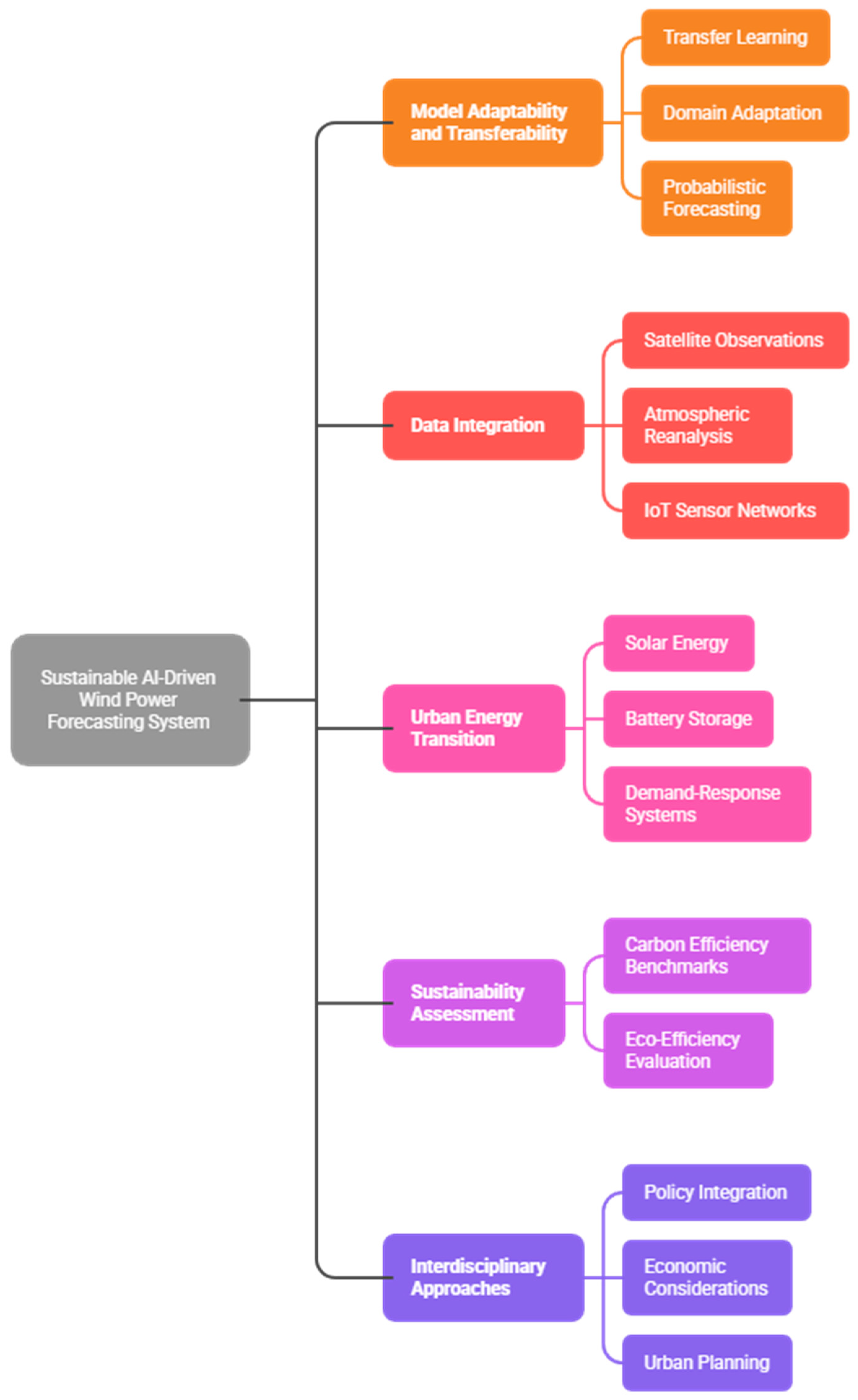
Future research on the Sustainable AI-Driven Wind Power Forecasting System (SAI-WPFS) should focus on developing more adaptive and transferable models that can operate effectively across diverse geographic and climatic conditions. Current forecasting methods are often trained on site-specific datasets, limiting their scalability and generalizability when applied to regions with different weather dynamics. Incorporating transfer learning, domain adaptation, and probabilistic forecasting methods will enhance model robustness and ensure reliable performance in new environments.
Figure 9 illustrates the conceptual framework outlining the future research directions of the Sustainable AI-Driven Wind Power Forecasting System (SAI-WPFS). The figure identifies five core pathways for advancing the framework: model adaptability, data integration, urban energy transition, sustainability assessment, and interdisciplinary approaches. The model adaptability and transferability dimension emphasizes enhancing the generalization of forecasting models through transfer learning, domain adaptation, and probabilistic forecasting, ensuring robust performance across diverse climatic and geographic conditions. Data integration focuses on combining multi-source datasets such as satellite observations, atmospheric reanalysis, and IoT sensor networks to improve data richness, temporal resolution, and spatial coverage. The urban energy transition component underscores the integration of wind forecasting with solar energy, battery storage, and demand-response systems, supporting resilient and carbon-efficient urban energy systems. The sustainability assessment branch highlights the importance of establishing carbon efficiency benchmarks and conducting eco-efficiency evaluations to align computational processes with environmental objectives. Finally, interdisciplinary approaches promote the integration of policy frameworks, economic considerations, and urban planning to ensure that technological advancements in sustainable AI forecasting contribute holistically to zero-carbon cities and long-term climate resilience.
Further research should expand the role of SAI-WPFS within holistic urban energy transition frameworks. This includes coupling wind forecasting with other renewable sources such as solar energy, battery storage, and demand-response systems to create a more resilient and balanced grid. Emphasis should be placed on refining sustainability assessment metrics by standardizing carbon efficiency benchmarks for AI computations, thereby enabling consistent evaluation of eco-efficiency across forecasting models. Ultimately, interdisciplinary approaches that integrate technical advancements with policy, economics, and urban planning will be crucial to ensure that forecasting systems directly contribute to national decarbonization goals and international climate commitments.
While this research focuses on internal architectural evaluation rather than benchmarking against every recent method, the selected baseline models (CNN, LSTM, GRU, and hybrid variants) are widely recognized in the current literature and represent state-of-the-art architectures for renewable energy forecasting. Future research will include direct comparisons with emerging transformer-based and hybrid deep learning models to further validate the system’s competitiveness and generalizability.

Author Contributions

Conceptualization, H.E. and A.A.A.; data curation, H.E.; formal analysis, H.E.; funding acquisition, A.A.A.; investigation, H.E., F.K.P.H. and A.A.A.; methodology, H.E.; project administration, H.E. and A.A.A.; resources, H.E.; software, H.E.; supervision, H.E.; validation, H.E., F.K.P.H. and A.A.A.; visualization, H.E., F.K.P.H. and A.A.A.; roles/writing—original draft, H.E., F.K.P.H. and A.A.A.; writing—review and editing, H.E., F.K.P.H. and A.A.A. All authors have read and agreed to the published version of the manuscript.

Funding

The authors appreciate the Ongoing Research Funding Program (ORF-2025-590), King Saud University, Riyadh, Saudi Arabia.

Institutional Review Board Statement

Not applicable.

Informed Consent Statement

Not applicable.

Data Availability Statement

The data presented in this study are available on request from the corresponding author due to privacy and ethical restrictions associated with participant confidentiality.

Conflicts of Interest

The authors declare that they have no known competing financial interests or personal relationships that could have appeared to influence the work reported in this paper.

Abbreviations

The following abbreviations are used in this manuscript:
AIArtificial Intelligence
SAISustainable Artificial Intelligence
SAI-WPFSSustainable AI-Driven Wind Power Forecasting System
CNNConvolutional Neural Network
RNNRecurrent Neural Network
LSTMLong Short-Term Memory
GRUGated Recurrent Unit
AMAttention Mechanism
MAEMean Absolute Error
MAPEMean Absolute Percentage Error
RMSERoot Mean Squared Error
R2Coefficient of Determination
CO2Carbon Dioxide
UPSDFUrban Power Supply Decarbonization Framework
SDGsSustainable Development Goals
KSAKingdom of Saudi Arabia

References

  1. Selim, M.M.; Alshareef, N. Trends and opportunities in renewable energy investment in Saudi Arabia: Insights for achieving vision 2030 and enhancing environmental sustainability. Alex. Eng. J. 2025, 112, 224–234. [Google Scholar] [CrossRef]
  2. Elmousalami, H.; Hui, F.K.P.; Alnaser, A.A. Enhancing Smart and Zero-Carbon Cities Through a Hybrid CNN-LSTM Algorithm for Sustainable AI-Driven Solar Power Forecasting (SAI-SPF). Buildings 2025, 15, 2785. [Google Scholar] [CrossRef]
  3. Ubaid, M.; Gulrez, M. Renewable energies in the gulf: The ambitious plans of Saudi Arabia and the United Arab Emirates. Saudi J. Humanit. Soc. Sci. 2025, 10, 9–26. [Google Scholar] [CrossRef]
  4. Manal, A. The role of renewable energy in driving economic transformation and sustainable development in Saudi Arabia. Int. J. Energy Econ. Policy 2025, 15, 364. [Google Scholar] [CrossRef]
  5. Altouma, A.; Bashir, B.; Ata, A.B.; Ocwa, A.; Alsalman, E.; Harsányi, S. Mohammed, An environmental impact assessment of Saudi Arabia’s vision 2030 for sustainable urban development: A policy perspective on greenhouse gas emissions. Environ. Sustain. Indic. 2024, 21, 100323. [Google Scholar]
  6. AlQahtani, A.M. A comprehensive assessment of wind energy potential and wind farm design in a coastal industrial city. World J. Eng. 2025, 22, 529–539. [Google Scholar] [CrossRef]
  7. Di Lorenzo, G.; Stracqualursi, E.; Vescio, G.; Araneo, R. State of the Art of Renewable Sources Potentialities in the Middle East: A Case Study in the Kingdom of Saudi Arabia. Energies 2024, 17, 1816. Available online: https://iris.uniroma1.it/retrieve/6ff7a0b4-d962-4ce2-b80b-d4adac6aac4d/Di%20Lorenzo_State%20of%20the%20Art_2024.pdf (accessed on 8 September 2025). [CrossRef]
  8. Islam, M.T.; Ali, A. Sustainable green energy transition in Saudi Arabia: Characterizing policy framework, interrelations and future research directions. Next Energy 2024, 5, 100161. [Google Scholar] [CrossRef]
  9. Lv, Y.; Hu, Q.; Xu, H.; Lin, H.; Wu, Y. An ultra-short-term wind power prediction method based on spatial-temporal attention graph convolutional model. Energy 2024, 293, 130751. [Google Scholar] [CrossRef]
  10. Aguilar, D.; Quinones, J.J.; Pineda, L.R.; Ostanek, J.; Castillo, L. Optimal scheduling of renewable energy microgrids: A robust multi-objective approach with machine learning-based probabilistic forecasting. Appl. Energy 2024, 369, 123548. [Google Scholar] [CrossRef]
  11. Sun, S.; Liu, Y.; Li, Q.; Wang, T.; Chu, F. Short-term multi-step wind power forecasting based on spatio-temporal correlations and transformer neural networks. Energy Convers. Manag. 2023, 283, 116916. [Google Scholar] [CrossRef]
  12. Elshaboury, N.; Elmousalami, H. Wind speed and power forecasting using Bayesian optimized machine learning models in Gabal Al-Zayt, Egypt. Sci. Rep. 2025, 15, 28500. [Google Scholar] [CrossRef] [PubMed]
  13. Ye, X.; He, Z.; Heng, W.; Li, Y. Toward Understanding the Effectiveness of Attention Mechanism. AIP Publ. 2023, 13, 035019. Available online: https://pubs.aip.org/aip/adv/article/13/3/035019/2880479 (accessed on 8 September 2025). [CrossRef]
  14. Yang, M.; Huang, Y.; Guo, Y.; Zhang, W.; Wang, B. Ultra-short-term wind farm cluster power prediction based on FC-GCN and trend-aware switching mechanism. Energy 2024, 290, 130238. [Google Scholar] [CrossRef]
  15. Wang, R.; Xie, Y.; Wang, S.; Geng, G.; Jiang, Q.; Liu, C.; Wang, B. Capacity credit assessment of regional renewable generation considering multi-time-scale forecast errors. Energy 2025, 331, 136806. [Google Scholar] [CrossRef]
  16. Tuncar, E.A.; Sağlam, Ş.; Oral, B. A review of short-term wind power generation forecasting methods in recent technological trends. Energy Rep. 2024, 12, 197–209. [Google Scholar] [CrossRef]
  17. Yigitcanlar, T.; Mehmood, R.; Corchado, J.M. Green artificial intelligence: Towards an efficient, sustainable and equitable technology for smart cities and futures. Sustainability 2021, 13, 8952. [Google Scholar] [CrossRef]
  18. Elmousalami, H.; Alnaser, A.A.; Hui, F.K.P. Sustainable AI-driven wind energy forecasting: Advancing zero-carbon cities and environmental computation. Artif. Intell. Rev. 2025, 58, 191. [Google Scholar] [CrossRef]
  19. Martini, B.; Bellisario, D.; Coletti, P. Human-centered and sustainable artificial intelligence in industry 5.0: Challenges and perspectives. Sustainability 2024, 16, 5448. [Google Scholar] [CrossRef]
  20. Rohde, F.; Wagner, J.; Meyer, A.; Reinhard, P.; Voss, M.; Petschow, U.; Mollen, A. Broadening the perspective for sustainable artificial intelligence: Sustainability criteria and indicators for Artificial Intelligence systems. Curr. Opin. Environ. Sustain. 2024, 66, 101411. [Google Scholar] [CrossRef]
  21. Bolón-Canedo, V.; Morán-Fernández, L.; Cancela, B.; Alonso-Betanzos, A. A review of green artificial intelligence: Towards a more sustainable future. Neurocomputing 2024, 599, 128096. [Google Scholar] [CrossRef]
  22. Chen, W.; Men, Y.; Fuster, N.; Osorio, C.; Juan, A.A. Artificial intelligence in logistics optimization with sustainable criteria: A review. Sustainability 2024, 16, 9145. [Google Scholar] [CrossRef]
  23. Zhao, J.; Fariñas, B.G. Artificial Intelligence and Sustainable Decisions. Eur. Bus. Organ. Law. Rev. 2023, 24, 1–39. [Google Scholar] [CrossRef]
  24. Aldossary, Y.; Hewahi, N.; Alasaadi, A. Wind Speed Forecasting Based on Data Decomposition and Deep Learning Models: A Case Study of a Wind Farm in Saudi Arabia. Int. J. Renew. Energy Res. 2024, 13, 1285–1296. [Google Scholar] [CrossRef]
  25. Khan, M.A.; Rehman, A.; Shah, A.A.; Abbas, S.; Alharbi, M.; Ahmad, M.; Ghazal, T.M. Navigating the future of higher education in Saudi Arabia: Implementing AI, machine learning, and big data for sustainable university development. Discov. Sustain. 2025, 6, 495. [Google Scholar] [CrossRef]
  26. Bommidi, B.S.; Teeparthi, K.; Kosana, V. Hybrid wind speed forecasting using ICEEMDAN and transformer model with novel loss function. Energy 2023, 265, 126383. [Google Scholar] [CrossRef]
  27. Cassola, F.; Burlando, M. Wind speed and wind energy forecast through Kalman filtering of Numerical Weather Prediction model output. Appl. Energy 2012, 99, 154–166. [Google Scholar] [CrossRef]
  28. Faraz, M.I. Strategic analysis of wind energy potential and optimal turbine selection in Al-Jouf, Saudi Arabia. Heliyon 2024, 10, e39188. Available online: https://www.cell.com/heliyon/fulltext/S2405-8440(24)15219-X (accessed on 8 September 2025). [CrossRef]
  29. Rashid, A.; Baloch, N.; Rasheed, R.; Ngah, A.H. Big data analytics-artificial intelligence and sustainable performance through green supply chain practices in manufacturing firms of a developing country. J. Sci. Technol. Policy Manag. 2025, 16, 42–67. [Google Scholar] [CrossRef]
  30. Xing, Z.; Meng, Z.; Zheng, G.; Ma, G.; Yang, L.; Guo, X.; Tan, L.; Jiang, Y.; Wu, H. Intelligent rehabilitation in an aging population: Empowering human-machine interaction for hand function rehabilitation through 3D deep learning and point cloud. Front. Comput. Neurosci. 2025, 19, 1543643. [Google Scholar] [CrossRef]
  31. Xing, Z.; Ma, G.; Wang, L.; Yang, L.; Guo, X.; Chen, S. Towards visual interaction: Hand segmentation by combining 3D graph deep learning and laser point cloud for intelligent rehabilitation. IEEE Internet Things J. 2025, 12, 21328–21338. Available online: https://ieeexplore.ieee.org/abstract/document/10907946/ (accessed on 17 October 2025). [CrossRef]
  32. Marquez, F.P.G.; Gonzalo, P. A comprehensive review of artificial intelligence and wind energy. Arch. Comput. Methods Eng. 2022, 29, 2935–2958. [Google Scholar] [CrossRef]
  33. Elmousalami, H.H.; Darwish, A.; Hassanien, A.E. The Truth About 5G and COVID-19: Basics, Analysis, and Opportunities. In Digital Transformation and Emerging Technologies for Fighting COVID-19 Pandemic: Innovative Approaches; Hassanien, A.E., Darwish, A., Eds.; Springer International Publishing: Cham, Germany, 2021; pp. 249–259. [Google Scholar] [CrossRef]
  34. Hossain, M.A.; Chakrabortty, R.K.; Elsawah, S.; Gray, E.; Ryan, M.J. Predicting wind power generation using hybrid deep learning with optimization. IEEE Trans. Appl. Supercond. 2021, 31, 0601305. [Google Scholar] [CrossRef]
  35. Demolli, H.; Dokuz, A.S.; Ecemis, A.; Gokcek, M. Wind power forecasting based on daily wind speed data using machine learning algorithms. Energy Convers. Manag. 2019, 198, 111823. [Google Scholar] [CrossRef]
  36. Deng, Y.C.; Tang, X.H.; Zhou, Z.Y.; Yang, Y.; Niu, F. Application of machine learning algorithms in wind power: A review. Energy Sources Part A Recovery Util. Environ. Eff. 2025, 47, 4451–4471. [Google Scholar] [CrossRef]
  37. de Takara, L.A.; Teixeira, A.C.; Yazdanpanah, H.; Mariani, V.C.; Coelho, L.d.S. Optimizing multi-step wind power forecasting: Integrating advanced deep neural networks with stacking-based probabilistic learning. Appl. Energy 2024, 369, 123487. [Google Scholar] [CrossRef]
  38. Yu, Y.; Si, X.; Hu, C.; Zhang, J. A review of recurrent neural networks: LSTM cells and network architectures. Neural Comput. 2019, 31, 1235–1270. Available online: https://direct.mit.edu/neco/article-abstract/31/7/1235/8500 (accessed on 8 September 2025). [CrossRef]
  39. Jiang, Z.; Fang, D.; Zhang, M. Understanding the Causation of Construction Workers’ Unsafe Behaviors Based on System Dynamics Modeling. J. Manag. Eng. 2015, 31, 04014099. [Google Scholar] [CrossRef]
  40. Marouani, H.; Fouad, Y.; Mrad, H. A techno-economic assessment and optimization of Dumat Al-Jandal wind farm in Kingdom of Saudi Arabia. Energy Sci. Eng. 2023, 11, 4398–4407. [Google Scholar] [CrossRef]
  41. Naqash, M.T.; Aburamadan, M.H.; Harireche, O.; AlKassem, A.; Farooq, Q.U. The Potential of Wind Energy and Design Implications on Wind Farms in Saudi Arabia; Diponegoro University: Semarang, Indonesia, 2021; Available online: https://www.academia.edu/download/76680458/pdf.pdf (accessed on 8 September 2025).
  42. Elmousalami, H.H.; Elshaboury, N.A.T.; Maxi, M.M.I.; Ibrahim, A.H.; Elyamany, A.H. Bayesian Optimized Ensemble Learning System for Predicting Conceptual Cost and Construction Duration of Irrigation Improvement Systems. KSCE J. Civ. Eng. 2024, 29, 100014. [Google Scholar] [CrossRef]
Figure 1. Saudi Arabia’s Renewable Energy Goals [1,8].
Sustainability 17 09908 g001
Figure 2. Forecasting time horizon for wind energy [15,16].
Sustainability 17 09908 g002
Figure 3. Architecture of a Convolutional Neural Network (CNN) illustrates the flow from the input layer through convolutional and pooling operations to the fully connected and output layers. The convolutional kernels extract spatial features, the pooling layers reduce dimensionality, and the fully connected layer integrates learned features for classification via the output layer with softmax units [9,37]. * denotes dimensions of input size, ** represents the feature map size after convolution, and *** indicates the reduced dimensions after pooling.
Sustainability 17 09908 g003
Figure 4. Comparison of ANN, RNN, and LSTM architectures [38,39].
Sustainability 17 09908 g004
Figure 5. Wind speed and power integration methodology.
Sustainability 17 09908 g005
Figure 6. Geographical location of the Dumat Al-Jandal Wind Farm in Saudi Arabia. The inset highlights Saudi Arabia within the Middle East, while the lower-right image illustrates wind turbines, symbolizing the country’s commitment to renewable energy development under Vision 2030 [24,40,41].
Sustainability 17 09908 g006
Figure 7. Comparative performance of deep learning models for wind power forecasting using evaluation metrics: Root Mean Squared Error (RMSE), Mean Absolute Percentage Error (MAPE), Mean Absolute Error (MAE), and coefficient of determination (R2). The CNN-LSTM-AM model achieved the best forecasting accuracy (MAE = 29.37, MAPE = 95.56, RMSE = 144.99), while the GRU model provided the strongest balance of accuracy and stability with the highest R2 (85%).
Sustainability 17 09908 g007
Figure 8. Urban Carbon Transition Curve (UCTC).
Sustainability 17 09908 g008
Figure 9. Future research directions for Sustainable AI-Driven Wind Power Forecasting emphasize model adaptability, data integration, urban energy transition, sustainability assessment, and interdisciplinary approaches.
Sustainability 17 09908 g009
Table 1. Models’ Parameters Description.
NotationParameterDescriptionUnit
P1Hub HeightVertical height or elevation at which the turbine hub is positioned.meters
P2Wind Direction (Vane)The prevailing orientation from which the wind originates, measured by a wind vane.degrees
P3Air TemperatureTemperature recorded at hub height, influenced by solar radiation, humidity, and elevation.°C
P4Relative HumidityThe percentage of water vapor in the air relative to its maximum capacity at the recorded temperature.%
P5Air PressurePressure exerted by the atmosphere at the measurement station within the wind farm.hectopascals (hPa)
P6MonthNumerical representation of the month during data collection (values from 1 to 12).
P7HourHour of the day in 24 h format, relevant for high-resolution short-term forecasting.
P8Wind SpeedRecorded velocity of wind flow at the measurement point.m/s
P9Wind PowerPower output derived from the measured wind speed, normalized per unit area.W/m2
Table 2. Optimized hyperparameters of deep learning models used for wind power forecasting.
ModelOptimizerLearning RateBatch SizeEpochsHidden Units/FiltersActivation FunctionDropout RateSequence LengthRegularization (L2)
GRUAdam0.001264120128ReLU0.2240.0001
RNNRMSProp0.001564100128Tanh0.2240.0001
CNN-RNNAdam0.00106415064 (conv) + 128 (rnn)ReLU0.25240.0001
LSTM-AMAdam0.000832150256Tanh/Softmax (AM)0.3360.00005
CNN-GRUAdam0.00106412064 (conv) + 128 (gru)ReLU0.25240.0001
GRU-AMAdam0.000964150128ReLU/Softmax (AM)0.25240.0001
RNN-AMRMSProp0.001264130128Tanh/Softmax (AM)0.25240.0001
CNN-RNN-AMAdam0.00103218064 (conv) + 128 (rnn)ReLU/Softmax (AM)0.3360.00005
CNN-LSTM-AMAdam0.00073220064 (conv) + 256 (lstm)ReLU/Softmax (AM)0.3480.00005
LSTMAdam0.001064100256Tanh0.2240.0001
CNN-LSTMAdam0.00093215064 (conv) + 256 (lstm)ReLU0.25360.0001
CNN-GRU-AMAdam0.00083218064 (conv) + 128 (gru)ReLU/Softmax (AM)0.3360.00005
Table 3. Comparison of deep learning models for wind power forecasting based on accuracy, CO2 emissions, and Sustainable AI (SAI) scores.
ModelR2RMSECO2RMSE_normR2_normCO2_normSAI_scoreRank
GRU85151.0733200.2221.0000.1670.8611
RNN82158.5753000.4960.7860.0000.7372
CNN-RNN75150.1313400.1880.2860.3330.6113
LSTM-AM73146.3233800.0490.1430.6670.5234
CNN-GRU77155.9453600.4000.4290.5000.5185
GRU-AM75155.0153500.3660.2860.4170.5146
RNN-AM73156.7313300.4290.1430.2500.4967
CNN-RNN-AM83162.3993900.6360.8570.7500.4788
CNN-LSTM-AM74144.9924200.0000.2141.0000.4649
LSTM71166.0443500.7690.0000.4170.26710
CNN-LSTM74172.3533801.0000.2140.6670.16411
CNN-GRU-AM72168.1333900.8460.0710.7500.15812
Table 4. SDGs and Sustainable AI for Wind Power Forecasting.
SDGsContributions
Sustainability 17 09908 i001Sustainable AI enhances wind farm efficiency and accuracy, enabling greater integration of renewable energy while reducing dependence on fossil fuel emissions. It enhances forecasting reliability, supports grid stability, and reduces the cost of integrating renewable energy, making clean electricity more accessible and affordable.
Sustainability 17 09908 i002AI-driven forecasting stimulates innovation through advanced turbine technologies, stronger renewable infrastructure, and the creation of new clean energy jobs. It encourages investment in smart grid technologies, strengthens digital infrastructure for energy monitoring, and accelerates the localization of green technology industries.
Sustainability 17 09908 i003AI improves infrastructure resilience and supports the development of sustainable, smart, and zero-carbon urban communities. It enables better energy planning, reduces reliance on backup fossil-fuel systems, and ensures equitable access to reliable, clean power in growing urban populations.
Sustainability 17 09908 i004By optimizing wind energy prediction, AI reduces power-sector emissions, mitigates climate risks, and advances the shift toward a low-carbon economy. It supports national climate strategies, contributes to international climate agreements, and provides tools for monitoring and achieving emission-reduction targets.
Sustainability 17 09908 i005AI forecasting facilitates knowledge transfer, skill development, and global collaboration in managing sustainable energy projects. It strengthens partnerships between academia, industry, and governments, fosters interdisciplinary research, and facilitates capacity building in developing regions transitioning to renewable energy.
Disclaimer/Publisher’s Note: The statements, opinions and data contained in all publications are solely those of the individual author(s) and contributor(s) and not of MDPI and/or the editor(s). MDPI and/or the editor(s) disclaim responsibility for any injury to people or property resulting from any ideas, methods, instructions or products referred to in the content.