Article

Developing and Implementing an Educational Program for Fostering Local Human Resources in a Depopulated Region of Japan


1
College of Engineering, Shibaura Institute of Technology, 307 Fukasaku, Minuma-ku, Saitama 337-8570, Japan
2
School of Architecture, Shibaura Institute of Technology, 3-7-5 Toyosu, Koto-ku, Tokyo 135-8548, Japan
*
Author to whom correspondence should be addressed.
Sustainability 2025, 17(21), 9893; https://doi.org/10.3390/su17219893
Submission received: 16 September 2025 / Revised: 24 October 2025 / Accepted: 3 November 2025 / Published: 6 November 2025
(This article belongs to the Special Issue Sustainable Education for All: Latest Enhancements and Prospects)

Abstract

This study developed and implemented a three-year educational program aimed at fostering local human resources for sustainable regional development in a depopulated area of Japan. The program was conducted within the “Period for Integrated Studies”, a compulsory cross-curricular subject in Japanese junior high schools designed to promote interdisciplinary and community-based learning. A longitudinal questionnaire survey (2021–2023) of students assessed changes in knowledge, attitudes, and awareness related to regional sustainability. The results showed significant improvements in students’ understanding of sustainability and awareness of local issues, indicating that continuous, school-based programs can promote more enduring learning outcomes than one-time interventions. However, the increase in students’ willingness to take concrete actions was limited, suggesting the need for further curriculum refinement to strengthen the link between awareness and behavioral change. This study provides empirical evidence that embedding sustainability education systematically within the existing curriculum framework can effectively foster young people’s capacity to engage with the future of their local communities.

1. Introduction

This study targeted non-urban regions of Japan, where population decline and rapid aging have raised concerns about the long-term sustainability of local communities, and sought to develop and evaluate educational approaches for fostering young people as future leaders of sustainable regional societies. Japan faces increasing concern over labor shortages in the context of a super-aged society, and the career trajectories of younger generations are crucial for building a sustainable future society. However, the outmigration of youth from depopulated regions and the resulting shortage of labor have become serious problems. To address these challenges, the Japanese government has introduced a variety of policies aimed at securing the working-age population, with “regional revitalization” positioned as an important national and local priority.
According to the 8th National Survey on Migration conducted in 2016 by the National Institute of Population and Social Security Research [1], only 20.4% of individuals who moved out of their prefecture of birth eventually returned (U-turn migration). Between 2006 and 2016, the return rate among youth aged 15–24 showed a downward trend, reflecting an accelerating outflow of young people to metropolitan areas. As Hida and Hida (2014) [2] have pointed out, “regional outmigration without U-turn migration leads to the exhaustion of local communities.” Unless this outflow is curbed, the decline of non-urban regions is inevitable.
The reasons for leaving one’s hometown are diverse. A 2016 survey by the Japan Institute for Labor Policy and Training [3] revealed that the most common reason cited by young people was the lack of desirable educational and employment opportunities. However, other frequently mentioned reasons included “wanting to leave the parental home” and “wanting to live in the city.” As Kikkawa (2001) [4] described, many young people “depart desperately, without a clear prospect of what lies ahead or a plan to return.” Migration without a well-developed long-term outlook can result in maladaptation at school or high employment turnover. To lessen the likelihood of young people leaving their hometowns without a clear sense of purpose, it is critical that they develop career plans that explicitly incorporate a connection to their place of origin. Even if they ultimately choose not to remain in their home regions, fostering this enduring sense of connection is vital for preventing further decline of non-urban communities and for ensuring their sustainability.
To address these challenges, this study incorporated the concept of backcasting into program design. Backcasting is a future-oriented approach that envisions a desirable future and identifies the actions needed in the present to achieve it [5]. In educational contexts, this approach helps students connect their current learning with the envisioned future of their own communities, fostering both reflective and action-oriented thinking. Building on this perspective, the study designed a junior high school program that encourages students to imagine an ideal future for their region and explore how their present learning and actions can contribute to realizing it.
The purpose of this study was to design and implement a regional human resource development program incorporating backcast thinking within junior high school curricula in non-urban Japan and to empirically evaluate its educational effects. Using the data obtained from this longitudinal study, the paper presents a new model of sustainability education for depopulated regions, contributing to nationwide discussions on community resilience and human resource development.

Literature Review

Sustainability education has increasingly been recognized as a crucial approach for preparing future generations to engage with the challenges of maintaining vibrant, resilient local communities. Within this perspective, recent studies have highlighted the importance of linking sustainability education to regional human resource development, focusing on how schools can nurture young people who will contribute to the future of their communities. This section reviews prior international and domestic studies that emphasize the role of sustainability education in fostering human resources for sustainable regional development, thereby situating the foundation for the present study.
From the perspective of developing local human resources, recent studies have increasingly focused on place-based education (PBE). PBE fosters student engagement and place attachment by integrating local culture, nature, and social contexts into learning (Smith, 2002, 2007) [6,7]. However, traditional PBE has often been limited to “learning about place” without sufficiently addressing inequalities and challenges embedded in local contexts. Gruenewald (2003) [8] therefore proposed a “Critical Pedagogy of Place,” which extends PBE to include the critical analysis and transformation of local issues.
Regarding rural youth career development, Bright (2020) [9] has discussed the effectiveness of PBE in career education, while Theodori and Theodori (2015) [10] and Bernsen et al. (2022) [11] demonstrated that community attachment and a sense of place significantly influence migration intentions among rural youth. Similarly, Simões et al. (2021) [12] found that emotional factors—particularly place attachment—strongly predict U-turn migration, suggesting that emotional ties are as crucial as economic considerations in shaping migration decisions.
Recent scholarship has increasingly emphasized the role of local communities as active partners in education for sustainable development (ESD). Educational practices have also begun to draw directly on community resources. Selby et al. (2020) [13] highlighted a Costa Rican case in which a “community-as-pedagogy” approach enhanced students’ environmental leadership. In addition, place-based civic education (Maloyed & Williams, 2013) [14] and service learning (Morgan & Streb, 2001) [15] foster civic responsibility and leadership. Yet, a systematic review by Yemini et al. (2025) [16] revealed that many PBE initiatives remain led by external (i.e., non-local) organizations and are insufficiently integrated into formal school curricula.
More recently, Bedford (2023) [17] investigated the case of Nakanoshima in the Oki Islands of Japan, showing how school-based ESD initiatives can revitalize island communities by fostering sustainable living practices and youth engagement. Complementing this, Olsson et al. (2022) [18] provided longitudinal evidence that education for sustainable development (ESD) not only enhances students’ knowledge but also gradually cultivates values and attitudes that support long-term behavioral change. In addition, Hernandez Gonzalez (2023) [19] highlighted how place-based education can advance sustainability education by integrating cognitive, socio-emotional, and behavioral dimensions of learning, further reinforcing the potential of PBE to promote holistic student development. Similarly, Hernandez et al. (2022) [20] analyzed a place-based high school science unit situating energy and climate change in students’ own communities, demonstrating increased relevance, engagement, and action-orientation when local context is embedded in science education. Together, these findings emphasize the importance of embedding ESD systematically within school curricula to strengthen both knowledge and the capacity for sustained regional engagement.
In Japan, Osanai and Yu (2023) [21] reported the positive effects of sustainable development goal (SDGs) education in depopulated areas, and several case studies of high school curricula on remote islands have addressed regional revitalization (Hida & Hida, 2018; Owaki, 2018) [22,23]. More recent studies have further explored the role of Education for Sustainable Development (ESD) in regional human resource development. Kodama (2023) [24] highlighted the potential of collaborative ESD between schools and communities, showing how joint initiatives can nurture young people’s capacity to contribute to regional sustainability. Ikeda (2022) [25] examined ESD promotion in Okayama and emphasized the importance of cooperative frameworks among schools, communities, and administrative bodies to sustain long-term engagement. Extending this line of inquiry, Asaoka (2024) [26] analyzed a UNESCO Eco Park case and revealed both enabling and inhibiting factors: while the rich natural environment provided a foundation for advancing ESD, shortages of staff and budgets hindered progress. At the same time, Asaoka stressed the importance of strong cooperation among schools, local communities, and governments in overcoming such structural challenges.
However, despite these valuable insights, few works have systematically developed and empirically evaluated educational programs from an academic perspective, with most focusing on practical implementation. For example, Yatagawa and Kurishima (2023) [27] conducted a “Future Mayor Workshop” with junior high school students on a remote island to promote regional human resource development. This previous project served as a preliminary investigation that informed the design of the present longitudinal program. Their evaluation results underscored that a one-time initiative is insufficient. Instead, it is crucial to embed such programs into formal school curricula and implement them in a continuous, systematic manner. In these prior studies, locally grounded education has been shown to cultivate young people’s attachment to place and their willingness to contribute to their communities. Nevertheless, such initiatives have rarely been systematically incorporated into compulsory school curricula or assessed over time.
In contrast, several international studies have advanced a more systematic and longitudinal approach to sustainability education. For instance, Olsson et al. (2022) [18] conducted a longitudinal study tracing changes in students’ action competence, while Boeve-de Pauw et al. (2022) [28] examined the long-term development of teachers’ ESD practices. These studies demonstrate that sustainability education can be designed, implemented, and evaluated as a coherent, multi-year curriculum rather than as isolated practices.
In Japan, however, most research has remained descriptive, focusing on single-case or short-term practices without longitudinal evaluation frameworks. To address this research gap, this study developed and longitudinally evaluated a systematically designed, three-year educational program within the formal junior high school curriculum. By embedding sustainability and regional human resource development themes across three school years, this study demonstrates—through the implementation of the educational program—how ESD can foster continuous, locally rooted learning and the formation of competencies for sustainable regional development.

2. Materials and Methods

This study targeted public junior high schools located in remote island areas of Japan. It involved the development, implementation, and evaluation of an educational program for fostering local human resources. In Japan, junior high school education is compulsory, and all children have the right to attend. Public junior high schools therefore enroll students from diverse social backgrounds regardless of socioeconomic status. Therefore, the development of effective educational programs in public junior high schools holds significant potential for broader applicability across Japan, reaching a wide range of children.
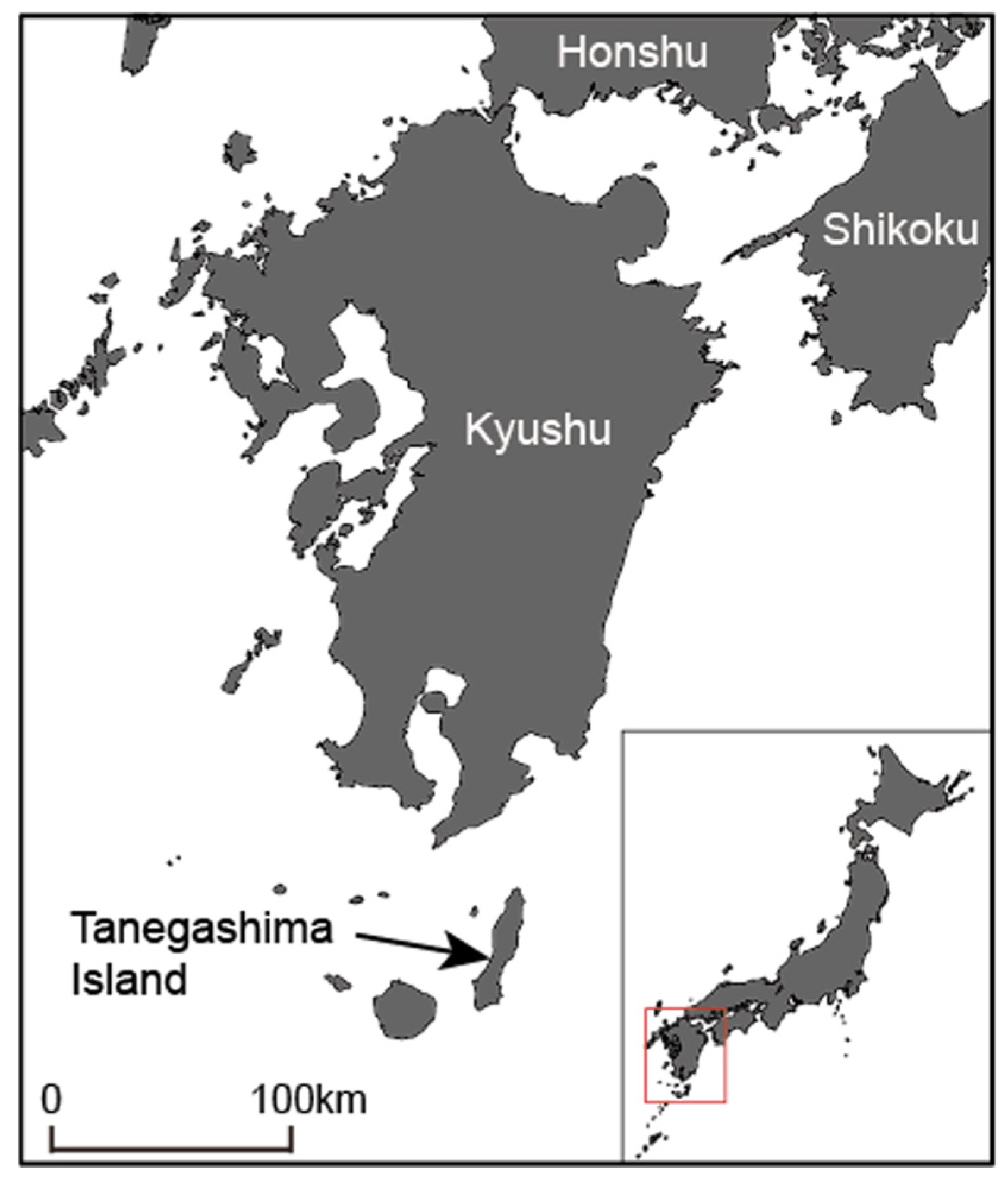
The survey area was Tanegashima, a remote island in southwestern Japan (Figure 1). Tanegashima is a depopulated island where population decline and aging are progressing more rapidly than on the mainland. Because local educational institutions are limited to senior high school, most young people leave the island after completing junior high school or graduating from high school. The educational program was therefore implemented as part of the formal curriculum in a public junior high school on the island.
The program was developed between 2018 and 2020 through collaboration between researchers specializing in regional studies and sustainability science and those specializing in education. This interdisciplinary approach ensured both the academic rigor of the program content and its appropriateness for introduction into school settings, accounting for the developmental stage of junior high school students.

2.1. Education Program Development

This study was conducted at a public junior high school located on Tanegashima Island, a remote island in Kagoshima Prefecture, Japan, with a population of approximately 30,000. The school is situated in Nishinoomote City, which has experienced long-term population decline and demographic aging. The program targeted all students enrolled in the three grades (ages 13–15), totaling 169 participants, and was implemented as part of the school’s formal curriculum between 2021 and 2023.
In Japan, lower secondary education includes a unique compulsory subject called the Period for Integrated Studies, which was established under the national Course of Study issued by the Ministry of Education, Culture, Sports, Science and Technology (MEXT).
This subject allocates approximately 50 to 70 class hours per year (around 190 h in total over three years) and aims to foster students’ ability to think and act independently in response to real-world issues [29]. Through this learning process, it seeks to nurture individuals who can contribute to the creation of a sustainable society.
Within this framework, schools are encouraged to collaborate with local communities and engage students in project-based and interdisciplinary learning to address region-specific challenges. This policy orientation, known as developing schools open to the community, emphasizes the partnership between schools and local society, promoting joint efforts to support children’s growth through community-wide collaboration.
Such community-linked educational activities are often conducted within the Period for Integrated Studies, where students research, analyze, and present findings on local issues as part of their learning.
Accordingly, the educational program developed in this study was designed in alignment with the educational objectives of the Period for Integrated Studies. By integrating themes related to local sustainability into the curriculum, the program represents a practical embodiment of Japan’s policy of fostering human resources for sustainable regional development as articulated in the national Course of Study.
Furthermore, this educational program was not designed as a one-time event but as a formal component of the three-year curriculum of the Period for Integrated Studies. The program was structured according to students’ developmental stages, addressing various aspects of sustainability and regional human resource development in each semester.
The total duration of this educational program was approximately 20 class hours over three years (Table 1) and was implemented as part of the formal Period for Integrated Studies in junior high school.
A distinctive theoretical foundation of this program was the use of backcasting, a methodology conceptualized to design pathways from a desirable future back to the present (Dreborg, 1996) [5]. In the sustainability context, backcasting has been widely recognized as a strategic framework for overcoming present constraints and envisioning long-term solutions (Robèrt et al., 2002) [30]. Its participatory applications have demonstrated its relevance in educational and community development settings (Quist & Vergragt, 2006) [31].
Recent studies have expanded this framework into the educational field. For instance, Matos et al. (2024) [32] implemented backcasting workshops for secondary school students within Education for Sustainable Development (ESD), helping them imagine future societies and trace backward the necessary actions to achieve them.
In higher education, Quist (2006) [33] and Ziegler et al. (2022) [34] demonstrated that backcasting fosters systemic thinking and collaborative problem solving in engineering and management courses, while in Japan, Shoho (2019) [35] introduced backcasting thinking into classroom lesson design and ESD practice through the Period for Integrated Studies. Furthermore, Yatagawa & Kurishima (2019) [36] emphasized that learning based on backcasting perspectives can empower students to envision desirable futures for their own communities and derive present actions through community-based education.
These studies collectively highlight that backcasting can function as a powerful educational process that cultivates future-oriented thinking, critical reflection, and social imagination. Building upon this body of knowledge, the present study is original in applying backcasting to regional human resource development in a depopulated area and doing so within the formal junior high school curriculum. Specifically, the backcasting process was embedded in the Period for Integrated Studies in a junior high school on Tanegashima Island, where population decline and youth outmigration have become serious issues. Through the program, students first explored local challenges—such as declining industries, aging populations, and environmental vulnerabilities—and then envisioned an ideal, sustainable future for their island community.
From that envisioned future, they backcasted specific actions that could be initiated in the present, including concrete proposals for community revitalization, environmental stewardship, and sustainable livelihoods. Simultaneously, students were guided to connect these community visions to their personal futures, reflecting on how their own career aspirations and life choices could contribute to realizing the envisioned community. By integrating backcasting into both collective regional planning and individual career learning, this program recontextualized backcasting as a participatory and developmental learning framework.
It thus demonstrated how ESD in junior high school can go beyond abstract awareness-raising to foster agency, local identity, and action competence among adolescents, linking their personal growth to the sustainable future of their region.
In Year 1, the focus was on building foundational understandings by linking SDGs to the local community, introducing future-oriented thinking through the backcasting approach, and reflecting on Tanegashima’s attractions and drawbacks. In Year 2, the emphasis shifted to expanding perspectives, including global warming as a scientific issue, collaboration with senior high school students in a joint workshop, and career anchors as a framework for self-reflection on values and aspirations. In Year 3, the program moved toward more practical applications: conducting experiments related to climate change, participating in a second joint workshop with high school students, and designing policy mechanisms for sustainable community development.
This educational program has been piloted since the 2021 academic year, and a total of six surveys were conducted throughout the program (Table 1) to evaluate changes in students’ knowledge of regional sustainability, their awareness of community contribution, and their career perspectives. During piloting, classes were conducted by the researchers who had developed the program to ensure the accurate delivery of specialized knowledge. Educational adjustments were also made to the difficulty level of the teaching materials and explanations, accounting for the students’ developmental stages.

2.2. Survey Design

The learning program was implemented in a public junior high school and was therefore designed in accordance with the Course of Study issued by Japan’s Ministry of Education, Culture, Sports, Science and Technology (MEXT). Based on this framework, the questionnaire was developed with reference to the educational objectives specified in the national curriculum guidelines. Specifically, items were categorized into three domains: “Knowledge and Skills,” “Interest, Motivation, and Attitude,” “Career Awareness,” and “Place Attachment and Awareness of Community Contribution.” These domains correspond to the intended learning outcomes of the program, and each item was directly aligned with the competencies targeted in the educational activities. A five-point Likert scale was employed to measure the degree of students’ awareness, motivation, and behavioral intention. The reliability and validity of the scales were confirmed to be sufficient based on internal consistency analysis.

2.3. Survey

The surveys targeted students who entered Tanegashima Junior High School in April 2021. A total of six surveys were conducted every six months over the three-year study period (June 2021–November 2023), corresponding to the implementation of the educational program. The surveys assessed changes in students’ knowledge and awareness related to regional sustainability, with particular attention given to their understanding of sustainability issues and their sense of community contribution. Table 2 indicates when the surveys were conducted, along with the number of participants. The main categories of survey items included knowledge related to regional sustainability, awareness of community contribution, and perceptions of the relationship between the region and one’s own career development.
The analysis focused on tracking longitudinal changes in students’ responses across the six survey points. For each item, response distributions on a five-point scale (“strongly agree,” “agree,” “neither” “disagree,” “strongly disagree”) were calculated, and the proportions of each response category were examined over time. This approach enabled the identification of trends in students’ knowledge of regional sustainability, their awareness of community contribution, and their career-related perceptions throughout the three years of program implementation.

3. Results and Discussion

3.1. Knowledge Related to Regional Sustainability

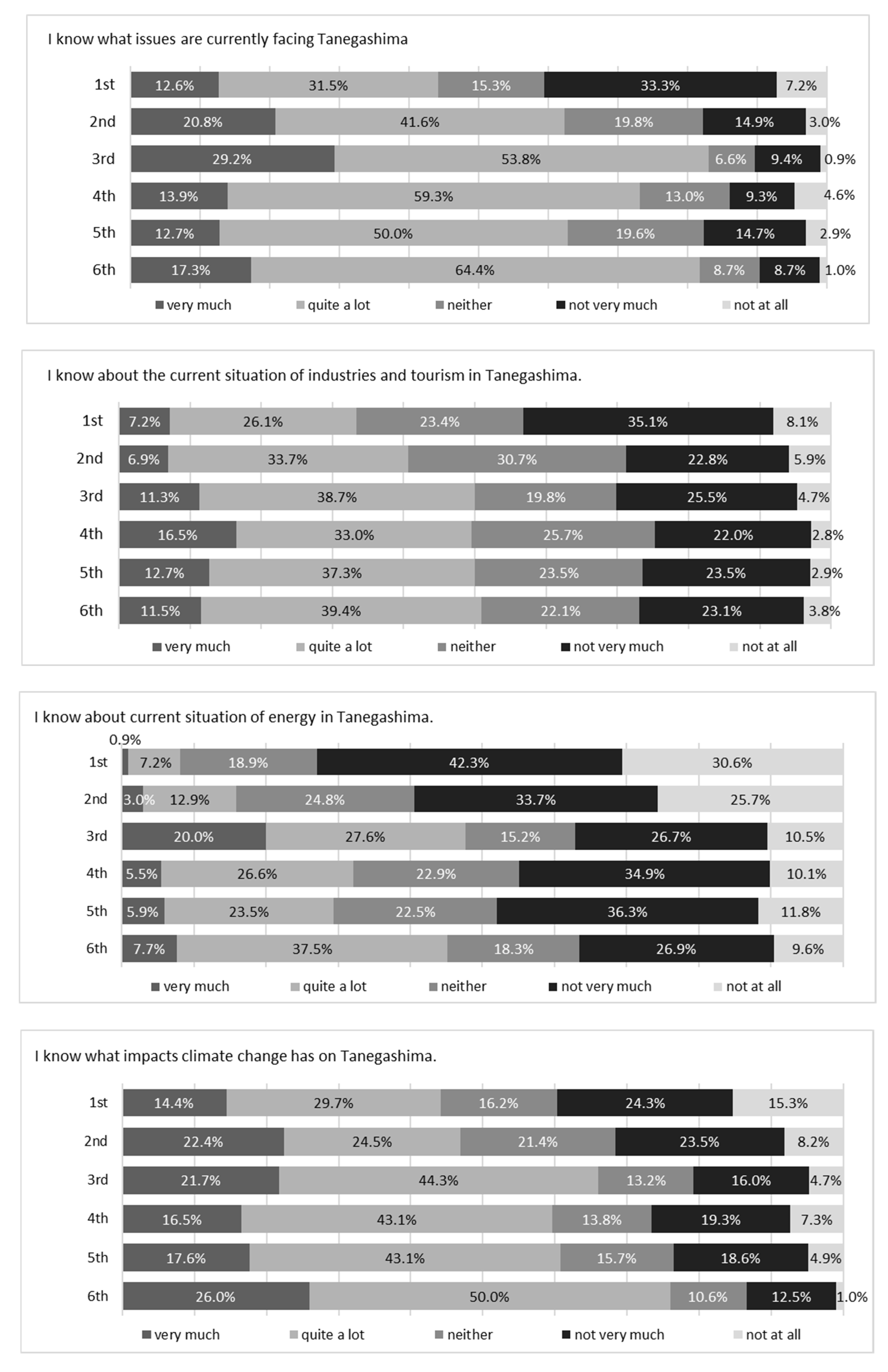
In the domain of knowledge supporting regional sustainability, students demonstrated consistent improvement across multiple items over the three years (Figure 2). Awareness of local issues rose sharply, with positive responses increasing from 44.1% in the first survey to over 80% by the third survey and remaining stable thereafter. Knowledge of industries and tourism also advanced, with positive responses growing from 33.3% to 50.9%, reflecting a steady broadening of perspectives on the community’s economic and cultural foundations. Similarly, knowledge of energy issues showed remarkable gains, rising from only 8.1% at baseline to 57.5% by the final survey. Finally, their understanding of the impacts of climate change on Tanegashima increased from 44.1% to 76.0%, indicating substantial enhancement to students’ grasp of how global environmental challenges impact their local context. Collectively, these results demonstrated that the program effectively strengthened students’ knowledge base regarding key dimensions of regional sustainability.
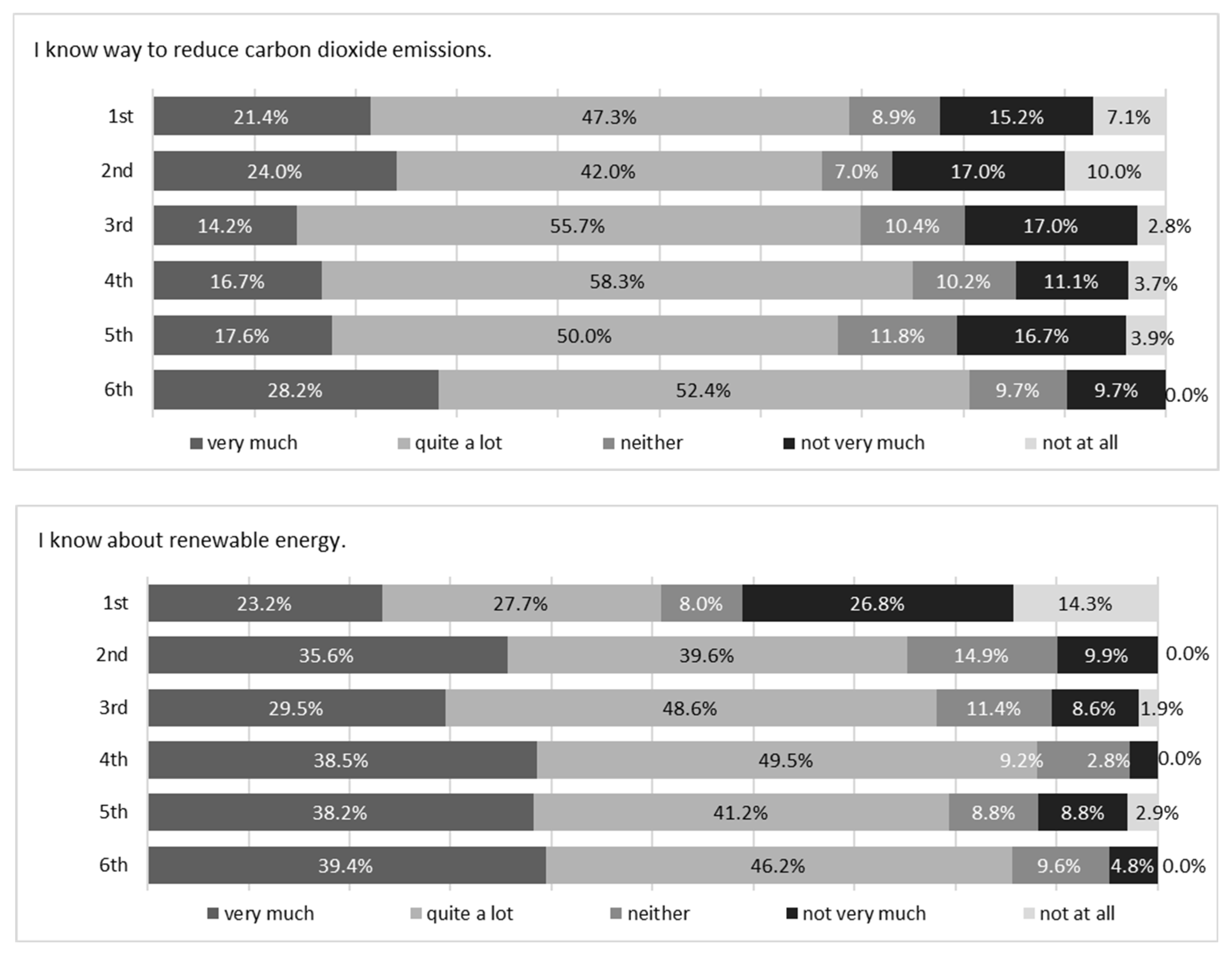
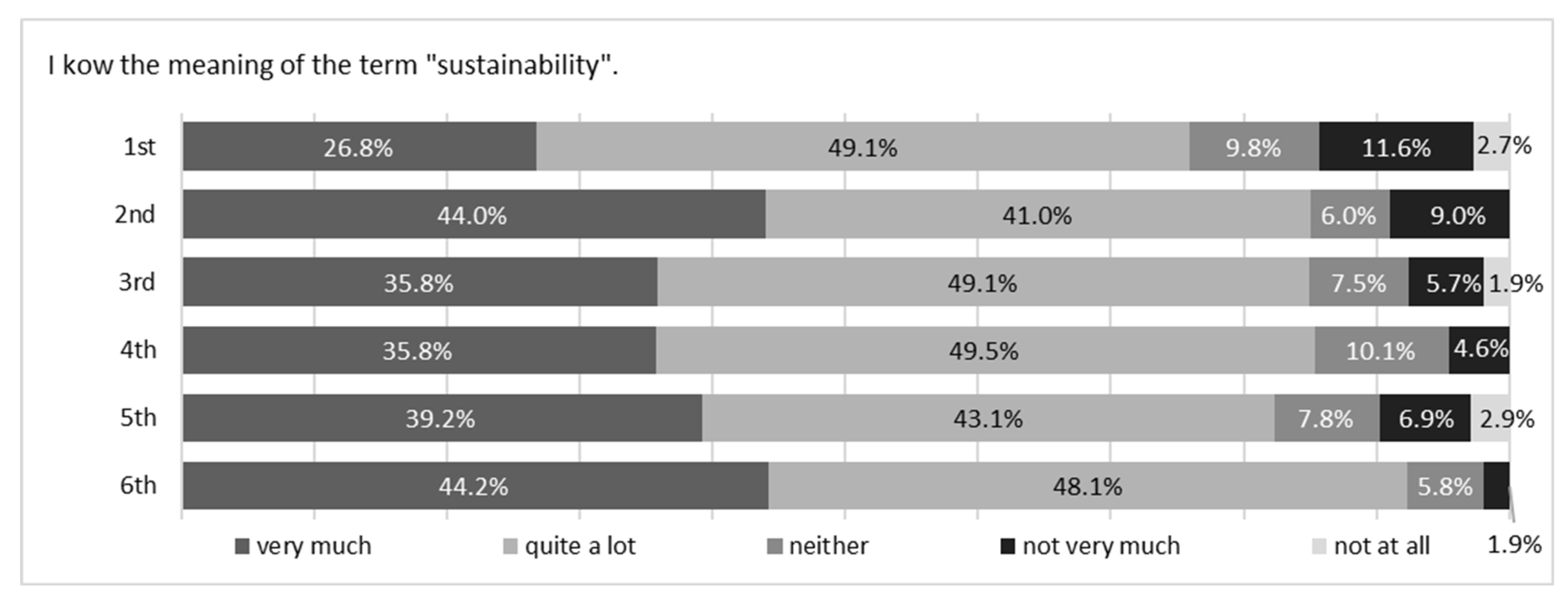
Students’ understanding showed clear advancement in the basic knowledge necessary for considering sustainable communities. Their knowledge of ways to reduce carbon dioxide emissions was consistently high, with positive responses increasing from 68.7% in the first survey to 80.6% by the sixth. Awareness of renewable energy improved substantially, with positive responses rising from 51.0% at baseline to 85.6% in the final survey, while negative responses nearly disappeared. Similarly, recognition of the term “sustainability” was strengthened, with positive responses exceeding 85% throughout and peaking at 92.3% in the sixth survey. Together, these results demonstrated that the program built a strong foundation of essential concepts and practices for thinking about sustainable regional development (Figure 3).
Summarizing the results on knowledge, the program substantially strengthened students’ understanding of regional sustainability. Their awareness of local issues more than doubled, and their knowledge of industries, tourism, and energy showed steady improvement. Importantly, understanding of the impacts of climate change increased markedly, reflecting the ability of students to connect global environmental challenges to their local context. In addition, the program built a strong foundation of essential concepts, such as reducing carbon dioxide emissions, renewable energy, and the meaning of sustainability itself. The consistently high and rising levels of positive responses suggest that systematic, multi-year instruction can establish durable knowledge that supports students in considering sustainable community development.

3.2. Awareness of Community Contribution

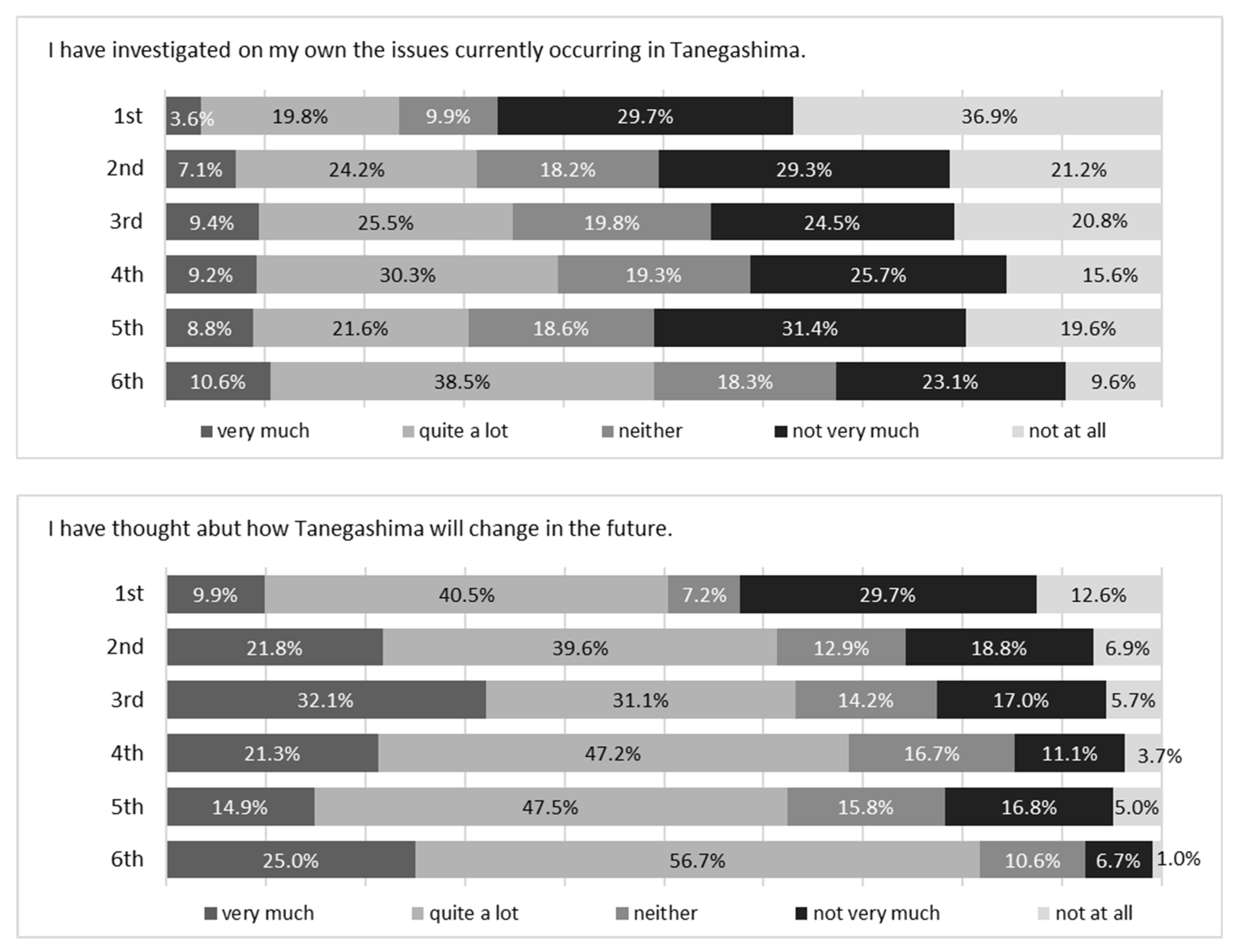
Regarding learning outcomes related to the community, for the item “I have investigated the issues currently occurring in Tanegashima on my own,” the proportion of students responding “strongly agree” or “agree” increased from 23.4% in the first survey to 49.1% in the sixth, while “strongly disagree” declined from 36.9% to 9.6%. This indicates that students became more willing to explore local issues independently. For “I have thought about how Tanegashima will change in the future,” affirmative responses rose markedly, from 50.4% in the first survey to over 80% in the final survey. This suggests that the program encouraged students to adopt a forward-looking perspective regarding their community (Figure 4).
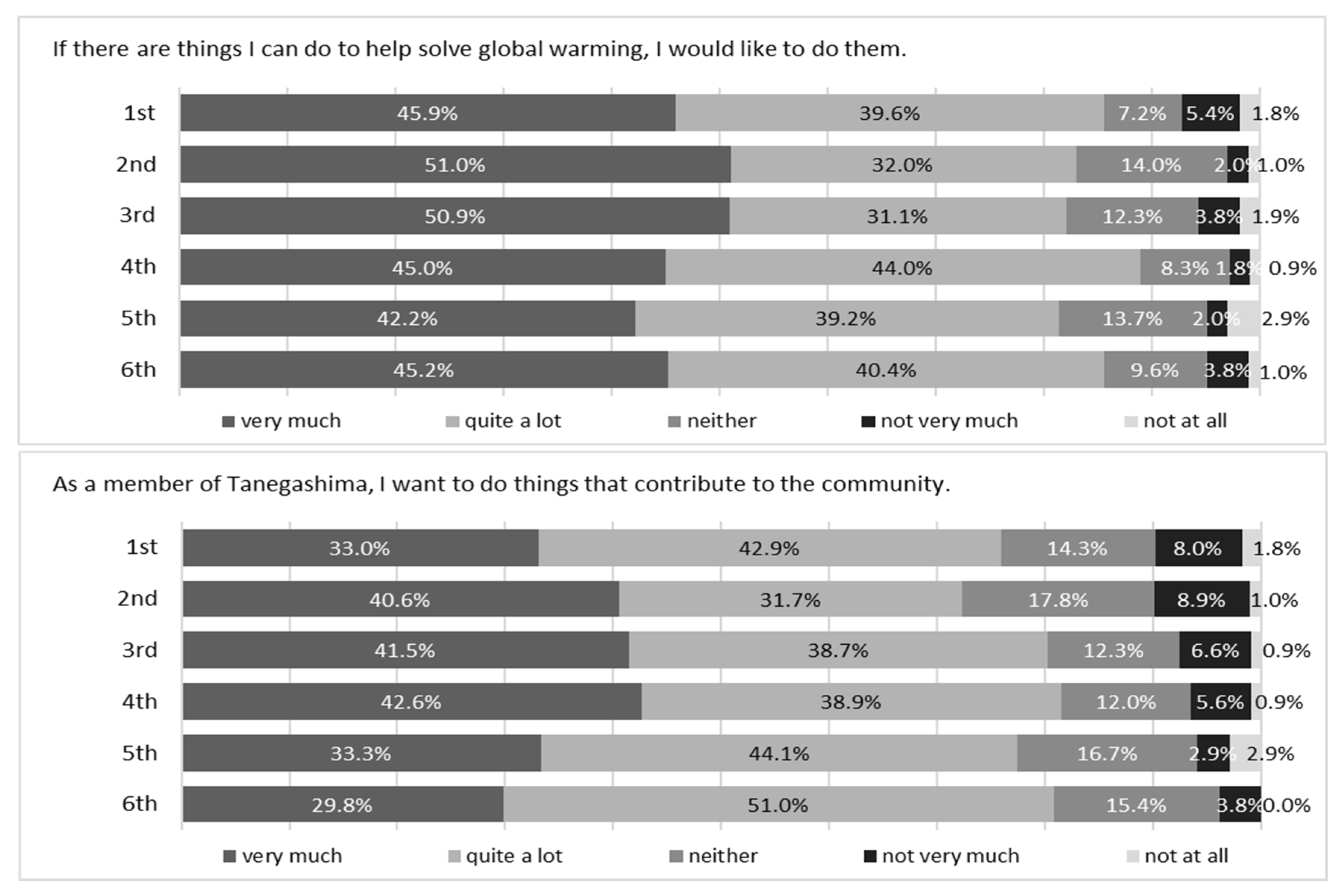
Regarding action for the community, in “If there are things I can do to help solve global warming (climate change), I would like to do them,” consistently high levels of positive responses were observed. Around 80–90% of students selected “strongly agree” or “agree” for this item across all surveys, with little variation over time. This suggests that the students had a strong willingness to take personal action on global issues. For “As a resident of Tanegashima, I want to do things that contribute to the community,” the proportion of affirmative responses also remained high, ranging from about 70% to over 80%. Notably, the share of students choosing “agree” increased steadily, reaching 51.0% in the final survey. This indicates that the program reinforced students’ motivation to contribute to their local community as active members (Figure 5).
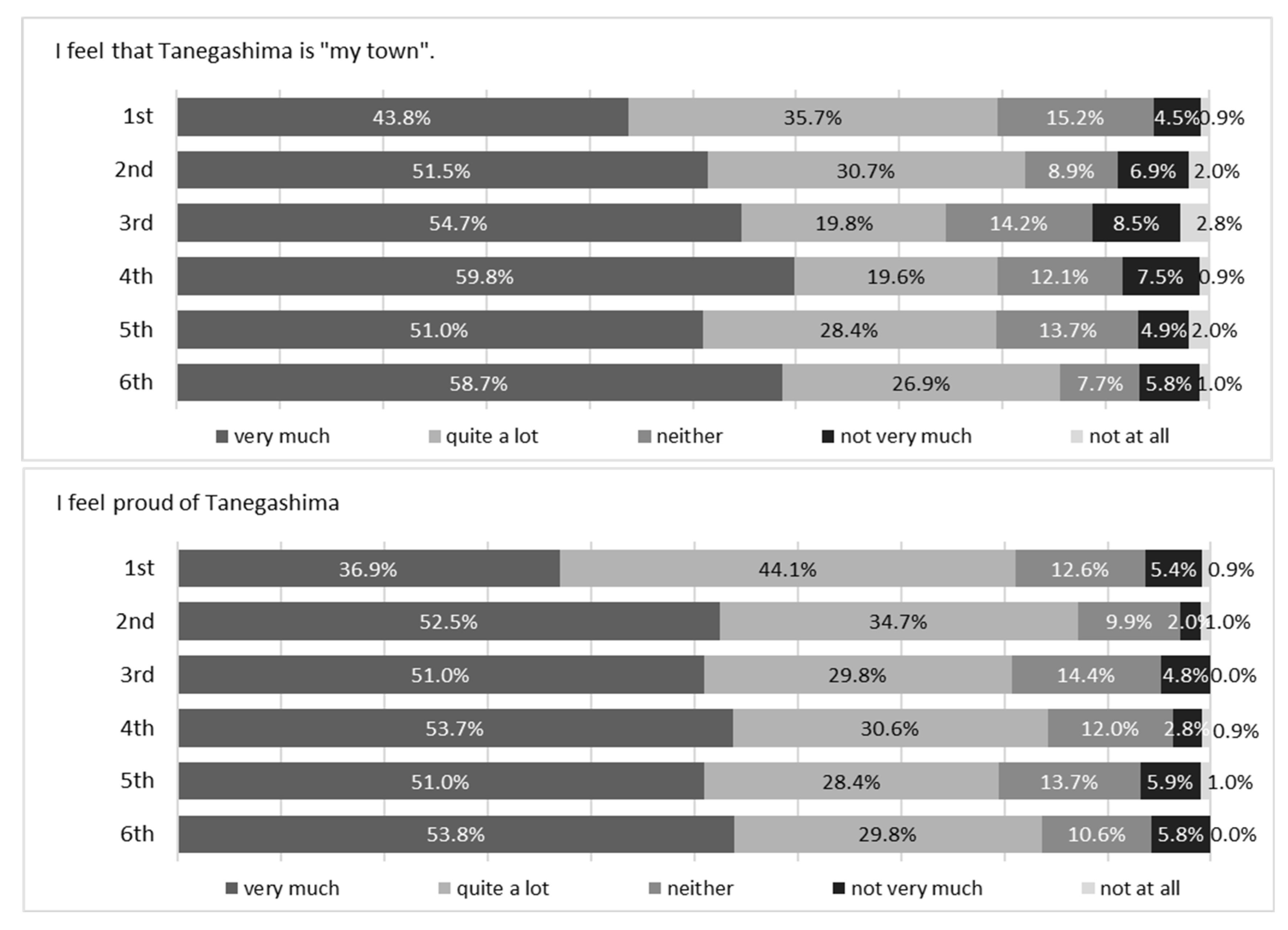
As for learning outcomes related to attachment to the community, the proportion of students answering “strongly agree” to “I feel that Tanegashima is “my town” increased from 43.8% in the first survey to 58.7% in the final survey, with overall affirmative responses (“strongly agree” or “agree”) consistently exceeding 70%. This indicates that the students developed a stronger sense of belonging to their community. Positive responses also remained high for “I feel proud of Tanegashima,” with “strongly agree” increasing from 36.9% in the first survey to 53.8% in the final survey. The consistently high level of affirmative responses (over 80% in most surveys) suggests that the program fostered pride in and positive emotional attachment to the local community (Figure 6).
Taken together, these results indicate that the program enhanced students’ understanding of local issues, strengthened their willingness to act for both local and global challenges, and fostered a growing sense of attachment to and pride in Tanegashima. These outcomes suggest that embedding sustainability education in the formal curriculum can effectively cultivate knowledge, motivation, and emotional bonds that support sustainable regional development.

3.3. Perceptions of the Relationship Between the Region and Career Development

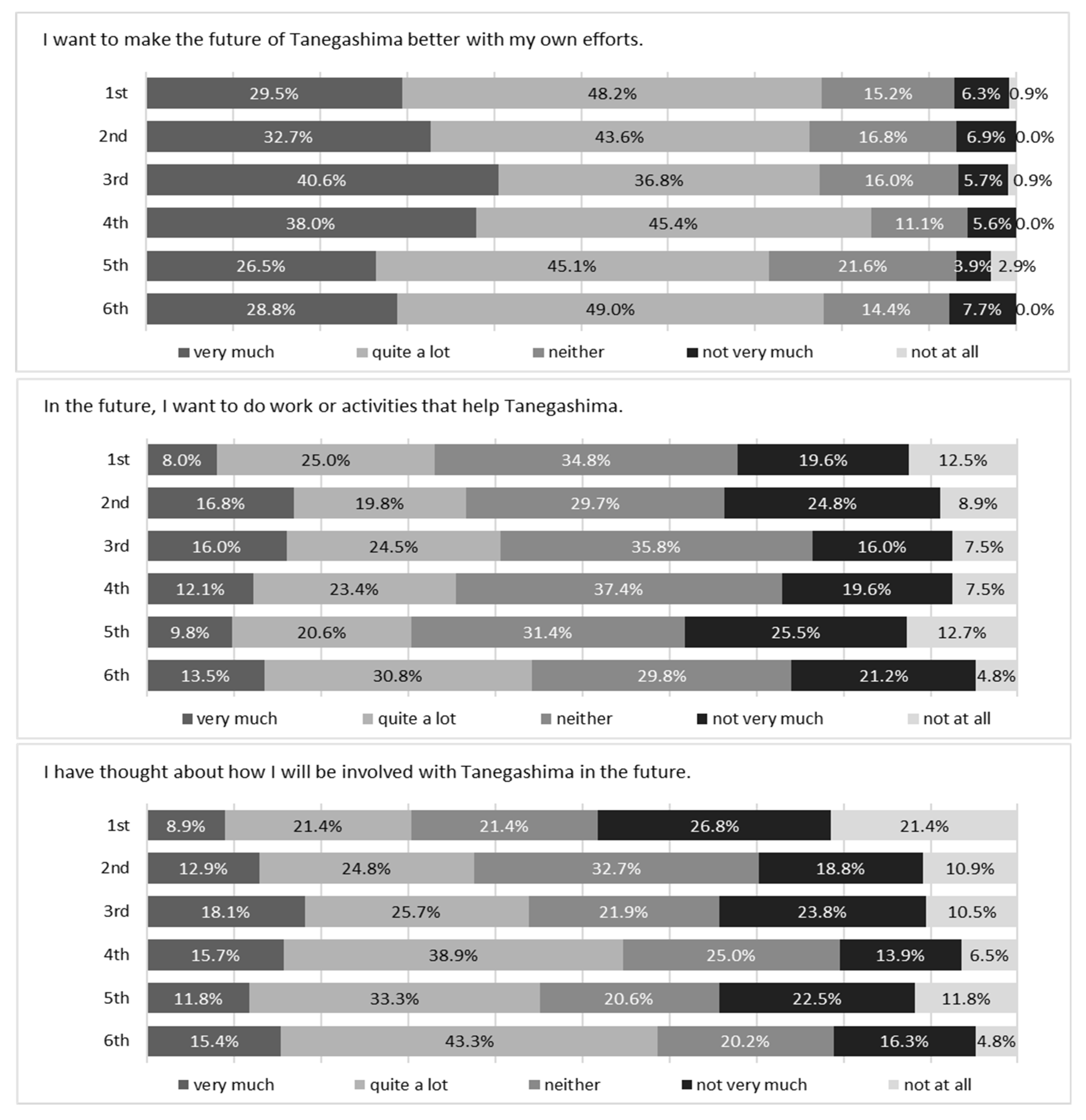
Regarding students’ future outlook and their interest in contributing to the community, nearly 80% consistently selected “strongly agree” or “agree” in response to the statement, “I want to make Tanegashima’s future better through my own efforts,” across all survey rounds (76.1–87.0%). For the item “I want to do work or activities that help Tanegashima in the future,” affirmative responses (“strongly agree” or “agree”) were lower (28–44%) but showed gradual improvement over time. Meanwhile, the proportion of students who had considered how they could stay involved with Tanegashima in the future rose notably, with combined positive responses increasing from 30.3% in the first survey to 58.7% in the final survey. These results suggest that the program nurtured both agency and future-oriented commitment to the community (Figure 7).
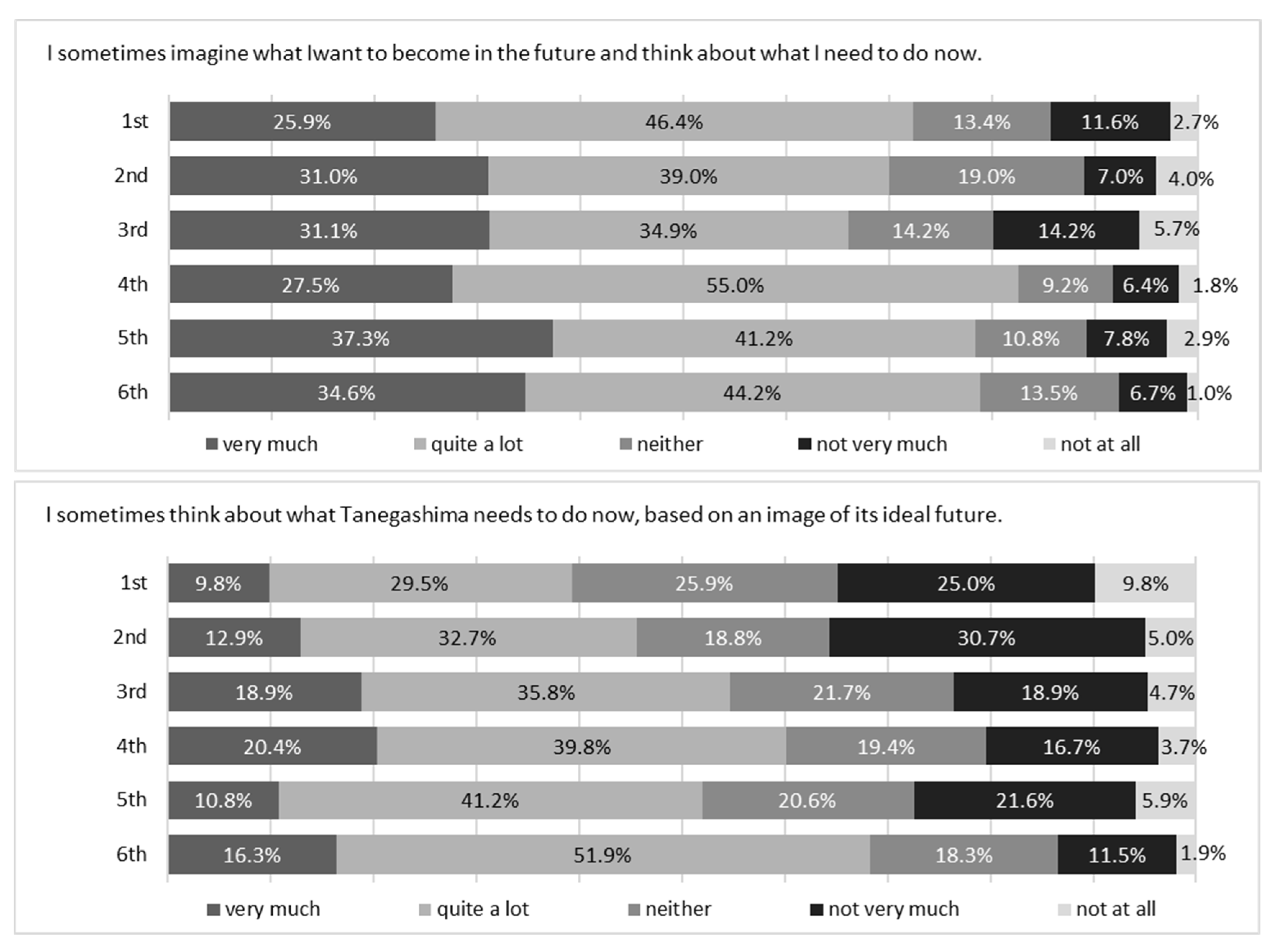
In items eliciting backcasting, students showed consistent engagement in reflecting on both their personal futures and the future of Tanegashima. For the item “I sometimes imagine what I want to become in the future and think about what I need to do now to get there,” the proportion of students responding “strongly agree” or “agree” remained high throughout the surveys, ranging from 72.3% in the first wave to 78.8% in the sixth. Similarly, for the item “I sometimes think about what Tanegashima needs now based its ideal future,” affirmative responses (“strongly agree” or “agree”) steadily increased from 39.3% in the first survey to 68.2% by the sixth. These results suggest that the program fostered students’ capacity to link future goals to present actions, both in terms of their individual careers and the sustainable development of their community (Figure 8).
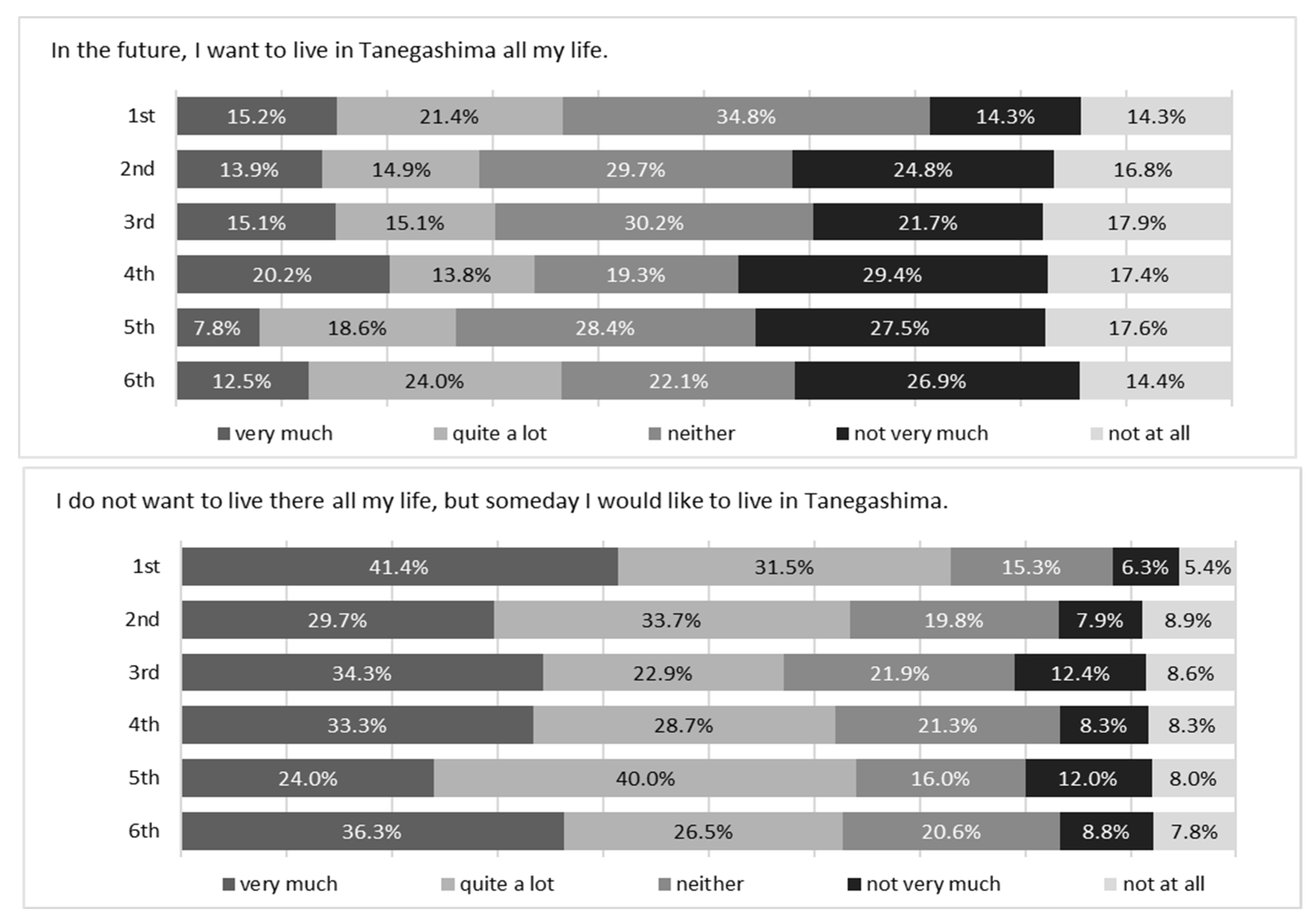
Regarding students’ intentions to return after university, however, relatively few students expressed a strong aspiration to live in Tanegashima their whole life. In the final survey, only 12.5% responded “strongly agree” and 24.0% responded “agree.” By contrast, a larger proportion indicated a preference for living in Tanegashima someday, though not for their entire life. In the final survey, 36.3% selected “strongly agree” and 26.5% “agree,” suggesting that over 60% of students positively envisioned the possibility of returning at some stage in their lives. This pattern indicates that while permanent residence may not be the dominant aspiration, the program fostered an openness to future engagement with the island, highlighting the potential for sustained but flexible forms of regional contribution (Figure 9).
Summarizing the results, sustainability education in junior high school fostered students’ awareness, motivation, and openness to future community involvement. The program strengthened their sense of agency, as many students expressed a desire to improve Tanegashima’s future through their own efforts. The backcasting approach helped students connect long-term visions with present actions, linking personal career paths to community sustainability. While only a minority aspired to live on the island permanently, more than half envisioned returning at some stage, indicating a flexible orientation toward regional contribution. Overall, these findings suggest that embedding sustainability education in the curriculum can cultivate both knowledge and diverse forms of engagement that support community resilience.

4. Conclusions

This study demonstrated that implementing a three-year educational program within the junior high school curriculum fostered a more sustained development of knowledge and awareness regarding regional sustainability compared to one-time interventions. By embedding sustainability content systematically into compulsory education, the program addressed a key limitation of prior research, which often relied on short-term or isolated initiatives. The longitudinal evidence provided here underscores that sustainability-related perspectives can be acquired and retained when education is consistently structured over multiple years.
The findings also carry important implications. While the program effectively cultivated students’ knowledge and awareness of sustainability, gains in items related to willingness to take concrete actions were more limited. This highlights that knowledge and awareness alone do not automatically translate into action. Therefore, it is essential to refine the curriculum so that learning more clearly supports the progression from knowledge to awareness to action. To this end, a closer examination of the data is needed to identify which students experienced specific changes, and case studies or interviews should be conducted to explore instances in which awareness successfully translated into action. Such insights will contribute to the design of improved educational practices that nurture not only understanding, but also active engagement with sustainability.
Beyond curriculum design, the effectiveness of sustainability education also depends on the surrounding learning environment—particularly the role of teachers and community adults. Previous research has shown that transformative learning for sustainability emerges through relational, supportive, and reflective educational settings (Demkanin, 2018; Novotná & Demkanin, 2024) [37,38]. Teachers who engage in reflective practice and model proactive problem-solving help students internalize the idea that change begins from one’s own actions. Similarly, parents, local practitioners, and civic mentors who participate in school projects act as “real-world bridges,” showing how knowledge connects to authentic community challenges. Such interactions help students reframe sustainability not as an abstract topic but as a personally owned issue, nurturing their sense of agency and commitment to local engagement. In this way, fostering students’ “ownership of sustainability” requires both educational programs and a shared cultural orientation among teachers and adults toward co-creating a sustainable future.
While the present study focused on a single junior high school in a depopulated island region, it should be regarded as a contextually grounded case study rather than a statistically generalizable analysis. The findings are therefore most meaningful in terms of theoretical and practical transferability, illustrating how a sustainability-oriented educational model can be embedded in a real school context.
The absence of a control group also limits causal inference, as social and environmental factors may have influenced students’ responses. However, given the ethical and logistical constraints of school-based research in small island settings, quasi-experimental designs remain difficult to implement. Instead, the study’s longitudinal design provides valuable empirical evidence of change processes within authentic educational environments.
Furthermore, future studies should explore how demographic dynamics—particularly population aging and regional depopulation—affect the implementation and outcomes of sustainability-oriented education. In the case of Tanegashima, population decline and aging are progressing earlier and more rapidly than in most other regions of Japan. Therefore, the educational practices and insights developed in this island context could provide valuable lessons for the rest of Japan in the coming decades, as many regions are expected to face similar demographic challenges. By situating educational research within such frontier regions, this study highlights how sustainability education can contribute to developing adaptive capacities in communities experiencing demographic transition.
In addition, one of the core themes of this program— “thinking from the desirable future to determine what should be done now”—has since been adopted as part of the school’s official educational goals. This conceptual orientation, rooted in backcast thinking, has begun to influence the broader educational practices of the school. It suggests that the program’s impact extends beyond the classroom, fostering a shared vision of future-oriented education within the entire school community.
Looking ahead, future research and practice should also consider the impact of such programs on teachers themselves. Recent studies have indicated that engaging in sustainability- and community-oriented education encourages teachers to reflect on their professional identity and to develop greater agency and commitment to transformative practice (Demkanin, 2018; Novotná and Demkanin, 2024) [37,38]. Such reflective growth among educators can strengthen the long-term sustainability of school-based initiatives.
In addition, the research team has been conducting annual teacher training workshops to support program delivery. However, Japan’s public junior high school system presents a structural challenge: teachers are typically transferred to different schools every four to five years. This frequent rotation disrupts the continuity of school-based initiatives and poses a serious challenge to maintaining the long-term sustainability of educational innovation. To address this issue, the team is currently examining how teacher training can be organized in a more continuous and systemic way to enhance the program’s long-term stability.
A related three-year program is currently being developed at the senior high school that many of the participating junior high school students attend. Following students as they progress from junior to senior high school will enable the examination of long-term effects across a six-year continuum. Building on the present results, future research should continue to refine and expand long-term, school-based educational programs that foster both student and teacher development, thereby cultivating the human resources needed for sustainable regional societies.

Author Contributions

Conceptualization, R.Y. and H.K.; methodology, R.Y. and H.K.; software, R.Y.; validation, R.Y.; formal analysis, R.Y.; investigation, R.Y. and H.K.; resources, R.Y. and H.K.; data curation, R.Y.; writing—original draft preparation, R.Y.; writing—review and editing, R.Y. and H.K.; visualization, R.Y.; supervision, R.Y. and H.K.; project administration, H.K.; funding acquisition, H.K. All authors have read and agreed to the published version of the manuscript.

Funding

This work was supported by JST COI-NEXT JPMJPF2003, ERCA Environment Research and Technology Development Fund JPMEERF20192010 and JSPS KAKENHI JP23K25069 and JP24K05770.

Institutional Review Board Statement

The study was conducted in accordance with the Declaration of Helsinki, and approved by the Ethics Review Committee of The University of Tokyo (Approval Code: 19-201, Approval Date: 24 September 2019).

Informed Consent Statement

Informed consent was obtained from all student participants involved in the study. The survey was conducted with the consent and approval of the junior high school principal, and under the standard agreements between the school and parents regarding school-approved educational surveys. Participation was voluntary, and the research was carried out in accordance with the school’s established procedures for educational activities and surveys.

Data Availability Statement

The data supporting the findings of this study are available from the corresponding author upon reasonable request. Due to privacy and ethical restrictions regarding student information, the datasets are not publicly available.

Acknowledgments

The authors would like to thank the teachers, students, and parents of Tanegashima Junior High School for their cooperation in this study. We also appreciate the support of local government officials and community members who contributed to the program’s implementation.

Conflicts of Interest

The authors declare no conflicts of interest.

Abbreviations

ESDEducation for Sustainable Development
PBEPlace-Based Education
SDGsSustainable Development Goals
MEXTMinistry of Education, Culture, Sports, Science and Technology

References

  1. Japan Institute for Labour Policy and Training. Labor Situation in Japan and Its Analysis: Detailed Exposition 2016/2017; JILPT: Tokyo, Japan, 2017. Available online: https://www.jil.go.jp/english/lsj/detailed/2016-2017/all.pdf (accessed on 1 September 2025).
  2. Hida, D.; Hida, Y. Chiiki Jinzai Ikusei no Kyōiku Shakaigaku [Sociology of Education for Regional Human Resource Development]. Bull. Sch. Educ. Hum. Sci. 2014, 5, 75–92. (In Japanese) [Google Scholar]
  3. National Institute of Population and Social Security Research. The 8th National Survey on Migration (2016): Summary of the Results; IPSS: Tokyo, Japan, 2016. Available online: https://www.ipss.go.jp/ps-idou/e/m08e/mig08e.asp (accessed on 1 September 2025).
  4. Kikkawa, T. Gakureki Shakai no Rōkaru Torakku: Chihō kara no Daigaku Shingaku [The Local Track of the Credential Society: University Entrance from the Regions]; Sekai Shisōsha: Kyoto, Japan, 2001. (In Japanese) [Google Scholar]
  5. Dreborg, K.H. Essence of Backcasting. Futures 1996, 28, 813–828. [Google Scholar] [CrossRef]
  6. Smith, G.A. Place-Based Education: Learning to Be Where We Are. Phi Delta Kappan 2002, 83, 584–594. [Google Scholar] [CrossRef]
  7. Smith, G.A. Place-Based Education: Breaking through the Constraining Regularities of Public School. Environ. Educ. Res. 2007, 13, 189–207. [Google Scholar] [CrossRef]
  8. Gruenewald, D.A. The Best of Both Worlds: A Critical Pedagogy of Place. Educ. Res. 2003, 32, 3–12. [Google Scholar] [CrossRef]
  9. Bright, D.J. Place-Based Education as a Tool for Rural Career Development. J. Couns. Prep. Superv. 2020, 13, 3. [Google Scholar]
  10. Theodori, A.E.; Theodori, G.L. The Influences of Community Attachment, Sense of Community, and Educational Aspirations upon the Migration Intentions of Rural Youth in Texas. Community Dev. 2015, 46, 380–391. [Google Scholar] [CrossRef]
  11. Bernsen, K.; Skaar, E.; Villa, M. Community Attachment and Migration Intentions among Rural Youth. J. Rural. Community Dev. 2022, 17, 45–61. [Google Scholar]
  12. Simões, F.; Matos, P.M.; Ferreira, J.A. Time to Get Emotional: Determinants of University Students’ Intention to Return to Rural Areas. Sustainability 2021, 13, 5135. [Google Scholar] [CrossRef]
  13. Selby, S.T.; Cruz, A.R.; Ardoin, N.M.; Durham, W.H. Community-as-Pedagogy: Environmental Leadership for Youth in Rural Costa Rica. Environ. Educ. Res. 2020, 26, 1594–1620. [Google Scholar] [CrossRef]
  14. Maloyed, C.L.; Williams, C.J. Place-Based Civic Education and the Rural Leadership Crisis in Nebraska. Great Plains Res. 2013, 23, 127–135. [Google Scholar]
  15. Morgan, W.; Streb, M. Building Citizenship: How Student Voice in Service-Learning Develops Civic Values. Soc. Sci. Q. 2001, 82, 154–169. [Google Scholar] [CrossRef]
  16. Yemini, M.; Engel, L.; Ben Simon, A. Place-Based Education: A Systematic Review of Literature. Educ. Rev. 2025, 77, 640–660. [Google Scholar] [CrossRef]
  17. Bedford, T. Revitalizing an Island Community: Education for Sustainable Living in Nakanoshima, Oki Islands, Japan. J. Educ. Sustain. Dev. 2023, 17, 5–18. [Google Scholar] [CrossRef]
  18. Olsson, D.; Gericke, N.; Boeve-de Pauw, J. The Effectiveness of Education for Sustainable Development Revisited—A Longitudinal Study on Secondary Students’ Action Competence for Sustainability. Environ. Educ. Res. 2022, 28, 405–429. [Google Scholar] [CrossRef]
  19. Hernandez Gonzalez, F. Exploring the Affordances of Place-Based Education for Advancing Sustainability Education: The Role of Cognitive, Socio-Emotional and Behavioural Learning. Educ. Sci. 2023, 13, 676. [Google Scholar] [CrossRef]
  20. Hernandez, J.; Scherr, R.; German, M.; Horowitz, R. Place-Based Education in High School Science: Situating Energy and Climate Change in Students’ Communities. Sustain. Clim. Change 2022, 15, 58–67. [Google Scholar] [CrossRef]
  21. Osanai, S.; Yu, J. Teaching the Effectiveness of Integrated Studies and Social Engagement: A Case Study on SDG Education in Depopulated Areas in Japan. Educ. Sci. 2023, 13, 250. [Google Scholar] [CrossRef]
  22. Hida, D.; Hida, Y. Jinkō Genshō Shakai to Kōkō Miryokuka Purojekuto: Chiiki Jinzai Ikusei no Kyōiku Shakaigaku [Declining Population Society and High School Attraction Project: Sociology of Education for Regional Human Resource Development]; Akashi Shoten: Tokyo, Japan, 2018. (In Japanese) [Google Scholar]
  23. Owaki, K. Jinkō Genshō Jidai no Ritō Chiiki ni okeru Kyaria Kyōiku: Niigata-ken Awashima no Torikumi to Shōchūgakusei no Shōrai ni taisuru Ishiki ni Chūmoku shite [Career Education in Depopulating Island Regions: Focusing on the Case of Awashima, Niigata Prefecture, and Students’ Views of the Future]. Chiiki Kyōiku 2018, 17, 55–74. (In Japanese) [Google Scholar]
  24. Kodama, T. Chiiki Jizoku Kanōsei o Chūshin toshita Gakkō to Chiiki no Kyōdō ni yoru ESD no Kanōsei [Possibilities of Collaborative ESD between Schools and Communities Centered on “Regional Sustainability”]. Kankyō Kyōiku Environ. Educ. 2023, 32, 2218. (In Japanese) [Google Scholar]
  25. Ikeda, M. Okayama Chiiki ni okeru ESD no Seika to Kadai [Achievements and Issues of ESD in the Okayama Region]. Rikkyo ESD J. 2022, 6, 20–23. (In Japanese) [Google Scholar]
  26. Asaoka, E.; Kodama, T. Tandoku Jichitai-gata UNESCO Eco Park ni okeru ESD no Sokushin Yōin [Factors Promoting ESD in Single-Municipality Biosphere Reserves]. Kankyō Kyōiku Environ. Educ. 2024, 34, 38–52. (In Japanese) [Google Scholar]
  27. Yatagawa, R.; Kurishima, H. Development of Career Education Program for Sustainable Community on a Remote Island in Japan. In Proceedings of the Hawaii International Conference on Education (HICE) 2023, Honolulu, HI, USA, 5–8 January 2023; pp. 815–821. Available online: https://hiceducation.org/wp-content/uploads/2024/03/EDU2023.pdf (accessed on 10 September 2025).
  28. Boeve-de Pauw, J.; Gericke, N.; Olsson, D. Teachers’ ESD self-efficacy and practices: A longitudinal investigation. Environ. Educ. Res. 2022, 28, 1367–1384. [Google Scholar] [CrossRef]
  29. Ministry of Education, Culture, Sports, Science and Technology (MEXT). Course of Study for Lower Secondary Schools; MEXT: Tokyo, Japan, 2017. Available online: https://www.mext.go.jp/a_menu/shotou/new-cs/youryou/chu/ (accessed on 10 September 2025).
  30. Robèrt, K.H.; Holmberg, J.; Broman, G. Backcasting and Sustainability Principles. Int. J. Sustain. Dev. World Ecol. 2000, 7, 291–308. [Google Scholar] [CrossRef]
  31. Quist, J.; Vergragt, P. Past and Future of Backcasting: The Shift to Stakeholder Participation and a Proposal for a Methodological Framework. Futures 2006, 38, 1027–1045. [Google Scholar] [CrossRef]
  32. Matos, S.; Arroz, A.M.; Martins, B.; Amorim, I.R.; Gabriel, R. Backcasting for Youths: Hypothetical and Critical Thinking in the Context of Sustainable Development Education. Sustainability 2024, 16, 11088. [Google Scholar] [CrossRef]
  33. Quist, J. Backcasting for a Sustainable Future: The Impact after Ten Years; Eburon Academic Publishers: Delft, The Netherlands, 2006; ISBN 978-90-5972-107-8. [Google Scholar]
  34. Ziegler, R.; Fischer, D.; Barth, M. Backcasting for Sustainable Transformation in Higher Education: Enabling Systemic Thinking and Collaboration in University Curricula. Sustainability 2022, 14, 1476. [Google Scholar] [CrossRef]
  35. Shoho, M. Home Economics Education as Child Abuse Prevention and Curriculum Development through Backcasting. Bull. Fac. Educ. 2019, 7, 67–78. [Google Scholar] [CrossRef]
  36. Yatagawa, R.; Kurishima, H. Positioning and Future Challenges of Education for Sustainable Development (ESD) in the Japanese National Curriculum Guidelines: Toward a Regional Circulating and Ecological Sphere in a Depopulating Society. Chikyu Kankyo Glob. Environ. 2019, 24, 137–144. (In Japanese) [Google Scholar]
  37. Demkanin, P. Physics Teachers and the Use of Sensors by Pupils Themselves—Support or a Challenge for Inquiry-Based Science Education? J. Balt. Sci. Educ. 2018, 17, 136–151. [Google Scholar] [CrossRef]
  38. Novotná, E.; Demkanin, P. Developing Teachers’ Reflective Practice through Inquiry-Based Science Education. J. Balt. Sci. Educ. 2024, 23, 234–247. [Google Scholar]
Figure 1. Study Area: Location of Tanegashima, Japan.
Sustainability 17 09893 g001
Figure 2. Knowledge Supporting Regional Sustainability.
Sustainability 17 09893 g002
Figure 3. Basic Knowledge for Discussing Sustainable Communities.
Sustainability 17 09893 g003aSustainability 17 09893 g003b
Figure 4. Learning Outcomes Related to the Community.
Sustainability 17 09893 g004
Figure 5. Learning Outcomes Related to Action for the Community.
Sustainability 17 09893 g005
Figure 6. Learning Outcomes Related to Attachment to the Community.
Sustainability 17 09893 g006
Figure 7. Students’ Future Outlook and Interest in Community Contribution.
Sustainability 17 09893 g007
Figure 8. Reflections on Personal and Community Futures through Backcasting.
Sustainability 17 09893 g008
Figure 9. Future Intentions to Return and Live in Tanegashima drawn.
Sustainability 17 09893 g009
Table 1. Sustainability and Regional Human Resource Development: Curriculum Outline.
Grade
(Junior High)
SemesterTheme/FocusDescriptionTeaching MethodDuration (Number of Class Periods)
Grade 7 (Year 1)1stReflecting on the Future (SDGs and the Local Community)Linking global SDGs to local issues; exploring connections between global goals and community sustainability.Lecture + Group work combination2 (100 min)
Grade 7 (Year 1)2ndReflecting on the Future (Backcasting Approach)Practicing backcasting to envision desirable futures and identify steps from the future to the present.Lecture + Worksheet-based individual activity2 (100 min)
Grade 7 (Year 1)3rdThe Attractions and Drawbacks of TanegashimaExploring the strengths and shortcomings of Tanegashima in the context of sustainability.Workshop format (student-led discussion)2 (100 min)
Grade 8 (Year 2)1stGlobal Warming as a Scientific IssueUnderstanding climate change and its local impacts.Lecture + Pair work format (collaborative activity)2 (100 min)
Grade 8 (Year 2)2ndCollaboration with Senior High School StudentsParticipating in joint workshops with senior high school students to discuss regional sustainability.Workshop format (student-led discussion) + Presentation3 (150 min)
Grade 8 (Year 2)3rdCareer Anchors and Self-ReflectionReflecting on personal values and aspirations using the career anchor framework.Lecture + Worksheet-based individual activity2 (100 min)
Grade 9 (Year 3)1stExperiments on Climate ChangeConducting scientific experiments related to global warming and its effects.Simulation-based learning format (Carbon Neutral Simulator)2 (100 min)
Grade 9 (Year 3)2ndIn-school workshopAn in-school workshop as the culmination of the program.Workshop format (student-led discussion) + Presentation3 (150 mini)
Grade 9 (Year 3)3rdPolicy Design for Sustainable CommunitiesDesigning policy mechanisms for the sustainable development of Tanegashima.Lecture + Work-sheet-based individual activity2 (100 min)
Table 2. Number of Participants per Survey Round.
Survey RoundDateNumber of Participants
1stJun-21111
2ndFeb-22101
3rdJun-22106
4thFeb-23108
5thJun-23102
6thNov-23104
Disclaimer/Publisher’s Note: The statements, opinions and data contained in all publications are solely those of the individual author(s) and contributor(s) and not of MDPI and/or the editor(s). MDPI and/or the editor(s) disclaim responsibility for any injury to people or property resulting from any ideas, methods, instructions or products referred to in the content.