
You are currently viewing a new version of our website. To view the old version click .
Sustainability
  • Review
  • Open Access

27 October 2025

Green Port Policy: Planning and Implementation of Environmental Projects—Case Study of the Port of Gaženica


,
,
and
1
Maritime Department, University of Zadar, 23000 Zadar, Croatia
2
Stano-Uprava d.o.o., Ul. Mike Tripala 6, 21000 Split, Croatia
*
Author to whom correspondence should be addressed.
This article belongs to the Special Issue Sustainable Marine Engineering and Efficient Marine Transportation of Energy

Abstract

The port of Gaženica, managed by the Port Authority of Zadar, is open to public traffic of special economic interest to the Republic of Croatia. Situated outside Zadar’s city centre, with convenient access to the airport and A1 highway, this port presents significant opportunities for Zadar County’s economic growth. While also serving as a cargo and fishing port, as the second-largest passenger port in Croatia, the port of Gaženica prioritises the development of cruise ship traffic. The expansion of intermodal traffic is being facilitated through the development of a multipurpose terminal to accommodate general, roll-on/roll-off, and containerised cargo (full and empty containers). The rising number of passenger ships—particularly cruise ships—along with the increasing passenger, vehicle, and cargo traffic, poses a significant risk of pollution due to dust, noise, greenhouse gases, and other pollutants. Considering these risks, the use of alternative energy sources, decarbonisation of maritime transport, the separation of waste by type, and the proper handling and disposal of ship waste are of utmost importance. The aim of this study is to present and analyse the green transition process of the port of Gaženica through the results that have been achieved or are yet to be achieved through the implementation of green projects by the Port Authority of Zadar. For this purpose, a mixed-methods approach combining project analysis and the qualitative analysis of emissions data is used. It is important to highlight that the method of interviews with relevant representatives of institutions involved in the project was also used to gain insight into financial and infrastructural challenges, the accessibility of certain data, and potential improvements in implementation. The research results indicate that the port of Gaženica has completed four green projects, while another four are currently being implemented, with their completion expected by 2026. The research concludes that it is necessary to strengthen environmental awareness regarding proper waste disposal among all stakeholders in maritime transport, including the local community, businesses, and local authorities. The results demonstrate a need to focus on certification with the aim of strengthening the green transition process through involvement in the EcoPorts and Green Award certification schemes. It is also necessary to actively improve the public availability of data from the base station in the port of Gaženica to inform the public about environmental impacts in real time (24/7) while facilitating data collection for statistical reporting purposes.

1. Introduction

The growth of the maritime transport sector is fundamental for the transportation of international goods. Following global trends, the seaports of the Republic of Croatia have recorded increases in cargo and passenger traffic. The Croatian Bureau of Statistics reported that, in 2024, Croatian ports experienced a 0.7% increase in vessel arrivals, a 3.4% increase in passenger numbers, and a 10.1% decrease in cargo volume compared with 2023 [1].
Increased harmful emissions have been a direct consequence of the continuous rise in passenger and vessel arrivals, as well as the related port activities involving cargo and vehicle handling. Therefore, measures must be implemented to minimise their impacts on people and the environment. Increased port traffic poses significant environmental challenges, including greenhouse gas emissions, waste management issues, high energy consumption, and marine and noise pollution [2]. Hence, it is the responsibility of ports to reduce these negative effects and promote sustainability within the maritime sector. Each year, the European Sea Ports Organisation identifies key environmental priorities to direct ports’ sustainability initiatives [3].
The general goal of the “green port” concept can be reduced to the provision of port and mobility infrastructure that enables regional economic development while, at the same time, ensuring the sustainable use of natural resources in the long-term [4].
The green transition presents numerous challenges for port authorities, including operational disruptions and obstacles at the regional, national, and legislative levels [5]. A successful green transition thus demands innovative management and effective organisation across areas such as sustainable development, energy efficiency, and environmental management [6].
According to the UNCTAD (United Nations Conference on Trade and Development) Review of Maritime Transport in 2023, international shipping, which carries over 80% of the world’s merchandise trade by volume, is responsible for nearly 3% of all global greenhouse gas emissions [7]. Furthermore, the transport sector in the European Union was responsible for more than a quarter (28.9%) of greenhouse gas emissions in 2022, with maritime transport contributing 14.2% (Table 1).
Table 1. The share of GHG emissions from maritime transport within the European Union from 1990 to 2022.
Despite current efforts, the maritime industry’s substantial dependence on fossil fuels necessitates a focused approach to decarbonise maritime transport. Delayed decarbonisation efforts will likely result in high expenses, fines, and reduced competitiveness in increasingly sustainability-focused markets [9].
International and European regulations require the maritime industry to cut emissions drastically, requiring comprehensive company-level emission data, greenhouse gas monitoring and reporting, and detailed emissions reduction plans. In this context, the effectiveness of port authorities will be measured by their adoption and use of suitable environmental solutions.
These findings underscore the need for port authorities to adopt new technologies for sustainable port development. Considering the port of Gaženica’s diverse infrastructure—which encompasses cargo, RO-RO, passenger, and fishing terminals—and its strategic focus on expanding cruise traffic and developing intermodal transport, the Port Authority of Zadar must identify practical solutions to address the associated environmental challenges. The Port of Gaženica covers an area of 1,547,511 square metres and consists of two parts: a cargo port and a passenger port (which also includes a fishing port). Due to its location, it represents a central point for the economic development of Zadar County [10].
Due to its convenient location near the A1 motorway, Zadar Airport, and Zadar’s historic centre, the port of Gaženica plays a crucial role in Zadar’s economy and intermodal transport. A railway line relocation project is expected to enhance the port’s infrastructure, leading to increased cargo handling capacity and further growth. Given the significant traffic of vehicles, ships, and cargo, along with the associated loading, discharging, and transhipment operations within the port area, which lead to increased greenhouse gas emissions, potential marine pollution, and elevated noise levels, the port authority must adopt measures to reduce harmful impacts on the environment.
In 2022, transportation fuel combustion accounted for the largest share (39.9%) of emissions in the Republic of Croatia’s energy sector. The Greenhouse Gas Inventory Report for the Republic of Croatia for the period 1990–2022 (NIR 2024) states that over this period, CO2 emissions from road transport increased by 80.3% compared with 1990, while the increase for maritime and inland waterway transport was 13.7% [11]. From Table 2, we can conclude that in the Republic of Croatia, fuel consumption in ship bunkers and CO2 emissions have been reduced by almost 50%.
Table 2. Fuel Consumption and CO2-eq Emissions from Ship Bunkers in the Republic of Croatia in the period 1990–2022.
One of the key methods for reducing CO2 emissions is to transition from fossil fuels to alternative energy sources, such as electric or hybrid vehicles and solar power. The number of alternative fuel vehicles in Croatia has more than doubled over the last decade, reaching 3.39% of all vehicles in 2024 [12].
The aim of this study is to analyse the implementation of green projects in the Port of Gaženica and the associated achievements, as well as to assess areas where additional projects are needed to contribute to the ultimate goal: its designation as a green port. Following a review of previous studies on the Port of Gaženica, this study aims to fill the gaps in the existing literature by analysing EU-funded green transition projects implemented at the port. The Port of Gaženica was selected for this research as it is the second largest passenger port in the Republic of Croatia and one of the largest maritime infrastructure projects in Zadar County. Located outside the city centre of Zadar and well connected with the airport and the A1 motorway, the Port of Gaženica serves as a hub for the economic development of Zadar County. Although the port area includes cargo and fishing facilities in addition to the passenger terminal, the development of cruise tourism has been prioritised, with Gaženica being the second-largest passenger port in Croatia. The port’s capacity for intermodal transport is also being advanced through the construction of a multipurpose terminal for general cargo, RO-RO cargo, and both full and empty containers. The steady increase in the number of passenger vessels—particularly cruise ships—and passenger, vehicle, and freight traffic intensifies potential environmental risks such as dust pollution, noise, greenhouse gas emissions, and other pollutants. Due to these risks, it is critically important to utilise alternative energy sources, promote the decarbonisation of maritime transport, ensure proper waste separation by type, and manage and dispose of ship-generated waste appropriately. To provide a scientific basis for this study, the following main research goal was formulated: To present and analyse the green transition process of the Port of Gaženica and the results achieved or to be achieved through the implementation of green projects by the Port Authority of Zadar, with the ultimate goal of transforming it into a green port. In line with this main objective, three research questions are posed:
Research Question 1 (RQ1): To what extent has the application of ecological projects in seaports been researched in the academic literature?
Research Question 2 (RQ2): What ecological projects have been implemented in the Port of Gaženica with the goal of making it a green port, what are their current stages of implementation, and what are the expected final benefits once completed?
Research Question 3 (RQ3): What are the suggestions for improving and enhancing the implementation of project activities in the process of transforming the Port of Gaženica into a green port?
After the Introduction, Section 2 presents a literature review on the application of ecological projects, as well as the green transition of and green technologies in seaports. Section 3 outlines the research methods used in this study, while Section 4 provides general information about the Port of Gaženica along with an overview of projects that have been completed or are currently underway. Section 5 discusses the research findings and offers suggestions for improving the green transition process at the Port of Gaženica. Section 6 presents conclusions on the research topic, identifies limitations, and offers recommendations for future research.

2. Literature Review

Analysing the main ports worldwide regarding green marketing efforts, Lam J.S.L. and Li K.X. [13] concluded that from a sustainability perspective, ports should manage and balance three basic goals: economic prosperity, social well-being, and environmental quality. Assessing sustainability initiatives adopted in global ports, Hossain T. et al. [14] found that committed investments into “green” innovations are an important component of port sustainability strategies. Due to the increasing demand for reductions in harmful emissions and the utilisation of alternative fuel sources in the maritime sector, port authorities are aiming to transition to more energy-efficient port operations and equipment. The introduction of green technologies, energy-efficient ships, and improved port operations poses considerable challenges for the maritime sector [15]. Economic factors and the costs of the green transition must both be taken into account. Transitioning to a green economy requires collaboration between port authorities and ministries in developing regulations, securing joint funding for projects, and strengthening management expertise in technological processes [16,17,18].
Ismail M. et al. analysed port management during green transition and revealed that each port authority creates a unique model that is shaped by its specific location, environmental context, and individual attributes, rather than adopting a single, universal approach [19]. In their study on sustainable seaports, Acciaro et al. emphasised the crucial role of renewable energy and noted a broad range of green initiatives, ranging from the use of electric and hybrid vehicles to improved, energy-efficient lighting systems [20].
According to Daza-Moros A. et al. [21], who studied the environmental effects of green transitions, government policy interventions, such as offering tax incentives and subsidies to companies investing in renewable technologies, are necessary to promote renewable energy use in seaports.
While extensive research has focused on the port of Gaženica, few studies have addressed the emissions associated with its passenger and cargo areas [22,23]. The results of a 2017 study by Knežević V. et al. on maritime emissions in the Zadar Port showed that approximately 80% of the total annual emissions come from passenger ships and 20% from cargo ships [24].
Researchers studying waste from cruise ships in the Zadar Port, including Slišković, M. et al. [25], have predicted that the current waste management practices will soon prove insufficient to handle the growing volume of waste. Although ships can effectively manage waste onboard, comparable processing is absent in ports due to inadequate infrastructure.
Furthermore, a comprehensive analysis of the Port Authority’s coordinated policy- and project-based response to these challenges is lacking. This study aims to fill this gap by evaluating the effectiveness of the EU-funded green transition strategy implemented at the Port of Gaženica.
According to a case study by Jugović A. et al. [26] on environmental requirements for passenger terminal development in Zadar County, coastal development projects must prioritise environmental protection, accounting for natural features, the landscape, population, land use, and noise and air quality.
Nguyen H.P. et al. evaluated the success of policies and concepts relating to green transitions in developed countries through an assessment of which of these policies and concepts are best applicable for developing countries such as Vietnam [27].
Through a meta-analysis, Tezcan Ö. and Kan E. proposed a list of criteria with the aim of evaluating green ports for the development and operational sequences of the port [28]. They listed six main criteria: Environmental, energy and resource, management, social, ecological, and economic.
Lin C. et al. investigated empirical and theoretical studies on green transitions and pointed out that the number of papers on the subject has increased significantly over time, with most having been published by researchers from China and the USA.
Research on sustainable port development in the Western Indian Ocean region was conducted by Susan Taljaard S. et al. in their paper on advancing sustainable port development in the Western Indian Ocean region [29].
Bostooughli A. and Saraceni A. investigated which strategies are suitable for determining the status of green ports, using the example of small EU ports. They identified “six strategies for smaller ports: renewable energy, waste management system, green vehicles, slow steaming, modal shifting policies, and incentives for using green trucks” [30].
In their research, Liu Y. et al. identified three main drivers of green innovation in ports, namely, economic and technological, environmental policy pressure, and changes in social awareness [31].
Tombak M. et al. analysed the progress of ports in the area of sustainability, taking ports in the Baltic Sea region as an example [32]. Using the model of the Swedish Maritime Competence Center, they found that port authorities play a key role in the processes of achieving port sustainability. They cited different business models, cargo diversity, and the cargo that prevails in the port as reasons for the existence of different levels of sustainability.
Su Z. et al. conducted research on Success Factors for Green Port Transformation Using Digital Technology, showing that “by establishing digital ecosystems that optimise operations, monitor emissions in real time, and enhance risk management, ports can elevate their role as nodes of sustainability within the global supply chain” [33].
When analysing practices that are important for the ecological and economic sustainability of ports, Feretti M. et al. concluded that they can be divided into three groups: reducing emissions, improving operational efficiency, and strengthening stakeholder engagement [34].
Issa M. et al. studied the transformation of maritime ports through electrification, IoT, 5G and, green energy [35]. They concluded that the problem of reducing greenhouse gases and the standards for reducing them in ports are not unique to all ports, due to their diverse characteristics.

3. Materials and Methods

To identify the achievements in the green transition process of the port of Gaženica through the projects implemented by the Zadar Port Authority with the aim of transitioning to a green port, the methodology in this study was divided into three phases. In the first phase, the collection of existing literature related to the research topic of this paper was carried out, followed by an analysis of works dealing with the implementation of certain projects with the aim of transitioning to green ports. In the second phase, an analysis of the collected data on projects that have been completed or are currently in the implementation phase at the port of Gaženica was carried out. This involved the synthesis, induction and deduction, generalisation, and specification of existing data on projects through the consultation of official project documentation, with requests via electronic mail made for those data that are not publicly available. The third phase included a qualitative research approach, focused on the use of a telephone interview method that involved specific and structured questions and was conducted with important persons from institutions that are key to the implementation of or are partners in the projects themselves.
The data for this study were collected from publicly available online sources. The study analysed the achievements aimed at the port of Gaženica’s green transition, focusing on projects financed by the European Union and overseen by the Port Authority of Zadar. To ensure representativeness, the analysis incorporated passenger and vehicle traffic data obtained from the website of the Port Authority of Zadar. Further data were obtained from secondary sources, including the Croatian Bureau of Statistics and the Centre for Vehicles of Croatia (CVH); in particular, data on Croatian port traffic were obtained from the Croatian Bureau of Statistics, while data on alternative-fuel vehicles were acquired from the Centre for Vehicles of Croatia. Traffic data for the Port of Gaženica were analysed based on publicly available data obtained from the Port Authority of Zadar regarding realised port traffic. Data on costs and emissions were processed using information from the initial assessments and final reports of the SUSPORT, TRANSPOGOOD, REMEMBER, and ECOWAVES projects, collected from the respective websites. Project outcomes and their impacts on the community were collected through interviews with the port and project managers. A mixed-methods approach was used in the analysis, combining project analysis with the quantification of emissions data. The data derived from the initial documents of the projects were used to analyse the situation regarding the green transition process of the port of Gaženica and to evaluate the results achieved through these projects. Meanwhile, data on passenger and vehicle traffic in the port were used to determine the potential risks that such traffic has on the sustainable development of the port. The analysis of projects implemented by the Zadar Port Authority was conducted with the aim of determining which areas the green transition has been focused on and how these projects can be connected to sustainable development goals and environmental priorities.

4. Results

Since its opening in 2015, passenger and cargo traffic at the port have increased, with passenger traffic exhibiting particularly strong growth. In 2023, the port of Gaženica reported increases in overall passenger and vehicle traffic, with the number of passengers rising by 4.83% and the number of vehicles increasing by 29.39% compared with 2019. The rise in cruise traffic has been substantial, demonstrating a 17.7% growth in passenger numbers and an 8.9% increase in the number of cruise ship arrivals. A decline in passenger numbers was observed exclusively in 2020, coinciding with the COVID-19 pandemic. The data presented in Table 3 and Table 4 clearly show an increasing trend in the number of passengers, vehicles, and cruise ships, which may pose potential environmental risks not only through increased greenhouse gas emissions but also through a rise in the amount of waste generated by ships. This is particularly emphasised in the initial results of the SUSPORT project, as well as previous research on emissions at the Port of Gaženica, which identified berthed ships as the largest source of these emissions.
Table 3. Passenger and vehicle traffic—TOTAL 2018–2023—Port of Zadar Authority.
Table 4. Cruise ships traffic from 2018 to 2023—Port of Zadar Authority.
The rise in passenger and cruise ship travel is expected to increase greenhouse gas emissions, highlighting the need for coordinated policies to improve the environmental sustainability and energy efficiency of the port of Gaženica [37]. The benefits will become clear once the RO-RO terminal opens and the railway line is reconstructed, significantly increasing its capacity for intermodal transport. Sustainable development requires ecologically and economically functional port infrastructure, and a detailed analysis of the port is crucial for identifying the most effective sustainable development options [38].
Projects at all stages, from initial planning to completion, are welcomed for initiatives focused on reducing greenhouse gases, improving waste management, digitising multimodal transport, and promoting maritime cultural heritage.
The project began with the collection of documents analysing greenhouse gas pollution sources and proposing emission reduction measures (SUSPORT), along with an analysis of waste management (ECOWAVES) in the port of Gaženica area. These documents can help to direct the port authority’s actions and future projects to maximise the success of the green transition.

4.1. Completed Green Projects of the Port Authority of Zadar

Since the Port of Gaženica began operations, the Port Authority of Zadar has incorporated investments into green projects as part of its business policy, funded by the European Union’s Interreg programme within the framework of cross-border cooperation between Italy and Croatia. The first implemented projects aimed to reduce greenhouse gas emissions, promote cultural heritage, and ensure sustainable waste management.
By 2024, the Port Authority of Zadar had implemented four green projects (Table 5).
Table 5. Completed “green” projects.
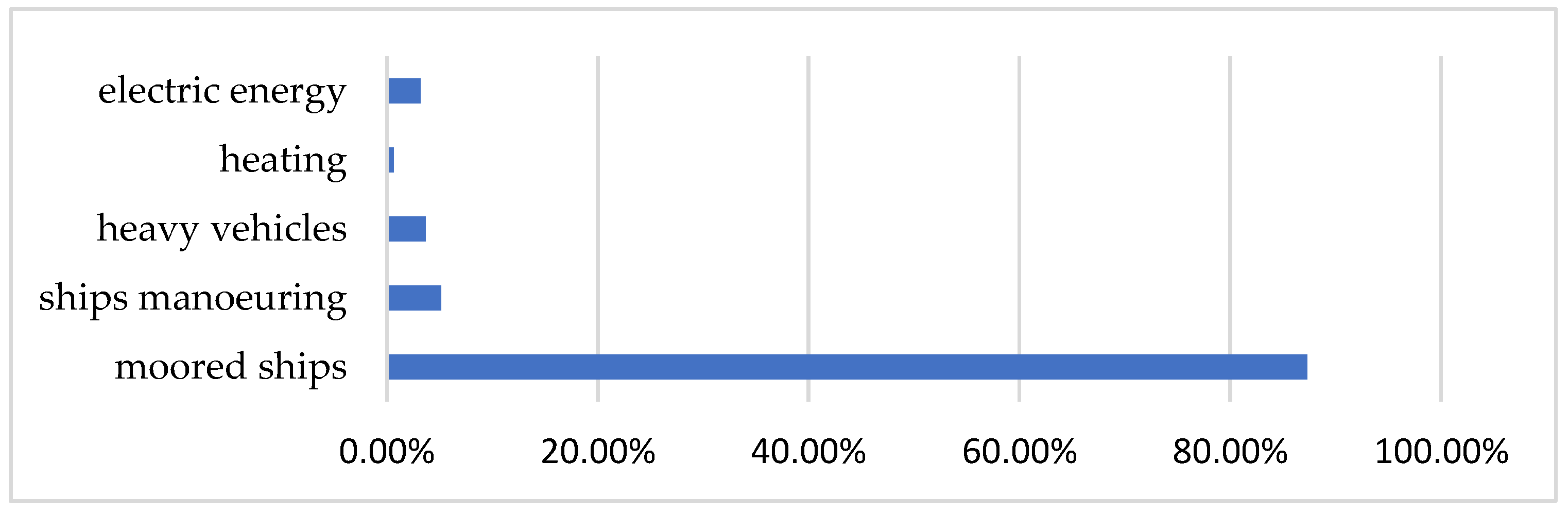
The Port Authority of Zadar launched the SUSPORT project at the opening of the port of Gaženica, which involved building a solar power plant, an electric vehicle charging station, and purchasing an electric car for official use. This initiative was undertaken to reduce CO2 emissions, with critical points of greenhouse gas emissions identified during the process. The assessment of territorial needs for the Port of Zadar, carried out within the SUSPORT project, which involved analysing the current situation regarding maritime and multimodal freight transport at the port, showed that the largest source of emissions was berthed ships, accounting for 87.3%, followed by ship manoeuvring (at 5.1%), heavy road vehicles (at 3.7%), and electricity consumption (at 3.2%) (see Chart 1).
Chart 1. The emission share within the Port of Zadar Authority area. Source: Author according to the Territorial Needs Assessment for the Port of Zadar, https://programming14-20.italy-croatia.eu/web/susport/docs-and-tools (accessed on 21 October 2025).
At the Port of Gaženica, the largest source of emissions is the international passenger terminal, while the smallest share is from heating due to the use of natural gas.
The port of Gaženica does not stand out from other ports in the Republic of Croatia regarding the highest emission levels. The SUSPORT data show that vessels at berth similarly contribute the most to port pollution at Rijeka (60.53%), Split (87.30% and 92.13%), Ploče (87.35%), and Dubrovnik (83.05%) [39].
The terminal building’s exterior lighting is also powered by electricity generated from solar panels. The final report of the SUSPORT project in 2023 estimated that the energy consumption is 1,145,571 kWh yearly, and overall GHG emissions from electricity consumption in the Port of Zadar is approx. 142 tons per year, expected PP production and vehicle usage ang GHG Reduction (See Table 6) [40].
Table 6. Estimated greenhouse gas savings from implementing the SUSPORT project.
The power plant began operating at the end of 2022, the same year an electric vehicle was purchased, which, considering the estimated reduction in greenhouse gases, means that a decrease of approximately 426 tons of greenhouse gas emissions has been achieved through the implementation of the SUSPORT project. By introducing solar energy and purchasing an electric official vehicle, the Port Authority of Zadar also contributes to the achievement of the Sustainable Development Goals; particularly contributing to the realisation of Goals 7 (Affordable and Clean Energy) and 9 (Industry, Innovation, and Infrastructure) in the case of the SUSPORT project. Solar energy is one of the fastest-growing renewable energy sources worldwide; however, in the transport sector, only 4% of energy is derived from renewable sources [41]. Despite efforts and progress in adopting renewable sources, greenhouse gas emissions continue to show an upward trend, especially CO2 emissions. Without the introduction of renewable energy sources, the situation would be significantly worse. According to The Sustainable Development Goals Report 2025, without the adoption of new technologies, the total increase in emissions worldwide since 2019 would have been three times higher. In pursuit of a green transition, the Port Authority of Zadar is implementing projects focused on digital platforms designed to reduce greenhouse gas emissions, as well as promoting and preserving cultural heritage.
Digital ecosystems can help ports to become sustainability hubs in the global supply chain by optimising operations, tracking emissions in real-time, and improving risk management practices.
Digital technologies offer port authorities transformative opportunities through the use of artificial intelligence and information and communication technologies. Mudronja G. et al. conducted research on innovations and technologies for sustainable port development, showing how real-time data can help seaports to address environmental issues, reduce operating costs, and increase traffic safety [42].
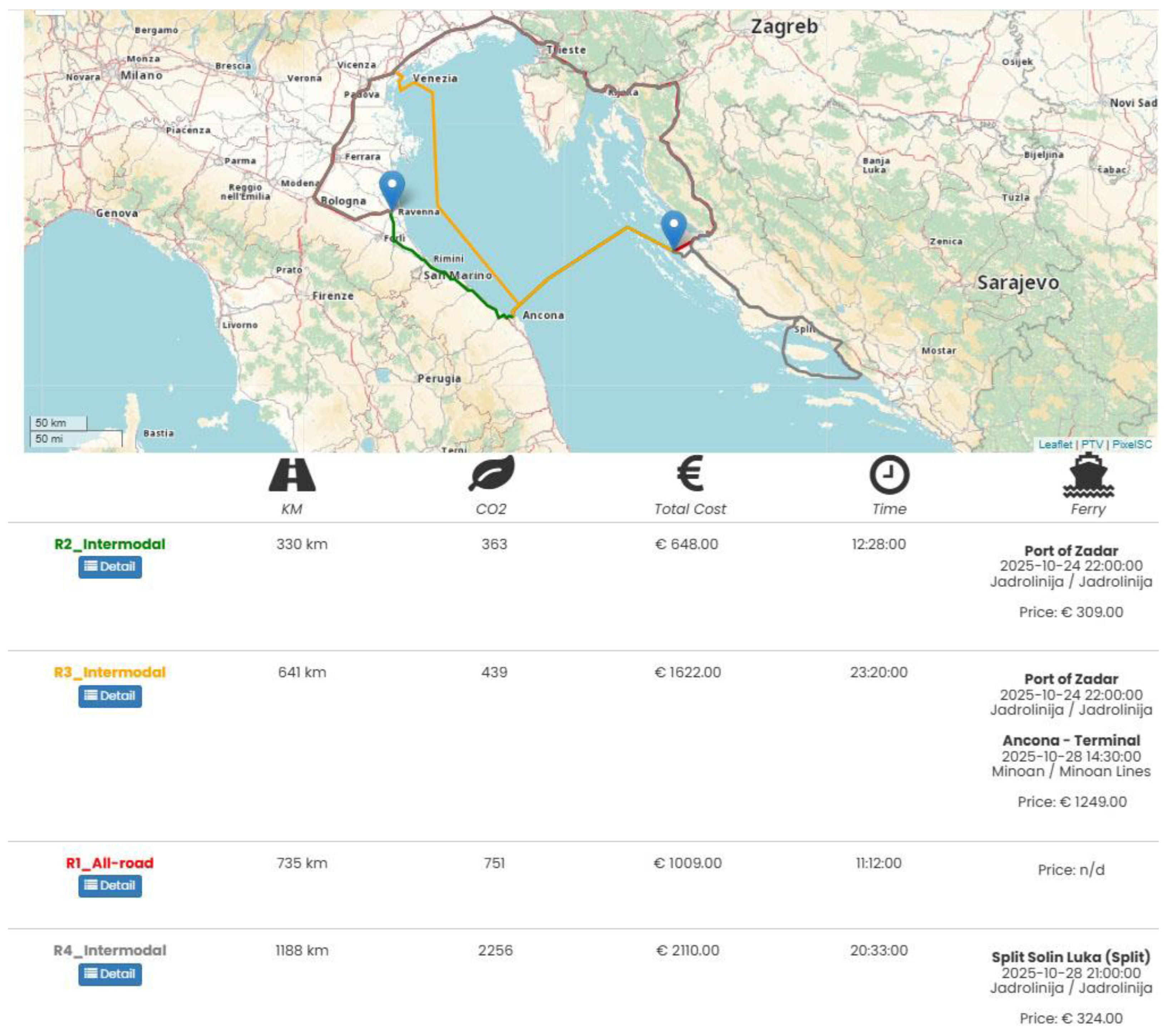
The TRANSPOGOOD digital platform [43] offers transport solutions by displaying the best prices for combined transport while reducing overall emissions. The system calculates the shortest route, the most cost-effective journey, and CO2 emissions based on information provided about departure and arrival points, vehicle details, and travel dates. Figure 1 presents data obtained from the TRANSPOGOOD platform for the transport of goods between Zadar and Ravenna (Italy), illustrating proposed routes, total costs, and CO2 emissions. Using intermodal transport could shorten the journey by 405 km, lower costs by 34%, and reduce the carbon footprint by 78%.
Figure 1. Route selection via the Transpogood platform. Source: https://transpogood.eu/hr-hr/routing (accessed on 21 October 2025).
The TRANSPOGOOD digital platform is significant because it provides users with the option to choose transport routes that can reduce costs and lower CO2 emissions, which is especially important when considering that fossil fuels remain dominant in the transport sector. It also displays the real-time positions of ships with their expected arrivals at ports. This platform simplifies route selection to determine the most advantageous option for the carrier, thereby facilitating decision-making in transport. Challenges in implementing the TRANSPOGOOD platform may include user acceptance, system integration to ensure accurate data on departures from ports, data needed for calculating transport costs, provision of IT infrastructure, and cybersecurity. As no data on the number of platform users are available at present, its impact could be generally monitored through the tracking of CO2 emission volumes. The 2024 Emissions Gap Report issued by the United Nations Environment Programme states that global CO2 emissions reached 57.1 GtCO2e tons, with the transport sector accounting for 15% [44]. Therefore, we can say that the use of this platform is related to Climate Action—the 13th Sustainable Development Goal. It employs digital technology to create simplified workflows, facilitate communication, and encourage innovation. The Port Authority of Zadar has also focused its activities on promoting new forms of sustainable tourism using digital technologies through the REMEMBER project, which aims to preserve the tangible and intangible cultural heritage of ports. This project resulted in the development of the ADRIJO platform [45], the goal of which is to develop sustainable tourism practices by enabling digital access to maritime cultural heritage. This aims to highlight the negative impacts of seasonality and address issues such as overtourism, poor city–port integration, and inadequate promotion of local traditions. Video walls have been set up in the Port Authority of Zadar building, where the content of the ADRIJO platform is displayed as a virtual museum; it has also been presented at tourist, cultural, and cruise fairs in Europe.
A digital wall displaying the ADRIJO platform content was installed at Rector’s Palace in July 2022, in a space that is free and accessible to all visitors during the working hours of the National Museum of Zadar throughout the year. A particularly large audience has the opportunity to enjoy exhibits about the historical port of Zadar during museum events such as the Museum Night, held annually on the last Friday of January. According to the National Museum of Zadar’s activity reports [46,47], the total number of museum visitors during 2023 and 2024 was 162,197, of which 60,625 were foreign visitors; in particular, there were 12,404 visitors during the Museum Night event. The REMEMBER project represents intensified efforts to preserve maritime, cultural, and traditional heritage as part of the 11th Sustainable Development Goal (Sustainable Cities and Communities).
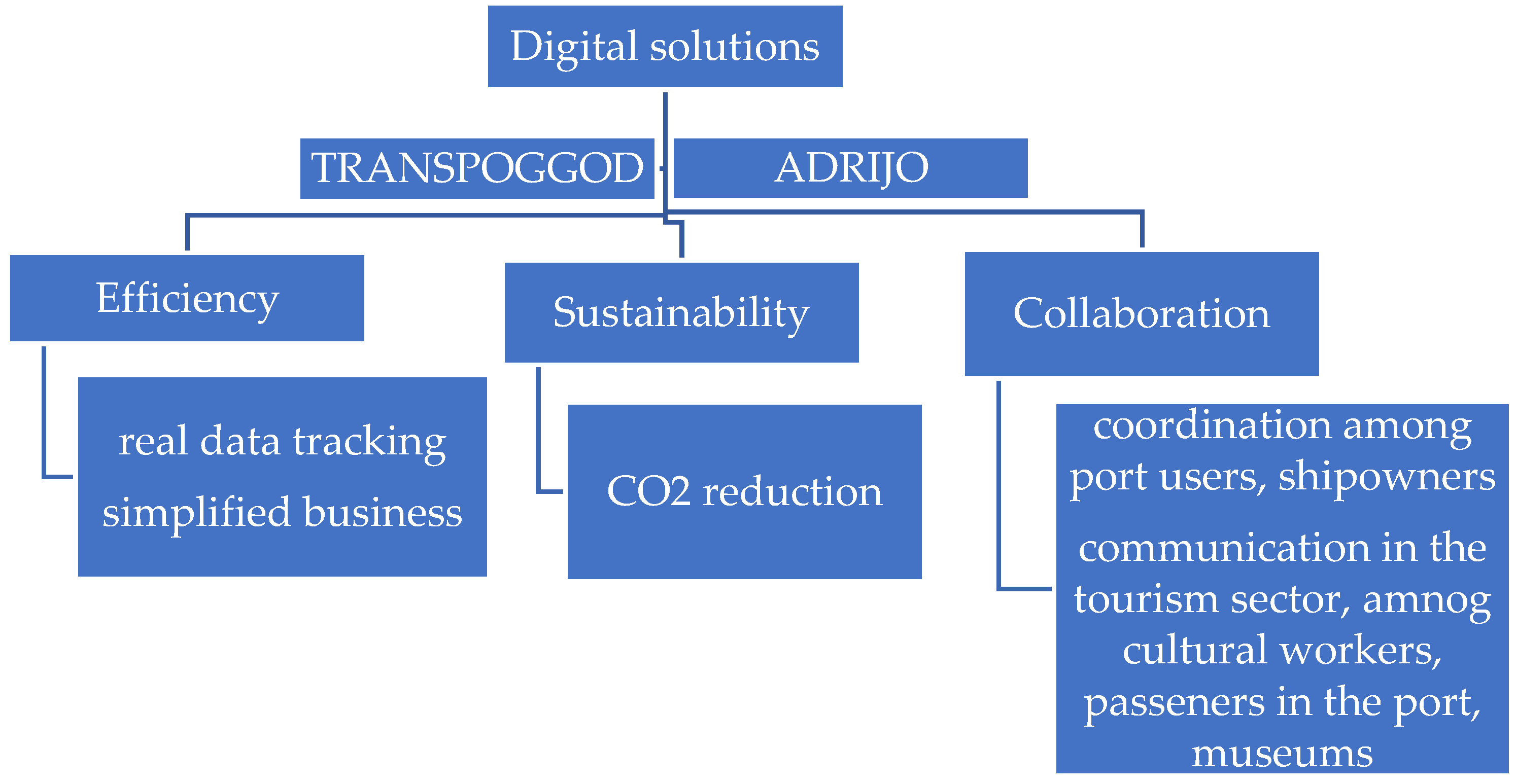
Digital solutions are focused on improving efficiency in the multimodal transport and culture and tourism sectors, which are some of the main economic sectors of Zadar County; in particular, these solutions are aimed at companies and individuals. Digital platforms enable interactions between multiple stakeholders, including port authorities and shipowners in the case of the TRANSPOGOOD platform, and museums, tourism and culture workers, potential visitors, and tourists in the case of the ADRIJO platform within the REMEMBER project. With the introduction of these digital solutions, the Port Authority of Zadar has achieved benefits that can be categorised into three groups: efficiency, sustainability, and collaboration (See Scheme 1).
Scheme 1. Advantages of the TranspoGood and Adrijo digital platforms. Source: Author’s own elaboration.
Increased vessel traffic at the port of Gaženica has caused a corresponding rise in ship waste, making its management a key responsibility of the port. Waste generation is a mounting problem that is characterised by resource mismanagement and harmful environmental impacts [48].
Waste collection in the port area of Gaženica is carried out by commercial companies that have been granted concessions for this activity. It is possible to dispose of various types of waste, including oily water, motor oil, oil adsorbents, emulsions, waste paints, waste varnishes, and other types of hazardous waste.
The rise in traffic at the port has also increased the risks of pollution in the port area, making it essential to focus on waste management as part of the green transition. The Port Authority of Zadar has internal regulations that govern the methods and procedures for managing accumulated ship waste and cargo residues from ships entering the area, protecting the marine environment from the discharge or dumping of ship waste, and preventing pollution of the land area. These regulations specify the permitted classes and quantities of hazardous and/or polluting substances that can be handled within the port area, along with designated handling locations [49,50].
The ECOWAVES project’s preliminary findings highlighted the need for improved land-based waste management, in addition to ship waste management, due to increased cruise ship activity and the higher number of passengers and vehicles using the port. An initial assessment showed negligible waste recycling infrastructure within the port, thus necessitating the project’s focus on constructing an onshore eco-island. The completion of the ECOWAVES project involved establishing an eco-island for selective waste separation (plastics, glass, metal, wood, oil containers, and rags), thus enabling recycling and promoting circular waste management within the port. In addition, the project established a mobile weather station equipped with sensors to monitor the levels of four harmful gases: carbon dioxide, nitrogen oxides, ozone, and sulphur dioxide. The establishment of the weather station has demonstrated the commitment of the Port Authority of Zadar to improving air quality, in addition to its efforts in reducing CO2 emissions.
With the aim of improving infrastructure for air quality analysis, the Port Authority of Zadar is implementing a project to install continuous air quality monitoring stations that will be deployed at two locations. The data collected will be used to make decisions on measures to reduce harmful emissions and actions to take in case of increased pollution levels. Although public access to environmental impact monitoring and weather station data is unavailable at present, the data from these stations will be made publicly available. Their installation will enable the more accurate assessment of environmental impacts, while the impacts on the local population will be reflected in reduced exposure to harmful substances. By investing in infrastructure for separate waste collection, the Port Authority of Zadar aims to contribute to preserving a clean urban environment. The implementation of the ECOWAVES project is linked to the 11th Sustainable Development Goal (Sustainable Cities and Communities), which aims to make cities and settlements inclusive, safe, resilient, and sustainable.

4.2. The Ongoing Green Transition Projects

A new cycle of projects for the green transition of the port of Gaženica began in 2024, for which the Port Authority has EUR 1,228,080.00 at its disposal from European funds (see Table 7). Two projects are upgrades of completed projects (Adrijoroutes and Transponext), while another two projects—MILEPORT and DIGITPORTS—are new green solutions for port operations. These projects are planned for completion in 2026.
Table 7. Projects in progress.
These forthcoming projects focus on digitalisation to reduce greenhouse gas emissions, foster sustainable tourism and blue growth, and further develop maritime cultural heritage within port communities.

5. Discussion

The Port Authority of Zadar aims to make Gaženica a green port, using European funding for related projects. Implemented in cross-border cooperation with the ports of the Republic of Italy, these projects aim to reduce greenhouse gas emissions, improve waste management, promote sustainable development, and digitalise port operations. The initial document of the SUSPORT project laid the foundations for reducing greenhouse gas emissions, as it identified the most significant sources of these emissions and provided recommendations on how they could be reduced. The installation of a solar power plant and the acquisition of an electric vehicle for official use have contributed to a 2000-ton average reduction in greenhouse gas emissions. It will take some time before the full effect of this project, which started in 2023, on greenhouse gas emissions is seen. A key challenge for future projects is reducing emissions from ships at berth, which have been identified as major sources of pollution. Glavinović R. et al. investigated cold-ironing in Croatian ports and revealed that high-voltage connections over 1 kV were available at only 40% of the ports; furthermore, connections under 1 kV were accessible at another 40% of the ports studied [51]. Excursion boats, smaller private boats, and leisure boats can currently connect to the shore power supply at the port of Gaženica. One solution is the use of cold-ironing technology, particularly for cruise ships that remain in port for extended periods. Cold ironing has been identified, in the Croatian Hydrogen Strategy 2050 [52], as a vital part of passenger port infrastructure. However, cold ironing has drawbacks such as very high initial investment costs and a lack of electrical capacity in the port, which may be major obstacles to its introduction at the Port of Gaženica. The Port of Gaženica currently has a substation capacity of 1.5 MW and, in the initial phase of the Interreg project, plans to finance a study on introducing electric power supply for ferries operating on routes to the islands, for which it is necessary to secure at least 1 MW of electrical energy—equivalent to the current consumption of the port. The Port Authority has estimated that to power ships on cruise routes, a minimum of 12 MW of electrical energy would need to be secured, which is not possible with the existing system. The Port Authority estimates the rental cost for just 1 kW at EUR 300, meaning that the rental of electricity alone would amount to approximately EUR 3,600,000.00, not including equipment and installation costs; ideally, part of this should come from green energy sources. State and local authorities should support the introduction of new technologies that promote decarbonisation and the adoption of green energy. While the roles of state authorities include implementing regulations and incentive programmes [53,54], local and port authorities are collaborating to create a more sustainable relationship between the port and the city [55]. Lower fees for ships using alternative fuels or possessing green certifications (such as the Green Award) have also been proposed, alongside higher tariffs for vessels reliant on fossil fuels. This approach would further demonstrate the commitment of the Port Authority of Zadar to green maritime technologies and align with other European ports that reward ships registered in the Environmental Ship Index (ESI), such as the Port of Bergen and Rotterdam [56,57].
The Port Authority has not conducted an analysis of the potential financial and environmental impacts of introducing reduced tariffs for ships with certain ecological certificates. According to Green Award data, there are currently a total of 229 ships with this certificate, most of which are oil tankers, LNG carriers, and chemical tankers. Therefore, it is not expected that introducing reduced tariffs would have a significant financial impact on the operations of the Port Authority of Zadar. However, by including these tariffs, the Port Authority would show its orientation towards ecological sustainability and additionally emphasise efforts through green transition policies.
Active participation from all stakeholders in eco-friendly actions is crucial for strengthening environmental awareness and responsible waste management within the maritime transport industry. Achieving this goal requires collaboration with local authorities, who should implement a plan that promotes sustainable and responsible tourism across all its segments.
To further the green transition, the Port Authority of Zadar might consider joining the EcoPorts initiative or obtaining the Green Award certification.
Additionally, the Port Authority of Zadar could make the data from its weather station available. Sustainability reporting is a global standard for large companies and is one of the sub-goals of the 12th Sustainable Development Goal (Responsible Consumption and Production).
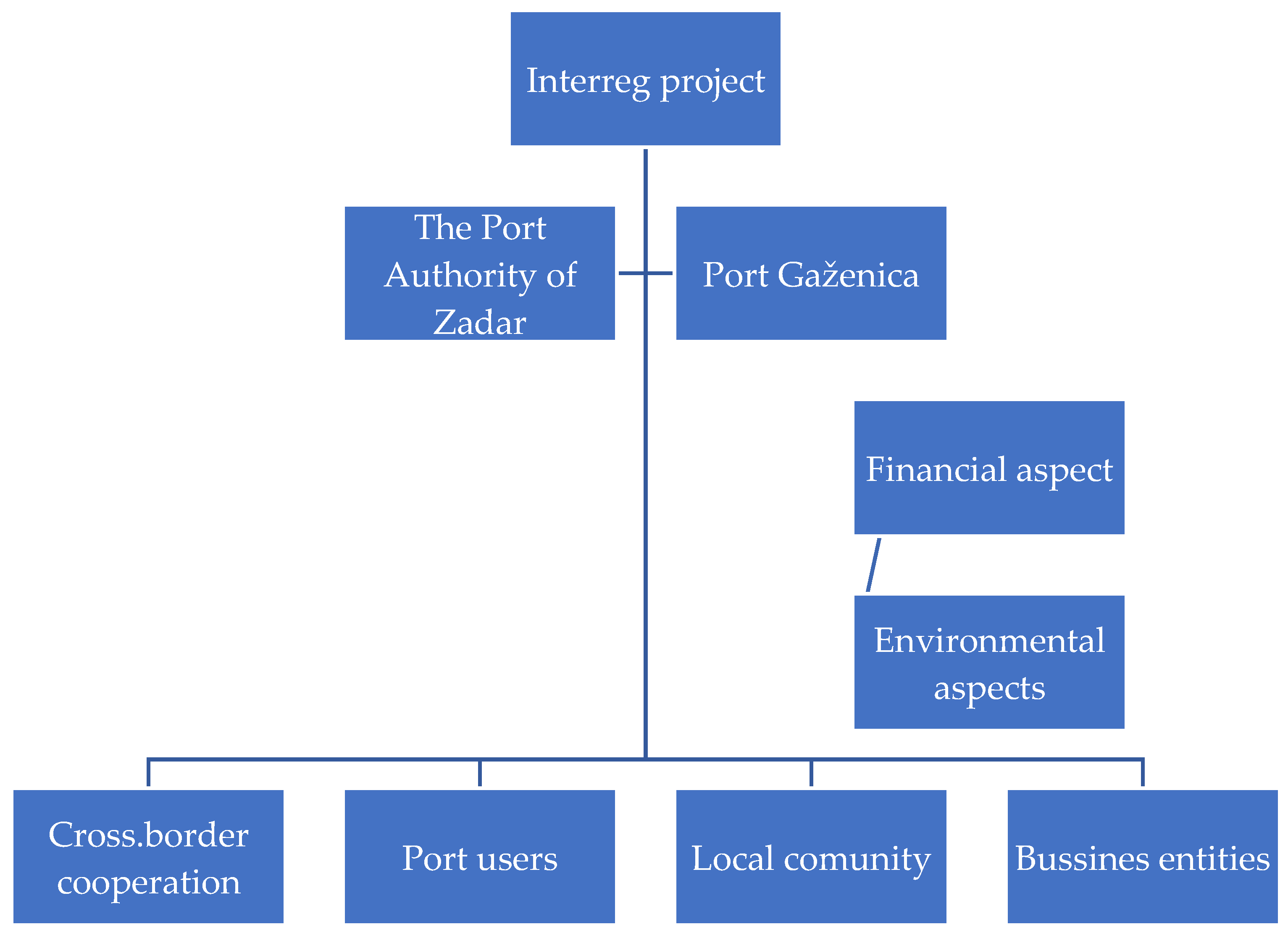
A schematic representation of the impacts of individual projects on specific stakeholders is provided below (See Scheme 2).
Scheme 2. Representation of the impact model of the INTERREG project on stakeholders. Source: Author’s own elaboration.
In schematic diagram no. 2, the connections between the INTERREG project and the Port Authority of Zadar, which is the project holder; participants; and partners in projects at the Port of Gaženica are evident. This project has both financial and environmental aspects and, through the implementation of this project, benefits will also be realised by cross-border cooperation institutions (other seaports connected to this project); port users (tourists and transit passengers); the local community (the City of Zadar and surrounding local government units), who will ultimately enjoy cleaner and higher-quality air; and business entities (port concessionaires, cruise companies, and lessees of business premises within the port itself). We can conclude that the Port Authority of Zadar has solved part of the problems regarding the port’s sustainable management; however, many challenges remain to achieve the status of a green port, the greatest of which is addressing the issue of emissions from ships at berth.

6. Conclusions

The cruise industry’s continued growth and increasing number of port calls create significant environmental threats, demanding the development and implementation of new sustainable technologies. This is particularly relevant to reducing greenhouse gas emissions and noise levels within the passenger terminal of the port of Gaženica. Given that the port’s fees and dues lack provisions to promote alternative fuel sources, it has been suggested that new, reduced tariffs be considered; for example, linked to a ship’s environmental index or Green Award certification. In contrast, vessels employing high-emission fuels should face increased charges. Planning green port activities requires a complete document, which can build upon the initial SUSPORT project documentation. This encompasses a SWOT analysis of the port areas with the highest greenhouse gas emissions, as well as ECOWAVES, and includes a waste management analysis. Making data from the port’s meteorological station available would contribute to the transparency of the Port Authority’s operations and open up opportunities for the local community to monitor the results and impact of the port area on the local community.
The majority of green projects undertaken by the Port Authority of Zadar (i.e., SUSPORT, TRANSPOGOOD, TRANSPONEXT, MILEPORT, DIGITPORT) relate to achieving the three environmental priorities of European ports for 2024, specifically air quality. Meanwhile, two projects relate to priority nine, “Relationship with the local community” (REMEMBER, ADRIJOROUTES), and one to priority seven, “garbage/port waste” (ECOWAVES). The Port Authority of Zadar is actively working towards achieving environmental sustainability and adopting green technologies. However, there are still areas such as mooring ships, ship manoeuvring, and heavy vehicles where additional efforts are needed to reduce greenhouse gas emissions, as well as the area of waste management, and detailed assessments of the risks posed by climate change for the port area due to the expected rise in sea levels in the Zadar area should be carried out. The approach of the Port Authority—that is, financing green projects through European Union programmes—is a sustainable model for mid-sized ports. The key message is that a phased, project-based approach funded by EU programmes is a viable model for mid-sized ports to begin their green transition; however, tackling the largest emission sources requires significant further investment and bold policy measures such as those relating to cold-ironing and green fee schemes. The limitations of this research lie in the analysis of green transition projects at only one port, i.e., the Port of Gaženica in Zadar, as well as a partially theoretical review from the perspective of green transition-related challenges in ports. As suggestions for future research, the authors propose the following guidelines: expanding upon the current study to include all ports in the Republic of Croatia and potentially comparing them with ports in other EU countries, as well as conducting a systematic literature review. Additionally, it is necessary to carry out a detailed Life Cycle Assessment (LCA) or cost–benefit analysis (CBA) to provide informative support for future investment decisions; in particular, a detailed LCA and/or CBA of the proposed cold-ironing infrastructure for Gaženica would be a vital next step to inform investment decisions in the near future.

Author Contributions

Conceptualisation, L.P.; methodology, L.G.; software, Š.V. and M.Š. validation, L.G.; formal analysis, L.P. and Š.V.; investigation, L.P.; resources, Š.V. and M.Š.; writing—original draft preparation, L.P.; writing—review and editing, L.P.; visualisation, Š.V. and M.Š.; supervision L.G. and Š.V. All authors have read and agreed to the published version of the manuscript.

Funding

This research received no external funding.

Institutional Review Board Statement

Not applicable.

Conflicts of Interest

Author Marko Šundov was employed by the company Stano-Uprava d.o.o., The remaining authors declare that the research was conducted in the absence of any commercial or financial relationships that could be construed as a potential conflict of interest.

References

  1. Promet u Morskim Lukama u Četvrtom Tromjesečju 2024. Available online: https://podaci.dzs.hr/2024/hr/77294 (accessed on 20 June 2025).
  2. Lin, C.-Y.; Dai, G.-L.; Wang, S.; Fu, X.-M. The Evolution of Green Port Research: A Knowledge Mapping Analysis. Sustainability 2022, 14, 11857. [Google Scholar] [CrossRef]
  3. European Sea Ports Organisation Environmental Prioriteis. Available online: https://www.espo.be/media/Top%2010%20Environmental%20Priorities%202024.pdf (accessed on 25 June 2025).
  4. Poletan Jugović, T.; Agatić, A.; Gračan, D.; Šekularac-Ivošević, S. Sustainable activities in Croatian marinas—Towards the “green port” concept. Pomorstvo 2022, 36, 318–327. [Google Scholar] [CrossRef]
  5. Puig, M.; Azarkamanda, S.; Wooldridge, C.; Selén, V.; Darbra, R.M. Insights on the environmental management system of the European port sector. Sci. Total Environ. 2022, 806, 150550. [Google Scholar] [CrossRef]
  6. Badurina, P.; Cukrov, M.; Dundović, Č. Contribution to the implementation of “Green Port” concept in Croatian seaports. Pomorstvo 2017, 31, 10–17. [Google Scholar] [CrossRef]
  7. Review of Maritime Transport 2023. Available online: https://unctad.org/publication/review-maritime-transport-2023 (accessed on 1 June 2025).
  8. EU Transport in Figures: Statistical Pocketbook 2024. Available online: https://transport.ec.europa.eu/facts-funding/studies-data/eu-transport-figures-statistical-pocketbook_en (accessed on 30 May 2025).
  9. Review of Maritime Transport 2024. Available online: https://unctad.org/publication/review-maritime-transport-2024 (accessed on 1 June 2025).
  10. Peričin, L.J.; Grbić, L. The influence of the Port of Gaženica on the development of maritime infrastructure of Zadar County. Transp. Res. Procedia 2025, 83, 219–227. [Google Scholar] [CrossRef]
  11. Izvješće o Inventaru Stakleničkih Plinova na Području Republike Hrvatske za Razdoblje 1990–2022. (NIR 2024). Available online: https://www.haop.hr/sites/default/files/uploads/dokumenti/012_klima/dostava_podataka/Izvjesca/Hrvatski%20NIR%202024.pdf (accessed on 23 June 2025).
  12. Tehnički Pregled, Statistika. Available online: https://cvh.hr/gradani/tehnicki-pregled/statistika/ (accessed on 23 June 2025).
  13. Lam, J.S.L.; Li, K.X. Green Port Marketing for Sustainable Growth and Development. Transp. Policy 2019, 84, 73–81. [Google Scholar] [CrossRef]
  14. Hossain, T.; Adams, M.; Walker, T.R. Role of sustainability in global seaports. Ocean. Coast. Manag. 2021, 202, 105435. [Google Scholar] [CrossRef]
  15. Oloruntob, O.; Mokhtar, K.; Gohari, A.; Asif, S.; Chuah, L.F. Sustainable transition towards greener and cleaner seaborne shipping industry: Challenges and opportunities. Clean. Eng. Technol. 2023, 13, 100628. [Google Scholar] [CrossRef]
  16. D’Agostino, Z.A. Green strategy for ports. Bull. Geophys. Oceanogr. 2021, 62 (Suppl. S3), 3–162. [Google Scholar]
  17. Valioniene, E.; Zuperkiene, E.; Placiene, B. Acceleration of Green Transitions on the Base of Port Organizational Ecosystem’s Resilience Enhancement: A Socio-Technological Approach. Appl. Sci. 2024, 14, 9948. [Google Scholar] [CrossRef]
  18. Karagkouni, K.; Boile, M. Classification of Green Practices Implemented in Ports: The Application of Green Technologies, Tools, and Strategies. J. Mar. Sci. Eng. 2024, 12, 571. [Google Scholar] [CrossRef]
  19. Ismail, M.A.; Mahmoud, M.; Anas, A. Comparative Analysis of Port Governance Models for Green Energy Transition. 2024. Available online: https://www.researchgate.net/publication/380174660_Comparative_Analysis_of_Port_Governance_Models_For_Green_Energy_Transition (accessed on 6 June 2025).
  20. Acciaro, M.; Vanelslander, T.; Sys, C.; Ferrari, C.; Roumboutsos, A.; Giuliano, G.; Lam, J.S.L.; Kapros, S. Environmental sustainability in seaports: A framework for successful innovation. Marit. Policy Manag. 2014, 41, 480–500. [Google Scholar] [CrossRef]
  21. Moros-Daza, A.; Moros-Marcillo, A.; Pacheco-Bustos, C.A. Greening seaports: Evaluating impacts and policies for renewable energy systems. Renew. Sustain. Energy Rev. 2025, 213, 115475. [Google Scholar] [CrossRef]
  22. Braidotti, L.; Mazzarino, M. A Study on Ports’ Emissions in the Adriatic Sea. In Computational Science and Its Applications—ICCSA 2022 Workshops, Proceedings of the ICCSA 2022, Malaga, Spain, 4–7 July 2022; Springer: Berlin/Heidelberg, Germany, 2022. [Google Scholar] [CrossRef]
  23. Knežević, V.; Pavin, Z.; Čulin, J. Estimating Shipping Emissions—A Case Study for Cargo Port of Zadar, Croatia. TransNav Int. J. Mar. Navig. Saf. Sea Transp. 2021, 15, 3. [Google Scholar] [CrossRef]
  24. Knežević, V.; Radonja, R.; Dundović, Č. Emission Inventory of Marine Traffic for the Port of Zadar. Pomorstvo 2018, 32, 239–244. [Google Scholar] [CrossRef]
  25. Slišković, M.; Ukić Boljat, H.; Jelaska, I.; Jelić Mrčelić, G. Review of Generated Waste from Cruisers: Dubrovnik, Split, and Zadar Port Case Studies. Resources 2018, 7, 72. [Google Scholar] [CrossRef]
  26. Jugović, A.; Gračan, D.; Barkiđija Sotošek, M. Environmental Requirements for Passenger Terminal Development (Case Study of Zadar County. Trans. Marit. Sci. 2023, 12, 1–10. [Google Scholar] [CrossRef]
  27. Nguyen, H.P.; Nguyen, P.Q.; Nguyen, T.P. Green Port Strategies in Developed Coastal Countries as Useful Lessons for the Path of Sustainable Development: A case study in Vietnam. Int. J. Renew. Energy Dev. 2022, 11, 950–962. [Google Scholar] [CrossRef]
  28. Tezcan, Ö.; Kan, E. Meta-synthesis of Research on Green Port Performance Evaluation Criteria. Sci. J. Marit. Res. 2023, 37, 227–239. [Google Scholar] [CrossRef]
  29. Susan Taljaard, S.; Weerts, S.P.; Audouin, M. Advancing sustainable port development in the Western Indian Ocean region, Current Opinion in Environmental. Curr. Opin. Environ. Sustain. 2024, 71, 101489. [Google Scholar] [CrossRef]
  30. Bostooughli, A.; Saraceni, A. Transferability of green port strategies: A Delphi study with European ports. J. Int. Marit. Saf. Environ. Aff. Shipp. 2025, 9, 2454764. [Google Scholar] [CrossRef]
  31. Liu, Y.; Chao, Y.; Xie, S.; Wang, G.; Wang, L.; Xue, C. Green innovation in ports: Drivers, domains, and challenges. Front. Mar. Sci. 2025, 12, 1664611. [Google Scholar] [CrossRef]
  32. Tombak, M.-L.; Aiken, D.M.; Toomeoja, E.; Tapaninen, U.P. Advancing Port Sustainability in the Baltic Sea Region: A Comparative Analysis Using the SMCC Framework. Sustainability 2025, 17, 6764. [Google Scholar] [CrossRef]
  33. Su, Z.; Liu, Y.; Gao, Y.; Park, K.-S.; Su, M. Critical Success Factors for Green Port Transformation Using Digital Technology. J. Mar. Sci. Eng. 2024, 12, 2128. [Google Scholar] [CrossRef]
  34. Ferretti, M.; La Ragione, G.; Porcaro, L.; Risitano, M.; Turi, A. Green Practices for Reducing Emissions in Port Services: Evidence from a Pilot Study. Sustainability 2025, 17, 5316. [Google Scholar] [CrossRef]
  35. Issa, M.; Rizk, P.; Boulon, L.; Rezkallah, M.; Rizk, R.; Ilinca, A. Smart, Connected, and Sustainable: The Transformation of Maritime Ports Through Electrification, IoT, 5G, and Green Energy. Sustainability 2025, 17, 7568. [Google Scholar] [CrossRef]
  36. Statistika Prometa. Available online: www.port-authority-zadar.hr (accessed on 31 May 2025).
  37. Territorial Needs Assessment for the Port of Zadar. Available online: https://programming14-20.italy-croatia.eu/web/susport/docs-and-tools (accessed on 8 June 2025).
  38. Inal, O.B.; Dere, C. An Approach to Green Ports in Terms of Low-Carbon Energy and Sustainability. Int. J. Environ. Geoinform. (IJEGEO) 2024, 11, 43–49. [Google Scholar] [CrossRef]
  39. Cross-Border Study on Port Environmental Sustainability and Energy Efficiency Deliverable Number D.3.2.14. Available online: https://programming14-20.italy-croatia.eu/documents/2142767/2777734/D.3.2.14_Cross-border_study_final.pdf/ba34a97a-6274-cfa1-d538-9886fce420f8?t=1692701343267 (accessed on 5 June 2025).
  40. D4.2.9. Final PA Report Zadar. Available online: https://programming14-20.italy-croatia.eu/web/susport/docs-and-tools (accessed on 5 June 2025).
  41. The Sustainable Development Goals Report 2025. Available online: https://unstats.un.org/sdgs/report/2025/ (accessed on 11 October 2025).
  42. Mudronja, G.; Aksentijević, D.; Jugović, A. An Overview of Innovations and Technology for Sustainable Development of Seaports. 2022. Available online: https://www.researchgate.net/publication/361762029_An_overview_of_innovations_and_technology_for_sustainable_development_of_seaports (accessed on 20 June 2025).
  43. Interreg Italy-Croatia Transpogood, Routes. Available online: https://transpogood.eu/hr-hr/index (accessed on 24 June 2025).
  44. United Nations Environment Programme (2024). Emissions Gap Report 2024. Available online: https://www.unep.org/emissions-gap-report-2024 (accessed on 1 October 2025).
  45. Adrijo. Available online: https://www.adrijo.eu/hr/ (accessed on 24 May 2025).
  46. Izvješće o Radu Narodnog Muzeja 2024. Available online: https://nmz.hr/hr/o-muzeju/dokumenti/ (accessed on 11 October 2025).
  47. Izvješće o Radu Narodnog Muzeja 2023. Available online: https://nmz.hr/hr/o-muzeju/dokumenti/ (accessed on 11 October 2025).
  48. Vega-Muñoz, A.; Salazar-Sepulveda, G.; Espinosa-Cristia, J.F.; Sanhueza-Vergara, J. How to Measure Environmental Performance in Ports. Sustainability 2021, 13, 4035. [Google Scholar] [CrossRef]
  49. Lučka Uprava Zadar, Briga za Okoliš i Klimu. Available online: https://www.port-authority-zadar.hr/wp-content/uploads/2020/01/PRAVILNIK-O-ODRE%C4%90IVANJU-KLASE-I-KOLI%C4%8CINE-OPASNIH-TVARI-LUZ-2018.pdf (accessed on 6 June 2025).
  50. Lučka Uprava Zadar, Briga za Okoliš i Klimu. Available online: https://www.port-authority-zadar.hr/wp-content/uploads/2020/01/PLAN-GOSPODARENJA-OTPADOM-LUZ-2014.pdf (accessed on 6 June 2025).
  51. Glavinović, R.; Krčum, M.; Vukić, L.; Karin, I. Cold Ironing Implementation Overview in European Ports—Case Study—Croatian Ports. Sustainability 2023, 15, 8472. [Google Scholar] [CrossRef]
  52. Official Gazette. Croatian Strategy for Hydrogen by 2050. Available online: https://narodne-novine.nn.hr/clanci/sluzbeni/2022_03_40_492.html (accessed on 10 June 2025).
  53. Le, S.T.; Nguyen, T.-H. The Development of Green Ports in Emerging Nations: A Case Study of Vietnam. Sustainability 2023, 15, 13502. [Google Scholar] [CrossRef]
  54. Jugović, A.; Sirotić, M.; Peronja, I. Sustainable Development of Port Cities from the Perspective of Transition Management. Trans. Marit. Sci. 2021, 10, 466–476. [Google Scholar] [CrossRef]
  55. Official Journal of the European Union, L 2024/831. Available online: https://eur-lex.europa.eu/legal-content/HR/ALL/?uri=CELEX:32024D0831 (accessed on 7 June 2025).
  56. Prices for Bergen Harbor Services. Available online: https://www.bergenhavn.no/en/prices (accessed on 7 June 2025).
  57. Port of Rotterdam, Green Award Certificate. Available online: https://www.portofrotterdam.com/en/sea-shipping/seaport-dues/green-award-discount (accessed on 7 June 2025).
Disclaimer/Publisher’s Note: The statements, opinions and data contained in all publications are solely those of the individual author(s) and contributor(s) and not of MDPI and/or the editor(s). MDPI and/or the editor(s) disclaim responsibility for any injury to people or property resulting from any ideas, methods, instructions or products referred to in the content.

Article Metrics

Citations

Article Access Statistics

Multiple requests from the same IP address are counted as one view.