Article

Multi-Species Probiotics as Sustainable Strategy to Alleviate Polyamide Microplastic-Induced Stress in Nile Tilapia


1
Laboratory of Fish Ecophysiology, Department of Fisheries Management, Bangladesh Agricultural University, Mymensingh 2202, Bangladesh
2
Department of Fish Biology and Biotechnology, Chattogram Veterinary and Animal Sciences University, Chattogram 4225, Bangladesh
3
Policy and Economics, Fisheries and Oceans Canada, 501 University Crescent, Winnipeg, MB R3T 2N6, Canada
*
Author to whom correspondence should be addressed.
These authors contributed equally to this work.
Sustainability 2025, 17(20), 9085; https://doi.org/10.3390/su17209085
Submission received: 12 September 2025 / Revised: 2 October 2025 / Accepted: 9 October 2025 / Published: 14 October 2025
(This article belongs to the Section Pollution Prevention, Mitigation and Sustainability)

Abstract

Microplastic particles exhibit multiple toxic effects, disrupting physiological processes in fish, such as Nile tilapia (Oreochromis niloticus), a widely cultured species. Probiotics could help counter polyamide microplastic toxicity while promoting fish health and sustainable aquaculture. A 6-week experiment was conducted on Nile tilapia included four treatments: (1) without polyamide microplastics and/or probiotics (control) and (2) with polyamide microplastics (PA-MP), (3) probiotics (Pr.), or (4) polyamide microplastics and probiotics (PA-MP + Pr.). The outcomes demonstrate that exposure to polyamide microplastics caused poorer growth performance and survivability along with reduced hemoglobin, and upregulated glucose levels, which were restored by probiotics application. The prevalence of erythrocytic abnormalities increased in the polyamide microplastic group but probiotics supplementation reduced the anomalies. Fish exposed to polyamide microplastics exhibited a lower frequency of goblet cells than other groups. Moreover, expression of antioxidant genes (SOD and CAT) and immune genes (IL-1β, IFN-γ, and TNF-α) was higher during polyamide microplastic exposure, which was downregulated in the polyamide microplastics along with probiotics group. These findings suggest that multi-species probiotics relieve microplastic-induced stress and hindrance of growth in Nile tilapia, which will help sustainable aquaculture practices safeguard fish health and maintain aquaculture productivity by alleviating adverse impacts of microplastic pollution in waterbodies.

1. Introduction

Microplastic particles from primary and secondary plastic debris are an emerging threat in the global environment including aquatic habitats [1,2]. The widespread presence of microplastic particles and their continuous increase in varied waterbodies [3,4], from freshwater to marine systems, poses significant ecological risks through ingestion, surface adherence, or entanglement [5,6]. Fish consume microplastics directly by mistaking them for food or indirectly by eating prey that has already ingested microplastics [7,8]. Research shows that plastic accumulation threatens fish, sharks, turtles, seabirds, otters, and dolphins, causing death through entanglement or ingestion [9,10]. Polyamide (commonly known as nylon) is one of the microplastic extensively utilized in fishing gear, ropes, car parts, and other products that are denser than water molecules [11,12]. In Thailand, polyamide is the most common microplastic found in marine fish guts, occurring widely regardless of their foraging strategy [13]. Since aquatic species readily consume polyamide microplastics in water, the bioaccumulation of polyamide microplastics can result in serious harm to fish [14,15]. Therefore, exploring ways to mitigate polyamide microplastic-induced stress and health issues is essential for sustainable fish production.
Exposure to microplastics has detrimental effects on functional traits of fish, including feeding, behavior, and growth [4,16,17]. High microplastic concentrations can induce anorexia and lethargy, highlighting nutritional and physiological stress [18]. Moreover, high microplastic exposure increases metabolic demands, alters glucose metabolism, and damages gills, reducing hemoglobin and oxygen transport capacity in fish [16,19]. In addition, microplastic exposure suppresses immune responses, increasing disease vulnerability [19,20], impaired nutrient absorption [21,22,23], and causes histopathological damage, particularly in intestines. Thus, strategies to attenuate polyamide microplastic-induced alterations in fish growth, hematobiochemical properties, and intestinal structure require detailed investigation to ensure better health with sustainable aquaculture production.
Microplastics cause oxidative stress in fish, leading to cellular damage and altered antioxidant defense, like expression of superoxide dismutase (SOD) and catalase (CAT) [24,25]. In crayfish, microplastic exposure dramatically changed oxidative stress markers and enzyme activities, including CAT and SOD [26]. Moreover, exposure to microplastics can damage intestinal integrity, allowing harmful substances and bacteria to leak into the bloodstream, potentially altering blood composition [27]. Ingested microplastics can trigger inflammation in fish, prompting an immune response with upregulated pro-inflammatory cytokines like interleukin beta, tumor necrosis factor alpha, and interferon gamma (IL-1β, TNF-α, and IFN-γ) to recruit immune cells [28,29]. However, previous research has reported alterations in the expression levels of the TNF-α, IL-1β, IFN-γ, SOD, and CAT genes across various fish species under stress or infection [30,31]. Hence, analyzing antioxidant and immune response-related gene expression can offer deeper insights into how polyamide microplastic exposure alters stress and immune responses in fish.
Probiotics are beneficial microorganisms that supply vital nutrients and enzymes while boosting immunity, preventing infections, and improving stress tolerance [32,33,34]. Probiotics provide multiple advantages, including pathogen inhibition, strengthening enzymatic activity, promoting bioremediation, and improving digestive capability of fish [35]. Multi-species probiotics offer an eco-friendly approach to enhancing the health and productivity of aquatic organisms [33,36]. Prior studies reported that multi-species probiotics mitigated chromium-induced toxicity in Rohu (Labeo rohita) [37] and Nile tilapia (Oreochromis niloticus) [38] and attenuated salinity and high temperature-induced growth retardation in striped catfish (Pangasianodon hypophthalmus) [39] and Nile tilapia [31]. However, information regarding the role of multi-species probiotics against polyamide microplastic-induced physiological anomalies is still limited. While microplastic exposure suppresses immune responses, increasing disease vulnerability [19,20], and causes histopathological damage to the intestine [21,40], multi-species probiotics can specifically enhance intestinal health and non-specific immune responses, providing a defense against stress [36,41]. Therefore, the role of multi-species probiotics in reducing polyamide microplastic-induced physiological anomalies like growth retardation, intestinal abnormalities, and stress in fish needs thorough investigation.
Nile tilapia, being a key species in global aquaculture, is now cultured in over 150 countries [42]. It has become the second most cultured fish after carp worldwide [43], with an estimated productivity of 7 million tons in 2024 [44]. Nile tilapia is often referred to as the ‘aquatic chicken’ of Asia [45] and now accounts for more than 4.7 million tons of aquaculture production in the region [46]. China alone produces about 30% of tilapia globally [47], while the Asia-Pacific region, including China, contributes nearly 70% of the world’s total tilapia production [48]. Globally, tilapia has been recognized as a promising species in aquaculture because of its prominent farming practice with intensive stocking density, ability to thrive under diverse climatic conditions, and higher consumer preference on the market [49,50].
However, there is limited research on the role of multi-species probiotics on growth, hematobiochemical parameters, intestinal condition, and stress responses in Nile tilapia. Eventually, research findings will provide significant contributions to develop eco-friendly strategies for mitigating the harmful impact of polyamide microplastics and upgrading fish well-being to promote sustainable aquaculture practices worldwide.

2. Materials and Methodology

2.1. Sources of Polyamide Microplastics

Unused brush bristles were used in the experiment as a source of polyamide microplastics [51]. The brush bristles were reduced to minimal length using a digital trimmer (BT1230, Philips, China). The brush bristles mostly consisted of polyamide 6 and polyamide 66, which were examined by using ATR-FTIR [14]. Polyamides are widely used in fishing nets, ropes, and aquaculture equipment, making them an emerging pollutant in both freshwater and marine ecosystems [8,11]. Various sizes of particles of brush were filtered through an inox steel sieve (mesh size < 2 mm); then the previously sieved particles were filtered through an additional inox steel sieve with a mesh size of less than 300 µm to achieve the desired size range between 300 μm and 2 mm. This particle size was chosen based on sizes found in both pelagic and demersal fish [13]. The processed polyamide microplastics were arranged on clean glass slides prior to the experiment and observed under a calibrated microscope provided with a camera (model MU1003, AmScope, Austria) at 4× zoom. The experimental slides were captured, and the length of the polyamides was measured to ensure representative groups. The polyamide microplastics that had been sieved were then weighed, and before being used, each group was equally mixed. To avoid cross contamination, an appropriate incision and separation were conducted by a ductless cupboard.

2.2. Experimental Design

Robust, physiologically fit, and healthy 240 monosex tilapia (O. niloticus) fry, with average weight of 3.63 ± 0.13 g and size of 10.50 ± 0.50 cm, were obtained from Niharika Fisheries and Hatcheries, Mymensingh, Bangladesh. Collected fry were acclimatized and the experiment was executed in the Fish Ecophysiology laboratory, Bangladesh Agricultural University, Bangladesh. Water quality parameters like pH, temperature, and salinity were investigated on a daily basis and we kept the fry’s regular feeding trial at 5% of their body weight. For the experiment, each aquarium (75 × 45 × 45 cm3) was filled with 100 L of underground water. A total of 10 mg/L polyamide microplastics was chosen according to previous research [14,52]. The research fish (n = 20) were treated without polyamide microplastics and/or probiotics (control) or with polyamide microplastics (PA-MP, 10 mg/L), probiotics (Pr., 1 mL/L), or polyamide microplastics along with probiotics (PA-MP, 10 mg/L + Pr. 1 mL/L), with three replications each for 42 days (6 weeks). Locally produced liquid multi-species probiotics (Bacillus subtilis, Lactobacillus plantarum, and L. buchneri) were incorporated into culturing water at 1 mL/L [53]. To ensure even distribution of probiotics in aquaria, the solution was gently mixed into each tank, and continuous aeration was maintained throughout the experimental period to facilitate proper dispersal of microbial cells. The probiotics dosage was selected based on previous studies, where successful application of multi-species probiotics improved growth, gut morphology and stress tolerance [38,53,54]. Throughout the experimental period, the required amounts of probiotics were incorporated into the glass aquarium on consecutive experimental periods. To maintain good water quality, feces and unconsumed feed were cleaned out every morning. Throughout the study phase, persistent aeration was ensured for each aquarium to maintain suitable dissolved oxygen levels. Water quality parameters including temperature (℃), ammonia concentration (mg/L), and pH were monitored regularly to maintain the specified ranges. For measuring temperature (°C), a mercury thermometer was used. pH was measured using a portable pH meter. In the case of calculating ammonia (mg/L), an API (Freshwater Master Test Kit, Aquarium Pharmaceuticals, Inc., PA, USA) ammonia test kit was used. Experiments were conducted in agreement with the set of principles instituted by Animal and Ethical Committee, Bangladesh Agricultural University, Mymensingh, Bangladesh.

2.3. Sample Collection

After raising the fish for 42 days, clove oil (5 mg/L) was used to anesthetize fish before sampling. The weight and length were then measured individually. Various kinds of growth and nutrient utilization metrics, comprising WG (weight gain), SGR (specific growth rate), FCR (feed conversion ratio), and FCE (feed conversion efficiency), were analyzed. To determine growth parameters, feed utilization, and survivability, formulas mentioned in the previous studies were used [31].
Since microplastics cause structural and functional damage to the gastrointestinal tract, which is also the primary site for nutrient absorption [14,51], six fish from each experimental group were surgically dissected from the abdominal side and cut open meticulously to separate the intestine from the digestive system for histopathological analysis. Fixation of the tissues was performed using Bouin’s solution for 24 h. Following the fixation processes, tissue samples were immersed in 70% alcohol for preservation.
The liver plays a crucial role in metabolism and detoxification, making it highly sensitive to oxidative stress and xenobiotics [55]. It regulates antioxidant defenses and inflammatory responses. Thus, liver samples were collected in RNAlater solution (Ambion, Austin, TX, USA), and kept at 4 °C for 24 h before being transported to the Molecular Biology and Biotechnology Laboratory of Chattogram Veterinary and Animal Sciences University, Bangladesh, on the next day and kept for further analysis at −80 °C.

2.4. Hemato-Biochemical Parameters and Intestinal Histopathology

Since physiological changes are immediately reflected by blood parameters like Hb and glucose level, and erythrocytic abnormalities, blood parameters are widely used to evaluate stress in fish. Thus, six fish from each treatment were first anesthetized and then sacrificed to collect blood from caudal region. Considering the measurement of Hb (hemoglobin) and Glu (glucose), blood samples were immediately tested with a digital Easymate® GHb dual function monitoring system (Easymate®, Taiwan) using test strips. The abnormalities in cells and nuclei of erythrocytes were determined [56,57] immediate post-collection of blood and was kept in clean glass slides and left to air dry for 10 min. The smear was fixed with ethanol for 10 min, then stained with 5% Giemsa solution for 10 min, and subsequently washed with distilled water. Erythrocytic nuclear and cellular abnormalities were determined by sampling six (6) fish from each replication across treatments and control groups [56,57]. After drying overnight, abnormalities were then observed using 40× objective lens of digital light microscope and images were taken using a digital microscope camera.
For each fish, six slides were analyzed, and 2000 cells were counted on each slide. For histopathological analysis, fixed tissue samples were subjected to a graded series of alcohols as part of the dehydration process, and dehydrated tissues were arranged for wax infiltration and placed on a cool plate. At 5 µm thickness, the sample blocks were trimmed with a microtome machine, deposited on a glass slide, and dried at room temperature. To remove the paraffin wax from the samples, the slides were immersed in xylene for 5 min and then passed through a series of decreasing alcohol concentrations, then stained using Hematoxylin–Eosin solution. An electron microscope was employed to observe morphological changes in the intestine. Histopathological alterations of the intestine caused by various treatments were captured by using a camera attached to a photomicroscope.

2.5. RNA Extraction, cDNA Preparation, and Real Time PCR Assays

Following the manufacturer’s guidelines, TRIzol™ reagent (Invitrogen™, ThermoFisher, Waltham, MA, USA) was used to isolate total RNA from the liver. The RNA pellet was dissolved in 20 µL DEPC water and stored for further analysis. A nanodrop spectrophotometer (Implen, Germany) was used to check RNA quality and integrity. Then, a cDNA synthesis kit (AddScript cDNA Synthesis Kit, Republic of Korea) was used to synthesize the first strand of cDNA utilizing total RNAs (500−1000 ng) following the manufacturer’s instructions. Reverse transcription reaction temperature profiles were 25 °C for 10 min, 50 °C for 60 min, and 80 °C for 5 min. Next, a fast time RT-PCR system (7500, Applied Biosystem, CA, USA) was used for quantitative RT-PCR. Primers for measuring IL-1β, TNF-α, IFN-γ, SOD, and CAT were used from earlier research. A 10 µL PCR reaction had 1 µL cDNA, 0.4 µL of both forward and reverse primer, 3.2 µL nuclease free water, and 5 µL SYBER premix (TaKaRa Bio, Japan). The amplification process continued for 10 min at 95 °C, followed by 40 cycles of 30 s at 95 °C, 30 s at 60 °C, and 1 min at 72 °C. The product’s melting curve analysis was used to confirm that each cDNA amplification was accurate. To standardize the expression level, 2−ΔΔCT method was applied, and as a reference gene β-actin was used. Each qPCR experiment was conducted twice.

2.6. Data Analysis

The values of all measured attributes are represented as means ± SD. The normal distribution and consistency of the obtained data were examined for all data categories. ANOVA (one-way analysis of variance) was applied to evaluate statistical differences among treatments using the Predictive Analysis Software (PASW Statistics 18.0, Chicago, IL, USA), with a p-value < 0.05. PCA (principal component analysis) was performed to assess the overall role of probiotics on the observed gene expressions and goblet cells. A biplot was visualized with standardized scores of first two PC (principal components), contributing the highest variations.

3. Results

3.1. Growth, Survivability, and Feed Conversion Ratio

The growth parameters for Nile tilapia, IBW (initial body weight, g), FBW (final body weight, g), WG (weight gain, g), SGR, (specific growth rate, %/ day), FCR (feed conversion ratio), and survivability (%) are presented in Table 1. No statistical differences (p > 0.05) were observed between the control and MP + Pr. groups. However, significant differences (p < 0.05) were found between the MP and Pr. groups. The FBW, SGR, and WG were significantly lower (p < 0.05) in the MP group, while the Pr. group had statistically higher (p < 0.05) FBW, SGR, and WG in comparison with other groups. In terms of survivability, no mortality was detected in the control and Pr. groups, while the MP group recorded a mortality rate of 4%, and the MP + Pr. group recorded 2% mortality. These results indicate the poorer growth performance and survivability of the MP group, while the use of probiotics in the MP + Pr. group helped to mitigate these adverse effects with increased growth performance and survivability comparable to the control.

3.2. Alterations in Blood Glucose and Hemoglobin

The MP group of fish exhibited statistically downregulated (p < 0.05) Hb (hemoglobin, g/dL) compared to the control group (Figure 1A). However, there were no statistical differences (p > 0.05) observed among the control, Pr., and MP+ Pr. groups. Interestingly, in the MP + Pr. group, the use of probiotics appeared to attenuate the negative effect of microplastics on hemoglobin levels, with no notable distinction observed compared to the control group. Moving on to Figure 1B, the fish exposed to microplastics had notably higher blood glucose levels as opposed to the control group. However, an insignificant distinction was found between the Pr. and MP + Pr. groups. The use of probiotics in the MP + Pr. group mitigated the negative impact of microplastics regarding blood glucose levels, bringing them to levels comparable to the control group. These results indicate that microplastic exposure lowered hemoglobin levels while increasing glucose levels, which was attenuated by probiotics in the MP + Pr. group by restoring Hb and Glu values close to those of the control group.

3.3. Abnormalities in Erythrocytic Cells and Nuclei

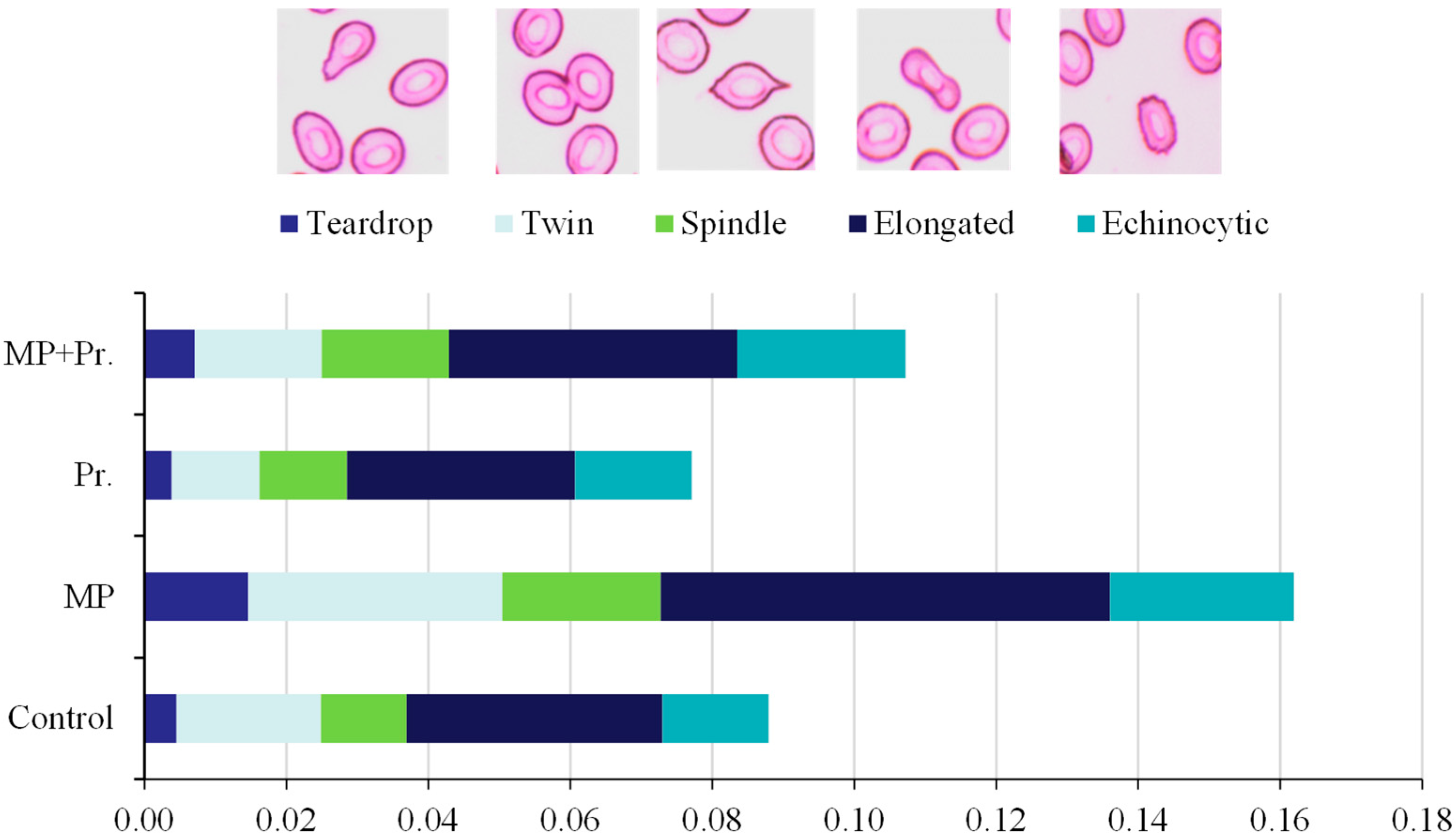
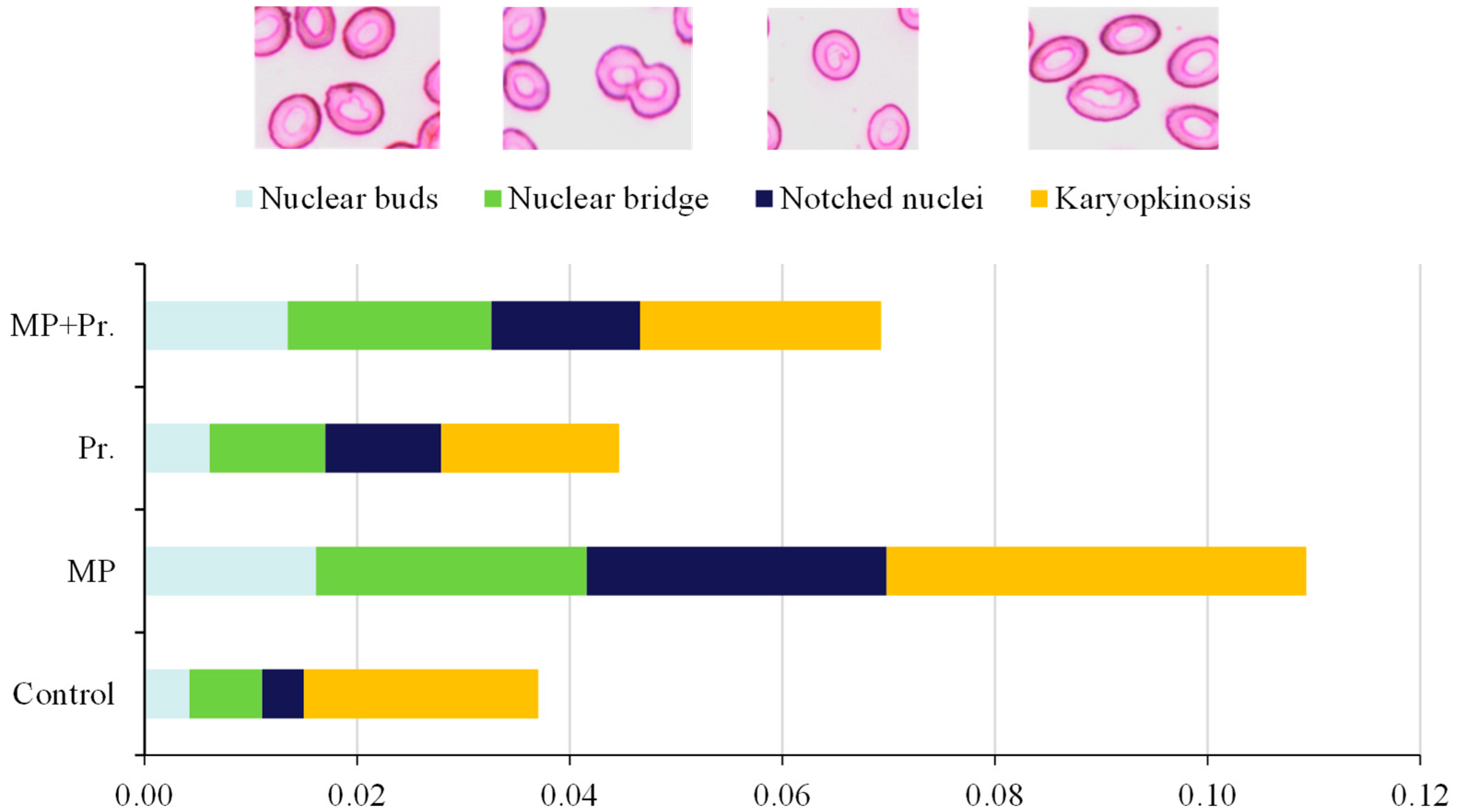
Higher frequencies of abnormalities in erythrocyte cells (spindle, teardrop, twin, fusion, elongated, and echinocytic) were observed in fish exposed to microplastics (MP group) than in the control group, whereas there were no noteworthy variations between the control and Pr. groups (Figure 2). Apparently, when fish were exposed to MP + Pr., the adverse effects of microplastics on erythrocytic cellular abnormalities were significantly (p < 0.05) reduced. Moreover, the frequency of abnormalities in nuclei (nuclear bridges, notched nuclei, nuclear buds, and karyokinesis) in blood was elevated in the MP group of fish compared to the control group, while differences were observed between the control and Pr. groups (Figure 3). Interestingly, fish in the MP + Pr. group significantly counteracted the adverse effects of microplastics on the nuclei of erythrocytes.

3.4. Histopathological Alterations in the Gut

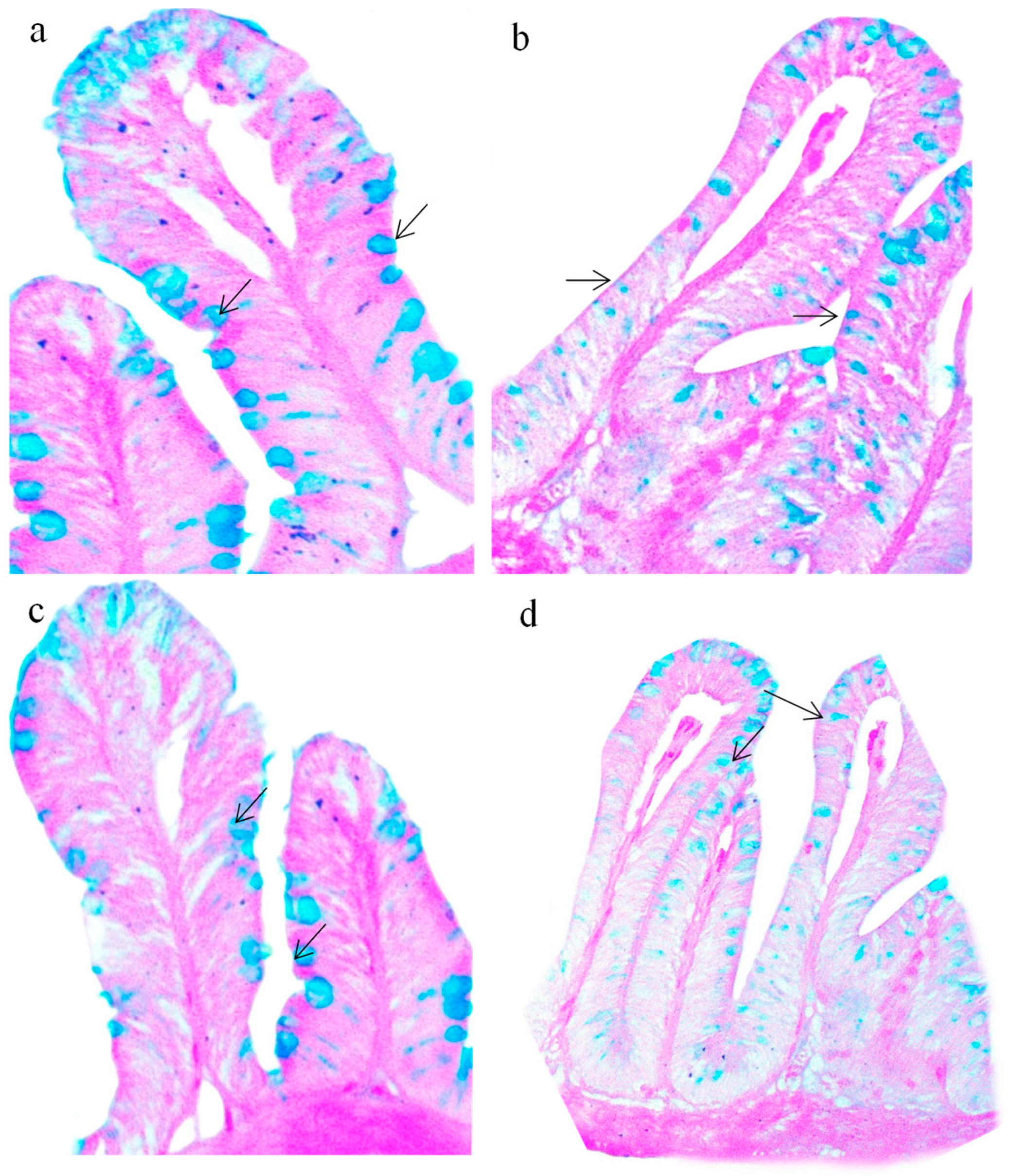
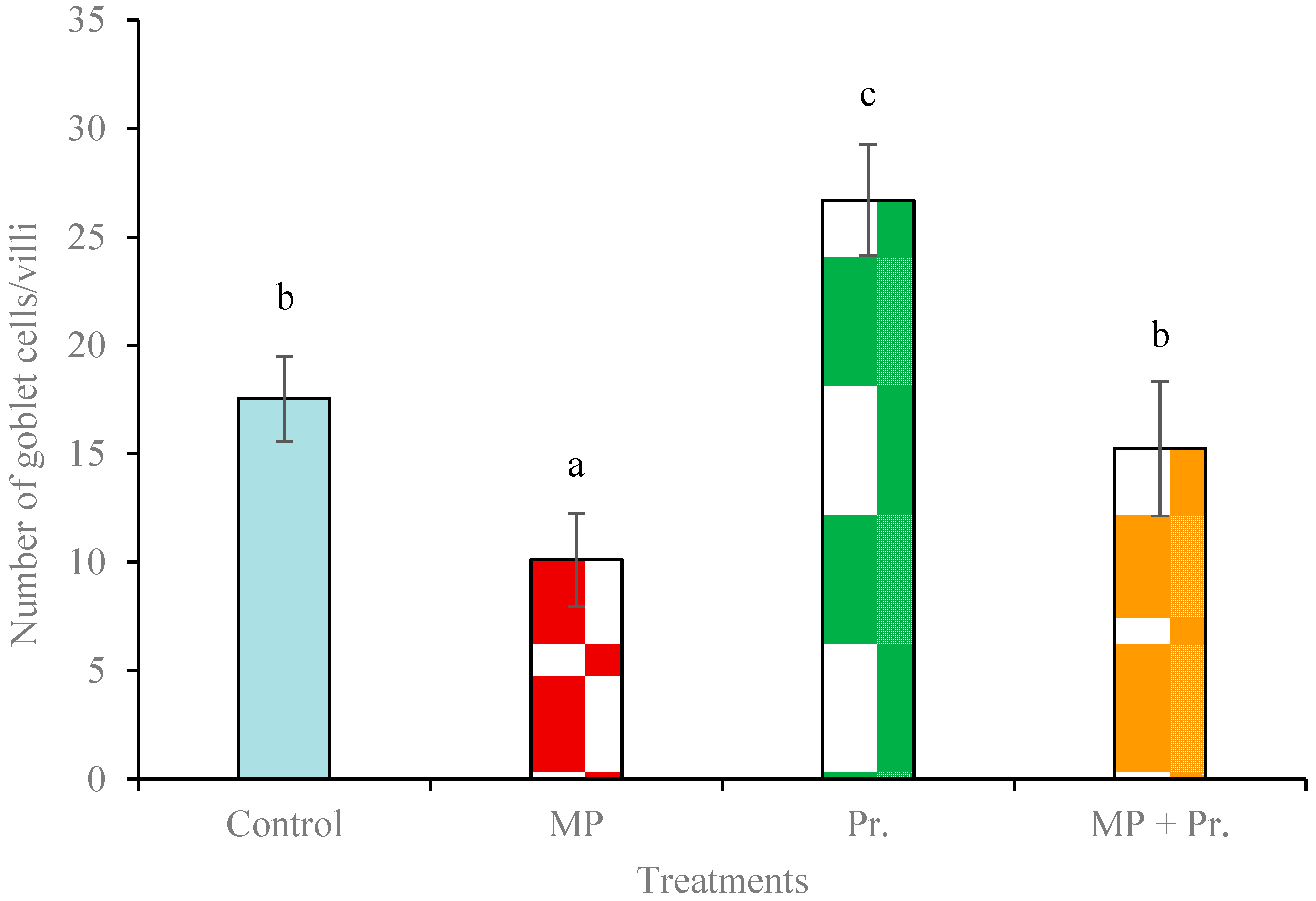
During the study, intestinal samples were collected, and histological observations were assembled regarding the villi structure and the presence of goblet cells (Figure 4) under different treatments, which is illustrated in Figure 5. The goblet cell prevalence significantly (p < 0.05) increased in the fish reared with probiotics as compared to other groups. Moreover, no remarkable differences in the numbers of goblet cells were found between the control and MP + Pr. groups. The goblet cell frequency was prominently lower in the MP group as opposed to the other groups, although the administration of probiotics in the MP + Pr. group raised the number of goblet cells.

3.5. Expression of SOD and CAT Genes in Liver

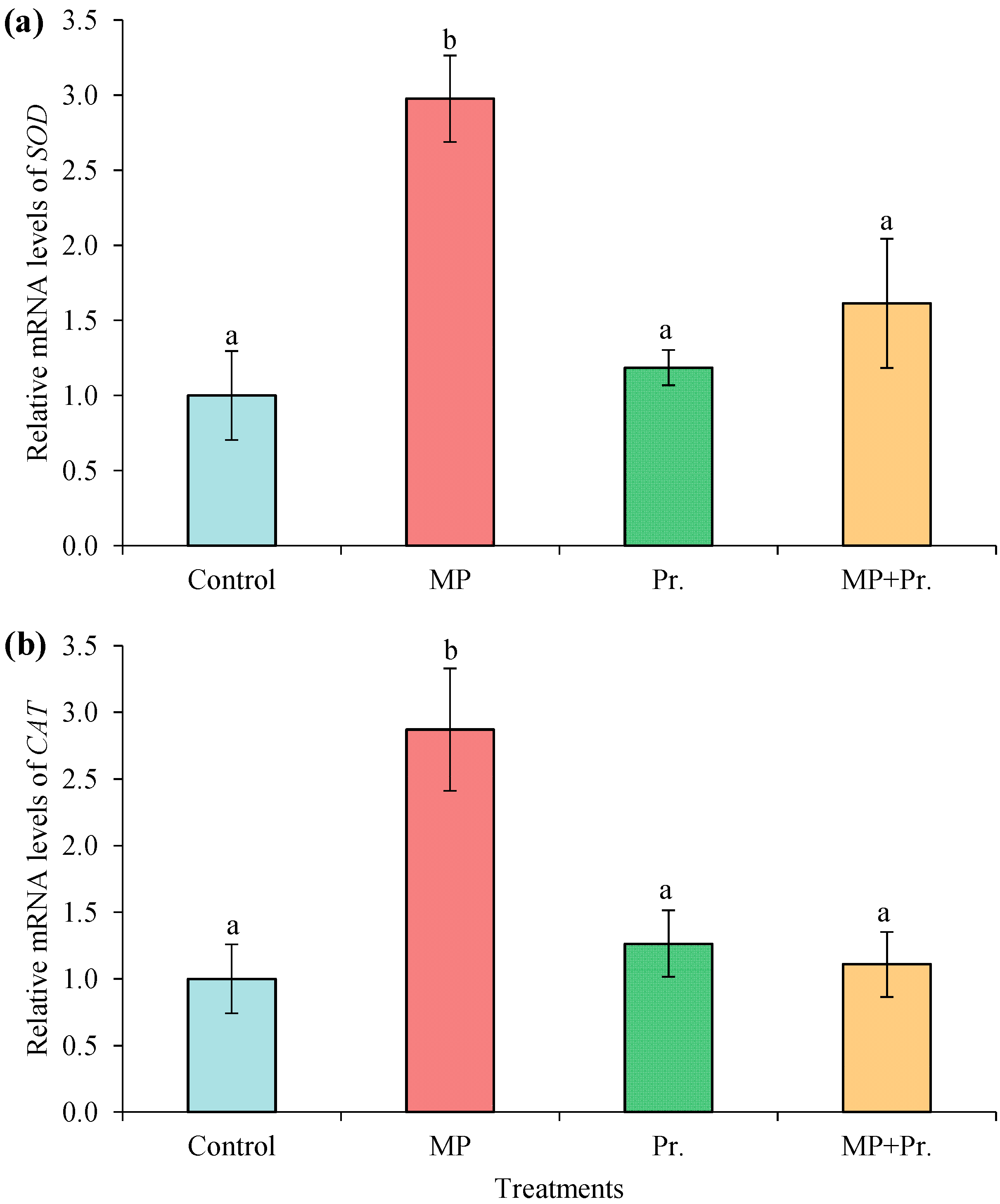
In Figure 6a,b, the relative mRNA levels of SOD and CAT were notably higher in the MP as opposed to control group. However, nonsignificant differences were found between the Pr. group and the control group, as well as the MP + Pr. group and the control group, indicating that probiotics helped to reduce the elevated SOD and CAT expression caused by microplastics. The results demonstrated that microplastic exposure significantly increased SOD and CAT expression, which was normalized after probiotics application in the MP + Pr. group, making them comparable to the control group.

3.6. Expressions of TNF-α, IFN-γ, and IL-1β in Liver

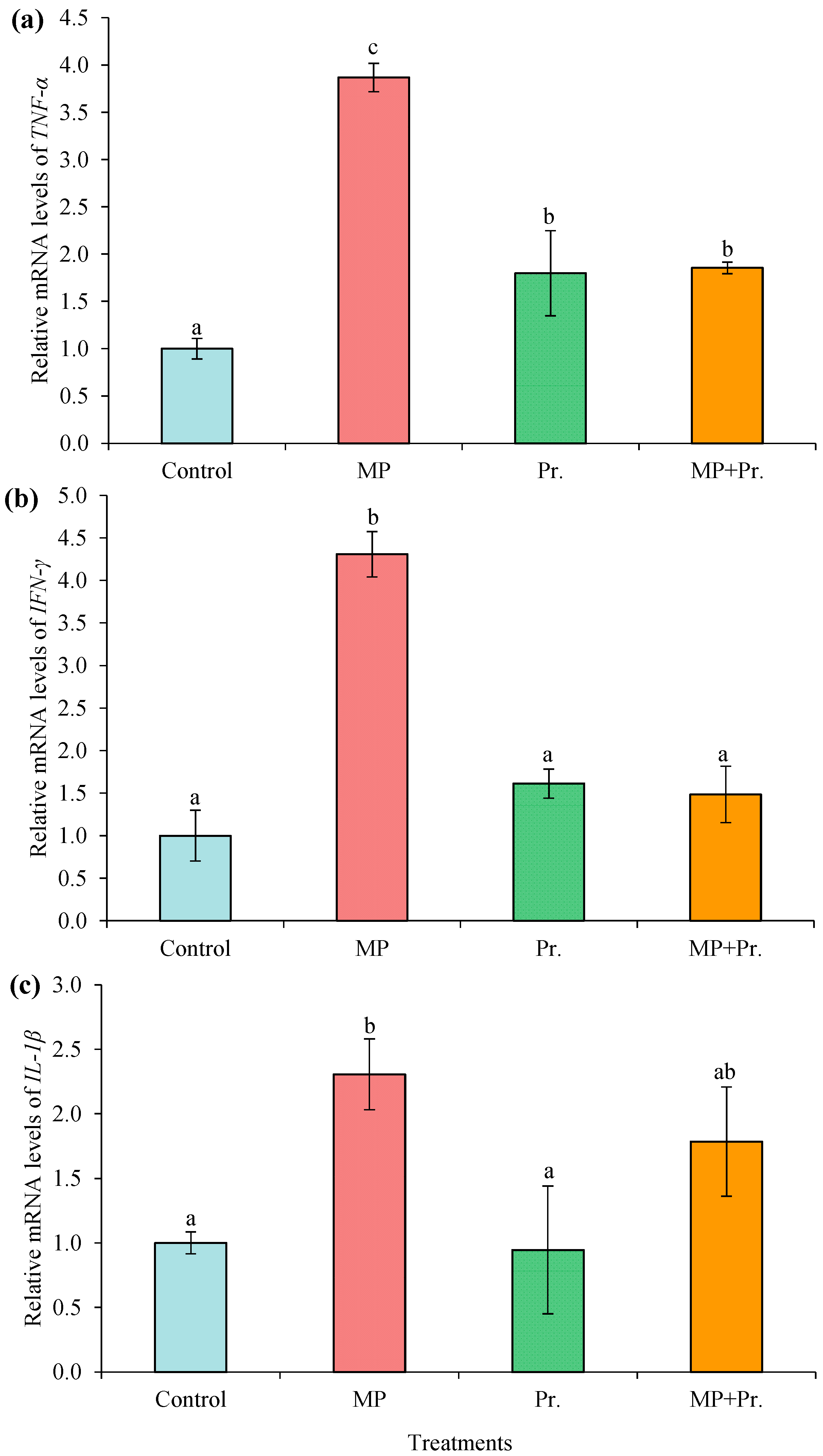
In Figure 7a, the relative mRNA level of TNF-α was found to differ significantly (p < 0.05) in the MP treatment compared to control. Interestingly, in the MP + Pr. group, the elevated mRNA level of TNF-α due to microplastic exposure was reduced by probiotics. Moving on to Figure 7b, the relative mRNA of IFN-γ was profoundly upregulated in the MP group, but no significant differences were observed between the Pr. and MP + Pr. groups as opposed to the control. This reveals that probiotics helped mitigate the increase in IFN-γ expression caused by microplastics. Finally, in Figure 7c, the mRNA level of IL-1β in the MP group was statistically higher (p < 0.05) than in the control group. However, nonsignificant differences were found between the Pr. and control groups. Surprisingly, the MP + Pr. group also did not differ (p < 0.05) statistically from the control group. These findings indicate that probiotics helped to normalize IL-1β gene expression in fish exposed to microplastics, which aligned the levels of expression closer to those of the control group. The findings indicate that increased expression of inflammatory genes during microplastic exposure was counteracted in the MP + Pr. group when microplastics were combined with probiotics, reducing gene expression levels to be more like the control group.

3.7. Water Quality Parameters

During the experimental period, a water quality assessment (temperature, pH, and NH3) was performed (Table 2). There were nonsignificant differences in temperature and pH during the exposure days. However, higher NH3 was observed in the microplastic and probiotic exposure group during the experiment.

3.8. Principal Component Analysis

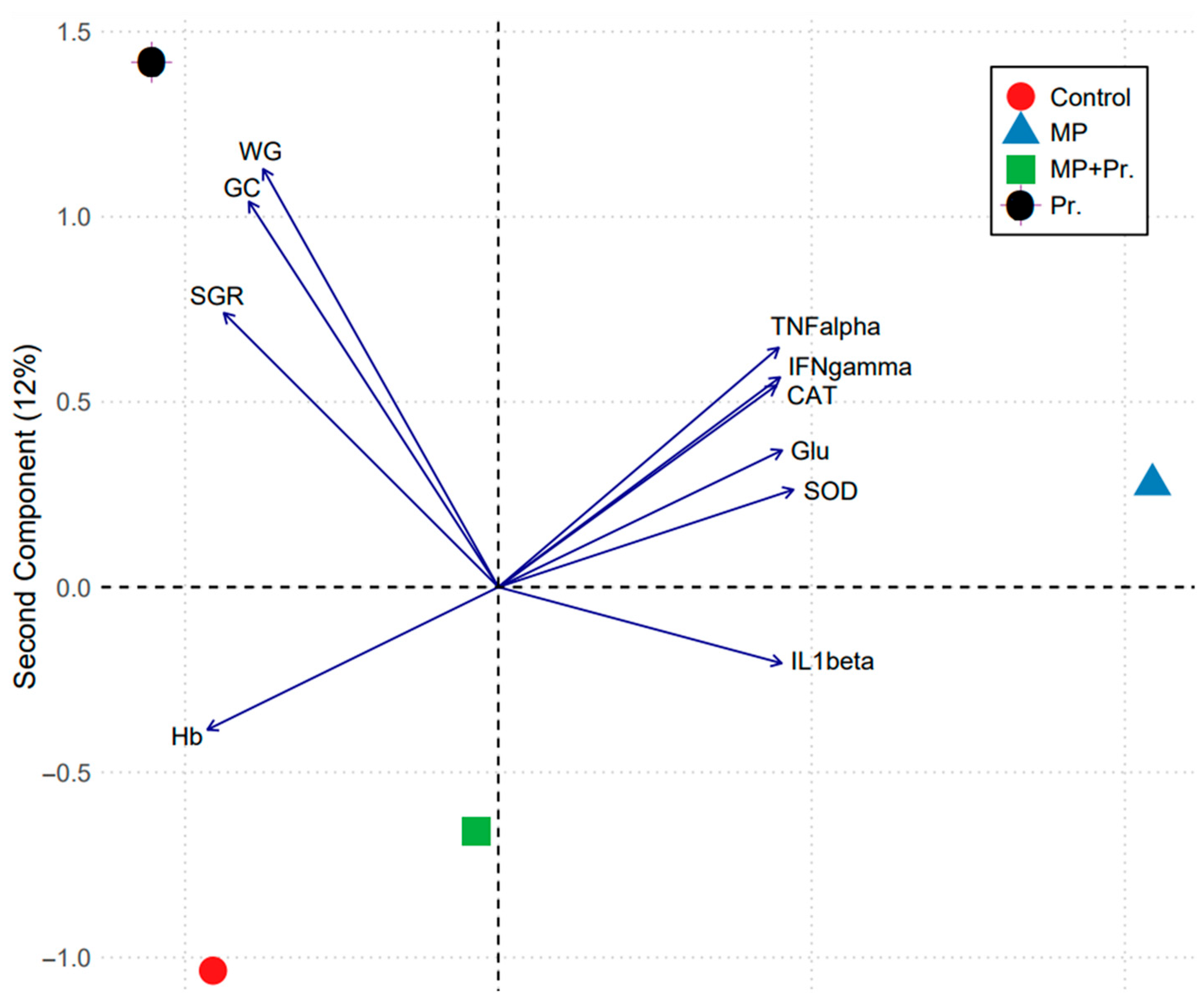
The PCA biplot in Figure 8 shows the relationship among the treatments and variables according to their contributions to two PCs (principal components). PC1 explains 85.6% of the total variation, capturing the majority of the variability, and PC2 accounts for 12%, reflecting smaller yet relevant patterns. Together, PC1 and PC2 account for 97.6% of the total variance, offering a clear representation of the dataset’s structure, with PC1 showing strong positive loadings for Glu (0.33), CAT (0.32), IL-1β (0.32), SOD (0.34), IFN-γ (0.32), and TNF-α (0.32), denoting a strong correlation with oxidative stress and inflammatory markers, whereas PC1 also displays high negative loadings for hemoglobin, Hb (−0.33), and SGR (−0.31), implying that higher oxidative stress and inflammation correspond to lower hemoglobin levels and reduced specific growth rates. In contrast, PC2 shows strong positive loadings for growth-related variables, including WG (0.54), GC (0.50), and SGR (0.36). This indicates that these variables significantly contributed to the variation captured by PC2 and are closely associated with growth performance.

4. Discussion

The current study assessed the potential of multi-species probiotics to improve negative impacts of polyamide microplastics in Nile tilapia (O. niloticus). Our results clearly show that exposure to polyamide microplastics caused strong oxidative stress and inflammatory reactions, as well as adverse effects on growth performance, survivability, hematological indices, cellular integrity, and gut health. Co-administration of multi-species probiotics successfully reduced these side effects, frequently returning the measured parameters to levels similar to those of the control group, demonstrating their strong protective ability.
In the present study, weight gain (WG), specific growth rate (SGR), and final body weight (FBW) were all lower with higher FCR in the MP group of Nile tilapia after exposure to microplastics, indicating a significant impairment in their growth performance (Table 1). Ingested microplastics can block digestion, disrupt feeding, alter behavior, damage tissues, and impair metabolism in fish [58,59], which can cause prevention of nutrient absorption and growth reduction [12,19,60]. The substantial stress caused by microplastic exposure is further highlighted by the observed 4% mortality in the MP group, which contrasts with no mortality in the control group and probiotic only (Pr.) group. In contrast, growth parameters and survivability were considerably enhanced with decreased FCR by multi-species probiotic supplementation in the MP + Pr. group, reaching levels that were comparable to the control group’s. The probiotics’ capacity to improve nutrient utilization, balance gut microbiota, and lessen general physiological stress, all of which reallocate energy towards growth rather than detoxification, might be the reason behind this ameliorative effect in the present study [34,54].
Nile tilapia exposed to polyamide microplastics experienced notable changes in their hematological parameters. Compared to the control group, the MP group showed notably higher glucose and lower Hb levels in blood (Figure 1A,B). While elevated glucose is an established indicator of acute stress, reflecting increased metabolic demand and energy mobilization to cope with the toxicant, a decrease in hemoglobin indicates impaired oxygen transport, possibly as a result of red blood cell damage or suppressed erythropoiesis [57,61,62,63,64]. By causing physiological and oxidative stress, cellular damage, and inflammation in organs like the liver, microplastic exposure can raise blood glucose levels and disrupt glucose metabolism [16,19]. Additionally, gill tissue damage and reduced oxygen-carrying capacity caused by microplastics can impair fish respiratory efficiency [19]. While being supplemented with probiotics, the glucose level decreased and hemoglobin increased in Nile tilapia, indicating the role of probiotics in regulating blood glucose [65] and enhancing hematopoietic system functioning by modifying its molecular cascade and ensuring more efficient circulation of oxygen for all tissues [66].
Polyamide microplastic-exposed Nile tilapia had a significantly higher frequency of erythrocytic cell (such as spindle, teardrop, twin, elongated, and echinocytic shapes) and nucleus (such as nuclear bridge, notched nuclei, nuclear buds, and karyokinesis) abnormalities in the current study (Figure 2 and Figure 3). Microplastic exposure leads to hemolysis, damages the erythrocyte membrane, and suppresses erythropoiesis [63]. Concomitant results were also found in microplastic-exposed fish exhibiting a variety of abnormalities in erythrocyte cells and nuclei [15]. Following exposure to microplastics, these morphological changes reflect DNA damage, chromosomal abnormalities, and disruptions in cell division processes, making them sensitive markers of genotoxicity, cytotoxicity, and severe cellular stress [56,62,67]. The MP + Pr. group’s notable improvement in these abnormalities following probiotic supplementation implies that probiotics probably improve cellular repair mechanisms, lessen the initial oxidative damage that can result in DNA lesions, and possibly improve overall cellular defense systems, all of which protect the integrity of erythrocytes [68].
The intestine is an organ of the immune and digestive systems, and ingestion of microplastics results in structural and functional damage to the intestine [69]. Moreover, microplastic ingestion can cause histological alterations in fish intestines [14,51,58,62]. Intestinal goblet cells are accountable for the production and secretion of protective mucus distinctly formulated by mucins (glycoproteins that can produce gels) which cover the surface of epithelial cells. This mucus layer acts as a protective barrier against physical injury and harmful substances, facilitates lubrication and movement between luminal contents and the epithelial lining, and serves as an essential structural component of the intestine [70]. Additionally, goblet cells play a key role in intestinal immune defense, maintaining homeostasis, stimulating digestive enzyme activity, and safeguarding overall gut health [71]. The prevalence of goblet cells was notably lower in zebrafish subjected to polyethylene microplastics [72]. Correspondingly, in this study, a lower number of goblet cells was counted in experimental fish under polyamide microplastic exposure, while the probiotic-supplemented group had a higher number of goblet cells. In fish raised with probiotics, probiotics displayed a prominent role in improving the activity of digestive enzymes, prevalence of goblet cells, and immune responses in common carp [73]. In addition, a higher frequency of goblet cells was found in fish supplemented with probiotics [54,74]. Thus, probiotics restored polyamide microplastic-generated alterations in the intestine through increasing the number of goblet cells under polyamide microplastic exposure.
The livers of fish exposed to microplastics had significantly higher relative mRNA levels of antioxidant genes (CAT and SOD) (Figure 6a,b). This increased expression is a strong adaptive response to the increased production of reactive oxygen species (ROS) and the oxidative stress that results from exposure to microplastics [75,76,77]. Their vital roles in cellular defense are highlighted by the fact that SOD transforms superoxide radicals into hydrogen peroxide, which CAT subsequently decomposes into water and oxygen. In the MP + Pr. group, probiotic supplementation dramatically reduced the expression of these genes, indicating a significant decrease in the total oxidative burden. Probiotics either directly lower ROS production through their own antioxidant enzymes or indirectly lower them by enhancing gut health and lowering systemic inflammation [6]. This reduces the need for the fish’s intrinsic antioxidant machinery to be highly upregulated.
In the livers of the MP group, exposure to microplastics markedly increased the expression of important pro-inflammatory immune genes, including interleukin-1 beta (IL-1β), tumor necrosis factor-alpha (TNF-α), and interferon-gamma (IFN-γ) (Figure 7a–c). This shows that the presence of microplastics causes an inflammatory response [69], indicating that the innate immune system is activated to fight off perceived threats or tissue damage [76,78]. Probiotics have been shown to improve feed utilization and growth performance in fish such as tilapia, improving overall health and aquaculture sustainability [79]. They have the ability to positively change gut microbiota, which lowers stress and enhances physiological responses, both of which improve growth and survival [80]. By altering the gut microbiota to inhibit infections, suppress pathogens, and improve nutrient absorption through increased enzymatic activity, probiotics strengthen fish immune systems and improve their overall health [80,81]. In the MP + Pr. group, probiotic supplementation successfully reduced the expression of these immune genes, frequently to levels similar to that of the control group. This indicates that the inflammatory response was successfully modulated, avoiding excessive or chronic inflammation that may be harmful to the host’s health. In order to promote a more controlled and effective immune response, probiotics most likely balance pro- and anti-inflammatory cytokines [74,82,83].
The PCA showed that control is positioned at a low PC1 value, indicating low oxidative stress and inflammatory markers along with stable hemoglobin levels. However, growth-related metrics are less pronounced compared to other treatments. The MP group aligns with high PC1 values, reflecting elevated oxidative stress and inflammatory markers, likely due to microplastic exposure. The Pr. group is associated with high PC2 values, highlighting a positive influence on growth-related metrics (WG, GC, and SGR) due to probiotic treatment. The MP + Pr. group is positioned between the MP and Pr. treatments, suggesting mixed effects. This positioning indicates that probiotics mitigate some microplastic-induced oxidative stress while enhancing growth performance.

5. Conclusions

The outcome of this experiment demonstrated that polyamide microplastics impede the growth performance and feed efficiency, hemato-biochemical parameters, erythrocytic anomalies, and immunity of Nile tilapia, as well as impairing intestine structure. However, multi-species probiotics ameliorated polyamide microplastic-induced growth retardation, efficiency of feed conversion and lower survival rate in Nile tilapia. Probiotics recovered the negative effects of microplastics on hemato-biochemical properties and reduced microplastic-induced erythrocytic abnormalities. In addition, multi-species probiotics lowered the frequency of abnormalities in the intestine. Multi-species probiotics ameliorated polyamide microplastic-influenced oxidative stress by regulating antioxidant components (SOD and CAT) and immune response markers (TNF-α, IFN-γ, and IL-1β). Consequently, multi-species probiotics have greater ubiquitous and advantageous effects on fish, regardless of microplastic stress. Thus, probiotics could be a valuable solution for mitigating the microplastic toxicity of fish, which may help eco-friendly sustainable aquaculture practices for not only Nile tilapia but also other important cultured species. However, future research should identify other effective probiotic strains, optimize dosage and assess long-term effects across different culture systems. Studies regarding the role of probiotics on multi-stressor interactions and field scale trials are also needed to translate lab findings into sustainable practices.

Author Contributions

M.A.—conducted the experiment, writing—original draft. M.S.I.—data curation, writing—original draft. M.M.A.S.—assisted in conducting the experiment and data collection. Formal analysis. M.I.—Assisted in conducting the experiment, data visualization, A.N.—data collection and curation, M.M.Z.—formal analysis, resources, writing—editing and reviewing. N.A.—writing—editing and reviewing. M.S.—conceptualization, funding acquisition, supervision, writing—editing and reviewing. All authors have read and agreed to the published version of the manuscript.

Funding

This study was supported by funding from BAURES, Bangladesh Agricultural University, under project no. 2024/123/BAU.

Institutional Review Board Statement

The experiment was carried out following the ethical standards approved by the ethical committee of Bangladesh Agricultural University, Bangladesh (Approval No.: BAU-FoF/2002/003; 1 July 2024).

Informed Consent Statement

Informed consent was obtained from all subjects involved in the study.

Data Availability Statement

Data will be available upon request to the corresponding author. Additional materials are available from the corresponding author on reasonable request.

Conflicts of Interest

The authors declare no conflicts of interest.

References

  1. Hasan, J.; Shahriar, S.I.M.; Shahjahan, M. Release of Microfibers from Surgical Face Masks: An Undesirable Contributor to Aquatic Pollution. Water Emerg. Contam. Nanoplastics 2023, 2, 4. [Google Scholar] [CrossRef]
  2. Ghosh, S.; Sinha, J.K.; Ghosh, S.; Vashisth, K.; Han, S.; Bhaskar, R. Microplastics as an Emerging Threat to the Global Environment and Human Health. Sustainability 2023, 15, 10821. [Google Scholar] [CrossRef]
  3. Hossain, M.A.R.; Olden, J.D. Global Meta-Analysis Reveals Diverse Effects of Microplastics on Freshwater and Marine Fishes. Fish Fish. 2022, 23, 1439–1454. [Google Scholar] [CrossRef]
  4. Wang, J.; Wu, F.; Dong, S.; Wang, X.; Ai, S.; Liu, Z.; Wang, X. Meta-Analysis of the Effects of Microplastic on Fish: Insights into Growth, Survival, Reproduction, Oxidative Stress, and Gut Microbiota Diversity. Water Res. 2024, 267, 122493. [Google Scholar] [CrossRef]
  5. Aragaw, T.A.; Mekonnen, B.A. Distribution and Impact of Microplastics in the Aquatic Systems: A Review of Ecotoxicological Effects on Biota. In Microplastic Pollution; Muthu, S.S., Ed.; Springer: Singapore, 2021; pp. 65–104. [Google Scholar] [CrossRef]
  6. Jin, T.; Tang, J.; Lyu, H.; Wang, L.; Gillmore, A.B.; Schaeffer, S.M. Activities of Microplastics (MPs) in Agricultural Soil: A Review of MPs Pollution from the Perspective of Agricultural Ecosystems. J. Agric. Food Chem. 2022, 70, 4182–4201. [Google Scholar] [CrossRef]
  7. Wootton, N.; Reis-Santos, P.; Gillanders, B.M. Microplastic in Fish—A Global Synthesis. Rev. Fish Biol. Fish. 2021, 31, 753–771. [Google Scholar] [CrossRef]
  8. Widyastuti, S.; Abidin, A.S.; Hikmaturrohmi, H.; Ilhami, B.T.K.; Kurniawan, N.S.H.; Jupri, A.; Candri, D.A.; Frediansyah, A.; Prasedya, E.S. Microplastic Contamination in Different Marine Species of Bintaro Fish Market, Indonesia. Sustainability 2023, 15, 9836. [Google Scholar] [CrossRef]
  9. Carbery, M.; O’Connor, W.; Palanisami, T. Trophic Transfer of Microplastics and Mixed Contaminants in the Marine Food Web and Implications for Human Health. Environ. Int. 2018, 115, 400–409. [Google Scholar] [CrossRef] [PubMed]
  10. Kühn, S.; Van Franeker, J.A. Quantitative Overview of Marine Debris Ingested by Marine Megafauna. Mar. Pollut. Bull. 2020, 151, 110858. [Google Scholar] [CrossRef]
  11. Khosrovyan, A.; Gabrielyan, B.; Kahru, A. Ingestion and Effects of Virgin Polyamide Microplastics on Chironomus riparius Adult Larvae and Adult Zebrafish Danio rerio. Chemosphere 2020, 259, 127456. [Google Scholar] [CrossRef] [PubMed]
  12. Zhang, X.; Xia, M.; Zhao, J.; Cao, Z.; Zou, W.; Zhou, Q. Photoaging Enhanced the Adverse Effects of Polyamide Microplastics on the Growth, Intestinal Health, and Lipid Absorption in Developing Zebrafish. Environ. Int. 2022, 158, 106922. [Google Scholar] [CrossRef]
  13. Klangnurak, W.; Chunniyom, S. Screening for Microplastics in Marine Fish of Thailand: The Accumulation of Microplastics in the Gastrointestinal Tract of Different Foraging Preferences. Environ. Sci. Pollut. Res. 2020, 27, 27161–27168. [Google Scholar] [CrossRef]
  14. Hasan, J.; Siddik, M.A.; Ghosh, A.K.; Mesbah, S.B.; Sadat, M.A.; Shahjahan, M. Increase in Temperature Increases Ingestion and Toxicity of Polyamide Microplastics in Nile Tilapia. Chemosphere 2023, 327, 138502. [Google Scholar] [CrossRef] [PubMed]
  15. Shahriar, S.I.M.; Islam, N.; Emon, F.J.; Ashaf-Ud-Doulah, M.; Khan, S.; Shahjahan, M. Size Dependent Ingestion and Effects of Microplastics on Survivability, Hematology and Intestinal Histopathology of Juvenile Striped Catfish (Pangasianodon hypophthalmus). Chemosphere 2024, 356, 141827. [Google Scholar] [CrossRef]
  16. Salerno, M.; Berlino, M.; Mangano, M.C.; Sarà, G. Microplastics and the Functional Traits of Fishes: A Global Meta-Analysis. Glob. Change Biol. 2021, 27, 2645–2655. [Google Scholar] [CrossRef]
  17. Foley, C.J.; Feiner, Z.S.; Malinich, T.D.; Höök, T.O. A Meta-Analysis of the Effects of Exposure to Microplastics on Fish and Aquatic Invertebrates. Sci. Total Environ. 2018, 631–632, 550–559. [Google Scholar] [CrossRef] [PubMed]
  18. Sales-Ribeiro, D.; Brito-Casillas, Y.; Fernandez, A.; Caballero, M.J. An End to the Controversy over the Microscopic Detection and Effects of Pristine Microplastics in Fish Organs. Sci. Rep. 2020, 10, 69062. [Google Scholar] [CrossRef]
  19. Banaee, M.; Multisanti, C.R.; Impellitteri, F.; Piccione, G.; Faggio, C. Environmental Toxicology of Microplastic Particles on Fish: A Review. Comp. Biochem. Physiol. C Toxicol. Pharmacol. 2024, 287, 110042. [Google Scholar] [CrossRef]
  20. Deng, Y.; Wu, J.; Chen, J.; Kang, K. Overview of Microplastic Pollution and Its Influence on the Health of Organisms. J. Environ. Sci. Health A 2023, 58, 412–422. [Google Scholar] [CrossRef]
  21. Katare, Y.; Singh, P.; Sankhla, M.S. Microplastics in Aquatic Environments: Sources, Ecotoxicity, Detection & Remediation. Biointerface Res. Appl. Chem. 2021, 12, 3407–3428. [Google Scholar] [CrossRef]
  22. Critchell, K.; Hoogenboom, M.O. Effects of Microplastic Exposure on the Body Condition and Behaviour of Planktivorous Reef Fish (Acanthochromis polyacanthus). PLoS ONE 2018, 13, e0193308. [Google Scholar] [CrossRef] [PubMed]
  23. Atamanalp, M.; Kokturk, M.; Kırıcı, M.; Ucar, A.; Kırıcı, M.; Parlak, V.; Aydın, A.; Alak, G. Interaction of Microplastic Presence and Oxidative Stress in Freshwater Fish: A Regional Scale Research, East Anatolia of Türkiye (Erzurum & Erzincan & Bingöl). Sustainability 2022, 14, 12009. [Google Scholar] [CrossRef]
  24. Hoseinifar, S.H.; Yousefi, S.; Van Doan, H.; Ashouri, G.; Gioacchini, G.; Maradonna, F.; Carnevali, O. Oxidative Stress and Antioxidant Defense in Fish: The Implications of Probiotic, Prebiotic, and Synbiotics. Rev. Fish. Sci. Aquac. 2021, 29, 198–217. [Google Scholar] [CrossRef]
  25. Kim, T.Y.; Leem, E.; Lee, J.M.; Kim, S.R. Control of Reactive Oxygen Species for the Prevention of Parkinson’s Disease: The Possible Application of Flavonoids. Antioxidants 2020, 9, 583. [Google Scholar] [CrossRef]
  26. Shiry, N.; Darvishi, P.; Gholamhossieni, A.; Pastorino, P.; Faggio, C. Exploring the Combined Interplays: Effects of Cypermethrin and Microplastic Exposure on the Survival and Antioxidant Physiology of Astacus leptodactylus. J. Contam. Hydrol. 2023, 259, 104257. [Google Scholar] [CrossRef]
  27. Yahya, H.; Karim, S.N.; Yahaya, N.; Syed Abd Halim, S.A.S.; Zanuari, F.I.; Yahya, H.N. Occurrence and Pathways of Microplastics, Quantification Protocol and Adverse Effects of Microplastics towards Freshwater and Seawater Biota. Food Res. 2023, 7, 164–180. [Google Scholar] [CrossRef]
  28. Zhu, L.Y.; Nie, L.; Zhu, G.; Xiang, L.X.; Shao, J.Z. Advances in Research of Fish Immune-Relevant Genes: A Comparative Overview of Innate and Adaptive Immunity in Teleosts. Dev. Comp. Immunol. 2013, 39, 39–62. [Google Scholar] [CrossRef]
  29. Nakharuthai, C.; Areechon, N.; Srisapoome, P. Molecular Characterization, Functional Analysis, and Defense Mechanisms of Two CC Chemokines in Nile Tilapia (Oreochromis niloticus) in Response to Severely Pathogenic Bacteria. Dev. Comp. Immunol. 2016, 59, 207–228. [Google Scholar] [CrossRef]
  30. Yi, Y.; Zhang, Z.; Zhao, F.; Liu, H.; Yu, L.; Zha, J.; Wang, G. Probiotic Potential of Bacillus velezensis JW: Antimicrobial Activity against Fish Pathogenic Bacteria and Immune Enhancement Effects on Carassius auratus. Fish Shellfish Immunol. 2018, 78, 322–330. [Google Scholar] [CrossRef] [PubMed]
  31. Hossain, M.K.; Naziat, A.; Atikullah, M.; Hasan, M.T.; Ferdous, Z.; Paray, B.A.; Zahangir, M.M.; Shahjahan, M. Probiotics Relieve Growth Retardation and Stress by Upgrading Immunity in Nile Tilapia (Oreochromis niloticus) during High Temperature Events. Anim. Feed Sci. Technol. 2024, 316, 116054. [Google Scholar] [CrossRef]
  32. Cruz, M.; Ibáñez, A.L.; Monroy Hermosillo, O.A.; Ramírez Saad, H.C. Use of Probiotics in Aquaculture. ISRN Microbiol. 2012, 2012, 916845. [Google Scholar] [CrossRef]
  33. Puri, P.; Sharma, J.G.; Singh, R. Biotherapeutic Microbial Supplementation for Ameliorating Fish Health: Developing Trends in Probiotics, Prebiotics, and Synbiotics Use in Finfish Aquaculture. Anim. Health Res. Rev. 2022, 23, 113–135. [Google Scholar] [CrossRef]
  34. Hossain, M.K.; Hossain, M.M.; Mim, Z.T.; Khatun, H.; Hossain, M.T.; Shahjahan, M. Multi-Species Probiotics Improve Growth, Intestinal Microbiota and Morphology of Indian Major Carp Mrigal Cirrhinus cirrhosus. Saudi J. Biol. Sci. 2022, 29, 103399. [Google Scholar] [CrossRef]
  35. Rohani, M.F.; Islam, S.M.; Hossain, M.K.; Ferdous, Z.; Siddik, M.A.; Nuruzzaman, M.; Padeniya, U.; Brown, C.; Shahjahan, M. Probiotics, Prebiotics and Synbiotics Improved the Functionality of Aquafeed: Upgrading Growth, Reproduction, Immunity and Disease Resistance in Fish. Fish Shellfish Immunol. 2022, 120, 569–589. [Google Scholar] [CrossRef]
  36. Alvanou, M.V.; Feidantsis, K.; Staikou, A.; Apostolidis, A.P.; Michaelidis, B.; Giantsis, I.A. Probiotics, Prebiotics, and Synbiotics Utilization in Crayfish Aquaculture and Factors Affecting Gut Microbiota. Microorganisms 2023, 11, 1232. [Google Scholar] [CrossRef] [PubMed]
  37. Ferdous, Z.; Rafiquzzaman, S.M.; Shahjahan, M. Probiotics Ameliorate Chromium-Induced Growth Retardation and Stress in Indian Major Carp Rohu, Labeo rohita. Emerg. Contam. 2024, 10, 100291. [Google Scholar] [CrossRef]
  38. Zannat, M.M.; Islam, N.; Rayhan, M.A.; Al Imran, A.; Nibir, S.S.; Satter, A.; Taslima, K.; Shahjahan, M. Bioremediation of Chromium-Induced Toxic Effects in Nile Tilapia (Oreochromis niloticus) Using Probiotics. Environ. Pollut. Manag. 2024, 1, 203–210. [Google Scholar] [CrossRef]
  39. Zannat, M.M.; Rohani, M.F.; Jeba, R.O.Z.; Shahjahan, M. Multi-Species Probiotics Ameliorate Salinity-Induced Growth Retardation in Striped Catfish Pangasianodon hypophthalmus. Int. J. Environ. Res. 2024, 18, 89. [Google Scholar] [CrossRef]
  40. Agbekpornu, P.; Kevudo, I. The Risks of Microplastic Pollution in the Aquatic Ecosystem. In Advances and Challenges in Microplastics; IntechOpen: London, UK, 2023. [Google Scholar] [CrossRef]
  41. Li, Z.; Bao, N.; Ren, T.; Han, Y.; Jiang, Z.; Bai, Z.; Hu, Y.; Ding, J. The Effect of a Multi-Strain Probiotic on Growth Performance, Non-Specific Immune Response, and Intestinal Health of Juvenile Turbot, Scophthalmus maximus L. Fish Physiol. Biochem. 2019, 45, 1393–1407. [Google Scholar] [CrossRef]
  42. Aqua Culture Asia Pacific. The Global Tilapia; Aqua Culture Asia Pacific: Singapore, 2025; Available online: https://aquaasiapac.com/2025/02/04/the-global-tilapia/ (accessed on 8 October 2025).
  43. FAO. The State of World Fisheries and Aquaculture 2024; Blue Transformation in Action; FAO: Rome, Italy, 2024. [Google Scholar] [CrossRef]
  44. Food and Agriculture Organization of the United Nations. Quarterly Tilapia Analysis; FAO: Rome, Italy, 2024; Available online: https://openknowledge.fao.org/server/api/core/bitstreams/7e605894-bca8-42fa-abbc-d7d5890cff9b/content (accessed on 1 July 2024).
  45. El-Sayed, A.M.; Fitzsimmons, K. From Africa to the World—The Journey of Nile Tilapia. Rev. Aquac. 2023, 15, 6–21. [Google Scholar] [CrossRef]
  46. Ciravolo, D. Tilapia: Numbers, Challenges and Opportunities in World Trade. Blue Life Hub. 2025. Available online: https://www.bluelifehub.com/2025/05/06/tilapia-numbers-challenges-and-opportunities-in-world-trade/ (accessed on 6 May 2025).
  47. IMARC Group. Tilapia Market Scope & Price Insights|Forecast Report 2033; IMARC Group: Noida, India, 2025; Available online: https://www.imarcgroup.com/tilapia-market (accessed on 22 September 2025).
  48. Global Growth Insights. Tilapia Market Size, Growth|Global Report [2025–2034]; Global Growth Insights: Pune, India, 2025; Available online: https://www.globalgrowthinsights.com/market-reports/tilapia-market-108952 (accessed on 22 September 2025).
  49. Prabu, E.; Rajagopalsamy, C.B.T.; Ahilan, B.; Jeevagan, I.J.M.A.; Renuhadevi, M.J.A.R. Tilapia—An Excellent Candidate Species for World Aquaculture: A Review. Annu. Res. Rev. Biol. 2019, 31, 1–14. [Google Scholar] [CrossRef]
  50. Rahman, M.L.; Shahjahan, M.; Ahmed, N. Tilapia Farming in Bangladesh: Adaptation to Climate Change. Sustainability 2021, 13, 7657. [Google Scholar] [CrossRef]
  51. Xie, M.; Lin, L.; Xu, P.; Zhou, W.; Zhao, C.; Ding, D.; Suo, A. Effects of Microplastic Fibers on Lates calcarifer Juveniles: Accumulation, Oxidative Stress, Intestine Microbiome Dysbiosis and Histological Damage. Ecol. Indic. 2021, 133, 108370. [Google Scholar] [CrossRef]
  52. Emon, F.J.; Hasan, J.; Shahriar, S.I.M.; Islam, N.; Islam, M.S.; Shahjahan, M. Increased Ingestion and Toxicity of Polyamide Microplastics in Nile Tilapia with Increase of Salinity. Ecotoxicol. Environ. Saf. 2024, 282, 116730. [Google Scholar] [CrossRef]
  53. Hossain, M.K.; Islam, S.M.; Rafiquzzaman, S.M.; Nuruzzaman, M.; Hossain, M.T.; Shahjahan, M. Multi-Species Probiotics Enhance Growth of Nile Tilapia (Oreochromis niloticus) through Upgrading Gut, Liver and Muscle Health. Aquac. Res. 2022, 53, 5710–5719. [Google Scholar] [CrossRef]
  54. Ramos, M.A.; Batista, S.; Pires, M.A.; Silva, A.P.; Pereira, L.F.; Saavedra, M.J.; Ozório, R.O.A.; Rema, P. Dietary Probiotic Supplementation Improves Growth and the Intestinal Morphology of Nile Tilapia. Animal 2017, 11, 1259–1269. [Google Scholar] [CrossRef] [PubMed]
  55. Yilmaz, S. Effects of dietary caffeic acid supplement on antioxidant, immunological and liver gene expression responses, and resistance of Nile tilapia, Oreochromis niloticus to Aeromonas veronii. Fish Shellfish Immunol. 2019, 86, 384–392. [Google Scholar] [CrossRef] [PubMed]
  56. Shahjahan, M.; Rahman, M.S.; Islam, S.M.; Uddin, M.H.; Al-Emran, M. Increase in Water Temperature Increases Acute Toxicity of Sumithion Causing Nuclear and Cellular Abnormalities in Peripheral Erythrocytes of Zebrafish Danio rerio. Environ. Sci. Pollut. Res. 2019, 26, 36903–36912. [Google Scholar] [CrossRef] [PubMed]
  57. Shahjahan, M.; Uddin, M.H.; Bain, V.; Haque, M.M. Increased Water Temperature Altered Hemato-Biochemical Parameters and Structure of Peripheral Erythrocytes in Striped Catfish Pangasianodon hypophthalmus. Fish Physiol. Biochem. 2018, 44, 1309–1318. [Google Scholar] [CrossRef]
  58. Jovanović, B. Ingestion of Microplastics by Fish and Its Potential Consequences from a Physical Perspective. Integr. Environ. Assess. Manag. 2017, 13, 510–515. [Google Scholar] [CrossRef]
  59. Bhuyan, M.S. Effects of Microplastics on Fish and in Human Health. Front. Environ. Sci. 2022, 10, 827289. [Google Scholar] [CrossRef]
  60. Liu, H.; Li, H.; Liu, Y.; Zhao, H.; Peng, R. Toxic Effects of Microplastic and Nanoplastic on the Reproduction of Teleost Fish in Aquatic Environments. Environ. Sci. Pollut. Res. 2024, 31, 62530–62548. [Google Scholar] [CrossRef] [PubMed]
  61. Beyea, M.M.; Benfey, T.J.; Kieffer, J.D. Hematology and Stress Physiology of Juvenile Diploid and Triploid Shortnose Sturgeon (Acipenser brevirostrum). Fish Physiol. Biochem. 2005, 31, 303–313. [Google Scholar] [CrossRef]
  62. Hamed, M.; Osman, A.G.M.; Badrey, A.E.A.; Soliman, H.A.M.; Sayed, A.E.-D.H. Microplastics-Induced Eryptosis and Poikilocytosis in Early-Juvenile Nile Tilapia (Oreochromis niloticus). Front. Physiol. 2021, 12, 742922. [Google Scholar] [CrossRef] [PubMed]
  63. Hamed, M.; Soliman, H.A.M.; Osman, A.G.M.; Sayed, A.E.-D.H. Assessment the Effect of Exposure to Microplastics in Nile Tilapia (Oreochromis niloticus) Early Juvenile: I. Blood Biomarkers. Chemosphere 2019, 228, 345–350. [Google Scholar] [CrossRef] [PubMed]
  64. Shahjahan, M.; Islam, M.J.; Hossain, M.T.; Mishu, M.A.; Hasan, J.; Brown, C. Blood Biomarkers as Diagnostic Tools: An Overview of Climate-Driven Stress Responses in Fish. Sci. Total Environ. 2022, 843, 156910. [Google Scholar] [CrossRef]
  65. Shen, X.; Ma, C.; Yang, Y.; Liu, X.; Wang, B.; Wang, Y.; Zhang, G.; Bian, X.; Zhang, N. The Role and Mechanism of Probiotics Supplementation in Blood Glucose Regulation: A Review. Foods 2024, 13, 2719. [Google Scholar] [CrossRef]
  66. Baldassarre, M.E.; Marazzato, M.; Pensa, M.; Loverro, M.T.; Quercia, M.; Lombardi, F.; Schettini, F.; Laforgia, N. SLAB51 Multi-Strain Probiotic Formula Increases Oxygenation in Oxygen-Treated Preterm Infants. Nutrients 2023, 15, 3685. [Google Scholar] [CrossRef]
  67. Islam, S.M.; Zahangir, M.M.; Jannat, R.; Hasan, M.N.; Suchana, S.A.; Rohani, M.F.; Shahjahan, M. Hypoxia Reduced Upper Thermal Limits Causing Cellular and Nuclear Abnormalities of Erythrocytes in Nile Tilapia, Oreochromis niloticus. J. Therm. Biol. 2020, 90, 102604. [Google Scholar] [CrossRef]
  68. Guardiola, F.A.; Porcino, C.; Cerezuela, R.; Cuesta, A.; Faggio, C.; Esteban, M.A. Impact of Date Palm Fruits Extracts and Probiotic Enriched Diet on Antioxidant Status, Innate Immune Response and Immune-Related Gene Expression of European Seabass (Dicentrarchus labrax). Fish Shellfish Immunol. 2016, 52, 298–308. [Google Scholar] [CrossRef]
  69. Wang, W.; Ge, J.; Yu, X. Bioavailability and Toxicity of Microplastics to Fish Species: A Review. Ecotoxicol. Environ. Saf. 2020, 189, 109913. [Google Scholar] [CrossRef] [PubMed]
  70. Vancke, B.; Gaskins, H.R. Microbial Modulation of Innate Defense: Goblet Cells and the Intestinal Mucus Layer. Am. J. Clin. Nutr. 2001, 73, 1131S–1141S. [Google Scholar] [CrossRef] [PubMed]
  71. McGuckin, M.A.; Lindén, S.K.; Sutton, P.; Florin, T.H. Mucin Dynamics and Enteric Pathogens. Nat. Rev. Microbiol. 2011, 9, 265–278. [Google Scholar] [CrossRef]
  72. Tarasco, M.; Gavaia, P.J.; Bensimon-Brito, A.; Cordelières, F.P.; Santos, T.; Martins, G.; De Castro, D.T.; Silva, N.; Cabrita, E.; Bebianno, M.J.; et al. Effects of Pristine or Contaminated Polyethylene Microplastics on Zebrafish Development. Chemosphere 2022, 303, 135198. [Google Scholar] [CrossRef]
  73. Mohammadian, T.; Monjezi, N.; Peyghan, R.; Mohammadian, B. Effects of Dietary Probiotic Supplements on Growth, Digestive Enzymes Activity, Intestinal Histomorphology and Innate Immunity of Common Carp (Cyprinus carpio): A Field Study. Aquaculture 2022, 549, 737787. [Google Scholar] [CrossRef]
  74. Standen, B.T.; Peggs, D.L.; Rawling, M.D.; Foey, A.; Davies, S.J.; Santos, G.A.; Merrifield, D.L. Dietary Administration of a Commercial Mixed-Species Probiotic Improves Growth Performance and Modulates the Intestinal Immunity of Tilapia, Oreochromis niloticus. Fish Shellfish Immunol. 2016, 49, 427–435. [Google Scholar] [CrossRef]
  75. Pirsaheb, M.; Hossini, H.; Makhdoumi, P. Review of Microplastic Occurrence and Toxicological Effects in Marine Environment: Experimental Evidence of Inflammation. Process Saf. Environ. Prot. 2020, 142, 1–14. [Google Scholar] [CrossRef]
  76. Kim, J.H.; Yu, Y.B.; Choi, J.H. Toxic Effects on Bioaccumulation, Hematological Parameters, Oxidative Stress, Immune Responses and Neurotoxicity in Fish Exposed to Microplastics: A Review. J. Hazard. Mater. 2021, 413, 125423. [Google Scholar] [CrossRef]
  77. Dong, R.; Zhou, C.; Wang, S.; Yan, Y.; Jiang, Q. Probiotics Ameliorate Polyethylene Microplastics-Induced Liver Injury by Inhibition of Oxidative Stress in Nile Tilapia (Oreochromis niloticus). Fish Shellfish Immunol. 2022, 130, 261–272. [Google Scholar] [CrossRef]
  78. Falcão, M.A.P.; Dantas, M.D.S.; Rios, C.T.; Borges, L.P.; Serafini, M.R.; Guimarães, A.G.; Walker, C.I.B. Zebrafish as a Tool for Studying Inflammation: A Systematic Review. Rev. Fish. Sci. Aquac. 2022, 30, 101–122. [Google Scholar] [CrossRef]
  79. Mugwanya, M.; Dawood, M.A.O.; Kimera, F.; Sewilam, H. Updating the Role of Probiotics, Prebiotics, and Synbiotics for Tilapia Aquaculture as Leading Candidates for Food Sustainability: A Review. Probiotics Antimicrob. Proteins 2022, 14, 130–157. [Google Scholar] [CrossRef] [PubMed]
  80. Madhulika; Ngasotter, S.; Meitei, M.M.; Kara, T.; Meinam, M.; Sharma, S.; Rathod, S.K.; Singh, S.B.; Singh, S.K.; Bhat, R.A.H. Multifaceted Role of Probiotics in Enhancing Health and Growth of Aquatic Animals: Mechanisms, Benefits, and Applications in Sustainable Aquaculture—A Review and Bibliometric Analysis. Aquac. Nutr. 2025, 2025, 5746972. [Google Scholar] [CrossRef] [PubMed]
  81. Ringø, E. Probiotics in Shellfish Aquaculture. Aquac. Fish. 2020, 5, 1–27. [Google Scholar] [CrossRef]
  82. Selim, K.M.; Reda, R.M. Improvement of Immunity and Disease Resistance in the Nile Tilapia, Oreochromis niloticus, by Dietary Supplementation with Bacillus amyloliquefaciens. Fish Shellfish Immunol. 2015, 44, 496–503. [Google Scholar] [CrossRef]
  83. Sherif, A.H.; Gouda, M.Y.; Al-Sokary, E.T.; Elseify, M.M. Lactobacillus plantarum Enhances Immunity of Nile Tilapia Oreochromis niloticus Challenged with Edwardsiella tarda. Aquac. Res. 2021, 52, 1001–1012. [Google Scholar] [CrossRef]
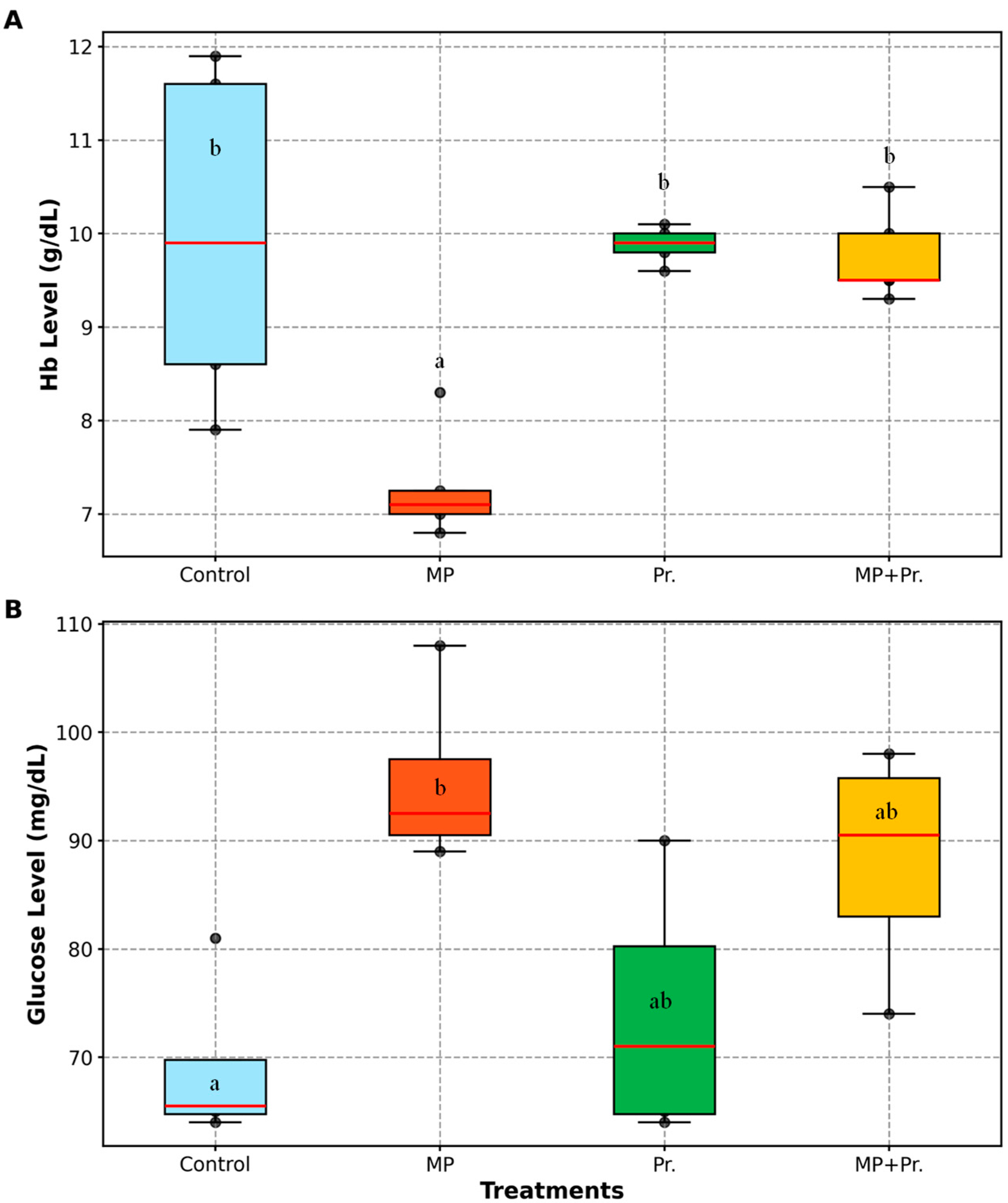
Figure 1. The alterations in (A) Hb and (B) Glu content in the blood of O. niloticus raised with microplastics and probiotics for 6 weeks. MP refers to polyamide microplastics (10 mg/L), Pr. denotes probiotics (1 mL/L), and MP + Pr. indicates the combination of microplastics (10 mg/L) and probiotics (1 mL/L). Different letters of alphabet indicate statistically significant differences (p < 0.05) among treatment groups.
Sustainability 17 09085 g001
Figure 2. The overall frequency of abnormalities found in erythrocytes, including spindle, teardrop, twin, elongated, and echinocytic shapes, in experimental fish reared with microplastics and probiotics for 6 weeks. The treatment groups were MP: microplastics at 10 mg/L, Pr.: probiotics at 1 mL/L, and MP + Pr.: polyamide microplastics (10 mg/L) with probiotics (1 mL/L).
Sustainability 17 09085 g002
Figure 3. The overall frequencies of abnormalities in nuclei of erythrocytes, including nuclear bridge, notched nuclei, nuclear buds, and karyokinesis) in fish exposed to microplastics and probiotics. The treatment groups were MP: polyamide microplastics at 10 mg/L, Pr.: probiotics at 1 mL/L, and MP + Pr.: polyamide microplastics (10 mg/L) with probiotics (1 mg/L).
Sustainability 17 09085 g003
Figure 4. Histopathological changes in the guts of experimental fish reared on polyamide microplastics and probiotics for 42 days. MP: polyamide microplastics (10 mg/L), Pr.: probiotics (1 mL/L), and MP + Pr.: microplastics (10 mg/L) + probiotics (1 mL/L). Arrows indicate goblet cells (GC). (a) Control group; (b) polyamide microplastics: MP (10 mg/L), (c) probiotics: PR (1 mL/L); and (d) polyamide microplastics along with probiotics: MP (10 mg/L) + Pr. (1 mL/L).
Sustainability 17 09085 g004
Figure 5. The changes in the number of goblet cells in the gut of Nile tilapia after 6 weeks of exposure to microplastics and probiotics. The treatment groups included MP: polyamide microplastics at 10 mg/L; Pr.: probiotics at 1 mL/L; MP + Pr.: polyamide microplastics (10 mg/L) with probiotics (1 mL/L). Different letters of the alphabet indicate statistically significant differences (p < 0.05) among treatment groups.
Sustainability 17 09085 g005
Figure 6. The relative mRNA levels of (a) SOD and (b) CAT in the liver of experimental fish after 6 weeks’ exposure to microplastics and probiotics was evaluated. The treatment groups included MP: microplastics at 10 mg/L, Pr.: probiotics at 1 mL/L, and MP + Pr.: microplastics at 10 mg/L combined with probiotics at 1 mL/L. The results are shown as mean ± SD (n = 6), with different letters indicating significant differences (p < 0.05) between the treatments.
Sustainability 17 09085 g006
Figure 7. The expression of (a) TNF-α, (b) IFN-γ, and (c) IL-1β in the livers of experimental fish exposed to microplastics and probiotics for 6 weeks. The treatment groups were MP: microplastics at 10 mg/L, Pr.: probiotics at 1 mL/L, and MP + Pr.: microplastics at 10 mg/L combined with probiotics at 1 mL/L. Results are presented as mean ± SD (n = 6), with different letters indicating statistically significant differences (p < 0.05) between the treatments.
Sustainability 17 09085 g007
Figure 8. The PCA (principal component analysis) biplot illustrates growth performance, overall hematological parameters, and expression of antioxidant and immune response genes of O. niloticus to polyamide microplastics, both with and without probiotics, over a 6-week period.
Sustainability 17 09085 g008
Table 1. Growth parameters of O. niloticus after polyamide microplastic exposure with and without probiotics for 6 weeks.
ParametersTreatments
ControlMPPr.MP + Pr.
IBW (g)3.50 ± 0.25 a3.96 ± 0.19 a3.96 ± 0.40 a3.06 ± 0.24 a
FBW (g)20.57 ± 4.76 ab17.90 ± 3.53 a27.06 ± 6.27 b21.20 ± 5.14 ab
WG (g)17.06 ± 4.76 b13.94 ± 3.53 a23.16 ± 6.27 c17.56 ± 5.14 b
SGR (%/day)2.04 ± 0.30 ab1.75 ± 0.24 a2.25 ± 0.26 b1.97 ± 0.27 ab
FCR0.99 ± 0.34 ab1.13 ± 0.33 b0.68 ± 0.17 a0.91 ± 0.26 ab
Survival (%)1009610098
MP: polyamide microplastics, Pr.: probiotics, IBW: initial body weight, FBW: final body weight, WG: weight gain, SGR: specific growth rate, and FCR: feed conversion ratio. Different superscripts of alphabets are statistically significant at p < 0.05.
Table 2. Assessment of water quality parameters during the experimental period.
ParametersTreatments
ControlMPPr.MP + Pr.
Temperature (°C)31.40 ± 0.9031.27 ± 0.8631.23 ±0.9431.68 ± 0.78
pH8.60 ± 0.198.78 ± 0.048.54 ± 0.438.65 ± 0.17
NH3 (mg/L)0.28 ± 0.440.39 ± 0.340.38 ± 0.140.24 ± 0.23
MP: microplastics, Pr.: probiotics.
Disclaimer/Publisher’s Note: The statements, opinions and data contained in all publications are solely those of the individual author(s) and contributor(s) and not of MDPI and/or the editor(s). MDPI and/or the editor(s) disclaim responsibility for any injury to people or property resulting from any ideas, methods, instructions or products referred to in the content.